



Jake McKibbin
-
Posts
2,395 -
Joined
-
Last visited
-
Days Won
6
Content Type
Profiles
Forums
Blogs
Events
News
2026 Milwaukee Brewers Top Prospects Ranking
Milwaukee Brewers Videos
2022 Milwaukee Brewers Draft Picks
Milwaukee Brewers Free Agent & Trade Rumors, Notes, & Tidbits
Guides & Resources
2023 Milwaukee Brewers Draft Picks
2024 Milwaukee Brewers Draft Picks
The Milwaukee Brewers Players Project
2025 Milwaukee Brewers Draft Pick Tracker
2026 Milwaukee Brewers Draft Tracker: Picks & Bonuses
Store
Downloads
Gallery
Everything posted by Jake McKibbin
-
It's Time To End The Jake Bauers Era
Jake McKibbin replied to Matt Breen's topic in Brewer Fanatic Front Page News
Very small sample but worth keeping an eye on. Especially that chase rate -
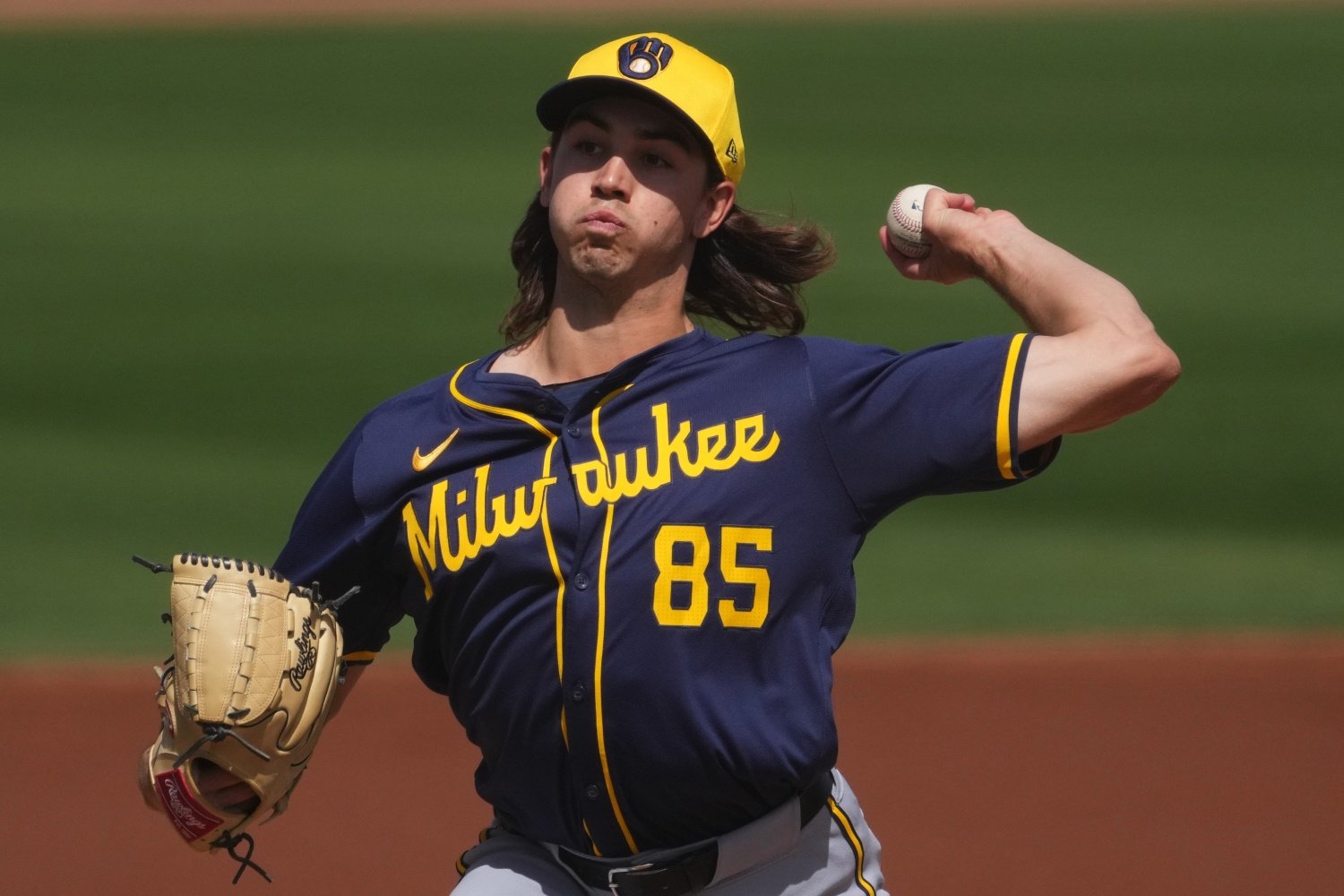 Acquired in the infamous Josh Hader trade with San Diego, Robert Gasser was the 71st pick in the 2021 draft for the Padres. He rose quickly through the ranks in his year in their farm system before moving to Milwaukee, who pushed him aggressively to both Double-A and Triple-A ball. Spending the entirety of 2023 at the upper level of the minors, Robert Gasser won the International League Pitcher of the Year Award, with 166 strikeouts in 135 ⅓ innings of work and a 3.79 ERA in very hitter-friendly conditions. The automatic ball-strike system (with an infamously tight zone) forced him to refine his command even further, and one could argue that had the Brewers suffered any further pitching injuries last season, he would have been the next man up. After an issue with bone spurs at the outset of the 2024 season, he’s built up his workload again, with some interesting improvements to boot. He will make his first start in the majors Friday night against the St Louis Cardinals. His arsenal is that of a traditional starter, with a four-seamer, cutter and sinker as fastball variations, combined with a sweeper and changeup that provide a lot of different movement profiles. He isn’t a high-octane arm, but his mix of pitches has produced a 29% strikeout rate in Triple-A since the start of 2023, so perhaps we should take a more complex dive into his arsenal; (As a side note, if you’re curious about any of the statistics mentioned here and what they might mean, I have written a biography of them here, which covers what they mean and what constitutes good or bad in the overall context of the league.) Four-Seam Fastball Robert Gasser’s most effective swing-and-miss fastball is his four-seamer, which (like most such offerings) works best when located up in the zone. With the pitch generating a 28% whiff rate since the start of 2023, Gasser is throwing it harder than ever so far this season, touching 96 mph and sitting a solid mile per hour higher than he managed in 2023. Combine this with strong movement characteristics from a lower-than-average arm slot, and he has a vertical approach angle (VAA) of -4.17° since the start of ‘23, which would be good enough for 11th in MLB over that period. Despite this, he doesn’t generate a lot of induced vertical break, so it can be a hit-or-miss pitch in some ways, depending on location. Keeping it up in the strike zone will really let the pitch play up, but throwing it low in the zone will reduce his VAA and make him considerably more hittable--as you can see below, with how hitters slugged against him by location. Notice the damage comes when he drops into the middle of the strike zone or below: If he can successfully command that fastball up, he’ll be very successful this season but it does rely heavily on being able to locate and take advantage of that vertical approach angle. The Cutter Throwing it primarily on the outer half of the plate for left-handed batters, or to get inside to right-handers, Gasser commands his cutter relatively well. However, it has shown a tendency to get hit hard in these areas. It has a traditional cutter’s profile, with minimal horizontal break, and is used to keep hitters off his four-seam heat. Unfortunately, the damage has been significant, with a .968 OPS against it since the beginning of ‘23, but it also has the best exit velocity numbers of any of his fastball variations, at just 85.9 mph on average. A big reason for this is how effective the pitch has been at the top of the strike zone (although he doesn’t use it up all that often) and a 31% line-drive rate. The reason Gasser endeavors to force the cutter inside, despite some high-quality contact against it there, is that it’s been a good place for ground balls. He's been using the four-seamer for swings and misses and the cutter to try and get weaker contact in play. It hasn’t always worked out, and there may be tweaks to how his arsenal is used to get more out of the pitch, but in using it as such, it will also tunnel well with the fastball at the top of the strike zone. Sinker Gasser’s most lightly-used fastball variation, the sinker has a 51% ground-ball rate. This skyrockets to 64% when facing left-handers. It should, maybe, be confined to use against same-side hitters. He gets four more inches of vertical drop than the average MLB sinker, which is a big reason for the ground balls, and it works well at the bottom of the zone, allowing him to use differing fastballs to all locations. I think it shows some promise, with more work, and could potentially see more usage than the cutter as time goes on, but whether it gets more contact with that increased usage is something only time will tell. Sweeper Gasser’s sweeper has proved an almost unhittable pitch at the upper level of the minors, with five inches above the MLB average in horizontal break. With a 37% chase rate, the sweeper even induces right-handed hitters to swing over pitches that sweep far inside the strike zone, producing a ton of weak contact on top of a 35% whiff rate. When he throws it anywhere but right down the middle, the quality of contact on this pitch is startlingly low: Average EV - 83 mph Hard hit rate - 17% xFIP - 1.09 Pop Up Rate - 24% The pop-up rate may be surprising for a breaking pitch, but because Gasser sacrificed some vertical drop for more horizontal break, hitters have a tendency to get underneath the pitch and give up cheap outs. Overall, his quality of contact on the sweeper is phenomenal; he commands it well both inside and outside the strike zone; and it bears out in the background numbers with a LOT of blue: All told, it's a very underrated pitch, and it's likely to be a big reason for his success in the big leagues throughout the rest of 2024. Changeup Gasser’s final offering, he uses the change almost exclusively to right-handed hitters; it performs about how you would expect. Front-dooring the pitch hasn't gone well for him, but when he can drop in on the outside corner to righties, it’s proved mightily effective: Generating a strong ground-ball rate and again minimizing hard contact well, the changeup doesn’t generate a lot of swing-and-miss, so Gasser will be relying on his fielding unit to make the plays behind him. It has roughly league-average vertical drop, while producing 10” more horizontal movement, but his biggest issue is that the velocity differential from his fastball isn’t all that great, at just 6 mph on average. It also blends in quite closely with his sinker in terms of the movement he gets, which is a stark reminder of a strange principle. Very often, a pitcher's sinker and their change share a movement profile, but the firmer pitch works well against same-handed batters and the change of pace works against opposite-handed ones. Gasser has five effective pitches with which he can bamboozle an offense, and has made strides with his command since May 2023 that leave little doubt as to his readiness to join the major-league rotation. He can go deeper into games, with a better track record of health and durability, than most of the Brewers' current rotation, and he provides an upgrade in quality at the back end of said rotation. It’s very likely that Gasser will stick in the big leagues. He could be a valuable addition to what is proving a surprisingly successful season for the Brewers. Everything here makes sense, and he'll be a fascinating watch for the rest of the season. Best of Luck Robert!
 -
With their ace forced to wait an extra game for his turn in the rotation due to suspension, the Milwaukee Brewers are calling up their long-awaited southpaw starter prospect for an MLB debut. Image courtesy of © Joe Camporeale-USA TODAY Sports Acquired in the infamous Josh Hader trade with San Diego, Robert Gasser was the 71st pick in the 2021 draft for the Padres. He rose quickly through the ranks in his year in their farm system before moving to Milwaukee, who pushed him aggressively to both Double-A and Triple-A ball. Spending the entirety of 2023 at the upper level of the minors, Robert Gasser won the International League Pitcher of the Year Award, with 166 strikeouts in 135 ⅓ innings of work and a 3.79 ERA in very hitter-friendly conditions. The automatic ball-strike system (with an infamously tight zone) forced him to refine his command even further, and one could argue that had the Brewers suffered any further pitching injuries last season, he would have been the next man up. After an issue with bone spurs at the outset of the 2024 season, he’s built up his workload again, with some interesting improvements to boot. He will make his first start in the majors Friday night against the St Louis Cardinals. His arsenal is that of a traditional starter, with a four-seamer, cutter and sinker as fastball variations, combined with a sweeper and changeup that provide a lot of different movement profiles. He isn’t a high-octane arm, but his mix of pitches has produced a 29% strikeout rate in Triple-A since the start of 2023, so perhaps we should take a more complex dive into his arsenal; (As a side note, if you’re curious about any of the statistics mentioned here and what they might mean, I have written a biography of them here, which covers what they mean and what constitutes good or bad in the overall context of the league.) Four-Seam Fastball Robert Gasser’s most effective swing-and-miss fastball is his four-seamer, which (like most such offerings) works best when located up in the zone. With the pitch generating a 28% whiff rate since the start of 2023, Gasser is throwing it harder than ever so far this season, touching 96 mph and sitting a solid mile per hour higher than he managed in 2023. Combine this with strong movement characteristics from a lower-than-average arm slot, and he has a vertical approach angle (VAA) of -4.17° since the start of ‘23, which would be good enough for 11th in MLB over that period. Despite this, he doesn’t generate a lot of induced vertical break, so it can be a hit-or-miss pitch in some ways, depending on location. Keeping it up in the strike zone will really let the pitch play up, but throwing it low in the zone will reduce his VAA and make him considerably more hittable--as you can see below, with how hitters slugged against him by location. Notice the damage comes when he drops into the middle of the strike zone or below: If he can successfully command that fastball up, he’ll be very successful this season but it does rely heavily on being able to locate and take advantage of that vertical approach angle. The Cutter Throwing it primarily on the outer half of the plate for left-handed batters, or to get inside to right-handers, Gasser commands his cutter relatively well. However, it has shown a tendency to get hit hard in these areas. It has a traditional cutter’s profile, with minimal horizontal break, and is used to keep hitters off his four-seam heat. Unfortunately, the damage has been significant, with a .968 OPS against it since the beginning of ‘23, but it also has the best exit velocity numbers of any of his fastball variations, at just 85.9 mph on average. A big reason for this is how effective the pitch has been at the top of the strike zone (although he doesn’t use it up all that often) and a 31% line-drive rate. The reason Gasser endeavors to force the cutter inside, despite some high-quality contact against it there, is that it’s been a good place for ground balls. He's been using the four-seamer for swings and misses and the cutter to try and get weaker contact in play. It hasn’t always worked out, and there may be tweaks to how his arsenal is used to get more out of the pitch, but in using it as such, it will also tunnel well with the fastball at the top of the strike zone. Sinker Gasser’s most lightly-used fastball variation, the sinker has a 51% ground-ball rate. This skyrockets to 64% when facing left-handers. It should, maybe, be confined to use against same-side hitters. He gets four more inches of vertical drop than the average MLB sinker, which is a big reason for the ground balls, and it works well at the bottom of the zone, allowing him to use differing fastballs to all locations. I think it shows some promise, with more work, and could potentially see more usage than the cutter as time goes on, but whether it gets more contact with that increased usage is something only time will tell. Sweeper Gasser’s sweeper has proved an almost unhittable pitch at the upper level of the minors, with five inches above the MLB average in horizontal break. With a 37% chase rate, the sweeper even induces right-handed hitters to swing over pitches that sweep far inside the strike zone, producing a ton of weak contact on top of a 35% whiff rate. When he throws it anywhere but right down the middle, the quality of contact on this pitch is startlingly low: Average EV - 83 mph Hard hit rate - 17% xFIP - 1.09 Pop Up Rate - 24% The pop-up rate may be surprising for a breaking pitch, but because Gasser sacrificed some vertical drop for more horizontal break, hitters have a tendency to get underneath the pitch and give up cheap outs. Overall, his quality of contact on the sweeper is phenomenal; he commands it well both inside and outside the strike zone; and it bears out in the background numbers with a LOT of blue: All told, it's a very underrated pitch, and it's likely to be a big reason for his success in the big leagues throughout the rest of 2024. Changeup Gasser’s final offering, he uses the change almost exclusively to right-handed hitters; it performs about how you would expect. Front-dooring the pitch hasn't gone well for him, but when he can drop in on the outside corner to righties, it’s proved mightily effective: Generating a strong ground-ball rate and again minimizing hard contact well, the changeup doesn’t generate a lot of swing-and-miss, so Gasser will be relying on his fielding unit to make the plays behind him. It has roughly league-average vertical drop, while producing 10” more horizontal movement, but his biggest issue is that the velocity differential from his fastball isn’t all that great, at just 6 mph on average. It also blends in quite closely with his sinker in terms of the movement he gets, which is a stark reminder of a strange principle. Very often, a pitcher's sinker and their change share a movement profile, but the firmer pitch works well against same-handed batters and the change of pace works against opposite-handed ones. Gasser has five effective pitches with which he can bamboozle an offense, and has made strides with his command since May 2023 that leave little doubt as to his readiness to join the major-league rotation. He can go deeper into games, with a better track record of health and durability, than most of the Brewers' current rotation, and he provides an upgrade in quality at the back end of said rotation. It’s very likely that Gasser will stick in the big leagues. He could be a valuable addition to what is proving a surprisingly successful season for the Brewers. Everything here makes sense, and he'll be a fascinating watch for the rest of the season. Best of Luck Robert! View full article
-
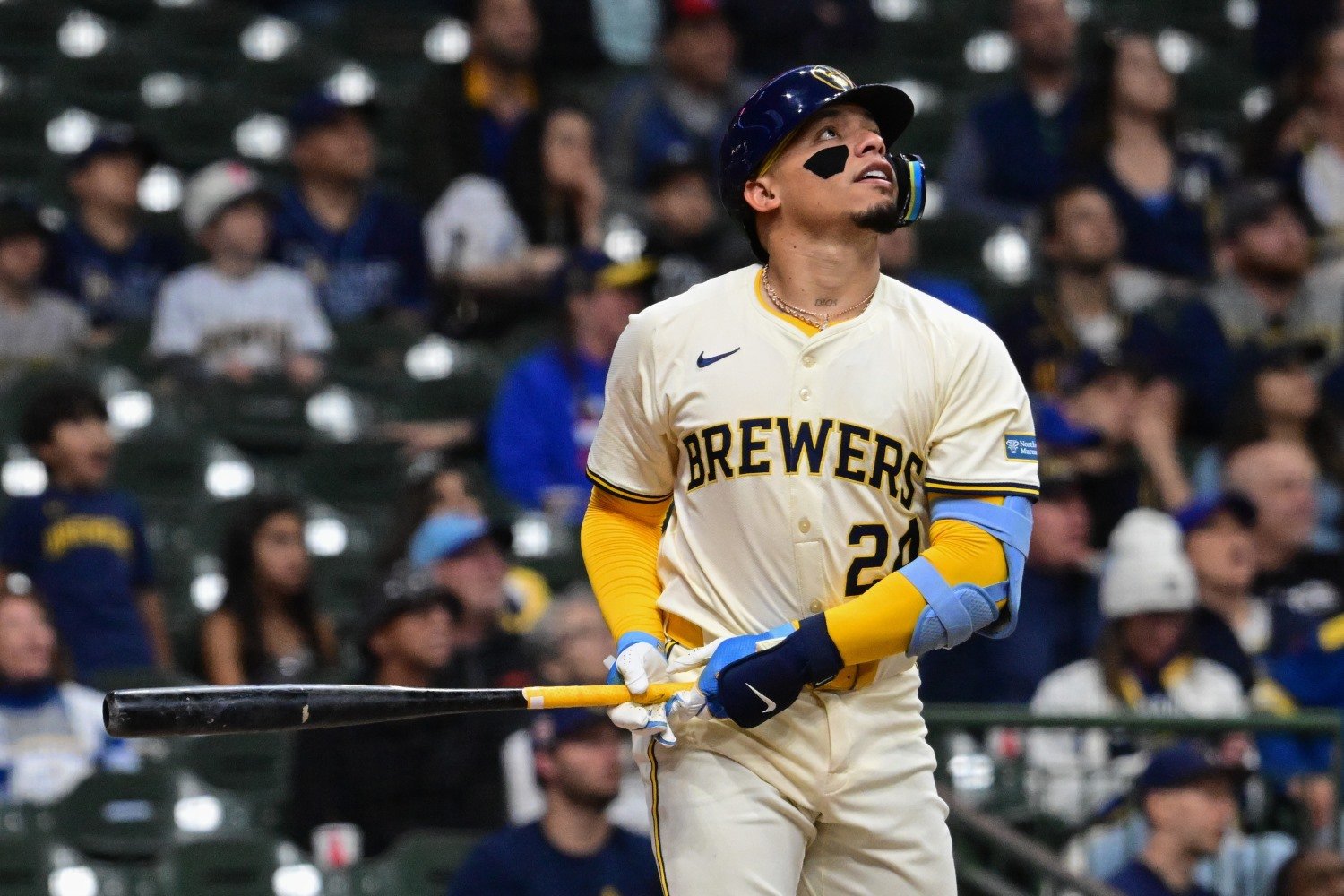 Pat Murphy has been criticized in some parts for his ultra-aggressive, win-now mentality so far this season. His approach has proved successful in generating early wins, though. It’s a toss-up how that’s affected the team so far, but the Brewers have nine more games to go without another off day, and with offensive performances faltering slightly, they may benefit from using their bench players slightly more often. The Impact of Days Off on William Contreras In 2013, Russell Carleton at Baseball Prospectus did some mathematical analysis of the impact of a player who’s played in each of the last seven days, compared with those playing in five of those seven days, and noted a difference of around 3 points of OBP. This isn’t a lot, but consider the implications over multiple lineup spots and things start to get more interesting. That’s at just seven days, so picture William Contreras, who has played in every single game for the Brewers this season and shows no signs of being ready to voluntarily sit himself down. Murphy was asked about sitting his star catcher. “We have a scheduled off day for him. It’s August 8th,” he joked. Contreras has continued to mash at the plate, but there will come a point (as with all catchers) where he’ll likely see some of the contributions wane under a workload such as this. The reason baseball can be so demanding without a day off is almost as much a mental wearing-down as it is a physical one. Every day on which one confronts the intense focus of the minutiae involved in baseball brings a mental fatigue that can lead to errors in decision-making that you just cannot get away with at the major-league level. We saw it with Contreras perhaps having his poorest defensive game at catcher on Sunday. If Murphy won’t sit him out for a day, then he could at least DH him for a couple of games, now that Gary Sánchez is healthy enough to play again. The Curse of The Streaky Hitter In Willy Adames and Rhys Hoskins, the Brewers have two players who can carry an offense when they get hot, but unfortunately, both bats ran cold over the weekend. Adames showed against the Rays just what he can do, and is perhaps unfortunate not to have several more home runs given his quality of contact at Camden Yards last month, but Hoskins is struggling again, with a .182/.357/.364 line in his past seven games. Perhaps I’m expecting too much--he's maintained good on-base rates--but he’s there to slug. So far, he has seen dropoffs in hard-hit rate and average exit velocity. The contrast to this is his expected slugging is .511 (actual .432), suggesting some bad luck on balls he has hit hard, while also showing strong plate discipline. It will likely continue to come around as the season goes on, and the luck will even itself out, but the Brewers without Christian Yelich rely heavily on the likes of Adames and Hoskins to drive in runs. At times, Contreras has seemed like a one-man show. The Rotation Is Pieced Together With Duct Tape, but Not For Long As things stand, the Brewers rotation isn’t exactly “elite,” with Bryse Wilson and Joe Ross expected to provide quality contributions. Both have, perhaps, been better than expected so far, but DL Hall’s uninspiring early form and injuries to reserves in the minor leagues like Robert Gasser and Evan McKendry have hurt the Brewers in both their bullpen and their rotation. Gasser is likely to make a start on Friday against the Cardinals, while Hall has whispered to Sophia Minnaert about his velocity returning after some treatment and rest on his knee. Both of these could provide more reliability for the Brewers' rotation and allow them to get further into games before turning to relievers, with a knock-on effect of destressing a heavily taxed bullpen. The next 10 days will be a matter of survive-over-thrive for the Brewers, hoping to grit and grind their way to a positive record before their next off day. The potential returns of Hall, Gasser and Yelich by the end of this stretch may be telling, but they'll need the middle of the lineup to fire again in order to stay afloat. Murphy has a challenge on his hands in terms of player rotation, and all in all, it may be a pivotal stretch of games for the Milwaukee Brewers season.
 -
The Brewers are coming to the end of a period with 39 games in 41 days, and it may have started to wear down some of the team's star offensive pieces--as well as young players unfamiliar with such a heavy schedule so early in the campaign. Image courtesy of © Benny Sieu-USA TODAY Sports Pat Murphy has been criticized in some parts for his ultra-aggressive, win-now mentality so far this season. His approach has proved successful in generating early wins, though. It’s a toss-up how that’s affected the team so far, but the Brewers have nine more games to go without another off day, and with offensive performances faltering slightly, they may benefit from using their bench players slightly more often. The Impact of Days Off on William Contreras In 2013, Russell Carleton at Baseball Prospectus did some mathematical analysis of the impact of a player who’s played in each of the last seven days, compared with those playing in five of those seven days, and noted a difference of around 3 points of OBP. This isn’t a lot, but consider the implications over multiple lineup spots and things start to get more interesting. That’s at just seven days, so picture William Contreras, who has played in every single game for the Brewers this season and shows no signs of being ready to voluntarily sit himself down. Murphy was asked about sitting his star catcher. “We have a scheduled off day for him. It’s August 8th,” he joked. Contreras has continued to mash at the plate, but there will come a point (as with all catchers) where he’ll likely see some of the contributions wane under a workload such as this. The reason baseball can be so demanding without a day off is almost as much a mental wearing-down as it is a physical one. Every day on which one confronts the intense focus of the minutiae involved in baseball brings a mental fatigue that can lead to errors in decision-making that you just cannot get away with at the major-league level. We saw it with Contreras perhaps having his poorest defensive game at catcher on Sunday. If Murphy won’t sit him out for a day, then he could at least DH him for a couple of games, now that Gary Sánchez is healthy enough to play again. The Curse of The Streaky Hitter In Willy Adames and Rhys Hoskins, the Brewers have two players who can carry an offense when they get hot, but unfortunately, both bats ran cold over the weekend. Adames showed against the Rays just what he can do, and is perhaps unfortunate not to have several more home runs given his quality of contact at Camden Yards last month, but Hoskins is struggling again, with a .182/.357/.364 line in his past seven games. Perhaps I’m expecting too much--he's maintained good on-base rates--but he’s there to slug. So far, he has seen dropoffs in hard-hit rate and average exit velocity. The contrast to this is his expected slugging is .511 (actual .432), suggesting some bad luck on balls he has hit hard, while also showing strong plate discipline. It will likely continue to come around as the season goes on, and the luck will even itself out, but the Brewers without Christian Yelich rely heavily on the likes of Adames and Hoskins to drive in runs. At times, Contreras has seemed like a one-man show. The Rotation Is Pieced Together With Duct Tape, but Not For Long As things stand, the Brewers rotation isn’t exactly “elite,” with Bryse Wilson and Joe Ross expected to provide quality contributions. Both have, perhaps, been better than expected so far, but DL Hall’s uninspiring early form and injuries to reserves in the minor leagues like Robert Gasser and Evan McKendry have hurt the Brewers in both their bullpen and their rotation. Gasser is likely to make a start on Friday against the Cardinals, while Hall has whispered to Sophia Minnaert about his velocity returning after some treatment and rest on his knee. Both of these could provide more reliability for the Brewers' rotation and allow them to get further into games before turning to relievers, with a knock-on effect of destressing a heavily taxed bullpen. The next 10 days will be a matter of survive-over-thrive for the Brewers, hoping to grit and grind their way to a positive record before their next off day. The potential returns of Hall, Gasser and Yelich by the end of this stretch may be telling, but they'll need the middle of the lineup to fire again in order to stay afloat. Murphy has a challenge on his hands in terms of player rotation, and all in all, it may be a pivotal stretch of games for the Milwaukee Brewers season. View full article
-
I'm not sure he's quite enough for Cabrera on his own Boeve has looked good, but still needs to elevate a little more Tyler Black has been struggling against anything off speed/breaking and has to develop that side of things, plus has barely played third all year so is unlikely to cover that Ortiz will be future shortstop so if you're looking at prospects it's more likely you'll see boeve/wilken there together, and thats less likely to be traded Plus Wilken has so much power, and showed a ton of promise last year. He's really intriguing as a bat, so not saying it's a crazy idea but can't quite see it with him being the best power source in the Brewers system
-
The Miami Marlins shock Luis Arraez trade signaled a readiness to rebuild, but can the Brewers take advantage? Image courtesy of © Sam Navarro-USA TODAY Sports The Marlins traded away effectively one year of Luis Arraez, the 2023 batting title champion with elite bat-to-ball skills and subpar defensive chops away for a haul from the Padres. As always with trades involving prospects, the final evaluation of the trade will come down the line; however, the Padres gave up their sixth, ninth, and thirteenth best prospects per MLB.com as well as a reliever. Dillon Head was the 25th pick in the 2023 draft, a prep outfielder with 70-grade speed and the kind of athleticism that’s very projectable. Jacob Marsee is another strong defensive outfielder with 98 walks to 97 strikeouts last season, while Nathan Martorella shows similar plate discipline and more pop with less of a defensive home. Handing over all three for a one-year rental of a player with minimal versatility and just one strong tool is likely an overpay from the Padres. This likely means the Brewers won’t be getting anything on the cheap, needing to pay full value in any potential trade. Edward Cabrera The jewel on the Marlins roster, his 6.05 ERA belies the amount of potential Cabrera has. His statcast is filled with red because of an inordinate amount of swing and miss generated on each of his changeup curveballs and soldier, which all have 30%+ whiff rates. The changeup is his main pitch to both left and right-handers, with an average exit velocity of just 78.4 mph. The one thing holding him back is command issues, which he promised improvements on during spring training but may have been set back due to an early season injury. He also has an elite ground ball rate when he puts the ball in play, over 55% both in 2023 and 2024, which will play up to the Brewers' infield defense. Over his career, Cabrera holds a 4.19 ERA, which is hardly spectacular and belies what sort of ceiling he could have. The question will be whether or not the Marlins believe they can improve his command because, so far, that doesn’t seem to be the case. The Brewers, on the other hand, have shown a real knack for getting the best out of pitchers with command issues, Freddy Peralta being a prime example, and it may attract them to such a young, talented, and most of all a controllable arm. Cabrera’s trade value will be immense, not just because of his high ceiling should a team unlock him but because he won't be a free agent until 2029. He’s young, cheap, and has bags of talent, so any trade will not come on the cheap. As a result, the Brewers are likely to steer clear of a deal for Cabrera, but their farm system is more than capable of compiling an enticing offer for the young stud. It will involve some upper-level and lower-level talent, perhaps something along the lines of this: Potential Trade Package: Robert Gasser and 20-30 ranked prospect Edward Cabrera could develop into a number two starter under the Brewers' tutelage, and with the year of control, it may cost them. A package of the steady Robert Gasser, who maybe can’t reach the heights of Cabrera at his best and is still unproven at the MLB level. He has an extra period of control and a reliable injury record. On top of that, a lower-ranked, high upside hitting prospect could make the Marlins sit up and take notice. The Brewers are more in need of upside in their rotation than at the back end, but it could be tough for them to part with Gasser, who shone last season and is ready for a big-league rotation. Durable in ways Cabrera maybe isn't, while adding in a prospect like O'Rae or Di Turi. All in all, I believe that to be a relatively fair trade on all fronts. If The Brewers Don’t, Who Will? The NL Central is filled with top farm systems that could be ready to take on a trade with the hapless Marlins, the Chicago Cubs in particular. The Cubs need a quality bullpen arm, and Tanner Scott may fill that for them with his 0.99 WHIP in 2023 and a lefty to complement Hector Neris at the back end of their pen. Adbert Alzolay has proven not to be as effective as Devin Williams, like, some fans thought, blowing six saves so far this year, and the acquisition of Scott could go a big way to helping them grind out tight games like they have in recent times. Their offense has been poor to start the year, and a shutdown pen will be needed to maintain their early record; they also have the assets to make such a trade with a consensus top-three system in baseball. The Cincinnati Reds have also been showing a ton of promise, led by Elly De La Cruz. Behind him, however, there hasn’t been much to speak of, with Spencer Steer cooling off and Will Benson third amongst their qualified hitters with a .694 OPS. They may eye up reinforcements in the form of Bryan de la Cruz in the outfield, and with Jonathan India, they may be able to provide the perfect replacement for Arraez. The Pirates seem less likely to make a move and hog their farm talent; however, given Aroldis Chapman's up-and-down performance this season, Tanner Scott may also help them. The rest of the NL Central could smell blood, but of all avenues, the Cabrera trade may make the biggest impact on any team's 2024 playoff probabilities. What do you think of the proposed trade? And can you see upgraded threats in the rest of the NL Central? Let us know your thoughts in the comments below. View full article
-
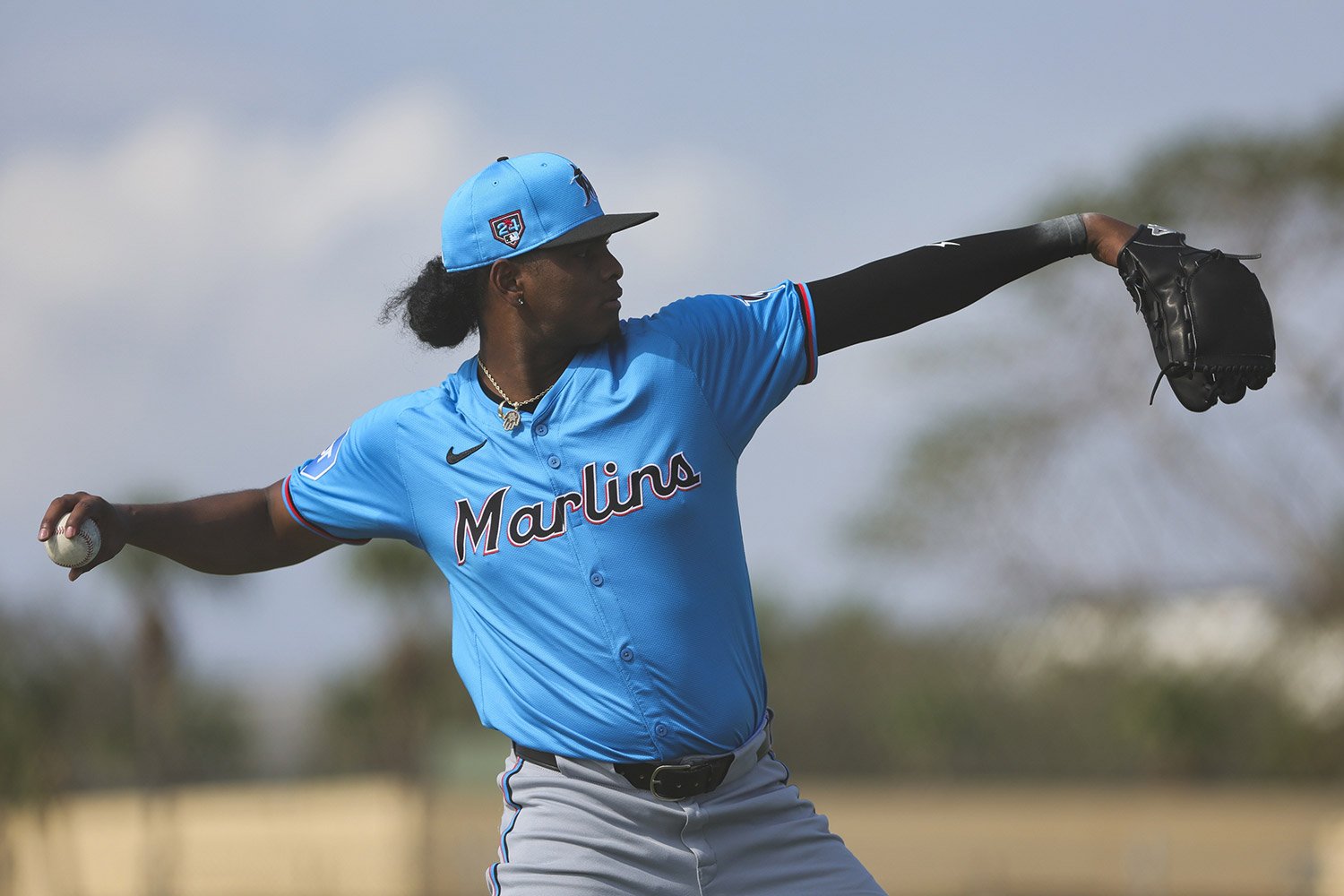 The Marlins traded away effectively one year of Luis Arraez, the 2023 batting title champion with elite bat-to-ball skills and subpar defensive chops away for a haul from the Padres. As always with trades involving prospects, the final evaluation of the trade will come down the line; however, the Padres gave up their sixth, ninth, and thirteenth best prospects per MLB.com as well as a reliever. Dillon Head was the 25th pick in the 2023 draft, a prep outfielder with 70-grade speed and the kind of athleticism that’s very projectable. Jacob Marsee is another strong defensive outfielder with 98 walks to 97 strikeouts last season, while Nathan Martorella shows similar plate discipline and more pop with less of a defensive home. Handing over all three for a one-year rental of a player with minimal versatility and just one strong tool is likely an overpay from the Padres. This likely means the Brewers won’t be getting anything on the cheap, needing to pay full value in any potential trade. Edward Cabrera The jewel on the Marlins roster, his 6.05 ERA belies the amount of potential Cabrera has. His statcast is filled with red because of an inordinate amount of swing and miss generated on each of his changeup curveballs and soldier, which all have 30%+ whiff rates. The changeup is his main pitch to both left and right-handers, with an average exit velocity of just 78.4 mph. The one thing holding him back is command issues, which he promised improvements on during spring training but may have been set back due to an early season injury. He also has an elite ground ball rate when he puts the ball in play, over 55% both in 2023 and 2024, which will play up to the Brewers' infield defense. Over his career, Cabrera holds a 4.19 ERA, which is hardly spectacular and belies what sort of ceiling he could have. The question will be whether or not the Marlins believe they can improve his command because, so far, that doesn’t seem to be the case. The Brewers, on the other hand, have shown a real knack for getting the best out of pitchers with command issues, Freddy Peralta being a prime example, and it may attract them to such a young, talented, and most of all a controllable arm. Cabrera’s trade value will be immense, not just because of his high ceiling should a team unlock him but because he won't be a free agent until 2029. He’s young, cheap, and has bags of talent, so any trade will not come on the cheap. As a result, the Brewers are likely to steer clear of a deal for Cabrera, but their farm system is more than capable of compiling an enticing offer for the young stud. It will involve some upper-level and lower-level talent, perhaps something along the lines of this: Potential Trade Package: Robert Gasser and 20-30 ranked prospect Edward Cabrera could develop into a number two starter under the Brewers' tutelage, and with the year of control, it may cost them. A package of the steady Robert Gasser, who maybe can’t reach the heights of Cabrera at his best and is still unproven at the MLB level. He has an extra period of control and a reliable injury record. On top of that, a lower-ranked, high upside hitting prospect could make the Marlins sit up and take notice. The Brewers are more in need of upside in their rotation than at the back end, but it could be tough for them to part with Gasser, who shone last season and is ready for a big-league rotation. Durable in ways Cabrera maybe isn't, while adding in a prospect like O'Rae or Di Turi. All in all, I believe that to be a relatively fair trade on all fronts. If The Brewers Don’t, Who Will? The NL Central is filled with top farm systems that could be ready to take on a trade with the hapless Marlins, the Chicago Cubs in particular. The Cubs need a quality bullpen arm, and Tanner Scott may fill that for them with his 0.99 WHIP in 2023 and a lefty to complement Hector Neris at the back end of their pen. Adbert Alzolay has proven not to be as effective as Devin Williams, like, some fans thought, blowing six saves so far this year, and the acquisition of Scott could go a big way to helping them grind out tight games like they have in recent times. Their offense has been poor to start the year, and a shutdown pen will be needed to maintain their early record; they also have the assets to make such a trade with a consensus top-three system in baseball. The Cincinnati Reds have also been showing a ton of promise, led by Elly De La Cruz. Behind him, however, there hasn’t been much to speak of, with Spencer Steer cooling off and Will Benson third amongst their qualified hitters with a .694 OPS. They may eye up reinforcements in the form of Bryan de la Cruz in the outfield, and with Jonathan India, they may be able to provide the perfect replacement for Arraez. The Pirates seem less likely to make a move and hog their farm talent; however, given Aroldis Chapman's up-and-down performance this season, Tanner Scott may also help them. The rest of the NL Central could smell blood, but of all avenues, the Cabrera trade may make the biggest impact on any team's 2024 playoff probabilities. What do you think of the proposed trade? And can you see upgraded threats in the rest of the NL Central? Let us know your thoughts in the comments below.
 -
Jacob Misiorowski won Southern League Pitcher of the Week honors Monday, after two dominant starts last week. He may just be finding his groove. Image courtesy of © Allan Henry-USA TODAY Sports First of all, let's temper expectations a little bit. Jacob Misiorowski only made it through eight total innings this week, on a controlled pitch count in both of his starts. The Brewers are ramping him up slowly, and that's potentially one reason why he didn't start quite so hot, but this week's performances were electric for three very big reasons. The Fastball is Back Earlier in this season, Misiorowski was sitting in the 93-95 mph range. That was a significant drop from last season, and with it, his whole delivery was out of sync. Balls were flying around and he couldn't seem to put hitters away. This week, the heat came back with a vengeance, regularly in the 99 mph range and hitters just. Could. Not. Deal. That fastball produced some outrageous swings, particularly the last one in the video above, and was a big reason for his turnaround from some early scuffles. More to the point, everything looked smoother on the mound, with a lot more balance and poise. It's a really, really good omen for the Brewers' fireballer. The Control His line on the week was eight innings, one hit, one run, just two walks and a massive 13 strikeouts. As erudite followers of Misiorowski's progress, your attention will be drawn first to the walks in the box score. Then, you divert a quick glance to the footnotes for the hit-by-pitches. There were none this week. Other than those two free passes, the only blemishes were a couple of wild pitches that allowed his opponents to score the single run he allowed this week. The fastball control (if not necessarily the command) looked good, but even when he misses his spot, the raw stuff will allow him to smoke hitters. That being said, the command was improved. Particularly noticeable: how effective he was in 3-2 counts at digging in and staying in the zone, as well as how effectively he worked ahead in counts. The Efficiency Perhaps the best marker of Jacob Misiorowski’s performance this last week was not his velocity, nor his command, but his efficiency. Big raw stuff and limited command usually result in long innings and high pitch counts, but Misiorowski was highly efficient this time around. By challenging hitters early in the count and not allowing them to get ahead, he produced a heady combination of weak contact and strikeouts that bodes well He required an average of 15 pitches per inning, which is significantly less than normal, and he allowed very little threatening contact. In short, he was dominant, and his control unlocked an efficiency we haven't seen before. While he may just be hitting his stride in the 2024 season after a longer buildup, there are words of caution. It was just eight innings, albeit unrecognizable ones from previous weeks, and the opposing Blue Wahoos' bats have been very ineffective to start the season. Sterner tests loom, and further lessons will be learned by Misiorowski before he reaches the big leagues, but the promise of his untapped potential was laid bare this past week. View full article
-
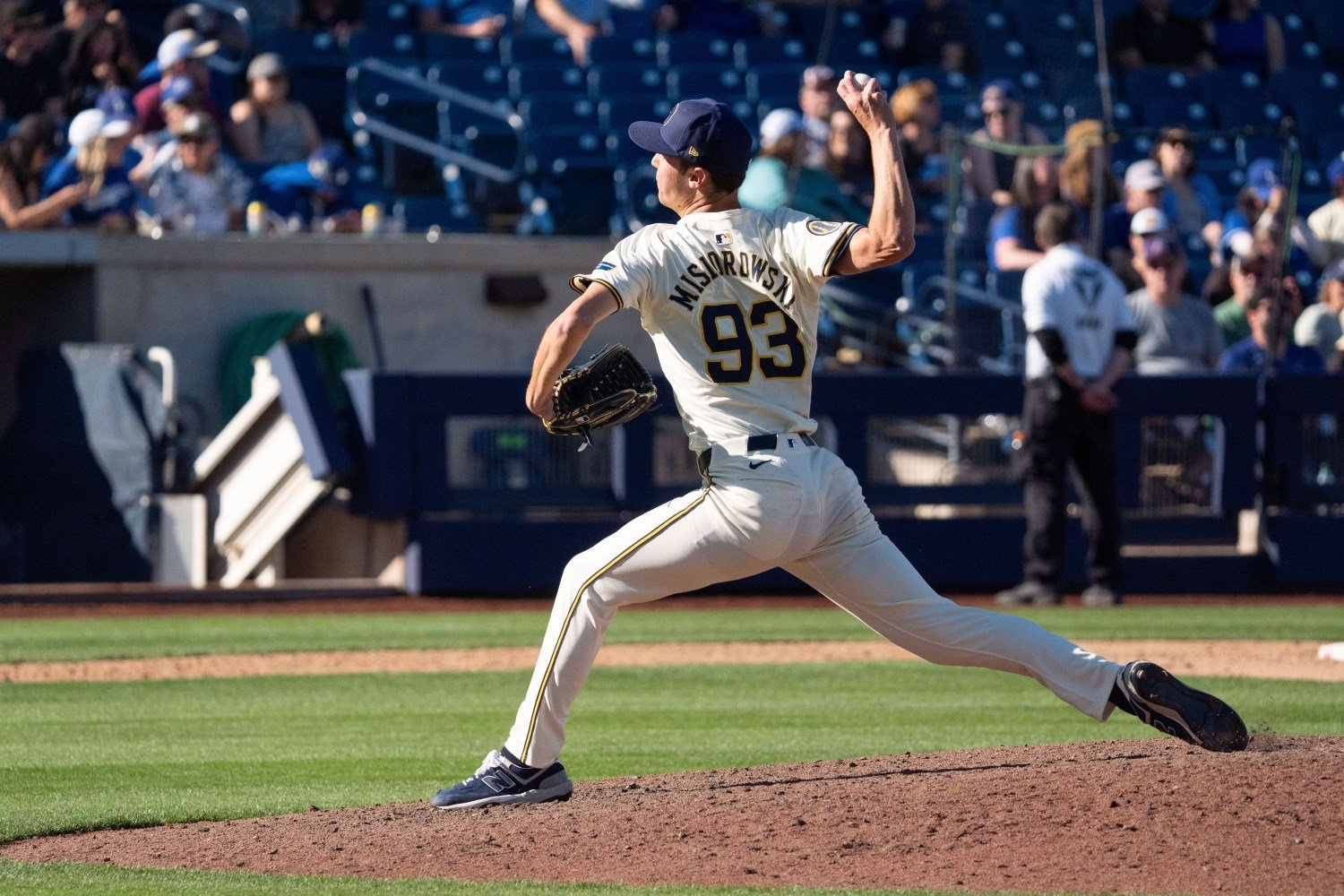 First of all, let's temper expectations a little bit. Jacob Misiorowski only made it through eight total innings this week, on a controlled pitch count in both of his starts. The Brewers are ramping him up slowly, and that's potentially one reason why he didn't start quite so hot, but this week's performances were electric for three very big reasons. The Fastball is Back Earlier in this season, Misiorowski was sitting in the 93-95 mph range. That was a significant drop from last season, and with it, his whole delivery was out of sync. Balls were flying around and he couldn't seem to put hitters away. This week, the heat came back with a vengeance, regularly in the 99 mph range and hitters just. Could. Not. Deal. That fastball produced some outrageous swings, particularly the last one in the video above, and was a big reason for his turnaround from some early scuffles. More to the point, everything looked smoother on the mound, with a lot more balance and poise. It's a really, really good omen for the Brewers' fireballer. The Control His line on the week was eight innings, one hit, one run, just two walks and a massive 13 strikeouts. As erudite followers of Misiorowski's progress, your attention will be drawn first to the walks in the box score. Then, you divert a quick glance to the footnotes for the hit-by-pitches. There were none this week. Other than those two free passes, the only blemishes were a couple of wild pitches that allowed his opponents to score the single run he allowed this week. The fastball control (if not necessarily the command) looked good, but even when he misses his spot, the raw stuff will allow him to smoke hitters. That being said, the command was improved. Particularly noticeable: how effective he was in 3-2 counts at digging in and staying in the zone, as well as how effectively he worked ahead in counts. The Efficiency Perhaps the best marker of Jacob Misiorowski’s performance this last week was not his velocity, nor his command, but his efficiency. Big raw stuff and limited command usually result in long innings and high pitch counts, but Misiorowski was highly efficient this time around. By challenging hitters early in the count and not allowing them to get ahead, he produced a heady combination of weak contact and strikeouts that bodes well He required an average of 15 pitches per inning, which is significantly less than normal, and he allowed very little threatening contact. In short, he was dominant, and his control unlocked an efficiency we haven't seen before. While he may just be hitting his stride in the 2024 season after a longer buildup, there are words of caution. It was just eight innings, albeit unrecognizable ones from previous weeks, and the opposing Blue Wahoos' bats have been very ineffective to start the season. Sterner tests loom, and further lessons will be learned by Misiorowski before he reaches the big leagues, but the promise of his untapped potential was laid bare this past week.
 -
 Tobias Myers has bounced around six different organizations, some of them notably strong with pitching, but since leaving the Tampa Bay Rays, Myers has struggled to unlock his talent. Fastball command issues and declining velocity clouded his stint in the Guardians system. He signed with the Brewers in the 2022-23 offseason and struck out 168 in 137 innings for the Biloxi Shuckers in Double-A, despite sporting a 5.00 ERA. Toward the end of last year, however, the minor-league experts began to take notice of a breakout, with Myers recording a 2.53 ERA in September and a strikeout rate of 37.3%. The Brewers have a habit of tapping into the abilities of formerly hyped prospects after the shine has worn off, and it’s important to remember that Myers is just 25 years old--despite the fact that he made his professional debut in 2016. He was valued highly by the Guardians, who couldn’t quite get the best out of him, in large part due to the struggle he had to generate swing-and-miss after leaving the Rays. The question is: just what have the Brewers got in Myers? An Electric Fastball Tobias Myers's four-seam fastball has remained the electric offering we saw take shape in 2023, sitting 94 mph and touching 97 mph while averaging 20” of induced vertical break. Simply put, that fastball is effective, but it hasn’t always been this way. Myers regained almost 3 mph on average on his primary offering in 2023 and it’s a big reason why his strikeouts returned to elite levels. The rise (combined with average to above-average velocity) that he maintains deep into starts is a nightmare for opposing hitters, who have whiffed on the pitch 32.1% of the time in Triple-A this season. To put that in perspective, Freddy Peralta has a 23.6% whiff rate on his four-seamer in 2024. Only Paul Skenes has a better swing-and-miss rate in Triple-A than Myers's; that’s some pretty lofty company. Realistically this is the pitch that he makes his name on, and although there are some questions surrounding his delivery, the results are tough to argue with when you combine the movement with the added velocity. The Brand-New Cutter An obvious feel for spin led the Brewers to lean into a cutter for Myers, and it hasn’t disappointed. While the cutter isn’t as prolific as a swing-and-miss pitch, it’s been highly effective at missing barrels and getting easy, early outs off his fastball. In a small sample, he has induced an average exit velocity of just 80 mph, with a nice 69% ground-ball rate. It’s proven highly effective as a secondary offering for a pitcher who was primarily fastball/slider before finding this look. Reducing the use of his changeup and curveball by leaning into the cutter have produced strong results so far, and more importantly, it’s been a valuable out pitch to lefties. The Slider An effective swing-and-miss pitch, when he leaves it up, he has a propensity to get hit hard and in the air. When executed properly, though, it’s a strong putaway pitch. A gyro slider with more vertical drop than horizontal movement, he’s generating swings and misses 60% of the time this season. With two strikes, that elevates even further. He's commanded it okay so far this season, and when it stays down he can really limit hard contact, too. Adding a third plus pitch in the cutter has allowed Myers's arsenal to play up, and that four-seam fastball is something to watch closely in what is likely to be his debut Monday or Tuesday. He has the raw stuff and the improved command to excel; it wouldn’t be at all surprising to see him staying on the Brewers roster. He's battled hard for several years to be where he is today, and he's still just 25 years old. He's taken strides forward with the Brewers and seems ready for the opportunity to start against Pittsburgh tomorrow. The reality is that Myers needed injury to get his shot, and barring further setbacks from Jakob Junis and Robert Gasser or a longer-term prognosis for DL Hall or Wade Miley, he could be off the team in short order. However, quality will stick around, and if he shows the same durability to get through innings and generate whiffs at the big-league level that he has in the minors, the Brewers will find a place for him on their roster. They can't afford not to. We’re rooting for you here at Brewer Fanatic Toby! You’ve earned your shot, go get ‘em!
 -
Since he's likely to make his MLB debut in this week's Pittsburgh Pirates series, here's all you need to know about the repertoire of Tobias Myers and why he just may stick in Milwaukee. Image courtesy of © Brett Davis-USA TODAY Sports Tobias Myers has bounced around six different organizations, some of them notably strong with pitching, but since leaving the Tampa Bay Rays, Myers has struggled to unlock his talent. Fastball command issues and declining velocity clouded his stint in the Guardians system. He signed with the Brewers in the 2022-23 offseason and struck out 168 in 137 innings for the Biloxi Shuckers in Double-A, despite sporting a 5.00 ERA. Toward the end of last year, however, the minor-league experts began to take notice of a breakout, with Myers recording a 2.53 ERA in September and a strikeout rate of 37.3%. The Brewers have a habit of tapping into the abilities of formerly hyped prospects after the shine has worn off, and it’s important to remember that Myers is just 25 years old--despite the fact that he made his professional debut in 2016. He was valued highly by the Guardians, who couldn’t quite get the best out of him, in large part due to the struggle he had to generate swing-and-miss after leaving the Rays. The question is: just what have the Brewers got in Myers? An Electric Fastball Tobias Myers's four-seam fastball has remained the electric offering we saw take shape in 2023, sitting 94 mph and touching 97 mph while averaging 20” of induced vertical break. Simply put, that fastball is effective, but it hasn’t always been this way. Myers regained almost 3 mph on average on his primary offering in 2023 and it’s a big reason why his strikeouts returned to elite levels. The rise (combined with average to above-average velocity) that he maintains deep into starts is a nightmare for opposing hitters, who have whiffed on the pitch 32.1% of the time in Triple-A this season. To put that in perspective, Freddy Peralta has a 23.6% whiff rate on his four-seamer in 2024. Only Paul Skenes has a better swing-and-miss rate in Triple-A than Myers's; that’s some pretty lofty company. Realistically this is the pitch that he makes his name on, and although there are some questions surrounding his delivery, the results are tough to argue with when you combine the movement with the added velocity. The Brand-New Cutter An obvious feel for spin led the Brewers to lean into a cutter for Myers, and it hasn’t disappointed. While the cutter isn’t as prolific as a swing-and-miss pitch, it’s been highly effective at missing barrels and getting easy, early outs off his fastball. In a small sample, he has induced an average exit velocity of just 80 mph, with a nice 69% ground-ball rate. It’s proven highly effective as a secondary offering for a pitcher who was primarily fastball/slider before finding this look. Reducing the use of his changeup and curveball by leaning into the cutter have produced strong results so far, and more importantly, it’s been a valuable out pitch to lefties. The Slider An effective swing-and-miss pitch, when he leaves it up, he has a propensity to get hit hard and in the air. When executed properly, though, it’s a strong putaway pitch. A gyro slider with more vertical drop than horizontal movement, he’s generating swings and misses 60% of the time this season. With two strikes, that elevates even further. He's commanded it okay so far this season, and when it stays down he can really limit hard contact, too. Adding a third plus pitch in the cutter has allowed Myers's arsenal to play up, and that four-seam fastball is something to watch closely in what is likely to be his debut Monday or Tuesday. He has the raw stuff and the improved command to excel; it wouldn’t be at all surprising to see him staying on the Brewers roster. He's battled hard for several years to be where he is today, and he's still just 25 years old. He's taken strides forward with the Brewers and seems ready for the opportunity to start against Pittsburgh tomorrow. The reality is that Myers needed injury to get his shot, and barring further setbacks from Jakob Junis and Robert Gasser or a longer-term prognosis for DL Hall or Wade Miley, he could be off the team in short order. However, quality will stick around, and if he shows the same durability to get through innings and generate whiffs at the big-league level that he has in the minors, the Brewers will find a place for him on their roster. They can't afford not to. We’re rooting for you here at Brewer Fanatic Toby! You’ve earned your shot, go get ‘em! View full article
-
Prognosis was 6-8 weeks, so likely with a Nashville stint he'll be back around the start of June. This would be great, but I hope however long it takes him to feel okay to play, they give him a couple of extra days. Just to be extra sure, the last thing we want is a month of August '23 Yelich production, it doesn't really help anyone
-
 Christian Yelich’s back is a time bomb waiting to happen, but thankfully, it hasn’t caused him to miss massive amounts of time on the injured list in recent years. Yelich has missed just 26 games over the last two years, but that’s not to say it hasn’t affected him. Between May and July ‘23, Yelich had a resurgence towards his old self after some down years as a result of the aforementioned back injury, producing a .314/.395/.531 slash line with 13 home runs and a 149 WRC+. Then came August when his production plummeted alongside his exit velocities during the Brewers playoff push, dropping to an 83 WRC+ and averaging over six mph less on batted balls. Heavy suspicions were this was a back-related incident, especially given the IL stint in September, and it shows how much of an effect it has on his ability at the plate. While Yelich took 15 days on the IL, he returned to his form of prior months immediately, crushing balls from his first plate appearance back, and it begs the question of why the Brewers didn’t sit him down earlier. I wrote earlier this year about how Pat Murphy and the coaching staff must give Yelich breaks as soon as this flares up because the effect it has on him at the plate is enormous. He can still find ways to scrap on base with his strong plate discipline, but he loses almost all power and timing. If the Brewers identify the issue early and allow it to heal properly, they can still see a fantastic player with top-five offensive production in the league over a shorter span of games. In short, 120 games of Yelich with a 150 WRC+ or above is significantly more valuable than 150 games of below-average offensive production, and if that means a more cautious timeline and approach, then so be it. It definitely shouldn’t come as any surprise for the Brewers to give him ten days off on the IL and ensure it’s healed properly. In this case, whom should they go to as his replacement? The Man Born To Be A Brewer Charles Brewer Hicklen was brought in on a minor league deal in November, with Matt Arnold commenting on his athleticism and loud tools and saying that their scouting department was a big fan of him for his skill set and name. A former top 100 prospect with the Royals, Hicklen has just four major league at-bats for the Royals, and that’s a byproduct of his high strikeout rates. Since joining the Brewers, however, his power has shone through while the strikeouts have dipped to a more manageable level. Looking at his results early in the Triple-A season, Hicklen is hitting .317/.431/.585 with a 15.7% walk rate while striking out perhaps a little too often. If a comparison is needed, You could think of him as a version of Keston Hiura, who can play passable outfield defense. Above-average speed but inconsistent routes would be the expectation there, but the real reason for his call-up will be his bat. Here are some of the metrics in Triple-A since 2023: 91 mph average exit velocity 46% hard-hit rate 23.5% barrel rate 35.4% Whiff rate (Yikes) 31.9% Strikeout Rate (Also yikes) There is some regression to be expected on his early 2024 numbers, which are inflated, but the Brewers were impressed with Hicklen during camp, and he showed off his thump in those games to leave a lasting impression. He isn't, however, currently on the 40-man roster, which may provide an obstacle to his promotion, although there are some candidates for DFA on the roster, which should improve the chances. Hicklen isn't going to be anything like Christian Yelich and is likely to provide boom-or-bust production while Yelich is on the IL. The Brewers may strike lucky and steal a few home runs while Yelich is out, and he can adequately cover the outfield, perhaps to a similar standard as Yelich. An additional element of intrigue is the next person up is likely to be the 1000th major league player for the Milwaukee Brewers. It would be the ultimate irony for that person to be called "Brewer." Other Options Joey Wiemer would be the first thought for many. However, there are various reasons why he's unlikely to be brought up. Amid a sizable technical switch, Wiemer must show a marked consistency in the quality of his at-bats, with occasional crushed balls followed by poor strikeouts. He recorded four strikeouts in the first game of a doubleheader on Friday before a walk and a double in the second game, but the Brewers are likely to want him to get regular playing time while he sorts out his mechanics at the plate. He does play outstanding defense while being on the 40-man, but his current needs for plate appearances and .220/.328/.360 line is unlikely to push him to the majors again just yet. Chris Roller is on the 40-man, perhaps most likely to challenge Hicklen for that role, hitting .308/.325/.410 in Nashville over his first 40 plate appearances. He doesn't have the same thump as Brewer Hicklen, and while striking out, he more than one would like for a contact hitter. Defensively, he is superior, able to fill in as an average center fielder with good range and reads. Perhaps most importantly, he already sits on the Brewers 40-man roster, which may swing the decision in his favor. Who would you like to see up for the Milwaukee Brewers? Do you even think Yelich should go on the Injured List or go day-to-day? Please let us know what you think in the comments below.
 -
Christian Yelich's back is a nagging problem, and it raised its ugly head again on Friday night. The Brewers may be wise to take a cautious approach, but who would replace him should he need a stint on the IL? Image courtesy of © Mitch Stringer-USA TODAY Sports Christian Yelich’s back is a time bomb waiting to happen, but thankfully, it hasn’t caused him to miss massive amounts of time on the injured list in recent years. Yelich has missed just 26 games over the last two years, but that’s not to say it hasn’t affected him. Between May and July ‘23, Yelich had a resurgence towards his old self after some down years as a result of the aforementioned back injury, producing a .314/.395/.531 slash line with 13 home runs and a 149 WRC+. Then came August when his production plummeted alongside his exit velocities during the Brewers playoff push, dropping to an 83 WRC+ and averaging over six mph less on batted balls. Heavy suspicions were this was a back-related incident, especially given the IL stint in September, and it shows how much of an effect it has on his ability at the plate. While Yelich took 15 days on the IL, he returned to his form of prior months immediately, crushing balls from his first plate appearance back, and it begs the question of why the Brewers didn’t sit him down earlier. I wrote earlier this year about how Pat Murphy and the coaching staff must give Yelich breaks as soon as this flares up because the effect it has on him at the plate is enormous. He can still find ways to scrap on base with his strong plate discipline, but he loses almost all power and timing. If the Brewers identify the issue early and allow it to heal properly, they can still see a fantastic player with top-five offensive production in the league over a shorter span of games. In short, 120 games of Yelich with a 150 WRC+ or above is significantly more valuable than 150 games of below-average offensive production, and if that means a more cautious timeline and approach, then so be it. It definitely shouldn’t come as any surprise for the Brewers to give him ten days off on the IL and ensure it’s healed properly. In this case, whom should they go to as his replacement? The Man Born To Be A Brewer Charles Brewer Hicklen was brought in on a minor league deal in November, with Matt Arnold commenting on his athleticism and loud tools and saying that their scouting department was a big fan of him for his skill set and name. A former top 100 prospect with the Royals, Hicklen has just four major league at-bats for the Royals, and that’s a byproduct of his high strikeout rates. Since joining the Brewers, however, his power has shone through while the strikeouts have dipped to a more manageable level. Looking at his results early in the Triple-A season, Hicklen is hitting .317/.431/.585 with a 15.7% walk rate while striking out perhaps a little too often. If a comparison is needed, You could think of him as a version of Keston Hiura, who can play passable outfield defense. Above-average speed but inconsistent routes would be the expectation there, but the real reason for his call-up will be his bat. Here are some of the metrics in Triple-A since 2023: 91 mph average exit velocity 46% hard-hit rate 23.5% barrel rate 35.4% Whiff rate (Yikes) 31.9% Strikeout Rate (Also yikes) There is some regression to be expected on his early 2024 numbers, which are inflated, but the Brewers were impressed with Hicklen during camp, and he showed off his thump in those games to leave a lasting impression. He isn't, however, currently on the 40-man roster, which may provide an obstacle to his promotion, although there are some candidates for DFA on the roster, which should improve the chances. Hicklen isn't going to be anything like Christian Yelich and is likely to provide boom-or-bust production while Yelich is on the IL. The Brewers may strike lucky and steal a few home runs while Yelich is out, and he can adequately cover the outfield, perhaps to a similar standard as Yelich. An additional element of intrigue is the next person up is likely to be the 1000th major league player for the Milwaukee Brewers. It would be the ultimate irony for that person to be called "Brewer." Other Options Joey Wiemer would be the first thought for many. However, there are various reasons why he's unlikely to be brought up. Amid a sizable technical switch, Wiemer must show a marked consistency in the quality of his at-bats, with occasional crushed balls followed by poor strikeouts. He recorded four strikeouts in the first game of a doubleheader on Friday before a walk and a double in the second game, but the Brewers are likely to want him to get regular playing time while he sorts out his mechanics at the plate. He does play outstanding defense while being on the 40-man, but his current needs for plate appearances and .220/.328/.360 line is unlikely to push him to the majors again just yet. Chris Roller is on the 40-man, perhaps most likely to challenge Hicklen for that role, hitting .308/.325/.410 in Nashville over his first 40 plate appearances. He doesn't have the same thump as Brewer Hicklen, and while striking out, he more than one would like for a contact hitter. Defensively, he is superior, able to fill in as an average center fielder with good range and reads. Perhaps most importantly, he already sits on the Brewers 40-man roster, which may swing the decision in his favor. Who would you like to see up for the Milwaukee Brewers? Do you even think Yelich should go on the Injured List or go day-to-day? Please let us know what you think in the comments below. View full article
-
Are Tyler Black and Joey Wiemer Pushing For Major-League Promotions?
Jake McKibbin posted an article in Brewers
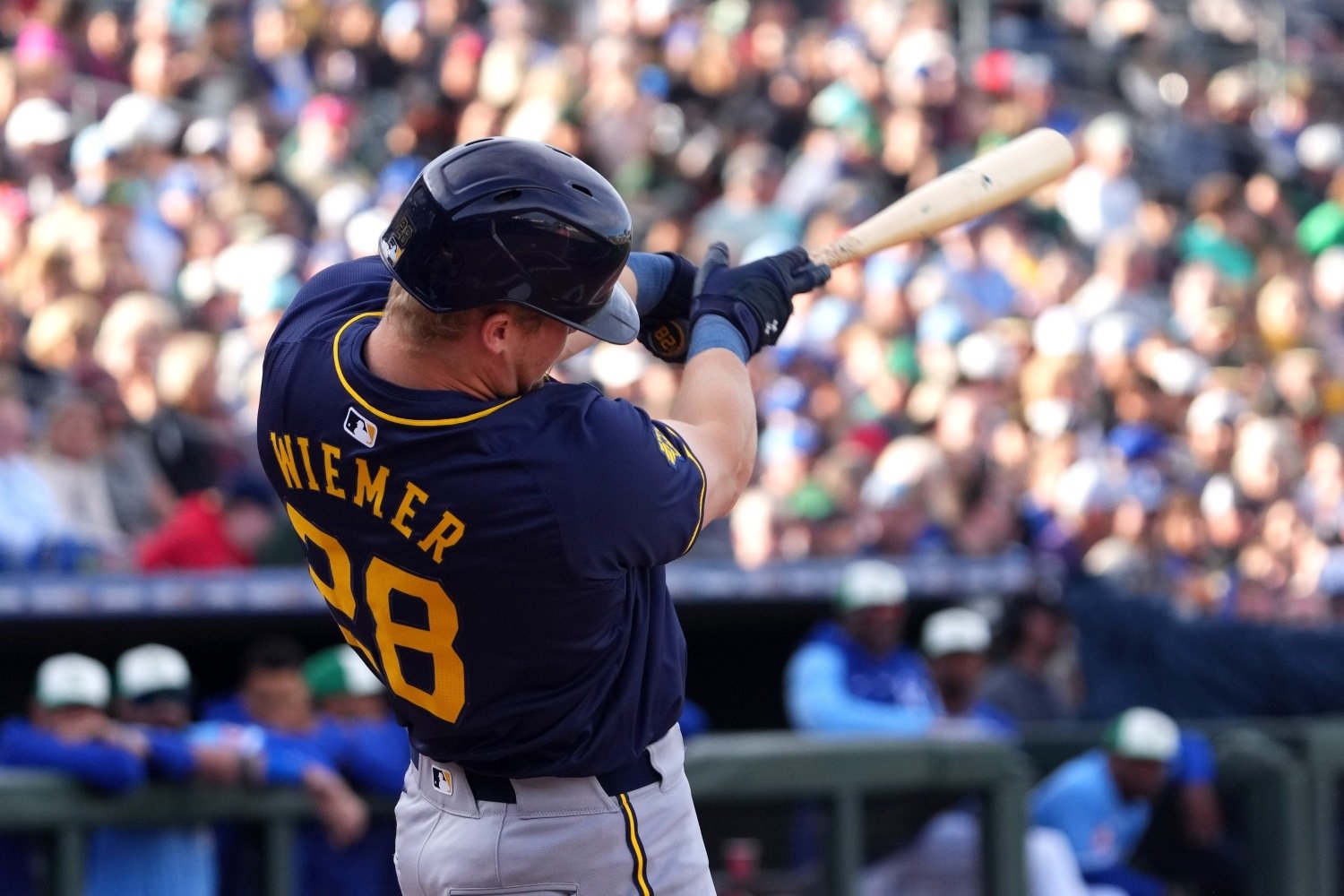 Unfortunately, neither of the two players most primed for a call-up have gotten off to hot starts on the terms most specifically important to them, although Tyler Black is hitting .304/.392/.435. Joey Wiemer has faced some bad luck on batted balls, and is hitting just .120/.214/.160, with some flaky defense to boot. It’s safe to say neither are forcing the front office into difficult decisions yet. What’s been happening under the surface during the first week? Tyler Black Black’s array of bat-to-ball skills, sneaky power and speed to burn have seen him soar to the position of 44th-best prospect in baseball, per MLB Pipeline. This season hasn’t started well, however, with Black's surface-level numbers belying a surprising amount of swing-and-miss in his stroke. Here are Black’s stats for the first week of 2024, compared with 2023: Chase Rate - 32.7% (2024) vs 18.5% (2023) Whiff Rate - 33.3% vs 22.4% Swinging Strike - 15.2% vs 9.8% Hard Hit rate - 41.2% vs 32.5% Sweet Spot Rate - 52.9% vs 23.3% Foul Rate - 28.9% vs 43% Although the contact rates haven’t been close to the levels Black has shown over the last few years, the quality of contact has been considerably better. He has been feast-or-famine in how he’s hit the ball, from weakly topped balls to strongish line drives, but he hasn’t been able to stay in the at-bat by fouling off pitches and waiting on something to hit. With Black, this appears to be a small-sample-size thing, though one that bears watching, and the Brewers will be keeping an eye on the hard-hit rate and the whiff rates in order to assess his readiness. A real strength of his seems to be his ability to graft and grind his way on base, and it’s reassuring to see that even when he’s struggling a little at the plate, he’s still posting elite on-base percentages. Another point to note for Black is that (per our amazing minor-league coverage team here at Brewer Fanatic) his defense at first base has been really strong so far, showing good range and adept hands. Black's biggest weakness defensively is his arm, but his ineffectual throwing motion's danger is negated by the lack of throwing required from first base. His speed will give him the range to be above-average there, and it’s nice to note his strength so far in what is still a relatively new position. Black will have to prove he can sustain impressive exit velocities over the season, and that his power outbreak last season was no fluke. He's increasingly looking destined for a position that demands that thump. A likely timeline is probably nearer the All-Star break, depending on the performance of Jake Bauers and the health of several players. Joey Wiemer Wiemer seems to be the very definition of “forcing it”, having worked intensely during the offseason on calming his swing path. The results thus far have been exactly what you’d expect from something that is still getting bedded in, with occasional flashes of monstrous tools alongside a lot of swing-and-miss and poor at-bats. Some standout statistics in the first week for Wiemer are (note that Wiemer’s 2023 stats include his time in the majors): Whiff Rate - 31.9% (2024) vs 33.2% (2023) Chase Rate - 26.3% vs 29.1% Launch Angle - 4.4° vs 9.1° Avg Exit Velocity - 91 mph vs 89.4 mph A big reason for Wiemer’s changes in the offseason was to minimize the poor contact and be more consistent at the plate. He has an xBA of .200 and xSLG of .280 so far, while still striking out at a 25% clip. That consistency is not yet in evidence, despite the control of the zone and the quality of contact being better than last year. In college, Wiemer struggled to harness the athletic capabilities in his frame due to low launch angles, resulting in more gap-to-gap power (at the expense of the over-the-fence variety) than you would like. The Brewers managed to unlock this power by having him focus on elevating the ball, but there is a slight worry that throughout spring training (and so far in the minor leagues), Wiemer has not managed to hit as many fly balls as Brewer fans have become accustomed to. Wiemer can be an electric difference maker, but he has to keep hitting fly balls. Otherwise, his ceiling will drop rapidly. Defensively, he hasn’t looked himself so far, either, with a couple of plays in Wednesday night’s game that were unlike him--including dropping what was quite a routine foul fly ball and allowing an unearned run on the next pitch. It may take time for his changes to take root, and to see just what the Brewers have in Wiemer, but the good news is that they can afford to give him plenty of playing time to lock in those changes, with such a stacked outfield in the major leagues. It’s likely that Wiemer won’t be up until there is a consistent uptick in his batted-ball numbers, and that in itself may mean a full year in the minors, barring injury. That timeline is entirely okay with a player as talented as Wiemer, who when polished can be a hitter to fear for the Brewers in 2025. Given his need for at-bats, and the form of Brewer Hicklen (who has carried on from an excellent spring training), potentially pushes Wiemer back even in the case of an emergency until he's absolutely ready. Last year, the Crew had to lean heavily on Wiemer, due as much to injuries as to him forcing their hand. This season, they can afford to be more patient, and to have him circle back for some of the finishing touches he missed as he blitzed through the top of the minors. What do you think of the two young stars on the Nashville Sounds roster? Have you any concerns, or perhaps a more optimistic outlook on their timelines? Let us know in the comments below.
 -
Absolutely! I think that's the beauty of sports, and especially baseball, it comes down to winning little moments in each game, and who takes their chances. Over a 162 game season little incremental differences can be big, and it's one reason I really wanted to dig into this to see how much it could pay off, but it's all anticipatory.
- 4 replies
-
- 1
-

-
- brice turang
- sal frelick
- (and 3 more)
-
Both Joey Wiemer and Tyler Black had legitimate chances to make the opening day roster, have they pushed their case in Triple A for a promotion to the majors? And what doe their timeline look like? Unfortunately, neither of the two players most ready for a callup have gotten off to hot starts in terms of what you would want to see from them, although Tyler Black is hitting .304/.392/.435. Joey Wiemer has faced some bad luck on batted balls, but is hitting just .120/.214/.160 with some flaky defense to boot. It’s safe to say neither are forcing the front office into difficult decisions. What’s been happening under the surface during the first week? Tyler Black A highly intriguing prospect for the Brewers, Tyler Black’s array of bat to ball skills, sneaky power and speed to burn have seen him soar to the number 44 prospect in baseball per MLB pipeline. This season hasn’t started well however with Black's surface numbers belying a surprising amount of swing and miss in his stroke. Here are Black’s stats for the first week of 2024 compared with 2023: Chase Rate - 32.7% (2024) vs 18.5% (2023) Whiff Rate - 33.3% vs 22.4% Swinging Strike - 15.2% vs 9.8% Hard Hit rate - 41.2% vs 32.5% Sweet Spot Rate - 52.9% vs 23.3% Foul Rate - 28.9% vs 43% All in all, although the contact rates haven’t been close to the levels Black has shown over the last few years, the quality of contact has been considerably better. He has been quite feast or famine in how he’s hit the ball, from weak topped balls to strongish line drives, but he hasn’t been able to stay in the at bat by fouling off pitches and waiting on something to hit. With Black, this appears to be a small sample size thing, though one that bears watching, and the Brewers will be keeping an eye on the hard hit rate and the whiff rates quite closely when it comes to assessing his readiness. A real strength of his seems to be his ability to graft and grind his way on base, and it’s reassuring to see that even when he’s struggling a little at the plate, he’s still posting elite on base percentages. Another point to note for Black is, per our amazing minor league coverage team here at Brewer Fanatic his defense at first base has been really strong so far this season, showing good range and adept hands. Blacks’ biggest weakness defensively is his arm, with a strange throwing motion that can hinder him being negated by the lack of throwing required from first base. His speed will give him the range to be above average here, and it’s nice to note his strength so far in what is still a relatively new position. Black will have to prove he can sustain consistent exit velocities over the season, and that his power outbreak last season was no fluke in a position that demands that thump. A likely timeline is probably nearer the all star break depending on the form of Jake Bauers or injury permitting. Joey Wiemer Wiemer seems to be the very definition of “forcing it”, having worked intensely during the off season on calming his swing path. The results thus far have been exactly what you’d expect from something that is still getting bedded in, with occasional flashes of monstered balls alongside a lot of swing and miss and poor quality at bats. Some standout statistics in the first week for Wiemer are (note that Wiemer’s 2023 stats include his time in the majors): Whiff Rate - 31.9% (2024) vs 33.2% (2023) Chase Rate - 26.3% vs 29.1% Launch Angle - 4.4° vs 9.1° Avg Exit Velocity - 91 mph vs 89.4 mph A big reason for Wiemer’s changes in the off season was to minimize the poor contact and be more consistent at the plate. He has an xBA of .200 and xSLG of .280 so far while still striking out at a 25% clip. So far this season that hasn;t really happened, and there is a big concern in and amongst this. Wiemer in college struggled to harness the athletic capabilities in his frame due to lower launch angles, resulting in more gap to gap power than you would like. The Brewers managed to unlock this power by elevating the ball further, but there is a slight worry that throughout spring training and so far in the minor leagues Wiemer has not managed to hit as many fly balls as Brewer fans have become accustomed to. Wiemer can be an electric difference maker but he has to keep hitting fly balls, otherwise his ceiling will drop rapidly. Defensively he hasn’t looked himself so far either, with a couple of plays in Wednesday night’s game that were incredibly unlike him including dropping what was quite a routine foul fly ball and allowing an unearned run on the next pitch. It may take time for his changes to bed in and see just what the Brewers have got for Wiemer but the good news is they can afford to give him plenty of playing time to bed those changes in with such a stacked outfield in the major leagues. It’s likely that Wiemer won’t be up until there is a consistent uptick in his batted ball numbers, and that in itself may mean a full year in the minors barring injury. That timeline is entirely okay with a player as talented as Joey Wiemer, who when polished can be a hitter to fear for the Brewers in 2025. Given his need for at bats, and the form of Brewer Hicklen who has carried on from an excellent spring training, potentially pushes Wiemer back even in the case of an emergency until he's absolutely ready. What do you think of the two young starlets on the Nashville Sounds roster? have you any concerns, or perhaps a more optimistic outlook on their timelines? Let us know in the comments below View full article
-
The Milwaukee Brewers have hit the ground running on the basepaths this season, with an aggressive approach yielding 16 stolen bases and just two outs in their first eight games. How much will this impact their wins total at the season's end? Image courtesy of © Michael McLoone-USA TODAY Sports Increased team speed and athleticism has impelled an increase in aggressiveness from the Brewers so far in 2024. With a selection of personnel capable of swiping bags, and after seeing what havoc teams like the Diamondbacks and the Reds caused last season, it seems the Brewers are determined to tap into another source of value. The question is, how impactful will this be? Personnel In 2023, Craig Counsell had Christian Yelich, Brice Turang, Owen Miller and Joey Wiemer as the team's leading base stealers, with the final three struggling to get on base enough to use that speed. This season, they’ve added a 40-steal threat in Jackson Chourio, a first baseman (in Jake Bauers) who has swiped one so far, and replaced Wiemer with Sal Frelick (fairly similar) and Miller with Oliver Dunn (who is markedly faster). Garrett Mitchell may return in the middle of May to add further potential on the basepaths to this mix, but for now, the combination of Chourio, Yelich, Turang, Frelick, Dunn and the occasional effort from the likes of Bauers and Willy Adames can make them a dynamic team in that facet. Can They Get On Base? Perhaps the biggest question mark, in this instance, is whether or not Dunn, Chourio, Turang and Frelick can continue to get on base enough to use their feet. Turang is showing early promise in his bat-to-ball skills, though there is likely to be some regression as his BABIP evens out. Chourio has also been slightly fortunate with infield singles, whereas Frelick has been on the other end of that and hasn't gotten the reward for some of his well-hit balls in the last seven days. Dunn is squaring up the ball, but also sports a 29% strikeout rate on the year to date. Currently, this quartet are all quite fresh in the major leagues, meaning a lot of variance is to be expected in their performances, and their combined on-base rate is an above-average .350. If they can keep this north of .330 over a full season, there will be a lot of havoc to come from all four speedsters, and that volume of opportunities will translate into more sheer runs and wins added. Efficiency The Cincinnati Reds and the Arizona Diamondbacks were both elite base-stealing teams last year, but they had very different values as a result of how often each was caught. The Reds stole 190 bases, but got caught 48 times, a success rate south of the league's average (which was in excess of 80%), whereas the D’Backs stole 166 bases but were caught just 26 times, good for an 86% success rate. The reason this is important is because general calculations estimate a player caught stealing to lose double the runs one successful stolen base creates. FanGraphs says every stolen base is worth 0.3 runs, whereas to be caught stealing is worth -0.6 runs. The 2023 Brewers stole bases at an 82% rate, a fairly middling (though still value-positive) percentage, but have started the season getting caught just twice in 18 attempts, for an 89% success rate. They have faced some lesser arms in doing so, but to picture them finishing the season with an 85% or better rate would be entirely feasible. How Much Value Does This Add? In 2023, the Brewers were just six runs above average for their baserunning exploits, whereas Arizona totaled 17.5 while attempting fewer stolen bases than the Brewers likely will this season (Corbin Carroll was almost a third of their threat on his own). Let's make the following assumptions: The Brewers are attempting to steal at a rate similar to that at which the Reds attempted to do so last season, as there will be some regression from their current rate of over two per game. A little over 1.5 tries per game would equate to around 250 steal attempts this season. A success rate of 85% on stolen base attempts The value of one steal being 0.3 runs, with a caught stealing being -0.6 runs (per FanGraphs) Using the Pythagorean runs calculator that suggests just under nine runs scored would equate to a one-win swing (ie 81-81 to 82-80 record) based on 2023 numbers. The Brewers would, then, successfully steal 213 bases and get caught just 37 times next season. Per FanGraphs's method, that would bring them to 42 runs in total on the season, an improvement of 22 runs from last season. Using the Pythagorean method (which doesn’t account for situational baserunning and stealing), that would estimate the Brewers have an additional 2.5 wins coming this season, compared to last year, not factoring in the use of this speed to take extra bases on singles or avoid double plays. All in all, it seems the Brewers may have found a way to gain significantly around the margins, and that can only be a good omen for this season. It’s one big change for which the projection systems preseason may not have adequately accounted, and has certainly been advantageous so far in their cluster of close wins to open the season. We can hedge a bit on all of this, understanding that the league might find new ways to hold runners better under the new rules than they did in 2023 and that the attempt rate might thus come down even further from where it is now, but some substantial value remains for the Crew, even so. What do you think of the Brewers' new approach on the bases? Did you expect it to be worth this much extra value? Let us know your thoughts in the comments below! View full article
-
 Increased team speed and athleticism has impelled an increase in aggressiveness from the Brewers so far in 2024. With a selection of personnel capable of swiping bags, and after seeing what havoc teams like the Diamondbacks and the Reds caused last season, it seems the Brewers are determined to tap into another source of value. The question is, how impactful will this be? Personnel In 2023, Craig Counsell had Christian Yelich, Brice Turang, Owen Miller and Joey Wiemer as the team's leading base stealers, with the final three struggling to get on base enough to use that speed. This season, they’ve added a 40-steal threat in Jackson Chourio, a first baseman (in Jake Bauers) who has swiped one so far, and replaced Wiemer with Sal Frelick (fairly similar) and Miller with Oliver Dunn (who is markedly faster). Garrett Mitchell may return in the middle of May to add further potential on the basepaths to this mix, but for now, the combination of Chourio, Yelich, Turang, Frelick, Dunn and the occasional effort from the likes of Bauers and Willy Adames can make them a dynamic team in that facet. Can They Get On Base? Perhaps the biggest question mark, in this instance, is whether or not Dunn, Chourio, Turang and Frelick can continue to get on base enough to use their feet. Turang is showing early promise in his bat-to-ball skills, though there is likely to be some regression as his BABIP evens out. Chourio has also been slightly fortunate with infield singles, whereas Frelick has been on the other end of that and hasn't gotten the reward for some of his well-hit balls in the last seven days. Dunn is squaring up the ball, but also sports a 29% strikeout rate on the year to date. Currently, this quartet are all quite fresh in the major leagues, meaning a lot of variance is to be expected in their performances, and their combined on-base rate is an above-average .350. If they can keep this north of .330 over a full season, there will be a lot of havoc to come from all four speedsters, and that volume of opportunities will translate into more sheer runs and wins added. Efficiency The Cincinnati Reds and the Arizona Diamondbacks were both elite base-stealing teams last year, but they had very different values as a result of how often each was caught. The Reds stole 190 bases, but got caught 48 times, a success rate south of the league's average (which was in excess of 80%), whereas the D’Backs stole 166 bases but were caught just 26 times, good for an 86% success rate. The reason this is important is because general calculations estimate a player caught stealing to lose double the runs one successful stolen base creates. FanGraphs says every stolen base is worth 0.3 runs, whereas to be caught stealing is worth -0.6 runs. The 2023 Brewers stole bases at an 82% rate, a fairly middling (though still value-positive) percentage, but have started the season getting caught just twice in 18 attempts, for an 89% success rate. They have faced some lesser arms in doing so, but to picture them finishing the season with an 85% or better rate would be entirely feasible. How Much Value Does This Add? In 2023, the Brewers were just six runs above average for their baserunning exploits, whereas Arizona totaled 17.5 while attempting fewer stolen bases than the Brewers likely will this season (Corbin Carroll was almost a third of their threat on his own). Let's make the following assumptions: The Brewers are attempting to steal at a rate similar to that at which the Reds attempted to do so last season, as there will be some regression from their current rate of over two per game. A little over 1.5 tries per game would equate to around 250 steal attempts this season. A success rate of 85% on stolen base attempts The value of one steal being 0.3 runs, with a caught stealing being -0.6 runs (per FanGraphs) Using the Pythagorean runs calculator that suggests just under nine runs scored would equate to a one-win swing (ie 81-81 to 82-80 record) based on 2023 numbers. The Brewers would, then, successfully steal 213 bases and get caught just 37 times next season. Per FanGraphs's method, that would bring them to 42 runs in total on the season, an improvement of 22 runs from last season. Using the Pythagorean method (which doesn’t account for situational baserunning and stealing), that would estimate the Brewers have an additional 2.5 wins coming this season, compared to last year, not factoring in the use of this speed to take extra bases on singles or avoid double plays. All in all, it seems the Brewers may have found a way to gain significantly around the margins, and that can only be a good omen for this season. It’s one big change for which the projection systems preseason may not have adequately accounted, and has certainly been advantageous so far in their cluster of close wins to open the season. We can hedge a bit on all of this, understanding that the league might find new ways to hold runners better under the new rules than they did in 2023 and that the attempt rate might thus come down even further from where it is now, but some substantial value remains for the Crew, even so. What do you think of the Brewers' new approach on the bases? Did you expect it to be worth this much extra value? Let us know your thoughts in the comments below!
 -
Brewers (Ashby) vs Reds (Ashcraft): 4/8/24, 5:40pm
Jake McKibbin replied to Brock Beauchamp's topic in Archived Game Threads
CBA duplicating the post, but Ashcraft is hittable, and that cutter command looked poor his first start. Yelich has been monstering anything resembling a meatball so far, and if Ashby can just keep the crew in it and keep the ball on the ground, I think there's a decent chance today -
I think it's more to do with the increased usage of the sinker up in the zone to keep hitters honest, if he kept everything down then it's less of an issue, but he may as well fire that four seam above the strike zone to keep them honest and may get better results because of it
-
Abner Uribe’s four-seam fastball had outstanding results in 2023, but he seems to have shelved it in 2024. Will this help or hinder him as a closer? Image courtesy of © Wendell Cruz-USA TODAY Sports Abner Uribe’s four-seamer was the headline-making pitch for him last season, averaging triple-digit velocity and topping out at 103.3 miles per hour. Hitters had an expected slugging percentage of just .254, so it was a highly effective pitch that allowed him to target the top of the strike zone with more effectiveness. So why would he put it on the back burner? The Movement Characteristics Although Uribe has searing pace on his four-seam fastball, unfortunately, the rest of the movement profile isn’t so impressive. A large part of its effectiveness likely comes from hitters sitting on his sinker and slider, because he generates almost no rise on the pitch at all with just 11” of induced vertical break (2023 league average: 15.5”) and a vertical approach angle of -5.23° (2023 league average -4.78°). He generated just a 10% whiff rate behind it, so over a larger sample size there is a possibility that it could be hit hard. This is a good example of his four-seamer, in that although it tunnels well with his slider, it isn’t getting the swing and miss it should. Uribe dotted this four-seamer at 102 mph, high and tight on the black, and yet it’s fouled off with relative ease. Bryce Harper is a phenomenal hitter, but Uribe doesn’t use this pitch often enough to see hitters sitting on it, and there is definite concern if his location errs. Comparable Four-Seamers A good comparison for this is Hunter Greene, who has the same incredibly high velocity with slightly less movement than Uribe. Last year, Greene's fastball showed a propensity to get those swings and misses, but also got hit hard, with hitters going .265 (batting average)/.518 (slugging) against it, with a 91-mph average exit velocity and 20° launch angle. Anything over the plate got squared up. As a late-inning reliever, the one thing Uribe has to limit is the home run ball, especially as he can get a little bit wild and issue some free passes. In the crunch of a late-game situation with a thin lead, a walk that puts a runner aboard and a long ball on its heels can be devastating. Uribe doesn't have Greene' margin for error. The Two-Pitch Arsenal Is Still Filthy A two-pitch mix isn’t always ideal, but when both offerings are truly elite, it becomes less relevant. Abner Uribe threw some of the most disgusting sinkers I’ve ever seen last season, capped off by this: The movement he generates while touching triple digits is awe-inspiring, and the amount of run is almost comparable to a changeup, making it a potentially deadly out pitch to left-handed batters. With a 57% ground ball rate and a 22% swing-and-miss rate, it’s an incredible offering to both right- and left-handed hitters. To go away from righthanders, Uribe’s slider is also one of the nastiest of its kind, eliciting a number of egregious chases last season. Hitters swung and missed 58% of the time, thanks to the prodigious break achieved at almost 90 mph on average, it’s a wiffle-ball offering that Uribe can go to again and again. Sticking to this sinker-slider mixture also means plenty of ground balls, so Uribe might be able to induce a key double play to escape jams at times. The issue is that, without the four-seamer, there's little vertical contrast to his repertoire. He might induce a lot of weak contact, but not miss enough bats, because the sinker doesn't set up the slider for whiffs as well as the four-seamer could. Uribe seems destined to get the lion's share of closing opportunities this season, albeit with a sprinkling of Joel Payamps and Trevor Megill in that role, too. The simplified arsenal seems like it could benefit him and remove a pitch that looked likely for regression this season. What do you think of high-leverage pitchers with a shorter arsenal? Can they remain as effective? Let us know your thoughts in the comments below. View full article
-
Has Abner Uribe Become More Hittable Since Dropping This Pitch?
Jake McKibbin posted an article in Brewers
 Abner Uribe’s four-seamer was the headline-making pitch for him last season, averaging triple-digit velocity and topping out at 103.3 miles per hour. Hitters had an expected slugging percentage of just .254, so it was a highly effective pitch that allowed him to target the top of the strike zone with more effectiveness. So why would he put it on the back burner? The Movement Characteristics Although Uribe has searing pace on his four-seam fastball, unfortunately, the rest of the movement profile isn’t so impressive. A large part of its effectiveness likely comes from hitters sitting on his sinker and slider, because he generates almost no rise on the pitch at all with just 11” of induced vertical break (2023 league average: 15.5”) and a vertical approach angle of -5.23° (2023 league average -4.78°). He generated just a 10% whiff rate behind it, so over a larger sample size there is a possibility that it could be hit hard. This is a good example of his four-seamer, in that although it tunnels well with his slider, it isn’t getting the swing and miss it should. Uribe dotted this four-seamer at 102 mph, high and tight on the black, and yet it’s fouled off with relative ease. Bryce Harper is a phenomenal hitter, but Uribe doesn’t use this pitch often enough to see hitters sitting on it, and there is definite concern if his location errs. Comparable Four-Seamers A good comparison for this is Hunter Greene, who has the same incredibly high velocity with slightly less movement than Uribe. Last year, Greene's fastball showed a propensity to get those swings and misses, but also got hit hard, with hitters going .265 (batting average)/.518 (slugging) against it, with a 91-mph average exit velocity and 20° launch angle. Anything over the plate got squared up. As a late-inning reliever, the one thing Uribe has to limit is the home run ball, especially as he can get a little bit wild and issue some free passes. In the crunch of a late-game situation with a thin lead, a walk that puts a runner aboard and a long ball on its heels can be devastating. Uribe doesn't have Greene' margin for error. The Two-Pitch Arsenal Is Still Filthy A two-pitch mix isn’t always ideal, but when both offerings are truly elite, it becomes less relevant. Abner Uribe threw some of the most disgusting sinkers I’ve ever seen last season, capped off by this: The movement he generates while touching triple digits is awe-inspiring, and the amount of run is almost comparable to a changeup, making it a potentially deadly out pitch to left-handed batters. With a 57% ground ball rate and a 22% swing-and-miss rate, it’s an incredible offering to both right- and left-handed hitters. To go away from righthanders, Uribe’s slider is also one of the nastiest of its kind, eliciting a number of egregious chases last season. Hitters swung and missed 58% of the time, thanks to the prodigious break achieved at almost 90 mph on average, it’s a wiffle-ball offering that Uribe can go to again and again. Sticking to this sinker-slider mixture also means plenty of ground balls, so Uribe might be able to induce a key double play to escape jams at times. The issue is that, without the four-seamer, there's little vertical contrast to his repertoire. He might induce a lot of weak contact, but not miss enough bats, because the sinker doesn't set up the slider for whiffs as well as the four-seamer could. Uribe seems destined to get the lion's share of closing opportunities this season, albeit with a sprinkling of Joel Payamps and Trevor Megill in that role, too. The simplified arsenal seems like it could benefit him and remove a pitch that looked likely for regression this season. What do you think of high-leverage pitchers with a shorter arsenal? Can they remain as effective? Let us know your thoughts in the comments below.
 -
Christian Yelich’s Improved Pitch Selection Is Unlocking His Inner MVP
Jake McKibbin posted an article in Brewers
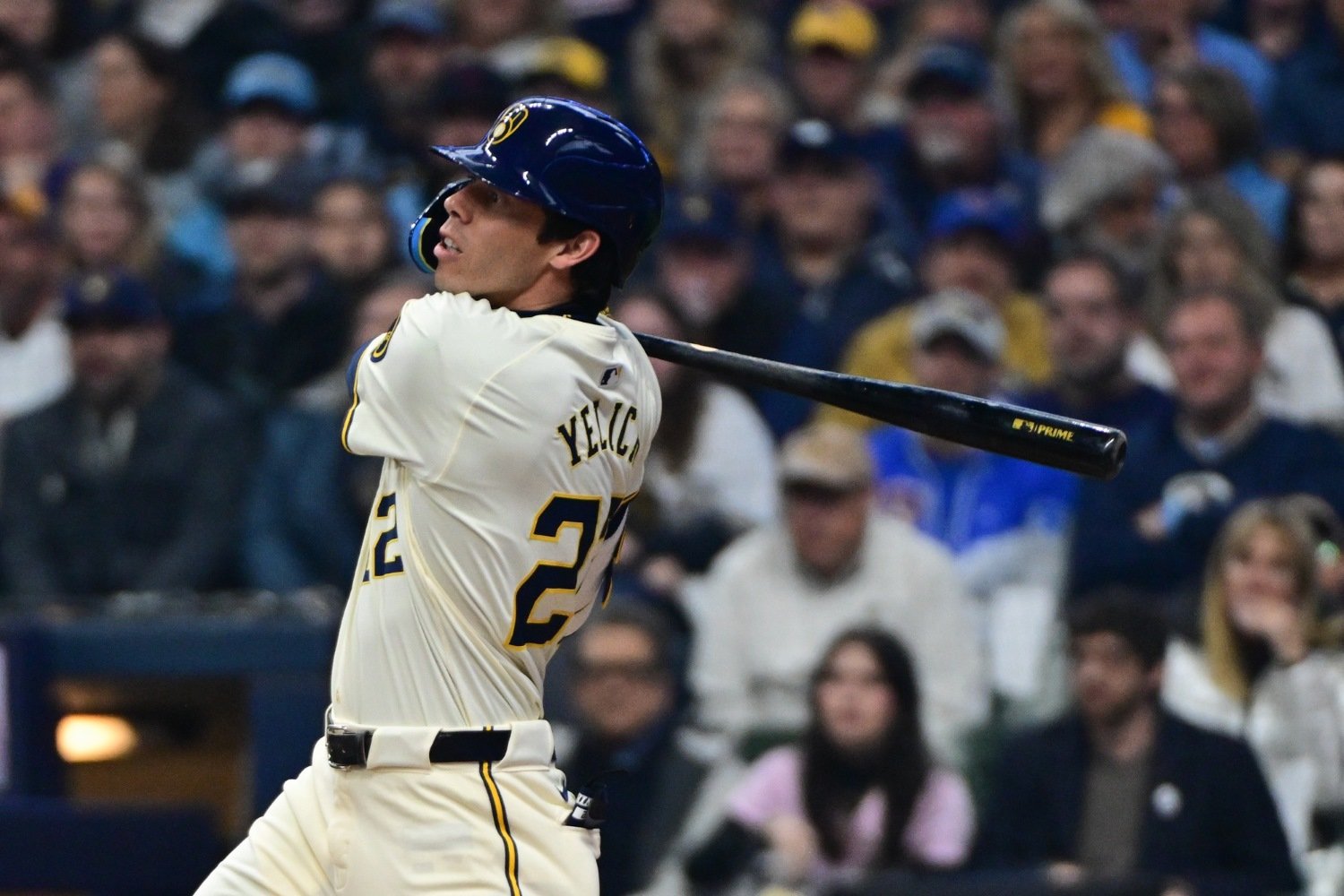 For years, the Christian Yelich conundrum has boiled down to whether or not he can steer clear of ground balls, because his power (when he gets it in the air) is truly immense. This season, he may have found a formula to get back to that, and it involves his plate discipline. He still has a healthy habit of swiping below the strike zone, but elsewhere, the changes are monumental. Chasing Inside In his prime, MVP-caliber years of 2018 and 2019, Yelich could do damage all over the plate, but his main sources of excellence were in pulling balls over the heart of the plate, and going to the opposite field on balls on the outer third. He could pull balls thigh-high on the inner third, but other than that, he struggled to damage here. As you can see in 2023, the further inside Yelich chased, the more common the ground balls became, and he chased a lot in this area: Fast-forward to 2024, and Yelich has taken an altogether different approach; he’s yet to chase a ball either inside or above the strike zone this season. Not only is Yelich laying off these pitches inside, but notice that his swing rates are highest in the same areas as in the halcyon days. He’s being more selective, and honing in on those pitches he can elevate more often. He's taking more pitches than he did in his hay day, swinging less often at first pitches than has been his norm since 2020, but amalgamating the plate discipline and eye with an ability to mash mistakes can bring Yelich closer to his former MVP performance levels, even if it’s in a slightly different way. Speaking of mashing… Crushing Mistakes Something Yelich has struggled to do over the last few seasons is square up those mistake pitches, allowing for too much sub-optimal contact. This season, in the early stages, that’s changed: Yelich has been absolutely torching balls thrown over the heart of the plate, and I’d wager that he may extend that to the outer half, too, if not for the lack of outer-third pitches seen so far this year. On middle-middle pitches, he’s averaging 106-mph exit velocities with a 17.7-degree launch angle. As previously mentioned, ground balls have been a soul destroyer for Yelich in recent years, but a big advantage to his reduced chase rates has been an uptick in elevated balls, especially in the middle and bottom halves of the zone. It’s very early for this statistic, in particular, given its dispersion across three different markers, but Yelich currently has a sweet spot rate of 31.3%, considerably up from his 26% average since 2020, while also producing a launch angle of 12.1 degrees. If Christian Yelich can keep this even in double digits, this season can be absolute carnage. One final indicator: Yelich is often lauded for his “opposite-field approach” by some commentators. However, his best seasons have come when he abandons this in favor of more of a pull-happy model. So far this year, Yelich has done exactly that, and look how neatly this blends into 2018/19: In terms of his plate discipline, his approach to those pitches he can attack, and his ability to execute and elevate, Christian Yelich looks primed to take another step closer to his former dominant self. Health, as always, will be a big factor for the Brewers' main man, but 2024 may finally be the year Christian Yelich carries this offense to a whole other level. What do you think of Yelich so far? Can you feel that glimmer of hope spurting in your chest? Let us know in the comments below!

