



Jake McKibbin
-
Posts
2,395 -
Joined
-
Last visited
-
Days Won
6
Content Type
Profiles
Forums
Blogs
Events
News
2026 Milwaukee Brewers Top Prospects Ranking
Milwaukee Brewers Videos
2022 Milwaukee Brewers Draft Picks
Milwaukee Brewers Free Agent & Trade Rumors, Notes, & Tidbits
Guides & Resources
2023 Milwaukee Brewers Draft Picks
2024 Milwaukee Brewers Draft Picks
The Milwaukee Brewers Players Project
2025 Milwaukee Brewers Draft Pick Tracker
2026 Milwaukee Brewers Draft Tracker: Picks & Bonuses
Store
Downloads
Gallery
Everything posted by Jake McKibbin
-
Christian Yelich has started the 2024 season looking remarkably like the long-lost, best version of himself, smashing two home runs in his first five games. Even better, it may be here to stay, as a result of the pitch selection adjustments he’s shown so far. Image courtesy of © Benny Sieu-USA TODAY Sports For years, the Christian Yelich conundrum has boiled down to whether or not he can steer clear of ground balls, because his power (when he gets it in the air) is truly immense. This season, he may have found a formula to get back to that, and it involves his plate discipline. He still has a healthy habit of swiping below the strike zone, but elsewhere, the changes are monumental. Chasing Inside In his prime, MVP-caliber years of 2018 and 2019, Yelich could do damage all over the plate, but his main sources of excellence were in pulling balls over the heart of the plate, and going to the opposite field on balls on the outer third. He could pull balls thigh-high on the inner third, but other than that, he struggled to damage here. As you can see in 2023, the further inside Yelich chased, the more common the ground balls became, and he chased a lot in this area: Fast-forward to 2024, and Yelich has taken an altogether different approach; he’s yet to chase a ball either inside or above the strike zone this season. Not only is Yelich laying off these pitches inside, but notice that his swing rates are highest in the same areas as in the halcyon days. He’s being more selective, and honing in on those pitches he can elevate more often. He's taking more pitches than he did in his hay day, swinging less often at first pitches than has been his norm since 2020, but amalgamating the plate discipline and eye with an ability to mash mistakes can bring Yelich closer to his former MVP performance levels, even if it’s in a slightly different way. Speaking of mashing… Crushing Mistakes Something Yelich has struggled to do over the last few seasons is square up those mistake pitches, allowing for too much sub-optimal contact. This season, in the early stages, that’s changed: Yelich has been absolutely torching balls thrown over the heart of the plate, and I’d wager that he may extend that to the outer half, too, if not for the lack of outer-third pitches seen so far this year. On middle-middle pitches, he’s averaging 106-mph exit velocities with a 17.7-degree launch angle. As previously mentioned, ground balls have been a soul destroyer for Yelich in recent years, but a big advantage to his reduced chase rates has been an uptick in elevated balls, especially in the middle and bottom halves of the zone. It’s very early for this statistic, in particular, given its dispersion across three different markers, but Yelich currently has a sweet spot rate of 31.3%, considerably up from his 26% average since 2020, while also producing a launch angle of 12.1 degrees. If Christian Yelich can keep this even in double digits, this season can be absolute carnage. One final indicator: Yelich is often lauded for his “opposite-field approach” by some commentators. However, his best seasons have come when he abandons this in favor of more of a pull-happy model. So far this year, Yelich has done exactly that, and look how neatly this blends into 2018/19: In terms of his plate discipline, his approach to those pitches he can attack, and his ability to execute and elevate, Christian Yelich looks primed to take another step closer to his former dominant self. Health, as always, will be a big factor for the Brewers' main man, but 2024 may finally be the year Christian Yelich carries this offense to a whole other level. What do you think of Yelich so far? Can you feel that glimmer of hope spurting in your chest? Let us know in the comments below! View full article
-
Is Brice Turang Taking That "Quantum Leap"?
Jake McKibbin replied to Jake McKibbin's topic in Brewer Fanatic Front Page News
Completely agree. A .585 OPS to a .685 OPS is a massive jump, and he's definitely capable of that. The AB against Stewart demonstrated just how much easier he's finding it to make contact this season -
Is Brice Turang Taking That "Quantum Leap"?
Jake McKibbin replied to Jake McKibbin's topic in Brewer Fanatic Front Page News
Glad you liked it! Yeah I like the protection this year too, lefties really did a number on him last season. He has had some soft contact but also some better contact than I expected and that has me slightly more optimistic. That single off the high fastball yesterday was such a positive sign for him. I'm maybe not quite so optimistic on the power front, as .260-.280 with 20 homers and his speed is an .800+ OPS and I'm not sure he's wuite capable of that without sacrificing those contact skills. You're right about his adjustments in the minors, seemed to happen at each spot after half a season. -
Brice Turang has had a stunning start to 2024, and seems to have shored up some of the issues that plagued him last season. Can he sustain at least average offensive output, based on what we've seen? Image courtesy of © Benny Sieu-USA TODAY Sports When Pat Murphy commented during spring training about Brice Turang taking a quantum leap forward this season, he drew some derision from myself and many other Brewers fans. In the first four games, however, Turang has looked like a totally different player--one much more akin to the talent scouts have touted since he was drafted in 2018. Elite defense and a strong hit tool with great baserunning instincts add up to an effective everyday big-league player, but how is Turang performing better this season? The High Fastball In 2023, one of Turang’s biggest issues came in how he dealt with the four-seam fastball at the top of the zone. He swung and missed 18.2% of the time, while fouling off these pitches a further 53.9% of the time, meaning fewer than 28% of his swings at upper-third fastballs were put into play. Of these, with just an 86.6-mph average exit velocity, he couldn’t do anything with the ball, resulting in a lot of cheap outs and a weighted On Base Average (wOBA) of just .275. A lot of this was a result of an uppercut swing, whereby he swung underneath the ball with regularity. This season, as a result of some of the changes to his hand position, the size of his bat knob, and (I’m sure) other tweaks, the bat path is a lot flatter through the zone, allowing him to get on top of those high four-seamers. As a result, early on, you can see how this has reduced his swing and miss in the upper third: Pitchers' go-to sequence for Turang last year seemed to be fastballs up to get ahead, and then put him away when he chased and missed below the zone. It happened over and over again, so being able to avoid those misses and fouls and force the pitchers above the zone to get these results will help him get into more favorable counts; he should even walk more. A higher on-base percentage brings about chances to use his speed to the devastating effect we’ve seen so far, as you can see below on a pitch that he wouldn’t have gotten close to last season: The Problems Outside The Zone (and a word of caution) Last season, breaking pitches below the strike zone were almost a guaranteed out against Turang. He whiffed on 70% of his swings on such offerings. He has only faced 11 such pitches so far this season, chasing five and missing on one of them. This is an incredibly small sample size, and while it does suggest he can maybe be more effective in two-strike counts in these scenarios, there isn’t enough evidence yet to know for sure. The good news is that Turang didn’t chase all that much in this area last year, proving much more susceptible to pitches inside or above the strike zone. This is a trend that seems to be continuing this season, so again, that chase rate and the corresponding contact issues it will bring are a source of potential regression. If he can maintain the flatter bat path, though, it should allow him to stay in the at-bat a whole lot better and shouldn’t be the end of the world for him. So Can He Be A League-Average Hitter? The BABIP of .700 isn’t sustainable, and he’s not looking likely to hit for more extra bases, either. That being said, he had an 87.5% stolen base rate last year, so he doesn’t need that power to be a solid offensive contributor for the Brewers. He’s also improved in the following areas (again SSS alert): 89.4 mph average exit velocity on non-bunts (+3.6 mph) Sweet spot rate 40% (+9.9%) Forward velocity 80.1 mph (+4.9 mph) Swing and Miss Rate 11.8% (- 9.8%) Pitches Per Plate Appearance 4.20 (+ 0.21) These are all signs of a hitter providing better at-bats, with a better idea of which pitches he can square up and which ones he can’t, along with a better ability to find the outfield grass. Turang is unlikely to be a 110 wRC+ hitter, but there is a definite chance he can find that 95-100 wRC+ mark with his baserunning capabilities added thereto. Alongside the incredible defense, you’re looking at a solid 3+ WAR player if he can maintain this standard. What do you think of Turang's start to the season? Can you see meaningful changes, or is this just another early-season smokescreen? Let us know your thoughts in the comments below! View full article
-
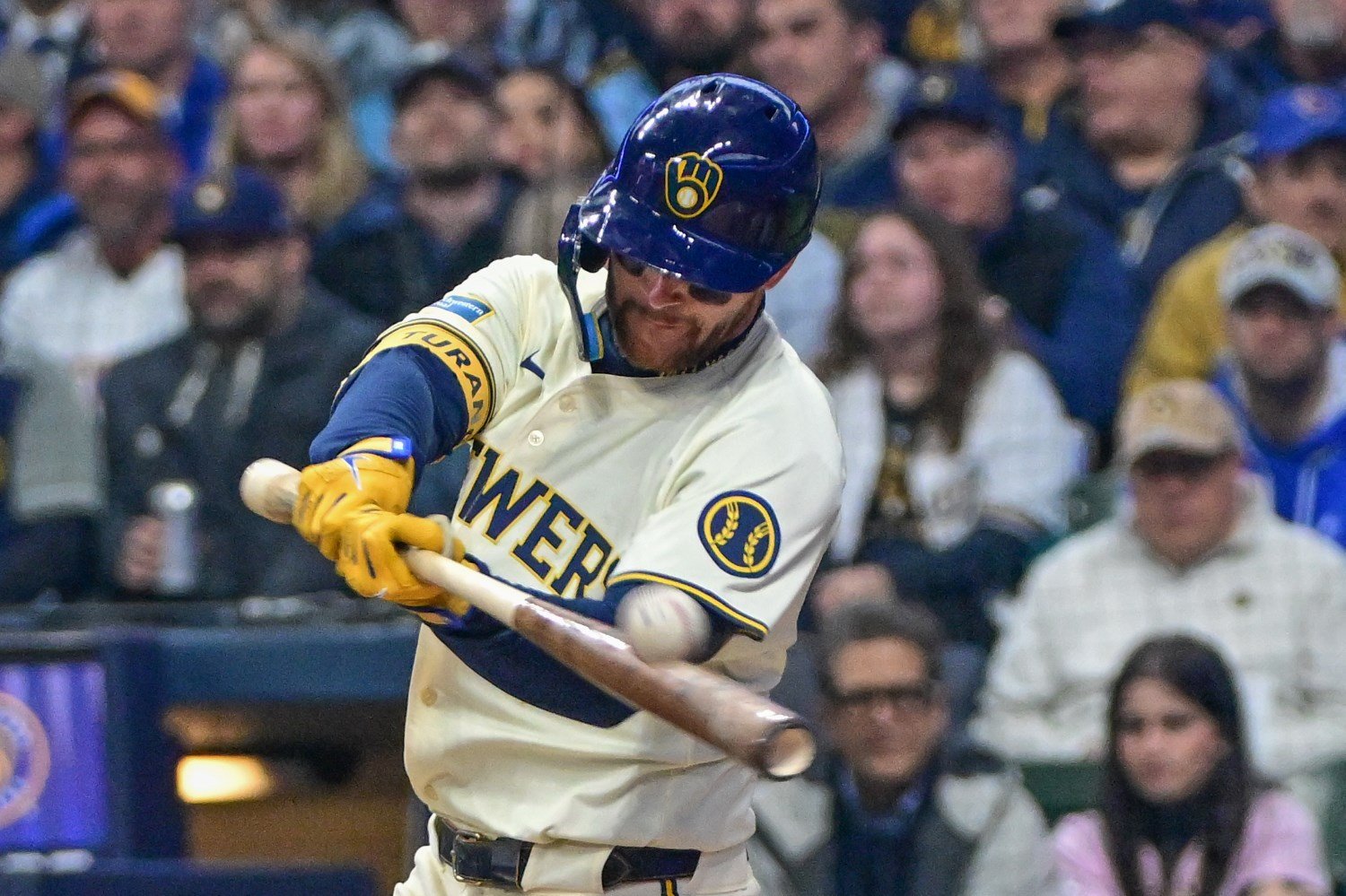 When Pat Murphy commented during spring training about Brice Turang taking a quantum leap forward this season, he drew some derision from myself and many other Brewers fans. In the first four games, however, Turang has looked like a totally different player--one much more akin to the talent scouts have touted since he was drafted in 2018. Elite defense and a strong hit tool with great baserunning instincts add up to an effective everyday big-league player, but how is Turang performing better this season? The High Fastball In 2023, one of Turang’s biggest issues came in how he dealt with the four-seam fastball at the top of the zone. He swung and missed 18.2% of the time, while fouling off these pitches a further 53.9% of the time, meaning fewer than 28% of his swings at upper-third fastballs were put into play. Of these, with just an 86.6-mph average exit velocity, he couldn’t do anything with the ball, resulting in a lot of cheap outs and a weighted On Base Average (wOBA) of just .275. A lot of this was a result of an uppercut swing, whereby he swung underneath the ball with regularity. This season, as a result of some of the changes to his hand position, the size of his bat knob, and (I’m sure) other tweaks, the bat path is a lot flatter through the zone, allowing him to get on top of those high four-seamers. As a result, early on, you can see how this has reduced his swing and miss in the upper third: Pitchers' go-to sequence for Turang last year seemed to be fastballs up to get ahead, and then put him away when he chased and missed below the zone. It happened over and over again, so being able to avoid those misses and fouls and force the pitchers above the zone to get these results will help him get into more favorable counts; he should even walk more. A higher on-base percentage brings about chances to use his speed to the devastating effect we’ve seen so far, as you can see below on a pitch that he wouldn’t have gotten close to last season: The Problems Outside The Zone (and a word of caution) Last season, breaking pitches below the strike zone were almost a guaranteed out against Turang. He whiffed on 70% of his swings on such offerings. He has only faced 11 such pitches so far this season, chasing five and missing on one of them. This is an incredibly small sample size, and while it does suggest he can maybe be more effective in two-strike counts in these scenarios, there isn’t enough evidence yet to know for sure. The good news is that Turang didn’t chase all that much in this area last year, proving much more susceptible to pitches inside or above the strike zone. This is a trend that seems to be continuing this season, so again, that chase rate and the corresponding contact issues it will bring are a source of potential regression. If he can maintain the flatter bat path, though, it should allow him to stay in the at-bat a whole lot better and shouldn’t be the end of the world for him. So Can He Be A League-Average Hitter? The BABIP of .700 isn’t sustainable, and he’s not looking likely to hit for more extra bases, either. That being said, he had an 87.5% stolen base rate last year, so he doesn’t need that power to be a solid offensive contributor for the Brewers. He’s also improved in the following areas (again SSS alert): 89.4 mph average exit velocity on non-bunts (+3.6 mph) Sweet spot rate 40% (+9.9%) Forward velocity 80.1 mph (+4.9 mph) Swing and Miss Rate 11.8% (- 9.8%) Pitches Per Plate Appearance 4.20 (+ 0.21) These are all signs of a hitter providing better at-bats, with a better idea of which pitches he can square up and which ones he can’t, along with a better ability to find the outfield grass. Turang is unlikely to be a 110 wRC+ hitter, but there is a definite chance he can find that 95-100 wRC+ mark with his baserunning capabilities added thereto. Alongside the incredible defense, you’re looking at a solid 3+ WAR player if he can maintain this standard. What do you think of Turang's start to the season? Can you see meaningful changes, or is this just another early-season smokescreen? Let us know your thoughts in the comments below!
 -
The Milwaukee Brewers' über prospect’s MVP potential comes from his latent power, but his circumjacent tools--elite speed, great defense and impressive strike-zone coverage--were on full display this weekend. The floor is higher than most predicted, and his value is even higher as a result. While Jackson Chourio’s surface-level statistics look just fine, it was his speed that really shone in producing a 5-12 weekend, with a stolen base and a double. Some of the underlying batted-ball metrics, however, aren’t quite so hot (small sample size alert here): 79 mph average exit velocity -11.1° launch angle .120 xBA 77.8% ground ball rate The long and short of it is that Chourio didn’t obliterate the baseball in the batter's box. This isn’t an indictment of Chourio, though. In fact, it’s a positive. It shows he can grind his way to contributing offensively even when he’s not squaring the ball up, something many heavily hyped phenoms have struggled with in recent seasons. It’s unrealistic to expect the bat to catch fire before the All-Star break, though given how quickly Chourio has adapted at every other level he’s reached, it could happen. When he does figure that side of things out and start accessing his power more frequently, his stock will skyrocket. It's important to keep in mind that, until the timing clicks as a hitter, there will be ups and downs in Chourio's numbers, and his current .556 BABIP is hilariously unsustainable. Due to his speed, that figure will likely be higher than most, though, and it's that point that hammers home how impactful he can be even on an off day. Just How Influential Was He On Opening Weekend? A walk and stolen base to start your MLB career is a great start for someone who chased a lot in the minors in 2023. That's what Chourio did in the first inning Friday. From then on, that speed really showed, as he beat out multiple infield dribblers and did this for his first RBI--on what, for almost any other runner, would be an easy double play: Infielders are going to have to hustle with Chourio, who may be the fastest player on the Brewers (which is saying something, on a team that features Sal Frelick, Brice Turang, and Garrett Mitchell, to name but a few). Fresh off a 40-steal season in the minors, he’s going to cause havoc on the basepaths. For a Brewers team that prides itself on defensive abilities, however, this is arguably of more importance: Coming into the season, Chourio had raised some questions during spring training that perhaps his defense wasn’t as elite as some scouts had thought. While some of the routes he took to fly balls were slightly unconventional, he silenced his critics on the first day, with two magnificent catches (one of which is the one above) in an environment where wind was playing havoc with long fly balls. Chourio looked great, and his speed made up for some of the route issues that he will iron out with time and experience in the outfield. MLB Has a History of Sheltering Promising Young Players Since 1999, there have been a number of big helium prospects coming up the big leagues--even before the bat was ready--on the theory that their defense can add significant value anyway. Here are some of the rookies involved: Addison Russell - 2015, Chicago Cubs Elvis Andrus - 2009, Texas Rangers Adrián Beltré - 1999, LA Dodgers Gleyber Torres - 2018, NY Yankees Cristian Guzmán - 1999, Minnesota Twins Of particular note here are the 2018 Yankees and 2015 Cubs. Both of these teams had playoff aspirations and still made room for young players with a solid defensive floor who were still developing as hitters. Torres ended up posting a 121 WRC+ in 2018, and ended up moving up out of the eighth and ninth spots as the season wore on, but he began it under the aegis of the rest of the Yankees lineup. Russell was a below-average hitter, but one of the best defensive middle infielders in baseball in 2015. It was this weekend that the depth of Jackson Chourio’s tool bag hit home. Every player goes through ups and down in their production at the plate, even the best of them. Chourio’s raw speed will allow him to contribute to the team during those down periods, a rare sight in today’s game. He’s a true five-tool player, and when those tools all work in tandem, the league had better be ready. View full article
-
The Depth Of Jackson Chourio's Toolset Shone Vividly On Opening Weekend
Jake McKibbin posted an article in Brewers
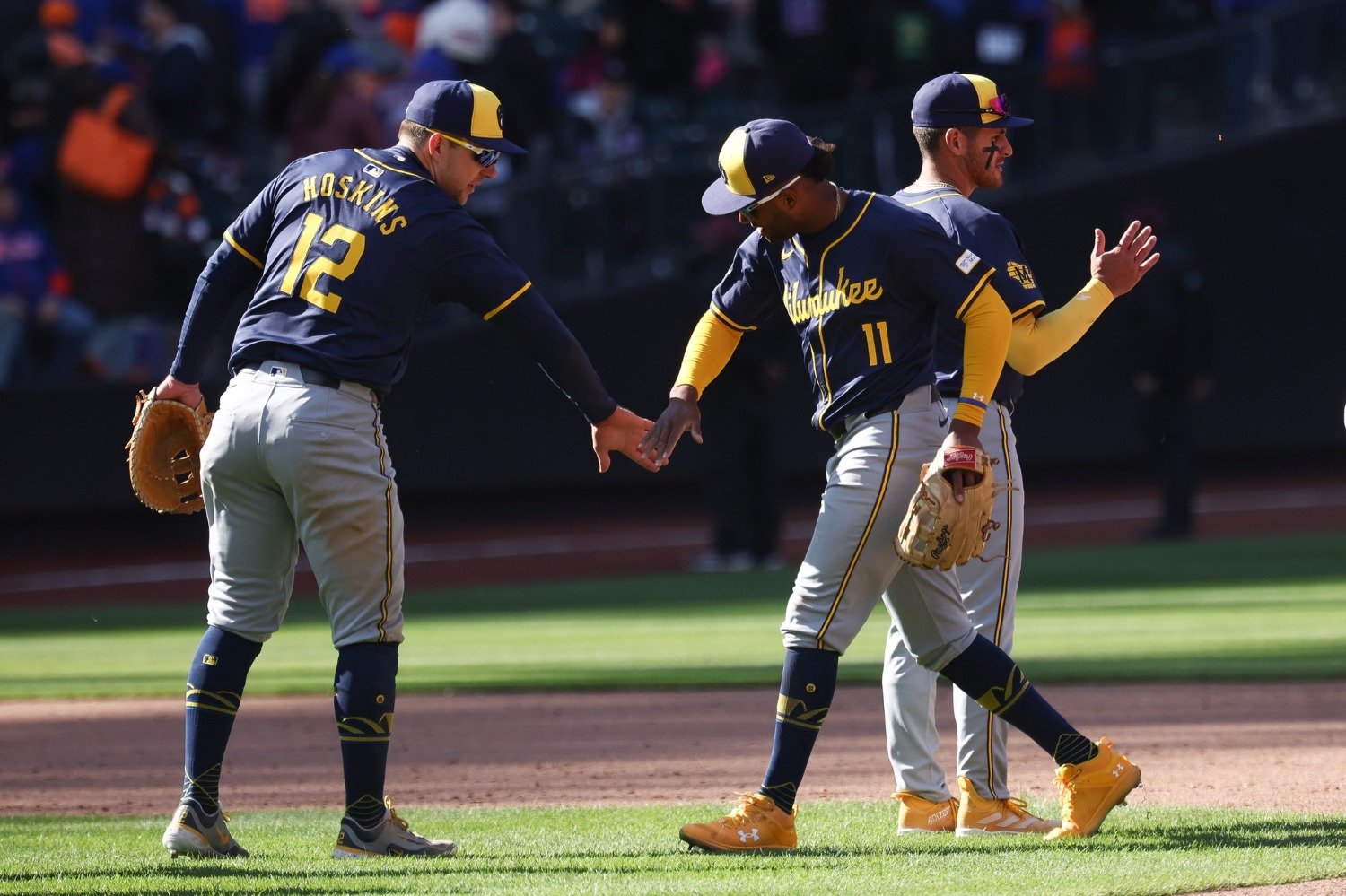 While Jackson Chourio’s surface-level statistics look just fine, it was his speed that really shone in producing a 5-12 weekend, with a stolen base and a double. Some of the underlying batted-ball metrics, however, aren’t quite so hot (small sample size alert here): 79 mph average exit velocity -11.1° launch angle .120 xBA 77.8% ground ball rate The long and short of it is that Chourio didn’t obliterate the baseball in the batter's box. This isn’t an indictment of Chourio, though. In fact, it’s a positive. It shows he can grind his way to contributing offensively even when he’s not squaring the ball up, something many heavily hyped phenoms have struggled with in recent seasons. It’s unrealistic to expect the bat to catch fire before the All-Star break, though given how quickly Chourio has adapted at every other level he’s reached, it could happen. When he does figure that side of things out and start accessing his power more frequently, his stock will skyrocket. It's important to keep in mind that, until the timing clicks as a hitter, there will be ups and downs in Chourio's numbers, and his current .556 BABIP is hilariously unsustainable. Due to his speed, that figure will likely be higher than most, though, and it's that point that hammers home how impactful he can be even on an off day. Just How Influential Was He On Opening Weekend? A walk and stolen base to start your MLB career is a great start for someone who chased a lot in the minors in 2023. That's what Chourio did in the first inning Friday. From then on, that speed really showed, as he beat out multiple infield dribblers and did this for his first RBI--on what, for almost any other runner, would be an easy double play: Infielders are going to have to hustle with Chourio, who may be the fastest player on the Brewers (which is saying something, on a team that features Sal Frelick, Brice Turang, and Garrett Mitchell, to name but a few). Fresh off a 40-steal season in the minors, he’s going to cause havoc on the basepaths. For a Brewers team that prides itself on defensive abilities, however, this is arguably of more importance: Coming into the season, Chourio had raised some questions during spring training that perhaps his defense wasn’t as elite as some scouts had thought. While some of the routes he took to fly balls were slightly unconventional, he silenced his critics on the first day, with two magnificent catches (one of which is the one above) in an environment where wind was playing havoc with long fly balls. Chourio looked great, and his speed made up for some of the route issues that he will iron out with time and experience in the outfield. MLB Has a History of Sheltering Promising Young Players Since 1999, there have been a number of big helium prospects coming up the big leagues--even before the bat was ready--on the theory that their defense can add significant value anyway. Here are some of the rookies involved: Addison Russell - 2015, Chicago Cubs Elvis Andrus - 2009, Texas Rangers Adrián Beltré - 1999, LA Dodgers Gleyber Torres - 2018, NY Yankees Cristian Guzmán - 1999, Minnesota Twins Of particular note here are the 2018 Yankees and 2015 Cubs. Both of these teams had playoff aspirations and still made room for young players with a solid defensive floor who were still developing as hitters. Torres ended up posting a 121 WRC+ in 2018, and ended up moving up out of the eighth and ninth spots as the season wore on, but he began it under the aegis of the rest of the Yankees lineup. Russell was a below-average hitter, but one of the best defensive middle infielders in baseball in 2015. It was this weekend that the depth of Jackson Chourio’s tool bag hit home. Every player goes through ups and down in their production at the plate, even the best of them. Chourio’s raw speed will allow him to contribute to the team during those down periods, a rare sight in today’s game. He’s a true five-tool player, and when those tools all work in tandem, the league had better be ready.
 -
Six innings. One hit. One walk. Eight strikeouts. Armed with a fastball that puts even Gerrit Cole's elite offering to shame, here's how Freddy Peralta dominated against the Mets on Opening Day. Image courtesy of © Vincent Carchietta-USA TODAY Sports There were plenty of concerns coming into opening day with Freddy Peralta leading the Brewers rotation, perhaps justifiable. The season is long, but he demonstrated why the Brewers ' decision-makers have such faith in him on Friday afternoon. Some early struggles when ahead in the count allowed the Mets back into the at-bats with some wayward off-speed stuff, and Starling Marte punished an inner half 3-2 pitch. Following the second inning, however, was pure filth, retiring 13 hitters in a row as a large result of that magnificent fastball. The Fastball Metrics Peralta regularly used his four-seam fastball, so it played a big part in his success. It accounted for 52 of his 92 pitches on Friday, but it’s tough to move away from something that was putting up some of the gaudiest pitching metrics I’ve seen on a four-seamer. Over his six innings, here are a few statistics showing just how unhittable that fastball was: -3.7° Vertical Approach Angle (Led the league in 2023 at -3.88°. No other pitcher was above -4°) 18.7” Induced Vertical Break (IVB) (2023 average for Peralta was 15.2”; only three pitchers in 2023 averaged more than 18.7”) Between these two metrics, Freddy’s fastball will have created a true rising effect, causing swing and miss after swing and miss of hitters getting underneath the ball. A prime example is the above from Pitching Ninja. Peralta’s seventh strikeout came on a low four-seamer that froze Baty with its vertical carry, and then the high fastball to Harrison Bader stayed on a plane that he couldn’t get close to. One other point of note was how much horizontal movement Freddy Peralta was getting. It’s quite rare to see high IVB and Horizontal break numbers on the same pitch, however Peralta’s 8.5” of break would have placed him 12th ahead of Gerrit Cole last season, and almost two inches of run more than he averaged in 2023. In fact, Gerrit Cole of 2023 may be the most apt comparison for just how good Freddy’s four-seam was on opening day per the underlying numbers, and he still paled in comparison: Cole - 17,5" IVB, 8.4" HB, 4.53° VAA, 96.7 mph average effective velocity Peralta - 18.7" IVB, 8.5" HB, -3.72° VAA, 95.1mph average effective velocity Where Can He Improve? Peralta’s slider was often uncompetitive in the earlier innings, showing at times just how effective it can be alongside how wild it can be. A big difference between the new ace’s first and second-half results last year was how he narrowed down on the uncompetitive pitches when ahead in the count, but against the Mets, six of his 21 sliders were “uncompetitive” pitches and allowed their hitters back into counts when they should have been put away. The home run to Starling Marte was one of these occasions, going from an 0-2 to a 3-2 count off the back of poor breaking pitches before the big hit came, and it’s something Peralta will need to tighten up on moving forwards.The strong defense behind him did also play a part in his one-hit performance, with Jackson Chourio making right field look markedly simpler than Marte did amongst the sunshine and heavy winds. All that being said, this was a tone setting performance from Freddy Peralta. And the best may still be to come. View full article
-
Just How Good Was Freddy Peralta Against The Mets On Opening Day?
Jake McKibbin posted an article in Brewers
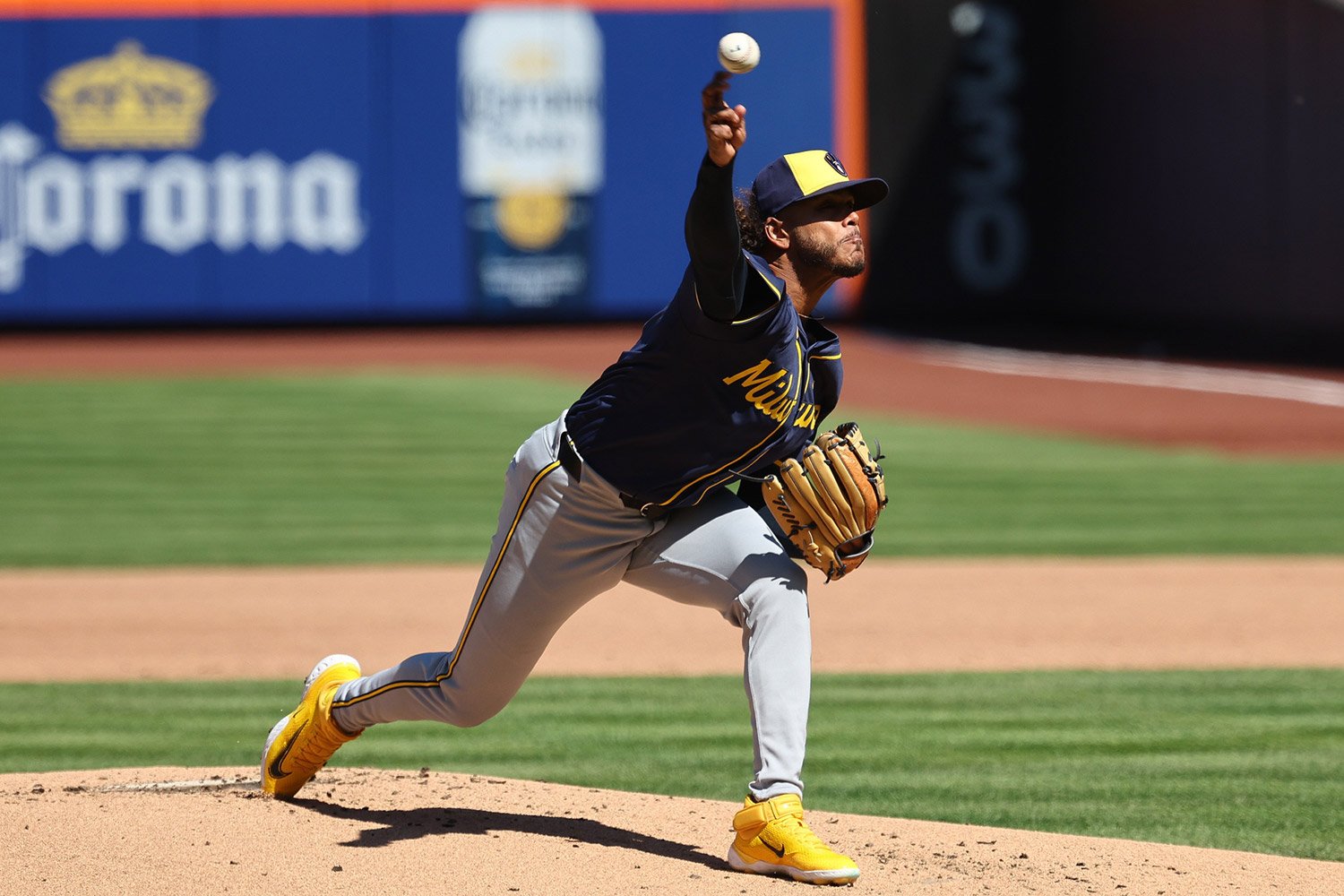 There were plenty of concerns coming into opening day with Freddy Peralta leading the Brewers rotation, perhaps justifiable. The season is long, but he demonstrated why the Brewers ' decision-makers have such faith in him on Friday afternoon. Some early struggles when ahead in the count allowed the Mets back into the at-bats with some wayward off-speed stuff, and Starling Marte punished an inner half 3-2 pitch. Following the second inning, however, was pure filth, retiring 13 hitters in a row as a large result of that magnificent fastball. The Fastball Metrics Peralta regularly used his four-seam fastball, so it played a big part in his success. It accounted for 52 of his 92 pitches on Friday, but it’s tough to move away from something that was putting up some of the gaudiest pitching metrics I’ve seen on a four-seamer. Over his six innings, here are a few statistics showing just how unhittable that fastball was: -3.7° Vertical Approach Angle (Led the league in 2023 at -3.88°. No other pitcher was above -4°) 18.7” Induced Vertical Break (IVB) (2023 average for Peralta was 15.2”; only three pitchers in 2023 averaged more than 18.7”) Between these two metrics, Freddy’s fastball will have created a true rising effect, causing swing and miss after swing and miss of hitters getting underneath the ball. A prime example is the above from Pitching Ninja. Peralta’s seventh strikeout came on a low four-seamer that froze Baty with its vertical carry, and then the high fastball to Harrison Bader stayed on a plane that he couldn’t get close to. One other point of note was how much horizontal movement Freddy Peralta was getting. It’s quite rare to see high IVB and Horizontal break numbers on the same pitch, however Peralta’s 8.5” of break would have placed him 12th ahead of Gerrit Cole last season, and almost two inches of run more than he averaged in 2023. In fact, Gerrit Cole of 2023 may be the most apt comparison for just how good Freddy’s four-seam was on opening day per the underlying numbers, and he still paled in comparison: Cole - 17,5" IVB, 8.4" HB, 4.53° VAA, 96.7 mph average effective velocity Peralta - 18.7" IVB, 8.5" HB, -3.72° VAA, 95.1mph average effective velocity Where Can He Improve? Peralta’s slider was often uncompetitive in the earlier innings, showing at times just how effective it can be alongside how wild it can be. A big difference between the new ace’s first and second-half results last year was how he narrowed down on the uncompetitive pitches when ahead in the count, but against the Mets, six of his 21 sliders were “uncompetitive” pitches and allowed their hitters back into counts when they should have been put away. The home run to Starling Marte was one of these occasions, going from an 0-2 to a 3-2 count off the back of poor breaking pitches before the big hit came, and it’s something Peralta will need to tighten up on moving forwards.The strong defense behind him did also play a part in his one-hit performance, with Jackson Chourio making right field look markedly simpler than Marte did amongst the sunshine and heavy winds. All that being said, this was a tone setting performance from Freddy Peralta. And the best may still be to come.
 -
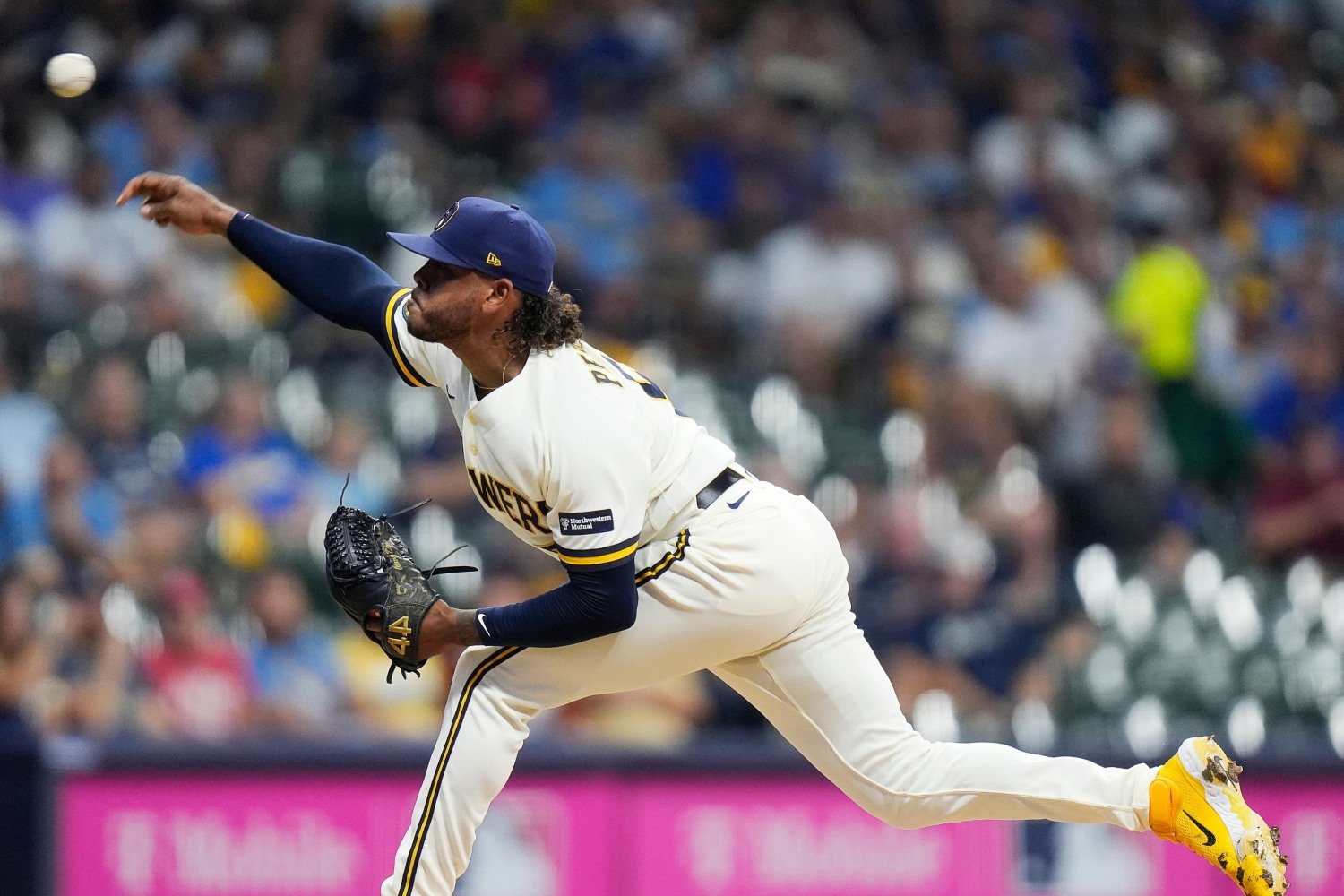 Fastball Freddy Peralta gained his name from an electric heater, but his slider has been an elite swing-and-miss pitch for several years now. It profiled as more of a sweeper entering 2023, but a mid-season tweak allowed him to sacrifice horizontal movement for greater control, greater vertical drop and a slight increase in velocity that paved the way to big results in the second half. The Movement Profile As you can see below, Peralta’s slider undertook some significant alterations around June 2023, with greater velocity and a more vertical shape. The slight changes may not seem like much, but together, they present an intriguing combination. A low-speed slider that drops early is easier to spot from a hitter’s vantage point, while extra speed usually means a pitch will drop less. By increasing both, Peralta achieved that much sought-after sharp, late break that leaves hitters with no time to adjust their swing and make contact, increasing its effectiveness. The best way to see this is the angle at which the pitch enters the strike zone, where because the break is later, achieving that amount of movement would mean the ball is arcing downward at a steeper angle compared to a slower slider with the same vertical drop. Vertical velocity vector as the pitch crosses the zone will show just how sharply that pitch is moving downward, and for Peralta that velocity increased by 15% from 13.2 ft/sec in April to 15.2 ft/sec in August, allowing him to get underneath the barrel more often. As a result, his ground ball rate rose from just 25% in the first half against this slider to 52.3% in the second half, helping him keep the ball in the park and on the infield dirt. The Corresponding Command Improvements The other noticeable improvement for Peralta came in his command of the pitch in the second half, especially down in the strike zone. Even in the seven to eight degrees of horizontal break (as he was throwing earlier in the season), you can see Peralta was leaving pitches regularly in the middle of the strike zone. A major cause for this was the erratic nature of the spin profile, with Peralta finding some pitches didn’t come out of the hand consistently in the same way. Then, when they didn’t move as expected (especially in regard to their vertical drop), they stayed in the middle of the strike zone to get hammered. Tightening up the slider has resulted in a far more consistent pitch movement and, critically, the extra drop on his slider has kept him down in or below the strike zone more often. The knock-on effect of all this is that Freddy Peralta is hanging fewer breaking pitches, and giving up fewer home runs. The above shows the movement on Peralta’s pitches in 2023 in the first two months compared to the last two, and you can see just how much tighter the grouping in August and September was. As a result, Peralta will find it easier to command his slider, keep it down and give up less power. When he hung that slider, he had a xWOBA of .630 in 2023, with an average exit velocity of 102.2 mph, but when he stayed away from that middle-middle zone, this dropped to just 84.9 mph. Staying out of the center is absolutely key to his success, and increasing the command plus dropping the location is why his slider had such a strong turnaround in 2023. Peralta is the Brewers' Opening Day starter for 2024, currently slated to perform against the New York Mets (though rain may decide whether that start comes on Thursday or Friday). His slider was a huge reason for his development as a pitcher in the latter half of 2023, and the best news is that it appeared to be a consistent and repeatable change. We can expect great things from him in 2024.
 -
When he toes the rubber for the first pitches of the Milwaukee Brewers' 2024 season this week, Freddy Peralta will do so with a slider that represents his steady evoluation into a legitimate ace. Image courtesy of © Jovanny Hernandez / Milwaukee Journal Sentinel / USA TODAY NETWORK Fastball Freddy Peralta gained his name from an electric heater, but his slider has been an elite swing-and-miss pitch for several years now. It profiled as more of a sweeper entering 2023, but a mid-season tweak allowed him to sacrifice horizontal movement for greater control, greater vertical drop and a slight increase in velocity that paved the way to big results in the second half. The Movement Profile As you can see below, Peralta’s slider undertook some significant alterations around June 2023, with greater velocity and a more vertical shape. The slight changes may not seem like much, but together, they present an intriguing combination. A low-speed slider that drops early is easier to spot from a hitter’s vantage point, while extra speed usually means a pitch will drop less. By increasing both, Peralta achieved that much sought-after sharp, late break that leaves hitters with no time to adjust their swing and make contact, increasing its effectiveness. The best way to see this is the angle at which the pitch enters the strike zone, where because the break is later, achieving that amount of movement would mean the ball is arcing downward at a steeper angle compared to a slower slider with the same vertical drop. Vertical velocity vector as the pitch crosses the zone will show just how sharply that pitch is moving downward, and for Peralta that velocity increased by 15% from 13.2 ft/sec in April to 15.2 ft/sec in August, allowing him to get underneath the barrel more often. As a result, his ground ball rate rose from just 25% in the first half against this slider to 52.3% in the second half, helping him keep the ball in the park and on the infield dirt. The Corresponding Command Improvements The other noticeable improvement for Peralta came in his command of the pitch in the second half, especially down in the strike zone. Even in the seven to eight degrees of horizontal break (as he was throwing earlier in the season), you can see Peralta was leaving pitches regularly in the middle of the strike zone. A major cause for this was the erratic nature of the spin profile, with Peralta finding some pitches didn’t come out of the hand consistently in the same way. Then, when they didn’t move as expected (especially in regard to their vertical drop), they stayed in the middle of the strike zone to get hammered. Tightening up the slider has resulted in a far more consistent pitch movement and, critically, the extra drop on his slider has kept him down in or below the strike zone more often. The knock-on effect of all this is that Freddy Peralta is hanging fewer breaking pitches, and giving up fewer home runs. The above shows the movement on Peralta’s pitches in 2023 in the first two months compared to the last two, and you can see just how much tighter the grouping in August and September was. As a result, Peralta will find it easier to command his slider, keep it down and give up less power. When he hung that slider, he had a xWOBA of .630 in 2023, with an average exit velocity of 102.2 mph, but when he stayed away from that middle-middle zone, this dropped to just 84.9 mph. Staying out of the center is absolutely key to his success, and increasing the command plus dropping the location is why his slider had such a strong turnaround in 2023. Peralta is the Brewers' Opening Day starter for 2024, currently slated to perform against the New York Mets (though rain may decide whether that start comes on Thursday or Friday). His slider was a huge reason for his development as a pitcher in the latter half of 2023, and the best news is that it appeared to be a consistent and repeatable change. We can expect great things from him in 2024. View full article
-
Not CY level at all.. but the 3.5-3.8 ERA I think is doable
-
This is a really good breakdown of it, you're absolutely right about young rotation though I'd say one of them needs an ERA starting with a "3" I do think we'll need a "star" this year in terms of a 5+ WAR guy as some players are going to fall off, the question is where it comes from. Love the breakdown of this!
-
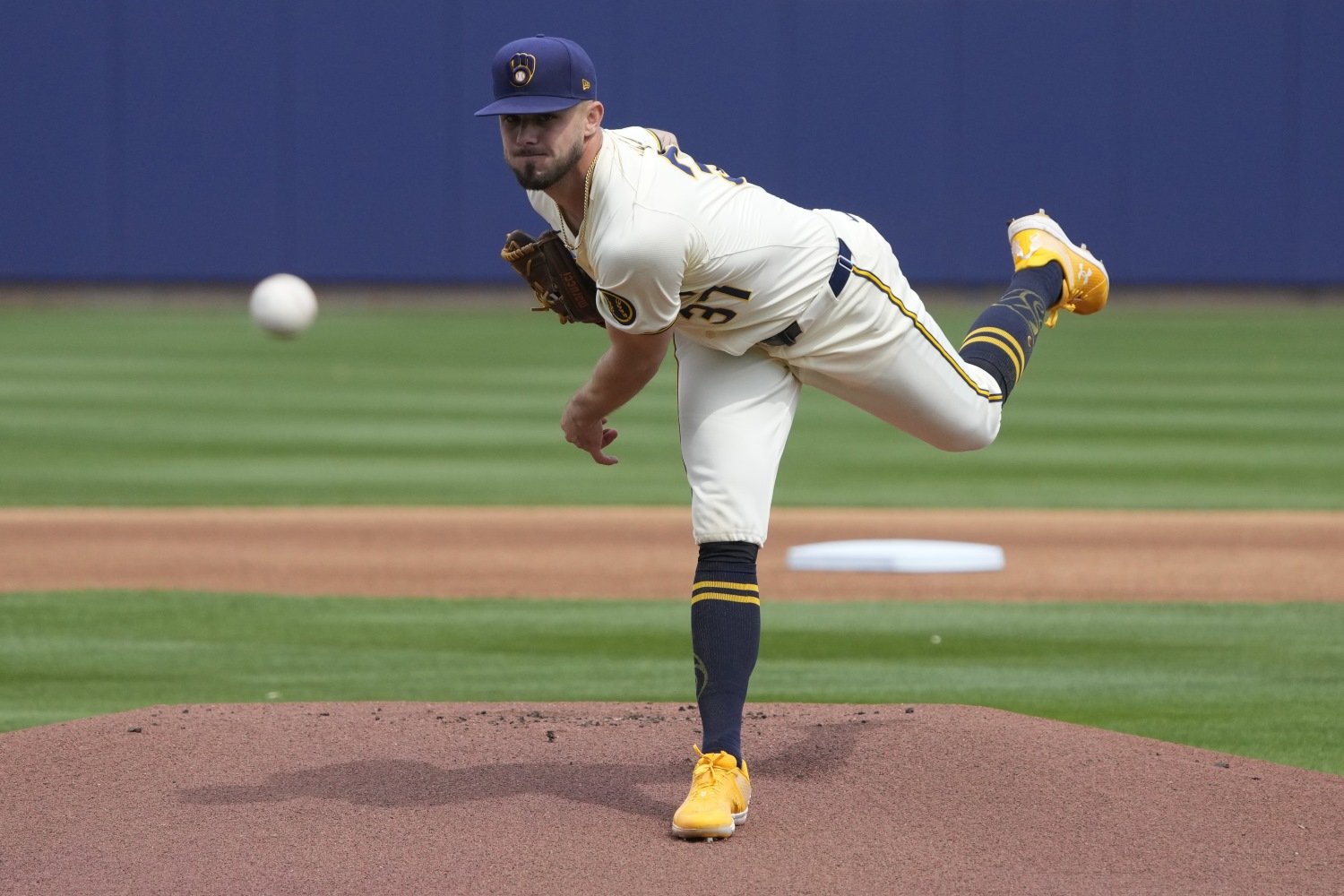
With Opening Day imminent, the Milwaukee Brewers have a youthful, talented roster, but one with a minimal track record. What (or who) needs to go right this season for the team to maintain a 90-win pace? Image courtesy of © Rick Scuteri-USA TODAY Sports Pat Murphy said this weekend that almost half of his initial roster will never have been on an Opening Day squad before, highlighting just how raw his team is. They have a lot of potential, and whether that’s unlocked will be key to their success this season. Quality at the Front of the Rotation Interestingly enough, the Brewers' rotation wasn’t particularly effective in the first half of the 2023 season--at least not the front end of Brandon Woodruff (injured), Corbin Burnes (3.94 ERA) and Freddy Peralta (4.70 ERA). By contrast, Colin Rea and Julio Teherán did an outstanding job early on. It could be argued, especially with Teherán, that the Brewers struck it lucky, and that that’s unlikely to happen this season. As such, the high-strikeout pitchers need to perform, and a lot of that onus will fall on Peralta. The new ace’s second-half stat line went like this: 2.81 ERA 36.3 K% 2.54 xFIP 0.88 WHIP In short, Fastball Freddy was dialed in, and the Brewers are going to need to see significantly more starts at this level now that Burnes and Woodruff are non-factors for 2024. Then come the other two high-ceiling arms, both of whom can elicit tantalizing numbers of swings and misses. Aaron Ashby and DL Hall have some of the nastiest pitches in baseball, but it all hinges on their command. Hall, in particular, showed vast improvements in that regard with the Orioles at the tail end of 2023, while Ashby is still in question. For both, consistency from start to start may be a concern. The Brewers' rotation looks a hell of a lot sturdier if you can fit between them in behind Peralta and push Wade Miley, Colin Rea, et al. down in the pecking order. It’s a lofty goal, but if Ashby and Hall can give the club 200 innings of around a 3.50 ERA, then this team takes on a whole new shape. Health permitting, I would expect both of them to grow as the season goes on, leaving the Brewers stronger at the back end of the campaign. The Brewers need some high-octane stuff for their number-two starter, and between Ashby and Hall, that void could be filled. Robert Gasser’s Durability “Bob Gas” is likely to be up early this season, as Pat Murphy indicated, and he could be key to how this Brewers season finishes. In a rotation plagued with injury and durability questions, Gasser has pitched in 53 games over the last two seasons. His walk rate has dropped noticeably and allowed him to work deeper into games, but he does have an issue that may arise in this sense. Gasser has a tendency toward blow-up innings, which has curtailed him at times, and a lot of that comes down to his fastball varietals. Both the fastball and cutter can become very hittable when he drops them down in the zone, as you can see below: The cutter is a better offering, but he can’t afford to let it come inside to right-handers or he’ll be toast. If he can avoid faltering too much and having those big innings and big pitch counts, there’s a chance Gasser may even lead the Brewers in innings pitched this season. Position Player WAR This Brewers offense has a greater array of weapons than at any point since 2019, with each of Gary Sánchez, Rhys Hoskins, Willy Adames, Christian Yelich, William Contreras and even Jackson Chourio possessing impact bats. Of these, Contreras, Adames, Yelich and Chourio have the potential to be four- or five-win players, due to their offensive and defensive contributions. Yelich’s biggest issue is, simply, health. Murphy talked about the effort he’s put into strengthening his back in the offseason (though no comment was made on his choice of popcorn), and the eye test would suggest a bulkier Yelich this season. During his stretch from May to July last year before the back flared up, the Brewers star hit .314/.395/.531 with 13 home runs and 17 stolen bases, form that continued upon his return in late September and the playoffs. It may be dreaming at this point, but it’s the most consistent thunder Yelich has produced since 2019. Yelich can take a further step forward with how he handles breaking pitches. For someone with such a patient approach at the plate, the degree to which he chases non-competitive sliders and curveballs is astounding: Sliders are a real struggle for him, especially against lefthanders, but he has the eye to lay off them if he so chooses. The reason he swung so often is because of how much damage he did down and inside last season; finding that balance will be key to his 2024 performance. William Contreras has gone from strength to strength with the Brewers defensively, transforming into an elite defensive catcher over just a single offseason. His results with the bat were promising too, largely thanks to how he destroyed sliders inside the strike zone. His power came from sliders and fastballs on the inner half, but he did struggle to elevate the ball consistently against anything else, which meant he didn’t quite access his power as often as he would like. Contreras' challenge this season will be twofold: he’s spoken of his desire to improve defensively, and that will center around framing at the top of the strike zone, and his pop times. Offensively, his bat is a huge weapon and there’s real room for growth if he can zone in on curveballs and other offspeed pitches with more regularity. Willy Adames is another one to keep an eye on. Producing 4.6 fWAR in 2022, his defense is truly elite at shortstop. He’s almost guaranteed as a three-win player, but the charge in his bat will be what takes him to that higher tier. Adames is primarily a fastball hitter, performing well against four-seamers last season and crushing them when they weren’t elevated. He struggled mightily against breaking pitches, though, especially sliders. Whereas in 2022 he slugged .550 against them, in 2023 that dropped to .379 and was a large reason for his poorer overall performance. He has always swung and missed a lot at the pitch, but previously when they were hung up in the zone, they got mashed. Combine this with his improved walk rate last season, and it’s definitely possible for Adames to sneak into that five-WAR club this season. I’m slightly loath to include Jackson Chourio here, due to his rawness, and it’s not particularly likely this season, with things still to work on at the major-league level. That being said, despite some hiccups in the corner outfield spots in spring training, his range and arm provide a high floor from which to provide value, and his bat speed is truly electric. The final thing for him swing-wise is to avoid chasing pitches, which caused him to roll over weakly in 2023 more often than will be viable in MLB, but his raw speed still allows him to beat out the infield hit from time to time. He has massive potential, and the Brewers signed him to that $82-million contract because they and everyone else know just how valuable Chourio can be. How Much Needs to Click? This is the million-dollar question. All of the above won’t go right for the Brewers, but they are examples of what can go right this year. Realistically, the biggest need is in the rotation, and if the Ashby/Hall combo can hit the benchmark above, then this Brewers team takes a massive leap forward. Offensively, they have taken big strides to improve the middle of their batting order and should produce considerably more runs this season as a result. To be a top-eight offense in baseball, they’ll need one of Chourio, Adames, Yelich, and Contreras to take that step forward with the bat, while a step forward for two of them could see the Brewers become a top-five offense. Pair that with an above-average rotation, and you’ll have your 90 wins come October. View full article
- 7 replies
-
- 1
-

-
- freddy peralta
- aaron ashby
- (and 5 more)
-
 Pat Murphy said this weekend that almost half of his initial roster will never have been on an Opening Day squad before, highlighting just how raw his team is. They have a lot of potential, and whether that’s unlocked will be key to their success this season. Quality at the Front of the Rotation Interestingly enough, the Brewers' rotation wasn’t particularly effective in the first half of the 2023 season--at least not the front end of Brandon Woodruff (injured), Corbin Burnes (3.94 ERA) and Freddy Peralta (4.70 ERA). By contrast, Colin Rea and Julio Teherán did an outstanding job early on. It could be argued, especially with Teherán, that the Brewers struck it lucky, and that that’s unlikely to happen this season. As such, the high-strikeout pitchers need to perform, and a lot of that onus will fall on Peralta. The new ace’s second-half stat line went like this: 2.81 ERA 36.3 K% 2.54 xFIP 0.88 WHIP In short, Fastball Freddy was dialed in, and the Brewers are going to need to see significantly more starts at this level now that Burnes and Woodruff are non-factors for 2024. Then come the other two high-ceiling arms, both of whom can elicit tantalizing numbers of swings and misses. Aaron Ashby and DL Hall have some of the nastiest pitches in baseball, but it all hinges on their command. Hall, in particular, showed vast improvements in that regard with the Orioles at the tail end of 2023, while Ashby is still in question. For both, consistency from start to start may be a concern. The Brewers' rotation looks a hell of a lot sturdier if you can fit between them in behind Peralta and push Wade Miley, Colin Rea, et al. down in the pecking order. It’s a lofty goal, but if Ashby and Hall can give the club 200 innings of around a 3.50 ERA, then this team takes on a whole new shape. Health permitting, I would expect both of them to grow as the season goes on, leaving the Brewers stronger at the back end of the campaign. The Brewers need some high-octane stuff for their number-two starter, and between Ashby and Hall, that void could be filled. Robert Gasser’s Durability “Bob Gas” is likely to be up early this season, as Pat Murphy indicated, and he could be key to how this Brewers season finishes. In a rotation plagued with injury and durability questions, Gasser has pitched in 53 games over the last two seasons. His walk rate has dropped noticeably and allowed him to work deeper into games, but he does have an issue that may arise in this sense. Gasser has a tendency toward blow-up innings, which has curtailed him at times, and a lot of that comes down to his fastball varietals. Both the fastball and cutter can become very hittable when he drops them down in the zone, as you can see below: The cutter is a better offering, but he can’t afford to let it come inside to right-handers or he’ll be toast. If he can avoid faltering too much and having those big innings and big pitch counts, there’s a chance Gasser may even lead the Brewers in innings pitched this season. Position Player WAR This Brewers offense has a greater array of weapons than at any point since 2019, with each of Gary Sánchez, Rhys Hoskins, Willy Adames, Christian Yelich, William Contreras and even Jackson Chourio possessing impact bats. Of these, Contreras, Adames, Yelich and Chourio have the potential to be four- or five-win players, due to their offensive and defensive contributions. Yelich’s biggest issue is, simply, health. Murphy talked about the effort he’s put into strengthening his back in the offseason (though no comment was made on his choice of popcorn), and the eye test would suggest a bulkier Yelich this season. During his stretch from May to July last year before the back flared up, the Brewers star hit .314/.395/.531 with 13 home runs and 17 stolen bases, form that continued upon his return in late September and the playoffs. It may be dreaming at this point, but it’s the most consistent thunder Yelich has produced since 2019. Yelich can take a further step forward with how he handles breaking pitches. For someone with such a patient approach at the plate, the degree to which he chases non-competitive sliders and curveballs is astounding: Sliders are a real struggle for him, especially against lefthanders, but he has the eye to lay off them if he so chooses. The reason he swung so often is because of how much damage he did down and inside last season; finding that balance will be key to his 2024 performance. William Contreras has gone from strength to strength with the Brewers defensively, transforming into an elite defensive catcher over just a single offseason. His results with the bat were promising too, largely thanks to how he destroyed sliders inside the strike zone. His power came from sliders and fastballs on the inner half, but he did struggle to elevate the ball consistently against anything else, which meant he didn’t quite access his power as often as he would like. Contreras' challenge this season will be twofold: he’s spoken of his desire to improve defensively, and that will center around framing at the top of the strike zone, and his pop times. Offensively, his bat is a huge weapon and there’s real room for growth if he can zone in on curveballs and other offspeed pitches with more regularity. Willy Adames is another one to keep an eye on. Producing 4.6 fWAR in 2022, his defense is truly elite at shortstop. He’s almost guaranteed as a three-win player, but the charge in his bat will be what takes him to that higher tier. Adames is primarily a fastball hitter, performing well against four-seamers last season and crushing them when they weren’t elevated. He struggled mightily against breaking pitches, though, especially sliders. Whereas in 2022 he slugged .550 against them, in 2023 that dropped to .379 and was a large reason for his poorer overall performance. He has always swung and missed a lot at the pitch, but previously when they were hung up in the zone, they got mashed. Combine this with his improved walk rate last season, and it’s definitely possible for Adames to sneak into that five-WAR club this season. I’m slightly loath to include Jackson Chourio here, due to his rawness, and it’s not particularly likely this season, with things still to work on at the major-league level. That being said, despite some hiccups in the corner outfield spots in spring training, his range and arm provide a high floor from which to provide value, and his bat speed is truly electric. The final thing for him swing-wise is to avoid chasing pitches, which caused him to roll over weakly in 2023 more often than will be viable in MLB, but his raw speed still allows him to beat out the infield hit from time to time. He has massive potential, and the Brewers signed him to that $82-million contract because they and everyone else know just how valuable Chourio can be. How Much Needs to Click? This is the million-dollar question. All of the above won’t go right for the Brewers, but they are examples of what can go right this year. Realistically, the biggest need is in the rotation, and if the Ashby/Hall combo can hit the benchmark above, then this Brewers team takes a massive leap forward. Offensively, they have taken big strides to improve the middle of their batting order and should produce considerably more runs this season as a result. To be a top-eight offense in baseball, they’ll need one of Chourio, Adames, Yelich, and Contreras to take that step forward with the bat, while a step forward for two of them could see the Brewers become a top-five offense. Pair that with an above-average rotation, and you’ll have your 90 wins come October.
- 7 comments
-
- 1
-

-
- freddy peralta
- aaron ashby
- (and 5 more)
-
So framing is incredibly valuable because of how often it's used and how direct a link it provides to saving runs. The difference between a 2-1 and 1-2 count is massive in termof likely outcomes, never mind stealing a strike in a 3-2 count which directly creates an "out". It's probably the most valuable statistics a catcher. You're right about the umpires zones however, and maybe with ABS arriving soon it does become less valuable in some ways.
-
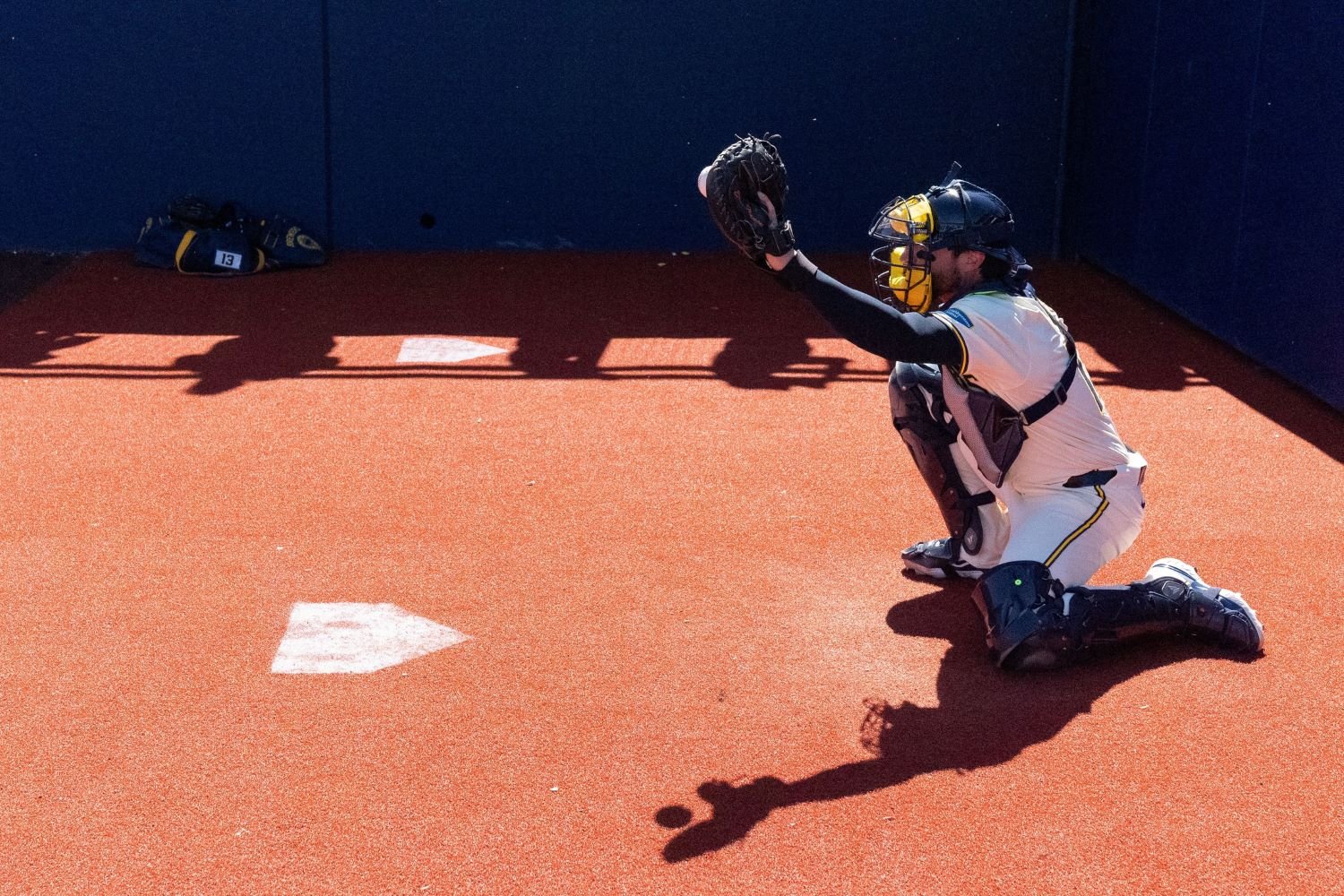 Eric Haase has come out of the gates hot this spring, but while his bat may improve, there are concerns over his catching ability. Grading out as well below average over the last two seasons in blocking, framing and pop times isn’t particularly appealing, but this Brewers staff turned William Contreras from a liability into a defensive stud only last year. Can they do it again? How Well Does Haase Call Games? Out of 132 catchers in the last three seasons with over 1,000 pitches caught, Haase is 117th for average exit velocity. Simply put, when he’s been behind the plate, balls have been crushed at an average of 89.4 mph. Yet, there are a few caveats to this. The Detroit Tigers staff have been hampered significantly by injuries and, frankly, talent deficiencies, and as such, the quality of pitches he was receiving are far below what William Contreras and Victor Caratini caught last year. Take the above as an example, it’s the location of every pitch Haase has received over the last three years. Inducing weak contact while catching that much of the plate that often just isn't on the cards. It's hard to parse whose fault it is when the ball wanders down the middle, because surely, both the catcher and the pitcher have to take some share of the blame. Ultimately, how a catcher calls a game is often judged more on reputation and rumor than on statistics, but that in and of itself can be handy. Tucker Barnhart is renowned as a solid defensive catcher, and over the course of 2022 and 2023, he received a similar number of pitches and produced an almost identical average exit velocity, hard hit rate and xWOBA as Haase. (For half that time, of course, they were teammates, so do we count that as evidence that the pitchers were to blame, or that Haase and Barnhart are closer in skill at calling games than is generally thought?) To say Haase bears no fault for the high average exit velocities would be wrong, it is a catcher’s role to limit hard contact with their pitch-calling, exploiting weaknesses in the hitter’s swing. Ultimately, it appears as though a considerable portion of blame should be attributed to the lackluster Detroit Tigers staff, but it’s definitely something to keep an eye on if Haase starts the season with the Brewers. Athleticism & Stance One thing that Charlie Greene spoke about with William Contreras is his raw athleticism and how the Brewers tried to find a way to capture that in his catching technique. They used his body strength and hand-eye coordination to develop a technique more suited to picking rather than blocking pitches, and going to one knee in an effort to help him frame below the strike zone. Both endeavors were quantifiable successes that improved his framing, blocking and pop time numbers in 2023. Haase had an average sprint speed of 28 ft/sec last season, demonstrating at least some level of agility and athleticism, so can the Brewers turn this around? They may have already started, with his blocking. Haase was in the 18th percentile for blocks above average last season, using a very low, spread-out body position to maximize his frame on pitches lower down: While he still adopts this position from time to time, he’s started to receive these pitches in a more upright stance, allowing him to use his hands better, as you can see below. William Contreras made a very similar change, and it resulted in him saving nine extra runs from blocking pitches alone in 2023, compared to his 2022 numbers. This ball is virtually in the dirt, yet Haase kept his left knee in a stronger position. On top of whether this can help him with blocking, it should be a big boost to his framing abilities, as Haase in 2022 and 2023 used two differing stances, depending on pitch location; he was very upright for pitches up in the zone, and sprawled out for pitches down in the zone. Maintaining a more consistent stance should add a layer of deception for the umpire to deal with, and allow him to get more calls in the shadow areas outside the strike zone. Haase has had considerably more time with this Brewers pitching staff this spring, looking sharp both with the bat and behind the plate, while Sánchez may be a bit rushed to be ready for Opening Day. He certainly didn’t look sharp on Wednesday, and that hand injury may have played a part in it, although he will likely improve as the spring goes on. It seems more and more likely that Haase will be on the initial roster, at least holding his position for a while as Sánchez alleviates concerns with his injury and his receiving skills. At the very least, Haase should be a serviceable trade chip if another team comes calling for his services. What do you think of Eric Haase? Can Charlie Greene work his magic once again? And will the bat continue to thrive after spring?
- 13 comments
-
- 1
-
-
- eric haase
- william contreras
- (and 1 more)
-
A backup catcher has to be defensively sound. As evidenced by three passed balls on Wednesday (and some other instances), Gary Sánchez doesn't necessarily meet that standard. Will that open the door for Eric Haase to squeeze onto the Milwaukee Brewers' Opening Day roster? Image courtesy of © Allan Henry-USA TODAY Sports Eric Haase has come out of the gates hot this spring, but while his bat may improve, there are concerns over his catching ability. Grading out as well below average over the last two seasons in blocking, framing and pop times isn’t particularly appealing, but this Brewers staff turned William Contreras from a liability into a defensive stud only last year. Can they do it again? How Well Does Haase Call Games? Out of 132 catchers in the last three seasons with over 1,000 pitches caught, Haase is 117th for average exit velocity. Simply put, when he’s been behind the plate, balls have been crushed at an average of 89.4 mph. Yet, there are a few caveats to this. The Detroit Tigers staff have been hampered significantly by injuries and, frankly, talent deficiencies, and as such, the quality of pitches he was receiving are far below what William Contreras and Victor Caratini caught last year. Take the above as an example, it’s the location of every pitch Haase has received over the last three years. Inducing weak contact while catching that much of the plate that often just isn't on the cards. It's hard to parse whose fault it is when the ball wanders down the middle, because surely, both the catcher and the pitcher have to take some share of the blame. Ultimately, how a catcher calls a game is often judged more on reputation and rumor than on statistics, but that in and of itself can be handy. Tucker Barnhart is renowned as a solid defensive catcher, and over the course of 2022 and 2023, he received a similar number of pitches and produced an almost identical average exit velocity, hard hit rate and xWOBA as Haase. (For half that time, of course, they were teammates, so do we count that as evidence that the pitchers were to blame, or that Haase and Barnhart are closer in skill at calling games than is generally thought?) To say Haase bears no fault for the high average exit velocities would be wrong, it is a catcher’s role to limit hard contact with their pitch-calling, exploiting weaknesses in the hitter’s swing. Ultimately, it appears as though a considerable portion of blame should be attributed to the lackluster Detroit Tigers staff, but it’s definitely something to keep an eye on if Haase starts the season with the Brewers. Athleticism & Stance One thing that Charlie Greene spoke about with William Contreras is his raw athleticism and how the Brewers tried to find a way to capture that in his catching technique. They used his body strength and hand-eye coordination to develop a technique more suited to picking rather than blocking pitches, and going to one knee in an effort to help him frame below the strike zone. Both endeavors were quantifiable successes that improved his framing, blocking and pop time numbers in 2023. Haase had an average sprint speed of 28 ft/sec last season, demonstrating at least some level of agility and athleticism, so can the Brewers turn this around? They may have already started, with his blocking. Haase was in the 18th percentile for blocks above average last season, using a very low, spread-out body position to maximize his frame on pitches lower down: While he still adopts this position from time to time, he’s started to receive these pitches in a more upright stance, allowing him to use his hands better, as you can see below. William Contreras made a very similar change, and it resulted in him saving nine extra runs from blocking pitches alone in 2023, compared to his 2022 numbers. This ball is virtually in the dirt, yet Haase kept his left knee in a stronger position. On top of whether this can help him with blocking, it should be a big boost to his framing abilities, as Haase in 2022 and 2023 used two differing stances, depending on pitch location; he was very upright for pitches up in the zone, and sprawled out for pitches down in the zone. Maintaining a more consistent stance should add a layer of deception for the umpire to deal with, and allow him to get more calls in the shadow areas outside the strike zone. Haase has had considerably more time with this Brewers pitching staff this spring, looking sharp both with the bat and behind the plate, while Sánchez may be a bit rushed to be ready for Opening Day. He certainly didn’t look sharp on Wednesday, and that hand injury may have played a part in it, although he will likely improve as the spring goes on. It seems more and more likely that Haase will be on the initial roster, at least holding his position for a while as Sánchez alleviates concerns with his injury and his receiving skills. At the very least, Haase should be a serviceable trade chip if another team comes calling for his services. What do you think of Eric Haase? Can Charlie Greene work his magic once again? And will the bat continue to thrive after spring? View full article
- 13 replies
-
- 1
-
-
- eric haase
- william contreras
- (and 1 more)
-
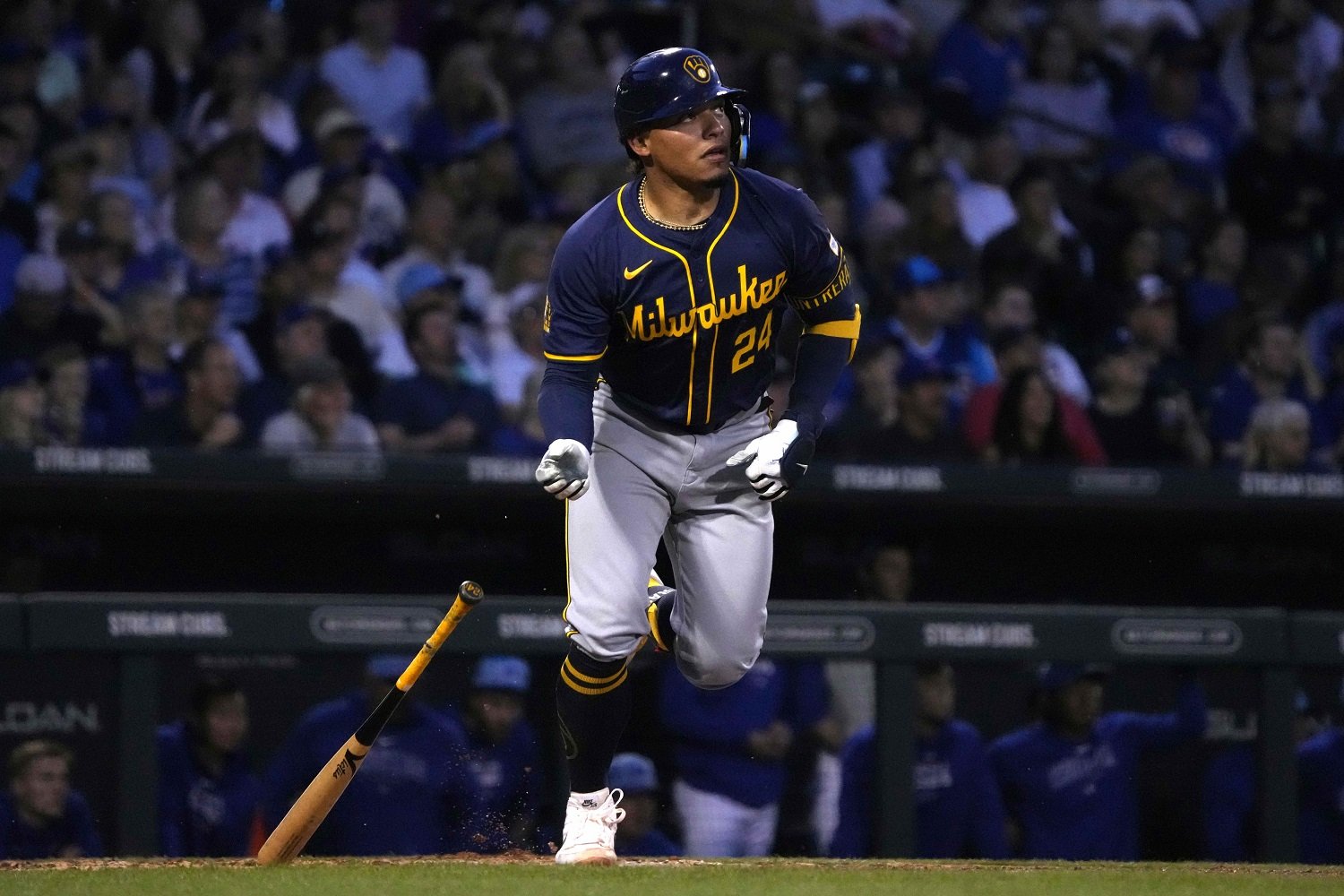
Last year, the Brewers were among the most passive teams in baseball, especially in the second half. They morphed into a group with a hard, grinding approach at the plate. In the offseason they’ve acquired some real firepower, so should they change their offensive approach? Image courtesy of © Rick Scuteri-USA TODAY Sports Only one hitter surpassed the 20-home-run mark for the 2023 Brewers. That tied for the fewest such hitters on a team in all of baseball. Despite several powerful hitters on the roster to start the season, none actually tapped into all that much power, and how they balance the offseason is a big question mark heading into the year. The Best Version of Offense in 2023 Offensively, the Brewers struggled in 2023 with a real lack of consistency at the plate formed from occasional hot streaks and plentiful cold patches--especially among their younger players. For most of the season, William Contreras was the Brewers' only consistent presence, with some hot streaks from Christian Yelich, Rowdy Tellez, Joey Wiemer and Owen Miller to support him until the veteran presences of Mark Canha and Carlos Santana added reliability to the lineup. With their addition, the Brewers offense morphed into a more competent unit, largely because of an infectious change of approach at the plate. The Brewers went from an uncoordinated outfit to a cohesive unit that took pitches and wore down opposing pitchers, the highlight of which was chasing Max Scherzer in the foutth inning after 90-plus pitches late in the season. It didn’t always work, but with Brandon Woodruff, Corbin Burnes and Freddy Peralta in full flow, the Brewers didn’t need high scores; they just needed consistency in producing runs. This season, however, they may need to take bigger offensive steps without Burnes and Woodruff around. The Sources of Power Last season, a lot of the expectations for home runs fell on Willy Adames and Rowdy Tellez, with anything approaching 20 homers a bonus for Contreras and Yelich. Tellez had a scorching start, but only hit one home run after May 23. Adames, meanwhile, was having his own struggles with his timing in the batter's box, and it resulted in a lot of issues driving home Contreras and Yelich even when those two did perform well. This season, the options for power have increased significantly. Contreras has shown he can be a slugger, Yelich recovered some of his thump last season as well, but most important are the additions of Jackson Chourio, Rhys Hoskins and Gary Sánchez to this lineup. The latter two combined for 73 home runs across their last 150 games, a staggering potential to drive in runs and punish mistakes in the strike zone. On top of this, they have Jake Bauers, who made some mid-season changes that produced very promising results in how he barreled the ball. The question is whether he can cut down on the strikeouts at the same time. He’s spoken this offseason about a change in approach to go along with the technical work the Yankees did last season; he could be another big power source waiting to happen. Chourio has electric bat speed. We have to remember to expect some adjustment periods for him, and he might hit seventh in this more robust lineup, but he's another player who might clear the fences frequently in 2024. Showcasing a remarkable depth in the middle of the order that just hasn’t been there in recent seasons, the Brewers may vastly exceed their output in 2022 and 2023. Do They Have Other Ways To Score? Yes. Another facet that makes this offense more appealing is how they can adapt to game situations. With all the power mentioned above, you also have Sal Frelick, Oliver Dunn, Garrett Mitchell, Brice Turang, Blake Perkins, Wiemer and Yelich, who can cause havoc on the base paths, while Joey Ortiz is no slouch either. The freshmen will be looking to kick on this year, and if any of them can, that makes it a truly frightening prospect to see what this offense can do. They’re also a gritty team, able to grind out at-bats and dig their heels in. Frelick and Yelich are phenomenal in this regard, while Hoskins has shown an ability to make pitchers work and take his walks. The Brewers were at the bottom of the league in in-zone swings last season, and likely won’t switch straight to a swing-happy approach, so expect that selectivity in looking for specific pitches to remain in some regards in 2024. The last box to tick is perhaps the biggest question mark, in whether or not they can put the ball in play regularly… The Strikeouts May Be A Concern Not much of spring training is particularly relevant, but the strikeout rates can cross over into the regular season. On that note, it appears the Brewers are being more aggressive in the strike zone, but have also struck out at lofty rates. Only Yelich, Frelick and Turang have strikeout rates under 20% in preseason, while Sánchez (42%), Dunn (38%), Adames (36%), Perkins (35%), Bauers (32%) and Hoskins (32%) are potentially signs of worry. It is a small sample size, and the goal is more to gain comfort and timing than to produce results, but there should be a tinge of worry that an aggressive approach may not pan out quite as nicely as one would hope. Ground Balls Galore The final question mark for this offense is can they elevate. Any ability to do so will create breakout potential among an abundance of hitters: Yelich hits the ball as hard as almost anyone, and showed in larger patches last season what he can do when healthy. If he can maintain those stretches for longer (as he did in May, June and July), then the Brewers have an elite hitter at the top of their order. Ortiz had an average exit velocity of 92 mph last season, but he chased excessively and produced a ton of ground balls as a result. Reining in his aggressiveness and being more selective should allow him to elevate better and access his power more consistently. Chourio is almost identical to Ortiz. He worked on his bat-to-ball skills and dropped his strikeout rate massively last season, but he chased a ton, and it led to more poor contact than you would like. Finding the balance of his approach can see that elite power really plays up. Contreras did a fantastic job of elevating upper-half fastballs and any slider in 2023, but struggled to elevate against any other pitch. Another player who pummels the ball, he could blast his way into the realms of the best catcher in baseball with a few more fly balls. Each of the four listed above have fantastic contact skills and borderline elite exit velocities, if they can get the ball into the air more often, you’ll be looking at 5 WAR players. Add that to the mix of Adames, Hoskins and Sánchez, and this offense can be near-elite in total. To summarize, a different approach is likely to come from the Brewers offense this season, but Connor Dawson likes adaptability, so don’t expect it to be an all-out slugging mentality. They’ll look for ways to defuse a pitcher's arsenal and use the tools available to them. It just so happens that one of those tools is substantially more pop. View full article
-
 Only one hitter surpassed the 20-home-run mark for the 2023 Brewers. That tied for the fewest such hitters on a team in all of baseball. Despite several powerful hitters on the roster to start the season, none actually tapped into all that much power, and how they balance the offseason is a big question mark heading into the year. The Best Version of Offense in 2023 Offensively, the Brewers struggled in 2023 with a real lack of consistency at the plate formed from occasional hot streaks and plentiful cold patches--especially among their younger players. For most of the season, William Contreras was the Brewers' only consistent presence, with some hot streaks from Christian Yelich, Rowdy Tellez, Joey Wiemer and Owen Miller to support him until the veteran presences of Mark Canha and Carlos Santana added reliability to the lineup. With their addition, the Brewers offense morphed into a more competent unit, largely because of an infectious change of approach at the plate. The Brewers went from an uncoordinated outfit to a cohesive unit that took pitches and wore down opposing pitchers, the highlight of which was chasing Max Scherzer in the foutth inning after 90-plus pitches late in the season. It didn’t always work, but with Brandon Woodruff, Corbin Burnes and Freddy Peralta in full flow, the Brewers didn’t need high scores; they just needed consistency in producing runs. This season, however, they may need to take bigger offensive steps without Burnes and Woodruff around. The Sources of Power Last season, a lot of the expectations for home runs fell on Willy Adames and Rowdy Tellez, with anything approaching 20 homers a bonus for Contreras and Yelich. Tellez had a scorching start, but only hit one home run after May 23. Adames, meanwhile, was having his own struggles with his timing in the batter's box, and it resulted in a lot of issues driving home Contreras and Yelich even when those two did perform well. This season, the options for power have increased significantly. Contreras has shown he can be a slugger, Yelich recovered some of his thump last season as well, but most important are the additions of Jackson Chourio, Rhys Hoskins and Gary Sánchez to this lineup. The latter two combined for 73 home runs across their last 150 games, a staggering potential to drive in runs and punish mistakes in the strike zone. On top of this, they have Jake Bauers, who made some mid-season changes that produced very promising results in how he barreled the ball. The question is whether he can cut down on the strikeouts at the same time. He’s spoken this offseason about a change in approach to go along with the technical work the Yankees did last season; he could be another big power source waiting to happen. Chourio has electric bat speed. We have to remember to expect some adjustment periods for him, and he might hit seventh in this more robust lineup, but he's another player who might clear the fences frequently in 2024. Showcasing a remarkable depth in the middle of the order that just hasn’t been there in recent seasons, the Brewers may vastly exceed their output in 2022 and 2023. Do They Have Other Ways To Score? Yes. Another facet that makes this offense more appealing is how they can adapt to game situations. With all the power mentioned above, you also have Sal Frelick, Oliver Dunn, Garrett Mitchell, Brice Turang, Blake Perkins, Wiemer and Yelich, who can cause havoc on the base paths, while Joey Ortiz is no slouch either. The freshmen will be looking to kick on this year, and if any of them can, that makes it a truly frightening prospect to see what this offense can do. They’re also a gritty team, able to grind out at-bats and dig their heels in. Frelick and Yelich are phenomenal in this regard, while Hoskins has shown an ability to make pitchers work and take his walks. The Brewers were at the bottom of the league in in-zone swings last season, and likely won’t switch straight to a swing-happy approach, so expect that selectivity in looking for specific pitches to remain in some regards in 2024. The last box to tick is perhaps the biggest question mark, in whether or not they can put the ball in play regularly… The Strikeouts May Be A Concern Not much of spring training is particularly relevant, but the strikeout rates can cross over into the regular season. On that note, it appears the Brewers are being more aggressive in the strike zone, but have also struck out at lofty rates. Only Yelich, Frelick and Turang have strikeout rates under 20% in preseason, while Sánchez (42%), Dunn (38%), Adames (36%), Perkins (35%), Bauers (32%) and Hoskins (32%) are potentially signs of worry. It is a small sample size, and the goal is more to gain comfort and timing than to produce results, but there should be a tinge of worry that an aggressive approach may not pan out quite as nicely as one would hope. Ground Balls Galore The final question mark for this offense is can they elevate. Any ability to do so will create breakout potential among an abundance of hitters: Yelich hits the ball as hard as almost anyone, and showed in larger patches last season what he can do when healthy. If he can maintain those stretches for longer (as he did in May, June and July), then the Brewers have an elite hitter at the top of their order. Ortiz had an average exit velocity of 92 mph last season, but he chased excessively and produced a ton of ground balls as a result. Reining in his aggressiveness and being more selective should allow him to elevate better and access his power more consistently. Chourio is almost identical to Ortiz. He worked on his bat-to-ball skills and dropped his strikeout rate massively last season, but he chased a ton, and it led to more poor contact than you would like. Finding the balance of his approach can see that elite power really plays up. Contreras did a fantastic job of elevating upper-half fastballs and any slider in 2023, but struggled to elevate against any other pitch. Another player who pummels the ball, he could blast his way into the realms of the best catcher in baseball with a few more fly balls. Each of the four listed above have fantastic contact skills and borderline elite exit velocities, if they can get the ball into the air more often, you’ll be looking at 5 WAR players. Add that to the mix of Adames, Hoskins and Sánchez, and this offense can be near-elite in total. To summarize, a different approach is likely to come from the Brewers offense this season, but Connor Dawson likes adaptability, so don’t expect it to be an all-out slugging mentality. They’ll look for ways to defuse a pitcher's arsenal and use the tools available to them. It just so happens that one of those tools is substantially more pop.
 -
2024 Brewers Positional Preview: The Pencilled In Starting Pitchers
Jake McKibbin posted an article in Brewers
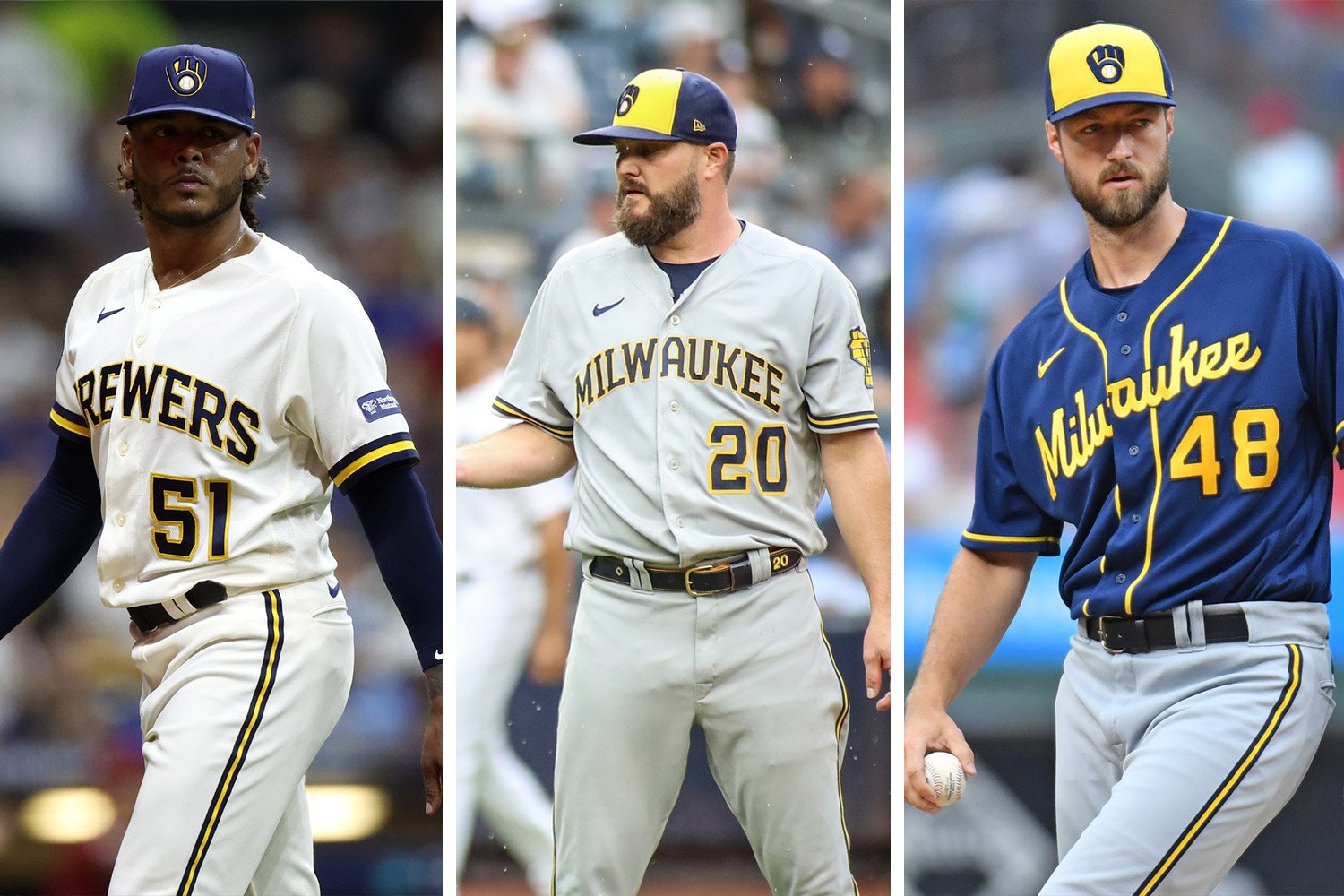 Pat Murphy commented that Wade Miley is 50/50 to be ready for April 1st. He will likely have several spells on the injured list throughout the year, meaning pitching depth will be vital. The Brewers have invested heavily in it, with much competition for places throughout spring training. That being said, a few could reasonably expect a berth on Opening Day, injury permitting. Freddy Peralta The verifiable, undisputed ace of the staff with Corbin Burnes’ departure and Brandon Woodruff’s injury, Peralta showed significant promise in the second half of 2023 that should leave no one in doubt of his abilities with a 2.35 FIP and 2.85 ERA from July 14 onwards where he also struck out almost 14 batters per nine innings. Amongst a variety of things, including an admission of tipping pitches, the strikeout rate was the biggest reason for his extraordinary rise, resulting from his changeup. Peralta’s changeup in April and May had swing and miss rates of just 15% and 8.7%, respectively, far below his career norms. In a season where he threw the changeup more than ever before, it greatly affected his results, and this may be what he tipped. As a result, it put more pressure on his fastball, and again, by his admission, he struggled to be himself on the mound and started to force things, which caused a reduction in his spin rates for the four-seamer and reduced his chase rates at the top of the strike zone. You can see below how he threw a similar number of fastballs with 2350 - 2450 RPMs but over 50% more pitches with above 2450 RPMs: Chris Hook noticed this personality issue and challenged him to bring that happy-go-lucky attitude we fans love so much, and it was from here that the season turned around with an NL pitcher of the month in August and perhaps the most dominant pitcher in the second half of the season. Spencer Strider could also claim the title, but Peralta’s swing-and-miss ability lends hope that the Brewers may have another Cy Young-ready pitcher. That ability to stay relaxed on the mound will always be key to him moving forward. As always with Freddy Peralta, the major question is if he can pitch enough innings. Could the Brewers find a way to get him into the sixth and seventh innings more often? The increased use of his changeup could help with this, as it had a 67.2% ground ball rate in 2023 that should allow him to get quicker outs and be less reliant on the strikeout, even recording a 56% rate against right-handed hitters. It's still a question mark, but there’s no doubt that Peralta, at his best, is an ace in every sense of the word. Colin Rea Colin Rea’s 1.19 WHIP and 126 innings of work were a vital cog in the Brewer’s success last season, earning him a $4.5 million deal with the Brewers for this season. His four-seam fastball was sneaky good, with opponents hitting just .135, which led to starting pitchers in major league baseball; along with an effective sweeper, he debuted in 2023 with a 36% whiff rate. He had the tools to be perhaps more successful than one would think, but home run balls let him down in pressure situations, and he struggled against lefties where he didn’t have an out pitch. Against southpaws, Rea’s WHIP was a far less robust 1.32 with 15 home runs in 57 innings pitched. One way to address this would be to use his sweeper more against left-handers despite conventional wisdom after producing an xBA/xSlg of .195/.253 against them last season despite being his least frequent pitch against opposite-sided hitters. No other pitch had a swing-and-miss rate over 23%, which will cause problems at this level. The other pitch he’s been working on is his split changeup. Colin Rea will do several things very well for this Brewers team in 2024. He’s going to eat innings and keep them in the game, he’ll get the ball on the ground at an above-average rate, and he’s going to make hitters earn their way on base without too many free passes. He’s not a number two starter by any means, but he will provide good value for a Brewers rotation in dire need of consistency week in and week out. Wade Miley Miley has brought value with the Brewers in several ways, but his in-game nous and pinpoint command have allowed him to succeed year after year in the major leagues. In 2023, he had a hard hit rate of just 31%, a 47% ground ball rate, and, most importantly, an ERA of 3.14. He doesn’t walk hitters; he gets the ball on the ground and keeps it in the ballpark, which allows the Brewers' elite defense to continue playing up. Wade Miley’s biggest strength is his situational pitching, with a knack for achieving precisely his needs. His ground ball rate jumps with men in scoring position, which is a large result of that elite changeup of his, perhaps his only above-average pitch in terms of movement profiles. He can eat innings well when healthy, with his outings usually featuring a lot of cheap and quick outs, but some concerns are leading into 2024. With Miley, there will always be a question of whether he can stay fit, but there are other warning signs in his underlying metrics. His barrel rate in 2023 was higher than ever, and his ground ball rate dropped from the truly elite 49%-53% range he was in since 2017 down to 46%. The ground balls are a key part of what Miley does, and he’ll need them to resemble his 2023 performance. Miley, like Colin Rea, isn’t going to be a strong number two pitcher. Still, the combination of them towards the tail end of the rotation gives the Brewers some performance history and experience that can hopefully benefit the young and talented arms trying to push their way into the Brewers rotation. The remaining rotation spots are all up for grabs in spring training, but these three seem locked in… stay tuned for the breakdown of the contenders!
 -
With a plethora of pitchers vying for roles in the Brewers rotation, who can feel assured of a spot going into 2024? Image courtesy of © Eric Hartline-USA TODAY Sports Pat Murphy commented that Wade Miley is 50/50 to be ready for April 1st. He will likely have several spells on the injured list throughout the year, meaning pitching depth will be vital. The Brewers have invested heavily in it, with much competition for places throughout spring training. That being said, a few could reasonably expect a berth on Opening Day, injury permitting. Freddy Peralta The verifiable, undisputed ace of the staff with Corbin Burnes’ departure and Brandon Woodruff’s injury, Peralta showed significant promise in the second half of 2023 that should leave no one in doubt of his abilities with a 2.35 FIP and 2.85 ERA from July 14 onwards where he also struck out almost 14 batters per nine innings. Amongst a variety of things, including an admission of tipping pitches, the strikeout rate was the biggest reason for his extraordinary rise, resulting from his changeup. Peralta’s changeup in April and May had swing and miss rates of just 15% and 8.7%, respectively, far below his career norms. In a season where he threw the changeup more than ever before, it greatly affected his results, and this may be what he tipped. As a result, it put more pressure on his fastball, and again, by his admission, he struggled to be himself on the mound and started to force things, which caused a reduction in his spin rates for the four-seamer and reduced his chase rates at the top of the strike zone. You can see below how he threw a similar number of fastballs with 2350 - 2450 RPMs but over 50% more pitches with above 2450 RPMs: Chris Hook noticed this personality issue and challenged him to bring that happy-go-lucky attitude we fans love so much, and it was from here that the season turned around with an NL pitcher of the month in August and perhaps the most dominant pitcher in the second half of the season. Spencer Strider could also claim the title, but Peralta’s swing-and-miss ability lends hope that the Brewers may have another Cy Young-ready pitcher. That ability to stay relaxed on the mound will always be key to him moving forward. As always with Freddy Peralta, the major question is if he can pitch enough innings. Could the Brewers find a way to get him into the sixth and seventh innings more often? The increased use of his changeup could help with this, as it had a 67.2% ground ball rate in 2023 that should allow him to get quicker outs and be less reliant on the strikeout, even recording a 56% rate against right-handed hitters. It's still a question mark, but there’s no doubt that Peralta, at his best, is an ace in every sense of the word. Colin Rea Colin Rea’s 1.19 WHIP and 126 innings of work were a vital cog in the Brewer’s success last season, earning him a $4.5 million deal with the Brewers for this season. His four-seam fastball was sneaky good, with opponents hitting just .135, which led to starting pitchers in major league baseball; along with an effective sweeper, he debuted in 2023 with a 36% whiff rate. He had the tools to be perhaps more successful than one would think, but home run balls let him down in pressure situations, and he struggled against lefties where he didn’t have an out pitch. Against southpaws, Rea’s WHIP was a far less robust 1.32 with 15 home runs in 57 innings pitched. One way to address this would be to use his sweeper more against left-handers despite conventional wisdom after producing an xBA/xSlg of .195/.253 against them last season despite being his least frequent pitch against opposite-sided hitters. No other pitch had a swing-and-miss rate over 23%, which will cause problems at this level. The other pitch he’s been working on is his split changeup. Colin Rea will do several things very well for this Brewers team in 2024. He’s going to eat innings and keep them in the game, he’ll get the ball on the ground at an above-average rate, and he’s going to make hitters earn their way on base without too many free passes. He’s not a number two starter by any means, but he will provide good value for a Brewers rotation in dire need of consistency week in and week out. Wade Miley Miley has brought value with the Brewers in several ways, but his in-game nous and pinpoint command have allowed him to succeed year after year in the major leagues. In 2023, he had a hard hit rate of just 31%, a 47% ground ball rate, and, most importantly, an ERA of 3.14. He doesn’t walk hitters; he gets the ball on the ground and keeps it in the ballpark, which allows the Brewers' elite defense to continue playing up. Wade Miley’s biggest strength is his situational pitching, with a knack for achieving precisely his needs. His ground ball rate jumps with men in scoring position, which is a large result of that elite changeup of his, perhaps his only above-average pitch in terms of movement profiles. He can eat innings well when healthy, with his outings usually featuring a lot of cheap and quick outs, but some concerns are leading into 2024. With Miley, there will always be a question of whether he can stay fit, but there are other warning signs in his underlying metrics. His barrel rate in 2023 was higher than ever, and his ground ball rate dropped from the truly elite 49%-53% range he was in since 2017 down to 46%. The ground balls are a key part of what Miley does, and he’ll need them to resemble his 2023 performance. Miley, like Colin Rea, isn’t going to be a strong number two pitcher. Still, the combination of them towards the tail end of the rotation gives the Brewers some performance history and experience that can hopefully benefit the young and talented arms trying to push their way into the Brewers rotation. The remaining rotation spots are all up for grabs in spring training, but these three seem locked in… stay tuned for the breakdown of the contenders! View full article
-
2024 Spring Training Game Thread
Jake McKibbin replied to Brewcrew82's topic in Milwaukee Brewers Talk
DL Hall's velocity did drop off from 96+ mph quite consistently in the first inning to 93-95 mph in the second, just something to keep an eye on. Good to see Freddy getting through three innings at this stage as well, very positive with four further outings before opening day -
Adames has always hit a lot of fly balls, but it did seem to escalate last year. When he did connect it had a good chance to do damage, but on the other hand there were some easy outs. I think the key for him is the exit velocity, if he can make better contact with the ball, especially down and inside like managed in prior seasons, he could be in for a big one. I know first hand how difficult concussions can be, and especially with pitches inside, it's a very plausible reason

