



Jake McKibbin
-
Posts
2,395 -
Joined
-
Last visited
-
Days Won
6
Content Type
Profiles
Forums
Blogs
Events
News
2026 Milwaukee Brewers Top Prospects Ranking
Milwaukee Brewers Videos
2022 Milwaukee Brewers Draft Picks
Milwaukee Brewers Free Agent & Trade Rumors, Notes, & Tidbits
Guides & Resources
2023 Milwaukee Brewers Draft Picks
2024 Milwaukee Brewers Draft Picks
The Milwaukee Brewers Players Project
2025 Milwaukee Brewers Draft Pick Tracker
2026 Milwaukee Brewers Draft Tracker: Picks & Bonuses
Store
Downloads
Gallery
Everything posted by Jake McKibbin
-
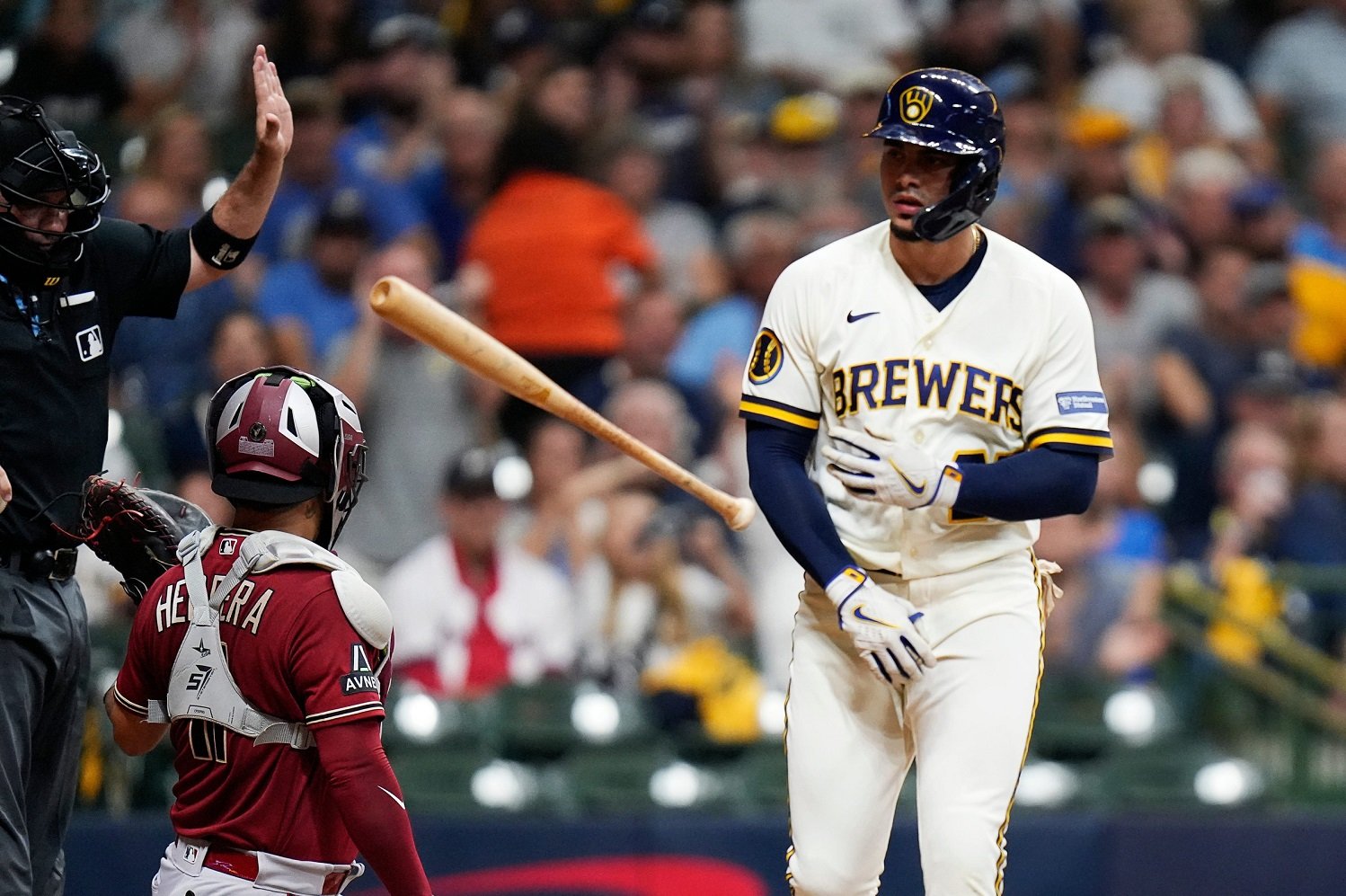 Willy Adames quickly became a fan favorite in Milwaukee, riding the hot winds of form to carry a stagnant Brewers offense to a franchise-record number of regular-season Wins. Since then, he has retained the power he showed despite going through various approaches. Unfortunately, he hasn’t found the same offensive surge he achieved in 2021. In 2024, that could all change. Approach and Plate Discipline One criticism of Adames in his first two seasons in Milwaukee was his impatience at the plate. The result was a high chase rate, which hurt his on-base percentage. He went into the 2023 season with the objective of walking 70 times. He achieved that goal with an 11.1% walk rate, placing him in the top 20% in the league. Improved strike zone discipline typically helps a hitter’s batting average, but that wasn’t the case for Adames, who hit a career-low .217 in 2023. However, the positive developments in his plate discipline should increase his floor as a hitter significantly. What went wrong with the bat? The Brewers' shortstop continued to loft the ball consistently, but he stopped hitting the ball hard with any regularity. He posted career lows in average, exit velocity, and hard-hit rate, meaning fewer of those fly balls and line drives found the grass. In addition, Statcast suggests he was quite an unfortunate hitter. His 2023 slash line was .217/.310/.407, but he had an xBA (Expected Batting Average) of .240 and xSlg (Expected Slugging Percentage) of .436, which could have taken him to a .779 OPS and a much more palatable performance from one of the Brewers' key offensive contributors. Still, even that would have fallen well short of his offensive impact in 2021. So, how can he reach those lofty heights once again? Adames Hit Tool Was Somehow Better in 2023 One measure of a good hitter is someone who regularly puts the ball in play from various locations within the strike zone. As such, one could argue, per the graphic below, that Adames was better in 2023 than he was in 2021: The scarcity of blue on the left graphic (2023) is perhaps an indicator of the work Adames has put in without getting the reward, performing significantly better in his expected batting average in a far greater area of the strike zone while simultaneously cutting down on his chase rate. Perhaps a breakout isn’t as far off as we think. He has passable quality of contact in the strike zone, above-average plate discipline, and elevates the ball better than 91 percent of the league, which leaves just one final hurdle; The Exit Velocity Adames’ average exit velocity dipped significantly from 89.5 mph in 2021 to 87.4 mph in 2023, which may not sound like much, but throughout a season can produce dramatically different results. Here are Adames’ exit velocities by zone year on year: He has remained relatively consistent in several areas, with pitches up and away being a considerable strength, while struggling with pitches in on his hands for the most part. He has improved at dealing with his more troubled locations, but the biggest differences are in his damage zones. In 2021 and 2022, pitches on the middle stripe got hammered, meaning you couldn’t get away with mistake pitches too often. The other area is down and inside. When pitchers tried to get in on the handle but didn’t elevate enough, he punished them. In 2023, he dipped notably in these areas, with the 84 mph down and inside a real drop off and a slight drop in those mistake zones over the heart of the plate. He changed a lot in 2023, but there’s no reason why he can’t find that ability to punish pitchers again, and in fact, he did manage to reclaim it over short spurts in 2023. We could delve into technical adjustments and the effects of a more patient approach. However, there’s another reason why Adames may have struggled to find those long surges of form he produced in both 2021 and 2022: the concussion. Willy Adames was leaning over the guard rail in the dugout when a cannon of a line drive hit him squarely in the head. He required a hospital visit and was put on the concussion IL before returning to play 11 days later, which meant all should be fine, right? Unfortunately, this isn’t the case; as the recipient of several concussions myself, they can be incredibly difficult to diagnose or even recognize until you come out on the other side of it. It affects your mood, concentration, and even occasionally your body movements. Still, in baseball, where failure is so common and your mental strength is vital, the effects it could have are not to be underestimated. Adames found his swing for brief periods, as mentioned earlier, such as before the all-star break, and it’s not a stretch of the imagination to see the benefits of his hitting developments in the last two seasons illustrated by the power he possesses alongside a healthy mind and body for the season ahead. Adames’ performance metrics suggest that 2023 was more of an outlier in terms of his hitting and power numbers, but what do you think? Can Willy achieve a send-off in style? Let us know your thoughts in the comments below!
 -
How close is the Brewers star shortstop to dominating with the bat in 2024? Image courtesy of © Jovanny Hernandez / Milwaukee Journal Sentinel / USA TODAY NETWORK Willy Adames quickly became a fan favorite in Milwaukee, riding the hot winds of form to carry a stagnant Brewers offense to a franchise-record number of regular-season Wins. Since then, he has retained the power he showed despite going through various approaches. Unfortunately, he hasn’t found the same offensive surge he achieved in 2021. In 2024, that could all change. Approach and Plate Discipline One criticism of Adames in his first two seasons in Milwaukee was his impatience at the plate. The result was a high chase rate, which hurt his on-base percentage. He went into the 2023 season with the objective of walking 70 times. He achieved that goal with an 11.1% walk rate, placing him in the top 20% in the league. Improved strike zone discipline typically helps a hitter’s batting average, but that wasn’t the case for Adames, who hit a career-low .217 in 2023. However, the positive developments in his plate discipline should increase his floor as a hitter significantly. What went wrong with the bat? The Brewers' shortstop continued to loft the ball consistently, but he stopped hitting the ball hard with any regularity. He posted career lows in average, exit velocity, and hard-hit rate, meaning fewer of those fly balls and line drives found the grass. In addition, Statcast suggests he was quite an unfortunate hitter. His 2023 slash line was .217/.310/.407, but he had an xBA (Expected Batting Average) of .240 and xSlg (Expected Slugging Percentage) of .436, which could have taken him to a .779 OPS and a much more palatable performance from one of the Brewers' key offensive contributors. Still, even that would have fallen well short of his offensive impact in 2021. So, how can he reach those lofty heights once again? Adames Hit Tool Was Somehow Better in 2023 One measure of a good hitter is someone who regularly puts the ball in play from various locations within the strike zone. As such, one could argue, per the graphic below, that Adames was better in 2023 than he was in 2021: The scarcity of blue on the left graphic (2023) is perhaps an indicator of the work Adames has put in without getting the reward, performing significantly better in his expected batting average in a far greater area of the strike zone while simultaneously cutting down on his chase rate. Perhaps a breakout isn’t as far off as we think. He has passable quality of contact in the strike zone, above-average plate discipline, and elevates the ball better than 91 percent of the league, which leaves just one final hurdle; The Exit Velocity Adames’ average exit velocity dipped significantly from 89.5 mph in 2021 to 87.4 mph in 2023, which may not sound like much, but throughout a season can produce dramatically different results. Here are Adames’ exit velocities by zone year on year: He has remained relatively consistent in several areas, with pitches up and away being a considerable strength, while struggling with pitches in on his hands for the most part. He has improved at dealing with his more troubled locations, but the biggest differences are in his damage zones. In 2021 and 2022, pitches on the middle stripe got hammered, meaning you couldn’t get away with mistake pitches too often. The other area is down and inside. When pitchers tried to get in on the handle but didn’t elevate enough, he punished them. In 2023, he dipped notably in these areas, with the 84 mph down and inside a real drop off and a slight drop in those mistake zones over the heart of the plate. He changed a lot in 2023, but there’s no reason why he can’t find that ability to punish pitchers again, and in fact, he did manage to reclaim it over short spurts in 2023. We could delve into technical adjustments and the effects of a more patient approach. However, there’s another reason why Adames may have struggled to find those long surges of form he produced in both 2021 and 2022: the concussion. Willy Adames was leaning over the guard rail in the dugout when a cannon of a line drive hit him squarely in the head. He required a hospital visit and was put on the concussion IL before returning to play 11 days later, which meant all should be fine, right? Unfortunately, this isn’t the case; as the recipient of several concussions myself, they can be incredibly difficult to diagnose or even recognize until you come out on the other side of it. It affects your mood, concentration, and even occasionally your body movements. Still, in baseball, where failure is so common and your mental strength is vital, the effects it could have are not to be underestimated. Adames found his swing for brief periods, as mentioned earlier, such as before the all-star break, and it’s not a stretch of the imagination to see the benefits of his hitting developments in the last two seasons illustrated by the power he possesses alongside a healthy mind and body for the season ahead. Adames’ performance metrics suggest that 2023 was more of an outlier in terms of his hitting and power numbers, but what do you think? Can Willy achieve a send-off in style? Let us know your thoughts in the comments below! View full article
-
It's the first thing I'm looking for in clips of him throwing... They're teasing us
-
Spring training form isn’t a surefire arbiter of regular-season success, but there are a few signposts that may point to a good 2024 for the Brewers. Here are the key things to watch as Cactus League play begins. Image courtesy of © Tom Tingle/The Republic / USA TODAY NETWORK Spring training is a farrago of veteran hitters easing their way in, pitchers narrowing their arsenals to focus on specific pitches (or expanding them to find outs in new places), and young bucks attempting to earn an Opening Day roster spot. It creates an environment wherein results don’t usually tell us a whole lot about the coming season, but there are a few things that make this Brewers squad a little bit different. With a lot of open questions surrounding starting spots, prospect development and return from injury, there are several things we can look out for. Who is in Pole Position for Opening Day? As a general rule of thumb, major leaguers will start spring training games while the fringier players and prospects get a chance later on. This doesn’t always hold true for the first week, but usually by the second week, every member of the 40-man roster will be given some game time, with this ramping up the closer we get to Opening Day. It can be fascinating to see not just if players play, but in what positions. For example, if we see Jackson Chourio getting more reps in center field than Garrett Mitchell or Sal Frelick, he’s more likely to get the nod as the Brewers' starter there come Mar. 28. Perhaps more obvious are the pitchers. Specifically, who is seriously being tried for the rotation and who is left for the bullpen? It’s likely that each of Joe Ross, Aaron Ashby, DL Hall, Robert Gasser, Janson Junk and Colin Rea will build up to multiple innings, but the question of who gets stretched to four or five frames will be telling in whom the Brewers prefer in their Opening Day rotation. There aren’t enough spots for each of them among the 13 pitchers allowed on the active roster, so expect to see some serious competition. Jackson Chourio’s Strikeout/Walk rate The one set of statistics that seems to translate from spring training into the regular season is that centered on hitters' plate discipline. Chourio’s historic pre-debut deal opens a path for him to become the Brewers' Opening Day center fielder, but one issue he had in the minor leagues was his prolific chase rate. His bat-to-ball skills improved immensely over the course of the season, which allowed him to put the ball in play at remarkable rates despite the flaw, while also causing him to hit into cheap outs and generate a poor walk rate. Against big-league pitchers, you simply cannot afford to chase as much as he does, but if he can take that final step and remain inside his strike zone, we should see the hit tool, the power and a strong walk rate all coalesce this season. Chourio has shown a coachability that has developed his talent impressively. As such, it would be no surprise to see him jump straight into action with a refined patience at the plate. It’s also important to remember that, as Christian Yelich said, he’s just a kid, and if he takes time to learn at the big-league level, that’s just fine as well. Let’s enjoy every second of the five-tool talent being on the field. Joey Wiemer’s Swing Oh baby, is this exciting. Spencer Michaelis shared a clip of Joey Wiemer’s new and improved swing, something our own Matt Trueblood dissected here. It has a lot of fans excited, after a season in which Wiemer flashed his immense power and stunning defensive capabilities, but he couldn’t make contact with regularity. He’s also drawn comparisons to some big stars, if you’d like to play spot the difference below: In all seriousness, one swing by Wiemer doesn’t quite tell us all we need to know about the coming season, but it’s going to be exciting and intriguing to follow these two things: Can he make more contact? Has he lost any of his power? If the new, more compact swing can improve his contact rates without sacrificing much of that pop, Wiemer will be a stud who takes the league by storm this season. If not, he may have improved his floor but lost out on some of that which made him such a special talent. Strikeout rates will be key to his spring, and if he can keep that down while posting some gaudy exit velocities, the hype train will have well and truly left the station. Aaron Ashby’s Velocity Ashby had some incredible life on his fastball and slider in 2022, with a wicked sinker that induced a ton of ground balls and a lot of promise. Then his 2023 got wiped out by a shoulder surgery, and his late-season return showed some worrying signs. Pitching at 87 mph in his minor-league rehab (a far cry from the 99 mph he topped out at in 2022), Ashby was a shadow of his former self. In the above clip, he already looks more fluid and comfortable in his throwing motion, which is a great sign heading into 2024. A fit and firing Ashby can be a strong number-three starter for this team, if he can stay healthy and regain anything close to his former stuff. That may be a big ask, but it should also be immediately evident just where he’s at from his first appearance on the mound. DL Hall’s Walk Rate DL Hall showed some notable improvements last season, completely stripping back his delivery, and it resulted in a big step forward in his command. In a small sample with the Baltimore Orioles that included a playoff run, he finished with six strikeouts in 3 1/3 innings and just one walk. That was added to a 6.2% walk rate in the regular season. The raw stuff is still there, and the small sample shows he may have turned the corner in terms of his control. That being said, the plan for 2024 is to start games, which brings its own set of challenges and a renewed focus on his ability to keep the ball in the strike zone. Hall possesses one of the best fastballs among prospects, and two wipeout secondaries in his curveball and slider that will allow him to get results if he can throw them for strikes. If he can’t, there is reliever risk here, and spring training may be a big turning point in Hall’s career. Along with all this are some other fascinating story lines. How does Tyler Black look defensively? Can Jacob Misiorowski enhance his hype alongside his command (early reports suggest that he looks much more balanced on the mound)? Can Brock Wilken light up the spring? Will Garrett Mitchell stay healthy and show his athletic promise? The squad of high-ceiling talent the Brewers possess in the upper minors makes for a riveting side piece, and paves the way for reinforcements later in the season. Then you have Sal Frelick with reps in the infield; everyday regulars like William Contreras and Christian Yelich looking to elevate more; and Freddy Peralta primed to pick up where he left off after his dominant second half of 2023. Baseball season begins again this Saturday. Feb. 24. It’s a hugely exciting time to be a Brewers fan, with a multitude of questions to be answered and positions to be fought over. What are you paying attention to this spring? Let us know your thoughts in the comments below! View full article
- 3 replies
-
- 1
-

-
- jackson chourio
- dl hall
- (and 2 more)
-
Five Storylines to Follow in Milwaukee Brewers Spring Training
Jake McKibbin posted an article in Brewers
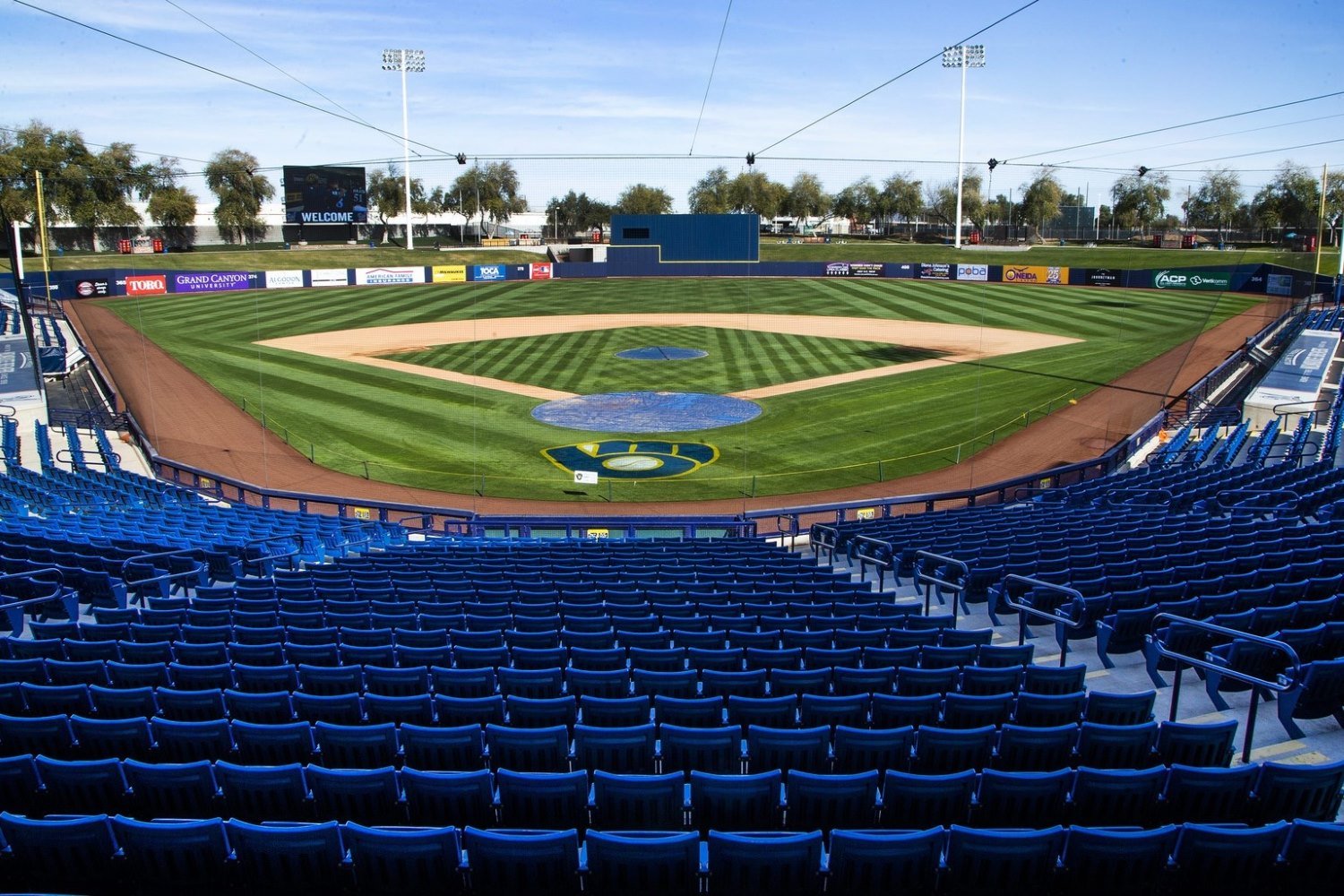 Spring training is a farrago of veteran hitters easing their way in, pitchers narrowing their arsenals to focus on specific pitches (or expanding them to find outs in new places), and young bucks attempting to earn an Opening Day roster spot. It creates an environment wherein results don’t usually tell us a whole lot about the coming season, but there are a few things that make this Brewers squad a little bit different. With a lot of open questions surrounding starting spots, prospect development and return from injury, there are several things we can look out for. Who is in Pole Position for Opening Day? As a general rule of thumb, major leaguers will start spring training games while the fringier players and prospects get a chance later on. This doesn’t always hold true for the first week, but usually by the second week, every member of the 40-man roster will be given some game time, with this ramping up the closer we get to Opening Day. It can be fascinating to see not just if players play, but in what positions. For example, if we see Jackson Chourio getting more reps in center field than Garrett Mitchell or Sal Frelick, he’s more likely to get the nod as the Brewers' starter there come Mar. 28. Perhaps more obvious are the pitchers. Specifically, who is seriously being tried for the rotation and who is left for the bullpen? It’s likely that each of Joe Ross, Aaron Ashby, DL Hall, Robert Gasser, Janson Junk and Colin Rea will build up to multiple innings, but the question of who gets stretched to four or five frames will be telling in whom the Brewers prefer in their Opening Day rotation. There aren’t enough spots for each of them among the 13 pitchers allowed on the active roster, so expect to see some serious competition. Jackson Chourio’s Strikeout/Walk rate The one set of statistics that seems to translate from spring training into the regular season is that centered on hitters' plate discipline. Chourio’s historic pre-debut deal opens a path for him to become the Brewers' Opening Day center fielder, but one issue he had in the minor leagues was his prolific chase rate. His bat-to-ball skills improved immensely over the course of the season, which allowed him to put the ball in play at remarkable rates despite the flaw, while also causing him to hit into cheap outs and generate a poor walk rate. Against big-league pitchers, you simply cannot afford to chase as much as he does, but if he can take that final step and remain inside his strike zone, we should see the hit tool, the power and a strong walk rate all coalesce this season. Chourio has shown a coachability that has developed his talent impressively. As such, it would be no surprise to see him jump straight into action with a refined patience at the plate. It’s also important to remember that, as Christian Yelich said, he’s just a kid, and if he takes time to learn at the big-league level, that’s just fine as well. Let’s enjoy every second of the five-tool talent being on the field. Joey Wiemer’s Swing Oh baby, is this exciting. Spencer Michaelis shared a clip of Joey Wiemer’s new and improved swing, something our own Matt Trueblood dissected here. It has a lot of fans excited, after a season in which Wiemer flashed his immense power and stunning defensive capabilities, but he couldn’t make contact with regularity. He’s also drawn comparisons to some big stars, if you’d like to play spot the difference below: In all seriousness, one swing by Wiemer doesn’t quite tell us all we need to know about the coming season, but it’s going to be exciting and intriguing to follow these two things: Can he make more contact? Has he lost any of his power? If the new, more compact swing can improve his contact rates without sacrificing much of that pop, Wiemer will be a stud who takes the league by storm this season. If not, he may have improved his floor but lost out on some of that which made him such a special talent. Strikeout rates will be key to his spring, and if he can keep that down while posting some gaudy exit velocities, the hype train will have well and truly left the station. Aaron Ashby’s Velocity Ashby had some incredible life on his fastball and slider in 2022, with a wicked sinker that induced a ton of ground balls and a lot of promise. Then his 2023 got wiped out by a shoulder surgery, and his late-season return showed some worrying signs. Pitching at 87 mph in his minor-league rehab (a far cry from the 99 mph he topped out at in 2022), Ashby was a shadow of his former self. In the above clip, he already looks more fluid and comfortable in his throwing motion, which is a great sign heading into 2024. A fit and firing Ashby can be a strong number-three starter for this team, if he can stay healthy and regain anything close to his former stuff. That may be a big ask, but it should also be immediately evident just where he’s at from his first appearance on the mound. DL Hall’s Walk Rate DL Hall showed some notable improvements last season, completely stripping back his delivery, and it resulted in a big step forward in his command. In a small sample with the Baltimore Orioles that included a playoff run, he finished with six strikeouts in 3 1/3 innings and just one walk. That was added to a 6.2% walk rate in the regular season. The raw stuff is still there, and the small sample shows he may have turned the corner in terms of his control. That being said, the plan for 2024 is to start games, which brings its own set of challenges and a renewed focus on his ability to keep the ball in the strike zone. Hall possesses one of the best fastballs among prospects, and two wipeout secondaries in his curveball and slider that will allow him to get results if he can throw them for strikes. If he can’t, there is reliever risk here, and spring training may be a big turning point in Hall’s career. Along with all this are some other fascinating story lines. How does Tyler Black look defensively? Can Jacob Misiorowski enhance his hype alongside his command (early reports suggest that he looks much more balanced on the mound)? Can Brock Wilken light up the spring? Will Garrett Mitchell stay healthy and show his athletic promise? The squad of high-ceiling talent the Brewers possess in the upper minors makes for a riveting side piece, and paves the way for reinforcements later in the season. Then you have Sal Frelick with reps in the infield; everyday regulars like William Contreras and Christian Yelich looking to elevate more; and Freddy Peralta primed to pick up where he left off after his dominant second half of 2023. Baseball season begins again this Saturday. Feb. 24. It’s a hugely exciting time to be a Brewers fan, with a multitude of questions to be answered and positions to be fought over. What are you paying attention to this spring? Let us know your thoughts in the comments below!
- 3 comments
-
- 3
-
-
- jackson chourio
- dl hall
- (and 2 more)
-
It's so exciting to see someone make such drastic changes and put in so much work to create this. It's one swing but that extra time can hopefully play to his advantage, and be more selective where and how he does damage
-
How did I forget Ashby, that a great shout! Love the look of that so much. If both fully healthy and guaranteed a healthy season, I wonder how many would choose Woodruff over Burnes... He's so much more beloved in Wisconsin! Thanks Rick, appreciate that a lot! And couldn't agree more
-
Completely. It's just the type of wholesome content we needed
- 7 replies
-
- 2
-
-
- brandon woodruff
- jacob misiorowski
- (and 1 more)
-
Brandon Woodruff brings enormous potential to dream on in his two-year deal with the Brewers. Here are a few of the things you should be stupendously excited about. Image courtesy of © Michael McLoone-USA TODAY Sports Brandon Woodruff is a fan favorite in Milwaukee whom many will be ecstatic to see back in a Brewers uniform. A nuggety ace with incredible raw stuff, Woodruff's humble attitude endears him to fans and teammates alike. His ability as a pitcher, though, will define this deal, and it could be one of the best deals Milwaukee has struck for various reasons. He’s Already Shown He Can Bounce Back Woodruff is coming off a serious shoulder injury, with the shoulder joint potentially career-ending for someone like Woodruff, who relies heavily on his velocity and high spin rate on his fastball to attack opposing hitters. That being said, Woodruff returned with aplomb this past season to a 2.59 ERA over 55 ⅔ innings. He showed he could come back from a shoulder injury and pitch like an elite starter, with his September form pre-injury on track to bring him a pitcher of the month award, while his WAR, if extrapolated across a full body of work (180 innings,) would have been far and away the best pitcher in either league at 7.2 WAR. A pitcher returning from serious injury to produce those numbers may be able to do so again. His Evolving Arsenal Woodruff’s breakthrough with the Brewers came from one of the best fastballs in the major leagues, with a low VAA, high spin, and high velocity that he carried deep into his starts. In 2023, he used his changeup more than ever before to quite devastating results. Batters hit just .098/.118 against it, completely neutralizing left-handers and causing a swing and miss 38% of the time. He didn't apply it much against right-handers, but the fastball and sinker did more than enough damage, either causing swing and miss or eliciting weak ground balls. As a result, Woodruff isn’t merely a strikeout pitcher but has the tools to generate weak contact and double play ground balls when men find a way on base. He’s a complete pitcher who can get outs in various ways, allowing him to go deeper into games than most recent Brewers starters. He’s a workhorse, and if the Brewers can return him to anything close to his former glory, they’ll be smiling from ear to ear. He May Yet Return For the 2024 Playoffs The Brewers have many questions this season, but they have a chance to take significant offensive strides with their recent signings that could leave them as a better all-round team than 2023, despite losing Corbin Burnes. The upgrades at first base, middle infield, and the outfield mean they’ll be confident of retaking their places in the playoff race amongst the lackadaisical NL Central. The Cubs lost their second-best pitcher and best hitter from last year, the Cardinals have replaced Montgomery with Sonny Gray and some low-quality innings eaters, while the Reds have taken promising steps but haven’t gone all in by any means. Thus, there is a notable chance that Brandon Woodruff could be healthy in time for a late-season run in 2024 and potentially a playoff charge. Many other Brewers may be pressing claims for a starting rotation spot by that point, but if the Brewers can ramp Woodruff up in time to go hard in August and September, the rotation will take a massive leap forward. July will mark nine months since his surgery and may mark the point at which he can step up his preparation for the season. The Brewers 2025 Rotation May Have the Best Raw Stuff In Baseball Even if Woodruff doesn’t return to full force in 2024, the Brewers can dream of a rotation to be genuinely feared again in 2025, combined with a significantly more productive offense. DL Hall and Jacob Misiorowski are the only prospects with 80-grade fastballs, and their stuff doesn’t end there with at least two other plus or plus-plus pitches each. Early clips of Misiorowski seem to show more body control, while Hall made technical adjustments last season to improve his command, which showed up far better in the majors in a small sample. A quartet of Freddy Peralta, Brandon Woodruff, DL Hall, and Jacob Misiorowski could be the most nasty combination in baseball, which could wreak havoc anywhere they land. Alongside an offense featuring young talents such as Tyler Black, Brock Wilken, Joey Ortiz, Sal Frelick, Joey Wiemer, William Contreras, and more, they make a team that looks not just playoff-ready but World Series-ready. In short, Brandon Woodruff presents a real opportunity, at least in 2025, if the chips fall correctly, and perhaps in 2024, to take this Brewers team to a new level. He adds a strong clubhouse presence and an experienced hand for the young Brewers pitchers to learn from. He brings so many qualities to the table that you can easily dream of, and you can’t help but root for him. There is a large enough possibility that he never finds his form of yesteryear, but baseball is a sport to dream on. As a human being, Brandon Woodruff deserves every ounce of fortune and goodwill that comes his way. If he doesn't reach his potential, we should still celebrate having this man in Milwaukee every second he is here. As an aside, this may also be the reason for the delay in signing Gary Sanchez, needing the 40-man space to sign Woodruff before assigning him to the 60-day IL. What do you think of the Brewers signing of Brandon Woodruff? And what do you think his potential with the Brewers over the next two years? Let us know in the comments below! View full article
-
Brandon Woodruff is a Monumental (Re)Addition to the Brewers
Jake McKibbin posted an article in Brewers
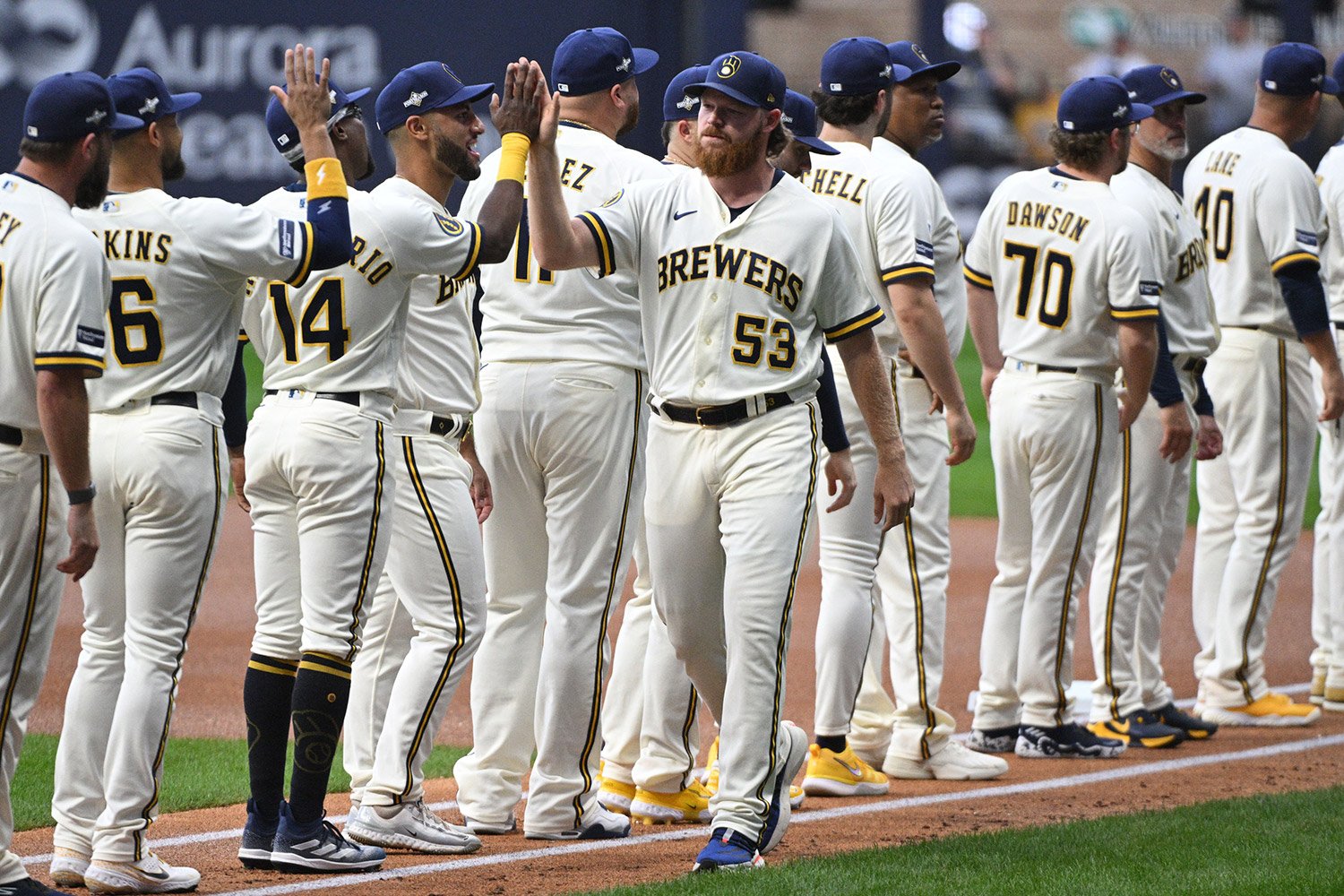 Brandon Woodruff is a fan favorite in Milwaukee whom many will be ecstatic to see back in a Brewers uniform. A nuggety ace with incredible raw stuff, Woodruff's humble attitude endears him to fans and teammates alike. His ability as a pitcher, though, will define this deal, and it could be one of the best deals Milwaukee has struck for various reasons. He’s Already Shown He Can Bounce Back Woodruff is coming off a serious shoulder injury, with the shoulder joint potentially career-ending for someone like Woodruff, who relies heavily on his velocity and high spin rate on his fastball to attack opposing hitters. That being said, Woodruff returned with aplomb this past season to a 2.59 ERA over 55 ⅔ innings. He showed he could come back from a shoulder injury and pitch like an elite starter, with his September form pre-injury on track to bring him a pitcher of the month award, while his WAR, if extrapolated across a full body of work (180 innings,) would have been far and away the best pitcher in either league at 7.2 WAR. A pitcher returning from serious injury to produce those numbers may be able to do so again. His Evolving Arsenal Woodruff’s breakthrough with the Brewers came from one of the best fastballs in the major leagues, with a low VAA, high spin, and high velocity that he carried deep into his starts. In 2023, he used his changeup more than ever before to quite devastating results. Batters hit just .098/.118 against it, completely neutralizing left-handers and causing a swing and miss 38% of the time. He didn't apply it much against right-handers, but the fastball and sinker did more than enough damage, either causing swing and miss or eliciting weak ground balls. As a result, Woodruff isn’t merely a strikeout pitcher but has the tools to generate weak contact and double play ground balls when men find a way on base. He’s a complete pitcher who can get outs in various ways, allowing him to go deeper into games than most recent Brewers starters. He’s a workhorse, and if the Brewers can return him to anything close to his former glory, they’ll be smiling from ear to ear. He May Yet Return For the 2024 Playoffs The Brewers have many questions this season, but they have a chance to take significant offensive strides with their recent signings that could leave them as a better all-round team than 2023, despite losing Corbin Burnes. The upgrades at first base, middle infield, and the outfield mean they’ll be confident of retaking their places in the playoff race amongst the lackadaisical NL Central. The Cubs lost their second-best pitcher and best hitter from last year, the Cardinals have replaced Montgomery with Sonny Gray and some low-quality innings eaters, while the Reds have taken promising steps but haven’t gone all in by any means. Thus, there is a notable chance that Brandon Woodruff could be healthy in time for a late-season run in 2024 and potentially a playoff charge. Many other Brewers may be pressing claims for a starting rotation spot by that point, but if the Brewers can ramp Woodruff up in time to go hard in August and September, the rotation will take a massive leap forward. July will mark nine months since his surgery and may mark the point at which he can step up his preparation for the season. The Brewers 2025 Rotation May Have the Best Raw Stuff In Baseball Even if Woodruff doesn’t return to full force in 2024, the Brewers can dream of a rotation to be genuinely feared again in 2025, combined with a significantly more productive offense. DL Hall and Jacob Misiorowski are the only prospects with 80-grade fastballs, and their stuff doesn’t end there with at least two other plus or plus-plus pitches each. Early clips of Misiorowski seem to show more body control, while Hall made technical adjustments last season to improve his command, which showed up far better in the majors in a small sample. A quartet of Freddy Peralta, Brandon Woodruff, DL Hall, and Jacob Misiorowski could be the most nasty combination in baseball, which could wreak havoc anywhere they land. Alongside an offense featuring young talents such as Tyler Black, Brock Wilken, Joey Ortiz, Sal Frelick, Joey Wiemer, William Contreras, and more, they make a team that looks not just playoff-ready but World Series-ready. In short, Brandon Woodruff presents a real opportunity, at least in 2025, if the chips fall correctly, and perhaps in 2024, to take this Brewers team to a new level. He adds a strong clubhouse presence and an experienced hand for the young Brewers pitchers to learn from. He brings so many qualities to the table that you can easily dream of, and you can’t help but root for him. There is a large enough possibility that he never finds his form of yesteryear, but baseball is a sport to dream on. As a human being, Brandon Woodruff deserves every ounce of fortune and goodwill that comes his way. If he doesn't reach his potential, we should still celebrate having this man in Milwaukee every second he is here. As an aside, this may also be the reason for the delay in signing Gary Sanchez, needing the 40-man space to sign Woodruff before assigning him to the 60-day IL. What do you think of the Brewers signing of Brandon Woodruff? And what do you think his potential with the Brewers over the next two years? Let us know in the comments below!
- 7 comments
-
- 4
-
-
- brandon woodruff
- jacob misiorowski
- (and 1 more)
-
Milwaukee 2024 Spring Training Battles: The Final Bench Spots
Jake McKibbin posted an article in Brewers
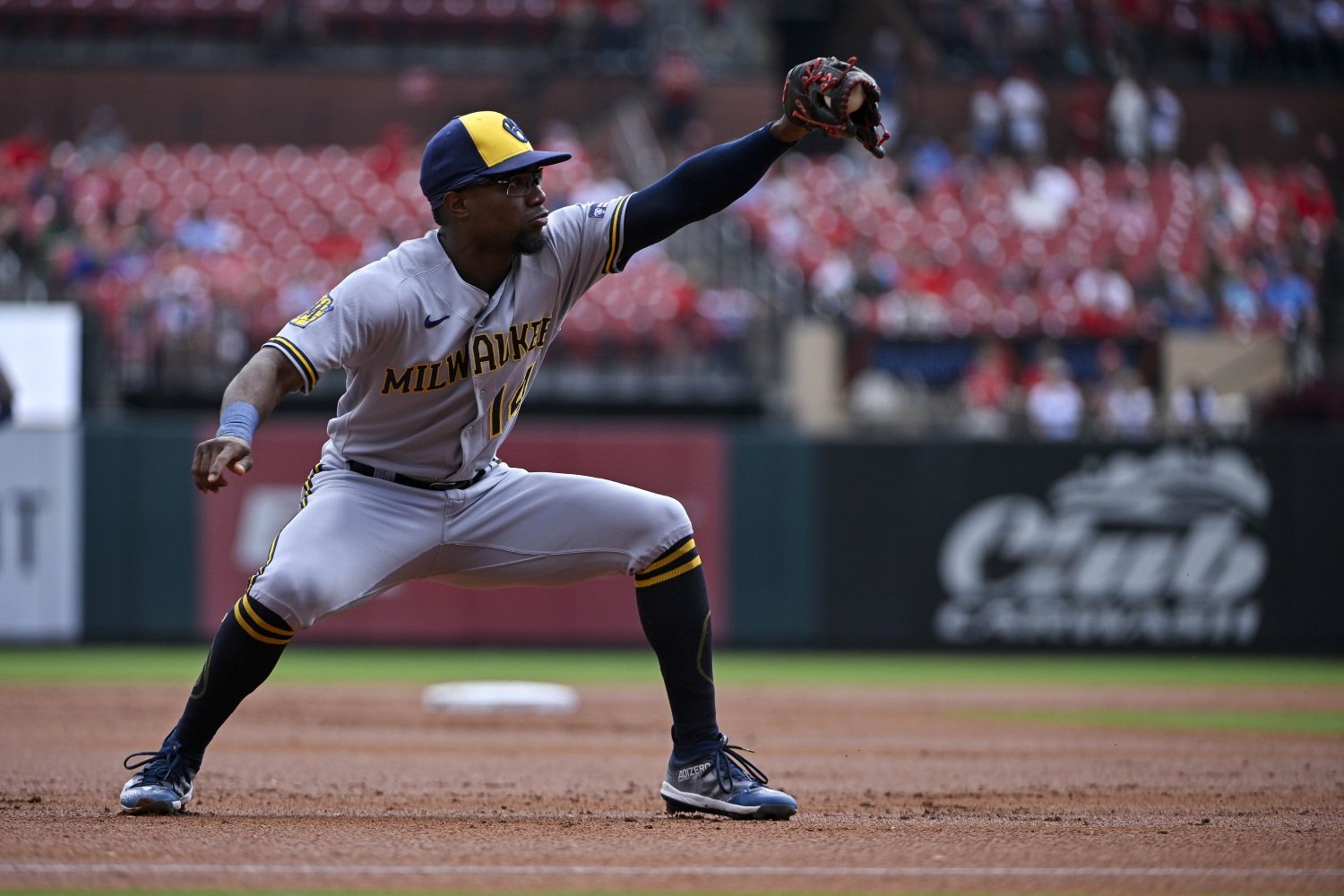 The Brewers have a lot of talent vying for the final spot or two on their Opening Day roster, both in the upper levels of the minor-league system and already on their 40 man roster. Most positions are hotly contested, and it may leave some unhappy campers. Working on the rough assumption that all of the below are likely to be on the squad, here are the arguments for and against each player’s involvement: Outfielders: Jackson Chourio, Christian Yelich, Sal Frelick, Garrett Mitchell/Joey Wiemer Infielders: Rhys Hoskins, Joey Ortiz, Brice Turang, Willy Adames, Tyler Black Catchers: William Contreras, Gary Sánchez The Candidates Jake Bauers Acquired from the New York Yankees for two top-30 system prospects, Bauers's arrival left many Brewers fans scratching their heads. A powerful left-handed bat with poor surface-level stats for the Yankees, Bauers's underlying metrics put him in the 90th percentile for barrel rate and hard-hit rate, combined with 80th percentile in chase rates and expected slugging percentage. In short, he demonstrated that he could be an extremely potent left-handed bat and add power to an offense sorely lacking home run production last season. He has no issue getting the ball in the air with regularity, and should provide some lower-in-the-order pop. Bauers is out of options, so it’s highly likely that the Brewers will keep him on their 26-man roster to start the season (having invested the prospect capital to do so), barring a calamitous spring training performance. A triumvirate of Hoskins, Contreras and Sánchez against left handers, with Bauers tagging in against righthanders ,adds a lot of pop to this Brewers lineup. On the other hand, Bauers doesn't have a credible track record of success on which to fall back, which means he’ll need to hit the ground running. That kind of power coming off the bench in favorable situations is a weapon, though, and it’s tough to see him not making the Opening Day roster. Likelihood of Making It: 90% Andruw Monasterio Monasterio was a bit of a cult hero last year, with an ability to put the ball in play backed up by a really good sweet spot rate that let him drop in plenty of singles. He’s versatile enough to cover second base admirably, but there remain question marks over his ceiling. His slugging rate was below the expected marks from Baseball Savant, but even then, it would be a surprise to see him hit more than about eight home runs over a full season of plate appearances. In January, it would have seemed highly likely for Monasterio to be on the Opening Day roster, but the addition of Joey Ortiz throws a wrench in the works. Ortiz and Turang would both have better defensive chops, including an ability to play above an above-average shortstop, which could leave Monasterio in a battle with Tyler Black. Black’s offensive capabilities and ceiling surpass what Monasterio can provide, and as a result, the Crew's top infield prospect may push last year's valued super sub down to the minor leagues, there to await dips in form or injury to reach the majors again. Likelihood of Making It: 20% Joey Wiemer/Garrett Mitchell Sal Frelick’s potential availability in the infield adds some flexibility to the outfield corps, which could provide more reps for the fifth outfielder. The expectation is that Wiemer and Mitchell will be fighting it out for the fourth outfielder role, something that should produce considerable playing time, and the other will be sent to work on their offensive game at Triple-A Nashville. Both have issues with the bat surrounding contact rates, but both have strong defensive floors, so it could be a toss-up, depending on their performance in spring training and improvements they’ve worked on throughout the offseason. There remains a discussion on Mitchell’s ability to stay healthy, while I recently wrote about Wiemer being a breakout star in 2024, but whoever scuffles this spring is likely to be kept in the minor leagues to develop their offensive potential and (hopefully) be a more well-rounded threat later in the season with regular at-bats in the minors. Likelihood of Making It: 20%, for the one who has the tougher camp Blake Perkins Perkins’s silky coverage in the outfield last season slightly covered up just how effective he was defensively, with 8 Outs Above Average (OAA) in limited appearances for the Brewers across all three outfield spots. His plate coverage had some upside as well, in that (although he didn’t do any damage with the bat) he was extremely patient at the plate, which led to a 13.7% walk rate and a chase rate of just 16.8%. The downside of this discipline was that he actually struck out over 27% of the time as well, with an xBA of just .194, so to expect much offensive production from Perkins would be unfair. A lot of teams would be extremely happy to have Perkins's defensive chops as a fourth outfielder, so pushing him to a fifth option shows the strength in depth the Brewers have. In rostering him, they could allow one of their higher-ceiling freshmen more regular reps in the minors, and as such, he may find himself there come Opening Day. He presents good value as a late-inning defensive replacement, and could give the Brewers the best defensive outfield in baseball between himself, Jackson Chourio and Sal Frelick. Likelihood of Making It: 60% Eric Haase When he signed in December, it appeared as though Haase was set to be the Brewers' backup catcher in 2024, but the acquisition (still pending) of Gary Sánchez changed all of that. While Sánchez is a significantly better catcher than the New York media would tell you, he may DH with regularity, creating an opportunity for Haase to be the bench catcher and avoid having to forfeit the DH spot. This sounds good, but Haase’s performance last year wasn’t up to scratch, and unless the Brewers' revered coaching staff can turn around his defensive struggles of recent seasons, it'll become a tough sell. His work behind the plate has never been a strong suit, and his offensive metrics have dipped noticeably and alarmingly since his career year in 2021, when Haase hit 22 home runs. In 2023, he didn’t hit the ball hard at all and finished with -1.4 WAR between Detroit and Cleveland. The Brewers will hope to fix that, too, but it's no sure thing. It seems like carrying a third catcher just on the off chance an early injury throws off a game may be a waste, especially considering how the Brewers prize versatility. Should the signing of Sánchez go through, it’s likely that Haase gets DFAed or relegated to the minors before the start of the season, and it’s tough to envision him making the cut here, barring injury to one of the more prestigious names ahead of him, or somehow finding the form that made him so useful with the bat in 2022. Likelihood of Making It: 15% Out of these options, who could you see as most likely to join the Brewers' 26-man roster on Opening Day? Let us know your thoughts in the comments below.
 -
Entering spring training, there is an intense battle for the remaining two spots on the 2024 Milwaukee Brewers' Opening Day 26-man roster. Who is most likely to win themselves a space? Image courtesy of © Jeff Curry-USA TODAY Sports The Brewers have a lot of talent vying for the final spot or two on their Opening Day roster, both in the upper levels of the minor-league system and already on their 40 man roster. Most positions are hotly contested, and it may leave some unhappy campers. Working on the rough assumption that all of the below are likely to be on the squad, here are the arguments for and against each player’s involvement: Outfielders: Jackson Chourio, Christian Yelich, Sal Frelick, Garrett Mitchell/Joey Wiemer Infielders: Rhys Hoskins, Joey Ortiz, Brice Turang, Willy Adames, Tyler Black Catchers: William Contreras, Gary Sánchez The Candidates Jake Bauers Acquired from the New York Yankees for two top-30 system prospects, Bauers's arrival left many Brewers fans scratching their heads. A powerful left-handed bat with poor surface-level stats for the Yankees, Bauers's underlying metrics put him in the 90th percentile for barrel rate and hard-hit rate, combined with 80th percentile in chase rates and expected slugging percentage. In short, he demonstrated that he could be an extremely potent left-handed bat and add power to an offense sorely lacking home run production last season. He has no issue getting the ball in the air with regularity, and should provide some lower-in-the-order pop. Bauers is out of options, so it’s highly likely that the Brewers will keep him on their 26-man roster to start the season (having invested the prospect capital to do so), barring a calamitous spring training performance. A triumvirate of Hoskins, Contreras and Sánchez against left handers, with Bauers tagging in against righthanders ,adds a lot of pop to this Brewers lineup. On the other hand, Bauers doesn't have a credible track record of success on which to fall back, which means he’ll need to hit the ground running. That kind of power coming off the bench in favorable situations is a weapon, though, and it’s tough to see him not making the Opening Day roster. Likelihood of Making It: 90% Andruw Monasterio Monasterio was a bit of a cult hero last year, with an ability to put the ball in play backed up by a really good sweet spot rate that let him drop in plenty of singles. He’s versatile enough to cover second base admirably, but there remain question marks over his ceiling. His slugging rate was below the expected marks from Baseball Savant, but even then, it would be a surprise to see him hit more than about eight home runs over a full season of plate appearances. In January, it would have seemed highly likely for Monasterio to be on the Opening Day roster, but the addition of Joey Ortiz throws a wrench in the works. Ortiz and Turang would both have better defensive chops, including an ability to play above an above-average shortstop, which could leave Monasterio in a battle with Tyler Black. Black’s offensive capabilities and ceiling surpass what Monasterio can provide, and as a result, the Crew's top infield prospect may push last year's valued super sub down to the minor leagues, there to await dips in form or injury to reach the majors again. Likelihood of Making It: 20% Joey Wiemer/Garrett Mitchell Sal Frelick’s potential availability in the infield adds some flexibility to the outfield corps, which could provide more reps for the fifth outfielder. The expectation is that Wiemer and Mitchell will be fighting it out for the fourth outfielder role, something that should produce considerable playing time, and the other will be sent to work on their offensive game at Triple-A Nashville. Both have issues with the bat surrounding contact rates, but both have strong defensive floors, so it could be a toss-up, depending on their performance in spring training and improvements they’ve worked on throughout the offseason. There remains a discussion on Mitchell’s ability to stay healthy, while I recently wrote about Wiemer being a breakout star in 2024, but whoever scuffles this spring is likely to be kept in the minor leagues to develop their offensive potential and (hopefully) be a more well-rounded threat later in the season with regular at-bats in the minors. Likelihood of Making It: 20%, for the one who has the tougher camp Blake Perkins Perkins’s silky coverage in the outfield last season slightly covered up just how effective he was defensively, with 8 Outs Above Average (OAA) in limited appearances for the Brewers across all three outfield spots. His plate coverage had some upside as well, in that (although he didn’t do any damage with the bat) he was extremely patient at the plate, which led to a 13.7% walk rate and a chase rate of just 16.8%. The downside of this discipline was that he actually struck out over 27% of the time as well, with an xBA of just .194, so to expect much offensive production from Perkins would be unfair. A lot of teams would be extremely happy to have Perkins's defensive chops as a fourth outfielder, so pushing him to a fifth option shows the strength in depth the Brewers have. In rostering him, they could allow one of their higher-ceiling freshmen more regular reps in the minors, and as such, he may find himself there come Opening Day. He presents good value as a late-inning defensive replacement, and could give the Brewers the best defensive outfield in baseball between himself, Jackson Chourio and Sal Frelick. Likelihood of Making It: 60% Eric Haase When he signed in December, it appeared as though Haase was set to be the Brewers' backup catcher in 2024, but the acquisition (still pending) of Gary Sánchez changed all of that. While Sánchez is a significantly better catcher than the New York media would tell you, he may DH with regularity, creating an opportunity for Haase to be the bench catcher and avoid having to forfeit the DH spot. This sounds good, but Haase’s performance last year wasn’t up to scratch, and unless the Brewers' revered coaching staff can turn around his defensive struggles of recent seasons, it'll become a tough sell. His work behind the plate has never been a strong suit, and his offensive metrics have dipped noticeably and alarmingly since his career year in 2021, when Haase hit 22 home runs. In 2023, he didn’t hit the ball hard at all and finished with -1.4 WAR between Detroit and Cleveland. The Brewers will hope to fix that, too, but it's no sure thing. It seems like carrying a third catcher just on the off chance an early injury throws off a game may be a waste, especially considering how the Brewers prize versatility. Should the signing of Sánchez go through, it’s likely that Haase gets DFAed or relegated to the minors before the start of the season, and it’s tough to envision him making the cut here, barring injury to one of the more prestigious names ahead of him, or somehow finding the form that made him so useful with the bat in 2022. Likelihood of Making It: 15% Out of these options, who could you see as most likely to join the Brewers' 26-man roster on Opening Day? Let us know your thoughts in the comments below. View full article
-
There are strong reasons why both Sal Frelick and Joey Wiemer may be poised for big breakouts in 2024. Here's why you need to keep a close eye on these two young freshmen: Image courtesy of © Kamil Krzaczynski-USA TODAY Sports The "Freshmen" were a much-vaunted portion of the Brewers system early last season, with video on Brice Turang, Sal Frelick, Garrett Mitchell, and Joey Wiemer catching fire and providing a buzz around the club that we hadn’t seen for a while. Despite some hot moments in the season, such as Turang’s grand slam against the Mets, Sal Frelick’s 3-4 debut, and Joey Wiemer’s red-hot June, the freshmen never quite took off. The experience of their first year does leave shoots of hope that we may see some more consistent performances this season from Joey Wiemer and Sal Frelick in particular. Joey Wiemer Brenton del Chiaro talked this offseason about the Brewers farm system, specifically mentioning Joey Wiemer, lauding him for using his athleticism during at-bats to access extreme power and adjust his bat path mid-swing depending on pitches. His swing was long and overly complicated, especially in the load phase. He had extreme issues with breaking pitches, and no one in the big leagues faced a higher percentage of breaking pitches. He also demonstrated roughly average plate discipline, which ties in with del Chiaro’s assessment of his use of athleticism, but his in-zone swing and miss was troubling. By September, he knew he had to change, but he didn’t want to lose his natural power, and he had only a few weeks in Nashville to get game time on the alterations. That being said, you can already see a difference in his setup pre-release: h Although the second image is a home run, you can see his hands moving far more pre-release, resulting in a less repeatable swing compared with the sac fly above. Previously, with all the movement in his wrists, he wasn’t starting his swing from the same position, which meant he couldn’t regularly square up the baseball. A more straightforward setup should allow him to create a more consistent bat path without losing any of the raw power he possesses in his gigantic frame. Wiemer had a serious problem swinging and missing inside the strike zone in the big leagues, with anything 25% or above a poor return in the zone. The above graphic should be taken with a pinch of salt due to the sample size and the pitching differential. However, you can see a big improvement in his ability to make contact all within the strike zone, which should help him skyrocket in 2024. Also, considering the small sample size, he started to time up hanging, breaking pitches. Avg exit velocities of 110.8 mph and 105.4 mph over the heart of the plate are no joke against breaking pitches, with continued development here likely forcing more fastballs his way. For reference, he slugged .487 against the fastball last season, so there should be no qualms about seeing more of those babies in a season’s span. The Brewers' organizational philosophy is to allow hitters to be themselves and approach the coaches when they want to fix elements of their swing, something Wiemer appeared to do upon his demotion to Triple A at the end of last season. Del Chiaro said that Wiemer specifically is someone they’re incredibly excited about this season, referencing Wiemer’s work on his own this offseason and how he has peppered coaching staff with videos for feedback on various alterations to simplify his swing while retaining the power that gives him such a tremendous ceiling. Joey Wiemer may have the lowest stock value right now, but expect a big jump in his performance in 2024. Sal Frelick Ken Rosenthal just broke the news about Sal Frelick’s versatility extending to the infield, covering his work with Dustin Pedroia and adding another string to the talented youngsters' bow. With this likely more of an emergency, the most significant impact in 2024 will be with the bat after a thumb injury sapped his power in 2023. Frelick has always been known as a contact first hitter with exceptional bat-to-ball skills and a good eye at the plate, but Keith Law wrote last year about how he’s a step above the Steven Kwan hitter mold with minimal power. It’s clear that the thumb injury he sustained on the basepaths had a significant effect on his power output, as you can see even just in his minor league production last year: In 2022 in the minors, he was able to square up the baseball more effectively, specifically turning on pitches on the inner third. He tried to do this repeatedly with the big league club but couldn’t generate the quality of contact, forcing him to fall back on his gritty mentality and scramble his way on base. Sal Frelick may never be a 20+ home run player, but he should be able to hit for a higher average and turn on pitches for more damage. As you can see from 2022, he can hit the ball hard, really hard if it’s in his zone, and tapping into that at the major league level will go a long way to cementing a position at the top of the Brewers order. Both these data samples are from the minor leagues and the significant dropoff in exit velocities after his thumb troubles are a very clear reason for his lower power output. The other big thing for Frelick is his ground ball rate, which skyrocketed in the major leagues last season. A consistent line drive hitter throughout the minor leagues, he struggled to elevate both in the minors and the majors last season after his thumb injury. Manipulating the bat's barrel is challenging; however, with a thumb issue, that becomes exponentially harder. Frelick’s power and batting average should take significant steps forward from a clean bill of health as a result. That clean stroke can be added to his naturally gritty batting capabilities to create a pretty fearsome hitter in this lineup. The long and short of it is that both these freshmen have shown the capability for more than last year's performance, and there are reasons to be excited for their second year in the big leagues. While Garrett Mitchell has both injury issues and strikeout problems and Brice Turang had perhaps the worst struggles of the lot with the bat, both Sal Frelick and Joey Wiemer could be the kind of impact players for the Brewers that take them to a whole new level offensively. Spring Training will be a fascinating watch, and we at Brewer Fanatic can’t wait to see what each can bring to the table this season. Also Frelick looks kind of smooth here doesn't he? What do you think of the potential breakouts above? Can you see either Wiemer or Frelick taking the next step? Let us know your thoughts in the comments below! View full article
-
These 2023 Brewers Freshmen Could be Primed for 2024 Breakouts
Jake McKibbin posted an article in Brewers
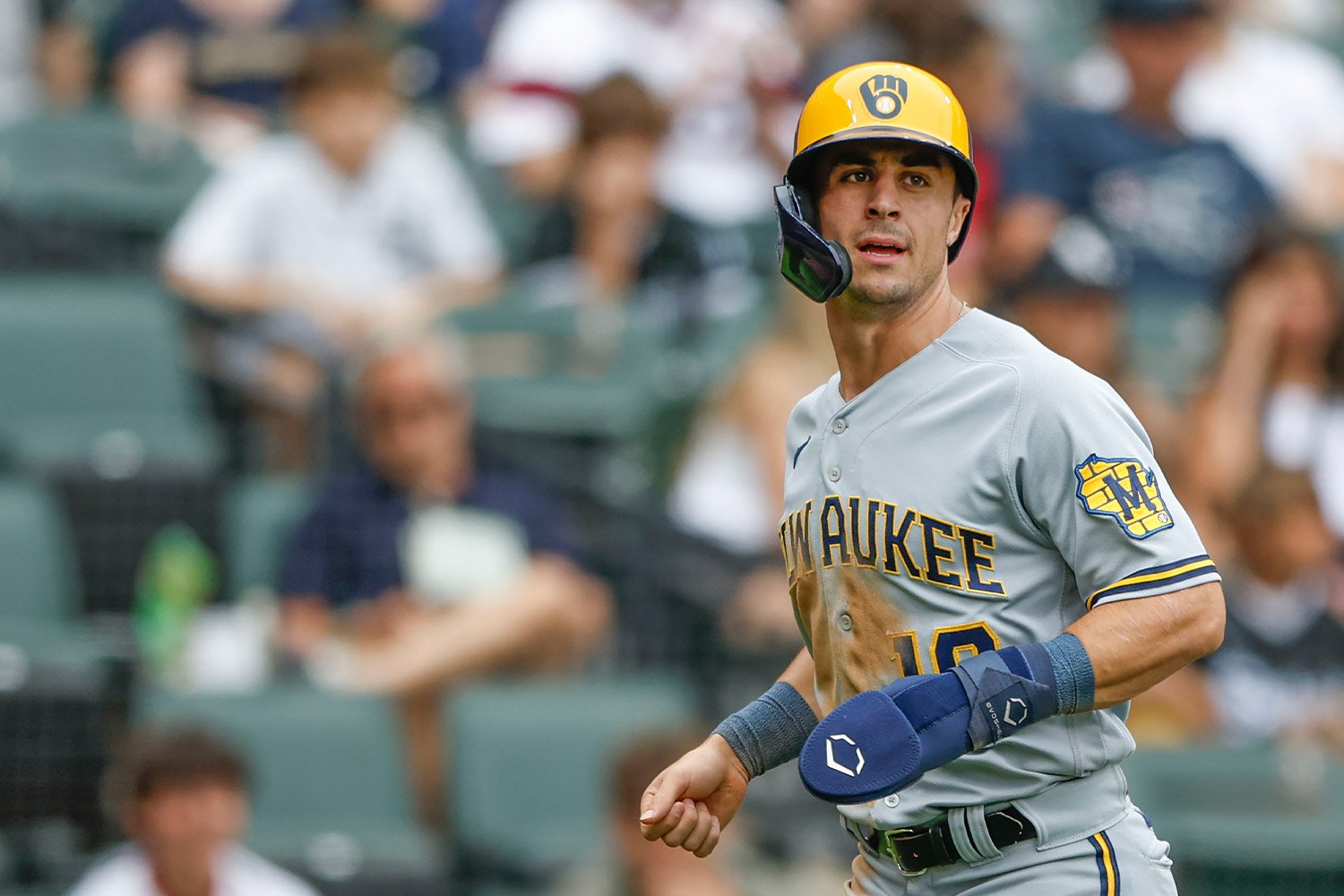 The "Freshmen" were a much-vaunted portion of the Brewers system early last season, with video on Brice Turang, Sal Frelick, Garrett Mitchell, and Joey Wiemer catching fire and providing a buzz around the club that we hadn’t seen for a while. Despite some hot moments in the season, such as Turang’s grand slam against the Mets, Sal Frelick’s 3-4 debut, and Joey Wiemer’s red-hot June, the freshmen never quite took off. The experience of their first year does leave shoots of hope that we may see some more consistent performances this season from Joey Wiemer and Sal Frelick in particular. Joey Wiemer Brenton del Chiaro talked this offseason about the Brewers farm system, specifically mentioning Joey Wiemer, lauding him for using his athleticism during at-bats to access extreme power and adjust his bat path mid-swing depending on pitches. His swing was long and overly complicated, especially in the load phase. He had extreme issues with breaking pitches, and no one in the big leagues faced a higher percentage of breaking pitches. He also demonstrated roughly average plate discipline, which ties in with del Chiaro’s assessment of his use of athleticism, but his in-zone swing and miss was troubling. By September, he knew he had to change, but he didn’t want to lose his natural power, and he had only a few weeks in Nashville to get game time on the alterations. That being said, you can already see a difference in his setup pre-release: h Although the second image is a home run, you can see his hands moving far more pre-release, resulting in a less repeatable swing compared with the sac fly above. Previously, with all the movement in his wrists, he wasn’t starting his swing from the same position, which meant he couldn’t regularly square up the baseball. A more straightforward setup should allow him to create a more consistent bat path without losing any of the raw power he possesses in his gigantic frame. Wiemer had a serious problem swinging and missing inside the strike zone in the big leagues, with anything 25% or above a poor return in the zone. The above graphic should be taken with a pinch of salt due to the sample size and the pitching differential. However, you can see a big improvement in his ability to make contact all within the strike zone, which should help him skyrocket in 2024. Also, considering the small sample size, he started to time up hanging, breaking pitches. Avg exit velocities of 110.8 mph and 105.4 mph over the heart of the plate are no joke against breaking pitches, with continued development here likely forcing more fastballs his way. For reference, he slugged .487 against the fastball last season, so there should be no qualms about seeing more of those babies in a season’s span. The Brewers' organizational philosophy is to allow hitters to be themselves and approach the coaches when they want to fix elements of their swing, something Wiemer appeared to do upon his demotion to Triple A at the end of last season. Del Chiaro said that Wiemer specifically is someone they’re incredibly excited about this season, referencing Wiemer’s work on his own this offseason and how he has peppered coaching staff with videos for feedback on various alterations to simplify his swing while retaining the power that gives him such a tremendous ceiling. Joey Wiemer may have the lowest stock value right now, but expect a big jump in his performance in 2024. Sal Frelick Ken Rosenthal just broke the news about Sal Frelick’s versatility extending to the infield, covering his work with Dustin Pedroia and adding another string to the talented youngsters' bow. With this likely more of an emergency, the most significant impact in 2024 will be with the bat after a thumb injury sapped his power in 2023. Frelick has always been known as a contact first hitter with exceptional bat-to-ball skills and a good eye at the plate, but Keith Law wrote last year about how he’s a step above the Steven Kwan hitter mold with minimal power. It’s clear that the thumb injury he sustained on the basepaths had a significant effect on his power output, as you can see even just in his minor league production last year: In 2022 in the minors, he was able to square up the baseball more effectively, specifically turning on pitches on the inner third. He tried to do this repeatedly with the big league club but couldn’t generate the quality of contact, forcing him to fall back on his gritty mentality and scramble his way on base. Sal Frelick may never be a 20+ home run player, but he should be able to hit for a higher average and turn on pitches for more damage. As you can see from 2022, he can hit the ball hard, really hard if it’s in his zone, and tapping into that at the major league level will go a long way to cementing a position at the top of the Brewers order. Both these data samples are from the minor leagues and the significant dropoff in exit velocities after his thumb troubles are a very clear reason for his lower power output. The other big thing for Frelick is his ground ball rate, which skyrocketed in the major leagues last season. A consistent line drive hitter throughout the minor leagues, he struggled to elevate both in the minors and the majors last season after his thumb injury. Manipulating the bat's barrel is challenging; however, with a thumb issue, that becomes exponentially harder. Frelick’s power and batting average should take significant steps forward from a clean bill of health as a result. That clean stroke can be added to his naturally gritty batting capabilities to create a pretty fearsome hitter in this lineup. The long and short of it is that both these freshmen have shown the capability for more than last year's performance, and there are reasons to be excited for their second year in the big leagues. While Garrett Mitchell has both injury issues and strikeout problems and Brice Turang had perhaps the worst struggles of the lot with the bat, both Sal Frelick and Joey Wiemer could be the kind of impact players for the Brewers that take them to a whole new level offensively. Spring Training will be a fascinating watch, and we at Brewer Fanatic can’t wait to see what each can bring to the table this season. Also Frelick looks kind of smooth here doesn't he? What do you think of the potential breakouts above? Can you see either Wiemer or Frelick taking the next step? Let us know your thoughts in the comments below!
 -
Reasonable arguments but the general consensus is he's not a catcher at the big league level. His throws are too often wayward hence the low caught stealing rates and his receiving skills are subpar despite improvements in 2023. The brewers are great with developing catcher's but can only do so much, and evidently value defensive prowss at the position immensely. Clarke should easily be able to learn first base when necessary, and may play catcher this year but he won't in the bigs barring emergency. Could be wrong but think my view is very much the majority viewpoint amongst boths scouts and prospect followers. Possibly time to let this one go, unless you have some footage of his defensive abilities shining? I will say there's not a ton of it around
-
I get that, I think all three may be struggling nail the starting berth out of Spring training barring injury, but should've mentioned them as an addendum. Completely agree, and it'd be great to see a more offense friendly product on the field. Dunn really intrigues me especially as he doesn't actually swing and miss so much as just being a passive hitter. He's a solid lottery ticket really
-
Ive heard the same, but no way Adames can be moved from a team standpoint in his contract year, that wouldn't go down well. He's also a plus shortstop, so having those two up the middle is pure gas. Big difference between him and Turang is the above average arm. And he hits the ball hard. Both suggest more promise, however there's still that underlying hit that Brice's sweet sweet swing can do damage. It looks so pretty when he moonshots one, but that's definitely my eye test over backing numbers.
-
With spring training underway for the 2024 Milwaukee Brewers, today begins a series of pieces in which we'll cover some of the position battles that will unfold during camp. Today, we'll focus on the keystone position. Image courtesy of © Jovanny Hernandez / Milwaukee Journal Sentinel / USA TODAY NETWORK Second base was a troubled position for the Milwaukee Brewers in 2023, due to the struggles of rookie Brice Turang, but a lack of successful alternatives meant he got regular reps at the spot. He's still in the driver's seat, but there's some stiff competition coming his way. The Incumbent: Brice Turang 2023 Stats: 137 G, 448 PA, 62 OPS+, 26 SB, 6 HR, 8.5% BB, 21.5% K, 1.6 bWAR, 12 DRS 2024 ZIPS Projections: 483 PA, .243/.312/.355, 21 SB, 1.5 fWAR Scouting Report: Turang was drafted out of high school, with excellent athleticism and defensive actions to go along with a smooth swing, none of which he has lost in his progression through the minors. At each stage, Turang took some time to adapt to the new levels with the bat, and that perhaps happened again in 2023 with the Brewers. His journey began with this: It went swiftly downhill from there, however, and he was briefly demoted to Triple A before coming back a slightly more patient version of himself at the plate. That improved plate discipline helped, but his struggles to impact the baseball or create consistent, quality contact left him a black hole in the Brewers lineup. He has the potential to be a high-batting average, contact-oriented hitter if everything clicks, and has shown an adaptability throughout his career so far that suggests he can tweak his game to find more success. Turang’s approach before and after the All-Star break resulted in similar OPS numbers, but there was a crucial difference. Earlier in the season, he showed an ability to hit the ball hard occasionally, but struggled to get on base with a .265 clip before the break. After it, he attempted to work better counts, getting his OBP up to .305. However, it came at the cost of any power. He hit just five extra base hits in 229 plate appearances down the stretch. He has the speed to trouble teams on the basepaths, and his truly elite defense played a large part in his 1.6 bWAR last season, despite his horrible numbers at the plate. He is a valuable asset but the bat needs to take a step forward in 2024 or he could find himself pushed to a utility infielder’s role. It’s fair to say Turang hasn’t stamped his name into the Opening Day lineup by any means, and there’s plenty of competition in the background. The Biggest Contender: Joey Ortiz 2023 Season (AAA): .321/.378/.507, 9 HR, 30 2B, 121 WRC+, 17.7% K ZIPS Projection: .241/297/.371, 9 HR, 1.6 fWAR Many assume that Joey Ortiz was acquired to play third base, or to supplant Willy Adames at shortstop. However, he provides a possibility of the best defensive middle infield in baseball alongside Adames, while also having a significantly higher ceiling with the bat than Turang. Ortiz has hit a lot of ground balls, but as I recently noted, he chases excessively above, below, and inside the strike zone, which is limiting his in-game power. And make no mistake about it, he has power. Ortiz hit 19 home runs in 2022, but profiles currently to hit more doubles as he struggles to get the ball in the air. He needs to elevate with more regularity, but his 90% in-zone contact rate and an overall swing-and-miss rate of just 17% are impressive with his aggressive approach. They provide a strong floor, to go along with him having the highest average exit velocity of any Orioles prospect--higher than Heston Kjerstad. Higher than Coby Mayo. Higher than Jackson Holliday. Ortiz's defense was among the best in the minor leagues, grading out at 65 with Baseball America. He has a plus arm and exceptional range, which gives him a floor similar to (if not better than) Turang's. The Brewers prized their defense last season, and Ortiz fits that mold beautifully. In terms of pure wheels, Turang would have the edge, with Ortiz relying more on instincts and his reactions to cover the ground at short. He's not the base-stealing threat Turang is. If they can find away to gets him elevating more consistently, Ortiz will be a starting middle infielder with a hit tool, raw power and defensive wizardry over which to salivate. Whether he will start this season at second base will be decided by both his and Turang's performance in spring training. The Other Options, and How They Can Force Their Way In The Brewers have spent the offseason stockpiling their infield resources, and as a result, they now have some intriguing options that could have a big impact if all goes well. Oliver Dunn ZIPS Projection: .213/.321/.368, 11 HR, 1.4 WAR Acquired from the Phillies in November, Dunn endured an injury-riddled time in the minor leagues until the last couple of seasons. In 2023, he slashed .271/.396/.506 at Double A, showing off both a patient approach and impressive power. His defense is average at best, but he does also have speed, something he flaunted with regularity in the Arizona Fall League. He went 12-for-12 in stolen bases, along with 4 triples in 19 games. Dunn's calling card will be his offense, and the question is whether he can maintain that level of performance through Triple A and into the major leagues. He's a late bloomer, but certainly one to keep an eye on, and if that bat gets hot to start the season, it may not be too long before he gets a chance to prove himself on the biggest stage. Eric Brown Jr. Like Dunn, Brown has struggled to get consistent playing time due to injuries, but has shown strong defensive capabilities to go with excellent strike-zone discipline and contact skills. He was working on getting into his legs more in the AFL, and got back to some of the power he teased in 2022, which leads to some hope for the coming season. However, Brown isn't likely to get much of a chance to impact the big-league team until later in the season, if at all. His journey this season will likely begin at Double A, and be centered around consistent at-bats. That being said, he has all the defensive tools to be solid if the Brewers lose faith in Turang, and his contact profile should adapt well to the big leagues if the moment is thrust upon him. Who can you see starting the season at second base? Do you have faith in Turang's bat? Will Ortiz steal the limelight on Opening Day? Or could there be a surprise from the farm system or a trade? Let us know your thoughts below. View full article
-
Milwaukee Brewers 2024 Spring Training Position Battles: Second Base
Jake McKibbin posted an article in Brewers
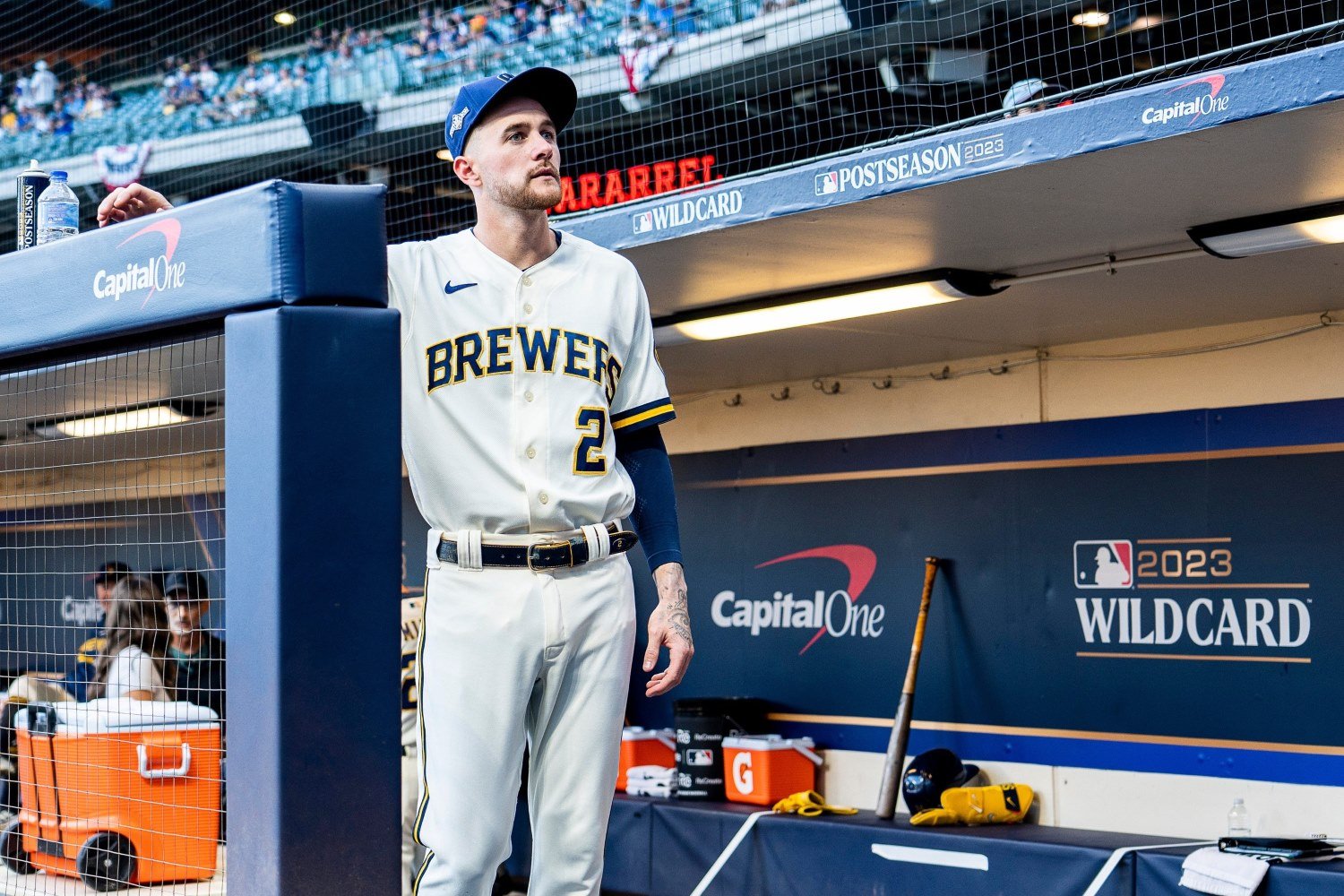 Second base was a troubled position for the Milwaukee Brewers in 2023, due to the struggles of rookie Brice Turang, but a lack of successful alternatives meant he got regular reps at the spot. He's still in the driver's seat, but there's some stiff competition coming his way. The Incumbent: Brice Turang 2023 Stats: 137 G, 448 PA, 62 OPS+, 26 SB, 6 HR, 8.5% BB, 21.5% K, 1.6 bWAR, 12 DRS 2024 ZIPS Projections: 483 PA, .243/.312/.355, 21 SB, 1.5 fWAR Scouting Report: Turang was drafted out of high school, with excellent athleticism and defensive actions to go along with a smooth swing, none of which he has lost in his progression through the minors. At each stage, Turang took some time to adapt to the new levels with the bat, and that perhaps happened again in 2023 with the Brewers. His journey began with this: It went swiftly downhill from there, however, and he was briefly demoted to Triple A before coming back a slightly more patient version of himself at the plate. That improved plate discipline helped, but his struggles to impact the baseball or create consistent, quality contact left him a black hole in the Brewers lineup. He has the potential to be a high-batting average, contact-oriented hitter if everything clicks, and has shown an adaptability throughout his career so far that suggests he can tweak his game to find more success. Turang’s approach before and after the All-Star break resulted in similar OPS numbers, but there was a crucial difference. Earlier in the season, he showed an ability to hit the ball hard occasionally, but struggled to get on base with a .265 clip before the break. After it, he attempted to work better counts, getting his OBP up to .305. However, it came at the cost of any power. He hit just five extra base hits in 229 plate appearances down the stretch. He has the speed to trouble teams on the basepaths, and his truly elite defense played a large part in his 1.6 bWAR last season, despite his horrible numbers at the plate. He is a valuable asset but the bat needs to take a step forward in 2024 or he could find himself pushed to a utility infielder’s role. It’s fair to say Turang hasn’t stamped his name into the Opening Day lineup by any means, and there’s plenty of competition in the background. The Biggest Contender: Joey Ortiz 2023 Season (AAA): .321/.378/.507, 9 HR, 30 2B, 121 WRC+, 17.7% K ZIPS Projection: .241/297/.371, 9 HR, 1.6 fWAR Many assume that Joey Ortiz was acquired to play third base, or to supplant Willy Adames at shortstop. However, he provides a possibility of the best defensive middle infield in baseball alongside Adames, while also having a significantly higher ceiling with the bat than Turang. Ortiz has hit a lot of ground balls, but as I recently noted, he chases excessively above, below, and inside the strike zone, which is limiting his in-game power. And make no mistake about it, he has power. Ortiz hit 19 home runs in 2022, but profiles currently to hit more doubles as he struggles to get the ball in the air. He needs to elevate with more regularity, but his 90% in-zone contact rate and an overall swing-and-miss rate of just 17% are impressive with his aggressive approach. They provide a strong floor, to go along with him having the highest average exit velocity of any Orioles prospect--higher than Heston Kjerstad. Higher than Coby Mayo. Higher than Jackson Holliday. Ortiz's defense was among the best in the minor leagues, grading out at 65 with Baseball America. He has a plus arm and exceptional range, which gives him a floor similar to (if not better than) Turang's. The Brewers prized their defense last season, and Ortiz fits that mold beautifully. In terms of pure wheels, Turang would have the edge, with Ortiz relying more on instincts and his reactions to cover the ground at short. He's not the base-stealing threat Turang is. If they can find away to gets him elevating more consistently, Ortiz will be a starting middle infielder with a hit tool, raw power and defensive wizardry over which to salivate. Whether he will start this season at second base will be decided by both his and Turang's performance in spring training. The Other Options, and How They Can Force Their Way In The Brewers have spent the offseason stockpiling their infield resources, and as a result, they now have some intriguing options that could have a big impact if all goes well. Oliver Dunn ZIPS Projection: .213/.321/.368, 11 HR, 1.4 WAR Acquired from the Phillies in November, Dunn endured an injury-riddled time in the minor leagues until the last couple of seasons. In 2023, he slashed .271/.396/.506 at Double A, showing off both a patient approach and impressive power. His defense is average at best, but he does also have speed, something he flaunted with regularity in the Arizona Fall League. He went 12-for-12 in stolen bases, along with 4 triples in 19 games. Dunn's calling card will be his offense, and the question is whether he can maintain that level of performance through Triple A and into the major leagues. He's a late bloomer, but certainly one to keep an eye on, and if that bat gets hot to start the season, it may not be too long before he gets a chance to prove himself on the biggest stage. Eric Brown Jr. Like Dunn, Brown has struggled to get consistent playing time due to injuries, but has shown strong defensive capabilities to go with excellent strike-zone discipline and contact skills. He was working on getting into his legs more in the AFL, and got back to some of the power he teased in 2022, which leads to some hope for the coming season. However, Brown isn't likely to get much of a chance to impact the big-league team until later in the season, if at all. His journey this season will likely begin at Double A, and be centered around consistent at-bats. That being said, he has all the defensive tools to be solid if the Brewers lose faith in Turang, and his contact profile should adapt well to the big leagues if the moment is thrust upon him. Who can you see starting the season at second base? Do you have faith in Turang's bat? Will Ortiz steal the limelight on Opening Day? Or could there be a surprise from the farm system or a trade? Let us know your thoughts below.
 -
This sort of idea makes a ton of sense, especially as the padres could easily be back in contention this year, it's a mystery they missed last season. Theyll be all about cost savings at the moment but I wonder if this could tickle their fancy
-
 Coming into the offseason, it appeared as though the Brewers' young outfield crop would be thinned down in return for MLB-ready talent at positions of greater need. However, it seems the Brewers are content (for now) to let them compete for starting positions. Unfortunately, the same cannot be said for the bullpen, where they have far too many players who either cannot or will not be optioned to the minors. That presents a dilemma. The New Men The Brewers have always prized the ability to shuffle their relievers around, outside of their top two or three players, and have reinforced heavily without disposing of any arms. Aaron Ashby, DL Hall, Joe Ross and Jakob Junis are four players competing for three (or maybe even two, if Robert Gasser breaks camp) starting pitching slots, shoving the remainders into the bullpen. Out of the three, it’s unlikely Ashby or Hall will be forced to the minors on account of their developmental potential (and Ashby's contract), while Junis and Ross signed major-league deals this offseason for $7 million and $1.75 million, respectively, which present a barrier to their release. Matt Arnold and company also acquired Bryan Hudson from the Dodgers and Taylor Clarke from the Royals this winter. Both of them have options and the potential to be breakout reliever arms this year. Clarke has just one minor-league option remaining, and possesses two different sliders that generate significant swing-and-miss, along with a solid changeup that could excel away from the Royals' infamously poor pitching development system. Hudson is a lefty (something they desperately needed, aside from Hoby Milner), at 6-foot-8 with massive extension off the mound and a 56% ground ball rate. That should fit gorgeously with the Brewers defense this year. At least Hudson, if not both of these players, should see considerable time in the major leagues this season. Pressure From the Farm Adding to these new acquisitions/returnees are serious depth pieces in the Brewers farm system. Harold Chirino (14 innings, 0 earned runs, 22 strikeouts) was injured early last season, while Tobias Myers finally got his fastball to work for him to produce a 2.95 ERA in September with 12 strikeouts per nine innings. Both showed enough promise to get invites to spring training this season. Hot on their heels will be Evan McKendry (in long relief) and James Meeker, neither of whom have high-octane "stuff," but both are efficient out-getters. That's not to mention the potential for the extremely talented arms of Jacob Misiorowski, Tanner Shears, and Shane Smith, who all had elite seasons last year and could force the Brewers' hand in the second half of the season. (Spencer Michaelis had a magnificent breakdown of them here). The farm system is stacked with hurlers who have the ability to impact the major-league club, and no doubt by the halfway mark of the season, many of them will be fighting it out for spots on the roster. The Optionless Incumbents The Brewers' current bullpen, as at the end of last season, looks a little something like this: Devin Williams - Won’t be optioned Abner Uribe - Won’t be optioned unless he struggles, which is a possibility Joel Payamps - Out of options Hoby Milner - Out of options Bryse Wilson - Out of options Thyago Vieira - Out of options JB Bukauskus - Out of options Elvis Peguero - Two option years remaining, a possibility Trevor Megill - One option year remaining It’s quite possible that each of Uribe, Peguero and Megill continue their phenomenal 2023 success into the coming season, which would leave the Brewers in a pickle. Leaving aside the outside possibility of the club trading Williams and/or Payamps, Vieira’s nasty stuff and Bukauskas's elite ground ball rates might wind up with another team. Wilson could also be a fall guy, with his underlying metrics not quite standing up to the scrutiny of Jason Wang this week (see here). Peguero could be an attractive trade option if he didn't have options remaining, a valuable commodity right now in the Brewers system. Interestingly, however, last year's initial bullpen group featured only Hoby Milner and Peter Strzelecki as optionable relievers, with Jake Cousins and Peguero stowed away in the minor leagues until needed. That resulted in losing out on Matt Bush, Cousins and Javy Guerra for virtually nothing, something that can be avoided this time around by a more proactive approach with significantly more talented personnel. In short, I could make an argument for any of these optionless players to be moved, from Williams down to Bukauskus, depending on trade packages offered. The long and short of it, in the moment, is that there's a huge logjam in the bullpen, and a trade is imminent with at least one, and potentially three or four relievers. It might come on the eve of Opening Day, but as we've seen very recently, this front office is not especially predictable when it comes to the timing of moves. Thus, a deal could materialize as soon as this week. Who would you like to see go? And what sort of trade packages do you envisage in the return? Let us know in the comments below.
- 23 comments
-
- 1
-
-
- bryan hudson
- elvis peguero
- (and 4 more)
-
The Milwaukee Brewers are absolutely stacked in the bullpen; too few of their strong relievers have options. A trade seems imminent to unclog their depth chart, but who could we see go? Image courtesy of © Rich Storry-USA TODAY Sports Coming into the offseason, it appeared as though the Brewers' young outfield crop would be thinned down in return for MLB-ready talent at positions of greater need. However, it seems the Brewers are content (for now) to let them compete for starting positions. Unfortunately, the same cannot be said for the bullpen, where they have far too many players who either cannot or will not be optioned to the minors. That presents a dilemma. The New Men The Brewers have always prized the ability to shuffle their relievers around, outside of their top two or three players, and have reinforced heavily without disposing of any arms. Aaron Ashby, DL Hall, Joe Ross and Jakob Junis are four players competing for three (or maybe even two, if Robert Gasser breaks camp) starting pitching slots, shoving the remainders into the bullpen. Out of the three, it’s unlikely Ashby or Hall will be forced to the minors on account of their developmental potential (and Ashby's contract), while Junis and Ross signed major-league deals this offseason for $7 million and $1.75 million, respectively, which present a barrier to their release. Matt Arnold and company also acquired Bryan Hudson from the Dodgers and Taylor Clarke from the Royals this winter. Both of them have options and the potential to be breakout reliever arms this year. Clarke has just one minor-league option remaining, and possesses two different sliders that generate significant swing-and-miss, along with a solid changeup that could excel away from the Royals' infamously poor pitching development system. Hudson is a lefty (something they desperately needed, aside from Hoby Milner), at 6-foot-8 with massive extension off the mound and a 56% ground ball rate. That should fit gorgeously with the Brewers defense this year. At least Hudson, if not both of these players, should see considerable time in the major leagues this season. Pressure From the Farm Adding to these new acquisitions/returnees are serious depth pieces in the Brewers farm system. Harold Chirino (14 innings, 0 earned runs, 22 strikeouts) was injured early last season, while Tobias Myers finally got his fastball to work for him to produce a 2.95 ERA in September with 12 strikeouts per nine innings. Both showed enough promise to get invites to spring training this season. Hot on their heels will be Evan McKendry (in long relief) and James Meeker, neither of whom have high-octane "stuff," but both are efficient out-getters. That's not to mention the potential for the extremely talented arms of Jacob Misiorowski, Tanner Shears, and Shane Smith, who all had elite seasons last year and could force the Brewers' hand in the second half of the season. (Spencer Michaelis had a magnificent breakdown of them here). The farm system is stacked with hurlers who have the ability to impact the major-league club, and no doubt by the halfway mark of the season, many of them will be fighting it out for spots on the roster. The Optionless Incumbents The Brewers' current bullpen, as at the end of last season, looks a little something like this: Devin Williams - Won’t be optioned Abner Uribe - Won’t be optioned unless he struggles, which is a possibility Joel Payamps - Out of options Hoby Milner - Out of options Bryse Wilson - Out of options Thyago Vieira - Out of options JB Bukauskus - Out of options Elvis Peguero - Two option years remaining, a possibility Trevor Megill - One option year remaining It’s quite possible that each of Uribe, Peguero and Megill continue their phenomenal 2023 success into the coming season, which would leave the Brewers in a pickle. Leaving aside the outside possibility of the club trading Williams and/or Payamps, Vieira’s nasty stuff and Bukauskas's elite ground ball rates might wind up with another team. Wilson could also be a fall guy, with his underlying metrics not quite standing up to the scrutiny of Jason Wang this week (see here). Peguero could be an attractive trade option if he didn't have options remaining, a valuable commodity right now in the Brewers system. Interestingly, however, last year's initial bullpen group featured only Hoby Milner and Peter Strzelecki as optionable relievers, with Jake Cousins and Peguero stowed away in the minor leagues until needed. That resulted in losing out on Matt Bush, Cousins and Javy Guerra for virtually nothing, something that can be avoided this time around by a more proactive approach with significantly more talented personnel. In short, I could make an argument for any of these optionless players to be moved, from Williams down to Bukauskus, depending on trade packages offered. The long and short of it, in the moment, is that there's a huge logjam in the bullpen, and a trade is imminent with at least one, and potentially three or four relievers. It might come on the eve of Opening Day, but as we've seen very recently, this front office is not especially predictable when it comes to the timing of moves. Thus, a deal could materialize as soon as this week. Who would you like to see go? And what sort of trade packages do you envisage in the return? Let us know in the comments below. View full article
-
Is Bryse Wilson's 2023 Success Sustainable?
Jake McKibbin replied to Jason Wang's topic in Brewer Fanatic Front Page News
I present to you Wade Miley I think there are ways to get consistent success without it, though it takes a very different skill and you have to have solid movement profiles and excellent command to pull it off. If either of those slip, you're toast. But Kyle Hendricks has lived off a changeup and solid location the last few years to just get GB after GB, so I think it can succeed again this season. One big factor will be the defense they put out, if it's anything like as strong as last season's, or potentially even better, then there's every possibility the likes of Peguero and Wilson can repeat their success. -
Why Trading Devin Williams Makes Sense
Jake McKibbin replied to Jake McKibbin's topic in Brewer Fanatic Front Page News
Summed it up beautifully! Payamps one year of success likely dents his value somewhat as it's not consistent in terms of underlying metrics, whereas the Yankees will want a big name to sell on top of performance was my thinking but payamps has definite value too -
Why Trading Devin Williams Makes Sense
Jake McKibbin replied to Jake McKibbin's topic in Brewer Fanatic Front Page News
Warren has a far lower ceiling, probably a 4th or 5th starter which the brewers have a lot of, so Hamptons higher ceiling would probably be more attractive , while Lalane has big future upside albeit as you said lots of time for things to go wrong. This trade is based on the Yankees going big due to the Soto trade, and is lopsided but not absurdly so, and they could be desperate enough to bring it home.
