



Jake McKibbin
-
Posts
2,394 -
Joined
-
Last visited
-
Days Won
6
Content Type
Profiles
Forums
Blogs
Events
News
2026 Milwaukee Brewers Top Prospects Ranking
Milwaukee Brewers Videos
2022 Milwaukee Brewers Draft Picks
Milwaukee Brewers Free Agent & Trade Rumors, Notes, & Tidbits
Guides & Resources
2023 Milwaukee Brewers Draft Picks
2024 Milwaukee Brewers Draft Picks
The Milwaukee Brewers Players Project
2025 Milwaukee Brewers Draft Pick Tracker
2026 Milwaukee Brewers Draft Tracker: Picks & Bonuses
Store
Downloads
Gallery
Everything posted by Jake McKibbin
-
The Brewers informed him, per Journal Sentinel this is, at the start of camp that if everyone remained healthy through camp he would be used as a relief pitcher
-
So who would we prefer to win tonight.... Cubs or Cards?
-
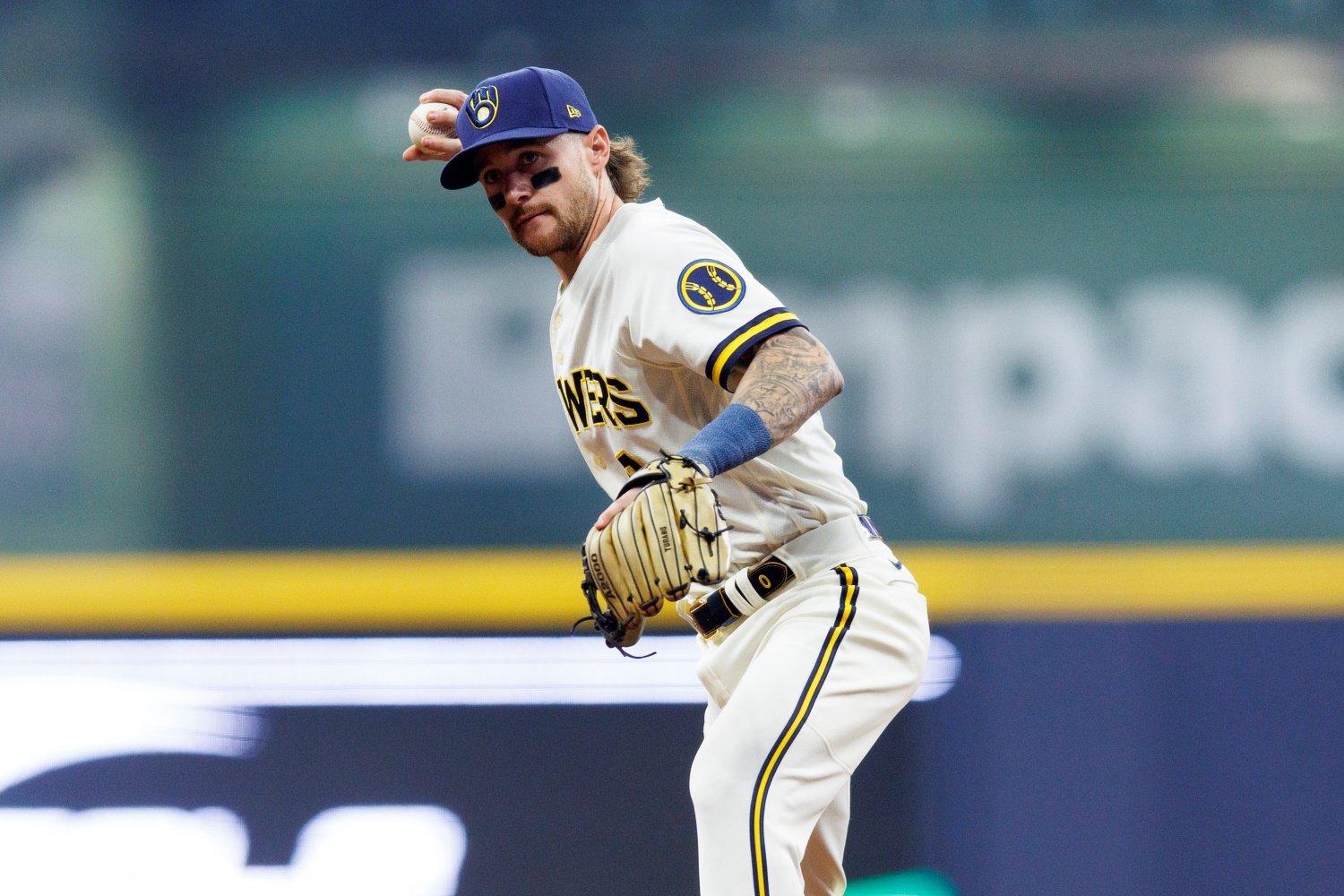 Brice Turang has been a big upgrade already for the Brewers. A key part of the team’s league-best defense, the rookie second baseman trails only William Contreras in Defensive Runs Saved with 5. Compare that to the sad decline of Kolten Wong, who props up the league with -8 DRS so far and a ghastly 43 OPS+. Turang has provided huge range to cope with the loss of the shift; smooth actions; and an accurate throwing arm from all sorts of off-balance angles, something that was desperately needed given the heavy ground-ball approach so far this season from their pitchers. He started off brightly with the bat, showing why his contact skills were hyped and using his smooth swing to spray the ball to all fields, but did have a dip where his strikeouts rose alarmingly, and he struggled to make any meaningful contact with the ball. After a short break over a weekend in which the Brewers faced only left-handed starters, Turang has looked far more dangerous and consistent at the plate. What did we expect? Since the Brewers picked up Turang in the first round of the 2018 draft, the scouting report has been fairly consistent with what he has produced–smooth actions, good range at shortstop, with strong bat-to-ball skills and (hopefully) developing power. During his climb through the minors, he always put up numbers right around the league average, until his final half-season at Nashville. There, he managed to elevate the ball and drive it with more authority, while also cutting down a little on his strikeouts. He hit nine home runs in July and September, a sign he was potentially ready for big-league at-bats. It’s important to also recognize that, as a high-school draftee, he was considerably younger than his competition at every level of the minors. The Brewers needed to move on from Wong, who (although he did show more pop than expected) was subpar in the field. Given the struggles with injuries, the Brewers were hoping for some sort of consistent contact profile to go with above-average defense, and someone who could legitimately cover an injury to Willy Adames and the resultant hole at shortstop. The Story So Far Turang burst onto the scene initially, making some rangy plays and demonstrating a strong knowledge of the strike zone, with an 80th-percentile chase rate after the first two weeks. He did have some swing-and-miss inside the zone, but was making frequent, valuable contact, including a huge grand slam against the New York Mets in the home opener. Since then, however, things have gone downhill, with pitchers attacking him in the zone a lot more often early in the count, and his 25th-percentile whiff rate has come to the fore when he falls behind. If you’d suggested that Joey Wiemer would strike out considerably less than Brice Turang in the majors, most scouts would have laughed. He is sporting a 28.4% strikeout rate, and is almost the inverse of Wiemer, in that he has been targeted heavily by fastballs and changeups, to which he hasn’t found much of an answer (both have an xBA of under .200). Notably, he has just a 16% hard-hit rate against changeups, and 20% hard-hit rate against sinkers. On the contrary, however, he is really taking advantage of breaking pitches, to the tune of a .421 batting average and .526 slugging percentage, whiffing just 25% of the time on such pitches. He has begun to get some more results in the past week, hitting .421/.500/.474 in his last seven games, but he hasn’t improved in any meaningful category against the fastball, with lower exit velocities and hard-hit rates so far this month compared to Mach and April. He is striking out less often against it however, recording four hits in eight AB’s ending on the fastball (11 PA’s) with an xBA of .338, due to a lower line drive launch angle of 11 degrees in May. If he can start to increase the pressure on the fastball, we can start to see some of the damage come through on breaking pitches again. Defensively, he has been exactly as advertised, making everything look so simple, and covering a lot of ground to both sides, but in particular with a +3 metric to his left side. This is especially beneficial due to the complete lack of range of the Brewers’ first basemen. His accuracy has been a key component to the Brewers’ league-leading defense. On the basepaths, he has also been a handful, recording five steals, with a very good Statcast-recorded Sprint Speed of 29 ft/sec and 2 Bolts (where the runner averages over 30 ft/sec for one dash). He has the potential to be a 25-30 steals guy regularly, but he does need to find his way on base a little more often. Stand Out Stats In 10 plate appearances so far against left-handers, Turang has five strikeouts and zero hits He has yet to record a hit in the eighth or ninth inning of a game, in 23 plate appearances Has a .785 OPS when he’s swung at the first pitch, compared to .597 when he’s taken the first pitch Has hit just .130 against starting pitchers the first time up, but .458 against them the second time through The Deeper Dive Looking at the strikeouts from Turang, one thing that jumps out immediately is how many pitches he’s whiffed on in the meatball section, swinging and missing on 30 percent of middle-middle pitches. His approach so far, looking at his zone swing %, is to try and attack anything inside and over the heart of the plate, being much pickier with anything on the outer third of the strike zone. While he does regularly create line drives in this area (over 50% of balls in the outer third are line drives) he struggles to create high exit velocities, and as such, he’s trying to avoid swinging on these early in the count. He’s averaged 78 mph off the bat in the zone down and away–one reason why he’s struggled with both sinkers and changeups while hitting considerably better against four-seam fastballs, due to his strength up in the zone. Most left-handed hitters are particularly adept at pulling pitches over the heart of the plate, but Turang has struggled so far to do damage in that area. He isn’t creating the exit velocities to consistently hurt pitchers when they make mistakes, and he’s whiffing far too often (as previously mentioned) on these pitches. In the lower third of the strike zone, he’s hitting soft ground balls far too regularly, and with his contact profile, it’s something he can’t afford to do. Where he has made hay so far is when pitches are left up, creating ideal launch angles 40% of the time, allowing him to challenge the outfield grass with regularity. Also, although he has very low chase rates, when he does chase, he struggles to make any contact, with his out-of-zone contact at 42%, compared to the MLB average of 58.2%. Against better pitchers, this is unsustainable, and he needs to do a better job of fouling off pitches and dragging ABs deeper, given the skills he has at putting bat on ball. He’s currently facing four pitches per plate appearance, but have a look below and you’ll see how often he swings and misses at anything outside; Final Word From his performance in his first month, you can see clearly the areas in which you would expect Turang to begin to perform better, and the areas in which he can start to advance as a hitter. His ability to stay in the at-bat when pitchers do force him to chase is a must, and could do a lot to turn around his strikeout and whiff numbers, bolstering his contact-heavy approach. He has gone mostly to the opposite field and up the middle with his batted balls so far, and done nearly all of his damage on pitches inside, belt high. His current whiff rate over the heart of the plate is unsustainable, but if he can develop an ability to do damage on these pitches as well, and pull the mistakes, then he could take a step up to the next level as a hitter. His quality defense and base running give him a floor that should allow him to be a successful big leaguer even if he is in the 90 WRC+ range, but the Brewers will be hoping that, at just 23 years old, he has a lot of growth ahead of him.
 -
After we tackled Joey WIemer yesterday, let's turn our attention today to the other Brewers rookie who's become a staple of the starting lineup. What are the early returns on second baseman Brice Turang? Image courtesy of © Jeff Hanisch-USA TODAY Sports Brice Turang has been a big upgrade already for the Brewers. A key part of the team’s league-best defense, the rookie second baseman trails only William Contreras in Defensive Runs Saved with 5. Compare that to the sad decline of Kolten Wong, who props up the league with -8 DRS so far and a ghastly 43 OPS+. Turang has provided huge range to cope with the loss of the shift; smooth actions; and an accurate throwing arm from all sorts of off-balance angles, something that was desperately needed given the heavy ground-ball approach so far this season from their pitchers. He started off brightly with the bat, showing why his contact skills were hyped and using his smooth swing to spray the ball to all fields, but did have a dip where his strikeouts rose alarmingly, and he struggled to make any meaningful contact with the ball. After a short break over a weekend in which the Brewers faced only left-handed starters, Turang has looked far more dangerous and consistent at the plate. What did we expect? Since the Brewers picked up Turang in the first round of the 2018 draft, the scouting report has been fairly consistent with what he has produced–smooth actions, good range at shortstop, with strong bat-to-ball skills and (hopefully) developing power. During his climb through the minors, he always put up numbers right around the league average, until his final half-season at Nashville. There, he managed to elevate the ball and drive it with more authority, while also cutting down a little on his strikeouts. He hit nine home runs in July and September, a sign he was potentially ready for big-league at-bats. It’s important to also recognize that, as a high-school draftee, he was considerably younger than his competition at every level of the minors. The Brewers needed to move on from Wong, who (although he did show more pop than expected) was subpar in the field. Given the struggles with injuries, the Brewers were hoping for some sort of consistent contact profile to go with above-average defense, and someone who could legitimately cover an injury to Willy Adames and the resultant hole at shortstop. The Story So Far Turang burst onto the scene initially, making some rangy plays and demonstrating a strong knowledge of the strike zone, with an 80th-percentile chase rate after the first two weeks. He did have some swing-and-miss inside the zone, but was making frequent, valuable contact, including a huge grand slam against the New York Mets in the home opener. Since then, however, things have gone downhill, with pitchers attacking him in the zone a lot more often early in the count, and his 25th-percentile whiff rate has come to the fore when he falls behind. If you’d suggested that Joey Wiemer would strike out considerably less than Brice Turang in the majors, most scouts would have laughed. He is sporting a 28.4% strikeout rate, and is almost the inverse of Wiemer, in that he has been targeted heavily by fastballs and changeups, to which he hasn’t found much of an answer (both have an xBA of under .200). Notably, he has just a 16% hard-hit rate against changeups, and 20% hard-hit rate against sinkers. On the contrary, however, he is really taking advantage of breaking pitches, to the tune of a .421 batting average and .526 slugging percentage, whiffing just 25% of the time on such pitches. He has begun to get some more results in the past week, hitting .421/.500/.474 in his last seven games, but he hasn’t improved in any meaningful category against the fastball, with lower exit velocities and hard-hit rates so far this month compared to Mach and April. He is striking out less often against it however, recording four hits in eight AB’s ending on the fastball (11 PA’s) with an xBA of .338, due to a lower line drive launch angle of 11 degrees in May. If he can start to increase the pressure on the fastball, we can start to see some of the damage come through on breaking pitches again. Defensively, he has been exactly as advertised, making everything look so simple, and covering a lot of ground to both sides, but in particular with a +3 metric to his left side. This is especially beneficial due to the complete lack of range of the Brewers’ first basemen. His accuracy has been a key component to the Brewers’ league-leading defense. On the basepaths, he has also been a handful, recording five steals, with a very good Statcast-recorded Sprint Speed of 29 ft/sec and 2 Bolts (where the runner averages over 30 ft/sec for one dash). He has the potential to be a 25-30 steals guy regularly, but he does need to find his way on base a little more often. Stand Out Stats In 10 plate appearances so far against left-handers, Turang has five strikeouts and zero hits He has yet to record a hit in the eighth or ninth inning of a game, in 23 plate appearances Has a .785 OPS when he’s swung at the first pitch, compared to .597 when he’s taken the first pitch Has hit just .130 against starting pitchers the first time up, but .458 against them the second time through The Deeper Dive Looking at the strikeouts from Turang, one thing that jumps out immediately is how many pitches he’s whiffed on in the meatball section, swinging and missing on 30 percent of middle-middle pitches. His approach so far, looking at his zone swing %, is to try and attack anything inside and over the heart of the plate, being much pickier with anything on the outer third of the strike zone. While he does regularly create line drives in this area (over 50% of balls in the outer third are line drives) he struggles to create high exit velocities, and as such, he’s trying to avoid swinging on these early in the count. He’s averaged 78 mph off the bat in the zone down and away–one reason why he’s struggled with both sinkers and changeups while hitting considerably better against four-seam fastballs, due to his strength up in the zone. Most left-handed hitters are particularly adept at pulling pitches over the heart of the plate, but Turang has struggled so far to do damage in that area. He isn’t creating the exit velocities to consistently hurt pitchers when they make mistakes, and he’s whiffing far too often (as previously mentioned) on these pitches. In the lower third of the strike zone, he’s hitting soft ground balls far too regularly, and with his contact profile, it’s something he can’t afford to do. Where he has made hay so far is when pitches are left up, creating ideal launch angles 40% of the time, allowing him to challenge the outfield grass with regularity. Also, although he has very low chase rates, when he does chase, he struggles to make any contact, with his out-of-zone contact at 42%, compared to the MLB average of 58.2%. Against better pitchers, this is unsustainable, and he needs to do a better job of fouling off pitches and dragging ABs deeper, given the skills he has at putting bat on ball. He’s currently facing four pitches per plate appearance, but have a look below and you’ll see how often he swings and misses at anything outside; Final Word From his performance in his first month, you can see clearly the areas in which you would expect Turang to begin to perform better, and the areas in which he can start to advance as a hitter. His ability to stay in the at-bat when pitchers do force him to chase is a must, and could do a lot to turn around his strikeout and whiff numbers, bolstering his contact-heavy approach. He has gone mostly to the opposite field and up the middle with his batted balls so far, and done nearly all of his damage on pitches inside, belt high. His current whiff rate over the heart of the plate is unsustainable, but if he can develop an ability to do damage on these pitches as well, and pull the mistakes, then he could take a step up to the next level as a hitter. His quality defense and base running give him a floor that should allow him to be a successful big leaguer even if he is in the 90 WRC+ range, but the Brewers will be hoping that, at just 23 years old, he has a lot of growth ahead of him. View full article
-
Given early returns, Turang and Wiemer may be cheapish to extend, and Wiemer especially could have a breakout.. Chourio may be difficult given the hype but it depends how he and Frelick perform once they hit the majors. If they struggle then a cheaper deal is on the cards, but you need some sort of risk factor on the Brewers to get a cheaper deal. If anyone becomes a big difference maker pre-extension, then they'll not accept a below market deal
-
We're coming up on six weeks of seeing Brewers rookie outfielder Joey Wiemer in action. It's been everything we expected, both bad and good. Let's take a closer look at how he's performed. Image courtesy of © Jeff Hanisch-USA TODAY Sports Joey Wiemer is a player who makes you love baseball. From his gangly running style, legs all akimbo; to the enormous hacks he takes at the baseball; to his refusal to take it easy down the first base line, this is a player who looks slightly less polished than most of his major-league counterparts. How could you not love his flying catches in the outfield; be drawn to each of his at-bats just on the off chance he gets into one; and even if he tops one on a routine ground ball to short, he has the wheels to leg it out anyway. On top of that, almost no one has run on him since the opening weeks of the season, with his quick release and cannon of an arm. Great Expectations While he is a player with huge four- or five-tool potential, he has had a few growing pains in reaching the majors. Coming into the season, we were a little less hot on him due to the meteoric rises of both Jackson Chourio and the hitting machine that was Sal Frelick, and also a slight slump in the middle of last year at Biloxi when he was struggling with a wrist injury. Prior to that, he had won the Brewers’ Prospect of the Year award in 2021, hitting 27 home runs with a .959 OPS across both levels of A ball. When he made the jump to the Triple-A Nashville Sounds, he cut his strikeout rate considerably, from 30% at Double A to just 19.5%--a huge improvement considering there were concerns over whether he could make consistent contact with the size and speed of his swing. He also rediscovered his power stroke, slugging .520 over 174 plate appearances with six home runs, a triple and 15 doubles, to go along with a 12% walk rate. He was a bit under the radar coming into spring training, with most expecting him to be on the outside looking into the early outfield mix, but his quality defense in the outfield as well as his improving eye at the plate, and most importantly his right-handed bat, made the Brewers call him up just a single day into the season, after Luis Urias’s hamstring went out. In terms of his ceiling, it’s clear to see the amount of power he can generate, the speed on the base paths, the fielding and throwing arm in the outfield. There are questions over his hit tool, but this is a player who, when healthy, has hit over .270 in every level of the minor-league system. The sky's the limit for this baby-faced assassin, if he can make adjustments to major-league pitching. The Story So Far Early on in the season, Wiemer was getting by using his speed to beat out ground balls with regularity, with a lot of topped contact on fastballs and a complete inability to square up any sort of breaking pitch. Since then, he has struggled with a change in the pitching approach, and has been looking out of sorts at the plate, with an increasing propensity to swing and miss and a lack of consistency in his plate appearances. He hit much better against the fastball, whiffing on less than 20% of them, which is why he’s been fed a very steady diet of breaking pitches–45.8% to be exact. On these breaking pitches he has a batting average of just .167 and a slugging percentage of .208. However, he has recently started to make much more consistent hard contact, suggesting a change in approach and perhaps an adjustment to the extra break that major-league pitchers will have on their pitches. His defense, meanwhile, has been magnificent, grading out as slightly above-average in center field and an absolute weapon in right, with four defensive runs saved in total, and being in the 91st percentile for outs above average, 87th percentile for arm strength (which is furthered by how he throws without any momentum), and 78th percentile for outfield jump. The jump is particularly impressive given that his routes haven’t been great, but his reactions have been the best in the league. It's been consistently excellent and has almost assured his place in the lineup for a few months, given the injury crisis around him with Garrett Mitchell and Sal Frelick. His derring-do on the base paths has been incredibly fun to watch as well, with an average sprint speed of 29.1ft/sec, good enough for 21st in the league, going home to first in 4.23 seconds. He’s had five steals so far, being caught once while attempting a fairly reckless third-base steal, and also been caught trying to steal third on infield grounders that just weren’t an option. Part of the excitement is that you don’t quite know what he’ll do next, and his decisions on the base paths will improve over time, as well as his steal total if he can get on base just a little bit more often. Stand Out Stats - Wiemer has just a .390 OPS on the road compared to a 1.061 OPS at American Family Field - With runners in scoring position, he almost always puts the ball in play, with just one strikeout in 28 plate appearances. - With such a violent swing, he’s still only hovering around the league average in strikeout percentage, and 60th percentile in walk rates. - He doesn’t miss belt-high pitches, with just a 5.4% whiff rate. - Against left handers, who throw fewer sliders to him and mostly use fastball/changeup combinations, he has a 1.061 OPS The Deeper Look Wiemer’s struggles are shown in two simple graphics from Baseball Savant. As you can see below, his whiff rates in the bottom part of the zone are astronomical, a byproduct of his struggles with breaking pitches. Even when he does make contact, it’s mostly weak, topped balls, leading to the excessive ground ball rates you see below. When pitchers have kept their breaking balls down, he’s almost guaranteeing them an easy out. When they get ahead in the count, they’ve fed him a steady onslaught of pitches down and away, resulting in 15 of his 25 strikeouts. For further emphasis, he hasn’t gotten a hit yet against a sweeping slider. Quite simply, Wiemer hasn’t adjusted to the amount of break he’s seeing on these pitches, but it’s almost inevitable that he will catch up. His expected batting average against these is starting to creep up, from .063 just three weeks ago to now breaking the Mendoza line. He also needs to do a better job when he gets ahead in the count, and working the count to his advantage. Only eight of his plate appearances have ended with him ahead in the count. Christian Yelich has had three-ball counts in 38 plate appearances so far this season, Joey Wiemer has managed this in just 21. He could do a better job, perhaps, with an approach closer to what we’ve seen from Tellez so far, waiting on a specific pitch to swing at and consciously laying off breaking balls early in the count and sitting on higher fastballs or hanging breakers until he has to swing. Final Notes While his swing doesn’t look technically fit for major league pitching, he has remarkably fast hands, and it’s fair to say that so far, he hasn’t struggled to catch up to the fastballs. He does have small adjustments to make in his approach, and his eye at the plate will only improve the more major-league pitchers he sees, something we are already starting to see. Most of his slugging so far has come against offspeed pitches, to the tune of a .500 slugging (even before his home run against Tony Gonsolin’s splitter). Wiemer's talent is there for all to see, and while he could be an impact player similar to Kyle Tucker, his defense provides a very high floor for him to bring value to the Brewers as he learns on the job. It’s important to note how normal this is, Jarred Kelenic took 500 plate appearances before his ability started to show this season. If Wiemer can get it to click by the time the stretch comes around later this season, the Brewers will have one hell of a player on their hands. View full article
-
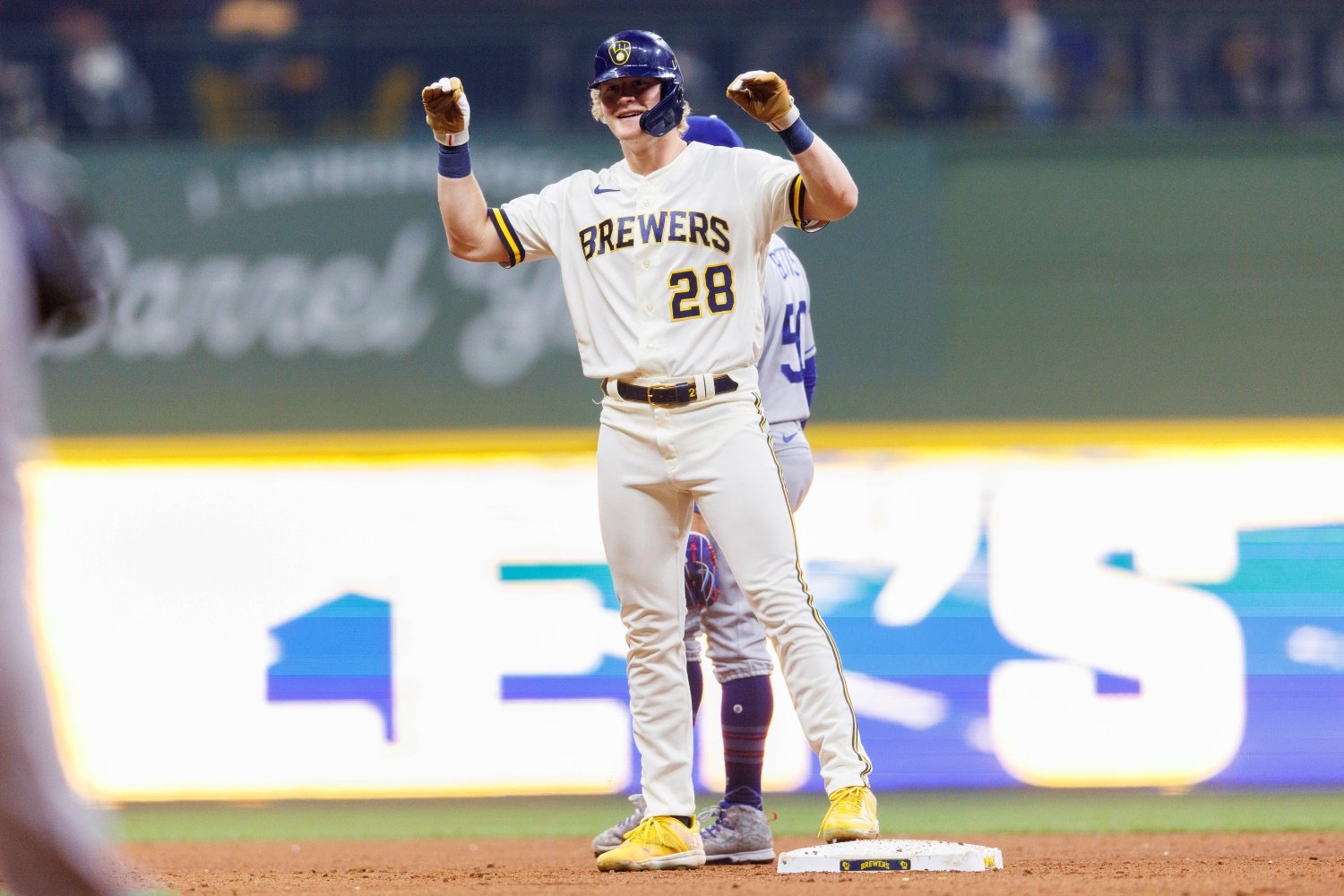 Joey Wiemer is a player who makes you love baseball. From his gangly running style, legs all akimbo; to the enormous hacks he takes at the baseball; to his refusal to take it easy down the first base line, this is a player who looks slightly less polished than most of his major-league counterparts. How could you not love his flying catches in the outfield; be drawn to each of his at-bats just on the off chance he gets into one; and even if he tops one on a routine ground ball to short, he has the wheels to leg it out anyway. On top of that, almost no one has run on him since the opening weeks of the season, with his quick release and cannon of an arm. Great Expectations While he is a player with huge four- or five-tool potential, he has had a few growing pains in reaching the majors. Coming into the season, we were a little less hot on him due to the meteoric rises of both Jackson Chourio and the hitting machine that was Sal Frelick, and also a slight slump in the middle of last year at Biloxi when he was struggling with a wrist injury. Prior to that, he had won the Brewers’ Prospect of the Year award in 2021, hitting 27 home runs with a .959 OPS across both levels of A ball. When he made the jump to the Triple-A Nashville Sounds, he cut his strikeout rate considerably, from 30% at Double A to just 19.5%--a huge improvement considering there were concerns over whether he could make consistent contact with the size and speed of his swing. He also rediscovered his power stroke, slugging .520 over 174 plate appearances with six home runs, a triple and 15 doubles, to go along with a 12% walk rate. He was a bit under the radar coming into spring training, with most expecting him to be on the outside looking into the early outfield mix, but his quality defense in the outfield as well as his improving eye at the plate, and most importantly his right-handed bat, made the Brewers call him up just a single day into the season, after Luis Urias’s hamstring went out. In terms of his ceiling, it’s clear to see the amount of power he can generate, the speed on the base paths, the fielding and throwing arm in the outfield. There are questions over his hit tool, but this is a player who, when healthy, has hit over .270 in every level of the minor-league system. The sky's the limit for this baby-faced assassin, if he can make adjustments to major-league pitching. The Story So Far Early on in the season, Wiemer was getting by using his speed to beat out ground balls with regularity, with a lot of topped contact on fastballs and a complete inability to square up any sort of breaking pitch. Since then, he has struggled with a change in the pitching approach, and has been looking out of sorts at the plate, with an increasing propensity to swing and miss and a lack of consistency in his plate appearances. He hit much better against the fastball, whiffing on less than 20% of them, which is why he’s been fed a very steady diet of breaking pitches–45.8% to be exact. On these breaking pitches he has a batting average of just .167 and a slugging percentage of .208. However, he has recently started to make much more consistent hard contact, suggesting a change in approach and perhaps an adjustment to the extra break that major-league pitchers will have on their pitches. His defense, meanwhile, has been magnificent, grading out as slightly above-average in center field and an absolute weapon in right, with four defensive runs saved in total, and being in the 91st percentile for outs above average, 87th percentile for arm strength (which is furthered by how he throws without any momentum), and 78th percentile for outfield jump. The jump is particularly impressive given that his routes haven’t been great, but his reactions have been the best in the league. It's been consistently excellent and has almost assured his place in the lineup for a few months, given the injury crisis around him with Garrett Mitchell and Sal Frelick. His derring-do on the base paths has been incredibly fun to watch as well, with an average sprint speed of 29.1ft/sec, good enough for 21st in the league, going home to first in 4.23 seconds. He’s had five steals so far, being caught once while attempting a fairly reckless third-base steal, and also been caught trying to steal third on infield grounders that just weren’t an option. Part of the excitement is that you don’t quite know what he’ll do next, and his decisions on the base paths will improve over time, as well as his steal total if he can get on base just a little bit more often. Stand Out Stats - Wiemer has just a .390 OPS on the road compared to a 1.061 OPS at American Family Field - With runners in scoring position, he almost always puts the ball in play, with just one strikeout in 28 plate appearances. - With such a violent swing, he’s still only hovering around the league average in strikeout percentage, and 60th percentile in walk rates. - He doesn’t miss belt-high pitches, with just a 5.4% whiff rate. - Against left handers, who throw fewer sliders to him and mostly use fastball/changeup combinations, he has a 1.061 OPS The Deeper Look Wiemer’s struggles are shown in two simple graphics from Baseball Savant. As you can see below, his whiff rates in the bottom part of the zone are astronomical, a byproduct of his struggles with breaking pitches. Even when he does make contact, it’s mostly weak, topped balls, leading to the excessive ground ball rates you see below. When pitchers have kept their breaking balls down, he’s almost guaranteeing them an easy out. When they get ahead in the count, they’ve fed him a steady onslaught of pitches down and away, resulting in 15 of his 25 strikeouts. For further emphasis, he hasn’t gotten a hit yet against a sweeping slider. Quite simply, Wiemer hasn’t adjusted to the amount of break he’s seeing on these pitches, but it’s almost inevitable that he will catch up. His expected batting average against these is starting to creep up, from .063 just three weeks ago to now breaking the Mendoza line. He also needs to do a better job when he gets ahead in the count, and working the count to his advantage. Only eight of his plate appearances have ended with him ahead in the count. Christian Yelich has had three-ball counts in 38 plate appearances so far this season, Joey Wiemer has managed this in just 21. He could do a better job, perhaps, with an approach closer to what we’ve seen from Tellez so far, waiting on a specific pitch to swing at and consciously laying off breaking balls early in the count and sitting on higher fastballs or hanging breakers until he has to swing. Final Notes While his swing doesn’t look technically fit for major league pitching, he has remarkably fast hands, and it’s fair to say that so far, he hasn’t struggled to catch up to the fastballs. He does have small adjustments to make in his approach, and his eye at the plate will only improve the more major-league pitchers he sees, something we are already starting to see. Most of his slugging so far has come against offspeed pitches, to the tune of a .500 slugging (even before his home run against Tony Gonsolin’s splitter). Wiemer's talent is there for all to see, and while he could be an impact player similar to Kyle Tucker, his defense provides a very high floor for him to bring value to the Brewers as he learns on the job. It’s important to note how normal this is, Jarred Kelenic took 500 plate appearances before his ability started to show this season. If Wiemer can get it to click by the time the stretch comes around later this season, the Brewers will have one hell of a player on their hands.
 -
And yet Urias will allow for replacement of Brosseau, whose errors have cost games so far this season, as well as being an above average bat. I fail to see how this isn't an improvement, as Miller has been okay as well but has shown no power at all
-
If anyone needs perspective, the tigers swept the Mets with Verlander and Scherzer starts, and then the rockies won a series against the mets to follow it.
-
Davis might be an option, it depends how the Giants see next season as well, and what they'd get back, but I can definitely picture them selling at the deadline, or before with the Diamondbacks form and the way in which LA have picked up, plus the Padres have performed much better recently since Tatis came back, Grisham has been exceptional for them. Whether that's Davis or someone else, that remains to be seen but a trade like the Adames one where both sides get some talent major league ready would be possible for sure. Cron would be a back up for sure, and I really like how Rowdy's been playing, but given he'd be taking Luke Voit's and some of Winker's AB's I'd be okay with that, especially at the price of Cron. Escobar hit like a monster at the tail end of last season, and is slashing .286/.348/.714 over his last seven games, after a shocking start to the season, I wouldn't call him washed up just yet, and the veteran presence is always invaluable when you're losing games and injuries are hitting hard. I think it's understandable why they didn't when you go into a season with so many outfield prospects in the wings, but in hindsight this would have been brilliant. A career 129 OPS+ against lefties would be a big improvement, what would it take to get him from the twins do you think?
-
The Milwaukee Brewers have been in a slump for the last two weeks, in particular against any left-handed starter. Even against righties, they have struggled with hitting slumps from Willy Adames, Christian Yelich, Brian Anderson, Brice Turang, and the lack of power from Jesse Winker and Luke Voit. It’s been a rough few weeks against weaker teams. So how can this be corrected? Image courtesy of © D. Ross Cameron-USA TODAY Sports Let’s have a look at a few potential trade targets. There has been a lack of hard-hit balls (save from Rowdy Tellez, who has performed admirably), and the backup crew of Owen Miller and Mike Brosseau have struggled to impact games with their right-handed bats against southpaws. In 2021, just a few weeks deeper into the season than we are now, Milwaukee acquired Willy Adames for pitchers JP Feyereisen and Drew Rasmussen. Adames instantly kickstarted a sluggish offense. Who could have a similar impact in 2023? J.D. Davis – Third Base, San Francisco Giants Current Contract - $4.21 million, under team control via arbitration in 2024 Davis has come out firing this season, assuaging concerns about his defense and really providing an impact on offense for the Giants. Given Brian Anderson’s streaky form and his viability in right field, and that Luis Urias may be more suited to playing second base, there is a gap for Davis at the hot corner. Davis is currently in the 99th percentile for outs above average, with slick range and hard, accurate throws leading him to five outs above average (OAA), but his biggest importance to the Brewers would lie in the bat, which is profiling incredibly well. He has a: - 92.2 MPH average exit velocity (87th percentile) - 54% Hard-Hit Rate (94th percentile) - .278/.347/.500 slash line The downside is, he hasn’t hit lefties at all so far this season, with just a .414 OPS across 33 plate appearances, although he has a career .771 OPS against them. He is a reverse platoon split guy, but that OPS is far better than the majority of Brewers hitters are currently putting up. He’s hit six home runs so far this season, and is a player who can make a real difference in both aspects of the game. The question is: What would the Giants want in return? A sort of rebuild is going on at the moment, but they have enough pieces that they could contend if they get hot. They may want someone like Adames given that Brandon Crawford is coming to the end of his career–although obviously, they’d have to include much more than Davis in order to entice the Brewers to deal their starting shortstop. C.J. Cron – First Base, Colorado Rockies Current Contract - $7,25 million, free agent after 2023 Cron was an annual scrapheap slugger before arriving in Colorado, but the fit of his power and overall profile with Coors Field convinced the Rockies to make a medium-term commitment to him. A plus defender at first base (with substantially more range than Rowdy Tellez), he hits from the right side, and has a .303 average against lefties so far this season, and a career .818 OPS against them. He had a slow start to the season, but is starting to pick it up, currently sitting at a 100 OPS+. He has a: - 17.6% barrel rate (92nd percentile) - .506 expected slugging (83rd percentile) On the flip side, he is in the 11th percentile for whiff rate, and the 29th percentile for walks and strikeouts, potentially demonstrating a regression toward a skill set like that of 2022’s Brewers offense, although they haven’t shown that same power stroke so far this season. His cost is hard to estimate given that the Rockies aren’t competitive this season, but their front office isn’t known for its proactiveness or its transactionality. Cron is set to be a free agent at season’s end, but the team hasn’t automatically dealt players in similar situations over the last two years. Eduardo Escobar – Third Base, NY Mets Current Contract - $10 million, free agent after 2023 Eduardo Escobar hasn’t had a strong start to the season, but given Brett Baty’s emergence pushing him down the pecking order, the Mets may be willing to offload his salary and trade him. Escobar goes on hot streaks, like the one he managed at the end of last year, and has been regarded as a good defender at third base, something which cannot be said for Mike Brosseau. His expected slugging has never been what it is now, and is likely to rebound around the .400 mark, while he has been hitting the ball hard with more regularity this season–albeit without the results to show for it. He has found his timing much easier against left-handers, to the tune of a .700 OPS thus far, but is never likely to be a difference-maker on offense. Rather, as a backup and as a switch-hitter, Escobar would provide Craig Counsell with value that far surpasses that of Brosseau so far this season. Escobar is unlikely to have cost the Crew four runs Wednesday night, for instance. He has a - Career .741 OPS, with a career .780 OPS against left-handed pitchers - Had an xwOBA over .500 in a hot streak to finish the 2022 season with the Mets over the final two months - Recorded sweet spot launch angles on average last year in every area of the zone as a right-handed hitter (13 degrees to 26 degrees) Escobar isn’t a flashy potential acquisition, but he has a positive clubhouse presence, some fresh energy, and a consistent AB to offer. He also has the potential to carry an offense when he gets hot, as he did for the Mets last season, and would be a versatile, plus defender that doesn’t cost games with routine misplays. His cost is unlikely to be too high, and the Brewers could trade Brosseau and from their AAA reliever depth. Who do you think could make an instant impression on this offense the way that Adames did in 2021? View full article
-
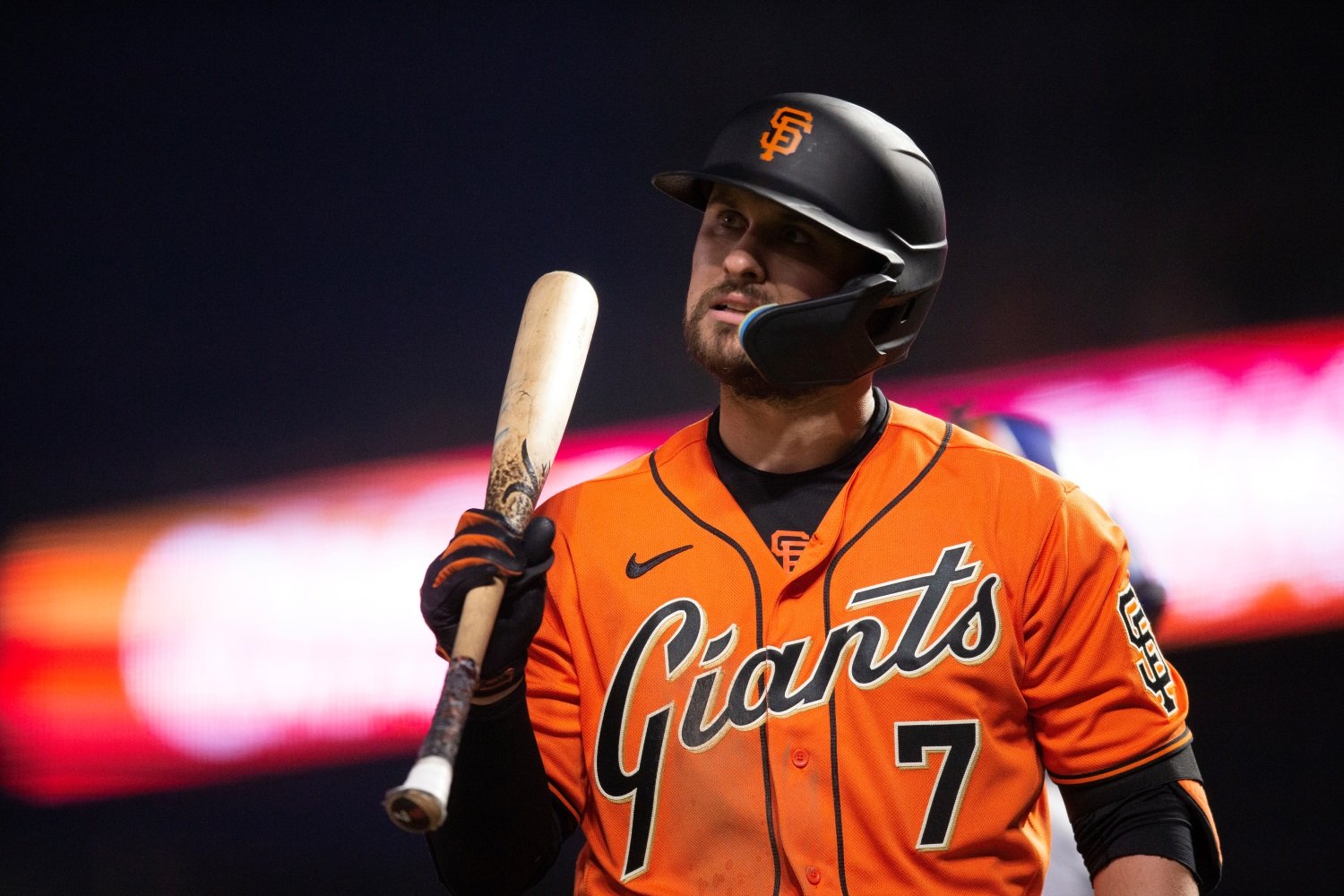 Let’s have a look at a few potential trade targets. There has been a lack of hard-hit balls (save from Rowdy Tellez, who has performed admirably), and the backup crew of Owen Miller and Mike Brosseau have struggled to impact games with their right-handed bats against southpaws. In 2021, just a few weeks deeper into the season than we are now, Milwaukee acquired Willy Adames for pitchers JP Feyereisen and Drew Rasmussen. Adames instantly kickstarted a sluggish offense. Who could have a similar impact in 2023? J.D. Davis – Third Base, San Francisco Giants Current Contract - $4.21 million, under team control via arbitration in 2024 Davis has come out firing this season, assuaging concerns about his defense and really providing an impact on offense for the Giants. Given Brian Anderson’s streaky form and his viability in right field, and that Luis Urias may be more suited to playing second base, there is a gap for Davis at the hot corner. Davis is currently in the 99th percentile for outs above average, with slick range and hard, accurate throws leading him to five outs above average (OAA), but his biggest importance to the Brewers would lie in the bat, which is profiling incredibly well. He has a: - 92.2 MPH average exit velocity (87th percentile) - 54% Hard-Hit Rate (94th percentile) - .278/.347/.500 slash line The downside is, he hasn’t hit lefties at all so far this season, with just a .414 OPS across 33 plate appearances, although he has a career .771 OPS against them. He is a reverse platoon split guy, but that OPS is far better than the majority of Brewers hitters are currently putting up. He’s hit six home runs so far this season, and is a player who can make a real difference in both aspects of the game. The question is: What would the Giants want in return? A sort of rebuild is going on at the moment, but they have enough pieces that they could contend if they get hot. They may want someone like Adames given that Brandon Crawford is coming to the end of his career–although obviously, they’d have to include much more than Davis in order to entice the Brewers to deal their starting shortstop. C.J. Cron – First Base, Colorado Rockies Current Contract - $7,25 million, free agent after 2023 Cron was an annual scrapheap slugger before arriving in Colorado, but the fit of his power and overall profile with Coors Field convinced the Rockies to make a medium-term commitment to him. A plus defender at first base (with substantially more range than Rowdy Tellez), he hits from the right side, and has a .303 average against lefties so far this season, and a career .818 OPS against them. He had a slow start to the season, but is starting to pick it up, currently sitting at a 100 OPS+. He has a: - 17.6% barrel rate (92nd percentile) - .506 expected slugging (83rd percentile) On the flip side, he is in the 11th percentile for whiff rate, and the 29th percentile for walks and strikeouts, potentially demonstrating a regression toward a skill set like that of 2022’s Brewers offense, although they haven’t shown that same power stroke so far this season. His cost is hard to estimate given that the Rockies aren’t competitive this season, but their front office isn’t known for its proactiveness or its transactionality. Cron is set to be a free agent at season’s end, but the team hasn’t automatically dealt players in similar situations over the last two years. Eduardo Escobar – Third Base, NY Mets Current Contract - $10 million, free agent after 2023 Eduardo Escobar hasn’t had a strong start to the season, but given Brett Baty’s emergence pushing him down the pecking order, the Mets may be willing to offload his salary and trade him. Escobar goes on hot streaks, like the one he managed at the end of last year, and has been regarded as a good defender at third base, something which cannot be said for Mike Brosseau. His expected slugging has never been what it is now, and is likely to rebound around the .400 mark, while he has been hitting the ball hard with more regularity this season–albeit without the results to show for it. He has found his timing much easier against left-handers, to the tune of a .700 OPS thus far, but is never likely to be a difference-maker on offense. Rather, as a backup and as a switch-hitter, Escobar would provide Craig Counsell with value that far surpasses that of Brosseau so far this season. Escobar is unlikely to have cost the Crew four runs Wednesday night, for instance. He has a - Career .741 OPS, with a career .780 OPS against left-handed pitchers - Had an xwOBA over .500 in a hot streak to finish the 2022 season with the Mets over the final two months - Recorded sweet spot launch angles on average last year in every area of the zone as a right-handed hitter (13 degrees to 26 degrees) Escobar isn’t a flashy potential acquisition, but he has a positive clubhouse presence, some fresh energy, and a consistent AB to offer. He also has the potential to carry an offense when he gets hot, as he did for the Mets last season, and would be a versatile, plus defender that doesn’t cost games with routine misplays. His cost is unlikely to be too high, and the Brewers could trade Brosseau and from their AAA reliever depth. Who do you think could make an instant impression on this offense the way that Adames did in 2021?
 -
The highest vote by Sunday will be the winner!
-
It's sweep city in the central. Cards well on their way to being swept by angels, and the cubs just got walked off to be swept by the nationals
-
It does beg the question if AA is almost like hitting at major league level of movement, and if Nashville would actually be an easier assignment in that way He could be due an early promotion, and honestly may end up being a DH/1B for the Brewers later this season if he keeps this up. Do we think he could be a good defensive 1B with his range? Assuming his kinda quick given the stolen bases total He has a 0.48 GO/AO ratio, this guy elevates the ball a ton, putting up these numbers with just a .261 BABIP, maybe could do with a slightly more line drive approach but even then, wow! 15.7% Strikeout rate with almost as many stolen bases as strikeouts (14/13)
-
Article: My Mental Health Journey
Jake McKibbin replied to Sean Franken's topic in Brewer Fanatic Front Page News
Yes brother! Love to hear people beating the bajeezus out of their demons, keep it up! -
In our final monthly award for April 2023, we turn to the bullpen, where the Brewers had some rocky performances in the early going--but also some very notable heroics, leading to several close wins. Who is Brewer Fanatic's Relief Pitcher of the Month? Image courtesy of © Jeff Hanisch-USA TODAY Sports As a whole, the Milwaukee Brewers pitching staff has been the primary reason for their early success–particularly during the recent stretch where they’ve found big (or any) hits hard to come by. The relievers, in particular, have been lights-out, tied for third in ERA in all of baseball with a 2.97 mark, despite being 29th in strikeouts. Craig Counsell has been very effective in how he used each of his pitchers, but it’s important to note how much weak contact they have generated, which is a key contributor to their success so far. While there have been several notable performances, one in particular has been devastatingly good. Reliever of the Month Devin Williams likes to test the hearts of his fanbase, particularly in THAT Padres game, but his calmness under the highest pressure has been incredible. He’s yet to give up a run this season in 9 1/3 innings, with 14 strikeouts and five saves. He is above the 90th percentile in almost every expected statistic, and the 99th for strikeout percentage and whiff percentage. If you needed a Josh Hader replacement, here he is. One thing Williams has been doing so far this season is using his fastball more effectively and more often (5% more than 2022). He gets more extension off the mound than anyone else in baseball, making the fastball play above it’s velocity, and has been targeting either up in the zone and inside to right handers, or slightly down and away to tunnel well with his changeup, a big reason for his success so far (given how well some teams have laid off the changeup). The fastball he threw, in a 3-2 count with one (half-)second on the pitch timer and the bases loaded to Trent Grisham was a key example, and a great call from Contreras to finish off a hitter who wanted nothing more than to walk. The fastball generated a 34.9-percent whiff rate in 2022, but has increased to a stunning 43.5% in 2023, putting away 50% of hitters when he goes to it with two strikes. He has increased vertical break on it, which has helped, but it’s mostly how he’s used it as a weapon rather than merely to set up the changeup that has changed the outcome. When batters sit on it, it can get hit hard, and that’s where the intelligent pitch calling is so crucial to his success. The changeup has still been as dominant as ever, with a 47.5% whiff rate, and producing just an 82.5-mph average exit velocity. He has been viciously consistent in his location of the pitch, down and in to right-handers either on the edge of the zone or dipping below it almost every time, and it’s made the pitch even more unhittable than it was last season. Honorable Mentions Peter Strzelecki Since Matt Bush was put on the 15 day IL, Strzelecki was put into the eighth-inning slot and has been a strong performer all season. As Matthew Trueblood has written, a big development in his arsenal is his new sinker, which has minimized his strikeouts but made him a very effective reliever (in the 82nd percentile for hard hit rate), and he’s refusing to walk players with just a solitary free pass issued so far this season in 13.2 innings. He has recorded a 0.66 ERA, and if not for Williams's outstanding numbers, Strzelecki would have been right in the mix for this award. He is in the top 10% for WOBA, and has been incredibly effective behind the changeup in particular, with a -21 degree launch angle and an average exit velocity of just 80.4 mph. Bryse Wilson Wilson has been an underrated gem so far in the Brewers bullpen, recording a 2.16 ERA across 16.2 innings, taking on long relief roles and even recently helping out in certain situations in the seventh and eighth innings of tight contests. He recorded 18 strikeouts in this span, and compared to last season, has produced significantly better expected statistics, strikeout rate and exit velocity numbers. He hasn’t used the splitter quite as often as we expected given how well it played last season, but has yet to record a hit against his four-seam fastball, with the only pitch that’s received any damage so far being his sinker. Joel Payamps Payamps was considered an afterthought that the Brewers somehow obtained in the deal for William Contreras, but has been an incredible performer so far this season, with a 2.92 ERA, just three walks allowed through 12 1/3 innings, and his underlying metrics showing him in the 98th percentile for average exit velocity and 85th percentile for hard-hit rate. Opponents have an average exit velocity under 80 mph on Payamps’s sinker and his changeup, both of which have above-average movement, and although he has given up damage on the slider, in terms of its profile it may be his best pitch, and the expected numbers are much lower against it. This doesn’t seem to be a case of someone over-performing their ability, but rather someone playing exactly as they expect to, and we can maybe expect him to make the seventh-inning job his own with performances like this. His strikeout numbers aren’t the strongest, but with this defensive corps, he’s exactly the player the Brewers needed. What do you think, Brewer Fanatics? Was there anyone you would argue should be on this list? And who can you see dominating in the month of May? View full article
-
Brewers Relief Pitcher of the Month for April 2023: Devin Williams
Jake McKibbin posted an article in Brewers
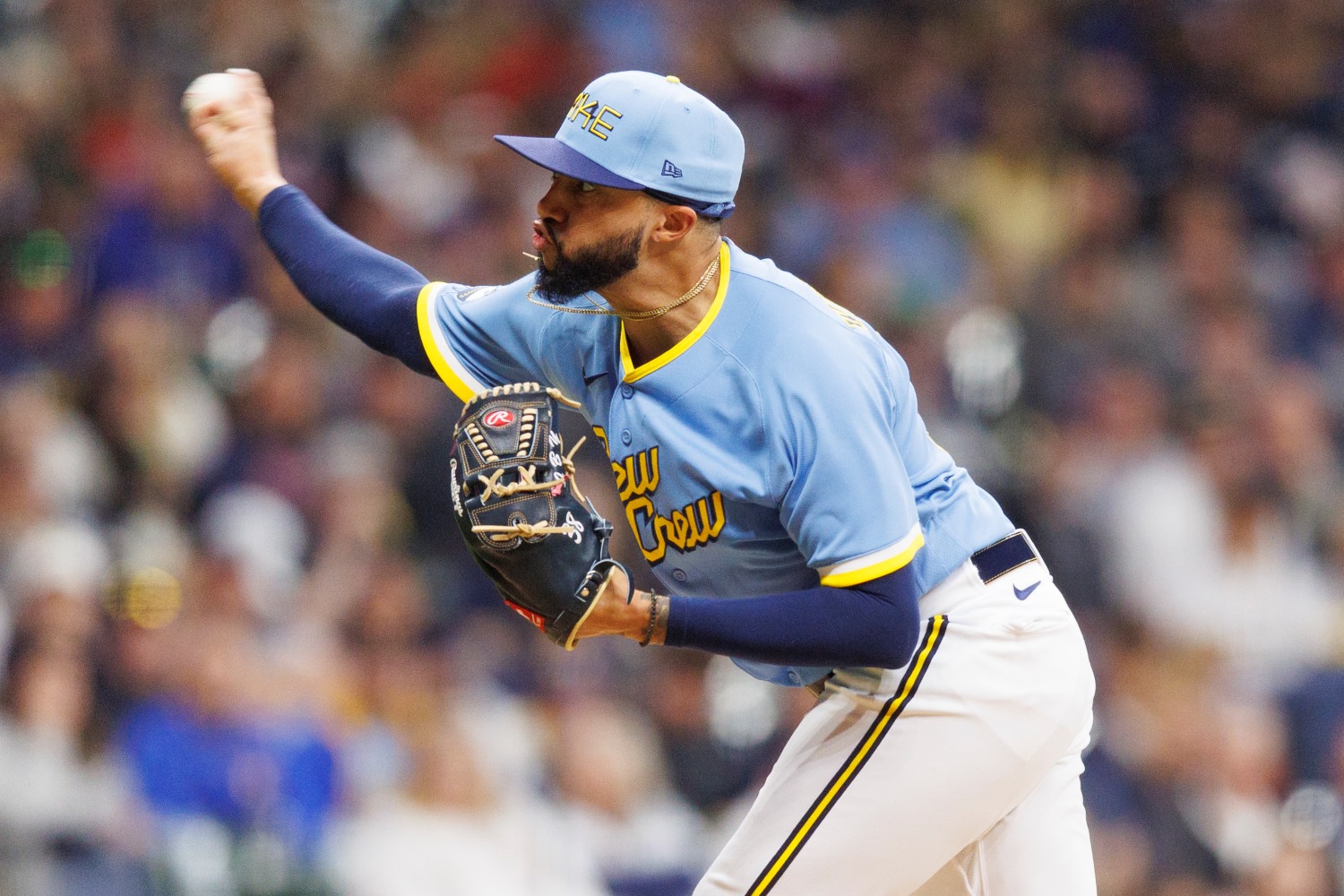 As a whole, the Milwaukee Brewers pitching staff has been the primary reason for their early success–particularly during the recent stretch where they’ve found big (or any) hits hard to come by. The relievers, in particular, have been lights-out, tied for third in ERA in all of baseball with a 2.97 mark, despite being 29th in strikeouts. Craig Counsell has been very effective in how he used each of his pitchers, but it’s important to note how much weak contact they have generated, which is a key contributor to their success so far. While there have been several notable performances, one in particular has been devastatingly good. Reliever of the Month Devin Williams likes to test the hearts of his fanbase, particularly in THAT Padres game, but his calmness under the highest pressure has been incredible. He’s yet to give up a run this season in 9 1/3 innings, with 14 strikeouts and five saves. He is above the 90th percentile in almost every expected statistic, and the 99th for strikeout percentage and whiff percentage. If you needed a Josh Hader replacement, here he is. One thing Williams has been doing so far this season is using his fastball more effectively and more often (5% more than 2022). He gets more extension off the mound than anyone else in baseball, making the fastball play above it’s velocity, and has been targeting either up in the zone and inside to right handers, or slightly down and away to tunnel well with his changeup, a big reason for his success so far (given how well some teams have laid off the changeup). The fastball he threw, in a 3-2 count with one (half-)second on the pitch timer and the bases loaded to Trent Grisham was a key example, and a great call from Contreras to finish off a hitter who wanted nothing more than to walk. The fastball generated a 34.9-percent whiff rate in 2022, but has increased to a stunning 43.5% in 2023, putting away 50% of hitters when he goes to it with two strikes. He has increased vertical break on it, which has helped, but it’s mostly how he’s used it as a weapon rather than merely to set up the changeup that has changed the outcome. When batters sit on it, it can get hit hard, and that’s where the intelligent pitch calling is so crucial to his success. The changeup has still been as dominant as ever, with a 47.5% whiff rate, and producing just an 82.5-mph average exit velocity. He has been viciously consistent in his location of the pitch, down and in to right-handers either on the edge of the zone or dipping below it almost every time, and it’s made the pitch even more unhittable than it was last season. Honorable Mentions Peter Strzelecki Since Matt Bush was put on the 15 day IL, Strzelecki was put into the eighth-inning slot and has been a strong performer all season. As Matthew Trueblood has written, a big development in his arsenal is his new sinker, which has minimized his strikeouts but made him a very effective reliever (in the 82nd percentile for hard hit rate), and he’s refusing to walk players with just a solitary free pass issued so far this season in 13.2 innings. He has recorded a 0.66 ERA, and if not for Williams's outstanding numbers, Strzelecki would have been right in the mix for this award. He is in the top 10% for WOBA, and has been incredibly effective behind the changeup in particular, with a -21 degree launch angle and an average exit velocity of just 80.4 mph. Bryse Wilson Wilson has been an underrated gem so far in the Brewers bullpen, recording a 2.16 ERA across 16.2 innings, taking on long relief roles and even recently helping out in certain situations in the seventh and eighth innings of tight contests. He recorded 18 strikeouts in this span, and compared to last season, has produced significantly better expected statistics, strikeout rate and exit velocity numbers. He hasn’t used the splitter quite as often as we expected given how well it played last season, but has yet to record a hit against his four-seam fastball, with the only pitch that’s received any damage so far being his sinker. Joel Payamps Payamps was considered an afterthought that the Brewers somehow obtained in the deal for William Contreras, but has been an incredible performer so far this season, with a 2.92 ERA, just three walks allowed through 12 1/3 innings, and his underlying metrics showing him in the 98th percentile for average exit velocity and 85th percentile for hard-hit rate. Opponents have an average exit velocity under 80 mph on Payamps’s sinker and his changeup, both of which have above-average movement, and although he has given up damage on the slider, in terms of its profile it may be his best pitch, and the expected numbers are much lower against it. This doesn’t seem to be a case of someone over-performing their ability, but rather someone playing exactly as they expect to, and we can maybe expect him to make the seventh-inning job his own with performances like this. His strikeout numbers aren’t the strongest, but with this defensive corps, he’s exactly the player the Brewers needed. What do you think, Brewer Fanatics? Was there anyone you would argue should be on this list? And who can you see dominating in the month of May?
 -
Three strikeouts in 22 PA's is huge for Keston, hopefully he has another month or two to keep refining himself and build confidence that lasts. He seems to be swinging and missing less on high stuff and demolishing pitches down in the zone. He definitely needs consistency though and I hope he gets that just to build his confidence back up in his base ability Same for Chourio to record just three for the week, potentially positive signs, if he can start to increase quality of contact on the back of it
- 1 reply
-
- 3
-

-
- keston hiura
- jeferson quero
- (and 3 more)
-
Thankfully here's a whole separate reliever of the month award.. though some fierce competition there too
-
It's May, which means that it's time to crown our Hitter and Pitcher of the Month for the Brewers here at Brewer Fanatic. Improbably, and despite several strong showings from more notable names, it's the wily returning veteran who claims our first honor of the year. Image courtesy of © Benny Sieu-USA TODAY Sports The Milwaukee Brewers pitching staff have been ravaged with injuries, with Aaron Ashby’s shoulder likely keeping him out for the season; Brandon Woodruff suffering a Grade Two sub-scapular strain; Adrian Houser missing every game in April; and even Corbin Burnes concerning us with a potential pectoral strain. That being said, they have the eighth-best starter ERA in baseball at 3.74, which is some feat considering the above injuries and the underwhelming performance of Burnes so far. Pitcher of the Month I’m not sure anyone would have picked Wade Miley to be the dominant force he’s been. He has been one of the best pitchers in baseball thus far. He’s pitched 29 innings, with a 1.86 ERA and a WHIP of 1.00–without striking out very many hitters at all. He’s in the 70th percentile for average exit velocity and hard-hit rate, consistently nibbling around the zone to limit both hard contact and walks. It’s a true masterclass of veteran pitching, without a single pitch averaging over 90 miles per hour. How has he done this? For starters, his four-seam fastball has been deadly, inducing an average 28-degree launch angle and a lot of short fly balls and pop-ups. This is less to do with high spin rates and rising movement, and more to do with deception and how he uses it off his cutter, which drops significantly more, with the four-seamer recording a batting average against of .160 and a slugging percentage of .240. (I will point out that the expected stats against each of the cutter and four seamer don’t look quite so rosy.) His offspeed offerings have been impressive–particularly the slider, with an xBA of .145 and an xSLG of .240, but also the changeup, which has been very cleverly used to keep the hitters off his fastball. The slider has a whiff rate of 37.5%, and has been key in both getting ahead and putting away hitters, despite being just 78 MPH and having roughly average horizontal and vertical movement. The key to this is location, and you’ll see just how well he locates and also tunnels his pitches below, as well as how effective he is at pummeling the strike zone. Picturing the movement on each of the changeup, slider, cutter and four seam fastball, all of these pitches will look to be starting around the middle of the strike zone, belt high, with the four seamer rising a little; the cutter breaking in to the right-hander; the changeup down and away; and the slider down and in. It makes it a nightmare for hitters to distinguish which pitch is coming next, and is a major reason for his 50th percentile chase rate despite being in the third percentile for velocity. It’s unlikely, with his underlying metrics, that Miley can continue to produce such fantastic starts, but he’s taken advantage of the fielding corps in both the infield and outfield behind him by minimizing line drives, with just a 14.3% line-drive rate, and creating far more fly balls and ground balls. He has also benefited from William Contreras's improved framing, allowing him to get ahead of hitters with more regularity. The numbers say he’s produced more value on the edges of the zone in one month of 2023 than he did in all of 2022. Honorable Mentions Freddy Peralta Fastball Freddy has been superlative to start the season, with just the one rough start against the Padres, and an unfortunate Red Sox outing hurting his ERA. His fastball has been up at velocities never before seen from him as a starter, with his extension and high spin rates making it incredibly difficult to hit even in the heart of the strike zone. He has been more hittable so far this season than previous years, but is using his pitch mix very effectively, with his changeup producing a -7 degree launch angle on average, and the slider generating a 40% whiff rate. However he is leaving his fastball quite regularly over the heart of the plate and could do with elevating it with more regularity into the upper half of the strike zone to generate more swing-and-miss against it. Corbin Burnes Burnes hasn’t been anywhere near his best in the first month of the season. Still, he started to induce whiffs on his cutter again in his last start against the Angels, and that’s a very good sign heading into May. Everything he does lives off the cutter’s effectiveness, but it’s to his credit that without being at his best, or anywhere close, he produced a 3.45 ERA, a .228 batting average against and a 1.08 WHIP. No one can be atop their game in every start, but we know at some point, Cy Burnes is going to get locked in. Brandon Woodruff Woodruff was absolutely lights-out to start the season, in the 95th percentile for Barrels allowed, 93rd percentile for chase rate and in the 90th percentile for expected slugging and wOBA. He was dominant. Then the injury bug bit, and a sub-scapular strain is likely to keep him out until at least the end of June as they start to rebuild his throwing schedule sometime in the next two weeks. It’s a very unfortunate injury for the Brewers and Woodruff, which may damage his prospects in free agency after 2024, and despite Colin Rea producing several strong starts in his absence, there’s no replacing a Brandon Woodruff. What do you think, Brewer Fanatics? Was there anyone you would argue should be on this list? And who can you see dominating in the month of May? View full article
-
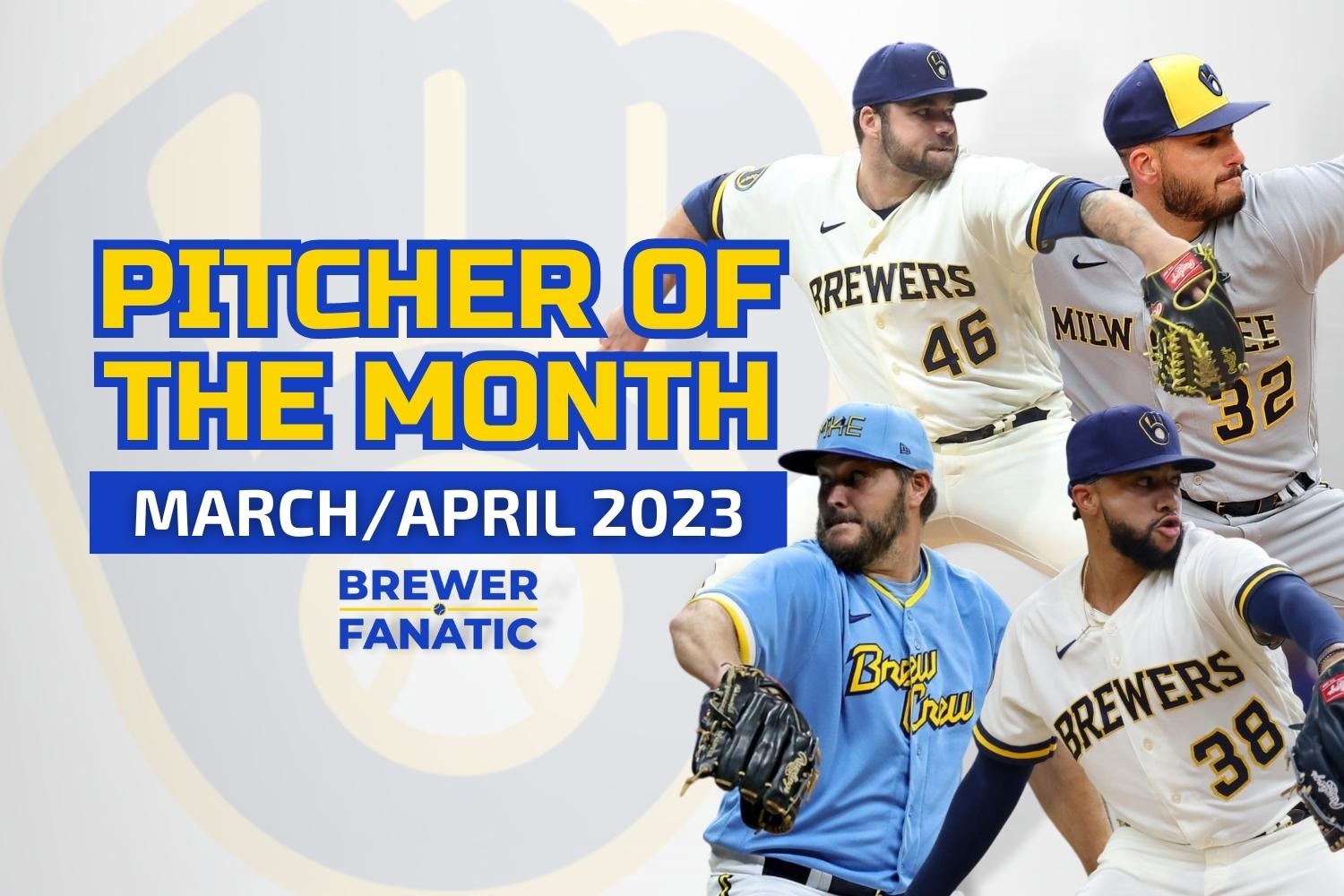 The Milwaukee Brewers pitching staff have been ravaged with injuries, with Aaron Ashby’s shoulder likely keeping him out for the season; Brandon Woodruff suffering a Grade Two sub-scapular strain; Adrian Houser missing every game in April; and even Corbin Burnes concerning us with a potential pectoral strain. That being said, they have the eighth-best starter ERA in baseball at 3.74, which is some feat considering the above injuries and the underwhelming performance of Burnes so far. Pitcher of the Month I’m not sure anyone would have picked Wade Miley to be the dominant force he’s been. He has been one of the best pitchers in baseball thus far. He’s pitched 29 innings, with a 1.86 ERA and a WHIP of 1.00–without striking out very many hitters at all. He’s in the 70th percentile for average exit velocity and hard-hit rate, consistently nibbling around the zone to limit both hard contact and walks. It’s a true masterclass of veteran pitching, without a single pitch averaging over 90 miles per hour. How has he done this? For starters, his four-seam fastball has been deadly, inducing an average 28-degree launch angle and a lot of short fly balls and pop-ups. This is less to do with high spin rates and rising movement, and more to do with deception and how he uses it off his cutter, which drops significantly more, with the four-seamer recording a batting average against of .160 and a slugging percentage of .240. (I will point out that the expected stats against each of the cutter and four seamer don’t look quite so rosy.) His offspeed offerings have been impressive–particularly the slider, with an xBA of .145 and an xSLG of .240, but also the changeup, which has been very cleverly used to keep the hitters off his fastball. The slider has a whiff rate of 37.5%, and has been key in both getting ahead and putting away hitters, despite being just 78 MPH and having roughly average horizontal and vertical movement. The key to this is location, and you’ll see just how well he locates and also tunnels his pitches below, as well as how effective he is at pummeling the strike zone. Picturing the movement on each of the changeup, slider, cutter and four seam fastball, all of these pitches will look to be starting around the middle of the strike zone, belt high, with the four seamer rising a little; the cutter breaking in to the right-hander; the changeup down and away; and the slider down and in. It makes it a nightmare for hitters to distinguish which pitch is coming next, and is a major reason for his 50th percentile chase rate despite being in the third percentile for velocity. It’s unlikely, with his underlying metrics, that Miley can continue to produce such fantastic starts, but he’s taken advantage of the fielding corps in both the infield and outfield behind him by minimizing line drives, with just a 14.3% line-drive rate, and creating far more fly balls and ground balls. He has also benefited from William Contreras's improved framing, allowing him to get ahead of hitters with more regularity. The numbers say he’s produced more value on the edges of the zone in one month of 2023 than he did in all of 2022. Honorable Mentions Freddy Peralta Fastball Freddy has been superlative to start the season, with just the one rough start against the Padres, and an unfortunate Red Sox outing hurting his ERA. His fastball has been up at velocities never before seen from him as a starter, with his extension and high spin rates making it incredibly difficult to hit even in the heart of the strike zone. He has been more hittable so far this season than previous years, but is using his pitch mix very effectively, with his changeup producing a -7 degree launch angle on average, and the slider generating a 40% whiff rate. However he is leaving his fastball quite regularly over the heart of the plate and could do with elevating it with more regularity into the upper half of the strike zone to generate more swing-and-miss against it. Corbin Burnes Burnes hasn’t been anywhere near his best in the first month of the season. Still, he started to induce whiffs on his cutter again in his last start against the Angels, and that’s a very good sign heading into May. Everything he does lives off the cutter’s effectiveness, but it’s to his credit that without being at his best, or anywhere close, he produced a 3.45 ERA, a .228 batting average against and a 1.08 WHIP. No one can be atop their game in every start, but we know at some point, Cy Burnes is going to get locked in. Brandon Woodruff Woodruff was absolutely lights-out to start the season, in the 95th percentile for Barrels allowed, 93rd percentile for chase rate and in the 90th percentile for expected slugging and wOBA. He was dominant. Then the injury bug bit, and a sub-scapular strain is likely to keep him out until at least the end of June as they start to rebuild his throwing schedule sometime in the next two weeks. It’s a very unfortunate injury for the Brewers and Woodruff, which may damage his prospects in free agency after 2024, and despite Colin Rea producing several strong starts in his absence, there’s no replacing a Brandon Woodruff. What do you think, Brewer Fanatics? Was there anyone you would argue should be on this list? And who can you see dominating in the month of May?
 -
Lefty on Wednesday, what are the chances of Taylor being activated for that game?
-
The Brewers keep winning games, and the numbers behind their sparkling record are as encouraging as the victories themselves. Here are nine notable areas in which the data says their success could continue. Image courtesy of © Michael McLoone-USA TODAY Sports Willy Adames The most popular criticism of Adames coming into the season was how little he walked, with his approach favoring happy-go-lucky over cautious calculation. However, so far this season, he’s in the 84th percentile with a walk rate of 14 percent. Adames talked on Tuesday about how he wanted to improve in this area, setting himself a target of 70 walks this season (his previous high was 57). He hasn’t quite found his timing with the bat as of yet, so his quality of contact is down, but we know when Willy gets hot, he can carry this offense. Christian Yelich’s Underlying Metrics So far, Yelich has posted a mere .247/.326/.388 slash line, resulting in a .714 OPS. However, he’s currently in the 96th percentile for hard hit balls, with 57% of his balls in play over 95 mph. His expected batting average, based on his contact rate and the speed and trajectory of his batted balls, is .274, and he has hit into some bad luck so far this season with some roped line drives. We all want to see Yelich pull the ball in the air more, but given his inconsistent patches so far, there is a feel that he’s tinkering with his swing, and as such, that he can manage a more consistent performance in the latter half of the season. William Contreras Catching Barrels and Strikes Contreras has missed just 10 pitches in the strike zone so far this season, on top of which, in eight of the nine areas in the zone he has an average exit velocity around or above 90 mph. The only area he’s really struggled is the slider down and away, with six of his 12 strikeouts low and away, but he has shown himself to be a far more adept bat-to-ball hitter than we expected. He’s also in the 77th percentile for framing metrics, a huge improvement on last season, and something of which the Brewers’ coaching crew can be proud. It’s important to note that Contreras' work ethic and dedication likely played a big part in this turnaround too, as well as his athleticism. Hoby Milner Milner is in the lowest percentiles of both fastball velocity and fastball spin rates, yet somehow he is in the 92th percentile for average exit velocity allowed, inducing on average hits of 84.3 mph. He’s given up just six hits so far this season, and none of his individual pitches have been hit hard so far, using each of his sinker, curveball and changeup to great effect. And yet…. Joel Payamps Payamps has gone one better than Milner, with opponents managing only an 81.5 mph average exit velocity. That’s in the 98th percentile among all MLB hurlers. He struggles to generate many whiffs and strikeouts, but he avoids barrels at a strong rate, and with the current Brewers infield, Payamps and Milner are absolutely deadly. Our Supreme Closer Devin Williams may be the leader of the cardiac crew, but his stats underneath it all are the sound vitals that make the occasional palpitations livable. No one has generated more whiffs per swing than Williams, with his change-up having a 50% whiff rate, and the fastball a 47% figure. He has allowed just a .063 expected batting average on his heater, due in large part to his extension off the mound, and his above-average movement both vertically and horizontally on the pitch. We’ve seen a lot of hitters so far this season sitting on his changeup, resulting in a lower chase rate than Williams is used to, but he’s taking advantage of this and peppering the zone with his fastball. He has the lowest xBA, the second-lowest xSlg and the best strikeout rate in the major leagues. He also seems to have ice in his veins, but I can’t find any stats to back that up. Wade Miley If you asked anyone what the best you could hope for from Miley coming into the season it’s probably along the lines of “limit hard contact and hope for the best”. Well, Miley has come through and more, with a 71st-percentile hard-hit rate allowed, while also being stingy with walks (85th percentile). On top of that, he’s nipping in and around the shadow area of the zone so much that he’s forced one of the better chase rates in the Brewers pitching corps, with his slider generating a 42.9% whiff rate. Team Defense Per Fielding Bible, the team’s defense so far has saved 25 runs, eight ahead of the second-placed Diamondbacks. The outfield alone has 10 Defensive Runs Saved, and has contributed much to the improved consistency of the Brewers’ performance this season. The Garrett Mitchell absence could be felt heavily, but Joey Wiemer is a strong defender in his own right. Sal Frelick Frelick hasn’t had the ideal start to the season, struggling to avoid weak contact in his current slump, although he did break out slightly with a three-hit game before his thumb injury yesterday. However, he has just a 12.4% whiff rate, and swings at pitches outside the zone just 14% of the time so far, so even in his slump, he’s a really tough at-bat for opposing pitchers. No doubt, we’ll see the consistent hard contact return at some point this season to add to his sublime contact skills. View full article
-
 Willy Adames The most popular criticism of Adames coming into the season was how little he walked, with his approach favoring happy-go-lucky over cautious calculation. However, so far this season, he’s in the 84th percentile with a walk rate of 14 percent. Adames talked on Tuesday about how he wanted to improve in this area, setting himself a target of 70 walks this season (his previous high was 57). He hasn’t quite found his timing with the bat as of yet, so his quality of contact is down, but we know when Willy gets hot, he can carry this offense. Christian Yelich’s Underlying Metrics So far, Yelich has posted a mere .247/.326/.388 slash line, resulting in a .714 OPS. However, he’s currently in the 96th percentile for hard hit balls, with 57% of his balls in play over 95 mph. His expected batting average, based on his contact rate and the speed and trajectory of his batted balls, is .274, and he has hit into some bad luck so far this season with some roped line drives. We all want to see Yelich pull the ball in the air more, but given his inconsistent patches so far, there is a feel that he’s tinkering with his swing, and as such, that he can manage a more consistent performance in the latter half of the season. William Contreras Catching Barrels and Strikes Contreras has missed just 10 pitches in the strike zone so far this season, on top of which, in eight of the nine areas in the zone he has an average exit velocity around or above 90 mph. The only area he’s really struggled is the slider down and away, with six of his 12 strikeouts low and away, but he has shown himself to be a far more adept bat-to-ball hitter than we expected. He’s also in the 77th percentile for framing metrics, a huge improvement on last season, and something of which the Brewers’ coaching crew can be proud. It’s important to note that Contreras' work ethic and dedication likely played a big part in this turnaround too, as well as his athleticism. Hoby Milner Milner is in the lowest percentiles of both fastball velocity and fastball spin rates, yet somehow he is in the 92th percentile for average exit velocity allowed, inducing on average hits of 84.3 mph. He’s given up just six hits so far this season, and none of his individual pitches have been hit hard so far, using each of his sinker, curveball and changeup to great effect. And yet…. Joel Payamps Payamps has gone one better than Milner, with opponents managing only an 81.5 mph average exit velocity. That’s in the 98th percentile among all MLB hurlers. He struggles to generate many whiffs and strikeouts, but he avoids barrels at a strong rate, and with the current Brewers infield, Payamps and Milner are absolutely deadly. Our Supreme Closer Devin Williams may be the leader of the cardiac crew, but his stats underneath it all are the sound vitals that make the occasional palpitations livable. No one has generated more whiffs per swing than Williams, with his change-up having a 50% whiff rate, and the fastball a 47% figure. He has allowed just a .063 expected batting average on his heater, due in large part to his extension off the mound, and his above-average movement both vertically and horizontally on the pitch. We’ve seen a lot of hitters so far this season sitting on his changeup, resulting in a lower chase rate than Williams is used to, but he’s taking advantage of this and peppering the zone with his fastball. He has the lowest xBA, the second-lowest xSlg and the best strikeout rate in the major leagues. He also seems to have ice in his veins, but I can’t find any stats to back that up. Wade Miley If you asked anyone what the best you could hope for from Miley coming into the season it’s probably along the lines of “limit hard contact and hope for the best”. Well, Miley has come through and more, with a 71st-percentile hard-hit rate allowed, while also being stingy with walks (85th percentile). On top of that, he’s nipping in and around the shadow area of the zone so much that he’s forced one of the better chase rates in the Brewers pitching corps, with his slider generating a 42.9% whiff rate. Team Defense Per Fielding Bible, the team’s defense so far has saved 25 runs, eight ahead of the second-placed Diamondbacks. The outfield alone has 10 Defensive Runs Saved, and has contributed much to the improved consistency of the Brewers’ performance this season. The Garrett Mitchell absence could be felt heavily, but Joey Wiemer is a strong defender in his own right. Sal Frelick Frelick hasn’t had the ideal start to the season, struggling to avoid weak contact in his current slump, although he did break out slightly with a three-hit game before his thumb injury yesterday. However, he has just a 12.4% whiff rate, and swings at pitches outside the zone just 14% of the time so far, so even in his slump, he’s a really tough at-bat for opposing pitchers. No doubt, we’ll see the consistent hard contact return at some point this season to add to his sublime contact skills.

