Jake McKibbin
-
Posts
2,394 -
Joined
-
Last visited
-
Days Won
6
Content Type
Profiles
Forums
Blogs
Events
News
2026 Milwaukee Brewers Top Prospects Ranking
Milwaukee Brewers Videos
2022 Milwaukee Brewers Draft Picks
Milwaukee Brewers Free Agent & Trade Rumors, Notes, & Tidbits
Guides & Resources
2023 Milwaukee Brewers Draft Picks
2024 Milwaukee Brewers Draft Picks
The Milwaukee Brewers Players Project
2025 Milwaukee Brewers Draft Pick Tracker
2026 Milwaukee Brewers Draft Tracker: Picks & Bonuses
Store
Downloads
Gallery
Everything posted by Jake McKibbin
-
Unfortunately it's as I thought, it's such a shame but he's likely hurt his rotator cuff on the slide, which causes the subluxation and damaged labrum on the throw. He needed the AB's to sharpen his approach and this must be gutting for gim
-
If it's happened as I suspect, injuries to rotator cuff can be sharp then ease off quickly enough, or feel like you can play through them. It turns out the injury is to the left arm, which would have less torque going through it at least. But I would maybe have expected they take him out at that point given his injury history and how niggly shoulders can be, and it may have huge consequences for his career I think Mitchell seems to do a good job of not chasing pitches too often, it's the swing and miss which seems incredibly high. you'd think with his speed any sort of contact has potential for a base hit. Even if he could create a really shortened two strike approach and swing for the fences early in counts
- 2 replies
-
- 1
-

-
- garrett mitchell
- brian anderson
- (and 1 more)
-
Garrett Mitchell’s speed bought the Brewers a crucial run at the top of the 10th inning Tuesday night in Seattle, but it may have come at a serious cost. On Wednesday, the team placed Mitchell on the injured list with a subluxation of his left shoulder. Image courtesy of © Rick Scuteri-USA TODAY Sports The Injury A shoulder subluxation is essentially a partial dislocation of the shoulder joint, occurring as a result of either loose ligaments in the shoulder joint, or weakness of the rotator cuff muscles. It usually occurs in movements where the hand and arm are at full stretch above the head. The instability in the shoulder joint can result in this being a recurring injury rather than a one-off, and create a persistent pain or weakness in the shoulder. That being said, this would be classified as a traumatic injury, which suggests a better long-term prognosis. Hopefully, the strength and conditioning elements of the Brewers system can assist in minimizing this further. The actual detachment is less of an issue with this injury than the damage it can do to the rotator cuff and the labrum. What May Have Happened Garrett Mitchell continuing to play on and throw with the injury may have made the situation significantly worse regarding the damage to his rotator cuff. It’s quite possible that he weakened his rotator cuff in the slide, with this weakness translating to the subluxation when he tried to throw to home. A partial tear exacerbated by the high-intensity throw to home could be season-ending, and the resulting surgery has historically created problems with a reduction in power due to scarring. The Recovery The recovery varies depending on the severity of the injury, but recent history doesn’t look promising. The worst-case scenario is also the most common cause unfortunately, which is anterior labral detachment, which wouldn’t bode well for Mitchell and could require an arthroscopic surgical repair. With a full detachment, surgery would be necessary, but there is a possibility that it can heal naturally if the labrum is merely strained. Complete recovery can take five to six months for the layman, and there is a huge risk in returning to activities before the shoulder is stable. Based on prior examples, it’s very possible that Mitchell is out for around three months based on this prognosis. If he’s avoided any damage to the labrum, then he would see a far shorter time off and merely need to put the shoulder back in place, and re-strengthen the muscles around the joint. Similar MLB Injuries Fernando Tatis, Jr. Tatis had a shoulder subluxation during the first week of the 2021 season, on an extended follow-through while swinging the bat. Yet, he played through the injury all season before having surgery on the torn labrum at the end. In his own words, he was playing with “one arm” all season, yet he still posted a .975 OPS. It remains to be seen, as he hasn’t played in the major leagues since, but his recent performances in the minors suggest his power hasn’t disappeared. The subluxation was in his non-throwing arm. Brian Anderson In 2021, Anderson was a rising star (an All-Star in 2019), but he suffered two subluxations in the same season. The first put him on the 60-day injured list, and he came off as soon as the 60 days were up, on July 24th. Six weeks later, he had re-aggravated the injury, causing another subluxation, after which he elected to go the surgical route. It’s safe to say his throwing arm has recovered since, with a 102-mph throw from the outfield yesterday, but he has battled recurring shoulder niggles ever since. Jesse Winker In 2018, Winker had a right shoulder subluxation, which ended his season on July 25. He has struggled with shoulder stuff ever since, but he did experience a slight power decrease in 2019, which returned in 2020 and 2021. Perk Up It’s too early to know definitively when Mitchell will be back. In the meantime, Blake Perkins has gotten the call from Triple A to join the outfield mix. Whether or not Perkins remains the guy for the gig could depend on a number of factors. It feels likely that Sal Frelick pushes his way into the mix soon. At every turn, this team’s depth is being tested, but so far, they’ve passed all of those tests. Mitchell’s absence is just the next in the queue. View full article
- 2 replies
-
- 1
-
-
- garrett mitchell
- brian anderson
- (and 1 more)
-
Garrett Mitchell, Shoulder Subluxations, and the Brewers' Options
Jake McKibbin posted an article in Brewers
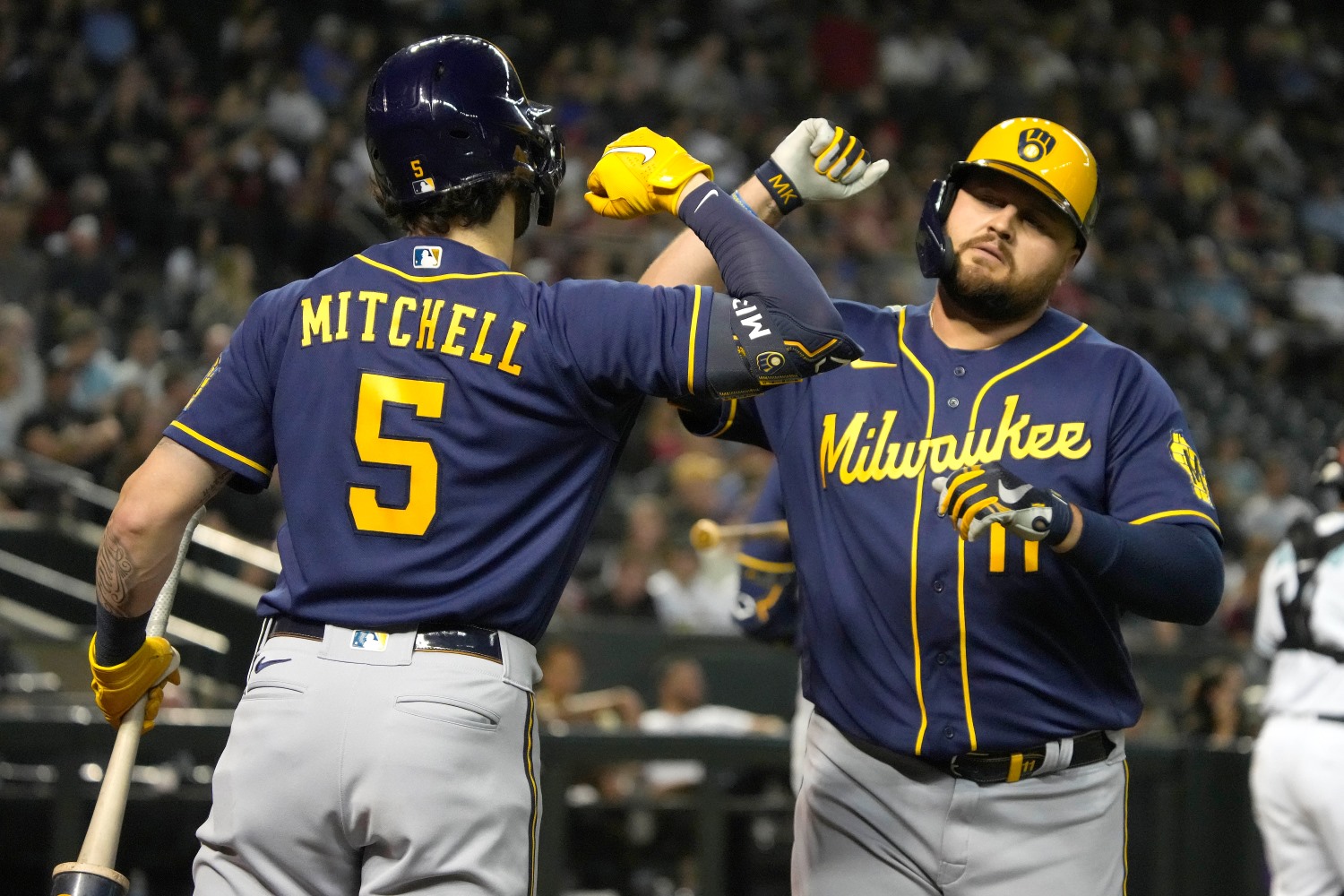 The Injury A shoulder subluxation is essentially a partial dislocation of the shoulder joint, occurring as a result of either loose ligaments in the shoulder joint, or weakness of the rotator cuff muscles. It usually occurs in movements where the hand and arm are at full stretch above the head. The instability in the shoulder joint can result in this being a recurring injury rather than a one-off, and create a persistent pain or weakness in the shoulder. That being said, this would be classified as a traumatic injury, which suggests a better long-term prognosis. Hopefully, the strength and conditioning elements of the Brewers system can assist in minimizing this further. The actual detachment is less of an issue with this injury than the damage it can do to the rotator cuff and the labrum. What May Have Happened Garrett Mitchell continuing to play on and throw with the injury may have made the situation significantly worse regarding the damage to his rotator cuff. It’s quite possible that he weakened his rotator cuff in the slide, with this weakness translating to the subluxation when he tried to throw to home. A partial tear exacerbated by the high-intensity throw to home could be season-ending, and the resulting surgery has historically created problems with a reduction in power due to scarring. The Recovery The recovery varies depending on the severity of the injury, but recent history doesn’t look promising. The worst-case scenario is also the most common cause unfortunately, which is anterior labral detachment, which wouldn’t bode well for Mitchell and could require an arthroscopic surgical repair. With a full detachment, surgery would be necessary, but there is a possibility that it can heal naturally if the labrum is merely strained. Complete recovery can take five to six months for the layman, and there is a huge risk in returning to activities before the shoulder is stable. Based on prior examples, it’s very possible that Mitchell is out for around three months based on this prognosis. If he’s avoided any damage to the labrum, then he would see a far shorter time off and merely need to put the shoulder back in place, and re-strengthen the muscles around the joint. Similar MLB Injuries Fernando Tatis, Jr. Tatis had a shoulder subluxation during the first week of the 2021 season, on an extended follow-through while swinging the bat. Yet, he played through the injury all season before having surgery on the torn labrum at the end. In his own words, he was playing with “one arm” all season, yet he still posted a .975 OPS. It remains to be seen, as he hasn’t played in the major leagues since, but his recent performances in the minors suggest his power hasn’t disappeared. The subluxation was in his non-throwing arm. Brian Anderson In 2021, Anderson was a rising star (an All-Star in 2019), but he suffered two subluxations in the same season. The first put him on the 60-day injured list, and he came off as soon as the 60 days were up, on July 24th. Six weeks later, he had re-aggravated the injury, causing another subluxation, after which he elected to go the surgical route. It’s safe to say his throwing arm has recovered since, with a 102-mph throw from the outfield yesterday, but he has battled recurring shoulder niggles ever since. Jesse Winker In 2018, Winker had a right shoulder subluxation, which ended his season on July 25. He has struggled with shoulder stuff ever since, but he did experience a slight power decrease in 2019, which returned in 2020 and 2021. Perk Up It’s too early to know definitively when Mitchell will be back. In the meantime, Blake Perkins has gotten the call from Triple A to join the outfield mix. Whether or not Perkins remains the guy for the gig could depend on a number of factors. It feels likely that Sal Frelick pushes his way into the mix soon. At every turn, this team’s depth is being tested, but so far, they’ve passed all of those tests. Mitchell’s absence is just the next in the queue.
 -
Has there been any reports or news on what the Brewers have been working with Misiorowski on? Since the draft, they've been keeping him mostly behind closed doors so curious if there's any discernible changes or developments since his college days
-
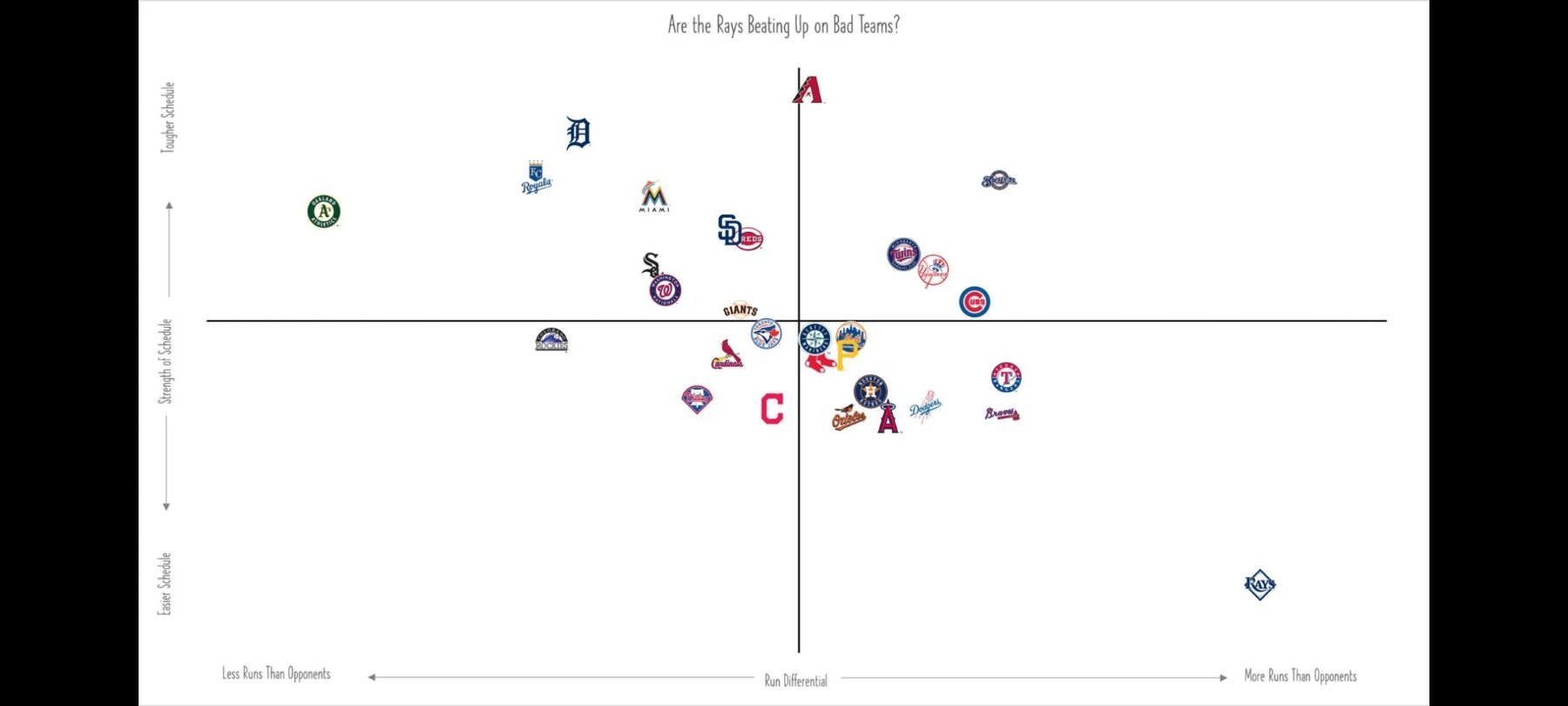
-
What has the owner done to justify putting any effort into moving? It's a disgrace and I'd make him put a competitive product on the field first, because quite frankly who in Vegas wants to watch AAA players get raked on by major leaguers day after day
-
I dont mind it i have to say, it's nice to keep it even and actually enjoy all the different players in the league
-
Just to clarify with Burnes latest comments that its just his ribs or sternum: Given there was no impact to create bruising, and no broken bone, then this is till a pectoral strain of the tendons connecting the muscle to the bone. That would potentially be more worrisome, as the injury is more problematic if the tendons detach from the bone. As such, it's still a muscle strain, but hopefully just a grade one outlook. I'm slightly concerned he's set on making every start again this season to boost his value, and ignoring his body with comments like this, which certainly haven't come from the team doctor as they make no sense.
-
The bullpen he throws in a few days is probably going to be the indicator, if the velocity or command aren't where they expect , or there's any tightness lingering, I think he'll skip it, but I think they plan on him missing just the one at most at this point
- 8 replies
-
- 1
-
-
- corbin burnes
- brandon woodruff
- (and 1 more)
-
So a grade one tear, which is very minor, return to play is around a week, grade two is in the 2-6 week range, and grade three is much longer. The question is if he played through it for the fifth inning and part of the sixth, did he do any extra damage to take it past the grade one threshold
-
Both of the Brewers' co-aces are suddenly question marks, after a week of rough injury news that makes the team's excellent start to the season feel a bit fragile. Let's dig more into the specific injuries with which both Corbin Burnes and Brandon Woodruff appear to be dealing. Image courtesy of © Stephen Brashear-USA TODAY Sports Corbin Burnes Burnes left the field early during the 6th inning, citing a tightening feeling in his chest, and noticing his velocity start to drop against Julio Rodriguez, along with an inability to locate, describing the feeling as akin to cramping. After the game, Craig Counsell commented that it was minor, and that it occurred during the tag on Eugenio Suarez to end the fourth inning. What is a pectoral strain? The pectoral muscle is the large muscle in your chest used in the majority of upper body “push” movements, i.e. moving your arms forward and away from the body. It is a relatively sturdy muscle, and most of these injuries occur in higher intensity movements pushing too fast or too far (in the concentric contraction), usually on the dominant throwing or hitting side. The higher-intensity movement can lead to a higher chance of a full rupture, but because Burnes merely overstretched attempting a tag, stretching too sharply in a lower-intensity movement during the eccentric contraction, it’s likely the strain is just a small tear. As such, resting the muscle for a short period should suffice, as well as hot/cold treatment. Recovery Prognosis Low-grade strains (which are minor muscle tears) carry a recovery period for the average joe of a few weeks, and as such, it’s likely that Burnes will miss his next start–if only in the name of caution, given the mounting number of injuries the Brewers currently have. If it turns out to be a high-grade strain (known as a full thickness tear, or muscle rupture) then the return period is much longer, around six months. That could sideline Burnes for the remainder of the season. Current Player Examples Eloy Jimenez While leaping for a home-run robbery (stretching out with his glove arm like Burnes), Jiménez ruptured his left pectoral muscle, leaving him out for four months (a much faster recovery than expected) from late March to July 20, 2021. Sonny Gray Injured his right pectoralis while pitching on May 30, 2022. It was a minor strain, and he returned to pitch five innings of scoreless baseball on June 15. Brandon Woodruff There’s been a lot of discussion on the forum about the severity of Woodruff’s shoulder injury, so what exactly is the injury, and how can we expect him to come back from it? What is a Subscapular injury? The subscapularis is a large, triangular muscle underneath the scapula, part of the four-muscle group forming the “rotator cuff”. It’s the largest and strongest of the four, connecting the humerus bone to the front of the shoulder capsule, with its primary function being the internal rotation of the humerus (this is when your hand rotates clockwise). The muscle itself plays a key role in the stabilization of the shoulder, an incredibly complex task given the variety of ways in which the shoulder moves. The main symptoms occur when the arm is raised above shoulder height, with an overworked subscapularis making it feel as though you are unable to lift your arm. The most common symptoms in pitchers are either pain, or a decrease in velocity, the latter of which Woodruff demonstrated in his last outing after his first inning of work. Recovery Process The treatment of subscapularis tears depends on the severity of the injury, ideally not requiring surgery. The good news about Brandon Woodruff is that he has been diagnosed with a “mild” Grade II strain, which is a distinct lesion of over 25% of the craniocaudal diameter, but, crucially, the muscle is still attached to the bone. Therefore, the process for recovery will be simpler, likely involving hot/cold treatment and non-steroidal anti-inflammatory medication such as Ibuprofen, as well as physical therapy to prevent frozen shoulder during the recovery process. Timeline A survey performed on one unnamed professional baseball organization over the course of five years found 10 clinical findings (using MRIs) of subscapularis strains of various degrees of severity (four Grade I, four Grade II and two Grade III), all of which were treated without surgery. The average number of days without throwing activity was 27 days (the range was 11-61 days). The majority of these injuries were rehabbed with no lasting performance drop. Current Player Examples Corey Kluber Diagnosed with a subscapularis strain in late May 2021, he was shut down for four weeks, and took a further four weeks to build up again. The original prognosis was off by a month, and he didn’t return until August 30. Daniel Espino With a Grade III strain (torn off the bone), Espino was put on the 60-day injured list and shut down for a minimum of eight weeks, though it is important to stress this is a more severe form of Woodruff’s injury. Shane Bieber Initially upon diagnosis in May 2021, Bieber was shut down for two weeks, and re-evaluated after that on June 13. He didn’t return to action until three months later, on the September 24. Mark Melancon Currently on the 60-day injured list for an undetermined length of time. Kluber and Bieber are the most comparable out of these injuries, as both were Grade II tears, and each took around three months to return to the mound. With that in mind, it seems likely that the Milwaukee Brewers won’t see Woodruff back until just after the All-Star break. View full article
-
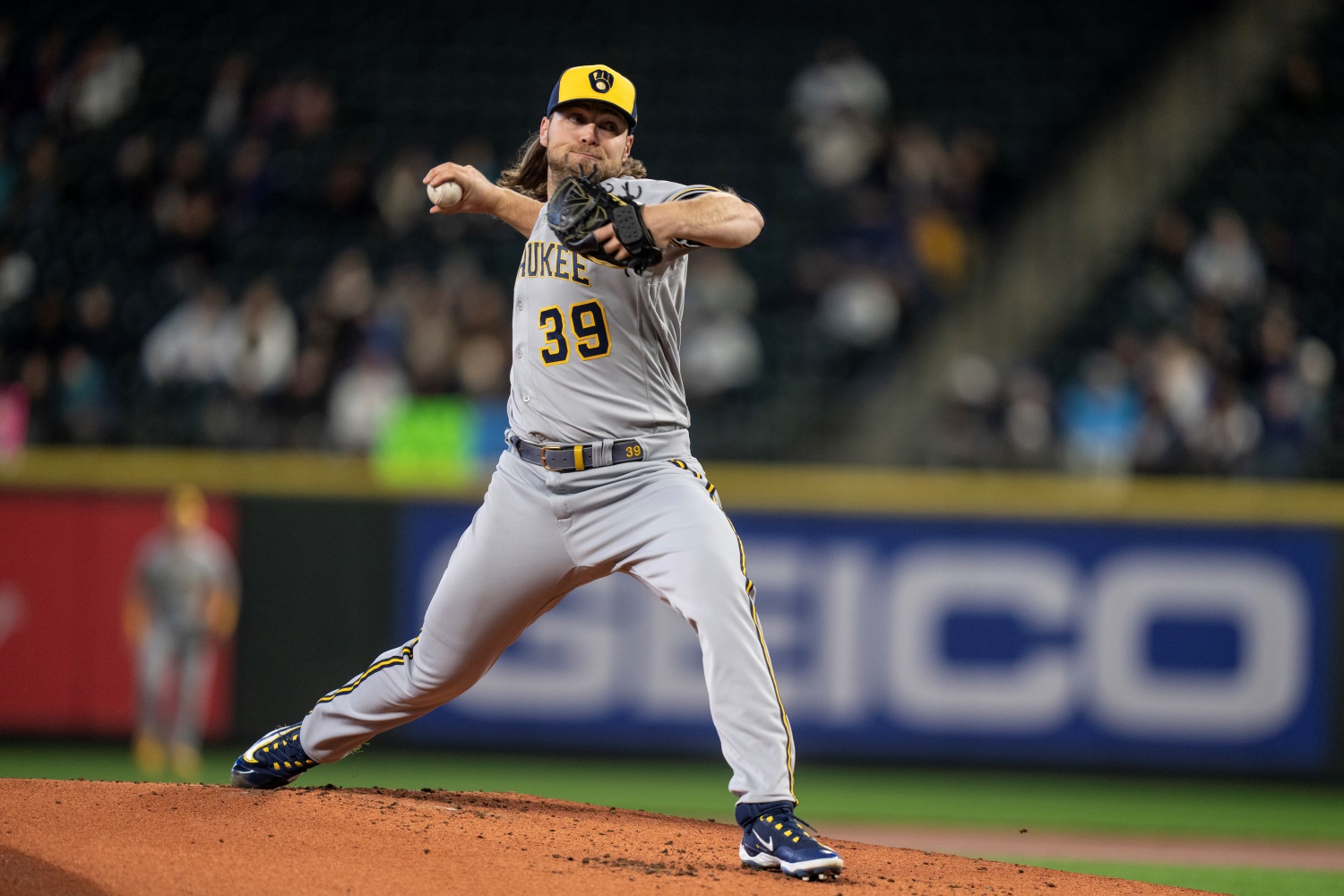 Corbin Burnes Burnes left the field early during the 6th inning, citing a tightening feeling in his chest, and noticing his velocity start to drop against Julio Rodriguez, along with an inability to locate, describing the feeling as akin to cramping. After the game, Craig Counsell commented that it was minor, and that it occurred during the tag on Eugenio Suarez to end the fourth inning. What is a pectoral strain? The pectoral muscle is the large muscle in your chest used in the majority of upper body “push” movements, i.e. moving your arms forward and away from the body. It is a relatively sturdy muscle, and most of these injuries occur in higher intensity movements pushing too fast or too far (in the concentric contraction), usually on the dominant throwing or hitting side. The higher-intensity movement can lead to a higher chance of a full rupture, but because Burnes merely overstretched attempting a tag, stretching too sharply in a lower-intensity movement during the eccentric contraction, it’s likely the strain is just a small tear. As such, resting the muscle for a short period should suffice, as well as hot/cold treatment. Recovery Prognosis Low-grade strains (which are minor muscle tears) carry a recovery period for the average joe of a few weeks, and as such, it’s likely that Burnes will miss his next start–if only in the name of caution, given the mounting number of injuries the Brewers currently have. If it turns out to be a high-grade strain (known as a full thickness tear, or muscle rupture) then the return period is much longer, around six months. That could sideline Burnes for the remainder of the season. Current Player Examples Eloy Jimenez While leaping for a home-run robbery (stretching out with his glove arm like Burnes), Jiménez ruptured his left pectoral muscle, leaving him out for four months (a much faster recovery than expected) from late March to July 20, 2021. Sonny Gray Injured his right pectoralis while pitching on May 30, 2022. It was a minor strain, and he returned to pitch five innings of scoreless baseball on June 15. Brandon Woodruff There’s been a lot of discussion on the forum about the severity of Woodruff’s shoulder injury, so what exactly is the injury, and how can we expect him to come back from it? What is a Subscapular injury? The subscapularis is a large, triangular muscle underneath the scapula, part of the four-muscle group forming the “rotator cuff”. It’s the largest and strongest of the four, connecting the humerus bone to the front of the shoulder capsule, with its primary function being the internal rotation of the humerus (this is when your hand rotates clockwise). The muscle itself plays a key role in the stabilization of the shoulder, an incredibly complex task given the variety of ways in which the shoulder moves. The main symptoms occur when the arm is raised above shoulder height, with an overworked subscapularis making it feel as though you are unable to lift your arm. The most common symptoms in pitchers are either pain, or a decrease in velocity, the latter of which Woodruff demonstrated in his last outing after his first inning of work. Recovery Process The treatment of subscapularis tears depends on the severity of the injury, ideally not requiring surgery. The good news about Brandon Woodruff is that he has been diagnosed with a “mild” Grade II strain, which is a distinct lesion of over 25% of the craniocaudal diameter, but, crucially, the muscle is still attached to the bone. Therefore, the process for recovery will be simpler, likely involving hot/cold treatment and non-steroidal anti-inflammatory medication such as Ibuprofen, as well as physical therapy to prevent frozen shoulder during the recovery process. Timeline A survey performed on one unnamed professional baseball organization over the course of five years found 10 clinical findings (using MRIs) of subscapularis strains of various degrees of severity (four Grade I, four Grade II and two Grade III), all of which were treated without surgery. The average number of days without throwing activity was 27 days (the range was 11-61 days). The majority of these injuries were rehabbed with no lasting performance drop. Current Player Examples Corey Kluber Diagnosed with a subscapularis strain in late May 2021, he was shut down for four weeks, and took a further four weeks to build up again. The original prognosis was off by a month, and he didn’t return until August 30. Daniel Espino With a Grade III strain (torn off the bone), Espino was put on the 60-day injured list and shut down for a minimum of eight weeks, though it is important to stress this is a more severe form of Woodruff’s injury. Shane Bieber Initially upon diagnosis in May 2021, Bieber was shut down for two weeks, and re-evaluated after that on June 13. He didn’t return to action until three months later, on the September 24. Mark Melancon Currently on the 60-day injured list for an undetermined length of time. Kluber and Bieber are the most comparable out of these injuries, as both were Grade II tears, and each took around three months to return to the mound. With that in mind, it seems likely that the Milwaukee Brewers won’t see Woodruff back until just after the All-Star break.
 -
Corbin Burnes, in 2021 was without question the best pitcher in baseball. He gave up the fewest home runs per nine innings, had the best strikeout-to-walk ratio amongst starters, and had the best strikeouts per nine. His underlying expected stats were even better than his actual ones, demonstrating he was potentially unlucky in producing league-leading figures in ERA and FIP. Image courtesy of © Benny Sieu-USA TODAY Sports In 2022, Corbin Burnes regressed somewhat, largely due to the home run bug that hit him, which is concerning given the ball was less “bouncy” compared to his Cy Young year. He was barreled up almost twice as much throughout the season; pitchers were whiffing far less often on his cutter (and he used it even more despite this in 2022), with his curveball, change up, and cutter all being hit harder. In short, last season had less to do with bad luck and was entirely due to a regression in his effectiveness on the mound. Predictability One of the standout things, as mentioned in part two of this deep dive, is that Burnes in later counts can become highly predictable, and he fell behind batters to this extent a lot more often in 2022, facing 98 batters in 3-0 or 3-1 counts, vs. just 74 in 2021. This is significant because the league adapted to his cutter-heavy pattern in these counts. Having likely seen several cutters to this point and being able to expect that a cutter is almost certainly being thrown in these counts, hitters had a .472 WOBA against him that rose to .576 in 2022 in 3-0 counts, as well as drawing more walks. Burnes has a lot of pitches he locates well, and even throwing the occasional change up, slider, or curveball in these counts could dramatically improve his effectiveness. The same issue comes in how he attacks hitters with the change up. It’s become such a deadly pitch that he utilizes it to great effect against left-handed hitters. Still, his velocity and above-average movement on this pitch could be paired well with the front-door cutter to right-handers or just dropping down and below the zone to give hitters something else to think about. He’s never been hit particularly hard with it, and the strict parameters he employs when using his pitch arsenal could be to his detriment. Given the sinker’s ineffectiveness and the change up averaging over 90 mph, he could almost use it to generate that other-way movement he wanted from the sinker to pair with his cutter. In 2022, each change up, slider, and curveball held whiff rates between 46.7%-49.7% range on plate appearances ending in these pitches. While the cutter gets a lot of attention, the efficiency of his alternate pitches is the main reason for his high strikeout rates since returning from 2019’s disaster. Improving the variation with which he uses his pitchers, and becoming comfortable throwing them in any count, could make his cutter yet more destructive and generate many swinging strikes as hitters adjust to the new change. So far, the change up has been worth over three runs above average (per FanGraphs) contrasted with almost minus two value for the entirety of last season. Adjusted for a per 100 pitches usage, look at the difference in his change up compared to the sinker, for six mph of difference in average velocity. Hitters are managing to foul Burnes's pitches off more, and that extra layer of deception could bring a big change in his effectiveness. Meanwhile, as you can see when the sinker is thrown… pray. The Breaking Pitches In 2021, Burnes didn’t allow many hits off his breaking pitches, mainly due to launch angles. An excessive average of 22 degrees launch angle on the curveball (with a 17% hard-hit rate) meant that many soft fly balls came down from it. On the other hand, his slider averaged just one degree, albeit with a higher hard-hit rate of 30%, and produced a ton of ground balls. In 2022, these two pitches averaged 14 and 18 degrees for the curveball and slider, respectively. However, the movement on these pitches didn’t change much, and his curveball and slider still weren’t hit particularly hard. This increased contact, dropping into the outfield for singles and more occasions with men on base. He occasionally hung his curveball more often in 2022, which didn’t help his cause. Interestingly, his expected averages barely changed from 2021, so there is an element of bounce back to be expected from Burnes this season, but it may depend again on how much variation he can add to his pitch mix. The Swing/Take Analysis As you can see above, Burnes improved his ability to deceive pitchers around the fringes of the strike zone, with an improved -11 runs in the “shadow.” However, he greatly struggled in the heart of the zone, an area he generated a lot of swing and miss in throughout 2021, in part due to occasionally hanging his curveball slightly more often but also because his cutter, which regularly plays in the heart of the plate, had more contact against it. Then again, whiff rates are less a factor over the middle of the plate, but it’s more the quality of contact; Take a look at these average exit velocities rates from 2021 (left) compared to 2022 (right): As you can see, he was hit much harder, particularly middle/middle and middle/away to the right-handers. The cutter’s late horizontal movement fooled a lot of hitters in 2021, but it seems they had adjusted in 2022, and that pitch needs to work a lot harder to be as effective as a result. Although the movement profile is almost identical, the cutter dropped 4% in whiff rate and over 8% in strikeout rate. Where can Burnes progress in 2023? Aside from the pitch above mix, there’s one other area I think Burnes can exploit more, especially when he wants an easy strike. Let’s take a look at the average exit velocities to right-handers in 2022: That inside part of the plate being attacked by sliders and cutters has produced astoundingly low exit velocities, yet is the most underused area for him to pitch into. Part of this is that hitters aren’t expecting it, but given how a lot of hitters look to work the count against him more so than ever to force that cutter, an early front-door cutter/slider would present a whole different look to the at-bat, forcing the hitter to cover the plate inside as well as away, and encouraging more chases on the cutter/slider combo. It also looks ideal for a down and in change up if he starts landing the cutter for strikes on the inner third. If only to add some variety to his slightly metronomic, predictable pitch usage, I feel this is an area he could massively exploit this coming season. What do you think, Fanatics? Did anything here take you by surprise? View full article
-
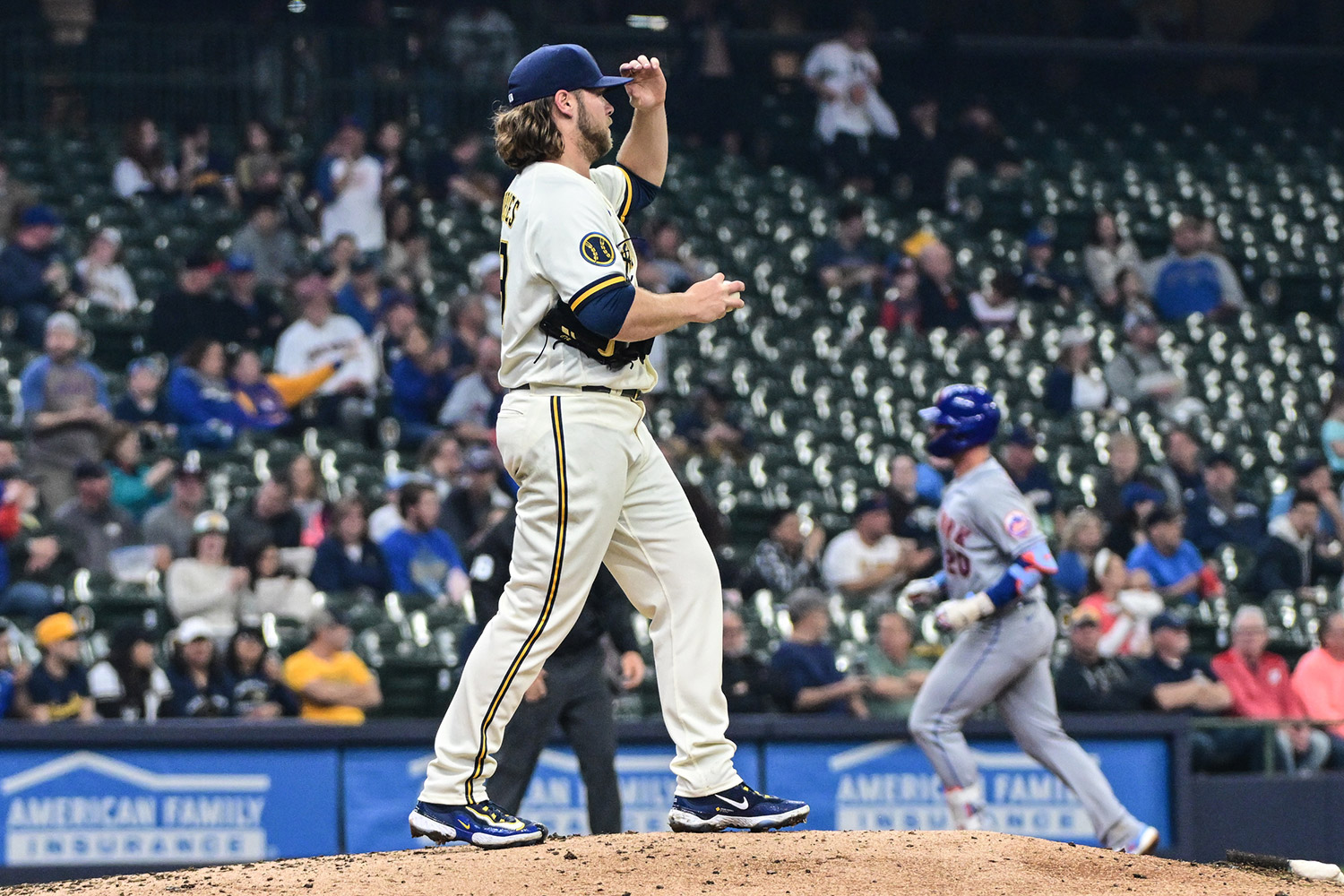 In 2022, Corbin Burnes regressed somewhat, largely due to the home run bug that hit him, which is concerning given the ball was less “bouncy” compared to his Cy Young year. He was barreled up almost twice as much throughout the season; pitchers were whiffing far less often on his cutter (and he used it even more despite this in 2022), with his curveball, change up, and cutter all being hit harder. In short, last season had less to do with bad luck and was entirely due to a regression in his effectiveness on the mound. Predictability One of the standout things, as mentioned in part two of this deep dive, is that Burnes in later counts can become highly predictable, and he fell behind batters to this extent a lot more often in 2022, facing 98 batters in 3-0 or 3-1 counts, vs. just 74 in 2021. This is significant because the league adapted to his cutter-heavy pattern in these counts. Having likely seen several cutters to this point and being able to expect that a cutter is almost certainly being thrown in these counts, hitters had a .472 WOBA against him that rose to .576 in 2022 in 3-0 counts, as well as drawing more walks. Burnes has a lot of pitches he locates well, and even throwing the occasional change up, slider, or curveball in these counts could dramatically improve his effectiveness. The same issue comes in how he attacks hitters with the change up. It’s become such a deadly pitch that he utilizes it to great effect against left-handed hitters. Still, his velocity and above-average movement on this pitch could be paired well with the front-door cutter to right-handers or just dropping down and below the zone to give hitters something else to think about. He’s never been hit particularly hard with it, and the strict parameters he employs when using his pitch arsenal could be to his detriment. Given the sinker’s ineffectiveness and the change up averaging over 90 mph, he could almost use it to generate that other-way movement he wanted from the sinker to pair with his cutter. In 2022, each change up, slider, and curveball held whiff rates between 46.7%-49.7% range on plate appearances ending in these pitches. While the cutter gets a lot of attention, the efficiency of his alternate pitches is the main reason for his high strikeout rates since returning from 2019’s disaster. Improving the variation with which he uses his pitchers, and becoming comfortable throwing them in any count, could make his cutter yet more destructive and generate many swinging strikes as hitters adjust to the new change. So far, the change up has been worth over three runs above average (per FanGraphs) contrasted with almost minus two value for the entirety of last season. Adjusted for a per 100 pitches usage, look at the difference in his change up compared to the sinker, for six mph of difference in average velocity. Hitters are managing to foul Burnes's pitches off more, and that extra layer of deception could bring a big change in his effectiveness. Meanwhile, as you can see when the sinker is thrown… pray. The Breaking Pitches In 2021, Burnes didn’t allow many hits off his breaking pitches, mainly due to launch angles. An excessive average of 22 degrees launch angle on the curveball (with a 17% hard-hit rate) meant that many soft fly balls came down from it. On the other hand, his slider averaged just one degree, albeit with a higher hard-hit rate of 30%, and produced a ton of ground balls. In 2022, these two pitches averaged 14 and 18 degrees for the curveball and slider, respectively. However, the movement on these pitches didn’t change much, and his curveball and slider still weren’t hit particularly hard. This increased contact, dropping into the outfield for singles and more occasions with men on base. He occasionally hung his curveball more often in 2022, which didn’t help his cause. Interestingly, his expected averages barely changed from 2021, so there is an element of bounce back to be expected from Burnes this season, but it may depend again on how much variation he can add to his pitch mix. The Swing/Take Analysis As you can see above, Burnes improved his ability to deceive pitchers around the fringes of the strike zone, with an improved -11 runs in the “shadow.” However, he greatly struggled in the heart of the zone, an area he generated a lot of swing and miss in throughout 2021, in part due to occasionally hanging his curveball slightly more often but also because his cutter, which regularly plays in the heart of the plate, had more contact against it. Then again, whiff rates are less a factor over the middle of the plate, but it’s more the quality of contact; Take a look at these average exit velocities rates from 2021 (left) compared to 2022 (right): As you can see, he was hit much harder, particularly middle/middle and middle/away to the right-handers. The cutter’s late horizontal movement fooled a lot of hitters in 2021, but it seems they had adjusted in 2022, and that pitch needs to work a lot harder to be as effective as a result. Although the movement profile is almost identical, the cutter dropped 4% in whiff rate and over 8% in strikeout rate. Where can Burnes progress in 2023? Aside from the pitch above mix, there’s one other area I think Burnes can exploit more, especially when he wants an easy strike. Let’s take a look at the average exit velocities to right-handers in 2022: That inside part of the plate being attacked by sliders and cutters has produced astoundingly low exit velocities, yet is the most underused area for him to pitch into. Part of this is that hitters aren’t expecting it, but given how a lot of hitters look to work the count against him more so than ever to force that cutter, an early front-door cutter/slider would present a whole different look to the at-bat, forcing the hitter to cover the plate inside as well as away, and encouraging more chases on the cutter/slider combo. It also looks ideal for a down and in change up if he starts landing the cutter for strikes on the inner third. If only to add some variety to his slightly metronomic, predictable pitch usage, I feel this is an area he could massively exploit this coming season. What do you think, Fanatics? Did anything here take you by surprise?
 -
Last time, we took a look at Corbin Burnes's primary weapons and why he's so effective with them. Now let's look at his secondary offerings. Image courtesy of © Benny Sieu-USA TODAY Sports The Change-Up A pitch that Corbin Burnes has steadily been using more often year on year, to the point that it’s currently his second most common pitch this season, has taken on a life of its own. As mentioned in part one, he used the change-up only to left-handers in 2022, fading down and away in the zone or sequencing with his cutter to create weak contact and forcing batters to stretch away. The standout for Burnes on this pitch is the speed at which he throws it, last season recording almost average major league movement on the pitch across both planes, but at 90.3mph. His change-up had 26.4 inches of vertical drop and 14.4 inches of horizontal movement and was thrown harder than Wade Miley’s fastball, recording a whiff rate of 46.7%. The pitch had an expected WOBA of just .288 (the MLB average is usually about .320), and this has continued to progress in the current season, with hitters recording just one hit across the 46 pitches he’s thrown so far. He’s historically used it to devastating effect against left-handers and has thrown a couple to right-handers this season; he may plan to use this more often in the coming season. The Slider The slider is a pitch Burnes used to devastating effect against right-handers last season; a slower, more exaggerated movement than his cutter made picking either of these pitches particularly difficult. Like the curveball, Burnes has historically kept this pitch out of the hitting zone at 65-70% for his last two seasons. Yet even when he keeps it in the strike zone, the batting average against this pitch has been incredibly low on a month-to-month basis, only exceeding .200 a handful of months. He primarily used it like his curve to right-handers, as a finishing pitch, getting the hitters to chase down and away, using it 36% of the time when he gets ahead to right-handers, compared to just 12% of the time when the hitter gets ahead. Opponents overall hit .160 on pitches ending in the slider, with a 49.7% whiff rate. As you can see below, one of the best things about his slider is how well he locates it, keeping it down in, or below, the zone almost 75% of the time. He averaged 85% more horizontal break than the average slider, as well as slightly more vertical drop, and likes to use this to his advantage with the cutter, locating the cutter down and away in zone, then using the slider to follow the same path and dart further off the plate. The Sinker Burnes has often looked for another fastball he could use to keep the pressure of his cutter, whether that be the occasional four-seamer, which has gotten hit regularly, or the sinker, which moves the opposite way and was hit slightly less frequently. Ideally, this post by the pitching ninja demonstrates exactly what Burnes was hoping for in his arsenal: However, it was comfortably the most hittable pitch he used last season (albeit his underlying metrics were more sound) to the tune of a battering average of .250 and a slugging percentage of .525. As such, he’s begun using this a lot more sparingly this season. However, when he has, it’s been crushed, in part because he doesn’t generate much movement either vertically or horizontally, comfortably below league average in both categories, as well as struggling a lot more with a location in the middle of the zone and spraying it when trying to encourage a chase. The issue is it had a potentially beneficial effect in emphasizing both his cutter and his slider’s performance, and we’ll see throughout 2023 if these pitches have become less effective. Pitch Usage The Brewers ace had relied heavily on his cutter over the last few years, particularly when behind a hitter, and then used his off-speed stuff under lower leverage counts or to finish off a hitter. It’s interesting to see how methodical he’s been in his approach to this. The mere fact he threw only cutters in 3-0 counts for an entire season shows how much faith he has in that pitch, as well as its prominence in 3-1 and 2-0 counts, but also how often he uses the off-speed variations early in the count with a lot more variety and usage. How the sinker and slider were used only for right-handers speaks to this approach, and it’s worked well for our Cy Young winner. However, he did start to get hit much harder in the three-ball counts than throughout 2021. He does have specific sequences he likes to use, from the back door cutter paired with a fading change-up to left-handed hitters, the cutter/slider combination down and away to right-handers, and the curveball is thrown in against both to have a three-pitch arsenal with which to attack each side of the plate. What do you think, Brewer Fanatics? Is anything that stands out to you? We’ll be back soon for part three, and an analysis of where he took a step back in 2022 and how he can learn going into this season. View full article
-
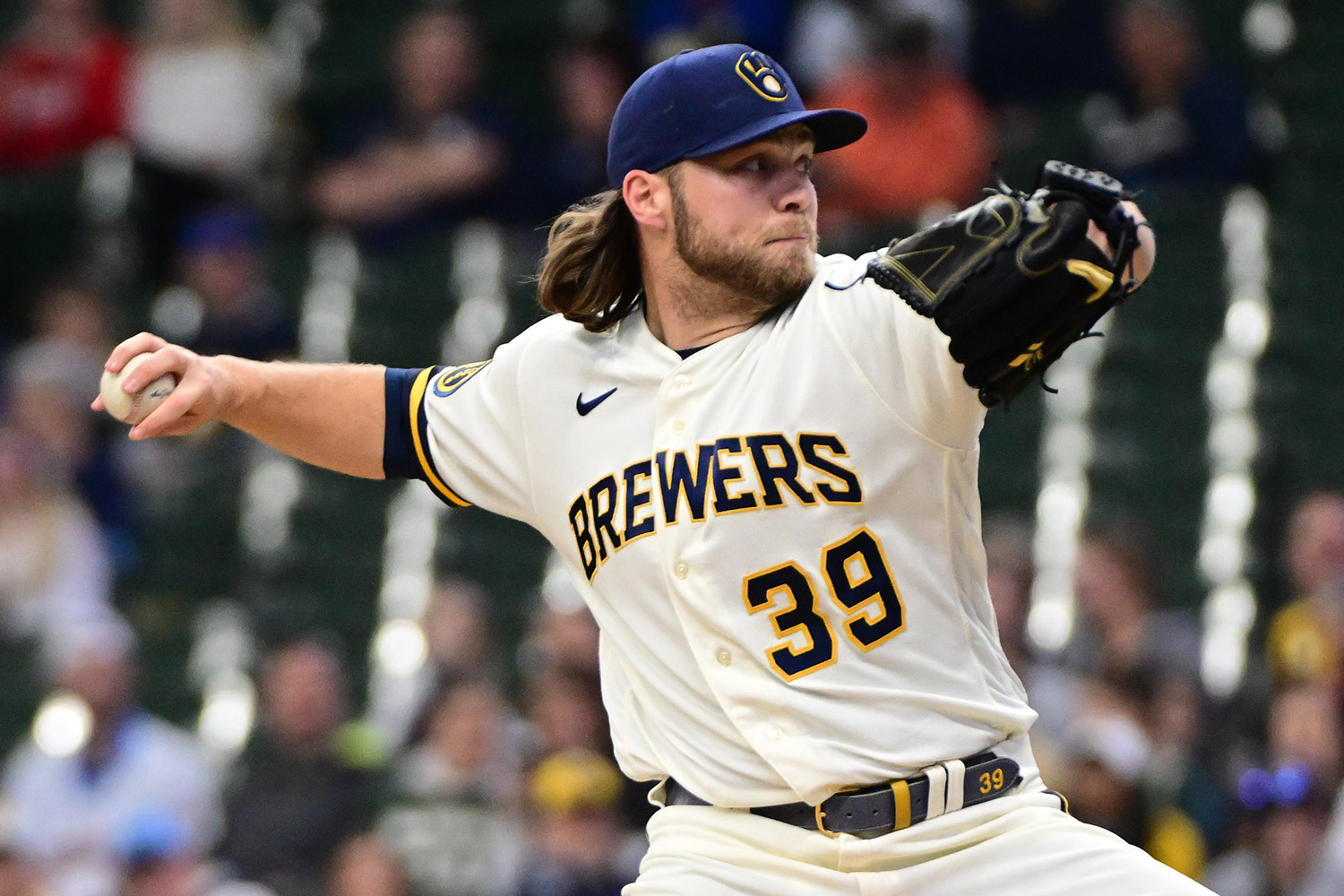 The Change-Up A pitch that Corbin Burnes has steadily been using more often year on year, to the point that it’s currently his second most common pitch this season, has taken on a life of its own. As mentioned in part one, he used the change-up only to left-handers in 2022, fading down and away in the zone or sequencing with his cutter to create weak contact and forcing batters to stretch away. The standout for Burnes on this pitch is the speed at which he throws it, last season recording almost average major league movement on the pitch across both planes, but at 90.3mph. His change-up had 26.4 inches of vertical drop and 14.4 inches of horizontal movement and was thrown harder than Wade Miley’s fastball, recording a whiff rate of 46.7%. The pitch had an expected WOBA of just .288 (the MLB average is usually about .320), and this has continued to progress in the current season, with hitters recording just one hit across the 46 pitches he’s thrown so far. He’s historically used it to devastating effect against left-handers and has thrown a couple to right-handers this season; he may plan to use this more often in the coming season. The Slider The slider is a pitch Burnes used to devastating effect against right-handers last season; a slower, more exaggerated movement than his cutter made picking either of these pitches particularly difficult. Like the curveball, Burnes has historically kept this pitch out of the hitting zone at 65-70% for his last two seasons. Yet even when he keeps it in the strike zone, the batting average against this pitch has been incredibly low on a month-to-month basis, only exceeding .200 a handful of months. He primarily used it like his curve to right-handers, as a finishing pitch, getting the hitters to chase down and away, using it 36% of the time when he gets ahead to right-handers, compared to just 12% of the time when the hitter gets ahead. Opponents overall hit .160 on pitches ending in the slider, with a 49.7% whiff rate. As you can see below, one of the best things about his slider is how well he locates it, keeping it down in, or below, the zone almost 75% of the time. He averaged 85% more horizontal break than the average slider, as well as slightly more vertical drop, and likes to use this to his advantage with the cutter, locating the cutter down and away in zone, then using the slider to follow the same path and dart further off the plate. The Sinker Burnes has often looked for another fastball he could use to keep the pressure of his cutter, whether that be the occasional four-seamer, which has gotten hit regularly, or the sinker, which moves the opposite way and was hit slightly less frequently. Ideally, this post by the pitching ninja demonstrates exactly what Burnes was hoping for in his arsenal: However, it was comfortably the most hittable pitch he used last season (albeit his underlying metrics were more sound) to the tune of a battering average of .250 and a slugging percentage of .525. As such, he’s begun using this a lot more sparingly this season. However, when he has, it’s been crushed, in part because he doesn’t generate much movement either vertically or horizontally, comfortably below league average in both categories, as well as struggling a lot more with a location in the middle of the zone and spraying it when trying to encourage a chase. The issue is it had a potentially beneficial effect in emphasizing both his cutter and his slider’s performance, and we’ll see throughout 2023 if these pitches have become less effective. Pitch Usage The Brewers ace had relied heavily on his cutter over the last few years, particularly when behind a hitter, and then used his off-speed stuff under lower leverage counts or to finish off a hitter. It’s interesting to see how methodical he’s been in his approach to this. The mere fact he threw only cutters in 3-0 counts for an entire season shows how much faith he has in that pitch, as well as its prominence in 3-1 and 2-0 counts, but also how often he uses the off-speed variations early in the count with a lot more variety and usage. How the sinker and slider were used only for right-handers speaks to this approach, and it’s worked well for our Cy Young winner. However, he did start to get hit much harder in the three-ball counts than throughout 2021. He does have specific sequences he likes to use, from the back door cutter paired with a fading change-up to left-handed hitters, the cutter/slider combination down and away to right-handers, and the curveball is thrown in against both to have a three-pitch arsenal with which to attack each side of the plate. What do you think, Brewer Fanatics? Is anything that stands out to you? We’ll be back soon for part three, and an analysis of where he took a step back in 2022 and how he can learn going into this season.
 -
Fun fact While Wiemer has accumulated 0.3 fWAR over the short season so far, Jordan Walker with all the hype about his undying brilliance is sitting at -0.3 fWAR Edit: This becomes 0.5 bWAR for Joey and still -0.3 bWAR for poor Walker on baseball reference
-
The cards commentators are awful... Tuned in to a little bit of pirates game yesterday, Matz in a 3-2 count misses several inches off the inside of the plate, and crouches Commentator "everyone thought THAT was a strike, except the guy with the (short pause) little strike zone" Later on Carson struck out looking on a pitch dotted at bottom of the zone , and they call it a "moveable strike zone, that's not a strike".
-
Early in a new season, it's a good time to dive deep even on players with whom most fans feel familiar. Today, let's discuss the arsenal of Brewers ace Corbin Burnes. Image courtesy of © Rick Scuteri-USA TODAY Sports In the build-up to his performance against the Diamondbacks, the Milwaukee Brewers released a video talking to both Corbin Burnes and Brandon Woodruff, where Woodruff mentioned that after a bad performance, he sees Corbin in his black book analyzing his pitches, and knows something special is coming the next time he gets on the mound. We got that against the exciting, young Diamondbacks, who had just put up 29 runs across their last three games against the LA Dodgers. Burnes held them to just three hits and zero walks across eight innings of work. Later in the season, or with a healthier pitching staff, he likely would have finished the job, potentially with a Maddux. So without further ado, let’s take a look at what makes Burnes potentially the best pitcher in baseball. Pitch Mix Burnes has a five-pitch arsenal: cutter, changeup, sinker, slider, and curveball, having eliminated the four-seamer altogether coming into this season. He has different approaches based on matchups, though, predominantly throwing cutters (41%) and sliders (33%) to right-handed hitters, with lesser use of the change-up and the curveball. Against left-handers, he eliminates the slider altogether and really hones in on the cutter (62%) with the change (23%) and curveball (15%) as his alternate options. He particularly likes working lefties down and in with the cutter, as well as with the back-door cutter curving in late. He has various options at his disposal depending on the hitter, so let’s take a dive into them. The Cutter The first thing that stands out about Burnes’s primary weapon is the velocity at which he throws it, averaging over 95 miles per hour in each of the last two seasons. It's the fastest cutter in baseball from a starting pitcher, by a fairly wide margin. Most of the time, such high velocity results in reduced movement, as the velocity requires more spin and energy to move the ball off its intended course. No such trouble for Burnes, who has slightly above-average vertical movement, and 80 percent better horizontal movement than the rest of the league on his cutter. It’s a pitch he used over 50% of the time in his last two full seasons, and uses it in a variety of ways, challenging hitters with belt-high offerings, curving it in the front door against right-handers, or dipping it down and away off the plate to force hitters to chase. He was, at times, guilty of overusing it last season, given he threw only the cutter in 3-0 and 3-1 counts. On 3-0, batters hit .429/.643 against him, contrasted to a .267/.467 line from 2021. Aside from the strikeout stuff, he also induces a large number of ground balls with this pitch, with an average launch angle of three degrees. In 2021, he had a strikeout rate of 35% with a ground-ball rate of 48%. The cutter, specifically, was seven percentage points better than league average at producing ground balls, surpassing a 50% rate. The Curveball Burnes’ second-most-used pitch in 2021 and 2022 was the curveball, and on the surface, it’s difficult to see why it’s so effective. In 2022, opponents had a batting average against of .127 against that curve, and they slugged just .263. Yet, his expected numbers were even better, with a .118 average and .184 slugging. It has less vertical movement, compared to the average hook, but where it stands out is the horizontal break he gets on the pitch, 32 percent better than league average in 2022. The break is less of a loopy movement, and more of a sharp, late break as it enters the strike zone with slightly above average velocity for a curveball. All in all last season, it was worth a run value of -11. In terms of how he uses it, 65-70 percent of Burnes’s curveballs are out of the zone, predominantly to put hitters away, but he’s rarely truly wild with it, with his heat map showing a lot of pitches just below the strike zone, which must be torturous to hit. As you can see, over the course of 2022, his curveball was predominantly in the lower portion, or below the strike zone, though the occasional hanging curves can bite him, something he’s done a little more often in his first few starts of the year. The pace and snap on the delivery can bail him out of trouble more often than not, and it’s also important to note that last season he shelved the pitch in counts wherein he fell behind. To sum up how dominant this pitch was, it had a strikeout % of 62.5%, and put-away percentage of 41.7%. Those numbers speak for themselves. That’s all for part one, stay tuned for part two in the next day or two! View full article
-
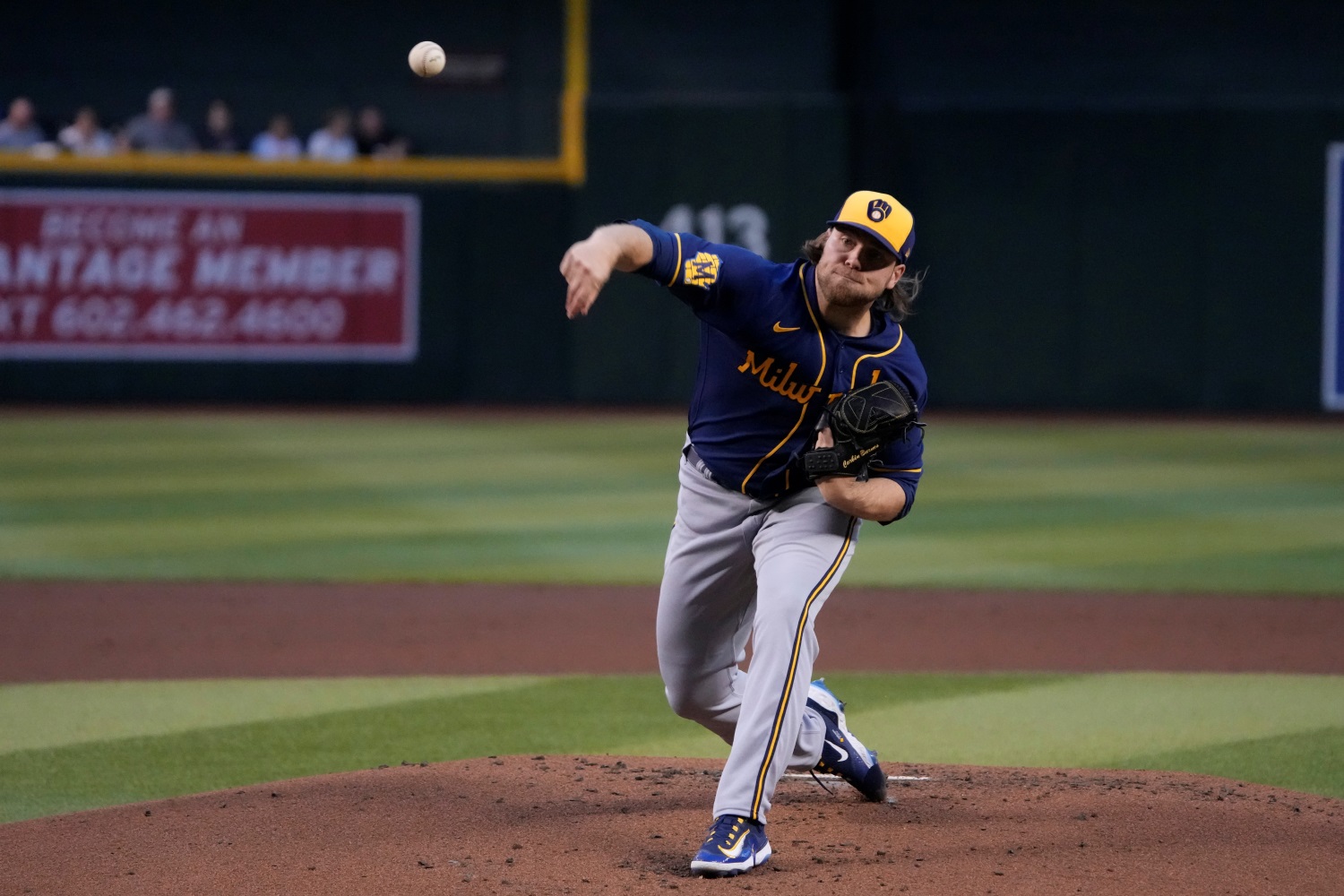 In the build-up to his performance against the Diamondbacks, the Milwaukee Brewers released a video talking to both Corbin Burnes and Brandon Woodruff, where Woodruff mentioned that after a bad performance, he sees Corbin in his black book analyzing his pitches, and knows something special is coming the next time he gets on the mound. We got that against the exciting, young Diamondbacks, who had just put up 29 runs across their last three games against the LA Dodgers. Burnes held them to just three hits and zero walks across eight innings of work. Later in the season, or with a healthier pitching staff, he likely would have finished the job, potentially with a Maddux. So without further ado, let’s take a look at what makes Burnes potentially the best pitcher in baseball. Pitch Mix Burnes has a five-pitch arsenal: cutter, changeup, sinker, slider, and curveball, having eliminated the four-seamer altogether coming into this season. He has different approaches based on matchups, though, predominantly throwing cutters (41%) and sliders (33%) to right-handed hitters, with lesser use of the change-up and the curveball. Against left-handers, he eliminates the slider altogether and really hones in on the cutter (62%) with the change (23%) and curveball (15%) as his alternate options. He particularly likes working lefties down and in with the cutter, as well as with the back-door cutter curving in late. He has various options at his disposal depending on the hitter, so let’s take a dive into them. The Cutter The first thing that stands out about Burnes’s primary weapon is the velocity at which he throws it, averaging over 95 miles per hour in each of the last two seasons. It's the fastest cutter in baseball from a starting pitcher, by a fairly wide margin. Most of the time, such high velocity results in reduced movement, as the velocity requires more spin and energy to move the ball off its intended course. No such trouble for Burnes, who has slightly above-average vertical movement, and 80 percent better horizontal movement than the rest of the league on his cutter. It’s a pitch he used over 50% of the time in his last two full seasons, and uses it in a variety of ways, challenging hitters with belt-high offerings, curving it in the front door against right-handers, or dipping it down and away off the plate to force hitters to chase. He was, at times, guilty of overusing it last season, given he threw only the cutter in 3-0 and 3-1 counts. On 3-0, batters hit .429/.643 against him, contrasted to a .267/.467 line from 2021. Aside from the strikeout stuff, he also induces a large number of ground balls with this pitch, with an average launch angle of three degrees. In 2021, he had a strikeout rate of 35% with a ground-ball rate of 48%. The cutter, specifically, was seven percentage points better than league average at producing ground balls, surpassing a 50% rate. The Curveball Burnes’ second-most-used pitch in 2021 and 2022 was the curveball, and on the surface, it’s difficult to see why it’s so effective. In 2022, opponents had a batting average against of .127 against that curve, and they slugged just .263. Yet, his expected numbers were even better, with a .118 average and .184 slugging. It has less vertical movement, compared to the average hook, but where it stands out is the horizontal break he gets on the pitch, 32 percent better than league average in 2022. The break is less of a loopy movement, and more of a sharp, late break as it enters the strike zone with slightly above average velocity for a curveball. All in all last season, it was worth a run value of -11. In terms of how he uses it, 65-70 percent of Burnes’s curveballs are out of the zone, predominantly to put hitters away, but he’s rarely truly wild with it, with his heat map showing a lot of pitches just below the strike zone, which must be torturous to hit. As you can see, over the course of 2022, his curveball was predominantly in the lower portion, or below the strike zone, though the occasional hanging curves can bite him, something he’s done a little more often in his first few starts of the year. The pace and snap on the delivery can bail him out of trouble more often than not, and it’s also important to note that last season he shelved the pitch in counts wherein he fell behind. To sum up how dominant this pitch was, it had a strikeout % of 62.5%, and put-away percentage of 41.7%. Those numbers speak for themselves. That’s all for part one, stay tuned for part two in the next day or two!
 -
-
From about a minute or so in, enjoy the clips of not just current Javy Baez being awful on the bases, but also from the night before #elmago
-
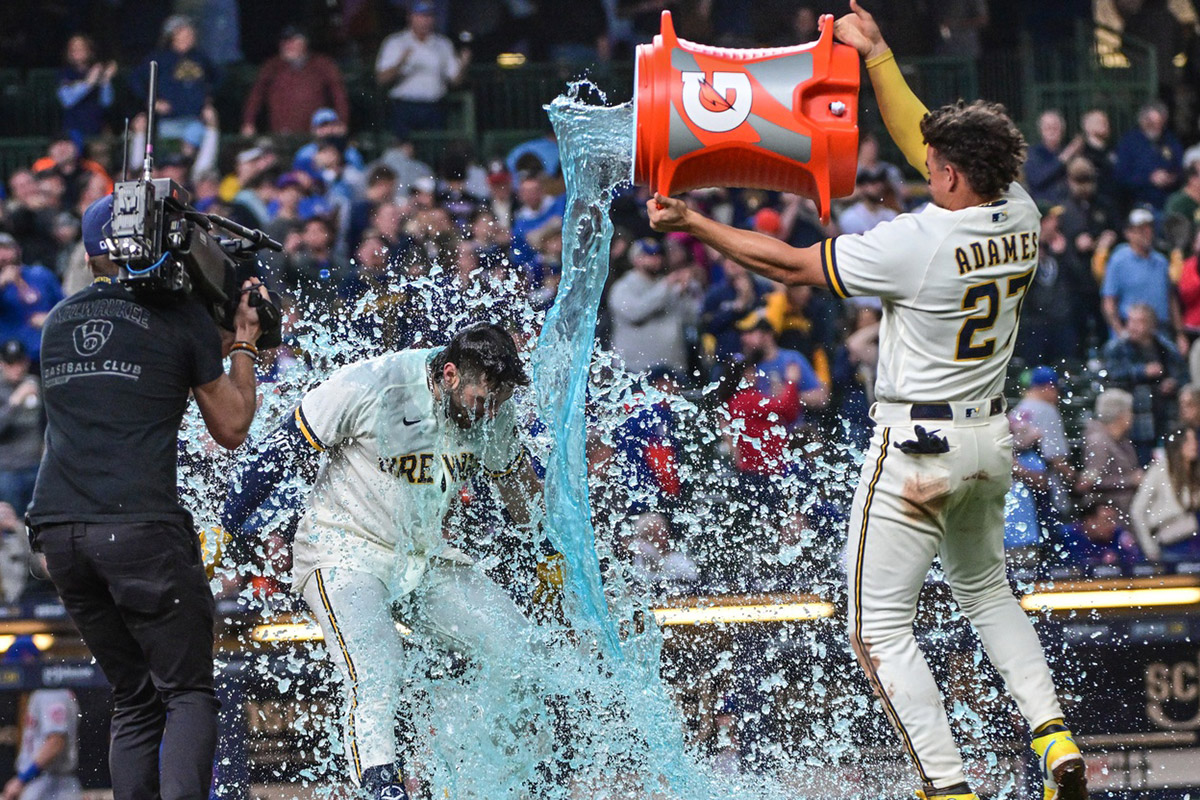 They can appreciate that hitting a baseball is one of the hardest things to do, yet nothing after this entirely sinks in. Unless you have played the sport, it’s tough to fully grasp how challenging even the most basic throws can be. Given cricket is a much bigger sport in Ireland, and with feats like these catches to compare to (on a heavier smaller ball without gloves), baseball can be seen as inferior in some ways. So why is baseball so beautiful? For me, it comes down to several things. I love the randomness of it, encapsulated by the fact that the Pittsburgh Pirates won their season series against the mighty LA Dodgers 5-1 last season. In so many other sports, from American Football, Rugby, “Real” football, Basketball, and Tennis, a team as comparatively poor as the Pirates would have no chance. Yet, in the fine margins that baseball operates, there are always shocks to be had; any team can truly believe they can win on a given day. It’s one reason why the postseason is so exciting, one clean swing changing a whole game, one pitch that’s an inch off target, one umpire’s decision, one call from the catcher. The difference between barreling a baseball and just missing is so minute that even the home run derby doesn’t feature home runs on every swing. We see position players getting out by throwing absolute trash at the hitters. It doesn’t matter how much you square up a ball if you line it straight to shortstop. Add in the fine margins, often a single camera frame, between being on base and a recorded out, and you see how easily a game can swing. It’s magical and highly frustrating sometimes, so the high emotions of tension-filled games can make you feel alive, living, and dying on every pitch. The Mets game on the 5th of April is a prime example, from going 4-1 up with your ace and Cy Young caliber pitcher on the mound to a couple of innings later finding yourself 6-4 down and potentially game over with the strength of the Mets bullpen… Jesse Winker tied the game after Luke Voit stole a base. It finished with Garrett Mitchell's walk-off home run after attempting to bunt multiple times at the start of the at-bat. In case you need a recap from a Redditor with a fun backing track: What would happen had the Mets allowed the double steal chance to bring Yelich home but got out on Voit at second base? Or had Mitchell got a bunt down, how does the 9th inning look? Would he have even tried to bunt when trailing by a run? We’ll never know, but the game would have had a very different complexion and probably involved David Robertson, too, had the Mets led through the 8th and 9th innings. The complexion of a game changes even on one player reaching base somehow, as the hitters faced by each pitcher change from there on, every at-bat is altered. So many possible outcomes from each pitch, and I find that incredibly exciting. I also love the numbers and analytics, seeing through the surface level and assessing if, at any point, a player could break out, do any pinch hitters shine against the areas this pitcher favors, working out the value a player brings to a club, why is a pitcher struggling. I find all this interesting for each new game; your past performances don’t matter; it’s how likely you are to positively impact the game at that moment. No one cares that Corbin Burnes has had a couple of poor outings because we know he’s more likely to give us a good start next time than Eric Lauer. I’ve always been a maths nerd, and the fact that almost every decision in a game is a probability-related one, such as if Mike Brosseau pinch hits and fields third base, is he that much better against left-handed pitchers to compensate for his weaker defense at the hot corner? I love the way the sound of a ball hitting the barrel of the bat makes you sit on the edge of your seat, the smack of a ball hitting the glove at first base or the catcher’s mitt, the face mashing slides and desperation in the outfield to make a catch, the millimeters defining whether a player has reached base safely or is out. I love how the whole complexion of a game changes even on one player reaching base somehow, as the hitters each pitcher faces change from there on; every at-bat is altered. So many possible outcomes from each pitch, and I find that incredibly exciting. What do you think, Brewer Fanatics? What do you find is the most majestic thing about baseball? How would you show it off to your friends if they’ve never seen or played a game before?
 -
As a foreigner and the lone baseball fan among my friends, I sometimes find myself attempting to find ways to help them understand why it’s such a majestic sport. I’ve shown them clips of some amazingly athletic plays, but regular game cameras don’t show just how much ground is being covered, how fast the footwork is, or how fast the game is. Image courtesy of © Benny Sieu-USA TODAY Sports They can appreciate that hitting a baseball is one of the hardest things to do, yet nothing after this entirely sinks in. Unless you have played the sport, it’s tough to fully grasp how challenging even the most basic throws can be. Given cricket is a much bigger sport in Ireland, and with feats like these catches to compare to (on a heavier smaller ball without gloves), baseball can be seen as inferior in some ways. So why is baseball so beautiful? For me, it comes down to several things. I love the randomness of it, encapsulated by the fact that the Pittsburgh Pirates won their season series against the mighty LA Dodgers 5-1 last season. In so many other sports, from American Football, Rugby, “Real” football, Basketball, and Tennis, a team as comparatively poor as the Pirates would have no chance. Yet, in the fine margins that baseball operates, there are always shocks to be had; any team can truly believe they can win on a given day. It’s one reason why the postseason is so exciting, one clean swing changing a whole game, one pitch that’s an inch off target, one umpire’s decision, one call from the catcher. The difference between barreling a baseball and just missing is so minute that even the home run derby doesn’t feature home runs on every swing. We see position players getting out by throwing absolute trash at the hitters. It doesn’t matter how much you square up a ball if you line it straight to shortstop. Add in the fine margins, often a single camera frame, between being on base and a recorded out, and you see how easily a game can swing. It’s magical and highly frustrating sometimes, so the high emotions of tension-filled games can make you feel alive, living, and dying on every pitch. The Mets game on the 5th of April is a prime example, from going 4-1 up with your ace and Cy Young caliber pitcher on the mound to a couple of innings later finding yourself 6-4 down and potentially game over with the strength of the Mets bullpen… Jesse Winker tied the game after Luke Voit stole a base. It finished with Garrett Mitchell's walk-off home run after attempting to bunt multiple times at the start of the at-bat. In case you need a recap from a Redditor with a fun backing track: What would happen had the Mets allowed the double steal chance to bring Yelich home but got out on Voit at second base? Or had Mitchell got a bunt down, how does the 9th inning look? Would he have even tried to bunt when trailing by a run? We’ll never know, but the game would have had a very different complexion and probably involved David Robertson, too, had the Mets led through the 8th and 9th innings. The complexion of a game changes even on one player reaching base somehow, as the hitters faced by each pitcher change from there on, every at-bat is altered. So many possible outcomes from each pitch, and I find that incredibly exciting. I also love the numbers and analytics, seeing through the surface level and assessing if, at any point, a player could break out, do any pinch hitters shine against the areas this pitcher favors, working out the value a player brings to a club, why is a pitcher struggling. I find all this interesting for each new game; your past performances don’t matter; it’s how likely you are to positively impact the game at that moment. No one cares that Corbin Burnes has had a couple of poor outings because we know he’s more likely to give us a good start next time than Eric Lauer. I’ve always been a maths nerd, and the fact that almost every decision in a game is a probability-related one, such as if Mike Brosseau pinch hits and fields third base, is he that much better against left-handed pitchers to compensate for his weaker defense at the hot corner? I love the way the sound of a ball hitting the barrel of the bat makes you sit on the edge of your seat, the smack of a ball hitting the glove at first base or the catcher’s mitt, the face mashing slides and desperation in the outfield to make a catch, the millimeters defining whether a player has reached base safely or is out. I love how the whole complexion of a game changes even on one player reaching base somehow, as the hitters each pitcher faces change from there on; every at-bat is altered. So many possible outcomes from each pitch, and I find that incredibly exciting. What do you think, Brewer Fanatics? What do you find is the most majestic thing about baseball? How would you show it off to your friends if they’ve never seen or played a game before? View full article