



Jake McKibbin
-
Posts
2,394 -
Joined
-
Last visited
-
Days Won
6
Content Type
Profiles
Forums
Blogs
Events
News
2026 Milwaukee Brewers Top Prospects Ranking
Milwaukee Brewers Videos
2022 Milwaukee Brewers Draft Picks
Milwaukee Brewers Free Agent & Trade Rumors, Notes, & Tidbits
Guides & Resources
2023 Milwaukee Brewers Draft Picks
2024 Milwaukee Brewers Draft Picks
The Milwaukee Brewers Players Project
2025 Milwaukee Brewers Draft Pick Tracker
2026 Milwaukee Brewers Draft Tracker: Picks & Bonuses
Store
Downloads
Gallery
Everything posted by Jake McKibbin
-
A makeable play by Tovar on Walker's liner, and McMahon's error let the Cards in, they were a little lucky but rallied well. Could kickstart their season, as another loss would've been fairly denting to the clubhouse morale
-
Your 2023 Wisconsin Timber Rattlers
Jake McKibbin replied to Jim Goulart's topic in Brewers Minor League Talk
Do you think EBJ's performances this season could have a big impact on the situation with Adames contract? Or other 2B more likely to have this impact? -
The difference in hard hit rate Vs barrel rate is likely due to the launch angle The strikeouts and walks are fascinating and hopefully we'll see more, there the stuff to miss bats here for sure and I don't expect them to be lower than average by end of season
-
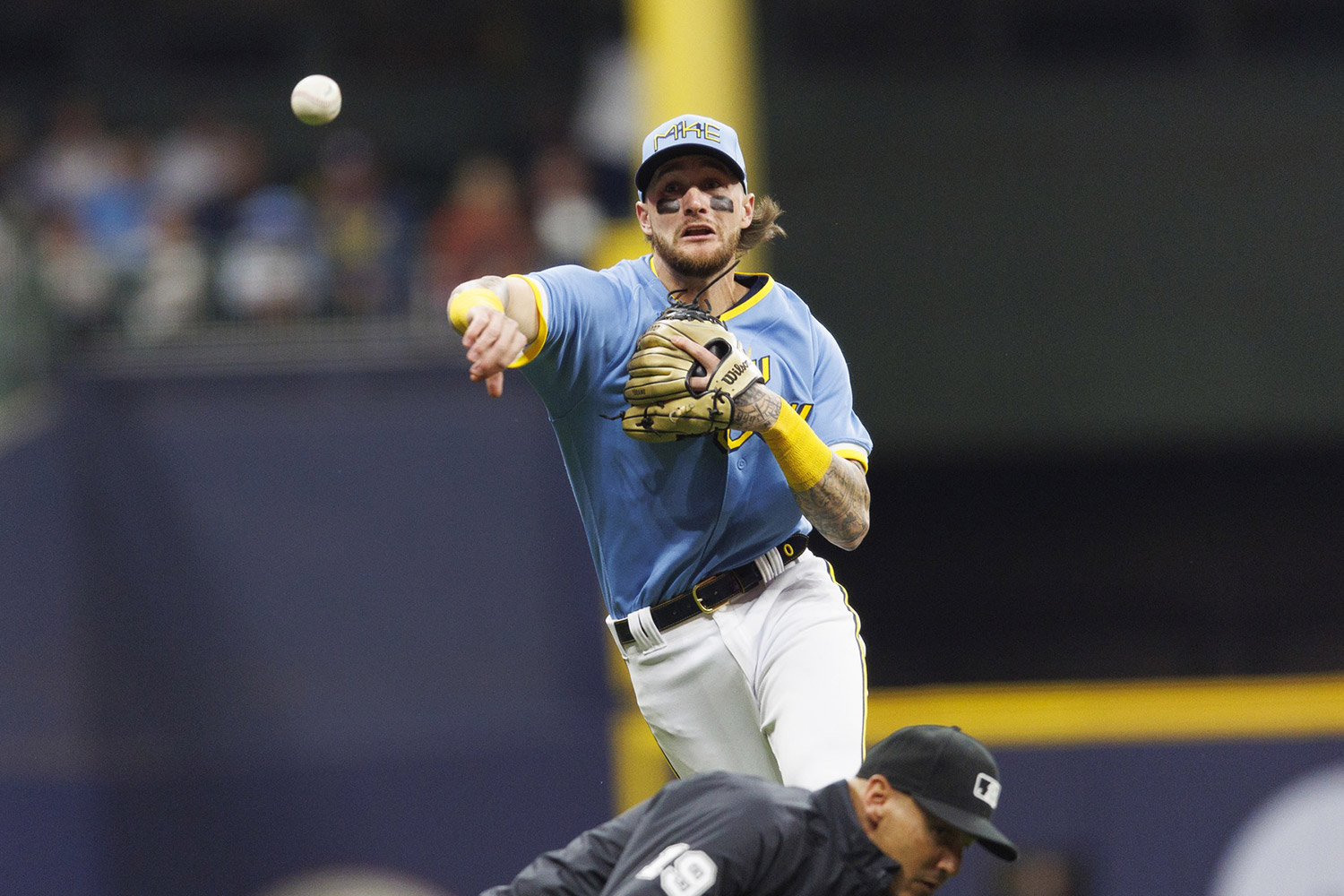 Willy Adames Strikeout to Walk Ratio So far this season, in 33 plate appearances, Adames has registered a 13.2% walk rate to a 21% strikeout rate. He’s historically been around a 25% strikeout rate in his career with the Milwaukee Brewers, but his walk rate has been an element of concern amongst the Brewers fans. With a .391 BABIP, his batting average will likely come down, but if he can maintain a double-digit walk rate, as he has in multiple prior seasons, the Brewers will be all the better for it. He’s also maintained previous seasons' trends of hitting considerably better with men on base and better again when they’re in scoring position. Christian Yelich’s Nine-Game On-Base Streak Yelich’s first nine games have seen him get on base at least once per game, a feat he last produced in the 2019 season. He’s reaching base at a .381 clip, outstanding from a leadoff hitter, and has been much more proficient at laying off pitches down and out of the zone his last few games, something he struggled mightily with last season. He has also shown more regular hard-hit contact, hitting four seamers hard with a 71.4% hard-hit rate. He has a high expected batting average against the four-seamer and cutter and an xBA of .463 against the curveball, something he hasn’t hit well since 2019. Overall he currently has an xBA of .290 and xSLG of .489. If he can time his swing on the change-up, the National League should watch out. Joey Wiemer’s Defense Our new right fielder does look a little funky at the plate, and his batting line is bolstered by a lot of infield hits in his early career. However, his biggest value so far this season is his defense; he’s the league leader in outs above average, as well as being in the 96th percentile for outfield jump and 93rd percentile for sprint speed. His success rate of 100% vastly surpasses his estimated catch percentage of 87%. He’s made every remotely possible catch so far this season. The Cardinals on Sunday had some very makeable plays in the outfield that turned into big runs for Milwaukee, and I can’t see that happening anywhere near as much with this rangy outfield crew. Brice Turang’s Plate Discipline Often when players hit the big leagues, they take a period to adapt to the higher quality of pitching. Not so Brice Turang, who has come in and shown remarkable discipline at the plate with solid bat-to-ball skills. He’s struck out just 13% of his plate appearances and walked in a vast 17.4%. If he can maintain the strikeout rate around this level, the Brewers will have a solid bottom-of-the-line-up, something they’ve missed in previous seasons, and allow pitchers to settle into their groove. Turang is also 95th percentile sprint speed, and his 86th percentile OAA contributed to one of the best middle infields in baseball, a marked improvement again on last season. Rowdy Tellez Underlying Stats Tellez is the one Brewer who hasn’t caught fire, but his underlying stats of a 52.6% hard-hit rate, 91.2mph average exit velocity, and 15.8% barrel rate suggest an outburst is on its way. He’s squaring up four-seamers and sliders in particular, and it won’t be long until he becomes the dominant middle-of-the-line-up hitter we know he can be. Tellez got off to a scorching start last season, but he had a poor BABIP throughout the year, almost .070 points below his usual marks, and the Brewers will think if he can get a bit of luck, the line-up will take on a whole new, fearsome visage. Freddy Peralta’s Dominance Fastball Freddy has conceded just one run across 12 innings of work this season. He’s been in the top 10% of expected batting average in four of his five seasons, a trend that’s continued with an xBA of .191 and an xSLG of .330 in his first two starts. He locates around the edges of the zone a lot with his fastball and has kept the slider just off the outside edge to right-handed hitters across both starts, though there is a cause for concern with his 43.3% in-zone percentage. He’s been getting ahead off the first pitch (60% first-pitch strikes) and then trying to induce chases, but he does need to be a little more trusting in his stuff to pitch deeper into the game. Against the Cardinals, he had more 95 mph+ pitches than any other outing in his career (32), maxing out at 97.8mph, the hardest of his career as a starter. More importantly, health-wise, his last five pitches were all 95 mph and above. Bullpen Proficiency Aided by a somewhat unsustainable 82% left-on-base percentage to start the season, the bullpen leads the majors in ERA. Peter Strzelecki, Hoby Milner, Devin Williams, and Gus Varland have been lights out in high-leverage situations with some nasty pitches. Strzelecki’s slider to strike out Arenado on Sunday was a thing of beauty, and it won’t be long before the strikeout numbers escalate for this relief corps. Gus Varland has an xSlg of just .368, Peter Strzelecki has an XBA of .217, and Hoby Milner has a 70% ground ball rate this season. Some optimism there, Brewer Fanatics; what do you guys think? Does anything surprise you?
- 5 comments
-
- 1
-

-
- christian yelich
- willy adames
- (and 3 more)
-
With the Brewers going well over the first ten days, why don’t we look at where they’re surpassing pre-season expectations and giving us hope that this early-season momentum isn’t just a flash in the pan? Image courtesy of © Jeff Hanisch-USA TODAY Sports Willy Adames Strikeout to Walk Ratio So far this season, in 33 plate appearances, Adames has registered a 13.2% walk rate to a 21% strikeout rate. He’s historically been around a 25% strikeout rate in his career with the Milwaukee Brewers, but his walk rate has been an element of concern amongst the Brewers fans. With a .391 BABIP, his batting average will likely come down, but if he can maintain a double-digit walk rate, as he has in multiple prior seasons, the Brewers will be all the better for it. He’s also maintained previous seasons' trends of hitting considerably better with men on base and better again when they’re in scoring position. Christian Yelich’s Nine-Game On-Base Streak Yelich’s first nine games have seen him get on base at least once per game, a feat he last produced in the 2019 season. He’s reaching base at a .381 clip, outstanding from a leadoff hitter, and has been much more proficient at laying off pitches down and out of the zone his last few games, something he struggled mightily with last season. He has also shown more regular hard-hit contact, hitting four seamers hard with a 71.4% hard-hit rate. He has a high expected batting average against the four-seamer and cutter and an xBA of .463 against the curveball, something he hasn’t hit well since 2019. Overall he currently has an xBA of .290 and xSLG of .489. If he can time his swing on the change-up, the National League should watch out. Joey Wiemer’s Defense Our new right fielder does look a little funky at the plate, and his batting line is bolstered by a lot of infield hits in his early career. However, his biggest value so far this season is his defense; he’s the league leader in outs above average, as well as being in the 96th percentile for outfield jump and 93rd percentile for sprint speed. His success rate of 100% vastly surpasses his estimated catch percentage of 87%. He’s made every remotely possible catch so far this season. The Cardinals on Sunday had some very makeable plays in the outfield that turned into big runs for Milwaukee, and I can’t see that happening anywhere near as much with this rangy outfield crew. Brice Turang’s Plate Discipline Often when players hit the big leagues, they take a period to adapt to the higher quality of pitching. Not so Brice Turang, who has come in and shown remarkable discipline at the plate with solid bat-to-ball skills. He’s struck out just 13% of his plate appearances and walked in a vast 17.4%. If he can maintain the strikeout rate around this level, the Brewers will have a solid bottom-of-the-line-up, something they’ve missed in previous seasons, and allow pitchers to settle into their groove. Turang is also 95th percentile sprint speed, and his 86th percentile OAA contributed to one of the best middle infields in baseball, a marked improvement again on last season. Rowdy Tellez Underlying Stats Tellez is the one Brewer who hasn’t caught fire, but his underlying stats of a 52.6% hard-hit rate, 91.2mph average exit velocity, and 15.8% barrel rate suggest an outburst is on its way. He’s squaring up four-seamers and sliders in particular, and it won’t be long until he becomes the dominant middle-of-the-line-up hitter we know he can be. Tellez got off to a scorching start last season, but he had a poor BABIP throughout the year, almost .070 points below his usual marks, and the Brewers will think if he can get a bit of luck, the line-up will take on a whole new, fearsome visage. Freddy Peralta’s Dominance Fastball Freddy has conceded just one run across 12 innings of work this season. He’s been in the top 10% of expected batting average in four of his five seasons, a trend that’s continued with an xBA of .191 and an xSLG of .330 in his first two starts. He locates around the edges of the zone a lot with his fastball and has kept the slider just off the outside edge to right-handed hitters across both starts, though there is a cause for concern with his 43.3% in-zone percentage. He’s been getting ahead off the first pitch (60% first-pitch strikes) and then trying to induce chases, but he does need to be a little more trusting in his stuff to pitch deeper into the game. Against the Cardinals, he had more 95 mph+ pitches than any other outing in his career (32), maxing out at 97.8mph, the hardest of his career as a starter. More importantly, health-wise, his last five pitches were all 95 mph and above. Bullpen Proficiency Aided by a somewhat unsustainable 82% left-on-base percentage to start the season, the bullpen leads the majors in ERA. Peter Strzelecki, Hoby Milner, Devin Williams, and Gus Varland have been lights out in high-leverage situations with some nasty pitches. Strzelecki’s slider to strike out Arenado on Sunday was a thing of beauty, and it won’t be long before the strikeout numbers escalate for this relief corps. Gus Varland has an xSlg of just .368, Peter Strzelecki has an XBA of .217, and Hoby Milner has a 70% ground ball rate this season. Some optimism there, Brewer Fanatics; what do you guys think? Does anything surprise you? View full article
-
I think the Catcher was giving Cruz some verbal... compliments, and Santana took issue with it? But yeah it seemed a poor slide, and much better diving head first on the outside to slip a hand in as you go past
-
FTFY
-
He was a little fortunate with 7 walks issues, the Blue Jays had a bit of an off day other than that, but certainly the best results so far from him. I think the first game tonight is huge, set the tone, and up the ante some I agree, I don't think he was slow, and totally understandable pace given his injury record and early in season. Never should've been sent
-
Just went to double check, and technically we're both correct here... it was the labrum in his hips that ended him! Impressive memory, thanks for the heads up!
-
The Bad News About Aaron Ashby And Shoulder Arthroscopies
Jake McKibbin posted an article in Brewers
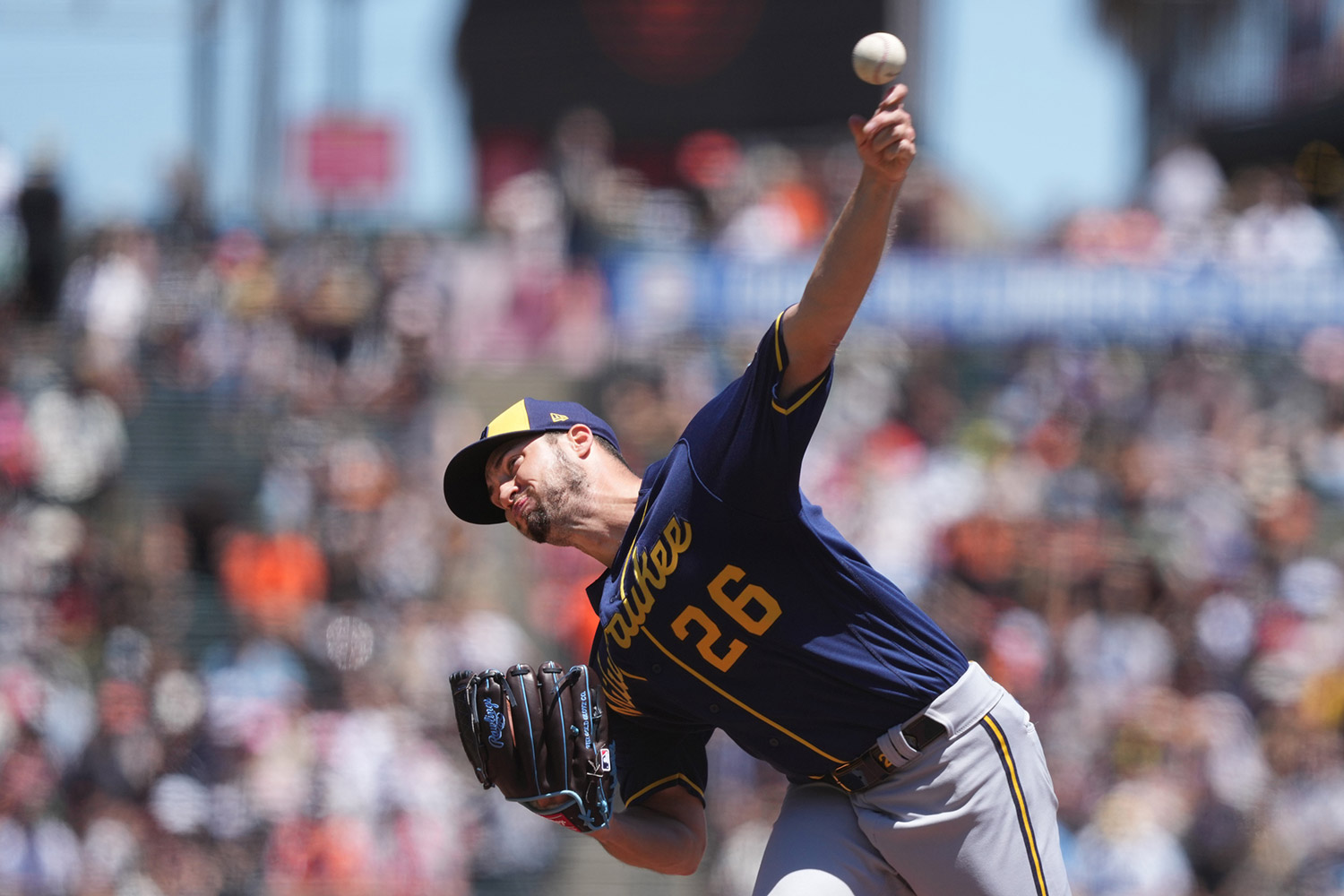 Some 61.5% of specified arthroscopies on baseball players are for this specific issue, and they average just under a four-year career post-surgery on injuries operated on from 1998 – 2016. It’s a very serious surgery, and we don't know how it will affect Aaron Ashby moving forward. The Procedure An arthroscopy is a form of keyhole surgery used to check or repair joints, commonly used for anterior cruciate ligament (ACL) injuries, but also around the shoulder joint due to the complexity of the shoulder's composition. An arthroscope is an endoscope inserted through a small incision to see the inner workings of the joint, with accessory incisions made for the corrective surgery performed alongside it with specially-designed instruments. The labrum is a rim of soft tissue or cartilage that surrounds the ball-and-socket joint, making it more stable, providing cushioning to the joint, and also the point at which the muscle fibers attach to the joint. There are so many fibers from various muscles along the deltoids, biceps, triceps, and rotator cuff, intertwining in such complex ways, that repairing the joint exactly is nigh impossible. This usually results in a shoulder that is tighter than before, with more restricted movement, a feeling heightened by the period of immobilization while the injury heals post-operation--a sensation doctors call a “frozen shoulder.” The Recovery And Rehabilitation After surgery, the shoulder is kept in a sling to minimize movement for three to four weeks while performing “passive range of motion” exercises (this is where the therapist moves the joint, the patient not performing any movement themselves) to try and limit the tension in the shoulder. After removing the sling, the athlete takes more responsibility for the motion and flexibility issues, eventually building up to strengthening the joint at about three months post-operation, with Massachusetts General suggesting it will take about six months before the injury is fully healed. That's why it could be season-ending for Ashby. That is for the general public, and unfortunately for big-league ballplayers, Park et al. found that the average recovery period was closer to eight or nine months from 1998-2016, with an average return to play of only 63% across both the major and minor leagues. However, this increased to 82% if you included only major-league players. This may be due to minor leaguers giving up on their careers after the injury, something that won’t happen to Ashby due to his contract, but there’s still an 18% chance he may never pitch again. It should also be noted that among pitchers specifically (who make up 60% of the sample), return to play was significantly longer again, averaging 413 days, per a report from Chalmers et al. The Return To Play Within baseball, this is an injury carefully managed even in the season after the injury occurs, often playing in 26.4% fewer games than the previous “healthy” season. Performance-wise, there is less of a drop off in MLB compared to the NFL, with an average 2-3% drop in performance metrics, but often returning to preoperative levels in season two after the surgery. The worry is that the surgery massively shortened Ashby’s career length, with an average of 3.7 years post-injury played across major league baseball. However, there is a lot of volatility within this, with some players having just one year and others twelve years of playing time. Why did the Brewers and Ashby wait so long to perform the surgery? Torn labrums are tricky injuries; ideally, they have the ability, and greater recovery, if they can heal independently, depending on the severity of damage to the cartilage. If so, it can be assisted by injections, physical therapy, and anti-inflammatory medication. Surgery is the most difficult for recovery and would be seen as a last resort by the organization. Reasons To Be Positive The studies involved figures from 1998, and medical practices have evolved massively. Take, for example, the recovery from Tommy John surgery, deemed impossible until relatively recently, and we can be assured that Ashby will have access to the best medical services. This should likely improve both his recovery time and post-op performance metrics. Ashby is also much younger than most players who get the injury, at 24 years old compared to the average 29. At a younger age, the body seems vastly more capable of recovering and repairing itself, and I’d expect the Brewers to want more than four years out of his arm. He might not have a long career, but I wouldn’t be surprised if he pitched into his thirties. Comparative Pitchers Michael Pineda - 2012 surgery, next played in 2014 but largely returned to previous performance levels Ben Sheets – Effectively ended his career. Chris Carpenter – Surgery mid-2002, returning to previous playing ability in 2004 Jack Flaherty – Notable decrease in performance since tearing his labrum, but he didn’t have surgery, instead healing on its own with platelet-rich plasma injections. Hasn’t shown the same “stuff” since. Tim Lincecum – Career Ending The injury road doesn’t look promising for Ashby, but medical advances and his age might allow him to be more successful than others who have needed the surgery in the past. We won’t know until we see him pitch again, and he’ll likely be a different pitcher in terms of his velocity and stuff than we saw pre-injury.
 -
Aaron Ashby’s arthroscopic procedure to repair his torn labrum is a nasty option, and it’s easy to see why the Milwaukee Brewers took so long before resorting to this surgery. It's also why his future is now much less clear, even in the long term. Image courtesy of © Darren Yamashita-USA TODAY Sports Some 61.5% of specified arthroscopies on baseball players are for this specific issue, and they average just under a four-year career post-surgery on injuries operated on from 1998 – 2016. It’s a very serious surgery, and we don't know how it will affect Aaron Ashby moving forward. The Procedure An arthroscopy is a form of keyhole surgery used to check or repair joints, commonly used for anterior cruciate ligament (ACL) injuries, but also around the shoulder joint due to the complexity of the shoulder's composition. An arthroscope is an endoscope inserted through a small incision to see the inner workings of the joint, with accessory incisions made for the corrective surgery performed alongside it with specially-designed instruments. The labrum is a rim of soft tissue or cartilage that surrounds the ball-and-socket joint, making it more stable, providing cushioning to the joint, and also the point at which the muscle fibers attach to the joint. There are so many fibers from various muscles along the deltoids, biceps, triceps, and rotator cuff, intertwining in such complex ways, that repairing the joint exactly is nigh impossible. This usually results in a shoulder that is tighter than before, with more restricted movement, a feeling heightened by the period of immobilization while the injury heals post-operation--a sensation doctors call a “frozen shoulder.” The Recovery And Rehabilitation After surgery, the shoulder is kept in a sling to minimize movement for three to four weeks while performing “passive range of motion” exercises (this is where the therapist moves the joint, the patient not performing any movement themselves) to try and limit the tension in the shoulder. After removing the sling, the athlete takes more responsibility for the motion and flexibility issues, eventually building up to strengthening the joint at about three months post-operation, with Massachusetts General suggesting it will take about six months before the injury is fully healed. That's why it could be season-ending for Ashby. That is for the general public, and unfortunately for big-league ballplayers, Park et al. found that the average recovery period was closer to eight or nine months from 1998-2016, with an average return to play of only 63% across both the major and minor leagues. However, this increased to 82% if you included only major-league players. This may be due to minor leaguers giving up on their careers after the injury, something that won’t happen to Ashby due to his contract, but there’s still an 18% chance he may never pitch again. It should also be noted that among pitchers specifically (who make up 60% of the sample), return to play was significantly longer again, averaging 413 days, per a report from Chalmers et al. The Return To Play Within baseball, this is an injury carefully managed even in the season after the injury occurs, often playing in 26.4% fewer games than the previous “healthy” season. Performance-wise, there is less of a drop off in MLB compared to the NFL, with an average 2-3% drop in performance metrics, but often returning to preoperative levels in season two after the surgery. The worry is that the surgery massively shortened Ashby’s career length, with an average of 3.7 years post-injury played across major league baseball. However, there is a lot of volatility within this, with some players having just one year and others twelve years of playing time. Why did the Brewers and Ashby wait so long to perform the surgery? Torn labrums are tricky injuries; ideally, they have the ability, and greater recovery, if they can heal independently, depending on the severity of damage to the cartilage. If so, it can be assisted by injections, physical therapy, and anti-inflammatory medication. Surgery is the most difficult for recovery and would be seen as a last resort by the organization. Reasons To Be Positive The studies involved figures from 1998, and medical practices have evolved massively. Take, for example, the recovery from Tommy John surgery, deemed impossible until relatively recently, and we can be assured that Ashby will have access to the best medical services. This should likely improve both his recovery time and post-op performance metrics. Ashby is also much younger than most players who get the injury, at 24 years old compared to the average 29. At a younger age, the body seems vastly more capable of recovering and repairing itself, and I’d expect the Brewers to want more than four years out of his arm. He might not have a long career, but I wouldn’t be surprised if he pitched into his thirties. Comparative Pitchers Michael Pineda - 2012 surgery, next played in 2014 but largely returned to previous performance levels Ben Sheets – Effectively ended his career. Chris Carpenter – Surgery mid-2002, returning to previous playing ability in 2004 Jack Flaherty – Notable decrease in performance since tearing his labrum, but he didn’t have surgery, instead healing on its own with platelet-rich plasma injections. Hasn’t shown the same “stuff” since. Tim Lincecum – Career Ending The injury road doesn’t look promising for Ashby, but medical advances and his age might allow him to be more successful than others who have needed the surgery in the past. We won’t know until we see him pitch again, and he’ll likely be a different pitcher in terms of his velocity and stuff than we saw pre-injury. View full article
-
I think he said about ditching the four-seamer completely this season, so I'm curious which of these pitches did he use effectively up in the zone 2020-2022?
-
Can you imagine the furore if the Crew are 4 or even 6 games up on the cards after 9 games?
-
Yeah i think that's it, I can't find footage that follows him running the basepaths, though I did think he could have been further down the path than he was, with his injury issues and technique that he's working on, that could easily throw him out of rhythm and lose some speed. If only they had Yelich running the bases But yeah, I don't think Marmol has done himself justice here, O'Neill is handling it well though it has to be said
-
Very true in this specific case! Though I'm not sure we can blame him for every one of these occasions 😂
-
One of the issues last year that the Milwaukee Brewers had was an inability to build momentum after a record start to the season at 32-18. From then on, they went 54-58, a losing record fueled in part by a failure to gain any momentum over the course of their season. They lost ten out of the eleven games after May 30th, 2022, and couldn’t seem to rebound. Image courtesy of © Jeff Hanisch-USA TODAY Sports The importance of this momentum is encapsulated by the St Louis Cardinals, who won 17 out of 20 games after the All-Star break, including two seven-win streaks, taking them into first place in a division they wouldn’t relinquish. The team developed an aura, a belief that no matter what happened on the field in August, they would come out on the winning side. We’ve seen this same feeling of invincibility fuel the Brewers through September runs from 2018-2020, where the Brewers had a 52-29 record this month. Craig Counsell made good use of the rules regarding roster sizes and the use of his bullpen, but there was also a belief, an expectation that they would win when crunch time came around. The mental side of baseball is massive, from dealing with the fluctuations in output at the plate to the sheer number of variables requiring extreme mental strength to go up there time and again in the face of adversity, either as a pitcher or a hitter. One thing that almost every sport emphasizes is that tension in your body and mind slows down the thought process and body movements; you’ll see sprinters running with their jaws as slack as possible, face jiggling; the fluidity and power demonstrated in gymnastics enabled by a lack of tension; weightlifters attempting to be as relaxed as possible pre-lift. An action such as throwing, fielding, running, or swinging a bat can only be repeated precisely when tension is eliminated from the body, enhancing the fluidity, and thus power, of the transfer of energy through the movement. A reason momentum is so vaunted is due to the enhanced feeling of calmness and relaxation it affords the players, as well as the self-belief in the game's big moments. It allows players to perform at their best without overthinking their performance and just letting their years of hard work ingrain a technique flow through them. It also has shown benefits in the ability to notice and seize opportunities because of the increased freedom of thought, as well as maintaining a more positive mindset in terms of “how can we win this game” vs. “how can we stop ourselves from losing this game” as can happen on a negative run. From a psychological standpoint, the brain doesn’t process negatives effectively in thought, so if someone is thinking “ don’t strike out” repeatedly, the brain will struggle to feel optimistic about this action, as per this study from the BRM institute. The article says, “Put frankly, their study proved that negative words release stress and anxiety-inducing hormones in subjects, " not conducive to performing at one’s free-flowing best in an intense environment. I bring this up because the Brewers failed to build momentum in key moments last season. Mainly down the stretch, they struggled to create a positive rolling effect, constantly feeling slightly behind the mark because they won the series by a small margin, then consequently lost them by a small margin, always staying in touch but never gaining ground towards the playoffs. Here’s a review of the Brewers' results last season during the run-in: 141 Sunday, Sep 11 boxscore MIL CIN W 7 6 75-66 2 8.0 Woodruff Dunn Williams 3:05 D 42,482 .99 ++ 142 Tuesday, Sep 13 boxscore MIL @ STL W 8 4 76-66 2 7.0 Perdomo Montgomery 3:07 N 42,047 1.14 +++ 143 Wednesday, Sep 14 boxscore MIL @ STL L 1 4 76-67 2 8.0 Wainwright Burnes Helsley 3:10 N 46,459 1.21 - 144 Friday, Sep 16 boxscore MIL NYY W-wo 7 6 77-67 2 7.5 Rogers Holmes 4:09 N 36,011 1.16 + 145 Saturday, Sep 17 boxscore MIL NYY W 4 1 78-67 2 8.0 Woodruff Taillon Williams 2:56 N 41,210 1.23 ++ 146 Sunday, Sep 18 boxscore MIL NYY L 8 12 78-68 2 8.0 Cole Milner 3:46 D 35,964 1.29 - 147 Monday, Sep 19 boxscore MIL NYM L 2 7 78-69 2 8.5 Scherzer Burnes 2:49 N 25,671 1.19 -- 148 Tuesday, Sep 20 boxscore MIL NYM L 5 7 78-70 2 8.5 Rodríguez Rogers Díaz 3:19 N 26,319 1.04 --- 149 Wednesday, Sep 21 boxscore MIL NYM W 6 0 79-70 2 7.5 Gott Walker 2:47 D 25,204 .93 + 150 Thursday, Sep 22 boxscore MIL @ CIN W 5 1 80-70 2 7.5 Woodruff Greene 2:50 N 9,889 .96 ++ 151 Friday, Sep 23 boxscore MIL @ CIN W 5 3 81-70 2 7.5 Perdomo Cessa Williams 3:22 N 16,658 1.09 +++ 152 Saturday, Sep 24 boxscore MIL @ CIN W 10 2 82-70 2 6.5 Burnes Ashcraft 2:57 N 20,472 1.30 ++++ 153 Sunday, Sep 25 boxscore MIL @ CIN L 1 2 82-71 2 6.5 Farmer Bush Díaz 2:46 D 19,952 1.56 - 154 Tuesday, Sep 27 boxscore MIL STL L 2 6 82-72 2 7.5 Mikolas Houser 3:13 N 29,341 1.47 -- 155 Wednesday, Sep 28 boxscore MIL STL W 5 1 83-72 2 6.5 Woodruff Quintana 3:31 N 28,835 1.35 + 156 Thursday, Sep 29 boxscore MIL MIA L 2 4 83-73 2 7.0 Nance Peralta Floro 3:08 N 23,122 1.83 - 157 Friday, Sep 30 boxscore MIL MIA W 1 0 84-73 2 7.0 Burnes Alcantara Williams 2:28 N 31,945 1.90 + Gm# October Tm Opp W/L R RA Inn W-L Rank GB Win Loss Save Time D/N Attendance cLI Streak Orig. Scheduled 158 Saturday, Oct 1 boxscore MIL MIA L 3 4 84-74 2 8.0 Nance Williams Bleier 3:28 N 30,686 2.11 - 159 Sunday, Oct 2 boxscore MIL MIA L 3 4 12 84-75 2 8.0 Brazoban Gott Scott 4:12 D 31,053 1.73 -- 160 Monday, Oct 3 boxscore MIL ARI W-wo 6 5 10 85-75 2 7.0 Boxberger Moronta 3:19 N 18,612 .40 + 161 Tuesday, Oct 4 boxscore MIL ARI W 3 0 86-75 2 7.0 Lauer Gallen Strzelecki 3:02 N 19,611 .00 ++ 162 Wednesday, Oct 5 boxscore MIL ARI L 2 4 86-76 2 7.0 Poppen Gott Ginkel 2:43 D 18,765 .00 - They had opportunities to build their momentum and the whole “Craigtember” feeling, with sweep opportunities against the Yankees (where a poor start from Jason Alexander crippled them despite mauling Gerrit Cole), the Reds (raising just five hits against one of the worst run prevention teams in the league) and the Diamondbacks. This meant the positive Yankees series was canceled out by losing to the Mets. A poor showing vs. the Marlins canceled out the Reds' wins. In short, the Brewers never got far away from a .500 record, which is not good enough when you’re trying to justify a place in the postseason, and sweeping a series was at the heart of this issue. Let’s compare the records of the two teams regarding sweeps: 3 Game Series Series Sweep Lost Sweep in Final Game Times Swept Brewers 3 Game Series 33 4 5 2 Brewers 4 Game Series 12 0 2 0 Cardinals 3 Game Series 31 7 6 1 Cardinals 4 Game Series 10 0 1 0 Discounting two-game series as they barely even constitute a series, the Brewers went 4-7 in opportunities to sweep a series last season, compared to the Cardinals' 7-7 record. This may not seem like a whole lot, but the Phillies were 8-8, the Padres 6-6. In short, the Brewers, against their main rivals last season, struggled to build any positive roll from which they could feed off, especially as three of these opportunities came in the final half of September/October. Tonight’s game is a huge one to set a stamp on their season and differentiate themselves as not just happy to win the series and let a game slide but to mash the Mets and send a statement to the league. A win tonight would equal their longest win streak last season (five), and they have the perfect opportunity with Corbin Burnes facing off against David Peterson. Can they keep their momentum going? View full article
-
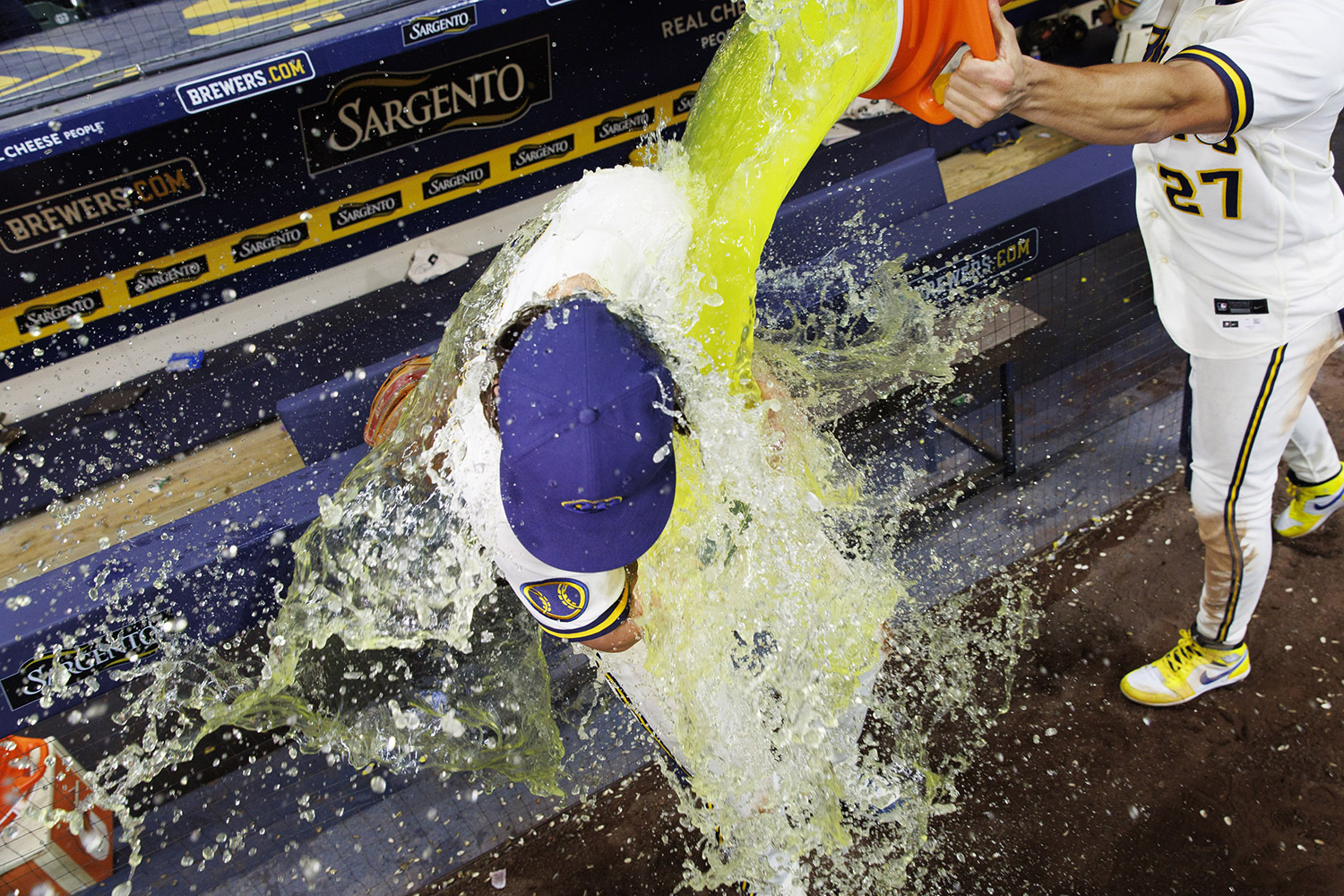 The importance of this momentum is encapsulated by the St Louis Cardinals, who won 17 out of 20 games after the All-Star break, including two seven-win streaks, taking them into first place in a division they wouldn’t relinquish. The team developed an aura, a belief that no matter what happened on the field in August, they would come out on the winning side. We’ve seen this same feeling of invincibility fuel the Brewers through September runs from 2018-2020, where the Brewers had a 52-29 record this month. Craig Counsell made good use of the rules regarding roster sizes and the use of his bullpen, but there was also a belief, an expectation that they would win when crunch time came around. The mental side of baseball is massive, from dealing with the fluctuations in output at the plate to the sheer number of variables requiring extreme mental strength to go up there time and again in the face of adversity, either as a pitcher or a hitter. One thing that almost every sport emphasizes is that tension in your body and mind slows down the thought process and body movements; you’ll see sprinters running with their jaws as slack as possible, face jiggling; the fluidity and power demonstrated in gymnastics enabled by a lack of tension; weightlifters attempting to be as relaxed as possible pre-lift. An action such as throwing, fielding, running, or swinging a bat can only be repeated precisely when tension is eliminated from the body, enhancing the fluidity, and thus power, of the transfer of energy through the movement. A reason momentum is so vaunted is due to the enhanced feeling of calmness and relaxation it affords the players, as well as the self-belief in the game's big moments. It allows players to perform at their best without overthinking their performance and just letting their years of hard work ingrain a technique flow through them. It also has shown benefits in the ability to notice and seize opportunities because of the increased freedom of thought, as well as maintaining a more positive mindset in terms of “how can we win this game” vs. “how can we stop ourselves from losing this game” as can happen on a negative run. From a psychological standpoint, the brain doesn’t process negatives effectively in thought, so if someone is thinking “ don’t strike out” repeatedly, the brain will struggle to feel optimistic about this action, as per this study from the BRM institute. The article says, “Put frankly, their study proved that negative words release stress and anxiety-inducing hormones in subjects, " not conducive to performing at one’s free-flowing best in an intense environment. I bring this up because the Brewers failed to build momentum in key moments last season. Mainly down the stretch, they struggled to create a positive rolling effect, constantly feeling slightly behind the mark because they won the series by a small margin, then consequently lost them by a small margin, always staying in touch but never gaining ground towards the playoffs. Here’s a review of the Brewers' results last season during the run-in: 141 Sunday, Sep 11 boxscore MIL CIN W 7 6 75-66 2 8.0 Woodruff Dunn Williams 3:05 D 42,482 .99 ++ 142 Tuesday, Sep 13 boxscore MIL @ STL W 8 4 76-66 2 7.0 Perdomo Montgomery 3:07 N 42,047 1.14 +++ 143 Wednesday, Sep 14 boxscore MIL @ STL L 1 4 76-67 2 8.0 Wainwright Burnes Helsley 3:10 N 46,459 1.21 - 144 Friday, Sep 16 boxscore MIL NYY W-wo 7 6 77-67 2 7.5 Rogers Holmes 4:09 N 36,011 1.16 + 145 Saturday, Sep 17 boxscore MIL NYY W 4 1 78-67 2 8.0 Woodruff Taillon Williams 2:56 N 41,210 1.23 ++ 146 Sunday, Sep 18 boxscore MIL NYY L 8 12 78-68 2 8.0 Cole Milner 3:46 D 35,964 1.29 - 147 Monday, Sep 19 boxscore MIL NYM L 2 7 78-69 2 8.5 Scherzer Burnes 2:49 N 25,671 1.19 -- 148 Tuesday, Sep 20 boxscore MIL NYM L 5 7 78-70 2 8.5 Rodríguez Rogers Díaz 3:19 N 26,319 1.04 --- 149 Wednesday, Sep 21 boxscore MIL NYM W 6 0 79-70 2 7.5 Gott Walker 2:47 D 25,204 .93 + 150 Thursday, Sep 22 boxscore MIL @ CIN W 5 1 80-70 2 7.5 Woodruff Greene 2:50 N 9,889 .96 ++ 151 Friday, Sep 23 boxscore MIL @ CIN W 5 3 81-70 2 7.5 Perdomo Cessa Williams 3:22 N 16,658 1.09 +++ 152 Saturday, Sep 24 boxscore MIL @ CIN W 10 2 82-70 2 6.5 Burnes Ashcraft 2:57 N 20,472 1.30 ++++ 153 Sunday, Sep 25 boxscore MIL @ CIN L 1 2 82-71 2 6.5 Farmer Bush Díaz 2:46 D 19,952 1.56 - 154 Tuesday, Sep 27 boxscore MIL STL L 2 6 82-72 2 7.5 Mikolas Houser 3:13 N 29,341 1.47 -- 155 Wednesday, Sep 28 boxscore MIL STL W 5 1 83-72 2 6.5 Woodruff Quintana 3:31 N 28,835 1.35 + 156 Thursday, Sep 29 boxscore MIL MIA L 2 4 83-73 2 7.0 Nance Peralta Floro 3:08 N 23,122 1.83 - 157 Friday, Sep 30 boxscore MIL MIA W 1 0 84-73 2 7.0 Burnes Alcantara Williams 2:28 N 31,945 1.90 + Gm# October Tm Opp W/L R RA Inn W-L Rank GB Win Loss Save Time D/N Attendance cLI Streak Orig. Scheduled 158 Saturday, Oct 1 boxscore MIL MIA L 3 4 84-74 2 8.0 Nance Williams Bleier 3:28 N 30,686 2.11 - 159 Sunday, Oct 2 boxscore MIL MIA L 3 4 12 84-75 2 8.0 Brazoban Gott Scott 4:12 D 31,053 1.73 -- 160 Monday, Oct 3 boxscore MIL ARI W-wo 6 5 10 85-75 2 7.0 Boxberger Moronta 3:19 N 18,612 .40 + 161 Tuesday, Oct 4 boxscore MIL ARI W 3 0 86-75 2 7.0 Lauer Gallen Strzelecki 3:02 N 19,611 .00 ++ 162 Wednesday, Oct 5 boxscore MIL ARI L 2 4 86-76 2 7.0 Poppen Gott Ginkel 2:43 D 18,765 .00 - They had opportunities to build their momentum and the whole “Craigtember” feeling, with sweep opportunities against the Yankees (where a poor start from Jason Alexander crippled them despite mauling Gerrit Cole), the Reds (raising just five hits against one of the worst run prevention teams in the league) and the Diamondbacks. This meant the positive Yankees series was canceled out by losing to the Mets. A poor showing vs. the Marlins canceled out the Reds' wins. In short, the Brewers never got far away from a .500 record, which is not good enough when you’re trying to justify a place in the postseason, and sweeping a series was at the heart of this issue. Let’s compare the records of the two teams regarding sweeps: 3 Game Series Series Sweep Lost Sweep in Final Game Times Swept Brewers 3 Game Series 33 4 5 2 Brewers 4 Game Series 12 0 2 0 Cardinals 3 Game Series 31 7 6 1 Cardinals 4 Game Series 10 0 1 0 Discounting two-game series as they barely even constitute a series, the Brewers went 4-7 in opportunities to sweep a series last season, compared to the Cardinals' 7-7 record. This may not seem like a whole lot, but the Phillies were 8-8, the Padres 6-6. In short, the Brewers, against their main rivals last season, struggled to build any positive roll from which they could feed off, especially as three of these opportunities came in the final half of September/October. Tonight’s game is a huge one to set a stamp on their season and differentiate themselves as not just happy to win the series and let a game slide but to mash the Mets and send a statement to the league. A win tonight would equal their longest win streak last season (five), and they have the perfect opportunity with Corbin Burnes facing off against David Peterson. Can they keep their momentum going?
 -
2023 Brewers Season Predictions (Post-ST)
Jake McKibbin replied to Brewcrew82's topic in Milwaukee Brewers Talk
For sure. Urias is hitting 48 -
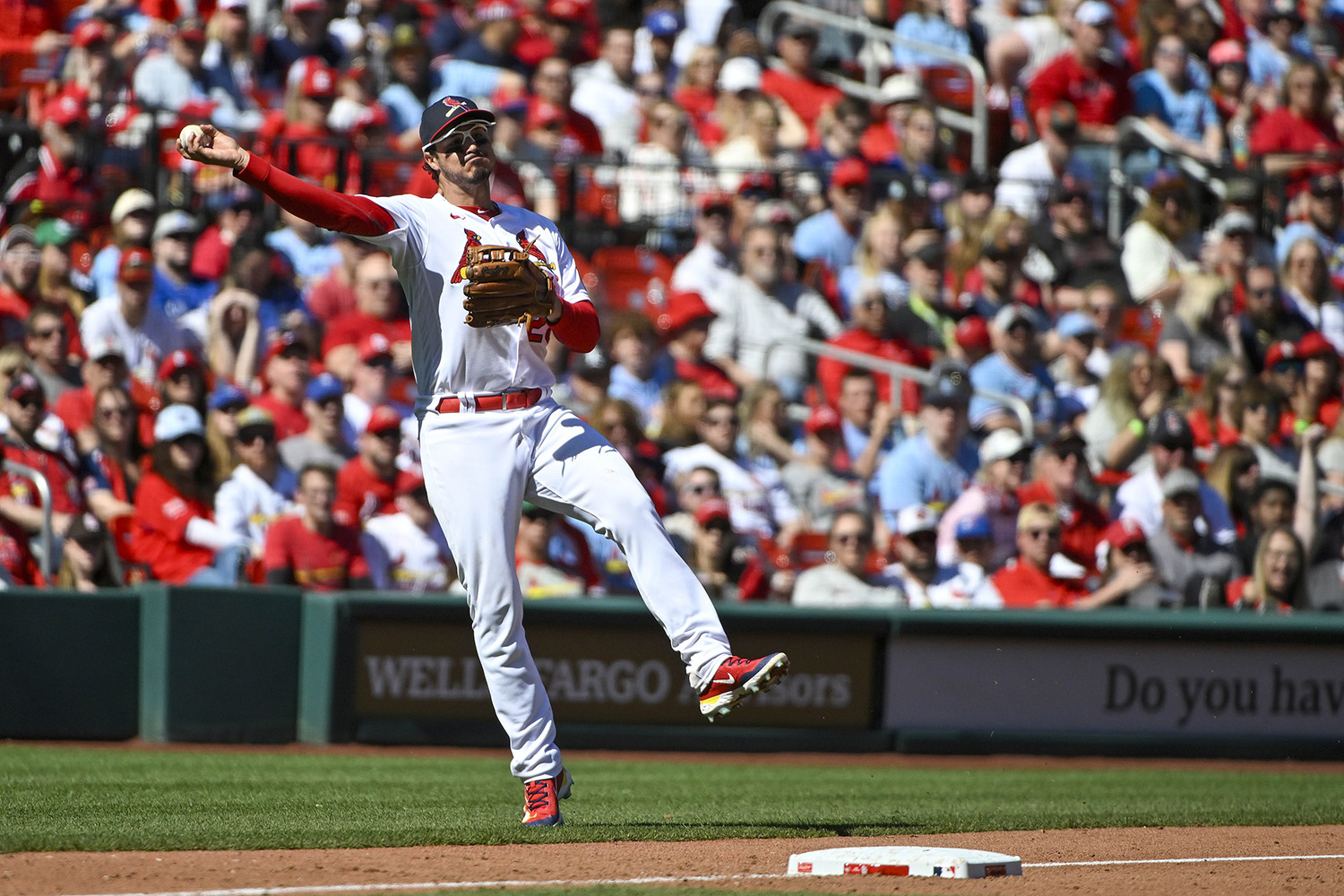 Pitching The Cardinals were widely expected to be far greater at run scoring than run prevention and their pitching looked particularly fragile. On a weekend that should have spear-headed their crème de la crème, they had Mikolas first up, going 3.1 innings with ten hits allowed. They lost 10-9, and although starting pitching usually takes a game or two extra to warm up (I’ll come to this in a bit), Mikolas is due for some regression from career numbers last season. Also, in this game, Jordan Hicks, a player the Cardinals expect to be dominant with his extreme velocity, and Helsley got hit for four earned runs across their two innings. In game two, Flaherty may have a zero ERA. However, he gave up seven walks, with only four strikeouts, and was down a few clicks from his dominant seasons, making him eminently more hittable last season. On top of this, Jordan Hicks achieved just one out while giving up three walks, forcing Helsley into a five-out save. Jordan Montgomery looked sharper but still gave up six hits and a walk across five innings, with the Blue Jays showing minimal patience at the plate, one reason for only six strikeouts all game. There were also three different pitches hit over 370 ft by the Blue Jays and a ton of high exit velocity contact off Montgomery. He showed several inches less vertical break on both his sinker and his change-up, which could result from a slight increase in velocity, but could also make him far more hittable if this continues throughout the season. This Cardinals pitching staff, both bullpen and starting rotation, looks eminently attackable if they can stay vaguely healthy this season. The Brewers hitters should be licking their lips at the prospect of facing them next weekend. Flaherty vs Woodruff, Montgomery vs Lauer, and Woodford vs Peralta are the likely matchups. Hitting The other thing everyone knew about the red birds coming into the season was the depth of their lineup. In the three games, they mashed 22 runs, but anyone watching the video will see how the Blue Jays fed into this. They were all over the place in the field, with Manoah and Bassitt looking like they were dusting themselves off a little. Manoah struggled to get anything in the strike zone, falling behind with regularity; this was different from the dominant Alek Manoah we saw for Toronto last season. Here’s his pitch map for the season debut: He struggled to hit the edges of the strike zone compared to many uncompetitive pitches or pitches over the heart of the plate. Bassitt, on the other hand, was averaging 1.5 mph less on his pitches than last season and seemed to hang a lot of his off-speed options, appearing very unthreatening on the whole and not at all the player the Blue Jays will likely see throughout the rest of the season. One of Nolan Gorman’s home runs yesterday came off a 68 mph hanging curve that was as center-cut as they come. Many of their hitters have struggled far more against the high strikeout kinds of pitchers than the “location” experts, and the lack of velocity over the weekend played into their hands. Even then, Gausman performed much better, conceding three unearned runs due to a throwing error from Chapman and striking out more than one batter per inning. This is a quality line-up, make no mistake about it, but don’t expect Gorman, Walker, O’Neill, and Donovan to be replicating this over the course of a season. Gorman will still struggle up in the zone with Woodruff’s heaters, O’Neill is still a strikeout merchant, and Donovan doesn’t have the type of power that will continue to dominate. Then you have Walker, who had a strong start vs. the minor pitchers in late games at the start of Spring Training but faded when tasked with the stronger pitchers; he can’t be expected to produce when he’s never played above AA until he made his debut in the majors. Quality pitching can keep them quiet, and the Brewers ' headed hydra of Peralta, Woodruff, and Burnes is perfectly formed to sit them down repeatedly. However, there would be concern over the likes of Lauer or Miley if pitted against this heavy-hitting bunch of sluggers. Overall Pitching Performances Over the opening weekend, we’ve seen a lot of aces not show up with their best game, from our own Corbin Burnes, Chris Sale (3 IP, 7 ERs), Aaron Nola (3.2 IP, 5 ERs), Jacob deGrom (3.2 IP, 5 ER’s) that it’s easy to see pitching improving considerably over the next few starts. In contrast, the hitters seem far more locked in toward the end of the weekend. In short, the Brewers' pitching has some fine-tuning to come, but the Cardinals hitters can’t say the same, and their pitching has far less room for growth with the talent levels it has on offer. Final Word A quick start is important for the morale of both teams, trying to make their mark on this season early, but especially for the Brewers. This upcoming week of Mets and Cardinals will be fun and a real test of the rookies, but the environment at American Family Field will show what the Brewers have offensively; expect to see some big home runs and some dominant performances.
 -
After seeing the Cardinals match up and take the series against a playoff contender such as the Blue Jays, in the manner they did may appear slightly frightening. However, once you look deeper, you can see the underlying cracks have already shown themselves, and their performance looks unsustainable. Image courtesy of © Jeff Curry-USA TODAY Sports Pitching The Cardinals were widely expected to be far greater at run scoring than run prevention and their pitching looked particularly fragile. On a weekend that should have spear-headed their crème de la crème, they had Mikolas first up, going 3.1 innings with ten hits allowed. They lost 10-9, and although starting pitching usually takes a game or two extra to warm up (I’ll come to this in a bit), Mikolas is due for some regression from career numbers last season. Also, in this game, Jordan Hicks, a player the Cardinals expect to be dominant with his extreme velocity, and Helsley got hit for four earned runs across their two innings. In game two, Flaherty may have a zero ERA. However, he gave up seven walks, with only four strikeouts, and was down a few clicks from his dominant seasons, making him eminently more hittable last season. On top of this, Jordan Hicks achieved just one out while giving up three walks, forcing Helsley into a five-out save. Jordan Montgomery looked sharper but still gave up six hits and a walk across five innings, with the Blue Jays showing minimal patience at the plate, one reason for only six strikeouts all game. There were also three different pitches hit over 370 ft by the Blue Jays and a ton of high exit velocity contact off Montgomery. He showed several inches less vertical break on both his sinker and his change-up, which could result from a slight increase in velocity, but could also make him far more hittable if this continues throughout the season. This Cardinals pitching staff, both bullpen and starting rotation, looks eminently attackable if they can stay vaguely healthy this season. The Brewers hitters should be licking their lips at the prospect of facing them next weekend. Flaherty vs Woodruff, Montgomery vs Lauer, and Woodford vs Peralta are the likely matchups. Hitting The other thing everyone knew about the red birds coming into the season was the depth of their lineup. In the three games, they mashed 22 runs, but anyone watching the video will see how the Blue Jays fed into this. They were all over the place in the field, with Manoah and Bassitt looking like they were dusting themselves off a little. Manoah struggled to get anything in the strike zone, falling behind with regularity; this was different from the dominant Alek Manoah we saw for Toronto last season. Here’s his pitch map for the season debut: He struggled to hit the edges of the strike zone compared to many uncompetitive pitches or pitches over the heart of the plate. Bassitt, on the other hand, was averaging 1.5 mph less on his pitches than last season and seemed to hang a lot of his off-speed options, appearing very unthreatening on the whole and not at all the player the Blue Jays will likely see throughout the rest of the season. One of Nolan Gorman’s home runs yesterday came off a 68 mph hanging curve that was as center-cut as they come. Many of their hitters have struggled far more against the high strikeout kinds of pitchers than the “location” experts, and the lack of velocity over the weekend played into their hands. Even then, Gausman performed much better, conceding three unearned runs due to a throwing error from Chapman and striking out more than one batter per inning. This is a quality line-up, make no mistake about it, but don’t expect Gorman, Walker, O’Neill, and Donovan to be replicating this over the course of a season. Gorman will still struggle up in the zone with Woodruff’s heaters, O’Neill is still a strikeout merchant, and Donovan doesn’t have the type of power that will continue to dominate. Then you have Walker, who had a strong start vs. the minor pitchers in late games at the start of Spring Training but faded when tasked with the stronger pitchers; he can’t be expected to produce when he’s never played above AA until he made his debut in the majors. Quality pitching can keep them quiet, and the Brewers ' headed hydra of Peralta, Woodruff, and Burnes is perfectly formed to sit them down repeatedly. However, there would be concern over the likes of Lauer or Miley if pitted against this heavy-hitting bunch of sluggers. Overall Pitching Performances Over the opening weekend, we’ve seen a lot of aces not show up with their best game, from our own Corbin Burnes, Chris Sale (3 IP, 7 ERs), Aaron Nola (3.2 IP, 5 ERs), Jacob deGrom (3.2 IP, 5 ER’s) that it’s easy to see pitching improving considerably over the next few starts. In contrast, the hitters seem far more locked in toward the end of the weekend. In short, the Brewers' pitching has some fine-tuning to come, but the Cardinals hitters can’t say the same, and their pitching has far less room for growth with the talent levels it has on offer. Final Word A quick start is important for the morale of both teams, trying to make their mark on this season early, but especially for the Brewers. This upcoming week of Mets and Cardinals will be fun and a real test of the rookies, but the environment at American Family Field will show what the Brewers have offensively; expect to see some big home runs and some dominant performances. View full article
-
The luck part is interesting, because while It's fair to say the bloops were lucky, the number of high exit velo line drives hit right at a guy was pretty astounding too, particularly early on, so it kind of evened out
- 3 replies
-
- 1
-
-
- brice turang
- joey wiemer
- (and 2 more)
-
I think there's potential that one of Frelick/Wiemer get traded, but I think maybe mid season more so, in the hope that they come out relatively strong and can up their trade value I actually think it's more likely Frelick, but we shall see
-
Mike Brosseau is a very interesting player, particularly with the barnstorming ST he's currently having. In four seasons he has accumulated 3.6 bWAR over just 509 plate appearances, including 22 homers, the equivalent to some of a full season. He had one bad season in 2021 (his BABIP dropped almost 100 points), yet every other year has had a BA over .250 and an OPS of over .750. So why does he struggle to garner more playing time? Let’s take a look; The Bat If you asked the everyday fan what Brosseau brings to the table, it’s the ability to crush left handed pitching, something the Brewers are greatly in need of. Over his career, he has a .651 OPS against right handed pitching, and a standout .823 OPS against left handers, with 67% of his extra base hits coming against lefties. A couple of other interesting split based statistics - Brosseau has a .919 OPS against “finesse pitchers”, compared to a .547 OPS against high strikeout guys - He has an OPS of around .700 for No outs, or One Out, but when his team have Two outs, he hits for an .868 OPS - When he swings first pitch, he has a 1.024 OPS - He remains consistent hitting wise regardless of whether he’s in a low, medium or high leverage situation So where does the worry come with Brosseau? Well, with someone who has such a compact short swing, he strikes out a hell of a lot, to a 28% clip against lefties and a 33% clip against right handed pitching. He doesn’t produce upper level exit velocities (his max EV last season was just 104.1mph), but very consistently avoids weak contact. Take a look at how fangraphs views his contact profile: Such low soft contact rates show he has the potential to be a very consistent contributor, but the strikeout rate needs to come down for him to garner more playing time. As you can see below, he swings and misses a lot up in the zone, something exploited by pitches this season who started throwing him a ton more fastballs (57.6% up from 50% in 2021). The up and away zone appears a particular weakness, but the interesting caveat to how much he waves in that area, is that when he makes contact, he averages a 98.4mph exit velocity with a 29 degree launch angle. Plenty of deep fly’s if he could just make contact, but alas, that seems like a tall order. You can also see that he appears to notice this weakness and attempts to take pitches where possible in this area of the zone. The other standout is that it’s unsustainable to be whiffing 24% of the time on meatballs, certainly over the course of a longer season against pitchers who aren’t to his liking (ie high spin, high velocity four seamers). The other thing that really stand out as a weakness in his profile is, despite his short swing, he really struggles to make decent contact when he gets pitched inside. When pitched down and in (in zone) he has a 75% ground ball rate to go with this, almost guaranteeing an out when paired with his low exit velocities. Have a look at his expected BA and regular BA below: As you can see, for such a happy pull hitter, he’d much prefer to have the ball in the middle and outer half of the plate, whilst it’s also intriguing to note he isn’t particularly good at smashing meatballs. I should point out he has had xBA considerably below his actual BA in every season bar 2021, so it doesn’t seem to be the best metric for evaluating him but even so, it paints a solid picture of his zones, and given his struggles to make contact at the top of the zone, and inside, you can see why the high velocity fastballs would be a bit of kryptonite for him. The Glove Last season, using outs above average as the go to metric, Brosseau had his worst season by far at the hot corner, a 65% success rate on his plays at third base being 45 below average, recording -5 OAA. There wasn’t one particular movement he struggled with either, posting negative scores for moving in, moving left and moving to his right. His arm strength was poor, averaging 81.9mph on his throws compared to a league average from 3B of 85.7mph. To put that in a comparison with current Brewers, Brian Anderson averaged 88.9mph on his throws from 3B (not including the OF where he ranked even higher). He seems a sub-optimal defensive presence, without any real injuries or reasons for his declining performance, other than, if you were really stretching, the lack of regular playing time there (albeit he’s never really been a regular throughout his career). Conclusion Brosseau based over his career numbers is a solid bat, and a really strong player for pulling lefties (he could even be a benefactor of the shift rules this season). He doesn’t always make sense given the consistency of his batted ball profile compared with his strikeout rates, his struggles to pull the ball well on the inner part of the plate with a short swing, but he does produce consistently good walk rates and do damage against lefties. He’s not the sort of player you want in an everyday position at third, even if his strikeout rate did drop considerably (unlikely at this point), but to pinch hit him against left handers, or start him against the slower fastball pitchers could show some positive value throughout the season. I think he should be on the 26 man opening day roster given how the Brewers as a team struggled last season against lefties, and save Contreras, not a lot of their signings have addressed this, as well as trading off Renfroe.
-
Offense - Strengths So again, I’ll start with something slightly out of the blue... despite producing only three stolen bases in 2022, Taylor had 1.2 run value added for his base running, a significant improvement on previous seasons, perhaps indicating a real intelligence on going first to third, avoiding Double plays, but I think given the speed he possesses, he could be an under the radar candidate to steal a few more bases this year. I can’t find data to indicate if it’s his reads, or something else, but given the quality of his initial burst and reaction time in the outfield, it’s not unreasonable to expect that this could translate to the base paths. As mentioned earlier, he has a real ability to a) elevate the ball, and b) pull the ball with authority. His average exit velocity down over the heart of the plate is 97.9mph, translating to him absolutely feasting on sinkers last season to the tune of a BA/SLG of .287/.575. If pitchers try and pitch him below the zone, and miss, he can make them pay for it. He does struggle with the elevated pitches to create consistent launch angles and high velocities, but he can punish mistakes handsomely if you miss your spot, a prime reason for his streaky hitting throughout the season. https://www.mlb.com/video/hunter-greene-in-play-run-s-to-tyrone-taylor Home runs like this kind of defy the stats above, leading to him being coined a “high fastball hitter”, but as impressive as it is, it’s important to recognise the high fastball is really not his strength, and he could be maximised this year by throwing him out more against sinker ballers. His 25.2% strikeout rate, and 5.4% walk rate last season were both career highs, potentially as a result of playing in centre field almost every day. The Brewers didn’t trust Jonathon Davis overly in the batting line-up, and until Mitchell came up, there weren’t many players to spell him defensively. Coincidentally, or maybe not, when the crew started giving Mitchell more time in centre in the last month of the season, Taylor’s productivity shot up, hitting .290/.333/.583 over this period. One further and final point is his ability with RISP. With men on base, Taylor hit .260, and with RISP this rose again to .311 last season. As with Willy Adames, he really thrives under the bigger moments, and is one of the reasons why the Crew were so effective last season when they had men on base. Conclusion Taylor was at the very least, an important contributor to the Brewers last season, with high value in centre field, and an ability to hit the long ball. As a base for a centre fielder, a lot of playoff teams would have taken that, you look at the struggles LA had with Bellinger, Grisham with San Diego, the Phillies, Yankees, etc. So in that context, he’s a valuable commodity, but with the talent the Brewers have coming through he may soon be relegated to more of a fourth outfielder role by the start of next season, or even be a trade option when he hit arbitration. He does need to develop a means of shortening up on two strikes and at least get wood on the ball when chasing pitches, but I do think that his energy levels were sapped a bit by how often he played centre this season with his frame. If he can lay off pitches more efficiently, potentially look to do more damage in the 3 Ball counts, and take advantage of the new shift rules, we could see a 110 OPS+ hitter with an ability to play above average centre field. Who wouldn’t want that on their team?
-
Hindsight is a wonderful thing, but it certainly seems at the time a lot of posters here were very torn/upset at the deal even
