Jason Wang
-
Posts
955 -
Joined
-
Last visited
-
Days Won
1
Content Type
Profiles
Forums
Blogs
Events
News
2026 Milwaukee Brewers Top Prospects Ranking
Milwaukee Brewers Videos
2022 Milwaukee Brewers Draft Picks
Milwaukee Brewers Free Agent & Trade Rumors, Notes, & Tidbits
Guides & Resources
2023 Milwaukee Brewers Draft Picks
2024 Milwaukee Brewers Draft Picks
The Milwaukee Brewers Players Project
2025 Milwaukee Brewers Draft Pick Tracker
2026 Milwaukee Brewers Draft Tracker: Picks & Bonuses
Store
Downloads
Gallery
Everything posted by Jason Wang
-
 Image courtesy of © Jeff Hanisch-Imagn Images Matt Arnold’s tenure with the Brewers has been highlighted by some brilliant moves. The strategy of buying low and selling high has brought some intriguing talent to the team, like Caleb Durbin (acquired from the Yankees in the Devin Williams trade), Joey Ortiz (acquired from the Orioles in the Corbin Burnes trade), and most recently, Kyle Harrison (acquired from the Red Sox in the great infield culling of 2026). That said, not all of his deals have been as successful. Sure, some of the smaller trades were duds on both ends, and any depth pieces that ultimately fail to exceed expectations can’t necessarily be deemed failures. However, one recent trade this offseason is looking like one of the tougher sells in hindsight. On Dec. 14, 2025, the Brewers acquired left-handed reliever Ángel Zerpa in exchange for Nick Mears and Isaac Collins. It came as a surprise to some, since both Collins and Mears were solid contributors in 2025, while Zerpa’s abilities were less obvious. Collins posted a 122 wRC+ over 441 plate appearances and placed fourth in NL Rookie of the Year voting, while Mears made 63 appearances for Milwaukee and pitched to a 3.49 ERA. On the other hand, Zerpa had pitched a total of 177 innings over five seasons for the Royals and managed an ERA of 3.97, with a 4.13 FIP. By all estimates, that's a satisfactory big-league resume, but it's hardly worth giving up two players. Nonetheless, our very own Jack Stern had his thoughts on why the implicit upside of Zerpa and impending regressions of Mears and Collins could still swing the deal in Milwaukee’s favor. Even when Zerpa hit a snag and struggled to find his footing to start the year, Stern remained optimistic on what he could accomplish down the stretch. Unfortunately, now that Zerpa’s season will draw to a premature close as a result of UCL surgery, the statistics of his debut season with the Brewers will remain as they are: underwhelming. Across his 12 ⅔ innings pitched, he posted a 6.39 ERA with a 5.33 FIP and -0.2 fWAR. Over in Kansas City, the two former Brewers are faring just a bit better. Collins has seen some defensive regression but has remained solid at the plate so far, posting a 102 wRC+ with a nifty 13.3% walk rate. Mears has pitched 14 innings to a 3.07 ERA and 3.93 FIP, sacrificing chase rate for more ground balls. As the saying goes, hindsight is 20/20, and at the time, the thesis behind the trade was probably sound. Although Collins had strong numbers over the entirety of last season, his offensive production took a tumble in the fall, posting a .664 OPS in the final month of the regular season and managing just one walk with seven strikeouts in ten postseason plate appearances. Similarly, Mears had a second-half ERA of 5.59 and pitched just 1 ⅔ innings in the playoffs. Zerpa, a hard-throwing southpaw with some potential left to unlock, seemed like a natural project for the organization’s pitching staff. His showing in the WBC helped his case quite a bit. The tournament that took his hype to all-time highs for Brewers fans may have also been the very thing that led to his brutal start to the season and eventual addition to the injured list. It’s possible that getting ramped up too early and quickly may have been too much of a workload for his body to handle, but while it’s easy to blame the WBC, it’s far from the definite cause of his worries. Pitching injuries are more common than ever, and with teams making endless demands for more velocity and spin, injuries such as Zerpa’s are typically caused by a slew of different factors, rather than having a single smoking gun. Zerpa will now be sidelined until next spring or summer, which (assuming there’s no labor stoppage in 2027) means that Milwaukee will have, at most, just over a season more of club control over him. Meanwhile, the Royals will have Mears until 2028 and Collins until 2031. Unless Zerpa goes on a ridiculous run to conclude his time with the Brewers and/or Collins and Mears become negative contributors to the Royals, it’s likely the result of this trade will be disappointing. But misses can’t always be avoided, and for an organization as galaxy-brained as the Brewers, not all bets will pay off. View full article
 -
The Angel Zerpa Trade Looks Like a Rare Miss for Milwaukee’s Front Office
Jason Wang posted an article in Brewers
 Matt Arnold’s tenure with the Brewers has been highlighted by some brilliant moves. The strategy of buying low and selling high has brought some intriguing talent to the team, like Caleb Durbin (acquired from the Yankees in the Devin Williams trade), Joey Ortiz (acquired from the Orioles in the Corbin Burnes trade), and most recently, Kyle Harrison (acquired from the Red Sox in the great infield culling of 2026). That said, not all of his deals have been as successful. Sure, some of the smaller trades were duds on both ends, and any depth pieces that ultimately fail to exceed expectations can’t necessarily be deemed failures. However, one recent trade this offseason is looking like one of the tougher sells in hindsight. On Dec. 14, 2025, the Brewers acquired left-handed reliever Ángel Zerpa in exchange for Nick Mears and Isaac Collins. It came as a surprise to some, since both Collins and Mears were solid contributors in 2025, while Zerpa’s abilities were less obvious. Collins posted a 122 wRC+ over 441 plate appearances and placed fourth in NL Rookie of the Year voting, while Mears made 63 appearances for Milwaukee and pitched to a 3.49 ERA. On the other hand, Zerpa had pitched a total of 177 innings over five seasons for the Royals and managed an ERA of 3.97, with a 4.13 FIP. By all estimates, that's a satisfactory big-league resume, but it's hardly worth giving up two players. Nonetheless, our very own Jack Stern had his thoughts on why the implicit upside of Zerpa and impending regressions of Mears and Collins could still swing the deal in Milwaukee’s favor. Even when Zerpa hit a snag and struggled to find his footing to start the year, Stern remained optimistic on what he could accomplish down the stretch. Unfortunately, now that Zerpa’s season will draw to a premature close as a result of UCL surgery, the statistics of his debut season with the Brewers will remain as they are: underwhelming. Across his 12 ⅔ innings pitched, he posted a 6.39 ERA with a 5.33 FIP and -0.2 fWAR. Over in Kansas City, the two former Brewers are faring just a bit better. Collins has seen some defensive regression but has remained solid at the plate so far, posting a 102 wRC+ with a nifty 13.3% walk rate. Mears has pitched 14 innings to a 3.07 ERA and 3.93 FIP, sacrificing chase rate for more ground balls. As the saying goes, hindsight is 20/20, and at the time, the thesis behind the trade was probably sound. Although Collins had strong numbers over the entirety of last season, his offensive production took a tumble in the fall, posting a .664 OPS in the final month of the regular season and managing just one walk with seven strikeouts in ten postseason plate appearances. Similarly, Mears had a second-half ERA of 5.59 and pitched just 1 ⅔ innings in the playoffs. Zerpa, a hard-throwing southpaw with some potential left to unlock, seemed like a natural project for the organization’s pitching staff. His showing in the WBC helped his case quite a bit. The tournament that took his hype to all-time highs for Brewers fans may have also been the very thing that led to his brutal start to the season and eventual addition to the injured list. It’s possible that getting ramped up too early and quickly may have been too much of a workload for his body to handle, but while it’s easy to blame the WBC, it’s far from the definite cause of his worries. Pitching injuries are more common than ever, and with teams making endless demands for more velocity and spin, injuries such as Zerpa’s are typically caused by a slew of different factors, rather than having a single smoking gun. Zerpa will now be sidelined until next spring or summer, which (assuming there’s no labor stoppage in 2027) means that Milwaukee will have, at most, just over a season more of club control over him. Meanwhile, the Royals will have Mears until 2028 and Collins until 2031. Unless Zerpa goes on a ridiculous run to conclude his time with the Brewers and/or Collins and Mears become negative contributors to the Royals, it’s likely the result of this trade will be disappointing. But misses can’t always be avoided, and for an organization as galaxy-brained as the Brewers, not all bets will pay off.
 -
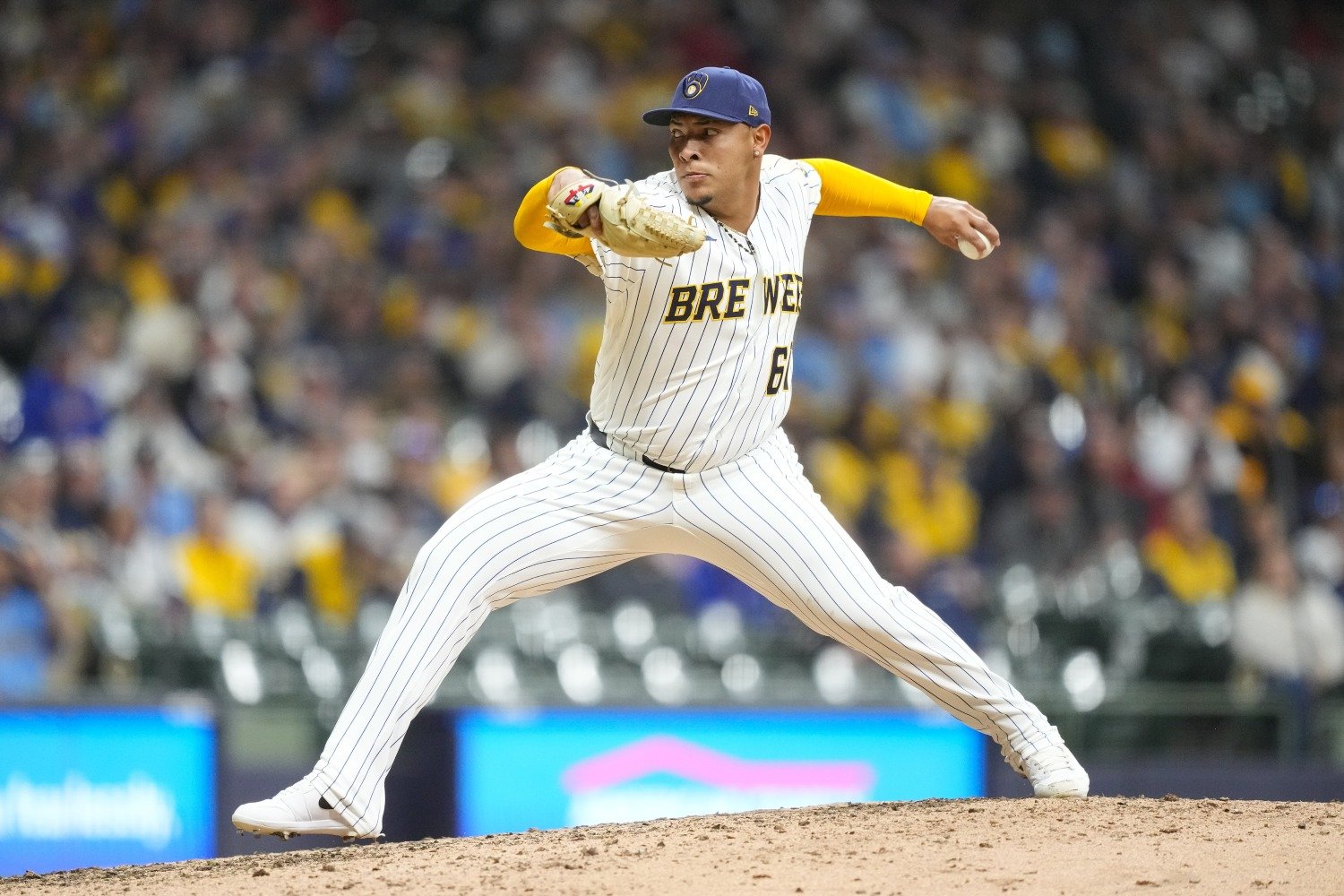
Image courtesy of © Brad Mills-Imagn Images Honorable Mentions DL Hall 10 G, 12 IP, 2.25 ERA, 4.31 FIP, 25.5 K%, 15.7 BB% Hall’s season is off to a great start. With his injury issues hopefully long behind him, he’s finally looking like the prospect that was advertised when he was in the Orioles system, posting a 1.59 ERA over 17 innings pitched thus far. Not much has changed. The Brewers still depend on him to make multi-inning relief appearances, and his arsenal has far more variety than your typical reliever. He has begun to phase out his four-seam fastball and slider in favor of a new sweeper and heavier reliance on his sinker. He has been successful, but there are a few points of concern. His walk rate is much higher than it should be, and his changeup has been giving up a considerable amount of hard contact, especially compared to last year. Statistical Nugget: Hall has thrown 42 sweepers so far this year, limiting opposing hitters to a .000 slugging percentage with a 60% whiff rate. Aaron Ashby 12 G, 13 ⅔ IP, 2.63 ERA, 2.04 FIP, 33.3 K%, 14.3 BB% As the bullpen’s iron man, Ashby has been Milwaukee’s busiest reliever by far. Not only does he have 17 appearances this year, but eight of those outings were for more than one inning. The former starter has been excellent since returning to full health and has been an invaluable part of the pitching staff. His walk rate is the only real blemish on his profile this year, and his breaking balls have given opposing hitters fits. They are averaging .333 against his sinker, which has been more hittable this year than in years past, but with a robust arsenal of five pitches, he has plenty of weapons to get the outs he needs. Statistical Nugget: Ashby has thrown 83 curveballs this year. Opposing hitters have whiffed 70.8% of the time while failing to record a single hit. Jacob Misiorowski 5 GS, 27 ⅔ IP, 3.58 ERA, 3.28 FIP, 34.2 K%, 8.5 BB% Misiorowski dazzled the big leagues in his rookie year, but so far, it looks like his sophomore campaign is going to take his player stock to new heights. His strikeout rate (38.1%) and whiff rate (38.8%) are both in the 99th percentile, and the only qualified pitcher with a higher average fastball velocity is Mason Miller. His slider has shown major improvement over last year, generating less hard contact and serving as a more effective put-away pitch in two-strike situations. His curveball has taken a similar step forward but the star of the show is still his heater, which has a whiff rate of 47.1%. Statistical Nugget: This year, Misiorowski has a zone swing and miss rate of 29.1%, the highest among all qualified pitchers. Pitcher of the Month — Kyle Harrison 4 GS, 18 ⅔ IP, 2.41 ERA, 3.08 FIP, 28.9 K%, 9.2 BB% Harrison is the latest victory in a long list of successful trade deals executed by the Brewers under Matt Arnold. After three unremarkable seasons with the Giants and Red Sox, it took Milwaukee just a handful of starts to unlock his exceptional upside as a starting pitcher. After 29 ⅔ total innings of work this season, he has a 2.12 ERA and a 2.87 FIP. He has been known for his fastball since he was a top prospect in San Francisco’s system, but this is the first year that his slurve has been a viable secondary offering. The shape hasn’t changed much, but it has been located far better this year, ending up outside of the zone and limiting meaningful contact. The Brewers getting the best out of a discarded pitcher is a tale as old as time, but Harrison, who’s under club control until 2031, is looking like he’ll be a core component of Milwaukee’s rotation for the foreseeable future. Statistical Nugget: By pitching run value, Kyle Harrison currently has the most valuable slurve in all of MLB. View full article
-
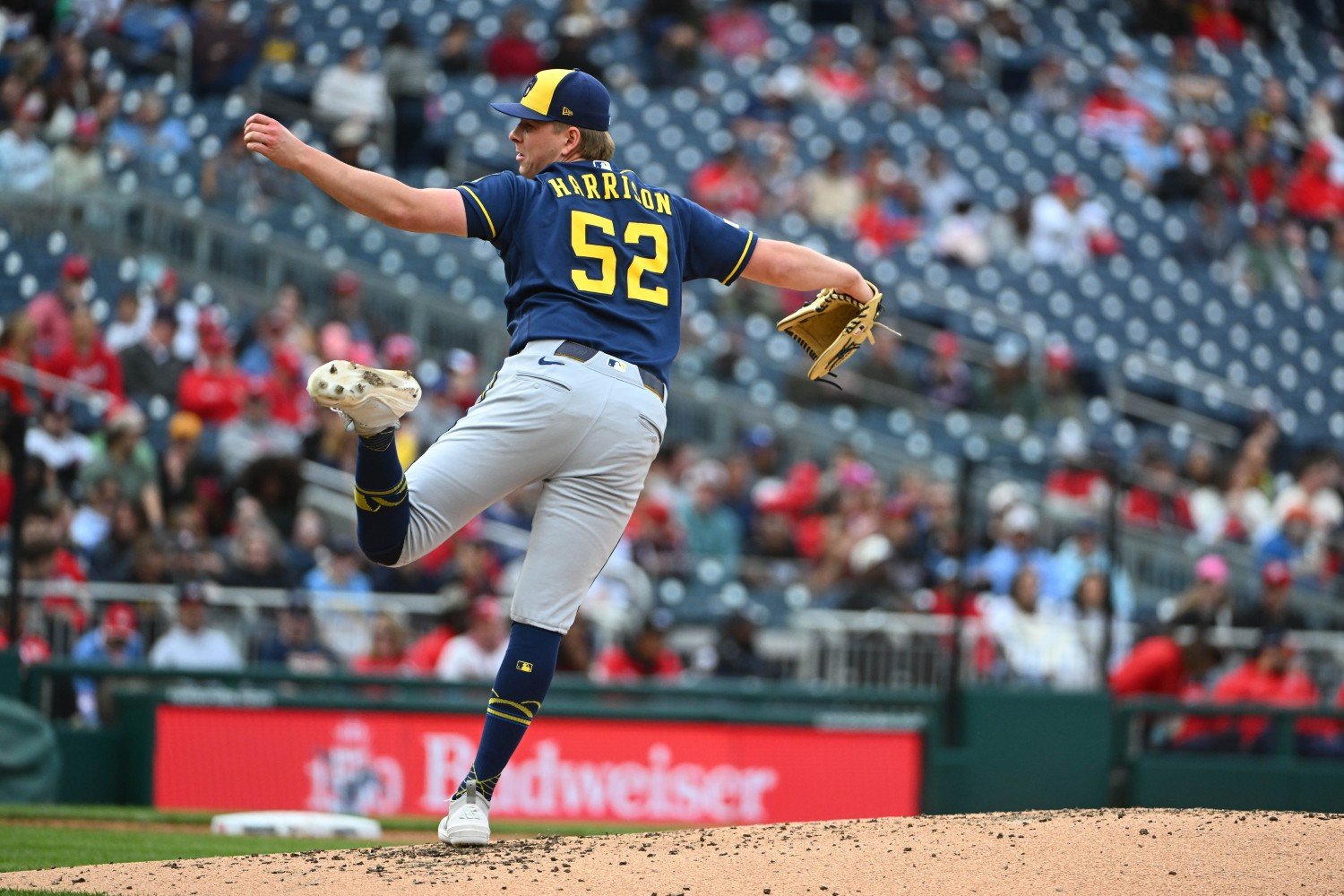 Honorable Mentions DL Hall 10 G, 12 IP, 2.25 ERA, 4.31 FIP, 25.5 K%, 15.7 BB% Hall’s season is off to a great start. With his injury issues hopefully long behind him, he’s finally looking like the prospect that was advertised when he was in the Orioles system, posting a 1.59 ERA over 17 innings pitched thus far. Not much has changed. The Brewers still depend on him to make multi-inning relief appearances, and his arsenal has far more variety than your typical reliever. He has begun to phase out his four-seam fastball and slider in favor of a new sweeper and heavier reliance on his sinker. He has been successful, but there are a few points of concern. His walk rate is much higher than it should be, and his changeup has been giving up a considerable amount of hard contact, especially compared to last year. Statistical Nugget: Hall has thrown 42 sweepers so far this year, limiting opposing hitters to a .000 slugging percentage with a 60% whiff rate. Aaron Ashby 12 G, 13 ⅔ IP, 2.63 ERA, 2.04 FIP, 33.3 K%, 14.3 BB% As the bullpen’s iron man, Ashby has been Milwaukee’s busiest reliever by far. Not only does he have 17 appearances this year, but eight of those outings were for more than one inning. The former starter has been excellent since returning to full health and has been an invaluable part of the pitching staff. His walk rate is the only real blemish on his profile this year, and his breaking balls have given opposing hitters fits. They are averaging .333 against his sinker, which has been more hittable this year than in years past, but with a robust arsenal of five pitches, he has plenty of weapons to get the outs he needs. Statistical Nugget: Ashby has thrown 83 curveballs this year. Opposing hitters have whiffed 70.8% of the time while failing to record a single hit. Jacob Misiorowski 5 GS, 27 ⅔ IP, 3.58 ERA, 3.28 FIP, 34.2 K%, 8.5 BB% Misiorowski dazzled the big leagues in his rookie year, but so far, it looks like his sophomore campaign is going to take his player stock to new heights. His strikeout rate (38.1%) and whiff rate (38.8%) are both in the 99th percentile, and the only qualified pitcher with a higher average fastball velocity is Mason Miller. His slider has shown major improvement over last year, generating less hard contact and serving as a more effective put-away pitch in two-strike situations. His curveball has taken a similar step forward but the star of the show is still his heater, which has a whiff rate of 47.1%. Statistical Nugget: This year, Misiorowski has a zone swing and miss rate of 29.1%, the highest among all qualified pitchers. Pitcher of the Month — Kyle Harrison 4 GS, 18 ⅔ IP, 2.41 ERA, 3.08 FIP, 28.9 K%, 9.2 BB% Harrison is the latest victory in a long list of successful trade deals executed by the Brewers under Matt Arnold. After three unremarkable seasons with the Giants and Red Sox, it took Milwaukee just a handful of starts to unlock his exceptional upside as a starting pitcher. After 29 ⅔ total innings of work this season, he has a 2.12 ERA and a 2.87 FIP. He has been known for his fastball since he was a top prospect in San Francisco’s system, but this is the first year that his slurve has been a viable secondary offering. The shape hasn’t changed much, but it has been located far better this year, ending up outside of the zone and limiting meaningful contact. The Brewers getting the best out of a discarded pitcher is a tale as old as time, but Harrison, who’s under club control until 2031, is looking like he’ll be a core component of Milwaukee’s rotation for the foreseeable future. Statistical Nugget: By pitching run value, Kyle Harrison currently has the most valuable slurve in all of MLB.
 -
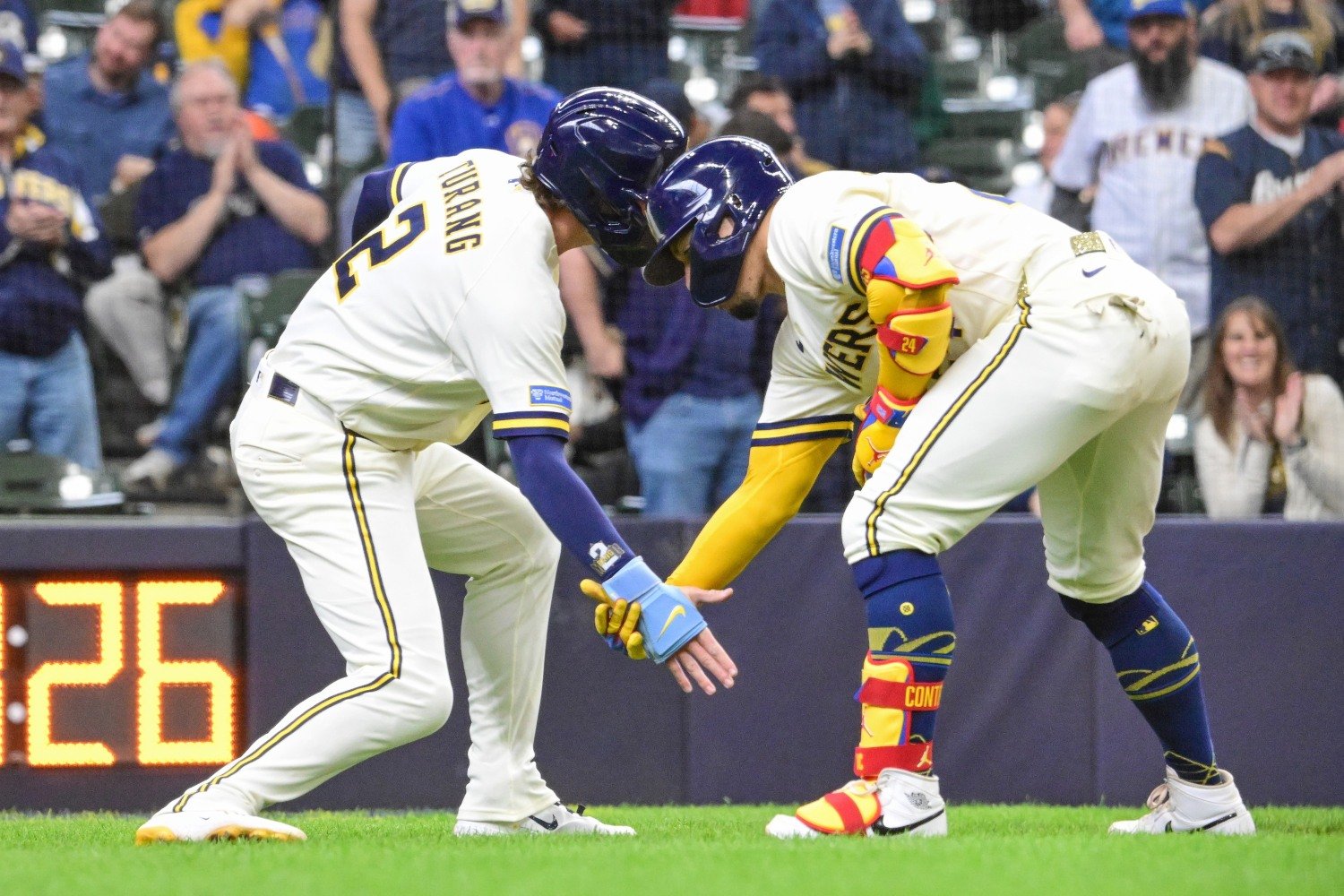 Honorable Mentions Gary Sánchez 69 PA, .200/.362/.436, 11 H, 2 2B, 1 3B, 3 HR, 11 RBI, 13 BB It’s too soon to call it a comeback, but his second stint with Milwaukee is certainly trending that way. Sánchez spent much of his first season with the Brewers as a designated hitter, with lukewarm results, and he was limited to just 101 plate appearances with the Orioles last year due to a right knee sprain. This season, he looks much better at the plate and has posted a 150 OPS+ thus far. Despite a low batting average, his absurd 19.0% walk rate and .542 slugging percentage helped keep his overall production afloat. Unfortunately, his numbers are as impressive as they are unsustainable. Sánchez does have good plate discipline, boasting a career walk rate of 9.6%, but he’s no Juan Soto. He has a better chance of holding onto his power, although some regression in his slugging percentage should also be expected. Indeed, he hit all five of his homers before the midpoint of April. Statistical Nugget: This season, Sánchez has a slugging percentage of .950 against four-seam fastballs. Garrett Mitchell 85 PA, .250/.400/.397, 17 H, 5 2B, 1 3B, 1 HR, 17 RBI, 16 BB, 3 SB This is the most we’ve seen of Garrett Mitchell in a while, and the results have been solid so far. He’s still one of the most athletic players in the sport, demonstrating exceptional bat speed and sprint speed, and his quality of contact has been above average. His on-base percentage has been helped immensely by his 18.1% walk rate, but there are two glaring weaknesses preventing us from seeing him at his best. He’s a peculiar case of having a chase rate (19.3%) in the 95th percentile and a whiff rate (41.8%) in the 1st percentile. His zone contact rate of 65.0% is abysmal and is likely a major contributor to his other weakness, which is his squared-up rate. It’s a bat-tracking metric that measures how often a hitter is getting the most out of his swing, and Mitchell’s 13.9% squared-up rate is also in the 1st percentile. Getting the bat to the ball is much easier said than done in the majors, and even with these issues, his OPS+ of 112 isn’t too shabby for a center fielder. Statistical Nugget: This season, Mitchell has a .642 OPS at home and a .883 OPS away. William Contreras 101 PA, .304/.366/.424, 28 H, 5 2B, 2 HR, 15 RBI, 9 BB It’s great to see the Brewers backstop posting Silver Slugger numbers once again. Cutting down on the whiffs and strikeouts this season has been a boon to his production at the plate, and his power has remained largely unfazed. He still has a bit of a launch-angle problem, but on the bright side, he’s pulling the ball in the air at a rate of 20.6%, almost twice his career average of 11.3%. The one potential concern is his average exit velocity, which has taken a slight dip from years past, both in terms of average and max. However, his squared up rate of 30% indicates that he’s getting what he can out of his swing often enough, suggesting a larger sample size will allow the data to return to his career norms sooner rather than later. Statistical Nugget: This season, Contreras has an OPS of 1.017 with runners in scoring position. Hitter of the Month – Brice Turang 106 PA, .265/.410/.482, 22 H, 4 2B, 1 3B, 4 HR, 17 RBI, 21 BB, 5 SB Turang hit his stride early this year and hasn’t slowed down since. In fact, he has arguably been hot since the WBC, wherein he posted a .937 OPS, the third-best mark in a lineup that had the best hitters the United States could offer. After finishing last year with a 120 OPS+, it seems clear that the days of below-average hitting production are now behind him. He has always had elite contact skills, but a dramatic increase in power is what’s driving this offensive surge. Aside from his barrel rate, his quality of contact numbers are all in the top quartile, and his hard-hit rate is at 51.9% for the season. In 2024, he had a hard-hit rate of just 29.7%. Interestingly, his bat speed is still on the lower en, despite increasing by 4 mph over the past two years. He also pulls the ball in the air at a measly 7.4% clip, less than half of the MLB average. This hasn’t held him back much, since many of his extra-base hits are to the opposite side of the field, but it raises the question of whether there’s even more juice left in Turang’s swing to unlock. Statistical Nugget: This season, Turang has seen 78 sinkers and has a whiff rate of 0.0% against the pitch.
 -
Image courtesy of © Benny Sieu-Imagn Images Honorable Mentions Gary Sánchez 69 PA, .200/.362/.436, 11 H, 2 2B, 1 3B, 3 HR, 11 RBI, 13 BB It’s too soon to call it a comeback, but his second stint with Milwaukee is certainly trending that way. Sánchez spent much of his first season with the Brewers as a designated hitter, with lukewarm results, and he was limited to just 101 plate appearances with the Orioles last year due to a right knee sprain. This season, he looks much better at the plate and has posted a 150 OPS+ thus far. Despite a low batting average, his absurd 19.0% walk rate and .542 slugging percentage helped keep his overall production afloat. Unfortunately, his numbers are as impressive as they are unsustainable. Sánchez does have good plate discipline, boasting a career walk rate of 9.6%, but he’s no Juan Soto. He has a better chance of holding onto his power, although some regression in his slugging percentage should also be expected. Indeed, he hit all five of his homers before the midpoint of April. Statistical Nugget: This season, Sánchez has a slugging percentage of .950 against four-seam fastballs. Garrett Mitchell 85 PA, .250/.400/.397, 17 H, 5 2B, 1 3B, 1 HR, 17 RBI, 16 BB, 3 SB This is the most we’ve seen of Garrett Mitchell in a while, and the results have been solid so far. He’s still one of the most athletic players in the sport, demonstrating exceptional bat speed and sprint speed, and his quality of contact has been above average. His on-base percentage has been helped immensely by his 18.1% walk rate, but there are two glaring weaknesses preventing us from seeing him at his best. He’s a peculiar case of having a chase rate (19.3%) in the 95th percentile and a whiff rate (41.8%) in the 1st percentile. His zone contact rate of 65.0% is abysmal and is likely a major contributor to his other weakness, which is his squared-up rate. It’s a bat-tracking metric that measures how often a hitter is getting the most out of his swing, and Mitchell’s 13.9% squared-up rate is also in the 1st percentile. Getting the bat to the ball is much easier said than done in the majors, and even with these issues, his OPS+ of 112 isn’t too shabby for a center fielder. Statistical Nugget: This season, Mitchell has a .642 OPS at home and a .883 OPS away. William Contreras 101 PA, .304/.366/.424, 28 H, 5 2B, 2 HR, 15 RBI, 9 BB It’s great to see the Brewers backstop posting Silver Slugger numbers once again. Cutting down on the whiffs and strikeouts this season has been a boon to his production at the plate, and his power has remained largely unfazed. He still has a bit of a launch-angle problem, but on the bright side, he’s pulling the ball in the air at a rate of 20.6%, almost twice his career average of 11.3%. The one potential concern is his average exit velocity, which has taken a slight dip from years past, both in terms of average and max. However, his squared up rate of 30% indicates that he’s getting what he can out of his swing often enough, suggesting a larger sample size will allow the data to return to his career norms sooner rather than later. Statistical Nugget: This season, Contreras has an OPS of 1.017 with runners in scoring position. Hitter of the Month – Brice Turang 106 PA, .265/.410/.482, 22 H, 4 2B, 1 3B, 4 HR, 17 RBI, 21 BB, 5 SB Turang hit his stride early this year and hasn’t slowed down since. In fact, he has arguably been hot since the WBC, wherein he posted a .937 OPS, the third-best mark in a lineup that had the best hitters the United States could offer. After finishing last year with a 120 OPS+, it seems clear that the days of below-average hitting production are now behind him. He has always had elite contact skills, but a dramatic increase in power is what’s driving this offensive surge. Aside from his barrel rate, his quality of contact numbers are all in the top quartile, and his hard-hit rate is at 51.9% for the season. In 2024, he had a hard-hit rate of just 29.7%. Interestingly, his bat speed is still on the lower en, despite increasing by 4 mph over the past two years. He also pulls the ball in the air at a measly 7.4% clip, less than half of the MLB average. This hasn’t held him back much, since many of his extra-base hits are to the opposite side of the field, but it raises the question of whether there’s even more juice left in Turang’s swing to unlock. Statistical Nugget: This season, Turang has seen 78 sinkers and has a whiff rate of 0.0% against the pitch. View full article
-
It’s Going to Be a While Before We See Quinn Priester in Milwaukee
Jason Wang posted an article in Brewers
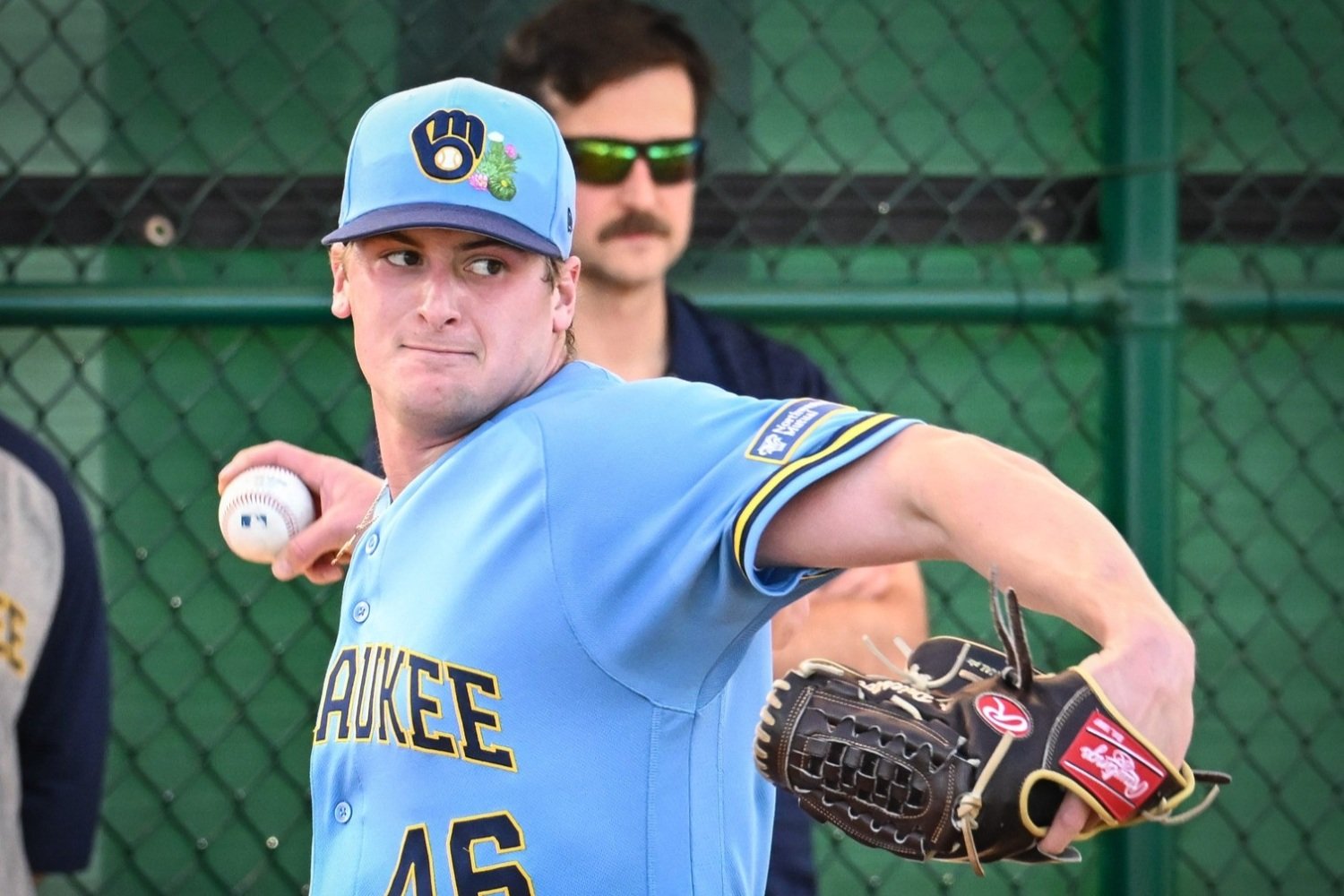 Back in mid-March, it was announced that Quinn Priester would be starting the season on the injured list due to thoracic outlet syndrome, a nerve issue that caused him to experience pain in his wrist starting last August. It was estimated that he would miss at least the first month of the season. He began his rehab assignment on April 22, making his first start with Triple-A Nashville. Unfortunately, he looks like a work in progress. He failed to get out of the first inning that day, recording just two outs, and gave up four earned runs, three walks, and a hit by pitch. He made his second start on April 26, and while it was a step in the right direction, he’s not close to where he needs to be, pitching 2 ⅓ scoreless innings with three walks and just two strikeouts. The most glaring concern is his velocity. Priester has never been a power pitcher, by any means, but both his sinker and his cutter have consistently sat between 92 and 93 mph over his career. In his first start, he averaged just 91.2 mph on his sinker and 88.9 mph on his cutter. In his second start, he only managed to top out at 92 mph. To be fair, this isn’t totally unexpected, given how little time he has had to ramp up. In addition to the injury, he still has to build up his arm normally because he missed all of spring training. He’s slowly working on building his pitch count and finding the zone, something he has struggled with immensely in Nashville so far. But it also means that he’s quite a ways away from returning to big-league action. It’s not a fatal flaw, but Milwaukee would love to have more starters capable of pitching more than four to five innings per start, reducing the load on their already overburdened bullpen. For Priester to be worth a roster spot at this time, he needs to be capable of getting through at least five innings. Aside from having to restore his stamina, his control has deteriorated considerably. Of the 74 pitches he has thrown for the Sounds, just 30 have been for strikes. Conceding free passes is the obvious downside of missing the zone, but getting behind in counts also leads to more hitter-friendly pitches and more damage. Pitchers with elite velocity can get away with this by simply blowing down the doors of opposing hitters, but Priester’s profile simply doesn’t fit the bill for that to work. For the time being, it doesn’t seem like there’s a huge rush for him to return. The Brewers are willing to be patient as he works his way back. Pat Murphy said as much when stating that Priester will likely need more than the original target of three rehab outings. Luckily for the Brewers, the rotation has held its own in Priester’s absence Some of the younger arms, like Kyle Harrison, have already shown flashes of their incredible upside. A possible silver lining to this delay is that it should give Milwaukee more data to decide whose spot in the rotation will be taken over by Priester when he’s finally back to full strength. Currently, it seems like Brandon Sproat, a young arm with options remaining and a few underwhelming outings this season, is the favorite to cede his place, but he’s not the only candidate. Chad Patrick is another pitcher who could be headed in the wrong direction this season. His 2.35 ERA over 23 innings looks great, but his 4.34 FIP and 11.7% strikeout rate are warning signs of an upcoming downturn. We got a glimpse of what might be to come in his most recent start against the Tigers, in which he gave up four earned runs and a walk with just two strikeouts. There’s still plenty of baseball left to be played this year, and the Brewers are doing what they do best: staying patient, taking their time, and laying the groundwork to be successful. They’ve consistently treated the season as a marathon, not a sprint, and it’s still early in the race. Whether Priester joins them in one mile or 10, what matters is that when he does make his return, it’ll only be when he’s fully ready to give his best. By then, odds are that the team will have a place waiting for him—though it's more likely to be created by another injury than by shoving aside a healthy hurler.
 -
Image courtesy of © Dave Kallmann / Milwaukee Journal Sentinel / USA TODAY NETWORK via Imagn Images Back in mid-March, it was announced that Quinn Priester would be starting the season on the injured list due to thoracic outlet syndrome, a nerve issue that caused him to experience pain in his wrist starting last August. It was estimated that he would miss at least the first month of the season. He began his rehab assignment on April 22, making his first start with Triple-A Nashville. Unfortunately, he looks like a work in progress. He failed to get out of the first inning that day, recording just two outs, and gave up four earned runs, three walks, and a hit by pitch. He made his second start on April 26, and while it was a step in the right direction, he’s not close to where he needs to be, pitching 2 ⅓ scoreless innings with three walks and just two strikeouts. The most glaring concern is his velocity. Priester has never been a power pitcher, by any means, but both his sinker and his cutter have consistently sat between 92 and 93 mph over his career. In his first start, he averaged just 91.2 mph on his sinker and 88.9 mph on his cutter. In his second start, he only managed to top out at 92 mph. To be fair, this isn’t totally unexpected, given how little time he has had to ramp up. In addition to the injury, he still has to build up his arm normally because he missed all of spring training. He’s slowly working on building his pitch count and finding the zone, something he has struggled with immensely in Nashville so far. But it also means that he’s quite a ways away from returning to big-league action. It’s not a fatal flaw, but Milwaukee would love to have more starters capable of pitching more than four to five innings per start, reducing the load on their already overburdened bullpen. For Priester to be worth a roster spot at this time, he needs to be capable of getting through at least five innings. Aside from having to restore his stamina, his control has deteriorated considerably. Of the 74 pitches he has thrown for the Sounds, just 30 have been for strikes. Conceding free passes is the obvious downside of missing the zone, but getting behind in counts also leads to more hitter-friendly pitches and more damage. Pitchers with elite velocity can get away with this by simply blowing down the doors of opposing hitters, but Priester’s profile simply doesn’t fit the bill for that to work. For the time being, it doesn’t seem like there’s a huge rush for him to return. The Brewers are willing to be patient as he works his way back. Pat Murphy said as much when stating that Priester will likely need more than the original target of three rehab outings. Luckily for the Brewers, the rotation has held its own in Priester’s absence Some of the younger arms, like Kyle Harrison, have already shown flashes of their incredible upside. A possible silver lining to this delay is that it should give Milwaukee more data to decide whose spot in the rotation will be taken over by Priester when he’s finally back to full strength. Currently, it seems like Brandon Sproat, a young arm with options remaining and a few underwhelming outings this season, is the favorite to cede his place, but he’s not the only candidate. Chad Patrick is another pitcher who could be headed in the wrong direction this season. His 2.35 ERA over 23 innings looks great, but his 4.34 FIP and 11.7% strikeout rate are warning signs of an upcoming downturn. We got a glimpse of what might be to come in his most recent start against the Tigers, in which he gave up four earned runs and a walk with just two strikeouts. There’s still plenty of baseball left to be played this year, and the Brewers are doing what they do best: staying patient, taking their time, and laying the groundwork to be successful. They’ve consistently treated the season as a marathon, not a sprint, and it’s still early in the race. Whether Priester joins them in one mile or 10, what matters is that when he does make his return, it’ll only be when he’s fully ready to give his best. By then, odds are that the team will have a place waiting for him—though it's more likely to be created by another injury than by shoving aside a healthy hurler. View full article
-
Image courtesy of © Jeff Hanisch-Imagn Images Last December’s trade to acquire Ángel Zerpa in exchange for Isaac Collins and Nick Mears was a surprising move to many. There were layers of complexity to the front office's thesis, but most of it was based on the idea that Zerpa had far more upside than the pieces that Milwaukee was sending to Kansas City. It seems obvious, but deriving the future value calculation is easier said than done. Luckily, our very own Jack Stern did an excellent job discussing what he could bring to the table. Fans didn’t get to see much of Zerpa in spring training, because he spent his time representing Team Venezuela in the World Baseball Classic, but his participation in the tournament arguably offered more optimism than any work in the Cactus League could have. On the way to winning it all, Zerpa posted a flawless 0.00 ERA over 5 ⅓ innings pitched with three hits, two walks, and eight strikeouts—one of which came against a young up-and-comer by the name of Shohei Ohtani. His stock quickly reached an all-time high, at least in the eyes of Brewers fans, but after seven regular-season appearances, his numbers don’t seem to be those of the pitcher Milwaukee thought they were getting. Across eight innings, Zerpa has a 6.75 ERA, with an 11.1% strikeout rate and below-average peripherals across the board. It’s worth pointing out that four of his six earned runs came on April 12 against the Nationals. In this outing, he gave up four hits and one walk while getting just two outs. Part of this was Washington playing a particularly aggressive brand of baseball, looking to steal bases and put balls in play by any means necessary. One could argue that this added an atypical amount of pressure, but it’s still not enough to explain why Zerpa hasn’t looked dominant at all this year. As a sinker/slider pitcher with league-average velocity, it’s expected that his run prevention comes mostly in the form of ground balls, and he does have a respectable 57.1% ground-ball rate. However, striking out one in nine hitters is just too low to be effective in the long term. He’s not expected to miss too many bats with his sinker, but opposing hitters are making quality contact too often, averaging .286 with a .429 slugging percentage against the pitch. Although he has only thrown it nine times, his changeup already carries a run value of -3. It has only been put into play once, ending up as a home run for Willson Contreras. Otherwise, it has lackluster numbers across the board. Part of the issue could be its similarity to his sinker, coming in just 5 MPH slower and sharing similar movement profiles. It has never been a particularly effective weapon for him in the big leagues, and it may be time to make (pardon the pun) a change. Nonetheless, it’s far too early for the Brewers to be out on Zerpa. Reliever ERAs are notorious for being easily inflated, especially early in the season, and he’s far from the only bullpen arm whose results have been subpar. Eight innings may not be enough to decide whether he’s suitable for the team, but there’s enough data to raise some important red flags. Whether it ends up being his sequencing, pitch mix, or some other esoteric mechanical adjustment, Milwaukee will likely need to change something if they want this bet to pay off. View full article
-
I Miss The Old Ángel Zerpa, The World Baseball Classic Ángel Zerpa
Jason Wang posted an article in Brewers
 Last December’s trade to acquire Ángel Zerpa in exchange for Isaac Collins and Nick Mears was a surprising move to many. There were layers of complexity to the front office's thesis, but most of it was based on the idea that Zerpa had far more upside than the pieces that Milwaukee was sending to Kansas City. It seems obvious, but deriving the future value calculation is easier said than done. Luckily, our very own Jack Stern did an excellent job discussing what he could bring to the table. Fans didn’t get to see much of Zerpa in spring training, because he spent his time representing Team Venezuela in the World Baseball Classic, but his participation in the tournament arguably offered more optimism than any work in the Cactus League could have. On the way to winning it all, Zerpa posted a flawless 0.00 ERA over 5 ⅓ innings pitched with three hits, two walks, and eight strikeouts—one of which came against a young up-and-comer by the name of Shohei Ohtani. His stock quickly reached an all-time high, at least in the eyes of Brewers fans, but after seven regular-season appearances, his numbers don’t seem to be those of the pitcher Milwaukee thought they were getting. Across eight innings, Zerpa has a 6.75 ERA, with an 11.1% strikeout rate and below-average peripherals across the board. It’s worth pointing out that four of his six earned runs came on April 12 against the Nationals. In this outing, he gave up four hits and one walk while getting just two outs. Part of this was Washington playing a particularly aggressive brand of baseball, looking to steal bases and put balls in play by any means necessary. One could argue that this added an atypical amount of pressure, but it’s still not enough to explain why Zerpa hasn’t looked dominant at all this year. As a sinker/slider pitcher with league-average velocity, it’s expected that his run prevention comes mostly in the form of ground balls, and he does have a respectable 57.1% ground-ball rate. However, striking out one in nine hitters is just too low to be effective in the long term. He’s not expected to miss too many bats with his sinker, but opposing hitters are making quality contact too often, averaging .286 with a .429 slugging percentage against the pitch. Although he has only thrown it nine times, his changeup already carries a run value of -3. It has only been put into play once, ending up as a home run for Willson Contreras. Otherwise, it has lackluster numbers across the board. Part of the issue could be its similarity to his sinker, coming in just 5 MPH slower and sharing similar movement profiles. It has never been a particularly effective weapon for him in the big leagues, and it may be time to make (pardon the pun) a change. Nonetheless, it’s far too early for the Brewers to be out on Zerpa. Reliever ERAs are notorious for being easily inflated, especially early in the season, and he’s far from the only bullpen arm whose results have been subpar. Eight innings may not be enough to decide whether he’s suitable for the team, but there’s enough data to raise some important red flags. Whether it ends up being his sequencing, pitch mix, or some other esoteric mechanical adjustment, Milwaukee will likely need to change something if they want this bet to pay off.
 -
How Brandon Woodruff 2.0 Will Remain Effective for the Brewers
Jason Wang posted an article in Brewers
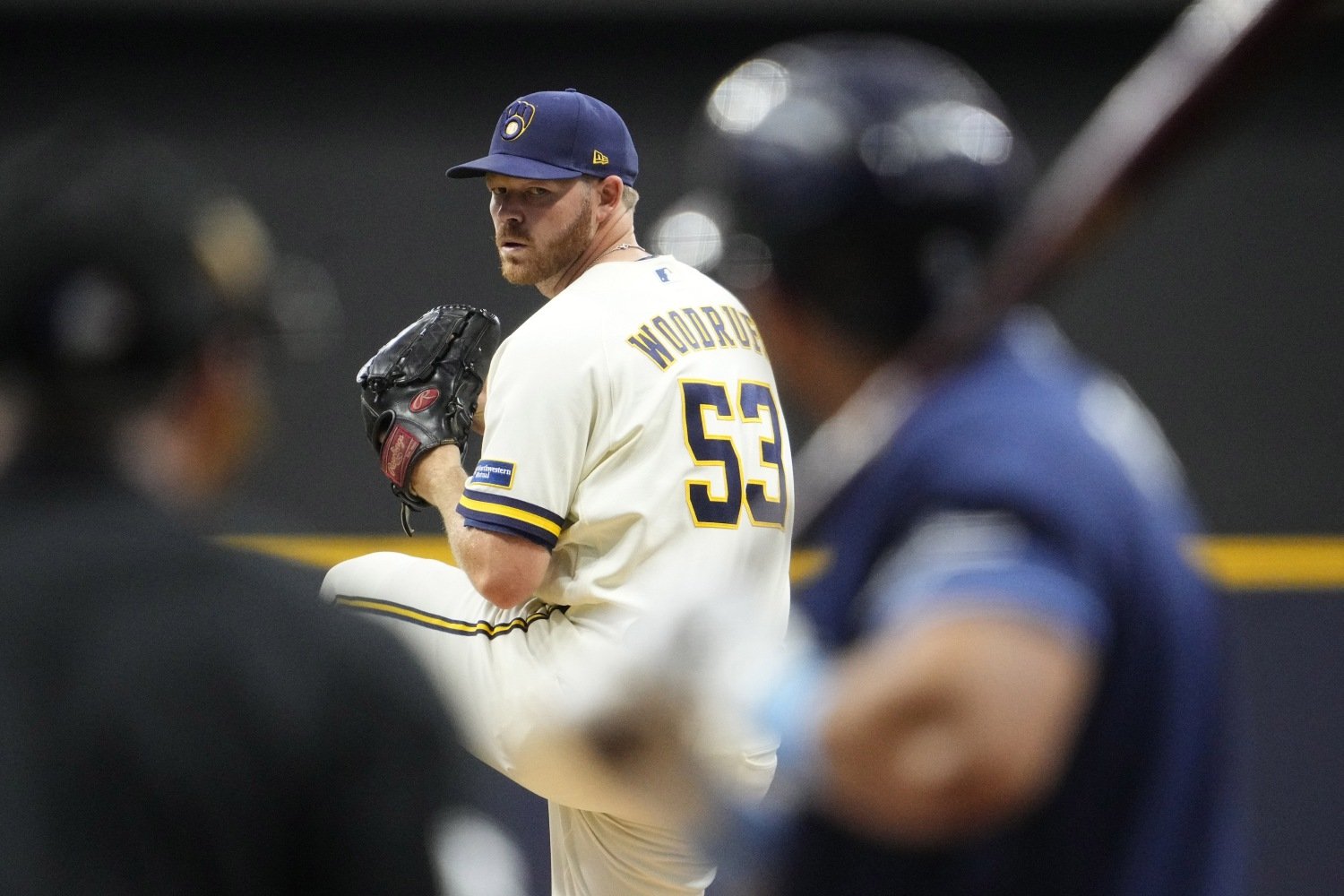 Brandon Woodruff is a Milwaukee Brewers lifer. He was drafted by the organization in the 11th round in 2014, and it’s safe to say that he has greatly surpassed expectations since then. Over his career, all of which he has spent in the Brewers organization, he's pitched in nine big-league seasons to a 3.11 ERA and 3.21 FIP. Sadly, fans haven’t seen quite as much of him as that implies. Injuries have limited him to just 750 innings over that span, and he has pitched more than 100 innings in just three seasons. Things have gotten especially bad since he turned 30, as he's pitched a total of just 136 ⅔ innings over the past four years. For the first several years of his career, he was an outstanding starter, thanks to his stuff staying intact through various injuries. Unfortunately, it's clear now that his stuff will not come all the way (or, arguably, even most of the way) back from the major shoulder injury that kept him off a big-league mound for 20 months. The most notable difference is his average fastball velocity, which has dropped from 95.5 mph in 2023 to just 92.9 mph in 2026. Woodruff is undeterred and has continued to adapt his pitching to fit his new limitations. Upon his return in 2025, he added a new cutter and sweeper, while phasing out his slider and decreasing his four-seam fastball usage. This allowed him to pitch to a 3.20 ERA and 3.17 FIP over 64 ⅔ innings, but can he repeat the same success this year? In his first start of the year against the Rays, he struck out six over five innings. Overall, it was a strong outing, but it highlighted that his sinker may not stick around in his arsenal for long. Of the four hits he gave up, three came against his sinker, and two of those were solo home runs. Looking back, it should be unsurprising that two 90-mph sinkers located in the heart of the zone ended up in the seats. The sinker seems to have suffered the most from the dip in velocity, as Woodruff no longer has the ability to sneak it by hitters who fouled it off consistently in the past. Conversely, his four-seam fastball is still effective, thanks to its impressive 17.9 inches of induced vertical break. He also commanded it remarkably well, hitting William Contreras’s glove precisely where it was set up multiple times. His new cutter has also been effective and shares remarkable similarities to Chad Patrick’s, coming in in the upper 80s and featuring more movement than your average big-league cutter. Given how effective it has been since debuting in 2025, it’s feasible that it’s used more frequently against right-handed hitters instead of his sinker. We didn’t get to see much of his secondary pitches, since 56 of the 67 total pitches he threw against the Rays were fastball variants, but if 2025 was any indication, his changeup could play an important role this year. Hitters really struggled against Woodruff’s off-speed pitch last season, slugging just .063 while whiffing 35.4% of the time. Woodruff seems undecided on his sweeper thus far, throwing it occasionally but without enough consistency for it to really have a dedicated place in his arsenal. When he did throw it last year, it didn’t seem to do what he wanted and would end up in a suboptimal part of the strike zone. It’s an overplayed stereotype that pitchers who lack the stuff to be competitive must instead rely on being “crafty,” but in the case of Woodruff, that seems to be exactly what he’s doing. Precise command will be the name of the game, and if the ability to miss bats isn’t there, he’ll have to settle for soft contact—even if it’s something he hasn’t been historically good at. Fastballs up in the zone and changeups down and away should be his bread and butter moving forward. If he is intent on keeping one or both of the sinker and cutter, he’ll have to figure out how to get more ground balls out of them. At 33 years old, Woodruff isn’t quite over the hill, but his days of dominating hitters in the zone with upper-90s velocity are behind him. Luckily, if there’s any team that can get the most out of him, it’s the Brewers. This is likely the last year that he’ll stay in Milwaukee’s rotation, given their logjam of young pitching talent rising up the ranks, but if it's the year the Crew finally returns to the World Series, it will be the crowning achievement of Woodruff's long service to the franchise.
 -
Image courtesy of © Michael McLoone-Imagn Images Brandon Woodruff is a Milwaukee Brewers lifer. He was drafted by the organization in the 11th round in 2014, and it’s safe to say that he has greatly surpassed expectations since then. Over his career, all of which he has spent in the Brewers organization, he's pitched in nine big-league seasons to a 3.11 ERA and 3.21 FIP. Sadly, fans haven’t seen quite as much of him as that implies. Injuries have limited him to just 750 innings over that span, and he has pitched more than 100 innings in just three seasons. Things have gotten especially bad since he turned 30, as he's pitched a total of just 136 ⅔ innings over the past four years. For the first several years of his career, he was an outstanding starter, thanks to his stuff staying intact through various injuries. Unfortunately, it's clear now that his stuff will not come all the way (or, arguably, even most of the way) back from the major shoulder injury that kept him off a big-league mound for 20 months. The most notable difference is his average fastball velocity, which has dropped from 95.5 mph in 2023 to just 92.9 mph in 2026. Woodruff is undeterred and has continued to adapt his pitching to fit his new limitations. Upon his return in 2025, he added a new cutter and sweeper, while phasing out his slider and decreasing his four-seam fastball usage. This allowed him to pitch to a 3.20 ERA and 3.17 FIP over 64 ⅔ innings, but can he repeat the same success this year? In his first start of the year against the Rays, he struck out six over five innings. Overall, it was a strong outing, but it highlighted that his sinker may not stick around in his arsenal for long. Of the four hits he gave up, three came against his sinker, and two of those were solo home runs. Looking back, it should be unsurprising that two 90-mph sinkers located in the heart of the zone ended up in the seats. The sinker seems to have suffered the most from the dip in velocity, as Woodruff no longer has the ability to sneak it by hitters who fouled it off consistently in the past. Conversely, his four-seam fastball is still effective, thanks to its impressive 17.9 inches of induced vertical break. He also commanded it remarkably well, hitting William Contreras’s glove precisely where it was set up multiple times. His new cutter has also been effective and shares remarkable similarities to Chad Patrick’s, coming in in the upper 80s and featuring more movement than your average big-league cutter. Given how effective it has been since debuting in 2025, it’s feasible that it’s used more frequently against right-handed hitters instead of his sinker. We didn’t get to see much of his secondary pitches, since 56 of the 67 total pitches he threw against the Rays were fastball variants, but if 2025 was any indication, his changeup could play an important role this year. Hitters really struggled against Woodruff’s off-speed pitch last season, slugging just .063 while whiffing 35.4% of the time. Woodruff seems undecided on his sweeper thus far, throwing it occasionally but without enough consistency for it to really have a dedicated place in his arsenal. When he did throw it last year, it didn’t seem to do what he wanted and would end up in a suboptimal part of the strike zone. It’s an overplayed stereotype that pitchers who lack the stuff to be competitive must instead rely on being “crafty,” but in the case of Woodruff, that seems to be exactly what he’s doing. Precise command will be the name of the game, and if the ability to miss bats isn’t there, he’ll have to settle for soft contact—even if it’s something he hasn’t been historically good at. Fastballs up in the zone and changeups down and away should be his bread and butter moving forward. If he is intent on keeping one or both of the sinker and cutter, he’ll have to figure out how to get more ground balls out of them. At 33 years old, Woodruff isn’t quite over the hill, but his days of dominating hitters in the zone with upper-90s velocity are behind him. Luckily, if there’s any team that can get the most out of him, it’s the Brewers. This is likely the last year that he’ll stay in Milwaukee’s rotation, given their logjam of young pitching talent rising up the ranks, but if it's the year the Crew finally returns to the World Series, it will be the crowning achievement of Woodruff's long service to the franchise. View full article
-
jake ur gonna ruin someone's day!!
-
Definitely part of it too! @Jake McKibbin and I actually talked about it briefly in our post-game reaction:
-
Image courtesy of © Benny Sieu-Imagn Images Brandon Sproat was a highly-touted prospect in the Mets organization for quite some time. He had lukewarm numbers across 121 innings in Triple-A last season, posting a 4.24 ERA and 4.18 FIP and causing his prospect ranking to dip from being No. 1 in the Mets system in 2025 to No. 5 in 2026. Nonetheless, the Brewers remained interested and acquired him as part of the Freddy Peralta trade. He made his Brewers debut Sunday, amid considerable hype, but he had a tough time of it. He needed 86 pitches to make it through just three innings of work, giving up six hits, four walks, and seven earned runs. Before that, the Brewers’ pitching staff had limited the White Sox to a total of just three runs in the first two games of the series. So what went wrong? The biggest issue seemed to be command. Sproat had a hard time finding the zone consistently, and when he missed, he missed big. For the most part, opposing hitters were laying off pitches outside of the zone and punishing anything that ended up right down the middle, which was far too frequent a problem. # of pitches Zone % Chase % Whiff % Sinker 36 66.7% 16.7% 30.0% Cutter 19 47.4% 10.0% 11.1% Sweeper 15 53.3% 42.9% 37.5% Curveball 11 27.3% 12.5% 0.0% Changeup 4 25.0% 33.3% 0.0% Every pitch had at least one glaring issue in this outing. The sweeper performed admirably on the surface, posting strong chase and whiff rates, but he did leave a few too many up in the zone. He got away with it for the most part, but also gave up a 403-foot home run to Everson Pereira. The cutter really struggled to do much of anything. Fewer than half ended up in the zone, and the ones that did were simply too juicy for the White Sox lineup. After loading the bases in the first inning, a cutter located middle-middle was the pitch that ended up in the seats for a grand slam. The curveball was simply all over the place, often starting way out of the zone and staying there. It didn’t generate a whiff because there was only one swing, a foul ball by Edgar Quero. Of the eight that landed outside of the zone, this was the only one tempting enough to chase; the rest were mostly waste pitches. To Sproat’s credit, the sinker did seem effective, and also landed in the zone two-thirds of the time. It seemed like the pitch over which he had the most command, and although it did give up three hits, none were for extra bases. A few were arguably defensive miscues, more than truly earned hits. Being a rookie starter is tough enough as it is, and the pressures of being a top prospect and newly acquired trade asset don’t exactly help. Throw in the implicit pressure of the home crowd being amped up for a potential sweep to kick off the season, and it’s easy to see why the 25-year-old Sproat may not have had the smoothest debut in the world. He was also working with rookie Jeferson Quero, who caught him in some bullpens this spring but never in game action. That could have contributed to some issues with pitch selection and/or receiving, which also cropped up. Aside from the confounding variables, a sample of one outing simply isn’t enough data to make a decision on whether he’s deserving of staying in the big-league rotation. His numbers in spring training were far more encouraging, particularly his 28.3% strikeout rate and his 29.6% whiff rate. It will take time for him to start looking like the prospect that has been promised. The Brewers don’t necessarily need him to be a front-line starter right away. However, command issues will continue to limit him if unaddressed, and moving forward, that should continue to be a priority for the young starter. View full article
-
Brandon Sproat's First Brewers Start Illustrated Key Areas of Opportunity
Jason Wang posted an article in Brewers
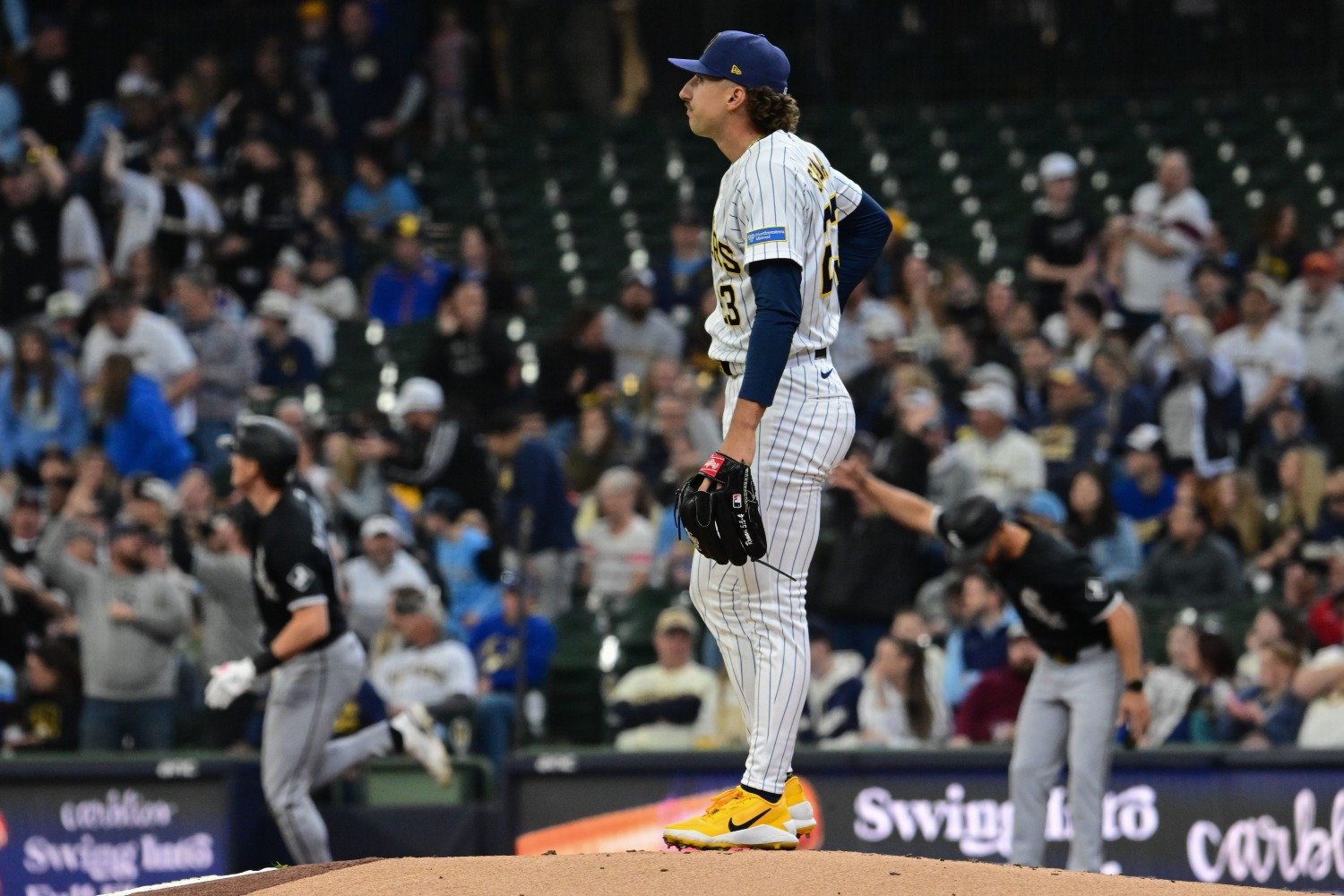 Brandon Sproat was a highly-touted prospect in the Mets organization for quite some time. He had lukewarm numbers across 121 innings in Triple-A last season, posting a 4.24 ERA and 4.18 FIP and causing his prospect ranking to dip from being No. 1 in the Mets system in 2025 to No. 5 in 2026. Nonetheless, the Brewers remained interested and acquired him as part of the Freddy Peralta trade. He made his Brewers debut Sunday, amid considerable hype, but he had a tough time of it. He needed 86 pitches to make it through just three innings of work, giving up six hits, four walks, and seven earned runs. Before that, the Brewers’ pitching staff had limited the White Sox to a total of just three runs in the first two games of the series. So what went wrong? The biggest issue seemed to be command. Sproat had a hard time finding the zone consistently, and when he missed, he missed big. For the most part, opposing hitters were laying off pitches outside of the zone and punishing anything that ended up right down the middle, which was far too frequent a problem. # of pitches Zone % Chase % Whiff % Sinker 36 66.7% 16.7% 30.0% Cutter 19 47.4% 10.0% 11.1% Sweeper 15 53.3% 42.9% 37.5% Curveball 11 27.3% 12.5% 0.0% Changeup 4 25.0% 33.3% 0.0% Every pitch had at least one glaring issue in this outing. The sweeper performed admirably on the surface, posting strong chase and whiff rates, but he did leave a few too many up in the zone. He got away with it for the most part, but also gave up a 403-foot home run to Everson Pereira. The cutter really struggled to do much of anything. Fewer than half ended up in the zone, and the ones that did were simply too juicy for the White Sox lineup. After loading the bases in the first inning, a cutter located middle-middle was the pitch that ended up in the seats for a grand slam. The curveball was simply all over the place, often starting way out of the zone and staying there. It didn’t generate a whiff because there was only one swing, a foul ball by Edgar Quero. Of the eight that landed outside of the zone, this was the only one tempting enough to chase; the rest were mostly waste pitches. To Sproat’s credit, the sinker did seem effective, and also landed in the zone two-thirds of the time. It seemed like the pitch over which he had the most command, and although it did give up three hits, none were for extra bases. A few were arguably defensive miscues, more than truly earned hits. Being a rookie starter is tough enough as it is, and the pressures of being a top prospect and newly acquired trade asset don’t exactly help. Throw in the implicit pressure of the home crowd being amped up for a potential sweep to kick off the season, and it’s easy to see why the 25-year-old Sproat may not have had the smoothest debut in the world. He was also working with rookie Jeferson Quero, who caught him in some bullpens this spring but never in game action. That could have contributed to some issues with pitch selection and/or receiving, which also cropped up. Aside from the confounding variables, a sample of one outing simply isn’t enough data to make a decision on whether he’s deserving of staying in the big-league rotation. His numbers in spring training were far more encouraging, particularly his 28.3% strikeout rate and his 29.6% whiff rate. It will take time for him to start looking like the prospect that has been promised. The Brewers don’t necessarily need him to be a front-line starter right away. However, command issues will continue to limit him if unaddressed, and moving forward, that should continue to be a priority for the young starter.
 -
Kinda crazy to think that the Brewers are such a well-rounded team that one of their biggest weaknesses was backup shortstop.
-
need to see this jake woodford toe the slab in milwaukee
- 6 replies
-
- 1
-

-
- jake woodford
- easton mcgee
- (and 3 more)
-
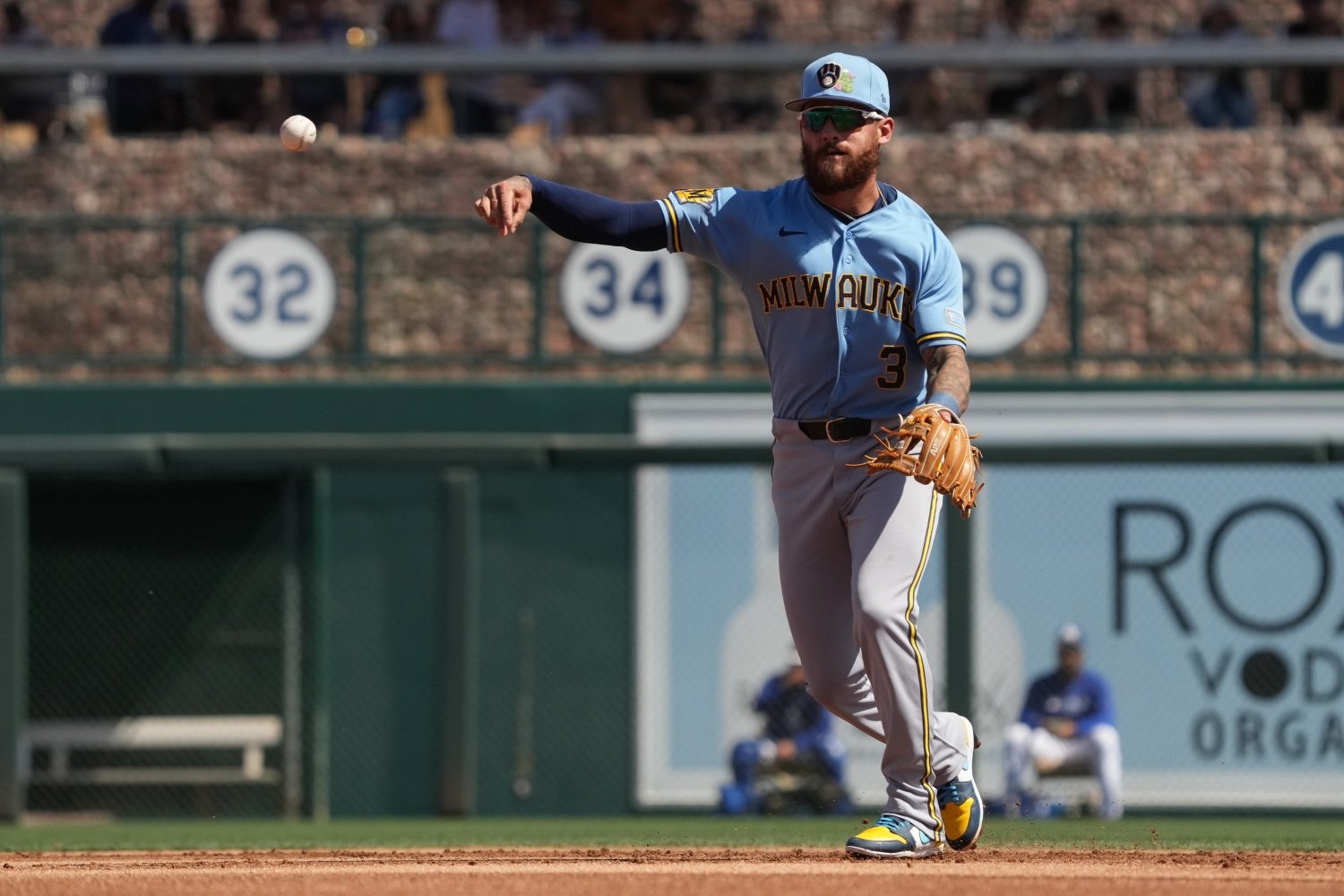 When Joey Ortiz was acquired from the Orioles in the Corbin Burnes trade, it was more or less assumed that he would inherit shortstop from Willy Adames. He was the No. 63 overall prospect in baseball in 2024, according to MLB Pipeline, and even though he was playing a new position (third base), his rookie year was quite encouraging. His first year after moving back to shortstop was less than ideal. A year-long offensive slump limited him to a 67 wRC+. His defensive contributions (depending on which figure you look at) were just good enough to keep him above replacement-level, but the future of the position isn’t as clear as it once seemed. There’s still time to turn things around. Ortiz is 27 years old, and there’s reason to believe that his performance at the plate last year was the exception, not the rule. Much of his offensive struggles came from a steep decline in plate discipline rather than a holistic degradation of talent. A side-by-side comparison demonstrates that other than his chase rate increasing and walk rate decreasing, most of his numbers remained in line with 2024. 2024 2025 Barrel % 4.6 3.0 LA Sweet Spot % 26.6 27.4 Squared Up % 23.0 23.3 Whiff % 17.1 16.0 K % 20.2 14.6 Chase % 24.7 33.3 BB % 11.0 5.3 Surface-level spring training statistics only matter so much, given their limited sample and the variance of opposing competition, but his 10.9% walk rate thus far is at least trending in the right direction. His power also seems to have returned, with his average exit velocity jumping to 91.9 mph and his 90th-percentile EV making a similar leap to 107.2 mph, both marked improvements on where those metrics were last season. In other words, there’s still hope for Joey Ortiz, but it’s far from a sure thing. The uncertainty of it all is exactly what led a savvy team like the Milwaukee Brewers—who take no unnecessary risks—to go about getting a backup with a chance to become the starter. Although they sent much of their 2025 infield depth to the Red Sox in the Caleb Durbin trade, the front office replenished it by acquiring David Hamilton in that very deal. They'd also scooped up Jett Williams from the Mets in the Freddy Peralta deal. Williams is currently MLB Pipeline's 51st-ranked prospect and carries all the usual characteristics of a player who has made it this far in a 5-foot-7 frame. He’s fast, pulls the ball in the air frequently, and is athletic enough to play in the outfield, or at multiple spots around the infield. Hamilton is the far superior defender—perhaps over Ortiz, as well as Williams. The dynamic Williams spent most of his minor-league season in Double-A last year but also played 34 games in Triple-A, posting a cumulative 136 wRC+ with 17 home runs and 34 stolen bases. His well-rounded offensive profile already seems sufficient for a step up in competition, as he's been excellent in spring training, slashing .375/.500/.625 over his 20 plate appearances. Of course, he’ll also have to maintain his success in Triple-A. His time in spring training was somewhat truncated by a quad injury he sustained at the end of February, and given a larger sample, any current issues (can he make enough contact? Is his plate discipline good enough to handle the best pitching in the world?) would have been clearer. Milwaukee is in no rush to call up Williams, and have already assigned him to minor-league camp. Hamilton is the more significant short-term threat to Ortiz's playing time. He's batting a less impressive .231/.294/.371 this spring, but he brings elite speed (and aggressiveness on the bases) and that excellent glove, so there's a chance he'll force the issue at either short or third base. Williams, meanwhile, will prepare for his time in the big leagues by playing multiple positions, as his long-term home is probably either second base or center field, anyway. In the medium term, Cooper Pratt is the one who might take over shortstop from Ortiz, unless the incumbent shortstop reasserts himself sharp-like. Pratt only had a 107 wRC+ in Double-A last year, but the potential is obvious, and his glove is ahead of his bat. Behind him (and gaining fast) are Jesús Made and Luis Peña. There's a swamp-like fluidity to this group, but from it, the team is almost certain to get something great—but that's not guaranteed to happen this year. It can be tempting to look at this year as a holdover year before the organization’s most promising prospects blossom into full-fledged big leaguers. However, what the team has on the table is far from a group of replacement-level journeymen. While it may not be clear who will receive the most playing time at the role, Milwaukee has no shortage of promising options.
 -
Image courtesy of © Rick Scuteri-Imagn Images When Joey Ortiz was acquired from the Orioles in the Corbin Burnes trade, it was more or less assumed that he would inherit shortstop from Willy Adames. He was the No. 63 overall prospect in baseball in 2024, according to MLB Pipeline, and even though he was playing a new position (third base), his rookie year was quite encouraging. His first year after moving back to shortstop was less than ideal. A year-long offensive slump limited him to a 67 wRC+. His defensive contributions (depending on which figure you look at) were just good enough to keep him above replacement-level, but the future of the position isn’t as clear as it once seemed. There’s still time to turn things around. Ortiz is 27 years old, and there’s reason to believe that his performance at the plate last year was the exception, not the rule. Much of his offensive struggles came from a steep decline in plate discipline rather than a holistic degradation of talent. A side-by-side comparison demonstrates that other than his chase rate increasing and walk rate decreasing, most of his numbers remained in line with 2024. 2024 2025 Barrel % 4.6 3.0 LA Sweet Spot % 26.6 27.4 Squared Up % 23.0 23.3 Whiff % 17.1 16.0 K % 20.2 14.6 Chase % 24.7 33.3 BB % 11.0 5.3 Surface-level spring training statistics only matter so much, given their limited sample and the variance of opposing competition, but his 10.9% walk rate thus far is at least trending in the right direction. His power also seems to have returned, with his average exit velocity jumping to 91.9 mph and his 90th-percentile EV making a similar leap to 107.2 mph, both marked improvements on where those metrics were last season. In other words, there’s still hope for Joey Ortiz, but it’s far from a sure thing. The uncertainty of it all is exactly what led a savvy team like the Milwaukee Brewers—who take no unnecessary risks—to go about getting a backup with a chance to become the starter. Although they sent much of their 2025 infield depth to the Red Sox in the Caleb Durbin trade, the front office replenished it by acquiring David Hamilton in that very deal. They'd also scooped up Jett Williams from the Mets in the Freddy Peralta deal. Williams is currently MLB Pipeline's 51st-ranked prospect and carries all the usual characteristics of a player who has made it this far in a 5-foot-7 frame. He’s fast, pulls the ball in the air frequently, and is athletic enough to play in the outfield, or at multiple spots around the infield. Hamilton is the far superior defender—perhaps over Ortiz, as well as Williams. The dynamic Williams spent most of his minor-league season in Double-A last year but also played 34 games in Triple-A, posting a cumulative 136 wRC+ with 17 home runs and 34 stolen bases. His well-rounded offensive profile already seems sufficient for a step up in competition, as he's been excellent in spring training, slashing .375/.500/.625 over his 20 plate appearances. Of course, he’ll also have to maintain his success in Triple-A. His time in spring training was somewhat truncated by a quad injury he sustained at the end of February, and given a larger sample, any current issues (can he make enough contact? Is his plate discipline good enough to handle the best pitching in the world?) would have been clearer. Milwaukee is in no rush to call up Williams, and have already assigned him to minor-league camp. Hamilton is the more significant short-term threat to Ortiz's playing time. He's batting a less impressive .231/.294/.371 this spring, but he brings elite speed (and aggressiveness on the bases) and that excellent glove, so there's a chance he'll force the issue at either short or third base. Williams, meanwhile, will prepare for his time in the big leagues by playing multiple positions, as his long-term home is probably either second base or center field, anyway. In the medium term, Cooper Pratt is the one who might take over shortstop from Ortiz, unless the incumbent shortstop reasserts himself sharp-like. Pratt only had a 107 wRC+ in Double-A last year, but the potential is obvious, and his glove is ahead of his bat. Behind him (and gaining fast) are Jesús Made and Luis Peña. There's a swamp-like fluidity to this group, but from it, the team is almost certain to get something great—but that's not guaranteed to happen this year. It can be tempting to look at this year as a holdover year before the organization’s most promising prospects blossom into full-fledged big leaguers. However, what the team has on the table is far from a group of replacement-level journeymen. While it may not be clear who will receive the most playing time at the role, Milwaukee has no shortage of promising options. View full article
-
Trevor Megill trade incoming? Might not be until next year (assuming no lockout) since he does hit free agency in 2028 but that would be fall in line with the Brewers' MO.
-
thank u for ur response prospect jesus
-
Curious to hear more. Prospects are always super hard to evaluate for me since future value is based on data that isn't as easy for me to find so I kinda just blindly trust and then wait to see what happens in the big leagues. As Spencer pointed out, 107 wRC+ doesn't really jump off the page as a quality for a No. 4 prospect in a stacked system but I just kinda assume the underlying data mentioned is what people are weighing more heavily.
-
The things I would do to be 6 feet tall and 175 pounds...