


Matthew Trueblood
-
Posts
1,964 -
Joined
-
Last visited
-
Days Won
10
Content Type
Profiles
Forums
Blogs
Events
News
2026 Milwaukee Brewers Top Prospects Ranking
Milwaukee Brewers Videos
2022 Milwaukee Brewers Draft Picks
Milwaukee Brewers Free Agent & Trade Rumors, Notes, & Tidbits
Guides & Resources
2023 Milwaukee Brewers Draft Picks
2024 Milwaukee Brewers Draft Picks
The Milwaukee Brewers Players Project
2025 Milwaukee Brewers Draft Pick Tracker
2026 Milwaukee Brewers Draft Tracker: Picks & Bonuses
Store
Downloads
Gallery
Everything posted by Matthew Trueblood
-
Image courtesy of © Rick Scuteri-Imagn Images Pat Murphy's favorite metaphor for his own job is that of a bus driver. He's setting direction, and he bears ultimate responsibility for staying on the road and getting to the destination. However, he's cognizant of the fact that the most important people on the bus are the ones he's ferrying. Though his smirking acerbity and his penchant for storytelling and name-dropping might look like self-aggrandizement, Murphy's self-conception is as a servant leader. He understands that his job is to cultivate the talent of each individual on his roster, but it's also to ensure that the team is not unduly dependent on any one person—be that a player, a coach, Matt Arnold, or Murphy himself. When the Brewers hired Murphy to take over for Craig Counsell, it was a perilous moment in the progress of a would-be regional hegemon. Counsell had guided the team so well for the previous decade that many ascribed the small-market Crew's improbably consistent success to Counsell, so when he defected to the team's top rivals, it looked like Milwaukee was in trouble. The team was losing Counsell; they would have to survive 2024 without either Corbin Burnes or Brandon Woodruff; and Christian Yelich was in apparent decline. We know, now, that they had a deeper, abiding organizational competence that allowed them to weather those losses. The temptation might be to believe that that was true all along, and that there was never a real reason to fear the decline of the Brewers dynasty. In truth, though, that winter, even the organization itself had its doubts. The team was already doing a lot of things right—coaching players well, scouting exceptionally well, and making good, patient decisions at a front-office level—that made what they were doing more sustainable than it looked. Murphy, though, was the perfect hire, because he's facilitated the profusion of that excellence all the way to the majors and the continuity that has made the team more resilient to roster turnover than they were even under Counsell. It helped that he'd spent years at Counsell's shoulder, and was able to retain all the key coaches who helped the team be so much better than the sum of its parts. It helped, too, that he had spent most of the three decades before joining the Brewers coaching college baseball. There, roster turnover isn't optional. There, you have to have a system, and you must quickly learn not to take that as an exercise in egomania—but rather, as a dedication to principles and precepts that extend beyond the organization's reliance on any set of players. It's a balance you have to strike. It's about having an identity into which you seek to assimilate players, and about seeking players who will assimilate smoothly, but not becoming so rigid that you miss opportunities to bring in or empower great players who aren't natural fits for that identity. Not every manager even tries to be the locus of that identity in the modern game. Many of those who try to do so fail, leaning too far either toward accommodation or strict adherence to principle. Murphy has proved to be superb at that balancing act, though, and it has much to do with how long he waited for this chance and the variety of experiences he had before it came. "I think it probably helped," the skipper said of his time coaching Notre Dame and Arizona State, as he takes on the challenge of managing players much richer, much better and with much more self-actualized self-interest than college kids have. "Everything we go through like that should help. I see the correlation there that you do. You have to go, 'Ok, this is the ingredients I'm working with now.' Then, what do you do?" That's a mindset focused on adapting to his personnel, which Murphy knows will be forever changing. However, he also has a parallel mindset in which he expects his personnel to adapt to his system. The front office favors excellent defenders, patient hitters and fast runners, not because those are areas of market inefficiency—maybe they are, to some extent, but remember, this same front office seemed to endlessly collect plodding power hitters until a few years ago—but because Murphy likes them. He believes those are winning traits, and in particular, he believes that players like that who commit themselves to certain behaviors—situational swing decisions, excellent fundamentals on advanced plays, and seriousness of purpose—contribute to winning in ways that go beyond the box score. His reputation runs toward the scrappy underdog shtick, which is partly a conscious effort on his part. But Murphy likes stars. He likes power hitters. He likes power arms. He just doesn't stop with any of those traits. He craves them and celebrates them, but they don't satisfy him. Because Murphy will reward a player whose preparation, daily intensity and concentration augment their game—occasionally, even at the expense of a player he knows has a higher upside—his charges quickly learn to meet those expectations. With Murphy in the cockpit (or the driver's seat), the front office feels safe turning over the roster, even when it means trading players the skipper considered favorites. He admitted that trading Caleb Durbin "still hurts," but is on board with the udnerlying rationale for it. Swapping out Durbin, Isaac Collins and Freddy Peralta (among others) this winter gave the team better depth and more balance, and Murphy sees what he itches to see in players when he looks at new acquisitions Brandon Sproat, Jett Williams and David Hamilton. Entropy is still coming for the Brewers. The parade of rules changes from MLB continues to infringe on their competitive edges, and the negotiation of a new collective bargaining agreement this winter could hurt them badly, even though fans only superficially familiar with the economics of the game might expect the opposite. This team has undergone quite a bit of change since last fall, and the national baseball media doesn't believe they've improved. If anything, the numbers and the punditry say, they've gone backward. Murphy doesn't believe that. Neither does the team, and neither do I. While keeping the team's recent level of success going under their current circumstances will be difficult, I think it's much more likely than those not closely familiar with the team realize. They have depth and balance, and they have a system. It's unorthodox, but it's an excellent insulator against the erosion of their greatness. Murphy is still driving the bus, and he and the team have selected a direct route. The gas tank is full, and there are plans for refueling. They have supplies on board to withstand whatever adversity they encounter. This team isn't feeling the pulling-apart most teams like them would be feeling by now, and a great share of the credit goes to the two-time defending National League Manager of the Year. View full article
-
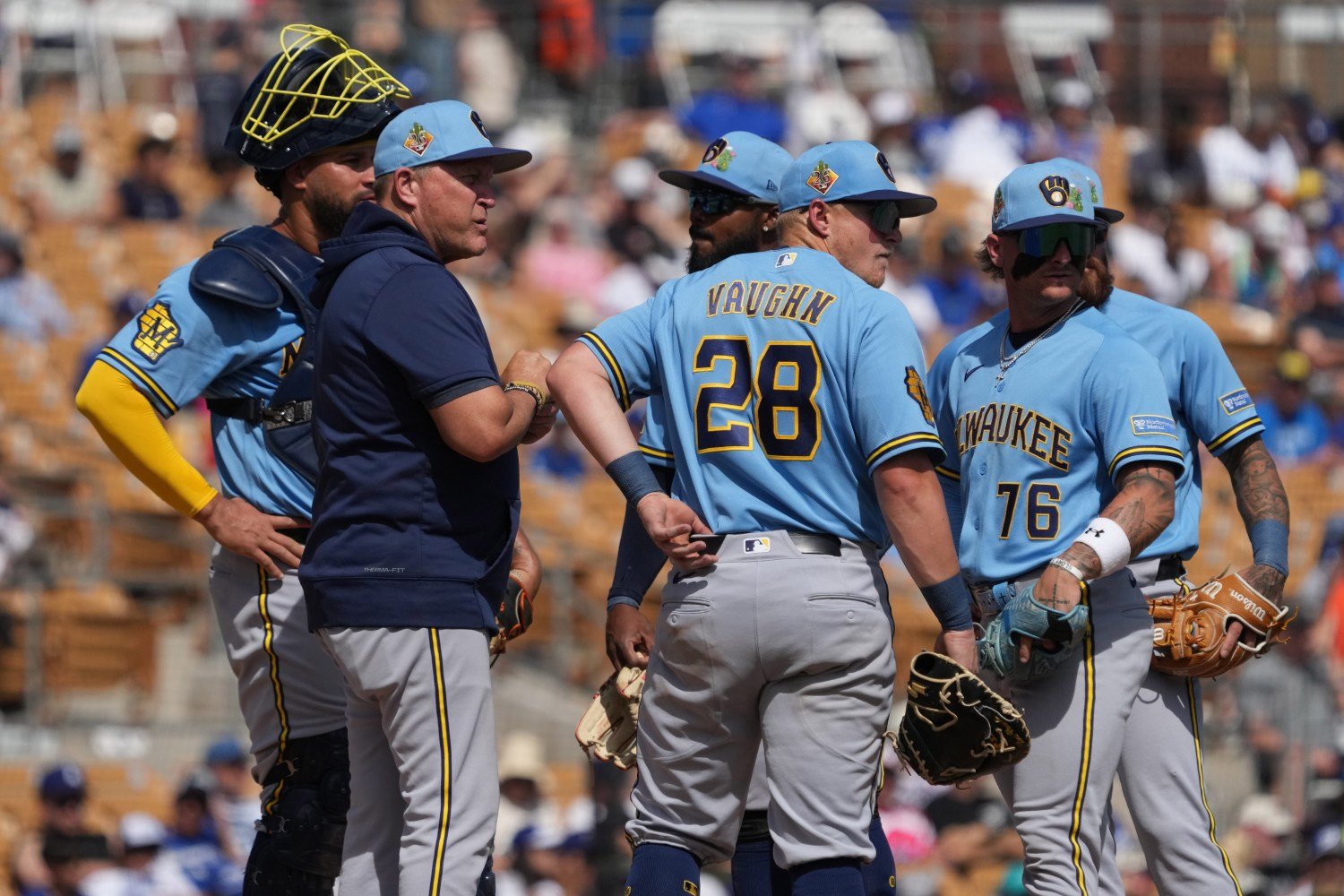 Pat Murphy's favorite metaphor for his own job is that of a bus driver. He's setting direction, and he bears ultimate responsibility for staying on the road and getting to the destination. However, he's cognizant of the fact that the most important people on the bus are the ones he's ferrying. Though his smirking acerbity and his penchant for storytelling and name-dropping might look like self-aggrandizement, Murphy's self-conception is as a servant leader. He understands that his job is to cultivate the talent of each individual on his roster, but it's also to ensure that the team is not unduly dependent on any one person—be that a player, a coach, Matt Arnold, or Murphy himself. When the Brewers hired Murphy to take over for Craig Counsell, it was a perilous moment in the progress of a would-be regional hegemon. Counsell had guided the team so well for the previous decade that many ascribed the small-market Crew's improbably consistent success to Counsell, so when he defected to the team's top rivals, it looked like Milwaukee was in trouble. The team was losing Counsell; they would have to survive 2024 without either Corbin Burnes or Brandon Woodruff; and Christian Yelich was in apparent decline. We know, now, that they had a deeper, abiding organizational competence that allowed them to weather those losses. The temptation might be to believe that that was true all along, and that there was never a real reason to fear the decline of the Brewers dynasty. In truth, though, that winter, even the organization itself had its doubts. The team was already doing a lot of things right—coaching players well, scouting exceptionally well, and making good, patient decisions at a front-office level—that made what they were doing more sustainable than it looked. Murphy, though, was the perfect hire, because he's facilitated the profusion of that excellence all the way to the majors and the continuity that has made the team more resilient to roster turnover than they were even under Counsell. It helped that he'd spent years at Counsell's shoulder, and was able to retain all the key coaches who helped the team be so much better than the sum of its parts. It helped, too, that he had spent most of the three decades before joining the Brewers coaching college baseball. There, roster turnover isn't optional. There, you have to have a system, and you must quickly learn not to take that as an exercise in egomania—but rather, as a dedication to principles and precepts that extend beyond the organization's reliance on any set of players. It's a balance you have to strike. It's about having an identity into which you seek to assimilate players, and about seeking players who will assimilate smoothly, but not becoming so rigid that you miss opportunities to bring in or empower great players who aren't natural fits for that identity. Not every manager even tries to be the locus of that identity in the modern game. Many of those who try to do so fail, leaning too far either toward accommodation or strict adherence to principle. Murphy has proved to be superb at that balancing act, though, and it has much to do with how long he waited for this chance and the variety of experiences he had before it came. "I think it probably helped," the skipper said of his time coaching Notre Dame and Arizona State, as he takes on the challenge of managing players much richer, much better and with much more self-actualized self-interest than college kids have. "Everything we go through like that should help. I see the correlation there that you do. You have to go, 'Ok, this is the ingredients I'm working with now.' Then, what do you do?" That's a mindset focused on adapting to his personnel, which Murphy knows will be forever changing. However, he also has a parallel mindset in which he expects his personnel to adapt to his system. The front office favors excellent defenders, patient hitters and fast runners, not because those are areas of market inefficiency—maybe they are, to some extent, but remember, this same front office seemed to endlessly collect plodding power hitters until a few years ago—but because Murphy likes them. He believes those are winning traits, and in particular, he believes that players like that who commit themselves to certain behaviors—situational swing decisions, excellent fundamentals on advanced plays, and seriousness of purpose—contribute to winning in ways that go beyond the box score. His reputation runs toward the scrappy underdog shtick, which is partly a conscious effort on his part. But Murphy likes stars. He likes power hitters. He likes power arms. He just doesn't stop with any of those traits. He craves them and celebrates them, but they don't satisfy him. Because Murphy will reward a player whose preparation, daily intensity and concentration augment their game—occasionally, even at the expense of a player he knows has a higher upside—his charges quickly learn to meet those expectations. With Murphy in the cockpit (or the driver's seat), the front office feels safe turning over the roster, even when it means trading players the skipper considered favorites. He admitted that trading Caleb Durbin "still hurts," but is on board with the udnerlying rationale for it. Swapping out Durbin, Isaac Collins and Freddy Peralta (among others) this winter gave the team better depth and more balance, and Murphy sees what he itches to see in players when he looks at new acquisitions Brandon Sproat, Jett Williams and David Hamilton. Entropy is still coming for the Brewers. The parade of rules changes from MLB continues to infringe on their competitive edges, and the negotiation of a new collective bargaining agreement this winter could hurt them badly, even though fans only superficially familiar with the economics of the game might expect the opposite. This team has undergone quite a bit of change since last fall, and the national baseball media doesn't believe they've improved. If anything, the numbers and the punditry say, they've gone backward. Murphy doesn't believe that. Neither does the team, and neither do I. While keeping the team's recent level of success going under their current circumstances will be difficult, I think it's much more likely than those not closely familiar with the team realize. They have depth and balance, and they have a system. It's unorthodox, but it's an excellent insulator against the erosion of their greatness. Murphy is still driving the bus, and he and the team have selected a direct route. The gas tank is full, and there are plans for refueling. They have supplies on board to withstand whatever adversity they encounter. This team isn't feeling the pulling-apart most teams like them would be feeling by now, and a great share of the credit goes to the two-time defending National League Manager of the Year.
 -
Image courtesy of © Jayne Kamin-Oncea-Imagn Images The Milwaukee Brewers optioned left-handed pitchers Shane Drohan and Robert Gasser to Triple-A Nashville Sunday. That paves the way for right-handed reliever Easton McGee to claim the final spot on the team's Opening Day 26-man roster, barring an acquisition from outside the organization at the last minute. Because the statuses of both Kyle Harrison and Brandon Woodruff remain slightly unclear, it's possible that Drohan or Gasser could be recalled as soon as Thursday, but for now, the team has chosen McGee for the final spot in the bullpen. It's an unsurprising move, on two levels. Firstly, McGee is right-handed, and while he's had limited real utility to the team at the big-league level since joining the organization in 2024, he's the easiest fit for their needs as the season dawns. With Aaron Ashby, Jared Koenig, Ángel Zerpa and DL Hall all making the team as lefty relievers, McGee offers balance. He can also go more than three outs in a game, but isn't a candidate to be a starting pitcher, as both Gasser and Drohan are. Thus, the southpaws will head to Nashville and stay stretched out, ready to start if needed based on the availability (or lack thereof) of Harrison and Woodruff over the first few weeks of the season. Developing Drohan and Gasser as starters isn't the team's highest priority, but absent an urgent need for either in the bullpen, it makes more sense to let each continue along that path. Both remain viable prospects to emerge as starters for the team later this year or in 2027, even if their ages are reminders that it's time to find out what each can do. McGee tentatively slots into the eighth spot in a bullpen which (in addition to the aforementioned quartet of lefties) includes high-leverage duo Trevor Megill and Abner Uribe and sidearm middle reliever Grant Anderson. Even at the end of February. manager Pat Murphy admitted that in a perfect world, he might have one more trustworthy right-handed arm in that relief corps, and since then, he's lost Craig Yoho to the injured list. It's not out of the question that Milwaukee might snatch up a pitcher who doesn't make the cut for another team as the week begins, but if no such opportunity materializes, McGee will begin the season in a spot that figures to be revolving door all year. View full article
- 2 replies
-
- 1
-

-
- robert gasser
- shane drohan
- (and 1 more)
-
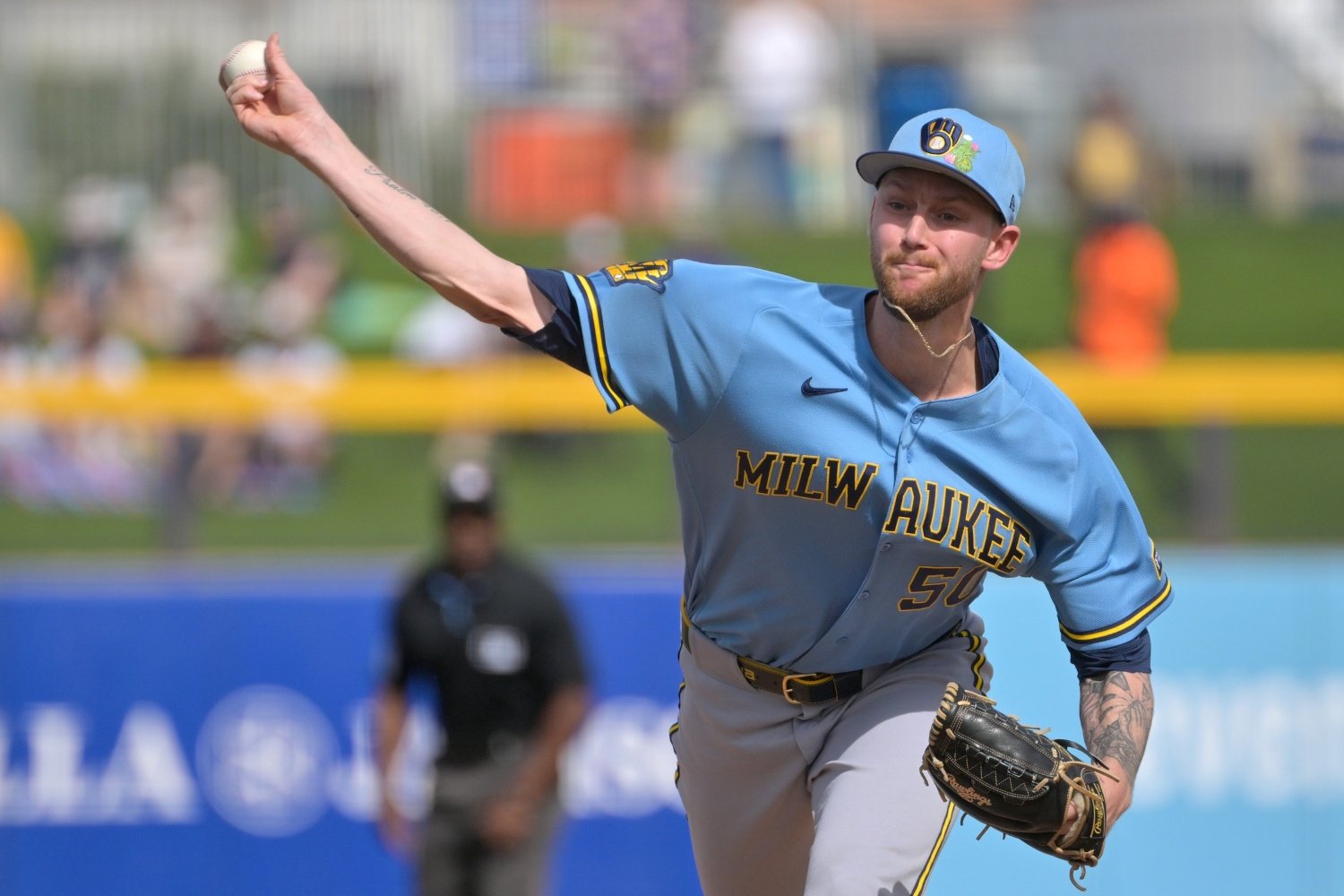 The Milwaukee Brewers optioned left-handed pitchers Shane Drohan and Robert Gasser to Triple-A Nashville Sunday. That paves the way for right-handed reliever Easton McGee to claim the final spot on the team's Opening Day 26-man roster, barring an acquisition from outside the organization at the last minute. Because the statuses of both Kyle Harrison and Brandon Woodruff remain slightly unclear, it's possible that Drohan or Gasser could be recalled as soon as Thursday, but for now, the team has chosen McGee for the final spot in the bullpen. It's an unsurprising move, on two levels. Firstly, McGee is right-handed, and while he's had limited real utility to the team at the big-league level since joining the organization in 2024, he's the easiest fit for their needs as the season dawns. With Aaron Ashby, Jared Koenig, Ángel Zerpa and DL Hall all making the team as lefty relievers, McGee offers balance. He can also go more than three outs in a game, but isn't a candidate to be a starting pitcher, as both Gasser and Drohan are. Thus, the southpaws will head to Nashville and stay stretched out, ready to start if needed based on the availability (or lack thereof) of Harrison and Woodruff over the first few weeks of the season. Developing Drohan and Gasser as starters isn't the team's highest priority, but absent an urgent need for either in the bullpen, it makes more sense to let each continue along that path. Both remain viable prospects to emerge as starters for the team later this year or in 2027, even if their ages are reminders that it's time to find out what each can do. McGee tentatively slots into the eighth spot in a bullpen which (in addition to the aforementioned quartet of lefties) includes high-leverage duo Trevor Megill and Abner Uribe and sidearm middle reliever Grant Anderson. Even at the end of February. manager Pat Murphy admitted that in a perfect world, he might have one more trustworthy right-handed arm in that relief corps, and since then, he's lost Craig Yoho to the injured list. It's not out of the question that Milwaukee might snatch up a pitcher who doesn't make the cut for another team as the week begins, but if no such opportunity materializes, McGee will begin the season in a spot that figures to be revolving door all year.
- 2 comments
-
- 3
-
-
- robert gasser
- shane drohan
- (and 1 more)
-
Image courtesy of © Rick Scuteri-Imagn Images Early in spring training, as players were getting a feel for the ABS challenge system and the contours of the new zone created thereby, most teams—including the Brewers—allowed their hitters to challenge at will. The Crew ran out of challenges early in games more than once in the first fortnight of Cactus League games, which mildly exasperated manager Pat Murphy, but he waited until nearly the middle of the preseason schedule to crack down on the strategic approaches of players to the system. As other teams have done the same thing, the global challenge rate has come down sharply. Early in the spring, hitters were challenging roughly 1 out of every 15 called strikes. For the last week, the average has been just under 1 in every 25 such pitches. This was inevitable. Once everyone has a handle on the best usage of the system, it's important to learn when not to challenge a call that feels borderline. Game situation—relative score, count, base-out situation, inning, and whether or not the team has both of its challenges remaining—has to inform each choice about whether or not to challenge a call, rather than the batter's simple perception. Withholding some challenges to ensure that the team still has the right to mount one at a critical moment is part of every team's gameplan; it just wasn't part of most teams' early conversations during games that don't count. Still, it's an important trend, because how often the league's batters challenge as a whole matters quite a bit to the Brewers. Though William Contreras has become synonymous with the catcher position for the Crew (and can hardly be optimized as a framer a second time), the team has a reputation over a decade old for improving the framing of catchers. They win at the margins of the strike zone, including by stealing some strikes on pitches that shouldn't be thus called. The ABS challenge system threatens that advantage, and the magnitude of value the Brewers are likely to lose is proportional to the frequency with which the league's batters tend to challenge calls. The Brewers were eighth-best in baseball last year at getting called strikes when a batter took a pitch in the shadow zones, as defined by Statcast's Attack Zones model. It's important to know where they got most of those calls, though, because strikes can be stolen more safely if they're plucked from zones in which batters are less likely to challenge. Here's the heat map showing where the Brewers most often got those borderline strikes in 2025: That's a pretty standard and stereotypical heat map. It's easier to frame pitches at the bottom of the zone than to do so at the top, but batters also swing more often at high pitches, anyway, so the pitch up there is usually thrown with the goal of getting a whiff or a weak fly ball, rather than in pursuit of a called strike. Those are supposed to come at the bottom of the zone. For many of the same reasons, hitters challenge more often near the bottom of the zone than near the top—but not by as much as the heat map above might imply. Hitters (and pitchers and catchers) are still getting accustomed to the new upper and lower bounds of the bespoke strike zones assigned to each batter, based on their height. The edges of the plate don't move, but what's high, what's low, and what hits the zone between those regions is newly defined—and still a bit of a mystery. The top of the zone seems to have come down a bit, but the bottom edge doesn't seem to have moved much for most batters. As a result, the Brewers might be able to hold onto some of their slightly out-of-zone called strikes for a while. Hitters will be wary of challenges on low pitches, where the success rate hasn't been very good and they're not as certain as they are about pitches inside and outside. Contreras needs to continue to excel at bringing up those pitches nipping at the knees of batters, but that shouldn't be a problem. In this way, fewer challenges might be good news for the Crew. On the other hand, though, notice in that first chart that the challenge rate for catchers has been nearly flat throughout the spring. For the most patient team in baseball, that gives the Crew some concrete information. They should expect opposing catchers to challenge about 1 of every 50 pitches they take for a ball. That's why, so far this spring, they've experienced among the most sheer overturns against them, from both batters and catchers. They'll have to negotiate this aspect throughout the season; it might eventually need to dictate some minor changes in their approaches. The Brewers play a specific brand of baseball, and can't afford to reorganize themselves every time the league tweaks a rule. That's for richer teams to do. The Crew needs to find ways to tailor their existing systems to new wrinkles, but never throw out those systems in favor of less efficient ones; that would be self-defeating. All spring, they've monitored these trends throughout the league, and they'll have to continue doing so—but it can't be the overriding consideration as they shape their plans to win games. View full article
-
What Sinking ABS Challenge Rates Will Mean for Brewers
Matthew Trueblood posted an article in Brewers
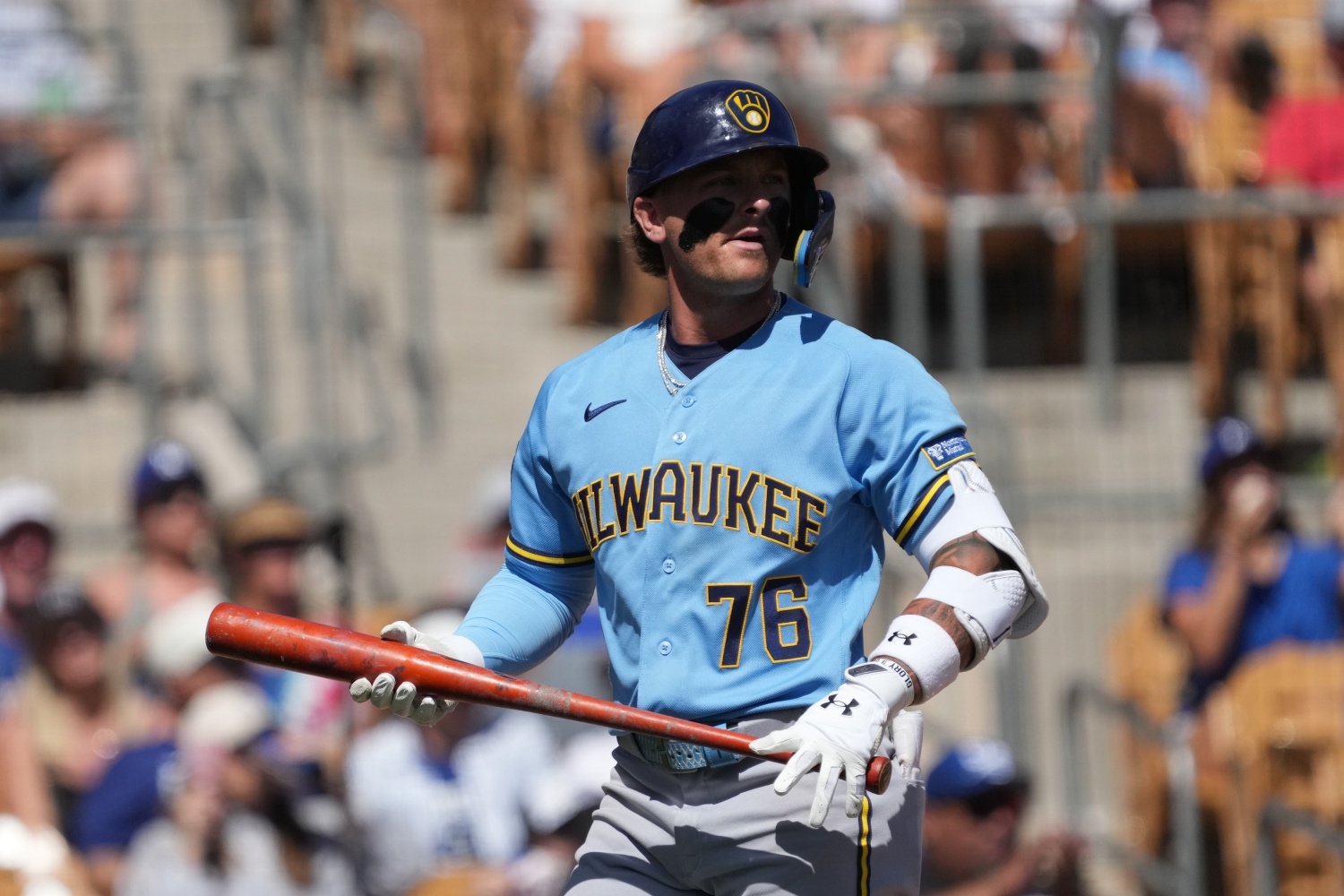 Early in spring training, as players were getting a feel for the ABS challenge system and the contours of the new zone created thereby, most teams—including the Brewers—allowed their hitters to challenge at will. The Crew ran out of challenges early in games more than once in the first fortnight of Cactus League games, which mildly exasperated manager Pat Murphy, but he waited until nearly the middle of the preseason schedule to crack down on the strategic approaches of players to the system. As other teams have done the same thing, the global challenge rate has come down sharply. Early in the spring, hitters were challenging roughly 1 out of every 15 called strikes. For the last week, the average has been just under 1 in every 25 such pitches. This was inevitable. Once everyone has a handle on the best usage of the system, it's important to learn when not to challenge a call that feels borderline. Game situation—relative score, count, base-out situation, inning, and whether or not the team has both of its challenges remaining—has to inform each choice about whether or not to challenge a call, rather than the batter's simple perception. Withholding some challenges to ensure that the team still has the right to mount one at a critical moment is part of every team's gameplan; it just wasn't part of most teams' early conversations during games that don't count. Still, it's an important trend, because how often the league's batters challenge as a whole matters quite a bit to the Brewers. Though William Contreras has become synonymous with the catcher position for the Crew (and can hardly be optimized as a framer a second time), the team has a reputation over a decade old for improving the framing of catchers. They win at the margins of the strike zone, including by stealing some strikes on pitches that shouldn't be thus called. The ABS challenge system threatens that advantage, and the magnitude of value the Brewers are likely to lose is proportional to the frequency with which the league's batters tend to challenge calls. The Brewers were eighth-best in baseball last year at getting called strikes when a batter took a pitch in the shadow zones, as defined by Statcast's Attack Zones model. It's important to know where they got most of those calls, though, because strikes can be stolen more safely if they're plucked from zones in which batters are less likely to challenge. Here's the heat map showing where the Brewers most often got those borderline strikes in 2025: That's a pretty standard and stereotypical heat map. It's easier to frame pitches at the bottom of the zone than to do so at the top, but batters also swing more often at high pitches, anyway, so the pitch up there is usually thrown with the goal of getting a whiff or a weak fly ball, rather than in pursuit of a called strike. Those are supposed to come at the bottom of the zone. For many of the same reasons, hitters challenge more often near the bottom of the zone than near the top—but not by as much as the heat map above might imply. Hitters (and pitchers and catchers) are still getting accustomed to the new upper and lower bounds of the bespoke strike zones assigned to each batter, based on their height. The edges of the plate don't move, but what's high, what's low, and what hits the zone between those regions is newly defined—and still a bit of a mystery. The top of the zone seems to have come down a bit, but the bottom edge doesn't seem to have moved much for most batters. As a result, the Brewers might be able to hold onto some of their slightly out-of-zone called strikes for a while. Hitters will be wary of challenges on low pitches, where the success rate hasn't been very good and they're not as certain as they are about pitches inside and outside. Contreras needs to continue to excel at bringing up those pitches nipping at the knees of batters, but that shouldn't be a problem. In this way, fewer challenges might be good news for the Crew. On the other hand, though, notice in that first chart that the challenge rate for catchers has been nearly flat throughout the spring. For the most patient team in baseball, that gives the Crew some concrete information. They should expect opposing catchers to challenge about 1 of every 50 pitches they take for a ball. That's why, so far this spring, they've experienced among the most sheer overturns against them, from both batters and catchers. They'll have to negotiate this aspect throughout the season; it might eventually need to dictate some minor changes in their approaches. The Brewers play a specific brand of baseball, and can't afford to reorganize themselves every time the league tweaks a rule. That's for richer teams to do. The Crew needs to find ways to tailor their existing systems to new wrinkles, but never throw out those systems in favor of less efficient ones; that would be self-defeating. All spring, they've monitored these trends throughout the league, and they'll have to continue doing so—but it can't be the overriding consideration as they shape their plans to win games.
 -
How Close Are We Getting to Aaron Ashby, Starting Pitcher, Pt. II?
Matthew Trueblood posted an article in Brewers
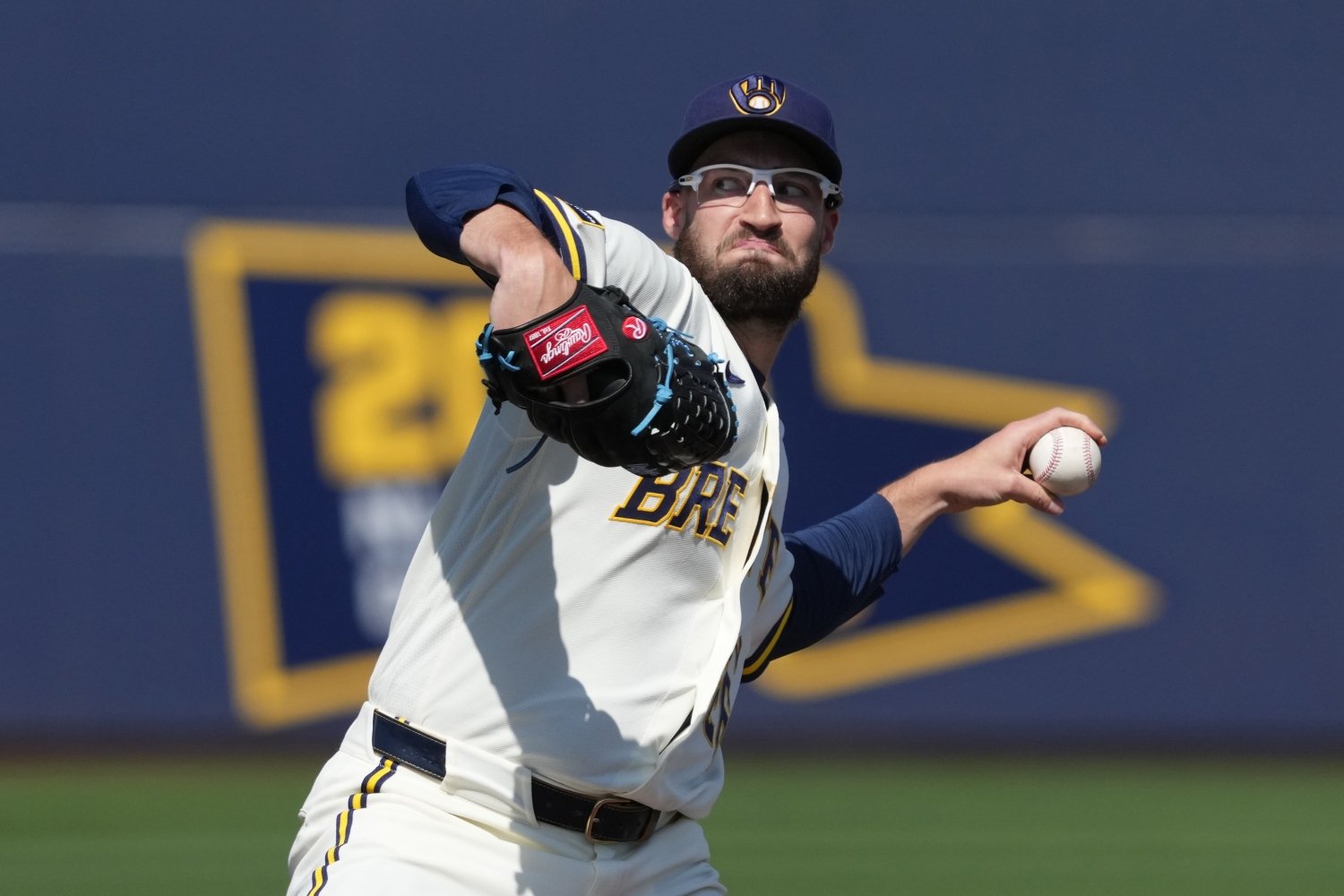 The Brewers front office and coaching staff knew this would happen, even if you didn't. Over and over, when asked questions about an apparent surfeit of starting pitching options in the wake of multiple trades that brought in more young arms in the late stages of the offseason, Matt Arnold, Pat Murphy and others in the organization sounded the same note: there will be injuries. The team needs to be ready when they come, and they need everyone they acquired in order to do that. It's clear, by now, that they were right. Already this spring, Brandon Woodruff has been brought along exceptionally slowly, with the goal being to have him ready to pitch in October, even if that comes at the expense of March. Quinn Priester, as it turns out, is dealing with a form of thoracic outlet syndrome, and while his prognosis is better than it often is for pitchers dealing with that issue, he's unlikely to be back on a big-league mound before Memorial Day. Logan Henderson has dealt with elbow discomfort this spring. Now, Kyle Harrison's short-term availability is up in the air, as he left his latest Cactus League start with a blister. One week from Opening Day, the Brewers' projected starting rotation suddenly looks stretched. It goes: Jacob Misiorowski Chad Patrick Brandon Sproat Woodruff Firstly, that's only four names. Second, the hope had been to hold Woodruff back until the second series of the season, which now looks tougher to do. Third, Sproat came to camp without a guarantee of any place in the rotation. He's already become indispensable. Let's tackle that first note more completely, though. The Brewers need a fifth starter. Even with days off aplenty early in the year, shortening to a four-man rotation is not an option they'll consider. The true routine of the modern starter is to work every sixth day, with the flexibility to go every fifth when required. They won't begin the season by asking their starters to go on four days' rest with any regularity. So, who will stand the gap? The good news is that, thanks to all those moves and their stubborn retention of all the pitching depth they can get, there remain several viable options. The most obvious is Robert Gasser, but fellow lefties DL Hall and Shane Drohan are right there in the mix, too. It's less likely that the team will turn to either Carlos Rodríguez or Coleman Crow, but both are on the 40-man roster. It's a luxury to have so many theoretically usable starters, even after a few of them are sidelined. Rather than Gasser, Hall or Drohan, though, another lefty could end up back in the mix for the rotation, on an interim basis. Maybe this year, the way for Pat Murphy and Aaron Ashby to get Ashby into the game as often as he wants to be is to have him start some games in a traditional, rotational role. Despite stretching out with starting in mind in 2024 and 2025, Ashby hasn't actually been a regular starter in the majors since 2022. It would be a significant change to move him back into the role this year, but it's no longer a wild idea. He threw 50 pitches in one Cactus League appearance. He's worked into a third inning multiple times. He has, after all, a deep arsenal for a reliever, with a sinker, a curveball, a changeup, and a four-seamer he leaned into more late last season, plus the occasional slider. There's no pitcher Murphy trusts more than Ashby, and Ashby wants the ball more than any other pitcher in the clubhouse. He's not fussy about the role he fills, but always eager to help the team and alleviate the burden on teammates, and this spring, the best way to do that might be to shift back to the rotation for a while. It helps quite a bit that Ángel Zerpa has looked great this spring, both in camp and during his time with World Baseball Classic-winning Team Venezuela. Zerpa and Jared Koenig can fill the team's needs from the left side in high-leverage relief, while Hall is a good candidate to go multiple innings in relief. Hall, Gasser and even Drohan would be more conventional choices for the rotation, because they've each worked with that specific goal and role throughout the spring, but Ashby is clearly the best of those four pitchers. If the team needs a trustworthy fifth starter for the first month or so, he's the player Murphy is most likely to choose. Once he's in the rotation, moving him back to the pen might be tricky—unless his body responds to the added workload with another injury. That's a problem for later in the year, though, and it could be a "good problem": there's little real friction in simply keeping Ashby in the rotation and telling Hall to shift his focus toward a permanent relief role. If Harrison and/or Henderson come along exceptionally well in the coming days, this could be moot. But keep an eye on Ashby; he could be starting (not just opening) come next week.
- 1 comment
-
- 1
-
-
- aaron ashby
- logan henderson
- (and 2 more)
-
Image courtesy of © Rick Scuteri-Imagn Images The Brewers front office and coaching staff knew this would happen, even if you didn't. Over and over, when asked questions about an apparent surfeit of starting pitching options in the wake of multiple trades that brought in more young arms in the late stages of the offseason, Matt Arnold, Pat Murphy and others in the organization sounded the same note: there will be injuries. The team needs to be ready when they come, and they need everyone they acquired in order to do that. It's clear, by now, that they were right. Already this spring, Brandon Woodruff has been brought along exceptionally slowly, with the goal being to have him ready to pitch in October, even if that comes at the expense of March. Quinn Priester, as it turns out, is dealing with a form of thoracic outlet syndrome, and while his prognosis is better than it often is for pitchers dealing with that issue, he's unlikely to be back on a big-league mound before Memorial Day. Logan Henderson has dealt with elbow discomfort this spring. Now, Kyle Harrison's short-term availability is up in the air, as he left his latest Cactus League start with a blister. One week from Opening Day, the Brewers' projected starting rotation suddenly looks stretched. It goes: Jacob Misiorowski Chad Patrick Brandon Sproat Woodruff Firstly, that's only four names. Second, the hope had been to hold Woodruff back until the second series of the season, which now looks tougher to do. Third, Sproat came to camp without a guarantee of any place in the rotation. He's already become indispensable. Let's tackle that first note more completely, though. The Brewers need a fifth starter. Even with days off aplenty early in the year, shortening to a four-man rotation is not an option they'll consider. The true routine of the modern starter is to work every sixth day, with the flexibility to go every fifth when required. They won't begin the season by asking their starters to go on four days' rest with any regularity. So, who will stand the gap? The good news is that, thanks to all those moves and their stubborn retention of all the pitching depth they can get, there remain several viable options. The most obvious is Robert Gasser, but fellow lefties DL Hall and Shane Drohan are right there in the mix, too. It's less likely that the team will turn to either Carlos Rodríguez or Coleman Crow, but both are on the 40-man roster. It's a luxury to have so many theoretically usable starters, even after a few of them are sidelined. Rather than Gasser, Hall or Drohan, though, another lefty could end up back in the mix for the rotation, on an interim basis. Maybe this year, the way for Pat Murphy and Aaron Ashby to get Ashby into the game as often as he wants to be is to have him start some games in a traditional, rotational role. Despite stretching out with starting in mind in 2024 and 2025, Ashby hasn't actually been a regular starter in the majors since 2022. It would be a significant change to move him back into the role this year, but it's no longer a wild idea. He threw 50 pitches in one Cactus League appearance. He's worked into a third inning multiple times. He has, after all, a deep arsenal for a reliever, with a sinker, a curveball, a changeup, and a four-seamer he leaned into more late last season, plus the occasional slider. There's no pitcher Murphy trusts more than Ashby, and Ashby wants the ball more than any other pitcher in the clubhouse. He's not fussy about the role he fills, but always eager to help the team and alleviate the burden on teammates, and this spring, the best way to do that might be to shift back to the rotation for a while. It helps quite a bit that Ángel Zerpa has looked great this spring, both in camp and during his time with World Baseball Classic-winning Team Venezuela. Zerpa and Jared Koenig can fill the team's needs from the left side in high-leverage relief, while Hall is a good candidate to go multiple innings in relief. Hall, Gasser and even Drohan would be more conventional choices for the rotation, because they've each worked with that specific goal and role throughout the spring, but Ashby is clearly the best of those four pitchers. If the team needs a trustworthy fifth starter for the first month or so, he's the player Murphy is most likely to choose. Once he's in the rotation, moving him back to the pen might be tricky—unless his body responds to the added workload with another injury. That's a problem for later in the year, though, and it could be a "good problem": there's little real friction in simply keeping Ashby in the rotation and telling Hall to shift his focus toward a permanent relief role. If Harrison and/or Henderson come along exceptionally well in the coming days, this could be moot. But keep an eye on Ashby; he could be starting (not just opening) come next week. View full article
-
Right. I think my best guess for how this benefits the Brewers is if he goes to Nashville and keeps showing this, because that would raise his trade value quite a bit. Either way, though, good for him.
-
As performance art, to demonstrate what I'm desperately hoping we see much less of, this is great, RtB.
-
Image courtesy of © Troy Taormina-Imagn Images The Brewers track cage reps, live batting-practice reps, and game reps during spring training, to monitor the workloads of all of their position players. That continues even when a player leaves to participate in the World Baseball Classic; they check in daily and document as much as they can. By their internal count, no member of the organization has gotten more reps this spring than Tyler Black. Even with the increased number of travel and off days inherent in the unfolding of the WBC, Black has kept getting chances, often batting near the top of the batting order during Team Canada's first-ever run to the quarterfinals of the international tournament. Now, he's back in camp, and he hit the ground running by appearing against the Dodgers on Monday and against the Mariners on Wednesday. In game action (between the Cactus League and the WBC), Black has now seen 163 pitches. He's also a high-volume user of the team's Trajekt machines, and racked up considerable work early in camp by participating in live BPs and simulated games. And here's the most important takeaway from that still-small sample of work: Black finally has some punch in his bat. There are two major things holding Black back as a player. Firstly, he has little defensive value. He's failed even to impress the team in his time at first base. Though he still got some time at second base for Team Canada, the Brewers don't view him as a candidate to play that position or third base. He'll be a first baseman, a corner outfielder and/or a designated hitter, to whatever extent he's part of the team. Even when he plays a defensive position, though, he won't help Milwaukee prevent runs. With his value dependent upon his bat, then, there's quite a bit of pressure on Black to find some power. Alas, that's been the other major weakness in his game over the last two seasons. His 2023 breakout season as a prospect feels long ago, and in the time since, he's been too light on power to deliver the punch even the Brewers (famously light on power and fine with it) demand from players like him. In 903 Triple-A plate appearances, he's slugged just .425—a fine number if accumulated in the majors, but a sign of trouble in the hitter-friendly Triple-A territory. Black does have an OBP of .383 during his time at that level, though, and broadly speaking, he shows enough contact skills and a sufficiently patient approach to sustain above-average OBPs even in the majors. It just wasn't going to matter if he didn't tap into some power. Nor was that power in evidence, even under the hood. Black's 90th-percentile exit velocities at Triple-A have been in the 101-102 MPH range the last two years, a figure that denotes power almost two full grades below the league average. In his brief stints with the Brewers, he's shown below-average bat speed, to boot. No indicator suggested he was ready to generate significant power on contact in the majors, and he didn't even make contact at a plus rate last year with the Sounds. Black knew that. He put in work this winter with the same intent that has driven him to spend so much time in the box this spring: to find his opportunities to hurt the ball. It's working, too. In a combined sample of just over 20 batted balls, Black's 90th-percentile exit velocity this spring is 107 MPH. He's already hit one ball harder than he did all last season, and he's clustered several balls north of what was his EV90 in the past. In spring, the samples are small; the environs (especially in Arizona) are conducive to hitting; and the competition is uneven. Still, Black wasn't showing this capacity for driving the ball even in the minors before now. Hitting it hard as regularly as he has done so this spring alters his scouting report in a crucial way. That doesn't mean Black will push past any of Jake Bauers, Blake Perkins, Brandon Lockridge or even Jett Williams to claim a roster spot early in the season. The only player he's clearly surpassed this spring is Akil Baddoo, who was brought in purely to serve as emergency depth, anyway. Nor does Black suddenly have a star-caliber ceiling. His new upside is more like a poor man's Bauers, with the balance shifted slightly toward on-base skills at the expense of power. Still, Black came to Arizona this spring running out of time to make an impression with the organization. He's now done so. Whether it's in Milwaukee or elsewhere, he's gained a much firmer foothold on the ladder to the majors, and is materially more likely to break through as a big-leaguer this season. His chance could come soon, and he's better-positioned to seize it when it comes, because he's finally producing some pop. View full article
-
Tyler Black's Power Surge Has Revived His Career Prospects
Matthew Trueblood posted an article in Brewers
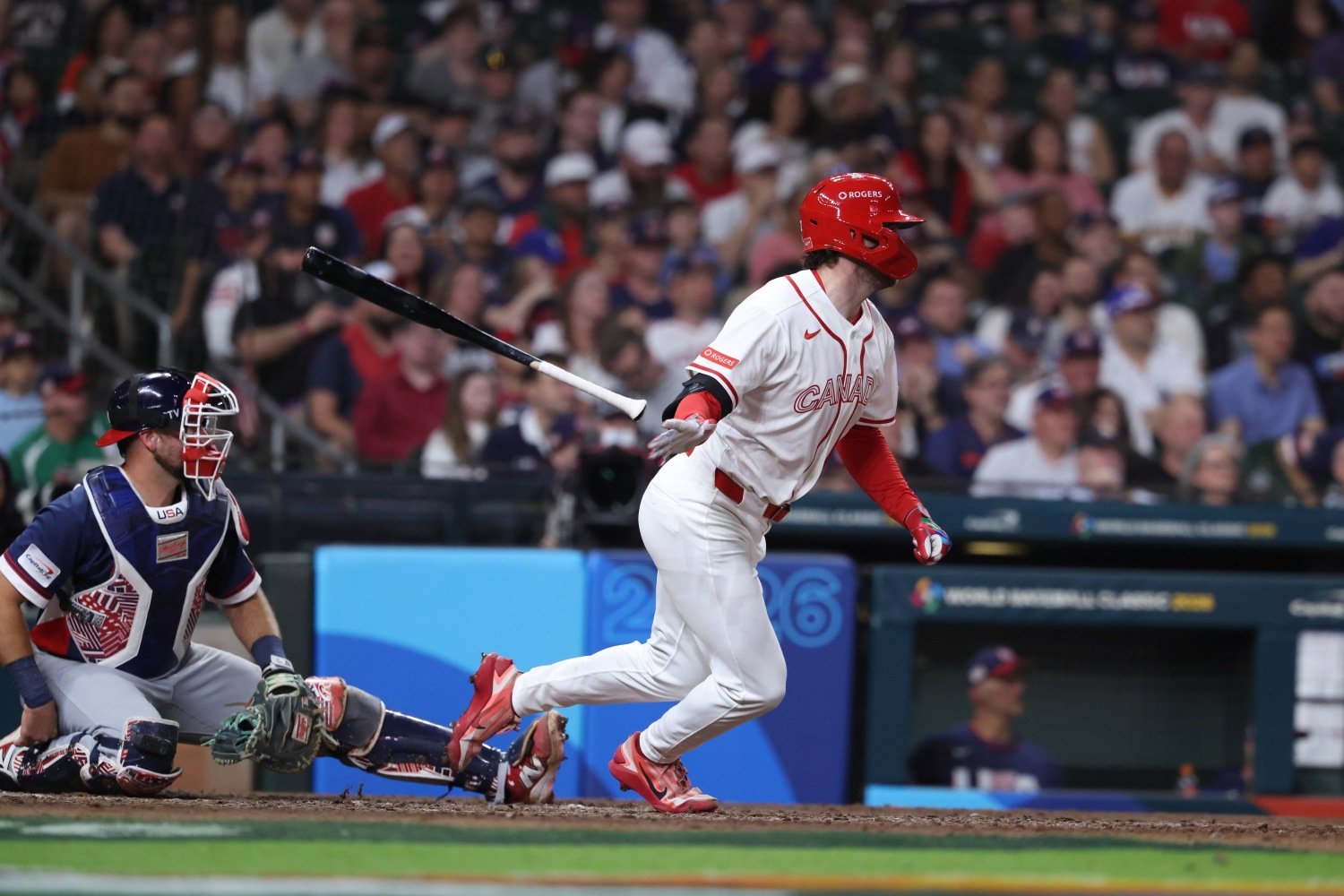 The Brewers track cage reps, live batting-practice reps, and game reps during spring training, to monitor the workloads of all of their position players. That continues even when a player leaves to participate in the World Baseball Classic; they check in daily and document as much as they can. By their internal count, no member of the organization has gotten more reps this spring than Tyler Black. Even with the increased number of travel and off days inherent in the unfolding of the WBC, Black has kept getting chances, often batting near the top of the batting order during Team Canada's first-ever run to the quarterfinals of the international tournament. Now, he's back in camp, and he hit the ground running by appearing against the Dodgers on Monday and against the Mariners on Wednesday. In game action (between the Cactus League and the WBC), Black has now seen 163 pitches. He's also a high-volume user of the team's Trajekt machines, and racked up considerable work early in camp by participating in live BPs and simulated games. And here's the most important takeaway from that still-small sample of work: Black finally has some punch in his bat. There are two major things holding Black back as a player. Firstly, he has little defensive value. He's failed even to impress the team in his time at first base. Though he still got some time at second base for Team Canada, the Brewers don't view him as a candidate to play that position or third base. He'll be a first baseman, a corner outfielder and/or a designated hitter, to whatever extent he's part of the team. Even when he plays a defensive position, though, he won't help Milwaukee prevent runs. With his value dependent upon his bat, then, there's quite a bit of pressure on Black to find some power. Alas, that's been the other major weakness in his game over the last two seasons. His 2023 breakout season as a prospect feels long ago, and in the time since, he's been too light on power to deliver the punch even the Brewers (famously light on power and fine with it) demand from players like him. In 903 Triple-A plate appearances, he's slugged just .425—a fine number if accumulated in the majors, but a sign of trouble in the hitter-friendly Triple-A territory. Black does have an OBP of .383 during his time at that level, though, and broadly speaking, he shows enough contact skills and a sufficiently patient approach to sustain above-average OBPs even in the majors. It just wasn't going to matter if he didn't tap into some power. Nor was that power in evidence, even under the hood. Black's 90th-percentile exit velocities at Triple-A have been in the 101-102 MPH range the last two years, a figure that denotes power almost two full grades below the league average. In his brief stints with the Brewers, he's shown below-average bat speed, to boot. No indicator suggested he was ready to generate significant power on contact in the majors, and he didn't even make contact at a plus rate last year with the Sounds. Black knew that. He put in work this winter with the same intent that has driven him to spend so much time in the box this spring: to find his opportunities to hurt the ball. It's working, too. In a combined sample of just over 20 batted balls, Black's 90th-percentile exit velocity this spring is 107 MPH. He's already hit one ball harder than he did all last season, and he's clustered several balls north of what was his EV90 in the past. In spring, the samples are small; the environs (especially in Arizona) are conducive to hitting; and the competition is uneven. Still, Black wasn't showing this capacity for driving the ball even in the minors before now. Hitting it hard as regularly as he has done so this spring alters his scouting report in a crucial way. That doesn't mean Black will push past any of Jake Bauers, Blake Perkins, Brandon Lockridge or even Jett Williams to claim a roster spot early in the season. The only player he's clearly surpassed this spring is Akil Baddoo, who was brought in purely to serve as emergency depth, anyway. Nor does Black suddenly have a star-caliber ceiling. His new upside is more like a poor man's Bauers, with the balance shifted slightly toward on-base skills at the expense of power. Still, Black came to Arizona this spring running out of time to make an impression with the organization. He's now done so. Whether it's in Milwaukee or elsewhere, he's gained a much firmer foothold on the ladder to the majors, and is materially more likely to break through as a big-leaguer this season. His chance could come soon, and he's better-positioned to seize it when it comes, because he's finally producing some pop.
 -
Brandon Lockridge is Making This Team, and It Could Get Loud
Matthew Trueblood posted an article in Brewers
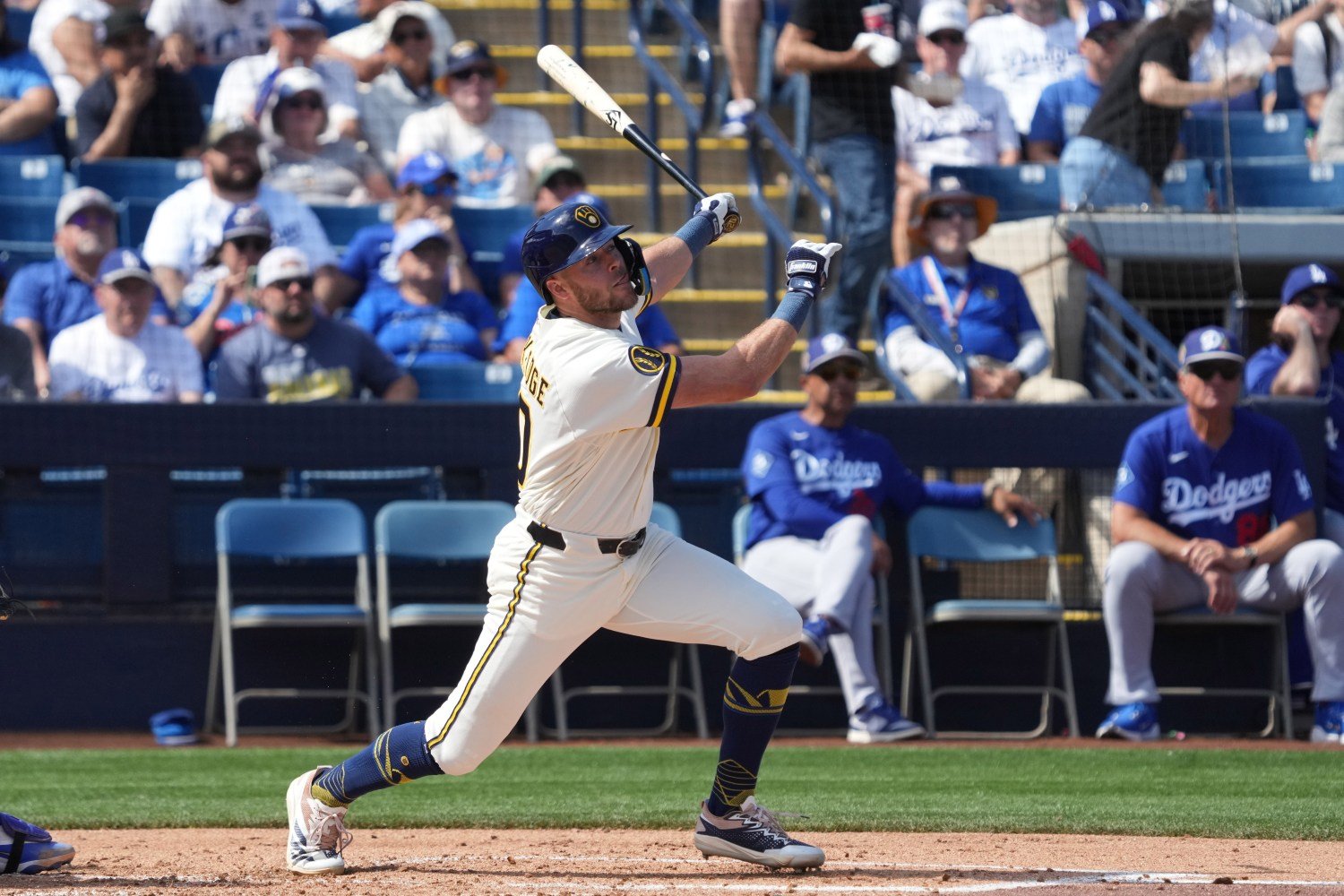 Once it became clear that Pat Murphy is enamored of David Hamilton, the suspense about the Brewers' Opening Day position-player roster was virtually gone. William Contreras and Gary Sánchez will be the catchers. Andrew Vaughn, Jake Bauers, Brice Turang, Joey Ortiz, Luis Rengifo and Hamilton are locks on the infield. Christian Yelich, Jackson Chourio, Sal Frelick and Garrett Mitchell are locks in the outfield. As important a teammate and defensive presence as Blake Perkins has often been over the last two years, it would be tempting to at least write in his name, too, using heavy pencil. That would sew up all 13 spots that will go to hitters when the team breaks camp next week. At this point, though, Perkins looks nearly certain to head to Triple-A Nashville, for one simple reason: Brandon Lockridge will not be denied. Since he was acquired last July, it's been clear that the Brewers were high on Lockridge, internally. The front office found plenty to like about him, which is why they were willing to trade a promising (if far-off) prospect, Jorge Quintana, to get him. At the time, it felt like a move motivated partially by a vague need for depth and partially by a vague desire to be rid of Nestor Cortes, but every moment since the deal, it's become clearer that Lockridge himself was essential—and that the Brewers were right to like him. Broadly speaking, the front office and manager Pat Murphy agree on their objectives and plans for the team, but there are times when they clearly hold different views on a particular player. This is not one of those times. Lockridge has become a favorite of Murphy's, too, after he handled himself well and flashed some of the skipper's favorite on-field traits (high-end speed, and a high baseball IQ) during his brief audition last summer. This spring, Murphy has repeatedly referred to Lockridge as "the right who"—his favorite way to praise a player's makeup, implying that they fit well in the clubhouse and have the combination of resiliency and attention to detail that Murphy prizes. To those soft factors and floor-setters, Lockridge has added thunderous power this spring, making his bid for the roster virtually undeniable. He spent time over the winter adjusting his posture and his swing path, he said, and the results speak for themselves. Of his 23 batted balls in Cactus League play, six have left the bat at 105 miles per hour or more. On Monday, he hit a grand slam against the Dodgers, his second homer of the spring and the latest evidence of the changes he's made. Speaking to reporters after leaving the contest, Lockridge was detailed and thoughtful about his "swinghauling". The biggest things, he believes, are being more opportunistic in taking his 'A' swing early in counts and using better posture to feed a more productive bat path. Let's examine those assertions. Compare the video above with this hit, from when he was still a Padre last year. TzBsNDRfWGw0TUFRPT1fVkZNRFhGTlZCVmNBREZFS1h3QUhCUTlYQUFBSFZBVUFCQWRSQXdvQ1V3UUFWUUJm.mp4 Like the pitch he hit out of Camelback Ranch on Monday, this was a very hittable pitch in an early count. As Lockridge self-diagnosed, though, last year, he wasn't taking an appropriately aggressive cut on such pitches. Indeed, by looking at two crucial moments within these two swings, we can see the differences at work. The top two panels show Lockridge the moment when his front foot lands, last year and on Monday. The difference here is subtle, but he's more upright and much more engaged in his lower half in the screenshot on the right. By starting a bit more locked in, he begins his swing more explosively this year than last. In the lower two frames, we see the moment where Lockridge releases his hands to attack the ball—when he makes his final swing decision. Look at how much more open his front hip and shoulder are this spring. Look at how he's letting his top hand drive a more powerful swing, rather than keeping the right elbow tucked to his body and being direct to the ball with less force. He's unleashing himself this spring, and while he's swung and missed more often than he might have otherwise, the hard contact has been more than worth it. You can also see the added thickness in his legs this year. Lockridge is much stronger than he was a year ago, so he's naturally swinging faster, but a big piece of his improved performance is the way he's moving, to catch the ball out front and do more potential damage, rather than a simple increase in swing speed. Perkins hasn't been able to get untracked this spring. He's batting just .231/.300/.269, with anemic batted-ball data. Lockridge is hitting .323/.462/.742, with his average batted ball hovering around 95 MPH. Spring results don't determine these types of battles, but there's a threshold at which the disparity can't be ignored. Perkins is an exceptional fielder, and Murphy values not just his tools, but his savvy within moments. He feels the wall well. He charges singles and makes excellent throws. He's a switch-hitter. Lockridge, though, is faster. He's also a terrific defender. The two are the same age, and each has two minor-league options remaining. It would feel strange to send Perkins to the minors, Murphy acknowledged earlier this month, but he didn't flinch at the idea the same way he did with Jared Koenig during the same conversation. Lockridge, meanwhile, has seized his attention in a way no rival to Koenig's roster spot has done. Mitchell might be in position to be platooned. Frelick could benefit from the occasional day off, and when those come, they should come against left-handed pitchers, anyway. Yelich should be shielded from outfield duty as much as possible, and all of them (plus Chourio, and Perkins, for that matter) come with some injury history that suggests a risk of sudden need. Lockridge is becoming the obvious candidate to fill that need. "In the last meeting I was in, with our coaches," Murphy said on Mar. 5, "I just had a moment. I figured out, now, why I'm excited—why I believe that this conglomeration of guys can do something." He meant something big—something beyond even what they did the last two years. And that reason why he's excited, he went on to say, was position-player depth. It was upside that had been absent in the past. He didn't say the name, but it was clear: he was thinking (among others) about Lockridge. Two weeks later, he still is, and two weeks from now, fans are going to be thinking about Lockridge, too—because he's going to be on the roster, making significant contributions.
 -
Image courtesy of © Rick Scuteri-Imagn Images Once it became clear that Pat Murphy is enamored of David Hamilton, the suspense about the Brewers' Opening Day position-player roster was virtually gone. William Contreras and Gary Sánchez will be the catchers. Andrew Vaughn, Jake Bauers, Brice Turang, Joey Ortiz, Luis Rengifo and Hamilton are locks on the infield. Christian Yelich, Jackson Chourio, Sal Frelick and Garrett Mitchell are locks in the outfield. As important a teammate and defensive presence as Blake Perkins has often been over the last two years, it would be tempting to at least write in his name, too, using heavy pencil. That would sew up all 13 spots that will go to hitters when the team breaks camp next week. At this point, though, Perkins looks nearly certain to head to Triple-A Nashville, for one simple reason: Brandon Lockridge will not be denied. Since he was acquired last July, it's been clear that the Brewers were high on Lockridge, internally. The front office found plenty to like about him, which is why they were willing to trade a promising (if far-off) prospect, Jorge Quintana, to get him. At the time, it felt like a move motivated partially by a vague need for depth and partially by a vague desire to be rid of Nestor Cortes, but every moment since the deal, it's become clearer that Lockridge himself was essential—and that the Brewers were right to like him. Broadly speaking, the front office and manager Pat Murphy agree on their objectives and plans for the team, but there are times when they clearly hold different views on a particular player. This is not one of those times. Lockridge has become a favorite of Murphy's, too, after he handled himself well and flashed some of the skipper's favorite on-field traits (high-end speed, and a high baseball IQ) during his brief audition last summer. This spring, Murphy has repeatedly referred to Lockridge as "the right who"—his favorite way to praise a player's makeup, implying that they fit well in the clubhouse and have the combination of resiliency and attention to detail that Murphy prizes. To those soft factors and floor-setters, Lockridge has added thunderous power this spring, making his bid for the roster virtually undeniable. He spent time over the winter adjusting his posture and his swing path, he said, and the results speak for themselves. Of his 23 batted balls in Cactus League play, six have left the bat at 105 miles per hour or more. On Monday, he hit a grand slam against the Dodgers, his second homer of the spring and the latest evidence of the changes he's made. Speaking to reporters after leaving the contest, Lockridge was detailed and thoughtful about his "swinghauling". The biggest things, he believes, are being more opportunistic in taking his 'A' swing early in counts and using better posture to feed a more productive bat path. Let's examine those assertions. Compare the video above with this hit, from when he was still a Padre last year. TzBsNDRfWGw0TUFRPT1fVkZNRFhGTlZCVmNBREZFS1h3QUhCUTlYQUFBSFZBVUFCQWRSQXdvQ1V3UUFWUUJm.mp4 Like the pitch he hit out of Camelback Ranch on Monday, this was a very hittable pitch in an early count. As Lockridge self-diagnosed, though, last year, he wasn't taking an appropriately aggressive cut on such pitches. Indeed, by looking at two crucial moments within these two swings, we can see the differences at work. The top two panels show Lockridge the moment when his front foot lands, last year and on Monday. The difference here is subtle, but he's more upright and much more engaged in his lower half in the screenshot on the right. By starting a bit more locked in, he begins his swing more explosively this year than last. In the lower two frames, we see the moment where Lockridge releases his hands to attack the ball—when he makes his final swing decision. Look at how much more open his front hip and shoulder are this spring. Look at how he's letting his top hand drive a more powerful swing, rather than keeping the right elbow tucked to his body and being direct to the ball with less force. He's unleashing himself this spring, and while he's swung and missed more often than he might have otherwise, the hard contact has been more than worth it. You can also see the added thickness in his legs this year. Lockridge is much stronger than he was a year ago, so he's naturally swinging faster, but a big piece of his improved performance is the way he's moving, to catch the ball out front and do more potential damage, rather than a simple increase in swing speed. Perkins hasn't been able to get untracked this spring. He's batting just .231/.300/.269, with anemic batted-ball data. Lockridge is hitting .323/.462/.742, with his average batted ball hovering around 95 MPH. Spring results don't determine these types of battles, but there's a threshold at which the disparity can't be ignored. Perkins is an exceptional fielder, and Murphy values not just his tools, but his savvy within moments. He feels the wall well. He charges singles and makes excellent throws. He's a switch-hitter. Lockridge, though, is faster. He's also a terrific defender. The two are the same age, and each has two minor-league options remaining. It would feel strange to send Perkins to the minors, Murphy acknowledged earlier this month, but he didn't flinch at the idea the same way he did with Jared Koenig during the same conversation. Lockridge, meanwhile, has seized his attention in a way no rival to Koenig's roster spot has done. Mitchell might be in position to be platooned. Frelick could benefit from the occasional day off, and when those come, they should come against left-handed pitchers, anyway. Yelich should be shielded from outfield duty as much as possible, and all of them (plus Chourio, and Perkins, for that matter) come with some injury history that suggests a risk of sudden need. Lockridge is becoming the obvious candidate to fill that need. "In the last meeting I was in, with our coaches," Murphy said on Mar. 5, "I just had a moment. I figured out, now, why I'm excited—why I believe that this conglomeration of guys can do something." He meant something big—something beyond even what they did the last two years. And that reason why he's excited, he went on to say, was position-player depth. It was upside that had been absent in the past. He didn't say the name, but it was clear: he was thinking (among others) about Lockridge. Two weeks later, he still is, and two weeks from now, fans are going to be thinking about Lockridge, too—because he's going to be on the roster, making significant contributions. View full article
-
.png.973a307c4df3b0d9404e09beca321af3.png) For Brewers fans, beating the Cubs in Game 5 of the NLDS last fall was much-needed catharsis. It wasn't just about advancing in the postseason; it was also about proving that their supremacy in the NL Central was real and complete. It was energizing, for many, to see the team hold up an 'L' flag during their on-field team picture after the game. The phone gestures toward the Cubs dugout by William Contreras and Abner Uribe at key junctures are iconic moments from that series. However, while it's easy to forget this part of the reporting, there was a collective hesitation by the team before they agreed to hold up the flag. While Contreras seemed to savor beating the Brewers' top rivals (and an organization by which his big brother felt slightly disrespected), he also singled out Craig Counsell in a Player's Tribune column last fall—not for the so-called treachery of leaving his hometown team to manage the Cubs, but for his excellent treatment of Latino players. Counsell and Pat Murphy have a many-layered, lifelong friendship. The Cubs keep picking up players (Colin Rea, Hoby Milner) whom the Brewers employed first, and who still have nothing but good things to say about the Milwaukee organization. New Brewers prospect Jett Williams has a surprisingly close relationship to Alex Bregman, whom Murphy also knows and immensely likes. Pete Crow-Armstrong, Brice Turang, Bregman and Matthew Boyd have been Team USA teammates this month for the World Baseball Classic. Contreras, Jackson Chourio and Cubs closer Daniel Palencia are together on Team Venezuela. Tyler Black and Jameson Taillon (Canada) and Joey Ortiz and Javier Assad (México) were tournament teammates, too. Their entrenched places at the top of the division make their games feel extremely important; the enmity between the fan bases is real (and unfortunate); and the front offices have some ongoing and real (though low-level) beef. On the field, however, it's harder all the time to make the case that these teams don't like each other. There's been mutual respect even at harder moments, like Counsell's first season in Chicago. Now, with Murphy locked in for a long tenure with the Crew and some of the resentment of Counsell's departure blunted by the success of the team he left behind, there's something much like mutual affection between the teams. Off the field, the rivalry is likely to remain bitter for a while. Because the Brewers just came to the National League in 1998 and the two teams didn't overlap near the top of the standings for the first fistful of years, this is still an adolescent rivalry. It's not as settled or comfortable as those between, for instance, the Cubs and Cardinals or the Brewers and Twins. A rivalry born in the age of the internet, it's also burned a bit hotter from its inception than many of the game's older rivalries did. It'll be interesting, though, to see whether the shared DNA of the two teams and their lack of genuine dislike at the field level begins the inevitable process of bringing down the temperature of the off-field hatred. Reasonable people can disagree about the value of sports rivalries, but there have been many times over the last decade when the fans, franchises and even players and coaches in this particular one have been deleteriously angry and confrontational with one another. Entering 2026, that feels less likely to happen on the field than at any time in the last 20 years. Whether that reduction of tension can carry over to the crowds at games and the timelines on social media remains to be seen.
For Brewers fans, beating the Cubs in Game 5 of the NLDS last fall was much-needed catharsis. It wasn't just about advancing in the postseason; it was also about proving that their supremacy in the NL Central was real and complete. It was energizing, for many, to see the team hold up an 'L' flag during their on-field team picture after the game. The phone gestures toward the Cubs dugout by William Contreras and Abner Uribe at key junctures are iconic moments from that series. However, while it's easy to forget this part of the reporting, there was a collective hesitation by the team before they agreed to hold up the flag. While Contreras seemed to savor beating the Brewers' top rivals (and an organization by which his big brother felt slightly disrespected), he also singled out Craig Counsell in a Player's Tribune column last fall—not for the so-called treachery of leaving his hometown team to manage the Cubs, but for his excellent treatment of Latino players. Counsell and Pat Murphy have a many-layered, lifelong friendship. The Cubs keep picking up players (Colin Rea, Hoby Milner) whom the Brewers employed first, and who still have nothing but good things to say about the Milwaukee organization. New Brewers prospect Jett Williams has a surprisingly close relationship to Alex Bregman, whom Murphy also knows and immensely likes. Pete Crow-Armstrong, Brice Turang, Bregman and Matthew Boyd have been Team USA teammates this month for the World Baseball Classic. Contreras, Jackson Chourio and Cubs closer Daniel Palencia are together on Team Venezuela. Tyler Black and Jameson Taillon (Canada) and Joey Ortiz and Javier Assad (México) were tournament teammates, too. Their entrenched places at the top of the division make their games feel extremely important; the enmity between the fan bases is real (and unfortunate); and the front offices have some ongoing and real (though low-level) beef. On the field, however, it's harder all the time to make the case that these teams don't like each other. There's been mutual respect even at harder moments, like Counsell's first season in Chicago. Now, with Murphy locked in for a long tenure with the Crew and some of the resentment of Counsell's departure blunted by the success of the team he left behind, there's something much like mutual affection between the teams. Off the field, the rivalry is likely to remain bitter for a while. Because the Brewers just came to the National League in 1998 and the two teams didn't overlap near the top of the standings for the first fistful of years, this is still an adolescent rivalry. It's not as settled or comfortable as those between, for instance, the Cubs and Cardinals or the Brewers and Twins. A rivalry born in the age of the internet, it's also burned a bit hotter from its inception than many of the game's older rivalries did. It'll be interesting, though, to see whether the shared DNA of the two teams and their lack of genuine dislike at the field level begins the inevitable process of bringing down the temperature of the off-field hatred. Reasonable people can disagree about the value of sports rivalries, but there have been many times over the last decade when the fans, franchises and even players and coaches in this particular one have been deleteriously angry and confrontational with one another. Entering 2026, that feels less likely to happen on the field than at any time in the last 20 years. Whether that reduction of tension can carry over to the crowds at games and the timelines on social media remains to be seen. -
Image courtesy of © Rick Scuteri / Sam Navarro / Jayne Kamin-Oncea-Imagn Images-Imagn Images For Brewers fans, beating the Cubs in Game 5 of the NLDS last fall was much-needed catharsis. It wasn't just about advancing in the postseason; it was also about proving that their supremacy in the NL Central was real and complete. It was energizing, for many, to see the team hold up an 'L' flag during their on-field team picture after the game. The phone gestures toward the Cubs dugout by William Contreras and Abner Uribe at key junctures are iconic moments from that series. However, while it's easy to forget this part of the reporting, there was a collective hesitation by the team before they agreed to hold up the flag. While Contreras seemed to savor beating the Brewers' top rivals (and an organization by which his big brother felt slightly disrespected), he also singled out Craig Counsell in a Player's Tribune column last fall—not for the so-called treachery of leaving his hometown team to manage the Cubs, but for his excellent treatment of Latino players. Counsell and Pat Murphy have a many-layered, lifelong friendship. The Cubs keep picking up players (Colin Rea, Hoby Milner) whom the Brewers employed first, and who still have nothing but good things to say about the Milwaukee organization. New Brewers prospect Jett Williams has a surprisingly close relationship to Alex Bregman, whom Murphy also knows and immensely likes. Pete Crow-Armstrong, Brice Turang, Bregman and Matthew Boyd have been Team USA teammates this month for the World Baseball Classic. Contreras, Jackson Chourio and Cubs closer Daniel Palencia are together on Team Venezuela. Tyler Black and Jameson Taillon (Canada) and Joey Ortiz and Javier Assad (México) were tournament teammates, too. Their entrenched places at the top of the division make their games feel extremely important; the enmity between the fan bases is real (and unfortunate); and the front offices have some ongoing and real (though low-level) beef. On the field, however, it's harder all the time to make the case that these teams don't like each other. There's been mutual respect even at harder moments, like Counsell's first season in Chicago. Now, with Murphy locked in for a long tenure with the Crew and some of the resentment of Counsell's departure blunted by the success of the team he left behind, there's something much like mutual affection between the teams. Off the field, the rivalry is likely to remain bitter for a while. Because the Brewers just came to the National League in 1998 and the two teams didn't overlap near the top of the standings for the first fistful of years, this is still an adolescent rivalry. It's not as settled or comfortable as those between, for instance, the Cubs and Cardinals or the Brewers and Twins. A rivalry born in the age of the internet, it's also burned a bit hotter from its inception than many of the game's older rivalries did. It'll be interesting, though, to see whether the shared DNA of the two teams and their lack of genuine dislike at the field level begins the inevitable process of bringing down the temperature of the off-field hatred. Reasonable people can disagree about the value of sports rivalries, but there have been many times over the last decade when the fans, franchises and even players and coaches in this particular one have been deleteriously angry and confrontational with one another. Entering 2026, that feels less likely to happen on the field than at any time in the last 20 years. Whether that reduction of tension can carry over to the crowds at games and the timelines on social media remains to be seen. View full article
-
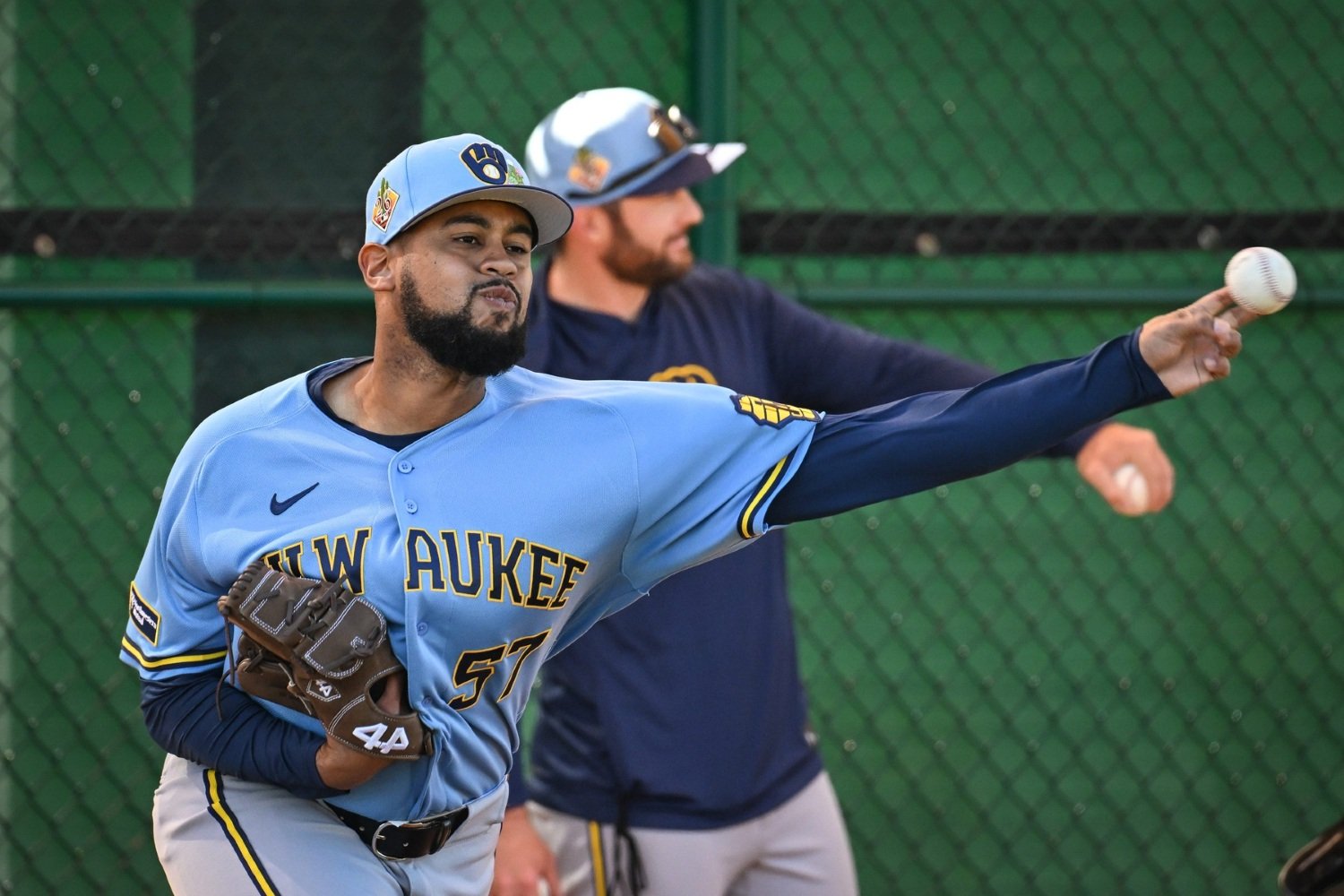 Jacob Waguespack doesn't identify as a member of any extreme overhand pitching brotherhood, if such a thing exists. Sidearmers and submariners are famous for sticking together, but as Waguespack noted, that's because most of them had to relearn to throw—as, for instance, Grant Anderson did during his transition to pitching, in college. By contrast, even guys who benefit from deception based on their very high arm slots usually achieve that semi-accidentally. "There's been a few guys in the past," Waguespack said. "I've been compared to Chris Young, [now] the GM of the Rangers. He was a tall guy, over the top. But it's just something I've always done. It's weird. "I've just done that from a young age, man. I've got pictures of me in high school or even smaller, with me, you know, getting my head out of the way and my arm's gotta come out [of that place above his torso]." Waguespack said he's received the feedback from multiple teams that pitching the way he does is useful, because it provides such a different look from what most pitchers in the modern game do. At 6-foot-7, he's not quite as towering as Young was, but he does move and pitch quite a bit like Young—and even bears a passing facial resemblance to him. Because that motion came naturally to him from his youth, though, he's never spent much time picking the brains of other pitchers like him. He focuses on using his plus-plus extension to help his fastball play up and on executing his stuff. Over the winter, Waguespack made it his goal to improve his mobility and range of motion, especially in his hips and back. Knowing that his size works against him in his efforts to stay healthy and that he's "lucky" to still be pitching the way he is at his age (32), he wanted to avoid using heavy weight in the gym and to maximize his flexibility. He consults with Cressey Sports Performance as a remote training guide, but his most important aides this winter were massage therapist Jay Manda and physical therapist Robbie Bolton, near his offseason home in Louisiana. "Just more stretching, mobility, breathwork, things like that, to really open up a few more ticks of movement," Waguespack said. He spent time with the Rays and Phillies organizations in 2025, but injuries limited him to 25 appearances, all in the minors. To get back to the Show for the first time since 2024, he chose the Brewers—not because the path is unusually clear, but because he trusts his new team to shepherd him well and give him a fair shake when the chance arises. It's not lost on him that the very locker he occupies this spring (in the least-trafficked corner of the clubhouse in Maryvale) belonged to Jared Koenig just two years ago. He called it "a blessing that the Brewers reached out," and that stroke of luck made choosing his new team easier. "When I got here, I came a week early and introduced myself to [manager Pat Murphy]," Waguespack said. "He just said they're excited to have me, and if I can be a help to the team, then they'll certainly use me. Wherever I may start—I'm not sure, probably start in Triple A—but I've got experience. It's been a good feel. I think Murph's a good leader. He's been upfront and honest to us, and I like the vibe and feel of the team." Waguespack is the archetype of the recent Brewers reliever success story, in the vein of Anderson, Koenig, Bryan Hudson, Bryse Wilson and others. He doesn't throw hard, but he offers unique traits and is a late bloomer, with an eagerness to succeed and a flexibility about the timeline of his contributions that the team prizes. Just across the room (though the two are hidden from one another by the large wall on which the massive TV is mounted) is another such winter pickup: lefty Sammy Peralta. Unlike Waguespack, Peralta didn't get to choose Milwaukee. They claimed him on waivers in late October, plucking him from the Angels organization and denying him what would have been a chance to become a minor-league free agent. Peralta, however, is not complaining. "I got a call from [Carlos Villanueva] and a couple of the other guys here," Peralta recalled, going back to when the team first picked him up. "They were telling me how much they were interested in me, and they'd really like to see me work on a cutter. So I pretty much worked on that all offseason, trying to develop a decent slider-slash-cutter." The Brewers like Peralta's sweeper a lot, as a weapon against fellow lefties, but they emphasized to him that the cutter (or tighter slider) will be a difference-maker against right-handed batters. Peralta said the pitch immediately felt comfortable for him, and that "as long as you're cognizant about how your body feels and how your arm feels," the winter work involved in engineering a new or better offering is both safe and easy. You can already see him doing it, too. Here's what his pitch charts looked like in Triple-A Salt Lake, where he spent the bulk of 2025 for the Angels. Compare that to the same data for this spring, in Brewers camp. Statcast has some cleaning up and catching up to do, but in the velocity and movement distributions on his four-seamer and slider, you can see how he's cultivated the cutter—that in-between pitch in both shape and speed that should help him neutralize right-handed batters. Righties have hammered Peralta (.302/.374/.448) during his time in the majors over the last three years, but the same was even more true of Anderson against lefties until he found his way to the Brewers last season. Peralta knows he's in an excellent place to take a big step forward in his career, especially because his career arc is similar to what some of the other guys in the clubhouse have gone through to get this far. Born in Queens, Peralta and his family moved to Florida when he was a child. He went to high school in Kissimee, but went undrafted after his senior year. He first attended Palm Beach State College, a junior college near home; then San Jacinto College, a community college in Houston. He ended up at the University of Tampa for one year, before being an 18th-round pick by the White Sox. The game did not let him in easily; he had to steadily knock the door down. "It's cool," Peralta said of being in a place where several players' résumés read like his. "I feel like it's been a chip on my shoulder, and it also drives me to compete, and want to be the best version of myself I can be. "I know a lot of these guys have been to a lot of places, and it makes me more comfortable knowing that I'm in a similar environment. Everybody here is striving to get better, and they want to be the best version of themselves, as well." Peralta, too, will start the season in the minors. Waguespack is in camp on a minor-league deal, but Peralta is on the 40-man roster and will have to survive some trimming as the team makes room for whoever might make the team but not be on the 40-man yet. He can still be optioned to the minors, though, so Milwaukee is unlikely to let him go for free. Both Waguespack and Peralta are fringe arms whom other teams could have had without making major commitments this winter. Neither has even an outside chance of becoming a closer or a top-tier setup man. However, the Brewers get extra wins each year by having reliable, surprisingly effective middle relievers who seem to come out of nowhere, and these two players perfectly encapsulate the 'how' and the 'why' of that success. They might be names to file away for now, but it's too early to forget about either. By September, one or both is likely to have come up big for the team at a moment that matters.
 -
Image courtesy of © Dave Kallmann / Milwaukee Journal Sentinel / USA TODAY NETWORK via Imagn Images Jacob Waguespack doesn't identify as a member of any extreme overhand pitching brotherhood, if such a thing exists. Sidearmers and submariners are famous for sticking together, but as Waguespack noted, that's because most of them had to relearn to throw—as, for instance, Grant Anderson did during his transition to pitching, in college. By contrast, even guys who benefit from deception based on their very high arm slots usually achieve that semi-accidentally. "There's been a few guys in the past," Waguespack said. "I've been compared to Chris Young, [now] the GM of the Rangers. He was a tall guy, over the top. But it's just something I've always done. It's weird. "I've just done that from a young age, man. I've got pictures of me in high school or even smaller, with me, you know, getting my head out of the way and my arm's gotta come out [of that place above his torso]." Waguespack said he's received the feedback from multiple teams that pitching the way he does is useful, because it provides such a different look from what most pitchers in the modern game do. At 6-foot-7, he's not quite as towering as Young was, but he does move and pitch quite a bit like Young—and even bears a passing facial resemblance to him. Because that motion came naturally to him from his youth, though, he's never spent much time picking the brains of other pitchers like him. He focuses on using his plus-plus extension to help his fastball play up and on executing his stuff. Over the winter, Waguespack made it his goal to improve his mobility and range of motion, especially in his hips and back. Knowing that his size works against him in his efforts to stay healthy and that he's "lucky" to still be pitching the way he is at his age (32), he wanted to avoid using heavy weight in the gym and to maximize his flexibility. He consults with Cressey Sports Performance as a remote training guide, but his most important aides this winter were massage therapist Jay Manda and physical therapist Robbie Bolton, near his offseason home in Louisiana. "Just more stretching, mobility, breathwork, things like that, to really open up a few more ticks of movement," Waguespack said. He spent time with the Rays and Phillies organizations in 2025, but injuries limited him to 25 appearances, all in the minors. To get back to the Show for the first time since 2024, he chose the Brewers—not because the path is unusually clear, but because he trusts his new team to shepherd him well and give him a fair shake when the chance arises. It's not lost on him that the very locker he occupies this spring (in the least-trafficked corner of the clubhouse in Maryvale) belonged to Jared Koenig just two years ago. He called it "a blessing that the Brewers reached out," and that stroke of luck made choosing his new team easier. "When I got here, I came a week early and introduced myself to [manager Pat Murphy]," Waguespack said. "He just said they're excited to have me, and if I can be a help to the team, then they'll certainly use me. Wherever I may start—I'm not sure, probably start in Triple A—but I've got experience. It's been a good feel. I think Murph's a good leader. He's been upfront and honest to us, and I like the vibe and feel of the team." Waguespack is the archetype of the recent Brewers reliever success story, in the vein of Anderson, Koenig, Bryan Hudson, Bryse Wilson and others. He doesn't throw hard, but he offers unique traits and is a late bloomer, with an eagerness to succeed and a flexibility about the timeline of his contributions that the team prizes. Just across the room (though the two are hidden from one another by the large wall on which the massive TV is mounted) is another such winter pickup: lefty Sammy Peralta. Unlike Waguespack, Peralta didn't get to choose Milwaukee. They claimed him on waivers in late October, plucking him from the Angels organization and denying him what would have been a chance to become a minor-league free agent. Peralta, however, is not complaining. "I got a call from [Carlos Villanueva] and a couple of the other guys here," Peralta recalled, going back to when the team first picked him up. "They were telling me how much they were interested in me, and they'd really like to see me work on a cutter. So I pretty much worked on that all offseason, trying to develop a decent slider-slash-cutter." The Brewers like Peralta's sweeper a lot, as a weapon against fellow lefties, but they emphasized to him that the cutter (or tighter slider) will be a difference-maker against right-handed batters. Peralta said the pitch immediately felt comfortable for him, and that "as long as you're cognizant about how your body feels and how your arm feels," the winter work involved in engineering a new or better offering is both safe and easy. You can already see him doing it, too. Here's what his pitch charts looked like in Triple-A Salt Lake, where he spent the bulk of 2025 for the Angels. Compare that to the same data for this spring, in Brewers camp. Statcast has some cleaning up and catching up to do, but in the velocity and movement distributions on his four-seamer and slider, you can see how he's cultivated the cutter—that in-between pitch in both shape and speed that should help him neutralize right-handed batters. Righties have hammered Peralta (.302/.374/.448) during his time in the majors over the last three years, but the same was even more true of Anderson against lefties until he found his way to the Brewers last season. Peralta knows he's in an excellent place to take a big step forward in his career, especially because his career arc is similar to what some of the other guys in the clubhouse have gone through to get this far. Born in Queens, Peralta and his family moved to Florida when he was a child. He went to high school in Kissimee, but went undrafted after his senior year. He first attended Palm Beach State College, a junior college near home; then San Jacinto College, a community college in Houston. He ended up at the University of Tampa for one year, before being an 18th-round pick by the White Sox. The game did not let him in easily; he had to steadily knock the door down. "It's cool," Peralta said of being in a place where several players' résumés read like his. "I feel like it's been a chip on my shoulder, and it also drives me to compete, and want to be the best version of myself I can be. "I know a lot of these guys have been to a lot of places, and it makes me more comfortable knowing that I'm in a similar environment. Everybody here is striving to get better, and they want to be the best version of themselves, as well." Peralta, too, will start the season in the minors. Waguespack is in camp on a minor-league deal, but Peralta is on the 40-man roster and will have to survive some trimming as the team makes room for whoever might make the team but not be on the 40-man yet. He can still be optioned to the minors, though, so Milwaukee is unlikely to let him go for free. Both Waguespack and Peralta are fringe arms whom other teams could have had without making major commitments this winter. Neither has even an outside chance of becoming a closer or a top-tier setup man. However, the Brewers get extra wins each year by having reliable, surprisingly effective middle relievers who seem to come out of nowhere, and these two players perfectly encapsulate the 'how' and the 'why' of that success. They might be names to file away for now, but it's too early to forget about either. By September, one or both is likely to have come up big for the team at a moment that matters. View full article
-
Image courtesy of © Dave Kallmann / Milwaukee Journal Sentinel / USA TODAY NETWORK via Imagn Images In the Brewers' spring training clubhouse in Maryvale, there's a back exit that takes players to the weight room, batting cages and other key areas for morning work. It's in the lefthand corner of the large room, which creates a high-traffic corridor between an island of three lockers just in front of the bathroom and the row that lines the back wall. There's plenty of space to pass through, though—unless Luke Adams and Brock Wilken are getting dressed at the same time. Adams, 21, occupies the last locker in that little row of three, putting him on one side of the aperture through which players and coaches must pass to get to their next destination after the clubhouse. Wilken, 23, happens to be assigned the locker just on the other side of that gap, against the back wall. The two are each listed at 6-foot-4, with Adams tipping the scales at 233 pounds and Wilken coming in at 237. Right next to Wilken is Garrett Mitchell (6'2", 229), and the last locker in the corner belongs to Cooper Pratt (6'4", 210). For a team famous for their diminutive stars, that cluster is a reminder that they have some bigger, stronger could-be stars on the way. Adams and Wilken each put up stellar numbers in 2025. Each spent the entire season at Double-A Biloxi, though neither actually played the full season. Adams was sidelined by a shoulder contusion for nearly two months; Wilken injured his knee in a celebration of the team's first-half championship. However, when on the field, Adams batted .231/.417/.436 in 72 regular-season games, and then .333/.471/.569 in 16 games and 68 plate appearances in the Arizona Fall League. Wilken batted .226/.387/.489 in 344 plate appearances over 79 games. Those batting averages aren't especially encouraging, for minor-league competition. However, the Southern League is a tough hitting environment, and neither player had a catastrophic strikeout rate. Wilken's (27%) was a bit higher than you'd like, but his power and plate discipline more than made up for it. Adams, meanwhile, struck out just 20% of the time. More importantly, look at those on-base percentages, and the walk (and hit-by-pitch) rates that powered them. Wilken walked or was plunked in a whopping 20.9% of his plate appearances, but Adams somehow topped that, at 23.9%. The two have almost unimaginably low swing rates, each coming in under 35% last year in Double-A. In their fistfuls of plate appearances in the Cactus League this spring, each is swinging even less—around 30% of the time. That's untenable, but it might also be what makes each a productive big-leaguer. Wilken doesn't shy away from the fact that his patience is integral to his approach. "It's just kind of how it panned out," he said, reflecting on the significant drop in his swing rate from 2024 to 2025. "Some guys like to swing a lot. I'm a guy that doesn't need to swing a lot—in-game, out of game, whatever. So I just kind of took that and was having some success with it, so I kept rolling with that." Being that reluctant to swing, paradoxically, means lots of two-strike counts, as called strikes balance out balls and lead hitter and pitcher together into the deep water of a long at-bat. Wilken believes dynamic favors him, even if it means a good number of strikeouts to go with his big walk and extra-base hit totals. "I don't really have an issue hitting with two strikes," he said. "I think hitting with two strikes helps me ultimately be a better hitter. I have a lot of homers with two strikes, so I'm not scared to hit with two strikes; I'm not scared to get in those deep counts." The less powerful Adams can't afford to strike out as much as Wilken does, but he also shows a better feel for the zone—and gets a big added boost from getting hit by pitches at a shocking rate. Last season, he was plunked 28 times. In his professional career, he's been hit in over 7% of his plate appearances, a higher rate than any big-leaguer in the history of the game. "It's just being smart about where you're getting hit," Adams said, discussing the challenge of staying healthy while being hit so often. "If it's below the knees or above the shoulders, probably not, but anywhere else is ok." Watching Adams this spring, it's easy to see how he's hit so often; his load phase takes his hands and arms almost into the strike zone even when he doesn't ultimately swing. Pairing that trait with an extraordinarily patient approach has kept his on-base percentage over .420 as a professional; the only question is whether that success can translate against the best pitching in the world. Wilken remains a viable third baseman, while Adams has essentially transitioned to first base. The two will each have to be productive hitters to thrive in the majors, though, because neither is likely to deliver much defensive value. With Wilken's power beginning to blossom and Adams establishing such a high floor for OBP, there's real hope for each—but this season will determine the directions of their careers. This fall, the Brewers will have to decide whether to add both players to the 40-man roster, or expose them to the Rule 5 Draft. Thus, they'll need both of them to get significant time at Triple-A Nashville, and if either has the breakout the team is hoping for, they'll even be up for a late-season audition with the parent club. On the other hand, another injury-disrupted year (or a major struggle to adjust as they face tougher pitching and dial up the aggressiveness in their respective approaches) could leave one or both on the outside looking in come November. Pat Murphy has liked what he's seen from each of his young sluggers this spring, but he tries to stay in the present and focus on the players who will be vital to the team in the coming year. Though he expects to have some input when the front office makes the decision about each player after the season, he hasn't focused on either during camp. Although this might be his best opportunity to evaluate them, it's not in his nature to look that far down the road. For Adams, that's just fine. "I'm not really thinking about that," Adams said. "Just trusting God every day, just going out, competing, and then just letting whatever happens be up to Him." Watch these two sluggers' swing rates this year. They'll have to tweak their approaches to prepare themselves for big-league pitching. For now, though, they're uniquely disciplined and fascinating hitters, and if either has a full year of good health in 2026, they could put themselves back into the top tier of Brewers prospects, thanks to those marvelous on-base skills. As is true in the clubhouse, out on the field, it's hard to miss them. View full article
-
(22).png.109271611f97b2c80be0c4c53c655367.png) In the Brewers' spring training clubhouse in Maryvale, there's a back exit that takes players to the weight room, batting cages and other key areas for morning work. It's in the lefthand corner of the large room, which creates a high-traffic corridor between an island of three lockers just in front of the bathroom and the row that lines the back wall. There's plenty of space to pass through, though—unless Luke Adams and Brock Wilken are getting dressed at the same time. Adams, 21, occupies the last locker in that little row of three, putting him on one side of the aperture through which players and coaches must pass to get to their next destination after the clubhouse. Wilken, 23, happens to be assigned the locker just on the other side of that gap, against the back wall. The two are each listed at 6-foot-4, with Adams tipping the scales at 233 pounds and Wilken coming in at 237. Right next to Wilken is Garrett Mitchell (6'2", 229), and the last locker in the corner belongs to Cooper Pratt (6'4", 210). For a team famous for their diminutive stars, that cluster is a reminder that they have some bigger, stronger could-be stars on the way. Adams and Wilken each put up stellar numbers in 2025. Each spent the entire season at Double-A Biloxi, though neither actually played the full season. Adams was sidelined by a shoulder contusion for nearly two months; Wilken injured his knee in a celebration of the team's first-half championship. However, when on the field, Adams batted .231/.417/.436 in 72 regular-season games, and then .333/.471/.569 in 16 games and 68 plate appearances in the Arizona Fall League. Wilken batted .226/.387/.489 in 344 plate appearances over 79 games. Those batting averages aren't especially encouraging, for minor-league competition. However, the Southern League is a tough hitting environment, and neither player had a catastrophic strikeout rate. Wilken's (27%) was a bit higher than you'd like, but his power and plate discipline more than made up for it. Adams, meanwhile, struck out just 20% of the time. More importantly, look at those on-base percentages, and the walk (and hit-by-pitch) rates that powered them. Wilken walked or was plunked in a whopping 20.9% of his plate appearances, but Adams somehow topped that, at 23.9%. The two have almost unimaginably low swing rates, each coming in under 35% last year in Double-A. In their fistfuls of plate appearances in the Cactus League this spring, each is swinging even less—around 30% of the time. That's untenable, but it might also be what makes each a productive big-leaguer. Wilken doesn't shy away from the fact that his patience is integral to his approach. "It's just kind of how it panned out," he said, reflecting on the significant drop in his swing rate from 2024 to 2025. "Some guys like to swing a lot. I'm a guy that doesn't need to swing a lot—in-game, out of game, whatever. So I just kind of took that and was having some success with it, so I kept rolling with that." Being that reluctant to swing, paradoxically, means lots of two-strike counts, as called strikes balance out balls and lead hitter and pitcher together into the deep water of a long at-bat. Wilken believes dynamic favors him, even if it means a good number of strikeouts to go with his big walk and extra-base hit totals. "I don't really have an issue hitting with two strikes," he said. "I think hitting with two strikes helps me ultimately be a better hitter. I have a lot of homers with two strikes, so I'm not scared to hit with two strikes; I'm not scared to get in those deep counts." The less powerful Adams can't afford to strike out as much as Wilken does, but he also shows a better feel for the zone—and gets a big added boost from getting hit by pitches at a shocking rate. Last season, he was plunked 28 times. In his professional career, he's been hit in over 7% of his plate appearances, a higher rate than any big-leaguer in the history of the game. "It's just being smart about where you're getting hit," Adams said, discussing the challenge of staying healthy while being hit so often. "If it's below the knees or above the shoulders, probably not, but anywhere else is ok." Watching Adams this spring, it's easy to see how he's hit so often; his load phase takes his hands and arms almost into the strike zone even when he doesn't ultimately swing. Pairing that trait with an extraordinarily patient approach has kept his on-base percentage over .420 as a professional; the only question is whether that success can translate against the best pitching in the world. Wilken remains a viable third baseman, while Adams has essentially transitioned to first base. The two will each have to be productive hitters to thrive in the majors, though, because neither is likely to deliver much defensive value. With Wilken's power beginning to blossom and Adams establishing such a high floor for OBP, there's real hope for each—but this season will determine the directions of their careers. This fall, the Brewers will have to decide whether to add both players to the 40-man roster, or expose them to the Rule 5 Draft. Thus, they'll need both of them to get significant time at Triple-A Nashville, and if either has the breakout the team is hoping for, they'll even be up for a late-season audition with the parent club. On the other hand, another injury-disrupted year (or a major struggle to adjust as they face tougher pitching and dial up the aggressiveness in their respective approaches) could leave one or both on the outside looking in come November. Pat Murphy has liked what he's seen from each of his young sluggers this spring, but he tries to stay in the present and focus on the players who will be vital to the team in the coming year. Though he expects to have some input when the front office makes the decision about each player after the season, he hasn't focused on either during camp. Although this might be his best opportunity to evaluate them, it's not in his nature to look that far down the road. For Adams, that's just fine. "I'm not really thinking about that," Adams said. "Just trusting God every day, just going out, competing, and then just letting whatever happens be up to Him." Watch these two sluggers' swing rates this year. They'll have to tweak their approaches to prepare themselves for big-league pitching. For now, though, they're uniquely disciplined and fascinating hitters, and if either has a full year of good health in 2026, they could put themselves back into the top tier of Brewers prospects, thanks to those marvelous on-base skills. As is true in the clubhouse, out on the field, it's hard to miss them.
In the Brewers' spring training clubhouse in Maryvale, there's a back exit that takes players to the weight room, batting cages and other key areas for morning work. It's in the lefthand corner of the large room, which creates a high-traffic corridor between an island of three lockers just in front of the bathroom and the row that lines the back wall. There's plenty of space to pass through, though—unless Luke Adams and Brock Wilken are getting dressed at the same time. Adams, 21, occupies the last locker in that little row of three, putting him on one side of the aperture through which players and coaches must pass to get to their next destination after the clubhouse. Wilken, 23, happens to be assigned the locker just on the other side of that gap, against the back wall. The two are each listed at 6-foot-4, with Adams tipping the scales at 233 pounds and Wilken coming in at 237. Right next to Wilken is Garrett Mitchell (6'2", 229), and the last locker in the corner belongs to Cooper Pratt (6'4", 210). For a team famous for their diminutive stars, that cluster is a reminder that they have some bigger, stronger could-be stars on the way. Adams and Wilken each put up stellar numbers in 2025. Each spent the entire season at Double-A Biloxi, though neither actually played the full season. Adams was sidelined by a shoulder contusion for nearly two months; Wilken injured his knee in a celebration of the team's first-half championship. However, when on the field, Adams batted .231/.417/.436 in 72 regular-season games, and then .333/.471/.569 in 16 games and 68 plate appearances in the Arizona Fall League. Wilken batted .226/.387/.489 in 344 plate appearances over 79 games. Those batting averages aren't especially encouraging, for minor-league competition. However, the Southern League is a tough hitting environment, and neither player had a catastrophic strikeout rate. Wilken's (27%) was a bit higher than you'd like, but his power and plate discipline more than made up for it. Adams, meanwhile, struck out just 20% of the time. More importantly, look at those on-base percentages, and the walk (and hit-by-pitch) rates that powered them. Wilken walked or was plunked in a whopping 20.9% of his plate appearances, but Adams somehow topped that, at 23.9%. The two have almost unimaginably low swing rates, each coming in under 35% last year in Double-A. In their fistfuls of plate appearances in the Cactus League this spring, each is swinging even less—around 30% of the time. That's untenable, but it might also be what makes each a productive big-leaguer. Wilken doesn't shy away from the fact that his patience is integral to his approach. "It's just kind of how it panned out," he said, reflecting on the significant drop in his swing rate from 2024 to 2025. "Some guys like to swing a lot. I'm a guy that doesn't need to swing a lot—in-game, out of game, whatever. So I just kind of took that and was having some success with it, so I kept rolling with that." Being that reluctant to swing, paradoxically, means lots of two-strike counts, as called strikes balance out balls and lead hitter and pitcher together into the deep water of a long at-bat. Wilken believes dynamic favors him, even if it means a good number of strikeouts to go with his big walk and extra-base hit totals. "I don't really have an issue hitting with two strikes," he said. "I think hitting with two strikes helps me ultimately be a better hitter. I have a lot of homers with two strikes, so I'm not scared to hit with two strikes; I'm not scared to get in those deep counts." The less powerful Adams can't afford to strike out as much as Wilken does, but he also shows a better feel for the zone—and gets a big added boost from getting hit by pitches at a shocking rate. Last season, he was plunked 28 times. In his professional career, he's been hit in over 7% of his plate appearances, a higher rate than any big-leaguer in the history of the game. "It's just being smart about where you're getting hit," Adams said, discussing the challenge of staying healthy while being hit so often. "If it's below the knees or above the shoulders, probably not, but anywhere else is ok." Watching Adams this spring, it's easy to see how he's hit so often; his load phase takes his hands and arms almost into the strike zone even when he doesn't ultimately swing. Pairing that trait with an extraordinarily patient approach has kept his on-base percentage over .420 as a professional; the only question is whether that success can translate against the best pitching in the world. Wilken remains a viable third baseman, while Adams has essentially transitioned to first base. The two will each have to be productive hitters to thrive in the majors, though, because neither is likely to deliver much defensive value. With Wilken's power beginning to blossom and Adams establishing such a high floor for OBP, there's real hope for each—but this season will determine the directions of their careers. This fall, the Brewers will have to decide whether to add both players to the 40-man roster, or expose them to the Rule 5 Draft. Thus, they'll need both of them to get significant time at Triple-A Nashville, and if either has the breakout the team is hoping for, they'll even be up for a late-season audition with the parent club. On the other hand, another injury-disrupted year (or a major struggle to adjust as they face tougher pitching and dial up the aggressiveness in their respective approaches) could leave one or both on the outside looking in come November. Pat Murphy has liked what he's seen from each of his young sluggers this spring, but he tries to stay in the present and focus on the players who will be vital to the team in the coming year. Though he expects to have some input when the front office makes the decision about each player after the season, he hasn't focused on either during camp. Although this might be his best opportunity to evaluate them, it's not in his nature to look that far down the road. For Adams, that's just fine. "I'm not really thinking about that," Adams said. "Just trusting God every day, just going out, competing, and then just letting whatever happens be up to Him." Watch these two sluggers' swing rates this year. They'll have to tweak their approaches to prepare themselves for big-league pitching. For now, though, they're uniquely disciplined and fascinating hitters, and if either has a full year of good health in 2026, they could put themselves back into the top tier of Brewers prospects, thanks to those marvelous on-base skills. As is true in the clubhouse, out on the field, it's hard to miss them. -
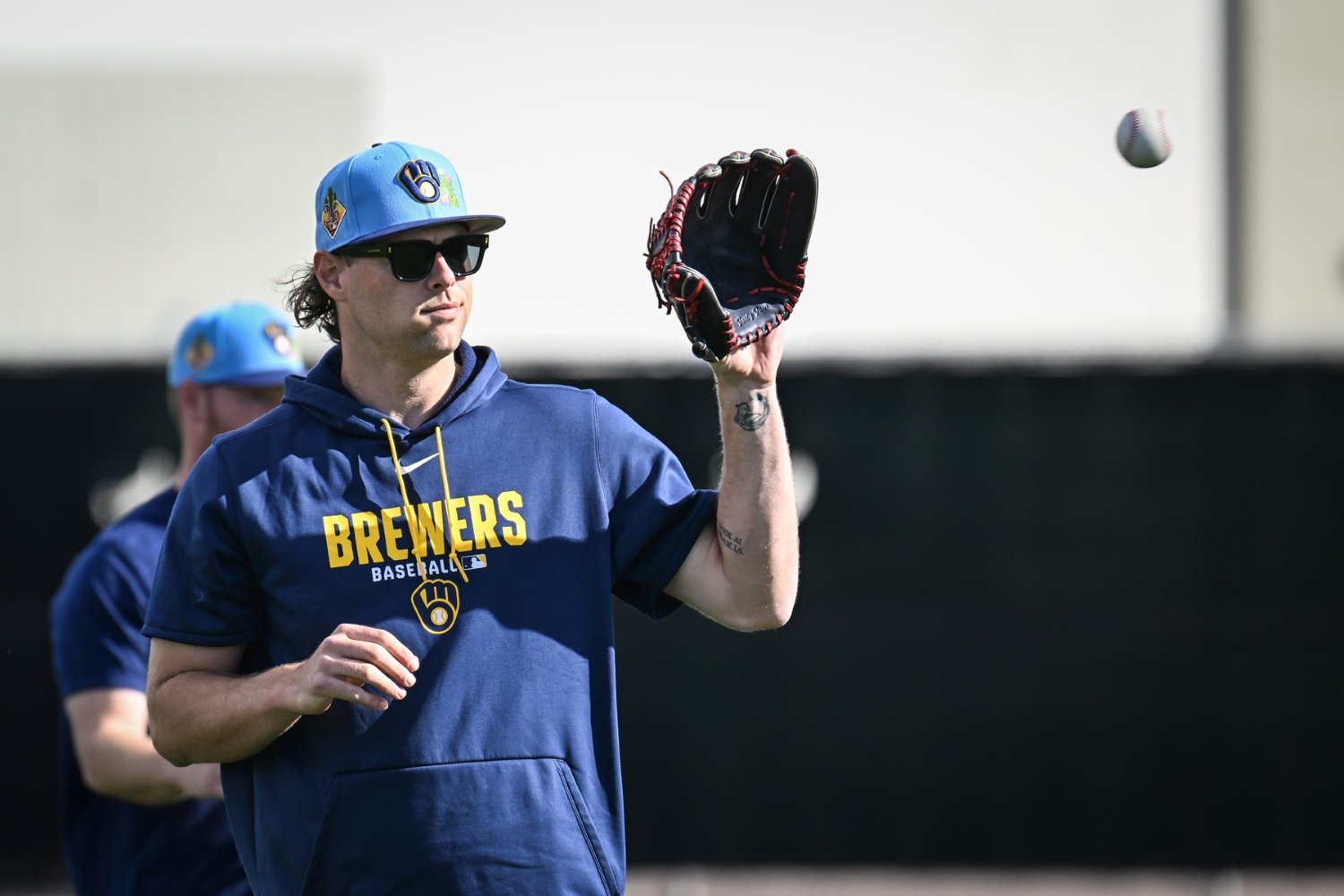 "Well, they've gotta understand what's gonna happen at the end there," Pat Murphy said to reporters on Feb. 24. "Every team's gonna do this, unless you have a [Trevor Hoffman]. It doesn't mean that Megill won't get a lot of them, because Megill handles lefties real well. So that's kinda how it's always felt, but if we've got three righties coming, no pinch-hitters who'd make a difference in our minds, we might go Uribe—or Zerpa. Or Koenig. Or Coleman Crow." The 'they' to whom Murphy was referring is the duo of Trevor Megill and Abner Uribe. The 'this' he was talking about is dividing save opportunities among multiple relievers. Entering the season, his vision for the back end of the bullpen can best be described as "closer by committee"; he wants the ability to play matchups and riffle through options in the ninth inning. Is his 6-foot-8 erstwhile closer good with that collectivist approach? Uh. no. "I got no plans of seeing it change," Megill said on Mar. 5. "But, you know, we'll see what they say. The only thing I can do is go out there and just pitch the way I know how to, which I feel like I have, and things will line up the way they're supposed to." Knowing that Megill has viewed himself as an eventual closer since 2023, took pride in filling in brilliantly for Devin Williams in 2024 and was the lion of the relief corps in 2025, that answer deserved a follow-up. If that weren't how things went—if Murphy did ask him to pitch the eighth (or even the seventh) more often—would he be ready to do whatever was asked, without friction? A pause. "I mean, I definitely see myself pitching the ninth," he said. So, we've got a bit of a situation on our hands. Because his focus is not primarily on data and because his method of facilitating the input of the front office is very personality-driven, it's easy to mistake Murphy for a typical modern players' manager. That's not who he is. The former college coach in him is alive and well, and that background informs his roster management. He isn't beholden to analytics, but his loyalty is to the pursuit of wins—even as he loves many of his players and wants the best for them. As such, he's less squeamish about friction in the clubhouse than are many modern skippers. That Megill wants to be a traditional, unquestioned closer—at least for as long as he earns that kind of job—does matter to Murphy, but winning matters more. It's understandable that Megill wants to rack up saves. Among relievers, only closers make any real money in arbitration, a process Megill will have to traverse one more time next winter. Saving 21 games as Williams's replacement for much of 2024 earned him $1.95 million in his first trip through arbitration, and 30 more saves last year spiked his earnings to $4.7 million. He'll earn much more next year if he does serve as the full-time closer than if he's relegated to any form of more flexible relief ace. On the other hand, Uribe, too, craves the saves that pave the way to higher pay. More importantly, from Murphy's perspective, he faces the imperative of keeping both of his star righty relievers healthy—particularly because the team is much deeper from the left side than from the right in the bullpen. Murphy acknowledged last week that, in a perfect world, he would have one more trustworthy, high-leverage righty than he does, so he can ill afford to find himself with one fewer, instead. Rather than asking Megill to pitch anywhere but the ninth, the plan might be simply to back off his usage overall—and, simultaneously, Uribe's. As Murphy has noted several times this spring, Uribe pitched more than 80 times last year, including the postseason. He's also pitching for his native Dominican Republic in the World Baseball Classic this spring. Rather than let either of his top-flight righties be used as heavily as they were last year just to have both available whenever they have a lead, Murphy could be more judicious about giving them each rest between appearances—which might naturally mean an extra handful of save opportunities for Uribe but no unwanted shifts into setup duty for Megill. With Grant Anderson feeling good coming into camp again, the Crew can take that approach without undue fear. They'll need their top lefties—Ángel Zerpa, Aaron Ashby and Jared Koenig—to bridge the gaps, but that was necessary, anyway. Make no mistake: Megill will be upset if he doesn't get 30-plus save opportunities again this year. Murphy, however, is not obligated to bend to those whims. In the name of getting to the end of the year a bit more intact, he might ask his closer to be more open to days off, rather than trying to move him to any other place in the game—and it might just mean more save opportunities to go around, in the long run.
 -
Image courtesy of © Dave Kallmann / Milwaukee Journal Sentinel / USA TODAY NETWORK via Imagn Images "Well, they've gotta understand what's gonna happen at the end there," Pat Murphy said to reporters on Feb. 24. "Every team's gonna do this, unless you have a [Trevor Hoffman]. It doesn't mean that Megill won't get a lot of them, because Megill handles lefties real well. So that's kinda how it's always felt, but if we've got three righties coming, no pinch-hitters who'd make a difference in our minds, we might go Uribe—or Zerpa. Or Koenig. Or Coleman Crow." The 'they' to whom Murphy was referring is the duo of Trevor Megill and Abner Uribe. The 'this' he was talking about is dividing save opportunities among multiple relievers. Entering the season, his vision for the back end of the bullpen can best be described as "closer by committee"; he wants the ability to play matchups and riffle through options in the ninth inning. Is his 6-foot-8 erstwhile closer good with that collectivist approach? Uh. no. "I got no plans of seeing it change," Megill said on Mar. 5. "But, you know, we'll see what they say. The only thing I can do is go out there and just pitch the way I know how to, which I feel like I have, and things will line up the way they're supposed to." Knowing that Megill has viewed himself as an eventual closer since 2023, took pride in filling in brilliantly for Devin Williams in 2024 and was the lion of the relief corps in 2025, that answer deserved a follow-up. If that weren't how things went—if Murphy did ask him to pitch the eighth (or even the seventh) more often—would he be ready to do whatever was asked, without friction? A pause. "I mean, I definitely see myself pitching the ninth," he said. So, we've got a bit of a situation on our hands. Because his focus is not primarily on data and because his method of facilitating the input of the front office is very personality-driven, it's easy to mistake Murphy for a typical modern players' manager. That's not who he is. The former college coach in him is alive and well, and that background informs his roster management. He isn't beholden to analytics, but his loyalty is to the pursuit of wins—even as he loves many of his players and wants the best for them. As such, he's less squeamish about friction in the clubhouse than are many modern skippers. That Megill wants to be a traditional, unquestioned closer—at least for as long as he earns that kind of job—does matter to Murphy, but winning matters more. It's understandable that Megill wants to rack up saves. Among relievers, only closers make any real money in arbitration, a process Megill will have to traverse one more time next winter. Saving 21 games as Williams's replacement for much of 2024 earned him $1.95 million in his first trip through arbitration, and 30 more saves last year spiked his earnings to $4.7 million. He'll earn much more next year if he does serve as the full-time closer than if he's relegated to any form of more flexible relief ace. On the other hand, Uribe, too, craves the saves that pave the way to higher pay. More importantly, from Murphy's perspective, he faces the imperative of keeping both of his star righty relievers healthy—particularly because the team is much deeper from the left side than from the right in the bullpen. Murphy acknowledged last week that, in a perfect world, he would have one more trustworthy, high-leverage righty than he does, so he can ill afford to find himself with one fewer, instead. Rather than asking Megill to pitch anywhere but the ninth, the plan might be simply to back off his usage overall—and, simultaneously, Uribe's. As Murphy has noted several times this spring, Uribe pitched more than 80 times last year, including the postseason. He's also pitching for his native Dominican Republic in the World Baseball Classic this spring. Rather than let either of his top-flight righties be used as heavily as they were last year just to have both available whenever they have a lead, Murphy could be more judicious about giving them each rest between appearances—which might naturally mean an extra handful of save opportunities for Uribe but no unwanted shifts into setup duty for Megill. With Grant Anderson feeling good coming into camp again, the Crew can take that approach without undue fear. They'll need their top lefties—Ángel Zerpa, Aaron Ashby and Jared Koenig—to bridge the gaps, but that was necessary, anyway. Make no mistake: Megill will be upset if he doesn't get 30-plus save opportunities again this year. Murphy, however, is not obligated to bend to those whims. In the name of getting to the end of the year a bit more intact, he might ask his closer to be more open to days off, rather than trying to move him to any other place in the game—and it might just mean more save opportunities to go around, in the long run. View full article
-
Image courtesy of © Curt Hogg / USA TODAY NETWORK via Imagn Images "It's 'yes' or 'no' from pitch to pitch," Pat Murphy said. He waited almost a full fortnight into Cactus League play before putting an ABS challenge system strategy into action for his team, but the activation was not the slow turn of a dimmer dial. It was a hard flick of the switch. Beginning Thursday afternoon at Salt River Fields, Brewers batters no longer had free rein to feel out the system and test-drive it at their leisure. Two Brewers coaches were assigned to use colored cards to signal whether the situation justified a challenge on a borderline call or not, and every player in the lineup was expected to heed the signals. One day later, the league had issued a hard flick of its own, thwarting that particular version of dugout-to-player communication on the premise that it falls outside the spirit of the new structure. Players are supposed to make challenge decisions without the help of the dugout; that's been one of the key principles of the system since the league began testing it in the minor leagues. It's a flimsy and misbegotten prohibition, though, and it will have little effect. The Brewers' system wasn't in place to tell batters (or catchers) to challenge or not; it was just a way to communicate when a challenge is contextually appropriate. There are really two layers to every challenge decision, which is the major source of complexity in this new system. A player has to quickly gauge their own confidence that a call that went against them was wrong, but then, they also have to figure out whether the count, base-out situation and game state dictate that flipping that call is worth the risk of a failed (and thereby lost) challenge. The card system was one of several possible ways to quickly tell players whether they had the go-ahead to issue a challenge based on all those factors beyond the question of their confidence about having been wronged. In that sense, it doesn't really violate the spirit of the new rule. Communicating that information to players also isn't something the league will have any luck preventing teams from doing. Banning cards from dugout railings will stop players from being able to do a quick check after a call and before a challenge, but the team can still relay signals to the batter via the base coaches that contain that information, before each pitch. The league won't be able to prove that's what any team is doing, and even if they could, they shouldn't care. So, despite an early setback, the wheels of the Milwaukee ABS Challenge Machine are in motion. Murphy described a "huge" session in his office Thursday to devise the plan, which goes much, much deeper than signal cards, anyway. "We probably had one, two, three, four, five R&D guys in here with our baseball staff, saying, 'How are we gonna present this?'" Murphy said. "'Does this make sense?' 'What are you worried about from a strategy standpoint?' 'Here's what we're worried about from an implementation standpoint.'" Murphy said the hope and expectation is for hitters (especially) to learn when challenges make sense or not themselves, anyway, rather than relying on any guidance from the bench. He also emphasized that, even if the league had allowed cards in the dugouts, the system was bound to become "way more complicated than [yes or no]." "I don't want to reveal our strategy," Murphy said, but "The key is not to lose challenges early, but it's also not to have challenges left at the end of the game." That's the delicate balance all teams will have to learn to strike, and by forcing players to make their decisions about whether to challenge in the heat of battle on the field, the league is compelling them to become a high-functioning collaborative organism. Each player has to attune themselves to the variables that determine whether a given call is a good challenge or not, including things far beyond how strongly they feel that the umpire was wrong. Maxfield Lane and Owen Riley, who work together under the name Oyster Analytics, developed an app that models all those variables and the resulting changes within a game, with startling results. Say Sal Frelick takes the first pitch of the game, a good two inches off the outside corner. Should he challenge? The answer is clear: No. The odds that Frelick saw the ball well enough and will win his challenge are roughly 5:3, which isn't bad. Given the count (0-0; a pitch either way matters, but isn't decisive), the score (by definition, 0-0), the lack of anyone on base, and the long time left in the game, the Oyster model estimates that he'd need to be more like 9:1 certain to make the challenge worthwhile. Now, however, imagine that it's the sixth inning, with the tying run on second base and two outs, in a 2-2 count. It's a no-brainer again, but going the other way. The yellow borders in each of these visuals show you the rough boundaries outside which a batter should challenge, given all the variables plugged in. That's the break-even boundary. Here, even if Frelick were only about 20% sure he was right, he should issue the challenge. Though these are two relatively extreme examples, they're far from the most extreme. There are cases in which the same two pitches can demand even more obvious 'yes' or 'no' challenge decisions—and there are also plenty in which it's something very close to a toss-up. Look what happens if there are runners on the corners with nobody out in a tie game, in the third inning, with a 2-1 count on the batter and just one challenge remaining, rather than two. This is why the Brewers tried to start with a simplistic binary—not to effectively simulate their plan for the season ahead, but to begin the long learning process that will prove inevitable. Murphy has talked multiple times about not wanting to put too much into hitters' heads as they go to the plate, and this system threatens to do that almost constantly. Each player will need to learn to intuit some of these variables' impacts, so they don't have to compute them as they make decisions in the box. Otherwise, they won't be sufficiently focused on their actual task: hitting. So much, too, will depend on the keystone skill of every hitter: vision. "It still comes down to the players, which is what I love about the rule," Murphy said. "It comes down to the players dictating it. They have to become really efficient, at knowing situations and—more importantly—at knowing what is a strike. First, what is a strike in the heart of the plate, and what is a strike when the ball is actually one [ball's width] on, or what's not a strike that's actually one ball off, or way off?" On Feb. 28, long before Murphy was ready to implement a system team-wide, the club lost both of their challenges in the first inning. In his typically wry form, Murphy said he wished he "could have tased some of them, when they do that," but the prime directive of the early Cactus League games was for players to get a feel for the system by practicing. That plate vision comes from sheer acuity, but also from a good approach and a proper plan. Calibrating it, however, requires focused practice. The Trajekt machine is a vital tool for that development and calibration. Though multiple Brewers hitters expressed some skepticism about it in their own experience, Murphy is insistent that Trajekt is the only way (other than live reps) to steadily gain a better sense of the edges of the zone, especially vertically. In addition to being programmed to deliver pitches that mimic those of any pitcher a batter might face, that machine allows the operator to set the specified strike zone of each batter, so players can practice discerning when the ball is (and isn't) in their new, unique zone. Murphy and the Brewers will give greater leeway to hitters who show facility with the zone both in games and in practice settings than to those who consistently lose challenges or seem to make poor swing decisions when they let the system factor into their at-bats too much. Trajekt can inform that, but so can data the Brewers have on players' responses to the ball, which aren't publicly available—or, in some cases, even well-understood by the players themselves. Using early hand movements as proxies, the team can estimate when hitters tend to see the ball and how early they make their swing decisions against certain pitcher types—based on handedness and arm slot, especially. That data can be used to coach players, but it can also be used as a scouting/grading tool—and to help them decide how free the player's hand should be to issue challenges. The front office, the coaching staff and the players themselves will be in constant communication throughout the season. The ABS system will be a subject in most pre-series hitter meetings and a constant source of feedback from the analytics team to Murphy and company. It will change the game too much not to work strenuously to do well with it, for a team that relies on winning on the margins. Doing that will mean a patient (but urgent), collaborative and comprehensive embrace of complexity. View full article
-
 "It's 'yes' or 'no' from pitch to pitch," Pat Murphy said. He waited almost a full fortnight into Cactus League play before putting an ABS challenge system strategy into action for his team, but the activation was not the slow turn of a dimmer dial. It was a hard flick of the switch. Beginning Thursday afternoon at Salt River Fields, Brewers batters no longer had free rein to feel out the system and test-drive it at their leisure. Two Brewers coaches were assigned to use colored cards to signal whether the situation justified a challenge on a borderline call or not, and every player in the lineup was expected to heed the signals. One day later, the league had issued a hard flick of its own, thwarting that particular version of dugout-to-player communication on the premise that it falls outside the spirit of the new structure. Players are supposed to make challenge decisions without the help of the dugout; that's been one of the key principles of the system since the league began testing it in the minor leagues. It's a flimsy and misbegotten prohibition, though, and it will have little effect. The Brewers' system wasn't in place to tell batters (or catchers) to challenge or not; it was just a way to communicate when a challenge is contextually appropriate. There are really two layers to every challenge decision, which is the major source of complexity in this new system. A player has to quickly gauge their own confidence that a call that went against them was wrong, but then, they also have to figure out whether the count, base-out situation and game state dictate that flipping that call is worth the risk of a failed (and thereby lost) challenge. The card system was one of several possible ways to quickly tell players whether they had the go-ahead to issue a challenge based on all those factors beyond the question of their confidence about having been wronged. In that sense, it doesn't really violate the spirit of the new rule. Communicating that information to players also isn't something the league will have any luck preventing teams from doing. Banning cards from dugout railings will stop players from being able to do a quick check after a call and before a challenge, but the team can still relay signals to the batter via the base coaches that contain that information, before each pitch. The league won't be able to prove that's what any team is doing, and even if they could, they shouldn't care. So, despite an early setback, the wheels of the Milwaukee ABS Challenge Machine are in motion. Murphy described a "huge" session in his office Thursday to devise the plan, which goes much, much deeper than signal cards, anyway. "We probably had one, two, three, four, five R&D guys in here with our baseball staff, saying, 'How are we gonna present this?'" Murphy said. "'Does this make sense?' 'What are you worried about from a strategy standpoint?' 'Here's what we're worried about from an implementation standpoint.'" Murphy said the hope and expectation is for hitters (especially) to learn when challenges make sense or not themselves, anyway, rather than relying on any guidance from the bench. He also emphasized that, even if the league had allowed cards in the dugouts, the system was bound to become "way more complicated than [yes or no]." "I don't want to reveal our strategy," Murphy said, but "The key is not to lose challenges early, but it's also not to have challenges left at the end of the game." That's the delicate balance all teams will have to learn to strike, and by forcing players to make their decisions about whether to challenge in the heat of battle on the field, the league is compelling them to become a high-functioning collaborative organism. Each player has to attune themselves to the variables that determine whether a given call is a good challenge or not, including things far beyond how strongly they feel that the umpire was wrong. Maxfield Lane and Owen Riley, who work together under the name Oyster Analytics, developed an app that models all those variables and the resulting changes within a game, with startling results. Say Sal Frelick takes the first pitch of the game, a good two inches off the outside corner. Should he challenge? The answer is clear: No. The odds that Frelick saw the ball well enough and will win his challenge are roughly 5:3, which isn't bad. Given the count (0-0; a pitch either way matters, but isn't decisive), the score (by definition, 0-0), the lack of anyone on base, and the long time left in the game, the Oyster model estimates that he'd need to be more like 9:1 certain to make the challenge worthwhile. Now, however, imagine that it's the sixth inning, with the tying run on second base and two outs, in a 2-2 count. It's a no-brainer again, but going the other way. The yellow borders in each of these visuals show you the rough boundaries outside which a batter should challenge, given all the variables plugged in. That's the break-even boundary. Here, even if Frelick were only about 20% sure he was right, he should issue the challenge. Though these are two relatively extreme examples, they're far from the most extreme. There are cases in which the same two pitches can demand even more obvious 'yes' or 'no' challenge decisions—and there are also plenty in which it's something very close to a toss-up. Look what happens if there are runners on the corners with nobody out in a tie game, in the third inning, with a 2-1 count on the batter and just one challenge remaining, rather than two. This is why the Brewers tried to start with a simplistic binary—not to effectively simulate their plan for the season ahead, but to begin the long learning process that will prove inevitable. Murphy has talked multiple times about not wanting to put too much into hitters' heads as they go to the plate, and this system threatens to do that almost constantly. Each player will need to learn to intuit some of these variables' impacts, so they don't have to compute them as they make decisions in the box. Otherwise, they won't be sufficiently focused on their actual task: hitting. So much, too, will depend on the keystone skill of every hitter: vision. "It still comes down to the players, which is what I love about the rule," Murphy said. "It comes down to the players dictating it. They have to become really efficient, at knowing situations and—more importantly—at knowing what is a strike. First, what is a strike in the heart of the plate, and what is a strike when the ball is actually one [ball's width] on, or what's not a strike that's actually one ball off, or way off?" On Feb. 28, long before Murphy was ready to implement a system team-wide, the club lost both of their challenges in the first inning. In his typically wry form, Murphy said he wished he "could have tased some of them, when they do that," but the prime directive of the early Cactus League games was for players to get a feel for the system by practicing. That plate vision comes from sheer acuity, but also from a good approach and a proper plan. Calibrating it, however, requires focused practice. The Trajekt machine is a vital tool for that development and calibration. Though multiple Brewers hitters expressed some skepticism about it in their own experience, Murphy is insistent that Trajekt is the only way (other than live reps) to steadily gain a better sense of the edges of the zone, especially vertically. In addition to being programmed to deliver pitches that mimic those of any pitcher a batter might face, that machine allows the operator to set the specified strike zone of each batter, so players can practice discerning when the ball is (and isn't) in their new, unique zone. Murphy and the Brewers will give greater leeway to hitters who show facility with the zone both in games and in practice settings than to those who consistently lose challenges or seem to make poor swing decisions when they let the system factor into their at-bats too much. Trajekt can inform that, but so can data the Brewers have on players' responses to the ball, which aren't publicly available—or, in some cases, even well-understood by the players themselves. Using early hand movements as proxies, the team can estimate when hitters tend to see the ball and how early they make their swing decisions against certain pitcher types—based on handedness and arm slot, especially. That data can be used to coach players, but it can also be used as a scouting/grading tool—and to help them decide how free the player's hand should be to issue challenges. The front office, the coaching staff and the players themselves will be in constant communication throughout the season. The ABS system will be a subject in most pre-series hitter meetings and a constant source of feedback from the analytics team to Murphy and company. It will change the game too much not to work strenuously to do well with it, for a team that relies on winning on the margins. Doing that will mean a patient (but urgent), collaborative and comprehensive embrace of complexity.
 -
Image courtesy of © Dave Kallmann / Milwaukee Journal Sentinel / USA TODAY NETWORK via Imagn Images In matters of personality, DL Hall and Shane Drohan couldn't be much more different. Drohan is the player most likely to be found, during each morning's open clubhouse period, sitting quietly at his locker with his phone. He's happy to talk, but volunteers little to the team's ongoing patter. Assigned to the bank of three lockers set apart from any others (with an empty stall next to him and equally quiet prospect Luke Adams on the other side of that gap), Drohan is easy to see but hard to hear—sometimes, even when you talk to him. Hall, who has lockered next to Brandon Woodruff since his first spring with the Crew, could be found on his knees at one point this week, reenacting his inglorious role in some past baseball brawl for laughing teammates. His South Georgia drawl erupts from him, whereas Drohan's words seem to come only with effort and thought. Hall is the Brewers' resident sneakerhead; Drohan professes to love history documentaries. ("Amazon Prime; that's the spot for documentaries that I've found, so far." But: "You do have to kind of filter out, because there are some crazy documentaries that I'm like, 'I don't know how much truth there was to that one.'") Yet, in the context of this team and beyond, the two have a great deal in common, too. They were born just four months apart: Hall in September 1998, and Drohan in January 1999. Though it says '6-foot-3' on Drohan's Baseball Reference page, the Brewers measured him at 6-foot-2 this spring; he weighs 202 pounds. Hall is 6-foot-1, 209 pounds. The cultural distance between Hall's native Valdosta and Drohan's birthplace in Fort Lauderdale is large, but they're really only about 400 miles apart. Each has spent some time on the prospect radar, but both are now optionable arms entering their age-27 season, sidetracked by injuries and not yet having established themselves in the majors. Each has an arsenal too wide and too promising to make you feel good at collapsing their value down to that of a left-handed short reliever, but each has had enough trouble with durability and/or control to make you wary of trusting them with a starting gig. This spring, these equal opposites are in a quiet competition for priority position in the Brewers' pitching plans. For Hall, the big spring project is trying to get his velocity back. He still believes he can tap back into the upper-90s heat he showed before injuries shook him loose and dropped him out of the top prospect firmament. However, he knows much better than to sit and wait for that to happen. Instead, he spent the winter adding a sweeper to his arsenal, giving him up to seven pitches to which he can turn when the situation calls for it. Since the four-seamer still isn't doing what he needs it to do in order to dominate with it, he's also favoring his sinker more—especially to lefty batters. "It's just been a progressive thing over the last eight months," Hall said. "After coming off the injury last year, things change, your body starts moving differently and the four-seamer wasn't riding as much as I want it to, so let's try the sinker." So far, that pitch grades out well. Utilizing it against right-handed batters is more difficult, of course, but manager Pat Murphy chose Hall to pitch for Team Great Britain against a lefty-loaded Brewers lineup on Tuesday specifically to get him work in left-on-left matchups. While Murphy insists that any reliever in his bullpen have some way to get out both lefties and righties, that's not a huge problem for Hall. For one thing, his changeup flashes plus, and has enough separation to be useful even in tandem with the sinker, rather than the four-seamer. For another, Hall also has a cutter he can use to get in on the hands of righty batters. The cutter isn't as distinct from his four-seamer as Hall would prefer, but that's more because the four-seamer isn't showing the good carry it once did than because of the cutter's deficiencies. He has enough pitches he's comfortable with to gut his way through showdowns with righty batters, and the new sweeper (along with the newly prioritized sinker) can stand him in good stead against lefties. Drohan bears some similarities to Hall, but his stuff is much more oriented toward glove-side movement and manipulating the ball with spin. His four-seamer has the carry missing from Hall's, and his cutter has more separation from it. He has a true, tight, vertical slider and a curveball, such that he can focus on a simple set of what the Brewers call "start lines": the visual targets he uses for each pitch, letting the movement carry them to a different destination but ensuring consistent execution. The flip side of being so good at those glove-side offerings and having the carry on the heater is that Drohan's changeup is not as good as Hall's. To get righties out in the majors, he'll need to execute well with his other four offerings. Both pitchers are stretching out and trying to keep themselves available for starting roles. Hall worked the first three innings of the game on Tuesday; Drohan took the final three on Wednesday. Both hurlers said they'll adjust to relief work if needed, but that the team has kept them on plans consistent with starting. "I just wanna pitch in the big leagues," Hall said. He's ready to do whatever the team believes will help them win, but is "trying to win a spot in the rotation." Now, tell me if this sounds familiar. "I don't really have a mindset on it," Drohan said. "I wanna pitch in the big leagues, so whether that's starting or in the bullpen, I'm willing to do either." Drohan said he doesn't want to concede the chance to eventually start by turning away from it, and that there's probably no benefit for him or the team in his switching lanes mentally before the time comes. For now, he and the team are working not on the installation of any new offerings or on rediscovering velocity—Drohan throws a couple ticks harder than Hall right now, anyway—but on matters of pitch mix. The lefty said most of the suggestions he's gotten from Chris Hook and company have been along the lines of introducing pitches he would normally eschew in given situations, within an at-bat or an inning, rather than doing anything truly novel. That's in keeping with the Brewers' preference to let players who are new to the organization come in and familiarize themselves with the environment, before pushing any more significant changes. To open the season, both pitchers are likely to be on the outside of the rotation battle, looking in. One might make the team as a reliever, but it's also possible that both find themselves in Nashville, starting and awaiting an opening in Milwaukee. They're different in appearance and sensibility, but so similar in skill set and circumstance that they could be on the same track for much of this season. The Brewers have an almost redundant pair of southpaws with very different personalities—as good an illustration of their superb depth as any. View full article

.png.973a307c4df3b0d9404e09beca321af3.png)
(22).png.109271611f97b2c80be0c4c53c655367.png)
