


Matthew Trueblood
-
Posts
1,964 -
Joined
-
Last visited
-
Days Won
10
Content Type
Profiles
Forums
Blogs
Events
News
2026 Milwaukee Brewers Top Prospects Ranking
Milwaukee Brewers Videos
2022 Milwaukee Brewers Draft Picks
Milwaukee Brewers Free Agent & Trade Rumors, Notes, & Tidbits
Guides & Resources
2023 Milwaukee Brewers Draft Picks
2024 Milwaukee Brewers Draft Picks
The Milwaukee Brewers Players Project
2025 Milwaukee Brewers Draft Pick Tracker
2026 Milwaukee Brewers Draft Tracker: Picks & Bonuses
Store
Downloads
Gallery
Everything posted by Matthew Trueblood
-
Image courtesy of © Paul Rutherford-Imagn Images Christian Yelich turned 34 years old in December. He's in his mid-30s now. This is a man who was an old enough boy to spike his hair or dye his tips during the peak of *NSync's popularity. When that Taco Bell commercial featuring Sum 41's "In Too Deep" comes on, he might start mouthing or shouting the lyrics, or not, but something stirs within him. When he dubbed Pat Murphy 'Patches O'Houlihan' upon Murphy's promotion to manager in 2024, it wasn't something a coach mentioned or a reference he first experienced via scrolling through YouTube shorts. That came from his soul. He saw Dodgeball in a movie theater, which is a building where you used to go and see movies on a huge screen, in the dark. Such a person can't be up in the (35-inch contact point) club, with the kids. A '90s kid can't be swinging with catching the ball way out front in mind. It's unseemly, like a divorced dad hitting on a coed at a college bar. That unseemliness just manifests differently: instead of cringeworthy conversation and striking out, it's—ok, actually, some things about it are the same. Every player loses bat speed as they age. Yelich is not an exception. Although the sample is limited, his bat speed is down so far this year, from 73.4 miles per hour in 2025 to 72.3 MPH. It's a minor miracle that his bat speed stayed as strong as it did last year, as he returned from the back surgery that ended his 2024 campaign, but some of that was the buoying effect of having addressed the problem that compelled him to have that surgery in the first place. He's losing bat speed, and that's not a crisis. It is, however, part of what drives most hitters to decline. Some of that decline is self-induced, though. How much a hitter's production is affected by their diminishing ability to flick the stick depends on how one reacts to it. If you change nothing, you'll simply get worse. If you try to compensate for it by starting earlier, you can run into the ball just as often, but when you miss, you'll miss by more. You'll make poorer decisions and pay higher costs for them than in the past. This really isn't so different from a 30-something refusing to age gracefully out in the rest of the world, right? The other option is to make easygoing concessions to age, and the limitations that come with it. It's a voluntary way to pay many of the same costs, but in addition to preserving your dignity, you maintain more control of the process. Which strategy for adapting to the ravages of time best suits a player depends in large measure on what kind of player they were at their peak, but all else equal, the best way to adjust as you age is to accept that the ball will get deeper on you. If you let your contact point drift farther into the hitting zone and closer to your body (but get the bat up to speed nearly as well, in the process), you can sustain a balanced attack with less bat speed than you had before. That's what Yelich is doing. Here are the breakdowns of his intercept point (whether or not contact was made) relative to the center of his body on fastballs, for 2024, 2025 and 2026, in three ranges. Contact Point Range Season Under 20" 20-25" Over 25" 2024 39.4 27.9 32.7 2025 51 25.2 23.9 2026 55.8 30.2 14 The trend is clear, and sensible. Yelich is ok with his gradual shift into dadcore; he's switched from cheap beer and designer cocktails to a tasty but sensible IPA without complaint. He's letting the fastball travel more, and lo, he's raking. He's actually swinging more so far this year, and whiffing about as often as he did last year. He's also hitting the ball hard as much as he did last year, though, and his OPS is over 1.000 through 10 games. Though he hit a mammoth home run in the first series—early, in a good way, on a splitter—this version of Yelich is unlikely to hit nearly as many as the 29 home runs he cracked in 2025. That's ok. He's adjusting to (so far) less bat speed, and doing it gracefully. He's not going out and getting the ball the way he did in the past; he's becoming a radical let-it-travel guy. It's the right move. Let other 34-year-olds embarrass themselves. This one is comfortable in his skin, and in his batting stance. View full article
-
Haha. I feel you, Harold, but *everything* makes you miss Wes Clarke, no? 😜
- 7 replies
-
- 2
-

-
- brandon lockridge
- luis rengifo
- (and 2 more)
-
I like that Jack reported this out this way; it really illustrates why Murphy has loved Lockridge since the moment he came through the door. I agree with you; he's the type you hope will be around for a few years.
- 7 replies
-
- 1
-

-
- brandon lockridge
- luis rengifo
- (and 2 more)
-
Good point. Unaccountably, I sort of bin Zerpa with the righties in the pen. He's not a reverse-splits guy; there's no reason to do so. I just do. Haha. Thanks for catching it.
-
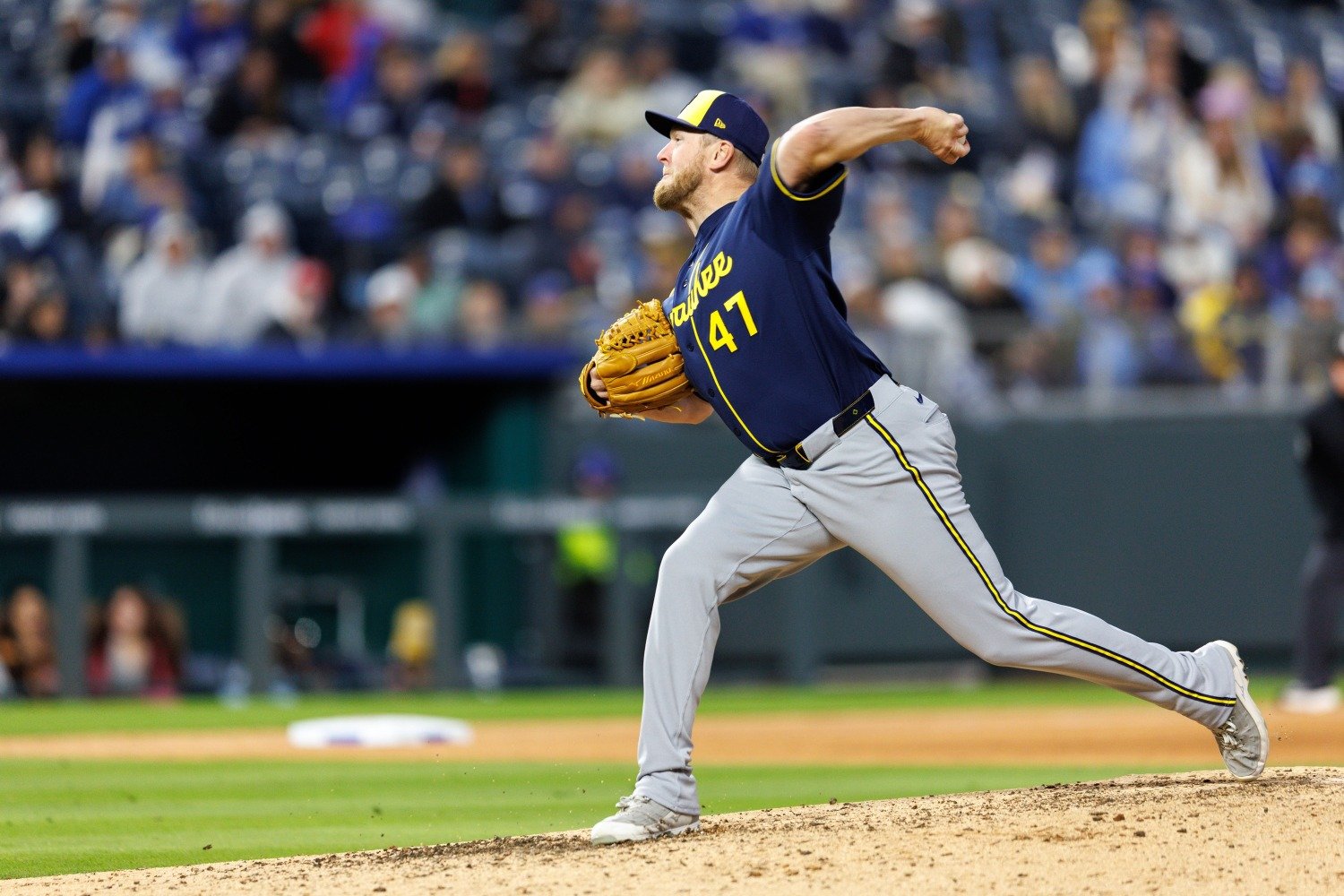 For now, the Brewers and Jared Koenig will wait and see how his elbow responds to a prolonged rest. Koenig was shelved by a sprained elbow Monday afternoon, and yes, the damaged tissue is his ulnar collateral ligament. There's always a chance that a sprained UCL will lead to Tommy John surgery, or some variant thereof that still ends a player's season. It's good news that that's not the immediate plan, and perhaps the team and the player were proactive enough to catch a sprain early. According to Pat Murphy (as relayed by MLB.com Brewers beat reporter Adam McCalvy), there's even a chance Koenig will be back by early May, That seems a bit hopeful, but he wouldn't be the first hurler to come back on such a timeline, if the damage is minor. It's important to understand a distinction here, though: this is a diagnosed sprain (which indicates some degree of tearing) in the UCL itself. Pitchers often get diagnosed, first, with strains in the forearm or the biceps muscles, or in the tendons that connect bones to those muscles. Those can be precursors to torn UCLs, but it's not uncommon for the ligament to survive if the muscle or tendon gives way first, especially because the tissues can heal simultaneously as a pitcher rests. This is different. Koenig has a tear in the ligament itself, and ligaments heal more slowly than muscles, because their blood supplies aren't as robust. If there were a major tear in that ligament, we'd already be hearing that Koenig was seeking a second opinion or being scheduled for surgery. Instead, the team will try to let him have time to heal. He could undergo a platelet-rich plasma injection. There are non-surgical interventions for minor ligament damage, and they can (if nothing else) slow down wear to reduce the risk of a full-blown tear. However, Koenig's velocity was notably down this spring. He lost a bit of weight over the winter, and didn't look as strong in camp. There are many reasons to worry that Koenig will give the Brewers little for the balance of this season, even if he's spared from the scalpel for now. Luckily, the Brewers have arguably the deepest pitching staff in baseball. They called up Shane Drohan to take the place of Koenig as the second lefty in the bullpen, which is as tidy an expression of their privilege as one could hope for. Koenig himself would be the best lefty in several bullpens throughout the league. With Aaron Ashby as the high-leverage, high-volume southpaw of the team's relief corps, though, that was never anywhere near being true of the 2026 Crew. Drohan is also a better pitcher than most teams would have to call upon in case of this type of loss, and he'll give them length in the pen for as long as needed. It's a bad break for Koenig, who has earned Murphy's trust and teammates' respect and is an important part of the team. Hopefully, he'll avoid surgery and be back on the mound soon. In the interim, though, Drohan's nasty stuff and cerebral, thoughtful approach to his job make a fine replacement for him. The Brewers will weather the loss, even as they ardently hope for the best for their erstwhile setup man.
- 2 comments
-
- 1
-
-
- jared koenig
- shane drohan
- (and 1 more)
-
Image courtesy of © William Purnell-Imagn Images For now, the Brewers and Jared Koenig will wait and see how his elbow responds to a prolonged rest. Koenig was shelved by a sprained elbow Monday afternoon, and yes, the damaged tissue is his ulnar collateral ligament. There's always a chance that a sprained UCL will lead to Tommy John surgery, or some variant thereof that still ends a player's season. It's good news that that's not the immediate plan, and perhaps the team and the player were proactive enough to catch a sprain early. According to Pat Murphy (as relayed by MLB.com Brewers beat reporter Adam McCalvy), there's even a chance Koenig will be back by early May, That seems a bit hopeful, but he wouldn't be the first hurler to come back on such a timeline, if the damage is minor. It's important to understand a distinction here, though: this is a diagnosed sprain (which indicates some degree of tearing) in the UCL itself. Pitchers often get diagnosed, first, with strains in the forearm or the biceps muscles, or in the tendons that connect bones to those muscles. Those can be precursors to torn UCLs, but it's not uncommon for the ligament to survive if the muscle or tendon gives way first, especially because the tissues can heal simultaneously as a pitcher rests. This is different. Koenig has a tear in the ligament itself, and ligaments heal more slowly than muscles, because their blood supplies aren't as robust. If there were a major tear in that ligament, we'd already be hearing that Koenig was seeking a second opinion or being scheduled for surgery. Instead, the team will try to let him have time to heal. He could undergo a platelet-rich plasma injection. There are non-surgical interventions for minor ligament damage, and they can (if nothing else) slow down wear to reduce the risk of a full-blown tear. However, Koenig's velocity was notably down this spring. He lost a bit of weight over the winter, and didn't look as strong in camp. There are many reasons to worry that Koenig will give the Brewers little for the balance of this season, even if he's spared from the scalpel for now. Luckily, the Brewers have arguably the deepest pitching staff in baseball. They called up Shane Drohan to take the place of Koenig as the second lefty in the bullpen, which is as tidy an expression of their privilege as one could hope for. Koenig himself would be the best lefty in several bullpens throughout the league. With Aaron Ashby as the high-leverage, high-volume southpaw of the team's relief corps, though, that was never anywhere near being true of the 2026 Crew. Drohan is also a better pitcher than most teams would have to call upon in case of this type of loss, and he'll give them length in the pen for as long as needed. It's a bad break for Koenig, who has earned Murphy's trust and teammates' respect and is an important part of the team. Hopefully, he'll avoid surgery and be back on the mound soon. In the interim, though, Drohan's nasty stuff and cerebral, thoughtful approach to his job make a fine replacement for him. The Brewers will weather the loss, even as they ardently hope for the best for their erstwhile setup man. View full article
-
Image courtesy of © Mark Hoffman/Milwaukee Journal Sentinel / USA TODAY NETWORK via Imagn Images The finger issue that lingered for part of 2024 and all of 2025 got most of the headlines, but in truth, William Contreras dealt with multiple nagging injuries last year. They didn't stop him from being a productive hitter, and hard work on his accuracy when throwing to second ensured that he improved at controlling the opposing running game. He remains a solid framer, though he hasn't quite bloomed into the major difference-maker it looked like he might be when the team's cadre of catching coaches first got hold of him in 2023. Nothing was operating quite at full steam, though, because when you're hurt, you're unavoidably incomplete. You end up being slightly selfish, even when that's the last thing you're disposed to be, as a person or player. You can't spend as much time or attention in service to your teammates, because your body demands some of your attention, and maintaining and treating those injuries demands a great deal of your time. Contreras is the antithesis of a selfish player, but he was unable to lead and augment his teammates last year the way he wanted to. This spring, with a cleaner bill of health to begin the campaign, he's a different player—one as dynamic and multi-faceted as he was in 2023 and 2024, but made wiser by the adversity he overcame in 2025. He's altered his batting stance. In the past, he was the rare hitter who could be said to be stepping in the bucket, without losing value to that habit. He started in a fairly neutral stance, used a high leg kick, and strode wide-open, looking to pull the ball. It often looked like this. d2VXb0FfV0ZRVkV3dEdEUT09X1V3bFNVVk1HQlFRQUFGRUhWUUFIQ1FkU0FBQldBbE1BVTF3QUJRUUdWUUFEVTFjQw==.mp4 This year, he's starting with a more closed stance, and his feet are farther apart. He's gone, if you will, halfway from the way he used to set up and get moving toward the ball to the way teammate and fellow Venezuela native Jackson Chourio does so: a wider base, a deeper bend (in Contreras's case, crouching has become part of his load), and a more direct stride. Even when he's swinging with exactly the same intent, it looks more like this. SzRCVmVfWGw0TUFRPT1fVlZKVUJ3QUNBQUlBRGdZTFZ3QUhBQUFBQUFCWEJsVUFVRk1BQVZkVVYxVmRVVkZU.mp4 However, Contreras is also getting back to doing something he used to do more often, perhaps prompted by the time he spent last month with the man for whom he wears No. 24 and who did it singularly well, Miguel Cabrera. Sometimes, even in advantage counts, Contreras simply anticipates the pitch that's coming, cuts down his swing, and hits the ball cleanly to a spot he knows offers a guaranteed hit. Those moments look like this. TkFObmJfWGw0TUFRPT1fVUFOUVVWRURBZ0VBQUZzS1VnQUhWVkFBQUZsV1cxZ0FCZ01IVWxFRFYxWUJBbEVE.mp4 That full-fledged change of timing signature and swing path to generate a key hit (even at the cost of any chance to generate power) is one example of Contreras being an excellent team player. He's also showing the attention to detail and the acute awareness of the moment required to secure wins behind the plate. He's been excellent as a framer so far this year, and not just as a framer—as a challenger, too. Tuesday's win offered a terrific example. Contreras challenged a 3-2 pitch to Junior Caminero by Brandon Woodruff in the first inning, even though there was already one out and no one base. With so much game left and a relatively non-dangerous situation at hand within the inning, by the models, he needed to feel very confident to make that challenge. Contreras hasn't been especially aggressive with those challenges this year, so it was surprising to see him try it. But that challenge was about more than the leverage index of the pitch. It was also very much about Woodruff, who had given up a home run already and didn't have his best stuff yet. The catcher rolled the dice for his pitcher, knowing it would be a huge pick-me-up for him, as well as feeling that he was in the right. He was, and a walk became a strikeout before our eyes. Later in that game, Contreras showed a similarly excellent nous for the system and its implications for the personalities he manages from 60 feet away. The Rays had the tying run at the plate, despite being down 5-2, and Abner Uribe was struggling to finish what initially looked like it would be an easy inning. The vibes were getting unfortunately tense; Contreras needed a way to lock his pitcher back in. There's already been much talk this spring about his favorite way to do so with some pitchers, by firing the ball back to them with extra authority after a pitch. With Uribe, though, that isn't always the right way to deliver the message, and indeed, the message needs to be a bit different. On a borderline 0-0 pitch, a ball was called to Richie Palacios, but Contreras challenged again. He was successful again, putting his hurler in the driver's seat for a crucial at-bat. Uribe got out of the inning unscathed. NHlLWnhfWGw0TUFRPT1fRGdKWVVnSlhYd1lBREZJRkJ3QUhCUUVDQUFBRFdsVUFCMTBFQVFZRkFGQURWbEFE.mp4 Contreras is leaning more heavily into catching with his right knee down, and his stance has been modified a bit behind the plate, as well as in the batter's box. He's making lots of small but important changes, as he tries to be the well-rounded star and centerpiece of this team again. That's who he was in 2024, and it's who he wants to be in 2026. It's not easy, but because he's healthier this year, it's at least possible—so he's attacking the task with tenacity. View full article
-
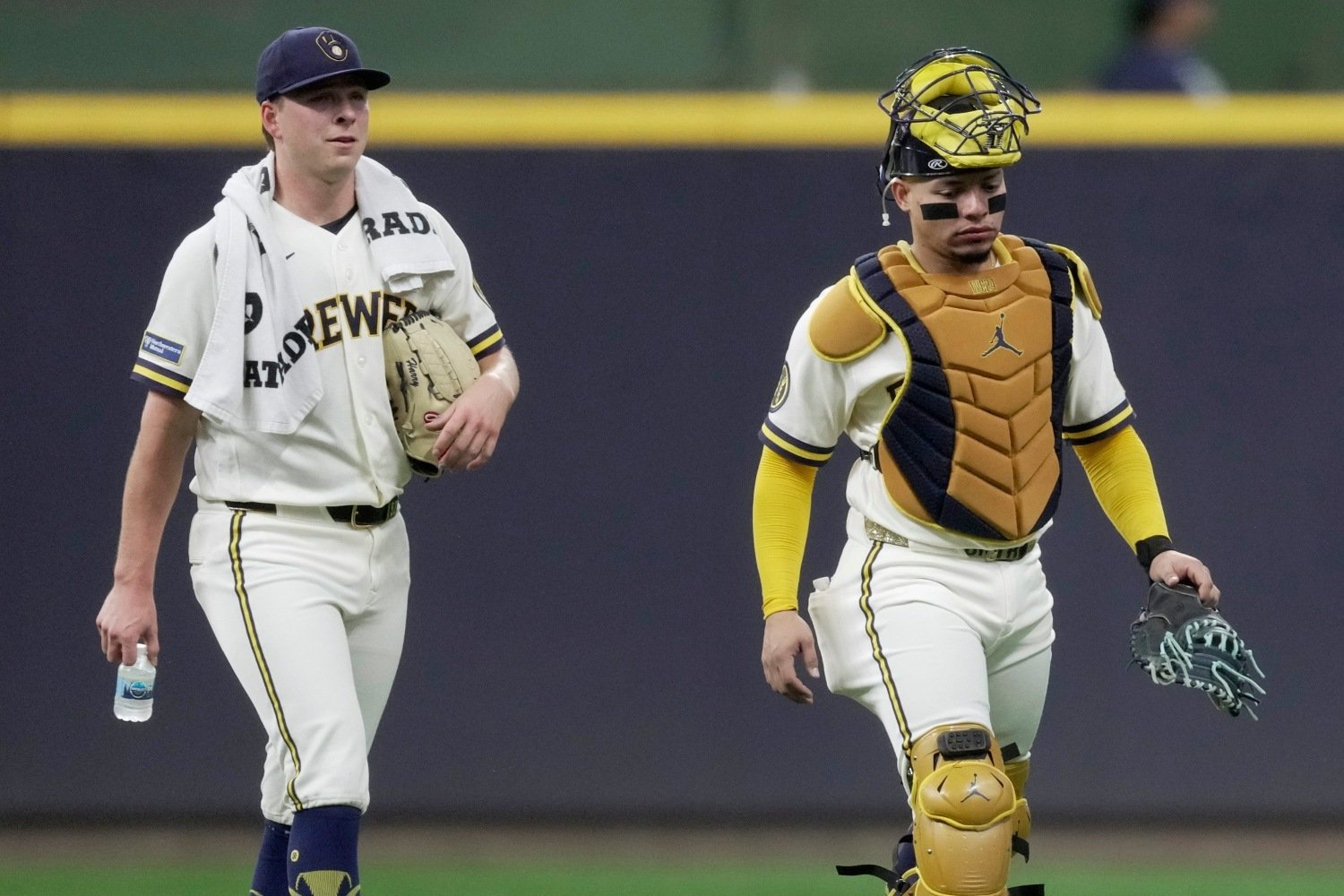 The finger issue that lingered for part of 2024 and all of 2025 got most of the headlines, but in truth, William Contreras dealt with multiple nagging injuries last year. They didn't stop him from being a productive hitter, and hard work on his accuracy when throwing to second ensured that he improved at controlling the opposing running game. He remains a solid framer, though he hasn't quite bloomed into the major difference-maker it looked like he might be when the team's cadre of catching coaches first got hold of him in 2023. Nothing was operating quite at full steam, though, because when you're hurt, you're unavoidably incomplete. You end up being slightly selfish, even when that's the last thing you're disposed to be, as a person or player. You can't spend as much time or attention in service to your teammates, because your body demands some of your attention, and maintaining and treating those injuries demands a great deal of your time. Contreras is the antithesis of a selfish player, but he was unable to lead and augment his teammates last year the way he wanted to. This spring, with a cleaner bill of health to begin the campaign, he's a different player—one as dynamic and multi-faceted as he was in 2023 and 2024, but made wiser by the adversity he overcame in 2025. He's altered his batting stance. In the past, he was the rare hitter who could be said to be stepping in the bucket, without losing value to that habit. He started in a fairly neutral stance, used a high leg kick, and strode wide-open, looking to pull the ball. It often looked like this. d2VXb0FfV0ZRVkV3dEdEUT09X1V3bFNVVk1HQlFRQUFGRUhWUUFIQ1FkU0FBQldBbE1BVTF3QUJRUUdWUUFEVTFjQw==.mp4 This year, he's starting with a more closed stance, and his feet are farther apart. He's gone, if you will, halfway from the way he used to set up and get moving toward the ball to the way teammate and fellow Venezuela native Jackson Chourio does so: a wider base, a deeper bend (in Contreras's case, crouching has become part of his load), and a more direct stride. Even when he's swinging with exactly the same intent, it looks more like this. SzRCVmVfWGw0TUFRPT1fVlZKVUJ3QUNBQUlBRGdZTFZ3QUhBQUFBQUFCWEJsVUFVRk1BQVZkVVYxVmRVVkZU.mp4 However, Contreras is also getting back to doing something he used to do more often, perhaps prompted by the time he spent last month with the man for whom he wears No. 24 and who did it singularly well, Miguel Cabrera. Sometimes, even in advantage counts, Contreras simply anticipates the pitch that's coming, cuts down his swing, and hits the ball cleanly to a spot he knows offers a guaranteed hit. Those moments look like this. TkFObmJfWGw0TUFRPT1fVUFOUVVWRURBZ0VBQUZzS1VnQUhWVkFBQUZsV1cxZ0FCZ01IVWxFRFYxWUJBbEVE.mp4 That full-fledged change of timing signature and swing path to generate a key hit (even at the cost of any chance to generate power) is one example of Contreras being an excellent team player. He's also showing the attention to detail and the acute awareness of the moment required to secure wins behind the plate. He's been excellent as a framer so far this year, and not just as a framer—as a challenger, too. Tuesday's win offered a terrific example. Contreras challenged a 3-2 pitch to Junior Caminero by Brandon Woodruff in the first inning, even though there was already one out and no one base. With so much game left and a relatively non-dangerous situation at hand within the inning, by the models, he needed to feel very confident to make that challenge. Contreras hasn't been especially aggressive with those challenges this year, so it was surprising to see him try it. But that challenge was about more than the leverage index of the pitch. It was also very much about Woodruff, who had given up a home run already and didn't have his best stuff yet. The catcher rolled the dice for his pitcher, knowing it would be a huge pick-me-up for him, as well as feeling that he was in the right. He was, and a walk became a strikeout before our eyes. Later in that game, Contreras showed a similarly excellent nous for the system and its implications for the personalities he manages from 60 feet away. The Rays had the tying run at the plate, despite being down 5-2, and Abner Uribe was struggling to finish what initially looked like it would be an easy inning. The vibes were getting unfortunately tense; Contreras needed a way to lock his pitcher back in. There's already been much talk this spring about his favorite way to do so with some pitchers, by firing the ball back to them with extra authority after a pitch. With Uribe, though, that isn't always the right way to deliver the message, and indeed, the message needs to be a bit different. On a borderline 0-0 pitch, a ball was called to Richie Palacios, but Contreras challenged again. He was successful again, putting his hurler in the driver's seat for a crucial at-bat. Uribe got out of the inning unscathed. NHlLWnhfWGw0TUFRPT1fRGdKWVVnSlhYd1lBREZJRkJ3QUhCUUVDQUFBRFdsVUFCMTBFQVFZRkFGQURWbEFE.mp4 Contreras is leaning more heavily into catching with his right knee down, and his stance has been modified a bit behind the plate, as well as in the batter's box. He's making lots of small but important changes, as he tries to be the well-rounded star and centerpiece of this team again. That's who he was in 2024, and it's who he wants to be in 2026. It's not easy, but because he's healthier this year, it's at least possible—so he's attacking the task with tenacity.
 -
'S alright, Catch. We live in the Time of Bringing Your Own Stuff into Stuff. Haha. And on a broader level, I'm with you on umpires being unfairly maligned for their job performance. I think they do an underratedly good job! I'm not sure what kind of mood Bucknor is in these days, but I suspect even he will laugh at himself on this one in short order. It was a really dumb screw-up; easily fixed; and now we can all have a little fun with it and move on. That's the great thing about baseball. (If he actually DOES any of these things, though, I want full credit for the prediction, and I will quickly become convinced he's doing some form of meta-commentary on baseball and life.)
-
I will say, I started with the number 10 in the headline, rather than 5. I just got so enthralled with a couple of the above that I didn't want to run it out to 10. Felt like I'd end up overdoing it. And this was on my list! :D
-
I guess I'm confused. This is a thoroughly laudatory review of a piece of performance art I earnestly enjoyed. From what are you defending Bucknor?
-
Image courtesy of © Michael McLoone-Imagn Images During the key sixth-inning rally in which the Brewers essentially put away Tuesday night's win over the Rays, Jake Bauers hit a wicked line drive to the hole between first and second. Second baseman Ben Williamson dove to his left and knocked the ball down, but his quick recovery was for naught; he threw late and wide. Bauers, hustling down the line, stepped on first base as he ran through it, as batter-runners are obligated to do if they want to be safe. What first-base umpire C.B. Bucknor dared to ask is: What if he hadn't? Wouldn't that have been wild? To test the hypothesis, Bucknor ruled that that very thing had happened—that Bauers had either missed the bag, skipped willfully over it, or so callously disrespected it in the particular way in which he stomped on the pillow that it didn't count. The play had fallen into some confusion after the ball bounced toward home plate and was returned to first baseman Jonathan Aranda, who tagged Bauers. Bucknor called the Brewers first baseman out for not having touched the base yet, which, again, Bauers had done. But an artist does not wait for the beautifully impossible to happen; they get out their canvas and render the impossible vivid and present. Bucknor's easel is the box score, and his brush is the pump of his fist. He installed his work of creative fiction into the game, and we all got to watch the fractal hilarity unfold into its endless angles and dimensions from there. An unfortunate bastion of conservative censorship stepped in to scuttle the festival before it could really begin. The Brewers challenged Bucknor's call, which was rapidly overturned by the replay center at MLB's central office in New York. The reviewers failed Bucknor's transgressive test of imagination, apparently mistaking his commedia dell'arte for one thing we all knew it couldn't be: a mistaken and literal interpretation of the action itself. Maybe you just had to be there. No matter. Art does not change the world by peeling the tentacled unicorn from the canvas and flinging it into the sky; it changes it by forcing us to consider that possibility for a time. Bucknor challenged us all to imagine a wilder, more interesting, less boringly well-ordered world. Why ought he stop now? What has ever been achieved when an artist reached a new frontier and left their audience in awe, only to retreat? Here, for his consideration and yours, are several more ways he can still elevate the craft of umpiring into something more mind-expanding. 1. Batter's Balk There is a great, unexplored margin awaiting the umpire who pounces on our shared uncertainty about the balk rule. Pitchers are not allowed to intentionally deceive baserunners as they prepare to work with the bases occupied. They must come set and avoid a flinch as they prepare to kick and fire. Lefties must not stride toward home plate but throw to first. Often, though, even players and coaches struggle to define the nuances of the balk rule and end up in futile arguments with umpires, either demanding a balk in vain or decrying one they can't understand. That's not fun or compelling, though; it's just arguing. An artist might first glance at the rule known as the catcher's balk, whereby a catcher can be punished for touching the ball with their mask or helmet and the runner is awarded a base—but their eye would be drawn, then, on into the negative space where a mere mortal's eye fails to see anything at all. What about the batter? You ever seen one of these guys? What a twitchy bunch of weirdos. They're shifting their weight, they're waggling their bat, they're tapping their foot. And the pitcher's just standing still. Why not call the batter for a balk—maybe assessing a strike, or calling the runner out, or maybe even calling the batter out but advancing the runner, just as with other balks? Bucknor, surely, will soon try it. 2. Infield Big Fly One peculiar rule protects the offense from manipulation by the infield on pop-ups with multiple runners on base. Rather than permit a team to turn an easy, unearned double play by letting such a ball fall and forcing runners at the next bases, the infield fly rule bids an umpire to call the play dead while the ball is still in the air. Runners can advance at their own risk, but even if the ball hits the ground, they're not obligated to sally forth. With the bases empty and/or with two outs, though, batters get no relief whatsoever on pop-ups. Bucknor could reinterpret the rule to be aimed purely at augmenting offense, and after all, how far off would he be? We could soon find out. Next time a batter hits a fly ball on the infield, look for Bucknor to rule the ball a home run, before it comes down. 3. Catch or Trap? There has always been a delightful bit of drama in watching an outfielder streak after a sinking line drive, sliding or diving to pluck the ball out of the low-lying scrap of sky left between horsehide and grass. Did he catch it, or trap it? Did it almost imperceptibly hop on the turf, or was the last finger of the player's glove beneath it at that final instant? Sometimes, even dozens of looks will leave you unsure. The game waits breathless for those rulings, especially if there were runners on base when the ball was struck and the fielder's heroics were attempted. Routine fly balls don't offer an obvious answer to those thrills, so we need the Bucknors of the world to supply it. What if a fielder caught the ball with both feet beneath them, shoulder-high and sure—but it was ruled a trap and the ball was made live? Bucknor can see the whimsy and the upside, even if you can't, yet. 4. Fair or Foul Long white lines separate the 90° wedge that is fair territory from the surrounds of foul ground on a baseball diamond. Historically—albeit with some notable, even pivotal exceptions—umpires simply call balls hit between those lines fair and those outside them foul. This is unimaginative and restrictive. The great Harry Chapin once wrote a song about a boy who saw all the colors of the rainbow in the morning sun and the flowers all around him, but whose joyous creativity was crushed by an overzealous schoolmarm who compelled him to render his flowers in red, his leaves in green, and the sun in yellow. The ballad's message is clear: break, you, the chains of imaginative bondage that society has placed on you. Be not shackled by the black-white binaries and the straight lines of a world doomed to a depressive death. Breathe those colors; feel the sun in purple-yellow and let the sweet blue heat that runs through its rays touch the back of your throat as you sing out your freedom. Just so, Bucknor ought to invite us out from our corners and into the round. This doesn't require an abandonment of the concept of fair and foul. Bucknor doesn't have to either physically or mentally carve out a special area of foul territory in center field, or make the press box fair. He can simply do as he did Tuesday night. The next time a ball is hit up the middle, he should call it foul. Because what if it had been? As much as what we all saw tells us it was fair, such a call would challenge us to eschew overconfidence and to accept that we are not so different, one from another. A ball was hit up the middle. In what important way was that ball different from one hit toward the first-base dugout? You have an opinion about that, but it was handed down to you by your version of a glowering nun. Let Bucknor's art show you how those batted balls are the same, really. 5. Tagging the Soul We all love a good tag. A fielder who gets into position, reads an incoming throw, anticipates the movement of a runner attempting an evasive slide and nabs them for a crucial out is doing that thing which makes sport greatest, at least in traditional lore: demonstrating grace and genius under pressure. But what are they doing, really? They wear a woven contraption of leather to entrap another. They enact non-hostile but real violence by thwacking and thwapping their handnet onto the uniform of some poor fellow soldier, separated from them in livery but perhaps no different from them in real sympathies and sensibilities. We call this a tag. We call this an out. We only know this way of things. Bucknor has the third eye that renders his first two moot. That's the eye that saw contact between Bauers's sole and the bag on Tuesday, but none between his soul and the bag. He could further invite us to share his gift by giving us more examples of when an apparent connection is illusory. Sure, a glove touched a runner's jersey before the runner grabbed a base, but whose spirit connected with its object more? Did the fielder make the tag with enough love in their heart, enough serious understanding of their impact on the man between their legs, and enough deep-seated desire for victory to merit the out? Should such a thing be decided by a simplistic measurement of space and time, or can we be more fearless—more profound? Is a world in which the runner slid in safely so different from this one? Is that runner safe, after all, even if he was a bit late in putting his own glove to the relevant rubber? The world melts and reshapes itself in glorious new ways for those who can see that (perhaps) he was. We must all learn to see what's before us, lest we be struck by cars or bitten by snakes before we really wake up to the universe, at some age between 14 and 30. However, we must all learn to see what is not before us, too—what is real, but simply confined to the past or the future for the moment; what is not real, but could be; what will never be real, but is more important than what is. You saw Jake Bauers step on first base, like every unhurried runner in baseball history has done. What you saw was real, but it didn't matter very much. One brave person challenged you to see around and behind and beneath that reality, and to understand its full nature—as well as the vast and heart-stopping red-white sear of the reality beyond it. He might offer you another chance, soon. Will you take it? View full article
-
5 More Calls C.B. Bucknor Should (and Might) Try Next
Matthew Trueblood posted an article in Just For Fun
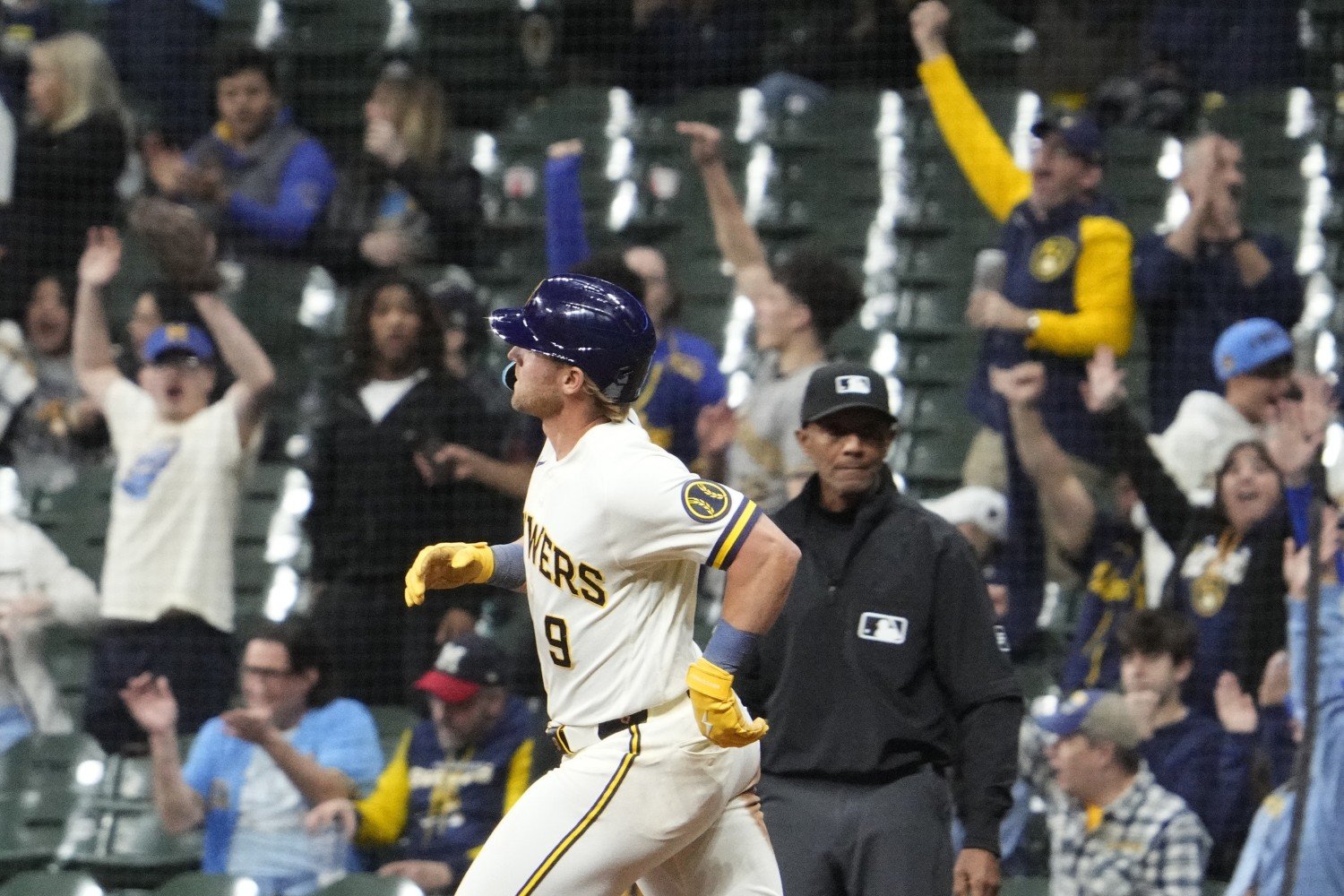 During the key sixth-inning rally in which the Brewers essentially put away Tuesday night's win over the Rays, Jake Bauers hit a wicked line drive to the hole between first and second. Second baseman Ben Williamson dove to his left and knocked the ball down, but his quick recovery was for naught; he threw late and wide. Bauers, hustling down the line, stepped on first base as he ran through it, as batter-runners are obligated to do if they want to be safe. What first-base umpire C.B. Bucknor dared to ask is: What if he hadn't? Wouldn't that have been wild? To test the hypothesis, Bucknor ruled that that very thing had happened—that Bauers had either missed the bag, skipped willfully over it, or so callously disrespected it in the particular way in which he stomped on the pillow that it didn't count. The play had fallen into some confusion after the ball bounced toward home plate and was returned to first baseman Jonathan Aranda, who tagged Bauers. Bucknor called the Brewers first baseman out for not having touched the base yet, which, again, Bauers had done. But an artist does not wait for the beautifully impossible to happen; they get out their canvas and render the impossible vivid and present. Bucknor's easel is the box score, and his brush is the pump of his fist. He installed his work of creative fiction into the game, and we all got to watch the fractal hilarity unfold into its endless angles and dimensions from there. An unfortunate bastion of conservative censorship stepped in to scuttle the festival before it could really begin. The Brewers challenged Bucknor's call, which was rapidly overturned by the replay center at MLB's central office in New York. The reviewers failed Bucknor's transgressive test of imagination, apparently mistaking his commedia dell'arte for one thing we all knew it couldn't be: a mistaken and literal interpretation of the action itself. Maybe you just had to be there. No matter. Art does not change the world by peeling the tentacled unicorn from the canvas and flinging it into the sky; it changes it by forcing us to consider that possibility for a time. Bucknor challenged us all to imagine a wilder, more interesting, less boringly well-ordered world. Why ought he stop now? What has ever been achieved when an artist reached a new frontier and left their audience in awe, only to retreat? Here, for his consideration and yours, are several more ways he can still elevate the craft of umpiring into something more mind-expanding. 1. Batter's Balk There is a great, unexplored margin awaiting the umpire who pounces on our shared uncertainty about the balk rule. Pitchers are not allowed to intentionally deceive baserunners as they prepare to work with the bases occupied. They must come set and avoid a flinch as they prepare to kick and fire. Lefties must not stride toward home plate but throw to first. Often, though, even players and coaches struggle to define the nuances of the balk rule and end up in futile arguments with umpires, either demanding a balk in vain or decrying one they can't understand. That's not fun or compelling, though; it's just arguing. An artist might first glance at the rule known as the catcher's balk, whereby a catcher can be punished for touching the ball with their mask or helmet and the runner is awarded a base—but their eye would be drawn, then, on into the negative space where a mere mortal's eye fails to see anything at all. What about the batter? You ever seen one of these guys? What a twitchy bunch of weirdos. They're shifting their weight, they're waggling their bat, they're tapping their foot. And the pitcher's just standing still. Why not call the batter for a balk—maybe assessing a strike, or calling the runner out, or maybe even calling the batter out but advancing the runner, just as with other balks? Bucknor, surely, will soon try it. 2. Infield Big Fly One peculiar rule protects the offense from manipulation by the infield on pop-ups with multiple runners on base. Rather than permit a team to turn an easy, unearned double play by letting such a ball fall and forcing runners at the next bases, the infield fly rule bids an umpire to call the play dead while the ball is still in the air. Runners can advance at their own risk, but even if the ball hits the ground, they're not obligated to sally forth. With the bases empty and/or with two outs, though, batters get no relief whatsoever on pop-ups. Bucknor could reinterpret the rule to be aimed purely at augmenting offense, and after all, how far off would he be? We could soon find out. Next time a batter hits a fly ball on the infield, look for Bucknor to rule the ball a home run, before it comes down. 3. Catch or Trap? There has always been a delightful bit of drama in watching an outfielder streak after a sinking line drive, sliding or diving to pluck the ball out of the low-lying scrap of sky left between horsehide and grass. Did he catch it, or trap it? Did it almost imperceptibly hop on the turf, or was the last finger of the player's glove beneath it at that final instant? Sometimes, even dozens of looks will leave you unsure. The game waits breathless for those rulings, especially if there were runners on base when the ball was struck and the fielder's heroics were attempted. Routine fly balls don't offer an obvious answer to those thrills, so we need the Bucknors of the world to supply it. What if a fielder caught the ball with both feet beneath them, shoulder-high and sure—but it was ruled a trap and the ball was made live? Bucknor can see the whimsy and the upside, even if you can't, yet. 4. Fair or Foul Long white lines separate the 90° wedge that is fair territory from the surrounds of foul ground on a baseball diamond. Historically—albeit with some notable, even pivotal exceptions—umpires simply call balls hit between those lines fair and those outside them foul. This is unimaginative and restrictive. The great Harry Chapin once wrote a song about a boy who saw all the colors of the rainbow in the morning sun and the flowers all around him, but whose joyous creativity was crushed by an overzealous schoolmarm who compelled him to render his flowers in red, his leaves in green, and the sun in yellow. The ballad's message is clear: break, you, the chains of imaginative bondage that society has placed on you. Be not shackled by the black-white binaries and the straight lines of a world doomed to a depressive death. Breathe those colors; feel the sun in purple-yellow and let the sweet blue heat that runs through its rays touch the back of your throat as you sing out your freedom. Just so, Bucknor ought to invite us out from our corners and into the round. This doesn't require an abandonment of the concept of fair and foul. Bucknor doesn't have to either physically or mentally carve out a special area of foul territory in center field, or make the press box fair. He can simply do as he did Tuesday night. The next time a ball is hit up the middle, he should call it foul. Because what if it had been? As much as what we all saw tells us it was fair, such a call would challenge us to eschew overconfidence and to accept that we are not so different, one from another. A ball was hit up the middle. In what important way was that ball different from one hit toward the first-base dugout? You have an opinion about that, but it was handed down to you by your version of a glowering nun. Let Bucknor's art show you how those batted balls are the same, really. 5. Tagging the Soul We all love a good tag. A fielder who gets into position, reads an incoming throw, anticipates the movement of a runner attempting an evasive slide and nabs them for a crucial out is doing that thing which makes sport greatest, at least in traditional lore: demonstrating grace and genius under pressure. But what are they doing, really? They wear a woven contraption of leather to entrap another. They enact non-hostile but real violence by thwacking and thwapping their handnet onto the uniform of some poor fellow soldier, separated from them in livery but perhaps no different from them in real sympathies and sensibilities. We call this a tag. We call this an out. We only know this way of things. Bucknor has the third eye that renders his first two moot. That's the eye that saw contact between Bauers's sole and the bag on Tuesday, but none between his soul and the bag. He could further invite us to share his gift by giving us more examples of when an apparent connection is illusory. Sure, a glove touched a runner's jersey before the runner grabbed a base, but whose spirit connected with its object more? Did the fielder make the tag with enough love in their heart, enough serious understanding of their impact on the man between their legs, and enough deep-seated desire for victory to merit the out? Should such a thing be decided by a simplistic measurement of space and time, or can we be more fearless—more profound? Is a world in which the runner slid in safely so different from this one? Is that runner safe, after all, even if he was a bit late in putting his own glove to the relevant rubber? The world melts and reshapes itself in glorious new ways for those who can see that (perhaps) he was. We must all learn to see what's before us, lest we be struck by cars or bitten by snakes before we really wake up to the universe, at some age between 14 and 30. However, we must all learn to see what is not before us, too—what is real, but simply confined to the past or the future for the moment; what is not real, but could be; what will never be real, but is more important than what is. You saw Jake Bauers step on first base, like every unhurried runner in baseball history has done. What you saw was real, but it didn't matter very much. One brave person challenged you to see around and behind and beneath that reality, and to understand its full nature—as well as the vast and heart-stopping red-white sear of the reality beyond it. He might offer you another chance, soon. Will you take it?
 -
It doesn't have to start this year. In fact, it's somewhat common for extensions signed after Opening Day to begin the following season. My understanding of *this* deal is that it begins this year, but we'll get more clarity on that in the coming day or two.
-
Image courtesy of © Dave Kallmann / Milwaukee Journal Sentinel / USA TODAY NETWORK via Imagn Images Proactively capturing value is the name of the game in Milwaukee. The Brewers excel at it in multiple areas, and for the second time in three years, they're flexing that muscle by locking up a very young position-player prospect to a long-term deal. The team and shortstop Cooper Pratt are in agreement on an eight-year contract worth over $50 million, with club options for 2034 and 2035, a source with knowledge of the negotiations confirmed to Brewer Fanatic. The source spoke on the condition of anonymity, as the team has not yet announced the deal. First with the news, on Twitter, was Bob Nightengale of USA Today. Pratt, 21, has begun this season in Triple-A, after spending all of 2025 with Double-A Nashville. He was the team's sixth-round pick in the 2023 MLB Draft, but signed for a significantly higher bonus ($1.35 million) than the slot value for that pick. After developing into one of the minor leagues' highest-regarded defensive shortstops and showing flashes of real offensive upside, he's now set to make many multiples of that—but the Brewers also gain control over the entirety of his prime. He only hit eight home runs in 527 plate appearances last year, but that was at a very young age for his level—and even then, he was an above-average hitter in the pitcher-friendly Southern League, with excellent plate discipline and good contact rates. Given his size (6-foot-4, 210 pounds, officially; he's still growing), there's real hope that he'll end up hitting for plenty of power, too, but so far, his long, sturdy frame hasn't hampered his agility at shortstop. In the medium-term future, he might move to third base, but for now, he's a plus defender at the toughest spot on the infield and (arguably) the most important one on the diamond. The timing of this deal is strange, though—not because it comes after Opening Day, but because it's happening now at all. Precocious as he has been in scaling the minor-league ladder, Pratt isn't on the 40-man roster yet, and won't be Rule 5 Draft-eligible until 2027. Presumably, this pact speeds him toward the majors, but by how much? That remains to be seen. In any case, it's a huge early investment in a player the team didn't deem ready to break camp this spring—as opposed to the larger eight-year deal they struck with Jackson Chourio in December 2023, after which the young outfielder debuted on Opening Day 2024. Doing his part to merit this kind of consideration, Pratt posted a .405 OBP in the Cactus League this spring. He got more playing time than would be typical for a non-roster invitee, thanks in part to Joey Ortiz leaving camp to play with Novena México in the World Baseball Classic. Now, however, Ortiz is very much back in Pratt's path to the majors, and Jesus Made is hurtling up alongside. The team loves new acquisitions David Hamilton and Jett Williams, and obviously, no one is immediately displacing Brice Turang. This deal, then, comes back to capturing value. Having Pratt under team control on a deal that won't begin to pay him meaningfully more than the league minimum for another few years gives them great flexibility and leverage. If Turang doesn't bend to their will in extension talks, he could become trade bait in the next two seasons. Ortiz could be nudged aside, if the offensive struggles of 2025 follow him into 2026. Pratt's deal does not include any no-trade protection, a league source said, so he himself could be dealt if that's what the team considers most prudent at some point. For now, having signed the deal simply puts the team in better position than not signing it would have, so whatever questions it might raise, the front office is happy to live with. View full article
-
NEWS: Cooper Pratt, Brewers Agree to 8-Year Deal Worth $50 Million
Matthew Trueblood posted an article in Brewers
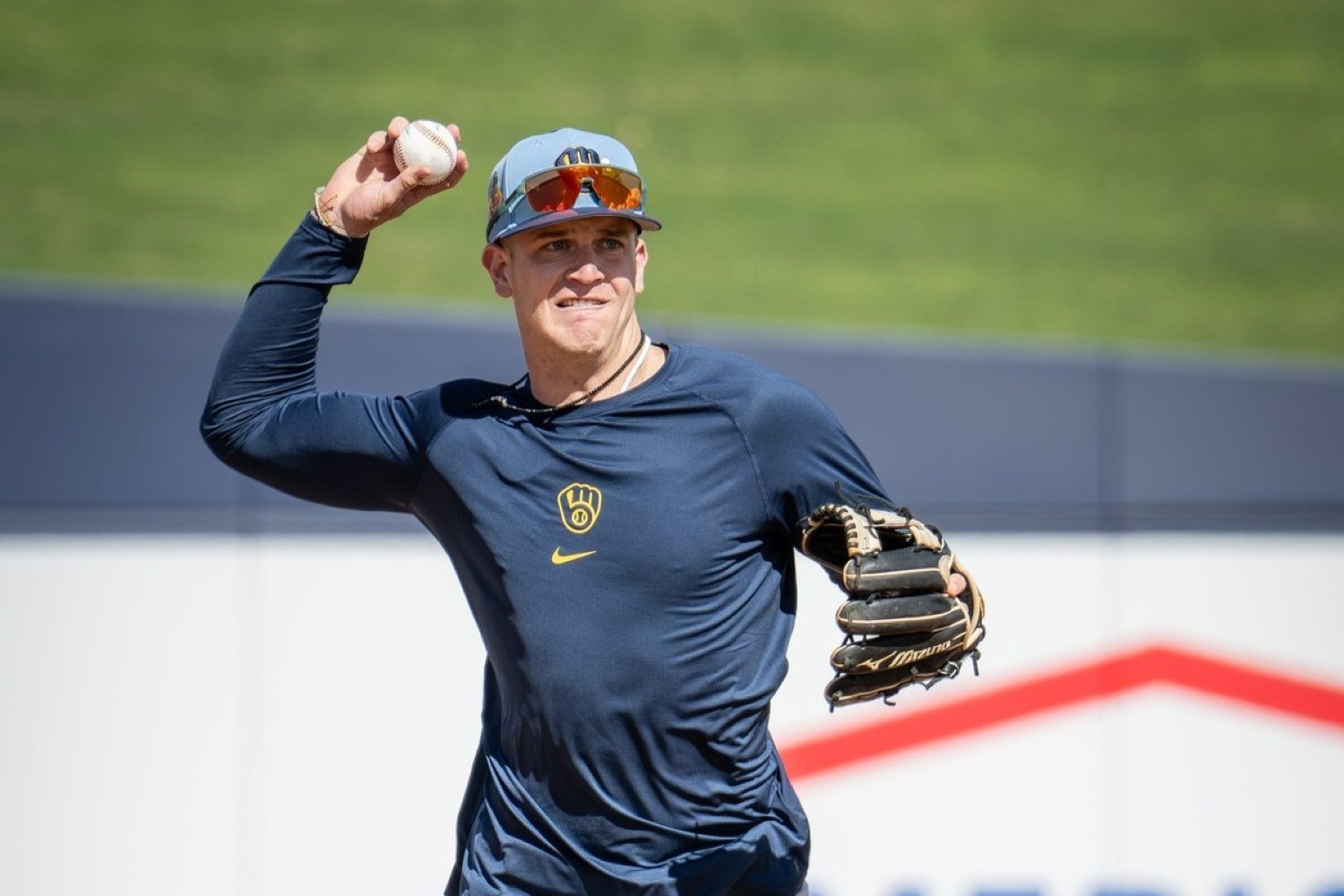 Proactively capturing value is the name of the game in Milwaukee. The Brewers excel at it in multiple areas, and for the second time in three years, they're flexing that muscle by locking up a very young position-player prospect to a long-term deal. The team and shortstop Cooper Pratt are in agreement on an eight-year contract worth over $50 million, with club options for 2034 and 2035, a source with knowledge of the negotiations confirmed to Brewer Fanatic. The source spoke on the condition of anonymity, as the team has not yet announced the deal. First with the news, on Twitter, was Bob Nightengale of USA Today. Pratt, 21, has begun this season in Triple-A, after spending all of 2025 with Double-A Nashville. He was the team's sixth-round pick in the 2023 MLB Draft, but signed for a significantly higher bonus ($1.35 million) than the slot value for that pick. After developing into one of the minor leagues' highest-regarded defensive shortstops and showing flashes of real offensive upside, he's now set to make many multiples of that—but the Brewers also gain control over the entirety of his prime. He only hit eight home runs in 527 plate appearances last year, but that was at a very young age for his level—and even then, he was an above-average hitter in the pitcher-friendly Southern League, with excellent plate discipline and good contact rates. Given his size (6-foot-4, 210 pounds, officially; he's still growing), there's real hope that he'll end up hitting for plenty of power, too, but so far, his long, sturdy frame hasn't hampered his agility at shortstop. In the medium-term future, he might move to third base, but for now, he's a plus defender at the toughest spot on the infield and (arguably) the most important one on the diamond. The timing of this deal is strange, though—not because it comes after Opening Day, but because it's happening now at all. Precocious as he has been in scaling the minor-league ladder, Pratt isn't on the 40-man roster yet, and won't be Rule 5 Draft-eligible until 2027. Presumably, this pact speeds him toward the majors, but by how much? That remains to be seen. In any case, it's a huge early investment in a player the team didn't deem ready to break camp this spring—as opposed to the larger eight-year deal they struck with Jackson Chourio in December 2023, after which the young outfielder debuted on Opening Day 2024. Doing his part to merit this kind of consideration, Pratt posted a .405 OBP in the Cactus League this spring. He got more playing time than would be typical for a non-roster invitee, thanks in part to Joey Ortiz leaving camp to play with Novena México in the World Baseball Classic. Now, however, Ortiz is very much back in Pratt's path to the majors, and Jesus Made is hurtling up alongside. The team loves new acquisitions David Hamilton and Jett Williams, and obviously, no one is immediately displacing Brice Turang. This deal, then, comes back to capturing value. Having Pratt under team control on a deal that won't begin to pay him meaningfully more than the league minimum for another few years gives them great flexibility and leverage. If Turang doesn't bend to their will in extension talks, he could become trade bait in the next two seasons. Ortiz could be nudged aside, if the offensive struggles of 2025 follow him into 2026. Pratt's deal does not include any no-trade protection, a league source said, so he himself could be dealt if that's what the team considers most prudent at some point. For now, having signed the deal simply puts the team in better position than not signing it would have, so whatever questions it might raise, the front office is happy to live with.
 -
Jake Bauers is Opening Up and Letting the Ball In. It's a Trap.
Matthew Trueblood posted an article in Brewers
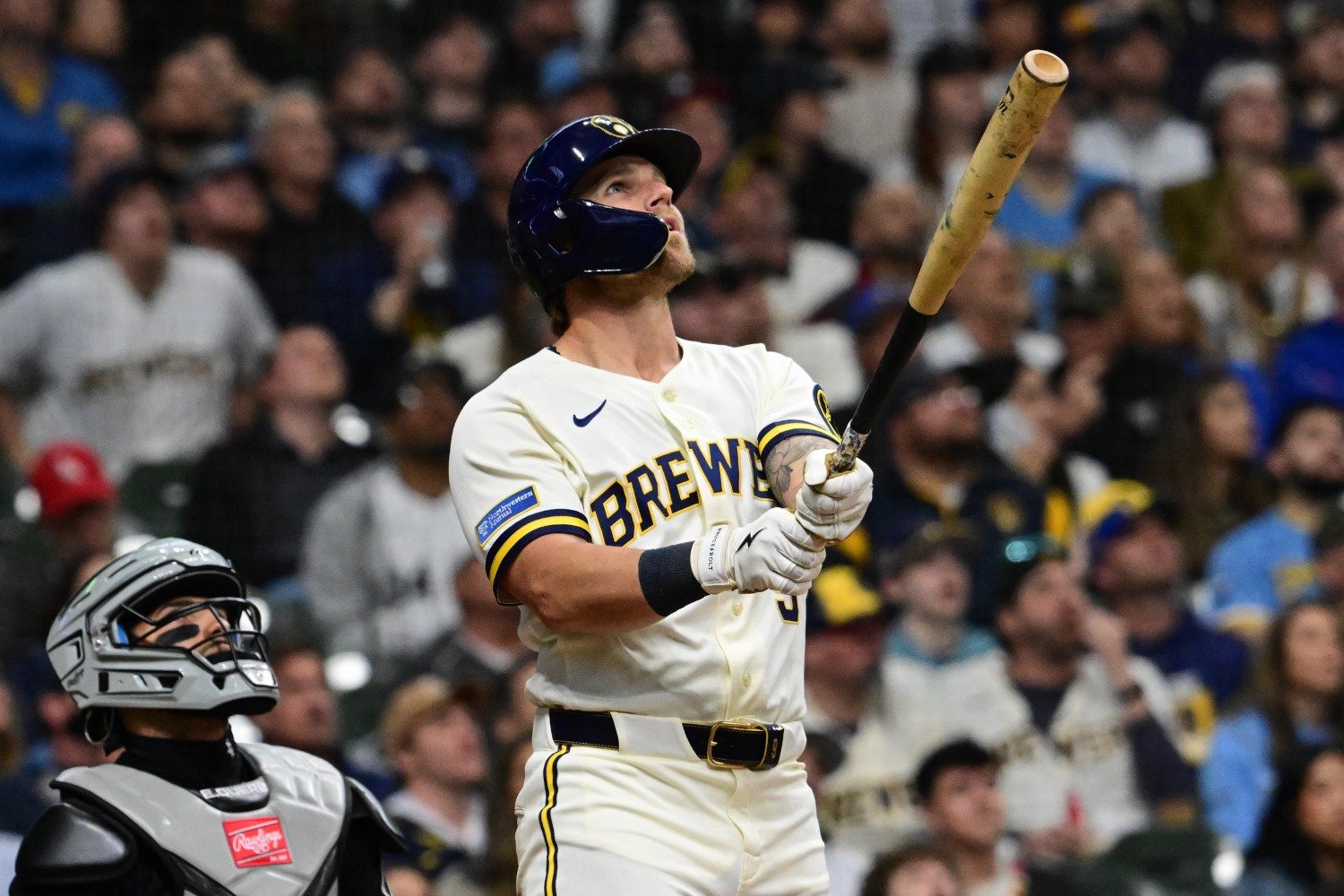 As we documented earlier this spring, Jake Bauers seized an opportunity last summer. A stint on the injured list gave him a chance to reset the way he thinks about preparation and functional strength, and he took it. He went into the winter with a more specialized training plan than in the past, and while his broad shoulders look slightly less bemuscled than they have in previous years, he's no less dangerous at the plate. In fact, every iota of available evidence says he's more dangerous than ever. With Andrew Vaughn out for at least a month due to a broken hamate, Bauers is the Brewers' new starting first baseman. Gary Sánchez will still spell him and shield him from left-handed starting pitchers, as he did on Sunday, but Bauers is slated for plenty of playing time until (at least) the returns of Jackson Chourio and Vaughn from the injured list. That's just fine, because since returning from the IL late last season, he's been a formidable slugger. It was easy to spot his numbers down the stretch and his postseason power last fall, and to clock his seven homers this spring, but don't neglect to notice that he also doubled six times in Cactus League play or that he walked eight times and struck out just seven times in the spring. For a guy who has always battled a high strikeout rate, punching out just seven times in 49 plate appearances was as eye-opening as the power he produced along the way. Nor was it new, even then. Bauers's whiff rate fell as 2025 went on; he's making steady progress in shoring up what has been his biggest offensive weakness. It's nice to be able to point to Bauers's excellent bat speed and his much-improved plate discipline, and with each passing day, he seems to have gotten better at not whiffing when he does swing. Even those are results, though, in a sense. Let's take a look at some things that drill all the way down to the level of process, to identify why Bauers might be blossoming into a genuinely excellent slugger with staying power. Here are visualizations of Bauers's stance and stride, via Statcast, for both September of last season and the early days of this year. First, the obvious thing: Bauers's stance is significantly more open this spring. He's standing a bit more upright in the box, with his feet closer together, but he's more open to the pitcher with his hips and shoulders. That's usually good for pitch recognition and power production, as long as one doesn't cut oneself off with the resulting stride. As you can see, though, Bauers's stride leaves him in no more closed a position at his contact point than he was in last year; those red footprints are farther from the plate and (if anything) a bit closer to neutral, in terms of alignment. Ah, but let's also talk about that contact point, because it's the other key thing of which to take note. Bauers is contacting the ball much, much deeper in the zone this year than at any point last season, as indicated by the purple circles in the images above. He's hitting it, on average, not even 24 inches in front of his center of mass, as compared to roughly 30 inches late last year (and farther out than that, at earlier junctures). A deeper contact point makes generating pull power harder. The reasons for that should be obvious. However, a hitter with plus bat speed (✅), above-average tilt in their bat path (✅), and good raw strength (✅, especially after his shift in focus this winter) can find lots of pop even while letting the ball travel. Naturally, too, letting it travel more means better swing decisions and a better contact rate, in almost all cases. It's probably too much to hope that Bauers will burgeon into some poor man's version of Nick Kurtz or Shohei Ohtani at this late stage of his career, but it's not an exaggeration to say that he's becoming comparable to those guys in the way he addresses the baseball. His stance adjustment breeds good choices. His newfound willingness to meet the ball deeper in the hitting zone makes him more well-rounded. And all that bat speed is still there, leading to sudden jolts like the long homer he hit on Opening Day. Bauers is legit, and though they'll miss Vaughn and Chourio for the balance of their stints on the injured list, the Brewers are very fortunate—not lucky, because they helped Bauers achieve all this, but certainly fortunate—to have Bauers on hand to soak up the extra at-bats.
 -
Image courtesy of © Benny Sieu-Imagn Images As we documented earlier this spring, Jake Bauers seized an opportunity last summer. A stint on the injured list gave him a chance to reset the way he thinks about preparation and functional strength, and he took it. He went into the winter with a more specialized training plan than in the past, and while his broad shoulders look slightly less bemuscled than they have in previous years, he's no less dangerous at the plate. In fact, every iota of available evidence says he's more dangerous than ever. With Andrew Vaughn out for at least a month due to a broken hamate, Bauers is the Brewers' new starting first baseman. Gary Sánchez will still spell him and shield him from left-handed starting pitchers, as he did on Sunday, but Bauers is slated for plenty of playing time until (at least) the returns of Jackson Chourio and Vaughn from the injured list. That's just fine, because since returning from the IL late last season, he's been a formidable slugger. It was easy to spot his numbers down the stretch and his postseason power last fall, and to clock his seven homers this spring, but don't neglect to notice that he also doubled six times in Cactus League play or that he walked eight times and struck out just seven times in the spring. For a guy who has always battled a high strikeout rate, punching out just seven times in 49 plate appearances was as eye-opening as the power he produced along the way. Nor was it new, even then. Bauers's whiff rate fell as 2025 went on; he's making steady progress in shoring up what has been his biggest offensive weakness. It's nice to be able to point to Bauers's excellent bat speed and his much-improved plate discipline, and with each passing day, he seems to have gotten better at not whiffing when he does swing. Even those are results, though, in a sense. Let's take a look at some things that drill all the way down to the level of process, to identify why Bauers might be blossoming into a genuinely excellent slugger with staying power. Here are visualizations of Bauers's stance and stride, via Statcast, for both September of last season and the early days of this year. First, the obvious thing: Bauers's stance is significantly more open this spring. He's standing a bit more upright in the box, with his feet closer together, but he's more open to the pitcher with his hips and shoulders. That's usually good for pitch recognition and power production, as long as one doesn't cut oneself off with the resulting stride. As you can see, though, Bauers's stride leaves him in no more closed a position at his contact point than he was in last year; those red footprints are farther from the plate and (if anything) a bit closer to neutral, in terms of alignment. Ah, but let's also talk about that contact point, because it's the other key thing of which to take note. Bauers is contacting the ball much, much deeper in the zone this year than at any point last season, as indicated by the purple circles in the images above. He's hitting it, on average, not even 24 inches in front of his center of mass, as compared to roughly 30 inches late last year (and farther out than that, at earlier junctures). A deeper contact point makes generating pull power harder. The reasons for that should be obvious. However, a hitter with plus bat speed (✅), above-average tilt in their bat path (✅), and good raw strength (✅, especially after his shift in focus this winter) can find lots of pop even while letting the ball travel. Naturally, too, letting it travel more means better swing decisions and a better contact rate, in almost all cases. It's probably too much to hope that Bauers will burgeon into some poor man's version of Nick Kurtz or Shohei Ohtani at this late stage of his career, but it's not an exaggeration to say that he's becoming comparable to those guys in the way he addresses the baseball. His stance adjustment breeds good choices. His newfound willingness to meet the ball deeper in the hitting zone makes him more well-rounded. And all that bat speed is still there, leading to sudden jolts like the long homer he hit on Opening Day. Bauers is legit, and though they'll miss Vaughn and Chourio for the balance of their stints on the injured list, the Brewers are very fortunate—not lucky, because they helped Bauers achieve all this, but certainly fortunate—to have Bauers on hand to soak up the extra at-bats. View full article
-
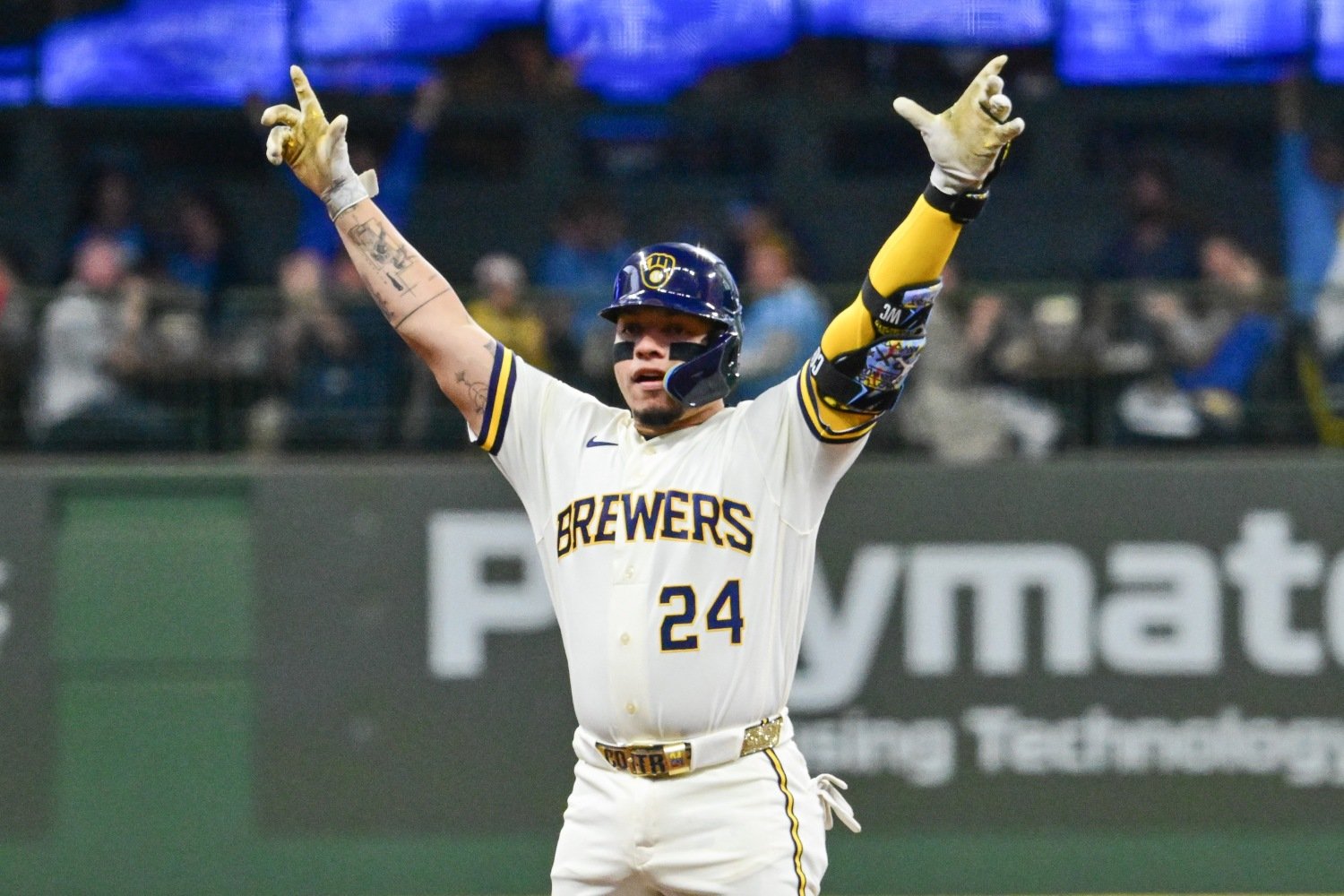 Chase Meidroth did his level best to assert the seriousness of the 2026 White Sox's improvement. He took Jacob Misiorowski deep to lead off the game Thursday, putting Chicago ahead 1-0, and Shane Smith pitched out of trouble in the bottom of the first to keep the score that way. Even as that was all happening, though, you could feel it coming. Once Meidroth's homer woke him up, Misiorowski went about mowing the visitors down ruthlessly. In the bottom of the second inning, though, the Crew really reminded the baseball world who they are. It started innocuously. Smith struck out Jake Bauers to begin the second, and got ahead of Sal Frelick 0-2. Then, Frelick simply refused to help him get to the end of the at-bat. He took four straight pitches outside the zone and trotted to first base. Smith was ahead of David Hamilton, too, but the new third baseman fouled off two two-strike pitches and then reached via catcher interference. It was typical Brewers scrappiness, and it didn't have to lead anywhere, really, but inevitably, it did. Smith wobbled, walking Garrett Mitchell in a non-competitive at-bat, and suddenly, the home team had the bases loaded and the crowd buzzing. Catcher Edgar Quero did everything he could to thwart the Brewers and their relentlessly patient approach. He challenged a first-pitch call of a ball low and away, and got his second overturn in as many innings. Smith then came up and in on Ortiz, though, and Ortiz—with the same inside-out swing he used to hit many similar balls last year—poked a flare over the slightly drawn-in infield and into shallow right, for a game-tying single. Smith recovered admirably, then, as he and Quero found the edge of the plate to which his command was stronger (the first-base side) and conspired to strike out Brice Turang. Because Turang worked the at-bat well, though, it took another six pitches to get that out. Up came William Contreras, with the bases still loaded and two outs. Smith had a bit of confidence and control back, but he was also tiring out there. Even in the middle of the season, an inning in which a hurler throws 30-plus pitches is rare and troublesome. Smith was already at 30 pitches for the frame when Contreras stepped into the box. On a 1-1 pitch, Quero earned what looked like another huge, pivotal strike, with another astute challenge on a pitch that nipped the outside corner. Contreras stayed in the fight, though, and ended up in a 2-2 count, waiting on Smith's 36th offering of the inning. Smith and Quero had the right idea. They went to a right-on-right changeup, one of the few reliable ways to get Contreras out in such a situation. That pitch has to be well-executed to work, though, and with the workload piling up too fast for a game in late March, Smith made a mistake. Contreras was all over it, lining the left-up change into the left-field corner for a bases-clearing double that virtually settled the game, then and there. Smith's day was over, and the rout was on. Milwaukee went on to win 14-2. This is what the Brewers do. They force mistakes, and then capitalize on them. No team in baseball is more opportunistic, even though (or, perhaps, because) no team in baseball is more patient. Smith threw a pitch it would have been a crime not to smash, but hitters miss their pitch all the time. Contreras didn't. For that matter, Smith didn't throw that pitch simply out of incompetence. The Brewers had worn him down over the course of the inning. They earned their moment, then seized it. In just the fourth half-inning of the season, it was a lovely microcosm of what has made them great for years, now. It also served as a declaration to the rest of the league: there will be no reprieve in 2026.
 -
Image courtesy of © Benny Sieu-Imagn Images Chase Meidroth did his level best to assert the seriousness of the 2026 White Sox's improvement. He took Jacob Misiorowski deep to lead off the game Thursday, putting Chicago ahead 1-0, and Shane Smith pitched out of trouble in the bottom of the first to keep the score that way. Even as that was all happening, though, you could feel it coming. Once Meidroth's homer woke him up, Misiorowski went about mowing the visitors down ruthlessly. In the bottom of the second inning, though, the Crew really reminded the baseball world who they are. It started innocuously. Smith struck out Jake Bauers to begin the second, and got ahead of Sal Frelick 0-2. Then, Frelick simply refused to help him get to the end of the at-bat. He took four straight pitches outside the zone and trotted to first base. Smith was ahead of David Hamilton, too, but the new third baseman fouled off two two-strike pitches and then reached via catcher interference. It was typical Brewers scrappiness, and it didn't have to lead anywhere, really, but inevitably, it did. Smith wobbled, walking Garrett Mitchell in a non-competitive at-bat, and suddenly, the home team had the bases loaded and the crowd buzzing. Catcher Edgar Quero did everything he could to thwart the Brewers and their relentlessly patient approach. He challenged a first-pitch call of a ball low and away, and got his second overturn in as many innings. Smith then came up and in on Ortiz, though, and Ortiz—with the same inside-out swing he used to hit many similar balls last year—poked a flare over the slightly drawn-in infield and into shallow right, for a game-tying single. Smith recovered admirably, then, as he and Quero found the edge of the plate to which his command was stronger (the first-base side) and conspired to strike out Brice Turang. Because Turang worked the at-bat well, though, it took another six pitches to get that out. Up came William Contreras, with the bases still loaded and two outs. Smith had a bit of confidence and control back, but he was also tiring out there. Even in the middle of the season, an inning in which a hurler throws 30-plus pitches is rare and troublesome. Smith was already at 30 pitches for the frame when Contreras stepped into the box. On a 1-1 pitch, Quero earned what looked like another huge, pivotal strike, with another astute challenge on a pitch that nipped the outside corner. Contreras stayed in the fight, though, and ended up in a 2-2 count, waiting on Smith's 36th offering of the inning. Smith and Quero had the right idea. They went to a right-on-right changeup, one of the few reliable ways to get Contreras out in such a situation. That pitch has to be well-executed to work, though, and with the workload piling up too fast for a game in late March, Smith made a mistake. Contreras was all over it, lining the left-up change into the left-field corner for a bases-clearing double that virtually settled the game, then and there. Smith's day was over, and the rout was on. Milwaukee went on to win 14-2. This is what the Brewers do. They force mistakes, and then capitalize on them. No team in baseball is more opportunistic, even though (or, perhaps, because) no team in baseball is more patient. Smith threw a pitch it would have been a crime not to smash, but hitters miss their pitch all the time. Contreras didn't. For that matter, Smith didn't throw that pitch simply out of incompetence. The Brewers had worn him down over the course of the inning. They earned their moment, then seized it. In just the fourth half-inning of the season, it was a lovely microcosm of what has made them great for years, now. It also served as a declaration to the rest of the league: there will be no reprieve in 2026. View full article
-
Yeah, hairline fracture picked up via MRI. Easier than we all might wish to miss those types of things on X-ray.
-
Welp. Seems so. Encouraging that he played through it and produced some hard contact even within the last few days. Hopefully he'll be back to full strength fast.
-
Image courtesy of © Mark J. Rebilas-Imagn Images On the morning of Opening Day, the vibrant joy of the new season has been scumbled by a dark cloud. Jackson Chourio hit the injured list in the hours leading up to the Brewers' season opener, with a fractured hand that's expected to cost him the first month of the campaign. Chourio, 22, was perhaps the best breakout candidate on the team entering the season, with a chance to consolidate the impressive but inconsistent successes he enjoyed over his first two years in the majors and blossom into a superstar. That's still possible, but it's on hold now. Predictably, the roster move the team made brings Blake Perkins back to the majors, days after he was optioned to Triple-A Nashville to make way for Brandon Lockridge on the Opening Day roster. In the short term, it's neither Perkins nor Lockridge who's most likely to get extra playing time in Chourio's absence. That beneficiary will be Jake Bauers, who might play less at first base over the first few weeks than initially believed. Instead, he could spend more time in left field. Against righties, Garrett Mitchell and Bauers will probably start in center and left, respectively. Perkins and Lockridge could man those positions against lefties. Milwaukee has great positional depth this year—a luxury they haven't enjoyed in the past. To lose Chourio right off the bat hurts, but it also makes it easier for manager Pat Murphy to keep the hot spring bats of both Andrew Vaughn and Bauers in the lineup and in rhythm. The injury traces, as it turns out, all the way back to when Chourio was hit by a pitch in an exhibition with Team Venezuela, before the official start of the World Baseball Classic, as reported by Brewer Fanatic's Jack Stern. Because he's played through the injury for the last three weeks, it hasn't had adequate time to heal, but the hope is that he'll make a full recovery in short order. In the meantime, the team will get an earlier and fuller chance to see what they have in Lockridge and how sustainable Bauers's late-season surge from 2025 than they expected or wanted. Chourio only batted .200 and didn't produce an extra-base hit during the WBC, but he came back into camp with the Brewers hitting the ball hard. He had five batted balls with an exit velocity north of 100 MPH in four games after coming back to the team in the wake of the tournament, so the decision to sideline him now appears to be less about an inability to perform at all than about ensuring the injury doesn't linger throughout the season. In that way, it's the right move. It just saps a small percentage of the joy from the pageant of Opening Day. The fracture is near the base of his middle finger, which is nearly identical to the spot where teammate and countryman William Contreras had a similar injury that lingered for much of 2025. After a check swing caused discomfort during an exhibition against the Reds at Uecker Field earlier this week, an MRI revealed the issue. The hope is that by giving him substantial rest now, the team can avoid the same shadowing effects that Contreras suffered for much of last year. View full article
-
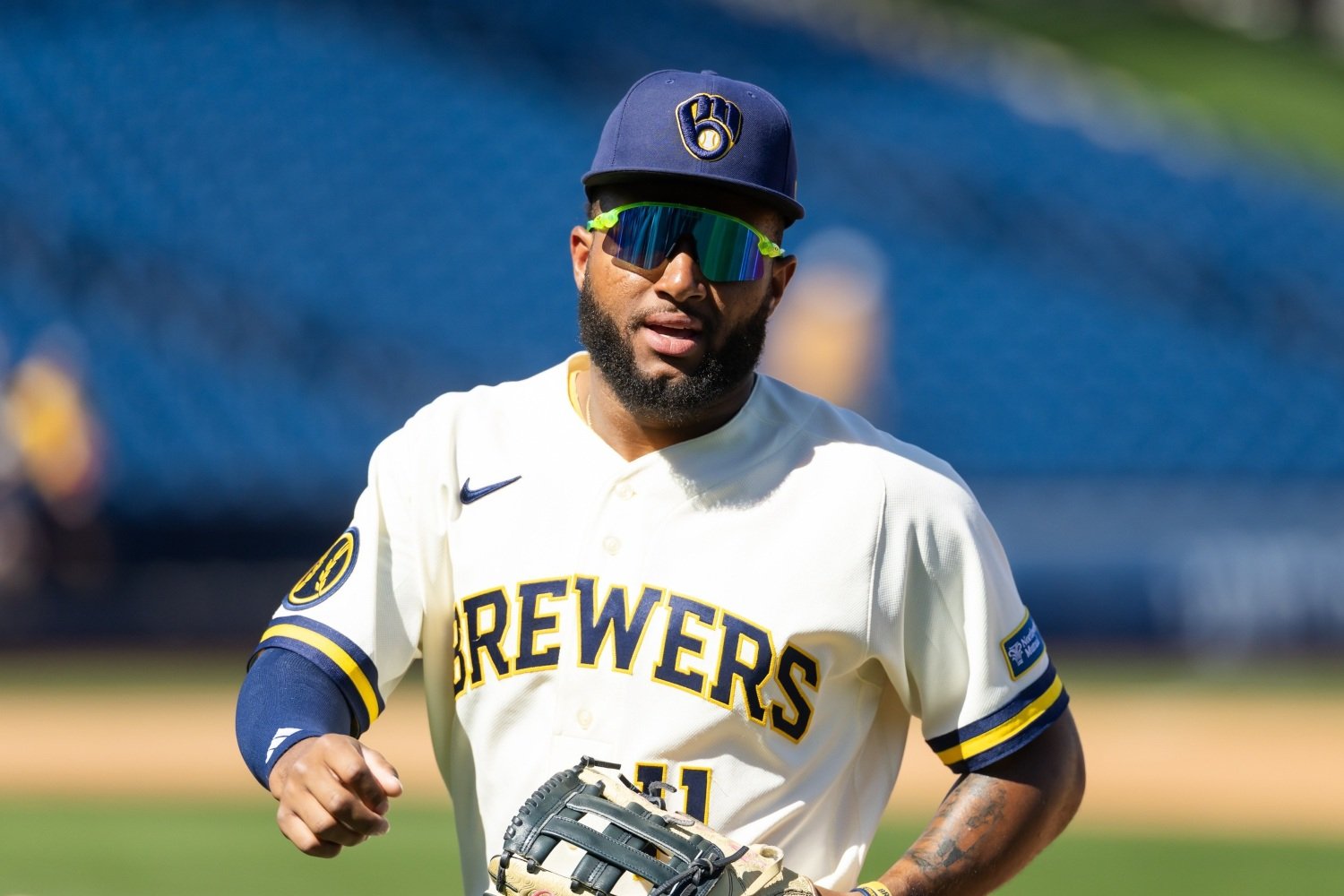 On the morning of Opening Day, the vibrant joy of the new season has been scumbled by a dark cloud. Jackson Chourio hit the injured list in the hours leading up to the Brewers' season opener, with a fractured hand that's expected to cost him the first month of the campaign. Chourio, 22, was perhaps the best breakout candidate on the team entering the season, with a chance to consolidate the impressive but inconsistent successes he enjoyed over his first two years in the majors and blossom into a superstar. That's still possible, but it's on hold now. Predictably, the roster move the team made brings Blake Perkins back to the majors, days after he was optioned to Triple-A Nashville to make way for Brandon Lockridge on the Opening Day roster. In the short term, it's neither Perkins nor Lockridge who's most likely to get extra playing time in Chourio's absence. That beneficiary will be Jake Bauers, who might play less at first base over the first few weeks than initially believed. Instead, he could spend more time in left field. Against righties, Garrett Mitchell and Bauers will probably start in center and left, respectively. Perkins and Lockridge could man those positions against lefties. Milwaukee has great positional depth this year—a luxury they haven't enjoyed in the past. To lose Chourio right off the bat hurts, but it also makes it easier for manager Pat Murphy to keep the hot spring bats of both Andrew Vaughn and Bauers in the lineup and in rhythm. The injury traces, as it turns out, all the way back to when Chourio was hit by a pitch in an exhibition with Team Venezuela, before the official start of the World Baseball Classic, as reported by Brewer Fanatic's Jack Stern. Because he's played through the injury for the last three weeks, it hasn't had adequate time to heal, but the hope is that he'll make a full recovery in short order. In the meantime, the team will get an earlier and fuller chance to see what they have in Lockridge and how sustainable Bauers's late-season surge from 2025 than they expected or wanted. Chourio only batted .200 and didn't produce an extra-base hit during the WBC, but he came back into camp with the Brewers hitting the ball hard. He had five batted balls with an exit velocity north of 100 MPH in four games after coming back to the team in the wake of the tournament, so the decision to sideline him now appears to be less about an inability to perform at all than about ensuring the injury doesn't linger throughout the season. In that way, it's the right move. It just saps a small percentage of the joy from the pageant of Opening Day. The fracture is near the base of his middle finger, which is nearly identical to the spot where teammate and countryman William Contreras had a similar injury that lingered for much of 2025. After a check swing caused discomfort during an exhibition against the Reds at Uecker Field earlier this week, an MRI revealed the issue. The hope is that by giving him substantial rest now, the team can avoid the same shadowing effects that Contreras suffered for much of last year.
 -
It's a nerdy series of novels. But that line is, as a modern rap connoisseur would say, a bar. A BAR!

