owbc
-
Posts
10,249 -
Joined
-
Last visited
-
Days Won
3
Content Type
Profiles
Forums
Blogs
Events
News
2026 Milwaukee Brewers Top Prospects Ranking
Milwaukee Brewers Videos
2022 Milwaukee Brewers Draft Picks
Milwaukee Brewers Free Agent & Trade Rumors, Notes, & Tidbits
Guides & Resources
2023 Milwaukee Brewers Draft Picks
2024 Milwaukee Brewers Draft Picks
The Milwaukee Brewers Players Project
2025 Milwaukee Brewers Draft Pick Tracker
2026 Milwaukee Brewers Draft Tracker: Picks & Bonuses
Store
Downloads
Gallery
Everything posted by owbc
-
I have a rash but my left torso and arm are on fire all over the place. I guess millennials under 50 are just on their own because we’re not eligible for the vaccine…
-
Shingles
-
 Back in my day (LOL) there was a Facebook group called “UW easy class list” and I remember “Clap for Credit” was universally considered the easiest class at UW-Madison. Nobody is going to believe that story it’s so crazy haha. I also have this dream so I feel very bad for the student who is living our worst nightmare, but my dream is always involving a very difficult math class so there was never an easy way out.
 -
It’s not that the market panics, it’s that the market is entirely driven by the short term. The current quarter and the next quarter and not much beyond that.
-
Id love to see OKC get eliminated by Denver. Get them real nice and desperate to make a trade.
-
When does Arnold start to receive some criticism
owbc replied to brewers888's topic in Milwaukee Brewers Talk
Exactly, not to mention the financial incentives being highly stacked in favor of pre-arbitration value. That said, there was some benefit to the Melvin “all in” approach because we got some highly memorable seasons out of it, while our more conservative approach to consistent winning is yielding mostly pain in the first round of the playoffs. The biggest question in my head is how much of that is bad luck vs. how much is it caused by running guys out there with minimal experience into high leverage postseason games? -
When does Arnold start to receive some criticism
owbc replied to brewers888's topic in Milwaukee Brewers Talk
Tampa Bay and Milwaukee are indeed the high level mark for small markets in the current economic system. Nobody has figured out how to do any better than that with a bottom half payroll. Kansas City won a World Series but also had some god awful years. I absolutely agree that the economic system needs major reform. That’s a different topic than “Is our GM doing a bad job?” -
When does Arnold start to receive some criticism
owbc replied to brewers888's topic in Milwaukee Brewers Talk
Agree with those saying that we are right at national expectations and arguably overperforming given injuries. I also agree that some of the recent trades have been whiffs, which we can’t afford. I get being frustrated at the budget but I never see us pointing to other small market teams that we should try to emulate. Instead, everyone else is pointing at us. We’re the model that fans of other teams want to copy. -
So many interesting trends in the standings this year. The NL is fully asserting itself as the dominant league. 4/6 division leaders did not win their divisions in 2024. Several 2024 playoff teams are in deep doo doo yet 18 teams at or above .500 thanks to the bad teams being really, really bad. And the Mariners are now an offensive powerhouse. Crazy.
-
Brewers (Patrick) vs White Sox (Burke): 5/1/25, 1:10pm
owbc replied to Brock Beauchamp's topic in Archived Game Threads
That was either a good guess or the runner on 2B relayed the pitch. -
Brewers (Patrick) vs White Sox (Burke): 5/1/25, 1:10pm
owbc replied to Brock Beauchamp's topic in Archived Game Threads
Ortiz has one of the most brutal Savant pages that I’ve seen from a regular. And his 2024 was not great either. Combined with average-at-best defense, he’s gotta be running on a short leash if he doesn’t turn the page in May. -
The market has been patient, it assumed no tariffs until Liberation Day, now it’s assuming trade deals will happen. To be fair that is probably a safe assumption, consumers are already getting upset over Temu import fees and we haven’t even seen the empty shelves yet which may force Trump’s hand. I’m bearish anyway, especially long. Tariffs are going to go up to some extent and the global economy will realign against us to some extent. Manufacturing will not return in any appreciable numbers (although I’m sure there will be cherry picked news stories). The immigration crackdown is going to cause labor costs to go up. I’m going to stick to my conservative strategy this year, the recent bump only makes me want to sell more.
-
Yeah it’s hard to disagree with any of this. At the end of the day they got the ‘ship and then made a bunch of failed desperation moves to get another and got nowhere close. Blow it up and start over.
-
Don’t forget, the Cubs were also 17-10 last year.
-
Brewers (Peralta) vs Giants (Webb): 4/23/25, 8:45pm
owbc replied to Brock Beauchamp's topic in Archived Game Threads
Somebody needs to field the damn ball. Terrible way to send that game down the drain. -
They are good but not going to run away with it. Top-3 offense with below-average pitching is a recipe for a mid-season slump. Tucker and Suzuki are legit, but beyond that? Carson Kelly has a 321 OPS+, Michael Busch is playing out of his mind, and PCA is having a breakout at age 23. CC doesn't have the Brewers' pitching lab feeding him more quality arms...the offense will regress to ~10th in MLB, the pitching will remain below average, and it will take somewhere in the 87-89 win range to finish ahead of them.
-
He’s fun to watch but rough around the edges. I bet it is frustrating for Reds fans. I saw quite a bit of him against Seattle last week and his play was pretty brutal for the most part. Makes the spectacular play but botches routine ones. Lacks plate discipline. Common things with young guys but enough to keep him below superstar tier for now…
-
It’s pretty wild that the best strategy to lower interest rates would have been to do nothing.
-
The most amazing part of that game is that it barely went over 3 hours despite 24 runs, 33 hits, and 12 pitchers used. First time since 2006 that a team surrendered a 10+ run inning and won.
-
I feel like we’ve been on the losing end of Quintana vs Burnes matchups in the past so hopefully we can flip the script when going against Burnes.
-
We’re 2 weeks in and the standings are getting pretty close to projections. The Cubs look pretty good, nobody else in the Central seems like a threat. I suspect the Reds will get better as the year goes on.
-
Good thing he’s not in AAA like someone suggested in one of the Yankees IGTs 😂
-
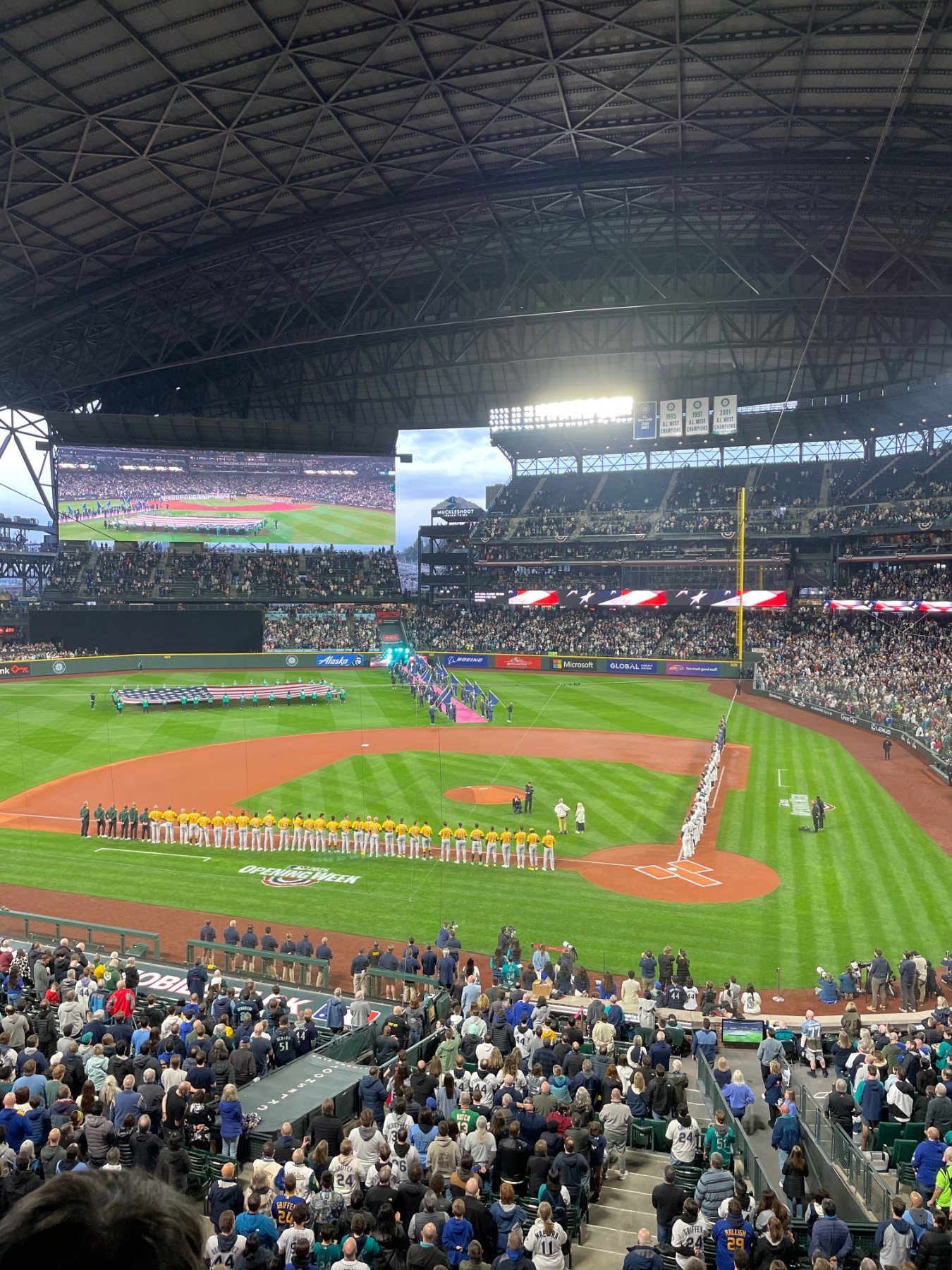
3/27 T-Mobile Park in Seattle
-
Brewers (Alexander) vs Rockies (Senzatela): 4/9/25, 7:40pm
owbc replied to Frisbee Slider's topic in Archived Game Threads
One more! -
Brewers (Alexander) vs Rockies (Senzatela): 4/9/25, 7:40pm
owbc replied to Frisbee Slider's topic in Archived Game Threads
4 more to get to get the run differential to zero — we can do it tonight!