



Tim Muma
-
Posts
436 -
Joined
-
Last visited
-
Days Won
1
Content Type
Profiles
Forums
Blogs
Events
News
2026 Milwaukee Brewers Top Prospects Ranking
Milwaukee Brewers Videos
2022 Milwaukee Brewers Draft Picks
Milwaukee Brewers Free Agent & Trade Rumors, Notes, & Tidbits
Guides & Resources
2023 Milwaukee Brewers Draft Picks
2024 Milwaukee Brewers Draft Picks
The Milwaukee Brewers Players Project
2025 Milwaukee Brewers Draft Pick Tracker
2026 Milwaukee Brewers Draft Tracker: Picks & Bonuses
Store
Downloads
Gallery
Everything posted by Tim Muma
-
 Interesting timing on this piece, Jack. I was just looking yesterday morning at Polanco and thinking...is he worth taking a chance on offensively if he can play 3B? Last year in Seattle almost doesn't count - no one can hit there, apparently. But I'd take his 2023 slash line in a heartbeat (.255/.335/.454/.789) if that was over 120-130 games versus the 80 he played that season.
 -
In terms of the Rangers looking to dump some salary...as I noted in the article itself: "According to Evan Grant of the Dallas Morning News, Rangers owner Ray Davis wants to cut payroll to slide underneath MLB's luxury tax threshold." This is the link to the Dallas Morning News article (must be a subscriber to read, I think). Lowe would seem like the odd man out because they aren't unloading the highest paid guys like Seager and Semien...and lower-priced guys aren't going to make a big dent. Again, speculation is needed to connect any of these dots, but that is the rationale behind my thoughts.
-
Could you be right & the Brewers would do it? Sure. But based on the reports I have seen, they want more years of control from a young talent for Williams. Maybe that never comes to be & they would do a swap like this. The fact is, none of us are "in the room" and can only speculate. From the Rangers side, taking Williams would not save them near as much money. Plus getting 2 experienced arms with solid track records fills more of their pen, which is pretty bare. Some teams want the "elite" reliever, some want multiple solid guys...because they are all volatile anyway. Lastly, Lowe's value is a bit up in the air. His 2 year drop says one thing...especially the lack of power. But guys have ups & downs, and his late push last year along with a new team & history of success could make him more valuable. We shall see.
-
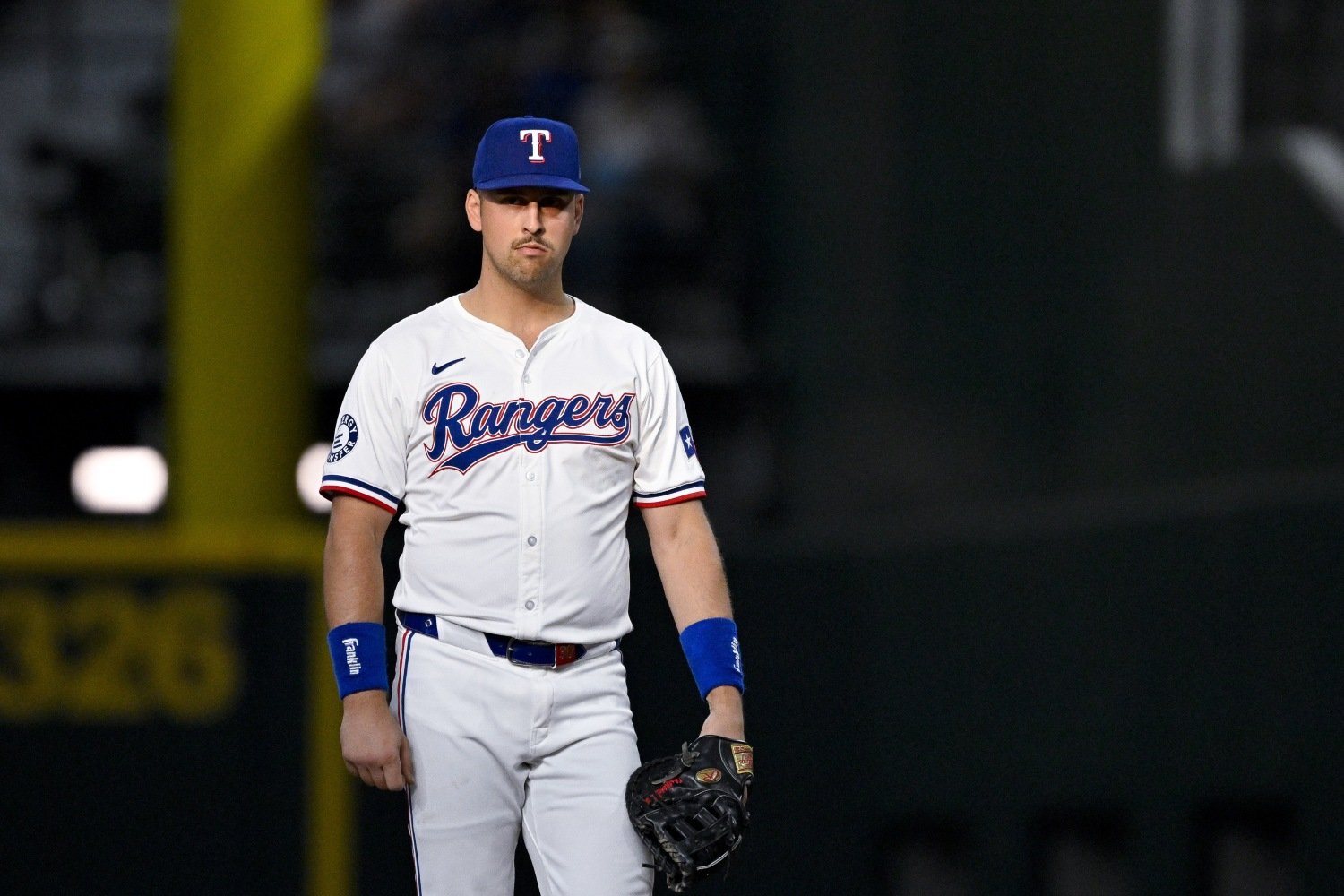 While the Milwaukee Brewers have been annual masters of winning big with small budgets, other clubs, like the Texas Rangers, spend a ton and still have ups and downs. According to Evan Grant of the Dallas Morning News, Rangers owner Ray Davis wants to cut payroll to slide underneath MLB's luxury tax threshold. Though the club isn't looking to deal away their top assets, Nathaniel Lowe should be a serious target for clubs like the Brewers. After winning the World Series in 2023, Texas still has the talent and desire to win another championship. That likely means the highest-priced stars and greatest-upside youngsters (e.g., third baseman Josh Jung) will not be available. Lowe, who is under team control through the 2026 season, lands somewhere in between, as an intriguing piece for the Brewers. He is projected to make $10.7 million in arbitration, and won a Silver Slugger Award in 2022 and a Gold Glove in 2023. Yes, he plays first base, where Milwaukee already has Rhys Hoskins penciled in. However, the Brewers would be wise to look for suitors to take on Hoskins's $18-million salary—or at least most of it—and prioritize Lowe as their starting first baseman instead. For that matter, if the team finds another avenue by which to trim payroll, Lowe and Hoskins could make an incredibly productive semi-platoon, with each playing more than half the time as they share first base and some designated hitter duties. Among first basemen in 2024, Lowe ranked fourth in wRC+ (123), fifth in wOBA (.340) and sixth in fWAR (2.9). All this came despite his power taking a steep dip from a .492 slugging percentage in 2022, to .414 slugging in 2023 and .401 in 2024. Is the sapped "strength" a concern for a first baseman? Sure. But again, you have to look at his all-around value and the relative likelihood that Lowe's doubles and home runs jump back up a bit. Whether it's something in his swing or his decision-making, the Brewers can probably bring back some of his power. As for the positives Lowe brings to the table, he posted a career-best .361 OBP last season (19th in MLB) and hasn't been below .357 since 2020. He also finished with a 12.6 BB%, good for fourth in baseball behind only Aaron Judge, Juan Soto and Kyle Schwarber. It's a huge asset to have a player in your lineup on base that much and working pitchers for free passes. Regarding the drop in power numbers, Lowe might have traded in his pop for fewer swings and more contact. Unfortunately, if that is the case, it has led to weaker exit velocities and only slight gains in reaching base. Christian Yelich went through a similar stretch for a few years when discipline overtook aggressiveness by a sizable margin, leading to worse results. Take a look at how Lowe's swing decisions have changed across the past three seasons: As you can see, his overall Swing% was down nearly 10% from his huge 2022 offensive campaign, when he went .302/.358/.492. The positive is that his swings outside the strike zone (O-Swing%) dropped significantly in two seasons. However, in 2024, Lowe swung 11.2% less often at pitches in the zone (Z-Swing%). Being more selective isn't necessarily a bad thing, but chances are he let too many pitches go by that should have been smashed. And considering his contact percentage in the zone (Z-Contact%) went up nearly 4% from 2022 to last season, it seems clear he wasn't taking as many aggressive swings when he decided to hack. Again, his gains in on-base value didn't skyrocket, so passiveness didn't create the value he might have hoped for in recent years. For Lowe to return to his 2022 form, the advice could be as simple as: swing more often, attack more strikes and wield the lumber with malicious intent. Despite some concerns about the past two years, there were encouraging signs to close out 2024. Lowe slashed .269/.376/.435 in the second half of the season, including a .931 OPS over his final 104 plate appearances. Whether he figured something out or it was just a hot streak, it was a fantastic way to finish the year. And if you believe in things like "clutch performance," it doesn't hurt that Lowe owns a career .291 average and .838 OPS with runners in scoring position (RISP). Even better, in three of the past four seasons with RISP, Lowe has hit over .300 with an OPS of at least .898 in those years. In the field, Lowe runs circles around Hoskins. Not only did Lowe win a Gold Glove in 2022, but his defensive metrics were well ahead of Hoskins's in 2024. Among first basemen with at least 750 innings played at the "cold corner," the pair ranked as such in three advanced stats: Outs Above Average (OAA) Lowe: 7 OAA (3rd) Hoskins: -4 OAA (15th) Defensive Runs Saved (DRS) Lowe: 1 DRS (10th) Hoskins: -3 DRS (15th) Fielding Run Value (FRV) Lowe: 5 FRV (3rd) Hoskins: -3 FRV (15th) While defensive metrics have their flaws, especially in a one-year sample, they show a sizable disparity in this case. Plus, if you watched a handful of innings with Hoskins manning first base, you noticed how slow and clunky he was most of the time. Those defensive concerns led to challenges in creating ideal lineups and keeping the DH spot open for other bats throughout the season. Sticking a quality glove there for 150 games allows for more flexibility in roster construction and day-to-day strategy. As for what the Rangers might want in return for Lowe, that can be tricky. Their club desperately needs bullpen help, but Devin Williams is too high a price to pay for two years of Lowe on his own. Outside of Jung or their young starting pitching, Texas doesn't match up with the Brewers terribly well. And they aren't giving up any of those aforementioned players without getting much more in return. But Milwaukee has a glut of bullpen arms with MLB experience and potential to dangle. Would Elvis Peguero and Joel Payamps be enough for the Rangers, or too much for the Brewers? Is there a young arm to pair with a veteran? If Texas is truly focused on relievers and a desire to save money, that's the type of combo that could work. Do you see a fit for Lowe and the Brewers? Would you be willing to dump Hoskins for salary relief, even if it meant getting little proven talent in return? It would be a gamble, particularly if you fear a Hoskins bounceback, but it's one that could help transform the lineup into a more consistent threat with improved defense at first base and more options to utilize the DH role. Here's to some action at the Winter Meetings!
 -
The Texas Rangers will be looking to get below the luxury threshold this coming season, to avoid paying a penalty for a third straight year. This could open the door for the Milwaukee Brewers to acquire an upper-level talent for a mid-level cost. As for what the Rangers might want in return for Lowe, that can be tricky. Their club desperately needs bullpen help, but Devin Williams is too high a price to pay for two years of Lowe on his own. Outside of Jung or their young starting pitching, Texas doesn't match up with the Brewers terribly well. And they aren't giving up any of those aforementioned players without getting much more in return. But Milwaukee has a glut of bullpen arms with MLB experience and potential to dangle. Would Elvis Peguero and Joel Payamps be enough for the Rangers, or too much for the Brewers? Is there a young arm to pair with a veteran? If Texas is truly focused on relievers and a desire to save money, that's the type of combo that could work. Do you see a fit for Lowe and the Brewers? Would you be willing to dump Hoskins for salary relief, even if it meant getting little proven talent in return? It would be a gamble, particularly if you fear a Hoskins bounceback, but it's one that could help transform the lineup into a more consistent threat with improved defense at first base and more options to utilize the DH role. Here's to some action at the Winter Meetings! View full article
-
1) I am 100% down with finding a suitor for Civale. I would have been fine with non-tendering him, honestly, just to get that money back into the payroll 2) I have always like Lowe. The last 2 seasons something has been different with him, so harder to guage his value. Though I will always love a .360 OBP guy.
-
Rhys Hoskins brought some value to the Milwaukee Brewers in 2024, but overall, he was an underwhelming addition with a heavy price tag. After Hoskins exercised his $18 million player option for 2025, the team lost a chunk of payroll flexibility—for now. Image courtesy of © Charles LeClaire-Imagn Images The Milwaukee Brewers will always have a decent amount of turnover. General manager Matt Arnold is not shy about wheeling and dealing. Trading Rhys Hoskins is a plausible option, though any deal hinges on other teams' interest, which often depends on cost and potential return. Let's examine the potential results of looking for (and finding) a new home for Hoskins. PROS Frees Up Payroll for Additional Moves Most would argue Hoskins's performance didn't match his $12 million salary last season, and it's unlikely he lives up to the $18 million cost in 2025. Opening up additional payroll flexibility to acquire more depth and fill other holes might be worth more than the veteran first baseman. Depending on who the Brewers would get in return, the club acquiring Hoskins might not be willing to take on his entire paycheck, or they would offload salary Milwaukee's way in exchange. But even if the relief was only in the $8-10 million range, no team in baseball is better at utilizing smaller funds so effectively. Additionally, Hoskins has a mutual option for 2026 worth $18 million, with a $4 million buyout guaranteed. Offloading him would save Milwaukee from a future commitment while freeing up more money. Create Flexibility for First Base and DH Keeping Hoskins restricts Milwaukee's options for utilizing talent between first base and DH. He is limited as a defender, meaning the Brewers would likely prefer to add a better glove to play that spot half the time (at least). Thus, it confines the DH role somewhat, where that additional first base option eats up a roster spot instead of a "bat-first" stud to be the primary DH. With first base a free position and the DH not needed for Hoskins or a backup first baseman exclusively, it opens up offensive possibilities. Free agent hitters like Joc Pederson and J.D. Martinez now become options, with their 132 and 122 OPS+es, respectively, across the past two seasons. Then the Brewers could focus on an everyday first baseman at a lower cost than Hoskins. For example, an NL Central veteran like Paul Goldschmidt suddenly becomes a solid fit for one season. Value in the Players Milwaukee Gets Back The Brewers likely wouldn't get much immediate value in return, unless they sent along cash or took back a bunch of salary. However, Milwaukee is adept at identifying guys they like based on skill, ceiling or other intangibles, particularly players they can develop over time. This is part of the reason the Brewers have consistently fielded postseason rosters since 2018. They could also acquire a talented but struggling arm for the bullpen or rotation, believing they have the special sauce to unlock him for 2025 success. Or perhaps it's more depth for the position player group to ensure they're covered for injury or additional personnel moves. No matter the result, most would be confident the Brewers get legitimate value in return. CONS Brewers Could Miss Out on a Big Bounceback Season It's important to acknowledge that Hoskins was returning from an ACL tear and surgery, seeing his first game action in over a year in 2024. It is unrealistic to expect an athlete to play at the top level of his sport when coming back from a major injury - especially at 31 years old. Whether it's strength, flexibility or endurance, the initial season is tough, and it was easily Hoskins's worst year by OPS+ (98). Though it's far from a guarantee, many athletes come back stronger in season two. It would not be difficult to see Hoskins get closer to his career averages (.238/.346/.481) in 2025 versus his disappointing 2024 line (.214/.303/.419). Hoskins showed flashes last season with a .476 SLG and .813 OPS through May 13 before he got hurt. Upon his return, until the end of the season, he slugged only .396 with a .683 OPS. Still, his career norms could create a FOMO conversation for the Brewers in 2025. Who Would Be Able to Fill the First Base Hole and Power Bat Role? While trading Hoskins opens up creative opportunities for first base, it also could create another hole that could be tough to fill. It might also hurt the Brewers' need for a power bat, as Hoskins blasted 26 home runs despite his struggles. It would come down to timing and opportunity, and both factors have plenty of variables. One issue is that for the Brewers to get the best value in trading Hoskins, they would be best served to see who misses out on the two biggest free-agent first basemen: Pete Alonso and Christian Walker. If those two take a while to sign, other options might also be taken off the board and Milwaukee could be left empty-handed (assuming they aren't in play for Alonso and Walker). If a Hoskins trade means relying on Tyler Black and other high-risk players, the Brewers could cause more harm than good. The Brewers have been 25th in fWAR from the first base position since 2022 and were 24th with a -0.4 fWAR in 2024, with Hoskins and Jake Bauers getting nearly all the at-bats there. While Bauers had the huge playoff home run, his last 100 plate appearances told a greater story. Negative Impact on Free Agent Opinions of the Brewers MLB is a business and players are as aware as the front office that the bottom line matters. However, relationships, culture and the treatment of others still play a role in building and creating winning organizations. Would trading Hoskins this offseason, after signing him to this type of deal, hurt the Brewers' reputation in how they acquire and move future players? The Brewers would be doing nothing wrong by trading Hoskins. The player option existed, Hoskins took it and Milwaukee owns his contractual rights. But some might see a trade after just one season as a "bad faith" move in this case. Hoskins wasn't an elite-level free agent who did Milwaukee a favor, but it was a significant signing with a recognizable name. Could it cause future free agents to need more guarantees from the Brewers so they aren't worried about playing in a new city so quickly after signing in Milwaukee? Something to consider, at least. No doubt Arnold and his staff go through a variety of reasons to make (or not) make deals. The current Brewers' roster and Hoskins "unknown" value compared to his salary make a trade less clean-cut than others in the past. What would you say are the odds the Brewers could find a suitor - and an offer - to ship Hoskins elsewhere this offseason? View full article
-
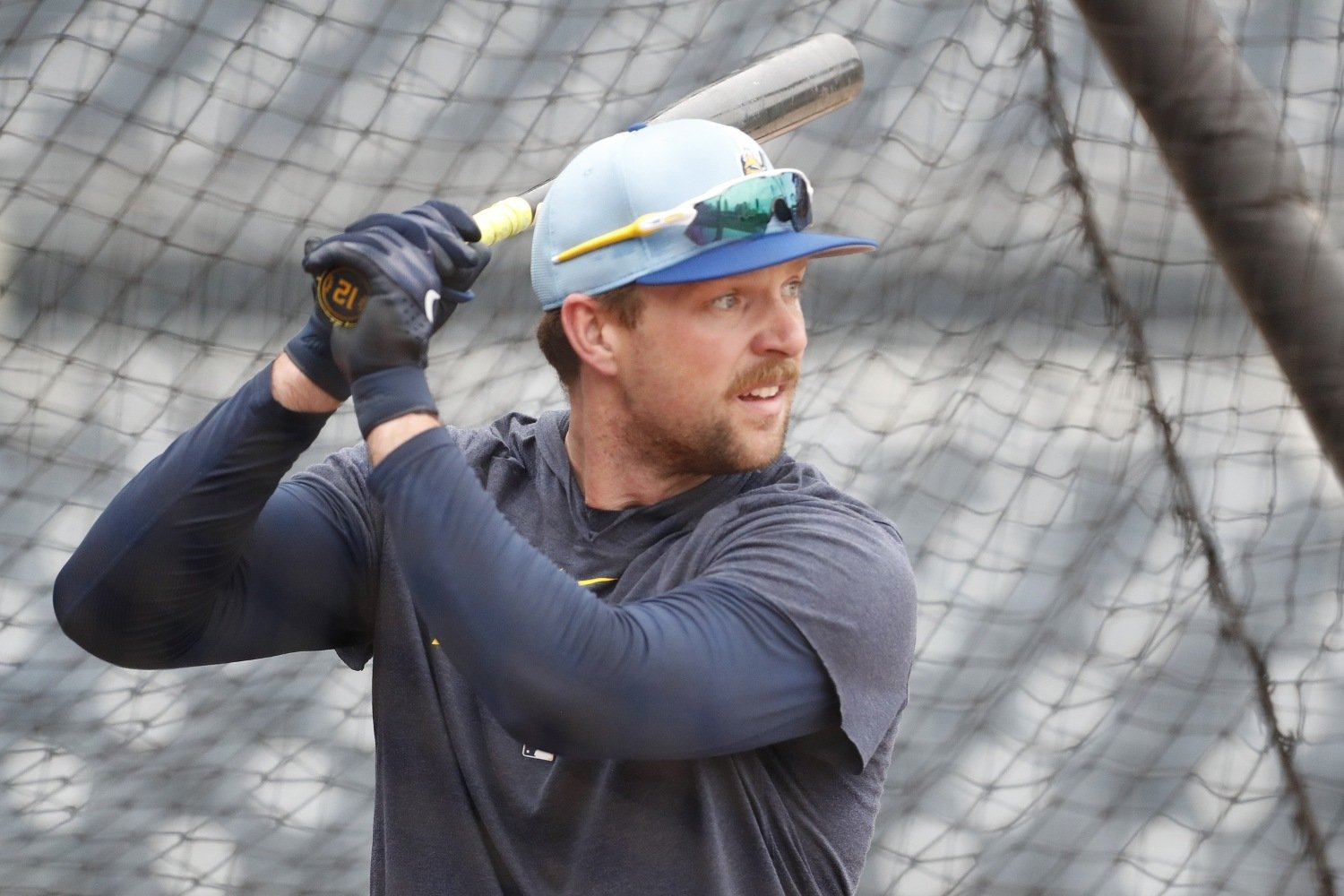 The Milwaukee Brewers will always have a decent amount of turnover. General manager Matt Arnold is not shy about wheeling and dealing. Trading Rhys Hoskins is a plausible option, though any deal hinges on other teams' interest, which often depends on cost and potential return. Let's examine the potential results of looking for (and finding) a new home for Hoskins. PROS Frees Up Payroll for Additional Moves Most would argue Hoskins's performance didn't match his $12 million salary last season, and it's unlikely he lives up to the $18 million cost in 2025. Opening up additional payroll flexibility to acquire more depth and fill other holes might be worth more than the veteran first baseman. Depending on who the Brewers would get in return, the club acquiring Hoskins might not be willing to take on his entire paycheck, or they would offload salary Milwaukee's way in exchange. But even if the relief was only in the $8-10 million range, no team in baseball is better at utilizing smaller funds so effectively. Additionally, Hoskins has a mutual option for 2026 worth $18 million, with a $4 million buyout guaranteed. Offloading him would save Milwaukee from a future commitment while freeing up more money. Create Flexibility for First Base and DH Keeping Hoskins restricts Milwaukee's options for utilizing talent between first base and DH. He is limited as a defender, meaning the Brewers would likely prefer to add a better glove to play that spot half the time (at least). Thus, it confines the DH role somewhat, where that additional first base option eats up a roster spot instead of a "bat-first" stud to be the primary DH. With first base a free position and the DH not needed for Hoskins or a backup first baseman exclusively, it opens up offensive possibilities. Free agent hitters like Joc Pederson and J.D. Martinez now become options, with their 132 and 122 OPS+es, respectively, across the past two seasons. Then the Brewers could focus on an everyday first baseman at a lower cost than Hoskins. For example, an NL Central veteran like Paul Goldschmidt suddenly becomes a solid fit for one season. Value in the Players Milwaukee Gets Back The Brewers likely wouldn't get much immediate value in return, unless they sent along cash or took back a bunch of salary. However, Milwaukee is adept at identifying guys they like based on skill, ceiling or other intangibles, particularly players they can develop over time. This is part of the reason the Brewers have consistently fielded postseason rosters since 2018. They could also acquire a talented but struggling arm for the bullpen or rotation, believing they have the special sauce to unlock him for 2025 success. Or perhaps it's more depth for the position player group to ensure they're covered for injury or additional personnel moves. No matter the result, most would be confident the Brewers get legitimate value in return. CONS Brewers Could Miss Out on a Big Bounceback Season It's important to acknowledge that Hoskins was returning from an ACL tear and surgery, seeing his first game action in over a year in 2024. It is unrealistic to expect an athlete to play at the top level of his sport when coming back from a major injury - especially at 31 years old. Whether it's strength, flexibility or endurance, the initial season is tough, and it was easily Hoskins's worst year by OPS+ (98). Though it's far from a guarantee, many athletes come back stronger in season two. It would not be difficult to see Hoskins get closer to his career averages (.238/.346/.481) in 2025 versus his disappointing 2024 line (.214/.303/.419). Hoskins showed flashes last season with a .476 SLG and .813 OPS through May 13 before he got hurt. Upon his return, until the end of the season, he slugged only .396 with a .683 OPS. Still, his career norms could create a FOMO conversation for the Brewers in 2025. Who Would Be Able to Fill the First Base Hole and Power Bat Role? While trading Hoskins opens up creative opportunities for first base, it also could create another hole that could be tough to fill. It might also hurt the Brewers' need for a power bat, as Hoskins blasted 26 home runs despite his struggles. It would come down to timing and opportunity, and both factors have plenty of variables. One issue is that for the Brewers to get the best value in trading Hoskins, they would be best served to see who misses out on the two biggest free-agent first basemen: Pete Alonso and Christian Walker. If those two take a while to sign, other options might also be taken off the board and Milwaukee could be left empty-handed (assuming they aren't in play for Alonso and Walker). If a Hoskins trade means relying on Tyler Black and other high-risk players, the Brewers could cause more harm than good. The Brewers have been 25th in fWAR from the first base position since 2022 and were 24th with a -0.4 fWAR in 2024, with Hoskins and Jake Bauers getting nearly all the at-bats there. While Bauers had the huge playoff home run, his last 100 plate appearances told a greater story. Negative Impact on Free Agent Opinions of the Brewers MLB is a business and players are as aware as the front office that the bottom line matters. However, relationships, culture and the treatment of others still play a role in building and creating winning organizations. Would trading Hoskins this offseason, after signing him to this type of deal, hurt the Brewers' reputation in how they acquire and move future players? The Brewers would be doing nothing wrong by trading Hoskins. The player option existed, Hoskins took it and Milwaukee owns his contractual rights. But some might see a trade after just one season as a "bad faith" move in this case. Hoskins wasn't an elite-level free agent who did Milwaukee a favor, but it was a significant signing with a recognizable name. Could it cause future free agents to need more guarantees from the Brewers so they aren't worried about playing in a new city so quickly after signing in Milwaukee? Something to consider, at least. No doubt Arnold and his staff go through a variety of reasons to make (or not) make deals. The current Brewers' roster and Hoskins "unknown" value compared to his salary make a trade less clean-cut than others in the past. What would you say are the odds the Brewers could find a suitor - and an offer - to ship Hoskins elsewhere this offseason?
 -
The love affair with statistics and measurable skills has long been a part of baseball. New perspectives and analytics have reshaped the game repeatedly in recent years, but perhaps the Milwaukee Brewers have found other ways to create a winning formula--and a couple of rival players notice a difference. You could definitely see that in 2018 and 2019, despite very different postseason results. And since 2018 was the last time Milwaukee won a playoff series, some might argue that great character traits work in the regular season, but you need top talent to win in the postseason. Of course, you need elite skill to beat the best, but maybe the Brewers didn't have the right mix of talent and heart. Perhaps 2024 has swung the pendulum in the right direction, and this group is just scratching the surface of what they can become. In front of media on Monday, ahead of the Wild Card series, Adames said it's a different feeling than in the past. "It's just a feeling that you have in the clubhouse. The vibe is just like, a winning mentality." Murphy also spoke on Monday, adding to the idea of how the Brewers play having as much of an impact as stats. "They did it by pulling together and playing a certain way, and they know that's the secret," Murphy said. "They've kind of been doing that all year." So whatever the secret sauce is, or how much heart and hunger fuel winning, the Brewers have "something." For current and former Brewers, as well as the opposition, to take notice of their means of success points to more than just the numbers. Is this 2024 Brewers club the epitome of the franchise's recent ways? It feels like the answer can only be "yes" if they win their Wild Card Series. View full article
-
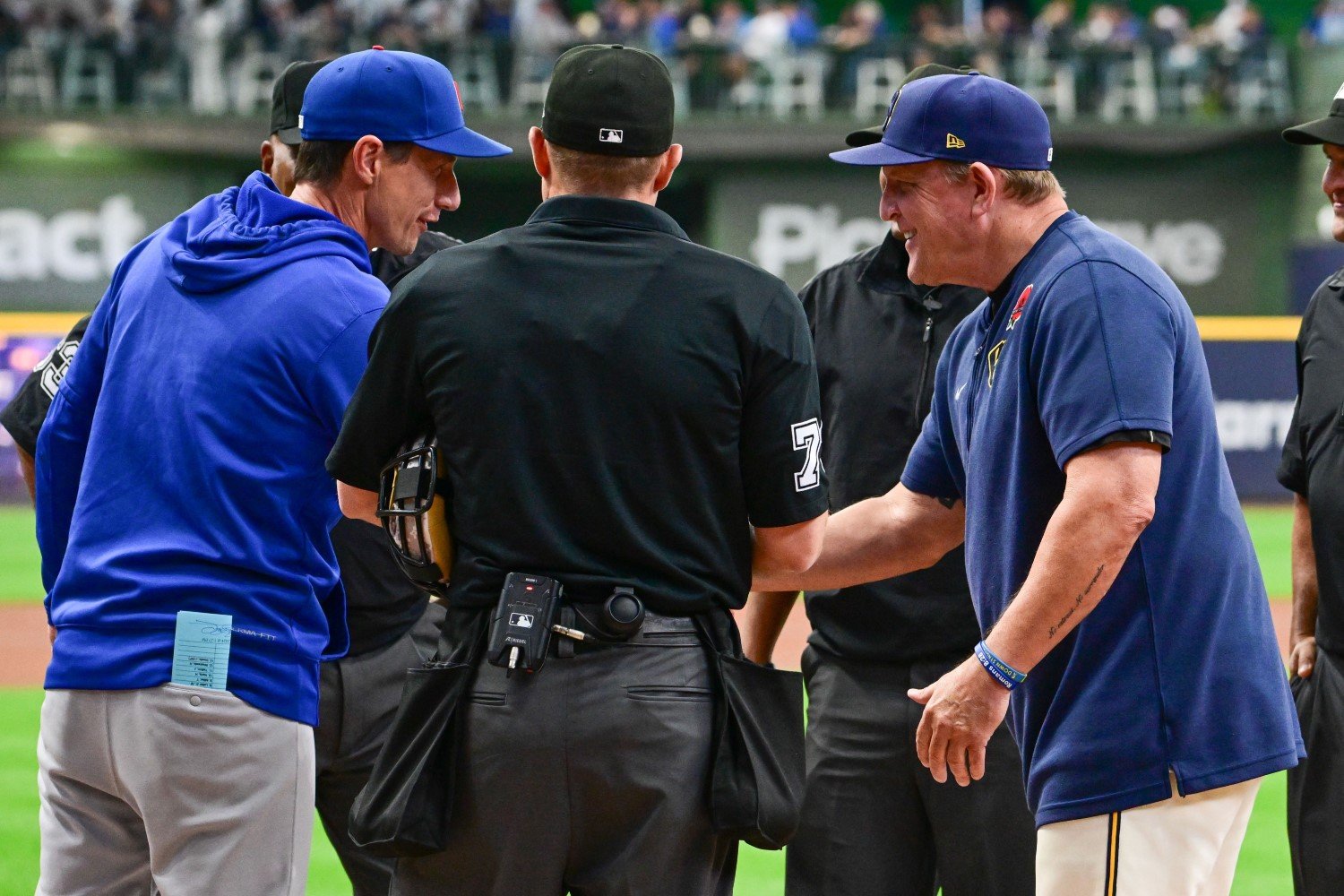 As their season wound to an unsatisfactory end, Chicago Cubs manager Craig Counsell and two of his players made strong comments about the state of the Cubs organization and where they need to be. As the Milwaukee Brewers were cruising to a second straight NL Central title and 93 wins, Counsell, Dansby Swanson and Jameson Taillon all specifically pointed to the Brewers as the model franchise. It was a bit shocking to hear, considering the advantages the Cubs have in history, money and overall resources. But as the Brewers begin another postseason series, their rivals see the incredible consistency with which Milwaukee produces winners, despite losing key players to free agency and injury every season. The Brewers have won three of the last four NL Central titles and played postseason baseball in six of their last seven seasons, and the guys on the field opposite the Brewers don't believe it's all about talent. “When we play the Brewers, it seems like they win the big moments,” said Taillon. "I gave up a grand slam there in a big spot. They seem to sometimes have the edge in those moments over us right now." But if you think that's one man's opinion and he might be skewed in his thinking, Swanson has a little more behind-the-scenes insight. Swanson is a former teammate of Jace Peterson, and is married to Peterson's sister-in-law. Of course, Peterson played with the Brewers for three years and gave Swanson some thoughts on the organization. “They’re clearly really good at identifying traits — on-field, off-field, personality, game style — that works for them,” Swanson said. “They’re really good at having a set identity. They’ve always done a really good job of finding players that fit what they want them to fit.” You could definitely see that in 2018 and 2019, despite very different postseason results. And since 2018 was the last time Milwaukee won a playoff series, some might argue that great character traits work in the regular season, but you need top talent to win in the postseason. Of course, you need elite skill to beat the best, but maybe the Brewers didn't have the right mix of talent and heart. Perhaps 2024 has swung the pendulum in the right direction, and this group is just scratching the surface of what they can become. In front of media on Monday, ahead of the Wild Card series, Adames said it's a different feeling than in the past. "It's just a feeling that you have in the clubhouse. The vibe is just like, a winning mentality." Murphy also spoke on Monday, adding to the idea of how the Brewers play having as much of an impact as stats. "They did it by pulling together and playing a certain way, and they know that's the secret," Murphy said. "They've kind of been doing that all year." So whatever the secret sauce is, or how much heart and hunger fuel winning, the Brewers have "something." For current and former Brewers, as well as the opposition, to take notice of their means of success points to more than just the numbers. Is this 2024 Brewers club the epitome of the franchise's recent ways? It feels like the answer can only be "yes" if they win their Wild Card Series.
 -
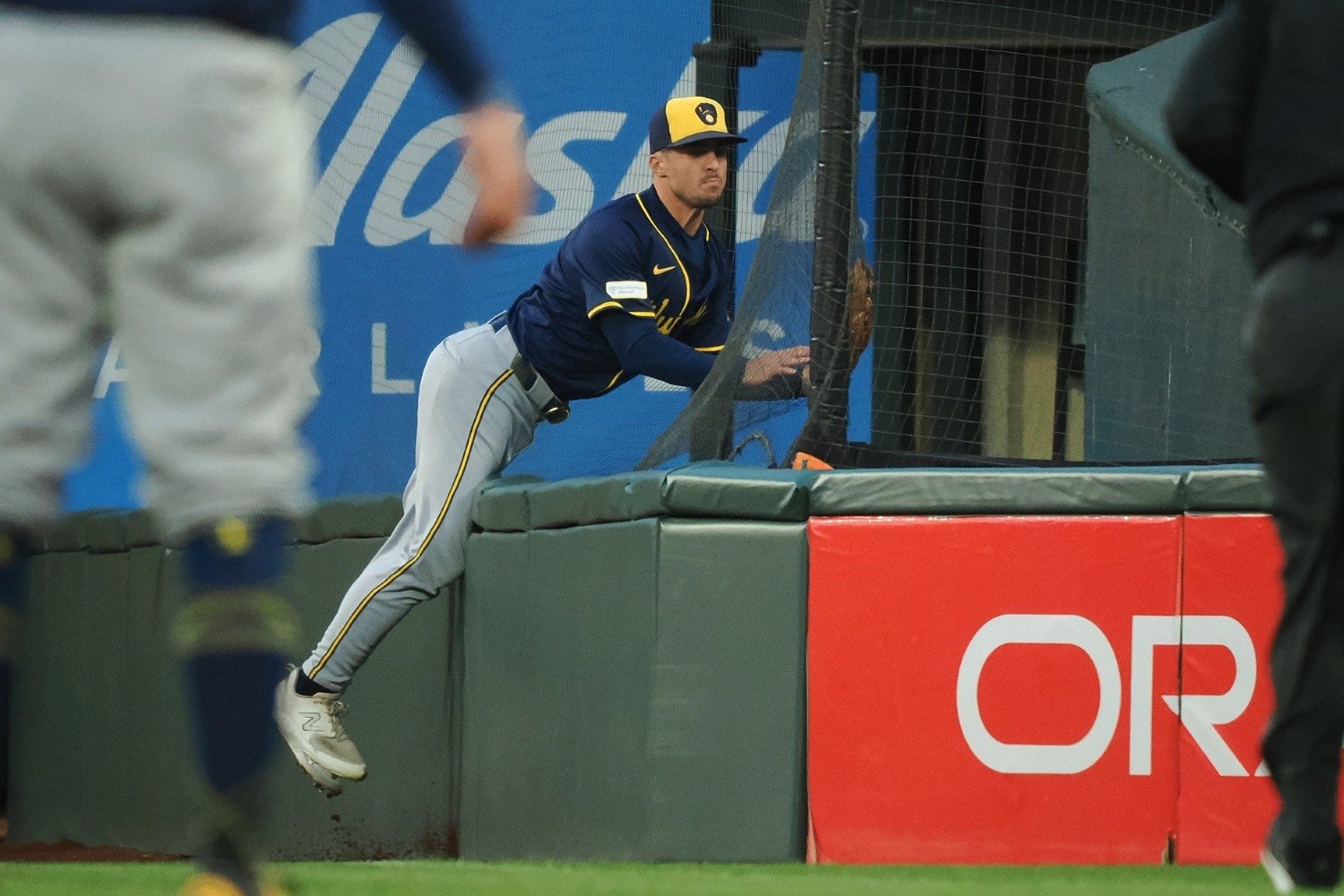 Even with a stronger offense in 2024, Milwaukee remains defined by its pitching and defense. Despite the Brewers cycling through 13 starting pitchers (not counting “openers”) and 12 relievers earning at least one save, the staff rolls on successfully. Entering the final week of the season, they have the second-lowest ERA (3.70) in the National League. And while they have had some ridiculous bullpen arms to rely on in 2024, the overall pitching staff has been carried more by its defense than its own arm talent. Defensive excellence in baseball is often overlooked and difficult to evaluate. Experts continue to try to find reliable metrics to gauge a player’s defensive value, but a lot of uncertainty remains when it comes to trustworthy results. While highlight plays, such as Milwaukee's propensity for home run robberies or incredible diving stops and throws, are easy to notice, it’s the subtler aspects of defense that make the biggest difference. The Brewers excel at them. The team ranks third in MLB in Defensive Runs Saved (DRS). Their ability to reach more batted balls and turn hits into outs better than most teams has been key to their success. This defensive strength stems from several standout players: Brice Turang (2B): First in DRS among second basemen Sal Frelick (RF): First Joey Ortiz (3B): Fourth Blake Perkins (CF): Fifth In the cases of Ortiz and Perkins, remember, too, that DRS is a counting stat. Playing more gives a player more chances to accrue runs saved. Both Ortiz and Perkins have played less than some players ahead of them on their respective leaderboards. On the pitching front, the Brewers peaked in 2021 and 2022. The 2021 staff posted the franchise’s best ERA (3.50) and FIP (3.72) of the past eight seasons. Then, in 2022, the team had its lowest Expected FIP (xFIP) over that same span, at 3.66. With FIP, the focus is on elements the pitcher “controls”--strikeouts, walks and home runs--while removing defensive factors and luck (or at least mitigating them). It’s one way to gauge a pitcher’s true skill, whereas ERA encompasses every aspect of run prevention. One simple method to evaluate a defense's impact on pitching is to look at the difference between ERA and FIP (ERA-FIP). The further this number dips below zero, the more significant the defense’s contribution has been. In recent years, the Brewers' defense has played an even larger role in their run prevention, as evidenced by this growing gap between ERA and FIP. The Brewers have the lowest ERA-FIP in MLB this season, far below the next club, the Cleveland Guardians, with their -0.36. If the season ended today, the Brewers' ERA-FIP would be the 11th-lowest by any team since 2000. While it's unclear how much credence we can give ERA-FIP as an indicator of success, especially in playoff series, there are several fascinating results from some of the 10 teams with a lower ERA-FIP since 2000: 2020 Los Angeles Dodgers: World Series Champions 2016 Chicago Cubs: World Series Champions 2015 St. Louis Cardinals: 100 wins; lost in NLDS to Cubs 2005 St. Louis Cardinals: 100 wins; lost in NLCS to Houston Astros 2002 Anaheim Angels: World Series Champions 2002 Atlanta Braves: 101 wins; lost in NLDS to San Francisco Giants 2001 Seattle Mariners: MLB record 116 wins; lost in ALCS to New York Yankees Why has Milwaukee’s defense been so valuable this season? Comparing the Brewers’ 2024 rotation to that of 2021 highlights the shift. In 2021, Milwaukee boasted three All-Star starting pitchers, in eventual Cy Young Award winner Corbin Burnes, Brandon Woodruff, and Freddy Peralta. Each had an ERA below 3.00, and Burnes had an astounding 1.63 FIP. The team’s elite pitching trio, supported by closer Josh Hader and Weapon X Devin Williams, made defense less crucial, though it was still strong. In contrast, the 2024 rotation has been more volatile, with no clear ace and frequent changes to the top five starters, and even what order you’d rank them in, every few weeks. While there have been moments of brilliance, the overall performance doesn’t scream elite pitching. One telling indicator of a non-dominant pitching staff is that the Brewers rank only 17th in strikeout percentage (K%) this season. This invites the question: is it better to have elite pitching with good defense, or average pitching with elite defense? Watching the Arizona Diamondbacks in Milwaukee raised this question. Arizona benefitted from weak contact—bleeders and bloopers—but also hit some home runs. Home runs, of course, are solely the pitchers’ responsibility, despite Milwaukee's efforts to keep those balls in the yard, too. Ultimately, the team’s pitching does get hurt by the lack of strikeouts that increase the number of balls in play, even though they convert those balls into outs at sensational rates. As good as the defense is, they can't cover every inch of the field. So how do we measure the balance between defensive talent and other factors? FanGraphs suggests defense accounts for about 35-40 percent of the ERA-FIP gap, but other elements play a role--such as sequencing. If a team hits a home run after a walk and single, the sequence nets the offense three runs. However, if the same three outcomes are in the reverse order before the inning’s final out, they score just once. This suggests that “luck” and lineup construction matter as well (we can fight about how much batting order matters another time). Another factor influencing ERA-FIP is baserunning. Teams like Arizona, with speed and smart baserunners, can turn walks and singles into runs more efficiently. In theory, great defense can neutralize aggressive baserunners, but elite pitching prevents more runners from ever reaching base. So, heading into the playoffs, the Brewers’ reliance on defense remains an intriguing test case. Is it a concern, especially against dynamic offenses like Arizona’s, or is a top-tier defense more reliable than hoping for elite pitching in every game? As indicated by the list above, some recent teams have ridden defensive groups better than their pitching staffs all the way to a World Series parade. Even the best pitchers have blowup games or get hurt by well-placed hits. The 2021 team had elite pitching, but was still knocked out early--although that was more a product of a non-existent offense (scoring just six runs in the series, including two shutouts) and injuries to Brent Suter and Williams than of those aces faltering. The truth is, we probably don't know anything tangible as of yet. As manager Pat Murphy has noted, this year’s team is different. However, the ERA, FIP and xFIP metrics are almost identical to last year, when Milwaukee was bounced in the Wild Card round by Arizona. It remains to be seen if the ERA-FIP and defense-heavy reliance indicate anything about the Brewers' chances at a deep playoff run. Whether pitching-led or defense-led, we’ll soon see how it plays out for the Brewers. What’s your take on the balance between pitching and defense?
 -
The Milwaukee Brewers have long relied on an effective pitching and defense strategy, as evidenced by their six playoff appearances in seven seasons, including four NL Central titles. However, over the last two years, the defense has taken on a greater role than the pitching in the team’s success. Is that a good thing? So how do we measure the balance between defensive talent and other factors? FanGraphs suggests defense accounts for about 35-40 percent of the ERA-FIP gap, but other elements play a role--such as sequencing. If a team hits a home run after a walk and single, the sequence nets the offense three runs. However, if the same three outcomes are in the reverse order before the inning’s final out, they score just once. This suggests that “luck” and lineup construction matter as well (we can fight about how much batting order matters another time). Another factor influencing ERA-FIP is baserunning. Teams like Arizona, with speed and smart baserunners, can turn walks and singles into runs more efficiently. In theory, great defense can neutralize aggressive baserunners, but elite pitching prevents more runners from ever reaching base. So, heading into the playoffs, the Brewers’ reliance on defense remains an intriguing test case. Is it a concern, especially against dynamic offenses like Arizona’s, or is a top-tier defense more reliable than hoping for elite pitching in every game? As indicated by the list above, some recent teams have ridden defensive groups better than their pitching staffs all the way to a World Series parade. Even the best pitchers have blowup games or get hurt by well-placed hits. The 2021 team had elite pitching, but was still knocked out early--although that was more a product of a non-existent offense (scoring just six runs in the series, including two shutouts) and injuries to Brent Suter and Williams than of those aces faltering. The truth is, we probably don't know anything tangible as of yet. As manager Pat Murphy has noted, this year’s team is different. However, the ERA, FIP and xFIP metrics are almost identical to last year, when Milwaukee was bounced in the Wild Card round by Arizona. It remains to be seen if the ERA-FIP and defense-heavy reliance indicate anything about the Brewers' chances at a deep playoff run. Whether pitching-led or defense-led, we’ll soon see how it plays out for the Brewers. What’s your take on the balance between pitching and defense? View full article
-
Hopefully, Milwaukee Brewers fans can truly enjoy what is likely Willy Adames’s last month or two with the club. The pending free agent has provided a somewhat unique power profile for shortstops in MLB and franchise history, putting up home run and RBI numbers rarely seen in multiple seasons. Image courtesy of © Benny Sieu-Imagn Images On Monday, Milwaukee Brewers shortstop Willy Adames hit his 29th home run of the season on his 29th birthday – the fifth straight game in which he had homered. What’s more amazing is that it was his 13th three-run homer of 2024, tying him with Hall of Famer Ken Griffey Jr. for the most three-run bombs in a single season. Keep in mind that he has 22 more games remaining. Adames has also hit more three-run homers than five teams this season, drawing even with the San Francisco Giants and Colorado Rockies, who each have 13 total. But that’s just part of Adames’s story. His home run and RBI production from the shortstop position are uncommon. As the premier position on the infield, and arguably on the entire field, those manning the position were most often athletic, defense-minded and unworried about “power.” Of course, the game has changed over the years, with more power-focused players all over the diamond, but consistent, big home run numbers still haven’t been the norm for shortstops. With one more home run this season, Adames would become just the 11th shortstop in MLB history to have two or more seasons with 30 or more home runs. He hit a career-high 31 bombs in 2022, his first full season with the Brewers. The other active Major Leaguers to accomplish this feat are: Francisco Lindor: five times (hit his 30th this season on Tuesday) Corey Seager: three times (including this season) Bobby Witt Jr.: two times (hit his 30th this season on Sunday) Alex Rodriguez has the most 30+ home run seasons all-time as a shortstop, with seven in his career. For the record, we’re counting someone as a shortstop if they played at least 80% of their games that season at the position. And while this group focuses on multiple seasons of 30+ bombs, only 27 shortstops have had even one such season, with 24 of those instances coming since 1991. No matter how you slice it, Adames has been one of the very few to display home run power while playing such a key position. And save for his rough 2024, where his defense has been a struggle, Adames has mostly been a solid defender. Teams will certainly throw a lot of money at him this offseason for the combo he brings. Of course, assuming Adames doesn’t go on what would have to be a 24-game homer drought, he will become the only Brewers shortstop with multiple seasons of 30+ homers. Bill Hall is the only other “shortstop” to reach 30 homers, connecting for 35 in 2006. Hall was always more of a utility player for the Brewers, but Milwaukee needed him for 127 games at short that year, and he responded with a huge offensive campaign. Ironically, the best shortstop in franchise history never reached 30 home runs in a single year. Robin Yount blasted 29 homers in his 1982 MVP season. He only hit more than 20 home runs three other times in his career, whether playing shortstop or center field. Yount was a different type of player, in a different era, playing in a different home park that didn’t lend itself to the long ball. Yount does hold the franchise record for RBI in a single season for a shortstop. He drove in 114 runs in ’82, ranking him fourth in the American League. Interestingly, he only had the second-most RBI on his own club that season, as Cecil Cooper collected 121 RBI for Harvey’s Wallbangers. Meanwhile, Adames collected his 100th RBI Tuesday night, giving him an outside shot at reaching Yount’s mark--especially if he continues to be the Steph Curry of the Brewers, with his frequent ”three-pointers.” Either way, Adames is already the only shortstop in Brewers history to amass 95+ RBI in multiple seasons, having driven in 96 runs two years ago. Aside from Yount, Dale Sveum and José Valentín are the only other Brewers shortstops to reach 95 RBI in a season, reaching exactly that number in 1987 and 1996, respectively. Yount tallied 103 RBI in two other seasons, but both came after he made the switch to center field. In terms of multiple 95+ RBI seasons for shortstops in MLB history, the list is much longer than the 30-homer club. But considering how many players have manned the position over the course of time, it’s still noteworthy. In fairness, RBI stats have an element of luck and circumstance to them, as players in certain parts of the lineup have a greater advantage, and you need to rely on your teammates to be on base frequently. For example, Lindor now has five years with 30+ home runs, but he has only twice reached 95 RBI in a season. Regardless, Adames is one of only 26 MLB shortstops with at least a pair of 95 RBI seasons all-time. Hall of Fame Boston Red Sox shortstop Joe Cronin did it a record 10 times in his career. If we arbitrarily push the minimum to 98+ RBI seasons, the shortstop list shrinks to 21 players. Both sets of numbers speak to the challenge of producing those high RBI numbers, whether luck-infused or not. As Adames gets ready to hit the free-agent market following the 2024 season, he has put himself in a tremendous position to get top dollar. After a strong 2022 season, last year raised major concerns and threatened to negatively impact his next contract (which might have helped the Brewers re-sign him). But 2024 has been an incredible rebound, whether you focus on traditional stats or believe in the value of StatCast numbers. So, while Brewers fans enjoy the stretch run to another division title and possible first-round playoff bye, it’s important to appreciate what Adames has brought to the table, not just this season, but throughout his time in Milwaukee. He has always benefitted the club in multiple ways – even off the field – including through his personality, work ethic and value as a teammate. But when push comes to shove, teams need tangible numbers, and getting middle-of-the-order power and RBI output from a shortstop gives clubs an edge. How many people will only understand the special skill Adames delivered as a shortstop once he’s gone? The franchise hasn’t exactly been a shortstop factory, and teams are always on the lookout for the next big thing at that position. Joey Ortiz, the likeliest candidate for 2025 and beyond, will be a tremendous player with his own offensive style and elite defense. But in terms of home runs and RBI production, Milwaukee might not see someone like Adames for quite some time – if ever again. View full article
-
 On Monday, Milwaukee Brewers shortstop Willy Adames hit his 29th home run of the season on his 29th birthday – the fifth straight game in which he had homered. What’s more amazing is that it was his 13th three-run homer of 2024, tying him with Hall of Famer Ken Griffey Jr. for the most three-run bombs in a single season. Keep in mind that he has 22 more games remaining. Adames has also hit more three-run homers than five teams this season, drawing even with the San Francisco Giants and Colorado Rockies, who each have 13 total. But that’s just part of Adames’s story. His home run and RBI production from the shortstop position are uncommon. As the premier position on the infield, and arguably on the entire field, those manning the position were most often athletic, defense-minded and unworried about “power.” Of course, the game has changed over the years, with more power-focused players all over the diamond, but consistent, big home run numbers still haven’t been the norm for shortstops. With one more home run this season, Adames would become just the 11th shortstop in MLB history to have two or more seasons with 30 or more home runs. He hit a career-high 31 bombs in 2022, his first full season with the Brewers. The other active Major Leaguers to accomplish this feat are: Francisco Lindor: five times (hit his 30th this season on Tuesday) Corey Seager: three times (including this season) Bobby Witt Jr.: two times (hit his 30th this season on Sunday) Alex Rodriguez has the most 30+ home run seasons all-time as a shortstop, with seven in his career. For the record, we’re counting someone as a shortstop if they played at least 80% of their games that season at the position. And while this group focuses on multiple seasons of 30+ bombs, only 27 shortstops have had even one such season, with 24 of those instances coming since 1991. No matter how you slice it, Adames has been one of the very few to display home run power while playing such a key position. And save for his rough 2024, where his defense has been a struggle, Adames has mostly been a solid defender. Teams will certainly throw a lot of money at him this offseason for the combo he brings. Of course, assuming Adames doesn’t go on what would have to be a 24-game homer drought, he will become the only Brewers shortstop with multiple seasons of 30+ homers. Bill Hall is the only other “shortstop” to reach 30 homers, connecting for 35 in 2006. Hall was always more of a utility player for the Brewers, but Milwaukee needed him for 127 games at short that year, and he responded with a huge offensive campaign. Ironically, the best shortstop in franchise history never reached 30 home runs in a single year. Robin Yount blasted 29 homers in his 1982 MVP season. He only hit more than 20 home runs three other times in his career, whether playing shortstop or center field. Yount was a different type of player, in a different era, playing in a different home park that didn’t lend itself to the long ball. Yount does hold the franchise record for RBI in a single season for a shortstop. He drove in 114 runs in ’82, ranking him fourth in the American League. Interestingly, he only had the second-most RBI on his own club that season, as Cecil Cooper collected 121 RBI for Harvey’s Wallbangers. Meanwhile, Adames collected his 100th RBI Tuesday night, giving him an outside shot at reaching Yount’s mark--especially if he continues to be the Steph Curry of the Brewers, with his frequent ”three-pointers.” Either way, Adames is already the only shortstop in Brewers history to amass 95+ RBI in multiple seasons, having driven in 96 runs two years ago. Aside from Yount, Dale Sveum and José Valentín are the only other Brewers shortstops to reach 95 RBI in a season, reaching exactly that number in 1987 and 1996, respectively. Yount tallied 103 RBI in two other seasons, but both came after he made the switch to center field. In terms of multiple 95+ RBI seasons for shortstops in MLB history, the list is much longer than the 30-homer club. But considering how many players have manned the position over the course of time, it’s still noteworthy. In fairness, RBI stats have an element of luck and circumstance to them, as players in certain parts of the lineup have a greater advantage, and you need to rely on your teammates to be on base frequently. For example, Lindor now has five years with 30+ home runs, but he has only twice reached 95 RBI in a season. Regardless, Adames is one of only 26 MLB shortstops with at least a pair of 95 RBI seasons all-time. Hall of Fame Boston Red Sox shortstop Joe Cronin did it a record 10 times in his career. If we arbitrarily push the minimum to 98+ RBI seasons, the shortstop list shrinks to 21 players. Both sets of numbers speak to the challenge of producing those high RBI numbers, whether luck-infused or not. As Adames gets ready to hit the free-agent market following the 2024 season, he has put himself in a tremendous position to get top dollar. After a strong 2022 season, last year raised major concerns and threatened to negatively impact his next contract (which might have helped the Brewers re-sign him). But 2024 has been an incredible rebound, whether you focus on traditional stats or believe in the value of StatCast numbers. So, while Brewers fans enjoy the stretch run to another division title and possible first-round playoff bye, it’s important to appreciate what Adames has brought to the table, not just this season, but throughout his time in Milwaukee. He has always benefitted the club in multiple ways – even off the field – including through his personality, work ethic and value as a teammate. But when push comes to shove, teams need tangible numbers, and getting middle-of-the-order power and RBI output from a shortstop gives clubs an edge. How many people will only understand the special skill Adames delivered as a shortstop once he’s gone? The franchise hasn’t exactly been a shortstop factory, and teams are always on the lookout for the next big thing at that position. Joey Ortiz, the likeliest candidate for 2025 and beyond, will be a tremendous player with his own offensive style and elite defense. But in terms of home runs and RBI production, Milwaukee might not see someone like Adames for quite some time – if ever again.
 -
It’s time to get away from narratives and “favorites” when it comes to the Milwaukee Brewers’ lineup. It makes little sense to have a hitter with Joey Ortiz’s stats and approach relegated to the bottom third of the batting order. Additionally, Ortiz shows the plate discipline teams should cherish near the front of the lineup. His 12.3% walk percentage (BB%) is second on the team, to playing time-limited Andruw Monasterio. Meanwhile, Ortiz’s 19.5% strikeout percentage (K%) is third-lowest on the Brewers, behind Turang and Frelick. From that perspective, if the argument is Ortiz versus Turang or Frelick, do you value more walks and more strikeouts or fewer of each? But one thing is certain: Mitchell’s 32.1 K% has no business in the top half of the lineup, as the Brewers have tried a few times in August. Even turning your attention away from an on-base and plate discipline focus, Ortiz’s other stats outpace many. Among Milwaukee hitters, Ortiz is fifth in both wRC+ (108) and wOBA (.325), as well as sixth in SLG (.398) and extra-base hit percentage (7.8%). All of these numbers show Ortiz is likely the fourth-best hitter on the Brewers, following Willy Adames, Jackson Chourio and Contreras. But let’s look at more recent production, too. Since Aug. 10, Milwaukee has averaged just four runs per game. That is 0.81 runs per game fewer than their season average, and would rank the Brewers 24th in MLB if they did it over the entire year. So, in the last 17 contests, Milwaukee has had its struggles to consistently put up runs, especially compared to what they have done for much of 2024. Some of the issues stem from various hitters’ poor performances in August: As you can see, though, while Ortiz’s production isn’t jumping off the page, his numbers are still better in most areas than others who have (or could) hit in front of him. The more concerning story might be Turang’s troubles–both recently, as seen above, and over the course of the season, wherein his .318 OBP ranks ninth on the Brewers and his .677 OPS sits 10th. But back to Ortiz. His value as a hitter goes beyond the numbers. He does what it takes to help the team win games, whether fighting off an inside pitch to the right side to move over a runner; finding a way to hit a sac fly with two strikes; or coming up with a big hit late in the game. Ortiz is always willing to put forth a “team at-bat,” where he is determined to do a job. He is far more likely to execute a hit-and-run or deliver an RBI with a runner on third and less than two outs, particularly over guys like Mitchell, Bauers or Frelick. He's avoided double plays better than Turang or Jackson Chourio. He's driven in a higher percentage of the runners on base when he comes up than Adames or Rhys Hoskins. In modern baseball, teams often overlook the importance of such strategic pieces. Yes, home runs are the key to winning in the playoffs, but baseball has been shifting the past couple of seasons, and it has room for players who are “gamers,” doing the dirty work and grinding out an October victory. With his skill set and the makeup of what should be the other four hitters in the top half of the lineup, Ortiz would make an intriguing third hitter for the Brewers. He could hold down the leadoff spot, or manage to produce in other spots, but the three-hole likely allows him to utilize all of his tools of plate discipline, bat control, bunting and creating runs. Should Murphy and company want to keep giving Turang a shot at leadoff against righties, it makes the lineup easy at the top: Turang Chourio Ortiz Contreras Adames Against left-handed pitchers, Turang should be gone, and Gary Sánchez needs to get additional looks. Reader’s choice on the one-two slots, but the likeliest look is this: Chourio Contreras Ortiz Sánchez Adames I couldn’t care less about all the right-left matchup stuff, especially with your first five hitters, who should simply be your best options to score early and often. Of course, it seems like Murphy does care, but maybe continued performance trends will force him to abandon his commitment to alternating by handedness. This all adds up to say that it is time to give Ortiz some opportunities higher in the lineup. How many chances can you give Tyler Black (now in Triple-A), Mitchell and Bauers before Ortiz gets a shot at proving he can be a more consistent, reliable, competitive hitter who pushes the offense up a level? View full article
-
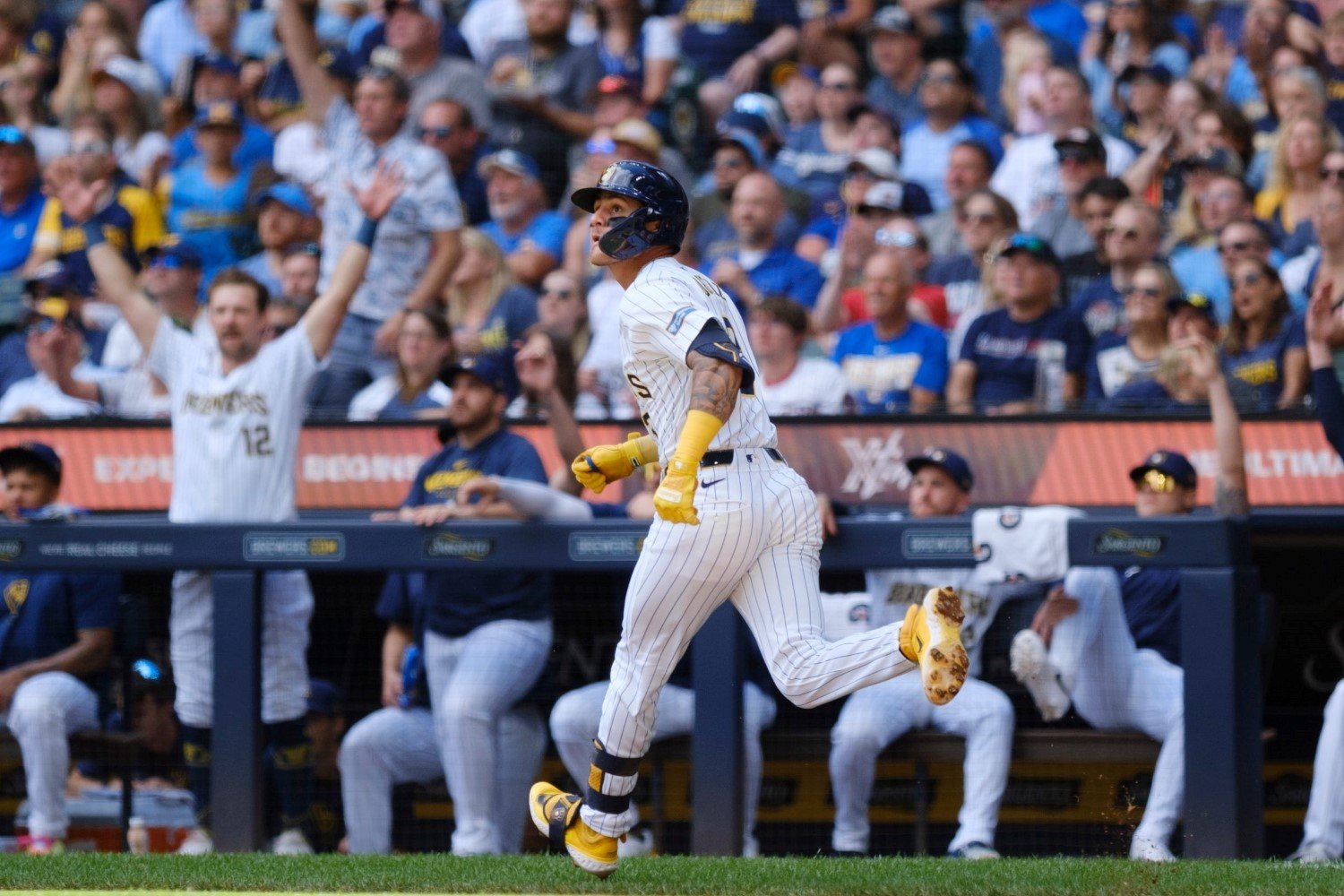 As always, with lineup construction discourse, many people think batting order doesn’t matter--that it's a pointless argument. I generally disagree, and believe there are mental and “skill diversity” aspects that have an impact. Thus, the Milwaukee Brewers need to give Joey Ortiz a serious run in the top half of the lineup, to stabilize the recently inconsistent offense and to see if his brand of tenacious competitiveness could make the difference in the postseason. Whether looking at full-season stats or just the past month, Ortiz has better numbers than some who have had more opportunities in the top five slots in recent weeks. While power still fuels run-scoring, getting on base for better hitters and working a pitcher into deeper counts has great value. Many probably forget how good Ortiz was early in the season, before he suffered a neck injury that first hampered his performance, then landed him on the IL. Over his first 40 games, Ortiz slashed .293/.387/.538. He wasn't going to stay at that MVP level, but even with some struggles, he is still among the team's best hitters. His placement in the lineup doesn't reflect that. Among active Brewers this season with at least 60 plate appearances, Ortiz ranks second in OBP (.341), trailing only William Contreras. He also sits fifth on the team in OPS (.739), ahead of Rhys Hoskins, Jake Bauers, Garrett Mitchell, Blake Perkins, Brice Turang and Sal Frelick. That list alone should make you tilt your head in wonder, as to how Ortiz hasn’t found his way closer to the top of the order. Additionally, Ortiz shows the plate discipline teams should cherish near the front of the lineup. His 12.3% walk percentage (BB%) is second on the team, to playing time-limited Andruw Monasterio. Meanwhile, Ortiz’s 19.5% strikeout percentage (K%) is third-lowest on the Brewers, behind Turang and Frelick. From that perspective, if the argument is Ortiz versus Turang or Frelick, do you value more walks and more strikeouts or fewer of each? But one thing is certain: Mitchell’s 32.1 K% has no business in the top half of the lineup, as the Brewers have tried a few times in August. Even turning your attention away from an on-base and plate discipline focus, Ortiz’s other stats outpace many. Among Milwaukee hitters, Ortiz is fifth in both wRC+ (108) and wOBA (.325), as well as sixth in SLG (.398) and extra-base hit percentage (7.8%). All of these numbers show Ortiz is likely the fourth-best hitter on the Brewers, following Willy Adames, Jackson Chourio and Contreras. But let’s look at more recent production, too. Since Aug. 10, Milwaukee has averaged just four runs per game. That is 0.81 runs per game fewer than their season average, and would rank the Brewers 24th in MLB if they did it over the entire year. So, in the last 17 contests, Milwaukee has had its struggles to consistently put up runs, especially compared to what they have done for much of 2024. Some of the issues stem from various hitters’ poor performances in August: As you can see, though, while Ortiz’s production isn’t jumping off the page, his numbers are still better in most areas than others who have (or could) hit in front of him. The more concerning story might be Turang’s troubles–both recently, as seen above, and over the course of the season, wherein his .318 OBP ranks ninth on the Brewers and his .677 OPS sits 10th. But back to Ortiz. His value as a hitter goes beyond the numbers. He does what it takes to help the team win games, whether fighting off an inside pitch to the right side to move over a runner; finding a way to hit a sac fly with two strikes; or coming up with a big hit late in the game. Ortiz is always willing to put forth a “team at-bat,” where he is determined to do a job. He is far more likely to execute a hit-and-run or deliver an RBI with a runner on third and less than two outs, particularly over guys like Mitchell, Bauers or Frelick. He's avoided double plays better than Turang or Jackson Chourio. He's driven in a higher percentage of the runners on base when he comes up than Adames or Rhys Hoskins. In modern baseball, teams often overlook the importance of such strategic pieces. Yes, home runs are the key to winning in the playoffs, but baseball has been shifting the past couple of seasons, and it has room for players who are “gamers,” doing the dirty work and grinding out an October victory. With his skill set and the makeup of what should be the other four hitters in the top half of the lineup, Ortiz would make an intriguing third hitter for the Brewers. He could hold down the leadoff spot, or manage to produce in other spots, but the three-hole likely allows him to utilize all of his tools of plate discipline, bat control, bunting and creating runs. Should Murphy and company want to keep giving Turang a shot at leadoff against righties, it makes the lineup easy at the top: Turang Chourio Ortiz Contreras Adames Against left-handed pitchers, Turang should be gone, and Gary Sánchez needs to get additional looks. Reader’s choice on the one-two slots, but the likeliest look is this: Chourio Contreras Ortiz Sánchez Adames I couldn’t care less about all the right-left matchup stuff, especially with your first five hitters, who should simply be your best options to score early and often. Of course, it seems like Murphy does care, but maybe continued performance trends will force him to abandon his commitment to alternating by handedness. This all adds up to say that it is time to give Ortiz some opportunities higher in the lineup. How many chances can you give Tyler Black (now in Triple-A), Mitchell and Bauers before Ortiz gets a shot at proving he can be a more consistent, reliable, competitive hitter who pushes the offense up a level?
 -
If you’re reading this, you likely understand the familiar feeling among Milwaukee Brewers fans – the lingering doubt that the team's success might crumble at any moment. Many seem to find reasons to believe the Brewers will falter, with some even openly expressing pleasure from the team’s failures. But is it finally time to embrace the 2024 Brewers and appreciate what this group is doing? Image courtesy of © Benny Sieu-USA TODAY Sports Baseball offers multiple layers of enjoyment, whether it be through in-depth analysis, casual fandom or even watching from a coach's perspective. On a game-to-game basis, it’s understandable to feel frustrated with a player’s performance, a manager’s decisions, or the team's occasional bewildering play. However, why does it seem so challenging for a significant number of Brewers fans to fully appreciate this season's success, when their favorite club is dominating the division and competing for the top seed in the National League? No one is claiming that the 2024 Brewers are flawless. Like any team, they have their shortcomings. Yet, if you survey the league, there isn’t a single club that stands head and shoulders above the rest. As of the weekend, no MLB team was on pace to reach 100 wins, something that hasn’t happened since 2014. Meanwhile, the Brewers are on track for 94 or 95 victories and are true contenders, as they compete side-by-side with Los Angeles Dodgers and Philadelphia Phillies for the NL’s best record. But this isn’t about comparing the Brewers to other teams and their weaknesses. The real story here is Milwaukee’s production and their (somewhat surprising) consistent success since Opening Day. Consider these impressive facts: Milwaukee has never been more than two games out of first place in the NL Central. The Brewers have spent 138 days either alone or tied for first place. On days when they played a game, Milwaukee has been out of first place for just 11 days. The Brewers have led the NL Central without even being tied since May 9 – a streak of 103 consecutive days. Each time the Brewers seemed to hit a rough patch or when other NL Central teams made a push, many fans began to doubt the team's ability to maintain their division lead. Whether it was due to mounting injuries, underperforming players, or a lackluster trade deadline, some felt that the Brewers' ship was on the verge of sinking. Even within the last week, some fans could be found asking prominent Brewers writers and podcast hosts which division rival poses the greatest threat to the club's Central primacy. However, despite an 11-13 record in July that saw their lead shrink to five games, that was the lowest point. The Brewers have since widened their lead to 11 games over the second-place St. Louis Cardinals. They accomplished this by winning 11 of 16 games in August, including a 10-3 record across 13 consecutive games without an off day. This stretch featured two five-game winning streaks and an 8-2 record against top-tier teams like the Atlanta Braves, Cleveland Guardians and Dodgers. For those who doubted Milwaukee’s ability to beat “the best teams,” those concerns have been put to rest. There is no threat to the Brewers in the division. There never was one. Some critics may argue that the Brewers are winning with smoke and mirrors. But if you look beyond the names on the roster, you’ll see the true beauty of baseball: the ability to find talented, undervalued players who excel in their roles, often improving with high-quality coaching. When you combine these types of players with young talent, veteran savvy and recognizable names like Willy Adames, Rhys Hoskins, William Contreras and Devin Williams, it’s clear that Milwaukee’s success is no fluke—it’s a formula. Just take a look at some of the statistics: The Brewers have the best run differential in the NL, at +106 (2nd overall in MLB) They boast the best ERA in the NL, at 3.66 (2nd overall in MLB) Their relievers have the best ERA in the NL, at 3.24 The Brewers’ bullpen has the 2nd-best batting average against in the NL (.223) They rank 2nd in the NL in offensive OBP (.331) Milwaukee is 3rd in MLB in stolen bases, with 159 They rank 4th in the NL in runs scored (4.79 runs/game) They lead the NL in Defensive Runs Saved (57 DRS) and have the best FanGraphs defensive rating (21.6) and Baseball Prospectus Range Defense Added (RDA) These numbers show the Brewers aren’t just about “finding ways to win” or being lucky. This is a team with more talent than many believed, backed by a front office with a keen eye and a coaching staff that strategically maximizes both individual and collective strengths. And even when the Brewers didn’t put up the big numbers, there were other areas in which they led the league and created victories from certain defeat. It’s part of the reason Milwaukee is the only team to avoid a four-game losing streak all season. The fact is, the 2024 Brewers are continuing the franchise’s recent tradition of being a playoff team with a shot at postseason success. Admittedly, the playoff flameouts have been terribly irritating, and it's important that the team break with that recent tradition. Perhaps having a new field general in Pat Murphy helps the Brewers finally win a postseason series for the first time since 2018. Was Craig Counsell holding them back in the playoffs? As the Brewers battle for an opening-round bye and (hopefully) coast to their second straight NL Central title – and third in four seasons – there is plenty to watch. How much will Jackson Chourio shine down the stretch? Can one of the other young outfielders take a step forward offensively? Who will emerge as the top, reliable starting pitchers in a playoff series? Can the bullpen continue its deep, dominant performance into September and October? There are so many positive vibes surround this Brewers’ club, and most people never expected them to be in this position. So, is all of this enough to get you to simply enjoy the ride and root for the Brewers without the daily doubts? I, for one, truly hope you can. View full article
-
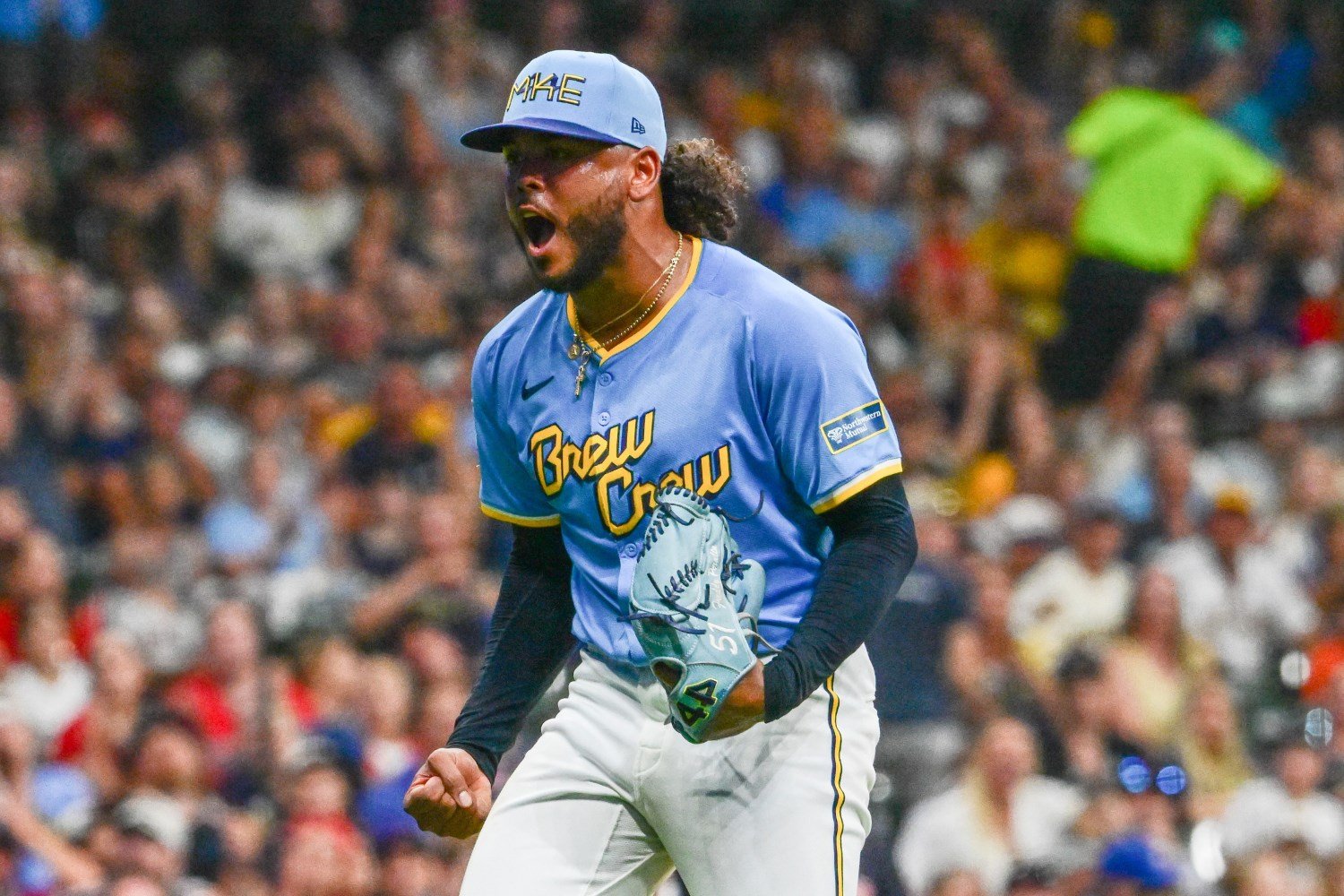 Baseball offers multiple layers of enjoyment, whether it be through in-depth analysis, casual fandom or even watching from a coach's perspective. On a game-to-game basis, it’s understandable to feel frustrated with a player’s performance, a manager’s decisions, or the team's occasional bewildering play. However, why does it seem so challenging for a significant number of Brewers fans to fully appreciate this season's success, when their favorite club is dominating the division and competing for the top seed in the National League? No one is claiming that the 2024 Brewers are flawless. Like any team, they have their shortcomings. Yet, if you survey the league, there isn’t a single club that stands head and shoulders above the rest. As of the weekend, no MLB team was on pace to reach 100 wins, something that hasn’t happened since 2014. Meanwhile, the Brewers are on track for 94 or 95 victories and are true contenders, as they compete side-by-side with Los Angeles Dodgers and Philadelphia Phillies for the NL’s best record. But this isn’t about comparing the Brewers to other teams and their weaknesses. The real story here is Milwaukee’s production and their (somewhat surprising) consistent success since Opening Day. Consider these impressive facts: Milwaukee has never been more than two games out of first place in the NL Central. The Brewers have spent 138 days either alone or tied for first place. On days when they played a game, Milwaukee has been out of first place for just 11 days. The Brewers have led the NL Central without even being tied since May 9 – a streak of 103 consecutive days. Each time the Brewers seemed to hit a rough patch or when other NL Central teams made a push, many fans began to doubt the team's ability to maintain their division lead. Whether it was due to mounting injuries, underperforming players, or a lackluster trade deadline, some felt that the Brewers' ship was on the verge of sinking. Even within the last week, some fans could be found asking prominent Brewers writers and podcast hosts which division rival poses the greatest threat to the club's Central primacy. However, despite an 11-13 record in July that saw their lead shrink to five games, that was the lowest point. The Brewers have since widened their lead to 11 games over the second-place St. Louis Cardinals. They accomplished this by winning 11 of 16 games in August, including a 10-3 record across 13 consecutive games without an off day. This stretch featured two five-game winning streaks and an 8-2 record against top-tier teams like the Atlanta Braves, Cleveland Guardians and Dodgers. For those who doubted Milwaukee’s ability to beat “the best teams,” those concerns have been put to rest. There is no threat to the Brewers in the division. There never was one. Some critics may argue that the Brewers are winning with smoke and mirrors. But if you look beyond the names on the roster, you’ll see the true beauty of baseball: the ability to find talented, undervalued players who excel in their roles, often improving with high-quality coaching. When you combine these types of players with young talent, veteran savvy and recognizable names like Willy Adames, Rhys Hoskins, William Contreras and Devin Williams, it’s clear that Milwaukee’s success is no fluke—it’s a formula. Just take a look at some of the statistics: The Brewers have the best run differential in the NL, at +106 (2nd overall in MLB) They boast the best ERA in the NL, at 3.66 (2nd overall in MLB) Their relievers have the best ERA in the NL, at 3.24 The Brewers’ bullpen has the 2nd-best batting average against in the NL (.223) They rank 2nd in the NL in offensive OBP (.331) Milwaukee is 3rd in MLB in stolen bases, with 159 They rank 4th in the NL in runs scored (4.79 runs/game) They lead the NL in Defensive Runs Saved (57 DRS) and have the best FanGraphs defensive rating (21.6) and Baseball Prospectus Range Defense Added (RDA) These numbers show the Brewers aren’t just about “finding ways to win” or being lucky. This is a team with more talent than many believed, backed by a front office with a keen eye and a coaching staff that strategically maximizes both individual and collective strengths. And even when the Brewers didn’t put up the big numbers, there were other areas in which they led the league and created victories from certain defeat. It’s part of the reason Milwaukee is the only team to avoid a four-game losing streak all season. The fact is, the 2024 Brewers are continuing the franchise’s recent tradition of being a playoff team with a shot at postseason success. Admittedly, the playoff flameouts have been terribly irritating, and it's important that the team break with that recent tradition. Perhaps having a new field general in Pat Murphy helps the Brewers finally win a postseason series for the first time since 2018. Was Craig Counsell holding them back in the playoffs? As the Brewers battle for an opening-round bye and (hopefully) coast to their second straight NL Central title – and third in four seasons – there is plenty to watch. How much will Jackson Chourio shine down the stretch? Can one of the other young outfielders take a step forward offensively? Who will emerge as the top, reliable starting pitchers in a playoff series? Can the bullpen continue its deep, dominant performance into September and October? There are so many positive vibes surround this Brewers’ club, and most people never expected them to be in this position. So, is all of this enough to get you to simply enjoy the ride and root for the Brewers without the daily doubts? I, for one, truly hope you can.
 -
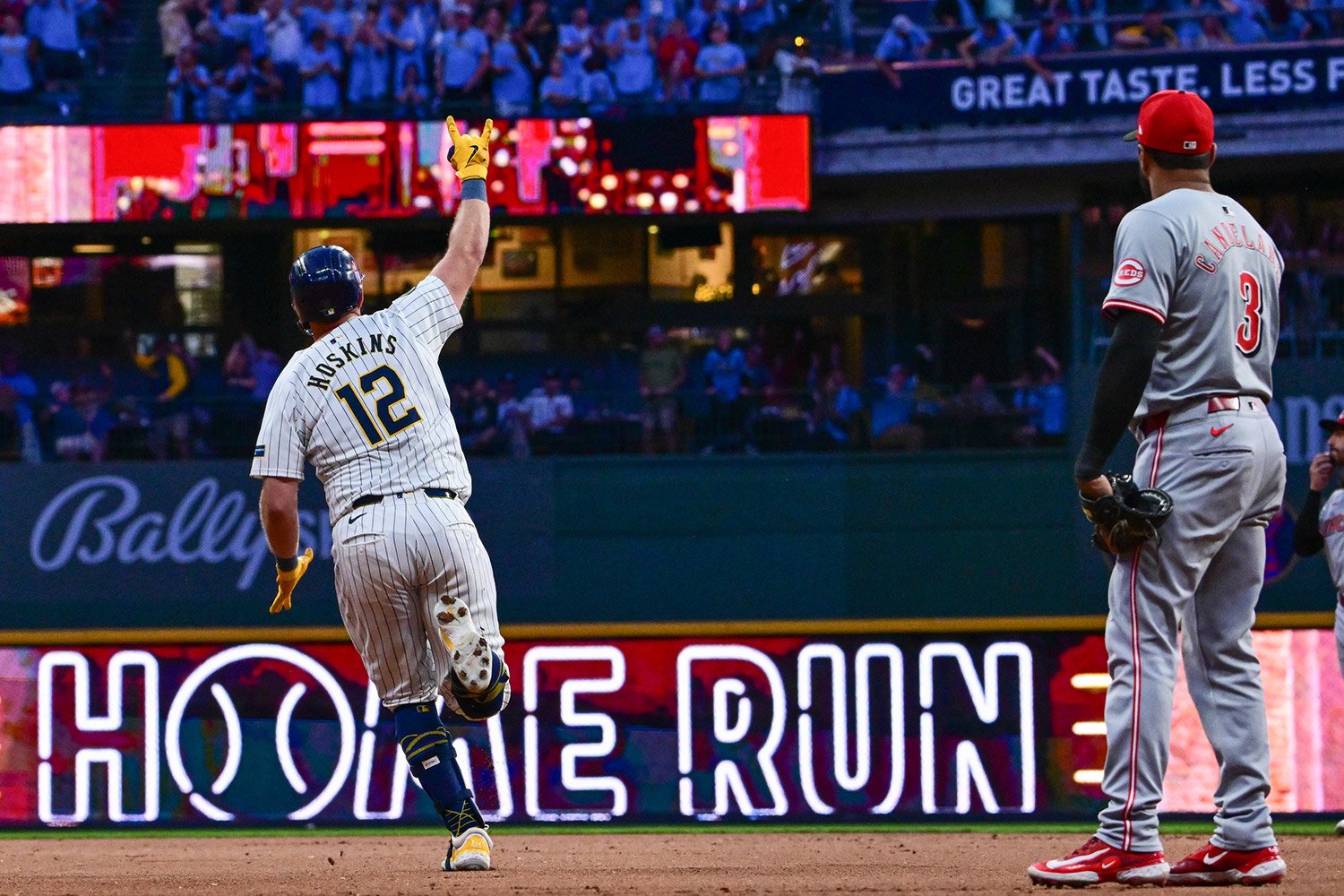 A few bad or average weeks for the offense or the pitching staff can feel like the sky is falling, but then you look up, and the Brewers are still 18 games over .500 for the season. They’ve done it without ever getting white hot. Milwaukee’s longest winning streak is five games, and their best 10-game stretch was 8-2, which the club did just once. Yet, as the Brewers stand today, they sit only 1.5 games behind the Philadelphia Phillies for the top seed in the NL playoffs. One key to the Brewers’ consistency? They have not endured a four-game losing streak this season. Because of that, they have avoided losing chunks of ground in the standings. On the flip side, the Phillies came back to the pack by going 4-13 recently, after they looked like they’d run away and hide. So, while the Brewers might lack the star power they have in Philly and Los Angeles – whom they are currently tied for the two-seed – Milwaukee wins on the edges with undervalued or overlooked stats. But are these results sustainable and projectable, or simply a run of positivity that has put the Brewers in this position? OFFENSE: Most runs scored with two outs In the Brewers’ sweep of the Atlanta Braves, the offense went off for 34 runs on 52 hits, with 24 of those runs coming with two outs. That continued a season-long trend where the Brewers have tallied the most two-out runs in MLB with 238. Is this some skill or statistic a team can lean on? It’s likely not predictive year to year, but it could say a couple of things about a lineup. For one, they appear to have the mentality of not “giving up” at-bats during games, regardless of the situation. This might sound like something a professional would never do, but in a grueling season, it does happen. Perhaps this group of hungry hitters feels differently. The first two innings of Milwaukee’s last game against Atlanta is a perfect example. Both frames began with the first two hitters retired meekly (three strikeouts and a tapper to the pitcher) and ended with three runs apiece. The second trait that all the two-out runs could portray is a deep and diverse batting order. While elite bats might be lacking, there are tough outs, guys with power, patient hitters and contact guys to navigate one through nine. It’s been talked about with this group before, especially early in the season. Previous Brewers’ offenses were less diverse, with many guys geared toward power – and whiffs – making the lineup prone to more frequent, long stretches of futility. The 2024 offense takes pride in fighting its way on base, sometimes taking something out of their swings to succeed and then getting the occasional bomb from an offense that suddenly has found a power stroke. It has all added up to more two-out production than any other club this season. OFFENSE: Most plate appearances with runners in scoring position Having runners in scoring position (RISP) so often fits with the relentless nature of the Brewers’ offense. They constantly pressure the opponent through hits, walks, and stolen bases to get to second and third as quickly and often as possible. And while Milwaukee also has the most hits with RISP, the number of times they bat in that situation is a more reliable skill going forward. But again, because of the frequency of plate appearances with a chance to drive in runs, the team gets ample opportunity to fail—and still succeed. This also adds continuous stress on the pitching and defense to execute. Suddenly, a wild pitch, an infield hit, the failure to turn two, and many other scenarios can result in a run. It can wear down a pitching staff game to game and throughout a series. There are times Milwaukee gets men in scoring position and don't come through. Because of how often they put themselves in this situation, it leads to more frustration for fans. Still, it’s better for a team to constantly put runners on second and third while failing a bit more often because, statistically, it will still create more runs in a large sample. Entering the weekend, the Brewers have the second-most runs with RISP and rank fifth in batting average (.274) with RISP, helping them score 4.89 runs per game, good for seventh in MLB. PITCHING: Highest left-on-base percentage You hear the phrase “bend but don’t break” for some defenses in football. A pitching staff with a high left-on-base percentage (LOB%) might represent the baseball equivalent. How much they bend depends on the number of base runners they allow, but stranding 77.1% as the Brewers have done will do wonders to limit the damage, regardless. In fairness, Milwaukee hurlers have the ninth-fewest opponent plate appearances with runners on base. That doesn’t impact their percentage, but it helps limit the opportunities. Of course, that’s a positive on its own that they so infrequently have men on base. Then, with runners aboard, the pitchers seem to bear down: Brewers’ pitching allowed with men on base (MLB rank): .238 AVG (3rd) .311 OBP (6th) .366 SLG (1st) .677 OPS (2nd) Brewers’ pitching with RISP and two outs (MLB rank): .196 AVG (3rd) .304 OBP (5th) .296 SLG (1st) .600 OPS (3rd) The second group of stats says a lot about the LOB% and the Brewers keeping runs off the board. Getting that final out, particularly with men in scoring position, can be an enormous swing in a game. Their success in these areas is certainly boosted by the Brewers’ defense. That also contributes to the Brewers ranking fifth in ERA (3.77) while having the sixth-worst FIP (Fielding Independent Pitching) at 4.37 this season. PITCHING: Lowest percentage of all hits for extra bases allowed This one might sound a bit confusing, but essentially, it means that when the Brewers give up hits, they give up the lowest percentage of extra-base hits. Their 31% X/H% plays a large role in the previous stat, an ability to leave runners on base. Opponents are struggling to score more consistently because they have to rely on far more singles rather than doubles, triples, and home runs. Regularly forcing teams to collect three singles or mix in a walk likely means they aren’t scoring in bunches. By limiting knocks that advance runners multiple bases, Brewers’ pitching can sit in the middle of the pack in opponent average, OBP, and slugging but still keep the plate clean at a top-five clip. And, once again, Milwaukee’s superb defense makes its presence felt by chasing down fly balls, keeping balls on the infield, and ensuring outs are turned into outs. This allows the offense to battle back in games where they are down a couple of runs instead of five or six. And it helps the club win games 2-1 and 3-2 because the opponent simply can’t break through with crooked numbers. Throughout 162 games, that adds up substantially in Milwaukee’s favor. While these four stats aren’t necessarily predictive or have too much meaning, they have been part of the equation to keep the Brewers the clear leader in the NL Central and a contender for a top-two seed. Add to the mix their recent power-hitting surge, the overall depth and talent of the bullpen, and just a bit more consistency from the starting rotation, and suddenly, the Brewers look like a top-tier team instead of a second-class citizen of the league.
 -
With fewer than 50 games to play, the Milwaukee Brewers hold an eight-game lead in the NL Central. Despite many injuries, an underwhelming rotation, an overused bullpen and a seemingly powerless offense for a few months, the Crew kept finding ways to win and stay atop the division. Of course, we always hear about how relentless this team is, which certainly plays a role. The second trait that all the two-out runs could portray is a deep and diverse batting order. While elite bats might be lacking, there are tough outs, guys with power, patient hitters and contact guys to navigate one through nine. It’s been talked about with this group before, especially early in the season. Previous Brewers’ offenses were less diverse, with many guys geared toward power – and whiffs – making the lineup prone to more frequent, long stretches of futility. The 2024 offense takes pride in fighting its way on base, sometimes taking something out of their swings to succeed and then getting the occasional bomb from an offense that suddenly has found a power stroke. It has all added up to more two-out production than any other club this season. OFFENSE: Most plate appearances with runners in scoring position Having runners in scoring position (RISP) so often fits with the relentless nature of the Brewers’ offense. They constantly pressure the opponent through hits, walks, and stolen bases to get to second and third as quickly and often as possible. And while Milwaukee also has the most hits with RISP, the number of times they bat in that situation is a more reliable skill going forward. But again, because of the frequency of plate appearances with a chance to drive in runs, the team gets ample opportunity to fail—and still succeed. This also adds continuous stress on the pitching and defense to execute. Suddenly, a wild pitch, an infield hit, the failure to turn two, and many other scenarios can result in a run. It can wear down a pitching staff game to game and throughout a series. There are times Milwaukee gets men in scoring position and don't come through. Because of how often they put themselves in this situation, it leads to more frustration for fans. Still, it’s better for a team to constantly put runners on second and third while failing a bit more often because, statistically, it will still create more runs in a large sample. Entering the weekend, the Brewers have the second-most runs with RISP and rank fifth in batting average (.274) with RISP, helping them score 4.89 runs per game, good for seventh in MLB. PITCHING: Highest left-on-base percentage You hear the phrase “bend but don’t break” for some defenses in football. A pitching staff with a high left-on-base percentage (LOB%) might represent the baseball equivalent. How much they bend depends on the number of base runners they allow, but stranding 77.1% as the Brewers have done will do wonders to limit the damage, regardless. In fairness, Milwaukee hurlers have the ninth-fewest opponent plate appearances with runners on base. That doesn’t impact their percentage, but it helps limit the opportunities. Of course, that’s a positive on its own that they so infrequently have men on base. Then, with runners aboard, the pitchers seem to bear down: Brewers’ pitching allowed with men on base (MLB rank): .238 AVG (3rd) .311 OBP (6th) .366 SLG (1st) .677 OPS (2nd) Brewers’ pitching with RISP and two outs (MLB rank): .196 AVG (3rd) .304 OBP (5th) .296 SLG (1st) .600 OPS (3rd) The second group of stats says a lot about the LOB% and the Brewers keeping runs off the board. Getting that final out, particularly with men in scoring position, can be an enormous swing in a game. Their success in these areas is certainly boosted by the Brewers’ defense. That also contributes to the Brewers ranking fifth in ERA (3.77) while having the sixth-worst FIP (Fielding Independent Pitching) at 4.37 this season. PITCHING: Lowest percentage of all hits for extra bases allowed This one might sound a bit confusing, but essentially, it means that when the Brewers give up hits, they give up the lowest percentage of extra-base hits. Their 31% X/H% plays a large role in the previous stat, an ability to leave runners on base. Opponents are struggling to score more consistently because they have to rely on far more singles rather than doubles, triples, and home runs. Regularly forcing teams to collect three singles or mix in a walk likely means they aren’t scoring in bunches. By limiting knocks that advance runners multiple bases, Brewers’ pitching can sit in the middle of the pack in opponent average, OBP, and slugging but still keep the plate clean at a top-five clip. And, once again, Milwaukee’s superb defense makes its presence felt by chasing down fly balls, keeping balls on the infield, and ensuring outs are turned into outs. This allows the offense to battle back in games where they are down a couple of runs instead of five or six. And it helps the club win games 2-1 and 3-2 because the opponent simply can’t break through with crooked numbers. Throughout 162 games, that adds up substantially in Milwaukee’s favor. While these four stats aren’t necessarily predictive or have too much meaning, they have been part of the equation to keep the Brewers the clear leader in the NL Central and a contender for a top-two seed. Add to the mix their recent power-hitting surge, the overall depth and talent of the bullpen, and just a bit more consistency from the starting rotation, and suddenly, the Brewers look like a top-tier team instead of a second-class citizen of the league. View full article
- 1 reply
-
- 1
-

-
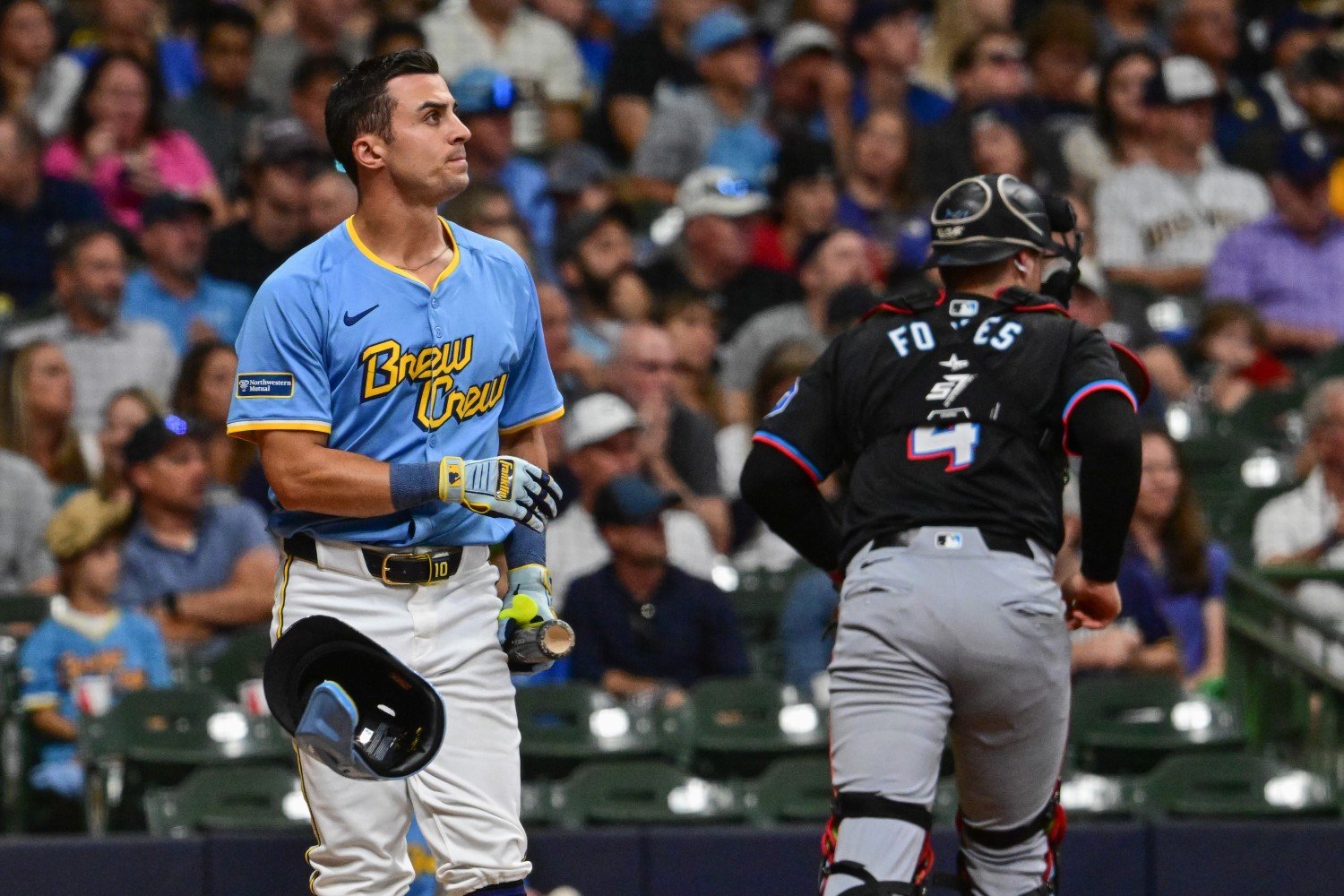 Throughout any marathon, 162-game MLB season, even the best offenses will go into multiple slumps. Typically, the top run-scoring clubs limit the frequency and length of such struggles. So are the 2024 Milwaukee Brewers in the midst of a long slump – or a couple of slumps – that will turn at any moment? Or is the club in serious trouble as they approach the final two months of the season--especially now that Christian Yelich will be out for a while? As always, it’s probably a little bit of both. Perception and reality don’t always match up perfectly, and statistics don’t tell the whole story. What was shocking was that the broad-scope offensive output went from elite to below-average starting in early June. If the Brewers’ offense averaged 5.1 runs per game for the season, they would lead MLB. But their last 43-game rate of 4.2 runs per game would rank 19th. That is a significant drop. Though some would say it’s technically a relatively small sample, it’s well beyond a couple of weeks that one can completely brush off. While the offense scuffled for the past two months, the Brewers still found ways to keep winning. That is where the value of competitive, relentless at-bats comes into play. Milwaukee went 23-20 during that time, with some help from the pitching staff. That wasn’t near the winning percentage of their first 60 contests (36-24 record), but it kept the Brewers moving forward and safely atop the NL Central. Aiding in the Crew’s continued winning ways, despite that longer period of offensive issues, was a 22-game run that resembled the first third of the season. From Jun. 23 to Jul. 21, Milwaukee’s run-scoring average was back at 5.1, with the slash line slightly better than the opening 60 contests (.262/.338/.415). The Brewers went 13-9 during that run, picking up the leaky pitching staff that could have sunk the club. So, maybe the offensive slump ended briefly, but they are starting another one. Milwaukee had averaged just two runs per game over the last five before a minor breakout Sunday against Miami, but they still managed to win a couple of those games. Is this another sign of a long-term drought, where the aberration was that 22-game reprieve that ended in Chicago last week? There has been plenty of speculation and suggestions for trade candidates, whether it’s outfield options or other left-handed bats to replace Yelich or ideas to stem the tide of Brice Turang’s statistical cliff dive in the middle of the season. A couple of those bigger names are now off the table, though, and it’s always difficult to see the Brewers making such a splash. That means the best-case scenario for Milwaukee is getting their own guys to figure it out, and to rediscover the early-season success that has evaded them recently. Those drop-offs, which have been many on the roster, are the biggest reason for the offensive troubles. You can look at other starting points and find better or worse stats for certain players, but sticking with the previous 43 games (since Jun. 4), several guys stand out as major problems. Brice Turang: .231/.290/.331 He has a .205/.283/.291 slash line at home this season William Contreras: .248/.309/.373 His issues go further back, to May 15 (.677 OPS) Rhys Hoskins: .183/.259/.351 Before his recent strong stretch, he owned a .581 OPS from Jun. 4 to the All-Star break Joey Ortiz: .188/.291/.267 He owns a 12% line drive percentage during this period Those are a lot of outs in the lineup on an everyday basis. Thankfully for the Brewers, Yelich (.892 OPS) and Jackson Chourio (.847 OPS) were hitting extremely well to make up for the many holes, and Eric Haase owned an .826 slugging percentage in just 25 plate appearances. Now, can others step up and get back to the levels many expect, especially in the absence of Yelich? There have been some positive signs of late. Since Jul. 1, Contreras has put up an .806 OPS, with seven doubles and a pair of homers. Hoskins could be at the start of a heater, with three home runs, six RBIs and an OPS north of 1.000 in the last six contests. Willy Adames owns a .324/.386/.527 line in July in the middle of the order. All will be vital for a return to offensive quality, but others will need to figure it out, too. One of the outfielders not named Chourio must add more value on offense, if GM Matt Arnold doesn’t swing a trade. Their defense is terrific, but it won’t make up for the emptiness at the dish. Sal Frelick has a .679 OPS, Blake Perkins is riding a .692, and Garrett Mitchell (in limited time) has been the best of the three with a .706. When you say those numbers out loud, it makes you think an outside outfield bat is a necessity. Whether the Brewers add in the outfield, the infield or not at all, the power – or lack thereof – is perhaps the biggest concern. Though Milwaukee’s offense has utilized speed, aggressiveness and contact to scratch across runs, the lineup has lacked real punch since a hot start to the 2024 season. The Brewers are 23rd in home runs with 106, and rank 15th in slugging, at .398 for the year. A few of the internal options can certainly turn on the power switch, but it better come soon and more often than what we’ve seen. So, back to the original question: Is the Brewers’ offense in serious trouble? They appear to be teetering on the edge of a full-blown problem scoring enough to supplement the pitching staff – which needs its own help. The difference is that Milwaukee is getting healthy on the mound, including the return of relief ace Devin Williams on Sunday. The offense, however, desperately needs the current group to find a groove or get significant help via a trade. What do you think needs the most urgent action? Is it Turang’s drop-off, especially hitting at the top of the lineup? Is it the lack of offensive prowess in the outfield? Or is there another area you would focus on for improvement? Once the trade deadline passes, it will be time to put up or shut for whoever is on the club – new or old.
 -
You can still see the relentless, competitive offensive style at times, but some of the Milwaukee Brewers’ hitters have seen their numbers nosedive over the past several weeks. It has made the offense less consistent and more frustrating, but not fully dysfunctional--yet. Image courtesy of © Benny Sieu-USA TODAY Sports Throughout any marathon, 162-game MLB season, even the best offenses will go into multiple slumps. Typically, the top run-scoring clubs limit the frequency and length of such struggles. So are the 2024 Milwaukee Brewers in the midst of a long slump – or a couple of slumps – that will turn at any moment? Or is the club in serious trouble as they approach the final two months of the season--especially now that Christian Yelich will be out for a while? As always, it’s probably a little bit of both. Perception and reality don’t always match up perfectly, and statistics don’t tell the whole story. What was shocking was that the broad-scope offensive output went from elite to below-average starting in early June. If the Brewers’ offense averaged 5.1 runs per game for the season, they would lead MLB. But their last 43-game rate of 4.2 runs per game would rank 19th. That is a significant drop. Though some would say it’s technically a relatively small sample, it’s well beyond a couple of weeks that one can completely brush off. While the offense scuffled for the past two months, the Brewers still found ways to keep winning. That is where the value of competitive, relentless at-bats comes into play. Milwaukee went 23-20 during that time, with some help from the pitching staff. That wasn’t near the winning percentage of their first 60 contests (36-24 record), but it kept the Brewers moving forward and safely atop the NL Central. Aiding in the Crew’s continued winning ways, despite that longer period of offensive issues, was a 22-game run that resembled the first third of the season. From Jun. 23 to Jul. 21, Milwaukee’s run-scoring average was back at 5.1, with the slash line slightly better than the opening 60 contests (.262/.338/.415). The Brewers went 13-9 during that run, picking up the leaky pitching staff that could have sunk the club. So, maybe the offensive slump ended briefly, but they are starting another one. Milwaukee had averaged just two runs per game over the last five before a minor breakout Sunday against Miami, but they still managed to win a couple of those games. Is this another sign of a long-term drought, where the aberration was that 22-game reprieve that ended in Chicago last week? There has been plenty of speculation and suggestions for trade candidates, whether it’s outfield options or other left-handed bats to replace Yelich or ideas to stem the tide of Brice Turang’s statistical cliff dive in the middle of the season. A couple of those bigger names are now off the table, though, and it’s always difficult to see the Brewers making such a splash. That means the best-case scenario for Milwaukee is getting their own guys to figure it out, and to rediscover the early-season success that has evaded them recently. Those drop-offs, which have been many on the roster, are the biggest reason for the offensive troubles. You can look at other starting points and find better or worse stats for certain players, but sticking with the previous 43 games (since Jun. 4), several guys stand out as major problems. Brice Turang: .231/.290/.331 He has a .205/.283/.291 slash line at home this season William Contreras: .248/.309/.373 His issues go further back, to May 15 (.677 OPS) Rhys Hoskins: .183/.259/.351 Before his recent strong stretch, he owned a .581 OPS from Jun. 4 to the All-Star break Joey Ortiz: .188/.291/.267 He owns a 12% line drive percentage during this period Those are a lot of outs in the lineup on an everyday basis. Thankfully for the Brewers, Yelich (.892 OPS) and Jackson Chourio (.847 OPS) were hitting extremely well to make up for the many holes, and Eric Haase owned an .826 slugging percentage in just 25 plate appearances. Now, can others step up and get back to the levels many expect, especially in the absence of Yelich? There have been some positive signs of late. Since Jul. 1, Contreras has put up an .806 OPS, with seven doubles and a pair of homers. Hoskins could be at the start of a heater, with three home runs, six RBIs and an OPS north of 1.000 in the last six contests. Willy Adames owns a .324/.386/.527 line in July in the middle of the order. All will be vital for a return to offensive quality, but others will need to figure it out, too. One of the outfielders not named Chourio must add more value on offense, if GM Matt Arnold doesn’t swing a trade. Their defense is terrific, but it won’t make up for the emptiness at the dish. Sal Frelick has a .679 OPS, Blake Perkins is riding a .692, and Garrett Mitchell (in limited time) has been the best of the three with a .706. When you say those numbers out loud, it makes you think an outside outfield bat is a necessity. Whether the Brewers add in the outfield, the infield or not at all, the power – or lack thereof – is perhaps the biggest concern. Though Milwaukee’s offense has utilized speed, aggressiveness and contact to scratch across runs, the lineup has lacked real punch since a hot start to the 2024 season. The Brewers are 23rd in home runs with 106, and rank 15th in slugging, at .398 for the year. A few of the internal options can certainly turn on the power switch, but it better come soon and more often than what we’ve seen. So, back to the original question: Is the Brewers’ offense in serious trouble? They appear to be teetering on the edge of a full-blown problem scoring enough to supplement the pitching staff – which needs its own help. The difference is that Milwaukee is getting healthy on the mound, including the return of relief ace Devin Williams on Sunday. The offense, however, desperately needs the current group to find a groove or get significant help via a trade. What do you think needs the most urgent action? Is it Turang’s drop-off, especially hitting at the top of the lineup? Is it the lack of offensive prowess in the outfield? Or is there another area you would focus on for improvement? Once the trade deadline passes, it will be time to put up or shut for whoever is on the club – new or old. View full article
-
For the 2024 Milwaukee Brewers to ride out the season at the top of the NL Central, they will need more starting pitching. There’s almost no scenario where GM Matt Arnold gives up enough to get an elite arm for the rotation, but a solid, reliable veteran like Chris Bassitt fits the club like a glove. Image courtesy of © Dan Hamilton-USA TODAY Sports The Toronto Blue Jays have underachieved again in 2024, sitting 9.5 games out of a playoff spot at the All-Star break with a 44-52 record. They have a few pitchers who would intrigue the Milwaukee Brewers, but 35-year-old Chris Bassitt could be the best balance of salary relief for the Jays and prospect offering from the Brewers. Reports have circulated that, while the Jays would like to compete again in 2025, the club wants to get below the competitive-balance tax trheshold, too. But let’s talk money and team control later. Bassitt has been an extremely consistent, trustworthy starter throughout his career. He entered the All-Star break owning a 3.52 ERA (115 ERA+), very much in line with his 10-year career average (3.49 ERA, 118 ERA+). Bassitt has had an ERA over 3.60 just once since 2018, when it ballooned to 3.81 in 2019. His 21.3% strikeout rate this season is half a percent off his career rate with his FIP (3.72) a bit better than his typical number. Moreover, Bassitt has historically been an even better second-half pitcher – an ideal trait for someone acquired for a postseason push. He hasn’t done this after swapping teams mid-season, but pitching is pitching, and he would be going to one of the best organizations when it comes to improving a hurler’s performance. Still, he’s had some issues in 2024, which might actually make him less desirable around the league--and, thus, more attainable for the Brewers. Bassitt might be fighting an element of bad luck this season, too, with his BABIP sitting at .326. His career norm is 41 points lower, at .285. Still, he did finish the first half with what would be some of his worst marks since 2016, including WHIP (1.44), H/9 (9.1) and BB% (9.6%). Also, his last two starts before the break didn’t go well, despite getting the win in his final pre-break appearance: 2 GS, 10 IP, 7 ER, 13 H, 9 K, 8 BB and an opponent slash of .302/.412/.326 However, July has typically been Bassitt’s second-worst month in his career, posting worse overall numbers only in the March/April portion of the season. Plus, Bassitt didn’t allow a home run in either of those two starts, dropping his HR/9 to 0.7, his lowest output since 2015. That is a significant reason batters are slugging only .361 against him this season. One other component to his game that could get him back on track would be severely limiting his use of the sinker. While Bassitt has had terrific success with it in the past (particularly last season), hitters are murdering that pitch in 2024. And he's throwing the sinker at a higher rate than he has the past few years, so it's making an enormous impact on his output. As for the two big off-the-field questions: what does his contract look like, and what would the return entail? The latter will be impacted somewhat by the former, or at least by how much money (if any) the Blue Jays would be willing to eat. Bassitt would cost around $8 million for the remainder of this season and is under contract in 2025. However, the price tag for that full season is $21 million. That is, admittedly, a large number to pay a pitcher of Bassitt’s caliber and age, but it's something Milwaukee could swing with a mostly young and inexpensive squad, along with money coming off the books (e.g., Willy Adames’ $12.25 million). But how much can Milwaukee shave off their own cost by connecting better returning talent to Toronto in exchange for the Blue Jays eating some cost? It's always a challenge to figure out what teams want in terms of prospects when they aren’t trading away top talent. Would the Jays go for quantity over quality? Do they target a specific position? Do they ask for the best prospect Milwaukee would offer? It might feel like “too much,” but if the Blue Jays send cash to cover half of Bassitt’s 2025 salary, the Brewers could offer a pair of prospects a little bit down the ladder in their system and a third guy as a lottery ticket. One would believe Toronto would like a couple of pitchers in return, and the Brewers would likely be fine sending an outfield prospect to Canada as well, considering their propensity to collect them in the organization. Again, the asking price for Bassitt may be lower, or perhaps the Brewers would balk at paying too much of his salary. That is for conversations inside the walls of American Family Field. But if the Brewers believe in Bassitt’s consistency and second-half prowess, he’s the type of addition they desperately need. It also gives Milwaukee another rotation option for 2025, to help prevent a situation like the one in which they find themselves now. Bassitt can take the Wade Miley role, assuming Miley is done or goes elsewhere. So how does Chris Bassitt sound to you? He’s not a big splash, though it’s unlikely the Brewers go that route big, anyway. Is Bassitt too much risk? Too much cost? There will certainly be 5-10 names of starting pitchers you hear through the trade deadline, but figuring out which one or two end up landing with the Brewers is the ultimate guessing game. View full article
-
 The Toronto Blue Jays have underachieved again in 2024, sitting 9.5 games out of a playoff spot at the All-Star break with a 44-52 record. They have a few pitchers who would intrigue the Milwaukee Brewers, but 35-year-old Chris Bassitt could be the best balance of salary relief for the Jays and prospect offering from the Brewers. Reports have circulated that, while the Jays would like to compete again in 2025, the club wants to get below the competitive-balance tax trheshold, too. But let’s talk money and team control later. Bassitt has been an extremely consistent, trustworthy starter throughout his career. He entered the All-Star break owning a 3.52 ERA (115 ERA+), very much in line with his 10-year career average (3.49 ERA, 118 ERA+). Bassitt has had an ERA over 3.60 just once since 2018, when it ballooned to 3.81 in 2019. His 21.3% strikeout rate this season is half a percent off his career rate with his FIP (3.72) a bit better than his typical number. Moreover, Bassitt has historically been an even better second-half pitcher – an ideal trait for someone acquired for a postseason push. He hasn’t done this after swapping teams mid-season, but pitching is pitching, and he would be going to one of the best organizations when it comes to improving a hurler’s performance. Still, he’s had some issues in 2024, which might actually make him less desirable around the league--and, thus, more attainable for the Brewers. Bassitt might be fighting an element of bad luck this season, too, with his BABIP sitting at .326. His career norm is 41 points lower, at .285. Still, he did finish the first half with what would be some of his worst marks since 2016, including WHIP (1.44), H/9 (9.1) and BB% (9.6%). Also, his last two starts before the break didn’t go well, despite getting the win in his final pre-break appearance: 2 GS, 10 IP, 7 ER, 13 H, 9 K, 8 BB and an opponent slash of .302/.412/.326 However, July has typically been Bassitt’s second-worst month in his career, posting worse overall numbers only in the March/April portion of the season. Plus, Bassitt didn’t allow a home run in either of those two starts, dropping his HR/9 to 0.7, his lowest output since 2015. That is a significant reason batters are slugging only .361 against him this season. One other component to his game that could get him back on track would be severely limiting his use of the sinker. While Bassitt has had terrific success with it in the past (particularly last season), hitters are murdering that pitch in 2024. And he's throwing the sinker at a higher rate than he has the past few years, so it's making an enormous impact on his output. As for the two big off-the-field questions: what does his contract look like, and what would the return entail? The latter will be impacted somewhat by the former, or at least by how much money (if any) the Blue Jays would be willing to eat. Bassitt would cost around $8 million for the remainder of this season and is under contract in 2025. However, the price tag for that full season is $21 million. That is, admittedly, a large number to pay a pitcher of Bassitt’s caliber and age, but it's something Milwaukee could swing with a mostly young and inexpensive squad, along with money coming off the books (e.g., Willy Adames’ $12.25 million). But how much can Milwaukee shave off their own cost by connecting better returning talent to Toronto in exchange for the Blue Jays eating some cost? It's always a challenge to figure out what teams want in terms of prospects when they aren’t trading away top talent. Would the Jays go for quantity over quality? Do they target a specific position? Do they ask for the best prospect Milwaukee would offer? It might feel like “too much,” but if the Blue Jays send cash to cover half of Bassitt’s 2025 salary, the Brewers could offer a pair of prospects a little bit down the ladder in their system and a third guy as a lottery ticket. One would believe Toronto would like a couple of pitchers in return, and the Brewers would likely be fine sending an outfield prospect to Canada as well, considering their propensity to collect them in the organization. Again, the asking price for Bassitt may be lower, or perhaps the Brewers would balk at paying too much of his salary. That is for conversations inside the walls of American Family Field. But if the Brewers believe in Bassitt’s consistency and second-half prowess, he’s the type of addition they desperately need. It also gives Milwaukee another rotation option for 2025, to help prevent a situation like the one in which they find themselves now. Bassitt can take the Wade Miley role, assuming Miley is done or goes elsewhere. So how does Chris Bassitt sound to you? He’s not a big splash, though it’s unlikely the Brewers go that route big, anyway. Is Bassitt too much risk? Too much cost? There will certainly be 5-10 names of starting pitchers you hear through the trade deadline, but figuring out which one or two end up landing with the Brewers is the ultimate guessing game.
 -
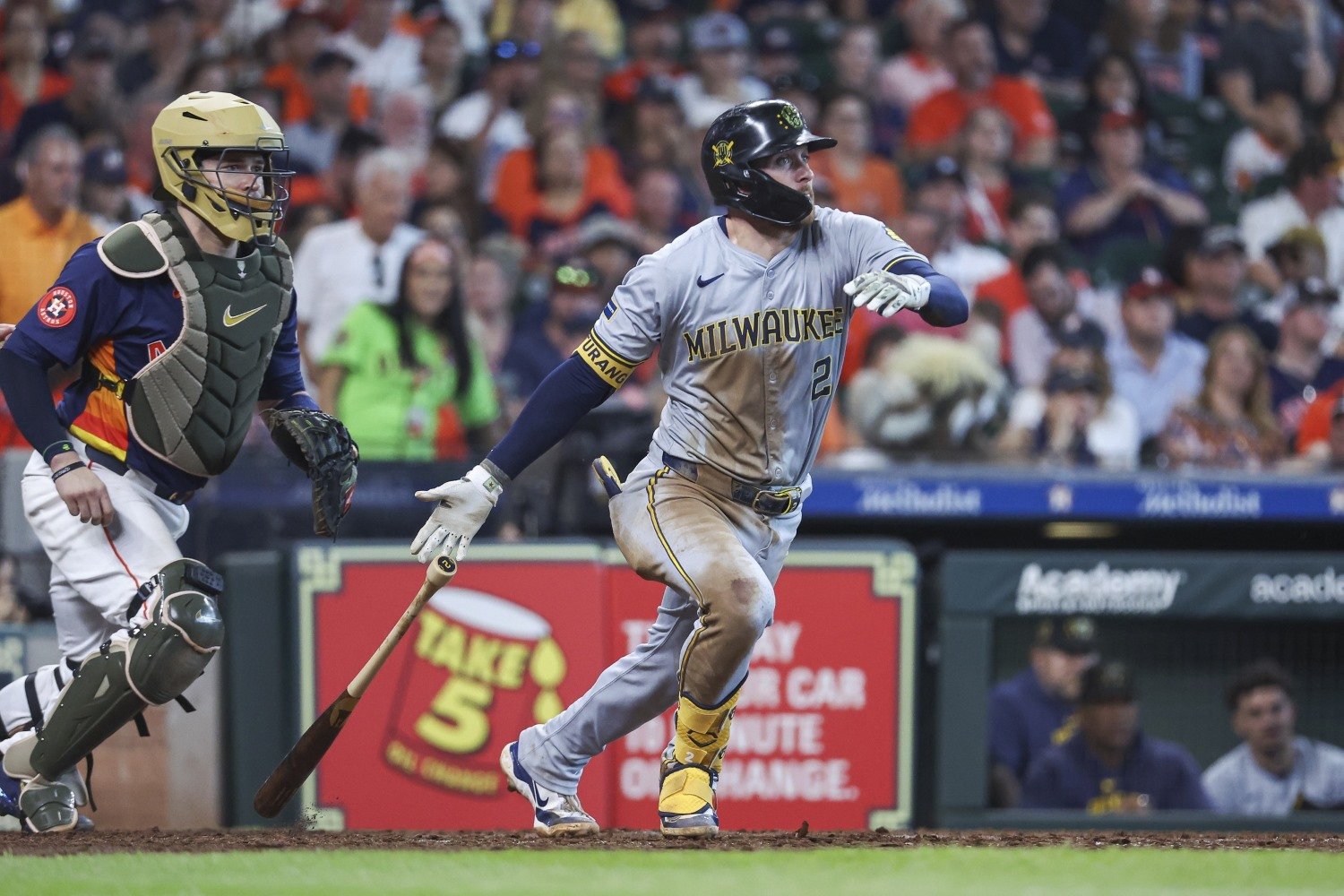 It's hard to argue with the results of the Brewers' offensive mix, gathered by GM Matt Arnold and stirred by manager Pat Murphy. There were early question marks and some feeling-out of players, but it has come together in a big way. The crew is led by a couple of stars in early MVP candidate William Contreras (179 OPS+) and a rejuvenated Christian Yelich (178 OPS+). Throw in some young surprises in Brice Turang (.362 OBP) and Joey Ortiz (.549 SLG), supplemented with a host of guys making their own, unique contributions, and suddenly the Brewers are averaging 5.13 runs per game. The diversified lineup includes a blend of high on-base guys, power-driven bats, contact-focused hitters and baserunning experts to limit the opponents' ability to completely shut down the offense. Even the simple, valuable OBP and slugging percentage (SLG) numbers are stunning to examine. The top seven Brewers on the team are all well above the league average. Not everyone is ripping the cover off the ball (though four Brewers have an average exit velocity of 90+ MPH), but even the softer contact hitters are finding ways on base and swiping bags. This mash-up contrasts the recent string of offensive makeup that felt heavily reliant on the long ball while accepting less contact, more strikeouts, a lower OBP and a dearth of athleticism. It would appear the mix has allowed the Brewers to be efficient and consistent in their production, despite some curious statistical trends. They haven't had long fallow periods on offense. Heading into the weekend, the Brewers had swung at the lowest percentage of pitches in baseball, hacking just 43.2% of the time. The good news is the Brewers swing at the fewest pitches outside of the strike zone (23.3%), though it's fascinating that they also swing least often when pitches are in the zone (60.9%). One would think taking so many strikes would hurt the offense. In fact, five of the next six teams who swing least often at strikes average less than four runs per game, sitting in the bottom third of MLB. It must be that the Brewers are seriously driving the ball when they do make contact, right? Not exactly. They rank 11th in hard-hit balls, per FanGraphs, but also just 19th in medium-hit balls and 15th in soft-hit contact. That's mostly a lot of "average" contact on the whole, especially for a team that swings so infrequently, yet scores so often. Clearly, they must keep the ball off the ground where you're less likely to get hits and produce runs, then. Nope. That's not it, either, as they have the fourth-highest ground ball percentage (45.3%) in baseball. Not surprisingly, the three clubs with higher ground ball percentages score less than four runs per contest. Yet, there are the Brewers, one of only three teams tallying over five runs each night. One would think that means Brewers' hitters are getting a bit lucky with their grounders finding holes. On the contrary, Milwaukee owns a .236 batting average on ground balls, 21st in all of baseball. How does a team score so much, when numerous statistics appear to be working against them? That is where the efficiency blows everything else away. Factor one is how the Brewers perform with runners on base. They rank fourth in baseball in OBP (.335), so they create a ton of opportunities to hit in those situations. With men on, Milwaukee has the best batting average (.292), slugging percentage (.493) and OPS (.854) in MLB, and that includes having the most home runs with runners aboard (32). While fans always remember those left on base, have Brewers' backers realized how terrific their club has been this season? Scoring without a home run thanks to multiple baserunners, while also driving in multiple runs thanks to non-solo home runs, is a delicious formula--if you can keep it rolling. Another efficient use of the Brewers' skills has been the ability to turn fly balls into dingers. Though Milwaukee batters hit a ton of ground balls, they counteract that negative trait with a terrific home run-per-fly ball percentage. The Brewers own a 14.1% HR/FB in 2024, good for second in MLB. At the same time, they have the fifth-lowest infield fly ball percentage; those are guaranteed outs they are avoiding. So when the Brewers hit the ball skyward, they are driving it out of the park at a high rate or, at worst, shooting it into the outfield, where doubles and triples can be found. They would love to at least get to the middle of the pack in fly ball percentage, but at least they're doing damage when the ball is off the ground. Contreras is a fantastic example of the value of hitting more fly balls and making it count when you get lift. He has knocked off more than three percentage points from his ground-ball rate last season and that has been a contributor to his transformation from very good in 2023 to phenomenal in 2024. Of course, when the Brewers aren't relying on their third-best OPS (.759) or fourth-most homers (58) in MLB, they use the running game. Swiping a bag can have multiple benefits, aside from the obvious 90-foot advancement toward the plate. Steals take away double-play chances, create scoring opportunities without base hits, and can alter the defensive setup on the infield, which might favor the hitter. Milwaukee has 61 stolen bases entering Friday, good for third in baseball. But the Brewers have been more efficient than the two clubs in front of them, as Milwaukee base stealers own an 86% success rate, second only to the Toronto Blue Jays (90%). Of course, their efforts are led by Turang, who is 18-for-18 this season. Having a runner on second with no outs or a man on third with one out means one of those many ground balls can score a run, rather than leading to two easy outs. Efficient use of skills--and your allotted outs--can make up for other shortcomings. But what does any of this mean going forward? As noted, having different ways to score runs makes it harder on pitchers and defenses to shut down a lineup regularly. The way Milwaukee's offense is constructed, there's no reason to believe a significant decline is coming. Sure, it's unlikely Contreras will finish the season with an OPS of .980, or that Yelich will slug his current .592 all year. That is what you protect against with a more diverse lineup. You're getting major power from Gary Sánchez (.506 SLG) and Jake Bauers (.473 SLG), who can fill the valleys of others. Sal Frelick and Jackson Chourio haven't come close to their potential as players, which includes elements of contact, speed and power--again, a mix of skills that can serve the team well when they click. Overall, the offense has been fun to watch and more productive than most predicted. Missing Rhys Hoskins's power and OBP combo for a while will hurt, but Ortiz is filling that void and then some. Entering Sunday's game, Ortiz was slashing .294/.392/.549 in 120 plate appearances. Will that type of production last? Extremely doubtful. But his early performance and batted-ball profile is a significant development for the offense. The Brewers are utilizing the long ball with great success, especially with runners on base. That is key. However, they are finding different ways to contribute by getting on base, picking up clutch hits and playing some small ball. And if all else fails, the club can run around the bases until someone actually throws them out. Neither hitting with runners on base nor generating home runs on a high percentage of fly balls is an especially sticky skill, but the Brewers will try to prove that there's an exception for every such rule. Can the Brewers finish as the third-best offense in baseball? If they can extend this current run of success into the middle of June, you have to start to believe that, at worst, their offense is a legitimate top-10 group. In all likelihood, they'll only get better with more experience. That would still be one heck of an improvement over last season, when they finished 17th in runs scored at 4.49 runs per game.


