



Jake McKibbin
-
Posts
2,395 -
Joined
-
Last visited
-
Days Won
6
Content Type
Profiles
Forums
Blogs
Events
News
2026 Milwaukee Brewers Top Prospects Ranking
Milwaukee Brewers Videos
2022 Milwaukee Brewers Draft Picks
Milwaukee Brewers Free Agent & Trade Rumors, Notes, & Tidbits
Guides & Resources
2023 Milwaukee Brewers Draft Picks
2024 Milwaukee Brewers Draft Picks
The Milwaukee Brewers Players Project
2025 Milwaukee Brewers Draft Pick Tracker
2026 Milwaukee Brewers Draft Tracker: Picks & Bonuses
Store
Downloads
Gallery
Everything posted by Jake McKibbin
-
What are the chances of Crow ending up a minor league FA on the back of his TJ surgery?if he had results like bradley blalock for instanxd would he be added to the 40 man? It's very much a risk and reward strategy, but would hate to lose a solid to above average (slightly) outfielder and solid back end starter for nothing at all in a years time
-
Marte and Frelick were similar in terms of prospect status, and potentially very similar WAR wise going forwards, the German trade is two injury prone players but again an infielder with lesser defensive skills and a higher potential bat I can see the Cardinals more open to a trade due to Friedls prominence last season, but both these trades I genuinely believe could be seriously beneficial to both sides if all parties stay healthy
-
Teams still have hang-ups about making trades within their divisions. Even in the hyper-rational world of modern baseball, giving a direct rival a player who might knock you around for the next half-decade is nerve-wracking. Nonetheless, a few fits worth discussing are out there. Image courtesy of © Katie Stratman-USA TODAY Sports On Monday, Cody Schoenmann of Twins Daily wrote about a series of trade proposals involving the young, controllable Twins infielders and the young, controllable Brewers outfielders. All three were reasonable, plausibly beneficial deals for both sides. However, there are others who, even more distasteful as they may be as partners, might take a keen look at the plethora of athletic outfielders the Brewers have, and who have the prospects to make a big trade happen. Let's see which teams within the NL Central might have an eye on this young crop of stars: The Brewers have too many outfielders for the season ahead, with arbitration-eligible Tyrone Taylor accompanying Sal Frelick, Joey Wiemer, Garrett Mitchell and Blake Perkins as players rumored to be in the shopfront window. With Taylor having three years' service time remaining with the Brewers, and the others even more, any trade should bring back equivalent high-ceiling or high-floor talent in a position of need. Let's take a look at who that could involve, inside their own division: Cincinnati Reds - Noelvi Marte for Sal Frelick Both of these players had introductions in the second half of 2023, albeit with completely different profiles at the plate. Marte has the type of raw power you dream of in a prospect, and he's still learning to tap into it more. However, he finds himself in the midst of a crowded infield, with Elly de la Cruz, Matt McLain, and newly-signed Jeimer Candelario manning the more athletic infield spots. Meanwhile, the Reds have many options in the outfield, but not many with the type of competence on both offense and defense that Frelick possesses. TJ Friedl was their best hitter among outfielders. Yet, he was 11th-percentile or lower in exit velocity, xwOBA, and hard-hit rate--all key predictors of sustainable success. He was also the only outfielder with a positive Defensive Runs Saved figure for the Reds, who ranked 28th in the league in DRS overall. Putting Frelick alongside him in the outfield, and setting the tone at the top of the order, could fit really nicely for the Reds. Marté, on the other hand, is currently playing third base, but is an adequate shortstop and above-average second baseman (although his arm may be under-utilized at the keystone). He's the type of bat the Brewers just could not get into their infield last season, hitting .316/.366/.456 in 114 at-bats for the Reds. The scouts suggest that he's still learning how to tap into his power better, but he's a good fit for the Brewers, in dire need of both some extra juice and a capable infielder at the plate. The only downside is that the Reds may consider him more use in acquiring a high-end pitching talent, something they're in even more desperate need for. The Brewers could try centering a Corbin Burnes trade around Marté, but the Reds might be loath to give up their dynamic infielder for a player they'd only have for one season. St Louis Cardinals - Garrett Mitchell for Nolan Gorman Even suggesting a trade with the Cardinals seems insane, but here goes. For all the talk of Pete Crow-Armstrong in the Windy City, Garrett Mitchell might be the best defensive center fielder in the game of baseball when healthy. With quality reads, electric speed and a strong arm, he's ubiquitous in the outfield, with the type of bat that can change a game when he runs into one. Mitchell has the wheels to steal 40-plus bases in a fully healthy campaign, something he was denied last year due to a freak injury on the basepaths. He's still fine-tuning his decisions at the plate, but his underlying talent is not in question. A full season of average production at the plate is likely a four-win player, given what else he brings to the table, and he has five years of club control remaining. Nolan Gorman has a more proven bat, with an electric start to 2023 petering out after some injuries in the summer. A subpar defender at second base with (perhaps) a more natural home at third, his left-handed swing is his carrying tool, but boy, does it carry him. He hit .236/.328/.478 with 27 home runs in 119 games. At some points early in the year, he touched the 1.000 OPS mark. He was battering the ball, but his struggles later in the season and the poor quality of the St. Louis outfield bring Mitchell back into the realm of possibility here. Currently lined up to use Tommy Edman in the outfield, they could do with an upgrade, while also allowing Tommy Edman and Masyn Winn to form a dynamic partnership up the middle of the infield. At second base, the Brewers could use the power bat, or even just a competent one. There's enough uncertainty surrounding future performance (on both ends) for this to be viable. Both of these trades bring in potential in the form of the bat, at the cost of some of the defensive excellence that allowed the Brewers to punch above their offensive weight in 2023. However, with either Gorman or Marté, the bat can more than make up the difference, while trading from a position of surplus. Either Mitchell or Frelick have the potential to go on and be stars for their respective teams. Still, the Brewers can't afford to hang onto their prospects needlessly, if their goal is to compete in 2024. View full article
-
Two Bold Intradivisional Trades to Bring the Brewers a Big Bat
Jake McKibbin posted an article in Brewers
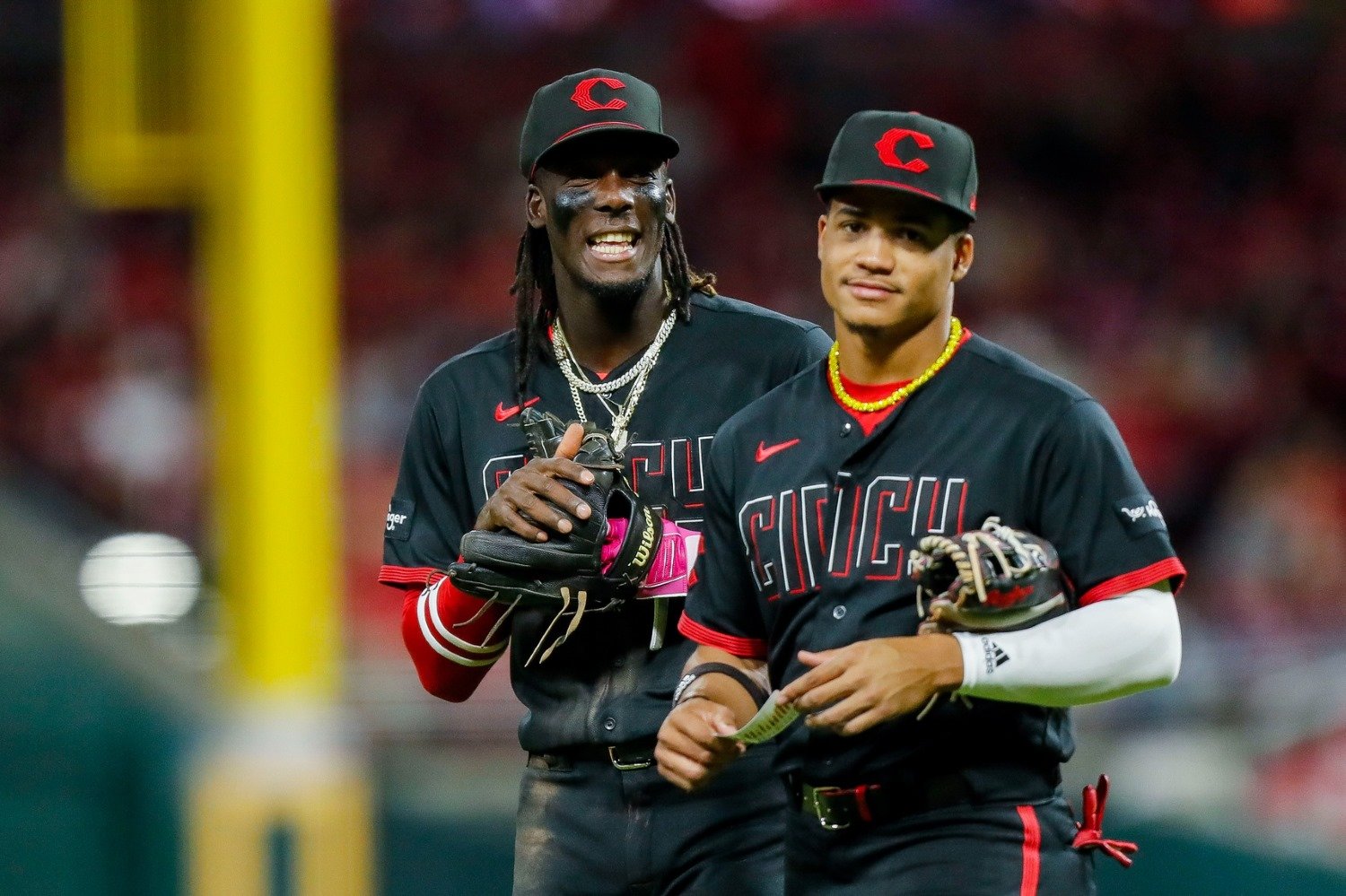 On Monday, Cody Schoenmann of Twins Daily wrote about a series of trade proposals involving the young, controllable Twins infielders and the young, controllable Brewers outfielders. All three were reasonable, plausibly beneficial deals for both sides. However, there are others who, even more distasteful as they may be as partners, might take a keen look at the plethora of athletic outfielders the Brewers have, and who have the prospects to make a big trade happen. Let's see which teams within the NL Central might have an eye on this young crop of stars: The Brewers have too many outfielders for the season ahead, with arbitration-eligible Tyrone Taylor accompanying Sal Frelick, Joey Wiemer, Garrett Mitchell and Blake Perkins as players rumored to be in the shopfront window. With Taylor having three years' service time remaining with the Brewers, and the others even more, any trade should bring back equivalent high-ceiling or high-floor talent in a position of need. Let's take a look at who that could involve, inside their own division: Cincinnati Reds - Noelvi Marte for Sal Frelick Both of these players had introductions in the second half of 2023, albeit with completely different profiles at the plate. Marte has the type of raw power you dream of in a prospect, and he's still learning to tap into it more. However, he finds himself in the midst of a crowded infield, with Elly de la Cruz, Matt McLain, and newly-signed Jeimer Candelario manning the more athletic infield spots. Meanwhile, the Reds have many options in the outfield, but not many with the type of competence on both offense and defense that Frelick possesses. TJ Friedl was their best hitter among outfielders. Yet, he was 11th-percentile or lower in exit velocity, xwOBA, and hard-hit rate--all key predictors of sustainable success. He was also the only outfielder with a positive Defensive Runs Saved figure for the Reds, who ranked 28th in the league in DRS overall. Putting Frelick alongside him in the outfield, and setting the tone at the top of the order, could fit really nicely for the Reds. Marté, on the other hand, is currently playing third base, but is an adequate shortstop and above-average second baseman (although his arm may be under-utilized at the keystone). He's the type of bat the Brewers just could not get into their infield last season, hitting .316/.366/.456 in 114 at-bats for the Reds. The scouts suggest that he's still learning how to tap into his power better, but he's a good fit for the Brewers, in dire need of both some extra juice and a capable infielder at the plate. The only downside is that the Reds may consider him more use in acquiring a high-end pitching talent, something they're in even more desperate need for. The Brewers could try centering a Corbin Burnes trade around Marté, but the Reds might be loath to give up their dynamic infielder for a player they'd only have for one season. St Louis Cardinals - Garrett Mitchell for Nolan Gorman Even suggesting a trade with the Cardinals seems insane, but here goes. For all the talk of Pete Crow-Armstrong in the Windy City, Garrett Mitchell might be the best defensive center fielder in the game of baseball when healthy. With quality reads, electric speed and a strong arm, he's ubiquitous in the outfield, with the type of bat that can change a game when he runs into one. Mitchell has the wheels to steal 40-plus bases in a fully healthy campaign, something he was denied last year due to a freak injury on the basepaths. He's still fine-tuning his decisions at the plate, but his underlying talent is not in question. A full season of average production at the plate is likely a four-win player, given what else he brings to the table, and he has five years of club control remaining. Nolan Gorman has a more proven bat, with an electric start to 2023 petering out after some injuries in the summer. A subpar defender at second base with (perhaps) a more natural home at third, his left-handed swing is his carrying tool, but boy, does it carry him. He hit .236/.328/.478 with 27 home runs in 119 games. At some points early in the year, he touched the 1.000 OPS mark. He was battering the ball, but his struggles later in the season and the poor quality of the St. Louis outfield bring Mitchell back into the realm of possibility here. Currently lined up to use Tommy Edman in the outfield, they could do with an upgrade, while also allowing Tommy Edman and Masyn Winn to form a dynamic partnership up the middle of the infield. At second base, the Brewers could use the power bat, or even just a competent one. There's enough uncertainty surrounding future performance (on both ends) for this to be viable. Both of these trades bring in potential in the form of the bat, at the cost of some of the defensive excellence that allowed the Brewers to punch above their offensive weight in 2023. However, with either Gorman or Marté, the bat can more than make up the difference, while trading from a position of surplus. Either Mitchell or Frelick have the potential to go on and be stars for their respective teams. Still, the Brewers can't afford to hang onto their prospects needlessly, if their goal is to compete in 2024.
- 7 comments
-
- 1
-

-
- sal frelick
- garrett mitchell
- (and 2 more)
-
They'd want to for sure, however a trade alone nets them a potential CY young costing around 15-16m, which makes him immensely valuable both in staying below luxury tax threshold and competing in a year in which ohtani can't pitch. They don't need him after this year, so I can really see a fit
-
They have in some ways, but it's all been marginal fringe stuff excluding Chourio. With their assets trade wise, and the loss of Woodruff it's not unfair to suggest they need to move the needle more significantly one way or the other in terms of competing and commit to something
-
With the Dodgers new signing also unable to head the rotation, does this make a potential rental or Corbin burnes an even better fit for their rotation? No point signing Ohtani without a rotation of Any substance (in terms of Miller being in his second year and Buehler returning from long term injury)
-
@clancyphilewhat're the DSL pitchers stuff like? This seems a good point actually regarding the league
-
The sheer number of extra people I could have talked about here says everything about the strength of the brewers system right now Boeves slower finish to the season kept him off my list, but I wouldn't be surprised if something caused it injury wise. Either way, just another exctiing name to pay attention to next season
- 10 replies
-
- 1
-
-
- josh knoth
- eric bitonti
- (and 3 more)
-
So Black was an interesting one, right on the cusp but also someone who's defensive ceiling may hold him back. I meant to include him as at least a footnote , so that's a mistake on my part. Blacks success has been amazing, and I think he'll translate well to the majors with a high floor for his bat due to his contact, speed and eye at the plate, but I'm a little uncertain about the power ceiling as of yet, just a slight question mark in my head. That bat also made him less of a high risk factor which potentially kept him more on the fringes for this particular article. I think he's a dead cert to find his feet in the majors, and if he can be average even at third base, he could be monumental for the Brewers moving forwards Regarding some of the latter names I would agree, but could argue that most DSL propsects have at least question marks as to their ceiling. Obviously age and coaching can change things rapidly, however Nadals age in the DSL and di Turis lack of power would have me question their ceilings more. I would agree there are a lot of names I could add to that honourable mentions portion however, and in particular the DSL pitchers are something I'm admittedly not so well versed on compared to yourself. In summation, Black just seemd to reliable almost to make this particular list, but as I said, big fan! Can't wait to see him in the big leagues soon
- 10 replies
-
- 1
-
-
- josh knoth
- eric bitonti
- (and 3 more)
-
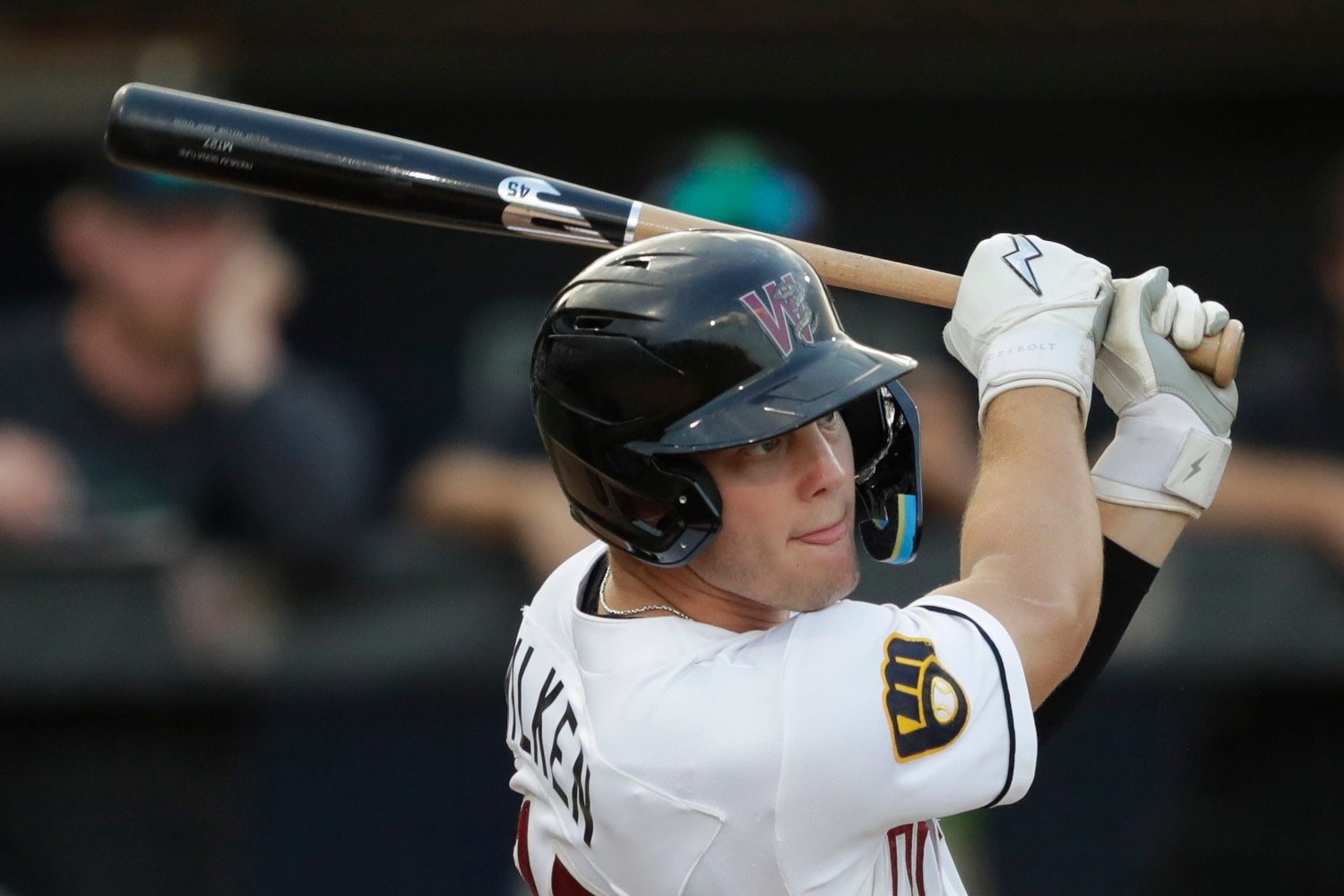 The Milwaukee Brewers seemed to alter their approach this year in the draft, drafting high-ceiling players instead of their usual hit-over-power, solid-defense picks. On top of some high-caliber second-round picks in previous drafts, that shift in focus has provided a lot about which to be excited, both in the near and the distant future---just as Jackson Chourio (hopefully) hits his stride in the big leagues. Jacob Misiorowski - RHP An obvious place to start, Misiorowski has the type of arm that few outside Jacob DeGrom could compete with. He combines incredible spin rates with a 100-mph fastball, but his most devastating pitch is really his slider, a wipeout pitch at almost 90 mph. Generating great extension off the mound from his 6’7" frame and developing changeup and curveball toward the latter end of 2023 leave command as the only question mark attached to him. He showed it in fits and spurts--most notably a six-inning, 12-strikeout game to finish his season. With perhaps the best raw stuff in the minor leagues, he's a name on many people's lips. Josh Knoth - RHP At the other end of the development scale is 17-year-old Josh Knoth, who saw a big uptick on a fastball touching 97 mph at times. With incredible feel for spin that led to supreme success with both his four-seam fastball and a curveball which regularly tops 3,100 rpm, he left hitters floundering at the plate. This is a pitcher with exceptional command for his age, and without a high-effort delivery. He could storm through the Brewers' minor-league apparatus. He threw a 19-strikeout perfect game as an amateur, and although he's a little small, he's a superb athlete whom I, for one, can't wait to see get started next summer. Eric Bitonti - SS/3B At 6’4" and 215 pounds, Bitonti is a good defensive infielder, most likely to end up at third base due to his cannon of an arm. For a just-drafted high-school guy, he is a power prospect like few others. He has long levers but a short swing, and scouts feel he has the ability to make adjustments with professional tutelage to hit for both average and power. Considering his age and experience, he already has a good eye at the plate, but there is some swing-and-miss the Brewers will hope to iron out. Sprinkling plus defensive projections at the hot corner on top of it all makes him someone to watch. Along with Bitonti, Cooper Pratt deserves some discussion, but more on that next week. Brock Wilken - 3B A slightly surprising pick, Wilken had more walks than strikeouts, incredible power and a solid hit tool, coupled with surprisingly agile defense at third base. He demolished pitchers during his short stint in the minors, finishing with a .565 slugging percentage at Double A, while demonstrating a slight passiveness at the plate that he could tweak. Oddly, he doesn't have a lot of chase problems or swing-and-miss for a high-strikeout player, so he has the tools, and with some refining of his approach, we may see the power arriving in the major leagues toward the end of this season. Wilken set a record for home runs in Atlantic Coast Conference history with 71 during his time at Wake Forest, and he's showed a workability to develop and improve contact-wise during his time in college. Yophery Rodriguez - OF An international signee from the Dominican Republic, Rodríguez appeared to tire toward the end of the 2023 season. However, at just 17 years old, he showed the type of power and mature approach at the plate that scouts dream of. There's a belief that he could reach at least above-average thump as he grows into his frame, while projecting to stick in center field. He also has a hit tool that could carry him quickly through the minors in his Stateside debut next year. A Jackson Chourio comes along once in a blue moon, but there are people suggesting Rodríguez could follow his meteoric rise. An .842 OPS at his age (he was over 1.000 at some points in the season) is impressive, along with taking 41 walks to 40 strikeouts. Despite his poor finish to the year. Rodríguez has a huge ceiling, and only time will tell which affiliate he may finish at next season. There are a ton of other names to be excited about, in Juan Baez, Luis Lara, Carlos F Rodriguez, Robert Gasser, et al, and it shows just how stocked the Brewers farm system is. Any one of these players could reach a level of stardom that allows the team to build a dynasty alongside Chourio, regardless of how they approach the 2024 season. There's plenty of reason to be excited, Milwaukee fans, with talent churning through the system at all levels and ages.
 -
With Jackson Chourio on the verge of locking up his future with the Brewers, it's important to remember that one player alone won't win you a world series. Just ask Mike Trout. However, there are a number of potential superstars in the Brewers system who could help the franchise dominate in the next decade. Image courtesy of © Dan Powers/USA TODAY NETWORK-Wisconsin / USA TODAY NETWORK The Milwaukee Brewers seemed to alter their approach this year in the draft, drafting high-ceiling players instead of their usual hit-over-power, solid-defense picks. On top of some high-caliber second-round picks in previous drafts, that shift in focus has provided a lot about which to be excited, both in the near and the distant future---just as Jackson Chourio (hopefully) hits his stride in the big leagues. Jacob Misiorowski - RHP An obvious place to start, Misiorowski has the type of arm that few outside Jacob DeGrom could compete with. He combines incredible spin rates with a 100-mph fastball, but his most devastating pitch is really his slider, a wipeout pitch at almost 90 mph. Generating great extension off the mound from his 6’7" frame and developing changeup and curveball toward the latter end of 2023 leave command as the only question mark attached to him. He showed it in fits and spurts--most notably a six-inning, 12-strikeout game to finish his season. With perhaps the best raw stuff in the minor leagues, he's a name on many people's lips. Josh Knoth - RHP At the other end of the development scale is 17-year-old Josh Knoth, who saw a big uptick on a fastball touching 97 mph at times. With incredible feel for spin that led to supreme success with both his four-seam fastball and a curveball which regularly tops 3,100 rpm, he left hitters floundering at the plate. This is a pitcher with exceptional command for his age, and without a high-effort delivery. He could storm through the Brewers' minor-league apparatus. He threw a 19-strikeout perfect game as an amateur, and although he's a little small, he's a superb athlete whom I, for one, can't wait to see get started next summer. Eric Bitonti - SS/3B At 6’4" and 215 pounds, Bitonti is a good defensive infielder, most likely to end up at third base due to his cannon of an arm. For a just-drafted high-school guy, he is a power prospect like few others. He has long levers but a short swing, and scouts feel he has the ability to make adjustments with professional tutelage to hit for both average and power. Considering his age and experience, he already has a good eye at the plate, but there is some swing-and-miss the Brewers will hope to iron out. Sprinkling plus defensive projections at the hot corner on top of it all makes him someone to watch. Along with Bitonti, Cooper Pratt deserves some discussion, but more on that next week. Brock Wilken - 3B A slightly surprising pick, Wilken had more walks than strikeouts, incredible power and a solid hit tool, coupled with surprisingly agile defense at third base. He demolished pitchers during his short stint in the minors, finishing with a .565 slugging percentage at Double A, while demonstrating a slight passiveness at the plate that he could tweak. Oddly, he doesn't have a lot of chase problems or swing-and-miss for a high-strikeout player, so he has the tools, and with some refining of his approach, we may see the power arriving in the major leagues toward the end of this season. Wilken set a record for home runs in Atlantic Coast Conference history with 71 during his time at Wake Forest, and he's showed a workability to develop and improve contact-wise during his time in college. Yophery Rodriguez - OF An international signee from the Dominican Republic, Rodríguez appeared to tire toward the end of the 2023 season. However, at just 17 years old, he showed the type of power and mature approach at the plate that scouts dream of. There's a belief that he could reach at least above-average thump as he grows into his frame, while projecting to stick in center field. He also has a hit tool that could carry him quickly through the minors in his Stateside debut next year. A Jackson Chourio comes along once in a blue moon, but there are people suggesting Rodríguez could follow his meteoric rise. An .842 OPS at his age (he was over 1.000 at some points in the season) is impressive, along with taking 41 walks to 40 strikeouts. Despite his poor finish to the year. Rodríguez has a huge ceiling, and only time will tell which affiliate he may finish at next season. There are a ton of other names to be excited about, in Juan Baez, Luis Lara, Carlos F Rodriguez, Robert Gasser, et al, and it shows just how stocked the Brewers farm system is. Any one of these players could reach a level of stardom that allows the team to build a dynasty alongside Chourio, regardless of how they approach the 2024 season. There's plenty of reason to be excited, Milwaukee fans, with talent churning through the system at all levels and ages. View full article
- 10 replies
-
- 2
-
-

-
- josh knoth
- eric bitonti
- (and 3 more)
-
Hell yeah! So exciting, and with so much talent at the younger end ofhe system, both in arms and position players. The brewers have a real path to success right now
-
It should be around that ballpark, but depends entirely on front office attitudes and Chourios too. To get a cheap contract requires risk on the teams part, and waiting a year could be critical either way. Two option years would probably work too, as long as Jackson is in his 20's as a FA I think he'll see a huge upside possibility for a long contract after this. The other thing is how his attitude plays out. There's probably hope that he'll be more grounded than Tati's or Franco but we really can't know for sure
-
What a Jackson Chourio Contract Extension is Likely to Look Like
Jake McKibbin posted an article in Brewers
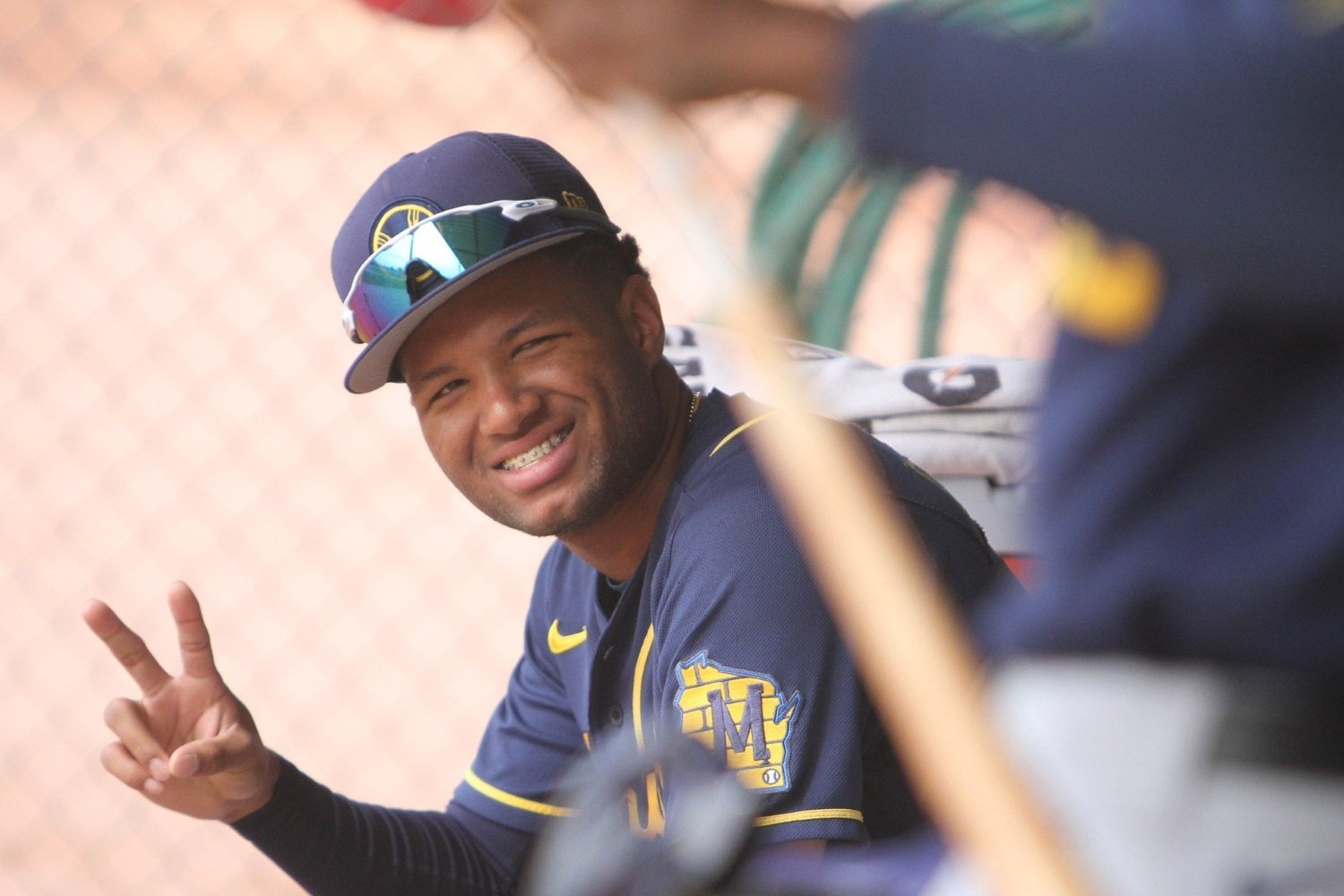 With only 21 at bats in Triple A, Jackson Chourio was far from a lock to reach MLB right away this spring. This deal could be a monumental trendsetter. Due to the risk of injury and uncertainty around performance against advanced pitching, the Brewers have a chance to secure a long-term contract that benefits both themselves and Chourio immensely. At just 19 years old, Chourio has the potential to be earning top dollar for several years more than most. He could be a free agent by the time he's 26 years old, with his prime years just beginning, something that will play a big role here. He has the potential of securing long-term financial security for himself and his family here, with the Brewers buying out his first couple years of free agency. He might still be able to sign a nine-figure deal by the end of his first contract. His ceiling could make him the best-paid player in the game at that point, but his concern will be what happens in the event of injury or if he doesn't translate well to the majors, as many have done before. His age gives him every chance to cover all his bases, but there are a few considerations. The Contract There are some large numbers being bandied about as things stand, but it's important to remember the arbitration process in these discussions. For his first three years, Chourio would earn a total of $2.25 million or so, barring bonuses, followed by three arbitration years wherein, at his very ceiling, he may earn around $60 million dollars. So, should he hypothetically be guaranteed to reach his best form and play non-stop over the next six seasons, even then, his value would barely exceed $60 million. Given the uncertainty surrounding injury, form and adaptation to the highest level of the sport, to guarantee an amount for those six years will be significantly less. Rosenthal cited the six-year, $50-million deal of Luis Robert, Jr., and the eight-year $100-million deal of Ronald Acuna, Jr. as good comparisons. However, given the way the market has moved on and the reports that the deal is expected be eight years in guaranteed length, a more apt comparison is somewhere between Acuña's and Corbin Carroll's deal with the Diamondbacks (eight years, $111 million). Given that Acuña earned his contract (considered remarkably team-friendly) after winning the 2018 NL Rookie of the Year Award, the deal probably won't reach nine figures, but it should be in the same ballpark. Estimating based on Chourio getting $50 million throughout his team-controlled first six years, adding two extra years at a salary of $20-25 million would leave all sides relatively happy, as well as giving Chourio a chance to be a free agent at 28. It may be a little high for the risks Milwaukee would be taking on, and it's possible that they offer something in the $80 million range over eight years instead--probably with a chunky team option for an extra year. All told, nine years in the $115-million range wouldn't be a surprise at all for a player with the raw power, hit tool, defensive coverage and speed that this potential phenom possesses. The Risks for Milwaukee As much as a large contract like this seems fair, it's important to recognize the gamble the Brewers are taking with Chourio in this case. He still chases more than you would like for a major-league player, although there is hope he can continue his development and access even more in-game power as he refines his approach. While his minor-league statistics have been extraordinary for his age, they haven’t been as impressive without that mental adjustment. That’s not to dampen the hype, but it would be remiss not to accept that Chourio isn’t quite putting up the type of numbers that some of the other recent über-prospects have managed in their brief stays in the minors. The habitual chases outside the zone, which have led to poorer contact than he's capable of at times, will likely lessen with experience, and compensated with the improved bat-to-ball skills he's already demonstrated and inevitable physical development, the sky truly is the limit here. There have been many prospects who failed to meet their expectations. Keston Hiura (particularly as a hit-over-power prospect) is a prime example of struggling to adjust his bat to major-league pitching. It’s more of a lottery than many can imagine. Yet, a frugal organization like the Brewers wouldn’t be talking about such a gamble unless they had supreme confidence in his ability. Their actions indicate perhaps injury is the only thing standing in Chourio’s way. The end price offered and/or accepted will likely have conditions and tweaks in it to make both sides happy, but make no mistake, it’s very possible the Brewers can get this deal done. Then, we can all hope to see the rise of a future Hall of Famer for an extended period of time, on a team-friendly deal that allows other aspects of their roster to be bolstered. Given the departures of Brandon Woodruff and (potentially) Corbin Burnes, the Brewers most recent stars, it makes a lot of sense. They need to take a gamble on Chourio. Only time will tell whether they win the bet. How big would you be willing to go for Chourio? Lay out your proposal or prediction in the comments.
 -
Ken Rosenthal dropped a bomb on the Brewers faithful on Tuesday, reporting that Jackson Chourio had engaged in extension talks with the Crew after just a handful of Triple-A at-bats. Extending their most hyped prospect of this century would be a bold move, but what the contract might look like is a topic of wide discourse. Here's where the sides could find common ground. Image courtesy of © Curt Hogg / Milwaukee Journal Sentinel / USA TODAY NETWORK With only 21 at bats in Triple A, Jackson Chourio was far from a lock to reach MLB right away this spring. This deal could be a monumental trendsetter. Due to the risk of injury and uncertainty around performance against advanced pitching, the Brewers have a chance to secure a long-term contract that benefits both themselves and Chourio immensely. At just 19 years old, Chourio has the potential to be earning top dollar for several years more than most. He could be a free agent by the time he's 26 years old, with his prime years just beginning, something that will play a big role here. He has the potential of securing long-term financial security for himself and his family here, with the Brewers buying out his first couple years of free agency. He might still be able to sign a nine-figure deal by the end of his first contract. His ceiling could make him the best-paid player in the game at that point, but his concern will be what happens in the event of injury or if he doesn't translate well to the majors, as many have done before. His age gives him every chance to cover all his bases, but there are a few considerations. The Contract There are some large numbers being bandied about as things stand, but it's important to remember the arbitration process in these discussions. For his first three years, Chourio would earn a total of $2.25 million or so, barring bonuses, followed by three arbitration years wherein, at his very ceiling, he may earn around $60 million dollars. So, should he hypothetically be guaranteed to reach his best form and play non-stop over the next six seasons, even then, his value would barely exceed $60 million. Given the uncertainty surrounding injury, form and adaptation to the highest level of the sport, to guarantee an amount for those six years will be significantly less. Rosenthal cited the six-year, $50-million deal of Luis Robert, Jr., and the eight-year $100-million deal of Ronald Acuna, Jr. as good comparisons. However, given the way the market has moved on and the reports that the deal is expected be eight years in guaranteed length, a more apt comparison is somewhere between Acuña's and Corbin Carroll's deal with the Diamondbacks (eight years, $111 million). Given that Acuña earned his contract (considered remarkably team-friendly) after winning the 2018 NL Rookie of the Year Award, the deal probably won't reach nine figures, but it should be in the same ballpark. Estimating based on Chourio getting $50 million throughout his team-controlled first six years, adding two extra years at a salary of $20-25 million would leave all sides relatively happy, as well as giving Chourio a chance to be a free agent at 28. It may be a little high for the risks Milwaukee would be taking on, and it's possible that they offer something in the $80 million range over eight years instead--probably with a chunky team option for an extra year. All told, nine years in the $115-million range wouldn't be a surprise at all for a player with the raw power, hit tool, defensive coverage and speed that this potential phenom possesses. The Risks for Milwaukee As much as a large contract like this seems fair, it's important to recognize the gamble the Brewers are taking with Chourio in this case. He still chases more than you would like for a major-league player, although there is hope he can continue his development and access even more in-game power as he refines his approach. While his minor-league statistics have been extraordinary for his age, they haven’t been as impressive without that mental adjustment. That’s not to dampen the hype, but it would be remiss not to accept that Chourio isn’t quite putting up the type of numbers that some of the other recent über-prospects have managed in their brief stays in the minors. The habitual chases outside the zone, which have led to poorer contact than he's capable of at times, will likely lessen with experience, and compensated with the improved bat-to-ball skills he's already demonstrated and inevitable physical development, the sky truly is the limit here. There have been many prospects who failed to meet their expectations. Keston Hiura (particularly as a hit-over-power prospect) is a prime example of struggling to adjust his bat to major-league pitching. It’s more of a lottery than many can imagine. Yet, a frugal organization like the Brewers wouldn’t be talking about such a gamble unless they had supreme confidence in his ability. Their actions indicate perhaps injury is the only thing standing in Chourio’s way. The end price offered and/or accepted will likely have conditions and tweaks in it to make both sides happy, but make no mistake, it’s very possible the Brewers can get this deal done. Then, we can all hope to see the rise of a future Hall of Famer for an extended period of time, on a team-friendly deal that allows other aspects of their roster to be bolstered. Given the departures of Brandon Woodruff and (potentially) Corbin Burnes, the Brewers most recent stars, it makes a lot of sense. They need to take a gamble on Chourio. Only time will tell whether they win the bet. How big would you be willing to go for Chourio? Lay out your proposal or prediction in the comments. View full article
-
2023 - 2024 Winter League Thread
Jake McKibbin replied to Jim Goulart's topic in Brewers Minor League Talk
Cracking day for mejias! If I'm not mistaken, he's down to a 1.10 ERA -
Great blog post my friend! All of these players have different ceilings, I'm still hot on Wiemer finding some really effective performance towards the end of the 2024 season, but all have workons. Look at Henderson as a good example however, won rookie of the year after a horrid opening few months this season where he wasn't even close to the Mendoza line in May
-
They're as close as you get, but Peraltas got leading stats the last few years as well as an injury free season in which he was perhaps the most dominant second half pitcher in a situation where the Brewers don't need to trade him. As a result, the asking price will be large, and include a big headliner. I think of the lot, I could see the rays parting with caminero easier, given they have good third base production, need for a quality starter and the cheapness of his contract
-
Whatever Ken Rosenthal says, not every Brewers player is available--or at least, there are some who are only available if the names Jackson Holliday, Gunnar Henderson, Matt McLain or Junior Caminero come up. The Brewers possess one of the most team-friendly pitcher contracts in baseball. What would it take to move it? Let’s discuss. Image courtesy of © Benny Sieu-USA TODAY Sports Freddy Peralta carried some reliever risk when he signed an extension with the Brewers in 2020, a deal that now looks incredibly fortuitous for the team. He has had a few injury issues, as well as refining his pitch mix to be successful over longer periods of time. Yet, after having surpassed 150 innings pitched for the first time in his career and posted an ERA of 2.81 in the second half of 2023, Peralta is potentially at his peak in terms of trade value. Could the Brewers cash in? Why might the Brewers trade such a valuable asset? Peralta’s injury history and long stretches of inconsistency make trading Peralta at least conceivable.The shoulder issues that plagued him in 2022 are an especially good example: they're worrisome, but not enough so materially dent his trade value. He bounced back incredibly well, but there is always a worry when it comes to the shoulder joint. If the Brewers are ready to entertain a reset (or even a true rebuild), and if some team believes in the brilliance of Peralta's second half, a trade could catapult them toward a new window of sustained contention. In short, the decision rests on whether the Brewers expect themselves to remain competitive in 2024 and 2025 against a surging NL Central, and whether or not Peralta’s injury-checkered past will come back to haunt him. What Value Does Peralta Have? Statistically, Peralta is the most difficult pitcher since 2020 (of pitchers with 300+ innings) to get a hit against, with a paltry batting average of just .190. Over that span, he’s recorded 11.6 strikeouts per nine, a 1.05 WHIP, an 8.8% walk rate, and a FIP of 3.35. It’s truly elite pitching, and the scary part is that he’s still getting better: His slider had a swing-and-miss rate of 30.2% in 2022; it rose to 45.8% in 2023 His changeup was 3 mph faster in 2023 He passed 210 strikeouts and 150 innings for the first time in 2023 He increased the swing-and-miss on his fastball from 24.9% to 29.2% That same fastball averaged 2 mph quicker in 2023 In short, Peralta’s raw stuff and the ways he uses it are getting better, showing just how dominant he could be from July to September, with seemingly the only blemish being the occasional solo home run allowed. On top of this talent is his aforementioned contract, with Peralta earning a measly $5.5 million in 2024, and the team options for 2025 and 2026 coming in at just $8 million per year. In total, for three years, he would cost just $21.5 million, making him incredibly valuable to any prospective suitors. You can think along the lines of the Juan Soto trade, which was for a more talented player but also a considerably more expensive one. Who Could Afford Him? If Peralta were traded, you can guarantee it would be for a plethora of upper-echelon prospects--the kind of haul only five or six clubs even have to offer. The only relevant options are the Baltimore Orioles, Chicago Cubs, Cincinnati Reds, Los Angeles Dodgers, and Tampa Bay Rays. Given the need for an elite headliner, you can eliminate the Cubs and the Dodgers from the race. Pete Crow-Armstrong is an exciting defender, but they would need more of a bat to justify trading away Peralta, while the Cubs farm system has fewer high-quality infielders. Here are some potential trade pieces around whom deals really could center: Baltimore Orioles - Jackson Holliday/Gunnar Henderson Peralta’s contract puts exactly this type of prospect into the conversation. Henderson is the 2023 Rookie of the Year, and Holliday is a potential 2024 winner. It's unlikely that either of them are available, even in return for three years of a dominant pitcher. The Orioles' biggest need is an ace, though, with an exciting lineup and some stars in their lineup. They didn’t have someone who struck out hitters at a high rate in 2023, and a one-two punch of Peralta and Kyle Bradish would really make that pitching staff look sharp. Holliday is the top prospect in baseball, having reached Triple A at age 19. He has a remarkable feel for the strike zone and an incredible hit tool. A consistently plus runner and with strength still to come, he has the range and arm to stay at shortstop, and enough power to hit 20 home runs per season even before further physical development. Henderson’s resume speaks for itself. However, the Orioles do have prospect-hugging tendencies and may look for help on the free-agent market, or even cheaper trade options like Corbin Burnes or Tyler Glasnow instead. Cincinnati Reds - Matt McLain/Graham Ashcraft/Nick Lodolo McLain was outstanding last season, driving the ball consistently into the gaps and providing above-average defense at both second base and shortstop. Accruing 3.7 WAR on the season while slashing .290/.357/.507, he would be the headline figure in this deal. With Elly de la Cruz and Noelvi Marte around, the Reds would be happy with this deal, while the Brewers can look to either bolster their infield and keep Willy Adames, or trade him and hope Brice Turang’s bat comes around. The Brewers may want a pitching prospect, too, but McLain adds a ton of value, and the Reds desperately need quality pitchers. Add in a sweetener for the Brewers with either Ashcraft or Lodolo, each of whom have shown enough to be successful but haven't quite put it together (personally I prefer Ashcraft) and this would suit the Brewers nicely. Tampa Bay Rays - Junior Caminero, Other (Perhaps SP Kevin Kelly) The Rays love a low-cost pitcher. They may be loath to trade a top infield prospect until Wander Franco’s off-field issues are resolved, but they have a core group that could really be bolstered by Peralta. They also have a top-10 prospect in baseball in Junior Caminero, who is likely to wind up at third base, with average defensive skills at the hot corner bolstered by a remarkable bat. At just 20 years old, Caminero hit .324/.384/.591 on the season, spending over half the year at Double A. At that level, he hit 20 home runs in 81 games, with a strikeout rate of just 17%, Caminero even got a taste of the Majors to finish the season, hitting his first home run. Caminero is a star in the making, and with quality players already in place at the corner-infield spots (Isaac Paredes and Yandy Diaz), they may be more comfortable dealing from a position of strength. (Alternatively, maybe Diaz himself would be a good target in the deal. He's on a similarly team-friendly deal, running through 2026 with a club option.) Trading Peralta would, undoubtedly, hurt the Brewers. However, this caliber of trade, with these headliners, could make a massive difference on the field to what is currently an area of real weakness in the Brewers farm system on the left side of the infield. It could be a genuine win-win type of trade. Would you consider trading Peralta for any of the above names? If that level of talent were unattainable, would you be open to moving Peralta for the next tier of young player around the league? Let's entertain some ideas. View full article
-
How Big is the Return on a Potential Freddy Peralta Trade?
Jake McKibbin posted an article in Brewers
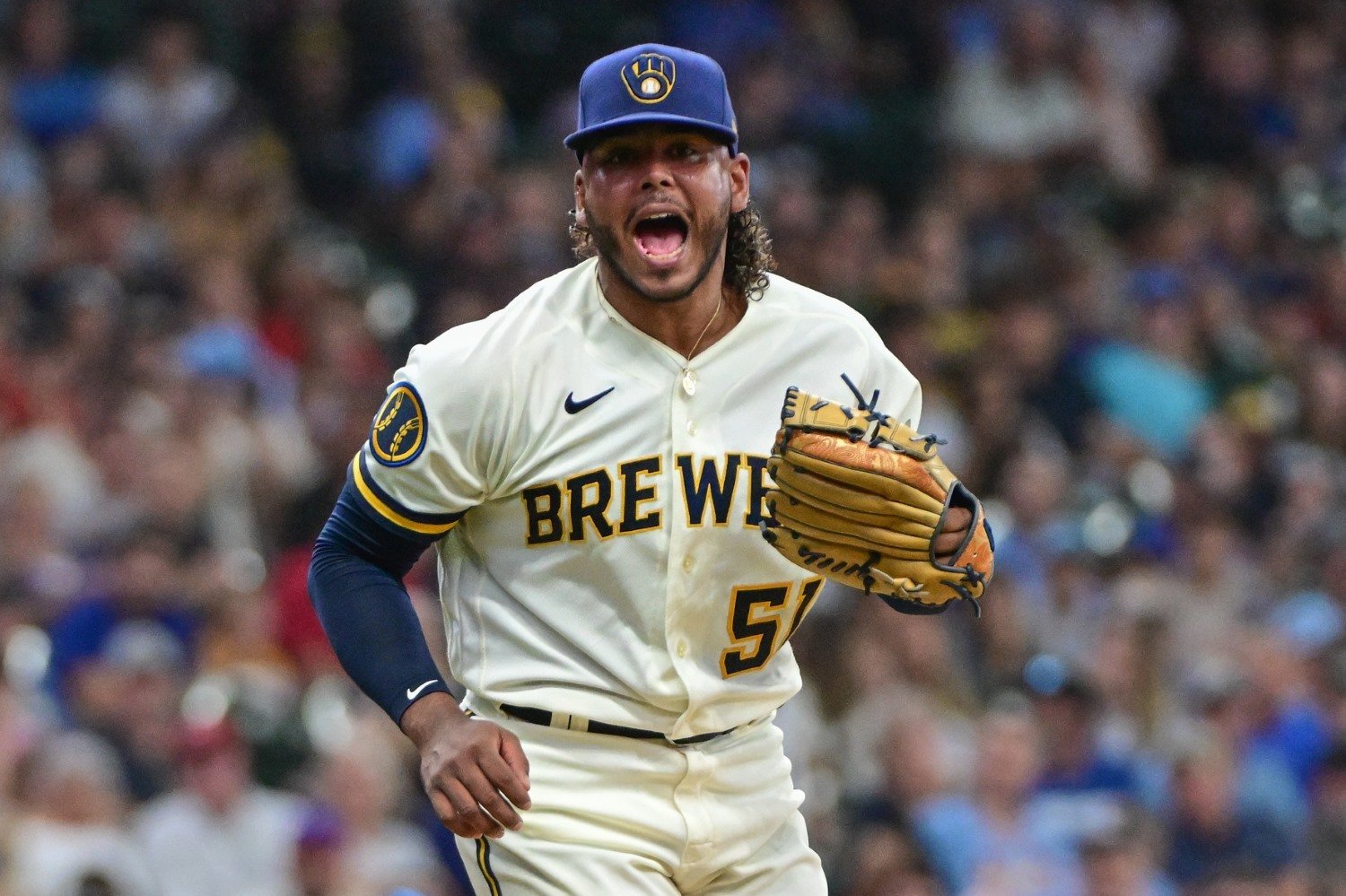 Freddy Peralta carried some reliever risk when he signed an extension with the Brewers in 2020, a deal that now looks incredibly fortuitous for the team. He has had a few injury issues, as well as refining his pitch mix to be successful over longer periods of time. Yet, after having surpassed 150 innings pitched for the first time in his career and posted an ERA of 2.81 in the second half of 2023, Peralta is potentially at his peak in terms of trade value. Could the Brewers cash in? Why might the Brewers trade such a valuable asset? Peralta’s injury history and long stretches of inconsistency make trading Peralta at least conceivable.The shoulder issues that plagued him in 2022 are an especially good example: they're worrisome, but not enough so materially dent his trade value. He bounced back incredibly well, but there is always a worry when it comes to the shoulder joint. If the Brewers are ready to entertain a reset (or even a true rebuild), and if some team believes in the brilliance of Peralta's second half, a trade could catapult them toward a new window of sustained contention. In short, the decision rests on whether the Brewers expect themselves to remain competitive in 2024 and 2025 against a surging NL Central, and whether or not Peralta’s injury-checkered past will come back to haunt him. What Value Does Peralta Have? Statistically, Peralta is the most difficult pitcher since 2020 (of pitchers with 300+ innings) to get a hit against, with a paltry batting average of just .190. Over that span, he’s recorded 11.6 strikeouts per nine, a 1.05 WHIP, an 8.8% walk rate, and a FIP of 3.35. It’s truly elite pitching, and the scary part is that he’s still getting better: His slider had a swing-and-miss rate of 30.2% in 2022; it rose to 45.8% in 2023 His changeup was 3 mph faster in 2023 He passed 210 strikeouts and 150 innings for the first time in 2023 He increased the swing-and-miss on his fastball from 24.9% to 29.2% That same fastball averaged 2 mph quicker in 2023 In short, Peralta’s raw stuff and the ways he uses it are getting better, showing just how dominant he could be from July to September, with seemingly the only blemish being the occasional solo home run allowed. On top of this talent is his aforementioned contract, with Peralta earning a measly $5.5 million in 2024, and the team options for 2025 and 2026 coming in at just $8 million per year. In total, for three years, he would cost just $21.5 million, making him incredibly valuable to any prospective suitors. You can think along the lines of the Juan Soto trade, which was for a more talented player but also a considerably more expensive one. Who Could Afford Him? If Peralta were traded, you can guarantee it would be for a plethora of upper-echelon prospects--the kind of haul only five or six clubs even have to offer. The only relevant options are the Baltimore Orioles, Chicago Cubs, Cincinnati Reds, Los Angeles Dodgers, and Tampa Bay Rays. Given the need for an elite headliner, you can eliminate the Cubs and the Dodgers from the race. Pete Crow-Armstrong is an exciting defender, but they would need more of a bat to justify trading away Peralta, while the Cubs farm system has fewer high-quality infielders. Here are some potential trade pieces around whom deals really could center: Baltimore Orioles - Jackson Holliday/Gunnar Henderson Peralta’s contract puts exactly this type of prospect into the conversation. Henderson is the 2023 Rookie of the Year, and Holliday is a potential 2024 winner. It's unlikely that either of them are available, even in return for three years of a dominant pitcher. The Orioles' biggest need is an ace, though, with an exciting lineup and some stars in their lineup. They didn’t have someone who struck out hitters at a high rate in 2023, and a one-two punch of Peralta and Kyle Bradish would really make that pitching staff look sharp. Holliday is the top prospect in baseball, having reached Triple A at age 19. He has a remarkable feel for the strike zone and an incredible hit tool. A consistently plus runner and with strength still to come, he has the range and arm to stay at shortstop, and enough power to hit 20 home runs per season even before further physical development. Henderson’s resume speaks for itself. However, the Orioles do have prospect-hugging tendencies and may look for help on the free-agent market, or even cheaper trade options like Corbin Burnes or Tyler Glasnow instead. Cincinnati Reds - Matt McLain/Graham Ashcraft/Nick Lodolo McLain was outstanding last season, driving the ball consistently into the gaps and providing above-average defense at both second base and shortstop. Accruing 3.7 WAR on the season while slashing .290/.357/.507, he would be the headline figure in this deal. With Elly de la Cruz and Noelvi Marte around, the Reds would be happy with this deal, while the Brewers can look to either bolster their infield and keep Willy Adames, or trade him and hope Brice Turang’s bat comes around. The Brewers may want a pitching prospect, too, but McLain adds a ton of value, and the Reds desperately need quality pitchers. Add in a sweetener for the Brewers with either Ashcraft or Lodolo, each of whom have shown enough to be successful but haven't quite put it together (personally I prefer Ashcraft) and this would suit the Brewers nicely. Tampa Bay Rays - Junior Caminero, Other (Perhaps SP Kevin Kelly) The Rays love a low-cost pitcher. They may be loath to trade a top infield prospect until Wander Franco’s off-field issues are resolved, but they have a core group that could really be bolstered by Peralta. They also have a top-10 prospect in baseball in Junior Caminero, who is likely to wind up at third base, with average defensive skills at the hot corner bolstered by a remarkable bat. At just 20 years old, Caminero hit .324/.384/.591 on the season, spending over half the year at Double A. At that level, he hit 20 home runs in 81 games, with a strikeout rate of just 17%, Caminero even got a taste of the Majors to finish the season, hitting his first home run. Caminero is a star in the making, and with quality players already in place at the corner-infield spots (Isaac Paredes and Yandy Diaz), they may be more comfortable dealing from a position of strength. (Alternatively, maybe Diaz himself would be a good target in the deal. He's on a similarly team-friendly deal, running through 2026 with a club option.) Trading Peralta would, undoubtedly, hurt the Brewers. However, this caliber of trade, with these headliners, could make a massive difference on the field to what is currently an area of real weakness in the Brewers farm system on the left side of the infield. It could be a genuine win-win type of trade. Would you consider trading Peralta for any of the above names? If that level of talent were unattainable, would you be open to moving Peralta for the next tier of young player around the league? Let's entertain some ideas.
 -
2023 - 2024 Winter League Thread
Jake McKibbin replied to Jim Goulart's topic in Brewers Minor League Talk
Chourio is still there! Another 3-5 night with a double and a stolen base in Aguilas 5-1 win. His batting average is up to .381 Carlos D Rodriguez and the Navegantes weren't in action -
Update: Brandon Woodruff is non-tendered.
Jake McKibbin replied to Jake McKibbin's topic in Milwaukee Brewers Talk
Well we got our answer .. that's so rough, I think most of all I just hate that woody is put in this position with this injury at this specific time. He didn't deserve that, but the Brewers can't be stupid with money because of emotions. It just can't work that way -
Would you rather pay $20m with nothing remotely guaranteed performance wise?
-
Update: Brandon Woodruff is non-tendered.
Jake McKibbin replied to Jake McKibbin's topic in Milwaukee Brewers Talk
I'm beginning to agree, even if he could play by July '23, that would make a huge difference but it's just not feasible, and likely a waste of money to do anything other than trade him

