



Jason Wang
-
Posts
955 -
Joined
-
Last visited
-
Days Won
1
Content Type
Profiles
Forums
Blogs
Events
News
2026 Milwaukee Brewers Top Prospects Ranking
Milwaukee Brewers Videos
2022 Milwaukee Brewers Draft Picks
Milwaukee Brewers Free Agent & Trade Rumors, Notes, & Tidbits
Guides & Resources
2023 Milwaukee Brewers Draft Picks
2024 Milwaukee Brewers Draft Picks
The Milwaukee Brewers Players Project
2025 Milwaukee Brewers Draft Pick Tracker
2026 Milwaukee Brewers Draft Tracker: Picks & Bonuses
Store
Downloads
Gallery
Everything posted by Jason Wang
-
 The team’s lockdown closer has been shuttled off to the Big Apple. What does the reliever hierarchy look like in his absence? Image courtesy of © Benny Sieu-Imagn Images The team’s lockdown closer has been shuttled off to the Big Apple. What does the reliever hierarchy look like in his absence? This isn’t the first time this has happened in recent history. Before Devin Williams, the team’s go-to high-leverage pitcher was a lefty by the name of Josh Hader. He was also traded before hitting free agency, albeit under slightly different circumstances. Williams was still outstanding in his final year with the team, whereas Hader had the worst season of his career before ultimately being swung to the Padres in mid-2022. Suffice it to say, Milwaukee is no stranger to trading away top-tier closers and retooling the setup of their bullpen. They actually got a glimpse of what the roster would look like without Williams while he was on the shelf for much of 2024, due to stress fractures in his back. In his stead, Trevor Megill stepped up and performed admirably, accumulating 21 saves and posting a dominant 1.80 ERA over those outings. In many ways, his profile was perfect for his new responsibilities. A triple-digit four-seam fastball and a knuckle curve with a 55.0% whiff rate confused hitters and will likely be the key to elevating him to full-time closer come 2025. But what about the other bullpen arms? What other tools will be in Pat Murphy's toolbox? Behind Megill on the depth chart is Joel Payamps. He was a reliable reliever in 2024, posting a 3.05 ERA and even accumulating six saves of his own, but there were clear holes in his game. With good-not-great strikeout and whiff rates and a penchant for giving up some hard contact, he’ll likely be limited to lower-leverage innings. His FIP of 3.73 and his xERA of 4.11 point to the possibility that he may have been more lucky than sustainably effective last year. Behind Payamps is Jared Koenig, whose first year in the majors since 2022 was great, culminating in a 2.47 ERA over 62 innings. Like Payamps, his strikeout rate was average and his per-swing whiff rate (22.4%) was in the bottom quartile of qualified pitchers, so it’s tough to see him handling anything too intense. However, he was better than Payamps at inducing soft contact and could move forward in the depth chart in 2025 if he keeps up the good work. An important adjustment for him would be developing a second plus pitch to complement his sinker. His cutter had satisfactory production but with a slugging percentage of .424, it might need some refinements before it’s ready for the big innings. Abner Uribe has a big question mark hanging over his head. After disappointing results in 2024 that included an unnecessary altercation with the Rays and season-ending knee surgery, he feels far removed from the buzz he created in 2023. He has shown the ability to be an outstanding arm with exceptional stuff, but his lack of command and experience are big obstacles. If he does manage to lock in for the upcoming year, he could be next in line and pick up a few saves, but there’s considerable room for improvement. Bryan Hudson was an underrated rookie who put up a sneaky 1.73 ERA and an incredible 0.72 WHIP over his 62 ⅓ innings of work. One of the best lefty relievers in the game, his massive 6'8” frame and wicked sweeper helped compensate for a fastball velocity in the low 90s, which sagged ever lower as his first full season in the big leagues progressed. Similar to Koenig, there’s intriguing potential here, but a small sample size leaves just enough uncertainty to keep things exciting. Other arms like Elvis Peguero and Nick Mears could soon be joined by some of the organization’s best prospects. At the top of the list to be called up would be Craig Yoho, who spent his 2024 dicing up three levels of the minor leagues. From High-A Wisconsin to Triple-A Nashville, Yoho’s combined a 0.94 ERA with a 0.94 WHIP. His 42.4% strikeout rate indicates just how successful he was. Fans have been clamoring for him to strut his stuff at the big-league level, and it might not be long before their wishes are granted. Megill is the clear frontrunner for the closer job. He was there last year; his arsenal and stuff are perfect for it; and he’s the most dependable arm in the bullpen right now. If he goes down or can’t come in on back-to-back days, Murphy has the luxury of several great options, but expect Hudson, Koenig and Uribe to be the subject of many of his phone calls come the later innings of next season's games. View full article
 -
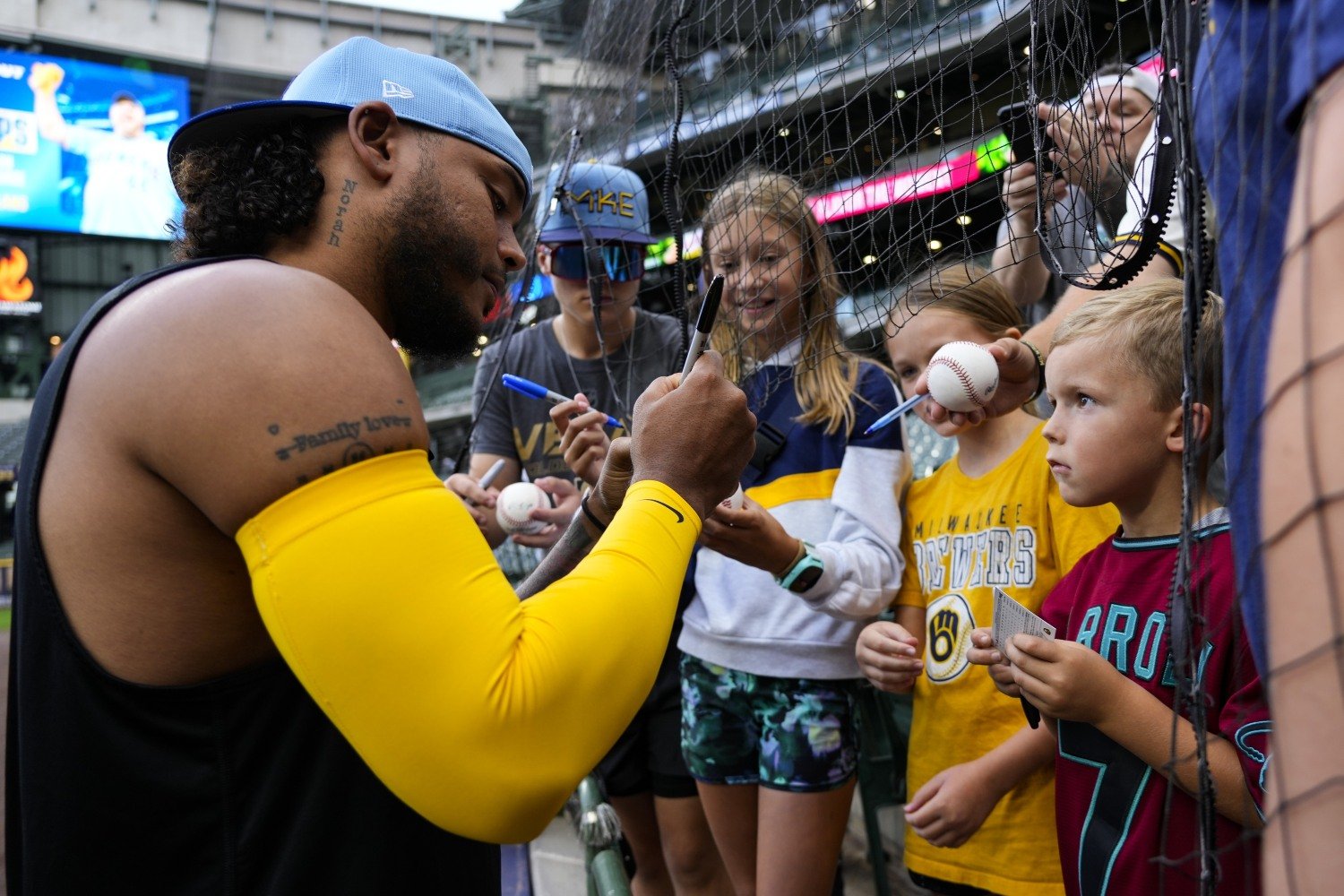 Although the Winter Meetings just passed and Christmas is still over a week off, several major starting pitchers have already inked new deals. Blake Snell broke the ice by signing a five-year, $182-million deal with the Dodgers, only to be outdone by Max Fried signing an eight-year, $218-million contract with the Yankees. While these players were far outside the financial reach of the Brewers, other free agents like Nathan Eovaldi, Luis Severino, Yusei Kikuchi, and Frankie Montas were signed for more reasonable amounts that could’ve fit into Milwaukee’s budget (with a few contortions). To make matters worse, Garrett Crochet, a trade target the Brewers had been eyeing, also found a new home with the Boston Red Sox, leaving the Crew with few feasible options. They might have to roll into 2025 with (more or less) the rotation they already project to have. Meanwhile, Freddy Peralta has two $8-million team options, one of which has already been picked up for 2025. Assuming the team also exercises the 2026 option, he would hit free agency by age 30, the same age as Max Fried. He wouldn’t net as much as Fried, but it's clear that his market value will be in nine figures if he gets to that point with his arm intact. So, since the Devin Williams trade added long-term help to the infield but only a one-year patch to the rotation, could locking down Peralta for a second time be top of mind? The 2024 campaign was Peralta's first as the ace of the team. In the absence of Corbin Burnes and Brandon Woodruff, he was shoved into the spotlight and forced to lead a rotation ravaged by injury. He performed admirably, posting a 3.68 ERA with 10.4 K/9 over 173 ⅔ innings. This gave him 2.6 rWAR, the second-best year of his career behind his exceptional 2021 campaign. There was a lot to like about his profile, including top-quartile whiff and strikeout rates. In addition to having a good four-seam fastball (as usual), his changeup became remarkably efficient this year, compensating for a reduction in effectiveness from his curveball. He threw his changeup 17.5% of the time (highest in his career), while cutting his curveball usage down to 7.1% (lowest in his career). Unfortunately, all the good came with much of the usual bad. His WHIP of 1.22 and 9.2 H/9 were higher than any other full seasons of his career. He also allowed 1.3 HR/9 and a walk rate of 9.4%, dragging his FIP to 4.16 despite the good strikeout rates. He seemed to struggle with expanding the zone effectively, and gave up a considerable amount of hard contact as a result. His chase rate of 28.0% was slightly below the league average, while his barrel and ground-ball rates were near the bottom quartile of qualified pitchers. This means that for an ace, hitters spat on his offerings outside of the zone—while hitting his strikes hard and in the air, a recipe that rarely leads to long-term success. For the Brewers to make an offer tempting enough to delay his free agency again, there are likely a few criteria they’d have to satisfy. First, the deal would have to be done before the 2026 season, nullifying the team-friendly $8 million salary they originally agreed to. Second, despite his flaws, he is likely hoping for a free-agent deal in the $100-150 million range, setting that as the price Milwaukee would have to beat (less some discount, to account for the risk the Brewers would take and Peralta would avoid by signing before the necessary decision point). Third, it would probably have to end early enough for him to sign another short-term deal, or long enough for it to set him up for the rest of his career. The sweet spot here might be an opt-out. A deal that gives him a significant raise for 2026 in exchange for two extra years of team control would be workable for the Brewers. Peralta would prefer a true megadeal, but might take a much lighter version in exchange for the opportunity to hit the market again after 2028 if he so chose. A seven-year deal worth $170 million (with an opt-out after three years and $70 million) could make sense. Such a deal could include deferrals in the highest-paid seasons of the deal (likely 2028-31) and/or a mutual option for 2033 with a buyout involved, to push some of the payments out to the middle of next decade. The Brewers would get an extra two years of team control over Peralta (at a minimum), and Peralta would get plenty of compensation for giving up the chance to make $50 million more by taking himself all the way to free agency. But is this even something the Brewers would/should do? On one hand, it’s high time that the front office looks into paying to retain an ace. They let Burnes walk, and haven’t made a huge, market-rate commitment to anyone since Christian Yelich. For the past several years, the team’s pitching has been a major point of strength, allowing them to compete with the bigger spending teams through more clever scouting and development. Extending a known arm would theoretically bring stability to the best part of the organization. On the other hand, Peralta arguably isn’t the guy to invest in. His struggles with consistency and penchant for alternating between excellent and horrid stretches on the mound don’t help his case for a long-term commitment. If Milwaukee does want to extend a pitcher, maybe it would make more sense to wait and see how Woodruff bounces back from the injury that pulverized his 2024 campaign. Simply put, the known costs seem too high to receive an unknown upside. Will Peralta continue to be a starter with great stuff and rediscover what made him great three years ago, or will he slowly but surely fall victim to his current shortcomings? It’s hard to say, and for a front office as shrewd as the Brewers’, it’s probably more risk than reward.
 -
Milwaukee picked up some short-term starting rotation help in Friday's trade. Looking down the road, though, they might want to consider a commitment to their incumbent ace. Image courtesy of © Jeff Hanisch-Imagn Images Milwaukee picked up some short-term starting rotation help in Friday's trade. Looking down the road, though, they might want to consider a commitment to their incumbent ace. Although the Winter Meetings just passed and Christmas is still over a week off, several major starting pitchers have already inked new deals. Blake Snell broke the ice by signing a five-year, $182-million deal with the Dodgers, only to be outdone by Max Fried signing an eight-year, $218-million contract with the Yankees. While these players were far outside the financial reach of the Brewers, other free agents like Nathan Eovaldi, Luis Severino, Yusei Kikuchi, and Frankie Montas were signed for more reasonable amounts that could’ve fit into Milwaukee’s budget (with a few contortions). To make matters worse, Garrett Crochet, a trade target the Brewers had been eyeing, also found a new home with the Boston Red Sox, leaving the Crew with few feasible options. They might have to roll into 2025 with (more or less) the rotation they already project to have. Meanwhile, Freddy Peralta has two $8-million team options, one of which has already been picked up for 2025. Assuming the team also exercises the 2026 option, he would hit free agency by age 30, the same age as Max Fried. He wouldn’t net as much as Fried, but it's clear that his market value will be in nine figures if he gets to that point with his arm intact. So, since the Devin Williams trade added long-term help to the infield but only a one-year patch to the rotation, could locking down Peralta for a second time be top of mind? The 2024 campaign was Peralta's first as the ace of the team. In the absence of Corbin Burnes and Brandon Woodruff, he was shoved into the spotlight and forced to lead a rotation ravaged by injury. He performed admirably, posting a 3.68 ERA with 10.4 K/9 over 173 ⅔ innings. This gave him 2.6 rWAR, the second-best year of his career behind his exceptional 2021 campaign. There was a lot to like about his profile, including top-quartile whiff and strikeout rates. In addition to having a good four-seam fastball (as usual), his changeup became remarkably efficient this year, compensating for a reduction in effectiveness from his curveball. He threw his changeup 17.5% of the time (highest in his career), while cutting his curveball usage down to 7.1% (lowest in his career). Unfortunately, all the good came with much of the usual bad. His WHIP of 1.22 and 9.2 H/9 were higher than any other full seasons of his career. He also allowed 1.3 HR/9 and a walk rate of 9.4%, dragging his FIP to 4.16 despite the good strikeout rates. He seemed to struggle with expanding the zone effectively, and gave up a considerable amount of hard contact as a result. His chase rate of 28.0% was slightly below the league average, while his barrel and ground-ball rates were near the bottom quartile of qualified pitchers. This means that for an ace, hitters spat on his offerings outside of the zone—while hitting his strikes hard and in the air, a recipe that rarely leads to long-term success. For the Brewers to make an offer tempting enough to delay his free agency again, there are likely a few criteria they’d have to satisfy. First, the deal would have to be done before the 2026 season, nullifying the team-friendly $8 million salary they originally agreed to. Second, despite his flaws, he is likely hoping for a free-agent deal in the $100-150 million range, setting that as the price Milwaukee would have to beat (less some discount, to account for the risk the Brewers would take and Peralta would avoid by signing before the necessary decision point). Third, it would probably have to end early enough for him to sign another short-term deal, or long enough for it to set him up for the rest of his career. The sweet spot here might be an opt-out. A deal that gives him a significant raise for 2026 in exchange for two extra years of team control would be workable for the Brewers. Peralta would prefer a true megadeal, but might take a much lighter version in exchange for the opportunity to hit the market again after 2028 if he so chose. A seven-year deal worth $170 million (with an opt-out after three years and $70 million) could make sense. Such a deal could include deferrals in the highest-paid seasons of the deal (likely 2028-31) and/or a mutual option for 2033 with a buyout involved, to push some of the payments out to the middle of next decade. The Brewers would get an extra two years of team control over Peralta (at a minimum), and Peralta would get plenty of compensation for giving up the chance to make $50 million more by taking himself all the way to free agency. But is this even something the Brewers would/should do? On one hand, it’s high time that the front office looks into paying to retain an ace. They let Burnes walk, and haven’t made a huge, market-rate commitment to anyone since Christian Yelich. For the past several years, the team’s pitching has been a major point of strength, allowing them to compete with the bigger spending teams through more clever scouting and development. Extending a known arm would theoretically bring stability to the best part of the organization. On the other hand, Peralta arguably isn’t the guy to invest in. His struggles with consistency and penchant for alternating between excellent and horrid stretches on the mound don’t help his case for a long-term commitment. If Milwaukee does want to extend a pitcher, maybe it would make more sense to wait and see how Woodruff bounces back from the injury that pulverized his 2024 campaign. Simply put, the known costs seem too high to receive an unknown upside. Will Peralta continue to be a starter with great stuff and rediscover what made him great three years ago, or will he slowly but surely fall victim to his current shortcomings? It’s hard to say, and for a front office as shrewd as the Brewers’, it’s probably more risk than reward. View full article
-
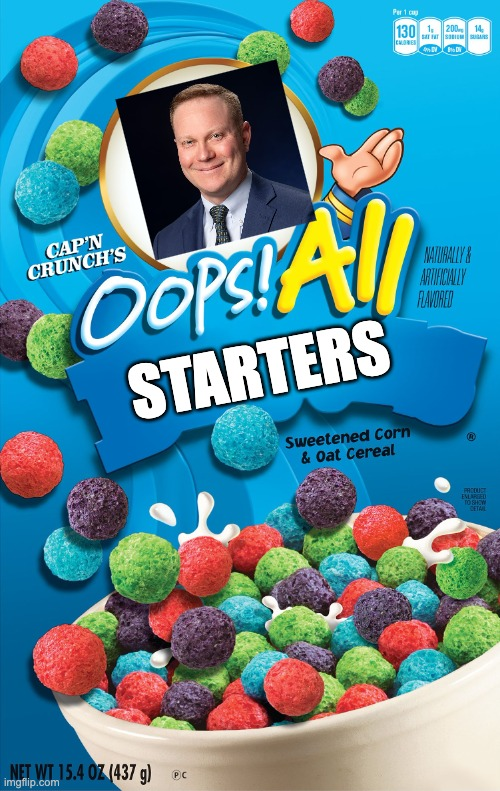
matt arnold roster construction plans revealed in bizarre new cereal promotion
-
Good shouts!
-
Surprisingly, Milwaukee now has an excess of manpower in the rotation. What will they do with the excess resources? Surprisingly, Milwaukee now has an excess of manpower in the rotation. What will they do with the excess resources? It finally happened. The Brewers’ most valuable trade asset, Devin Williams, was finally sent to new digs. In return, the Yankees gave up $2 million, including infield prospect Caleb Durbin and Nestor Cortes. With Nestor’s arrival, Milwaukee has too many starting pitchers to go around, so who will they get rid of to clear up roster space and payroll? It’s natural to assume that Milwaukee is simply a temporary landing spot for Cortes and that he probably shouldn’t be considering putting money down for a condo in Historic Third Ward. However, the situation may not be that simple. When healthy, he has proven himself to be a good starter option; his career peaked in 2021-2022, where he posted a 2.61 ERA over a combined 251 ⅓ innings for the Yankees. After struggling in 2023 and sustaining a rotator cuff strain, he pitched to a 3.77 ERA over 174 ⅓ innings in 2024, suggesting a return to form. Unfortunately, some flaws he showed while pitching through injury persisted last season. Aside from a walk rate of 5.5%, his other statistics were around or below the league average. Most concerning was his tendency to give up hard contact to opposing hitters. His sweeper and four-seam fastball were the biggest pain points, which had respective slugging percentages of .511 and .443. Aside from a slight dip in changeup frequency, there haven’t been too many changes to his velocity, arm angle, or usage between his 2022 and 2024 campaigns. Hence, these results may be affected by lingering injuries. This is further supported by the fact that he missed almost all of the Yankees’ most recent postseason run due to a left elbow flexor strain. On the bright side, he did manage to recover in time for the World Series, and it seems that Milwaukee did its due diligence to ensure that he would have a clean bill of health before being included in the trade. He reportedly had an MRI a few weeks ago, which allowed him to begin his offseason throwing program on time. This means that the Brewers are likely intent on keeping him. After all, why bother with a thorough physical exam unless the team wants to know exactly what they’re working with and whether their reputed pitching development program will get the best out of his arm. It's even more important when considering they may only have him for a short period, given that he’s entering his final year of arbitration and is slated to hit free agency in 2026. On a similar timeline is Aaron Civale who will become a free agent in the same year as Cortes. Civale had a great showing with the Brewers, making 14 starts and posting a 3.53 ERA, a major step forward following a disappointing tenure with the Rays. While his surface-level numbers were strong, underlying figures may be more concerning. His FIP of 4.79 while with the Brewers was evidence of his susceptibility to the long ball while having a below-average strikeout rate of just 20.9%. Furthermore, a WHIP of 1.22 shows that he’s giving up a few more baserunners than the team would probably like. In comparison, Nestor’s FIP of 3.84 was not only better than Civale’s, it was much closer to his actual ERA. Civale made great use of his cutter in 2024 but struggled to deploy an effective pitch outside of it. His sinker and curveball complemented his cutter well in past years but they lacked the same production last season. A quick glance shows that his curveball command regressed while his sinker lacked both the velocity and movement needed to get the necessary outs. With the return of great talent like Brandon Woodruff and DL Hall, trading one of these two options seems like a necessary step to optimize the roster heading into 2025. Nestor seems like he has more upside while the team knows what they’re getting (or not getting) out of Civale. Given the prerequisites around the Nestor transaction, it seems like he’s here to stay (at least for a year) while Civale will be shown the door in exchange for some prospect talent. Any suitors looking for a back-of-the-rotation arm could make great use of him and he’d likely benefit them more than he’d benefit Milwaukee. He played an important role while he was with the team but with the talent ahead of him in the depth chart, it's difficult to see a clear road ahead for him. View full article
-
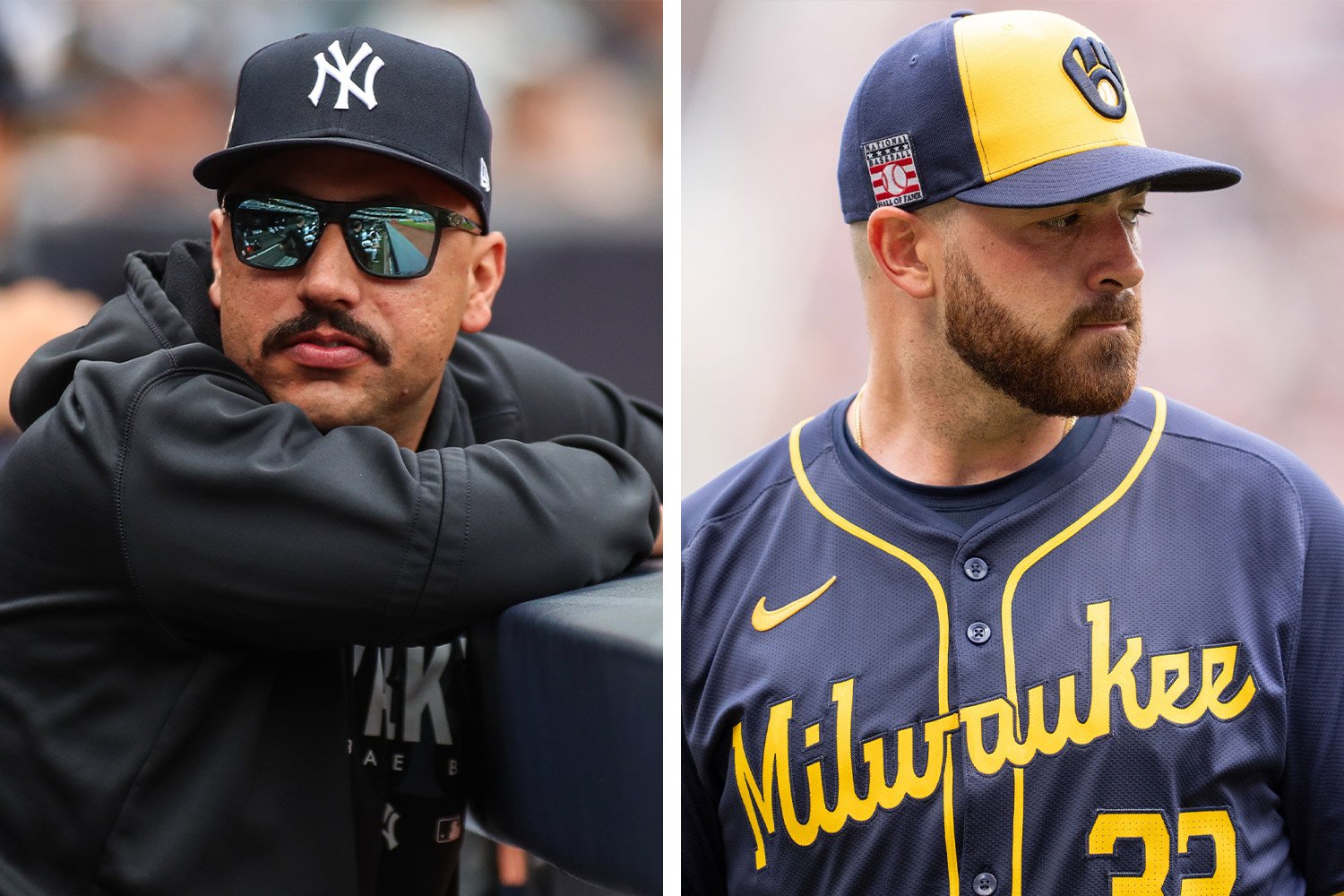 It finally happened. The Brewers’ most valuable trade asset, Devin Williams, was finally sent to new digs. In return, the Yankees gave up $2 million, including infield prospect Caleb Durbin and Nestor Cortes. With Nestor’s arrival, Milwaukee has too many starting pitchers to go around, so who will they get rid of to clear up roster space and payroll? It’s natural to assume that Milwaukee is simply a temporary landing spot for Cortes and that he probably shouldn’t be considering putting money down for a condo in Historic Third Ward. However, the situation may not be that simple. When healthy, he has proven himself to be a good starter option; his career peaked in 2021-2022, where he posted a 2.61 ERA over a combined 251 ⅓ innings for the Yankees. After struggling in 2023 and sustaining a rotator cuff strain, he pitched to a 3.77 ERA over 174 ⅓ innings in 2024, suggesting a return to form. Unfortunately, some flaws he showed while pitching through injury persisted last season. Aside from a walk rate of 5.5%, his other statistics were around or below the league average. Most concerning was his tendency to give up hard contact to opposing hitters. His sweeper and four-seam fastball were the biggest pain points, which had respective slugging percentages of .511 and .443. Aside from a slight dip in changeup frequency, there haven’t been too many changes to his velocity, arm angle, or usage between his 2022 and 2024 campaigns. Hence, these results may be affected by lingering injuries. This is further supported by the fact that he missed almost all of the Yankees’ most recent postseason run due to a left elbow flexor strain. On the bright side, he did manage to recover in time for the World Series, and it seems that Milwaukee did its due diligence to ensure that he would have a clean bill of health before being included in the trade. He reportedly had an MRI a few weeks ago, which allowed him to begin his offseason throwing program on time. This means that the Brewers are likely intent on keeping him. After all, why bother with a thorough physical exam unless the team wants to know exactly what they’re working with and whether their reputed pitching development program will get the best out of his arm. It's even more important when considering they may only have him for a short period, given that he’s entering his final year of arbitration and is slated to hit free agency in 2026. On a similar timeline is Aaron Civale who will become a free agent in the same year as Cortes. Civale had a great showing with the Brewers, making 14 starts and posting a 3.53 ERA, a major step forward following a disappointing tenure with the Rays. While his surface-level numbers were strong, underlying figures may be more concerning. His FIP of 4.79 while with the Brewers was evidence of his susceptibility to the long ball while having a below-average strikeout rate of just 20.9%. Furthermore, a WHIP of 1.22 shows that he’s giving up a few more baserunners than the team would probably like. In comparison, Nestor’s FIP of 3.84 was not only better than Civale’s, it was much closer to his actual ERA. Civale made great use of his cutter in 2024 but struggled to deploy an effective pitch outside of it. His sinker and curveball complemented his cutter well in past years but they lacked the same production last season. A quick glance shows that his curveball command regressed while his sinker lacked both the velocity and movement needed to get the necessary outs. With the return of great talent like Brandon Woodruff and DL Hall, trading one of these two options seems like a necessary step to optimize the roster heading into 2025. Nestor seems like he has more upside while the team knows what they’re getting (or not getting) out of Civale. Given the prerequisites around the Nestor transaction, it seems like he’s here to stay (at least for a year) while Civale will be shown the door in exchange for some prospect talent. Any suitors looking for a back-of-the-rotation arm could make great use of him and he’d likely benefit them more than he’d benefit Milwaukee. He played an important role while he was with the team but with the talent ahead of him in the depth chart, it's difficult to see a clear road ahead for him.
 -
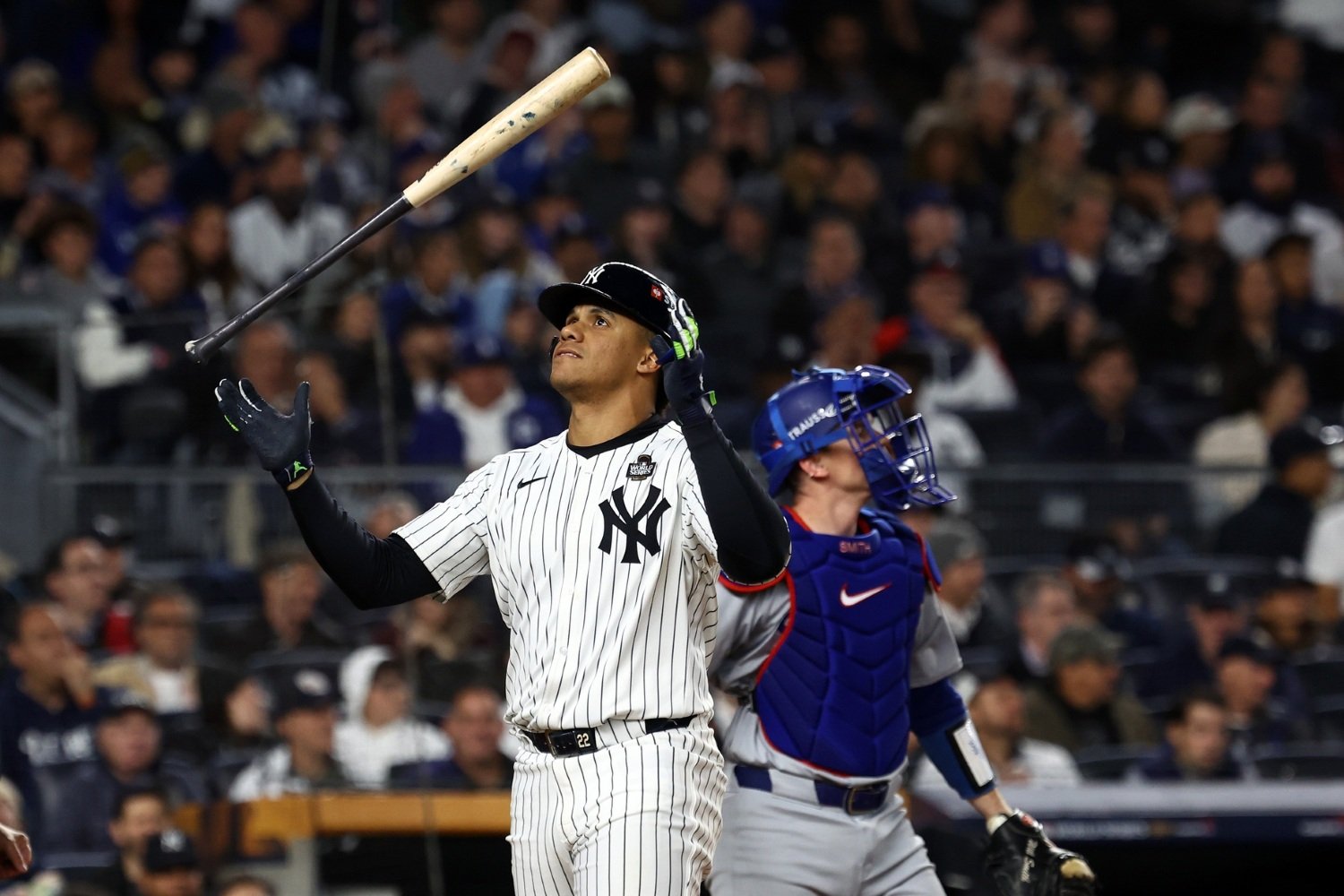 The Brewers didn’t exactly miss out on signing Juan Soto. In order to miss out, one needs to be in contention first. With the final tally on this historic deal reaching a nearly unfathomable $765 million, Milwaukee missed out on signing him only the way Rowdy Tellez missed out on Olympic gold in the 200-meter dash. However, that doesn’t mean that they won’t still feel the burn of this contract. Soto returning to the National League after his year with the Yankees naturally means that the Brewers will be playing against him more frequently. It also means that he and his new Mets teammates will now be serious obstacles for future postseason spots. The NL East is rich with talent, and along with the Phillies and Braves, the Mets form a dangerous three-headed beast that could be perennial October competitors. Only one team can win the division, meaning two East teams could end up occupying all but one of the NL Wild Card spots, a situation that has unfolded three years in a row. Even the Nationals could be on the cusp of elbowing their way into the playoff picture, with young talent like CJ Abrams, Dylan Crews and James Wood. In the Central, the choice seems to be between winning the division or missing out entirely. The last time an NL Central team snagged a Wild Card spot was in 2021, when the Cardinals squeezed in with 90 wins. Recency bias would dictate that Milwaukee has a pretty defensible position as kings of the Central, but baseball is a fickle sport and teams can go from winning 107 games in a year to riding the postseason bench, like the Giants. Speaking of the Giants, their recent acquisition of Willy Adames presents another challenge for the Brewers: finding a suitable replacement for their now-vacant shortstop position. Adames was worth 14.0 rWAR over the nearly four years he spent with the team, and was regularly one of the squad’s most valuable assets. Given San Francisco’s appraisal of Adames reaching $182 million over seven years, it seems doubtful Milwaukee will easily find someone of the same caliber to fill his shoes. They could choose to utilize Joey Ortiz and Brice Turang, but either way, the roster will still be left with a vacant spot somewhere in the infield. Meanwhile, the Giants (arguably still lagging both San Diego and Arizona in the wake of the Dodgers Death Star) got stronger. So how does 2025 look for Milwaukee? It’s still hard to say, as the organization has yet to make any moves of note this offseason. Last year, Corbin Burnes wasn’t traded until February, and the deal brought back DL Hall and the aforementioned Ortiz, so a big trade deal involving someone like Devin Williams could still be in the works. Furthermore, enticing sleeper and post-hype free agents like Tim Anderson and Aledmys Díaz are still up for grabs, so get them while they’re hot! Jokes aside, don’t expect the Crew to acquire a suitable infield free agent, as this year’s crop is lacking, to say the least. The Brewers’ front office can’t afford to be ignorant of what they’re now up against in the National League. The Dodgers, Padres, Phillies, and Mets are big-market fat cats (or, in San Diego's case, are willing to pretend to be) and will be recurring threats. The Braves have an abundance of talent on long-term, team-friendly contracts. The Diamondbacks and Giants are waiting on the wings for whatever table scraps are left once the divisions have been carved up. Even within its own division, a dominion so easily conquered for the past few years is full of encroaching enemies in the Cubs and Pirates. The walls are closing in on Milwaukee; their regular-season margin for error is now the smallest it has been in years. Can the organization step up to the plate? Let’s wait and see.
 -
The biggest baseball contract ever is large enough to send shockwaves from New York all the way to Milwaukee. Image courtesy of © Vincent Carchietta-Imagn Images The biggest baseball contract ever is large enough to send shockwaves from New York all the way to Milwaukee. The Brewers didn’t exactly miss out on signing Juan Soto. In order to miss out, one needs to be in contention first. With the final tally on this historic deal reaching a nearly unfathomable $765 million, Milwaukee missed out on signing him only the way Rowdy Tellez missed out on Olympic gold in the 200-meter dash. However, that doesn’t mean that they won’t still feel the burn of this contract. Soto returning to the National League after his year with the Yankees naturally means that the Brewers will be playing against him more frequently. It also means that he and his new Mets teammates will now be serious obstacles for future postseason spots. The NL East is rich with talent, and along with the Phillies and Braves, the Mets form a dangerous three-headed beast that could be perennial October competitors. Only one team can win the division, meaning two East teams could end up occupying all but one of the NL Wild Card spots, a situation that has unfolded three years in a row. Even the Nationals could be on the cusp of elbowing their way into the playoff picture, with young talent like CJ Abrams, Dylan Crews and James Wood. In the Central, the choice seems to be between winning the division or missing out entirely. The last time an NL Central team snagged a Wild Card spot was in 2021, when the Cardinals squeezed in with 90 wins. Recency bias would dictate that Milwaukee has a pretty defensible position as kings of the Central, but baseball is a fickle sport and teams can go from winning 107 games in a year to riding the postseason bench, like the Giants. Speaking of the Giants, their recent acquisition of Willy Adames presents another challenge for the Brewers: finding a suitable replacement for their now-vacant shortstop position. Adames was worth 14.0 rWAR over the nearly four years he spent with the team, and was regularly one of the squad’s most valuable assets. Given San Francisco’s appraisal of Adames reaching $182 million over seven years, it seems doubtful Milwaukee will easily find someone of the same caliber to fill his shoes. They could choose to utilize Joey Ortiz and Brice Turang, but either way, the roster will still be left with a vacant spot somewhere in the infield. Meanwhile, the Giants (arguably still lagging both San Diego and Arizona in the wake of the Dodgers Death Star) got stronger. So how does 2025 look for Milwaukee? It’s still hard to say, as the organization has yet to make any moves of note this offseason. Last year, Corbin Burnes wasn’t traded until February, and the deal brought back DL Hall and the aforementioned Ortiz, so a big trade deal involving someone like Devin Williams could still be in the works. Furthermore, enticing sleeper and post-hype free agents like Tim Anderson and Aledmys Díaz are still up for grabs, so get them while they’re hot! Jokes aside, don’t expect the Crew to acquire a suitable infield free agent, as this year’s crop is lacking, to say the least. The Brewers’ front office can’t afford to be ignorant of what they’re now up against in the National League. The Dodgers, Padres, Phillies, and Mets are big-market fat cats (or, in San Diego's case, are willing to pretend to be) and will be recurring threats. The Braves have an abundance of talent on long-term, team-friendly contracts. The Diamondbacks and Giants are waiting on the wings for whatever table scraps are left once the divisions have been carved up. Even within its own division, a dominion so easily conquered for the past few years is full of encroaching enemies in the Cubs and Pirates. The walls are closing in on Milwaukee; their regular-season margin for error is now the smallest it has been in years. Can the organization step up to the plate? Let’s wait and see. View full article
-
 Milwaukee doesn’t sign a lot of long-term contracts. The largest in franchise history is still Christian Yelich’s nine-year, $215 million deal, which was signed after back-to-back MVP-quality seasons. In second place is Ryan Braun’s five-year, $105 million contract, less than half of Yelich’s total compensation and a meager offering compared to the gargantuan free-agent deals inked in today’s day and age. Based on that information alone, the odds of getting a big Brewers payday don’t seem to be in Brice Turang’s favor. The club simply doesn’t work that way, and has always been more focused on cost-effective roster construction. However, based on what they did with Jackson Chourio, Milwaukee could find a happy medium between spending money and retaining talent. Last December, Chourio signed an eight-year, $82-million contract before he had a single major-league plate appearance. It was the largest-ever deal signed for a player with his level of experience and a risk uncharacteristic of the typically frugal team. Now that we’ve gotten a taste of what he’s capable of, though, the move looks like the big-brain play of the decade. The contract will end after he turns 27, at which point the Brewers will still have two years of team options at $25 million each. In the best case, he’ll be in Milwaukee until he’s 30, giving the team 10 years of solid major-league productivity and the majority of his athletic prime. The front office was essentially betting on Chourio to be good before the other 29 teams had a chance to really catch on. Without the extension, his arbitration salaries and stock as a free agent would have continued to rise, creating a situation similar to Willy Adames's—except with an even lower chance of sticking around. A bold comparison would be Juan Soto, who debuted at a similar age. Because Soto was such an exceptional young talent, he was destined for a massive payday. By the end of his fourth season, he had already received and declined a 13-year, $350 million offer by the Nationals, so it wouldn’t be outlandish to assume Chourio could have been down a similar path. But Turang is hardly a prospect of the same quality as Chourio or Soto. He’s already 25 (so old!) and hasn’t managed to eclipse the 90 OPS+ mark in either of his two major-league seasons. Much of his productivity has come from his defensive contributions, culminating in 22 Defensive Runs Saved and a Platinum Glove in 2024. His glove has been outstanding, but a more enticing part of his case for an extension is his offensive upside. It does seem odd that a player with a .631 career OPS would be the topic of an “offensive upside” discussion, but Turang’s numbers are begging for a closer look. His entire 2023 was rough, and the .585 OPS he carried throughout the season told the story. He just couldn’t catch up to big-league fastballs, and averaged just .198 against heaters. He took a colossal step forward in 2024, however, averaging .308 against four-seam fastballs and cutting down his whiff and strikeout rates. By the end of June, his OPS against four-seam fastballs was a whopping .946. Unfortunately, old habits seemed to return in the second half of the season as his numbers against four-seamers regressed to his 2023 results, but it posed an interesting question: If Turang found a way to be consistently effective against velocity, could he be one of the best second basemen in baseball? Despite an OPS+ of just 85, he still managed 4.7 rWAR last season. He was second only to Daulton Varsho in defensive rWAR and his overall numbers could be nearing MVP levels if he gets his bat going a bit more consistently. Even more exciting is the fact that we’ve already gotten a glimpse of the peak of Turang’s offensive powers. He has struggled to hit the ball with consistent oomph in his first 1,000 MLB plate appearances, but he could be a high-average guy akin to Luis Arráez, without the fielding liabilities. Furthermore, second basemen are rarely expected to produce big power numbers, so it's not like Turang would actually be that far off what's expected of him. Thus, an extension shouldn’t be considered totally out of the question. The 2026 season will be Turang’s first year of arbitration eligibility, and if he maintains his upward trajectory of offensive improvements along with his best-in-class defense, it could soon get expensive for the club. Would Turang sign an extension like the one given to Chourio? Absolutely not, but it could be a way for the front office to lock him down for the price and duration they feel he will be the most effective. A deal more in the six-year, $45-million range (with team options that could be much more lucrative) could be good for both sides. We'll see if they go there come spring training.
 -
Was his 2024 campaign enough for us to consider the keystone sacker a longer-term Brewer? Image courtesy of © Charles LeClaire-Imagn Images Was his 2024 campaign enough for us to consider the keystone sacker a longer-term Brewer? Milwaukee doesn’t sign a lot of long-term contracts. The largest in franchise history is still Christian Yelich’s nine-year, $215 million deal, which was signed after back-to-back MVP-quality seasons. In second place is Ryan Braun’s five-year, $105 million contract, less than half of Yelich’s total compensation and a meager offering compared to the gargantuan free-agent deals inked in today’s day and age. Based on that information alone, the odds of getting a big Brewers payday don’t seem to be in Brice Turang’s favor. The club simply doesn’t work that way, and has always been more focused on cost-effective roster construction. However, based on what they did with Jackson Chourio, Milwaukee could find a happy medium between spending money and retaining talent. Last December, Chourio signed an eight-year, $82-million contract before he had a single major-league plate appearance. It was the largest-ever deal signed for a player with his level of experience and a risk uncharacteristic of the typically frugal team. Now that we’ve gotten a taste of what he’s capable of, though, the move looks like the big-brain play of the decade. The contract will end after he turns 27, at which point the Brewers will still have two years of team options at $25 million each. In the best case, he’ll be in Milwaukee until he’s 30, giving the team 10 years of solid major-league productivity and the majority of his athletic prime. The front office was essentially betting on Chourio to be good before the other 29 teams had a chance to really catch on. Without the extension, his arbitration salaries and stock as a free agent would have continued to rise, creating a situation similar to Willy Adames's—except with an even lower chance of sticking around. A bold comparison would be Juan Soto, who debuted at a similar age. Because Soto was such an exceptional young talent, he was destined for a massive payday. By the end of his fourth season, he had already received and declined a 13-year, $350 million offer by the Nationals, so it wouldn’t be outlandish to assume Chourio could have been down a similar path. But Turang is hardly a prospect of the same quality as Chourio or Soto. He’s already 25 (so old!) and hasn’t managed to eclipse the 90 OPS+ mark in either of his two major-league seasons. Much of his productivity has come from his defensive contributions, culminating in 22 Defensive Runs Saved and a Platinum Glove in 2024. His glove has been outstanding, but a more enticing part of his case for an extension is his offensive upside. It does seem odd that a player with a .631 career OPS would be the topic of an “offensive upside” discussion, but Turang’s numbers are begging for a closer look. His entire 2023 was rough, and the .585 OPS he carried throughout the season told the story. He just couldn’t catch up to big-league fastballs, and averaged just .198 against heaters. He took a colossal step forward in 2024, however, averaging .308 against four-seam fastballs and cutting down his whiff and strikeout rates. By the end of June, his OPS against four-seam fastballs was a whopping .946. Unfortunately, old habits seemed to return in the second half of the season as his numbers against four-seamers regressed to his 2023 results, but it posed an interesting question: If Turang found a way to be consistently effective against velocity, could he be one of the best second basemen in baseball? Despite an OPS+ of just 85, he still managed 4.7 rWAR last season. He was second only to Daulton Varsho in defensive rWAR and his overall numbers could be nearing MVP levels if he gets his bat going a bit more consistently. Even more exciting is the fact that we’ve already gotten a glimpse of the peak of Turang’s offensive powers. He has struggled to hit the ball with consistent oomph in his first 1,000 MLB plate appearances, but he could be a high-average guy akin to Luis Arráez, without the fielding liabilities. Furthermore, second basemen are rarely expected to produce big power numbers, so it's not like Turang would actually be that far off what's expected of him. Thus, an extension shouldn’t be considered totally out of the question. The 2026 season will be Turang’s first year of arbitration eligibility, and if he maintains his upward trajectory of offensive improvements along with his best-in-class defense, it could soon get expensive for the club. Would Turang sign an extension like the one given to Chourio? Absolutely not, but it could be a way for the front office to lock him down for the price and duration they feel he will be the most effective. A deal more in the six-year, $45-million range (with team options that could be much more lucrative) could be good for both sides. We'll see if they go there come spring training. View full article
-
i was -12 at the time of this game
-
Perhaps this is an erroneous association but I kind of lump Bobby Miller and Walker Buehler together because both have demonstrated an ability to be effective in a major-league rotation, have ~16 inches of IVB on their heaters (didn't take a closer look than a quick peep on Baseball Savant for Walker Buehler tbh but idk looks close enough), and have taken massive steps backward after finding success. I think injury has a big part to play for both players and given how willing the Dodgers were to still utilize Buehler in key postseason moments tells me they still believe. Especially with Bobby's superior stuff and additional team control, I feel like it may be hard to pry him away. That said, the Dodgers have too many starting pitchers so maybe they should start sharing the wealth a bit amirite
- 8 replies
-
- 2
-

-
- bobby miller
- dustin may
- (and 2 more)
-
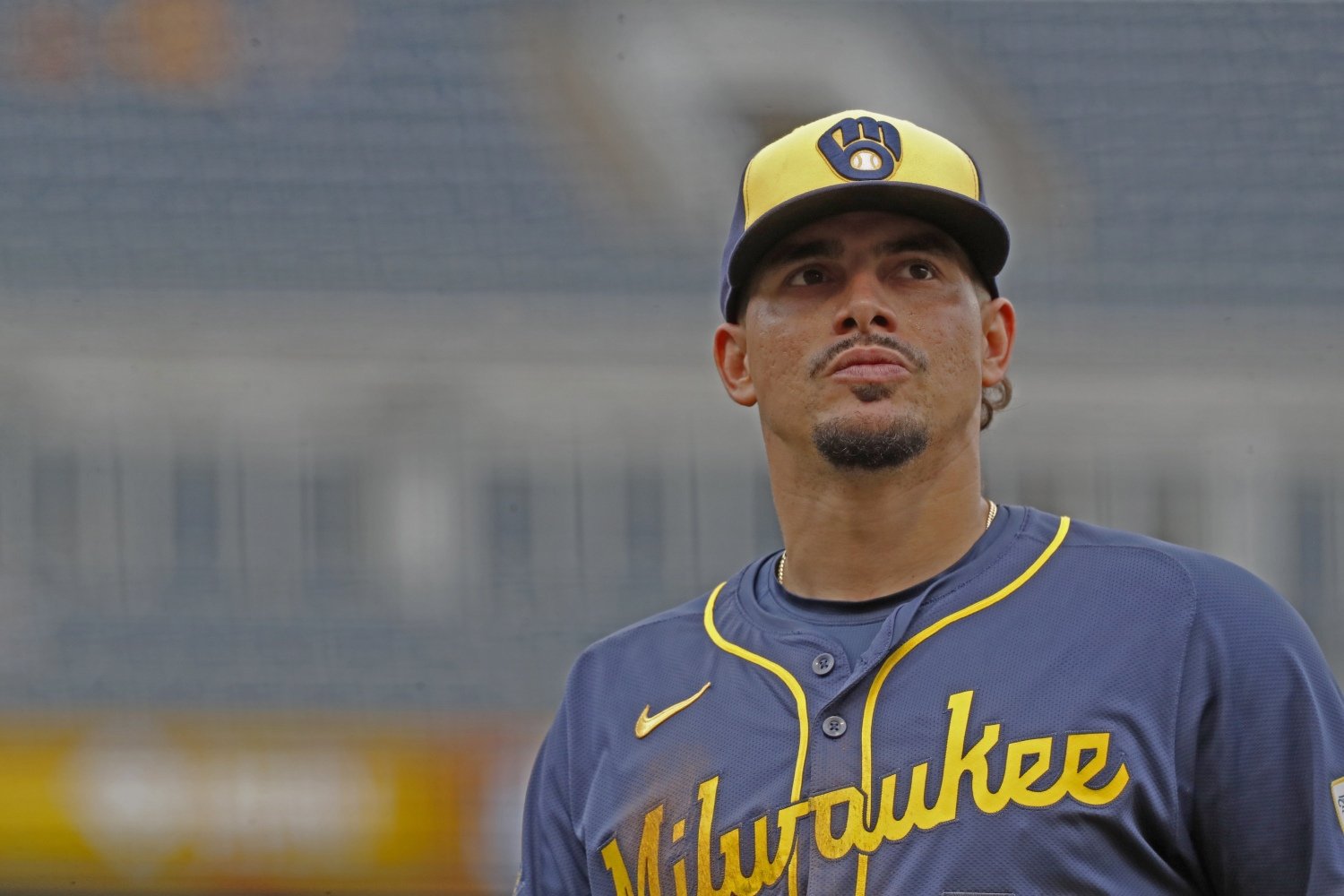 While other teams are rolling out the red carpet for Willy Adames, Milwaukee hasn't done much to retain him. Matt Arnold made his typical PR comments of "he has earned the right to explore the market," while Pat Murphy more earnestly said "if he comes back, that means he didn't get the deal he was looking for." Meanwhile, teams like the Phillies and Red Sox have expressed explicit interest. Boston has even discussed moving Rafael Devers off of third base to allow Adames to take over. In other words, the Red Sox are willing to reinvent their entire infield to accommodate Adames, while the Brewers seem barely willing to talk about it. Thus, it seems like a foregone conclusion that he'll be with a new squad in 2025, so let's spend some time pondering some potential replacements for him. Kiké Hernández 393 PA, .229/.281/.373, 85 OPS+, 1.3 rWAR At first glance, there’s not much to write home about from the longtime Dodgers infielder. He has been described as a postseason hero and a “vibes guy”, but statistically, his offensive production was below-average. In fact, it has always been below average, as his career OPS+ is just 92. However, he made a big adjustment in the second half of 2024. Even the statistics-avoidant may have noticed this change. Earlier in the season, he and fellow Puerto Rican Martín Maldonado were having a casual conversation in which Maldonado mentioned he and other White Sox players were getting glasses after poor results from eye tests taken in spring training. Intrigued, Hernández took an eye test of his own and was diagnosed with an astigmatism in his right eye, causing slightly blurred vision. Starting right around the All-Star break, he wore glasses with a prescription lens. The results? He went from a .557 OPS before the break to a .766 OPS thereafter. He carried over this success into the postseason, hitting for a .294 average with an .808 OPS. Aside from the clear improvement in the high-level statistics, his performance against breaking balls took the biggest step forward—more than likely a symptom of his improved eyesight and being able to see pitches more clearly. It remains to be seen how long he can maintain this new version of himself at the plate, but he seems like a good fit for the Brewers. Aside from his newfound hitting prowess, he's got excellent defensive utility and could bounce several infield positions assuming Milwaukee chooses to move Joey Ortiz back to shortstop. At just over 33 years old, he likely wouldn’t sign for more than a few years with team-friendly financial terms, further incentive for the Brewers to pursue him this offseason. Amed Rosario 346 PA, .280/.306/.380, 94 OPS+, -0.1 rWAR Rosario has had a hard time finding his footing recently. Since being traded by the Guardians in 2023, he has been sent to three different teams, and has had two separate stints with the Dodgers. After a productive start to the year with the Rays, he was designated for assignment by the Dodgers and Reds to end the season. But there could still be some value to be found in his profile. First, his numbers with Tampa should hold more weight, given the small sample size of 71 total plate appearances between Cincinnati and Los Angeles. Over 275 plate appearances with the Rays, he posted a .748 OPS (114 OPS+) with a .307 batting average. His on-base percentage was held back by a league-worst 2.6% walk rate, but putting the ball in play is still cool. Just ask Luis Arráez! His quality of contact numbers are below-average and his defensive numbers are rarely good, so what would the Brewers be getting in Rosario? Well, he’s relatively young at just 29 years old, giving them time to work on the characteristics he’s still lacking. The Brewers are much better at fixing arms than bats, but it’s also hard to say how bad Rosario really is. He has had stretches of greatness and is only a few years removed from his four-win season in 2022. He’ll be cheap, so even if he’s signed and disappoints, it wouldn’t lead to any disastrous long-term effects (probably). Hyeseong Kim 567 PA, .326/.383/.458, 26 2B, 4 3B, 11 HR, 75 RBI, 30 SB The most enticing international free agent not named Roki Sasaki is an infielder from the Kiwoom Heroes of the KBO. A defensive whiz who has already won three Gold Glove awards, he’s the only player in league history to win at second base and shortstop. His bat isn’t too shabby either, with a career batting average of .304 over nearly 4,000 KBO plate appearances. The Brewers haven’t been big on signing international free agents from Japan or Korea, but that may be because of the often lofty prices placed on them. He has sufficient experience to be considered a full-fledged professional free agent à la Yoshinobu Yamamoto, but isn’t projected to receive nearly the same amount of money. MLB Trade Rumors is projecting him to sign a three-year, $24 million deal, comfortably within the spending comfort range of Milwaukee if they choose to go after him. As with many Korean players, it can be difficult to assess exactly what you’re getting. Some, like Ji Hwan Bae and Ji-man Choi have struggled to be regular contributors at the big-league level, while others, like Ha Seong Kim (who was Hyeseong Kim's KBO infield comrade), have been exceptional. Scouts have reported Kim as having great speed and defense, qualities the Brewers tend to love as seen in players like Sal Frelick and Blake Perkins. He’s projected to be posted next week, so we’ll see if Milwaukee ends up being one of the seriously interested parties.
 -
“Don’t cry that it’s over, smile because it happened. Also, let’s find someone way cheaper.” -the Brewers front office, probably. Image courtesy of © Charles LeClaire-Imagn Images “Don’t cry that it’s over, smile because it happened. Also, let’s find someone way cheaper.” -the Brewers front office, probably. While other teams are rolling out the red carpet for Willy Adames, Milwaukee hasn't done much to retain him. Matt Arnold made his typical PR comments of "he has earned the right to explore the market," while Pat Murphy more earnestly said "if he comes back, that means he didn't get the deal he was looking for." Meanwhile, teams like the Phillies and Red Sox have expressed explicit interest. Boston has even discussed moving Rafael Devers off of third base to allow Adames to take over. In other words, the Red Sox are willing to reinvent their entire infield to accommodate Adames, while the Brewers seem barely willing to talk about it. Thus, it seems like a foregone conclusion that he'll be with a new squad in 2025, so let's spend some time pondering some potential replacements for him. Kiké Hernández 393 PA, .229/.281/.373, 85 OPS+, 1.3 rWAR At first glance, there’s not much to write home about from the longtime Dodgers infielder. He has been described as a postseason hero and a “vibes guy”, but statistically, his offensive production was below-average. In fact, it has always been below average, as his career OPS+ is just 92. However, he made a big adjustment in the second half of 2024. Even the statistics-avoidant may have noticed this change. Earlier in the season, he and fellow Puerto Rican Martín Maldonado were having a casual conversation in which Maldonado mentioned he and other White Sox players were getting glasses after poor results from eye tests taken in spring training. Intrigued, Hernández took an eye test of his own and was diagnosed with an astigmatism in his right eye, causing slightly blurred vision. Starting right around the All-Star break, he wore glasses with a prescription lens. The results? He went from a .557 OPS before the break to a .766 OPS thereafter. He carried over this success into the postseason, hitting for a .294 average with an .808 OPS. Aside from the clear improvement in the high-level statistics, his performance against breaking balls took the biggest step forward—more than likely a symptom of his improved eyesight and being able to see pitches more clearly. It remains to be seen how long he can maintain this new version of himself at the plate, but he seems like a good fit for the Brewers. Aside from his newfound hitting prowess, he's got excellent defensive utility and could bounce several infield positions assuming Milwaukee chooses to move Joey Ortiz back to shortstop. At just over 33 years old, he likely wouldn’t sign for more than a few years with team-friendly financial terms, further incentive for the Brewers to pursue him this offseason. Amed Rosario 346 PA, .280/.306/.380, 94 OPS+, -0.1 rWAR Rosario has had a hard time finding his footing recently. Since being traded by the Guardians in 2023, he has been sent to three different teams, and has had two separate stints with the Dodgers. After a productive start to the year with the Rays, he was designated for assignment by the Dodgers and Reds to end the season. But there could still be some value to be found in his profile. First, his numbers with Tampa should hold more weight, given the small sample size of 71 total plate appearances between Cincinnati and Los Angeles. Over 275 plate appearances with the Rays, he posted a .748 OPS (114 OPS+) with a .307 batting average. His on-base percentage was held back by a league-worst 2.6% walk rate, but putting the ball in play is still cool. Just ask Luis Arráez! His quality of contact numbers are below-average and his defensive numbers are rarely good, so what would the Brewers be getting in Rosario? Well, he’s relatively young at just 29 years old, giving them time to work on the characteristics he’s still lacking. The Brewers are much better at fixing arms than bats, but it’s also hard to say how bad Rosario really is. He has had stretches of greatness and is only a few years removed from his four-win season in 2022. He’ll be cheap, so even if he’s signed and disappoints, it wouldn’t lead to any disastrous long-term effects (probably). Hyeseong Kim 567 PA, .326/.383/.458, 26 2B, 4 3B, 11 HR, 75 RBI, 30 SB The most enticing international free agent not named Roki Sasaki is an infielder from the Kiwoom Heroes of the KBO. A defensive whiz who has already won three Gold Glove awards, he’s the only player in league history to win at second base and shortstop. His bat isn’t too shabby either, with a career batting average of .304 over nearly 4,000 KBO plate appearances. The Brewers haven’t been big on signing international free agents from Japan or Korea, but that may be because of the often lofty prices placed on them. He has sufficient experience to be considered a full-fledged professional free agent à la Yoshinobu Yamamoto, but isn’t projected to receive nearly the same amount of money. MLB Trade Rumors is projecting him to sign a three-year, $24 million deal, comfortably within the spending comfort range of Milwaukee if they choose to go after him. As with many Korean players, it can be difficult to assess exactly what you’re getting. Some, like Ji Hwan Bae and Ji-man Choi have struggled to be regular contributors at the big-league level, while others, like Ha Seong Kim (who was Hyeseong Kim's KBO infield comrade), have been exceptional. Scouts have reported Kim as having great speed and defense, qualities the Brewers tend to love as seen in players like Sal Frelick and Blake Perkins. He’s projected to be posted next week, so we’ll see if Milwaukee ends up being one of the seriously interested parties. View full article
-
Could Angels' Non-Tendered Southpaw Become a Future Brewers Fixture?
Jason Wang posted an article in Brewers
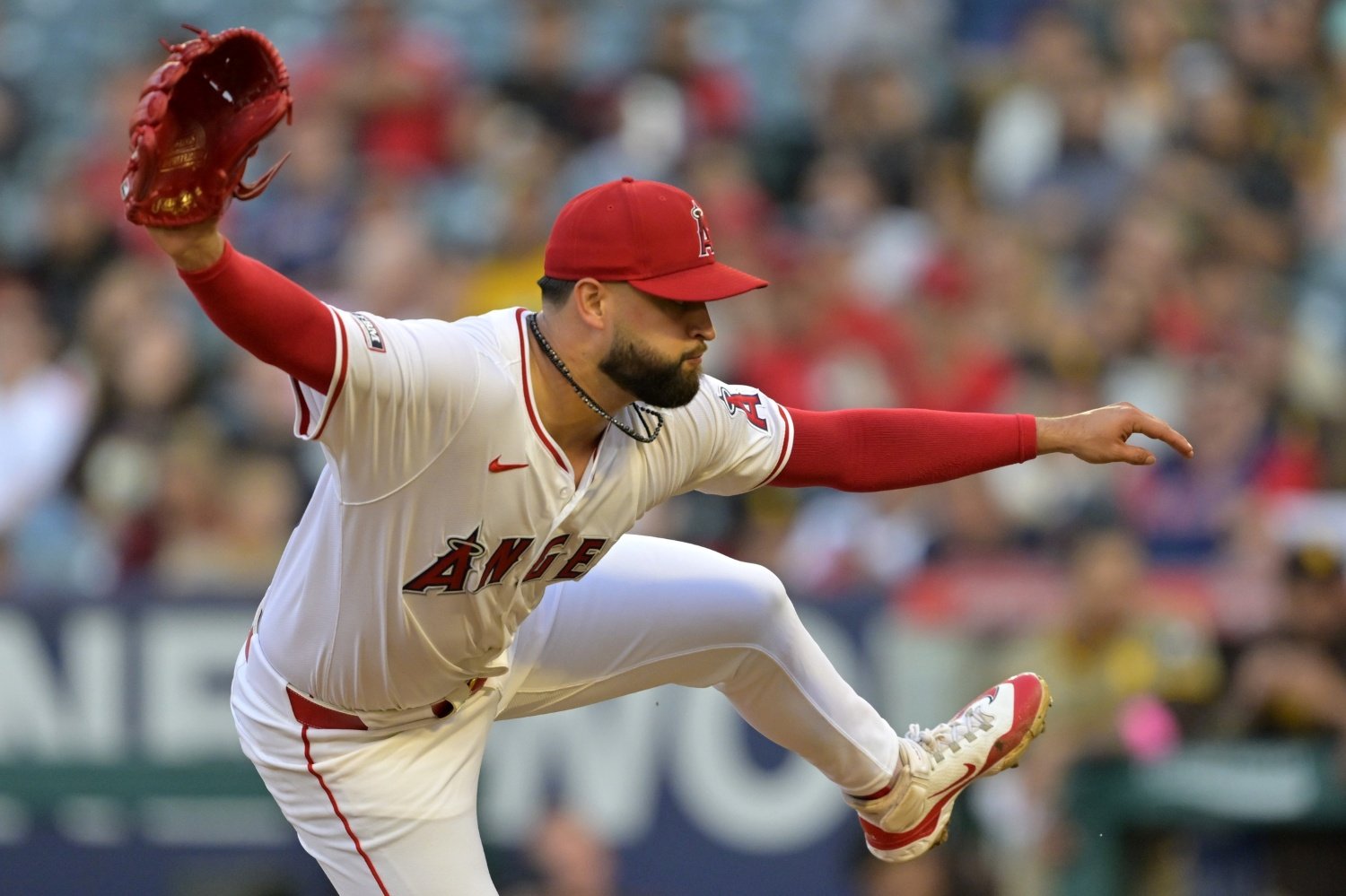 Among several other major roster moves, lefty starter Patrick Sandoval was one of four players non-tendered by the Los Angeles Angels late last week. After he struggled over the past two seasons and received Tommy John surgery in June, it made sense for the team to move on, especially with subsequent acquisitions pointing to a concerted effort to regain respectability in 2025. However, being let go doesn’t mean that he can’t still be a value buy for his next organization. Since becoming a full-time big-leaguer, Sandoval has adjusted his pitch mix to account for some critical weaknesses in his game. Over the past four years, he has largely depended on his changeup and slider, with his fastball and sinker typically combining for about 36% of his pitches. This partition makes sense, given that his non-fastball pitches are actually quite effective, while the numbers on his fastballs are, as the youth might say, “sus.” BA SLG Whiff% K% BB% Four-seam Fastball .342 .514 15.2% 10.9% 14.3% Sinker .279 .380 14.3% 9.2% 12.8% Slider .230 .315 30.8% 24.4% 7.2% Changeup .189 .286 44.6% 36.0% 8.7% His fastballs sit in the low 90s and have neither good movement nor command, making both of these pitches remarkably uncompetitive for a major-league starter. His slider also leaves something to be desired and has been a big reason for his broader statistical regression after a strong 2022 campaign. Hitters combined for an OPS of .515 against his slider from ‘21-’22, but a .694 OPS from ‘23-’24. In fact, his only saving grace could be the changeup. It’s a great pitch but the issue with changeups is that in order to be effective (especially for starting pitchers), they must play off of something. Yankees reliever Tommy Kahnle can attest that all changeups and no fastballs make Jack an inconsistent presence on the mound. So we’ve concluded that Patrick Sandoval has never had even a league-average fastball, throws a declining slider, and only excels at one pitch. So why would the Brewers want him, especially after Tommy John would sideline him until late into 2025? The first reason is that he’ll be cheap. Because he’ll miss so much time from injury, Milwaukee could sign him to a back-loaded two-year deal that would hinge more on his 2026 contributions before he hits free agency in 2027. This, along with a heavier reliance on Robert Gasser, could set up an impending Freddy Peralta trade before his final year of team control in 2026. Second, Sandoval’s profile actually fits in well with the Brewers' existing staff. Milwaukee has excelled with low-velocity pitchers whose stuff seems average at best. They were able to squeeze a 3.14 ERA over 23 starts out of Wade Miley (who could barely top 90 and similarly depended on a changeup/slider combo to get his whiffs) in 2023. Colin Rea, Aaron Civale, and Bryse Wilson are other examples of pitchers with forgettable velocity who managed to find great success in the organization through the magic of friendship—and, sure, ok, the best pitching development program in baseball. Furthermore, the one thing that Sandoval has been able to do consistently is generate soft contact. Through all of his struggles in 2024, he still managed an average exit velocity of just 87.9 mph and a barrel rate of just 5%, numbers in line with his career highs. This pitch-to-contact style would sync up well with the Brewers' defensive prowess, which has been best-in-class over the past few years. Finally, the Brewers could use a left-handed starter. Last year, DL Hall made the most starts of any southpaw on the team with just seven, three more than Dallas Keuchel. The team has performed well without the need of much variety in the handedness department, but with both Cy Young awards being taken home by lefties this year, maybe there’s something to be said about having guys throw from the other end of the rubber. He’s no 2008 trade deadline CC Sabathia, but Patrick Sandoval could still be a diamond in the rough. It would be surprising if there was a significant market for him, and the Brewers are one of the few teams who could salvage what’s left of his major-league prospects. With valuable arms bound to leave in free agency in the near future, don’t undersell the possibility of him holding down the fort in their absence.
 -
Milwaukee has already revived the careers of several declining pitchers. Will he be their next successful reclamation? Image courtesy of © Jayne Kamin-Oncea-Imagn Images Milwaukee has already revived the careers of several declining pitchers. Will he be their next successful reclamation? Among several other major roster moves, lefty starter Patrick Sandoval was one of four players non-tendered by the Los Angeles Angels late last week. After he struggled over the past two seasons and received Tommy John surgery in June, it made sense for the team to move on, especially with subsequent acquisitions pointing to a concerted effort to regain respectability in 2025. However, being let go doesn’t mean that he can’t still be a value buy for his next organization. Since becoming a full-time big-leaguer, Sandoval has adjusted his pitch mix to account for some critical weaknesses in his game. Over the past four years, he has largely depended on his changeup and slider, with his fastball and sinker typically combining for about 36% of his pitches. This partition makes sense, given that his non-fastball pitches are actually quite effective, while the numbers on his fastballs are, as the youth might say, “sus.” BA SLG Whiff% K% BB% Four-seam Fastball .342 .514 15.2% 10.9% 14.3% Sinker .279 .380 14.3% 9.2% 12.8% Slider .230 .315 30.8% 24.4% 7.2% Changeup .189 .286 44.6% 36.0% 8.7% His fastballs sit in the low 90s and have neither good movement nor command, making both of these pitches remarkably uncompetitive for a major-league starter. His slider also leaves something to be desired and has been a big reason for his broader statistical regression after a strong 2022 campaign. Hitters combined for an OPS of .515 against his slider from ‘21-’22, but a .694 OPS from ‘23-’24. In fact, his only saving grace could be the changeup. It’s a great pitch but the issue with changeups is that in order to be effective (especially for starting pitchers), they must play off of something. Yankees reliever Tommy Kahnle can attest that all changeups and no fastballs make Jack an inconsistent presence on the mound. So we’ve concluded that Patrick Sandoval has never had even a league-average fastball, throws a declining slider, and only excels at one pitch. So why would the Brewers want him, especially after Tommy John would sideline him until late into 2025? The first reason is that he’ll be cheap. Because he’ll miss so much time from injury, Milwaukee could sign him to a back-loaded two-year deal that would hinge more on his 2026 contributions before he hits free agency in 2027. This, along with a heavier reliance on Robert Gasser, could set up an impending Freddy Peralta trade before his final year of team control in 2026. Second, Sandoval’s profile actually fits in well with the Brewers' existing staff. Milwaukee has excelled with low-velocity pitchers whose stuff seems average at best. They were able to squeeze a 3.14 ERA over 23 starts out of Wade Miley (who could barely top 90 and similarly depended on a changeup/slider combo to get his whiffs) in 2023. Colin Rea, Aaron Civale, and Bryse Wilson are other examples of pitchers with forgettable velocity who managed to find great success in the organization through the magic of friendship—and, sure, ok, the best pitching development program in baseball. Furthermore, the one thing that Sandoval has been able to do consistently is generate soft contact. Through all of his struggles in 2024, he still managed an average exit velocity of just 87.9 mph and a barrel rate of just 5%, numbers in line with his career highs. This pitch-to-contact style would sync up well with the Brewers' defensive prowess, which has been best-in-class over the past few years. Finally, the Brewers could use a left-handed starter. Last year, DL Hall made the most starts of any southpaw on the team with just seven, three more than Dallas Keuchel. The team has performed well without the need of much variety in the handedness department, but with both Cy Young awards being taken home by lefties this year, maybe there’s something to be said about having guys throw from the other end of the rubber. He’s no 2008 trade deadline CC Sabathia, but Patrick Sandoval could still be a diamond in the rough. It would be surprising if there was a significant market for him, and the Brewers are one of the few teams who could salvage what’s left of his major-league prospects. With valuable arms bound to leave in free agency in the near future, don’t undersell the possibility of him holding down the fort in their absence. View full article
-
You’re The Brewers GM! It’s Not About Money, It’s About Sending a Message
Jason Wang posted an article in Brewers
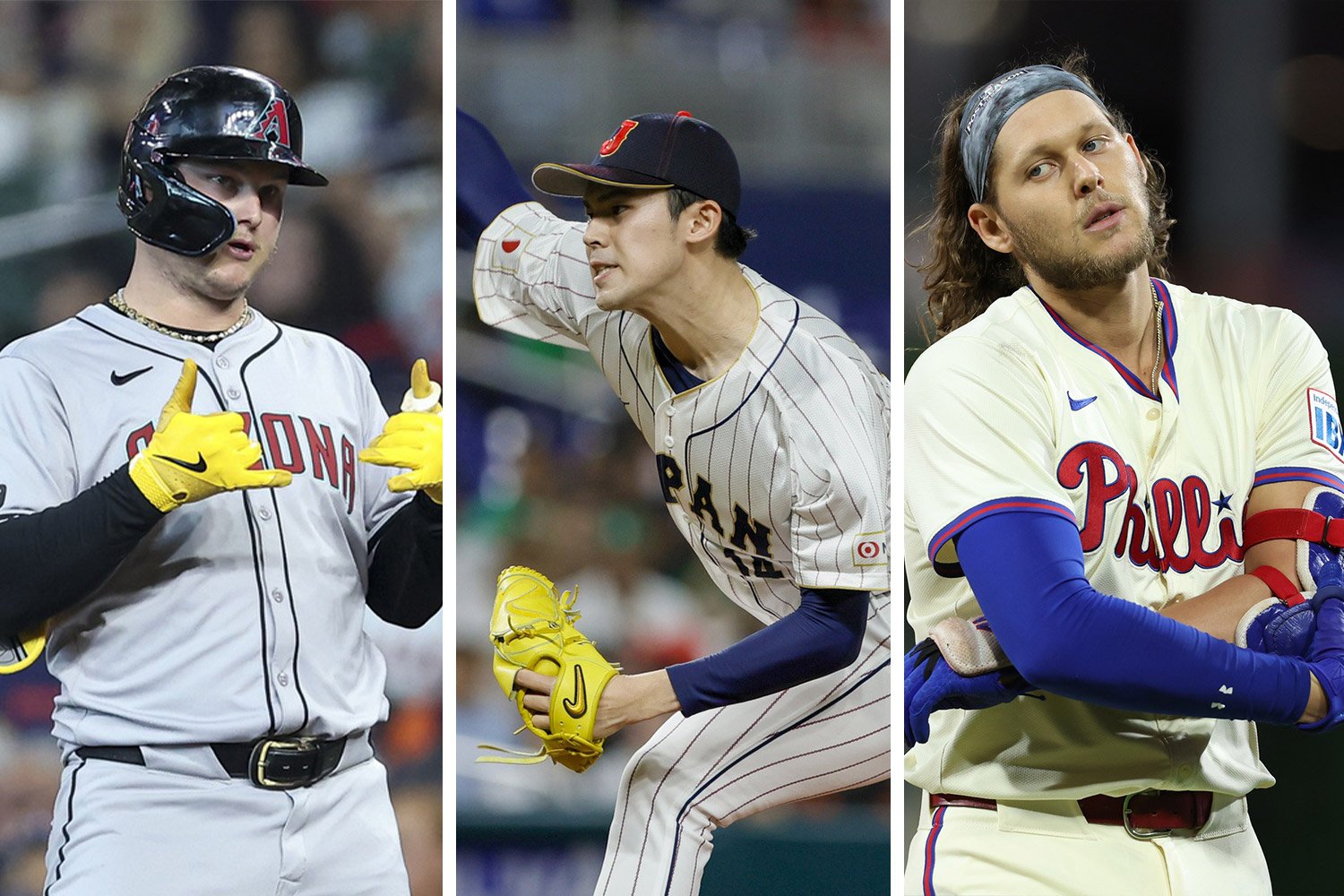 This series of articles is a primer for the release of our new "You're The Brewers GM!" tool, where you play the role of Matt Arnold and build your own Brewers offseason. Please visit the tool here and join in on the fun! At this point, people are pretty clear about Milwaukee’s budgetary constraints. They’ve never signed a record-breaking contract, and it doesn’t seem like it will change soon. Using Brewer Fanatic’s new payroll tool, we can establish that as is, the roster will cost ~$112 million with an estimated final budget of $130 million. This means we have an extra $18 million to spend, quite a bit if you know where to put it, but a small amount of breathing room compared to the fat cats in the big markets. How do we make the most out of this spending limitation? Goodbye to Old Faces It makes sense to drop the team’s two most valuable pieces: Willy Adames and Devin Williams. Because he’s a free agent, Adames has technically already been dropped, but semantics aside, I don’t see the Brewers trying very hard to retain him. Matt Arnold and Pat Murphy have been as lukewarm as possible on his future with the team, and with Adames likely receiving offers north of $150 million, he has likely worn that cheese head for the last time. Because they extended the qualifying offer, the team will get an additional pick in 2025, and they have a wealth of young middle infield talent, so it’s not all bad. Devin Williams still has a full year of team control left and could be wanted by several teams. By packaging him off to a new team, the Brewers would save an estimated $8 million in arbitration and could instead rely on Trevor Megill, who already filled the closer role last year to great effect. Outside of those two names, the Brewers don’t have much control over what to do with the other large contracts on their books. Christian Yelich and William Contreras would never get traded, while Rhys Hoskins would be a hard sell given his $18 million salary and little to show. Brandon Woodruff, Aaron Civale, and Freddy Peralta are all necessary parts of the rotation, and past that, no other contracts will eclipse more than $5 million. Thus, assuming the team trades Willams for a handful of prospects, our new payroll is $104 million with ~$26 million to spend. Decision #1: Allow Adames to walk Who’s On Third? When Adames leaves, Milwaukee must fill the gap in his position. The team is lucky to have Joey Ortiz and Brice Turang, who have spent time playing shortstop, but after his platinum glove escapades in 2024, Turang is guaranteed to stay at second base. Most of Ortiz’s time in the minors was spent at shortstop, so it wouldn’t be a stretch to assume he’ll return to his roots. If so, that leaves an opening at third base that could be filled by Andruw Monasterio or someone else, probably the latter, given the middling results from Monasterio in the past. Unfortunately, the free-agent pickings at third base are slim. I’m more likely to sign with the Brewers than Alex Bregman, and a reunion with Brian Anderson or Luis Urías would be underwhelming at best, a waste of money. It’s also worth noting that there are more alluring options at shortstop if Ortiz is to remain at the hot corner, but none seem to fit Milwaukee’s needs and financial restrictions. So what about the trade market? The most sensible option to me is Alec Bohm. Not only are the Phillies proactively trying to trade him, but the Phillies also need a closer for 2025, so a deal could be made to swap major-leaguer for major-leaguer and a few pieces in between. Bohm took a big step forward on the way to his first All-Star selection in 2024, posting a 117 OPS+ with 44 doubles, 15 home runs, and 97 RBI. He has top-quartile strikeout and whiff numbers and is a capable fielder, so there's plenty of stuff to be happy about, and he’s undoubtedly an upgrade over Monasterio. It’s hard to say who is worth more, depending on how much Philadelphia values team control. Williams is one of the best closers in baseball but will become a free agent in 2026. Bohm has an extra year of team control but isn’t as individually impressive. For simplicity’s sake, let’s assume that a deal could be done on a one-to-one basis. Unfortunately, Bohm’s projected $8 million in arbitration offsets any gains from dropping Devin Williams, but it gives the Brewers more marginal value. There have also been trade rumors about Nolan Arenado, but he’s clearly at the end of his career and will cost more than $70 million at the end of his contract. Prospect-wise, Brock Wilken and Mike Boeve are the closest to debuting, but after a lukewarm regular season and an even tougher showing in the Arizona Fall League, I think Wilken needs a little more time to bake. Boeve was putting up dominant numbers before sustaining a serious injury so he could impress enough to get called up sooner rather than later, but it will take time before he’s ready for the big leagues. Thus, calling up one of these two third-base prospects should be an “in case of the emergency move” rather than a primary option. Decision #2: Trade Devin Williams for Alec Bohm Bats for Arms, or Arms for Bats? Bats for Bats? While Adames’s departure will leave a very specific gap, Milwaukee still has a wealth of outfield talent that is too good to let hang on the bench. With Garrett Mitchell (hopefully) and Christian Yelich (hopefully) back, the trio, plus Jackson Chourio, could be the King Ghidorah of the division. It’s great to have backup options like Sal Frelick and Blake Perkins, but one has to wonder whether there’s a greater return to be had by trading someone on the bench for a player who could be of more regular use. I believe you can always have more arms, and given the team’s recent injury history, another starter or a few bullpen arms definitely couldn’t hurt. This is less of a definite move and more of an open invitation to hear from potential suitors. For example, Blake Perkins could be a great addition for any team needing a premier outfield defender with tons of team control and potentially promising peripherals. Sal Frelick profiles similarly with more emphasis on making great swing decisions and less power upside, but he also possesses a top-tier glove. Decision #3: Look to trade an outfielder for prospect equity Free Agent Fiesta The Brewers are perhaps the most boring team regarding free agency rumors. They’re rarely named as favorites, and they don’t even get the Red Sox treatment of constantly being “interested” in top names. That said, assuming a Williams/Bohm trade goes through, we’d still have another $18 million to spend before reaching our budget, a perfectly reasonable amount. Milwaukee will likely target a short-term deal, like the Hoskins contract, that’s no longer than three years and not more than $18 million annually. Furthermore, a bat should be the priority since any available starters will either be expensive or downgrade the existing staff. Finally, given the exceptional talent of the outfield, an infield or designated hitter will likely be the target. While this may be controversial, I think Joc Pederson could be the guy. He hasn't had the best interactions with Milwaukee's fans, but he did slash .275/.393/.515 over 449 plate appearances with the Diamondbacks last year and posted an OPS+ of 151, the highest of any season in his 11-year career. He walks at a 12.2% clip, hits the ball hard, and puts up consistently great numbers against right-handed pitching, posting a .908 OPS last year. Given his limitation to being a designated hitter and somewhat inconsistent numbers, MLBTradeRumors is projecting that he will receive just a two-year, $24 million contract, well within the bounds of our current payroll projections. Another free agent that should be a top priority for the Brewers is Roki Sasaki. Unlike other marquee names, he's cheap, and the total value of his contract is inherently limited by posting rules, so the front office can't use the excuse of him being too expensive this time around. He's said that he wants to sign with a small market team with a great pitching development program, and no team is a better combination of those two qualities than Milwaukee. Do they desperately need rotation help? Of course not, but any team's rotation would be better with Sasaki. Decision #4: Pursue Joc Pederson and Roki Sasaki in free agency Who To Call Up? The upside of rarely extending players or signing them to long-term contracts is the team is a revolving door with plenty of young talent on the fringes of making the big leagues. We saw a few names make their first MLB appearances in 2024 with mixed results, and 2025 brings an even more promising crop of players. If he can get his walks under control, I’d love to see Jacob Misiorowski make some bullpen appearances. Not only would it be a good way for him to get some big-league outs, but I also think his stuff would add legitimate value as a major-league reliever. Because of his elite fastball/slider combo, some scouts have already discussed his possibility of becoming a righty Josh Hader. Like Corbin Burnes before him, shorter outings of three or four batters faced could help him hone his skills while netting the team a few extra wins. Likewise, I would think 2025 would be the Craig Yoho year. After an outstanding year in 2024, he seems ready for a step up in competition from the minor leagues. With him and Misiorowski both candidates to take up some reliever innings, the team can trade away one or two of their existing reliever pieces. I have a hard time advocating for any position players to make their debuts with the same fervor. Tyler Black may get some more at-bats, and as mentioned earlier, some third-base prospects could get some playing time as well, but the farm system seems to skew more heavily toward arm talent. I would be remiss not to acknowledge the team’s #1 prospect, Jeferson Quero. With his entire 2024 missed due to injury, I think he’ll want some time in the minors to find his groove. Even if he does well, he’ll still play behind William Contreras, barring any injury. He may debut, but I wouldn’t expect him to be a core part of the major league team for a few years. Contreras will be a free agent in 2028, so maybe around then, Quero will finally become the guy. Decision #5: Call up Craig Yoho and Jacob Misiorowski to serve as relievers It's hard work coming up with the hypothetical offseason plan for a major league baseball team. It's even harder, given how solid of a roster the Brewers already have. Losing Adames and Williams in the offseason will surely hurt, but their replacements aren't schmucks by any means and could still carry the team to yet another dominant regular season. With some of the other moves listed above, Milwaukee could finally get the deep postseason run they've been searching for all these years. What do you think of this offseason plan? Do you think you can do better? Then build your own Brewers roster and hit the button below! Start Your Payroll Blueprint Now
 -
Any Joe Schmoe can spend a bunch of money on free agents. It takes real guts to have a productive offseason without writing too many big checks, so how would someone as intelligent as myself run the show? Any Joe Schmoe can spend a bunch of money on free agents. It takes real guts to have a productive offseason without writing too many big checks, so how would someone as intelligent as myself run the show? This series of articles is a primer for the release of our new "You're The Brewers GM!" tool, where you play the role of Matt Arnold and build your own Brewers offseason. Please visit the tool here and join in on the fun! At this point, people are pretty clear about Milwaukee’s budgetary constraints. They’ve never signed a record-breaking contract, and it doesn’t seem like it will change soon. Using Brewer Fanatic’s new payroll tool, we can establish that as is, the roster will cost ~$112 million with an estimated final budget of $130 million. This means we have an extra $18 million to spend, quite a bit if you know where to put it, but a small amount of breathing room compared to the fat cats in the big markets. How do we make the most out of this spending limitation? Goodbye to Old Faces It makes sense to drop the team’s two most valuable pieces: Willy Adames and Devin Williams. Because he’s a free agent, Adames has technically already been dropped, but semantics aside, I don’t see the Brewers trying very hard to retain him. Matt Arnold and Pat Murphy have been as lukewarm as possible on his future with the team, and with Adames likely receiving offers north of $150 million, he has likely worn that cheese head for the last time. Because they extended the qualifying offer, the team will get an additional pick in 2025, and they have a wealth of young middle infield talent, so it’s not all bad. Devin Williams still has a full year of team control left and could be wanted by several teams. By packaging him off to a new team, the Brewers would save an estimated $8 million in arbitration and could instead rely on Trevor Megill, who already filled the closer role last year to great effect. Outside of those two names, the Brewers don’t have much control over what to do with the other large contracts on their books. Christian Yelich and William Contreras would never get traded, while Rhys Hoskins would be a hard sell given his $18 million salary and little to show. Brandon Woodruff, Aaron Civale, and Freddy Peralta are all necessary parts of the rotation, and past that, no other contracts will eclipse more than $5 million. Thus, assuming the team trades Willams for a handful of prospects, our new payroll is $104 million with ~$26 million to spend. Decision #1: Allow Adames to walk Who’s On Third? When Adames leaves, Milwaukee must fill the gap in his position. The team is lucky to have Joey Ortiz and Brice Turang, who have spent time playing shortstop, but after his platinum glove escapades in 2024, Turang is guaranteed to stay at second base. Most of Ortiz’s time in the minors was spent at shortstop, so it wouldn’t be a stretch to assume he’ll return to his roots. If so, that leaves an opening at third base that could be filled by Andruw Monasterio or someone else, probably the latter, given the middling results from Monasterio in the past. Unfortunately, the free-agent pickings at third base are slim. I’m more likely to sign with the Brewers than Alex Bregman, and a reunion with Brian Anderson or Luis Urías would be underwhelming at best, a waste of money. It’s also worth noting that there are more alluring options at shortstop if Ortiz is to remain at the hot corner, but none seem to fit Milwaukee’s needs and financial restrictions. So what about the trade market? The most sensible option to me is Alec Bohm. Not only are the Phillies proactively trying to trade him, but the Phillies also need a closer for 2025, so a deal could be made to swap major-leaguer for major-leaguer and a few pieces in between. Bohm took a big step forward on the way to his first All-Star selection in 2024, posting a 117 OPS+ with 44 doubles, 15 home runs, and 97 RBI. He has top-quartile strikeout and whiff numbers and is a capable fielder, so there's plenty of stuff to be happy about, and he’s undoubtedly an upgrade over Monasterio. It’s hard to say who is worth more, depending on how much Philadelphia values team control. Williams is one of the best closers in baseball but will become a free agent in 2026. Bohm has an extra year of team control but isn’t as individually impressive. For simplicity’s sake, let’s assume that a deal could be done on a one-to-one basis. Unfortunately, Bohm’s projected $8 million in arbitration offsets any gains from dropping Devin Williams, but it gives the Brewers more marginal value. There have also been trade rumors about Nolan Arenado, but he’s clearly at the end of his career and will cost more than $70 million at the end of his contract. Prospect-wise, Brock Wilken and Mike Boeve are the closest to debuting, but after a lukewarm regular season and an even tougher showing in the Arizona Fall League, I think Wilken needs a little more time to bake. Boeve was putting up dominant numbers before sustaining a serious injury so he could impress enough to get called up sooner rather than later, but it will take time before he’s ready for the big leagues. Thus, calling up one of these two third-base prospects should be an “in case of the emergency move” rather than a primary option. Decision #2: Trade Devin Williams for Alec Bohm Bats for Arms, or Arms for Bats? Bats for Bats? While Adames’s departure will leave a very specific gap, Milwaukee still has a wealth of outfield talent that is too good to let hang on the bench. With Garrett Mitchell (hopefully) and Christian Yelich (hopefully) back, the trio, plus Jackson Chourio, could be the King Ghidorah of the division. It’s great to have backup options like Sal Frelick and Blake Perkins, but one has to wonder whether there’s a greater return to be had by trading someone on the bench for a player who could be of more regular use. I believe you can always have more arms, and given the team’s recent injury history, another starter or a few bullpen arms definitely couldn’t hurt. This is less of a definite move and more of an open invitation to hear from potential suitors. For example, Blake Perkins could be a great addition for any team needing a premier outfield defender with tons of team control and potentially promising peripherals. Sal Frelick profiles similarly with more emphasis on making great swing decisions and less power upside, but he also possesses a top-tier glove. Decision #3: Look to trade an outfielder for prospect equity Free Agent Fiesta The Brewers are perhaps the most boring team regarding free agency rumors. They’re rarely named as favorites, and they don’t even get the Red Sox treatment of constantly being “interested” in top names. That said, assuming a Williams/Bohm trade goes through, we’d still have another $18 million to spend before reaching our budget, a perfectly reasonable amount. Milwaukee will likely target a short-term deal, like the Hoskins contract, that’s no longer than three years and not more than $18 million annually. Furthermore, a bat should be the priority since any available starters will either be expensive or downgrade the existing staff. Finally, given the exceptional talent of the outfield, an infield or designated hitter will likely be the target. While this may be controversial, I think Joc Pederson could be the guy. He hasn't had the best interactions with Milwaukee's fans, but he did slash .275/.393/.515 over 449 plate appearances with the Diamondbacks last year and posted an OPS+ of 151, the highest of any season in his 11-year career. He walks at a 12.2% clip, hits the ball hard, and puts up consistently great numbers against right-handed pitching, posting a .908 OPS last year. Given his limitation to being a designated hitter and somewhat inconsistent numbers, MLBTradeRumors is projecting that he will receive just a two-year, $24 million contract, well within the bounds of our current payroll projections. Another free agent that should be a top priority for the Brewers is Roki Sasaki. Unlike other marquee names, he's cheap, and the total value of his contract is inherently limited by posting rules, so the front office can't use the excuse of him being too expensive this time around. He's said that he wants to sign with a small market team with a great pitching development program, and no team is a better combination of those two qualities than Milwaukee. Do they desperately need rotation help? Of course not, but any team's rotation would be better with Sasaki. Decision #4: Pursue Joc Pederson and Roki Sasaki in free agency Who To Call Up? The upside of rarely extending players or signing them to long-term contracts is the team is a revolving door with plenty of young talent on the fringes of making the big leagues. We saw a few names make their first MLB appearances in 2024 with mixed results, and 2025 brings an even more promising crop of players. If he can get his walks under control, I’d love to see Jacob Misiorowski make some bullpen appearances. Not only would it be a good way for him to get some big-league outs, but I also think his stuff would add legitimate value as a major-league reliever. Because of his elite fastball/slider combo, some scouts have already discussed his possibility of becoming a righty Josh Hader. Like Corbin Burnes before him, shorter outings of three or four batters faced could help him hone his skills while netting the team a few extra wins. Likewise, I would think 2025 would be the Craig Yoho year. After an outstanding year in 2024, he seems ready for a step up in competition from the minor leagues. With him and Misiorowski both candidates to take up some reliever innings, the team can trade away one or two of their existing reliever pieces. I have a hard time advocating for any position players to make their debuts with the same fervor. Tyler Black may get some more at-bats, and as mentioned earlier, some third-base prospects could get some playing time as well, but the farm system seems to skew more heavily toward arm talent. I would be remiss not to acknowledge the team’s #1 prospect, Jeferson Quero. With his entire 2024 missed due to injury, I think he’ll want some time in the minors to find his groove. Even if he does well, he’ll still play behind William Contreras, barring any injury. He may debut, but I wouldn’t expect him to be a core part of the major league team for a few years. Contreras will be a free agent in 2028, so maybe around then, Quero will finally become the guy. Decision #5: Call up Craig Yoho and Jacob Misiorowski to serve as relievers It's hard work coming up with the hypothetical offseason plan for a major league baseball team. It's even harder, given how solid of a roster the Brewers already have. Losing Adames and Williams in the offseason will surely hurt, but their replacements aren't schmucks by any means and could still carry the team to yet another dominant regular season. With some of the other moves listed above, Milwaukee could finally get the deep postseason run they've been searching for all these years. What do you think of this offseason plan? Do you think you can do better? Then build your own Brewers roster and hit the button below! Start Your Payroll Blueprint Now View full article
-
 Why They Need Him By the end of July, it seemed quite likely that the Tigers would spend their October at home. They had a record of 52-57, 10th-best in the American League, and there wasn’t a whole lot of hope for what seemed to be an average roster outside of Tarik Skubal and Riley Greene. As a result, they sold off their most valuable short-term player, Jack Flaherty, to the Dodgers in exchange for two prospects. But just when everyone began writing off their season completely, something really kooky happened. From Aug. 1 through the rest of the season, the Detroit Tigers had the second-best record in baseball, at 34-19. Winning 64% of their games in the final two months of the season allowed them to punch their ticket to the big dance, bumping the division rival Twins out of the picture on the way. The team’s OPS over this span was still just .696, painfully average, but the pitching staff combined for a 2.91 ERA, second-best in MLB. The bullpen was particularly effective, averaging just a 2.71 ERA over the final 286 innings of the year, spread out between several talented arms including Tyler Holton, Sean Guenther, and their closer Jason Foley. Foley has actually been great since his major-league debut in 2021, and will remain under team control until 2028. This will be his first year of arbitration eligibility, so the Tigers could place their faith in him entirely to continue filling the most crucial reliever role. However, if they do decide to more seriously contend for the World Series, Foley likely won’t be the high-leverage guy to get them there. While his 3.15 ERA, 1.18 WHIP, and 28 saves were solid in 2024, his chase rate (25.4%), whiff rate (22.3%), and strikeout rate (18.4%) were all in the bottom quartile of qualified pitchers. He mostly earned his outs through soft contact and had a decent ground ball rate of 47.8% but it’s not consistent enough to compensate for his weaknesses. Furthermore, there are signs that the team lost trust in him, as he made just one appearance in the postseason, giving up three hits and a run in the first game against the Astros. The aforementioned Tyler Holton could be another candidate to take his place, but with just two seasons of work and most of it spent in innings 6-8, he’s unproven in high leverage and still has average whiff and strikeout rates. Thus, it seems like the team is interested in exploring a more impressive option at the back of the bullpen. What They Have to Offer Since they were supposed to be on the cusp of a rebuild, the Tigers have a great farm system with five Top 100 prospects including Max Clark (#7 MLB prospect) and Jackson Jobe (#8)—the latter of whom made his debut this past year and even pitched in the postseason. The front office would likely be hesitant to part with their top talent, but there are plenty of other fair options to choose from. Someone who might be on the cusp of being too pricey (but is still worth a discussion) is Jaden Hamm. Currently the seventh-ranked Tigers prospect, Hamm is a righty starter who made 23 starts with High-A West Michigan and posted a 2.64 ERA with a 1.05 WHIP and 11.1 K/9. He has a good fastball with 20 inches of induced vertical break, which pairs well with his curveball and a developing changeup. He has also been working to introduce a slider into his arsenal, potentially giving him an extremely potent toolkit. He’d be a great addition to the Brewers system, but would only be on the trade table if Detroit is very much intent on making a deep postseason run in 2025. A cheaper alternative could be left-handed starter Lael Lockhart, the 26th-ranked Tigers prospect. He spent most of the season with Triple-A Toledo and posted a somewhat unsightly 5.32 ERA over 93 innings, but he also had 10.5 K/9. Things were much better over the 28 innings he had in Double-A where he managed a 1.93 ERA. The biggest obstacle seems to be his non-competitive fastball, a pitch that sits in the high 80s and doesn’t miss a lot of bats. He does have an impressive splitter with just 761 rpm on average, along with a decent curveball, but the rest of his arsenal will need refining—a task perfect for the Brewers. They do a great job of helping hurlers find an extra tick or two via mechanical adjustments, too. If Milwaukee wants to pursue a position player prospect, they could take a closer look at Gage Workman, Detroit’s 30th-ranked prospect. He had good numbers at the plate in 2024, slashing .280/.366/.476 with 29 doubles, six triples, and 18 home runs over 556 plate appearances with Triple-A Erie. The big improvement came from abandoning his switch-hitting dreams; he has chosen to bat left-handed exclusively. He split time between third base and shortstop, but with great speed and strong fielding abilities, he seems capable of fulfilling either position, a perfect complement to Joey Ortiz’s similar flexibility in the majors. Let’s face it: the Tigers are not going to fill all their needs in free agency. Since the teardown of their powerhouse early 2010s roster was completed, they’ve slipped lower and lower down the payroll rankings. In 2024, they had a total payroll of just $104 million (per FanGraphs), barely enough to cover today’s marquee free agents. Instead, they’ll seek to develop their roster through trades, and if they do want to shore up their closer role, there isn’t a better trade target out there than Devin Williams.
 -
The Tigers went from selling at the trade deadline to cracking into the postseason and making some noise. Would they be interested in an elite closer to help get them back to October in 2025? Image courtesy of © Benny Sieu-Imagn Images The Tigers went from selling at the trade deadline to cracking into the postseason and making some noise. Would they be interested in an elite closer to help get them back to October in 2025? Why They Need Him By the end of July, it seemed quite likely that the Tigers would spend their October at home. They had a record of 52-57, 10th-best in the American League, and there wasn’t a whole lot of hope for what seemed to be an average roster outside of Tarik Skubal and Riley Greene. As a result, they sold off their most valuable short-term player, Jack Flaherty, to the Dodgers in exchange for two prospects. But just when everyone began writing off their season completely, something really kooky happened. From Aug. 1 through the rest of the season, the Detroit Tigers had the second-best record in baseball, at 34-19. Winning 64% of their games in the final two months of the season allowed them to punch their ticket to the big dance, bumping the division rival Twins out of the picture on the way. The team’s OPS over this span was still just .696, painfully average, but the pitching staff combined for a 2.91 ERA, second-best in MLB. The bullpen was particularly effective, averaging just a 2.71 ERA over the final 286 innings of the year, spread out between several talented arms including Tyler Holton, Sean Guenther, and their closer Jason Foley. Foley has actually been great since his major-league debut in 2021, and will remain under team control until 2028. This will be his first year of arbitration eligibility, so the Tigers could place their faith in him entirely to continue filling the most crucial reliever role. However, if they do decide to more seriously contend for the World Series, Foley likely won’t be the high-leverage guy to get them there. While his 3.15 ERA, 1.18 WHIP, and 28 saves were solid in 2024, his chase rate (25.4%), whiff rate (22.3%), and strikeout rate (18.4%) were all in the bottom quartile of qualified pitchers. He mostly earned his outs through soft contact and had a decent ground ball rate of 47.8% but it’s not consistent enough to compensate for his weaknesses. Furthermore, there are signs that the team lost trust in him, as he made just one appearance in the postseason, giving up three hits and a run in the first game against the Astros. The aforementioned Tyler Holton could be another candidate to take his place, but with just two seasons of work and most of it spent in innings 6-8, he’s unproven in high leverage and still has average whiff and strikeout rates. Thus, it seems like the team is interested in exploring a more impressive option at the back of the bullpen. What They Have to Offer Since they were supposed to be on the cusp of a rebuild, the Tigers have a great farm system with five Top 100 prospects including Max Clark (#7 MLB prospect) and Jackson Jobe (#8)—the latter of whom made his debut this past year and even pitched in the postseason. The front office would likely be hesitant to part with their top talent, but there are plenty of other fair options to choose from. Someone who might be on the cusp of being too pricey (but is still worth a discussion) is Jaden Hamm. Currently the seventh-ranked Tigers prospect, Hamm is a righty starter who made 23 starts with High-A West Michigan and posted a 2.64 ERA with a 1.05 WHIP and 11.1 K/9. He has a good fastball with 20 inches of induced vertical break, which pairs well with his curveball and a developing changeup. He has also been working to introduce a slider into his arsenal, potentially giving him an extremely potent toolkit. He’d be a great addition to the Brewers system, but would only be on the trade table if Detroit is very much intent on making a deep postseason run in 2025. A cheaper alternative could be left-handed starter Lael Lockhart, the 26th-ranked Tigers prospect. He spent most of the season with Triple-A Toledo and posted a somewhat unsightly 5.32 ERA over 93 innings, but he also had 10.5 K/9. Things were much better over the 28 innings he had in Double-A where he managed a 1.93 ERA. The biggest obstacle seems to be his non-competitive fastball, a pitch that sits in the high 80s and doesn’t miss a lot of bats. He does have an impressive splitter with just 761 rpm on average, along with a decent curveball, but the rest of his arsenal will need refining—a task perfect for the Brewers. They do a great job of helping hurlers find an extra tick or two via mechanical adjustments, too. If Milwaukee wants to pursue a position player prospect, they could take a closer look at Gage Workman, Detroit’s 30th-ranked prospect. He had good numbers at the plate in 2024, slashing .280/.366/.476 with 29 doubles, six triples, and 18 home runs over 556 plate appearances with Triple-A Erie. The big improvement came from abandoning his switch-hitting dreams; he has chosen to bat left-handed exclusively. He split time between third base and shortstop, but with great speed and strong fielding abilities, he seems capable of fulfilling either position, a perfect complement to Joey Ortiz’s similar flexibility in the majors. Let’s face it: the Tigers are not going to fill all their needs in free agency. Since the teardown of their powerhouse early 2010s roster was completed, they’ve slipped lower and lower down the payroll rankings. In 2024, they had a total payroll of just $104 million (per FanGraphs), barely enough to cover today’s marquee free agents. Instead, they’ll seek to develop their roster through trades, and if they do want to shore up their closer role, there isn’t a better trade target out there than Devin Williams. View full article
-
Both the Brewers and Phillies have had shorter-than-expected postseason runs as of late. Could a Devin deal bring them both closer to the World Series? Image courtesy of © Jeff Curry-Imagn Images Both the Brewers and Phillies have had shorter-than-expected postseason runs as of late. Could a Devin deal bring them both closer to the World Series? Why They Need Him There isn’t a lot in common between Philadelphia and Milwaukee. Other than the phonetic parallels between “cheese” and “cheesesteak,” the main shared characteristic between the two cities is how their baseball teams have struggled to translate regular season success into meaningful playoff performances. The Phillies have had back-to-back heartbreaks after making the World Series in 2022 as a Wild Card team. In 2023, they seemed nigh untouchable at home but folded under the pressure of a seven-game Championship Series against the Diamondbacks. In 2024, they won 95 games, the second-most in baseball, but once again lost to an underdog team that barely squeezed itself into the bracket, as the Mets needed just four games to end Red October before the Phillies even made it back to the NLCS. The statistics reflect this lopsided success story. The team had a regular-season OPS of .750 (5th in MLB) and an ERA of 3.85 (11th in MLB). The rotation was especially solid, led by Cy Young finalist Zack Wheeler, and strong seasons from Aaron Nola, Cristopher Sánchez, and Ranger Suárez, all of whom are still under team control in 2025. The bullpen picture was a little iffier, a problem that would rear its ugly head at the worst possible time. Hoping to recapture the success he found in 2023, they redeployed José Alvarado as their closer to subpar results, eventually pivoting to Jeff Hoffman. To his credit, Hoffman was pretty good, posting a 2.17 ERA and ten saves, but wanting a more experienced closer, the team acquired Carlos Estévez from the Angels at the deadline. With great backup options like Matt Strahm and even Orion Kerkering, it seemed like the bullpen was set, but the postseason figures told a different story. Phillies relievers combined for a gruesome 11.37 ERA across 12 ⅔ innings during the NLDS. Hoffman (40.50 ERA, 1 ⅓ IP), Alvarado (27.00 ERA, ⅔ IP), and Strahm (18.00 IP, 2 IP) couldn’t get it together, and despite pitching admirably, Estévez blew a crucial save by giving up an epic grand slam to Francisco Lindor in the final game of the series. Devin Williams doesn’t have the greatest postseason record, but with Estévez now a free agent, he could be the fix the team needs to have more pitching stability in later innings. Hoffman’s past two years have been great, and Strahm has shown incredible promise, but Williams would be the only reliever with extensive experience as a closer, giving the bullpen a leg up. What They Have to Offer The Phillies have a decent group of prospects under control, topped off by four names in MLB’s Top 100 ranking. The type of player most closely aligns with Milwaukee’s typical trade haul would be prospects ready to make the big leagues within the next year or two. Furthermore, with a strong nucleus of young position players in the lineup and farm system, they’ll likely hone in on pitchers with high developmental upside. Andrew Painter and Mick Abel fit this description well but are likely too juicy for a rental reliever. Instead, an interesting alternative could be Jean Cabrera (#13 PHI prospect), a right-handed starter who posted a 3.39 ERA over 14 starts with High-A Jersey Shore. He jumped to Double-A Reading towards the end of the season and struggled to find the same success, but he’s just turning 23 and still has plenty of time to figure things out. Scouts note him as having a sinker in the mid-90s and a four-seamer up to 98 mph, two weapons that play well off of his changeup. While likely insufficient by himself, right-handed reliever Wen-Hui Pan might also be worth a look. He posted a 1.29 ERA and 9.4 K/9 over 21 innings with High-A Jersey Shore. Scouts credit his high-velocity fastball that can touch 100 mph with a good arm-side run for his success and an outstanding splitter with very little spin. His inning count is low after missing time due to a broken pinkie he sustained in spring training, but that shouldn’t be a recurring issue. Moisés Chace was a trade piece that sent Gregory Soto to the Orioles at this year’s deadline. After performing well in High-A, the Phillies promoted him to Double-A Reading, where he made four starts. Over the 80 ⅓ innings he pitched this year, he had a 3.59 ERA and a wicked 13.9 K/9. His fastball has a lower velocity than some, but with a great ride and low vertical approach angle, he makes it work in the upper part of the strike zone, akin to Paul Sewald. His unorthodox profile could be yet another fun project for the Brewers' pitching lab to perfect. Outside of pitchers, the Phillies don’t have a lot to offer that would feasibly make the Brewers better. Milwaukee could ask for someone like Otto Kemp, an infielder with solid numbers in Single-A and Double-A, to use in a future trade to acquire someone else, but the pickings are slim otherwise. So what’ll it be for the Phillies: another awesome regular season followed by a bullpen collapse at the eleventh hour or a fresh closer ready to save the city from its rabid fans? With so much talent already on the team and just one primary area of weakness, adding Devin Williams could be like sealing up that one gap in the Death Star and making this roster impregnable. View full article
-
Exploring Trade Partners For Devin Williams: Philadelphia Phillies
Jason Wang posted an article in Brewers
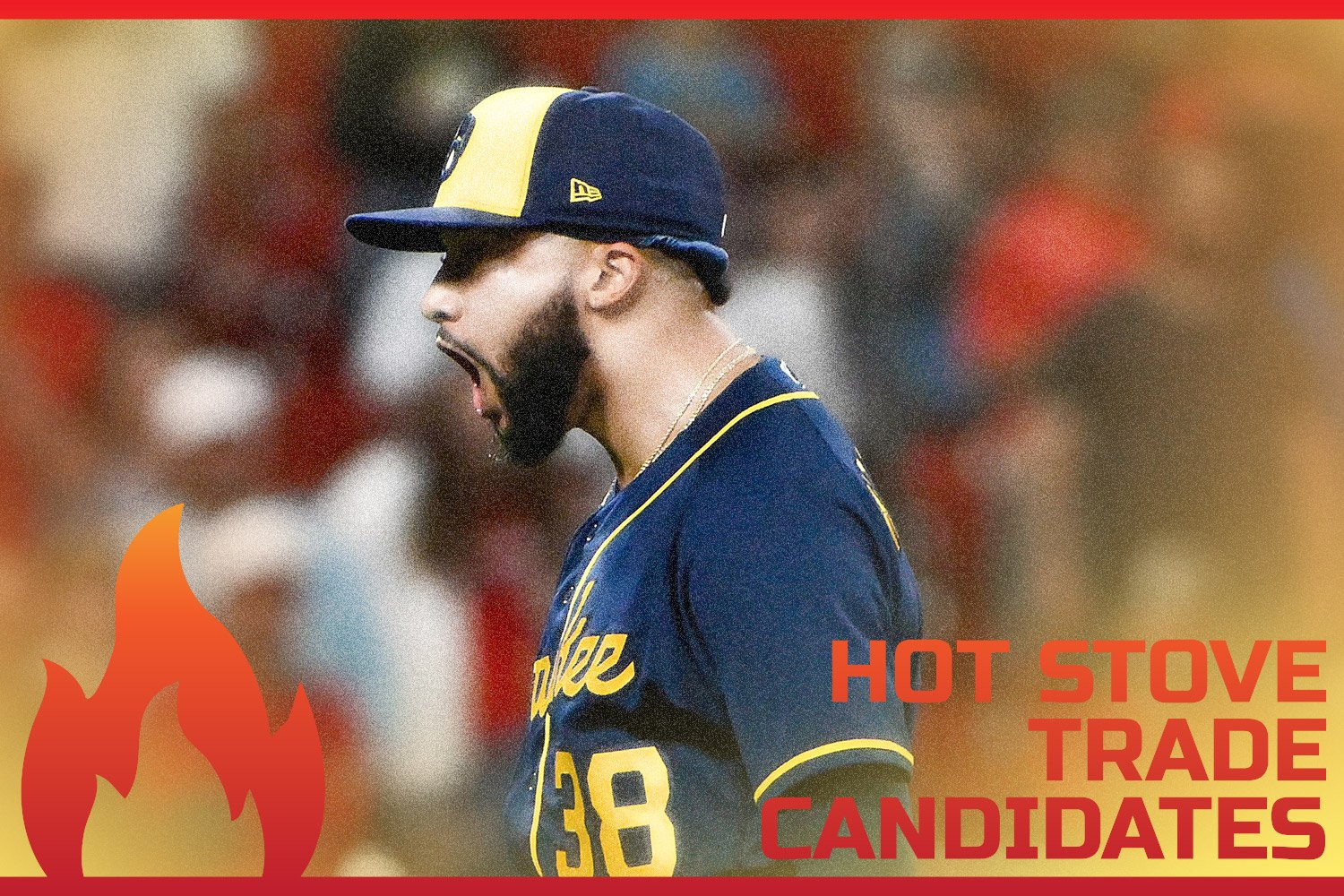 Why They Need Him There isn’t a lot in common between Philadelphia and Milwaukee. Other than the phonetic parallels between “cheese” and “cheesesteak,” the main shared characteristic between the two cities is how their baseball teams have struggled to translate regular season success into meaningful playoff performances. The Phillies have had back-to-back heartbreaks after making the World Series in 2022 as a Wild Card team. In 2023, they seemed nigh untouchable at home but folded under the pressure of a seven-game Championship Series against the Diamondbacks. In 2024, they won 95 games, the second-most in baseball, but once again lost to an underdog team that barely squeezed itself into the bracket, as the Mets needed just four games to end Red October before the Phillies even made it back to the NLCS. The statistics reflect this lopsided success story. The team had a regular-season OPS of .750 (5th in MLB) and an ERA of 3.85 (11th in MLB). The rotation was especially solid, led by Cy Young finalist Zack Wheeler, and strong seasons from Aaron Nola, Cristopher Sánchez, and Ranger Suárez, all of whom are still under team control in 2025. The bullpen picture was a little iffier, a problem that would rear its ugly head at the worst possible time. Hoping to recapture the success he found in 2023, they redeployed José Alvarado as their closer to subpar results, eventually pivoting to Jeff Hoffman. To his credit, Hoffman was pretty good, posting a 2.17 ERA and ten saves, but wanting a more experienced closer, the team acquired Carlos Estévez from the Angels at the deadline. With great backup options like Matt Strahm and even Orion Kerkering, it seemed like the bullpen was set, but the postseason figures told a different story. Phillies relievers combined for a gruesome 11.37 ERA across 12 ⅔ innings during the NLDS. Hoffman (40.50 ERA, 1 ⅓ IP), Alvarado (27.00 ERA, ⅔ IP), and Strahm (18.00 IP, 2 IP) couldn’t get it together, and despite pitching admirably, Estévez blew a crucial save by giving up an epic grand slam to Francisco Lindor in the final game of the series. Devin Williams doesn’t have the greatest postseason record, but with Estévez now a free agent, he could be the fix the team needs to have more pitching stability in later innings. Hoffman’s past two years have been great, and Strahm has shown incredible promise, but Williams would be the only reliever with extensive experience as a closer, giving the bullpen a leg up. What They Have to Offer The Phillies have a decent group of prospects under control, topped off by four names in MLB’s Top 100 ranking. The type of player most closely aligns with Milwaukee’s typical trade haul would be prospects ready to make the big leagues within the next year or two. Furthermore, with a strong nucleus of young position players in the lineup and farm system, they’ll likely hone in on pitchers with high developmental upside. Andrew Painter and Mick Abel fit this description well but are likely too juicy for a rental reliever. Instead, an interesting alternative could be Jean Cabrera (#13 PHI prospect), a right-handed starter who posted a 3.39 ERA over 14 starts with High-A Jersey Shore. He jumped to Double-A Reading towards the end of the season and struggled to find the same success, but he’s just turning 23 and still has plenty of time to figure things out. Scouts note him as having a sinker in the mid-90s and a four-seamer up to 98 mph, two weapons that play well off of his changeup. While likely insufficient by himself, right-handed reliever Wen-Hui Pan might also be worth a look. He posted a 1.29 ERA and 9.4 K/9 over 21 innings with High-A Jersey Shore. Scouts credit his high-velocity fastball that can touch 100 mph with a good arm-side run for his success and an outstanding splitter with very little spin. His inning count is low after missing time due to a broken pinkie he sustained in spring training, but that shouldn’t be a recurring issue. Moisés Chace was a trade piece that sent Gregory Soto to the Orioles at this year’s deadline. After performing well in High-A, the Phillies promoted him to Double-A Reading, where he made four starts. Over the 80 ⅓ innings he pitched this year, he had a 3.59 ERA and a wicked 13.9 K/9. His fastball has a lower velocity than some, but with a great ride and low vertical approach angle, he makes it work in the upper part of the strike zone, akin to Paul Sewald. His unorthodox profile could be yet another fun project for the Brewers' pitching lab to perfect. Outside of pitchers, the Phillies don’t have a lot to offer that would feasibly make the Brewers better. Milwaukee could ask for someone like Otto Kemp, an infielder with solid numbers in Single-A and Double-A, to use in a future trade to acquire someone else, but the pickings are slim otherwise. So what’ll it be for the Phillies: another awesome regular season followed by a bullpen collapse at the eleventh hour or a fresh closer ready to save the city from its rabid fans? With so much talent already on the team and just one primary area of weakness, adding Devin Williams could be like sealing up that one gap in the Death Star and making this roster impregnable.
 -
If the Brewers and Dads do a deal for Devin, how can both teams come away better than before? Image courtesy of © Benny Sieu-Imagn Images If the Brewers and Dads do a deal for Devin, how can both teams come away better than before? Why They Need Him The Padres are fighting ferociously to escape the Dodgers' shadow, and that fight isn't getting any easier. After narrowly missing the playoffs in 2023, outstanding years from new faces helped carry them to 93 wins and a Wild Card berth in 2024. They were arguably the team to come the closest to dethroning Los Angeles in the postseason, taking the Division Series to a full five games although the lineup was completely shut down for the final 21 innings of the matchup. Nonetheless, San Diego was just one win away from overcoming the eventual World Series champions and their most heated rivals. Although they lacked the star power that the Dodgers had, their roster was incredibly well-rounded, not particularly lacking in any one area. The team’s OPS of .745 was sixth in MLB and they managed to lead all teams in batting average, at .263. Pitching-wise, they had a combined ERA of 3.86, 12th in MLB. Michael King and Dylan Cease led the rotation, while the bullpen was held down by Jeremiah Estrada, Adrián Morejón, and their primary closer Robert Suarez. To further bolster an already capable group of relievers, they even acquired Tanner Scott from the Marlins and Jason Adam from the Rays at the trade deadline to serve as their setup men. Looking ahead to 2025, San Diego’s front office has some important conversations to have. Star infielder Ha-Seong Kim is a free agent, and will probably seek greener pastures. On the bright side, Jurickson Profar is a good candidate to return, on the heels of an All-Star season in which he was also beloved in the clubhouse. Furthermore, the loss of Kim may not be the end of the world. After his shoulder surgery in late August sidelined him for the remainder of the regular season and entirety of the postseason, the team did fine with Xander Bogaerts at shortstop, Jake Cronenworth at second base, and Luis Arráez at first. If they choose to abstain from pursuing a replacement for Kim through trade or free agency, a natural step would be to recreate last year’s success by bringing aboard another standout closer, in Devin Williams. In this case, Suarez would likely shift his responsibility to pitching the eighth inning, but they can also share if they’d prefer the harmonious route. With an already great lineup; a rotation with the aforementioned King and Cease joined by veteran Yu Darvish; and a bullpen with the Airbender, the Padres might just have enough to put the other 29 teams on notice—even the defending champions. What They Have to Offer Because of their aggressive trade decisions over the past few years, the Padres have bade adieu to many of their most prized younglings. Of the teams we’ve discussed as potential trade partners so far, the Padres might have the weakest farm system. In fact, unless the Angels plan on competing or the Astros plan on reuniting Josh Hader with his old partner in crime, San Diego has the weakest inventory of any team potentially interested in Williams. But within every bag of trail mix are a few M&Ms, and the Padres’ farm system is no different. Ethan Salas and Leodalis De Vries are both 18-year-olds in MLB’s Top 100 prospect rankings, but they’re probably staying where they are. In fact, five of the team’s top 10 prospects were in rookie ball, which may be a little too far out for the Brewers’ liking. Bradgley Rodriguez has both a unique first name and a chance to be great, pitching to a 2.64 ERA over 61 ⅓ innings across three levels of the minors from Single-A through Double-A. With a 70-grade fastball (the same grade as Jacob Misiorowski) that sits in the upper 90s and a plus changeup, scouts credited this one-two punch for his quick ascent through the minors. If they want to pursue a starter instead, Braden Nett posted a 3.88 ERA over 19 starts, spending the vast majority of his time with High-A Fort Wayne. He’s noted as having decent carry on his fastball with a high-spin slider and a developing changeup that has yet to separate effectively from his heater. He’s a work in progress with considerable upside, a player profile that Milwaukee loves to take on. Realistic position player options are limited, but first base prospect Romeo Sanabria also shot up through three levels of the minors in 2024, slashing .288/.396/.427 with 30 doubles and 11 home runs over 546 plate appearances. He doesn’t seem to have the pop of a typical first baseman, is limited by his fielding ability and lack of speed, and saw his numbers decline quickly by the time he hit Double-A, but with great on-base skills, there’s a potential for him to be an effective bat somewhere down the line. Because of the relatively low value of the Padres’ prospects, it would make sense for several of them to be bundled together. However, with the team’s core aging quickly and their window of contention closing quicker, the time to compete is now for the Friars—and who better to push them over the top than Devin Williams? View full article

