Jason Wang
-
Posts
955 -
Joined
-
Last visited
-
Days Won
1
Content Type
Profiles
Forums
Blogs
Events
News
2026 Milwaukee Brewers Top Prospects Ranking
Milwaukee Brewers Videos
2022 Milwaukee Brewers Draft Picks
Milwaukee Brewers Free Agent & Trade Rumors, Notes, & Tidbits
Guides & Resources
2023 Milwaukee Brewers Draft Picks
2024 Milwaukee Brewers Draft Picks
The Milwaukee Brewers Players Project
2025 Milwaukee Brewers Draft Pick Tracker
2026 Milwaukee Brewers Draft Tracker: Picks & Bonuses
Store
Downloads
Gallery
Everything posted by Jason Wang
-
 Image courtesy of © Michael McLoone-Imagn Images In 2024, Freddy Peralta was suddenly thrust into the top of the rotation after years of pitching behind Corbin Burnes and Brandon Woodruff. It was a catastrophe-ridden year for Brewers' starters, and while the organization had become renowned for its ability to develop pitching, Peralta hardly felt like a true “ace.” He resembled one in 2021 when he posted a 2.81 ERA over 144 ⅓ innings, but since then, he has managed just a 3.73 ERA over 79 starts, a respectable second or third arm but hardly the man you’d want to lead an elite staff. One of the main obstacles preventing him from reaching the upper echelon of pitching has been his lack of an effective secondary pitch. He has always had a great fastball, but his breaking balls and offspeed pitches haven’t been able to meet the standard. This was especially apparent last year when his slider had a cumulative run value of -3. This figure is a little odd considering he had an opposing average of just .203 and a whiff rate of 41.0%, but it was far more often a ball than a strike. It’s such an interesting example that I used it as an example when unpacking the run value statistic and what it really means. Shameless self-promotion aside, after three seasons of failing to recover what made his slider great in 2021, he seems to have left it behind in 2025 in favor of the curveball. The curveball has always been a part of his toolkit, but it was never a prevalent offering. Last year, he threw it just 7.1% of the time. Despite being an uncommon occurrence, it was typically very effective when thrown: % of pitches BA SLG Whiff % 2021 10.8 .125 .188 27.9 2022 16.2 .125 .175 38.9 2023 12.4 .214 .381 33.5 2024 7.1 .182 .341 37.2 Okay, so he’s throwing the curveball more often. Is that why he’s off to a 2.18 ERA over his first eight starts with a WHIP of 1.04 and top-quartile figures for nearly all of his Stacast metrics? Sort of. As a result of elevating Uncle Charlie to the number one breaking ball offering in his arsenal, he likely spent some time in the offseason messing with it because its profile is noticeably different. Since debuting, his curveball has averaged somewhere in the mid-70s. Now, it’s averaging 80.5 mph. The average RPM on the pitch is 2,427, which is more than 200 more than where it was sitting last year, and the result is a few more inches of induced drop on the pitch, a crucial characteristic for missing bats or, at the very least, inducing ground balls. The improved command helps a ton as well. Curveballs at the bottom of the strike zone, combined with high fastballs, are better than clean sheets and a cold pillow. And like your local Motel 6, Freddy Peralta possesses both this year. But what do all these tables and charts really mean? I sure don’t know. I was raised as an iPad kid. So, like true iPad kids, let’s look at the video to see this dynamic duo in action. In a dominant three-pitch at-bat against JJ Bleday, Peralta starts things off with a fastball on the outside edge. Next, he attacks that same spot with a curveball that just dives below Bleday’s bat for strike two. To finish things off, he throws a changeup to the outside corner to make JJ Bleday look more like Jay Jay the Jet Plane. A more effective secondary pitch improves one’s primary pitch, and that’s exactly what we’re seeing. No longer able to sit on his fastball as easily, the opposing batting average and slugging on his four-seam fastball have both decreased significantly. His changeup is worth a deep dive on its own as that’s actually the most valuable pitch by RV/100 in his arsenal, but if there’s one takeaway you get from this whole article, it’s that the Brewers are seemingly back to having prime Peralta. It’s in part thanks to his fancy new curveball. View full article
 -
Freddy Peralta’s Curveball Has Transformed Him Into A True Ace
Jason Wang posted an article in Brewers
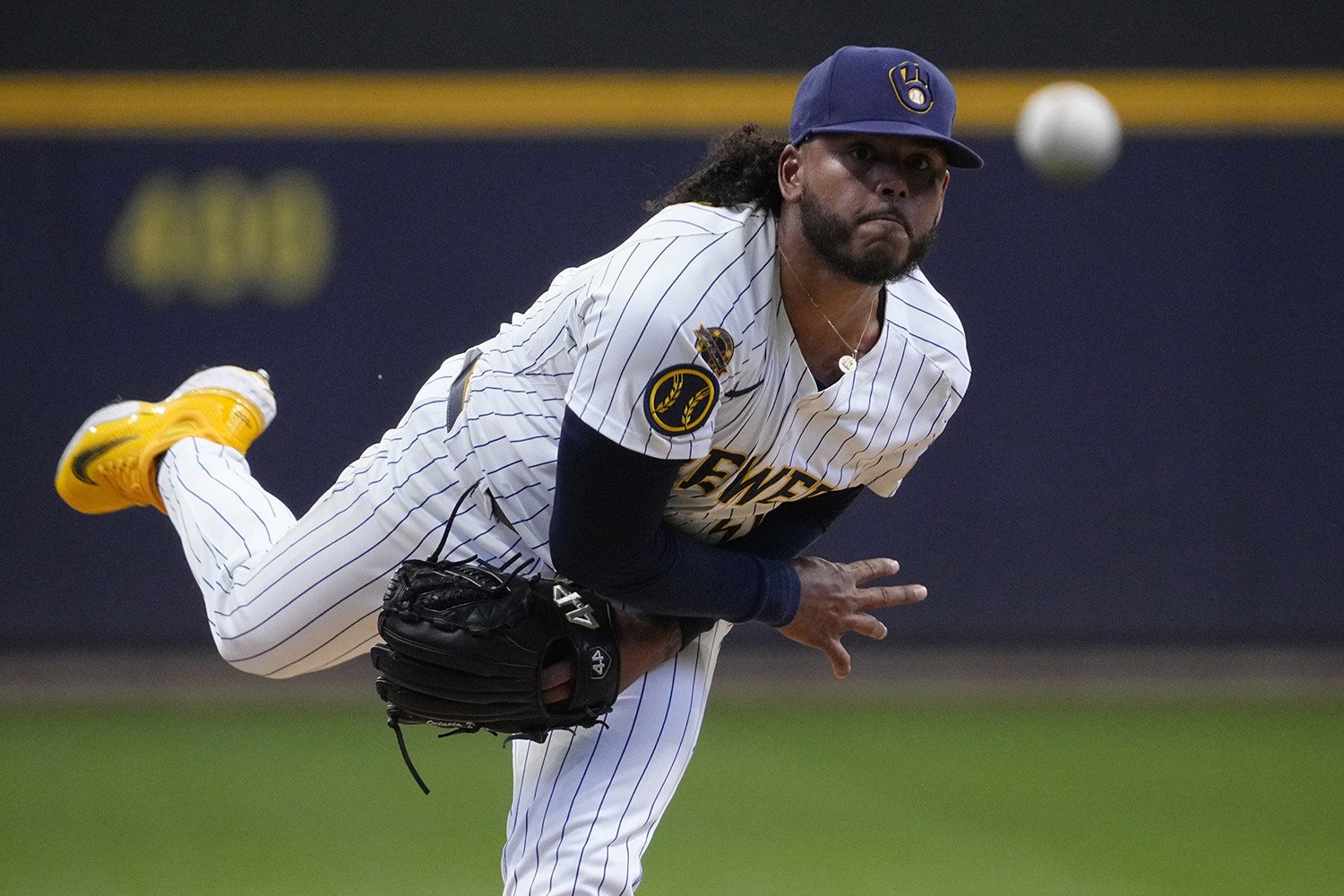 In 2024, Freddy Peralta was suddenly thrust into the top of the rotation after years of pitching behind Corbin Burnes and Brandon Woodruff. It was a catastrophe-ridden year for Brewers' starters, and while the organization had become renowned for its ability to develop pitching, Peralta hardly felt like a true “ace.” He resembled one in 2021 when he posted a 2.81 ERA over 144 ⅓ innings, but since then, he has managed just a 3.73 ERA over 79 starts, a respectable second or third arm but hardly the man you’d want to lead an elite staff. One of the main obstacles preventing him from reaching the upper echelon of pitching has been his lack of an effective secondary pitch. He has always had a great fastball, but his breaking balls and offspeed pitches haven’t been able to meet the standard. This was especially apparent last year when his slider had a cumulative run value of -3. This figure is a little odd considering he had an opposing average of just .203 and a whiff rate of 41.0%, but it was far more often a ball than a strike. It’s such an interesting example that I used it as an example when unpacking the run value statistic and what it really means. Shameless self-promotion aside, after three seasons of failing to recover what made his slider great in 2021, he seems to have left it behind in 2025 in favor of the curveball. The curveball has always been a part of his toolkit, but it was never a prevalent offering. Last year, he threw it just 7.1% of the time. Despite being an uncommon occurrence, it was typically very effective when thrown: % of pitches BA SLG Whiff % 2021 10.8 .125 .188 27.9 2022 16.2 .125 .175 38.9 2023 12.4 .214 .381 33.5 2024 7.1 .182 .341 37.2 Okay, so he’s throwing the curveball more often. Is that why he’s off to a 2.18 ERA over his first eight starts with a WHIP of 1.04 and top-quartile figures for nearly all of his Stacast metrics? Sort of. As a result of elevating Uncle Charlie to the number one breaking ball offering in his arsenal, he likely spent some time in the offseason messing with it because its profile is noticeably different. Since debuting, his curveball has averaged somewhere in the mid-70s. Now, it’s averaging 80.5 mph. The average RPM on the pitch is 2,427, which is more than 200 more than where it was sitting last year, and the result is a few more inches of induced drop on the pitch, a crucial characteristic for missing bats or, at the very least, inducing ground balls. The improved command helps a ton as well. Curveballs at the bottom of the strike zone, combined with high fastballs, are better than clean sheets and a cold pillow. And like your local Motel 6, Freddy Peralta possesses both this year. But what do all these tables and charts really mean? I sure don’t know. I was raised as an iPad kid. So, like true iPad kids, let’s look at the video to see this dynamic duo in action. In a dominant three-pitch at-bat against JJ Bleday, Peralta starts things off with a fastball on the outside edge. Next, he attacks that same spot with a curveball that just dives below Bleday’s bat for strike two. To finish things off, he throws a changeup to the outside corner to make JJ Bleday look more like Jay Jay the Jet Plane. A more effective secondary pitch improves one’s primary pitch, and that’s exactly what we’re seeing. No longer able to sit on his fastball as easily, the opposing batting average and slugging on his four-seam fastball have both decreased significantly. His changeup is worth a deep dive on its own as that’s actually the most valuable pitch by RV/100 in his arsenal, but if there’s one takeaway you get from this whole article, it’s that the Brewers are seemingly back to having prime Peralta. It’s in part thanks to his fancy new curveball.
 -
william contreras clocking in for work in August
-
Regardless of whether the velo comes back, it's cool to see the org diversifying away from the dominant fastball.
-
Image courtesy of © Wm. Glasheen/USA TODAY NETWORK-Wisconsin / USA TODAY NETWORK via Imagn Images It has been quite some time since we’ve seen Brandon Woodruff toe the slab in the majors. His last outing for the big-league squad was on Sept. 23, 2023, when he pitched five innings against the Marlins to cap an astounding (although already injury-shortened) season. Just two weeks before that, he had thrown a complete game shutout. Unfortunately, just hours before he would have been named as part of the rotation for the Brewers' Wild Card Series showdown with the Diamondbacks, he instead held a press conference to announce that he would need surgery on a torn shoulder capsule. It's sidelined him ever since. Last month, after a recovery process that lasted over a year, Woodruff began a 30-day rehab assignment with Triple-A Nashville. He's made a stop in Appleton to mix things up and sell a few tickets for the cozied-up High-A affiliate, but by and large, he's been with the Sounds ever since. Aside from being a particularly emotional return to the game for Woodruff, that also gave us a glimpse into how his pitching has been affected by persistent injuries and a long layoff. On the surface, it seems like he’s back to business, posting a 2.79 ERA over his two starts with Wisconsin and a 2.63 ERA over three starts with Nashville. However, a closer look tells us that things are far more different than these numbers may lead you to believe. First and foremost, his velocity has decreased significantly. Here is a table of his average velocities across all levels of competitions over the past four seasons he has pitched: Four-Seam Fastball Sinker Changeup Slider Curve Cutter 2021 96.6 96.3 86.6 86.5 83.9 N/A 2022 96.4 95.9 86.2 88.0 84.1 N/A 2023 95.9 95.0 85.8 87.0 83.0 N/A 2025 92.6 92.8 83.5 81.0 79.4 89.5 Data courtesy of Brooks Baseball Not only is his average velocity down, he isn't able to top out at nearly the same levels as he used to. While he could occasionally touch 99 mph in years past, he has yet to eclipse 96 mph a single time while rehabbing. This dip could be due to several factors, such as needing time to ramp back up to full effort or the adverse long-term effects of two serious shoulder injuries in one year. When asked about whether there were concerns about him getting back to where he was, Pat Murphy had this to say: Based on Murphy’s comments, it seems like he could get back to where he was, but the team isn’t betting the house on it. (This is a noteworthy departure from the tone Murphy struck in March, when he said he expected Woodruff's fastball to come back to its full previous strength.) It also explains some of the other changes to his arsenal. After all, if Woodruff was expected to return to his hard-throwing youth, why fix what isn’t broken? So far, the two biggest changes have been adding a cutter and changing the shape of his slider to a sweeper. Let’s start with the slider. First off, although it’s classified as a slider, we can pretty much tell it’s more of a sweeper based on its intrinsic characteristics. The dip in velocity is the first hint, but a closer look at the movement profile gives us the smoking gun. Vertical Movement (inches) Horizontal Movement (inches) 2021 -2.8 2.2 2022 1.0 2.19 2023 1.3 1.8 2025 1.0 7.1 Woodruff’s slider didn’t move all that much to begin with, but a big jump in glove-side break makes it clear that he is working with a different pitch type altogether. Other arms on the Brewers have successfully converted their sliders to sweepers with great results—most notably, this year, Grant Anderson. As for the cutter, it’s probably just another tool in his belt to get outs. As the dominance of each individual pitch decreases, he’ll instead have to rely on sheer variety to keep batters on their heels. Furthermore, his cutter has a similar movement profile to his old slider, with a little more ride. When asked about the importance of his new pitches, Murphy remarked that Woodruff has been liking the sweeper. The new pitches are gradually increasing his confidence that he’ll be ready to face big-league bats soon. For some, it may be equally disappointing and concerning to see slower velocities come out of Woodruff's hand. However, when one considers all the work that he has done to adapt his skillset to his current physical abilities, it’s possible he’ll be just as dominant as he was before—albeit in a slightly different form. His fastball and changeup grade out worse than before, but the sweeper and cutter look like very valuable additions. With his most recent start with the Sounds possibly being the final one, it won’t be long before we get to see what this new version of Woodruff can do against the highest level of competition. View full article
-
Meet the New Brandon Woodruff—Coming Soon to a Big-League Mound Near You
Jason Wang posted an article in Brewers
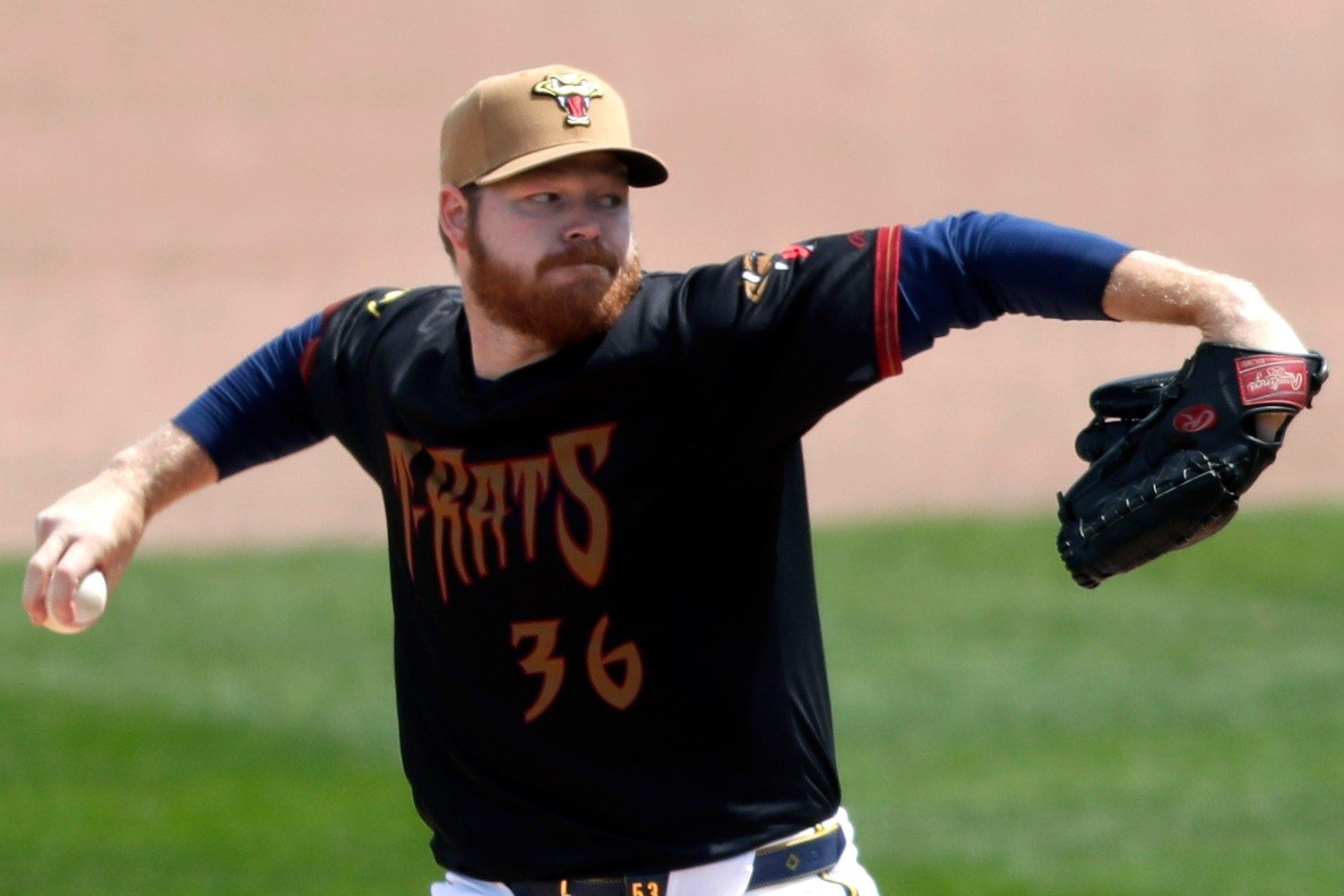 It has been quite some time since we’ve seen Brandon Woodruff toe the slab in the majors. His last outing for the big-league squad was on Sept. 23, 2023, when he pitched five innings against the Marlins to cap an astounding (although already injury-shortened) season. Just two weeks before that, he had thrown a complete game shutout. Unfortunately, just hours before he would have been named as part of the rotation for the Brewers' Wild Card Series showdown with the Diamondbacks, he instead held a press conference to announce that he would need surgery on a torn shoulder capsule. It's sidelined him ever since. Last month, after a recovery process that lasted over a year, Woodruff began a 30-day rehab assignment with Triple-A Nashville. He's made a stop in Appleton to mix things up and sell a few tickets for the cozied-up High-A affiliate, but by and large, he's been with the Sounds ever since. Aside from being a particularly emotional return to the game for Woodruff, that also gave us a glimpse into how his pitching has been affected by persistent injuries and a long layoff. On the surface, it seems like he’s back to business, posting a 2.79 ERA over his two starts with Wisconsin and a 2.63 ERA over three starts with Nashville. However, a closer look tells us that things are far more different than these numbers may lead you to believe. First and foremost, his velocity has decreased significantly. Here is a table of his average velocities across all levels of competitions over the past four seasons he has pitched: Four-Seam Fastball Sinker Changeup Slider Curve Cutter 2021 96.6 96.3 86.6 86.5 83.9 N/A 2022 96.4 95.9 86.2 88.0 84.1 N/A 2023 95.9 95.0 85.8 87.0 83.0 N/A 2025 92.6 92.8 83.5 81.0 79.4 89.5 Data courtesy of Brooks Baseball Not only is his average velocity down, he isn't able to top out at nearly the same levels as he used to. While he could occasionally touch 99 mph in years past, he has yet to eclipse 96 mph a single time while rehabbing. This dip could be due to several factors, such as needing time to ramp back up to full effort or the adverse long-term effects of two serious shoulder injuries in one year. When asked about whether there were concerns about him getting back to where he was, Pat Murphy had this to say: Based on Murphy’s comments, it seems like he could get back to where he was, but the team isn’t betting the house on it. (This is a noteworthy departure from the tone Murphy struck in March, when he said he expected Woodruff's fastball to come back to its full previous strength.) It also explains some of the other changes to his arsenal. After all, if Woodruff was expected to return to his hard-throwing youth, why fix what isn’t broken? So far, the two biggest changes have been adding a cutter and changing the shape of his slider to a sweeper. Let’s start with the slider. First off, although it’s classified as a slider, we can pretty much tell it’s more of a sweeper based on its intrinsic characteristics. The dip in velocity is the first hint, but a closer look at the movement profile gives us the smoking gun. Vertical Movement (inches) Horizontal Movement (inches) 2021 -2.8 2.2 2022 1.0 2.19 2023 1.3 1.8 2025 1.0 7.1 Woodruff’s slider didn’t move all that much to begin with, but a big jump in glove-side break makes it clear that he is working with a different pitch type altogether. Other arms on the Brewers have successfully converted their sliders to sweepers with great results—most notably, this year, Grant Anderson. As for the cutter, it’s probably just another tool in his belt to get outs. As the dominance of each individual pitch decreases, he’ll instead have to rely on sheer variety to keep batters on their heels. Furthermore, his cutter has a similar movement profile to his old slider, with a little more ride. When asked about the importance of his new pitches, Murphy remarked that Woodruff has been liking the sweeper. The new pitches are gradually increasing his confidence that he’ll be ready to face big-league bats soon. For some, it may be equally disappointing and concerning to see slower velocities come out of Woodruff's hand. However, when one considers all the work that he has done to adapt his skillset to his current physical abilities, it’s possible he’ll be just as dominant as he was before—albeit in a slightly different form. His fastball and changeup grade out worse than before, but the sweeper and cutter look like very valuable additions. With his most recent start with the Sounds possibly being the final one, it won’t be long before we get to see what this new version of Woodruff can do against the highest level of competition.
 -
Image courtesy of Thiéres Rabelo Honorable Mentions William Contreras 90 AB, .278/.394/.400, 25 H, 2 2B, 3 HR, 18 RBI, 4 SB Contreras has gotten off to a slow start—especially compared to the torrid pace he set in the first month of last year—but that doesn’t mean he hasn’t been productive. His .794 OPS in April was the fourth-highest of any Brewer, and despite lagging slightly behind his understudy Eric Haase, he had six times as many at-bats. The biggest thing that seems to be missing is his power, as his quality of contact numbers have decreased across the board and his cumulative slugging for the season is just .339. Still, his strikeout and walk rate are perfectly matched at 15.7%, and he has been outstanding defensively. With more time to settle in and improve his approach against offspeed pitches and sweepers, he should still be one of the better-hitting catchers in MLB. Statistical Nugget: Despite seeing just 27 curveballs so far, he has already accumulated a Statcast run value of 5, given his .500 average, 2.000 slugging percentage, and 0% whiff rate against the pitch. Christian Yelich 96 AB, .240/.345/.427, 23 H, 3 2B, 5 HR, 22 RBI, 5 SB In 2024, Christian Yelich was seemingly back to his MVP ways—before going down with yet another back injury, one that required surgery. He isn’t quite as impressive this year, but he has done just enough to still be one of the better bats in the lineup. His 22 RBIs were tied for the most on the team in April, and he wasn’t too shabby on the basepaths, either. His launch angles are down once again, and he’s having trouble making contact as frequently as he probably would like, but he’s still hitting the ball hard and walking at a 12.8% clip. He’s absolutely crushing offspeed pitches, but is getting beaten by all sorts of fastballs. That could be a sign that the lingering effects of his injury are still holding him back. Statistical Nugget: Against offspeed pitches, Yelich is averaging .417 and slugging .917. Rhys Hoskins 76 AB, .303/.413/.447, 23 H, 2 2B, 3 HR, 12 RBI, 1 SB A year further removed from the campaign he lost to injury, Hoskins is putting up numbers comparable to what he did with the Phillies. His OPS of .860 was the best mark of any Brewers hitter in April, and he also led the lineup in on-base percentage. His 15.3% walk rate in 2025 so far is close to his single-season best of 16.5%, achieved in 2019. One of the biggest steps forward for Hoskins has been cutting his chase rate by about 6 percentage points year-over-year, which has also helped him reduce his strikeout rate by about 8 percentage points. He’s back to crushing fastballs, but has struggled against breaking pitches other than the slider. Statistical Nugget: Despite averaging just .185 against four-seam fastballs this season, he’s slugging .630. Hitter of the Month - Jackson Chourio 114 AB, .281/.297/.535, 32 H, 9 2B, 1 3B, 6 HR, 22 RBI, 2 SB Chourio is having quite an interesting sophomore year. Like his rookie season, he has had his ups and downs at the plate, but he has managed to lock in a little quicker this time around. He also seems absolutely allergic to drawing free passes, walking at a bottom-percentile 1.3% clip. Instead, he just swings. In fact, his swing/take profile and general approach at the plate are deserving of their own article, something our very own Jake McKibbin did a few weeks ago. As a quick summary, Chourio is still very good and has proven that he is capable of driving the ball out of the park—but a 43.2% chase rate is simply not conducive to long-term success. We expected him to take some time to become accustomed to big-league pitching, and many anticipated a few years of average or below-average offensive production before he really came into his own. He proved to be ahead of an already accelerated development schedule when he posted a .914 OPS in the second half of 2024, so who knows? Maybe he’ll continue to tweak his swing decisions and reach new heights once again in 2025. Statistical Nugget: Chourio has an .869 OPS when swinging at the first pitch and a .612 OPS when taking the first pitch. View full article
-
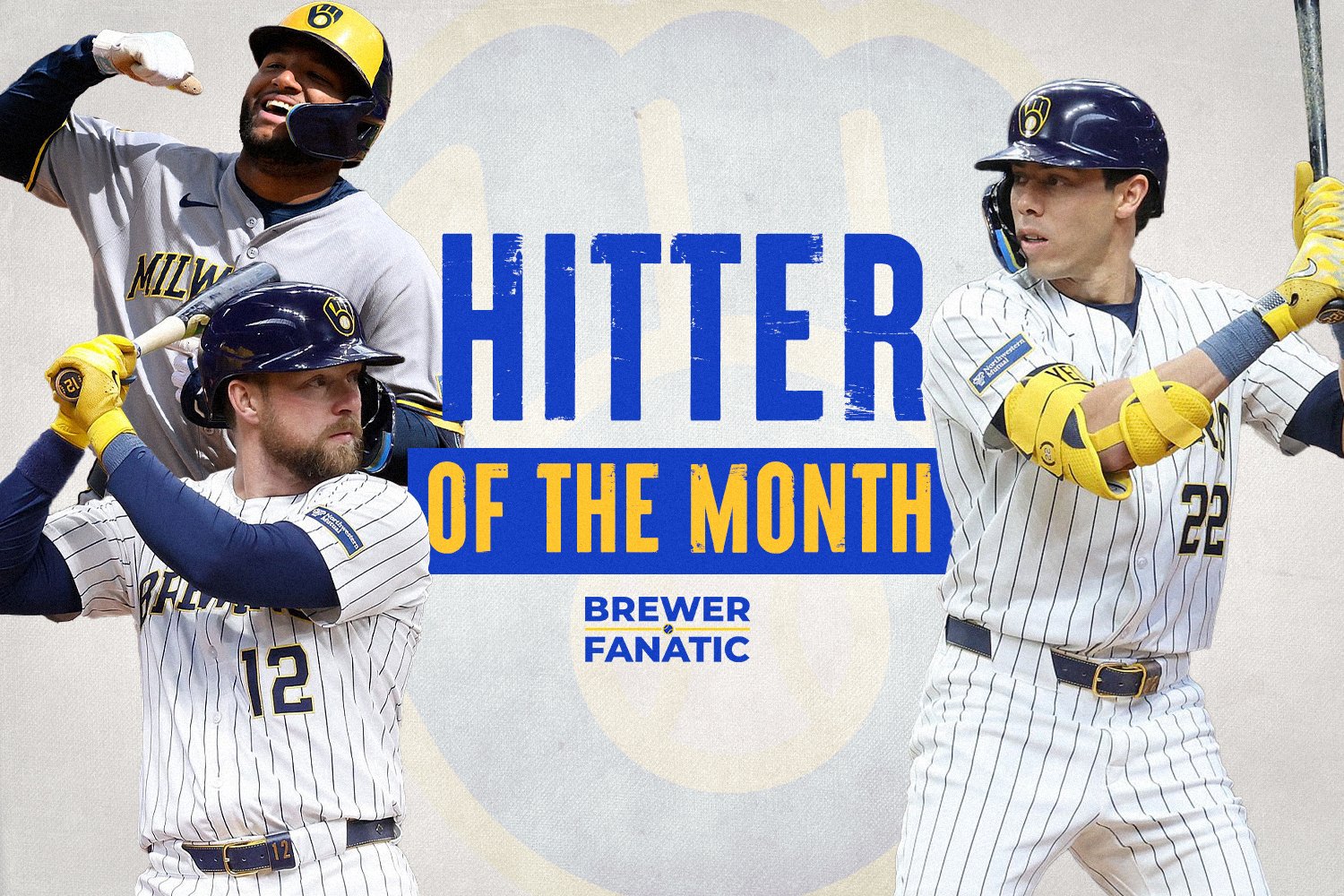 Honorable Mentions William Contreras 90 AB, .278/.394/.400, 25 H, 2 2B, 3 HR, 18 RBI, 4 SB Contreras has gotten off to a slow start—especially compared to the torrid pace he set in the first month of last year—but that doesn’t mean he hasn’t been productive. His .794 OPS in April was the fourth-highest of any Brewer, and despite lagging slightly behind his understudy Eric Haase, he had six times as many at-bats. The biggest thing that seems to be missing is his power, as his quality of contact numbers have decreased across the board and his cumulative slugging for the season is just .339. Still, his strikeout and walk rate are perfectly matched at 15.7%, and he has been outstanding defensively. With more time to settle in and improve his approach against offspeed pitches and sweepers, he should still be one of the better-hitting catchers in MLB. Statistical Nugget: Despite seeing just 27 curveballs so far, he has already accumulated a Statcast run value of 5, given his .500 average, 2.000 slugging percentage, and 0% whiff rate against the pitch. Christian Yelich 96 AB, .240/.345/.427, 23 H, 3 2B, 5 HR, 22 RBI, 5 SB In 2024, Christian Yelich was seemingly back to his MVP ways—before going down with yet another back injury, one that required surgery. He isn’t quite as impressive this year, but he has done just enough to still be one of the better bats in the lineup. His 22 RBIs were tied for the most on the team in April, and he wasn’t too shabby on the basepaths, either. His launch angles are down once again, and he’s having trouble making contact as frequently as he probably would like, but he’s still hitting the ball hard and walking at a 12.8% clip. He’s absolutely crushing offspeed pitches, but is getting beaten by all sorts of fastballs. That could be a sign that the lingering effects of his injury are still holding him back. Statistical Nugget: Against offspeed pitches, Yelich is averaging .417 and slugging .917. Rhys Hoskins 76 AB, .303/.413/.447, 23 H, 2 2B, 3 HR, 12 RBI, 1 SB A year further removed from the campaign he lost to injury, Hoskins is putting up numbers comparable to what he did with the Phillies. His OPS of .860 was the best mark of any Brewers hitter in April, and he also led the lineup in on-base percentage. His 15.3% walk rate in 2025 so far is close to his single-season best of 16.5%, achieved in 2019. One of the biggest steps forward for Hoskins has been cutting his chase rate by about 6 percentage points year-over-year, which has also helped him reduce his strikeout rate by about 8 percentage points. He’s back to crushing fastballs, but has struggled against breaking pitches other than the slider. Statistical Nugget: Despite averaging just .185 against four-seam fastballs this season, he’s slugging .630. Hitter of the Month - Jackson Chourio 114 AB, .281/.297/.535, 32 H, 9 2B, 1 3B, 6 HR, 22 RBI, 2 SB Chourio is having quite an interesting sophomore year. Like his rookie season, he has had his ups and downs at the plate, but he has managed to lock in a little quicker this time around. He also seems absolutely allergic to drawing free passes, walking at a bottom-percentile 1.3% clip. Instead, he just swings. In fact, his swing/take profile and general approach at the plate are deserving of their own article, something our very own Jake McKibbin did a few weeks ago. As a quick summary, Chourio is still very good and has proven that he is capable of driving the ball out of the park—but a 43.2% chase rate is simply not conducive to long-term success. We expected him to take some time to become accustomed to big-league pitching, and many anticipated a few years of average or below-average offensive production before he really came into his own. He proved to be ahead of an already accelerated development schedule when he posted a .914 OPS in the second half of 2024, so who knows? Maybe he’ll continue to tweak his swing decisions and reach new heights once again in 2025. Statistical Nugget: Chourio has an .869 OPS when swinging at the first pitch and a .612 OPS when taking the first pitch.
 -
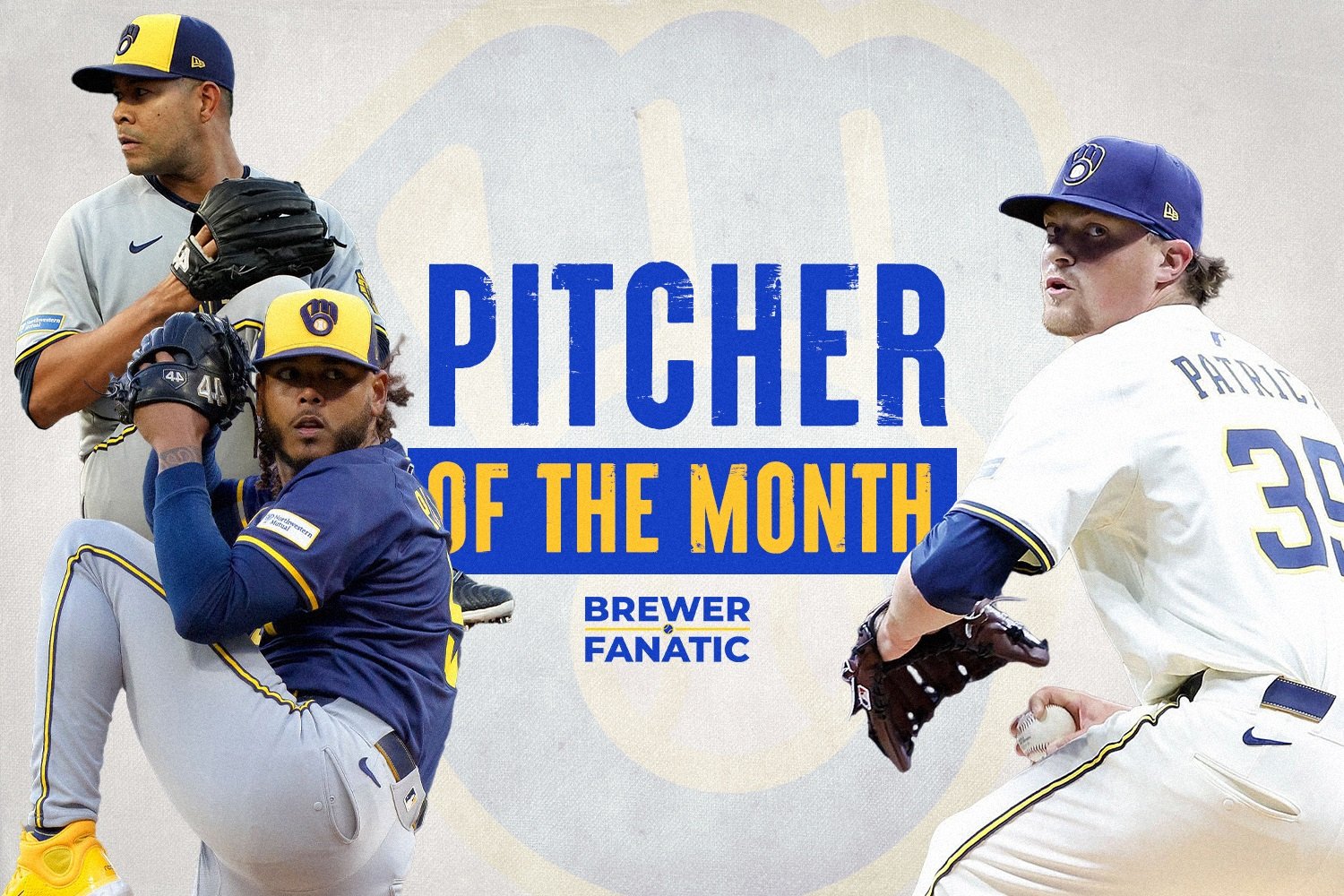 Honorable Mentions Grant Anderson 14 ⅓ IP, 1.88 ERA, 12 H, 3 ER, 7 BB, 15 K Anderson is one of the bullpen arms to keep an eye on this year. After a tough first two years in the big leagues, Milwaukee’s pitching development crew seems to have figured out how to unlock the best version of him. Some of this may simply be the result of new scenery but there is quite a bit of evidence to suggest that the Brewers have made very real improvements. One of the major changes has been to change the shape of his breaking ball from a slider into a sweeper which has quickly become his best pitch. Opposing hitters have averaged just .115 with an ISO of .000 against it and the benefits have carried through to the rest of his arsenal, particularly his fastball. It may not be realistic to expect all of his Statcast metrics to go up so drastically but he’s looking very good so far. Statistical Nugget: Anderson’s OPS after getting to an 0-1 count is a perfect .000 over seven plate appearances. Freddy Peralta 34 ⅓ IP, 2.36 ERA, 24 H, 9 ER, 13 BB, 33 K Peralta should be a constant reminder that spring training numbers shouldn’t be overanalyzed. After a very concerning final outing before Opening Day, the team’s ace has locked it in and returned to peak form. Fans have come to know Peralta as a pitcher who has his ups and downs and the larger question is whether he’ll be able to sustain his great numbers. The biggest adjustment he has made has been to seemingly retire his slider. Last year, it was his worst pitch by run value (-3) but he threw it 21.6% of the time. This year, he has thrown it just 7.9% of the time, increasing the frequency of his four-seam fastball and changeup while using his curveball as his primary breaking ball. The results have been good so far, especially with his secondary pitches. Opposing hitters are whiffing 44.6% of the time against his changeup and 56.8% of the time against the curveball. Statistical Nugget: Opposing hitters have a .295 OPS against Peralta with runners in scoring position. Chad Patrick 24 ⅔ IP, 1.82 ERA, 21 H, 5 ER, 10 BB, 21 K Like Tobias Myers before him, Patrick has the potential of exceeding his rookie expectations with strong numbers as a starter. Originally slated to begin the season in Triple-A Nashville, he was elevated to the rotation after a slew of injuries to his big league coworkers. Since getting called up to the show, he has performed like he has been here before. Patrick is a cutter-first pitcher but is quite different from fellow cutter hurler and former Brewer Corbin Burnes. While Burnes is able to sit in the high-90s, Patrick’s cutter averages just 87.4 mph. He has been able to make it work so far but his lack of swing-and-miss might come to bite him later down the line. The biggest concern is that he has given up quite a bit of loud contact and opposing hitters are pulling his pitches in the air 27.5% of the time. Funnily enough, his barrel rate is still just 5.5%. Alas, one’s rookie year is often rife with lessons and adjustments. The Brewers have dealt with lower power arms before and Patrick’s average fastball velocity of 93.0 mph is only slightly below average so there’s a good chance he’ll still end up making the most out of what he has. Statistical Nugget: Opposing hitters have an .860 OPS against Patrick with the bases empty but a .467 OPS with men on. Pitcher of the Month - Jose Quintana 23 ⅔ IP, 1.14 ERA, 19 H, 3 ER, 8 BB, 15 K It can’t be understated how many times the Brewers have dug up an undervalued starting pitcher from a trade or free agency to turn them into a top-tier arm. Jose Quintana is the latest example of this practice. After signing in the latter half of spring training and being left off of the roster to get caught up in his preparation, he has quickly become one of the most valuable players on the roster. A master of deception, Quintana’s raw stuff doesn’t exactly jump off of the page, especially as a 36-year old, but he has created some frustrating at-bats for his opponents, especially with his curveball which opposing batters are yet to record a hit against. With the sinker as his primary weapon, his whiff and strikeout rates have been in the bottom quartile of qualified pitchers for the past few years but his quality of contact figures have been excellent. He isn’t getting as many ground balls as he has in years past but a more subtle ability to keep exit velocities within a reasonable amount keeps most of his batted balls in the park. Who knows if he’ll keep up this torrid pace (he won’t but one dream) and what his role will look like once major names like Brandon Woodruff finally return from the IL. Until we find out, let’s just enjoy what he’s been able to do for the team. Statistical Nugget: Opposing hitters have a .935 OPS against Quintana when swinging at the first pitch and a .478 OPS when taking the first pitch.
 -
Honorable Mentions Grant Anderson 14 ⅓ IP, 1.88 ERA, 12 H, 3 ER, 7 BB, 15 K Anderson is one of the bullpen arms to keep an eye on this year. After a tough first two years in the big leagues, Milwaukee’s pitching development crew seems to have figured out how to unlock the best version of him. Some of this may simply be the result of new scenery but there is quite a bit of evidence to suggest that the Brewers have made very real improvements. One of the major changes has been to change the shape of his breaking ball from a slider into a sweeper which has quickly become his best pitch. Opposing hitters have averaged just .115 with an ISO of .000 against it and the benefits have carried through to the rest of his arsenal, particularly his fastball. It may not be realistic to expect all of his Statcast metrics to go up so drastically but he’s looking very good so far. Statistical Nugget: Anderson’s OPS after getting to an 0-1 count is a perfect .000 over seven plate appearances. Freddy Peralta 34 ⅓ IP, 2.36 ERA, 24 H, 9 ER, 13 BB, 33 K Peralta should be a constant reminder that spring training numbers shouldn’t be overanalyzed. After a very concerning final outing before Opening Day, the team’s ace has locked it in and returned to peak form. Fans have come to know Peralta as a pitcher who has his ups and downs and the larger question is whether he’ll be able to sustain his great numbers. The biggest adjustment he has made has been to seemingly retire his slider. Last year, it was his worst pitch by run value (-3) but he threw it 21.6% of the time. This year, he has thrown it just 7.9% of the time, increasing the frequency of his four-seam fastball and changeup while using his curveball as his primary breaking ball. The results have been good so far, especially with his secondary pitches. Opposing hitters are whiffing 44.6% of the time against his changeup and 56.8% of the time against the curveball. Statistical Nugget: Opposing hitters have a .295 OPS against Peralta with runners in scoring position. Chad Patrick 24 ⅔ IP, 1.82 ERA, 21 H, 5 ER, 10 BB, 21 K Like Tobias Myers before him, Patrick has the potential of exceeding his rookie expectations with strong numbers as a starter. Originally slated to begin the season in Triple-A Nashville, he was elevated to the rotation after a slew of injuries to his big league coworkers. Since getting called up to the show, he has performed like he has been here before. Patrick is a cutter-first pitcher but is quite different from fellow cutter hurler and former Brewer Corbin Burnes. While Burnes is able to sit in the high-90s, Patrick’s cutter averages just 87.4 mph. He has been able to make it work so far but his lack of swing-and-miss might come to bite him later down the line. The biggest concern is that he has given up quite a bit of loud contact and opposing hitters are pulling his pitches in the air 27.5% of the time. Funnily enough, his barrel rate is still just 5.5%. Alas, one’s rookie year is often rife with lessons and adjustments. The Brewers have dealt with lower power arms before and Patrick’s average fastball velocity of 93.0 mph is only slightly below average so there’s a good chance he’ll still end up making the most out of what he has. Statistical Nugget: Opposing hitters have an .860 OPS against Patrick with the bases empty but a .467 OPS with men on. Pitcher of the Month - Jose Quintana 23 ⅔ IP, 1.14 ERA, 19 H, 3 ER, 8 BB, 15 K It can’t be understated how many times the Brewers have dug up an undervalued starting pitcher from a trade or free agency to turn them into a top-tier arm. Jose Quintana is the latest example of this practice. After signing in the latter half of spring training and being left off of the roster to get caught up in his preparation, he has quickly become one of the most valuable players on the roster. A master of deception, Quintana’s raw stuff doesn’t exactly jump off of the page, especially as a 36-year old, but he has created some frustrating at-bats for his opponents, especially with his curveball which opposing batters are yet to record a hit against. With the sinker as his primary weapon, his whiff and strikeout rates have been in the bottom quartile of qualified pitchers for the past few years but his quality of contact figures have been excellent. He isn’t getting as many ground balls as he has in years past but a more subtle ability to keep exit velocities within a reasonable amount keeps most of his batted balls in the park. Who knows if he’ll keep up this torrid pace (he won’t but one dream) and what his role will look like once major names like Brandon Woodruff finally return from the IL. Until we find out, let’s just enjoy what he’s been able to do for the team. Statistical Nugget: Opposing hitters have a .935 OPS against Quintana when swinging at the first pitch and a .478 OPS when taking the first pitch. View full article
-
When the Brewers scooped up Jose Quintana for just $4 million in March, even the veteran southpaw's biggest boosters—including manager Pat Murphy—couldn't have foreseen this great a return on investment. Image courtesy of © Jeff Curry-Imagn Images When the Brewers scooped up Jose Quintana for just $4 million in March, even the veteran southpaw's biggest boosters—including manager Pat Murphy—couldn't have foreseen this great a return on investment. The Brewers didn’t do much this past winter. In fact, they rarely ever do much, when it comes to signing big-name starting pitchers. While the world was busy signing aces to fancy nine-figure deals, Milwaukee took a far more conservative approach. Even after losing franchise titans Colin Rea and Frankie Montas, they didn’t seem too gung-ho about reloading the rotation. After all, Brandon Woodruff was slated to return at some point, Tobias Myers looked like an ace in the making, and they still had Freddy Peralta hanging around. The one semi-proactive deal they struck was to acquire Nestor Cortes from the Yankees. Obviously, he brought a certain gravitas and track record, but things haven’t worked out for him in a Brewers uniform so far. Shortly after pitching poorly enough to single-handedly start a social media firestorm about illegal bat construction and ordnance-shaped sports equipment, he hit the 60-day IL with an elbow strain. At first, it seemed like Brewers fans would have to suffer through yet another year of a starting rotation held together with Elmer’s glue and Scotch tape—but they were, all of them, deceived, for another lefty was signed. It was almost as if the Brewers intended to keep his contract under the radar. They didn’t come to an agreement with Jose Quintana until March 5th, inking a one-year, $4.25-million deal with the 36-year-old former workhorse. He had just come off of a solid year with the Mets, posting a 3.75 ERA over 170 ⅓ innings, but is on the older side, a likely contributor to his availability stretching well into spring training. He was signed so late that he wasn’t even able to ramp up quickly enough to start the season with the team. When he finally got around to making his debut on April 11th against the Diamondbacks, however, he threw seven scoreless innings, masterfully utilizing soft contact to limit his own pitch count to just 80. His next three starts would be more strenuous, but each would be at least five innings and include just one earned run, giving him a cumulative ERA of just 1.14 this season and making him the most valuable player on the team by rWAR. How is he getting away with this? It’s not obvious at first glance. His whiff rate, fastball velocity, and many other Statcast metrics are in the bottom quartile of qualified pitchers. But what he lacks in brute force, he has made up for in deception. Jake McKibbin wrote about it when he signed, but Quintana is what some might call a “crafty lefty.” Acknowledging that his intrinsic stuff isn’t nearly enough to beat average major-league hitters, he tends to rely on expanding the zone and using breaking balls to induce ground balls up the middle or fly balls to the opposite side. Both batted-ball outcomes limit the total damage opposing hitters can do, and create an overall frustrating experience. If we take a closer look at his toolkit, we can see that this is accomplished through commanding his arsenal. His most valuable pitches, the changeup, curveball, and slurve, all end up in the lower portion of the zone. The only pitch that fills up the strike zone is the sinker, and even that is closer to the outer portion than it is the heart. Despite a lack of velocity, the movement and placement make it difficult to square up the ball. Batters may make contact, and it may even be decent contact, but it won’t be as hard-hit as they want it to be. Quintana’s average exit velocity is 91.1 mph, which places him in the 19th percentile, but his opponents' maximum exit velocity so far is just 107.3 mph, meaning the distribution of exit velocities off of his work doesn’t stray far from his average. Hitting a ball in the low 90s is rarely enough to do serious damage. We can see a quick example of this in a recent at-bat against Willson Contreras. After getting ahead in the count with a changeup on the outside edge and another changeup fouled away, Quintana eventually sets him up with another sinker just outside of the zone—but close enough to get a swing from Contreras—and inducing a harmless lineout to right field. In another at-bat against Matt Chapman, we find him (again in a 1-2 count) set up the hitter in a similar fashion, before a diving changeup causes a well-hit ball to die at the warning track. Nothing lasts forever, and you wouldn’t be out of your mind to expect some regression. In fact, the Brewers found themselves in a similar situation with Julio Teherán in 2023. A late May signing, he got off to an unbelievable start, before his ERA blew up in July following four rough outings. While his numbers will likely take a step back, Quintana was never meant to lead this rotation. It would be surprising if he was seen as much more than a stopgap. Woodruff has continued to make good progress, and DL Hall (whose move to the 60-day IL opened the roster spot for Quintana to be added) has been throwing and recently participated in a bullpen session, so the front office likely hoped the veteran would hold down the fort before reinforcements arrived. Optimists would remark that this was yet another brilliant move by the front office (followed by stellar work by the team’s pitching development program), which will culminate in the greatest-ever season by a Brewers lefty. A more realistic prediction would be that Quintana regresses slightly to be a more middle-of-the-rotation arm—someone who still contributes while the squad navigates their current injury problems. Regardless of what he accomplishes in the future, what he has done already is enough for him to be one of the most underrated signings of the offseason. View full article
-
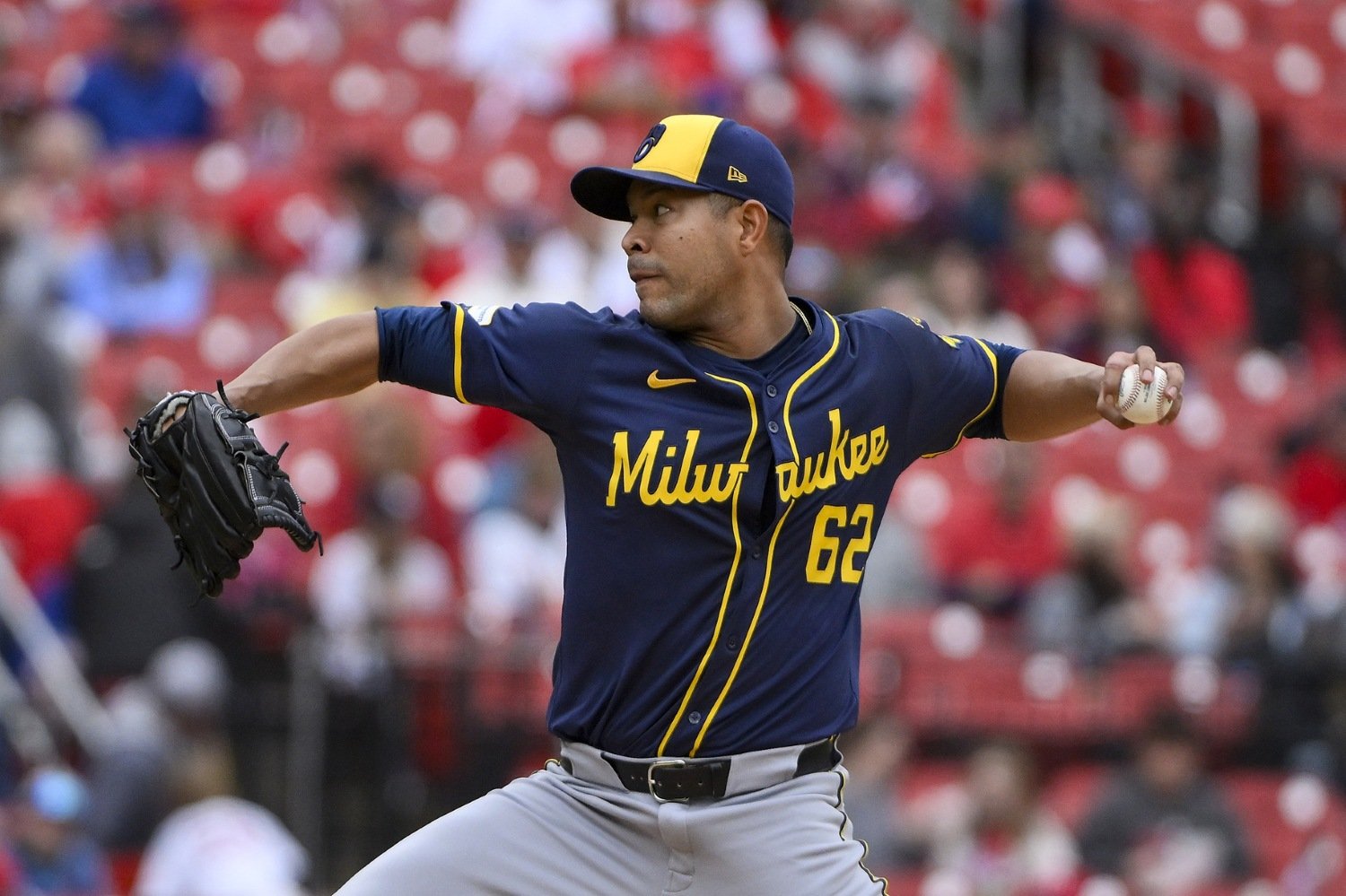 The Brewers didn’t do much this past winter. In fact, they rarely ever do much, when it comes to signing big-name starting pitchers. While the world was busy signing aces to fancy nine-figure deals, Milwaukee took a far more conservative approach. Even after losing franchise titans Colin Rea and Frankie Montas, they didn’t seem too gung-ho about reloading the rotation. After all, Brandon Woodruff was slated to return at some point, Tobias Myers looked like an ace in the making, and they still had Freddy Peralta hanging around. The one semi-proactive deal they struck was to acquire Nestor Cortes from the Yankees. Obviously, he brought a certain gravitas and track record, but things haven’t worked out for him in a Brewers uniform so far. Shortly after pitching poorly enough to single-handedly start a social media firestorm about illegal bat construction and ordnance-shaped sports equipment, he hit the 60-day IL with an elbow strain. At first, it seemed like Brewers fans would have to suffer through yet another year of a starting rotation held together with Elmer’s glue and Scotch tape—but they were, all of them, deceived, for another lefty was signed. It was almost as if the Brewers intended to keep his contract under the radar. They didn’t come to an agreement with Jose Quintana until March 5th, inking a one-year, $4.25-million deal with the 36-year-old former workhorse. He had just come off of a solid year with the Mets, posting a 3.75 ERA over 170 ⅓ innings, but is on the older side, a likely contributor to his availability stretching well into spring training. He was signed so late that he wasn’t even able to ramp up quickly enough to start the season with the team. When he finally got around to making his debut on April 11th against the Diamondbacks, however, he threw seven scoreless innings, masterfully utilizing soft contact to limit his own pitch count to just 80. His next three starts would be more strenuous, but each would be at least five innings and include just one earned run, giving him a cumulative ERA of just 1.14 this season and making him the most valuable player on the team by rWAR. How is he getting away with this? It’s not obvious at first glance. His whiff rate, fastball velocity, and many other Statcast metrics are in the bottom quartile of qualified pitchers. But what he lacks in brute force, he has made up for in deception. Jake McKibbin wrote about it when he signed, but Quintana is what some might call a “crafty lefty.” Acknowledging that his intrinsic stuff isn’t nearly enough to beat average major-league hitters, he tends to rely on expanding the zone and using breaking balls to induce ground balls up the middle or fly balls to the opposite side. Both batted-ball outcomes limit the total damage opposing hitters can do, and create an overall frustrating experience. If we take a closer look at his toolkit, we can see that this is accomplished through commanding his arsenal. His most valuable pitches, the changeup, curveball, and slurve, all end up in the lower portion of the zone. The only pitch that fills up the strike zone is the sinker, and even that is closer to the outer portion than it is the heart. Despite a lack of velocity, the movement and placement make it difficult to square up the ball. Batters may make contact, and it may even be decent contact, but it won’t be as hard-hit as they want it to be. Quintana’s average exit velocity is 91.1 mph, which places him in the 19th percentile, but his opponents' maximum exit velocity so far is just 107.3 mph, meaning the distribution of exit velocities off of his work doesn’t stray far from his average. Hitting a ball in the low 90s is rarely enough to do serious damage. We can see a quick example of this in a recent at-bat against Willson Contreras. After getting ahead in the count with a changeup on the outside edge and another changeup fouled away, Quintana eventually sets him up with another sinker just outside of the zone—but close enough to get a swing from Contreras—and inducing a harmless lineout to right field. In another at-bat against Matt Chapman, we find him (again in a 1-2 count) set up the hitter in a similar fashion, before a diving changeup causes a well-hit ball to die at the warning track. Nothing lasts forever, and you wouldn’t be out of your mind to expect some regression. In fact, the Brewers found themselves in a similar situation with Julio Teherán in 2023. A late May signing, he got off to an unbelievable start, before his ERA blew up in July following four rough outings. While his numbers will likely take a step back, Quintana was never meant to lead this rotation. It would be surprising if he was seen as much more than a stopgap. Woodruff has continued to make good progress, and DL Hall (whose move to the 60-day IL opened the roster spot for Quintana to be added) has been throwing and recently participated in a bullpen session, so the front office likely hoped the veteran would hold down the fort before reinforcements arrived. Optimists would remark that this was yet another brilliant move by the front office (followed by stellar work by the team’s pitching development program), which will culminate in the greatest-ever season by a Brewers lefty. A more realistic prediction would be that Quintana regresses slightly to be a more middle-of-the-rotation arm—someone who still contributes while the squad navigates their current injury problems. Regardless of what he accomplishes in the future, what he has done already is enough for him to be one of the most underrated signings of the offseason.
 -
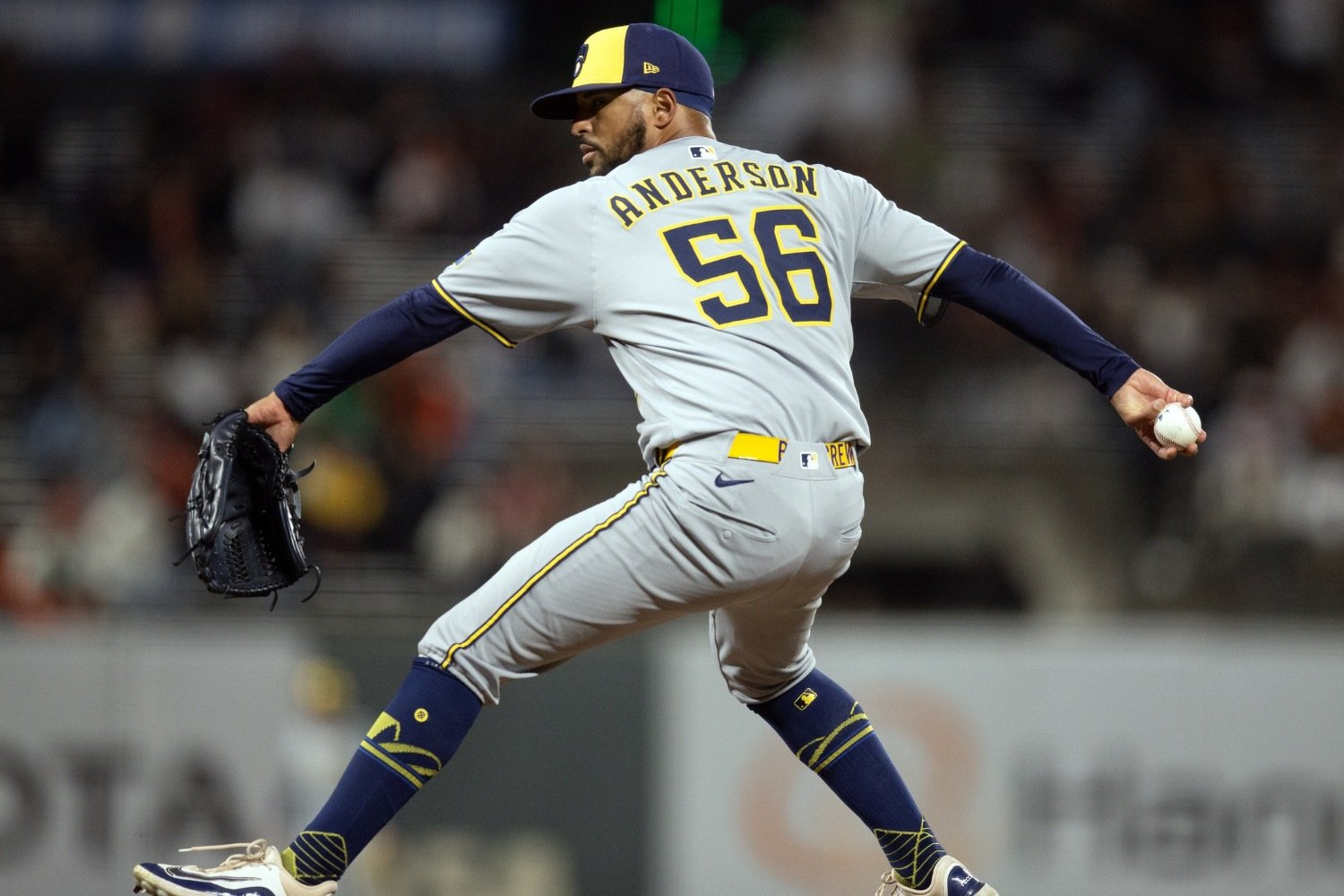 Milwaukee’s bullpen is looking uncharacteristically shaky. After 25 games, Brewers relievers have combined for a 5.07 ERA over 94 innings pitched. Guys who were solid contributors last year (like Bryan Hudson and Trevor Megill) have failed to continue the momentum of 2024, and it seems like Joel Payamps is already past the point of no return. Funnily enough, Jake Bauers has the lowest ERA as a reliever, maintaining a perfect 0.00 from his two appearances. Aside from the two-way hijinks of Bauers, there have been a few other bright spots in this year’s bullpen. Abner Uribe finally seems like he’s back in business, Nick Mears is finally posting numbers representative of his top-notch stuff measurements, and the call-up of Craig Yoho presents an exciting wild card to watch. One of the newest faces on the team is also off to a good start, thanks to some small tweaks that have had a big impact. The Brewers traded for Grant Anderson during this past offseason, sending starter Mason Molina to the Rangers in return. To call Anderson a “project” would be understating things. After debuting for the Rangers in 2023, he accumulated a 6.35 ERA over the first 62 ⅓ innings as a big-leaguer. The most noticeable problem was with his arsenal. His slider has been his primary weapon for the past three seasons, and it was never a very effective pitch in Texas, for several reasons. First, its velocity was unexceptional. It averaged just 82.2 mph last year, making it one of the slowest in MLB. Second, it didn’t move much. In 2024, Anderson’s slider had just 6.1 inches of vertical movement (nearly five fewer inches than the league average, and 7.0 inches of glove-side break. These unexceptional features gave opposing batters a batting average of .314 and a slugging of .514 against the pitch. When you pair this with a four-seam fastball in the low 90s and just 10 inches of induced vertical break, and you get a reliever with an 8.10 ERA. If I had to take a guess as to what the Brewers saw in Anderson to make them want to target him in a trade, it would be his arm angle. It’s almost perfectly flat, averaging anywhere from -3 to 2 degrees. This unorthodox type of pitcher is exactly what Milwaukee aims to find and develop, and they almost never rock the boat too much once they get their hands on them. Rather than trying to turn Anderson into an over-the-top guy with a 12-6 curveball and a knuckleball that would make Phil Niekro blush, they chose to work with what they had and turn his slider into more of a sweeper. As a quick breakdown of the differences between a slider and sweeper, sliders are often thrown harder, with sharper and later break. Sweepers tend to have more gradual “sweeping” movement. The sweeper classification was introduced by Statcast in 2023 because, frankly, calling this pitch and this pitch by the same name doesn’t make a ton of sense. At the end of the day, pitching is a spectrum; no two pitches are really the same, anyway; Devin Williams throws a screwball, not a changeup, yada yada yada. Back to Anderson. While Statcast still classifies his breaking ball as a “slider,” the movement profile is noticeably different. 2024 2025 Velocity 82.2 mph 78.9 mph Induced vertical movement 6.1 inches 3.0 inches Induced horizontal movement 7.0 inches 14.1 inches By the numbers alone, you can see that Anderson has doubled the amount of glove-side movement he’s getting on his breaking ball, while inducing less vertical movement. He has also taken quite a bit of the velocity off to allow for more room to sweep. Let’s compare and contrast a typical slider from last year and this year. As you can see, this pitch is flying across the plate with much more intent, and the outcomes have been largely positive. Opposing hitters are averaging just .048, with a whiff rate of 38.0% against his new sweeper and it has even made his four-seam fastball more effective. In addition to generally keeping batters on their toes with the sweeper, he attacks the lower part of the zone with the breaking ball and the upper part of the zone with the fastball, forcing hitters to change their eye levels constantly. After 14 ⅓ innings as a Brewer, Anderson’s 3.77 ERA has room for improvement, but things are moving in the right direction. His FIP of 3.10 is a career best, and his overall ERA is largely inflated by a rough debut against the Royals, where he gave up three earned runs in 2 ⅔ innings. Not counting that first appearance, he has a 2.31 ERA over 11 ⅔ innings. To me, this is the most fun part of being a Brewers fan. Watching an organization get the absolute best out of a pitcher seemingly at the end of his rope is what some might call “absolute cinema.” Now they just need to figure out what’s wrong with the rest of the bullpen, so they can get back to the top of the NL Central and dethrone those pesky Cubs (who are having bullpen issues of their own... but that’s a story for another time).
 -
Is it a slider? A sweeper? DiGiorno? Eh, it's probably somewhere in between them all. Image courtesy of © D. Ross Cameron-Imagn Images Is it a slider? A sweeper? DiGiorno? Eh, it's probably somewhere in between them all. Milwaukee’s bullpen is looking uncharacteristically shaky. After 25 games, Brewers relievers have combined for a 5.07 ERA over 94 innings pitched. Guys who were solid contributors last year (like Bryan Hudson and Trevor Megill) have failed to continue the momentum of 2024, and it seems like Joel Payamps is already past the point of no return. Funnily enough, Jake Bauers has the lowest ERA as a reliever, maintaining a perfect 0.00 from his two appearances. Aside from the two-way hijinks of Bauers, there have been a few other bright spots in this year’s bullpen. Abner Uribe finally seems like he’s back in business, Nick Mears is finally posting numbers representative of his top-notch stuff measurements, and the call-up of Craig Yoho presents an exciting wild card to watch. One of the newest faces on the team is also off to a good start, thanks to some small tweaks that have had a big impact. The Brewers traded for Grant Anderson during this past offseason, sending starter Mason Molina to the Rangers in return. To call Anderson a “project” would be understating things. After debuting for the Rangers in 2023, he accumulated a 6.35 ERA over the first 62 ⅓ innings as a big-leaguer. The most noticeable problem was with his arsenal. His slider has been his primary weapon for the past three seasons, and it was never a very effective pitch in Texas, for several reasons. First, its velocity was unexceptional. It averaged just 82.2 mph last year, making it one of the slowest in MLB. Second, it didn’t move much. In 2024, Anderson’s slider had just 6.1 inches of vertical movement (nearly five fewer inches than the league average, and 7.0 inches of glove-side break. These unexceptional features gave opposing batters a batting average of .314 and a slugging of .514 against the pitch. When you pair this with a four-seam fastball in the low 90s and just 10 inches of induced vertical break, and you get a reliever with an 8.10 ERA. If I had to take a guess as to what the Brewers saw in Anderson to make them want to target him in a trade, it would be his arm angle. It’s almost perfectly flat, averaging anywhere from -3 to 2 degrees. This unorthodox type of pitcher is exactly what Milwaukee aims to find and develop, and they almost never rock the boat too much once they get their hands on them. Rather than trying to turn Anderson into an over-the-top guy with a 12-6 curveball and a knuckleball that would make Phil Niekro blush, they chose to work with what they had and turn his slider into more of a sweeper. As a quick breakdown of the differences between a slider and sweeper, sliders are often thrown harder, with sharper and later break. Sweepers tend to have more gradual “sweeping” movement. The sweeper classification was introduced by Statcast in 2023 because, frankly, calling this pitch and this pitch by the same name doesn’t make a ton of sense. At the end of the day, pitching is a spectrum; no two pitches are really the same, anyway; Devin Williams throws a screwball, not a changeup, yada yada yada. Back to Anderson. While Statcast still classifies his breaking ball as a “slider,” the movement profile is noticeably different. 2024 2025 Velocity 82.2 mph 78.9 mph Induced vertical movement 6.1 inches 3.0 inches Induced horizontal movement 7.0 inches 14.1 inches By the numbers alone, you can see that Anderson has doubled the amount of glove-side movement he’s getting on his breaking ball, while inducing less vertical movement. He has also taken quite a bit of the velocity off to allow for more room to sweep. Let’s compare and contrast a typical slider from last year and this year. As you can see, this pitch is flying across the plate with much more intent, and the outcomes have been largely positive. Opposing hitters are averaging just .048, with a whiff rate of 38.0% against his new sweeper and it has even made his four-seam fastball more effective. In addition to generally keeping batters on their toes with the sweeper, he attacks the lower part of the zone with the breaking ball and the upper part of the zone with the fastball, forcing hitters to change their eye levels constantly. After 14 ⅓ innings as a Brewer, Anderson’s 3.77 ERA has room for improvement, but things are moving in the right direction. His FIP of 3.10 is a career best, and his overall ERA is largely inflated by a rough debut against the Royals, where he gave up three earned runs in 2 ⅔ innings. Not counting that first appearance, he has a 2.31 ERA over 11 ⅔ innings. To me, this is the most fun part of being a Brewers fan. Watching an organization get the absolute best out of a pitcher seemingly at the end of his rope is what some might call “absolute cinema.” Now they just need to figure out what’s wrong with the rest of the bullpen, so they can get back to the top of the NL Central and dethrone those pesky Cubs (who are having bullpen issues of their own... but that’s a story for another time). View full article
-
Your favorite gas-throwing reliever has been in the lab, and although he's now back on the mound, he's still cookin'. Image courtesy of © Benny Sieu-Imagn Images Your favorite gas-throwing reliever has been in the lab, and although he's now back on the mound, he's still cookin'. When Abner Uribe was promoted to the big leagues for the first time in 2023, it was electric. He had a wicked slider and an average fastball velocity of just under 100 mph. Few of us were ready for it, and neither were major-league hitters, who struck out 30.7% of the time against him as a rookie. In a year where serious discussions were had about who would eventually take over the mantle of closer once Devin Wiliams was inevitably traded in his walk year, Uribe threw his hat into the ring as a legitimate contender. After cracking the team’s Opening Day roster in 2024, it seemed like we would simply get more of the same dazzling pitching from him. Instead, a new year brought new struggles. As with many relievers with wicked stuff, command is sometimes hard to come by. He had a 15.7% walk rate as a rookie, but got away with it because his strikeout and ground-ball rates were so high. In his sophomore campaign, his walk rate rose to 18.2%, and he wasn’t getting the same amount of swing-and-miss. He began to lose control, both literally and figuratively, and everything boiled over when he engaged in a meaningless physical altercation against the Tampa Bay Rays in late April, resulting in a suspension and a final season ERA of 6.91. To make matters worse, it was announced that he would need knee surgery, ending his season and preventing him from trying to right his wrongs. It’s now 2025. Not only has Uribe avoided tussling with opposing center fielders (at least for now; let’s not jinx it), he has dialed back into what made him great in the first place. Thus grounded, he's off to a hot start. Over his first 9 ⅔ innings, he has a 0.93 ERA with a 35.3% whiff rate and a 29.7% strikeout rate. What changed? A closer look at his pitch arsenal makes two things clear: his sinker command is significantly better than where it was last year, and he seems to be pushing his breaking ball toward being a sweeper, rather than a traditional slider. Let’s start with the sinker. The ideal sinker can be consistently placed low in the strike zone, primarily because the goal is to induce a softly-hit ground ball. It’s not a whiff-reliant pitch. Contact is actually the intention, so long as it’s not hard contact. If you want to read more about ideal characteristics, feel free to check out this FanGraphs article from a few years ago. When we look at his sinker placement from 2024, there’s far too much red in the middle. Not only did this manifest in a higher opposing batting average, the opposing ISO was .154, far higher than it was in 2023, meaning hitters were getting to it and taking it for a ride. Nowadays, he’s still leaving it a little too close to the heart of the zone, but he's been lucky so far. When he executes and commands the pitch well, it turns into double plays. One intrinsic metric we can use to gauge whether he’s doing what he’s supposed to with the pitch is average launch angle. Other top-tier sinkerballers like Framber Valdez have incredibly low launch angles, something that indicates a high rate of ground balls. Thus far, opposing hitters are averaging a launch angle of just -6° against Uribe's sinker, a great sign. When it comes to reshaping his slider, it looks like the primary focus is to spread the zone laterally. Other relievers (like Blake Treinen) have found success with this strategy, implementing a very lateral sweeper that contrasts with the arm-side run on the sinker. For Uribe, here’s how the movement profile of his slider has changed over the past few seasons. Vertical Drop (inches) Horizontal Break (inches) 2023 32.2 9.9 2024 32.0 10.0 2025 32.0 8.6 It seems like this was something he had been thinking about last year, but couldn’t reap the rewards on due to poor command. With 9.9 inches of glove-side movement on his slider and 13.3 inches of arm-side run on his sinker, there’s nearly two feet of lateral distance that separates his two primary pitches. Don’t be fooled: there’s still plenty that can go wrong this year. Ideally, his sinker would be lower in the zone and his slider would push closer to the bottom corner. However, these are things that can and should improve as the season progresses. More than anything, it’s a relief to see him return to form, especially after a relatively long layoff, and with Trevor Megill facing struggles of his own, maybe it’s time to go back to the closer conversation. View full article
-
After a Year of Tinkering, Abner Uribe Has Returned to Dominance
Jason Wang posted an article in Brewers
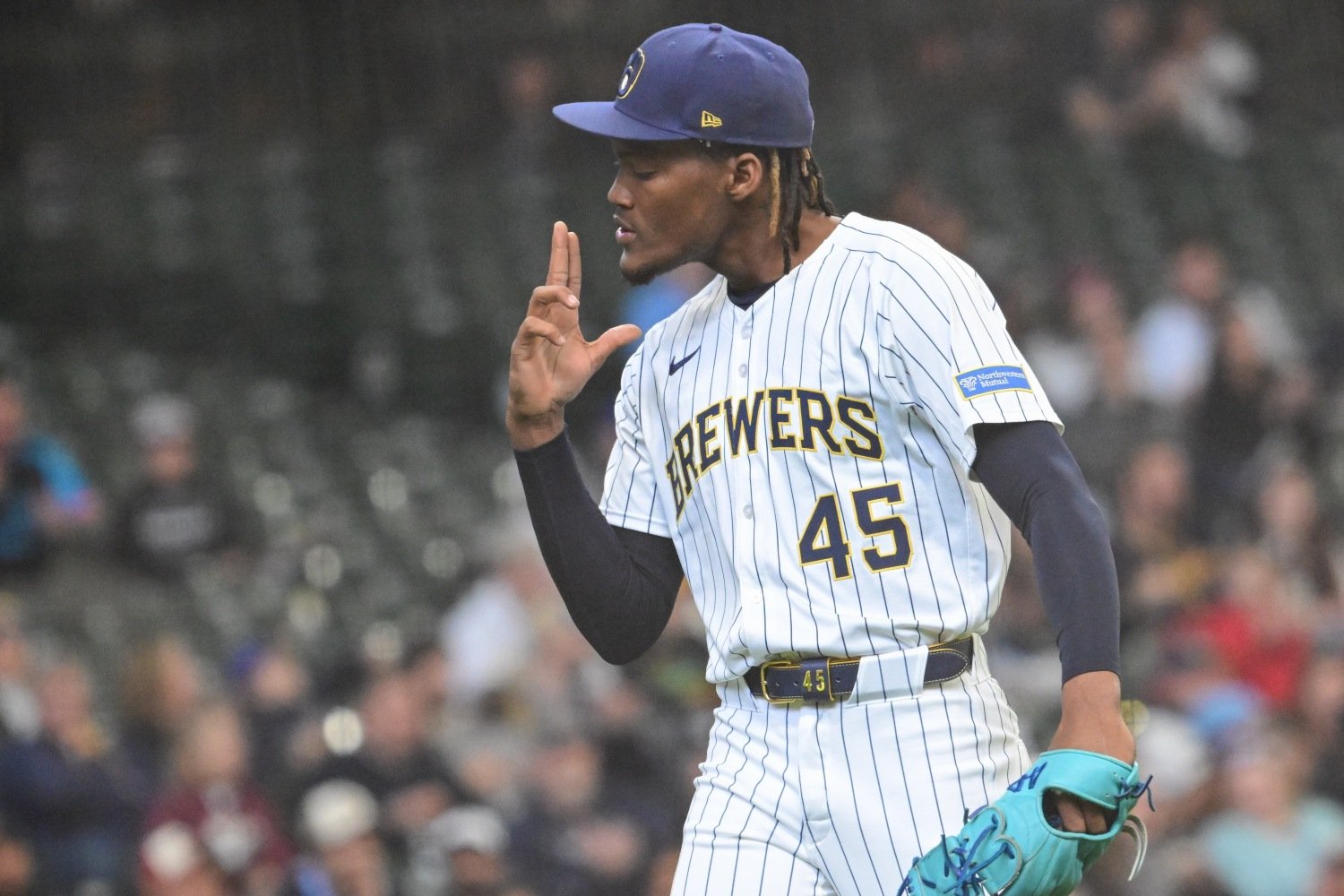 When Abner Uribe was promoted to the big leagues for the first time in 2023, it was electric. He had a wicked slider and an average fastball velocity of just under 100 mph. Few of us were ready for it, and neither were major-league hitters, who struck out 30.7% of the time against him as a rookie. In a year where serious discussions were had about who would eventually take over the mantle of closer once Devin Wiliams was inevitably traded in his walk year, Uribe threw his hat into the ring as a legitimate contender. After cracking the team’s Opening Day roster in 2024, it seemed like we would simply get more of the same dazzling pitching from him. Instead, a new year brought new struggles. As with many relievers with wicked stuff, command is sometimes hard to come by. He had a 15.7% walk rate as a rookie, but got away with it because his strikeout and ground-ball rates were so high. In his sophomore campaign, his walk rate rose to 18.2%, and he wasn’t getting the same amount of swing-and-miss. He began to lose control, both literally and figuratively, and everything boiled over when he engaged in a meaningless physical altercation against the Tampa Bay Rays in late April, resulting in a suspension and a final season ERA of 6.91. To make matters worse, it was announced that he would need knee surgery, ending his season and preventing him from trying to right his wrongs. It’s now 2025. Not only has Uribe avoided tussling with opposing center fielders (at least for now; let’s not jinx it), he has dialed back into what made him great in the first place. Thus grounded, he's off to a hot start. Over his first 9 ⅔ innings, he has a 0.93 ERA with a 35.3% whiff rate and a 29.7% strikeout rate. What changed? A closer look at his pitch arsenal makes two things clear: his sinker command is significantly better than where it was last year, and he seems to be pushing his breaking ball toward being a sweeper, rather than a traditional slider. Let’s start with the sinker. The ideal sinker can be consistently placed low in the strike zone, primarily because the goal is to induce a softly-hit ground ball. It’s not a whiff-reliant pitch. Contact is actually the intention, so long as it’s not hard contact. If you want to read more about ideal characteristics, feel free to check out this FanGraphs article from a few years ago. When we look at his sinker placement from 2024, there’s far too much red in the middle. Not only did this manifest in a higher opposing batting average, the opposing ISO was .154, far higher than it was in 2023, meaning hitters were getting to it and taking it for a ride. Nowadays, he’s still leaving it a little too close to the heart of the zone, but he's been lucky so far. When he executes and commands the pitch well, it turns into double plays. One intrinsic metric we can use to gauge whether he’s doing what he’s supposed to with the pitch is average launch angle. Other top-tier sinkerballers like Framber Valdez have incredibly low launch angles, something that indicates a high rate of ground balls. Thus far, opposing hitters are averaging a launch angle of just -6° against Uribe's sinker, a great sign. When it comes to reshaping his slider, it looks like the primary focus is to spread the zone laterally. Other relievers (like Blake Treinen) have found success with this strategy, implementing a very lateral sweeper that contrasts with the arm-side run on the sinker. For Uribe, here’s how the movement profile of his slider has changed over the past few seasons. Vertical Drop (inches) Horizontal Break (inches) 2023 32.2 9.9 2024 32.0 10.0 2025 32.0 8.6 It seems like this was something he had been thinking about last year, but couldn’t reap the rewards on due to poor command. With 9.9 inches of glove-side movement on his slider and 13.3 inches of arm-side run on his sinker, there’s nearly two feet of lateral distance that separates his two primary pitches. Don’t be fooled: there’s still plenty that can go wrong this year. Ideally, his sinker would be lower in the zone and his slider would push closer to the bottom corner. However, these are things that can and should improve as the season progresses. More than anything, it’s a relief to see him return to form, especially after a relatively long layoff, and with Trevor Megill facing struggles of his own, maybe it’s time to go back to the closer conversation.
 -
Finally, years of scheming, conniving, plotting, and conspiring have paid off. Image courtesy of © Dave Kallmann / Milwaukee Journal Sentinel / USA TODAY NETWORK via Imagn Images Finally, years of scheming, conniving, plotting, and conspiring have paid off. If you’ve been a fan of the Brewers for more than a single offseason, then you should already know how they do business. Buy low, sell high, don’t sign big contracts, and try to find funky pitchers with weird arm angles. Many organizations try to replicate this perfect blend of fiscal responsibility and baseball intelligence, but few are successful. Milwaukee is in the latter group, having missed the postseason just once since 2018. But hey, don’t take my word for it. After all, I’m just a random guy who got conscripted to write about this team because my ticket got pulled in a 620 WTMJ raffle. Instead, take the word of other baseball executives, who were polled by The Athletic about their top front office rivals. Outside of the Brewers’ placement, the results, while unsurprising, are nonetheless fascinating to see. The first thing you might notice is that the distribution is immensely skewed. In fact, you might notice that the list is a little shorter than 30 entries long. That’s because 10 teams (one of which is the Chicago Cubs) received no votes, mostly due to everyone being busy singing the praises of the powerhouse that is the Los Angeles Dodgers. Unlike the more Moneyball-esque teams below them, they have both the brains and the financial backing to build a team you might find in a four-man fantasy baseball league where three of the players stopped setting their roster after week two. Right below the Dodgers are the Rays, the organization known for shoestring budgets and creating talent out of seemingly nothing, and in third place we have the mighty Brew Crew. What makes the Brewers so special isn’t necessarily their ability to consistently find undervalued talent. After all, the Rays and Guardians are just as good (if not even better) at doing that. Instead, what makes Milwaukee special is that this ability to find and develop exceptional personnel extends past the players on the roster. After years with the organization, David Stearns was poached by the Mets and has done a great job thus far, most notably helping them reach a record-breaking contract with Juan Soto. Craig Counsell developed a strong reputation before being picked up by the Cubs and being made the highest-paid manager ever. (You know, for one year.) What did the organization do after losing these two? They promoted from within, elevating Matt Arnold and Pat Murphy to fill the vacant roles. The former is among the most well-respected general managers in the sport, and the latter won the most recent NL Manager of the Year award, so it’s safe to say the replacements are doing just fine. For the Brewers, 2025 has been a difficult year rife with injuries and falling victim to odd-shaped bats. However, the organization continues to find ways to make it work. A few weeks ago, the trade for Quinn Priester was deemed an overpay, and he now has a 0.90 ERA over his first two starts of the year. Jose Quintana was signed to a one-year, $4-million contract and has a 0.71 ERA in his first two starts. If we take a look at starting pitchers alone, past moves made to acquire the likes of Aaron Civale, Tobias Myers, Colin Rea, and Wade Miley provided unconventional stopgaps in the face of injuries and insufficient homegrown talent that resulted in division titles and Wild Card berths. If you really wanted to, you could gather your friends around a small bonfire, crack open a couple of Miller Lites, and spend hours recalling some of the best decisions the front office has made. Extending Jackson Chourio before he ever debuted in the big leagues and signing Jesus Made are a few you can start with, but the list really goes on and on. I’ve said it before and I’ll say it again: any team can spend hundreds of millions of dollars on shiny free agents. It takes real brains to run an organization on a shoestring budget while still being a perennial contender for the playoffs. The argument can be made that they should loosen the purse strings a tad and commit to World Series ambitions, instead of just settling for first- or second-round postseason exits, but in a league full of teams like the Pirates and Rockies, it’s comforting to know that the organization we all love and cherish is in relatively good hands. View full article
-
The Brewers Have One Of The Smartest Front Offices In Baseball
Jason Wang posted an article in Brewers
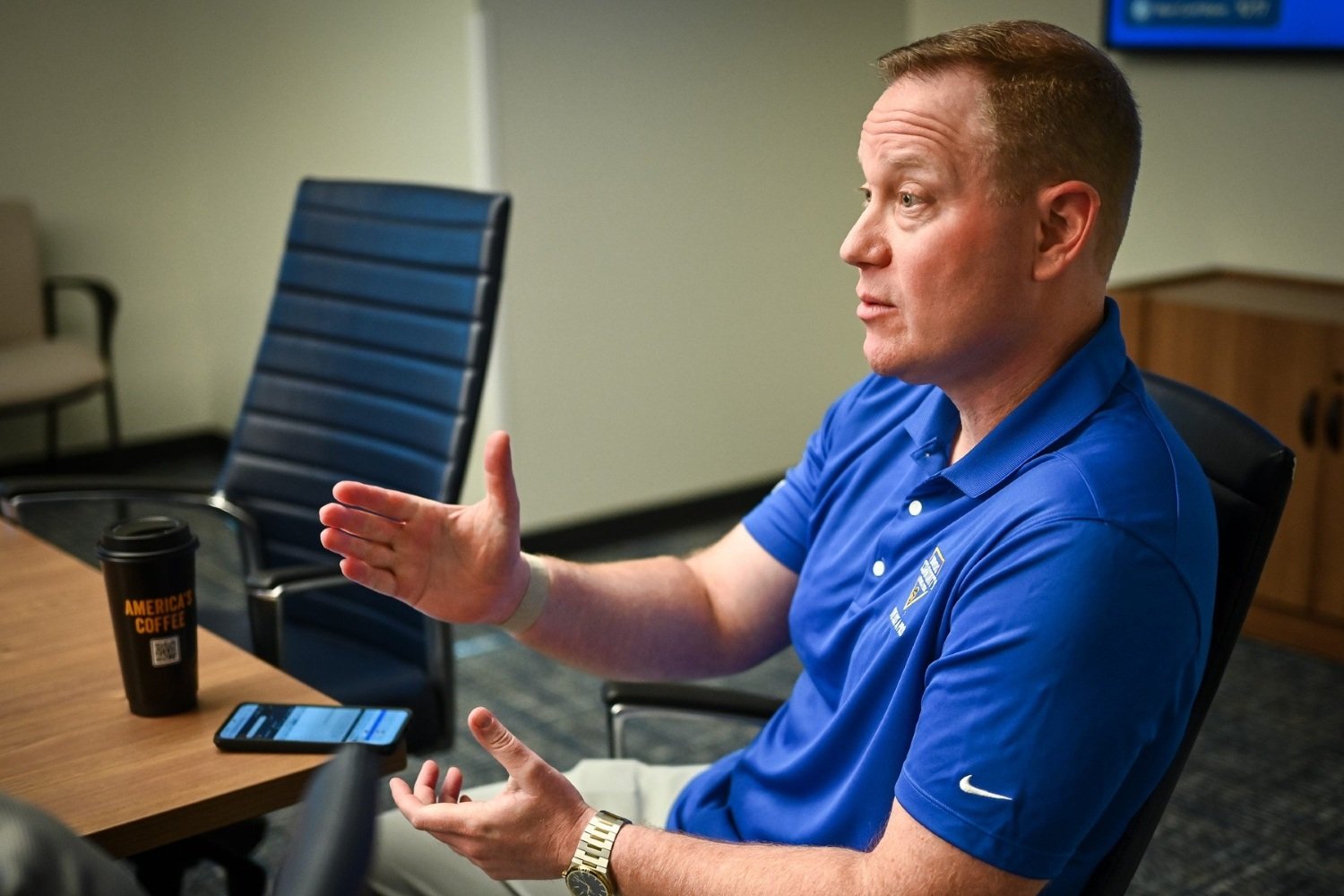 If you’ve been a fan of the Brewers for more than a single offseason, then you should already know how they do business. Buy low, sell high, don’t sign big contracts, and try to find funky pitchers with weird arm angles. Many organizations try to replicate this perfect blend of fiscal responsibility and baseball intelligence, but few are successful. Milwaukee is in the latter group, having missed the postseason just once since 2018. But hey, don’t take my word for it. After all, I’m just a random guy who got conscripted to write about this team because my ticket got pulled in a 620 WTMJ raffle. Instead, take the word of other baseball executives, who were polled by The Athletic about their top front office rivals. Outside of the Brewers’ placement, the results, while unsurprising, are nonetheless fascinating to see. The first thing you might notice is that the distribution is immensely skewed. In fact, you might notice that the list is a little shorter than 30 entries long. That’s because 10 teams (one of which is the Chicago Cubs) received no votes, mostly due to everyone being busy singing the praises of the powerhouse that is the Los Angeles Dodgers. Unlike the more Moneyball-esque teams below them, they have both the brains and the financial backing to build a team you might find in a four-man fantasy baseball league where three of the players stopped setting their roster after week two. Right below the Dodgers are the Rays, the organization known for shoestring budgets and creating talent out of seemingly nothing, and in third place we have the mighty Brew Crew. What makes the Brewers so special isn’t necessarily their ability to consistently find undervalued talent. After all, the Rays and Guardians are just as good (if not even better) at doing that. Instead, what makes Milwaukee special is that this ability to find and develop exceptional personnel extends past the players on the roster. After years with the organization, David Stearns was poached by the Mets and has done a great job thus far, most notably helping them reach a record-breaking contract with Juan Soto. Craig Counsell developed a strong reputation before being picked up by the Cubs and being made the highest-paid manager ever. (You know, for one year.) What did the organization do after losing these two? They promoted from within, elevating Matt Arnold and Pat Murphy to fill the vacant roles. The former is among the most well-respected general managers in the sport, and the latter won the most recent NL Manager of the Year award, so it’s safe to say the replacements are doing just fine. For the Brewers, 2025 has been a difficult year rife with injuries and falling victim to odd-shaped bats. However, the organization continues to find ways to make it work. A few weeks ago, the trade for Quinn Priester was deemed an overpay, and he now has a 0.90 ERA over his first two starts of the year. Jose Quintana was signed to a one-year, $4-million contract and has a 0.71 ERA in his first two starts. If we take a look at starting pitchers alone, past moves made to acquire the likes of Aaron Civale, Tobias Myers, Colin Rea, and Wade Miley provided unconventional stopgaps in the face of injuries and insufficient homegrown talent that resulted in division titles and Wild Card berths. If you really wanted to, you could gather your friends around a small bonfire, crack open a couple of Miller Lites, and spend hours recalling some of the best decisions the front office has made. Extending Jackson Chourio before he ever debuted in the big leagues and signing Jesus Made are a few you can start with, but the list really goes on and on. I’ve said it before and I’ll say it again: any team can spend hundreds of millions of dollars on shiny free agents. It takes real brains to run an organization on a shoestring budget while still being a perennial contender for the playoffs. The argument can be made that they should loosen the purse strings a tad and commit to World Series ambitions, instead of just settling for first- or second-round postseason exits, but in a league full of teams like the Pirates and Rockies, it’s comforting to know that the organization we all love and cherish is in relatively good hands.
 -
 One of the Brewers’ few moves of the offseason was to trade Devin Williams to the Yankees, in exchange for starting pitcher Nestor Cortes, infield prospect Caleb Durbin, and a few simoleons. In many ways, the deal was unsurprising. Williams had just one year of team control remaining and was set to make a solid amount in arbitration (given his consistently outstanding numbers). Milwaukee had already been preparing Trevor Megill to step up into the closer role, which he filled while Williams had spent much of 2024 sidelined with injury. However, was the organization incentivized to get rid of him for performance-based reasons, as well? The start of this 2025 season hasn’t been very kind to Williams. Not only was he forced to shave his beard just days before the team did away with their oppressive facial hair policy (although, at least, he seems to have been the impetus for that change, and now he has the beard back), but he has looked uncharacteristically shaky as the Yankees’ closer. Over his four appearances, he’s already at a 12.00 ERA with a 3.00 WHIP and 1.25 K/BB. Meanwhile, Luke Weaver has yet to give up an earned run over his four appearances and looks ready to return to the role he held for the team at the end of last year. So what’s going on with Williams? First, let’s point out the obvious: his walk rate is out of control. One of his main weaknesses has always been allowing free passes, as his career walk rate of 12.0% illustrates. I guess that’s what happens when your most frequently-used pitch is a changeup. However, this year, it's even worse than usual. Of the 18 batters he has faced so far, he has already walked four. A closer look at pitch location data does suggest a lack of consistent command, especially when compared to his most recent work in 2024. Williams is at his best when he keeps the four-seam fastball high in the zone and the changeup clustered around the bottom of the zone. While some relievers with a sinker/slider arsenal like to attack opposing hitters laterally, Williams’ arsenal attacks them vertically. We can see the areas in which he tends to place these two pitches by looking at his pitch heat maps from last year. This setup gave him a cumulative 40% whiff rate and 5.4% barrel rate. Additionally, each pitch had different outcome patterns. The four-seam fastball had an opposing average of .111 but had an opposing slugging percentage of .250, while the changeup had a higher opposing average of .162 with a lower opposing slugging of .216. Batters had a hard time consistently putting the fastball into play, but when they did, they had a better chance of doing damage than they did against the changeup. With the Yankees, the location for these two pitches seems to be objectively worse. First and foremost, his fastball is all over the place. It’s either outside of the strike zone or dangerously in the middle, the two worst-case scenarios. Some relievers may be able to get away with this, but with an average velocity of just 94 mph, it’s hard for it to be a competitive pitch if not located well. Unless you're 2024 Tommy Kahnle, a changeup-first arsenal doesn’t really work well if your fastball isn’t effective, since the main upside of an off-speed pitch is trying to get batters out in front as a result of a sudden drop in velocity. In some cases, he uses the changeup so much that hitters are just sitting on it. Sure, they might be behind the fastball, but it will usually be enough to foul it off and stay alive. A good example of this is a recent outing against Pittsburgh that saw him concede a game-altering hit. On April 6th, Williams faced off against Tommy Pham in the bottom of the 11th inning of a tied game. In this crucial at-bat, Williams threw just two fastballs, both of which were in the heart of the strike zone. After several changeups that had been fouled away, Pham walked it off on the ninth pitch (and seventh changeup) he had seen. Intrinsically, Williams's stuff is as good as ever. The velocity and movement are consistent with his career norms, but his command and overall rhythm have been bad enough to turn heads. The Brewers have had plenty of pitching problems on their own, but when it comes to the closer situation, Trevor Megill has preserved his precious 0.00 ERA. Williams has time to turn things around with the Yankees, but his opportunities to finish games may now be fewer and farther between. Unfortunately, he has already given up more earned runs than he did in all of 2024, so getting his ERA to where it used to be in Milwaukee may be tricky. Whether the Brewers were actually aware of some part of his game being off before shipping him off to the Big Apple will probably remain a secret, but what’s clear is that the bender seems to have run out of air.
 -
Is this yet another example of a “Common Matt Arnold Fleece"? Image courtesy of © Rick Osentoski-Imagn Images Is this yet another example of a “Common Matt Arnold Fleece"? One of the Brewers’ few moves of the offseason was to trade Devin Williams to the Yankees, in exchange for starting pitcher Nestor Cortes, infield prospect Caleb Durbin, and a few simoleons. In many ways, the deal was unsurprising. Williams had just one year of team control remaining and was set to make a solid amount in arbitration (given his consistently outstanding numbers). Milwaukee had already been preparing Trevor Megill to step up into the closer role, which he filled while Williams had spent much of 2024 sidelined with injury. However, was the organization incentivized to get rid of him for performance-based reasons, as well? The start of this 2025 season hasn’t been very kind to Williams. Not only was he forced to shave his beard just days before the team did away with their oppressive facial hair policy (although, at least, he seems to have been the impetus for that change, and now he has the beard back), but he has looked uncharacteristically shaky as the Yankees’ closer. Over his four appearances, he’s already at a 12.00 ERA with a 3.00 WHIP and 1.25 K/BB. Meanwhile, Luke Weaver has yet to give up an earned run over his four appearances and looks ready to return to the role he held for the team at the end of last year. So what’s going on with Williams? First, let’s point out the obvious: his walk rate is out of control. One of his main weaknesses has always been allowing free passes, as his career walk rate of 12.0% illustrates. I guess that’s what happens when your most frequently-used pitch is a changeup. However, this year, it's even worse than usual. Of the 18 batters he has faced so far, he has already walked four. A closer look at pitch location data does suggest a lack of consistent command, especially when compared to his most recent work in 2024. Williams is at his best when he keeps the four-seam fastball high in the zone and the changeup clustered around the bottom of the zone. While some relievers with a sinker/slider arsenal like to attack opposing hitters laterally, Williams’ arsenal attacks them vertically. We can see the areas in which he tends to place these two pitches by looking at his pitch heat maps from last year. This setup gave him a cumulative 40% whiff rate and 5.4% barrel rate. Additionally, each pitch had different outcome patterns. The four-seam fastball had an opposing average of .111 but had an opposing slugging percentage of .250, while the changeup had a higher opposing average of .162 with a lower opposing slugging of .216. Batters had a hard time consistently putting the fastball into play, but when they did, they had a better chance of doing damage than they did against the changeup. With the Yankees, the location for these two pitches seems to be objectively worse. First and foremost, his fastball is all over the place. It’s either outside of the strike zone or dangerously in the middle, the two worst-case scenarios. Some relievers may be able to get away with this, but with an average velocity of just 94 mph, it’s hard for it to be a competitive pitch if not located well. Unless you're 2024 Tommy Kahnle, a changeup-first arsenal doesn’t really work well if your fastball isn’t effective, since the main upside of an off-speed pitch is trying to get batters out in front as a result of a sudden drop in velocity. In some cases, he uses the changeup so much that hitters are just sitting on it. Sure, they might be behind the fastball, but it will usually be enough to foul it off and stay alive. A good example of this is a recent outing against Pittsburgh that saw him concede a game-altering hit. On April 6th, Williams faced off against Tommy Pham in the bottom of the 11th inning of a tied game. In this crucial at-bat, Williams threw just two fastballs, both of which were in the heart of the strike zone. After several changeups that had been fouled away, Pham walked it off on the ninth pitch (and seventh changeup) he had seen. Intrinsically, Williams's stuff is as good as ever. The velocity and movement are consistent with his career norms, but his command and overall rhythm have been bad enough to turn heads. The Brewers have had plenty of pitching problems on their own, but when it comes to the closer situation, Trevor Megill has preserved his precious 0.00 ERA. Williams has time to turn things around with the Yankees, but his opportunities to finish games may now be fewer and farther between. Unfortunately, he has already given up more earned runs than he did in all of 2024, so getting his ERA to where it used to be in Milwaukee may be tricky. Whether the Brewers were actually aware of some part of his game being off before shipping him off to the Big Apple will probably remain a secret, but what’s clear is that the bender seems to have run out of air. View full article
-
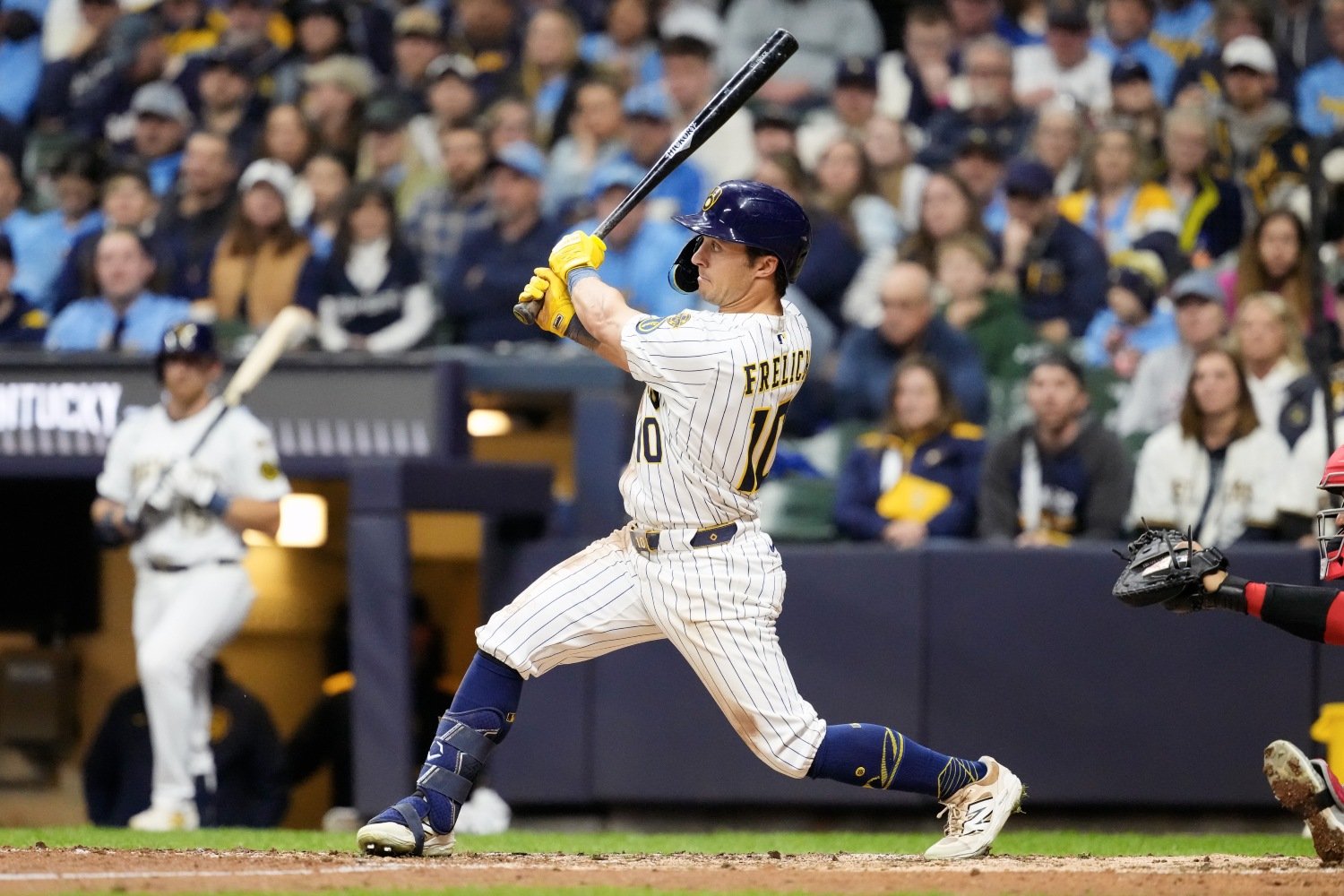 It hasn’t been the greatest start to the season for Milwaukee. The first series of the year saw them on the receiving end of a record-breaking performance by the Yankees and their new bats. Even after they escaped the Bronx, they got mollywhopped in their first game against Kansas City, before clutching up a narrow series victory. They also cobbled together a three-of-four series win over the Reds, but that's only been enough to draw them back up to .500, at 5-5. The team’s OPS of .659 (22nd in the league) isn’t too surprising, given their lack of offensive investment, but shockingly, their team ERA is the second-worst in baseball, at 5.97. What happened? Wasn’t Milwaukee supposed to be the center of pitching advancement, reinventing arms of all sorts and turning middling starters into the best long relievers you’ve ever seen in your life, and some fine relievers into surprisingly solid starters? Why was Elvin Rodríguez allowed to give up seven earned runs in five innings against Cincinnati, to inflate his 2025 ERA to 11.00? Many questions, very few answers. And yeah, the Brewers haven’t exactly been known to swing big bats, but even their best hitters haven’t been able to get going so far. William Contreras, who has won Silver Sluggers in each of the past two years, is at a .360 OPS and just snapped an 0-for-20 streak. Christian Yelich, who was on an MVP pace before going down with injuries last year, has averaged .125 over his 39 plate appearances. But even the worst situations have silver linings. So far, Milwaukee’s silver lining has been two previously underwhelming offensive performers. While the team’s superstars have struggled to heat up, Brice Turang and Sal Frelick have stepped up to fill in the gaps. Turang is currently sitting at an .849 OPS with 2 homers and 6 RBIs. Since debuting in 2023, he has steadily made harder contact, and it seems like he’s ready to reach a whole new level in 2025. Sal Frelick still isn’t hitting the ball very hard, but his combination of speed and contact skills have allowed him to excel thus far. In his most recent outing, he was just a homer shy of hitting for the cycle, lighting up the Reds for four hits and turning on the jets to leg out a scrappy triple. The best part of this dynamic duo leading the team’s offensive charge is how much it stands in contrast to last year’s numbers. In 2024, Frelick’s OPS+ of 83 and Turang’s OPS+ of 85 put them at the bottom of the leaderboard of full-time Brewers. Both were seen as defense-first players, far from menacing presences at the plate. To be fair, that’s probably at least somewhat true, and the season is still in its infancy. Over time, their numbers will likely normalize a bit. However, the team needs whatever momentum it can get right now, and whether you expected it or not, these two are Milwaukee's offensive spark plugs. Even amid the chaos, the Brewers are still just one game behind a fully loaded Cubs team. Call it irrational exuberance, but I think things will get better before they get worse. Freddy Peralta had a stellar second start against the Royals, tossing eight innings and striking out eight while giving up no walks and just one earned run. Hopefully, that's the first of many quality performances this year. The rotation is reeling from the loss of Nestor Cortes, but will get even more reinforcements soon, in the form of Tobias Myers, Brandon Woodruff, and Jose Quintana. The outfield should eventually come around and the power trio of Yelich, Jackson Chourio, and Garrett Mitchell will be a formidable force at full strength. At the end of the day, even when the odds seem insurmountable, always remember that the Brewers can rest assured that Jake Bauers is still on the roster.
 -
Who would’ve guessed that two of the team’s weakest bats in 2024 would be leading the lineup in 2025? Image courtesy of © Jeff Hanisch-Imagn Images Who would’ve guessed that two of the team’s weakest bats in 2024 would be leading the lineup in 2025? It hasn’t been the greatest start to the season for Milwaukee. The first series of the year saw them on the receiving end of a record-breaking performance by the Yankees and their new bats. Even after they escaped the Bronx, they got mollywhopped in their first game against Kansas City, before clutching up a narrow series victory. They also cobbled together a three-of-four series win over the Reds, but that's only been enough to draw them back up to .500, at 5-5. The team’s OPS of .659 (22nd in the league) isn’t too surprising, given their lack of offensive investment, but shockingly, their team ERA is the second-worst in baseball, at 5.97. What happened? Wasn’t Milwaukee supposed to be the center of pitching advancement, reinventing arms of all sorts and turning middling starters into the best long relievers you’ve ever seen in your life, and some fine relievers into surprisingly solid starters? Why was Elvin Rodríguez allowed to give up seven earned runs in five innings against Cincinnati, to inflate his 2025 ERA to 11.00? Many questions, very few answers. And yeah, the Brewers haven’t exactly been known to swing big bats, but even their best hitters haven’t been able to get going so far. William Contreras, who has won Silver Sluggers in each of the past two years, is at a .360 OPS and just snapped an 0-for-20 streak. Christian Yelich, who was on an MVP pace before going down with injuries last year, has averaged .125 over his 39 plate appearances. But even the worst situations have silver linings. So far, Milwaukee’s silver lining has been two previously underwhelming offensive performers. While the team’s superstars have struggled to heat up, Brice Turang and Sal Frelick have stepped up to fill in the gaps. Turang is currently sitting at an .849 OPS with 2 homers and 6 RBIs. Since debuting in 2023, he has steadily made harder contact, and it seems like he’s ready to reach a whole new level in 2025. Sal Frelick still isn’t hitting the ball very hard, but his combination of speed and contact skills have allowed him to excel thus far. In his most recent outing, he was just a homer shy of hitting for the cycle, lighting up the Reds for four hits and turning on the jets to leg out a scrappy triple. The best part of this dynamic duo leading the team’s offensive charge is how much it stands in contrast to last year’s numbers. In 2024, Frelick’s OPS+ of 83 and Turang’s OPS+ of 85 put them at the bottom of the leaderboard of full-time Brewers. Both were seen as defense-first players, far from menacing presences at the plate. To be fair, that’s probably at least somewhat true, and the season is still in its infancy. Over time, their numbers will likely normalize a bit. However, the team needs whatever momentum it can get right now, and whether you expected it or not, these two are Milwaukee's offensive spark plugs. Even amid the chaos, the Brewers are still just one game behind a fully loaded Cubs team. Call it irrational exuberance, but I think things will get better before they get worse. Freddy Peralta had a stellar second start against the Royals, tossing eight innings and striking out eight while giving up no walks and just one earned run. Hopefully, that's the first of many quality performances this year. The rotation is reeling from the loss of Nestor Cortes, but will get even more reinforcements soon, in the form of Tobias Myers, Brandon Woodruff, and Jose Quintana. The outfield should eventually come around and the power trio of Yelich, Jackson Chourio, and Garrett Mitchell will be a formidable force at full strength. At the end of the day, even when the odds seem insurmountable, always remember that the Brewers can rest assured that Jake Bauers is still on the roster. View full article
-
Arguably, focusing on guys with lower stuff grades and passing up on the shinier arms with max velo/spin rates should give the Brewers fewer injuries when compared to their peers. I will also say 2024 was kind of a freak year for injuries and the names on the 60-day IL (Woodruff, Gasser, Hall) are holdovers from then. Ashby and Myers are dealing with oblique issues while Civale has a hamstring problem, injuries that don't really coincide with the typical elbow/shoulder stuff we see from forcing kids to throw 98 mph at the ripe age of 12 years old.
- 3 replies
-
- 2
-

-
- shane smith
- connor thomas
- (and 1 more)
-
Move aside Shohei Ohtani, there’s a new two-way player in town. Image courtesy of © Brad Penner-Imagn Images Move aside Shohei Ohtani, there’s a new two-way player in town. On March 29th, the Yankees brutalized the Brewers with their new, sacrilegious bowling pin-shaped bats. Nestor Cortes, Connor Thomas, and Chad Patrick all found themselves bruised and bloody from the seemingly unstoppable offense mustered by the Bronx Bombers. Fortunately for Milwaukee, one man stepped up to stop the bleeding and shut out the Evil Empire while he toed the slab. He did it again in yet another rout of the boys in blue on March 30th, pitching a scoreless inning to put an end to the unjust massacre. It's a blessing that he's on the team, but if the Brewers hadn’t kept their ears to the ground, they may have missed out on the greatest baseball talent of the modern era. A couple of years ago, Shohei Ohtani signed a somewhat large deal with the Los Angeles Dodgers under the idea that his value as a two-way player warranted a contract of that magnitude. Milwaukee was, intelligently enough, not in on this deal, and after the first year saw Ohtani pitch exactly zero innings, it seems that Mark Attanasio and company were on the right side of history once again. While everyone’s eyes were on Ohtani heading into 2024, the Brewers turned to their own two-way star. His first and middle names are Jakob Christopher, but you can just call him Jake Bauers. You may already know him as an outstanding first baseman who currently holds a 1.250 OPS—a better figure than the best seasons of Aaron Judge and Shohei Ohtani. He’s on pace for 54 home runs, 54 doubles and 162 RBIs, figures that would place him among the league’s best hitters. However, you may not know about his work on the mound. It has been a storyline that has been actively obfuscated, by the same cabal that has also gradually made the hot dogs across America simultaneously more expensive and less girthy. He was drafted by the Padres back in 2013, and after spending time with six different organizations, he finally arrived at one with the vision and ambition to utilize his maximum potential. Milwaukee deployed him out of the bullpen as soon as he joined the team in 2024, and he posted an ERA+ of 101, better than average and not a bad start for his pitching debut. His first three outings of the year were scoreless, and in an effort to keep his pitch count low, he let opposing hitters beat themselves, posting zero strikeouts. How did he do this, you ask? That’s a great question, and probably why you’re one of the top employees at your place of work. Bauers uses a wide variety of pitches from the left side. Unfortunately, Statcast is not yet as advanced as Bauers, and lumps all of his pitches from 2024 into two buckets: fastball and eephus. With a deep understanding of the prevalence of pitching injuries, he limits his own power and velocity, choosing instead to maximize longevity. After all, Cy Young averaged 334 innings pitched a year and they named an award after him. Even in his diminished form, his Stuff+ grades out to an indeterminately large value. It's yet to be defined (at least publicly), but you can take a look at what he’s working with for yourself. Just look at this heater at the top of the zone, beating a former MVP in Giancarlo Stanton. Few arms have ever possessed the ability to paint corners with this authority. Not even Aaron Judge could outcompete him in a fair one-on-one. So far, he is the only Milwaukee pitcher to have a perfect ERA with more than one inning pitched. Remember, this is an organization known for developing outstanding arms and getting the absolute most out of their pitching talent, effectively making him the best of the best. Combined with his current offensive pace, there’s no ceiling on what he’ll be able to do for this team. Many thought the next great Brewers arm would be Jacob Misiorowski, Craig Yoho, or Dallas Keuchel, after he signed with the team last year. If you had actually done your own research (instead of ingesting the “lamestream” media's fairytales), you’d know the truth and bow down to Bauers. When it's all said and done, Robin Yount, Paul Molitor, and Kolten Wong will finally have another member to welcome onto the Brewers' Mount Rushmore. View full article