Jason Wang
-
Posts
955 -
Joined
-
Last visited
-
Days Won
1
Content Type
Profiles
Forums
Blogs
Events
News
2026 Milwaukee Brewers Top Prospects Ranking
Milwaukee Brewers Videos
2022 Milwaukee Brewers Draft Picks
Milwaukee Brewers Free Agent & Trade Rumors, Notes, & Tidbits
Guides & Resources
2023 Milwaukee Brewers Draft Picks
2024 Milwaukee Brewers Draft Picks
The Milwaukee Brewers Players Project
2025 Milwaukee Brewers Draft Pick Tracker
2026 Milwaukee Brewers Draft Tracker: Picks & Bonuses
Store
Downloads
Gallery
Everything posted by Jason Wang
-
 add me to the group chat too bro
 -
Two games in Minnesota showed how the young prospect has finally turned the corner toward superstardom. Image courtesy of © Jeff Hanisch-USA TODAY Sports Two games in Minnesota showed how the young prospect has finally turned the corner toward superstardom. Last month, I wrote about how Jackson Chourio’s improved swing decisions against fastballs helped drive an offensive resurgence. I worried about whether that topic would age like milk, but thankfully, it has aged more like the Franzia you bought when you first turned 21--not that Chourio would know. He’s kept up the good work and has had a few flashes of greatness, most recently in the series against the Twins. In two games, he racked up five hits, with a double, a home run, five RBIs, and two stolen bases. This home run was particularly impressive because it was against a pretty good fastball from Jorge Alcalá: 97.8 miles per hour, high and tight. Furthermore, high velocity was something that Chourio struggled with immensely early in the season. From the start of the season through May 31, he had just a .414 OPS against pitches with a velocity of 95 MPH or greater. Since Jun. 1, his OPS has jumped up to .851 against such offerings. Not coincidentally, that's very close to his overall line in that span, which is .309/.363/.504. Everything is looking better, but here are some of the most meaningful advancements: Before 6/1 After 6/1 BA .120 .321 SLG .200 .464 ISO .080 .143 K% 42.9% 16.1% BABIP .231 .364 It was the kind of incandescent showing that seizes the attention of every fan in attendance, and it certainly didn't escape the notice of his manager. "What can you say? That's amazing, what he's doing," Pat Murphy said after Sunday's contest. "These two games, you'd walk away saying, 'Wow, that kid deserves $150 million.'" In addition to making strides at the plate, he’s evolved into an outstanding defender. At the beginning of the season, there were some questions about his ability to play the corner outfield spots, after playing center for the majority of his time in the minor leagues. Furthermore, there were some shaky routes at the beginning of the season to add onto the concerns. Those worries, too, have been assuaged lately--especially this weekend. What’s Next? Although he’s come around to hit the four-seam fastball well, there are other pitches against which Chourio still struggles. He’s averaging just .179 against the changeup, with a 27.6% strikeout rate, something that hasn’t gotten much better throughout the season. He’s also struggled to hit the sinker with much power, posting a .038 ISO. Outside of his hitting, I’ve been curious about how soon it will be before he becomes a stolen base menace like his compatriots Brice Turang and Christian Yelich. He has 97th-percentile sprint speed, and he was aggressive in the minors, but he has just 12 stolen bases as a rookie. This may have been hindered by his relatively low OBP early on, but even in his hot streak over the past two months, he’s stolen just five bases. Nonetheless, all of the growth the wünderkind has had in a little over half a season is a reminder of why his prospect stock was so high. It took him around 200 plate appearances to start catching up to big-league velocity, but the sky’s the limit in what he’ll be able to do in the final 200 plate appearances of his rookie year. Brewer Fanatic's Matthew Trueblood contributed to this report. View full article
-
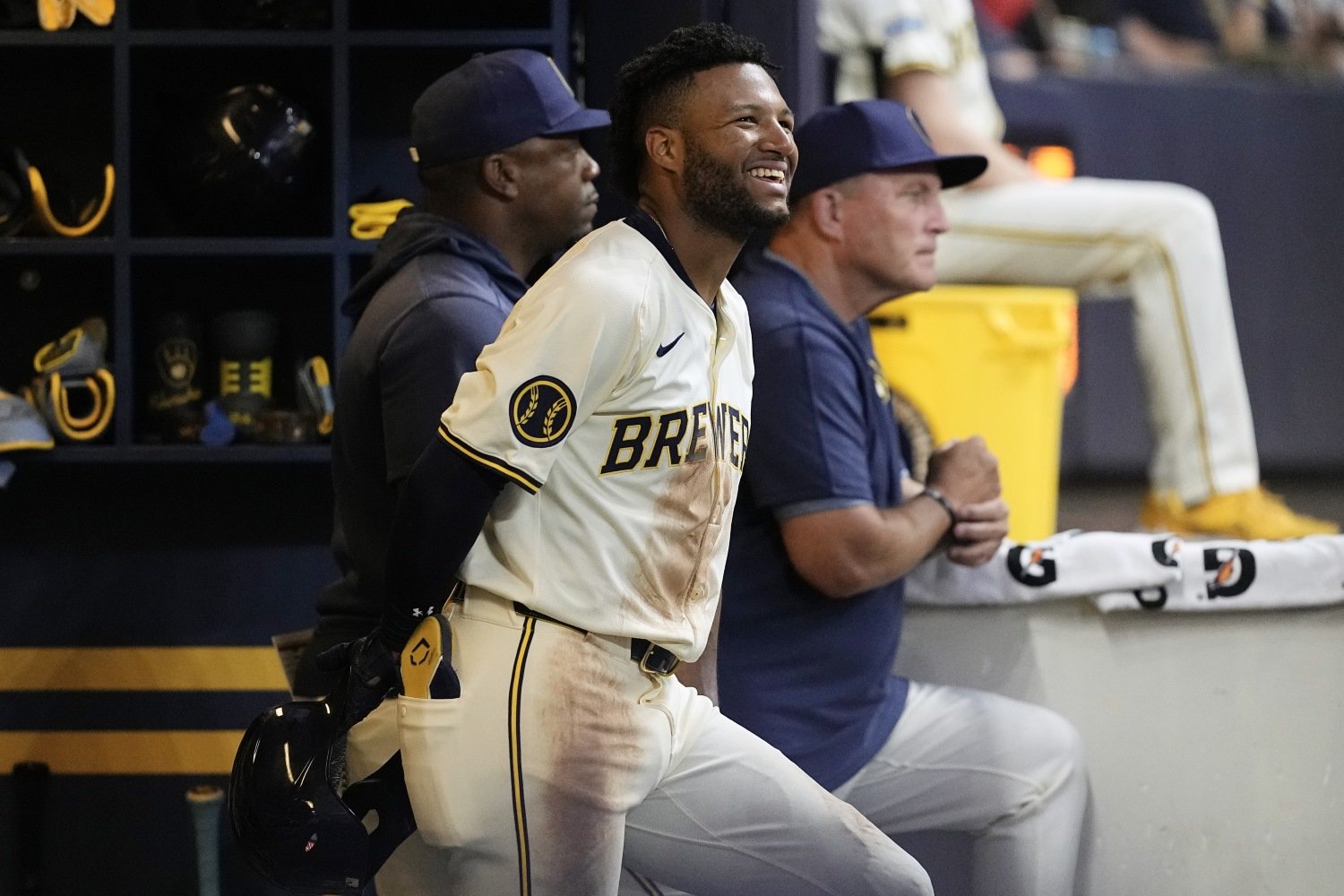 Last month, I wrote about how Jackson Chourio’s improved swing decisions against fastballs helped drive an offensive resurgence. I worried about whether that topic would age like milk, but thankfully, it has aged more like the Franzia you bought when you first turned 21--not that Chourio would know. He’s kept up the good work and has had a few flashes of greatness, most recently in the series against the Twins. In two games, he racked up five hits, with a double, a home run, five RBIs, and two stolen bases. This home run was particularly impressive because it was against a pretty good fastball from Jorge Alcalá: 97.8 miles per hour, high and tight. Furthermore, high velocity was something that Chourio struggled with immensely early in the season. From the start of the season through May 31, he had just a .414 OPS against pitches with a velocity of 95 MPH or greater. Since Jun. 1, his OPS has jumped up to .851 against such offerings. Not coincidentally, that's very close to his overall line in that span, which is .309/.363/.504. Everything is looking better, but here are some of the most meaningful advancements: Before 6/1 After 6/1 BA .120 .321 SLG .200 .464 ISO .080 .143 K% 42.9% 16.1% BABIP .231 .364 It was the kind of incandescent showing that seizes the attention of every fan in attendance, and it certainly didn't escape the notice of his manager. "What can you say? That's amazing, what he's doing," Pat Murphy said after Sunday's contest. "These two games, you'd walk away saying, 'Wow, that kid deserves $150 million.'" In addition to making strides at the plate, he’s evolved into an outstanding defender. At the beginning of the season, there were some questions about his ability to play the corner outfield spots, after playing center for the majority of his time in the minor leagues. Furthermore, there were some shaky routes at the beginning of the season to add onto the concerns. Those worries, too, have been assuaged lately--especially this weekend. What’s Next? Although he’s come around to hit the four-seam fastball well, there are other pitches against which Chourio still struggles. He’s averaging just .179 against the changeup, with a 27.6% strikeout rate, something that hasn’t gotten much better throughout the season. He’s also struggled to hit the sinker with much power, posting a .038 ISO. Outside of his hitting, I’ve been curious about how soon it will be before he becomes a stolen base menace like his compatriots Brice Turang and Christian Yelich. He has 97th-percentile sprint speed, and he was aggressive in the minors, but he has just 12 stolen bases as a rookie. This may have been hindered by his relatively low OBP early on, but even in his hot streak over the past two months, he’s stolen just five bases. Nonetheless, all of the growth the wünderkind has had in a little over half a season is a reminder of why his prospect stock was so high. It took him around 200 plate appearances to start catching up to big-league velocity, but the sky’s the limit in what he’ll be able to do in the final 200 plate appearances of his rookie year. Brewer Fanatic's Matthew Trueblood contributed to this report.
 -
Milwaukee Brewers All-Anagram Team
Jason Wang replied to Matt Breen's topic in Brewer Fanatic Front Page News
upwards of 60% of these could just be names of pre-integration era players "brice turang is the first player to steal first base twice in one game since roger breasts of the louisville colonels in 1887" -
3 Players Who Disappointed in the First Half
Jason Wang replied to Jason Wang's topic in Brewer Fanatic Front Page News
personally, i have beef with him because he never responds to my twitter dms -
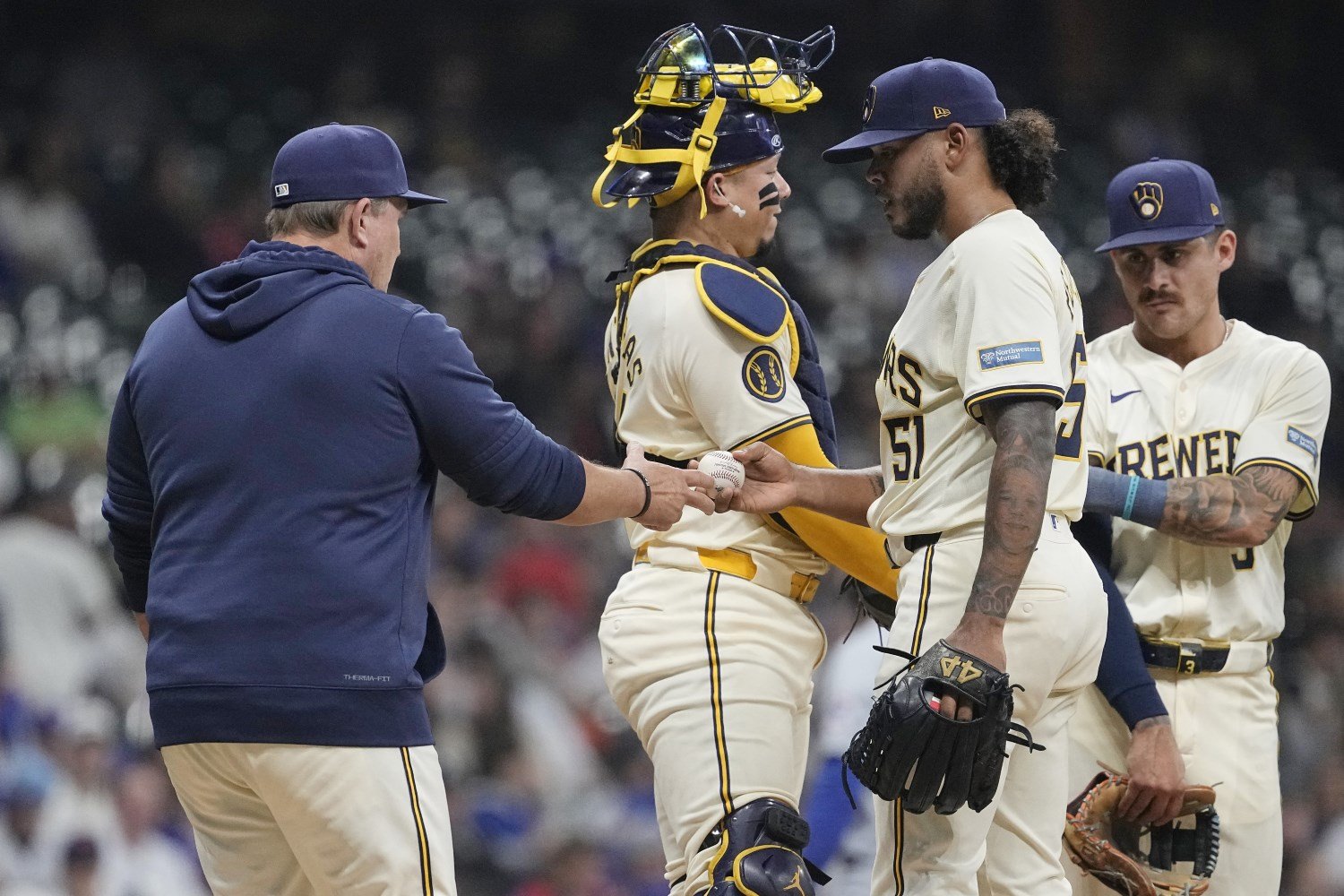 Hoby Milner Following a marquee year where he posted a 1.82 ERA and 0.96 WHIP over 64 ⅓ innings, Milner has struggled to keep up the Hoby heroics. He has regressed meaningfully in ERA (4.91), WHIP (1.25), and H/9 (9.2) since the end of 2023. On the bright side, it might not even be his fault. A closer look at his quality of contact numbers show that he’s more or less been the same, pitch-to-contact ground-ball god that he was last year. His hard-hit rate has actually decreased slightly from 35.4% to 32.8%, and his barrel rate of 3.1% is in the 97th percentile, so what gives? To make a long story even longer, Jack Stern did a great job breaking down what has been going on this season but pretty much he’s been on the receiving end of some suspect batted balls. That might explain why his xERA of 3.17 is so much better than his actual ERA. While there are a ton of excellent video examples in the aforementioned article, here’s yet another one of a batted ball with an exit velocity of 72.3 mph and a launch angle of -59 degrees that became a hit. Freddy Peralta With Corbin Burnes being sent off to Baltimore and Brandon Woodruff being sent off to Sunshine Day Camp for Tommy John Recipients, 2024 was Peralta’s year to assume the role of team ace. It was an exciting opportunity for a young arm who has spent his entire major league career with the Brewers but things haven’t gone as swimmingly as some might have hoped. His 4.11 ERA and 1.19 aren’t bad numbers by any means but they are hardly what one would be hoping for out of the top guy in the rotation. Colin Rea and Tobias Myers have arguably outperformed Peralta whose own numbers are closer to that of Bryse Wilson, a long reliever turned emergency starter. His strikeout and whiff rates are top notch as per usual but he simply gives up too much hard contact at hitter-friendly launch angles, creating a barrel rate of 8.9%. Opposing batters are averaging .238 and slugging .411 against his four-seam fastball which has historically been his best pitch. When he’s firing on all cylinders, he’s a pleasure to watch and his 11.4 K/9 leads all Brewers pitchers, qualified or not. His overall strikeout rate of 30.1% creates a feast-or-famine pitching style that limited his ability to be great in the first 97 games of the season. Rhys Hoskins When Milwaukee first signed Rhys Hoskins, it was assumed that the recurring problems at first base would be alleviated. The Brewers didn’t get a ton of production out of their first basemen in 2023 until they acquired Carlos Santana in the second half, who was about league-average. Hoskins seemed like a plus-bat that would add some much-needed pop and pizzazz to the lineup and so far, it hasn’t really played out that way. He’s slashing .215/.308/.414 with just nine doubles and 14 home runs over 296 plate appearances. He is fifth on the team in slugging percentage among qualified hitters and has an OPS+ of 100. With negative defensive value, he’s actually slightly below replacement level given the offensive expectations of his position. Was it unreasonable to assume he was going to return to full strength after missing an entire year due to injury? Probably, but he’s the third-highest paid player on the team this year and is making more than twice the fourth-highest paid player. Surely the frugal front office wouldn’t have invested a minimum of $16 million into a first baseman with average production. Diagnosing his issues might be worth a deep dive of its own but for now, we as fickle, uncoordinated, unathletic, judgmental baseball fans can comfortably say that Hoskins hasn’t been what we had hoped he would be in a Brewers uniform.
 -
While the rest of the team has been cooking, who has yet to find their mojo in 2024? Image courtesy of © Jeff Hanisch-USA TODAY Sports While the rest of the team has been cooking, who has yet to find their mojo in 2024? Hoby Milner Following a marquee year where he posted a 1.82 ERA and 0.96 WHIP over 64 ⅓ innings, Milner has struggled to keep up the Hoby heroics. He has regressed meaningfully in ERA (4.91), WHIP (1.25), and H/9 (9.2) since the end of 2023. On the bright side, it might not even be his fault. A closer look at his quality of contact numbers show that he’s more or less been the same, pitch-to-contact ground-ball god that he was last year. His hard-hit rate has actually decreased slightly from 35.4% to 32.8%, and his barrel rate of 3.1% is in the 97th percentile, so what gives? To make a long story even longer, Jack Stern did a great job breaking down what has been going on this season but pretty much he’s been on the receiving end of some suspect batted balls. That might explain why his xERA of 3.17 is so much better than his actual ERA. While there are a ton of excellent video examples in the aforementioned article, here’s yet another one of a batted ball with an exit velocity of 72.3 mph and a launch angle of -59 degrees that became a hit. Freddy Peralta With Corbin Burnes being sent off to Baltimore and Brandon Woodruff being sent off to Sunshine Day Camp for Tommy John Recipients, 2024 was Peralta’s year to assume the role of team ace. It was an exciting opportunity for a young arm who has spent his entire major league career with the Brewers but things haven’t gone as swimmingly as some might have hoped. His 4.11 ERA and 1.19 aren’t bad numbers by any means but they are hardly what one would be hoping for out of the top guy in the rotation. Colin Rea and Tobias Myers have arguably outperformed Peralta whose own numbers are closer to that of Bryse Wilson, a long reliever turned emergency starter. His strikeout and whiff rates are top notch as per usual but he simply gives up too much hard contact at hitter-friendly launch angles, creating a barrel rate of 8.9%. Opposing batters are averaging .238 and slugging .411 against his four-seam fastball which has historically been his best pitch. When he’s firing on all cylinders, he’s a pleasure to watch and his 11.4 K/9 leads all Brewers pitchers, qualified or not. His overall strikeout rate of 30.1% creates a feast-or-famine pitching style that limited his ability to be great in the first 97 games of the season. Rhys Hoskins When Milwaukee first signed Rhys Hoskins, it was assumed that the recurring problems at first base would be alleviated. The Brewers didn’t get a ton of production out of their first basemen in 2023 until they acquired Carlos Santana in the second half, who was about league-average. Hoskins seemed like a plus-bat that would add some much-needed pop and pizzazz to the lineup and so far, it hasn’t really played out that way. He’s slashing .215/.308/.414 with just nine doubles and 14 home runs over 296 plate appearances. He is fifth on the team in slugging percentage among qualified hitters and has an OPS+ of 100. With negative defensive value, he’s actually slightly below replacement level given the offensive expectations of his position. Was it unreasonable to assume he was going to return to full strength after missing an entire year due to injury? Probably, but he’s the third-highest paid player on the team this year and is making more than twice the fourth-highest paid player. Surely the frugal front office wouldn’t have invested a minimum of $16 million into a first baseman with average production. Diagnosing his issues might be worth a deep dive of its own but for now, we as fickle, uncoordinated, unathletic, judgmental baseball fans can comfortably say that Hoskins hasn’t been what we had hoped he would be in a Brewers uniform. View full article
-
oh i thought the player's name was cash that's on me 🤦♂️
-
3 Brewers Players Who Exceeded Expectations in the First Half
Jason Wang posted an article in Brewers
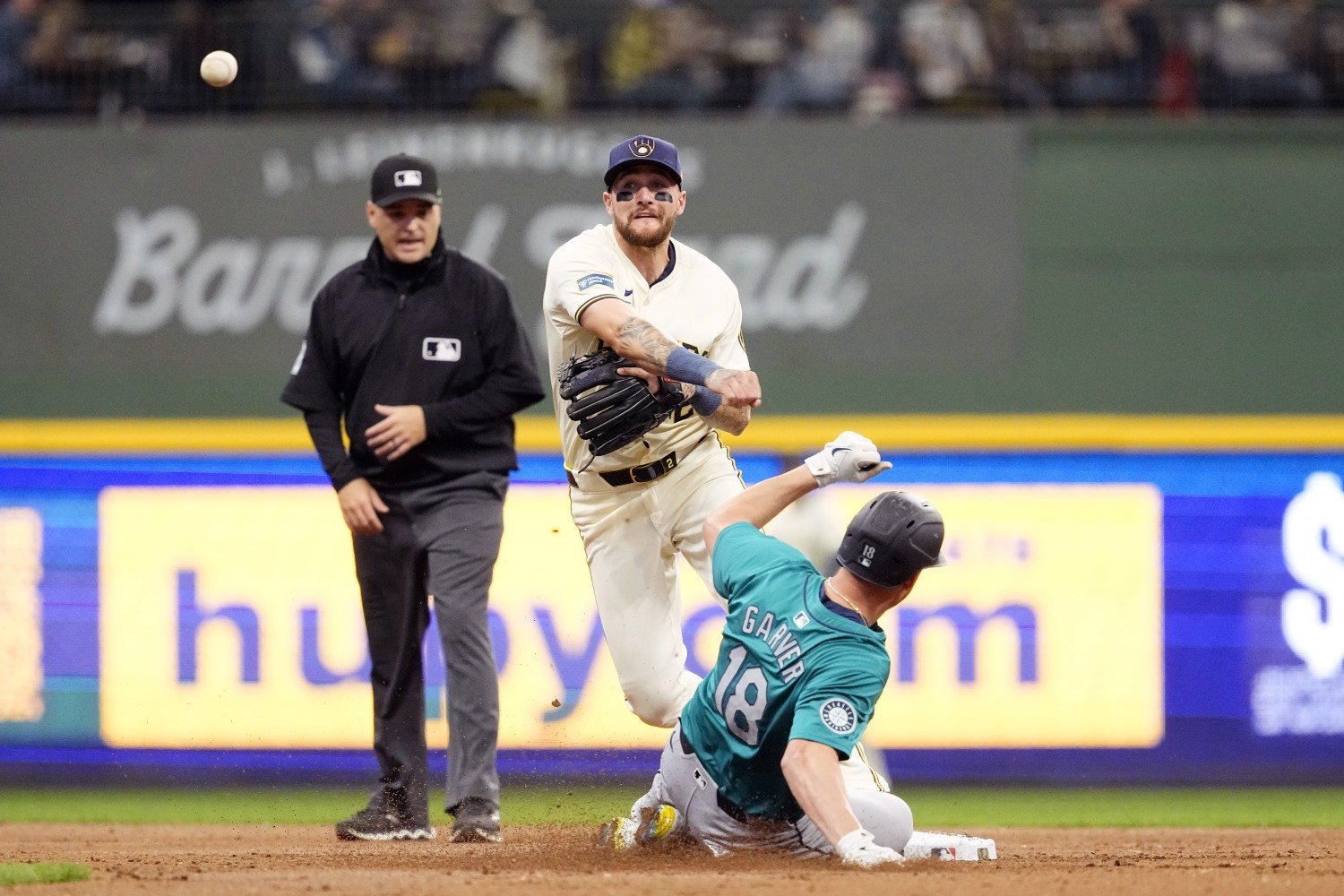 While they were very much counted as part of the race, the Brewers didn't enter the 2024 season as favorites to win the NL Central. Yet, at the All-Star break, there they sit, four and a half games ahead of the Cardinals atop the division standings. To be so much outstripping their preseason projections, they needed to get some surprising performances. Here are three guys who have fit that bill. LHP Bryan Hudson For a player who was designated for assignment by the Dodgers in the last week of 2023, Hudson has already exceeded his anticipated value. He was acquired in exchange for Justin Chambers and a player to be named later, and has been outstanding since arriving in the great state of Wisconsin. His numbers are simply outlandish; absurd; mind-boggling. Over 48 ⅓ innings, he’s pitched to a 1.49 ERA, 0.75 WHIP, and 9.9 K/9. Despite not throwing anything harder than the low 90s, his 29.3% strikeout rate bespeaks his dominance. His four-seam fastball averages 91.7 mph, while his sweeper and cutter both sit in the 80s. His fastball pairing is competitive, but his sweeper is where the rubber meets the road. Opposing batters are averaging just .039 on plate appearances that end with that pitch, while striking out 45.6% of the time. The Brewers have been remarkably consistent at churning out top-tier arms, especially in the pen, and Hudson seems like the latest example on a long list of successful experiments. With a 6’8” frame and a crafty lefty delivery, Milwaukee may have found a real diamond in the rough with plenty of team control left. OF Christian Yelich As a Brewers fan, you’ve likely heard some version of “Christian Yelich is so back, I’m going to wager my child’s entire college fund on [insert gambling app] for him to win MVP” storyline, before every season since he wrapped up his superb 2019. In the years since, he’s struggled to be the same person he was when he first joined the Brewers, averaging just a .768 OPS from 2020-2023. But this year’s different, I swear. This is the most first-half momentum he has had in a while, slashing .326/.412/.521 on the way to receiving his first All-Star nod in five years. He leads the National League in batting average, but also has 12 doubles, three triples, 11 home runs, and 21 stolen bases. His quality-of-contact numbers are mostly unchanged, but he’s striking out and whiffing considerably less. Specifically, he’s been able to cut down his strikeout rate against sliders by 10.1% and against sweepers by 19.1%. His 2.5 rWAR has already matched the mark he reached in 671 plate appearances in 2022, and he’s on pace to eclipse the 3.6 he had last year. While haters (Cardinals fans) may bet on regression down the stretch, he’s dazzled in the first half. 2B Brice Turang In 2023, the rookie Turang posted a .585 OPS and 60 OPS+ after nearly a full season of starting at second base. It was pretty rough, but after switching from whole milk to oat milk in the offseason (and accidentally adopting a new bat handle, and a few other crucial thing, Turang has evolved into one of the most impactful infielders in 2024. His OPS has jumped to .731, thanks to a boost in his batting average from .218 to .277. It's a meaningful jump. It’s even more meaningful when you realize that his top-tier speed has allowed him to steal 30 bases, four more than he did all of last season. The biggest driver behind this offensive renaissance is his newfound ability to pound the four-seam fastball. Last year, he averaged .198 and slugged .267 against four-seamers, making him an easy out for many pitchers. This year, he’s averaging .362 and slugging .486 against the same pitch. Combined with his stellar defense, his 4.0 rWAR leads the team by a comfortable margin. If 2024 Turang is indeed the Turang of the future, Milwaukee may have their hands on a powerhouse middle infielder for the next several years. In the meantime, every game seems to bring them closer to getting their hands on a second straight division title.
 -
Now that we’re 97 games into the season, which players have been better than anticipated? More importantly, can they keep that up? Image courtesy of © Jeff Hanisch-USA TODAY Sports Now that we’re 97 games into the season, which players have been better than anticipated? More importantly, can they keep that up? While they were very much counted as part of the race, the Brewers didn't enter the 2024 season as favorites to win the NL Central. Yet, at the All-Star break, there they sit, four and a half games ahead of the Cardinals atop the division standings. To be so much outstripping their preseason projections, they needed to get some surprising performances. Here are three guys who have fit that bill. LHP Bryan Hudson For a player who was designated for assignment by the Dodgers in the last week of 2023, Hudson has already exceeded his anticipated value. He was acquired in exchange for Justin Chambers and a player to be named later, and has been outstanding since arriving in the great state of Wisconsin. His numbers are simply outlandish; absurd; mind-boggling. Over 48 ⅓ innings, he’s pitched to a 1.49 ERA, 0.75 WHIP, and 9.9 K/9. Despite not throwing anything harder than the low 90s, his 29.3% strikeout rate bespeaks his dominance. His four-seam fastball averages 91.7 mph, while his sweeper and cutter both sit in the 80s. His fastball pairing is competitive, but his sweeper is where the rubber meets the road. Opposing batters are averaging just .039 on plate appearances that end with that pitch, while striking out 45.6% of the time. The Brewers have been remarkably consistent at churning out top-tier arms, especially in the pen, and Hudson seems like the latest example on a long list of successful experiments. With a 6’8” frame and a crafty lefty delivery, Milwaukee may have found a real diamond in the rough with plenty of team control left. OF Christian Yelich As a Brewers fan, you’ve likely heard some version of “Christian Yelich is so back, I’m going to wager my child’s entire college fund on [insert gambling app] for him to win MVP” storyline, before every season since he wrapped up his superb 2019. In the years since, he’s struggled to be the same person he was when he first joined the Brewers, averaging just a .768 OPS from 2020-2023. But this year’s different, I swear. This is the most first-half momentum he has had in a while, slashing .326/.412/.521 on the way to receiving his first All-Star nod in five years. He leads the National League in batting average, but also has 12 doubles, three triples, 11 home runs, and 21 stolen bases. His quality-of-contact numbers are mostly unchanged, but he’s striking out and whiffing considerably less. Specifically, he’s been able to cut down his strikeout rate against sliders by 10.1% and against sweepers by 19.1%. His 2.5 rWAR has already matched the mark he reached in 671 plate appearances in 2022, and he’s on pace to eclipse the 3.6 he had last year. While haters (Cardinals fans) may bet on regression down the stretch, he’s dazzled in the first half. 2B Brice Turang In 2023, the rookie Turang posted a .585 OPS and 60 OPS+ after nearly a full season of starting at second base. It was pretty rough, but after switching from whole milk to oat milk in the offseason (and accidentally adopting a new bat handle, and a few other crucial thing, Turang has evolved into one of the most impactful infielders in 2024. His OPS has jumped to .731, thanks to a boost in his batting average from .218 to .277. It's a meaningful jump. It’s even more meaningful when you realize that his top-tier speed has allowed him to steal 30 bases, four more than he did all of last season. The biggest driver behind this offensive renaissance is his newfound ability to pound the four-seam fastball. Last year, he averaged .198 and slugged .267 against four-seamers, making him an easy out for many pitchers. This year, he’s averaging .362 and slugging .486 against the same pitch. Combined with his stellar defense, his 4.0 rWAR leads the team by a comfortable margin. If 2024 Turang is indeed the Turang of the future, Milwaukee may have their hands on a powerhouse middle infielder for the next several years. In the meantime, every game seems to bring them closer to getting their hands on a second straight division title. View full article
-
What the Brewers Did With Their Day Two Picks in the 2024 MLB Draft
Jason Wang posted an article in MLB Draft
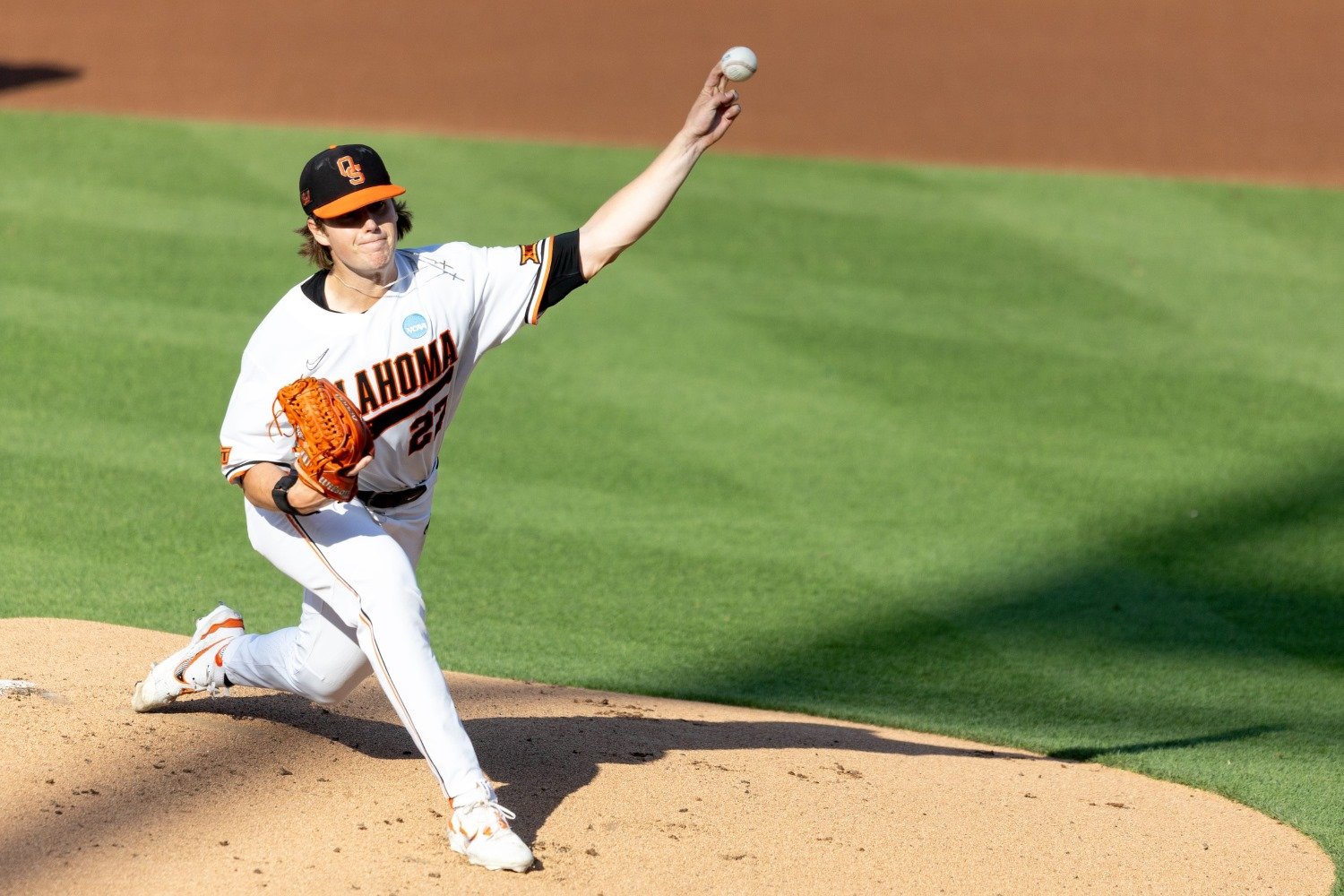 Round 3, Pick #93 - RHP Jaron DeBerry Slot Value: $788.7K A 6’3” starter out of Dallas Baptist University, DeBerry had a strong college career, capped off by a strong showing in his second season. He posted a 3.50 ERA and 1.23 WHIP over 90 innings pitched, with 8.9 strikeouts per nine innings (K/9) and a 2.3 strikeout-to-walk ration (K/BB). His four-seam fastball sits in the low 90s, and he has a deep arsenal that contains a devastating sweeper in the mid-80s and a strong curveball. Round 4, Pick #123 - C Marco Dinges Slot Value: $583.4K This was the first season in which Dinges accumulated a considerable body of work with the Florida State Seminoles. At 6’0” and just under 21 years old, he slashed .323/.415/.583, with 12 doubles, two triples, and 15 home runs over 288 plate appearances. In addition to his great power, he struck out just 37 times against 38 walks. While officially listed as a catcher, he made just one appearance at the position and has more career games in right field than he does as a backstop. He primarily served as a designated hitter last season. He's a bat-first backstop, but maybe the Milwaukee pitch-framing infrastructure can work its magic here. Round 5, Pick #156 - RHP John Holobetz Slot Value: $422.9K The 6’3” Holobetz just wrapped up his junior year with Old Dominion University, where he pitched 62 ⅔ innings, with a 4.31 ERA and a 1.23 WHIP. His four-seam fastball has been able to get up to the mid-90s, often paired with a low-80s slider. He’s listed as a reliever, but of his 15 total appearances in 2024, only five were outings fewer than four innings. He’s got excellent stamina for a bullpen arm, but developing more variety in his arsenal will be key if he wants to make the move to being a starter. Round 6, Pick #185 - RHP Chandler Welch Slot Value: $328.7K A 6’0” junior from Tulane University, Welch had a 4.65 ERA and a 1.49 WHIP over 89 innings pitched. He managed 8.9 K/9, but gave up a whopping 11.0 H/9 with 2.4 BB/9, so expanding the zone in search of weaker contact might be a good thing to work on in the future. Round 6, Pick #215 - LHP Mason Molina Slot Value: $257.4K Molina was most recently a starting pitcher for the University of Arkansas, after spending the first two years of his college career at Texas Tech. In his lone year with the Razorbacks, he put up a 4.47 ERA and 1.29 WHIP over 58 ⅓ innings pitched. He’s a crafty 6’2” lefty, and his strikeout numbers were stellar at 12.5 K/9, but his command suffered--as shown in his 5.6 BB/9. His fastball sits in the low 90s, and he also throws a decent changeup and curveball combo, rounding things out with an average slider. Round 8, Pick #245 - LHP Sam Garcia Slot Value: $210.7K A 6’4” starter for Oklahoma State, Garcia spent his first three college years with High Point University. He pitched well in his senior campaign, amassing a 3.64 ERA and 1.08 WHIP over 89 innings pitched. He even managed 11.6 K/9 and 6.05 K/BB. Round 9, Pick #275 - RHP Griffin Tobias Slot Value: $190.9K The first of two high schoolers taken on the second day of the draft, the 6’0” Tobias has a strong commitment to playing baseball for Indiana University, which may make it more difficult to get him to sign. While pitching for Lake Central High School in 2024, he posted an impressive 0.95 ERA over 66 ⅓ innings pitched with 98 strikeouts. Round 10, Pick #305 - RHP Ethan Dorchies Slot Value: $180.4K Last but not least, the 6’5” Dorchies managed a 3.50 ERA and 94 strikeouts over 63 innings pitched in his senior year with Cary-Grove High School. He’s currently committed to the University of Illinois-Chicago, and throws a low 90s fastball with a slider/curveball combo. It looks like the Crew will also have some money to throw around on Day 3 of the draft, so it'll be interesting to see how they spend it. In the meantime, this is an interesting bumper crop for a farm that knows it needs to be fertile when it comes to pitching in the coming years. What do you think of the team's choices?
- 7 comments
-
- 1
-

-
- jaron deberry
- sam garcia
- (and 1 more)
-
Milwaukee picked up a ton of pitching on the second day of the draft, spending just one of their eight picks on a position player. Image courtesy of © Mitch Alcala/For The Oklahoman / USA TODAY NETWORK Milwaukee picked up a ton of pitching on the second day of the draft, spending just one of their eight picks on a position player. Round 3, Pick #93 - RHP Jaron DeBerry Slot Value: $788.7K A 6’3” starter out of Dallas Baptist University, DeBerry had a strong college career, capped off by a strong showing in his second season. He posted a 3.50 ERA and 1.23 WHIP over 90 innings pitched, with 8.9 strikeouts per nine innings (K/9) and a 2.3 strikeout-to-walk ration (K/BB). His four-seam fastball sits in the low 90s, and he has a deep arsenal that contains a devastating sweeper in the mid-80s and a strong curveball. Round 4, Pick #123 - C Marco Dinges Slot Value: $583.4K This was the first season in which Dinges accumulated a considerable body of work with the Florida State Seminoles. At 6’0” and just under 21 years old, he slashed .323/.415/.583, with 12 doubles, two triples, and 15 home runs over 288 plate appearances. In addition to his great power, he struck out just 37 times against 38 walks. While officially listed as a catcher, he made just one appearance at the position and has more career games in right field than he does as a backstop. He primarily served as a designated hitter last season. He's a bat-first backstop, but maybe the Milwaukee pitch-framing infrastructure can work its magic here. Round 5, Pick #156 - RHP John Holobetz Slot Value: $422.9K The 6’3” Holobetz just wrapped up his junior year with Old Dominion University, where he pitched 62 ⅔ innings, with a 4.31 ERA and a 1.23 WHIP. His four-seam fastball has been able to get up to the mid-90s, often paired with a low-80s slider. He’s listed as a reliever, but of his 15 total appearances in 2024, only five were outings fewer than four innings. He’s got excellent stamina for a bullpen arm, but developing more variety in his arsenal will be key if he wants to make the move to being a starter. Round 6, Pick #185 - RHP Chandler Welch Slot Value: $328.7K A 6’0” junior from Tulane University, Welch had a 4.65 ERA and a 1.49 WHIP over 89 innings pitched. He managed 8.9 K/9, but gave up a whopping 11.0 H/9 with 2.4 BB/9, so expanding the zone in search of weaker contact might be a good thing to work on in the future. Round 6, Pick #215 - LHP Mason Molina Slot Value: $257.4K Molina was most recently a starting pitcher for the University of Arkansas, after spending the first two years of his college career at Texas Tech. In his lone year with the Razorbacks, he put up a 4.47 ERA and 1.29 WHIP over 58 ⅓ innings pitched. He’s a crafty 6’2” lefty, and his strikeout numbers were stellar at 12.5 K/9, but his command suffered--as shown in his 5.6 BB/9. His fastball sits in the low 90s, and he also throws a decent changeup and curveball combo, rounding things out with an average slider. Round 8, Pick #245 - LHP Sam Garcia Slot Value: $210.7K A 6’4” starter for Oklahoma State, Garcia spent his first three college years with High Point University. He pitched well in his senior campaign, amassing a 3.64 ERA and 1.08 WHIP over 89 innings pitched. He even managed 11.6 K/9 and 6.05 K/BB. Round 9, Pick #275 - RHP Griffin Tobias Slot Value: $190.9K The first of two high schoolers taken on the second day of the draft, the 6’0” Tobias has a strong commitment to playing baseball for Indiana University, which may make it more difficult to get him to sign. While pitching for Lake Central High School in 2024, he posted an impressive 0.95 ERA over 66 ⅓ innings pitched with 98 strikeouts. Round 10, Pick #305 - RHP Ethan Dorchies Slot Value: $180.4K Last but not least, the 6’5” Dorchies managed a 3.50 ERA and 94 strikeouts over 63 innings pitched in his senior year with Cary-Grove High School. He’s currently committed to the University of Illinois-Chicago, and throws a low 90s fastball with a slider/curveball combo. It looks like the Crew will also have some money to throw around on Day 3 of the draft, so it'll be interesting to see how they spend it. In the meantime, this is an interesting bumper crop for a farm that knows it needs to be fertile when it comes to pitching in the coming years. What do you think of the team's choices? View full article
-
Why The Brewers Should Target One of These Three Rental Starters
Jason Wang posted an article in Brewers
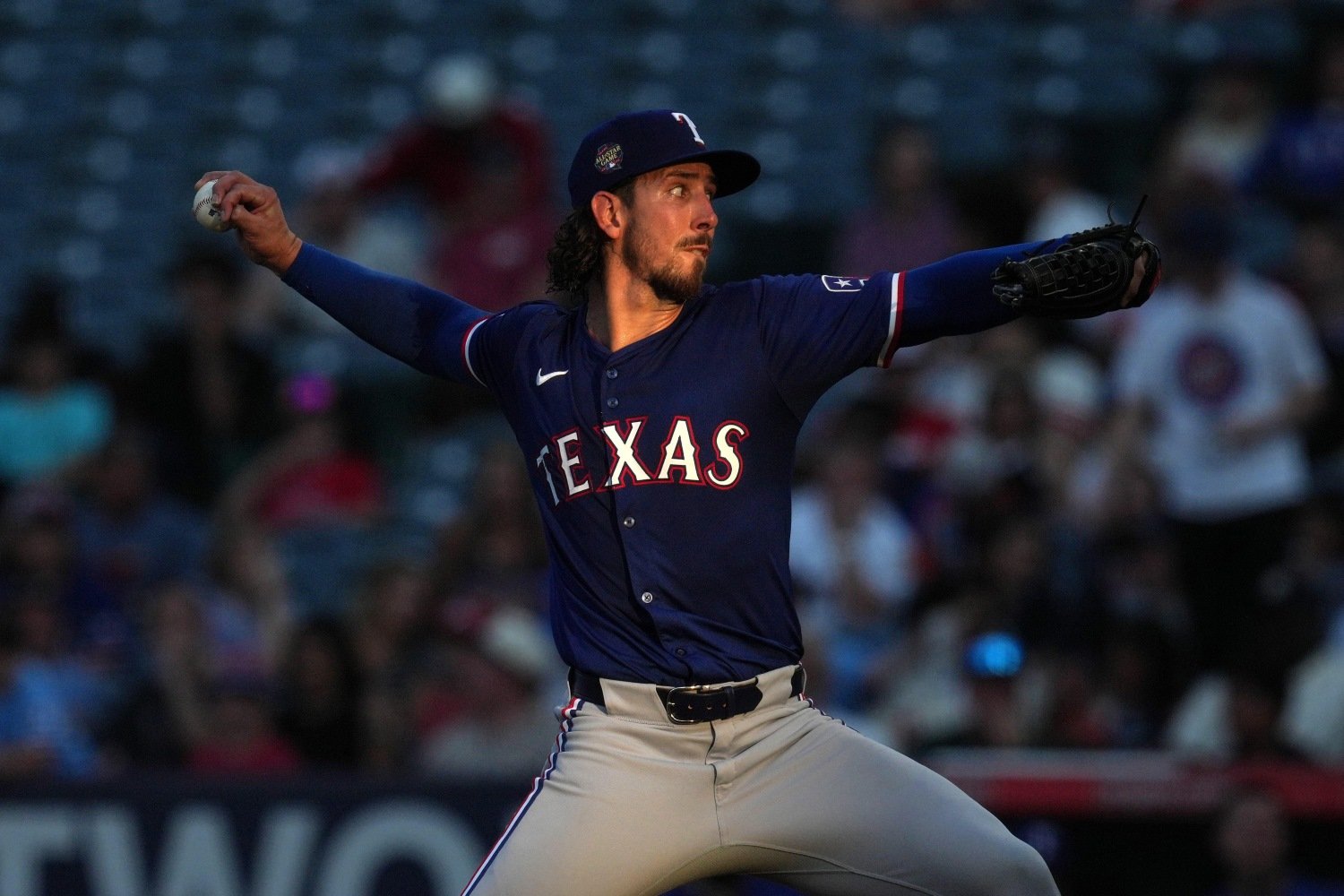 While some teams will be forced to decide between being a buyer or a seller over the next two weeks, the Brewers have given themselves enough of a cushion to be comfortably in the playoff picture. With a 5.5-game lead over the second-place Cardinals and a record of 54-39, things are looking pretty rosy. However, being invited to the postseason dance and actually being able to stay long enough to hear “Cha Cha Slide” are two different things. Milwaukee hasn’t won a playoff series since their 2018 run to the NLCS, despite making it to October four out of the past five years. Therefore, when it comes to the trade deadline, the overall directive seems pretty clear: bolster the roster for a deep playoff run. The best way to do so might be to focus on repairing the team’s tattered starting rotation. Let’s do a quick injury rundown, shall we? Having both received Tommy John surgery this season, Wade Miley and Robert Gasser are still a long ways away from returning to the active roster. Brandon Woodruff is closer, but still not close enough to be a factor for the 2024 season. DL Hall was looking good on a rehab assignment with the Nashville Sounds, but a hard comebacker led him to be shut down for another 3-10 days, pushing his eventual return even further down the line. Last but not least (in fact, kind of last but first?), Joe Ross just made the second outing of his rehab assignment, pitching 3 ⅔ scoreless innings with three strikeouts in Triple-A. He’ll likely be the first one to return to the team. While there are many ways to strengthen a rotation, the best bet for Milwaukee might be to get a short-term rental starter for the postseason. Why is this better than acquiring someone with more long-term potential? Because the Brewers might not need it. Assuming no one else runs into additional freak injuries (Jakob Junis-style), Woodruff should be back to help the rotation in 2025, followed by Gasser and Miley around the second half. Jacob Misiorowski might also be major-league ready next year, another potential X-factor. Aaron Ashby is also alive. The Brewers really just need an arm to hold them over for the remainder of this injury-marred season and give them a little more confidence in this one postseason, so anything more would just increase the price for not a whole lot of useful return. Who matches the description of a reliable rental starter? Jack Flaherty comes to mind. He’s been shoving for the Detroit Tigers, posting a 3.24 ERA and 1.00 WHIP over 89 innings pitched. He’s signed on a one-year, $14-million deal and will test free agency for a second time in 2025. At 14 games behind the Guardians and seven games back from a Wild Card spot, it would make a ton of sense for Detroit to sell Flaherty for someone with more team control, especially given their current young core. Michael Lorenzen is another potential target, although a frustrating one, because he could have been had this winter for less than the Crew paid Junis. He has pitched to a 3.52 ERA and 1.22 WHIP over 92 innings with the Rangers this year. He’s on an even cheaper one-year, $4.5 million deal, and the Rangers are 6.5 games back from the division, seven games back from a Wild Card spot. If the team wants to add a lefty to the mix, Andrew Heaney could be a serviceable option. He’s got a 3.80 ERA and 1.24 WHIP over 90 innings pitched, and will also become a free agent after his two-year, $25 million contract runs out this year. He’s a bit more expensive than Lorenzen, but still a viable option, boasting an excellent chase rate (32.8%) and better-than-average walk rate (6.2%). Shopping for a rental starter good enough to make a feasible postseason impact is kind of like finding a great movie at the bottom of the bargain bin. There aren’t a ton of great options, but the feeling of finding a diamond in the rough is one of unmatched satisfaction. So while you look for the latest Steven Seagal DVD, Milwaukee should be looking for the final piece of their 2024 puzzle.
- 2 comments
-
- 1
-
-
- michael lorenzen
- andrew heaney
- (and 1 more)
-
Is a short-term rotation rental the best way for Milwaukee to capitalize on their great present position without sacrificing too much of their future? Given what they've got, it might be. Image courtesy of © Kirby Lee-USA TODAY Sports Is a short-term rotation rental the best way for Milwaukee to capitalize on their great present position without sacrificing too much of their future? Given what they've got, it might be. While some teams will be forced to decide between being a buyer or a seller over the next two weeks, the Brewers have given themselves enough of a cushion to be comfortably in the playoff picture. With a 5.5-game lead over the second-place Cardinals and a record of 54-39, things are looking pretty rosy. However, being invited to the postseason dance and actually being able to stay long enough to hear “Cha Cha Slide” are two different things. Milwaukee hasn’t won a playoff series since their 2018 run to the NLCS, despite making it to October four out of the past five years. Therefore, when it comes to the trade deadline, the overall directive seems pretty clear: bolster the roster for a deep playoff run. The best way to do so might be to focus on repairing the team’s tattered starting rotation. Let’s do a quick injury rundown, shall we? Having both received Tommy John surgery this season, Wade Miley and Robert Gasser are still a long ways away from returning to the active roster. Brandon Woodruff is closer, but still not close enough to be a factor for the 2024 season. DL Hall was looking good on a rehab assignment with the Nashville Sounds, but a hard comebacker led him to be shut down for another 3-10 days, pushing his eventual return even further down the line. Last but not least (in fact, kind of last but first?), Joe Ross just made the second outing of his rehab assignment, pitching 3 ⅔ scoreless innings with three strikeouts in Triple-A. He’ll likely be the first one to return to the team. While there are many ways to strengthen a rotation, the best bet for Milwaukee might be to get a short-term rental starter for the postseason. Why is this better than acquiring someone with more long-term potential? Because the Brewers might not need it. Assuming no one else runs into additional freak injuries (Jakob Junis-style), Woodruff should be back to help the rotation in 2025, followed by Gasser and Miley around the second half. Jacob Misiorowski might also be major-league ready next year, another potential X-factor. Aaron Ashby is also alive. The Brewers really just need an arm to hold them over for the remainder of this injury-marred season and give them a little more confidence in this one postseason, so anything more would just increase the price for not a whole lot of useful return. Who matches the description of a reliable rental starter? Jack Flaherty comes to mind. He’s been shoving for the Detroit Tigers, posting a 3.24 ERA and 1.00 WHIP over 89 innings pitched. He’s signed on a one-year, $14-million deal and will test free agency for a second time in 2025. At 14 games behind the Guardians and seven games back from a Wild Card spot, it would make a ton of sense for Detroit to sell Flaherty for someone with more team control, especially given their current young core. Michael Lorenzen is another potential target, although a frustrating one, because he could have been had this winter for less than the Crew paid Junis. He has pitched to a 3.52 ERA and 1.22 WHIP over 92 innings with the Rangers this year. He’s on an even cheaper one-year, $4.5 million deal, and the Rangers are 6.5 games back from the division, seven games back from a Wild Card spot. If the team wants to add a lefty to the mix, Andrew Heaney could be a serviceable option. He’s got a 3.80 ERA and 1.24 WHIP over 90 innings pitched, and will also become a free agent after his two-year, $25 million contract runs out this year. He’s a bit more expensive than Lorenzen, but still a viable option, boasting an excellent chase rate (32.8%) and better-than-average walk rate (6.2%). Shopping for a rental starter good enough to make a feasible postseason impact is kind of like finding a great movie at the bottom of the bargain bin. There aren’t a ton of great options, but the feeling of finding a diamond in the rough is one of unmatched satisfaction. So while you look for the latest Steven Seagal DVD, Milwaukee should be looking for the final piece of their 2024 puzzle. View full article
-
I'm glad you enjoyed it! Shoutout to Matt Trueblood for the pointers on this piece and leading me in the right direction!
- 19 replies
-
- 1
-
-
- eric haase
- gary sanchez
- (and 1 more)
-
Eric Haase, Gary Sánchez, and the Brewers' Backup Catcher Conundrum
Jason Wang posted an article in Brewers
 On Jun. 26, Gary Sánchez was placed on the 10-day IL for a left calf strain. To replace him, Eric Haase was called back up, and he's performed admirably in Sánchez's stead, slashing .455/.455/.727 over his 11 plate appearances with the team so far. It has been a great streak, for a player who managed just a .528 OPS in 2023. Unfortunately, all good things must come to an end, and in this case, the good thing is probably Haase’s hot streak. Presumably, he'll come back to Earth a bit, and Sánchez is reportedly very close to returning to the active roster. If Haase is designated for assignment to make room for Sánchez, it’s doubtful that he’d clear waivers, given the way he's played all season both for Triple-A Nashville and with the Crew and the perpetual league-wide need for better catching depth. It was a mild surprise when he made it through at the beginning of the season, and the Crew are unlikely to get so lucky four months later, given the attrition and poor performances that have piled up in the meantime. The Orioles and Guardians are two teams that come to mind, the first trotting out James McCann (.571 OPS) behind Adley Rutschman and the latter having Austin Hedges (.421 OPS) as their secondary catcher. Hedges is practically a coach in uniform, but McCann would be relatively easy to let go for Baltimore, and of course, you never know which other teams might take an interest. In the short term, it wouldn’t make much sense to have three catchers on the roster, especially when one of them is as heavily used as William Contreras. Although he’s slumped big-time since his MVP-tier play at the beginning of the season, Contreras still has an OPS of .806 and is a consistent lineup presence. He plays almost every day. The Brewers have too many other good options (some of them, like Haase, tough to farm out) to let two roster spots be tied up in backing up Contreras. But what happens if Sánchez gets reinjured, or Contreras cracks under the burden of his workload? The options for Milwaukee in Triple-A aren’t great, at least from a hitting standpoint. Francisco Mejía has played the most innings at catcher for the Nashville Sounds, but is slashing just .249/.314/.385 over 239 plate appearances in a very hitter-friendly environment. Nor is he an inspiring defensive option. In an ideal world, the need for a backup catcher could result in highly-ranked Brewers prospect Jeferson Quero getting called up, but in the crueler one, he had season-ending shoulder surgery in April, so that’s not going to happen. Perhaps a trade would be in order. Just last year, the Crew sent catcher Alex Jackson to the Rays in exchange for Evan McKendry, a right-handed starter currently pitching in Triple-A. With Victor Caratini already a serviceable backup option for Contreras, Jackson was a redundancy languishing away in Triple-A as a 27-year old. It was a win-win move, with Tampa Bay receiving a major league-ready player who is now their alternate catcher behind Ben Rortvedt, and Milwaukee receiving more starting pitching depth. Maybe the Brewers could do something similar, but this time in reverse, pursuing a near-ready catcher to use in case of emergency. It wouldn’t make sense to make this a priority at the deadline, nor to give up too much, so picking the right target would be key. One possible name could be Brian Serven, whom the Blue Jays claimed on waivers this spring and has been very good for them in Triple-A (though not so in a brief stint with the parent club). Another could be Mets spare part Joe Hudson. Kevin Plawecki, another 33-year old minor-leaguer, could be an option. He’s got a .778 OPS over 155 plate appearances with the Padres' Triple-A affiliate and San Diego could definitely use more pitching, especially in the bullpen. Their catcher depth is already good, with Luis Campusano and Kyle Higashioka holding down the fort while No. 6-ranked MLB prospect Ethan Salas earns his stripes. Surely they have no need for a someone nearly twice the age of Salas, right? These thoughts are really just in preparation for a worst-case scenario, and there's a good chance that that doesn't come to fruition. If both catchers on the major-league roster eat their Wheaties and stay out of trouble, this should all be a moot point. However, it’s yet another interesting example of how the Brewers’ front office might have to get crafty to address unfortunate roster situations. With moves to acquire and (hopefully) get the best out of struggling starters Dallas Keuchel and Aaron Civale, the backup catcher conjecture would be the latest in a long list of challenges for Milwaukee management.
- 19 comments
-
- 1
-
-
- eric haase
- gary sanchez
- (and 1 more)
-
Gary Sánchez will be back from the IL sooner than later, so what does that mean for Eric Haase and the backup backstop picture? Image courtesy of © Troy Babbitt-USA TODAY Sports Gary Sánchez will be back from the IL sooner than later, so what does that mean for Eric Haase and the backup backstop picture? On Jun. 26, Gary Sánchez was placed on the 10-day IL for a left calf strain. To replace him, Eric Haase was called back up, and he's performed admirably in Sánchez's stead, slashing .455/.455/.727 over his 11 plate appearances with the team so far. It has been a great streak, for a player who managed just a .528 OPS in 2023. Unfortunately, all good things must come to an end, and in this case, the good thing is probably Haase’s hot streak. Presumably, he'll come back to Earth a bit, and Sánchez is reportedly very close to returning to the active roster. If Haase is designated for assignment to make room for Sánchez, it’s doubtful that he’d clear waivers, given the way he's played all season both for Triple-A Nashville and with the Crew and the perpetual league-wide need for better catching depth. It was a mild surprise when he made it through at the beginning of the season, and the Crew are unlikely to get so lucky four months later, given the attrition and poor performances that have piled up in the meantime. The Orioles and Guardians are two teams that come to mind, the first trotting out James McCann (.571 OPS) behind Adley Rutschman and the latter having Austin Hedges (.421 OPS) as their secondary catcher. Hedges is practically a coach in uniform, but McCann would be relatively easy to let go for Baltimore, and of course, you never know which other teams might take an interest. In the short term, it wouldn’t make much sense to have three catchers on the roster, especially when one of them is as heavily used as William Contreras. Although he’s slumped big-time since his MVP-tier play at the beginning of the season, Contreras still has an OPS of .806 and is a consistent lineup presence. He plays almost every day. The Brewers have too many other good options (some of them, like Haase, tough to farm out) to let two roster spots be tied up in backing up Contreras. But what happens if Sánchez gets reinjured, or Contreras cracks under the burden of his workload? The options for Milwaukee in Triple-A aren’t great, at least from a hitting standpoint. Francisco Mejía has played the most innings at catcher for the Nashville Sounds, but is slashing just .249/.314/.385 over 239 plate appearances in a very hitter-friendly environment. Nor is he an inspiring defensive option. In an ideal world, the need for a backup catcher could result in highly-ranked Brewers prospect Jeferson Quero getting called up, but in the crueler one, he had season-ending shoulder surgery in April, so that’s not going to happen. Perhaps a trade would be in order. Just last year, the Crew sent catcher Alex Jackson to the Rays in exchange for Evan McKendry, a right-handed starter currently pitching in Triple-A. With Victor Caratini already a serviceable backup option for Contreras, Jackson was a redundancy languishing away in Triple-A as a 27-year old. It was a win-win move, with Tampa Bay receiving a major league-ready player who is now their alternate catcher behind Ben Rortvedt, and Milwaukee receiving more starting pitching depth. Maybe the Brewers could do something similar, but this time in reverse, pursuing a near-ready catcher to use in case of emergency. It wouldn’t make sense to make this a priority at the deadline, nor to give up too much, so picking the right target would be key. One possible name could be Brian Serven, whom the Blue Jays claimed on waivers this spring and has been very good for them in Triple-A (though not so in a brief stint with the parent club). Another could be Mets spare part Joe Hudson. Kevin Plawecki, another 33-year old minor-leaguer, could be an option. He’s got a .778 OPS over 155 plate appearances with the Padres' Triple-A affiliate and San Diego could definitely use more pitching, especially in the bullpen. Their catcher depth is already good, with Luis Campusano and Kyle Higashioka holding down the fort while No. 6-ranked MLB prospect Ethan Salas earns his stripes. Surely they have no need for a someone nearly twice the age of Salas, right? These thoughts are really just in preparation for a worst-case scenario, and there's a good chance that that doesn't come to fruition. If both catchers on the major-league roster eat their Wheaties and stay out of trouble, this should all be a moot point. However, it’s yet another interesting example of how the Brewers’ front office might have to get crafty to address unfortunate roster situations. With moves to acquire and (hopefully) get the best out of struggling starters Dallas Keuchel and Aaron Civale, the backup catcher conjecture would be the latest in a long list of challenges for Milwaukee management. View full article
-
Two Minor League Hitters Who Could Help the Brewers in the Second Half
Jason Wang posted an article in Brewers
 The Brewers have an OPS of .733, the ninth-best in MLB, but they still have weaknesses. Despite being in the top five teams for average and on-base percentage, the .400 slugging percentage is 13th in baseball. Even more concerning is the team’s struggle to hit left-handed pitching, posting a combined .683 OPS, worse than 21 other major league teams. Who are some young(-ish) minor leaguers that could add more pop and pizazz to this already gifted group of guys? OF Isaac Collins (Nashville Sounds) - .281/.396/.516 As a fellow short king, Collins has been balling in Triple-A this season. He’s been doing a little bit of everything for the Sounds, hitting for average, hitting for power, and even snagging the occasional bag. With 22 doubles, four triples, and ten home runs, it’s clear that he’s one of the better power hitters in the Brewers system this year. Equally as important is his proficiency against left-handed pitchers. As a switch hitter, he slashes; he’s posted a .962 OPS—.936 from the left side, 292/.362/.500 against them. He hits four-seam fastballs and cutters especially well, with an OPS of 1.000 and 1.387 against those respective pitches. He's alright against breaking balls and off-speed but has struggled the most against sinkers, particularly when it comes to getting hard contact. He's been great at drawing walks off the pitch, walking at an impressive 28.6% clip, but he's slugging just .200 against sinkers so far. The question is, who would he replace? He’s spent most of this season in left field, but it’s doubtful he’ll replace a red-hot Christian Yelich. He’s also taken some reps at center field and second base this year so that he could be slotted into one of those positions. Blake Perkins might be the more likely candidate to platoon out for Collins. The Brewers would end up trading off Perkins's great glove for a little more offense, especially since Perkins is posting just a .632 OPS against lefties. OF Brewer Hicklen (Nashville Sounds) - .284/.394/.568 Another candidate to call up from Triple-A is Hicklen, who profiles similarly to Collins. He’s got 13 doubles, four triples, and 14 home runs in his 269 plate appearances in Triple-A this year, which is a great number for the 28-year-old. He’s also a baserunning threat, stealing 25 bases while being caught just three times. He hasn’t seen as much left-handed pitching as Isaac Collins this year, but 62 plate appearances is ample enough of a sample size to conclude that he’s, as a fellow Gen Z-er might say, “pretty dece.” He’s slashing .200/.258/.455, so not hitting the ball a ton but hitting it hard. He hits four-seam fastballs well but makes his bread against breaking pitches. His OPS against sliders, sweepers, and curveballs is a mind-blowing 1.321 over 68 plate appearances. The pitches he struggles with the most are the sinker (.653 OPS) and changeup (.602 OPS). Like Collins, he's got a decent on-base percentage against the sinker, but his ISO of just .073 indicates that he isn't getting a lot of quality contact against the pitch. He's just plain subpar against the changeup, averaging .167 and slugging .292 over 29 plate appearances. Most of his season and career have been spent in the corner outfield, specifically in right field this year. This helps his case since Jackson Chourio, despite his resurgence this past month, has suffered against left-handed pitching, posting just a .534 OPS. By itself, Hicklen’s .713 OPS against lefties doesn’t jump off the page, but it’s a big improvement over what Chourio has been able to offer so far.
 -
Milwaukee’s hitting has been pretty darn good this year, but is there talent in the farm system that could make the lineup even better? Image courtesy of © Allan Henry-USA TODAY Sports Milwaukee’s hitting has been pretty darn good this year, but is there talent in the farm system that could make the lineup even better? The Brewers have an OPS of .733, the ninth-best in MLB, but they still have weaknesses. Despite being in the top five teams for average and on-base percentage, the .400 slugging percentage is 13th in baseball. Even more concerning is the team’s struggle to hit left-handed pitching, posting a combined .683 OPS, worse than 21 other major league teams. Who are some young(-ish) minor leaguers that could add more pop and pizazz to this already gifted group of guys? OF Isaac Collins (Nashville Sounds) - .281/.396/.516 As a fellow short king, Collins has been balling in Triple-A this season. He’s been doing a little bit of everything for the Sounds, hitting for average, hitting for power, and even snagging the occasional bag. With 22 doubles, four triples, and ten home runs, it’s clear that he’s one of the better power hitters in the Brewers system this year. Equally as important is his proficiency against left-handed pitchers. As a switch hitter, he slashes; he’s posted a .962 OPS—.936 from the left side, 292/.362/.500 against them. He hits four-seam fastballs and cutters especially well, with an OPS of 1.000 and 1.387 against those respective pitches. He's alright against breaking balls and off-speed but has struggled the most against sinkers, particularly when it comes to getting hard contact. He's been great at drawing walks off the pitch, walking at an impressive 28.6% clip, but he's slugging just .200 against sinkers so far. The question is, who would he replace? He’s spent most of this season in left field, but it’s doubtful he’ll replace a red-hot Christian Yelich. He’s also taken some reps at center field and second base this year so that he could be slotted into one of those positions. Blake Perkins might be the more likely candidate to platoon out for Collins. The Brewers would end up trading off Perkins's great glove for a little more offense, especially since Perkins is posting just a .632 OPS against lefties. OF Brewer Hicklen (Nashville Sounds) - .284/.394/.568 Another candidate to call up from Triple-A is Hicklen, who profiles similarly to Collins. He’s got 13 doubles, four triples, and 14 home runs in his 269 plate appearances in Triple-A this year, which is a great number for the 28-year-old. He’s also a baserunning threat, stealing 25 bases while being caught just three times. He hasn’t seen as much left-handed pitching as Isaac Collins this year, but 62 plate appearances is ample enough of a sample size to conclude that he’s, as a fellow Gen Z-er might say, “pretty dece.” He’s slashing .200/.258/.455, so not hitting the ball a ton but hitting it hard. He hits four-seam fastballs well but makes his bread against breaking pitches. His OPS against sliders, sweepers, and curveballs is a mind-blowing 1.321 over 68 plate appearances. The pitches he struggles with the most are the sinker (.653 OPS) and changeup (.602 OPS). Like Collins, he's got a decent on-base percentage against the sinker, but his ISO of just .073 indicates that he isn't getting a lot of quality contact against the pitch. He's just plain subpar against the changeup, averaging .167 and slugging .292 over 29 plate appearances. Most of his season and career have been spent in the corner outfield, specifically in right field this year. This helps his case since Jackson Chourio, despite his resurgence this past month, has suffered against left-handed pitching, posting just a .534 OPS. By itself, Hicklen’s .713 OPS against lefties doesn’t jump off the page, but it’s a big improvement over what Chourio has been able to offer so far. View full article
-
The metronomically consistent Brewers technically had their best month of the year in June, going 16-11. Who helped drive the offense the most? The metronomically consistent Brewers technically had their best month of the year in June, going 16-11. Who helped drive the offense the most? Despite having their highest winning percentage of any month in the season so far, the Brewers offense began to sputter in June. The team posted a .677 OPS, down from their .753 OPS in May. The team had far fewer extra-base hits, but with a couple of home runs at the right times, they managed to escape with the win time and time again. Honorable Mentions Jake Bauers 50 PA, .268/.400/.439, 11 H, 1 2B, 2 HR, 7 R, 8 RBI, 9 BB, 12 K, 1 SB Bauers has slowly but surely been ceding more of his playing time to Rhys Hoskins and Blake Perkins, but has been effective when trotted out. Often brought on as a pinch-hitter (and sometimes an outfielder and pinch runner), he’s been getting on base when needed and scoring runs. He had a fraction of the plate appearances of his more full-time teammates, but he had the second-highest OPS on the team for the month. Oh, he also hit a grand slam against the Rangers, so there’s that. Brice Turang 117 PA, .280/.342/.421, 30 H, 2 2B, 2 3B, 3 HR, 16 R, 16 RBI, 10 BB, 23 K, 9 SB With William Contreras slowing down significantly of late, Brice Turang is now the runaway rWAR leader on the 2024 Brewers. His mark of 3.8 is the result of his stellar defense (carried over from last year), combined with a 117 OPS+. Elly De La Cruz may have “run away” with the stolen base lead, but Turang's 28 bags are still the second-most in MLB. Oh, he also hit a grand slam against the Padres, so there’s that. Oh, he also hit a grand slam against the Cubs, so there’s that too. Christian Yelich 115 PA, .317/.391/.396, 32 H, 2 2B, 2 HR, 13 R, 9 RBI, 12 BB, 21 K, 1 HBP, 10 SB Outside of his two MVP-caliber years in 2018 and 2019, Yelich is having the best offensive year of his career. His .885 OPS and 149 OPS+ for the season are incredible marks, but he may be slowing down. Although he hit for a high average, his lack of extra-base hits has limited his cumulative offensive output. Nonetheless, he’s still the best qualified hitter on the team so far. Hitter of the Month - Jackson Chourio 80 PA, .315/.362/.534, 23 H, 4 2B, 4 HR, 14 R, 16 RBI, 6 BB, 14 K, 1 SB It’s finally happening. Jackson Chourio, the centerpiece of this team's bright future, is evolving. Like a Charmeleon reaching level 36, he’s developing new moves, abilities, and types. We don’t know if these new adjustments will stick around for the rest of the season, but going from a .542 OPS in May to an .897 OPS in June doesn’t just happen by accident. With more hits, more home runs, more walks, and far fewer strikeouts, it’s incredible to see just how much he has already improved in his three short months in the big leagues. In addition to his two inside-the-park home runs, he also hit a grand slam, so there’s that. Did we pick this right? Who wasn't mentioned here but deserves more love for their June performances? Let us know below. View full article
-
 Despite having their highest winning percentage of any month in the season so far, the Brewers offense began to sputter in June. The team posted a .677 OPS, down from their .753 OPS in May. The team had far fewer extra-base hits, but with a couple of home runs at the right times, they managed to escape with the win time and time again. Honorable Mentions Jake Bauers 50 PA, .268/.400/.439, 11 H, 1 2B, 2 HR, 7 R, 8 RBI, 9 BB, 12 K, 1 SB Bauers has slowly but surely been ceding more of his playing time to Rhys Hoskins and Blake Perkins, but has been effective when trotted out. Often brought on as a pinch-hitter (and sometimes an outfielder and pinch runner), he’s been getting on base when needed and scoring runs. He had a fraction of the plate appearances of his more full-time teammates, but he had the second-highest OPS on the team for the month. Oh, he also hit a grand slam against the Rangers, so there’s that. Brice Turang 117 PA, .280/.342/.421, 30 H, 2 2B, 2 3B, 3 HR, 16 R, 16 RBI, 10 BB, 23 K, 9 SB With William Contreras slowing down significantly of late, Brice Turang is now the runaway rWAR leader on the 2024 Brewers. His mark of 3.8 is the result of his stellar defense (carried over from last year), combined with a 117 OPS+. Elly De La Cruz may have “run away” with the stolen base lead, but Turang's 28 bags are still the second-most in MLB. Oh, he also hit a grand slam against the Padres, so there’s that. Oh, he also hit a grand slam against the Cubs, so there’s that too. Christian Yelich 115 PA, .317/.391/.396, 32 H, 2 2B, 2 HR, 13 R, 9 RBI, 12 BB, 21 K, 1 HBP, 10 SB Outside of his two MVP-caliber years in 2018 and 2019, Yelich is having the best offensive year of his career. His .885 OPS and 149 OPS+ for the season are incredible marks, but he may be slowing down. Although he hit for a high average, his lack of extra-base hits has limited his cumulative offensive output. Nonetheless, he’s still the best qualified hitter on the team so far. Hitter of the Month - Jackson Chourio 80 PA, .315/.362/.534, 23 H, 4 2B, 4 HR, 14 R, 16 RBI, 6 BB, 14 K, 1 SB It’s finally happening. Jackson Chourio, the centerpiece of this team's bright future, is evolving. Like a Charmeleon reaching level 36, he’s developing new moves, abilities, and types. We don’t know if these new adjustments will stick around for the rest of the season, but going from a .542 OPS in May to an .897 OPS in June doesn’t just happen by accident. With more hits, more home runs, more walks, and far fewer strikeouts, it’s incredible to see just how much he has already improved in his three short months in the big leagues. In addition to his two inside-the-park home runs, he also hit a grand slam, so there’s that. Did we pick this right? Who wasn't mentioned here but deserves more love for their June performances? Let us know below.
-
- 1
-
-
- jackson chourio
- christian yelich
- (and 2 more)
-
Brewers' prospects continued to dazzle at all levels this past month, with a young infielder leading the way. Image courtesy of Wisconsin Timber Rattlers Brewers' prospects continued to dazzle at all levels this past month, with a young infielder leading the way. Honorable Mentions C Darrien Miller (Biloxi Shuckers) 79 PA, .283/.456/.400, 17 H, 4 2 B, 1 HR, 10 R, 9 RBI, 10 BB, 12 K, 9 HBP, 1 SB Darrien Miller was a ninth-round draft pick selected in 2019 from Clovis High School. Now at 23 years old, he’s in his first year at Double-A and has been holding his own, hitting a .748 OPS over 220 plate appearances. He hasn’t yet found the power in his swing this year, but he managed to hit his first home run in the last few days of June. Despite lacking juice in his bat, his on-base percentage this month was impressive, receiving a huge bump from getting hit by nine pitches. But hey, getting on base is getting on base, right? Surely, this is replicable in the higher levels of baseball. SS Cooper Pratt (Carolina Mudcats) 93 PA, .376/.419/.459, 32 H, 4 2B, 1 HR, 14 R, 11 RBI, 6 BB, 14 K, 1 HBP, 6 SB Since being drafted in the sixth round of 2023 out of Magnolia Heights High School, Pratt has been great, posting an OPS >.800 in both 2023 and 2024, at least so far. After a strong May, he had an even better June, highlighted by an impressive .376 batting average. To cap things off, he jumped into the MLB Top 100 Prospects list to snag the #96 spot, making him the fourth Milwaukee prospect to be ranked that high. 2B/OF Isaac Collins (Nashville Sounds) 96 PA, .296/.396/.543, 24 H, 6 2B, 1 3B, 4 HR, 13 R, 19 RBI, 10 BB, 20 K, 4 HBP, 9 SB One of the older prospects on the list, Isaac Collins, was drafted by the Colorado Rockies in the ninth round out of Creighton University. After a lukewarm 2022 in Double-A, he came to the Brewers in the Rule 5 draft and spent most of his 2023 with the Biloxi Shuckers, posting an .855 OPS over 376 plate appearances. He’s been even better this year in Triple-A, hitting to a .912 OPS after 303 plate appearances. His June wasn’t quite as hot as his scoring in April, but it was a big improvement over the regression he saw in May. Minor League Hitter of the Month: 2B/SS Jadher Areinamo 108 PA, .358/.435/.516, 34 H, 6 2B, 3 HR, 17 R, 14 RBI, 12 BB, 10 K, 1 HBP, 6 SB Signed out of Maracay, Venezuela, as a foreign free agent in 2021, Areinamo swung a great bat in June, taking a big step forward from the uninspiring months of April and May. Nine extra-base hits boosted his slugging, and walking more than he struck out had a similar impact on his on-base percentage. He’s a scrappy player, and despite being graded as having slightly below-average speed, his smart baserunning has allowed him to remain a threat, as he has already accumulated 25 stolen bases this season. Congratulations to each of these players mentioned today for a great month of June. Do you agree with the choice of Jadher Arienamo as the winner this month? View full article
- 1 reply
-
- 1
-
-
- jadher areinamo
- isaac collins
- (and 2 more)
-
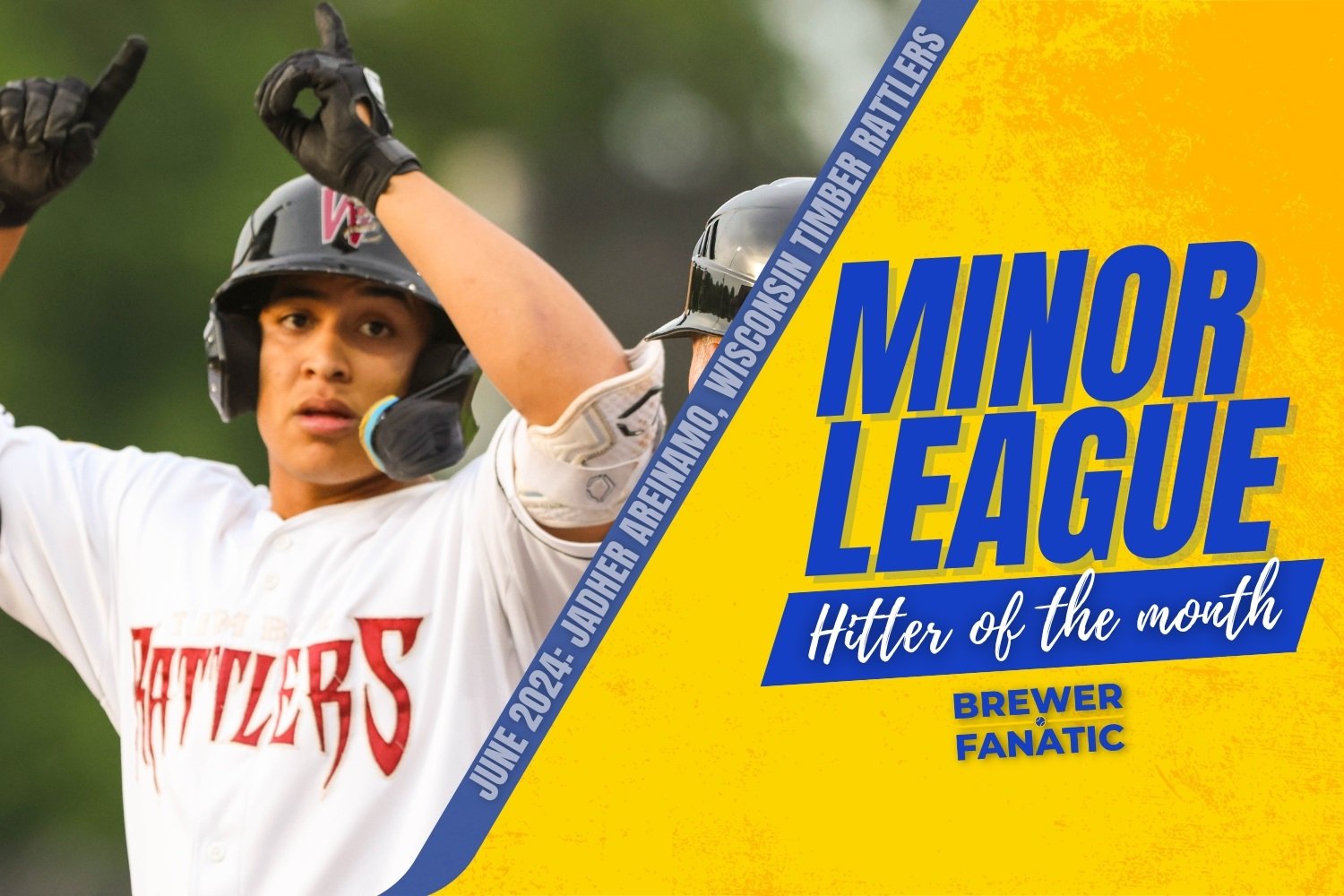 Honorable Mentions C Darrien Miller (Biloxi Shuckers) 79 PA, .283/.456/.400, 17 H, 4 2 B, 1 HR, 10 R, 9 RBI, 10 BB, 12 K, 9 HBP, 1 SB Darrien Miller was a ninth-round draft pick selected in 2019 from Clovis High School. Now at 23 years old, he’s in his first year at Double-A and has been holding his own, hitting a .748 OPS over 220 plate appearances. He hasn’t yet found the power in his swing this year, but he managed to hit his first home run in the last few days of June. Despite lacking juice in his bat, his on-base percentage this month was impressive, receiving a huge bump from getting hit by nine pitches. But hey, getting on base is getting on base, right? Surely, this is replicable in the higher levels of baseball. SS Cooper Pratt (Carolina Mudcats) 93 PA, .376/.419/.459, 32 H, 4 2B, 1 HR, 14 R, 11 RBI, 6 BB, 14 K, 1 HBP, 6 SB Since being drafted in the sixth round of 2023 out of Magnolia Heights High School, Pratt has been great, posting an OPS >.800 in both 2023 and 2024, at least so far. After a strong May, he had an even better June, highlighted by an impressive .376 batting average. To cap things off, he jumped into the MLB Top 100 Prospects list to snag the #96 spot, making him the fourth Milwaukee prospect to be ranked that high. 2B/OF Isaac Collins (Nashville Sounds) 96 PA, .296/.396/.543, 24 H, 6 2B, 1 3B, 4 HR, 13 R, 19 RBI, 10 BB, 20 K, 4 HBP, 9 SB One of the older prospects on the list, Isaac Collins, was drafted by the Colorado Rockies in the ninth round out of Creighton University. After a lukewarm 2022 in Double-A, he came to the Brewers in the Rule 5 draft and spent most of his 2023 with the Biloxi Shuckers, posting an .855 OPS over 376 plate appearances. He’s been even better this year in Triple-A, hitting to a .912 OPS after 303 plate appearances. His June wasn’t quite as hot as his scoring in April, but it was a big improvement over the regression he saw in May. Minor League Hitter of the Month: 2B/SS Jadher Areinamo 108 PA, .358/.435/.516, 34 H, 6 2B, 3 HR, 17 R, 14 RBI, 12 BB, 10 K, 1 HBP, 6 SB Signed out of Maracay, Venezuela, as a foreign free agent in 2021, Areinamo swung a great bat in June, taking a big step forward from the uninspiring months of April and May. Nine extra-base hits boosted his slugging, and walking more than he struck out had a similar impact on his on-base percentage. He’s a scrappy player, and despite being graded as having slightly below-average speed, his smart baserunning has allowed him to remain a threat, as he has already accumulated 25 stolen bases this season. Congratulations to each of these players mentioned today for a great month of June. Do you agree with the choice of Jadher Arienamo as the winner this month?
 -
I wonder what the original reason was for moving him around on the mound. Also ridiculous to think how big of an impact such a small change can have. That's baseball for you, I guess. Love Milwaukee's ability to get the best out of their pitching staff, can't wait to see what they do with Civale.