



Jason Wang
-
Posts
955 -
Joined
-
Last visited
-
Days Won
1
Content Type
Profiles
Forums
Blogs
Events
News
2026 Milwaukee Brewers Top Prospects Ranking
Milwaukee Brewers Videos
2022 Milwaukee Brewers Draft Picks
Milwaukee Brewers Free Agent & Trade Rumors, Notes, & Tidbits
Guides & Resources
2023 Milwaukee Brewers Draft Picks
2024 Milwaukee Brewers Draft Picks
The Milwaukee Brewers Players Project
2025 Milwaukee Brewers Draft Pick Tracker
2026 Milwaukee Brewers Draft Tracker: Picks & Bonuses
Store
Downloads
Gallery
Everything posted by Jason Wang
-

 Because I’m a proud Zoomer and enjoy doomscrolling, I spend a good amount of time on the “For You” section of my Twitter feed. It’s primarily AI shilling and rabid opinions on sports, but like a bag of jelly beans, every so often, something good shows up in the middle of the gooey multi-colored mess. Recently, it was this tweet by Eno Sarris, a writer for The Athletic: Of course, as a casual fan, this came as something of a surprise. I knew that ERA was far from the only number needed to tell the story of a pitcher's performance, but the idea of disregarding it completely was foreign to me. Describing it as the “batting average of pitching” seemed like a step too far, but this offseason, I’ve noticed more evidence to back up Sarris’s claims. To me, the biggest indicator that ERA has fallen by the wayside as a useful statistic is the way that teams have spent money on pitchers so far this offseason. Here are the five largest pitching free-agent contracts that have been signed so far, and the ERAs for those players last season. Player # of Years Total Contract Value 2025 ERA Dylan Cease 7 $210 million 4.55 Devin Williams 3 $51 million 4.79 Cody Ponce 3 $30 million 1.89 (KBO) Ryan Helsley 2 $28 million 4.50 Emilio Pagan 2 $20 million 2.88 It is admittedly early in the offseason, but there is a clear pattern here. Regardless of where the total values of these contracts end up relative to their peers, many of these are sizable financial commitments. A $30 million AAV for seven years is nothing to sneeze at, and an AAV of $17 million over three years for a reliever with an ERA close to 5.00 is mind-boggling. But things start to come into focus when we look at more advanced stats like FIP, K/BB, and Skill-interactive Earned Run Average (SIERA). Player FIP K/BB SIERA Dylan Cease 3.56 3.03 3.58 Devin Williams 2.68 3.60 2.67 Cody Ponce (KBO) 2.15 6.15 N/A Ryan Helsley 4.14 2.52 3.68 Emilio Pagan 3.72 3.68 3.18 2025 MLB Average 4.16 2.64 4.06 For the most part, this select group of five pitchers looks far more impressive when comparing their advanced metrics to the league average. (Cody Ponce is an obvious exception, but the difficulty of translating his numbers in the Korean Baseball Organization to the American majors only underscores that teams are paying for something other than those surface-level stats.) Dylan Cease and Devin Williams, in particular, become far more appealing when ignoring their lackluster ERAs. It’s also why these two players have drastically different WAR figures based on where you look. Cease has an rWAR of just 1.1, but an fWAR of 3.4, while Williams has an rWAR of -0.3 and an fWAR of 1.4. Those disparities stem from the fact that pitching rWAR is based on runs allowed, while fWAR is based on FIP. Using a collection of advanced metrics paints a far more complete picture of a pitcher’s abilities because, like the slew of hitting metrics we now use instead of batting average to evaluate a hitter, a single number can only tell one part of the story—and in the case of ERA, as with batting average, it's a small and sometimes misleading fragment. Many supporters of ERA claim that its strength is that it tells you what happened, while FIP is a black box of confusing underlying numbers that are more predictive than descriptive. To me, this is more often the result of a misunderstanding of what FIP represents than anything else, because anyone familiar with the formula would notice that it, too, is descriptive. It’s calculated with actual numbers. Tom Tango has a good article discussing ERA's ability to predict itself in the short and medium term, and a significant contributing factor that limits its effectiveness is random variation from sequencing. Giving up a single hit each inning for five innings would result in a far lower ERA than giving up five hits in a single inning, followed by four perfect frames. By solely considering factors under the pitcher’s control, FIP helps remove a lot of noise from defensive miscues, and even the subjectivity of what is considered an earned run. SIERA takes this to the next level, factoring in batted-ball events without the outcome (e.g., hit or out). Instead, this ugly formula simply weighs ground balls, fly balls, and pop-ups to arrive at a number that’s similar to FIP, but with more positive bias toward pitchers who can induce soft contact. Strikeout-to-walk ratio is pretty straightforward, but some might be curious as to why the percentages aren’t separated. That’s because they do work together. A pitcher with a 40% strikeout rate seems far less effective if he also had a 15% walk rate. A pitcher with a 25% strikeout rate seems average, but could be elevated to elite with a 5% walk rate. Ultimately, strikeouts and walks seek to measure a pitcher’s ability to command the strike zone. Each individual metric still holds merit, but none carries enough context to serve as a high-level indicator without the other. How does this affect the Brewers? As many of you already know, Milwaukee is one of the more analytically-minded big-league teams, and this shift in perspective has been a part of their strategy for a while now. It’s the reason why certain arms like Nick Mears and Trevor Megill seemed to take massive steps forward after arriving in Milwaukee. Mears had a 5.56 ERA but a 2.61 FIP with the Rockies before he was traded to the Brewers. In his final season with the Twins, Megill had a 4.80 ERA with a 3.29 FIP. Still, this is just one layer of the onion of pitcher evaluation. What makes Milwaukee great is that they also know how to dig into the deeper layers, and can identify whether a pitcher like Quinn Priester or Grant Anderson is on the cusp of greatness even if their advanced metrics still don’t make it obvious. Few teams center their evaluations even on FIP or similar metrics, these days. Instead, they have proprietary ways to measure and weigh pitch quality, biomechanical indicators, and opportunities for improvement via development. If the Brewers look to acquire more pitching depth this offseason (or even if they decide to elevate some of their internal options to bigger roles), keep an eye out for arms that are more appealing under the hood. Milwaukee’s front office has a demonstrated history of finding undervalued assets and maximizing their upside, so if and when they end up making a move, try to look a little deeper than the ERA—and give the old “Advanced” section on FanGraphs a quick peek.
 -
Image courtesy of © Mark Hoffman/Milwaukee Journal Sentinel / USA TODAY NETWORK via Imagn Images Because I’m a proud Zoomer and enjoy doomscrolling, I spend a good amount of time on the “For You” section of my Twitter feed. It’s primarily AI shilling and rabid opinions on sports, but like a bag of jelly beans, every so often, something good shows up in the middle of the gooey multi-colored mess. Recently, it was this tweet by Eno Sarris, a writer for The Athletic: Of course, as a casual fan, this came as something of a surprise. I knew that ERA was far from the only number needed to tell the story of a pitcher's performance, but the idea of disregarding it completely was foreign to me. Describing it as the “batting average of pitching” seemed like a step too far, but this offseason, I’ve noticed more evidence to back up Sarris’s claims. To me, the biggest indicator that ERA has fallen by the wayside as a useful statistic is the way that teams have spent money on pitchers so far this offseason. Here are the five largest pitching free-agent contracts that have been signed so far, and the ERAs for those players last season. Player # of Years Total Contract Value 2025 ERA Dylan Cease 7 $210 million 4.55 Devin Williams 3 $51 million 4.79 Cody Ponce 3 $30 million 1.89 (KBO) Ryan Helsley 2 $28 million 4.50 Emilio Pagan 2 $20 million 2.88 It is admittedly early in the offseason, but there is a clear pattern here. Regardless of where the total values of these contracts end up relative to their peers, many of these are sizable financial commitments. A $30 million AAV for seven years is nothing to sneeze at, and an AAV of $17 million over three years for a reliever with an ERA close to 5.00 is mind-boggling. But things start to come into focus when we look at more advanced stats like FIP, K/BB, and Skill-interactive Earned Run Average (SIERA). Player FIP K/BB SIERA Dylan Cease 3.56 3.03 3.58 Devin Williams 2.68 3.60 2.67 Cody Ponce (KBO) 2.15 6.15 N/A Ryan Helsley 4.14 2.52 3.68 Emilio Pagan 3.72 3.68 3.18 2025 MLB Average 4.16 2.64 4.06 For the most part, this select group of five pitchers looks far more impressive when comparing their advanced metrics to the league average. (Cody Ponce is an obvious exception, but the difficulty of translating his numbers in the Korean Baseball Organization to the American majors only underscores that teams are paying for something other than those surface-level stats.) Dylan Cease and Devin Williams, in particular, become far more appealing when ignoring their lackluster ERAs. It’s also why these two players have drastically different WAR figures based on where you look. Cease has an rWAR of just 1.1, but an fWAR of 3.4, while Williams has an rWAR of -0.3 and an fWAR of 1.4. Those disparities stem from the fact that pitching rWAR is based on runs allowed, while fWAR is based on FIP. Using a collection of advanced metrics paints a far more complete picture of a pitcher’s abilities because, like the slew of hitting metrics we now use instead of batting average to evaluate a hitter, a single number can only tell one part of the story—and in the case of ERA, as with batting average, it's a small and sometimes misleading fragment. Many supporters of ERA claim that its strength is that it tells you what happened, while FIP is a black box of confusing underlying numbers that are more predictive than descriptive. To me, this is more often the result of a misunderstanding of what FIP represents than anything else, because anyone familiar with the formula would notice that it, too, is descriptive. It’s calculated with actual numbers. Tom Tango has a good article discussing ERA's ability to predict itself in the short and medium term, and a significant contributing factor that limits its effectiveness is random variation from sequencing. Giving up a single hit each inning for five innings would result in a far lower ERA than giving up five hits in a single inning, followed by four perfect frames. By solely considering factors under the pitcher’s control, FIP helps remove a lot of noise from defensive miscues, and even the subjectivity of what is considered an earned run. SIERA takes this to the next level, factoring in batted-ball events without the outcome (e.g., hit or out). Instead, this ugly formula simply weighs ground balls, fly balls, and pop-ups to arrive at a number that’s similar to FIP, but with more positive bias toward pitchers who can induce soft contact. Strikeout-to-walk ratio is pretty straightforward, but some might be curious as to why the percentages aren’t separated. That’s because they do work together. A pitcher with a 40% strikeout rate seems far less effective if he also had a 15% walk rate. A pitcher with a 25% strikeout rate seems average, but could be elevated to elite with a 5% walk rate. Ultimately, strikeouts and walks seek to measure a pitcher’s ability to command the strike zone. Each individual metric still holds merit, but none carries enough context to serve as a high-level indicator without the other. How does this affect the Brewers? As many of you already know, Milwaukee is one of the more analytically-minded big-league teams, and this shift in perspective has been a part of their strategy for a while now. It’s the reason why certain arms like Nick Mears and Trevor Megill seemed to take massive steps forward after arriving in Milwaukee. Mears had a 5.56 ERA but a 2.61 FIP with the Rockies before he was traded to the Brewers. In his final season with the Twins, Megill had a 4.80 ERA with a 3.29 FIP. Still, this is just one layer of the onion of pitcher evaluation. What makes Milwaukee great is that they also know how to dig into the deeper layers, and can identify whether a pitcher like Quinn Priester or Grant Anderson is on the cusp of greatness even if their advanced metrics still don’t make it obvious. Few teams center their evaluations even on FIP or similar metrics, these days. Instead, they have proprietary ways to measure and weigh pitch quality, biomechanical indicators, and opportunities for improvement via development. If the Brewers look to acquire more pitching depth this offseason (or even if they decide to elevate some of their internal options to bigger roles), keep an eye out for arms that are more appealing under the hood. Milwaukee’s front office has a demonstrated history of finding undervalued assets and maximizing their upside, so if and when they end up making a move, try to look a little deeper than the ERA—and give the old “Advanced” section on FanGraphs a quick peek. View full article
-
The Robo-Zone Could Get William Contreras’s Defense Back On Track
Jason Wang posted an article in Brewers
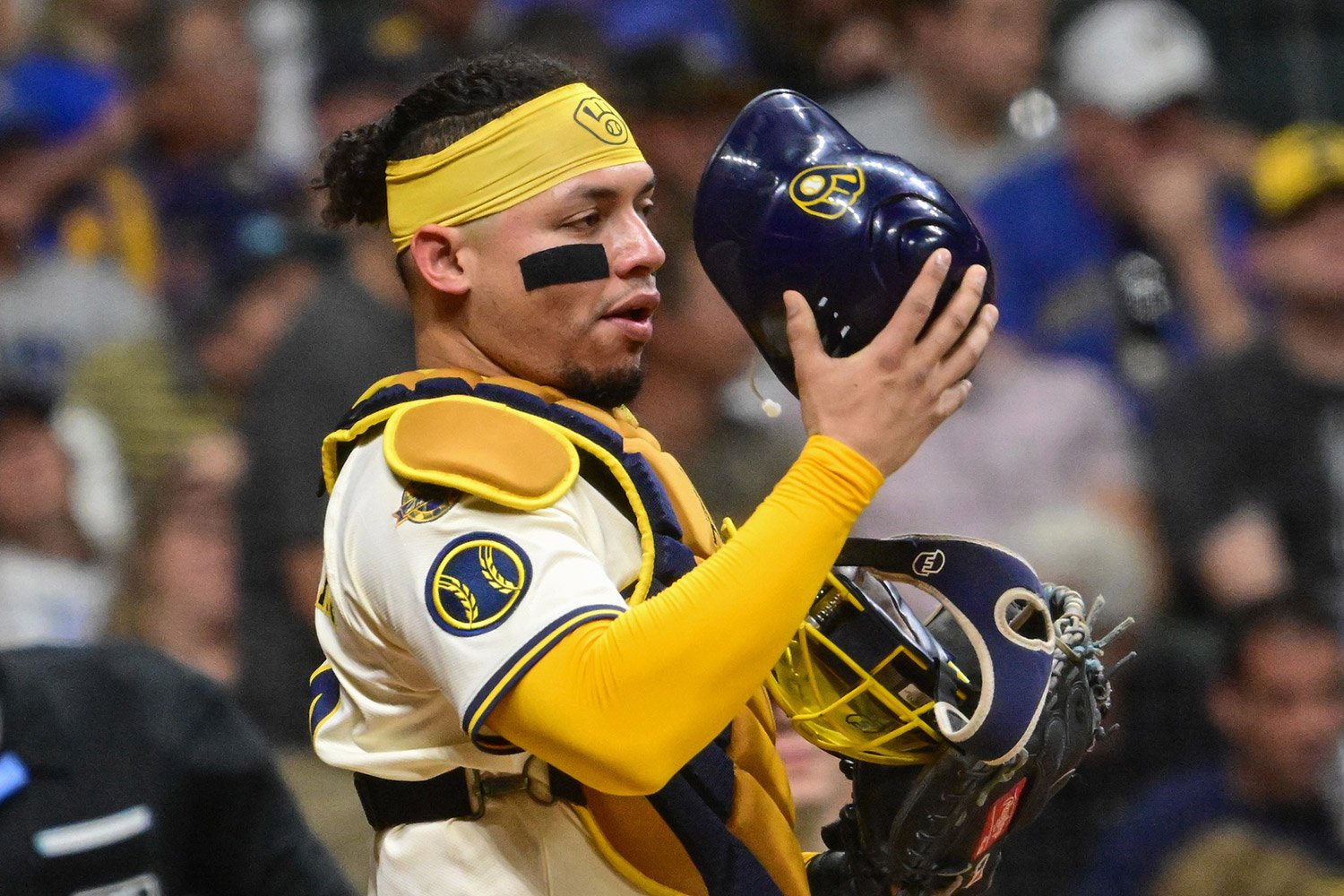 In case you somehow missed it, MLB is officially instituting the long-awaited Automated Ball Strike System, or ABS, in 2026. Fans have had the chance to see the technology at work for years in the minor leagues, but they’ve only seen it sparingly in big league games. It was used in select spring training games and the All-Star game, but there wasn’t enough data to really think about how it’d affect the catcher role. Because of the limited information, the consensus seems to be that the new system will disproportionately hurt catchers like Patrick Bailey, who have gotten a lot of value out of pitch framing, while allowing worse framers to make up for their mistakes with challenges. However, the truth is likely more complex. Davy Andrews, a FanGraphs writer and former Brewer Fanatic contributor, recently wrote a piece reflecting on the upcoming system, and a key takeaway was that people tend to forget that pitch framing is just as much about stealing strikes as it is about keeping strikes. He noted that the best pitch framers in the league earn strikes on ~90% of shadow zone pitches in the zone, while getting called strikes on just ~20% of pitches outside the zone. The challenge system should allow a catcher with a perfect eye to get 100% of fairly earned called strikes, which could be more valuable than the few stolen strikes taken away from batter challenges. This is especially apparent when noting that catchers tend to have much higher overturn rates than batters so far. So how does William Contreras fit into all of this? Well, he was one of the best at framing pitches in 2023, accumulating +9 Catcher Framing Runs (5th in MLB). Since then, he has gradually declined in his productivity, posting +3 framing runs in 2024 and just +1 this past year. He’s still a much better defender than he was with the Braves, but could this new system be what he needs to turn things around behind the dish? A peek at his Savant page shows that his weakest framing zone was towards the left-handed batter’s box. In this shadow zone, his strike percentage of 57.9% was considerably lower than the MLB average of 64.3% and he accumulated -3 framing runs in this zone. It’s difficult to say exactly why he struggled so much with pitches on his right-handed side, but reviewing a few clips of missed calls shows something is happening. Even when setting up his glove in the right location, he tends to instinctively pull his hand down and to his left before catching the pitch, framing it in the opposite direction and losing out on strikes. While not quite as egregious, he faces a similar issue when catching pitches on the upper rail. In each of these examples, Contreras’s reaction makes it seem like he’s still expecting a late strike call because of how confident he is that the pitch landed in the zone. Now, the strike zone on television can admittedly be misleading, but there is enough evidence to suggest that Contreras often has a hard time keeping his pitcher’s strikes in the zone where they belong. A lot of this regression is due to the noise in his setup before the pitch. If we go back and look at the pitches he received in the same zones in 2023, the overall motion is far smoother, which lends itself to stealing and confirming more strikes. However, while that is undoubtedly something for Contreras to work on in the offseason, he still clearly has a good understanding of the zone. With the robo-zone, he can compensate for framing mistakes by correcting history with a timely challenge or two without sacrificing much framing upside. To get a more definitive answer on whether this will help or hurt his defensive efforts, we’ll have to wait until MLB rolls out its challenge probability and value numbers. Even without exact facts and figures, the new ABS system still seems to give William Contreras all the tools he needs to pump up his defensive value in 2026.
 -
Image courtesy of © Benny Sieu-Imagn Images In case you somehow missed it, MLB is officially instituting the long-awaited Automated Ball Strike System, or ABS, in 2026. Fans have had the chance to see the technology at work for years in the minor leagues, but they’ve only seen it sparingly in big league games. It was used in select spring training games and the All-Star game, but there wasn’t enough data to really think about how it’d affect the catcher role. Because of the limited information, the consensus seems to be that the new system will disproportionately hurt catchers like Patrick Bailey, who have gotten a lot of value out of pitch framing, while allowing worse framers to make up for their mistakes with challenges. However, the truth is likely more complex. Davy Andrews, a FanGraphs writer and former Brewer Fanatic contributor, recently wrote a piece reflecting on the upcoming system, and a key takeaway was that people tend to forget that pitch framing is just as much about stealing strikes as it is about keeping strikes. He noted that the best pitch framers in the league earn strikes on ~90% of shadow zone pitches in the zone, while getting called strikes on just ~20% of pitches outside the zone. The challenge system should allow a catcher with a perfect eye to get 100% of fairly earned called strikes, which could be more valuable than the few stolen strikes taken away from batter challenges. This is especially apparent when noting that catchers tend to have much higher overturn rates than batters so far. So how does William Contreras fit into all of this? Well, he was one of the best at framing pitches in 2023, accumulating +9 Catcher Framing Runs (5th in MLB). Since then, he has gradually declined in his productivity, posting +3 framing runs in 2024 and just +1 this past year. He’s still a much better defender than he was with the Braves, but could this new system be what he needs to turn things around behind the dish? A peek at his Savant page shows that his weakest framing zone was towards the left-handed batter’s box. In this shadow zone, his strike percentage of 57.9% was considerably lower than the MLB average of 64.3% and he accumulated -3 framing runs in this zone. It’s difficult to say exactly why he struggled so much with pitches on his right-handed side, but reviewing a few clips of missed calls shows something is happening. Even when setting up his glove in the right location, he tends to instinctively pull his hand down and to his left before catching the pitch, framing it in the opposite direction and losing out on strikes. While not quite as egregious, he faces a similar issue when catching pitches on the upper rail. In each of these examples, Contreras’s reaction makes it seem like he’s still expecting a late strike call because of how confident he is that the pitch landed in the zone. Now, the strike zone on television can admittedly be misleading, but there is enough evidence to suggest that Contreras often has a hard time keeping his pitcher’s strikes in the zone where they belong. A lot of this regression is due to the noise in his setup before the pitch. If we go back and look at the pitches he received in the same zones in 2023, the overall motion is far smoother, which lends itself to stealing and confirming more strikes. However, while that is undoubtedly something for Contreras to work on in the offseason, he still clearly has a good understanding of the zone. With the robo-zone, he can compensate for framing mistakes by correcting history with a timely challenge or two without sacrificing much framing upside. To get a more definitive answer on whether this will help or hurt his defensive efforts, we’ll have to wait until MLB rolls out its challenge probability and value numbers. Even without exact facts and figures, the new ABS system still seems to give William Contreras all the tools he needs to pump up his defensive value in 2026. View full article
-
That said, if Drew Rasmussen and J.P. Feyereisen were able to stay healthy, they would've been gross for the Rays. Feyereisen: 1.48 ERA, 3.21 FIP over 61 innings for Tampa Rasmussen: 2.73 ERA, 3.20 FIP over 460.2 innings for Tampa
-
trading with tampa

-
Depth Check: Milwaukee Brewers' Options at Third Base In 2026
Jason Wang posted an article in Brewers
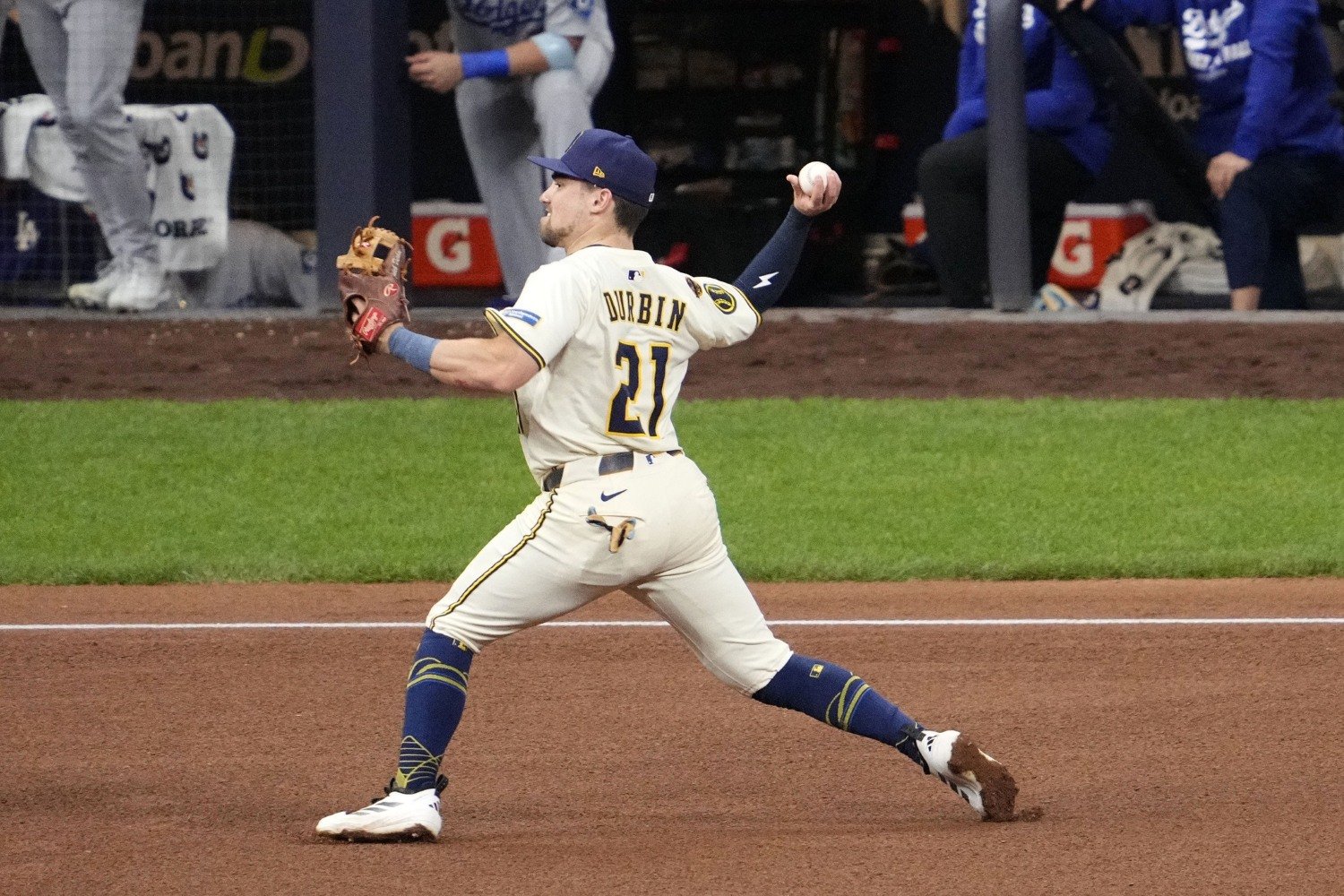 Since the departure of Luis Urías in 2023, third base has been a bit of a revolving door for the Brewers. Brian Anderson and Joey Ortiz served as the main starters in 2023 and 2024, respectively, and other names like Andruw Monasterio, Owen Miller, Oliver Dunn, and even Mike Brosseau served as understudies. After some success converting a lifelong middle infielder (Ortiz) to a third baseman, the Brewers decided to try again with Caleb Durbin in 2025, and the results were mostly positive. Durbin posted a 105 wRC+ across 506 plate appearances and had 5 Defensive Runs Saved at the position, giving him a total of 2.6 fWAR for the season. However, despite his admirable efforts, he could use some backup. His production at the plate steadily slipped as the regular season progressed, and the most telling sign that fatigue was starting to set in was his decrease in bat speed. This, along with other weaknesses in his game, indicate that the Brewers may need to rely on some of their other depth pieces a little more in 2026. In second place for time spent at third base in 2025 was Anthony Seigler. Seigler was a call-up whom many doubted, especially as he continued to receive playing time despite posting a 50 wRC+. Realistically, he proved his ability to put up quality at-bats and actually did certain things very well. In addition to playing solid defense, he had a walk rate of 11% and an elite chase rate of just 18%. Expected stats may lead you to believe he got unlucky, and in a sample of just 73 plate appearances (many of which came in pinch-hit situations), it’s difficult to make any definite conclusions. If the team continues to place their trust in him and his approach, he could see an elevated role in 2026 with more opportunities against right-handed pitching. Andruw Monasterio spent most of his playing time covering for an injured Ortiz at shortstop or riding the pine, but found himself playing third base on a few occasions. He continues to be a reliable utility infielder and could cover the position as a platoon option. He had an .837 OPS against left-handed pitchers in 2025 and has performed better against southpaws across his career. Interestingly, Isaac Collins is also listed on the Brewers depth chart under third base, but he has played just 1 ⅓ innings at the position, so it’s safe to say that he’ll remain in the outfield for the foreseeable future. So what are the Brewers still missing? The most glaring gap is power. Typically, third basemen are characterized by having great arms, good defensive abilities (without the same mobility as a shortstop), and some decent pop. In fact, Durbin and Ernie Clement were the only players within the top 10 third basemen by fWAR who had slugging percentages under .430. Now, it’s important to acknowledge that the game has become modern enough to do away with the shackles of positional archetypes. Otherwise, Durbin shouldn’t even be playing in the majors, given his 5-foot-7 frame. However, Milwaukee is already in dire need of some thump in the lineup. Christian Yelich (29) and Jackson Chourio (21) were the only players to eclipse the 20-home run mark, and the Brewers were 22nd in total home runs (166). They got by with their own brand of fast-paced hustle baseball, but in the postseason, it seems like the odds dig the long ball. Given this need, what are the internal and external options? Within the farm system, the Brewers’ top third base prospects were all in Double A. Brock Wilken and Luke Adams had strong showings with the Biloxi Shuckers, while Mike Boeve—who only played first base, anyway—struggled quite a bit. All three have work to do before they’re big league-ready, and don’t seem like they’d be worth roster spots barring an injury emergency. Externally, there are a handful of options that each come with different financial expectations and risk. It’s safe to say that Alex Bregman and Munetaka Murakami, both of whom are expected to cost north of $100 million this winter, are in the “if only” category. Kazuma Okamoto is on the older side and is projected to sign a deal in the realm of $68 million over four years, which is still on the pricier side, especially for someone with no MLB experience. This leaves Eugenio Suárez, who (after a brutal second-half slump that extended into the postseason) would seem like an overpay even for $55 million over three years. Miguel Andujar is an affordable possibility that showed some promise last year. Across 341 plate appearances with the Athletics and Reds, he slugged .470 with 17 doubles and 10 homers. He’d be a defensive liability, especially when compared to Durbin and Seigler, but his bat could make him useful in certain situations. Even if Milwaukee stays the course with what they have at third base in 2026, it’ll still be a position of strength. It’s not a critical issue that must be patched as soon as possible, but it does present an opportunity to improve on the margins—something the organization loves to do. Don’t expect the landscape of the role to change significantly heading into next season, but do keep an eye out for potential sleeper acquisitions making their way to Milwaukee.
- 10 comments
-
- 1
-

-
- caleb durbin
- andruw monasterio
- (and 3 more)
-
Image courtesy of © Michael McLoone-Imagn Images Since the departure of Luis Urías in 2023, third base has been a bit of a revolving door for the Brewers. Brian Anderson and Joey Ortiz served as the main starters in 2023 and 2024, respectively, and other names like Andruw Monasterio, Owen Miller, Oliver Dunn, and even Mike Brosseau served as understudies. After some success converting a lifelong middle infielder (Ortiz) to a third baseman, the Brewers decided to try again with Caleb Durbin in 2025, and the results were mostly positive. Durbin posted a 105 wRC+ across 506 plate appearances and had 5 Defensive Runs Saved at the position, giving him a total of 2.6 fWAR for the season. However, despite his admirable efforts, he could use some backup. His production at the plate steadily slipped as the regular season progressed, and the most telling sign that fatigue was starting to set in was his decrease in bat speed. This, along with other weaknesses in his game, indicate that the Brewers may need to rely on some of their other depth pieces a little more in 2026. In second place for time spent at third base in 2025 was Anthony Seigler. Seigler was a call-up whom many doubted, especially as he continued to receive playing time despite posting a 50 wRC+. Realistically, he proved his ability to put up quality at-bats and actually did certain things very well. In addition to playing solid defense, he had a walk rate of 11% and an elite chase rate of just 18%. Expected stats may lead you to believe he got unlucky, and in a sample of just 73 plate appearances (many of which came in pinch-hit situations), it’s difficult to make any definite conclusions. If the team continues to place their trust in him and his approach, he could see an elevated role in 2026 with more opportunities against right-handed pitching. Andruw Monasterio spent most of his playing time covering for an injured Ortiz at shortstop or riding the pine, but found himself playing third base on a few occasions. He continues to be a reliable utility infielder and could cover the position as a platoon option. He had an .837 OPS against left-handed pitchers in 2025 and has performed better against southpaws across his career. Interestingly, Isaac Collins is also listed on the Brewers depth chart under third base, but he has played just 1 ⅓ innings at the position, so it’s safe to say that he’ll remain in the outfield for the foreseeable future. So what are the Brewers still missing? The most glaring gap is power. Typically, third basemen are characterized by having great arms, good defensive abilities (without the same mobility as a shortstop), and some decent pop. In fact, Durbin and Ernie Clement were the only players within the top 10 third basemen by fWAR who had slugging percentages under .430. Now, it’s important to acknowledge that the game has become modern enough to do away with the shackles of positional archetypes. Otherwise, Durbin shouldn’t even be playing in the majors, given his 5-foot-7 frame. However, Milwaukee is already in dire need of some thump in the lineup. Christian Yelich (29) and Jackson Chourio (21) were the only players to eclipse the 20-home run mark, and the Brewers were 22nd in total home runs (166). They got by with their own brand of fast-paced hustle baseball, but in the postseason, it seems like the odds dig the long ball. Given this need, what are the internal and external options? Within the farm system, the Brewers’ top third base prospects were all in Double A. Brock Wilken and Luke Adams had strong showings with the Biloxi Shuckers, while Mike Boeve—who only played first base, anyway—struggled quite a bit. All three have work to do before they’re big league-ready, and don’t seem like they’d be worth roster spots barring an injury emergency. Externally, there are a handful of options that each come with different financial expectations and risk. It’s safe to say that Alex Bregman and Munetaka Murakami, both of whom are expected to cost north of $100 million this winter, are in the “if only” category. Kazuma Okamoto is on the older side and is projected to sign a deal in the realm of $68 million over four years, which is still on the pricier side, especially for someone with no MLB experience. This leaves Eugenio Suárez, who (after a brutal second-half slump that extended into the postseason) would seem like an overpay even for $55 million over three years. Miguel Andujar is an affordable possibility that showed some promise last year. Across 341 plate appearances with the Athletics and Reds, he slugged .470 with 17 doubles and 10 homers. He’d be a defensive liability, especially when compared to Durbin and Seigler, but his bat could make him useful in certain situations. Even if Milwaukee stays the course with what they have at third base in 2026, it’ll still be a position of strength. It’s not a critical issue that must be patched as soon as possible, but it does present an opportunity to improve on the margins—something the organization loves to do. Don’t expect the landscape of the role to change significantly heading into next season, but do keep an eye out for potential sleeper acquisitions making their way to Milwaukee. View full article
-
Image courtesy of © Jeff Hanisch-Imagn Images It has already been a busy offseason for the Brewers. After they recently declined options on William Contreras, Rhys Hoskins, and Jose Quintana, Brandon Woodruff declined his half of a $20 million mutual option, opting for a $10 million buyout and free agency. Not yet ready to let go (or at least not for free), though, Milwaukee decided to make a $22.025-million qualifying offer. Their desire to retain him is understandable. He has been on the team since 2017, longer than anyone else currently on the roster, and has been incredible over that span, pitching to a 3.10 ERA over his eight seasons. Recurring injuries threatened to derail his career, but despite a long layoff and seeing a meaningful decrease in fastball velocity upon his return this year, he still managed to make 12 starts and post a 3.20 ERA. His tangible pitching abilities aside, without him, Milwaukee has a severe shortage of veteran arms. Assuming no other additions to the rotation are made, Freddy Peralta is the only starter with more than 50 career games under his belt. The Brewers’ young pitching core undoubtedly has a bright future, with budding stars like Jacob Misiorowski and Quinn Priester, but Woodruff's experience and savvy are ingredients otherwise missing from the stew. This particular qualifying offer case is more nuanced than most. There’s a reason that, since this system was created in 2012, only 14 players have accepted qualifying offers. Because they represent opposite ends of the bargaining table, it’s rare that both players and organizations can agree upon a fixed value so easily. It’s the same reason mutual options are often declined, and why arbitration requires a neutral third party to be effective. Most of the time, a team won't extend a qualifying offer unless a player is worth markedly more than its value. Most of the time, a player won't accept such a deal once it's offered, because it's only for one year and their earning power is likely higher than that. In Woodruff’s case, if he had remained fully healthy for the past few years, he’d absolutely be in the running for a robust free-agent contract that would comfortably exceed the value of the one-year qualifying offer. But because his ability to stay on the field is so uncertain, taking the qualifying offer adds a guaranteed outcome to his future. For the Brewers, the risk behind the move is similar. They already accounted for injury risk when they signed him to a back-loaded two-year deal in 2024, acknowledging he would be recovering until some time in 2025 but betting on a strong return in the second half of the contract. In hindsight, 12 regular-season and zero postseason starts is hardly worth $17.5 million, but nonetheless, Milwaukee is ready to roll the dice again. After all, while his right lat strain sidelined him for the first two rounds of the playoffs, he’s projected to be fully healthy by Opening Day in 2026. If Woodruff declines the qualifying offer, the Brewers would receive a compensatory draft pick if he finds a way to maximize his earnings elsewhere. Should Woodruff get more than $50 million in guarantees from a new team, Milwaukee would collect a pick after the first round. If he signs with another team but for less than $50 million, they'll get a pick just before the start of the third round. Either way, for a team always looking to accumulate as much draft capital as possible, that would be a boost. If he accepts, Woodruff will be paid handsomely for at least the next year and has a chance to positively impact his stock heading into 2027. The Brewers, remember, are already due to pay him $10 million in 2026 (half in January and half in July), as the buyout on the mutual option Woodruff turned down. Another $22 million would hit their budget pretty hard, so even if he accepts the offer, he might become a trade candidate. Woodruff would have to approve any deal, in that circumstance, but he might be able to make more money by accepting the deal and signing an extension with a new team of his choosing than by heading into the market with the QO around his neck. Certainly, if he does accept the offer, the Brewers will look to move whichever of he and Peralta yields more value in return—be that in the form of young talent or added financial flexibility. Either way, this circumstance should give the front office some value to work with. Like many free agents who inevitably leave for bigger contracts and new horizons, Woodruff is by no means a must-have piece for next year’s roster—but he sure would make a dandy asset. View full article
-
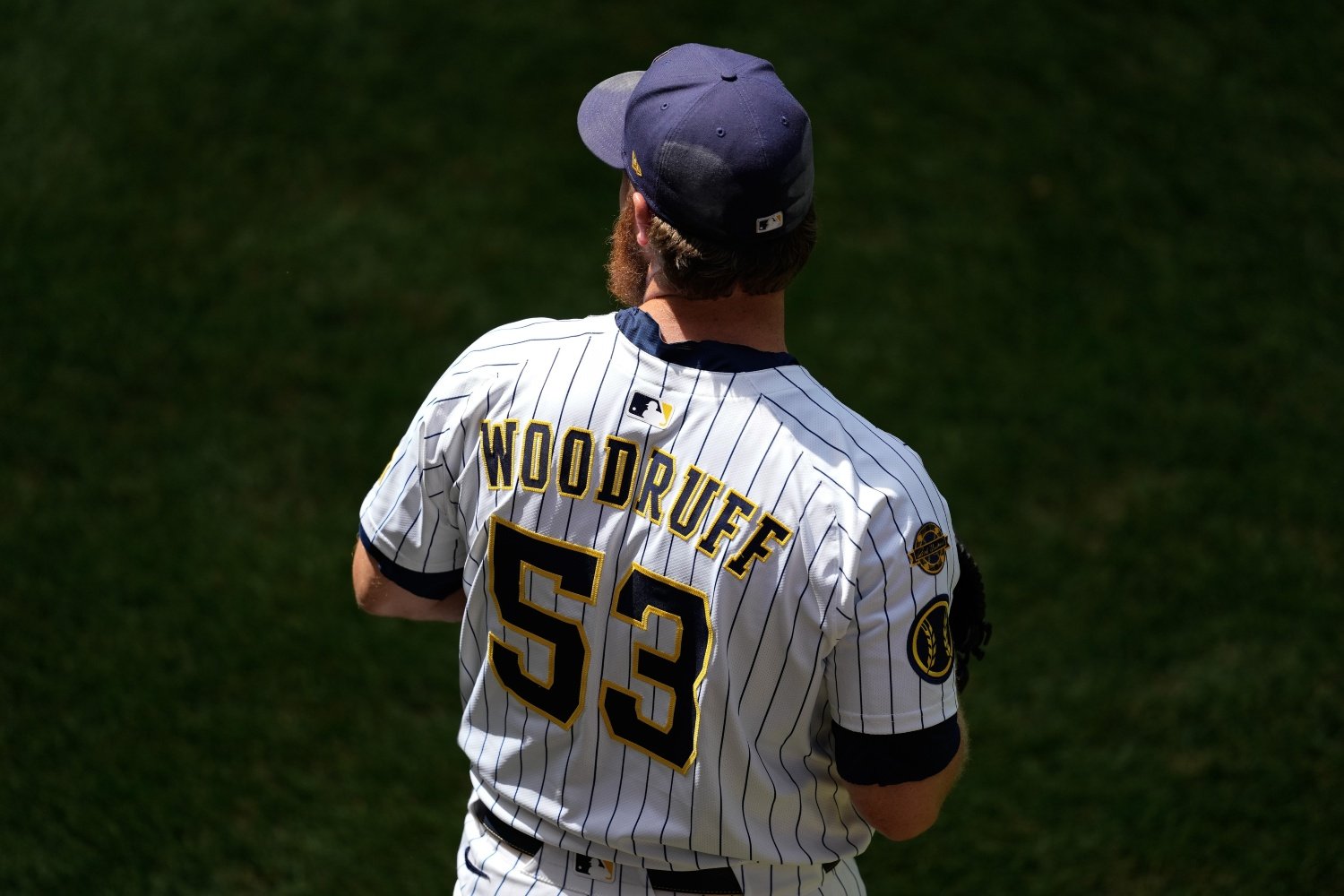 It has already been a busy offseason for the Brewers. After they recently declined options on William Contreras, Rhys Hoskins, and Jose Quintana, Brandon Woodruff declined his half of a $20 million mutual option, opting for a $10 million buyout and free agency. Not yet ready to let go (or at least not for free), though, Milwaukee decided to make a $22.025-million qualifying offer. Their desire to retain him is understandable. He has been on the team since 2017, longer than anyone else currently on the roster, and has been incredible over that span, pitching to a 3.10 ERA over his eight seasons. Recurring injuries threatened to derail his career, but despite a long layoff and seeing a meaningful decrease in fastball velocity upon his return this year, he still managed to make 12 starts and post a 3.20 ERA. His tangible pitching abilities aside, without him, Milwaukee has a severe shortage of veteran arms. Assuming no other additions to the rotation are made, Freddy Peralta is the only starter with more than 50 career games under his belt. The Brewers’ young pitching core undoubtedly has a bright future, with budding stars like Jacob Misiorowski and Quinn Priester, but Woodruff's experience and savvy are ingredients otherwise missing from the stew. This particular qualifying offer case is more nuanced than most. There’s a reason that, since this system was created in 2012, only 14 players have accepted qualifying offers. Because they represent opposite ends of the bargaining table, it’s rare that both players and organizations can agree upon a fixed value so easily. It’s the same reason mutual options are often declined, and why arbitration requires a neutral third party to be effective. Most of the time, a team won't extend a qualifying offer unless a player is worth markedly more than its value. Most of the time, a player won't accept such a deal once it's offered, because it's only for one year and their earning power is likely higher than that. In Woodruff’s case, if he had remained fully healthy for the past few years, he’d absolutely be in the running for a robust free-agent contract that would comfortably exceed the value of the one-year qualifying offer. But because his ability to stay on the field is so uncertain, taking the qualifying offer adds a guaranteed outcome to his future. For the Brewers, the risk behind the move is similar. They already accounted for injury risk when they signed him to a back-loaded two-year deal in 2024, acknowledging he would be recovering until some time in 2025 but betting on a strong return in the second half of the contract. In hindsight, 12 regular-season and zero postseason starts is hardly worth $17.5 million, but nonetheless, Milwaukee is ready to roll the dice again. After all, while his right lat strain sidelined him for the first two rounds of the playoffs, he’s projected to be fully healthy by Opening Day in 2026. If Woodruff declines the qualifying offer, the Brewers would receive a compensatory draft pick if he finds a way to maximize his earnings elsewhere. Should Woodruff get more than $50 million in guarantees from a new team, Milwaukee would collect a pick after the first round. If he signs with another team but for less than $50 million, they'll get a pick just before the start of the third round. Either way, for a team always looking to accumulate as much draft capital as possible, that would be a boost. If he accepts, Woodruff will be paid handsomely for at least the next year and has a chance to positively impact his stock heading into 2027. The Brewers, remember, are already due to pay him $10 million in 2026 (half in January and half in July), as the buyout on the mutual option Woodruff turned down. Another $22 million would hit their budget pretty hard, so even if he accepts the offer, he might become a trade candidate. Woodruff would have to approve any deal, in that circumstance, but he might be able to make more money by accepting the deal and signing an extension with a new team of his choosing than by heading into the market with the QO around his neck. Certainly, if he does accept the offer, the Brewers will look to move whichever of he and Peralta yields more value in return—be that in the form of young talent or added financial flexibility. Either way, this circumstance should give the front office some value to work with. Like many free agents who inevitably leave for bigger contracts and new horizons, Woodruff is by no means a must-have piece for next year’s roster—but he sure would make a dandy asset.
 -
Ehhh, I guess it depends on how you define "very different." Jansen, Hoskins, and Quintana are minor losses, but Woodruff is a free agent (although perhaps it's not as different since injuries have limited his playing time over the past few years). The core pieces will stick around and they'll be some moves on the margins but you're right, I don't think Milwaukee will lose any crucial pieces (unless Peralta gets traded).
-
Signing Rhys Hoskins was a big deal for the Brewers back in 2024. Milwaukee is typically very conservative in the free-agent market, but several circumstances made it possible. First, they had a desperate need for a first baseman after another unproductive season from Rowdy Tellez. Second, Hoskins had missed all of 2023 due to an ACL tear he suffered in spring training, so while he may have ordinarily been seeking a longer-term deal, the rest of the league needed to see what he could do after such a long layoff and serious injury. This paved the way for an affordable two-year deal worth $34 million, with an $18 million mutual option afterward. Mutual options are rarely ever exercised, but, unsurprisingly, the Brewers were quick to decline their end of the bargain. Hoskins was lukewarm at best, posting a 102 OPS+ over 845 plate appearances and accumulating just 0.7 total rWAR with the team. It was a considerable step back from his production in Philadelphia and, when combined with recurring stints on the injured list, necessitated other options at first base, such as Jake Bauers. One of the players brought in this year to fill a gap left by Hoskins was the prodigious Andrew Vaughn, who the Brewers have under team control for a few more years. He played exceptionally well and is likely slated to be a significant part of the team's future at the position. Still, Milwaukee could be in the market for more depth at first base, especially since we've yet to see a full season of work from Andrew Vaughn, and whether his resurgence was the result of actual mechanical adjustments or just smoke and mirrors. Nonetheless, history suggests that Hoskins won't be worth the money he's owed, and it's probably better to use the roster spot and extra money elsewhere. Hoskins is one of three Brewers with mutual options that have been declined, and it seems like Milwaukee will have a very different roster heading into next year. View full rumor
-
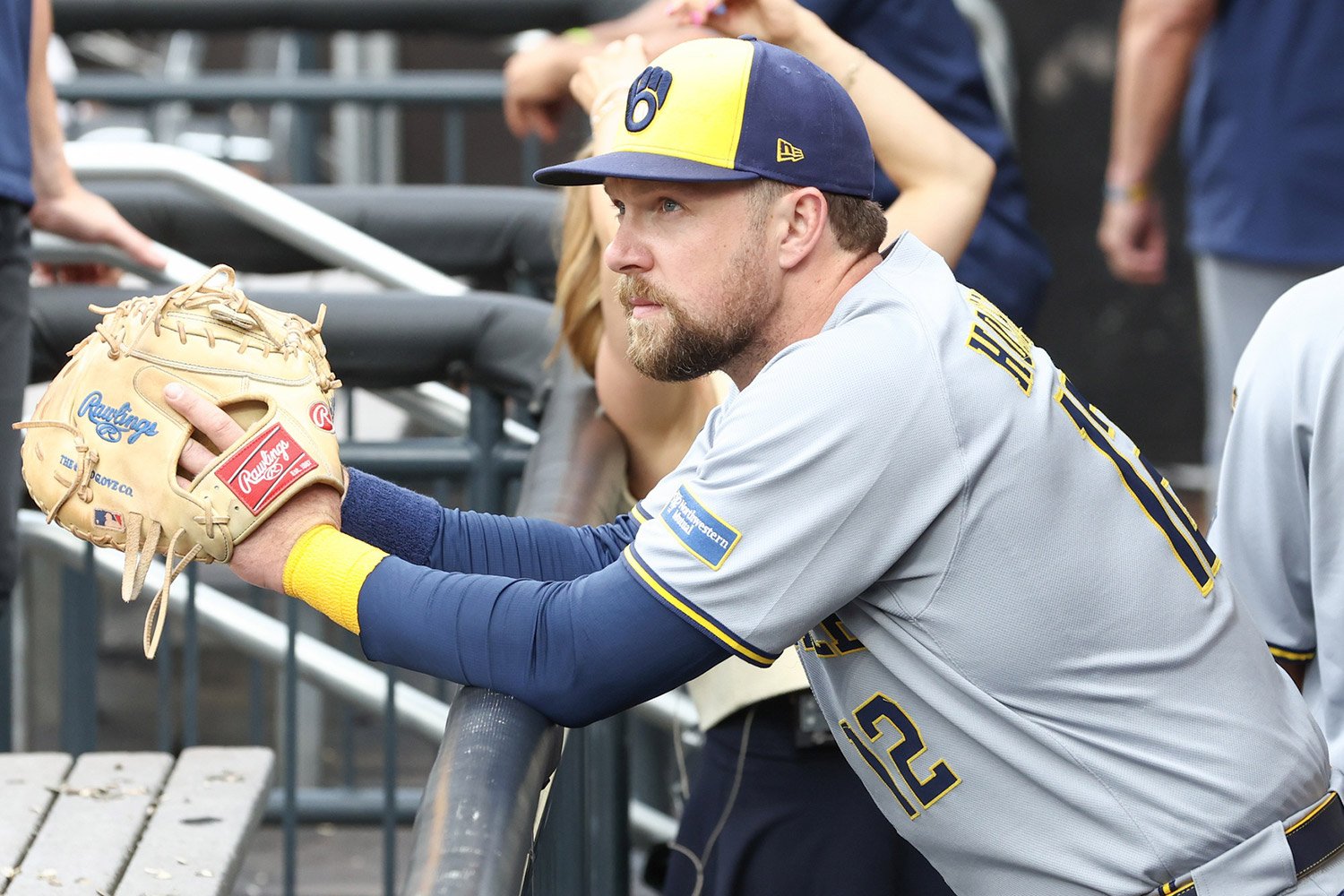 Signing Rhys Hoskins was a big deal for the Brewers back in 2024. Milwaukee is typically very conservative in the free-agent market, but several circumstances made it possible. First, they had a desperate need for a first baseman after another unproductive season from Rowdy Tellez. Second, Hoskins had missed all of 2023 due to an ACL tear he suffered in spring training, so while he may have ordinarily been seeking a longer-term deal, the rest of the league needed to see what he could do after such a long layoff and serious injury. This paved the way for an affordable two-year deal worth $34 million, with an $18 million mutual option afterward. Mutual options are rarely ever exercised, but, unsurprisingly, the Brewers were quick to decline their end of the bargain. Hoskins was lukewarm at best, posting a 102 OPS+ over 845 plate appearances and accumulating just 0.7 total rWAR with the team. It was a considerable step back from his production in Philadelphia and, when combined with recurring stints on the injured list, necessitated other options at first base, such as Jake Bauers. One of the players brought in this year to fill a gap left by Hoskins was the prodigious Andrew Vaughn, who the Brewers have under team control for a few more years. He played exceptionally well and is likely slated to be a significant part of the team's future at the position. Still, Milwaukee could be in the market for more depth at first base, especially since we've yet to see a full season of work from Andrew Vaughn, and whether his resurgence was the result of actual mechanical adjustments or just smoke and mirrors. Nonetheless, history suggests that Hoskins won't be worth the money he's owed, and it's probably better to use the roster spot and extra money elsewhere. Hoskins is one of three Brewers with mutual options that have been declined, and it seems like Milwaukee will have a very different roster heading into next year.
 -
Brewers Miss Out On 2025 Gold Glove Awards
Jason Wang replied to Jason Wang's topic in Milwaukee Brewers Talk
It's a primary reason why defensive ability is so hard to measure. Stats like OAA and DRS seem to measure the same thing but have very different formulas and quite frequently lead to different results. A few examples of guys with major discrepancies: Bobby Witt Jr. - (24 OAA, 3 DRS) Masyn Winn - (21 OAA, 2 DRS) Steven Kwan - (22 DRS, 5 OAA) Zach Neto - (13 DRS, -7 OAA) Without the underlying data made public, it's pretty impossible to backsolve and figure out what plays Ortiz was actually punished for in DRS that he wasn't in OAA. I've tried to figure it out myself but without knowing the "fielding value" assigned to each batted ball instance and all the other stuff the wizards at MLB use to calculate everything, all I can do is report the listed numbers 😔 I should clarify that while a slight implication may have been made that the Brewers were worse defensively this year, I deliberately tried to avoid saying that the players (Chourio, Ortiz, and Collins) were bad defenders and just wanted to note that they did not grade well when it came to DRS. Your frustrations are noted and I commiserate! -
not enough, that kid is washed I have NEVER seen him make a play in the infield or outfield. defensive liability.
- 13 replies
-
- 1
-

-
- melvin hernandez
- tate kuehner
- (and 4 more)
-
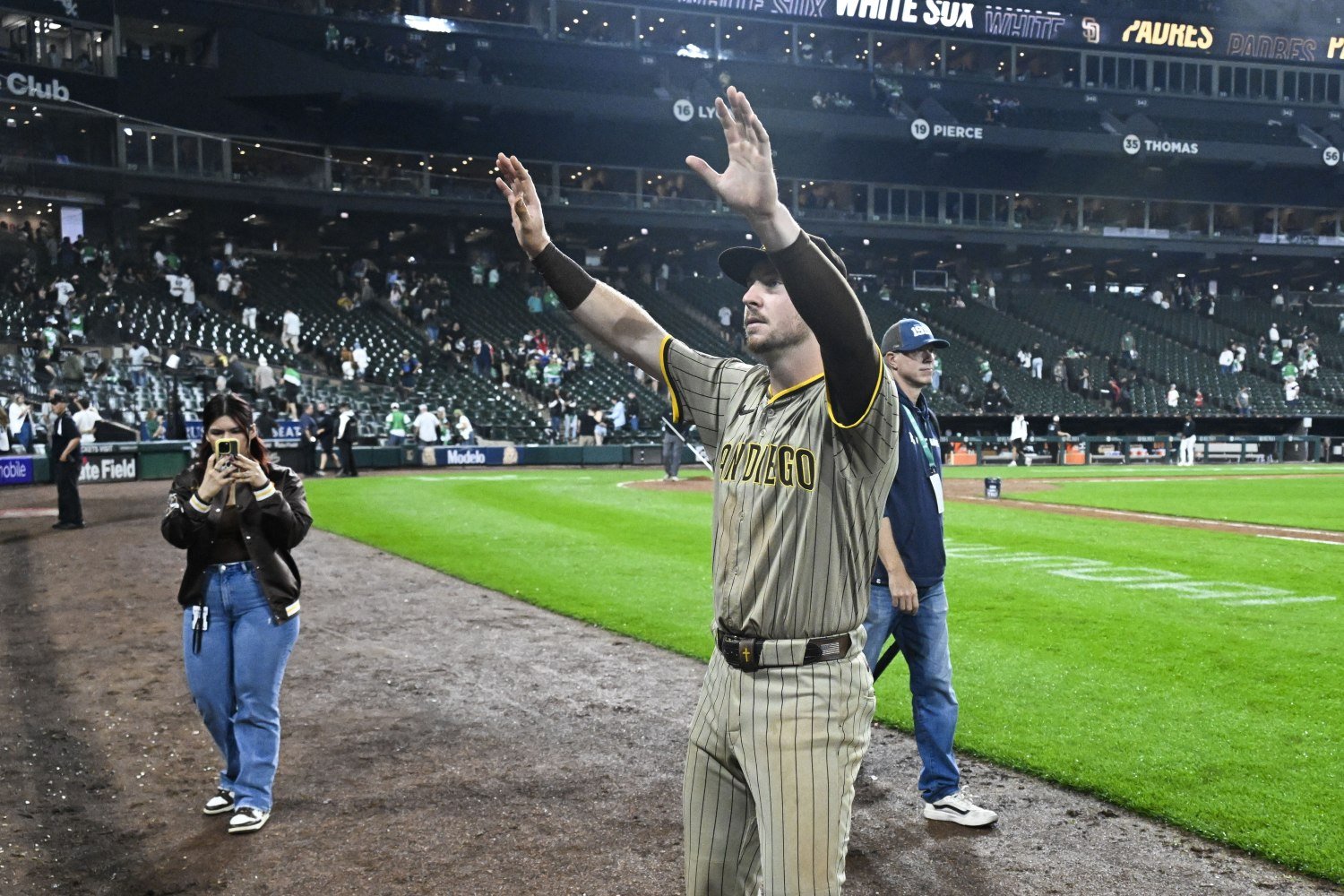 It can’t be easy playing second fiddle to the Dodgers every year, especially if you’re as good a team as the Padres are. This year, they won just three fewer games than the eventual World Series champions—enough for a Wild Card spot, but not enough to beat a surging Cubs team in October. To their credit, it’s not for lack of trying. San Diego has earned a reputation for being one of the more proactive teams in the offseason, spending big on extending their own talent (Fernando Tatis Jr., Jackson Merrill) and on marquee free agents (Manny Machado, Xander Bogaerts). This strategy is often coupled with aggressive moves at the deadline. This year, they notably acquired Mason Miller, J.P. Sears, and Freddy Fermin. They also did a deal with the Brewers, sending over Brandon Lockridge in exchange for Nestor Cortes, Jorge Quintana, and cash considerations. So, as they begin what will inevitably be yet another busy winter on their end, are there pieces that, if acquired, could bring value to the Brewers in 2026? SP Randy Vásquez Vásquez couldn’t have picked a better season to start figuring things out on the mound. After posting a 4.87 ERA over 20 starts in 2024, he helped bolster an injury-plagued rotation by pitching to a 3.84 ERA over 133 ⅔ innings this year. After being optioned in early August to make room in the rotation for deadline acquisition Nestor Cortes, he found himself back on the roster in September. Despite his strong year, though, the Padres may not have him in their plans. Aside from the fact that he didn’t make a postseason appearance, San Diego should be getting Joe Musgrove back from the injured list next year, and there has even been talk about returning Mason Miller to a starting role. The future of Yu Darvish is less certain, but if he does decide to return in 2026, he’d definitely occupy a spot, as well. Furthermore, Vásquez has some concerning statistical indicators. First, he had a FIP of 4.85 and a WHIP of 1.32, neither of which are particularly encouraging. These were largely dimmed by his strikeout rate of just 13.7% and a walk rate of 9.1%, both worse than average. Second, while his strikeout ability is poor, the rest of his peripherals aren’t much better. If you take a cursory glance at his Statcast page, you might’ve been surprised to learn that he did much of anything this year. But one thing he did do well was use his sinker to hold opposing hitters to a .040 ISO. As someone with an average fastball velocity of just 93.3 mph and poor movement profiles on his breaking balls, his reliance on soft contact is a critical weakness that other teams may not be able to utilize. The Brewers, on the other hand, have thrived in recent years when it comes to turning guys who throw in the low 90s into groundball machines. With limited current upside, he could be an afterthought for the Padres—but a great development project for the Brewers. RP Adrián Morejón One of the most intriguing storylines of this year’s trade deadline was the assembly of a “super bullpen” in San Diego. In any given series, opponents could expect to face a gauntlet of elite relievers like Robert Suarez (2.97 ERA, 40 saves), Jason Adam (1.93 ERA), and Miller (0.77 ERA). With additional backup by a high-performing medium-leverage support staff like David Morgan (2.66 ERA) and Wandy Peralta (3.14 ERA), it’s easy to see that there might be an overflow of talent in the Padres’ bullpen. Morejón is one of these top-tier relievers and is set to hit free agency in 2027. A talented lefty, he posted a 2.08 ERA over 73 ⅔ innings this year, primarily leveraging a sinker in the high 90s with a sharp slider and a rare but effective changeup. He had excellent results outside the zone, boasting a chase rate of 32.2% while still limiting walks (5.9%) and hard contact. His hard-hit rate of 30.7% placed him in the 99th percentile of qualified pitchers. The value proposition with Morejón is obvious, which actually hurts his case as a Brewers trade target. If Milwaukee is interested, they’ll hardly be the only candidate, and a burgeoning market could push up his asking price. The Brewers don’t necessarily need him, but having a power-pitching lefty would give the team another option outside of Aaron Ashby (who might want one more shot to start) and Jared Koenig. He may end up being too expensive to be actively pursued, but he’d be an outstanding reliever to have. The (unsurprising) opt-out by Suarez on Monday might make San Diego less likely to move him, though. 1B/DH Ryan O’Hearn (Free Agent) Whether you believe the Brewers should pursue a first baseman this winter is largely dependent on how much faith you have in Andrew Vaughn. He had 64 games to regress to the production he had in Chicago, but managed to keep it up. He had a disappointing .651 OPS in the postseason, but still had some big moments and will be around for another year before hitting free agency. Can he be great for a whole year in Milwaukee? Who knows? Because of the uncertainty, it may be prudent to have a backup option similar to Rhys Hoskins, who will be departing the team for free agency after an underwhelming two-year stint. In many ways, Ryan O’Hearn fits the bill. This was his third consecutive season posting a 119 OPS+ or better; he has become one of the more consistent bats at first base. He may not be as much of a power threat as some fans would prefer, but his high batting average and good plate discipline would fit in well with Milwaukee’s offensive strategy of working patient, high-quality at-bats. Furthermore, at 32 years old, he probably won’t be in line for a very long deal, which could place him in the perfect price range. Hoskins was paid $34 million over two years; O’Hearn would almost certainly come cheaper than that. In this day and age, power comes at a price that the Brewers can’t (or won’t) pay, which makes a more well-rounded hitter like O’Hearn one of their best bets.
- 1 comment
-
- 1
-
-
- ryan ohearn
- adrian morejon
- (and 1 more)
-
Image courtesy of © Matt Marton-Imagn Images It can’t be easy playing second fiddle to the Dodgers every year, especially if you’re as good a team as the Padres are. This year, they won just three fewer games than the eventual World Series champions—enough for a Wild Card spot, but not enough to beat a surging Cubs team in October. To their credit, it’s not for lack of trying. San Diego has earned a reputation for being one of the more proactive teams in the offseason, spending big on extending their own talent (Fernando Tatis Jr., Jackson Merrill) and on marquee free agents (Manny Machado, Xander Bogaerts). This strategy is often coupled with aggressive moves at the deadline. This year, they notably acquired Mason Miller, J.P. Sears, and Freddy Fermin. They also did a deal with the Brewers, sending over Brandon Lockridge in exchange for Nestor Cortes, Jorge Quintana, and cash considerations. So, as they begin what will inevitably be yet another busy winter on their end, are there pieces that, if acquired, could bring value to the Brewers in 2026? SP Randy Vásquez Vásquez couldn’t have picked a better season to start figuring things out on the mound. After posting a 4.87 ERA over 20 starts in 2024, he helped bolster an injury-plagued rotation by pitching to a 3.84 ERA over 133 ⅔ innings this year. After being optioned in early August to make room in the rotation for deadline acquisition Nestor Cortes, he found himself back on the roster in September. Despite his strong year, though, the Padres may not have him in their plans. Aside from the fact that he didn’t make a postseason appearance, San Diego should be getting Joe Musgrove back from the injured list next year, and there has even been talk about returning Mason Miller to a starting role. The future of Yu Darvish is less certain, but if he does decide to return in 2026, he’d definitely occupy a spot, as well. Furthermore, Vásquez has some concerning statistical indicators. First, he had a FIP of 4.85 and a WHIP of 1.32, neither of which are particularly encouraging. These were largely dimmed by his strikeout rate of just 13.7% and a walk rate of 9.1%, both worse than average. Second, while his strikeout ability is poor, the rest of his peripherals aren’t much better. If you take a cursory glance at his Statcast page, you might’ve been surprised to learn that he did much of anything this year. But one thing he did do well was use his sinker to hold opposing hitters to a .040 ISO. As someone with an average fastball velocity of just 93.3 mph and poor movement profiles on his breaking balls, his reliance on soft contact is a critical weakness that other teams may not be able to utilize. The Brewers, on the other hand, have thrived in recent years when it comes to turning guys who throw in the low 90s into groundball machines. With limited current upside, he could be an afterthought for the Padres—but a great development project for the Brewers. RP Adrián Morejón One of the most intriguing storylines of this year’s trade deadline was the assembly of a “super bullpen” in San Diego. In any given series, opponents could expect to face a gauntlet of elite relievers like Robert Suarez (2.97 ERA, 40 saves), Jason Adam (1.93 ERA), and Miller (0.77 ERA). With additional backup by a high-performing medium-leverage support staff like David Morgan (2.66 ERA) and Wandy Peralta (3.14 ERA), it’s easy to see that there might be an overflow of talent in the Padres’ bullpen. Morejón is one of these top-tier relievers and is set to hit free agency in 2027. A talented lefty, he posted a 2.08 ERA over 73 ⅔ innings this year, primarily leveraging a sinker in the high 90s with a sharp slider and a rare but effective changeup. He had excellent results outside the zone, boasting a chase rate of 32.2% while still limiting walks (5.9%) and hard contact. His hard-hit rate of 30.7% placed him in the 99th percentile of qualified pitchers. The value proposition with Morejón is obvious, which actually hurts his case as a Brewers trade target. If Milwaukee is interested, they’ll hardly be the only candidate, and a burgeoning market could push up his asking price. The Brewers don’t necessarily need him, but having a power-pitching lefty would give the team another option outside of Aaron Ashby (who might want one more shot to start) and Jared Koenig. He may end up being too expensive to be actively pursued, but he’d be an outstanding reliever to have. The (unsurprising) opt-out by Suarez on Monday might make San Diego less likely to move him, though. 1B/DH Ryan O’Hearn (Free Agent) Whether you believe the Brewers should pursue a first baseman this winter is largely dependent on how much faith you have in Andrew Vaughn. He had 64 games to regress to the production he had in Chicago, but managed to keep it up. He had a disappointing .651 OPS in the postseason, but still had some big moments and will be around for another year before hitting free agency. Can he be great for a whole year in Milwaukee? Who knows? Because of the uncertainty, it may be prudent to have a backup option similar to Rhys Hoskins, who will be departing the team for free agency after an underwhelming two-year stint. In many ways, Ryan O’Hearn fits the bill. This was his third consecutive season posting a 119 OPS+ or better; he has become one of the more consistent bats at first base. He may not be as much of a power threat as some fans would prefer, but his high batting average and good plate discipline would fit in well with Milwaukee’s offensive strategy of working patient, high-quality at-bats. Furthermore, at 32 years old, he probably won’t be in line for a very long deal, which could place him in the perfect price range. Hoskins was paid $34 million over two years; O’Hearn would almost certainly come cheaper than that. In this day and age, power comes at a price that the Brewers can’t (or won’t) pay, which makes a more well-rounded hitter like O’Hearn one of their best bets. View full article
-
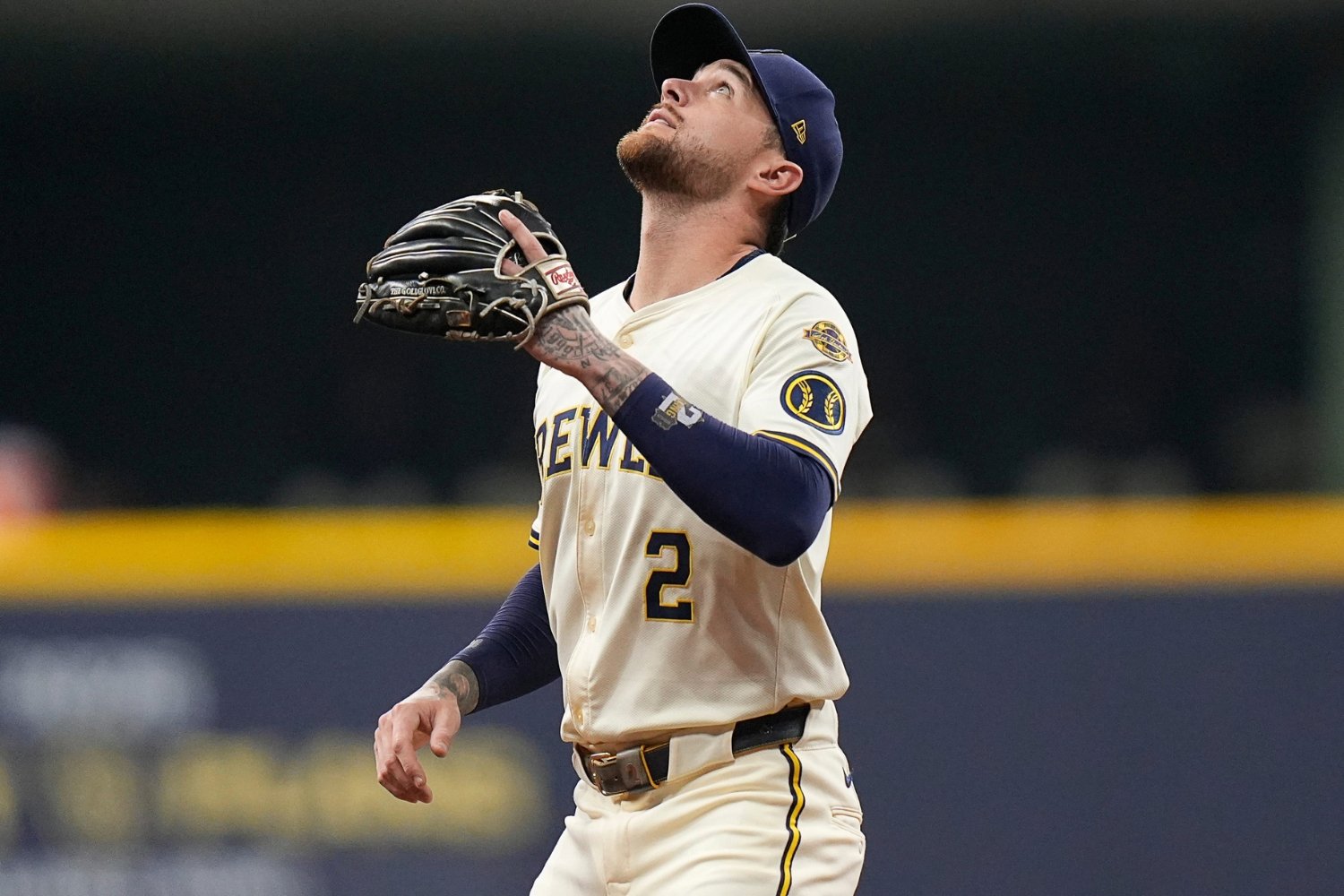 Over the past few years, Milwaukee has built a reputation for being a scrappy squad of underdogs powered by hustle and love for the game. In addition to being a euphemism for finding a lot of success with a shoestring budget and no superstars, it also means playing great defense. Chasing down tough fly balls, smothering choppers in the field, and being fundamentally sound are all traits that come to mind when thinking of the Brewers. And for the past few years, there was considerable evidence to back that up. The team has consistently been among the best when it comes to accumulating Defensive Runs Saved and haven't placed below sixth in that category since 2020. They've also regularly brought home hardware for their efforts, winning the past two Team Gold Glove awards as well as several individual accolades. Unfortunately, that streak has come to an end. Despite having two Gold Glove finalists, Brice Turang and Sal Frelick, neither was ultimately crowned the best defender at their position in the National League, losing out to Nico Hoerner and Fernando Tatis Jr. respectively. Neither of these results are surprising as Nico Hoerner comfortably led all second basemen in baseball in DRS (17), while Tatis had the most DRS of any National League right fielder (15). Turang and Frelick had strong defensive showings themselves, but they didn't do enough to bring home the proverbial bacon. In fact, the Brewers as a whole seemed to take a step back this year when it came to fielding production. They combined for just 31 DRS, placing them 11th in MLB. Jackson Chourio, Isaac Collins, and Joey Ortiz accumulated negative DRS while other key starters like William Contreras and Andrew Vaughn accumulated zero. At the end of the day, it's difficult to place too much stock in this given the somewhat convoluted logic behind how defensive metrics are calculated as well as the mercurial nature of a player's fielding abilities. Brandon Lockridge seems like a promising outfield glove, Joey Ortiz can and should bounce back on all fronts next year, and the rest of the team will likely continue to be solid. Expect some Gold Glove love to come Milwaukee's way in 2026.
 -
Over the past few years, Milwaukee has built a reputation for being a scrappy squad of underdogs powered by hustle and love for the game. In addition to being a euphemism for finding a lot of success with a shoestring budget and no superstars, it also means playing great defense. Chasing down tough fly balls, smothering choppers in the field, and being fundamentally sound are all traits that come to mind when thinking of the Brewers. And for the past few years, there was considerable evidence to back that up. The team has consistently been among the best when it comes to accumulating Defensive Runs Saved and haven't placed below sixth in that category since 2020. They've also regularly brought home hardware for their efforts, winning the past two Team Gold Glove awards as well as several individual accolades. Unfortunately, that streak has come to an end. Despite having two Gold Glove finalists, Brice Turang and Sal Frelick, neither was ultimately crowned the best defender at their position in the National League, losing out to Nico Hoerner and Fernando Tatis Jr. respectively. Neither of these results are surprising as Nico Hoerner comfortably led all second basemen in baseball in DRS (17), while Tatis had the most DRS of any National League right fielder (15). Turang and Frelick had strong defensive showings themselves, but they didn't do enough to bring home the proverbial bacon. In fact, the Brewers as a whole seemed to take a step back this year when it came to fielding production. They combined for just 31 DRS, placing them 11th in MLB. Jackson Chourio, Isaac Collins, and Joey Ortiz accumulated negative DRS while other key starters like William Contreras and Andrew Vaughn accumulated zero. At the end of the day, it's difficult to place too much stock in this given the somewhat convoluted logic behind how defensive metrics are calculated as well as the mercurial nature of a player's fielding abilities. Brandon Lockridge seems like a promising outfield glove, Joey Ortiz can and should bounce back on all fronts next year, and the rest of the team will likely continue to be solid. Expect some Gold Glove love to come Milwaukee's way in 2026. View full rumor
-
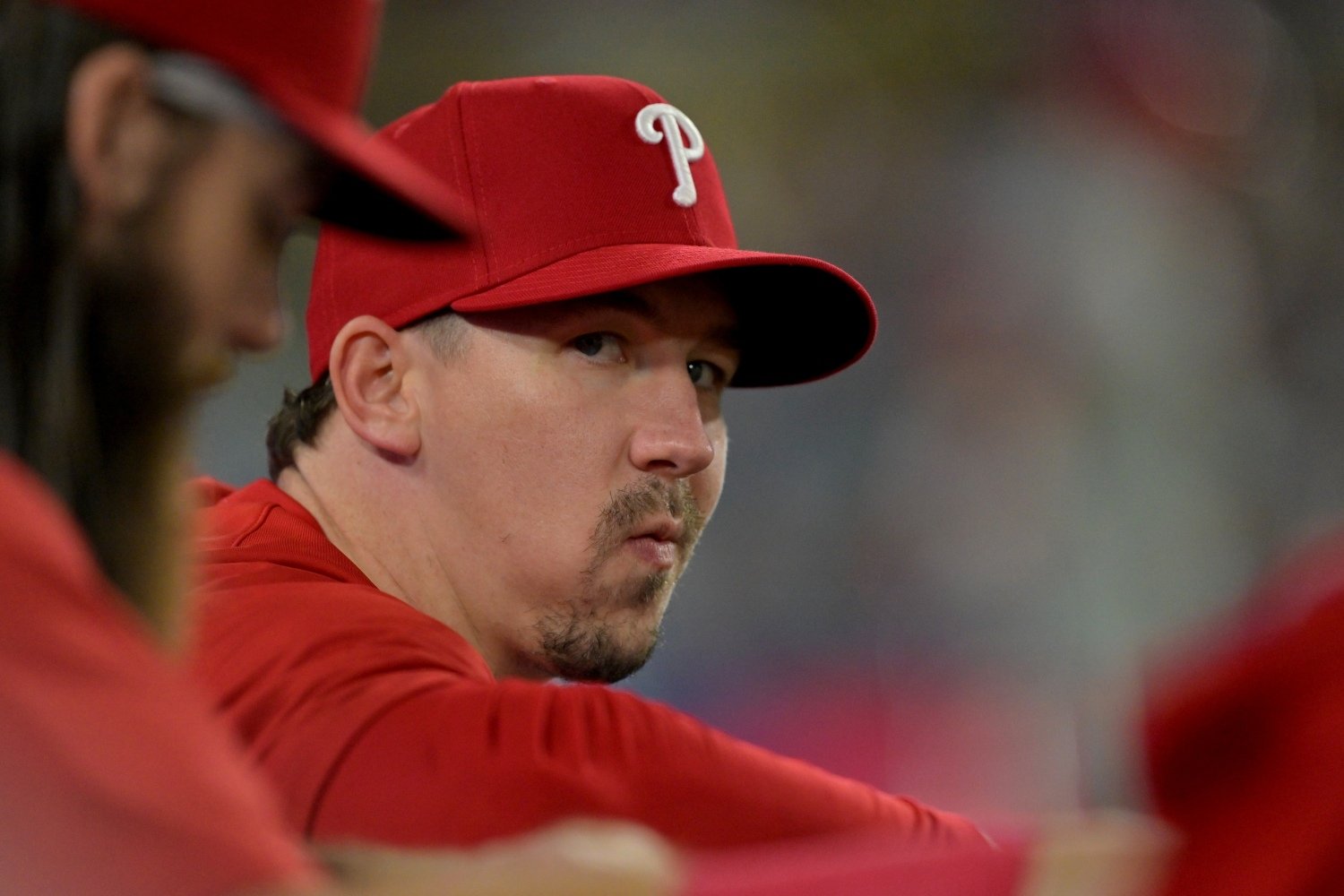 Despite a disappointing postseason run, the Phillies were (at least on paper) one of the best teams in MLB this year. Aside from winning 96 games, they also posted a combined OPS of .759 (4th in MLB) and an ERA of 3.79 (8th in MLB). With a colossal payroll (a CBT number of $307.8 million for 2025) and a roster more than capable of contending, it’s doubtful they’ll be willing to trade any core pieces. Likewise, their premium free agents—namely Kyle Schwarber, J.T. Realmuto and Ranger Suárez—probably don’t fit within Milwaukee’s budget. But which members of one of their top NL rivals could the Brewers pursue this offseason? SP Walker Buehler (Free Agent) Buehler hasn’t been able to recapture the magic of his 2021 season, when he posted a 2.47 ERA with a 3.16 FIP over 207 ⅔ innings. Derailed by a second Tommy John surgery, this was the first season he had pitched more than 80 innings since his peak, and the results were lousy. Despite signing a one-year, $21.05-million contract with the Red Sox, he was released in August after pitching to a 5.45 ERA over his 22 starts. He rebounded well after being picked up by the Phillies, posting a 0.66 ERA in 13 ⅔ innings for the team. The difference in velocity isn’t life-changing by any means, but it is still significant. Buehler’s average fastball was 95.3 mph in 2021 and 93.9 mph in 2025. What used to be his dominant pitch has become his downfall. He has tried to move away from relying on his heater by dramatically upping his sinker usage, but he’s still throwing the four-seam fastball more frequently than any other pitch—and opposing hitters are taking advantage, slugging .553 against it. With major issues against lefties and command, Buehler is more of a project now than he has been since he was a prospect. For a closer look at what’s been bothering him, take a look at this article by Jay Jaffe of FanGraphs. If there’s any team that can potentially make something work, it’s the Brewers. They’ve built a reputation out of redesigning pitchers who are seemingly at the end of their careers, and although he’s just 31 years old, Buehler’s rapid decline likely leaves him with few teams clamoring for his services. This may also play in Milwaukee’s favor; this would be a potential buy-low, sell-high situation. If he signs an affordable short-term contract with opt-outs and options, he could salvage his value as a starting pitcher while helping the Brewers replenish their own rotation in the interim. RP Tanner Banks As an 18th-round pick in the 2014 draft by the White Sox, Banks didn’t make his big-league debut until 2022, at the ripe age of 30. Since then, he has been a serviceable bullpen arm and had the best year of his career in 2025, posting a 3.07 ERA with a 1.01 WHIP over 67 ⅓ innings. Although he came out of the bullpen, he boasted an impressive five-pitch arsenal and was reasonably effective with all of them, other than his changeup. Because his velocity is limited to the low 90s, he relied on soft contact and precision command to get his outs, walking just 4.5% of opposing hitters and having a hard contact rate in the top quartile of qualified arms. The Brewers need more left-handed relievers. Had there been more good options, there’s a chance that Pat Murphy wouldn’t have had to rely on Aaron Ashby to appear in all but two of Milwaukee’s postseason games. This need is supported by the team’s recent move to acquire Sammy Peralta on waivers. Banks seems like a reliable arm that could fill a role similar to Hoby Milner of years past. Although he comes with several years of control, he’ll be 38 by the time he hits free agency, which should theoretically bring down the asking price in a trade. A solid bullpen southpaw may be a small but important addition to an already well-rounded team like the Brewers. IF Edmundo Sosa One of the most valuable depth pieces in Philadelphia, Sosa’s utility has come in handy more than once. He spent considerable time at every infield position except first base, and in addition to being a plus defender at three positions, he also posted a 109 OPS+ and slugged .469 with 12 doubles and 11 home runs in 261 plate appearances. This would have placed him second on the Brewers in slugging percentage, behind Andrew Vaughn. It’s difficult to ascertain whether Sosa is truly a capable hitter, because of the relatively small sample of games that he has played every season since debuting. In fact, he has not qualified for the batting title in any of the seven big-league seasons he has played in. But despite getting fewer chances than your typical starter, he has found ways to be valuable and could slot in well to the Brewers’ infield. Milwaukee won’t be losing any major infielders this year, as Caleb Durbin, Joey Ortiz, Brice Turang, and Andrew Vaughn will all be sticking around unless traded. This means that there isn’t a clear gap to fill, but having someone like Sosa who can play multiple positions may serve as an upgrade over Andruw Monasterio. He has also shown flashes of big power, which is something Milwaukee was lacking last year, even if they managed to score 806 runs (3rd in MLB). With a projected arbitration salary of just $3.9 million in 2026, he could fit right into the Brewers’ broader infield picture. Big-market teams like the Phillies run on star power. The Brewers can't afford to do the same, but that's ok. The different ways the two teams build rosters create opportunities for the Crew to swoop in on free agents who are no longer of interest to the mighty Phils, or for the two sides to get together on unexpected (if smallish) trades. These three guys are good examples of the kinds of players the Brewers might find appealing, as they peel away at the rosters of richer but dumber teams.
- 5 comments
-
- 3
-
-
- walker buehler
- tanner banks
- (and 1 more)
-
Image courtesy of © Jayne Kamin-Oncea-Imagn Images Despite a disappointing postseason run, the Phillies were (at least on paper) one of the best teams in MLB this year. Aside from winning 96 games, they also posted a combined OPS of .759 (4th in MLB) and an ERA of 3.79 (8th in MLB). With a colossal payroll (a CBT number of $307.8 million for 2025) and a roster more than capable of contending, it’s doubtful they’ll be willing to trade any core pieces. Likewise, their premium free agents—namely Kyle Schwarber, J.T. Realmuto and Ranger Suárez—probably don’t fit within Milwaukee’s budget. But which members of one of their top NL rivals could the Brewers pursue this offseason? SP Walker Buehler (Free Agent) Buehler hasn’t been able to recapture the magic of his 2021 season, when he posted a 2.47 ERA with a 3.16 FIP over 207 ⅔ innings. Derailed by a second Tommy John surgery, this was the first season he had pitched more than 80 innings since his peak, and the results were lousy. Despite signing a one-year, $21.05-million contract with the Red Sox, he was released in August after pitching to a 5.45 ERA over his 22 starts. He rebounded well after being picked up by the Phillies, posting a 0.66 ERA in 13 ⅔ innings for the team. The difference in velocity isn’t life-changing by any means, but it is still significant. Buehler’s average fastball was 95.3 mph in 2021 and 93.9 mph in 2025. What used to be his dominant pitch has become his downfall. He has tried to move away from relying on his heater by dramatically upping his sinker usage, but he’s still throwing the four-seam fastball more frequently than any other pitch—and opposing hitters are taking advantage, slugging .553 against it. With major issues against lefties and command, Buehler is more of a project now than he has been since he was a prospect. For a closer look at what’s been bothering him, take a look at this article by Jay Jaffe of FanGraphs. If there’s any team that can potentially make something work, it’s the Brewers. They’ve built a reputation out of redesigning pitchers who are seemingly at the end of their careers, and although he’s just 31 years old, Buehler’s rapid decline likely leaves him with few teams clamoring for his services. This may also play in Milwaukee’s favor; this would be a potential buy-low, sell-high situation. If he signs an affordable short-term contract with opt-outs and options, he could salvage his value as a starting pitcher while helping the Brewers replenish their own rotation in the interim. RP Tanner Banks As an 18th-round pick in the 2014 draft by the White Sox, Banks didn’t make his big-league debut until 2022, at the ripe age of 30. Since then, he has been a serviceable bullpen arm and had the best year of his career in 2025, posting a 3.07 ERA with a 1.01 WHIP over 67 ⅓ innings. Although he came out of the bullpen, he boasted an impressive five-pitch arsenal and was reasonably effective with all of them, other than his changeup. Because his velocity is limited to the low 90s, he relied on soft contact and precision command to get his outs, walking just 4.5% of opposing hitters and having a hard contact rate in the top quartile of qualified arms. The Brewers need more left-handed relievers. Had there been more good options, there’s a chance that Pat Murphy wouldn’t have had to rely on Aaron Ashby to appear in all but two of Milwaukee’s postseason games. This need is supported by the team’s recent move to acquire Sammy Peralta on waivers. Banks seems like a reliable arm that could fill a role similar to Hoby Milner of years past. Although he comes with several years of control, he’ll be 38 by the time he hits free agency, which should theoretically bring down the asking price in a trade. A solid bullpen southpaw may be a small but important addition to an already well-rounded team like the Brewers. IF Edmundo Sosa One of the most valuable depth pieces in Philadelphia, Sosa’s utility has come in handy more than once. He spent considerable time at every infield position except first base, and in addition to being a plus defender at three positions, he also posted a 109 OPS+ and slugged .469 with 12 doubles and 11 home runs in 261 plate appearances. This would have placed him second on the Brewers in slugging percentage, behind Andrew Vaughn. It’s difficult to ascertain whether Sosa is truly a capable hitter, because of the relatively small sample of games that he has played every season since debuting. In fact, he has not qualified for the batting title in any of the seven big-league seasons he has played in. But despite getting fewer chances than your typical starter, he has found ways to be valuable and could slot in well to the Brewers’ infield. Milwaukee won’t be losing any major infielders this year, as Caleb Durbin, Joey Ortiz, Brice Turang, and Andrew Vaughn will all be sticking around unless traded. This means that there isn’t a clear gap to fill, but having someone like Sosa who can play multiple positions may serve as an upgrade over Andruw Monasterio. He has also shown flashes of big power, which is something Milwaukee was lacking last year, even if they managed to score 806 runs (3rd in MLB). With a projected arbitration salary of just $3.9 million in 2026, he could fit right into the Brewers’ broader infield picture. Big-market teams like the Phillies run on star power. The Brewers can't afford to do the same, but that's ok. The different ways the two teams build rosters create opportunities for the Crew to swoop in on free agents who are no longer of interest to the mighty Phils, or for the two sides to get together on unexpected (if smallish) trades. These three guys are good examples of the kinds of players the Brewers might find appealing, as they peel away at the rosters of richer but dumber teams. View full article
-
Man this rotation is gross. Went from facing a 6'4 lefty with 2 Cy Youngs and a wicked changeup to facing a 5'10 righty with 3 Sawamura Awards and a disgusting yo-yo curve/splitter combo that's a misdemeanor crime in 14 states. Ridiculous. To the Brewers' credit, they're still making these games pretty competitive but man, three hits and one walk in Game 2 makes me nervous at best for the rest of the series. Good thing they're out of good starting pitching (just gotta face a 6'8 righty with a career 30.9% strikeout rate and the greatest baseball talent the world has ever seen)!
- 1 reply
-
- 2
-
-
- jackson chourio
- christian yelich
- (and 2 more)
-
Agree. It came down to the wire against the Cubs!
-
Image courtesy of © Gary A. Vasquez-Imagn Images Well folks, they finally did it. For the first time since 2018, the Brewers won a playoff series. It was far from easy, and they won by a narrow margin of just two runs in the final game, but it was a victory—and a massively cathartic one. Unfortunately, the postseason waits for no man. The team’s journey to their first-ever World Series title is just getting started. Now that the Cubs are out of the way, what should the Brewers keep an eye out for when playing against the defending World Series champions? The Dodgers Dig The Long Ball, And Hard Contact Over the course of the regular season, the Dodgers hit 244 home runs (2nd in MLB). This makes sense, given that five of their players hit 20 or more homers and one of them hit 55 (while also somehow pitching to a 2.87 ERA). Their lineup is full of power threats, and they seem to have brought that strength with them to their six postseason games so far. Three of their players (Teoscar Hernández, Mookie Betts, and Tommy Edman) are slugging over .500 this October. The Brewers’ pitching staff struggled with giving up hard contact throughout the Division Series, notably giving up nine home runs in total, four of which came in the first inning. This was often the result of throwing too many waste pitches and getting into bad counts, giving Cubs hitters an (arguably unearned) advantage. To their credit, the Brewers did manage to get past a star-studded Chicago lineup, but the Dodgers have an even more imposing group of bats. Although they’ve been cold so far, making similar mistakes to Shohei Ohtani, Will Smith, and Freddie Freeman will be punished even more severely. The Dodgers’ Rotation Has Been Dominant The Brewers did a fantastic job of attacking Chicago’s starting pitchers, with the exception of Jameson Taillon. They took an aggressive approach against both Matthew Boyd and Shota Imanaga, and even punished Colin Rea just enough in Game 5. However, Los Angeles has posted the best postseason starting pitching numbers. Over 35 ⅔ innings, they’ve combined for a 2.02 ERA and a 0.90 WHIP. This is thanks to Blake Snell, who struck out 18 hitters over his two starts; and Yoshinobu Yamamoto, who has given up just three earned runs in his 10 ⅔ innings. As a second line of defense, the Dodgers’ defense has been just as elite, accumulating 67 Defensive Runs Saved this season (3rd in MLB). The Brewers have taken advantage of their lineup’s ability to make contact, put the ball in play, and embrace the chaos. They only struck out 1,266 times in the regular season (5th in MLB), and getting runners on base has been their offensive bread and butter. Despite the fielding capabilities of Los Angeles, Milwaukee has already proven they can outplay a strong defensive squad in the Cubs, who actually had more DRS (84) than the Dodgers by a comfortable margin. In a classic test of unstoppable force vs. immovable object, Milwaukee will have to be at their best if they want to play their brand of baseball against the best run prevention Magic Johnson’s money can buy. The Bullpen Gap Is Trevor Megill-Sized While Los Angeles has a fearsome rotation, the same can’t be said about their relief unit. In a season full of late-inning meltdowns, Dodgers relievers combined for a 4.27 ERA (20th in MLB) and 27 blown saves. Ten of these were credited to Tanner Scott, who was swapped out of the NLDS roster due to injury and will not return for the NLCS, but even with this weak link removed, there are still plenty of vulnerable arms for Milwaukee to take advantage of. With the exception of Roki Sasaki, many of the Dodgers’ other options have had their own struggles this October. Player IP ERA Emmet Sheehan 3.1 10.80 Alex Vesia 3.0 6.00 Blake Treinen 2.1 7.71 Clayton Kershaw 2.0 18.00 On the other hand, only three Brewers (Robert Gasser, Jared Koenig, Jacob Misiorowski) have given up any earned runs while pitching in relief this postseason, a result that matches up with the bullpen's combined ERA of 3.63 (6th in MLB) this season. The Cubs bullpen did an excellent job of shutting down the Brewers' offense when they were deployed, but their arms are far more consistent than what the Dodgers have been able to muster all year. There may be a few roster changes heading into the first game of the Championship Series, but without a lot of great options to begin with, Milwaukee could and should end up doing most of their damage after the starter has been taken out. This is all the more reason to take longer at-bats and drive up the pitch count as quickly as possible. Managing The Pitching Workload Could Make Or Break This Postseason Run Pat Murphy got pretty creative with the way he managed his arms in the Division Series. He tried to spread the wealth as best he could, with only Freddy Peralta pitching more than seven innings total across the five games. He relied heavily on the endurance of Aaron Ashby and Chad Patrick, who each appeared in four games, and ultimately, the Brewers won the war of pitching attrition against the Cubs. However, seven-game series are a little different. If Milwaukee had to play even one more game, they may have been up the creek without a paddle, even with these extra rest days conveniently inserted after what seemed like every game. For the Dodgers, asking players like Snell, Yamamoto, and Glasnow to throw six or seven quality innings is more plausible than trying to get the same out of the Brewers’ rotation. Will Jose Quintana and Gasser be forced to take on more responsibility? How will Quinn Priester bounce back from his tough postseason debut? Ideally, the Brewers earn an easy-breezy four-game sweep, but more realistically, it’ll be a competitive contest that could go the distance. Their pitching alignment isn’t nearly as straightforward as it is for their well-financed opponent, but this team of Above-Average Joes has the right tools to get it done if they play their cards right. View full article

