


Matthew Trueblood
-
Posts
1,964 -
Joined
-
Last visited
-
Days Won
10
Content Type
Profiles
Forums
Blogs
Events
News
2026 Milwaukee Brewers Top Prospects Ranking
Milwaukee Brewers Videos
2022 Milwaukee Brewers Draft Picks
Milwaukee Brewers Free Agent & Trade Rumors, Notes, & Tidbits
Guides & Resources
2023 Milwaukee Brewers Draft Picks
2024 Milwaukee Brewers Draft Picks
The Milwaukee Brewers Players Project
2025 Milwaukee Brewers Draft Pick Tracker
2026 Milwaukee Brewers Draft Tracker: Picks & Bonuses
Store
Downloads
Gallery
Everything posted by Matthew Trueblood
-
Kind of... except, already, I think we can see that his best path to whiffs will be the curve, as it was there to end the inning. AND, it's the willingness to adapt sequencing and location that's catching my eye. He wasn't showing that even this spring.
-
Man. That's just crazy. When he NEEDS a strikeout, he sure seems to know how to go find one.
-
Do you draw the infield up here? Murph is... I think that's the right call. Interesting dilemma right away though.
-
Haven't been this pumped about a random June game since Julio Urías debuted at 19 YO against the Mets back in 2016. I truly think this is the best showdown of its kind since then. This is gonna be fun.
-
Caleb Durbin and the Art of Putting the Defense Where You Want Them
Matthew Trueblood posted an article in Brewers
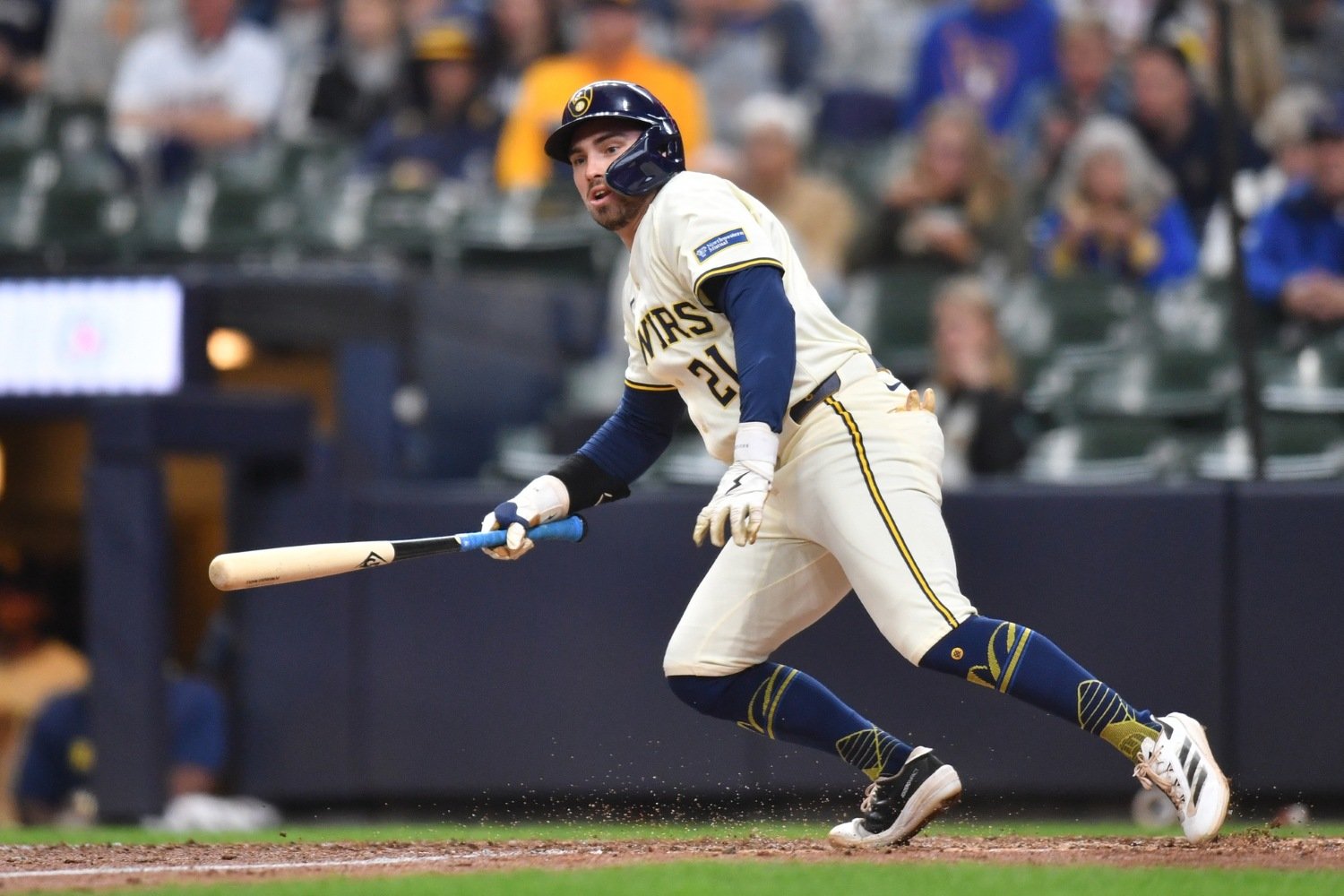 "I honestly never really felt bad in the box, since getting up," Caleb Durbin said Sunday, when asked to reflect on what's changed since his slow start in the big leagues. "I think baseball’s just, you go through ups and downs; it’s a part of it. I’ve gone through that at every level, so I really wasn’t rattled by that at this level. I know it’s a part of the game, and it’s a game of constant adjustments. Everyone at this level is just, no matter how many years you have in the league, you’re making constant adjustments. That’s a natural part of the game." Kudos to Durbin for his self-confidence; it's a key ingredient in success against the best competition baseball can offer. He might not have been right, exactly, to believe he was in such good shape at his worst. In his first month in the major leagues, Durbin hit a disturbing .169/.263/.241. In 96 plate appearances, he had just four extra-base hits, and it looked like the worst fear for every undersized player whose skill set hinges on their hit tool would be realized in him: big-league pitchers would knock the bat right out of his hands. So much for that. In the last five weeks (30 games and 121 plate appearances), Durbin is batting .279/.358/.404. He has just 14 strikeouts over that span, equal to the number of free passes he's gotten (9 walks, 5 times hit by pitch) and the number of extra advancements he's created (9 extra-base hits, 5 stolen bases). Without putting any particular, focused training into bat speed, he's increased his bat speed substantially as the season has progressed. In non-two-strike counts, he's now averaging 69.4 mph on his swings, up from 68.3 in May. That extra tick of bat speed matters, because it gets him to his preferred contact point more consistently and generates the extra bit of juice off the bat to get the ball through the infield or to plug a gap. "You just make the adjustments you need to make, and it stems from your approach," Durbin said. "I’m getting back to what I do best approach-wise, being aggressive early in the count and getting good swings off. The comfortability in the big leagues stems from what you need to do to be your best, and I’m just wanting to fall back to that." As a fairly extreme pull hitter (but not one who can consistently take aim at the fence, even down the line), Durbin has also had to find ways to force big-league defenses into positions that leave holes he wants to use. That means hitting the ball through the right side of the infield, sometimes, to force the weak-side defenders to stay honest, and he's done some of that. Yes, it also means bunting. "Yeah, it’s a big part of it," Durbin said, when asked whether his 12 bunt attempts this year stemmed in part from trying to manipulate the defense. "Obviously, there’s the aspect of actually getting it down and getting a hit, but also, just showing it helps, because it does kind of move that third baseman in. You want to create as many holes as you can on that side, and showing the bunt as many times as you can in the season does that." Durbin has forced the third baseman to play up against him a substantial share of the time this year, which gives him lots of ways to reach base by hitting the ball that direction. When the second baseman can't even cheat up the middle, there's an extra benefit—and Durbin's tendency to hit fly balls (plus that burgeoning bat speed) prevents the outfielders from pinching way in on him. It sounds like a simple formula, and in amateur ball or the minors, it is. However, it's hard to pull a big-league defense out of shape. Durbin manages it. That's a testament to his ability to handle the bat and spray the ball. It's also a testament to his speed. The threat of the bunt doesn't draw the corners in the way you want it to unless you have speed enough to make them do so, and speed amplifies the benefits of hitting the ball even past the third baseman, deep into the hole at short. That showed up in the fourth inning Sunday, when Durbin hit a ball that third baseman Brooks Lee might have cut off, had he been able to play deeper. Instead, it got past Lee, and although Carlos Correa made a sliding stop going to his right, there was no hope of throwing out Durbin thereafter. M3k0M3lfWGw0TUFRPT1fVTFRRFZGUlFYZ0VBWEFaWFZnQUhCd1JUQUFBQUFWSUFVMVVDQlZjRkJBWldWVllD.mp4 Bat control and speed are valuable tools for keeping a defense on its heels. The bunt is a specialty tool for that purpose. Few hitters in the modern game use those tools the way Durbin does, but over the last five weeks, he's proved how well they can still work—especially once you settle in, find the high end of your range in terms of bat speed, and clear the minimum standard for sheer contact quality. It's not just keeping Durbin in the majors, anymore. It's actively helping the Brewers win games.
 -
Image courtesy of © Patrick Gorski-Imagn Images "I honestly never really felt bad in the box, since getting up," Caleb Durbin said Sunday, when asked to reflect on what's changed since his slow start in the big leagues. "I think baseball’s just, you go through ups and downs; it’s a part of it. I’ve gone through that at every level, so I really wasn’t rattled by that at this level. I know it’s a part of the game, and it’s a game of constant adjustments. Everyone at this level is just, no matter how many years you have in the league, you’re making constant adjustments. That’s a natural part of the game." Kudos to Durbin for his self-confidence; it's a key ingredient in success against the best competition baseball can offer. He might not have been right, exactly, to believe he was in such good shape at his worst. In his first month in the major leagues, Durbin hit a disturbing .169/.263/.241. In 96 plate appearances, he had just four extra-base hits, and it looked like the worst fear for every undersized player whose skill set hinges on their hit tool would be realized in him: big-league pitchers would knock the bat right out of his hands. So much for that. In the last five weeks (30 games and 121 plate appearances), Durbin is batting .279/.358/.404. He has just 14 strikeouts over that span, equal to the number of free passes he's gotten (9 walks, 5 times hit by pitch) and the number of extra advancements he's created (9 extra-base hits, 5 stolen bases). Without putting any particular, focused training into bat speed, he's increased his bat speed substantially as the season has progressed. In non-two-strike counts, he's now averaging 69.4 mph on his swings, up from 68.3 in May. That extra tick of bat speed matters, because it gets him to his preferred contact point more consistently and generates the extra bit of juice off the bat to get the ball through the infield or to plug a gap. "You just make the adjustments you need to make, and it stems from your approach," Durbin said. "I’m getting back to what I do best approach-wise, being aggressive early in the count and getting good swings off. The comfortability in the big leagues stems from what you need to do to be your best, and I’m just wanting to fall back to that." As a fairly extreme pull hitter (but not one who can consistently take aim at the fence, even down the line), Durbin has also had to find ways to force big-league defenses into positions that leave holes he wants to use. That means hitting the ball through the right side of the infield, sometimes, to force the weak-side defenders to stay honest, and he's done some of that. Yes, it also means bunting. "Yeah, it’s a big part of it," Durbin said, when asked whether his 12 bunt attempts this year stemmed in part from trying to manipulate the defense. "Obviously, there’s the aspect of actually getting it down and getting a hit, but also, just showing it helps, because it does kind of move that third baseman in. You want to create as many holes as you can on that side, and showing the bunt as many times as you can in the season does that." Durbin has forced the third baseman to play up against him a substantial share of the time this year, which gives him lots of ways to reach base by hitting the ball that direction. When the second baseman can't even cheat up the middle, there's an extra benefit—and Durbin's tendency to hit fly balls (plus that burgeoning bat speed) prevents the outfielders from pinching way in on him. It sounds like a simple formula, and in amateur ball or the minors, it is. However, it's hard to pull a big-league defense out of shape. Durbin manages it. That's a testament to his ability to handle the bat and spray the ball. It's also a testament to his speed. The threat of the bunt doesn't draw the corners in the way you want it to unless you have speed enough to make them do so, and speed amplifies the benefits of hitting the ball even past the third baseman, deep into the hole at short. That showed up in the fourth inning Sunday, when Durbin hit a ball that third baseman Brooks Lee might have cut off, had he been able to play deeper. Instead, it got past Lee, and although Carlos Correa made a sliding stop going to his right, there was no hope of throwing out Durbin thereafter. M3k0M3lfWGw0TUFRPT1fVTFRRFZGUlFYZ0VBWEFaWFZnQUhCd1JUQUFBQUFWSUFVMVVDQlZjRkJBWldWVllD.mp4 Bat control and speed are valuable tools for keeping a defense on its heels. The bunt is a specialty tool for that purpose. Few hitters in the modern game use those tools the way Durbin does, but over the last five weeks, he's proved how well they can still work—especially once you settle in, find the high end of your range in terms of bat speed, and clear the minimum standard for sheer contact quality. It's not just keeping Durbin in the majors, anymore. It's actively helping the Brewers win games. View full article
-
Image courtesy of © Brad Rempel-Imagn Images It was a steamy 92° at game time Sunday in Minneapolis. The heat index threatened to touch triple digits all day, as it did on Saturday. It was the final game of a three-game set awash in heat, coming off what manager Pat Murphy called "an emotional series" in Chicago. William Contreras had started each of the first two games of the series behind the plate, which was a mild surprise, because Saturday's game was a day game after a night game, in addition to being played in such heat. Yet, when the lineups came out Sunday morning, Murphy's nine looked just as it does almost every day: Sal Frelick - RF Jackson Chourio - CF Christian Yelich - DH William Contreras - C Isaac Collins - LF Rhys Hoskins - 1B Brice Turang - 2B Caleb Durbin - 3B Joey Ortiz - SS The only wrinkle, really, was that Murphy flipped Turang (who had batted fifth the previous three games) and Collins, moving the switch-hitter up to thwart the Twins' opener gambit and deny either lefty opener Danny Coulombe or righty bulk arm David Festa the platoon advantage the first time through the lineup. That's how things are going, lately. There might be small changes (Contreras batted third and Yelich fourth for a stretch last week, for instance), but these nine players start almost every day. Jake Bauers last got a start on June 11; Eric Haase made his last start on the same day. Daz Cameron hasn't been in the starting lineup since June 9, and for Andruw Monasterio, it was June 4. With the planned off day last Monday and an unplanned one Wednesday (and without, much to Murphy's chagrin, a doubleheader Thursday), the skipper has written the same nine names into his lineup card for the last nine games. That's only possible because they're playing exceptionally well, of course. They're averaging seven runs a game over those nine games, and have won seven of them, beating some strong teams in the process. Although they're a bit light on power at times, this group can manufacture runs with the best of them, in myriad ways. If and when they get Blake Perkins back from the fractured leg that aborted his spring training and delayed his season, the team might mix and match more. Right now, though, Murphy has found a formula that works, and he's sticking with it. Chourio, Turang, Ortiz and Frelick are all among the top 40 players in the majors in defensive innings played. Contreras leads all catchers in innings caught, despite the fracture in his left hand that makes that painful. Hoskins is now eighth in the bigs in innings played at first base, and although it took a while for both Durbin and Collins to establish themselves, each is now a staple. Yelich, meanwhile, hasn't started in the outfield since May 13. His nearly full-time status as a DH has eliminated the opportunity to ease Contreras's catching burden without losing a key contributor in the lineup, but it's also allowed Yelich to stay in the lineup and work through his early slump. He's up to 312 plate appearances, just three shy of his total from last year, and after that cold start, he's batting .289/.358/.482 since the midpoint of April. Though it's much less discussed than pitcher workload, position players do need days off and ways to stay fresh, too. This is a bit of a gambit by Murphy, pushing the pedal down for his hitters during a period in which the team needed to make up some ground in the hunt for either the NL Central title or a Wild Card berth. They've done so, thanks in no small part to winning four of six against the Cardinals and Cubs of late, and we're likely to see the everyday nine get a bit of a breather during home series against the Pirates and Rockies. That they've played with such good energy and executed so well, though, proves that Murphy was right to trust them with a stint of heavy use designed to win some key games. View full article
-
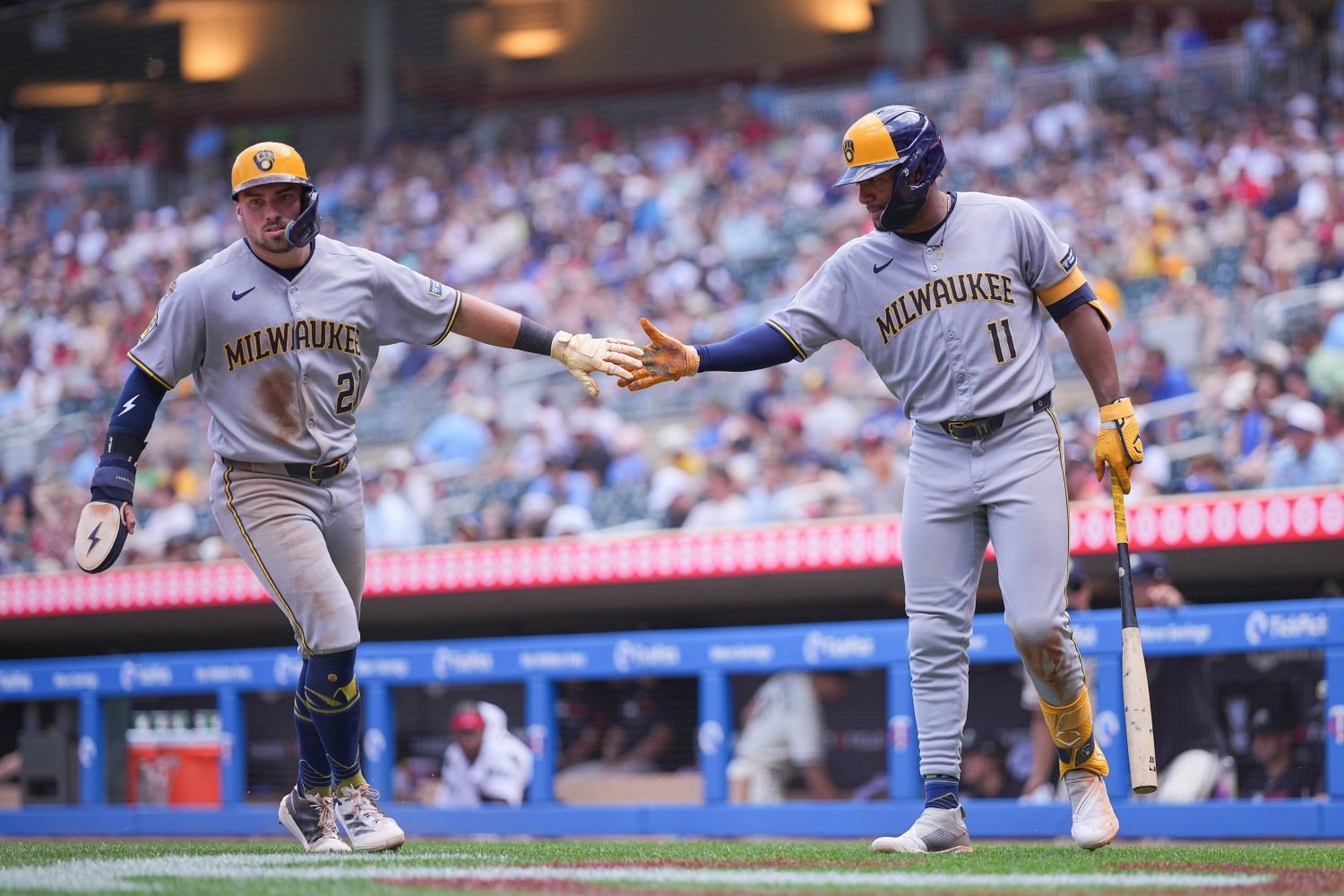 It was a steamy 92° at game time Sunday in Minneapolis. The heat index threatened to touch triple digits all day, as it did on Saturday. It was the final game of a three-game set awash in heat, coming off what manager Pat Murphy called "an emotional series" in Chicago. William Contreras had started each of the first two games of the series behind the plate, which was a mild surprise, because Saturday's game was a day game after a night game, in addition to being played in such heat. Yet, when the lineups came out Sunday morning, Murphy's nine looked just as it does almost every day: Sal Frelick - RF Jackson Chourio - CF Christian Yelich - DH William Contreras - C Isaac Collins - LF Rhys Hoskins - 1B Brice Turang - 2B Caleb Durbin - 3B Joey Ortiz - SS The only wrinkle, really, was that Murphy flipped Turang (who had batted fifth the previous three games) and Collins, moving the switch-hitter up to thwart the Twins' opener gambit and deny either lefty opener Danny Coulombe or righty bulk arm David Festa the platoon advantage the first time through the lineup. That's how things are going, lately. There might be small changes (Contreras batted third and Yelich fourth for a stretch last week, for instance), but these nine players start almost every day. Jake Bauers last got a start on June 11; Eric Haase made his last start on the same day. Daz Cameron hasn't been in the starting lineup since June 9, and for Andruw Monasterio, it was June 4. With the planned off day last Monday and an unplanned one Wednesday (and without, much to Murphy's chagrin, a doubleheader Thursday), the skipper has written the same nine names into his lineup card for the last nine games. That's only possible because they're playing exceptionally well, of course. They're averaging seven runs a game over those nine games, and have won seven of them, beating some strong teams in the process. Although they're a bit light on power at times, this group can manufacture runs with the best of them, in myriad ways. If and when they get Blake Perkins back from the fractured leg that aborted his spring training and delayed his season, the team might mix and match more. Right now, though, Murphy has found a formula that works, and he's sticking with it. Chourio, Turang, Ortiz and Frelick are all among the top 40 players in the majors in defensive innings played. Contreras leads all catchers in innings caught, despite the fracture in his left hand that makes that painful. Hoskins is now eighth in the bigs in innings played at first base, and although it took a while for both Durbin and Collins to establish themselves, each is now a staple. Yelich, meanwhile, hasn't started in the outfield since May 13. His nearly full-time status as a DH has eliminated the opportunity to ease Contreras's catching burden without losing a key contributor in the lineup, but it's also allowed Yelich to stay in the lineup and work through his early slump. He's up to 312 plate appearances, just three shy of his total from last year, and after that cold start, he's batting .289/.358/.482 since the midpoint of April. Though it's much less discussed than pitcher workload, position players do need days off and ways to stay fresh, too. This is a bit of a gambit by Murphy, pushing the pedal down for his hitters during a period in which the team needed to make up some ground in the hunt for either the NL Central title or a Wild Card berth. They've done so, thanks in no small part to winning four of six against the Cardinals and Cubs of late, and we're likely to see the everyday nine get a bit of a breather during home series against the Pirates and Rockies. That they've played with such good energy and executed so well, though, proves that Murphy was right to trust them with a stint of heavy use designed to win some key games.
- 2 comments
-
- 1
-

-
- christian yelich
- jackson chourio
- (and 3 more)
-
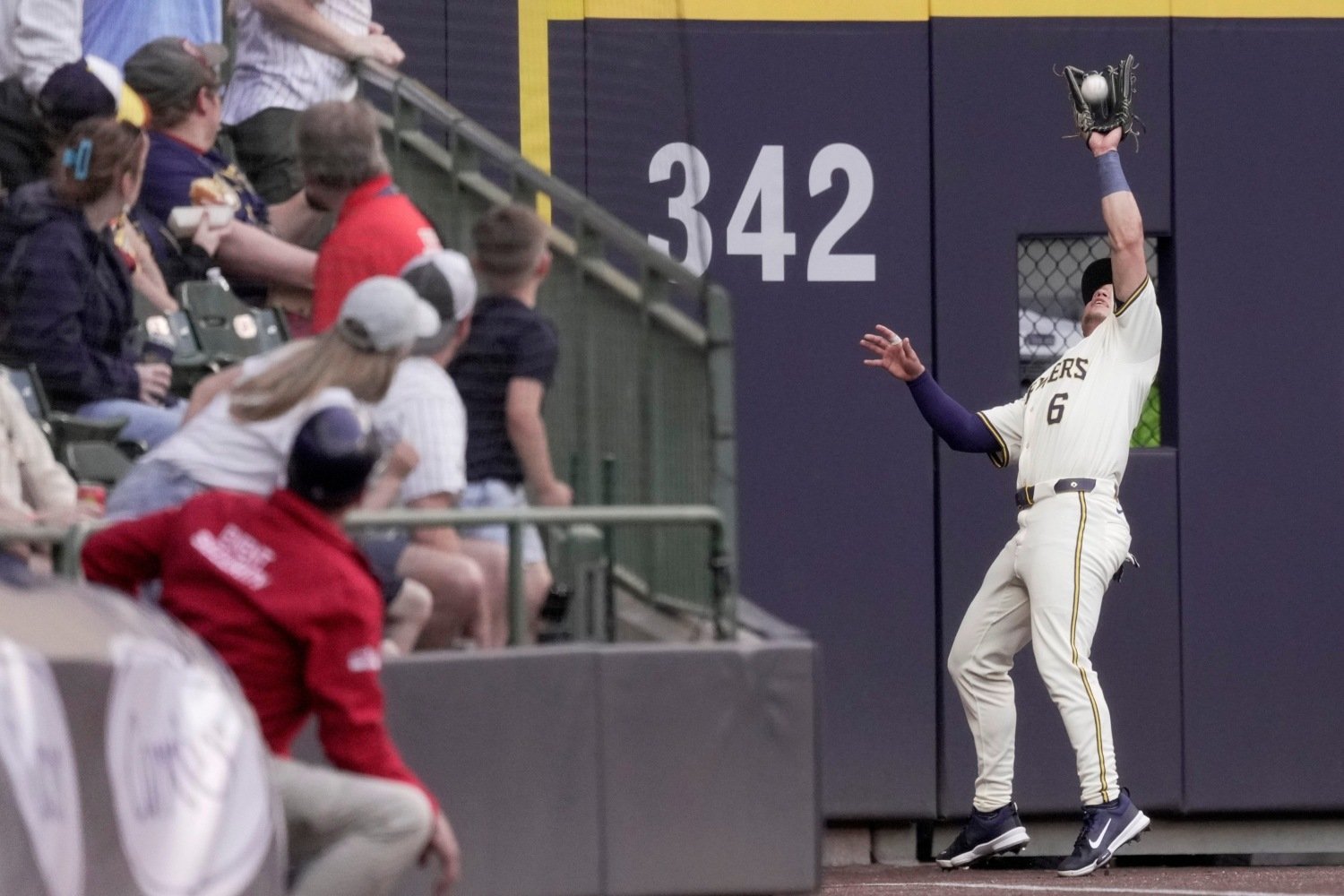 Jacob Misiorowski so dominated over his first 11 innings in the major leagues that he rarely even needed much help from his defense. He didn't rack up strikeouts at an extraordinary rate, but the contact he did yield was so unthreatening that most of the plays were routine for Brewers fielders. In the bottom of the fifth Friday night, however, he did need help—and he got it. On a 1-1 pitch from Misiorowski (a 93-mph slider down and away), Twins designated hitter Ryan Jeffers hit a line drive with an exit velocity of 102.8 miles per hour. It was a low, sinking drive, and Statcast gave Isaac Collins only a 30% chance to catch it. As most humans do, though, Statcast was underestimating Collins. b0daZDlfVjBZQUhRPT1fVndCVUFRQURCQVlBRHdGUUFBQUhWd0pWQUFNRUFWTUFBZ01DVTFJSENRWUJWbGNG.mp4 This is the 10th season of Statcast measuring outfielders' Jumps—how quickly they get going when the ball leaves the bat, how well they accelerate during the middle segment of the flight of a well-struck liner or fly ball, and how efficient a route they take to the ball. In the broad scope of baseball history, 10 years is nothing, but in another sense, 10 years is a long time. It still feels a bit foolish to refer to the Statcast Era, but when that phrase first entered the baseball vernacular, it was strictly as a joke. Now, you can use it at least half-seriously. We've been measuring outfielders' jumps quantitatively for longer than Pat Murphy has been part of the Brewers organization. When I tell you, then, that Isaac Collins is breaking the scale for outfielders' first step (the portion of their Jump labeled as 'Reaction' on Baseball Savant), it's not an entirely trivial observation. Is it likely that Collins is a whole new breed of outfielder, altering the very paradigm of playing defense in the grass? No. Has anyone, in the last 10 years, even been close to as good as Collins has been at getting a jump on the ball? Also no. That counts for something. After barely 300 innings played in left field, Collins has already been worth 4 Defensive Runs Saved (DRS), according to Sports Info Solutions. That's not off any charts. However, the speed at which Collins gets going in the direction of the ball when it leaves opponents' bats very much is so. Statcast divides its evaluation of a fielder's Jump into three parts: Reaction: Feet covered in the first 1.5 seconds after the ball leaves the bat Burst: Feet covered in the window from 1.5 to 3.0 seconds after the ball leaves the bat Route: The efficiency of each of the above, relative to a direct line from the player's starting position to the projected landing spot of the ball. Each of the three is expressed in feet above or below average. A very, very good defensive outfielder might gain five feet on the ball, relative to the average peer, across the three categories. Burst tends to capture a player's raw athleticism fairly cleanly; it expresses how much ground a player covers once they've had time to get up to speed. Where Reaction and Route are concerned, however, there's a natural tradeoff. To get underway quickly, you almost inevitably give up a bit of accuracy. That's been true of Collins, just like everyone else—but it hasn't mattered much, because he's the best at getting underway quickly that we've seen in at least a decade. Here's a scatter plot showing Reaction and Route grades for all outfielders with a modicum of plays attempted this year. In fairness to the graphics people at Baseball Savant, it's rare that a player even strains the existing constraints of this chart—and unprecedented that one breaks out of it altogether. That's how good Collins has been at getting moving when the ball meets the bat. The secret? He doesn't have to shake off that pesky ground as he starts the process, the way most outfielders do. "Last year, I was just like, you know, on the infield, you pretty much want to have both feet in the air when the ball’s crossing the plate, so why not do the same in the outfield?" Collins said Saturday, inside the Brewers' clubhouse at Target Field. "I’m just really timing my hop when the ball’s crossing the plate. Making sure both feet are in the air, so I can read the swing, read the pitch, and then base your jump off of that." That sounds fundamental, and it is—but not for the position Collins plays now. As he notes, it's common for infielders (especially middle infielders) to time a step and hop to their pitcher's delivery, trying to be very slightly airborne when the ball enters the hitting zone. That gives them the best chance of an instantaneous jump toward the ball, which is often coming at them with triple-digit velocity and might require multiple steps and a dive to be reached. In the outfield, though, you'll rarely see a player go through the same pre-pitch set of moves as Collins. Even great outfielders famous for their glovework, like Byron Buxton and Harrison Bader (counterparts to Collins this weekend in Minneapolis) tend to have both feet on the ground when the ball is hit. They still move before the pitch, to prepare themselves to take off quickly, but they think more about the push off. Collins is focused on the freedom to explode in the direction of pursuit he perceives as necessary. The plays on which that pays off most clearly are ones like the Jeffers liner, where Collins has a very short time to cover ground. However, we've also seen him show up in a range normally far beyond the boundaries of a left fielder's territory. OTc5MGJfWGw0TUFRPT1fVUFjSEJWVUdWVmNBWFFFR1hnQUhCd1JlQUZrRkJ3UUFBbFVIVlFZQ0J3WUFDVmNF.mp4 That play isn't even a testament to Collins's greatness in the field, really. Jackson Chourio would have caught that, if Collins hadn't. It's just an example of how far he can stretch his own range, by being so fast out of his place at the crack of the bat. Here he is not quite getting the angle right, initially, but having left himself so much time by breaking quickly that he could adjust and still make a fine play. TDZXN01fWGw0TUFRPT1fVjFKV0FsTlNWd0VBREZRTFZnQUhWMVFDQUZoVFVnUUFCUWRUQndGWEJRTlhDQVlD.mp4 As the Jeffers play showed, he's at his very best coming in on the ball; going through the pre-pitch routine of an infielder prepares him to charge forward on the ball particularly well. bmJNZ3lfWGw0TUFRPT1fQXdNRkJsd0RVd0VBRHdBQVV3QUhDQUZRQUFOVEFWY0FCRlFGQXdFRVZ3UlRDVkFE.mp4 The downside, naturally, is the same as the reason why you don't see many outfielders do it the way Collins does: it's harder to get moving back on long flies when you start with the hop. That's not an issue for infielders, who only give ground on the ball occasionally and make almost all their tough plays either by charging the ball or by moving as fast as possible to the side. For outfielders, the traditional approach is a drop step: read the ball, turn your hips and take that first step backward at the same time, turning the body as you move away from the plate. That rhythm takes an extra quarter-beat after the Collins hop, which has made him disproportionately good on balls hit in front of him or to his side. He acknowledged as much, but believes his approach is worth it. "It just depends, each guy. There’s a little give and take there," he said. "You don’t want to make a jump and have it be the wrong read. I think that’s a big thing, out in the outfield, especially on those liners right at you. You want to make a good jump on the ball, but you also want to make sure you’re making the right read. So every guy is different, everyone has their own little routine, but obviously, mine’s been paying off." Indeed, the way Collins starts is working brilliantly. A former high-level high school running back, he also has the acceleration needed to close on the ball after getting moving. He can, over time, use that to make up for the inefficiency of his start on deep balls. In part, he'll just need to develop the same confidence in pursuing those that he feels on balls hit in front of him—and he'll have to learn to navigate the wall. "That’s the biggest room for growth for me, 100%," Collins said. "You see guys like Sal, and Perkins and Mitchell, their wall awareness is so natural to them, and that is not easy. They make it look very easy, and that’s something I can definitely work on, That’s what I’ve been trying to work on, is just getting more comfortable on balls over my head, balls near the wall." Having seen how far he's come already, Collins's manager believes that will be no problem. Pat Murphy reminisced Sunday about the first two balls hit toward Collins in the outfield this spring, which he misplayed. At the time, he was dealing with a rib injury, so the team tried to remain patient with him, but they certainly didn't foresee that he would get from there to here. "He had been training in the infield, because my vision for him is he's a super-utility guy, he can play everywhere," Murphy said. "And because we have Mitchell and Perkins, he wasn't gonna play—if he makes the team." Once those two players got hurt, though, Collins got a chance, and what he's done with it has wowed even his coaches and teammates. Murphy, for his part, no longer feels an urge to rush Collins back into a utility role—and with Mitchell likely down considerably longer after injuring his shoulder on a slide during his rehab assignment, there's little pressure building to push Collins. "I think someday I envision him that way, but right now, how can you take him out of there?" Murphy asked, rhetorically. Collins's literal jump is one of the new sources of fuel for the endlessly efficient and powerful Brewers run prevention machine. Friday night, it preserved a bit of history, and it's shown up even in tense moments, all year. While neither Collins nor the team consider him a finished product, the value the rookie provides in the outfield is impossible to ignore. It's also a fun reminder that there are endless ways to succeed in baseball, for those with the right combination of talent and willingness to try something unusual.
 -
Image courtesy of © Mark Hoffman/Milwaukee Journal Sentinel / USA TODAY NETWORK via Imagn Images Jacob Misiorowski so dominated over his first 11 innings in the major leagues that he rarely even needed much help from his defense. He didn't rack up strikeouts at an extraordinary rate, but the contact he did yield was so unthreatening that most of the plays were routine for Brewers fielders. In the bottom of the fifth Friday night, however, he did need help—and he got it. On a 1-1 pitch from Misiorowski (a 93-mph slider down and away), Twins designated hitter Ryan Jeffers hit a line drive with an exit velocity of 102.8 miles per hour. It was a low, sinking drive, and Statcast gave Isaac Collins only a 30% chance to catch it. As most humans do, though, Statcast was underestimating Collins. b0daZDlfVjBZQUhRPT1fVndCVUFRQURCQVlBRHdGUUFBQUhWd0pWQUFNRUFWTUFBZ01DVTFJSENRWUJWbGNG.mp4 This is the 10th season of Statcast measuring outfielders' Jumps—how quickly they get going when the ball leaves the bat, how well they accelerate during the middle segment of the flight of a well-struck liner or fly ball, and how efficient a route they take to the ball. In the broad scope of baseball history, 10 years is nothing, but in another sense, 10 years is a long time. It still feels a bit foolish to refer to the Statcast Era, but when that phrase first entered the baseball vernacular, it was strictly as a joke. Now, you can use it at least half-seriously. We've been measuring outfielders' jumps quantitatively for longer than Pat Murphy has been part of the Brewers organization. When I tell you, then, that Isaac Collins is breaking the scale for outfielders' first step (the portion of their Jump labeled as 'Reaction' on Baseball Savant), it's not an entirely trivial observation. Is it likely that Collins is a whole new breed of outfielder, altering the very paradigm of playing defense in the grass? No. Has anyone, in the last 10 years, even been close to as good as Collins has been at getting a jump on the ball? Also no. That counts for something. After barely 300 innings played in left field, Collins has already been worth 4 Defensive Runs Saved (DRS), according to Sports Info Solutions. That's not off any charts. However, the speed at which Collins gets going in the direction of the ball when it leaves opponents' bats very much is so. Statcast divides its evaluation of a fielder's Jump into three parts: Reaction: Feet covered in the first 1.5 seconds after the ball leaves the bat Burst: Feet covered in the window from 1.5 to 3.0 seconds after the ball leaves the bat Route: The efficiency of each of the above, relative to a direct line from the player's starting position to the projected landing spot of the ball. Each of the three is expressed in feet above or below average. A very, very good defensive outfielder might gain five feet on the ball, relative to the average peer, across the three categories. Burst tends to capture a player's raw athleticism fairly cleanly; it expresses how much ground a player covers once they've had time to get up to speed. Where Reaction and Route are concerned, however, there's a natural tradeoff. To get underway quickly, you almost inevitably give up a bit of accuracy. That's been true of Collins, just like everyone else—but it hasn't mattered much, because he's the best at getting underway quickly that we've seen in at least a decade. Here's a scatter plot showing Reaction and Route grades for all outfielders with a modicum of plays attempted this year. In fairness to the graphics people at Baseball Savant, it's rare that a player even strains the existing constraints of this chart—and unprecedented that one breaks out of it altogether. That's how good Collins has been at getting moving when the ball meets the bat. The secret? He doesn't have to shake off that pesky ground as he starts the process, the way most outfielders do. "Last year, I was just like, you know, on the infield, you pretty much want to have both feet in the air when the ball’s crossing the plate, so why not do the same in the outfield?" Collins said Saturday, inside the Brewers' clubhouse at Target Field. "I’m just really timing my hop when the ball’s crossing the plate. Making sure both feet are in the air, so I can read the swing, read the pitch, and then base your jump off of that." That sounds fundamental, and it is—but not for the position Collins plays now. As he notes, it's common for infielders (especially middle infielders) to time a step and hop to their pitcher's delivery, trying to be very slightly airborne when the ball enters the hitting zone. That gives them the best chance of an instantaneous jump toward the ball, which is often coming at them with triple-digit velocity and might require multiple steps and a dive to be reached. In the outfield, though, you'll rarely see a player go through the same pre-pitch set of moves as Collins. Even great outfielders famous for their glovework, like Byron Buxton and Harrison Bader (counterparts to Collins this weekend in Minneapolis) tend to have both feet on the ground when the ball is hit. They still move before the pitch, to prepare themselves to take off quickly, but they think more about the push off. Collins is focused on the freedom to explode in the direction of pursuit he perceives as necessary. The plays on which that pays off most clearly are ones like the Jeffers liner, where Collins has a very short time to cover ground. However, we've also seen him show up in a range normally far beyond the boundaries of a left fielder's territory. OTc5MGJfWGw0TUFRPT1fVUFjSEJWVUdWVmNBWFFFR1hnQUhCd1JlQUZrRkJ3UUFBbFVIVlFZQ0J3WUFDVmNF.mp4 That play isn't even a testament to Collins's greatness in the field, really. Jackson Chourio would have caught that, if Collins hadn't. It's just an example of how far he can stretch his own range, by being so fast out of his place at the crack of the bat. Here he is not quite getting the angle right, initially, but having left himself so much time by breaking quickly that he could adjust and still make a fine play. TDZXN01fWGw0TUFRPT1fVjFKV0FsTlNWd0VBREZRTFZnQUhWMVFDQUZoVFVnUUFCUWRUQndGWEJRTlhDQVlD.mp4 As the Jeffers play showed, he's at his very best coming in on the ball; going through the pre-pitch routine of an infielder prepares him to charge forward on the ball particularly well. bmJNZ3lfWGw0TUFRPT1fQXdNRkJsd0RVd0VBRHdBQVV3QUhDQUZRQUFOVEFWY0FCRlFGQXdFRVZ3UlRDVkFE.mp4 The downside, naturally, is the same as the reason why you don't see many outfielders do it the way Collins does: it's harder to get moving back on long flies when you start with the hop. That's not an issue for infielders, who only give ground on the ball occasionally and make almost all their tough plays either by charging the ball or by moving as fast as possible to the side. For outfielders, the traditional approach is a drop step: read the ball, turn your hips and take that first step backward at the same time, turning the body as you move away from the plate. That rhythm takes an extra quarter-beat after the Collins hop, which has made him disproportionately good on balls hit in front of him or to his side. He acknowledged as much, but believes his approach is worth it. "It just depends, each guy. There’s a little give and take there," he said. "You don’t want to make a jump and have it be the wrong read. I think that’s a big thing, out in the outfield, especially on those liners right at you. You want to make a good jump on the ball, but you also want to make sure you’re making the right read. So every guy is different, everyone has their own little routine, but obviously, mine’s been paying off." Indeed, the way Collins starts is working brilliantly. A former high-level high school running back, he also has the acceleration needed to close on the ball after getting moving. He can, over time, use that to make up for the inefficiency of his start on deep balls. In part, he'll just need to develop the same confidence in pursuing those that he feels on balls hit in front of him—and he'll have to learn to navigate the wall. "That’s the biggest room for growth for me, 100%," Collins said. "You see guys like Sal, and Perkins and Mitchell, their wall awareness is so natural to them, and that is not easy. They make it look very easy, and that’s something I can definitely work on, That’s what I’ve been trying to work on, is just getting more comfortable on balls over my head, balls near the wall." Having seen how far he's come already, Collins's manager believes that will be no problem. Pat Murphy reminisced Sunday about the first two balls hit toward Collins in the outfield this spring, which he misplayed. At the time, he was dealing with a rib injury, so the team tried to remain patient with him, but they certainly didn't foresee that he would get from there to here. "He had been training in the infield, because my vision for him is he's a super-utility guy, he can play everywhere," Murphy said. "And because we have Mitchell and Perkins, he wasn't gonna play—if he makes the team." Once those two players got hurt, though, Collins got a chance, and what he's done with it has wowed even his coaches and teammates. Murphy, for his part, no longer feels an urge to rush Collins back into a utility role—and with Mitchell likely down considerably longer after injuring his shoulder on a slide during his rehab assignment, there's little pressure building to push Collins. "I think someday I envision him that way, but right now, how can you take him out of there?" Murphy asked, rhetorically. Collins's literal jump is one of the new sources of fuel for the endlessly efficient and powerful Brewers run prevention machine. Friday night, it preserved a bit of history, and it's shown up even in tense moments, all year. While neither Collins nor the team consider him a finished product, the value the rookie provides in the outfield is impossible to ignore. It's also a fun reminder that there are endless ways to succeed in baseball, for those with the right combination of talent and willingness to try something unusual. View full article
-
Image courtesy of © Kelley L Cox-Imagn Images It was, for a moment, highly encouraging. Garrett Mitchell stroked a clean RBI single to right field Friday night, his third hit of the night. Mitchell was well ahead of Blake Perkins in terms of the timeline on which each could finish their rehab stint and join the major-league team. Then, in a moment of confusion, things went wrong. Having taken a hard turn around first base, Mitchell turned and dove clumsily back into the bag to avoid having the defense throw behind him. In the process, he appeared to jam and roll over his left shoulder, a joint on which he already had to have surgery, back in 2023. That time, it was because of a frantic slide on a chaotic extra-inning play in Seattle, trying to reach third base and to hold the bag with an oven mitt-style glove on his left hand. On that play, he suffered a shoulder subluxation, which sidelined him from mid-April until the tail end of that campaign. We don't yet have any information indicating that this injury is equally serious, but Pat Murphy struck a resigned and worried tone in relaying the news of the injury (and the rescinsion of Mitchell's rehab assignment) Saturday morning in Minneapolis. Murphy confirmed that the injury was to the left shoulder, and said that Mitchell will get imaging in Milwaukee to follow up, because the MRI he underwent in Nashville was inconclusive. The reason for that inability to render a diagnosis, though, is foreboding: there was too much swelling in the area to read the scan cleanly. Mitchell now figures to be out until at least the other side of the All-Star break, although the Brewers declined to give any timeline for the injury Saturday. It's a painful blow, both for the disruption it adds to the developmental process of the young Mitchell and for a team in need of the dynamic skill set he brings to the diamond. Already 26 (and set to turn 27 in early September), Mitchell has suffered so many injuries that his high-variance profile has yet to be sufficiently tested in the major leagues. He'll be arbitration-eligible for the first time this winter and can become a free agent after the 2028 season. He was making his way back from an oblique strain when this interrupted things. By no means is time truly running out on him—not yet—but the health issues have held him to just 141 games and 443 plate appearances to date, spangled across four seasons. This latest setback, which feels so regrettably avoidable (not in the sense that Mitchell made a poor baserunning choice, but in that it was an ordinary baseball play that rarely results in injury), poses the latest threat to Mitchell's medium-term viability as a part of the Brewers' positional core. The results of his further testing will be important, but the news is already looking rough. View full article
-
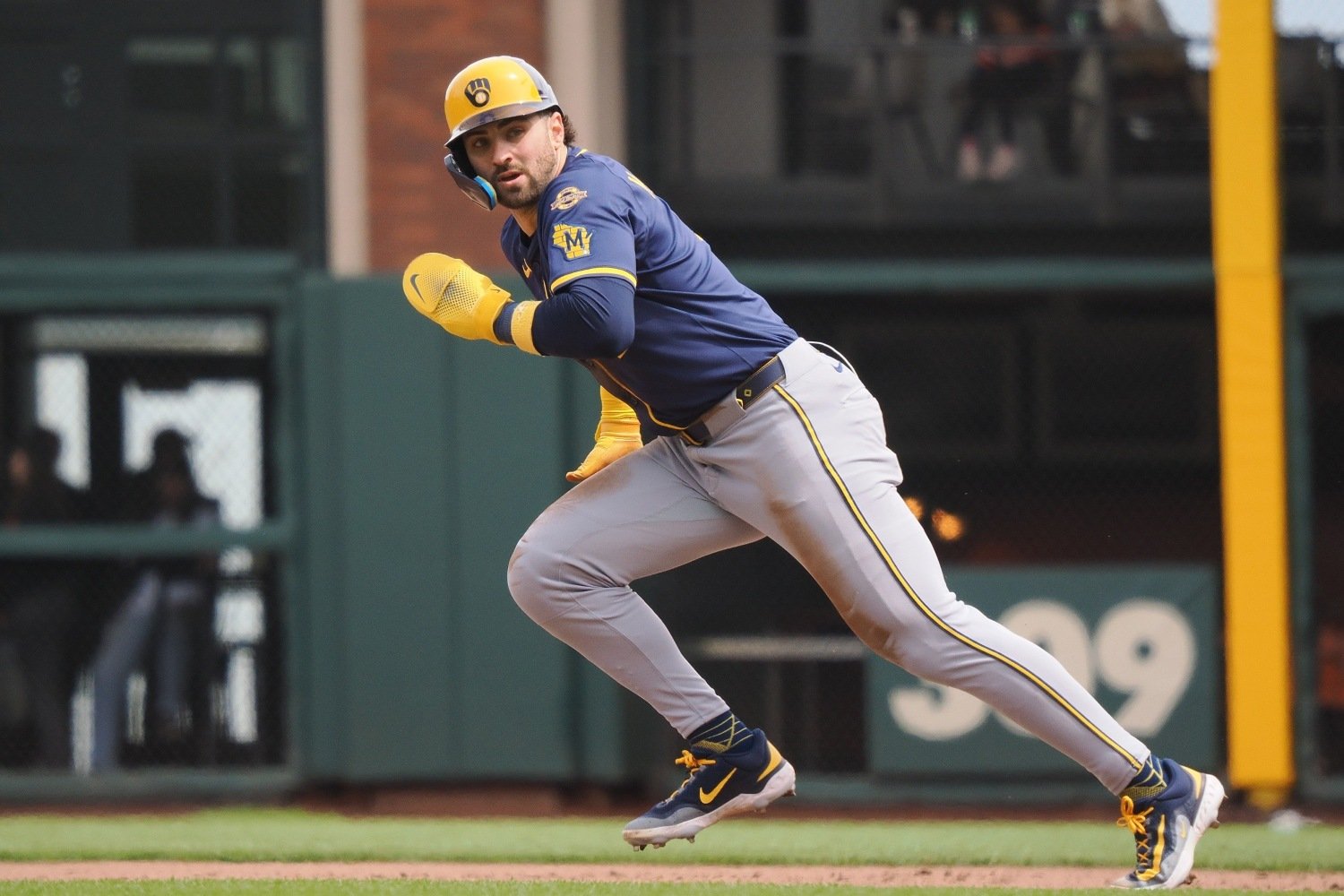 It was, for a moment, highly encouraging. Garrett Mitchell stroked a clean RBI single to right field Friday night, his third hit of the night. Mitchell was well ahead of Blake Perkins in terms of the timeline on which each could finish their rehab stint and join the major-league team. Then, in a moment of confusion, things went wrong. Having taken a hard turn around first base, Mitchell turned and dove clumsily back into the bag to avoid having the defense throw behind him. In the process, he appeared to jam and roll over his left shoulder, a joint on which he already had to have surgery, back in 2023. That time, it was because of a frantic slide on a chaotic extra-inning play in Seattle, trying to reach third base and to hold the bag with an oven mitt-style glove on his left hand. On that play, he suffered a shoulder subluxation, which sidelined him from mid-April until the tail end of that campaign. We don't yet have any information indicating that this injury is equally serious, but Pat Murphy struck a resigned and worried tone in relaying the news of the injury (and the rescinsion of Mitchell's rehab assignment) Saturday morning in Minneapolis. Murphy confirmed that the injury was to the left shoulder, and said that Mitchell will get imaging in Milwaukee to follow up, because the MRI he underwent in Nashville was inconclusive. The reason for that inability to render a diagnosis, though, is foreboding: there was too much swelling in the area to read the scan cleanly. Mitchell now figures to be out until at least the other side of the All-Star break, although the Brewers declined to give any timeline for the injury Saturday. It's a painful blow, both for the disruption it adds to the developmental process of the young Mitchell and for a team in need of the dynamic skill set he brings to the diamond. Already 26 (and set to turn 27 in early September), Mitchell has suffered so many injuries that his high-variance profile has yet to be sufficiently tested in the major leagues. He'll be arbitration-eligible for the first time this winter and can become a free agent after the 2028 season. He was making his way back from an oblique strain when this interrupted things. By no means is time truly running out on him—not yet—but the health issues have held him to just 141 games and 443 plate appearances to date, spangled across four seasons. This latest setback, which feels so regrettably avoidable (not in the sense that Mitchell made a poor baserunning choice, but in that it was an ordinary baseball play that rarely results in injury), poses the latest threat to Mitchell's medium-term viability as a part of the Brewers' positional core. The results of his further testing will be important, but the news is already looking rough.
 -
Jacob Misiorowski Starts His Career with a Hidden No-Hitter!
Matthew Trueblood posted an article in Brewers
 It won’t go down in the history books quite this way, but Jacob Misiorowski has begun his career by firing a no-hitter. Over five innings last week against the Cardinals and his first four Friday night against the Twins, Misiorowski allowed no runs or hits, walked four, and struck out eight. Perhaps that undersells him, though. Visually, Misiorowski’s dominance has been much more complete than the strikeout and walk columns convey. In his debut on June 12, Misiorowski threw 81 pitches, six of which hit or topped 101 miles per hour. In his first four frames Friday night, he eclipsed 101 eight more times. He only gave up three hard-hit balls in the nine innings of combined work. For good measure, at this writing, he's tacked on a 10th no-hit inning with the fifth frame in Minnesota, and tonight, he's been perfect. Everyone knew his stuff could be overpowering, if he could just find the zone often enough for it to matter. What's been a bit surprising, even if you were a Misiorowski booster coming into this two-part tour de force, is just how outmatched the opponents have looked. "He’s not a tough gameplan. You know what I mean?" Pat Murphy said before Friday's game, when asked what he expected the Twins to try to do to prepare for the rookie. "You gotta make him be in the zone, and you’ve gotta get ready to hit the heater." It hasn't turned out to be anywhere near that simple. With the fastball routinely showing velocity numbers that would impress even most elite one-inning relievers and maintaining a shape usually reserved for pitchers who throw about 96 instead, being ready for the fastball isn't nearly enough. Nor have the Twins looked able to make heads or tails of Misiorowski's mid-90s slider—although, to be fair, that phrase ("mid-90s slider") basically had to be invented just now. Thus far, Misiorowski isn't missing bats quite the way you might expect. Twins starter Joe Ryan has induced more whiffs than he has Friday. It doesn't much matter. He's beating hitters so consistently that even when they make contact, it's unthreatening. Still, Misiorowski is surely happy to have Isaac Collins behind him, too. With a sliding catch on a fifth-inning liner, Collins kept Misiorowski's string going and showed off his own dazzling tools. It's been a remarkable night already for the Brewers. UPDATE: Misiorowski made it through six innings without a blemish, but after a long rally in the top of the seventh that saw his team break things wide-open, he walked Byron Buxton and gave up a home run to Matt Wallner, to end his night. He finishes his second big-league start with 11 innings, two hits and two runs to his name, which (like his strikeout and walk numbers) only tells half the story. This was a historic performance, and if it's any omen for the future, the rest of the National League is in a great deal of trouble. Below, join our game thread to talk more about this incredible performance.
 -
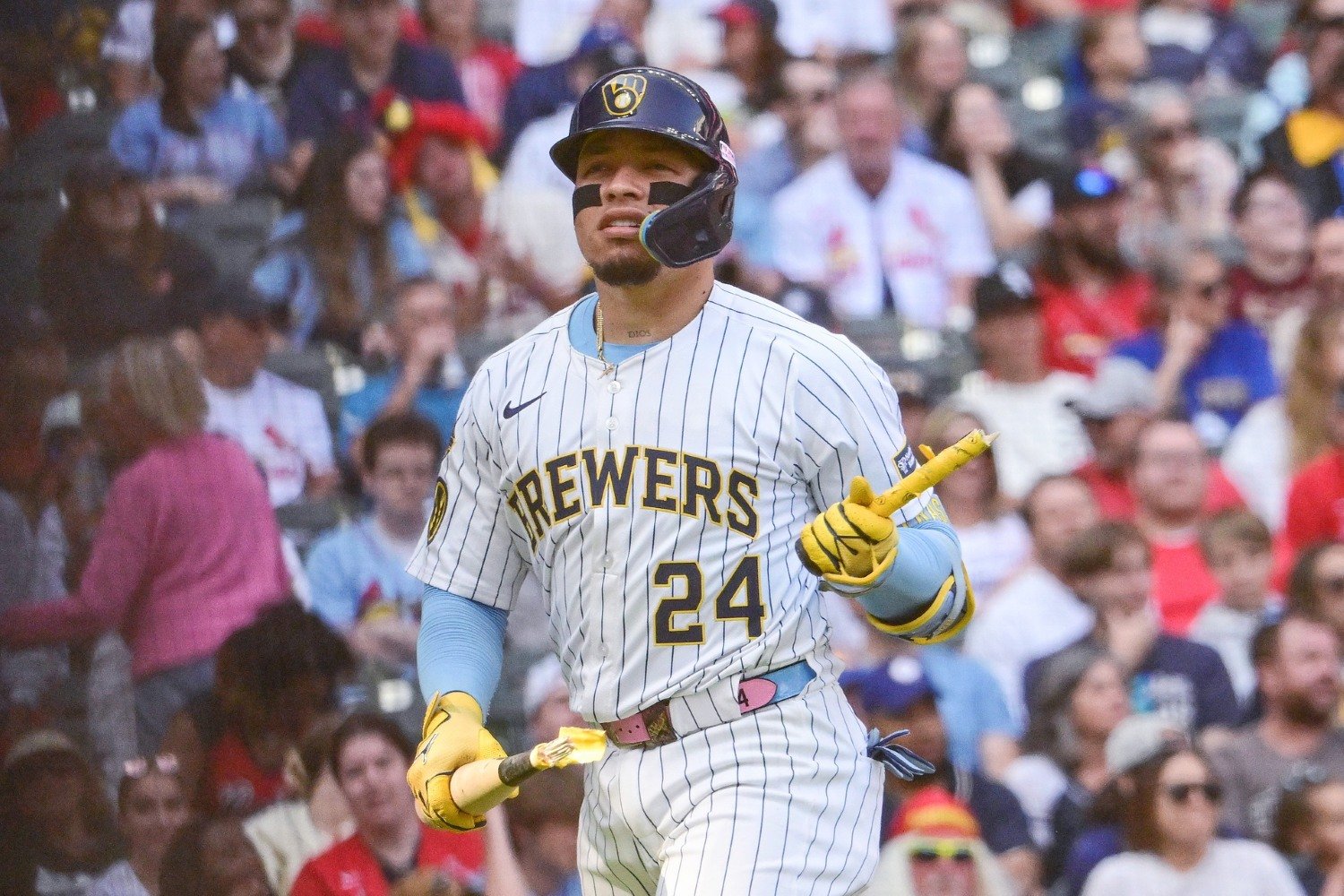 Only one team in the major leagues has avoided double plays in double-play situations better than the Brewers this season. Unfortunately, that team is the one at which they're looking up in the NL Central standings, the Chicago Cubs—and the Cubs are avoiding twin killings in a more profitable way than are the Brewers. Chicago hits the ball in the air more often than any other team in baseball, something they've assiduously worked toward over the last few seasons. They also make contact at a very high rate. By contrast, Milwaukee has the third-highest ground ball rate in the majors. They avoid making two outs at a time mostly by striking out more often than the Cubs do (20.4% of the time with runners on, against the Cubs' 19.6%), and by laying down more bunts (24 sacrifice attempts, the most in baseball and 14 more than the Cubs). Meanwhile, with their aerial game honed and their lineup rich with power, the Cubs have 15 more home runs with men on base (44) than does the Crew (29). Last year, the Brewers were also a ground-based offense, but thanks to Willy Adames and better power years from William Contreras and Rhys Hoskins, they had 97 homers with men on, against 80 by the Cubs. Right now, the Cubs are a neat encapsulation of the league-wide trends in both run production and offensive philosophy, toward more power and a focus on elevating the ball. The Brewers are the antithesis thereof: they thrive by putting the ball on the ground and using their speed and ball placement to put pressure on defenses. No team in baseball has as many infield hits (95) as or more bunt hits (11) than the Brewers. In situations that allow for productive outs the Brewers make them at the sixth-highest rate in the league. Only the Orioles (21) have reached on errors more times than the Brewers (20). Only the Rays have stolen more bases (97) than the Brewers (90). Only the Tigers (55%) have taken the extra base on hits—going first-to-third or second-to-home on singles, or first-to-home on doubles—more often than the Brewers (47%). If you did want to design an offense that could consistently score plenty of runs, despite a dearth of lift and slug, this is what that team would look like. When fully healthy (which, alas, they aren't), Christian Yelich and William Contreras are the Brewers' two best hitters. The team has four guys (Sal Frelick, Caleb Durbin, Jackson Chourio and Joey Ortiz) who put the ball in play more often than an average batter, taking walks, strikeouts and home runs into account. Of the four, Chourio and Ortiz have roughly average distributions of batted-ball trajectories, while Frelick is a ground-ball guy and Durbin is a fly-ball guy. They do have a first base mix (Hoskins and Jake Bauers) who consistently elevate when they put it in play, so there's a modicum of balance. Isaac Collins hits the ball in the air. This team can do a bit of everything, Without a doubt, though, their lineup depends more on finding success by getting the ball into the field and bouncing than any other team in the league. Can a team built this way score enough to win in the modern game, either over the long season or in the playoffs? It's too early to tell. The Brewers are scoring exactly an average number of runs per game (4.31). They actually rank 13th in MLB in runs per contest. That said, the Cubs are a full run ahead of them, and it's hard not to ascribe the difference to the 33 more overall homers Chicago has hit. There's no slug on the ground, and while the Brewers have found all the ways left to score in this league without good slug, that ceiling is as low as it's ever been. Even last year, the team embraced this mentality. They enjoy finding what Pat Murphy once called "a harder way to score," knowing they don't really have much of a choice. If they want to surge forward and challenge Chicago for the division crown, though, they need Collins to sustain his strong production; Contreras to get healthy and start showing the ability to blast the ball again; and a full, unfettered repeat of last year's boffo second half from Chourio. Yes, that means more power. The Brewers could eke into the postseason without it, but they can't make meaningful noise this year absent more punch than they've shown so far.
 -
Image courtesy of © Benny Sieu-Imagn Images Only one team in the major leagues has avoided double plays in double-play situations better than the Brewers this season. Unfortunately, that team is the one at which they're looking up in the NL Central standings, the Chicago Cubs—and the Cubs are avoiding twin killings in a more profitable way than are the Brewers. Chicago hits the ball in the air more often than any other team in baseball, something they've assiduously worked toward over the last few seasons. They also make contact at a very high rate. By contrast, Milwaukee has the third-highest ground ball rate in the majors. They avoid making two outs at a time mostly by striking out more often than the Cubs do (20.4% of the time with runners on, against the Cubs' 19.6%), and by laying down more bunts (24 sacrifice attempts, the most in baseball and 14 more than the Cubs). Meanwhile, with their aerial game honed and their lineup rich with power, the Cubs have 15 more home runs with men on base (44) than does the Crew (29). Last year, the Brewers were also a ground-based offense, but thanks to Willy Adames and better power years from William Contreras and Rhys Hoskins, they had 97 homers with men on, against 80 by the Cubs. Right now, the Cubs are a neat encapsulation of the league-wide trends in both run production and offensive philosophy, toward more power and a focus on elevating the ball. The Brewers are the antithesis thereof: they thrive by putting the ball on the ground and using their speed and ball placement to put pressure on defenses. No team in baseball has as many infield hits (95) as or more bunt hits (11) than the Brewers. In situations that allow for productive outs the Brewers make them at the sixth-highest rate in the league. Only the Orioles (21) have reached on errors more times than the Brewers (20). Only the Rays have stolen more bases (97) than the Brewers (90). Only the Tigers (55%) have taken the extra base on hits—going first-to-third or second-to-home on singles, or first-to-home on doubles—more often than the Brewers (47%). If you did want to design an offense that could consistently score plenty of runs, despite a dearth of lift and slug, this is what that team would look like. When fully healthy (which, alas, they aren't), Christian Yelich and William Contreras are the Brewers' two best hitters. The team has four guys (Sal Frelick, Caleb Durbin, Jackson Chourio and Joey Ortiz) who put the ball in play more often than an average batter, taking walks, strikeouts and home runs into account. Of the four, Chourio and Ortiz have roughly average distributions of batted-ball trajectories, while Frelick is a ground-ball guy and Durbin is a fly-ball guy. They do have a first base mix (Hoskins and Jake Bauers) who consistently elevate when they put it in play, so there's a modicum of balance. Isaac Collins hits the ball in the air. This team can do a bit of everything, Without a doubt, though, their lineup depends more on finding success by getting the ball into the field and bouncing than any other team in the league. Can a team built this way score enough to win in the modern game, either over the long season or in the playoffs? It's too early to tell. The Brewers are scoring exactly an average number of runs per game (4.31). They actually rank 13th in MLB in runs per contest. That said, the Cubs are a full run ahead of them, and it's hard not to ascribe the difference to the 33 more overall homers Chicago has hit. There's no slug on the ground, and while the Brewers have found all the ways left to score in this league without good slug, that ceiling is as low as it's ever been. Even last year, the team embraced this mentality. They enjoy finding what Pat Murphy once called "a harder way to score," knowing they don't really have much of a choice. If they want to surge forward and challenge Chicago for the division crown, though, they need Collins to sustain his strong production; Contreras to get healthy and start showing the ability to blast the ball again; and a full, unfettered repeat of last year's boffo second half from Chourio. Yes, that means more power. The Brewers could eke into the postseason without it, but they can't make meaningful noise this year absent more punch than they've shown so far. View full article
-
Gah. Not the first time this has gotten me! Maddeningly, Baseball Reference lists MiLB Rule 5 pickups as waiver claims. I get why. Functionally, they're the same thing. Still, it's frustrating.
-
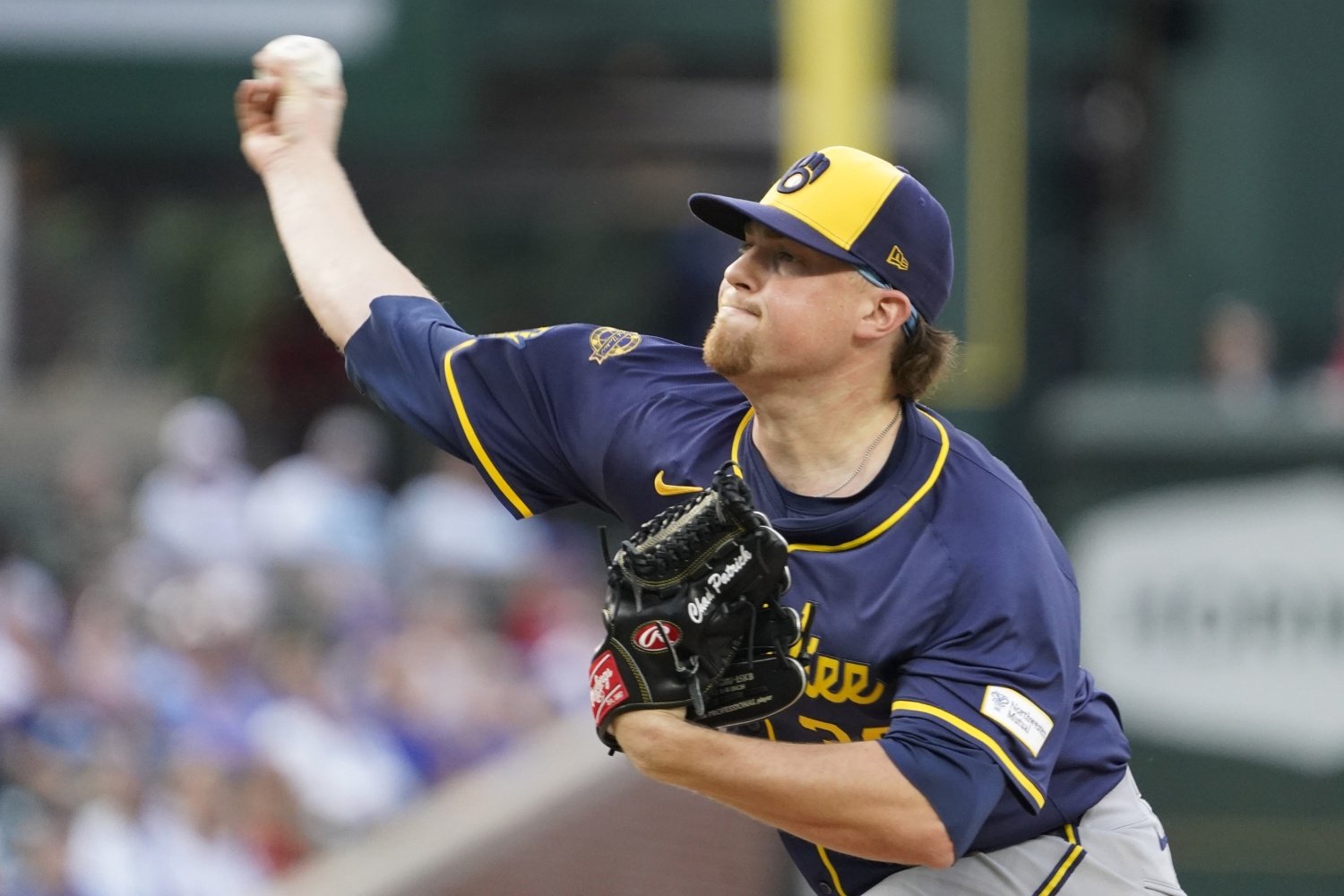 As recently as spring training, Chad Patrick was a good cutter, in search of the rest of a starting pitcher's profile. That pitch is his signature weapon, but to emerge as the solid, long-term starter he wants to be for the Brewers, Patrick needed much more. Bit by bit, as this season has unfolded, he's demonstrated that his other offerings play against the best hitters in the world. Tuesday night marked the latest milestone in his progression, even as he took the loss. Patrick's four-seam fastball (95.1 miles per hour) and sinker (94.8) were each up more than 1 mph, relative to their season averages. He's been trending in this direction, anyway, so while the adrenaline of the Brewers playing in front of a big crowd against their archrivals might have given him a boost, this is (increasingly) who Patrick really is. That extra speed gives him a bit of extra margin for error, in terms of movement or location. Patrick's fastballs are below-average pitches, according to stuff models, but more heat lets them play slightly better. The changeup is still his most important complement to the cutter, but the four- and two-seamers play important roles, too. Throwing them harder can only be good for him. Arguably, though, an upward velocity trend isn't the most important thing we saw Patrick do Tuesday. The biggest missing ingredient from Patrick's arsenal, for much of the time he's spent in the majors so far, has been something that moves more to his glove side than his cutter does. The four-seamer, the sinker and the changeup all move more to the arm side, so hitters had an easy way to tell the cutter from the rest of his arsenal. Lately, though, he's getting more comfortable with his slider and (very occasionally) sweeper, which could be a separator even as the fifth (and sixth) pitch(es) in his repertoire. Patrick threw nine sliders Tuesday night, He earned a strikeout and two outs on balls in play with it, without surrendering a hit. He showed the ability to throw it for strikes, getting two called ones in addition to a whiff, a foul ball and those two weakly hit outs. This isn't going to be Patrick's new out pitch, but it can be better than many pitchers' fourth offering, and it's his fifth. Playing off the cutter, it has a special utility, and can even magnify the value of his arm-side offerings. The Cubs got to Patrick, and showed him that there's still work to do. With heaters touching 96 mph and a slider to round out his pitch mix, though, he's finding the road map to a more sustainable form of success as a starter.
 -
Image courtesy of © David Banks-Imagn Images As recently as spring training, Chad Patrick was a good cutter, in search of the rest of a starting pitcher's profile. That pitch is his signature weapon, but to emerge as the solid, long-term starter he wants to be for the Brewers, Patrick needed much more. Bit by bit, as this season has unfolded, he's demonstrated that his other offerings play against the best hitters in the world. Tuesday night marked the latest milestone in his progression, even as he took the loss. Patrick's four-seam fastball (95.1 miles per hour) and sinker (94.8) were each up more than 1 mph, relative to their season averages. He's been trending in this direction, anyway, so while the adrenaline of the Brewers playing in front of a big crowd against their archrivals might have given him a boost, this is (increasingly) who Patrick really is. That extra speed gives him a bit of extra margin for error, in terms of movement or location. Patrick's fastballs are below-average pitches, according to stuff models, but more heat lets them play slightly better. The changeup is still his most important complement to the cutter, but the four- and two-seamers play important roles, too. Throwing them harder can only be good for him. Arguably, though, an upward velocity trend isn't the most important thing we saw Patrick do Tuesday. The biggest missing ingredient from Patrick's arsenal, for much of the time he's spent in the majors so far, has been something that moves more to his glove side than his cutter does. The four-seamer, the sinker and the changeup all move more to the arm side, so hitters had an easy way to tell the cutter from the rest of his arsenal. Lately, though, he's getting more comfortable with his slider and (very occasionally) sweeper, which could be a separator even as the fifth (and sixth) pitch(es) in his repertoire. Patrick threw nine sliders Tuesday night, He earned a strikeout and two outs on balls in play with it, without surrendering a hit. He showed the ability to throw it for strikes, getting two called ones in addition to a whiff, a foul ball and those two weakly hit outs. This isn't going to be Patrick's new out pitch, but it can be better than many pitchers' fourth offering, and it's his fifth. Playing off the cutter, it has a special utility, and can even magnify the value of his arm-side offerings. The Cubs got to Patrick, and showed him that there's still work to do. With heaters touching 96 mph and a slider to round out his pitch mix, though, he's finding the road map to a more sustainable form of success as a starter. View full article
-
Image courtesy of © Katie Stratman-Imagn Images Isaac Collins was just a waiver pickup in December 2022. He didn't play any role for the parent club in 2023, and he couldn't have been any less important to the 2024 team—even if he'd once again spent the whole year in the minors. That was because those teams were lucky and privileged, though. They had not only, in turns, Joey Wiemer, Garrett Mitchell, Sal Frelick, Christian Yelich and Jackson Chourio, but organizational soldier Tyrone Taylor—and then, first alongside Taylor and then filling his shoes after he was dealt to New York, minor-league signing Blake Perkins. Frelick and Chourio are very much part of the mix, but Wiemer is long gone. So is Taylor. Yelich has often been confined to DH duty, and Mitchell and Perkins are on the injured list. No matter. This is the moment the team knew would come, someday, when they acquired Collins. He's stepped forward nicely, the latest in a long chain of minor moves paying major dividends when the cash-strapped Crew needs it. Collins is batting .234/.345/.339 in 146 plate appearances. He's started six of the Brewers' last 10 games, and is a semi-regular in left field. Despite underwhelming power and a 24.7% strikeout rate, Collins has a 99 wRC+, fueled by great plate discipline. He's also added 2 Defensive Runs Saved (DRS) in left field. The speedy 27-year-old switch-hitter is reasonably platoon-proof (although his production takes very different shapes based on which side he's batting from), and he adds value on the basepaths. He is, in short, a good player, created virtually out of nowhere. By no means is Collins a star, and by no means can he ever become one. He raked in the minors, but his big-league ceiling looks about like what he's doing right now. He's added some bat speed from the right side this year (74.2 miles per hour, up from 72.9 in a tiny sample last season), but his power upside is not great. He swings and misses too much within the zone to run a better-than-average strikeout rate, so his offensive contributions come down to how well he can avoid chasing outside the zone. He's done that marvelously in this first real taste of the majors, though, which has allowed him to run a .340 OBP from the left side. When batting righty, he has just enough pop to make his profile work without elite swing decisions, and indeed, he also makes more contact from that side. A converted second baseman, Collins is a good athlete, and it's shined through in his move to left field. Collins isn't going to be the best defensive outfielder in the game, but he's clearly above average, and will remain so for the next few years. His overall skill set is good enough to make him slightly better than an average player, and while part of that is because he's been deployed tactically and selectively, it's also because he's a versatile, high-floor athlete. It's unlikely that Collins will ever be more than a fringe regular, and if the Brewers have their way, he'll only be a backup even by the end of this year. Yet again, though, they've proved their ability to target, acquire and develop young players with strong big-league credentials, even absent star-caliber upside. In Perkins, Taylor, Luis Urías, Mike Brosseau, Andruw Monasterio, Jace Peterson, and others, the Brewers have repeatedly found winning players at bargain prices, or in unlikely places. Whether that will be enough to secure their eighth straight winning season (in full campaigns) or their third consecutive playoff berth is yet to be seen, but what they're getting out of Collins can already be called a victory. View full article
- 7 replies
-
- 1
-
-
- isaac collins
- blake perkins
- (and 4 more)
-
Isaac Collins Has Been Wonderfully Fine, for a Brewers Team in Need
Matthew Trueblood posted an article in Brewers
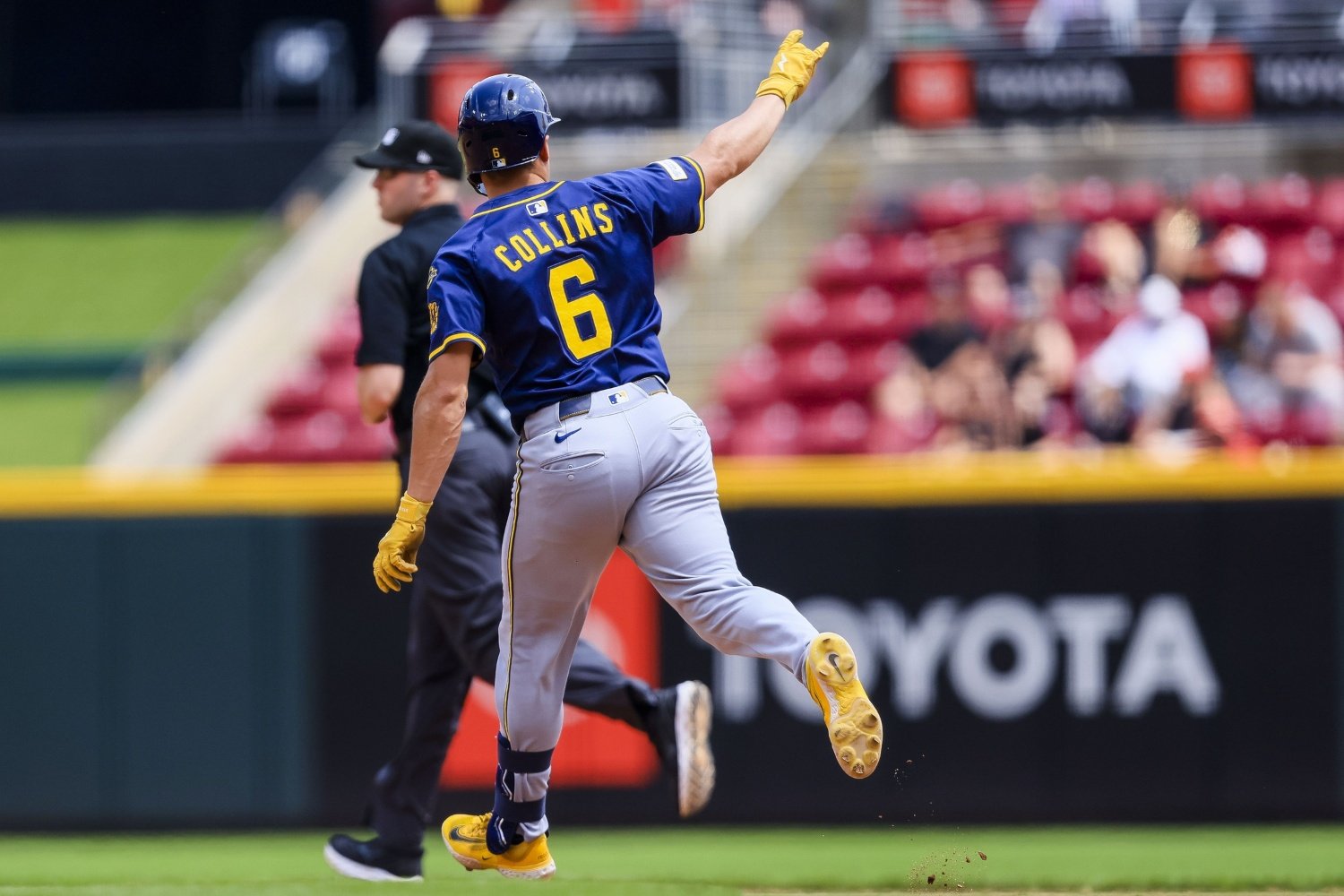 Isaac Collins was just a waiver pickup in December 2022. He didn't play any role for the parent club in 2023, and he couldn't have been any less important to the 2024 team—even if he'd once again spent the whole year in the minors. That was because those teams were lucky and privileged, though. They had not only, in turns, Joey Wiemer, Garrett Mitchell, Sal Frelick, Christian Yelich and Jackson Chourio, but organizational soldier Tyrone Taylor—and then, first alongside Taylor and then filling his shoes after he was dealt to New York, minor-league signing Blake Perkins. Frelick and Chourio are very much part of the mix, but Wiemer is long gone. So is Taylor. Yelich has often been confined to DH duty, and Mitchell and Perkins are on the injured list. No matter. This is the moment the team knew would come, someday, when they acquired Collins. He's stepped forward nicely, the latest in a long chain of minor moves paying major dividends when the cash-strapped Crew needs it. Collins is batting .234/.345/.339 in 146 plate appearances. He's started six of the Brewers' last 10 games, and is a semi-regular in left field. Despite underwhelming power and a 24.7% strikeout rate, Collins has a 99 wRC+, fueled by great plate discipline. He's also added 2 Defensive Runs Saved (DRS) in left field. The speedy 27-year-old switch-hitter is reasonably platoon-proof (although his production takes very different shapes based on which side he's batting from), and he adds value on the basepaths. He is, in short, a good player, created virtually out of nowhere. By no means is Collins a star, and by no means can he ever become one. He raked in the minors, but his big-league ceiling looks about like what he's doing right now. He's added some bat speed from the right side this year (74.2 miles per hour, up from 72.9 in a tiny sample last season), but his power upside is not great. He swings and misses too much within the zone to run a better-than-average strikeout rate, so his offensive contributions come down to how well he can avoid chasing outside the zone. He's done that marvelously in this first real taste of the majors, though, which has allowed him to run a .340 OBP from the left side. When batting righty, he has just enough pop to make his profile work without elite swing decisions, and indeed, he also makes more contact from that side. A converted second baseman, Collins is a good athlete, and it's shined through in his move to left field. Collins isn't going to be the best defensive outfielder in the game, but he's clearly above average, and will remain so for the next few years. His overall skill set is good enough to make him slightly better than an average player, and while part of that is because he's been deployed tactically and selectively, it's also because he's a versatile, high-floor athlete. It's unlikely that Collins will ever be more than a fringe regular, and if the Brewers have their way, he'll only be a backup even by the end of this year. Yet again, though, they've proved their ability to target, acquire and develop young players with strong big-league credentials, even absent star-caliber upside. In Perkins, Taylor, Luis Urías, Mike Brosseau, Andruw Monasterio, Jace Peterson, and others, the Brewers have repeatedly found winning players at bargain prices, or in unlikely places. Whether that will be enough to secure their eighth straight winning season (in full campaigns) or their third consecutive playoff berth is yet to be seen, but what they're getting out of Collins can already be called a victory.
- 7 comments
-
- 2
-
-
- isaac collins
- blake perkins
- (and 4 more)
-
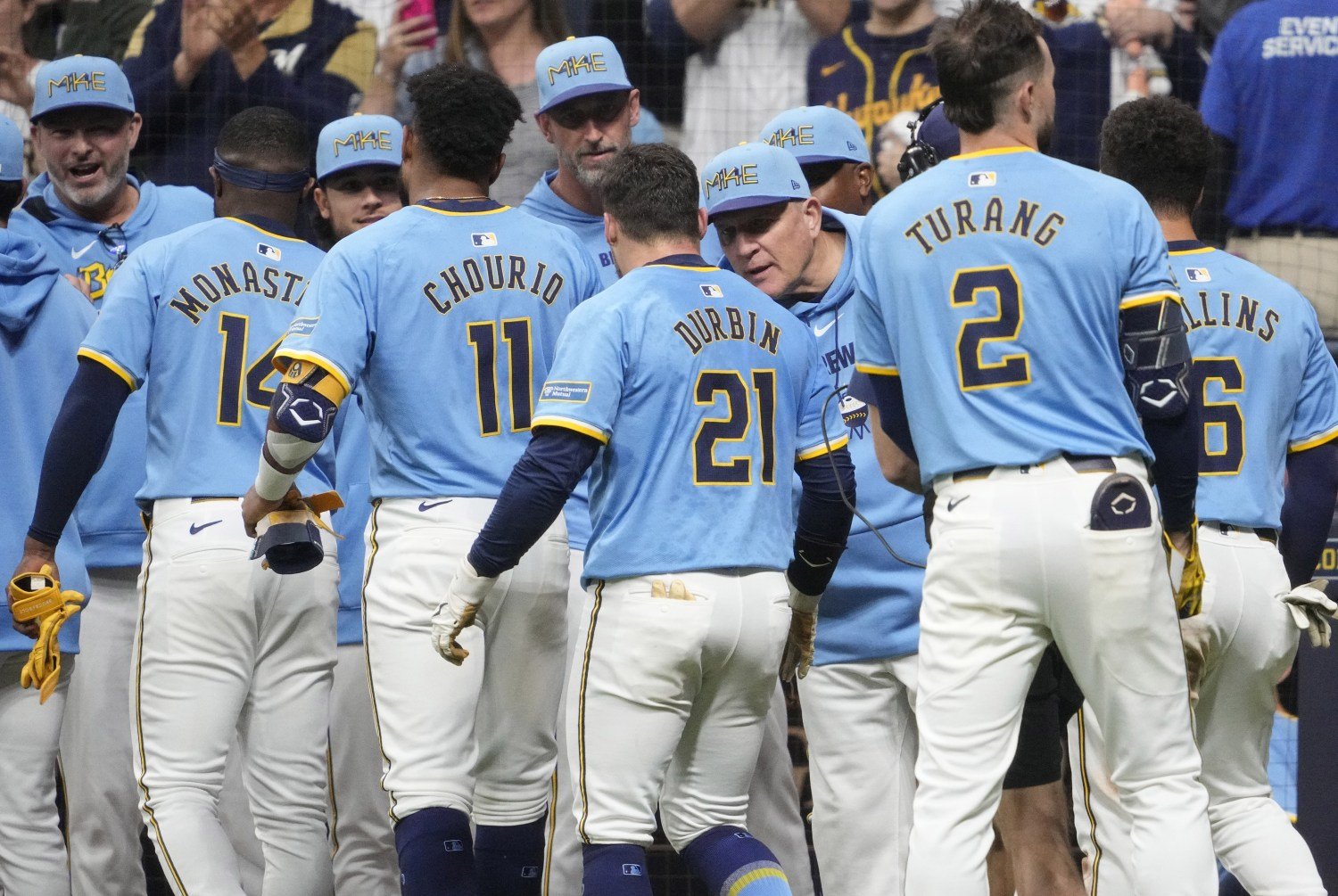 Big leads in divisions are, in a way, more common than they used to be. After all, until 1994, there were only two divisions in each league, rather than three. That meant more teams per division, and less of a chance for any one of them to run away with it. Importantly, back then, winning the division was also the only way to reach the postseason. For that reason, when big leads were seized early in seasons, teams took notice, but no one gave up too quickly. Letting go of the dream of a division crown meant canceling your summer plans, or at least adjusting them to include tedious things like beach trips and bike rides, instead of ballpark franks and late nights next to the TV or radio. Times have changed. As the Brewers head into Wrigley Field to take on the Cubs for just the second time this season (and the first at the Friendly Confines), they trail Chicago by 5.5 games in the NL Central standings, and you hear hardly any talk about them catching their upstart neighbors. Even most fans who take an optimistic overall view of the team seem to be focused solely on whether the team can secure a playoff spot, and are happy to accept that berth being a Wild Card entry if needed. The league has programmed fans to think this way, and so have modern methods of understanding and analyzing the game. Half of each season's postseason bids now go to non-division winners, so the special frisson of winning the division is unavoidably diminished. Meanwhile, projections now give us all a certain sense of surety—sometimes even a false one. Baseball Prospectus's PECOTA standings give the Cubs a 95.5% chance to win the division, based not only on their lead, but on the model's understanding of the strength of each team's roster. If that spot were the only one promising admission to the October tournament, perhaps a Brewers fan would rebel against the notion, but that's not the case. Why should anyone stake themselves to a 1.5% chance of something (BP even thinks the Cardinals have a better chance to take down the division than do the Crew) when it's not necessary? This is how we've all become conditioned to consume baseball. It's more fun, though, to hold onto a fierce hope for this team to charge back to the front of the pack and make it three division titles in a row—and four in five years. It's also perfectly plausible that that will happen. The projections are probably a bit too kind to the Cubs, and (therefore) not kind enough to the Brewers. Besides, this sort of deficit disappears plenty often. Over the last four seasons (2021-24), 11 teams ended the day on July 1 with a division lead of at least 5 games. Two (the 2023 Rays and Rangers) were unseated by the end of 162 games. From 2015-19, there were 15 teams who enjoyed those comfortable cushions, but two of them also ended up missing out on the party. Go all the way back to the last nine seasons of two-division play in each league (1985-93), and we find only 11 total teams who had leads that large that early. (After all, as we said, that was harder to do then.) Again, though, two of them (the 1989 Orioles and the 1993 Giants) were overtaken in the second half. Right now, the Brewers are just coming into their own. It's been a profoundly uneven season, marred by injuries and some key hitters producing less than was hoped. Now, though, they have Jacob Misiorowski installed in the starting rotation, and set to make his second career appearance Wednesday night against the rival Cubs. They also have a chance to get healthier as the season goes on, with Blake Perkins working his way back from a broken bone in his leg and Brandon Woodruff enduring the slings and arrows of the baseball gods to soldier back to the active roster. Meanwhile, the Cubs are starting to sputter and stumble, if only slightly. Their offense looked like a world-beater for the first third of the season, but is scuffling lately. Kyle Tucker looks merely good, rather than like a $500-million payday waiting to happen. Pete Crow-Armstrong keeps generating improbable power, but is quietly running a .270 on-base percentage over the last month. Their young, slugging catcher Miguel Amaya is on the injured list, and veteran addition Carson Kelly has regressed from his early-season binge. Their starting rotation is as depleted and thin as the Brewers' is strong and burgeoning. The Cubs are vulnerable. Much will come down, of course, to how these two teams do in the 10 games they have left against one another. If the Brewers win even six of the 10, they'll essentially pick up 2.5 games, because they'd secure the tiebreaker if the two sides end the season in a tie. That has to start with a sound showing this week at Wrigley Field, but they're catching the Cubs at the right time, so a series victory is perfectly possible. This isn't an unfamiliar position for Pat Murphy, even if it is so for almost all the players on his roster now. In 2018, the Crew had to catch the Cubs from behind. They did it then, and they can manage it again this summer and fall. A Wild Card spot would probably mean a visit to either San Diego or Chicago for a three-game series in October—no home games, no easy path. Winning the division still matters, both because of the leg up it provides in the playoffs and because it says something concrete and indelible. Over 162 games, a team that wins their division accomplished something meaningful, no matter what happens after that. The Brewers, and Brewers fans, should keep the faith that they can achieve that goal this season. It's not easy, but it's more attainable than it might seem after a glance at the standings.
 -
Image courtesy of © Michael McLoone-Imagn Images Big leads in divisions are, in a way, more common than they used to be. After all, until 1994, there were only two divisions in each league, rather than three. That meant more teams per division, and less of a chance for any one of them to run away with it. Importantly, back then, winning the division was also the only way to reach the postseason. For that reason, when big leads were seized early in seasons, teams took notice, but no one gave up too quickly. Letting go of the dream of a division crown meant canceling your summer plans, or at least adjusting them to include tedious things like beach trips and bike rides, instead of ballpark franks and late nights next to the TV or radio. Times have changed. As the Brewers head into Wrigley Field to take on the Cubs for just the second time this season (and the first at the Friendly Confines), they trail Chicago by 5.5 games in the NL Central standings, and you hear hardly any talk about them catching their upstart neighbors. Even most fans who take an optimistic overall view of the team seem to be focused solely on whether the team can secure a playoff spot, and are happy to accept that berth being a Wild Card entry if needed. The league has programmed fans to think this way, and so have modern methods of understanding and analyzing the game. Half of each season's postseason bids now go to non-division winners, so the special frisson of winning the division is unavoidably diminished. Meanwhile, projections now give us all a certain sense of surety—sometimes even a false one. Baseball Prospectus's PECOTA standings give the Cubs a 95.5% chance to win the division, based not only on their lead, but on the model's understanding of the strength of each team's roster. If that spot were the only one promising admission to the October tournament, perhaps a Brewers fan would rebel against the notion, but that's not the case. Why should anyone stake themselves to a 1.5% chance of something (BP even thinks the Cardinals have a better chance to take down the division than do the Crew) when it's not necessary? This is how we've all become conditioned to consume baseball. It's more fun, though, to hold onto a fierce hope for this team to charge back to the front of the pack and make it three division titles in a row—and four in five years. It's also perfectly plausible that that will happen. The projections are probably a bit too kind to the Cubs, and (therefore) not kind enough to the Brewers. Besides, this sort of deficit disappears plenty often. Over the last four seasons (2021-24), 11 teams ended the day on July 1 with a division lead of at least 5 games. Two (the 2023 Rays and Rangers) were unseated by the end of 162 games. From 2015-19, there were 15 teams who enjoyed those comfortable cushions, but two of them also ended up missing out on the party. Go all the way back to the last nine seasons of two-division play in each league (1985-93), and we find only 11 total teams who had leads that large that early. (After all, as we said, that was harder to do then.) Again, though, two of them (the 1989 Orioles and the 1993 Giants) were overtaken in the second half. Right now, the Brewers are just coming into their own. It's been a profoundly uneven season, marred by injuries and some key hitters producing less than was hoped. Now, though, they have Jacob Misiorowski installed in the starting rotation, and set to make his second career appearance Wednesday night against the rival Cubs. They also have a chance to get healthier as the season goes on, with Blake Perkins working his way back from a broken bone in his leg and Brandon Woodruff enduring the slings and arrows of the baseball gods to soldier back to the active roster. Meanwhile, the Cubs are starting to sputter and stumble, if only slightly. Their offense looked like a world-beater for the first third of the season, but is scuffling lately. Kyle Tucker looks merely good, rather than like a $500-million payday waiting to happen. Pete Crow-Armstrong keeps generating improbable power, but is quietly running a .270 on-base percentage over the last month. Their young, slugging catcher Miguel Amaya is on the injured list, and veteran addition Carson Kelly has regressed from his early-season binge. Their starting rotation is as depleted and thin as the Brewers' is strong and burgeoning. The Cubs are vulnerable. Much will come down, of course, to how these two teams do in the 10 games they have left against one another. If the Brewers win even six of the 10, they'll essentially pick up 2.5 games, because they'd secure the tiebreaker if the two sides end the season in a tie. That has to start with a sound showing this week at Wrigley Field, but they're catching the Cubs at the right time, so a series victory is perfectly possible. This isn't an unfamiliar position for Pat Murphy, even if it is so for almost all the players on his roster now. In 2018, the Crew had to catch the Cubs from behind. They did it then, and they can manage it again this summer and fall. A Wild Card spot would probably mean a visit to either San Diego or Chicago for a three-game series in October—no home games, no easy path. Winning the division still matters, both because of the leg up it provides in the playoffs and because it says something concrete and indelible. Over 162 games, a team that wins their division accomplished something meaningful, no matter what happens after that. The Brewers, and Brewers fans, should keep the faith that they can achieve that goal this season. It's not easy, but it's more attainable than it might seem after a glance at the standings. View full article
-
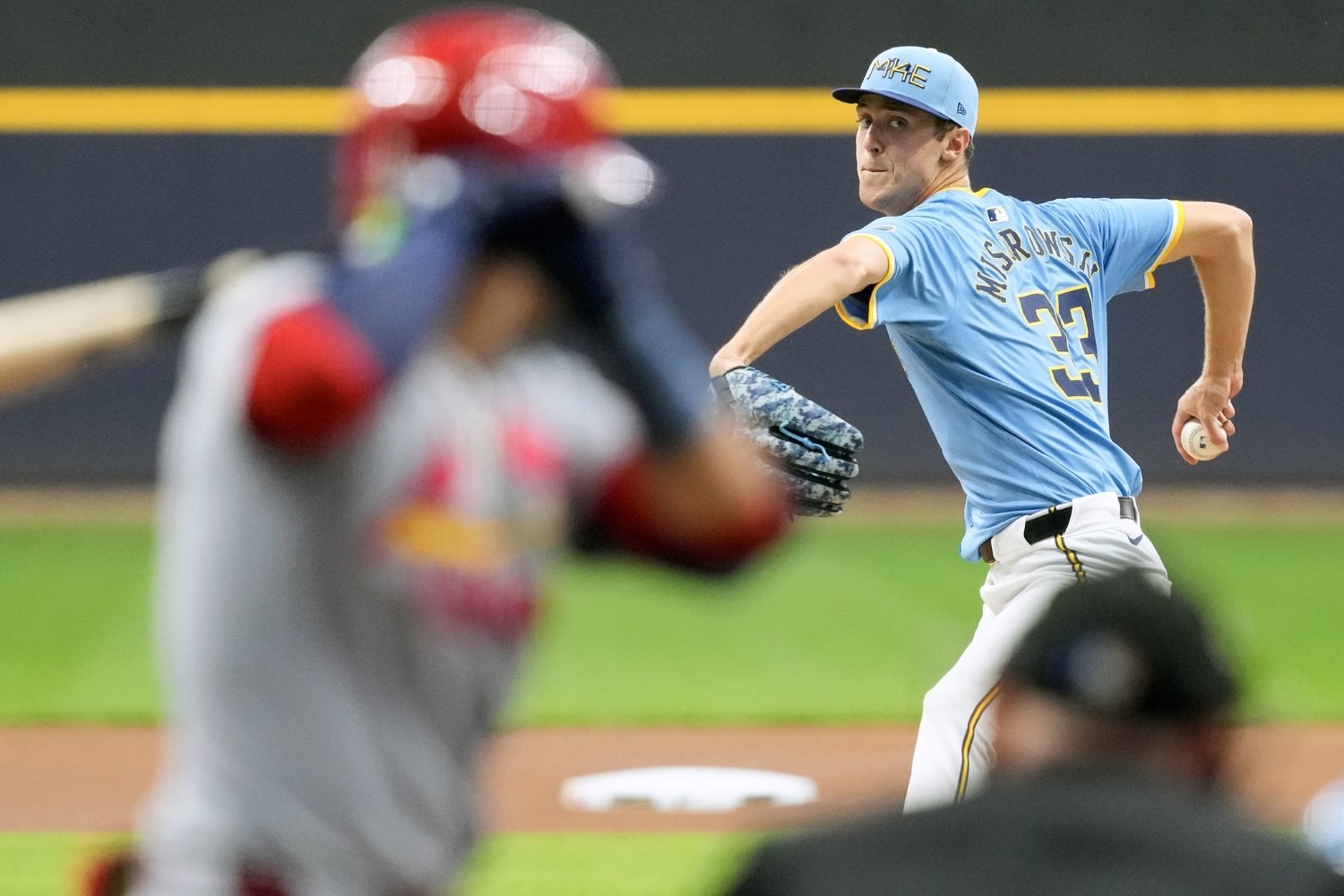 It was wonderful to see the Brewers offense break the back of veteran starter Sonny Gray in the fifth inning Thursday night. It's great to see Jackson Chourio rounding into the form the Brewers need from him if they're to threepeat as NL Central champions. Without question or reservation, though, the story of the night was Jacob Misiorowski. It's one thing to repeatedly top 100 miles per hour and touch 102 MPH, as a starting pitcher. It's another to do this, with one's heater and slider in combination. There's been some debate about whether Misiorowski's slider is properly understand as just that, or as a cutter. It's hard for a lot of people to wrap their heads around the idea of a slider that can sit 94 and touch 96.5, as Misiorowski's did in his first taste of the majors. It's also fair to note that, as these things go, it's not ideal for a slider to have almost no velocity separation from one's fastball. It is more of a cutter, in terms of velocity, because the hitter doesn't have to worry about being too early on the slider if they sit on the fastball. Then again, Misiorowski showed good feel for his curveball, which accomplishes that latter purpose. And here's the thing about the slider, or cutter: it sure slides a lot for a cutter. Gray provides a great study in contrast, because he has both a cutter and a sweeper. Note the relationship, here, between the movement plots of his fastball and those two pitches. Now, compare that to Misiorowski. Even with velocity bands that substantially overlap, Misiorowski achieved movement on his fastball and slider that made each pitch capable of missing bats. If Pitch Info does decide to label this pitch a slider, it will be almost 2.0 MPH harder than the second-hardest slider in the league (that of the Mets' Reed Garrett) and about 4 MPH faster than the hardest among starters, Drew Rasmussen. That pitch, by any name, is a massive weapon, especially paired with a fastball so lively and which leaves opponents so little time with which to work. As we knew there would be, there are still ample ways for Misiorowski to improve. However, his first start was a smashing success. He overpowered a good offense, and flashed multiple secondary offerings that could turn him into an ace almost immediately. The evolution of that hard, breaking pitch will bear watching each and every time he takes the mound, but whatever you call it, it's already a plus offering. So, of course, is that triple-digit fastball. Misiorowski has a full suite of ways to make hitters' days miserable, and he showed a bit of each of them Thursday. No pitcher in the majors is quite like he is. If the difference turns out to be essential to their survival, then Misiorowski should be able to adapt. If not, he might just be a unicorn.
 -
Image courtesy of © Jeff Hanisch-Imagn Images It was wonderful to see the Brewers offense break the back of veteran starter Sonny Gray in the fifth inning Thursday night. It's great to see Jackson Chourio rounding into the form the Brewers need from him if they're to threepeat as NL Central champions. Without question or reservation, though, the story of the night was Jacob Misiorowski. It's one thing to repeatedly top 100 miles per hour and touch 102 MPH, as a starting pitcher. It's another to do this, with one's heater and slider in combination. There's been some debate about whether Misiorowski's slider is properly understand as just that, or as a cutter. It's hard for a lot of people to wrap their heads around the idea of a slider that can sit 94 and touch 96.5, as Misiorowski's did in his first taste of the majors. It's also fair to note that, as these things go, it's not ideal for a slider to have almost no velocity separation from one's fastball. It is more of a cutter, in terms of velocity, because the hitter doesn't have to worry about being too early on the slider if they sit on the fastball. Then again, Misiorowski showed good feel for his curveball, which accomplishes that latter purpose. And here's the thing about the slider, or cutter: it sure slides a lot for a cutter. Gray provides a great study in contrast, because he has both a cutter and a sweeper. Note the relationship, here, between the movement plots of his fastball and those two pitches. Now, compare that to Misiorowski. Even with velocity bands that substantially overlap, Misiorowski achieved movement on his fastball and slider that made each pitch capable of missing bats. If Pitch Info does decide to label this pitch a slider, it will be almost 2.0 MPH harder than the second-hardest slider in the league (that of the Mets' Reed Garrett) and about 4 MPH faster than the hardest among starters, Drew Rasmussen. That pitch, by any name, is a massive weapon, especially paired with a fastball so lively and which leaves opponents so little time with which to work. As we knew there would be, there are still ample ways for Misiorowski to improve. However, his first start was a smashing success. He overpowered a good offense, and flashed multiple secondary offerings that could turn him into an ace almost immediately. The evolution of that hard, breaking pitch will bear watching each and every time he takes the mound, but whatever you call it, it's already a plus offering. So, of course, is that triple-digit fastball. Misiorowski has a full suite of ways to make hitters' days miserable, and he showed a bit of each of them Thursday. No pitcher in the majors is quite like he is. If the difference turns out to be essential to their survival, then Misiorowski should be able to adapt. If not, he might just be a unicorn. View full article
-
William Contreras is Not Healthy, and He's Not Right at the Plate
Matthew Trueblood posted an article in Brewers
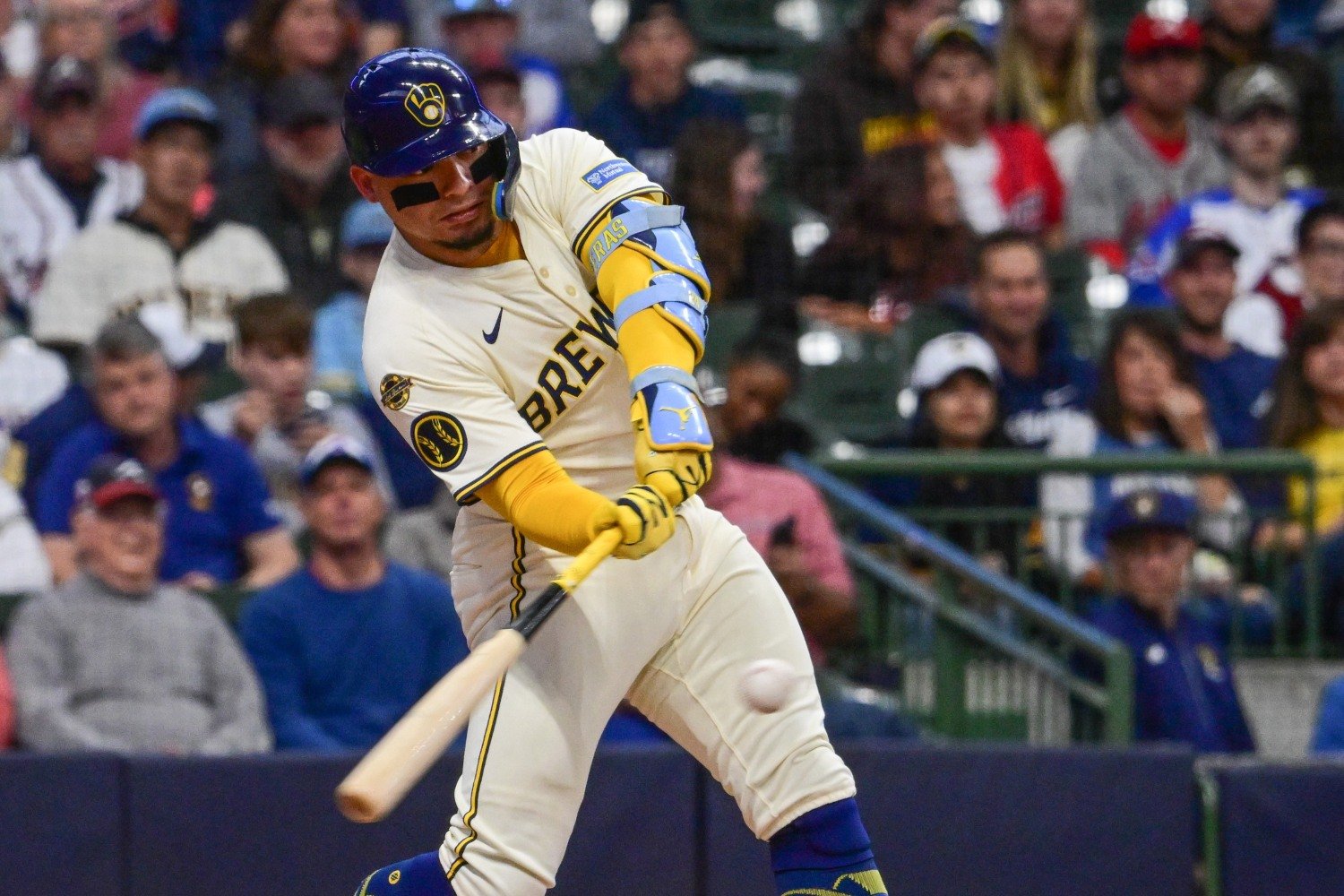 Give William Contreras credit for his toughness, and an extra helping for his ability to make up for a major injury. He's dealing with a fracture in his left hand, which is (naturally) exacerbated and prevented from fully healing by the mere act of catching on a regular basis. Still, he's doing everything he can to be there for his team, and he's been better than many of the (closer to) fully healthy players on the roster. Contreras has played in 64 of the Brewers' first 69 games, and he's hitting .242/.353/.342 in 272 plate appearances. A whopping 57 of those games played were at catcher. Although Eric Haase (.239/.286/.419 in 50 plate appearances) is actually hitting about as well as Contreras is, there's still a real service to the team in their star catcher being willing to gut it out on a near-daily basis. If nothing else, he's been a terrific defender behind the plate, shoring up the problems he had with accuracy and throwing better than ever on steal attempts; grading out well as a framer; and improving at blocking balls in the dirt. In this day and age, it's also quite helpful to have anyone who can sustain a .353 OBP in the lineup, even if they're light on power. On the other hand, Contreras has batted second, third or fourth in every game in which he's appeared this year. He's giving up 80 points of slugging average to the league's standard at any of those places in the batting order. The Brewers needed Contreras to make good on the power potential he showed late last season, to help make up for the loss of Willy Adames via free agency. Instead, he's become one of the league's lightest-hitting should-be power hitters. When he decided to play through the injury, one might reasonably have hoped that Contreras would heal even as he did so. Bones, especially in the hands, get good blood supply. Some day-to-day improvement should happen, as long as a player isn't actively renewing the damage to the injured area. We don't have access to medical data about Contreras; maybe that healing is (very slowly) happening. What we can see, however, suggests that things are only getting worse. Through the end of April, Contreras's average bat speed was 72.6 miles per hour. That, itself, was down about 2 mph from where he was in the second half of 2024, but it was a tolerable loss. Some guys need time (and warmer weather) to get loose and achieve their full range of motion (whence comes bat speed) anyway. You could easily envision Contreras making the best of the situation and rounding more or less into form from that starting point. In May, that number slipped to 72.2 miles per hour. That's a bad sign. The margin is small, but the trend is in the wrong direction. Contreras didn't slug any better (.362) last month than he had before that (.365). Interestingly, though, even as his bat speed faded, his contact point moved farther out in front of his body. In a sketch, it sure looks like he started making earlier decisions, trying to get out to the ball with a slower swing by starting earlier and simply opting not to swing when he couldn't identify a pitch immediately. His swing rate has fluctuated throughout this season, but it's holding to a lower ebb than where it spent most of its time last season. He's become more selective, and maybe that's just a change of approach—but it feels more like an accommodation of a bat slowed down by a slightly weakened bottom hand on the bat. This month, that's come into even sharper focus. Contreras has just one extra-base hit since the calendar flipped to June, and although he belted it off the wall in the deepest reaches of The Ueck, it still only goes as a double. ZU44WkFfWGw0TUFRPT1fVkZCUlZRSldBMVFBQ0FFSFZRQUhDRlFGQUZsUVV3TUFVQWNNQVZkWEFBRUdCMVlI.mp4 He's slugging .212 for the month, so far, and damningly, that comes along with a bat speed that has fallen all the way to 71.2 mph. Again, his intercept point on swings is well in front of him, right where it was last summer. From a slower swing, though, that equivalent contact point means he must make swing decisions earlier. You can guess what that leads to: fewer swings, in general, and (since pitchers know they needn't fear him the way they did 10 months ago) a lot more called strikes. Here's the percentage of takes on which Contreras has taken a called strike, by month, since the start of last year: Mar./Apr. 2024: 27.8 May 2024: 25.7 June 2024: 28.4 July 2024: 25.4 August 2024: 24.3 September 2024: 22.9 Mar./Apr, 2025: 24.2 May 2025: 27.6 June 2025: 37.2 When we set the new Statcast visuals of players' swings side by side, we can start to see exactly why Contreras's bat is slower. Here's a first checkpoint: the moment when his bat first comes around to be parallel with the sides of home plate or the lines of the batter's box. Look both at the difference in Contreras's shoulder position and at the crook of his left wrist, in each frame. On the left, last year, you can see that he's already opened up that shoulder quite a bit. That's important to all the bat speed Contreras generated so well last year: he gets that shoulder open and forces his hands to catch up to the rapid rotation of his body. He sometimes pulled off the ball, at his best, but the bat speed created by doing things that way was still immensely valuable. Simulate that motion, though. Grip a bat (or a golf club, or an umbrella, or a wooden spoon), get into an athletic posture, and try twisting enough to get your front shoulder well open, even while your hands are still even with your belly button or so. Keep in mind, you can't do so by just dropping your front arm into a relaxed position. It has to provide a lot of strength and an upward, shearing force, working in concert with the top hand to move your implement fast in rotation. Quickly, you'll realize the angle you're creating isn't comfortable, especially in your bottom hand. You're asking it to do a lot of work, because that shoulder is clearing out of the way. Your front arm is taking over from the torso to start whipping the bat forward, and that means the hand and wrist, specifically, absorbing a lot of force. In the image on the right, Contreras is much less open with his upper half. That, plus a slightly more rolled wrist on the left arm, means he's carrying the bat into the hitting zone with more of his big muscles, leaving less to his left hand. He's subtly babying that tender hand, and already, he's a bit behind the curve in terms of generating exit velocity. Here's the moment when he first gets on plane with the incoming pitch, for both years. Contreras is considerably slower at this point of the swing this year, too, but the most interesting thing (almost imperceptible, but there) is how he's accelerated the transfer from the bottom to the top hand in terms of what's powering the swing. Well before contact, on average, he's extending that back arm forward to throw the barrel through the zone. He's also slightly further forward, in terms of balance and weight transfer. This could be (and probably even is) happening subconsciously, but the effect is to take a little strain off the bottom hand and generate as much of the swing's force and stability as possible in other places. Here's the frame closest to his contact point, for each year. This just completes what we've already seen. The differences are slight, but the front shoulder is more closed this season, and the back arm has taken over the path of the swing much more than it had by contact last year. It's a fine little compensatory fix, for a hitter playing at far less than 100%. However, it's also costing him a tick or two of bat speed, and it's coloring the swing decisions even upstream from that. He just isn't capable, right now, of consistently executing the swing that made him a fearsome, middle-of-the-order hitter over the last two seasons. Since it sounds unlikely that his hand will heal well within the season, Contreras will have to keep finding ways to succeed despite diminished bat speed. For the team's part, sliding Contreras down in the batting order seems urgently necessary. He can be helpful to the team just by showing up and taking the field, but a few more days off are in order, and when he's in the lineup, he should bat sixth or seventh. In all likelihood, that's the kind of player Contreras can be even as he plays through this injury. At some point, he'll be well enough again to start slamming the ball and slugging nearly .500. Until that point comes, though, he should move down the batting order to permit hitters with better health and better present pop to come up more often. He probably won't be back to the hitter we all expect Contreras to be until the end stages of this season, or 2026. That's a bummer, but looking at the data, it's hard to feel any other way. The Brewers must adjust to what's happening.

