


Matthew Trueblood
-
Posts
1,964 -
Joined
-
Last visited
-
Days Won
10
Content Type
Profiles
Forums
Blogs
Events
News
2026 Milwaukee Brewers Top Prospects Ranking
Milwaukee Brewers Videos
2022 Milwaukee Brewers Draft Picks
Milwaukee Brewers Free Agent & Trade Rumors, Notes, & Tidbits
Guides & Resources
2023 Milwaukee Brewers Draft Picks
2024 Milwaukee Brewers Draft Picks
The Milwaukee Brewers Players Project
2025 Milwaukee Brewers Draft Pick Tracker
2026 Milwaukee Brewers Draft Tracker: Picks & Bonuses
Store
Downloads
Gallery
Everything posted by Matthew Trueblood
-
TRADE: Brewers Acquire Catcher Danny Jansen from Tampa Bay Rays
Matthew Trueblood posted an article in Brewers
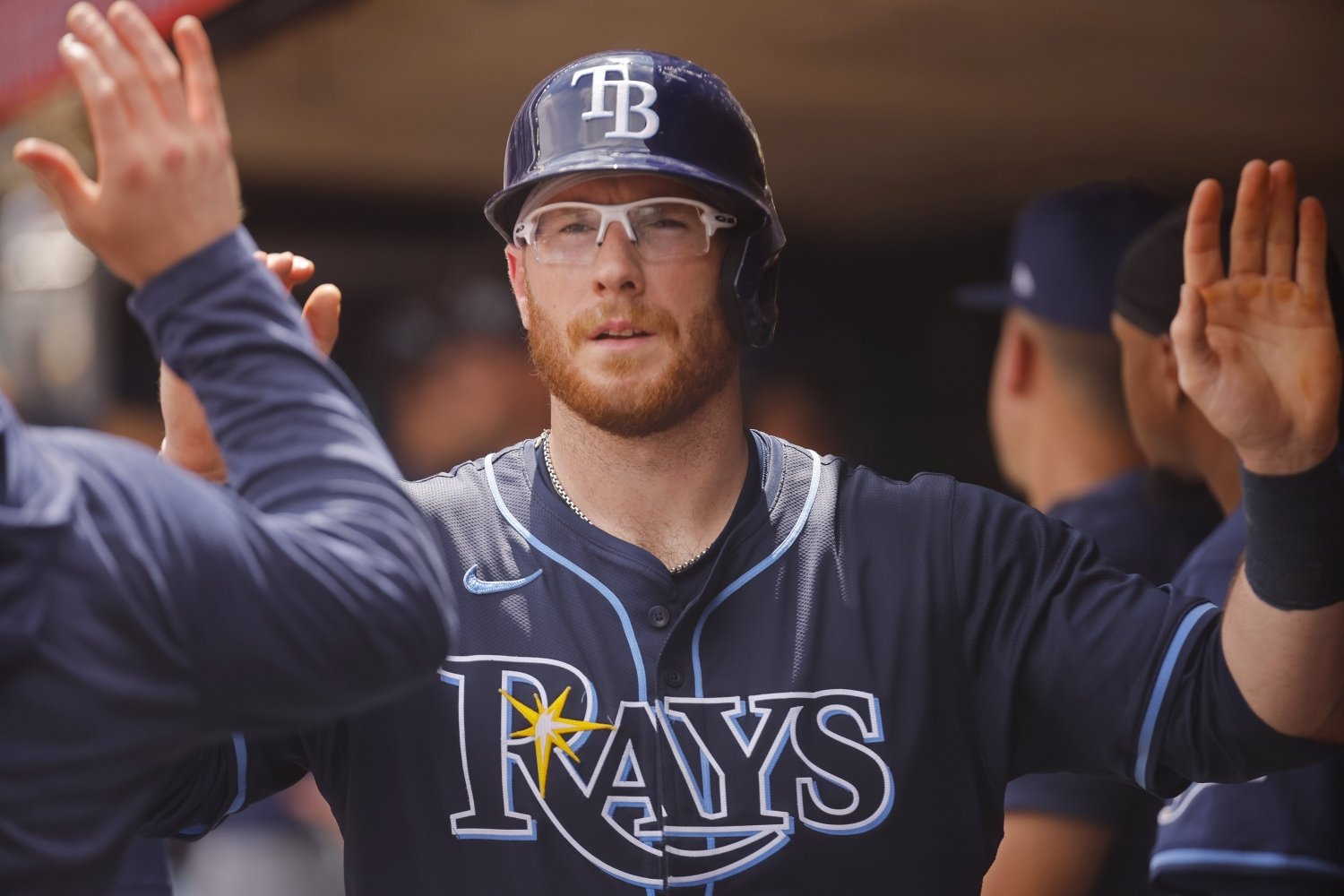 There were reports over the weekend that the Brewers wanted to upgrade the backup catcher spot on their roster. Now, we know that there was smoke to go with that fire. Milwaukee has acquired catcher Danny Jansen, an Appleton West alumnus, in a trade with the Rays. Jansen, 30, signed a one-year deal worth $8.5 million with the Rays this winter. There's a mutual option included in the contract. He's batting .204/.314/.389 in 259 plate appearances this season, showing his usual above-average pop for a catcher and delivering roughly average defense behind the plate. The move figures to displace Eric Haase from the backup catcher role, though it could also facilitate at least a short-term stint on the injured list for William Contreras, who has played all season with a fractured finger on his catching hand. Born in Elmhurst, Ill., Jansen largely grew up in Appleton, Wis. He's been a target for the team in the past, but the price was right now, at the deadline. He's owed just under $3 million for the balance of this season. Milwaukee's top need at this deadline, arguably, is a bit more in the way of right-handed power. Jansen offers it. Of all batters with 150 or more plate appearances this year, Jansen ranks fifth in the percentage of his batted balls that are in pulled fly balls, trailing only Cal Raleigh, Isaac Paredes, Cedric Mullins and new teammate Rhys Hoskins. With Hoskins down with a thumb injury (which might linger upon his return, too), Jansen's infusion of pop from the right side is crucial. It also stands in contrast to the very low pulled fly ball rates of both Haase and Contreras. To land that upgrade, the Crew surrendered infield prospect Jadher Areinamo. That's no insignificant price. Baseball America ranked Areinamo 10th on their recent midseason update of the Brewers' top 30 prospects list, and he's been a favorite of many a member of our own Brewer Fanatic community. His glove is an asset at either second or third base, though he's smaller than the prototypical player at the latter spot. He's also batted .300/.359/.468 for the High-A affiliate in Appleton this year. His future might be as a utility infielder, but he's only 21 and looks ready for the test of Double-A pitching. Tampa Bay sending money to help cover Jansen's salary does help, in two small ways. Firstly, it leaves Matt Arnold more in whatever budget Mark Attanasio has allotted for other acquisitions at this deadline. Second, it might have been necessary to get the deal done. The Rays, like some other clubs, often insist upon paying down salaries on players like Jansen in order to ensure they get the best possible return for them. Still, being on this side of such a transaction is tough, as it reinforces how highly everyone involved esteemed Areinamo. Milwaukee will hope that Jansen's jolt behind the plate can make that price easier to stomach.
- 28 comments
-
- 1
-

-
- danny jansen
- eric haase
- (and 1 more)
-
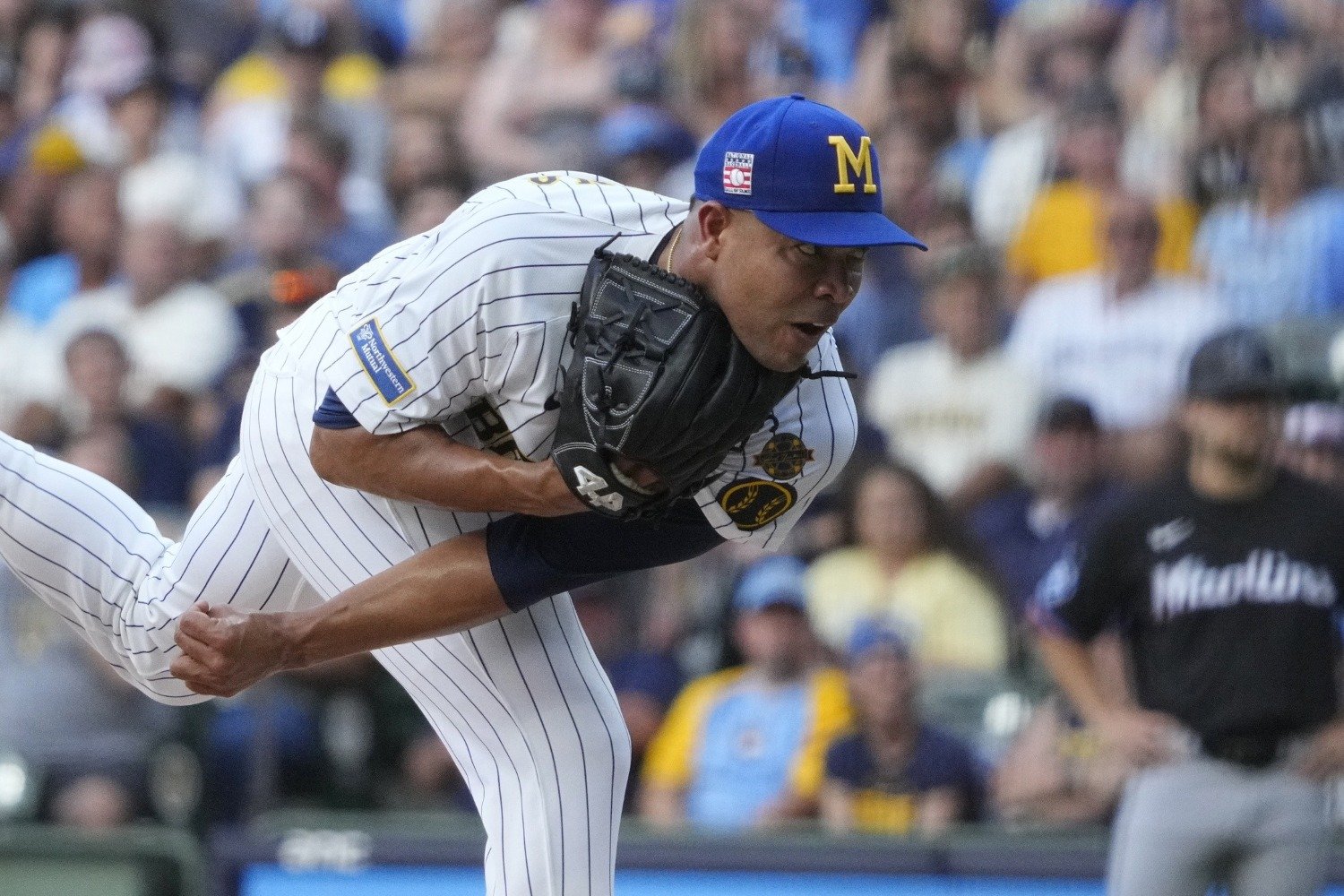 There are roughly 100 hours until the 2025 MLB trade deadline, and the Brewers haven't yet put their pedal to the floor. Then again, neither has most of the rest of the league. A few of Milwaukee's likely targets have gone to other new homes. How the team responds and redirects could determine whether they pull out their third straight NL Central title; let's review the status of a list I made Thursday night, of the top 105 trade candidates at this deadline. Joe Ryan, RHP, Twins Eugenio Suárez, 3B, Diamondbacks: It would be uncharacteristic for the Brewers to trade a major haul for a rental player. That's what Suárez is, and it's what it would take to acquire him. That said, doesn't it feel like this year, this team, and this fit are unique? In such a case, maybe something uncharacteristic can fairly be expected. UPDATE: With the Yankees trading for two other infielders (see below), it seems as though the Brewers' competition for Suárez has softened slightly. Seattle, too, has made a first move to add a bat, although they might still be in on this one, too. Dylan Cease, RHP, Padres Emmanuel Clase, RHP, Guardians Jhoan Duran, RHP, Twins Edward Cabrera, RHP, Marlins Jacob deGrom, RHP, Rangers Nathan Eovaldi, RHP, Rangers MacKenzie Gore, LHP, Nationals Jarren Duran, OF, Red Sox Seth Lugo, RHP, Royals David Bednar, RHP, Pirates Ryan O’Hearn, 1B/OF/DH, Orioles: Again, it would just be an engagement of a few months. Whereas Suárez is inciting a bidding war that will push the price tag up to an uncomfortable place, though, O'Hearn feels gettable. He'd be an utterly inarguable upgrade over Jake Bauers, and could make the worrying over whether Andrew Vaughn can keep this up or Rhys Hoskins can return at full strength largely moot. He'd also be good insurance against further injury to Sal Frelick, Christian Yelich, or William Contreras, in that he's a very capable DH who could fill in there when Hoskins or Vaughn is in the lineup. UPDATE: Since Josh Naylor netted two modestly interesting but uninspiring pitchers in a trade from Arizona to Seattle, a floor for O'Hearn's price has been set. O'Hearn should cost most than Naylor, but not much more. Merrill Kelly, RHP, Diamondbacks Kris Bubic, LHP, Royals Sandy Alcántara, RHP, Marlins Jesús Sánchez, RF, Marlins: UPDATE: While it's a very long shot, keep an eye on Sánchez. He's the kind of high-ceiling, unheralded target on whom the team sometimes swoops down, even when there's not an obvious need. Cade Smith, RHP, Guardians Robert Suarez, RHP, Padres Ryan Helsley, RHP, Cardinals Griffin Jax, RHP, Twins Willi Castro, UTIL, Twins: Talk about a guy who's a fit for almost everyone. Castro is a switch-hitter with power and some improved plate discipline. He brings a little speed and a lot of defensive versatility, and he's a plus-plus clubhouse guy. The price tag wouldn't be huge, and the upside could be; Castro can help all over the infield. Drew Rasmussen, RHP, Rays Taylor Ward, OF, Angels: Right-handed power is the top need for this team, and Ward offers it. Unlike Suárez, he doesn't play a position of apparent need for the team, but unlike Suárez, he's also under team control for 2026. The Angels front office is one the Brewers are comfortable working with, too. Zac Gallen, RHP, Diamondbacks Pete Fairbanks, RHP, Rays Harrison Bader, OF, Twins Carlos Santana, 1B, Guardians: If it's a dramatic improvement in defense at the cold corner you want, Santana brings it. He's been part of this team and clubhouse before. He's a solid veteran and switch-hitter. He'd be a low-grade addition, perhaps, but it'd be a joyous reunion, and he might shore up the defense a bit. UPDATE: The trade of Naylor, which I had already heard was in motion when I first built this list, took him out of this very range on the list. Santana would cost even less than Naylor did, both because he's having a poor statistical season and because he's so old. It would be no surprise if he produced just like Naylor does from here, though, so consider him a good buy-low option if the team is intent on upgrading their collection of first basemen. Sonny Gray, RHP, Cardinals Ryan Jeffers, C, Twins Yandy Díaz, 1B, Rays Mitch Keller, RHP, Pirates Ryan McMahon, 3B, Rockies: This remains an interesting potential fit, but it's not clear that the Brewers will want to allocate the amount of money owed to McMahon to a player like him for the next two-plus years. For that matter, it's still not clear that the Rockies will be willing to trade him. UPDATE: Well, it turns out the Rockies were ready to deal, at least. McMahon is now a Yankee, and it'll be interesting to see how he does as part of a smarter organization and without the constant shuttling up and down the mountains. The prospect cost was very small, but part of that was the Yankees being willing to eat all of the money involved. Charlie Morton, RHP, Orioles Trevor Larnach, OF, Twins Cedric Mullins, OF, Orioles Luis Severino, RHP, Athletics Aaron Bummer, LHP, Team from Near Atlanta Ramón Laureano, OF, Orioles Kyle Freeland, LHP, Rockies Zack Littell, RHP, Rays Adrian Houser, RHP, White Sox Danny Coulombe, LHP, Twins John Schreiber, RHP, Royals: Two righty relievers in the middle of this list got significant bumps up on the basis of their roster flexibility. Schreiber is one. He can still be optioned to the minors, so though the team control isn't long-term and the sheer stuff is more seventh inning than ninth, he's a fantastic candidate to add to a team hoping that improved health will give them ample depth come September and October. UPDATE: The Royals' two moves so far this month were to acquire Adam Frazier and Randal Grichuk, rather than to offload any impending free agents. It's unlikely that Schreiber is available, based on what we know right now. Anthony Bender, RHP, Marlins: Bender is the other guy who gets the "still optionable" bump here. Both guys would have been in the 50s, anyway, but it's important to have the ability to shuttle fresh arms into the roster late in a season, with a close race on for the division crown. Nathaniel Lowe, 1B, Nationals: It's been a down year for Lowe, which opens the door a crack for the Brewers to buy low on him. His approach has gotten much worse; he usually controls the strike zone exceptionally well. Team Swing Decisions could probably fix that in a jiffy, and unlike O'Hearn, Lowe is under team control for 2026. Carlos Estévez, RHP, Royals Dennis Santana, RHP, Pirates Brock Burke, LHP, Angels: There are few things the Brewers need less than another lefty reliever, but Burke (who's under team control for 2026, too) gets ground balls and has some interesting 'unlocks' lurking, as teams like to code such things. The Crew could target him and turn him into a slightly different, much better hitter in short order. Adolis García, OF, Rangers: More right-handed power with team control for 2026, García also comes with some awesome postseason bona fides. He's having a down year, too, though, and it's not quite as clear as with Lowe that it would be a quick fix. Michael Soroka, RHP, Nationals Luis Robert Jr., OF, White Sox Phil Maton, RHP, Cardinals Andrew Kittredge, RHP, Orioles Yoán Moncada, 3B, Angels: Over the winter, the Brewers were unwilling to make a medium-sized bet on the health and the needed skill recovery on which hinged any hope of a Moncada renaissance. Now, though, he's stayed healthy enough and enjoyed enough of that restoration to open some eyes. The Crew could make use of the both-sides pop he's shown in Anaheim. Amed Rosario, IF, Nationals: An even lower-cost alternative to Moncada, Rosario also offers the ability to at least stop a short-term gap at shortstop, second base or in the outfield. He's not a natural platoon partner to Caleb Durbin and he can't play short with any regularity anymore, but Rosario would be a clear upgrade to the bench and a fine part-time contributor. UPDATE: Rosario, too, has been dealt to the Bronx. That takes two key targets off the board for the Crew, but the modest-yet-solid return for him helps us lock in on the likely cost of trading for Moncada. JoJo Romero, LHP, Cardinals Gregory Soto, LHP, Orioles: UPDATE: Soto is now a Met. No, the other Soto. But the same Mets. Get it? Got it? Good. The Brewers will only pursue a lefty reliever if they constitute a special opportunity of some kind, anyway. Jose Quintana, LHP, Brewers: Hey, we know him! UPDATE: Quintana hasn't looked nearly as good lately as he did in his first fistful of starts with the team, and his rotation spot seems very much in danger. I've heard that the team is reluctant to move him, because of how strongly Pat Murphy and others feel about his presence and leadership, but it looks increasingly like a solid notion. Trading him to the American League, at least, would be preferable, but Matt Arnold will be value-focused, not worried about who provides that value. Nestor Cortes, LHP, Brewers: Him too! Taj Bradley, RHP, Rays Pierce Johnson, RHP, Suburbanites Jeffrey Springs, LHP, Athletics Dane Myers, OF, Marlins Randal Grichuk, OF, Diamondbacks: UPDATE: Grichuk went to the Royals for a fairly fungible relief arm. If the Brewers want to acquire Isiah Kiner-Falefa, that's how they should approach the Pirates, too: with a fine but forgettable piece of pitching depth ready to ship. Brock Stewart, RHP, Twins Kevin Ginkel, RHP, Diamondbacks Sam Haggerty, OF, Rangers Seranthony Dominguez, RHP, Orioles JP Sears, LHP, Athletics Kyle Finnegan, RHP, Nationals Isiah Kiner-Falefa, SS, Pirates: While he doesn't offer the same impact or upside as Moncada or Rosario, Kiner-Falefa is a better fit for the Brewers than either of them. He could take over for Joey Ortiz and play shortstop as much as they want or need him to, down the stretch. He's a very good defender who also offers some versatility. Jake Cronenworth, IF, Padres Wandy Peralta, LHP, Padres Tommy Pham, OF, Pirates Zach Eflin, RHP, Orioles Raisel Iglesias, RHP, Highwaymen Jorge Soler, DH/OF, Angels: UPDATE: Soler has been placed on the injured list, and he's really not the kind of player you'd like to acquire under such circumstances. Josh Bell, 1B/DH, Nationals Royce Lewis, 3B, Twins Michael A. Taylor, OF, White Sox Caleb Ferguson, LHP, Pirates Mike Tauchman, OF, White Sox Chris Paddack, RHP, Twins Tyler Kinley, RHP, Rockies: The Brewers rescued one guy whose breaking ball they adored from the thin air of Coors Field, when they dealt for Nick Mears last year. Might they do it again, with the slider-spamming Kinley? Kenley Jansen, RHP, Angels Ke’Bryan Hayes, 3B, Pirates Miguel Andujar, 4C, Athletics: As unsexy as his profile is (impending free agent, poor defense, low walk rate and even less power), what Andujar does well, he does very well. Mostly, that means putting the ball in play, and using the middle of the field. The Brewers would probably like that bundle of skills, assuming it doesn't cost them much to acquire it. Ramón Urías, 3B, Orioles: Both members of the Urías family can be found atop the Ideal Attack Angle leaderboard for MLB. Ramón is a below-average overall hitter, but his approach and contact profile fit what the Brewers like, and he'd provide Durbin insurance on the infield. Luis Rengifo, IF, Angels Austin Slater, OF, White Sox Enyel De Los Santos, RHP, A Team from Georgia Luis Urías, 2B, Athletics Christian Vázquez, C, Twins: UPDATE: There are some rumors that the Crew would like to add a stronger complementary catcher than Eric Haase, but if so, they'd need to aim higher than Vázquez—and the Twins are unwilling to eat the balance of his expiring contract, anyway. Ty France, 1B, Twins Andrew Chafin, LHP, Nationals Aaron Civale, RHP, White Sox: Civale is an intere.... gotcha. Nolan Arenado, 3B, Cardinals Andrew Heaney, LHP, Pirates Jakob Junis, RHP, Guardians: If you're searching for a pitcher who can give you multiple innings per outing in the bullpen, you could do a lot wor.... gotcha again. Kyle Hendricks, RHP, Angels Sean Newcomb, LHP, Athletics Tomoyuki Sugano, RHP, Orioles Luis Garcia, RHP, Nationals: UPDATE: A seasoned veteran, García is suddenly throwing as hard as he ever has—touching 102 miles per hour. He has an interesting splitter-sweeper combo, too. The Brewers should monitor him closely, as a potential sleeper pickup. Tyler Anderson, LHP, Angels There are many moves left to be made. The Brewers could be much less aggressive than the Cubs and some of the other big-market contenders this month, without losing their edge in the division race. Still, it's a good bet that they'll do something to improve the team. With each new rumor or transaction, the options available to them come into tighter focus.
-
- 1
-
-
- ryan ohearn
- ryan mcmahon
- (and 3 more)
-
Image courtesy of © Michael McLoone-Imagn Images There are roughly 100 hours until the 2025 MLB trade deadline, and the Brewers haven't yet put their pedal to the floor. Then again, neither has most of the rest of the league. A few of Milwaukee's likely targets have gone to other new homes. How the team responds and redirects could determine whether they pull out their third straight NL Central title; let's review the status of a list I made Thursday night, of the top 105 trade candidates at this deadline. Joe Ryan, RHP, Twins Eugenio Suárez, 3B, Diamondbacks: It would be uncharacteristic for the Brewers to trade a major haul for a rental player. That's what Suárez is, and it's what it would take to acquire him. That said, doesn't it feel like this year, this team, and this fit are unique? In such a case, maybe something uncharacteristic can fairly be expected. UPDATE: With the Yankees trading for two other infielders (see below), it seems as though the Brewers' competition for Suárez has softened slightly. Seattle, too, has made a first move to add a bat, although they might still be in on this one, too. Dylan Cease, RHP, Padres Emmanuel Clase, RHP, Guardians Jhoan Duran, RHP, Twins Edward Cabrera, RHP, Marlins Jacob deGrom, RHP, Rangers Nathan Eovaldi, RHP, Rangers MacKenzie Gore, LHP, Nationals Jarren Duran, OF, Red Sox Seth Lugo, RHP, Royals David Bednar, RHP, Pirates Ryan O’Hearn, 1B/OF/DH, Orioles: Again, it would just be an engagement of a few months. Whereas Suárez is inciting a bidding war that will push the price tag up to an uncomfortable place, though, O'Hearn feels gettable. He'd be an utterly inarguable upgrade over Jake Bauers, and could make the worrying over whether Andrew Vaughn can keep this up or Rhys Hoskins can return at full strength largely moot. He'd also be good insurance against further injury to Sal Frelick, Christian Yelich, or William Contreras, in that he's a very capable DH who could fill in there when Hoskins or Vaughn is in the lineup. UPDATE: Since Josh Naylor netted two modestly interesting but uninspiring pitchers in a trade from Arizona to Seattle, a floor for O'Hearn's price has been set. O'Hearn should cost most than Naylor, but not much more. Merrill Kelly, RHP, Diamondbacks Kris Bubic, LHP, Royals Sandy Alcántara, RHP, Marlins Jesús Sánchez, RF, Marlins: UPDATE: While it's a very long shot, keep an eye on Sánchez. He's the kind of high-ceiling, unheralded target on whom the team sometimes swoops down, even when there's not an obvious need. Cade Smith, RHP, Guardians Robert Suarez, RHP, Padres Ryan Helsley, RHP, Cardinals Griffin Jax, RHP, Twins Willi Castro, UTIL, Twins: Talk about a guy who's a fit for almost everyone. Castro is a switch-hitter with power and some improved plate discipline. He brings a little speed and a lot of defensive versatility, and he's a plus-plus clubhouse guy. The price tag wouldn't be huge, and the upside could be; Castro can help all over the infield. Drew Rasmussen, RHP, Rays Taylor Ward, OF, Angels: Right-handed power is the top need for this team, and Ward offers it. Unlike Suárez, he doesn't play a position of apparent need for the team, but unlike Suárez, he's also under team control for 2026. The Angels front office is one the Brewers are comfortable working with, too. Zac Gallen, RHP, Diamondbacks Pete Fairbanks, RHP, Rays Harrison Bader, OF, Twins Carlos Santana, 1B, Guardians: If it's a dramatic improvement in defense at the cold corner you want, Santana brings it. He's been part of this team and clubhouse before. He's a solid veteran and switch-hitter. He'd be a low-grade addition, perhaps, but it'd be a joyous reunion, and he might shore up the defense a bit. UPDATE: The trade of Naylor, which I had already heard was in motion when I first built this list, took him out of this very range on the list. Santana would cost even less than Naylor did, both because he's having a poor statistical season and because he's so old. It would be no surprise if he produced just like Naylor does from here, though, so consider him a good buy-low option if the team is intent on upgrading their collection of first basemen. Sonny Gray, RHP, Cardinals Ryan Jeffers, C, Twins Yandy Díaz, 1B, Rays Mitch Keller, RHP, Pirates Ryan McMahon, 3B, Rockies: This remains an interesting potential fit, but it's not clear that the Brewers will want to allocate the amount of money owed to McMahon to a player like him for the next two-plus years. For that matter, it's still not clear that the Rockies will be willing to trade him. UPDATE: Well, it turns out the Rockies were ready to deal, at least. McMahon is now a Yankee, and it'll be interesting to see how he does as part of a smarter organization and without the constant shuttling up and down the mountains. The prospect cost was very small, but part of that was the Yankees being willing to eat all of the money involved. Charlie Morton, RHP, Orioles Trevor Larnach, OF, Twins Cedric Mullins, OF, Orioles Luis Severino, RHP, Athletics Aaron Bummer, LHP, Team from Near Atlanta Ramón Laureano, OF, Orioles Kyle Freeland, LHP, Rockies Zack Littell, RHP, Rays Adrian Houser, RHP, White Sox Danny Coulombe, LHP, Twins John Schreiber, RHP, Royals: Two righty relievers in the middle of this list got significant bumps up on the basis of their roster flexibility. Schreiber is one. He can still be optioned to the minors, so though the team control isn't long-term and the sheer stuff is more seventh inning than ninth, he's a fantastic candidate to add to a team hoping that improved health will give them ample depth come September and October. UPDATE: The Royals' two moves so far this month were to acquire Adam Frazier and Randal Grichuk, rather than to offload any impending free agents. It's unlikely that Schreiber is available, based on what we know right now. Anthony Bender, RHP, Marlins: Bender is the other guy who gets the "still optionable" bump here. Both guys would have been in the 50s, anyway, but it's important to have the ability to shuttle fresh arms into the roster late in a season, with a close race on for the division crown. Nathaniel Lowe, 1B, Nationals: It's been a down year for Lowe, which opens the door a crack for the Brewers to buy low on him. His approach has gotten much worse; he usually controls the strike zone exceptionally well. Team Swing Decisions could probably fix that in a jiffy, and unlike O'Hearn, Lowe is under team control for 2026. Carlos Estévez, RHP, Royals Dennis Santana, RHP, Pirates Brock Burke, LHP, Angels: There are few things the Brewers need less than another lefty reliever, but Burke (who's under team control for 2026, too) gets ground balls and has some interesting 'unlocks' lurking, as teams like to code such things. The Crew could target him and turn him into a slightly different, much better hitter in short order. Adolis García, OF, Rangers: More right-handed power with team control for 2026, García also comes with some awesome postseason bona fides. He's having a down year, too, though, and it's not quite as clear as with Lowe that it would be a quick fix. Michael Soroka, RHP, Nationals Luis Robert Jr., OF, White Sox Phil Maton, RHP, Cardinals Andrew Kittredge, RHP, Orioles Yoán Moncada, 3B, Angels: Over the winter, the Brewers were unwilling to make a medium-sized bet on the health and the needed skill recovery on which hinged any hope of a Moncada renaissance. Now, though, he's stayed healthy enough and enjoyed enough of that restoration to open some eyes. The Crew could make use of the both-sides pop he's shown in Anaheim. Amed Rosario, IF, Nationals: An even lower-cost alternative to Moncada, Rosario also offers the ability to at least stop a short-term gap at shortstop, second base or in the outfield. He's not a natural platoon partner to Caleb Durbin and he can't play short with any regularity anymore, but Rosario would be a clear upgrade to the bench and a fine part-time contributor. UPDATE: Rosario, too, has been dealt to the Bronx. That takes two key targets off the board for the Crew, but the modest-yet-solid return for him helps us lock in on the likely cost of trading for Moncada. JoJo Romero, LHP, Cardinals Gregory Soto, LHP, Orioles: UPDATE: Soto is now a Met. No, the other Soto. But the same Mets. Get it? Got it? Good. The Brewers will only pursue a lefty reliever if they constitute a special opportunity of some kind, anyway. Jose Quintana, LHP, Brewers: Hey, we know him! UPDATE: Quintana hasn't looked nearly as good lately as he did in his first fistful of starts with the team, and his rotation spot seems very much in danger. I've heard that the team is reluctant to move him, because of how strongly Pat Murphy and others feel about his presence and leadership, but it looks increasingly like a solid notion. Trading him to the American League, at least, would be preferable, but Matt Arnold will be value-focused, not worried about who provides that value. Nestor Cortes, LHP, Brewers: Him too! Taj Bradley, RHP, Rays Pierce Johnson, RHP, Suburbanites Jeffrey Springs, LHP, Athletics Dane Myers, OF, Marlins Randal Grichuk, OF, Diamondbacks: UPDATE: Grichuk went to the Royals for a fairly fungible relief arm. If the Brewers want to acquire Isiah Kiner-Falefa, that's how they should approach the Pirates, too: with a fine but forgettable piece of pitching depth ready to ship. Brock Stewart, RHP, Twins Kevin Ginkel, RHP, Diamondbacks Sam Haggerty, OF, Rangers Seranthony Dominguez, RHP, Orioles JP Sears, LHP, Athletics Kyle Finnegan, RHP, Nationals Isiah Kiner-Falefa, SS, Pirates: While he doesn't offer the same impact or upside as Moncada or Rosario, Kiner-Falefa is a better fit for the Brewers than either of them. He could take over for Joey Ortiz and play shortstop as much as they want or need him to, down the stretch. He's a very good defender who also offers some versatility. Jake Cronenworth, IF, Padres Wandy Peralta, LHP, Padres Tommy Pham, OF, Pirates Zach Eflin, RHP, Orioles Raisel Iglesias, RHP, Highwaymen Jorge Soler, DH/OF, Angels: UPDATE: Soler has been placed on the injured list, and he's really not the kind of player you'd like to acquire under such circumstances. Josh Bell, 1B/DH, Nationals Royce Lewis, 3B, Twins Michael A. Taylor, OF, White Sox Caleb Ferguson, LHP, Pirates Mike Tauchman, OF, White Sox Chris Paddack, RHP, Twins Tyler Kinley, RHP, Rockies: The Brewers rescued one guy whose breaking ball they adored from the thin air of Coors Field, when they dealt for Nick Mears last year. Might they do it again, with the slider-spamming Kinley? Kenley Jansen, RHP, Angels Ke’Bryan Hayes, 3B, Pirates Miguel Andujar, 4C, Athletics: As unsexy as his profile is (impending free agent, poor defense, low walk rate and even less power), what Andujar does well, he does very well. Mostly, that means putting the ball in play, and using the middle of the field. The Brewers would probably like that bundle of skills, assuming it doesn't cost them much to acquire it. Ramón Urías, 3B, Orioles: Both members of the Urías family can be found atop the Ideal Attack Angle leaderboard for MLB. Ramón is a below-average overall hitter, but his approach and contact profile fit what the Brewers like, and he'd provide Durbin insurance on the infield. Luis Rengifo, IF, Angels Austin Slater, OF, White Sox Enyel De Los Santos, RHP, A Team from Georgia Luis Urías, 2B, Athletics Christian Vázquez, C, Twins: UPDATE: There are some rumors that the Crew would like to add a stronger complementary catcher than Eric Haase, but if so, they'd need to aim higher than Vázquez—and the Twins are unwilling to eat the balance of his expiring contract, anyway. Ty France, 1B, Twins Andrew Chafin, LHP, Nationals Aaron Civale, RHP, White Sox: Civale is an intere.... gotcha. Nolan Arenado, 3B, Cardinals Andrew Heaney, LHP, Pirates Jakob Junis, RHP, Guardians: If you're searching for a pitcher who can give you multiple innings per outing in the bullpen, you could do a lot wor.... gotcha again. Kyle Hendricks, RHP, Angels Sean Newcomb, LHP, Athletics Tomoyuki Sugano, RHP, Orioles Luis Garcia, RHP, Nationals: UPDATE: A seasoned veteran, García is suddenly throwing as hard as he ever has—touching 102 miles per hour. He has an interesting splitter-sweeper combo, too. The Brewers should monitor him closely, as a potential sleeper pickup. Tyler Anderson, LHP, Angels There are many moves left to be made. The Brewers could be much less aggressive than the Cubs and some of the other big-market contenders this month, without losing their edge in the division race. Still, it's a good bet that they'll do something to improve the team. With each new rumor or transaction, the options available to them come into tighter focus. View full article
-
Image courtesy of © Rob Schumacher/The Republic / USA TODAY NETWORK via Imagn Images The Mariners acquired first baseman Josh Naylor from the Diamondbacks Thursday night, thwarting Brewers fans who had started hoping for Naylor to be among the team's upgrades in the runup to the trade deadline. The good news is that there are still a great many deals left between now and next Thursday afternoon. To figure out where the Brewers might (and perhaps, where they should) turn next, here's a ranking of the 105 players I regard as most plausible trade candidates. This is not meant to be an entirely exhaustive list, and it's not based on the likelihood of being dealt. Nor does it expressly bake in team control, although that's an indirect factor. The goal is to rank players from most to least impactful on the pursuit of a World Series in 2025. However, roster flexibility still matters to teams when they trade for players in such a pursuit, and salary is always a major constraint in trade considerations. The closer a player is to free agency, the less roster flexibility they're likely to offer, and the more money they are likely to be making. Thus, all else equal, players with more (affordable) team control will still crawl ahead of some who might be equal or better players. For what it's worth, I would have ranked Naylor in the second half of the 20s on the list below. Maybe you'll vehemently disagree, with that or other rankings. Let's find out. Joe Ryan, RHP, Twins Eugenio Suárez, 3B, Diamondbacks: It would be uncharacteristic for the Brewers to trade a major haul for a rental player. That's what Suárez is, and it's what it would take to acquire him. That said, doesn't it feel like this year, this team, and this fit are unique? In such a case, maybe something uncharacteristic can fairly be expected. Dylan Cease, RHP, Padres Emmanuel Clase, RHP, Guardians Jhoan Duran, RHP, Twins Edward Cabrera, RHP, Marlins Jacob deGrom, RHP, Rangers Nathan Eovaldi, RHP, Rangers MacKenzie Gore, LHP, Nationals Jarren Duran, OF, Red Sox Seth Lugo, RHP, Royals David Bednar, RHP, Pirates Ryan O’Hearn, 1B/OF/DH, Orioles: Again, it would just be an engagement of a few months. Whereas Suárez is inciting a bidding war that will push the price tag up to an uncomfortable place, though, O'Hearn feels gettable. He'd be an utterly inarguable upgrade over Jake Bauers, and could make the worrying over whether Andrew Vaughn can keep this up or Rhys Hoskins can return at full strength largely moot. He'd also be good insurance against further injury to Sal Frelick, Christian Yelich, or William Contreras, in that he's a very capable DH who could fill in there when Hoskins or Vaughn is in the lineup. Merrill Kelly, RHP, Diamondbacks Kris Bubic, LHP, Royals Sandy Alcántara, RHP, Marlins Jesús Sánchez, RF, Marlins Cade Smith, RHP, Guardians Robert Suarez, RHP, Padres Ryan Helsley, RHP, Cardinals Griffin Jax, RHP, Twins Willi Castro, UTIL, Twins: Talk about a guy who's a fit for almost everyone. Castro is a switch-hitter with power and some improved plate discipline. He brings a little speed and a lot of defensive versatility, and he's a plus-plus clubhouse guy. The price tag wouldn't be huge, and the upside could be; Castro can help all over the infield. Drew Rasmussen, RHP, Rays Taylor Ward, OF, Angels: Right-handed power is the top need for this team, and Ward offers it. Unlike Suárez, he doesn't play a position of apparent need for the team, but unlike Suárez, he's also under team control for 2026. The Angels front office is one the Brewers are comfortable working with, too. Zac Gallen, RHP, Diamondbacks Pete Fairbanks, RHP, Rays Harrison Bader, OF, Twins Carlos Santana, 1B, Guardians: If it's a dramatic improvement in defense at the cold corner you want, Santana brings it. He's been part of this team and clubhouse before. He's a solid veteran and switch-hitter. He'd be a low-grade addition, perhaps, but it'd be a joyous reunion, and he might shore up the defense a bit. Sonny Gray, RHP, Cardinals Ryan Jeffers, C, Twins Yandy Díaz, 1B, Rays Mitch Keller, RHP, Pirates Ryan McMahon, 3B, Rockies: This remains an interesting potential fit, but it's not clear that the Brewers will want to allocate the amount of money owed to McMahon to a player like him for the next two-plus years. For that matter, it's still not clear that the Rockies will be willing to trade him. Charlie Morton, RHP, Orioles Trevor Larnach, OF, Twins Cedric Mullins, OF, Orioles Luis Severino, RHP, Athletics Aaron Bummer, LHP, Team from Near Atlanta Ramón Laureano, OF, Orioles Kyle Freeland, LHP, Rockies Zack Littell, RHP, Rays Adrian Houser, RHP, White Sox Danny Coulombe, LHP, Twins John Schreiber, RHP, Royals: Two righty relievers in the middle of this list got significant bumps up on the basis of their roster flexibility. Schreiber is one. He can still be optioned to the minors, so though the team control isn't long-term and the sheer stuff is more seventh inning than ninth, he's a fantastic candidate to add to a team hoping that improved health will give them ample depth come September and October. Anthony Bender, RHP, Marlins: Bender is the other guy who gets the "still optionable" bump here. Both guys would have been in the 50s, anyway, but it's important to have the ability to shuttle fresh arms into the roster late in a season, with a close race on for the division crown. Nathaniel Lowe, 1B, Nationals: It's been a down year for Lowe, which opens the door a crack for the Brewers to buy low on him. His approach has gotten much worse; he usually controls the strike zone exceptionally well. Team Swing Decisions could probably fix that in a jiffy, and unlike O'Hearn, Lowe is under team control for 2026. Carlos Estévez, RHP, Royals Dennis Santana, RHP, Pirates Brock Burke, LHP, Angels: There are few things the Brewers need less than another lefty reliever, but Burke (who's under team control for 2026, too) gets ground balls and has some interesting 'unlocks' lurking, as teams like to code such things. The Crew could target him and turn him into a slightly different, much better hitter in short order. Adolis García, OF, Rangers: More right-handed power with team control for 2026, García also comes with some awesome postseason bona fides. He's having a down year, too, though, and it's not quite as clear as with Lowe that it would be a quick fix. Michael Soroka, RHP, Nationals Luis Robert Jr., OF, White Sox Phil Maton, RHP, Cardinals Andrew Kittredge, RHP, Orioles Yoán Moncada, 3B, Angels: Over the winter, the Brewers were unwilling to make a medium-sized bet on the health and the needed skill recovery on which hinged any hope of a Moncada renaissance. Now, though, he's stayed healthy enough and enjoyed enough of that restoration to open some eyes. The Crew could make use of the both-sides pop he's shown in Anaheim. Amed Rosario, IF, Nationals: An even lower-cost alternative to Moncada, Rosario also offers the ability to at least stop a short-term gap at shortstop, second base or in the outfield. He's not a natural platoon partner to Caleb Durbin and he can't play short with any regularity anymore, but Rosario would be a clear upgrade to the bench and a fine part-time contributor. JoJo Romero, LHP, Cardinals Gregory Soto, LHP, Orioles Jose Quintana, LHP, Brewers: Hey, we know him! Nestor Cortes, LHP, Brewers: Him too! Taj Bradley, RHP, Rays Pierce Johnson, RHP, Suburbanites Jeffrey Springs, LHP, Athletics Dane Myers, OF, Marlins Randal Grichuk, OF, Diamondbacks Brock Stewart, RHP, Twins Kevin Ginkel, RHP, Diamondbacks Sam Haggerty, OF, Rangers Seranthony Dominguez, RHP, Orioles JP Sears, LHP, Athletics Kyle Finnegan, RHP, Nationals Isiah Kiner-Falefa, SS, Pirates: While he doesn't offer the same impact or upside as Moncada or Rosario, Kiner-Falefa is a better fit for the Brewers than either of them. He could take over for Joey Ortiz and play shortstop as much as they want or need him to, down the stretch. He's a very good defender who also offers some versatility. Jake Cronenworth, IF, Padres Wandy Peralta, LHP, Padres Tommy Pham, OF, Pirates Zach Eflin, RHP, Orioles Raisel Iglesias, RHP, Highwaymen Jorge Soler, DH/OF, Angels Josh Bell, 1B/DH, Nationals Royce Lewis, 3B, Twins Michael A. Taylor, OF, White Sox Caleb Ferguson, LHP, Pirates Mike Tauchman, OF, White Sox Chris Paddack, RHP, Twins Tyler Kinley, RHP, Rockies: The Brewers rescued one guy whose breaking ball they adored from the thin air of Coors Field, when they dealt for Nick Mears last year. Might they do it again, with the slider-spamming Kinley? Kenley Jansen, RHP, Angels Ke’Bryan Hayes, 3B, Pirates Miguel Andujar, 4C, Athletics: As unsexy as his profile is (impending free agent, poor defense, low walk rate and even less power), what Andujar does well, he does very well. Mostly, that means putting the ball in play, and using the middle of the field. The Brewers would probably like that bundle of skills, assuming it doesn't cost them much to acquire it. Ramón Urías, 3B, Orioles: Both members of the Urías family can be found atop the Ideal Attack Angle leaderboard for MLB. Ramón is a below-average overall hitter, but his approach and contact profile fit what the Brewers like, and he'd provide Durbin insurance on the infield. Luis Rengifo, IF, Angels Austin Slater, OF, White Sox Enyel De Los Santos, RHP, A Team from Georgia Luis Urías, 2B, Athletics Christian Vázquez, C, Twins Ty France, 1B, Twins Andrew Chafin, LHP, Nationals Aaron Civale, RHP, White Sox: Civale is an intere.... gotcha. Nolan Arenado, 3B, Cardinals Andrew Heaney, LHP, Pirates Jakob Junis, RHP, Guardians: If you're searching for a pitcher who can give you multiple innings per outing in the bullpen, you could do a lot wor.... gotcha again. Kyle Hendricks, RHP, Angels Sean Newcomb, LHP, Athletics Tomoyuki Sugano, RHP, Orioles Luis Garcia, RHP, Nationals Tyler Anderson, LHP, Angels The scary truth, of course, is that some players beyond even this very long list will be traded. On the other hand, many, many players on this list will not be dealt. The sole purpose here was to sketch out a hierarchy of possible targets, by situatiing them within the wider context of the market as a whole—not just what suits the needs or capacities of the Brewers. View full article
-
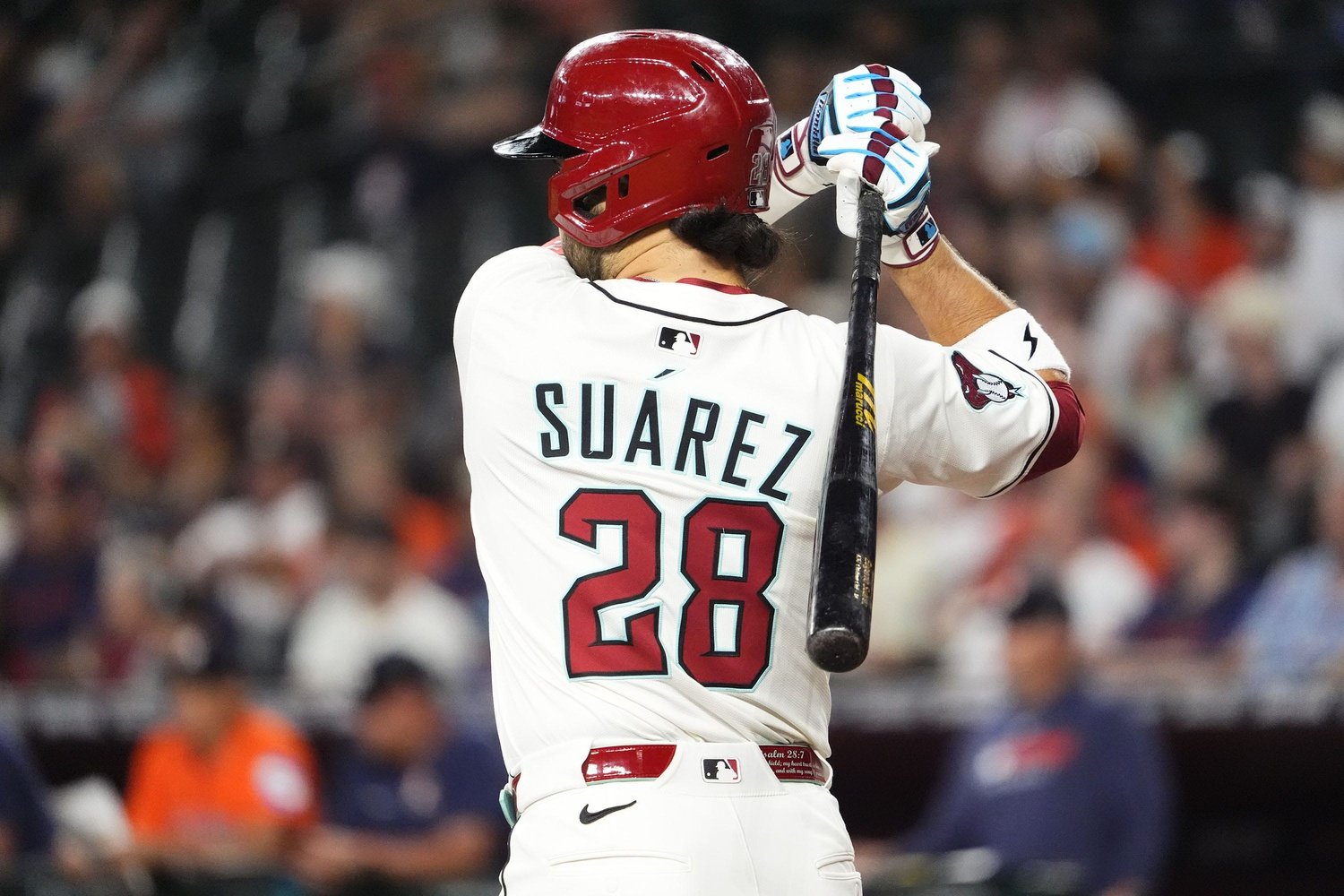 The Mariners acquired first baseman Josh Naylor from the Diamondbacks Thursday night, thwarting Brewers fans who had started hoping for Naylor to be among the team's upgrades in the runup to the trade deadline. The good news is that there are still a great many deals left between now and next Thursday afternoon. To figure out where the Brewers might (and perhaps, where they should) turn next, here's a ranking of the 105 players I regard as most plausible trade candidates. This is not meant to be an entirely exhaustive list, and it's not based on the likelihood of being dealt. Nor does it expressly bake in team control, although that's an indirect factor. The goal is to rank players from most to least impactful on the pursuit of a World Series in 2025. However, roster flexibility still matters to teams when they trade for players in such a pursuit, and salary is always a major constraint in trade considerations. The closer a player is to free agency, the less roster flexibility they're likely to offer, and the more money they are likely to be making. Thus, all else equal, players with more (affordable) team control will still crawl ahead of some who might be equal or better players. For what it's worth, I would have ranked Naylor in the second half of the 20s on the list below. Maybe you'll vehemently disagree, with that or other rankings. Let's find out. Joe Ryan, RHP, Twins Eugenio Suárez, 3B, Diamondbacks: It would be uncharacteristic for the Brewers to trade a major haul for a rental player. That's what Suárez is, and it's what it would take to acquire him. That said, doesn't it feel like this year, this team, and this fit are unique? In such a case, maybe something uncharacteristic can fairly be expected. Dylan Cease, RHP, Padres Emmanuel Clase, RHP, Guardians Jhoan Duran, RHP, Twins Edward Cabrera, RHP, Marlins Jacob deGrom, RHP, Rangers Nathan Eovaldi, RHP, Rangers MacKenzie Gore, LHP, Nationals Jarren Duran, OF, Red Sox Seth Lugo, RHP, Royals David Bednar, RHP, Pirates Ryan O’Hearn, 1B/OF/DH, Orioles: Again, it would just be an engagement of a few months. Whereas Suárez is inciting a bidding war that will push the price tag up to an uncomfortable place, though, O'Hearn feels gettable. He'd be an utterly inarguable upgrade over Jake Bauers, and could make the worrying over whether Andrew Vaughn can keep this up or Rhys Hoskins can return at full strength largely moot. He'd also be good insurance against further injury to Sal Frelick, Christian Yelich, or William Contreras, in that he's a very capable DH who could fill in there when Hoskins or Vaughn is in the lineup. Merrill Kelly, RHP, Diamondbacks Kris Bubic, LHP, Royals Sandy Alcántara, RHP, Marlins Jesús Sánchez, RF, Marlins Cade Smith, RHP, Guardians Robert Suarez, RHP, Padres Ryan Helsley, RHP, Cardinals Griffin Jax, RHP, Twins Willi Castro, UTIL, Twins: Talk about a guy who's a fit for almost everyone. Castro is a switch-hitter with power and some improved plate discipline. He brings a little speed and a lot of defensive versatility, and he's a plus-plus clubhouse guy. The price tag wouldn't be huge, and the upside could be; Castro can help all over the infield. Drew Rasmussen, RHP, Rays Taylor Ward, OF, Angels: Right-handed power is the top need for this team, and Ward offers it. Unlike Suárez, he doesn't play a position of apparent need for the team, but unlike Suárez, he's also under team control for 2026. The Angels front office is one the Brewers are comfortable working with, too. Zac Gallen, RHP, Diamondbacks Pete Fairbanks, RHP, Rays Harrison Bader, OF, Twins Carlos Santana, 1B, Guardians: If it's a dramatic improvement in defense at the cold corner you want, Santana brings it. He's been part of this team and clubhouse before. He's a solid veteran and switch-hitter. He'd be a low-grade addition, perhaps, but it'd be a joyous reunion, and he might shore up the defense a bit. Sonny Gray, RHP, Cardinals Ryan Jeffers, C, Twins Yandy Díaz, 1B, Rays Mitch Keller, RHP, Pirates Ryan McMahon, 3B, Rockies: This remains an interesting potential fit, but it's not clear that the Brewers will want to allocate the amount of money owed to McMahon to a player like him for the next two-plus years. For that matter, it's still not clear that the Rockies will be willing to trade him. Charlie Morton, RHP, Orioles Trevor Larnach, OF, Twins Cedric Mullins, OF, Orioles Luis Severino, RHP, Athletics Aaron Bummer, LHP, Team from Near Atlanta Ramón Laureano, OF, Orioles Kyle Freeland, LHP, Rockies Zack Littell, RHP, Rays Adrian Houser, RHP, White Sox Danny Coulombe, LHP, Twins John Schreiber, RHP, Royals: Two righty relievers in the middle of this list got significant bumps up on the basis of their roster flexibility. Schreiber is one. He can still be optioned to the minors, so though the team control isn't long-term and the sheer stuff is more seventh inning than ninth, he's a fantastic candidate to add to a team hoping that improved health will give them ample depth come September and October. Anthony Bender, RHP, Marlins: Bender is the other guy who gets the "still optionable" bump here. Both guys would have been in the 50s, anyway, but it's important to have the ability to shuttle fresh arms into the roster late in a season, with a close race on for the division crown. Nathaniel Lowe, 1B, Nationals: It's been a down year for Lowe, which opens the door a crack for the Brewers to buy low on him. His approach has gotten much worse; he usually controls the strike zone exceptionally well. Team Swing Decisions could probably fix that in a jiffy, and unlike O'Hearn, Lowe is under team control for 2026. Carlos Estévez, RHP, Royals Dennis Santana, RHP, Pirates Brock Burke, LHP, Angels: There are few things the Brewers need less than another lefty reliever, but Burke (who's under team control for 2026, too) gets ground balls and has some interesting 'unlocks' lurking, as teams like to code such things. The Crew could target him and turn him into a slightly different, much better hitter in short order. Adolis García, OF, Rangers: More right-handed power with team control for 2026, García also comes with some awesome postseason bona fides. He's having a down year, too, though, and it's not quite as clear as with Lowe that it would be a quick fix. Michael Soroka, RHP, Nationals Luis Robert Jr., OF, White Sox Phil Maton, RHP, Cardinals Andrew Kittredge, RHP, Orioles Yoán Moncada, 3B, Angels: Over the winter, the Brewers were unwilling to make a medium-sized bet on the health and the needed skill recovery on which hinged any hope of a Moncada renaissance. Now, though, he's stayed healthy enough and enjoyed enough of that restoration to open some eyes. The Crew could make use of the both-sides pop he's shown in Anaheim. Amed Rosario, IF, Nationals: An even lower-cost alternative to Moncada, Rosario also offers the ability to at least stop a short-term gap at shortstop, second base or in the outfield. He's not a natural platoon partner to Caleb Durbin and he can't play short with any regularity anymore, but Rosario would be a clear upgrade to the bench and a fine part-time contributor. JoJo Romero, LHP, Cardinals Gregory Soto, LHP, Orioles Jose Quintana, LHP, Brewers: Hey, we know him! Nestor Cortes, LHP, Brewers: Him too! Taj Bradley, RHP, Rays Pierce Johnson, RHP, Suburbanites Jeffrey Springs, LHP, Athletics Dane Myers, OF, Marlins Randal Grichuk, OF, Diamondbacks Brock Stewart, RHP, Twins Kevin Ginkel, RHP, Diamondbacks Sam Haggerty, OF, Rangers Seranthony Dominguez, RHP, Orioles JP Sears, LHP, Athletics Kyle Finnegan, RHP, Nationals Isiah Kiner-Falefa, SS, Pirates: While he doesn't offer the same impact or upside as Moncada or Rosario, Kiner-Falefa is a better fit for the Brewers than either of them. He could take over for Joey Ortiz and play shortstop as much as they want or need him to, down the stretch. He's a very good defender who also offers some versatility. Jake Cronenworth, IF, Padres Wandy Peralta, LHP, Padres Tommy Pham, OF, Pirates Zach Eflin, RHP, Orioles Raisel Iglesias, RHP, Highwaymen Jorge Soler, DH/OF, Angels Josh Bell, 1B/DH, Nationals Royce Lewis, 3B, Twins Michael A. Taylor, OF, White Sox Caleb Ferguson, LHP, Pirates Mike Tauchman, OF, White Sox Chris Paddack, RHP, Twins Tyler Kinley, RHP, Rockies: The Brewers rescued one guy whose breaking ball they adored from the thin air of Coors Field, when they dealt for Nick Mears last year. Might they do it again, with the slider-spamming Kinley? Kenley Jansen, RHP, Angels Ke’Bryan Hayes, 3B, Pirates Miguel Andujar, 4C, Athletics: As unsexy as his profile is (impending free agent, poor defense, low walk rate and even less power), what Andujar does well, he does very well. Mostly, that means putting the ball in play, and using the middle of the field. The Brewers would probably like that bundle of skills, assuming it doesn't cost them much to acquire it. Ramón Urías, 3B, Orioles: Both members of the Urías family can be found atop the Ideal Attack Angle leaderboard for MLB. Ramón is a below-average overall hitter, but his approach and contact profile fit what the Brewers like, and he'd provide Durbin insurance on the infield. Luis Rengifo, IF, Angels Austin Slater, OF, White Sox Enyel De Los Santos, RHP, A Team from Georgia Luis Urías, 2B, Athletics Christian Vázquez, C, Twins Ty France, 1B, Twins Andrew Chafin, LHP, Nationals Aaron Civale, RHP, White Sox: Civale is an intere.... gotcha. Nolan Arenado, 3B, Cardinals Andrew Heaney, LHP, Pirates Jakob Junis, RHP, Guardians: If you're searching for a pitcher who can give you multiple innings per outing in the bullpen, you could do a lot wor.... gotcha again. Kyle Hendricks, RHP, Angels Sean Newcomb, LHP, Athletics Tomoyuki Sugano, RHP, Orioles Luis Garcia, RHP, Nationals Tyler Anderson, LHP, Angels The scary truth, of course, is that some players beyond even this very long list will be traded. On the other hand, many, many players on this list will not be dealt. The sole purpose here was to sketch out a hierarchy of possible targets, by situatiing them within the wider context of the market as a whole—not just what suits the needs or capacities of the Brewers.
- 8 comments
-
- 2
-
-
- eugenio suarez
- ryan ohearn
- (and 1 more)
-
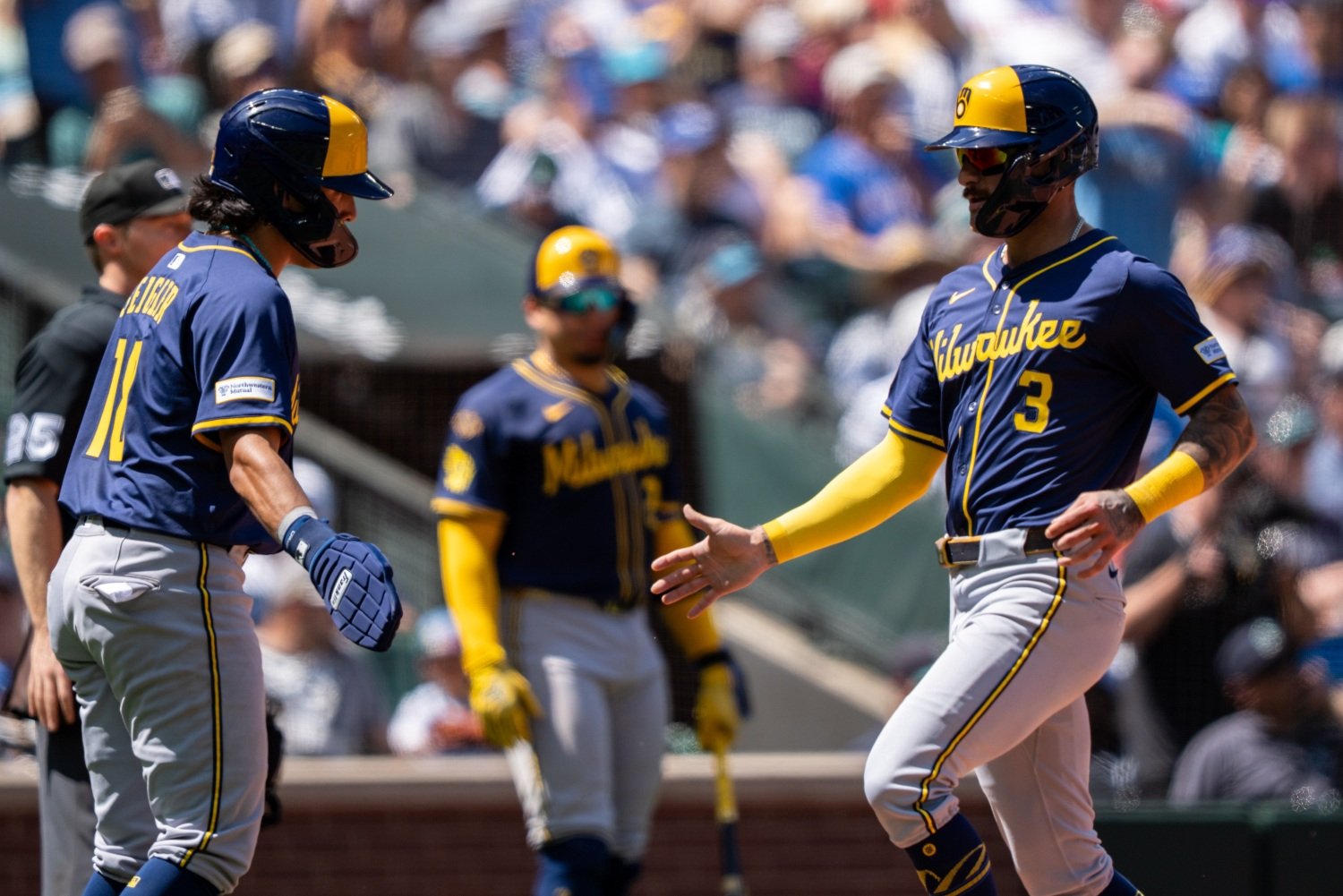 The next week could be one of the most thrilling regular-season homestands in the history of Uecker Field. The Milwaukee Brewers were 25-27 at the end of play on May 23, but since then, they're 36-14. They come home from a tough West Coast road trip leading out of the All-Star break, not only in first place in the NL Central, but with the best record in baseball. The only other season in team history in which they've won 36 games over a 50-game stretch was 2011, when the team began roasting when the weather warmed in July and stayed hot all the way through to the NLCS. In a delightful bit of serendipity, several of the key figures who made that 2011 division champion tick will be back in town this weekend, as the team celebrates the 25th anniversary of their home park. (You can choose to call it by either its former or its current corporate name, but since we at Brewer Fanatic are not being paid to use any such name, we will continue to call that place Uecker Field.) Fans figure to pack The Ueck to see their conquering heroes, who have already caught and passed the Cubs and (after a warmup series of pageantry and a set against the sub-.500 Marlins) will get the chance to shove Chicago roughly into their rearview next week, at home. Moments like this are a rare and precious privilege. A hot team amid the earned drama of a pennant race with another of the best teams in the league is a joyous thing, a source of pride and delight and extra energy for a city. This year, to have surged this way ahead of the trade deadline in the year after the whole community lost Bob Uecker, it feels even more special. That this team is running roughshod over the league with two of the 10 most electrifying young players in the league at the tip of the spear adds another dimension. That Christian Yelich's career survived back surgery, and Brandon Woodruff's survived a nearly two-year absence, adds yet another. They're achieving this much despite the injury that has limited William Contreras's production, turning him into a shell of the lethal offensive force the whole league knows he can be. They're doing it despite having traded both Corbin Burnes and Devin Williams during the calendar year of 2024 and losing Willy Adames to free agency. They're doing it with rookies playing every day in two positions, one of them due to injuries, and after having to scramble during the first fortnight of the season just to cobble together a rotation in the wake of several injuries. Right now, the Brewers are the best organization in Major League Baseball. They have the best record, yes, but they also have players under long-term team control, a manager running the show in a way that draws the best out of countless individuals, and a farm system chock-full of prospects who will keep this perpetual motion machine going for years to come. They're better at scouting (both player evaluation, and the careful cultivation of productive relationships with high school and college coaches and people of influence in Latin America) and at player development than the rest of the league. Top executive Matt Arnold is better at balancing good relational dynamics with ruthless negotiation and sagacious roster-building than his counterparts. That's not guaranteed to last for long. The Dodgers looked like the class of the league mere months ago. The Rays, the Yankees, and the Phillies all do things exceptionally well that matter a great deal, and everyone in the game is always working to get better. However, it's hard not to think about the leadership of this team and trust and savor it. Uecker was the master of savoring moments—of letting the excited buzz or the dull palaver of the crowd fill gaps between his mordant thoughts, and of tossing off sausage advertisements like casual celebrations of life's small pleasures. He was great at marinating in the excitement of huge games, too, though. This week, the Brewers and their fans will convene at The Ueck in the warm glow of community, and of heaps and heaps of wins, and hopefully, Uecker's legacy will be felt as profoundly as ever. This is a moment worth savoring, tonight and throughout Thursday. On Friday, the hard work of completing this run to October (and beyond) begins again.
 -
Image courtesy of © Stephen Brashear-Imagn Images The next week could be one of the most thrilling regular-season homestands in the history of Uecker Field. The Milwaukee Brewers were 25-27 at the end of play on May 23, but since then, they're 36-14. They come home from a tough West Coast road trip leading out of the All-Star break, not only in first place in the NL Central, but with the best record in baseball. The only other season in team history in which they've won 36 games over a 50-game stretch was 2011, when the team began roasting when the weather warmed in July and stayed hot all the way through to the NLCS. In a delightful bit of serendipity, several of the key figures who made that 2011 division champion tick will be back in town this weekend, as the team celebrates the 25th anniversary of their home park. (You can choose to call it by either its former or its current corporate name, but since we at Brewer Fanatic are not being paid to use any such name, we will continue to call that place Uecker Field.) Fans figure to pack The Ueck to see their conquering heroes, who have already caught and passed the Cubs and (after a warmup series of pageantry and a set against the sub-.500 Marlins) will get the chance to shove Chicago roughly into their rearview next week, at home. Moments like this are a rare and precious privilege. A hot team amid the earned drama of a pennant race with another of the best teams in the league is a joyous thing, a source of pride and delight and extra energy for a city. This year, to have surged this way ahead of the trade deadline in the year after the whole community lost Bob Uecker, it feels even more special. That this team is running roughshod over the league with two of the 10 most electrifying young players in the league at the tip of the spear adds another dimension. That Christian Yelich's career survived back surgery, and Brandon Woodruff's survived a nearly two-year absence, adds yet another. They're achieving this much despite the injury that has limited William Contreras's production, turning him into a shell of the lethal offensive force the whole league knows he can be. They're doing it despite having traded both Corbin Burnes and Devin Williams during the calendar year of 2024 and losing Willy Adames to free agency. They're doing it with rookies playing every day in two positions, one of them due to injuries, and after having to scramble during the first fortnight of the season just to cobble together a rotation in the wake of several injuries. Right now, the Brewers are the best organization in Major League Baseball. They have the best record, yes, but they also have players under long-term team control, a manager running the show in a way that draws the best out of countless individuals, and a farm system chock-full of prospects who will keep this perpetual motion machine going for years to come. They're better at scouting (both player evaluation, and the careful cultivation of productive relationships with high school and college coaches and people of influence in Latin America) and at player development than the rest of the league. Top executive Matt Arnold is better at balancing good relational dynamics with ruthless negotiation and sagacious roster-building than his counterparts. That's not guaranteed to last for long. The Dodgers looked like the class of the league mere months ago. The Rays, the Yankees, and the Phillies all do things exceptionally well that matter a great deal, and everyone in the game is always working to get better. However, it's hard not to think about the leadership of this team and trust and savor it. Uecker was the master of savoring moments—of letting the excited buzz or the dull palaver of the crowd fill gaps between his mordant thoughts, and of tossing off sausage advertisements like casual celebrations of life's small pleasures. He was great at marinating in the excitement of huge games, too, though. This week, the Brewers and their fans will convene at The Ueck in the warm glow of community, and of heaps and heaps of wins, and hopefully, Uecker's legacy will be felt as profoundly as ever. This is a moment worth savoring, tonight and throughout Thursday. On Friday, the hard work of completing this run to October (and beyond) begins again. View full article
- 1 reply
-
- 1
-

-
Image courtesy of © Rick Scuteri-Imagn Images A team like the Milwaukee Brewers always has to be thinking beyond the season at hand. They always have to be working on player development, which means maintaining depth, exercising patience, and keeping lanes to playing time open for players under long-term team control. That comes with certain opportunity costs, but it's how a small-market team blossoms into a miniature dynasty. It's Matt Arnold's cross to bear—and Pat Murphy's, too. This year, the dilemma that organizational setup is posing for the team comes in the form of Eugenio Suárez, who is positively perfect for a team lacking only right-handed power in the lineup on the champion's checklist. A free agent at year's end, Suárez looks like as good a fit as any team could ask for, when they already boast a young, cost-controlled core and have the best record in baseball. Alas, he plays third base—where the Brewers have benefited tremendously from the production of an ever-improving Caleb Durbin, the diminutive rookie whom they control through 2031. Adding Suárez would throw a roadblock in front of a key player who was the centerpiece of an offseason deal for the team's former relief ace, who has delivered huge value for them and embodies their whole philosophy and identity neatly. On the other hand, this team has been around a long time, and they've never won the World Series. Not since 1982 have they had as good and clear a chance to change that, and there's no alternative acquisition who would advance those odds as well as Suárez would. That creates a quandary. Here's where having Murphy in the manager's office should make the key difference for this team. Murphy demands that the Brewers play hard-nosed, take-what-they-can't-keep-from-you baseball. He trusts veterans more than young players, but demands the same energy and high-intensity play from those veterans that he can get from those youngsters. He's a tough-love skipper in the old-school mold, as he proved when he benched Joey Ortiz recently for a failure not to run out a ball or show up hours before a game, but to make the kind of high-caliber swing decisions he expects. He will bring young players along; he's proven that. He also won't coddle them, and as a result, everyone in that clubhouse already understands and expects him to treat them with the respect they earn—and no more. He's shown them that he won't unduly bend to the whims of the highest-paid players in the room, by often sitting Rhys Hoskins when he struggled last year and batting the respected veteran sixth even when he's hit well this season. Murphy is willing to move players around defensively. He's willing to communicate, compassionately but bluntly, that certain players won't play every day, and to hold them to a high standard of preparation and performance, anyway. He's the perfect guy to manage the juggling act that will become necessary if this team lands Suárez. Durbin would need to play second base against most left-handed starters. That's just fine; it's his best defensive position anyway. Brice Turang is easily replaceable in those situations, with a .273/.316/.327 line against them this year. Against righties, meanwhile, Durbin could find the odd day in the outfield, or (if Turang can slide to short, which Murphy doesn't want to do but is open to) at the expense of Joey Ortiz. He would lose playing time for the balance of this year, and he'd lose a lot of reps at third base, but that's how the game goes. Murphy is one of the best skippers you could ask for, if you needed to communicate that to a young player enjoying a low-grade breakout. There's some emotional scar tissue in that room, but there's also a lot of solid leadership. Suárez, one of the game's more lovable players, would fit nicely there, and his personality would provide further insulation against friction. Murphy could make this work; it wouldn't derail or degrade Durbin's development. Meanwhile, the Brewers would become slightly more likely to finally make it back to the World Series for the first time in over 40 years. They'd be a powerhouse for the balance of this year, and their development pipeline would easily backfill the young pitchers they would have to trade to acquire Suárez. They're in a good position to strike, not only in terms of the strength of their farm system and their place in the standings, but based on how their manager has run the show over his first season and a half at the helm. They ought to leverage that. View full article
-
Trading for Eugenio Suárez is What Brewers Hired Pat Murphy For
Matthew Trueblood posted an article in Brewers
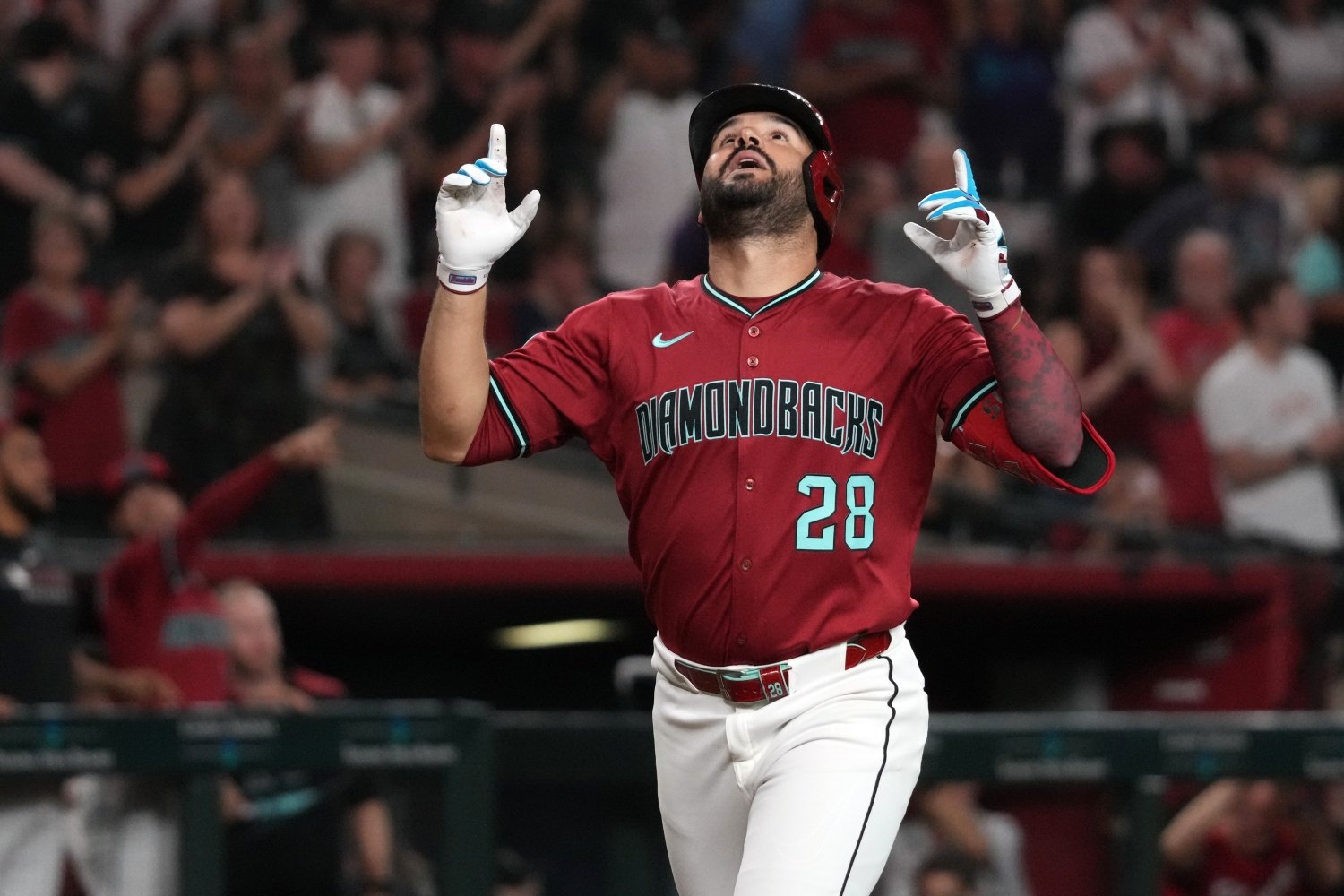 A team like the Milwaukee Brewers always has to be thinking beyond the season at hand. They always have to be working on player development, which means maintaining depth, exercising patience, and keeping lanes to playing time open for players under long-term team control. That comes with certain opportunity costs, but it's how a small-market team blossoms into a miniature dynasty. It's Matt Arnold's cross to bear—and Pat Murphy's, too. This year, the dilemma that organizational setup is posing for the team comes in the form of Eugenio Suárez, who is positively perfect for a team lacking only right-handed power in the lineup on the champion's checklist. A free agent at year's end, Suárez looks like as good a fit as any team could ask for, when they already boast a young, cost-controlled core and have the best record in baseball. Alas, he plays third base—where the Brewers have benefited tremendously from the production of an ever-improving Caleb Durbin, the diminutive rookie whom they control through 2031. Adding Suárez would throw a roadblock in front of a key player who was the centerpiece of an offseason deal for the team's former relief ace, who has delivered huge value for them and embodies their whole philosophy and identity neatly. On the other hand, this team has been around a long time, and they've never won the World Series. Not since 1982 have they had as good and clear a chance to change that, and there's no alternative acquisition who would advance those odds as well as Suárez would. That creates a quandary. Here's where having Murphy in the manager's office should make the key difference for this team. Murphy demands that the Brewers play hard-nosed, take-what-they-can't-keep-from-you baseball. He trusts veterans more than young players, but demands the same energy and high-intensity play from those veterans that he can get from those youngsters. He's a tough-love skipper in the old-school mold, as he proved when he benched Joey Ortiz recently for a failure not to run out a ball or show up hours before a game, but to make the kind of high-caliber swing decisions he expects. He will bring young players along; he's proven that. He also won't coddle them, and as a result, everyone in that clubhouse already understands and expects him to treat them with the respect they earn—and no more. He's shown them that he won't unduly bend to the whims of the highest-paid players in the room, by often sitting Rhys Hoskins when he struggled last year and batting the respected veteran sixth even when he's hit well this season. Murphy is willing to move players around defensively. He's willing to communicate, compassionately but bluntly, that certain players won't play every day, and to hold them to a high standard of preparation and performance, anyway. He's the perfect guy to manage the juggling act that will become necessary if this team lands Suárez. Durbin would need to play second base against most left-handed starters. That's just fine; it's his best defensive position anyway. Brice Turang is easily replaceable in those situations, with a .273/.316/.327 line against them this year. Against righties, meanwhile, Durbin could find the odd day in the outfield, or (if Turang can slide to short, which Murphy doesn't want to do but is open to) at the expense of Joey Ortiz. He would lose playing time for the balance of this year, and he'd lose a lot of reps at third base, but that's how the game goes. Murphy is one of the best skippers you could ask for, if you needed to communicate that to a young player enjoying a low-grade breakout. There's some emotional scar tissue in that room, but there's also a lot of solid leadership. Suárez, one of the game's more lovable players, would fit nicely there, and his personality would provide further insulation against friction. Murphy could make this work; it wouldn't derail or degrade Durbin's development. Meanwhile, the Brewers would become slightly more likely to finally make it back to the World Series for the first time in over 40 years. They'd be a powerhouse for the balance of this year, and their development pipeline would easily backfill the young pitchers they would have to trade to acquire Suárez. They're in a good position to strike, not only in terms of the strength of their farm system and their place in the standings, but based on how their manager has run the show over his first season and a half at the helm. They ought to leverage that.
- 25 comments
-
- 1
-
-
- eugenio suarez
- caleb durbin
- (and 2 more)
-
Image courtesy of © Jonathan Hui-Imagn Images The 162-game grind of an MLB season is a marathon. But here's the thing: sometimes, early in a marathon, you get tangled up with another runner and take a digger, or you're waylaid by a bathroom break, or you just can't get loose. If that happens to you, you can either give up on keeping the pace and meeting the goal you set throughout your training, or you can accept a bit of extra pain and push your way back to that goal. And at some point, if you elect the latter, you have to stop thinking of it as a marathon. Once you're behind your pace, it's a sprint, and it stays a sprint until you cross the finish line. The Brewers ate Chipotle the night before the 2025 MLB season, and they got locked in a portable toilet three miles into their marathon. Ever since, they've had to run slightly faster than they'd planned, to catch up to the buddy they expected to run with. Now, though, they've done it. It's no longer a 162-game sprint. Both the Brewers and the Cubs play 63 games over the next 70 days. They have identical 59-40 records. From here, it's a sprint. What the team has already accomplished is remarkable. FanGraphs still has the Cubs as favorites in this head-to-head battle for Central supremacy, but the margins are much smaller than they were two weeks ago—and obviously, those probabilities only matter if you think the projection systems on which it's based accurately capture each team's true talent. Both the Brewers and the Cubs can make the playoffs, of course, and that now looks like a near-lock. Notice that the Crew's chances to reach October had sagged into the 12% range in the second half of May, before they began this steady gathering of momentum. By the projections' reckoning, then, the team now has over a 90% chance of making the playoffs. Just two months ago, they had chances roughly equivalent to flipping a coin and getting heads three times in a row. The big difference between winning the division and not doing so is avoiding the Wild Card Series that has been such a bane for the Brewers the last two years. Whether they can outlast the Cubs or not, though, the Crew benefit from having gotten this hot for this long. They're now in good position to win the first Wild Card berth even if they don't claim the divisional crown, which would mean hosting the Wild Card Series again. If we lock in on the chances for each team to reach the NLDS, we can see a similar magnitude of improvement in the last two months by Milwaukee. Sticking with our coin-flipping analogy, two months ago, the team was four flips coming up heads from the NLDS. Now, they're better than 50/50 even on the first flip. For many Brewers fans, it would provide at least some psychic relief just to break out of the new outskirts added to the postseason by the recent changes in format. The odds of that have dramatically improved of late, not only because the Brewers have caught the Cubs, but because they've swept the Dodgers in their season series, giving them a leg up on Los Angeles if the two finish with similar records. Home-field advantage throughout the playoffs is becoming a distinct possibility. Let's talk about the level of success that would provide even more catharsis, though. The Brewers haven't been back to the NLCS since they lost Game 7 to the Dodgers in 2018. At their lowest, the Crew were equivalent to needing six straight coins to land on heads in order to get back to the doorstep of the World Series. Now, they've (metaphorically) won four of those already; they just need to win two more. The Dodgers have been in a class of their own since this year's projections came out. Below them, though, there was a lot of uncertainty. For a long time, once things began to separate out, there was one group a bit behind Los Angeles and close to one another (the Phillies, Mets and Cubs) and another farther back, but within shouting distance (the Giants, Padres and Diamondbacks). Now, the Brewers have surged up from just below that second cluster to a legitimate member of the first. They're playing well enough to get even the statistical models to view them as the equals of big-market behemoths from New York, Philadelphia, Chicago, and L.A. It's a huge change. On nine of every 10 days for the next 10 weeks, the Cubs and Brewers will each play, and (when not playing each other) fans will obsessively check standings and scoreboards. The long season has been condensed to a short burst of major heat and intensity. The stakes of the trade deadline are rising fast. This is going to be an electrifying final 63 games. View full article
-
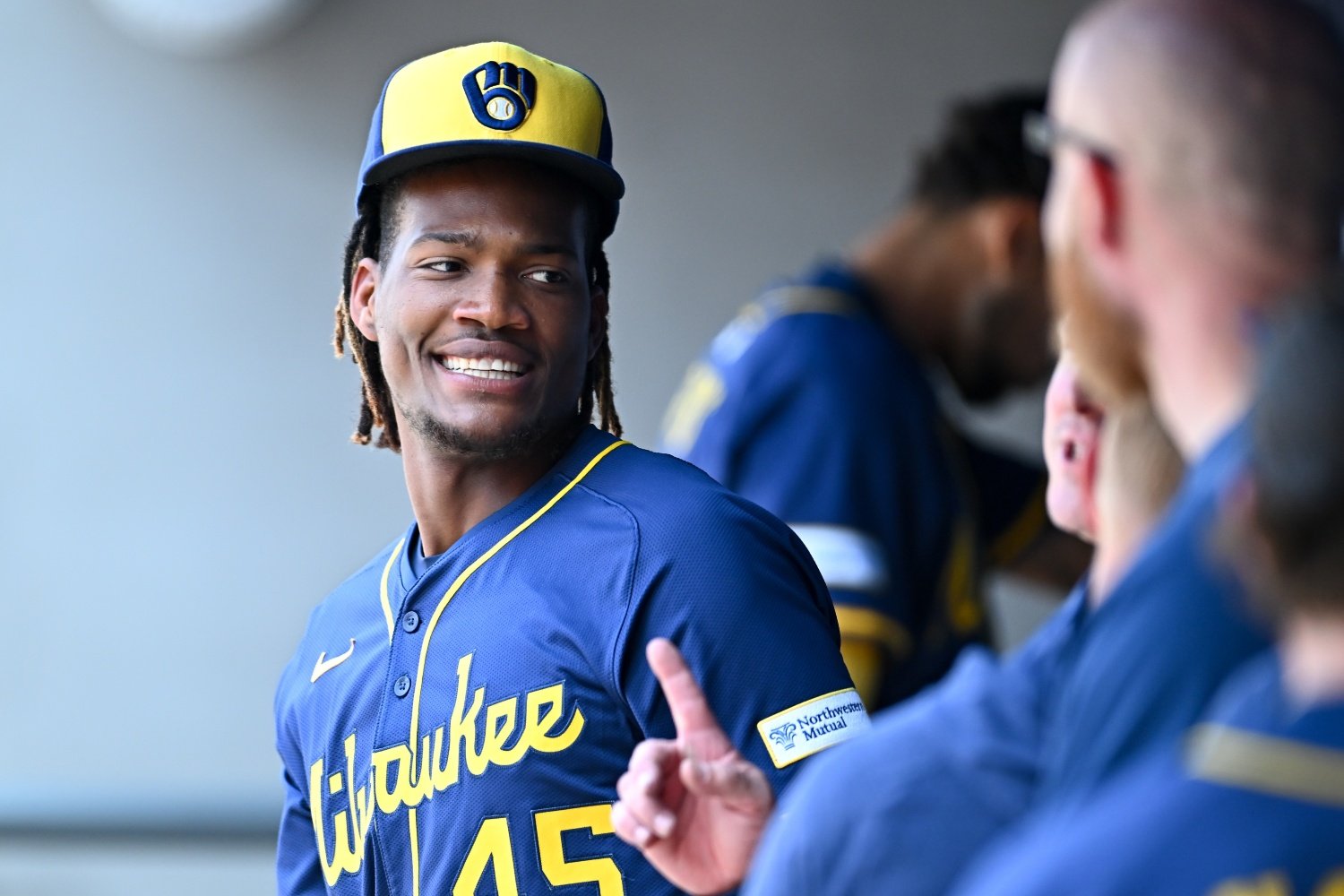 The 162-game grind of an MLB season is a marathon. But here's the thing: sometimes, early in a marathon, you get tangled up with another runner and take a digger, or you're waylaid by a bathroom break, or you just can't get loose. If that happens to you, you can either give up on keeping the pace and meeting the goal you set throughout your training, or you can accept a bit of extra pain and push your way back to that goal. And at some point, if you elect the latter, you have to stop thinking of it as a marathon. Once you're behind your pace, it's a sprint, and it stays a sprint until you cross the finish line. The Brewers ate Chipotle the night before the 2025 MLB season, and they got locked in a portable toilet three miles into their marathon. Ever since, they've had to run slightly faster than they'd planned, to catch up to the buddy they expected to run with. Now, though, they've done it. It's no longer a 162-game sprint. Both the Brewers and the Cubs play 63 games over the next 70 days. They have identical 59-40 records. From here, it's a sprint. What the team has already accomplished is remarkable. FanGraphs still has the Cubs as favorites in this head-to-head battle for Central supremacy, but the margins are much smaller than they were two weeks ago—and obviously, those probabilities only matter if you think the projection systems on which it's based accurately capture each team's true talent. Both the Brewers and the Cubs can make the playoffs, of course, and that now looks like a near-lock. Notice that the Crew's chances to reach October had sagged into the 12% range in the second half of May, before they began this steady gathering of momentum. By the projections' reckoning, then, the team now has over a 90% chance of making the playoffs. Just two months ago, they had chances roughly equivalent to flipping a coin and getting heads three times in a row. The big difference between winning the division and not doing so is avoiding the Wild Card Series that has been such a bane for the Brewers the last two years. Whether they can outlast the Cubs or not, though, the Crew benefit from having gotten this hot for this long. They're now in good position to win the first Wild Card berth even if they don't claim the divisional crown, which would mean hosting the Wild Card Series again. If we lock in on the chances for each team to reach the NLDS, we can see a similar magnitude of improvement in the last two months by Milwaukee. Sticking with our coin-flipping analogy, two months ago, the team was four flips coming up heads from the NLDS. Now, they're better than 50/50 even on the first flip. For many Brewers fans, it would provide at least some psychic relief just to break out of the new outskirts added to the postseason by the recent changes in format. The odds of that have dramatically improved of late, not only because the Brewers have caught the Cubs, but because they've swept the Dodgers in their season series, giving them a leg up on Los Angeles if the two finish with similar records. Home-field advantage throughout the playoffs is becoming a distinct possibility. Let's talk about the level of success that would provide even more catharsis, though. The Brewers haven't been back to the NLCS since they lost Game 7 to the Dodgers in 2018. At their lowest, the Crew were equivalent to needing six straight coins to land on heads in order to get back to the doorstep of the World Series. Now, they've (metaphorically) won four of those already; they just need to win two more. The Dodgers have been in a class of their own since this year's projections came out. Below them, though, there was a lot of uncertainty. For a long time, once things began to separate out, there was one group a bit behind Los Angeles and close to one another (the Phillies, Mets and Cubs) and another farther back, but within shouting distance (the Giants, Padres and Diamondbacks). Now, the Brewers have surged up from just below that second cluster to a legitimate member of the first. They're playing well enough to get even the statistical models to view them as the equals of big-market behemoths from New York, Philadelphia, Chicago, and L.A. It's a huge change. On nine of every 10 days for the next 10 weeks, the Cubs and Brewers will each play, and (when not playing each other) fans will obsessively check standings and scoreboards. The long season has been condensed to a short burst of major heat and intensity. The stakes of the trade deadline are rising fast. This is going to be an electrifying final 63 games.
 -
 It doesn't take all that much to be a great pitcher, when you start with a triple-digit sinker with heavy action and ample arm-side run. Abner Uribe has those ingredients, and his slider is a nasty weapon, too, so he's never needed much of a third pitch. That said, last season demonstrated how thin the line between dominance and fungibility can be for a would-be high-leverage reliever. To become the co-relief ace of the resilient, playoff-focused Brewers, Uribe had to come back in 2025 as a more refined version of himself, even if that didn't mean adding anything to his arsenal. The trick, to no one's surprise, turns out to have been to throw more strikes. Every pitcher should work to fill up the zone as much as is practical, but what's practical is different for every hurler. If you can throw 101 miles per hour with that aforementioned heaviness and a funky arm slot, there's virtually no point at which the returns on hitting the zone begin to diminish, but getting to the threshold at the lower end of that range—throwing enough strikes to be playable, let alone overpowering—is the challenge. When your arm can whip like that, getting the tip of the whip to land just right at the moment when you release the pitch is a monumental mechanical challenge. This year, though, Uribe has solved that problem of biophysics. Here's a heat map showing the locations of his sliders in 2023 and 2024. And here's the same image, for 2025. Roughly 47% of the sliders Uribe threw to big-league batters in 2023 and 2024 ended up as balls. This season, between landing that pitch in the strike zone with so much greater regularity and (thanks to that demonstrated control and the tunneling effect of his better-located slider with the sinker) inducing chases, only 35.6% of his sliders have been balls. That difference is enormous, and for hitters, it's lethal. The interesting question, of course, is how he's achieved that improvement. Part of it can be ascribed to his maturity, which the team has universally and enthusiastically praised since spring training. He's brought a tougher and better mental approach almost every time he's taken the mound this year, which does show up in the way one repeats their delivery and (as a result) how well they can control the ball. Another part, though, is that Uribe has lowered his arm angle this year, partially by cleaning up his posture throughout his delivery. His average arm angle is down on each of his pitches, but the slider is where it's shown up most. Here's Uribe missing with an 0-2 slider last March against the Mets. NU53bzFfWGw0TUFRPT1fQWxOV1hBVURWUXNBVzFJREFBQUFVZ1FEQUFNRkJRUUFDZ2NBQlFRQkJnRUdVVkZl.mp4 Brandon Nimmo is a good, patient hitter, but this also isn't a competitive pitch; it didn't even tempt him. Look at the position of Uribe's body and arm at the release point. When you tilt your spine and fall off toward the glove side of the mound as much as Uribe did last year, it creates problems in commanding the ball—especially the breaking ball. With a high arm angle on a slider on which we was trying to impart mostly sidespin, Uribe made it very hard to hit any location other than the one where this pitch ended up, off the plate to that first-base side. Here's a pitch on which Uribe got the Cubs' Matt Shaw to escape a huge jam in a key Brewers win last month. TkE5YXpfVjBZQUhRPT1fQndrRVVGSlJWQU1BRFZOV0F3QUhDUVJYQUFNR0FBQUFBVlVEVTFFR1V3VmNBRk1I.mp4 Obviously, this is still a highly kinetic, athletic, even frenetic delivery. Subtly, though, it's much better-controlled. Here's where Uribe was when he released that pitch. His spine isn't tilted as far, so his arm comes through under more control. With less of an exaggerated elevation in the arm slot, he could work around the ball better, without necessarily pulling it off the outside corner. This pitch almost backs up on him, in fact, but it has more than enough movement to frustrate a hitter and induce weak contact or a whiff, especially because it appears to start on the same trajectory as his sinker would. Here's another instance of him landing the pitch for a strike this year, against the Phillies. MTZxSzNfWGw0TUFRPT1fQjFBRkJsWU5Yd0FBRFFBTFVnQUhDRk1DQUFNR1VnUUFCUUVDVXdVR0IxVlNCUUJX.mp4 Again, he can put plenty of white around that ball, not only getting it in the zone but giving plenty of cushion within it. This altered mechanical version of him has that ability to line up with the plate, and the sheer power and movement of his two key offerings make it relatively safe to do so. Many pitchers get hurt when they let a slider land on the inner half of the plate to a same-handed batter. Not Uribe. Even with the pitch pouring into the zone, this season, opposing batters have an average exit velocity under 80 miles per hour against it and are slugging .250. Uribe is, perhaps quietly, the best pitcher on the Brewers this year. His 78 DRA-, at Baseball Prospectus, is bested only by Brandon Woodruff's 74, and Woodruff has only two appearances so far. His development as a person has been important, but so has his improved mechanical profile, and a better understanding of what makes his stuff great. Now that his slider can find the zone consistently, he's nigh unhittable, and he helps make the Brewers almost invincible if the game is close in the late innings.
 -
Image courtesy of © Jeff Hanisch-Imagn Images It doesn't take all that much to be a great pitcher, when you start with a triple-digit sinker with heavy action and ample arm-side run. Abner Uribe has those ingredients, and his slider is a nasty weapon, too, so he's never needed much of a third pitch. That said, last season demonstrated how thin the line between dominance and fungibility can be for a would-be high-leverage reliever. To become the co-relief ace of the resilient, playoff-focused Brewers, Uribe had to come back in 2025 as a more refined version of himself, even if that didn't mean adding anything to his arsenal. The trick, to no one's surprise, turns out to have been to throw more strikes. Every pitcher should work to fill up the zone as much as is practical, but what's practical is different for every hurler. If you can throw 101 miles per hour with that aforementioned heaviness and a funky arm slot, there's virtually no point at which the returns on hitting the zone begin to diminish, but getting to the threshold at the lower end of that range—throwing enough strikes to be playable, let alone overpowering—is the challenge. When your arm can whip like that, getting the tip of the whip to land just right at the moment when you release the pitch is a monumental mechanical challenge. This year, though, Uribe has solved that problem of biophysics. Here's a heat map showing the locations of his sliders in 2023 and 2024. And here's the same image, for 2025. Roughly 47% of the sliders Uribe threw to big-league batters in 2023 and 2024 ended up as balls. This season, between landing that pitch in the strike zone with so much greater regularity and (thanks to that demonstrated control and the tunneling effect of his better-located slider with the sinker) inducing chases, only 35.6% of his sliders have been balls. That difference is enormous, and for hitters, it's lethal. The interesting question, of course, is how he's achieved that improvement. Part of it can be ascribed to his maturity, which the team has universally and enthusiastically praised since spring training. He's brought a tougher and better mental approach almost every time he's taken the mound this year, which does show up in the way one repeats their delivery and (as a result) how well they can control the ball. Another part, though, is that Uribe has lowered his arm angle this year, partially by cleaning up his posture throughout his delivery. His average arm angle is down on each of his pitches, but the slider is where it's shown up most. Here's Uribe missing with an 0-2 slider last March against the Mets. NU53bzFfWGw0TUFRPT1fQWxOV1hBVURWUXNBVzFJREFBQUFVZ1FEQUFNRkJRUUFDZ2NBQlFRQkJnRUdVVkZl.mp4 Brandon Nimmo is a good, patient hitter, but this also isn't a competitive pitch; it didn't even tempt him. Look at the position of Uribe's body and arm at the release point. When you tilt your spine and fall off toward the glove side of the mound as much as Uribe did last year, it creates problems in commanding the ball—especially the breaking ball. With a high arm angle on a slider on which we was trying to impart mostly sidespin, Uribe made it very hard to hit any location other than the one where this pitch ended up, off the plate to that first-base side. Here's a pitch on which Uribe got the Cubs' Matt Shaw to escape a huge jam in a key Brewers win last month. TkE5YXpfVjBZQUhRPT1fQndrRVVGSlJWQU1BRFZOV0F3QUhDUVJYQUFNR0FBQUFBVlVEVTFFR1V3VmNBRk1I.mp4 Obviously, this is still a highly kinetic, athletic, even frenetic delivery. Subtly, though, it's much better-controlled. Here's where Uribe was when he released that pitch. His spine isn't tilted as far, so his arm comes through under more control. With less of an exaggerated elevation in the arm slot, he could work around the ball better, without necessarily pulling it off the outside corner. This pitch almost backs up on him, in fact, but it has more than enough movement to frustrate a hitter and induce weak contact or a whiff, especially because it appears to start on the same trajectory as his sinker would. Here's another instance of him landing the pitch for a strike this year, against the Phillies. MTZxSzNfWGw0TUFRPT1fQjFBRkJsWU5Yd0FBRFFBTFVnQUhDRk1DQUFNR1VnUUFCUUVDVXdVR0IxVlNCUUJX.mp4 Again, he can put plenty of white around that ball, not only getting it in the zone but giving plenty of cushion within it. This altered mechanical version of him has that ability to line up with the plate, and the sheer power and movement of his two key offerings make it relatively safe to do so. Many pitchers get hurt when they let a slider land on the inner half of the plate to a same-handed batter. Not Uribe. Even with the pitch pouring into the zone, this season, opposing batters have an average exit velocity under 80 miles per hour against it and are slugging .250. Uribe is, perhaps quietly, the best pitcher on the Brewers this year. His 78 DRA-, at Baseball Prospectus, is bested only by Brandon Woodruff's 74, and Woodruff has only two appearances so far. His development as a person has been important, but so has his improved mechanical profile, and a better understanding of what makes his stuff great. Now that his slider can find the zone consistently, he's nigh unhittable, and he helps make the Brewers almost invincible if the game is close in the late innings. View full article
-
... Is anyone acting like that? I'm earnestly asking; it might be something on Twitter or in the forums or whatever. But our consistent message here, from front-page writers, has been that the offense is producing like mad lately. There are legitimate questions of sustainability, which even the team itself is aware of, but the offense has been an ENGINE of the team's success for the last month-plus.
-
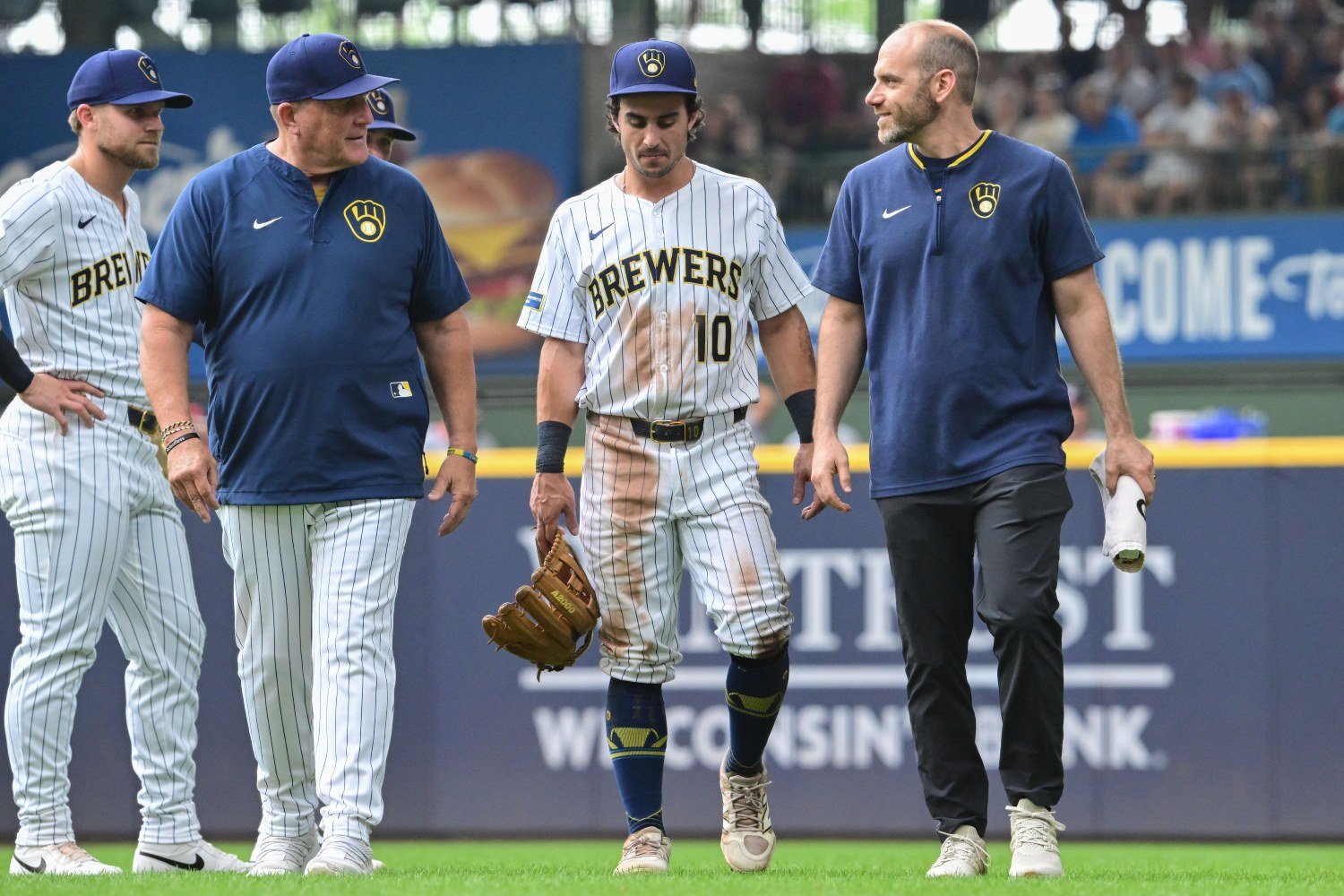 It seems overwhelmingly likely that the Brewers will take the field Friday to begin the second half without Sal Frelick. The team's everyday right fielder and leadoff man will probably require an injured-list placement, and if he turns out to have a hamstring strain of any severity, he'll be out until at least mid-August. That leaves a gaping hole in the team's plans, not because they lack depth—they don't—but because of how well Frelick has played all season. He's batting .294/.354/.404 this year, with a terrific strikeout rate of 12.7% and 17 stolen bases in 21 tries. He's continued to play excellent defense in right field, and his bat speed and quality of contact this year are greatly improved. Replacing Frelick on the roster would be relatively easy. Blake Perkins is ready and waiting at Triple-A Nashville. His entire first half was wiped out by the foul ball he hit off his own leg early in camp, and by unexpected setbacks on his rehab journey. Now, however, he's set to return, and his combination of solid switch-hitting skills and elite outfield defense should make him the natural choice. He can play center field much of the time, pushing Jackson Chourio to right. Isaac Collins's emergence as a solidly above-average player has made this blow much easier to absorb than it might have been otherwise. With him, Chourio, Perkins and Christian Yelich all in the mix, the team has good outfield depth. They have versatile players all over the roster, too, including Caleb Durbin (who played the outfield at times in the minors), Anthony Seigler and Jake Bauers. Offensively, though, Frelick's value will be harder to replicate. Garrett Mitchell is the kind of dynamic hitter who could step into the void, but he's gone for the year with his own injury. Frelick has a 108 projected wRC+ for the balance of the year, according to the ZiPS projection system. Collins (103) is close to that level, but he was already a part of the everyday lineup. This absence, if it lasts for any length of time, will mean more time for Bauers (98), Perkins (83), and/or Seigler (77). That leaves Pat Murphy with some challenges in constructing his batting order, especially with Rhys Hoskins still on the shelf. Against right-handed starters, we could see a starting nine of: Brice Turang - 2b Jackson Chourio - rf Christian Yelich - dh William Contreras - c Isaac Collins - lf Andrew Vaughn - 1b Caleb Durbin - 3b Blake Perkins - cf Joey Ortiz - ss That's missing some of the punch that the team used to get in the middle third, though. Hoskins could punish pitchers for letting traffic accumulate on the bases, and Turang was an effective all-fields threat. Having Vaughn stand in for Hoskins and Turang forced to slide way up to replace Frelick thins things out at the bottom. Hopefully, a few days of rest will get Frelick right more than expected. There's still a chance he plays even this weekend, and certainly one that he plays before the end of the month. If the team has to get by without him for a prolonged period, though, it's going to be hard for the lineup to continue churning out runs the way they have over the last two months.
- 8 comments
-
- 1
-
-
- sal frelick
- blake perkins
- (and 2 more)
-
Image courtesy of © Benny Sieu-Imagn Images It seems overwhelmingly likely that the Brewers will take the field Friday to begin the second half without Sal Frelick. The team's everyday right fielder and leadoff man will probably require an injured-list placement, and if he turns out to have a hamstring strain of any severity, he'll be out until at least mid-August. That leaves a gaping hole in the team's plans, not because they lack depth—they don't—but because of how well Frelick has played all season. He's batting .294/.354/.404 this year, with a terrific strikeout rate of 12.7% and 17 stolen bases in 21 tries. He's continued to play excellent defense in right field, and his bat speed and quality of contact this year are greatly improved. Replacing Frelick on the roster would be relatively easy. Blake Perkins is ready and waiting at Triple-A Nashville. His entire first half was wiped out by the foul ball he hit off his own leg early in camp, and by unexpected setbacks on his rehab journey. Now, however, he's set to return, and his combination of solid switch-hitting skills and elite outfield defense should make him the natural choice. He can play center field much of the time, pushing Jackson Chourio to right. Isaac Collins's emergence as a solidly above-average player has made this blow much easier to absorb than it might have been otherwise. With him, Chourio, Perkins and Christian Yelich all in the mix, the team has good outfield depth. They have versatile players all over the roster, too, including Caleb Durbin (who played the outfield at times in the minors), Anthony Seigler and Jake Bauers. Offensively, though, Frelick's value will be harder to replicate. Garrett Mitchell is the kind of dynamic hitter who could step into the void, but he's gone for the year with his own injury. Frelick has a 108 projected wRC+ for the balance of the year, according to the ZiPS projection system. Collins (103) is close to that level, but he was already a part of the everyday lineup. This absence, if it lasts for any length of time, will mean more time for Bauers (98), Perkins (83), and/or Seigler (77). That leaves Pat Murphy with some challenges in constructing his batting order, especially with Rhys Hoskins still on the shelf. Against right-handed starters, we could see a starting nine of: Brice Turang - 2b Jackson Chourio - rf Christian Yelich - dh William Contreras - c Isaac Collins - lf Andrew Vaughn - 1b Caleb Durbin - 3b Blake Perkins - cf Joey Ortiz - ss That's missing some of the punch that the team used to get in the middle third, though. Hoskins could punish pitchers for letting traffic accumulate on the bases, and Turang was an effective all-fields threat. Having Vaughn stand in for Hoskins and Turang forced to slide way up to replace Frelick thins things out at the bottom. Hopefully, a few days of rest will get Frelick right more than expected. There's still a chance he plays even this weekend, and certainly one that he plays before the end of the month. If the team has to get by without him for a prolonged period, though, it's going to be hard for the lineup to continue churning out runs the way they have over the last two months. View full article
-
William Contreras's Bat Speed is Back, but Not His Power. Why?
Matthew Trueblood posted an article in Brewers
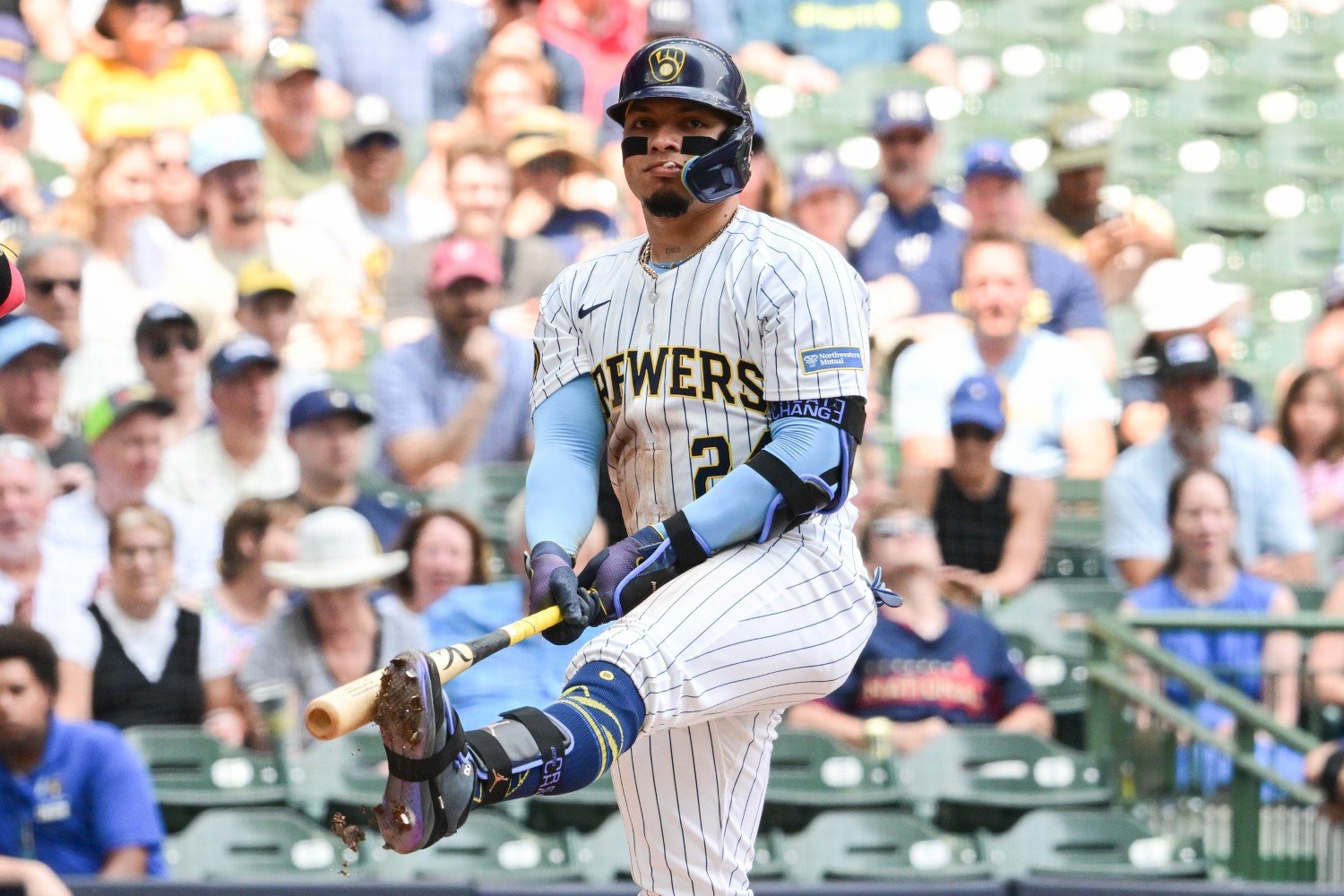 It's hard to pinpoint just what's missing for William Contreras, at this point. A month ago, it seemed obvious: his fractured finger was sapping his ability to swing the bat at the speed to which he's accustomed. His exit velocity was down accordingly, and although he was gamely putting together good at-bats and forcing pitchers to fill up the zone to get him out, he had lost any semblance of the danger he posed at the plate throughout 2023 and 2024. His strikeout rate is a career-best 18.2%, and his walk rate is a downright elite 14.4%, but he's largely been a singles hitter. Now, though, he's gotten the lightning back. Of the 12 games this year in which he's averaged bat speed higher than 75 miles per hour, half have come since June 23. He can swing fast again, on a consistent basis. You'd expect to see a corresponding rise in production—but alas, that expectation would be confounded. In his final 100 plate appearances of the first half, Contreras slugged .329. He also walked more than he struck out; he's fighting to create value. If his power is going to be this stubbornly absent, though, it's going to be nearly impossible for him to be an above-average hitter over the grind of the second half. Troublingly, it looks like Contreras has generated his restored bat speed not by having his finger heal and the full strength and confidence in that hand return, but by adjusting his stance and stride to draw extra bat speed from his powerful lower half. Compare this clip of Contreras from mid-May: Wng0TVhfWGw0TUFRPT1fQVFsVVVGSU5Vd0VBV2xkUVV3QUhCd0JVQUZnR0FBUUFBVlFEVXdRQkJ3dFRVd0Zm.mp4 to this one, from the series against the Dodgers last week: WEQyNGpfWGw0TUFRPT1fQkZVQ1VnSldVVllBQ1ZwVFVnQUhBbEJRQUZoVVVsWUFWbGRSQUFZTkFRUUdWRmNF.mp4 By drawing back earlier and lunging forward a bit more, Contreras can create more sheer force through the zone than he could even a month or two ago. However, that only pays off if you can deliver the barrel to the ball. The above is a good example of a swing that might have been packed with plenty of power, but on which he barely got a piece. It still turned into a hit, but this certainly wasn't going to become an extra-base knock, no matter what. Contreras's stride is about 2 inches longer this month than it was in May. He's starting more upright, and instead of stepping far toward third base, he's striding slightly more directly forward, from a more open stance. Here's his stance and stride as visualized by Baseball Savant, for May: And here's the same visual for July. He's used that longer stride to find more bat speed, but when one overstrides (even slightly), it creates some problems for the hitter. The bat might be moving faster, but it has to cover a slightly longer arc; getting through the ball and catching it out front or on an upward trajectory is difficult. Thus, Contreras's actual exit velocity is 1.4 miles per hour lower this month than it was in May, despite an uptick in bat speed. Hopefully, the All-Star break will provide the Brewers' star catcher with the time he needs to recover a bit more and get the sizzle back into his hands. Even if that's true, though, it'll be hard to hold out much hope that it will endure, since the resumption of everyday duty will probably bring whatever weakness or soreness he's been dealing with right back into the picture. It's great to see him doing creative problem-solving at the plate, and his .366 on-base percentage kept him useful even during that final month before the break, but the Brewers can't keep having him bat in the heart of the order the rest of the way. They need more power from those spots than Contreras can provide right now, and the ways he's found to get a bit closer to that pop (while admirable) are neither sustainable nor sufficient.
 -
Image courtesy of © Benny Sieu-Imagn Images It's hard to pinpoint just what's missing for William Contreras, at this point. A month ago, it seemed obvious: his fractured finger was sapping his ability to swing the bat at the speed to which he's accustomed. His exit velocity was down accordingly, and although he was gamely putting together good at-bats and forcing pitchers to fill up the zone to get him out, he had lost any semblance of the danger he posed at the plate throughout 2023 and 2024. His strikeout rate is a career-best 18.2%, and his walk rate is a downright elite 14.4%, but he's largely been a singles hitter. Now, though, he's gotten the lightning back. Of the 12 games this year in which he's averaged bat speed higher than 75 miles per hour, half have come since June 23. He can swing fast again, on a consistent basis. You'd expect to see a corresponding rise in production—but alas, that expectation would be confounded. In his final 100 plate appearances of the first half, Contreras slugged .329. He also walked more than he struck out; he's fighting to create value. If his power is going to be this stubbornly absent, though, it's going to be nearly impossible for him to be an above-average hitter over the grind of the second half. Troublingly, it looks like Contreras has generated his restored bat speed not by having his finger heal and the full strength and confidence in that hand return, but by adjusting his stance and stride to draw extra bat speed from his powerful lower half. Compare this clip of Contreras from mid-May: Wng0TVhfWGw0TUFRPT1fQVFsVVVGSU5Vd0VBV2xkUVV3QUhCd0JVQUZnR0FBUUFBVlFEVXdRQkJ3dFRVd0Zm.mp4 to this one, from the series against the Dodgers last week: WEQyNGpfWGw0TUFRPT1fQkZVQ1VnSldVVllBQ1ZwVFVnQUhBbEJRQUZoVVVsWUFWbGRSQUFZTkFRUUdWRmNF.mp4 By drawing back earlier and lunging forward a bit more, Contreras can create more sheer force through the zone than he could even a month or two ago. However, that only pays off if you can deliver the barrel to the ball. The above is a good example of a swing that might have been packed with plenty of power, but on which he barely got a piece. It still turned into a hit, but this certainly wasn't going to become an extra-base knock, no matter what. Contreras's stride is about 2 inches longer this month than it was in May. He's starting more upright, and instead of stepping far toward third base, he's striding slightly more directly forward, from a more open stance. Here's his stance and stride as visualized by Baseball Savant, for May: And here's the same visual for July. He's used that longer stride to find more bat speed, but when one overstrides (even slightly), it creates some problems for the hitter. The bat might be moving faster, but it has to cover a slightly longer arc; getting through the ball and catching it out front or on an upward trajectory is difficult. Thus, Contreras's actual exit velocity is 1.4 miles per hour lower this month than it was in May, despite an uptick in bat speed. Hopefully, the All-Star break will provide the Brewers' star catcher with the time he needs to recover a bit more and get the sizzle back into his hands. Even if that's true, though, it'll be hard to hold out much hope that it will endure, since the resumption of everyday duty will probably bring whatever weakness or soreness he's been dealing with right back into the picture. It's great to see him doing creative problem-solving at the plate, and his .366 on-base percentage kept him useful even during that final month before the break, but the Brewers can't keep having him bat in the heart of the order the rest of the way. They need more power from those spots than Contreras can provide right now, and the ways he's found to get a bit closer to that pop (while admirable) are neither sustainable nor sufficient. View full article
-
Yeah, Bregman's not going anywhere. For the life of ME, I can't figure understand people's lack of vision with regard to McMahon as a post-Rockies reclamation project who can be acquired cheaply. So I guess we're at an impasse. 😄 Bat speed's way up this year. Lifting the ball, pulling the ball, lifting the ball to the pull field way more than ever before. Great patience at the plate, extreme combination of fluid athleticism and soft hands at third. Swing-and-miss is an issue, but not an insurmountable one. Dude's had some success in the big leagues and is trapped in the worst org in baseball. Rescuing him would be a good idea.
- 37 replies
-
- 4
-
-
- maikel garcia
- ryan mcmahon
- (and 2 more)
-
Image courtesy of © David Frerker-Imagn Images It's been a very uneven season for Brewers shortstop Joey Ortiz—so much so that, despite early patience from the team and a resurgence that briefly rewarded it, manager Pat Murphy benched Ortiz for an unacceptable approach at the plate in the week before the All-Star break. Caleb Durbin's trajectory seems to be more stable, and he's batting .308/.400/.421 since June 1, but don't overlook his splits. Against right-handed pitchers, Durbin is still hitting just .232/.329/.316 this year, and even that is propped up by 11 times being hit by pitches. That skill is likely to stick around for him, but it's not enough to make him a good hitter against right-handed hurlers. His .921 OPS against southpaws is disguising a real vulnerability there, and his ideal role might be as a platoon partner for Brice Turang and a utility man. Therefore, you can't go far lately without hearing Brewers fans discussing the possibility of a trade before this month's MLB trade deadline to bring in a superior infield option for the team. Now that they trail the Chicago Cubs by just one game in the NL Central and are one of the best teams on the senior circuit, the urgency and interest of those conversations have only risen. To clarify the banter a bit, here are the 12 players who could feasibly be on Matt Arnold's radar in the coming fortnight, ranked from most to least desirable as Brewers targets. 1. Maikel García - IF - Kansas City Royals This would be one of those moonshot trades, the likes of which I've already begged the Brewers to do this month. The cost would be astronomical—but so could the returns on investment be. García, 25, has four and a half years of team control left, though he'll be eligible for arbitration as a Super Two guy in 2026. He's an American League All-Star this year, so named after batting .297/.354/.454 in 386 plate appearances in the first half. He has 25 doubles, three triples and eight home runs this year, and although he's been much less efficient on the bases this year than when he stole 37 bags in 39 tries in 2024, he can have an impact on the bases, too. A right-handed batter, his bat speed is up this year, and he's lifting it more, but the swing decisions have come a long way in a short time. His 13.5% strikeout rate and 8.0% walk rate are each the best of his career, and would be the best of many people's. Defensively, the fit would be perfect. García is a perfectly competent shortstop who (thanks to his more famous and higher-paid teammate, Bobby Witt Jr.) plays third base for the Royals instead. That, along with the fact that García will start making real money next season and get expensive before he reaches free agency, is why he could be pried away from Kansas City, if the price is right. It would also allow him to slide gorgeously into the fluid left side of the Milwaukee infield, playing lots of short but (if Ortiz isn't involved in the deal, which he might well be) sometimes sliding over to the hot corner, too. Yes, the cost would be huge, but García is a great fit for the team and would be a long-term addition. 2. Josh Smith - UTIL - Texas Rangers Same song, different verse. Smith is older (28 next month), one year closer to free agency, and not a Super Two guy, and he bats left-handed, rather than right. Everything else about García is largely true of Smith, though, from the Rangers not being able to play him at shortstop—they have 325 million reasons to let Corey Seager age as slowly as possible—to the improving contact skills. Smith doesn't hit the ball as hard as García does, but at .277/.353/.416, he's a well-rounded hitter. He's also a versatile fielder, and the fact that his best spot is third base works perfectly. He has an .845 OPS against righties this year but has scuffled against lefties; he'd become a medium-term not-quite-everyday infielder and a partner to Durbin for the balance of 2025. Again, the price tag would be big, but Smith is a plug-and-play upgrade to the roster and his style suits the Brewers' well. 3. Ryan McMahon - 3B - Colorado Rockies This potential fit has been talked to death, so I won't rehash it here. You can find a full breakdown of what makes him intriguing, despite his rough numbers for the worst team ever, here. For now, suffice it to say that McMahon would offer two and a half years of control, with the ability to slide over to first base if his bat plays the way I think it would with the Brwwers. If not (or if the need is just so much more pronounced at third that such a move is unthinkable), he'd certainly be a good balance for Durbin, just as Smith would. His contract would keep the price in young talent low. McMahon is also a tremendous defender, underrated in some circles. That counts for a lot, where the Brewers are concerned. 4. Eugenio Suárez - 3B - Arizona Diamondbacks All three of the players above him on this list are plus defenders. All three come with multiple years of team control. Suárez is an impending free agent who can just barely stick at the hot corner. That should make him less appealing than each of the above, but also than some of those below him here. On the other hand: think about all those dingers. Suárez would deliver a dynamic that this team is sorely lacking. He hits for power no one on the team can match, and unlike any of the three above him, you could confidently slot him in third or fourth for the balance of the season without worrying at all about it. He's also a righty batter who hits righty hurlers better than lefties, so if Murphy is nimble and willing, he could swap him out for Durbin whenever the team faces a lefty and grab an extra iota of tactical value for his team. It's not yet clear that the Diamondbacks are willing to move even their rental players, but that feels more likely than not. Suárez probably won't fetch an exorbitant return, but that's precisely why the Brewers should be interested in jumping in. 5. Isiah Kiner-Falefa - IF - Pittsburgh Pirates I feel pretty certain that García could still be an above-average shortstop, if given that job on a regular basis. That's not a consensus opinion, though, and Smith has shown himself to be stretched at short. Among players who will be available this month, the one who looks most clearly likely to be a plus defender at short is Kiner-Falefa, who's also much better than average at putting the ball in play at the plate. He's a good runner, too. He utterly lacks power, which makes him a bit redundant for this roster, but his floor is higher than those of either Ortiz or Durbin, and his ceiling is much better than that of Andruw Monasterio. Pittsburgh is almost certain to trade Kiner-Falefa somewhere in the second half of this month; it wouldn't cost much to ensure that that 'somewhere' is Milwaukee. 6. José Tena - 3B - Washington Nationals The Nationals optioned Tena, 24, to Triple A in mid-June, for reasons not entirely clear to anyone. He'd batted .267/.366/.400 over the previous month when he was sent down, and he's raked to the tune of .293/.398/.453 for Rochester. A lefty batter who struggles to generate power and catches the ball very deep in the hitting zone, Tena makes up for the lack of pop by hitting line drives and making good swing decisions. He's not a great defender at third, but he'd be a neat complementary piece for the Brewers—and he'll have five more years of team control even after this season. This is an opportunity for a kind of prospect-for-prospect challenge trade, only the Brewers probably see what the Nationals seem not to: that Tena is ready to be more than a prospect even down the stretch in 2025. 7. Yoán Moncada - 3B - Los Angeles Angels The second half of this list gets briefer treatment, for now, than the first half. Moncada is a good example of why. When healthy, this year, he's been a strong hitter, with a .231/.326/.479 line and seven home runs in just 36 games. The volume is more telling than the intensity, though. It's risky to acquire a player to stop a gap down the stretch when they have a track record of being unavailable for long stretches, and doubly so if (as Moncada will) they hit free agency at the end of the season. 8. Royce Lewis - 3B - Minnesota Twins Don't overlook the possibility that the Twins will shake up their inconsistent, oft-injured core this summer by trading Lewis (and others). He's had a bad year at the plate, even between two stints on the injured list with hamstring strains, and he's very much a project. On the other hand, unlike Moncada, he offers team control within which to complete that project and the upside of youth. 9. Amed Rosario - IF - Washington Nationals At 29 years old, Rosario looks like he ate the lithe early-20s shortstop he was as a rookie for lunch. That's not meant derogatorily, though. He's blossomed into a solid hitter, especially this season, with a faster and steeper swing that's creating more damage without sacrificing contact. He belongs at third base, now, but would be a fine contributor there. The frustration of this deal would lie in admitting that the team just should have signed him when he was freely available this winter. 10. Jordan Lawlar - IF - Arizona Diamondbacks Want to go find a shortstop being crowded out of their team's picture and in need of a fresh start, the way the Brewers did with Willy Adames in 2021? The analogous opportunity in 2025 is Lawlar, who keeps being called up for unsuccessful half-cups of coffee and then sent back to Triple-A Reno, where he ruthlessly lays waste to minor-league arms. If Arizona does trade Suárez, of course, it will open the hot corner for Lawlar, but perhaps the team will choose to retain (and perhaps attempt to re-sign) Suárez, instead. In that case, even as Lawlar convalesces from a late-June hamstring strain, the Brewers should check in on his price. 11. Ramón Urías - IF - Baltimore Orioles Yes, he's just Luis's brother, and yes, Luis Urías is having a better year. However, the Brewers' final two months with Luis in the organization were a bit awkward, and that might not be a reunion either side wants. Instead, the Crew could target Ramón, who is a solid defender at third and a tolerable one at second or first; commands the strike zone fairly well at the plate; and has a year of team control left after this year. 12. Lenyn Sosa - IF - Chicago White Sox Last but not least, there's Sosa, a personal cheeseball of mine whose offensive skill set I think some team other than the White Sox will be happy they unlocked in a year or two. He doesn't have star-caliber upside; he's too sloppy for that. His strike zone is erratic and his defense can be, too. However, he also has a career-high nine homers already this year, in less than full playing time. He's hitting the ball harder and lifting it more, and a smart new team could boost those trends by cleaning up some swing decisions. The Brewers, as ever, are a good candidate to make such a player better. Who's your favorite target for Milwaukee this July? Which of these rankings looks wrong to you? Let us know in the comments. View full article
-
Ranking Milwaukee Brewers Trade Targets at Shortstop and Third Base
Matthew Trueblood posted an article in Brewers
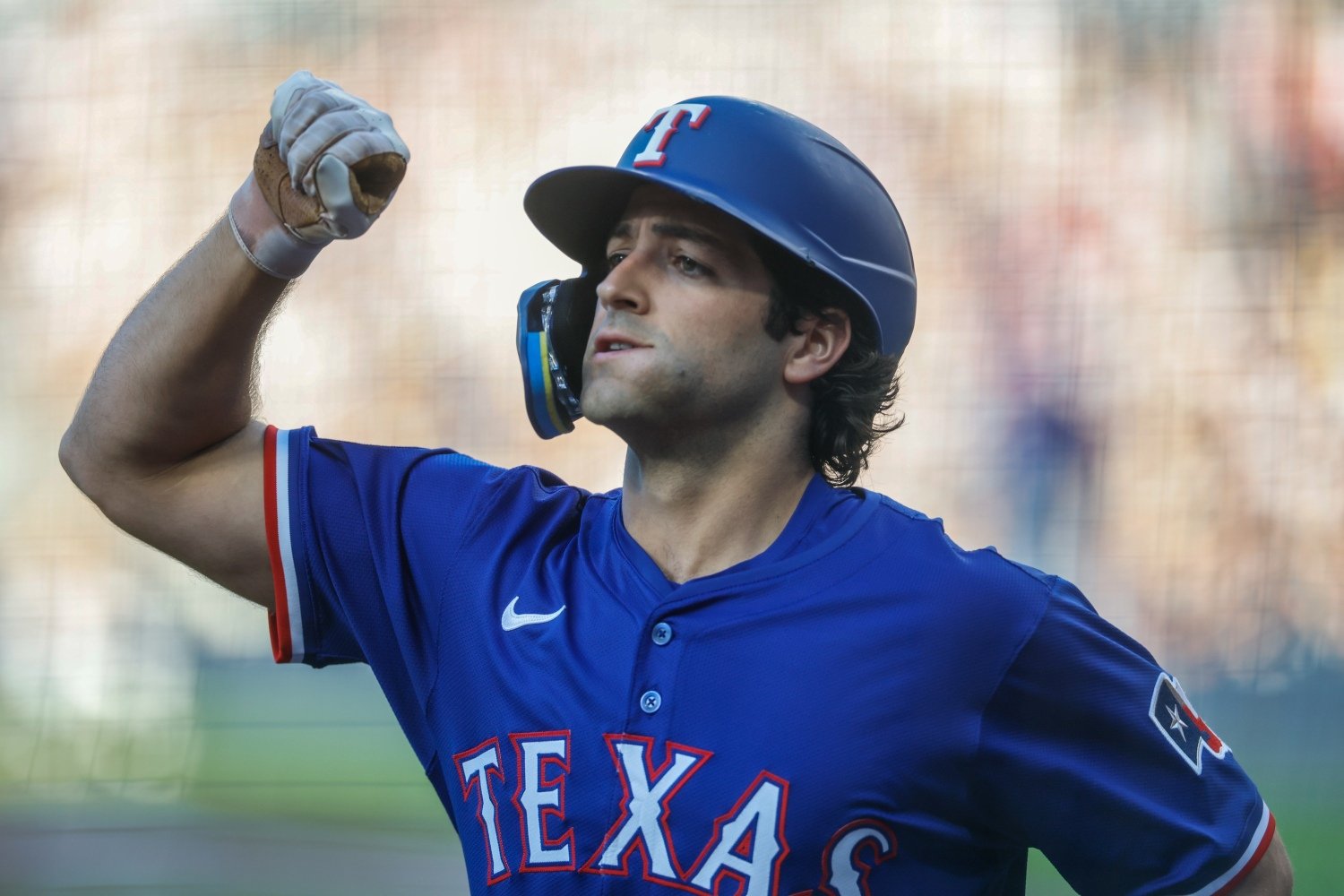 It's been a very uneven season for Brewers shortstop Joey Ortiz—so much so that, despite early patience from the team and a resurgence that briefly rewarded it, manager Pat Murphy benched Ortiz for an unacceptable approach at the plate in the week before the All-Star break. Caleb Durbin's trajectory seems to be more stable, and he's batting .308/.400/.421 since June 1, but don't overlook his splits. Against right-handed pitchers, Durbin is still hitting just .232/.329/.316 this year, and even that is propped up by 11 times being hit by pitches. That skill is likely to stick around for him, but it's not enough to make him a good hitter against right-handed hurlers. His .921 OPS against southpaws is disguising a real vulnerability there, and his ideal role might be as a platoon partner for Brice Turang and a utility man. Therefore, you can't go far lately without hearing Brewers fans discussing the possibility of a trade before this month's MLB trade deadline to bring in a superior infield option for the team. Now that they trail the Chicago Cubs by just one game in the NL Central and are one of the best teams on the senior circuit, the urgency and interest of those conversations have only risen. To clarify the banter a bit, here are the 12 players who could feasibly be on Matt Arnold's radar in the coming fortnight, ranked from most to least desirable as Brewers targets. 1. Maikel García - IF - Kansas City Royals This would be one of those moonshot trades, the likes of which I've already begged the Brewers to do this month. The cost would be astronomical—but so could the returns on investment be. García, 25, has four and a half years of team control left, though he'll be eligible for arbitration as a Super Two guy in 2026. He's an American League All-Star this year, so named after batting .297/.354/.454 in 386 plate appearances in the first half. He has 25 doubles, three triples and eight home runs this year, and although he's been much less efficient on the bases this year than when he stole 37 bags in 39 tries in 2024, he can have an impact on the bases, too. A right-handed batter, his bat speed is up this year, and he's lifting it more, but the swing decisions have come a long way in a short time. His 13.5% strikeout rate and 8.0% walk rate are each the best of his career, and would be the best of many people's. Defensively, the fit would be perfect. García is a perfectly competent shortstop who (thanks to his more famous and higher-paid teammate, Bobby Witt Jr.) plays third base for the Royals instead. That, along with the fact that García will start making real money next season and get expensive before he reaches free agency, is why he could be pried away from Kansas City, if the price is right. It would also allow him to slide gorgeously into the fluid left side of the Milwaukee infield, playing lots of short but (if Ortiz isn't involved in the deal, which he might well be) sometimes sliding over to the hot corner, too. Yes, the cost would be huge, but García is a great fit for the team and would be a long-term addition. 2. Josh Smith - UTIL - Texas Rangers Same song, different verse. Smith is older (28 next month), one year closer to free agency, and not a Super Two guy, and he bats left-handed, rather than right. Everything else about García is largely true of Smith, though, from the Rangers not being able to play him at shortstop—they have 325 million reasons to let Corey Seager age as slowly as possible—to the improving contact skills. Smith doesn't hit the ball as hard as García does, but at .277/.353/.416, he's a well-rounded hitter. He's also a versatile fielder, and the fact that his best spot is third base works perfectly. He has an .845 OPS against righties this year but has scuffled against lefties; he'd become a medium-term not-quite-everyday infielder and a partner to Durbin for the balance of 2025. Again, the price tag would be big, but Smith is a plug-and-play upgrade to the roster and his style suits the Brewers' well. 3. Ryan McMahon - 3B - Colorado Rockies This potential fit has been talked to death, so I won't rehash it here. You can find a full breakdown of what makes him intriguing, despite his rough numbers for the worst team ever, here. For now, suffice it to say that McMahon would offer two and a half years of control, with the ability to slide over to first base if his bat plays the way I think it would with the Brwwers. If not (or if the need is just so much more pronounced at third that such a move is unthinkable), he'd certainly be a good balance for Durbin, just as Smith would. His contract would keep the price in young talent low. McMahon is also a tremendous defender, underrated in some circles. That counts for a lot, where the Brewers are concerned. 4. Eugenio Suárez - 3B - Arizona Diamondbacks All three of the players above him on this list are plus defenders. All three come with multiple years of team control. Suárez is an impending free agent who can just barely stick at the hot corner. That should make him less appealing than each of the above, but also than some of those below him here. On the other hand: think about all those dingers. Suárez would deliver a dynamic that this team is sorely lacking. He hits for power no one on the team can match, and unlike any of the three above him, you could confidently slot him in third or fourth for the balance of the season without worrying at all about it. He's also a righty batter who hits righty hurlers better than lefties, so if Murphy is nimble and willing, he could swap him out for Durbin whenever the team faces a lefty and grab an extra iota of tactical value for his team. It's not yet clear that the Diamondbacks are willing to move even their rental players, but that feels more likely than not. Suárez probably won't fetch an exorbitant return, but that's precisely why the Brewers should be interested in jumping in. 5. Isiah Kiner-Falefa - IF - Pittsburgh Pirates I feel pretty certain that García could still be an above-average shortstop, if given that job on a regular basis. That's not a consensus opinion, though, and Smith has shown himself to be stretched at short. Among players who will be available this month, the one who looks most clearly likely to be a plus defender at short is Kiner-Falefa, who's also much better than average at putting the ball in play at the plate. He's a good runner, too. He utterly lacks power, which makes him a bit redundant for this roster, but his floor is higher than those of either Ortiz or Durbin, and his ceiling is much better than that of Andruw Monasterio. Pittsburgh is almost certain to trade Kiner-Falefa somewhere in the second half of this month; it wouldn't cost much to ensure that that 'somewhere' is Milwaukee. 6. José Tena - 3B - Washington Nationals The Nationals optioned Tena, 24, to Triple A in mid-June, for reasons not entirely clear to anyone. He'd batted .267/.366/.400 over the previous month when he was sent down, and he's raked to the tune of .293/.398/.453 for Rochester. A lefty batter who struggles to generate power and catches the ball very deep in the hitting zone, Tena makes up for the lack of pop by hitting line drives and making good swing decisions. He's not a great defender at third, but he'd be a neat complementary piece for the Brewers—and he'll have five more years of team control even after this season. This is an opportunity for a kind of prospect-for-prospect challenge trade, only the Brewers probably see what the Nationals seem not to: that Tena is ready to be more than a prospect even down the stretch in 2025. 7. Yoán Moncada - 3B - Los Angeles Angels The second half of this list gets briefer treatment, for now, than the first half. Moncada is a good example of why. When healthy, this year, he's been a strong hitter, with a .231/.326/.479 line and seven home runs in just 36 games. The volume is more telling than the intensity, though. It's risky to acquire a player to stop a gap down the stretch when they have a track record of being unavailable for long stretches, and doubly so if (as Moncada will) they hit free agency at the end of the season. 8. Royce Lewis - 3B - Minnesota Twins Don't overlook the possibility that the Twins will shake up their inconsistent, oft-injured core this summer by trading Lewis (and others). He's had a bad year at the plate, even between two stints on the injured list with hamstring strains, and he's very much a project. On the other hand, unlike Moncada, he offers team control within which to complete that project and the upside of youth. 9. Amed Rosario - IF - Washington Nationals At 29 years old, Rosario looks like he ate the lithe early-20s shortstop he was as a rookie for lunch. That's not meant derogatorily, though. He's blossomed into a solid hitter, especially this season, with a faster and steeper swing that's creating more damage without sacrificing contact. He belongs at third base, now, but would be a fine contributor there. The frustration of this deal would lie in admitting that the team just should have signed him when he was freely available this winter. 10. Jordan Lawlar - IF - Arizona Diamondbacks Want to go find a shortstop being crowded out of their team's picture and in need of a fresh start, the way the Brewers did with Willy Adames in 2021? The analogous opportunity in 2025 is Lawlar, who keeps being called up for unsuccessful half-cups of coffee and then sent back to Triple-A Reno, where he ruthlessly lays waste to minor-league arms. If Arizona does trade Suárez, of course, it will open the hot corner for Lawlar, but perhaps the team will choose to retain (and perhaps attempt to re-sign) Suárez, instead. In that case, even as Lawlar convalesces from a late-June hamstring strain, the Brewers should check in on his price. 11. Ramón Urías - IF - Baltimore Orioles Yes, he's just Luis's brother, and yes, Luis Urías is having a better year. However, the Brewers' final two months with Luis in the organization were a bit awkward, and that might not be a reunion either side wants. Instead, the Crew could target Ramón, who is a solid defender at third and a tolerable one at second or first; commands the strike zone fairly well at the plate; and has a year of team control left after this year. 12. Lenyn Sosa - IF - Chicago White Sox Last but not least, there's Sosa, a personal cheeseball of mine whose offensive skill set I think some team other than the White Sox will be happy they unlocked in a year or two. He doesn't have star-caliber upside; he's too sloppy for that. His strike zone is erratic and his defense can be, too. However, he also has a career-high nine homers already this year, in less than full playing time. He's hitting the ball harder and lifting it more, and a smart new team could boost those trends by cleaning up some swing decisions. The Brewers, as ever, are a good candidate to make such a player better. Who's your favorite target for Milwaukee this July? Which of these rankings looks wrong to you? Let us know in the comments.
- 37 comments
-
- 3
-
-
- maikel garcia
- ryan mcmahon
- (and 2 more)
-
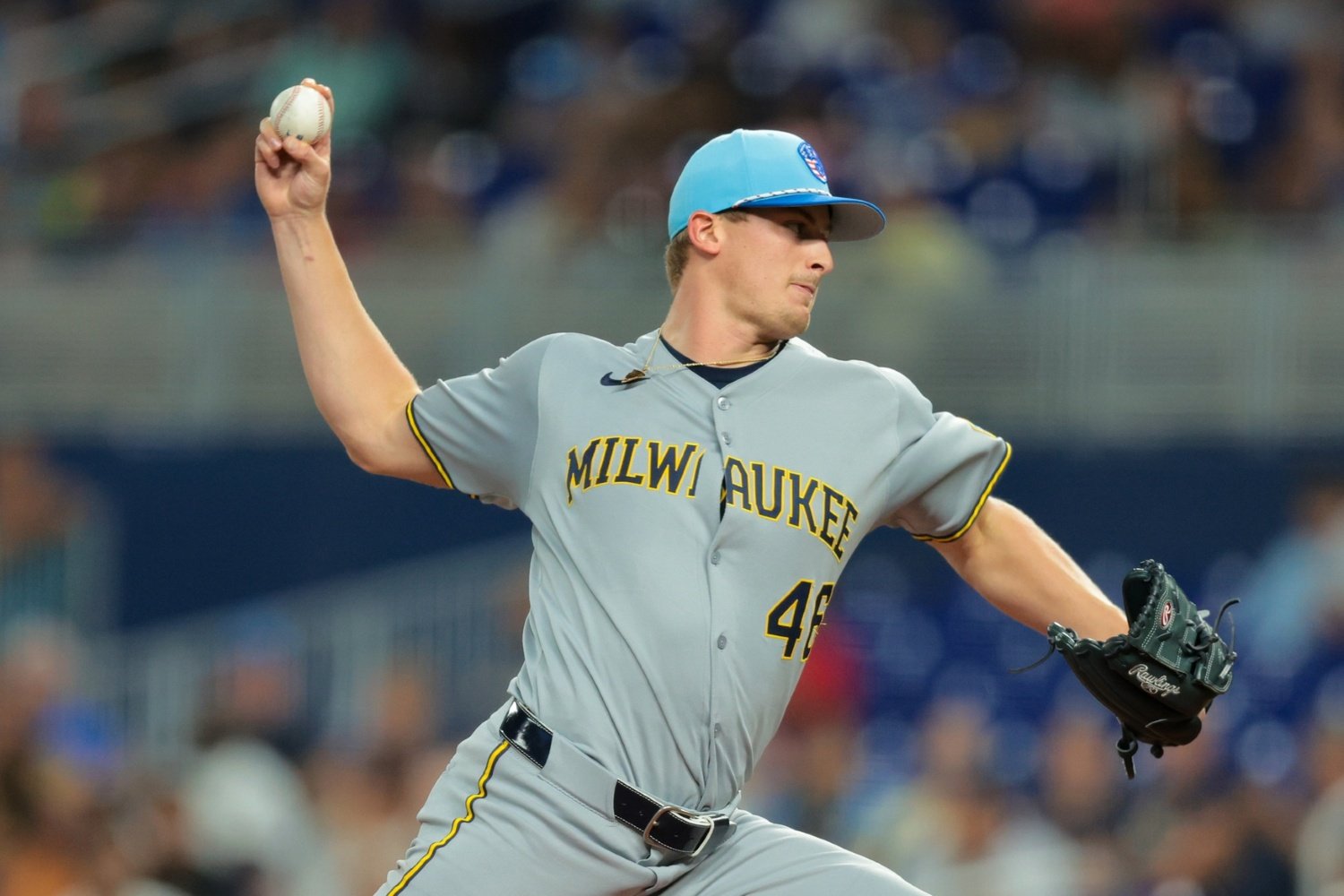 In a first half that has seen them survive some worrisome bouts of injury and underperformance to position themselves wonderfully for the pennant race, the Brewers have had several great individual storylines emerge. Perhaps the most compelling, though, is the success of Quinn Priester. Acquired under duress in mid-April at a cost that made many Brewers fans balk, Priester looked at first like so much cannon fodder—a hurler to be thrown out there to soak up mediocre innings in the name of survival. Now, he looks like something closer to a mid-rotation starter under long-term team control. Far from an overpay, the price the team paid now looks like a good deal. The transformation in Priester has been profound. Early on, the team had to work with him between starts and make some needed adjustments, so the results didn't keep up well with what was changing under the hood. Some of the work player and team have done this year is the sort that would normally happen over an offseason, or during spring training. Being thrown together with the campaign already underway, though, the parties had to make the best of things. Recently, things have really clicked. Last year, Priester was a sinker-slider guy, with a four-seamer, a changeup and a curveball he threw about equally often to round out an unremarkable mix. As we talked about at the time, it was perfectly possible to see what the Brewers would try to do with Priester, following the blueprints of other high-arm-slot sinkerballers throughout the league—but that didn't mean it was going to work. Priester had already made one significant change, switching from a four-seamer to a cutter as the fast complement to his sinker. The Brewers locked that in and stuck with it, and indeed, his arsenal is now best described as a four-pitch mix—sinker, slider, cutter, curveball—with an occasional show-me changeup. That cutter was in the mix right away, over his first three starts with the team, but it got pounded, and the player and the team put it on the shelf for a while. Again, this is one of the hurdles of onboarding a new, promising pitcher within the season: he had to largely hide what is now his well-established third pitch for two months, while workshopping some things. For much of that time, his performance was uneven as a result. Over the course of two starts in mid-May, though, Priester worked his way from the first-base side of the rubber to the middle of it. That trend has continued; he's very much in the center of the rubber now. To visualize the difference there, take a look at these two pitches he threw—one in early May, before the move, and one in mid-June. Here's the old location on the rubber. V0FkN2xfWGw0TUFRPT1fQmdFSFZGUUhCRlFBQVZwWFh3QUhDVkJmQUZnTkIxUUFDMTBHVlZZSENRRlhDVkZl.mp4 (Don't focus on the pitch itself; both of the ones I chose are high, arm-side misses with the sinker. Just watch his delivery, including and especially his starting point.) Here's the new setup point. NXkybE1fWGw0TUFRPT1fQmdoWEIxWURWd0VBQzFzQ0FnQUhBZ1JXQUZrQlVBVUFWMUpVVTFWWEJnUlhCbGNI.mp4 So, Priester has moved over, and he's changed to the cutter. The thing is, the first adjustment is value-neutral, in a vacuum: the optimal position on the rubber is different for every pitcher, and pretty idiosyncratic. And the cutter is, by any model's estimation or even by outcomes (whiff rate, quality of contact, and so on), his worst pitch. Be that as it may, though, the cutter has been key to Priester's newfound success. It's a central part of his arsenal, not because of its own quality, but because of how it interacts with his other offerings. Priester has also raised his arm slot this year, which has helped him consistently execute the curveball at the bottom edge of the zone and helped him get around the ball more, changing his spin profile. Here's a chart showing the distribution of spin direction (left) out of his hand and movement direction (right) by pitch type, for 2024. These are helpful for seeing where a pitcher is getting their movement, and how good a chance a hitter has to recognize a given offering based on its spin. Prister's four-seamer and curve stayed true to their spin profiles (as, by and large, those pitch types do), but note how much movement his changeup and sinker (to the arm side) and slider (to the glove side) get, beyond what his spin would imply. Priester has always been good at achieving seam-shifted wake effects, which use the position of the seams during the flight of the ball to produce movement we couldn't predict based on spin. For most hitters, at least until they've seen a pitcher several times, that type of movement is harder to suss out than spin-based movement. Being a high-slot sinker guy has much to do with this; it's just in the nature of the arm's operation from that position. Here's the same chart for this year, with the cutter taking the place of the four-seamer. As you'll see, though, that's not all that has changed. From his slightly raised slot, Priester is, again, getting around the ball a bit more. That means that the spin direction on his slider tilts more toward sweep, and the seam effects then steer it more downward. That leaves room in his movement profile for that cutter, which you can see starting with something close to true backspin but moving to the glove side more than a hitter would expect based on that spin direction. His sinker has become more of a two-seamer, with less heavy action, which might sound like an unfortunate shift—but it's not. It fits perfexctly with the other things happening in Priester's arsenal. So, the change in slot has created space for the cutter to fit into his spin and movement landscape. That, however, doesn't explain (really) how the cutter helps him out. Here's a glimpse at that explanation. This is an animated representation of Priester's release point and the trajectory of his pitches, from a right-handed batter's vantage point. The bars are colored by pitch type: orange for sinker, yellow for slider, rusty brown for cutter. At release, of course, there's no huge separation between the average flight paths of the three pitches. By the time of the first checkin this illustration provides, though, there is some. The white balls in the distance show what Baseball Savant calls the 'recognition point,' where the hitter gets their chance to spot a pitch based on spin and trajectory, rather than any variations in arm slot or release point by the pitcher. Even at that early marker, the sinker and slider are separating a bit. To keep either on the plate, Priester has to throw them with such different horizontal release angles that the hitter can see them diverge earlier than you'd like. (Normally, sinkers and sliders pair well together in this regard, but then, most pitchers who rely on sinker-slider combinations have a very different slot than Priester's.) The cutter keeps righties from spotting that slider early, at least with the confidence they would otherwise have. It's on the same early flight path as the slider, and has spin more similar to the slider's than the sinker can offer, too. By the second set of markers, in pink, the approximate point by which a hitter has to have committed to swing, the cutter is also helping keep hitters slow on the sinker, because the two pitches are headed to similar locations but will be breaking in opposite directions when they get there. Greg Maddux and Roy Halladay can tell you how valuable it is to just have a sinker and a cutter that head for the same edge but wiggle away from one another, time after time. Against lefties, though, this might be even more important. Here's an animation similar to the above, but for left-handed batters, and from 2024. It's ok that the curveball stands out that way; that's part of the plan. The curve should often freeze hitters, by looking so different that they lock up—or induce bad, jumpy swings. The other offerings shown, though, have some problems. The sinker shows itself to a lefty right out of the hand, which is always the danger with sinkers to opposite-handed batters and why many pitchers don't throw many of them. The four-seamer also does nothing, in contrast with the cutter's work against righties this year discussed a moment ago, to camouflage the slider. Hitters can see these differences, and they could identify pitches against Priester very well, very early last season. Here's the same image for this year. Again, the sinker stands out. That's ok, though. It's hard to see without placing the two side-by-side, but consider each image, and notice that shift across the rubber and that slightly higher release this year. That's allowing Priester to work better to the arm side with the sinker, so his command can make up for whatever exposure the pitch has. The sinker actually operates a bit more like a four-seamer, to lefties, in the wake of his changes in mechanics and starting position. The real story, though, is the cutter's interaction with the slider. Look how it hugs the slider's early trajectory, only for the two to diverge really widely (from the batter's perspective) after the commitment point. This, in a nutshell, is why Priester's slider went from getting whiffs 25.4% of the time and yielding a .404 expected slugging average to a 35.1% whiff rate and a .345 expected slugging in 2025. The cutter itself might not be a good pitch—indeed, it gets hit hard—but it's making his other pitches (especially the slider) much better. There are no guarantees in baseball. This approach has worked very well for Priester over about two full months, but hitters will make further adjustments to him, and he'll have to make some new ones in reply. He's still a righty who sits just below 94 miles per hour with his fastball; he doesn't profile as a pitcher with a frontline ceiling. However, if he can stay healthy, the signs point to a solid contributor for what could be the next half-decade. The Brewers helped maximize the value of some tweaks he'd already made, and he's turned a corner for them.
 -
Image courtesy of © Sam Navarro-Imagn Images In a first half that has seen them survive some worrisome bouts of injury and underperformance to position themselves wonderfully for the pennant race, the Brewers have had several great individual storylines emerge. Perhaps the most compelling, though, is the success of Quinn Priester. Acquired under duress in mid-April at a cost that made many Brewers fans balk, Priester looked at first like so much cannon fodder—a hurler to be thrown out there to soak up mediocre innings in the name of survival. Now, he looks like something closer to a mid-rotation starter under long-term team control. Far from an overpay, the price the team paid now looks like a good deal. The transformation in Priester has been profound. Early on, the team had to work with him between starts and make some needed adjustments, so the results didn't keep up well with what was changing under the hood. Some of the work player and team have done this year is the sort that would normally happen over an offseason, or during spring training. Being thrown together with the campaign already underway, though, the parties had to make the best of things. Recently, things have really clicked. Last year, Priester was a sinker-slider guy, with a four-seamer, a changeup and a curveball he threw about equally often to round out an unremarkable mix. As we talked about at the time, it was perfectly possible to see what the Brewers would try to do with Priester, following the blueprints of other high-arm-slot sinkerballers throughout the league—but that didn't mean it was going to work. Priester had already made one significant change, switching from a four-seamer to a cutter as the fast complement to his sinker. The Brewers locked that in and stuck with it, and indeed, his arsenal is now best described as a four-pitch mix—sinker, slider, cutter, curveball—with an occasional show-me changeup. That cutter was in the mix right away, over his first three starts with the team, but it got pounded, and the player and the team put it on the shelf for a while. Again, this is one of the hurdles of onboarding a new, promising pitcher within the season: he had to largely hide what is now his well-established third pitch for two months, while workshopping some things. For much of that time, his performance was uneven as a result. Over the course of two starts in mid-May, though, Priester worked his way from the first-base side of the rubber to the middle of it. That trend has continued; he's very much in the center of the rubber now. To visualize the difference there, take a look at these two pitches he threw—one in early May, before the move, and one in mid-June. Here's the old location on the rubber. V0FkN2xfWGw0TUFRPT1fQmdFSFZGUUhCRlFBQVZwWFh3QUhDVkJmQUZnTkIxUUFDMTBHVlZZSENRRlhDVkZl.mp4 (Don't focus on the pitch itself; both of the ones I chose are high, arm-side misses with the sinker. Just watch his delivery, including and especially his starting point.) Here's the new setup point. NXkybE1fWGw0TUFRPT1fQmdoWEIxWURWd0VBQzFzQ0FnQUhBZ1JXQUZrQlVBVUFWMUpVVTFWWEJnUlhCbGNI.mp4 So, Priester has moved over, and he's changed to the cutter. The thing is, the first adjustment is value-neutral, in a vacuum: the optimal position on the rubber is different for every pitcher, and pretty idiosyncratic. And the cutter is, by any model's estimation or even by outcomes (whiff rate, quality of contact, and so on), his worst pitch. Be that as it may, though, the cutter has been key to Priester's newfound success. It's a central part of his arsenal, not because of its own quality, but because of how it interacts with his other offerings. Priester has also raised his arm slot this year, which has helped him consistently execute the curveball at the bottom edge of the zone and helped him get around the ball more, changing his spin profile. Here's a chart showing the distribution of spin direction (left) out of his hand and movement direction (right) by pitch type, for 2024. These are helpful for seeing where a pitcher is getting their movement, and how good a chance a hitter has to recognize a given offering based on its spin. Prister's four-seamer and curve stayed true to their spin profiles (as, by and large, those pitch types do), but note how much movement his changeup and sinker (to the arm side) and slider (to the glove side) get, beyond what his spin would imply. Priester has always been good at achieving seam-shifted wake effects, which use the position of the seams during the flight of the ball to produce movement we couldn't predict based on spin. For most hitters, at least until they've seen a pitcher several times, that type of movement is harder to suss out than spin-based movement. Being a high-slot sinker guy has much to do with this; it's just in the nature of the arm's operation from that position. Here's the same chart for this year, with the cutter taking the place of the four-seamer. As you'll see, though, that's not all that has changed. From his slightly raised slot, Priester is, again, getting around the ball a bit more. That means that the spin direction on his slider tilts more toward sweep, and the seam effects then steer it more downward. That leaves room in his movement profile for that cutter, which you can see starting with something close to true backspin but moving to the glove side more than a hitter would expect based on that spin direction. His sinker has become more of a two-seamer, with less heavy action, which might sound like an unfortunate shift—but it's not. It fits perfexctly with the other things happening in Priester's arsenal. So, the change in slot has created space for the cutter to fit into his spin and movement landscape. That, however, doesn't explain (really) how the cutter helps him out. Here's a glimpse at that explanation. This is an animated representation of Priester's release point and the trajectory of his pitches, from a right-handed batter's vantage point. The bars are colored by pitch type: orange for sinker, yellow for slider, rusty brown for cutter. At release, of course, there's no huge separation between the average flight paths of the three pitches. By the time of the first checkin this illustration provides, though, there is some. The white balls in the distance show what Baseball Savant calls the 'recognition point,' where the hitter gets their chance to spot a pitch based on spin and trajectory, rather than any variations in arm slot or release point by the pitcher. Even at that early marker, the sinker and slider are separating a bit. To keep either on the plate, Priester has to throw them with such different horizontal release angles that the hitter can see them diverge earlier than you'd like. (Normally, sinkers and sliders pair well together in this regard, but then, most pitchers who rely on sinker-slider combinations have a very different slot than Priester's.) The cutter keeps righties from spotting that slider early, at least with the confidence they would otherwise have. It's on the same early flight path as the slider, and has spin more similar to the slider's than the sinker can offer, too. By the second set of markers, in pink, the approximate point by which a hitter has to have committed to swing, the cutter is also helping keep hitters slow on the sinker, because the two pitches are headed to similar locations but will be breaking in opposite directions when they get there. Greg Maddux and Roy Halladay can tell you how valuable it is to just have a sinker and a cutter that head for the same edge but wiggle away from one another, time after time. Against lefties, though, this might be even more important. Here's an animation similar to the above, but for left-handed batters, and from 2024. It's ok that the curveball stands out that way; that's part of the plan. The curve should often freeze hitters, by looking so different that they lock up—or induce bad, jumpy swings. The other offerings shown, though, have some problems. The sinker shows itself to a lefty right out of the hand, which is always the danger with sinkers to opposite-handed batters and why many pitchers don't throw many of them. The four-seamer also does nothing, in contrast with the cutter's work against righties this year discussed a moment ago, to camouflage the slider. Hitters can see these differences, and they could identify pitches against Priester very well, very early last season. Here's the same image for this year. Again, the sinker stands out. That's ok, though. It's hard to see without placing the two side-by-side, but consider each image, and notice that shift across the rubber and that slightly higher release this year. That's allowing Priester to work better to the arm side with the sinker, so his command can make up for whatever exposure the pitch has. The sinker actually operates a bit more like a four-seamer, to lefties, in the wake of his changes in mechanics and starting position. The real story, though, is the cutter's interaction with the slider. Look how it hugs the slider's early trajectory, only for the two to diverge really widely (from the batter's perspective) after the commitment point. This, in a nutshell, is why Priester's slider went from getting whiffs 25.4% of the time and yielding a .404 expected slugging average to a 35.1% whiff rate and a .345 expected slugging in 2025. The cutter itself might not be a good pitch—indeed, it gets hit hard—but it's making his other pitches (especially the slider) much better. There are no guarantees in baseball. This approach has worked very well for Priester over about two full months, but hitters will make further adjustments to him, and he'll have to make some new ones in reply. He's still a righty who sits just below 94 miles per hour with his fastball; he doesn't profile as a pitcher with a frontline ceiling. However, if he can stay healthy, the signs point to a solid contributor for what could be the next half-decade. The Brewers helped maximize the value of some tweaks he'd already made, and he's turned a corner for them. View full article
-
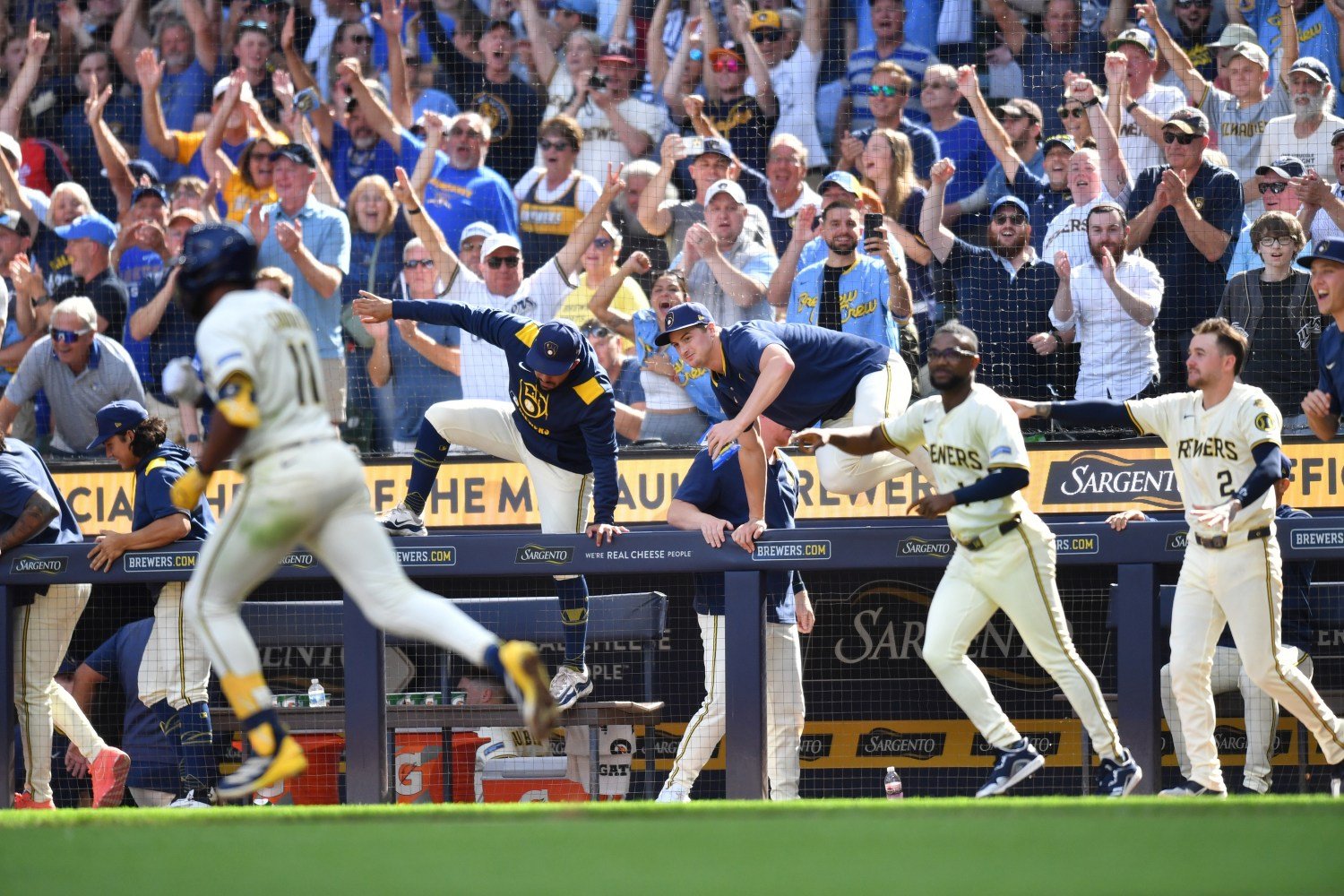 Momentum, they say, is the next day's starting pitcher. That sounds dismissive, but sometimes, it's just a reinforcement of the reality of the thing. Momentum may not be cotton-candy baseball magic, but it's on the Brewers' side in the race for the NL Central crown, anyway—because they always have the better next day's starting pitcher. Since losing to the Cubs on June 17 to fall to 39-35, Pat Murphy's Brewers are 14-5. They've closed the gap between them and the Cubs to 1.5 games, thanks to the arrival of Jacob Misiorowski and the general excellence of their starting rotation. With Misiorowski installed and their depth starting to feel robust in all areas, the Brewers are changing the computerized minds of projection systems. FanGraphs has them at nearly 75% likely to make the playoffs as of Thursday morning, as the team enjoys an off day before a weekend series against the Nationals to close out the first half. The climb since mid-June, in that chart, is terrific, but don't undersell the way they managed to tread water during a difficult period from the end of May through that series in Chicago last month. Twice, this year, the team has had to spend roughly 10 days in survival mode. They've succeeded each time, though, and now, they're the hottest team in the National League. The Cubs, meanwhile, are scrambling, with (literally) half the trustworthy starting pitchers the Brewers boast and a lineup that suddenly looks less formidable. Chicago is still heavily favored in the division. FanGraphs believes the Brewers have come back to life in that race, but not that they've positioned themselves to overcome Chicago. Making the playoffs as a Wild Card entrant would still be a good showing from a Milwaukee team in transition, but it's not their focus. They want to keep changing this graph, and rightfully so. Baseball Prospectus's PECOTA system is a little more stubbornly pessimistic, but even there, the Brewers have shaken up the Etch-a-Sketch. Their Playoff Odds have shot up to 55.3%, which is up 16.7 percentage points in the last week alone. Prospectus shows Chicago as 90% favorites to win the division, even now, but that feels laughably overconfident now. The Brewers front office will spend the balance of this week working hard to get the Draft right. It begins Sunday, and the team has a healthy bonus pool to continue bulking up a great farm system. Thereafter, though, their attention has to turn to the trade deadline. This is a team with a rare privilege: a combination of youth, depth, and a dearth of urgent needs that frees them up to do almost whatever they want. It's not in the nature of the Brewers to go all-in on any one season, and this year needn't be the exception—but they should leave the door open to that kind of approach. At the very least, since momentum figures to stay on their side at least until the Cubs fortify their own rotation via trade, the Brewers have a puncher's chance to claim their third straight NL Central title. They can and ought to seize it.
 -
Image courtesy of © Patrick Gorski-Imagn Images Momentum, they say, is the next day's starting pitcher. That sounds dismissive, but sometimes, it's just a reinforcement of the reality of the thing. Momentum may not be cotton-candy baseball magic, but it's on the Brewers' side in the race for the NL Central crown, anyway—because they always have the better next day's starting pitcher. Since losing to the Cubs on June 17 to fall to 39-35, Pat Murphy's Brewers are 14-5. They've closed the gap between them and the Cubs to 1.5 games, thanks to the arrival of Jacob Misiorowski and the general excellence of their starting rotation. With Misiorowski installed and their depth starting to feel robust in all areas, the Brewers are changing the computerized minds of projection systems. FanGraphs has them at nearly 75% likely to make the playoffs as of Thursday morning, as the team enjoys an off day before a weekend series against the Nationals to close out the first half. The climb since mid-June, in that chart, is terrific, but don't undersell the way they managed to tread water during a difficult period from the end of May through that series in Chicago last month. Twice, this year, the team has had to spend roughly 10 days in survival mode. They've succeeded each time, though, and now, they're the hottest team in the National League. The Cubs, meanwhile, are scrambling, with (literally) half the trustworthy starting pitchers the Brewers boast and a lineup that suddenly looks less formidable. Chicago is still heavily favored in the division. FanGraphs believes the Brewers have come back to life in that race, but not that they've positioned themselves to overcome Chicago. Making the playoffs as a Wild Card entrant would still be a good showing from a Milwaukee team in transition, but it's not their focus. They want to keep changing this graph, and rightfully so. Baseball Prospectus's PECOTA system is a little more stubbornly pessimistic, but even there, the Brewers have shaken up the Etch-a-Sketch. Their Playoff Odds have shot up to 55.3%, which is up 16.7 percentage points in the last week alone. Prospectus shows Chicago as 90% favorites to win the division, even now, but that feels laughably overconfident now. The Brewers front office will spend the balance of this week working hard to get the Draft right. It begins Sunday, and the team has a healthy bonus pool to continue bulking up a great farm system. Thereafter, though, their attention has to turn to the trade deadline. This is a team with a rare privilege: a combination of youth, depth, and a dearth of urgent needs that frees them up to do almost whatever they want. It's not in the nature of the Brewers to go all-in on any one season, and this year needn't be the exception—but they should leave the door open to that kind of approach. At the very least, since momentum figures to stay on their side at least until the Cubs fortify their own rotation via trade, the Brewers have a puncher's chance to claim their third straight NL Central title. They can and ought to seize it. View full article

