
Matthew Trueblood
-
Posts
1,964 -
Joined
-
Last visited
-
Days Won
10
Content Type
Profiles
Forums
Blogs
Events
News
2026 Milwaukee Brewers Top Prospects Ranking
Milwaukee Brewers Videos
2022 Milwaukee Brewers Draft Picks
Milwaukee Brewers Free Agent & Trade Rumors, Notes, & Tidbits
Guides & Resources
2023 Milwaukee Brewers Draft Picks
2024 Milwaukee Brewers Draft Picks
The Milwaukee Brewers Players Project
2025 Milwaukee Brewers Draft Pick Tracker
2026 Milwaukee Brewers Draft Tracker: Picks & Bonuses
Store
Downloads
Gallery
Everything posted by Matthew Trueblood
-
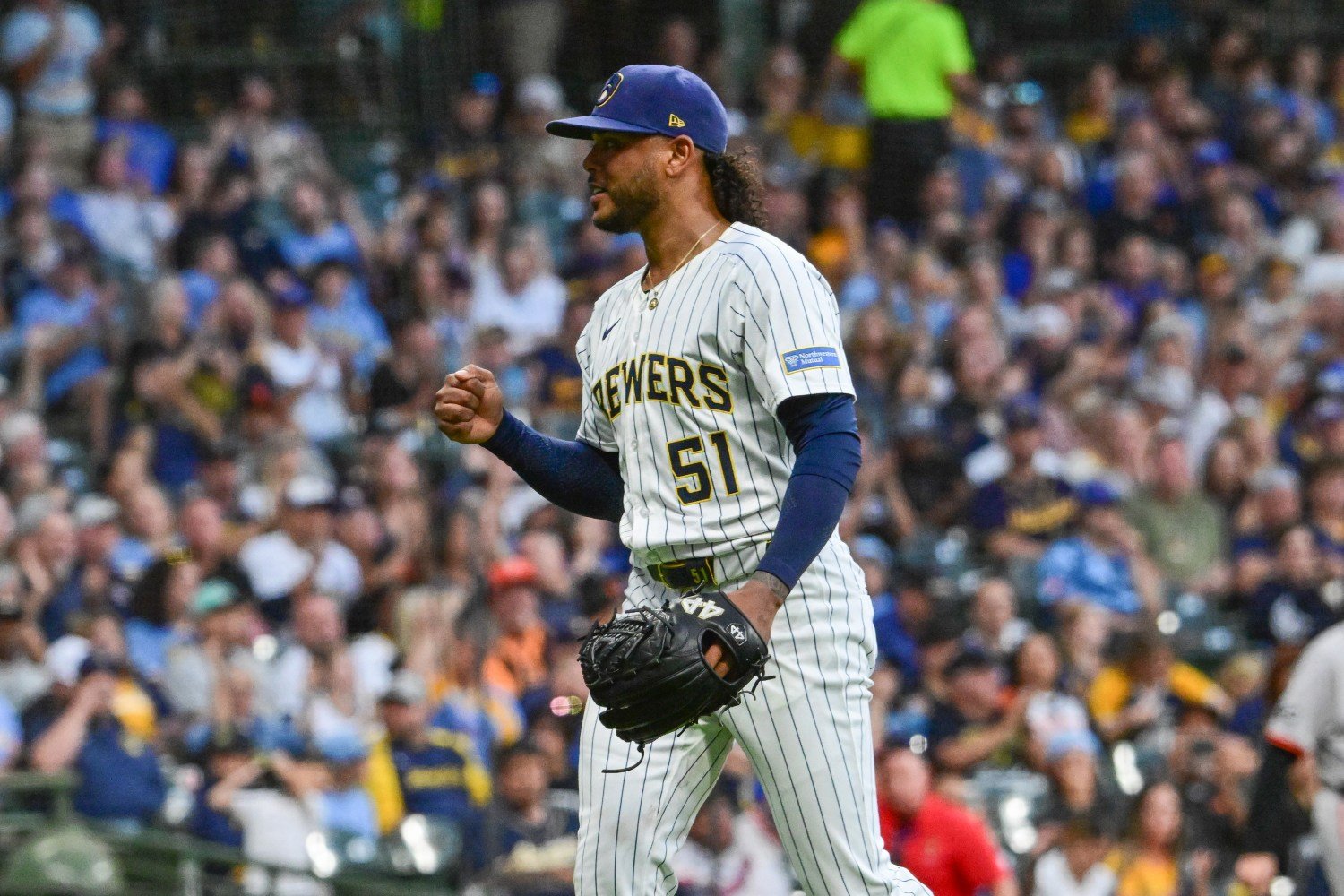 Freddy Peralta can be polarizing. That's not true among baseball people, exactly—the industry pretty broadly agrees that he's a very good (though not quite elite) starter, and the Brewers organization uniformly loves him. He's a bright light in the clubhouse, beloved and respected for his leadership, his ebullience, and his warrior mentality. Peralta pitched most of last season at less than 100 percent; he adapted and battled to take the mound every turn through the rotation and make up for the losses of Corbin Burnes and Brandon Woodruff. He's a creative, intelligent and fiercely competitive pitcher. He's also a joy to watch. His flying delivery, restored to its peak uniqueness this season as he's been able to slide back to his home on the third-base side of the rubber, is the kind of physical poetry that made pitching such a captivating art a century ago. His hair, his accessories, and his feline muscularity make him a transfixing visual presence on the mound. He emotes, but not in the way of tantrums or pugnacity. He shows you the work that goes into each big out, but he does it all with the style and grace that makes high-level sport such a thrill. Of course, over the years, he's also been a source of constant frustration for some fans. His walk rate is always north of 9%, which is higher than the league average. He induces a shockingly high number of foul balls, which can run up his pitch count and cost him innings he'd otherwise be able to pitch within games. He's never even reached 175 innings pitched in a season. At times, he's run into trouble with the home run ball. His ERA has not always matched the quality of his stuff, and he's never been a true innings eater—except last year, when he did so at the expense of some of his sheer intensity of stuff and of some of his dominance. This year, though, Peralta is having the season that just eluded him in each of the last few. He's already made 27 starts, the most in baseball. He might only make five or six more, which means he probably won't win 20 games (his 15-5 record is the best in the majors, but we live in 2025, so let's not dwell on pitcher wins), but he probably will get to that 175-inning threshold. He's also en route to what could be the best ERA of his career. Right now, it's at 2.68. The only other time he's been under 3.00 came in 2021, when he was starting much less often in Craig Counsell's post-COVID six-man rotation. He finished that year at 2.81, but this year's Peralta has already surpassed that year's version in innings pitched. Peralta has morphed so many times over the years that it's almost impossible to keep up. He came up as Fastball Freddy, but his slider (and its many, many forms), curveball and changeup have all taken turns stepping up as crucial secondary pitches. This year, the cambio is the featured complement, even though StuffPro and similar models think it's by far his worst pitch. Yes, Peralta has benefited from a good defense, good run support and (perhaps) a dab of good luck. But he's also benefited, this year and in other recent ones, from his growing adaptability. Stuff models can't always account for the way that the extreme horizontal angle he creates affects opposing batters. Nor does one summary number fully capture what, say, his slider (labeled above as a sweeper) does, because that pitch takes several different shapes according to matchup, need and sequence. Peralta's pitchability has allowed his very good stuff to play up at an elite level this year, despite his sometimes erratic location thereof. Only four National League pitchers (Paul Skenes, Yoshinobu Yamamoto, Zack Wheeler and Nick Pivetta) have held opponents to a lower OPS than Peralta's .607 this year. Wheeler is out for the year with thoracic outlet syndrome. Pivetta and Yamamoto have been good this year, but aren't better than Peralta. Only Skenes, Matthew Boyd, Andrew Abbott and Cristopher Sánchez have lower ERAs than Peralta's, in a qualifying number of innings. As good as all of them are, Peralta has been more impressive and consistent than all but Skenes. It's Skenes who poses the obvious obstacle to Peralta actually winning the NL Cy Young Award. The Pirates righty has to be the odds-on favorite for that award. Nonetheless, Peralta is a legitimate candidate, and if Skenes stumbles even a bit down the stretch, the Brewers' ace could sneak in and earn serious consideration for the award. He's been the best player on the best team in baseball, and they wouldn't function the same way (on or off the field) without him. It's been a relentless pleasure to watch him work this year.
 -
Image courtesy of © Jeff Hanisch-Imagn Images This is, in a way, the inverse of Betteridge's Law of Headlines. Call it Axford's axiom, or Turnbow's razor: Always be worried about relievers. Never fully trust them. That's the job of managers and pitching coaches, and the fact that managers and pitching coaches have no choice but to trust relievers is why most of them get fired every few years. Your favorite hitter's slump is probably half in your head, and half the normal thing, and they'll probably be great again in a week. Your favorite reliever is a ticking time bomb; his swoon is probably a very real problem. But let's not paint with too broad a brush, here, and also, let's not treat Trevor Megill like he's just any other reliever. After all, the Brewers have shown a certain knack for not only finding elite relievers, but keeping them great for an unusually long time. Josh Hader didn't flash in the pan for a year and then fizzle. Neither did Devin Williams. Each of those ex-Crew relief aces have found misfortune this summer, but each first had a multi-year run as a dominant hurler for Milwaukee. Megill has some of the characteristics they each had: a funky delivery, and overwhelming strikeout stuff. Even this month, Megill has fanned 13 of his 39 opposing batters. He's only walked two, and he's only allowed one home run. His ERA is 4.00, which is hardly catastrophic. So, on the other hand, maybe we're fretting over nothing. Yes, Megill blew two saves against the Giants at The Ueck this weekend, and yes, he let a lead slip away the previous weekend in Cincinnati. That latter blip came in extra innings, though, when Megill only had a one-run lead and the Reds got to start the inning with a runner at second base. Even if we also look askance at the game he saved against the Mets on August 9, when it took a brilliant throw to the plate by Blake Perkins and a fine tag by William Contreras to cut down the tying run, things don't look all that awful. Pretty quickly, perhaps, the truth of this thing is coming into focus: Yes, there's something real going on here. No, it doesn't mean that Megill is done being a reliable closer. His faltering performance this month is worth watching, and even worrying over, because he'll be entrusted with more slim leads against good teams come October. On the other hand, it's not a sign that he's no longer a dominant pitcher. He can be that, and more. It might just require a bit of a breather. The season is a grind. Every team has players who wear down, and teams who go on historically great runs like the one the Brewers have over the last six weeks tend to have their high-leverage relievers cluster in that camp. It's not a matter of mismanagement; it's just the cost of being great. Some pitchers can operate fine when appearing on consecutive days semi-regularly. Megill, however, wears down if used that much. His huge frame and his high-effort, high-velocity delivery require lots of maintenance. Last year, he appeared on zero oe one days' rest a total of 20 times. This year, that number is already 25. He's appeared on zero days of rest five times since the All-Star break, alone, and another three times on a single day. The problem isn't even his performances in those specific games, though; it's the way the accretion of them taxes his overall readiness for all games. Dedicated to his craft and aware of the mixed blessing of his huge dimensions, Megill knows his body. He can find his way to his usual velocity, and even to his usual movement numbers. He knows them; he thinks about them; he trains and prepares and works to sustain them. So, when things go wrong for Megill, it's because he's compromising in other places to get to what he can control—to be the best version of himself possible, even when he's not at his best. So, this month, his spin rate is down slightly. He can whip his body up into enough of a lather to move everything as fast and as powerfully as usual, but he can't fake the feel and the touch that comes with doing so comfortably. Because his rising four-seamer and his snapdrgon power curve both depend on excellent spin efficiency to generate movement, that reduction in sheer spin has also meant a bit less movement this month. That's a significant difference; it can make a difference in whether or not his curve earns a whiff, or in whether or not his heater stays above the barrel. It's not a calamity, though. This is still a pitcher who should be able to succeed. Has something else wobbled? Yes. Here's where Megill's fastballs ended up, from Opening Day through the end of July. If you've watched Megill over his two years (parts of three seasons) in Milwaukee, you know that his heater plays superbly at the top of the zone—but that he's also capable of steering it downhill, flat and hot and deceptive, to grab the bottom rail, around the knees. His ability to change eye levels even with the heat is part of why his curve is more devastating than those of many other pitchers who rely on this pair of offerings. Here's where those fastballs have been in August. A little tired, and perhaps a hair short on the calm focus and confidence that relievers have at their freshest, Megill is trying to do his usual thing—but he's often finding either that he can't drive the ball downhill enough, or that the spin-based relative lift he had a few months ago is missing. Vertically, he's gone from filling up the whole zone to living in the Danger Zone, around waist-high. Even at 100 miles per hour, hitters can square you up in the middle of the zone. Megill has been there more this month, because of his heavy use and the attendant decline in his sheer stuff. There was little Pat Murphy could have done to prevent or mitigate this. It's part-and-parcel with the role Megill took on after Williams was traded last December—a role Megill was eager to take. Being a closer means taking the ball to shut it down when your team has a lead to protect and just a few outs to get. It's not the hardest job in the majors, but it comes with some very real burdens. Megill isn't especially well-suited to them. That's ok. He's a great reliever, and a good fit for the demands of the job within any given game. We're seeing the physical grind of the gig catch up to him a bit this month, but as long as the team continues to have breathing room and can ease off the gas in the second half of September, Megill should be ready to slam the door again come the postseason. View full article
-
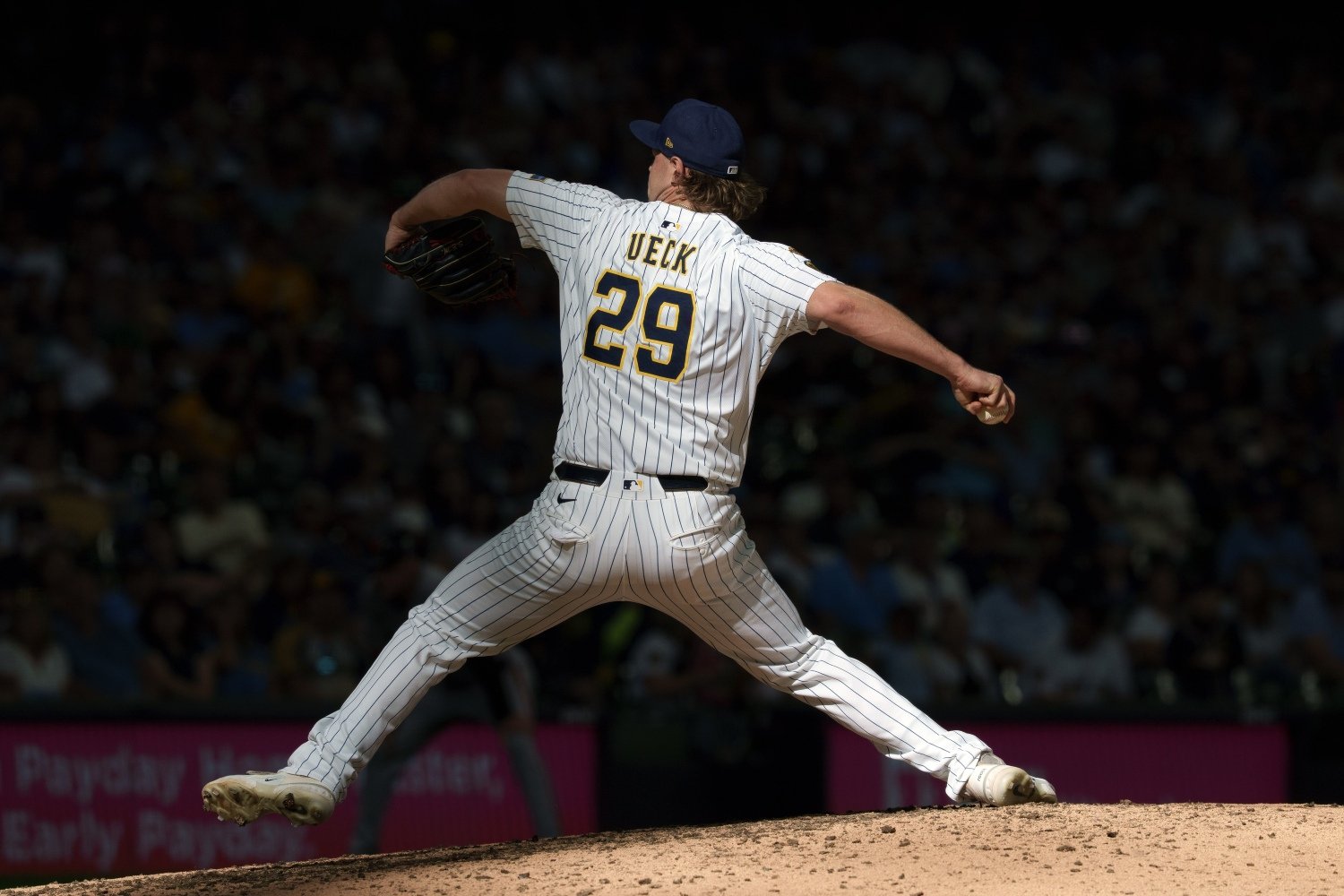 This is, in a way, the inverse of Betteridge's Law of Headlines. Call it Axford's axiom, or Turnbow's razor: Always be worried about relievers. Never fully trust them. That's the job of managers and pitching coaches, and the fact that managers and pitching coaches have no choice but to trust relievers is why most of them get fired every few years. Your favorite hitter's slump is probably half in your head, and half the normal thing, and they'll probably be great again in a week. Your favorite reliever is a ticking time bomb; his swoon is probably a very real problem. But let's not paint with too broad a brush, here, and also, let's not treat Trevor Megill like he's just any other reliever. After all, the Brewers have shown a certain knack for not only finding elite relievers, but keeping them great for an unusually long time. Josh Hader didn't flash in the pan for a year and then fizzle. Neither did Devin Williams. Each of those ex-Crew relief aces have found misfortune this summer, but each first had a multi-year run as a dominant hurler for Milwaukee. Megill has some of the characteristics they each had: a funky delivery, and overwhelming strikeout stuff. Even this month, Megill has fanned 13 of his 39 opposing batters. He's only walked two, and he's only allowed one home run. His ERA is 4.00, which is hardly catastrophic. So, on the other hand, maybe we're fretting over nothing. Yes, Megill blew two saves against the Giants at The Ueck this weekend, and yes, he let a lead slip away the previous weekend in Cincinnati. That latter blip came in extra innings, though, when Megill only had a one-run lead and the Reds got to start the inning with a runner at second base. Even if we also look askance at the game he saved against the Mets on August 9, when it took a brilliant throw to the plate by Blake Perkins and a fine tag by William Contreras to cut down the tying run, things don't look all that awful. Pretty quickly, perhaps, the truth of this thing is coming into focus: Yes, there's something real going on here. No, it doesn't mean that Megill is done being a reliable closer. His faltering performance this month is worth watching, and even worrying over, because he'll be entrusted with more slim leads against good teams come October. On the other hand, it's not a sign that he's no longer a dominant pitcher. He can be that, and more. It might just require a bit of a breather. The season is a grind. Every team has players who wear down, and teams who go on historically great runs like the one the Brewers have over the last six weeks tend to have their high-leverage relievers cluster in that camp. It's not a matter of mismanagement; it's just the cost of being great. Some pitchers can operate fine when appearing on consecutive days semi-regularly. Megill, however, wears down if used that much. His huge frame and his high-effort, high-velocity delivery require lots of maintenance. Last year, he appeared on zero oe one days' rest a total of 20 times. This year, that number is already 25. He's appeared on zero days of rest five times since the All-Star break, alone, and another three times on a single day. The problem isn't even his performances in those specific games, though; it's the way the accretion of them taxes his overall readiness for all games. Dedicated to his craft and aware of the mixed blessing of his huge dimensions, Megill knows his body. He can find his way to his usual velocity, and even to his usual movement numbers. He knows them; he thinks about them; he trains and prepares and works to sustain them. So, when things go wrong for Megill, it's because he's compromising in other places to get to what he can control—to be the best version of himself possible, even when he's not at his best. So, this month, his spin rate is down slightly. He can whip his body up into enough of a lather to move everything as fast and as powerfully as usual, but he can't fake the feel and the touch that comes with doing so comfortably. Because his rising four-seamer and his snapdrgon power curve both depend on excellent spin efficiency to generate movement, that reduction in sheer spin has also meant a bit less movement this month. That's a significant difference; it can make a difference in whether or not his curve earns a whiff, or in whether or not his heater stays above the barrel. It's not a calamity, though. This is still a pitcher who should be able to succeed. Has something else wobbled? Yes. Here's where Megill's fastballs ended up, from Opening Day through the end of July. If you've watched Megill over his two years (parts of three seasons) in Milwaukee, you know that his heater plays superbly at the top of the zone—but that he's also capable of steering it downhill, flat and hot and deceptive, to grab the bottom rail, around the knees. His ability to change eye levels even with the heat is part of why his curve is more devastating than those of many other pitchers who rely on this pair of offerings. Here's where those fastballs have been in August. A little tired, and perhaps a hair short on the calm focus and confidence that relievers have at their freshest, Megill is trying to do his usual thing—but he's often finding either that he can't drive the ball downhill enough, or that the spin-based relative lift he had a few months ago is missing. Vertically, he's gone from filling up the whole zone to living in the Danger Zone, around waist-high. Even at 100 miles per hour, hitters can square you up in the middle of the zone. Megill has been there more this month, because of his heavy use and the attendant decline in his sheer stuff. There was little Pat Murphy could have done to prevent or mitigate this. It's part-and-parcel with the role Megill took on after Williams was traded last December—a role Megill was eager to take. Being a closer means taking the ball to shut it down when your team has a lead to protect and just a few outs to get. It's not the hardest job in the majors, but it comes with some very real burdens. Megill isn't especially well-suited to them. That's ok. He's a great reliever, and a good fit for the demands of the job within any given game. We're seeing the physical grind of the gig catch up to him a bit this month, but as long as the team continues to have breathing room and can ease off the gas in the second half of September, Megill should be ready to slam the door again come the postseason.
 -
Image courtesy of © Mike De Sisti / Milwaukee Journal Sentinel / USA TODAY NETWORK via Imagn Images I'm a big believer in calling people what they ask to be called. Without wading into unwelcome political or cultural debates, it's a fairly simple bit of courtesy to use, for another person, the name they assign themselves. A name is a thing that matters, and to most people, theirs is sacred. Imagine, though, that you met a person like the kids in that new commercial for some investment outfit, whose parents sold their naming rights ahead of graduation. Or imagine that you met the obnoxious "Capital One Bank Guy" on the street. In those cases, the above does not apply, because those names were purchased. Once a name is paid for, it's no longer a thing of unassailable integrity. Quite apart from being sacred, it's become a vulgarity. Unless you're one of the parties who agreed to be paid to call that bearded nightmare "Capital One Bank Guy," I exhort you not to. If you meet him on the street, please call him the Discover Dude or Bank One Bobby or something, just to tweak him and the company trying to shove him down our throats. Now, we come to Milwaukee, and to the place where tens of thousands will gather Sunday to remember and celebrate the life of Bob Uecker, who gave 55 years to the Brewers and is their talisman even now. As they arrive, many fans will pass the statue of Uecker outside the stadium. Once inside, others will flock up to the statue of him inside, up near the rafters. Almost all fans will, at some point before the game starts, pass their eyes over those words out beyond left field: "Get up, Get up, Get Outta Here, Gone!" The place is replete with Uecker, because he's the backbone of this organization—more than Bud Selig ever was, more than Robin Yount, more than Bernie Brewer himself. Officially, the name of that stadium is American Family Field (changed a few years ago from the more fitting but equally soulless Miller Park), but that's not a name you're obligated to use. The Brewers receive $4 million per year from American Family Insurance (not even that much, by the standards of such deals; the only thing worse than putting your own identity up for sale is selling it cheap) to call their home park that, but you're not getting a penny of that. Thus, I'll renew a call I've made several times now: Brewers fans should simply call that place Uecker Field, or The Ueck. If names are meant to be sacred, and the home park of a winning team with a strong attachment to its community should be hallowed ground, then why not attach to that park the most sacred name this team has in its annals? Even when the park was named after a beer company, which made such tidy sense and fit the motif better, it was Uecker who defined the place. Now that the team has taken more money to go even more corporate and more anodyne, why not reject the whole framework and embrace the power of a name as one more way to consecrate the park, the man who so enlivened it, and the bridge he formed between the fans and the team itself? I don't spend much of my baseball-writing time in commentary mode; I prefer analysis and on-field breakdowns. It's the game I love; the rest is ancillary. Precisely because Uecker was the same way, though—because his genius as a comedian at the microphone and as an almost undetectable advertiser laid in the fact that his real reverence was for the game—I want to see a real push to abandon most people's use of the official names (past or present) of the place. The Brewers can call it whatever they want, and will (presumably) continue to call it whatever someone pays them most handsomely to call it. Fans don't have to force an official change; they can just start using a different and better moniker. It should, rightfully, be Uecker Field, forever. View full article
-
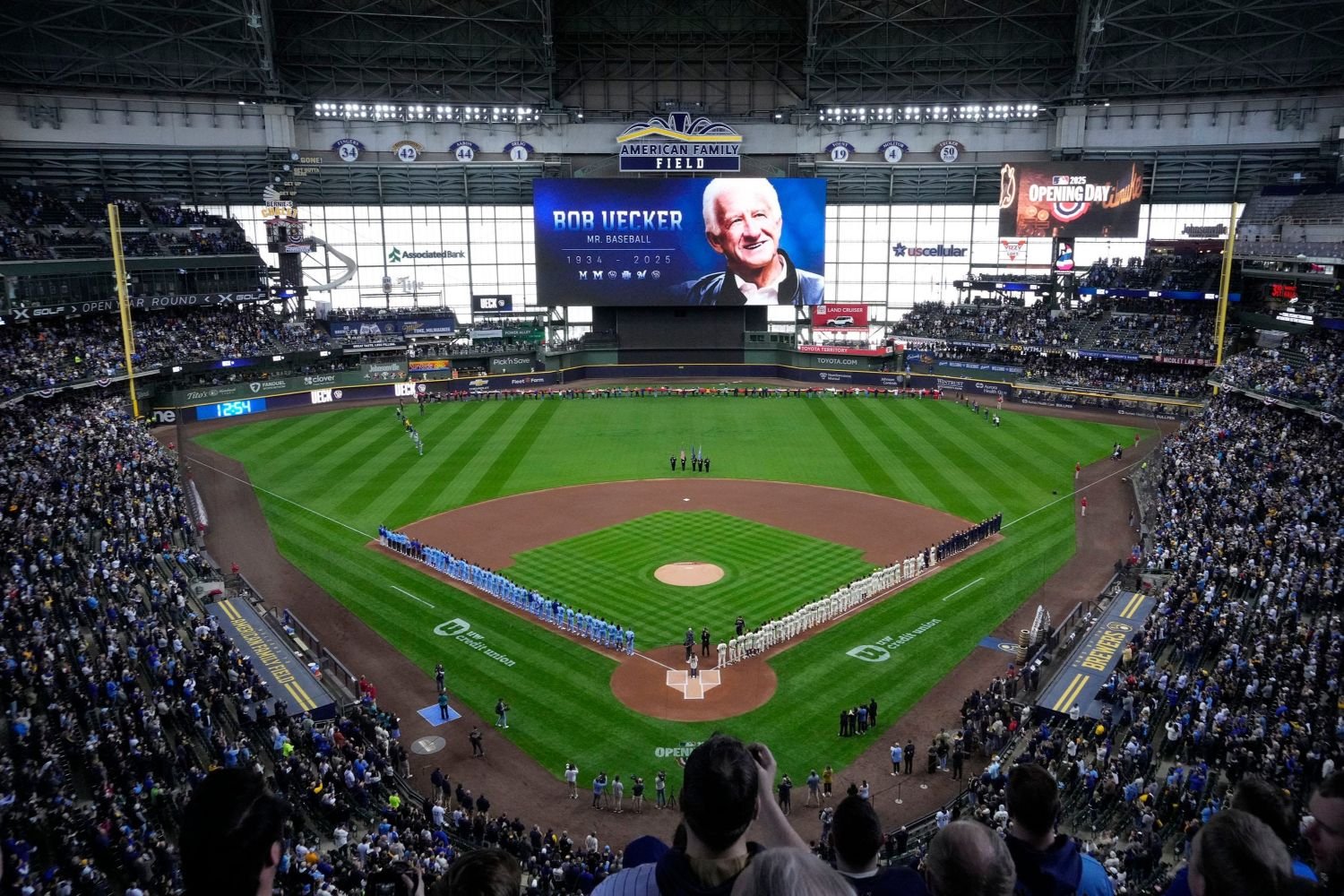 I'm a big believer in calling people what they ask to be called. Without wading into unwelcome political or cultural debates, it's a fairly simple bit of courtesy to use, for another person, the name they assign themselves. A name is a thing that matters, and to most people, theirs is sacred. Imagine, though, that you met a person like the kids in that new commercial for some investment outfit, whose parents sold their naming rights ahead of graduation. Or imagine that you met the obnoxious "Capital One Bank Guy" on the street. In those cases, the above does not apply, because those names were purchased. Once a name is paid for, it's no longer a thing of unassailable integrity. Quite apart from being sacred, it's become a vulgarity. Unless you're one of the parties who agreed to be paid to call that bearded nightmare "Capital One Bank Guy," I exhort you not to. If you meet him on the street, please call him the Discover Dude or Bank One Bobby or something, just to tweak him and the company trying to shove him down our throats. Now, we come to Milwaukee, and to the place where tens of thousands will gather Sunday to remember and celebrate the life of Bob Uecker, who gave 55 years to the Brewers and is their talisman even now. As they arrive, many fans will pass the statue of Uecker outside the stadium. Once inside, others will flock up to the statue of him inside, up near the rafters. Almost all fans will, at some point before the game starts, pass their eyes over those words out beyond left field: "Get up, Get up, Get Outta Here, Gone!" The place is replete with Uecker, because he's the backbone of this organization—more than Bud Selig ever was, more than Robin Yount, more than Bernie Brewer himself. Officially, the name of that stadium is American Family Field (changed a few years ago from the more fitting but equally soulless Miller Park), but that's not a name you're obligated to use. The Brewers receive $4 million per year from American Family Insurance (not even that much, by the standards of such deals; the only thing worse than putting your own identity up for sale is selling it cheap) to call their home park that, but you're not getting a penny of that. Thus, I'll renew a call I've made several times now: Brewers fans should simply call that place Uecker Field, or The Ueck. If names are meant to be sacred, and the home park of a winning team with a strong attachment to its community should be hallowed ground, then why not attach to that park the most sacred name this team has in its annals? Even when the park was named after a beer company, which made such tidy sense and fit the motif better, it was Uecker who defined the place. Now that the team has taken more money to go even more corporate and more anodyne, why not reject the whole framework and embrace the power of a name as one more way to consecrate the park, the man who so enlivened it, and the bridge he formed between the fans and the team itself? I don't spend much of my baseball-writing time in commentary mode; I prefer analysis and on-field breakdowns. It's the game I love; the rest is ancillary. Precisely because Uecker was the same way, though—because his genius as a comedian at the microphone and as an almost undetectable advertiser laid in the fact that his real reverence was for the game—I want to see a real push to abandon most people's use of the official names (past or present) of the place. The Brewers can call it whatever they want, and will (presumably) continue to call it whatever someone pays them most handsomely to call it. Fans don't have to force an official change; they can just start using a different and better moniker. It should, rightfully, be Uecker Field, forever.
 -
Image courtesy of © Katie Stratman-Imagn Images When the Chicago White Sox optioned Andrew Vaughn to their Triple-A affiliate in Charlotte this May, top baseball decision-maker Chris Getz said there were two areas in which they hoped to help Vaughn make key adjustments. The first, perhaps obvious one was swing decisions. Vaughn had only walked seven times (against 43 strikeouts) in 193 plate appearances before his demotion; his approach was broken. However, Getz also made specific mention of some mechanical changes the organization anticipated trying to make: syncing up his upper and lower halves. It's easy to dismiss them, because they didn't bear big-league fruit until after the Brewers traded Aaron Civale to Chicago for Vaughn (and, a few weeks later, promoted him to replace the injured Rhys Hoskins), but the Sox did make some of those changes while Vaughn was in Charlotte. In addition to some fairly immediate changes in his exit velocity, Vaughn made quick progress in controlling the strike zone after being sent down. He walked as often as he struck out (10 times each) in 67 plate appearances for Charlotte, before being shipped to Nashville. There, he had 13 strikeouts and seven walks in 65 trips to the plate before getting the call to Milwaukee. With the parent club, he's fanned 19 times against 12 walks in his first 134 plate appearances, in addition to the fireworks we've seen when he puts the ball in play. Swing decisions play the biggest role in walk and strikeout rates, of course, but there's much more to Vaughn's story as an emerging slugger for the Crew. The mechanical changes he's made have gotten far less publicity than the fact that he's swinging at better pitches, but how he swings might be just as important a driver of his enormous success as how often he does so, and at which offerings. Let's start by looking at what Vaughn's swing was like while he was still with Chicago. Here's a first-pitch heater on the inner half from Freddy Peralta, on which he geared up and took what qualified, then, as an 'A' swing for him. ZFh6MXZfWGw0TUFRPT1fRHdWUVVsQUNYZ0lBREZNQ1ZnQUhCMVVBQUZrQlZ3VUFWZ1FEQ1FJREFBc0dDRlJV.mp4 On a pitch like this one, of course, getting beat doesn't have to mean a whiff. Vaughn got a pitch to hit to start a plate appearance and attempted to tee off. You can even see his head turn toward left field, where he'd hoped he was hitting the ball. He was so late, though, that he lifted a can of corn to right, instead. (Enjoy, while you're here, the lead-in shot of Connor McKinight, Chicago Sports Network reporter and Appleton product. Like Danny Jansen, he went to Appleton West, but nobody's perfect.) That's because, at that point, Vaughn wasn't in sync. As Getz hinted, when his foot came down in his leg kick and he triggered his swing, he wasn't on time with his hands. That rhythm is everything. When a hitter doesn't have it, they're lost. Here's another example of Vaughn deep in that struggle. This one is a meandering cutter that found plenty of the plate and didn't have Peralta's zip, so he wasn't late—but nor did he find the barrel. Instead, the ball comes off the end of his bat, even though it's not on the outer half of the plate. Different direction, but same result: a flyout on a hittable pitch. WU9yM2dfWGw0TUFRPT1fVUZkV1VWWlhYd0lBQ1ZKWEJ3QUhDRkpYQUZnQVYxSUFBRlZSQlFSVEExY0VWUUZT.mp4 The thing to notice here is not only that he's not perfectly in sync when he starts his swing, but the way his leg kick and the drive off his back leg don't quite achieve the energy they're meant to create further up the chain. He bends his back leg, to be sure, but he doesn't truly sink into it. Between that and the lack of timing in the sequence of his swing, a lot of possible energy gets lost on the way to the baseball. Finally, here's Vaughn chasing a pitch he simply shouldn't have swung at. He didn't even touch it, but the truth of the matter is that he had no chance to. The right thing to do with this offering was not to do anything with it at all. Nnk5eDJfWGw0TUFRPT1fQWxSVFV3RUJVZ3NBV1ZvQUJRQUhVd0FEQUFNQlZ3SUFVUU1FQVZBREJ3SUdWZ0VE.mp4 Vaughn actually had a flatter-than-average swing while with Chicago, but on that kind of heater, there's practically no way to work up through the ball and get on plane with it. Certainly, his relatively stiff upper half didn't permit him to do so at the time. Ideally, he'd have recognized the pitch as being that high sooner and laid off. Now, let's get to the fun part. Here's Vaughn, who moved closer to the plate and opened up his stance slightly as part of his suite of changes while in the minors, getting plenty of barrel to a pitch on the outer half during Milwaukee's trip to the suburbs of Atlanta. SzRsNnZfWGw0TUFRPT1fVXdaWEIxSlZVQVFBQUZJR1hnQUhDUVlDQUFCUkJnVUFWQUZXQndCVEFWWlNVbE5T.mp4 How many swing adjustments can you spot right away? (Don't worry; this is an open-book test. You don't have to figure them all out yourself.) Firstly, Vaughn is sinking into and driving off that back leg much more substantially—what hitters call "getting into his legs" more. That's part of a more aggressive lower-half move, overall. Here's the animation, from Statcast, of Vaughn's stance and stride for April, with Chicago. Screen Recording 2025-08-20 195316.mp4 Compare that to the same animation for August, as a member of the Brewers. Screen Recording 2025-08-20 195609.mp4 He starts more spread-out, which automatically invites him to engage his core more and get deeper into his legs. As you can see, though, the leg kick is also much bigger. He's drawing back and launching himself forward more, which gets the upper and lower halves in sync and generates lots of force, moving forward into the hitting zone. This is why Vaughn's swing speed is up a bit over 1 mile per hour since coming back to the majors. It also means he can get the barrel out and through pitches on the outer portion of the dish. Here's Vaughn expanding the zone (you were told he doesn't do that anymore; he does, just not as often, and far more productively) and getting good wood on a ball down at his shins, against the Nationals. TkE5ajZfWGw0TUFRPT1fQXdrRkFnVUdBd1FBRGdZREF3QUhBQUFDQUZnREJWZ0FCRmNOQWdzRUFBSlVBMWRW.mp4 Protecting the zone with two strikes, Vaughn chased slightly, but because he was starting early, it was still a strong swing. This change isn't fundamentally about plate discipline; it's about the fact that his hands get moving right on time with the front foot coming down, giving his swing an adaptability and power that was missing before. Here he is expanding in the other direction, again with two strikes. This pitch is akin to the one on which we saw him strike out, above, but it's a bit more hittable, and he hits it. VndNVmFfWGw0TUFRPT1fVndsV1V3RUJVVllBRHdOWEFBQUhWd2NBQUZnTVZ3QUFCQU1CQVZKUUFBQlJBZ1pR.mp4 Let's do a quick still-frame comparison. Here are screenshots that capture the moment when Vaughn's foot landed in two of the videos above—one with Chicago, and one with Milwaukee. I've added a white line over his bat to show the orientation of it at that instant. Better one? Or two? At the optometrist, all you have to do is answer honestly; there's no right answer. Here, there is one. Vaughn's barrel is en route to the baseball sooner now than it was before he was demoted, then dealt. Compound that with better bat speed, and you have a hitter who's a whole lot more dangerous. Now, when a pitcher does make a mistake middle-in, you can pretty much forget about it. eHk5eVZfWGw0TUFRPT1fQmxSWlVsRlZVVlFBQ0FCV0JBQUhBMUJmQUFOUlVnY0FDbFpXQWdNRkNBWUdBd3NI.mp4 It's fair to observe that his swing decisions have greatly improved since coming to the Crew, but it's reductive to pretend that they're the only (or even the main) thing that has changed. It sounds and looks like Vaughn might have done some of his mechanical fixing before the Brewers even acquired him, let alone brought him up to the majors, but either way, this swing is significantly different than the one he had when he rode the junior circuit. His stance has changed. His contact point has changed. He's swinging faster, and he has a 32° swing tilt this month, up from 28° in April and May. That last is a huge difference that only sounds small; it's representative of a major mechanical alteration. We've seen how that was implemented, and why it works. None of this guarantees that Vaughn's success will continue unabated, any more than his much-discussed improvements in plate discipline do. Vaughn is a whole new hitter, and thus a new puzzle for the league to figure out; they'll come up with some things that force him to counteradjust quite soon. The reason his success has lasted so long and been so thunderous, though, is that it's not (by any means) just a matter of getting his pitch. He's also doing a whole different set of things with the pitches he gets. View full article
-
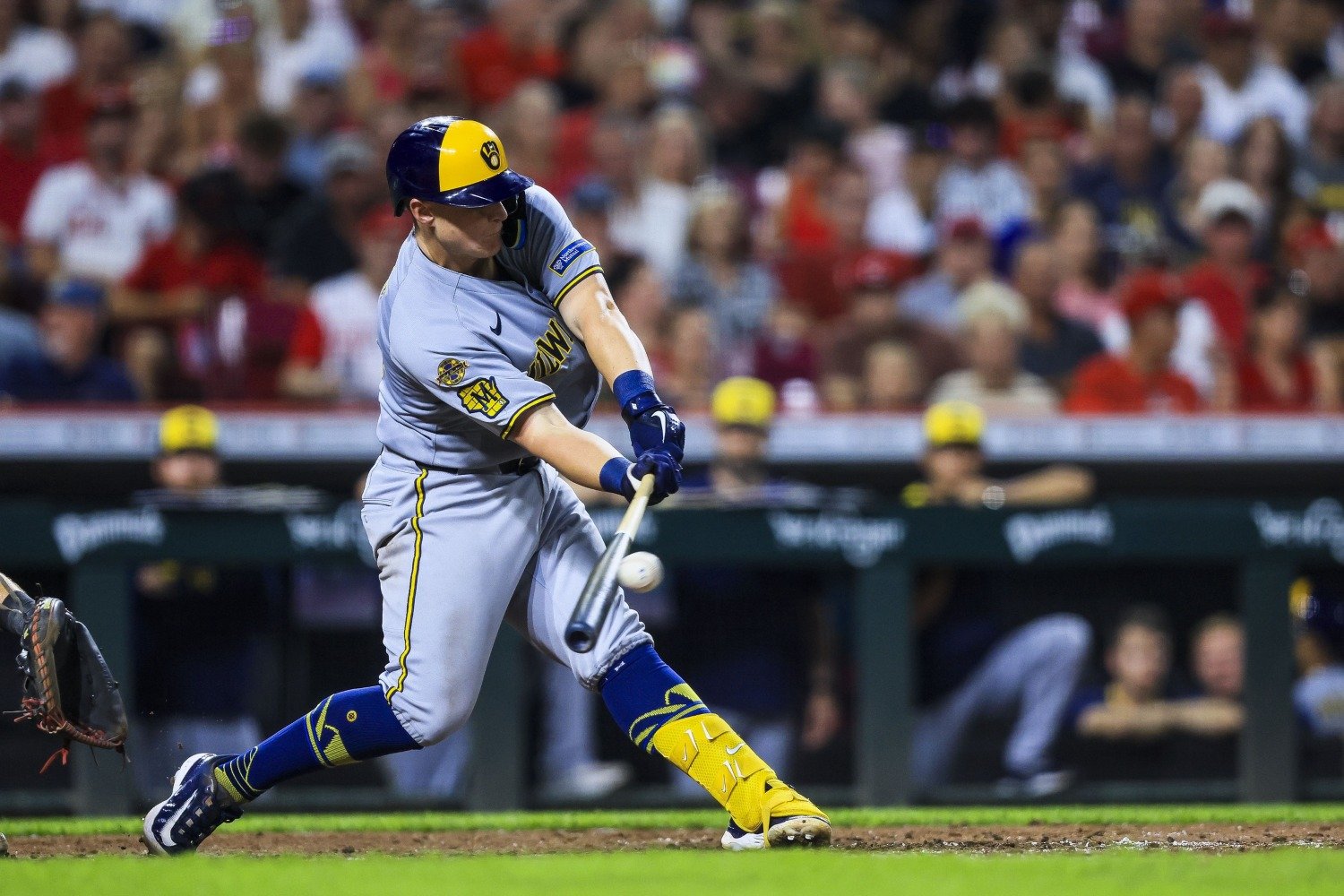 When the Chicago White Sox optioned Andrew Vaughn to their Triple-A affiliate in Charlotte this May, top baseball decision-maker Chris Getz said there were two areas in which they hoped to help Vaughn make key adjustments. The first, perhaps obvious one was swing decisions. Vaughn had only walked seven times (against 43 strikeouts) in 193 plate appearances before his demotion; his approach was broken. However, Getz also made specific mention of some mechanical changes the organization anticipated trying to make: syncing up his upper and lower halves. It's easy to dismiss them, because they didn't bear big-league fruit until after the Brewers traded Aaron Civale to Chicago for Vaughn (and, a few weeks later, promoted him to replace the injured Rhys Hoskins), but the Sox did make some of those changes while Vaughn was in Charlotte. In addition to some fairly immediate changes in his exit velocity, Vaughn made quick progress in controlling the strike zone after being sent down. He walked as often as he struck out (10 times each) in 67 plate appearances for Charlotte, before being shipped to Nashville. There, he had 13 strikeouts and seven walks in 65 trips to the plate before getting the call to Milwaukee. With the parent club, he's fanned 19 times against 12 walks in his first 134 plate appearances, in addition to the fireworks we've seen when he puts the ball in play. Swing decisions play the biggest role in walk and strikeout rates, of course, but there's much more to Vaughn's story as an emerging slugger for the Crew. The mechanical changes he's made have gotten far less publicity than the fact that he's swinging at better pitches, but how he swings might be just as important a driver of his enormous success as how often he does so, and at which offerings. Let's start by looking at what Vaughn's swing was like while he was still with Chicago. Here's a first-pitch heater on the inner half from Freddy Peralta, on which he geared up and took what qualified, then, as an 'A' swing for him. ZFh6MXZfWGw0TUFRPT1fRHdWUVVsQUNYZ0lBREZNQ1ZnQUhCMVVBQUZrQlZ3VUFWZ1FEQ1FJREFBc0dDRlJV.mp4 On a pitch like this one, of course, getting beat doesn't have to mean a whiff. Vaughn got a pitch to hit to start a plate appearance and attempted to tee off. You can even see his head turn toward left field, where he'd hoped he was hitting the ball. He was so late, though, that he lifted a can of corn to right, instead. (Enjoy, while you're here, the lead-in shot of Connor McKinight, Chicago Sports Network reporter and Appleton product. Like Danny Jansen, he went to Appleton West, but nobody's perfect.) That's because, at that point, Vaughn wasn't in sync. As Getz hinted, when his foot came down in his leg kick and he triggered his swing, he wasn't on time with his hands. That rhythm is everything. When a hitter doesn't have it, they're lost. Here's another example of Vaughn deep in that struggle. This one is a meandering cutter that found plenty of the plate and didn't have Peralta's zip, so he wasn't late—but nor did he find the barrel. Instead, the ball comes off the end of his bat, even though it's not on the outer half of the plate. Different direction, but same result: a flyout on a hittable pitch. WU9yM2dfWGw0TUFRPT1fVUZkV1VWWlhYd0lBQ1ZKWEJ3QUhDRkpYQUZnQVYxSUFBRlZSQlFSVEExY0VWUUZT.mp4 The thing to notice here is not only that he's not perfectly in sync when he starts his swing, but the way his leg kick and the drive off his back leg don't quite achieve the energy they're meant to create further up the chain. He bends his back leg, to be sure, but he doesn't truly sink into it. Between that and the lack of timing in the sequence of his swing, a lot of possible energy gets lost on the way to the baseball. Finally, here's Vaughn chasing a pitch he simply shouldn't have swung at. He didn't even touch it, but the truth of the matter is that he had no chance to. The right thing to do with this offering was not to do anything with it at all. Nnk5eDJfWGw0TUFRPT1fQWxSVFV3RUJVZ3NBV1ZvQUJRQUhVd0FEQUFNQlZ3SUFVUU1FQVZBREJ3SUdWZ0VE.mp4 Vaughn actually had a flatter-than-average swing while with Chicago, but on that kind of heater, there's practically no way to work up through the ball and get on plane with it. Certainly, his relatively stiff upper half didn't permit him to do so at the time. Ideally, he'd have recognized the pitch as being that high sooner and laid off. Now, let's get to the fun part. Here's Vaughn, who moved closer to the plate and opened up his stance slightly as part of his suite of changes while in the minors, getting plenty of barrel to a pitch on the outer half during Milwaukee's trip to the suburbs of Atlanta. SzRsNnZfWGw0TUFRPT1fVXdaWEIxSlZVQVFBQUZJR1hnQUhDUVlDQUFCUkJnVUFWQUZXQndCVEFWWlNVbE5T.mp4 How many swing adjustments can you spot right away? (Don't worry; this is an open-book test. You don't have to figure them all out yourself.) Firstly, Vaughn is sinking into and driving off that back leg much more substantially—what hitters call "getting into his legs" more. That's part of a more aggressive lower-half move, overall. Here's the animation, from Statcast, of Vaughn's stance and stride for April, with Chicago. Screen Recording 2025-08-20 195316.mp4 Compare that to the same animation for August, as a member of the Brewers. Screen Recording 2025-08-20 195609.mp4 He starts more spread-out, which automatically invites him to engage his core more and get deeper into his legs. As you can see, though, the leg kick is also much bigger. He's drawing back and launching himself forward more, which gets the upper and lower halves in sync and generates lots of force, moving forward into the hitting zone. This is why Vaughn's swing speed is up a bit over 1 mile per hour since coming back to the majors. It also means he can get the barrel out and through pitches on the outer portion of the dish. Here's Vaughn expanding the zone (you were told he doesn't do that anymore; he does, just not as often, and far more productively) and getting good wood on a ball down at his shins, against the Nationals. TkE5ajZfWGw0TUFRPT1fQXdrRkFnVUdBd1FBRGdZREF3QUhBQUFDQUZnREJWZ0FCRmNOQWdzRUFBSlVBMWRW.mp4 Protecting the zone with two strikes, Vaughn chased slightly, but because he was starting early, it was still a strong swing. This change isn't fundamentally about plate discipline; it's about the fact that his hands get moving right on time with the front foot coming down, giving his swing an adaptability and power that was missing before. Here he is expanding in the other direction, again with two strikes. This pitch is akin to the one on which we saw him strike out, above, but it's a bit more hittable, and he hits it. VndNVmFfWGw0TUFRPT1fVndsV1V3RUJVVllBRHdOWEFBQUhWd2NBQUZnTVZ3QUFCQU1CQVZKUUFBQlJBZ1pR.mp4 Let's do a quick still-frame comparison. Here are screenshots that capture the moment when Vaughn's foot landed in two of the videos above—one with Chicago, and one with Milwaukee. I've added a white line over his bat to show the orientation of it at that instant. Better one? Or two? At the optometrist, all you have to do is answer honestly; there's no right answer. Here, there is one. Vaughn's barrel is en route to the baseball sooner now than it was before he was demoted, then dealt. Compound that with better bat speed, and you have a hitter who's a whole lot more dangerous. Now, when a pitcher does make a mistake middle-in, you can pretty much forget about it. eHk5eVZfWGw0TUFRPT1fQmxSWlVsRlZVVlFBQ0FCV0JBQUhBMUJmQUFOUlVnY0FDbFpXQWdNRkNBWUdBd3NI.mp4 It's fair to observe that his swing decisions have greatly improved since coming to the Crew, but it's reductive to pretend that they're the only (or even the main) thing that has changed. It sounds and looks like Vaughn might have done some of his mechanical fixing before the Brewers even acquired him, let alone brought him up to the majors, but either way, this swing is significantly different than the one he had when he rode the junior circuit. His stance has changed. His contact point has changed. He's swinging faster, and he has a 32° swing tilt this month, up from 28° in April and May. That last is a huge difference that only sounds small; it's representative of a major mechanical alteration. We've seen how that was implemented, and why it works. None of this guarantees that Vaughn's success will continue unabated, any more than his much-discussed improvements in plate discipline do. Vaughn is a whole new hitter, and thus a new puzzle for the league to figure out; they'll come up with some things that force him to counteradjust quite soon. The reason his success has lasted so long and been so thunderous, though, is that it's not (by any means) just a matter of getting his pitch. He's also doing a whole different set of things with the pitches he gets.
 -
I've been tracking a lot of these and I knew some of what to expect—and it still made my eyes bug out a bit, too. *AS A TEAM*, they're hitting .276/.347/.443 since the start of June. That's crazy.
- 7 replies
-
- 1
-

-
- christian yelich
- william contreras
- (and 4 more)
-
Image courtesy of © Matt Marton-Imagn Images Modern baseball has arrived at a deleteriously narrow definition of power. For whatever reason, in an age of endlessly detailed information and in a sport that likes to congratulate itself on creative problem-solving, most fans and media members seem to check just one column to test whether a player or team has pop: home runs. The allure of hitting the ball over the fence—the way progress toward scoring can't be erased or wasted when the score comes all at once, and the way finding the seats circumvents modern defenses and their scarily excellent positioning, both infield and outfield—is easy to understand. Until the double-expansion era that began in 1998, though, there was always an understanding among savvy watchers of the game that power comes in other forms, too: doubles and triples, of course, but also, in some sense, singles. Hitting the ball hard applies pressure to a defense and creates many chances for extra advancements. The name of the game is scoring runs, and power is rightly defined as any means of doing that which achieves success by forcing the defense backward and sending the ball far from where it needs to be for a play to be made, allowing runners to move more than one base at a time. Homers are the most obvious form thereof, but far from the only one. This year, the Milwaukee Brewers are scoring more runs per game than any other team in baseball. Even as they've established their greatness, though, some public commenters have denigrated them, either as "lucky" or as a team destined for an early October exit. Always, always, always, these sources of pessimism cite the team's lack of power as the pillar of their argument. That pillar is made of sand, though, because here's the thing: the Brewers have plenty of power. Firstly, while those who mentally locked in what the lineup looked like in May might be fooled, those of us who have monitored the team throughout the year know that they have considerably more over-the-fence power than they did a few months ago. Brice Turang has 13 home runs this year, and seven of those have come this month. He came into this year swinging faster, and that bat speed has begotten more exit velocity. As he's learned to pick his spots to get around on the ball, he's tapped into all the power he began to generate when he cranked his swing up to this intensity, and he's a legitimate homer threat now. Ditto Sal Frelick, albeit on a smaller scale. He, too, is swinging faster this year, and he's also pulling the ball much more than he did in the past. By changing his intent, he's gone from a guy who hit two home runs all year in 2024 to one who already has nine this season. Both Turang and Frelick are examples of the team developing young hitters at the major-league level, accepting their extremely limited power output over their first two seasons in order to patiently bring them along. Because each was permitted—and expected, and then commanded—to evolve into their current approach, each has found the ability to drive the ball without sacrificing the other things they already did well. It's not just the marginal increases from those two, though. William Contreras rediscovered his bat speed (after three months of diminution due, presumably, to the pain in the fractured finger on his left hand through which he's played since last season) in early July, and after making some adjustments to account for his renewed capacity, he's been torrid in the homer department, too. Seven of his 13 homers have come since July 30. Then there's Andrew Vaughn, who took over for the injured Rhys Hoskins in early July and has nine homers in six weeks since. All four of those guys are complementary sluggers for this team. So is Isaac Collins. But they all play in the shadow beneath the power umbrella that is Christian Yelich. While everyone relentlessly laments the lack of a cornerstone slugger for Milwaukee, Yelich is being exactly that guy. He has 25 home runs, with 38 games to play. He's unlikely to get to 36, which is the number he hit when he won the NL MVP Award in 2018, but he's got a great shot at 30. He's been the power source, taking pressure off several of the other cogs in the lineup to do that particular thing. If you imagine this group with Jackson Chourio (17 homers before hitting the injured list with a hamstring strain at the end of last month), it's an awfully dangerous lineup, even by the narrow 21st-century understanding of power. Yelich, Chourio, Turang, Contreras and Vaughn makes a total of five guys who are hitting like 20-homer guys (or better) of late, and the under-the-hood data tells us it's not a fluke. Let's move past the homers, though. Consider that the only team with a higher total batting average than Milwaukee's is the Toronto Blue Jays. (The Jays are also the only ones with a higher OBP than the Crew's.) No one is recommending that you start evaluating individual batters based on batting average, as if it were the 1980s, but there is a difference between a .250 hitter with a .350 OBP and a .275 hitter with that same OBP. The .250 hitter might be doing more sustainable things, because they're not as reliant on getting hits to get on base, and perhaps they're making good tradeoffs to get more power at the expense of their batting average. However, in an absolute sense (for as long as it lasts), the .275 hitter is more valuable. More of their on-base events are hits, which means they're creating more chances for teammates to advance an extra base or two. Even if every hit making up that 25-point difference in batting average is a single, that batter is worth an extra handful of bases, relative to the .250 guy, because he's sending the ball all over the field and his teammates will sometimes come home from second or go from first to third as a result. More importantly, the Brewers don't just have guys hitting .275. Since June 1, there are 247 hitters who have come to bat at least 156 times. Seven Brewers rank in the top 60 in batting average among that group. Here are their batting lines, for this 11-week stretch: Collins: .324/.419/.527 Chourio: .304/.348/.515 Yelich: .295/.370/.500 Frelick: .295/.360/.425 Turang: .289/.341/.477 Joey Ortiz: .280/.318/.408 Caleb Durbin: .277/.355/.419 (Vaughn only has 134 plate appearances over this span, but he's hitting .325/.391/.598, himself. Contreras is batting .263/.351/.421 in this period, though as we noted already, he's been much hotter than that lately.) The staying power of Ortiz's production is questionable, for now; he's still in the crucible from which Turang and Frelick have just emerged. Even so, he's been a valuable bat for over two months, now. While few of these guys hit a lot of homers, note the way their high batting averages prop up their slugging averages. Even Ortiz, who still isn't really in touch with his power, is slugging .408 over this long stretch. Hitting lots of singles can be a recipe for heartbreak, and for each individual player, it's not the best way to create runs. As a team, though, if you can assemble somewhere between six and 10 guys who all hit .270 or better, those singles become multipliers for each other. They drive offense; they add up to power by clustering and clumping into run-producing sequences. No National League team has stolen as many bases as the Brewers. No National League team takes the extra base on hits at a higher rate than the Brewers. Their speed, their depth and their burgeoning secondary homer sources make them a lethal offense. Is it in the same shape as the typical 2020s offense? No. Are they anything like short on power? No. This team gets more of its slugging average from its batting average than most, but because they can create so many chances within a game—because every half-inning is likely to see someone get on base, due to that balance—only the Red Sox have had more plate appearances with runners in scoring position this year. The value everyone sees in hitting home runs is that those are chances that can't go to waste. For many modern teams, creating chances consistently is an impossibly tall order, so converting them is the name of the game. The Brewers, though, have more than enough thump to rack up runs, because they don't struggle with chance creation. View full article
- 7 replies
-
- 2
-
-
- christian yelich
- william contreras
- (and 4 more)
-
On the Ludicrous Myth that the Milwaukee Brewers Lack Power
Matthew Trueblood posted an article in Brewers
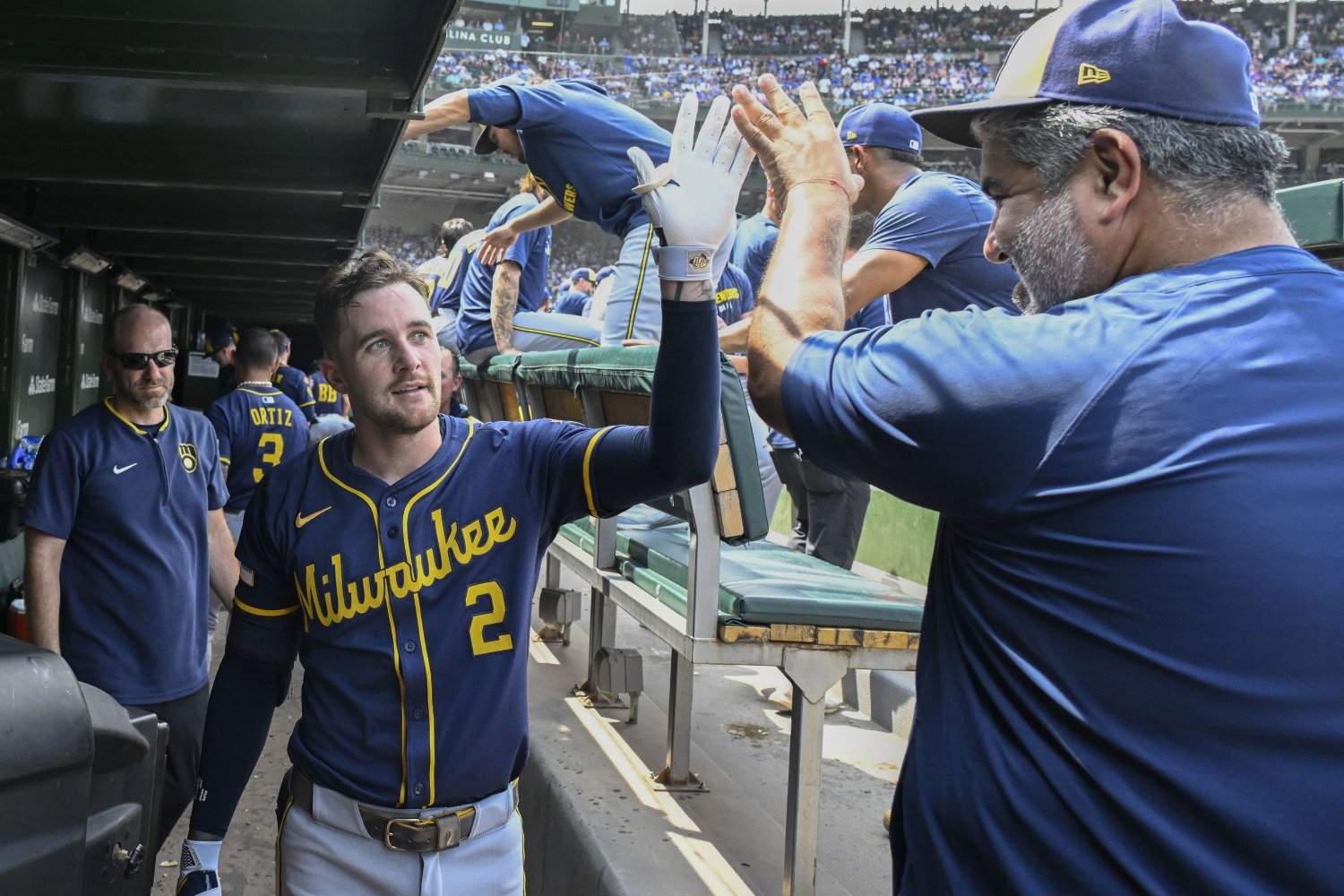 Modern baseball has arrived at a deleteriously narrow definition of power. For whatever reason, in an age of endlessly detailed information and in a sport that likes to congratulate itself on creative problem-solving, most fans and media members seem to check just one column to test whether a player or team has pop: home runs. The allure of hitting the ball over the fence—the way progress toward scoring can't be erased or wasted when the score comes all at once, and the way finding the seats circumvents modern defenses and their scarily excellent positioning, both infield and outfield—is easy to understand. Until the double-expansion era that began in 1998, though, there was always an understanding among savvy watchers of the game that power comes in other forms, too: doubles and triples, of course, but also, in some sense, singles. Hitting the ball hard applies pressure to a defense and creates many chances for extra advancements. The name of the game is scoring runs, and power is rightly defined as any means of doing that which achieves success by forcing the defense backward and sending the ball far from where it needs to be for a play to be made, allowing runners to move more than one base at a time. Homers are the most obvious form thereof, but far from the only one. This year, the Milwaukee Brewers are scoring more runs per game than any other team in baseball. Even as they've established their greatness, though, some public commenters have denigrated them, either as "lucky" or as a team destined for an early October exit. Always, always, always, these sources of pessimism cite the team's lack of power as the pillar of their argument. That pillar is made of sand, though, because here's the thing: the Brewers have plenty of power. Firstly, while those who mentally locked in what the lineup looked like in May might be fooled, those of us who have monitored the team throughout the year know that they have considerably more over-the-fence power than they did a few months ago. Brice Turang has 13 home runs this year, and seven of those have come this month. He came into this year swinging faster, and that bat speed has begotten more exit velocity. As he's learned to pick his spots to get around on the ball, he's tapped into all the power he began to generate when he cranked his swing up to this intensity, and he's a legitimate homer threat now. Ditto Sal Frelick, albeit on a smaller scale. He, too, is swinging faster this year, and he's also pulling the ball much more than he did in the past. By changing his intent, he's gone from a guy who hit two home runs all year in 2024 to one who already has nine this season. Both Turang and Frelick are examples of the team developing young hitters at the major-league level, accepting their extremely limited power output over their first two seasons in order to patiently bring them along. Because each was permitted—and expected, and then commanded—to evolve into their current approach, each has found the ability to drive the ball without sacrificing the other things they already did well. It's not just the marginal increases from those two, though. William Contreras rediscovered his bat speed (after three months of diminution due, presumably, to the pain in the fractured finger on his left hand through which he's played since last season) in early July, and after making some adjustments to account for his renewed capacity, he's been torrid in the homer department, too. Seven of his 13 homers have come since July 30. Then there's Andrew Vaughn, who took over for the injured Rhys Hoskins in early July and has nine homers in six weeks since. All four of those guys are complementary sluggers for this team. So is Isaac Collins. But they all play in the shadow beneath the power umbrella that is Christian Yelich. While everyone relentlessly laments the lack of a cornerstone slugger for Milwaukee, Yelich is being exactly that guy. He has 25 home runs, with 38 games to play. He's unlikely to get to 36, which is the number he hit when he won the NL MVP Award in 2018, but he's got a great shot at 30. He's been the power source, taking pressure off several of the other cogs in the lineup to do that particular thing. If you imagine this group with Jackson Chourio (17 homers before hitting the injured list with a hamstring strain at the end of last month), it's an awfully dangerous lineup, even by the narrow 21st-century understanding of power. Yelich, Chourio, Turang, Contreras and Vaughn makes a total of five guys who are hitting like 20-homer guys (or better) of late, and the under-the-hood data tells us it's not a fluke. Let's move past the homers, though. Consider that the only team with a higher total batting average than Milwaukee's is the Toronto Blue Jays. (The Jays are also the only ones with a higher OBP than the Crew's.) No one is recommending that you start evaluating individual batters based on batting average, as if it were the 1980s, but there is a difference between a .250 hitter with a .350 OBP and a .275 hitter with that same OBP. The .250 hitter might be doing more sustainable things, because they're not as reliant on getting hits to get on base, and perhaps they're making good tradeoffs to get more power at the expense of their batting average. However, in an absolute sense (for as long as it lasts), the .275 hitter is more valuable. More of their on-base events are hits, which means they're creating more chances for teammates to advance an extra base or two. Even if every hit making up that 25-point difference in batting average is a single, that batter is worth an extra handful of bases, relative to the .250 guy, because he's sending the ball all over the field and his teammates will sometimes come home from second or go from first to third as a result. More importantly, the Brewers don't just have guys hitting .275. Since June 1, there are 247 hitters who have come to bat at least 156 times. Seven Brewers rank in the top 60 in batting average among that group. Here are their batting lines, for this 11-week stretch: Collins: .324/.419/.527 Chourio: .304/.348/.515 Yelich: .295/.370/.500 Frelick: .295/.360/.425 Turang: .289/.341/.477 Joey Ortiz: .280/.318/.408 Caleb Durbin: .277/.355/.419 (Vaughn only has 134 plate appearances over this span, but he's hitting .325/.391/.598, himself. Contreras is batting .263/.351/.421 in this period, though as we noted already, he's been much hotter than that lately.) The staying power of Ortiz's production is questionable, for now; he's still in the crucible from which Turang and Frelick have just emerged. Even so, he's been a valuable bat for over two months, now. While few of these guys hit a lot of homers, note the way their high batting averages prop up their slugging averages. Even Ortiz, who still isn't really in touch with his power, is slugging .408 over this long stretch. Hitting lots of singles can be a recipe for heartbreak, and for each individual player, it's not the best way to create runs. As a team, though, if you can assemble somewhere between six and 10 guys who all hit .270 or better, those singles become multipliers for each other. They drive offense; they add up to power by clustering and clumping into run-producing sequences. No National League team has stolen as many bases as the Brewers. No National League team takes the extra base on hits at a higher rate than the Brewers. Their speed, their depth and their burgeoning secondary homer sources make them a lethal offense. Is it in the same shape as the typical 2020s offense? No. Are they anything like short on power? No. This team gets more of its slugging average from its batting average than most, but because they can create so many chances within a game—because every half-inning is likely to see someone get on base, due to that balance—only the Red Sox have had more plate appearances with runners in scoring position this year. The value everyone sees in hitting home runs is that those are chances that can't go to waste. For many modern teams, creating chances consistently is an impossibly tall order, so converting them is the name of the game. The Brewers, though, have more than enough thump to rack up runs, because they don't struggle with chance creation.
- 7 comments
-
- 1
-
-
- christian yelich
- william contreras
- (and 4 more)
-
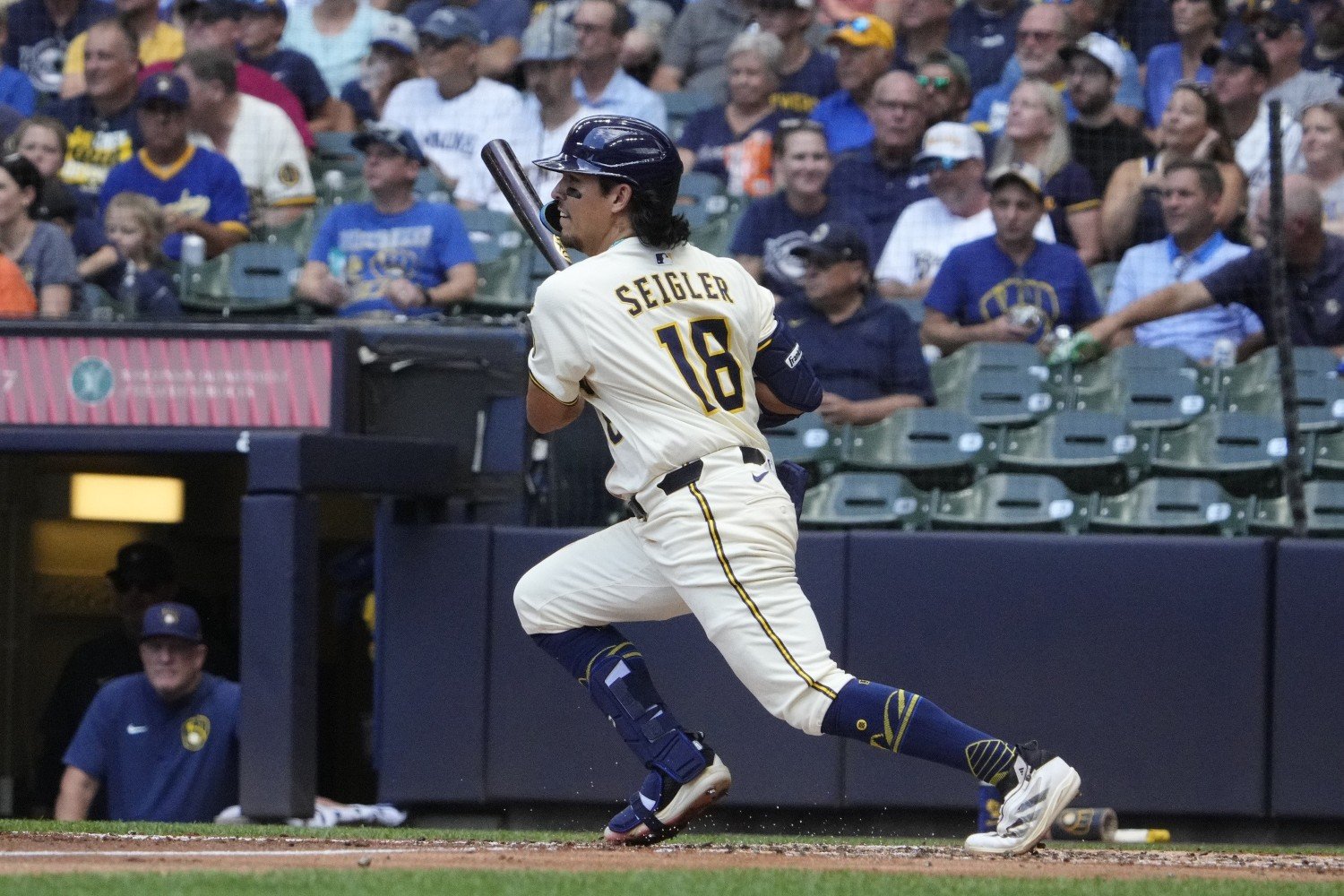 It's not as though Caleb Durbin has laid an egg. Once you account for his three times reaching base on errors, he has a .362 on-base percentage since June 1. He's struggling just a bit this month (.222/.286/.333 in 50 plate appearances), but he hasn't given away his job, or anything. Pat Murphy still trusts and seeks to use him. Lately, though, Anthony Seigler is winning some of the playing time at third base, and if that comes at the expense of Durbin at times, so be it. Seigler has batted .278/.435/.278 this month, playing considerably less (23 PA) than Durbin but showing well when he gets his chances. He has as many walks (5) as strikeouts. He still doesn't have an extra-base hit in the majors, but his potential value—right now and into the medium-term future—is beginning to come into focus. As a versatile infield defender and an OBP-driven lefty bat, he can do a lot of things the Brewers like a lot. For one thing, as the equal balance of walks and strikeouts hints, he makes superb swing decisions. Seigler swings at 68.7% of pitches within the strike zone and just 17.6% of the ones he sees outside it, according to Statcast. He also makes contact on over 90% of the pitches he swings at within the zone, so (as Brewers hitters are required to be, if they want to make Pat Murphy's lineup card on even a semi-regular basis) he's a tough out. It's not just how much and where he swings that the team can appreciate, though. Seigler also has a swing that neatly fits what the Brewers look for from their role players. It's not a fast swing—in fact, it averages just 66.8 mph, and he hasn't yet gotten off a single swing measured at 75 mph or faster. As a result, there's that dearth of power (through the extremely limited sample of 53 trips to the plate, overall). However, Seigler's stroke is so short and his feel for contact so good that he's consistently hitting the ball fairly hard. That's enough to give him a good chance to hit for average on balls in play, as well as getting the boost that comes with maintaining a low strikeout rate. Of 543 batters with at least 50 competitive swings this year, Seigler has the 27th-shortest swing length. He's squared up the ball at the 73rd-highest rate, meaning he's getting a high share of the possible exit velocity generated by his swings and the pitches on which he's connecting. He gets there not only by being short to the ball, but by having more than the average amount of swing tilt, at 35°. Fewer than two dozen players in the league combine such a slow swing with that much tilt, and maintaining that is why Seigler can get his barrel on such a variety of pitches and make up for the lack of plus bat speed. Finally, though, let's bake in one more wrinkle. Seigler has one more unusual swing characteristic, given what else he does: his swing is oriented to the opposite field. Most guys with steep swings want to either catch the ball very deep in the hitting zone to slice it the other way or get through the ball and pull it, without rolling over. Only Adam Frazier, Luis Arraez, Myles Straw, Justin Turner, Alex Call, and Luis Guillorme join Seigler in being slow, steep, push swing guys. That doesn't even mean Seigler necessarily hits the ball to the opposite field a lot. He's had a very typical breakdown by hit direction so far, pulling it more than he goes the other way. It's just that, by being oriented to the opposite field, he's covering the outer part of the plate exceptionally well. That cuts down his strikeout rate, relative to what we'd expect based on the tilt of his swing. Even more than recent players who came up with quiet, unimpressive swings—guys like Durbin, Sal Frelick, Brice Turang, Blake Perkins and Isaac Collins—there's a limit to Seigler's ability to grow from here toward stardom. His ceiling is as a solid but unspectacular contributor. Even while he's slowly working his way toward that status, though, Seigler has been a fine bench piece for a thriving Brewers club.
 -
Image courtesy of © Michael McLoone-Imagn Images It's not as though Caleb Durbin has laid an egg. Once you account for his three times reaching base on errors, he has a .362 on-base percentage since June 1. He's struggling just a bit this month (.222/.286/.333 in 50 plate appearances), but he hasn't given away his job, or anything. Pat Murphy still trusts and seeks to use him. Lately, though, Anthony Seigler is winning some of the playing time at third base, and if that comes at the expense of Durbin at times, so be it. Seigler has batted .278/.435/.278 this month, playing considerably less (23 PA) than Durbin but showing well when he gets his chances. He has as many walks (5) as strikeouts. He still doesn't have an extra-base hit in the majors, but his potential value—right now and into the medium-term future—is beginning to come into focus. As a versatile infield defender and an OBP-driven lefty bat, he can do a lot of things the Brewers like a lot. For one thing, as the equal balance of walks and strikeouts hints, he makes superb swing decisions. Seigler swings at 68.7% of pitches within the strike zone and just 17.6% of the ones he sees outside it, according to Statcast. He also makes contact on over 90% of the pitches he swings at within the zone, so (as Brewers hitters are required to be, if they want to make Pat Murphy's lineup card on even a semi-regular basis) he's a tough out. It's not just how much and where he swings that the team can appreciate, though. Seigler also has a swing that neatly fits what the Brewers look for from their role players. It's not a fast swing—in fact, it averages just 66.8 mph, and he hasn't yet gotten off a single swing measured at 75 mph or faster. As a result, there's that dearth of power (through the extremely limited sample of 53 trips to the plate, overall). However, Seigler's stroke is so short and his feel for contact so good that he's consistently hitting the ball fairly hard. That's enough to give him a good chance to hit for average on balls in play, as well as getting the boost that comes with maintaining a low strikeout rate. Of 543 batters with at least 50 competitive swings this year, Seigler has the 27th-shortest swing length. He's squared up the ball at the 73rd-highest rate, meaning he's getting a high share of the possible exit velocity generated by his swings and the pitches on which he's connecting. He gets there not only by being short to the ball, but by having more than the average amount of swing tilt, at 35°. Fewer than two dozen players in the league combine such a slow swing with that much tilt, and maintaining that is why Seigler can get his barrel on such a variety of pitches and make up for the lack of plus bat speed. Finally, though, let's bake in one more wrinkle. Seigler has one more unusual swing characteristic, given what else he does: his swing is oriented to the opposite field. Most guys with steep swings want to either catch the ball very deep in the hitting zone to slice it the other way or get through the ball and pull it, without rolling over. Only Adam Frazier, Luis Arraez, Myles Straw, Justin Turner, Alex Call, and Luis Guillorme join Seigler in being slow, steep, push swing guys. That doesn't even mean Seigler necessarily hits the ball to the opposite field a lot. He's had a very typical breakdown by hit direction so far, pulling it more than he goes the other way. It's just that, by being oriented to the opposite field, he's covering the outer part of the plate exceptionally well. That cuts down his strikeout rate, relative to what we'd expect based on the tilt of his swing. Even more than recent players who came up with quiet, unimpressive swings—guys like Durbin, Sal Frelick, Brice Turang, Blake Perkins and Isaac Collins—there's a limit to Seigler's ability to grow from here toward stardom. His ceiling is as a solid but unspectacular contributor. Even while he's slowly working his way toward that status, though, Seigler has been a fine bench piece for a thriving Brewers club. View full article
-
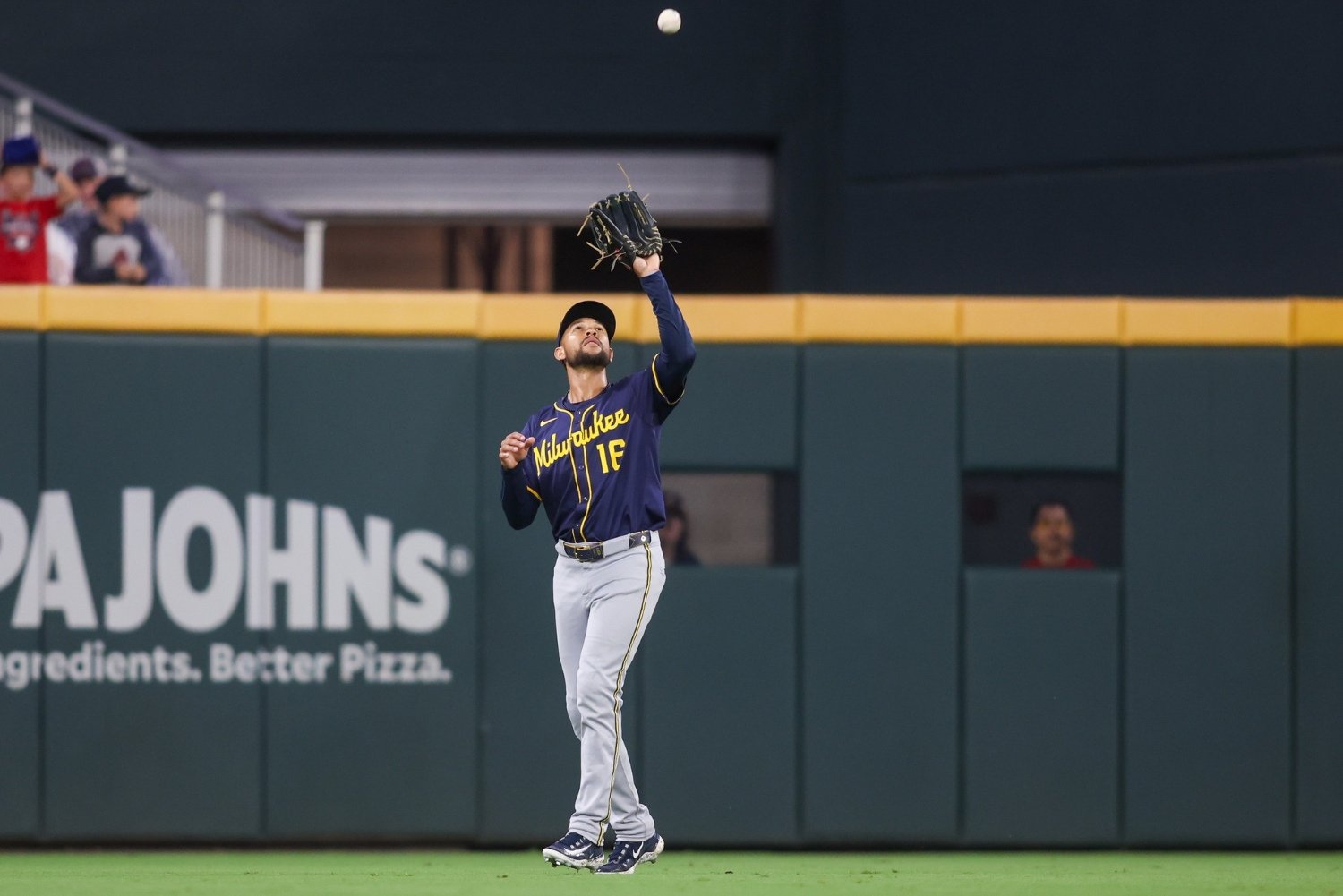 It'll take you a while to convince me that Blake Perkins is anything short of a great center fielder. It'd take you a while to convince Starling Marte of that, too. Perkins still moves like a great defender out there. Although he was playing about 50 feet deeper when Jeff McNeil hit a would-be game-tying, ninth-inning single in a game earlier this month than he was against Santiago Espinal in an identical situation last June, he merely used that space and time to close hard on the ball and make a throw at almost 100 miles per hour to get the out, the same way he got an out (with a quicker release but not as strong a peg) last year. A glance at his defensive metrics for this season, though, will at least attempt to sway you into disbelieving in the Brewers' defensive whiz in center field. Perkins is grading not only as less than exceptional, but as worse than average—and that huge difference in positioning between last year's critical situation and this year's is one microcosm of the reasons. Under Quintin Berry (and without a major injury in his recent past), Perkins played an extremely aggressive center field. He didn't hurl himself recklessly into outfield walls or dive just for fun, but he was a risk-taking, playmaking outfielder. Moving in so shallow against Espinal was a crystal-clear example of both Berry's willingness to gamble on his own instincts and information and Perkins's willingness to go along with bold moves and to take up unusual positions to get him to unusual balls. That's not happening this year. On that McNeil single, even though the tying run was on second base, Perkins's positioning was about ensuring that a ball didn't get over his head and put the go-ahead run in the same place. More broadly, all year, we've seen Perkins play behind the ball or pull up when danger was present. Here's a line-drive single that, had he taken a different route off the bat, was catchable, but on which he merely made sure a double was impossible. OHl3UGVfWGw0TUFRPT1fVWxSVVZBVUVBMU1BWGdaV1hnQUhWUVpWQUFBSFcxa0FCMUVFQUFwVENBRldBVkZU.mp4 He did something very similar on this hit by James Wood, around the same time. VndNNndfV0ZRVkV3dEdEUT09X1ZBbFJWd0lNVXdFQVdsSUdWZ0FIQkFSVkFGa0FBVkFBQWxCUkNRVlRBd29HQlZRRQ==.mp4 These are both sinking liners that would have required Perkins to read them excellently off the bat and make an instantaneous, risky decision to take the direct route to the ball; neither would have been a guaranteed catch. Both were possible, though, and even past versions of Perkins probably would have attempted them. This year, he's not doing so very often. Here's one more, different example: a ball hit to the base of the wall on which Perkins slowed up and played the ball off the barrier, rather than trying to catch it and collide. OHl3UGVfWGw0TUFRPT1fRGdkVUFBZFZWd0lBWFZFRUJRQUhBUThFQUFNTlZsVUFCd1FHQWdzQlZBWUJCRlpW.mp4 These aren't bad plays, and Perkins isn't getting huge demerits for them. He did get stiffly penalized for this clank job, but it feels like a more isolated incident, so we won't worry about it. The score at the time made it unimportant that he lost focus at the catchpoint. VndNNndfV0ZRVkV3dEdEUT09X0JGVlZVUUlDQUFBQURWUlRCd0FIVWdaV0FBTU1BRlFBQ2xKVVVndFVWUVJSVlFSZg==.mp4 These four examples are all drawn from the same two games, which might tempt you to think Perkins just had off games afield. There's more to it, though. His routes have been more conservative all year. Whether he's consciously protecting himself from another serious injury or just doesn't have enough live, recent reps to get the jumps to which we've become accustomed, he's not covering quite as much ground or seizing quite as many opportunities in center as he did the last two years. Whatever the reason, that's perfectly ok. First of all, with Jackson Chourio on the injured list, it's important that Perkins stay healthy. The Brewers have good outfield depth, but it's all in play already, thanks to Chourio's hamstring issue, Jake Bauers being down for a while, and Garrett Mitchell being out for the year. They also have a great deal of margin for error right now. Their long winning binge has opened up an edge in the division that won't require them to sweat much the rest of the way. What matters is the playoffs. Keeping Perkins healthy now matters more than any ball he might catch by taking more chances. jn the outfield. For at least as long as Chourio is out, Perkins will be the regular center fielder. Thus, if any of this is rust Perkins is still shaking off, we should see that fix itself imminently. In watching, though, it looks more like he's being intentionally careful. In that case, expect to see more or less what we have seen so far from Perkins, until the race for a particular playoff spot reaches an improbably dramatic point or until the playoffs themselves arrive. It's more popular (and more fun, really, and certainly easier to spot) when a player gives incredible, high-level effort on every play. Over the long season, though, everyone has to find some places to go at 80 or 90 percent, instead of flat-out. That way, they survive the year relatively healthy and with something left in the tank for the postseason. Perkins is saving his big plays for Octonber. In the meantime, opponents might find an extra hit here or there against one of the game's elite defenders. Don't be fooled. He's just biding his time.
 -
Image courtesy of © Brett Davis-Imagn Images It'll take you a while to convince me that Blake Perkins is anything short of a great center fielder. It'd take you a while to convince Starling Marte of that, too. Perkins still moves like a great defender out there. Although he was playing about 50 feet deeper when Jeff McNeil hit a would-be game-tying, ninth-inning single in a game earlier this month than he was against Santiago Espinal in an identical situation last June, he merely used that space and time to close hard on the ball and make a throw at almost 100 miles per hour to get the out, the same way he got an out (with a quicker release but not as strong a peg) last year. A glance at his defensive metrics for this season, though, will at least attempt to sway you into disbelieving in the Brewers' defensive whiz in center field. Perkins is grading not only as less than exceptional, but as worse than average—and that huge difference in positioning between last year's critical situation and this year's is one microcosm of the reasons. Under Quintin Berry (and without a major injury in his recent past), Perkins played an extremely aggressive center field. He didn't hurl himself recklessly into outfield walls or dive just for fun, but he was a risk-taking, playmaking outfielder. Moving in so shallow against Espinal was a crystal-clear example of both Berry's willingness to gamble on his own instincts and information and Perkins's willingness to go along with bold moves and to take up unusual positions to get him to unusual balls. That's not happening this year. On that McNeil single, even though the tying run was on second base, Perkins's positioning was about ensuring that a ball didn't get over his head and put the go-ahead run in the same place. More broadly, all year, we've seen Perkins play behind the ball or pull up when danger was present. Here's a line-drive single that, had he taken a different route off the bat, was catchable, but on which he merely made sure a double was impossible. OHl3UGVfWGw0TUFRPT1fVWxSVVZBVUVBMU1BWGdaV1hnQUhWUVpWQUFBSFcxa0FCMUVFQUFwVENBRldBVkZU.mp4 He did something very similar on this hit by James Wood, around the same time. VndNNndfV0ZRVkV3dEdEUT09X1ZBbFJWd0lNVXdFQVdsSUdWZ0FIQkFSVkFGa0FBVkFBQWxCUkNRVlRBd29HQlZRRQ==.mp4 These are both sinking liners that would have required Perkins to read them excellently off the bat and make an instantaneous, risky decision to take the direct route to the ball; neither would have been a guaranteed catch. Both were possible, though, and even past versions of Perkins probably would have attempted them. This year, he's not doing so very often. Here's one more, different example: a ball hit to the base of the wall on which Perkins slowed up and played the ball off the barrier, rather than trying to catch it and collide. OHl3UGVfWGw0TUFRPT1fRGdkVUFBZFZWd0lBWFZFRUJRQUhBUThFQUFNTlZsVUFCd1FHQWdzQlZBWUJCRlpW.mp4 These aren't bad plays, and Perkins isn't getting huge demerits for them. He did get stiffly penalized for this clank job, but it feels like a more isolated incident, so we won't worry about it. The score at the time made it unimportant that he lost focus at the catchpoint. VndNNndfV0ZRVkV3dEdEUT09X0JGVlZVUUlDQUFBQURWUlRCd0FIVWdaV0FBTU1BRlFBQ2xKVVVndFVWUVJSVlFSZg==.mp4 These four examples are all drawn from the same two games, which might tempt you to think Perkins just had off games afield. There's more to it, though. His routes have been more conservative all year. Whether he's consciously protecting himself from another serious injury or just doesn't have enough live, recent reps to get the jumps to which we've become accustomed, he's not covering quite as much ground or seizing quite as many opportunities in center as he did the last two years. Whatever the reason, that's perfectly ok. First of all, with Jackson Chourio on the injured list, it's important that Perkins stay healthy. The Brewers have good outfield depth, but it's all in play already, thanks to Chourio's hamstring issue, Jake Bauers being down for a while, and Garrett Mitchell being out for the year. They also have a great deal of margin for error right now. Their long winning binge has opened up an edge in the division that won't require them to sweat much the rest of the way. What matters is the playoffs. Keeping Perkins healthy now matters more than any ball he might catch by taking more chances. jn the outfield. For at least as long as Chourio is out, Perkins will be the regular center fielder. Thus, if any of this is rust Perkins is still shaking off, we should see that fix itself imminently. In watching, though, it looks more like he's being intentionally careful. In that case, expect to see more or less what we have seen so far from Perkins, until the race for a particular playoff spot reaches an improbably dramatic point or until the playoffs themselves arrive. It's more popular (and more fun, really, and certainly easier to spot) when a player gives incredible, high-level effort on every play. Over the long season, though, everyone has to find some places to go at 80 or 90 percent, instead of flat-out. That way, they survive the year relatively healthy and with something left in the tank for the postseason. Perkins is saving his big plays for Octonber. In the meantime, opponents might find an extra hit here or there against one of the game's elite defenders. Don't be fooled. He's just biding his time. View full article
-
Image courtesy of © Jovanny Hernandez / Milwaukee Journal Sentinel / USA TODAY NETWORK via Imagn Images Brandon Woodruff has been part of the Brewers organization since 2014. Two winters ago, there was almost a tragic divorce, as Woodruff's severe shoulder injury (which, it was immediately clear, would prompt him to miss all of 2024) prompted the Brewers to non-tender him in November 2023. Woodruff had offers from other teams, including at least one for more money than he got when he eventually returned to the Crew. In the end, though, he couldn't stay away—and although the team had made the cold, calculated decision to cut him (as they always must, and always do, in such situations), they never stopped wanting to bring him back. Woodruff was one of Brewers legend Bob Uecker's favorite players. It was lucky that he and the team made the choice to stick together for 2024, even if he couldn't participate on the field, because doing so meant Woodruff was around for the final summer of Uecker around the park. It also allowed both men to share in the moment after the Brewers won the division title last September, when Pat Murphy ensured that the team who had taken the field paid special respect to Uecker. A few of the most poignant pictures from that delirious celebration show Uecker and Woodruff celebrating together; one of those photos heads this article. Now, the Brewers are on a tear—one of the best stretches in baseball history, and clearly the best in team history. You can pick any of several endpoints to demonstrate how hot they are, including: 53-19 since hitting their low-water mark of 4 games below .500, in mid-May 39-11 since Jacob Misiorowski's debut on June 12 36-9 since the rainout in Chicago that wasn't rescheduled as a doubleheader the next day, which the Brewers used as bulletin-board material My favorite selective endpoint, though, is also the one that makes it all most clear. Since Woodruff's season debut on July 6, the Brewers are 26-4. They've won all six of his starts, and in those 30 games, they've outscored opponents 191-94. This team has been good, young, improving, versatile, and relentless all year. Only since Woodruff made it back—after 21 months away and a litany of setbacks even during the first half of this year—have they been truly complete, though. In fact, since then, they've been as close to perfect as you can get. The only team to win more games in a 30-game span this century was the Cleveland team that won 22 straight in 2017. They were the defending American League champions, with two surefire future Hall of Famers (José Ramírez and Francisco Lindor) at their absolute peak and two pitchers almost on that level (Corey Kluber, who won the Cy Young Award that year, and Andrew Miller) at theirs. But that team also benefited from a division full of losers, and reeled off lots of wins against two teams (the White Sox and Tigers) who combined to lose 193 games that year. Going all the way back to 1947, the only other teams to win more than 26 in a stretch of 30 are the 1977 Royals and the 1947 and 1953 Yankees. That's one team playing in an expansion year, and two more in a league that was only semi-integrated and that included just seven other clubs, one of which was the genuinely dreadful postwar St. Louis Browns. It's just that Cleveland club, George Brett's best Royals team, and two iterations of the greatest dynasty in the history of the sport. That's the company the Brewers are keeping, and it all started (or, rather, it accelerated to its current runaway train speed) when Woodruff came back to the club spending its first summer in over half a century without Uecker. You could do pretty well with that pitch in Hollywood; real life is rarely this kind. I don't believe in ghosts or guardian angels, though you're welcome to. I don't think Uecker's spirit is standing next to opposing defenders and shoving their gloves sideways as they go to field routine grounders, or even sending out some beam of positive energy that vaguely improves the team. I do believe, though, that a Uecker Effect is everywhere this summer, and that some of the inspired, impossibly perfect baseball the team has played for long stretches this year has something to do with the heightened sense of history, responsibility and purpose that has hung around Uecker Field all season. Uecker's physical presence and his voice are real and painful losses, but there's still a statue of him outside the park, and one inside it. There's still his catchphrase out in left field. He's still profoundly important to what happens, even if all that impact comes from the power of memory and legacy. Those who watch the games find the Brewers' success remarkable, but not mystical. They're winning because they're playing extraordinarily well—because they're an extraordinarily good team. With the good vibes of Woodruff's return from so much adversity and the bittersweet feeling that the best season in team history might be the one right after the person who most embodied the team passed away, though, it's impossible to talk about all that talent and all that playmaking without also talking about the feelings and the magic of it all. View full article
- 1 reply
-
- 1
-
-
- brandon woodruff
- bob uecker
- (and 1 more)
-
Brandon Woodruff, Bob Uecker, and This Marvelous Streak
Matthew Trueblood posted an article in Brewers
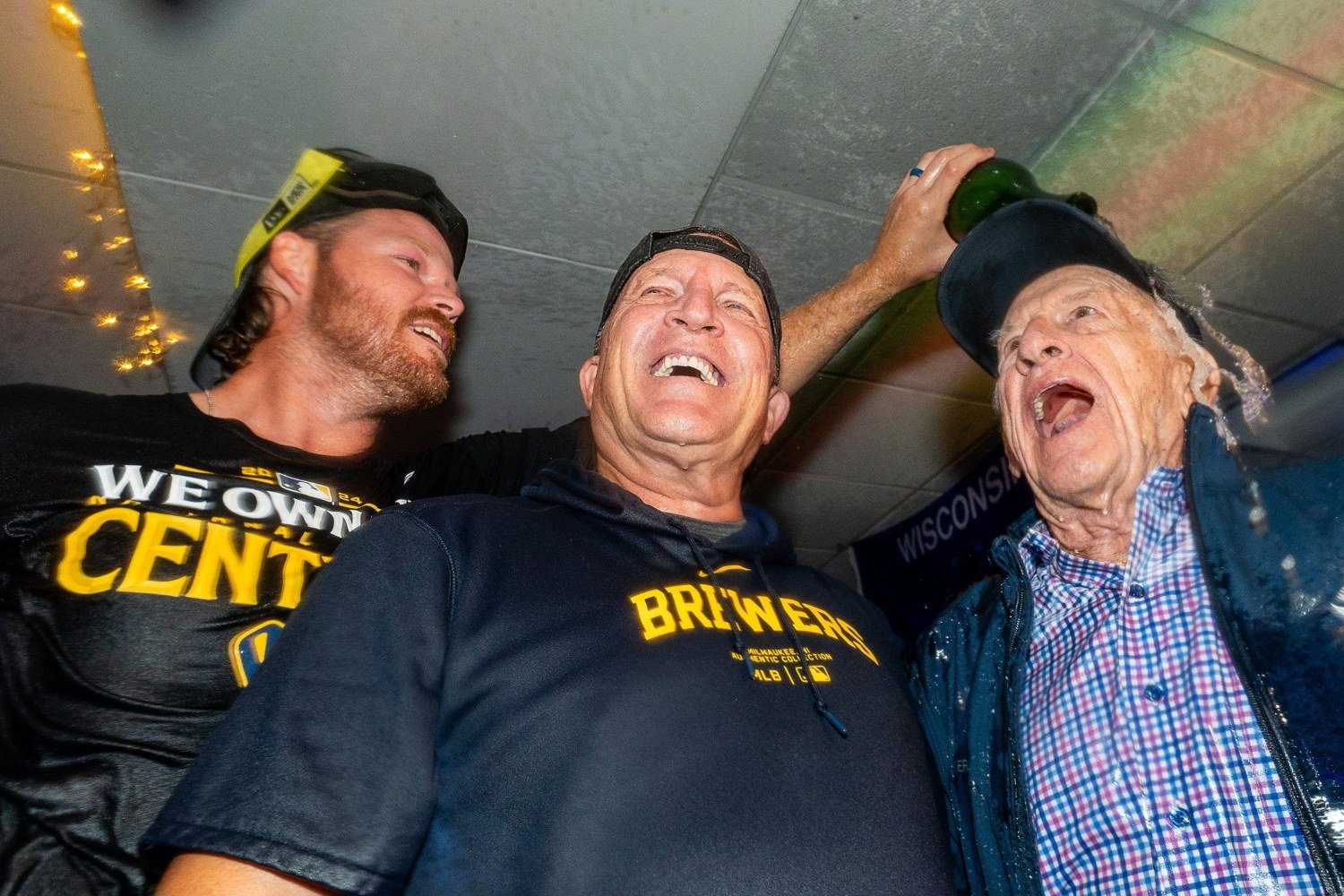 Brandon Woodruff has been part of the Brewers organization since 2014. Two winters ago, there was almost a tragic divorce, as Woodruff's severe shoulder injury (which, it was immediately clear, would prompt him to miss all of 2024) prompted the Brewers to non-tender him in November 2023. Woodruff had offers from other teams, including at least one for more money than he got when he eventually returned to the Crew. In the end, though, he couldn't stay away—and although the team had made the cold, calculated decision to cut him (as they always must, and always do, in such situations), they never stopped wanting to bring him back. Woodruff was one of Brewers legend Bob Uecker's favorite players. It was lucky that he and the team made the choice to stick together for 2024, even if he couldn't participate on the field, because doing so meant Woodruff was around for the final summer of Uecker around the park. It also allowed both men to share in the moment after the Brewers won the division title last September, when Pat Murphy ensured that the team who had taken the field paid special respect to Uecker. A few of the most poignant pictures from that delirious celebration show Uecker and Woodruff celebrating together; one of those photos heads this article. Now, the Brewers are on a tear—one of the best stretches in baseball history, and clearly the best in team history. You can pick any of several endpoints to demonstrate how hot they are, including: 53-19 since hitting their low-water mark of 4 games below .500, in mid-May 39-11 since Jacob Misiorowski's debut on June 12 36-9 since the rainout in Chicago that wasn't rescheduled as a doubleheader the next day, which the Brewers used as bulletin-board material My favorite selective endpoint, though, is also the one that makes it all most clear. Since Woodruff's season debut on July 6, the Brewers are 26-4. They've won all six of his starts, and in those 30 games, they've outscored opponents 191-94. This team has been good, young, improving, versatile, and relentless all year. Only since Woodruff made it back—after 21 months away and a litany of setbacks even during the first half of this year—have they been truly complete, though. In fact, since then, they've been as close to perfect as you can get. The only team to win more games in a 30-game span this century was the Cleveland team that won 22 straight in 2017. They were the defending American League champions, with two surefire future Hall of Famers (José Ramírez and Francisco Lindor) at their absolute peak and two pitchers almost on that level (Corey Kluber, who won the Cy Young Award that year, and Andrew Miller) at theirs. But that team also benefited from a division full of losers, and reeled off lots of wins against two teams (the White Sox and Tigers) who combined to lose 193 games that year. Going all the way back to 1947, the only other teams to win more than 26 in a stretch of 30 are the 1977 Royals and the 1947 and 1953 Yankees. That's one team playing in an expansion year, and two more in a league that was only semi-integrated and that included just seven other clubs, one of which was the genuinely dreadful postwar St. Louis Browns. It's just that Cleveland club, George Brett's best Royals team, and two iterations of the greatest dynasty in the history of the sport. That's the company the Brewers are keeping, and it all started (or, rather, it accelerated to its current runaway train speed) when Woodruff came back to the club spending its first summer in over half a century without Uecker. You could do pretty well with that pitch in Hollywood; real life is rarely this kind. I don't believe in ghosts or guardian angels, though you're welcome to. I don't think Uecker's spirit is standing next to opposing defenders and shoving their gloves sideways as they go to field routine grounders, or even sending out some beam of positive energy that vaguely improves the team. I do believe, though, that a Uecker Effect is everywhere this summer, and that some of the inspired, impossibly perfect baseball the team has played for long stretches this year has something to do with the heightened sense of history, responsibility and purpose that has hung around Uecker Field all season. Uecker's physical presence and his voice are real and painful losses, but there's still a statue of him outside the park, and one inside it. There's still his catchphrase out in left field. He's still profoundly important to what happens, even if all that impact comes from the power of memory and legacy. Those who watch the games find the Brewers' success remarkable, but not mystical. They're winning because they're playing extraordinarily well—because they're an extraordinarily good team. With the good vibes of Woodruff's return from so much adversity and the bittersweet feeling that the best season in team history might be the one right after the person who most embodied the team passed away, though, it's impossible to talk about all that talent and all that playmaking without also talking about the feelings and the magic of it all.
- 1 comment
-
- 2
-
-
- brandon woodruff
- bob uecker
- (and 1 more)
-
Image courtesy of © Michael McLoone-Imagn Images You couldn't help but laugh, watching it happen, though if you have a finely-tuned sense of empathy, perhaps it was a slightly sad laugh. The poor, poor Mets (the wrong word for them, admittedly, but it felt right in the moment) were doing everything they could. This weekend's visitors to The Ueck were struggling even when they rolled into town, which so many of the Brewers' recent opponents seem to have been—it always feels that way, when a team is as hot as this one is. After the taut game that Blake Perkins won with another magnificent throw to the plate Friday night, New York was downright spiraling. Yet, their stars showed up over the first six-plus innings Saturday, giving them three home runs (one each from Pete Alonso, Starling Marte and Juan Soto) in the first five frames. (Alonso, Marte and Soto are making a combined $86.4 million this year, which is a bit less than the Brewers' $114.4 million in projected spending for the entire roster—but that figure excludes $85 million in signing bonuses Steve Cohen paid to Soto and Alonso during the offseason.) They survived an early rally that was quintessentially Brewers, in which two runs scored on a bad-hop error after two singles and a six-pitch walk. They answered immediately after a game-tying Brice Turang home run. They led 4-3 at the stretch, with the game in the hands of their formidable, trade-reinforced bullpen. The bottom of the seventh took a while, but in another sense, it went extremely fast. And when it was over, so (effectively) was the game. Milwaukee rushed up four runs, and the way they did it captures what makes this team not some cute, scrappy thing, but the inarguable best team in baseball this summer. Ryne Stanek started the frame, and in theory, he had a relatively easy job. He was Edwin Díaz's chief lieutenant until the end of July, when ex-Brewers executive David Stearns rode the circuit and came back with trade prizes Gregory Soto, Tyler Rogers and Ryan Helsley. That group is awfully good, now, and Stanek suddenly being fourth on the depth chart for the corps meant he got to take on the bottom third of the Crew's lineup in the seventh. Of course, the problem became immediately apparent: the Brewers' depth is better even than that of the newly buttressed $340-million behemoth. Turang, whose power binge is a delight worth savoring separately and whose defensive wizardry had saved one run already in the game, started the uprising with an at-bat more typical of his offensive skill set. On a fastball at 98.9 mph, he laced a line drive through the left side, for a single. Pat Murphy then sent up Caleb Durbin to pinch-hit for Anthony Seigler, which introduced a new threat (Seigler, though admirably serviceable with the glove all over and a good theoretical matchup piece, has not shown he can hit big-league pitching, whereas Durbin is hitting a torrid .296/.373/.417 since mid-May). Durbin hit another line drive, but this one found a glove on the infield. One out. What makes Stanek good—not great, and it's certainly best for the high-expectations Mets that they nudged him down the ladder a rung or two, but good—is how hard he throws. His slider and his splitter are his best pitches, in a sense, but they're set up by the fact that he routinely hits 100 miles per hour. By the time he got to Joey Ortiz, he was stomping, snarling and sweating, and his heater was up in its highest gear. He threw a first-pitch strike to Ortiz at 99.4 mph, then got a foul ball on a late swing at 99.8. He came as close as you come to triple digits on an 0-2 pitch, having seen Ortiz struggle to keep up—but Ortiz, though still beaten, got enough of the ball to slice a lob-wedge double down the right-field line. It skipped out of play, which looked like a break for the Mets, since it stopped Turang at third. Now, though, the tying run was 90 feet away, with just one out. Turang, perhaps the face of the Brewers, also carried the speed that is so much part of their identity, so it'd be tough to get him if Sal Frelick could put the ball in play. Normally, in the modern game, this is an anxious moment, but not an altogether hopeless one. The infield came in to the edge of the grass, but the Mets just needed a strikeout, and strikeouts are everywhere these days. Stanek has a 27.4% career strikeout rate. Manager Carlos Mendoza could have gone to Ryan Helsley right then, but he chose not to, and Stanek showed why. His first pitch to Frelick was just above the zone, rising and screaming at 100.5 mph, and Frelick swung under it. You could see the ambition in that swing. Frelick, who hasn't tapped into his pop the same way Turang has this year but has certainly made strides, wanted to lash one of his signature ambush shots; he was just beaten. He took another healthy cut on 0-1, but Stanek's heater was in nearly the same spot, at 101.0 mph. Frelick merely fouled it off. Then the Brewers of it all took effect. Frelick visibly, tangibly changed his plan. Stanek went to the splitter to try to finish his much-needed punchout, but Frelick was punching now, too. He shortened his stride and his stroke, until he looked much like a kid hacking away at a piñata—but he fended off that splitter, and then another fastball at 100.3 mph. Stanek started to crack a bit, missing wide with the next heater, and then he came back with one more splitter. It was off the plate away, and Frelick's swing was one of the ugliest things you'll see this season—but he smacked the ball straight into the ground, sending a high-hopping grounder into the space just beyond Stanek and to the left of second base. Francisco Lindor picked it cleanly and retired Frelick, but Turang scored easily. VndNVmFfWGw0TUFRPT1fQWdsU1ZBZFFYd0VBWEZJR1V3QUhBUVVDQUZnRVUxRUFBVk1BVTFBSENBSUVCUVZS.mp4 I say it's one of the uglier things you'll see all year, but it might not even have been the ugliest swing Frelick took against a two-strike splitter in this game. Earlier, in a similar situation but with two outs, he nearly earned an RBI infield single by doing... well, something, anyway... to a Frankie Montas splitter. VndNVmFfWGw0TUFRPT1fVUFBREJsMEVYZ1lBRFZWVEF3QUhBbE1FQUFCV1cxZ0FVUWNBQkZGWFVsWUFVUUJU.mp4 Frelick's bat speed on each of these little pokes was under 54 miles per hour. His answer to overwhelming speed was to push it away with a conscious absence of speed, and once each pitcher gave him their best offspeed alternative, he slowed down even more to find the ball—making him dangerous, even if slightly hideous. After that, Mendoza knew Stanek had given him all he could, and he called in Helsley to keep the game tied. Helsley always throws hard, but the combination of situation and occasion (the intensity of the game state and the fervor of the 40,156 in attendance) brought out a new level. For the first time in his career, Helsley averaged 102 mph with his heater. Isaac Collins, though, was unimpressed. Like Frelick, he whiffed on the first pitch of his at-bat, at 101.1 mph. Like Frelick, though, he wouldn't be beaten again. Helsley's next three fastballs were something out of a 1990s baseball movie: 102.0, 102.8, 103.8, steadily growing angrier and more unimaginably unhittable—except that Collins fouled off all three. Helsley finally resorted to his slider, but missed. On 1-2, back he came at 103.1 mph, above the zone. Out Collins sent it, almost as fast but downward, toward third base. It went right by Ronny Mauricio at third base, a tricky hop on an utterly unreadable ball (who hits 103.1, neck-high, on the ground the other way?) and a carom into the outfield for a Brewers lead. VndNVmFfWGw0TUFRPT1fVXdjQUFWY0FBd0VBQ1ZvSFVnQUhVRkpXQUZnR1ZGTUFBZ1pYQ0ZBRFVGZFZBVlJX.mp4 The Brewers will take your heart out. They will parry and foil everything you do well, looking defensive even on offense but using the space and their speed and the fundamental difficulty of this game to make your job so hard it becomes impossible. Then, when you're bleeding and you make one small mistake, they'll throw a haymaker you didn't know they had left in their muscles. This time, the hammer fell when Helsley couldn't quite get off his first pitch to William Contreras before the pitch timer expired. He still threw it, and Contreras hit a (looked-like) flyout to Soto in right field, but home plate umpire Ryan Additon stopped play while the ball was still in the air; Helsley started his stretch too late. Ball one. On the next pitch, Contreras got a heater just above the zone and just above 100 mph, but it was on the inner half, and he obliterated it, driving it into the Brewers bullpen for a two-run homer. In that half-inning, alone, the Brewers saw 10 pitches at 100 mph or harder. We're not talking, right now, about the two at 99.9 or the other two at 99.7. We're also not counting the first pitch to Contreras, which officially doesn't exist but was a 100-mph fastball. The Mets threw Milwaukee batters 10 counted pitches that were true, unmitigated triple-digit smokeballs—and the Brewers got their game-tying grounder, the go-ahead single, and the nail-in-coffin homer on them. How do they handle such heat? Well, no team has to do it as often. In fact, no team comes close. After last night, the Brewers have now seen 117 pitches at 100 mph or harder this year. That's the most in baseball, and it leads the second-place White Sox by 12. The Brewers have seen more triple-digit heaters than the Tigers (51), Red Sox (44) and Angels (26) combined. Athletics batters have only seen 17 pitches all season as hard as those 10 (or really 11) the Brewers saw in their four-run bottom of the seventh Saturday night. It's remarkable how much the Crew have had to deal with fastballs this fiery, because they throw so many of them, themselves. Only the A's have thrown more triple-digit pitches than the Brewers' combo of Jacob Misiorowski, Trevor Megill and Abner Uribe this year—and obviously, that was mostly Mason Miller. Milwaukee will end up throwing more pitches at 100+ than any other club this year, which makes the number of pitches their hitters have seen in that register mind-boggling. The reason the A's (and Aroldis Chapman's Red Sox, for instance) see so few pitches that hard is that pitchers who throw that hard are still pretty rare. If you have one (or two, like Boston's combination of Chapman and Jordan Hicks, or San Diego's new tandem of Miller and Robert Suarez), you not only enjoy the benefit of their heat, but have removed a disproportionate part of the threat of having to face that heat elsewhere in the league. The Brewers are the only team with three of the top 20 pitchers in 100+ throws, but they've still been forced to confront more such pitches than anyone else. And it doesn't matter. Ugly as a Frelick lunge-chop or pretty as a Perkins peg, this team will find ways to win. Their triple-digit terrors are better at doing the other important things of pitching than yours are. Their defense is better at dealing with the occasional difficulties of working behind high-intensity hurlers than yours is. Their hitters are younger and quicker and smarter than yours, and they can do to your defense and your pitchers what you can't do to them. The ball keeps moving, and the Brewers keep moving, and you try to keep up, but you end up looking like this: Or like this: Or like this: One by one, opponents slide under the Brewers' treads and come out the other side, flattened and furious, anti-congratulating themselves on playing so poorly and giving the Crew a game or a series. That's the sign of a truly great team. The 2025 Brewers make everyone look like they're beating themselves. Really, it's the Brewers doing the beating. It's all just happening too fast for anyone outside the Milwaukee Speed Machine to see. View full article
- 2 replies
-
- 4
-
-

-
- sal frelick
- william contreras
- (and 3 more)
-
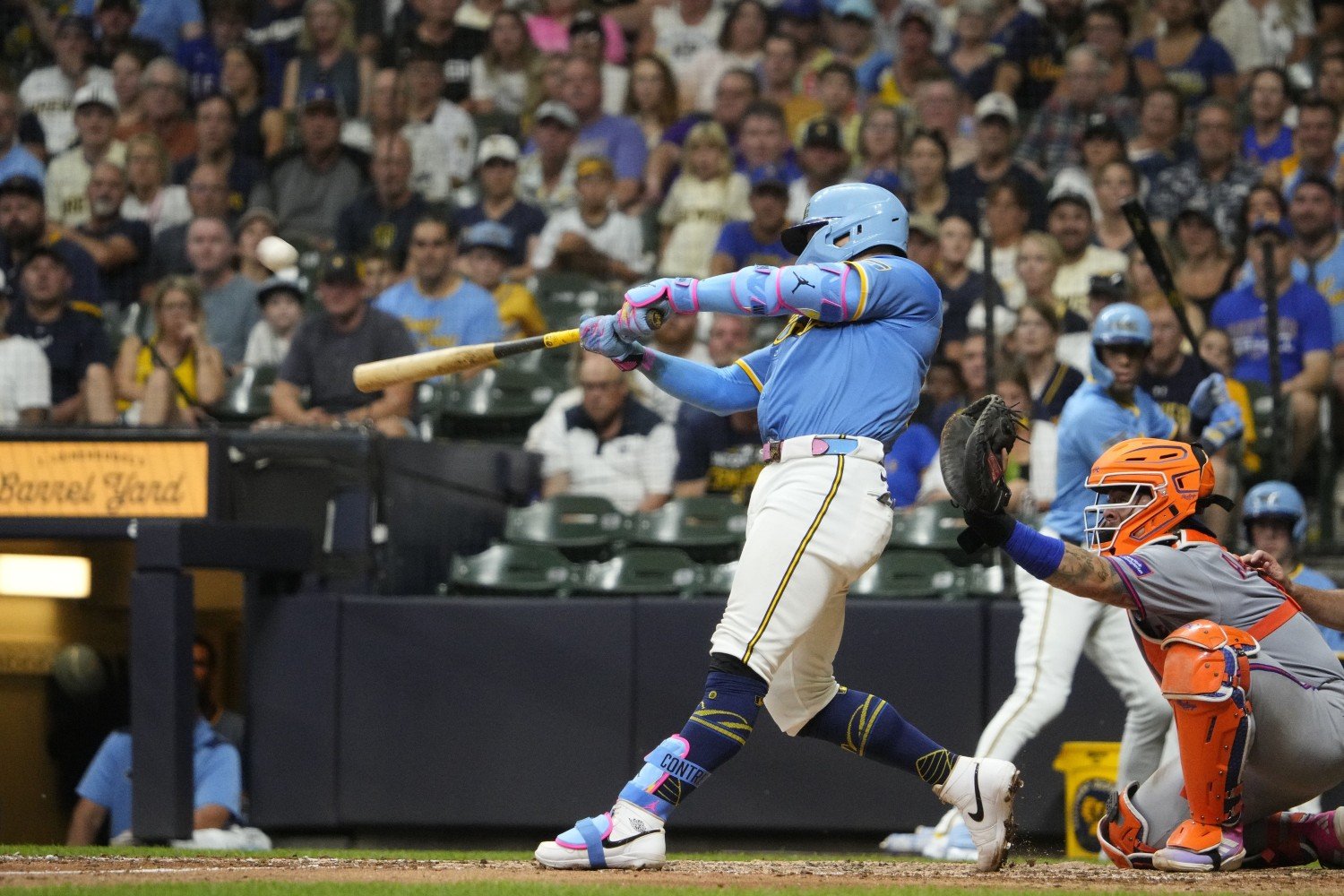 You couldn't help but laugh, watching it happen, though if you have a finely-tuned sense of empathy, perhaps it was a slightly sad laugh. The poor, poor Mets (the wrong word for them, admittedly, but it felt right in the moment) were doing everything they could. This weekend's visitors to The Ueck were struggling even when they rolled into town, which so many of the Brewers' recent opponents seem to have been—it always feels that way, when a team is as hot as this one is. After the taut game that Blake Perkins won with another magnificent throw to the plate Friday night, New York was downright spiraling. Yet, their stars showed up over the first six-plus innings Saturday, giving them three home runs (one each from Pete Alonso, Starling Marte and Juan Soto) in the first five frames. (Alonso, Marte and Soto are making a combined $86.4 million this year, which is a bit less than the Brewers' $114.4 million in projected spending for the entire roster—but that figure excludes $85 million in signing bonuses Steve Cohen paid to Soto and Alonso during the offseason.) They survived an early rally that was quintessentially Brewers, in which two runs scored on a bad-hop error after two singles and a six-pitch walk. They answered immediately after a game-tying Brice Turang home run. They led 4-3 at the stretch, with the game in the hands of their formidable, trade-reinforced bullpen. The bottom of the seventh took a while, but in another sense, it went extremely fast. And when it was over, so (effectively) was the game. Milwaukee rushed up four runs, and the way they did it captures what makes this team not some cute, scrappy thing, but the inarguable best team in baseball this summer. Ryne Stanek started the frame, and in theory, he had a relatively easy job. He was Edwin Díaz's chief lieutenant until the end of July, when ex-Brewers executive David Stearns rode the circuit and came back with trade prizes Gregory Soto, Tyler Rogers and Ryan Helsley. That group is awfully good, now, and Stanek suddenly being fourth on the depth chart for the corps meant he got to take on the bottom third of the Crew's lineup in the seventh. Of course, the problem became immediately apparent: the Brewers' depth is better even than that of the newly buttressed $340-million behemoth. Turang, whose power binge is a delight worth savoring separately and whose defensive wizardry had saved one run already in the game, started the uprising with an at-bat more typical of his offensive skill set. On a fastball at 98.9 mph, he laced a line drive through the left side, for a single. Pat Murphy then sent up Caleb Durbin to pinch-hit for Anthony Seigler, which introduced a new threat (Seigler, though admirably serviceable with the glove all over and a good theoretical matchup piece, has not shown he can hit big-league pitching, whereas Durbin is hitting a torrid .296/.373/.417 since mid-May). Durbin hit another line drive, but this one found a glove on the infield. One out. What makes Stanek good—not great, and it's certainly best for the high-expectations Mets that they nudged him down the ladder a rung or two, but good—is how hard he throws. His slider and his splitter are his best pitches, in a sense, but they're set up by the fact that he routinely hits 100 miles per hour. By the time he got to Joey Ortiz, he was stomping, snarling and sweating, and his heater was up in its highest gear. He threw a first-pitch strike to Ortiz at 99.4 mph, then got a foul ball on a late swing at 99.8. He came as close as you come to triple digits on an 0-2 pitch, having seen Ortiz struggle to keep up—but Ortiz, though still beaten, got enough of the ball to slice a lob-wedge double down the right-field line. It skipped out of play, which looked like a break for the Mets, since it stopped Turang at third. Now, though, the tying run was 90 feet away, with just one out. Turang, perhaps the face of the Brewers, also carried the speed that is so much part of their identity, so it'd be tough to get him if Sal Frelick could put the ball in play. Normally, in the modern game, this is an anxious moment, but not an altogether hopeless one. The infield came in to the edge of the grass, but the Mets just needed a strikeout, and strikeouts are everywhere these days. Stanek has a 27.4% career strikeout rate. Manager Carlos Mendoza could have gone to Ryan Helsley right then, but he chose not to, and Stanek showed why. His first pitch to Frelick was just above the zone, rising and screaming at 100.5 mph, and Frelick swung under it. You could see the ambition in that swing. Frelick, who hasn't tapped into his pop the same way Turang has this year but has certainly made strides, wanted to lash one of his signature ambush shots; he was just beaten. He took another healthy cut on 0-1, but Stanek's heater was in nearly the same spot, at 101.0 mph. Frelick merely fouled it off. Then the Brewers of it all took effect. Frelick visibly, tangibly changed his plan. Stanek went to the splitter to try to finish his much-needed punchout, but Frelick was punching now, too. He shortened his stride and his stroke, until he looked much like a kid hacking away at a piñata—but he fended off that splitter, and then another fastball at 100.3 mph. Stanek started to crack a bit, missing wide with the next heater, and then he came back with one more splitter. It was off the plate away, and Frelick's swing was one of the ugliest things you'll see this season—but he smacked the ball straight into the ground, sending a high-hopping grounder into the space just beyond Stanek and to the left of second base. Francisco Lindor picked it cleanly and retired Frelick, but Turang scored easily. VndNVmFfWGw0TUFRPT1fQWdsU1ZBZFFYd0VBWEZJR1V3QUhBUVVDQUZnRVUxRUFBVk1BVTFBSENBSUVCUVZS.mp4 I say it's one of the uglier things you'll see all year, but it might not even have been the ugliest swing Frelick took against a two-strike splitter in this game. Earlier, in a similar situation but with two outs, he nearly earned an RBI infield single by doing... well, something, anyway... to a Frankie Montas splitter. VndNVmFfWGw0TUFRPT1fVUFBREJsMEVYZ1lBRFZWVEF3QUhBbE1FQUFCV1cxZ0FVUWNBQkZGWFVsWUFVUUJU.mp4 Frelick's bat speed on each of these little pokes was under 54 miles per hour. His answer to overwhelming speed was to push it away with a conscious absence of speed, and once each pitcher gave him their best offspeed alternative, he slowed down even more to find the ball—making him dangerous, even if slightly hideous. After that, Mendoza knew Stanek had given him all he could, and he called in Helsley to keep the game tied. Helsley always throws hard, but the combination of situation and occasion (the intensity of the game state and the fervor of the 40,156 in attendance) brought out a new level. For the first time in his career, Helsley averaged 102 mph with his heater. Isaac Collins, though, was unimpressed. Like Frelick, he whiffed on the first pitch of his at-bat, at 101.1 mph. Like Frelick, though, he wouldn't be beaten again. Helsley's next three fastballs were something out of a 1990s baseball movie: 102.0, 102.8, 103.8, steadily growing angrier and more unimaginably unhittable—except that Collins fouled off all three. Helsley finally resorted to his slider, but missed. On 1-2, back he came at 103.1 mph, above the zone. Out Collins sent it, almost as fast but downward, toward third base. It went right by Ronny Mauricio at third base, a tricky hop on an utterly unreadable ball (who hits 103.1, neck-high, on the ground the other way?) and a carom into the outfield for a Brewers lead. VndNVmFfWGw0TUFRPT1fVXdjQUFWY0FBd0VBQ1ZvSFVnQUhVRkpXQUZnR1ZGTUFBZ1pYQ0ZBRFVGZFZBVlJX.mp4 The Brewers will take your heart out. They will parry and foil everything you do well, looking defensive even on offense but using the space and their speed and the fundamental difficulty of this game to make your job so hard it becomes impossible. Then, when you're bleeding and you make one small mistake, they'll throw a haymaker you didn't know they had left in their muscles. This time, the hammer fell when Helsley couldn't quite get off his first pitch to William Contreras before the pitch timer expired. He still threw it, and Contreras hit a (looked-like) flyout to Soto in right field, but home plate umpire Ryan Additon stopped play while the ball was still in the air; Helsley started his stretch too late. Ball one. On the next pitch, Contreras got a heater just above the zone and just above 100 mph, but it was on the inner half, and he obliterated it, driving it into the Brewers bullpen for a two-run homer. In that half-inning, alone, the Brewers saw 10 pitches at 100 mph or harder. We're not talking, right now, about the two at 99.9 or the other two at 99.7. We're also not counting the first pitch to Contreras, which officially doesn't exist but was a 100-mph fastball. The Mets threw Milwaukee batters 10 counted pitches that were true, unmitigated triple-digit smokeballs—and the Brewers got their game-tying grounder, the go-ahead single, and the nail-in-coffin homer on them. How do they handle such heat? Well, no team has to do it as often. In fact, no team comes close. After last night, the Brewers have now seen 117 pitches at 100 mph or harder this year. That's the most in baseball, and it leads the second-place White Sox by 12. The Brewers have seen more triple-digit heaters than the Tigers (51), Red Sox (44) and Angels (26) combined. Athletics batters have only seen 17 pitches all season as hard as those 10 (or really 11) the Brewers saw in their four-run bottom of the seventh Saturday night. It's remarkable how much the Crew have had to deal with fastballs this fiery, because they throw so many of them, themselves. Only the A's have thrown more triple-digit pitches than the Brewers' combo of Jacob Misiorowski, Trevor Megill and Abner Uribe this year—and obviously, that was mostly Mason Miller. Milwaukee will end up throwing more pitches at 100+ than any other club this year, which makes the number of pitches their hitters have seen in that register mind-boggling. The reason the A's (and Aroldis Chapman's Red Sox, for instance) see so few pitches that hard is that pitchers who throw that hard are still pretty rare. If you have one (or two, like Boston's combination of Chapman and Jordan Hicks, or San Diego's new tandem of Miller and Robert Suarez), you not only enjoy the benefit of their heat, but have removed a disproportionate part of the threat of having to face that heat elsewhere in the league. The Brewers are the only team with three of the top 20 pitchers in 100+ throws, but they've still been forced to confront more such pitches than anyone else. And it doesn't matter. Ugly as a Frelick lunge-chop or pretty as a Perkins peg, this team will find ways to win. Their triple-digit terrors are better at doing the other important things of pitching than yours are. Their defense is better at dealing with the occasional difficulties of working behind high-intensity hurlers than yours is. Their hitters are younger and quicker and smarter than yours, and they can do to your defense and your pitchers what you can't do to them. The ball keeps moving, and the Brewers keep moving, and you try to keep up, but you end up looking like this: Or like this: Or like this: One by one, opponents slide under the Brewers' treads and come out the other side, flattened and furious, anti-congratulating themselves on playing so poorly and giving the Crew a game or a series. That's the sign of a truly great team. The 2025 Brewers make everyone look like they're beating themselves. Really, it's the Brewers doing the beating. It's all just happening too fast for anyone outside the Milwaukee Speed Machine to see.
- 2 comments
-
- 5
-
-
-
- sal frelick
- william contreras
- (and 3 more)
-
Image courtesy of © David Richard-Imagn Images It's a seller's market, and the Brewers are buyers. For some teams, that's just the way things go, and they accept that the cost of doing business will be a bit of irrationality. For the Brewers, though, rational decision-making and roster-building are fundamental parts of thriving on a sustainable basis in the league's smallest media market. That precludes irrational, splashy deadline moves in most cases, and with no pressing needs on one of the game's most well-rounded rosters, the combination of the front office's proclivities and the market dynamics at play are keeping them very quiet as the trade deadline looms. If Milwaukee does choose to add anything, it's likely to be a reliever—but the team values and trusts its existing bullpen. An addition to that group would have to be a hurler with options remaining, so that the team can hold onto all of the talented pitchers already featured in that relief unit. The tricky thing about any such target, though, is that any pitcher with options remaining also (by definition) has at least one more year of team control remaining. Often, they have three or four. When teams who have such pitchers to deal set a price, they tend to bake in the fact that they could plausibly keep them for that long—conveniently forgetting, in the moment, that it's unlikely even most good middle relievers get all the way to free agency without being traded or non-tendered, especially once those optionable seasons are used or voided. Three pitchers stand out as high-leverage arms with the right mix of moderate team control, dwindling controllability through options, and the roster flexibility to be sent down at least this year: Anthony Bender and Calvin Faucher, of the Marlins, and Hunter Gaddis of the Guardians. Right now, the Brewers aren't interested in trading packages of young talent commensurate with the asking price on those guys, especially considering what it cost the Mets to acquire impending free agent Tyler Rogers Wednesday. However, as the final day of trade season ticks away and names fly off the board (filling, at the same time, many of the vacancies on contenders that drive demand in the market), the Brewers might circle back to Miami or Cleveland to discuss one of these arms. Bender, 30, has been discussed most as a league-wide trade target. He has two years of team control remaining after 2025. He's spent the whole year in the Miami bullpen, racking up 45 appearances and 44 1/3 innings as a right-handed middle reliever and setup man. His ERA is sparkling (1.83) and he keeps the ball in the park well, but he doesn't have excellent control or swing-and-miss stuff. As a result, the sense is that his asking price should be fairly reasonable. If he's not sent down this year, he'd have one more year of optionability next season—but only until he accrues about three weeks of big-league service for next year. He offers some flexibility and a valuable skill set, but not such dominance or so much flexibility that Marlins baseball chief Peter Bendix is in a position to extract a king's ransom for him. Faucher is a similar but slightly more complicated case. A late bloomer, he's already 30 years old, so although he has four theoretical seasons of team control left after 2025, there's no way he'll make it that far without being made available to all 30 teams in some fashion. He hasn't been optioned this year, and if that remains true through October, he can be optioned in 2026, but the Brewers might end up utilizing their option on him just getting through the balance of 2025. Like Bender, he walks more batters than you'd like to see—something Milwaukee staffers feel they could fix, but which has to be priced in to make a trade sensible. It's not yet clear how available Faucher is, but he should be far from untouchable. Perhaps the toughest to acquire would be Gaddis, who has slid up the hierarchy in the Cleveland bullpen after Emmanuel Clase was sidelined by an MLB sports betting investigation. Gaddis, 27, is probably too good to need to be optioned at any point; it's just nice to know that the team would have that in their back pocket in case of regression. In the meantime, he's showed the ability to miss bats and induce weak contact throughout his brief big-league career, and already has high-leverage postseason experience. Like Faucher, he's under team control through 2029, and the Guardians would want something good for him—perhaps a starting pitching prospect nearing big-league readiness, as was the shape of the 2022 trade in which the Cubs sent similarly solid reliever Scott Effross to the Yankees for fringy starter-in-waiting Hayden Wesneski. The Brewers know they're dealing from a position of strength. The market is moving, but not (yet) in their direction, so they won't push the envelope. However, Matt Arnold is always opportunistic. If the right reliever—especially an optionable one—comes down into their price range, Milwaukee will still make a meaningful addition before the bell rings Thursday. View full article
-
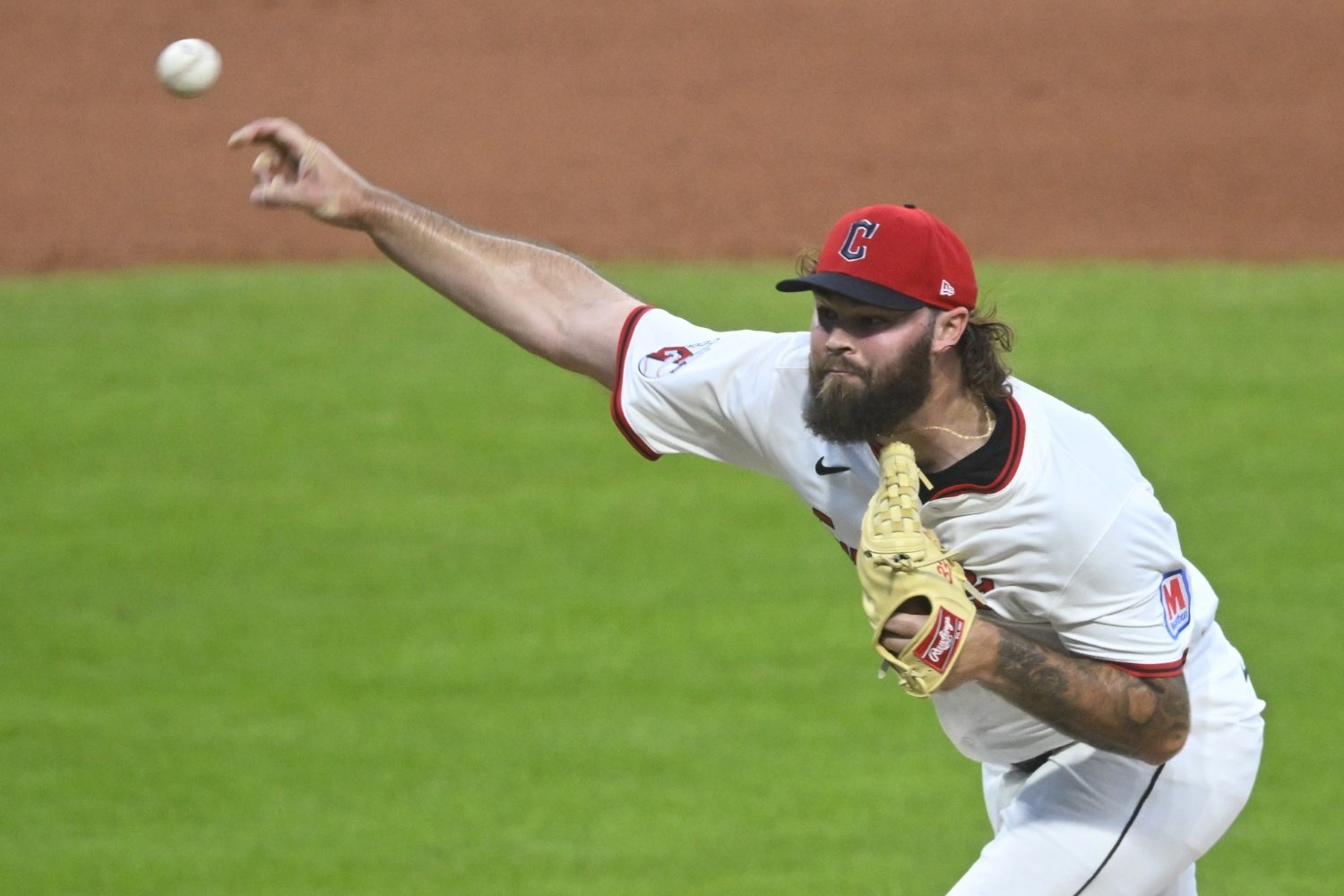 It's a seller's market, and the Brewers are buyers. For some teams, that's just the way things go, and they accept that the cost of doing business will be a bit of irrationality. For the Brewers, though, rational decision-making and roster-building are fundamental parts of thriving on a sustainable basis in the league's smallest media market. That precludes irrational, splashy deadline moves in most cases, and with no pressing needs on one of the game's most well-rounded rosters, the combination of the front office's proclivities and the market dynamics at play are keeping them very quiet as the trade deadline looms. If Milwaukee does choose to add anything, it's likely to be a reliever—but the team values and trusts its existing bullpen. An addition to that group would have to be a hurler with options remaining, so that the team can hold onto all of the talented pitchers already featured in that relief unit. The tricky thing about any such target, though, is that any pitcher with options remaining also (by definition) has at least one more year of team control remaining. Often, they have three or four. When teams who have such pitchers to deal set a price, they tend to bake in the fact that they could plausibly keep them for that long—conveniently forgetting, in the moment, that it's unlikely even most good middle relievers get all the way to free agency without being traded or non-tendered, especially once those optionable seasons are used or voided. Three pitchers stand out as high-leverage arms with the right mix of moderate team control, dwindling controllability through options, and the roster flexibility to be sent down at least this year: Anthony Bender and Calvin Faucher, of the Marlins, and Hunter Gaddis of the Guardians. Right now, the Brewers aren't interested in trading packages of young talent commensurate with the asking price on those guys, especially considering what it cost the Mets to acquire impending free agent Tyler Rogers Wednesday. However, as the final day of trade season ticks away and names fly off the board (filling, at the same time, many of the vacancies on contenders that drive demand in the market), the Brewers might circle back to Miami or Cleveland to discuss one of these arms. Bender, 30, has been discussed most as a league-wide trade target. He has two years of team control remaining after 2025. He's spent the whole year in the Miami bullpen, racking up 45 appearances and 44 1/3 innings as a right-handed middle reliever and setup man. His ERA is sparkling (1.83) and he keeps the ball in the park well, but he doesn't have excellent control or swing-and-miss stuff. As a result, the sense is that his asking price should be fairly reasonable. If he's not sent down this year, he'd have one more year of optionability next season—but only until he accrues about three weeks of big-league service for next year. He offers some flexibility and a valuable skill set, but not such dominance or so much flexibility that Marlins baseball chief Peter Bendix is in a position to extract a king's ransom for him. Faucher is a similar but slightly more complicated case. A late bloomer, he's already 30 years old, so although he has four theoretical seasons of team control left after 2025, there's no way he'll make it that far without being made available to all 30 teams in some fashion. He hasn't been optioned this year, and if that remains true through October, he can be optioned in 2026, but the Brewers might end up utilizing their option on him just getting through the balance of 2025. Like Bender, he walks more batters than you'd like to see—something Milwaukee staffers feel they could fix, but which has to be priced in to make a trade sensible. It's not yet clear how available Faucher is, but he should be far from untouchable. Perhaps the toughest to acquire would be Gaddis, who has slid up the hierarchy in the Cleveland bullpen after Emmanuel Clase was sidelined by an MLB sports betting investigation. Gaddis, 27, is probably too good to need to be optioned at any point; it's just nice to know that the team would have that in their back pocket in case of regression. In the meantime, he's showed the ability to miss bats and induce weak contact throughout his brief big-league career, and already has high-leverage postseason experience. Like Faucher, he's under team control through 2029, and the Guardians would want something good for him—perhaps a starting pitching prospect nearing big-league readiness, as was the shape of the 2022 trade in which the Cubs sent similarly solid reliever Scott Effross to the Yankees for fringy starter-in-waiting Hayden Wesneski. The Brewers know they're dealing from a position of strength. The market is moving, but not (yet) in their direction, so they won't push the envelope. However, Matt Arnold is always opportunistic. If the right reliever—especially an optionable one—comes down into their price range, Milwaukee will still make a meaningful addition before the bell rings Thursday.
 -
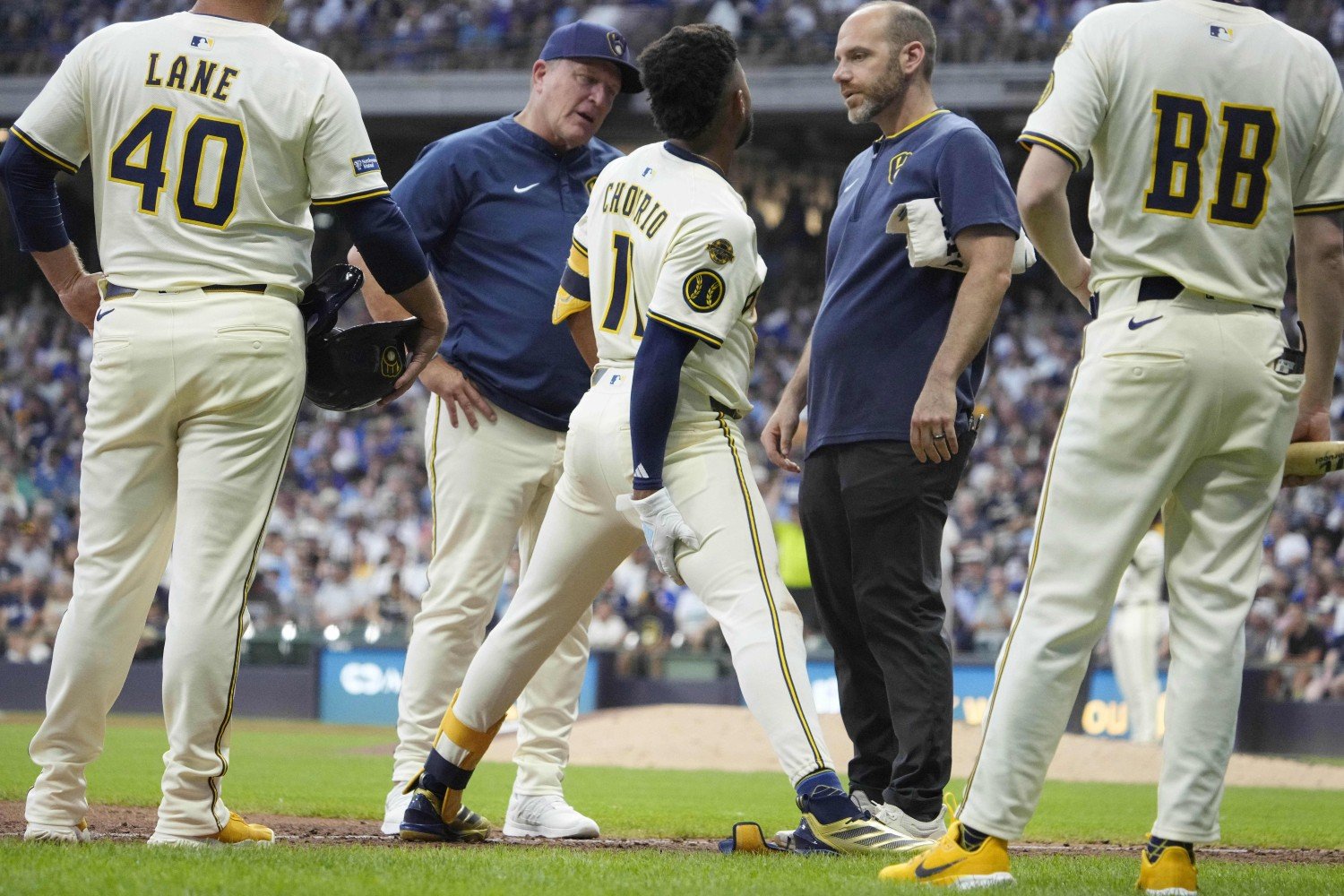 It's not yet clear whether Jackson Chourio will even require a stint on the injured list. He pulled up slightly while running the bases Tuesday night and left the game, but rather than a strain, the Brewers termed his malady a "spasm" when announcing the reason for his departure. Pat Murphy could only say the team would "wait and see" about Chourio's status after the game, and Chourio described the twinge as a "tickle". Hamstrings can be tricky, and this situation will demand monitoring in the days ahead. For now, though, it looks like the Brewers have avoided major injury to their young franchise player. That's great news. However, the mere specter of an injury to Chourio is enough to raise the question: should the Brewers shop in the outfield market at all, in the day and a half left before Thursday evening's trade deadline? As good as the team's outfield depth has appeared to be throughout this year, the idea of supplementing it is far from crazy. Firstly, they're already down one key cog, with Garrett Mitchell out for the year. Secondly, Blake Perkins is freshly returned from an injury that took longer than initially hoped to heal, and Sal Frelick just came back from a minimum-length stay on the IL with his own hamstring strain. Taken together, the Perkins, Frelick and Chourio concerns and the caution the team has exercised with regard to Christian Yelich leave the team with enough question marks to make adding depth to their outfield mix a worthy consideration. All conversational roads seem to lead back to Willi Castro, lately. This one is no exception. How can the team fit in an extra outfield option on a roster crowded with talent, when the injuries they're trying to create a bulwark against don't have any of the players affected on the IL (at least for now)? Perhaps the answer is: add a guy who can also play the infield. Castro fits as a replacement for the final spot on the bench, and can flex between second and third base and all three outfield positions, as needed. A trade between the Crew and the Twins to bring Castro aboard might now be incrementally more plausible than it was a day ago. Minnesota also has full-time outfielder Harrison Bader, although he doesn't come with the same positional versatility as Castro. Other players who could be available to provide reinforcement in the outfield include the Nationals' Alex Call and the White Sox's Michael A. Taylor. The team doesn't need a starting-caliber outfielder; they just need someone who offers insurance against a prolonged absence for one of their incumbents. Of course, one can even argue that they don't need that. The Brewers are the best, most well-rounded team in baseball right now, and their depth is superb. If it's a bit diminished in the outfield, at the moment, so be it. Murphy's Marauders are in great shape, in the battle for both the NL Central and the top seed in the National League. Chourio would be a major loss, but the team can absorb even that. With just over 30 hours left to the trade deadline, they should keep shopping with an open mind—but they have no truly pressing needs.
- 7 comments
-
- 3
-
-
- jackson chourio
- blake perkins
- (and 5 more)
-
Image courtesy of © Michael McLoone-Imagn Images It's not yet clear whether Jackson Chourio will even require a stint on the injured list. He pulled up slightly while running the bases Tuesday night and left the game, but rather than a strain, the Brewers termed his malady a "spasm" when announcing the reason for his departure. Pat Murphy could only say the team would "wait and see" about Chourio's status after the game, and Chourio described the twinge as a "tickle". Hamstrings can be tricky, and this situation will demand monitoring in the days ahead. For now, though, it looks like the Brewers have avoided major injury to their young franchise player. That's great news. However, the mere specter of an injury to Chourio is enough to raise the question: should the Brewers shop in the outfield market at all, in the day and a half left before Thursday evening's trade deadline? As good as the team's outfield depth has appeared to be throughout this year, the idea of supplementing it is far from crazy. Firstly, they're already down one key cog, with Garrett Mitchell out for the year. Secondly, Blake Perkins is freshly returned from an injury that took longer than initially hoped to heal, and Sal Frelick just came back from a minimum-length stay on the IL with his own hamstring strain. Taken together, the Perkins, Frelick and Chourio concerns and the caution the team has exercised with regard to Christian Yelich leave the team with enough question marks to make adding depth to their outfield mix a worthy consideration. All conversational roads seem to lead back to Willi Castro, lately. This one is no exception. How can the team fit in an extra outfield option on a roster crowded with talent, when the injuries they're trying to create a bulwark against don't have any of the players affected on the IL (at least for now)? Perhaps the answer is: add a guy who can also play the infield. Castro fits as a replacement for the final spot on the bench, and can flex between second and third base and all three outfield positions, as needed. A trade between the Crew and the Twins to bring Castro aboard might now be incrementally more plausible than it was a day ago. Minnesota also has full-time outfielder Harrison Bader, although he doesn't come with the same positional versatility as Castro. Other players who could be available to provide reinforcement in the outfield include the Nationals' Alex Call and the White Sox's Michael A. Taylor. The team doesn't need a starting-caliber outfielder; they just need someone who offers insurance against a prolonged absence for one of their incumbents. Of course, one can even argue that they don't need that. The Brewers are the best, most well-rounded team in baseball right now, and their depth is superb. If it's a bit diminished in the outfield, at the moment, so be it. Murphy's Marauders are in great shape, in the battle for both the NL Central and the top seed in the National League. Chourio would be a major loss, but the team can absorb even that. With just over 30 hours left to the trade deadline, they should keep shopping with an open mind—but they have no truly pressing needs. View full article
-
If Brewers Stop After Danny Jansen Addition, Have They Done Enough?
Matthew Trueblood posted an article in Brewers
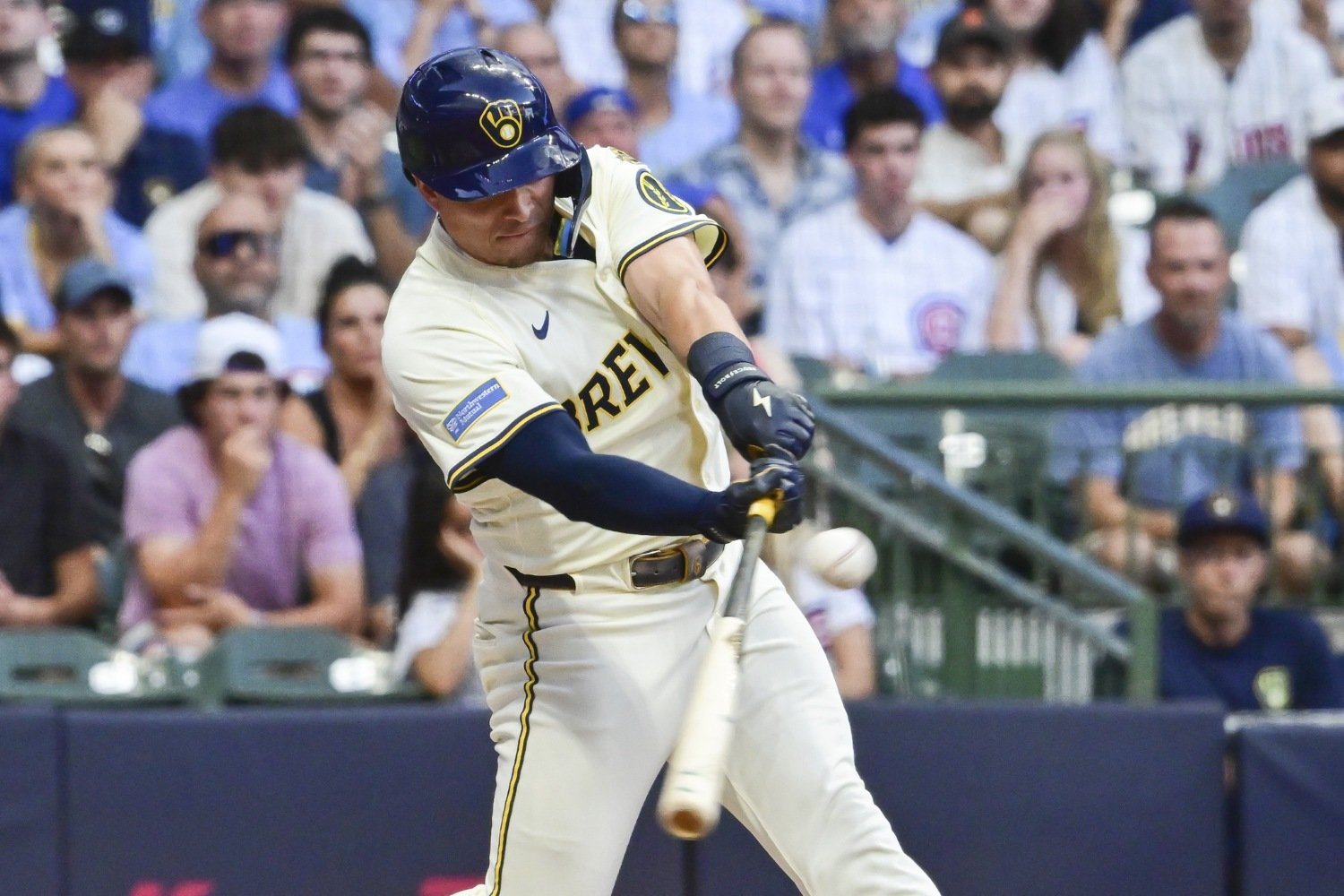 Proactivity in April saved the Brewers' season. They were so starved for starting pitching depth that they made a trade many regarded as desperate, or even ill-advised, but that deal has yielded 102 innings of mid-rotation work from new acquisition Quinn Priester, who now looks like a medium-term fixture in their rotation. Then, in May and June, it was their patience that paid off. The team didn't give up on Joey Ortiz when he carried a .441 OPS through the first eight weeks of the season. However crazy he might drive his skipper with poor swing decisions, he's now had a .685 OPS over the last nine weeks—all while batting ninth and playing fine defense at shortstop. In July, a team can't be all one thing. Getting the MLB trade deadline right requires striking a delicate balance, being both opportunistic and cautious. Milwaukee pulled the trigger on a deal Monday, to obtain Danny Jansen from the Rays and slot him in to replace Eric Haase as the backup to William Contreras. Now, though, the question on many fans' minds will be: Is that it? To be sure, there are still rumors out there that the team will pursue help at an infield corner, or that they'll seek to further deepen their solid relief corps. They're not done having conversations. With a deep, young, versatile roster that is also getting healthier as the year moves along, though, it's not fully clear that they need or want to expend more prospect capital to gild the metaphorical lily. Ryan O'Hearn of the Orioles is a solid left-handed bat who could very well be better than Andrew Vaughn down the stretch—but, then again, Vaughn is only meant to be a stopgap while Rhys Hoskins is on the injured list. The Brewers' success with Vaughn, whom they acquired for the disgruntled Aaron Civale last month, is yet another proof of their superb skills in development and instruction, and they might be happy to keep capitalizing on it until Hoskins reclaims his place, rather than send out any of their great farm depth for a different short-term first baseman. Given the injuries they've suffered in the outfield (most notably, the long absence to start the season for Blake Perkins and the season-ending shoulder surgery for Garrett Mitchell), one might ordinarily expect them to be in the market for help there. But Perkins is back now, and in the meantime, Isaac Collins emerged as a legitimate first-division starter: he's played sparkling defense in left field and is batting .278/.379/.409. He's up to 271 plate appearances and is still walking 13% of the time. There might not be an outfielder traded anywhere this week who outstrips what Collins is already doing. Collins, Vaughn, Priester, and Ortiz are exemplars of what the Brewers do best: find underperforming or underrated players, develop them patiently yet quickly, and trust them to keep their winning machine running. While Jansen will be a welcome addition, and while there are still arms out there (Anthony Bender of the Marlins continues to stand out in the crowd) who could ensure that the team is fresh and ready to overpower opponents come October, it doesn't feel like this team needs to do any more roster-building to secure the NL Central title or to feel good going into the postseason. This is a very, very good team, well-run. Their biggest need, now, is to focus on ways to sustain this brilliance.
- 4 comments
-
- 3
-
-
- danny jansen
- 2025 trade deadline
- (and 5 more)
-
Image courtesy of © Benny Sieu-Imagn Images Proactivity in April saved the Brewers' season. They were so starved for starting pitching depth that they made a trade many regarded as desperate, or even ill-advised, but that deal has yielded 102 innings of mid-rotation work from new acquisition Quinn Priester, who now looks like a medium-term fixture in their rotation. Then, in May and June, it was their patience that paid off. The team didn't give up on Joey Ortiz when he carried a .441 OPS through the first eight weeks of the season. However crazy he might drive his skipper with poor swing decisions, he's now had a .685 OPS over the last nine weeks—all while batting ninth and playing fine defense at shortstop. In July, a team can't be all one thing. Getting the MLB trade deadline right requires striking a delicate balance, being both opportunistic and cautious. Milwaukee pulled the trigger on a deal Monday, to obtain Danny Jansen from the Rays and slot him in to replace Eric Haase as the backup to William Contreras. Now, though, the question on many fans' minds will be: Is that it? To be sure, there are still rumors out there that the team will pursue help at an infield corner, or that they'll seek to further deepen their solid relief corps. They're not done having conversations. With a deep, young, versatile roster that is also getting healthier as the year moves along, though, it's not fully clear that they need or want to expend more prospect capital to gild the metaphorical lily. Ryan O'Hearn of the Orioles is a solid left-handed bat who could very well be better than Andrew Vaughn down the stretch—but, then again, Vaughn is only meant to be a stopgap while Rhys Hoskins is on the injured list. The Brewers' success with Vaughn, whom they acquired for the disgruntled Aaron Civale last month, is yet another proof of their superb skills in development and instruction, and they might be happy to keep capitalizing on it until Hoskins reclaims his place, rather than send out any of their great farm depth for a different short-term first baseman. Given the injuries they've suffered in the outfield (most notably, the long absence to start the season for Blake Perkins and the season-ending shoulder surgery for Garrett Mitchell), one might ordinarily expect them to be in the market for help there. But Perkins is back now, and in the meantime, Isaac Collins emerged as a legitimate first-division starter: he's played sparkling defense in left field and is batting .278/.379/.409. He's up to 271 plate appearances and is still walking 13% of the time. There might not be an outfielder traded anywhere this week who outstrips what Collins is already doing. Collins, Vaughn, Priester, and Ortiz are exemplars of what the Brewers do best: find underperforming or underrated players, develop them patiently yet quickly, and trust them to keep their winning machine running. While Jansen will be a welcome addition, and while there are still arms out there (Anthony Bender of the Marlins continues to stand out in the crowd) who could ensure that the team is fresh and ready to overpower opponents come October, it doesn't feel like this team needs to do any more roster-building to secure the NL Central title or to feel good going into the postseason. This is a very, very good team, well-run. Their biggest need, now, is to focus on ways to sustain this brilliance. View full article
-
Image courtesy of © Bruce Kluckhohn-Imagn Images There were reports over the weekend that the Brewers wanted to upgrade the backup catcher spot on their roster. Now, we know that there was smoke to go with that fire. Milwaukee has acquired catcher Danny Jansen, an Appleton West alumnus, in a trade with the Rays. Jansen, 30, signed a one-year deal worth $8.5 million with the Rays this winter. There's a mutual option included in the contract. He's batting .204/.314/.389 in 259 plate appearances this season, showing his usual above-average pop for a catcher and delivering roughly average defense behind the plate. The move figures to displace Eric Haase from the backup catcher role, though it could also facilitate at least a short-term stint on the injured list for William Contreras, who has played all season with a fractured finger on his catching hand. Born in Elmhurst, Ill., Jansen largely grew up in Appleton, Wis. He's been a target for the team in the past, but the price was right now, at the deadline. He's owed just under $3 million for the balance of this season. Milwaukee's top need at this deadline, arguably, is a bit more in the way of right-handed power. Jansen offers it. Of all batters with 150 or more plate appearances this year, Jansen ranks fifth in the percentage of his batted balls that are in pulled fly balls, trailing only Cal Raleigh, Isaac Paredes, Cedric Mullins and new teammate Rhys Hoskins. With Hoskins down with a thumb injury (which might linger upon his return, too), Jansen's infusion of pop from the right side is crucial. It also stands in contrast to the very low pulled fly ball rates of both Haase and Contreras. To land that upgrade, the Crew surrendered infield prospect Jadher Areinamo. That's no insignificant price. Baseball America ranked Areinamo 10th on their recent midseason update of the Brewers' top 30 prospects list, and he's been a favorite of many a member of our own Brewer Fanatic community. His glove is an asset at either second or third base, though he's smaller than the prototypical player at the latter spot. He's also batted .300/.359/.468 for the High-A affiliate in Appleton this year. His future might be as a utility infielder, but he's only 21 and looks ready for the test of Double-A pitching. Tampa Bay sending money to help cover Jansen's salary does help, in two small ways. Firstly, it leaves Matt Arnold more in whatever budget Mark Attanasio has allotted for other acquisitions at this deadline. Second, it might have been necessary to get the deal done. The Rays, like some other clubs, often insist upon paying down salaries on players like Jansen in order to ensure they get the best possible return for them. Still, being on this side of such a transaction is tough, as it reinforces how highly everyone involved esteemed Areinamo. Milwaukee will hope that Jansen's jolt behind the plate can make that price easier to stomach. View full article