
Matthew Trueblood
-
Posts
1,964 -
Joined
-
Last visited
-
Days Won
10
Content Type
Profiles
Forums
Blogs
Events
News
2026 Milwaukee Brewers Top Prospects Ranking
Milwaukee Brewers Videos
2022 Milwaukee Brewers Draft Picks
Milwaukee Brewers Free Agent & Trade Rumors, Notes, & Tidbits
Guides & Resources
2023 Milwaukee Brewers Draft Picks
2024 Milwaukee Brewers Draft Picks
The Milwaukee Brewers Players Project
2025 Milwaukee Brewers Draft Pick Tracker
2026 Milwaukee Brewers Draft Tracker: Picks & Bonuses
Store
Downloads
Gallery
Everything posted by Matthew Trueblood
-
The reigning National League Manager of the Year isn't resting on his laurels this spring. He's approached the last week with a sense of urgency, at times seeming to border on panic. That might have to do with his temperament and inclinations, but it also reflects a reality of his team. Image courtesy of © D. Ross Cameron-Imagn Images After a series loss in San Francisco disappointing as much because of how it happened as because it happened at all, Pat Murphy held a closed-door meeting to convey his displeasure with the defensive dysfunction on display. On Saturday, after a poor start seemed to be dooming them to a blowout loss, Murphy removed Sal Frelick (who missed the cutoff man and gave away a base an inning earlier) and Caleb Durbin (who was picked off in an airheaded baserunning gaffe shortly afterward). Those are the most visible ways in which he's leaning on his levers and demanding more of his team, but there are others happening, too. In six games so far this week, Murphy has started Vinny Capra over Joey Ortiz at shortstop once, and pinch-hit for Ortiz with Jake Bauers twice. He knows Capra (whose struggles at the plate have become so profound that it's hard to justify keeping him on the roster any longer) is no replacement for Ortiz, and that Andruw Monasterio is doing nothing at Triple-A Nashville to inspire confidence in him as a stopgap. Thus, Murphy is getting creative: he tried to get Ortiz a mental health day, but he's also started putting in place some measures to reduce the harm done to the lineup by Ortiz's disastrous offensive start. The front office is doing its best to work with Murphy to remedy the various problems popping up all over the roster, as we saw when Bryan Hudson was optioned to the minors this week. The transactional solutions mostly have to wait until June or July, though, and Murphy knows that his team can't wait that long. He also knows that this is not the most talented team in the National League Central, let alone the league as a whole. For the last two years, they have won by playing sharper, smarter, more team-oriented baseball than their rivals. Murphy has taken proactive steps this month, because he knows that they'll have to rediscover those traits if they want to claim a third straight division crown. Barring a trade or a waiver claim in the immediate future, expect more of this. Murphy might even get more aggressive with Ortiz, pinch-hitting Bauers earlier if the situation demands it. If Frelick, Durbin and the rest of the team don't have an adequate response to the unsubtle messages he's sending them through stern meetings and disciplinary benchings, it won't matter. The problematic part of getting this active this early is that it amounts to a big bet—a season-defining one, in fact—on those players hearing Murphy; believing he still has their best interests at heart and is worthy of their respect and trust; and making concrete changes to their processes of preparation and situational awareness in response to him. Most modern managers take pride in holding very few closed-door meetings, or in handling all questions of effort or focus far from the media's view. Most managers try to wait as long as possible before making any major shakeup to the lineup, the rotation, the bullpen, or the tone they strike in the clubhouse. Murphy never swore an oath to that style. Even last year, he let the legendary college coach come out on occasion, diving deeper into details of the game than most big-league skippers do and holding players to a more rigid standard than some do. It was the perfect way to handle that particular team. This year's team is subtly different than that one, though, and perhaps crucially so. Murphy sees some talent deficits and believes fervently that they can be made up by a team playing disciplined, relentless baseball. So far, he doesn't see his team playing that way, so he's applying pressure and demanding that that change. It's the right thing to do—but that doesn't make it any less worrisome to ponder what happens if his demands aren't met. View full article
-
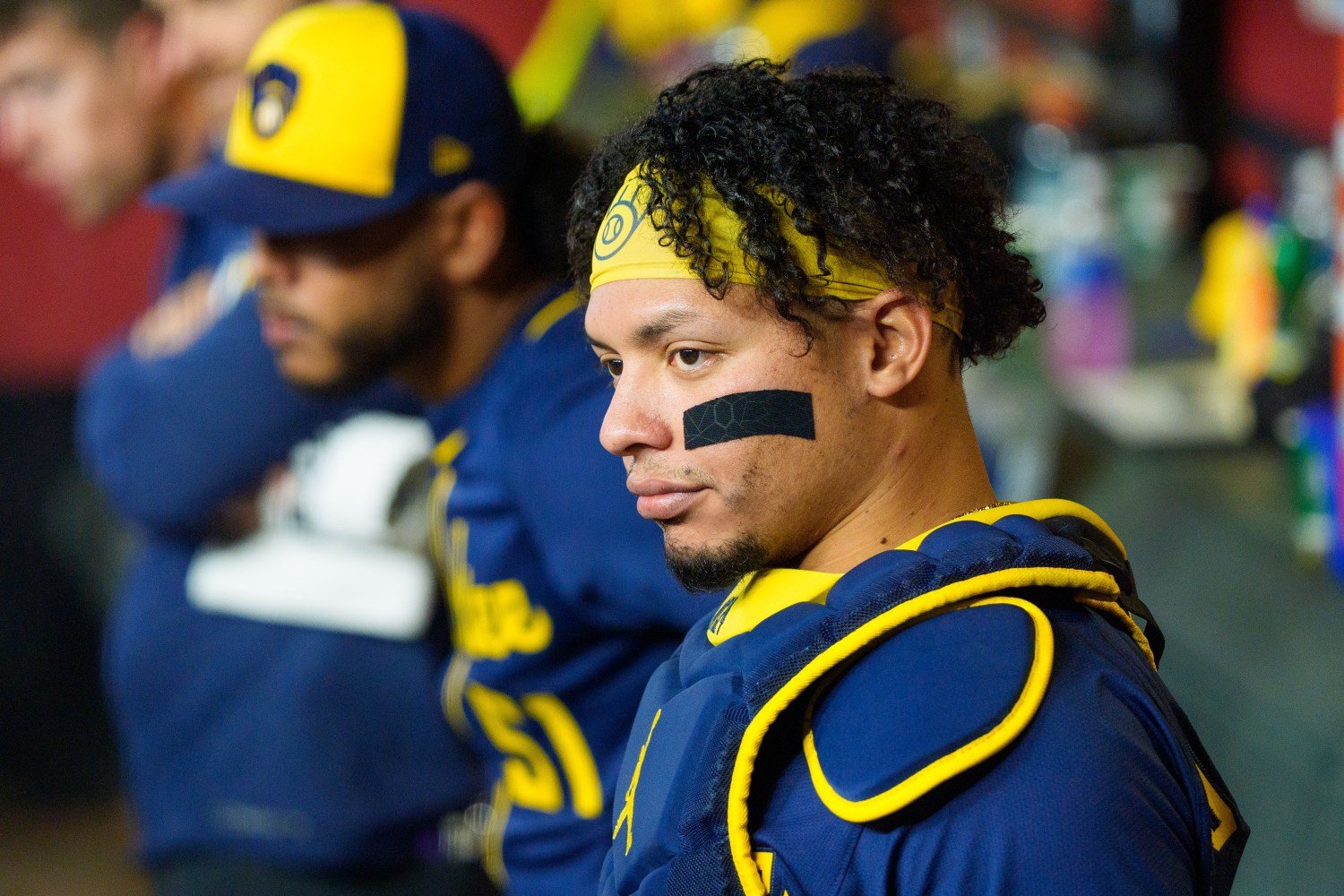 Over the winter, I wrote about the fact that William Contreras was (at least by the best available metric we have, via Statcast) the least accurate thrower from behind the plate on steal attempts in 2024. It was a major problem, costing him any chance to be an above-average stopper of the running game. He showed the ability to get rid of the ball quickly and the ability to throw it harder than most of his peers, but the ball was rarely on the mark, the way it really needs to be if one wants to cut down would-be basestealers under the rules that went into effect in 2023. One problem is that, while nominally posting good Exchange times (that is, getting rid of the ball exceptionally quickly after the pitch reached him), Contreras was only doing so by rushing. He was, far too often, either throwing from a bad body position or not taking the extra infinitesimal portion of a second required to get a sure grip and fire the ball with some control of its trajectory. This season, he's made the minuscule adjustment—and it's paid off handsomely. By being willing to cut it loose a hair slower, Contreras has boosted his own arm strength, a rare feat for a catcher even this far into a big-league career. Season Avg. Exchange Avg. Velocity Avg. Pop Time 2021 81.1 0.76 2.01 2022 81.1 0.70 1.97 2023 81.9 0.65 1.95 2024 82.4 0.64 1.96 2025 83.3 0.67 1.97 As you can see, when Contreras joined the Brewers in 2023, they were immediately able to clean up that exchange, speeding it up from what he was doing when he played for the team from unincorporated Cobb County, Ga., and he also gained a tick of raw arm strength with that cleanup. He was going faster (both mentally and physically) than he could really handle, though, and it showed, especially last year. This offseason and during spring training, he gave back a sliver of time getting rid of the ball, but gained another tick of arm strength in the trade. Of course, as you can see from that rightmost column, the gained arm strength has been washed out by the lost exchange speed, when it comes to pop time. He's not delivering the ball to second base any faster, from the instant at which he gets the pitch, than he has in the past. So what has changed? This. TkFkMGtfWGw0TUFRPT1fVkZCWEFGQUVVMWNBQ2dNSFZ3QUhWMVVEQUZsV0FsY0FVMUZVQkZVRFZRcFdBMUZV.mp4 I'm willing to have a debate on this, but it's my earnest opinion that the most aesthetically pleasing thing in baseball is a strong, flat throw to this spot: knee-high, just to the first-base side of second base, taking the infielder receiving the ball right into the helpless sliding runner. There are guys who can locate the ball here more consistently (new Cubs backstop Carson Kelly has a particular knack for it), but few of them can do it with real mustard on the ball. Contreras has plenty of arm strength, but discovering that a bit more care and coordination in getting rid of the ball can yield this lethal combo of velocity and accuracy is exhilarating. TDZXVlZfWGw0TUFRPT1fQUFNQ0FGTUhVbEFBRDFSUUF3QUhCZ0VEQUFBQ0IxVUFBRkJRQWd0V0NRSlZVMVJS.mp4 Look at his footwork on that one. It's breathtakingly good; he's clearly worked on the timing of receiving the ball and emerging from the crouch fluidly. The above is also a great example of a little secret about the craft of controlling the running game: Contrary to conventional wisdom, a slider can sometimes be the best pitch to throw on. It has to be a slider strike, of course, because you don't want to be picking the ball out of the dirt, but see the way his body begins moving in concert with the ball before it even arrives? As a hitter, the slider is a pain, but that's because you don't know it's coming. When you do, and when a pitcher executes it well, the pitch gives a catcher time to get moving, and it's ready to read out of your hurler's hand. Anyway, let's watch one more. Notice where the pitch is located on this one. R0JscXJfWGw0TUFRPT1fQmdjQUJRSlZWUUVBQ1ZNQkJ3QUhCMVFEQUZnRVVRSUFBRmNGQVZFRUJRTlRBQUJV.mp4 At almost exactly this time last year, I wrote about Contreras's throwing, and noted that he really only had success when he got a pitch on the first-base edge of the plate on which to throw. That helped him get into good mechanics. If the ball was anywhere from the middle of the plate to the right-handed batter's box, you could count on him getting off an awkward or inaccurate throw. That makes the above the most important clip in the trio we've looked at, and the most telling about his adjustments this year. Here is where we can most clearly see the benefits of taking his time. Contreras doesn't try to throw this from a knee or rush the ball out as fast as possible. He receives the pitch, gets his footwork right, and lets the extra counterrotation the play requires of him create some extra oomph on the throw. It's low, in the end, but not badly low. It requires Brice Turang to help him out with a good pick, but that's fine. Stopping the running game is, unavoidably, a team effort. He took a tough pitch to throw on, got off an absolute laser, and left his infielder with the ball right at the spot where the runner was arriving. Contreras leads the majors with 2 net Caught Stealings Above Average (CSAA) based on his accuracy this year. That sounds like small potatoes, and in a way, it is: His -3 was the worst in baseball last year. This is a skill that tends to come close to evening out for most catchers over the course of the season. It's like measuring the vertical movement on a pitcher's fastball: it matters, but you'll miss the forest if you only gaze at this tree. On the other hand, the pace Contreras is on is awfully impressive, and there's a noteworthy difference between being a few outs above average and a few outs below, especially given that each out you can generate might deter a runner or two in the future. He's also the only catcher with a net 4 CSAA, thanks in no small part to the improved accuracy. It's a part of his overall surge to the top of the leaderboard. Furthermore, this is a lens through which to see his attention to detail and his hunger to be great. No one is going to accuse him of laxity, anyway, but there's an exciting maturity in bringing oneself under control enough to get fully in touch with one's tools. That seems to be what's happening early this year, and it's further evidence that Contreras is a superstar with staying power.
 -
"Be quick, but don't hurry," John Wooden used to say. Maybe the Brewers' catcher communed with the spirit of the former coaching great this winter. Image courtesy of © Allan Henry-Imagn Images Over the winter, I wrote about the fact that William Contreras was (at least by the best available metric we have, via Statcast) the least accurate thrower from behind the plate on steal attempts in 2024. It was a major problem, costing him any chance to be an above-average stopper of the running game. He showed the ability to get rid of the ball quickly and the ability to throw it harder than most of his peers, but the ball was rarely on the mark, the way it really needs to be if one wants to cut down would-be basestealers under the rules that went into effect in 2023. One problem is that, while nominally posting good Exchange times (that is, getting rid of the ball exceptionally quickly after the pitch reached him), Contreras was only doing so by rushing. He was, far too often, either throwing from a bad body position or not taking the extra infinitesimal portion of a second required to get a sure grip and fire the ball with some control of its trajectory. This season, he's made the minuscule adjustment—and it's paid off handsomely. By being willing to cut it loose a hair slower, Contreras has boosted his own arm strength, a rare feat for a catcher even this far into a big-league career. Season Avg. Exchange Avg. Velocity Avg. Pop Time 2021 81.1 0.76 2.01 2022 81.1 0.70 1.97 2023 81.9 0.65 1.95 2024 82.4 0.64 1.96 2025 83.3 0.67 1.97 As you can see, when Contreras joined the Brewers in 2023, they were immediately able to clean up that exchange, speeding it up from what he was doing when he played for the team from unincorporated Cobb County, Ga., and he also gained a tick of raw arm strength with that cleanup. He was going faster (both mentally and physically) than he could really handle, though, and it showed, especially last year. This offseason and during spring training, he gave back a sliver of time getting rid of the ball, but gained another tick of arm strength in the trade. Of course, as you can see from that rightmost column, the gained arm strength has been washed out by the lost exchange speed, when it comes to pop time. He's not delivering the ball to second base any faster, from the instant at which he gets the pitch, than he has in the past. So what has changed? This. TkFkMGtfWGw0TUFRPT1fVkZCWEFGQUVVMWNBQ2dNSFZ3QUhWMVVEQUZsV0FsY0FVMUZVQkZVRFZRcFdBMUZV.mp4 I'm willing to have a debate on this, but it's my earnest opinion that the most aesthetically pleasing thing in baseball is a strong, flat throw to this spot: knee-high, just to the first-base side of second base, taking the infielder receiving the ball right into the helpless sliding runner. There are guys who can locate the ball here more consistently (new Cubs backstop Carson Kelly has a particular knack for it), but few of them can do it with real mustard on the ball. Contreras has plenty of arm strength, but discovering that a bit more care and coordination in getting rid of the ball can yield this lethal combo of velocity and accuracy is exhilarating. TDZXVlZfWGw0TUFRPT1fQUFNQ0FGTUhVbEFBRDFSUUF3QUhCZ0VEQUFBQ0IxVUFBRkJRQWd0V0NRSlZVMVJS.mp4 Look at his footwork on that one. It's breathtakingly good; he's clearly worked on the timing of receiving the ball and emerging from the crouch fluidly. The above is also a great example of a little secret about the craft of controlling the running game: Contrary to conventional wisdom, a slider can sometimes be the best pitch to throw on. It has to be a slider strike, of course, because you don't want to be picking the ball out of the dirt, but see the way his body begins moving in concert with the ball before it even arrives? As a hitter, the slider is a pain, but that's because you don't know it's coming. When you do, and when a pitcher executes it well, the pitch gives a catcher time to get moving, and it's ready to read out of your hurler's hand. Anyway, let's watch one more. Notice where the pitch is located on this one. R0JscXJfWGw0TUFRPT1fQmdjQUJRSlZWUUVBQ1ZNQkJ3QUhCMVFEQUZnRVVRSUFBRmNGQVZFRUJRTlRBQUJV.mp4 At almost exactly this time last year, I wrote about Contreras's throwing, and noted that he really only had success when he got a pitch on the first-base edge of the plate on which to throw. That helped him get into good mechanics. If the ball was anywhere from the middle of the plate to the right-handed batter's box, you could count on him getting off an awkward or inaccurate throw. That makes the above the most important clip in the trio we've looked at, and the most telling about his adjustments this year. Here is where we can most clearly see the benefits of taking his time. Contreras doesn't try to throw this from a knee or rush the ball out as fast as possible. He receives the pitch, gets his footwork right, and lets the extra counterrotation the play requires of him create some extra oomph on the throw. It's low, in the end, but not badly low. It requires Brice Turang to help him out with a good pick, but that's fine. Stopping the running game is, unavoidably, a team effort. He took a tough pitch to throw on, got off an absolute laser, and left his infielder with the ball right at the spot where the runner was arriving. Contreras leads the majors with 2 net Caught Stealings Above Average (CSAA) based on his accuracy this year. That sounds like small potatoes, and in a way, it is: His -3 was the worst in baseball last year. This is a skill that tends to come close to evening out for most catchers over the course of the season. It's like measuring the vertical movement on a pitcher's fastball: it matters, but you'll miss the forest if you only gaze at this tree. On the other hand, the pace Contreras is on is awfully impressive, and there's a noteworthy difference between being a few outs above average and a few outs below, especially given that each out you can generate might deter a runner or two in the future. He's also the only catcher with a net 4 CSAA, thanks in no small part to the improved accuracy. It's a part of his overall surge to the top of the leaderboard. Furthermore, this is a lens through which to see his attention to detail and his hunger to be great. No one is going to accuse him of laxity, anyway, but there's an exciting maturity in bringing oneself under control enough to get fully in touch with one's tools. That seems to be what's happening early this year, and it's further evidence that Contreras is a superstar with staying power. View full article
-
The Brewers' starting rotation gets another important reinforcement Thursday, as Tobias Myers returns from a stint on the injured list with an oblique strain, To make room for him on the roster, though, they sent down a reliever who was a linchpin of their staff not all that long ago. Image courtesy of © Dave Kallmann / Milwaukee Journal Sentinel / USA TODAY NETWORK via Imagn Images It feels as though no good news around the Brewers can go unchecked by a bit of balancing, bad news this spring. That pattern continued Thursday, as the team returned Tobias Myers from his rehab assignment and restored him to their starting rotation—but sent down struggling southpaw reliever Bryan Hudson, in the process. Myers, 26, was a huge part of last year's starting rotation and was (depending on your own preferences, or on whom you asked) more or less the Brewers' No. 2 starter, entering spring training. To get him back is a huge boost, for a team that has lost Aaron Civale and Nestor Cortes just in the short time since Myers himself went down in March. Unfortunately, the roster decision in conjunction with bringing him back was relatively easy. Bryan Hudson has been out of whack almost all season, and though the team will hope to get him another reset (after sending him down for one that never quite materialized late last summer), it looks increasingly like Hudson's success in the first half of 2024 was a flash in the pan. His size and his unique release point make Hudson endlessly intriguing, and his friendly, easygoing presence in the clubhouse will be missed while he's absent from it, but the sheer stuff hasn't been there, even on his best days. Last season, it was not uncommon for Hudson to have an above-average Stuff+ on both his fastball and his sweeper in a given outing. For the year, he finished with a 102 Stuff+ on the former and a 99 on the latter. In nine individual games, each figure was at least 100—which is more than enough to find success, for most relievers, since they're not going to see any hitter more than once. This season, not only are the overall numbers down (90 Stuff+ for the four-seamer, 84 for the sweeper), but there was only one day on which either of those two main offerings reached the average threshold—April 3 against the Reds, when the sweeper was sweeping and Hudson was quite good. He's tried to patch the holes created by his heater and his sweeper regressing so badly, adding a sinker and a changeup and leaning into his cutter more than he did for most of last season. Nothing has really worked. Hudson still has the ability to be optioned, so he'll head to Nashville and try to rediscover some of the electricity in the arm, but if he can't consistently muster an average pitch, he's probably done as a reliever of any consequence in Milwaukee. Myers's return helps soften the blow of that encroaching reality, because the Brewers' rotation looks increasingly able to bear a heavier workload. Even without Hudson, and especially since they do now have Craig Yoho, the team can navigate fairly comfortably to out No. 27 most nights. They're not yet whole again, and Hudson being farmed out is like taking one step back from that, but Myers is worth at least two steps toward it. Gradually, they're moving out of survival mode and into a stretch over which they might be able to push meaningfully above .500. View full article
-
 It feels as though no good news around the Brewers can go unchecked by a bit of balancing, bad news this spring. That pattern continued Thursday, as the team returned Tobias Myers from his rehab assignment and restored him to their starting rotation—but sent down struggling southpaw reliever Bryan Hudson, in the process. Myers, 26, was a huge part of last year's starting rotation and was (depending on your own preferences, or on whom you asked) more or less the Brewers' No. 2 starter, entering spring training. To get him back is a huge boost, for a team that has lost Aaron Civale and Nestor Cortes just in the short time since Myers himself went down in March. Unfortunately, the roster decision in conjunction with bringing him back was relatively easy. Bryan Hudson has been out of whack almost all season, and though the team will hope to get him another reset (after sending him down for one that never quite materialized late last summer), it looks increasingly like Hudson's success in the first half of 2024 was a flash in the pan. His size and his unique release point make Hudson endlessly intriguing, and his friendly, easygoing presence in the clubhouse will be missed while he's absent from it, but the sheer stuff hasn't been there, even on his best days. Last season, it was not uncommon for Hudson to have an above-average Stuff+ on both his fastball and his sweeper in a given outing. For the year, he finished with a 102 Stuff+ on the former and a 99 on the latter. In nine individual games, each figure was at least 100—which is more than enough to find success, for most relievers, since they're not going to see any hitter more than once. This season, not only are the overall numbers down (90 Stuff+ for the four-seamer, 84 for the sweeper), but there was only one day on which either of those two main offerings reached the average threshold—April 3 against the Reds, when the sweeper was sweeping and Hudson was quite good. He's tried to patch the holes created by his heater and his sweeper regressing so badly, adding a sinker and a changeup and leaning into his cutter more than he did for most of last season. Nothing has really worked. Hudson still has the ability to be optioned, so he'll head to Nashville and try to rediscover some of the electricity in the arm, but if he can't consistently muster an average pitch, he's probably done as a reliever of any consequence in Milwaukee. Myers's return helps soften the blow of that encroaching reality, because the Brewers' rotation looks increasingly able to bear a heavier workload. Even without Hudson, and especially since they do now have Craig Yoho, the team can navigate fairly comfortably to out No. 27 most nights. They're not yet whole again, and Hudson being farmed out is like taking one step back from that, but Myers is worth at least two steps toward it. Gradually, they're moving out of survival mode and into a stretch over which they might be able to push meaningfully above .500.
 -
The Brewers' star slugger delivered the exclamation point in Tuesday night's rout of the Giants. It was a good reflection of the positive trends he'd already been showing, and the fact that he's come through a career-altering injury more or less unaltered. Image courtesy of © D. Ross Cameron-Imagn Images There's one unfortunate thing we do have to concede, here: Christian Yelich has lost a step. For the entirety of his career, before this season, his Statcast-measured Sprint Speed has hovered somewhere north of 28 ft./sec., but in 2025, that number is down to 27.5. After undergoing back surgery last summer that prematurely ended his season in an effort to address what had been a lingering issue, Yelich is noticeably slower, and that's probably not going to reverse itself. He is, after all, 33 years old. That's all the bad news, though. We got it out of the way in one paragraph, which is almost always a good sign. In all other aspects, Yelich looks as whole and as good as he did for the previous year and a half, before his back flared up so badly that putting off surgery no longer made sense. Though he's only hitting .222/.337/.444 on the young season: That line is actually better than it looks; he's certainly above-average at the plate; and The under-the-hood indicators tell us he's undiminished on this side of the surgery. In 2023 and 2024, the fastest Yelich hit any ball was 113.5 mph off the bat. In 2025, his max is already 113.4. His average exit velocity of 91.9 mph this year is virtually identical to what he put up in the two previous campaigns. That shouldn't surprise us, because his average swing speed (72.9 mph) and length (7.5 ft.) are also essentially identical to where they were in those seasons. His average contact point is nearly identical to last year's, too. The only yellow or orange flag in Yelich's offensive profile, so far, is his whiff rate. His in-zone contact rate has plunged from a perennial place in the mid-80s to 72.6% so far this year. Kept up all season, that would be a major concern, and we would have to expect a bump even from his current strikeout rate of 25.6%. When you look at everything else he's doing, though—the similarly strong bat speed, swing decisions, and quality of contact; the similar contact point on swings—it seems unlikely that he'll continue to whiff so often on pitches within the zone. Mapping where those whiffs are happening allows us to speculate a bit about the explanation, and it could even lead one to worry a bit. He only swung and missed 22 times on pitches in the top third of the zone in all of 2024. In 2025, he's already done so 11 times. Pitchers have had good luck getting above his barrel this season, which was never true in the past. That could be a symptom of the change in his ability to lean and to rotate, in the wake of surgery. The word 'could' is doing all the important work in that sentence, though. This could also just be a minor timing issue, or a cold snap at the top of the zone basically unrelated to his back. He's done plenty of damage lower in the zone, and it's just as likely that he's simply willing to trade a bit of contact for better pop right now. It wouldn't be the first time in his own career that he's made that tradeoff, even over a prolonged period—let alone the first time an aging player has made it for reasons having more to do with Father Time's inescapability than with an injury's debilitability. While the Brewers will have to use him smartly throughout this season (and beyond), and while that lost sprint speed exacerbates the problem of his poor defense in left field, Yelich has come through an injury that could have left him a shell of himself, and instead, he seems largely intact. The Crew have to be thrilled with the results, including and especially the grand slam Tuesday. If he is consciously trading contact for power, perhaps it's fitting that he won that trade so spectacularly in a game against the Giants and former teammate Willy Adames. Many people wondered where the Brewers would find power in Adames's absence. Yelich is looking like an unexpectedly rich source of that resource, so far. View full article
-
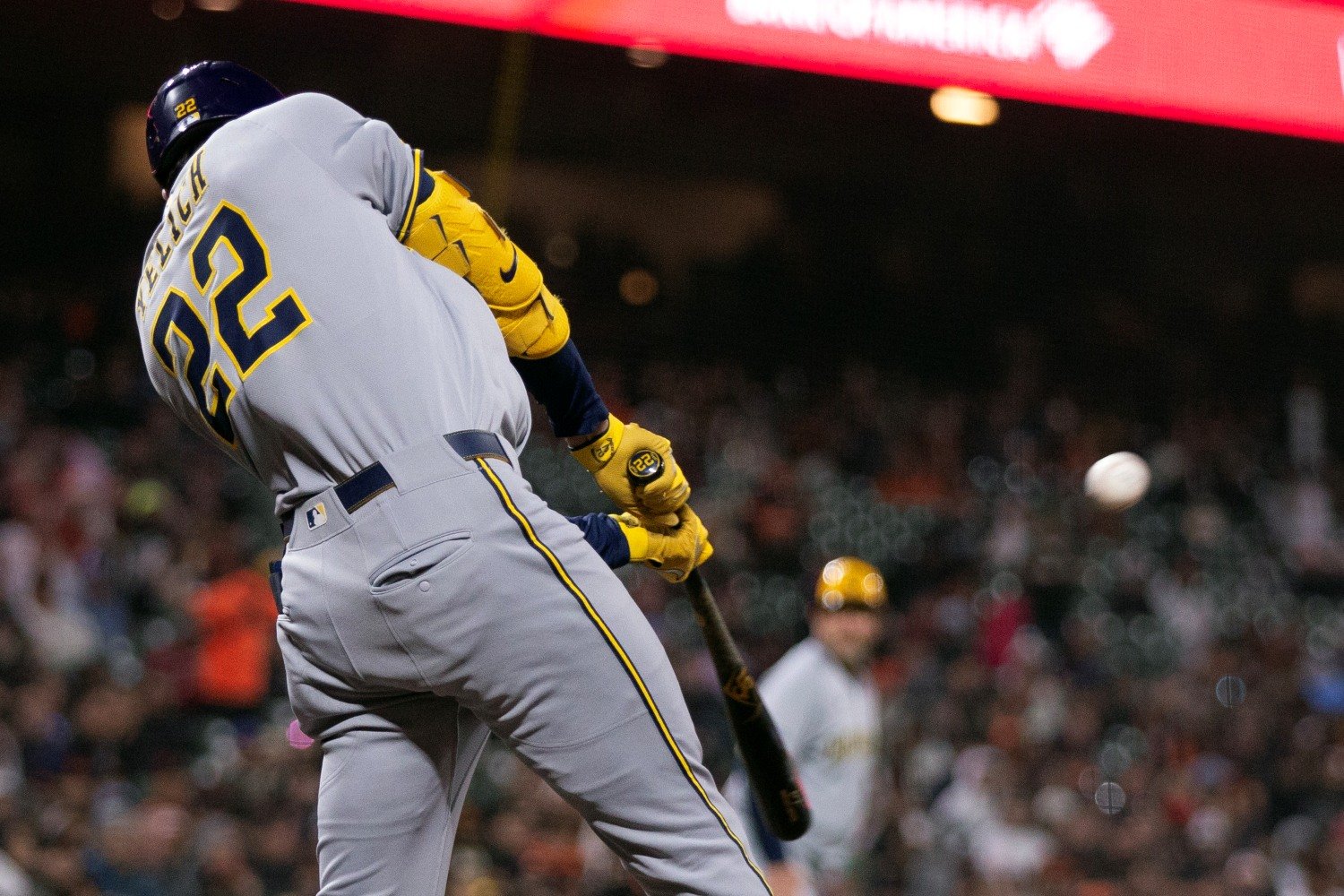 There's one unfortunate thing we do have to concede, here: Christian Yelich has lost a step. For the entirety of his career, before this season, his Statcast-measured Sprint Speed has hovered somewhere north of 28 ft./sec., but in 2025, that number is down to 27.5. After undergoing back surgery last summer that prematurely ended his season in an effort to address what had been a lingering issue, Yelich is noticeably slower, and that's probably not going to reverse itself. He is, after all, 33 years old. That's all the bad news, though. We got it out of the way in one paragraph, which is almost always a good sign. In all other aspects, Yelich looks as whole and as good as he did for the previous year and a half, before his back flared up so badly that putting off surgery no longer made sense. Though he's only hitting .222/.337/.444 on the young season: That line is actually better than it looks; he's certainly above-average at the plate; and The under-the-hood indicators tell us he's undiminished on this side of the surgery. In 2023 and 2024, the fastest Yelich hit any ball was 113.5 mph off the bat. In 2025, his max is already 113.4. His average exit velocity of 91.9 mph this year is virtually identical to what he put up in the two previous campaigns. That shouldn't surprise us, because his average swing speed (72.9 mph) and length (7.5 ft.) are also essentially identical to where they were in those seasons. His average contact point is nearly identical to last year's, too. The only yellow or orange flag in Yelich's offensive profile, so far, is his whiff rate. His in-zone contact rate has plunged from a perennial place in the mid-80s to 72.6% so far this year. Kept up all season, that would be a major concern, and we would have to expect a bump even from his current strikeout rate of 25.6%. When you look at everything else he's doing, though—the similarly strong bat speed, swing decisions, and quality of contact; the similar contact point on swings—it seems unlikely that he'll continue to whiff so often on pitches within the zone. Mapping where those whiffs are happening allows us to speculate a bit about the explanation, and it could even lead one to worry a bit. He only swung and missed 22 times on pitches in the top third of the zone in all of 2024. In 2025, he's already done so 11 times. Pitchers have had good luck getting above his barrel this season, which was never true in the past. That could be a symptom of the change in his ability to lean and to rotate, in the wake of surgery. The word 'could' is doing all the important work in that sentence, though. This could also just be a minor timing issue, or a cold snap at the top of the zone basically unrelated to his back. He's done plenty of damage lower in the zone, and it's just as likely that he's simply willing to trade a bit of contact for better pop right now. It wouldn't be the first time in his own career that he's made that tradeoff, even over a prolonged period—let alone the first time an aging player has made it for reasons having more to do with Father Time's inescapability than with an injury's debilitability. While the Brewers will have to use him smartly throughout this season (and beyond), and while that lost sprint speed exacerbates the problem of his poor defense in left field, Yelich has come through an injury that could have left him a shell of himself, and instead, he seems largely intact. The Crew have to be thrilled with the results, including and especially the grand slam Tuesday. If he is consciously trading contact for power, perhaps it's fitting that he won that trade so spectacularly in a game against the Giants and former teammate Willy Adames. Many people wondered where the Brewers would find power in Adames's absence. Yelich is looking like an unexpectedly rich source of that resource, so far.
 -
It's one of those things that sounds like hokum, and usually is, but there ARE some guys who just aren't as comfortable at a defensive spot, and then have that heavily affect their offense, too. If they have a reason to believe Ortiz is such a guy, you can make a case for this. It's an interesting thought.
-
Speaking of Paul DeJong, actually........
-
It's only been 90 plate appearances, but on the other hand, it's felt like about 900, watching the Crew's shortstop (not) hit. Image courtesy of © Mark Hoffman/Milwaukee Journal Sentinel / USA TODAY NETWORK via Imagn Images The Brewers pulled the trigger on their first lineup turnover of 2025 relatively early, last week, by sending Oliver Dunn to Triple-A Nashville and recalling Caleb Durbin to take over third base. It can hardly be called a surprise, as poorly as Dunn was hitting, but it stings a bit that they had to make the change so soon. At a blush, it feels like an indictment of the choice to demote Durbin and play Dunn in the first place. Even once you review their process and the spring training each player had, it leaves a bitter taste, because it makes the potential for Dunn to contribute at all in the future a bit more murky. Still, everyone knew that move was possible. Dunn's very rough first campaign with the Brewers left plenty of people wondering if he can hit big-league pitching, and Durbin is a promising (though probably not star-caliber) alternative, whom they were going to want to audition soon anyway. The hot corner swap is tolerable, if slightly unpleasant. If the team has to make a similar move with shortstop Joey Ortiz in the coming weeks, it's going to be a whole lot less palatable. The team is not, in any way, prepared for that, and no one would have predicted that they would face this dilemma even a month ago. Ortiz's rookie season was slightly dimmed by the vicissitudes of batting eighth or ninth almost daily as a young player, and by a neck injury that cost him bat speed for much of the second half. He showed lots of encouraging signs, though, and the hope coming into spring training was that he would emerge as a secondary but helpful piece of the offense, in addition to taking over the position vacated by Willy Adames's departure in free agency. He made that hoped-for future feel very close at hand all spring, raking and running all over the park. Little though spring numbers matter, it was impossible not to be influenced by his 1.145 OPS for the Cactus League campaign. He walked seven times, had nine extra-base hits, and only struck out 10 times. He looked like a dynamic, slashing player who could lengthen the lineup and make the whole batting order feel like a minefield for opposing pitching staffs—which is what he was during his best stretches in 2024, too. Since the games started counting, though, Ortiz has just one extra-base hit. It came on a not-so-lively middle-middle fastball, and while it also counted as a Barrel, according to Statcast, even that was only so noted after the fact. It came on April 2. R0JscXJfWGw0TUFRPT1fRHdWVlhRVlZWd0FBQ2dRTEJBQUhVMVVIQUZrQ1cxZ0FWZ0VEVVZCUkFRTUFVbFFI.mp4 Ortiz's plate discipline hasn't completely collapsed. He's making ample contact, and walking about 9% of the time. He's also shown as little power as it's possible for an athlete of his caliber to demonstrate, running the lowest average exit velocity in baseball and coming up with tons of feeble batted balls. Of his 13 singles this year, two were Texas Leaguers (bloopers into the space between the infielders and the outfielders); four were hit reasonably sharply, but at negative launch angles. and just saw their way through the infield; and two came on about the ugliest mishits you'll ever see. Of the latter two, one probably should have been called an error, rather than an infield single. Nor has Ortiz been good in the field. There have been outright errors, but also a fair share of misplays that were just beyond the range where a fielder takes the brunt under modern scoring conventions. He's playing the right position to survive in the lineup while slugging .190, but he's not playing it anywhere near well enough to justify his place for long. That all leaves us with the urgent question: What can the Brewers do about it? They don't have a second Durbin handy. Andruw Monasterio continues to go backward, and it looks increasingly like the neat story that was his emergence in 2023 as a playable, versatile infield stopgap was temporary. Given how late he bloomed, that's not surprising, or even disappointing. It's just who Monasterio was always most likely to be. Without him as an option, though, it's hard to figure out how the Brewers would handle it if they need to replace Ortiz in May. Brice Turang could slide from second to short. After all, the team entertained that notion for an entertainingly long time this spring. That would still leave second base open, though. Vinny Capra has not been any better than Dunn or Ortiz this year, though perhaps a brief audition for him would be the right call, since he's out of options and hasn't gotten a shot to play even semi-regularly yet. We've seen the Brewers address similar problems with in-season moves, even early in the year, very recently. Adames himself is one example. Their trade for Quinn Priester is another, of course. Could the team engage with the Rockies on a deal for Ryan McMahon, an oft-rumored target? Perhaps, although McMahon isn't off to a scorching start, himself. If the Diamondbacks get second baseman Ketel Marte back soon, they might be ready to talk about trading post-hype top prospect Jordan Lawlar, although players like that become available at moments like these only if something has gone wrong for them. The Royals could find themselves in seller mode and be willing to listen on either Maikel García or Jonathan India, but those are more options with warts or problems of fit to consider. The wild card is Cooper Pratt. He won't even turn 21 until August, and he's not an option right away. He only has 70 plate appearances for Double-A Biloxi this spring. He's hitting, though, and not in a way that's obviously unsustainable. He played in some Cactus League games this spring and didn't look overmatched or intimidated by the speed of the game, on offense or defense. The longer he hits well in the minors, and the longer Ortiz struggles in the majors, the stronger the temptation will grow for the team to have them switch places. Ortiz is older than he seems (he'll be 27 in July), but he still has options, and he's certainly played a Triple-A caliber of baseball over the first three-plus weeks of this major-league season. This was not supposed to be on Matt Arnold and Pat Murphy's list of possible dilemmas. Maybe Ortiz will break out soon, obviating the conversation. Right now, though, he's a scar on the lineup card, and the Brewers' margin for error feels narrower than in recent years. If things continue like this for long, they'll need to make a tough decision. View full article
-
If the Brewers Have to Replace Joey Ortiz, How Will They Do It?
Matthew Trueblood posted an article in Brewers
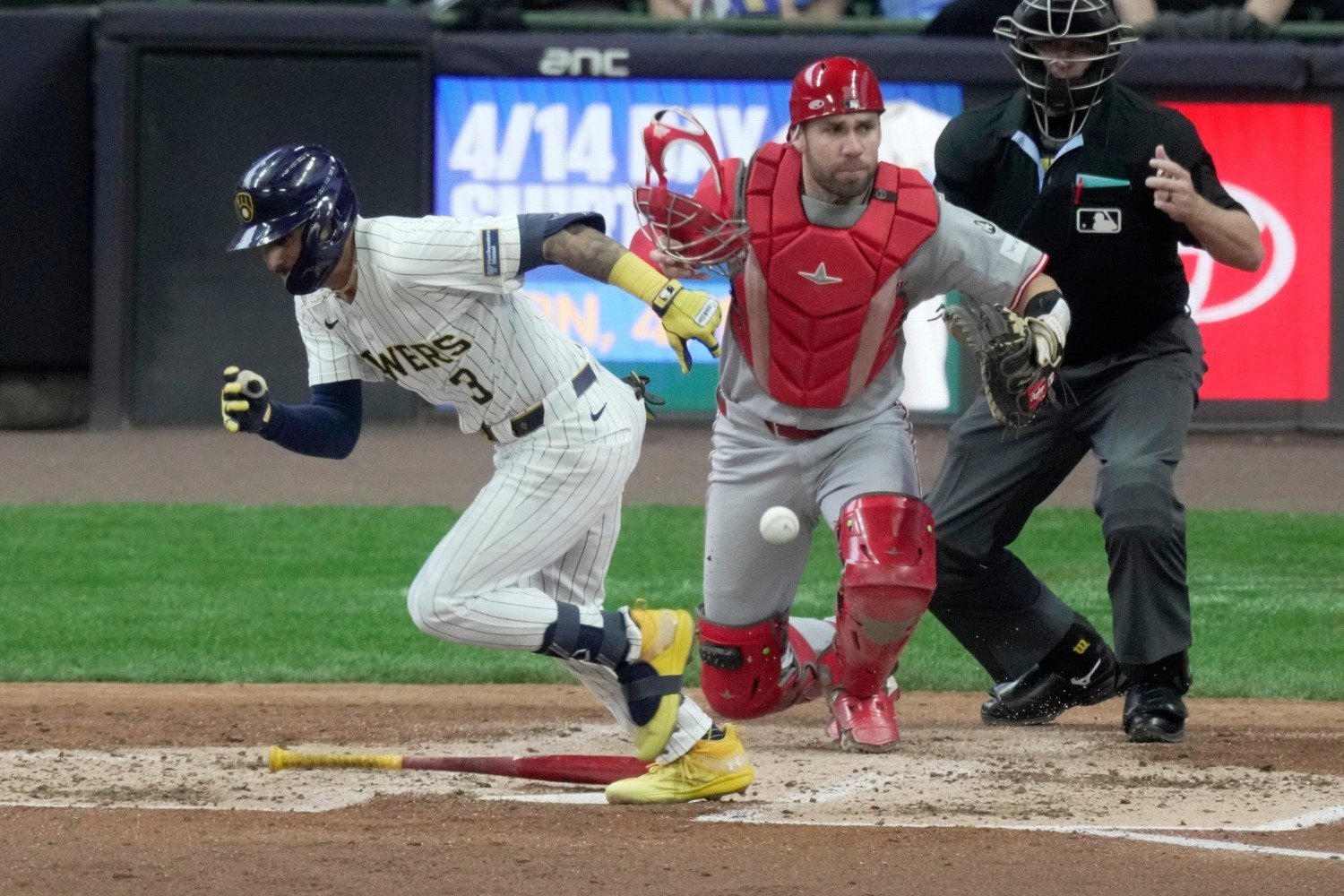 The Brewers pulled the trigger on their first lineup turnover of 2025 relatively early, last week, by sending Oliver Dunn to Triple-A Nashville and recalling Caleb Durbin to take over third base. It can hardly be called a surprise, as poorly as Dunn was hitting, but it stings a bit that they had to make the change so soon. At a blush, it feels like an indictment of the choice to demote Durbin and play Dunn in the first place. Even once you review their process and the spring training each player had, it leaves a bitter taste, because it makes the potential for Dunn to contribute at all in the future a bit more murky. Still, everyone knew that move was possible. Dunn's very rough first campaign with the Brewers left plenty of people wondering if he can hit big-league pitching, and Durbin is a promising (though probably not star-caliber) alternative, whom they were going to want to audition soon anyway. The hot corner swap is tolerable, if slightly unpleasant. If the team has to make a similar move with shortstop Joey Ortiz in the coming weeks, it's going to be a whole lot less palatable. The team is not, in any way, prepared for that, and no one would have predicted that they would face this dilemma even a month ago. Ortiz's rookie season was slightly dimmed by the vicissitudes of batting eighth or ninth almost daily as a young player, and by a neck injury that cost him bat speed for much of the second half. He showed lots of encouraging signs, though, and the hope coming into spring training was that he would emerge as a secondary but helpful piece of the offense, in addition to taking over the position vacated by Willy Adames's departure in free agency. He made that hoped-for future feel very close at hand all spring, raking and running all over the park. Little though spring numbers matter, it was impossible not to be influenced by his 1.145 OPS for the Cactus League campaign. He walked seven times, had nine extra-base hits, and only struck out 10 times. He looked like a dynamic, slashing player who could lengthen the lineup and make the whole batting order feel like a minefield for opposing pitching staffs—which is what he was during his best stretches in 2024, too. Since the games started counting, though, Ortiz has just one extra-base hit. It came on a not-so-lively middle-middle fastball, and while it also counted as a Barrel, according to Statcast, even that was only so noted after the fact. It came on April 2. R0JscXJfWGw0TUFRPT1fRHdWVlhRVlZWd0FBQ2dRTEJBQUhVMVVIQUZrQ1cxZ0FWZ0VEVVZCUkFRTUFVbFFI.mp4 Ortiz's plate discipline hasn't completely collapsed. He's making ample contact, and walking about 9% of the time. He's also shown as little power as it's possible for an athlete of his caliber to demonstrate, running the lowest average exit velocity in baseball and coming up with tons of feeble batted balls. Of his 13 singles this year, two were Texas Leaguers (bloopers into the space between the infielders and the outfielders); four were hit reasonably sharply, but at negative launch angles. and just saw their way through the infield; and two came on about the ugliest mishits you'll ever see. Of the latter two, one probably should have been called an error, rather than an infield single. Nor has Ortiz been good in the field. There have been outright errors, but also a fair share of misplays that were just beyond the range where a fielder takes the brunt under modern scoring conventions. He's playing the right position to survive in the lineup while slugging .190, but he's not playing it anywhere near well enough to justify his place for long. That all leaves us with the urgent question: What can the Brewers do about it? They don't have a second Durbin handy. Andruw Monasterio continues to go backward, and it looks increasingly like the neat story that was his emergence in 2023 as a playable, versatile infield stopgap was temporary. Given how late he bloomed, that's not surprising, or even disappointing. It's just who Monasterio was always most likely to be. Without him as an option, though, it's hard to figure out how the Brewers would handle it if they need to replace Ortiz in May. Brice Turang could slide from second to short. After all, the team entertained that notion for an entertainingly long time this spring. That would still leave second base open, though. Vinny Capra has not been any better than Dunn or Ortiz this year, though perhaps a brief audition for him would be the right call, since he's out of options and hasn't gotten a shot to play even semi-regularly yet. We've seen the Brewers address similar problems with in-season moves, even early in the year, very recently. Adames himself is one example. Their trade for Quinn Priester is another, of course. Could the team engage with the Rockies on a deal for Ryan McMahon, an oft-rumored target? Perhaps, although McMahon isn't off to a scorching start, himself. If the Diamondbacks get second baseman Ketel Marte back soon, they might be ready to talk about trading post-hype top prospect Jordan Lawlar, although players like that become available at moments like these only if something has gone wrong for them. The Royals could find themselves in seller mode and be willing to listen on either Maikel García or Jonathan India, but those are more options with warts or problems of fit to consider. The wild card is Cooper Pratt. He won't even turn 21 until August, and he's not an option right away. He only has 70 plate appearances for Double-A Biloxi this spring. He's hitting, though, and not in a way that's obviously unsustainable. He played in some Cactus League games this spring and didn't look overmatched or intimidated by the speed of the game, on offense or defense. The longer he hits well in the minors, and the longer Ortiz struggles in the majors, the stronger the temptation will grow for the team to have them switch places. Ortiz is older than he seems (he'll be 27 in July), but he still has options, and he's certainly played a Triple-A caliber of baseball over the first three-plus weeks of this major-league season. This was not supposed to be on Matt Arnold and Pat Murphy's list of possible dilemmas. Maybe Ortiz will break out soon, obviating the conversation. Right now, though, he's a scar on the lineup card, and the Brewers' margin for error feels narrower than in recent years. If things continue like this for long, they'll need to make a tough decision.
 -
Two outings into his Brewers career, isn't it hard to remember why you were ever mad about the trade for this guy? Image courtesy of © Michael McLoone-Imagn Images Sure, Yophery Rodriguez could take off with that fancy Red Sox bat-speed training and end up making you mad. The Brewers could blow the draft this year and leave you longing for the 33rd overall pick, which the team traded away along with Rodriguez this month to acquire Quinn Priester. Over his first two starts as a member of the Crew, though, Priester has pitched 10 innings, put just 12 runners on base, and allowed only one run to come around. It's safe to say that his true talent level is something less than "0.90 ERA guy", but if Priester is a legitimate starter, that deal has to be viewed through a much different lens. Well, here's the thing: Priester is a legitimate starter. No, it's not too early to say so. He might stay healthy and be a successful part of the Milwaukee starting rotation for years to come, or he might not, but there's ample reason to buy into what he's done already. The Brewers have already finished the work the Red Sox began in 2024, turning him into a solid starter in the mold of highly successful ones like the Mets' Clay Holmes and the Astros' Framber Valdez—not to mention, despite his many injury issues, promising Brewers southpaw Aaron Ashby. Since 2020, there have only been 12 player-seasons in which a pitcher threw at least 25 sinkers and had at least 25% of them meet the following criteria: An arm angle (relative to their body) of at least 43° Velocity of at least 93 mph Heavy action, with an induced vertical break between 0 and 6 inches Hurlers with high arm slots strongly tend toward four-seamers and cutters, not sinkers, and most of the time, teams also try to push guys with that kind of release toward those offerings. Rare are the pitchers who can achieve that steep, genuine sink from a high slot. Here, in fact, are those 12 seasons, so you can see just how rare. Player Season Pitch % Holmes, Clay 2024 74.3 Holmes, Clay 2023 65.1 Ginn, J.T. 2025 53.7 Holmes, Clay 2025 53.4 Holmes, Clay 2021 52 Santana, Edgar 2021 44 Britton, Zack 2020 41.4 Fried, Max 2025 36.4 Priester, Quinn 2025 30.2 Rodríguez, Manuel 2021 28.1 Ashby, Aaron 2021 27.4 Holmes, Clay 2022 25.8 Almost half the list is Clay Holmes, by himself. The Pirates swingman-turned-Yankees reliever-turned-Mets starter made a handsome $38 million on a three-year deal over the winter, and his stuff plays. It's not something only he can pull off, as attested by the presence of dominant hurlers Zack Britton and Max Fried on the same list, but this is a very rare skill, indeed. Until this year, perhaps because it's so rare that the Pirates couldn't quite believe they'd churned out a second pitcher capable of having sustainable success with it, Priester didn't really lean into the pitch. It was there, and it did act as his primary fastball, but his four-seamer also played a major role, and his arsenal often ended up being less than the sum of its parts. This is what you'd expect a pitcher with Priester's arm slot to look like, with the exception of the sinker. The fastball movement is right where a batter expects it to be from that slot, and the breaking balls have a predictably vertical shape. The changeup has the movement pattern you'd expect from it. The sinker is the pitch that doesn't fit the mold, which makes it the most interesting and the one with the greatest impact potential, but it doesn't play very well with anything else he was throwing at the time. Here's what the arsenal looks like with the Brewers, through two starts. We're sure to see these shapes change slightly, not just as the team makes changes, but as more data enters the sample. Right now, half of what we have on Priester in the big leagues this year came at Coors Field, where everything moves strangely. Already, though, you can see the enormous differences. He's almost shelved the four-seamer, in favor of much heavier cutter usage. The cutter is a hard, true version of that pitch, with lots of ride, clearly not a four-seamer but not in the slider-y family for the offering. It's his second fastball now. To make room for it, he's throwing his slider less hard—1 mph in raw velocity, but double that when you account for the fact that he's also throwing his sinker harder—and with more depth. The slider change is, already, a significant one. Depending on your preferred pitch-modeling system, it's gone from below-average to average or from average to plus this year, based on these changes and how the new version plays off his two fastballs. His changeup and curveball each grade out slightly better, too, although in samples too small to draw much from just yet. Priester and the Brewers aren't done tinkering with him yet, though. For one thing, I expect we'll see more of the curve, as he goes, because that pitch really plays nicely off his fastballs. Note, below, how the spin axes of the pitches out of his hand (left) leave the hitter struggling to discern the sinker, the four-seamer, the cutter and the curve from one another, because the curve has basically the exact opposite of the spin of the other three. That's called spin-mirroring. It takes advantage of the fact that hitters can't tell which direction a ball is spinning around a given axis. They can only see on what axis it's spinning, based on the position of the seams and the resulting visual effects as the ball comes at them. On the right, you can see how he generates ample movement the hitter wouldn't expect, based on the spin axis, with the sinker and the cutter (in opposing directions). The curve moves as the spin would tell you to expect, but since hitters have such a hard time telling the pitches apart out of the hand, they can't do as much with the pitch as they'd like. They identify it too late, if at all. You can continue the comparison with Holmes to see what Priester might be able to do to further augment his attack, centering it around this unique sinker. Holmes was just a three-pitch pitcher as a reliever over the last two seasons—sinker, slider, sweeper—but he's rapidly become a six-pitch starter this spring. One big difference here is the sweeper, instead of the curve. If Holmes has that in his arm, maybe Priester does, too, and the sweeper would make a little bit more sense. Holmes gets most of the lateral movement on that pitch not from spinning it sideways, but from seam-shifted wake effects, which are easier to reproduce even if one is not an elite supinator. But we can see another difference by turning to video. Here's Holmes getting a strikeout on the sweeper earlier this year. a0Q2WW5fWGw0TUFRPT1fQmxjRlhGME1VQUFBQUZBRlh3QUhCd1pVQUFOV0JnUUFCUVlBVVFvRUFsSUhBbFJY.mp4 And here's Priester inducing a whiff on the slider. OTdXUmdfWGw0TUFRPT1fRDFKUlYxWUFCVlFBQ1ZNRFZRQUhCUUVDQUZoV1ZBTUFCVlVGQUFVTkFWVUhWZ2RU.mp4 Both guys set up at the far first-base side of the rubber, but as you can see, Holmes pushes that envelope farther. Then, he compounds the effect by striding straight, rather than slightly closed, as Priester does. Priester's way gets him more online with the middle of the plate, but you don't necessarily want to be online with the middle of the plate. Holmes's movement on the sweeper looks surreal, but part of that is exaggerated by the angle he's creating. Even when he throws a straight four-seamer, it's going right at the first-base edge of home plate. That makes his sinker look like it runs even more than it does, and his sweeper look like it sweeps even more. It's just a tough angle, especially on right-handed batters. The Brewers might not do anything with Priester's stride direction within the season; that can be a big mechanical shakeup. Sometimes, a pitcher who opens up more that way loses the feel for the blocking aspect of their front side and gives up some velocity, which wouldn't be good. In the long run, though, Holmes is a viable template on which to sketch Priester's future—which is awfully encouraging, given that Priester is just 24 years old and will be under team control for the league-minimum salary for another year after this one. It's not just Holmes, either. Framber Valdez and Max Fried (the latter of whom has leaned into this more this season, too, as he's gone from the team who plays by the highway in suburban Cobb County, Georgia to the Yankees) are left-handed exemplars of the value of locating a high-slot sinker with some steam—and especially of how the curveball can play off that. Aaron Ashby proves that the Brewers already understand what to do with this archetype of pitcher, and it's a bit telling that it's former Brewers executive David Stearns who won the bidding war for Holmes this winter. I don't think the Brewers undertook the trade for Priester purely because their early injury trouble created desperation. It seems more like that impetus made them fractionally more willing to part with Rodriguez and the draft pick, to snag a player they'd targeted for a while. He has so much to offer, especially within the Brewers' preferred pitching framework, that it suddenly seems less than crazy to imagine him starting games—or, like Holmes, sliding into relief and becoming a major weapon with a streamlined arsenal—for the balance of the 2020s in Milwaukee. View full article
-
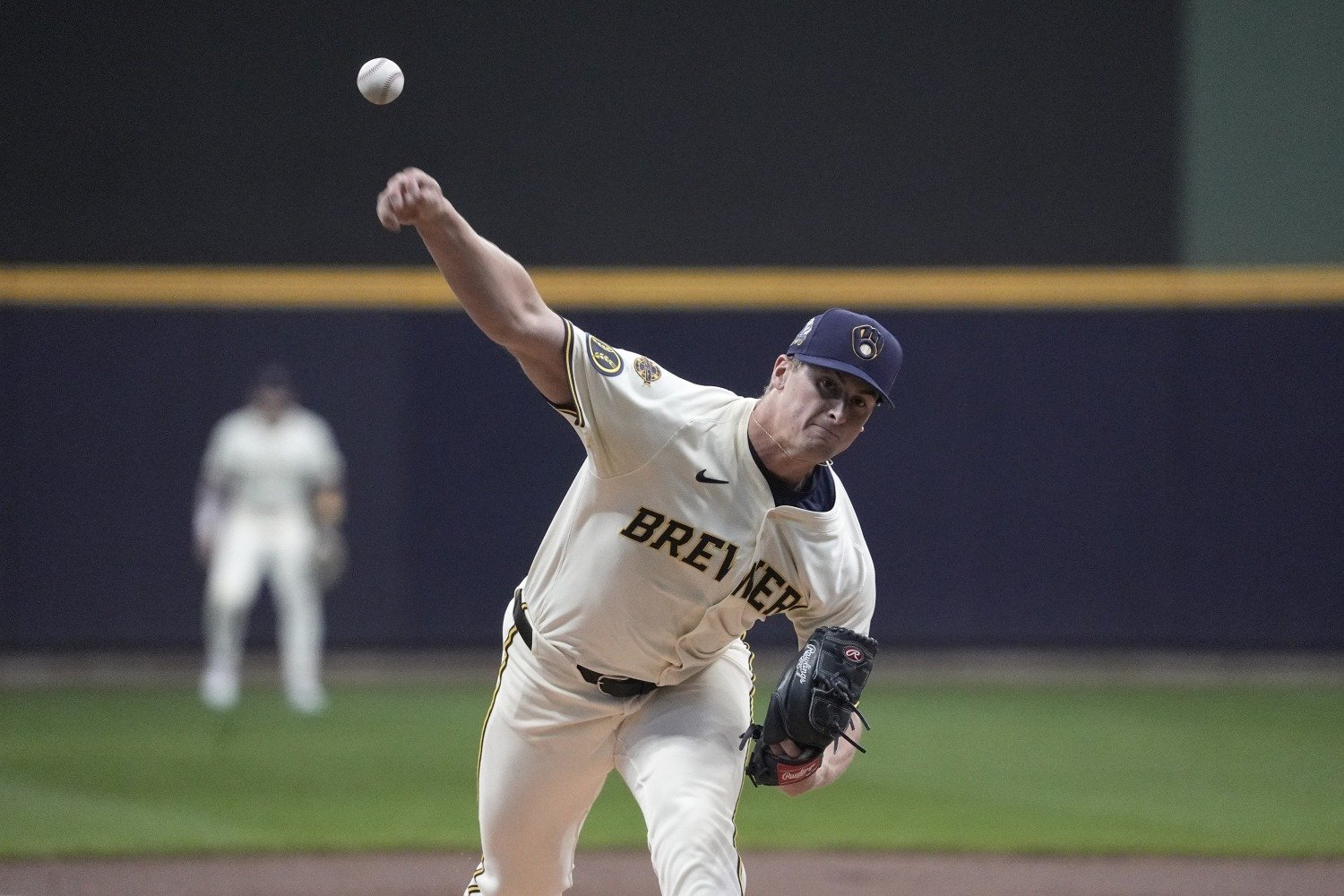 Sure, Yophery Rodriguez could take off with that fancy Red Sox bat-speed training and end up making you mad. The Brewers could blow the draft this year and leave you longing for the 33rd overall pick, which the team traded away along with Rodriguez this month to acquire Quinn Priester. Over his first two starts as a member of the Crew, though, Priester has pitched 10 innings, put just 12 runners on base, and allowed only one run to come around. It's safe to say that his true talent level is something less than "0.90 ERA guy", but if Priester is a legitimate starter, that deal has to be viewed through a much different lens. Well, here's the thing: Priester is a legitimate starter. No, it's not too early to say so. He might stay healthy and be a successful part of the Milwaukee starting rotation for years to come, or he might not, but there's ample reason to buy into what he's done already. The Brewers have already finished the work the Red Sox began in 2024, turning him into a solid starter in the mold of highly successful ones like the Mets' Clay Holmes and the Astros' Framber Valdez—not to mention, despite his many injury issues, promising Brewers southpaw Aaron Ashby. Since 2020, there have only been 12 player-seasons in which a pitcher threw at least 25 sinkers and had at least 25% of them meet the following criteria: An arm angle (relative to their body) of at least 43° Velocity of at least 93 mph Heavy action, with an induced vertical break between 0 and 6 inches Hurlers with high arm slots strongly tend toward four-seamers and cutters, not sinkers, and most of the time, teams also try to push guys with that kind of release toward those offerings. Rare are the pitchers who can achieve that steep, genuine sink from a high slot. Here, in fact, are those 12 seasons, so you can see just how rare. Player Season Pitch % Holmes, Clay 2024 74.3 Holmes, Clay 2023 65.1 Ginn, J.T. 2025 53.7 Holmes, Clay 2025 53.4 Holmes, Clay 2021 52 Santana, Edgar 2021 44 Britton, Zack 2020 41.4 Fried, Max 2025 36.4 Priester, Quinn 2025 30.2 Rodríguez, Manuel 2021 28.1 Ashby, Aaron 2021 27.4 Holmes, Clay 2022 25.8 Almost half the list is Clay Holmes, by himself. The Pirates swingman-turned-Yankees reliever-turned-Mets starter made a handsome $38 million on a three-year deal over the winter, and his stuff plays. It's not something only he can pull off, as attested by the presence of dominant hurlers Zack Britton and Max Fried on the same list, but this is a very rare skill, indeed. Until this year, perhaps because it's so rare that the Pirates couldn't quite believe they'd churned out a second pitcher capable of having sustainable success with it, Priester didn't really lean into the pitch. It was there, and it did act as his primary fastball, but his four-seamer also played a major role, and his arsenal often ended up being less than the sum of its parts. This is what you'd expect a pitcher with Priester's arm slot to look like, with the exception of the sinker. The fastball movement is right where a batter expects it to be from that slot, and the breaking balls have a predictably vertical shape. The changeup has the movement pattern you'd expect from it. The sinker is the pitch that doesn't fit the mold, which makes it the most interesting and the one with the greatest impact potential, but it doesn't play very well with anything else he was throwing at the time. Here's what the arsenal looks like with the Brewers, through two starts. We're sure to see these shapes change slightly, not just as the team makes changes, but as more data enters the sample. Right now, half of what we have on Priester in the big leagues this year came at Coors Field, where everything moves strangely. Already, though, you can see the enormous differences. He's almost shelved the four-seamer, in favor of much heavier cutter usage. The cutter is a hard, true version of that pitch, with lots of ride, clearly not a four-seamer but not in the slider-y family for the offering. It's his second fastball now. To make room for it, he's throwing his slider less hard—1 mph in raw velocity, but double that when you account for the fact that he's also throwing his sinker harder—and with more depth. The slider change is, already, a significant one. Depending on your preferred pitch-modeling system, it's gone from below-average to average or from average to plus this year, based on these changes and how the new version plays off his two fastballs. His changeup and curveball each grade out slightly better, too, although in samples too small to draw much from just yet. Priester and the Brewers aren't done tinkering with him yet, though. For one thing, I expect we'll see more of the curve, as he goes, because that pitch really plays nicely off his fastballs. Note, below, how the spin axes of the pitches out of his hand (left) leave the hitter struggling to discern the sinker, the four-seamer, the cutter and the curve from one another, because the curve has basically the exact opposite of the spin of the other three. That's called spin-mirroring. It takes advantage of the fact that hitters can't tell which direction a ball is spinning around a given axis. They can only see on what axis it's spinning, based on the position of the seams and the resulting visual effects as the ball comes at them. On the right, you can see how he generates ample movement the hitter wouldn't expect, based on the spin axis, with the sinker and the cutter (in opposing directions). The curve moves as the spin would tell you to expect, but since hitters have such a hard time telling the pitches apart out of the hand, they can't do as much with the pitch as they'd like. They identify it too late, if at all. You can continue the comparison with Holmes to see what Priester might be able to do to further augment his attack, centering it around this unique sinker. Holmes was just a three-pitch pitcher as a reliever over the last two seasons—sinker, slider, sweeper—but he's rapidly become a six-pitch starter this spring. One big difference here is the sweeper, instead of the curve. If Holmes has that in his arm, maybe Priester does, too, and the sweeper would make a little bit more sense. Holmes gets most of the lateral movement on that pitch not from spinning it sideways, but from seam-shifted wake effects, which are easier to reproduce even if one is not an elite supinator. But we can see another difference by turning to video. Here's Holmes getting a strikeout on the sweeper earlier this year. a0Q2WW5fWGw0TUFRPT1fQmxjRlhGME1VQUFBQUZBRlh3QUhCd1pVQUFOV0JnUUFCUVlBVVFvRUFsSUhBbFJY.mp4 And here's Priester inducing a whiff on the slider. OTdXUmdfWGw0TUFRPT1fRDFKUlYxWUFCVlFBQ1ZNRFZRQUhCUUVDQUZoV1ZBTUFCVlVGQUFVTkFWVUhWZ2RU.mp4 Both guys set up at the far first-base side of the rubber, but as you can see, Holmes pushes that envelope farther. Then, he compounds the effect by striding straight, rather than slightly closed, as Priester does. Priester's way gets him more online with the middle of the plate, but you don't necessarily want to be online with the middle of the plate. Holmes's movement on the sweeper looks surreal, but part of that is exaggerated by the angle he's creating. Even when he throws a straight four-seamer, it's going right at the first-base edge of home plate. That makes his sinker look like it runs even more than it does, and his sweeper look like it sweeps even more. It's just a tough angle, especially on right-handed batters. The Brewers might not do anything with Priester's stride direction within the season; that can be a big mechanical shakeup. Sometimes, a pitcher who opens up more that way loses the feel for the blocking aspect of their front side and gives up some velocity, which wouldn't be good. In the long run, though, Holmes is a viable template on which to sketch Priester's future—which is awfully encouraging, given that Priester is just 24 years old and will be under team control for the league-minimum salary for another year after this one. It's not just Holmes, either. Framber Valdez and Max Fried (the latter of whom has leaned into this more this season, too, as he's gone from the team who plays by the highway in suburban Cobb County, Georgia to the Yankees) are left-handed exemplars of the value of locating a high-slot sinker with some steam—and especially of how the curveball can play off that. Aaron Ashby proves that the Brewers already understand what to do with this archetype of pitcher, and it's a bit telling that it's former Brewers executive David Stearns who won the bidding war for Holmes this winter. I don't think the Brewers undertook the trade for Priester purely because their early injury trouble created desperation. It seems more like that impetus made them fractionally more willing to part with Rodriguez and the draft pick, to snag a player they'd targeted for a while. He has so much to offer, especially within the Brewers' preferred pitching framework, that it suddenly seems less than crazy to imagine him starting games—or, like Holmes, sliding into relief and becoming a major weapon with a streamlined arsenal—for the balance of the 2020s in Milwaukee.
 -
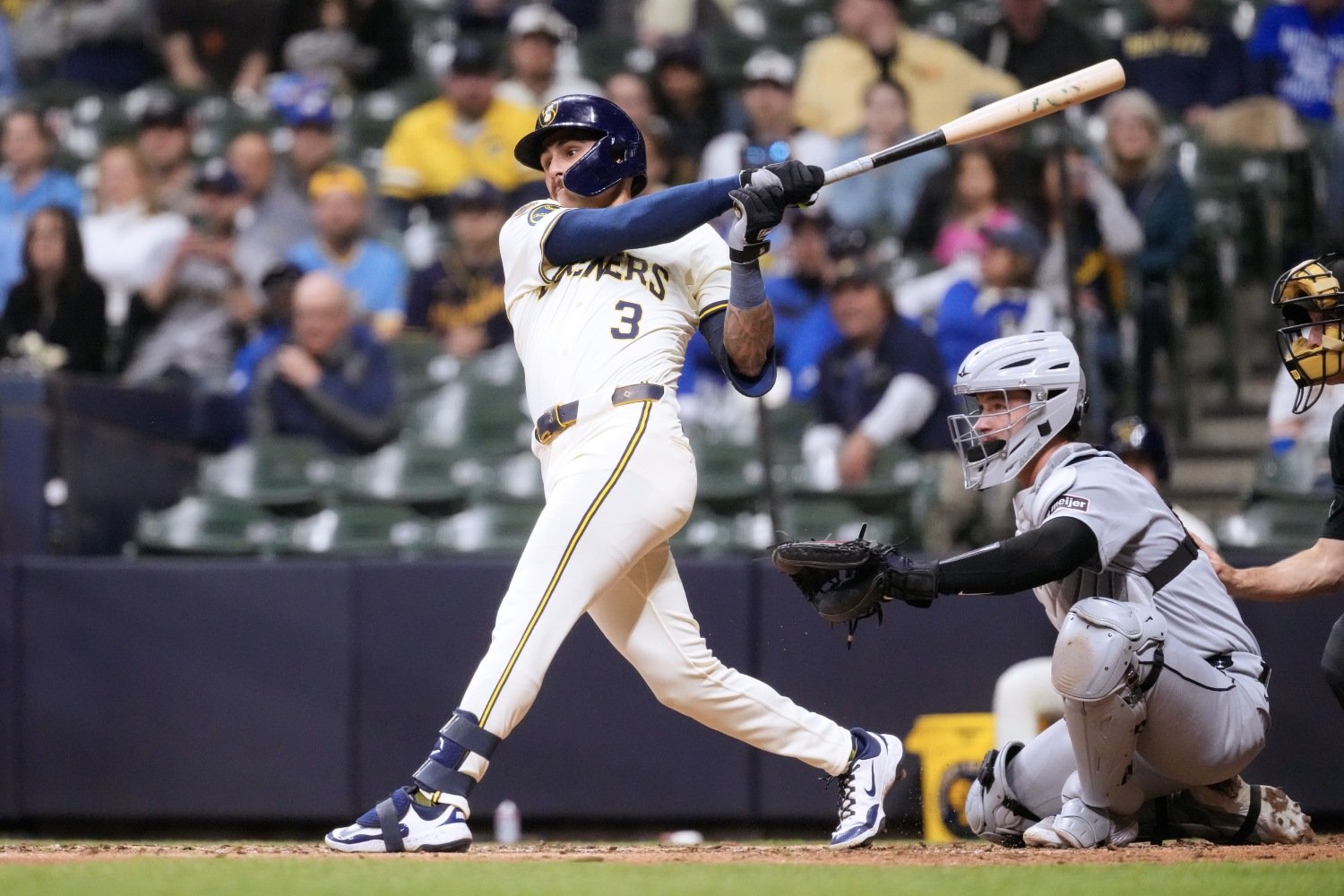 It's too early in the season to totally freak out about a hitter who simply isn't having success. As frustrating as it inevitably is, a hitter producing a .213/.304/.230 line over their first 61 plate appearances isn't necessarily a death knell. The sample is too tiny; the confounding factors and the perfectly legitimate excuses are too great in number. That Joey Ortiz is taking over the most important (non-catcher) defensive position on the diamond only makes it easier to understand why he'd run into this kind of trouble. Long gone, though, are the days when we would only look at topline outcomes to evaluate a player's performance or project their near future. We can now check in on things like approach and bat speed, to tell not only whether a hitter is suffering from bad luck, but where their process has gone off course. To be clear, that doesn't mean that any hitter should be expected to look really good under the hood when their numbers are bad. If you're posting a punchless .534 OPS, it probably means something is off, so it would be shocking if the data didn't contain some negative feedback. In other words, not every ugly number we encounter when we dig beneath the surface on Ortiz should be interpreted as a red flag. Some of them are just telling us what we already knew—that he's struggling—in greater, even helpful detail. For example, Ortiz's strike zone is extremely disorganized right now, after being very well-organized for most of 2024. He wasn't just patient last year; he also had a specific plan. Much of the time, he was cutting the plate in half, trying to attack the ball inside and let pitchers nibble away on the outer edge as much as they wished. There were problems with that approach, as Jack Stern discussed over the winter. On balance, though, it made him successful in his first full season in the majors. He might have been too stubborn about it, but you knew he knew what he was looking for. This year, he doesn't seem to know what he's looking for at all. This, to me, is not a big deal. We knew Ortiz would need to update and modify his approach this year, and that's what he's doing. He can still tell balls from strikes. He's just not tightly focused on the specific pitch he wants, so far, because he's shifted too much of his focus to covering the whole plate. That does need doing. It's just a process that requires some pain. He'll feel his way to a more coherent plan of attack. On the other hand, there's his swing speed. Ortiz is down 1.7 mph of bat speed this year, from a robust 73.4 last year to a merely average 71.7 mph this spring. Nor is that about swinging slowly more often, to adjust to certain pitches and avoid striking out. He's lost, so far, the top end of his bat speed range from last year. This isn't necessarily any more sticky than the approach snafu, because it could stem from that very problem. Maybe, as he tries to cover the whole zone and loses a bit of his focus on a particular pitch he wants to punish, Ortiz is just not feeling the conviction required to get off his best swings, even on the balls that are in his old wheelhouse. Unlike the approach problem, however, I feel like a more worrisome explanation prevails here. Ortiz might be dealing with a minor but important injury through which he's attempting to play, or he might be having a hard time with some more proactive mechanical changes, but either way, he's not currently in touch with the most dangerous version of himself, because he doesn't have his driver in the golf bag. His 'A' swing is not there. Again, that could change relatively quickly. Players will tell you, though, that it's always harder to make a major mechanical fix within a season, even relatively early. If he's simply down 1.5 or 2 mph in swing speed for the balance of this season, we have to revise our projections of Ortiz's offensive upside downward. That would be bad news for the Brewers, even for a hitter who slots into the lower third of the lineup. They need the more powerful version of Ortiz back, and that return doesn't feel imminent.
 -
The Brewers' young shortstop is a total mess at the plate early in 2025, and worryingly, even the underlying athletic indicators are off. Image courtesy of © Jeff Hanisch-Imagn Images It's too early in the season to totally freak out about a hitter who simply isn't having success. As frustrating as it inevitably is, a hitter producing a .213/.304/.230 line over their first 61 plate appearances isn't necessarily a death knell. The sample is too tiny; the confounding factors and the perfectly legitimate excuses are too great in number. That Joey Ortiz is taking over the most important (non-catcher) defensive position on the diamond only makes it easier to understand why he'd run into this kind of trouble. Long gone, though, are the days when we would only look at topline outcomes to evaluate a player's performance or project their near future. We can now check in on things like approach and bat speed, to tell not only whether a hitter is suffering from bad luck, but where their process has gone off course. To be clear, that doesn't mean that any hitter should be expected to look really good under the hood when their numbers are bad. If you're posting a punchless .534 OPS, it probably means something is off, so it would be shocking if the data didn't contain some negative feedback. In other words, not every ugly number we encounter when we dig beneath the surface on Ortiz should be interpreted as a red flag. Some of them are just telling us what we already knew—that he's struggling—in greater, even helpful detail. For example, Ortiz's strike zone is extremely disorganized right now, after being very well-organized for most of 2024. He wasn't just patient last year; he also had a specific plan. Much of the time, he was cutting the plate in half, trying to attack the ball inside and let pitchers nibble away on the outer edge as much as they wished. There were problems with that approach, as Jack Stern discussed over the winter. On balance, though, it made him successful in his first full season in the majors. He might have been too stubborn about it, but you knew he knew what he was looking for. This year, he doesn't seem to know what he's looking for at all. This, to me, is not a big deal. We knew Ortiz would need to update and modify his approach this year, and that's what he's doing. He can still tell balls from strikes. He's just not tightly focused on the specific pitch he wants, so far, because he's shifted too much of his focus to covering the whole plate. That does need doing. It's just a process that requires some pain. He'll feel his way to a more coherent plan of attack. On the other hand, there's his swing speed. Ortiz is down 1.7 mph of bat speed this year, from a robust 73.4 last year to a merely average 71.7 mph this spring. Nor is that about swinging slowly more often, to adjust to certain pitches and avoid striking out. He's lost, so far, the top end of his bat speed range from last year. This isn't necessarily any more sticky than the approach snafu, because it could stem from that very problem. Maybe, as he tries to cover the whole zone and loses a bit of his focus on a particular pitch he wants to punish, Ortiz is just not feeling the conviction required to get off his best swings, even on the balls that are in his old wheelhouse. Unlike the approach problem, however, I feel like a more worrisome explanation prevails here. Ortiz might be dealing with a minor but important injury through which he's attempting to play, or he might be having a hard time with some more proactive mechanical changes, but either way, he's not currently in touch with the most dangerous version of himself, because he doesn't have his driver in the golf bag. His 'A' swing is not there. Again, that could change relatively quickly. Players will tell you, though, that it's always harder to make a major mechanical fix within a season, even relatively early. If he's simply down 1.5 or 2 mph in swing speed for the balance of this season, we have to revise our projections of Ortiz's offensive upside downward. That would be bad news for the Brewers, even for a hitter who slots into the lower third of the lineup. They need the more powerful version of Ortiz back, and that return doesn't feel imminent. View full article
-
The young superstar is not thinking inside-out. He's not being contact-conscious. He's ready to commit baseballicide, every time you test him. Image courtesy of © Benny Sieu-Imagn Images My favorite baseball quotation varies from day to day, week to week, month to month. One that stays in regular rotation, though, comes from Roberto Clemente—one of the men who belongs on any baseball Mt. Rushmore. Clemente is remembered, now, through a gauzy historical patina, often treated as the sainted martyr of the game, shrunken in our minds to "only" a trailblazing member of a racial and ethnic minority and a great humanitarian. In fact, he was not only one of the most well-rounded players in baseball history, but one of its fiercest and most cerebral, on and off the field. He was extraordinarily dedicated to the kinds of aid work he died doing, when his plane carrying supplies to earthquake victims in Nicaragua crashed, but he was not the Anthony Rizzo kind of community pillar: always smiling, as tender and personable and eager to please as he is compassionate. Clemente was much more given to long periods of saturnine moods, and he was much more unflinching in both his own approach to the game and his demand to be respected—respected first, liked second—by everyone he encountered within and around the sport. "Pitch me outside," Clemente once said, "I will hit .400. Pitch me inside, and you will not find the ball." That mentality doesn't work for every hitter, but as far as I'm concerned, it's the practically perfect way to approach being a big-league hitter. It's unapologetic and sharp-edged, and it accurately captured what Clemente was about. He played in a low-power era, mostly in pitcher-friendly environments, but he did hit for an exceptional average—and when pitchers tried to work him inside, he did make them pay, mercilessly. Sorry to lead with a digression, but I promise, it's not all for naught. This year, his second in the major leagues, I projected Jackson Chourio to take a major step forward, even from the admirable level he achieved as a 20-year-old rookie in 2024. Specifically, I thought Chourio could access considerably more power than we saw in his first tour of the big leagues, and that we would at least glimpse what I believe will eventually be 40-homer pop from the compact but powerful young hitter. Not even 10% of the way through the season, we're seeing that happen, and it's taking the form of a dedication to a very Clemente-like approach. Last year, Chourio handled pitches on the inner third of the plate perfectly fine. He got quite good at staying inside the ball, using his bat speed to catch it deep in the hitting zone but make solid contact and direct the ball to the opposite field. T1FkR29fVjBZQUhRPT1fQndFQUFBRlhCQUFBREFNQ1ZBQUFCRkFEQUFCWFZBSUFWMU1CQlZGVEJRSmRCUUJW.mp4 He stayed closed on those pitches, as you can see. His stride remained directly at the pitcher, which forced him to wait on the inside pitch a bit but kept him short to the ball. At other times, however, he did struggle, especially when he tried to put the pedal down and open up on an inisde heater. YmtNNDFfV0ZRVkV3dEdEUT09X0FRWUVBbEJWVWdjQUFWVUtCd0FBVnc5VkFBQUNXMWdBQlYwR0NRUU1WVlZkVWdkZQ==.mp4 Because of his commitment to staying through the ball and covering the pitch away, Chourio was forcing himself to rotate exceptionally fast to get to the inside pitch last year. He's a good enough athlete to do that, sometimes, but it's a very hard thing for even elite ballplayers to do. Eventually, if you want to generate big bat speed and do damage on the ball inside, you have to get comfortable anticipating, trusting what you see, and opening up more with your whole body. When you stride a bit more toward (for a right-handed batter) the shortstop, you create more torque and more space within which to let your whole body generate bat speed, while still getting the barrel to the ball inside. This year, that's what Chourio is doing. eUxXVkdfWGw0TUFRPT1fQndjRFVGMVJYZ1VBQ2xwWFZnQUhCVk1EQUZrR1ZnTUFBd1pVVkFGUlV3dFRCMUJY.mp4 Ok, but that pitch is a bad mistake from Ian Gibaut. It's a sweeper that didn't sweep. Crushing mistakes is one of the benefits of gearing up more to attack the inside pitch, but you can't rely solely on doing that if you want to enjoy the kind of success Chourio has found early this year. Here's a pitcher executing much better, on a pitch that should have been much harder to turn around (particularly while keeping the ball fair). R0JscXJfWGw0TUFRPT1fVWdGWFZWQlNWUVlBVzFJRkFBQUhVd1JTQUFBTUFBSUFWbFFNQWxZQ0NRQlRBVllB.mp4 Sure, Carlos Estévez also missed his spot badly here. But that's a high fastball on the scary side of 95 miles per hour, on the inner edge. Chourio's bat is fast enough to whip the barrel through it, anyway. He just couldn't do this last year, even as he came on tremendously strong at the end of the campaign. The numbers on pitches inside tell the same story as the pictures do. Season AVG SLG wOBA xwOBA Exit Vel. Launch Angle Bat Speed Swing Length 2024 .321 .519 .356 .364 91.6 12.3 73.7 7.2 2025 .429 1.071 .637 .460 96.3 12.5 74.9 7.6 Chourio's not as short to the ball inside in 2025 as he was in 2024. He's not trying to be. Instead, he's decided to be sensationally dangerous on those pitches, and it's worked. It's a longer swing, and he might whiff a bit more often this way, but he doesn't care. He's swinging faster, hitting harder, and has not lost any of his ability to elevate the ball. Pitchers are learning the hard way: they have to content themselves with working Chourio away, away, away. If they do, he might still hit for a high average and generate some impressive opposite-field power, as Clemente occasionally could, too. If they don't, though, they're going to go through a lot of baseballs. View full article
-
 My favorite baseball quotation varies from day to day, week to week, month to month. One that stays in regular rotation, though, comes from Roberto Clemente—one of the men who belongs on any baseball Mt. Rushmore. Clemente is remembered, now, through a gauzy historical patina, often treated as the sainted martyr of the game, shrunken in our minds to "only" a trailblazing member of a racial and ethnic minority and a great humanitarian. In fact, he was not only one of the most well-rounded players in baseball history, but one of its fiercest and most cerebral, on and off the field. He was extraordinarily dedicated to the kinds of aid work he died doing, when his plane carrying supplies to earthquake victims in Nicaragua crashed, but he was not the Anthony Rizzo kind of community pillar: always smiling, as tender and personable and eager to please as he is compassionate. Clemente was much more given to long periods of saturnine moods, and he was much more unflinching in both his own approach to the game and his demand to be respected—respected first, liked second—by everyone he encountered within and around the sport. "Pitch me outside," Clemente once said, "I will hit .400. Pitch me inside, and you will not find the ball." That mentality doesn't work for every hitter, but as far as I'm concerned, it's the practically perfect way to approach being a big-league hitter. It's unapologetic and sharp-edged, and it accurately captured what Clemente was about. He played in a low-power era, mostly in pitcher-friendly environments, but he did hit for an exceptional average—and when pitchers tried to work him inside, he did make them pay, mercilessly. Sorry to lead with a digression, but I promise, it's not all for naught. This year, his second in the major leagues, I projected Jackson Chourio to take a major step forward, even from the admirable level he achieved as a 20-year-old rookie in 2024. Specifically, I thought Chourio could access considerably more power than we saw in his first tour of the big leagues, and that we would at least glimpse what I believe will eventually be 40-homer pop from the compact but powerful young hitter. Not even 10% of the way through the season, we're seeing that happen, and it's taking the form of a dedication to a very Clemente-like approach. Last year, Chourio handled pitches on the inner third of the plate perfectly fine. He got quite good at staying inside the ball, using his bat speed to catch it deep in the hitting zone but make solid contact and direct the ball to the opposite field. T1FkR29fVjBZQUhRPT1fQndFQUFBRlhCQUFBREFNQ1ZBQUFCRkFEQUFCWFZBSUFWMU1CQlZGVEJRSmRCUUJW.mp4 He stayed closed on those pitches, as you can see. His stride remained directly at the pitcher, which forced him to wait on the inside pitch a bit but kept him short to the ball. At other times, however, he did struggle, especially when he tried to put the pedal down and open up on an inisde heater. YmtNNDFfV0ZRVkV3dEdEUT09X0FRWUVBbEJWVWdjQUFWVUtCd0FBVnc5VkFBQUNXMWdBQlYwR0NRUU1WVlZkVWdkZQ==.mp4 Because of his commitment to staying through the ball and covering the pitch away, Chourio was forcing himself to rotate exceptionally fast to get to the inside pitch last year. He's a good enough athlete to do that, sometimes, but it's a very hard thing for even elite ballplayers to do. Eventually, if you want to generate big bat speed and do damage on the ball inside, you have to get comfortable anticipating, trusting what you see, and opening up more with your whole body. When you stride a bit more toward (for a right-handed batter) the shortstop, you create more torque and more space within which to let your whole body generate bat speed, while still getting the barrel to the ball inside. This year, that's what Chourio is doing. eUxXVkdfWGw0TUFRPT1fQndjRFVGMVJYZ1VBQ2xwWFZnQUhCVk1EQUZrR1ZnTUFBd1pVVkFGUlV3dFRCMUJY.mp4 Ok, but that pitch is a bad mistake from Ian Gibaut. It's a sweeper that didn't sweep. Crushing mistakes is one of the benefits of gearing up more to attack the inside pitch, but you can't rely solely on doing that if you want to enjoy the kind of success Chourio has found early this year. Here's a pitcher executing much better, on a pitch that should have been much harder to turn around (particularly while keeping the ball fair). R0JscXJfWGw0TUFRPT1fVWdGWFZWQlNWUVlBVzFJRkFBQUhVd1JTQUFBTUFBSUFWbFFNQWxZQ0NRQlRBVllB.mp4 Sure, Carlos Estévez also missed his spot badly here. But that's a high fastball on the scary side of 95 miles per hour, on the inner edge. Chourio's bat is fast enough to whip the barrel through it, anyway. He just couldn't do this last year, even as he came on tremendously strong at the end of the campaign. The numbers on pitches inside tell the same story as the pictures do. Season AVG SLG wOBA xwOBA Exit Vel. Launch Angle Bat Speed Swing Length 2024 .321 .519 .356 .364 91.6 12.3 73.7 7.2 2025 .429 1.071 .637 .460 96.3 12.5 74.9 7.6 Chourio's not as short to the ball inside in 2025 as he was in 2024. He's not trying to be. Instead, he's decided to be sensationally dangerous on those pitches, and it's worked. It's a longer swing, and he might whiff a bit more often this way, but he doesn't care. He's swinging faster, hitting harder, and has not lost any of his ability to elevate the ball. Pitchers are learning the hard way: they have to content themselves with working Chourio away, away, away. If they do, he might still hit for a high average and generate some impressive opposite-field power, as Clemente occasionally could, too. If they don't, though, they're going to go through a lot of baseballs.
 -
The Brewers' right fielder is swinging at more strikes and fewer pitches outside the zone. He's swinging faster. He's stronger. So why is his batted-ball profile more of a mess than ever? Image courtesy of © Isaiah J. Downing-Imagn Images Through the Brewers' first 11 games of the year, Sal Frelick is hitting a superficially superb .356, with a .431 on-base percentage. He's been a key cog in the Milwaukee offense, often batting fifth and forming a much-needed bridge between higher-powered right-handed batters. In part, his job has been to punish teams who try to use matchup righties to tear through the meat of the Brewers batting order, and he's done that well. However, the lack of quality contact from Frelick has been conspicuous, especially to begin a season in which the hope was that an offseason of adding weight and strength would translate to more thump, not less. Frelick only has two extra-base hits (a double and a triple), and not even those have been all that violently struck. It's been more a matter of good placement, as has been the case for most of his singles. UUFycTZfWGw0TUFRPT1fQVFOU0FBRlZCd0FBQzFzQ0FBQUhVMWNIQUFCUlVWUUFCMTFYVlFVQkJGWlJBVlpY.mp4 Frelick's hard-hit rate and average exit velocity are both up, but that's the only direction either could move. Last season, he had practically as little pop in his bat as is possible in the modern game, and this year, despite a more aggressive, faster swing, that remains true. He hasn't hit a ball even 104 miles per hour so far in the regular season, after hitting multiple balls in the 108-mph range during spring training. One problem is that, with the exception of a few more truly vicious swings than he put on any balls last year, Frelick's distribution of swing speeds is remarkably similar to those from his first two big-league campaigns. If you're just adding a couple of high-end swings and removing a fistful of the very slowest ones, you're not truly changing your swing speed profile. With more strength and a more aggressive mindset this spring, the hope was that the green distribution curve above would have actually shifted to the right, perhaps into phase with the dotted line that represents the league average. Instead, he's been functionally the same this year, while looking quite different. Another issue is that Frelick is trying to reorganize his strike zone, seemingly with the intention of sitting on inside pitches and pulling the ball more often. That's a wise adjustment, since he's never going to have the toolkit to hit for much power except to his pull field, but the attempt to actually make it has been messy. Here's what Frelick's swing rates looked like, based on pitch location, in 2024. And here's the same chart for 2025, to date: So far, he's swinging more often within the zone and chasing less, but as he talked about even last spring, his hand-eye coordination sometimes betrays him. He can make poor swing decisions, and still make contact. Because of that, he struggles to make better ones. He's not yet taking the more thoughtful approach from conception to execution; the swings are still all over the place. As a result, while he is pulling the ball (and pulling it in the air) much more often, the extra oomph that is supposed to come with that change hasn't materialized. Last season, Frelick was hard to defend, because he hit the ball all over the field and forced the defense to cover virtually every inch of the playing surface. This season, he's been much more like a modern left-handed pull hitter—but without the ability to hit the ball hard enough or far enough to make that profile, itself, very difficult to defend. So far, of course, it's all played out gorgeously. Some balls have been perfectly placed. Others have been poorly defended. Frelick's speed has bought him a couple of infield hits. Going forward, though, the Brewers need a much more dynamic version of Frelick. They need a guy who can stick to his overhauled approach, more consistently apply his newly made muscle, and start splitting gaps consistently. His strikeout and walk rates look great this spring, but they'll regress a bit—especially if he can't start scaring pitchers out of the zone with better swings. His BABIP luck will run cold soon, too. When those things happen, he has to have consolidated his in-progress adjustments into something that makes him a threat in the batter's box. View full article
-
 Through the Brewers' first 11 games of the year, Sal Frelick is hitting a superficially superb .356, with a .431 on-base percentage. He's been a key cog in the Milwaukee offense, often batting fifth and forming a much-needed bridge between higher-powered right-handed batters. In part, his job has been to punish teams who try to use matchup righties to tear through the meat of the Brewers batting order, and he's done that well. However, the lack of quality contact from Frelick has been conspicuous, especially to begin a season in which the hope was that an offseason of adding weight and strength would translate to more thump, not less. Frelick only has two extra-base hits (a double and a triple), and not even those have been all that violently struck. It's been more a matter of good placement, as has been the case for most of his singles. UUFycTZfWGw0TUFRPT1fQVFOU0FBRlZCd0FBQzFzQ0FBQUhVMWNIQUFCUlVWUUFCMTFYVlFVQkJGWlJBVlpY.mp4 Frelick's hard-hit rate and average exit velocity are both up, but that's the only direction either could move. Last season, he had practically as little pop in his bat as is possible in the modern game, and this year, despite a more aggressive, faster swing, that remains true. He hasn't hit a ball even 104 miles per hour so far in the regular season, after hitting multiple balls in the 108-mph range during spring training. One problem is that, with the exception of a few more truly vicious swings than he put on any balls last year, Frelick's distribution of swing speeds is remarkably similar to those from his first two big-league campaigns. If you're just adding a couple of high-end swings and removing a fistful of the very slowest ones, you're not truly changing your swing speed profile. With more strength and a more aggressive mindset this spring, the hope was that the green distribution curve above would have actually shifted to the right, perhaps into phase with the dotted line that represents the league average. Instead, he's been functionally the same this year, while looking quite different. Another issue is that Frelick is trying to reorganize his strike zone, seemingly with the intention of sitting on inside pitches and pulling the ball more often. That's a wise adjustment, since he's never going to have the toolkit to hit for much power except to his pull field, but the attempt to actually make it has been messy. Here's what Frelick's swing rates looked like, based on pitch location, in 2024. And here's the same chart for 2025, to date: So far, he's swinging more often within the zone and chasing less, but as he talked about even last spring, his hand-eye coordination sometimes betrays him. He can make poor swing decisions, and still make contact. Because of that, he struggles to make better ones. He's not yet taking the more thoughtful approach from conception to execution; the swings are still all over the place. As a result, while he is pulling the ball (and pulling it in the air) much more often, the extra oomph that is supposed to come with that change hasn't materialized. Last season, Frelick was hard to defend, because he hit the ball all over the field and forced the defense to cover virtually every inch of the playing surface. This season, he's been much more like a modern left-handed pull hitter—but without the ability to hit the ball hard enough or far enough to make that profile, itself, very difficult to defend. So far, of course, it's all played out gorgeously. Some balls have been perfectly placed. Others have been poorly defended. Frelick's speed has bought him a couple of infield hits. Going forward, though, the Brewers need a much more dynamic version of Frelick. They need a guy who can stick to his overhauled approach, more consistently apply his newly made muscle, and start splitting gaps consistently. His strikeout and walk rates look great this spring, but they'll regress a bit—especially if he can't start scaring pitchers out of the zone with better swings. His BABIP luck will run cold soon, too. When those things happen, he has to have consolidated his in-progress adjustments into something that makes him a threat in the batter's box.
 -
 Because all that matters, in the end, is the end, it's best not to dwell in details and minutiae. Effectively, the Brewers executed a single, multi-phase maneuver Monday, acquiring right-handed pitcher Quinn Priester and outfielder Daz Cameron for reliever Grant Wolfram, outfield prospect Yophery Rodriguez, and the 33rd pick in July's MLB Draft. They'll give up a player to be named later, but they also get cash in the deal. Taken together this way, the two trades Milwaukee made point in a coherent direction. Without overbalancing and hurting themselves for the long term, they want to win in 2025, and they're closer to that goal now than when they woke up this morning. Priester, as we've already discussed (and will discuss further), will slot into the team's starting rotation, at least while they await reinforcement from Jose Quintana and some of their injured veterans. He still has minor-league options, making him no less versatile a fit for their roster than Wolfram was, but he's a much better fit for their current needs. Wolfram, a lefty with intriguing stuff, was nonetheless no higher than fourth on the team's lefty reliever totem pole, and doesn't offer the ability to start, as Priester does. Cameron, the newest addition to the organization, is the son of former Brewers outfielder Mike Cameron. Now 28, he's long past his prospect sell-by date, and his career batting line—.201/.263/.330—tells you exactly why he not only didn't stick on the Orioles' 40-man roster through spring training, but cleared waivers and was outrighted to the minors. On the other hand, Cameron is a fast, solid defensive outfielder, and while his topline results with the A's last year were hideous, the under-the-hood numbers were much better. With above-average swing decisions and a sweet-spot exit velocity in the 66th percentile, Cameron was a roughly average hitter by process in 2024, afflicted with very bad luck. He hit very well in spring training, too, but was the victim of a numbers game, after he'd been traded to the loaded Baltimore Orioles in the offseason. He doesn't have disastrous swing-and-miss issues, either. Cameron won't even take up a 40-man spot, for now, but he's an upgrade on non-roster outfield depth options like Jimmy Herron. If injury strikes the Brewers outfield before Blake Perkins is ready to return to the lineup, Cameron could be a strong stopgap. The price the Brewers paid to get better at (say) the 16th and 37th spots on their organizational depth chart today feels somewhat steep, but it's merely the cost of an organization dedicating itself to both competing in the present and staying focused on the future. Cameron is out of options, but that doesn't matter unless or until he's promoted to the majors. Priester could be under team control for up to six years. The Brewers needed better depth, and they got it. As fans have often hoped they would, they're sliding some of their expected value forward, from the tail end of this decade to 2025. There's a transaction cost involved, but this was how the team elected to solve the problems posed by their rash of injuries throughout the roster. If nothing else, it's a higher-upside way of doing so than waiting for players to hit the waiver wire at just the right time and picking up only the players 20 or more other teams don't want.
- 1 comment
-
- 1
-

-
- daz cameron
- grant wolfram
- (and 1 more)
-
After a trade earlier Monday that moved a young outfielder to urgently shore up their starting pitching depth, the Brewers pivoted in the evening, swapping the very arm they cut loose to accommodate their new hurler for—you guessed it—a young outfielder. Image courtesy of © Kelley L Cox-Imagn Images Because all that matters, in the end, is the end, it's best not to dwell in details and minutiae. Effectively, the Brewers executed a single, multi-phase maneuver Monday, acquiring right-handed pitcher Quinn Priester and outfielder Daz Cameron for reliever Grant Wolfram, outfield prospect Yophery Rodriguez, and the 33rd pick in July's MLB Draft. They'll give up a player to be named later, but they also get cash in the deal. Taken together this way, the two trades Milwaukee made point in a coherent direction. Without overbalancing and hurting themselves for the long term, they want to win in 2025, and they're closer to that goal now than when they woke up this morning. Priester, as we've already discussed (and will discuss further), will slot into the team's starting rotation, at least while they await reinforcement from Jose Quintana and some of their injured veterans. He still has minor-league options, making him no less versatile a fit for their roster than Wolfram was, but he's a much better fit for their current needs. Wolfram, a lefty with intriguing stuff, was nonetheless no higher than fourth on the team's lefty reliever totem pole, and doesn't offer the ability to start, as Priester does. Cameron, the newest addition to the organization, is the son of former Brewers outfielder Mike Cameron. Now 28, he's long past his prospect sell-by date, and his career batting line—.201/.263/.330—tells you exactly why he not only didn't stick on the Orioles' 40-man roster through spring training, but cleared waivers and was outrighted to the minors. On the other hand, Cameron is a fast, solid defensive outfielder, and while his topline results with the A's last year were hideous, the under-the-hood numbers were much better. With above-average swing decisions and a sweet-spot exit velocity in the 66th percentile, Cameron was a roughly average hitter by process in 2024, afflicted with very bad luck. He hit very well in spring training, too, but was the victim of a numbers game, after he'd been traded to the loaded Baltimore Orioles in the offseason. He doesn't have disastrous swing-and-miss issues, either. Cameron won't even take up a 40-man spot, for now, but he's an upgrade on non-roster outfield depth options like Jimmy Herron. If injury strikes the Brewers outfield before Blake Perkins is ready to return to the lineup, Cameron could be a strong stopgap. The price the Brewers paid to get better at (say) the 16th and 37th spots on their organizational depth chart today feels somewhat steep, but it's merely the cost of an organization dedicating itself to both competing in the present and staying focused on the future. Cameron is out of options, but that doesn't matter unless or until he's promoted to the majors. Priester could be under team control for up to six years. The Brewers needed better depth, and they got it. As fans have often hoped they would, they're sliding some of their expected value forward, from the tail end of this decade to 2025. There's a transaction cost involved, but this was how the team elected to solve the problems posed by their rash of injuries throughout the roster. If nothing else, it's a higher-upside way of doing so than waiting for players to hit the waiver wire at just the right time and picking up only the players 20 or more other teams don't want. View full article
-
In a surprising move to patch the gaping holes in their starting rotation, the Brewers swung a trade Monday that bundles up two valuable long-term assets and swaps them for—they hope—immediate help. Image courtesy of © Mike Watters-Imagn Images The Milwaukee Brewers aren't any less worried about their starting rotation and its myriad injury problems than their fans are. They proved that Monday morning, trading outfield prospect Yophery Rodriguez and a pick in Competitive Balance Round A in July's MLB Draft to the Boston Red Sox in exchange for right-handed starting pitcher Quinn Priester. It's an unvarnished response to losing not only Tobias Myers and Aaron Ashby during spring training, but Aaron Civale and Nestor Cortes since the beginning of the season. While the team might hope they'll get Civale and Myers back soon, it's unlikely that they'll get substantial help from Cortes, Ashby or DL Hall before the latter part of May. Jose Quintana will join their rotation this weekend in Arizona, but that still left too many innings uncovered at the big-league level. By trading for Priester, they're stopping the gap with a former first-round pick who once carried considerable prospect sheen, but who has now been involved in two "change-of-scenery" trades in nine months. Priester, 24, was the Pirates' first-round pick in the 2019 MLB Draft. He made national top-100 prospect lists in multiple preseason cycles, but his stuff didn't progress the way scouts hoped, and minor injury problems kept his inning counts low even as he tried to gain polish and ascend the minor-league ladder. He finally reached the major leagues in 2023, but has not found success there in parts of two seasons. Last July, the Pirates traded him to Boston for fellow former top prospect Nick Yorke. However, Priester has made some interesting adjustments this spring, which seem to have caught the Brewers' eye. He's added a cutter, largely installing it in the stead of his unimpressive four-seam fastball, and he's deepened his arsenal of breaking stuff by sprinkling in a sweeper that has flashed plus. Though he's only appeared for Triple-A Worcester, the presumption here is that he'll slot into the big-league picture almost as soon as he enters the Brewers organization. To get hold of Priester, rather than settling for standard waiver-wire fodder, the Brewers parted with Rodriguez, an intriguing (though far-off) outfield prospect with multiple tools that could end up above average. They'll also surrender a chunk of what was one of the league's deepest troves of draft capital, sending the Sox a pick that will fall inside the top 40 overall. It's a hefty price to pay, but the Crew are clearly convinced that Priester is poised to reach another level with the adjustments he's made this year—and they clearly feel a great deal of urgency to upgrade their pitching depth. It's hard not to cast this as a disappointing development, because the team's offseason activities (limited though they were) all tried to ensure that this wouldn't be necessary. Bringing in Cortes, Quintana, Tyler Alexander, Grant Anderson, and Grant Wolfram to supplement a pitching staff that already figured to work Brandon Woodruff back into the mix after winning a second straight division title, the front office surely anticipated being able to wait longer and move more measuredly than this. As it is, they're rolling the dice on a talented and evolving hurler, but at a steeper price than they would have liked to be forced to pay at such an early date. View full article
-
 The Milwaukee Brewers aren't any less worried about their starting rotation and its myriad injury problems than their fans are. They proved that Monday morning, trading outfield prospect Yophery Rodriguez and a pick in Competitive Balance Round A in July's MLB Draft to the Boston Red Sox in exchange for right-handed starting pitcher Quinn Priester. It's an unvarnished response to losing not only Tobias Myers and Aaron Ashby during spring training, but Aaron Civale and Nestor Cortes since the beginning of the season. While the team might hope they'll get Civale and Myers back soon, it's unlikely that they'll get substantial help from Cortes, Ashby or DL Hall before the latter part of May. Jose Quintana will join their rotation this weekend in Arizona, but that still left too many innings uncovered at the big-league level. By trading for Priester, they're stopping the gap with a former first-round pick who once carried considerable prospect sheen, but who has now been involved in two "change-of-scenery" trades in nine months. Priester, 24, was the Pirates' first-round pick in the 2019 MLB Draft. He made national top-100 prospect lists in multiple preseason cycles, but his stuff didn't progress the way scouts hoped, and minor injury problems kept his inning counts low even as he tried to gain polish and ascend the minor-league ladder. He finally reached the major leagues in 2023, but has not found success there in parts of two seasons. Last July, the Pirates traded him to Boston for fellow former top prospect Nick Yorke. However, Priester has made some interesting adjustments this spring, which seem to have caught the Brewers' eye. He's added a cutter, largely installing it in the stead of his unimpressive four-seam fastball, and he's deepened his arsenal of breaking stuff by sprinkling in a sweeper that has flashed plus. Though he's only appeared for Triple-A Worcester, the presumption here is that he'll slot into the big-league picture almost as soon as he enters the Brewers organization. To get hold of Priester, rather than settling for standard waiver-wire fodder, the Brewers parted with Rodriguez, an intriguing (though far-off) outfield prospect with multiple tools that could end up above average. They'll also surrender a chunk of what was one of the league's deepest troves of draft capital, sending the Sox a pick that will fall inside the top 40 overall. It's a hefty price to pay, but the Crew are clearly convinced that Priester is poised to reach another level with the adjustments he's made this year—and they clearly feel a great deal of urgency to upgrade their pitching depth. It's hard not to cast this as a disappointing development, because the team's offseason activities (limited though they were) all tried to ensure that this wouldn't be necessary. Bringing in Cortes, Quintana, Tyler Alexander, Grant Anderson, and Grant Wolfram to supplement a pitching staff that already figured to work Brandon Woodruff back into the mix after winning a second straight division title, the front office surely anticipated being able to wait longer and move more measuredly than this. As it is, they're rolling the dice on a talented and evolving hurler, but at a steeper price than they would have liked to be forced to pay at such an early date.
 -
 Nestor Cortes's arm angle came back down a bit in his start Thursday against the Reds. Whatever mechanical gremlins had hindered him so badly that he was bludgeoned by the Yankees in the season-opening series the previous weekend appeared to have been tamed. Unfortunately, if fans hoped that that adjustment also indicated less trouble in Cortes's balky elbow, the opposite turned out to be true. Instead, Cortes had been battling soreness in the same area as the flexor strain that sidelined him in late 2024, and got imaging on his elbow before the start last week. Though that MRI didn't reveal anything immediately concerning, Cortes found that he wasn't recovering properly after the appearance Thursday, in which he fired six one-hit innings and struck out a half-dozen Reds. Since he didn't believe he could make his next scheduled start Wednesday in Colorado, the team was forced to shelve him, retroactive to April 4th. In speaking to the media, both Cortes and members of the front office downplayed any concern that this will be a long-term issue. However, all the facts they shared—that they compared the MRI they took to one taken during the offseason, rather than reading it straight; that Cortes was feeling sore before the start and more sore than normal the day after; and that the hurler said it feels similar to the injury that sidelined him for six weeks in 2024 (after which he came back for the World Series only against the advice of the Yankees' medical team)—push against that optimism. "They wanted to see if there was something alarming, so I don't make my start [Thursday]," Cortes said of the decision to undergo that MRI earlier in the week, "but I feel like they saw what it was and didn't feel like it was going to hurt me.” Easy to overlook, in that comment, is that the team did see what it was—which is to say, it's not nothing. Now, too, the question of the short- and long-term interests of player and team come into some potential tension. The Brewers take pride in taking good care of players, even when they don't have long-term futures with the club, and Cortes is a competitor who will want to pitch when he can, as much as he can. However, when he chose to rush back for the World Series last fall, he was doing so on behalf of a Yankees organization in whose employ he'd toiled for the bulk of the previous 11 years. It was the first time in his tenure that his team had reached that pinnacle, and it was, after all the World Series. He also wasn't eligible for free agency at the end of the season. This time, he's doing the calculations about his future with free agency looming just seven months away. A flexor strain is, thankfully, very rarely a precursor to a torn UCL or a similarly vicious injury—but it still tends to require a long absence. Since the start of 2016, the only pitchers to return to the mound within four weeks after this type of injury have been relievers Luke Weaver (in early 2023) and Derek Law (late last season), and like Cortes, Law is back on the injured list with forearm inflammation this spring. He didn't even get as far as the regular season before being shelved again. Much though they'd surely like to take care of Cortes in a proactive way, the Brewers have every incentive to push for whatever innings they can get from him, especially amid the relentless parade of injuries their pitching staff has already sustained this spring. Cortes, too, will want to demonstrate that this is minor and that he can be durable. He's not a dominating hurler; availability and volume are big selling points for him with potential suitors this winter. Still, he'll want to avoid making this any worse, and the team can ill afford to bring him back too soon and have the strain get worse. It's unlikely that Cortes will return before May. Hopefully, the club will get Jose Quintana integrated into the rotation, as he finishes building up to the degree of readiness the team demands from their starters. Aaron Civale's hamstring strain could also be mild enough to allow him to return quickly. and Tobias Myers is preparing to begin a rehab assignment with Triple-A Nashville. In the meantime, Pat Murphy and company will have to hope for more heroics from Tyler Alexander and Chad Patrick. It's increasingly clear why Murphy advocated (and Matt Arnold executed) the signing of Quintana in early March, even if he hasn't yet been able to patch the holes that have ripped open the team's rotation picture since. The Brewers have a chance to survive this onslaught of hurt, which is a testament to their organizational depth and deftness. At the moment, though, they're in a very difficult spot.
 -
The veteran southpaw's second start as a member of the Brewers was highly encouraging. That just made Sunday's news even more deflating. Image courtesy of © Mark J. Rebilas-Imagn Images Nestor Cortes's arm angle came back down a bit in his start Thursday against the Reds. Whatever mechanical gremlins had hindered him so badly that he was bludgeoned by the Yankees in the season-opening series the previous weekend appeared to have been tamed. Unfortunately, if fans hoped that that adjustment also indicated less trouble in Cortes's balky elbow, the opposite turned out to be true. Instead, Cortes had been battling soreness in the same area as the flexor strain that sidelined him in late 2024, and got imaging on his elbow before the start last week. Though that MRI didn't reveal anything immediately concerning, Cortes found that he wasn't recovering properly after the appearance Thursday, in which he fired six one-hit innings and struck out a half-dozen Reds. Since he didn't believe he could make his next scheduled start Wednesday in Colorado, the team was forced to shelve him, retroactive to April 4th. In speaking to the media, both Cortes and members of the front office downplayed any concern that this will be a long-term issue. However, all the facts they shared—that they compared the MRI they took to one taken during the offseason, rather than reading it straight; that Cortes was feeling sore before the start and more sore than normal the day after; and that the hurler said it feels similar to the injury that sidelined him for six weeks in 2024 (after which he came back for the World Series only against the advice of the Yankees' medical team)—push against that optimism. "They wanted to see if there was something alarming, so I don't make my start [Thursday]," Cortes said of the decision to undergo that MRI earlier in the week, "but I feel like they saw what it was and didn't feel like it was going to hurt me.” Easy to overlook, in that comment, is that the team did see what it was—which is to say, it's not nothing. Now, too, the question of the short- and long-term interests of player and team come into some potential tension. The Brewers take pride in taking good care of players, even when they don't have long-term futures with the club, and Cortes is a competitor who will want to pitch when he can, as much as he can. However, when he chose to rush back for the World Series last fall, he was doing so on behalf of a Yankees organization in whose employ he'd toiled for the bulk of the previous 11 years. It was the first time in his tenure that his team had reached that pinnacle, and it was, after all the World Series. He also wasn't eligible for free agency at the end of the season. This time, he's doing the calculations about his future with free agency looming just seven months away. A flexor strain is, thankfully, very rarely a precursor to a torn UCL or a similarly vicious injury—but it still tends to require a long absence. Since the start of 2016, the only pitchers to return to the mound within four weeks after this type of injury have been relievers Luke Weaver (in early 2023) and Derek Law (late last season), and like Cortes, Law is back on the injured list with forearm inflammation this spring. He didn't even get as far as the regular season before being shelved again. Much though they'd surely like to take care of Cortes in a proactive way, the Brewers have every incentive to push for whatever innings they can get from him, especially amid the relentless parade of injuries their pitching staff has already sustained this spring. Cortes, too, will want to demonstrate that this is minor and that he can be durable. He's not a dominating hurler; availability and volume are big selling points for him with potential suitors this winter. Still, he'll want to avoid making this any worse, and the team can ill afford to bring him back too soon and have the strain get worse. It's unlikely that Cortes will return before May. Hopefully, the club will get Jose Quintana integrated into the rotation, as he finishes building up to the degree of readiness the team demands from their starters. Aaron Civale's hamstring strain could also be mild enough to allow him to return quickly. and Tobias Myers is preparing to begin a rehab assignment with Triple-A Nashville. In the meantime, Pat Murphy and company will have to hope for more heroics from Tyler Alexander and Chad Patrick. It's increasingly clear why Murphy advocated (and Matt Arnold executed) the signing of Quintana in early March, even if he hasn't yet been able to patch the holes that have ripped open the team's rotation picture since. The Brewers have a chance to survive this onslaught of hurt, which is a testament to their organizational depth and deftness. At the moment, though, they're in a very difficult spot. View full article
- 1 reply
-
- 1
-
-
- nestor cortes
- jose quintana
- (and 1 more)