


Matthew Trueblood
-
Posts
1,964 -
Joined
-
Last visited
-
Days Won
10
Content Type
Profiles
Forums
Blogs
Events
News
2026 Milwaukee Brewers Top Prospects Ranking
Milwaukee Brewers Videos
2022 Milwaukee Brewers Draft Picks
Milwaukee Brewers Free Agent & Trade Rumors, Notes, & Tidbits
Guides & Resources
2023 Milwaukee Brewers Draft Picks
2024 Milwaukee Brewers Draft Picks
The Milwaukee Brewers Players Project
2025 Milwaukee Brewers Draft Pick Tracker
2026 Milwaukee Brewers Draft Tracker: Picks & Bonuses
Store
Downloads
Gallery
Everything posted by Matthew Trueblood
-
Milwaukee's speedy defensive whiz also has some latent offensive upside. Could the team capture it with an extension reminiscent of some others of the last decade? Image courtesy of © Dave Kallmann / Milwaukee Journal Sentinel / USA TODAY NETWORK via Imagn Images His first full, uninterrupted big-league season set Brice Turang up to make some real money in MLB. The son of ex-player Brian Turang, Brice signed for $3.41 million out of high school in 2018, so his family is hardly hurting for money. Still, that was nearly seven years ago, and the real money—the generational, life-changing opportunity—has to be tantalizing for Turang. Because he got so much service time (but not quite a full season's worth) in 2023, Turang is five years from free agency, but just one more season from becoming eligible for salary arbitration. On the other hand, Turang, 25, is not the kind of player you'd expect to age especially well. His strengths are speed and defense, along with putting the ball in play on a regular basis. Those skills get old while you're still young, and Turang can't hit free agency until the eve of his 30th birthday—at least not voluntarily. There's a better chance of the Brewers non-tendering Turang at some point during the remaining half-decade of control they have over him than there is of him hitting it truly huge in free agency. Yet, in the short term, Turang has a lot of value to the team, and the Brewers have ample reason not only to ensure he's happy, but to secure cost certainty, so that the unwelcome moment when they might need to cut him to avoid handing out a big arbitration award never comes. Thus, this spring—this last year before Turang can start making more money via arbitration, as a Super Two player—is the right time for the team and the player to talk about a contract extension. We're not talking a big deal, or one with the chance to stretch toward 10 years. This is not a Jackson Chourio situation, let alone a Christian Yelich or even a William Contreras one. Instead, the right Brewers-centric model for this kind of extension would be Freddy Peralta. Positionally, though, the comp is Ozzie Albies. When Albies signed with the team from suburban Cobb County, Ga. in 2019, he was in a situation similar to Turang's, but with two things working for him (relative to Turang) and one working against him. He was considerably younger, and he was clearly better, having been an above-average hitter in over 900 MLB plate appearances at that point—as well as a fine fielder and baserunner, though not as good at either as Turang is. However, Albies was also five years from free agency, and he wasn't going to become eligible for arbitration until after 2020, so he would get to arbitration paydays a year later and enjoy one fewer trip through that process than Turang stands to. Albies also got barely 10% of the money Turang did at the entrypoint of professional baseball—$350,000, as opposed to that $3.41 million. Thus, Albies and the Georgia club agreed on a seven-year deal worth at least $35 million, with two more club options tacked onto the end of it. Even if the deal stretches out to nine years and Albies remains with his team through 2027, the total value of the deal will rise only to $45 million. People howled about this deal at the time; it was one of the most team-friendly extensions in baseball history. Turang and the Brewers aren't going to land in that same place. Because Turang is four years older now than Albies was then, and because he's not as good or powerful a hitter, there's no need for a deal as long. The value in a deal for Turang would be getting a payday at all, when there's every chance his big-league career won't include one if he doesn't seize his chance now. The value for the Brewers would have to partially take the form of extended team control, but it would also take the form of cost certainty. Here's one plausible structure, totaling five years and $30 million guaranteed, with a chance to reach $57 million over seven seasons: 2025: $1 million 2026: $3 million 2027: $5 million 2028: $7 million 2029: $9.5 million 2030: $15.5 million club option ($4.5 million buyout) 2031: $16 million club option (no buyout) That's also not a bad comp (with a bit of inflation, based on the time since then and the fact that Turang has one more year of service time than this player did) for the pact the Cardinals reached with Paul DeJong in the spring of 2018. That deal guaranteed him $26 million over six years and had a chance to reach $50 million over eight. It's roughly similar to Tim Anderson's deal with the White Sox around the same time, worth $25 million over six years with a chance to roughly double. Anderson was another former first-round pick who'd gotten a handsome bonus, though he was not as far removed from that payday as Turang now is from the one he got in 2018. This deal would allow the Brewers to slot Turang (whose skill set and personality fit the team's gorgeously) into their lineup for the medium-term future, without committing them to him beyond his current term of team control or exposing them to the risk of a huge arbitration number in Year 3 or Year 4, based on his ability to hit for average and pile up steals and runs scored (or on what might rapidly become a high-earning shelf of defensive accolades, like 2024's Gold and Platinum Gloves). For Turang, it would guarantee him that $30 million, at a moment when he looks likely to have a solid MLB career but unlikely to still be a highly valuable player when he reaches free agency. It would also protect him from some of the risks associated with the threat of a work stoppage between 2026 and 2027, and the uncertainty of the salary structure on the other side of that veil. It's not hard to make a case for the two sides to get together on a deal this spring—even if it will feel a bit more like a financial maneuver than a massive statement by the team, as the Yelich and Chourio deals were. View full article
-
How Both Sides Could Find Value in a Brice Turang Brewers Extension
Matthew Trueblood posted an article in Brewers
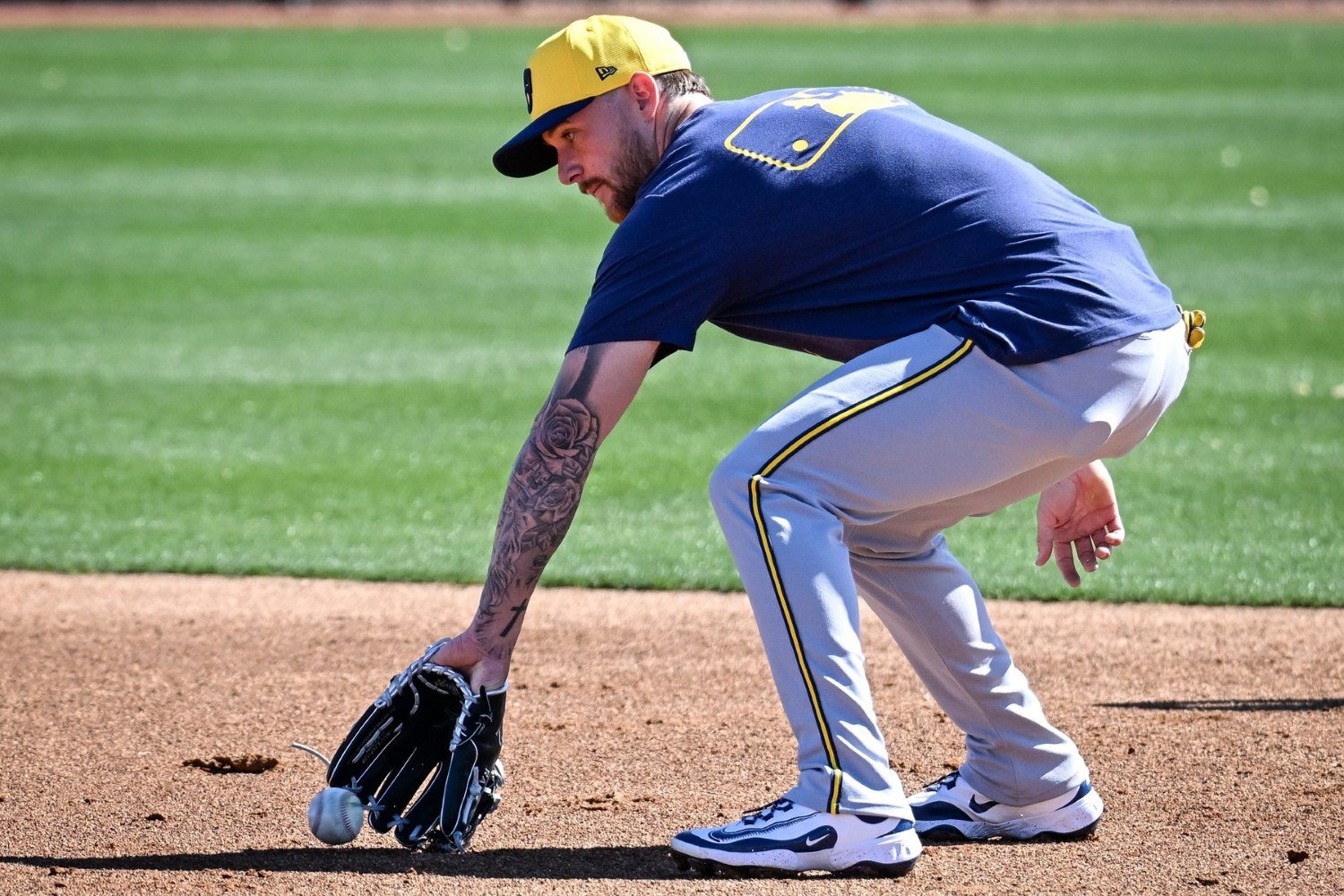 His first full, uninterrupted big-league season set Brice Turang up to make some real money in MLB. The son of ex-player Brian Turang, Brice signed for $3.41 million out of high school in 2018, so his family is hardly hurting for money. Still, that was nearly seven years ago, and the real money—the generational, life-changing opportunity—has to be tantalizing for Turang. Because he got so much service time (but not quite a full season's worth) in 2023, Turang is five years from free agency, but just one more season from becoming eligible for salary arbitration. On the other hand, Turang, 25, is not the kind of player you'd expect to age especially well. His strengths are speed and defense, along with putting the ball in play on a regular basis. Those skills get old while you're still young, and Turang can't hit free agency until the eve of his 30th birthday—at least not voluntarily. There's a better chance of the Brewers non-tendering Turang at some point during the remaining half-decade of control they have over him than there is of him hitting it truly huge in free agency. Yet, in the short term, Turang has a lot of value to the team, and the Brewers have ample reason not only to ensure he's happy, but to secure cost certainty, so that the unwelcome moment when they might need to cut him to avoid handing out a big arbitration award never comes. Thus, this spring—this last year before Turang can start making more money via arbitration, as a Super Two player—is the right time for the team and the player to talk about a contract extension. We're not talking a big deal, or one with the chance to stretch toward 10 years. This is not a Jackson Chourio situation, let alone a Christian Yelich or even a William Contreras one. Instead, the right Brewers-centric model for this kind of extension would be Freddy Peralta. Positionally, though, the comp is Ozzie Albies. When Albies signed with the team from suburban Cobb County, Ga. in 2019, he was in a situation similar to Turang's, but with two things working for him (relative to Turang) and one working against him. He was considerably younger, and he was clearly better, having been an above-average hitter in over 900 MLB plate appearances at that point—as well as a fine fielder and baserunner, though not as good at either as Turang is. However, Albies was also five years from free agency, and he wasn't going to become eligible for arbitration until after 2020, so he would get to arbitration paydays a year later and enjoy one fewer trip through that process than Turang stands to. Albies also got barely 10% of the money Turang did at the entrypoint of professional baseball—$350,000, as opposed to that $3.41 million. Thus, Albies and the Georgia club agreed on a seven-year deal worth at least $35 million, with two more club options tacked onto the end of it. Even if the deal stretches out to nine years and Albies remains with his team through 2027, the total value of the deal will rise only to $45 million. People howled about this deal at the time; it was one of the most team-friendly extensions in baseball history. Turang and the Brewers aren't going to land in that same place. Because Turang is four years older now than Albies was then, and because he's not as good or powerful a hitter, there's no need for a deal as long. The value in a deal for Turang would be getting a payday at all, when there's every chance his big-league career won't include one if he doesn't seize his chance now. The value for the Brewers would have to partially take the form of extended team control, but it would also take the form of cost certainty. Here's one plausible structure, totaling five years and $30 million guaranteed, with a chance to reach $57 million over seven seasons: 2025: $1 million 2026: $3 million 2027: $5 million 2028: $7 million 2029: $9.5 million 2030: $15.5 million club option ($4.5 million buyout) 2031: $16 million club option (no buyout) That's also not a bad comp (with a bit of inflation, based on the time since then and the fact that Turang has one more year of service time than this player did) for the pact the Cardinals reached with Paul DeJong in the spring of 2018. That deal guaranteed him $26 million over six years and had a chance to reach $50 million over eight. It's roughly similar to Tim Anderson's deal with the White Sox around the same time, worth $25 million over six years with a chance to roughly double. Anderson was another former first-round pick who'd gotten a handsome bonus, though he was not as far removed from that payday as Turang now is from the one he got in 2018. This deal would allow the Brewers to slot Turang (whose skill set and personality fit the team's gorgeously) into their lineup for the medium-term future, without committing them to him beyond his current term of team control or exposing them to the risk of a huge arbitration number in Year 3 or Year 4, based on his ability to hit for average and pile up steals and runs scored (or on what might rapidly become a high-earning shelf of defensive accolades, like 2024's Gold and Platinum Gloves). For Turang, it would guarantee him that $30 million, at a moment when he looks likely to have a solid MLB career but unlikely to still be a highly valuable player when he reaches free agency. It would also protect him from some of the risks associated with the threat of a work stoppage between 2026 and 2027, and the uncertainty of the salary structure on the other side of that veil. It's not hard to make a case for the two sides to get together on a deal this spring—even if it will feel a bit more like a financial maneuver than a massive statement by the team, as the Yelich and Chourio deals were.
 -
Power has to come from somewhere. It would be great to get it from someone whose power has an obvious and explainable source of its own. Image courtesy of © Bruce Kluckhohn-Imagn Images Willy Adames isn't walking through that door, but the Brewers still have to hit home runs in 2025. A dearth of spending power and a powerful organizational preference for chaining together on-base events as a primary engine of offense kept the team from replacing Adames directly to this point in the winter, but as the dance floor empties and teams and the straggling free agents look for chances to pair up, it's getting harder and harder for the Crew not to meet Paul DeJong's eyes. Last season, DeJong was, frankly, quite good. That's his dirty little secret: he's stranded at the odd ends of the offseason with the misfit toys, but he's a misfit among them. Playing for the worse-than-misfit White Sox and then the out-of-nowhere darling Royals, DeJong batted .227/.276/.427 in a robust 482 plate appearances. Yes, that middle number is ugly as sin, and so was DeJong's overall means of getting the job done. He struck out in 32.4% of his plate appearances and walked in 5.0% of them, and the worst part is that that's not far off his career rates in either regard. Team Swing Decisions can't put itself in the Paul DeJong business, can it? Well, let's answer that question with another: how badly do you want not to hit the fewest home runs in baseball? Because that's on the table, right now. It's not likely, strictly speaking, but it's certainly in play. Without Adames, the Brewers are depending on a power breakout from sophomore Jackson Chourio, the good health and bettered swing path of Garrett Mitchell, and one last burst of bop from the aged Rhys Hoskins. Meanwhile, DeJong is standing there, ready to address someone's power shortfall in a pretty heady way. For all his whiffs and his wanting walks, he walloped the ball last year. Though he didn't even qualify for the batting title, DeJong socked 24 home runs and 17 doubles in 2024. Sometimes, guys wander into such power surges without a clear explanation. This was not one of those cases. DeJong's swing speed rose by 2.5 miles per hour from the second half of 2023 to 2024, fueling a rediscovery of the punch he'd had when he first broke into the league and hit 30 home runs with the 2019 aeroball for the Cardinals. That version of DeJong was a plus defender at shortstop and an average-plus hitter, even if his offensive value was tied up almost entirely in his pop, and that was a dazzlingly valuable combination of strengths. During his mid-career sag, though, he showed just how ugly it can be when a power-dependent hitter isn't swinging fast enough to generate that power. DeJong hit .189/.253/.330 in 2022 and 2023, and his career was on life support. Here's what it looked like when he connected perfectly, in 2023. UlczWktfWGw0TUFRPT1fVndOWlV3RUdBZ1VBV1ZvRVZ3QUFVd2NDQUFOVVVGY0FBRjFSVkZBQ0FWSmNVMVpT.mp4 That, of course, isn't so bad. Almost every big-league hitter looks great when you seek out their best work. It's how they got rich. More often, though, DeJong 2022-23 looked like this—just a hair later, a hair more tentative, but more than a hair off. An easy out. ZW5Ncm5fWGw0TUFRPT1fQWdCWkJRWlJWZ0FBQVZSWEJ3QUFBZ2RYQUZnRVZGWUFWd1lFQlZBR0JRVlVCd2NE.mp4 That swing, with the small turn and tap of the toe and a certain lack of rhythm, was not going to allow DeJong to stick in the majors for much longer. Thus, he went into the lab before 2024, and came out with a different lower half—and a rather radically different swing, in general. DeGone.mp4 There are drawbacks to this kind of high, hanging leg kick. It makes you a little bit manipulable, in certain situations. It's going to mean trading solid opposite-field contact for the power you generate to the pull field. DeJong's answer to all that would be: So what? If he gets to 25-homer power that way, he can make up for pretty much all his other shortcomings. He was just 5% worse than a league-average hitter in 2024, despite only having one offensive skill of any merit. We don't have a lot of data yet about how bat speed ages—only one full season and one half-season of that data have been comprehensively collected and published. Already, though, it's pretty easy to see how much DeJong's transformation stands out. He overhauled his mechanics and got back the momentum in his swing. That's huge, and for any player on the high side of 30, it's exceptionally rare. There's no reason to think it won't stick, though, or at least that he can't continue to slug as that rejuvenated swing gently declines again. As we move from measuring the outputs of player movement to those movements themselves, we can get a bit more confident in projecting the way those movements produce certain outcomes. This much bat speed produces ample power. Defensively, the ex-shortstop has only played 41 career games at the hot corner, all of them last year. He took to it like a barfly to Thin Lizzy, though. He would be a stellar final piece in a strong defensive phalanx on the dirt, and he'd be a more capable backup shortstop than Caleb Durbin or Andruw Monasterio, to boot. His minor regional stardom is a fading memory, but DeJong is a Midwest kid who offers every skill the Brewers are missing. He's not going to cost much, because he won't make a huge difference for most teams. He would make a huge difference for Milwaukee, though, and they should lock him up on a cheap one-year deal, before someone else does. View full article
- 14 replies
-
- 1
-

-
- paul dejong
- willy adames
- (and 1 more)
-
 Willy Adames isn't walking through that door, but the Brewers still have to hit home runs in 2025. A dearth of spending power and a powerful organizational preference for chaining together on-base events as a primary engine of offense kept the team from replacing Adames directly to this point in the winter, but as the dance floor empties and teams and the straggling free agents look for chances to pair up, it's getting harder and harder for the Crew not to meet Paul DeJong's eyes. Last season, DeJong was, frankly, quite good. That's his dirty little secret: he's stranded at the odd ends of the offseason with the misfit toys, but he's a misfit among them. Playing for the worse-than-misfit White Sox and then the out-of-nowhere darling Royals, DeJong batted .227/.276/.427 in a robust 482 plate appearances. Yes, that middle number is ugly as sin, and so was DeJong's overall means of getting the job done. He struck out in 32.4% of his plate appearances and walked in 5.0% of them, and the worst part is that that's not far off his career rates in either regard. Team Swing Decisions can't put itself in the Paul DeJong business, can it? Well, let's answer that question with another: how badly do you want not to hit the fewest home runs in baseball? Because that's on the table, right now. It's not likely, strictly speaking, but it's certainly in play. Without Adames, the Brewers are depending on a power breakout from sophomore Jackson Chourio, the good health and bettered swing path of Garrett Mitchell, and one last burst of bop from the aged Rhys Hoskins. Meanwhile, DeJong is standing there, ready to address someone's power shortfall in a pretty heady way. For all his whiffs and his wanting walks, he walloped the ball last year. Though he didn't even qualify for the batting title, DeJong socked 24 home runs and 17 doubles in 2024. Sometimes, guys wander into such power surges without a clear explanation. This was not one of those cases. DeJong's swing speed rose by 2.5 miles per hour from the second half of 2023 to 2024, fueling a rediscovery of the punch he'd had when he first broke into the league and hit 30 home runs with the 2019 aeroball for the Cardinals. That version of DeJong was a plus defender at shortstop and an average-plus hitter, even if his offensive value was tied up almost entirely in his pop, and that was a dazzlingly valuable combination of strengths. During his mid-career sag, though, he showed just how ugly it can be when a power-dependent hitter isn't swinging fast enough to generate that power. DeJong hit .189/.253/.330 in 2022 and 2023, and his career was on life support. Here's what it looked like when he connected perfectly, in 2023. UlczWktfWGw0TUFRPT1fVndOWlV3RUdBZ1VBV1ZvRVZ3QUFVd2NDQUFOVVVGY0FBRjFSVkZBQ0FWSmNVMVpT.mp4 That, of course, isn't so bad. Almost every big-league hitter looks great when you seek out their best work. It's how they got rich. More often, though, DeJong 2022-23 looked like this—just a hair later, a hair more tentative, but more than a hair off. An easy out. ZW5Ncm5fWGw0TUFRPT1fQWdCWkJRWlJWZ0FBQVZSWEJ3QUFBZ2RYQUZnRVZGWUFWd1lFQlZBR0JRVlVCd2NE.mp4 That swing, with the small turn and tap of the toe and a certain lack of rhythm, was not going to allow DeJong to stick in the majors for much longer. Thus, he went into the lab before 2024, and came out with a different lower half—and a rather radically different swing, in general. DeGone.mp4 There are drawbacks to this kind of high, hanging leg kick. It makes you a little bit manipulable, in certain situations. It's going to mean trading solid opposite-field contact for the power you generate to the pull field. DeJong's answer to all that would be: So what? If he gets to 25-homer power that way, he can make up for pretty much all his other shortcomings. He was just 5% worse than a league-average hitter in 2024, despite only having one offensive skill of any merit. We don't have a lot of data yet about how bat speed ages—only one full season and one half-season of that data have been comprehensively collected and published. Already, though, it's pretty easy to see how much DeJong's transformation stands out. He overhauled his mechanics and got back the momentum in his swing. That's huge, and for any player on the high side of 30, it's exceptionally rare. There's no reason to think it won't stick, though, or at least that he can't continue to slug as that rejuvenated swing gently declines again. As we move from measuring the outputs of player movement to those movements themselves, we can get a bit more confident in projecting the way those movements produce certain outcomes. This much bat speed produces ample power. Defensively, the ex-shortstop has only played 41 career games at the hot corner, all of them last year. He took to it like a barfly to Thin Lizzy, though. He would be a stellar final piece in a strong defensive phalanx on the dirt, and he'd be a more capable backup shortstop than Caleb Durbin or Andruw Monasterio, to boot. His minor regional stardom is a fading memory, but DeJong is a Midwest kid who offers every skill the Brewers are missing. He's not going to cost much, because he won't make a huge difference for most teams. He would make a huge difference for Milwaukee, though, and they should lock him up on a cheap one-year deal, before someone else does.
- 14 comments
-
- 2
-
-
- paul dejong
- willy adames
- (and 1 more)
-
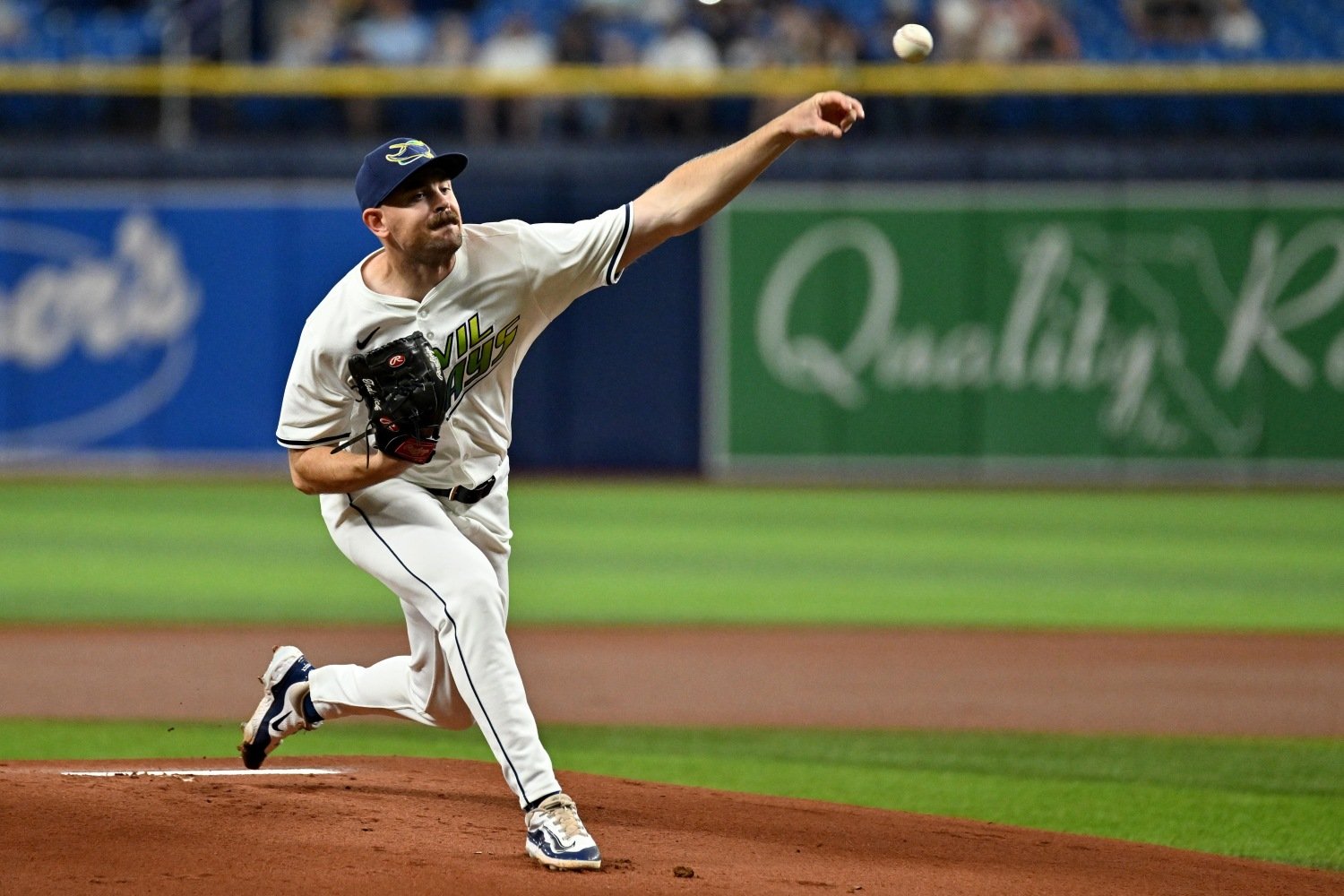 On Wednesday afternoon, the Brewers agreed to a one-year deal with lefty hurler Tyler Alexander, a swingman who could contribute outs for them either in the starting rotation or out of the bullpen in 2025. Alexander, 30, is a relatively soft tosser, but he fills up the strike zone and has good command of several pitches. While the Crew surely aren't banking on a huge season from him, it's easy to see why they might have liked him at a low price. Alexander is considerably older than Bryse Wilson was when the team acquired him after the 2022 season. Otherwise, though, there are some noteworthy similarities: Each had a deep arsenal, but struggled to miss bats. Each was viewed as a potential innings sponge, flexing between roster roles. Each also looked like a good candidate for a few of the adjustments the Brewers like to make best. When Wilson came to the Brewers, he was releasing the ball an average of 1.82 feet wide of the center of the pitching rubber, with an arm angle of 38.2°. In his first campaign with the team, though, that horizontal release point swung out to 2.96 feet from the center of the rubber, and his arm angle was up to 43.1°. Seeing Wilson's big frame and the promise in his cutter, Chris Hook and company convinced their burly new hurler to work from the third-base side of the rubber, creating more difficult angles for hitters. Wilson talked about that as a point of emphasis the team broke down with him right away when they traded for him. This is a pattern. Hook and the Brewers like when they can force tough looks on batters. In his first year with the team, Hoby Milner went from a release point 2.97 feet toward first base from the center of the rubber to one 3.62 feet in that direction, when he joined the Brewers in 2021. Jared Koenig's horizontal release point moved from 2.15 feet toward first to 2.76 feet. The team and DL Hall collaborated to raise his arm angle from 40.6° to 43.3°, but Koenig lowered his slot from 37.7° to 31.4°. By and large, the Brewers want to create extreme release points. If you have a vanilla arm slot, especially from the left side, they'll tweak it. That's fine, because they'll also move you over on the mound toward your arm side. Coming into his Brewers tenure, Alexander has a very bland 36° arm angle, and his average horizontal release point of 1.50 feet to the first-base side of the center of the rubber was in the bottom quartile in distance from that center among left-handed pitchers in 2024. Look for those things to change. Jack Stern beautifully broke down his arsenal in the news piece about this signing Wednesday, so dig in there for more details on his pitch shapes and usage, but the gist will be familiar to those who watched the team transform pitchers like Wilson for the better. Alexander also has lackluster release extension; he's not getting down the mound and gaining the half-tick of perceived velocity available to pitchers who do so. That's another signature thing the Brewers try to improve, and was a huge driver of the successes of (among others) Milner and Bryan Hudson. If the team didn't already like some things Alexander has been doing (especially having three fastballs and five overall pitches, and throwing them for strikes), they would not have signed him. That doesn't mean they'll lean solely on his raw talent to get value from him, though. Expect some tweaks, under the stewardship of Hook and others, and expect a more complete and compelling Alexander on the other side of that process—even if it only unlocks a low-grade competence akin to that of Wilson and others in recent seasons.
- 1 comment
-
- 2
-
-
- tyler alexander
- bryse wilson
- (and 3 more)
-
The Brewers have a new left-handed pitcher, but he's had a hard time converting an interesting arsenal into consistent outs. How might Milwaukee tinker with his formula? Image courtesy of © Jonathan Dyer-Imagn Images On Wednesday afternoon, the Brewers agreed to a one-year deal with lefty hurler Tyler Alexander, a swingman who could contribute outs for them either in the starting rotation or out of the bullpen in 2025. Alexander, 30, is a relatively soft tosser, but he fills up the strike zone and has good command of several pitches. While the Crew surely aren't banking on a huge season from him, it's easy to see why they might have liked him at a low price. Alexander is considerably older than Bryse Wilson was when the team acquired him after the 2022 season. Otherwise, though, there are some noteworthy similarities: Each had a deep arsenal, but struggled to miss bats. Each was viewed as a potential innings sponge, flexing between roster roles. Each also looked like a good candidate for a few of the adjustments the Brewers like to make best. When Wilson came to the Brewers, he was releasing the ball an average of 1.82 feet wide of the center of the pitching rubber, with an arm angle of 38.2°. In his first campaign with the team, though, that horizontal release point swung out to 2.96 feet from the center of the rubber, and his arm angle was up to 43.1°. Seeing Wilson's big frame and the promise in his cutter, Chris Hook and company convinced their burly new hurler to work from the third-base side of the rubber, creating more difficult angles for hitters. Wilson talked about that as a point of emphasis the team broke down with him right away when they traded for him. This is a pattern. Hook and the Brewers like when they can force tough looks on batters. In his first year with the team, Hoby Milner went from a release point 2.97 feet toward first base from the center of the rubber to one 3.62 feet in that direction, when he joined the Brewers in 2021. Jared Koenig's horizontal release point moved from 2.15 feet toward first to 2.76 feet. The team and DL Hall collaborated to raise his arm angle from 40.6° to 43.3°, but Koenig lowered his slot from 37.7° to 31.4°. By and large, the Brewers want to create extreme release points. If you have a vanilla arm slot, especially from the left side, they'll tweak it. That's fine, because they'll also move you over on the mound toward your arm side. Coming into his Brewers tenure, Alexander has a very bland 36° arm angle, and his average horizontal release point of 1.50 feet to the first-base side of the center of the rubber was in the bottom quartile in distance from that center among left-handed pitchers in 2024. Look for those things to change. Jack Stern beautifully broke down his arsenal in the news piece about this signing Wednesday, so dig in there for more details on his pitch shapes and usage, but the gist will be familiar to those who watched the team transform pitchers like Wilson for the better. Alexander also has lackluster release extension; he's not getting down the mound and gaining the half-tick of perceived velocity available to pitchers who do so. That's another signature thing the Brewers try to improve, and was a huge driver of the successes of (among others) Milner and Bryan Hudson. If the team didn't already like some things Alexander has been doing (especially having three fastballs and five overall pitches, and throwing them for strikes), they would not have signed him. That doesn't mean they'll lean solely on his raw talent to get value from him, though. Expect some tweaks, under the stewardship of Hook and others, and expect a more complete and compelling Alexander on the other side of that process—even if it only unlocks a low-grade competence akin to that of Wilson and others in recent seasons. View full article
-
New data emerges from Baseball Savant as often as new confections emerged from Willy Wonka's factory, these days. On Wednesday, it was old new data—but old new stuff is still news. (Trust me.) Image courtesy of © Orlando Ramirez-Imagn Images Though it was initially too noisy and buggy to be published, the stat mavens who run Statcast and bring us the delightful toy set that is Baseball Savant smoothed out second-half bat-tracking data from 2023 recently and published those data Wednesday morning. It was a wonderful new set of numbers to get our hands on, because how fast a player swings (and how big the arc of their bat path is) tells us much about their efficacy at the plate. It's the next in a long and ongoing parade of numbers that capture not just how the ball moves, but how players move, and that brings us ever closer to being able to directly capture and quantify talent—even if there are some valuable things beyond talent, which will always need subjective consideration. I was most excited to see what changes the data might unveil about Brice Turang, who famously changed out his bats for ones with big, fat knobs in 2024 and enjoyed (if not quite a quantum leap) a significant step forward at the plate in his second MLB season. Turang had one of the shortest swings in baseball last year, but as we know, that meant fairly little swing speed, too. He certainly traded some power potential for the ability to meet the ball squarely on a regular basis. Until now, though, we couldn't say for certain how new that was. It was pretty new. In 2023, Turang averaged a swing speed of 68.5 miles per hour and a swing length of 6.5 feet. Those numbers were each below the league average, but neither was quite extreme. In 2024, as we know, that changed: his average swing speed was 66.2 MPH and his swing length came all the way down to 6.1 feet. As you can see, there's a strong relationship between swing speed and swing length. A more appropriate regression curve to fit the data might bend downward at the left, where hitters seem to more concretely trade possible swing speed for the ability to shorten up and make contact, but even if you mentally adjust this linear regression to pull down its left tail, you'd see Turang beneath it. In other words, he had a short swing relative to his swing speed, even in 2023. That's unsurprising. Even in a sometimes-brutal rookie season, Turang made contact at a high rate. When he came back in 2024, though, he had clearly rededicated himself to that very thing. He almost stopped trying to hit the ball hard altogether, favoring the ability not only to make contact, but to direct and aim it. He got that exactly right. Despite not swinging nearly as hard, Turang had a higher average exit velocity and a higher hard-hit rate. He did lift the ball less, thanks to the flattening-out that came with his shorter swing, but his contact rate shot up. Being so direct to the ball allowed him to work the way you want a leadoff hitter to do, as he swung at the first pitch markedly less often but still attacked middle-middle offerings more often. Losing bat speed is rarely good. Thoughtfully trading in bat speed for better control of the barrel can be much more encouraging. Few batters saw anywhere near as big a drop in bat speed as Turang's, and most of those seemed to be about age, injury, fatigue, or a wild-swinging power guy trying to cut down a massive strikeout rate. Some hitters, by contrast, significantly increased their swing speed; William Contreras boosted his from 73.8 to 74.7 MPH. That can be a surprisingly mixed blessing, itself, since faster swings are usually longer and less precise. In Turang's case, cutting down the swing was smart, and it worked gorgeously. It would be great to see him tap into a bit more power in 2025, but if he continues to make contact at an elite rate, he can have success at this level of swing speed for a few years—even if it's more rooted in foot speed than in bat speed. View full article
-
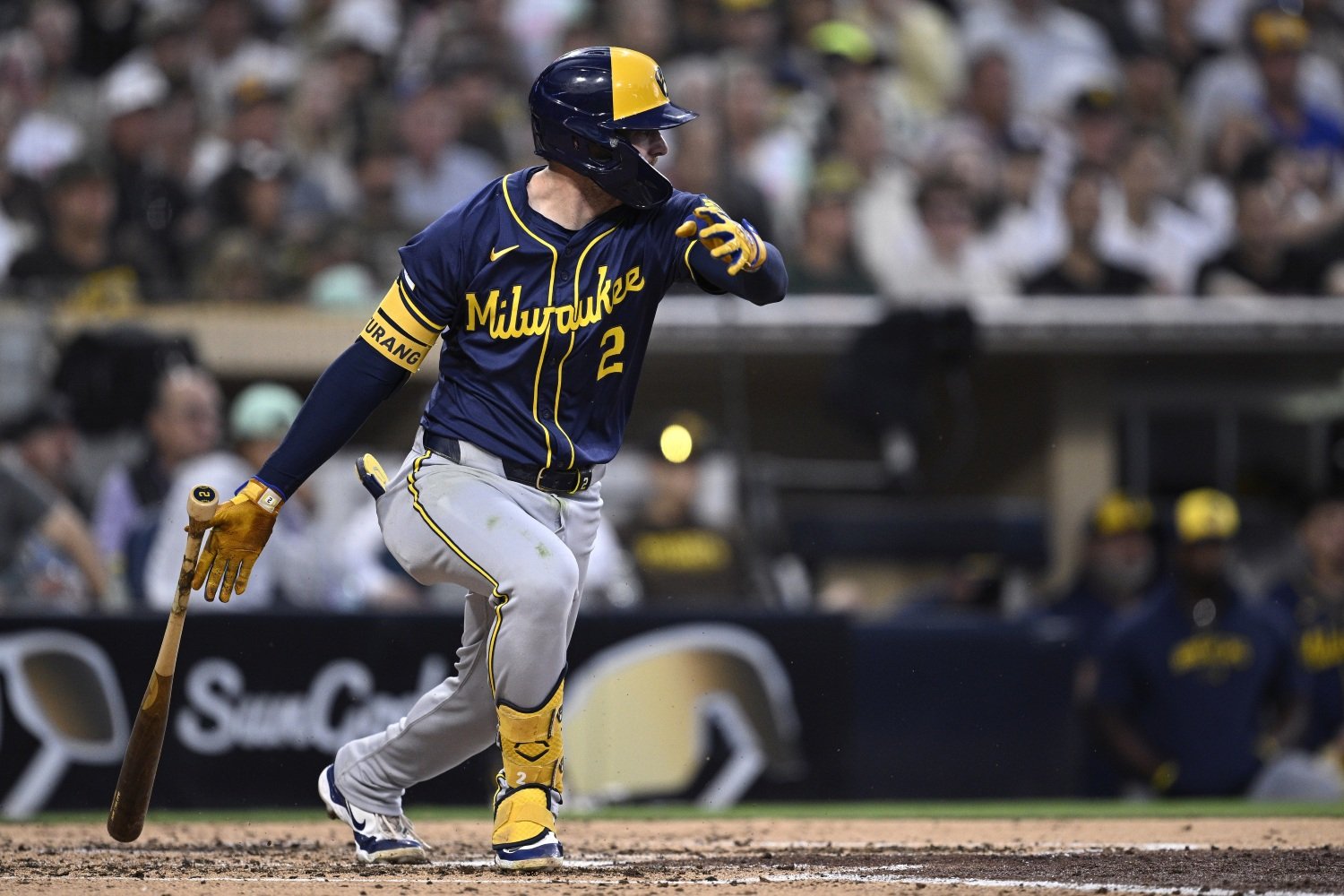 Though it was initially too noisy and buggy to be published, the stat mavens who run Statcast and bring us the delightful toy set that is Baseball Savant smoothed out second-half bat-tracking data from 2023 recently and published those data Wednesday morning. It was a wonderful new set of numbers to get our hands on, because how fast a player swings (and how big the arc of their bat path is) tells us much about their efficacy at the plate. It's the next in a long and ongoing parade of numbers that capture not just how the ball moves, but how players move, and that brings us ever closer to being able to directly capture and quantify talent—even if there are some valuable things beyond talent, which will always need subjective consideration. I was most excited to see what changes the data might unveil about Brice Turang, who famously changed out his bats for ones with big, fat knobs in 2024 and enjoyed (if not quite a quantum leap) a significant step forward at the plate in his second MLB season. Turang had one of the shortest swings in baseball last year, but as we know, that meant fairly little swing speed, too. He certainly traded some power potential for the ability to meet the ball squarely on a regular basis. Until now, though, we couldn't say for certain how new that was. It was pretty new. In 2023, Turang averaged a swing speed of 68.5 miles per hour and a swing length of 6.5 feet. Those numbers were each below the league average, but neither was quite extreme. In 2024, as we know, that changed: his average swing speed was 66.2 MPH and his swing length came all the way down to 6.1 feet. As you can see, there's a strong relationship between swing speed and swing length. A more appropriate regression curve to fit the data might bend downward at the left, where hitters seem to more concretely trade possible swing speed for the ability to shorten up and make contact, but even if you mentally adjust this linear regression to pull down its left tail, you'd see Turang beneath it. In other words, he had a short swing relative to his swing speed, even in 2023. That's unsurprising. Even in a sometimes-brutal rookie season, Turang made contact at a high rate. When he came back in 2024, though, he had clearly rededicated himself to that very thing. He almost stopped trying to hit the ball hard altogether, favoring the ability not only to make contact, but to direct and aim it. He got that exactly right. Despite not swinging nearly as hard, Turang had a higher average exit velocity and a higher hard-hit rate. He did lift the ball less, thanks to the flattening-out that came with his shorter swing, but his contact rate shot up. Being so direct to the ball allowed him to work the way you want a leadoff hitter to do, as he swung at the first pitch markedly less often but still attacked middle-middle offerings more often. Losing bat speed is rarely good. Thoughtfully trading in bat speed for better control of the barrel can be much more encouraging. Few batters saw anywhere near as big a drop in bat speed as Turang's, and most of those seemed to be about age, injury, fatigue, or a wild-swinging power guy trying to cut down a massive strikeout rate. Some hitters, by contrast, significantly increased their swing speed; William Contreras boosted his from 73.8 to 74.7 MPH. That can be a surprisingly mixed blessing, itself, since faster swings are usually longer and less precise. In Turang's case, cutting down the swing was smart, and it worked gorgeously. It would be great to see him tap into a bit more power in 2025, but if he continues to make contact at an elite rate, he can have success at this level of swing speed for a few years—even if it's more rooted in foot speed than in bat speed.
 -
2025 Brewers Prospect Preview: Braylon Payne
Matthew Trueblood replied to Jamie Cameron's topic in Brewers Minor League Talk
Both from Houston. Both 17 on Draft day. Yeah, that's a comp I don't think anyone can have beef with. -
The numbers tell us a better version of the Brewers' right fielder is in there, with a change in approach. The question is whether that change is possible, without undue tradeoffs. Image courtesy of © Benny Sieu-Imagn Images By now, the profile—and its set of problems—is familiar to you. Sal Frelick is one of the best contact hitters in baseball, and that has formed a strong, high floor for his production over the first 747 plate appearances of his big-league career. He didn't get on base as well in 2024 as he had during a second-half debut in 2023, and he doesn't hit for much power at all, but by constantly putting the ball in play, running well, and providing high-end defense, he has managed to be roughly an average player so far. Going forward, though, the Brewers will want to see Frelick tap into something more—if, indeed, more is possible. Frelick's swing is compact and shows an extroardinary feel for the ball, but he doesn't hit the ball hard enough or lift it enough to access any meaningful pop. His home run in the Wild Card Series last October was like a bolt of lightning: electrifying, beautiful, and shocking as much for its improbability as for its actual potency. The Brewers would love to see more of a storm brew in Frelick's approach, such that his homers might feel more like reliable, rumbling thunder. How can he do that? The first way, of course, is to lock in more on getting to the bottom half of the ball, out in front of him. Last year, he only hit his well-struck balls (those with an exit velocity of at least 90 miles per hour) at an average launch angle of 6°. Those batted balls below a 0° launch represent (mostly) wasted punch. Frelick made some solid contact, but too much of it found the dirt instead of the grass or the far-off plastic and metal on the other sides of fences. It didn't help that his best contact also tended to be to the center of the field; that even makes it difficult to find doubles through low, hard-hit liners. It makes for too many singles, even though singles are certainly better than outs. When Frelick did hit the ball at more productive launch angles (between, for these purposes, 10 and 45 degrees), he generated an unfortunate dearth of jolt. His average exit velocity on such batted balls was just 83 miles per hour. Part of that was that most of Frelick's fly balls were balls on which he was slightly beaten, and therefore, they tended to come on slightly late swings. That leads to lots of balls hit to center and left-center fields, where Frelick is never going to find much joy. To generate more dangerous contact, then, Frelick needs to make slightly earlier swing decisions, get out in front of the ball and tag it in the air more consistently. The question will be whether any effort to do that works against Frelick's plate discipline. In 2024, Frelick cut his chase rate on pitches outside the zone from 33.1% to 29.6%, according to Baseball Prospectus. His in-zone swing rate was essentially static. He made progress, then, toward better command of the zone, and he continued to be one of the toughest hitters in the game to throw a ball by within the zone. He made contact on 93% of swings at strikes. That's highly valuable, but it's something he can leverage even better. It's all about selective aggressiveness. Frelick already has one of the lowest swing rates in the league, in all counts before two-strike ones, but he needs to take a different tack in some of those situations and swing sooner, more assertively. When he has an idea of what's coming, he needs to gear up to get the bat head out on it. By contrast, in some deeper counts (especially with two or three balls on him), Frelick needs to commit to taking a pitch. Last year in spring training, I talked to him about his approach, and he acknowledged that he sometimes swings at pitches just because he knows he can touch them. That's not always the right idea. At times, he needs to think about the likelihood that the opposing pitcher is going to successfully throw him a strike, and turn off his mental swing impulse. It might lead to a few more called third strikes, which are always frustrating, but it would also stand an excellent chance of increasing Frelick's too-modest 7.4% walk rate. Being more dangerous when he has a good plan will make it less likely that pitchers challenge Frelick at other times. While making slightly earlier decisions to get out in front and apply more power and loft to the ball can make it harder to see the ball all the way and lay off those at the edges of the zone, Frelick can do that—get to more of his latent power—without sacrificing his on-base skills, which will always be the centerpiece of his offensive game. In fact, one improvement should reinforce the other. As he prepares for his second full season, Frelick should now have a better idea of how big-league pitchers attack hitters like him. If he can develop a more nuanced, advanced approach, he could take a step forward both in his plate discipline and in his slugging in 2025. View full article
-
Can Sal Frelick Be More Patient and More Powerful at the Same Time?
Matthew Trueblood posted an article in Brewers
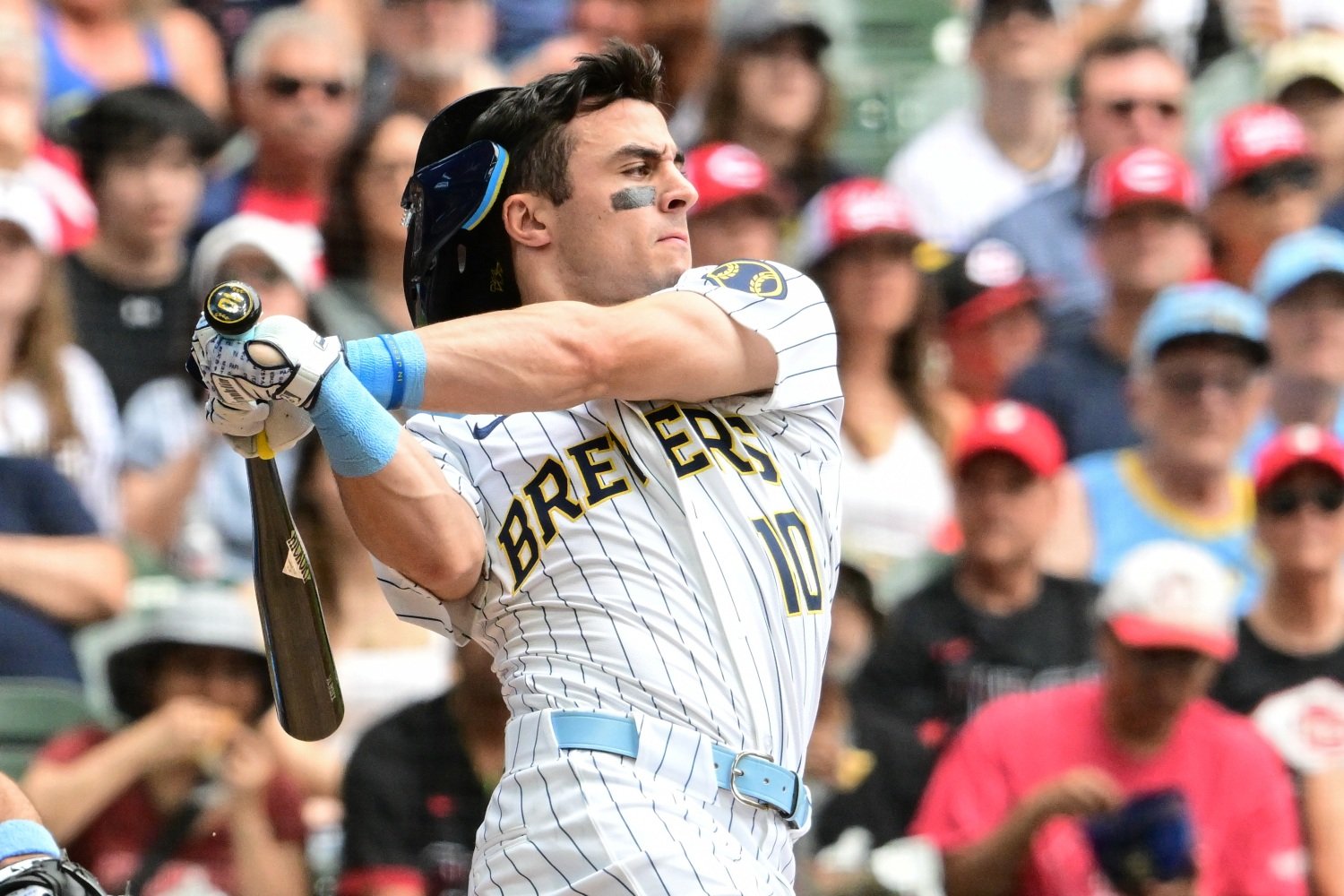 By now, the profile—and its set of problems—is familiar to you. Sal Frelick is one of the best contact hitters in baseball, and that has formed a strong, high floor for his production over the first 747 plate appearances of his big-league career. He didn't get on base as well in 2024 as he had during a second-half debut in 2023, and he doesn't hit for much power at all, but by constantly putting the ball in play, running well, and providing high-end defense, he has managed to be roughly an average player so far. Going forward, though, the Brewers will want to see Frelick tap into something more—if, indeed, more is possible. Frelick's swing is compact and shows an extroardinary feel for the ball, but he doesn't hit the ball hard enough or lift it enough to access any meaningful pop. His home run in the Wild Card Series last October was like a bolt of lightning: electrifying, beautiful, and shocking as much for its improbability as for its actual potency. The Brewers would love to see more of a storm brew in Frelick's approach, such that his homers might feel more like reliable, rumbling thunder. How can he do that? The first way, of course, is to lock in more on getting to the bottom half of the ball, out in front of him. Last year, he only hit his well-struck balls (those with an exit velocity of at least 90 miles per hour) at an average launch angle of 6°. Those batted balls below a 0° launch represent (mostly) wasted punch. Frelick made some solid contact, but too much of it found the dirt instead of the grass or the far-off plastic and metal on the other sides of fences. It didn't help that his best contact also tended to be to the center of the field; that even makes it difficult to find doubles through low, hard-hit liners. It makes for too many singles, even though singles are certainly better than outs. When Frelick did hit the ball at more productive launch angles (between, for these purposes, 10 and 45 degrees), he generated an unfortunate dearth of jolt. His average exit velocity on such batted balls was just 83 miles per hour. Part of that was that most of Frelick's fly balls were balls on which he was slightly beaten, and therefore, they tended to come on slightly late swings. That leads to lots of balls hit to center and left-center fields, where Frelick is never going to find much joy. To generate more dangerous contact, then, Frelick needs to make slightly earlier swing decisions, get out in front of the ball and tag it in the air more consistently. The question will be whether any effort to do that works against Frelick's plate discipline. In 2024, Frelick cut his chase rate on pitches outside the zone from 33.1% to 29.6%, according to Baseball Prospectus. His in-zone swing rate was essentially static. He made progress, then, toward better command of the zone, and he continued to be one of the toughest hitters in the game to throw a ball by within the zone. He made contact on 93% of swings at strikes. That's highly valuable, but it's something he can leverage even better. It's all about selective aggressiveness. Frelick already has one of the lowest swing rates in the league, in all counts before two-strike ones, but he needs to take a different tack in some of those situations and swing sooner, more assertively. When he has an idea of what's coming, he needs to gear up to get the bat head out on it. By contrast, in some deeper counts (especially with two or three balls on him), Frelick needs to commit to taking a pitch. Last year in spring training, I talked to him about his approach, and he acknowledged that he sometimes swings at pitches just because he knows he can touch them. That's not always the right idea. At times, he needs to think about the likelihood that the opposing pitcher is going to successfully throw him a strike, and turn off his mental swing impulse. It might lead to a few more called third strikes, which are always frustrating, but it would also stand an excellent chance of increasing Frelick's too-modest 7.4% walk rate. Being more dangerous when he has a good plan will make it less likely that pitchers challenge Frelick at other times. While making slightly earlier decisions to get out in front and apply more power and loft to the ball can make it harder to see the ball all the way and lay off those at the edges of the zone, Frelick can do that—get to more of his latent power—without sacrificing his on-base skills, which will always be the centerpiece of his offensive game. In fact, one improvement should reinforce the other. As he prepares for his second full season, Frelick should now have a better idea of how big-league pitchers attack hitters like him. If he can develop a more nuanced, advanced approach, he could take a step forward both in his plate discipline and in his slugging in 2025.
 -
Things can still change. There are free agents on the market and money in the coffers. Right now, though, the Brewers look poised to give a second look to a high-ceiling lefty bat. Image courtesy of © Matt Marton-Imagn Images Good swing decisions are the top priority for the Milwaukee Brewers, and that mentality has served them extraordinarily well over the last several seasons. They tend to overachieve at the plate, not only by hitting so well in high-leverage situations but by grinding their way on base in a way you couldn't forecast, if you just sat down and watched them play for a day or two. Lots of Brewers hitters have excellent approaches at the plate, and that has huge value. In far shorter supply, of course, is power. The Crew finished 16th in MLB in home runs last season, and then watched their leading home-run hitter depart via free agency. Rhys Hoskins was second on the team in dingers, and the only player other than Willy Adames to hit more than 21 of them—and Hoskins will turn 32 on St. Patrick's Day, so there's no guarantee that he will match that production in 2025, either. I expect a big power season from Jackson Chourio, but projection systems are more dour, and even if you mentally chalk up 65 total homers for Chourio and William Contreras, the specter of a shortfall throughout the rest of the lineup looms. That's why Oliver Dunn is so important. Last year's spring training darling cracked the Opening Day roster because of an injury, but couldn't hold the job, batting just .221/.282/.316 in 104 plate appearances. He struck out 40 times in that brief stint, failed to find the power his swing promised, and then went down with a back strain that effectively ended his season. His very brief stint in the Dominican Winter League did nothing to restore anyone's faltering confidence, either. Yet, there's no denying what Dunn has the potential to do. Unlike several Brewers whose lack of high-end swing speed sets a hard, low ceiling on their power projection, Dunn has it in him to hit homers in bunches—if he can make enough contact and start to lift the ball more consistently. He's slugged better than .500 in the minor leagues in three straight seasons and was over .600 in the offense-friendly Arizona Fall League in 2023. More concretely, in his short time in the majors last year, he showed bat speed readily comparable to those of the Brewers' other two most promising bat speed dudes: Contreras and Garrett Mitchell. These distributions hint at the problem for Dunn, which is that he hasn't yet shown the same feel for varying and modulating his swing that Contreras and Mitchell have. When you consistently swing faster than 75 miles per hour, though, you're going to generate some hard contact when you get the barrel to the ball. That doesn't guarantee that you'll hit it hard in the air, which is the name of the modern game. Dunn has to reduce his strikeout rate, accept his walks, and lift his hardest-hit balls better in order to be a useful regular in the majors, and that's a tall triple order. He might not be able to fill it, which is why the team traded for Caleb Durbin (a player with nothing like this kind of bat speed but plenty of the other things the team prizes, like patience, a feel for contact, and speed) and have retained Andruw Monasterio this winter. Dunn could easily end up with Triple-A Nashville to open the season. If things break right, however, he could also be a vital contributor to this team. His profile, if he gets right, figures to be similar to that of Jake Bauers. Either player, on the higher end of their spectrum of possible outcomes, could be a slugging threat in the bottom third of the batting order, but whereas playing Bauers means losing the power threat of Hoskins or taking up one of the outfield slots that could go to superior overall players Chourio, Sal Frelick, or Christian Yelich, playing Dunn comes with a comparatively minimal opportunity cost. With free agents like Brandon Drury and Paul DeJong still out there and various trade possibilities lurking below the horizon, Dunn is by no means locked into that role. It sure looks like he'll get a chance to demonstrate the adjustments he needed last year this spring, though. That could be a boon for the Brewers. View full article
-
As Brewers Open Spring Training, Oliver Dunn Still Has an Open Lane
Matthew Trueblood posted an article in Brewers
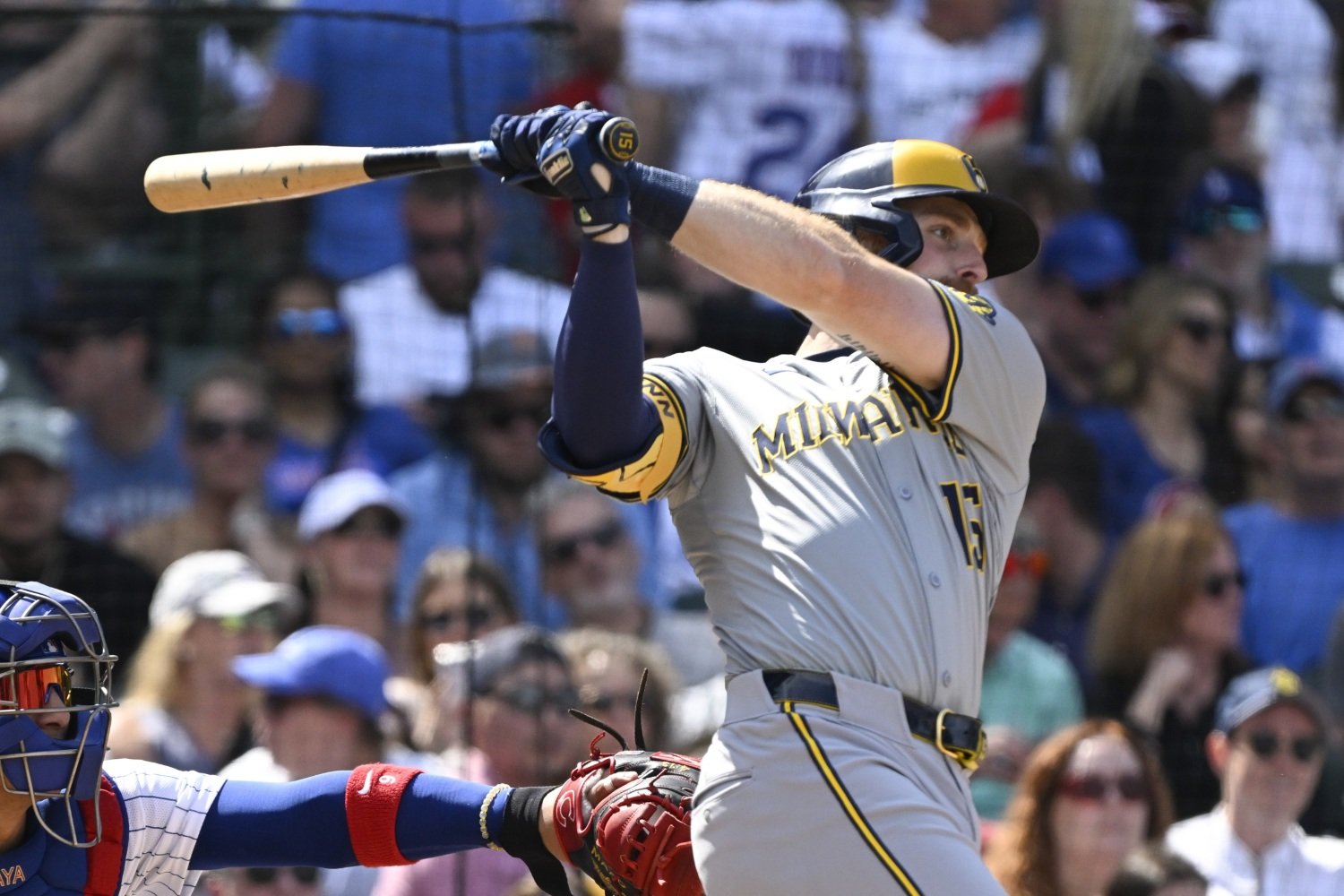 Good swing decisions are the top priority for the Milwaukee Brewers, and that mentality has served them extraordinarily well over the last several seasons. They tend to overachieve at the plate, not only by hitting so well in high-leverage situations but by grinding their way on base in a way you couldn't forecast, if you just sat down and watched them play for a day or two. Lots of Brewers hitters have excellent approaches at the plate, and that has huge value. In far shorter supply, of course, is power. The Crew finished 16th in MLB in home runs last season, and then watched their leading home-run hitter depart via free agency. Rhys Hoskins was second on the team in dingers, and the only player other than Willy Adames to hit more than 21 of them—and Hoskins will turn 32 on St. Patrick's Day, so there's no guarantee that he will match that production in 2025, either. I expect a big power season from Jackson Chourio, but projection systems are more dour, and even if you mentally chalk up 65 total homers for Chourio and William Contreras, the specter of a shortfall throughout the rest of the lineup looms. That's why Oliver Dunn is so important. Last year's spring training darling cracked the Opening Day roster because of an injury, but couldn't hold the job, batting just .221/.282/.316 in 104 plate appearances. He struck out 40 times in that brief stint, failed to find the power his swing promised, and then went down with a back strain that effectively ended his season. His very brief stint in the Dominican Winter League did nothing to restore anyone's faltering confidence, either. Yet, there's no denying what Dunn has the potential to do. Unlike several Brewers whose lack of high-end swing speed sets a hard, low ceiling on their power projection, Dunn has it in him to hit homers in bunches—if he can make enough contact and start to lift the ball more consistently. He's slugged better than .500 in the minor leagues in three straight seasons and was over .600 in the offense-friendly Arizona Fall League in 2023. More concretely, in his short time in the majors last year, he showed bat speed readily comparable to those of the Brewers' other two most promising bat speed dudes: Contreras and Garrett Mitchell. These distributions hint at the problem for Dunn, which is that he hasn't yet shown the same feel for varying and modulating his swing that Contreras and Mitchell have. When you consistently swing faster than 75 miles per hour, though, you're going to generate some hard contact when you get the barrel to the ball. That doesn't guarantee that you'll hit it hard in the air, which is the name of the modern game. Dunn has to reduce his strikeout rate, accept his walks, and lift his hardest-hit balls better in order to be a useful regular in the majors, and that's a tall triple order. He might not be able to fill it, which is why the team traded for Caleb Durbin (a player with nothing like this kind of bat speed but plenty of the other things the team prizes, like patience, a feel for contact, and speed) and have retained Andruw Monasterio this winter. Dunn could easily end up with Triple-A Nashville to open the season. If things break right, however, he could also be a vital contributor to this team. His profile, if he gets right, figures to be similar to that of Jake Bauers. Either player, on the higher end of their spectrum of possible outcomes, could be a slugging threat in the bottom third of the batting order, but whereas playing Bauers means losing the power threat of Hoskins or taking up one of the outfield slots that could go to superior overall players Chourio, Sal Frelick, or Christian Yelich, playing Dunn comes with a comparatively minimal opportunity cost. With free agents like Brandon Drury and Paul DeJong still out there and various trade possibilities lurking below the horizon, Dunn is by no means locked into that role. It sure looks like he'll get a chance to demonstrate the adjustments he needed last year this spring, though. That could be a boon for the Brewers.
 -
The facts you cited are facts... but I'm not sure they amount to the conclusion with which you began. For one thing, while we can all agree it would be a better, more just world if the billionaires who own teams simply spent a higher percentage of their revenues on those teams, that's beyond our control, and probably (unfortunately) unrealistic. The Brewers were, by the best estimates we can cobble together, exactly average in the percentage of their 2023 revenues spent on payroll in 2024. So, spending is going to be responsive to revenue (and, by extension, cash flow), whether it actually needs to be or not. Second, without letting teams off the hook, we do have to acknowledge that there are massive costs of operation for an MLB team, beyond player payroll. If the Brewers have gross revenues of $300 million a year, and they spend $140 million on players, the other $160 million isn't just sitting in a war chest. There are usually a few hundred full-time employees to pay beyond the playing field, plus a LOT of part-time employees and contractors. Facility rentals, equipment, travel, marketing and advertising.... it genuinely is a LOT. Again, that doesn't mean any of these are struggling businesses. What it does mean is that if you've set a certain level of expected spending and you're right up against it, things that ease cash flow matter quite a bit. All those people and contractors and other companies you pay for things bill on regular cycles, more or less, so staggering your single biggest expenses (player salaries) to fit the timing of big payments received can still be hugely helpful.
-
As Milwaukee's front office tries to close out their winter by scooping up one or two more contributors, it's worth taking note of the ways they can nimbly spread the money they'll owe to them out beyond the end of the 2025 season. Image courtesy of © Joe Camporeale-Imagn Images Free agents worth signing have quickly become thin on the ground. While the Brewers' admirable depth across the roster made players like Harrison Bader, Tommy Pham, Randal Grichuk, and Ramón Laureano tricky fits, there was a clear path to possible playing time for Yoán Moncada. Instead, Moncada signed a one-year, $5-million deal with the Angels Thursday, becoming the fifth free-agent hitter to go elsewhere this week alone. If Matt Arnold does want to bring in another player or two to brace the two-time defending division champions, he's running out of ways to do it. Milwaukee could still take interest in a player like Connor Joe, Justin Turner, Brandon Drury, or Anthony Rizzo, to bolster the corner infield spots in various ways. They could join the scramble for the few remaining viable, versatile infielders, José Iglesias, Paul DeJong, and Brendan Rodgers. None of these should command multi-year deals. Nor should the handful of interesting pitchers still on the market, as I wrote Thursday afternoon. Unfortunately, though, Arnold probably has little money left to spend. According to Cot's Contracts, the Crew's projected 40-man payroll for 2025 now stands at $108 million. Nominally, that's well below last year's mark of $125.6 million. However, on the condition of anonymity, team sources have indicated that their payroll was likely to shrink in 2025. The team anticipated a loss of local TV revenue this coming season, based on their planned move to league-produced, league-distributed broadcasts. On Dec. 31, the team retreated from that course and renewed their agreement with FanDuel Sports Network, which might have stretched the wallet a bit wider again, but it's unlikely they'll spend even as much as they did last year, let alone more. To figure out what the team has to spend, though, we need to look a bit harder at what they actually spent last year—and how they can bend their expenditures in 2025 to maximize their own spending power by spreading out their payments a bit. That final figure of $125.6 million for 2024 is a bottom line, but for revenue-sharing payees like the Brewers, when dollars are due can matter nearly as much as how much is being doled out. Of that nominal total, the Crew paid $8.75 million in buyouts on club and mutual options for 2025, all in the first week of November. Over the regular season itself, then, their operating payroll was more like $116.9 million. Why does that matter? Under the league's revenue-sharing plan, an administrator (jointly selected by the players union and the owners) uses prior-year earnings and projections to estimate the net payments that need to be made (by payors) and then distributed (to payees), which break up into five segments. The schedule of those payments goes like this: The Brewers, then, are getting big chunks of money every May 25, July 25, September 25, and November 25. That eases their cash flow a ton, especially in the fall—because they hardly owe anyone salary for games played after that September payout. Thus, any money the team can defer to that final quarter of the year will hit their books less hard than money paid as straight-up salary, throughout the campaign. Delaying payments is always beneficial, of course, if it can be done without penalty. That's why teams are required to discount the actual value of contracts if there's an officially deferred portion of any contract, as is the case for Christian Yelich and for so many players who have signed big leagues recently throughout the league. Structuring contracts to slide payments back beyond the year or years for which a player actually suits up via buyouts on mutual or club options, though, can be effective ways to unofficially bake in deferrals. The $108 million number I quoted above for 2025 does not include any buyouts. That's because, at the moment, the only buyouts they look likely to pay after this season are on the contracts they signed with Rhys Hoskins (two years, $34 million, but the final $4 million of that due as a buyout on an $18-million mutual option, to be paid Feb. 1, 2026) and Brandon Woodruff (a $10-million buyout on a $20-million mutual option for 2026, to be paid in two installments of $5 million, Jan. 15 and Jul. 15, 2026) last winter. It's a hefty $14-million bill, but it all comes due in 2026, on the other side of several more revenue-sharing disbursements. So, the number we should compare their current projection of $108 million to is the $116.9 million they spent in the flow of last season. By that reckoning, they sure don't have much flexibility—unless, of course, they're willing to push more money to the fall, or into 2026. Last year, they paid Gary Sánchez $4 million of his $7 million in total earnings via a buyout in November. Could they do the same thing with a player like Turner or Kenley Jansen for 2025? The payroll actually seems to be set up perfectly for that. If, for instance, they signed Jansen to a deal worth $9 million, but made half that money payable in November by attaching a mutual option for 2026 with a $4.5-million buyout, they'd sit at $117 million for this season, with $112.5 million due during the season. Those numbers would still be a bit down from 2025, but it would let them make a substantial addition to their roster. It also wouldn't exacerbate the problem they might otherwise run into in 2026, when they look likely to have $14 million in dead money from Woodruff and Hoskins on their ledgers and will have to go spend a bunch of money to replace likely departures Aaron Civale, Nestor Cortes, Woodruff, Hoskins and (via trade) Freddy Peralta. They'll be contending with the sharply rising arbitration cost of William Contreras and others. This front office is very good at shaping and shuffling the money they pay to players. It's the only way for a small-market team to maximize its own spending power, and it leverages the installments in which they're paid their share of pooled revenues from throughout the league. Tedious though it might seem, this is the way the Brewers keep finding just enough money to outspend their market size and hold onto their leadership of the NL Central. Though the market is shrinking, they might just have another such move in them this winter. View full article
-
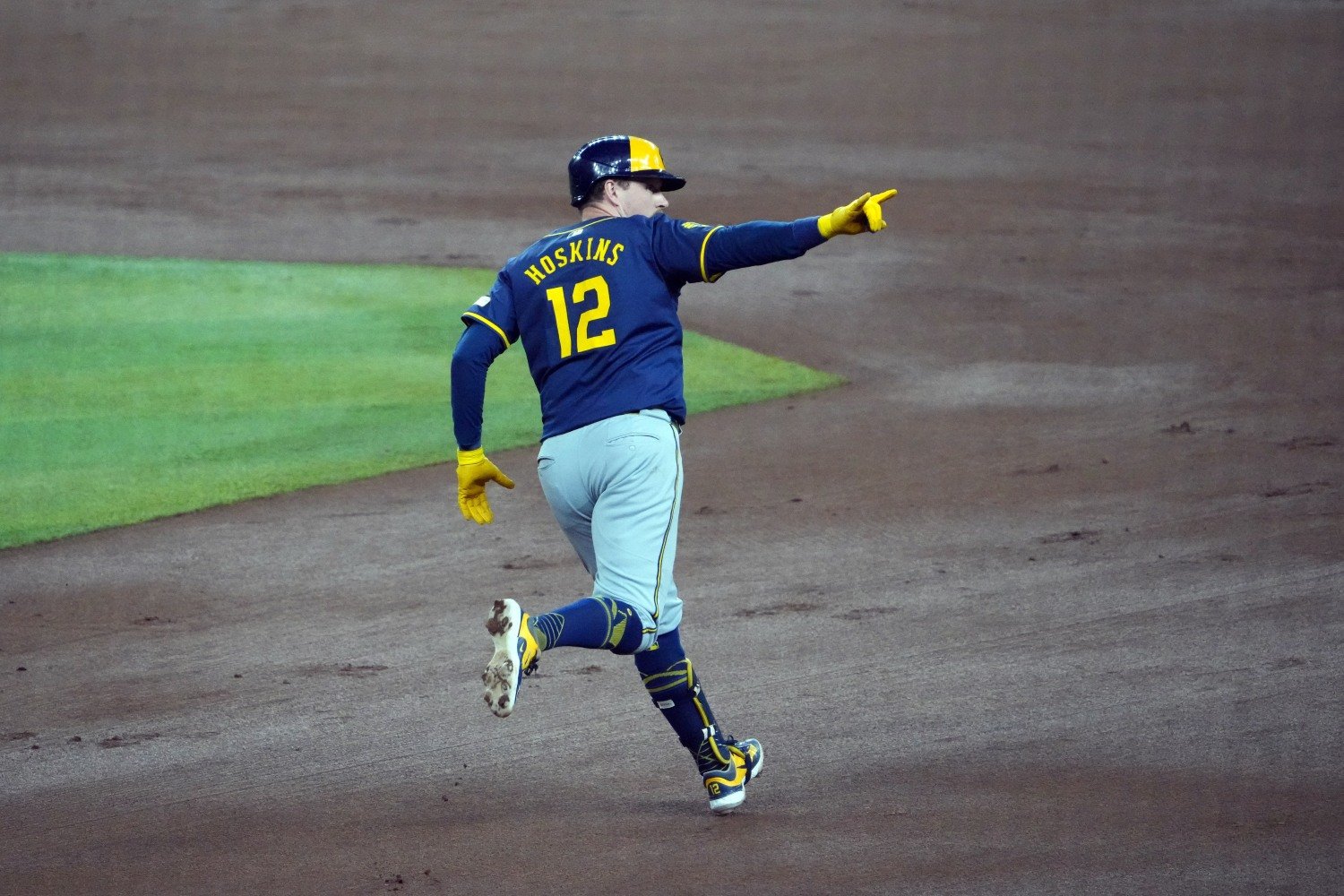 Free agents worth signing have quickly become thin on the ground. While the Brewers' admirable depth across the roster made players like Harrison Bader, Tommy Pham, Randal Grichuk, and Ramón Laureano tricky fits, there was a clear path to possible playing time for Yoán Moncada. Instead, Moncada signed a one-year, $5-million deal with the Angels Thursday, becoming the fifth free-agent hitter to go elsewhere this week alone. If Matt Arnold does want to bring in another player or two to brace the two-time defending division champions, he's running out of ways to do it. Milwaukee could still take interest in a player like Connor Joe, Justin Turner, Brandon Drury, or Anthony Rizzo, to bolster the corner infield spots in various ways. They could join the scramble for the few remaining viable, versatile infielders, José Iglesias, Paul DeJong, and Brendan Rodgers. None of these should command multi-year deals. Nor should the handful of interesting pitchers still on the market, as I wrote Thursday afternoon. Unfortunately, though, Arnold probably has little money left to spend. According to Cot's Contracts, the Crew's projected 40-man payroll for 2025 now stands at $108 million. Nominally, that's well below last year's mark of $125.6 million. However, on the condition of anonymity, team sources have indicated that their payroll was likely to shrink in 2025. The team anticipated a loss of local TV revenue this coming season, based on their planned move to league-produced, league-distributed broadcasts. On Dec. 31, the team retreated from that course and renewed their agreement with FanDuel Sports Network, which might have stretched the wallet a bit wider again, but it's unlikely they'll spend even as much as they did last year, let alone more. To figure out what the team has to spend, though, we need to look a bit harder at what they actually spent last year—and how they can bend their expenditures in 2025 to maximize their own spending power by spreading out their payments a bit. That final figure of $125.6 million for 2024 is a bottom line, but for revenue-sharing payees like the Brewers, when dollars are due can matter nearly as much as how much is being doled out. Of that nominal total, the Crew paid $8.75 million in buyouts on club and mutual options for 2025, all in the first week of November. Over the regular season itself, then, their operating payroll was more like $116.9 million. Why does that matter? Under the league's revenue-sharing plan, an administrator (jointly selected by the players union and the owners) uses prior-year earnings and projections to estimate the net payments that need to be made (by payors) and then distributed (to payees), which break up into five segments. The schedule of those payments goes like this: The Brewers, then, are getting big chunks of money every May 25, July 25, September 25, and November 25. That eases their cash flow a ton, especially in the fall—because they hardly owe anyone salary for games played after that September payout. Thus, any money the team can defer to that final quarter of the year will hit their books less hard than money paid as straight-up salary, throughout the campaign. Delaying payments is always beneficial, of course, if it can be done without penalty. That's why teams are required to discount the actual value of contracts if there's an officially deferred portion of any contract, as is the case for Christian Yelich and for so many players who have signed big leagues recently throughout the league. Structuring contracts to slide payments back beyond the year or years for which a player actually suits up via buyouts on mutual or club options, though, can be effective ways to unofficially bake in deferrals. The $108 million number I quoted above for 2025 does not include any buyouts. That's because, at the moment, the only buyouts they look likely to pay after this season are on the contracts they signed with Rhys Hoskins (two years, $34 million, but the final $4 million of that due as a buyout on an $18-million mutual option, to be paid Feb. 1, 2026) and Brandon Woodruff (a $10-million buyout on a $20-million mutual option for 2026, to be paid in two installments of $5 million, Jan. 15 and Jul. 15, 2026) last winter. It's a hefty $14-million bill, but it all comes due in 2026, on the other side of several more revenue-sharing disbursements. So, the number we should compare their current projection of $108 million to is the $116.9 million they spent in the flow of last season. By that reckoning, they sure don't have much flexibility—unless, of course, they're willing to push more money to the fall, or into 2026. Last year, they paid Gary Sánchez $4 million of his $7 million in total earnings via a buyout in November. Could they do the same thing with a player like Turner or Kenley Jansen for 2025? The payroll actually seems to be set up perfectly for that. If, for instance, they signed Jansen to a deal worth $9 million, but made half that money payable in November by attaching a mutual option for 2026 with a $4.5-million buyout, they'd sit at $117 million for this season, with $112.5 million due during the season. Those numbers would still be a bit down from 2025, but it would let them make a substantial addition to their roster. It also wouldn't exacerbate the problem they might otherwise run into in 2026, when they look likely to have $14 million in dead money from Woodruff and Hoskins on their ledgers and will have to go spend a bunch of money to replace likely departures Aaron Civale, Nestor Cortes, Woodruff, Hoskins and (via trade) Freddy Peralta. They'll be contending with the sharply rising arbitration cost of William Contreras and others. This front office is very good at shaping and shuffling the money they pay to players. It's the only way for a small-market team to maximize its own spending power, and it leverages the installments in which they're paid their share of pooled revenues from throughout the league. Tedious though it might seem, this is the way the Brewers keep finding just enough money to outspend their market size and hold onto their leadership of the NL Central. Though the market is shrinking, they might just have another such move in them this winter.
 -
Projections suggest that there's a pitching depth gap between the Brewers and the division-favorite Cubs. The good news is, the Crew still has time to close it. Image courtesy of © Jerome Miron-Imagn Images Projection systems at multiple sites have rolled out this week, with full forecasts not only for individual players but for teams. At both Baseball Prospectus and FanGraphs, the Cubs are early favorites to win the NL Central, albeit by a much wider margin at the former than at the latter. Impressive projections for stars Kyle Tucker, Shota Imanaga and Justin Steele have attracted attention when it comes to the Cubs, but they also have a secondary advantage, only partially captured by the PECOTA-projected standings: that model believes they have some of baseball's best pitching depth. The Brewers are fine in their own right, at a quick glance. Using the too-blunt dividing line of a 100 DRA- (where 100 is average and lower is better), Milwaukee is projected to use fewer "bad" pitchers than the Cubs this season. In fact, they're tied for the fewest such pitchers on their PECOTA Depth Charts, with seven, along with the Orioles and Dodgers. Team Good Pitchers Bad Pitchers Team Good Pitchers Bad Pitchers ATL 12 10 BAL 16 7 MIA 7 15 BOS 11 11 NYM 15 13 NYY 13 10 PHI 12 11 TB 15 9 WAS 3 18 TOR 10 13 CHC 16 8 CWS 2 19 CIN 7 13 CLE 11 10 MIL 13 7 DET 12 12 PIT 7 15 KC 11 11 STL 6 17 MIN 14 9 ARI 8 13 ANA 4 18 COL 2 19 HOU 13 8 LA 18 7 SAC 8 16 SD 12 10 SEA 11 13 SF 7 14 TEX 13 10 As you can see, though, many teams—including the Cubs—have more pitchers who are projected to be average or better than do the Brewers, at this moment. The Dodgers, Cubs, Orioles, Mets, Rays, and Twins all have them beat in that regard, and that does matter. One thing projection systems tend to miss is the risk of injuries and what happens when they hit. Focusing on the battle for NL Central supremacy, the Cubs are better prepared for that eventuality than the Brewers are. Of course, there are caveats to this. If the Cubs' Depth Charts show 24 different pitchers and the Brewers' only show 20, the implication is that the Cubs are further into their organizational depth already than is the Crew. Indeed, just among names not appearing on the Milwaukee Depth Charts right now, Logan Henderson, Sam Gardner and Vinny Nittoli project to be average or better, so the well might run deeper than the projection system fully reflects. On the other hand, the Cubs also have a few more arms beyond the edges of their Depth Charts who project well, like Ben Heller and Brooks Kriske. PECOTA doesn't like Jacob Misiorowski, which a Brewers fan can certainly dismiss if they choose. On the other hand, it believes so much (an 83 DRA-) in Brandon Woodruff that even an optimist is likely to raise an eyebrow; the model can't see that Woodruff's lost season was due to an injury with a much worse prognosis for the long run than (say) Tommy John surgery. The free-agent pickings have gotten slim, when it comes to hitters. Should the Brewers spend their remaining financial flexibility this offseason on bolstering their pitching depth, instead? There are five starters on the staff projected to deliver better-than-average work this year: Freddy Peralta, Aaron Civale, Nestor Cortes, Tobias Myers, and Woodruff. However, we already know that Woodruff is unlikely to start the season in that rotation, and PECOTA is down on both Aaron Ashby and DL Hall. Even if either or both of them are good, after all, it might be in relief. Thus, the Brewers could clearly use a starter—someone on or even above the level of Jakob Junis, whom they brought in late last winter to backstop the rotation and act as a potential long reliever. A handful of pitchers with average-plus projections who can handle that kind of volume are still available. Between their competitive-balance pick and the compensation pick they got when they were unable to sign Chris Levonas last summer, the Brewers have a chance to sign a loaded draft class again this year, which makes them unlikely to sign Nick Pivetta and give up a draft pick. Even beyond Pivetta, though, there's Andrew Heaney, whose bugaboo for most of his career has been health—but who was healthy and fairly effective in 2023 and 2024. Heaney feels unlikely to get multiple years here in the final few weeks of the offseason, unless he's willing to take a seven-digit annual salary, rather than one more in the neighborhood of $12 million. If the Brewers could sign him for $18-20 million on a two-year deal, it would be fairly tempting to do so, taking pressure off of Woodruff and the younger arms who will hope to filter into the rotation later in the year. Meanwhile, there are a fistful of solid relievers still on the market. Among them are Kenley Jansen, Colin Poche, Phil Maton, and David Robertson, but that's just the higher-rent sector. It's not hard to imagine the Brewers spending $2-3 million on a low-grade bullpen piece who wouldn't get in the way of their existing core of eight solid relievers (Trevor Megill, Joel Payamps, Abner Uribe, Jared Koenig, Nick Mears, Elvis Peguero, Grant Anderson, and Craig Yoho). The Brewers also have guys on whom PECOTA is less bullish, like Bryan Hudson, Ashby, and Hall, but enough of that group can be optioned or placed on the injured list to allow the insertion of another strong relief option. Quality pitching depth gives a team insulation against injury trouble and makes them more likely to outperform projections. For the last two years, incredible (often unexpected) pitching depth has been a huge driver of the Brewers' success. Now, though, the team might need an external infusion of talent to keep up with a Cubs team that ferociously attacked its own dearth of depth this winter. View full article
-
Do the Brewers Need a Late-Offseason Pitching Infusion?
Matthew Trueblood posted an article in Brewers
 Projection systems at multiple sites have rolled out this week, with full forecasts not only for individual players but for teams. At both Baseball Prospectus and FanGraphs, the Cubs are early favorites to win the NL Central, albeit by a much wider margin at the former than at the latter. Impressive projections for stars Kyle Tucker, Shota Imanaga and Justin Steele have attracted attention when it comes to the Cubs, but they also have a secondary advantage, only partially captured by the PECOTA-projected standings: that model believes they have some of baseball's best pitching depth. The Brewers are fine in their own right, at a quick glance. Using the too-blunt dividing line of a 100 DRA- (where 100 is average and lower is better), Milwaukee is projected to use fewer "bad" pitchers than the Cubs this season. In fact, they're tied for the fewest such pitchers on their PECOTA Depth Charts, with seven, along with the Orioles and Dodgers. Team Good Pitchers Bad Pitchers Team Good Pitchers Bad Pitchers ATL 12 10 BAL 16 7 MIA 7 15 BOS 11 11 NYM 15 13 NYY 13 10 PHI 12 11 TB 15 9 WAS 3 18 TOR 10 13 CHC 16 8 CWS 2 19 CIN 7 13 CLE 11 10 MIL 13 7 DET 12 12 PIT 7 15 KC 11 11 STL 6 17 MIN 14 9 ARI 8 13 ANA 4 18 COL 2 19 HOU 13 8 LA 18 7 SAC 8 16 SD 12 10 SEA 11 13 SF 7 14 TEX 13 10 As you can see, though, many teams—including the Cubs—have more pitchers who are projected to be average or better than do the Brewers, at this moment. The Dodgers, Cubs, Orioles, Mets, Rays, and Twins all have them beat in that regard, and that does matter. One thing projection systems tend to miss is the risk of injuries and what happens when they hit. Focusing on the battle for NL Central supremacy, the Cubs are better prepared for that eventuality than the Brewers are. Of course, there are caveats to this. If the Cubs' Depth Charts show 24 different pitchers and the Brewers' only show 20, the implication is that the Cubs are further into their organizational depth already than is the Crew. Indeed, just among names not appearing on the Milwaukee Depth Charts right now, Logan Henderson, Sam Gardner and Vinny Nittoli project to be average or better, so the well might run deeper than the projection system fully reflects. On the other hand, the Cubs also have a few more arms beyond the edges of their Depth Charts who project well, like Ben Heller and Brooks Kriske. PECOTA doesn't like Jacob Misiorowski, which a Brewers fan can certainly dismiss if they choose. On the other hand, it believes so much (an 83 DRA-) in Brandon Woodruff that even an optimist is likely to raise an eyebrow; the model can't see that Woodruff's lost season was due to an injury with a much worse prognosis for the long run than (say) Tommy John surgery. The free-agent pickings have gotten slim, when it comes to hitters. Should the Brewers spend their remaining financial flexibility this offseason on bolstering their pitching depth, instead? There are five starters on the staff projected to deliver better-than-average work this year: Freddy Peralta, Aaron Civale, Nestor Cortes, Tobias Myers, and Woodruff. However, we already know that Woodruff is unlikely to start the season in that rotation, and PECOTA is down on both Aaron Ashby and DL Hall. Even if either or both of them are good, after all, it might be in relief. Thus, the Brewers could clearly use a starter—someone on or even above the level of Jakob Junis, whom they brought in late last winter to backstop the rotation and act as a potential long reliever. A handful of pitchers with average-plus projections who can handle that kind of volume are still available. Between their competitive-balance pick and the compensation pick they got when they were unable to sign Chris Levonas last summer, the Brewers have a chance to sign a loaded draft class again this year, which makes them unlikely to sign Nick Pivetta and give up a draft pick. Even beyond Pivetta, though, there's Andrew Heaney, whose bugaboo for most of his career has been health—but who was healthy and fairly effective in 2023 and 2024. Heaney feels unlikely to get multiple years here in the final few weeks of the offseason, unless he's willing to take a seven-digit annual salary, rather than one more in the neighborhood of $12 million. If the Brewers could sign him for $18-20 million on a two-year deal, it would be fairly tempting to do so, taking pressure off of Woodruff and the younger arms who will hope to filter into the rotation later in the year. Meanwhile, there are a fistful of solid relievers still on the market. Among them are Kenley Jansen, Colin Poche, Phil Maton, and David Robertson, but that's just the higher-rent sector. It's not hard to imagine the Brewers spending $2-3 million on a low-grade bullpen piece who wouldn't get in the way of their existing core of eight solid relievers (Trevor Megill, Joel Payamps, Abner Uribe, Jared Koenig, Nick Mears, Elvis Peguero, Grant Anderson, and Craig Yoho). The Brewers also have guys on whom PECOTA is less bullish, like Bryan Hudson, Ashby, and Hall, but enough of that group can be optioned or placed on the injured list to allow the insertion of another strong relief option. Quality pitching depth gives a team insulation against injury trouble and makes them more likely to outperform projections. For the last two years, incredible (often unexpected) pitching depth has been a huge driver of the Brewers' success. Now, though, the team might need an external infusion of talent to keep up with a Cubs team that ferociously attacked its own dearth of depth this winter.
 -
Last winter, just when it looked like the Brewers might hold onto an ace approaching free agency after all, they struck a surprising trade agreement with the Orioles to bring in a free-swinging infielder. Could they do it again? Image courtesy of © Matt Krohn-Imagn Images The time in the offseason is winding down. A week from Wednesday, the Brewers report to spring training in Maryvale, and while they still have money to spend and holes in their roster to fill, it feels a lot like their focus has turned toward minor moves—or rather, like that's where their focus has been all winter. The team still hasn't signed a player to a fully guaranteed MLB deal this winter, and their trade of Devin Williams to the Yankees in December (while solid, in its fundamentals) was less of a windfall than last year's Corbin Burnes trade. Trading Williams proved more difficult than expected; one potential move was thwarted during the medical review stage, sources said. That didn't torpedo his market, but it did dim it, such that instead of getting two long-term pieces with the ceilings of being regular contributors on playoff-caliber teams (as was the case when the team landed Joey Ortiz and DL Hall for Burnes in a swap with the Orioles late last January), the Crew had to settle for just one long-term option, in Caleb Durbin. They did get Nestor Cortes, who nicely stabilizes the front half of their rotation for 2025, but Cortes will be eligible for free agency at the end of the year. In short, last winter, the team headily reinforced their roster for 2024 (with the additions of Ortiz and Hall, but more obviously by signing Rhys Hoskins, Gary Sánchez, Jakob Junis and Wade Miley) and collected substantial long-term value (in Ortiz and Hall, plus a competitive-balance draft pick, and re-signing Brandon Woodruff on a deal targeted toward 2025). This winter, with some of their shopping done in advance thanks to the Woodruff deal and Hoskins's choice to exercise his player option, they've been stunningly quiet. They were one of the youngest teams in MLB in 2024, and it makes decent sense that they've elected to lean on the hope of further development from some of those young players instead of making a splash in free agency and pushing in their chips for 2025. That they also haven't accumulated much long-term help, though, is unusual for them. On the eve of spring training, they project to be a middling team this year, needing more offensive punch, and though their trove of young talent still looks good, they haven't augmented it. Could all of that change, in shocking fashion, over the next week or so? First of all, of course, we have to say this: that's unlikely. This is the phase of winter for, mostly, smaller and reasonably predictable moves. There are a handful of free agents left who generally fit the Brewers' needs in low-grade, low-cost ways, like Spencer Turnbull, Brandon Drury, Justin Turner, or Anthony Rizzo. There are some trades they could explore, like bringing in Twins starter Chris Paddack at a moderate financial cost but virtually none in prospect capital. At the same time, there's always a chance of something interesting and wholly unexpected, and this month, the likely shape of such a move would be: Freddy Peralta being traded to the Orioles for multiple high-end prospect pieces. This would be a bold maneuver, to be sure. Even after a frustratingly inconsistent 2024, Peralta is the Brewers' unquestioned ace, and he's a beloved clubhouse leader, to boot. The team exercised an $8-million option on him for 2025 and will have the right to do so again in 2026, which means that the urgent need they might have felt to trade Burnes last year is absent right now. Trading Peralta would seem to signal a turn toward the future, at the expense of the present—but maybe it doesn't have to. For two fairly cheap years of Peralta, the Brewers should be able to pry loose top talent from Baltimore, one of the richest fonts of such players in the league. They could certainly get conversations started around a player like Heston Kjerstad (whose rookie season was truncated by a concussion), Coby Mayo, or even Colton Cowser, given the logjam the Orioles have created for themselves by adding Tyler O'Neill, Daz Cameron, Dylan Carlson and Ramón Laureano this winter. Peralta would fill the most glaring remaining need for an Orioles team projected to fight tooth-and-nail against the Yankees for the AL East crown in 2025. They'd give up something good to slot him in between Grayson Rodriguez and Charlie Morton on their depth chart. Kjerstad might be the one they could pry loose most easily, and he'd be a fascinating addition to the existing mix in Milwaukee. A bit like a younger, much higher-ceiling Jake Bauers, he's hit .248/.336/.411 in parts of two big-league seasons, and the Brewers would surely see him as a candidate for improvement in swing decisions. Last year, Kjerstad chased 35% of pitches outside the zone during his time in the majors, which is the same share of such offerings Ortiz chased in his short stint with the O's in 2023. The Brewers helped Ortiz reorganize his approach in 2024, and he seems to have taken a concrete step up in terms of ceiling. If Kjerstad similarly cleaned up his strike zone, he could take off in a big way. He's already figured out Triple A, where he's batted .299/.382/.541 in a full season's worth of playing time. Although he doesn't yet have much experience at the position, Kjerstad would make a good first baseman. He's fast and has a strong arm, to go with the obvious upside in his bat. The Orioles have stockpiled enough sound outfield options to consider moving one of them for a pitcher who would make them more viable as a playoff team, and Peralta checks that box. This deal might seem far-fetched, but the building pressure of a shrinking free-agent market and the proximity of spring training could prompt a big swing by both teams. The Brewers could use Kjerstad's bat right away, as a platoon partner for Hoskins and a supplement to their own outfield group crying out for a trade. He'd give them a major stylistic change-of-pace, in a lineup full of contact hitters a bit shy on power. The team might also be able to backfill after making a trade like this, by signing a free-agent starter like Turnbull or Andrew Heaney. View full article
-
 The time in the offseason is winding down. A week from Wednesday, the Brewers report to spring training in Maryvale, and while they still have money to spend and holes in their roster to fill, it feels a lot like their focus has turned toward minor moves—or rather, like that's where their focus has been all winter. The team still hasn't signed a player to a fully guaranteed MLB deal this winter, and their trade of Devin Williams to the Yankees in December (while solid, in its fundamentals) was less of a windfall than last year's Corbin Burnes trade. Trading Williams proved more difficult than expected; one potential move was thwarted during the medical review stage, sources said. That didn't torpedo his market, but it did dim it, such that instead of getting two long-term pieces with the ceilings of being regular contributors on playoff-caliber teams (as was the case when the team landed Joey Ortiz and DL Hall for Burnes in a swap with the Orioles late last January), the Crew had to settle for just one long-term option, in Caleb Durbin. They did get Nestor Cortes, who nicely stabilizes the front half of their rotation for 2025, but Cortes will be eligible for free agency at the end of the year. In short, last winter, the team headily reinforced their roster for 2024 (with the additions of Ortiz and Hall, but more obviously by signing Rhys Hoskins, Gary Sánchez, Jakob Junis and Wade Miley) and collected substantial long-term value (in Ortiz and Hall, plus a competitive-balance draft pick, and re-signing Brandon Woodruff on a deal targeted toward 2025). This winter, with some of their shopping done in advance thanks to the Woodruff deal and Hoskins's choice to exercise his player option, they've been stunningly quiet. They were one of the youngest teams in MLB in 2024, and it makes decent sense that they've elected to lean on the hope of further development from some of those young players instead of making a splash in free agency and pushing in their chips for 2025. That they also haven't accumulated much long-term help, though, is unusual for them. On the eve of spring training, they project to be a middling team this year, needing more offensive punch, and though their trove of young talent still looks good, they haven't augmented it. Could all of that change, in shocking fashion, over the next week or so? First of all, of course, we have to say this: that's unlikely. This is the phase of winter for, mostly, smaller and reasonably predictable moves. There are a handful of free agents left who generally fit the Brewers' needs in low-grade, low-cost ways, like Spencer Turnbull, Brandon Drury, Justin Turner, or Anthony Rizzo. There are some trades they could explore, like bringing in Twins starter Chris Paddack at a moderate financial cost but virtually none in prospect capital. At the same time, there's always a chance of something interesting and wholly unexpected, and this month, the likely shape of such a move would be: Freddy Peralta being traded to the Orioles for multiple high-end prospect pieces. This would be a bold maneuver, to be sure. Even after a frustratingly inconsistent 2024, Peralta is the Brewers' unquestioned ace, and he's a beloved clubhouse leader, to boot. The team exercised an $8-million option on him for 2025 and will have the right to do so again in 2026, which means that the urgent need they might have felt to trade Burnes last year is absent right now. Trading Peralta would seem to signal a turn toward the future, at the expense of the present—but maybe it doesn't have to. For two fairly cheap years of Peralta, the Brewers should be able to pry loose top talent from Baltimore, one of the richest fonts of such players in the league. They could certainly get conversations started around a player like Heston Kjerstad (whose rookie season was truncated by a concussion), Coby Mayo, or even Colton Cowser, given the logjam the Orioles have created for themselves by adding Tyler O'Neill, Daz Cameron, Dylan Carlson and Ramón Laureano this winter. Peralta would fill the most glaring remaining need for an Orioles team projected to fight tooth-and-nail against the Yankees for the AL East crown in 2025. They'd give up something good to slot him in between Grayson Rodriguez and Charlie Morton on their depth chart. Kjerstad might be the one they could pry loose most easily, and he'd be a fascinating addition to the existing mix in Milwaukee. A bit like a younger, much higher-ceiling Jake Bauers, he's hit .248/.336/.411 in parts of two big-league seasons, and the Brewers would surely see him as a candidate for improvement in swing decisions. Last year, Kjerstad chased 35% of pitches outside the zone during his time in the majors, which is the same share of such offerings Ortiz chased in his short stint with the O's in 2023. The Brewers helped Ortiz reorganize his approach in 2024, and he seems to have taken a concrete step up in terms of ceiling. If Kjerstad similarly cleaned up his strike zone, he could take off in a big way. He's already figured out Triple A, where he's batted .299/.382/.541 in a full season's worth of playing time. Although he doesn't yet have much experience at the position, Kjerstad would make a good first baseman. He's fast and has a strong arm, to go with the obvious upside in his bat. The Orioles have stockpiled enough sound outfield options to consider moving one of them for a pitcher who would make them more viable as a playoff team, and Peralta checks that box. This deal might seem far-fetched, but the building pressure of a shrinking free-agent market and the proximity of spring training could prompt a big swing by both teams. The Brewers could use Kjerstad's bat right away, as a platoon partner for Hoskins and a supplement to their own outfield group crying out for a trade. He'd give them a major stylistic change-of-pace, in a lineup full of contact hitters a bit shy on power. The team might also be able to backfill after making a trade like this, by signing a free-agent starter like Turnbull or Andrew Heaney.
- 6 comments
-
- 1
-
-
- heston kjerstad
- freddy peralta
- (and 1 more)
-
And this is the system that usually likes them! Image courtesy of © Benny Sieu-Imagn Images Hmm. Ah. Well... uh-oh. The annual PECOTA projections roll out at Baseball Prospectus this week, and they are (to say the very least) unfriendly to the Milwaukee Brewers. Despite coming off two straight NL Central titles, the Crew come in with just 80.2 projected wins. The model only estimates that they have a 26.1% chance to reach the postseason, and it sets the rival Cubs a full 10 games ahead of them. At first blush, this is crazy. While the Brewers have failed to build out their core this winter the way some might have hoped, and while they did trade Devin Williams in December, they return a lot of the players who have helped them win 185 regular-season games since the start of 2023. They have one superstar whose season was cut short last season, but who should be back as some facsimile of his former self, in Christian Yelich; another just tapping into his full potential, in Jackson Chourio; and a third already in full bloom, in William Contreras. They still have a deep bullpen, and they added rotation depth in the Williams trade, acquiring Nestor Cortes from the Yankees. PECOTA isn't buying it. It doesn't like Chourio to explode, the way most of us expect. On the contrary, with a .251/.301/.413 line (103 DRC+, where 100 is average and higher is better), the system expects him to take a step back. It's fairly easy to reject that projection, not as some product of bias or incompetence (after all, head PECOTA architect Jonathan Judge is a noted Brewers fan—and a BF reader! Hi, Judge. Good luck today, buddy) but as one of the errors a good model has to make in order to better fit the data and career arcs of a multitude of players. Sometimes, to project 1,000 players as well as possible, you have to get a few badly wrong, and Chourio might be such a case. Even if you mentally bump Chourio's production up a couple bushels full of runs, though, the Crew doesn't magically leap up to the Cubs' level. This model is calling them out for being built too much around depth, without being especially deep; too much around defense, despite having a player sliding up the defensive spectrum into a key defensive position; and too much around contact, at the expense of power. Pitching-wise, the system sees them as above-average. The problems lie on offense, where they have the ninth-lowest projected runs total. Only Rhys Hoskins and Contreras project to reach 20 homers, and in Contreras's case, it'll be close. Eight different Brewers are projected for sub-.400 slugging averages in at least 250 plate appearances, and of those, a staggering five (Tyler Black, Brice Turang, Sal Frelick, Blake Perkins, and Oliver Dunn) have sub-.350 figures. It's not hard at all to cobble together a case that the model is underselling the Crew. Garrett Mitchell (.665 projected OPS) could outperform his projection by a huge margin, as could Chourio. The system is not blind to the team's good defense, but it seems to be pessimistic about Turang's glove, projecting just 1.7 Defensive Runs Prevented from a player who was a run better than that by that framework in 2024—and is estimated, by other sources, as being worth as much as 15 or 20 runs with the leather. Projection systems aren't always right. Still, this sends a pretty important early signal. The Brewers will have a tougher path to the NL Central title this time around, if they can manage to win it at all. They have some flaws that they have allowed to fester, heavily prioritizing the traits they believe they can acquire and develop best with their limited financial resources and excellent support staff. Maybe they need to get more aggressive in the endgame of the offseason than previously thought. Maybe they're already much better than this system can see. Either way, though, you'd prefer to see them sitting higher on the projected standings than they are, with spring training right around the corner. EDITOR'S NOTE: A previous version of this article erroneously stated that PECOTA projected the Brewers to win the division last year. That was incorrect. Although they later rose in the projected standings as Opening Day approached, at this time last year, PECOTA had Milwaukee pegged for third place; it was FanGraphs's projections who were high on the 2024 Brewers. We apologize for the mistake. View full article
-
Well, Then: Brewers Projected for Just 80 Wins By PECOTA
Matthew Trueblood posted an article in Brewers
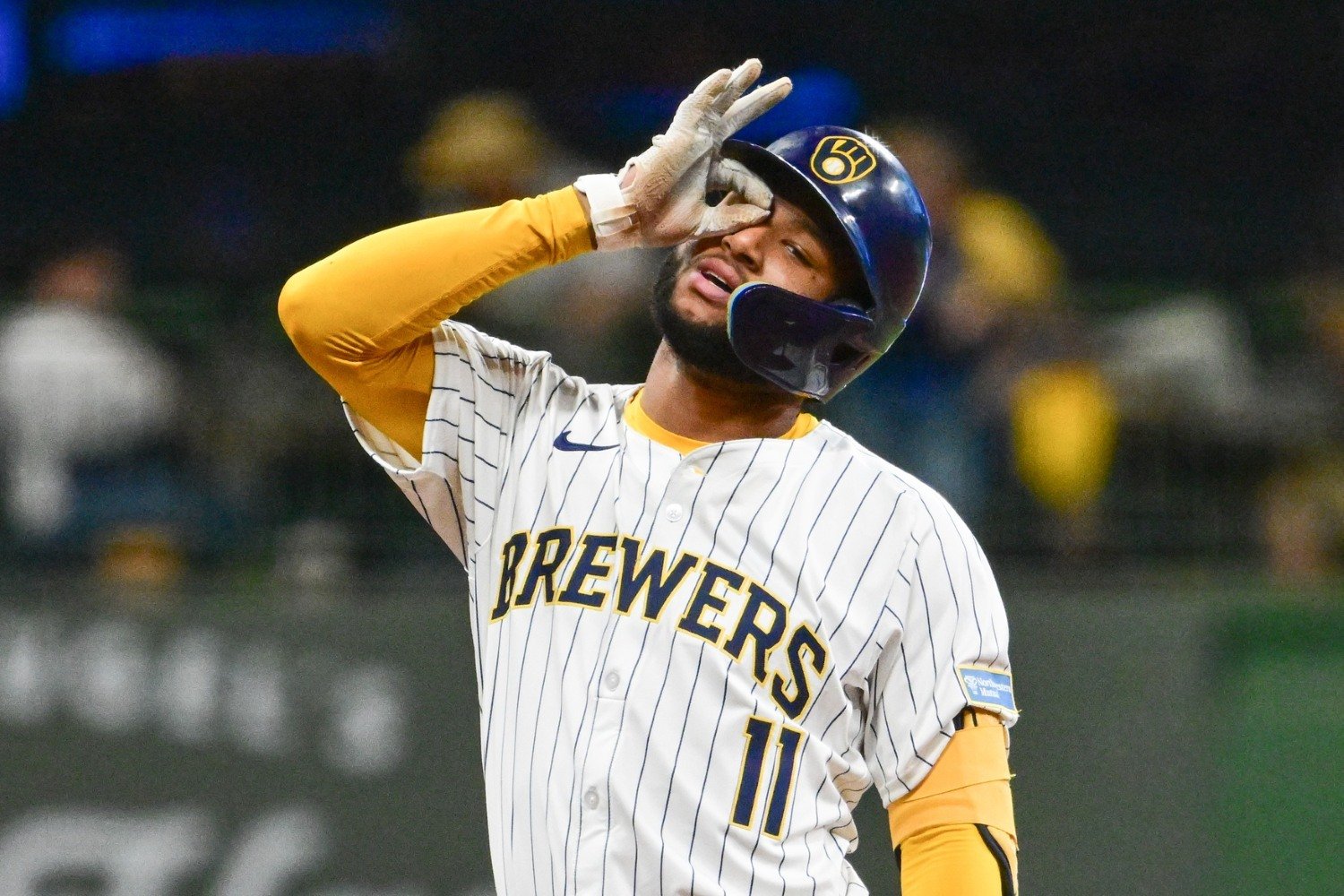 Hmm. Ah. Well... uh-oh. The annual PECOTA projections roll out at Baseball Prospectus this week, and they are (to say the very least) unfriendly to the Milwaukee Brewers. Despite coming off two straight NL Central titles, the Crew come in with just 80.2 projected wins. The model only estimates that they have a 26.1% chance to reach the postseason, and it sets the rival Cubs a full 10 games ahead of them. At first blush, this is crazy. While the Brewers have failed to build out their core this winter the way some might have hoped, and while they did trade Devin Williams in December, they return a lot of the players who have helped them win 185 regular-season games since the start of 2023. They have one superstar whose season was cut short last season, but who should be back as some facsimile of his former self, in Christian Yelich; another just tapping into his full potential, in Jackson Chourio; and a third already in full bloom, in William Contreras. They still have a deep bullpen, and they added rotation depth in the Williams trade, acquiring Nestor Cortes from the Yankees. PECOTA isn't buying it. It doesn't like Chourio to explode, the way most of us expect. On the contrary, with a .251/.301/.413 line (103 DRC+, where 100 is average and higher is better), the system expects him to take a step back. It's fairly easy to reject that projection, not as some product of bias or incompetence (after all, head PECOTA architect Jonathan Judge is a noted Brewers fan—and a BF reader! Hi, Judge. Good luck today, buddy) but as one of the errors a good model has to make in order to better fit the data and career arcs of a multitude of players. Sometimes, to project 1,000 players as well as possible, you have to get a few badly wrong, and Chourio might be such a case. Even if you mentally bump Chourio's production up a couple bushels full of runs, though, the Crew doesn't magically leap up to the Cubs' level. This model is calling them out for being built too much around depth, without being especially deep; too much around defense, despite having a player sliding up the defensive spectrum into a key defensive position; and too much around contact, at the expense of power. Pitching-wise, the system sees them as above-average. The problems lie on offense, where they have the ninth-lowest projected runs total. Only Rhys Hoskins and Contreras project to reach 20 homers, and in Contreras's case, it'll be close. Eight different Brewers are projected for sub-.400 slugging averages in at least 250 plate appearances, and of those, a staggering five (Tyler Black, Brice Turang, Sal Frelick, Blake Perkins, and Oliver Dunn) have sub-.350 figures. It's not hard at all to cobble together a case that the model is underselling the Crew. Garrett Mitchell (.665 projected OPS) could outperform his projection by a huge margin, as could Chourio. The system is not blind to the team's good defense, but it seems to be pessimistic about Turang's glove, projecting just 1.7 Defensive Runs Prevented from a player who was a run better than that by that framework in 2024—and is estimated, by other sources, as being worth as much as 15 or 20 runs with the leather. Projection systems aren't always right. Still, this sends a pretty important early signal. The Brewers will have a tougher path to the NL Central title this time around, if they can manage to win it at all. They have some flaws that they have allowed to fester, heavily prioritizing the traits they believe they can acquire and develop best with their limited financial resources and excellent support staff. Maybe they need to get more aggressive in the endgame of the offseason than previously thought. Maybe they're already much better than this system can see. Either way, though, you'd prefer to see them sitting higher on the projected standings than they are, with spring training right around the corner. EDITOR'S NOTE: A previous version of this article erroneously stated that PECOTA projected the Brewers to win the division last year. That was incorrect. Although they later rose in the projected standings as Opening Day approached, at this time last year, PECOTA had Milwaukee pegged for third place; it was FanGraphs's projections who were high on the 2024 Brewers. We apologize for the mistake.
 -
The Brewers struck what is very technically not a one-year deal with their star catcher Saturday. It's the inflection point in a curve bending away from a hard line, turning us toward the next fight between teams and players in their arbitration-eligible seasons. Image courtesy of © Katie Stratman-Imagn Images The Milwaukee Brewers and catcher William Contreras agreed on a one-year deal with a mutual option for 2026 Saturday, avoiding an impending arbitration hearing. The terms of this deal give Contreras the better side of the negotiation, since the $6.1 million he will make in total (if the Brewers turn down their club option and re-enter the arbitration process with him next season) is above the midpoint between the figures at which each side filed last month. That's almost certainly what will happen, too, because $12 million would be a ground-breaking, precedent-altering payday for a catcher in their second year of arbitration eligibility, two years from free agency. The two catchers most comparable to Contreras who have gotten that far recently are J.T. Realmuto and William's brother, Willson Contreras. Realmuto, though, made just $2.9 million in his first season of arbitration eligibility and $5.9 million in his second. The elder Contreras got $4.5 million in his first trip through that system, and $6.65 million his second time. Neither guy even surpassed $10 million in their third and final years of eligibility, though Realmuto did file for $12.4 million before losing a hearing against the Phillies in 2020. Arguably, William Contreras is more comparable to Will Smith of the Dodgers, who had agreed to an $8.55-million deal for his second season of eligibility before replacing it with a long-term deal. Still, the odds that he'll make $12 million in 2026 are slim and none. The option is purely dressing, a chance to disguise this one-year deal as one that gives the team some kind of value, too. It doesn't. This saves the organization some face, but no one should or will be fooled by it. Twenty years ago, you started to hear about the concept of "file-and-go". It was a hardline position adopted, first, by Atlanta and a few other front offices, whereby if a player and the club didn't agree on a salary before the deadline to file proposed arbitration figures, the team would halt negotiations and go to the resulting hearing. The goal was to force players to accede to more team-friendly terms, on the theory that the team's front office would prepare a good enough case to win most arbitration hearings and thus that the player would be motivated to avoid having one. Relatively quickly, the name drifted to "file-and-trial", and virtually the entire league employed the strategy. For a long time, that was the way of things, even as arbitration salaries did tick upward. Eventually, though, exigencies began to erode the edifice. Teams don't like going to hearings much more than players do, after all, and some of them found that players with whom they had good relationships and hopes of long-term deals were using the deadline for exchanging arbitration numbers to their own advantage, rather than caving to the club. Thus, we began to see workaround deals. Even after filing numbers, teams and players would strike a deal—but it would always have a second year attached to it, sometimes in the form of an option. It was a way of delaying a bit of the payment for that season to the following year, since the options were often declined and buyouts generally paid, while also avoiding a hearing and sticking to the letter of the unwritten file-and-trial rule. With each such deal, though, the strength and value of file-and-trial diminished. It was always in trouble, anyway, because in a league starved for expansion, really good players—the ones worth keeping around through arbitration seasons—have increasing leverage. When the latest collective bargaining agreement created a pre-arbitration bonus pool system, that only became more true. Contreras made over $2.8 million in his pre-arbitration seasons in performance bonuses alone, which made it impossible for the Brewers to hold much over his head during this negotiation. Adding his salary and the bonus he earned in 2024 together, Contreras made roughly $2.5 million last year, which is one reason why he was able to set such a high asking price in arbitration. Having made more than $5 million total before getting here, he didn't need to be bullied by the Brewers in this case, so they had to scramble. Earlier this week, the Padres agreed to a one-year deal with a mutual option for 2026 with Michael King, paying him less in total than the midpoint between the two. That tells you that the Padres knew they had King beat, if a hearing did take place, and that King's representatives knew it, too. The Padres needed cost certainty and to structure the deal in a way that delayed some of their payments, though, so they agreed to a pact that gives them a financial break in an unusual way. This is one year after the Brewers struck a deal that left them with a club option on Devin Williams this fall, akin to the Contreras one—it was always likely to be declined, and having the option in the contract was just a way to present the deal to everyone as something other than an exception to file-and-trial. We're now well past any illusions. File-and-trial is dead. Some teams will claim it's still real, but contracts like these are all over the place now, and they fundamentally compromise the idea of the approach. We'll see even more of these in the future. Eventually (and probably fairly soon), most teams will even drop the facade and admit that the filing deadline ahead of potential hearings is just a procedural thing. Teams will find plenty of compensation for this, of course. As the last several years' worth of Februaries have told us, the league is overstuffed with good players right now. That's a problem for the players and a boon to front offices. It will become the new cudgel, and we'll see more and more players non-tendered each winter, unless they're willing to sign on terms the team likes before the November non-tender deadline. That, obviously, is no threat to a player like Contreras, and elite talents like him will continue to get richer fast. It will be bad news for lower classes of player, though, who don't especially want to be tossed into overcrowded free-agent pools before getting a chance to showcase their skills for longer. Brendan Rodgers, Ramón Laureano, Kyle Finnegan and Colin Poche are among guys non-tendered in November who are still available right now, and are likely to sign deals that make them long for the money they would have gotten even at the lower end of their projected arbitration ranges for this season. There are more good players than there are roster spots to accommodate them, so while teams will continue to feel inflationary pressure on the salaries of stars even before they reach free agency, they'll turn that around and hold the feet of average and lesser players to the fire to make back what they lose. Nonetheless, this is a big moment. Contreras's contract permanently puts the lie to the notion of file-and-trial, and should be remembered as the deal that made it obvious how obsolete that framework has become. For the Brewers, it wasn't worth going to a hearing and fracturing a relationship with Contreras, let alone risking a loss that would have cost them another $500,000 in flexibility for this season. The league is overdue to admit that that's the case more often than not. View full article
-
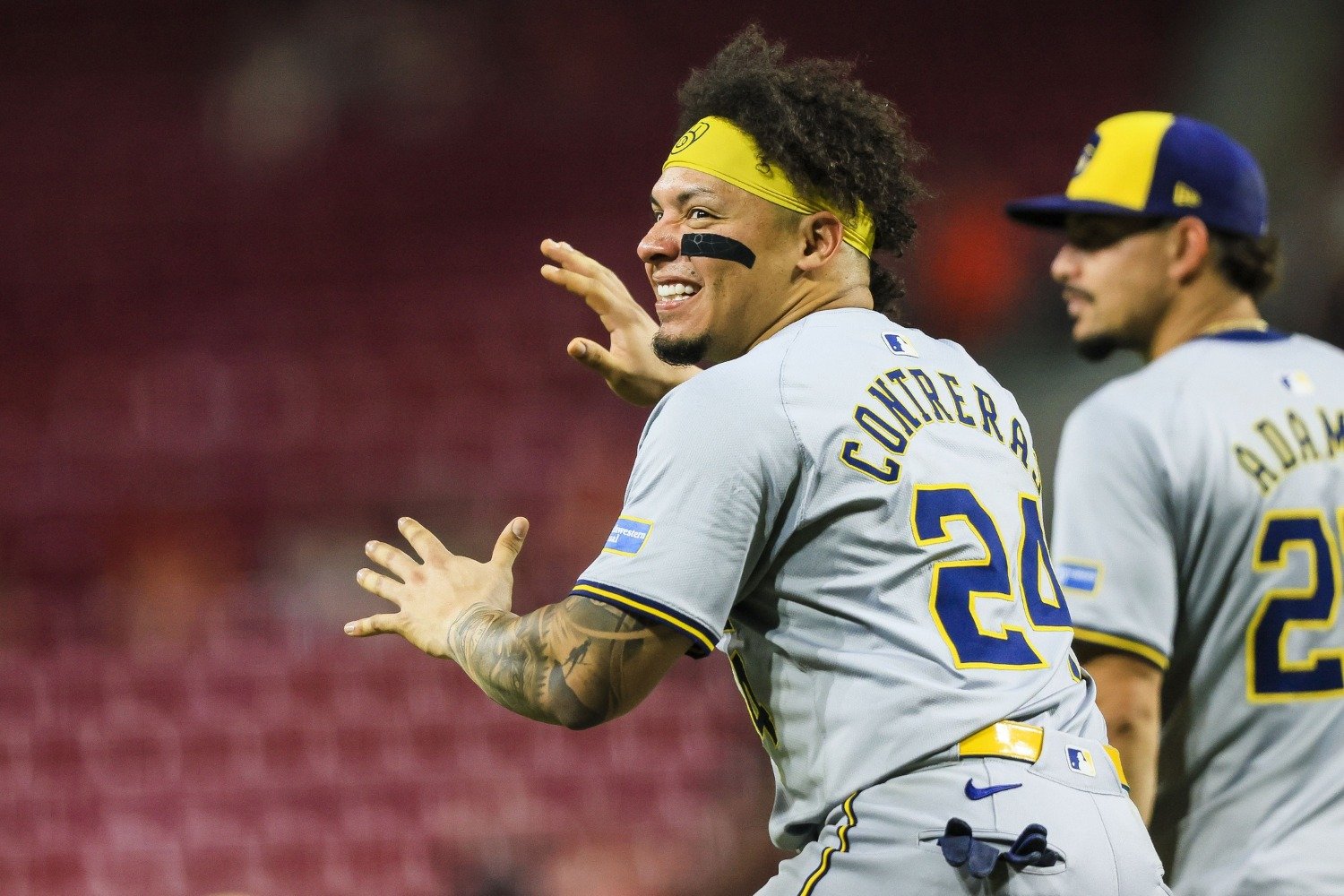 The Milwaukee Brewers and catcher William Contreras agreed on a one-year deal with a mutual option for 2026 Saturday, avoiding an impending arbitration hearing. The terms of this deal give Contreras the better side of the negotiation, since the $6.1 million he will make in total (if the Brewers turn down their club option and re-enter the arbitration process with him next season) is above the midpoint between the figures at which each side filed last month. That's almost certainly what will happen, too, because $12 million would be a ground-breaking, precedent-altering payday for a catcher in their second year of arbitration eligibility, two years from free agency. The two catchers most comparable to Contreras who have gotten that far recently are J.T. Realmuto and William's brother, Willson Contreras. Realmuto, though, made just $2.9 million in his first season of arbitration eligibility and $5.9 million in his second. The elder Contreras got $4.5 million in his first trip through that system, and $6.65 million his second time. Neither guy even surpassed $10 million in their third and final years of eligibility, though Realmuto did file for $12.4 million before losing a hearing against the Phillies in 2020. Arguably, William Contreras is more comparable to Will Smith of the Dodgers, who had agreed to an $8.55-million deal for his second season of eligibility before replacing it with a long-term deal. Still, the odds that he'll make $12 million in 2026 are slim and none. The option is purely dressing, a chance to disguise this one-year deal as one that gives the team some kind of value, too. It doesn't. This saves the organization some face, but no one should or will be fooled by it. Twenty years ago, you started to hear about the concept of "file-and-go". It was a hardline position adopted, first, by Atlanta and a few other front offices, whereby if a player and the club didn't agree on a salary before the deadline to file proposed arbitration figures, the team would halt negotiations and go to the resulting hearing. The goal was to force players to accede to more team-friendly terms, on the theory that the team's front office would prepare a good enough case to win most arbitration hearings and thus that the player would be motivated to avoid having one. Relatively quickly, the name drifted to "file-and-trial", and virtually the entire league employed the strategy. For a long time, that was the way of things, even as arbitration salaries did tick upward. Eventually, though, exigencies began to erode the edifice. Teams don't like going to hearings much more than players do, after all, and some of them found that players with whom they had good relationships and hopes of long-term deals were using the deadline for exchanging arbitration numbers to their own advantage, rather than caving to the club. Thus, we began to see workaround deals. Even after filing numbers, teams and players would strike a deal—but it would always have a second year attached to it, sometimes in the form of an option. It was a way of delaying a bit of the payment for that season to the following year, since the options were often declined and buyouts generally paid, while also avoiding a hearing and sticking to the letter of the unwritten file-and-trial rule. With each such deal, though, the strength and value of file-and-trial diminished. It was always in trouble, anyway, because in a league starved for expansion, really good players—the ones worth keeping around through arbitration seasons—have increasing leverage. When the latest collective bargaining agreement created a pre-arbitration bonus pool system, that only became more true. Contreras made over $2.8 million in his pre-arbitration seasons in performance bonuses alone, which made it impossible for the Brewers to hold much over his head during this negotiation. Adding his salary and the bonus he earned in 2024 together, Contreras made roughly $2.5 million last year, which is one reason why he was able to set such a high asking price in arbitration. Having made more than $5 million total before getting here, he didn't need to be bullied by the Brewers in this case, so they had to scramble. Earlier this week, the Padres agreed to a one-year deal with a mutual option for 2026 with Michael King, paying him less in total than the midpoint between the two. That tells you that the Padres knew they had King beat, if a hearing did take place, and that King's representatives knew it, too. The Padres needed cost certainty and to structure the deal in a way that delayed some of their payments, though, so they agreed to a pact that gives them a financial break in an unusual way. This is one year after the Brewers struck a deal that left them with a club option on Devin Williams this fall, akin to the Contreras one—it was always likely to be declined, and having the option in the contract was just a way to present the deal to everyone as something other than an exception to file-and-trial. We're now well past any illusions. File-and-trial is dead. Some teams will claim it's still real, but contracts like these are all over the place now, and they fundamentally compromise the idea of the approach. We'll see even more of these in the future. Eventually (and probably fairly soon), most teams will even drop the facade and admit that the filing deadline ahead of potential hearings is just a procedural thing. Teams will find plenty of compensation for this, of course. As the last several years' worth of Februaries have told us, the league is overstuffed with good players right now. That's a problem for the players and a boon to front offices. It will become the new cudgel, and we'll see more and more players non-tendered each winter, unless they're willing to sign on terms the team likes before the November non-tender deadline. That, obviously, is no threat to a player like Contreras, and elite talents like him will continue to get richer fast. It will be bad news for lower classes of player, though, who don't especially want to be tossed into overcrowded free-agent pools before getting a chance to showcase their skills for longer. Brendan Rodgers, Ramón Laureano, Kyle Finnegan and Colin Poche are among guys non-tendered in November who are still available right now, and are likely to sign deals that make them long for the money they would have gotten even at the lower end of their projected arbitration ranges for this season. There are more good players than there are roster spots to accommodate them, so while teams will continue to feel inflationary pressure on the salaries of stars even before they reach free agency, they'll turn that around and hold the feet of average and lesser players to the fire to make back what they lose. Nonetheless, this is a big moment. Contreras's contract permanently puts the lie to the notion of file-and-trial, and should be remembered as the deal that made it obvious how obsolete that framework has become. For the Brewers, it wasn't worth going to a hearing and fracturing a relationship with Contreras, let alone risking a loss that would have cost them another $500,000 in flexibility for this season. The league is overdue to admit that that's the case more often than not.
 -
Why Does Joel Payamps Miss Fewer Bats Than His Stuff Suggests?
Matthew Trueblood posted an article in Brewers
 It's not like Joel Payamps completely fell apart in 2024, after a very strong 2023 that made him one of the most prominent hurlers in the vaunted Brewers relief corps. He did seem to flirt with being designated for assignment occasionally, and as late as the end of July, his ERA was 4.26, underpinned by a pedestrian 22.5% strikeout rate. That was strange, too, because Payamps's stuff hadn't gone all that much downhill. He might have lost half a tick of velocity on the fastball, but his four pitches still had the ability to baffle hitters when he was right. Over the final two months, too, he locked all of that in. His ERA from Aug. 1 onward was 0.86, and he fanned 30.7% of opposing batters over a 21-inning span. In that slice of the season, then, Payamps did realize his strikeout upside. For most of the season, though, it eluded him, and it's worth unpacking why. Doing so should help us understand what to expect from him in 2025, and give us some insight into the craft of working as a short-burst reliever. Firstly, a word of gratitude and encouragement: I owe the ability to do this analysis to Baseball Prospectus, who rolled out a version of individual pitch grades in the middle of last year and built upon that with Arsenal metrics that tell us a bit about interaction factors between those pitches earlier this month. Thanks to that work, we can study a table like this, with Payamps's StuffPro and PitchPro (for each of which, 0 is average and a negative score is better, because it represents runs against average per 100 such pitches thrown) for each of his offerings and both the actual and the expected whiff rates on those pitches, according to the StuffPro framework. Pitch Type StuffPro PitchPro Actual Whiff% Exp. Whiff% Four-Seam 0.0 0.3 33.1 34 Sinker 0.3 -0.1 13.8 22 Slider -0.5 -1.0 29.5 41 Changeup -0.1 0.5 20.0 38 StuffPro grades each offering based on its release, velocity, movement, handedness, and count. PitchPro uses all of those inputs and adds location. As you can see, then, Payamps's sinker and slider benefited significantly from good location, whereas his four-seamer and changeup suffered on that basis. Moving over to the righthand columns, note that his four-seamer still basically misses as many bats as you'd hope, despite the imperfect location. Why? Because his errant locations tended to be in the middle of the zone. You can find whiffs there; you're just more likely to get hit hard when batters do connect. The rest of his pitches, however, came up well short of their expected whiff rates. Here's why. First, consider Payamps's pitch locations for each offering he used against lefties last year. From a left-handed batter's vantage point, that changeup is not located very deceptively. Obviously, as is true of virtually every pitcher, Payamps's change has considerably more arm-side run than his four-seamer. When he throws that four-seamer mostly up and away from lefties, then, and then complements it with a changeup more often on the inner half than out away from them—and especially when the change too often caught the bottom of the zone, rather than being buried below it—he's not going to fool them very well. Furthermore, for his slider to land in the center of the plate as often as it did, he had to be starting it out away from them. That could, in theory, make the pitch tunnel well with his four-seamer out of the hand, but in practice, it's Payamps's sinker that tunnels well with the slider—and the shapes of those two pitches complement each other much, much better against fellow righties than against lefties. About halfway through the season, Payamps practically gave up on his changeup, which had been his primary weapon against lefties before he got to the Brewers. The Brewers moved Payamps over a bit and altered his mechanics a bit when they acquired him, as they do with virtually every pitcher. He benefited in a few ways from that, as we documented during his strong 2023, but that move did somewhat neutralize his changeup. He hasn't found a feel for pairing the pitch with his fastball ever since, and didn't really compensate well for that against lefties in 2024. Against righties, there's a whole different dynamic at work—but some of the same things come of it. Payamps didn't seem able to consistently locate his sinker, so he often leaned on the four-seamer even against righties last year. As you can see, though, a lot of his four-seamers ended up in the fat part of the zone, and again, the slider works much better off the sinker. Between these two graphics, it's not that hard to see why he missed many fewer bats than his individual pitch grades would have led us to expect. To reinforce what we're seeing visually, here are Payamps's percentile scores in BP's Arsenal metrics, which Jack Stern explained through a Brewers lens this week: Pitch Type Probability: 29th percentile Movement Spread: 19th Velocity Spread: 10th Surprise Factor: 45th In other words, because of those faulty interactions—the changeup locations being all wrong to generate deception, pairing the wrong fastball with the slider to lefties, and the fastball filling up the zone against righties too much—Payamps's arsenal doesn't make him more than the sum of his parts. In fact, he's less than that sum. Hitters can spot his stuff relatively well, relatively early, and while he can occasionally fool them badly with the wide variance between the sinker and slider in movement, most of the time, hitters' identifications of his pitches are right. Tweaking where he threw his pitches and how he mixed them did make him better late in 2024, and the slider gained a little more sweep and the sinker gained a little more run. It wouldn't be surprising if Payamps came back in 2025 having totally scrapped the changeup, but with a better idea of how to attack lefties with the pitches left in his repertoire—and improved command, to complement that change in the mix. If he reimagines and recombinates his stuff, he can get much more out of it. When he's at least as much as the sum of his parts, he's awfully good.

