


Matthew Trueblood
-
Posts
1,964 -
Joined
-
Last visited
-
Days Won
10
Content Type
Profiles
Forums
Blogs
Events
News
2026 Milwaukee Brewers Top Prospects Ranking
Milwaukee Brewers Videos
2022 Milwaukee Brewers Draft Picks
Milwaukee Brewers Free Agent & Trade Rumors, Notes, & Tidbits
Guides & Resources
2023 Milwaukee Brewers Draft Picks
2024 Milwaukee Brewers Draft Picks
The Milwaukee Brewers Players Project
2025 Milwaukee Brewers Draft Pick Tracker
2026 Milwaukee Brewers Draft Tracker: Picks & Bonuses
Store
Downloads
Gallery
Everything posted by Matthew Trueblood
-
We're close to the end of our countdown of the 50 best free-agent fits for the Milwaukee Brewers this offseason. These are the guys whose positions, skills, and price tags most neatly align with what the Brewers can and will do. For those just joining us, consult the first two posts in this series for more details about what distinguishes this project from a typical free-agent ranking. In fact, if you've missed any of the previous posts, feel free to go back and peruse them, to see which players have already been rounded up and counted down. Nos. 41-50Nos. 31-40Nos. 21-30 Nos. 11-20 Now, let's tackle the top 10. 10. Brandon Belt, 1B/DH Over a career as lovably workmanlike as his name, Belt has methodically built a skillset that is still letting him hammer big-league pitching as he wends his way into his late 30s. Few hitters in baseball more systematically or effectively elevate the ball, and few draw walks more frequently. You have to protect Belt from left-handed pitchers, and you have to protect him from injuries by keeping him out of the field most of the time. After the Crew acquired Jake Bauers Friday, they have a warm body for first base, anyway. Belt would be a superb addition to this lineup, though. He's the fly-ball counterbalance to the ground-ball tendencies of Christian Yelich and William Contreras. He hits for power to parts of the park and with launch angles that would play well at Miller Park. Bringing him in on a short-term deal wouldn't make the Brewers one of the best lineups in baseball overnight, but he could diversify their portfolio of ways to score runs and galvanize the clubhouse during what threatens to be a tricky transitional time. 9. Mitch Garver, C/DH If there's such a thing as a right-handed Brandon Belt at the plate, it's Mitch Garver. He sits on certain pitches, trying to find something he can turn on and pull in the air. When he doesn't get it, he's extremely patient. That can drive up his strikeout rate, but he walks often and gets plenty of hits even when he doesn't clear the fences. Garver doesn't need Charlie Greene's witchcraft; he's already undergone his catching reinvention. While he was with the Twins, and before he established himself as a full-time player, Garver learned the art of pitch framing from that organization. He could do with a refresher course, now. He's not going to be an elite defensive backstop. In fact, Garver is better as a DH than he is catching with any frequency, not least because he struggles to stay healthy when he catches a lot. William Contreras is durable enough to cover him, though. Garver would allow the Crew to go into 2024 with Contreras and Garver penciled in for a huge share of playing time, including almost all the catcher at-bats and plenty of those at DH. They'd also be two of the top five hitters in the lineup on a regular basis, and all of that can be had at a reasonable price, because of the limitations in Garver's game that would affect his utility to other teams more than it affects the same for the Brewers. 8. Teoscar Hernández, RF Look, the genius of the Domingo Santana Era with the Brewers was that they had gotten Santana cheaply and were enjoying him in his youthful prime. The risk with Hernández, a slightly more athletic version of Santana and a one-time colleague as Astros farmhands with him, is that he's already exiting that prime. If the Brewers are among the teams who worry about that, he won't sign with Milwaukee, because there's a major payday out there for Hernández. Ranking him here is me averring that this guy is materially better and will have more staying power than Santana. He swings and misses a lot, and he walks relatively rarely, but Hernández has a legitimate hit tool to go with his impressive power. His raw production probably understates his talent, especially looking strictly at 2023. His stopover home park in Seattle was not a good fit for his skillset. Hernández can and will hit 30 home runs in a season again, if he finds the right home. Milwaukee could be that home. A good runner with a strong arm, Hernández is a perfectly adequate right fielder. He's not going to win Fielding Bible Awards out there, but he would be fine alongside Sal Frelick, Garrett Mitchell, Joey Wiemer, or Jackson Chourio in the short run, and he could play DH increasingly often over the life of what would need to be a deal of three or four years. Again, no one player can transform this lineup, but Hernández could substantially bolster it. 7. J.D. Martinez, DH With every move the Brewers make this November, it feels less like they're in the kind of mindset that would lead to signing an aged but proven veteran slugger to a short-term deal. Martinez probably isn't an exception to that, but maybe he should be. He just slugged .572 at age 35, and while he requires some physical maintenance and light protection from tough right-handed pitching, we're talking about a man who has made the last five All-Star teams as a DH. To be sure, there are reasons to pause and think twice here. By and large, Martinez is well-liked and respected, but he's occasionally been viewed as an energy drain in clubhouses that start to turn sour. Last season, his strikeout rate shot up to 31 percent, after typically riding close to 25 percent. That's an orange flag, if not a red one. He also walked less and used the big part of the field more than in the past, which implies some well-hidden but real slowing of his bat. Still, the fit is tantalizing. Martinez's batted-ball profile is a great fit for Milwaukee. His power is what was missing almost all year from the Brewers batting order. It's likely that Martinez will command a two-year deal. That's fine. The Brewers should take the leap and try to get their version of Nelson Cruz, who came to the Twins at the same juncture in his wonderful, late-blooming career and helped them become an elite offense. That's the catalytic impact Martinez could have. 6. Michael Wacha, RHP The Crew did keep Adrian Houser, who now figures to get some work in their starting rotation in 2024. Add him to Corbin Burnes (for the moment), Freddy Peralta, and the immortal Colin Rea, and the Crew have the bones of another good starting staff, despite the miserable loss of Brandon Woodruff. Wacha would be the perfect guy to stick right in behind Peralta in the pecking order, whether Burnes is traded or not. He's coming off a very strong season in San Diego, and after a peripatetic career pockmarked with injuries and tinkering, he seems to have found a pitch mix that really works for him. This is a more stable, more complete Wacha than the changeup guy who came up with the Cardinals several years ago and failed to evolve for half a decade. The way Wacha throws makes him especially appealing. His over-the-top arm slot is perfect for his stuff, and it's also a nice fit for some of the things Chris Hook seems to implement most smoothly and effectively. The Padres turned down a two-year option on him worth $32 million, and that annual salary does feel a little bit steep, but Wacha isn't a bad candidate for the kind of deal Zach Eflin signed with the Rays last winter (three years, $40 million). If the Brewers get a chance to lock him in at that kind of price, they should leap at it. Despite his age, there's a half-step of progress left to make in the right situation, and even if he gets no better, Wacha could help the 2024 Crew defend their division title. What options above strike you as worthwhile? With just five names left on my countdown, who's missing, in your opinion? Let's keep the hot stove lit. View full article
-
Top 50 Fits for the Brewers in MLB Free Agency: Nos. 10-6
Matthew Trueblood posted an article in Brewers
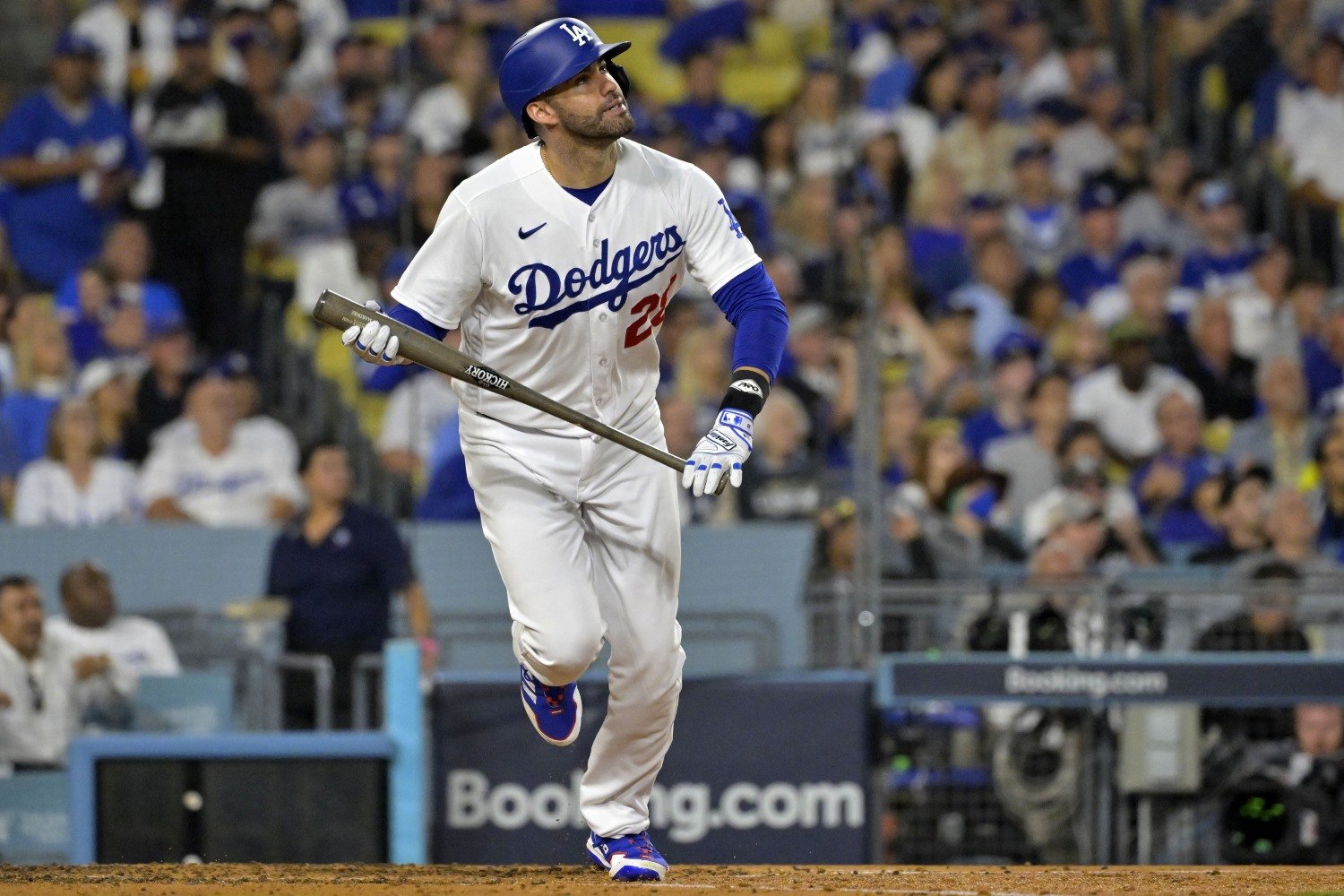 For those just joining us, consult the first two posts in this series for more details about what distinguishes this project from a typical free-agent ranking. In fact, if you've missed any of the previous posts, feel free to go back and peruse them, to see which players have already been rounded up and counted down. Nos. 41-50Nos. 31-40Nos. 21-30 Nos. 11-20 Now, let's tackle the top 10. 10. Brandon Belt, 1B/DH Over a career as lovably workmanlike as his name, Belt has methodically built a skillset that is still letting him hammer big-league pitching as he wends his way into his late 30s. Few hitters in baseball more systematically or effectively elevate the ball, and few draw walks more frequently. You have to protect Belt from left-handed pitchers, and you have to protect him from injuries by keeping him out of the field most of the time. After the Crew acquired Jake Bauers Friday, they have a warm body for first base, anyway. Belt would be a superb addition to this lineup, though. He's the fly-ball counterbalance to the ground-ball tendencies of Christian Yelich and William Contreras. He hits for power to parts of the park and with launch angles that would play well at Miller Park. Bringing him in on a short-term deal wouldn't make the Brewers one of the best lineups in baseball overnight, but he could diversify their portfolio of ways to score runs and galvanize the clubhouse during what threatens to be a tricky transitional time. 9. Mitch Garver, C/DH If there's such a thing as a right-handed Brandon Belt at the plate, it's Mitch Garver. He sits on certain pitches, trying to find something he can turn on and pull in the air. When he doesn't get it, he's extremely patient. That can drive up his strikeout rate, but he walks often and gets plenty of hits even when he doesn't clear the fences. Garver doesn't need Charlie Greene's witchcraft; he's already undergone his catching reinvention. While he was with the Twins, and before he established himself as a full-time player, Garver learned the art of pitch framing from that organization. He could do with a refresher course, now. He's not going to be an elite defensive backstop. In fact, Garver is better as a DH than he is catching with any frequency, not least because he struggles to stay healthy when he catches a lot. William Contreras is durable enough to cover him, though. Garver would allow the Crew to go into 2024 with Contreras and Garver penciled in for a huge share of playing time, including almost all the catcher at-bats and plenty of those at DH. They'd also be two of the top five hitters in the lineup on a regular basis, and all of that can be had at a reasonable price, because of the limitations in Garver's game that would affect his utility to other teams more than it affects the same for the Brewers. 8. Teoscar Hernández, RF Look, the genius of the Domingo Santana Era with the Brewers was that they had gotten Santana cheaply and were enjoying him in his youthful prime. The risk with Hernández, a slightly more athletic version of Santana and a one-time colleague as Astros farmhands with him, is that he's already exiting that prime. If the Brewers are among the teams who worry about that, he won't sign with Milwaukee, because there's a major payday out there for Hernández. Ranking him here is me averring that this guy is materially better and will have more staying power than Santana. He swings and misses a lot, and he walks relatively rarely, but Hernández has a legitimate hit tool to go with his impressive power. His raw production probably understates his talent, especially looking strictly at 2023. His stopover home park in Seattle was not a good fit for his skillset. Hernández can and will hit 30 home runs in a season again, if he finds the right home. Milwaukee could be that home. A good runner with a strong arm, Hernández is a perfectly adequate right fielder. He's not going to win Fielding Bible Awards out there, but he would be fine alongside Sal Frelick, Garrett Mitchell, Joey Wiemer, or Jackson Chourio in the short run, and he could play DH increasingly often over the life of what would need to be a deal of three or four years. Again, no one player can transform this lineup, but Hernández could substantially bolster it. 7. J.D. Martinez, DH With every move the Brewers make this November, it feels less like they're in the kind of mindset that would lead to signing an aged but proven veteran slugger to a short-term deal. Martinez probably isn't an exception to that, but maybe he should be. He just slugged .572 at age 35, and while he requires some physical maintenance and light protection from tough right-handed pitching, we're talking about a man who has made the last five All-Star teams as a DH. To be sure, there are reasons to pause and think twice here. By and large, Martinez is well-liked and respected, but he's occasionally been viewed as an energy drain in clubhouses that start to turn sour. Last season, his strikeout rate shot up to 31 percent, after typically riding close to 25 percent. That's an orange flag, if not a red one. He also walked less and used the big part of the field more than in the past, which implies some well-hidden but real slowing of his bat. Still, the fit is tantalizing. Martinez's batted-ball profile is a great fit for Milwaukee. His power is what was missing almost all year from the Brewers batting order. It's likely that Martinez will command a two-year deal. That's fine. The Brewers should take the leap and try to get their version of Nelson Cruz, who came to the Twins at the same juncture in his wonderful, late-blooming career and helped them become an elite offense. That's the catalytic impact Martinez could have. 6. Michael Wacha, RHP The Crew did keep Adrian Houser, who now figures to get some work in their starting rotation in 2024. Add him to Corbin Burnes (for the moment), Freddy Peralta, and the immortal Colin Rea, and the Crew have the bones of another good starting staff, despite the miserable loss of Brandon Woodruff. Wacha would be the perfect guy to stick right in behind Peralta in the pecking order, whether Burnes is traded or not. He's coming off a very strong season in San Diego, and after a peripatetic career pockmarked with injuries and tinkering, he seems to have found a pitch mix that really works for him. This is a more stable, more complete Wacha than the changeup guy who came up with the Cardinals several years ago and failed to evolve for half a decade. The way Wacha throws makes him especially appealing. His over-the-top arm slot is perfect for his stuff, and it's also a nice fit for some of the things Chris Hook seems to implement most smoothly and effectively. The Padres turned down a two-year option on him worth $32 million, and that annual salary does feel a little bit steep, but Wacha isn't a bad candidate for the kind of deal Zach Eflin signed with the Rays last winter (three years, $40 million). If the Brewers get a chance to lock him in at that kind of price, they should leap at it. Despite his age, there's a half-step of progress left to make in the right situation, and even if he gets no better, Wacha could help the 2024 Crew defend their division title. What options above strike you as worthwhile? With just five names left on my countdown, who's missing, in your opinion? Let's keep the hot stove lit.
 -
At the deadline to tender contracts to players under club control Friday night, the Brewers bid a melancholy goodbye--at least for now--to one of the best starting pitchers in team history. Don't glaze over Matt Arnold's statement that the team is still interested in bringing Woodruff back, if that turns out to be possible. That sentiment is earnest, even if the odds of its being brought to fruition are remote. Woodruff is now a free agent, though, and has a chance to shop around for a backloaded two-year deal that will let him set a new platform for a full foray into free agency after 2025. It's unlikely that he'll ever get the payday to which he seemed so close just a couple of months ago, so he might elect to pursue a true, market-level deal, and if so, it's unlikely that the Brewers will win the bidding. We can now write the names of Joel Payamps, Hoby Milner, and Bryse Wilson into the 2024 bullpen depth chart in pen, but they should all have been in heavy pencil, anyway. That Jake Bauers would be tendered a deal was obvious, since the team just traded two fringe prospects for him earlier today. Bauers now becomes the team's bid to find the next Tellez, or Jesus Aguilar, or Eric Thames. He's a longshot, but a fine dart to throw in the direction of stabilizing their corner infield and DH picture with some left-handed power. This is far from the end of the story for Corbin Burnes, Willy Adames, or even Devin Williams. Hopefully, it's also not the end of the line for the Brewers and Woodruff. Today, though, we have to consider it as such, and to study the depth chart for the team without Woodruff even as a future consideration. View full article
-
Brewers Non-Tender Brandon Woodruff, Retain Adrian Houser and Others
Matthew Trueblood posted an article in Brewers
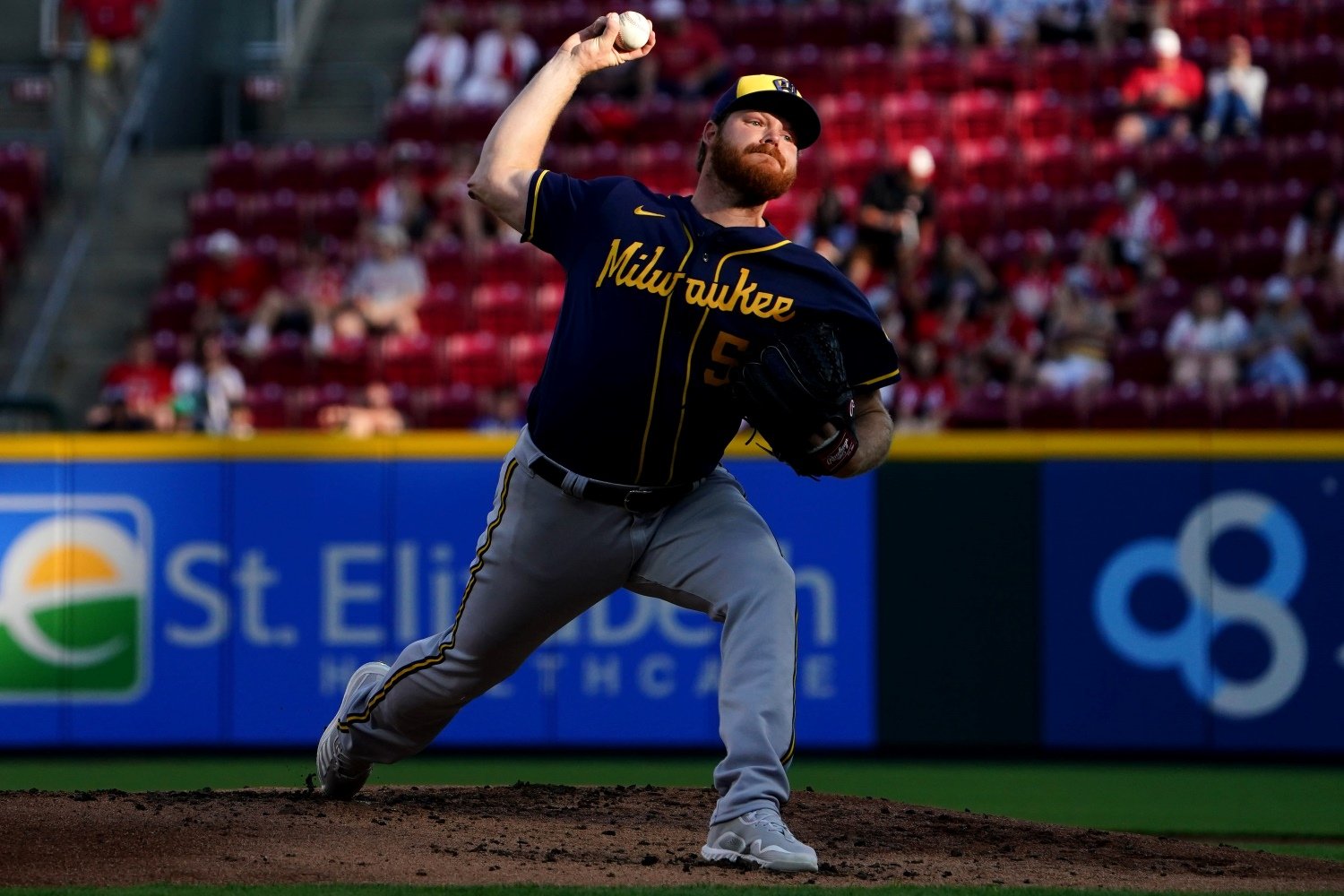 There was no chance that Brandon Woodruff, who will miss all of the 2024 season, would be tendered a contract and brought back at a salary on the high side of $10 million. Jeff Passan of ESPN delivered the news that the Crew released him, rather than finding common ground with him on a multiyear deal that would have circumvented the arbitration system. Don't glaze over Matt Arnold's statement that the team is still interested in bringing Woodruff back, if that turns out to be possible. That sentiment is earnest, even if the odds of its being brought to fruition are remote. Woodruff is now a free agent, though, and has a chance to shop around for a backloaded two-year deal that will let him set a new platform for a full foray into free agency after 2025. It's unlikely that he'll ever get the payday to which he seemed so close just a couple of months ago, so he might elect to pursue a true, market-level deal, and if so, it's unlikely that the Brewers will win the bidding. We can now write the names of Joel Payamps, Hoby Milner, and Bryse Wilson into the 2024 bullpen depth chart in pen, but they should all have been in heavy pencil, anyway. That Jake Bauers would be tendered a deal was obvious, since the team just traded two fringe prospects for him earlier today. Bauers now becomes the team's bid to find the next Tellez, or Jesus Aguilar, or Eric Thames. He's a longshot, but a fine dart to throw in the direction of stabilizing their corner infield and DH picture with some left-handed power. This is far from the end of the story for Corbin Burnes, Willy Adames, or even Devin Williams. Hopefully, it's also not the end of the line for the Brewers and Woodruff. Today, though, we have to consider it as such, and to study the depth chart for the team without Woodruff even as a future consideration.
 -
Brewers Acquire Bauers from Bronx Bombers
Matthew Trueblood replied to Seth Stohs's topic in Brewer Fanatic Front Page News
I can't quite pinpoint when Rowdy being non-tendered became an inevitability, but it was definitely before the season ended. Haha. But yes, Bauers is a dart throw at recreating the Rowdy/Aguilar/Thames thing. -
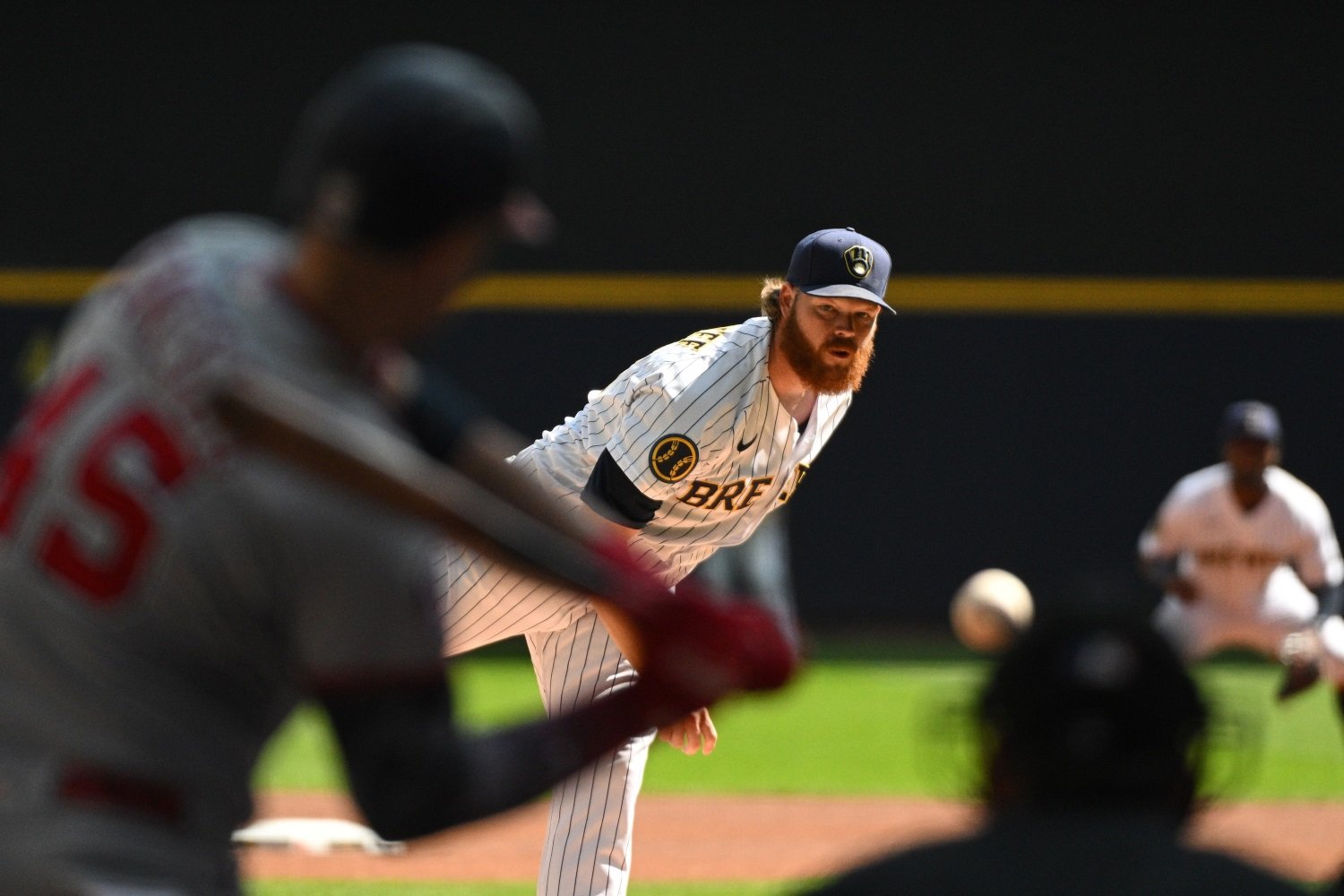 We know a few things for certain. Rowdy Tellez, who would be due more than $5 million via arbitration but had a calamitous 2023, will be non-tendered and become a free agent. Brandon Woodruff definitely won't simply be tendered a contract, because that would force the Brewers to pay an eight-figure salary for a pitcher who won't take the mound for them in 2024. However, there's hope from both sides in that equation that Woodruff might sign a multi-year deal with a small salary for next season and a larger one in 2025, so that will be important to watch. Beyond those two cases, there are some very easy calls (there's no chance that the team will cut someone like Joel Payamps or Hoby Milner over a couple million bucks, and even less that they'll let stars like Willy Adames or Corbin Burnes walk without getting anything for them) and a couple of very hard ones. Adrian Houser is the most interesting. Jake McKibbin broke down this call in detail for us last week, but today is Decision Day on it. Non-tendering Houser seems wasteful, and unlikely. However, trading him for something of modest but real value (as the Brewers did with Hunter Renfroe last November, to cite the most recent example) is a more defensible idea. On balance, I still expect them to keep him, but moving a salary projected at $5.6 million to make more efficient use of that money and getting something in return would make some sense. The other interesting call is Tyrone Taylor, about whom Jason Wang wrote earlier this week. Because Taylor's projected salary is much lower, it's still hard to envision a non-tender, but there are three things that make him a name worth your attention today: The crowded outfield picture, including not only Christian Yelich and the big-name young guys, but players (like Blake Perkins and Chris Roller) who seem to make Taylor slightly redundant; Taylor's struggles staying healthy, which also interfere with his attempts to become more consistent at the plate; and The small but real trade value Taylor might have, as a role player with better upside and a much more appealing price tag than many of the free agents who do similar things. This is not an exhaustive list of all the cases on which the team will decide today, but these are the ones that most deserve our consideration before the time to make the necessary calls comes. What do you think of Houser and Taylor? Who would you cut, who would you keep, and who would you trade? Let's kick around some ideas.
 -
By the close of business Friday, the Brewers (and the other 29 teams in MLB) have to decide whether to tender a 2024 contract to all players not on guaranteed deals. This deadline has forced a lot of moves for the Crew in recent years, and will do so again today. We know a few things for certain. Rowdy Tellez, who would be due more than $5 million via arbitration but had a calamitous 2023, will be non-tendered and become a free agent. Brandon Woodruff definitely won't simply be tendered a contract, because that would force the Brewers to pay an eight-figure salary for a pitcher who won't take the mound for them in 2024. However, there's hope from both sides in that equation that Woodruff might sign a multi-year deal with a small salary for next season and a larger one in 2025, so that will be important to watch. Beyond those two cases, there are some very easy calls (there's no chance that the team will cut someone like Joel Payamps or Hoby Milner over a couple million bucks, and even less that they'll let stars like Willy Adames or Corbin Burnes walk without getting anything for them) and a couple of very hard ones. Adrian Houser is the most interesting. Jake McKibbin broke down this call in detail for us last week, but today is Decision Day on it. Non-tendering Houser seems wasteful, and unlikely. However, trading him for something of modest but real value (as the Brewers did with Hunter Renfroe last November, to cite the most recent example) is a more defensible idea. On balance, I still expect them to keep him, but moving a salary projected at $5.6 million to make more efficient use of that money and getting something in return would make some sense. The other interesting call is Tyrone Taylor, about whom Jason Wang wrote earlier this week. Because Taylor's projected salary is much lower, it's still hard to envision a non-tender, but there are three things that make him a name worth your attention today: The crowded outfield picture, including not only Christian Yelich and the big-name young guys, but players (like Blake Perkins and Chris Roller) who seem to make Taylor slightly redundant; Taylor's struggles staying healthy, which also interfere with his attempts to become more consistent at the plate; and The small but real trade value Taylor might have, as a role player with better upside and a much more appealing price tag than many of the free agents who do similar things. This is not an exhaustive list of all the cases on which the team will decide today, but these are the ones that most deserve our consideration before the time to make the necessary calls comes. What do you think of Houser and Taylor? Who would you cut, who would you keep, and who would you trade? Let's kick around some ideas. View full article
-
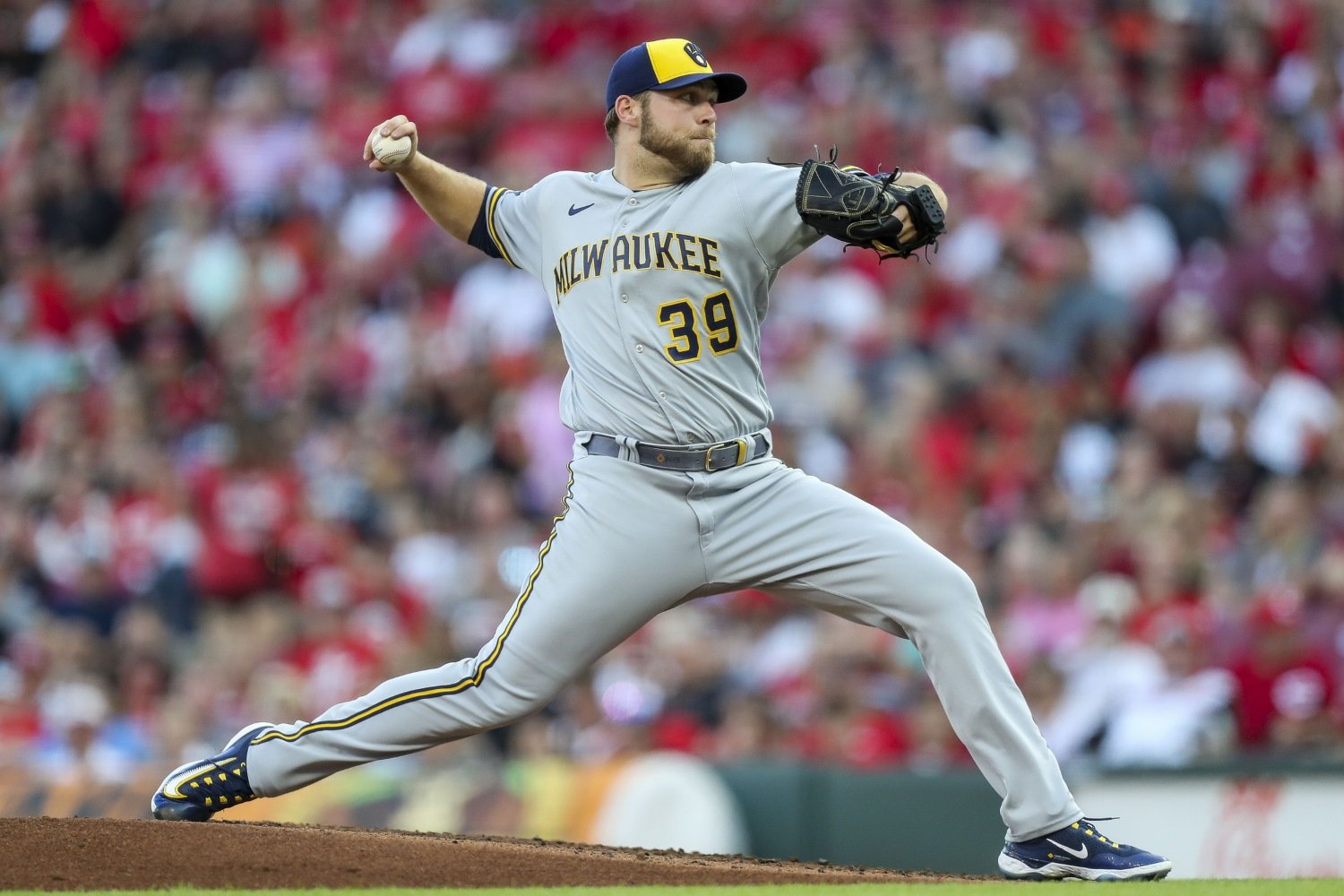 In a surprising (and, frankly, almost incredible) twist, Jesse Rogers of ESPN is reporting that the Cubs are "keeping an eye" on Corbin Burnes, and that the Brewers are open to trading with them. He's not saying for certain that the Crew will sell, or trade Burnes under any circumstance, but he makes clear that Burnes is on the Cubs' radar. That would be wild. Especially in light of the Craig Counsell defection, it is extremely hard to imagine the Brewers being willing to work with the Cubs on a trade that substantial. In all likelihood, the price tag to trade Burnes within the division (much less right down I-94) would be so high that the deal would end up falling apart. Even so, it's fascinating to imagine. Would a trade that starts with and centers upon slugging infielder Christopher Morel work for both sides? The Cubs have made him available this fall. Morel has obvious flaws, but also power that exceeds that of any current Brewers. This is, at minimum, a very intriguing rumor with which to start a Thursday morning.
 -
In a surprising (and, frankly, almost incredible) twist, Jesse Rogers of ESPN is reporting that the Cubs are "keeping an eye" on Corbin Burnes, and that the Brewers are open to trading with them. He's not saying for certain that the Crew will sell, or trade Burnes under any circumstance, but he makes clear that Burnes is on the Cubs' radar. That would be wild. Especially in light of the Craig Counsell defection, it is extremely hard to imagine the Brewers being willing to work with the Cubs on a trade that substantial. In all likelihood, the price tag to trade Burnes within the division (much less right down I-94) would be so high that the deal would end up falling apart. Even so, it's fascinating to imagine. Would a trade that starts with and centers upon slugging infielder Christopher Morel work for both sides? The Cubs have made him available this fall. Morel has obvious flaws, but also power that exceeds that of any current Brewers. This is, at minimum, a very intriguing rumor with which to start a Thursday morning. View full rumor
-
Top 50 Fits for the Brewers in MLB Free Agency: Nos. 20-11
Matthew Trueblood posted an article in Brewers
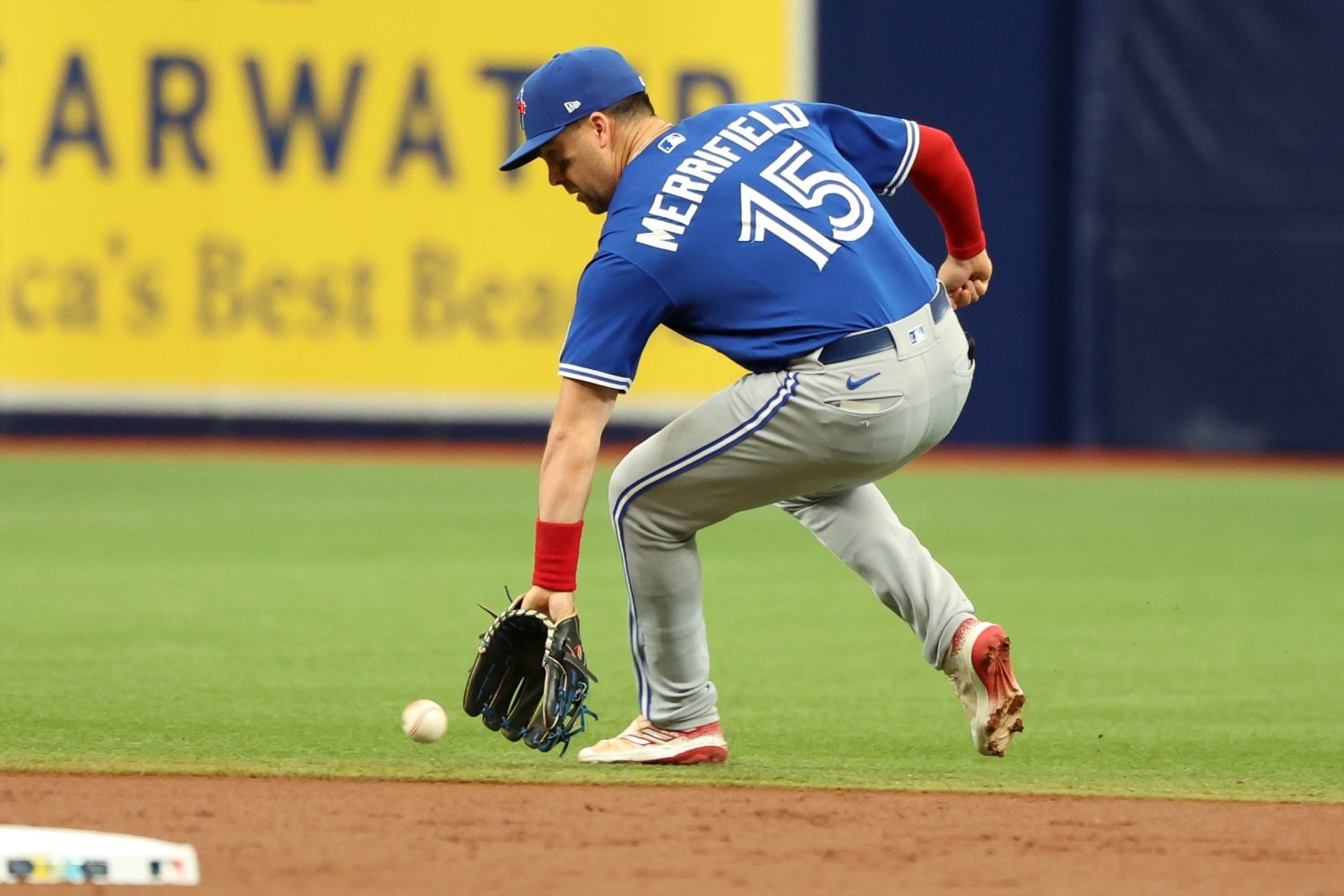 We'll jump right in, more or less. By now, if you've kept up, you understand the idiosyncrasies of this exercise. If you haven't kept up, though, here's your chance to review the first three pieces in the series. Nos. 41-50 Nos. 31-40 Nos. 21-30 And away we go. 20. Sean Manaea, LHP Like fellow southpaw Wade Miley, Manaea opted for free agency instead of taking a sure eight-figure payday. That was a peculiar choice, coming off a season in which he had a 4.44 ERA and spent significant time in the bullpen for the Giants. It's possible he just didn't like that usage, but it also seems as though he tapped into some new things that he'll try to shop around on the free market. Manaea had both the highest strikeout rate and the lowest hard-hit rate on opponents' batted balls of his career in 2023. His curveball had always had an unusually horizontal shape to it, thanks (in part) to his delivery, so he milled that pitch into a sweeper this year--almost the same movement, and the same spin axis, but an extra two miles per hour. He's a nice candidate to have a late-career breakout, and as long as he's looking for more years (rather than more money) than he left in San Francisco, he should be affordable for the Crew. 19. Jack Flaherty, RHP If ever a pitcher were a perfect candidate to be molded into something new and wonderful by Chris Hook and Walker McKinven, it's Flaherty. He's lost a bit of the heat on his fastball over the last few years, and that's an important factor in his regression over that period. At the same time, it's pretty clear that he's better than his recent numbers suggest. He needs someone to give him a clear theory of usage for each of his distinct breakig balls, a consistent zone to target with his fastball, and an idea of how to attack hitters that goes further than "throw something nasty." Hook excels with pitchers like this. If Flaherty is open to a make-good deal that would let him hit the market again as a more desirable free agent and earn a huge payday next winter, he's a fantastic potential fit. 18. Tommy Pham, OF/DH A little volatility can be a good thing. Pham's personality can be abrasive, and it's going to have to be a consideration for every team who wants to add his bat to their lineup for 2024. Pat Murphy might be a rookie manager, but he's no neophyte when it comes to managing a clubhouse or dealing with personnel who have conviction in their own way of doing things. He's been the guy in the big chair plenty of times at lower levels, and managers for whom he's worked as a coach have trusted him as a delegate to players with whom they've had conflict. Pham knows his strike zone, and he knows his swing. He knows his body. He's a professional, with fierce professional pride. He would be a valuable bat for the Brewers batting order. It would just put a little extra pressure on Murphy. 17. Victor Caratini, C He's much less impactful than most of the other players in this region of the countdown, but Caratini has been Corbin Burnes's personal catcher for long stretches of the last two years. He's been a durable and capable backup catcher, and both his talent and his familiarity with the organization make him a great fit in a small but vital role for any ballclub. He's unlikely to find anyone offering him a starting job, so there's no reason why the Crew shouldn't be able to sell him on a return. It'll be a matter of whether they want to match the offers he gets elsewhere, financially, or whether they feel pressed to put that money to different uses. 16. Tim Anderson, SS/2B As far as I'm concerned, the upside here is still substantial. Anderson just had about as bad a season as a full-time player can have at the plate, and it's probably time to move him across the second-base bag and make him a second baseman. That's why the White Sox turned down a $14-million option for his services for 2024. Ranking him here is an expression of my belief that the White Sox are the primary problem there, not Anderson. He's never had good hitting instruction--not once, during his decade in that organization. Some personal turbulence coincided with the outbreak of the worst kind of chaos within the Sox franchise to leave Anderson reeling and unsupported last year. He can bounce back in a big way, and the Brewers could grab him much cheaper than they'll be able to get any similarly talented player. 15. Kenta Maeda, RHP Getting by more on guile and his splitter than on power or whiffs these days, Maeda has become a back-of-the-rotation starter. You can send him out there to start a playoff game, but it needs to be Game 3 or Game 4 of a series, and you need to have a plan for getting 12 or 15 outs from your bullpen that night. Before the playoffs comes a 162-game marathon, though, and Maeda can help a team get through that race. He's not likely to make 30 starts, but when he does go out there, he can still get outs and show up consistently. At this late stage of his career, Maeda could sign for just one year, but if the Brewers need to give him two or even three (at a relatively modest annual salary) to get something done, they should do it. 14. Justin Turner, 3B/1B/DH He's still technically a third baseman, but you don't want him playing there much. In fact, you want him spending almost all his time holding a bat, not wearing a glove. Nonetheless, Turner could be an excellent fit for the Brewers lineup. He hits for power, even as he nears 40. He knows the strike zone. Whereas many hitters give up contact to produce power, Turner doesn't whiff much at all and still gets it in the air with authority. He'd come far short of solving all the team's problems, but few available hitters can be as confidently projected to hit well for 2024 as Turner. We know there has been mutual interest between the team and the player at least once in the past. Maybe that could be rekindled. 13. Joc Pederson, DH/LF Two summers spent on the shore of McCovey Cove have done a fine job of hiding the fact, but Pederson just crushes the ball. He obliterates it. His surface-level numbers don't show it, because of his home park, but Pederson is a fearsome slugger. Although he doesn't have any defensive value (and certainly wouldn't on the Brewers, since Christian Yelich has left field sewn up), and although he doesn't hit lefties, few hitters balance this kind of power with such good control of the strike zone against right-handed hurlers. Pederson is likely to sign a two-year deal, and the Brewers could afford to do that without foreclosing other moves. 12. Whit Merrifield, 2B/LF His power has virtually dried up. Of the 404 batters with 150 or more plate appearances in 2023, only seven had a lower 75th-percentile exit velocity than Merrifield. Yet, he managed 11 home runs and 27 doubles. Hitting lots of line drives and fly balls goes some of the way to making up for what has become a slider-speed bat. Merrifield also makes contact at a high rate, and he still has good speed. He'd be a fit primarily as a second baseman, with his right-handed bat either supplanting or supplementing the left-handed one of Brice Turang. At that spot, he's rated out well as a defender, even as his numbers in the outfield have plunged. 11. Jeimer Candelario, 3B/1B For a team that needs help at both corners of the infield and from both sides of the plate, it's hard to think of a more natural fit than Candelario--a switch-hitter who has divided his time between the hot and cold corners over the course of his career. He has good plate discipline, and unlike many switch-hitters, he hits for both average and power from both sides of the plate. If he did it all more consistently, or just had a higher ceiling when going well, he'd be a true star. As it is, he would need to be a complementary piece, but he'd be an extraordinarily good one. If the Brewers could sign him to a three-year deal for money similar to what they would have paid Brandon Woodruff (before he got hurt), they should eagerly do so. It might not be that simple, but it's certainly possible.
 -
We're now reaching the genuinely exciting names on our ranking of the best fits for the Milwaukee Brewers in this winter's round of MLB free agency. These are the guys for whom competition will be stiff, but who can make the biggest impact on the team, or where the fit between the talent in question and the Crew's needs is especially good. Image courtesy of © Kim Klement Neitzel-USA TODAY Sports We'll jump right in, more or less. By now, if you've kept up, you understand the idiosyncrasies of this exercise. If you haven't kept up, though, here's your chance to review the first three pieces in the series. Nos. 41-50 Nos. 31-40 Nos. 21-30 And away we go. 20. Sean Manaea, LHP Like fellow southpaw Wade Miley, Manaea opted for free agency instead of taking a sure eight-figure payday. That was a peculiar choice, coming off a season in which he had a 4.44 ERA and spent significant time in the bullpen for the Giants. It's possible he just didn't like that usage, but it also seems as though he tapped into some new things that he'll try to shop around on the free market. Manaea had both the highest strikeout rate and the lowest hard-hit rate on opponents' batted balls of his career in 2023. His curveball had always had an unusually horizontal shape to it, thanks (in part) to his delivery, so he milled that pitch into a sweeper this year--almost the same movement, and the same spin axis, but an extra two miles per hour. He's a nice candidate to have a late-career breakout, and as long as he's looking for more years (rather than more money) than he left in San Francisco, he should be affordable for the Crew. 19. Jack Flaherty, RHP If ever a pitcher were a perfect candidate to be molded into something new and wonderful by Chris Hook and Walker McKinven, it's Flaherty. He's lost a bit of the heat on his fastball over the last few years, and that's an important factor in his regression over that period. At the same time, it's pretty clear that he's better than his recent numbers suggest. He needs someone to give him a clear theory of usage for each of his distinct breakig balls, a consistent zone to target with his fastball, and an idea of how to attack hitters that goes further than "throw something nasty." Hook excels with pitchers like this. If Flaherty is open to a make-good deal that would let him hit the market again as a more desirable free agent and earn a huge payday next winter, he's a fantastic potential fit. 18. Tommy Pham, OF/DH A little volatility can be a good thing. Pham's personality can be abrasive, and it's going to have to be a consideration for every team who wants to add his bat to their lineup for 2024. Pat Murphy might be a rookie manager, but he's no neophyte when it comes to managing a clubhouse or dealing with personnel who have conviction in their own way of doing things. He's been the guy in the big chair plenty of times at lower levels, and managers for whom he's worked as a coach have trusted him as a delegate to players with whom they've had conflict. Pham knows his strike zone, and he knows his swing. He knows his body. He's a professional, with fierce professional pride. He would be a valuable bat for the Brewers batting order. It would just put a little extra pressure on Murphy. 17. Victor Caratini, C He's much less impactful than most of the other players in this region of the countdown, but Caratini has been Corbin Burnes's personal catcher for long stretches of the last two years. He's been a durable and capable backup catcher, and both his talent and his familiarity with the organization make him a great fit in a small but vital role for any ballclub. He's unlikely to find anyone offering him a starting job, so there's no reason why the Crew shouldn't be able to sell him on a return. It'll be a matter of whether they want to match the offers he gets elsewhere, financially, or whether they feel pressed to put that money to different uses. 16. Tim Anderson, SS/2B As far as I'm concerned, the upside here is still substantial. Anderson just had about as bad a season as a full-time player can have at the plate, and it's probably time to move him across the second-base bag and make him a second baseman. That's why the White Sox turned down a $14-million option for his services for 2024. Ranking him here is an expression of my belief that the White Sox are the primary problem there, not Anderson. He's never had good hitting instruction--not once, during his decade in that organization. Some personal turbulence coincided with the outbreak of the worst kind of chaos within the Sox franchise to leave Anderson reeling and unsupported last year. He can bounce back in a big way, and the Brewers could grab him much cheaper than they'll be able to get any similarly talented player. 15. Kenta Maeda, RHP Getting by more on guile and his splitter than on power or whiffs these days, Maeda has become a back-of-the-rotation starter. You can send him out there to start a playoff game, but it needs to be Game 3 or Game 4 of a series, and you need to have a plan for getting 12 or 15 outs from your bullpen that night. Before the playoffs comes a 162-game marathon, though, and Maeda can help a team get through that race. He's not likely to make 30 starts, but when he does go out there, he can still get outs and show up consistently. At this late stage of his career, Maeda could sign for just one year, but if the Brewers need to give him two or even three (at a relatively modest annual salary) to get something done, they should do it. 14. Justin Turner, 3B/1B/DH He's still technically a third baseman, but you don't want him playing there much. In fact, you want him spending almost all his time holding a bat, not wearing a glove. Nonetheless, Turner could be an excellent fit for the Brewers lineup. He hits for power, even as he nears 40. He knows the strike zone. Whereas many hitters give up contact to produce power, Turner doesn't whiff much at all and still gets it in the air with authority. He'd come far short of solving all the team's problems, but few available hitters can be as confidently projected to hit well for 2024 as Turner. We know there has been mutual interest between the team and the player at least once in the past. Maybe that could be rekindled. 13. Joc Pederson, DH/LF Two summers spent on the shore of McCovey Cove have done a fine job of hiding the fact, but Pederson just crushes the ball. He obliterates it. His surface-level numbers don't show it, because of his home park, but Pederson is a fearsome slugger. Although he doesn't have any defensive value (and certainly wouldn't on the Brewers, since Christian Yelich has left field sewn up), and although he doesn't hit lefties, few hitters balance this kind of power with such good control of the strike zone against right-handed hurlers. Pederson is likely to sign a two-year deal, and the Brewers could afford to do that without foreclosing other moves. 12. Whit Merrifield, 2B/LF His power has virtually dried up. Of the 404 batters with 150 or more plate appearances in 2023, only seven had a lower 75th-percentile exit velocity than Merrifield. Yet, he managed 11 home runs and 27 doubles. Hitting lots of line drives and fly balls goes some of the way to making up for what has become a slider-speed bat. Merrifield also makes contact at a high rate, and he still has good speed. He'd be a fit primarily as a second baseman, with his right-handed bat either supplanting or supplementing the left-handed one of Brice Turang. At that spot, he's rated out well as a defender, even as his numbers in the outfield have plunged. 11. Jeimer Candelario, 3B/1B For a team that needs help at both corners of the infield and from both sides of the plate, it's hard to think of a more natural fit than Candelario--a switch-hitter who has divided his time between the hot and cold corners over the course of his career. He has good plate discipline, and unlike many switch-hitters, he hits for both average and power from both sides of the plate. If he did it all more consistently, or just had a higher ceiling when going well, he'd be a true star. As it is, he would need to be a complementary piece, but he'd be an extraordinarily good one. If the Brewers could sign him to a three-year deal for money similar to what they would have paid Brandon Woodruff (before he got hurt), they should eagerly do so. It might not be that simple, but it's certainly possible. View full article
-
In a week full of deadlines that will force small moves throughout the league, the Brewers continue to be active. They've traded journeyman infielder Abraham Toro, who was a non-tender candidate, to Oakland, and bolstered their pitching depth. This is a small deal, but it makes a lot of sense given the Brewers' roster outlook at the moment. Abraham Toro, who will turn 27 next month, came to the Crew alongside Jesse Winker in last fall's Kolten Wong trade with the Mariners. He put up good numbers with (mostly) Triple-A Nashville, and even showed well in very limited chances with the parent club, but the organization never seemed to take him seriously. His defensive chops, once lauded, have gotten less enthusiastic reviews with each passing season, until he's come to be viewed less as a versatile, slick-fielding infielder and more as a bat-first guy. Given the solid rookie showing by Andruw Monasterio, the defensive wizardry of Brice Turang, and the acquisition of power-hitting lefty bat Oliver Dunn for the middle infield, Toro was only going to continue being crowded out in 2024. He would have been due somewhere between $1.5 million and $2 million in his second trip through arbitration, and the Brewers chose to make a move to improve their pitching depth instead of paying that money. Patrick, 25, is a nice insurance policy for the back end of the rotation. Think of him as this year's Janson Junk, who came over for Hunter Renfroe last year around this time. Traded for old friend Jace Peterson at the deadline, Patrick went from the Arizona farm system to Oakland's, and he reached Triple A. However, he's not on the 40-man roster, and won't need to be added to it until next winter--unless, for any of several possible reasons, the Brewers call upon him to provide big-league innings sooner. He doesn't throw exceptionally hard, but his slider-cutter combination is the kind of pairing that figures to miss bats and manage contact reasonably well. Much will depend on his command of those sometimes awkward bedfellows. Again, this is a low-wattage move. It's more about aligning resources and roster math than it is a challenge trade or a franchise changer. Yet, it looks like one that could help the Brewers set themselves up for success next season, and it leaves them greater flexibility heading into the non-tender deadline Friday. What do you think of this move? Do you have a sense of what it implies about the club's still-uncertain direction for this winter? The stove is lit. Let's bask in its heat. View full article
-
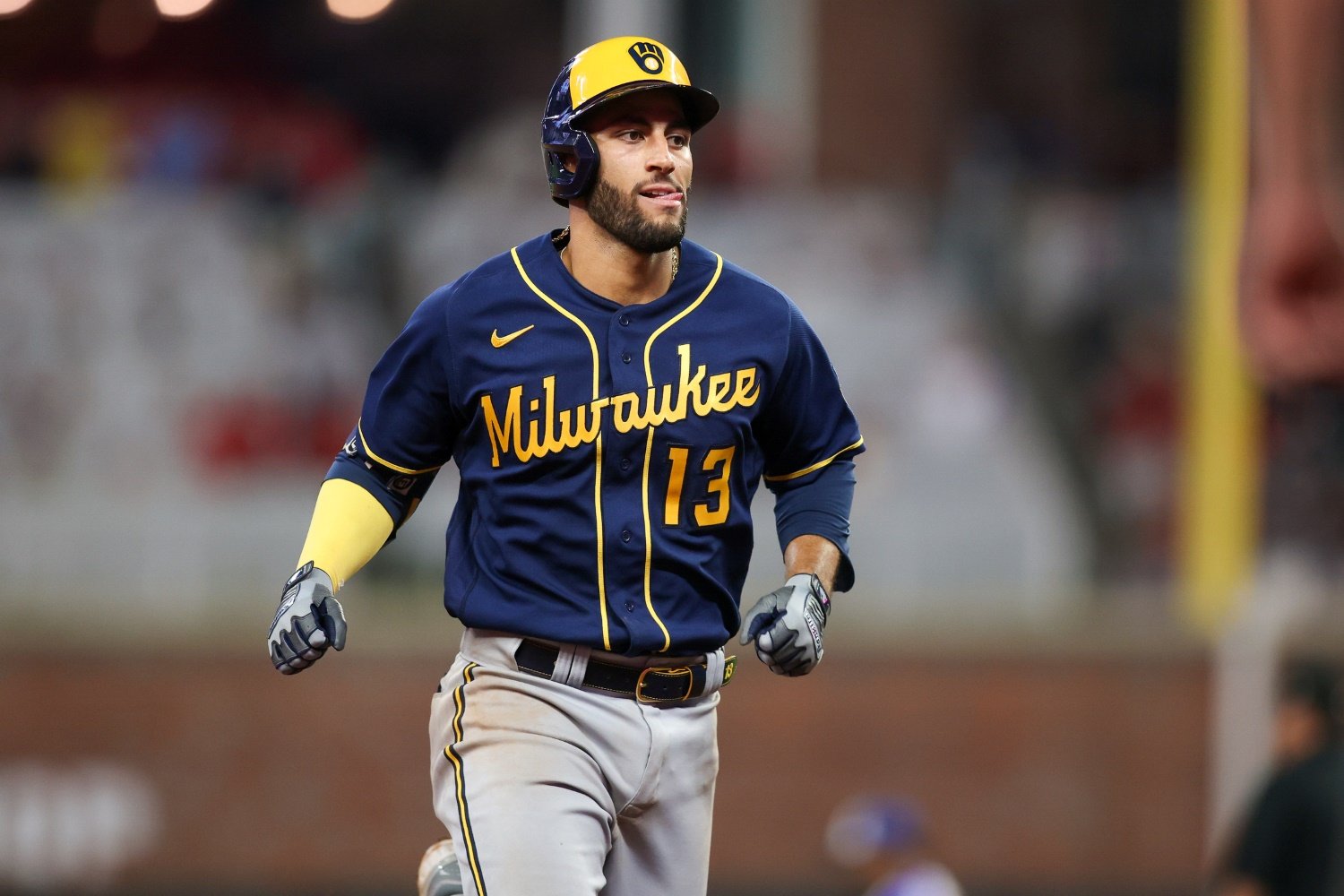 Right-handed hurler Chad Patrick is the return from the A's. This is a small deal, but it makes a lot of sense given the Brewers' roster outlook at the moment. Abraham Toro, who will turn 27 next month, came to the Crew alongside Jesse Winker in last fall's Kolten Wong trade with the Mariners. He put up good numbers with (mostly) Triple-A Nashville, and even showed well in very limited chances with the parent club, but the organization never seemed to take him seriously. His defensive chops, once lauded, have gotten less enthusiastic reviews with each passing season, until he's come to be viewed less as a versatile, slick-fielding infielder and more as a bat-first guy. Given the solid rookie showing by Andruw Monasterio, the defensive wizardry of Brice Turang, and the acquisition of power-hitting lefty bat Oliver Dunn for the middle infield, Toro was only going to continue being crowded out in 2024. He would have been due somewhere between $1.5 million and $2 million in his second trip through arbitration, and the Brewers chose to make a move to improve their pitching depth instead of paying that money. Patrick, 25, is a nice insurance policy for the back end of the rotation. Think of him as this year's Janson Junk, who came over for Hunter Renfroe last year around this time. Traded for old friend Jace Peterson at the deadline, Patrick went from the Arizona farm system to Oakland's, and he reached Triple A. However, he's not on the 40-man roster, and won't need to be added to it until next winter--unless, for any of several possible reasons, the Brewers call upon him to provide big-league innings sooner. He doesn't throw exceptionally hard, but his slider-cutter combination is the kind of pairing that figures to miss bats and manage contact reasonably well. Much will depend on his command of those sometimes awkward bedfellows. Again, this is a low-wattage move. It's more about aligning resources and roster math than it is a challenge trade or a franchise changer. Yet, it looks like one that could help the Brewers set themselves up for success next season, and it leaves them greater flexibility heading into the non-tender deadline Friday. What do you think of this move? Do you have a sense of what it implies about the club's still-uncertain direction for this winter? The stove is lit. Let's bask in its heat.
 -
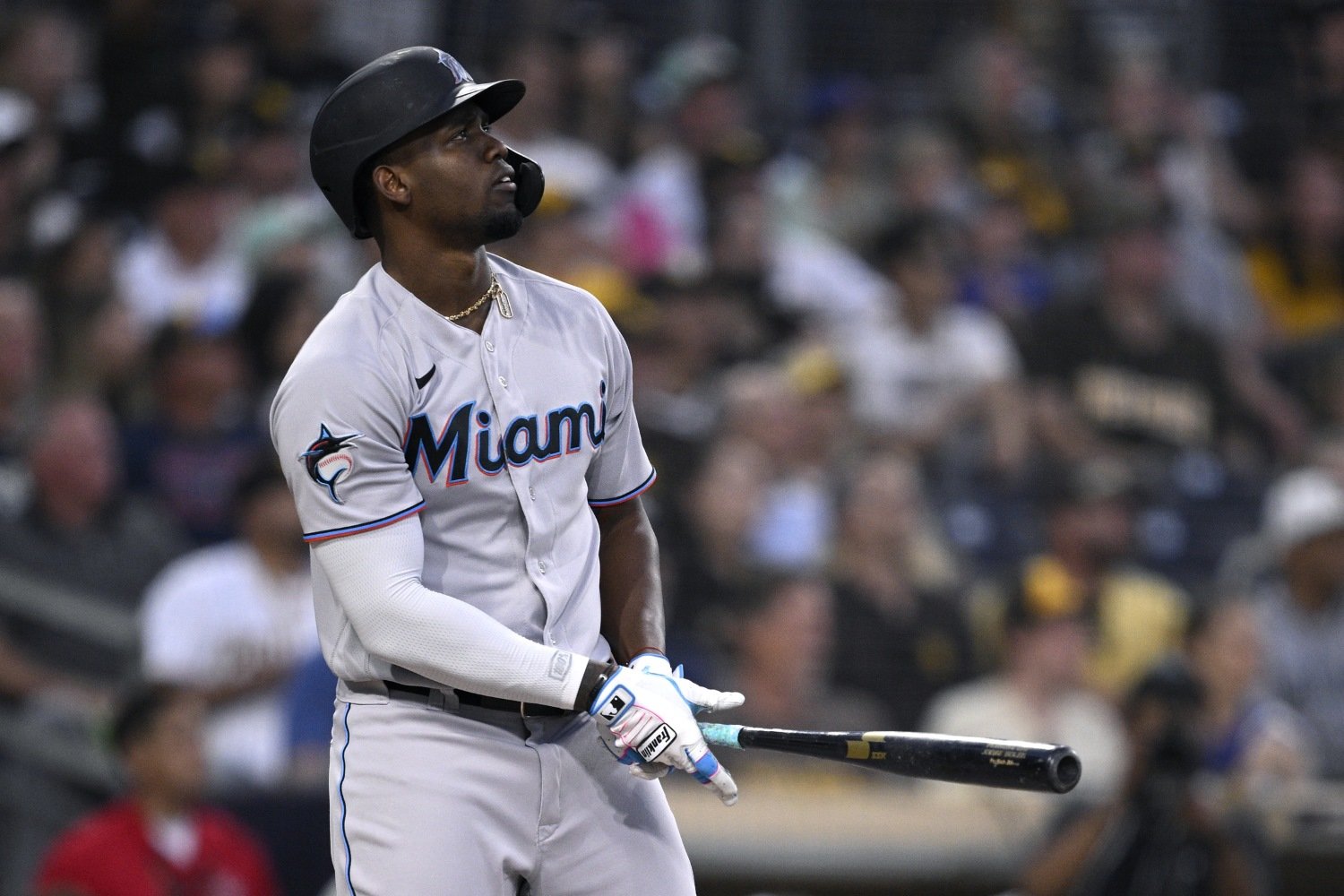
We're getting into the meat of my Brewers-specific MLB free agent rankings, now. These are guys who can be genuine contributors, sign medium-term deals, and/or have the potential to be especially good values for the value-conscious Milwaukee front office. Image courtesy of © Orlando Ramirez-USA TODAY Sports I won't do a lot of preamble here. See the first two installments in this series for more information about it, or just to catch up with the names we've already discussed. If you're all set in that regard, then dive right in with me. Nos. 41-50 Nos. 31-40 30. Luis Severino, RHP Eight months ago, Severino looked likely to reach this point in position to make something close to $100 million when he hit the market. Now, that's a hazy memory, visible only through the smoke still rising from the wreckage of his 2023 campaign. He still has impressive stuff, in theory, with a fastball that hums in at around 97 miles per hour and a five-pitch repertoire. Injury issues have been a major impediment to his development, including his efforts to achieve consistency on the mound, but if the Brewers can scoop him up on a short-term deal that allows him to pursue a more lucrative contract in a year or two, they should pounce on the opportunity. Chris Hook magic would look very, very good on Severino. 29. Lourdes Gurriel, Jr., OF Unfortunately, the Brewers just got a taste of how dangerous Gurriel can be in the Wild Card Series that ended their season. He's a bit of a throwback. He hits the ball hard, but more often on a line than in the air and over the fence. With low walk rates but similarly low strikeout rates, he's likely to run good batting averages but relatively low OBPs for the next few years. Like other available corner outfielders, he's a tricky fit, because Christian Yelich is locked into left field for the foreseeable future and the Crew has a bevy of young outfielders who figure to vie for playing time in right. Gurriel is a good enough hitter to soak up some time at DH, though, and could be especially effective in a flexible semi-platoon with guys like Garrett Mitchell and Sal Frelick. 28. Hyun-Jin Ryu, LHP Throughout his long deal with the Blue Jays, Ryu struggled to stay healthy. When he's on the mound, he lacks the strikeout stuff and (therefore) the upside of a hurler like Severino. He's more in the Wade Miley mold, at this point in his career. When he's healthy, though, he can be every bit as good as Miley, with pinpoint command that allows him to limit both walks and hard contact. He's likely to be available at a reasonable price, and the Brewers would be a good landing spot for him. 27. Joey Votto, 1B/DH Votto has shown an appreciation for the city of Milwaukee on previous visits, as a member of the enemy Reds. Now, he's a free agent, and his personality and his offensive profile would be welcome additions to the Crew. He's unlikely to bounce back and enjoy another season of twilight stardom, like the one he had in 2021, but he can still hit when he's healthy. Presumably, players like Brice Turang, Frelick, and Tyler Black could also learn a lot from Votto, no matter what his on-field production. 26. Kyle Gibson, RHP This won't sound like a huge endorsement, but Gibson might be the safest bet to give his new team 150 innings in 2024 of any available hurler. He's pitched at least 147 innings in every full season since 2014, and has averaged north of 180 frames in the three years since the pandemic-shortened 2020. Durability is his chief source of value, which always feels unexciting. He's a sinker-slider guy who will fill up the strike zone and try to get ground balls, but who gets squared up hard when he doesn't execute. Still, that stability would have substantial value for the 2024 Brewers, especially with Brandon Woodruff sidelined and Corbin Burnes's name hot on the trade market. Heading into his late 30s, it's unlikely that Gibson will get more than a two-year deal, so he should be affordable. 25. Jorge Soler, DH/LF The sometimes-ferocious slugger opted out of the final year of his deal with the Marlins, after a year in which he hit 36 home runs, trimmed his strikeout rate, and continued to draw walks at an impressive rate. He's hard to project, with injuries often stopping him from achieving numbers as pretty as those from 2023, but Soler is the kind of dynamic power threat that has been missing from the Brewers' lineup recently. 24. Carlos Santana, 1B/DH While the season ended on a sour note, Santana's tenure with the Brewers should have satisfied both player and team. He was the leader and the solid defender the team needed, and while his offensive profile has gotten less stable at this late stage in his career, he's still a valuable hitter. With Rowdy Tellez on his way out the door, first base is a glaring hole in next year's projected lineup, and Santana would fill it both well and economically. 23. Lucas Giolito, RHP If Chris Hook magic would look good on Severino, it would positive scintillate on Giolito. The last couple of seasons have been uneven for the former top prospect and funky changeup maven, but everything from Giolito's arm slot to his arsenal screams for optimization by the Brewers' pitching group. He might be in the market for a short-term deal, too, but if he's open to it, the team should also be willing to take a leap of faith and sign him to a longer pact that locks in the upside of a return to form. 22. Michael Brantley, DH/LF Bring him home. While his age and a shoulder injury that limited him in 2023 make Brantley far from an easy fit, he has a chance to be a wonderful one. His bat still has plenty of value, and he can acquit himself in left field on a part-time basis. Yelich and Brantley could keep each other fresh by trading off time in left field and at DH, and the fantastically smart, respected Brantley could augment the rest of the positional roster in intangible ways, too. 21. Nick Martinez, RHP A lot of pitchers who had options for 2024 that seemed reasonable have landed on the open market, after all. That's going to flood things a bit, and it could lead to pitchers like Martinez being paid less than their true value. With a five-pitch mix in which a filthy changeup was his most-used offering, Martinez is an old-fashioned junkballer. It worked like a charm in 2022 and 2023. He spent most of that time in the bullpen, but was perfectly capable of working multiple innings in that capacity, and he looked great in his handful of starts at the end of the season. Craig Counsell would really make this kind of weapon lethal, but even Pat Murphy should be able to get plenty out of him. Do any of these names get you excited as Brewers targets? Where should they be looking to allocate the most resources this winter? Sound off. View full article
-
Top 50 Fits for the Brewers in MLB Free Agency: Nos. 30-21
Matthew Trueblood posted an article in Brewers
 I won't do a lot of preamble here. See the first two installments in this series for more information about it, or just to catch up with the names we've already discussed. If you're all set in that regard, then dive right in with me. Nos. 41-50 Nos. 31-40 30. Luis Severino, RHP Eight months ago, Severino looked likely to reach this point in position to make something close to $100 million when he hit the market. Now, that's a hazy memory, visible only through the smoke still rising from the wreckage of his 2023 campaign. He still has impressive stuff, in theory, with a fastball that hums in at around 97 miles per hour and a five-pitch repertoire. Injury issues have been a major impediment to his development, including his efforts to achieve consistency on the mound, but if the Brewers can scoop him up on a short-term deal that allows him to pursue a more lucrative contract in a year or two, they should pounce on the opportunity. Chris Hook magic would look very, very good on Severino. 29. Lourdes Gurriel, Jr., OF Unfortunately, the Brewers just got a taste of how dangerous Gurriel can be in the Wild Card Series that ended their season. He's a bit of a throwback. He hits the ball hard, but more often on a line than in the air and over the fence. With low walk rates but similarly low strikeout rates, he's likely to run good batting averages but relatively low OBPs for the next few years. Like other available corner outfielders, he's a tricky fit, because Christian Yelich is locked into left field for the foreseeable future and the Crew has a bevy of young outfielders who figure to vie for playing time in right. Gurriel is a good enough hitter to soak up some time at DH, though, and could be especially effective in a flexible semi-platoon with guys like Garrett Mitchell and Sal Frelick. 28. Hyun-Jin Ryu, LHP Throughout his long deal with the Blue Jays, Ryu struggled to stay healthy. When he's on the mound, he lacks the strikeout stuff and (therefore) the upside of a hurler like Severino. He's more in the Wade Miley mold, at this point in his career. When he's healthy, though, he can be every bit as good as Miley, with pinpoint command that allows him to limit both walks and hard contact. He's likely to be available at a reasonable price, and the Brewers would be a good landing spot for him. 27. Joey Votto, 1B/DH Votto has shown an appreciation for the city of Milwaukee on previous visits, as a member of the enemy Reds. Now, he's a free agent, and his personality and his offensive profile would be welcome additions to the Crew. He's unlikely to bounce back and enjoy another season of twilight stardom, like the one he had in 2021, but he can still hit when he's healthy. Presumably, players like Brice Turang, Frelick, and Tyler Black could also learn a lot from Votto, no matter what his on-field production. 26. Kyle Gibson, RHP This won't sound like a huge endorsement, but Gibson might be the safest bet to give his new team 150 innings in 2024 of any available hurler. He's pitched at least 147 innings in every full season since 2014, and has averaged north of 180 frames in the three years since the pandemic-shortened 2020. Durability is his chief source of value, which always feels unexciting. He's a sinker-slider guy who will fill up the strike zone and try to get ground balls, but who gets squared up hard when he doesn't execute. Still, that stability would have substantial value for the 2024 Brewers, especially with Brandon Woodruff sidelined and Corbin Burnes's name hot on the trade market. Heading into his late 30s, it's unlikely that Gibson will get more than a two-year deal, so he should be affordable. 25. Jorge Soler, DH/LF The sometimes-ferocious slugger opted out of the final year of his deal with the Marlins, after a year in which he hit 36 home runs, trimmed his strikeout rate, and continued to draw walks at an impressive rate. He's hard to project, with injuries often stopping him from achieving numbers as pretty as those from 2023, but Soler is the kind of dynamic power threat that has been missing from the Brewers' lineup recently. 24. Carlos Santana, 1B/DH While the season ended on a sour note, Santana's tenure with the Brewers should have satisfied both player and team. He was the leader and the solid defender the team needed, and while his offensive profile has gotten less stable at this late stage in his career, he's still a valuable hitter. With Rowdy Tellez on his way out the door, first base is a glaring hole in next year's projected lineup, and Santana would fill it both well and economically. 23. Lucas Giolito, RHP If Chris Hook magic would look good on Severino, it would positive scintillate on Giolito. The last couple of seasons have been uneven for the former top prospect and funky changeup maven, but everything from Giolito's arm slot to his arsenal screams for optimization by the Brewers' pitching group. He might be in the market for a short-term deal, too, but if he's open to it, the team should also be willing to take a leap of faith and sign him to a longer pact that locks in the upside of a return to form. 22. Michael Brantley, DH/LF Bring him home. While his age and a shoulder injury that limited him in 2023 make Brantley far from an easy fit, he has a chance to be a wonderful one. His bat still has plenty of value, and he can acquit himself in left field on a part-time basis. Yelich and Brantley could keep each other fresh by trading off time in left field and at DH, and the fantastically smart, respected Brantley could augment the rest of the positional roster in intangible ways, too. 21. Nick Martinez, RHP A lot of pitchers who had options for 2024 that seemed reasonable have landed on the open market, after all. That's going to flood things a bit, and it could lead to pitchers like Martinez being paid less than their true value. With a five-pitch mix in which a filthy changeup was his most-used offering, Martinez is an old-fashioned junkballer. It worked like a charm in 2022 and 2023. He spent most of that time in the bullpen, but was perfectly capable of working multiple innings in that capacity, and he looked great in his handful of starts at the end of the season. Craig Counsell would really make this kind of weapon lethal, but even Pat Murphy should be able to get plenty out of him. Do any of these names get you excited as Brewers targets? Where should they be looking to allocate the most resources this winter? Sound off.
 -
Those two. Carlos Villanueva. Yeah, I think they're looking ahead here, even though it reads as looking back on the top line.
-
We have a manager! A week after Craig Counsell left as a free agent, the Brewers are expected to name his former bench coach as his successor. Was this the hire you were hoping for? Let's react and break down Murphy's promotion, in the comments. This offseason should be an interesting one. View full article
-
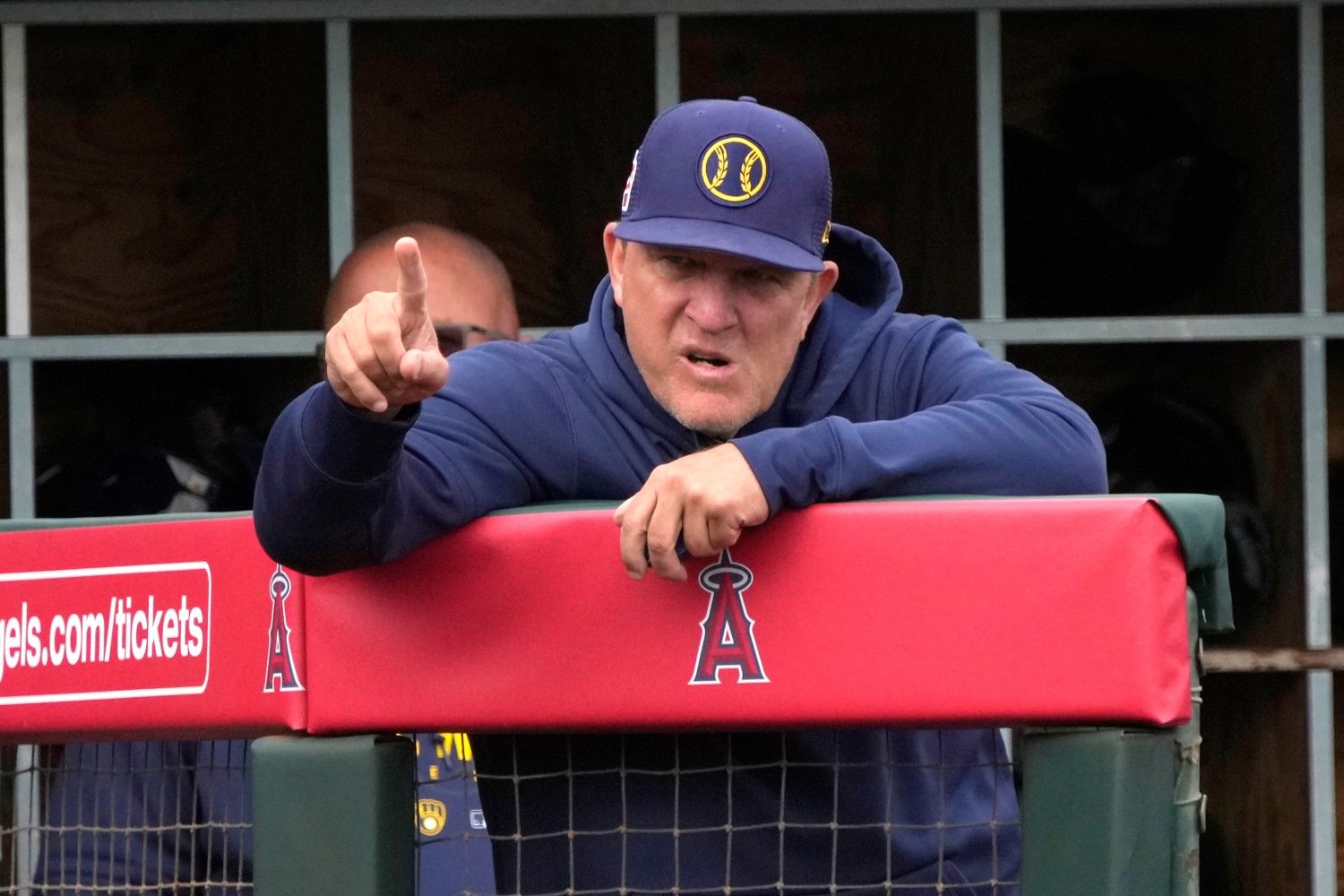 The Athletic's Ken Rosenthal reports that the Brewers will name Pat Murphy their new manager, taking over for Counsell (and, presumably, maintaining as much continuity on the coaching staff as was possible under these circumstances). Was this the hire you were hoping for? Let's react and break down Murphy's promotion, in the comments. This offseason should be an interesting one.
 -
Top 50 Fits for the Brewers in MLB Free Agency: Nos. 40-31
Matthew Trueblood posted an article in Brewers
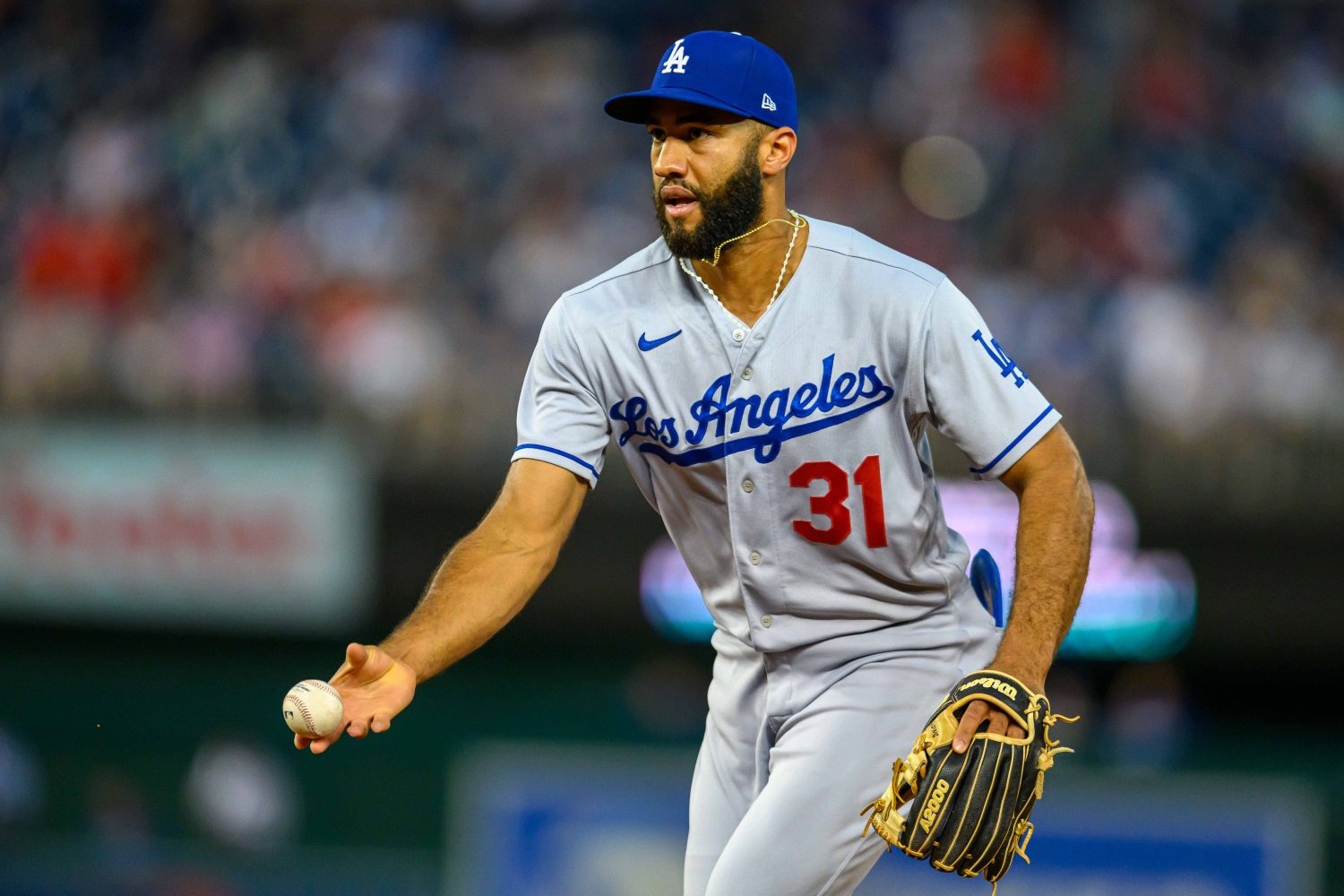 There's one thing I neglected to mention in my first post, which gave a brief introduction to this idea and broke down players 41-50 on my list: I didn't include any relief pitchers. That's not because no reliever could be a useful signing, but rather, because it seems so improbable to me that the Brewers will (or even should) spend money in that area this winter. If they're trimming payroll, or even if they're merely holding it level, then it's hard to justify signing a free-agent reliever to fit into what is already a shockingly strong and cost-efficient group. Let's get into the next set of 10 players on the list. 40. Eddie Rosario, LF/DH The Brewers preach patience at the plate. They've consistently, systematically constructed patient lineups for each of the last several years. Rosario's approach is the antithesis of that approach. Yet, he would be a welcome infusion for them, on a couple of levels. His power and contact skills are the very elements the team was missing in 2023, and while he's no great shakes in the outfield, he could swap in and out with Christian Yelich in left, with each taking some time at designated hitter, too, and Rosario riding the bench against most lefties. At this stage of his career, he should be a one-year signee at a reasonable cost. 39. Garrett Cooper, 1B/DH Perhaps pressing with free agency on the horizon, Cooper started focusing more on pulling the ball and getting it in the air in 2023. He managed to do so, but that victory was Pyrrhic. His strikeout rate spiked, his walk rate sagged, and his power didn't uptick enough to make up the difference. Cooper's contact rate on swings plummeted, but it doesn't seem like that was a matter of his bat speed disappearing or him forgetting how to hit a breaking ball. Rather, he got much too aggressive. The Brewers are the antidote to that loss of equilibrium, and while he would an underwhelming, buy-low acquisition, Cooper could pay handsome dividends. 38. Adam Duvall, OF Father Time swung and missed on Duvall. The Louisville product didn't become a regular in MLB until age 27, but eight years later, he's racked up 360 career extra-base hits, often in part-time work. He was past 30 when he first took up a place in center field, but he's been an average-plus defender there. It seems impossible that he'll continue to defy the aging curve, but then again, this feels a bit like a poor man's Nelson Cruz. As a platoon partner to Sal Frelick, Garrett Mitchell, and Yelich and a fine defender in any outfield spot, Duvall would be a perfect fit for this roster. 37. Tyler Mahle, RHP This is where the unique and intriguing nature of this exercise announces itself. Mahle underwent Tommy John surgery in May and won't be back until midseason, at the soonest. That makes him an odd fit on any free-agent ranking, but the concept here would be a multi-year deal that pays Mahle relatively little in 2024 and meaningfully more in 2025, when he should be fully healthy and ready to get his career back on track. He's been a high-end starting pitcher in bursts over the last few years, so snapping him up while the market views him as damaged goods could be a savvy maneuver. 36. Wade Miley, LHP Miley is a delightful fit for the Brewers, and was very valuable to them in 2023. The biggest problem, and the reason he's not (say) 10 spots higher, is that he turned down that mutual option, and that Craig Counsell is no longer with the team. It feels like Miley is more likely to re-sign with the Cubs, where he spent 2022, than to re-up with the Crew in a post-Counsell world. 35. Lance Lynn, RHP A guy who racks up strikeouts and limits walks pretty well, but can be vulnerable to power when he's not perfect? Sounds like a Brewer already. Lynn is a good reclamation project. His value will be dinged by very ugly topline 2023 numbers, but Chris Hook could get him back to his sturdy workhorse self in virtually no time. The stuff is still good enough, if used better, and the Brewers would use it better. 34. C.J. Cron, 1B/DH At 33 years old, Cron took a big step backward. That's often the sign of a player in irreversible decline, and indeed, things got even uglier after he was claimed by the Angels late in the campaign. He continued to crush fastballs, but everything else made him look foolish. When he's right, he's a fine power hitter with fewer strikeout problems than many similar guys. His top-end exit velocities remain elite. Signing him on a low-risk deal and trying to restore his ability to hammer soft and spin could turn a nice profit. 33. Amed Rosario, 2B A dearth of power and an aggressive approach limit his upside, but Rosario hits for average, runs very well, and seems likely to settle in as an adequate defender on the right side of the infield. He spent a long time stretched into a shortstop, but this role suits him better, and it could make the Brewers a good suitor for him. Because his tools remain tantalizing, the competition here could be surprisingly stout, but Rosario would be an offensive upgrade from Brice Turang, and they could even use a soft platoon to get the most out of each man. 32. Michael Lorenzen, RHP We wrote up Lorenzen as a trade target for the Crew back at the end of July. Instead, he landed with the Phillies, where things started beautifully but quickly went south. The history of players who have a season like Lorenzen's suggests that his resurgence was a blip, but the combination of stuff and high-end athleticism is hard to ignore in his case. If he's only able to command a two-year deal, he could stabilize the middle of the Milwaukee rotation nicely. 31. Jung Hoo Lee, OF In a market starved for any kind of impactful positional talent, Lee is one of the creative potential solutions. He's desperately short on power, by American standards, but he has fine plate discipline and elite bat-to-ball skills. If you believe those who scout him and rate him as a stellar defensive outfielder, his profile adds up to stardom. If you think he's destined to slide to a corner spot, he's barely playable. That's a wide set of error bars, and he's likely to get a deal that normally comes with greater certitude. Between that and the fact that he would make Frelick redundant, the prospective match here is a strange one. It might still be the right one, though--particularly if an unexpected opportunity to move Frelick for a controllable starting pitcher or a bigger bat presents itself. Which of these potential fits stands out to you? What alternatives to them do you feel make more sense? Free agents will start finding homes this week. Let's talk about them.
 -
Let's continue our countdown of the 50 best free-agent fits for the Milwaukee Brewers this MLB hot stove season. This, remember, is not a countdown of the best free agents available, but of the ones the Brewers could credibly sign and who would do the most good for them as a franchise. Image courtesy of © Reggie Hildred-USA TODAY Sports There's one thing I neglected to mention in my first post, which gave a brief introduction to this idea and broke down players 41-50 on my list: I didn't include any relief pitchers. That's not because no reliever could be a useful signing, but rather, because it seems so improbable to me that the Brewers will (or even should) spend money in that area this winter. If they're trimming payroll, or even if they're merely holding it level, then it's hard to justify signing a free-agent reliever to fit into what is already a shockingly strong and cost-efficient group. Let's get into the next set of 10 players on the list. 40. Eddie Rosario, LF/DH The Brewers preach patience at the plate. They've consistently, systematically constructed patient lineups for each of the last several years. Rosario's approach is the antithesis of that approach. Yet, he would be a welcome infusion for them, on a couple of levels. His power and contact skills are the very elements the team was missing in 2023, and while he's no great shakes in the outfield, he could swap in and out with Christian Yelich in left, with each taking some time at designated hitter, too, and Rosario riding the bench against most lefties. At this stage of his career, he should be a one-year signee at a reasonable cost. 39. Garrett Cooper, 1B/DH Perhaps pressing with free agency on the horizon, Cooper started focusing more on pulling the ball and getting it in the air in 2023. He managed to do so, but that victory was Pyrrhic. His strikeout rate spiked, his walk rate sagged, and his power didn't uptick enough to make up the difference. Cooper's contact rate on swings plummeted, but it doesn't seem like that was a matter of his bat speed disappearing or him forgetting how to hit a breaking ball. Rather, he got much too aggressive. The Brewers are the antidote to that loss of equilibrium, and while he would an underwhelming, buy-low acquisition, Cooper could pay handsome dividends. 38. Adam Duvall, OF Father Time swung and missed on Duvall. The Louisville product didn't become a regular in MLB until age 27, but eight years later, he's racked up 360 career extra-base hits, often in part-time work. He was past 30 when he first took up a place in center field, but he's been an average-plus defender there. It seems impossible that he'll continue to defy the aging curve, but then again, this feels a bit like a poor man's Nelson Cruz. As a platoon partner to Sal Frelick, Garrett Mitchell, and Yelich and a fine defender in any outfield spot, Duvall would be a perfect fit for this roster. 37. Tyler Mahle, RHP This is where the unique and intriguing nature of this exercise announces itself. Mahle underwent Tommy John surgery in May and won't be back until midseason, at the soonest. That makes him an odd fit on any free-agent ranking, but the concept here would be a multi-year deal that pays Mahle relatively little in 2024 and meaningfully more in 2025, when he should be fully healthy and ready to get his career back on track. He's been a high-end starting pitcher in bursts over the last few years, so snapping him up while the market views him as damaged goods could be a savvy maneuver. 36. Wade Miley, LHP Miley is a delightful fit for the Brewers, and was very valuable to them in 2023. The biggest problem, and the reason he's not (say) 10 spots higher, is that he turned down that mutual option, and that Craig Counsell is no longer with the team. It feels like Miley is more likely to re-sign with the Cubs, where he spent 2022, than to re-up with the Crew in a post-Counsell world. 35. Lance Lynn, RHP A guy who racks up strikeouts and limits walks pretty well, but can be vulnerable to power when he's not perfect? Sounds like a Brewer already. Lynn is a good reclamation project. His value will be dinged by very ugly topline 2023 numbers, but Chris Hook could get him back to his sturdy workhorse self in virtually no time. The stuff is still good enough, if used better, and the Brewers would use it better. 34. C.J. Cron, 1B/DH At 33 years old, Cron took a big step backward. That's often the sign of a player in irreversible decline, and indeed, things got even uglier after he was claimed by the Angels late in the campaign. He continued to crush fastballs, but everything else made him look foolish. When he's right, he's a fine power hitter with fewer strikeout problems than many similar guys. His top-end exit velocities remain elite. Signing him on a low-risk deal and trying to restore his ability to hammer soft and spin could turn a nice profit. 33. Amed Rosario, 2B A dearth of power and an aggressive approach limit his upside, but Rosario hits for average, runs very well, and seems likely to settle in as an adequate defender on the right side of the infield. He spent a long time stretched into a shortstop, but this role suits him better, and it could make the Brewers a good suitor for him. Because his tools remain tantalizing, the competition here could be surprisingly stout, but Rosario would be an offensive upgrade from Brice Turang, and they could even use a soft platoon to get the most out of each man. 32. Michael Lorenzen, RHP We wrote up Lorenzen as a trade target for the Crew back at the end of July. Instead, he landed with the Phillies, where things started beautifully but quickly went south. The history of players who have a season like Lorenzen's suggests that his resurgence was a blip, but the combination of stuff and high-end athleticism is hard to ignore in his case. If he's only able to command a two-year deal, he could stabilize the middle of the Milwaukee rotation nicely. 31. Jung Hoo Lee, OF In a market starved for any kind of impactful positional talent, Lee is one of the creative potential solutions. He's desperately short on power, by American standards, but he has fine plate discipline and elite bat-to-ball skills. If you believe those who scout him and rate him as a stellar defensive outfielder, his profile adds up to stardom. If you think he's destined to slide to a corner spot, he's barely playable. That's a wide set of error bars, and he's likely to get a deal that normally comes with greater certitude. Between that and the fact that he would make Frelick redundant, the prospective match here is a strange one. It might still be the right one, though--particularly if an unexpected opportunity to move Frelick for a controllable starting pitcher or a bigger bat presents itself. Which of these potential fits stands out to you? What alternatives to them do you feel make more sense? Free agents will start finding homes this week. Let's talk about them. View full article
-
 After Wade Miley declined his option and the team traded Mark Canha right at the outset of the offseason, the Brewers have a wide-open 40-man roster. They have six open spots already, with the possibility of another couple vacancies being created at the end of this week. Before then, though, they have to decide which players to add to that collection in order to protect minor-league veterans from the Rule 5 Draft, which will close out the MLB Winter Meetings in a few weeks. There are a couple of easy calls, but the team could choose to use their roster flexibility to add others, too. It's an enviable position. Let's run through the names. Jeferson Quero, C One of the best prospects in the organization, Quero also seems likely to be called upon by the parent club in 2024, anyway. They're likely to lose erstwhile backup Victor Caratini to free agency, and while there are plenty of other guys they could sign to complement William Contreras, it's unlikely that they'll be as lucky as they were in 2023, when Contreras and Caratini were the only catchers they needed all year. Quero is as easy as these calls get. Evan McKendry, RHP When the Brewers shipped Alex Jackson to the Rays in July (rescuing them from an emergency-level lack of catching depth), they got McKendry in return. He has below-average velocity, but on his way up the ladder in the Rays system, he put up good strikeout and walk numbers, and often looked good overall. His changeup is a good weapon. As soon as the Crew got ahold of him, they made a significant change: they had him crank up the usage of his four-seam fastball. It's not surprising that the Rays were willing to give up McKendry, and it's not surprising that they didn't want him to make use of the four-seamer much. It has more arm-side run and less rising action than does the average four-seamer. The Rays don't like that. They believe firmly in the cut-ride fastball, and want pitchers to achieve glove-side movement or at least backspin the ball at the top of the zone. The Brewers, by contrast, were exactly average in both dimensions of movement on four-seamers last year. They're not dogmatic in the same way. The Rays might have been right. McKendry's numbers all went backward after he came to the Milwaukee system. It's just as likely, though, that they have a plan to maximize McKendry's stuff that will bear fruit in the long run. Whether they add him to the roster Monday will help us determine which is true. Carlos D. Rodriguez, CF He's not even the most notable Brewers prospect with his first and last name, but Rodriguez isn't without utility. As a waterbug, slap-hitting type, he has to do everything except hit for power well. Increasingly, though, it looks like he might be capable of that. He plays plus defense at all three outfield spots, and he runs very well. Most importantly, he maintained his plate discipline and made contact at an excellent rate in the upper minors in 2023. That said, we're talking about a low ceiling here, and there's every chance he'll have the bat knocked out of his hands at the highest level. The Brewers are unlikely to commit to a roster spot for him throughout the offseason, as the rules dictate for a player added under these circumstances. They'll either gamble on him going undrafted, or trade him to a team (like Oakland, perhaps) with a greater appetite for light-hitting speedsters. Freddy Zamora, IF There's an argument for keeping Zamora, who would provide depth on the middle infield for a roster that currently feels thin there. With repeated injury issues slowing his development, though, he's yet to demonstrate any skills that meaningfully separate him from freely available alternatives. Only if Willy Adames is on the trade block does Zamora seem to fit into the Brewers' plans. If there wasn't so much open space on the 40-man, this wouldn't even be a conversation. Adam Seminaris, LHP Operating mostly as a soft-tossing, four-pitch southpaw starter, Seminaris has still posted fairly impressive strikeout rates in the minors. There's good reason to believe that, if he finds another tick of velocity or moves to a multi-inning relief role and picks up even more, he can be a valuable weapon in the kind of modular pitching staff the Brewers like to build. It's not extraordinarily hard to find similarly promising players, but Seminaris is the type who might well get snatched up if left unprotected, so there's a little extra motivation to protect him for the Brewers. Bradley Blalock, RHP Speaking of extra motivation to make an addition, Blalock was the return in the Luis Urias trade this summer. One reason why the Red Sox were willing to give him up was because they knew they would face this decision in a few short months, and it's not a surprise that he's also a fringe case for the Brewers. It's usually best not to hold onto a player just because it might make everyone feel better about a previous transaction, but Blalock isn't without some redeeming skills, either. He has a combination of arsenal and arm slot that should yield a good number of whiffs even in MLB. Again, the openness of the roster makes this a more interesting call than it might be otherwise. Beyond Quero, none of these guys are clear must-add talents. They (and the several other players in the organization who are eligible to be picked if left off the 40-man Monday) could be left exposed and not taken, and even if one or two of them were taken, they would probably not be missed very much. That the Brewers have so many open spots and so few players urgently demanding to be slotted into them does create an alternative opportunity, though. Each year, we see some players traded on the equivalent of this day, as teams who already have nearly full rosters and need to squeeze on a highly-valued prospect or two shuffle their decks. The Brewers are in position to land one of those players whom some team won't be able to load onto their roster, or one that a team needs to get out of the way in order to add someone essential. You have to be careful with moves like these. Two years ago, the Guardians gave up a little-known Dominican teenager in order to acquire pitcher Tobias Meyers, whom the Rays were unable to fit onto their 40-man when needed. That trade chip was Junior Caminero, who is now one of the game's most hyped power prospects. If the Brewers are better at self-scouting than that, though, there's a window here to acquire someone useful and cheap at a low ebb in value. Whom would you add to the 40-man roster, if you were Matt Arnold? It seems like this is the kind of small but meaningful moment the Brewers need to capitalize on, in order to maintain and improve the depth that made them NL Central champions in 2023. Let's follow along together.
 -
This week, we'll start to see player movement pick up throughout MLB, as a pair of roster deadlines force some action. By Monday evening, the Brewers have to take action to protect eligible players from the Rule 5 Draft next month. They have room on the roster, but might still leave a couple players unshielded. Image courtesy of © Curt Hogg / Milwaukee Journal Sentinel / USA TODAY NETWORK After Wade Miley declined his option and the team traded Mark Canha right at the outset of the offseason, the Brewers have a wide-open 40-man roster. They have six open spots already, with the possibility of another couple vacancies being created at the end of this week. Before then, though, they have to decide which players to add to that collection in order to protect minor-league veterans from the Rule 5 Draft, which will close out the MLB Winter Meetings in a few weeks. There are a couple of easy calls, but the team could choose to use their roster flexibility to add others, too. It's an enviable position. Let's run through the names. Jeferson Quero, C One of the best prospects in the organization, Quero also seems likely to be called upon by the parent club in 2024, anyway. They're likely to lose erstwhile backup Victor Caratini to free agency, and while there are plenty of other guys they could sign to complement William Contreras, it's unlikely that they'll be as lucky as they were in 2023, when Contreras and Caratini were the only catchers they needed all year. Quero is as easy as these calls get. Evan McKendry, RHP When the Brewers shipped Alex Jackson to the Rays in July (rescuing them from an emergency-level lack of catching depth), they got McKendry in return. He has below-average velocity, but on his way up the ladder in the Rays system, he put up good strikeout and walk numbers, and often looked good overall. His changeup is a good weapon. As soon as the Crew got ahold of him, they made a significant change: they had him crank up the usage of his four-seam fastball. It's not surprising that the Rays were willing to give up McKendry, and it's not surprising that they didn't want him to make use of the four-seamer much. It has more arm-side run and less rising action than does the average four-seamer. The Rays don't like that. They believe firmly in the cut-ride fastball, and want pitchers to achieve glove-side movement or at least backspin the ball at the top of the zone. The Brewers, by contrast, were exactly average in both dimensions of movement on four-seamers last year. They're not dogmatic in the same way. The Rays might have been right. McKendry's numbers all went backward after he came to the Milwaukee system. It's just as likely, though, that they have a plan to maximize McKendry's stuff that will bear fruit in the long run. Whether they add him to the roster Monday will help us determine which is true. Carlos D. Rodriguez, CF He's not even the most notable Brewers prospect with his first and last name, but Rodriguez isn't without utility. As a waterbug, slap-hitting type, he has to do everything except hit for power well. Increasingly, though, it looks like he might be capable of that. He plays plus defense at all three outfield spots, and he runs very well. Most importantly, he maintained his plate discipline and made contact at an excellent rate in the upper minors in 2023. That said, we're talking about a low ceiling here, and there's every chance he'll have the bat knocked out of his hands at the highest level. The Brewers are unlikely to commit to a roster spot for him throughout the offseason, as the rules dictate for a player added under these circumstances. They'll either gamble on him going undrafted, or trade him to a team (like Oakland, perhaps) with a greater appetite for light-hitting speedsters. Freddy Zamora, IF There's an argument for keeping Zamora, who would provide depth on the middle infield for a roster that currently feels thin there. With repeated injury issues slowing his development, though, he's yet to demonstrate any skills that meaningfully separate him from freely available alternatives. Only if Willy Adames is on the trade block does Zamora seem to fit into the Brewers' plans. If there wasn't so much open space on the 40-man, this wouldn't even be a conversation. Adam Seminaris, LHP Operating mostly as a soft-tossing, four-pitch southpaw starter, Seminaris has still posted fairly impressive strikeout rates in the minors. There's good reason to believe that, if he finds another tick of velocity or moves to a multi-inning relief role and picks up even more, he can be a valuable weapon in the kind of modular pitching staff the Brewers like to build. It's not extraordinarily hard to find similarly promising players, but Seminaris is the type who might well get snatched up if left unprotected, so there's a little extra motivation to protect him for the Brewers. Bradley Blalock, RHP Speaking of extra motivation to make an addition, Blalock was the return in the Luis Urias trade this summer. One reason why the Red Sox were willing to give him up was because they knew they would face this decision in a few short months, and it's not a surprise that he's also a fringe case for the Brewers. It's usually best not to hold onto a player just because it might make everyone feel better about a previous transaction, but Blalock isn't without some redeeming skills, either. He has a combination of arsenal and arm slot that should yield a good number of whiffs even in MLB. Again, the openness of the roster makes this a more interesting call than it might be otherwise. Beyond Quero, none of these guys are clear must-add talents. They (and the several other players in the organization who are eligible to be picked if left off the 40-man Monday) could be left exposed and not taken, and even if one or two of them were taken, they would probably not be missed very much. That the Brewers have so many open spots and so few players urgently demanding to be slotted into them does create an alternative opportunity, though. Each year, we see some players traded on the equivalent of this day, as teams who already have nearly full rosters and need to squeeze on a highly-valued prospect or two shuffle their decks. The Brewers are in position to land one of those players whom some team won't be able to load onto their roster, or one that a team needs to get out of the way in order to add someone essential. You have to be careful with moves like these. Two years ago, the Guardians gave up a little-known Dominican teenager in order to acquire pitcher Tobias Meyers, whom the Rays were unable to fit onto their 40-man when needed. That trade chip was Junior Caminero, who is now one of the game's most hyped power prospects. If the Brewers are better at self-scouting than that, though, there's a window here to acquire someone useful and cheap at a low ebb in value. Whom would you add to the 40-man roster, if you were Matt Arnold? It seems like this is the kind of small but meaningful moment the Brewers need to capitalize on, in order to maintain and improve the depth that made them NL Central champions in 2023. Let's follow along together. View full article
-
Free agency is open, but the movement hasn't really begun. That should slowly begin to change this week, and as it does, we''ll be tackling myriad topics related to the Milwaukee Brewers and free agents they might sign. Today, I kick off a series counting down the 50 best fits for the team on the market. Image courtesy of © Ken Blaze-USA TODAY Sports To be very clear, right up front: this is no definitive ranking. Nor is it a simple ranking of the best free agents, or the ones the Crew are most likely to sign. Rather, what I'm attempting here is to rank the 50 available players whom the Brewers would most help themselves by signing--balancing the short term and the long term, the talent of the players and their price tags, the realities of the team's budget and the aspirations and demands we should all put on Mark Attanasio when it comes to spending on his team. Without further ado, then, let's tackle the bottom 10 players on the list I created. (Obviously, these are far from being the 10 worst fits I see for the Brewers in free agency. A great many players don't make the list at all. These are just the worst of the best. If I ranked a player, I think the Brewers have a realistic chance to sign them, and that there's a contract to which they could ink him that would be good for the organization.) 50. Rich Hill, LHP The grand old man of the mound will turn 44 during spring training. He's pitched for 13 teams in a career spanning almost two full decades, but the Brewers aren't yet on that list. At last check, he was pondering a partial season of work, a la Roger Clemens at around the time Hill was breaking into the league. This Brewers front office is comfortable patching together the pitching staff in a rolling sort of fashion, and they do it brilliantly. This would be a fun and potentially profitable one-year, low-dollar deal. 49. Vince Velasquez, RHP After a promising fistful of starts with the Pirates last spring, Velazquez was part of the cascade of injuries that derailed Pittsburgh so badly early in the summer. He's getting old, but has always had a live arm, good athleticism, and solid makeup. He should be ready to pitch in the majors again by the end of June, and a cheap two-year deal could capture some upside for the Crew and deepen their rotation mix for the medium-term future. 48. Martín Maldonado, C Sometimes, when things are a little bit hard, it's nice to see a familiar face and share the struggle with them. If the Brewers are going to encounter adversity in 2024, it would be helpful to have a stolid, profoundly respected veteran presence behind William Contreras at catcher. Maldonado can't hit, and he's not the defensive force he was when last he donned Brewers colors, but he's an expert game-caller and an extra coach in the dugout each day. To get him, though, Milwaukee would surely need to convince him that they intend to contend. We all expect that, anyway, no matter what Ken Rosenthal says. 47. Gio Urshela, 3B Given the platform of tools and skills from which he was starting, the pelvic fracture that ended Urshela's 2023 could prove to be a career-altering (or even a career-ending) injury. If not, though, he'll be a tremendous value. Imagine if Abraham Toro could actually do all the things every baseball person inexplicably believes he can do, without evidence. That's what Urshela has done for the last half-decade, when healthy. He's a bargain-bin option to fill third base, but a huge clubhouse asset and a potentially helpful piece in the right infield mix. 46. Zach Plesac, RHP Since going AWOL and mouthing off about it afterward during the COVID-constrained 2020 season, Plesac's career has gone relentlessly backward. He spent most of 2023 in Columbus, instead of Cleveland, and the results weren't even pretty there. Still, there was so much promise there a few years ago that the Brewers could try bringing him back to the corner of Lake Michigan where his uncle enjoyed his greatest success and shoving him into the pitching lab. It'd have to be a flier, but it would be one with greater upside than most. 45. David Peralta, LF/DH Coming off a fairly lousy season with the Dodgers, Peralta is a thoroughly unexciting potential answer on the long side of a DH platoon for 2024--unexciting, but not uninteresting. He still hit the ball hard in 2023. He got pull- and swing-happy this year, but those are things the Brewers ameliorate well, in general. He'd be much cheaper than Jesse Winker was in 2023, and at least as likely to return positive value. 44. Jared Walsh, 1B/DH A Brookfield native, Walsh could use a sense of home and belonging, however unlikely it is that he'd spend the whole season with the Crew. His career (which included 64 extra-base hits and an All-Star appearance as recently as 2021) has been wrecked by neurological problems that have yet to be adequately explained. You have to hope, principally, that he can find some answers and enjoy a full life from now on. If he makes it back from this and regains his stroke, though, it would be wonderful if he did so with the lefty thump-hungry Crew. 43. Donovan Solano, 1B/2B/DH It's probably too generous to list Solano as a second baseman, at this stage of his career. He did play 117 innings there for the Twins in 2023, though, and he played another 117 at third base. It's not the sexy kind of versatility, because Solano is a stocky and slow-footed 36-year-old, but it counts. All of that is in support of a solid, consistent right-handed offensive profile, too. He's shy on power, but the Brewers sometimes help older hitters correct that flaw, and they could have Solano for less than $3 million as a general-purpose bat to lengthen their lineup and mash lefties. 42. Martin Perez, LHP A year removed from playing on an accepted Qualifying Offer, Perez might be lucky to find 40 percent of that money on this winter's market. His strikeout rate cratered in 2023 and the previous year's home-run prevention proved to be a blip, not a newfound skill. Even so, Pérez is a rubber-armed southpaw starter who can eat innings, buoy a clubhouse, and occasionally string together a handful of solid outings. 41. James Paxton, LHP His eternal remit is to stay healthy. When he does, he's spooky-good, even in a diminished mid-30s form. Last year, he debuted in early May, made 10 starts before the All-Star break in which he posted a 2.73 ERA and a 29-percent strikeout rate--and then pitched hurt for a while before shutting it down at the beginning of September. His second-half ERA was 6.98. To Pérez's underwhelming reliability, he is an answering volley of exhilarating volatility. The injury that truncated his season was a knee problem, but he's too old and his health record is too checked to give him credit (or any extra money) on the basis of it not being an arm problem. How would you rank these 10 options? Which do you like or dislike for the Brewers, without knowing what other moves they might make? Talk it out in the comments, and come back tomorrow for the next 10 names in the countdown. View full article
- 1 reply
-
- 1
-

-
- rich hill
- martin maldonado
- (and 5 more)
-
Top 50 Fits for the Brewers in MLB Free Agency: Nos. 50-41
Matthew Trueblood posted an article in Brewers
 To be very clear, right up front: this is no definitive ranking. Nor is it a simple ranking of the best free agents, or the ones the Crew are most likely to sign. Rather, what I'm attempting here is to rank the 50 available players whom the Brewers would most help themselves by signing--balancing the short term and the long term, the talent of the players and their price tags, the realities of the team's budget and the aspirations and demands we should all put on Mark Attanasio when it comes to spending on his team. Without further ado, then, let's tackle the bottom 10 players on the list I created. (Obviously, these are far from being the 10 worst fits I see for the Brewers in free agency. A great many players don't make the list at all. These are just the worst of the best. If I ranked a player, I think the Brewers have a realistic chance to sign them, and that there's a contract to which they could ink him that would be good for the organization.) 50. Rich Hill, LHP The grand old man of the mound will turn 44 during spring training. He's pitched for 13 teams in a career spanning almost two full decades, but the Brewers aren't yet on that list. At last check, he was pondering a partial season of work, a la Roger Clemens at around the time Hill was breaking into the league. This Brewers front office is comfortable patching together the pitching staff in a rolling sort of fashion, and they do it brilliantly. This would be a fun and potentially profitable one-year, low-dollar deal. 49. Vince Velasquez, RHP After a promising fistful of starts with the Pirates last spring, Velazquez was part of the cascade of injuries that derailed Pittsburgh so badly early in the summer. He's getting old, but has always had a live arm, good athleticism, and solid makeup. He should be ready to pitch in the majors again by the end of June, and a cheap two-year deal could capture some upside for the Crew and deepen their rotation mix for the medium-term future. 48. Martín Maldonado, C Sometimes, when things are a little bit hard, it's nice to see a familiar face and share the struggle with them. If the Brewers are going to encounter adversity in 2024, it would be helpful to have a stolid, profoundly respected veteran presence behind William Contreras at catcher. Maldonado can't hit, and he's not the defensive force he was when last he donned Brewers colors, but he's an expert game-caller and an extra coach in the dugout each day. To get him, though, Milwaukee would surely need to convince him that they intend to contend. We all expect that, anyway, no matter what Ken Rosenthal says. 47. Gio Urshela, 3B Given the platform of tools and skills from which he was starting, the pelvic fracture that ended Urshela's 2023 could prove to be a career-altering (or even a career-ending) injury. If not, though, he'll be a tremendous value. Imagine if Abraham Toro could actually do all the things every baseball person inexplicably believes he can do, without evidence. That's what Urshela has done for the last half-decade, when healthy. He's a bargain-bin option to fill third base, but a huge clubhouse asset and a potentially helpful piece in the right infield mix. 46. Zach Plesac, RHP Since going AWOL and mouthing off about it afterward during the COVID-constrained 2020 season, Plesac's career has gone relentlessly backward. He spent most of 2023 in Columbus, instead of Cleveland, and the results weren't even pretty there. Still, there was so much promise there a few years ago that the Brewers could try bringing him back to the corner of Lake Michigan where his uncle enjoyed his greatest success and shoving him into the pitching lab. It'd have to be a flier, but it would be one with greater upside than most. 45. David Peralta, LF/DH Coming off a fairly lousy season with the Dodgers, Peralta is a thoroughly unexciting potential answer on the long side of a DH platoon for 2024--unexciting, but not uninteresting. He still hit the ball hard in 2023. He got pull- and swing-happy this year, but those are things the Brewers ameliorate well, in general. He'd be much cheaper than Jesse Winker was in 2023, and at least as likely to return positive value. 44. Jared Walsh, 1B/DH A Brookfield native, Walsh could use a sense of home and belonging, however unlikely it is that he'd spend the whole season with the Crew. His career (which included 64 extra-base hits and an All-Star appearance as recently as 2021) has been wrecked by neurological problems that have yet to be adequately explained. You have to hope, principally, that he can find some answers and enjoy a full life from now on. If he makes it back from this and regains his stroke, though, it would be wonderful if he did so with the lefty thump-hungry Crew. 43. Donovan Solano, 1B/2B/DH It's probably too generous to list Solano as a second baseman, at this stage of his career. He did play 117 innings there for the Twins in 2023, though, and he played another 117 at third base. It's not the sexy kind of versatility, because Solano is a stocky and slow-footed 36-year-old, but it counts. All of that is in support of a solid, consistent right-handed offensive profile, too. He's shy on power, but the Brewers sometimes help older hitters correct that flaw, and they could have Solano for less than $3 million as a general-purpose bat to lengthen their lineup and mash lefties. 42. Martin Perez, LHP A year removed from playing on an accepted Qualifying Offer, Perez might be lucky to find 40 percent of that money on this winter's market. His strikeout rate cratered in 2023 and the previous year's home-run prevention proved to be a blip, not a newfound skill. Even so, Pérez is a rubber-armed southpaw starter who can eat innings, buoy a clubhouse, and occasionally string together a handful of solid outings. 41. James Paxton, LHP His eternal remit is to stay healthy. When he does, he's spooky-good, even in a diminished mid-30s form. Last year, he debuted in early May, made 10 starts before the All-Star break in which he posted a 2.73 ERA and a 29-percent strikeout rate--and then pitched hurt for a while before shutting it down at the beginning of September. His second-half ERA was 6.98. To Pérez's underwhelming reliability, he is an answering volley of exhilarating volatility. The injury that truncated his season was a knee problem, but he's too old and his health record is too checked to give him credit (or any extra money) on the basis of it not being an arm problem. How would you rank these 10 options? Which do you like or dislike for the Brewers, without knowing what other moves they might make? Talk it out in the comments, and come back tomorrow for the next 10 names in the countdown.
 -
It's easy to view the departure of Craig Counsell as some sort of death knell for the long competitive stretch the Brewers have enjoyed in the years since they hired him, In another reading, though, this gives an aggressive and savvy front office an appealing opportunity: be ruthless, in a good way. Image courtesy of © Ray Acevedo-USA TODAY Sports Entering 2023, it would have been hard to imagine a world in which trading Corbin Burnes could make any significant bloc of Brewers fans happy. The 2021 NL Cy Young Award winner was only a half-step worse than that in 2022, and he's put up some of the most dazzling pitching performances in team history. When he and the team were at odds in the window around his arbitration hearing in the spring, fans (rightly) sided with Burnes. One more disappointing playoff exit and one more not-quite-ace-level season later, though, it's now possible to imagine life after Burnes without gritting one's teeth in anger. Had Craig Counsell still been the manager of this team, it would have been awfully difficult to envision the team trading Burnes, because Counsell is not only a great manager, but an experienced and established one. He's disliked previous moves in that same vein. It might have happened anyway, but it would have had to be done delicately. It might have, however slightly, even shaped the return the team accepted. Those considerations are out the window now. Whoever becomes the new manager of the Brewers in the next week, they will have far less capital with the fans and with the organization than Counsell had. The only bounds on Matt Arnold and his deep supporting cast, now, are the ones handed down by Mark Attanasio. In the first full week of the offseason, with the GM Meetings yielding their usual explosion of half-sourced, vague-but-interesting rumors, all we heard about was the Brewers being in sell mode. That might turn out to be true, or true-adjacent. The team did decline an affordable option on Mark Canha, effectively, by trading him even before the Counsell news broke. When Ken Rosenthal reports the team is open to trading any player on the roster, it's clear that the team is (at least) not poised to make a huge splash in free agency and chase a World Series title at big future cost. Let's hit pause, though. Arnold is not David Stearns, but even in his very short time at the top of the baseball operations hierarchy, he's shown a Stearns-like nose for the football, metaphorically speaking. No one expected the Milwaukee Brewers to jump into the Sean Murphy trade last winter and come out with both a long-term answer at catcher and a valuable set-up reliever, but that's just what they did. That was, in all likelihood, a once-in-a-decade confluence of stupidity by other teams and having the right resources ready to capitalize, but lesser cousins of the Contreras trade could show up this winter. Trading Burnes, for example, does not have to be a pure selloff. The Brewers could make a deal with their neighbors to the west, sending Burnes to the Minnesota Twins in exchange for Jorge Polanco, who would help shore up the weak lineup and who has the versatility to play some second base and some third base, according to the team's needs. A swap that sent Burnes to the Bronx in exchange for Gleyber Torres (another, even better potential solution to the team's holes on the infield) might sound like a pipedream, but the Yankees are looking to give some of their younger talent a try around the horn, and Burnes would fill an obvious need for them. Those aren't even especially creative possibilities. Arnold could, instead, trade a talented young outfielder (Garrett Mitchell best hits the sweet spot of having real trade value but not looking like a long-term fixture for this team) and a starting pitching prospect for a player whom the Brewers could then turn into a star via their strong player development--someone like Tigers righthander Matt Manning, or the Royals' Brady Singer, or a hitter like the Rockies' Brendan Rodgers. Remember, it was only two years ago that the Brewers acquired an inconsistent shortstop and turned him into a star. Over the last several years, they've been very good at grabbing fringy first basemen and designated hitters and turning them into legitimate sluggers. This could be a winter in which they find another diamond in the rough, and Counsell being gone almost makes that easier--it allows the team to gamble on an unproven player to an extent that would be harder to pull off with the higher, more rigid expectations that Counsell's success created. I could see a Devin Williams trade this winter, infusing the upper levels of the farm system with an exciting piece or two and handing over the relief corps to the perfectly capable quartet of Joel Payamps, Abner Uribe, Trevor Megill, and Hoby Milner. I could see a deal in which Willy Adames brings back a controllable starting pitcher with some upside. I could see the team further speculating in the catching market, because in addition to having a short-term need for a backup to William Contreras, they have that instruction and development infrastructure around the catching position that could allow them to brew up another surprise star and create numerous options for the future. All of that neglects the reality that, in Tyler Black, Jackson Chourio, and Robert Gasser, the Brewers also have three players who figure to emerge as major, positive contributors in 2024, whether that be filling the holes that became apparent as 2023 wore on or stepping into new voids created by trades. This farm system isn't quite elite, but it offers a lot of potential impact as soon as next year. Chourio, in particular, could have a transformative impact on this lineup, even if it won't happen until June or so. There's no question that Counsell's departure changes the matrix of possibilities for the Brewers this winter. It forecloses some, but it also opens others. The Brewers might be more likely to unload some veteran talent this winter than they were a fortnight ago, but count me among those who still expect them to compete (perhaps with a much different style of team) in 2024. In the meantime, we could see another couple of moves that put the same charge in this community that happened when the Contreras trade happened last December. Am I telling myself a fairytale? Can the Brewers use some newfound flexibility to change lanes without losing time on their road to the World Series? Let's talk about options, old and new, and whether this managerial change could create new avenues to succeeding in the small market that is Milwaukee. View full article
