


Matthew Trueblood
-
Posts
1,964 -
Joined
-
Last visited
-
Days Won
10
Content Type
Profiles
Forums
Blogs
Events
News
2026 Milwaukee Brewers Top Prospects Ranking
Milwaukee Brewers Videos
2022 Milwaukee Brewers Draft Picks
Milwaukee Brewers Free Agent & Trade Rumors, Notes, & Tidbits
Guides & Resources
2023 Milwaukee Brewers Draft Picks
2024 Milwaukee Brewers Draft Picks
The Milwaukee Brewers Players Project
2025 Milwaukee Brewers Draft Pick Tracker
2026 Milwaukee Brewers Draft Tracker: Picks & Bonuses
Store
Downloads
Gallery
Everything posted by Matthew Trueblood
-
In this scenario, have you kidnapped Tony Clark himself, or just his entire family? Lol. Why would the players go for this? Why *should* they? What does this make better about the world or the game? C'mon. Guaranteed contracts are not on the long, long list of problems that need to be addressed here.
-
The week of MLB's Winter Meetings turned out to be bookended by landmark contracts, just as everyone might have hoped. For various reasons, though, many, many people are mad. Image courtesy of © Kyle Schwab-USA TODAY Sports It's hard not to draw some narrative connections between the contract on which Jackson Chourio and the Brewers agreed last weekend, and the one on which Shohei Ohtani and the Dodgers agreed Saturday. Almost exactly a week after the smallest-market team in MLB signed a record contract for a player without any MLB service time, the league's biggest, boldest spender committed to a deal about nine times larger. The comparison isn't apples-to-apples, of course, so much as apples-to-Apple Jacks. Ohtani signed a supermassive deal because he's earned each of the last three American League MVPs (and actually won two of them), and because he's served his time and earned free agency. Under baseball's wait-and-see salary structure, Chourio had no way to get anywhere close to this kind of payday, so he took what he could get. It all makes sense. There's an unassailable logic to Ohtani getting far more guaranteed money than Chourio, since one has proved himself to be one of the best players in baseball history and one had an .805 OPS in the minor leagues last year. Still, there are plenty of people who are upset about one of these contracts, or even about both. In Ohtani's case, the objection is simply a matter of perceived fairness, and of scale. Those criticisms aren't unfair. We can prattle on endlessly, if we choose, about the fact that Mark Attanasio has tons of money and could spend more of it on the Brewers if he wanted, but it would be farcical to pretend that he could afford that anywhere near as easily as the Dodgers (with their huge advantages in revenue in both the present and the future) can afford to do what they do. When there are opportunities that a few teams can actually seize but which other teams can't even fathom, something is amiss. Does that mean baseball needs a salary cap? Not in and of itself, no. It does suggest, though, that the league should be more aggressive in ensuring revenue-sharing and other means by which to level the playing field for small-market teams. Ohtani's deal signifies a widening of the gap between rich and poor in the sport, and that gap should be closing, instead. The other objection to Ohtani's deal is that $700 million is far too much to be paying to any ballplayer, and I find that to be a perfectly reasonable one, too. Somewhere along the way, in a fervent and well-intentioned rush to support players at the expense of much richer, much less deserving owners, fans lost their perspective and their sense of scale. Many denizens of the baseball internet believe that billionaires simply should not exist, and I share that belief. Alas, some of those very baseball people have been so eager to support labor instead of capital that they've accidentally ended up being ok with deals like Ohtani's, which will certainly make him a billionaire within several years. The fault isn't on the player, or even on the Dodgers, though I also think this deal is a bad baseball decision that will haunt them in half a decade or so. The fault lies with fans, in too many places and at too many times, letting the fact that they really like baseball and want to consume it override their rational decision-making. Owners aren't charging obscene prices for parking, admission, concessions, and souvenirs because they need to pay their players. They're doing it because they kept raising prices over a period of several decades, and fans have not responded with a sufficiently firm rejection of that inflation. Players are only getting megadeals because the owners can't find a better way to spend all the money fans keep shoving at them. For many years, fans gladly paid exorbitant cable bills to keep watching their favorite teams. Now that bubble has burst, but many fans are gladly turning to paying the team directly for streaming rights, and the prices are fairly huge. All this fan allegiance has also allowed owners to work over states and municipalities for billion-dollar boondoggles, in the form of new ballparks and major ballpark renovations financed by taxpayers. In other words, Ohtani's deal is a symptom of a huge and nasty problem, or perhaps a few of them in combination. It should make you flinch, but not for any reason having to do directly or individually with Ohtani. It should underscore for us all the systemic issues at hand. That brings us to Chourio's contract. Every time a young player far from free agency signs a long-term, team-friendly deal like Chourio's, there are many people who say that it's a pernicious thing--a reinforcement of the corrupt system that brings players (especially international free-agent teenagers) into the machinery of professional baseball. They're almost right. There's almost nothing good about the way MLB lets amateurs join its organizations. Hard caps on draft and international free-agent spending since 2011 have exaggerated the unfairness, but it was there even before those ceilings came down. Many players are treated like chattel from unconscionably young ages, shuttled around to tryouts and showcases, given terrible advice, and groomed to yield the greatest possible signing bonus before they turn 20. That happens in the United States, as well as in Latin America. This way of doing things helps produce the arm injuries now endemic to pro ball. It drives the still-too-high incidence of performance-enhancing drug usage by players from the Dominican Republic. It keeps multiple countries economically dependent on the United States in an unhealthy way, and discourages the creation or pursuit of good secondary education options. It even leads to some human trafficking. It's an immoral nightmare, tailored to maximize the profits of the owners. Deals like Chourio's, though, just aren't even a symptom of that problem. Inevitably, deals like these get decried as manipulative, or criticized because they stunt the player's earning power. Chourio could have gotten as much as $320 million out of the 10 years he sold to the Brewers for no more than $142 million, and for some, that's indicative of the unfairness and predation of it. I reject that. There is not any meaningful difference, for any family, between having $82 million and having $182 million. There is no meaningful difference between having $100 million and $600 million. Anyone who says otherwise has lost touch with reality and is too used to reading these numbers on a screen. They're treating them like batting averages. It's not like that. I'm very glad Jackson Chourio and his entire family (a generation in each direction) are set for life. I want a better, fairer compensation system for professional baseball, one that takes a lot of money out of the pockets of the Dodgers' and Cubs' owners and gives it to the Royals and Brewers, on the condition that that money be spent on their teams. I want a fairer system that thwarts a deal like Ohtani's and gives half that much money to minor-leaguers and minimum-salary big-leaguers, instead. However, while Ohtani's deal represents a macro-level imbalance and a genuine problem, Chourio's is more like the silver lining of a cloud. Chourio's deal doesn't perpetuate an unfair system; it just happens to exist within it. Let's celebrate it. View full article
-
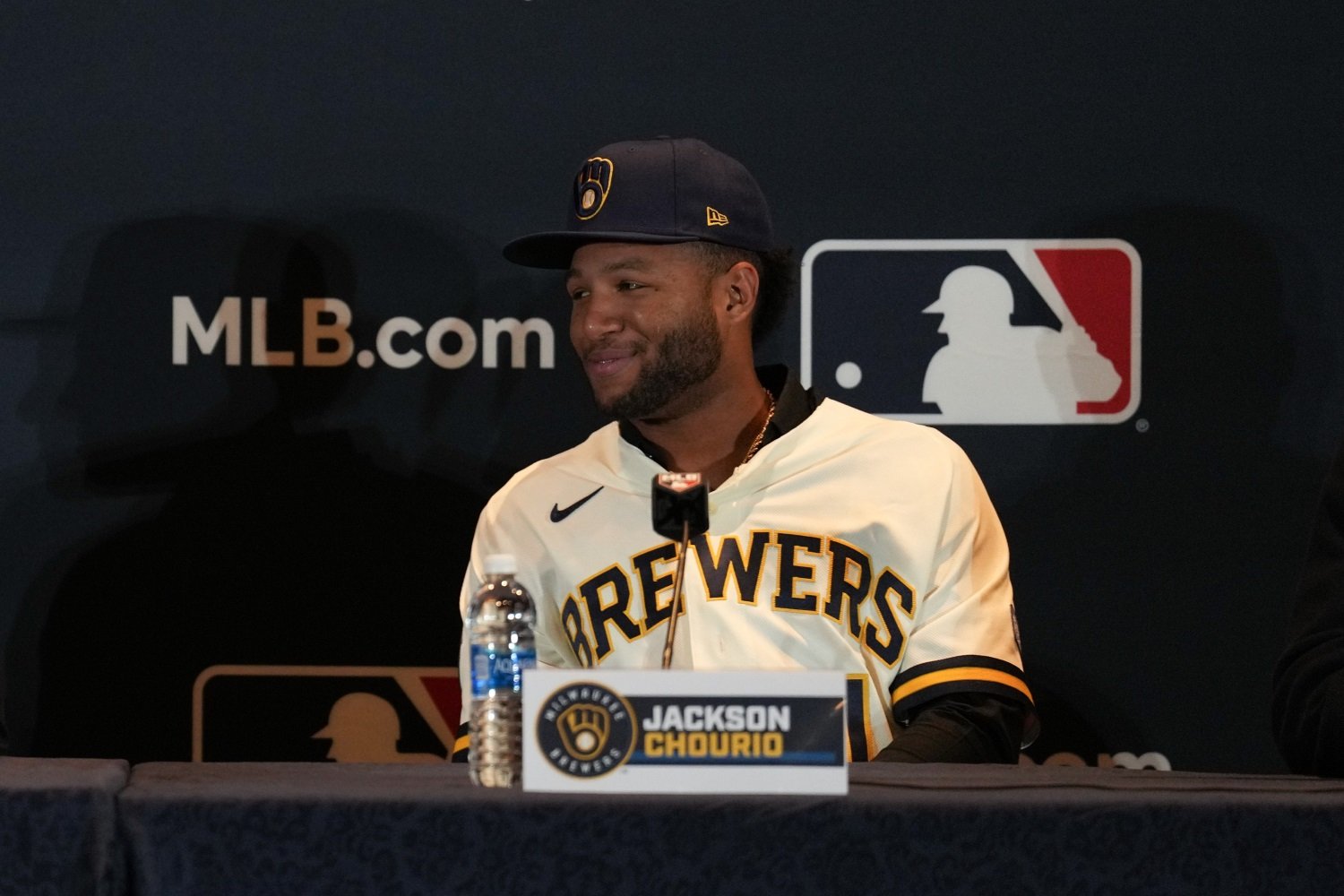 It's hard not to draw some narrative connections between the contract on which Jackson Chourio and the Brewers agreed last weekend, and the one on which Shohei Ohtani and the Dodgers agreed Saturday. Almost exactly a week after the smallest-market team in MLB signed a record contract for a player without any MLB service time, the league's biggest, boldest spender committed to a deal about nine times larger. The comparison isn't apples-to-apples, of course, so much as apples-to-Apple Jacks. Ohtani signed a supermassive deal because he's earned each of the last three American League MVPs (and actually won two of them), and because he's served his time and earned free agency. Under baseball's wait-and-see salary structure, Chourio had no way to get anywhere close to this kind of payday, so he took what he could get. It all makes sense. There's an unassailable logic to Ohtani getting far more guaranteed money than Chourio, since one has proved himself to be one of the best players in baseball history and one had an .805 OPS in the minor leagues last year. Still, there are plenty of people who are upset about one of these contracts, or even about both. In Ohtani's case, the objection is simply a matter of perceived fairness, and of scale. Those criticisms aren't unfair. We can prattle on endlessly, if we choose, about the fact that Mark Attanasio has tons of money and could spend more of it on the Brewers if he wanted, but it would be farcical to pretend that he could afford that anywhere near as easily as the Dodgers (with their huge advantages in revenue in both the present and the future) can afford to do what they do. When there are opportunities that a few teams can actually seize but which other teams can't even fathom, something is amiss. Does that mean baseball needs a salary cap? Not in and of itself, no. It does suggest, though, that the league should be more aggressive in ensuring revenue-sharing and other means by which to level the playing field for small-market teams. Ohtani's deal signifies a widening of the gap between rich and poor in the sport, and that gap should be closing, instead. The other objection to Ohtani's deal is that $700 million is far too much to be paying to any ballplayer, and I find that to be a perfectly reasonable one, too. Somewhere along the way, in a fervent and well-intentioned rush to support players at the expense of much richer, much less deserving owners, fans lost their perspective and their sense of scale. Many denizens of the baseball internet believe that billionaires simply should not exist, and I share that belief. Alas, some of those very baseball people have been so eager to support labor instead of capital that they've accidentally ended up being ok with deals like Ohtani's, which will certainly make him a billionaire within several years. The fault isn't on the player, or even on the Dodgers, though I also think this deal is a bad baseball decision that will haunt them in half a decade or so. The fault lies with fans, in too many places and at too many times, letting the fact that they really like baseball and want to consume it override their rational decision-making. Owners aren't charging obscene prices for parking, admission, concessions, and souvenirs because they need to pay their players. They're doing it because they kept raising prices over a period of several decades, and fans have not responded with a sufficiently firm rejection of that inflation. Players are only getting megadeals because the owners can't find a better way to spend all the money fans keep shoving at them. For many years, fans gladly paid exorbitant cable bills to keep watching their favorite teams. Now that bubble has burst, but many fans are gladly turning to paying the team directly for streaming rights, and the prices are fairly huge. All this fan allegiance has also allowed owners to work over states and municipalities for billion-dollar boondoggles, in the form of new ballparks and major ballpark renovations financed by taxpayers. In other words, Ohtani's deal is a symptom of a huge and nasty problem, or perhaps a few of them in combination. It should make you flinch, but not for any reason having to do directly or individually with Ohtani. It should underscore for us all the systemic issues at hand. That brings us to Chourio's contract. Every time a young player far from free agency signs a long-term, team-friendly deal like Chourio's, there are many people who say that it's a pernicious thing--a reinforcement of the corrupt system that brings players (especially international free-agent teenagers) into the machinery of professional baseball. They're almost right. There's almost nothing good about the way MLB lets amateurs join its organizations. Hard caps on draft and international free-agent spending since 2011 have exaggerated the unfairness, but it was there even before those ceilings came down. Many players are treated like chattel from unconscionably young ages, shuttled around to tryouts and showcases, given terrible advice, and groomed to yield the greatest possible signing bonus before they turn 20. That happens in the United States, as well as in Latin America. This way of doing things helps produce the arm injuries now endemic to pro ball. It drives the still-too-high incidence of performance-enhancing drug usage by players from the Dominican Republic. It keeps multiple countries economically dependent on the United States in an unhealthy way, and discourages the creation or pursuit of good secondary education options. It even leads to some human trafficking. It's an immoral nightmare, tailored to maximize the profits of the owners. Deals like Chourio's, though, just aren't even a symptom of that problem. Inevitably, deals like these get decried as manipulative, or criticized because they stunt the player's earning power. Chourio could have gotten as much as $320 million out of the 10 years he sold to the Brewers for no more than $142 million, and for some, that's indicative of the unfairness and predation of it. I reject that. There is not any meaningful difference, for any family, between having $82 million and having $182 million. There is no meaningful difference between having $100 million and $600 million. Anyone who says otherwise has lost touch with reality and is too used to reading these numbers on a screen. They're treating them like batting averages. It's not like that. I'm very glad Jackson Chourio and his entire family (a generation in each direction) are set for life. I want a better, fairer compensation system for professional baseball, one that takes a lot of money out of the pockets of the Dodgers' and Cubs' owners and gives it to the Royals and Brewers, on the condition that that money be spent on their teams. I want a fairer system that thwarts a deal like Ohtani's and gives half that much money to minor-leaguers and minimum-salary big-leaguers, instead. However, while Ohtani's deal represents a macro-level imbalance and a genuine problem, Chourio's is more like the silver lining of a cloud. Chourio's deal doesn't perpetuate an unfair system; it just happens to exist within it. Let's celebrate it.
 -
No single addition could impact the 2024 Brewers more, at this moment, than a reliably excellent right-handed bat. One player who already does his slugging nearby could fit the bill, but there are some caveats to consider. Image courtesy of © Matt Blewett-USA TODAY Sports Even back in July, there were some reports that the Chicago White Sox would listen to trade offers on Eloy Jimenez, and that the Brewers were one team who had checked in on him. It doesn't sound like those talks went far during the summer, but the Sox are now under new management and headed for a rebuild. It's time to revisit and fully consider Jiménez as a trade target. Jiménez, who just turned 27 at the end of last month, helped blaze the trail the Brewers and Jackson Chourio just navigated. He's under team control for up to three more seasons, on the terms of a team-friendly deal he and the White Sox signed before his big-league debut. He'll make $13 million in 2024, and then has two club options with a total value of $35 million. In 2023, he hit .272/.317/.441, with 18 home runs in 489 plate appearances. It was a step back in terms of per-opportunity production from his stellar 2022, but that seemingly paltry number of times at bat was also the most he's accrued in any season since he was a rookie in 2019. It's the combination of mild offensive inconsistency and severely lacking durability that makes Jiménez theoretically available in trade. That cocktail should also keep his cost down enough to keep anyone's eyes from popping out of their head at what the White Sox request. Still, Jiménez is a very good hitter, and when he's kept out of the outfield, he stands a better chance of staying healthy. He's a DH, really, and Chicago's stubbornness in admitting that contributed to some unnecessary lost time over the last few years. Happily, the Brewers really don't have anyone even penciled in for the DH spot right now. Since Christian Yelich has been ruled out as a candidate to take over the also-vacant first base role, he figures to get some of his playing time at DH, in addition to playing the bulk of the time in left field. William Contreras is a catcher who hits so well that the team should try to keep him in the lineup even on some of his off days from actually catching, so he, too, needs some DH at-bats. None of that is a problem, though. For instance, Yelich sliding to DH to allow both Garrett Mitchell and Sal Frelick to play the outfield on a given day could be one way to both combat a tough right-handed pitcher and keep Jiménez fresh. More than positional fit, the question with Jiménez is whether the Brewers would think they could help him get back to the highest levels of performance he's achieved, or at least better approximate them than he did in 2023. For such a hulking slugger, Jiménez hits the ball on the ground far too often, but he can crush the ball. He also makes contact at a good rate, for a power hitter. In fact, he substantially cut his strikeout rate in 2023, although he did it by getting more aggressive early in counts and at some cost in terms of walks and power. Last month at Baseball Prospectus, Robert Orr introduced a very cool and valuable way to evaluate the prime directive of any hitter: selective aggression at the plate. Jiménez was one of the better players at enacting the hitter's mandate in 2023, by that measurement system. As it happens, the Brewers are also one of the teams who excelled in the statistic, overall. Jiménez's skill set and approach are strikingly similar to Contreras's. Obviously, whether or not Jiménez is a desirable trade target depends on a couple of things: How much Mark Attanasio and Matt Arnold envision spending on payroll over the next three years; and What, exactly, the White Sox want in return for him. Jiménez is the kind of player with obvious, incontrovertible (though far from unlimited) absolute value. His contextualized value depends on whether the team would be slotting him in as 7 or 10 percent of their payroll, though. If the Brewers can't much exceed $125 million, Jiménez might not be a smart pickup. If they can comfortably go to and past $150 million, there should still be enough to address other needs after bringing in the expensive bat. The trade cost seems like an even more important variable. Obviously, the Brewers would love to center a deal around one of their ostensibly expendable young outfielders: Joey Wiemer, Mitchell, or Frelick. If the White Sox are amenable to that, landing Jiménez makes sense. If they insist upon getting one of those players and a polished pitching prospect like Carlos F. Rodriguez or Robert Gasser, the appeal fades. The interesting midpoint might be a deal that only includes Tyler Black. If the Brewers internally believe (as many scouts outside the org do) that Black will end up needing to move to the outfield, then effectively, he's part of the team's looming outfield logjam. We just don't quite see that clearly yet. In that case, trading Black for up to three years of a middle-of-the-order bat is a fascinating proposal. What do you think of Jiménez as a trade target? Are his injury concerns enough to scare you off, or the wart that makes him obtainable at a good price for a Brewers team in need of a big bat? Join the conversation in the comments. View full article
-
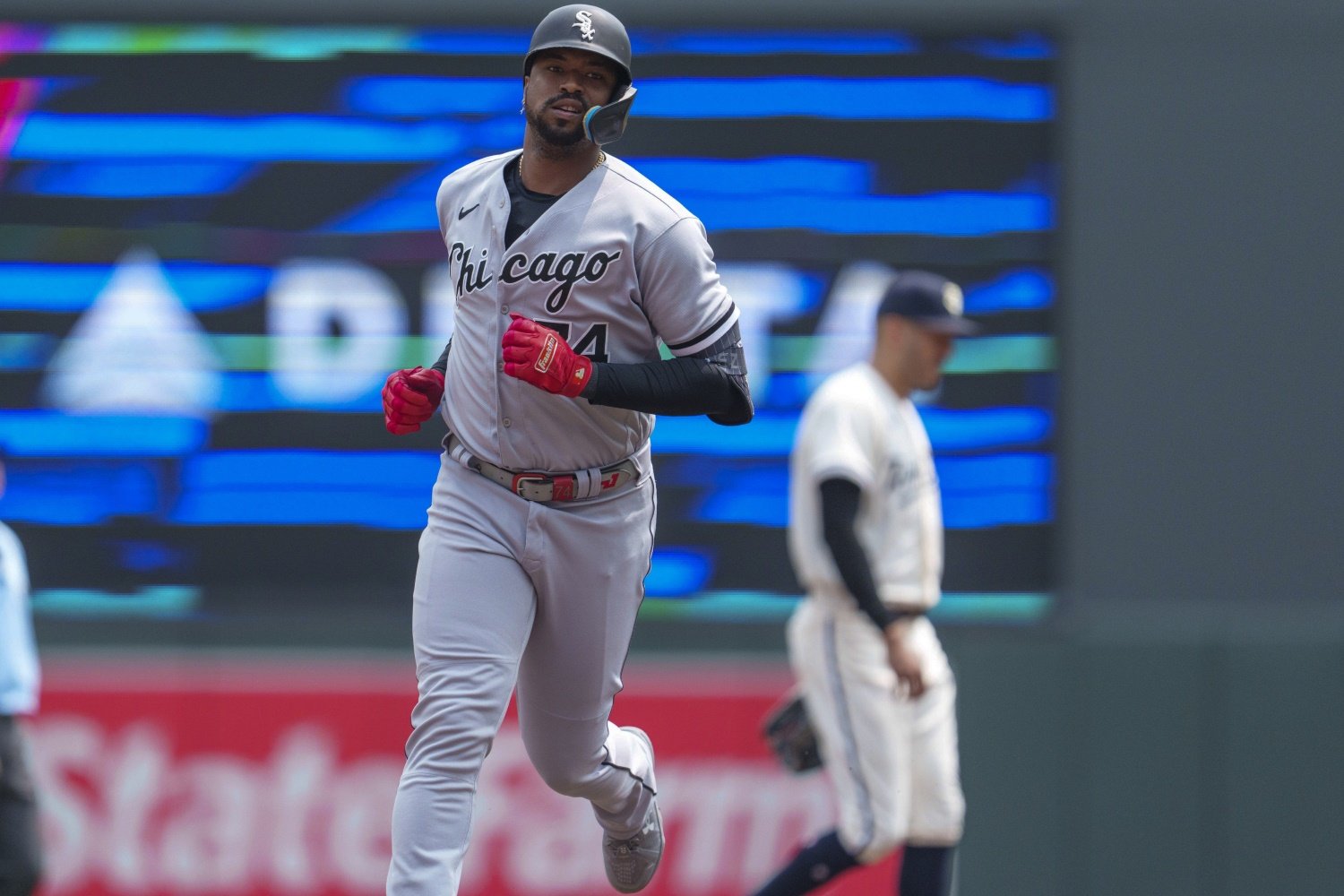 Even back in July, there were some reports that the Chicago White Sox would listen to trade offers on Eloy Jimenez, and that the Brewers were one team who had checked in on him. It doesn't sound like those talks went far during the summer, but the Sox are now under new management and headed for a rebuild. It's time to revisit and fully consider Jiménez as a trade target. Jiménez, who just turned 27 at the end of last month, helped blaze the trail the Brewers and Jackson Chourio just navigated. He's under team control for up to three more seasons, on the terms of a team-friendly deal he and the White Sox signed before his big-league debut. He'll make $13 million in 2024, and then has two club options with a total value of $35 million. In 2023, he hit .272/.317/.441, with 18 home runs in 489 plate appearances. It was a step back in terms of per-opportunity production from his stellar 2022, but that seemingly paltry number of times at bat was also the most he's accrued in any season since he was a rookie in 2019. It's the combination of mild offensive inconsistency and severely lacking durability that makes Jiménez theoretically available in trade. That cocktail should also keep his cost down enough to keep anyone's eyes from popping out of their head at what the White Sox request. Still, Jiménez is a very good hitter, and when he's kept out of the outfield, he stands a better chance of staying healthy. He's a DH, really, and Chicago's stubbornness in admitting that contributed to some unnecessary lost time over the last few years. Happily, the Brewers really don't have anyone even penciled in for the DH spot right now. Since Christian Yelich has been ruled out as a candidate to take over the also-vacant first base role, he figures to get some of his playing time at DH, in addition to playing the bulk of the time in left field. William Contreras is a catcher who hits so well that the team should try to keep him in the lineup even on some of his off days from actually catching, so he, too, needs some DH at-bats. None of that is a problem, though. For instance, Yelich sliding to DH to allow both Garrett Mitchell and Sal Frelick to play the outfield on a given day could be one way to both combat a tough right-handed pitcher and keep Jiménez fresh. More than positional fit, the question with Jiménez is whether the Brewers would think they could help him get back to the highest levels of performance he's achieved, or at least better approximate them than he did in 2023. For such a hulking slugger, Jiménez hits the ball on the ground far too often, but he can crush the ball. He also makes contact at a good rate, for a power hitter. In fact, he substantially cut his strikeout rate in 2023, although he did it by getting more aggressive early in counts and at some cost in terms of walks and power. Last month at Baseball Prospectus, Robert Orr introduced a very cool and valuable way to evaluate the prime directive of any hitter: selective aggression at the plate. Jiménez was one of the better players at enacting the hitter's mandate in 2023, by that measurement system. As it happens, the Brewers are also one of the teams who excelled in the statistic, overall. Jiménez's skill set and approach are strikingly similar to Contreras's. Obviously, whether or not Jiménez is a desirable trade target depends on a couple of things: How much Mark Attanasio and Matt Arnold envision spending on payroll over the next three years; and What, exactly, the White Sox want in return for him. Jiménez is the kind of player with obvious, incontrovertible (though far from unlimited) absolute value. His contextualized value depends on whether the team would be slotting him in as 7 or 10 percent of their payroll, though. If the Brewers can't much exceed $125 million, Jiménez might not be a smart pickup. If they can comfortably go to and past $150 million, there should still be enough to address other needs after bringing in the expensive bat. The trade cost seems like an even more important variable. Obviously, the Brewers would love to center a deal around one of their ostensibly expendable young outfielders: Joey Wiemer, Mitchell, or Frelick. If the White Sox are amenable to that, landing Jiménez makes sense. If they insist upon getting one of those players and a polished pitching prospect like Carlos F. Rodriguez or Robert Gasser, the appeal fades. The interesting midpoint might be a deal that only includes Tyler Black. If the Brewers internally believe (as many scouts outside the org do) that Black will end up needing to move to the outfield, then effectively, he's part of the team's looming outfield logjam. We just don't quite see that clearly yet. In that case, trading Black for up to three years of a middle-of-the-order bat is a fascinating proposal. What do you think of Jiménez as a trade target? Are his injury concerns enough to scare you off, or the wart that makes him obtainable at a good price for a Brewers team in need of a big bat? Join the conversation in the comments.
- 13 comments
-
- 1
-

-
- eloy jimenez
- christian yelich
- (and 1 more)
-
Although the impending Shohei Ohtani decision is still keeping the floodgates from flying open, there was a flurry of activity Wednesday. The implications of them could be significant, as the Brewers try to bring greater definition to their offseason plan. Image courtesy of © Orlando Ramirez-USA TODAY Sports There were three key moves Wednesday, as the Winter Meetings wound down in Nashville. First, and in a protracted way over the course of the entire day, the Yankees acquired Juan Soto from the Padres. It was a seven-player move, involving not only Soto but old friend Trent Grisham. Then, late in the night, a quick one-two punch added some new gas to the hot stove. Eduardo Rodriguez signed a four-year deal with the Diamondbacks, with an option for the fifth year that could stretch the value of the pact to $100 million. Shortly afterward, Jeimer Candelario agreed to a three-year, $45-million contract with the Reds. Each of these moves has an important set of ramifications for the Brewers, whose offseason has yet to take any irreversible shape. Let's tackle each separately, and discuss why they matter in Milwaukee. Soto Haul Sets the Market on Corbin Burnes The Padres got five young players in return for Soto and Grisham. The twin headliners, though, are swingman Michael King (two years from free agency, and slated to start for the Padres in 2024) and fellow hurler Drew Thorpe, a second-round pick by the Yankees in 2022 who is already considered a top-100 prospect by MLB Pipeline. Beyond them, the package also includes big-league reliever Jhony Brito and undersized but polished pitching prospect Randy Vasquez, and fringy catcher Kyle Higashioka. That collection of talent won't transform the Padres overnight, but it's substantial. Since Soto is an exceptional talent who was available as a one-year trade rental, though, the big question is whether it indicates a sufficiently seller-friendly market to make trading Corbin Burnes advisable. The signals as to whether or not the Crew will trade Burnes are hopelessly mixed, so we can best spend our time trying to suss out whether they should. If this were all Matt Arnold could expect to get for Burnes (and especially for, say, Burnes and Tyrone Taylor, a rough equivalent for the throw-in of Grisham), it would feel a bit light. There's still plenty of meat on the bone, and a pitcher like King, especially, could be a great fit for a contending Brewers team in both 2024 and 2025. Still, it feels like less than it would be worth to give up Burnes, who could anchor the Milwaukee rotation on another run to the postseason before he hits free agency next winter. Remember, too, that (thanks to their status as revenue-sharing recipients) the Brewers would get a better draft pick if and when Burnes departs than other, richer teams would. We have to consider the circumstances, though. Soto, by virtue of his position and his projected salary, had a narrower market than Burnes would have, and the Padres needed to get rid of him worse than the Brewers need to offload Burnes. Indeed, whereas that need was pretty acute for San Diego, the Brewers face no actual imperative to move Burnes. Their leverage is greater, and supply and demand work in their favor more. I still think they would get materially more than this for him, and thus, that trading him is probably the wisest course. We'll see whether or not that proves to be true, but Tim Muma wrote sagaciously about the approach they ought to take earlier this week. Rodríguez Off the Board Given what the Brewers have already intimated about their payroll plans for 2024, signing Wade Miley earlier this week felt like the finalization of their starting rotation additions. Still, it was interesting to see Rodríguez sign with the defending NL pennant winners, for multiple reasons. I had him as the fifth-best, fifth-most impactful free-agent fit for the Brewers earlier this winter, but now that he ended up signing for $80 million in guarantees, that feels hopelessly unrealistic in hindsight. On the other hand, the pitching market continues to show its haleness and vigor. After opting out of three years and $49 million, this much larger payday is a sign that Rodríguez had a robust market. It runs a bit higher than I would have projected for him, and only underscores the value Burnes (no messy long-term commitment, no more than $16 million in salary for one year) would have as an alternative to swimming in those waters, for any team. Reds Bloat Infield but Bolster Lineup with Candelario No team should make its offseason decisions based mostly on their rivals', but moves that affect projections of the standings and the fight for the NL Central title in 2024 have to be baked into the front office's strategy. Over the last week or two, the Reds have announced an earnest intention to build on their 82-win showing in 2023, so the Brewers are going to need to get better, too, if they intend to withstand that challenge. The latest volley in that skirmish was Cincinnati's late-night agreement with Candelario, who figures to lengthen their lineup but also poses a dilemma for them. With Spencer Steer, Christian Encarnacion-Strand, Elly De La Cruz, Matt McLain, Noelvi Marte, and Jonathan India, the team's infield was overcrowded even before Candelario was stirred into the slurry. They'll move Steer to left field, with this move, but they still have a surplus. That's the threatening thing: this is a first move. There's a second in the offing, if the Reds front office can finish it. They intend to deal from this depth to shore up their starting rotation. That's in addition to the moves the team has already made, bringing in hurlers Nick Martinez and Emilio Pagan on two-year deals with opt-outs after 2024. Nor are the Reds the only ones making waves. The Cardinals' winter, so far, has been a bit confused and unintimidating, but there's no question of their eagerness to rebound after the disaster that was their 2023. The Cubs haven't yet done anything notable, but obviously, they remain in the mix on many things. In a certain way, these moves leave Matt Arnold with mixed signals about how to proceed. If he trades Burnes, that would seem to be an acknowledgment of a willingness to at least back off from putting his shoulder into winning in 2024. Yet, it's clear that no one in the organization has an appetite for rebuilding right now, and unless a Burnes trade brought back immediate and significant help, it would start to get hard to see how the team can maintain its place atop the Central while the others vying for it make big, win-now maneuvers. On balance, especially in the wake of the Jackson Chourio extension, I think the team still ought to try to thread that needle. They could get enough for Burnes not to step back much, and the starting pitching pool in free agency remains pretty deep. Committing to Chourio makes one or more of the team's young outfielders expendable, and they might be able to go shopping on the trade market for a big bat, like the White Sox's Eloy Jimenez. They could, in essence, sell, then buy, all in one winter, and they still have every opportunity to head into 2024 as favorites in the Central. What are your reactions to these good-sized moves? How do they tinge your opinions on the Brewers' winter plans? View full article
- 7 replies
-
- 1
-
-
- juan soto
- eduardo rodriguez
- (and 1 more)
-
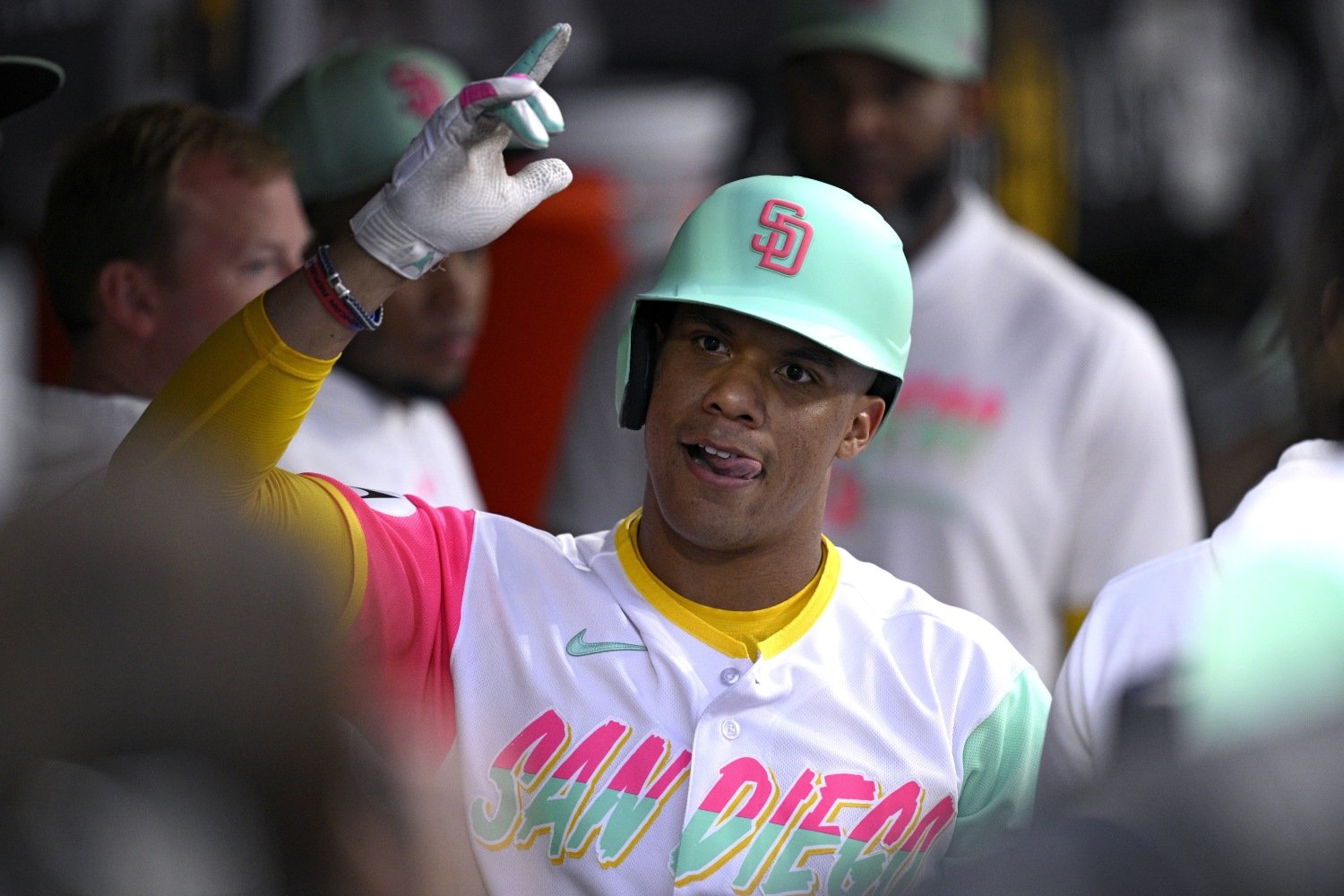 There were three key moves Wednesday, as the Winter Meetings wound down in Nashville. First, and in a protracted way over the course of the entire day, the Yankees acquired Juan Soto from the Padres. It was a seven-player move, involving not only Soto but old friend Trent Grisham. Then, late in the night, a quick one-two punch added some new gas to the hot stove. Eduardo Rodriguez signed a four-year deal with the Diamondbacks, with an option for the fifth year that could stretch the value of the pact to $100 million. Shortly afterward, Jeimer Candelario agreed to a three-year, $45-million contract with the Reds. Each of these moves has an important set of ramifications for the Brewers, whose offseason has yet to take any irreversible shape. Let's tackle each separately, and discuss why they matter in Milwaukee. Soto Haul Sets the Market on Corbin Burnes The Padres got five young players in return for Soto and Grisham. The twin headliners, though, are swingman Michael King (two years from free agency, and slated to start for the Padres in 2024) and fellow hurler Drew Thorpe, a second-round pick by the Yankees in 2022 who is already considered a top-100 prospect by MLB Pipeline. Beyond them, the package also includes big-league reliever Jhony Brito and undersized but polished pitching prospect Randy Vasquez, and fringy catcher Kyle Higashioka. That collection of talent won't transform the Padres overnight, but it's substantial. Since Soto is an exceptional talent who was available as a one-year trade rental, though, the big question is whether it indicates a sufficiently seller-friendly market to make trading Corbin Burnes advisable. The signals as to whether or not the Crew will trade Burnes are hopelessly mixed, so we can best spend our time trying to suss out whether they should. If this were all Matt Arnold could expect to get for Burnes (and especially for, say, Burnes and Tyrone Taylor, a rough equivalent for the throw-in of Grisham), it would feel a bit light. There's still plenty of meat on the bone, and a pitcher like King, especially, could be a great fit for a contending Brewers team in both 2024 and 2025. Still, it feels like less than it would be worth to give up Burnes, who could anchor the Milwaukee rotation on another run to the postseason before he hits free agency next winter. Remember, too, that (thanks to their status as revenue-sharing recipients) the Brewers would get a better draft pick if and when Burnes departs than other, richer teams would. We have to consider the circumstances, though. Soto, by virtue of his position and his projected salary, had a narrower market than Burnes would have, and the Padres needed to get rid of him worse than the Brewers need to offload Burnes. Indeed, whereas that need was pretty acute for San Diego, the Brewers face no actual imperative to move Burnes. Their leverage is greater, and supply and demand work in their favor more. I still think they would get materially more than this for him, and thus, that trading him is probably the wisest course. We'll see whether or not that proves to be true, but Tim Muma wrote sagaciously about the approach they ought to take earlier this week. Rodríguez Off the Board Given what the Brewers have already intimated about their payroll plans for 2024, signing Wade Miley earlier this week felt like the finalization of their starting rotation additions. Still, it was interesting to see Rodríguez sign with the defending NL pennant winners, for multiple reasons. I had him as the fifth-best, fifth-most impactful free-agent fit for the Brewers earlier this winter, but now that he ended up signing for $80 million in guarantees, that feels hopelessly unrealistic in hindsight. On the other hand, the pitching market continues to show its haleness and vigor. After opting out of three years and $49 million, this much larger payday is a sign that Rodríguez had a robust market. It runs a bit higher than I would have projected for him, and only underscores the value Burnes (no messy long-term commitment, no more than $16 million in salary for one year) would have as an alternative to swimming in those waters, for any team. Reds Bloat Infield but Bolster Lineup with Candelario No team should make its offseason decisions based mostly on their rivals', but moves that affect projections of the standings and the fight for the NL Central title in 2024 have to be baked into the front office's strategy. Over the last week or two, the Reds have announced an earnest intention to build on their 82-win showing in 2023, so the Brewers are going to need to get better, too, if they intend to withstand that challenge. The latest volley in that skirmish was Cincinnati's late-night agreement with Candelario, who figures to lengthen their lineup but also poses a dilemma for them. With Spencer Steer, Christian Encarnacion-Strand, Elly De La Cruz, Matt McLain, Noelvi Marte, and Jonathan India, the team's infield was overcrowded even before Candelario was stirred into the slurry. They'll move Steer to left field, with this move, but they still have a surplus. That's the threatening thing: this is a first move. There's a second in the offing, if the Reds front office can finish it. They intend to deal from this depth to shore up their starting rotation. That's in addition to the moves the team has already made, bringing in hurlers Nick Martinez and Emilio Pagan on two-year deals with opt-outs after 2024. Nor are the Reds the only ones making waves. The Cardinals' winter, so far, has been a bit confused and unintimidating, but there's no question of their eagerness to rebound after the disaster that was their 2023. The Cubs haven't yet done anything notable, but obviously, they remain in the mix on many things. In a certain way, these moves leave Matt Arnold with mixed signals about how to proceed. If he trades Burnes, that would seem to be an acknowledgment of a willingness to at least back off from putting his shoulder into winning in 2024. Yet, it's clear that no one in the organization has an appetite for rebuilding right now, and unless a Burnes trade brought back immediate and significant help, it would start to get hard to see how the team can maintain its place atop the Central while the others vying for it make big, win-now maneuvers. On balance, especially in the wake of the Jackson Chourio extension, I think the team still ought to try to thread that needle. They could get enough for Burnes not to step back much, and the starting pitching pool in free agency remains pretty deep. Committing to Chourio makes one or more of the team's young outfielders expendable, and they might be able to go shopping on the trade market for a big bat, like the White Sox's Eloy Jimenez. They could, in essence, sell, then buy, all in one winter, and they still have every opportunity to head into 2024 as favorites in the Central. What are your reactions to these good-sized moves? How do they tinge your opinions on the Brewers' winter plans?
 -
Conceptually, I love the bullpen apprenticeship for starters. My worry with Gasser, as opposed to a Woodruff or Burnes, is that being a lefty and with that low slot, the temptation to turn him into a short reliever and then never get him back as a starter would rise REALLY fast. Maybe that's not so bad. If he's a monster in short bursts, 92 becomes 95, ok. But I like him as a starter and I worry that putting him in the pen might mean we never get to even see whether that would work, y'know?
-
After they struck a one-year deal with Wade Miley this week, the Brewers have a theoretically full starting rotation for 2024. Where does that leave the lefthander who led all Triple-A hurlers in strikeouts in 2023? The key piece in the infamous 2022 Josh Hader trade, Robert Gasser has now fired 181 innings for Brewers affiliates over the last season and a half. He's made 30 starts as a member of the Nashville Sounds, with solid numbers. Yet, he hasn't cracked the big-league roster. The Brewers don't have to add him to their 40-man roster to shield him from the Rule 5 Draft until next November, but realistically, it's time for Gasser to either prove himself ready and able to start in the big leagues or be reassigned. He has nothing left to prove against Triple-A hitters. The indicators are strong for him. He's athletic, competitive, and blessed with a nasty slider. There's some chance that his long-term role is in the bullpen, for a few reasons: He's a low-arm-slot lefty, which often leads to being pretty hittable against right-handed batters. He's only six feet tall, and fairly thin, with little physical projection left. Rare are the lefty starters built like Gasser, but watch his delivery and his body and you're likely to be reminded of a favorite effective southpaw from somewhere in your baseball memory bank. Even at 24 years old, he only averaged 92 miles per hour this year. As he moves into his middle and late 20s, he's likely to lose another tick, and quickly, that starts to threaten his ability to stick in the rotation. Soft-tossers have to be exceptionally fine to survive as starters at 90 miles per hour, which is where Gasser is heading. In the short term, though, he should be able to stick in the rotation, and maybe even excel there. That low slot cuts both ways. Sure, it lets right-handed hitters get an early look at the ball, but it can still be somewhat deceptive--especially if Gasser can locate his fastball in the upper half of the strike zone from there. His track record on that score has been mixed, but when he finds that command, he racks up strikeouts and looks nigh unhittable. Moreover, Gasser pairs the fastball with both a sweeping slider and a shorter, harder cutter, and those pitches can work especially nicely off the heater because of the arm slot he uses. If he can develop more confidence in the changeup that is (more or less) the only pitch going the other way, it could really round out his credentials for the starting rotation. Gasser's arsenal went through an interesting transformational journey in 2023. He started the year as the same fastball-forward pitcher he had been throughout his brief time in the Padres system, but in the middle of the season, he tried switching up and becoming more of a cutter-and-sinker guy. That works for some pitchers whose four-seamers lack rising action, and Gasser tried to accentuate that style by lowering his release point even farther. However, late in the campaign, he abandoned the experiment and went back to his four-seamer as a primary fastball. Notably, against fellow lefties, that didn't mean making the four-seamer his top overall pitch, as he went very slider-heavy. It seems like, given his slot, there should eventually be some utility for Gasser in the sinker. He hasn't found that yet, though, as command of the offering eludes him. Because of that, and because the four-seamer flattens out and gets hittable if he doesn't tease the top of the zone with it, he walked or plunked 65 of the 592 batters he faced in 2023. Ideally, of course, he will issue many fewer free passes than that as a member of the big-league roster. To achieve that, particularly in the rotation, he needs to refine his command of either the four-seamer or the sinker. Still, Gasser will live or die with the main three pitches in his arsenal: the four-seamer, the cutter, and the slider. He even reduced his usage of the changeup late in 2023 against righties. There's something beautiful and exhilarating about watching a lefty starter fool and then overpower right-handed batters without even leaning on a changeup. Gasser sequenced well at Nashville last year, setting a righty up with the backfoot slider and then punching them out with the high fastball almost as often as he did things in the opposite order. He doesn't always get the cutter in on them as well as he needs to, but when he does, the pitch is great at inducing weak contact. Corbin Burnes, Freddy Peralta, Wade Miley, Adrian Houser, and Colin Rea are penciled in ahead of Gasser for the rotation. The team could always go to a six-man rotation, and even if they don't, they might trade Burnes and open a spot, anyway. That doesn't mean that Gasser is guaranteed starts, but he has shown himself ready for a real audition. If he can tighten his command on a couple of offerings, he could take a huge leap, but even without one, he's a credible back-end starter. Having him purely as depth, for the moment, is a luxury, and the Brewers are in great shape even if he ends up breaking camp as their fifth starter. What's your read on Gasser? Is he an acceptable fourth or fifth starter for a team aspiring to defend an NL Central title? Leave a comment and spark conversation. View full article
-
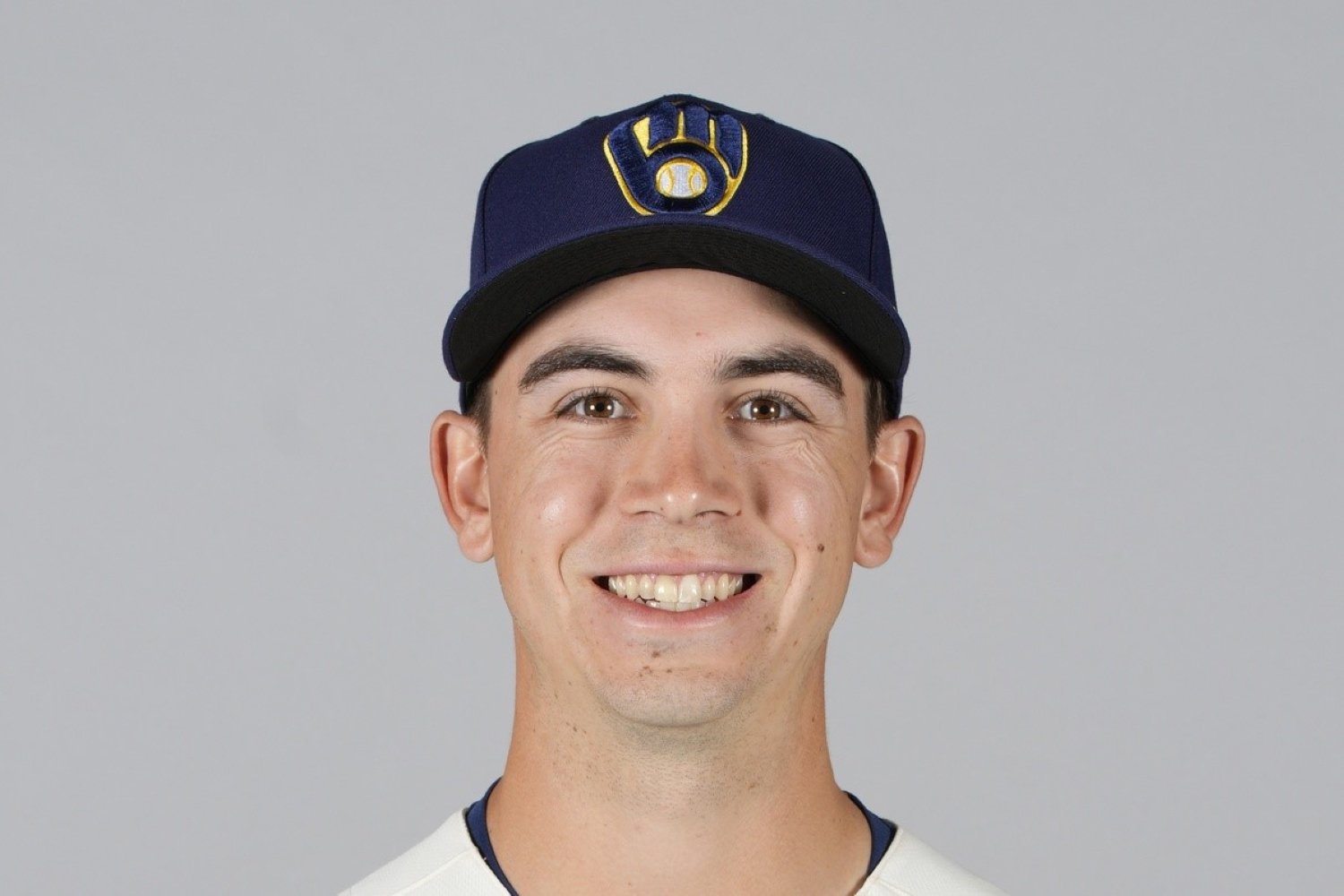 The key piece in the infamous 2022 Josh Hader trade, Robert Gasser has now fired 181 innings for Brewers affiliates over the last season and a half. He's made 30 starts as a member of the Nashville Sounds, with solid numbers. Yet, he hasn't cracked the big-league roster. The Brewers don't have to add him to their 40-man roster to shield him from the Rule 5 Draft until next November, but realistically, it's time for Gasser to either prove himself ready and able to start in the big leagues or be reassigned. He has nothing left to prove against Triple-A hitters. The indicators are strong for him. He's athletic, competitive, and blessed with a nasty slider. There's some chance that his long-term role is in the bullpen, for a few reasons: He's a low-arm-slot lefty, which often leads to being pretty hittable against right-handed batters. He's only six feet tall, and fairly thin, with little physical projection left. Rare are the lefty starters built like Gasser, but watch his delivery and his body and you're likely to be reminded of a favorite effective southpaw from somewhere in your baseball memory bank. Even at 24 years old, he only averaged 92 miles per hour this year. As he moves into his middle and late 20s, he's likely to lose another tick, and quickly, that starts to threaten his ability to stick in the rotation. Soft-tossers have to be exceptionally fine to survive as starters at 90 miles per hour, which is where Gasser is heading. In the short term, though, he should be able to stick in the rotation, and maybe even excel there. That low slot cuts both ways. Sure, it lets right-handed hitters get an early look at the ball, but it can still be somewhat deceptive--especially if Gasser can locate his fastball in the upper half of the strike zone from there. His track record on that score has been mixed, but when he finds that command, he racks up strikeouts and looks nigh unhittable. Moreover, Gasser pairs the fastball with both a sweeping slider and a shorter, harder cutter, and those pitches can work especially nicely off the heater because of the arm slot he uses. If he can develop more confidence in the changeup that is (more or less) the only pitch going the other way, it could really round out his credentials for the starting rotation. Gasser's arsenal went through an interesting transformational journey in 2023. He started the year as the same fastball-forward pitcher he had been throughout his brief time in the Padres system, but in the middle of the season, he tried switching up and becoming more of a cutter-and-sinker guy. That works for some pitchers whose four-seamers lack rising action, and Gasser tried to accentuate that style by lowering his release point even farther. However, late in the campaign, he abandoned the experiment and went back to his four-seamer as a primary fastball. Notably, against fellow lefties, that didn't mean making the four-seamer his top overall pitch, as he went very slider-heavy. It seems like, given his slot, there should eventually be some utility for Gasser in the sinker. He hasn't found that yet, though, as command of the offering eludes him. Because of that, and because the four-seamer flattens out and gets hittable if he doesn't tease the top of the zone with it, he walked or plunked 65 of the 592 batters he faced in 2023. Ideally, of course, he will issue many fewer free passes than that as a member of the big-league roster. To achieve that, particularly in the rotation, he needs to refine his command of either the four-seamer or the sinker. Still, Gasser will live or die with the main three pitches in his arsenal: the four-seamer, the cutter, and the slider. He even reduced his usage of the changeup late in 2023 against righties. There's something beautiful and exhilarating about watching a lefty starter fool and then overpower right-handed batters without even leaning on a changeup. Gasser sequenced well at Nashville last year, setting a righty up with the backfoot slider and then punching them out with the high fastball almost as often as he did things in the opposite order. He doesn't always get the cutter in on them as well as he needs to, but when he does, the pitch is great at inducing weak contact. Corbin Burnes, Freddy Peralta, Wade Miley, Adrian Houser, and Colin Rea are penciled in ahead of Gasser for the rotation. The team could always go to a six-man rotation, and even if they don't, they might trade Burnes and open a spot, anyway. That doesn't mean that Gasser is guaranteed starts, but he has shown himself ready for a real audition. If he can tighten his command on a couple of offerings, he could take a huge leap, but even without one, he's a credible back-end starter. Having him purely as depth, for the moment, is a luxury, and the Brewers are in great shape even if he ends up breaking camp as their fifth starter. What's your read on Gasser? Is he an acceptable fourth or fifth starter for a team aspiring to defend an NL Central title? Leave a comment and spark conversation.
 -
Yes. For the record, I'd rather Attanasio spend $150 million a year on the team, too. I just don't think that's likely to happen. Thus, we're probably going to have to see them do some creative problem-solving instead.
-
See, now we're down to a band of disagreement where I'm happy calling it even. I want to strongly caution against equating numbers--even batted-ball data, which doesn't have the same obvious downward pressure in translation--accrued in MLB with those accrued in AA. And I think Black's probably more like 10 homers a year than 15 or 20, but again: the gap now is small enough that we're just hashing out details. The last thing I want to note on it is that we also have the related data points of the rookies who came up last year, though. Frelick is a really comparable player, and we saw how he got eaten up by big-league pitching (not overall, but in terms of generating any real punch). Turang lost his power in translation, although (as Brenton Del Chiaro said on that great podcast he guested on last week) I think some of that was approach-based, rather than being locked in. Monasterio didn't get to any pop. Right now, I think the org might need to consider that they're doing well at coaching swing decisions and "elite problem solvers," to quote Del Chiaro again, but not as well as they need to at helping them unlock power. The counterexamples--guys like Rowdy, in recent years--are those who brought their own big raw to the table. How do you help players like Black, whose raw is clearly pretty limited, get to enough to maximize his utility?
-
In 2022, Esteury Ruiz had a .447 OBP in the upper minors. Miguel Vargas had a .411. That's two examples plucked from one very recent season off the top of my head. You guys can keep thinking I'm secretly here just to talk down all things Brewers, but we're at almost a year together and I would think you'd have seen enough to start letting that paranoia go. Again: Black might be good! I'm just trying to have what I think is an awfully relevant conversation about the sources of risk and uncertainty around him. I have a piece about Ben Brown's fastball problem going live at NSBB tomorrow, in case you're worried that I never do the same with Cubs prospects. This is ball talk, man. It shouldn't be pollyanna all the time. That's boring.
-
Because it all still happened. Haha. As I read his career and watch his tape, I think the Double A fly ball rate was the blip, driven partially by that pre-tacked ball that had extra carry and boosted fly-ball rates for lots of people in the first half. Again: not making a definitive pronouncement on him here. But I think we need to be talking more about this as a pitfall for him and a reason not to leave themselves overly reliant on him. REALLY good role player, especially if he figures out the defense. I have a lot of concerns if he ends up batting second or fifth or something on a regular basis.
-
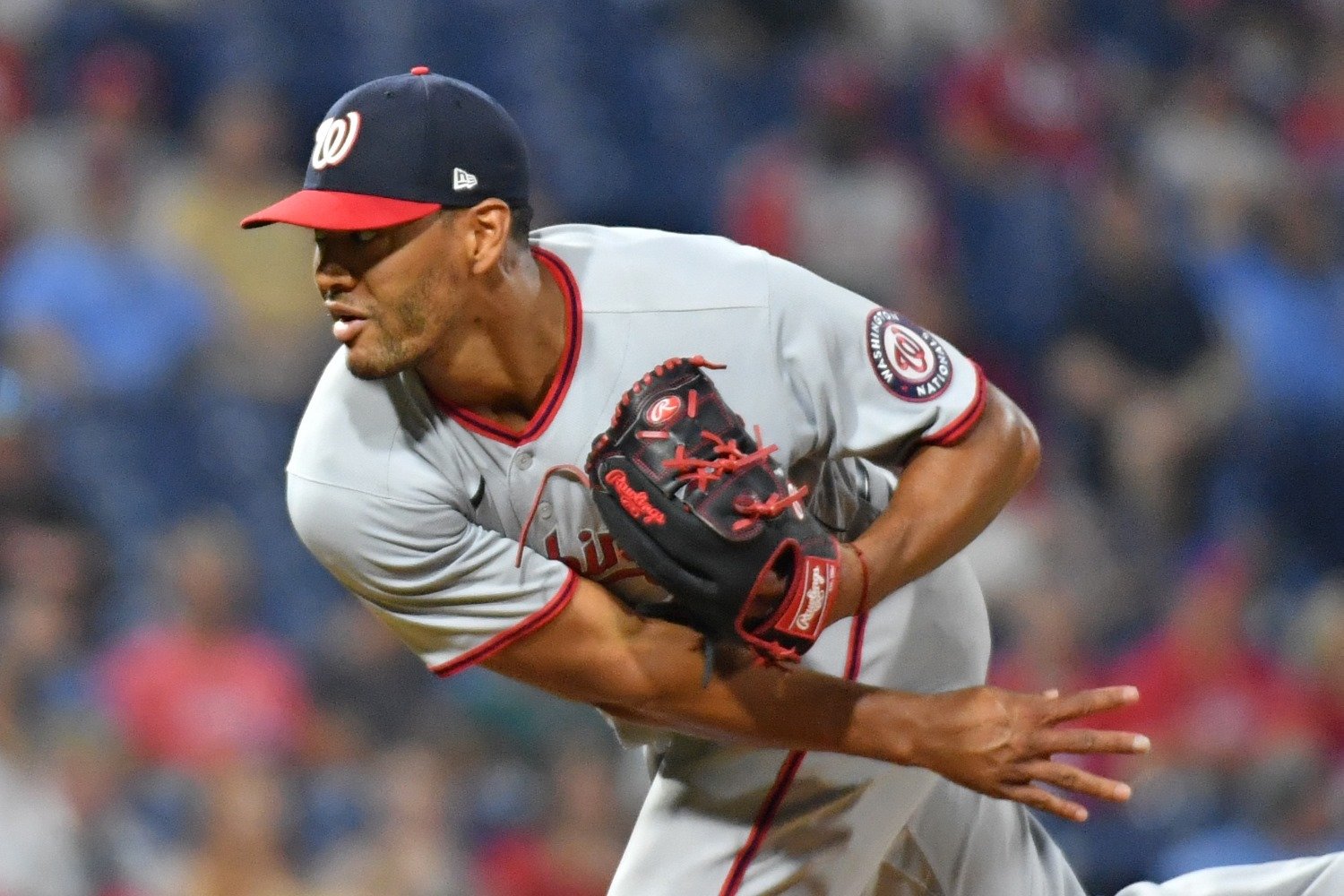 According to Jesse Rogers of ESPN, Wade Miley and the Brewers ended up settling on another one-year contract with a mutual option for a second season. That was the structure of his 2023 deal, too, though this one is more lucrative than the last. That's notable in its own way, because Ross hasn't even pitched in the majors since 2021. In May 2022, he underwent his second Tommy John surgery, and he only worked his way back for a fistful of rehab outings with the Giants organization in 2023. In those brief showings, though, he did flash a sinker that sat on the high side of 95 miles per hour, the first time he's sustained that kind of velocity in years. Because he's not nearly as durable as Bryse Wilson, Ross can't really fill the rubber-armed long man role that Wilson performed so capably for the 2023 Brewers. He's not likely to keep this boost in stuff if they try to make him a starter in any real way. As a middle reliever with upside and the ability to occasionally stretch beyond three outs in a game, though, he could still have real value. Ross, 30, is out of options, so the team won't have the flexibility to send him to Nashville if and when he struggles, but he does lend the team some extra pitching depth. With Miley joining Corbin Burnes, Freddy Peralta, Adrian Houser, Robert Gasser, and Colin Rea, the Brewers have a half-dozen credible rotation options at the moment. With Devin Williams, Joel Payamps, Abner Uribe, Trevor Megill, Hoby Milner, Elvis Peguero, Wilson, and Ross, they have eight pretty solid bullpen arms in place, Janson Junk and Aaron Ashby figure to be flexed between the rotation and the pen and shuttled between the minors and majors, according to their health and development and to the team's needs. The pitching picture is coming into focus. It might be more an Etch-a-Sketch than an oil painting, though. Soon, Burnes could be on the move, which would shake things up considerably and could leave the team looking for another young, impressive pitcher to insert into the projected rotation. We'll see how the next week or two unfold, but this pair of moves stabilizes the pitching staff for the moment. What do you think? Should the team be trying to do more, or is counting on the developmental chops of Chris Hook and the arbitrage skills of Matt Arnold the right course?
 -
The Brewers are spending their Winter Meetings Monday making things official, including the huge contract extension for their top prospect, but also two additions to the big-league pitching staff. That's notable in its own way, because Ross hasn't even pitched in the majors since 2021. In May 2022, he underwent his second Tommy John surgery, and he only worked his way back for a fistful of rehab outings with the Giants organization in 2023. In those brief showings, though, he did flash a sinker that sat on the high side of 95 miles per hour, the first time he's sustained that kind of velocity in years. Because he's not nearly as durable as Bryse Wilson, Ross can't really fill the rubber-armed long man role that Wilson performed so capably for the 2023 Brewers. He's not likely to keep this boost in stuff if they try to make him a starter in any real way. As a middle reliever with upside and the ability to occasionally stretch beyond three outs in a game, though, he could still have real value. Ross, 30, is out of options, so the team won't have the flexibility to send him to Nashville if and when he struggles, but he does lend the team some extra pitching depth. With Miley joining Corbin Burnes, Freddy Peralta, Adrian Houser, Robert Gasser, and Colin Rea, the Brewers have a half-dozen credible rotation options at the moment. With Devin Williams, Joel Payamps, Abner Uribe, Trevor Megill, Hoby Milner, Elvis Peguero, Wilson, and Ross, they have eight pretty solid bullpen arms in place, Janson Junk and Aaron Ashby figure to be flexed between the rotation and the pen and shuttled between the minors and majors, according to their health and development and to the team's needs. The pitching picture is coming into focus. It might be more an Etch-a-Sketch than an oil painting, though. Soon, Burnes could be on the move, which would shake things up considerably and could leave the team looking for another young, impressive pitcher to insert into the projected rotation. We'll see how the next week or two unfold, but this pair of moves stabilizes the pitching staff for the moment. What do you think? Should the team be trying to do more, or is counting on the developmental chops of Chris Hook and the arbitrage skills of Matt Arnold the right course? View full article
-
I have a saying: the farther they are from town, the harder they're throwing. We're always going to hear hype and "yeah, but" when there's anything to worry about with a player the organization wants people excited about. Maybe Black is actually 6-foot-1 or something. And being 5-foot-10 wouldn't disqualify him from playing first (although the lack of power, itself, should for me). But I dunno. I'm gonna call the official record at least as reliable as rumors from the farm until a guy actually shows up and stands next to Willy Adames or whoever.
-
Rays Trade Candidate Isaac Paredes is a Perfect Fit for the Brewers
Matthew Trueblood posted an article in Brewers
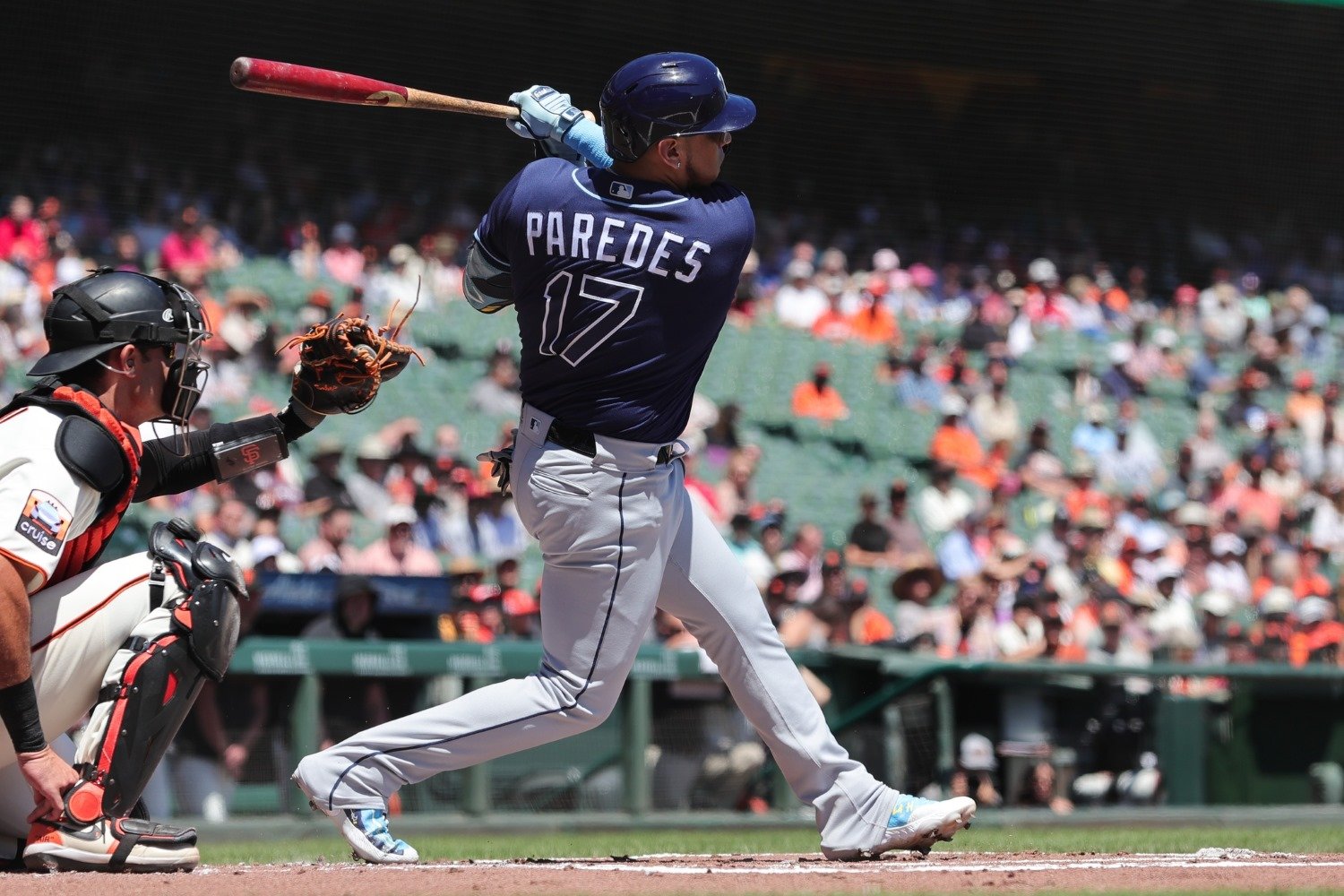 Throughout 2023, the persistent narrative around the Brewers offense was that they didn't hit for enough power. Nor was that some paranoid or pessimistic complaint. The team finished 28th in isolated power, 27th in the percentage of their plate appearances ending in home runs, and they had the third-highest ground-ball rate of any team in baseball. Right now, the Rays are shopping third baseman Isaac Paredes, who would solve all those problems at once--or at least, move them in the right direction on each score. Paredes, who will turn just 25 in February, is still under team control through 2027. However, he'll be arbitration-eligible for all four of those seasons, and Tampa needs to trim their payroll this winter. Thus, Paredes is available in trade conversations, coming off a season in which he hit .250/.352/.488 and slugged those 31 dingers. Presumably, there would be a substantial cost involved, but he's precisely the kind of player the Brewers badly need. As I wrote earlier today, Tyler Black has an exit-velocity problem--especially if you want to think of him as an everyday third baseman. Paredes shares that shortcoming, but only in a small, limited way. He doesn't have unusually good high-end exit velocities. Nor does he hit the ball hard with special frequency. However, he does what Black has not done, at least throughout his ascent through the minor leagues: get the ball in the air. As I discussed in a post at North Side Baseball on why he would be a good fit for the Cubs, Paredes modified his approach in 2023 to better suit his skill set, and he arrived at a style that should yield more consistent, high-level production than his raw batted-ball data implies. MLB Trade Rumors estimates that Paredes will make $3.2 million in 2024, which makes him affordable even for a Brewers team operating under some financial uncertainty as the Diamond Sports Group bankruptcy wreaks havoc for TV rights deals on the Bally Sports networks. Again, the price tag figures to be significant, but with the Rays also having been reported to be interested in moving Randy Arozarena or Manuel Margot, maybe the fit is more obvious than it seems. A swap of Garrett Mitchell or Joey Wiemer (plus some far-off pitching prospect, in all likelihood) for Paredes could make a lot of sense. Last month at Baseball Prospectus, Robert Orr rolled out a revolutionary approach to evaluating plate discipline and approach for hitters. He dubbed it SEAGER, because it's a measurement of selective aggression and because its utmost exemplar is Rangers superstar Corey Seager. Orr delivered a leaderboard for SEAGER for both individuals and teams, and each included a comparison between the player or team's ranking in terms of simple swing percentage differential (in-zone minus out-of-zone swings, a simple methodology) and their ranking in SEAGER. Paredes is one player who goes from far below-average to far above it when switching to the SEAGER lens to assess his approach, and the Brewers (who jump from 19th in MLB in swing differential to 12th in SEAGER) are one of the teams who jump most. There's a synergy between the way Paredes and his would-be new team attack at-bats, and he also brings strengths in an area of Brewers team weakness. It's hard to argue with the desirability of that pairing. Solving the team's power outage and filling their apparently vacant third-base spot are distinct but overlapping items on Matt Arnold's winter checklist. Do you think dealing for Paredes is a solid way to attack both? Let's discuss.
 -
In the early stages of the Winter Meetings, one of the names coming up the most is a controllable third baseman who hit 31 home runs in 2023. The Brewers should have serious interest, if the price is right. Image courtesy of © Sergio Estrada-USA TODAY Sports Throughout 2023, the persistent narrative around the Brewers offense was that they didn't hit for enough power. Nor was that some paranoid or pessimistic complaint. The team finished 28th in isolated power, 27th in the percentage of their plate appearances ending in home runs, and they had the third-highest ground-ball rate of any team in baseball. Right now, the Rays are shopping third baseman Isaac Paredes, who would solve all those problems at once--or at least, move them in the right direction on each score. Paredes, who will turn just 25 in February, is still under team control through 2027. However, he'll be arbitration-eligible for all four of those seasons, and Tampa needs to trim their payroll this winter. Thus, Paredes is available in trade conversations, coming off a season in which he hit .250/.352/.488 and slugged those 31 dingers. Presumably, there would be a substantial cost involved, but he's precisely the kind of player the Brewers badly need. As I wrote earlier today, Tyler Black has an exit-velocity problem--especially if you want to think of him as an everyday third baseman. Paredes shares that shortcoming, but only in a small, limited way. He doesn't have unusually good high-end exit velocities. Nor does he hit the ball hard with special frequency. However, he does what Black has not done, at least throughout his ascent through the minor leagues: get the ball in the air. As I discussed in a post at North Side Baseball on why he would be a good fit for the Cubs, Paredes modified his approach in 2023 to better suit his skill set, and he arrived at a style that should yield more consistent, high-level production than his raw batted-ball data implies. MLB Trade Rumors estimates that Paredes will make $3.2 million in 2024, which makes him affordable even for a Brewers team operating under some financial uncertainty as the Diamond Sports Group bankruptcy wreaks havoc for TV rights deals on the Bally Sports networks. Again, the price tag figures to be significant, but with the Rays also having been reported to be interested in moving Randy Arozarena or Manuel Margot, maybe the fit is more obvious than it seems. A swap of Garrett Mitchell or Joey Wiemer (plus some far-off pitching prospect, in all likelihood) for Paredes could make a lot of sense. Last month at Baseball Prospectus, Robert Orr rolled out a revolutionary approach to evaluating plate discipline and approach for hitters. He dubbed it SEAGER, because it's a measurement of selective aggression and because its utmost exemplar is Rangers superstar Corey Seager. Orr delivered a leaderboard for SEAGER for both individuals and teams, and each included a comparison between the player or team's ranking in terms of simple swing percentage differential (in-zone minus out-of-zone swings, a simple methodology) and their ranking in SEAGER. Paredes is one player who goes from far below-average to far above it when switching to the SEAGER lens to assess his approach, and the Brewers (who jump from 19th in MLB in swing differential to 12th in SEAGER) are one of the teams who jump most. There's a synergy between the way Paredes and his would-be new team attack at-bats, and he also brings strengths in an area of Brewers team weakness. It's hard to argue with the desirability of that pairing. Solving the team's power outage and filling their apparently vacant third-base spot are distinct but overlapping items on Matt Arnold's winter checklist. Do you think dealing for Paredes is a solid way to attack both? Let's discuss. View full article
-
I'm not saying he can't be a good first baseman, but dude is 5-foot-10. I dunno. I think he might be an outfielder, long-term. I hear you on not spending big on a one-year deal, but there are star-caliber players available on a long-term basis. Isaac Paredes. Maybe Matt Chapman, if we're feeling spendy. I don't mean to totally drown enthusiasm about Black, but I think the Brewers are still in position to be a competitive team in 2024, and given that, I want to see them aiming a little higher at third this month.
-
Bellinger exceeds his expected numbers by hitting everything in the air, and especially in the air to the pull field. Black hits it on the ground. So, that comparison doesn't work. It's Bellinger who is an exception to the rule (although, as Brock said, I have concerns about his long-term future, even then), and Black doesn't do what he and others do to become those exceptions. I think that line you list is a reasonable projection for next year, and I love a solid OBP guy, too... but with below-average defense, is that really helping? I don't think so. It's not useless, but I feel like the Crew needs more.
-
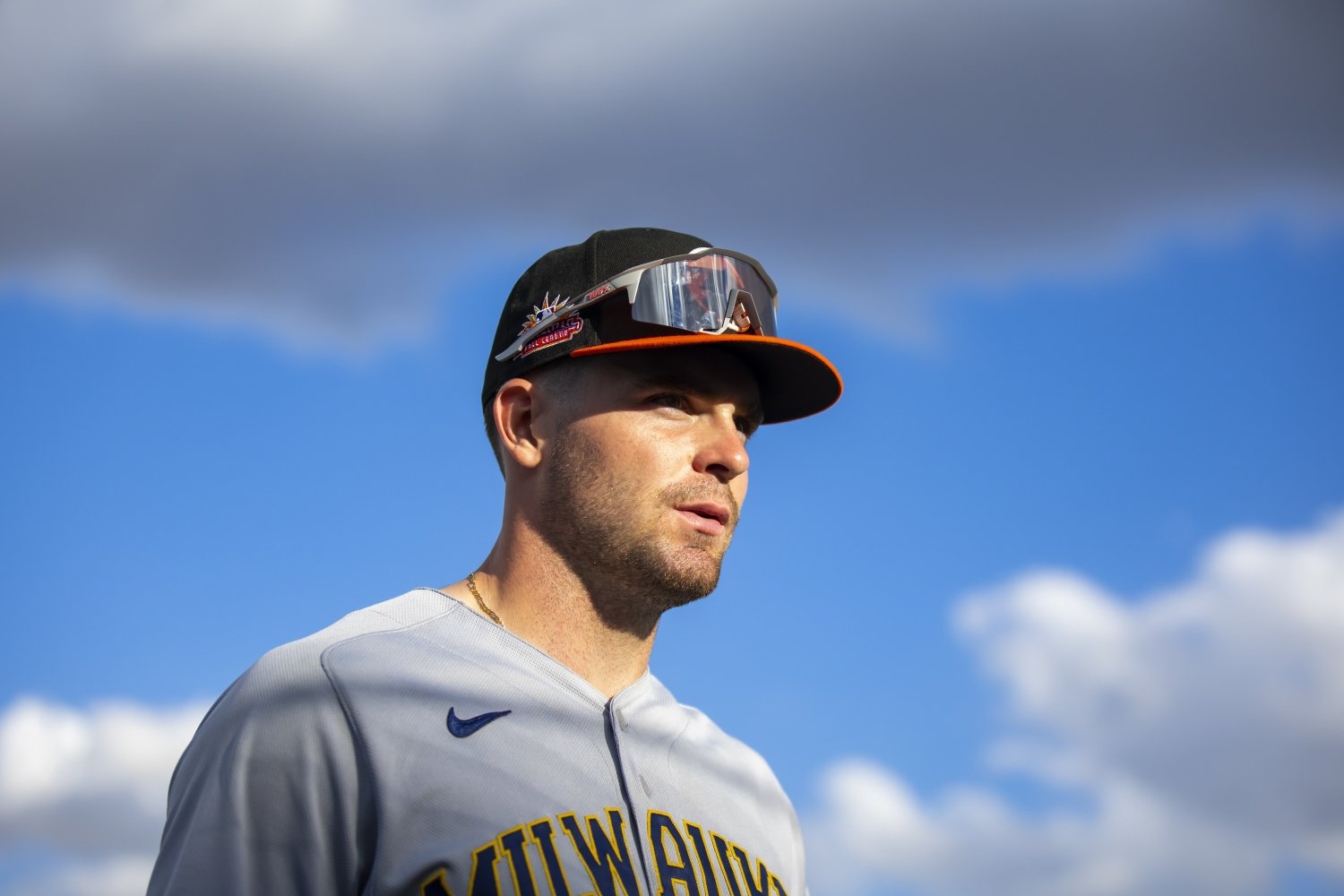 It's easy to get excited about Tyler Black. He's a left-handed hitter with speed, plate discipline, and a good hit tool. His on-base percentage (just under .420) and stolen-base total (55) were each gaudy last year. He feels like a dynamic addition to the lineup, just waiting a pinch more seasoning in Triple A. He feels like a potential middle-of-the-order bat, even if it be a bit non-traditional, because he cracked 25 doubles, 12 triples, and 18 home runs across the top two levels of the minors in 2023. Unfortunately, the real picture is probably a little bit less exciting. Black's bat-to-ball skills and his patience should translate well to the majors. He whiffed quite a bit on offspeed stuff with Nashville in September, but otherwise, he looks like a well-rounded pure hitter. Still, both the strikeout and the walk rates Black ran in the high minors will move at least some amount in an unfriendly direction when he reaches MLB. That means more pressure on the actual batted balls he generates. In MLB, players without good power get the bat knocked out of their hands, at least to some extent. We saw that with Sal Frelick and Brice Turang in 2023. Both are modestly valuable, but that value had to come almost solely from their gloves and their legs, because they lacked the pop to be great hitters. Admittedly, our data on Black is quite limited, so far. In that sample, though, the indications are that he's not much more of a slugger than Frelick or Turang. Exit Velocities, Triple A, 2023 Player Avg EV 95th %ile EV Tyler Black 86.3 103 Sal Frelick 84.9 102.2 Brice Turang 87.8 103.3 That directly compares Black to what those two guys did in Triple A; the numbers above don't include when Turang and Frelick faced big-league competition. If you harbor any serious hopes that Black will hit for power, these data run into them like a fist into a kidney. Worse, Black has run high ground-ball rates throughout his climb up the minor-league ladder. He made some progress on adjusting his swing plane in 2023, but it's unlikely he's going to elevate the ball enough to produce substantially more power than his raw exit speeds imply. Pair Black with Andruw Monasterio, and you could see a solid platoon form at the hot corner. Monasterio is a fine defender there, although Black is much less polished. Monasterio showed the same bat-to-ball ability and the same comfort hitting opposite-handed pitchers hard that Black has demonstrated in the upper minors. They could be an average-plus overall tandem. However, every platoon comes at a cost, and this one would pay twice the price. Two players for one spot means one fewer roster spot to use on other position players and other skill sets. In this case, it also seals off third base and eliminates that as a position at which the Brewers could shop for a difference-making power bat. If Black isn't that kind of player, the team still very much needs one--not just a good hitter, but one who can swat 30-plus home runs. Platooning Monasterio and Black at a position that traditionally does yield some power would mean narrowing the avenues to much-needed upgrades for Matt Arnold, Pat Murphy and company. What do you think? Will Black develop power at the highest level, despite the underlying indicators in his batted-ball data? Might he be better used as a trade chip this winter? Comment to start a conversation.
 -
The big Brewers prospect news of the week is the massive contract extension to which the team and outfielder Jackson Chourio have agreed. The team also needs help from the farm on the infield, though, and another of their top prospects poses a potential solution to that problem. Image courtesy of © Curt Hogg / Milwauke | 2023 Mar 6 It's easy to get excited about Tyler Black. He's a left-handed hitter with speed, plate discipline, and a good hit tool. His on-base percentage (just under .420) and stolen-base total (55) were each gaudy last year. He feels like a dynamic addition to the lineup, just waiting a pinch more seasoning in Triple A. He feels like a potential middle-of-the-order bat, even if it be a bit non-traditional, because he cracked 25 doubles, 12 triples, and 18 home runs across the top two levels of the minors in 2023. Unfortunately, the real picture is probably a little bit less exciting. Black's bat-to-ball skills and his patience should translate well to the majors. He whiffed quite a bit on offspeed stuff with Nashville in September, but otherwise, he looks like a well-rounded pure hitter. Still, both the strikeout and the walk rates Black ran in the high minors will move at least some amount in an unfriendly direction when he reaches MLB. That means more pressure on the actual batted balls he generates. In MLB, players without good power get the bat knocked out of their hands, at least to some extent. We saw that with Sal Frelick and Brice Turang in 2023. Both are modestly valuable, but that value had to come almost solely from their gloves and their legs, because they lacked the pop to be great hitters. Admittedly, our data on Black is quite limited, so far. In that sample, though, the indications are that he's not much more of a slugger than Frelick or Turang. Exit Velocities, Triple A, 2023 Player Avg EV 95th %ile EV Tyler Black 86.3 103 Sal Frelick 84.9 102.2 Brice Turang 87.8 103.3 That directly compares Black to what those two guys did in Triple A; the numbers above don't include when Turang and Frelick faced big-league competition. If you harbor any serious hopes that Black will hit for power, these data run into them like a fist into a kidney. Worse, Black has run high ground-ball rates throughout his climb up the minor-league ladder. He made some progress on adjusting his swing plane in 2023, but it's unlikely he's going to elevate the ball enough to produce substantially more power than his raw exit speeds imply. Pair Black with Andruw Monasterio, and you could see a solid platoon form at the hot corner. Monasterio is a fine defender there, although Black is much less polished. Monasterio showed the same bat-to-ball ability and the same comfort hitting opposite-handed pitchers hard that Black has demonstrated in the upper minors. They could be an average-plus overall tandem. However, every platoon comes at a cost, and this one would pay twice the price. Two players for one spot means one fewer roster spot to use on other position players and other skill sets. In this case, it also seals off third base and eliminates that as a position at which the Brewers could shop for a difference-making power bat. If Black isn't that kind of player, the team still very much needs one--not just a good hitter, but one who can swat 30-plus home runs. Platooning Monasterio and Black at a position that traditionally does yield some power would mean narrowing the avenues to much-needed upgrades for Matt Arnold, Pat Murphy and company. What do you think? Will Black develop power at the highest level, despite the underlying indicators in his batted-ball data? Might he be better used as a trade chip this winter? Comment to start a conversation. View full article
-
Wade Miley, Brewers Reportedly Nearing Another Reunion
Matthew Trueblood posted an article in Brewers
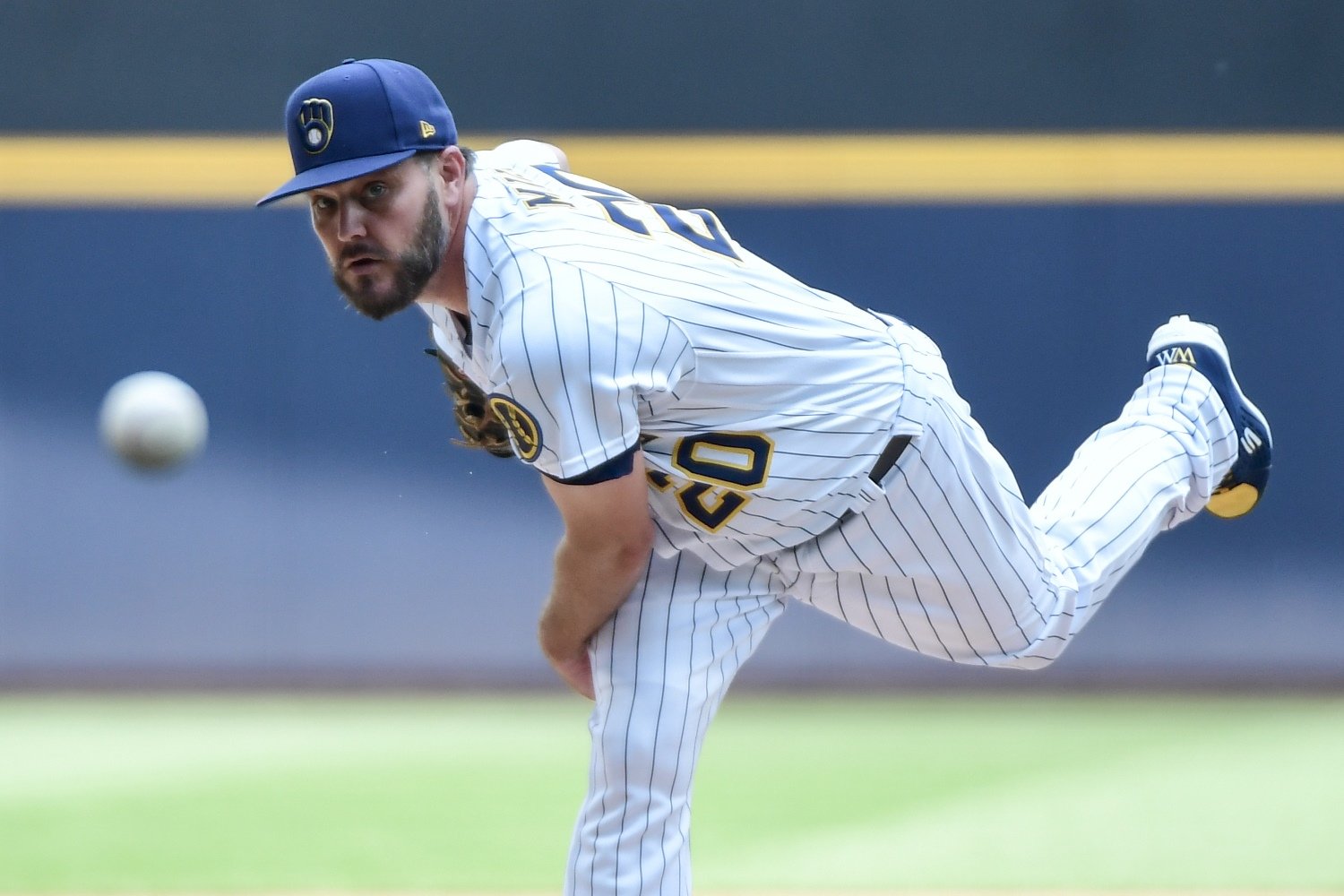 In his late-night Saturday notes piece, Ken Rosenthal of The Athletic dropped in an interesting final item. It sounds like we should expect Wade Miley and the Brewers to get back together, again. Sunday morning, Jon Heyman confirmed that something is (ahem) brewing there. Miley turned 37 in mid-November. He's only pitched 157 innings since the start of 2022, and only has two full, uninterrupted seasons in the last six. There's a genuine, mutual affection between Miley and the Brewers, though, including both Chris Hook and Pat Murphy. These two parties are good for each other, and now, they get a chance to sustain and deepen their relationship. In light of the fact that Miley turned down his side of a $10-million option for 2024 last month, you could view this as a surprising development. It was a mild surprise that he turned that down in the first place, given the injury trouble he had in 2023 and his age, so it felt like maybe he was ready for the next step. Perhaps, though, this deal will give Miley some guarantees in 2025, and he'll therefore turn out to have made a savvy decision by stepping away (however briefly). It's also possible, especially given the way he was talking about his shoulder near the end of the season, that he needed a bit of recovery time to determine whether he could (or even wanted to) continue to pitch. Whatever the cause for the temporary split, this reunion should benefit both sides. The Brewers get back a clubhouse favorite and a starter who's very effective when he takes the mound. Miley gets the comfort of a familiar environment and a setting in which he doesn't figure to be depended upon more heavily than his health or skill set can bear. If Corbin Burnes is traded this offseason, Miley will become the unquestioned veteran leader of the starting staff, but with Freddy Peralta, Adrian Houser, Colin Rea, Robert Gasser, Aaron Ashby, Bryse Wilson, and a couple of highly-touted prospects around, the team can cover for him when he's out of commission. Obviously, this isn't yet official. Nor is it, necessarily, the last addition the team could make to the starting-capable corps. Mid-rotation quality at sixth starter quantity is valuable, though, and Miley gives them that cocktail of upside and flexibility. If the team goes with a six-man rotation in order to keep hurlers fresher in 2024, Miley would be an especially good fit. Until we know the exact terms of the deal and the complementary moves that happen (or don't) in conjunction with it, it's hard to analyze this much further. On its own, though, how do you feel about Miley's return? Does this give you any greater clarity about the team's offseason direction? Join the conversation below.
 -
It's no Billy Martin and the Yankees, but the Brewers and their wiliest southpaw keep finding ways back to one another. The 2024 starting rotation might be getting just a little bit deeper. Miley turned 37 in mid-November. He's only pitched 157 innings since the start of 2022, and only has two full, uninterrupted seasons in the last six. There's a genuine, mutual affection between Miley and the Brewers, though, including both Chris Hook and Pat Murphy. These two parties are good for each other, and now, they get a chance to sustain and deepen their relationship. In light of the fact that Miley turned down his side of a $10-million option for 2024 last month, you could view this as a surprising development. It was a mild surprise that he turned that down in the first place, given the injury trouble he had in 2023 and his age, so it felt like maybe he was ready for the next step. Perhaps, though, this deal will give Miley some guarantees in 2025, and he'll therefore turn out to have made a savvy decision by stepping away (however briefly). It's also possible, especially given the way he was talking about his shoulder near the end of the season, that he needed a bit of recovery time to determine whether he could (or even wanted to) continue to pitch. Whatever the cause for the temporary split, this reunion should benefit both sides. The Brewers get back a clubhouse favorite and a starter who's very effective when he takes the mound. Miley gets the comfort of a familiar environment and a setting in which he doesn't figure to be depended upon more heavily than his health or skill set can bear. If Corbin Burnes is traded this offseason, Miley will become the unquestioned veteran leader of the starting staff, but with Freddy Peralta, Adrian Houser, Colin Rea, Robert Gasser, Aaron Ashby, Bryse Wilson, and a couple of highly-touted prospects around, the team can cover for him when he's out of commission. Obviously, this isn't yet official. Nor is it, necessarily, the last addition the team could make to the starting-capable corps. Mid-rotation quality at sixth starter quantity is valuable, though, and Miley gives them that cocktail of upside and flexibility. If the team goes with a six-man rotation in order to keep hurlers fresher in 2024, Miley would be an especially good fit. Until we know the exact terms of the deal and the complementary moves that happen (or don't) in conjunction with it, it's hard to analyze this much further. On its own, though, how do you feel about Miley's return? Does this give you any greater clarity about the team's offseason direction? Join the conversation below. View full article

