


Matthew Trueblood
-
Posts
1,964 -
Joined
-
Last visited
-
Days Won
10
Content Type
Profiles
Forums
Blogs
Events
News
2026 Milwaukee Brewers Top Prospects Ranking
Milwaukee Brewers Videos
2022 Milwaukee Brewers Draft Picks
Milwaukee Brewers Free Agent & Trade Rumors, Notes, & Tidbits
Guides & Resources
2023 Milwaukee Brewers Draft Picks
2024 Milwaukee Brewers Draft Picks
The Milwaukee Brewers Players Project
2025 Milwaukee Brewers Draft Pick Tracker
2026 Milwaukee Brewers Draft Tracker: Picks & Bonuses
Store
Downloads
Gallery
Everything posted by Matthew Trueblood
-
As we head into 2024, it sure doesn't feel like the Brewers' offseason is over. Their roster for next season is theoretically complete, but not as strong as 2023's division-winning team. As the hot stove stays hot, though, the question is whether the front office has the resources to make any more significant additions. Image courtesy of © Scott Galvin-USA TODAY Sports As of this moment, according to Cot's Contracts, the Brewers have a projected Opening Day payroll just under $98 million for 2024. That's far from fixed, not least because it only estimates arbitration awards for key players with high salaries, like Corbin Burnes and Willy Adames. Still, that's the most reliable number we have. If the season began tomorrow, the Brewers would be in line for a payroll right around that figure. It's safe to say that they have more room in their budget. In 2021, they were at almost exactly this level of spending, but that was in reaction to the pandemic and its ravages on seasonal revenues in 2020. In 2022, they spent almost $132 million on the Opening Day 26-man roster, and last year, it was right around $120 million. There have been some reports that the team will trim its payroll even further for 2024, in light of the fairly extreme uncertainty around their local TV rights beyond this final season of their contract with the soon-defunct Diamond Sports Group, owners of Bally Sports Wisconsin and the other Bally Sports affiliates. We're not talking about stopping at $100 million, though. At a minimum, you'd figure the Brewers have $110 million in the budget, and $125 million still doesn't seem like a total pipe dream. It's important to note those numbers, and the difference between them, because it's right around the same as the projected arbitrated salary for Burnes. As has been true since (seemingly) 18 months ago, there are two universes in which the Brewers exist right now: one in which they trade Burnes, and one in which they don't. If they trade him, they'll obviously have a hole at the top of their starting rotation, but they'll also gain an extra $15 million or more with which to fill it. If they don't, they still need at least one significant offensive boost, be it at a corner infield spot or designated hitter. Interestingly, what's happening in free agency throughout the league should inform their decision about Burnes, though it obviously can't be left to fully determine it. As has happened for the last half-decade or so, there's a marked gap between the going rate for pitchers and that for hitters. Look no further than the deals signed within the last 10 days. Mitch Garver and Kevin Kiermaier, two credible players with clear weaknesses and limitations but plenty of upside, signed for two years and $24 million and one year and $10.5 million, respectively. Lucas Giolito and Frankie Montas, two pretty similar players to Garver and Kiermaier, also signed this week, for two years and $38.5 million and one year and $16 million, respectively. That's not an especially rational divergence, but it's been a trend for a while and it continues apace. It's interesting, because it underscores the difficulty the Brewers (small market, short on spending power in the short term and even shorter on surety about their future finances) would have in replacing Burnes using the money they'd save by dealing him. If they do trade him, it would seem important for them to get back a starting pitcher who's ready for immediate action in the big leagues, and narrowing the band of acceptable positions or profiles that way is never a good way to maximize value in trade talks. Meanwhile, the relatively low cost of hitters as talented as Garver and Kiermaier suggests a surprising viability in the hope of signing someone like Rhys Hoskins or Jorge Soler. Let's circle back to the crucial numbers. Are the Brewers going to be capped at $110 or $115 million in spending for 2024? If so, they still might not be able to afford Soler or Hoskins, though it would matter which end of that spectrum they inhabit. If, by contrast, they can spend their way up to or beyond $120 million, either of those guys (or another hitter like them) could be in play. In such a scenario, they'd have a pretty complete team, and they would do well to hold onto Burnes. On the other hand, the same market forces suggest to us that Burnes would command a significant haul in any trade. The Red Sox, in the wake of signing Giolito, successfully traded Chris Sale (with a bloated contract and an extremely spotty recent record of health and performance) for the reasonably promising Vaughn Grissom, who will be under team control for another half-decade. Burnes, to say the least, would fetch much more. If the budget is even very slightly tighter than we've been assuming, dealing Burnes might make sense, because it's the one way they could fill two important holes in one fell swoop. A Burnes deal should net a couple of impressive pieces, including one who could be slotted right into next year's roster. But it would also give them financial flexibility, so whichever deficiency wasn't well-addressed by the deal could be filled by Arnold via free agency. It seems unlikely, especially because of the aforementioned uncertainty about the future of TV rights throughout baseball, that the Brewers are positioned to make a multi-year commitment to a free agent at an eight-figure salary. If they want to do that, though, they can get a bit creative and manage it, especially after a Burnes trade. Backloading a deal would let the team survive 2024, figure out their TV deal beyond that, and pay their new cornerstone in 2025 out of the money they won't be spending then on Burnes or Wade Miley (or, in all likelihood, Adames, or even Devin Williams). With the many small but helpful moves the team has already made this winter, they've left themselves with relatively little in the way of urgent needs heading into the new year. If their budget is relatively healthy or flexible, they can sign one established, fearsome hitter and reinstitute themselves as favorites in the Central, even if that status be fragile. However, we don't know that that's the real state of the budget. Depending on the (currently unknowable) truth of the matter, trading Burnes could still be the springboard required to get the team to the next level. How much do you think Matt Arnold and company will ultimately spend the rest of this winter? Does the shape of the free-agent market color your opinion of whether to trade Burnes? Let's discuss the team's options in the comments. View full article
-
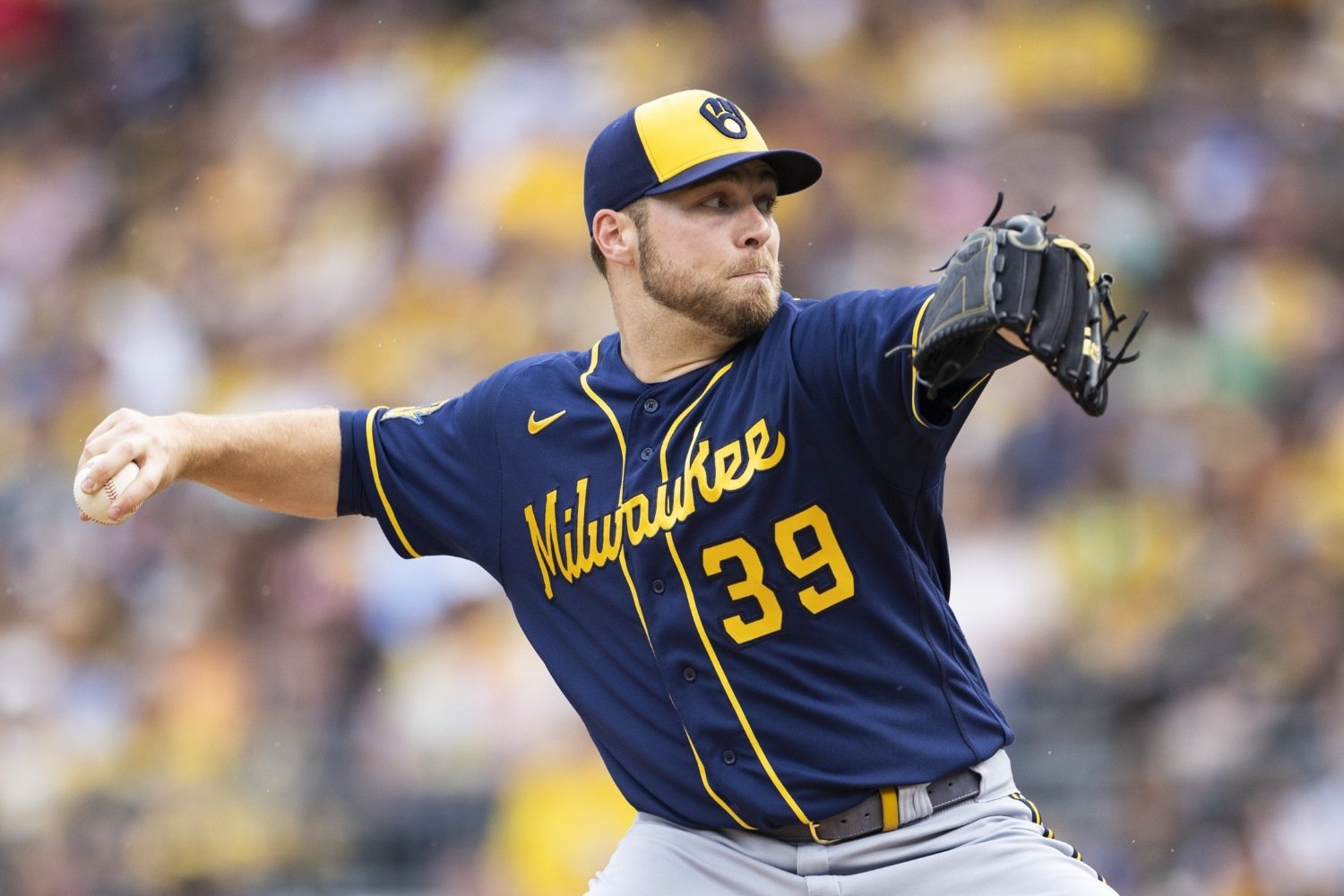 As of this moment, according to Cot's Contracts, the Brewers have a projected Opening Day payroll just under $98 million for 2024. That's far from fixed, not least because it only estimates arbitration awards for key players with high salaries, like Corbin Burnes and Willy Adames. Still, that's the most reliable number we have. If the season began tomorrow, the Brewers would be in line for a payroll right around that figure. It's safe to say that they have more room in their budget. In 2021, they were at almost exactly this level of spending, but that was in reaction to the pandemic and its ravages on seasonal revenues in 2020. In 2022, they spent almost $132 million on the Opening Day 26-man roster, and last year, it was right around $120 million. There have been some reports that the team will trim its payroll even further for 2024, in light of the fairly extreme uncertainty around their local TV rights beyond this final season of their contract with the soon-defunct Diamond Sports Group, owners of Bally Sports Wisconsin and the other Bally Sports affiliates. We're not talking about stopping at $100 million, though. At a minimum, you'd figure the Brewers have $110 million in the budget, and $125 million still doesn't seem like a total pipe dream. It's important to note those numbers, and the difference between them, because it's right around the same as the projected arbitrated salary for Burnes. As has been true since (seemingly) 18 months ago, there are two universes in which the Brewers exist right now: one in which they trade Burnes, and one in which they don't. If they trade him, they'll obviously have a hole at the top of their starting rotation, but they'll also gain an extra $15 million or more with which to fill it. If they don't, they still need at least one significant offensive boost, be it at a corner infield spot or designated hitter. Interestingly, what's happening in free agency throughout the league should inform their decision about Burnes, though it obviously can't be left to fully determine it. As has happened for the last half-decade or so, there's a marked gap between the going rate for pitchers and that for hitters. Look no further than the deals signed within the last 10 days. Mitch Garver and Kevin Kiermaier, two credible players with clear weaknesses and limitations but plenty of upside, signed for two years and $24 million and one year and $10.5 million, respectively. Lucas Giolito and Frankie Montas, two pretty similar players to Garver and Kiermaier, also signed this week, for two years and $38.5 million and one year and $16 million, respectively. That's not an especially rational divergence, but it's been a trend for a while and it continues apace. It's interesting, because it underscores the difficulty the Brewers (small market, short on spending power in the short term and even shorter on surety about their future finances) would have in replacing Burnes using the money they'd save by dealing him. If they do trade him, it would seem important for them to get back a starting pitcher who's ready for immediate action in the big leagues, and narrowing the band of acceptable positions or profiles that way is never a good way to maximize value in trade talks. Meanwhile, the relatively low cost of hitters as talented as Garver and Kiermaier suggests a surprising viability in the hope of signing someone like Rhys Hoskins or Jorge Soler. Let's circle back to the crucial numbers. Are the Brewers going to be capped at $110 or $115 million in spending for 2024? If so, they still might not be able to afford Soler or Hoskins, though it would matter which end of that spectrum they inhabit. If, by contrast, they can spend their way up to or beyond $120 million, either of those guys (or another hitter like them) could be in play. In such a scenario, they'd have a pretty complete team, and they would do well to hold onto Burnes. On the other hand, the same market forces suggest to us that Burnes would command a significant haul in any trade. The Red Sox, in the wake of signing Giolito, successfully traded Chris Sale (with a bloated contract and an extremely spotty recent record of health and performance) for the reasonably promising Vaughn Grissom, who will be under team control for another half-decade. Burnes, to say the least, would fetch much more. If the budget is even very slightly tighter than we've been assuming, dealing Burnes might make sense, because it's the one way they could fill two important holes in one fell swoop. A Burnes deal should net a couple of impressive pieces, including one who could be slotted right into next year's roster. But it would also give them financial flexibility, so whichever deficiency wasn't well-addressed by the deal could be filled by Arnold via free agency. It seems unlikely, especially because of the aforementioned uncertainty about the future of TV rights throughout baseball, that the Brewers are positioned to make a multi-year commitment to a free agent at an eight-figure salary. If they want to do that, though, they can get a bit creative and manage it, especially after a Burnes trade. Backloading a deal would let the team survive 2024, figure out their TV deal beyond that, and pay their new cornerstone in 2025 out of the money they won't be spending then on Burnes or Wade Miley (or, in all likelihood, Adames, or even Devin Williams). With the many small but helpful moves the team has already made this winter, they've left themselves with relatively little in the way of urgent needs heading into the new year. If their budget is relatively healthy or flexible, they can sign one established, fearsome hitter and reinstitute themselves as favorites in the Central, even if that status be fragile. However, we don't know that that's the real state of the budget. Depending on the (currently unknowable) truth of the matter, trading Burnes could still be the springboard required to get the team to the next level. How much do you think Matt Arnold and company will ultimately spend the rest of this winter? Does the shape of the free-agent market color your opinion of whether to trade Burnes? Let's discuss the team's options in the comments.
 -
In the wake of losing one starting pitcher to injury (and then non-tender) and another to trade, it's hard to think beyond filling out a five-man rotation for the 2024 Brewers. Still, it might be wise to do so, for several reasons. Image courtesy of © Jeff Hanisch-USA TODAY Sports Only one team every five years or so makes it through an entire season with five starting pitchers. Even those teams will give one or two spot starts to an extra guy, but there is a team about twice each decade who only needs their top five to do any very important work. Still, that's rare enough to ensure that no team really plans its season around five starters. You need six. In fact, you need 10. Happily, the Brewers just might have 10, at least at this moment. Even after losing Brandon Woodruff to the vagaries of pitching and trading Adrian Houser to clear some salary from their prospective payroll, they have the following hurlers slotted into their projected rotation for 2024: Corbin Burnes Freddy Peralta Wade Miley Colin Rea Joe Ross Behind that group is a much less reliable group, of course, but also an unusually talented and interesting one. Certainly, this constitutes the best "second line" of any rotation in the NL Central: Robert Gasser Aaron Ashby Janson Junk Carlos F. Rodríguez Jacob Misiorowski It's unlikely that Misiorowski will be ready for the big leagues as a starter in 2024, but even without him, that's a nice depth corps--almost enough so to make one overlook the relatively unimpressive back end of the group above it. After all, if Rea or Ross needs to be replaced midstream in order to give the team a legitimate chance to reach the postseason, Gasser and Ashby are awfully encouraging options. Nor does the above account for the availability of 2023 long relief ace Bryse Wilson to move back to the rotation, if a dire need arises. In fact, Gasser and Ashby, especially, are good enough to make it worth entertaining the notion of a six-man rotation for a moment. That wouldn't be totally novel in Milwaukee, after all, and there are multiple reasons why the 2024 team could be as good a fit for it as the 2021 club was. That year, using six starters and lengthening the time between starts for everyone was a response to the shortened pandemic season of 2020. This time around, it would be more about roster construction, but health would be part of the calculation, too. Miley, Rea, and Ross have such extensive injury histories--and Miley, who turned 37 last month, is showing the signs of his age so clearly--that lengthening their recovery timeline between each outing makes ample sense. Rea is a good example, too, of how the extra rest can make a difference in sheer performance. He allowed a .778 OPS when starting on four days' rest last year; a .767 when starting on five days; and a .596 when working on six or more days of rest. The samples there are too small to draw too much from them, but note, too, that Rea's average velocity on each of his two fastballs was about half a tick higher when starting on five days than on four. Of course, those guys aren't the reason why you don't use a six-man staff, anyway. It's not a great revelation to say that back-end starters might benefit from extra rest, especially because Gasser and Ashby are (by consensus) not much worse than Rea and Ross, if they're worse at all. It's the front end of the rotation, with prime-aged Burnes and Peralta, that makes this idea tough to embrace, so let's turn our attention there. Firstly, if we're going to talk about these two, we have to acknowledge that it might well be just Peralta in the mix, come Opening Day. It's impossible to predict whether the Brewers will trade Burnes, at this stage, but they certainly haven't ruled that out, and if he were gone, the whole picture would change. In most formulations of a deal, I would expect the team to get back a starter who could be inserted into the rotation some time in 2024, but that pitcher would be very unlikely to be anywhere near as good as Burnes. If they didn't get a rotation piece back, I think the team would go sign another free-agent starter, but again, we're talking something closer to Miley than to Burnes at that point. In any scenario in which the team trades Burnes, then, they're likely to have the same number of credible starters, but one fewer hurler who stands out from the rest of the mélange. That would only make a six-man staff more viable. Let's consider the situation as-is, though. I think a strong case can be made for using the longer rotation even with both Burnes and Peralta in place. Both of those pitchers enjoyed their best seasons in 2021. Moreover, they've quietly been used mostly on six-day rotations even in the seasons since. Of his 97 career starts, Peralta has made only 22 on four or fewer days. He's been best (.618 opponent OPS) on five days, and better (.651) on six or more than on four (.678). Burnes has made just 31 of his 106 career starts on four days. He's been slightly better (.583 opponent OPS) on regular rest than on longer rest (.599), but the difference is pretty small. Moving to a six-man rotation would increase the likelihood of both aces staying healthy throughout 2024, so it's unlikely the team would face much pushback from either. This is the last guaranteed year of Peralta's very team-friendly contract extension, and Burnes is due to hit free agency after the campaign, so each has plenty to gain by minimizing injury risk. The only real question is whether trading anywhere from five to 10 starts by those two for the same number by Gasser or Ashby would hurt more than it would help. To be sure, there's a wide gap between the expected performances of the Crew's top two starters and their sixth and seventh guys. Baseball Prospectus has already published the early version of their PECOTA projections for 2024; here are the key numbers for the four pitchers in question. (DRA- is the rate version of their Deserved Run Average. It's scaled to 100, where that number is average and lower is better.) Pitcher GS Inn. DRA- ERA Burnes 29 177.2 77 3.29 Peralta 29 160.1 79 3.39 Gasser 16 64.2 105 4.75 Ashby 13 93.2 93 4.26 It would have been rather shocking to find that there would be no performance tradeoff in lengthening the rotation. We have no such shock from which to recover. The likes of Gasser and Ashby are not going to neatly mimic Burnes and Peralta every time through. If they were expected to do so, they'd already be written into the rotation. Note, though, that the system only pegs Burnes and Peralta for 29 starts apiece, anyway. Coincidentally (or not), BP's depth charts also project Gasser and Ashby to combined for 29 starts. Some of that is just the natural conservatism of projection systems, but not all of it can be explained that way. To take one example, Burnesian workhorse Gerrit Cole is projected for 31 starts. The system is nodding toward both the risk of injury and the team's recent tendency to lengthen the rotation whenever it can. Given that, maybe it makes sense to accept a fistful of starts from the two lesser (but certainly adequate) starters above, rather than trying to change recent patterns of usage for Burnes and Peralta to make up for the absence of Woodruff. Add to all of this the fact that, as the game evolves, more and more starts are made on what is still nominally considered "extra" rest, anyway. More starts were made on at least five days of rest in 2023, league-wide, than ever before. In the minors, the new schedule (six-game series each week, with a regular Monday travel day) has led to most starts being made on five or six days of rest. As pitchers from Japan's NPB (where starters pitch once a week) filter into MLB in greater numbers, teams are trying to accommodate them to various degrees. It's possible that using a five-man rotation, in 2024, constitutes clinging to an essentially extinct concept. On balance, it makes a lot of sense for the Brewers to think of themselves as building a six-man rotation for 2024, if they want to defend their NL Central title. We'll see to what extent the team agrees, over the first six weeks of the new year. What's your stance on the question of five starters or six? How would you line up the rotation for the coming season? Let's discuss it in the comments. View full article
-
How Should the Brewers Align the Starting Rotation in 2024?
Matthew Trueblood posted an article in Brewers
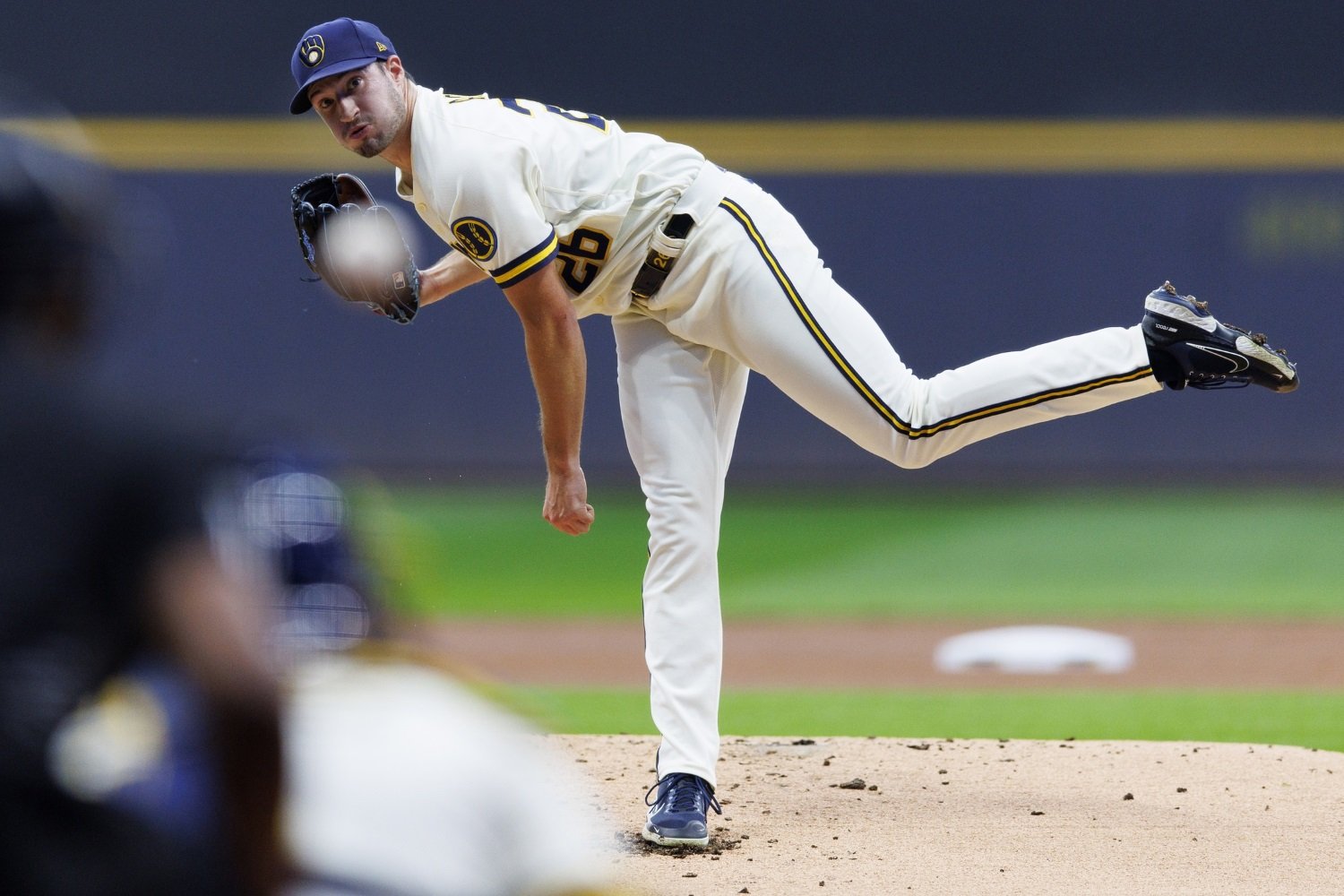 Only one team every five years or so makes it through an entire season with five starting pitchers. Even those teams will give one or two spot starts to an extra guy, but there is a team about twice each decade who only needs their top five to do any very important work. Still, that's rare enough to ensure that no team really plans its season around five starters. You need six. In fact, you need 10. Happily, the Brewers just might have 10, at least at this moment. Even after losing Brandon Woodruff to the vagaries of pitching and trading Adrian Houser to clear some salary from their prospective payroll, they have the following hurlers slotted into their projected rotation for 2024: Corbin Burnes Freddy Peralta Wade Miley Colin Rea Joe Ross Behind that group is a much less reliable group, of course, but also an unusually talented and interesting one. Certainly, this constitutes the best "second line" of any rotation in the NL Central: Robert Gasser Aaron Ashby Janson Junk Carlos F. Rodríguez Jacob Misiorowski It's unlikely that Misiorowski will be ready for the big leagues as a starter in 2024, but even without him, that's a nice depth corps--almost enough so to make one overlook the relatively unimpressive back end of the group above it. After all, if Rea or Ross needs to be replaced midstream in order to give the team a legitimate chance to reach the postseason, Gasser and Ashby are awfully encouraging options. Nor does the above account for the availability of 2023 long relief ace Bryse Wilson to move back to the rotation, if a dire need arises. In fact, Gasser and Ashby, especially, are good enough to make it worth entertaining the notion of a six-man rotation for a moment. That wouldn't be totally novel in Milwaukee, after all, and there are multiple reasons why the 2024 team could be as good a fit for it as the 2021 club was. That year, using six starters and lengthening the time between starts for everyone was a response to the shortened pandemic season of 2020. This time around, it would be more about roster construction, but health would be part of the calculation, too. Miley, Rea, and Ross have such extensive injury histories--and Miley, who turned 37 last month, is showing the signs of his age so clearly--that lengthening their recovery timeline between each outing makes ample sense. Rea is a good example, too, of how the extra rest can make a difference in sheer performance. He allowed a .778 OPS when starting on four days' rest last year; a .767 when starting on five days; and a .596 when working on six or more days of rest. The samples there are too small to draw too much from them, but note, too, that Rea's average velocity on each of his two fastballs was about half a tick higher when starting on five days than on four. Of course, those guys aren't the reason why you don't use a six-man staff, anyway. It's not a great revelation to say that back-end starters might benefit from extra rest, especially because Gasser and Ashby are (by consensus) not much worse than Rea and Ross, if they're worse at all. It's the front end of the rotation, with prime-aged Burnes and Peralta, that makes this idea tough to embrace, so let's turn our attention there. Firstly, if we're going to talk about these two, we have to acknowledge that it might well be just Peralta in the mix, come Opening Day. It's impossible to predict whether the Brewers will trade Burnes, at this stage, but they certainly haven't ruled that out, and if he were gone, the whole picture would change. In most formulations of a deal, I would expect the team to get back a starter who could be inserted into the rotation some time in 2024, but that pitcher would be very unlikely to be anywhere near as good as Burnes. If they didn't get a rotation piece back, I think the team would go sign another free-agent starter, but again, we're talking something closer to Miley than to Burnes at that point. In any scenario in which the team trades Burnes, then, they're likely to have the same number of credible starters, but one fewer hurler who stands out from the rest of the mélange. That would only make a six-man staff more viable. Let's consider the situation as-is, though. I think a strong case can be made for using the longer rotation even with both Burnes and Peralta in place. Both of those pitchers enjoyed their best seasons in 2021. Moreover, they've quietly been used mostly on six-day rotations even in the seasons since. Of his 97 career starts, Peralta has made only 22 on four or fewer days. He's been best (.618 opponent OPS) on five days, and better (.651) on six or more than on four (.678). Burnes has made just 31 of his 106 career starts on four days. He's been slightly better (.583 opponent OPS) on regular rest than on longer rest (.599), but the difference is pretty small. Moving to a six-man rotation would increase the likelihood of both aces staying healthy throughout 2024, so it's unlikely the team would face much pushback from either. This is the last guaranteed year of Peralta's very team-friendly contract extension, and Burnes is due to hit free agency after the campaign, so each has plenty to gain by minimizing injury risk. The only real question is whether trading anywhere from five to 10 starts by those two for the same number by Gasser or Ashby would hurt more than it would help. To be sure, there's a wide gap between the expected performances of the Crew's top two starters and their sixth and seventh guys. Baseball Prospectus has already published the early version of their PECOTA projections for 2024; here are the key numbers for the four pitchers in question. (DRA- is the rate version of their Deserved Run Average. It's scaled to 100, where that number is average and lower is better.) Pitcher GS Inn. DRA- ERA Burnes 29 177.2 77 3.29 Peralta 29 160.1 79 3.39 Gasser 16 64.2 105 4.75 Ashby 13 93.2 93 4.26 It would have been rather shocking to find that there would be no performance tradeoff in lengthening the rotation. We have no such shock from which to recover. The likes of Gasser and Ashby are not going to neatly mimic Burnes and Peralta every time through. If they were expected to do so, they'd already be written into the rotation. Note, though, that the system only pegs Burnes and Peralta for 29 starts apiece, anyway. Coincidentally (or not), BP's depth charts also project Gasser and Ashby to combined for 29 starts. Some of that is just the natural conservatism of projection systems, but not all of it can be explained that way. To take one example, Burnesian workhorse Gerrit Cole is projected for 31 starts. The system is nodding toward both the risk of injury and the team's recent tendency to lengthen the rotation whenever it can. Given that, maybe it makes sense to accept a fistful of starts from the two lesser (but certainly adequate) starters above, rather than trying to change recent patterns of usage for Burnes and Peralta to make up for the absence of Woodruff. Add to all of this the fact that, as the game evolves, more and more starts are made on what is still nominally considered "extra" rest, anyway. More starts were made on at least five days of rest in 2023, league-wide, than ever before. In the minors, the new schedule (six-game series each week, with a regular Monday travel day) has led to most starts being made on five or six days of rest. As pitchers from Japan's NPB (where starters pitch once a week) filter into MLB in greater numbers, teams are trying to accommodate them to various degrees. It's possible that using a five-man rotation, in 2024, constitutes clinging to an essentially extinct concept. On balance, it makes a lot of sense for the Brewers to think of themselves as building a six-man rotation for 2024, if they want to defend their NL Central title. We'll see to what extent the team agrees, over the first six weeks of the new year. What's your stance on the question of five starters or six? How would you line up the rotation for the coming season? Let's discuss it in the comments.
 -
This week, MLB announced that there will be tweaks to several of the new or adjusted rules from 2023, and at least one long-awaited change to a rule about the boundaries of the field. Image courtesy of © Jasen Vinlove-USA TODAY Sports The headline-grabbing change coming to baseball in 2024 is a further truncation of the interstices between pitches. Instead of starting at 20 seconds with runners on base, the pitch timer will count down from :18. That's a small change, but it emphasizes the seriousness of the league's commitment to maintaining the gains we saw in pace of play after the timer was implemented. The justification for the change was a slight upward creep in average game time as the season went along, but as I've said before, the real benefit to fans isn't the few minutes a shorter timer might shave off of a game. Rather, the chief benefit will be that the shorter timer will further subject players to the squeeze of the clutch moment. We watch sports to see grace under pressure. The pitch timer stops players from escaping and neutralizing that pressure. Shortening it increases that pressure, and makes the grace or poise a player shows within it more compelling. I say, bring it on. For the same reason, I'm excited about the fact that the league is reducing the allotted number of mound visits for each team in each game, from five to four. My least favorite thing about the NBA, until the last couple of seasons, was always that teams were allowed too many timeouts. At the other end of that spectrum, of course, lies soccer, where the players have to do almost all their own gameplanning and adjustment-making once the game gets moving. I much prefer that, because while I appreciate and value the role coaches play in giving the action of sports structure and purpose, I want the players to feel a bit alone. I want them to have to make or break the play themselves. At the very least, though, calls for timeout and the attendant conferences with non-player personnel should have a cost you can feel. Eventually, I'd love to see the number of visits allowed whittled down to three, but this is a good start. Speaking of my problems with the NBA, though, by far my biggest one these days is that fouls are reviewable. I don't have blanket disdain for instant replay, but I'm a big believer in keeping its application confined to the important, the obvious, and the objective. I also don't think badly disrupting game flow is a price worth paying to get a call right in most cases--and certainly not in nitpicky, subjective ones. For that reason, I'm very much on board with the other big change being applied in 2024. The runner's lane along the foul lines will be widened. Rather than a runner heading to first base needing to stay within the three-foot lane just outside the foul line, they'll have the right of way to be slightly inside the line, too. All they have to do is clear the grass and get onto the dirt track on which the line is painted. That's an overdue fix for a bad rule. Way too many times in the last several years, batter-runners have been called out for interference because a catcher's throw either hit them or was materially affected by that batter-runner being just inside the baseline. That shouldn't be the batter-runner's problem. A pitcher or catcher should have to clear the lane of their throw, within reason. Running straight to the bag but having the geometric genius and proprioception to take up the right space along the line to make a throw harder should be rewarded. I love that the league has figured those things out. The final change made me chuckle, in a good way. Twenty-four times in 2023, teams removed a pitcher who had come out to warm up for an inning before that pitcher actually faced a batter. Presumably, in most cases, that was in response to pinch-hitters being sent up by opponents. That's not many times, but the annoyance of it--and, in all likelihood, the low-grade confusion it caused for fans--was out of proportion to any real benefit teams gleaned from it. The league made that illegal. Now, any pitcher who comes out to warm up for an inning has to face a batter. It's an easy win: a tiny, rarely needed rule that will nonetheless pulverize one of those sequences that makes even diehard baseball fans roll their eyes and say, "Oh, come on." What do you think of this year's round of rule changes? View full article
-
 The headline-grabbing change coming to baseball in 2024 is a further truncation of the interstices between pitches. Instead of starting at 20 seconds with runners on base, the pitch timer will count down from :18. That's a small change, but it emphasizes the seriousness of the league's commitment to maintaining the gains we saw in pace of play after the timer was implemented. The justification for the change was a slight upward creep in average game time as the season went along, but as I've said before, the real benefit to fans isn't the few minutes a shorter timer might shave off of a game. Rather, the chief benefit will be that the shorter timer will further subject players to the squeeze of the clutch moment. We watch sports to see grace under pressure. The pitch timer stops players from escaping and neutralizing that pressure. Shortening it increases that pressure, and makes the grace or poise a player shows within it more compelling. I say, bring it on. For the same reason, I'm excited about the fact that the league is reducing the allotted number of mound visits for each team in each game, from five to four. My least favorite thing about the NBA, until the last couple of seasons, was always that teams were allowed too many timeouts. At the other end of that spectrum, of course, lies soccer, where the players have to do almost all their own gameplanning and adjustment-making once the game gets moving. I much prefer that, because while I appreciate and value the role coaches play in giving the action of sports structure and purpose, I want the players to feel a bit alone. I want them to have to make or break the play themselves. At the very least, though, calls for timeout and the attendant conferences with non-player personnel should have a cost you can feel. Eventually, I'd love to see the number of visits allowed whittled down to three, but this is a good start. Speaking of my problems with the NBA, though, by far my biggest one these days is that fouls are reviewable. I don't have blanket disdain for instant replay, but I'm a big believer in keeping its application confined to the important, the obvious, and the objective. I also don't think badly disrupting game flow is a price worth paying to get a call right in most cases--and certainly not in nitpicky, subjective ones. For that reason, I'm very much on board with the other big change being applied in 2024. The runner's lane along the foul lines will be widened. Rather than a runner heading to first base needing to stay within the three-foot lane just outside the foul line, they'll have the right of way to be slightly inside the line, too. All they have to do is clear the grass and get onto the dirt track on which the line is painted. That's an overdue fix for a bad rule. Way too many times in the last several years, batter-runners have been called out for interference because a catcher's throw either hit them or was materially affected by that batter-runner being just inside the baseline. That shouldn't be the batter-runner's problem. A pitcher or catcher should have to clear the lane of their throw, within reason. Running straight to the bag but having the geometric genius and proprioception to take up the right space along the line to make a throw harder should be rewarded. I love that the league has figured those things out. The final change made me chuckle, in a good way. Twenty-four times in 2023, teams removed a pitcher who had come out to warm up for an inning before that pitcher actually faced a batter. Presumably, in most cases, that was in response to pinch-hitters being sent up by opponents. That's not many times, but the annoyance of it--and, in all likelihood, the low-grade confusion it caused for fans--was out of proportion to any real benefit teams gleaned from it. The league made that illegal. Now, any pitcher who comes out to warm up for an inning has to face a batter. It's an easy win: a tiny, rarely needed rule that will nonetheless pulverize one of those sequences that makes even diehard baseball fans roll their eyes and say, "Oh, come on." What do you think of this year's round of rule changes?
 -
Not long after Mark Attanasio purchased the Brewers, they emerged from a long competitive slumber and got serious about contending again. One of the first signs of the owner's commitment to that came 17 years ago Sunday. While the 2007 Brewers fell short of being the team who truly broke the team free of the oppressive lousiness that defined them in the late 1990s and early 2000s, they did clear the first major hurdle. That team made the Brewers relevant again. They did so thanks, in part, to the monetary commitment of Attanasio and the Doug Melvin-led front office, and the biggest example of that was the four-year, $42-million deal to which they signed free agent Jeff Suppan, on Christmas Eve 2006. Suppan was coming off a three-season stint in St. Louis, in which he was a key contributor to three division-winning teams, two pennant winners, and one World Series championship. He was viewed as a mid-rotation workhorse, with the heavier emphasis placed on the latter characterization. At 32, he still figured to have some miles left in his arm, and the Brewers felt he was the right person to bring their rotation some needed stability. At Baseball Prospectus, Joe Sheehan expressed his skepticism in clear, intelligent terms. Setting aside the archaic Stuff metric that site was experimenting with at the time (they rolled out new stats like Willy Wonka before the secretive turn, back then), what Sheehan was saying was that Suppan (an extreme pitch-to-contact guy) had benefited greatly from a good Cardinals defense and a spacious home park over the previous few seasons, and that his solid surface-level numbers were thus unlikely to come with him up to Milwaukee. By and large, of course, Sheehan was right. Just days before the Brewers committed to him, the Cubs had signed Ted Lilly to an almost identical deal. Over the next two seasons, the yawning gap in usefulness between Lilly and Suppan would go a long way to explaining the Cubs beating the Brewers for both of those NL Central titles, before the Cardinals swaggered back in and reclaimed their perch in 2009. Even in his three good seasons with St. Louis before signing this deal, Suppan only struck out 13.2 percent of opposing batters. We all know how the global strikeout rate has shot up over the last quarter-century, but even 20 years ago, the baseline rate was around 17 percent. Suppan was a guy who was going to allow contact. He was a ground-ball guy, but not an extreme one. It screamed trouble. Indeed, in his Brewers tenure, his strikeout rate tumbled still further, until it was south of 12 percent. As a result, he had a 5.08 ERA and a -6.0 Win Probability Added during his time with the Crew. It was an ill-conceived signing, and it turned out pretty badly. There is one thing Sheehan got wrong back then, though. The injuries he foresaw never came to fruition. In his three full seasons with the Brewers, Suppan averaged 32 starts and 182 innings pitched. He wasn't good, but he did soak up innings and provide replacement-level work in a reliable way, saving the team from further taxing its organizational pitching depth. While he was far less valuable than Lilly and even a few other hurlers who signed for similar money that winter, I think you can argue that Suppan's durability and availability did help them stay close in 2007 and reach the postseason in 2008. Sheehan just seems to have gotten the diagnosis of a max-effort delivery wrong. Maybe Suppan had a high-energy delivery by the standards even of 2006, but when you watch video of him now, your mind immediately goes to a dozen starters who are more violent in 2023. Whereas the context of the era is crucial to understanding a player's strikeout rate, there's an important absoluteness to the injury risk created by a given hurler's pitching mechanics. That risk varies from pitcher to pitcher, but it depends more on their physiology than on any era-specific effect. Suppan had a delivery that was perfectly sustainable, and that would be considered clean and easy by modern standards. That's why he piled up a ton of innings during his relatively short stay in Milwaukee, and it's why he still delivered some value as the team's first announcement of their earnest intention to win--even if most of his numbers were wince-inducing. What are your memories of Suppan's Brewers tenure? Do you remember his Christmas Eve signing? View full article
-
Let's Remember the Jeff Suppan Signing, 17 Years Ago Today
Matthew Trueblood posted an article in Brewers
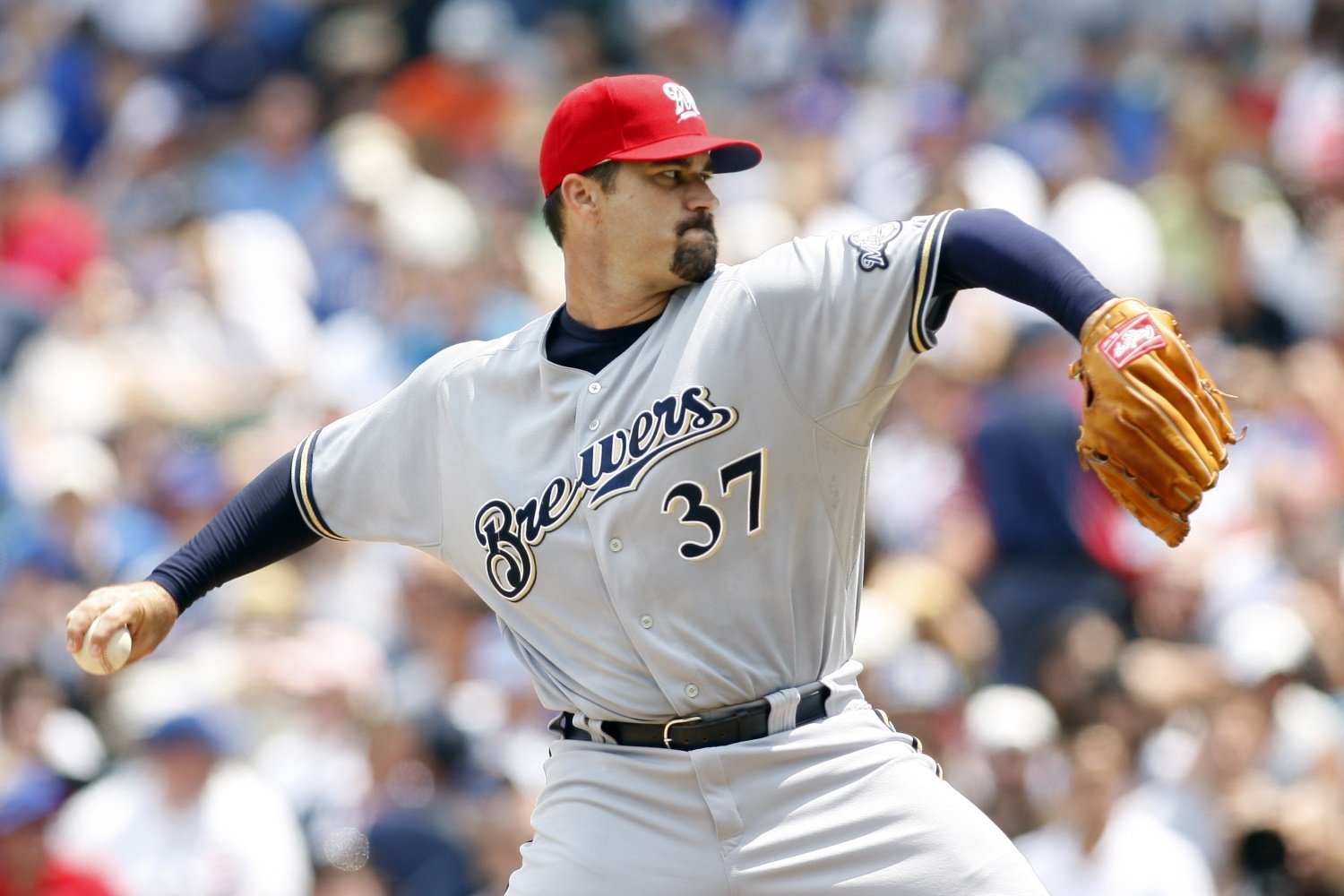 While the 2007 Brewers fell short of being the team who truly broke the team free of the oppressive lousiness that defined them in the late 1990s and early 2000s, they did clear the first major hurdle. That team made the Brewers relevant again. They did so thanks, in part, to the monetary commitment of Attanasio and the Doug Melvin-led front office, and the biggest example of that was the four-year, $42-million deal to which they signed free agent Jeff Suppan, on Christmas Eve 2006. Suppan was coming off a three-season stint in St. Louis, in which he was a key contributor to three division-winning teams, two pennant winners, and one World Series championship. He was viewed as a mid-rotation workhorse, with the heavier emphasis placed on the latter characterization. At 32, he still figured to have some miles left in his arm, and the Brewers felt he was the right person to bring their rotation some needed stability. At Baseball Prospectus, Joe Sheehan expressed his skepticism in clear, intelligent terms. Setting aside the archaic Stuff metric that site was experimenting with at the time (they rolled out new stats like Willy Wonka before the secretive turn, back then), what Sheehan was saying was that Suppan (an extreme pitch-to-contact guy) had benefited greatly from a good Cardinals defense and a spacious home park over the previous few seasons, and that his solid surface-level numbers were thus unlikely to come with him up to Milwaukee. By and large, of course, Sheehan was right. Just days before the Brewers committed to him, the Cubs had signed Ted Lilly to an almost identical deal. Over the next two seasons, the yawning gap in usefulness between Lilly and Suppan would go a long way to explaining the Cubs beating the Brewers for both of those NL Central titles, before the Cardinals swaggered back in and reclaimed their perch in 2009. Even in his three good seasons with St. Louis before signing this deal, Suppan only struck out 13.2 percent of opposing batters. We all know how the global strikeout rate has shot up over the last quarter-century, but even 20 years ago, the baseline rate was around 17 percent. Suppan was a guy who was going to allow contact. He was a ground-ball guy, but not an extreme one. It screamed trouble. Indeed, in his Brewers tenure, his strikeout rate tumbled still further, until it was south of 12 percent. As a result, he had a 5.08 ERA and a -6.0 Win Probability Added during his time with the Crew. It was an ill-conceived signing, and it turned out pretty badly. There is one thing Sheehan got wrong back then, though. The injuries he foresaw never came to fruition. In his three full seasons with the Brewers, Suppan averaged 32 starts and 182 innings pitched. He wasn't good, but he did soak up innings and provide replacement-level work in a reliable way, saving the team from further taxing its organizational pitching depth. While he was far less valuable than Lilly and even a few other hurlers who signed for similar money that winter, I think you can argue that Suppan's durability and availability did help them stay close in 2007 and reach the postseason in 2008. Sheehan just seems to have gotten the diagnosis of a max-effort delivery wrong. Maybe Suppan had a high-energy delivery by the standards even of 2006, but when you watch video of him now, your mind immediately goes to a dozen starters who are more violent in 2023. Whereas the context of the era is crucial to understanding a player's strikeout rate, there's an important absoluteness to the injury risk created by a given hurler's pitching mechanics. That risk varies from pitcher to pitcher, but it depends more on their physiology than on any era-specific effect. Suppan had a delivery that was perfectly sustainable, and that would be considered clean and easy by modern standards. That's why he piled up a ton of innings during his relatively short stay in Milwaukee, and it's why he still delivered some value as the team's first announcement of their earnest intention to win--even if most of his numbers were wince-inducing. What are your memories of Suppan's Brewers tenure? Do you remember his Christmas Eve signing?
 -
The Brewers created some 40-man roster space and brought some clarity to both their outfield picture and their starting rotation plans Thursday, trading two stalwarts of the David Stearns Era to Stearns's New York Mets for a minor-league pitcher. The shape of this deal is surprising, in that all the Brewers really get for Taylor and Houser is relief from the obligation to pay them, and the two spots they had occupied on the 40-man roster. The prospect they're receiving from the Mets is Coleman Crow, a smallish righthander whose fastball doesn't light up radar guns, but who does have two interesting breaking pitches and solid command. Crow's 2023 ended very early, as he underwent Tommy John surgery, and he'll miss most of 2024. Crow also isn't on the 40-man roster, though, and now that he's been acquired on this side of the Rule 5 Draft, he doesn't need to be added to it until next November. The Brewers will get to see him progress in his rehab process and try to work with him a bit in their pitching lab, before having to make a decision and use one of those spots. It's unlikely we'll see him on the big-league team in 2024, but getting him and losing both Taylor and Houser gives the Crew some newfound flexibility in terms of both payroll and roster spots. It's no surprise to see either Houser or Taylor on the move, exactly. Once Jackson Chourio signed his franchise-shaking extension earlier this offseason, the writing was on the wall for Taylor. He was going to get caught in the team's outfield logjam in short order, and paying even a relatively modest arbitration-influenced salary (somewhere between $1.5 million and $2 million) didn't seem to make sense. Houser's salary is an even more significant burden to clear, as MLB Trade Rumors projected him to earn just under $6 million for 2024. After the team re-signed Wade Miley and Colin Rea and brought in Joe Ross as a swingman option, Houser, too, seemed to become superfluous. The interesting questions here are whether something has changed for the Brewers behind the scenes, in one way or another. They actively chose to keep Houser and Taylor at the non-tender deadline. It would be ungenerous to Crow to say they've now traded them for nothing, but that's not far from the truth, anyway. We know that uncertainty continues to overhang the payroll picture, due to the limbo in which the team remains stuck with regard to regional broadcast rights. Was there an unexpected constriction? Or has the opposite happened, making the team less interested in trading Corbin Burnes or Willy Adames and more ready to get aggressive about upgrading the roster? It's possible that they simply think they can do better than Houser or Taylor for the roles each figured to fill in 2024, and wanted the short- and long-term flexibility that came with opening two 40-man spots and jettisoning two guys who could not be optioned to the minor leagues. Recently, there was an unconfirmed report that the Crew are one of the finalists for Carlos Santana, who ended the season as their first baseman. This deal could pave the way for that reunion. It could also help the team maintain a nimble posture in Burnes trade permutations that would require them to take back more 40-man roster players than they send away, a possibility that ought not to be discounted right now. What do you think of this deal? Obviously, Houser and Taylor have each had some wonderful moments with the Crew, but neither was able to be a consistently above-average contributor, for various reasons. What do you expect the Brewers to do next, after clearing some money and some room on their roster? View full article
-
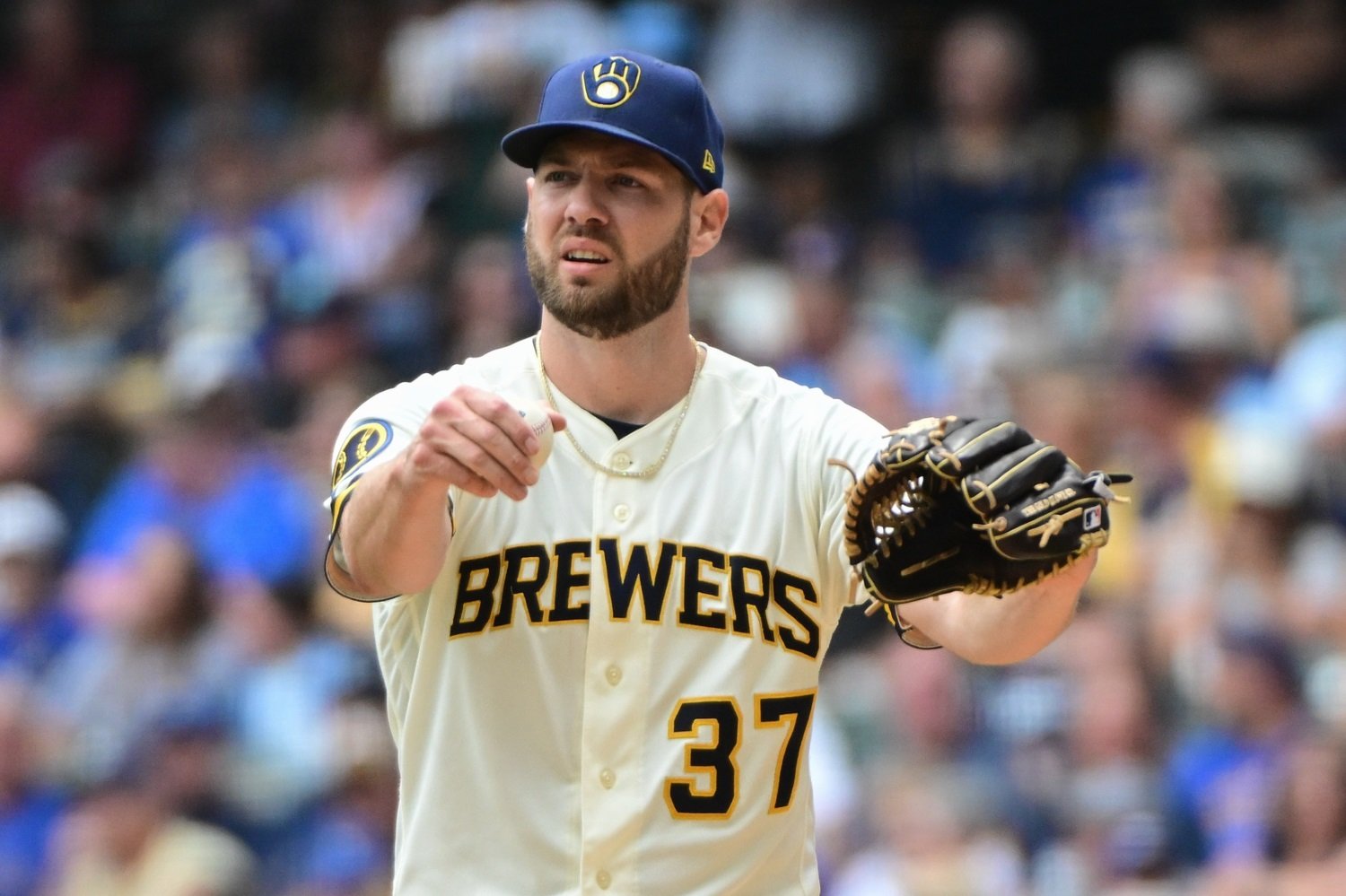 The Brewers elected to tender contracts to both Adrian Houser and Tyrone Taylor at last month's deadline to do so for arbitration-eligible players, but now, both will re-join Stearns with his new team. In exchange, the Brewers pick up a talented injury reclamation project on the mound. Ken Rosenthal of The Athletic has the details. The shape of this deal is surprising, in that all the Brewers really get for Taylor and Houser is relief from the obligation to pay them, and the two spots they had occupied on the 40-man roster. The prospect they're receiving from the Mets is Coleman Crow, a smallish righthander whose fastball doesn't light up radar guns, but who does have two interesting breaking pitches and solid command. Crow's 2023 ended very early, as he underwent Tommy John surgery, and he'll miss most of 2024. Crow also isn't on the 40-man roster, though, and now that he's been acquired on this side of the Rule 5 Draft, he doesn't need to be added to it until next November. The Brewers will get to see him progress in his rehab process and try to work with him a bit in their pitching lab, before having to make a decision and use one of those spots. It's unlikely we'll see him on the big-league team in 2024, but getting him and losing both Taylor and Houser gives the Crew some newfound flexibility in terms of both payroll and roster spots. It's no surprise to see either Houser or Taylor on the move, exactly. Once Jackson Chourio signed his franchise-shaking extension earlier this offseason, the writing was on the wall for Taylor. He was going to get caught in the team's outfield logjam in short order, and paying even a relatively modest arbitration-influenced salary (somewhere between $1.5 million and $2 million) didn't seem to make sense. Houser's salary is an even more significant burden to clear, as MLB Trade Rumors projected him to earn just under $6 million for 2024. After the team re-signed Wade Miley and Colin Rea and brought in Joe Ross as a swingman option, Houser, too, seemed to become superfluous. The interesting questions here are whether something has changed for the Brewers behind the scenes, in one way or another. They actively chose to keep Houser and Taylor at the non-tender deadline. It would be ungenerous to Crow to say they've now traded them for nothing, but that's not far from the truth, anyway. We know that uncertainty continues to overhang the payroll picture, due to the limbo in which the team remains stuck with regard to regional broadcast rights. Was there an unexpected constriction? Or has the opposite happened, making the team less interested in trading Corbin Burnes or Willy Adames and more ready to get aggressive about upgrading the roster? It's possible that they simply think they can do better than Houser or Taylor for the roles each figured to fill in 2024, and wanted the short- and long-term flexibility that came with opening two 40-man spots and jettisoning two guys who could not be optioned to the minor leagues. Recently, there was an unconfirmed report that the Crew are one of the finalists for Carlos Santana, who ended the season as their first baseman. This deal could pave the way for that reunion. It could also help the team maintain a nimble posture in Burnes trade permutations that would require them to take back more 40-man roster players than they send away, a possibility that ought not to be discounted right now. What do you think of this deal? Obviously, Houser and Taylor have each had some wonderful moments with the Crew, but neither was able to be a consistently above-average contributor, for various reasons. What do you expect the Brewers to do next, after clearing some money and some room on their roster?
 -
In need of a backup catcher to replace the departed Victor Caratini, the Brewers have made their move, bringing in a seasoned veteran to support William Contreras. Haase, who just turned 31, had a long journey to a job in the big leagues. He emerged as a major contributor with the Tigers in 2021 and 2022, but his production cratered in 2023 and he found himself adrift on the market. Now, he'll try to reestablish himself as the Crew's backup backstop. When he's right, Haase has good power. In his two solid seasons in Detroit, he hit 36 home runs in 732 plate appearances. He struck out nearly 30 percent of the time and drew relatively few walks, but his overall batting line for those two campaigns was .242/.295/.451--above average for anyone, and certainly so for a catcher. He pulled the ball in the air at a high rate, which is the surest way to sustain good power production. Last year, he got swing-happy. He swung at 53.7 percent of the pitches he saw, overall, up from 49.6 percent in 2021 and 2022. His first-pitch swing rate climbed from 28.1 percent to 34.1 percent. As a result, he didn't get his pitch as reliably, and his power diminished. His final line from 2023 looks calamitous: .201/.247/.281. Underneath it, though, there's still enough offensive upside to merit work as a big-league backup. That's why Haase found a big-league deal in Milwaukee. The biggest hurdle to Haase finding regular work in the majors, though, has been his iffy defense behind the plate. According to Baseball Prospectus, he's been worth -19 Framing Runs behind the plate since the start of 2021. He's slightly above-average at controlling the running game, which has gained new importance, but it doesn't make up for his inability to frame balls and strikes. But hey! The Brewers are baseball's best team, when it comes to turning lousy pitch framers into good ones. They just promoted Charlie Greene to their big-league coaching staff. They have a chance to turn Haase into an average (or maybe even better) framer, and if they manage it, he has a chance to be one of the best backup catchers in the game. Helping Haase clean up that aspect of his game would ensure that the team is still able to slide Contreras over to the designated hitter spot at times, to keep his bat in the lineup more often. Haase was a seventh-round pick in 2011, and didn't even reach the majors for a cup of coffee until 2018. His career was on life support until he caught on with a rebuilding Tigers team. He still has three years of team control, should things work out here, so the Brewers can tender him a contract and pay him via arbitration beyond the scope of this deal. What do you make of this move? Is it the right way to leverage the team's edge in terms of catching instruction and refinement? Let's talk about it more. View full article
-
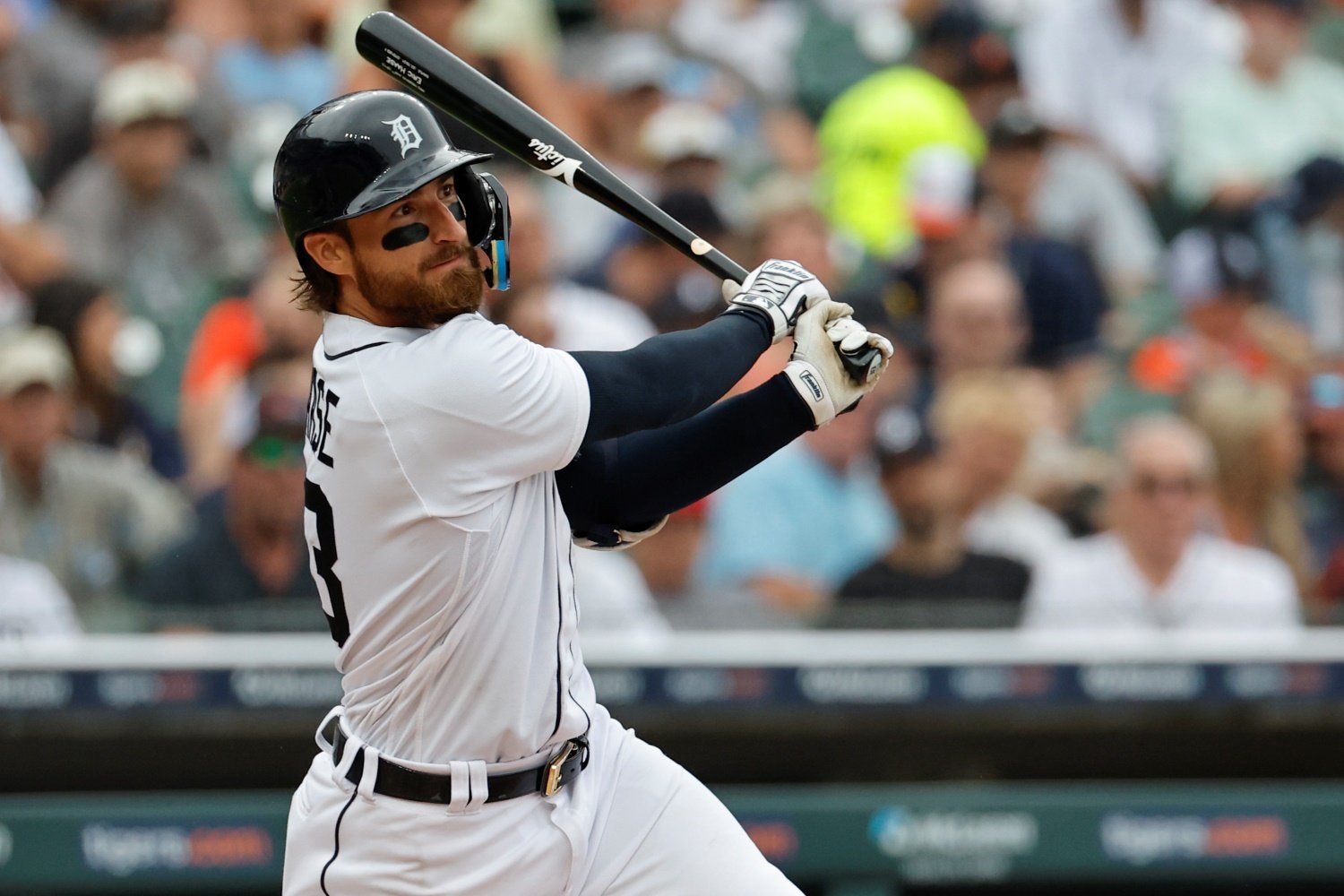 The Brewers have announced the deal, so it's official. However, Curt Hogg of the Milwaukee Journal-Sentinel had it first. Haase, who just turned 31, had a long journey to a job in the big leagues. He emerged as a major contributor with the Tigers in 2021 and 2022, but his production cratered in 2023 and he found himself adrift on the market. Now, he'll try to reestablish himself as the Crew's backup backstop. When he's right, Haase has good power. In his two solid seasons in Detroit, he hit 36 home runs in 732 plate appearances. He struck out nearly 30 percent of the time and drew relatively few walks, but his overall batting line for those two campaigns was .242/.295/.451--above average for anyone, and certainly so for a catcher. He pulled the ball in the air at a high rate, which is the surest way to sustain good power production. Last year, he got swing-happy. He swung at 53.7 percent of the pitches he saw, overall, up from 49.6 percent in 2021 and 2022. His first-pitch swing rate climbed from 28.1 percent to 34.1 percent. As a result, he didn't get his pitch as reliably, and his power diminished. His final line from 2023 looks calamitous: .201/.247/.281. Underneath it, though, there's still enough offensive upside to merit work as a big-league backup. That's why Haase found a big-league deal in Milwaukee. The biggest hurdle to Haase finding regular work in the majors, though, has been his iffy defense behind the plate. According to Baseball Prospectus, he's been worth -19 Framing Runs behind the plate since the start of 2021. He's slightly above-average at controlling the running game, which has gained new importance, but it doesn't make up for his inability to frame balls and strikes. But hey! The Brewers are baseball's best team, when it comes to turning lousy pitch framers into good ones. They just promoted Charlie Greene to their big-league coaching staff. They have a chance to turn Haase into an average (or maybe even better) framer, and if they manage it, he has a chance to be one of the best backup catchers in the game. Helping Haase clean up that aspect of his game would ensure that the team is still able to slide Contreras over to the designated hitter spot at times, to keep his bat in the lineup more often. Haase was a seventh-round pick in 2011, and didn't even reach the majors for a cup of coffee until 2018. His career was on life support until he caught on with a rebuilding Tigers team. He still has three years of team control, should things work out here, so the Brewers can tender him a contract and pay him via arbitration beyond the scope of this deal. What do you make of this move? Is it the right way to leverage the team's edge in terms of catching instruction and refinement? Let's talk about it more.
 -
Well, I think you're hand-waving way too many things by only seeing the downside in those guys, but I do get it. You'd love more certainty than the pitchers, at least, offer. I would caution against making ANYTHING of Busch's cup-of-coffee numbers, though. He's not Turang. He can hit.
-
Interesting! I actually think two of the three are ones Friedman would turn down, even though Arnold would be interested. Much depends on your stance on some of these wide-variance Dodgers pitching prospects. But if the Brewers could get ahold of Busch and any of Frasso/Ryan/Stone/Knack, I think they'd surprise you by seizing that opportunity. (I don't think the Dodgers have been open to such a structure yet, which is why rumors have stayed pretty cool.)
-
For some reason, whenever there's a player in MLB who happens to be from Wisconsin, people go wildly out of their way to try to place them with the Brewers. Let's not merely resist that temptation, but rebuke it. Image courtesy of © Milwaukee Journal Sentinel-USA TODAY NETWORK It's not inconceivable that the Los Angeles Dodgers would trade Gavin Lux to the Brewers in a trade for Corbin Burnes, and it's not inconceivable that the Brewers would have interest in acquiring him. Lux, 26, just lost an entire season to injury, and he's never put it all together at the big-league level, but he's been a top prospect for a reason. Penciled in as the Dodgers' starting shortstop for 2024, he has three years of team control left and could still emerge as a star. That said, the biggest reason you hear his name every time the Brewers are connected to the Dodgers in Burnes rumors is that Lux is from Kenosha. That's a lousy reason. It's also hard to pin down the value matchup the teams might find on such a deal, because again, Lux is currently written into an essential role for the Dodgers next season, and their vision is fixed on winning the World Series. Let's set him aside, then, and talk about three plausible Burnes-to-Dodgers deals that don't involve Lux. Dodgers Receive: Corbin Burnes, Competitive Balance Round B pick Brewers Receive: INF Michael Busch, RHP Landon Knack Maybe it's worth taking a moment, right up front, to defend the idea that a trade for Burnes would still interest the Dodgers. They did already trade for Tyler Glasnow, after all. In the short term, though, they still need more certainty and some reliable innings at the front end of their rotation. That's one reason why they're interested in free-agent ace Yoshinobu Yamamoto. It's more likely that Yamamoto ends up elsewhere, though, and if he does, the Dodgers do still need another topflight starter. After they surrendered two draft picks to sign Shohei Ohtani, the Dodgers could also use an extra pick next July. It moves things around, more than anything, because a comp pick can become the one a team loses for signing a free agent with the qualifying offer attached, but that sweetener would dampen the impact of signing Ohtani on the Dodgers' seemingly inexhaustible talent-acquisition and development machine. In exchange for all that, the Brewers would be getting an answer at a position of major uncertainty right now: that of "best offensive infielder". Busch is not even an average defender at any infield spot, and would not be able to even fake it at shortstop, but he's an adequate second or third baseman. The glove only needs to be loosely viable, too, because Busch is a dangerous, disciplined left-handed hitter who would give the team the controllable, high-floor power bat missing from their lineup right now. He's a terrific fit for a team currently projected to start Brice Turang at second base and Andruw Monasterio at third. Knack is a bit less exciting, but could be valuable in his own right. He's a four-pitch guy with an excellent chance to emerge as a back-end starting pitcher and stay viable in that role for half a decade. The Brewers really like a pitcher with a good vertical approach angle on their fastball, and Knack has that. Dodgers Receive: Corbin Burnes Brewers Receive: RHP River Ryan, SS Trey Sweeney Although there's the obvious option to move Turang across the keystone, I don't see an impressive heir to Willy Adames at short in the Brewers organization. If the candidates to take over in the long run are Cooper Pratt and Juan Baez, then there's certainly a bridge of a couple years that will need to be traversed. Sweeney, another lefty-hitting infielder with impressive pop, is likely to be ready for the big leagues no later than early 2025. Really, though, this deal inverts the formula of the previous one. The better prospect is the pitcher, and the lesser one is the infielder. Ryan is old for his level, and he could end up in the bullpen, but his fastball and slider are devastating and his changeup could yet turn him out as a starter with frontline, Freddy Peralta-like upside. Few organizations are in any position to trade a prospect like Ryan, but the Dodgers are one of them. Dodgers Receive: Corbin Burnes, Willy Adames, Competitive Balance Round B Pick Brewers Receive: RHP Nick Frasso, INF Michael Busch, and RHP Payton Martin While we're here, we might as well entertain a moonshot. Frasso is one of the most electric arms in the minor leagues, with a fastball that explodes out of his hand from a low release point and a slider-changeup combination that defies those who would be tempted to nudge him into a bullpen role because of his past injury trouble. His slider picked up some extra velocity and found easy two-plane movement in 2023. That comes naturally, given his arm slot. The changeup is a much weirder pitch, but it could be the thing that makes him an ace. Failing that, he could be a genuine relief monster at the drop of a hat. Add Busch to the mix with Frasso, and the Crew are blending floor and ceiling on two guys with 12 years of team control left, between them. It's very rare to get an opportunity to grab such potentially valuable players in a single deal. For a finisher, though, they could target Martin, a converted high-school infielder still miles from the big leagues, but with great athleticism and a high ceiling. The problem with dealing with the Dodgers is that they have so many desirable prospects that they almost gain leverage just by deciding whether they're willing to talk to you. Their depth makes for appealing hypothetical trades; the trick is managing to actually get one done. Are any of these moves worthwhile, in your opinion? Do you think Lux makes sense, after all? Weigh in below. View full article
- 18 replies
-
- 1
-

-
- corbin burnes
- willy adames
- (and 5 more)
-
3 Corbin Burnes Dodgers Trade Proposals That Don't Include Gavin Lux
Matthew Trueblood posted an article in Brewers
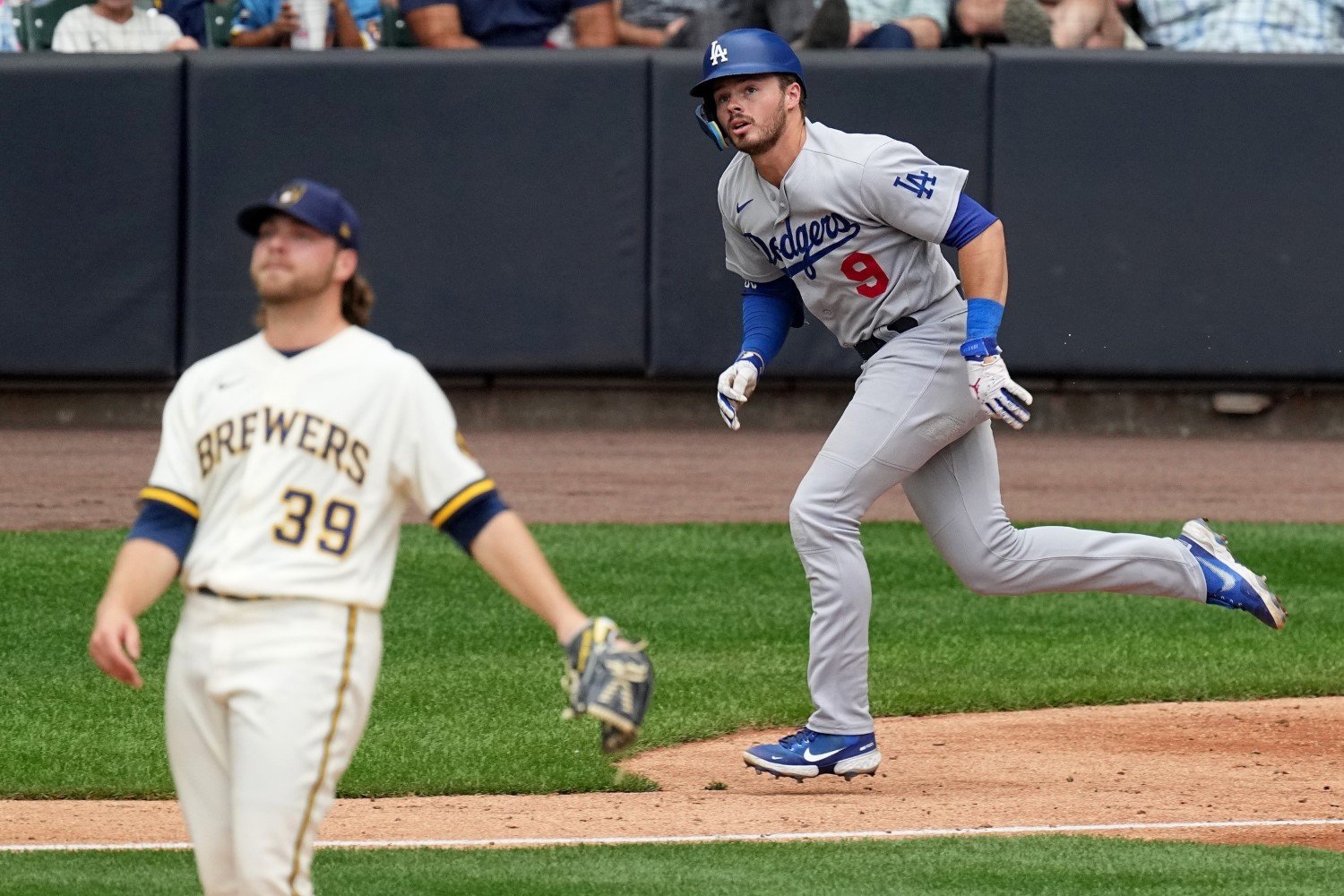 It's not inconceivable that the Los Angeles Dodgers would trade Gavin Lux to the Brewers in a trade for Corbin Burnes, and it's not inconceivable that the Brewers would have interest in acquiring him. Lux, 26, just lost an entire season to injury, and he's never put it all together at the big-league level, but he's been a top prospect for a reason. Penciled in as the Dodgers' starting shortstop for 2024, he has three years of team control left and could still emerge as a star. That said, the biggest reason you hear his name every time the Brewers are connected to the Dodgers in Burnes rumors is that Lux is from Kenosha. That's a lousy reason. It's also hard to pin down the value matchup the teams might find on such a deal, because again, Lux is currently written into an essential role for the Dodgers next season, and their vision is fixed on winning the World Series. Let's set him aside, then, and talk about three plausible Burnes-to-Dodgers deals that don't involve Lux. Dodgers Receive: Corbin Burnes, Competitive Balance Round B pick Brewers Receive: INF Michael Busch, RHP Landon Knack Maybe it's worth taking a moment, right up front, to defend the idea that a trade for Burnes would still interest the Dodgers. They did already trade for Tyler Glasnow, after all. In the short term, though, they still need more certainty and some reliable innings at the front end of their rotation. That's one reason why they're interested in free-agent ace Yoshinobu Yamamoto. It's more likely that Yamamoto ends up elsewhere, though, and if he does, the Dodgers do still need another topflight starter. After they surrendered two draft picks to sign Shohei Ohtani, the Dodgers could also use an extra pick next July. It moves things around, more than anything, because a comp pick can become the one a team loses for signing a free agent with the qualifying offer attached, but that sweetener would dampen the impact of signing Ohtani on the Dodgers' seemingly inexhaustible talent-acquisition and development machine. In exchange for all that, the Brewers would be getting an answer at a position of major uncertainty right now: that of "best offensive infielder". Busch is not even an average defender at any infield spot, and would not be able to even fake it at shortstop, but he's an adequate second or third baseman. The glove only needs to be loosely viable, too, because Busch is a dangerous, disciplined left-handed hitter who would give the team the controllable, high-floor power bat missing from their lineup right now. He's a terrific fit for a team currently projected to start Brice Turang at second base and Andruw Monasterio at third. Knack is a bit less exciting, but could be valuable in his own right. He's a four-pitch guy with an excellent chance to emerge as a back-end starting pitcher and stay viable in that role for half a decade. The Brewers really like a pitcher with a good vertical approach angle on their fastball, and Knack has that. Dodgers Receive: Corbin Burnes Brewers Receive: RHP River Ryan, SS Trey Sweeney Although there's the obvious option to move Turang across the keystone, I don't see an impressive heir to Willy Adames at short in the Brewers organization. If the candidates to take over in the long run are Cooper Pratt and Juan Baez, then there's certainly a bridge of a couple years that will need to be traversed. Sweeney, another lefty-hitting infielder with impressive pop, is likely to be ready for the big leagues no later than early 2025. Really, though, this deal inverts the formula of the previous one. The better prospect is the pitcher, and the lesser one is the infielder. Ryan is old for his level, and he could end up in the bullpen, but his fastball and slider are devastating and his changeup could yet turn him out as a starter with frontline, Freddy Peralta-like upside. Few organizations are in any position to trade a prospect like Ryan, but the Dodgers are one of them. Dodgers Receive: Corbin Burnes, Willy Adames, Competitive Balance Round B Pick Brewers Receive: RHP Nick Frasso, INF Michael Busch, and RHP Payton Martin While we're here, we might as well entertain a moonshot. Frasso is one of the most electric arms in the minor leagues, with a fastball that explodes out of his hand from a low release point and a slider-changeup combination that defies those who would be tempted to nudge him into a bullpen role because of his past injury trouble. His slider picked up some extra velocity and found easy two-plane movement in 2023. That comes naturally, given his arm slot. The changeup is a much weirder pitch, but it could be the thing that makes him an ace. Failing that, he could be a genuine relief monster at the drop of a hat. Add Busch to the mix with Frasso, and the Crew are blending floor and ceiling on two guys with 12 years of team control left, between them. It's very rare to get an opportunity to grab such potentially valuable players in a single deal. For a finisher, though, they could target Martin, a converted high-school infielder still miles from the big leagues, but with great athleticism and a high ceiling. The problem with dealing with the Dodgers is that they have so many desirable prospects that they almost gain leverage just by deciding whether they're willing to talk to you. Their depth makes for appealing hypothetical trades; the trick is managing to actually get one done. Are any of these moves worthwhile, in your opinion? Do you think Lux makes sense, after all? Weigh in below.
 -
I like Taylor, too, but between his inconsistency and his injury history, gosh, I do not want to see them relying on him to do anything especially important in 2024. As a complement to Frelick or Mitchell, as a platoon DH, that's fine. You can't be in a position where he needs to bat fifth or play every day, because he's just never shown the ability to sustain success and stay healthy over a decent span to a level that would fulfill those responsibilities.
-
On Monday, Major League Baseball announced the list of players who received bonuses via the league's new pre-arbitration bonus pool system for 2023. Two Brewers were included therein, and one of them is especially important. Image courtesy of © Orlando Ramirez-USA TODAY Sports In his first season with the Brewers and fourth in the big leagues, William Contreras earned $739,000 in salary. In a system wherein players get paid something very close to the league-minimum salary (just over $700,000 for the last few years, rising steadily but slowly) until they reach arbitration, that's typical. Contreras made $710,000 in 2022, with Atlanta. In reality, though, he got almost $1 million for that final season in the NL East, because last December, he earned a bonus of over $270,000 via the newly-created pre-arbitration bonus pool. Established as part of the new Collective Bargaining Agreement to which the owners and the MLB Players Association agreed in March 2022, the bonus pool is designed to dampen the frustration and inequality of the league's compensation system. Players can earn a share of $50 million paid out league-wide, by earning votes for major awards and/or by being among the leaders in a Wins Above Replacement calculation agreed upon by both sides. This time around, Contreras got an even bigger slice of the pie. His down-ballot MVP votes and an impressive WAR total netted Contreras $813,344. Yes, that's a 110-percent raise on his official salary for the season. It's a very nice consolation prize (although something just short of a true evening-out) after Contreras fell just six days short of the cutoff for arbitration eligibility for 2024, putting off his first truly life-changing payday for another year. Of course, that's actually optional. Contreras and the Brewers could strike a deal on a contract extension to keep him in Milwaukee well beyond the end of the 2027 season, when he'd otherwise be eligible for free agency. Few players in the game are more obvious candidates for that than Contreras, who signed for a paltry $10,000 out of Venezuela in 2015. Yes, his big brother has secured well over $100 million in his own career, but the Brewers have leverage in negotiations with Contreras that should give them a chance to strike a team-friendly deal. It's worth noting, though, that this new pool has taken some of that leverage away. Contreras has netted an extra $1.1 million or so over the last two years, and even though he'll have to wait another year to get what figures to be a multi-million-dollar award in arbitration, he could easily rack up that much again in 2024. Ten players got more than $1 million via the pool Monday, and Contreras is rapidly establishing himself on the same level as many of them. Importantly, this is not bad news. This shift in leverage probably means that any long-term deal would be slightly less team-friendly, but it also might make such a deal marginally more likely, because it's surely helping head off any bitterness or dissatisfaction on the part of Contreras about his inability to cash in on such an impressive breakout. There's plenty of room between the extreme example of Ronald Acuña Jr.'s wildly team-friendly extension, and the line between good and bad for the club. A happy Contreras signing a six-year deal worth $78 million--or even $90 million--is a hugely positive outcome for the Brewers this winter, even if it's slightly less advantageous in the long run than a similar deal worth $66 million, instead. Whether this will have a material impact on extension discussions between Contreras and the Crew remains to be seen. For now, all we can say is that it's a great day to be one of the players the Brewers got in last year's jackpot of a trade. Joel Payamps was the only other recipient of pool money for Milwaukee, pocketing over $267,000 after his sterling season as a setup man in the team's superb bullpen. The Brewers will pay this money out immediately, but be reimbursed by MLB in short order. Their share of the $50-million pool was $1.67 million, so there's still more of their money going elsewhere via this system than into the pockets of Contreras and Payamps. Next winter, maybe more than their share will come back to their roster, as guys like Jackson Chourio, Contreras, and Sal Frelick project to anchor the lineup and rack up some WAR. Do you like this new means of redistributing the wealth among MLB players? Will this have an effect on the Brewers' (presumed) efforts to lock up their star catcher? Start or join a discussion in the comments. View full article
-
William Contreras Just Saw His 2023 Salary More Than Doubled
Matthew Trueblood posted an article in Brewers
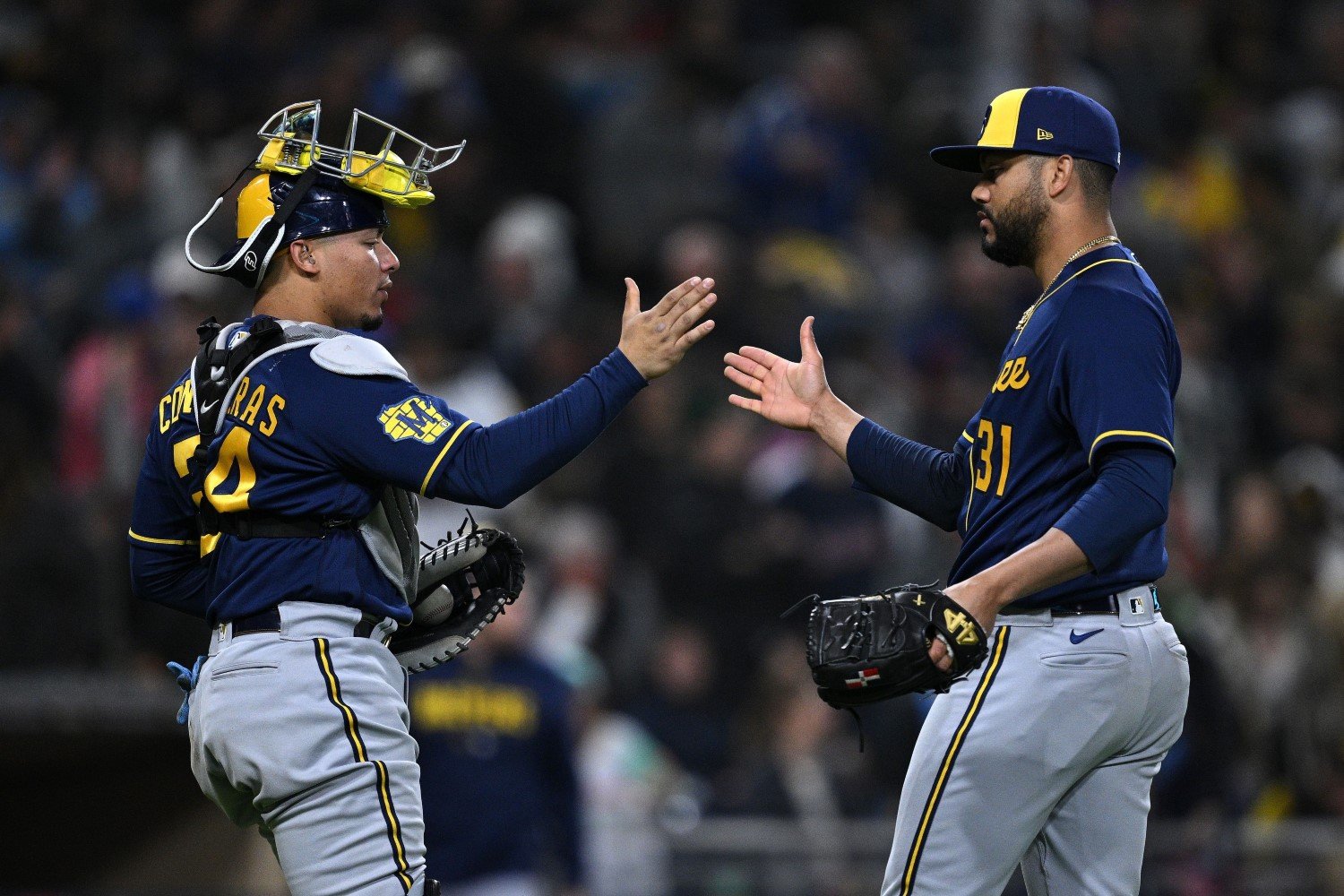 In his first season with the Brewers and fourth in the big leagues, William Contreras earned $739,000 in salary. In a system wherein players get paid something very close to the league-minimum salary (just over $700,000 for the last few years, rising steadily but slowly) until they reach arbitration, that's typical. Contreras made $710,000 in 2022, with Atlanta. In reality, though, he got almost $1 million for that final season in the NL East, because last December, he earned a bonus of over $270,000 via the newly-created pre-arbitration bonus pool. Established as part of the new Collective Bargaining Agreement to which the owners and the MLB Players Association agreed in March 2022, the bonus pool is designed to dampen the frustration and inequality of the league's compensation system. Players can earn a share of $50 million paid out league-wide, by earning votes for major awards and/or by being among the leaders in a Wins Above Replacement calculation agreed upon by both sides. This time around, Contreras got an even bigger slice of the pie. His down-ballot MVP votes and an impressive WAR total netted Contreras $813,344. Yes, that's a 110-percent raise on his official salary for the season. It's a very nice consolation prize (although something just short of a true evening-out) after Contreras fell just six days short of the cutoff for arbitration eligibility for 2024, putting off his first truly life-changing payday for another year. Of course, that's actually optional. Contreras and the Brewers could strike a deal on a contract extension to keep him in Milwaukee well beyond the end of the 2027 season, when he'd otherwise be eligible for free agency. Few players in the game are more obvious candidates for that than Contreras, who signed for a paltry $10,000 out of Venezuela in 2015. Yes, his big brother has secured well over $100 million in his own career, but the Brewers have leverage in negotiations with Contreras that should give them a chance to strike a team-friendly deal. It's worth noting, though, that this new pool has taken some of that leverage away. Contreras has netted an extra $1.1 million or so over the last two years, and even though he'll have to wait another year to get what figures to be a multi-million-dollar award in arbitration, he could easily rack up that much again in 2024. Ten players got more than $1 million via the pool Monday, and Contreras is rapidly establishing himself on the same level as many of them. Importantly, this is not bad news. This shift in leverage probably means that any long-term deal would be slightly less team-friendly, but it also might make such a deal marginally more likely, because it's surely helping head off any bitterness or dissatisfaction on the part of Contreras about his inability to cash in on such an impressive breakout. There's plenty of room between the extreme example of Ronald Acuña Jr.'s wildly team-friendly extension, and the line between good and bad for the club. A happy Contreras signing a six-year deal worth $78 million--or even $90 million--is a hugely positive outcome for the Brewers this winter, even if it's slightly less advantageous in the long run than a similar deal worth $66 million, instead. Whether this will have a material impact on extension discussions between Contreras and the Crew remains to be seen. For now, all we can say is that it's a great day to be one of the players the Brewers got in last year's jackpot of a trade. Joel Payamps was the only other recipient of pool money for Milwaukee, pocketing over $267,000 after his sterling season as a setup man in the team's superb bullpen. The Brewers will pay this money out immediately, but be reimbursed by MLB in short order. Their share of the $50-million pool was $1.67 million, so there's still more of their money going elsewhere via this system than into the pockets of Contreras and Payamps. Next winter, maybe more than their share will come back to their roster, as guys like Jackson Chourio, Contreras, and Sal Frelick project to anchor the lineup and rack up some WAR. Do you like this new means of redistributing the wealth among MLB players? Will this have an effect on the Brewers' (presumed) efforts to lock up their star catcher? Start or join a discussion in the comments.
 -
In 2020 and 2021, Corbin Burnes might have been the best pitcher in baseball. If he took a small step backward in 2022, it was just that. In 2023, though, the Brewers' ace experienced some genuine adversity. Whether he regains his previous form in 2024 could be a $100-million question, and it could come down to a pitch he uses relatively rarely. Image courtesy of © Jeff Hanisch-USA TODAY Sports For all the consternation around Burnes pounding the zone with his cutter and giving up too much hard contact, the fact is that he has remained overpowering--at least against left-handed batters, who get stumped by that cutter. Lefty hitters had a .263 wOBA against Burnes in 2020, a .248 in 2021, a .269 in 2022, and a career-low .236 in 2023. He hasn't lost a thing against opposite-handed batters. He still racks up strikeouts, and when lefties do make contact, it's often weakly hit and often on the ground. Things are different against righties, though. Against them, Burnes has gotten steadily worse since his COVID-shortened breakout: a .207 wOBA in 2020, then .215, .264, and in 2023, .295. Even that figure isn't atrocious, but it's the difference between a very good pitcher and a truly great one. Moreover, it could have been much worse. Burnes's strikeout rate against righties plunged from over 30 percent in each of the three previous seasons to a pedestrian 22.2 percent this year. His ground-ball rate plummeted, and opponents hit the ball hard much more often. I can sum the problem up thusly: Unlike in his previous, better seasons, Burnes simply couldn't command his sinker in 2023. It really got away from him, and ended up in much more hittable places. That's not the only thing about the sinker that has changed. It's lost about 1.5 miles per hour, from almost 97 to 95.3, since the start of 2021, which has some unavoidable effects. It's also gotten a bit heavier. It sinks a bit more than it has in the past, which makes sense, for two reasons: That little bit of lost zip means he's giving the ball a little less resistance to gravity; and He's slightly lowered his release point on it. The latter change is so subtle you could easily miss it. Burnes isn't dramatically lowering his arm slot on the sinker. He's just not staying quite as upright through his delivery. 2021 Sinker Release 2023 Sinker Release He's releasing the ball a hair later, so he's getting greater extension toward home plate at release. 'Greater' doesn't always mean 'better,' though. That later release isn't a conscious choice. It's a systematic error in timing. Burnes is releasing the ball lower, more in line with his body, and closer to home, and the result is a sinker that sinks more, but runs less horizontally and stays over the plate too often. It's not as simple as giving up on that pitch, even though Burnes has three other formidable weapons for righty batters. The cutter, the curveball, and the slider all work to the outside part of the plate to righties. Burnes uses the sinker to keep them honest inside. He has felt, especially, like his cutter sets up his curveball, but his sinker sets up the slider. As has been well documented, though, Burnes tweaked that slider in the middle of 2023, engineering more of a sweeper-like offering. It's slower and has more horizontal movement, and while the natural thought is that a horizontal slider works well with a sinker, that's less true given Burnes's spin signatures and arm angle. From him, the new, sweepier slider has pretty good spin mirroring with the cutter, and it might be best to simply try tucking the sinker farther back onto the shelf and unloading more cutters, curves, and sliders. That's what Burnes did in September 2023. That was his best month in terms of strikeout rate, strikeout-minus-walk rate, and soft contact rate against righties during the season, though the size of the sample admonishes us against drawing firm conclusions. He certainly could be a better version of himself than we saw, on the whole, just by using the sinker less often. To really recapture the brilliance of 2020 and 2021, though, Burnes needs that pitch. To be in line for a Gerrit Cole-type contract next winter, as he still harbors some hope of doing, he has to get the feel for that pitch back. It means rediscovering his release point, in all three dimensions. It means better command than ever, because he's lost a little bit of the power that gave him a wider margin for error a couple years ago. It's a tall task, but if Burnes manages it, he could be a full-season version of CC Sabathia for the Brewers: an awe-inspiring playoff ace, opening up his engine to full throttle right alongside a team trying to shake off a legacy of October futility. View full article
-
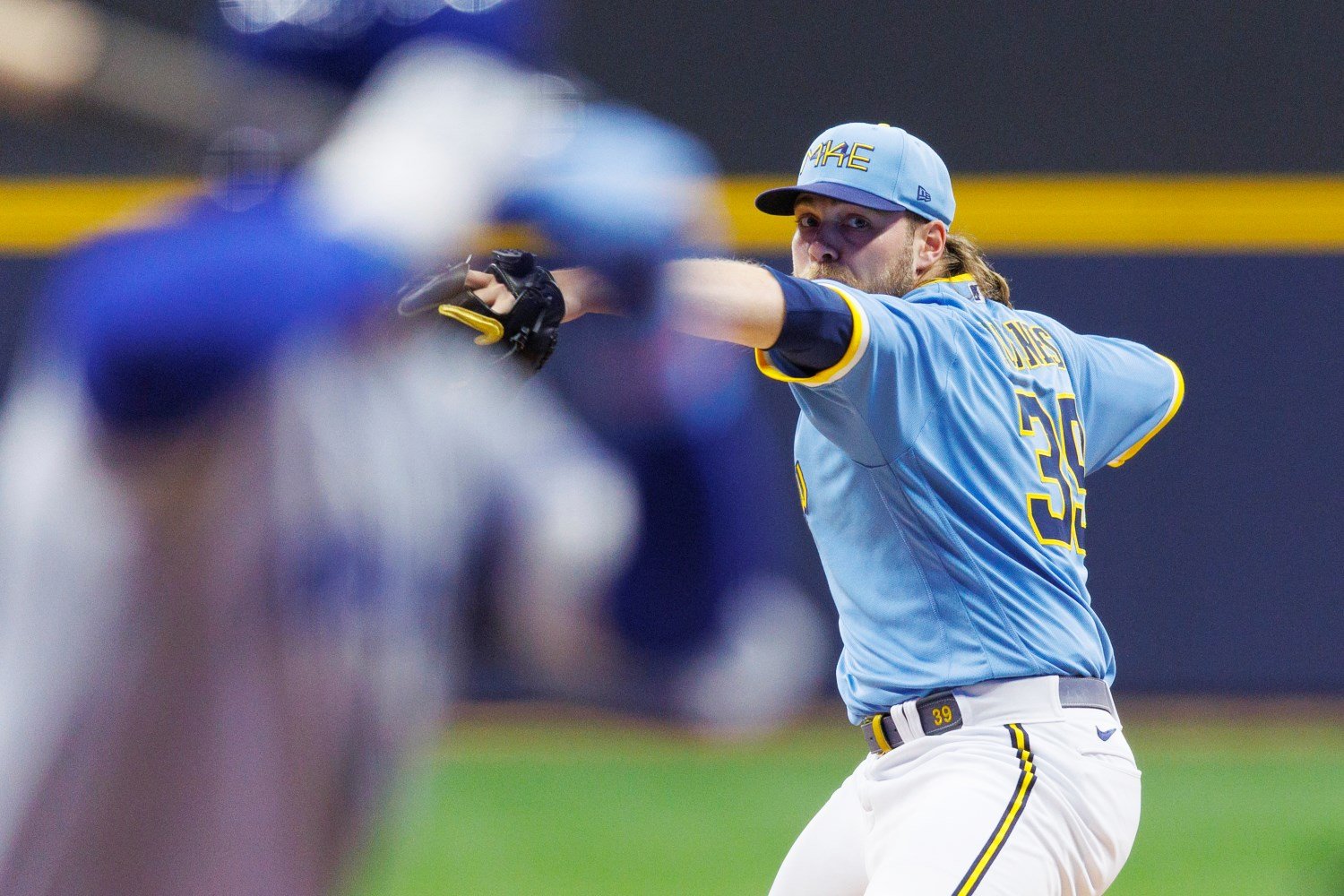 For all the consternation around Burnes pounding the zone with his cutter and giving up too much hard contact, the fact is that he has remained overpowering--at least against left-handed batters, who get stumped by that cutter. Lefty hitters had a .263 wOBA against Burnes in 2020, a .248 in 2021, a .269 in 2022, and a career-low .236 in 2023. He hasn't lost a thing against opposite-handed batters. He still racks up strikeouts, and when lefties do make contact, it's often weakly hit and often on the ground. Things are different against righties, though. Against them, Burnes has gotten steadily worse since his COVID-shortened breakout: a .207 wOBA in 2020, then .215, .264, and in 2023, .295. Even that figure isn't atrocious, but it's the difference between a very good pitcher and a truly great one. Moreover, it could have been much worse. Burnes's strikeout rate against righties plunged from over 30 percent in each of the three previous seasons to a pedestrian 22.2 percent this year. His ground-ball rate plummeted, and opponents hit the ball hard much more often. I can sum the problem up thusly: Unlike in his previous, better seasons, Burnes simply couldn't command his sinker in 2023. It really got away from him, and ended up in much more hittable places. That's not the only thing about the sinker that has changed. It's lost about 1.5 miles per hour, from almost 97 to 95.3, since the start of 2021, which has some unavoidable effects. It's also gotten a bit heavier. It sinks a bit more than it has in the past, which makes sense, for two reasons: That little bit of lost zip means he's giving the ball a little less resistance to gravity; and He's slightly lowered his release point on it. The latter change is so subtle you could easily miss it. Burnes isn't dramatically lowering his arm slot on the sinker. He's just not staying quite as upright through his delivery. 2021 Sinker Release 2023 Sinker Release He's releasing the ball a hair later, so he's getting greater extension toward home plate at release. 'Greater' doesn't always mean 'better,' though. That later release isn't a conscious choice. It's a systematic error in timing. Burnes is releasing the ball lower, more in line with his body, and closer to home, and the result is a sinker that sinks more, but runs less horizontally and stays over the plate too often. It's not as simple as giving up on that pitch, even though Burnes has three other formidable weapons for righty batters. The cutter, the curveball, and the slider all work to the outside part of the plate to righties. Burnes uses the sinker to keep them honest inside. He has felt, especially, like his cutter sets up his curveball, but his sinker sets up the slider. As has been well documented, though, Burnes tweaked that slider in the middle of 2023, engineering more of a sweeper-like offering. It's slower and has more horizontal movement, and while the natural thought is that a horizontal slider works well with a sinker, that's less true given Burnes's spin signatures and arm angle. From him, the new, sweepier slider has pretty good spin mirroring with the cutter, and it might be best to simply try tucking the sinker farther back onto the shelf and unloading more cutters, curves, and sliders. That's what Burnes did in September 2023. That was his best month in terms of strikeout rate, strikeout-minus-walk rate, and soft contact rate against righties during the season, though the size of the sample admonishes us against drawing firm conclusions. He certainly could be a better version of himself than we saw, on the whole, just by using the sinker less often. To really recapture the brilliance of 2020 and 2021, though, Burnes needs that pitch. To be in line for a Gerrit Cole-type contract next winter, as he still harbors some hope of doing, he has to get the feel for that pitch back. It means rediscovering his release point, in all three dimensions. It means better command than ever, because he's lost a little bit of the power that gave him a wider margin for error a couple years ago. It's a tall task, but if Burnes manages it, he could be a full-season version of CC Sabathia for the Brewers: an awe-inspiring playoff ace, opening up his engine to full throttle right alongside a team trying to shake off a legacy of October futility.
 -
Though they have several more questions to answer, the Brewers are closer to being ready for the 2024 season than many of their rivals. Let's project the Opening Day roster at this moment, to spot the points where uncertainty remains. Image courtesy of © Jovanny Hernandez / Milwaukee Journal Sentinel / USA TODAY NETWORK Obviously, there will still be significant changes to the Brewers roster between now and late March. We don't yet know whether Matt Arnold and his staff will elect to trade Corbin Burnes or Willy Adames, and either move could beget a huge cascade of other changes. For the moment, though, let's assume no further subtractions or additions, to see what the roster could look like with only the existing, internal options. Starting Lineup Christian Yelich, LF William Contreras, C Sal Frelick, RF Willy Adames, SS Jackson Chourio, CF Jake Bauers, 1B Tyrone Taylor, DH Brice Turang, 2B Andruw Monasterio, 3B Guessing the Opening Day batting order is obviously folly, but this gives us a good anchor. Yelich is, at this point, the clear and established leadoff hitter, and there's little reason to consider moving him out of that spot. Notably, Monasterio is manning the hot corner in this formulation, but there's some version of spring training in which Tyler Black forces his way past Monasterio and into the lineup. Black is the one player who could compel the team to move Yelich back down into one of the power positions in the lineup, but given his ground-ball rate, that would still be a less-than-ideal solution. The glaring, blinking segment of the lineup begging to be upgraded is Taylor and Bauers at designated hitter and first base, respectively. Platoons could keep each away from bad matchups most of the time, but the need for a reliable middle-of-the-order hitter at one of those bat-first positions is pretty stark. Bench Jeferson Quero, C Oliver Dunn, IF Jahmai Jones, UTIL Garrett Mitchell, OF Quero's 90 games at Double-A Biloxi in 2023 are his only experience above High A, and I deeply doubt that the Brewers want him on the roster come Opening Day. At the moment, however, they have no credible alternative. Signing a backup catcher remains high on the offseason to-do list, but it will need to be done cheaply. Depending on their respective Cactus League showings, it's not at all inconceivable that Dunn could be the starting second baseman, with Turang on the bench. Either way, Dunn's left-handed bat will provide depth on the infield and a pinch-hitting option when Taylor starts at DH and a tough righty comes on. Jones gets the nod here over Owen Miller, because Miller can be optioned without being exposed to waivers, whereas Jones can't. Mitchell makes it over Joey Wiemer and Blake Perkins because of his superior mix of power, defensive tools, plate discipline, and fit for the outfield mix from a handedness perspective. Starting Rotation Corbin Burnes Freddy Peralta Wade Miley Adrian Houser Colin Rea One of the key questions the spring will help us answer is whether or not the Brewers will revert to a six-man rotation. It's still not quite the norm, league-wide, but the six-man group is becoming increasingly popular, and the Crew have had trouble keeping starters healthy when using only five in rotation over recent seasons. Still, in this projection, we stick to five, figuring that Pat Murphy's old-school essence will win out in the battle with new-age thinking. Burnes is the elephant in the room, of course. If he's traded, a healthy Aaron Ashby is a candidate to claim the extra spot, but so is fellow southpaw Robert Gasser, about whose profile I wrote not long ago. Bullpen Devin Williams Joel Payamps Trevor Megill Hoby Milner Abner Uribe Bryse Wilson Joe Ross Robert Gasser Many of these choices will be shaped by the simple test of whether a given pitcher has minor-league options. Wilson and Ross have to be waived in order to be sent to the minors; Elvis Peguero and Taylor Clarke do not. The surprising name here might be Gasser, who would give the relief corps a second lefty and third long man. If the team does stick to five starters, they might want that length and flexibility out of the pen, especially early in the season. As we've discussed in the past, too, Gasser's arm slot and arsenal make him a tough matchup for lefty batters. What do you think of this projection? Who are the players you most fervently hope to see added or subtracted between now and spring training? Fire up the conversation. View full article
-
Projecting the Brewers' 2024 Opening Day Roster, v 1.0
Matthew Trueblood posted an article in Brewers
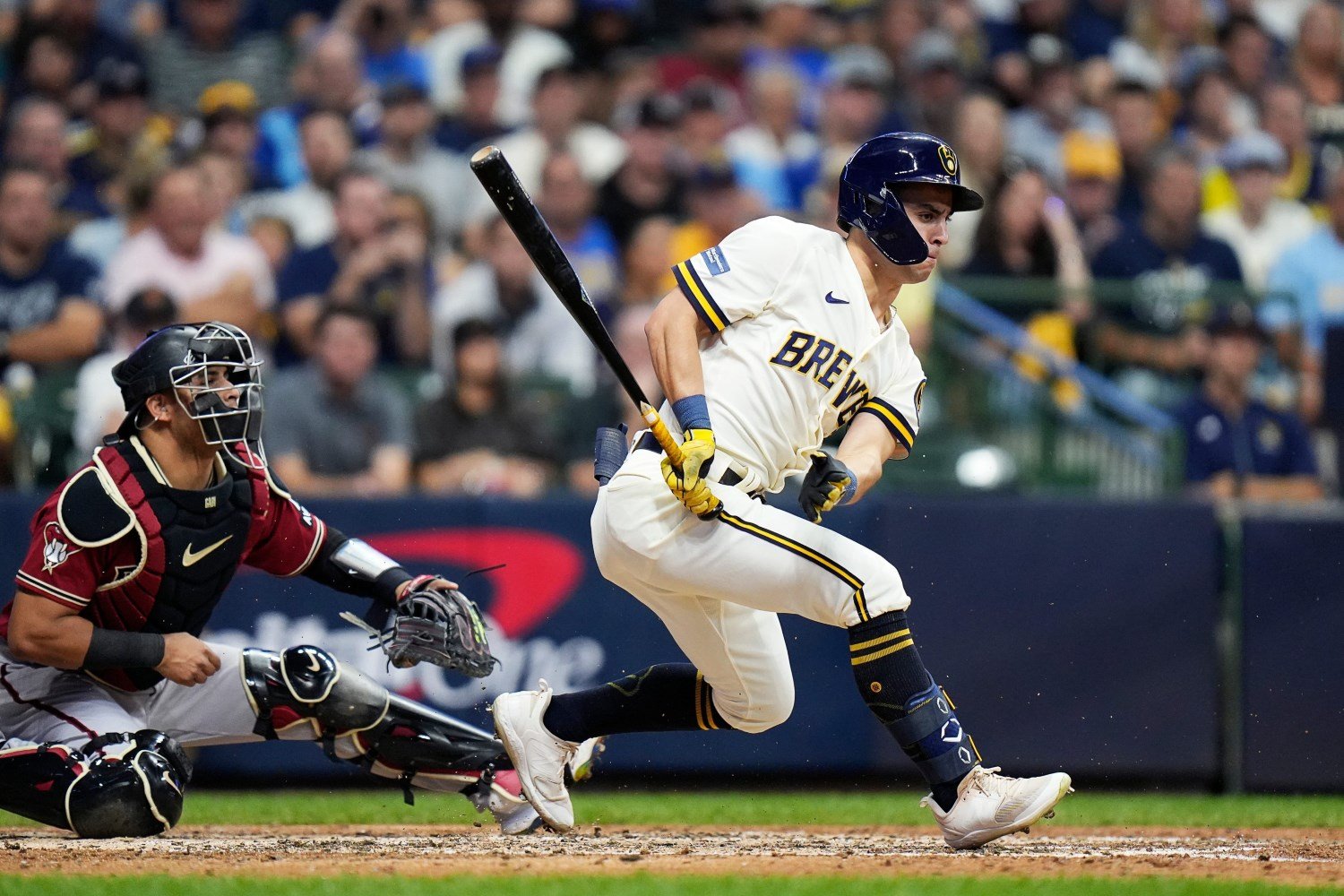 Obviously, there will still be significant changes to the Brewers roster between now and late March. We don't yet know whether Matt Arnold and his staff will elect to trade Corbin Burnes or Willy Adames, and either move could beget a huge cascade of other changes. For the moment, though, let's assume no further subtractions or additions, to see what the roster could look like with only the existing, internal options. Starting Lineup Christian Yelich, LF William Contreras, C Sal Frelick, RF Willy Adames, SS Jackson Chourio, CF Jake Bauers, 1B Tyrone Taylor, DH Brice Turang, 2B Andruw Monasterio, 3B Guessing the Opening Day batting order is obviously folly, but this gives us a good anchor. Yelich is, at this point, the clear and established leadoff hitter, and there's little reason to consider moving him out of that spot. Notably, Monasterio is manning the hot corner in this formulation, but there's some version of spring training in which Tyler Black forces his way past Monasterio and into the lineup. Black is the one player who could compel the team to move Yelich back down into one of the power positions in the lineup, but given his ground-ball rate, that would still be a less-than-ideal solution. The glaring, blinking segment of the lineup begging to be upgraded is Taylor and Bauers at designated hitter and first base, respectively. Platoons could keep each away from bad matchups most of the time, but the need for a reliable middle-of-the-order hitter at one of those bat-first positions is pretty stark. Bench Jeferson Quero, C Oliver Dunn, IF Jahmai Jones, UTIL Garrett Mitchell, OF Quero's 90 games at Double-A Biloxi in 2023 are his only experience above High A, and I deeply doubt that the Brewers want him on the roster come Opening Day. At the moment, however, they have no credible alternative. Signing a backup catcher remains high on the offseason to-do list, but it will need to be done cheaply. Depending on their respective Cactus League showings, it's not at all inconceivable that Dunn could be the starting second baseman, with Turang on the bench. Either way, Dunn's left-handed bat will provide depth on the infield and a pinch-hitting option when Taylor starts at DH and a tough righty comes on. Jones gets the nod here over Owen Miller, because Miller can be optioned without being exposed to waivers, whereas Jones can't. Mitchell makes it over Joey Wiemer and Blake Perkins because of his superior mix of power, defensive tools, plate discipline, and fit for the outfield mix from a handedness perspective. Starting Rotation Corbin Burnes Freddy Peralta Wade Miley Adrian Houser Colin Rea One of the key questions the spring will help us answer is whether or not the Brewers will revert to a six-man rotation. It's still not quite the norm, league-wide, but the six-man group is becoming increasingly popular, and the Crew have had trouble keeping starters healthy when using only five in rotation over recent seasons. Still, in this projection, we stick to five, figuring that Pat Murphy's old-school essence will win out in the battle with new-age thinking. Burnes is the elephant in the room, of course. If he's traded, a healthy Aaron Ashby is a candidate to claim the extra spot, but so is fellow southpaw Robert Gasser, about whose profile I wrote not long ago. Bullpen Devin Williams Joel Payamps Trevor Megill Hoby Milner Abner Uribe Bryse Wilson Joe Ross Robert Gasser Many of these choices will be shaped by the simple test of whether a given pitcher has minor-league options. Wilson and Ross have to be waived in order to be sent to the minors; Elvis Peguero and Taylor Clarke do not. The surprising name here might be Gasser, who would give the relief corps a second lefty and third long man. If the team does stick to five starters, they might want that length and flexibility out of the pen, especially early in the season. As we've discussed in the past, too, Gasser's arm slot and arsenal make him a tough matchup for lefty batters. What do you think of this projection? Who are the players you most fervently hope to see added or subtracted between now and spring training? Fire up the conversation.
 -
After the Brewers' latest small trade, it's getting extremely crowded on their projected bullpen depth chart. Could a blockbuster trade be in the offing? On its surface, trading for right-handed reliever Taylor Clarke Thursday seems like an innocuous move by Brewers head honcho Matt Arnold. It might still turn out that way. As relief options pile up, though, the deal has stirred up a little speculation about the future of Devin Williams with the Crew. The bullpen is a perennial strength in Milwaukee, and they do seem to have the arms to weather the loss of the reigning Trevor Hoffman National League Reliever of the Year. Clarke has one minor-league option year left, so he doesn't muddy the waters all that much. He'd be overqualified for a job as pure minor-league depth, though, especially because he's on the 40-man roster. That reserve list already has 21 pitchers on it, and that doesn't include Robert Gasser, who figures to push his way into the mix at some point very early in 2024. While Clarke can be optioned, fellow recent acquisition Joe Ross can not be. Nor can Bryse Wilson, another key member of (ostensibly) the long relief corps for the team. By no means are the Brewers cornered into any kind of move. Both Thyago Vieira and J.B. Bukauskas are out of options, but they're the kind of fungible hurlers a team can jettison to make room on the roster whenever the need to do so becomes urgent. You can always replace a Vieira or a Bukauskas, and for that matter, the same goes for Clayton Andrews, even though he has options left. Aaron Ashby remains optionable. So does Janson Junk. Looking at the whole picture, though, it feels primed for a big trade. That could come from the rotation, instead. Rumors about Corbin Burnes' chances of being dealt continue to conflict with one another, but they aren't going away altogether. If it did turn out to be a bullpen move, though, trading Williams would be a fascinating one. We covered the potential shape of a Williams deal earlier this offseason, in our Brewer Fanatic Offseason Handbook, which you can still get by signing up to be a Caretaker today. The gist of any Williams deal would need to be multiple high-value pieces coming back for the Brewers. Of course, that classification is subjective, and finding just the right package is difficult. Teams are more willing to part with pitching prospects than with hitters they believe can make the jump to the big leagues and become stars, but the Brewers would surely prefer to find a position player. With two years of team control left, Williams is uniquely valuable; few elite closers become available at this stage of their careers. The Red Sox, Tigers, Angels, Dodgers, Yankees, Rangers, and Blue Jays all seem like interesting potential suitors for him. If the right trade offer did come through, Arnold and new skipper Pat Murphy would probably feel comfortable moving Williams, because they have a few good alternatives to finish games if needed. Trevor Megill's breakout in the second half last year is of special note, but the team could start the season with Joel Payamps in the closer's role and just see how Megill and Abner Uribe do while they're getting settled into full-time big-league roles. The roster math isn't yet forcing the Brewers' hand. Arnold has played it smart. They'll still have leverage in any trade talks that take place from here, unless they somehow add another pitcher along the way. They could keep almost all of these guys (and all the genuinely important ones), or they could look to make smaller moves, like trading Wilson to a team who views him as a starter or higher-leverage reliever, turning a profit on the tiny deal they made for him last winter. For maximum long-term impact, though, Arnold would need to trade either Burnes or Williams. Whether he feels that that kind of risky, high-impact move is worth what it would cost his competitive team in the short term will be an interesting question. Within the month, we're likely to have our answer. Even if Williams isn't dealt now, though, he could also be a candidate for a Josh Hader-like move come July. (I kniow, I know.) What would it take to get you interested in a Williams trade? Should the Brewers be shopping their relief ace? Let's sift through the ramifications of the team's recent pitching additions together. View full article
- 7 replies
-
- 1
-

-
- devin williams
- taylor clarke
- (and 5 more)
-
Could Brewers Be Loading Up Bullpen Only to Trade Devin Williams?
Matthew Trueblood posted an article in Brewers
 On its surface, trading for right-handed reliever Taylor Clarke Thursday seems like an innocuous move by Brewers head honcho Matt Arnold. It might still turn out that way. As relief options pile up, though, the deal has stirred up a little speculation about the future of Devin Williams with the Crew. The bullpen is a perennial strength in Milwaukee, and they do seem to have the arms to weather the loss of the reigning Trevor Hoffman National League Reliever of the Year. Clarke has one minor-league option year left, so he doesn't muddy the waters all that much. He'd be overqualified for a job as pure minor-league depth, though, especially because he's on the 40-man roster. That reserve list already has 21 pitchers on it, and that doesn't include Robert Gasser, who figures to push his way into the mix at some point very early in 2024. While Clarke can be optioned, fellow recent acquisition Joe Ross can not be. Nor can Bryse Wilson, another key member of (ostensibly) the long relief corps for the team. By no means are the Brewers cornered into any kind of move. Both Thyago Vieira and J.B. Bukauskas are out of options, but they're the kind of fungible hurlers a team can jettison to make room on the roster whenever the need to do so becomes urgent. You can always replace a Vieira or a Bukauskas, and for that matter, the same goes for Clayton Andrews, even though he has options left. Aaron Ashby remains optionable. So does Janson Junk. Looking at the whole picture, though, it feels primed for a big trade. That could come from the rotation, instead. Rumors about Corbin Burnes' chances of being dealt continue to conflict with one another, but they aren't going away altogether. If it did turn out to be a bullpen move, though, trading Williams would be a fascinating one. We covered the potential shape of a Williams deal earlier this offseason, in our Brewer Fanatic Offseason Handbook, which you can still get by signing up to be a Caretaker today. The gist of any Williams deal would need to be multiple high-value pieces coming back for the Brewers. Of course, that classification is subjective, and finding just the right package is difficult. Teams are more willing to part with pitching prospects than with hitters they believe can make the jump to the big leagues and become stars, but the Brewers would surely prefer to find a position player. With two years of team control left, Williams is uniquely valuable; few elite closers become available at this stage of their careers. The Red Sox, Tigers, Angels, Dodgers, Yankees, Rangers, and Blue Jays all seem like interesting potential suitors for him. If the right trade offer did come through, Arnold and new skipper Pat Murphy would probably feel comfortable moving Williams, because they have a few good alternatives to finish games if needed. Trevor Megill's breakout in the second half last year is of special note, but the team could start the season with Joel Payamps in the closer's role and just see how Megill and Abner Uribe do while they're getting settled into full-time big-league roles. The roster math isn't yet forcing the Brewers' hand. Arnold has played it smart. They'll still have leverage in any trade talks that take place from here, unless they somehow add another pitcher along the way. They could keep almost all of these guys (and all the genuinely important ones), or they could look to make smaller moves, like trading Wilson to a team who views him as a starter or higher-leverage reliever, turning a profit on the tiny deal they made for him last winter. For maximum long-term impact, though, Arnold would need to trade either Burnes or Williams. Whether he feels that that kind of risky, high-impact move is worth what it would cost his competitive team in the short term will be an interesting question. Within the month, we're likely to have our answer. Even if Williams isn't dealt now, though, he could also be a candidate for a Josh Hader-like move come July. (I kniow, I know.) What would it take to get you interested in a Williams trade? Should the Brewers be shopping their relief ace? Let's sift through the ramifications of the team's recent pitching additions together.

