


Matthew Trueblood
-
Posts
2,031 -
Joined
-
Last visited
-
Days Won
10
Content Type
Profiles
Forums
Blogs
Events
Milwaukee Brewers News, Rumors & Analysis
2026 Milwaukee Brewers Top Prospect Rankings
Milwaukee Brewers Videos
2022 Milwaukee Brewers Draft Picks & Signing Bonuses
Milwaukee Brewers Trade & Free Agent Rumors
Milwaukee Brewers Fan Guides & Resources
2023 Milwaukee Brewers Draft Picks & Signing Bonuses
2024 Milwaukee Brewers Draft Picks & Signing Bonuses
The Milwaukee Brewers Players Project
2025 Milwaukee Brewers Draft Picks & Signing Bonuses
2026 Milwaukee Brewers Draft Picks & Signing Bonuses
Store
Downloads
Gallery
Everything posted by Matthew Trueblood
-
In the stormy present, it’s hard to remember the halcyon home stretch of 2021, and even harder to see a sun-drenched dynasty emerging in the near future. Yet, blending current trends with core identity, it’s the Brewers who look best-positioned to own the NL Central for the next half-decade. Image courtesy of © Charles LeClaire-USA TODAY Sports In the stormy present, it’s hard to remember the halcyon home stretch of 2021, and even harder to see a sun-drenched dynasty emerging in the near future. Yet, blending current trends with core identity, it’s the Brewers who look best-positioned to own the NL Central for the next half-decade. A losing jag at home, especially one punctuated by a sweep at the hands of the worst team in MLB, can make everything seem hopeless. At this moment, the Brewers (who started 14-5, against what looked like a formidable early slate!) are barely over .500, and they’re staring up at the Pirates in the standings. Corbin Burnes, Brandon Woodruff, and Willy Adames are all a year and a half from free agency, and it’s not clear which (if any) is a good candidate for a contract extension at an agreeable price. Craig Counsell isn’t under contract beyond this season, and the lack of news on that front has gone from eerie silence to an active, ominous sucking sound. That’s one way of looking at things. Here’s another. If you had to line up the five teams in the NL Central from best to worst for the next five years (2024-28), based on their current assets and liabilities (be they players, ownership, market strength, or other), how would you do it? I think I would go: Brewers Reds Cardinals Cubs Pirates If the early progress of this season has taught us anything—and that’s a subject of some debate, but let’s take it as read for now—it’s that everyone in this division has problems. Funnily, despite Bud Selig having long ago made sure that they were the embodiment of baseball’s Third World, the Crew currently have first-world problems. Their owner is consistently committed and motivated, to a greater extent than at least three of their rivals. Their front office has demonstrated greater competence in scouting, player development, and roster construction than at least three of their rivals. They have a better balance of proven talent and help coming from the farm system than at least three of their rivals. At the moment, and in defiance of all odds before this season began, the Reds look like the most serious threat to the Brewers’ hegemony. They’ve built a promising, young pitching staff, and even with Kyle Boddy having moved on from his affiliation with the team, they feel as close to the state of the art in technology-driven pitching development as any team in the division. They were perspicacious and fortunate in trading off the core of their last would-be contending club, and they’ve drafted quite well recently—blending betting on upside and smart draft demography as well as any team in baseball. They also have Elly De La Cruz. On the other hand, nothing in the track record of any members of the Castellini family suggests that they’ll be as patient or as resilient as Mark Attanasio has been. When they spend money, they do it hurriedly, fitfully, temporarily, and not on a sufficient scale to obliterate the downsides of those errors. In all likelihood, they’ll leave the door open for others to win the division, even when they have enough talent and (theoretical) spending power to lock things up. The Cardinals still have the best mix of organizational fundamentals—tons of money, an august market, good player development—of any team in the Central, but let’s be honest: they’re a mess. They’re a mess in 2023, and the particular way in which they are a mess makes it likely that they’ll remain pretty messy in 2024 and beyond. Their farm system, especially compared to those of the other four teams in this group, is top-heavy, and their current core is getting old right in front of our eyes. That leaves the Cubs and Pirates, who are what they have been for the last 125 years or so: perfect foils. The Cubs are always rich, but only sometimes interested in acting like it. They’re often talented, but frequently uninspired. Owned for much of their history by monuments to nepotism and vestigial entrepreneurship, they’ve frittered away many of their best chances to claim lasting dominion even in this minor regional kingdom, and the Ricketts family (the very reason why they’ve fallen so far in the last half-decade) is the most galling example of that yet. The Cubs need new baseball leadership, but lack owners with the give-a-damn to see that need, let alone act upon it. The same problem has often haunted the Pirates, but whereas the Cubs’ endless supply of money creates a wide and lived-in margin for error, the Pirates never have one at all. As has sometimes been the case, though, Pittsburgh has the edge at the moment. They have as deep a farm as anyone in the race, especially if one counts the infusion they’ll enjoy after picking first in next month’s draft. They have made some improbably fan-friendly moves recently, including extending Bryan Reynolds, and there are signs that they’ve gotten back to (or even north of) average in player development, after falling behind the curve several years ago. Still, you can’t trust the Pirates to be good for long. As much as they make better foils for the Cubs throughout history, in the modern baseball landscape, they’re like the Reds, only more so. At some point, they’ll fall behind on the development side again, and they’ll fail to invest what would be required to make up for that, financially. To a greater extent than at any time in recent memory, the division is wide open. The Cardinals are at a 30-year nadir. The Cubs aren’t in position to strongarm anyone. Yet, to a greater extent than usual, every team seems to have short- or medium-term hope. There’s no clear-cut favorite locked in for the years to come. Do you agree, though, that the Brewers have the brightest future? Or do they face a steeper set of peaks and valleys ahead, as they navigate the nearing free agency of some key contributors and the aging curves of others? How would you rank the five NL Central clubs, starting next season? View full article
-
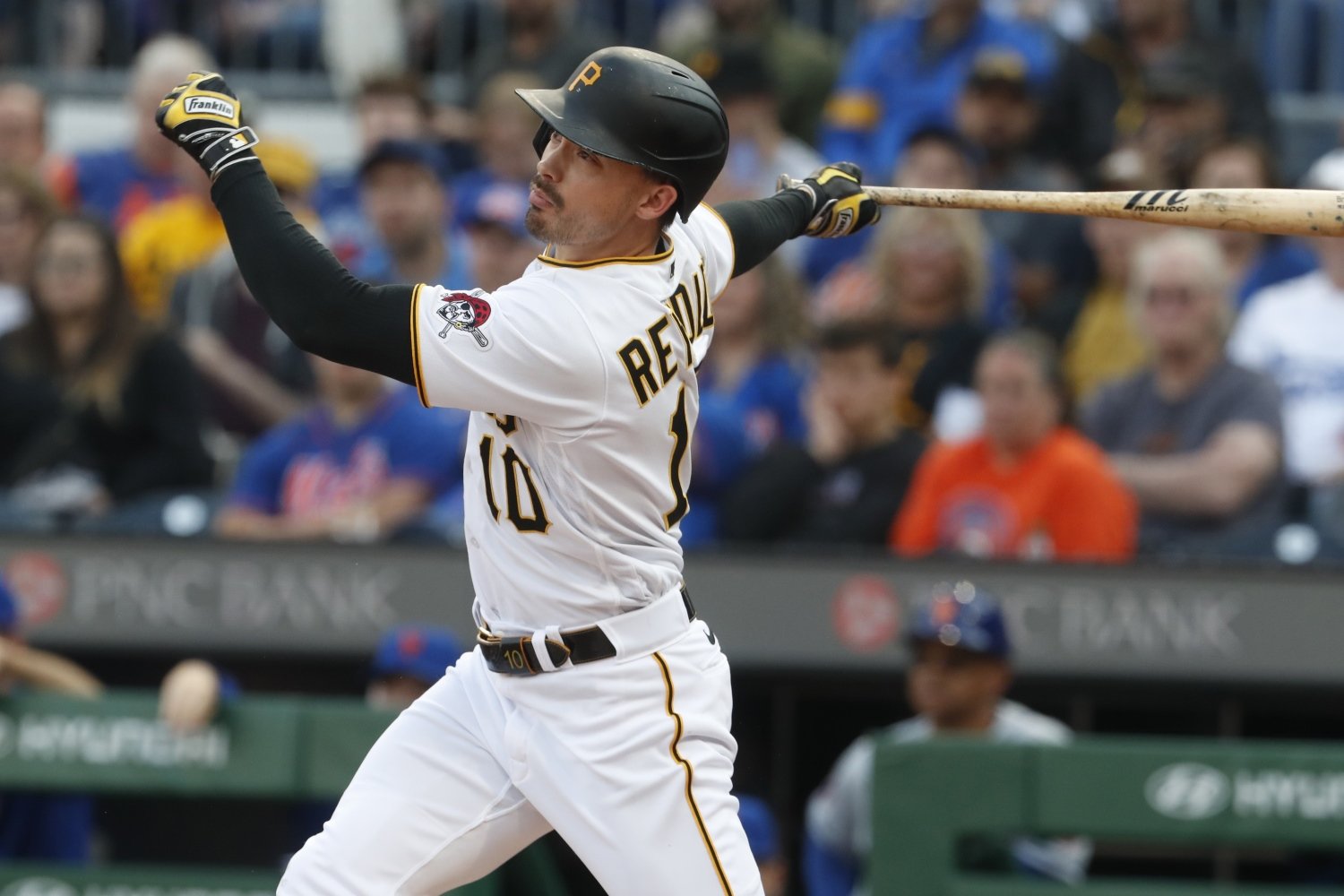 A losing jag at home, especially one punctuated by a sweep at the hands of the worst team in MLB, can make everything seem hopeless. At this moment, the Brewers (who started 14-5, against what looked like a formidable early slate!) are barely over .500, and they’re staring up at the Pirates in the standings. Corbin Burnes, Brandon Woodruff, and Willy Adames are all a year and a half from free agency, and it’s not clear which (if any) is a good candidate for a contract extension at an agreeable price. Craig Counsell isn’t under contract beyond this season, and the lack of news on that front has gone from eerie silence to an active, ominous sucking sound. That’s one way of looking at things. Here’s another. If you had to line up the five teams in the NL Central from best to worst for the next five years (2024-28), based on their current assets and liabilities (be they players, ownership, market strength, or other), how would you do it? I think I would go: Brewers Reds Cardinals Cubs Pirates If the early progress of this season has taught us anything—and that’s a subject of some debate, but let’s take it as read for now—it’s that everyone in this division has problems. Funnily, despite Bud Selig having long ago made sure that they were the embodiment of baseball’s Third World, the Crew currently have first-world problems. Their owner is consistently committed and motivated, to a greater extent than at least three of their rivals. Their front office has demonstrated greater competence in scouting, player development, and roster construction than at least three of their rivals. They have a better balance of proven talent and help coming from the farm system than at least three of their rivals. At the moment, and in defiance of all odds before this season began, the Reds look like the most serious threat to the Brewers’ hegemony. They’ve built a promising, young pitching staff, and even with Kyle Boddy having moved on from his affiliation with the team, they feel as close to the state of the art in technology-driven pitching development as any team in the division. They were perspicacious and fortunate in trading off the core of their last would-be contending club, and they’ve drafted quite well recently—blending betting on upside and smart draft demography as well as any team in baseball. They also have Elly De La Cruz. On the other hand, nothing in the track record of any members of the Castellini family suggests that they’ll be as patient or as resilient as Mark Attanasio has been. When they spend money, they do it hurriedly, fitfully, temporarily, and not on a sufficient scale to obliterate the downsides of those errors. In all likelihood, they’ll leave the door open for others to win the division, even when they have enough talent and (theoretical) spending power to lock things up. The Cardinals still have the best mix of organizational fundamentals—tons of money, an august market, good player development—of any team in the Central, but let’s be honest: they’re a mess. They’re a mess in 2023, and the particular way in which they are a mess makes it likely that they’ll remain pretty messy in 2024 and beyond. Their farm system, especially compared to those of the other four teams in this group, is top-heavy, and their current core is getting old right in front of our eyes. That leaves the Cubs and Pirates, who are what they have been for the last 125 years or so: perfect foils. The Cubs are always rich, but only sometimes interested in acting like it. They’re often talented, but frequently uninspired. Owned for much of their history by monuments to nepotism and vestigial entrepreneurship, they’ve frittered away many of their best chances to claim lasting dominion even in this minor regional kingdom, and the Ricketts family (the very reason why they’ve fallen so far in the last half-decade) is the most galling example of that yet. The Cubs need new baseball leadership, but lack owners with the give-a-damn to see that need, let alone act upon it. The same problem has often haunted the Pirates, but whereas the Cubs’ endless supply of money creates a wide and lived-in margin for error, the Pirates never have one at all. As has sometimes been the case, though, Pittsburgh has the edge at the moment. They have as deep a farm as anyone in the race, especially if one counts the infusion they’ll enjoy after picking first in next month’s draft. They have made some improbably fan-friendly moves recently, including extending Bryan Reynolds, and there are signs that they’ve gotten back to (or even north of) average in player development, after falling behind the curve several years ago. Still, you can’t trust the Pirates to be good for long. As much as they make better foils for the Cubs throughout history, in the modern baseball landscape, they’re like the Reds, only more so. At some point, they’ll fall behind on the development side again, and they’ll fail to invest what would be required to make up for that, financially. To a greater extent than at any time in recent memory, the division is wide open. The Cardinals are at a 30-year nadir. The Cubs aren’t in position to strongarm anyone. Yet, to a greater extent than usual, every team seems to have short- or medium-term hope. There’s no clear-cut favorite locked in for the years to come. Do you agree, though, that the Brewers have the brightest future? Or do they face a steeper set of peaks and valleys ahead, as they navigate the nearing free agency of some key contributors and the aging curves of others? How would you rank the five NL Central clubs, starting next season?
-
The Brewers' much-heralded ace has rarely been in top form thus far in 2023. In his most recent start, however, he might have begun to shake off the muck and get up to full speed for the first time. Was the Orioles' lineup the key to getting Milwaukee's stud going? Image courtesy of © Michael McLoone-USA TODAY Sports The Brewers' much-heralded ace has rarely been in top form thus far in 2023. In his most recent start, however, he might have begun to shake off the muck and get up to full speed for the first time. Was the Orioles' lineup the key to getting Milwaukee's stud going? It's hard to blame Orioles manager Brandon Hyde for not wanting to send out more right-handed batters than necessary against Corbin Burnes Wednesday. Since the start of 2021, they're only hitting .195/.257/.318 against him. Lefties have actually put up almost identical numbers during that span, but the minatory bulk of him and the spin of his fastball have to make him a pitiably miserable at-bat for a righty. Thus, Hyde ran out a lineup in which the only right-handed hitters (at least against a righty like Burnes) were Austin Hays and Jorge Mateo. Seven of every nine of his batters would have the platoon advantage on the crossdraw California cowboy. As it happened, Burnes was so efficient against Hays and Mateo that facing lefties made up even more of his start than that breakdown would imply. As anyone who tuned into that game knows, though, it didn't matter. Burnes struck out nine batters for the first time this year. He fired eight dominant innings, allowing just two hits and no runs. The lefties were helpless against him, as were Hays and Mateo, thanks to an extraordinarily sharp day for Burnes's cutter. In one sense, that was just the natural response to the circumstances he faced. Burnes has made heavy use of the cutter against lefties all season. He was fractionally more reliant on that pitch against them than is his wont, but still mixed his changeup and curveball in with the offering against them, Because facing so many lefties got him so deep into his cutter, though, or because he had superb feel for the pitch, or just because he doesn't have as much faith in his other options at the moment, Burnes also leaned much more heavily on the cutter against Hays and Mateo than he usually does against right-handed batters. As Brewers fans know, the cutter is the key to everything for Burnes. It's far from being his only weapon, but it's the pitch at the heart of his repertoire, and it hasn't been itself this year. Opponents seem to be getting unusually good looks at it. His command of it is much less fine than it usually is. That he went to it so relentlessly and so successfully Wednesday, then, is encouraging. It's just possible that, thanks to the Orioles' ability and eagerness to play matchups against him, Burnes is now back in the saddle. He overwhelmed and overcame a good offense almost solely on the strength of his cutter, and got to throw it more often in a single start than he might have done in a couple of them under normal circumstances. Tuesday night's start in Minnesota will be a fascinating test. Will Burnes go back to that well as often against the Twins, or revert to trying to mix his pitches and changing speeds and eye levels on hitters who are geared up for the cutter? Was his success against Baltimore serendipity--the confluence of slightly better feel for a pitch on a given night with some friendly umpiring and accidentally accommodating matchups from the opponent--or the start of something more significant and sustainable? We can't answer that question. Even Burnes can only make a more educated (but, perhaps, also more biased) guess. We don't know ourselves well enough to tell luck or random variation apart from concrete, lasting change, especially when the competing possibilities are complicated by interactions with forces beyond luck or internal control, like the opposing force of an opponent and their adjustments. Plainly, though, Wednesday was a good development for Burnes. It represented a step on the journey back to the land of aces, and whether his next step is clearly in the same direction or not, he's closer to being the hurler the Brewers need him to be after having that outing. View full article
-
Can an Insanely Cutter-Heavy Start Get Corbin Burnes Untracked?
Matthew Trueblood posted an article in Brewers
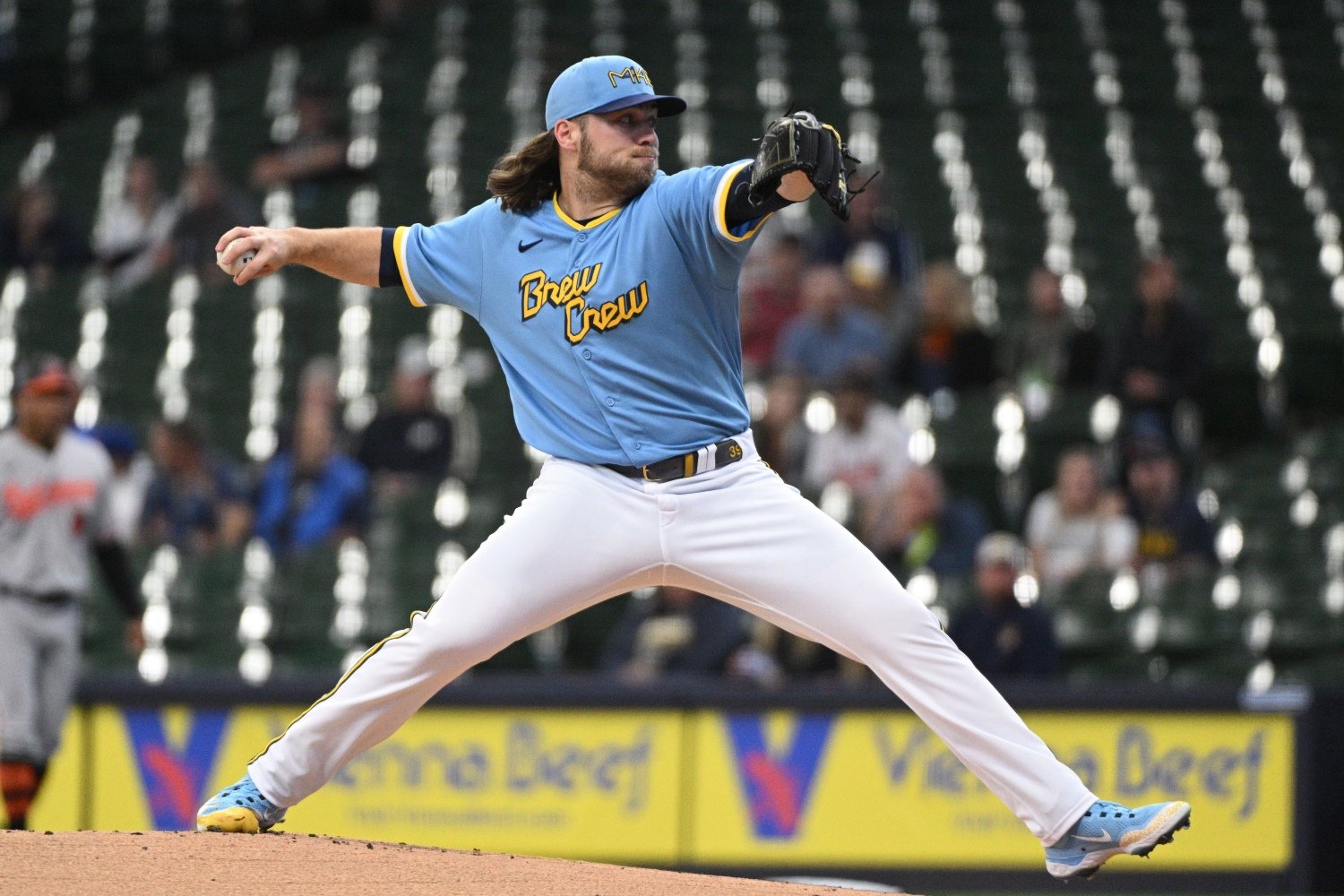 It's hard to blame Orioles manager Brandon Hyde for not wanting to send out more right-handed batters than necessary against Corbin Burnes Wednesday. Since the start of 2021, they're only hitting .195/.257/.318 against him. Lefties have actually put up almost identical numbers during that span, but the minatory bulk of him and the spin of his fastball have to make him a pitiably miserable at-bat for a righty. Thus, Hyde ran out a lineup in which the only right-handed hitters (at least against a righty like Burnes) were Austin Hays and Jorge Mateo. Seven of every nine of his batters would have the platoon advantage on the crossdraw California cowboy. As it happened, Burnes was so efficient against Hays and Mateo that facing lefties made up even more of his start than that breakdown would imply. As anyone who tuned into that game knows, though, it didn't matter. Burnes struck out nine batters for the first time this year. He fired eight dominant innings, allowing just two hits and no runs. The lefties were helpless against him, as were Hays and Mateo, thanks to an extraordinarily sharp day for Burnes's cutter. In one sense, that was just the natural response to the circumstances he faced. Burnes has made heavy use of the cutter against lefties all season. He was fractionally more reliant on that pitch against them than is his wont, but still mixed his changeup and curveball in with the offering against them, Because facing so many lefties got him so deep into his cutter, though, or because he had superb feel for the pitch, or just because he doesn't have as much faith in his other options at the moment, Burnes also leaned much more heavily on the cutter against Hays and Mateo than he usually does against right-handed batters. As Brewers fans know, the cutter is the key to everything for Burnes. It's far from being his only weapon, but it's the pitch at the heart of his repertoire, and it hasn't been itself this year. Opponents seem to be getting unusually good looks at it. His command of it is much less fine than it usually is. That he went to it so relentlessly and so successfully Wednesday, then, is encouraging. It's just possible that, thanks to the Orioles' ability and eagerness to play matchups against him, Burnes is now back in the saddle. He overwhelmed and overcame a good offense almost solely on the strength of his cutter, and got to throw it more often in a single start than he might have done in a couple of them under normal circumstances. Tuesday night's start in Minnesota will be a fascinating test. Will Burnes go back to that well as often against the Twins, or revert to trying to mix his pitches and changing speeds and eye levels on hitters who are geared up for the cutter? Was his success against Baltimore serendipity--the confluence of slightly better feel for a pitch on a given night with some friendly umpiring and accidentally accommodating matchups from the opponent--or the start of something more significant and sustainable? We can't answer that question. Even Burnes can only make a more educated (but, perhaps, also more biased) guess. We don't know ourselves well enough to tell luck or random variation apart from concrete, lasting change, especially when the competing possibilities are complicated by interactions with forces beyond luck or internal control, like the opposing force of an opponent and their adjustments. Plainly, though, Wednesday was a good development for Burnes. It represented a step on the journey back to the land of aces, and whether his next step is clearly in the same direction or not, he's closer to being the hurler the Brewers need him to be after having that outing.
-
Brewers Hitters Don't Know What They're Looking For Up There
Matthew Trueblood posted an article in Brewers
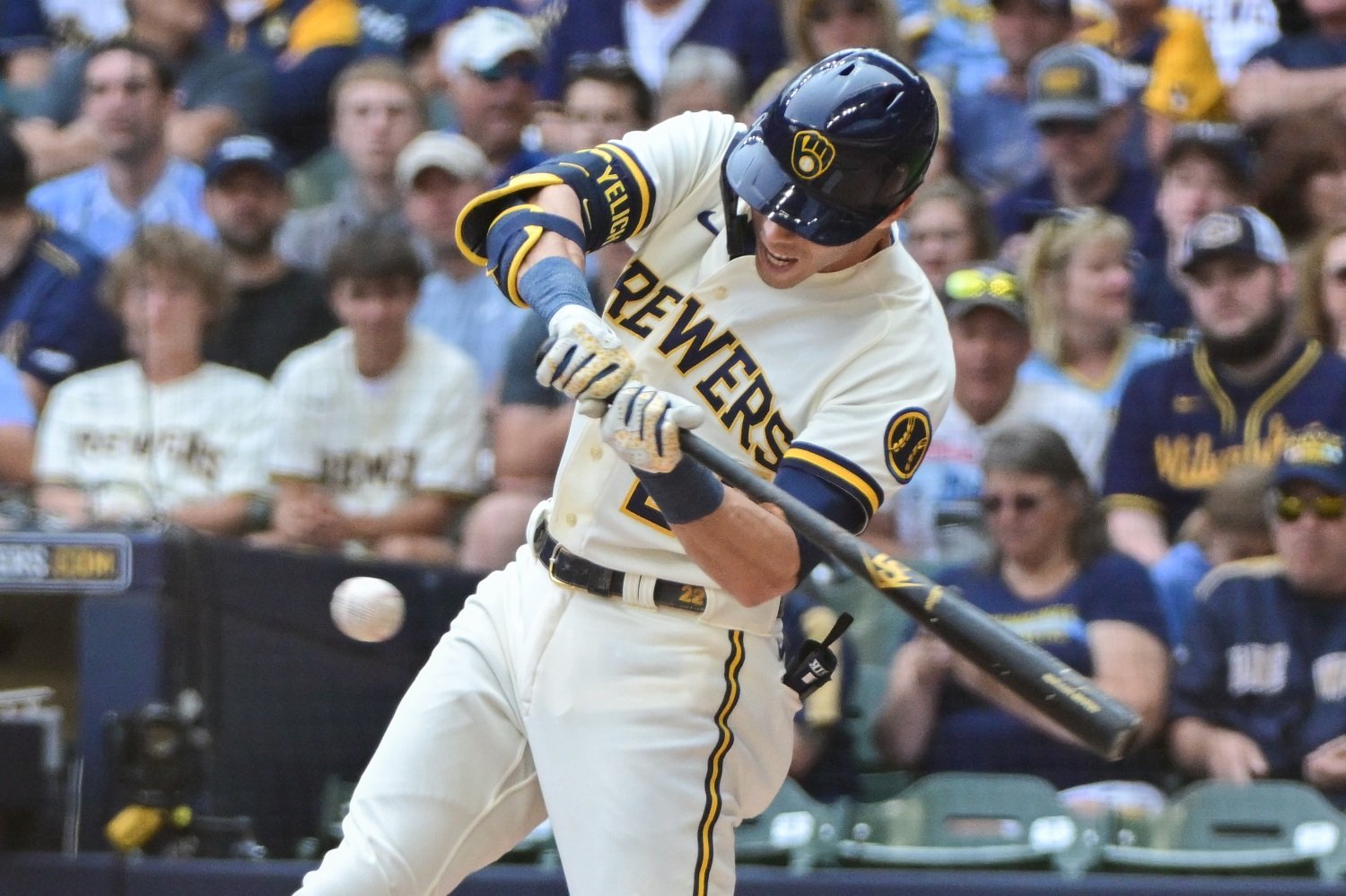 In 2022, only the Yankees swung at fewer pitches in the bottom segment of the strike zone and below it than did the Brewers. Hitters on both of those teams were happy to take a walk, but their real goal was to force opposing pitchers to elevate a little bit. When they did, the hitters could elevate and do damage. This season, the Brewers are similarly close to the bottom of the league when it comes to swing rate at pitches near the bottom of the zone. The Yankees are still below them, and now the Reds and Pirates are, too, but it's not a major gap. Milwaukee hitters wait out opposing pitchers when they attack the bottom of the zone. Alas, the conviction and the competence that allowed last year's team to punish pitchers when they did leave a pitch up is absent. It seems as though, between new acquisitions and some injuries that have limited familiar faces, the 2023 Brewers lack the capacity to pounce when a mistake pitch comes. In baseball, there's nothing more deadly than a missed opportunity, and the Brewers seem to lead the league in those. To his credit, when he got a couple of pitches up around the belly on Saturday afternoon, William Contreras did not miss. His game-tying homer was the kind of thing he needs to do consistently, in order to make up for the inevitable ground balls that come when he gets less friendly fodder to hit. He's been roughly what the team expected at the plate this year; it's just that everyone else has been worse. Willy Adames's ground ball rate has climbed by more than 7 percentage points. Brian Anderson's is up, too, and unlike Adames, he hardly had anywhere to go in that direction. He's now putting it on the ground nearly 53 percent of the time. Add those numbers and trend arrows to the well-documented tendencies of both Contreras and Christian Yelich to hammer the ball into the ground, and you have a team that spends far too much of its time hoping to squeeze a two-hopper between infielders, instead of trying to place a slicing liner between outfielders. On its face, that the team so assiduously waits out low pitches would seem to clash with the fact that they hit so many ground balls. In truth, though, that reflects the swings the Brewers build, the types of hitters they like to acquire, and that lack of a clear, simple process at the plate. They don't ignore low stuff because they want to get slightly underneath the ball at contact, and have more room to do so when the pitch is up, but because it's harder to get the barrel to the ball low in the zone given the swing profiles of most players on this roster. The same swing profiles, though, are exploitable by elevated pitches. Hurlers can manipulate most Brewers batters not only by getting whiffs (although there are far too many of those in the lineup right now), but also by moving the ball up and down their bats. Ground balls often happen because a hitter is unable to adjust to good, late horizontal movement, and the Brewers are no exception to that. Pitchers get them out by getting them to look for a pitch in a certain spot, but violating their expectations about which pitch it will be when they do throw to that spot. Milwaukee batters have the third-lowest in-zone contact rate in MLB. That's obviously a bad thing, on its own, but trading contact for damage when contact is made is often a viable strategy. The problem is that, unlike other teams with similar problems, the Brewers aren't executing those tradeoffs. The other four teams in the bottom five in the league in that number are the Braves, the Twins, the Royals, and the Mariners. All four are in the top 10 in MLB in terms of the rate at which they pull the ball; the Brewers are 27th. The Twins, Mariners, and Royals are all in the bottom five in MLB in ground ball rate; the Brewers are fourth. Trading Hunter Renfroe over the winter was defensible, and after a strong start, the Angels outfielder has struggled mightily over the last six weeks. Acquiring Contreras at such a low price was a no-brainer. Signing Anderson has, on balance, panned out well so far. Still, a bit more than 40 percent of the way through this season, the Brewers have to reckon with the fact that they have the second-worst offense in the National League. Tweaks to several players' approaches are in order, but it's hard to gauge how well those will be able to take root, midstream. For that matter, it's hard to tell whether the Brewers even recognize the need for these changes, beyond knowing that whatever they're doing is not working. The team conceived and implemented a certain approach this spring, and it feels disturbingly unlikely that they'll be able to make an immediate change to it now.
-
- 2
-

-
- william contreras
- willy adames
- (and 1 more)
-
Hitting at the big-league level is incredibly hard, even for players with extraordinary talent and clear idea of what they're trying to do. As the Brewers wallow at the bottom of the league in offensive production, it's becoming clear that their hitters lack the latter, neutering the former. Image courtesy of © Benny Sieu-USA TODAY Sports Hitting at the big-league level is incredibly hard, even for players with extraordinary talent and clear idea of what they're trying to do. As the Brewers wallow at the bottom of the league in offensive production, it's becoming clear that their hitters lack the latter, neutering the former. In 2022, only the Yankees swung at fewer pitches in the bottom segment of the strike zone and below it than did the Brewers. Hitters on both of those teams were happy to take a walk, but their real goal was to force opposing pitchers to elevate a little bit. When they did, the hitters could elevate and do damage. This season, the Brewers are similarly close to the bottom of the league when it comes to swing rate at pitches near the bottom of the zone. The Yankees are still below them, and now the Reds and Pirates are, too, but it's not a major gap. Milwaukee hitters wait out opposing pitchers when they attack the bottom of the zone. Alas, the conviction and the competence that allowed last year's team to punish pitchers when they did leave a pitch up is absent. It seems as though, between new acquisitions and some injuries that have limited familiar faces, the 2023 Brewers lack the capacity to pounce when a mistake pitch comes. In baseball, there's nothing more deadly than a missed opportunity, and the Brewers seem to lead the league in those. To his credit, when he got a couple of pitches up around the belly on Saturday afternoon, William Contreras did not miss. His game-tying homer was the kind of thing he needs to do consistently, in order to make up for the inevitable ground balls that come when he gets less friendly fodder to hit. He's been roughly what the team expected at the plate this year; it's just that everyone else has been worse. Willy Adames's ground ball rate has climbed by more than 7 percentage points. Brian Anderson's is up, too, and unlike Adames, he hardly had anywhere to go in that direction. He's now putting it on the ground nearly 53 percent of the time. Add those numbers and trend arrows to the well-documented tendencies of both Contreras and Christian Yelich to hammer the ball into the ground, and you have a team that spends far too much of its time hoping to squeeze a two-hopper between infielders, instead of trying to place a slicing liner between outfielders. On its face, that the team so assiduously waits out low pitches would seem to clash with the fact that they hit so many ground balls. In truth, though, that reflects the swings the Brewers build, the types of hitters they like to acquire, and that lack of a clear, simple process at the plate. They don't ignore low stuff because they want to get slightly underneath the ball at contact, and have more room to do so when the pitch is up, but because it's harder to get the barrel to the ball low in the zone given the swing profiles of most players on this roster. The same swing profiles, though, are exploitable by elevated pitches. Hurlers can manipulate most Brewers batters not only by getting whiffs (although there are far too many of those in the lineup right now), but also by moving the ball up and down their bats. Ground balls often happen because a hitter is unable to adjust to good, late horizontal movement, and the Brewers are no exception to that. Pitchers get them out by getting them to look for a pitch in a certain spot, but violating their expectations about which pitch it will be when they do throw to that spot. Milwaukee batters have the third-lowest in-zone contact rate in MLB. That's obviously a bad thing, on its own, but trading contact for damage when contact is made is often a viable strategy. The problem is that, unlike other teams with similar problems, the Brewers aren't executing those tradeoffs. The other four teams in the bottom five in the league in that number are the Braves, the Twins, the Royals, and the Mariners. All four are in the top 10 in MLB in terms of the rate at which they pull the ball; the Brewers are 27th. The Twins, Mariners, and Royals are all in the bottom five in MLB in ground ball rate; the Brewers are fourth. Trading Hunter Renfroe over the winter was defensible, and after a strong start, the Angels outfielder has struggled mightily over the last six weeks. Acquiring Contreras at such a low price was a no-brainer. Signing Anderson has, on balance, panned out well so far. Still, a bit more than 40 percent of the way through this season, the Brewers have to reckon with the fact that they have the second-worst offense in the National League. Tweaks to several players' approaches are in order, but it's hard to gauge how well those will be able to take root, midstream. For that matter, it's hard to tell whether the Brewers even recognize the need for these changes, beyond knowing that whatever they're doing is not working. The team conceived and implemented a certain approach this spring, and it feels disturbingly unlikely that they'll be able to make an immediate change to it now. View full article
-
 With the returns of Willy Adames and Luis Urias this week, the positional corps is starting to look the way the team envisioned before the season began. Although Jesse Winker is nominally on the IL, he's really off the roster because he wasn't hitting the way he would have needed to in order to remain on it. He's hit the ball hard much more often in his first couple of rehab appearances, but needs to prove his power is back before rejoining the team. Garrett Mitchell won't be back, and it seems like Tyrone Taylor's elbow injury could be a lingering problem, but Joey Wiemer and Brian Anderson have been good enough to minimize the impact of those losses. With Christian Yelich, Wiemer, and Anderson available in the outfield; Adames, Urias, Rowdy Tellez, Abraham Toro, and Andruw Monasterio on the infield; and William Contreras and Victor Caratini sharing the catching duties, the lineup is more or less what the team hoped it would be two months ago, at least in terms of the names. Obviously, that's the not the same thing as being pleased with the production. The team is last in the National League in both on-base percentage and slugging. The hope is that the full-strength lineup will be better than that, even if the goal is more in the range of league-average than of becoming a juggernaut. Alas, so far, Urias looks compromised by his long injury-enforced layoff, and Adames has been as boom-or-bust since his return as he was for the month before he went down with a concussion. On the pitching side, the reinforcements aren't really here yet, but they're getting close. Matt Bush had a solid inning on Thursday for Triple-A Nashville, with two strikeouts and only one baserunner allowed. His fastball was sitting 95, and his curveball had its usual, healthy movement. It's no surprise that Bush overpowered hitters at that level, but the outing underscored the fact that he's nearly ready to return to what has become a somewhat shorthanded bullpen. Eric Lauer's first rehab appearance for Nashville was rocky, in terms of results, but his velocity was up, and the drop in that very number was a major indicator of the trouble he had before landing on the injured list last month. More than whether he gets hit or not, what matters for Lauer is showing that he can sustain that velocity as he stretches back out and works on normal rest. If so, he should be back before the month is out. Wade Miley, too, figures to be back in the rotation soon. The Crew has stayed afloat through considerable adversity. They've shown well even against tough competition, as when they beat the Orioles in a home series this week. Still, losing to the A's Friday night is a good reminder that being down so many important contributors takes a toll. Even a team that feeble can steal a game (or, God forbid, a few of them, as the Pirates found out this week) when their opponent is so diminished by injuries that they have a flavor of Triple A themselves. With the roster regaining its intended shape, the Brewers should be able to avoid losses like that one in the future--even against left-handed pitchers. For now, though, they just need to continue convalescing. Over the next three weeks, they'll play two series against the overachievers from Pittsburgh, and if Counsell has a healthy group when those games are played, the team should come out of them with a fairly comfortable division lead.
-
Lately, it feels like there's a weekly line change on the Brewers roster, as a few players return from the injured list and a few others land there. The first two and a half months have been a bloodbath, testing the depth and the mettle of the team, and they've survived. Now, they're getting closer to full strength. The question will be whether they can stay that way for any length of time. Image courtesy of © Jeff Hanisch-USA TODAY Sports Lately, it feels like there's a weekly line change on the Brewers roster, as a few players return from the injured list and a few others land there. The first two and a half months have been a bloodbath, testing the depth and the mettle of the team, and they've survived. Now, they're getting closer to full strength. The question will be whether they can stay that way for any length of time. With the returns of Willy Adames and Luis Urias this week, the positional corps is starting to look the way the team envisioned before the season began. Although Jesse Winker is nominally on the IL, he's really off the roster because he wasn't hitting the way he would have needed to in order to remain on it. He's hit the ball hard much more often in his first couple of rehab appearances, but needs to prove his power is back before rejoining the team. Garrett Mitchell won't be back, and it seems like Tyrone Taylor's elbow injury could be a lingering problem, but Joey Wiemer and Brian Anderson have been good enough to minimize the impact of those losses. With Christian Yelich, Wiemer, and Anderson available in the outfield; Adames, Urias, Rowdy Tellez, Abraham Toro, and Andruw Monasterio on the infield; and William Contreras and Victor Caratini sharing the catching duties, the lineup is more or less what the team hoped it would be two months ago, at least in terms of the names. Obviously, that's the not the same thing as being pleased with the production. The team is last in the National League in both on-base percentage and slugging. The hope is that the full-strength lineup will be better than that, even if the goal is more in the range of league-average than of becoming a juggernaut. Alas, so far, Urias looks compromised by his long injury-enforced layoff, and Adames has been as boom-or-bust since his return as he was for the month before he went down with a concussion. On the pitching side, the reinforcements aren't really here yet, but they're getting close. Matt Bush had a solid inning on Thursday for Triple-A Nashville, with two strikeouts and only one baserunner allowed. His fastball was sitting 95, and his curveball had its usual, healthy movement. It's no surprise that Bush overpowered hitters at that level, but the outing underscored the fact that he's nearly ready to return to what has become a somewhat shorthanded bullpen. Eric Lauer's first rehab appearance for Nashville was rocky, in terms of results, but his velocity was up, and the drop in that very number was a major indicator of the trouble he had before landing on the injured list last month. More than whether he gets hit or not, what matters for Lauer is showing that he can sustain that velocity as he stretches back out and works on normal rest. If so, he should be back before the month is out. Wade Miley, too, figures to be back in the rotation soon. The Crew has stayed afloat through considerable adversity. They've shown well even against tough competition, as when they beat the Orioles in a home series this week. Still, losing to the A's Friday night is a good reminder that being down so many important contributors takes a toll. Even a team that feeble can steal a game (or, God forbid, a few of them, as the Pirates found out this week) when their opponent is so diminished by injuries that they have a flavor of Triple A themselves. With the roster regaining its intended shape, the Brewers should be able to avoid losses like that one in the future--even against left-handed pitchers. For now, though, they just need to continue convalescing. Over the next three weeks, they'll play two series against the overachievers from Pittsburgh, and if Counsell has a healthy group when those games are played, the team should come out of them with a fairly comfortable division lead. View full article
-
 The decisive home run Gunnar Henderson hit against Peter Strzelecki was not a cheapie. It wasn't a product of Miller Park. On the contrary, Henderson hit it to the corner, where only Wrigley Field steals away more homers than does the Brewers' home. Just as importantly, Henderson wasn't teeing off on a meatball, but anticipating and reaching for a first-pitch fastball up and away from him. It was about letter-high, running off the outside edge, and it hummed in at 93.5 miles per hour, above Strzelecki's norm. Henderson just got the barrel to it, which was a little bit lucky, and then got a little bit luckier still that it carried out of the park. The ball was well-struck, but significantly less so than most home runs, especially to the opposite field. It only left his bat at 97.9 miles per hour. Does that mean that Strzelecki's tough outing was purely bad luck? No. Does it mean he executed the pitch correctly on 0-0? No. Does it invalidate the fact that Strzelecki has taken a small step backward after a much-needed hot start to the season? No. It's just a reminder that, sometimes, you lose. Even when playing a bad team, in MLB, there are plenty of good and dangerous players in the opposing dugout. Against a team like the Orioles, there are even more of them, and they pose even greater risk of simply beating you, even if you do everything right. In fact, Strzelecki looked good throughout his appearance, except in a couple of small ways, and notwithstanding the results. His velocity was up. His slider had good movement, though not his best command. His changeup also had good action. On all of his offerings, he was just a bit less able than he usually is to steer the ball down in and even below the zone. That begat some problems. Still, he induced five swinging strikes and four called ones. He got three strikeouts and didn't issue a walk. Baltimore batters just found the good part of the wood, or the friendly part of the infield grass. Thursday's outing bloated Strzelecki's season ERA to 4.40 and pushed his Win Probability Added (the best way to measure the value a reliever has provided, although an imperfect one for any kind of forward-looking analysis) to the wrong side of 0.00. He's definitely posed a genuine concern at certain points this season--for instance, early on, when he was getting great results but relying heavily on his defense and missing some of the velocity he showed last year. While it was much more than mere lousy luck, though, this latest implosion isn't a sign that Strzelecki's most dangerous chickens are coming home to roost. On the contrary, his stuff looks good. It might even be ticking up as the weather warms. He just needs a little bit better location next time he takes the mound, and to have his opponent execute a bit less well than the Orioles just did.
-
In a frustrating series finale, the Brewers let a lead slip away late, and the winning blow came against Peter Strzelecki. It's been a bit of a rough stretch for Craig Counsell's proudest underdog and versatile relief weapon, but Thursday's outing only represented some bad luck. Sometimes, it's the other team's day. Image courtesy of © Benny Sieu-USA TODAY Sports In a frustrating series finale, the Brewers let a lead slip away late, and the winning blow came against Peter Strzelecki. It's been a bit of a rough stretch for Craig Counsell's proudest underdog and versatile relief weapon, but Thursday's outing only represented some bad luck. Sometimes, it's the other team's day. The decisive home run Gunnar Henderson hit against Peter Strzelecki was not a cheapie. It wasn't a product of Miller Park. On the contrary, Henderson hit it to the corner, where only Wrigley Field steals away more homers than does the Brewers' home. Just as importantly, Henderson wasn't teeing off on a meatball, but anticipating and reaching for a first-pitch fastball up and away from him. It was about letter-high, running off the outside edge, and it hummed in at 93.5 miles per hour, above Strzelecki's norm. Henderson just got the barrel to it, which was a little bit lucky, and then got a little bit luckier still that it carried out of the park. The ball was well-struck, but significantly less so than most home runs, especially to the opposite field. It only left his bat at 97.9 miles per hour. Does that mean that Strzelecki's tough outing was purely bad luck? No. Does it mean he executed the pitch correctly on 0-0? No. Does it invalidate the fact that Strzelecki has taken a small step backward after a much-needed hot start to the season? No. It's just a reminder that, sometimes, you lose. Even when playing a bad team, in MLB, there are plenty of good and dangerous players in the opposing dugout. Against a team like the Orioles, there are even more of them, and they pose even greater risk of simply beating you, even if you do everything right. In fact, Strzelecki looked good throughout his appearance, except in a couple of small ways, and notwithstanding the results. His velocity was up. His slider had good movement, though not his best command. His changeup also had good action. On all of his offerings, he was just a bit less able than he usually is to steer the ball down in and even below the zone. That begat some problems. Still, he induced five swinging strikes and four called ones. He got three strikeouts and didn't issue a walk. Baltimore batters just found the good part of the wood, or the friendly part of the infield grass. Thursday's outing bloated Strzelecki's season ERA to 4.40 and pushed his Win Probability Added (the best way to measure the value a reliever has provided, although an imperfect one for any kind of forward-looking analysis) to the wrong side of 0.00. He's definitely posed a genuine concern at certain points this season--for instance, early on, when he was getting great results but relying heavily on his defense and missing some of the velocity he showed last year. While it was much more than mere lousy luck, though, this latest implosion isn't a sign that Strzelecki's most dangerous chickens are coming home to roost. On the contrary, his stuff looks good. It might even be ticking up as the weather warms. He just needs a little bit better location next time he takes the mound, and to have his opponent execute a bit less well than the Orioles just did. View full article
-
In the first inning of Tuesday night's hard-won Brewers victory over the formidable Orioles, Brian Anderson drove home the first run. It came on a line-drive single to left field, a ball he reached for down below his knees. That was a beautiful, many-layered moment, containing within it many truths about Anderson and about the art of hitting. Image courtesy of © Nick Turchiaro-USA TODAY Sports In the first inning of Tuesday night's hard-won Brewers victory over the formidable Orioles, Brian Anderson drove home the first run. It came on a line-drive single to left field, a ball he reached for down below his knees. That was a beautiful, many-layered moment, containing within it many truths about Anderson and about the art of hitting. That's a funny term--the art of hitting. Throughout the history of baseball, there's been a constant (if often friendly, or at least tepid) debate about whether its various disciplines are more art or science. In 1968, the greatest hitter ever (Ted Williams) wrote The Science of Hitting, taking an extremely systematized approach to the toughest task in sports. In 1984, Tom Seaver wrote a somewhat less definitional text on his craft, and titled it The Art of Pitching. By and large, those images of the two major skills of baseball have persisted. It's not uncommon to hear good pitchers described as craftsmen, but only one or two hitters in a generation--Luis Arraez types--get that word attached to them. The truth, of course, is that there's plenty of both art and science in each thing--a blend of the subjective with the objective; of the continuous with the discrete; and of the quantifiable with the ineffable. At any given time, many of the bright lines and the categorizations we see are products of our societal inclinations. They exist mostly in our minds. What does any of this rambling have to do with a Brian Anderson RBI single? Fair question. Let's start with a quick look at the at-bat Anderson had. Anderson was hitting with two on and two out, and he immediately got ahead in the count, 3-0, as Kyle Gibson tried unsuccessfully to hone in on the outside corner. At that moment, as was noted on the Brewers' Bally Sports Wisconsin broadcast, swinging away on 3-0 made a lot of sense. Gibson was unlikely to want to walk Anderson, with Abraham Toro due next and only third base open. A hit would mean a run, and an extra-base knock would probably mean two. Gibson gave in, too. He not only went with the fastball, but gave Anderson a fairly fat one, over the inner third and just above the belt. Anderson, though, let the pitch go. Then, on 3-1, he chased a sweeper low and away, filling the count. Why did Anderson take that 3-0 pitch and then expand the zone on 3-1? It's not about disorganization or nerves. It's about self-knowledge. Anderson has an idiosyncratic swing, and it leads to unusual coverage of the strike zone. He can do some damage on pitches up in the zone, but it will virtually always be on mistake breaking and off-speed pitches. The way he attacks the ball isn't conducive to doing much with an elevated fastball. No, what Anderson does well is to go down and get the ball. One of the things he's worked with Brewers to do this year is to eliminate certain pitches and sectors of the strike zone, according to the count, the situation, and the opponent. He's swinging significantly less often this year, especially late in counts. That's led to his dramatic increase in walk rate, though it's also contributed to his climbing strikeout rate. It's not about blanket passiveness, though. It's about knowing what pitch he might get that he would be able to hit well, and being ready to do so. With that clarity of purpose comes some sacrifice, in the form of more theoretically hittable pitches (often strikes) going by unmolested, but it's been a sound tradeoff thus far. On 3-2, Gibson threw the hittable pitch Anderson knew he might get. It was a slider below the zone, but because Anderson was looking for a pitch down, it was still well within his hitting zone. That unique swing produced an artist's arcing brush stroke, a flare into left field that had no chance of being caught. It only left his bat at 76 miles per hour, but with the perfect amount of loft. Our highly scientific understanding of the game in 2023 allows us to say that the expected batting average on that ball was .940. Given that Anderson has enough power to force outfielders to play at least at an average depth, it was really 1.000 in that spot. The 3-0 take was good baseball, because that wasn't Anderson's pitch. The 3-1 swing on a ball well off the plate was good baseball, because he was seeing the right thing. They both made possible that 3-2 single, a sure-thing RBI in a way that not even a long fly ball hit on the fastball would have been. Anderson's approach has been far from infallible this year, but the Brewers have helped him understand the value of locking in on certain pitches and locations, and of being insistent upon getting the right pitch before committing himself. It hasn't turned him into an All-Star, because Anderson is a limited player whose holes and weaknesses are well-known to the league. Nor is it a finished job. There's a constant tension between knowing oneself and knowing when the opponent also knows you--between waiting for your pitch and needing to be ready to hit theirs instead. That balance is never permanently struck. It's just something one achieves for a bit, with the knowledge that it will soon be lost again, such that a hitter will have to go in search of it all over again. It's not unlike life itself, in that regard. A human is not done struggling until they're dead. A hitter is not done adjusting until they're retired. Anderson is still very much alive, and very much an active hitter. He will have to change and maintain a new balance soon. On Tuesday night, though, he was in the right physical and mental place to come up with a big hit for the first-place Brewers. View full article
-
Brian Anderson and the Striking of a Delicate Balance
Matthew Trueblood posted an article in Brewers
 That's a funny term--the art of hitting. Throughout the history of baseball, there's been a constant (if often friendly, or at least tepid) debate about whether its various disciplines are more art or science. In 1968, the greatest hitter ever (Ted Williams) wrote The Science of Hitting, taking an extremely systematized approach to the toughest task in sports. In 1984, Tom Seaver wrote a somewhat less definitional text on his craft, and titled it The Art of Pitching. By and large, those images of the two major skills of baseball have persisted. It's not uncommon to hear good pitchers described as craftsmen, but only one or two hitters in a generation--Luis Arraez types--get that word attached to them. The truth, of course, is that there's plenty of both art and science in each thing--a blend of the subjective with the objective; of the continuous with the discrete; and of the quantifiable with the ineffable. At any given time, many of the bright lines and the categorizations we see are products of our societal inclinations. They exist mostly in our minds. What does any of this rambling have to do with a Brian Anderson RBI single? Fair question. Let's start with a quick look at the at-bat Anderson had. Anderson was hitting with two on and two out, and he immediately got ahead in the count, 3-0, as Kyle Gibson tried unsuccessfully to hone in on the outside corner. At that moment, as was noted on the Brewers' Bally Sports Wisconsin broadcast, swinging away on 3-0 made a lot of sense. Gibson was unlikely to want to walk Anderson, with Abraham Toro due next and only third base open. A hit would mean a run, and an extra-base knock would probably mean two. Gibson gave in, too. He not only went with the fastball, but gave Anderson a fairly fat one, over the inner third and just above the belt. Anderson, though, let the pitch go. Then, on 3-1, he chased a sweeper low and away, filling the count. Why did Anderson take that 3-0 pitch and then expand the zone on 3-1? It's not about disorganization or nerves. It's about self-knowledge. Anderson has an idiosyncratic swing, and it leads to unusual coverage of the strike zone. He can do some damage on pitches up in the zone, but it will virtually always be on mistake breaking and off-speed pitches. The way he attacks the ball isn't conducive to doing much with an elevated fastball. No, what Anderson does well is to go down and get the ball. One of the things he's worked with Brewers to do this year is to eliminate certain pitches and sectors of the strike zone, according to the count, the situation, and the opponent. He's swinging significantly less often this year, especially late in counts. That's led to his dramatic increase in walk rate, though it's also contributed to his climbing strikeout rate. It's not about blanket passiveness, though. It's about knowing what pitch he might get that he would be able to hit well, and being ready to do so. With that clarity of purpose comes some sacrifice, in the form of more theoretically hittable pitches (often strikes) going by unmolested, but it's been a sound tradeoff thus far. On 3-2, Gibson threw the hittable pitch Anderson knew he might get. It was a slider below the zone, but because Anderson was looking for a pitch down, it was still well within his hitting zone. That unique swing produced an artist's arcing brush stroke, a flare into left field that had no chance of being caught. It only left his bat at 76 miles per hour, but with the perfect amount of loft. Our highly scientific understanding of the game in 2023 allows us to say that the expected batting average on that ball was .940. Given that Anderson has enough power to force outfielders to play at least at an average depth, it was really 1.000 in that spot. The 3-0 take was good baseball, because that wasn't Anderson's pitch. The 3-1 swing on a ball well off the plate was good baseball, because he was seeing the right thing. They both made possible that 3-2 single, a sure-thing RBI in a way that not even a long fly ball hit on the fastball would have been. Anderson's approach has been far from infallible this year, but the Brewers have helped him understand the value of locking in on certain pitches and locations, and of being insistent upon getting the right pitch before committing himself. It hasn't turned him into an All-Star, because Anderson is a limited player whose holes and weaknesses are well-known to the league. Nor is it a finished job. There's a constant tension between knowing oneself and knowing when the opponent also knows you--between waiting for your pitch and needing to be ready to hit theirs instead. That balance is never permanently struck. It's just something one achieves for a bit, with the knowledge that it will soon be lost again, such that a hitter will have to go in search of it all over again. It's not unlike life itself, in that regard. A human is not done struggling until they're dead. A hitter is not done adjusting until they're retired. Anderson is still very much alive, and very much an active hitter. He will have to change and maintain a new balance soon. On Tuesday night, though, he was in the right physical and mental place to come up with a big hit for the first-place Brewers.
-
In Sunday's Brewers win, first baseman Rowdy Tellez had the two hardest-hit balls of his 2023 campaign to date. He's been a peculiar case this year, with good numbers but a bit less punch than he provided over his previous Brewers tenure. Now, though, he might be turning the corner. Image courtesy of © Dan Hamilton-USA TODAY Sports In Sunday's Brewers win, first baseman Rowdy Tellez had the two hardest-hit balls of his 2023 campaign to date. He's been a peculiar case this year, with good numbers but a bit less punch than he provided over his previous Brewers tenure. Now, though, he might be turning the corner. This year, almost no one in MLB has swung the bat less often than Rowdy Tellez. The only hitter who would qualify for the batting title (if the season ended today) who has a lower Swing % than he does is Juan Soto. Tellez chases the first pitch of an at-bat only about once every two games. He's been a patient hitter for as long as he's been a Brewer, but this is a new level. One reason for the change might have been a desire to see how pitchers are adjusting to him and what new plans he could make to counter them. Another (a very common, if often misunderstood, one) could have been that his swing was not feeling right. Sometimes, hitters who appear to be getting more patient are really only making up for a loss of bat speed or a nagging injury. They're not swinging because they don't expect the same rewards when they do as would be normal. Indeed, Tellez's batted-ball data for 2023 suggests that he's been less than himself. Pick your favorite way to measure exit velocity, and Tellez's has dropped this year. Average Exit Velocity: 88.7 miles per hour, down from 91.1 in 2022 Hard Hit Rate (Percentage of batted balls that topped 95 MPH): 40.6 percent, down from 46.0 Maximum Exit Velo: 113.0 MPH, down from 116.3 As we've noted, though, that last metric is already rising, thanks to those two laser-like singles yesterday. That's one sign that he's getting back into the swing of things. Here's another: his swing rate has skyrocketed here in June. In his entire career, the two months in which Tellez swung least often were April and May 2023. He'd never swung at fewer than 40 percent of total pitches in a month before this year, and both of those months were right around 35 percent. The sample is tiny, but in June, he's utterly reversed that. He's swung at 33 of the 62 pitches he's seen, good for 53 percent. While that figure is unlikely to hold over the whole month, if it did, it would be the highest rate of his career. Combine that fact with his recent streak of good contact, and it's not hard to see what's happening here. Tellez has waited out opposing pitchers. He's gotten a good look at what they're doing against him this year. He's now ready to attack. That shift in gear couldn't be more welcome in the Brewers' lineup, where a dearth of power is the biggest problem they face--even more damaging than their inflated strikeout rate. Tellez can help make rallies cobbled together by others' walks and singles pay off with multiple runs, and having him do so is a vital aspect of the Milwaukee lineup. His threatening presence in a lineup has a tutelary effect on the rest of his teammates, even if it doesn't work in the way or have the magnitude of impact imagined by those who used to espouse the idea of lineup protection so ardently. Most excitingly, perhaps, Tellez has put up fine numbers even during this long adjustment period to begin the season. There was a bit of good luck in that, but it also reflected the fact that he's a more well-rounded and intelligent hitter than most fans realize. His strikeout rate is up this year, but that's not because he's suddenly whiffing at a catastrophic rate. It's just the effect of more deep counts, thanks to the patience he showed early. Now, if he's successfully consolidated a new set of ideas about how pitchers will approach him; is healthy enough to get off his best swing more frequently; and has the warm summer and the lively baseball with which to work, he could become one of the most productive hitters in baseball the rest of the way. Tellez could be the guy who puts the Crew's offense back into gear for the playoff push ahead. View full article
-
 This year, almost no one in MLB has swung the bat less often than Rowdy Tellez. The only hitter who would qualify for the batting title (if the season ended today) who has a lower Swing % than he does is Juan Soto. Tellez chases the first pitch of an at-bat only about once every two games. He's been a patient hitter for as long as he's been a Brewer, but this is a new level. One reason for the change might have been a desire to see how pitchers are adjusting to him and what new plans he could make to counter them. Another (a very common, if often misunderstood, one) could have been that his swing was not feeling right. Sometimes, hitters who appear to be getting more patient are really only making up for a loss of bat speed or a nagging injury. They're not swinging because they don't expect the same rewards when they do as would be normal. Indeed, Tellez's batted-ball data for 2023 suggests that he's been less than himself. Pick your favorite way to measure exit velocity, and Tellez's has dropped this year. Average Exit Velocity: 88.7 miles per hour, down from 91.1 in 2022 Hard Hit Rate (Percentage of batted balls that topped 95 MPH): 40.6 percent, down from 46.0 Maximum Exit Velo: 113.0 MPH, down from 116.3 As we've noted, though, that last metric is already rising, thanks to those two laser-like singles yesterday. That's one sign that he's getting back into the swing of things. Here's another: his swing rate has skyrocketed here in June. In his entire career, the two months in which Tellez swung least often were April and May 2023. He'd never swung at fewer than 40 percent of total pitches in a month before this year, and both of those months were right around 35 percent. The sample is tiny, but in June, he's utterly reversed that. He's swung at 33 of the 62 pitches he's seen, good for 53 percent. While that figure is unlikely to hold over the whole month, if it did, it would be the highest rate of his career. Combine that fact with his recent streak of good contact, and it's not hard to see what's happening here. Tellez has waited out opposing pitchers. He's gotten a good look at what they're doing against him this year. He's now ready to attack. That shift in gear couldn't be more welcome in the Brewers' lineup, where a dearth of power is the biggest problem they face--even more damaging than their inflated strikeout rate. Tellez can help make rallies cobbled together by others' walks and singles pay off with multiple runs, and having him do so is a vital aspect of the Milwaukee lineup. His threatening presence in a lineup has a tutelary effect on the rest of his teammates, even if it doesn't work in the way or have the magnitude of impact imagined by those who used to espouse the idea of lineup protection so ardently. Most excitingly, perhaps, Tellez has put up fine numbers even during this long adjustment period to begin the season. There was a bit of good luck in that, but it also reflected the fact that he's a more well-rounded and intelligent hitter than most fans realize. His strikeout rate is up this year, but that's not because he's suddenly whiffing at a catastrophic rate. It's just the effect of more deep counts, thanks to the patience he showed early. Now, if he's successfully consolidated a new set of ideas about how pitchers will approach him; is healthy enough to get off his best swing more frequently; and has the warm summer and the lively baseball with which to work, he could become one of the most productive hitters in baseball the rest of the way. Tellez could be the guy who puts the Crew's offense back into gear for the playoff push ahead.
-
While he's certainly been the most consistently effective starter on the Brewers thus far, Corbin Burnes hasn't exactly been the ace to which fans have become accustomed this year. There's no easy, single explanation for his diminished capacity to dominate, but one factor therein is that hitters aren't letting him lure them into chasing pitches just beyond their reach as often. Image courtesy of © Mark Hoffman / Milwaukee Journal Sentinel / USA TODAY NETWORK While he's certainly been the most consistently effective starter on the Brewers thus far, Corbin Burnes hasn't exactly been the ace to which fans have become accustomed this year. There's no easy, single explanation for his diminished capacity to dominate, but one factor therein is that hitters aren't letting him lure them into chasing pitches just beyond their reach as often. No truly functional version of Corbin Burnes--with his raw stuff, the depth of his repertoire, and his control--should run a below-average strikeout rate. In 2021, he punched out over 35 percent of the batters he saw. That figure fell in 2022, but was still over 30 percent, which is elite territory for a starting pitcher. This year, though, he's only fanned 22.3 percent of opposing batters. That's downright pedestrian, especially in juxtaposition with his rising walk rate. The problem has been hard to pin down, even for those of us who look closely at things like pitch movement, usage, and mechanics, using statistics and video. However, there is one way of slicing and dicing what he's done this year that lays his true predicament bare, at least with regard to his approach and execution from pitch to pitch. At Baseball Savant, the site where the bulk of publicly-available Statcast data lives, one can search for pitch location using an incredibly detailed set of zones, which are broken down into four categories: Heart: Pitches right in the middle of the strike zone, which are almost certain to be strikes but run the greatest risk of being hit hard Shadow: Pitches that, if the batter doesn't swing, might or might not be called strikes; these are the edges of the zone, where the finest craftsmen pound the ball most often Chase: As the name implies, this type of pitch relies on the batter expanding their zone to be effective. The pitcher is trying to induce a swing, while giving the hitter as little chance as possible to make productive (or any) contact on that swing. Waste: Pitches so far from the zone that they should hardly ever earn a swing. These are misfires, or else, they're designed solely to make a hitter think about a different pitch and set up the next offering. This is a very helpful way of thinking about pitch location, although (as is inevitable when doing this kind of analysis) it does give pitchers a little bit too much credit. Like most things in life, pitch location contains a greater degree of error and randomness than we care to admit. Pitchers miss by so much, so often, that it's often untrue that a pitch that ended up in the Heart of the zone was actually intended as a challenge. Nonetheless, with a sufficient sample, both the frequency with which a pitcher finds a certain attack zone and the value they get therefrom can be compelling data points. For Burnes, that's certainly true, and it all boils down to what happens when he tries to get hitters to flail away at stuff out in the Chase zones. Here's how often hitters swung at each of his pitches when he threw them in the Chase zones, first in his extremely successful 2021-22 stretch, and then this year. Pitch Type 2021-22 Swing % 2023 Swing % Slider 41.2 35.5 Curveball 37.1 25.4 Changeup 31.4 29.4 Cutter 28.5 19.1 Sinker 22.6 11.1 Other than his changeup, hitters are seeing and laying off everything in those zones considerably more often. All year, there's been some talk about his cutter getting too big and hitters spotting it earlier, but this makes clear the extent of that issue. It's a problem that perpetuates and exacerbates itself, too, because every pitch in this area that a batter resists is a ball, leading to a more hitter-friendly count wherein they can afford to be more patient on the next pitch in a similar spot. Burnes is also spending more time in these zones this year, but the increase (about 3 percent of his total pitches) is not so large that I'm inclined to think his control has seriously declined. Instead, this feels very much like a case of hitters making an adjustment in their approach to a veteran starter, and of him and his new regular catcher struggling to make a quick counter-adjustment. That might be changing now. Burnes's last outing, against the Giants, saw him allow just one run in seven strong innings, and his eight strikeouts and 16 swinging strikes both tied his season-high marks from a start in Arizona in mid-April. On the other hand, though, it took him 21 more pitches to reach those marks this time, and nearly all of San Francisco's batted balls were in the air. As I've written before, there are some very subtle mechanical things going on with Burnes this year, but they don't seem to be the drivers of his difficulty. They might be affecting his location more than it seems, but my best guess at the moment is that he (along with William Contreras, Victor Caratini, and the coaching staff) is still trying to discover a new optimization point--a new balance between attacking hitters and staying away from the barrels of their bats. He might need to trust his stuff more early in counts, in order to earn the jumpiness and poor swing decisions that characterize hitters once there are two strikes on them. If this was just about one pitch, we could ask ourselves whether he's tipping it, or what might be wrong with his grip. Since all of his arsenal is affected, though, the smart money says that hitters are just outguessing Burnes right now. He's earning a stalemate in his game of chess with opponents. He needs to find a way to start pursuing checkmate again. View full article
-
 No truly functional version of Corbin Burnes--with his raw stuff, the depth of his repertoire, and his control--should run a below-average strikeout rate. In 2021, he punched out over 35 percent of the batters he saw. That figure fell in 2022, but was still over 30 percent, which is elite territory for a starting pitcher. This year, though, he's only fanned 22.3 percent of opposing batters. That's downright pedestrian, especially in juxtaposition with his rising walk rate. The problem has been hard to pin down, even for those of us who look closely at things like pitch movement, usage, and mechanics, using statistics and video. However, there is one way of slicing and dicing what he's done this year that lays his true predicament bare, at least with regard to his approach and execution from pitch to pitch. At Baseball Savant, the site where the bulk of publicly-available Statcast data lives, one can search for pitch location using an incredibly detailed set of zones, which are broken down into four categories: Heart: Pitches right in the middle of the strike zone, which are almost certain to be strikes but run the greatest risk of being hit hard Shadow: Pitches that, if the batter doesn't swing, might or might not be called strikes; these are the edges of the zone, where the finest craftsmen pound the ball most often Chase: As the name implies, this type of pitch relies on the batter expanding their zone to be effective. The pitcher is trying to induce a swing, while giving the hitter as little chance as possible to make productive (or any) contact on that swing. Waste: Pitches so far from the zone that they should hardly ever earn a swing. These are misfires, or else, they're designed solely to make a hitter think about a different pitch and set up the next offering. This is a very helpful way of thinking about pitch location, although (as is inevitable when doing this kind of analysis) it does give pitchers a little bit too much credit. Like most things in life, pitch location contains a greater degree of error and randomness than we care to admit. Pitchers miss by so much, so often, that it's often untrue that a pitch that ended up in the Heart of the zone was actually intended as a challenge. Nonetheless, with a sufficient sample, both the frequency with which a pitcher finds a certain attack zone and the value they get therefrom can be compelling data points. For Burnes, that's certainly true, and it all boils down to what happens when he tries to get hitters to flail away at stuff out in the Chase zones. Here's how often hitters swung at each of his pitches when he threw them in the Chase zones, first in his extremely successful 2021-22 stretch, and then this year. Pitch Type 2021-22 Swing % 2023 Swing % Slider 41.2 35.5 Curveball 37.1 25.4 Changeup 31.4 29.4 Cutter 28.5 19.1 Sinker 22.6 11.1 Other than his changeup, hitters are seeing and laying off everything in those zones considerably more often. All year, there's been some talk about his cutter getting too big and hitters spotting it earlier, but this makes clear the extent of that issue. It's a problem that perpetuates and exacerbates itself, too, because every pitch in this area that a batter resists is a ball, leading to a more hitter-friendly count wherein they can afford to be more patient on the next pitch in a similar spot. Burnes is also spending more time in these zones this year, but the increase (about 3 percent of his total pitches) is not so large that I'm inclined to think his control has seriously declined. Instead, this feels very much like a case of hitters making an adjustment in their approach to a veteran starter, and of him and his new regular catcher struggling to make a quick counter-adjustment. That might be changing now. Burnes's last outing, against the Giants, saw him allow just one run in seven strong innings, and his eight strikeouts and 16 swinging strikes both tied his season-high marks from a start in Arizona in mid-April. On the other hand, though, it took him 21 more pitches to reach those marks this time, and nearly all of San Francisco's batted balls were in the air. As I've written before, there are some very subtle mechanical things going on with Burnes this year, but they don't seem to be the drivers of his difficulty. They might be affecting his location more than it seems, but my best guess at the moment is that he (along with William Contreras, Victor Caratini, and the coaching staff) is still trying to discover a new optimization point--a new balance between attacking hitters and staying away from the barrels of their bats. He might need to trust his stuff more early in counts, in order to earn the jumpiness and poor swing decisions that characterize hitters once there are two strikes on them. If this was just about one pitch, we could ask ourselves whether he's tipping it, or what might be wrong with his grip. Since all of his arsenal is affected, though, the smart money says that hitters are just outguessing Burnes right now. He's earning a stalemate in his game of chess with opponents. He needs to find a way to start pursuing checkmate again.
-
Do we have any evidence that Adames wasn’t paying attention? Coolbaugh wasn’t inattentive. There are a large number of valid things for players and coaches to be watching while on or near the field. If the ball isn’t their primary focus at a particular moment, it tells us really nothing about their level of engagement with the game. And even if it were true that guys are sometimes exposed and distracted, I’d argue that they’re making themselves visible and available to fans and teammates. Let’s eschew being judgmental and just protect people as best we can.
-
The danger inherent to the game of baseball visited the Brewers Friday night. While it's hard to tell how long or how much Willy Adames's concussion will affect him, it's easy to see that some changes are in order. Image courtesy of © Jeff Hanisch-USA TODAY Sports The danger inherent to the game of baseball visited the Brewers Friday night. While it's hard to tell how long or how much Willy Adames's concussion will affect him, it's easy to see that some changes are in order. We’re all incredibly lucky. When Brian Anderson hit a sharp foul ball in the second inning Friday night against the Giants, it found Willy Adames’s skull, but glanced off without causing major damage. Let’s not wait to get less lucky before making MLB diamonds a safer workplace. In July 2007, Tulsa Drillers first base coach Mike Coolbaugh was hit with a line-drive foul ball. It caught him in the neck, but with such force that it collapsed his vertebral artery and compromised blood flow to his brain. He died hours later. That incident is why, since 2008, on-field coaches in professional baseball have been required to wear helmets. Obviously, Coolbaugh’s injury was a freak accident. The ball hit an area that would not have been protected by a helmet. Still, that was a sufficient impetus to make a pretty significant change. Since then, we’ve seen further changes to the playing field and its safety rules, such that every affiliated pro team now has netting well down its foul lines, to protect fans from hard-hit foul balls. Those, too, came in the wake of terrifying incidents. By now, we need to be ready to acknowledge the realities here. Within a certain radius–100 feet is a good estimate from which to begin–of home plate, baseball is very dangerous, and anyone who wants to be that close needs to be properly protected. That’s not news. Catchers have worn protective equipment for well over 100 years. Umpires have, too. Batters have been required to wear helmets at the plate for about half that long. With every heart-stopping line drive back to the mound and every impossible-to-predict liner into a dugout, it’s becoming clear that we need to go farther. Pitchers should wear protective headwear. So should any player or coach who wants to have their head above the railings of the dugouts during play. There could just be hooks on which helmets hang for shared use, in any area designated as a risk. There are plenty of ways to do it. One way or another, though, it needs doing. There will be, for a while yet, resistance to this idea. We know how many pitchers, even those who have had their lives or careers threatened by comebackers, will chafe at a requirement that they wear something that might make it harder for them to execute their delivery. Players think of the dugouts as safe and sacred spaces, and won’t appreciate any new rule constraining their behavior there. Change comes slowly because no one likes it. When change comes too slowly, though, people get hurt. That’s true in all walks of life, but it’s easy to see in cases like this one. Baseball is a fun, edifying endeavor. It’s also a billion-dollar industry. In order to protect the image of it as the former, we sometimes ignore or downplay the latter. It’s still there, though, and an industry as big, moneyed, and carefully regulated as baseball has a responsibility to protect its employees from the risk of harm. On any given day, at a construction site, the chance of equipment or material falling and hitting someone in the head with significant force is quite small. Nonetheless, workers on those sites wear hard hats, because probability isn’t the issue. If and when an accident does happen, there’s a real chance that it could alter or destroy a life. Thus, the reasonable course of action is to take precautions. That’s what MLB needs to do now. View full article
-
 We’re all incredibly lucky. When Brian Anderson hit a sharp foul ball in the second inning Friday night against the Giants, it found Willy Adames’s skull, but glanced off without causing major damage. Let’s not wait to get less lucky before making MLB diamonds a safer workplace. In July 2007, Tulsa Drillers first base coach Mike Coolbaugh was hit with a line-drive foul ball. It caught him in the neck, but with such force that it collapsed his vertebral artery and compromised blood flow to his brain. He died hours later. That incident is why, since 2008, on-field coaches in professional baseball have been required to wear helmets. Obviously, Coolbaugh’s injury was a freak accident. The ball hit an area that would not have been protected by a helmet. Still, that was a sufficient impetus to make a pretty significant change. Since then, we’ve seen further changes to the playing field and its safety rules, such that every affiliated pro team now has netting well down its foul lines, to protect fans from hard-hit foul balls. Those, too, came in the wake of terrifying incidents. By now, we need to be ready to acknowledge the realities here. Within a certain radius–100 feet is a good estimate from which to begin–of home plate, baseball is very dangerous, and anyone who wants to be that close needs to be properly protected. That’s not news. Catchers have worn protective equipment for well over 100 years. Umpires have, too. Batters have been required to wear helmets at the plate for about half that long. With every heart-stopping line drive back to the mound and every impossible-to-predict liner into a dugout, it’s becoming clear that we need to go farther. Pitchers should wear protective headwear. So should any player or coach who wants to have their head above the railings of the dugouts during play. There could just be hooks on which helmets hang for shared use, in any area designated as a risk. There are plenty of ways to do it. One way or another, though, it needs doing. There will be, for a while yet, resistance to this idea. We know how many pitchers, even those who have had their lives or careers threatened by comebackers, will chafe at a requirement that they wear something that might make it harder for them to execute their delivery. Players think of the dugouts as safe and sacred spaces, and won’t appreciate any new rule constraining their behavior there. Change comes slowly because no one likes it. When change comes too slowly, though, people get hurt. That’s true in all walks of life, but it’s easy to see in cases like this one. Baseball is a fun, edifying endeavor. It’s also a billion-dollar industry. In order to protect the image of it as the former, we sometimes ignore or downplay the latter. It’s still there, though, and an industry as big, moneyed, and carefully regulated as baseball has a responsibility to protect its employees from the risk of harm. On any given day, at a construction site, the chance of equipment or material falling and hitting someone in the head with significant force is quite small. Nonetheless, workers on those sites wear hard hats, because probability isn’t the issue. If and when an accident does happen, there’s a real chance that it could alter or destroy a life. Thus, the reasonable course of action is to take precautions. That’s what MLB needs to do now.
-
 In his appearance Tuesday night against the Astros, Joel Payamps threw the hardest recorded pitch of his career. It was on the first pitch of an at-bat against Jeremy Pena, in the sixth inning of a game the Brewers led, but narrowly so. It missed, for ball one, but eventually, Payamps got his man. None of the above should surprise us. For Payamps, both things are becoming de rigueur. Of the 50 hardest fastballs of his career, he's thrown 16 this month. Striking out Pena (right after doing the same to Jose Abreu, stranding runners on first and third after taking over in a 2-0 game) gave Payamps a 0.123 Win Probability Added for the day. In essence, his fireman work was worth over 12 percent of a win that day, on its own. That's a good number to amass in a single game, for a middle reliever, but he'd been worth almost exactly that much in the Crew's lone win during their visit to St. Louis, one week earlier. Then, on Wednesday, he had a 0.188 WPA for the game, after escaping an even worse jam (the trailing runner at second this time, again with just one out and a 2-0 sixth-inning lead). Those numbers don't even account for the fact that he was facing Pena and Abreu in the first game and Yordan Alvarez and Kyle Tucker in the second, either. Payamps is becoming a mid-game relief ace non pareil, and much of it is thanks to the extra tick he's added to his fastball at an improbable age. Even more than it appears, though, he's becoming a flamethrower. In May, and especially when not working on a second consecutive day, he's throwing 96 miles per hour or harder most of the time. That's crucial for him. For the year, he has thrown 149 fastballs at under 96, and batters have whiffed on just 13 of them. Their OPS against those more tepid heaters is over .800. Payamps also has 43 fastballs over 96, though, and on those, he's gotten eight whiffs and allowed a meager .200 OPS. He's in the midst of a stretch in which he seems to have crossed a barrier and gone to a new level, with a fastball that can genuinely overpower opponents. Of course, there also remain some changes to the way he's attacking hitters--largely ones about which we've talked before. He's a four-pitch pitcher, but really, he mostly uses two offerings for opponents on each side of the plate. That he remains reasonably confident landing his slider for strikes against lefties is helpful, because Payamps's changeup is still pretty average. Still, finding the conviction to throw it more has helped maximize the return on investment he's seen from his improved fastball velocity. On top of all that, Payamps is also setting up closer to third base now, allowing him to disguise but still optimize the horizontal separation between his sinker and his slider to righties. That kind of deception also plays up when one finds a little extra gas, though. He doesn't need to usurp Peter Strzelecki, or even Matt Bush (if he returns from his injury looking like the best pitcher he can be). Payamps can keep coming in to get the team out of jams in the middle innings, and have the same degree of value. More speed already has proved to yield more whiffs for him, and if he's getting more whiffs, he's the perfect fireman for those situations. Already, he has demonstrated the ability to pound the zone, and that's only been more true this year, despite the slight change in approach angle. He's also limiting hard contact gorgeously. This is a glorious payoff for the early experimentation and trust-building Craig Counsell did with Payamps in April. Over the team's scorching first few weeks, he had to turn over some leads to hurlers who were not yet within his trust circle. Payamps was one of those who responded well to it, and he seems to have gained even greater confidence from working his way into Counsell's good graces. This is a big developmental win for Chris Hook and the rest of the Brewers' pitching team, too. If Payamps can stay healthy with this newfound velocity, they've manufactured precisely the bullpen depth this team was missing.
-
In the modern game, every reliever throws 95 miles per hour, and has a slider. That's the standard-issue reliever kit. It used to describe Joel Payamps as well as anyone. Now? Not so much. Image courtesy of © MARK HOFFMAN/MILWAUKEE JOURNAL SENTINEL / USA TODAY NETWORK In the modern game, every reliever throws 95 miles per hour, and has a slider. That's the standard-issue reliever kit. It used to describe Joel Payamps as well as anyone. Now? Not so much. In his appearance Tuesday night against the Astros, Joel Payamps threw the hardest recorded pitch of his career. It was on the first pitch of an at-bat against Jeremy Pena, in the sixth inning of a game the Brewers led, but narrowly so. It missed, for ball one, but eventually, Payamps got his man. None of the above should surprise us. For Payamps, both things are becoming de rigueur. Of the 50 hardest fastballs of his career, he's thrown 16 this month. Striking out Pena (right after doing the same to Jose Abreu, stranding runners on first and third after taking over in a 2-0 game) gave Payamps a 0.123 Win Probability Added for the day. In essence, his fireman work was worth over 12 percent of a win that day, on its own. That's a good number to amass in a single game, for a middle reliever, but he'd been worth almost exactly that much in the Crew's lone win during their visit to St. Louis, one week earlier. Then, on Wednesday, he had a 0.188 WPA for the game, after escaping an even worse jam (the trailing runner at second this time, again with just one out and a 2-0 sixth-inning lead). Those numbers don't even account for the fact that he was facing Pena and Abreu in the first game and Yordan Alvarez and Kyle Tucker in the second, either. Payamps is becoming a mid-game relief ace non pareil, and much of it is thanks to the extra tick he's added to his fastball at an improbable age. Even more than it appears, though, he's becoming a flamethrower. In May, and especially when not working on a second consecutive day, he's throwing 96 miles per hour or harder most of the time. That's crucial for him. For the year, he has thrown 149 fastballs at under 96, and batters have whiffed on just 13 of them. Their OPS against those more tepid heaters is over .800. Payamps also has 43 fastballs over 96, though, and on those, he's gotten eight whiffs and allowed a meager .200 OPS. He's in the midst of a stretch in which he seems to have crossed a barrier and gone to a new level, with a fastball that can genuinely overpower opponents. Of course, there also remain some changes to the way he's attacking hitters--largely ones about which we've talked before. He's a four-pitch pitcher, but really, he mostly uses two offerings for opponents on each side of the plate. That he remains reasonably confident landing his slider for strikes against lefties is helpful, because Payamps's changeup is still pretty average. Still, finding the conviction to throw it more has helped maximize the return on investment he's seen from his improved fastball velocity. On top of all that, Payamps is also setting up closer to third base now, allowing him to disguise but still optimize the horizontal separation between his sinker and his slider to righties. That kind of deception also plays up when one finds a little extra gas, though. He doesn't need to usurp Peter Strzelecki, or even Matt Bush (if he returns from his injury looking like the best pitcher he can be). Payamps can keep coming in to get the team out of jams in the middle innings, and have the same degree of value. More speed already has proved to yield more whiffs for him, and if he's getting more whiffs, he's the perfect fireman for those situations. Already, he has demonstrated the ability to pound the zone, and that's only been more true this year, despite the slight change in approach angle. He's also limiting hard contact gorgeously. This is a glorious payoff for the early experimentation and trust-building Craig Counsell did with Payamps in April. Over the team's scorching first few weeks, he had to turn over some leads to hurlers who were not yet within his trust circle. Payamps was one of those who responded well to it, and he seems to have gained even greater confidence from working his way into Counsell's good graces. This is a big developmental win for Chris Hook and the rest of the Brewers' pitching team, too. If Payamps can stay healthy with this newfound velocity, they've manufactured precisely the bullpen depth this team was missing. View full article
-
Wisconsinites Should Tell Rob Manfred to Go Jump in a Lake
Matthew Trueblood posted an article in Brewers
 Ballpark financing is a tricky business. For one thing, the slate is never blank. There are always relevant comparison points--other ballparks built and upgraded and repaired and renovated recently. There are nearly always preexisting agreements that narrow the spectrum of options when the subject of doing any of those things with a ballpark comes up. In this case, the comps are especially timely and cogent, and the preexisting agreements--ones that require a fairly high degree of upkeep by the specially-created Southeast Wisconsin Professional Baseball Park District, for instance--loom especially large. That said, when Manfred swept into town this week talking about the urgency and import of the state allocating nearly half a billion dollars to the long-term improvement of Miller Park, it was pretty transparently toothless. Manfred, and the cartel he represents, has very little leverage over Wisconsin, other than in the sense that everyone has leverage over the hopelessly fractured and persistently chaotic state government apparatus in Madison. Whatever one thinks of the machinations Bud Selig performed to keep the Brewers from facing any threat of relocation or contraction during the darkest period of his miserable rule over the business side of the game, they created a platform for Milwaukee to prove itself as a long-term, viable, even vital market for MLB. The city, the state, and Attanasio have made good on that inheritance, and at this point, moving away from Milwaukee is unthinkable for the league. Manfred is hoping you won't notice that. He's hoping you'll look at the radically stupid, self-defeating decisions made by municipal bodies in Texas and Georgia, who have recently replaced perfectly good stadia built less than 30 years ago with expensive new ones, at huge costs to the communities they should have served more honestly. He's hoping you'll look at Oakland, once a market as strong as Milwaukee has become. He's hoping you'll refuse to call a lousy bluff, because he won't have a better moment (right on the heels of this Oakland fiasco, and with expansion coming soon) to try one for years. Fans, governments, and even Attanasio (in some ways, a client and a patron of Manfred) should tell the league and its chief representative to go sit on a cactus in Nevada somewhere. The Brewers aren't going anywhere. Miller Park does not need hundreds of millions of dollars in immediate improvements, and the residents of the city and state do need that money to go more productive and valuable places. This is the one last tricky thing about ballpark financing: having a team is usually worth it. When they have a legitimate alternative to staying home and playing in their present park, it's sometimes acceptable to help fund a new park, because having a professional baseball team in town is good. It's good for business. It's good for families. It's good for civic pride. The poor can't eat civic pride, though. Governments have a responsibility to keep their priorities straight, and that means paying as little to big corporations like MLB teams as possible, as late as possible, rather than eagerly signing up to give them what they ask for, right on time. Now is an easy and exciting time for Wisconsin to tell Manfred that he needs to take a number and get in line. There's nothing wrong with the Brewers' home park, and any threats that they might depart from it are calculated deception.
-
The Oakland Athletics aren't quite across the finish line at which they can announce their rebirth as the Las Vegas Athletics, but apparently, Major League Baseball can smell that barn from here. Rob Manfred has hit the road for a spring tour of stadia, and he's in shakedown mode. The city of Milwaukee and the state of Wisconsin should reject his intimidation and nonsense. Image courtesy of © MARK HOFFMAN/MILWAUKEE JOURNAL SENTINEL / USA TODAY NETWORK The Oakland Athletics aren't quite across the finish line at which they can announce their rebirth as the Las Vegas Athletics, but apparently, Major League Baseball can smell that barn from here. Rob Manfred has hit the road for a spring tour of stadia, and he's in shakedown mode. The city of Milwaukee and the state of Wisconsin should reject his intimidation and nonsense. Ballpark financing is a tricky business. For one thing, the slate is never blank. There are always relevant comparison points--other ballparks built and upgraded and repaired and renovated recently. There are nearly always preexisting agreements that narrow the spectrum of options when the subject of doing any of those things with a ballpark comes up. In this case, the comps are especially timely and cogent, and the preexisting agreements--ones that require a fairly high degree of upkeep by the specially-created Southeast Wisconsin Professional Baseball Park District, for instance--loom especially large. That said, when Manfred swept into town this week talking about the urgency and import of the state allocating nearly half a billion dollars to the long-term improvement of Miller Park, it was pretty transparently toothless. Manfred, and the cartel he represents, has very little leverage over Wisconsin, other than in the sense that everyone has leverage over the hopelessly fractured and persistently chaotic state government apparatus in Madison. Whatever one thinks of the machinations Bud Selig performed to keep the Brewers from facing any threat of relocation or contraction during the darkest period of his miserable rule over the business side of the game, they created a platform for Milwaukee to prove itself as a long-term, viable, even vital market for MLB. The city, the state, and Attanasio have made good on that inheritance, and at this point, moving away from Milwaukee is unthinkable for the league. Manfred is hoping you won't notice that. He's hoping you'll look at the radically stupid, self-defeating decisions made by municipal bodies in Texas and Georgia, who have recently replaced perfectly good stadia built less than 30 years ago with expensive new ones, at huge costs to the communities they should have served more honestly. He's hoping you'll look at Oakland, once a market as strong as Milwaukee has become. He's hoping you'll refuse to call a lousy bluff, because he won't have a better moment (right on the heels of this Oakland fiasco, and with expansion coming soon) to try one for years. Fans, governments, and even Attanasio (in some ways, a client and a patron of Manfred) should tell the league and its chief representative to go sit on a cactus in Nevada somewhere. The Brewers aren't going anywhere. Miller Park does not need hundreds of millions of dollars in immediate improvements, and the residents of the city and state do need that money to go more productive and valuable places. This is the one last tricky thing about ballpark financing: having a team is usually worth it. When they have a legitimate alternative to staying home and playing in their present park, it's sometimes acceptable to help fund a new park, because having a professional baseball team in town is good. It's good for business. It's good for families. It's good for civic pride. The poor can't eat civic pride, though. Governments have a responsibility to keep their priorities straight, and that means paying as little to big corporations like MLB teams as possible, as late as possible, rather than eagerly signing up to give them what they ask for, right on time. Now is an easy and exciting time for Wisconsin to tell Manfred that he needs to take a number and get in line. There's nothing wrong with the Brewers' home park, and any threats that they might depart from it are calculated deception. View full article
-
Jesse Winker can't keep batting second. It just can't happen. It's time for the Brewers to try out a few of the hitters who have had much more success this year at that crucial spot in the lineup. Image courtesy of © Kim Klement-USA TODAY Sports Jesse Winker can't keep batting second. It just can't happen. It's time for the Brewers to try out a few of the hitters who have had much more success this year at that crucial spot in the lineup. As sabermetrically-inclined baseball fans always hasten to remind us, batting order matters relatively little. Barring a truly antithetical lineup that gives as many at-bats as possible to the worst hitters on a given team, teams just can't gain or lose nearly as many runs based on how they line up as based on who is in that lineup to begin with. Jesse Winker being in the lineup at all, right now, is more damaging to the team than the fact that he bats second. Still, there's something to be said for eliminating dysfunction, even at a time when drastic steps aren't possible. The Brewers need Winker to get right. They can't afford, based on the health and performance of their other options at the moment, to simply cut him, or even to bench him against righties, because doing the latter would become a major hurdle to the kind of recovery of form they need. That doesn't mean that Winker has to hit in the most important spot in the lineup when he's in there, though. Craig Counsell needs to send a message to his team about the value and urgency of delivering results, and to give his lineup a chance to create more runs. The best way to do that, at the moment, is to slide Winker down to sixth or seventh in the lineup, and to give some auditions to players who are outhitting him. One candidate is Brian Anderson. With another homer on Saturday, Anderson continues his steady production. He had a prolonged power outage from the end of April through the beginning of this past week, but even then, he was putting together competitive at-bats. Based both on his track record and his approach, he should be able to produce the way a team needs their second hitter to produce, even against righties, at least in the short term. He's never going to be a superstar, but as he showed during the first 10 days of the season, he can get as hot as anyone, and he has the punch to convert rallies into runs quickly. Winker, now slugging .270 on the season, glaringly lacks that capacity. If Counsell wants to swap another lefty into that position, Brice Turang could be worth a look. Coming up through the minors, he was always a top-of-the-order hitter, with his gap power and speed making him a dynamic presence. Obviously, Turang has has his own struggles at the plate thus far, but he's been much better over the last two weeks. He's making adjustments as quickly as the Brewers could reasonably have hoped, and could create some havoc on the basepaths along with Christian Yelich. The most boring (but probably closest to optimal) choice would be to simply slide Willy Adames up to second in the order, make Rowdy Tellez the new No. 3 man, and hope that William Contreras can start elevating the ball enough to be a credible cleanup hitter. That's the least messy solution. Less conventional than any of these, but perhaps most intriguing at the moment, is one more possibility: Owen Miller. He's come to Milwaukee and made exactly the adjustments I anticipated at the start of the season. The Brewers have helped him turn a starter kit of Luis Urias-like skills into Luis Urias-like production, and then some. He's been shielded from righties to some extent, and thrusting him into an important lineup spot against them would be a big challenge to him, but he's earned that shot. One way or another, it's time for an offensive shakeup, and the Brewers' available moves are limited. Getting Winker out of the way so the more productive hitters in the heart of the order can generate more runs seems like a no-brainer, at this pivotal point. View full article
- 11 replies
-
- 1
-
-
- jesse winker
- owen miller
- (and 3 more)
-
The Brewers Need to Move Jesse Winker Out of the Top of Their Lineup
Matthew Trueblood posted an article in Brewers
 As sabermetrically-inclined baseball fans always hasten to remind us, batting order matters relatively little. Barring a truly antithetical lineup that gives as many at-bats as possible to the worst hitters on a given team, teams just can't gain or lose nearly as many runs based on how they line up as based on who is in that lineup to begin with. Jesse Winker being in the lineup at all, right now, is more damaging to the team than the fact that he bats second. Still, there's something to be said for eliminating dysfunction, even at a time when drastic steps aren't possible. The Brewers need Winker to get right. They can't afford, based on the health and performance of their other options at the moment, to simply cut him, or even to bench him against righties, because doing the latter would become a major hurdle to the kind of recovery of form they need. That doesn't mean that Winker has to hit in the most important spot in the lineup when he's in there, though. Craig Counsell needs to send a message to his team about the value and urgency of delivering results, and to give his lineup a chance to create more runs. The best way to do that, at the moment, is to slide Winker down to sixth or seventh in the lineup, and to give some auditions to players who are outhitting him. One candidate is Brian Anderson. With another homer on Saturday, Anderson continues his steady production. He had a prolonged power outage from the end of April through the beginning of this past week, but even then, he was putting together competitive at-bats. Based both on his track record and his approach, he should be able to produce the way a team needs their second hitter to produce, even against righties, at least in the short term. He's never going to be a superstar, but as he showed during the first 10 days of the season, he can get as hot as anyone, and he has the punch to convert rallies into runs quickly. Winker, now slugging .270 on the season, glaringly lacks that capacity. If Counsell wants to swap another lefty into that position, Brice Turang could be worth a look. Coming up through the minors, he was always a top-of-the-order hitter, with his gap power and speed making him a dynamic presence. Obviously, Turang has has his own struggles at the plate thus far, but he's been much better over the last two weeks. He's making adjustments as quickly as the Brewers could reasonably have hoped, and could create some havoc on the basepaths along with Christian Yelich. The most boring (but probably closest to optimal) choice would be to simply slide Willy Adames up to second in the order, make Rowdy Tellez the new No. 3 man, and hope that William Contreras can start elevating the ball enough to be a credible cleanup hitter. That's the least messy solution. Less conventional than any of these, but perhaps most intriguing at the moment, is one more possibility: Owen Miller. He's come to Milwaukee and made exactly the adjustments I anticipated at the start of the season. The Brewers have helped him turn a starter kit of Luis Urias-like skills into Luis Urias-like production, and then some. He's been shielded from righties to some extent, and thrusting him into an important lineup spot against them would be a big challenge to him, but he's earned that shot. One way or another, it's time for an offensive shakeup, and the Brewers' available moves are limited. Getting Winker out of the way so the more productive hitters in the heart of the order can generate more runs seems like a no-brainer, at this pivotal point.


