



Jack Stern
-
Posts
764 -
Joined
-
Last visited
-
Days Won
2
Content Type
Profiles
Forums
Blogs
Events
News
2026 Milwaukee Brewers Top Prospects Ranking
Milwaukee Brewers Videos
2022 Milwaukee Brewers Draft Picks
Milwaukee Brewers Free Agent & Trade Rumors, Notes, & Tidbits
Guides & Resources
2023 Milwaukee Brewers Draft Picks
2024 Milwaukee Brewers Draft Picks
The Milwaukee Brewers Players Project
2025 Milwaukee Brewers Draft Pick Tracker
2026 Milwaukee Brewers Draft Tracker: Picks & Bonuses
Store
Downloads
Gallery
Everything posted by Jack Stern
-
 Image courtesy of © Jeff Hanisch-Imagn Images After Triple-A opponents struggled to hit Jacob Misiorowski this year, big-league hitters have started 0-for-14 against him. The right-hander held the St. Louis Cardinals hitless over five innings on Thursday night before departing with right leg cramping that appears unlikely to impact his availability for his next start. He struck out five, but that may undersell the extent of swing-and-miss he flashed – 13 of 37 swings (35.1%) against Misiorowski were whiffs. "It was impressive," Pat Murphy said. "He was impressive every way you look at it." Misiorowski's electric stuff was hardly a secret in the prospect world as he ascended the minor-league ranks, but in his debut, he announced to his new opponents that his outlier arsenal is already unlike anything they are accustomed to seeing. "His pitches are incredible," said Misiorowski's battery mate William Contreras, who guided him through a game plan that mixed those pitches a bit differently than he had in many of his minor-league starts. His trademark velocity was there from the get-go, starting with a first-pitch fastball that clocked in at 100.5 mph. Misiorowski's four-seamer averaged 101.2 mph in his first inning and reached 102.2. That velocity gradually inched downward as his start progressed, but he reached back for triple digits again with his final pitch of the fifth inning. "Me and (José) Quintana, we were sitting together trying to guess how fast the first pitch was going to be," Freddy Peralta said. "When we looked at it, we were like, 'Oh my God, it's going to be a long night for the hitters.'" It's not just raw velocity that makes Misiorowski's heater elite. He slings it from a low-three-quarters slot but generates more backspin carry than most pitchers do from his 21-degree arm angle, averaging 16.7 inches of induced vertical break on Thursday. He also kept it up in the zone, which only adds to its rising effect. The result is a flavor of perceived movement unlike any other four-seamer at the MLB level. Finally, Misiorowski's average extension of 7.5 feet down the mound also shortens the hitter's reaction time, with Statcast estimating that it adds 2 mph of perceived velocity to his pitches. Even when his fastball is "down" to 98 mph, it's still effectively a 100-mph heater. The combination of velocity, movement, entry angle, and extension creates a near-unprecedented pitch that multiple prospect publications scouted as an 80-grade fastball. That fastball is good enough that Misiorowski will be able to dominate with his best pitch alone in some outings. However, he only threw it 52.6% of the time in his debut, the lowest rate of any of his starts this year. Meanwhile, 30.1% of his pitches were sliders, his other outlier pitch. It dismantled the Cardinals, generating whiffs on four of eight swings against it. "Maybe a few more sliders than I usually (throw)," he said postgame. "It was working, so we rolled with it." Misiorowski's slider averaged 94.5 mph and touched 96.4 on Thursday, which would make it far and away the fastest qualified slider in baseball. However, the way it spins and breaks out of his hand more closely resembles a cutter than a slider. Even if it's best classified as such, its velocity would still rank third overall and first among starters. The dominance of multiple pitches stood out to those observing in the dugout and on the field. "It wasn't just maintaining the velocity, it was his mix," Murphy said. "His (slider) was good. Breaking ball was good. Even threw a really good changeup to (Nolan) Gorman at one point." "On my end, what I liked to see out of him was the different pitches he was able to throw and combine them together," said Contreras. It was just one outing, and Misiorowski's four walks were a necessary reminder that inconsistent control will likely lead to peaks and valleys throughout his rookie season. Still, his inaugural showing confirmed that he can execute his unique stuff well enough to overpower big-league hitters right now. That's why he's here. "It certainly bodes well," Murphy said. "We saw (Brandon Woodruff) debut, we've seen (Freddy) Peralta debut – he had a great one. We've seen Corbin Burnes debut, go up and down, and then really get on it. I think we probably have somebody in the same mold." View full article
 -
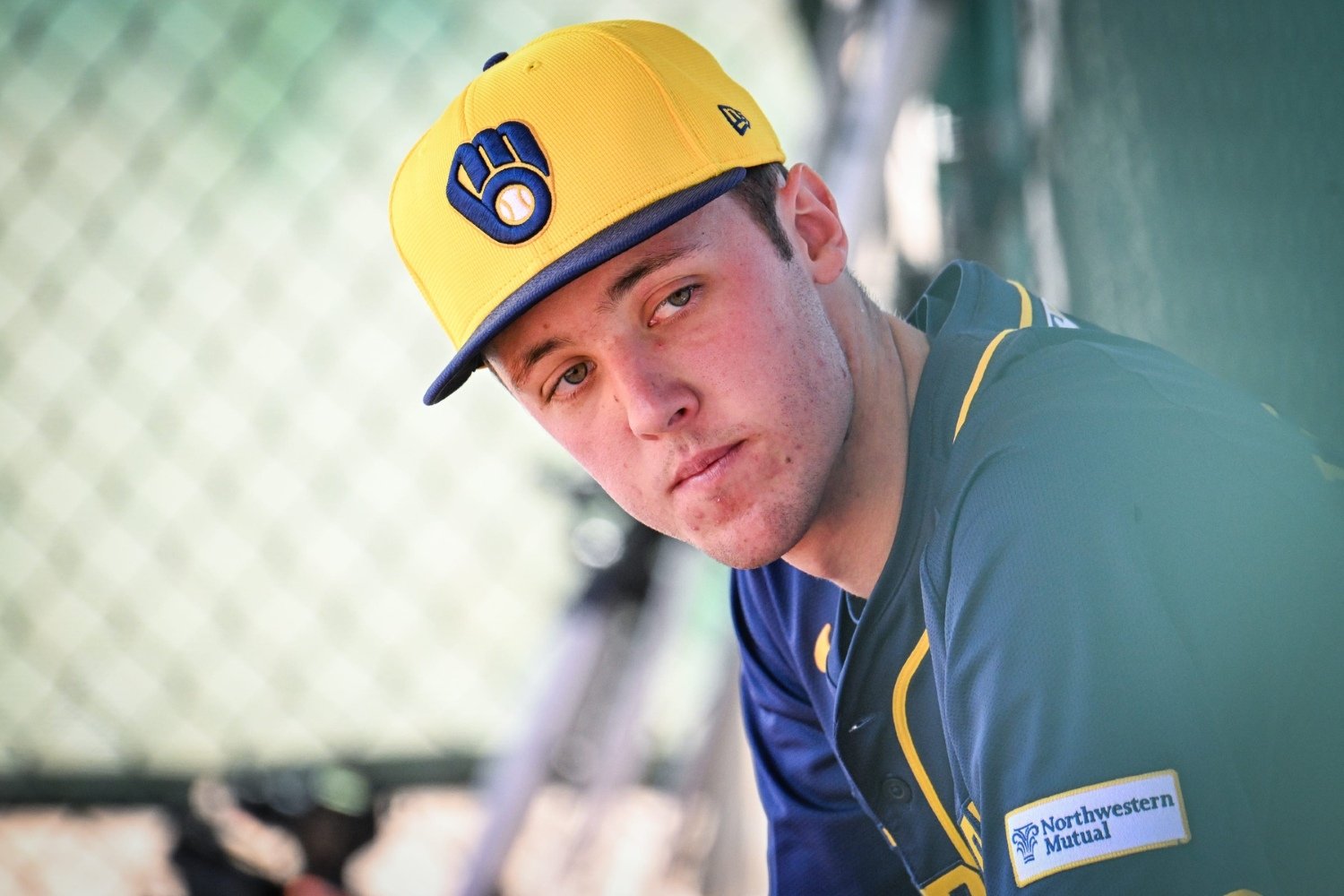 The wait for Jacob Misiorowski's big-league debut is over. The flame-throwing right-hander has joined the Brewers in Milwaukee and will make his first start on Thursday night against the St. Louis Cardinals. The fact that Misiorowski will begin his MLB career as a starter is significant. While the Brewers maintained their belief that he could develop into a big-league starter, his ascent through the minors was shrouded in concerns that his high walk rate, inconsistent mechanics (made so by a frame so lanky as to be unwieldy at times), and lack of a fourth pitch would push him to a relief role. Misiorowski has mitigated some of those concerns this year. He's slightly cut his walk rate, from 14.4% in 2024 to 12.3% in 2025, but more importantly, his percentage of pitches in the strike zone has jumped from 46.4% in Triple-A last year to 51.7% this year. "He's in the zone a lot more," Pat Murphy said. "Not as many big misses. The counts are better. Just the control in general of who he is. His delivery's a little more compact." The chief baseball decision-maker for the team agrees. "The stuff is the stuff, but just the ability to actually execute is now something that he's much more comfortable with," Matt Arnold said. "He's shown us that it's probably the right time." The 23-year-old also developed his changeup into a bona fide fourth pitch, with solid depth and arm-side fade. Public stuff modeling metrics don't love it, but its separation from his fastball out of the same arm action could help it play up. The right-hander has also worked deeper into games while maintaining his outstanding stuff. After going six or more innings in just three of 21 starts last year, he's already done it four times in 12 starts this season. He garnered attention last month for hitting 103 mph with his 78th pitch of his May 15 start. That's not to say Misiorowski is a finished product. His control evaded him two outings ago, when he issued six walks in a two-inning start on May 31. However, he's largely looked ready to start at the game's highest level for several weeks, something that couldn't be said last year—or even in spring training. The next steps in his development can only be taken by learning from facing big-league hitters. "I think you see it with some of the young guys that we've seen here, whether it's [Chad Patrick] or [Logan Henderson] or [Quinn Priester]," Arnold said. "Continuing to overcome some adversity and show that they can do that at the highest level is the ultimate challenge. I think he's ready for that." Part of the timing decision was that, once Misiorowski demonstrated his readiness for the challenge, the team wanted to reward the progress immediately. "When you have an entity like this, you might be wasting bullets (in the minor leagues) if you don't bring them up soon," Murphy said. Unlike Henderson's sporadic cups of coffee in the majors, Misiorowski's first promotion is not expected to be a one-and-done start. The Brewers plan to make him a full-time member of what was already a full starting rotation. Under the 13-pitcher limit, a six-man rotation would leave the club shorthanded in the bullpen, so it is moving Aaron Civale to a long relief role for now. The veteran has started every game of his big-league career, and the change comes during his platform year in free agency. With those factors in mind, Murphy acknowledged that Civale is "not happy" with his new role. "It's a big move for him," he said. "It's not necessarily that he hasn't been pitching well, because he has been, it's just that we think he's the best candidate to be able to [pitch in relief] right now." Civale is a capable starter, but with Misiorowski in the fold and the other members of a suddenly deep rotation pitching well, his limitations make him the odd man out. Murphy has noted that his struggles in his third turn through an opposing lineup restrict him to shorter outings. Last year, opponents posted an .856 OPS the third and fourth times through, compared to a .732 OPS the first two times through. They've gone 4-for-8 the third time through to begin this year. "You look at his third-time-around numbers, he might be better suited on this year's team right now, to disrupt everything less, if he can be in that long relief role," Murphy said. The Brewers declined to comment on trade speculation, but as a pending free agent, Civale already appeared to be a potential midseason trade candidate. His downgraded status on the depth chart adds fuel to those speculative flames. Misiorowski, meanwhile, has upside as a spark for this year's team and a potential linchpin of future Milwaukee pitching staffs. After the growth he's shown this spring, he's earned this opportunity.
 -
Image courtesy of © Dave Kallmann / Milwaukee Journal Sentinel / USA TODAY NETWORK via Imagn Images The wait for Jacob Misiorowski's big-league debut is over. The flame-throwing right-hander has joined the Brewers in Milwaukee and will make his first start on Thursday night against the St. Louis Cardinals. The fact that Misiorowski will begin his MLB career as a starter is significant. While the Brewers maintained their belief that he could develop into a big-league starter, his ascent through the minors was shrouded in concerns that his high walk rate, inconsistent mechanics (made so by a frame so lanky as to be unwieldy at times), and lack of a fourth pitch would push him to a relief role. Misiorowski has mitigated some of those concerns this year. He's slightly cut his walk rate, from 14.4% in 2024 to 12.3% in 2025, but more importantly, his percentage of pitches in the strike zone has jumped from 46.4% in Triple-A last year to 51.7% this year. "He's in the zone a lot more," Pat Murphy said. "Not as many big misses. The counts are better. Just the control in general of who he is. His delivery's a little more compact." The chief baseball decision-maker for the team agrees. "The stuff is the stuff, but just the ability to actually execute is now something that he's much more comfortable with," Matt Arnold said. "He's shown us that it's probably the right time." The 23-year-old also developed his changeup into a bona fide fourth pitch, with solid depth and arm-side fade. Public stuff modeling metrics don't love it, but its separation from his fastball out of the same arm action could help it play up. The right-hander has also worked deeper into games while maintaining his outstanding stuff. After going six or more innings in just three of 21 starts last year, he's already done it four times in 12 starts this season. He garnered attention last month for hitting 103 mph with his 78th pitch of his May 15 start. That's not to say Misiorowski is a finished product. His control evaded him two outings ago, when he issued six walks in a two-inning start on May 31. However, he's largely looked ready to start at the game's highest level for several weeks, something that couldn't be said last year—or even in spring training. The next steps in his development can only be taken by learning from facing big-league hitters. "I think you see it with some of the young guys that we've seen here, whether it's [Chad Patrick] or [Logan Henderson] or [Quinn Priester]," Arnold said. "Continuing to overcome some adversity and show that they can do that at the highest level is the ultimate challenge. I think he's ready for that." Part of the timing decision was that, once Misiorowski demonstrated his readiness for the challenge, the team wanted to reward the progress immediately. "When you have an entity like this, you might be wasting bullets (in the minor leagues) if you don't bring them up soon," Murphy said. Unlike Henderson's sporadic cups of coffee in the majors, Misiorowski's first promotion is not expected to be a one-and-done start. The Brewers plan to make him a full-time member of what was already a full starting rotation. Under the 13-pitcher limit, a six-man rotation would leave the club shorthanded in the bullpen, so it is moving Aaron Civale to a long relief role for now. The veteran has started every game of his big-league career, and the change comes during his platform year in free agency. With those factors in mind, Murphy acknowledged that Civale is "not happy" with his new role. "It's a big move for him," he said. "It's not necessarily that he hasn't been pitching well, because he has been, it's just that we think he's the best candidate to be able to [pitch in relief] right now." Civale is a capable starter, but with Misiorowski in the fold and the other members of a suddenly deep rotation pitching well, his limitations make him the odd man out. Murphy has noted that his struggles in his third turn through an opposing lineup restrict him to shorter outings. Last year, opponents posted an .856 OPS the third and fourth times through, compared to a .732 OPS the first two times through. They've gone 4-for-8 the third time through to begin this year. "You look at his third-time-around numbers, he might be better suited on this year's team right now, to disrupt everything less, if he can be in that long relief role," Murphy said. The Brewers declined to comment on trade speculation, but as a pending free agent, Civale already appeared to be a potential midseason trade candidate. His downgraded status on the depth chart adds fuel to those speculative flames. Misiorowski, meanwhile, has upside as a spark for this year's team and a potential linchpin of future Milwaukee pitching staffs. After the growth he's shown this spring, he's earned this opportunity. View full article
-
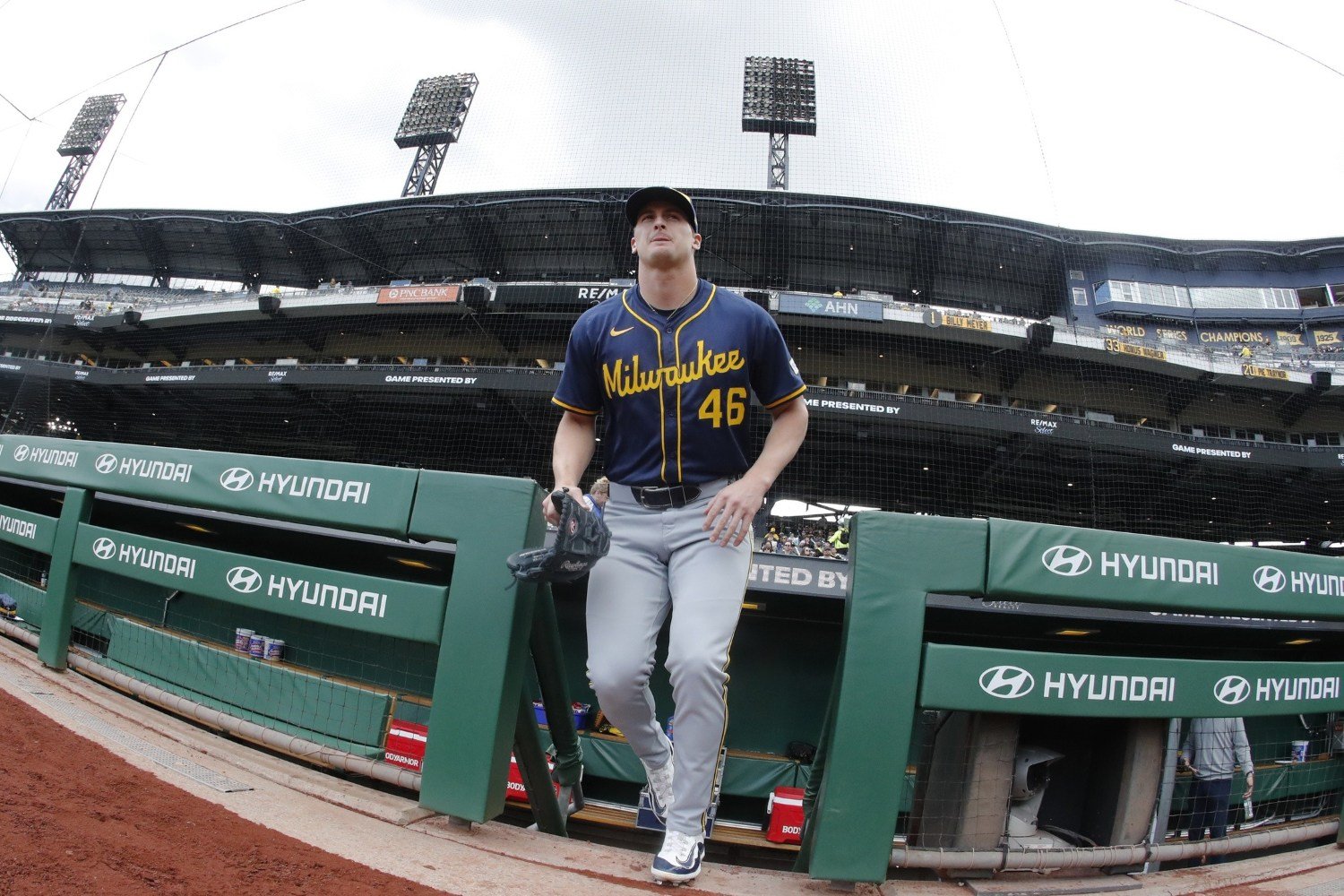 The Brewers showed how highly they thought of Quinn Priester when they paid a steep price to acquire him from the Boston Red Sox in April. At the time, the former first-round draft pick owned a 6.23 ERA in 99 ⅔ big-league innings, but Milwaukee felt he had the tools to become a long-term rotation mainstay. "When I first saw Priester, I remember talking to [Chris Hook] and [Jim] Henderson," Pat Murphy recalled. "We talked about, 'This is a guy we just need to get our hands on and work with him a little bit.' And it'd be nice if we had two or three weeks with this guy before he had to pitch, you know?" Neither Priester nor the Brewers had that luxury, as the 24-year-old immediately joined an injury-ravaged rotation. The early results were uninspiring: a 5.79 ERA, 5.34 FIP, and 5.35 SIERA in his first five outings. Since a seven-run blowup against the Chicago Cubs on May 2, the results have flipped. Priester has posted a 2.51 ERA in his last six outings, with a 61.1% ground ball rate. His 4.03 FIP and 3.93 SIERA during this stretch indicate that Priester has pitched more like a capable back-of-the-rotation starter, but even those marks reflect substantial improvement. Furthermore, the Brewers aren't asking him to pitch in a way that peripheral metrics love—at least, not yet. For now, they want Priester to be a ground-ball machine in front of their infield defense. He's unlikely to sustain his recent level of success in his current form, but some of his overperformance is by design. The turnaround came after a few adjustments. Priester and the Brewers' pitching brass simplified his game plan to emphasize his two best pitches, and moved him toward the middle of the pitching rubber. Priester has a full five-pitch arsenal, including a curveball that received a 70 grade from FanGraphs in 2023. He used his entire mix in his first few outings, but since that Cubs start, he's leaned heavily on his sinker and slider. The results quickly improved. Opponents have since slugged .330 against Priester, with an expected slugging percentage of .350. "He's overpowering people with the sinker," Hook said. "Why would we do them a favor sometimes, you know? At this particular moment, he doesn't need a six-pitch mix." "I think it's a lot of 'If it's not broke, don't fix it' type of thing," Priester said. "We know there's tons of quick outs in the sinker, and we know I'm at my best when they have to respect that pitch. And then the slider's just a natural second off it." The Brewers targeted him largely because of that sinker. It has drawn unassuming reviews from public stuff models (career 0.2 StuffPro and 100 Stuff+) but rates highly within the organization's internal valuations. Its raw movement seems unremarkable from afar, but it sinks more than a hitter expects it to from Priester's high-three-quarters arm slot. "It's a very unique sinker," Hook said. "You look at the movement like, 'Oh, God, that's not that good.' But I think the entry angle and the movement, it's not the expected movement. It just looks different. It's a bowling ball." The sinker-slider combination is playing better from the middle of the mound. Priester used to stand with his back heel hanging off the rubber, but since his start against the Baltimore Orioles on May 19, he's stood roughly seven inches to his right. Brewers pitching coaches had several potential benefits in mind when they approached Priester about moving over. "In one bullpen, Hooky asked if I kind of am uncomfortable being in the middle," he said. "I just had always thought the first base side had helped me out. Then had a couple other people mention, 'Hey, maybe the middle will just kind of help the sinker sink more, just the different angles we can play.' And same with the slider. The slider's going to hold more plate just because I'm now seven inches over on the other side." Because it now appears to stay in the strike zone longer before breaking off the plate, hitters are chasing Priester's slider more. Since he moved on the rubber, the chase rate against it has increased from 36.9% to 42.9%. More important, though, was how sliding over could help the sinker. The Brewers believed it played in the zone, but needed Priester to throw more strikes. From the middle of the rubber, his in-zone rate has improved from 50.9% to 53.4%, his walk rate has dropped from 14.2% to 5.8%, and his first-pitch strike rate jumped from 58.8% to 68.6%. "To me, it's like, 'Okay, we can get this guy in the strike zone, and good things will happen,'" Hook said. "And he can be middle with [the sinker]. I mean, you go, '14 [inches of horizontal break] and 8 [inches of induced vertical break] sinker, that's okay, that's fine.' But there's something different about his. He can play in the middle, and I think he's been aggressive." Priester is now getting ahead of hitters with tons of sinkers down the middle, and it's working. Despite the pitch getting plenty of the plate, opponents have managed just a .292 wOBA on contact, far below the league average for sinkers of .354. His spring training velocity gains with the Red Sox evaporated after his trade to the Brewers, but Priester has rediscovered an extra tick on his sinker in his last four outings. He attributes it to growing more comfortable with his recent mechanical tweaks. "There's some things we wanted to iron out at first, and that takes some thought, and thought kind of slows the body down a little bit," he said. "The more those things have gotten ironed out and required less and less thought, the more it's been easier to get to those velos, because there's not much to think about. It's just, 'Throw the ball. Throw the heck out of it over the plate.'" The current sinker-slider approach is working for now, but it limits Priester's ceiling. He's currently a pitch-to-contact pitcher whom the Brewers have shielded from left-handed hitters by using DL Hall as an opener. He'll need his other secondary pitches down the line, to take additional and more sustainable steps forward. Hook sees potential in the rest of Priester's arsenal, particularly his cutter and changeup, but most of the work on those pitches is happening behind the scenes. For now, the Brewers want him to attack hitters in the zone with his best stuff and use his remaining offerings strategically. "I think sometimes it's like, 'Hey, man, we need to continue to work on this, and we'll give you some space to work it in when it's ready,'" Hook said. "Now we're just going to find the guys that are bad on this pitch and work it in." The Brewers believe those other pitches can play in the future and make Priester a more well-rounded pitcher. "He's handling lineups right now," Hook said. "If we add those other pitches, I think that'll better complement him, and there's probably more whiff in there when he does use them." Priester is a unique project for the Brewers' pitching development system. He was not a minor-league acquisition who could feel things out in a low-pressure environment, nor was he a veteran pickup like Aaron Civale or Frankie Montas. The club has visions of what he can become in the long run, but also had to make him effective this year, knowing it couldn't squeeze years of development into a few weeks. Priester is far from a finished product. He has already made quick progress, but more work lies ahead.
 -
Image courtesy of © Charles LeClaire-Imagn Images The Brewers showed how highly they thought of Quinn Priester when they paid a steep price to acquire him from the Boston Red Sox in April. At the time, the former first-round draft pick owned a 6.23 ERA in 99 ⅔ big-league innings, but Milwaukee felt he had the tools to become a long-term rotation mainstay. "When I first saw Priester, I remember talking to [Chris Hook] and [Jim] Henderson," Pat Murphy recalled. "We talked about, 'This is a guy we just need to get our hands on and work with him a little bit.' And it'd be nice if we had two or three weeks with this guy before he had to pitch, you know?" Neither Priester nor the Brewers had that luxury, as the 24-year-old immediately joined an injury-ravaged rotation. The early results were uninspiring: a 5.79 ERA, 5.34 FIP, and 5.35 SIERA in his first five outings. Since a seven-run blowup against the Chicago Cubs on May 2, the results have flipped. Priester has posted a 2.51 ERA in his last six outings, with a 61.1% ground ball rate. His 4.03 FIP and 3.93 SIERA during this stretch indicate that Priester has pitched more like a capable back-of-the-rotation starter, but even those marks reflect substantial improvement. Furthermore, the Brewers aren't asking him to pitch in a way that peripheral metrics love—at least, not yet. For now, they want Priester to be a ground-ball machine in front of their infield defense. He's unlikely to sustain his recent level of success in his current form, but some of his overperformance is by design. The turnaround came after a few adjustments. Priester and the Brewers' pitching brass simplified his game plan to emphasize his two best pitches, and moved him toward the middle of the pitching rubber. Priester has a full five-pitch arsenal, including a curveball that received a 70 grade from FanGraphs in 2023. He used his entire mix in his first few outings, but since that Cubs start, he's leaned heavily on his sinker and slider. The results quickly improved. Opponents have since slugged .330 against Priester, with an expected slugging percentage of .350. "He's overpowering people with the sinker," Hook said. "Why would we do them a favor sometimes, you know? At this particular moment, he doesn't need a six-pitch mix." "I think it's a lot of 'If it's not broke, don't fix it' type of thing," Priester said. "We know there's tons of quick outs in the sinker, and we know I'm at my best when they have to respect that pitch. And then the slider's just a natural second off it." The Brewers targeted him largely because of that sinker. It has drawn unassuming reviews from public stuff models (career 0.2 StuffPro and 100 Stuff+) but rates highly within the organization's internal valuations. Its raw movement seems unremarkable from afar, but it sinks more than a hitter expects it to from Priester's high-three-quarters arm slot. "It's a very unique sinker," Hook said. "You look at the movement like, 'Oh, God, that's not that good.' But I think the entry angle and the movement, it's not the expected movement. It just looks different. It's a bowling ball." The sinker-slider combination is playing better from the middle of the mound. Priester used to stand with his back heel hanging off the rubber, but since his start against the Baltimore Orioles on May 19, he's stood roughly seven inches to his right. Brewers pitching coaches had several potential benefits in mind when they approached Priester about moving over. "In one bullpen, Hooky asked if I kind of am uncomfortable being in the middle," he said. "I just had always thought the first base side had helped me out. Then had a couple other people mention, 'Hey, maybe the middle will just kind of help the sinker sink more, just the different angles we can play.' And same with the slider. The slider's going to hold more plate just because I'm now seven inches over on the other side." Because it now appears to stay in the strike zone longer before breaking off the plate, hitters are chasing Priester's slider more. Since he moved on the rubber, the chase rate against it has increased from 36.9% to 42.9%. More important, though, was how sliding over could help the sinker. The Brewers believed it played in the zone, but needed Priester to throw more strikes. From the middle of the rubber, his in-zone rate has improved from 50.9% to 53.4%, his walk rate has dropped from 14.2% to 5.8%, and his first-pitch strike rate jumped from 58.8% to 68.6%. "To me, it's like, 'Okay, we can get this guy in the strike zone, and good things will happen,'" Hook said. "And he can be middle with [the sinker]. I mean, you go, '14 [inches of horizontal break] and 8 [inches of induced vertical break] sinker, that's okay, that's fine.' But there's something different about his. He can play in the middle, and I think he's been aggressive." Priester is now getting ahead of hitters with tons of sinkers down the middle, and it's working. Despite the pitch getting plenty of the plate, opponents have managed just a .292 wOBA on contact, far below the league average for sinkers of .354. His spring training velocity gains with the Red Sox evaporated after his trade to the Brewers, but Priester has rediscovered an extra tick on his sinker in his last four outings. He attributes it to growing more comfortable with his recent mechanical tweaks. "There's some things we wanted to iron out at first, and that takes some thought, and thought kind of slows the body down a little bit," he said. "The more those things have gotten ironed out and required less and less thought, the more it's been easier to get to those velos, because there's not much to think about. It's just, 'Throw the ball. Throw the heck out of it over the plate.'" The current sinker-slider approach is working for now, but it limits Priester's ceiling. He's currently a pitch-to-contact pitcher whom the Brewers have shielded from left-handed hitters by using DL Hall as an opener. He'll need his other secondary pitches down the line, to take additional and more sustainable steps forward. Hook sees potential in the rest of Priester's arsenal, particularly his cutter and changeup, but most of the work on those pitches is happening behind the scenes. For now, the Brewers want him to attack hitters in the zone with his best stuff and use his remaining offerings strategically. "I think sometimes it's like, 'Hey, man, we need to continue to work on this, and we'll give you some space to work it in when it's ready,'" Hook said. "Now we're just going to find the guys that are bad on this pitch and work it in." The Brewers believe those other pitches can play in the future and make Priester a more well-rounded pitcher. "He's handling lineups right now," Hook said. "If we add those other pitches, I think that'll better complement him, and there's probably more whiff in there when he does use them." Priester is a unique project for the Brewers' pitching development system. He was not a minor-league acquisition who could feel things out in a low-pressure environment, nor was he a veteran pickup like Aaron Civale or Frankie Montas. The club has visions of what he can become in the long run, but also had to make him effective this year, knowing it couldn't squeeze years of development into a few weeks. Priester is far from a finished product. He has already made quick progress, but more work lies ahead. View full article
-
Image courtesy of © Jeff Hanisch-Imagn Images A shutout of the offense left him with a tough-luck loss, but Friday night’s outing was a significant one for Chad Patrick. The 26-year-old worked six innings for a second consecutive start, allowing just one run and providing crucial length as the Brewers begin a 10-day homestand without an off day. If there’s any knock to be made against Patrick’s stellar rookie season, it’s that he has not often worked deep into games. Entering Friday, he had failed to complete five innings in six of his 12 starts. Patrick has kept runs off the board but hasn’t been efficient, and the Brewers have enforced a quick hook in many of his outings. They’ve had valid reasons for handling him that way; Patrick is a young starter who throws a fastball variant 90% of the time, making him vulnerable against good lineups a third turn through the order. It appeared early on as if his latest outing would unfold similarly. Patrick threw 67 pitches through his first four innings, and if the Brewers preferred to shield him from the heart of the San Diego Padres order a third time, he appeared headed for another short start. Instead, he breezed through a 10-pitch fifth, positioning him to start the sixth. “The first three innings, it felt like command was off, and then we kind of dialed it back in there the next three,” Patrick said postgame. Unlike his last start, in which he pitched six innings in a blowout victory over the Philadelphia Phillies, the Brewers sent Patrick back out in a close game. Pat Murphy said they planned to take the same batter-by-batter approach that they have at the tail end of his other starts. In past outings, like his start against the Boston Red Sox on the last homestand, he failed to complete the inning. Patrick allowed traffic amid waning stuff, prompting a call to the bullpen. This time, he continued looking strong, striking out Manny Machado and Xander Bogaerts to bookend a scoreless frame. “We were going to go hitter-by-hitter there,” Murphy said. “And then he looked good and got him out, and we just let him keep going, the next hitter, the next hitter.” To complete that sixth inning, Patrick started turning toward his changeup, a pitch he had used just 5.8% of the time this year. Five of the seven he threw Friday night came in that frame. His inning-ending strikeout of Bogaerts was on a rare right-on-right changeup. With that punchout, Patrick successfully navigated the meat of an opposing order for a third time in a close game. While the Brewers have no qualms about pulling starters early for matchup reasons, every club prefers its pitchers learn how to work deeper into games. “It was kind of planned that way,” Murphy said, noting that Rob Zastryzny was ready for mid-inning relief if Patrick ran into trouble. “But you’re also trying to bring that pitcher along. You’re trying to bring him along to be able to do that, saying, ‘This is the third time around, and I’ve got to execute.’ And he did.” “It’s awesome,” Patrick said of making good on the opportunity. “I honestly thought I was only going to face Machado there, and ended up getting him and kind of locked back in. It was like, ‘Alright, it’s your inning. Go finish the job.’” It was the next step for a young pitcher who had already been indispensable for an injury-ravaged staff and now ranks 14th among qualified pitchers in fWAR this year. “I think that trusting that he can go the third time through,” Murphy said. “Trusting that we believe in him that he can do that. I thought it was a big night for him.” “It definitely brings my confidence up for sure,” Patrick said. View full article
-
Why Another Six-Inning Start Was a 'Big Night' for Chad Patrick
Jack Stern posted an article in Brewers
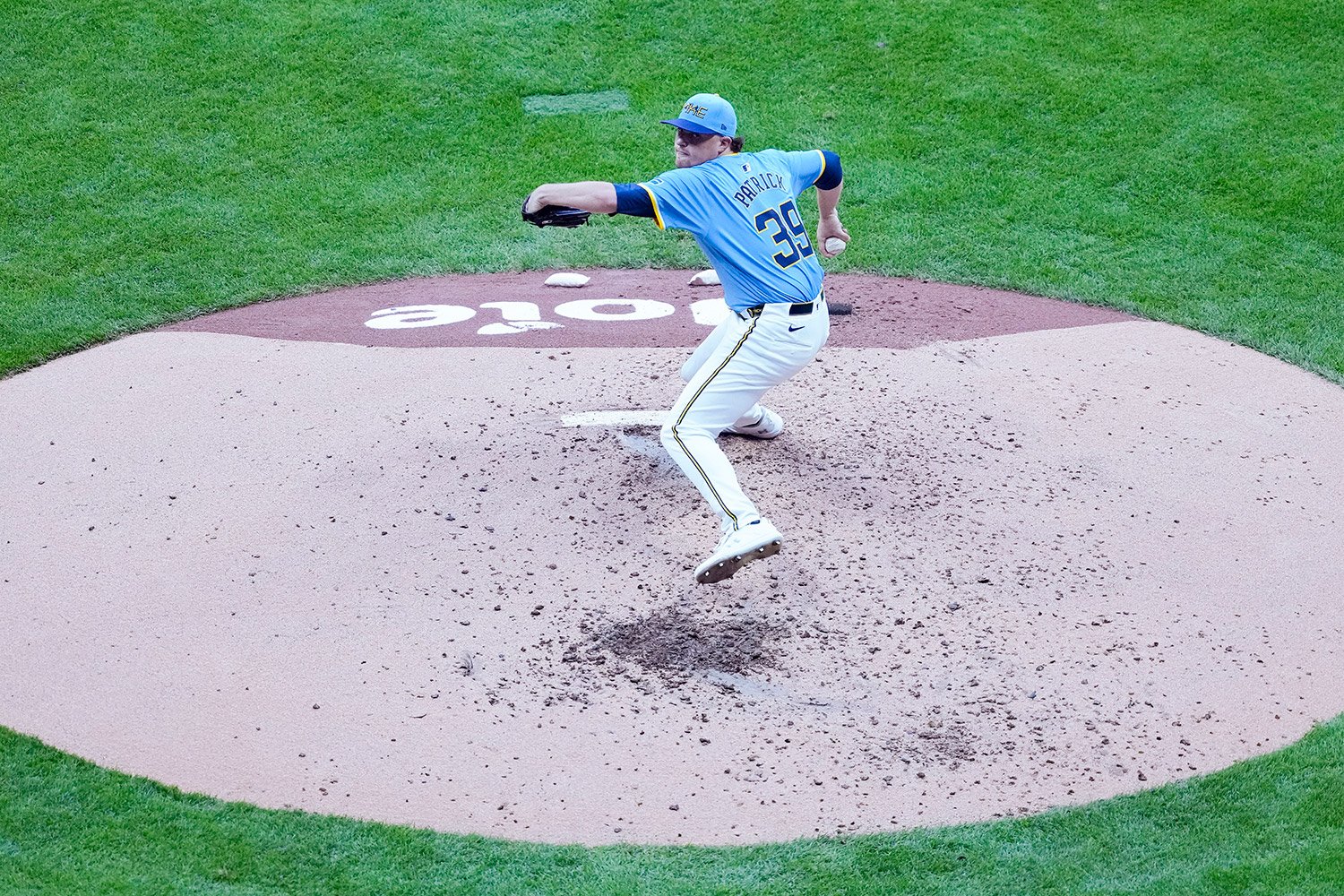 A shutout of the offense left him with a tough-luck loss, but Friday night’s outing was a significant one for Chad Patrick. The 26-year-old worked six innings for a second consecutive start, allowing just one run and providing crucial length as the Brewers begin a 10-day homestand without an off day. If there’s any knock to be made against Patrick’s stellar rookie season, it’s that he has not often worked deep into games. Entering Friday, he had failed to complete five innings in six of his 12 starts. Patrick has kept runs off the board but hasn’t been efficient, and the Brewers have enforced a quick hook in many of his outings. They’ve had valid reasons for handling him that way; Patrick is a young starter who throws a fastball variant 90% of the time, making him vulnerable against good lineups a third turn through the order. It appeared early on as if his latest outing would unfold similarly. Patrick threw 67 pitches through his first four innings, and if the Brewers preferred to shield him from the heart of the San Diego Padres order a third time, he appeared headed for another short start. Instead, he breezed through a 10-pitch fifth, positioning him to start the sixth. “The first three innings, it felt like command was off, and then we kind of dialed it back in there the next three,” Patrick said postgame. Unlike his last start, in which he pitched six innings in a blowout victory over the Philadelphia Phillies, the Brewers sent Patrick back out in a close game. Pat Murphy said they planned to take the same batter-by-batter approach that they have at the tail end of his other starts. In past outings, like his start against the Boston Red Sox on the last homestand, he failed to complete the inning. Patrick allowed traffic amid waning stuff, prompting a call to the bullpen. This time, he continued looking strong, striking out Manny Machado and Xander Bogaerts to bookend a scoreless frame. “We were going to go hitter-by-hitter there,” Murphy said. “And then he looked good and got him out, and we just let him keep going, the next hitter, the next hitter.” To complete that sixth inning, Patrick started turning toward his changeup, a pitch he had used just 5.8% of the time this year. Five of the seven he threw Friday night came in that frame. His inning-ending strikeout of Bogaerts was on a rare right-on-right changeup. With that punchout, Patrick successfully navigated the meat of an opposing order for a third time in a close game. While the Brewers have no qualms about pulling starters early for matchup reasons, every club prefers its pitchers learn how to work deeper into games. “It was kind of planned that way,” Murphy said, noting that Rob Zastryzny was ready for mid-inning relief if Patrick ran into trouble. “But you’re also trying to bring that pitcher along. You’re trying to bring him along to be able to do that, saying, ‘This is the third time around, and I’ve got to execute.’ And he did.” “It’s awesome,” Patrick said of making good on the opportunity. “I honestly thought I was only going to face Machado there, and ended up getting him and kind of locked back in. It was like, ‘Alright, it’s your inning. Go finish the job.’” It was the next step for a young pitcher who had already been indispensable for an injury-ravaged staff and now ranks 14th among qualified pitchers in fWAR this year. “I think that trusting that he can go the third time through,” Murphy said. “Trusting that we believe in him that he can do that. I thought it was a big night for him.” “It definitely brings my confidence up for sure,” Patrick said.
 -
Image courtesy of © Dave Kallmann / Milwaukee Journal Sentinel / USA TODAY NETWORK via Imagn Images For the second time in less than four weeks, Brandon Woodruff's impending big-league return from shoulder surgery was delayed by an unrelated injury. This one was flukier (and scarier) than the last. Just 12 pitches into what could have been his final rehab outing, a 108-mph comebacker struck Woodruff in his right elbow, forcing his exit from the game. Pat Murphy and Matt Arnold told reporters that X-rays on Woodruff's elbow were negative. He'll return to Milwaukee for further testing on Wednesday. In any case, it's a tough break for Woodruff, who seemingly remains snake-bitten after more than 20 months of hard work to reach this point. If he avoided a serious injury, though, another minor setback may be a blessing in disguise for him and the Brewers. For most of his rehab stint, Woodruff's stuff continued to exhibit the encouraging and somewhat surprising progress he had shown in spring training. Through his first three Triple-A outings with Statcast tracking, his four-seamer and sinker averaged 92.7 mph and regularly touched 95 mph. Meanwhile, his existing pitch shapes were unaltered from his heyday, and his new sweeper and cutter looked like legitimate offerings. That changed when a bout of right ankle tendinitis cropped up last month. Starting in his May 11 outing, Woodruff's velocity dropped an additional couple of ticks, and it had not rebounded since he started a new rehab assignment. Before his departure on Tuesday night, the average velocity of his four-seam fastball was down to 89.2 mph. With a deeper arsenal and his veteran feel for mixing pitches to keep hitters off-balance, Woodruff had a clear-cut path toward succeeding with diminished velocity—when his fastballs sat in the low-to-mid-90s. His outlook is cloudier when they sit in the upper 80s and merely touch the low 90s occasionally. Despite that step back in his stuff, the Brewers suggested that Woodruff's Tuesday start could be his last rehab appearance before his long-awaited activation. That would have required them to send down a starter. During the team's homestand last week, Pat Murphy heavily implied that the casualty could be Chad Patrick, who has pitched to a 2.97 ERA and 3.30 FIP in 13 outings (12 starts) but has options remaining. "What do you do?" Murphy said. "Do you tell Woody, 'No, you're not coming back?'" While a challenging message to deliver after Woodruff's contributions to the franchise and the work he put in throughout his rehab, it's a conversation the Brewers should have entertained, had he emerged from his last start healthy and felt ready to return. In his current form, Woodruff is not one of the five best starters on the 40-man roster, and time remains on his 30-day rehab clock to rediscover the still-recent version of his stuff that had him looking like a viable big-league arm again. Activating him next week at Patrick's expense would worsen the rotation and put Woodruff in a disadvantageous situation when facing big-league hitters in a regular-season game for the first time in nearly two years. This latest setback may have kicked that can down the road. It's an unfortunate development in the moment, but in the long run, both Woodruff and the Brewers could end up in a better position for a successful MLB return. View full article
-
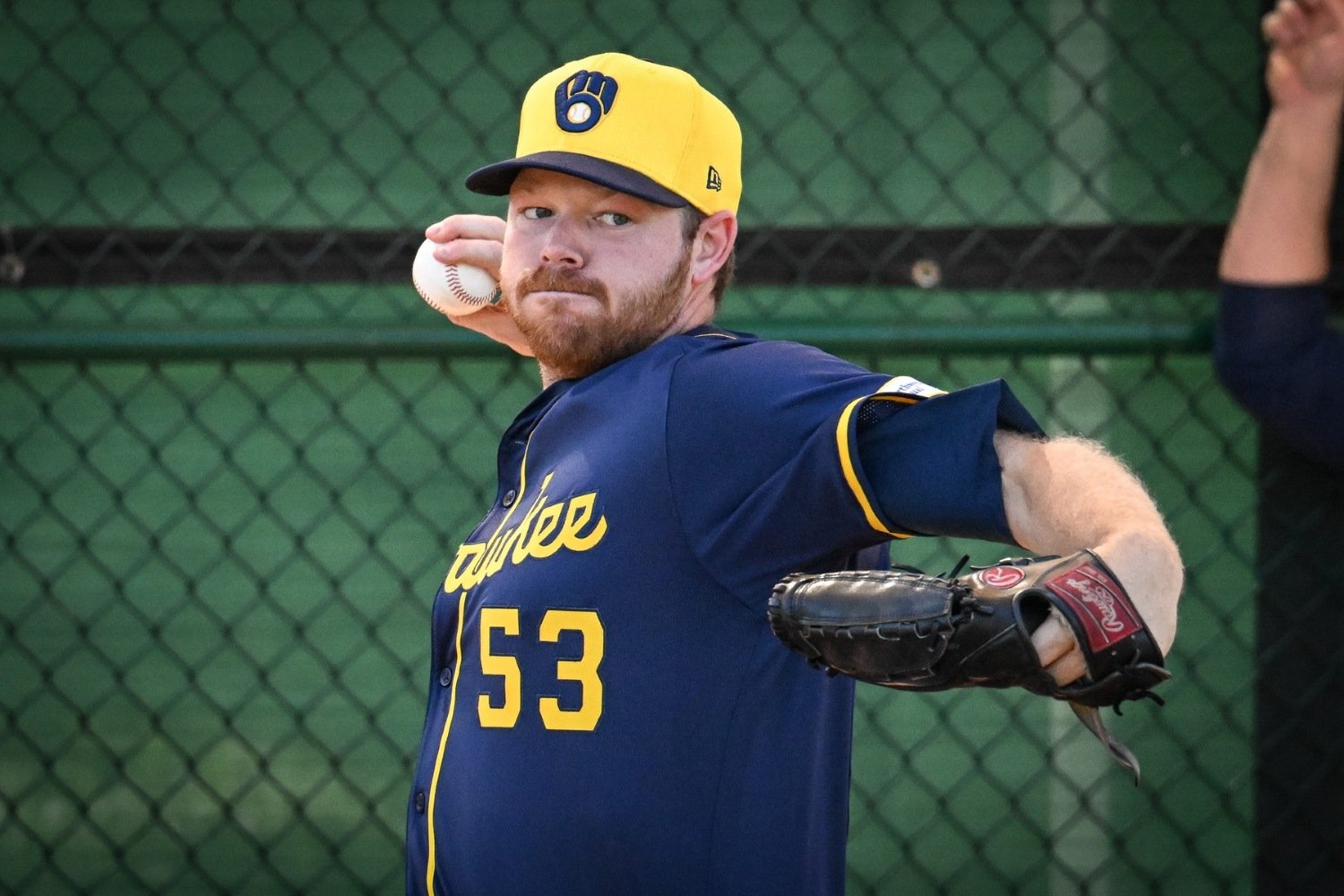 For the second time in less than four weeks, Brandon Woodruff's impending big-league return from shoulder surgery was delayed by an unrelated injury. This one was flukier (and scarier) than the last. Just 12 pitches into what could have been his final rehab outing, a 108-mph comebacker struck Woodruff in his right elbow, forcing his exit from the game. Pat Murphy and Matt Arnold told reporters that X-rays on Woodruff's elbow were negative. He'll return to Milwaukee for further testing on Wednesday. In any case, it's a tough break for Woodruff, who seemingly remains snake-bitten after more than 20 months of hard work to reach this point. If he avoided a serious injury, though, another minor setback may be a blessing in disguise for him and the Brewers. For most of his rehab stint, Woodruff's stuff continued to exhibit the encouraging and somewhat surprising progress he had shown in spring training. Through his first three Triple-A outings with Statcast tracking, his four-seamer and sinker averaged 92.7 mph and regularly touched 95 mph. Meanwhile, his existing pitch shapes were unaltered from his heyday, and his new sweeper and cutter looked like legitimate offerings. That changed when a bout of right ankle tendinitis cropped up last month. Starting in his May 11 outing, Woodruff's velocity dropped an additional couple of ticks, and it had not rebounded since he started a new rehab assignment. Before his departure on Tuesday night, the average velocity of his four-seam fastball was down to 89.2 mph. With a deeper arsenal and his veteran feel for mixing pitches to keep hitters off-balance, Woodruff had a clear-cut path toward succeeding with diminished velocity—when his fastballs sat in the low-to-mid-90s. His outlook is cloudier when they sit in the upper 80s and merely touch the low 90s occasionally. Despite that step back in his stuff, the Brewers suggested that Woodruff's Tuesday start could be his last rehab appearance before his long-awaited activation. That would have required them to send down a starter. During the team's homestand last week, Pat Murphy heavily implied that the casualty could be Chad Patrick, who has pitched to a 2.97 ERA and 3.30 FIP in 13 outings (12 starts) but has options remaining. "What do you do?" Murphy said. "Do you tell Woody, 'No, you're not coming back?'" While a challenging message to deliver after Woodruff's contributions to the franchise and the work he put in throughout his rehab, it's a conversation the Brewers should have entertained, had he emerged from his last start healthy and felt ready to return. In his current form, Woodruff is not one of the five best starters on the 40-man roster, and time remains on his 30-day rehab clock to rediscover the still-recent version of his stuff that had him looking like a viable big-league arm again. Activating him next week at Patrick's expense would worsen the rotation and put Woodruff in a disadvantageous situation when facing big-league hitters in a regular-season game for the first time in nearly two years. This latest setback may have kicked that can down the road. It's an unfortunate development in the moment, but in the long run, both Woodruff and the Brewers could end up in a better position for a successful MLB return.
 -
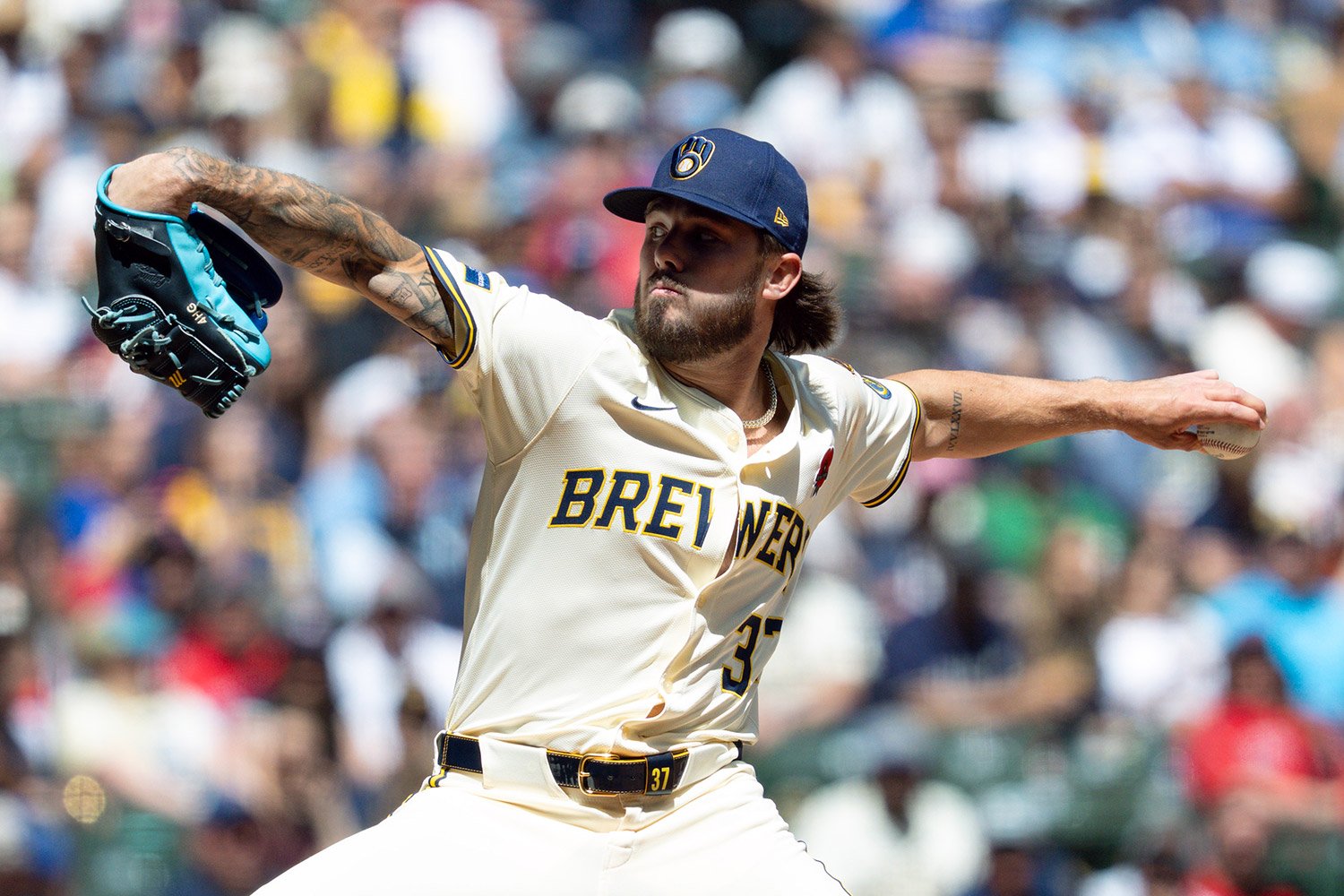 Good health has proven elusive for DL Hall in his first year-plus with the Brewers. Last season, he spent nearly four months on the injured list, first due to a knee injury and then to a succession of setbacks throughout multiple rehab assignments. This year, a lat injury delayed his season debut until Monday. It took longer than anyone hoped, but the left-hander finally feels good physically. “I feel healthy,” he said, adding with a chuckle, “Healthy’s a lucrative word, I guess.” When he has been on the mound, Hall hasn’t looked like the pitcher the Brewers thought they were acquiring in the Corbin Burnes trade two offseasons ago. FanGraphs scouted his four-seam fastball as a 70-grade pitch at the time, and it induced whiffs on 28% of swings during his stints with the Baltimore Orioles in 2022 and 2023. Last season, it lost several ticks of velocity and carry, reducing it from a plus pitch to a batting-practice offering. Season MPH IVB (inches) Stuff+ StuffPro xwOBA Whiff% 2022 96.2 16.8 113 -0.6 .291 24.6% 2023 95.6 15.6 109 -0.7 .239 30.2% 2024 93.3 14.3 82 0.6 .376 12.5% Hall has attributed some of the missing zip on his heater to pitching with a hampered lower half. He expects it to return now that he’s moving better. “It's just a matter of getting the body right, getting everything cleaned up,” he said. “Just a lot of bad reps went into my body when I was compensating (for) a lot of the injuries I dealt with.” It hasn’t happened yet, though. Hall’s velocity and movement showed flashes early in some of his rehab outings, but for the most part, his four-seamer still looks like a below-average pitch. On Monday, it averaged 93.6 mph with 14.7 inches of induced vertical break, which translated to 79 Stuff+ and 0.2 StuffPro marks. Last October, we speculated that if Hall’s four-seamer remained an underwhelming pitch, he would need an auxiliary fastball to help him protect it. Adding a cutter always made sense for Hall because he has a supination bias, meaning his hand and wrist naturally turn outward from his body when he releases the ball. His four-seamer had an active spin rate of 87% last year, which typically means a pitcher is slightly cutting the ball instead of staying behind it. Realizing that a cutter meshed with his mechanics and could help his diminished four-seamer play up, he started toying with one before his final rehab outing last week. “I've always been able to just get on that side of the ball better than the other side,” he said, “so it's like, ‘Let me just try it.’ So I threw a couple in the bullpen, spotting it up pretty well, good metrics. Was warming up for my last rehab outing, and got a call down and they said, ‘Hey, what does DL think about throwing a few cutters?’ And I was like, ‘Sure, I'll try it.’ “I think with my velo not being where it used to be, I think it's just another tool or weapon that I can use to protect my fastball.” Hall threw five cutters in that appearance and two on Monday. Most encouraging is that he is holding velocity with the pitch. It’s averaged 91.2 mph, just a couple of ticks below his usual fastball. “I think that partially comes from it being like a four-seam,” he said. “I'm basically just cocking my four-seam sideways, so it's pretty similar.” Hall is also hopeful that having separate release cues for the four-seam and cutter will help keep him behind the former, allowing him to generate more of the pure backspin that creates that carry. In addition to flashing the cutter, he also unintentionally debuted another new fastball on Monday. With Hall and Eric Haase unable to get on the same page with the pitch timer expiring, he hurriedly oriented the ball into a fastball grip in his hand. As he went into his delivery, he realized he was throwing a two-seamer. “Haase went back to the first sign instead of going to my curveball,” he recalled. “I was looking for curveball. We hadn't really thrown any all game. Didn't get to it because of the pitch clock, so I just gripped the ball. I had no idea. I literally just gripped the ball, and when I felt the two seams under my fingers, I was like, ‘Oh ****.’ I knew what was about to happen.” bmJNZ3lfWGw0TUFRPT1fQWdSWlV3VUhBQVFBRDFFQUF3QUhDQTRDQUFBRUJ3Y0FWMTBOVlZWWEJBSUJCZ1VE.mp4 Since he struggles to pronate the baseball to create arm-side movement, Hall doesn’t plan to add a two-seamer to his arsenal. With the cutter, he already has a five-pitch mix that he’s been forced to refine without his best fastball. Hall’s MLB four-seam usage dipped under 50% for the first time last year, and it’s dropped further in 2025. Meanwhile, he’s had to lean more on his two breaking pitches and changeup. “It’s been huge for me,” he said of learning to use his full arsenal. “It's not even necessarily by choice either, you know. It was kind of like sink or swim. So it's either figure out how to get outs with other stuff, or drown trying to blow 92 past them. It was a good thing for me, though.” Because he has an option year remaining, Hall may not be a constant member of the active roster. But when he’s with the Brewers, Pat Murphy plans to deploy him and Aaron Ashby as “leverage long relievers” who can bridge the gap between short-range starters and the overworked high-leverage arms, or fill in for the latter when they need rest. Hall is slated to open for Quinn Priester against a lefty-heavy top of the Philadelphia Phillies lineup on Friday night. “DL, Ashby, those guys are guys that can go multiple times during the week, multiple innings,” Murphy said. “I think you’re going to wear out your (Jared) Koenigs and your (Nick) Mears and your (Abner) Uribes and your (Trevor) Megills if you don’t have those couple two, three long guys.” “It just comes down to getting outs,” Hall said. “I think the preparation stays the same. It's obviously a little bit harder. It's not as scheduled, and you never know when (you) might open or long relieve. But it all can be overcomplicated if you want it to be. It just comes down to getting outs.” Whether he remains in that role or slides into another as the season progresses, he’s hoping that being forced to develop the rest of his arsenal will put him in an even better spot if his good fastball returns. “I think I'll get a velo unlock whenever that time comes, hopefully soon. But I think once it does, and then you add in all the stuff I've had to pitch with over the past year-and-a-half, I think it can be pretty cool and pretty special.”
 -
Good health has proven elusive for DL Hall in his first year-plus with the Brewers. Last season, he spent nearly four months on the injured list, first due to a knee injury and then to a succession of setbacks throughout multiple rehab assignments. This year, a lat injury delayed his season debut until Monday. It took longer than anyone hoped, but the left-hander finally feels good physically. “I feel healthy,” he said, adding with a chuckle, “Healthy’s a lucrative word, I guess.” When he has been on the mound, Hall hasn’t looked like the pitcher the Brewers thought they were acquiring in the Corbin Burnes trade two offseasons ago. FanGraphs scouted his four-seam fastball as a 70-grade pitch at the time, and it induced whiffs on 28% of swings during his stints with the Baltimore Orioles in 2022 and 2023. Last season, it lost several ticks of velocity and carry, reducing it from a plus pitch to a batting-practice offering. Season MPH IVB (inches) Stuff+ StuffPro xwOBA Whiff% 2022 96.2 16.8 113 -0.6 .291 24.6% 2023 95.6 15.6 109 -0.7 .239 30.2% 2024 93.3 14.3 82 0.6 .376 12.5% Hall has attributed some of the missing zip on his heater to pitching with a hampered lower half. He expects it to return now that he’s moving better. “It's just a matter of getting the body right, getting everything cleaned up,” he said. “Just a lot of bad reps went into my body when I was compensating (for) a lot of the injuries I dealt with.” It hasn’t happened yet, though. Hall’s velocity and movement showed flashes early in some of his rehab outings, but for the most part, his four-seamer still looks like a below-average pitch. On Monday, it averaged 93.6 mph with 14.7 inches of induced vertical break, which translated to 79 Stuff+ and 0.2 StuffPro marks. Last October, we speculated that if Hall’s four-seamer remained an underwhelming pitch, he would need an auxiliary fastball to help him protect it. Adding a cutter always made sense for Hall because he has a supination bias, meaning his hand and wrist naturally turn outward from his body when he releases the ball. His four-seamer had an active spin rate of 87% last year, which typically means a pitcher is slightly cutting the ball instead of staying behind it. Realizing that a cutter meshed with his mechanics and could help his diminished four-seamer play up, he started toying with one before his final rehab outing last week. “I've always been able to just get on that side of the ball better than the other side,” he said, “so it's like, ‘Let me just try it.’ So I threw a couple in the bullpen, spotting it up pretty well, good metrics. Was warming up for my last rehab outing, and got a call down and they said, ‘Hey, what does DL think about throwing a few cutters?’ And I was like, ‘Sure, I'll try it.’ “I think with my velo not being where it used to be, I think it's just another tool or weapon that I can use to protect my fastball.” Hall threw five cutters in that appearance and two on Monday. Most encouraging is that he is holding velocity with the pitch. It’s averaged 91.2 mph, just a couple of ticks below his usual fastball. “I think that partially comes from it being like a four-seam,” he said. “I'm basically just cocking my four-seam sideways, so it's pretty similar.” Hall is also hopeful that having separate release cues for the four-seam and cutter will help keep him behind the former, allowing him to generate more of the pure backspin that creates that carry. In addition to flashing the cutter, he also unintentionally debuted another new fastball on Monday. With Hall and Eric Haase unable to get on the same page with the pitch timer expiring, he hurriedly oriented the ball into a fastball grip in his hand. As he went into his delivery, he realized he was throwing a two-seamer. “Haase went back to the first sign instead of going to my curveball,” he recalled. “I was looking for curveball. We hadn't really thrown any all game. Didn't get to it because of the pitch clock, so I just gripped the ball. I had no idea. I literally just gripped the ball, and when I felt the two seams under my fingers, I was like, ‘Oh ****.’ I knew what was about to happen.” bmJNZ3lfWGw0TUFRPT1fQWdSWlV3VUhBQVFBRDFFQUF3QUhDQTRDQUFBRUJ3Y0FWMTBOVlZWWEJBSUJCZ1VE.mp4 Since he struggles to pronate the baseball to create arm-side movement, Hall doesn’t plan to add a two-seamer to his arsenal. With the cutter, he already has a five-pitch mix that he’s been forced to refine without his best fastball. Hall’s MLB four-seam usage dipped under 50% for the first time last year, and it’s dropped further in 2025. Meanwhile, he’s had to lean more on his two breaking pitches and changeup. “It’s been huge for me,” he said of learning to use his full arsenal. “It's not even necessarily by choice either, you know. It was kind of like sink or swim. So it's either figure out how to get outs with other stuff, or drown trying to blow 92 past them. It was a good thing for me, though.” Because he has an option year remaining, Hall may not be a constant member of the active roster. But when he’s with the Brewers, Pat Murphy plans to deploy him and Aaron Ashby as “leverage long relievers” who can bridge the gap between short-range starters and the overworked high-leverage arms, or fill in for the latter when they need rest. Hall is slated to open for Quinn Priester against a lefty-heavy top of the Philadelphia Phillies lineup on Friday night. “DL, Ashby, those guys are guys that can go multiple times during the week, multiple innings,” Murphy said. “I think you’re going to wear out your (Jared) Koenigs and your (Nick) Mears and your (Abner) Uribes and your (Trevor) Megills if you don’t have those couple two, three long guys.” “It just comes down to getting outs,” Hall said. “I think the preparation stays the same. It's obviously a little bit harder. It's not as scheduled, and you never know when (you) might open or long relieve. But it all can be overcomplicated if you want it to be. It just comes down to getting outs.” Whether he remains in that role or slides into another as the season progresses, he’s hoping that being forced to develop the rest of his arsenal will put him in an even better spot if his good fastball returns. “I think I'll get a velo unlock whenever that time comes, hopefully soon. But I think once it does, and then you add in all the stuff I've had to pitch with over the past year-and-a-half, I think it can be pretty cool and pretty special.” View full article
-
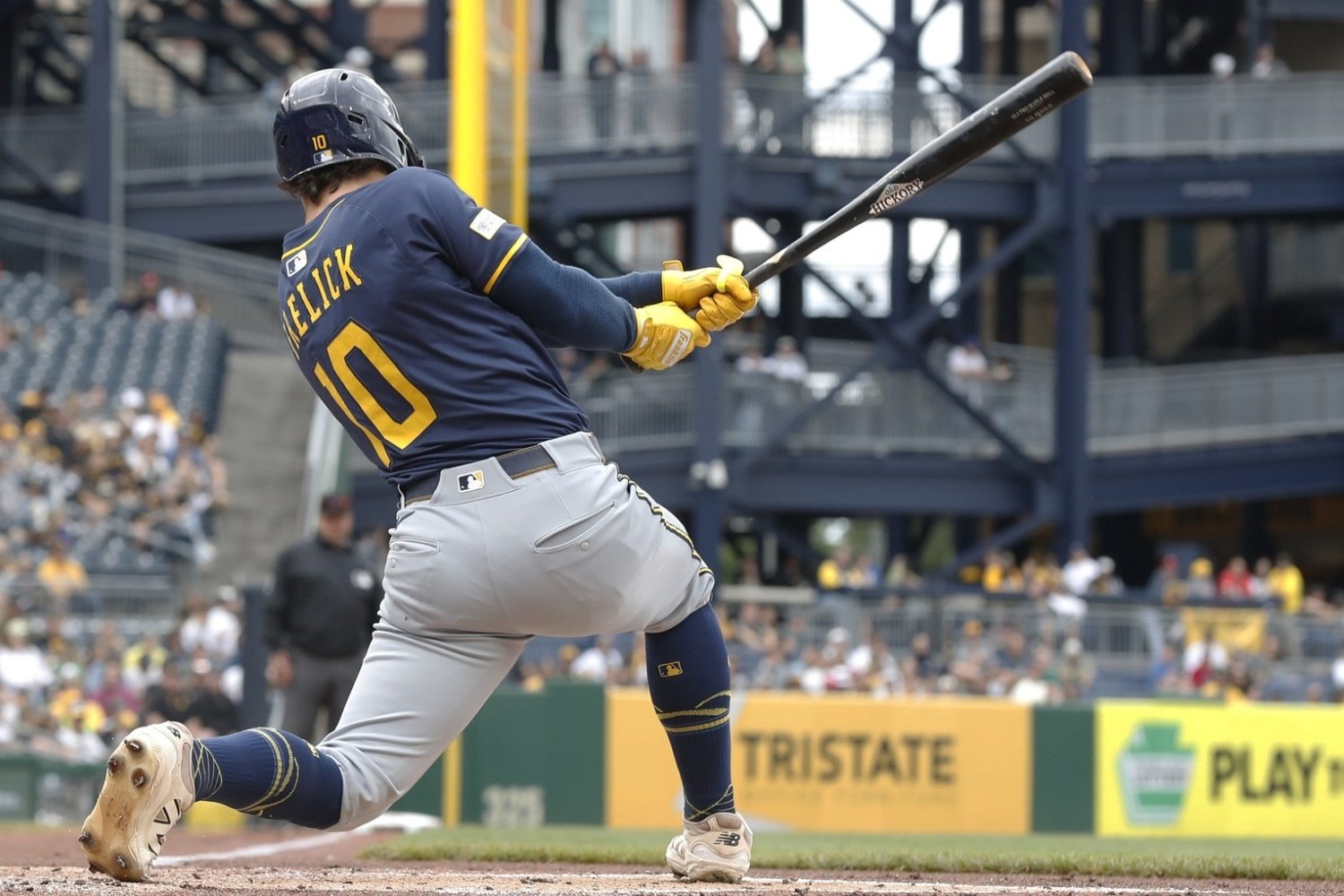 Statcast unveiled its latest round of bat-tracking metrics last week, opening public access to more information about players' swings than ever before. For a more thorough explanation, Brewer Fanatic's @Jason Wang walked through how to interpret the new data on Tuesday. Because MLB did not upgrade to the Hawk-Eye high-speed camera system that makes bat tracking possible until 2020, the information that's new to fans is also a fresh and ongoing study in front offices. In spring training, Pat Murphy revealed that the Brewers' research and development department was analyzing bat path data to determine which types of swings work best at the big-league level. "We're studying bat angle and bat path in the zone, how it gets to the zone, all different things of it," Murphy said. "How it starts in the zone, how long it's in the zone, what angle it is in the zone, and then what's most effective of that. Contact point. We study all of that. It's fairly new. We don't have all the research on it." Hitting is a complex equation of meeting the ball with enough force, at the right time and on the right plane, and the path to getting there differs for each hitter. Most will tell you that their in-game swings rarely feel fully calibrated, so making their window for productive contact as wide as possible is crucial. Without the fancy numbers and graphics now available to the public, several of baseball's greatest hitting minds have concluded that a more vertical, steeper bat path with a slight arc best meets the plane of the incoming pitch, giving a hitter the most wiggle room for making productive contact, even if their timing is slightly off. Ted Williams was saying it back in the 1970s. Murphy agrees. "I think the more vertical bat produces better results when beat," he said in March, more than two months before bat path metrics went public. When a hitter swings late at a pitch but still makes contact, he's catching it closer to the back of home plate. The bat is sometimes coming down as it meets the ball, instead of as it levels out or comes up. That means that when a steeper swing is late, it's more likely to clip the bottom half of the ball. Murphy says that allows a hitter to stay alive for another pitch or hit a near-automatic single. "A more vertical bat, meaning (steeper), produces a potential foul ball, which lets you live again, if you hit the inside of it the right way," he said. "And, obviously, a chance for a 70-30 – 70 miles an hour, 30 degrees is a hit." League-wide in 2025, balls hit with an exit velocity between 65 and 75 mph and a launch angle between 25 and 35 degrees have a batting average of .783. They're the bloop singles that fall into no-man's land between an infielder and an outfielder. Nobody tries to hit a ball like that, but a single is a solid outcome after getting beaten by a pitch. A flatter, more horizontal swing also has its strengths. When late, it's more likely than a steep swing to meet the ball flush, producing an opposite-field line drive. That's why hitters with such swings—Brice Turang and Sal Frelick, for example—are often more comfortable with letting the ball get deep and slashing it the other way. This Turang single from earlier this month against the Minnesota Twins was a successful horizontal swing against a high fastball. turang_single.mp4 Turang's swing tilt—the angle of his bat path, measured 0.4 seconds before contact—on this hit was 23 degrees, much flatter than the MLB average of 30 degrees. It was level enough to help him turn around a high pitch deep in the hitting zone for a line drive, but not too flat. "There's a lot of horizontal bat that can beat a ball back here (toward the back of home plate) and hit you a laser to (the opposite field), and you're like, 'Wow, vertical bat, that would have been a foul ball,'" Murphy said. "But there's some horizontal bat guys, that's all they hit." More often, a horizontal swing hits the top of the ball at contact and produces a ground ball, like this Turang groundout against a fastball in a similar location to the one on which he singled. turang_groundout.mp4 Turang got too flat on this swing, down to 16 degrees. The result was an easy rollover. "If I'm above (the ball), I'm out, right?" Murphy said. "If I hit a ground ball in today's game, you're probably out." Back in March, Murphy invoked Freddie Freeman as an exemplar of a successful vertical bat hitter. The new data backs it up. Freeman's average swing tilt is 42 degrees, making his bat path the second-steepest among qualified hitters. Many Brewers hitters are on the opposite end of the spectrum. As a team, their average swing tilt is 30 degrees, which ties them for the lowest in baseball. Many of their most prominent hitters have more horizontal bat paths. Player PA Swing Path Tilt Jackson Chourio 247 26° Brice Turang 227 30° Christian Yelich 226 36° William Contreras 220 30° Sal Frelick 204 29° Rhys Hoskins 203 34° Joey Ortiz 187 28° Compare the shape of Freeman's swing to those of several Milwaukee hitters. swing_comparison.mp4 A flat bat path does not automatically preclude a hitter from driving the ball. Chourio, for example, has one of baseball's most horizontal swings, but has still flashed power by meeting the ball in a good spot with his 78th-percentile bat speed. However, the new metrics partially explain why the Brewers again have the game's third-highest ground ball rate, despite players and coaches claiming their goal is to elevate balls in play. Because of their bat paths, when many of their hitters mistime a pitch, they hit it on the ground. It's a predicament the organization created for itself by acquiring and developing so many players with flatter swings. Murphy would like that to change. He doesn't want his horizontal bat hitters to forgo their existing strengths and try to become Freeman, but he thinks adding more vertical variations of their existing swings will help them get to certain pitches better. "It's going to lead to more of a vertical bat," he said earlier this week, predicting the adjustment the metrics will spur. "Because really, the ability to kind of do a little bit of both and not just have one horizontal swing is going to be the difference." It's not a simple fix, though. Murphy noted in spring training that hitters are somewhat bound to their natural movement patterns and can't make their swings steeper with a snap of their fingers, something he reiterated after the numbers came out. "It's not something you can do in a day," he said, later adding that the offseason is the best time for broader swing adjustments. "It's recognition, understanding, awareness. Now, what am I going to do about it? And it's probably going to take some time to understand it, because it's not as easy as that. Freddie Freeman does that real simple. (Christian) Yelich does that real simple, you know? So it's like, it's different." For now, the Brewers are directing hitters to swing as little as possible at pitches their bat paths struggle to hit. For those with horizontal swings, that includes high pitches and low-and-inside ones. "You've got to step back and really analyze it," Murphy said. "Right now, it's, 'I don't swing at that.'" In the long run, he hopes the new data will help hitters formulate plans better suited to their strengths and make their swings more versatile. "That's the mode we're in, now that we're tracking this. It's going to allow players to see, like Brice Turang, like, 'No, you don't do damage. No, you don't hit that ball down-and-in as a horizontal bat guy. So how are you going to adjust?'"
-
- 1
-

-
- pat murphy
- brice turang
- (and 4 more)
-
Image courtesy of © Charles LeClaire-Imagn Images Statcast unveiled its latest round of bat-tracking metrics last week, opening public access to more information about players' swings than ever before. For a more thorough explanation, Brewer Fanatic's @Jason Wang walked through how to interpret the new data on Tuesday. Because MLB did not upgrade to the Hawk-Eye high-speed camera system that makes bat tracking possible until 2020, the information that's new to fans is also a fresh and ongoing study in front offices. In spring training, Pat Murphy revealed that the Brewers' research and development department was analyzing bat path data to determine which types of swings work best at the big-league level. "We're studying bat angle and bat path in the zone, how it gets to the zone, all different things of it," Murphy said. "How it starts in the zone, how long it's in the zone, what angle it is in the zone, and then what's most effective of that. Contact point. We study all of that. It's fairly new. We don't have all the research on it." Hitting is a complex equation of meeting the ball with enough force, at the right time and on the right plane, and the path to getting there differs for each hitter. Most will tell you that their in-game swings rarely feel fully calibrated, so making their window for productive contact as wide as possible is crucial. Without the fancy numbers and graphics now available to the public, several of baseball's greatest hitting minds have concluded that a more vertical, steeper bat path with a slight arc best meets the plane of the incoming pitch, giving a hitter the most wiggle room for making productive contact, even if their timing is slightly off. Ted Williams was saying it back in the 1970s. Murphy agrees. "I think the more vertical bat produces better results when beat," he said in March, more than two months before bat path metrics went public. When a hitter swings late at a pitch but still makes contact, he's catching it closer to the back of home plate. The bat is sometimes coming down as it meets the ball, instead of as it levels out or comes up. That means that when a steeper swing is late, it's more likely to clip the bottom half of the ball. Murphy says that allows a hitter to stay alive for another pitch or hit a near-automatic single. "A more vertical bat, meaning (steeper), produces a potential foul ball, which lets you live again, if you hit the inside of it the right way," he said. "And, obviously, a chance for a 70-30 – 70 miles an hour, 30 degrees is a hit." League-wide in 2025, balls hit with an exit velocity between 65 and 75 mph and a launch angle between 25 and 35 degrees have a batting average of .783. They're the bloop singles that fall into no-man's land between an infielder and an outfielder. Nobody tries to hit a ball like that, but a single is a solid outcome after getting beaten by a pitch. A flatter, more horizontal swing also has its strengths. When late, it's more likely than a steep swing to meet the ball flush, producing an opposite-field line drive. That's why hitters with such swings—Brice Turang and Sal Frelick, for example—are often more comfortable with letting the ball get deep and slashing it the other way. This Turang single from earlier this month against the Minnesota Twins was a successful horizontal swing against a high fastball. turang_single.mp4 Turang's swing tilt—the angle of his bat path, measured 0.4 seconds before contact—on this hit was 23 degrees, much flatter than the MLB average of 30 degrees. It was level enough to help him turn around a high pitch deep in the hitting zone for a line drive, but not too flat. "There's a lot of horizontal bat that can beat a ball back here (toward the back of home plate) and hit you a laser to (the opposite field), and you're like, 'Wow, vertical bat, that would have been a foul ball,'" Murphy said. "But there's some horizontal bat guys, that's all they hit." More often, a horizontal swing hits the top of the ball at contact and produces a ground ball, like this Turang groundout against a fastball in a similar location to the one on which he singled. turang_groundout.mp4 Turang got too flat on this swing, down to 16 degrees. The result was an easy rollover. "If I'm above (the ball), I'm out, right?" Murphy said. "If I hit a ground ball in today's game, you're probably out." Back in March, Murphy invoked Freddie Freeman as an exemplar of a successful vertical bat hitter. The new data backs it up. Freeman's average swing tilt is 42 degrees, making his bat path the second-steepest among qualified hitters. Many Brewers hitters are on the opposite end of the spectrum. As a team, their average swing tilt is 30 degrees, which ties them for the lowest in baseball. Many of their most prominent hitters have more horizontal bat paths. Player PA Swing Path Tilt Jackson Chourio 247 26° Brice Turang 227 30° Christian Yelich 226 36° William Contreras 220 30° Sal Frelick 204 29° Rhys Hoskins 203 34° Joey Ortiz 187 28° Compare the shape of Freeman's swing to those of several Milwaukee hitters. swing_comparison.mp4 A flat bat path does not automatically preclude a hitter from driving the ball. Chourio, for example, has one of baseball's most horizontal swings, but has still flashed power by meeting the ball in a good spot with his 78th-percentile bat speed. However, the new metrics partially explain why the Brewers again have the game's third-highest ground ball rate, despite players and coaches claiming their goal is to elevate balls in play. Because of their bat paths, when many of their hitters mistime a pitch, they hit it on the ground. It's a predicament the organization created for itself by acquiring and developing so many players with flatter swings. Murphy would like that to change. He doesn't want his horizontal bat hitters to forgo their existing strengths and try to become Freeman, but he thinks adding more vertical variations of their existing swings will help them get to certain pitches better. "It's going to lead to more of a vertical bat," he said earlier this week, predicting the adjustment the metrics will spur. "Because really, the ability to kind of do a little bit of both and not just have one horizontal swing is going to be the difference." It's not a simple fix, though. Murphy noted in spring training that hitters are somewhat bound to their natural movement patterns and can't make their swings steeper with a snap of their fingers, something he reiterated after the numbers came out. "It's not something you can do in a day," he said, later adding that the offseason is the best time for broader swing adjustments. "It's recognition, understanding, awareness. Now, what am I going to do about it? And it's probably going to take some time to understand it, because it's not as easy as that. Freddie Freeman does that real simple. (Christian) Yelich does that real simple, you know? So it's like, it's different." For now, the Brewers are directing hitters to swing as little as possible at pitches their bat paths struggle to hit. For those with horizontal swings, that includes high pitches and low-and-inside ones. "You've got to step back and really analyze it," Murphy said. "Right now, it's, 'I don't swing at that.'" In the long run, he hopes the new data will help hitters formulate plans better suited to their strengths and make their swings more versatile. "That's the mode we're in, now that we're tracking this. It's going to allow players to see, like Brice Turang, like, 'No, you don't do damage. No, you don't hit that ball down-and-in as a horizontal bat guy. So how are you going to adjust?'" View full article
-
Image courtesy of © Mark Hoffman/Milwaukee Journal Sentinel / USA TODAY NETWORK via Imagn Images To be clear, Pat Murphy's bullpen management is not squarely to blame for the Brewers' losses, neither on Wednesday nor throughout the season as a whole. The primary culprits remain anemic offense and shaky defense, which have placed the manager in tight spots. But, as has sometimes been the case, when faced with a tough situation lacking ideal solutions, Murphy's aggressive maneuvering did more to make it worse than to weather it successfully. In Milwaukee's series finale against the Baltimore Orioles, he and others with decision-making input pushed the pitching staff, which had already been backed into a corner, tight against a wall. During stretches of close games he deems winnable, Murphy has no qualms about leaning heavily on his best relievers. It's been a theme since he took over as manager last year, and while he's shown more restraint at times, the downside to his "Win Tonight" mentality reared its head this week. For the fourth day in a row, the Brewers held a slim lead in the late innings. It was the offense's fault for not adding on early enough to give Murphy and the pitching more breathing room. But instead of taking a big-picture approach with the bullpen plans, he hit the gas pedal again, only for the car to swerve off the road before reaching the intended destination. When the tying run reached second base for Gunnar Henderson with two outs in the fifth inning, Murphy pulled Chad Patrick for Rob Zastryzny, who struck out Henderson to end the threat. Grant Anderson relieved Zastryzny in another jam the following inning, recording the final two outs of the sixth on four pitches. That's when Murphy pushed the envelope, asking Nick Mears to cover the seventh and eighth innings. It was the third appearance in four days for Mears, who was pitching for the 21st time in his 40 days on the active roster and hadn't recorded more than three outs in a game since April 27. Given the suboptimal circumstances–another close game and a taxed group of high-leverage relievers–any decision could have backfired. But by stretching Mears–whose strikeout rate has plummeted in his last 10 games–for two frames, Murphy risked a double whammy: lose the game in front of him, and extend his fireman's unavailability over the weekend in Pittsburgh. That's precisely how it played out. After a spotless seventh, Mears surrendered a run while recording only two outs, and Joel Payamps let an inherited runner score to give Baltimore the lead. Caleb Durbin tied it in the ninth to force extra innings, prompting Murphy to empty his bullpen of available arms. It culminated in a fourth appearance in six days for swingman Tyler Alexander, who threw 33 pitches the night before. The Orioles scored four unanswered runs to win it. While Mears had been busy of late, Anderson had not pitched since Saturday, and the Brewers selected Easton McGee's contract on Sunday to supply a fresh arm for the week. Instead of leaning on those rested relievers for coverage, Murphy used Anderson for two batters and did not throw McGee until the Brewers were trailing in the ninth. "We could have," Murphy said when asked if navigating the game with just one inning from Mears was possible. "But we knew where we were at. Here's McGee making his first appearance in the big leagues in how long, so you don't know what you're going to get." It was an understandable reason to prefer avoiding McGee, who had not pitched in the majors since April 2023 due to Tommy John surgery. Furthermore, the abundance of quality left-handed hitters in Baltimore's lineup created suboptimal matchups for Anderson, whose delivery and stuff profile best against righties. However, there are times to let it ride without the best matchups, and Wednesday was one of them. The Brewers already won the series, and properly pacing relievers should still be an emphasis in late May. Murphy acknowledged that "of course" he must sometimes rely on the 'B' bullpen in high-leverage situations when the 'A' guys are overworked, even if it puts the Brewers in a suboptimal position in that moment. "You've got guys going on fumes," he said earlier in his postgame media session. "You have to have all eight guys in the 'pen helping you. You just do in these situations." Still, his focus remained mainly on the short term, as he reiterated his belief that they could get six outs from Mears, win in regulation without using McGee and Alexander, and determine the weekend pitching situation later. "I felt like we were not going to go (11) innings, and we're going to be okay," he said. "I didn't think we'd go 11 innings. You never plan on that." They did, though, and the damage spilled into Pittsburgh. Carlos Rodriguez was reportedly supposed to start on Thursday, but the sudden need for more innings forced the club to scratch Aaron Civale from his scheduled Wednesday night rehab start and activate him prematurely. The casualties were McGee and Joel Payamps. While the latter was likely to lose his roster spot at some point, the necessity of more rested arms forced the Brewers to cut bait even sooner amid their efforts to get him back on track. Civale did not look the sharpest in his first big-league outing since March 30 but gutted through four innings, and Rodriguez delivered an impressive rain-interrupted long relief outing. Meanwhile, Anderson did not pitch, and Murphy turned to Megill for the fourth time in five days to put out a ninth-inning fire and secure a win. Rob Zastryzny also pitched for a third time in four days before Rodriguez entered. Even amid the ongoing availability crisis, "Win Tonight" won out yet again in the decision-making process. Murphy said throughout the week that a manager must trust every arm in his bullpen to record outs in big spots if the situation comes to that, yet his actions convey that he doesn't. At some point, he must draw a more consistent line for keeping hard-worked relievers off-limits, regardless of the immediate situation in a regular-season game. It's catching up to the Brewers in real time, and if it doesn't change, the consequences could be more severe later in the season. View full article
- 2 replies
-
- 1
-
-
- pat murphy
- nick mears
- (and 4 more)
-
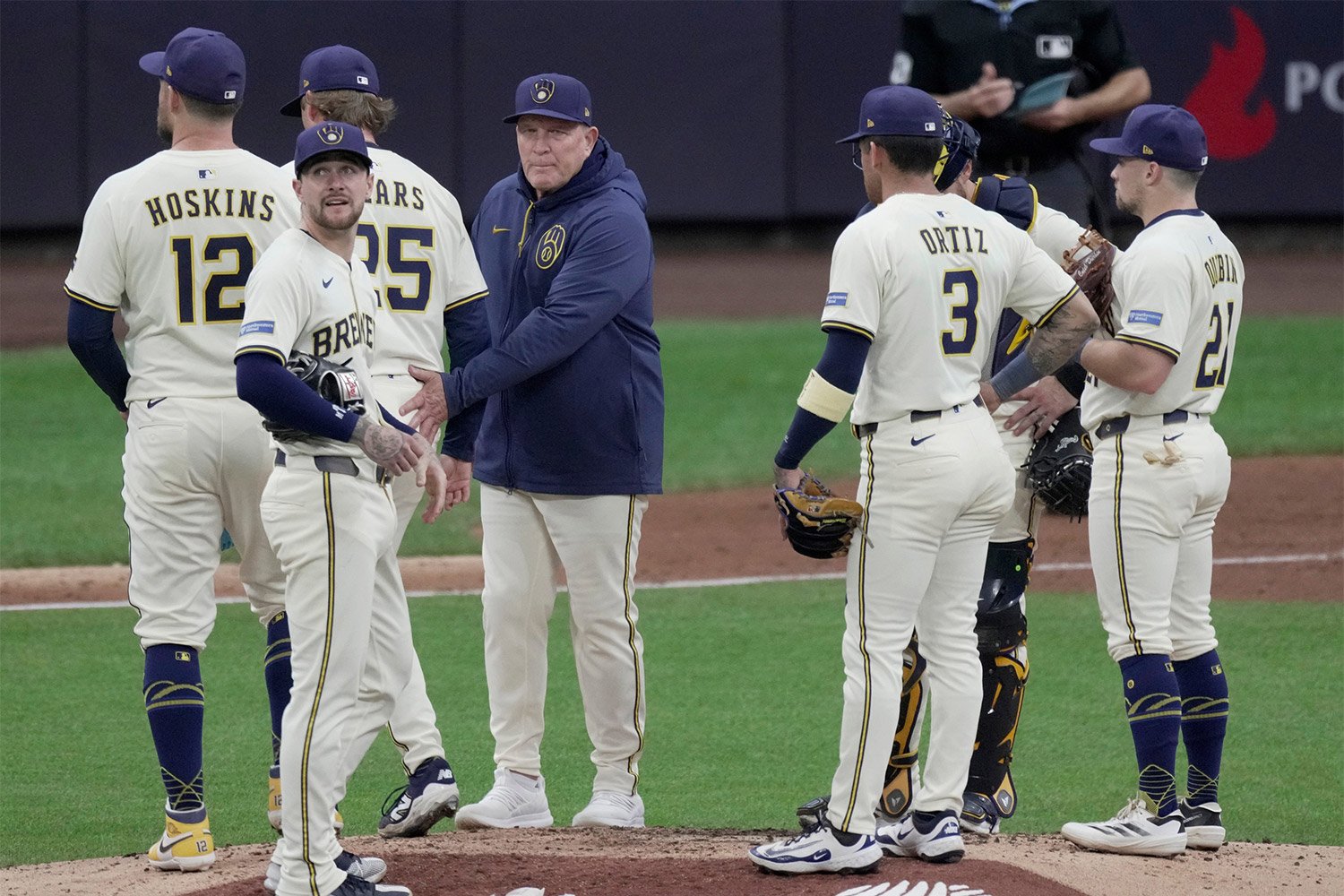 To be clear, Pat Murphy's bullpen management is not squarely to blame for the Brewers' losses, neither on Wednesday nor throughout the season as a whole. The primary culprits remain anemic offense and shaky defense, which have placed the manager in tight spots. But, as has sometimes been the case, when faced with a tough situation lacking ideal solutions, Murphy's aggressive maneuvering did more to make it worse than to weather it successfully. In Milwaukee's series finale against the Baltimore Orioles, he and others with decision-making input pushed the pitching staff, which had already been backed into a corner, tight against a wall. During stretches of close games he deems winnable, Murphy has no qualms about leaning heavily on his best relievers. It's been a theme since he took over as manager last year, and while he's shown more restraint at times, the downside to his "Win Tonight" mentality reared its head this week. For the fourth day in a row, the Brewers held a slim lead in the late innings. It was the offense's fault for not adding on early enough to give Murphy and the pitching more breathing room. But instead of taking a big-picture approach with the bullpen plans, he hit the gas pedal again, only for the car to swerve off the road before reaching the intended destination. When the tying run reached second base for Gunnar Henderson with two outs in the fifth inning, Murphy pulled Chad Patrick for Rob Zastryzny, who struck out Henderson to end the threat. Grant Anderson relieved Zastryzny in another jam the following inning, recording the final two outs of the sixth on four pitches. That's when Murphy pushed the envelope, asking Nick Mears to cover the seventh and eighth innings. It was the third appearance in four days for Mears, who was pitching for the 21st time in his 40 days on the active roster and hadn't recorded more than three outs in a game since April 27. Given the suboptimal circumstances–another close game and a taxed group of high-leverage relievers–any decision could have backfired. But by stretching Mears–whose strikeout rate has plummeted in his last 10 games–for two frames, Murphy risked a double whammy: lose the game in front of him, and extend his fireman's unavailability over the weekend in Pittsburgh. That's precisely how it played out. After a spotless seventh, Mears surrendered a run while recording only two outs, and Joel Payamps let an inherited runner score to give Baltimore the lead. Caleb Durbin tied it in the ninth to force extra innings, prompting Murphy to empty his bullpen of available arms. It culminated in a fourth appearance in six days for swingman Tyler Alexander, who threw 33 pitches the night before. The Orioles scored four unanswered runs to win it. While Mears had been busy of late, Anderson had not pitched since Saturday, and the Brewers selected Easton McGee's contract on Sunday to supply a fresh arm for the week. Instead of leaning on those rested relievers for coverage, Murphy used Anderson for two batters and did not throw McGee until the Brewers were trailing in the ninth. "We could have," Murphy said when asked if navigating the game with just one inning from Mears was possible. "But we knew where we were at. Here's McGee making his first appearance in the big leagues in how long, so you don't know what you're going to get." It was an understandable reason to prefer avoiding McGee, who had not pitched in the majors since April 2023 due to Tommy John surgery. Furthermore, the abundance of quality left-handed hitters in Baltimore's lineup created suboptimal matchups for Anderson, whose delivery and stuff profile best against righties. However, there are times to let it ride without the best matchups, and Wednesday was one of them. The Brewers already won the series, and properly pacing relievers should still be an emphasis in late May. Murphy acknowledged that "of course" he must sometimes rely on the 'B' bullpen in high-leverage situations when the 'A' guys are overworked, even if it puts the Brewers in a suboptimal position in that moment. "You've got guys going on fumes," he said earlier in his postgame media session. "You have to have all eight guys in the 'pen helping you. You just do in these situations." Still, his focus remained mainly on the short term, as he reiterated his belief that they could get six outs from Mears, win in regulation without using McGee and Alexander, and determine the weekend pitching situation later. "I felt like we were not going to go (11) innings, and we're going to be okay," he said. "I didn't think we'd go 11 innings. You never plan on that." They did, though, and the damage spilled into Pittsburgh. Carlos Rodriguez was reportedly supposed to start on Thursday, but the sudden need for more innings forced the club to scratch Aaron Civale from his scheduled Wednesday night rehab start and activate him prematurely. The casualties were McGee and Joel Payamps. While the latter was likely to lose his roster spot at some point, the necessity of more rested arms forced the Brewers to cut bait even sooner amid their efforts to get him back on track. Civale did not look the sharpest in his first big-league outing since March 30 but gutted through four innings, and Rodriguez delivered an impressive rain-interrupted long relief outing. Meanwhile, Anderson did not pitch, and Murphy turned to Megill for the fourth time in five days to put out a ninth-inning fire and secure a win. Rob Zastryzny also pitched for a third time in four days before Rodriguez entered. Even amid the ongoing availability crisis, "Win Tonight" won out yet again in the decision-making process. Murphy said throughout the week that a manager must trust every arm in his bullpen to record outs in big spots if the situation comes to that, yet his actions convey that he doesn't. At some point, he must draw a more consistent line for keeping hard-worked relievers off-limits, regardless of the immediate situation in a regular-season game. It's catching up to the Brewers in real time, and if it doesn't change, the consequences could be more severe later in the season.
- 2 comments
-
- 1
-

-
- pat murphy
- nick mears
- (and 4 more)
-
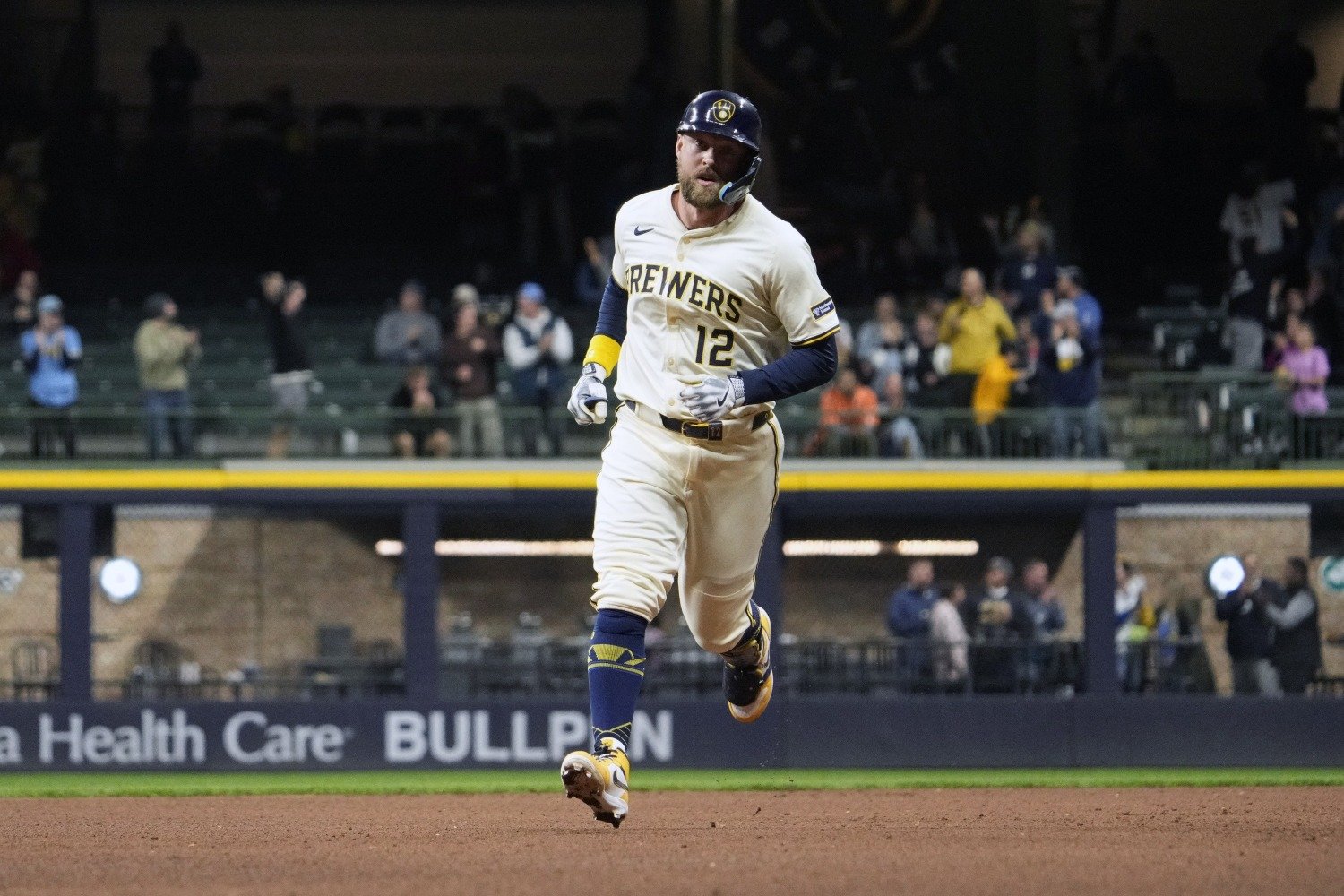 A resurgent Rhys Hoskins has been among the few bright spots in a scuffling Brewers lineup. After struggling to a .214/.303/.419 line and career-worst 100 wRC+ last year, the veteran first baseman enters Wednesday hitting .297/.402/.483 (145 wRC+), his best output since his rookie campaign in 2017. That offense is mostly backed up, too. Beneath Hoskins's .375 wOBA is a .365 xwOBA. Through the season's first couple of weeks, the results were similar to last year. Hoskins entered April 20 slashing .232/.333/.357 with a 97 wRC+. During that time, he started toying in practice settings with ways to improve his timing. "Not great the first couple weeks," he said. "Felt like I was having good at-bats still, but just tried to simplify things." Hoskins brought those adjustments into game action against the Athletics that night. In his second at-bat against Jeffrey Springs, he traded his leg kick for a toe-to-heel move. He barely lifts his foot, brings the front of it down early, and drives the rest into the ground as he swings. hoskins_loads.mp4 While different than the load Hoskins has typically utilized in the big leagues, it's not entirely new to him. "It's how I used to hit," he said. "This is how I used to hit in college." The early returns were as promising as they could be. In his first at-bat with the reincorporated timing mechanism, Hoskins homered. "It was like, 'Alright, I should probably explore this a little bit more,'" he said. "And then later in that game, facing [Noah Murdock]—big sinker, arms flying everywhere, maybe a guy that I would previously have struggled with, with the leg kick and trying to time it up—I ended up getting a base hit to right field. It was like, I pulled a ball in the air with some authority, but also took the base hit when I needed it. It's kind of all you need to see, and just kind of stuck with it from there." Hoskins hasn't looked back since, hitting .337/.463/.562 in 108 plate appearances with the toe-to-heel move. "I just feel like that's given me a better chance to see the ball longer," he said. "I think my head is moving a lot less. There's still maintenance, because there's maintenance with everything, but there's just less maintenance. There's less going into the cage every day and figuring out when I've got to pick my foot up. And then there's going to be the guy that has a slide step or has a double pump. So, yeah, it was just trying to simplify things as much as I could." The modified load works because he has his legs back under him. Hoskins maintains that a healthier lower half is the primary catalyst for his bounceback. "It's huge, man," he said. "I'm not sure I would have been able to do this sort of simple load last year, not having the confidence that I can hit against my front leg. Last year, I feel like I almost had to collide with balls, which is not a great feeling. It's kind of like roulette." Hoskins returned from ACL reconstruction surgery last year and also missed time with a hamstring injury. While on the field, he struggled to transfer weight into his front leg, which impacted his timing and ability to generate power. It robbed him of the rotational explosiveness that helped him spoil or turn around high-velocity pitches, which put him in a worse spot to react to anything soft. "You feel like you've got to almost cheat to the fastball, right?" he said. "You're so much more susceptible to anything offspeed, especially away, because then you end up running out of bat. Front shoulder goes, the front hip maybe goes a little early, just because you feel like, 'Oh, I gotta go in order to get to this heater.'" Fast forward a year, and a healthier Hoskins is back to driving into his front leg. "Instead of just falling, there's something that I can push up against, which I think gives me a little bit more torque. I don't know exactly what bat speed stuff or anything like that says, but I feel stronger." With his mobility restored and the toe-to-heel load improving his timing, Hoskins is back to producing at a high level. That doesn't mean he's back to his pre-surgery form, though. This is a different version of Hoskins that's achieving results in new ways. Some of his signature strengths have returned. For starters, Hoskins is back to crushing four-seamers and two-seamers. He's also hitting the ball hard more often. His 47.2% hard-hit rate and 46.2% sweet-spot percentage (batted balls with a launch angle between 8° and 32°) are both career bests. Beyond that, Hoskins's profile differs considerably from his last few pre-injury seasons. He is controlling the strike zone as effectively as ever, thanks partly to his simplified load. Since ditching the leg kick, he has drawn walks at a 15.7% clip and chased just 16.8% of pitches outside the strike zone, levels of selectivity he hasn't shown since his first couple of seasons. "It's kind of just a trickle-down effect, right?" he said. "I'm down ready to hit, ready to fire earlier. In my mind, I can see the ball better earlier, which means I have more time to make a decision on swing or no swing, which I think leads to swinging at more strikes and taking more balls." In addition to hitting the ball harder than ever, the trajectory of Hoskins's contact is much different. For most of his career, he was a prototypical low-average power hitter, who racked up home runs by launching fly balls. So far this year, he's been a line-drive machine. "He hit [26] big home runs for us last year, and I remember every one of them," Pat Murphy said. "This year, he's been more of a complete hitter: on base, not chasing, big hit after big hit, like you might expect." These changes have Hoskins hitting for a much higher average than he typically does, but the tradeoff is that his power output has dipped. His home run on Tuesday night was just his sixth of the season, and his .168 isolated power is a career low. That's partially because more of his loudest contact is now on a line, instead of higher in the air. Statcast is stricter with its fly ball classifications than FanGraphs, and it says those balls are not coming off Hoskins's bat with quite the same authority as usual, causing his HR/FB ratio to decrease. Season FB% HR/FB% FB Hard-Hit% FB xwOBA 2017 36.5% 37.0% 54.3% .590 2018 34.4% 21.1% 52.1% .463 2019 33.7% 20.6% 48.5% .427 2020 40.7% 22.7% 52.3% .540 2021 36.7% 24.0% 57.7% .614 2022 33.0% 20.0% 54.3% .499 2024 36.6% 23.2% 58.9% .462 2025 32.1% 17.1% 41.2% .372 It's still early, though. May has historically been Hoskins's least powerful month on a rate basis, and he often heats up in that department as the weather warms. Even if the new iteration hits fewer long balls than in the past, he should still exceed 20 by year's end. Murphy expects to see more slugging as the season progresses. "I do think the home runs will be there," he said. "When the time comes, I think they'll be there because his legs are there." Hoskins knows the importance of keeping those legs healthy, particularly as he deals with changes to his body. Now 32 years old, he is working to keep his lower half in good shape for the long haul. "You just have to stay on top of that," he said. "You have to be proactive about that, I think, especially as you age." "He works very hard at it, and he still trains very hard," Murphy said. "And as you get older, your body doesn't work exactly the same. Even his physique is different than it was five or six years ago, like most of us." Hoskins won't continue hitting at his current rate. Even if his production so far is deserved, few hitters remain this locked in for an entire season. Still, his improvements are legitimate, which is a great development for both the player and the team.
 -
Image courtesy of © Michael McLoone-Imagn Images A resurgent Rhys Hoskins has been among the few bright spots in a scuffling Brewers lineup. After struggling to a .214/.303/.419 line and career-worst 100 wRC+ last year, the veteran first baseman enters Wednesday hitting .297/.402/.483 (145 wRC+), his best output since his rookie campaign in 2017. That offense is mostly backed up, too. Beneath Hoskins's .375 wOBA is a .365 xwOBA. Through the season's first couple of weeks, the results were similar to last year. Hoskins entered April 20 slashing .232/.333/.357 with a 97 wRC+. During that time, he started toying in practice settings with ways to improve his timing. "Not great the first couple weeks," he said. "Felt like I was having good at-bats still, but just tried to simplify things." Hoskins brought those adjustments into game action against the Athletics that night. In his second at-bat against Jeffrey Springs, he traded his leg kick for a toe-to-heel move. He barely lifts his foot, brings the front of it down early, and drives the rest into the ground as he swings. hoskins_loads.mp4 While different than the load Hoskins has typically utilized in the big leagues, it's not entirely new to him. "It's how I used to hit," he said. "This is how I used to hit in college." The early returns were as promising as they could be. In his first at-bat with the reincorporated timing mechanism, Hoskins homered. "It was like, 'Alright, I should probably explore this a little bit more,'" he said. "And then later in that game, facing [Noah Murdock]—big sinker, arms flying everywhere, maybe a guy that I would previously have struggled with, with the leg kick and trying to time it up—I ended up getting a base hit to right field. It was like, I pulled a ball in the air with some authority, but also took the base hit when I needed it. It's kind of all you need to see, and just kind of stuck with it from there." Hoskins hasn't looked back since, hitting .337/.463/.562 in 108 plate appearances with the toe-to-heel move. "I just feel like that's given me a better chance to see the ball longer," he said. "I think my head is moving a lot less. There's still maintenance, because there's maintenance with everything, but there's just less maintenance. There's less going into the cage every day and figuring out when I've got to pick my foot up. And then there's going to be the guy that has a slide step or has a double pump. So, yeah, it was just trying to simplify things as much as I could." The modified load works because he has his legs back under him. Hoskins maintains that a healthier lower half is the primary catalyst for his bounceback. "It's huge, man," he said. "I'm not sure I would have been able to do this sort of simple load last year, not having the confidence that I can hit against my front leg. Last year, I feel like I almost had to collide with balls, which is not a great feeling. It's kind of like roulette." Hoskins returned from ACL reconstruction surgery last year and also missed time with a hamstring injury. While on the field, he struggled to transfer weight into his front leg, which impacted his timing and ability to generate power. It robbed him of the rotational explosiveness that helped him spoil or turn around high-velocity pitches, which put him in a worse spot to react to anything soft. "You feel like you've got to almost cheat to the fastball, right?" he said. "You're so much more susceptible to anything offspeed, especially away, because then you end up running out of bat. Front shoulder goes, the front hip maybe goes a little early, just because you feel like, 'Oh, I gotta go in order to get to this heater.'" Fast forward a year, and a healthier Hoskins is back to driving into his front leg. "Instead of just falling, there's something that I can push up against, which I think gives me a little bit more torque. I don't know exactly what bat speed stuff or anything like that says, but I feel stronger." With his mobility restored and the toe-to-heel load improving his timing, Hoskins is back to producing at a high level. That doesn't mean he's back to his pre-surgery form, though. This is a different version of Hoskins that's achieving results in new ways. Some of his signature strengths have returned. For starters, Hoskins is back to crushing four-seamers and two-seamers. He's also hitting the ball hard more often. His 47.2% hard-hit rate and 46.2% sweet-spot percentage (batted balls with a launch angle between 8° and 32°) are both career bests. Beyond that, Hoskins's profile differs considerably from his last few pre-injury seasons. He is controlling the strike zone as effectively as ever, thanks partly to his simplified load. Since ditching the leg kick, he has drawn walks at a 15.7% clip and chased just 16.8% of pitches outside the strike zone, levels of selectivity he hasn't shown since his first couple of seasons. "It's kind of just a trickle-down effect, right?" he said. "I'm down ready to hit, ready to fire earlier. In my mind, I can see the ball better earlier, which means I have more time to make a decision on swing or no swing, which I think leads to swinging at more strikes and taking more balls." In addition to hitting the ball harder than ever, the trajectory of Hoskins's contact is much different. For most of his career, he was a prototypical low-average power hitter, who racked up home runs by launching fly balls. So far this year, he's been a line-drive machine. "He hit [26] big home runs for us last year, and I remember every one of them," Pat Murphy said. "This year, he's been more of a complete hitter: on base, not chasing, big hit after big hit, like you might expect." These changes have Hoskins hitting for a much higher average than he typically does, but the tradeoff is that his power output has dipped. His home run on Tuesday night was just his sixth of the season, and his .168 isolated power is a career low. That's partially because more of his loudest contact is now on a line, instead of higher in the air. Statcast is stricter with its fly ball classifications than FanGraphs, and it says those balls are not coming off Hoskins's bat with quite the same authority as usual, causing his HR/FB ratio to decrease. Season FB% HR/FB% FB Hard-Hit% FB xwOBA 2017 36.5% 37.0% 54.3% .590 2018 34.4% 21.1% 52.1% .463 2019 33.7% 20.6% 48.5% .427 2020 40.7% 22.7% 52.3% .540 2021 36.7% 24.0% 57.7% .614 2022 33.0% 20.0% 54.3% .499 2024 36.6% 23.2% 58.9% .462 2025 32.1% 17.1% 41.2% .372 It's still early, though. May has historically been Hoskins's least powerful month on a rate basis, and he often heats up in that department as the weather warms. Even if the new iteration hits fewer long balls than in the past, he should still exceed 20 by year's end. Murphy expects to see more slugging as the season progresses. "I do think the home runs will be there," he said. "When the time comes, I think they'll be there because his legs are there." Hoskins knows the importance of keeping those legs healthy, particularly as he deals with changes to his body. Now 32 years old, he is working to keep his lower half in good shape for the long haul. "You just have to stay on top of that," he said. "You have to be proactive about that, I think, especially as you age." "He works very hard at it, and he still trains very hard," Murphy said. "And as you get older, your body doesn't work exactly the same. Even his physique is different than it was five or six years ago, like most of us." Hoskins won't continue hitting at his current rate. Even if his production so far is deserved, few hitters remain this locked in for an entire season. Still, his improvements are legitimate, which is a great development for both the player and the team. View full article
-
Caleb Durbin is Making Plenty of Contact—Just All the Wrong Kinds
Jack Stern posted an article in Brewers
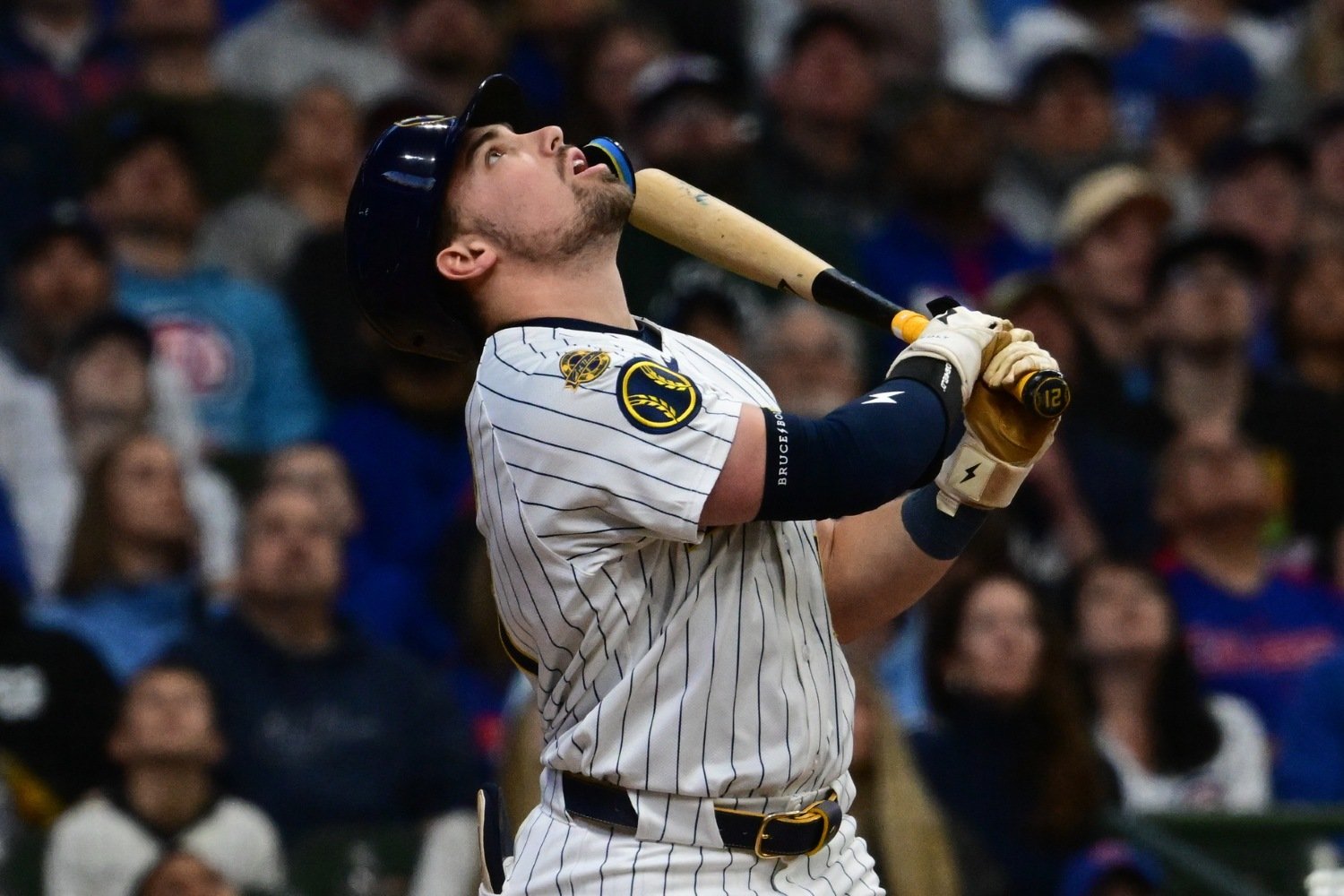 When Caleb Durbin lined an RBI single in his first at-bat on Monday night, it snapped an 0-for-24 slump for the rookie infielder. It's been a challenging first month since the Brewers gave Durbin the keys to third base in late April; the 25-year-old has hit just .174/.273/.244 (52 wRC+) in his first 100 plate appearances. When Milwaukee acquired him in December as the long-term half of the return for Devin Williams, Durbin's bat-to-ball skills, plate discipline, and speed were his calling cards. Two of those tools have been on display since his debut. He enters Tuesday with a 7% strikeout rate and 87.5% contact rate, while chasing just 21.1% of pitches outside the strike zone. There's a significant catch: most of that contact has been unproductive. Durbin's .177 BABIP is over 100 points below the league average, and while bad luck has played a role in his struggles, his lack of production is mostly deserved. According to Statcast, his .239 expected wOBA on contact is the lowest among hitters with at least 80 batted balls this year, by a wide margin; Adam Frazier's .263 is the next-lowest. That means Durbin is hitting balls at exit velocities and launch angles that rarely go for hits. Durbin's dearth of hard contact was always the most glaring red flag in his profile, raising questions about whether he would hit for enough power to be a viable big-league bat. Among hitters with at least 250 batted balls in Triple A last year, his 25.4% hard-hit rate was in the 10th percentile. So far in the big leagues, it's 22.2%. He found some power in the minor leagues by pulling the ball. Durbin did not make much loud contact last season, but he lined doubles down the left-field line and tucked handfuls of fly balls around the foul pole for home runs. 2024 MiLB Spray Chart Durbin has tried to take that same approach to the big leagues, but it hasn't worked against higher-caliber pitching. According to FanGraphs, his pull rate has cratered, and he's instead lofting medium-hit flyouts to left-center and center field. Season (Level) Pull% Middle% Oppo% LD% GB% FB% 2024 (AAA) 56.4% 21.8% 21.8% 24.5% 40.7% 34.8% 2025 (MLB) 39.7% 38.5% 21.8% 12.7% 39.2% 48.1% Elevating the baseball is a good thing, if you hit it hard with backspin. For Durbin, who often hits it under 90 mph, those balls hang up in the air for routine outs. "You hit a ball in the air, and if it's not 400 feet, it's getting caught in the big leagues," Pat Murphy said. "And if it's only at 82 miles an hour, it's getting caught." Durbin has trained with Aaron Judge's personal hitting coach and uses a similar swing mechanism. He coils around his back leg during his load, then snaps his barrel toward the ball while tilting his torso. According to Murphy, the timing of that mechanism has been off. Durbin is tilting too early before the snap, directing his swing path under the ball and turning what should be line drives into harmless flyouts. "He's kind of a little bit out of sync, so his bat path and his ball flight are affected," Murphy said. "So he's on time for those pitches, he's just hitting them straight up in the air. You've got to hit those on a line." Murphy met with Durbin to discuss his hitting on Monday afternoon. Hours later, he opened the scoring with a line-drive single to left in his first at-bat. He and the Brewers need much more of that. Durbin's early struggles raise questions about whether the success of his swing and approach is transferable to the big leagues. Hitting batted balls that are near-automatic outs won't get him anywhere. Pitchers have no qualms over going right at him, either, throwing 56.7% of their pitches to Durbin in the strike zone. That's partially due to his placement near the bottom of the batting order, but it also conveys that opponents do not expect him to do damage on hittable pitches. Seeing so many strikes and failing to force pitchers outside the zone has limited Durbin to a 5% walk rate, despite his strong chase rate. Murphy still believes Durbin's game can work, with the right tweaks. "You know, what's funny is he's not—this sounds crazy—he's not far away," he said. That's a more encouraging outlook than the alternative, which is that opposing hurlers already know how to exploit the same technique that brought Durbin success at lower levels. With no alternative behind him on the depth chart at third base, he has plenty of time to reward his manager's faith.
 -
Image courtesy of © Benny Sieu-Imagn Images When Caleb Durbin lined an RBI single in his first at-bat on Monday night, it snapped an 0-for-24 slump for the rookie infielder. It's been a challenging first month since the Brewers gave Durbin the keys to third base in late April; the 25-year-old has hit just .174/.273/.244 (52 wRC+) in his first 100 plate appearances. When Milwaukee acquired him in December as the long-term half of the return for Devin Williams, Durbin's bat-to-ball skills, plate discipline, and speed were his calling cards. Two of those tools have been on display since his debut. He enters Tuesday with a 7% strikeout rate and 87.5% contact rate, while chasing just 21.1% of pitches outside the strike zone. There's a significant catch: most of that contact has been unproductive. Durbin's .177 BABIP is over 100 points below the league average, and while bad luck has played a role in his struggles, his lack of production is mostly deserved. According to Statcast, his .239 expected wOBA on contact is the lowest among hitters with at least 80 batted balls this year, by a wide margin; Adam Frazier's .263 is the next-lowest. That means Durbin is hitting balls at exit velocities and launch angles that rarely go for hits. Durbin's dearth of hard contact was always the most glaring red flag in his profile, raising questions about whether he would hit for enough power to be a viable big-league bat. Among hitters with at least 250 batted balls in Triple A last year, his 25.4% hard-hit rate was in the 10th percentile. So far in the big leagues, it's 22.2%. He found some power in the minor leagues by pulling the ball. Durbin did not make much loud contact last season, but he lined doubles down the left-field line and tucked handfuls of fly balls around the foul pole for home runs. 2024 MiLB Spray Chart Durbin has tried to take that same approach to the big leagues, but it hasn't worked against higher-caliber pitching. According to FanGraphs, his pull rate has cratered, and he's instead lofting medium-hit flyouts to left-center and center field. Season (Level) Pull% Middle% Oppo% LD% GB% FB% 2024 (AAA) 56.4% 21.8% 21.8% 24.5% 40.7% 34.8% 2025 (MLB) 39.7% 38.5% 21.8% 12.7% 39.2% 48.1% Elevating the baseball is a good thing, if you hit it hard with backspin. For Durbin, who often hits it under 90 mph, those balls hang up in the air for routine outs. "You hit a ball in the air, and if it's not 400 feet, it's getting caught in the big leagues," Pat Murphy said. "And if it's only at 82 miles an hour, it's getting caught." Durbin has trained with Aaron Judge's personal hitting coach and uses a similar swing mechanism. He coils around his back leg during his load, then snaps his barrel toward the ball while tilting his torso. According to Murphy, the timing of that mechanism has been off. Durbin is tilting too early before the snap, directing his swing path under the ball and turning what should be line drives into harmless flyouts. "He's kind of a little bit out of sync, so his bat path and his ball flight are affected," Murphy said. "So he's on time for those pitches, he's just hitting them straight up in the air. You've got to hit those on a line." Murphy met with Durbin to discuss his hitting on Monday afternoon. Hours later, he opened the scoring with a line-drive single to left in his first at-bat. He and the Brewers need much more of that. Durbin's early struggles raise questions about whether the success of his swing and approach is transferable to the big leagues. Hitting batted balls that are near-automatic outs won't get him anywhere. Pitchers have no qualms over going right at him, either, throwing 56.7% of their pitches to Durbin in the strike zone. That's partially due to his placement near the bottom of the batting order, but it also conveys that opponents do not expect him to do damage on hittable pitches. Seeing so many strikes and failing to force pitchers outside the zone has limited Durbin to a 5% walk rate, despite his strong chase rate. Murphy still believes Durbin's game can work, with the right tweaks. "You know, what's funny is he's not—this sounds crazy—he's not far away," he said. That's a more encouraging outlook than the alternative, which is that opposing hurlers already know how to exploit the same technique that brought Durbin success at lower levels. With no alternative behind him on the depth chart at third base, he has plenty of time to reward his manager's faith. View full article
-
Image courtesy of © Kelley L Cox-Imagn Images When Joey Ortiz popped out to first base in the bottom of the fifth inning on Friday night, it was his seventh popout to first this season, tying him for the second-most in baseball by a right-handed hitter. That stat is not necessarily noteworthy on its own, but in Ortiz’s case, it speaks to what’s been a severe issue in his nightmarish sophomore season in Milwaukee: his barrel is coming through the zone late, preventing him from meeting the ball out in front of the plate to hit productive line drives and fly balls. With most of his swings that produce contact, he’s practically plucking the ball out of the catcher’s mitt. Being late has mostly left Ortiz hitting routine flyouts or popouts to the right side. According to Statcast, his pull rate has cratered from a slightly above-average 38.2% in 2024 to 24.4% this year. His percentage of contact pulled in the air (fly balls, line drives, and popups) has fallen from 15% to 6.7%, the 10th-worst rate among qualified hitters. Most of his balls in the air have been to the opposite field. It happened again on last night’s popout. Ortiz failed to get his barrel through the hitting zone quickly enough, and he popped the ball weakly just behind first base. ortiz_pop_out.mp4 Other times, being late has produced harder-hit groundouts. Many batted balls Ortiz has hit at least 95 mph this year fall into that bucket. On these pitches, the ball is often meeting Ortiz’s bat deep in the hitting zone before that bat can get on plane. His barrel is coming down on the ball when he makes contact, so even if it’s near the sweet spot, he pounds it into the dirt, as he did on this 109-mph groundout. ortiz_groundout.mp4 The Brewers made a quick change with Oliver Dunn at third base last month when he did not produce, but Ortiz and his 29 wRC+ have remained the starter at shortstop all year. Whereas Caleb Durbin was waiting in Triple-A as a replacement for Dunn, there was no clear substitute for Ortiz. That may be changing. On May 9, the Brewers designated Vinny Capra for assignment. They recalled Andruw Monasterio, who has played 380 professional games at shortstop, including 21 of his 29 starts in the field at Triple-A this year. Murphy said on Friday afternoon that the club believes Monasterio can effectively replace Ortiz at the position, including if he requires a longer break on the bench or in the minor leagues. “With Mona here now, we feel confident Mona can handle it,” Murphy said. Monasterio’s utilization so far backs it up. Murphy pinch-hit Isaac Collins for Ortiz with runners on first and second and two outs in the bottom of the seventh inning last night, and Monasterio finished the game at short. It was his third appearance there in four games, including two starts at short during a three-game series in Cleveland earlier this week. Could he receive more time there moving forward? “Yeah,” Murphy said postgame. “I think until Joey gets more confident.” In the same breath, though, he said he believes Ortiz is trending in the right direction. “He’s struggling offensively, but there are signs that he’s doing really well, so I’m encouraged, believe it or not. I don’t think he’s far away.” Still, there are signs that the Brewers are testing the waters to see if Monasterio can be a stopgap at shortstop. It would be a suboptimal patchwork solution, as the utility man’s defense has received mixed grades at the less demanding positions of second and third base. However, he’d be an improvement over Ortiz’s -1.0 bWAR if he can be a replacement-level shortstop for a few weeks. Were the club to option Ortiz to Triple-A, it would have to promote another infielder. It could recall Dunn, but he has not made nearly enough progress to expect he’ll produce. Catcher and second baseman Anthony Seigler, who owns a 156 wRC+ at Triple-A, made his first career start at third base on Friday but left with an injury. The lack of roster replacements means Ortiz may remain in the big leagues a bit longer. Either way, changes at shortstop could be on the horizon. Ortiz’s leash appears to be getting shorter, and he may no longer be the undisputed everyday starter at the position. View full article
-
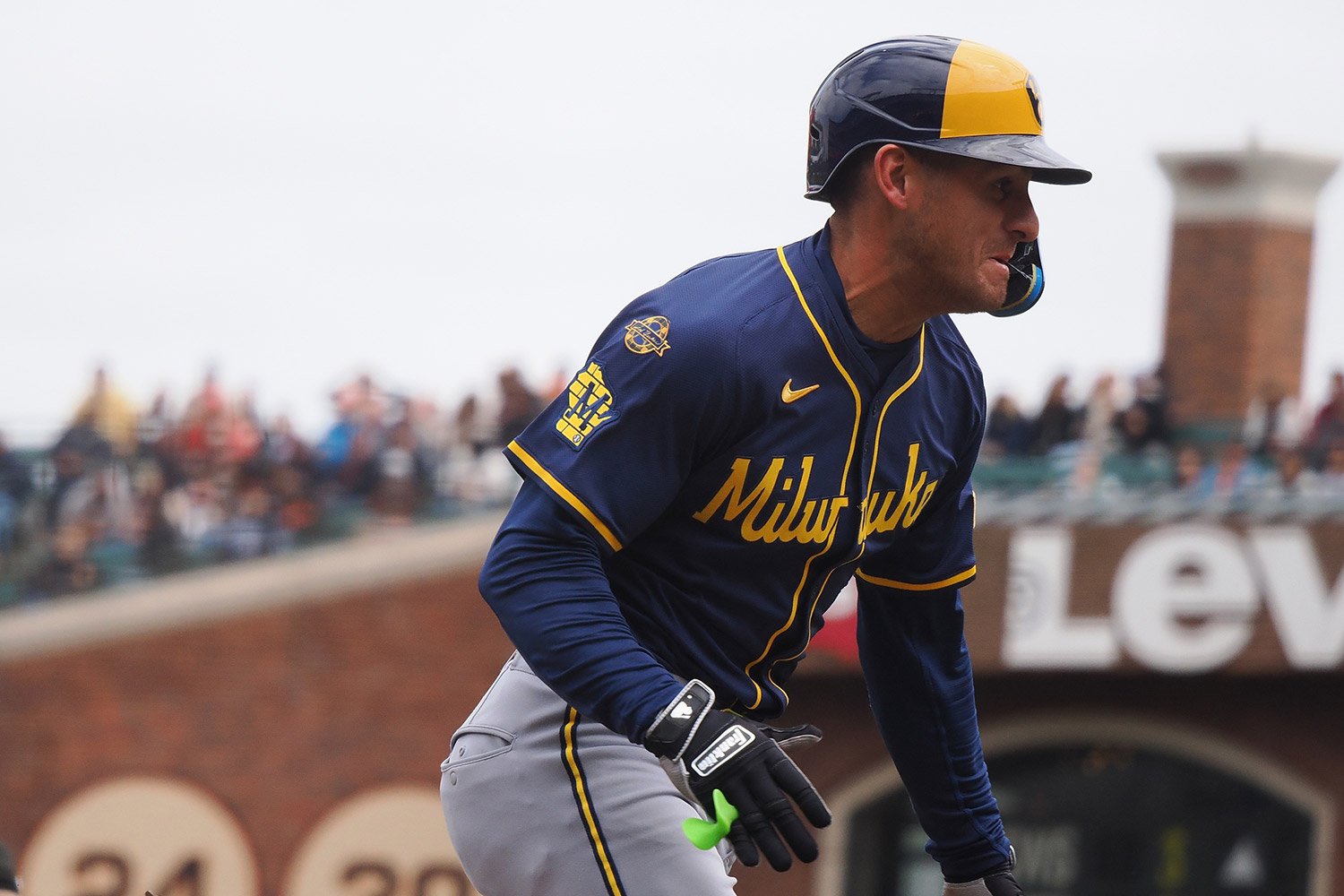 When Joey Ortiz popped out to first base in the bottom of the fifth inning on Friday night, it was his seventh popout to first this season, tying him for the second-most in baseball by a right-handed hitter. That stat is not necessarily noteworthy on its own, but in Ortiz’s case, it speaks to what’s been a severe issue in his nightmarish sophomore season in Milwaukee: his barrel is coming through the zone late, preventing him from meeting the ball out in front of the plate to hit productive line drives and fly balls. With most of his swings that produce contact, he’s practically plucking the ball out of the catcher’s mitt. Being late has mostly left Ortiz hitting routine flyouts or popouts to the right side. According to Statcast, his pull rate has cratered from a slightly above-average 38.2% in 2024 to 24.4% this year. His percentage of contact pulled in the air (fly balls, line drives, and popups) has fallen from 15% to 6.7%, the 10th-worst rate among qualified hitters. Most of his balls in the air have been to the opposite field. It happened again on last night’s popout. Ortiz failed to get his barrel through the hitting zone quickly enough, and he popped the ball weakly just behind first base. ortiz_pop_out.mp4 Other times, being late has produced harder-hit groundouts. Many batted balls Ortiz has hit at least 95 mph this year fall into that bucket. On these pitches, the ball is often meeting Ortiz’s bat deep in the hitting zone before that bat can get on plane. His barrel is coming down on the ball when he makes contact, so even if it’s near the sweet spot, he pounds it into the dirt, as he did on this 109-mph groundout. ortiz_groundout.mp4 The Brewers made a quick change with Oliver Dunn at third base last month when he did not produce, but Ortiz and his 29 wRC+ have remained the starter at shortstop all year. Whereas Caleb Durbin was waiting in Triple-A as a replacement for Dunn, there was no clear substitute for Ortiz. That may be changing. On May 9, the Brewers designated Vinny Capra for assignment. They recalled Andruw Monasterio, who has played 380 professional games at shortstop, including 21 of his 29 starts in the field at Triple-A this year. Murphy said on Friday afternoon that the club believes Monasterio can effectively replace Ortiz at the position, including if he requires a longer break on the bench or in the minor leagues. “With Mona here now, we feel confident Mona can handle it,” Murphy said. Monasterio’s utilization so far backs it up. Murphy pinch-hit Isaac Collins for Ortiz with runners on first and second and two outs in the bottom of the seventh inning last night, and Monasterio finished the game at short. It was his third appearance there in four games, including two starts at short during a three-game series in Cleveland earlier this week. Could he receive more time there moving forward? “Yeah,” Murphy said postgame. “I think until Joey gets more confident.” In the same breath, though, he said he believes Ortiz is trending in the right direction. “He’s struggling offensively, but there are signs that he’s doing really well, so I’m encouraged, believe it or not. I don’t think he’s far away.” Still, there are signs that the Brewers are testing the waters to see if Monasterio can be a stopgap at shortstop. It would be a suboptimal patchwork solution, as the utility man’s defense has received mixed grades at the less demanding positions of second and third base. However, he’d be an improvement over Ortiz’s -1.0 bWAR if he can be a replacement-level shortstop for a few weeks. Were the club to option Ortiz to Triple-A, it would have to promote another infielder. It could recall Dunn, but he has not made nearly enough progress to expect he’ll produce. Catcher and second baseman Anthony Seigler, who owns a 156 wRC+ at Triple-A, made his first career start at third base on Friday but left with an injury. The lack of roster replacements means Ortiz may remain in the big leagues a bit longer. Either way, changes at shortstop could be on the horizon. Ortiz’s leash appears to be getting shorter, and he may no longer be the undisputed everyday starter at the position.
 -
Image courtesy of © Benny Sieu-Imagn Images An old face returned to the Brewers' clubhouse on Friday. Left-handed reliever Rob Zastryzny is back after Milwaukee acquired him from the New York Yankees in exchange for cash. Elvis Peguero was optioned to Triple-A Nashville in a corresponding move. Zastryzny signed a minor-league contract with the Brewers in December 2023 after the two sides discovered they held a similar vision for the future of his revamped arsenal. It proved to be a productive partnership. The veteran posted a 3.03 ERA, 3.37 FIP, and 32.5% strikeout rate in 29 ⅔ Triple-A innings, earning him a midseason promotion. He pitched to a 1.17 ERA and 2.64 FIP in 7 ⅔ innings before an elbow injury sidelined him until the postseason. Zastryzny missed the team's Wild Card Series roster and was a roster crunch casualty in November, with the Chicago Cubs claiming him off waivers. In 12 innings with New York's Triple-A affiliate in Scranton/Wilkes-Barre, Zastryzny compiled a 4.50 ERA with a more encouraging 3.68 FIP. Baseball Prospectus' StuffPro model has graded each of his four pitches as above average or better. The acquisition is another move to expedite the revamping of Pat Murphy's left-handed options in the bullpen. Before reuniting with Zastryzny, the Brewers also restructured Aaron Ashby and DL Hall's rehab plans to bring them back quicker as relievers. The decisions have come as Bryan Hudson's velocity and control have remained inconsistent. "With Huddy having some issues with his command, I think we needed an extra lefty here," Pat Murphy said. "Ashby and DL are hopefully not too far behind." Neither Ashby nor Hall has looked the sharpest to begin their stints with Nashville, but the latter's fastball showed encouraging signs in his first outing. Hall's four-seam fastball never resembled the plus pitch it was scouted as last season, averaging 14.3 inches of induced vertical break in the big leagues. In his first two innings on Wednesday, it averaged 16.3 inches and touched 20 inches, a benchmark he never reached last year. "He's been training as a starter, but we might have a bigger need for him as a reliever," Murphy said. "I think that'll tick everything up." With Zastryzny in tow and Ashby and Hall not far behind, Hudson's fall down the bullpen hierarchy continues. He was arguably the team's top reliever in the first half last year, but the Brewers optioned him after his velocity slipped in the second half. It hasn't returned consistently this season. After averaging 91.7 mph through the 2024 All-Star break, Hudson's four-seamer has averaged 90.5 mph this year and ranged anywhere from 86 to 94 mph. His control has also disappeared, as he's walked 22.2% of batters faced in the big leagues this season. Those issues prompted another demotion at the end of April. Hudson returned at the onset of Milwaukee's last road trip but only appeared once, requiring 50 pitches to record five outs in Cleveland on Monday. The Brewers optioned him two days later. It's an unfortunate development for the funky southpaw, who looked at this time last year like the team's next great bullpen breakout story. With others surpassing him on the depth chart and only one option year remaining, he could lose his 40-man roster spot next offseason if he cannot recapture his past form. Zastryzny is out of options, meaning the Brewers see him as more than temporary bullpen help if he performs. That will create a roster crunch if the club wants to add one of Ashby and Hall in a couple of weeks. Swingman Tyler Alexander, who has pitched primarily in short-range relief outings lately with mixed results, could be another candidate to lose his spot as part of a left-handed relief makeover. View full article
-
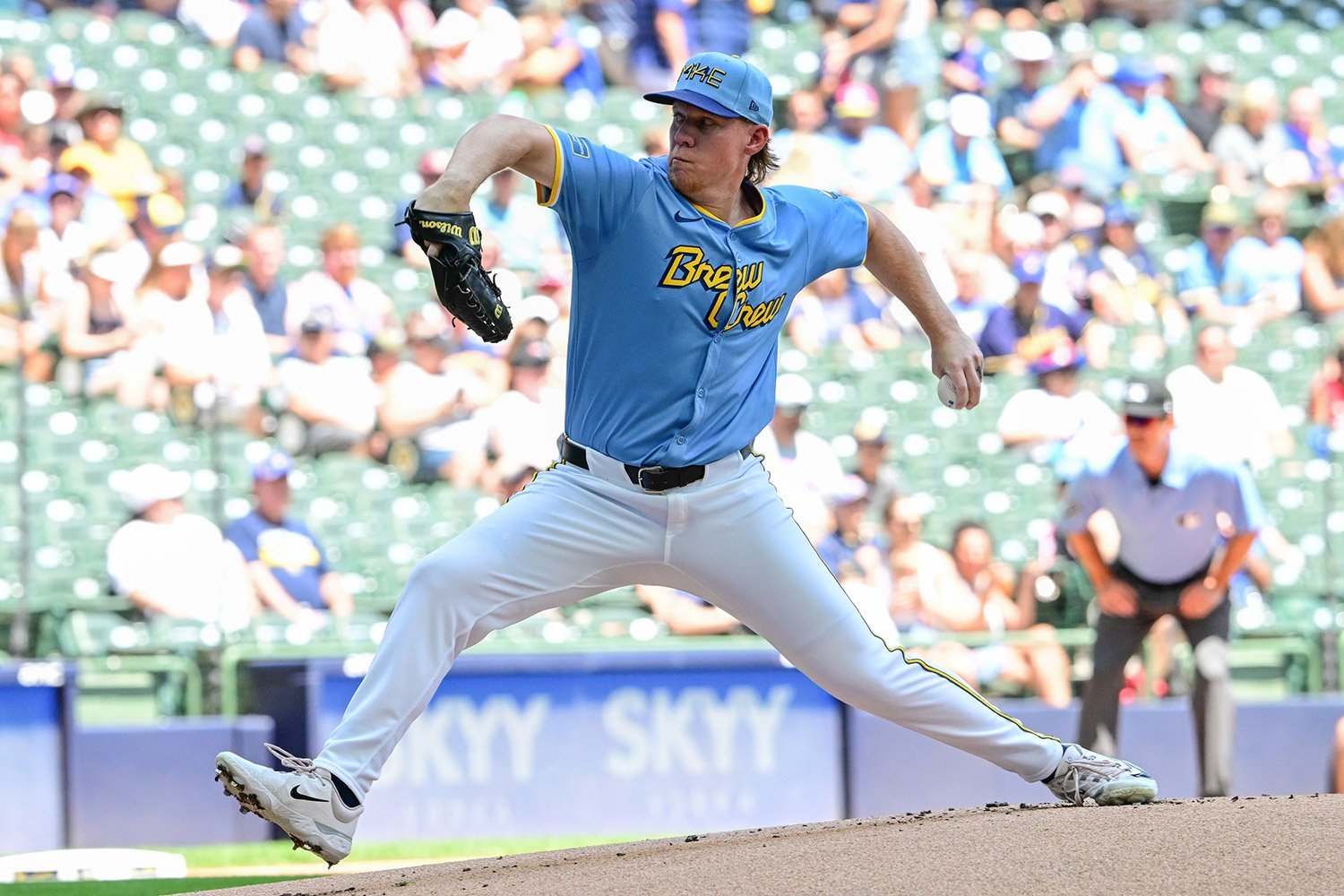 An old face returned to the Brewers' clubhouse on Friday. Left-handed reliever Rob Zastryzny is back after Milwaukee acquired him from the New York Yankees in exchange for cash. Elvis Peguero was optioned to Triple-A Nashville in a corresponding move. Zastryzny signed a minor-league contract with the Brewers in December 2023 after the two sides discovered they held a similar vision for the future of his revamped arsenal. It proved to be a productive partnership. The veteran posted a 3.03 ERA, 3.37 FIP, and 32.5% strikeout rate in 29 ⅔ Triple-A innings, earning him a midseason promotion. He pitched to a 1.17 ERA and 2.64 FIP in 7 ⅔ innings before an elbow injury sidelined him until the postseason. Zastryzny missed the team's Wild Card Series roster and was a roster crunch casualty in November, with the Chicago Cubs claiming him off waivers. In 12 innings with New York's Triple-A affiliate in Scranton/Wilkes-Barre, Zastryzny compiled a 4.50 ERA with a more encouraging 3.68 FIP. Baseball Prospectus' StuffPro model has graded each of his four pitches as above average or better. The acquisition is another move to expedite the revamping of Pat Murphy's left-handed options in the bullpen. Before reuniting with Zastryzny, the Brewers also restructured Aaron Ashby and DL Hall's rehab plans to bring them back quicker as relievers. The decisions have come as Bryan Hudson's velocity and control have remained inconsistent. "With Huddy having some issues with his command, I think we needed an extra lefty here," Pat Murphy said. "Ashby and DL are hopefully not too far behind." Neither Ashby nor Hall has looked the sharpest to begin their stints with Nashville, but the latter's fastball showed encouraging signs in his first outing. Hall's four-seam fastball never resembled the plus pitch it was scouted as last season, averaging 14.3 inches of induced vertical break in the big leagues. In his first two innings on Wednesday, it averaged 16.3 inches and touched 20 inches, a benchmark he never reached last year. "He's been training as a starter, but we might have a bigger need for him as a reliever," Murphy said. "I think that'll tick everything up." With Zastryzny in tow and Ashby and Hall not far behind, Hudson's fall down the bullpen hierarchy continues. He was arguably the team's top reliever in the first half last year, but the Brewers optioned him after his velocity slipped in the second half. It hasn't returned consistently this season. After averaging 91.7 mph through the 2024 All-Star break, Hudson's four-seamer has averaged 90.5 mph this year and ranged anywhere from 86 to 94 mph. His control has also disappeared, as he's walked 22.2% of batters faced in the big leagues this season. Those issues prompted another demotion at the end of April. Hudson returned at the onset of Milwaukee's last road trip but only appeared once, requiring 50 pitches to record five outs in Cleveland on Monday. The Brewers optioned him two days later. It's an unfortunate development for the funky southpaw, who looked at this time last year like the team's next great bullpen breakout story. With others surpassing him on the depth chart and only one option year remaining, he could lose his 40-man roster spot next offseason if he cannot recapture his past form. Zastryzny is out of options, meaning the Brewers see him as more than temporary bullpen help if he performs. That will create a roster crunch if the club wants to add one of Ashby and Hall in a couple of weeks. Swingman Tyler Alexander, who has pitched primarily in short-range relief outings lately with mixed results, could be another candidate to lose his spot as part of a left-handed relief makeover.
 -
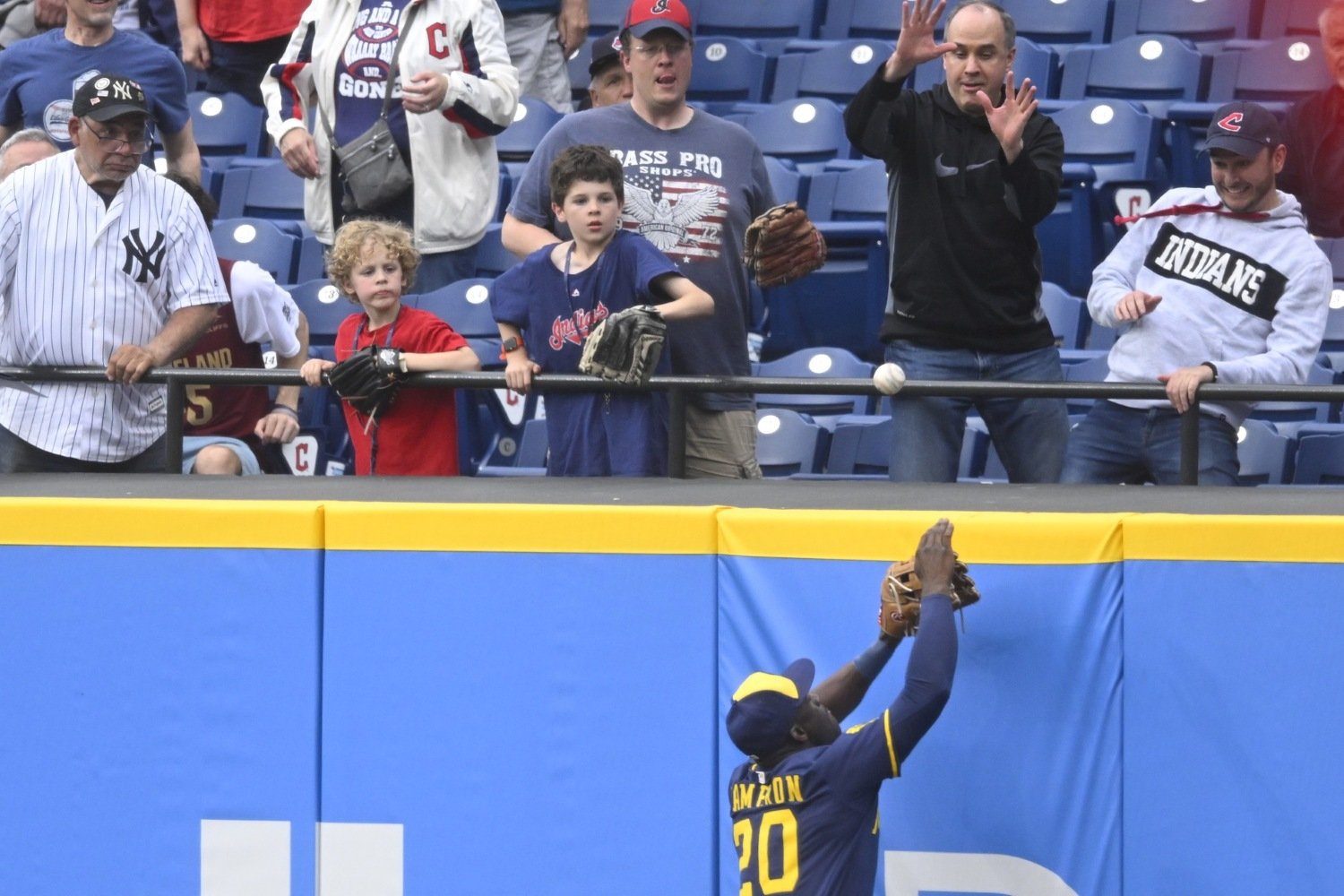 After consecutive shutout losses for the second time in two weeks, Pat Murphy called a closed-door postgame meeting with his team on Tuesday night in Cleveland. It was the second such meeting Murphy initiated in as many road trips. The Brewers congregated under similar circumstances on April 24 in San Francisco, after losing three of four to the Giants. In between, they went 7-10, while continuing to play poor fundamental baseball. During that time, Murphy tried to send more messages with benchings, yanking Sal Frelick and Caleb Durbin for miscues in St. Louis and Tobias Myers after two wild innings in Chicago. None of those efforts inspired improvement. The Brewers enter Friday at 21-23, putting them four games behind the division-leading Chicago Cubs and the third NL Wild Card spot. Records and standings are not worth fretting over in mid-May, though. What's alarming is how the Brewers have played: the levers Murphy is pulling repeatedly this early in the season in hopes of righting the ship, and the absence of progress. "We're not playing with a ton of confidence," he said Tuesday night. "We got a bunch of guys just not at their best right now, but you go through that once in a while." Even the best teams hit rough patches, and slow starts can seem worse than they truly are in a small sample. But the harsh reality is that the Brewers have too often looked non-competitive, and it's growing harder to believe this roster will find its footing. In Murphy's first year as manager, the Brewers played clean, balanced baseball and quickly responded to adversity. This year's team has spent the season's first seven weeks chaotically running in place. Many of its 21 wins have resembled those of last year, inspiring hope that a bumpy start may be in the rear-view mirror—only for the same mistakes to return in more frustrating losses. The repeating cycle has left the Brewers unable to climb more than two games over .500. Many losses have been blowouts, starting with two against the Yankees in New York on opening weekend. Milwaukee lost seven of its first 38 games by at least eight runs. Only 10 other teams since 1901 have sustained that many blowouts so early in a season. All of them finished below .500, and eight went on to lose at least 91 games that year. Declaring the Brewers destined for a similar season would still be an overreaction. Thanks to several convincing wins, their expected record based on run differential is 22-22. However, while they haven't looked like an awful team, they haven't looked like a good one, either. They have repeatedly done things that good teams rarely do, even amid the ebbs that every club experiences in a 162-game season. Those red flags do not yet warrant full-blown panic, but they should raise prompt concern. They've already elicited unusual degrees of action. The elite defense that carried last year's team has become inconsistent, despite Willy Adames (a negative-value defender at shortstop) being the only loss in the field. After finishing fourth in Defensive Runs Saved (+64) last season, this year's Brewers have fallen to 13th (+9) and are 24th in fielding percentage (.982). The athleticism and impressive plays are still present, but the mistakes are far too frequent. The pitching has stabilized in recent weeks, and should continue trending in the right direction as more arms return from the injured list. The Brewers' greatest woes are at the plate, where their offense ranks 25th with an 87 wRC+. "[The pitching is] not our issue right now," Murphy said. "We've got to get the heart of our order, for sure, producing." Christian Yelich and William Contreras will heat up, even with the latter playing through a fractured finger. However, that improvement will be offset somewhat by looming regression for Sal Frelick and Jake Bauers. It's also becoming clear that the Brewers do not currently have an MLB-caliber starting third baseman in the organization. This lineup is not as bad talent-wise as the results say, but it's certainly not good. The absence of power is most striking. After losing the perennial 30-homer output of Adames to free agency and doing nothing to replace it externally, Milwaukee ranks 23rd in long balls (37) and 27th in isolated power (.122). The worst fears surrounding the offense going into the season have come to fruition. "There's a study done about the playoffs lately, and the teams that win and go to the World Series hit a bunch of homers," Murphy acknowledged. "That's what's been [the case]. But that's not always possible. You can't just find those guys laying around. And then you pay a lot of money for those guys that are consistent in that department." "I think we're a team that maybe relies a little bit more on some different style of extra-base hits and running the bases aggressively and doing things like that to get it," Jackson Chourio said. "So even if we're not hitting home runs, that doesn't by any means say that we can't play our style of game." "Most teams in the big leagues have two or three other guys that can [hit for power], and we've got some young people playing that we're not expecting to drive the baseball that way," Murphy said. While there are other ways to score besides hitting the ball into the seats, home runs are the most efficient. They can also spark an offense and end a scoring drought with one swing, whereas stringing singles together requires the right sequencing and more production throughout the lineup. The fact is that the Brewers won't go very far if they cannot drive the baseball. Last year's lineup was not filled with sluggers, either, but it finished 16th in homers (177) and 18th in ISO (.155). That was just enough power to complement the scrappier on-base hitters, allowing the offense to post an above-average 104 wRC+. While there were no blowouts on a 2-4 road trip, the other familiar themes were present and glaring in Tampa and Cleveland: pitiful offense, sloppy glovework at the worst moments, and a manager who publicly expressed confidence in his team, but whose aggressive measures on and off the field signaled that something was wrong and that he needed to stop the bleeding. Murphy and others throughout the clubhouse have cited a lack of confidence as one of the culprits behind the latest slide, a stark contrast from the "Undaunted" mantra they championed a year ago. "I think there is some 'afraid to make a mistake' type thing, and that's not a way to go about this game or into any competition," Rhys Hoskins said. "You have to dive right in knowing you've prepared, so when it's time to compete, the talent can come out." That was one of the points addressed in the latest team meeting. The following day, the offense erupted for nine runs to help the Brewers avoid a sweep. "We had over 20 quality at-bats today," Murphy estimated afterward. "That's the type of team we have to be. It's not about talent. It's about that mindset. They decided today that they were going to have those ABs. And whether it's against great pitching, whether it's against back-end pitching, whatever, it doesn't matter. It's the commitment to understand how to get after it, and they're all capable. We look like a different team when we do that." "Sometimes, you kind of need to take it on the chin a little bit," Hoskins said. "I think just talking about it last night as a group put us in a good position to go compete today." There's still plenty of time for the Brewers to turn things around, and perhaps Tuesday night's meeting and the subsequent win were the start. However, positive trends have proven short-lived multiple times this year, and this group has not earned the benefit of the doubt that this time will be different. Murphy and his club are far from out of this. A winning streak would have them right back in the middle of the playoff picture. Getting back on the right track is already an uphill battle, though, and each week without progress as the season continues only digs the Brewers into a deeper hole.
- 8 comments
-
- 1
-
-
- pat murphy
- rhys hoskins
- (and 4 more)
-
Image courtesy of © David Richard-Imagn Images After consecutive shutout losses for the second time in two weeks, Pat Murphy called a closed-door postgame meeting with his team on Tuesday night in Cleveland. It was the second such meeting Murphy initiated in as many road trips. The Brewers congregated under similar circumstances on April 24 in San Francisco, after losing three of four to the Giants. In between, they went 7-10, while continuing to play poor fundamental baseball. During that time, Murphy tried to send more messages with benchings, yanking Sal Frelick and Caleb Durbin for miscues in St. Louis and Tobias Myers after two wild innings in Chicago. None of those efforts inspired improvement. The Brewers enter Friday at 21-23, putting them four games behind the division-leading Chicago Cubs and the third NL Wild Card spot. Records and standings are not worth fretting over in mid-May, though. What's alarming is how the Brewers have played: the levers Murphy is pulling repeatedly this early in the season in hopes of righting the ship, and the absence of progress. "We're not playing with a ton of confidence," he said Tuesday night. "We got a bunch of guys just not at their best right now, but you go through that once in a while." Even the best teams hit rough patches, and slow starts can seem worse than they truly are in a small sample. But the harsh reality is that the Brewers have too often looked non-competitive, and it's growing harder to believe this roster will find its footing. In Murphy's first year as manager, the Brewers played clean, balanced baseball and quickly responded to adversity. This year's team has spent the season's first seven weeks chaotically running in place. Many of its 21 wins have resembled those of last year, inspiring hope that a bumpy start may be in the rear-view mirror—only for the same mistakes to return in more frustrating losses. The repeating cycle has left the Brewers unable to climb more than two games over .500. Many losses have been blowouts, starting with two against the Yankees in New York on opening weekend. Milwaukee lost seven of its first 38 games by at least eight runs. Only 10 other teams since 1901 have sustained that many blowouts so early in a season. All of them finished below .500, and eight went on to lose at least 91 games that year. Declaring the Brewers destined for a similar season would still be an overreaction. Thanks to several convincing wins, their expected record based on run differential is 22-22. However, while they haven't looked like an awful team, they haven't looked like a good one, either. They have repeatedly done things that good teams rarely do, even amid the ebbs that every club experiences in a 162-game season. Those red flags do not yet warrant full-blown panic, but they should raise prompt concern. They've already elicited unusual degrees of action. The elite defense that carried last year's team has become inconsistent, despite Willy Adames (a negative-value defender at shortstop) being the only loss in the field. After finishing fourth in Defensive Runs Saved (+64) last season, this year's Brewers have fallen to 13th (+9) and are 24th in fielding percentage (.982). The athleticism and impressive plays are still present, but the mistakes are far too frequent. The pitching has stabilized in recent weeks, and should continue trending in the right direction as more arms return from the injured list. The Brewers' greatest woes are at the plate, where their offense ranks 25th with an 87 wRC+. "[The pitching is] not our issue right now," Murphy said. "We've got to get the heart of our order, for sure, producing." Christian Yelich and William Contreras will heat up, even with the latter playing through a fractured finger. However, that improvement will be offset somewhat by looming regression for Sal Frelick and Jake Bauers. It's also becoming clear that the Brewers do not currently have an MLB-caliber starting third baseman in the organization. This lineup is not as bad talent-wise as the results say, but it's certainly not good. The absence of power is most striking. After losing the perennial 30-homer output of Adames to free agency and doing nothing to replace it externally, Milwaukee ranks 23rd in long balls (37) and 27th in isolated power (.122). The worst fears surrounding the offense going into the season have come to fruition. "There's a study done about the playoffs lately, and the teams that win and go to the World Series hit a bunch of homers," Murphy acknowledged. "That's what's been [the case]. But that's not always possible. You can't just find those guys laying around. And then you pay a lot of money for those guys that are consistent in that department." "I think we're a team that maybe relies a little bit more on some different style of extra-base hits and running the bases aggressively and doing things like that to get it," Jackson Chourio said. "So even if we're not hitting home runs, that doesn't by any means say that we can't play our style of game." "Most teams in the big leagues have two or three other guys that can [hit for power], and we've got some young people playing that we're not expecting to drive the baseball that way," Murphy said. While there are other ways to score besides hitting the ball into the seats, home runs are the most efficient. They can also spark an offense and end a scoring drought with one swing, whereas stringing singles together requires the right sequencing and more production throughout the lineup. The fact is that the Brewers won't go very far if they cannot drive the baseball. Last year's lineup was not filled with sluggers, either, but it finished 16th in homers (177) and 18th in ISO (.155). That was just enough power to complement the scrappier on-base hitters, allowing the offense to post an above-average 104 wRC+. While there were no blowouts on a 2-4 road trip, the other familiar themes were present and glaring in Tampa and Cleveland: pitiful offense, sloppy glovework at the worst moments, and a manager who publicly expressed confidence in his team, but whose aggressive measures on and off the field signaled that something was wrong and that he needed to stop the bleeding. Murphy and others throughout the clubhouse have cited a lack of confidence as one of the culprits behind the latest slide, a stark contrast from the "Undaunted" mantra they championed a year ago. "I think there is some 'afraid to make a mistake' type thing, and that's not a way to go about this game or into any competition," Rhys Hoskins said. "You have to dive right in knowing you've prepared, so when it's time to compete, the talent can come out." That was one of the points addressed in the latest team meeting. The following day, the offense erupted for nine runs to help the Brewers avoid a sweep. "We had over 20 quality at-bats today," Murphy estimated afterward. "That's the type of team we have to be. It's not about talent. It's about that mindset. They decided today that they were going to have those ABs. And whether it's against great pitching, whether it's against back-end pitching, whatever, it doesn't matter. It's the commitment to understand how to get after it, and they're all capable. We look like a different team when we do that." "Sometimes, you kind of need to take it on the chin a little bit," Hoskins said. "I think just talking about it last night as a group put us in a good position to go compete today." There's still plenty of time for the Brewers to turn things around, and perhaps Tuesday night's meeting and the subsequent win were the start. However, positive trends have proven short-lived multiple times this year, and this group has not earned the benefit of the doubt that this time will be different. Murphy and his club are far from out of this. A winning streak would have them right back in the middle of the playoff picture. Getting back on the right track is already an uphill battle, though, and each week without progress as the season continues only digs the Brewers into a deeper hole. View full article
- 8 replies
-
- 1
-
-
- pat murphy
- rhys hoskins
- (and 4 more)

