



Jack Stern
-
Posts
764 -
Joined
-
Last visited
-
Days Won
2
Content Type
Profiles
Forums
Blogs
Events
News
2026 Milwaukee Brewers Top Prospects Ranking
Milwaukee Brewers Videos
2022 Milwaukee Brewers Draft Picks
Milwaukee Brewers Free Agent & Trade Rumors, Notes, & Tidbits
Guides & Resources
2023 Milwaukee Brewers Draft Picks
2024 Milwaukee Brewers Draft Picks
The Milwaukee Brewers Players Project
2025 Milwaukee Brewers Draft Pick Tracker
2026 Milwaukee Brewers Draft Tracker: Picks & Bonuses
Store
Downloads
Gallery
Everything posted by Jack Stern
-
 Replacing the power of Willy Adames is non-negotiable for the Brewers' success this year. After they failed to do so externally, all eyes are on several incumbent hitters to take steps forward. Image courtesy of © Jeff Hanisch-Imagn Images Replacing the power of Willy Adames is non-negotiable for the Brewers' success this year. After they failed to do so externally, all eyes are on several incumbent hitters to take steps forward. One of the main questions regarding the Brewers' offseason was how they would replace the power output of the departing Willy Adames. With spring training now in full swing, the answer is in: they didn't—at least, not externally. Adames launched a career-best 32 home runs last year, in 688 plate appearances. Scaling their aggregate playing time to that same sample size, ZiPS projects the in-house replacements Oliver Dunn, Caleb Durbin, and Andruw Monasterio to combine for just 12 long balls. Subbing that trio for Adames on the 2024 Brewers would have dropped them from ranking 16th in home runs and 18th in ISO to 25th and 23rd, respectively. Last year's lineup had a scrappy identity but hit for just enough power to be a solid offense, finishing 10th in baseball with a 104 wRC+. Any step back in that department is unacceptable for a contending team; it's the chief concern with the roster about to take shape. While the Brewers could still swing a trade or scoop up one of the remaining free-agent infielders, at this point, nobody who would meaningfully improve this team's power output is walking through the door. That leaves Milwaukee reliant on internal improvement. The good news is that the young Brewers lineup features ample raw power. The bad news is that it hasn't been realized in games by most of these players, and the organization has a spotty track record of developing hitters over the last decade. That makes the 2025 lineup challenging to project. The Brewers could feasibly hit for above-average power, but they could just as easily be among the most punchless offenses in baseball. With the exceptions of Brice Turang and Sal Frelick, nearly every position features some raw pop. Even with those two combining for 1,142 plate appearances last year, the Brewers still ranked 16th in average bat speed and 10th in fast swing rate, and they're returning up to seven hitters with an average bat speed of at least 73 mph. There are two standouts who should be hitting for significantly more power than they have so far. William Contreras and Garrett Mitchell are bat speed darlings, with Contreras making some of the hardest contact in the sport, including baseball's fourth-highest maximum exit velocity in 2024. Because both ran ground ball rates well north of 50% last year, however, Contreras only hit 23 home runs, and Mitchell hit just eight in another injury-truncated campaign. Mitchell's profile has additional flaws, including his well-documented inability to touch velocity at the top of the zone. On elevated hard pitches, he has a career 50.9% whiff rate and just one non-bunt hit. Whether he realizes his power in games hinges on mitigating these weaknesses. Mitchell spent the offseason training at Driveline Baseball, where he focused on working behind the ball to improve his timing and open a wider contact window for pulling balls in the air. Dunn also falls into this category, albeit more loosely. His 75.2-mph average bat speed barely trailed Mitchell's as the fastest on the team, and he hit 21 homers in Double A in 2023. An untenable 38.5% strikeout rate held him back last year and is the leading reason for his uninspiring 2025 projection. If Dunn can make more contact, his exciting skill set could shine through in his second taste of the big leagues. A pair of veterans are eyeing resurgent seasons. Christian Yelich was on pace to exceed 20 homers last season before back surgery ended his season shortly after the All-Star break. The longtime left fielder has assured reporters early in camp that he expects to be ready for Opening Day. Rhys Hoskins still hit 26 home runs in a down year, but he's presumably looking to recapture the lower-body mobility that helped him slug 30 long balls in his last healthy season, 2022. Finally, two less experienced players could continue to grow into more power. Jackson Chourio and Joey Ortiz emerged as valuable regulars in their rookie campaigns, and how close they get to their ceilings as sophomores will be key determiners in how far this year's team goes. Chourio left the yard 21 times last year, but he's hardly a finished product as he enters his age-21 season. He launched the Brewers' longest home run of the year (a 449-foot blast off the American Family Field video board in August), and his quick hands fuel above-average bat speed and impressive plate coverage. Ortiz hit seven homers through June and reached a 77th-percentile maximum exit velocity, but lingering complications from a midseason neck injury and an overly passive approach limited him to a .345 slugging percentage over the season's final three months. While it's more realistic to hope only a couple of them get there, there are reasons to believe each of Contreras, Chourio, and Hoskins could reach 30 home runs, with others not far behind. That affords the Brewers multiple permutations by which they can hit for sufficient power. Whether enough of that internal development actually occurs is another story. Backfilling Adames's output will be a group effort, and enough must go right to make it happen. Time will tell if the Brewers made a worthwhile gamble by not investing in a more direct and accomplished replacement. View full article
 -
Keep an Eye on These Under-the-Radar Non-Roster Invitees in Brewers Camp
Jack Stern posted an article in Brewers
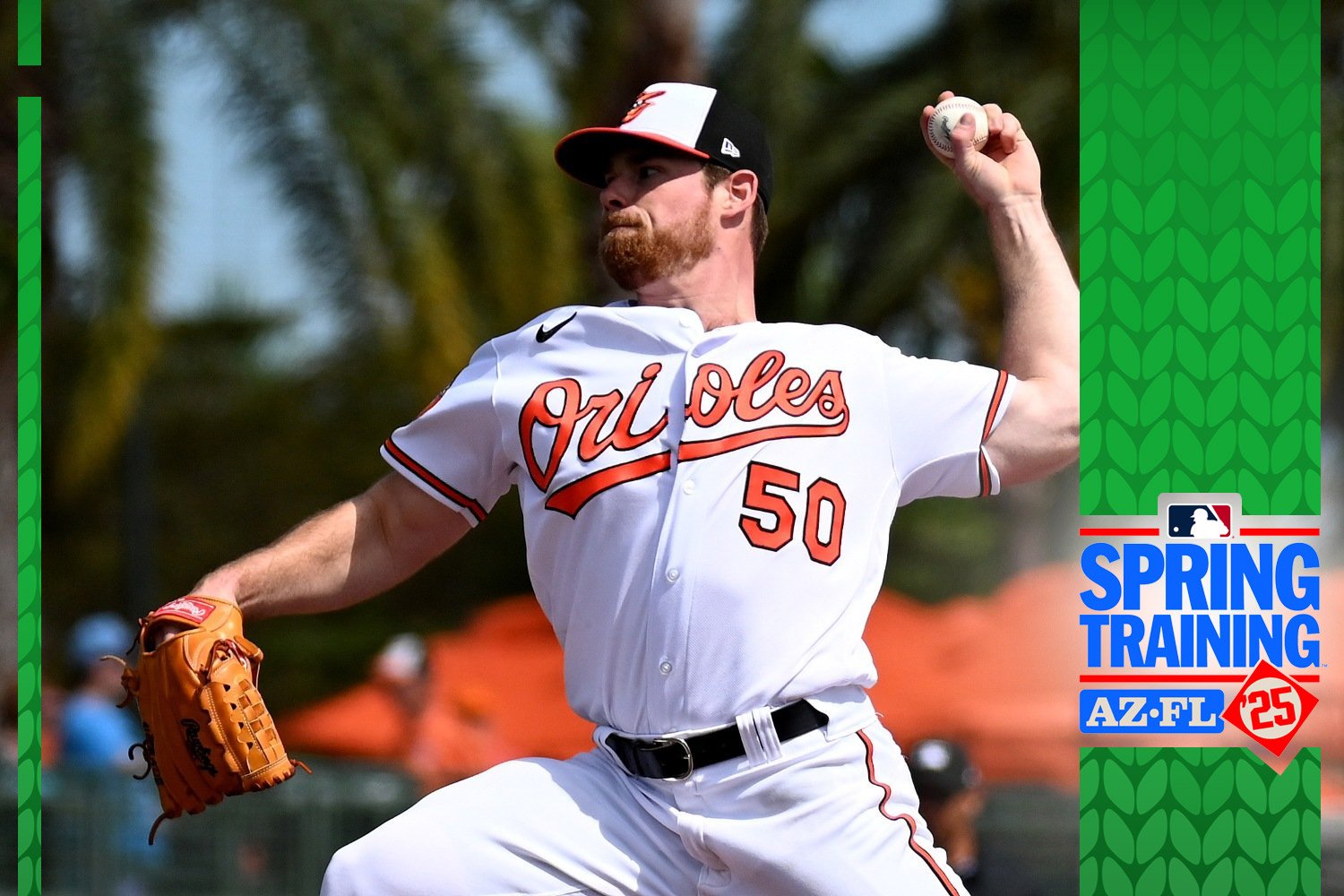 For most established players with assured roster spots, the objective of spring training is to follow a gradual buildup; dial in mechanics and (for hitters) pitch recognition; and leave camp feeling healthy for Opening Day. It’s a bit different for non-roster invitees and those fighting for a job, as preseason play is a platform for proving their worth to their team—and others who may be watching. Many of these players are well-known prospects who are getting a rare sampling of big-league competition. This site has covered them extensively and will continue to do so (thanks for your service, Spencer Michaelis), but we’re focusing today on other non-roster players who might otherwise be overlooked. Barring a slew of injuries, these guys will not break camp with the team, but they could surface in the big leagues later in 2025 or beyond. Here are a few such non-prospect players to follow in the early weeks of Brewers camp. RHP Easton McGee A pitcher who has appeared in just two big-league games, owns a career 5.11 ERA in Triple-A, and missed chunks of the last two seasons while recovering from Tommy John surgery is as under-the-radar as it gets. McGee enters the second season of a two-year minor-league deal he signed midway through his rehab. After going under the knife in May 2023, the 27-year-old returned to the mound last summer. McGee pitched to an ugly 7.03 ERA in 24 ⅓ Triple-A innings after his activation, but his more palatable 3.73 FIP and 105 DRA- indicate he threw better than his box score results imply. Most importantly, his strengths were intact. Like many Brewers rotation options, McGee is not a “stuff” guy. Instead, he leans on pinpoint control, deception, and keeping hitters off-balance with a full arsenal. He features the four-seam, two-seam, and cutter triad the club loves, two distinct breaking balls, and a changeup. His unorthodox near-sidearm release slot from his 6-foot-6 height creates deception, particularly on that four-seamer. It has induced tons of whiffs at the top of the zone throughout McGee's career, despite its underwhelming low-90s velocity. mcgee_whiff.mp4 McGee walked just 2.8% of hitters in Triple-A last year. His sinker (25% hard-hit rate) and curveball (12.5%) missed barrels, and his four-seamer missed bats (42.5% whiff rate). He also tightened up his cutter shape. After it frequently backed up in 2023, McGee achieved more consistent glove-side movement upon his return. The Brewers have nudged kitchen-sink hurlers like Bryse Wilson and Colin Rea toward higher cutter usage and may have a similar blueprint in mind for McGee. Minor-league pitch tagging is often imprecise, but he seemingly worked the revamped cutter more heavily last year. It’s the pitch to watch in his spring training outings. LHP Bruce Zimmermann Zimmermann has more big-league experience, but occupies the same territory as McGee on the depth chart. In 158 ⅓ innings, the southpaw has worked to a 5.57 ERA, 5.68 FIP, and 128 DRA-. He did not pitch in the majors last year, posting a 4.34 ERA, 4.10 FIP, and 92 DRA- in 76 ⅔ innings for the Baltimore Orioles’ Triple-A affiliate in Norfolk. Whether the 30-year-old finds any big-league success hinges on whether he and the Brewers develop a capable fastball. His changeup and gyro slider have flashed potential as solid offerings, but opponents have destroyed anything hard, at all levels. Zimmermann’s fastball and sinker have combined for a -22 run value in his relatively small MLB sample and yielded a .731 slugging percentage. It’s been a similar story in Triple-A, where hitters have slugged .529 against them across the last two years. The veteran has addressed this issue by refining his sinker. Over the offseason, he worked on its shape at Tread Athletics, where he was filmed generating up to eight more inches of arm-side run on his sinker than the 13.2 he averaged last year. Those movement numbers will be the ingredient to watch if he appears in a Cactus League game with Statcast tracking. 2B/C Anthony Seigler Seigler was a unique talent in high school, starring as both a switch-hitting catcher and a switch-pitcher. The New York Yankees selected him with the 23rd overall pick in the 2018 draft, but injuries stalled his progression through the minors. Finally healthy in 2024, Seigler enjoyed something of a breakout season at Double-A Somerset, hitting .234/.350/.398 (118 wRC+) with 12 home runs. The 25-year-old will be in Brewers camp after signing a minor-league deal in November, where he’ll get a chance to showcase a skill set the Matt Arnold-led front office has increasingly emphasized throughout its position player core. Seigler has an excellent eye at the plate, boasting a career 17.6% walk rate as a professional. He’s a versatile defender with experience behind the plate, at second base, and in the outfield. In 118 games last season, he stole 29 bases. While he did not receive a big-league deal like Blake Perkins did two years ago, Seigler could join him as a late-blooming former Yankees prospect who settles into a valuable bench role. With continued progression in the upper minors to start the season, he could leapfrog a few catchers and infielders on the organizational depth chart.
- 5 comments
-
- 2
-

-
- easton mcgee
- bruce zimmermann
- (and 1 more)
-
Prospects are not the only non-roster players worth watching in spring training. February also affords a glimpse of less-heralded players who could appear in the big leagues later in the year. A few such guys will see action for the Brewers early in camp. Image courtesy of © Jonathan Dyer-Imagn Images Prospects are not the only non-roster players worth watching in spring training. February also affords a glimpse of less-heralded players who could appear in the big leagues later in the year. A few such guys will see action for the Brewers early in camp. For most established players with assured roster spots, the objective of spring training is to follow a gradual buildup; dial in mechanics and (for hitters) pitch recognition; and leave camp feeling healthy for Opening Day. It’s a bit different for non-roster invitees and those fighting for a job, as preseason play is a platform for proving their worth to their team—and others who may be watching. Many of these players are well-known prospects who are getting a rare sampling of big-league competition. This site has covered them extensively and will continue to do so (thanks for your service, Spencer Michaelis), but we’re focusing today on other non-roster players who might otherwise be overlooked. Barring a slew of injuries, these guys will not break camp with the team, but they could surface in the big leagues later in 2025 or beyond. Here are a few such non-prospect players to follow in the early weeks of Brewers camp. RHP Easton McGee A pitcher who has appeared in just two big-league games, owns a career 5.11 ERA in Triple-A, and missed chunks of the last two seasons while recovering from Tommy John surgery is as under-the-radar as it gets. McGee enters the second season of a two-year minor-league deal he signed midway through his rehab. After going under the knife in May 2023, the 27-year-old returned to the mound last summer. McGee pitched to an ugly 7.03 ERA in 24 ⅓ Triple-A innings after his activation, but his more palatable 3.73 FIP and 105 DRA- indicate he threw better than his box score results imply. Most importantly, his strengths were intact. Like many Brewers rotation options, McGee is not a “stuff” guy. Instead, he leans on pinpoint control, deception, and keeping hitters off-balance with a full arsenal. He features the four-seam, two-seam, and cutter triad the club loves, two distinct breaking balls, and a changeup. His unorthodox near-sidearm release slot from his 6-foot-6 height creates deception, particularly on that four-seamer. It has induced tons of whiffs at the top of the zone throughout McGee's career, despite its underwhelming low-90s velocity. mcgee_whiff.mp4 McGee walked just 2.8% of hitters in Triple-A last year. His sinker (25% hard-hit rate) and curveball (12.5%) missed barrels, and his four-seamer missed bats (42.5% whiff rate). He also tightened up his cutter shape. After it frequently backed up in 2023, McGee achieved more consistent glove-side movement upon his return. The Brewers have nudged kitchen-sink hurlers like Bryse Wilson and Colin Rea toward higher cutter usage and may have a similar blueprint in mind for McGee. Minor-league pitch tagging is often imprecise, but he seemingly worked the revamped cutter more heavily last year. It’s the pitch to watch in his spring training outings. LHP Bruce Zimmermann Zimmermann has more big-league experience, but occupies the same territory as McGee on the depth chart. In 158 ⅓ innings, the southpaw has worked to a 5.57 ERA, 5.68 FIP, and 128 DRA-. He did not pitch in the majors last year, posting a 4.34 ERA, 4.10 FIP, and 92 DRA- in 76 ⅔ innings for the Baltimore Orioles’ Triple-A affiliate in Norfolk. Whether the 30-year-old finds any big-league success hinges on whether he and the Brewers develop a capable fastball. His changeup and gyro slider have flashed potential as solid offerings, but opponents have destroyed anything hard, at all levels. Zimmermann’s fastball and sinker have combined for a -22 run value in his relatively small MLB sample and yielded a .731 slugging percentage. It’s been a similar story in Triple-A, where hitters have slugged .529 against them across the last two years. The veteran has addressed this issue by refining his sinker. Over the offseason, he worked on its shape at Tread Athletics, where he was filmed generating up to eight more inches of arm-side run on his sinker than the 13.2 he averaged last year. Those movement numbers will be the ingredient to watch if he appears in a Cactus League game with Statcast tracking. 2B/C Anthony Seigler Seigler was a unique talent in high school, starring as both a switch-hitting catcher and a switch-pitcher. The New York Yankees selected him with the 23rd overall pick in the 2018 draft, but injuries stalled his progression through the minors. Finally healthy in 2024, Seigler enjoyed something of a breakout season at Double-A Somerset, hitting .234/.350/.398 (118 wRC+) with 12 home runs. The 25-year-old will be in Brewers camp after signing a minor-league deal in November, where he’ll get a chance to showcase a skill set the Matt Arnold-led front office has increasingly emphasized throughout its position player core. Seigler has an excellent eye at the plate, boasting a career 17.6% walk rate as a professional. He’s a versatile defender with experience behind the plate, at second base, and in the outfield. In 118 games last season, he stole 29 bases. While he did not receive a big-league deal like Blake Perkins did two years ago, Seigler could join him as a late-blooming former Yankees prospect who settles into a valuable bench role. With continued progression in the upper minors to start the season, he could leapfrog a few catchers and infielders on the organizational depth chart. View full article
- 5 replies
-
- 1
-

-
- easton mcgee
- bruce zimmermann
- (and 1 more)
-
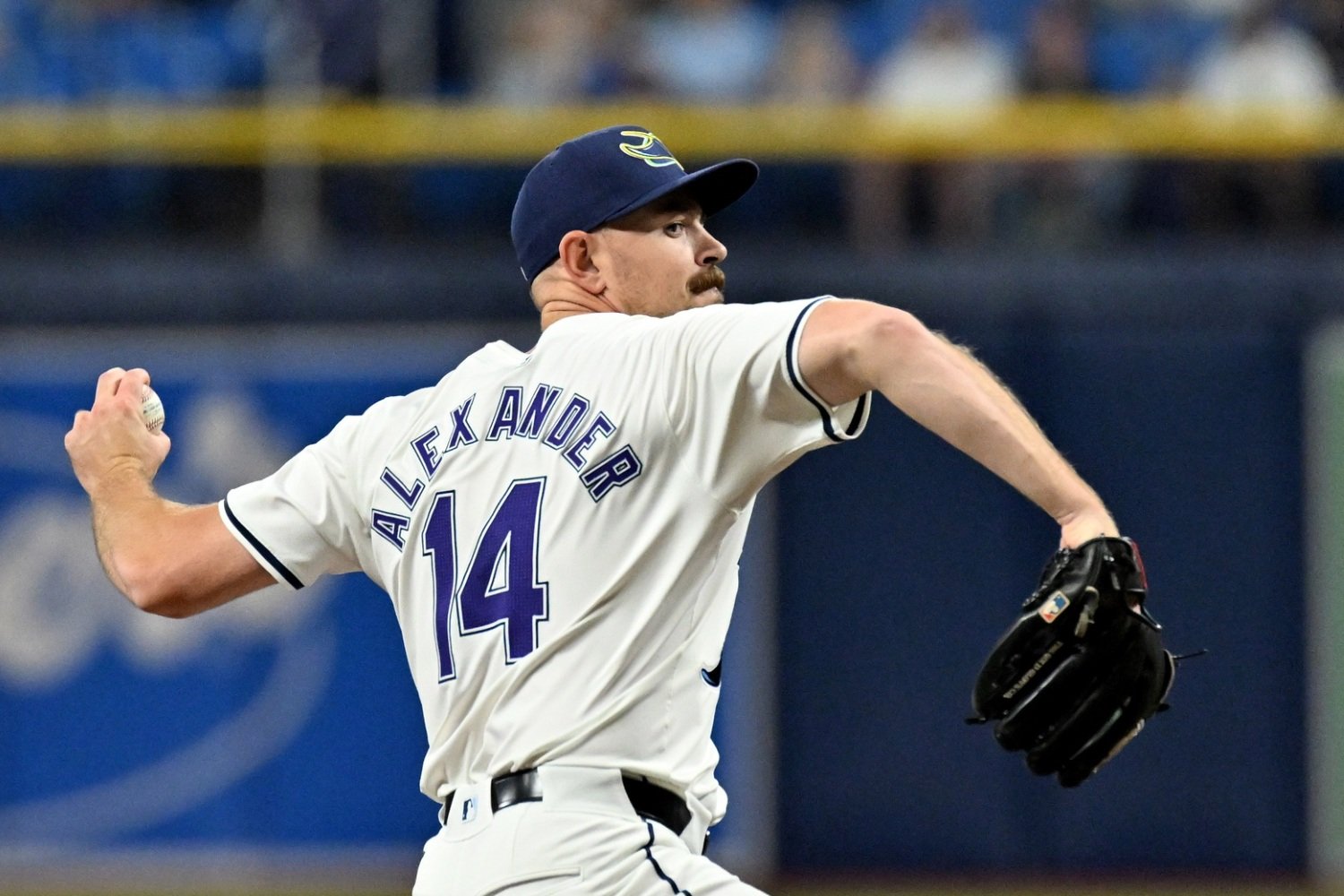 The first day of Brewers camp was a busy one for pitching news, culminating in a new addition to the staff. The club announced on Wednesday afternoon that it had signed left-hander Tyler Alexander to a one-year major-league deal. Alexander, 30, has bounced between starting and long relief throughout his six-year career, starting 52 of 143 career games while posting a 4.55 ERA, 4.70 FIP, and 118 DRA-. The Tampa Bay Rays poached him off waivers from the Detroit Tigers a year ago, but he was an unsuccessful development project, pitching to a career-worst 5.10 ERA with matching peripherals in 107 ⅔ innings in 2024. That led to a non-tender in November. Uninspiring results notwithstanding, Alexander meets what have practically become prerequisites for occupying a bulk role in Milwaukee. He won’t miss many bats, running just a 19.1% career strikeout rate, but he mixes in a variety of distinct shapes within the strike zone, including the three-fastball mix Chris Hook loves. Since his debut in 2019, Alexander’s 5.2% walk rate is the 13-best among qualified pitchers, and he threw five pitches at least 10% of the time last year. He tweaked that repertoire as a Ray. After experimenting with a slightly harder cutter with more backspin in his final season in Detroit, he returned to his usual slider-esque version. He traded his actual slider for a sweeper that averaged nearly 16 inches of glove-side movement. Finally, he shed a tick of ride on his changeup and other two fastballs. These changes gave Alexander a more cohesive east-west arsenal. If one were to draw a diagonal line across his pitch movement plots, it would fit more cleanly with his 2024 clusters. Think of Alexander as a left-handed version of Colin Rea, with less velocity (only about 90 MPH on his fastball) but a wider movement spread. It’s a profile the Brewers’ pitching development crew has maximized several times in recent years; expect them to draw from a similar bag of tricks as they further massage Alexander’s pitch shapes and sequencing. The southpaw adds needed depth to Pat Murphy’s rotation mix. Brandon Woodruff told reporters that he’s fully healthy but will progress through a gradual buildup as he returns from shoulder surgery. DL Hall is a few weeks behind schedule due to a lat injury. That leaves Alexander, Aaron Ashby, and Connor Thomas as leading candidates for the fifth starter gig.
- 7 comments
-
- 1
-
-
- tyler alexander
- brandon woodruff
- (and 3 more)
-
On the inaugural day of spring training, the Brewers shored up their rotation depth with a very Brewers signing. Image courtesy of © Jonathan Dyer-Imagn Images On the inaugural day of spring training, the Brewers shored up their rotation depth with a very Brewers signing. The first day of Brewers camp was a busy one for pitching news, culminating in a new addition to the staff. The club announced on Wednesday afternoon that it had signed left-hander Tyler Alexander to a one-year major-league deal. Alexander, 30, has bounced between starting and long relief throughout his six-year career, starting 52 of 143 career games while posting a 4.55 ERA, 4.70 FIP, and 118 DRA-. The Tampa Bay Rays poached him off waivers from the Detroit Tigers a year ago, but he was an unsuccessful development project, pitching to a career-worst 5.10 ERA with matching peripherals in 107 ⅔ innings in 2024. That led to a non-tender in November. Uninspiring results notwithstanding, Alexander meets what have practically become prerequisites for occupying a bulk role in Milwaukee. He won’t miss many bats, running just a 19.1% career strikeout rate, but he mixes in a variety of distinct shapes within the strike zone, including the three-fastball mix Chris Hook loves. Since his debut in 2019, Alexander’s 5.2% walk rate is the 13-best among qualified pitchers, and he threw five pitches at least 10% of the time last year. He tweaked that repertoire as a Ray. After experimenting with a slightly harder cutter with more backspin in his final season in Detroit, he returned to his usual slider-esque version. He traded his actual slider for a sweeper that averaged nearly 16 inches of glove-side movement. Finally, he shed a tick of ride on his changeup and other two fastballs. These changes gave Alexander a more cohesive east-west arsenal. If one were to draw a diagonal line across his pitch movement plots, it would fit more cleanly with his 2024 clusters. Think of Alexander as a left-handed version of Colin Rea, with less velocity (only about 90 MPH on his fastball) but a wider movement spread. It’s a profile the Brewers’ pitching development crew has maximized several times in recent years; expect them to draw from a similar bag of tricks as they further massage Alexander’s pitch shapes and sequencing. The southpaw adds needed depth to Pat Murphy’s rotation mix. Brandon Woodruff told reporters that he’s fully healthy but will progress through a gradual buildup as he returns from shoulder surgery. DL Hall is a few weeks behind schedule due to a lat injury. That leaves Alexander, Aaron Ashby, and Connor Thomas as leading candidates for the fifth starter gig. View full article
- 7 replies
-
- 2
-
-
- tyler alexander
- brandon woodruff
- (and 3 more)
-
The right-hander was a better pitcher after his move to Milwaukee in every way—except one. He must keep the ball in the park to carve out a high-leverage niche. Image courtesy of © Michael McLoone-Imagn Images The right-hander was a better pitcher after his move to Milwaukee in every way—except one. He must keep the ball in the park to carve out a high-leverage niche. The Brewers could trade former closer Devin Williams in December because they possess an embarrassment of riches in the bullpen. Even with each reliever ascending one notch on the totem pole, the group should remain one of baseball’s best in the coming season. Trevor Megill handled the ninth inning with aplomb last season while a back injury sidelined Williams through the first half, and he appears the favorite to return to the role. Jared Koenig, Joel Payamps, and Bryan Hudson were impressive in setup roles. Abner Uribe needs more work controlling his triple-digit sinker and fiery temperament on the mound, but his tantalizing stuff keeps him in the late-inning conversation. Aaron Ashby could return to the bullpen this year, and prospects Jacob Misiorowski, Craig Yoho, and Logan Henderson may emerge there in a few months. It’s easy for flamethrowing Nick Mears to get lost in the shuffle. However, he may be as likely as anyone to assume an elevated role near the end of close games, at least to start the season. It didn’t happen down the stretch in 2024, after the Brewers sent pitching prospect Bradley Blalock to the Colorado Rockies to bring Mears to the Midwest. Opponents lit him up for a 7.30 ERA in 12 ⅓ innings, interrupted by a month-long stay on the injured list. The move was as much for the future as the short term, anyway. Mears was a development project with two additional years of control, and the Brewers hoped to maximize the elite stuff of a reliever with a career 4.93 ERA at the time of the trade. Optimizing his pitch usage presented an avenue for doing so. Notice in the visual below how the release and trajectory of Mears’s curveball have greater and earlier separation from his fastball and slider. Between the two breaking balls, his short slider created a tighter tunnel with his heater, yet he used both breaking offerings at nearly equal rates as a member of the Rockies. Mears started ramping up his slider usage in July and continued doing so as a Brewer, relegating the curveball to a show-me pitch against left-handed batters. The change made Mears more deceptive in most aspects of his brief post-trade work. He was in the strike zone more often, induced more in-zone whiffs, and coaxed more chases, fueling significant improvements to his strikeout and walk rates. Team Z-Contact% O-Contact% O-Swing% SwStr% K% BB% COL 83.9% 54.7% 30.2% 11.8% 28.1% 10.3% MIL 73.2% 53.8% 34.7% 17.2% 34.0% 5.7% That growth was drowned by a spontaneous home-run explosion. After allowing two all year with Colorado, Mears coughed up five with his new club. Mears, whose arsenal resembles Megill’s, will always battle the long ball. However, whereas the latter will likely see his home run rate rise in 2025, Mears appears due for positive regression in that realm, at least relative to his existing Brewers sample. His 1% home run rate and 4.2% HR/FB ratio at the time of the trade were unsustainably low; the second-half shift to the other extreme left him with a more realistic overall 2.7% home run rate. Mears will almost certainly trend closer to that figure than his post-trade 9.4% homer rate. Still, rotten luck was only partially responsible for the power surge, so banking purely on stabilization may not be enough. Four of those five homers came against Mears’s fastball, which opponents began torching when they made contact, particularly at the top of the zone. While running into a few fastballs in a small sample happens often, hitters deliberately took bigger hacks at high heaters. Their average swing speed on fastballs at the top of the zone increased by several ticks across the top rail from Mears's time in Colorado to that with the Crew. Take, for example, this two-pitch sequence against Matt Carpenter. Both offerings were elevated fastballs. Carpenter took a massive cut at the first and came up empty. He did the same on the second and was right on time, launching it into the right-field seats. mears_carpenter_hr.mp4 Mears adjusted how he came set midseason, after an opponent told him he was tipping pitches. Whether the issue took a new form in Milwaukee or he indeed masked his tell, hitters down the stretch appeared increasingly expectant of velocity at the top and acted accordingly. Fixing Mears starts with reducing confident swings against high fastballs. He and the Brewers could explore a couple of solutions. They could eschew high targets for more low-and-away heaters or throw fewer overall. In two dominant postseason outings, Mears threw 13 sliders and 12 fastballs. Perhaps he does need to mix in curveballs as slower pitches that also start at the top of the zone, even if it’s not the best conventional tunnel. If he was still tipping, further adjustments to his pre-pitch routine and mechanics are in order. With pitchers and catchers reporting this week, Mears enters camp among the arms with something to prove in Cactus League play. New looks from the right-hander may soon emerge as a story. View full article
-
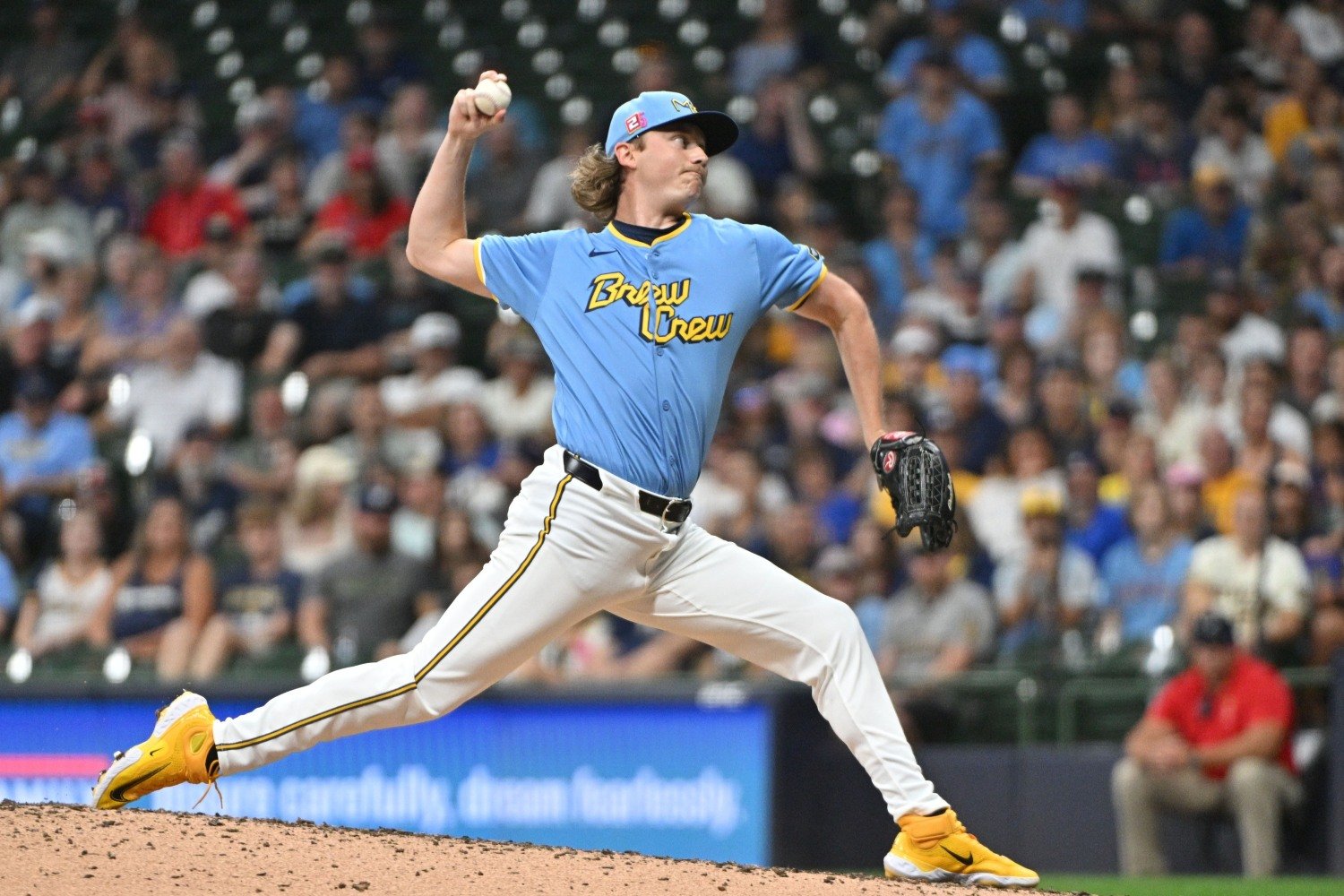 The Brewers could trade former closer Devin Williams in December because they possess an embarrassment of riches in the bullpen. Even with each reliever ascending one notch on the totem pole, the group should remain one of baseball’s best in the coming season. Trevor Megill handled the ninth inning with aplomb last season while a back injury sidelined Williams through the first half, and he appears the favorite to return to the role. Jared Koenig, Joel Payamps, and Bryan Hudson were impressive in setup roles. Abner Uribe needs more work controlling his triple-digit sinker and fiery temperament on the mound, but his tantalizing stuff keeps him in the late-inning conversation. Aaron Ashby could return to the bullpen this year, and prospects Jacob Misiorowski, Craig Yoho, and Logan Henderson may emerge there in a few months. It’s easy for flamethrowing Nick Mears to get lost in the shuffle. However, he may be as likely as anyone to assume an elevated role near the end of close games, at least to start the season. It didn’t happen down the stretch in 2024, after the Brewers sent pitching prospect Bradley Blalock to the Colorado Rockies to bring Mears to the Midwest. Opponents lit him up for a 7.30 ERA in 12 ⅓ innings, interrupted by a month-long stay on the injured list. The move was as much for the future as the short term, anyway. Mears was a development project with two additional years of control, and the Brewers hoped to maximize the elite stuff of a reliever with a career 4.93 ERA at the time of the trade. Optimizing his pitch usage presented an avenue for doing so. Notice in the visual below how the release and trajectory of Mears’s curveball have greater and earlier separation from his fastball and slider. Between the two breaking balls, his short slider created a tighter tunnel with his heater, yet he used both breaking offerings at nearly equal rates as a member of the Rockies. Mears started ramping up his slider usage in July and continued doing so as a Brewer, relegating the curveball to a show-me pitch against left-handed batters. The change made Mears more deceptive in most aspects of his brief post-trade work. He was in the strike zone more often, induced more in-zone whiffs, and coaxed more chases, fueling significant improvements to his strikeout and walk rates. Team Z-Contact% O-Contact% O-Swing% SwStr% K% BB% COL 83.9% 54.7% 30.2% 11.8% 28.1% 10.3% MIL 73.2% 53.8% 34.7% 17.2% 34.0% 5.7% That growth was drowned by a spontaneous home-run explosion. After allowing two all year with Colorado, Mears coughed up five with his new club. Mears, whose arsenal resembles Megill’s, will always battle the long ball. However, whereas the latter will likely see his home run rate rise in 2025, Mears appears due for positive regression in that realm, at least relative to his existing Brewers sample. His 1% home run rate and 4.2% HR/FB ratio at the time of the trade were unsustainably low; the second-half shift to the other extreme left him with a more realistic overall 2.7% home run rate. Mears will almost certainly trend closer to that figure than his post-trade 9.4% homer rate. Still, rotten luck was only partially responsible for the power surge, so banking purely on stabilization may not be enough. Four of those five homers came against Mears’s fastball, which opponents began torching when they made contact, particularly at the top of the zone. While running into a few fastballs in a small sample happens often, hitters deliberately took bigger hacks at high heaters. Their average swing speed on fastballs at the top of the zone increased by several ticks across the top rail from Mears's time in Colorado to that with the Crew. Take, for example, this two-pitch sequence against Matt Carpenter. Both offerings were elevated fastballs. Carpenter took a massive cut at the first and came up empty. He did the same on the second and was right on time, launching it into the right-field seats. mears_carpenter_hr.mp4 Mears adjusted how he came set midseason, after an opponent told him he was tipping pitches. Whether the issue took a new form in Milwaukee or he indeed masked his tell, hitters down the stretch appeared increasingly expectant of velocity at the top and acted accordingly. Fixing Mears starts with reducing confident swings against high fastballs. He and the Brewers could explore a couple of solutions. They could eschew high targets for more low-and-away heaters or throw fewer overall. In two dominant postseason outings, Mears threw 13 sliders and 12 fastballs. Perhaps he does need to mix in curveballs as slower pitches that also start at the top of the zone, even if it’s not the best conventional tunnel. If he was still tipping, further adjustments to his pre-pitch routine and mechanics are in order. With pitchers and catchers reporting this week, Mears enters camp among the arms with something to prove in Cactus League play. New looks from the right-hander may soon emerge as a story.
 -
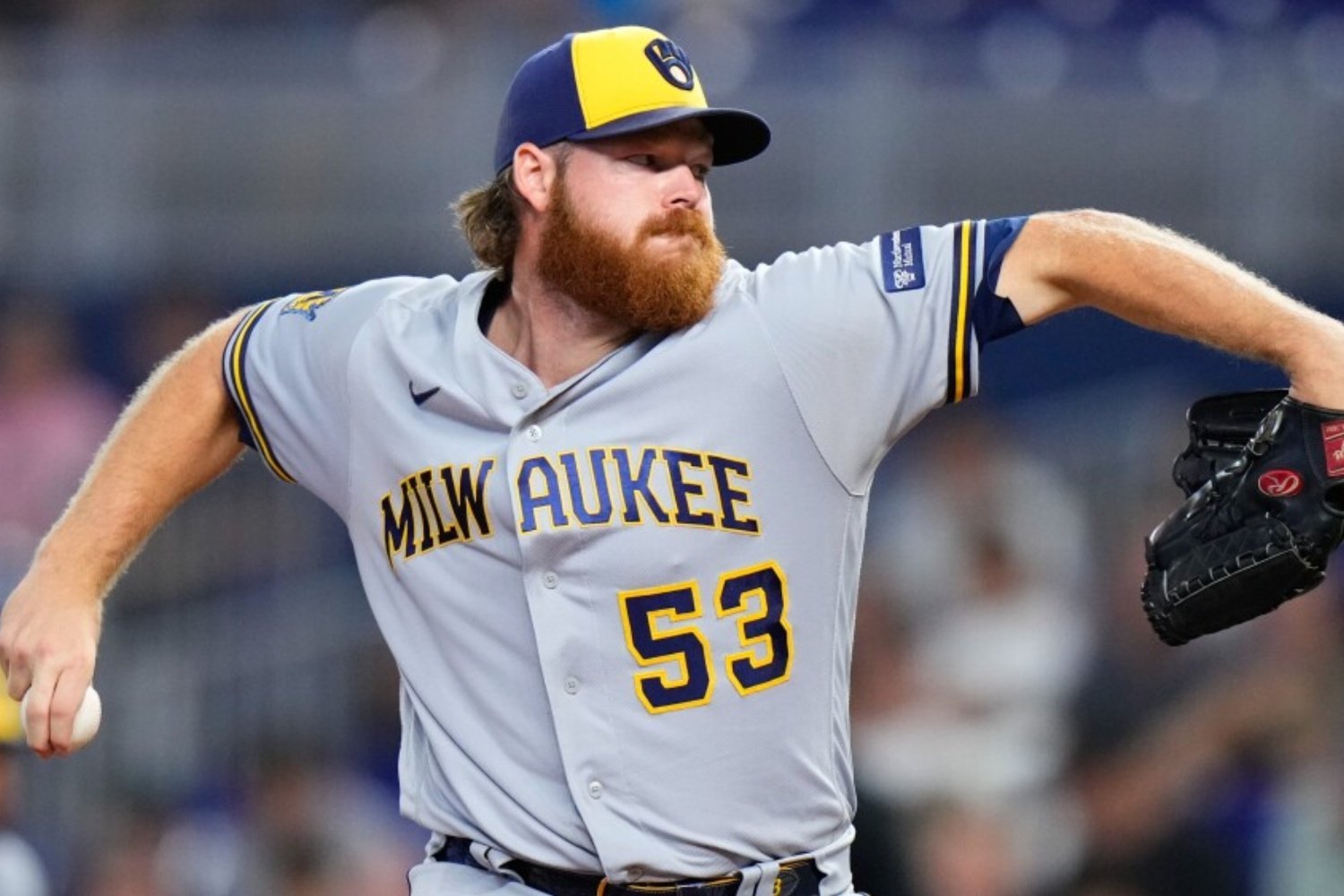 Brewers pitchers and catchers do not report to camp for a few more days, but the first nugget regarding a major spring training storyline has already surfaced. Earlier this week, Pat Murphy revealed to the Milwaukee Journal Sentinel’s Todd Rosiak that rehabbing pitcher Brandon Woodruff is unlikely to open the 2025 season on the active roster. That may be disheartening news to some, especially after Woodruff spoke positively of his status weeks ago, telling MLB.com’s Adam McCalvy that he was following his standard offseason training program after doctors cleared him to do so. It’s not a surprising development, though, nor is it a sign that Woodruff is behind schedule. It’s simply the first of what will be several reminders of the long and challenging road he faced after undergoing shoulder surgery and the murky prognosis that accompanied it. Elbow injuries have become alarmingly commonplace among professional pitchers, but corrective surgeries and rehab procedures are well-researched, straightforward, and reliable. Furthermore, while the elbow absorbs plenty of stress from the torque of throwing a baseball at high velocities, it’s a hinge joint with a limited function in the throwing motion. Shoulder operations are different. Not only are such surgeries less common, but the shoulder is a ball-and-socket joint responsible for moving the entire arm. Significant injury and repair leave more strength and range of motion to rebuild in recovery, creating a longer timeline, more potential roadblocks, and a greater risk that the pitcher cannot recapture his previous form. The Brewers have witnessed such complications firsthand. It took Jimmy Nelson nearly 21 months to return from what was almost a complete shoulder reconstruction. He resurfaced with a dramatically different arsenal — including a cutting four-seam fastball instead of a running one — that he couldn’t control, walking 16.2% of batters in 22 ineffective innings in 2019. Nelson found brief success as a reliever with the Los Angeles Dodgers before additional injuries ended his career. Aaron Ashby underwent a torn labrum repair in April 2023 and later characterized his rehab as adjusting to a new shoulder. He limped to an 8.60 ERA in 91.0 minor league innings from September through the following August, running an 18.9% walk rate while pitching with diminished velocity. He did not look like himself until a late-season move to the bullpen. Woodruff had a stronger starting point in his recovery. He required repair to only his anterior capsule during surgery instead of his entire shoulder and was more mechanically sound with better control than Ashby when healthy. Still, limited case studies of such procedures paint the probability of future success as a coin flip. Those invested in Woodruff's comeback attempt should discern that his physical recovery and productivity will progress on different timelines. He'll be healthy enough to pitch sometime in 2025, but his performance may take another year (or longer) to stabilize. Woodruff estimated he won’t have a reliable grasp on his post-surgery stuff until the second half of this upcoming season. If he must reinvent his approach without elite velocity, it will take time. The ZiPS projection system is optimistic about his rate output, forecasting a 3.44 ERA in 81 innings, but it’s unaware of the context surrounding his comeback attempt. If Woodruff approaches 100 innings as a capable back-of-the-rotation starter, it will constitute a successful comeback season in light of his journey, even if he may not view it that way. As one of the fiercest competitors in the Milwaukee clubhouse, Woodruff will be chomping at the bit to return to a big-league mound. The Brewers already established offseason guardrails for him, including no velocity readings, and will hand down more in the coming weeks. He may spend more time on the backfields and in minor-league games than in front of a public audience on the main field. Woodruff's return to the big-league mound will be one of the top stories in Brewers camp. It may take a bit longer than hoped, and he’s unlikely to be the pitcher he was before surgery, especially in 2025. Patience will be key.
 -
The Brewers and their former ace can see the light at the end of the tunnel in his recovery. However, Pat Murphy's initial spring update was a reminder that more work and potential complications still stand in the way of a successful return. Image courtesy of © Rich Storry/USA TODAY Sports The Brewers and their former ace can see the light at the end of the tunnel in his recovery. However, Pat Murphy's initial spring update was a reminder that more work and potential complications still stand in the way of a successful return. Brewers pitchers and catchers do not report to camp for a few more days, but the first nugget regarding a major spring training storyline has already surfaced. Earlier this week, Pat Murphy revealed to the Milwaukee Journal Sentinel’s Todd Rosiak that rehabbing pitcher Brandon Woodruff is unlikely to open the 2025 season on the active roster. That may be disheartening news to some, especially after Woodruff spoke positively of his status weeks ago, telling MLB.com’s Adam McCalvy that he was following his standard offseason training program after doctors cleared him to do so. It’s not a surprising development, though, nor is it a sign that Woodruff is behind schedule. It’s simply the first of what will be several reminders of the long and challenging road he faced after undergoing shoulder surgery and the murky prognosis that accompanied it. Elbow injuries have become alarmingly commonplace among professional pitchers, but corrective surgeries and rehab procedures are well-researched, straightforward, and reliable. Furthermore, while the elbow absorbs plenty of stress from the torque of throwing a baseball at high velocities, it’s a hinge joint with a limited function in the throwing motion. Shoulder operations are different. Not only are such surgeries less common, but the shoulder is a ball-and-socket joint responsible for moving the entire arm. Significant injury and repair leave more strength and range of motion to rebuild in recovery, creating a longer timeline, more potential roadblocks, and a greater risk that the pitcher cannot recapture his previous form. The Brewers have witnessed such complications firsthand. It took Jimmy Nelson nearly 21 months to return from what was almost a complete shoulder reconstruction. He resurfaced with a dramatically different arsenal — including a cutting four-seam fastball instead of a running one — that he couldn’t control, walking 16.2% of batters in 22 ineffective innings in 2019. Nelson found brief success as a reliever with the Los Angeles Dodgers before additional injuries ended his career. Aaron Ashby underwent a torn labrum repair in April 2023 and later characterized his rehab as adjusting to a new shoulder. He limped to an 8.60 ERA in 91.0 minor league innings from September through the following August, running an 18.9% walk rate while pitching with diminished velocity. He did not look like himself until a late-season move to the bullpen. Woodruff had a stronger starting point in his recovery. He required repair to only his anterior capsule during surgery instead of his entire shoulder and was more mechanically sound with better control than Ashby when healthy. Still, limited case studies of such procedures paint the probability of future success as a coin flip. Those invested in Woodruff's comeback attempt should discern that his physical recovery and productivity will progress on different timelines. He'll be healthy enough to pitch sometime in 2025, but his performance may take another year (or longer) to stabilize. Woodruff estimated he won’t have a reliable grasp on his post-surgery stuff until the second half of this upcoming season. If he must reinvent his approach without elite velocity, it will take time. The ZiPS projection system is optimistic about his rate output, forecasting a 3.44 ERA in 81 innings, but it’s unaware of the context surrounding his comeback attempt. If Woodruff approaches 100 innings as a capable back-of-the-rotation starter, it will constitute a successful comeback season in light of his journey, even if he may not view it that way. As one of the fiercest competitors in the Milwaukee clubhouse, Woodruff will be chomping at the bit to return to a big-league mound. The Brewers already established offseason guardrails for him, including no velocity readings, and will hand down more in the coming weeks. He may spend more time on the backfields and in minor-league games than in front of a public audience on the main field. Woodruff's return to the big-league mound will be one of the top stories in Brewers camp. It may take a bit longer than hoped, and he’s unlikely to be the pitcher he was before surgery, especially in 2025. Patience will be key. View full article
-
Recent Brewers pitching staffs have been islands of misfit toys, with some hurlers succeeding through deception and others with impressive raw stuff. Their recent signing straddles the line between both approaches, meaning Chris Hook and company must decide between two distinct paths to maximize his arsenal. Image courtesy of © Joe Nicholson-Imagn Images Recent Brewers pitching staffs have been islands of misfit toys, with some hurlers succeeding through deception and others with impressive raw stuff. Their recent signing straddles the line between both approaches, meaning Chris Hook and company must decide between two distinct paths to maximize his arsenal. The first sentence of the teaser paragraph above is not news to fans or analysts who have followed the Brewers closely in recent years. Last year, starters like Colin Rea, Tobias Myers, and Aaron Civale used great deception to help their unremarkable (or even poor) pitches play up. Relievers like Devin Williams and Trevor Megill—and, to lesser extents, Jared Koenig, Joel Payamps, Aaron Ashby, and Elvis Peguero—relied on remarkable velocity, movement, or both to close out late leads. It’s not a hard and fast rule. Bryan Hudson is among baseball’s most deceptive pitchers as a reliever, and Freddy Peralta’s raw pitch traits are his strength as a starter. For the most part, though, the Brewers have built around pitch-masking over stuff in the rotation, and vice-versa in the bullpen. Enter Elvin Rodriguez, whom the club signed to a split contract a few weeks ago. The 26-year-old stands with a foot in each realm, featuring a deep arsenal headlined by a couple of intriguing pitches. That means he could fit into Milwaukee’s staff in multiple capacities, but it also puts the pitching development brass at a potential crossroads in choosing the best way to further his development. Rodriguez was a starter before relocating to Japan, where he remained somewhat stretched out as a multi-inning reliever for Nippon Professional Baseball’s Yakult Swallows. He maintained his full six-pitch mix in 2024, and the chasm between the best and worst of his repertoire is wide. The standouts are a mid-90s backspin four-seamer and a deadly slider. Both will look slightly less impressive by comparison to big-league stuff upon Rodriguez’s Stateside return (those Stuff+ values are for NPB, and don't make direct comparisons to MLB offerings), but they’re still strong pitches that should headline his mix in any role. Rodriguez’s fastball averaged 18.7 inches of induced vertical break in the minor leagues in 2023, but his high-three-quarters arm slot and game plan of working the ball low and away to right-handers meant his -5.2 vertical approach angle was worse than average. In other words, it doesn’t have quite the rising illusion one might expect from his break numbers. Its carry is still decent, but it doesn't materially separate from what hitters anticipate when they see the ball out of his hand. His slider has the look of a plus pitch, even at the game’s highest level. With its 169 Stuff+ grade and 44% whiff rate, it was an elite pitch overseas. It performed similarly in Triple-A in 2023, where he added movement to morph it into more of a sweeping breaker while in the Tampa Bay Rays organization. Despite its fantastic performance, he deployed it just 13.1% of the time last year and at only a 19.2% rate against righties. That ought to change as a Brewer. Here's what his pitch movement looked like in that stint with Tampa in 2023; notice the slider moves more to the glove side than an average pitch of the same type, while the fastball is rising. The rest of his arsenal is well-rounded but less enthralling. Rodriguez’s curveball and changeup were great for inducing rollover swings, but the former rarely produced whiffs. NPB opponents destroyed his cutter. The extremely limited quantity of sinkers hints that it’s not yet a fully developed pitch, and it’s one Rodriguez may struggle to throw anyway from his slot. In the graphic above, you can see the extreme lack of vertical depth on the changeup, indicating that he might have a hard time pronating, which would make it harder to succeed with either the change or the sinker (though, not impossible). There’s enough here for the Brewers to apply the deceptive kitchen-sink approach, especially if they think Rodriguez can contribute as a bulk pitcher. Tightening up the cutter and sinker would give him the three-fastball mix they love, and a respectable curveball and changeup should help stave off a severe platoon split. It’s an unexciting swingman profile, but contending teams need such pitchers to stay afloat throughout a lengthy regular season. Rodriguez has a higher ceiling as a short-range reliever, where he could excel as a true “stuff” hurler. Instead of spending time fine-tuning his fringe pitches, he and the Brewers could scrap them and maximize what he does best. Simplifying his game plan to a heavy dose of sliders and elevated fastballs, plus some curveballs and changeups to lefties, could transform Rodriguez into a high-strikeout monster in the middle innings. With pitchers and catchers reporting for spring training next week, more information is coming regarding Rodriguez’s role. In the meantime, it’s easy to envision two distinct paths for his Brewers tenure. His new coaches have no shortage of ways to mold his arsenal as they deem best for his output and the club’s needs. View full article
-
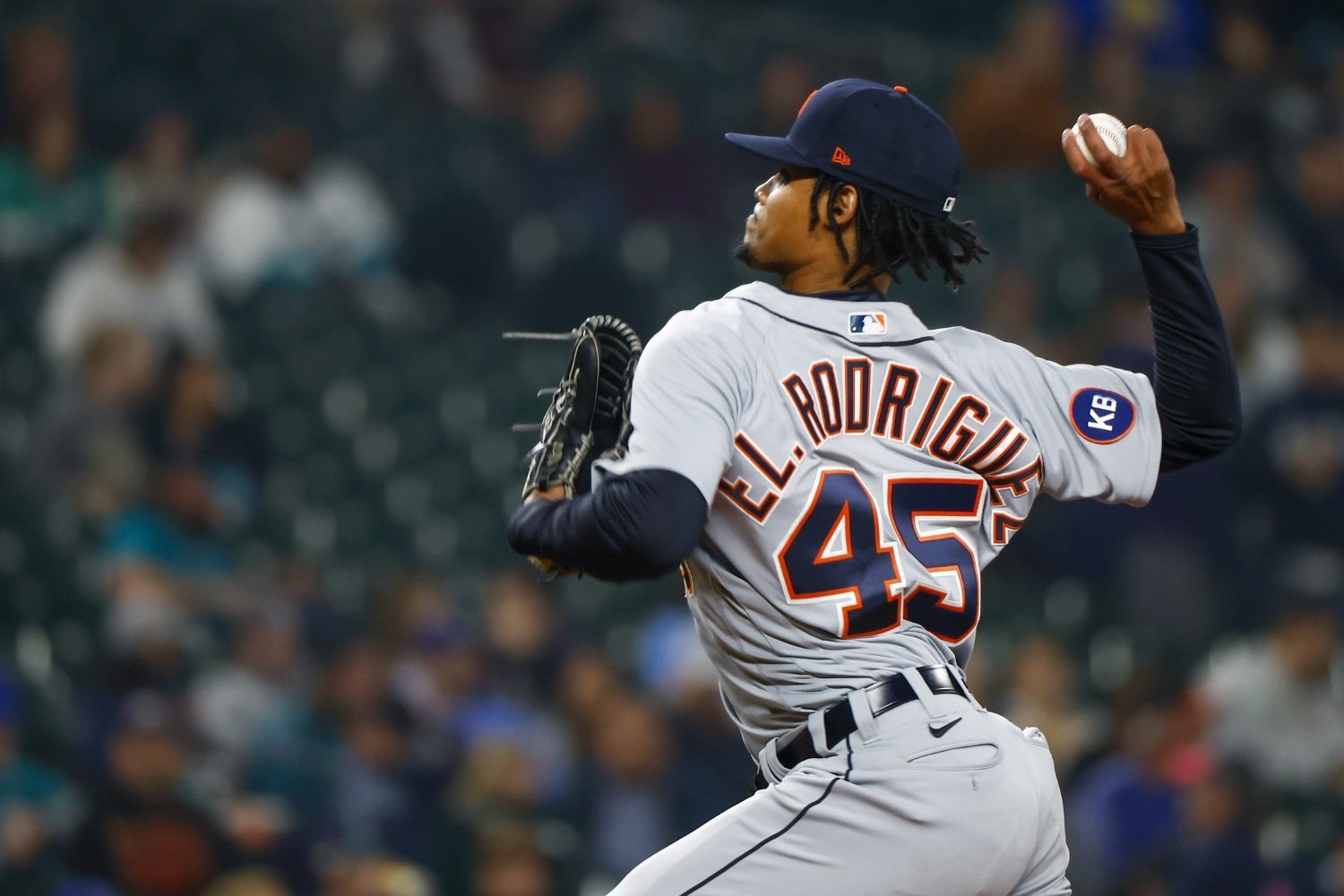 The first sentence of the teaser paragraph above is not news to fans or analysts who have followed the Brewers closely in recent years. Last year, starters like Colin Rea, Tobias Myers, and Aaron Civale used great deception to help their unremarkable (or even poor) pitches play up. Relievers like Devin Williams and Trevor Megill—and, to lesser extents, Jared Koenig, Joel Payamps, Aaron Ashby, and Elvis Peguero—relied on remarkable velocity, movement, or both to close out late leads. It’s not a hard and fast rule. Bryan Hudson is among baseball’s most deceptive pitchers as a reliever, and Freddy Peralta’s raw pitch traits are his strength as a starter. For the most part, though, the Brewers have built around pitch-masking over stuff in the rotation, and vice-versa in the bullpen. Enter Elvin Rodriguez, whom the club signed to a split contract a few weeks ago. The 26-year-old stands with a foot in each realm, featuring a deep arsenal headlined by a couple of intriguing pitches. That means he could fit into Milwaukee’s staff in multiple capacities, but it also puts the pitching development brass at a potential crossroads in choosing the best way to further his development. Rodriguez was a starter before relocating to Japan, where he remained somewhat stretched out as a multi-inning reliever for Nippon Professional Baseball’s Yakult Swallows. He maintained his full six-pitch mix in 2024, and the chasm between the best and worst of his repertoire is wide. The standouts are a mid-90s backspin four-seamer and a deadly slider. Both will look slightly less impressive by comparison to big-league stuff upon Rodriguez’s Stateside return (those Stuff+ values are for NPB, and don't make direct comparisons to MLB offerings), but they’re still strong pitches that should headline his mix in any role. Rodriguez’s fastball averaged 18.7 inches of induced vertical break in the minor leagues in 2023, but his high-three-quarters arm slot and game plan of working the ball low and away to right-handers meant his -5.2 vertical approach angle was worse than average. In other words, it doesn’t have quite the rising illusion one might expect from his break numbers. Its carry is still decent, but it doesn't materially separate from what hitters anticipate when they see the ball out of his hand. His slider has the look of a plus pitch, even at the game’s highest level. With its 169 Stuff+ grade and 44% whiff rate, it was an elite pitch overseas. It performed similarly in Triple-A in 2023, where he added movement to morph it into more of a sweeping breaker while in the Tampa Bay Rays organization. Despite its fantastic performance, he deployed it just 13.1% of the time last year and at only a 19.2% rate against righties. That ought to change as a Brewer. Here's what his pitch movement looked like in that stint with Tampa in 2023; notice the slider moves more to the glove side than an average pitch of the same type, while the fastball is rising. The rest of his arsenal is well-rounded but less enthralling. Rodriguez’s curveball and changeup were great for inducing rollover swings, but the former rarely produced whiffs. NPB opponents destroyed his cutter. The extremely limited quantity of sinkers hints that it’s not yet a fully developed pitch, and it’s one Rodriguez may struggle to throw anyway from his slot. In the graphic above, you can see the extreme lack of vertical depth on the changeup, indicating that he might have a hard time pronating, which would make it harder to succeed with either the change or the sinker (though, not impossible). There’s enough here for the Brewers to apply the deceptive kitchen-sink approach, especially if they think Rodriguez can contribute as a bulk pitcher. Tightening up the cutter and sinker would give him the three-fastball mix they love, and a respectable curveball and changeup should help stave off a severe platoon split. It’s an unexciting swingman profile, but contending teams need such pitchers to stay afloat throughout a lengthy regular season. Rodriguez has a higher ceiling as a short-range reliever, where he could excel as a true “stuff” hurler. Instead of spending time fine-tuning his fringe pitches, he and the Brewers could scrap them and maximize what he does best. Simplifying his game plan to a heavy dose of sliders and elevated fastballs, plus some curveballs and changeups to lefties, could transform Rodriguez into a high-strikeout monster in the middle innings. With pitchers and catchers reporting for spring training next week, more information is coming regarding Rodriguez’s role. In the meantime, it’s easy to envision two distinct paths for his Brewers tenure. His new coaches have no shortage of ways to mold his arsenal as they deem best for his output and the club’s needs.
 -
Trevor Megill earned his status as the favorite to take over the ninth inning for good, but a driver of his previous success may evaporate in 2025. That holds implications for the evolving late-inning picture in Milwaukee. Image courtesy of © Denny Medley-Imagn Images Trevor Megill earned his status as the favorite to take over the ninth inning for good, but a driver of his previous success may evaporate in 2025. That holds implications for the evolving late-inning picture in Milwaukee. Trevor Megill fits the archetype of a dominant late-inning reliever. He’s big, standing 6-foot-8 and weighing just shy of 260 pounds. He throws hard, averaging 98.8 miles per hour with a four-seam fastball he threw 72% of the time last year. Megill’s approach is simple: fire the ball within the strike zone and let his raw stuff do the work. There are no gimmicks. For flamethrowing relievers who lean predominantly on riding heaters with minimal horizontal movement, extreme outcomes are common. Hitters often swing hopelessly late, underneath the ball, or both, particularly at the top of the zone. When they time it up, though, the pitch’s velocity and shape mean it screams off the barrel in the air. A Jekyll-and-Hyde act is common for these kinds of relievers, sometimes within a single outing. They're untouchable in most plate appearances but get crushed when they're not. The result is often extreme strikeout and home-run rates, and an amusing juxtaposition of elite swing-and-miss numbers with jarring quality-of-contact metrics. Josh Hader is the most prominent example from recent Brewers history. Megill mostly lived up to that profile in 2024. He punched out 27.3% of opponents while generating whiffs on 29.7% of swings, but he also allowed an average exit velocity of 91.2 mph and a 42.4% hard-hit rate (percentage of batted balls hit at least 95 mph). Among pitchers to throw at least 30 innings, his 35.6% fly ball rate was the 19th-highest. There was one key difference, though: he evaded the long ball. Megill allowed just four home runs in 46 ⅓ innings. Only 2.2% of opponent plate appearances ended in a homer; the league average was 3.0%. Despite being an extreme fly-ball pitcher who surrendered plenty of loud contact, Megill’s 7.1% home-run rate on fly balls was less than half the league average of 15.6%. That made him an extreme outlier, even though most fly-ball pitchers do allow fewer homers as a percentage of their fly balls than others. Within the aforementioned list of pitchers, there were 38 who allowed a fly-ball rate of at least 30% and a hard-hit rate of at least 40%. Their average HR/FB was 16.5%. Megill was one of just two hurlers with a single-digit rate, trailing only Carlos Estévez’s 6.1%. In other words, it’s highly improbable for a pitcher to allow so much loud contact and so many fly balls while having so few of them leave the yard. Megill’s case was partially explainable—he allowed just a 33% hard-hit rate on fly balls last year, another thing typical of fly-ball guys (since usually, when a hitter hits a fly ball off a fly-ball pitcher, the pitcher won the battle to set the trajectory of the batted ball)—but given the small sample size, his arsenal, and the documented year-to-year inconsistencies of HR/FB, it cannot be reliably identified as a legitimate and repeatable skill. That holds implications for Megill and the structure of a post-Devin Williams bullpen. He handled closing duties with aplomb as Williams recovered from stress fractures in his back, and he's the leading candidate to slide back into the role moving forward. Asking him to replicate the near-automatic dominance of Milwaukee closers before him was already a tall order, and the threat of the long ball means the Brewers should be prepared for less stability in the ninth inning than they’ve enjoyed in recent years. Megill will still be a vital member of Pat Murphy’s bullpen, but he’s more likely to be a solid reliever moving forward than an elite one. With a league-average HR/FB, he would have had a home-run rate around 3.8% in 2024, vaulting from the right side of average to the wrong side of it by about the same distance. For 2025, Steamer and ZiPS each project an ERA between 3.40 and 3.50, partially because of the home runs. The Brewers, who boast one of the deepest relief corps in baseball, will still do fine with that version of Megill. He's earned consideration to close without an interim tag, but even if he lands the job out of spring training, the club should entertain the possibility that someone else may emerge as the best candidate. Megill's home-run rate could become one of the more impactful factors in how Murphy conducts the late innings. View full article
-
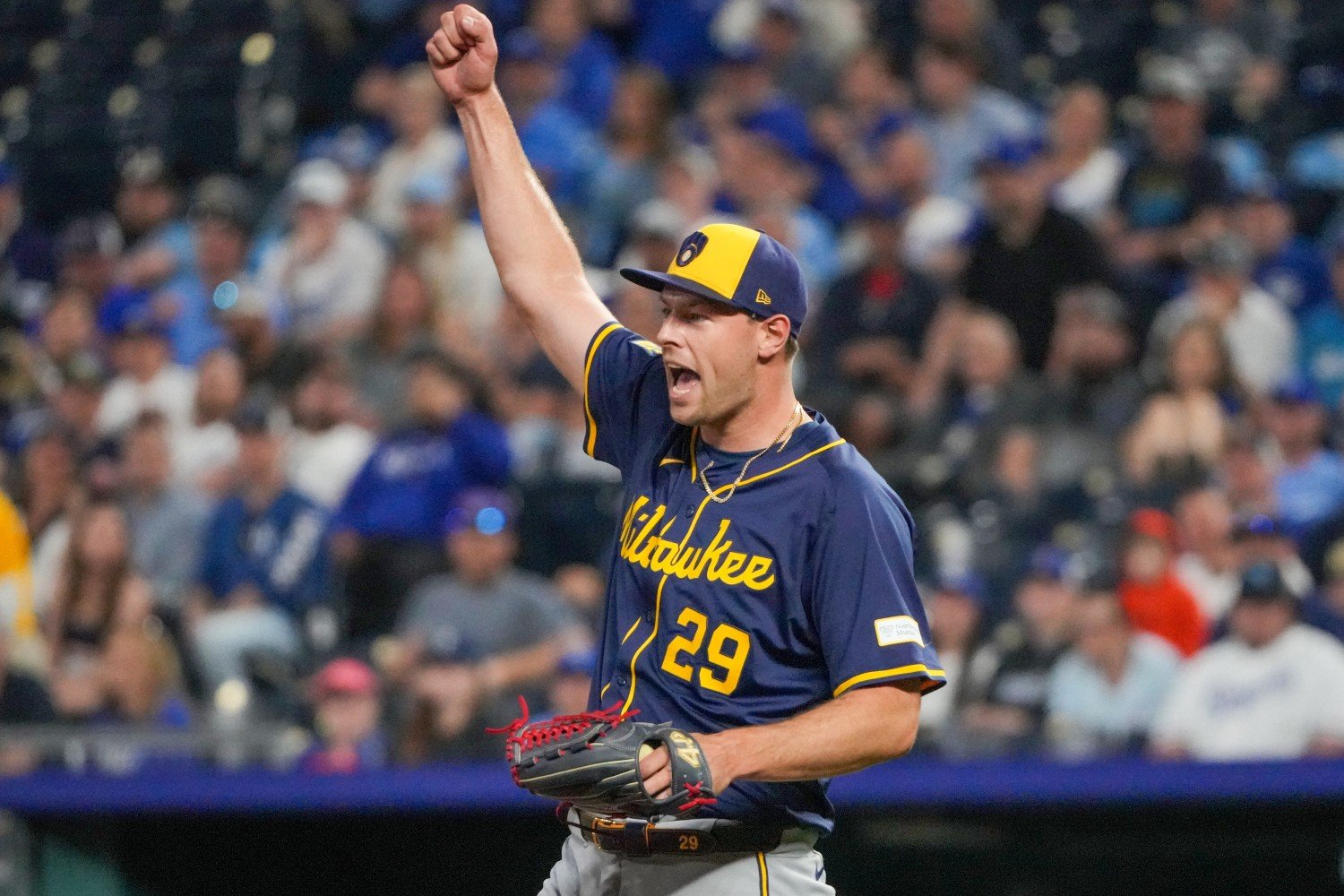 Trevor Megill fits the archetype of a dominant late-inning reliever. He’s big, standing 6-foot-8 and weighing just shy of 260 pounds. He throws hard, averaging 98.8 miles per hour with a four-seam fastball he threw 72% of the time last year. Megill’s approach is simple: fire the ball within the strike zone and let his raw stuff do the work. There are no gimmicks. For flamethrowing relievers who lean predominantly on riding heaters with minimal horizontal movement, extreme outcomes are common. Hitters often swing hopelessly late, underneath the ball, or both, particularly at the top of the zone. When they time it up, though, the pitch’s velocity and shape mean it screams off the barrel in the air. A Jekyll-and-Hyde act is common for these kinds of relievers, sometimes within a single outing. They're untouchable in most plate appearances but get crushed when they're not. The result is often extreme strikeout and home-run rates, and an amusing juxtaposition of elite swing-and-miss numbers with jarring quality-of-contact metrics. Josh Hader is the most prominent example from recent Brewers history. Megill mostly lived up to that profile in 2024. He punched out 27.3% of opponents while generating whiffs on 29.7% of swings, but he also allowed an average exit velocity of 91.2 mph and a 42.4% hard-hit rate (percentage of batted balls hit at least 95 mph). Among pitchers to throw at least 30 innings, his 35.6% fly ball rate was the 19th-highest. There was one key difference, though: he evaded the long ball. Megill allowed just four home runs in 46 ⅓ innings. Only 2.2% of opponent plate appearances ended in a homer; the league average was 3.0%. Despite being an extreme fly-ball pitcher who surrendered plenty of loud contact, Megill’s 7.1% home-run rate on fly balls was less than half the league average of 15.6%. That made him an extreme outlier, even though most fly-ball pitchers do allow fewer homers as a percentage of their fly balls than others. Within the aforementioned list of pitchers, there were 38 who allowed a fly-ball rate of at least 30% and a hard-hit rate of at least 40%. Their average HR/FB was 16.5%. Megill was one of just two hurlers with a single-digit rate, trailing only Carlos Estévez’s 6.1%. In other words, it’s highly improbable for a pitcher to allow so much loud contact and so many fly balls while having so few of them leave the yard. Megill’s case was partially explainable—he allowed just a 33% hard-hit rate on fly balls last year, another thing typical of fly-ball guys (since usually, when a hitter hits a fly ball off a fly-ball pitcher, the pitcher won the battle to set the trajectory of the batted ball)—but given the small sample size, his arsenal, and the documented year-to-year inconsistencies of HR/FB, it cannot be reliably identified as a legitimate and repeatable skill. That holds implications for Megill and the structure of a post-Devin Williams bullpen. He handled closing duties with aplomb as Williams recovered from stress fractures in his back, and he's the leading candidate to slide back into the role moving forward. Asking him to replicate the near-automatic dominance of Milwaukee closers before him was already a tall order, and the threat of the long ball means the Brewers should be prepared for less stability in the ninth inning than they’ve enjoyed in recent years. Megill will still be a vital member of Pat Murphy’s bullpen, but he’s more likely to be a solid reliever moving forward than an elite one. With a league-average HR/FB, he would have had a home-run rate around 3.8% in 2024, vaulting from the right side of average to the wrong side of it by about the same distance. For 2025, Steamer and ZiPS each project an ERA between 3.40 and 3.50, partially because of the home runs. The Brewers, who boast one of the deepest relief corps in baseball, will still do fine with that version of Megill. He's earned consideration to close without an interim tag, but even if he lands the job out of spring training, the club should entertain the possibility that someone else may emerge as the best candidate. Megill's home-run rate could become one of the more impactful factors in how Murphy conducts the late innings.
 -
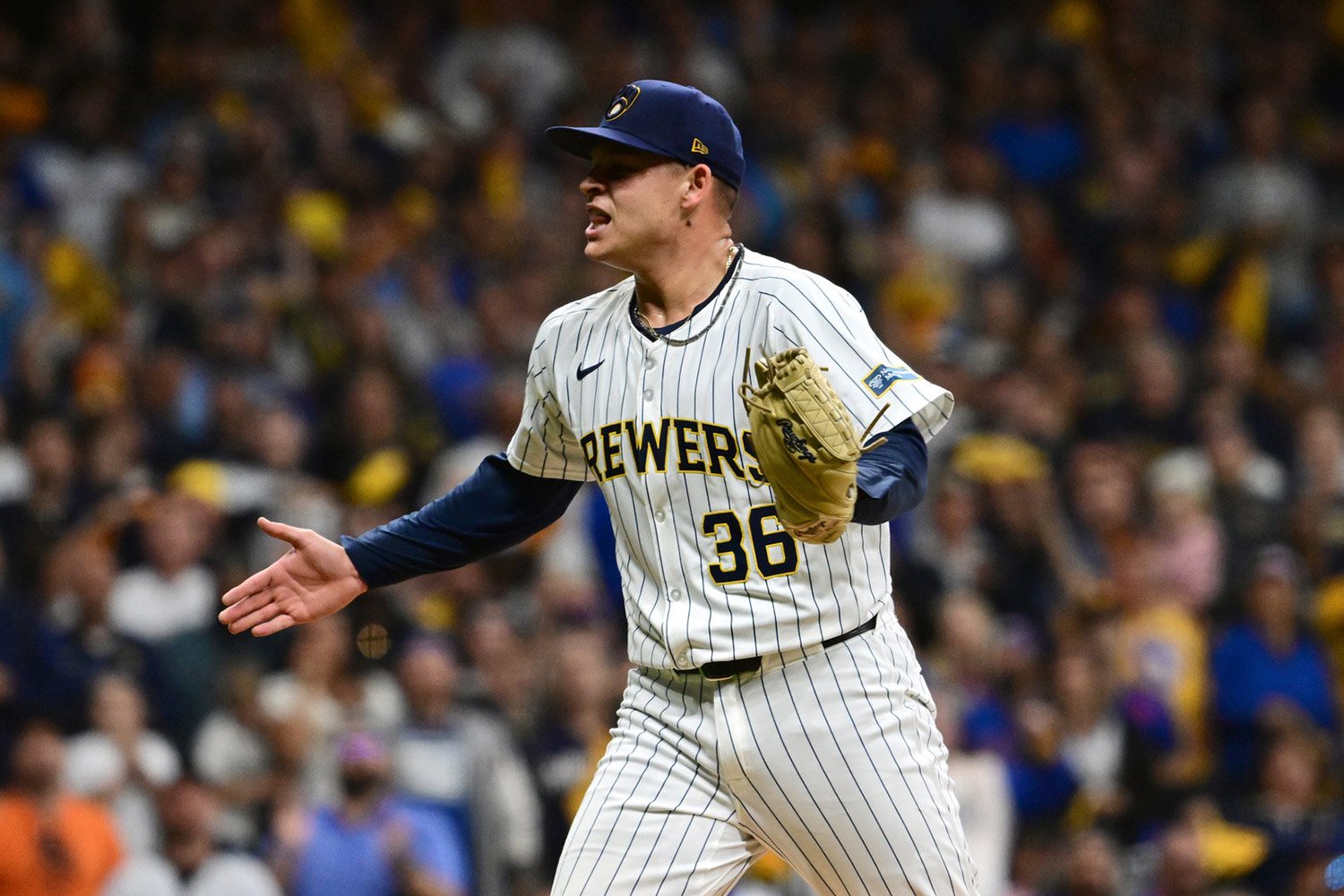 Last week, Baseball Prospectus unveiled its latest line of pitch arsenal metrics. Unlike most models developed in recent years, which attempt to boil the various attributes of a pitch into a single stuff-based rating, these measurements try to quantify deception and the interplay between pitch types. More specifically, these metrics are designed to study how deeper arsenals can be effective, even if they may not jump out stuff-wise. Models like Stuff+ often favor relievers, who usually throw two or three pitches at high velocity for no more than one turn through an opposing lineup. By contrast, starting pitchers must give hitters more looks to counter increased familiarity with each at-bat and work deep into games. The complete primer is free to read here, but to summarize, the folks at Baseball Prospectus developed four metrics to measure how effectively pitchers with several pitch types create deception: Pitch Type Probability: The probability a hitter will correctly identify a pitch before he must make a swing decision, based on release point, early trajectory, and the count in which the pitch was thrown. Movement Spread: The size of the distribution of possible pitch shapes. In other words, how great is the variation of movement the hitter could see on any given pitch? Velocity Spread: The same as movement spread, but for velocity. Surprise Factor: How surprising the pitch’s movement was to the hitter based on movement spread. Some important caveats are that deception alone does not correlate with success, nor is it a total replacement for great stuff. A pitcher with less deception but nastier pitches may enjoy better results than a pitcher with more deception but worse stuff. There is no one-size-fits-all blueprint for productive pitching. Rather, several permutations of stuff, deception, command, and sequencing can lead to positive outcomes, with the precise mix varying for each hurler. Deception played a key role in the 2024 Brewers’ success in building a patchwork rotation amid a myriad of injuries. This site has featured plenty of coverage directly from the clubhouse about how Chris Hook and company value and maximize masking pitches, whether it entailed encouraging pitchers to throw multiple fastball variations or adding pitches to fill gaps in a pitcher’s movement spread. It is unsurprising, then, that such a staff was filled with standout performers in these new metrics. Most of Milwaukee’s bulk pitchers had some of the least impressive stuff in baseball, but they succeeded by making it extremely challenging to identify what pitch they had thrown before hitters had to make a decision. That’s a tower of blue in the stuff column and a sea of red throughout the rest of the table. Colin Rea, Frankie Montas, and Tobias Myers, each of whom took turns carrying the rotation for stretches, had some of the lowest pitch type probabilities in the league. Those who didn’t were soundly above average in multiple other categories. None of these guys overpowered hitters with raw stuff, but they created a challenging at-bat by making pitches look similar out of hand, giving hitters wide ranges of movement and velocity to cover, violating their expectations with a pitch’s movement, or all of the above. These figures also further explain why the Brewers targeted pitchers like Montas and Aaron Civale as midseason additions to the rotation. Neither had inspiring numbers at the time, but both had the deceptive potential the Crew has handled well in recent seasons. New models rarely introduce breakthrough discoveries about effective pitching. Instead, they quantify what most baseball people already knew, making those skills and strategies easier to identify, develop, and repeat. That’s the case here. Mixing speeds and locations while making everything look similar to the hitter at release has always been among the keys to working deep into games. As these stats are refined further and more granular splits become available to the public, there will be opportunities for further analysis. For now, they present a more concrete way to recognize pitchability while shedding more light on how the 2024 Brewers kept chugging along by turning overlooked pitchers into quality innings-eaters.
- 3 comments
-
- 1
-
-
- frankie montas
- colin rea
- (and 2 more)
-
The 2025 Brewers Need a Resurgent Rhys Hoskins. Will They Get One?
Jack Stern posted an article in Brewers
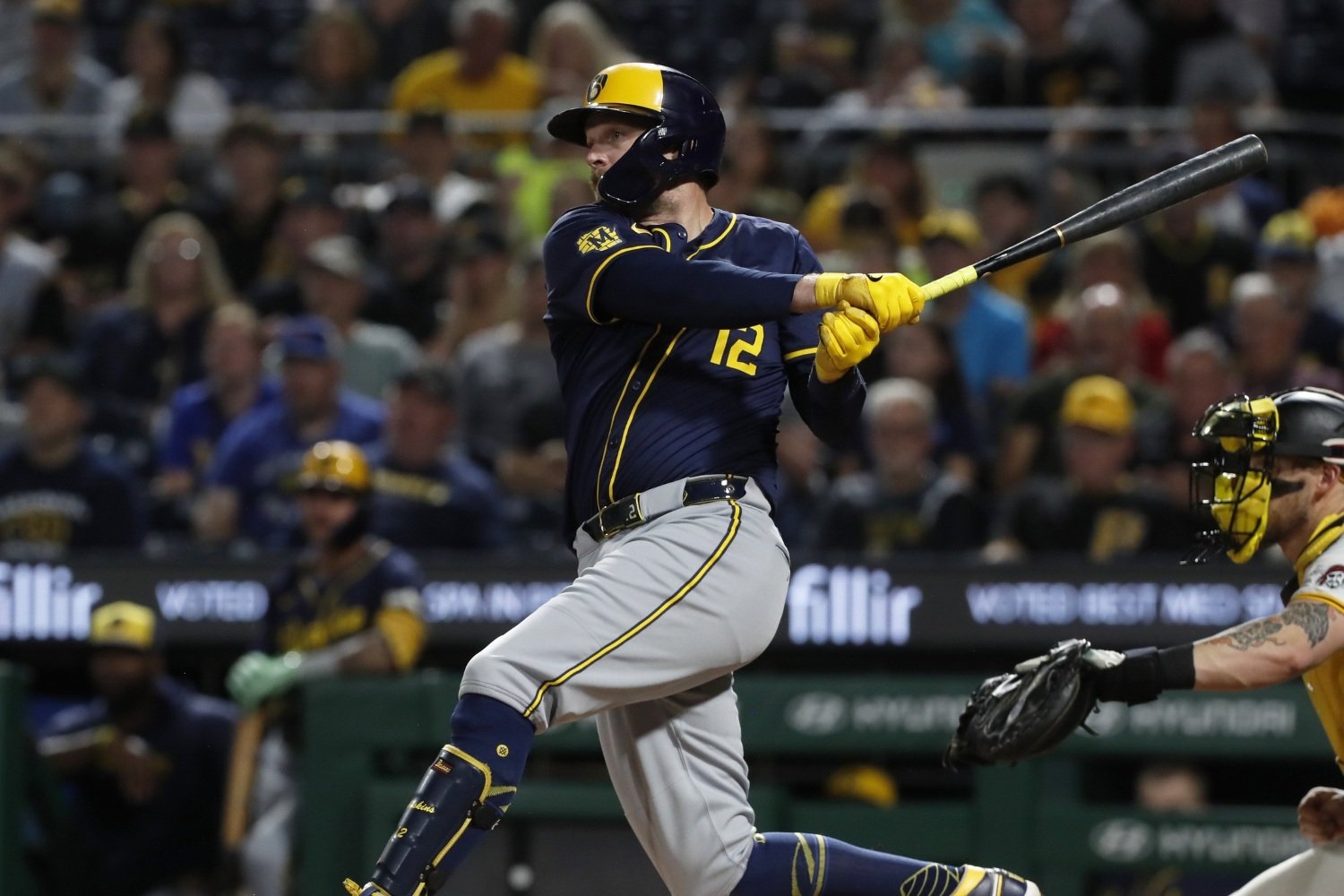 In Year One, the partnership between Rhys Hoskins and the Milwaukee Brewers was a mixed bag. While the veteran first baseman quickly settled into a role as one of Pat Murphy’s clubhouse pillars, the same was not true on the field. Hoskins came to Milwaukee with a career line of .242/.353/.492 (126 wRC+), averaging 36 home runs per 162 games. He hit 26 home runs in 2024, but slashed just .214/.303/.419 for a 100 wRC+. As a league-average hitter and a poor defender at first base, the 31-year-old was a replacement-level player, finishing the year with 0.1 fWAR and -0.2 bWAR. After the worst season of his career, Hoskins (unsurprisingly) picked up the $18-million player option for 2025 that always appeared to be a safety net in case he was not his former self upon returning from ACL surgery. While the Brewers presumably would prefer to offload that salary—and the $4 million they will owe him in a mutual option buyout next winter—via trade, such an opportunity always seemed unlikely. Hoskins is expected to return for a second season in the Cream City, with both parties hoping for improved performance. The former Phillie joined the Brewers with a reputation as a feared fastball hitter. Hoskins was one of 385 hitters from 2017 through 2022 to log at least 500 at-bats that ended on a four-seamer or sinker; his .559 slugging percentage against those pitches ranked in the 88th percentile, and his 16.6% whiff rate ranked in the 62nd percentile. The ability to handle velocity laid the groundwork for consistent power production throughout the first six seasons of his career. Hoskins held his own against hard stuff at the top of the zone, whiffing less than the average right-handed hitter. Hoskins didn’t do much damage against up-and-in fastballs, nor did he hit the ball particularly hard when pitchers tried to bust him inside. Instead, he could fight off the heater high and tight and hit the remaining inside fastballs at ideal launch angles for line-drive hits. In the clip below from 2022, Hoskins fouls back a 99-mph fastball from Spencer Strider in a full count. 22-high-fb-foul.mp4 Here he is taking a 94-mph Miles Mikolas fastball on the inner third back up the middle for a base hit. Hoskins didn’t crush this ball, hitting it just 84 mph, but he got started early enough and caught it far enough in front of him to line it at an ideal 14-degree launch angle for a clean single. 22-inside-fb-1b.mp4 Finally, here’s a firmer liner hit when Sandy Alcántara attempted to eat him up inside with a 99-mph sinker. 22-low-fb-1b.mp4 The theme across these pitches is how quickly Hoskins turned on them. He had the strength and mobility to seamlessly shift his weight from his back leg to power an explosive but controlled swing. Channeling and transferring that lower-body strength brought his hands through the zone at the right time and angle to meet the ball in a good spot, producing solid contact. Hoskins still slugged a respectable .442 against four-seamers and sinkers in 2024. However, that was a stark decline from his most productive seasons, and a deeper dive reveals more red flags. Instead of hitting fastballs all over the zone, his production was mostly limited to ones over the middle of the plate. Hoskins could no longer catch up to many of the high fastballs he could previously fight off. His whiff rate on four-seamers and sinkers spiked along the top rail of the zone. What was once a key driver of his success was now a weakness, imparting a trickle-down effect that dampened his production. When hitters can react successfully to elevated velocity, waiting back on soft pitches and even fastballs at the bottom of the zone becomes easier. Losing that ability puts them behind the 8-ball, often prompting a pivot to guess hitting. They may try to anticipate hard stuff, and start their swings earlier to reach it. An incorrect guess leaves them hopelessly out in front of any other pitch. Hoskins often looked like a hitter trying to cheat for velocity he could not otherwise reach. It worked decently at times, as he still punished mistakes. However, it often left him ahead of pitches he once handled capably. From 2022 to 2024, his slugging percentage dropped from .374 to .316 against breaking balls and .563 to .479 against offspeed pitches. His pull rate jumped to a career-high 52.6%. In 2024, an elevated 99-mph fastball near the hands often made Hoskins look helpless. The empty swing in the clip below was a frequent sight. 24-high-fb-whiff2.mp4 So, too, was this routine groundout against a low-and-in fastball. 24-low-fb-gb2.mp4 Instead of fighting off the high fastball, catching the inside one with the sweet spot of the bat, and crushing the mistake, Hoskins was late on the high pitch and ahead of the low one. The former produced more whiffs and pop-ups, and the latter yielded weak rollovers because he pulled off out in front of the pitch. Hoskins spent most of the year caught in between, the most dreaded space for any hitter’s timing. Compare the foul ball clip with the swing-and-miss one. Hoskins’s movements are less compact and lack explosiveness. The stable lower half is no longer present to bring his torso with it, so his upper body lags behind as it drags through. He got the front hip open earlier on the left, generating the torque to whip the barrel through and find the ball. For hitters with long swings, like Hoskins's, that's the key to hitting the inside pitch. He wasn't doing it in 2024. Some of these trends were already present early in the year, even as Hoskins mirrored his established output with a .233/.340/.474 line and nine home runs through May 13. The issues worsened when he returned from a hamstring injury at the end of that month, forgoing a minor-league rehab assignment to play in a homecoming series in Philadelphia. Hoskins hit just .213/.289/.313 in June, displaying reduced bat speed. For most of the season, Hoskins looked like a player without his legs under him. Now, an additional year after surgery, the question is how much of that lower body strength and mobility will return in his second year in Milwaukee. His outlook is muddied by the fact that he is likely exiting his physical prime. Hoskins will turn 32 in March, the age at which swing speed begins to decline steadily. Most projection systems forecast only marginal improvement in 2025. Steamer expects a 106 wRC+, ZiPS a 105 OPS+, and Marcel a .229/.311/.425 slash. PECOTA is more pessimistic, assigning Hoskins a 50th-percentile line of .209/.292/.386. That would constitute another underwhelming season for Hoskins and the Brewers, who will almost certainly bank on internal improvement to replace Willy Adames in the power department. Both player and team would benefit significantly from a bounce-back showing by the slugging first baseman. Restored health and mobility could help him rebound from a career-worst season, but that shouldn't be expected. Instead, Hoskins will have to prove he can turn back the clock.
 -
The veteran slugger was not moving like his old self in his first season in Milwaukee. Can he rediscover his past form, or is this the new normal for the next stage of his career? Image courtesy of © Charles LeClaire-Imagn Images The veteran slugger was not moving like his old self in his first season in Milwaukee. Can he rediscover his past form, or is this the new normal for the next stage of his career? In Year One, the partnership between Rhys Hoskins and the Milwaukee Brewers was a mixed bag. While the veteran first baseman quickly settled into a role as one of Pat Murphy’s clubhouse pillars, the same was not true on the field. Hoskins came to Milwaukee with a career line of .242/.353/.492 (126 wRC+), averaging 36 home runs per 162 games. He hit 26 home runs in 2024, but slashed just .214/.303/.419 for a 100 wRC+. As a league-average hitter and a poor defender at first base, the 31-year-old was a replacement-level player, finishing the year with 0.1 fWAR and -0.2 bWAR. After the worst season of his career, Hoskins (unsurprisingly) picked up the $18-million player option for 2025 that always appeared to be a safety net in case he was not his former self upon returning from ACL surgery. While the Brewers presumably would prefer to offload that salary—and the $4 million they will owe him in a mutual option buyout next winter—via trade, such an opportunity always seemed unlikely. Hoskins is expected to return for a second season in the Cream City, with both parties hoping for improved performance. The former Phillie joined the Brewers with a reputation as a feared fastball hitter. Hoskins was one of 385 hitters from 2017 through 2022 to log at least 500 at-bats that ended on a four-seamer or sinker; his .559 slugging percentage against those pitches ranked in the 88th percentile, and his 16.6% whiff rate ranked in the 62nd percentile. The ability to handle velocity laid the groundwork for consistent power production throughout the first six seasons of his career. Hoskins held his own against hard stuff at the top of the zone, whiffing less than the average right-handed hitter. Hoskins didn’t do much damage against up-and-in fastballs, nor did he hit the ball particularly hard when pitchers tried to bust him inside. Instead, he could fight off the heater high and tight and hit the remaining inside fastballs at ideal launch angles for line-drive hits. In the clip below from 2022, Hoskins fouls back a 99-mph fastball from Spencer Strider in a full count. 22-high-fb-foul.mp4 Here he is taking a 94-mph Miles Mikolas fastball on the inner third back up the middle for a base hit. Hoskins didn’t crush this ball, hitting it just 84 mph, but he got started early enough and caught it far enough in front of him to line it at an ideal 14-degree launch angle for a clean single. 22-inside-fb-1b.mp4 Finally, here’s a firmer liner hit when Sandy Alcántara attempted to eat him up inside with a 99-mph sinker. 22-low-fb-1b.mp4 The theme across these pitches is how quickly Hoskins turned on them. He had the strength and mobility to seamlessly shift his weight from his back leg to power an explosive but controlled swing. Channeling and transferring that lower-body strength brought his hands through the zone at the right time and angle to meet the ball in a good spot, producing solid contact. Hoskins still slugged a respectable .442 against four-seamers and sinkers in 2024. However, that was a stark decline from his most productive seasons, and a deeper dive reveals more red flags. Instead of hitting fastballs all over the zone, his production was mostly limited to ones over the middle of the plate. Hoskins could no longer catch up to many of the high fastballs he could previously fight off. His whiff rate on four-seamers and sinkers spiked along the top rail of the zone. What was once a key driver of his success was now a weakness, imparting a trickle-down effect that dampened his production. When hitters can react successfully to elevated velocity, waiting back on soft pitches and even fastballs at the bottom of the zone becomes easier. Losing that ability puts them behind the 8-ball, often prompting a pivot to guess hitting. They may try to anticipate hard stuff, and start their swings earlier to reach it. An incorrect guess leaves them hopelessly out in front of any other pitch. Hoskins often looked like a hitter trying to cheat for velocity he could not otherwise reach. It worked decently at times, as he still punished mistakes. However, it often left him ahead of pitches he once handled capably. From 2022 to 2024, his slugging percentage dropped from .374 to .316 against breaking balls and .563 to .479 against offspeed pitches. His pull rate jumped to a career-high 52.6%. In 2024, an elevated 99-mph fastball near the hands often made Hoskins look helpless. The empty swing in the clip below was a frequent sight. 24-high-fb-whiff2.mp4 So, too, was this routine groundout against a low-and-in fastball. 24-low-fb-gb2.mp4 Instead of fighting off the high fastball, catching the inside one with the sweet spot of the bat, and crushing the mistake, Hoskins was late on the high pitch and ahead of the low one. The former produced more whiffs and pop-ups, and the latter yielded weak rollovers because he pulled off out in front of the pitch. Hoskins spent most of the year caught in between, the most dreaded space for any hitter’s timing. Compare the foul ball clip with the swing-and-miss one. Hoskins’s movements are less compact and lack explosiveness. The stable lower half is no longer present to bring his torso with it, so his upper body lags behind as it drags through. He got the front hip open earlier on the left, generating the torque to whip the barrel through and find the ball. For hitters with long swings, like Hoskins's, that's the key to hitting the inside pitch. He wasn't doing it in 2024. Some of these trends were already present early in the year, even as Hoskins mirrored his established output with a .233/.340/.474 line and nine home runs through May 13. The issues worsened when he returned from a hamstring injury at the end of that month, forgoing a minor-league rehab assignment to play in a homecoming series in Philadelphia. Hoskins hit just .213/.289/.313 in June, displaying reduced bat speed. For most of the season, Hoskins looked like a player without his legs under him. Now, an additional year after surgery, the question is how much of that lower body strength and mobility will return in his second year in Milwaukee. His outlook is muddied by the fact that he is likely exiting his physical prime. Hoskins will turn 32 in March, the age at which swing speed begins to decline steadily. Most projection systems forecast only marginal improvement in 2025. Steamer expects a 106 wRC+, ZiPS a 105 OPS+, and Marcel a .229/.311/.425 slash. PECOTA is more pessimistic, assigning Hoskins a 50th-percentile line of .209/.292/.386. That would constitute another underwhelming season for Hoskins and the Brewers, who will almost certainly bank on internal improvement to replace Willy Adames in the power department. Both player and team would benefit significantly from a bounce-back showing by the slugging first baseman. Restored health and mobility could help him rebound from a career-worst season, but that shouldn't be expected. Instead, Hoskins will have to prove he can turn back the clock. View full article
-
In the face of injuries, the Brewers successfully built most of their rotation on the fly with pitchability at the core. Newly-developed arsenal models present a way to quantify it. Image courtesy of © Benny Sieu-Imagn Images In the face of injuries, the Brewers successfully built most of their rotation on the fly with pitchability at the core. Newly-developed arsenal models present a way to quantify it. Last week, Baseball Prospectus unveiled its latest line of pitch arsenal metrics. Unlike most models developed in recent years, which attempt to boil the various attributes of a pitch into a single stuff-based rating, these measurements try to quantify deception and the interplay between pitch types. More specifically, these metrics are designed to study how deeper arsenals can be effective, even if they may not jump out stuff-wise. Models like Stuff+ often favor relievers, who usually throw two or three pitches at high velocity for no more than one turn through an opposing lineup. By contrast, starting pitchers must give hitters more looks to counter increased familiarity with each at-bat and work deep into games. The complete primer is free to read here, but to summarize, the folks at Baseball Prospectus developed four metrics to measure how effectively pitchers with several pitch types create deception: Pitch Type Probability: The probability a hitter will correctly identify a pitch before he must make a swing decision, based on release point, early trajectory, and the count in which the pitch was thrown. Movement Spread: The size of the distribution of possible pitch shapes. In other words, how great is the variation of movement the hitter could see on any given pitch? Velocity Spread: The same as movement spread, but for velocity. Surprise Factor: How surprising the pitch’s movement was to the hitter based on movement spread. Some important caveats are that deception alone does not correlate with success, nor is it a total replacement for great stuff. A pitcher with less deception but nastier pitches may enjoy better results than a pitcher with more deception but worse stuff. There is no one-size-fits-all blueprint for productive pitching. Rather, several permutations of stuff, deception, command, and sequencing can lead to positive outcomes, with the precise mix varying for each hurler. Deception played a key role in the 2024 Brewers’ success in building a patchwork rotation amid a myriad of injuries. This site has featured plenty of coverage directly from the clubhouse about how Chris Hook and company value and maximize masking pitches, whether it entailed encouraging pitchers to throw multiple fastball variations or adding pitches to fill gaps in a pitcher’s movement spread. It is unsurprising, then, that such a staff was filled with standout performers in these new metrics. Most of Milwaukee’s bulk pitchers had some of the least impressive stuff in baseball, but they succeeded by making it extremely challenging to identify what pitch they had thrown before hitters had to make a decision. That’s a tower of blue in the stuff column and a sea of red throughout the rest of the table. Colin Rea, Frankie Montas, and Tobias Myers, each of whom took turns carrying the rotation for stretches, had some of the lowest pitch type probabilities in the league. Those who didn’t were soundly above average in multiple other categories. None of these guys overpowered hitters with raw stuff, but they created a challenging at-bat by making pitches look similar out of hand, giving hitters wide ranges of movement and velocity to cover, violating their expectations with a pitch’s movement, or all of the above. These figures also further explain why the Brewers targeted pitchers like Montas and Aaron Civale as midseason additions to the rotation. Neither had inspiring numbers at the time, but both had the deceptive potential the Crew has handled well in recent seasons. New models rarely introduce breakthrough discoveries about effective pitching. Instead, they quantify what most baseball people already knew, making those skills and strategies easier to identify, develop, and repeat. That’s the case here. Mixing speeds and locations while making everything look similar to the hitter at release has always been among the keys to working deep into games. As these stats are refined further and more granular splits become available to the public, there will be opportunities for further analysis. For now, they present a more concrete way to recognize pitchability while shedding more light on how the 2024 Brewers kept chugging along by turning overlooked pitchers into quality innings-eaters. View full article
- 3 replies
-
- 1
-
-
- frankie montas
- colin rea
- (and 2 more)
-
Bob Uecker wasn't just the voice of Brewers baseball. He was Brewers baseball. What's more, he encapsulated everything that makes this sport great. Image courtesy of © David Kohl-Imagn Images Bob Uecker wasn't just the voice of Brewers baseball. He was Brewers baseball. What's more, he encapsulated everything that makes this sport great. A teary-eyed Christian Yelich stood at his locker as media flocked toward him from various corners of a dejected clubhouse. The Brewers had just endured a stunning ninth-inning gut punch in Game 3 of the Wild Card Series, one that abruptly ended their season and extended their postseason woes. Yelich didn’t talk about the game. Instead, he spoke about Bob Uecker, who minutes earlier was making the rounds through a stunned and somber room. From afar, his conversation with Yelich appeared to be a heavy one. Milwaukee’s longtime left fielder quickly explained that while the loss stung, the interaction was what spurred his visible emotion. “It’s special every time he’s around,” Yelich said. “You shouldn’t take it for granted. He’s the man. He means a lot to this place. Anybody that’s spent any kind of time here knows how special Bob is.” Three months later, Uecker passed away after a private battle with small-cell lung cancer, 10 days shy of his 91st birthday. As the baseball world mourned and reflected on Thursday afternoon, Yelich confirmed what could be reasonably inferred from both men’s emotional state and his comments that night: he knew that Uecker’s storied career—the one constant that linked over five decades of Brewers baseball—had come to an end. “I think that’s kind of why that last game was emotional as it was,” he said. “Because I think privately, a few of us kind of knew that was likely the last one that would have Bob as a part of it. “It was kind of hard to process at that time that after all this, this is kind of how the last one was going to be.” Yelich was among the very few who knew of Uecker's illness, which the broadcaster kept private from both the public and most of the organization. Those who didn’t know had little reason to suspect anything was seriously wrong; Uecker still brought to the ballpark the same enthusiasm, sharp wit, and personable demeanor that made him a beloved figure inside and outside the clubhouse. “He still showed up every day and was the same old Bob,” Yelich said. “If you didn’t know, you wouldn’t have known.” Still, there were hints throughout the season that Uecker’s storied run as the team’s primary radio voice was nearing its conclusion. While he still called many home games, his presence at American Family Field was not as frequent as it once was. Whether he would assume the mic that night was often a relatively last-minute decision, and his broadcast partners attended every game prepared to cover all nine innings if he didn’t feel up for it. Uecker was present at all three Wild Card games, but only called the final one. As he consoled a hurting clubhouse after the Mets closed out the Brewers, Uecker’s uncertain future became the elephant in the room, compounding the gravity of what was already a crushing loss. Not every locker room would feel such deep emotions over a broadcaster, but this was Bob Uecker, whom the players fully embraced as an equal, role model, and adored friend. “He was one of them,” Mark Attanasio said. “Everybody knows he’s got a locker downstairs [in the clubhouse].” During recent playoff clinchers, the players fully displayed their reverence and love for Uecker. The Brewers have reached the postseason in six of the last seven seasons, and Uecker was right in the middle of most of those celebrations. “The reason that we all celebrated with him is because he had such a tremendous impact on our success,” Ryan Braun said. “We didn’t do that just because we liked him as a person or because of who he was in his legendary career. We did that because he genuinely impacted each of our lives, baseball careers, and team success.” “They often reached out to him for career advice,” Attanasio said. “And he was able to deliver them career advice and be candid while not being negative. That’s very hard to do.” “I think he always had our back no matter what, and he was always pretty passionate about that,” Yelich said. “I think that for each team who took the time to celebrate with him, what we were trying to tell him in those moments was like, ‘You’re one of us,’” Braun added. “He celebrated more than our biggest partier players, frankly, when we won,” Attanasio recalled. Brandon Woodruff's first impactful experience with Uecker came during the first of those celebrations. The Brewers played a wild September 2018 contest in St. Louis, defeating the Cardinals to clinch their first postseason berth since 2011. “I remember him coming in, and I’m like, ‘Oh, man, Bob Uecker’s in here in the clubhouse with us.’ Everybody’s just pouring champagne and beer on him, he’s dancing, he’s doing all this crazy stuff, and I’m just thinking, ‘Man, this is the coolest thing I’ve ever seen in my life.’ I remember getting to take a selfie with him, and I still hold that picture dear. It’s in my favorites album in my phone.” After that season, Woodruff snapped a new picture with Uecker whenever the Brewers clinched. “You never knew what he was going to do or say in those celebrations,” Yelich said. “You knew something funny was about to happen but didn’t really know what, in true Bob style. He was as much a part of it as we were.” Uecker once again stole the show amid a celebration last September, when the Brewers clinched a second straight division title and their third in four years. Before the bottles popped, Pat Murphy silenced the clubhouse as Uecker made his way to the center of the room. “We didn’t want to start the celebration until Bob was able to make it down into the locker room, because it just wouldn’t have felt right if he wasn’t there and wasn’t a part of it," Yelich explained. Murphy put his arm around Uecker and addressed the room. “There is no one who epitomizes a champion the way this man does,” he said. Uecker’s off-color response after the players doused him with champagne: “I peed my pants!” He was just as special to those who did not know him personally. Every Brewers fan has fond memories of Uecker. For many, he was the voice who introduced them to the magic of baseball and fostered their lifelong love of the game. He was the soundtrack to countless Wisconsin childhood summers. He made the darkest seasons in franchise history bearable, and nearly every positive milestone has an equally legendary Uecker call inseparably linked to the moment. The fact that his signature voice never ceased commanding attention, even as other broadcast media grew in popularity, speaks to how special he was. I’m the youngest member of the Brewers beat and grew up in an era when nearly every game was aired on television, but Uecker was still integral to my baseball fandom. If I didn’t scream, “Get up! Get up! Get outta here! Gone!” in an admittedly awful Uecker impression after launching a home run in a childhood wiffle ball game, I could hear his voice in my head making the call as I rounded the imaginary bases. He was part of annual family vacations up north, where listening to him around a late-night fire was the perfect conclusion to long days of fishing. Video highlights dubbed with his calls filled my social media feeds. Harry Doyle quotes are mainstays in my vernacular. As a teenager, Uecker’s conversational but poetic style of narrating a game – seamlessly engrossing you in one of his countless stories while keeping you entirely in tune with the on-field action – made long evenings at my mundane after-school job tolerable. I’d usually throw an earbud in and stream the radio broadcast, but other times, I would adjust the boombox in the back room to AM 620 and crank up the volume. There was a rule against playing loud music during shifts, but no one, even those who were not ardent baseball fans, objected when Uecker’s voice reverberated through the building. Years later, I found myself in the same clubhouse as him. I won’t pretend to have the treasure trove of stories and experiences of longtime reporters and broadcasters. Still, I was blessed to be personally introduced to him, and a small handful of encounters were all it took to see Uecker’s energy and legendary aura emanate throughout any room he entered. Everyone wanted to talk to him, and he always seemed happy to oblige. Uecker was not just the voice of Brewers baseball. He was Brewers baseball. As a talented broadcaster and entertainer, he could have left Milwaukee and enjoyed a successful media career anywhere else. Instead, he viewed those other opportunities as side gigs, remaining fully committed to baseball in his hometown and building a legacy that will never fade throughout the rest of this state’s history. That did not stop him from receiving the national attention he deserved. Uecker earned the moniker of “Mr. Baseball” by being a fantastic representative of the game and, in many ways, of everything that makes it so beautiful. Baseball unifies; as a broadcaster for the local nine, Uecker created bonds between generations and brought a state together. Baseball is fun; with his countless stories and signature humor, listening to Uecker always made you smile. By profoundly impacting the sport after failing in previous roles as a player and scout, he reminded the world that anyone can have a place in this game. Attanasio summed up his legacy well. “My dad used to say that every time you make someone laugh, you add 15 minutes to his life. I’ve known Bob for 20 seasons now. He’s added several years to my life. He brought out the best in all of us. He’s really the heart of Milwaukee baseball, Mr. Baseball.” View full article
-
 A teary-eyed Christian Yelich stood at his locker as media flocked toward him from various corners of a dejected clubhouse. The Brewers had just endured a stunning ninth-inning gut punch in Game 3 of the Wild Card Series, one that abruptly ended their season and extended their postseason woes. Yelich didn’t talk about the game. Instead, he spoke about Bob Uecker, who minutes earlier was making the rounds through a stunned and somber room. From afar, his conversation with Yelich appeared to be a heavy one. Milwaukee’s longtime left fielder quickly explained that while the loss stung, the interaction was what spurred his visible emotion. “It’s special every time he’s around,” Yelich said. “You shouldn’t take it for granted. He’s the man. He means a lot to this place. Anybody that’s spent any kind of time here knows how special Bob is.” Three months later, Uecker passed away after a private battle with small-cell lung cancer, 10 days shy of his 91st birthday. As the baseball world mourned and reflected on Thursday afternoon, Yelich confirmed what could be reasonably inferred from both men’s emotional state and his comments that night: he knew that Uecker’s storied career—the one constant that linked over five decades of Brewers baseball—had come to an end. “I think that’s kind of why that last game was emotional as it was,” he said. “Because I think privately, a few of us kind of knew that was likely the last one that would have Bob as a part of it. “It was kind of hard to process at that time that after all this, this is kind of how the last one was going to be.” Yelich was among the very few who knew of Uecker's illness, which the broadcaster kept private from both the public and most of the organization. Those who didn’t know had little reason to suspect anything was seriously wrong; Uecker still brought to the ballpark the same enthusiasm, sharp wit, and personable demeanor that made him a beloved figure inside and outside the clubhouse. “He still showed up every day and was the same old Bob,” Yelich said. “If you didn’t know, you wouldn’t have known.” Still, there were hints throughout the season that Uecker’s storied run as the team’s primary radio voice was nearing its conclusion. While he still called many home games, his presence at American Family Field was not as frequent as it once was. Whether he would assume the mic that night was often a relatively last-minute decision, and his broadcast partners attended every game prepared to cover all nine innings if he didn’t feel up for it. Uecker was present at all three Wild Card games, but only called the final one. As he consoled a hurting clubhouse after the Mets closed out the Brewers, Uecker’s uncertain future became the elephant in the room, compounding the gravity of what was already a crushing loss. Not every locker room would feel such deep emotions over a broadcaster, but this was Bob Uecker, whom the players fully embraced as an equal, role model, and adored friend. “He was one of them,” Mark Attanasio said. “Everybody knows he’s got a locker downstairs [in the clubhouse].” During recent playoff clinchers, the players fully displayed their reverence and love for Uecker. The Brewers have reached the postseason in six of the last seven seasons, and Uecker was right in the middle of most of those celebrations. “The reason that we all celebrated with him is because he had such a tremendous impact on our success,” Ryan Braun said. “We didn’t do that just because we liked him as a person or because of who he was in his legendary career. We did that because he genuinely impacted each of our lives, baseball careers, and team success.” “They often reached out to him for career advice,” Attanasio said. “And he was able to deliver them career advice and be candid while not being negative. That’s very hard to do.” “I think he always had our back no matter what, and he was always pretty passionate about that,” Yelich said. “I think that for each team who took the time to celebrate with him, what we were trying to tell him in those moments was like, ‘You’re one of us,’” Braun added. “He celebrated more than our biggest partier players, frankly, when we won,” Attanasio recalled. Brandon Woodruff's first impactful experience with Uecker came during the first of those celebrations. The Brewers played a wild September 2018 contest in St. Louis, defeating the Cardinals to clinch their first postseason berth since 2011. “I remember him coming in, and I’m like, ‘Oh, man, Bob Uecker’s in here in the clubhouse with us.’ Everybody’s just pouring champagne and beer on him, he’s dancing, he’s doing all this crazy stuff, and I’m just thinking, ‘Man, this is the coolest thing I’ve ever seen in my life.’ I remember getting to take a selfie with him, and I still hold that picture dear. It’s in my favorites album in my phone.” After that season, Woodruff snapped a new picture with Uecker whenever the Brewers clinched. “You never knew what he was going to do or say in those celebrations,” Yelich said. “You knew something funny was about to happen but didn’t really know what, in true Bob style. He was as much a part of it as we were.” Uecker once again stole the show amid a celebration last September, when the Brewers clinched a second straight division title and their third in four years. Before the bottles popped, Pat Murphy silenced the clubhouse as Uecker made his way to the center of the room. “We didn’t want to start the celebration until Bob was able to make it down into the locker room, because it just wouldn’t have felt right if he wasn’t there and wasn’t a part of it," Yelich explained. Murphy put his arm around Uecker and addressed the room. “There is no one who epitomizes a champion the way this man does,” he said. Uecker’s off-color response after the players doused him with champagne: “I peed my pants!” He was just as special to those who did not know him personally. Every Brewers fan has fond memories of Uecker. For many, he was the voice who introduced them to the magic of baseball and fostered their lifelong love of the game. He was the soundtrack to countless Wisconsin childhood summers. He made the darkest seasons in franchise history bearable, and nearly every positive milestone has an equally legendary Uecker call inseparably linked to the moment. The fact that his signature voice never ceased commanding attention, even as other broadcast media grew in popularity, speaks to how special he was. I’m the youngest member of the Brewers beat and grew up in an era when nearly every game was aired on television, but Uecker was still integral to my baseball fandom. If I didn’t scream, “Get up! Get up! Get outta here! Gone!” in an admittedly awful Uecker impression after launching a home run in a childhood wiffle ball game, I could hear his voice in my head making the call as I rounded the imaginary bases. He was part of annual family vacations up north, where listening to him around a late-night fire was the perfect conclusion to long days of fishing. Video highlights dubbed with his calls filled my social media feeds. Harry Doyle quotes are mainstays in my vernacular. As a teenager, Uecker’s conversational but poetic style of narrating a game – seamlessly engrossing you in one of his countless stories while keeping you entirely in tune with the on-field action – made long evenings at my mundane after-school job tolerable. I’d usually throw an earbud in and stream the radio broadcast, but other times, I would adjust the boombox in the back room to AM 620 and crank up the volume. There was a rule against playing loud music during shifts, but no one, even those who were not ardent baseball fans, objected when Uecker’s voice reverberated through the building. Years later, I found myself in the same clubhouse as him. I won’t pretend to have the treasure trove of stories and experiences of longtime reporters and broadcasters. Still, I was blessed to be personally introduced to him, and a small handful of encounters were all it took to see Uecker’s energy and legendary aura emanate throughout any room he entered. Everyone wanted to talk to him, and he always seemed happy to oblige. Uecker was not just the voice of Brewers baseball. He was Brewers baseball. As a talented broadcaster and entertainer, he could have left Milwaukee and enjoyed a successful media career anywhere else. Instead, he viewed those other opportunities as side gigs, remaining fully committed to baseball in his hometown and building a legacy that will never fade throughout the rest of this state’s history. That did not stop him from receiving the national attention he deserved. Uecker earned the moniker of “Mr. Baseball” by being a fantastic representative of the game and, in many ways, of everything that makes it so beautiful. Baseball unifies; as a broadcaster for the local nine, Uecker created bonds between generations and brought a state together. Baseball is fun; with his countless stories and signature humor, listening to Uecker always made you smile. By profoundly impacting the sport after failing in previous roles as a player and scout, he reminded the world that anyone can have a place in this game. Attanasio summed up his legacy well. “My dad used to say that every time you make someone laugh, you add 15 minutes to his life. I’ve known Bob for 20 seasons now. He’s added several years to my life. He brought out the best in all of us. He’s really the heart of Milwaukee baseball, Mr. Baseball.”
- 1 comment
-
- 4
-
-
- bob uecker
- christian yelich
- (and 4 more)
-
The southpaw's stuff and sequencing were better than ever after he moved to the bullpen, and he could carry most of that maturation back into a rotation role. Image courtesy of © Kelley L Cox-Imagn Images The southpaw's stuff and sequencing were better than ever after he moved to the bullpen, and he could carry most of that maturation back into a rotation role. After toiling in the minor leagues for much of last season in his return from major shoulder surgery, Aaron Ashby shifted to relief for the Brewers in August. He immediately became a multi-inning bullpen weapon for the Brewers down the stretch, pitching to a 1.37 ERA and 0.78 FIP with a 36.8% strikeout rate in 19 ⅔ innings. Ashby’s velocity and command were greatly diminished when he returned to game action in September 2023, and they showed few signs of improving across his 14 starts with Triple-A Nashville in 2024. After resurfacing in the big-league bullpen, though, his average sinker velocity climbed to 97.2 mph, and his walk rate fell to 3.9%. The turnaround in a different role was the latest development in the years-long discourse over Ashby’s best long-term fit within Milwaukee’s pitching plans. The spontaneous improvement in how the ball left his hand presents a compelling case for keeping him in shorter stints. However, despite pitching as a reliever, Ashby’s arsenal became more nuanced than in past big-league stretches, a development that could carry over to one final crack at starting. Ashby’s excellent breaking pitches have always been his calling card, and he’s always leaned heavily on them. He ramped up his sinker and four-seamer usage for much of the year in Nashville, perhaps in an attempt to ease his troubles with finding the strike zone, but reverted to the more breaker-centric mix upon his relocation to relief. That changed when Ashby was called back to the big leagues. He reshuffled his pitch selection, starting with using his sinker more than he had in any extended big-league stint. Left-handed batters saw the sinker 55% of the time. The pitch performed better than ever. Ashby’s sinker was worth -10 runs from his major-league debut through his last big-league start on Jun. 5; it was worth 4 runs down the stretch as a reliever. Opponents managed just a .213 wOBA and .244 xwOBA against it. Increased velocity was undoubtedly a factor, but so was improved location. Ashby threw his sinker in the strike zone 63.7% of the time as a reliever, the highest rate of his career in a two-month span. Significantly more of those sinkers were of the comeback variety to the glove-side corner. Keeping the ball closer to the right-handed batter’s box helped Ashby generate called strikes on 26.2% of sinkers, a bump from the 20.2% he had averaged to that point in his career. It also made it more challenging for hitters to shoot back up the middle, which had been a catalyst for Ashby’s previous struggles with the pitch. Ashby also fine-tuned his breaking stuff. He closed the velocity gap between his slider and curveball by adding several ticks to the latter, and the former assumed more downward movement. With these adjustments came new plans of attack. Previously a change-of-pace pitch, the firmer curveball became a weapon against right-handed hitters, overtaking the slider and changeup. While the slider played just fine to righties, the curve’s greater break down and in proved even more challenging for opposite-handed batters to track. Ashby threw them the hook 30% of the time, and they managed just one hit against it while whiffing on 64.3% of swings. His confidence in the pitch made plate appearances against Ashby daunting and unpredictable. He would spin the curveball practically in any count to a right-hander. He still featured plenty of sliders against lefties, particularly as a put-away pitch, but Ashby also mixed in some curveballs when he needed to land a strike early or after falling behind. How much of a game-changer was the new curveball? From his return on Aug. 25, its 164 Stuff+ was the sixth-best of all curveballs across baseball, and its 51.2% called strike plus whiff rate ranked first. DL Hall’s curveball was a distant second at 39.5%. The urge to keep Ashby in the bullpen permanently is real and warranted. He’ll almost certainly shed some velocity upon stretching back out. However, assuming he loses only a couple of ticks, many adjustments that spurred his late surge are independent of how hard he throws. As he enters his age-27 season, Ashby has emerged from significant professional adversity as a more mature pitcher. He’s transformed a good curveball into an elite one, developed greater confidence and awareness when throwing his sinker, and knows the best way to mix his pitches depending on the matchup. Ashby is not the same pitcher he was during previous rocky attempts at starting. The bullpen will be Ashby’s ultimate home if he can’t throw with the necessary conviction while pacing himself to work five or six innings. For now, however, it remains possible his dominance in relief proves to be a springboard to future success in the rotation. Reynaldo López, Seth Lugo, Michael King, and Michael Lorenzen are among the recent hurlers who initially struggled as starters, broke out in the bullpen, and successfully transitioned back. Matt Arnold was coy about Ashby’s future role at the end of the season, but Pat Murphy and Chris Hook have expressed a desire for him to compete for a rotation spot in spring training. After a long journey, the ingredients are finally ripe: a reliable fastball, two excellent breaking pitches to limit platoon splits, a capable changeup, and a rare mix of strikeouts and ground balls. Don’t be surprised if he gets one more crack at reaching his starter’s ceiling. View full article
-
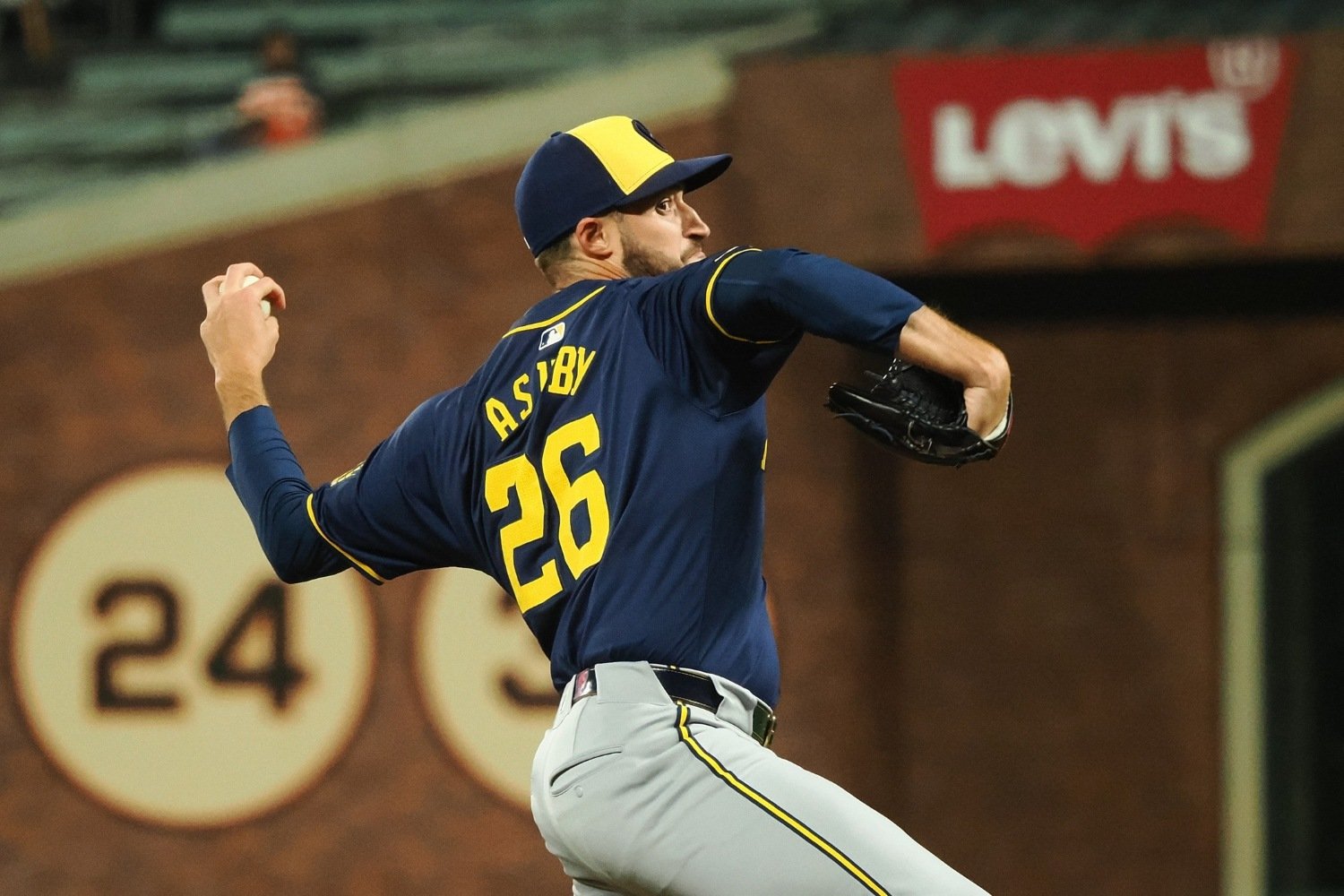 After toiling in the minor leagues for much of last season in his return from major shoulder surgery, Aaron Ashby shifted to relief for the Brewers in August. He immediately became a multi-inning bullpen weapon for the Brewers down the stretch, pitching to a 1.37 ERA and 0.78 FIP with a 36.8% strikeout rate in 19 ⅔ innings. Ashby’s velocity and command were greatly diminished when he returned to game action in September 2023, and they showed few signs of improving across his 14 starts with Triple-A Nashville in 2024. After resurfacing in the big-league bullpen, though, his average sinker velocity climbed to 97.2 mph, and his walk rate fell to 3.9%. The turnaround in a different role was the latest development in the years-long discourse over Ashby’s best long-term fit within Milwaukee’s pitching plans. The spontaneous improvement in how the ball left his hand presents a compelling case for keeping him in shorter stints. However, despite pitching as a reliever, Ashby’s arsenal became more nuanced than in past big-league stretches, a development that could carry over to one final crack at starting. Ashby’s excellent breaking pitches have always been his calling card, and he’s always leaned heavily on them. He ramped up his sinker and four-seamer usage for much of the year in Nashville, perhaps in an attempt to ease his troubles with finding the strike zone, but reverted to the more breaker-centric mix upon his relocation to relief. That changed when Ashby was called back to the big leagues. He reshuffled his pitch selection, starting with using his sinker more than he had in any extended big-league stint. Left-handed batters saw the sinker 55% of the time. The pitch performed better than ever. Ashby’s sinker was worth -10 runs from his major-league debut through his last big-league start on Jun. 5; it was worth 4 runs down the stretch as a reliever. Opponents managed just a .213 wOBA and .244 xwOBA against it. Increased velocity was undoubtedly a factor, but so was improved location. Ashby threw his sinker in the strike zone 63.7% of the time as a reliever, the highest rate of his career in a two-month span. Significantly more of those sinkers were of the comeback variety to the glove-side corner. Keeping the ball closer to the right-handed batter’s box helped Ashby generate called strikes on 26.2% of sinkers, a bump from the 20.2% he had averaged to that point in his career. It also made it more challenging for hitters to shoot back up the middle, which had been a catalyst for Ashby’s previous struggles with the pitch. Ashby also fine-tuned his breaking stuff. He closed the velocity gap between his slider and curveball by adding several ticks to the latter, and the former assumed more downward movement. With these adjustments came new plans of attack. Previously a change-of-pace pitch, the firmer curveball became a weapon against right-handed hitters, overtaking the slider and changeup. While the slider played just fine to righties, the curve’s greater break down and in proved even more challenging for opposite-handed batters to track. Ashby threw them the hook 30% of the time, and they managed just one hit against it while whiffing on 64.3% of swings. His confidence in the pitch made plate appearances against Ashby daunting and unpredictable. He would spin the curveball practically in any count to a right-hander. He still featured plenty of sliders against lefties, particularly as a put-away pitch, but Ashby also mixed in some curveballs when he needed to land a strike early or after falling behind. How much of a game-changer was the new curveball? From his return on Aug. 25, its 164 Stuff+ was the sixth-best of all curveballs across baseball, and its 51.2% called strike plus whiff rate ranked first. DL Hall’s curveball was a distant second at 39.5%. The urge to keep Ashby in the bullpen permanently is real and warranted. He’ll almost certainly shed some velocity upon stretching back out. However, assuming he loses only a couple of ticks, many adjustments that spurred his late surge are independent of how hard he throws. As he enters his age-27 season, Ashby has emerged from significant professional adversity as a more mature pitcher. He’s transformed a good curveball into an elite one, developed greater confidence and awareness when throwing his sinker, and knows the best way to mix his pitches depending on the matchup. Ashby is not the same pitcher he was during previous rocky attempts at starting. The bullpen will be Ashby’s ultimate home if he can’t throw with the necessary conviction while pacing himself to work five or six innings. For now, however, it remains possible his dominance in relief proves to be a springboard to future success in the rotation. Reynaldo López, Seth Lugo, Michael King, and Michael Lorenzen are among the recent hurlers who initially struggled as starters, broke out in the bullpen, and successfully transitioned back. Matt Arnold was coy about Ashby’s future role at the end of the season, but Pat Murphy and Chris Hook have expressed a desire for him to compete for a rotation spot in spring training. After a long journey, the ingredients are finally ripe: a reliable fastball, two excellent breaking pitches to limit platoon splits, a capable changeup, and a rare mix of strikeouts and ground balls. Don’t be surprised if he gets one more crack at reaching his starter’s ceiling.
 -
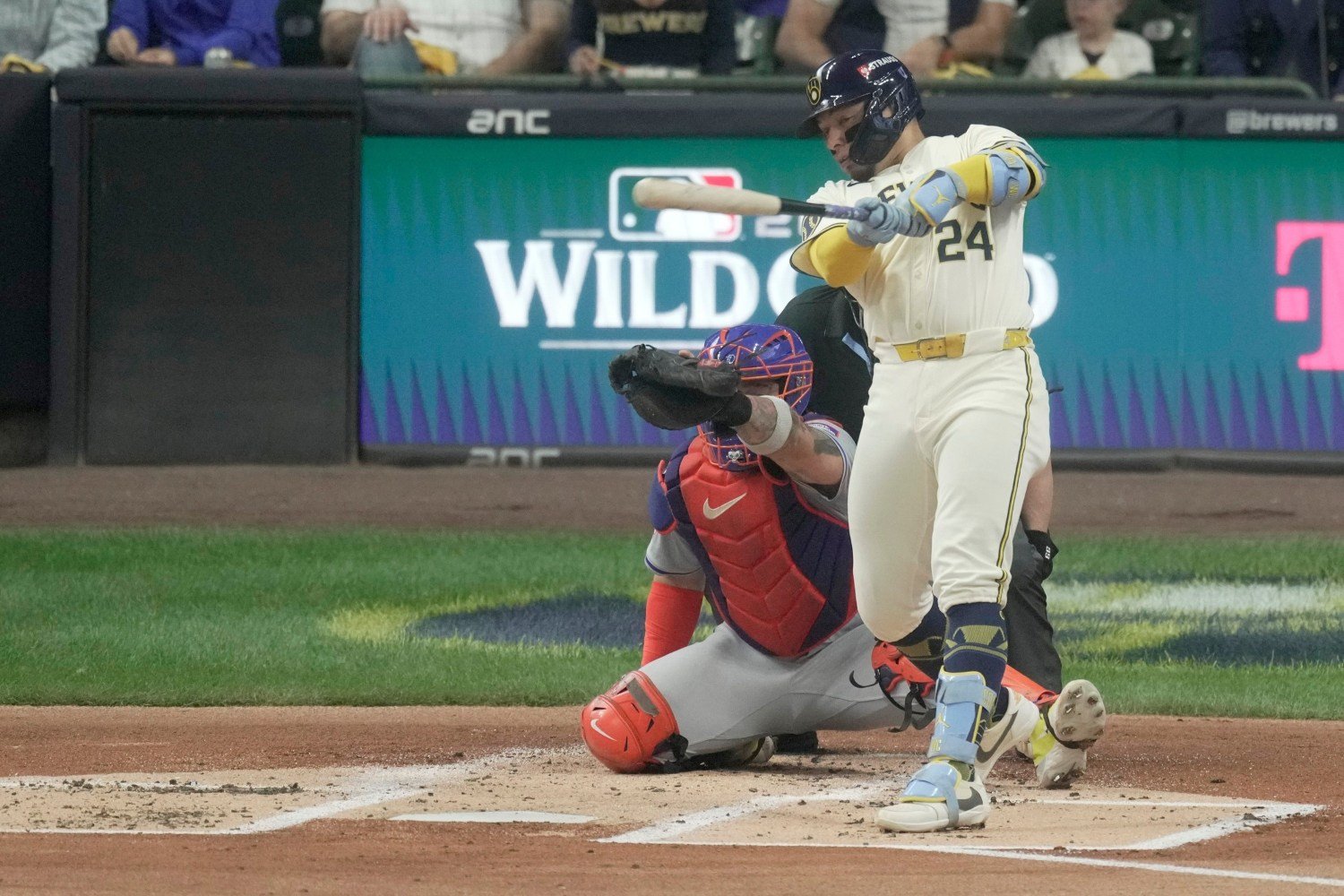 Arbitration is a dreaded topic in all baseball circles. Hearings are unpleasant. Players, coaches, and executives don’t like talking about them, and reporters and writers don’t enjoy covering them. Unfortunately, those discussions will again be part of the Brewers' news cycle leading into spring training. For the third time in six years, the club will almost certainly go to and win a hearing against one of its star players. This time, it’s William Contreras. Teams and players seek to avoid hearings if possible and succeed in most cases, but salary settlements are tougher to reach with elite players. The Brewers reached agreements on 2025 contracts with every arbitration-eligible player on their roster except Contreras, whose camp filed at $6.5 million. The club countered at $5.6 million. While teams can continue negotiating with players until the minute their hearing begins, don’t expect Contreras and the Brewers to settle. An extension to buy out his arbitration seasons, like the one Devin Williams signed a year ago, feels like a long shot. As a 27-year-old coming off consecutive seasons of more than 5 fWAR, Contreras likely feels comfortable letting his performance dictate salary bumps from one year to the next until he hits free agency at age 30. Understanding why the Brewers drew a line less than $1 million shy of Contreras’s request requires awareness of what arbitration is, and is not. It’s a confusing process compared to the more straightforward procedure of signing contracts with free agents, so here’s a quick primer. Arbitration allows productive players to receive significant raises in their final three seasons before unrestricted free agency, but it is not designed to award them the salaries they would command on the open market. If he became a free agent today, Contreras would easily find a nine-figure contract. FanGraphs's WAR-based value metric estimates that his production last year was worth $43.5 million. He and the Brewers filed at less than 15% of that number. Instead, the process is heavily steeped in precedent. Each side builds its case and arrives at its proposed salary figure by comparing the player’s statistics and accolades to those of a similar player in the same arbitration year. They present their cases to a panel of arbitrators, who decide whether the player will receive the salary he requested or the one his team chose. Most players do not enter arbitration after a precedent-breaking performance, so agents and executives have similar notions of a realistic salary request. This can make it easier to agree on a figure and avoid a hearing. Things get hairy when elite players seek to break the norm and establish higher baseline arbitration salaries. Contreras’s camp requested what would be the highest first-season arbitration salary for a catcher since Buster Posey’s $8-million agreement with the San Francisco Giants ahead of the 2013 season. Posey shattered the salary precedent because he crushed the on-field one the year before; he hit .336 with 103 RBIs, won the NL MVP and Silver Slugger awards, and accrued 9.8 fWAR, the single-season record for a catcher. No catcher since has come close to that production, so neither have their salaries. The baseline for first-time arbitration-eligible backstops of Contreras’s caliber has sat slightly over $5 million for a decade. Year Player First-Year Arbitration Salary Previous Season fWAR Career fWAR 2013 Buster Posey $8,000,000 9.8 15.2 2013 Matt Wieters $5,500,000 4.1 12.6 2018 JT Realmuto $2,900,000 4.8 6.9 2023 Will Smith $5,250,000 4.3 11.9 2024 Jonah Heim $3,050,000 4.0 7.3 2025 Adley Rutschman $5,500,000 2.8 13.3 2025 Cal Raleigh $5,600,000 5.4 13.9 2025 William Contreras TBD 5.4 13.1 The Brewers filed at the same salary the Seattle Mariners and catcher Cal Raleigh (also in his first year of arbitration) agreed to earlier on Thursday. That’s not a coincidence; it’s the established rate for a catcher in Contreras’s position. Hard-line stances in arbitration—more specifically, a refusal to willingly go much higher than established salaries, if at all—have become standard practice across baseball. The arbitration process is flawed in how it compensates players and heavily favors clubs. Because each case draws on those before it as a baseline, giving certain players the unprecedented salaries they request without a hearing would erode the system’s benefit to teams. Professional baseball is a business, and the shrewd businessman does not undermine an institution that gives him an advantage. This is why the Brewers sparred in hearings with Josh Hader and Corbin Burnes. Hader filed at a record $6.4-million salary for a first-year arbitration reliever, and Burnes sought a record $10.75 million for a starting pitcher in his second arbitration year. The front office could have accepted, but doing so would have created a ripple effect on future salaries. Instead, it drew a hard line and let the arbitration process play out. Every other team would have done the same. The process will repeat with Contreras. The Brewers will not directly argue that he is worth only $5.6 million, but that he is similar in value to Raleigh, who settled for that amount. Contreras’s side will argue that he’s been a more valuable catcher than those who went through similar cases before him, justifying a near-unprecedented $6.5 million salary. Given their career numbers, the Brewers’ comparison is very reasonable. Raleigh and Contreras are nearly identical in the two flavors of WAR that incorporate catcher defense. While the latter has a higher wRC+, the former has more home runs and RBIs, two traditional counting stats still heavily valued by the panel. Player G AVG OBP SLG wRC+ HR RBI fWAR WARP Cal Raleigh 464 .218 .296 .444 111 93 251 13.9 13.4 William Contreras 449 .277 .358 .465 126 68 239 13.1 12.2 This hearing will almost certainly take place, and the Brewers will almost certainly win. Their spokespeople will make arguments that can hurt feelings and sour relationships, just as they did against Hader and Burnes. Contreras won’t be alone, either. Assuming most clubs take “file-and-trial” approaches with unresolved cases, here are a few seemingly insignificant salary disagreements over which teams will go to a hearing next month: the Cubs and Kyle Tucker ($17.5 million vs. $15 million) the Cardinals and Lars Nootbaar ($2.95 million vs. $2.45 million), Brendan Donovan ($3.3 million vs. $2.85 million), and Andre Pallante ($2.1 million vs. $1.925 million) the Dodgers and Alex Vesia ($2.35 million vs. $2.05 million) the Red Sox and Jarren Duran ($4 million vs. $3.5 million) the Yankees and Mark Leiter Jr. ($2.5 million vs. $2.05 million) This is a league-wide procedure, not one exclusive to small-market teams operating on lower payrolls. In almost every case, no front office willingly raises the bar for player compensation in arbitration. It's not a nefarious scheme specifically concocted by Mark Attanasio and Matt Arnold to cut costs where other organizations are not. It’s part of the established MLB playbook, and the Brewers are just one of 30 teams who follow it. It’s not fun to discuss. The business side of baseball often feels slimy, and the system is unfair to players. However, none of that changes the present reality facing Contreras and the Brewers. By understanding the process, both parties can handle an unpleasant situation professionally.
- 8 comments
-
- 3
-
-
- william contreras
- josh hader
- (and 1 more)
-
The arbitration system favors teams over players, so no one should be surprised that the Brewers are following the league-wide procedure of taking one of their best players through it. Image courtesy of © Mark Hoffman/Milwaukee Journal Sentinel / USA TODAY NETWORK via Imagn Images The arbitration system favors teams over players, so no one should be surprised that the Brewers are following the league-wide procedure of taking one of their best players through it. Arbitration is a dreaded topic in all baseball circles. Hearings are unpleasant. Players, coaches, and executives don’t like talking about them, and reporters and writers don’t enjoy covering them. Unfortunately, those discussions will again be part of the Brewers' news cycle leading into spring training. For the third time in six years, the club will almost certainly go to and win a hearing against one of its star players. This time, it’s William Contreras. Teams and players seek to avoid hearings if possible and succeed in most cases, but salary settlements are tougher to reach with elite players. The Brewers reached agreements on 2025 contracts with every arbitration-eligible player on their roster except Contreras, whose camp filed at $6.5 million. The club countered at $5.6 million. While teams can continue negotiating with players until the minute their hearing begins, don’t expect Contreras and the Brewers to settle. An extension to buy out his arbitration seasons, like the one Devin Williams signed a year ago, feels like a long shot. As a 27-year-old coming off consecutive seasons of more than 5 fWAR, Contreras likely feels comfortable letting his performance dictate salary bumps from one year to the next until he hits free agency at age 30. Understanding why the Brewers drew a line less than $1 million shy of Contreras’s request requires awareness of what arbitration is, and is not. It’s a confusing process compared to the more straightforward procedure of signing contracts with free agents, so here’s a quick primer. Arbitration allows productive players to receive significant raises in their final three seasons before unrestricted free agency, but it is not designed to award them the salaries they would command on the open market. If he became a free agent today, Contreras would easily find a nine-figure contract. FanGraphs's WAR-based value metric estimates that his production last year was worth $43.5 million. He and the Brewers filed at less than 15% of that number. Instead, the process is heavily steeped in precedent. Each side builds its case and arrives at its proposed salary figure by comparing the player’s statistics and accolades to those of a similar player in the same arbitration year. They present their cases to a panel of arbitrators, who decide whether the player will receive the salary he requested or the one his team chose. Most players do not enter arbitration after a precedent-breaking performance, so agents and executives have similar notions of a realistic salary request. This can make it easier to agree on a figure and avoid a hearing. Things get hairy when elite players seek to break the norm and establish higher baseline arbitration salaries. Contreras’s camp requested what would be the highest first-season arbitration salary for a catcher since Buster Posey’s $8-million agreement with the San Francisco Giants ahead of the 2013 season. Posey shattered the salary precedent because he crushed the on-field one the year before; he hit .336 with 103 RBIs, won the NL MVP and Silver Slugger awards, and accrued 9.8 fWAR, the single-season record for a catcher. No catcher since has come close to that production, so neither have their salaries. The baseline for first-time arbitration-eligible backstops of Contreras’s caliber has sat slightly over $5 million for a decade. Year Player First-Year Arbitration Salary Previous Season fWAR Career fWAR 2013 Buster Posey $8,000,000 9.8 15.2 2013 Matt Wieters $5,500,000 4.1 12.6 2018 JT Realmuto $2,900,000 4.8 6.9 2023 Will Smith $5,250,000 4.3 11.9 2024 Jonah Heim $3,050,000 4.0 7.3 2025 Adley Rutschman $5,500,000 2.8 13.3 2025 Cal Raleigh $5,600,000 5.4 13.9 2025 William Contreras TBD 5.4 13.1 The Brewers filed at the same salary the Seattle Mariners and catcher Cal Raleigh (also in his first year of arbitration) agreed to earlier on Thursday. That’s not a coincidence; it’s the established rate for a catcher in Contreras’s position. Hard-line stances in arbitration—more specifically, a refusal to willingly go much higher than established salaries, if at all—have become standard practice across baseball. The arbitration process is flawed in how it compensates players and heavily favors clubs. Because each case draws on those before it as a baseline, giving certain players the unprecedented salaries they request without a hearing would erode the system’s benefit to teams. Professional baseball is a business, and the shrewd businessman does not undermine an institution that gives him an advantage. This is why the Brewers sparred in hearings with Josh Hader and Corbin Burnes. Hader filed at a record $6.4-million salary for a first-year arbitration reliever, and Burnes sought a record $10.75 million for a starting pitcher in his second arbitration year. The front office could have accepted, but doing so would have created a ripple effect on future salaries. Instead, it drew a hard line and let the arbitration process play out. Every other team would have done the same. The process will repeat with Contreras. The Brewers will not directly argue that he is worth only $5.6 million, but that he is similar in value to Raleigh, who settled for that amount. Contreras’s side will argue that he’s been a more valuable catcher than those who went through similar cases before him, justifying a near-unprecedented $6.5 million salary. Given their career numbers, the Brewers’ comparison is very reasonable. Raleigh and Contreras are nearly identical in the two flavors of WAR that incorporate catcher defense. While the latter has a higher wRC+, the former has more home runs and RBIs, two traditional counting stats still heavily valued by the panel. Player G AVG OBP SLG wRC+ HR RBI fWAR WARP Cal Raleigh 464 .218 .296 .444 111 93 251 13.9 13.4 William Contreras 449 .277 .358 .465 126 68 239 13.1 12.2 This hearing will almost certainly take place, and the Brewers will almost certainly win. Their spokespeople will make arguments that can hurt feelings and sour relationships, just as they did against Hader and Burnes. Contreras won’t be alone, either. Assuming most clubs take “file-and-trial” approaches with unresolved cases, here are a few seemingly insignificant salary disagreements over which teams will go to a hearing next month: the Cubs and Kyle Tucker ($17.5 million vs. $15 million) the Cardinals and Lars Nootbaar ($2.95 million vs. $2.45 million), Brendan Donovan ($3.3 million vs. $2.85 million), and Andre Pallante ($2.1 million vs. $1.925 million) the Dodgers and Alex Vesia ($2.35 million vs. $2.05 million) the Red Sox and Jarren Duran ($4 million vs. $3.5 million) the Yankees and Mark Leiter Jr. ($2.5 million vs. $2.05 million) This is a league-wide procedure, not one exclusive to small-market teams operating on lower payrolls. In almost every case, no front office willingly raises the bar for player compensation in arbitration. It's not a nefarious scheme specifically concocted by Mark Attanasio and Matt Arnold to cut costs where other organizations are not. It’s part of the established MLB playbook, and the Brewers are just one of 30 teams who follow it. It’s not fun to discuss. The business side of baseball often feels slimy, and the system is unfair to players. However, none of that changes the present reality facing Contreras and the Brewers. By understanding the process, both parties can handle an unpleasant situation professionally. View full article
- 8 replies
-
- 2
-
-
- william contreras
- josh hader
- (and 1 more)
-
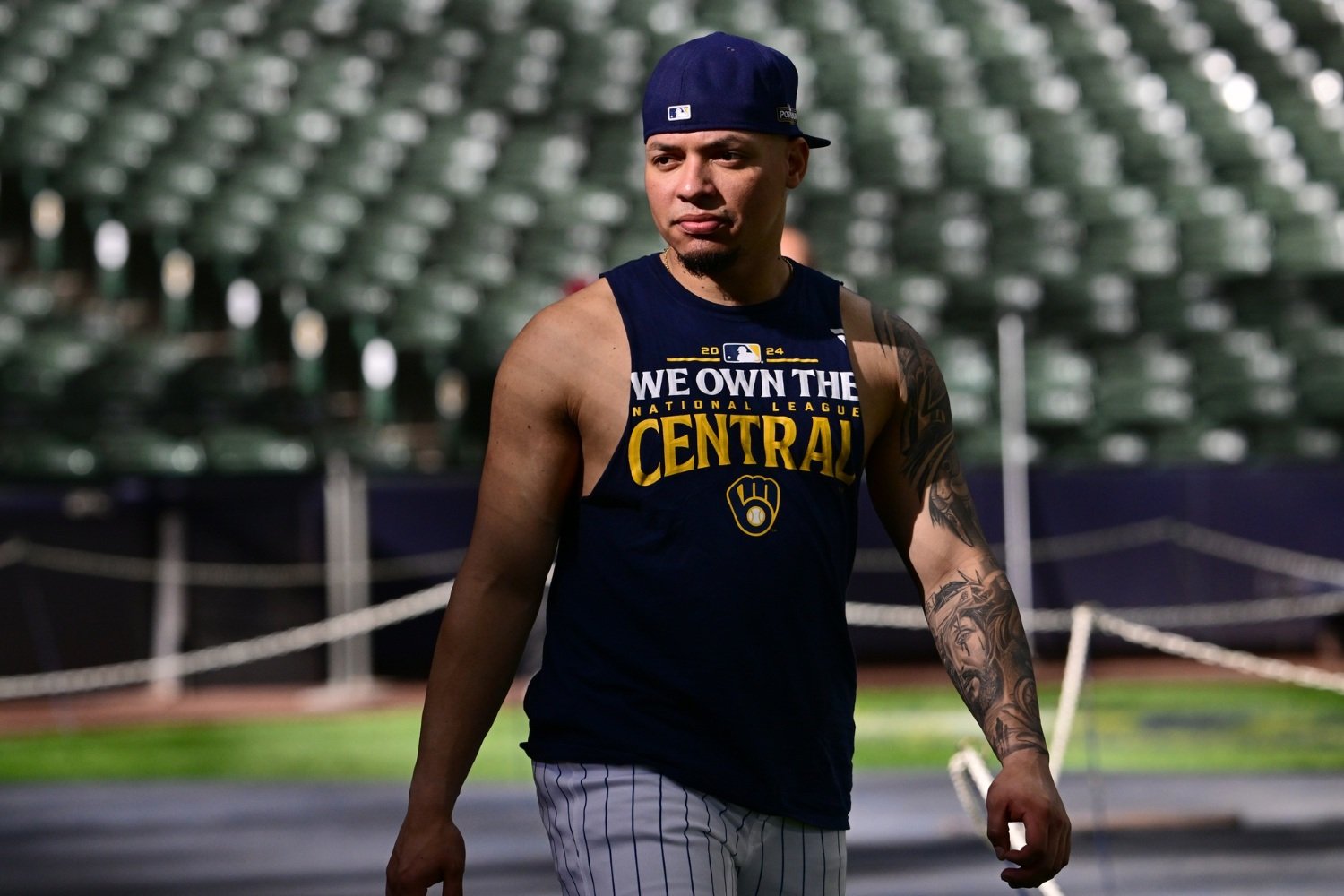 Since the Brewers acquired him two offseasons ago, William Contreras has authored a compelling case as one of baseball’s top catchers, if not the best. Since the start of the 2023 season, the 27-year-old’s 128 wRC+ leads all qualified backstops. He’s also been a workhorse, catching the fifth-most innings during that span. Contreras leads the position in fWAR (11.2) and ranked second in WARP (9.8), two of the leading metrics for estimating a catcher’s all-around value. As valuable as he’s been, though, Contreras is still underperforming his physical capabilities, especially in the batter’s box. Already a strong hitter, he has the tools to be among the best at any position and a potent power threat. Contreras swings hard, posting an average swing speed in the 86th percentile of hitters in 2024. He hits the ball hard, finishing in the 91st and 94th percentiles in hard-hit rate and average exit velocity, respectively. However, Contreras’s production on those batted balls lags behind much of the company he keeps. Most players who hit this many screamers in 2024 boasted a wOBA on contact near or exceeding .450. Contreras finished the year with a .412 wOBAcon – an impressive mark compared to the league average, but well behind most hitters in his exit velocity stratosphere. Several hitters who generated less velocity off the bat were vastly more productive with their contact. That’s because Contreras pounds the ball into the ground more than nearly any regular in baseball, let alone those who hit it this forcefully. His 54% ground-ball rate last year was the third-highest among qualified hitters. According to Statcast, 39.2% of his contact was “topped,” or hit at a launch angle below or equal to zero degrees. That was the sixth-highest rate in the sport, well above players with comparable average exit velocities. While Contreras has hit for decent power as a Brewer, launching 40 home runs and adding 75 doubles, hitting so many rockets into the dirt is placing unnecessary limits on his output. If left unaddressed, his home run output will more likely decrease than increase. Over the last two seasons, only two hitters have topped more batted balls with an exit velocity of at least 100 mph than Contreras. He’s posted a .362 wOBA on those grounders, outpacing a .239 xwOBA by punching many of them through the hole to the opposite field. However, that output is probably not replicable to that extent, even if it’s a real skill Contreras possesses. More importantly, it pales in comparison to his .935 wOBA and .941 xwOBA on batted balls with a triple-digit exit velocity and positive launch angle. For a more practical illustration of the power Contreras is leaving on the table and how reasonably attainable it is, let’s compare him to a similar hitter. As a speedy shortstop who hits from the left side with even greater bat speed than Contreras, Baltimore Orioles superstar Gunnar Henderson is not a perfect equivalent. However, he’s plotted directly above Contreras on the first graph. The two are nearly identical in how hard they hit the ball, their tendencies to spray it across the field instead of consistently pulling it, and how often they make contact. Despite these shared traits, Henderson posted a significantly higher xwOBAcon and smashed 37 home runs, 14 more than the Milwaukee backstop. Player BIP K% Pull% Middle% Oppo% Hard Hit% Avg EV (MPH) Barrel/BIP% LA GB% wOBAcon HR wRC+ Gunnar Henderson 475 22.1% 36.6% 40.0% 23.4% 53.9% 92.8 11.2% 9.2 47.4% .454 37 155 William Contreras 459 20.5% 36.6% 39.2% 24.2% 49.0% 92.8 10.0% 6.1 54.0% .412 23 131 Henderson’s launch angle was only three degrees higher, and still well below the league average of 13.3 degrees. It’s a meaningful difference from where Contreras is now, but getting there would not require radically reshaping his identity as a hitter. Making incremental improvements could have massive results. Pictured below is Contreras’s launch angle distribution from last season, color-coded by which kind of contact was the most productive. He spent too much time living in the -5-to-10-degree range, where his production was fine but unremarkable. Compare that to Henderson, who is hardly a launch-heavy hitter but spent more time hitting high line drives and low fly balls, conducive to much greater power output. Both players hit most of their home runs with a launch angle between 25 and 30 degrees. Henderson’s contact quality in that range was a bit better than Contreras’s, but the latter still hits those fly balls loudly enough for similarly impactful results. By elevating just a bit more, Contreras should easily reach 30 home runs and approach a 150 wRC+. That would be a massive boost for an offense that will almost certainly have to replace most of Willy Adames’s power in-house. The good news, of course, is that it might already be happening. Contreras stepped up (and swung up, as it were) when Christian Yelich went down for the season in late July. Starting the day after Yelich's last game of the year, he batted .275/.394/.530 in 241 plate appearances to finish the season, good for a 153 wRC+. He swatted 12 home runs in that span. Even then, though, his launch angle only crept up to 8°, and he topped the ball at a similar rate. Another tiny step forward is possible, and it would beget a giant leap in production. The Brewers have an untapped offensive monster near the top of their lineup, in their star catcher. Coaxing even a modest increase in launch from Contreras should be among the chief priorities for a restructured hitting staff headed by recently-promoted Al Leboeuf. It could emerge as a significant storyline early in the 2025 season.
 -
The Brewers' backstop has already emerged as a star, but still has not tapped into the extra gear in his bat for a full season. Could this be the year that changes? Image courtesy of © Benny Sieu-Imagn Images The Brewers' backstop has already emerged as a star, but still has not tapped into the extra gear in his bat for a full season. Could this be the year that changes? Since the Brewers acquired him two offseasons ago, William Contreras has authored a compelling case as one of baseball’s top catchers, if not the best. Since the start of the 2023 season, the 27-year-old’s 128 wRC+ leads all qualified backstops. He’s also been a workhorse, catching the fifth-most innings during that span. Contreras leads the position in fWAR (11.2) and ranked second in WARP (9.8), two of the leading metrics for estimating a catcher’s all-around value. As valuable as he’s been, though, Contreras is still underperforming his physical capabilities, especially in the batter’s box. Already a strong hitter, he has the tools to be among the best at any position and a potent power threat. Contreras swings hard, posting an average swing speed in the 86th percentile of hitters in 2024. He hits the ball hard, finishing in the 91st and 94th percentiles in hard-hit rate and average exit velocity, respectively. However, Contreras’s production on those batted balls lags behind much of the company he keeps. Most players who hit this many screamers in 2024 boasted a wOBA on contact near or exceeding .450. Contreras finished the year with a .412 wOBAcon – an impressive mark compared to the league average, but well behind most hitters in his exit velocity stratosphere. Several hitters who generated less velocity off the bat were vastly more productive with their contact. That’s because Contreras pounds the ball into the ground more than nearly any regular in baseball, let alone those who hit it this forcefully. His 54% ground-ball rate last year was the third-highest among qualified hitters. According to Statcast, 39.2% of his contact was “topped,” or hit at a launch angle below or equal to zero degrees. That was the sixth-highest rate in the sport, well above players with comparable average exit velocities. While Contreras has hit for decent power as a Brewer, launching 40 home runs and adding 75 doubles, hitting so many rockets into the dirt is placing unnecessary limits on his output. If left unaddressed, his home run output will more likely decrease than increase. Over the last two seasons, only two hitters have topped more batted balls with an exit velocity of at least 100 mph than Contreras. He’s posted a .362 wOBA on those grounders, outpacing a .239 xwOBA by punching many of them through the hole to the opposite field. However, that output is probably not replicable to that extent, even if it’s a real skill Contreras possesses. More importantly, it pales in comparison to his .935 wOBA and .941 xwOBA on batted balls with a triple-digit exit velocity and positive launch angle. For a more practical illustration of the power Contreras is leaving on the table and how reasonably attainable it is, let’s compare him to a similar hitter. As a speedy shortstop who hits from the left side with even greater bat speed than Contreras, Baltimore Orioles superstar Gunnar Henderson is not a perfect equivalent. However, he’s plotted directly above Contreras on the first graph. The two are nearly identical in how hard they hit the ball, their tendencies to spray it across the field instead of consistently pulling it, and how often they make contact. Despite these shared traits, Henderson posted a significantly higher xwOBAcon and smashed 37 home runs, 14 more than the Milwaukee backstop. Player BIP K% Pull% Middle% Oppo% Hard Hit% Avg EV (MPH) Barrel/BIP% LA GB% wOBAcon HR wRC+ Gunnar Henderson 475 22.1% 36.6% 40.0% 23.4% 53.9% 92.8 11.2% 9.2 47.4% .454 37 155 William Contreras 459 20.5% 36.6% 39.2% 24.2% 49.0% 92.8 10.0% 6.1 54.0% .412 23 131 Henderson’s launch angle was only three degrees higher, and still well below the league average of 13.3 degrees. It’s a meaningful difference from where Contreras is now, but getting there would not require radically reshaping his identity as a hitter. Making incremental improvements could have massive results. Pictured below is Contreras’s launch angle distribution from last season, color-coded by which kind of contact was the most productive. He spent too much time living in the -5-to-10-degree range, where his production was fine but unremarkable. Compare that to Henderson, who is hardly a launch-heavy hitter but spent more time hitting high line drives and low fly balls, conducive to much greater power output. Both players hit most of their home runs with a launch angle between 25 and 30 degrees. Henderson’s contact quality in that range was a bit better than Contreras’s, but the latter still hits those fly balls loudly enough for similarly impactful results. By elevating just a bit more, Contreras should easily reach 30 home runs and approach a 150 wRC+. That would be a massive boost for an offense that will almost certainly have to replace most of Willy Adames’s power in-house. The good news, of course, is that it might already be happening. Contreras stepped up (and swung up, as it were) when Christian Yelich went down for the season in late July. Starting the day after Yelich's last game of the year, he batted .275/.394/.530 in 241 plate appearances to finish the season, good for a 153 wRC+. He swatted 12 home runs in that span. Even then, though, his launch angle only crept up to 8°, and he topped the ball at a similar rate. Another tiny step forward is possible, and it would beget a giant leap in production. The Brewers have an untapped offensive monster near the top of their lineup, in their star catcher. Coaxing even a modest increase in launch from Contreras should be among the chief priorities for a restructured hitting staff headed by recently-promoted Al Leboeuf. It could emerge as a significant storyline early in the 2025 season. View full article


