



Jack Stern
-
Posts
764 -
Joined
-
Last visited
-
Days Won
2
Content Type
Profiles
Forums
Blogs
Events
News
2026 Milwaukee Brewers Top Prospects Ranking
Milwaukee Brewers Videos
2022 Milwaukee Brewers Draft Picks
Milwaukee Brewers Free Agent & Trade Rumors, Notes, & Tidbits
Guides & Resources
2023 Milwaukee Brewers Draft Picks
2024 Milwaukee Brewers Draft Picks
The Milwaukee Brewers Players Project
2025 Milwaukee Brewers Draft Pick Tracker
2026 Milwaukee Brewers Draft Tracker: Picks & Bonuses
Store
Downloads
Gallery
Everything posted by Jack Stern
-
 Image courtesy of © Benny Sieu-Imagn Images Joey Ortiz’s tenure with the Brewers has been filled with highs and lows, but there has been one constant. When given the opportunity—and, in many cases, on their own—coaches, teammates, and executives have raved about his defense, even as Ortiz’s public-facing fielding metrics have been more mixed in their praise. During the Brewers’ first homestand of the 2026 season, there was one play in particular that jumped out to Pat Murphy. On Saturday, White Sox pinch-hitter Austin Hays pulled a base hit toward the left-field line, away from a shaded Brandon Lockridge. Lockridge initially misplayed the ball before throwing it in to Ortiz, who fired a strike to William Contreras to nail Colson Montgomery at the plate. 9bb46f6e-9915db40-049f4d20-csvm-diamondgcp-asset_1280x720_59_4000K.mp4 Less than an hour later, Murphy was gushing over how Ortiz completed the play and his overall defensive prowess. “I don’t remember a dude that played shortstop for us like that, that played so consistently. And his key is the way he can redirect the baseball,” he said. “It’s uncanny. He did it a bunch last year. He did it tonight. It just sticks out. Watch that play on film. Not too many shortstops make that play, and that’s what separates him, I think.” Effectively redirecting the baseball is a product of what the Brewers believe is Ortiz’s standout skill—the one that makes his defense invaluable and explains why they’ve been incredibly patient with his offense: body control. The Brewers say Ortiz has an elite understanding of how his body moves and how to use it. It makes him the most fluid and sure-handed defender in their infield, even if he’s not the quickest or the most explosive. It also enables him to complete acrobatic plays that take him into unnatural fielding positions—plays that might not stand out to some range-focused algorithms, but are highly challenging to execute in reality. “Joey Ortiz has elite body control,” said third base and infield coach Matt Erickson, who has been integral to Ortiz’s development as a big-league shortstop. “You can argue the fact that he's probably average when it comes to just raw foot speed and quickness, but when it comes to body control and anticipation, he's as good as it gets.” Ortiz's coordination is excellent. He can speed himself up and slow himself down with precision, allowing him to adjust to a ground ball that takes a bad hop or changes direction due to funky spin. His quick hands transfer the ball swiftly out of his glove, and he can make accurate throws from awkward throwing positions. “He understands his legs in his throw,” Murphy said. “He understands space and timing. It's like a good shooter in basketball. It's more than just technique; it's the skill and the touch and the feel and the timing. He has it.” During spring training in 2024, when Ortiz was new to the team, Murphy had an even more succinct (if somewhat more opaque) way of communicating the same thing. He immediately saw and praised the fact that Ortiz "is comfortable when the ball gets close to him." That body control helps Ortiz effectively relay a throw from the outfield to the plate, but it shows up more obviously on plays like the one he made the following afternoon. Ortiz made a sliding stop on a grounder in the hole between shortstop and third base. With his body still moving toward third, he quickly transferred the ball to his throwing hand and made a strong throw from his knees to Brice Turang, who completed an impressive double play. fe69f051-b9a7-43f5-8816-2a09afc83e18.mp4 “That play is never practiced,” Erickson said. “That's a gift that he has, and he made it look incredibly easy.” The Brewers’ strength and conditioning team helps players understand the aptitudes and weaknesses of their body type and runs them through workouts designed to improve their mobility. Body control can only be improved to a certain extent through coaching, though. Natural ability is a huge piece of the equation, and much of the development must come from the player himself learning through experience and awareness. “They're teaching you things, but I think it happens within you when you have that ability,” Murphy said. “I don't think it's innate, but I think it's an ability that's acquired and developed to be able to realize that I can do this quicker, or I can do this smoother and not lose any speed, or actually gain speed by doing it smoothly with my body in the right position. So it's kind of a combination of all that. [Ortiz is] special, the way he does it.” As the Brewers discussed their infield arrangement last spring after the departure of Willy Adames, shoulder soreness ultimately locked Turang into second base to start the regular season. Ortiz’s body control was also a significant factor in the conversation, though, and is the reason he has since remained at short. “There's no doubt in my mind that Brice could be a really good shortstop and Joey can be a really good second baseman,” Erickson said. “But because of their skill set, because of Joey's glove confidence and body control, and his ability to catch the ball clean over and over in different fielding positions—it’s better than Brice’s, in my opinion.” The more explosive and rangier infielder might often be viewed as the better overall defender and the best fit to play shortstop. Erickson sees it differently. “Brice’s lateral range and quickness is much better than Joey’s,” he said, “and I believe that lateral range is important at second in today's game, because of the shifting rules, and when you're holding a runner [with a right-handed batter hitting], you need a guy that can really cover ground. We have that guy, arguably the best in the game.” The fluidity and hand-eye coordination from Ortiz’s body control, meanwhile, make a greater impact at shortstop. He may not cover as much ground as Turang, but he gloves the ball more consistently, transfers it faster, has a stronger throwing arm, and can react to the nuances of trickier plays at the position. “You have to catch the ball clean at shortstop, or you don't have a play,” Erickson said. “You don't necessarily have to do that at second or at third all the time, and you can still get an out. At shortstop, you've got to have a clean catch. And I think Joey's really good, definitely the best on our roster, at that.” The Brewers believe he’s still getting better at it, too. After another offseason of work, Erickson sees Ortiz using his body more efficiently than last year. “Out of spring training last year, there were certain things in the weight room that we thought he could improve on,” Erickson said. “There was a maintenance to it last year during the season, and then there was a focus to it this offseason. And I really like where he came in in spring training, because you can noticeably see he’s even better in some of those areas.” The Brewers’ infield could soon find itself in transition, particularly with the news of shortstop prospect Cooper Pratt’s extension and the ascension of Jesus Made and Andrew Fischer through the farm system. For now, though, Ortiz remains a valued linchpin of their infield defense. “The team believes in this dude,” Murphy said. “They believe in him.” View full article
- 4 replies
-
- 1
-

-
- joey ortiz
- pat murphy
- (and 2 more)
-
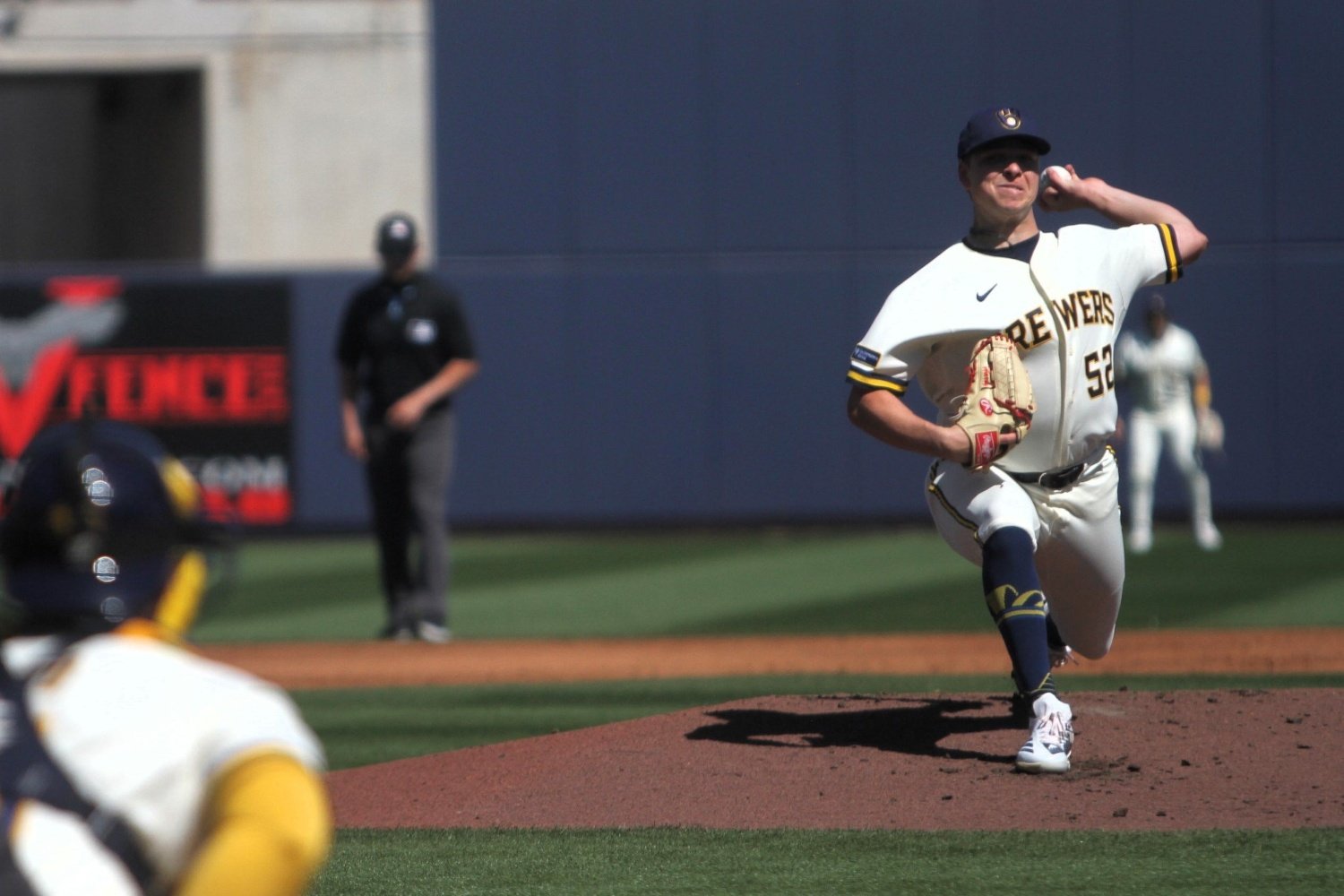 Kyle Harrison learned in unexciting fashion that he would start the Brewers' fourth game of the regular season. "Nothing, really," the left-hander said with a laugh last week, when asked if he received a personal heads-up before the club announced its rotation. "Just saw that I'm pitching Monday." The question was not whether Harrison had earned a spot in the Opening Day rotation, but whether he'd be ready to pitch after developing a blister on his left index finger, which stemmed from the new kick-changeup grip he brought into spring training. When his fingernail started cutting his thumb as he made a circle along the inside of the baseball, Harrison trimmed the nail, but it caused the finger to blister. "That started to build a little blister on the finger just because I cut the nail too short," he said. "So now I know I need to have a longer nail, drink my collagen, get the nail stronger, and let it grow. Just kind of an annoying thing to deal with, but I'm glad that I got to stop it early." Harrison is a full go for his official Brewers debut on Monday night, after extensive work with pitching coaches Chris Hook, Jim Henderson, and Juan Sandoval in spring training. Much of that work was geared toward maximizing his strengths, which is the club's framework for developing all of its pitchers. "That's what I really love about it here," Harrison said. "It's been like you're running the show, basically. What you want to do, you go out and do it. They're going to be supportive, and they're going to give their input, and we're going to settle on something that's just going to be best for me." For Harrison, that means working off his signature four-seam fastball. While his new changeup's outlier depth captured headlines during camp, his heater remains his best pitch. He's thrown it roughly 60% of the time in each of his three big-league seasons so far. "I love my fastball," he said. "I've always loved my fastball. That's something I want to throw, but throw it in the right counts and throw it in the right locations." The Brewers like Harrison's fastball, too, and for good reason. With a -0.6 StuffPro (meaning that it decreases expected run production by 0.6 runs for every 100 he throws), it graded out as one of the better four-seamers among starting pitchers based on its velocity, movement, and where he releases it from his low arm slot. It induced whiffs on 26.2% of swings last season, while holding opponents to a .281 xwOBA. "There's an instance I remember from San Francisco when he was pitching against us, I thought to myself, 'Oh, fastball must play up a little bit,' because he got swing and miss with the fastball," manager Pat Murphy said. Harrison's hand stays behind the baseball exceptionally well at release, which gives it true backspin from his 27-degree arm angle. According to Statcast, 98% of the spin on his four-seamer contributed to its movement last year. With an average of 12.4 inches of induced vertical break and 14.3 inches of arm-side break, it has a ride-run shape that is less common than the typical movement of the modern four-seamer. "It's unique," Hook said, before comparing Harrison's heater to one of the most effective fastballs in franchise history. "Josh [Hader's] obviously had a little bit more vert, but similar slot things. Obviously, it's just a touch different, but I think he can get the same kind of angle at times." Plenty of pitchers throw with true spin on their fastballs, but most who do so have much higher arm slots, which carries other implications for their secondary pitches. Compare Harrison's active spin profile (the percentage of the spin on each of his pitch types that contributes to movement) to those of Hader and Jacob Misiorowski, and the differences jump out. Misiorowski, who throws from a similar angle to both Harrison and Hader, is more typical of pitchers in that slot, with lower-than-average spin efficiency on his fastball but higher-than-average efficiency on his breaking balls. Harrison and Hader are the opposite, which makes their fastballs more natural cousins to high-slot guys like Jeff Hoffman, Casey Mize, or Jack Dreyer. The expectation is that Harrison will get plenty of mileage out of that fastball, but part of his remaining development will be finding the best way to supplement it. After a midseason trade to the Boston Red Sox last year, their pitching coaches encouraged him to add a two-seamer and cutter and replace his existing changeup with the kick-change. The Brewers felt that trying to refine all of those pitches at once was hurting his development. Moreover, with limited time in spring training to improve Harrison's breaking ball, clean up his delivery, and tweak his routine between starts, they wouldn't be able to perfect every pitch by Opening Day. "I think it's very difficult when you're working on four ******* pitches and trying to be on time and trying to stay through it, and you're like, 'Okay, this is new, and this is new,'" Hook said. "When I get into crunch time, all of this is new to me. It's too much." To simplify things, they scrapped the cutter, which graded out as his worst pitch in 2025. Harrison's low slot and natural tendency to stay behind the ball—the same traits that make his fastball so effective—make it challenging to throw a true cutter. He was either releasing it too early (causing it to back up), or releasing it too late, causing it to spin like a slider instead of a cut fastball. In both cases, it led to poor location of what was supposed to be an in-zone pitch that bridged his fastball and slider. "The struggle that I had with it was maintaining the vertical break," Harrison said. "I'd throw one good one at eight [inches of] vert, kind of trying to get similar [carry] to your heater, and I had some where I'd stay on it a little too long. I'm a low-slot guy, so I stay on the heater, and then it just ends up getting like 2 vert. So that's something I wouldn't really want to throw at the top of the zone." The Brewers frequently target pitchers who throw cutters and often encourage those who don't to add one to their arsenal. They rank third in cutter usage since 2024. Harrison, though, is different than many of their recent starters, who throw from a more traditional slot and slightly cut their normal fastballs. The plan is to reintroduce a cutter in the future, but only after he makes the improvements necessary for throwing an effective one from his unique release point and angle. "If you're not effectively rotating, if you're not getting through the baseball the correct way, the cutter could be a detriment," Hook said. "It's going to be big. It's going to be early. So I want to make sure he's getting through the ball properly first, before it's potentially added here in a little bit." For now, Harrison and the Brewers are riding with his four best pitches: fastball, slider, changeup, and the occasional two-seamer to use inside to left-handed batters. In their eyes, he's far from a finished product, but they're optimistic about his ceiling. He already has uncommon stuff from the left side, and their internal testing shows that he's gotten stronger since joining the club, which they believe will lead to a velocity bump. "There's a lot of upside there," Hook said. "Left-handers with that unique slot and that velo and that makeup don't come around that often. To me, the combination of all those things makes a pitching coach super excited." "I've liked him a lot," Murphy said. "He seems like really the right guy. He'll figure it out at some point."
-
- 1
-

-
- kyle harrison
- chris hook
- (and 1 more)
-
Image courtesy of © Curt Hogg / USA TODAY NETWORK via Imagn Images Kyle Harrison learned in unexciting fashion that he would start the Brewers' fourth game of the regular season. "Nothing, really," the left-hander said with a laugh last week, when asked if he received a personal heads-up before the club announced its rotation. "Just saw that I'm pitching Monday." The question was not whether Harrison had earned a spot in the Opening Day rotation, but whether he'd be ready to pitch after developing a blister on his left index finger, which stemmed from the new kick-changeup grip he brought into spring training. When his fingernail started cutting his thumb as he made a circle along the inside of the baseball, Harrison trimmed the nail, but it caused the finger to blister. "That started to build a little blister on the finger just because I cut the nail too short," he said. "So now I know I need to have a longer nail, drink my collagen, get the nail stronger, and let it grow. Just kind of an annoying thing to deal with, but I'm glad that I got to stop it early." Harrison is a full go for his official Brewers debut on Monday night, after extensive work with pitching coaches Chris Hook, Jim Henderson, and Juan Sandoval in spring training. Much of that work was geared toward maximizing his strengths, which is the club's framework for developing all of its pitchers. "That's what I really love about it here," Harrison said. "It's been like you're running the show, basically. What you want to do, you go out and do it. They're going to be supportive, and they're going to give their input, and we're going to settle on something that's just going to be best for me." For Harrison, that means working off his signature four-seam fastball. While his new changeup's outlier depth captured headlines during camp, his heater remains his best pitch. He's thrown it roughly 60% of the time in each of his three big-league seasons so far. "I love my fastball," he said. "I've always loved my fastball. That's something I want to throw, but throw it in the right counts and throw it in the right locations." The Brewers like Harrison's fastball, too, and for good reason. With a -0.6 StuffPro (meaning that it decreases expected run production by 0.6 runs for every 100 he throws), it graded out as one of the better four-seamers among starting pitchers based on its velocity, movement, and where he releases it from his low arm slot. It induced whiffs on 26.2% of swings last season, while holding opponents to a .281 xwOBA. "There's an instance I remember from San Francisco when he was pitching against us, I thought to myself, 'Oh, fastball must play up a little bit,' because he got swing and miss with the fastball," manager Pat Murphy said. Harrison's hand stays behind the baseball exceptionally well at release, which gives it true backspin from his 27-degree arm angle. According to Statcast, 98% of the spin on his four-seamer contributed to its movement last year. With an average of 12.4 inches of induced vertical break and 14.3 inches of arm-side break, it has a ride-run shape that is less common than the typical movement of the modern four-seamer. "It's unique," Hook said, before comparing Harrison's heater to one of the most effective fastballs in franchise history. "Josh [Hader's] obviously had a little bit more vert, but similar slot things. Obviously, it's just a touch different, but I think he can get the same kind of angle at times." Plenty of pitchers throw with true spin on their fastballs, but most who do so have much higher arm slots, which carries other implications for their secondary pitches. Compare Harrison's active spin profile (the percentage of the spin on each of his pitch types that contributes to movement) to those of Hader and Jacob Misiorowski, and the differences jump out. Misiorowski, who throws from a similar angle to both Harrison and Hader, is more typical of pitchers in that slot, with lower-than-average spin efficiency on his fastball but higher-than-average efficiency on his breaking balls. Harrison and Hader are the opposite, which makes their fastballs more natural cousins to high-slot guys like Jeff Hoffman, Casey Mize, or Jack Dreyer. The expectation is that Harrison will get plenty of mileage out of that fastball, but part of his remaining development will be finding the best way to supplement it. After a midseason trade to the Boston Red Sox last year, their pitching coaches encouraged him to add a two-seamer and cutter and replace his existing changeup with the kick-change. The Brewers felt that trying to refine all of those pitches at once was hurting his development. Moreover, with limited time in spring training to improve Harrison's breaking ball, clean up his delivery, and tweak his routine between starts, they wouldn't be able to perfect every pitch by Opening Day. "I think it's very difficult when you're working on four ******* pitches and trying to be on time and trying to stay through it, and you're like, 'Okay, this is new, and this is new,'" Hook said. "When I get into crunch time, all of this is new to me. It's too much." To simplify things, they scrapped the cutter, which graded out as his worst pitch in 2025. Harrison's low slot and natural tendency to stay behind the ball—the same traits that make his fastball so effective—make it challenging to throw a true cutter. He was either releasing it too early (causing it to back up), or releasing it too late, causing it to spin like a slider instead of a cut fastball. In both cases, it led to poor location of what was supposed to be an in-zone pitch that bridged his fastball and slider. "The struggle that I had with it was maintaining the vertical break," Harrison said. "I'd throw one good one at eight [inches of] vert, kind of trying to get similar [carry] to your heater, and I had some where I'd stay on it a little too long. I'm a low-slot guy, so I stay on the heater, and then it just ends up getting like 2 vert. So that's something I wouldn't really want to throw at the top of the zone." The Brewers frequently target pitchers who throw cutters and often encourage those who don't to add one to their arsenal. They rank third in cutter usage since 2024. Harrison, though, is different than many of their recent starters, who throw from a more traditional slot and slightly cut their normal fastballs. The plan is to reintroduce a cutter in the future, but only after he makes the improvements necessary for throwing an effective one from his unique release point and angle. "If you're not effectively rotating, if you're not getting through the baseball the correct way, the cutter could be a detriment," Hook said. "It's going to be big. It's going to be early. So I want to make sure he's getting through the ball properly first, before it's potentially added here in a little bit." For now, Harrison and the Brewers are riding with his four best pitches: fastball, slider, changeup, and the occasional two-seamer to use inside to left-handed batters. In their eyes, he's far from a finished product, but they're optimistic about his ceiling. He already has uncommon stuff from the left side, and their internal testing shows that he's gotten stronger since joining the club, which they believe will lead to a velocity bump. "There's a lot of upside there," Hook said. "Left-handers with that unique slot and that velo and that makeup don't come around that often. To me, the combination of all those things makes a pitching coach super excited." "I've liked him a lot," Murphy said. "He seems like really the right guy. He'll figure it out at some point." View full article
-
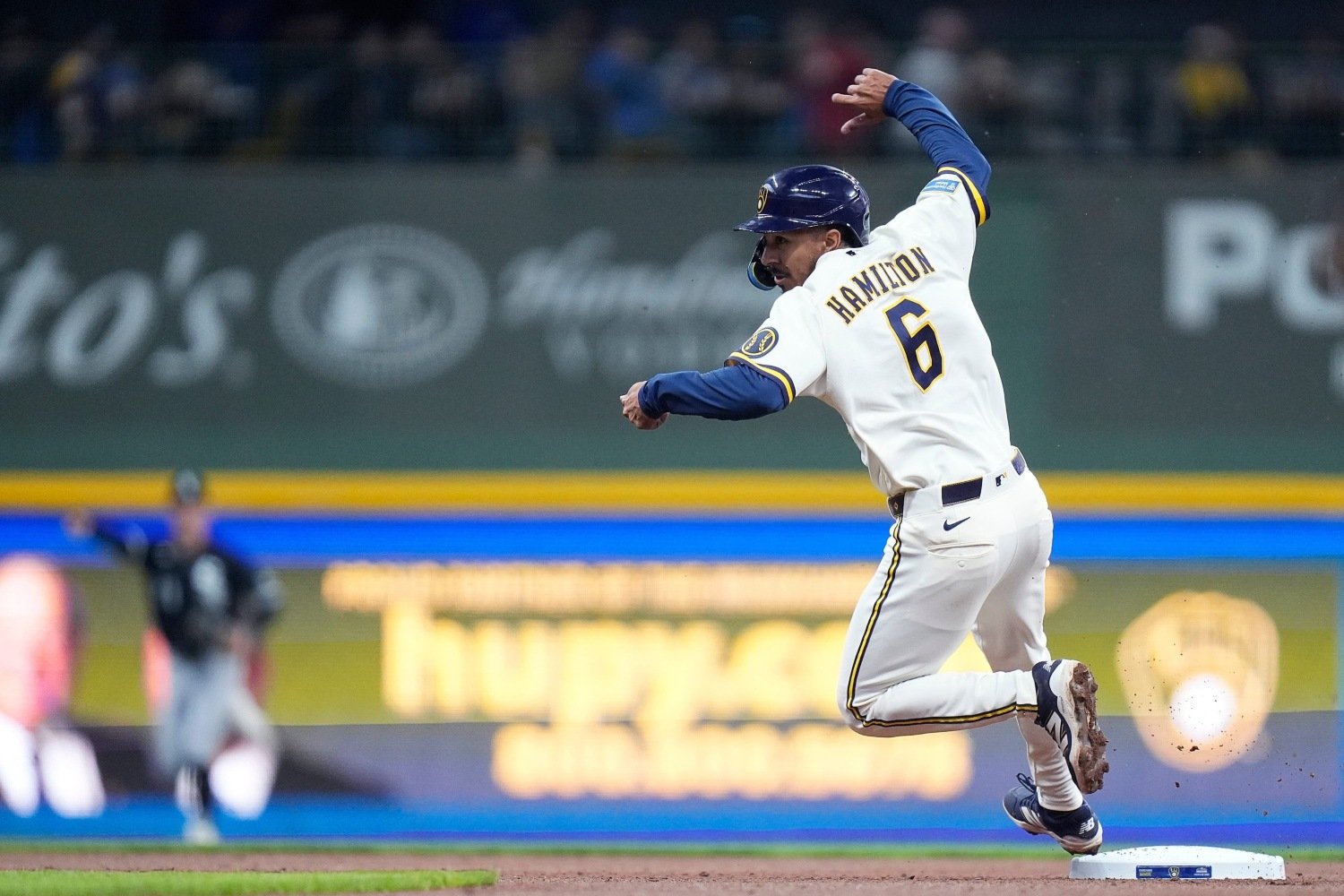 It was easy to view David Hamilton as a lesser piece in last month’s deal with the Boston Red Sox, which also brought pitchers Kyle Harrison and Shane Drohan to Milwaukee. The Brewers never saw it that way. Hamilton’s career numbers at age 28—a .222/.283/.359 slash line and a 77 wRC+—don't look like those of a dangerous player, but Milwaukee’s brain trust projects him as a difference-maker in their infield mix. Acquiring Hamilton was a key reason why they were comfortable sending incumbent third basemen Caleb Durbin, Andruw Monasterio, and Anthony Seigler to Boston. “Hats off to [Matt] Arnold and his crew for making sure he was included in that deal,” Pat Murphy said on Thursday. “We lost a great one in Durbin. He was on-brand for us, and then to get [Harrison and Drohan], and then to get a kid like Hamilton, we’re really fortunate.” It didn’t take long for him to declare Hamilton his annual breakout pick in spring training, but Murphy, who speaks regularly about needing the right "who" on his roster for performance to match potential, was not convinced at first. “I joke with him a lot that early on, I easily could say that I just couldn’t see it in this kid,” he said during the Brewers’ exhibition series with the Cincinnati Reds leading up to Opening Day. “I just couldn’t see it. And I didn't know if it would translate. I didn’t know how he would accept an identity conversation, talking about what type of player you have been and what you could be.” Hamilton’s greatest tools are those that the Brewers value highly, particularly during Murphy’s tenure as manager. His average sprint speed of 29.3 feet per second ranked in the 95th percentile of players last season. That quickness makes him a valuable baserunner (+7 career baserunning runs, according to Baseball Savant) and gives him the potential to be an excellent defender at multiple positions. He also makes solid swing decisions, being selective in the zone and chasing at a lower rate (25.1% for his career) than the average hitter. To turn those skills into more consistent results, the Brewers told Hamilton to focus on hitting line drives, particularly to the opposite field. He posted a decent 94 wRC+ as a rookie in 2024, largely by hitting an excellent 38.3% of his batted balls within the launch angle sweet spot range of 8 and 32 degrees. Last year, his sweet spot rate fell to 30.8%, and his line drive rate from 28.0% to 21.8%. “A kid with that skill set that's a .290 lifetime on base, that's got to change,” Murphy said. “You've got to get to first. Part of offense is touching first safely. And he does have a good ball-strike, so it doesn't always translate [to reaching base]. So now it's how is your flight plan? How are you putting the ball in play? I think that's what we're excited about, to see him make that adjustment and work for it.” Fortunately for the Brewers, that vision aligned with Hamilton’s goals and the brand of baseball he prefers to play. “This is kind of right up my alley,” Hamilton said. “Playing the game hard, running the bases hard, stealing, grindy at bats. So I’m definitely loving it here so far.” “He's just taken everything in,” Murphy said. “And I hope it translates throughout all six months, because he can be a force.” While Jake Bauers and Brandon Lockridge received the most public attention for their Cactus League performances, Hamilton was also a spring training standout, hitting .333/.393/.510 (133 wRC+). Most notably, he hit 30.4% of his batted balls to the opposite field, after being a pull-happy hitter in his first three big-league seasons. Hamilton is not the starter at any position, but by pairing him with Luis Rengifo at third base and Joey Ortiz at shortstop, the Brewers intend to give him plenty of at-bats against right-handed pitching. He drew the Opening Day start at third against a right-hander, playing precisely the kind of baseball he and the Brewers want to see. In five plate appearances, Hamilton reached base four times, starting with a catcher’s interference on a late, compact swing to foul off a 1-2 fastball on the outside corner. In his next turn, he showed bunt before hitting an infield single off the second base bag and later stole third base. He also drew two walks and made a slick barehanded play at the hot corner. 258d77fb-3e840ab4-b70064b7-csvm-diamondgcp-asset_1280x720_59_4000K.mp4 “It’s what we've been seeing all spring,” Murphy said. “He's in a good spot in his game and his career. He's in a good spot, and hopefully he realizes he can make a difference for us.” Hamilton will get plenty of opportunities throughout the season to make that impact. Time will tell whether he blossoms into the player the Brewers believe he can be, but he showed how that might look in their first regular-season game.
 -
Image courtesy of © Jovanny Hernandez / Milwaukee Journal Sentinel / USA TODAY NETWORK via Imagn Images It was easy to view David Hamilton as a lesser piece in last month’s deal with the Boston Red Sox, which also brought pitchers Kyle Harrison and Shane Drohan to Milwaukee. The Brewers never saw it that way. Hamilton’s career numbers at age 28—a .222/.283/.359 slash line and a 77 wRC+—don't look like those of a dangerous player, but Milwaukee’s brain trust projects him as a difference-maker in their infield mix. Acquiring Hamilton was a key reason why they were comfortable sending incumbent third basemen Caleb Durbin, Andruw Monasterio, and Anthony Seigler to Boston. “Hats off to [Matt] Arnold and his crew for making sure he was included in that deal,” Pat Murphy said on Thursday. “We lost a great one in Durbin. He was on-brand for us, and then to get [Harrison and Drohan], and then to get a kid like Hamilton, we’re really fortunate.” It didn’t take long for him to declare Hamilton his annual breakout pick in spring training, but Murphy, who speaks regularly about needing the right "who" on his roster for performance to match potential, was not convinced at first. “I joke with him a lot that early on, I easily could say that I just couldn’t see it in this kid,” he said during the Brewers’ exhibition series with the Cincinnati Reds leading up to Opening Day. “I just couldn’t see it. And I didn't know if it would translate. I didn’t know how he would accept an identity conversation, talking about what type of player you have been and what you could be.” Hamilton’s greatest tools are those that the Brewers value highly, particularly during Murphy’s tenure as manager. His average sprint speed of 29.3 feet per second ranked in the 95th percentile of players last season. That quickness makes him a valuable baserunner (+7 career baserunning runs, according to Baseball Savant) and gives him the potential to be an excellent defender at multiple positions. He also makes solid swing decisions, being selective in the zone and chasing at a lower rate (25.1% for his career) than the average hitter. To turn those skills into more consistent results, the Brewers told Hamilton to focus on hitting line drives, particularly to the opposite field. He posted a decent 94 wRC+ as a rookie in 2024, largely by hitting an excellent 38.3% of his batted balls within the launch angle sweet spot range of 8 and 32 degrees. Last year, his sweet spot rate fell to 30.8%, and his line drive rate from 28.0% to 21.8%. “A kid with that skill set that's a .290 lifetime on base, that's got to change,” Murphy said. “You've got to get to first. Part of offense is touching first safely. And he does have a good ball-strike, so it doesn't always translate [to reaching base]. So now it's how is your flight plan? How are you putting the ball in play? I think that's what we're excited about, to see him make that adjustment and work for it.” Fortunately for the Brewers, that vision aligned with Hamilton’s goals and the brand of baseball he prefers to play. “This is kind of right up my alley,” Hamilton said. “Playing the game hard, running the bases hard, stealing, grindy at bats. So I’m definitely loving it here so far.” “He's just taken everything in,” Murphy said. “And I hope it translates throughout all six months, because he can be a force.” While Jake Bauers and Brandon Lockridge received the most public attention for their Cactus League performances, Hamilton was also a spring training standout, hitting .333/.393/.510 (133 wRC+). Most notably, he hit 30.4% of his batted balls to the opposite field, after being a pull-happy hitter in his first three big-league seasons. Hamilton is not the starter at any position, but by pairing him with Luis Rengifo at third base and Joey Ortiz at shortstop, the Brewers intend to give him plenty of at-bats against right-handed pitching. He drew the Opening Day start at third against a right-hander, playing precisely the kind of baseball he and the Brewers want to see. In five plate appearances, Hamilton reached base four times, starting with a catcher’s interference on a late, compact swing to foul off a 1-2 fastball on the outside corner. In his next turn, he showed bunt before hitting an infield single off the second base bag and later stole third base. He also drew two walks and made a slick barehanded play at the hot corner. 258d77fb-3e840ab4-b70064b7-csvm-diamondgcp-asset_1280x720_59_4000K.mp4 “It’s what we've been seeing all spring,” Murphy said. “He's in a good spot in his game and his career. He's in a good spot, and hopefully he realizes he can make a difference for us.” Hamilton will get plenty of opportunities throughout the season to make that impact. Time will tell whether he blossoms into the player the Brewers believe he can be, but he showed how that might look in their first regular-season game. View full article
-
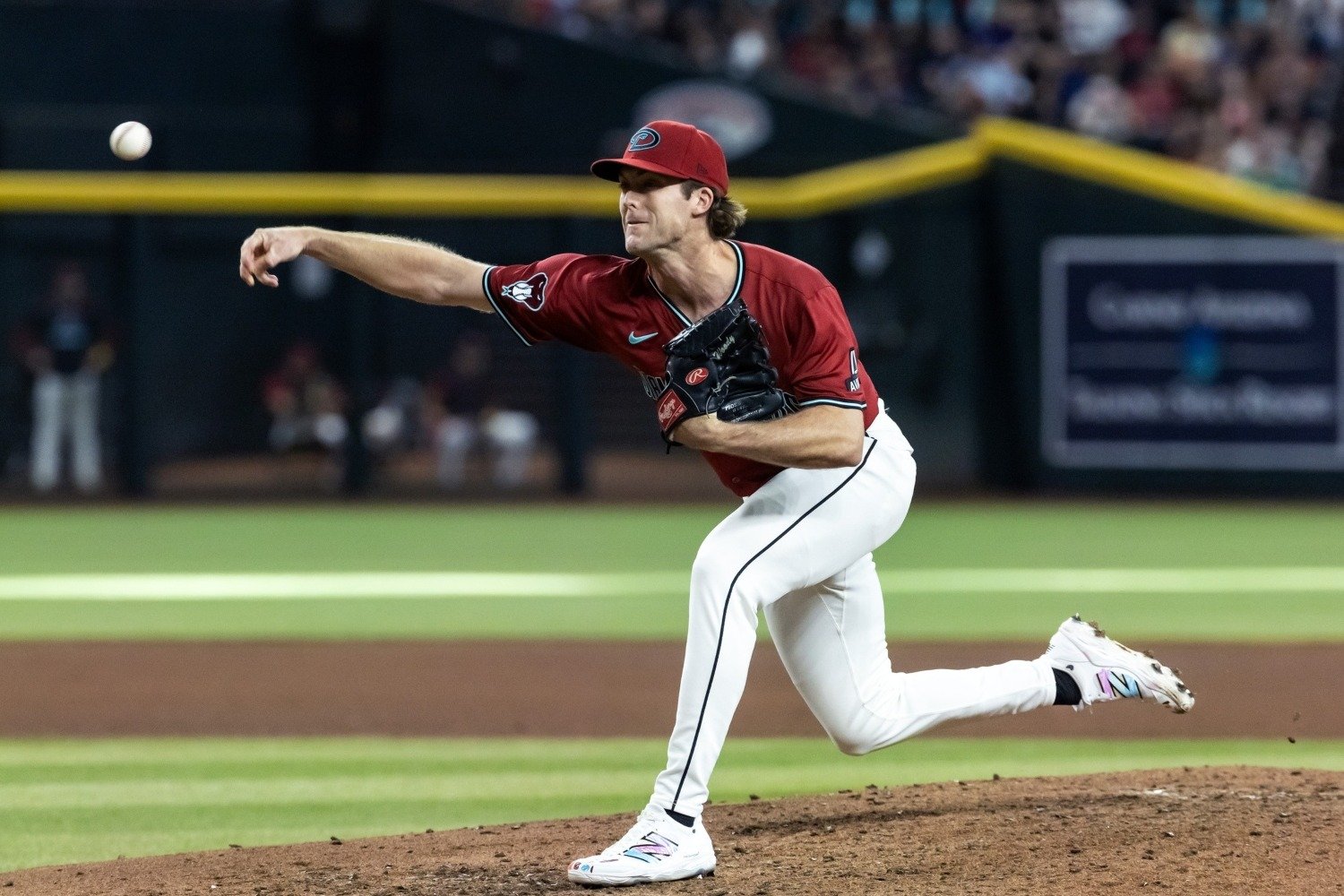 The final days of spring training include plenty of roster movement across baseball, as non-roster invitees exercise the opt-out and upward mobility clauses in their minor-league contracts. The Brewers are not strangers to adding some of those newly available players to their roster shortly before Opening Day. They did it again on Tuesday afternoon, acquiring right-hander Jake Woodford from the Tampa Bay Rays in exchange for minor-league pitcher K.C. Hunt and cash considerations. Woodford, 29, has pitched in parts of six big-league seasons for the St. Louis Cardinals, Chicago White Sox, Pittsburgh Pirates, and Arizona Diamondbacks. He spent the spring in Rays camp, where he recently exercised his upward mobility clause after they reassigned him to minor-league camp. He'll get a big-league opportunity in Milwaukee, which added him to its 40-man roster while placing outfielder Akil Baddoo on the 60-day injured list with a left quad strain. Woodford, who has primarily started in the minor leagues but has made 86 of his 111 big-league appearances out of the bullpen, is expected to fill a multi-inning relief role. "I think he's built up to 40-plus pitches," manager Pat Murphy said. "He definitely has a history, and obviously, we're excited about acquiring him." "We have some history with him," president of baseball operations Matt Arnold said, referring to Woodford's time in St. Louis. "He's an interesting arm that can play a valuable role in a number of different spots in our bullpen, or potentially even at the front of games." A former first-round pick by the Cardinals in the 2015 draft, Woodford showed flashes of his potential during his first few big-league seasons, but he has since struggled while working as a low-leverage innings eater. In 256 career innings, he's pitched to a 5.10 ERA, 4.84 FIP, and 111 DRA-, according to Baseball Prospectus. Woodford has reinvented himself over the last couple of years, lowering his arm slot and modifying his arsenal. Now working from a low-three-quarters delivery, his sinker has more depth, and his four-seamer plays better at the top of the zone as a flat, upshoot fastball. A few years ago, he replaced his slider with a cutter and ditched his curveball, and he developed what appears to be a kick changeup last season. Finally, Woodford averaged a career-best 93.2 mph with his sinker and four-seamer in 2025. After those changes, Woodford profiles as a platoon-neutral reliever whose stuff may be closer to clicking than last year's 6.44 ERA suggests. The Brewers seem to believe he'll be more than a temporary mop-up reliever, as they parted with Hunt—who had an unremarkable showing in Double-A last year but was the organization's co-Minor League Pitcher of the Year in 2024—to acquire him. "We like the platoon flexibility there," Arnold said. "Obviously, being right-handed, with us having a few more lefties, makes some sense. And his ability to be built up and pitch multiple innings is also something we value." The Brewers do not make sweeping changes to a pitcher's arsenal or identity during the season, and that need not be the case for Woodford. All that's left for his development is plugging him into the right run-prevention unit and finding the best way to sequence his pitches. The Rays already had him on the right track this spring. Woodford excelled at missing barrels last year, allowing just a 6.9% barrel rate, 33.6% hard-hit rate, and an average exit velocity of 86.1 mph. His .365 expected wOBA on contact was slightly lower than the league average of .369. His sinker flashed potential to eat up right-handed hitters, yielding an average launch angle of -3 degrees and inducing plenty of chases inside. The issue was that Woodford allowed too much contact, in front of a Diamondbacks defense that ranked 23rd in baseball with -4 Defensive Runs Saved and posted -2 Outs Above Average while he was on the mound. His stuff was difficult to square up, but it wasn't deceptive. Except for those inside sinkers to righties, none of his other pitches to other locations generated truly uncomfortable swings. Woodford's 16.4% whiff rate ranked in the 2nd percentile among all pitchers, and his 24.4% chase rate ranked in the 12th percentile. Throwing more cutters could help alleviate that problem. It produced a decent 24.0% whiff rate last season, held hitters to a .276 xwOBA, and was one of the two pitches in Woodford's arsenal with a positive run value. Baseball Prospectus's pitch tunneling metrics estimated that hitters only had a 48.1% chance of recognizing it as a cutter by the time they had to decide whether to swing, meaning it was also his most difficult pitch to identify. That was because it spun very similarly to his other fastballs before separating from them with slight glove-side movement. The cutter was Woodford's least-used pitch last year, but throwing it more could make pitch recognition tougher for hitters, potentially leading to fewer comfortable swings and more chases against his other pitches. Woodford doubled his cutter usage with the Rays this spring, even making it his primary pitch against left-handed hitters. Peripherals from small spring training samples are hardly a reliable measure of improvement, but there are signs that throwing more cutters is making Woodford more effective. His chase rate jumped to an above-average 31.6% in his 7 1/3 Grapefruit League innings. To account somewhat for facing lower-level hitters in exhibition games, it was still a better mark than his 27.5% chase rate in Triple-A last season. The Brewers could still make a few more tweaks after Woodford arrives in Milwaukee, including throwing more high four-seamers to introduce more swing-and-miss into his game. Knowing how they usually operate, though, they'll likely lean into his sinker and cutter to induce batted balls that their defense can turn into outs. Because he is out of options, Woodford will join the big-league roster, but he may not be active on Opening Day. Traded players get a 72-hour grace period to travel to their new club. "It's a possibility," Arnold said of Woodford being active by Thursday afternoon. "The logistics around getting him here are something we're still working through." If he doesn't arrive in time, it seems the Brewers will begin the year with the current group of 26 players they have left on the active roster, with Easton McGee occupying the final spot in the bullpen. McGee looks like the obvious candidate to be optioned to Triple-A once Woodford joins the team, but with Arnold emphasizing adding a right-hander to balance a lefty-heavy relief corps, the club could feasibly option DL Hall instead. Either way, the front office still has a few moving parts to navigate with the start of the regular season one day away.
- 6 comments
-
- 1
-
-
- jake woodford
- easton mcgee
- (and 3 more)
-
Image courtesy of © Mark J. Rebilas-Imagn Images The final days of spring training include plenty of roster movement across baseball, as non-roster invitees exercise the opt-out and upward mobility clauses in their minor-league contracts. The Brewers are not strangers to adding some of those newly available players to their roster shortly before Opening Day. They did it again on Tuesday afternoon, acquiring right-hander Jake Woodford from the Tampa Bay Rays in exchange for minor-league pitcher K.C. Hunt and cash considerations. Woodford, 29, has pitched in parts of six big-league seasons for the St. Louis Cardinals, Chicago White Sox, Pittsburgh Pirates, and Arizona Diamondbacks. He spent the spring in Rays camp, where he recently exercised his upward mobility clause after they reassigned him to minor-league camp. He'll get a big-league opportunity in Milwaukee, which added him to its 40-man roster while placing outfielder Akil Baddoo on the 60-day injured list with a left quad strain. Woodford, who has primarily started in the minor leagues but has made 86 of his 111 big-league appearances out of the bullpen, is expected to fill a multi-inning relief role. "I think he's built up to 40-plus pitches," manager Pat Murphy said. "He definitely has a history, and obviously, we're excited about acquiring him." "We have some history with him," president of baseball operations Matt Arnold said, referring to Woodford's time in St. Louis. "He's an interesting arm that can play a valuable role in a number of different spots in our bullpen, or potentially even at the front of games." A former first-round pick by the Cardinals in the 2015 draft, Woodford showed flashes of his potential during his first few big-league seasons, but he has since struggled while working as a low-leverage innings eater. In 256 career innings, he's pitched to a 5.10 ERA, 4.84 FIP, and 111 DRA-, according to Baseball Prospectus. Woodford has reinvented himself over the last couple of years, lowering his arm slot and modifying his arsenal. Now working from a low-three-quarters delivery, his sinker has more depth, and his four-seamer plays better at the top of the zone as a flat, upshoot fastball. A few years ago, he replaced his slider with a cutter and ditched his curveball, and he developed what appears to be a kick changeup last season. Finally, Woodford averaged a career-best 93.2 mph with his sinker and four-seamer in 2025. After those changes, Woodford profiles as a platoon-neutral reliever whose stuff may be closer to clicking than last year's 6.44 ERA suggests. The Brewers seem to believe he'll be more than a temporary mop-up reliever, as they parted with Hunt—who had an unremarkable showing in Double-A last year but was the organization's co-Minor League Pitcher of the Year in 2024—to acquire him. "We like the platoon flexibility there," Arnold said. "Obviously, being right-handed, with us having a few more lefties, makes some sense. And his ability to be built up and pitch multiple innings is also something we value." The Brewers do not make sweeping changes to a pitcher's arsenal or identity during the season, and that need not be the case for Woodford. All that's left for his development is plugging him into the right run-prevention unit and finding the best way to sequence his pitches. The Rays already had him on the right track this spring. Woodford excelled at missing barrels last year, allowing just a 6.9% barrel rate, 33.6% hard-hit rate, and an average exit velocity of 86.1 mph. His .365 expected wOBA on contact was slightly lower than the league average of .369. His sinker flashed potential to eat up right-handed hitters, yielding an average launch angle of -3 degrees and inducing plenty of chases inside. The issue was that Woodford allowed too much contact, in front of a Diamondbacks defense that ranked 23rd in baseball with -4 Defensive Runs Saved and posted -2 Outs Above Average while he was on the mound. His stuff was difficult to square up, but it wasn't deceptive. Except for those inside sinkers to righties, none of his other pitches to other locations generated truly uncomfortable swings. Woodford's 16.4% whiff rate ranked in the 2nd percentile among all pitchers, and his 24.4% chase rate ranked in the 12th percentile. Throwing more cutters could help alleviate that problem. It produced a decent 24.0% whiff rate last season, held hitters to a .276 xwOBA, and was one of the two pitches in Woodford's arsenal with a positive run value. Baseball Prospectus's pitch tunneling metrics estimated that hitters only had a 48.1% chance of recognizing it as a cutter by the time they had to decide whether to swing, meaning it was also his most difficult pitch to identify. That was because it spun very similarly to his other fastballs before separating from them with slight glove-side movement. The cutter was Woodford's least-used pitch last year, but throwing it more could make pitch recognition tougher for hitters, potentially leading to fewer comfortable swings and more chases against his other pitches. Woodford doubled his cutter usage with the Rays this spring, even making it his primary pitch against left-handed hitters. Peripherals from small spring training samples are hardly a reliable measure of improvement, but there are signs that throwing more cutters is making Woodford more effective. His chase rate jumped to an above-average 31.6% in his 7 1/3 Grapefruit League innings. To account somewhat for facing lower-level hitters in exhibition games, it was still a better mark than his 27.5% chase rate in Triple-A last season. The Brewers could still make a few more tweaks after Woodford arrives in Milwaukee, including throwing more high four-seamers to introduce more swing-and-miss into his game. Knowing how they usually operate, though, they'll likely lean into his sinker and cutter to induce batted balls that their defense can turn into outs. Because he is out of options, Woodford will join the big-league roster, but he may not be active on Opening Day. Traded players get a 72-hour grace period to travel to their new club. "It's a possibility," Arnold said of Woodford being active by Thursday afternoon. "The logistics around getting him here are something we're still working through." If he doesn't arrive in time, it seems the Brewers will begin the year with the current group of 26 players they have left on the active roster, with Easton McGee occupying the final spot in the bullpen. McGee looks like the obvious candidate to be optioned to Triple-A once Woodford joins the team, but with Arnold emphasizing adding a right-hander to balance a lefty-heavy relief corps, the club could feasibly option DL Hall instead. Either way, the front office still has a few moving parts to navigate with the start of the regular season one day away. View full article
- 6 replies
-
- 1
-
-
- jake woodford
- easton mcgee
- (and 3 more)
-
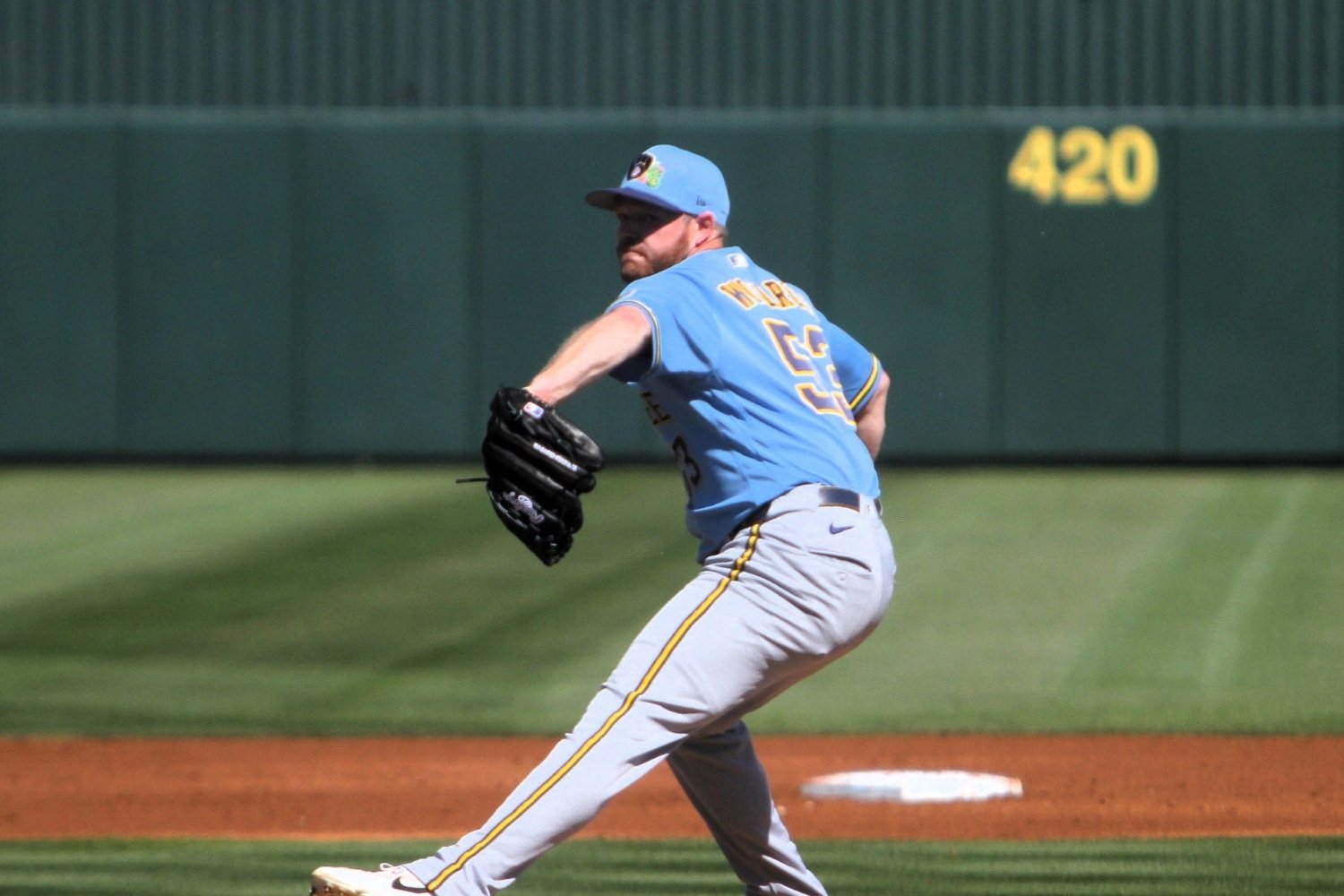 The Brewers already revealed that Jacob Misiorowski would start on Opening Day. Now, they've confirmed the rest of their starters behind him, announcing the probable pitchers for the first regular-season turn through the rotation: Chad Patrick, Brandon Sproat, Kyle Harrison, and Brandon Woodruff. The last two names are the most notable. Harrison left his last spring training start with a blister on his left index finger, but the Brewers downplayed concerns about his status for Opening Day. Woodruff was building up slower than many of the other starters in camp, and his status for the start of the season was a storyline for the last month and a half. He and the club ultimately deemed him ready. "I think it's an encouraging sign," Pat Murphy said. "We weren't thinking that he was going to be on the team early with the way it was going, and it went so well, in terms of he feels great, and he feels like he's ready." "My pitch count is probably a little less than some of the guys coming out of camp, but I felt like I was recovering [properly]," Woodruff said. "I felt like the stuff was there and coming along, and I didn't feel like I necessarily wanted to go pitch in minor-league games." Those positive comments come after Woodruff's velocity, which declined a few ticks in his return from shoulder surgery last year, was down further in his two spring training outings. His four-seamer and sinker averaged a combined 93 mph in 2025, but they sat at 91.9 mph in Cactus League play. In his final inning on Thursday, his four-seamer dipped to 88.6 mph. How he felt physically was the bigger focus for Woodruff and the Brewers, and he firmly believes he's checked that box after suffering a season-ending lat injury last September. "I came into camp in a good spot," he said. "That was another thing—I'm not hurt. I didn't want that to be the story coming out of spring, having that lat [injury] attached to me, because I feel good. So that was important to me. But yeah, I'm in a good spot, and I feel like it was a good time for me to just come into the season fresh and try to get a full year." By including Woodruff on their Opening Day roster, the Brewers are trusting his evaluation of his health. "You've got to trust the player," Murphy said. "This is our decision, ultimately [president of baseball operations Matt Arnold's] decision, but we're all involved in it. But we've got to trust the player, and we do trust him." Woodruff will pitch a simulated outing at American Family Field on Wednesday as a final tune-up before starting on March 31 against the Tampa Bay Rays. It remains to be seen how the Brewers will handle his workload throughout the regular season, but Murphy downplayed the possibility of applying notable restrictions. "He can go out there and be ready as any other starter is ready," Murphy said. "This guy knows how to prepare. This guy knows how to navigate. I think he's in a better state than any of our other really young, really inexperienced guys, who may go out there and after the first inning be gassed because of adrenaline." "I try not to think about that," Woodruff said. "I try to go out and do my job and kind of leave that in the hands of the pitching coaches and Murph, when to make that decision, if they need to take me out or whatever it is. But I'm focused on building the endurance in the load right now, which I've done a good job of." For the first time since the 2023 season, Woodruff will open the year in a big-league starting rotation. Next week will mark an opportunity to prove he's as ready as he asserts, and to make a more immediate impact on the field than he has in the past few years. "I feel good," he said. "Now it's just go pitch."
 -
Image courtesy of © Curt Hogg / USA TODAY NETWORK via Imagn Images The Brewers already revealed that Jacob Misiorowski would start on Opening Day. Now, they've confirmed the rest of their starters behind him, announcing the probable pitchers for the first regular-season turn through the rotation: Chad Patrick, Brandon Sproat, Kyle Harrison, and Brandon Woodruff. The last two names are the most notable. Harrison left his last spring training start with a blister on his left index finger, but the Brewers downplayed concerns about his status for Opening Day. Woodruff was building up slower than many of the other starters in camp, and his status for the start of the season was a storyline for the last month and a half. He and the club ultimately deemed him ready. "I think it's an encouraging sign," Pat Murphy said. "We weren't thinking that he was going to be on the team early with the way it was going, and it went so well, in terms of he feels great, and he feels like he's ready." "My pitch count is probably a little less than some of the guys coming out of camp, but I felt like I was recovering [properly]," Woodruff said. "I felt like the stuff was there and coming along, and I didn't feel like I necessarily wanted to go pitch in minor-league games." Those positive comments come after Woodruff's velocity, which declined a few ticks in his return from shoulder surgery last year, was down further in his two spring training outings. His four-seamer and sinker averaged a combined 93 mph in 2025, but they sat at 91.9 mph in Cactus League play. In his final inning on Thursday, his four-seamer dipped to 88.6 mph. How he felt physically was the bigger focus for Woodruff and the Brewers, and he firmly believes he's checked that box after suffering a season-ending lat injury last September. "I came into camp in a good spot," he said. "That was another thing—I'm not hurt. I didn't want that to be the story coming out of spring, having that lat [injury] attached to me, because I feel good. So that was important to me. But yeah, I'm in a good spot, and I feel like it was a good time for me to just come into the season fresh and try to get a full year." By including Woodruff on their Opening Day roster, the Brewers are trusting his evaluation of his health. "You've got to trust the player," Murphy said. "This is our decision, ultimately [president of baseball operations Matt Arnold's] decision, but we're all involved in it. But we've got to trust the player, and we do trust him." Woodruff will pitch a simulated outing at American Family Field on Wednesday as a final tune-up before starting on March 31 against the Tampa Bay Rays. It remains to be seen how the Brewers will handle his workload throughout the regular season, but Murphy downplayed the possibility of applying notable restrictions. "He can go out there and be ready as any other starter is ready," Murphy said. "This guy knows how to prepare. This guy knows how to navigate. I think he's in a better state than any of our other really young, really inexperienced guys, who may go out there and after the first inning be gassed because of adrenaline." "I try not to think about that," Woodruff said. "I try to go out and do my job and kind of leave that in the hands of the pitching coaches and Murph, when to make that decision, if they need to take me out or whatever it is. But I'm focused on building the endurance in the load right now, which I've done a good job of." For the first time since the 2023 season, Woodruff will open the year in a big-league starting rotation. Next week will mark an opportunity to prove he's as ready as he asserts, and to make a more immediate impact on the field than he has in the past few years. "I feel good," he said. "Now it's just go pitch." View full article
-
Image courtesy of © Mark J. Rebilas-Imagn Images For three straight years, the Brewers intended to start the regular season with Garrett Mitchell as their starting center fielder. Mitchell started up the middle on Opening Day in 2023 and 2025, and he would have in 2024, had he not broken his hand in the final days of spring training. It became apparent that they wanted Mitchell to return to that spot for the 2026 opener. They've certainly given him every opportunity to claim the position. While Jackson Chourio, Blake Perkins, and Brandon Lockridge have all gotten starts in the outfield corners this spring, all eight of Mitchell's Cactus League appearances have come in center field. The club has taken things slowly with the injury-prone Mitchell, though, and has only recently ramped up his playing time. Pat Murphy rehashed those durability concerns to reporters in Arizona earlier this week, officially raising the possibility that the 27-year-old might not make the Opening Day roster if the Brewers believed he was not ready for regular playing time. Ultimately, though, the Brewers did not reach that point. By optioning Perkins to Triple-A Nashville on Thursday, the club effectively locked Mitchell and Lockridge into its Opening Day outfield mix. While Mitchell could still receive frequent days off to manage his health, he'll presumably take most of the playing time up the middle to open the year. The choice apparently came down to Lockridge vs. Perkins, but it arguably could have been Mitchell on the outside looking in. There are still concerns about how productive he'll be when healthy, given the flaws in his profile—concerns that have only been exacerbated by his frequent and extended absences and unsuccessful attempts to close those holes. Because his playing time has been so disjointed due to injury, it's been impossible to determine whether Mitchell is actually a viable big-league hitter. His elite bat speed and swing decisions give him one of the highest offensive ceilings in the organization, but the holes in his swing have produced a bloated 33.9% strikeout rate in 443 career plate appearances. Mitchell has hit .254/.333/.433 (114 wRC+) in the big leagues, but with a far less inspiring deserved line of .208/.289/.355 (80 DRC+), according to Baseball Prospectus. Mitchell can hit fastballs at or below the belt, and he has destroyed hanging breaking balls, but he's been a near-automatic out against anything elevated. For his career, he has whiffed on a whopping 52.1% of swings on fastballs within the top third of the strike zone or higher. He'll never need to crush those pitches to succeed, and with a 39.1% swing rate against them (including just a 14.4% swing rate against fastballs above the zone), Mitchell has done a decent job of forcing pitchers back into his hot zones. However, he must prove he can make some contact with elevated velocity. He's made it a focus, but his efforts have not yielded much improvement. Earlier this spring, Mitchell experimented with raising his hands in his stance before switching back to his usual setup. He's since looked caught in-between in many of his Cactus League plate appearances: gearing up for the fastball, but still missing it, while being ahead of softer stuff. The sample is still very small, but Mitchell has whiffed on 37.5% of swings against fastballs this spring, including a 52.6% whiff rate against high heaters. For his career, Mitchell has posted a capable 79.6% contact rate against in-zone breaking balls, with most of his whiffs coming on pitches below the zone. In Arizona, he's whiffed on 53.8% of in-zone breaking balls. Most alarmingly, Mitchell has been hopelessly in front of slower pitches moving away from him, whiffing on 71.4% of swings against offspeed pitches. In 30 Cactus League plate appearances, Mitchell entered Thursday hitting just .080/.233/.240 (24 wRC+) with a 50% strikeout rate. He's still flashed his upside when putting the ball in play, launching a 462-foot home run earlier this month for one of his two hits, but after sporadic time on the field last year, his bat does not look big-league ready with Opening Day approaching. Meanwhile, Lockridge has showcased tangible improvements at the plate. Clearly, Mitchell can make an impact for the Brewers at some point in 2026, but between his uneven production, injury history, and how his bat currently looks, they should be prepared for other options to take a healthy share of reps in center field. For now, though, Mitchell has the opportunity to dial himself in by Opening Day and establish himself up the middle. View full article
-
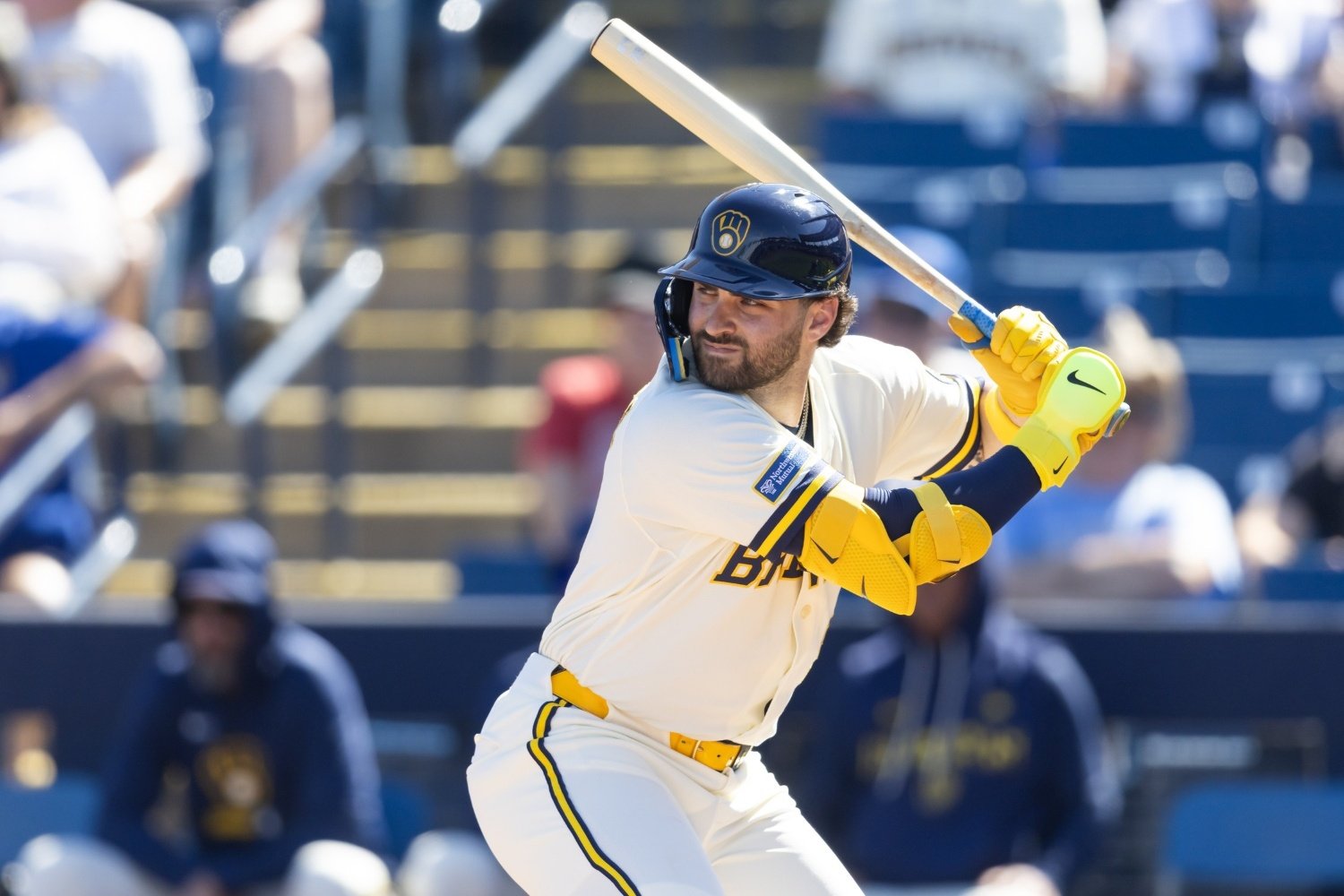 For three straight years, the Brewers intended to start the regular season with Garrett Mitchell as their starting center fielder. Mitchell started up the middle on Opening Day in 2023 and 2025, and he would have in 2024, had he not broken his hand in the final days of spring training. It became apparent that they wanted Mitchell to return to that spot for the 2026 opener. They've certainly given him every opportunity to claim the position. While Jackson Chourio, Blake Perkins, and Brandon Lockridge have all gotten starts in the outfield corners this spring, all eight of Mitchell's Cactus League appearances have come in center field. The club has taken things slowly with the injury-prone Mitchell, though, and has only recently ramped up his playing time. Pat Murphy rehashed those durability concerns to reporters in Arizona earlier this week, officially raising the possibility that the 27-year-old might not make the Opening Day roster if the Brewers believed he was not ready for regular playing time. Ultimately, though, the Brewers did not reach that point. By optioning Perkins to Triple-A Nashville on Thursday, the club effectively locked Mitchell and Lockridge into its Opening Day outfield mix. While Mitchell could still receive frequent days off to manage his health, he'll presumably take most of the playing time up the middle to open the year. The choice apparently came down to Lockridge vs. Perkins, but it arguably could have been Mitchell on the outside looking in. There are still concerns about how productive he'll be when healthy, given the flaws in his profile—concerns that have only been exacerbated by his frequent and extended absences and unsuccessful attempts to close those holes. Because his playing time has been so disjointed due to injury, it's been impossible to determine whether Mitchell is actually a viable big-league hitter. His elite bat speed and swing decisions give him one of the highest offensive ceilings in the organization, but the holes in his swing have produced a bloated 33.9% strikeout rate in 443 career plate appearances. Mitchell has hit .254/.333/.433 (114 wRC+) in the big leagues, but with a far less inspiring deserved line of .208/.289/.355 (80 DRC+), according to Baseball Prospectus. Mitchell can hit fastballs at or below the belt, and he has destroyed hanging breaking balls, but he's been a near-automatic out against anything elevated. For his career, he has whiffed on a whopping 52.1% of swings on fastballs within the top third of the strike zone or higher. He'll never need to crush those pitches to succeed, and with a 39.1% swing rate against them (including just a 14.4% swing rate against fastballs above the zone), Mitchell has done a decent job of forcing pitchers back into his hot zones. However, he must prove he can make some contact with elevated velocity. He's made it a focus, but his efforts have not yielded much improvement. Earlier this spring, Mitchell experimented with raising his hands in his stance before switching back to his usual setup. He's since looked caught in-between in many of his Cactus League plate appearances: gearing up for the fastball, but still missing it, while being ahead of softer stuff. The sample is still very small, but Mitchell has whiffed on 37.5% of swings against fastballs this spring, including a 52.6% whiff rate against high heaters. For his career, Mitchell has posted a capable 79.6% contact rate against in-zone breaking balls, with most of his whiffs coming on pitches below the zone. In Arizona, he's whiffed on 53.8% of in-zone breaking balls. Most alarmingly, Mitchell has been hopelessly in front of slower pitches moving away from him, whiffing on 71.4% of swings against offspeed pitches. In 30 Cactus League plate appearances, Mitchell entered Thursday hitting just .080/.233/.240 (24 wRC+) with a 50% strikeout rate. He's still flashed his upside when putting the ball in play, launching a 462-foot home run earlier this month for one of his two hits, but after sporadic time on the field last year, his bat does not look big-league ready with Opening Day approaching. Meanwhile, Lockridge has showcased tangible improvements at the plate. Clearly, Mitchell can make an impact for the Brewers at some point in 2026, but between his uneven production, injury history, and how his bat currently looks, they should be prepared for other options to take a healthy share of reps in center field. For now, though, Mitchell has the opportunity to dial himself in by Opening Day and establish himself up the middle.
 -
Image courtesy of © Dave Kallmann / Milwaukee Journal Sentinel / USA TODAY NETWORK via Imagn Images Before the start of the 2023 season, Statcast introduced the sweeper as a new label for certain breaking pitches, separating them from tighter, harder sliders. Since then, the term has found a strong foothold in the modern pitching vernacular. Sweeping sliders themselves aren’t new, but the classification came about as more pitchers and coaches learned to generate the sidespin that creates more extreme lateral break than gyro sliders have, without much depth. That means more pitchers throw it now, including some who throw both sweepers and gyro-spin sliders. Once several pitchers threw both, it became especially useful to have distinct labels for the two different offerings. But as the percentage of pitches tagged as sweepers has steadily increased over the last few seasons, the Brewers have lagged behind. In fact, they cut their sweeper usage last year. Pitching coach Chris Hook and the rest of Milwaukee’s pitching development team have nothing against sweepers, but they generally prefer shorter pitches that spend time in the strike zone, particularly for multi-inning pitchers. They often encourage bulk pitchers to throw more cutters and sinkers, instead of a bigger breaking pitch. Veteran starters Aaron Civale and Tyler Alexander threw fewer sweepers and more fastballs after joining the Brewers, even though those breaking pitches were previously among their most effective. Brandon Woodruff developed a sweeper while rehabbing from shoulder surgery, but he quickly realized he had a better feel for pairing a new cutter with his two existing fastballs. Prospect Coleman Crow, whose signature pitch is a big, high-spin curveball, has thrown his cutter more than any other pitch in big-league camp this year, after it was just a supporting pitch in the minor leagues last season. Sammy Peralta featured the sweeper last season; the team's first recommendation after claiming him last fall was to add a cutter. All indications have been that the Brewers are keeping that emphasis on in-zone pitches at the heart of their pitching philosophy, but sweepers could complement that approach more than in recent seasons. Crow and DL Hall have added sweepers to their arsenal. Brandon Sproat, who could crack the Opening Day rotation, has continued throwing his sweeper 14.3% of the time in Cactus League outings since coming over via trade. Sweeper specialist Robert Gasser is also set for a fully healthy season after spending much of 2025 rehabbing from Tommy John surgery. And they did claim Peralta, after all, which shows a certain openness to acquiring guys for whom the sweeper is important and not a candidate to be scrapped or neglected. The Brewers may apply elements of a larger philosophy to most of their pitchers, but above all else, they try to avoid putting them into a box. This year’s staff will still live mostly off fastballs, but it may be better equipped to sprinkle in more sweeping breaking balls than last year's version was. Whether that was a conscious change of course or just a product of organic efforts to improve the team one move and one player at a time, they're evolving. View full article
-
Sweepers Could Make a Comeback on 2026 Brewers' Pitching Staff
Jack Stern posted an article in Brewers
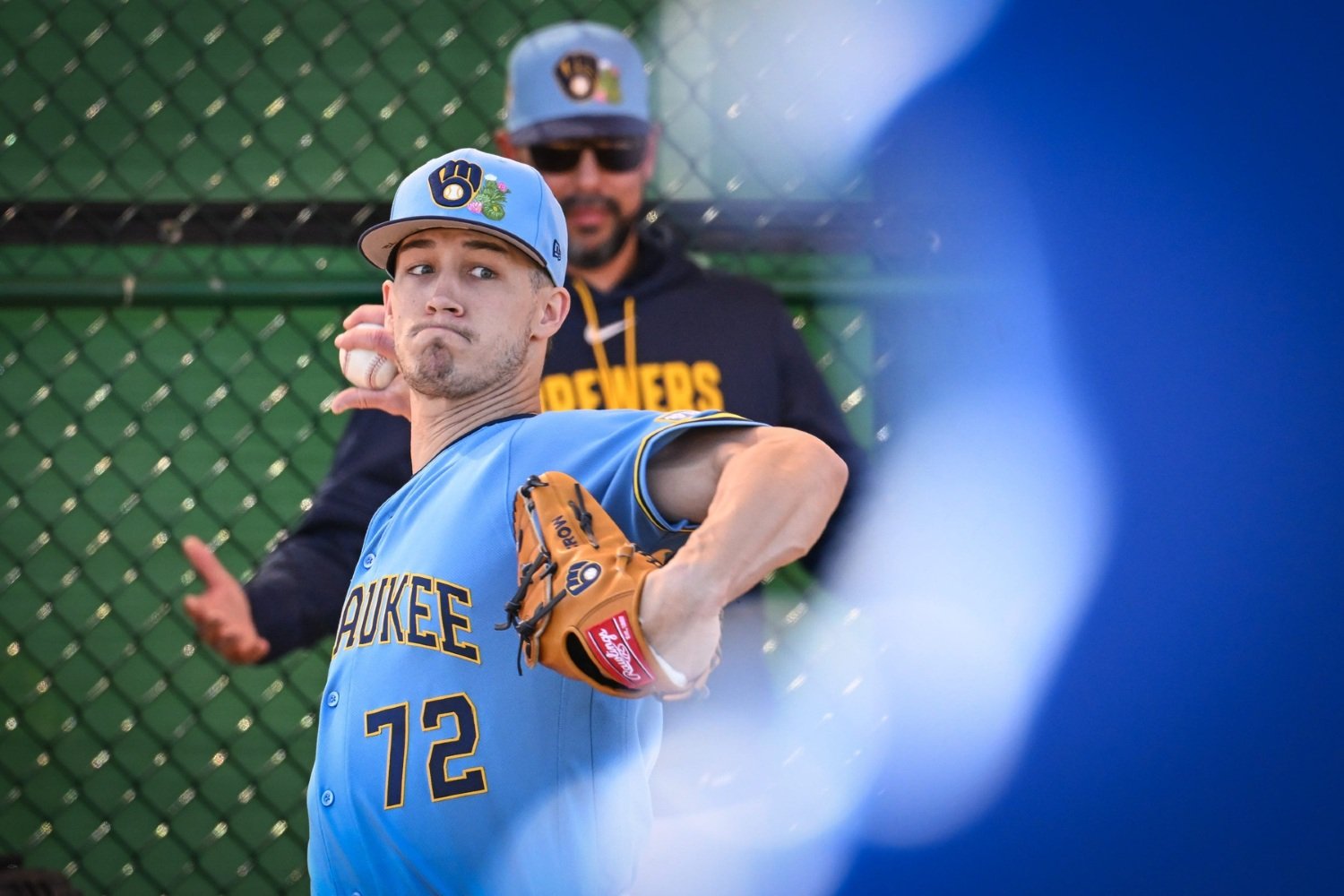 Before the start of the 2023 season, Statcast introduced the sweeper as a new label for certain breaking pitches, separating them from tighter, harder sliders. Since then, the term has found a strong foothold in the modern pitching vernacular. Sweeping sliders themselves aren’t new, but the classification came about as more pitchers and coaches learned to generate the sidespin that creates more extreme lateral break than gyro sliders have, without much depth. That means more pitchers throw it now, including some who throw both sweepers and gyro-spin sliders. Once several pitchers threw both, it became especially useful to have distinct labels for the two different offerings. But as the percentage of pitches tagged as sweepers has steadily increased over the last few seasons, the Brewers have lagged behind. In fact, they cut their sweeper usage last year. Pitching coach Chris Hook and the rest of Milwaukee’s pitching development team have nothing against sweepers, but they generally prefer shorter pitches that spend time in the strike zone, particularly for multi-inning pitchers. They often encourage bulk pitchers to throw more cutters and sinkers, instead of a bigger breaking pitch. Veteran starters Aaron Civale and Tyler Alexander threw fewer sweepers and more fastballs after joining the Brewers, even though those breaking pitches were previously among their most effective. Brandon Woodruff developed a sweeper while rehabbing from shoulder surgery, but he quickly realized he had a better feel for pairing a new cutter with his two existing fastballs. Prospect Coleman Crow, whose signature pitch is a big, high-spin curveball, has thrown his cutter more than any other pitch in big-league camp this year, after it was just a supporting pitch in the minor leagues last season. Sammy Peralta featured the sweeper last season; the team's first recommendation after claiming him last fall was to add a cutter. All indications have been that the Brewers are keeping that emphasis on in-zone pitches at the heart of their pitching philosophy, but sweepers could complement that approach more than in recent seasons. Crow and DL Hall have added sweepers to their arsenal. Brandon Sproat, who could crack the Opening Day rotation, has continued throwing his sweeper 14.3% of the time in Cactus League outings since coming over via trade. Sweeper specialist Robert Gasser is also set for a fully healthy season after spending much of 2025 rehabbing from Tommy John surgery. And they did claim Peralta, after all, which shows a certain openness to acquiring guys for whom the sweeper is important and not a candidate to be scrapped or neglected. The Brewers may apply elements of a larger philosophy to most of their pitchers, but above all else, they try to avoid putting them into a box. This year’s staff will still live mostly off fastballs, but it may be better equipped to sprinkle in more sweeping breaking balls than last year's version was. Whether that was a conscious change of course or just a product of organic efforts to improve the team one move and one player at a time, they're evolving.
 -
Image courtesy of © Mark J. Rebilas-Imagn Images You can never have too much starting pitching. The Brewers have experienced that adage firsthand in each of the last two seasons. Including openers and bullpen games, both the 2024 and 2025 Brewers used 17 different starters during the regular season. Last season, an immediate bout of injuries left them starting Elvin Rodríguez and Tyler Alexander in April. Given that history, the length of Milwaukee’s depth chart entering 2026 is no coincidence. The Brewers are poised to open the regular season with up to 14 capable starting candidates on their 40-man roster. Non-roster arms like Tate Kuehner, Drew Rom, and (eventually) a healthy Gerson Garabito bring the count to 17. Over the winter, the club traded away Freddy Peralta and Tobias Myers and lost Jose Quintana to free agency, but it added nearly twice as many starters. Brandon Sproat came over in that Peralta trade, and the club traded its entire big-league depth chart at third base to the Boston Red Sox for southpaws Kyle Harrison and Shane Drohan. Meanwhile, Logan Henderson and Robert Gasser worked their way back to full health, and Rom and Gerabito joined waiver claim Sammy Peralta as upper-minors depth. As spring training got underway, it seemed that the organization would have more starters than starts, both in the big leagues and in Triple-A. Matt Arnold welcomed that potential logjam, but did not expect it to arise. “We know we’re going to have injuries,” Arnold said after the Brewers acquired Harrison and Drohan. “You guys saw what we were dealing with at the start of last year, when not everybody’s 100%. That’s going to happen again, and we know that.” It’s not a Brewers-specific trend brought on by an unusual number of injuries. The modern starter works fewer innings, meaning teams need more starters to cover a season. In 2010, 273 pitchers started an MLB game, 74 made at least 30 starts, and 45 pitched at least 200 innings. Last season, there were 369 different starters; 53 made at least 30 starts, and three logged at least 200 innings. “The game today, it takes a lot,” Pat Murphy said last month. “200 innings? Unheard of. It takes a lot. 150 is a lot. So you need depth.” That means clubs must construct rotation mixes of more than six or seven pitchers. Seventeen starters may have seemed like aberrations in back-to-back seasons, but it’s more likely to become the new normal. The Brewers are planning accordingly. “It’s no longer a five-man rotation, all five guys are getting 30 starts,” Murphy said. “That didn’t happen anywhere [in 2025], I don’t think … I don’t think it’s being built to be that way. I think it’s more about, 'Hey, we’re going to use 20 pitchers, and all 20 are going to contribute.' That’s kind of how staffs are being built.” Murphy has also made a spring mantra of reminding media that pitching injuries are seasonal, on which the data back him up. Here's a month-by-month three-year survey of injured list placements, for position players and pitchers, via Baseball Prospectus. The need for that many arms is already playing out as the Brewers anticipated, partially because they're being so cautious to combat the springtime pitching injury risk. Brandon Woodruff purposely slow buildup has him questionable for Opening Day, and Quinn Priester appears likely to begin the year on the injured list due to a nagging wrist injury that has muddied his outlook in camp. That means there could be at least two rotation spots up for grabs. Several of the Brewers’ younger and newer arms have initiated solid bids early in camp. Logan Henderson’s new curveball has looked like a legitimate breaking ball that could add needed balance to his arsenal. Sproat has flashed an extra tick of velocity and turned his short slider into a mid-90s cutter that he can throw in the strike zone as a secondary pitch. A new grip has given Harrison’s kick changeup outlier depth. Drohan induced whiffs on 38.3% of swings in his Cactus League debut. The Brewers didn’t just prepare an emergency plan for hits to their rotation depth; they expected those hits to come. They could quickly be rewarded for that planning. View full article
-
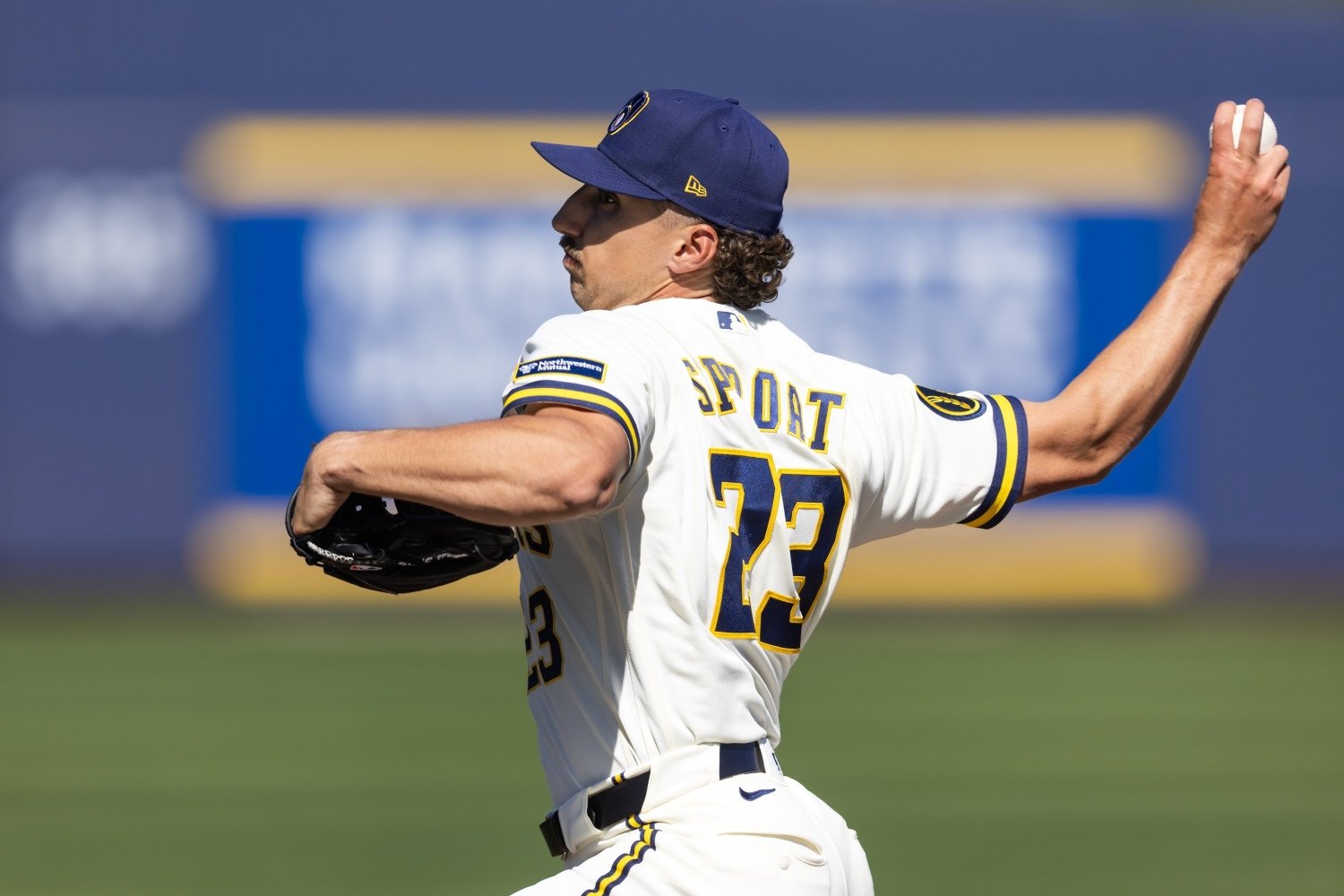 You can never have too much starting pitching. The Brewers have experienced that adage firsthand in each of the last two seasons. Including openers and bullpen games, both the 2024 and 2025 Brewers used 17 different starters during the regular season. Last season, an immediate bout of injuries left them starting Elvin Rodríguez and Tyler Alexander in April. Given that history, the length of Milwaukee’s depth chart entering 2026 is no coincidence. The Brewers are poised to open the regular season with up to 14 capable starting candidates on their 40-man roster. Non-roster arms like Tate Kuehner, Drew Rom, and (eventually) a healthy Gerson Garabito bring the count to 17. Over the winter, the club traded away Freddy Peralta and Tobias Myers and lost Jose Quintana to free agency, but it added nearly twice as many starters. Brandon Sproat came over in that Peralta trade, and the club traded its entire big-league depth chart at third base to the Boston Red Sox for southpaws Kyle Harrison and Shane Drohan. Meanwhile, Logan Henderson and Robert Gasser worked their way back to full health, and Rom and Gerabito joined waiver claim Sammy Peralta as upper-minors depth. As spring training got underway, it seemed that the organization would have more starters than starts, both in the big leagues and in Triple-A. Matt Arnold welcomed that potential logjam, but did not expect it to arise. “We know we’re going to have injuries,” Arnold said after the Brewers acquired Harrison and Drohan. “You guys saw what we were dealing with at the start of last year, when not everybody’s 100%. That’s going to happen again, and we know that.” It’s not a Brewers-specific trend brought on by an unusual number of injuries. The modern starter works fewer innings, meaning teams need more starters to cover a season. In 2010, 273 pitchers started an MLB game, 74 made at least 30 starts, and 45 pitched at least 200 innings. Last season, there were 369 different starters; 53 made at least 30 starts, and three logged at least 200 innings. “The game today, it takes a lot,” Pat Murphy said last month. “200 innings? Unheard of. It takes a lot. 150 is a lot. So you need depth.” That means clubs must construct rotation mixes of more than six or seven pitchers. Seventeen starters may have seemed like aberrations in back-to-back seasons, but it’s more likely to become the new normal. The Brewers are planning accordingly. “It’s no longer a five-man rotation, all five guys are getting 30 starts,” Murphy said. “That didn’t happen anywhere [in 2025], I don’t think … I don’t think it’s being built to be that way. I think it’s more about, 'Hey, we’re going to use 20 pitchers, and all 20 are going to contribute.' That’s kind of how staffs are being built.” Murphy has also made a spring mantra of reminding media that pitching injuries are seasonal, on which the data back him up. Here's a month-by-month three-year survey of injured list placements, for position players and pitchers, via Baseball Prospectus. The need for that many arms is already playing out as the Brewers anticipated, partially because they're being so cautious to combat the springtime pitching injury risk. Brandon Woodruff purposely slow buildup has him questionable for Opening Day, and Quinn Priester appears likely to begin the year on the injured list due to a nagging wrist injury that has muddied his outlook in camp. That means there could be at least two rotation spots up for grabs. Several of the Brewers’ younger and newer arms have initiated solid bids early in camp. Logan Henderson’s new curveball has looked like a legitimate breaking ball that could add needed balance to his arsenal. Sproat has flashed an extra tick of velocity and turned his short slider into a mid-90s cutter that he can throw in the strike zone as a secondary pitch. A new grip has given Harrison’s kick changeup outlier depth. Drohan induced whiffs on 38.3% of swings in his Cactus League debut. The Brewers didn’t just prepare an emergency plan for hits to their rotation depth; they expected those hits to come. They could quickly be rewarded for that planning.
-
- 2
-
-
- kyle harrison
- brandon sproat
- (and 3 more)
-
Image courtesy of © Dave Kallmann / Milwaukee Journal Sentinel / USA TODAY NETWORK via Imagn Images Since the Brewers acquired left-hander Kyle Harrison from the Boston Red Sox a few days before pitchers and catchers reported for spring training, he's suddenly faced a slew of introductions. Despite being less acclimated with Milwaukee's pitching development crew than many of his new teammates, he quickly picked up on how organized and focused his new coaches are. "The overall attention to detail here has been pretty awesome," he said last month, just over a week into his Brewers tenure. After the San Francisco Giants selected him in the third round of the shortened 2020 MLB draft, Harrison ascended quickly through their minor-league system, making his debut in August 2023. However, his development stalled as he bounced between the Giants' rotation and their Triple-A affiliate. In 39 games (35 starts) across parts of three seasons in San Francisco, the 24-year-old pitched to a 4.48 ERA (110 ERA-), 4.56 FIP (114 FIP-), and 4.17 SIERA. Harrison did not get many big-league opportunities after the Giants traded him to Boston in June as part of the Rafael Devers deal, as his new club immediately optioned him to Triple-A Worcester until September. However, that time proved crucial for his development. The Red Sox saw deficiencies in Harrison's existing arsenal, which consisted only of a four-seam fastball, slurve, and changeup. That four-seamer was the only pitch he could land in the zone. In his eight appearances with the Giants last season, his slurve and changeup had respective in-zone rates of 40.2% and 39.5%. As a result, hitters did not have to honor non-fastball spin and could easily lay off those secondary pitches. Harrison's 25.6% chase rate as a Giant was well below the league average. Harrison needed more pitches that tracked in the strike zone. To give him another in-zone offering for both right-handed and left-handed hitters, the Red Sox helped him develop a cutter and a sinker. "Having had the conversation with the higher-ups there, they were like, 'Yeah, we want to introduce a cutter to the mix, see if you can make your change a little better, and then also add a little sinker just to lefties to mix it in,'" Harrison said. Harrison's four-seamer averaged 14.3 inches of arm-side movement due to his low arm slot and because he keeps his hand perfectly behind the ball at release, so his sinker doesn't have more run. However, it had 5.3 more inches of depth than his four-seamer last September, which makes it a different look for hitters. "It's something that I don't think I'd say classifies as a sinker, but it's something that kind of goes in to lefties and doesn't allow them to just cheat on a firm heater," he said. The cutter, meanwhile, gave him another in-zone pitch to use against all hitters, but he mostly used it against right-handers. "I think their thought there was, 'We want something that you could throw for a strike that's not a fastball,'" Harrison said. "And for me, they were looking at my slurve, and I wasn't able to land that in the zone as much as I wanted to. So I think they just wanted to give me something that crosses the zero [horizontal break] line but has this good vert, anywhere from six to eight, or something like that. Something just to look like the heater, just so guys, like I said from the left side for the sinker, so they can't just sit on the heater." Finally, the Red Sox tweaked Harrison's traditional circle changeup into a kick-change, which uses a spiked grip to create more depth. "It was one of those things where I threw my first live BP there, and they looked at it, and were like, 'Oh, what changeup is that?'" he said. "I'm like, 'Oh, it's just my circle change I've been throwing.' They were like, 'Oh, try this.'" Harrison pitched only 12 innings for Boston down the stretch last year, but in that time, he looked like a more well-rounded starting pitcher with a complete arsenal. With those new pitches in his mix, his chase rate spiked to 35.4%, a career-best for any month of his big-league career. None of that means he's a finished product, though. Harrison said it took an offseason to start locating a changeup with more movement, and he's still searching for the most comfortable cutter grip. That's where Chris Hook, Jim Henderson, and others can accelerate his evolution. "We'll see what their plans here are for me with my pitch mix, but I love how they've just been laid back," Harrison said. "They've let me kind of run the show, and ultimately, I think they're going to let me know what they want me to keep and what I can get better at. So I'm just all ears and looking forward to getting better here." Any work the Brewers have done with Harrison's arsenal may come to light on Tuesday, when he'll make his spring debut against Great Britain in their World Baseball Classic tuneup game. He could join Quinn Priester as another young starter to improve his arsenal in Boston and perfect it in Milwaukee. View full article
-
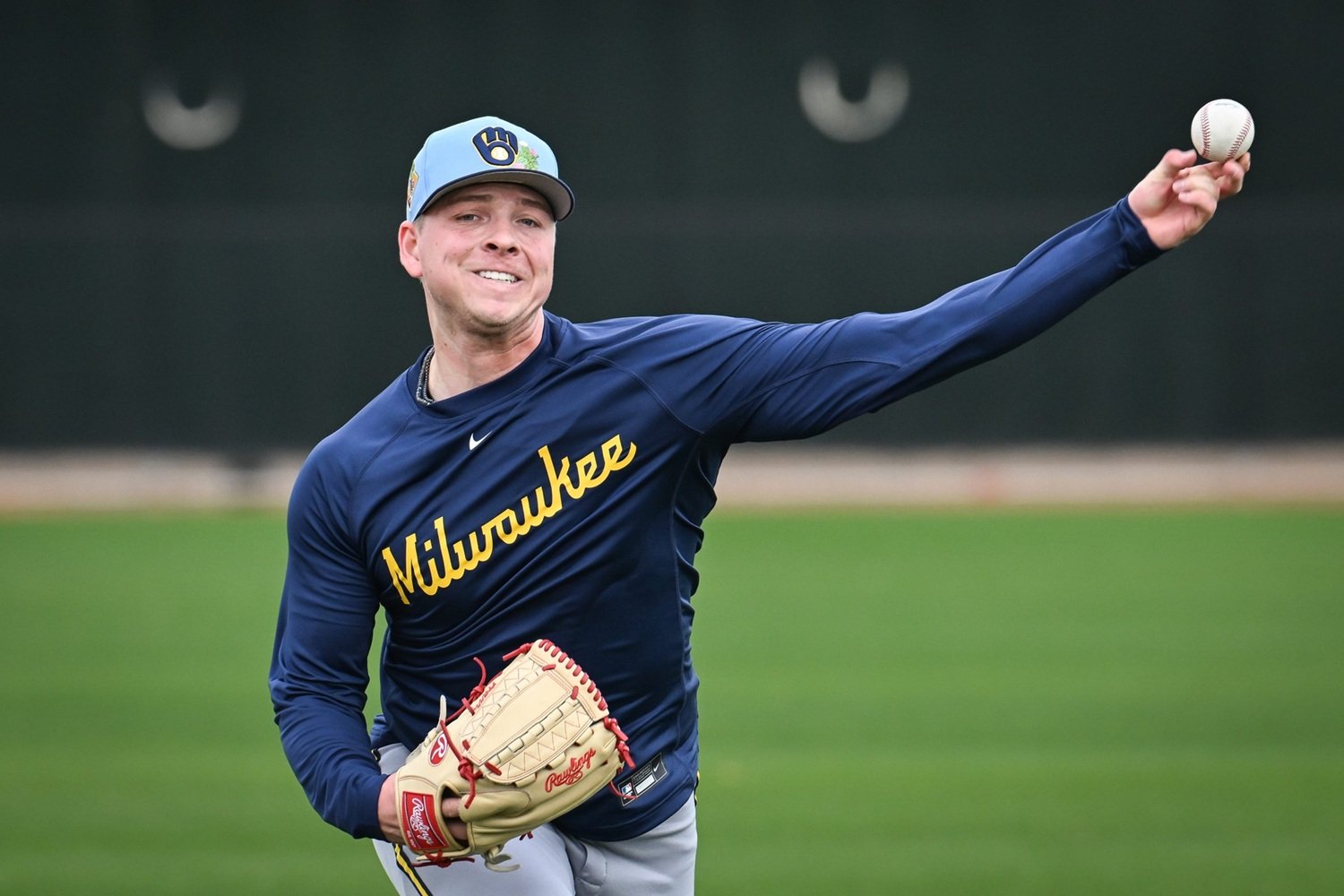 Since the Brewers acquired left-hander Kyle Harrison from the Boston Red Sox a few days before pitchers and catchers reported for spring training, he's suddenly faced a slew of introductions. Despite being less acclimated with Milwaukee's pitching development crew than many of his new teammates, he quickly picked up on how organized and focused his new coaches are. "The overall attention to detail here has been pretty awesome," he said last month, just over a week into his Brewers tenure. After the San Francisco Giants selected him in the third round of the shortened 2020 MLB draft, Harrison ascended quickly through their minor-league system, making his debut in August 2023. However, his development stalled as he bounced between the Giants' rotation and their Triple-A affiliate. In 39 games (35 starts) across parts of three seasons in San Francisco, the 24-year-old pitched to a 4.48 ERA (110 ERA-), 4.56 FIP (114 FIP-), and 4.17 SIERA. Harrison did not get many big-league opportunities after the Giants traded him to Boston in June as part of the Rafael Devers deal, as his new club immediately optioned him to Triple-A Worcester until September. However, that time proved crucial for his development. The Red Sox saw deficiencies in Harrison's existing arsenal, which consisted only of a four-seam fastball, slurve, and changeup. That four-seamer was the only pitch he could land in the zone. In his eight appearances with the Giants last season, his slurve and changeup had respective in-zone rates of 40.2% and 39.5%. As a result, hitters did not have to honor non-fastball spin and could easily lay off those secondary pitches. Harrison's 25.6% chase rate as a Giant was well below the league average. Harrison needed more pitches that tracked in the strike zone. To give him another in-zone offering for both right-handed and left-handed hitters, the Red Sox helped him develop a cutter and a sinker. "Having had the conversation with the higher-ups there, they were like, 'Yeah, we want to introduce a cutter to the mix, see if you can make your change a little better, and then also add a little sinker just to lefties to mix it in,'" Harrison said. Harrison's four-seamer averaged 14.3 inches of arm-side movement due to his low arm slot and because he keeps his hand perfectly behind the ball at release, so his sinker doesn't have more run. However, it had 5.3 more inches of depth than his four-seamer last September, which makes it a different look for hitters. "It's something that I don't think I'd say classifies as a sinker, but it's something that kind of goes in to lefties and doesn't allow them to just cheat on a firm heater," he said. The cutter, meanwhile, gave him another in-zone pitch to use against all hitters, but he mostly used it against right-handers. "I think their thought there was, 'We want something that you could throw for a strike that's not a fastball,'" Harrison said. "And for me, they were looking at my slurve, and I wasn't able to land that in the zone as much as I wanted to. So I think they just wanted to give me something that crosses the zero [horizontal break] line but has this good vert, anywhere from six to eight, or something like that. Something just to look like the heater, just so guys, like I said from the left side for the sinker, so they can't just sit on the heater." Finally, the Red Sox tweaked Harrison's traditional circle changeup into a kick-change, which uses a spiked grip to create more depth. "It was one of those things where I threw my first live BP there, and they looked at it, and were like, 'Oh, what changeup is that?'" he said. "I'm like, 'Oh, it's just my circle change I've been throwing.' They were like, 'Oh, try this.'" Harrison pitched only 12 innings for Boston down the stretch last year, but in that time, he looked like a more well-rounded starting pitcher with a complete arsenal. With those new pitches in his mix, his chase rate spiked to 35.4%, a career-best for any month of his big-league career. None of that means he's a finished product, though. Harrison said it took an offseason to start locating a changeup with more movement, and he's still searching for the most comfortable cutter grip. That's where Chris Hook, Jim Henderson, and others can accelerate his evolution. "We'll see what their plans here are for me with my pitch mix, but I love how they've just been laid back," Harrison said. "They've let me kind of run the show, and ultimately, I think they're going to let me know what they want me to keep and what I can get better at. So I'm just all ears and looking forward to getting better here." Any work the Brewers have done with Harrison's arsenal may come to light on Tuesday, when he'll make his spring debut against Great Britain in their World Baseball Classic tuneup game. He could join Quinn Priester as another young starter to improve his arsenal in Boston and perfect it in Milwaukee.
 -
Image courtesy of © Kirby Lee-Imagn Images In four big-league seasons, Aaron Ashby has filled every possible role within the Brewers’ pitching staff. He’s started 26 games, most of which came in 2023. As a reliever, he’s been a long man, a left-handed specialist, a multi-inning setup man, and has even picked up five saves. In last year’s postseason, he started three games as an opener or first man up in a bullpen game. During the 2025 regular season, Ashby became Pat Murphy’s bullpen iron man, partially at his own request. Despite not debuting until May 23 due to an oblique injury, he appeared in a career-high 43 games and worked 66 ⅔ innings, the third-most among Brewers relievers. “Ashby wants to throw every day,” Murphy said last September. “He’s this kid who, since he’s rehabbed his injury, he’s just been adamant about touching the ball every day. We laugh about it. Every time he comes off the mound, he’s like, ‘I’m good to go. Keep going, keep going, keep going.’ He wants to throw every day.” Ashby’s drive to pitch so often was partially motivated by a lighter first-half workload than several of his teammates, due to that oblique injury. “We were thin at the end of the year,” he said last week from the Brewers’ spring training clubhouse in Arizona. “Everyone's running on fumes, and I felt pretty good for where we were at. I'd missed the first two months of the season, essentially, so I had more rest and more time off than everyone else. So I felt like I kind of owed it to the team and to the bullpen to be available and take that workload, because they had all had another two months under their belt that I didn't.” Furthermore, his throwing program was already geared toward being available nearly every day. Ashby said the second half of last season was a “great learning experience” in how to prepare for such a workload, but pitching so often was not too dissimilar from the work he already did between appearances. “I think I try to replicate an intense throwing volume or intensity every day, so that I feel good every day,” he said. “I kind of get to that point where I'm loose, I'm ready, and then I kind of let it rip for a little bit. So I think that's something that's helped me feel good every day. I think the frequency, I've tried to create on my own for many years by just having a really intense throwing program.” Ashby spent time in a similar niche in 2024, albeit not until a promotion in late August from Triple-A, where he pitched most of the season as a starter. The move to a flexible relief role has brought out the best in him, as he’s pitched to a 1.98 ERA, 2.26 FIP, and 2.62 SIERA in 86 ⅓ innings. In that time, Ashby has changed how he attacks hitters. When he debuted in 2021, he relied heavily on his high-spin breaking pitches, particularly his slider. Since returning from shoulder surgery in 2024, he’s thrown more sinkers than breaking balls. Last season, he threw his sinker a career-high 51.3% of the time. “I finally feel comfortable relying on the sinker to get me weak contact,” Ashby explained. “I have a bit of a better understanding of when I can throw it. I think that my other pitches have elevated the effectiveness of my sinker. I think that the curveball makes the sinker play up. I think the changeup makes the sinker play up. So, yeah, I think just knowing when to use it, knowing where to throw it, and kind of just believing in myself that I can get out of a jam with it.” The sinker was more effective than ever last year, leading Ashby’s arsenal with a +8 Run Value, according to Statcast. It held opponents to a .297 wOBA and produced a 65.3% ground ball rate. Trusting it more has also made him more efficient, as Ashby averaged 3.8 pitches per plate appearance and 15.5 pitches per inning last year, both career bests. “I think if you can establish a fastball early and make them swing at that, and then induce weak contact, I think that's a good recipe for being effective and efficient,” he said. Ashby’s breaking stuff has evolved, too. Post-surgery, he’s been unable to rediscover the same sweeping slider he once had, and has instead relied mostly on his big curveball, which has gained nearly 3 mph. “Just coming back from surgery, that was the breaking ball,” he said. “The slider was kind of hard to get back, but for whatever reason, I was just able to throw [the curveball] pretty easily. I think the curveball got better the last two years. It’s just kind of the ebbs and flows of pitch shapes and stuff like that.” Ashby got plenty of mileage out of a sinker, curveball, and changeup mix during the regular season, but he added another tool to his toolbelt late in the year. He had dabbled with a four-seamer before, but it rarely had much vertical separation from his sinker. Throughout the year, though, he developed a capable four-seamer while attempting to throw a different kind of fastball. “More than any pitch that I throw, I want to throw a cutter, and I’m not able to do it,” Ashby said. “In trying to throw this cutter, I realized that I could throw a four-seam, and for whatever reason, it felt easy to execute.” Averaging 13.7 inches of induced vertical break, the four-seamer doesn’t have much carry and grades out poorly on its own. However, for the first time, Ashby found another fastball that moves differently from his sinker. “I’m not someone who spins the ball, at least my fastball, very well,” he said. “I throw a very below-average spin fastball. I’ve never really been able to get the vert ball, mainly due to my release height, but it just has to be enough separation off the sinker. I think it does that.” Using it almost exclusively high and inside to right-handers to keep them off his sinker, the pitch quickly became a regular part of Ashby’s arsenal in the postseason. “You have to adapt in this game,” Ashby said. “Guys know I'm going to throw a sinker, so righties are diving out over the plate more, ready for it. If I have four-seam up and in that I can throw, it doesn't make that very comfortable to do anymore. More of just a tool to use sparingly, but definitely something to keep working on.” Ashby’s role for this season is not yet set in stone. For now, the Brewers are stretching him out to remain a multi-inning reliever, with starting still on the table should the need arise. “You can always go back,” Murphy said of moving pitchers into shorter relief roles after initially building them up for longer outings. “It’s hard to go forward.” Ashby remains willing to pitch in any capacity the Brewers need. “I think the idea right now is just to build up to around three innings,” he said. “It could be more than that, it could be less than that. And then kind of with whatever the team needs is kind of where I'll fall in.” View full article
-
Versatile Aaron Ashby Remains Ready for Whatever the Brewers Ask of Him
Jack Stern posted an article in Brewers
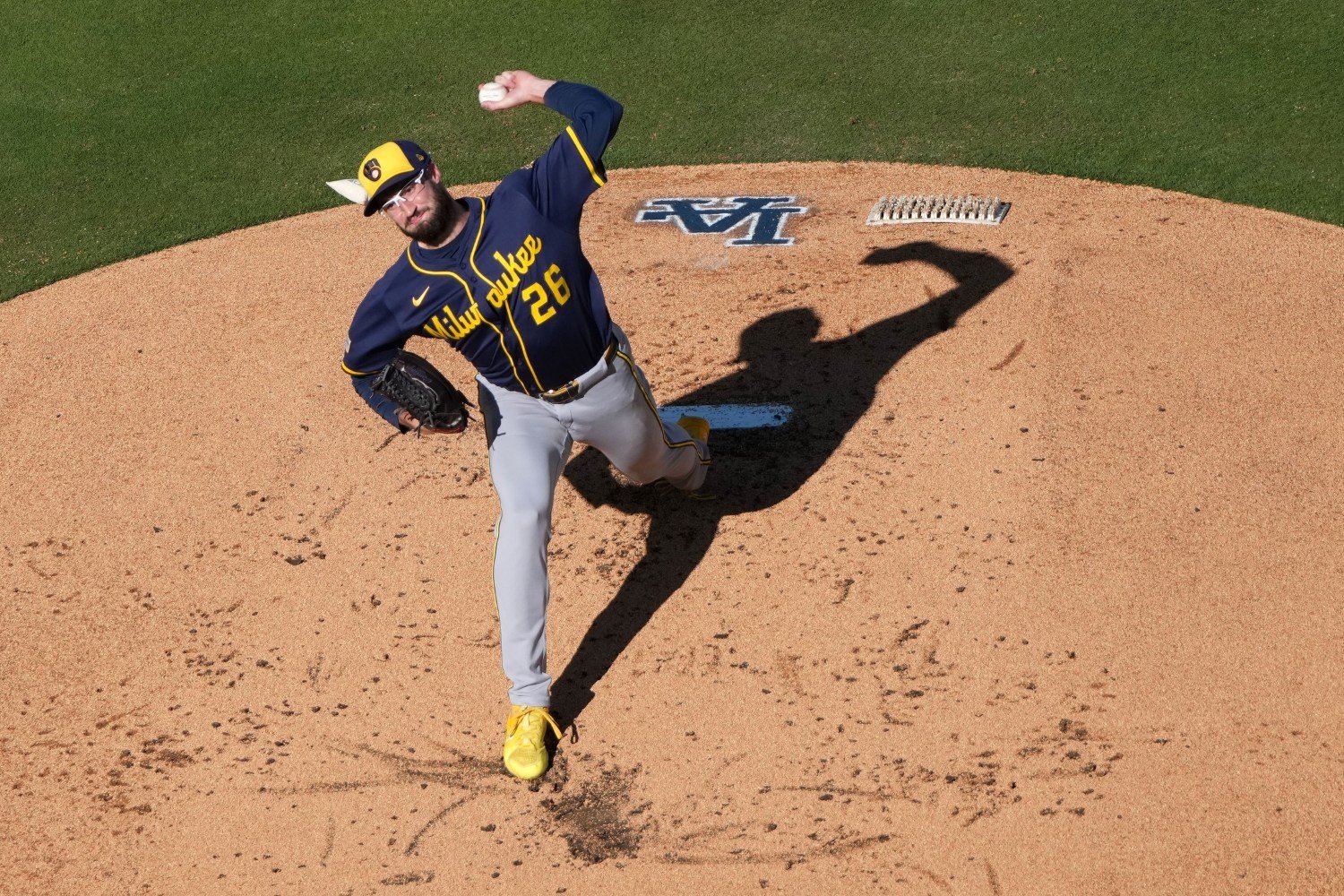 In four big-league seasons, Aaron Ashby has filled every possible role within the Brewers’ pitching staff. He’s started 26 games, most of which came in 2023. As a reliever, he’s been a long man, a left-handed specialist, a multi-inning setup man, and has even picked up five saves. In last year’s postseason, he started three games as an opener or first man up in a bullpen game. During the 2025 regular season, Ashby became Pat Murphy’s bullpen iron man, partially at his own request. Despite not debuting until May 23 due to an oblique injury, he appeared in a career-high 43 games and worked 66 ⅔ innings, the third-most among Brewers relievers. “Ashby wants to throw every day,” Murphy said last September. “He’s this kid who, since he’s rehabbed his injury, he’s just been adamant about touching the ball every day. We laugh about it. Every time he comes off the mound, he’s like, ‘I’m good to go. Keep going, keep going, keep going.’ He wants to throw every day.” Ashby’s drive to pitch so often was partially motivated by a lighter first-half workload than several of his teammates, due to that oblique injury. “We were thin at the end of the year,” he said last week from the Brewers’ spring training clubhouse in Arizona. “Everyone's running on fumes, and I felt pretty good for where we were at. I'd missed the first two months of the season, essentially, so I had more rest and more time off than everyone else. So I felt like I kind of owed it to the team and to the bullpen to be available and take that workload, because they had all had another two months under their belt that I didn't.” Furthermore, his throwing program was already geared toward being available nearly every day. Ashby said the second half of last season was a “great learning experience” in how to prepare for such a workload, but pitching so often was not too dissimilar from the work he already did between appearances. “I think I try to replicate an intense throwing volume or intensity every day, so that I feel good every day,” he said. “I kind of get to that point where I'm loose, I'm ready, and then I kind of let it rip for a little bit. So I think that's something that's helped me feel good every day. I think the frequency, I've tried to create on my own for many years by just having a really intense throwing program.” Ashby spent time in a similar niche in 2024, albeit not until a promotion in late August from Triple-A, where he pitched most of the season as a starter. The move to a flexible relief role has brought out the best in him, as he’s pitched to a 1.98 ERA, 2.26 FIP, and 2.62 SIERA in 86 ⅓ innings. In that time, Ashby has changed how he attacks hitters. When he debuted in 2021, he relied heavily on his high-spin breaking pitches, particularly his slider. Since returning from shoulder surgery in 2024, he’s thrown more sinkers than breaking balls. Last season, he threw his sinker a career-high 51.3% of the time. “I finally feel comfortable relying on the sinker to get me weak contact,” Ashby explained. “I have a bit of a better understanding of when I can throw it. I think that my other pitches have elevated the effectiveness of my sinker. I think that the curveball makes the sinker play up. I think the changeup makes the sinker play up. So, yeah, I think just knowing when to use it, knowing where to throw it, and kind of just believing in myself that I can get out of a jam with it.” The sinker was more effective than ever last year, leading Ashby’s arsenal with a +8 Run Value, according to Statcast. It held opponents to a .297 wOBA and produced a 65.3% ground ball rate. Trusting it more has also made him more efficient, as Ashby averaged 3.8 pitches per plate appearance and 15.5 pitches per inning last year, both career bests. “I think if you can establish a fastball early and make them swing at that, and then induce weak contact, I think that's a good recipe for being effective and efficient,” he said. Ashby’s breaking stuff has evolved, too. Post-surgery, he’s been unable to rediscover the same sweeping slider he once had, and has instead relied mostly on his big curveball, which has gained nearly 3 mph. “Just coming back from surgery, that was the breaking ball,” he said. “The slider was kind of hard to get back, but for whatever reason, I was just able to throw [the curveball] pretty easily. I think the curveball got better the last two years. It’s just kind of the ebbs and flows of pitch shapes and stuff like that.” Ashby got plenty of mileage out of a sinker, curveball, and changeup mix during the regular season, but he added another tool to his toolbelt late in the year. He had dabbled with a four-seamer before, but it rarely had much vertical separation from his sinker. Throughout the year, though, he developed a capable four-seamer while attempting to throw a different kind of fastball. “More than any pitch that I throw, I want to throw a cutter, and I’m not able to do it,” Ashby said. “In trying to throw this cutter, I realized that I could throw a four-seam, and for whatever reason, it felt easy to execute.” Averaging 13.7 inches of induced vertical break, the four-seamer doesn’t have much carry and grades out poorly on its own. However, for the first time, Ashby found another fastball that moves differently from his sinker. “I’m not someone who spins the ball, at least my fastball, very well,” he said. “I throw a very below-average spin fastball. I’ve never really been able to get the vert ball, mainly due to my release height, but it just has to be enough separation off the sinker. I think it does that.” Using it almost exclusively high and inside to right-handers to keep them off his sinker, the pitch quickly became a regular part of Ashby’s arsenal in the postseason. “You have to adapt in this game,” Ashby said. “Guys know I'm going to throw a sinker, so righties are diving out over the plate more, ready for it. If I have four-seam up and in that I can throw, it doesn't make that very comfortable to do anymore. More of just a tool to use sparingly, but definitely something to keep working on.” Ashby’s role for this season is not yet set in stone. For now, the Brewers are stretching him out to remain a multi-inning reliever, with starting still on the table should the need arise. “You can always go back,” Murphy said of moving pitchers into shorter relief roles after initially building them up for longer outings. “It’s hard to go forward.” Ashby remains willing to pitch in any capacity the Brewers need. “I think the idea right now is just to build up to around three innings,” he said. “It could be more than that, it could be less than that. And then kind of with whatever the team needs is kind of where I'll fall in.”
 -
Image courtesy of © Jayne Kamin-Oncea-Imagn Images When Rickie Weeks transitioned from the dugout to the front office over the winter, the Brewers did not hire a new associate manager or bench coach. Instead, Weeks’s responsibilities as Pat Murphy’s right-hand man will be redistributed among the rest of the coaching staff. That's because Murphy didn't want to add more voices to his staff. “I don't like to add people as much as I like to add responsibility,” Murphy said from Brewers spring training last week. “It’s just like mixing anything else together. For that strategy part of it, I need all the help I can get. I think we’re going to have two or three people be in that role of giving information. Everybody has a kind of a different area.” As baseball’s data boom has created more information to process in the front office and in the dugout, coaching staffs have grown. Nobody can process and apply everything that's become relevant, so it made sense for teams to develop more specialized coaching roles. Each coach focuses on the finer details of their area of the game and shares their thoughts with the manager, who makes the final decisions. Such a structure brings unique challenges. Teams must pick the right coaches to handle different facets of the game. They must also hire enough coaches to ensure nobody is stretched too thin, but not so many that there are competing messages in the dugout. The Brewers believe they’ve struck that balance. “It's just a new configuration,” Murphy said. “Matt [Arnold] and I sat down and said, ‘What's the best way to utilize and not really add people?’ Because it gets crowded, you know? So that’s how we came up with it.” Under the new structure, several returning coaches will assume new roles or specialize more strictly in their area of expertise. Former third base coach Jason Lane will now advise Murphy on in-game hitting decisions as offense and strategy coordinator. Jim Henderson already filled a similar role on the pitching side, but his new title as major-league pitching coordinator cements it. Lead pitching coach Chris Hook will continue working with starters. Eric Theisen has been promoted to lead hitting coach, the role Al LeBoeuf held last season. Matt Erickson, who assumed Lane’s old role as third base coach, will continue coaching infielders and managing defensive positioning. Field coordinator Nestor Corridor will continue working with catchers, but will also specialize in controlling the running game. Game preparation specialists Daniel de Mondesert and Evan Martin will deliver analytics and other information from the front office to other coaches. “They all know what they’re responsible for,” Murphy said. “I think it’s a good collection.” Along with giving Henderson a new strategy-centric title, the Brewers also promoted Juan Sandoval from assistant coordinator of minor-league pitching to assistant pitching coach. With Julio Borbón and LeBoeuf moving into front office roles and Connor Dawson taking a hitting coach position with the Kansas City Royals, the club hired Spencer Allen as first base coach and Guillermo Martinez and Daniel Vogelbach as assistant hitting coaches. Vogelbach, who played parts of two seasons with the Brewers in 2020 and 2021, may be the most recognizable hire. The 33-year-old retired after the 2024 season and worked for the Pittsburgh Pirates as a special hitting assistant last season. Less than two years after the end of his playing career, he’s now a full-time coach. “Vogey’s great,” Murphy said. “He's unique. Not many players can come off the field [and into coaching] so quickly.” During his playing days, Vogelbach was known for his swing decisions and cerebral approach at the plate. Early in counts, he offered only at pitches in his personal hot zones, rather than swinging at strikes he could not hit as well. While he was an active player, his 33.7% swing rate and 47.7% in-zone swing rate were the lowest among qualified hitters. “He studied the game,” Murphy said. “As a hitter, he studied opposing pitchers. He was very adamant about approach, very adamant about how to practice. So he's one of those players that you could see coaching no matter what.” The Brewers have a similar philosophy. They have an internal swing decision metric across all levels of the organization and instruct their hitters to take strikes early in counts, if the pitch is not in their wheelhouse. Like Vogelbach (as an individual), Milwaukee hitters (as a group) have had the lowest overall and in-zone swing rates in baseball over the last two seasons, making him a fitting voice to help guide their approaches. “I don’t know that you teach that verbally or anything else,” Murphy said of coaching swing decisions. “I think there’s an approach that leads to that, and I think he’ll teach that approach. It coincides with what we’re doing.” “I think that comes with part of the role of being a hitting coach in the hitting department,” Vogelbach said. “I mean, an approach comes with hitting. But I'm not here to reinvent the wheel or change people. This is a team that won 97 games, that did a lot of really good things. It was a series away from playing in the World Series.” Having watched last year’s Brewers from the Pittsburgh dugout and observed their hitters up close in the early days of spring training, Vogelbach sees a group that is already disciplined. “They're really good at it,” he said. “They know the strike zone. They all have a plan when they go to the plate. You don't win 97 games if you don't have that. I think that in baseball, though, you can always get better, and I think that's the best part about this team. They want to get better, and they want to keep getting better. And when you have a good approach, and you swing at the right pitches, and you're good players, good things usually happen.” Even in an age of rapid innovation, a staff without a bench coach is borderline radical, but what the Brewers are doing could quickly become the new normal. They’re confident in the baseball minds flanking Murphy and believe they’ve identified the best roles for each of them. “The coaches make me look good,” Murphy said. “They make me look like I know what I'm doing. This staff in particular is up there. I can’t say enough about them.” View full article
-
How the 2026 Brewers' Coaching Staff Will Function Without a Bench Coach
Jack Stern posted an article in Brewers
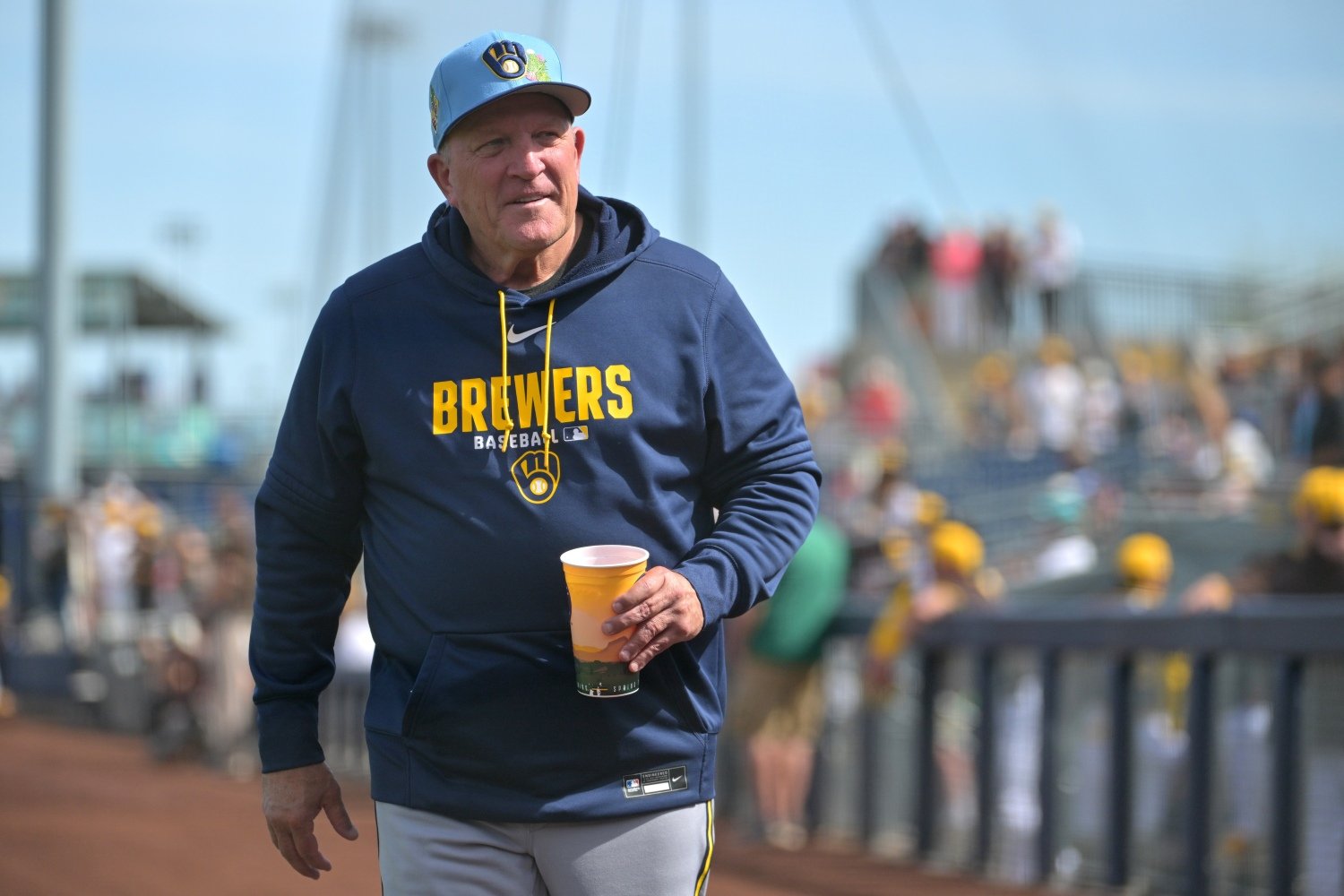 When Rickie Weeks transitioned from the dugout to the front office over the winter, the Brewers did not hire a new associate manager or bench coach. Instead, Weeks’s responsibilities as Pat Murphy’s right-hand man will be redistributed among the rest of the coaching staff. That's because Murphy didn't want to add more voices to his staff. “I don't like to add people as much as I like to add responsibility,” Murphy said from Brewers spring training last week. “It’s just like mixing anything else together. For that strategy part of it, I need all the help I can get. I think we’re going to have two or three people be in that role of giving information. Everybody has a kind of a different area.” As baseball’s data boom has created more information to process in the front office and in the dugout, coaching staffs have grown. Nobody can process and apply everything that's become relevant, so it made sense for teams to develop more specialized coaching roles. Each coach focuses on the finer details of their area of the game and shares their thoughts with the manager, who makes the final decisions. Such a structure brings unique challenges. Teams must pick the right coaches to handle different facets of the game. They must also hire enough coaches to ensure nobody is stretched too thin, but not so many that there are competing messages in the dugout. The Brewers believe they’ve struck that balance. “It's just a new configuration,” Murphy said. “Matt [Arnold] and I sat down and said, ‘What's the best way to utilize and not really add people?’ Because it gets crowded, you know? So that’s how we came up with it.” Under the new structure, several returning coaches will assume new roles or specialize more strictly in their area of expertise. Former third base coach Jason Lane will now advise Murphy on in-game hitting decisions as offense and strategy coordinator. Jim Henderson already filled a similar role on the pitching side, but his new title as major-league pitching coordinator cements it. Lead pitching coach Chris Hook will continue working with starters. Eric Theisen has been promoted to lead hitting coach, the role Al LeBoeuf held last season. Matt Erickson, who assumed Lane’s old role as third base coach, will continue coaching infielders and managing defensive positioning. Field coordinator Nestor Corridor will continue working with catchers, but will also specialize in controlling the running game. Game preparation specialists Daniel de Mondesert and Evan Martin will deliver analytics and other information from the front office to other coaches. “They all know what they’re responsible for,” Murphy said. “I think it’s a good collection.” Along with giving Henderson a new strategy-centric title, the Brewers also promoted Juan Sandoval from assistant coordinator of minor-league pitching to assistant pitching coach. With Julio Borbón and LeBoeuf moving into front office roles and Connor Dawson taking a hitting coach position with the Kansas City Royals, the club hired Spencer Allen as first base coach and Guillermo Martinez and Daniel Vogelbach as assistant hitting coaches. Vogelbach, who played parts of two seasons with the Brewers in 2020 and 2021, may be the most recognizable hire. The 33-year-old retired after the 2024 season and worked for the Pittsburgh Pirates as a special hitting assistant last season. Less than two years after the end of his playing career, he’s now a full-time coach. “Vogey’s great,” Murphy said. “He's unique. Not many players can come off the field [and into coaching] so quickly.” During his playing days, Vogelbach was known for his swing decisions and cerebral approach at the plate. Early in counts, he offered only at pitches in his personal hot zones, rather than swinging at strikes he could not hit as well. While he was an active player, his 33.7% swing rate and 47.7% in-zone swing rate were the lowest among qualified hitters. “He studied the game,” Murphy said. “As a hitter, he studied opposing pitchers. He was very adamant about approach, very adamant about how to practice. So he's one of those players that you could see coaching no matter what.” The Brewers have a similar philosophy. They have an internal swing decision metric across all levels of the organization and instruct their hitters to take strikes early in counts, if the pitch is not in their wheelhouse. Like Vogelbach (as an individual), Milwaukee hitters (as a group) have had the lowest overall and in-zone swing rates in baseball over the last two seasons, making him a fitting voice to help guide their approaches. “I don’t know that you teach that verbally or anything else,” Murphy said of coaching swing decisions. “I think there’s an approach that leads to that, and I think he’ll teach that approach. It coincides with what we’re doing.” “I think that comes with part of the role of being a hitting coach in the hitting department,” Vogelbach said. “I mean, an approach comes with hitting. But I'm not here to reinvent the wheel or change people. This is a team that won 97 games, that did a lot of really good things. It was a series away from playing in the World Series.” Having watched last year’s Brewers from the Pittsburgh dugout and observed their hitters up close in the early days of spring training, Vogelbach sees a group that is already disciplined. “They're really good at it,” he said. “They know the strike zone. They all have a plan when they go to the plate. You don't win 97 games if you don't have that. I think that in baseball, though, you can always get better, and I think that's the best part about this team. They want to get better, and they want to keep getting better. And when you have a good approach, and you swing at the right pitches, and you're good players, good things usually happen.” Even in an age of rapid innovation, a staff without a bench coach is borderline radical, but what the Brewers are doing could quickly become the new normal. They’re confident in the baseball minds flanking Murphy and believe they’ve identified the best roles for each of them. “The coaches make me look good,” Murphy said. “They make me look like I know what I'm doing. This staff in particular is up there. I can’t say enough about them.”
- 2 comments
-
- 3
-
-
- pat murphy
- daniel vogelbach
- (and 4 more)
-
Image courtesy of © Dave Kallmann / Milwaukee Journal Sentinel / USA TODAY NETWORK via Imagn Images Given his recent injury history, Brandon Woodruff and the Brewers are taking things slow this spring. Woodruff, whose comeback from career-threatening shoulder surgery was truncated by a season-ending lat injury last September, is building up more gradually than most of Milwaukee's starters, to the point that he is not guaranteed to be ready for Opening Day. Both player and team are more interested in having a healthy Woodruff during the stretch run than in April. "We don't want to push him too fast, necessarily, because we want to have those bullets available at the end of the season, for sure, and he is coming off a real injury here," president of baseball operations Matt Arnold said last week. The Brewers expect Woodruff to be available this year, though, and they expect him to be a major rotation piece once he's ready to go. The club affirmed that confidence by extending him the $22.025-million qualifying offer in November, which Woodruff accepted to return to the only organization he's ever known. "In terms of the qualifying offer and accepting it, it was a pretty easy decision for me," he said. "If I had to spend one year pitching somewhere in my career—and fortunately, I've been here my whole big-league career so far—this was easy, I'd love to throw it here. I had a few other opportunities, but nothing that compared to here." For the first time in two years, Woodruff is coming off a normal offseason, a welcome change of pace from a grueling rehab process. The slower buildup is to ensure he stays healthy, and has nothing to do with how he's feeling. "This spring training, compared to last, not even comparable in terms of the way I feel," Woodruff said. As he worked his way back, the question was not only when Woodruff would return to the big leagues, but how he would perform when that time arrived. Unsurprisingly, a major shoulder surgery sapped some of his velocity. His four-seamer and two-seamer averaged north of 96 mph in his prime, but they sat at 93 in his return. Woodruff was no less effective, though, authoring a 3.20 ERA, 2.90 SIERA, and 32.3% strikeout rate, the latter two of which were career bests. He announced his return with authority, tossing six innings of one-run baseball with eight strikeouts on July 6, 2025, against the Marlins in Miami—the location of his previous big-league start, nearly 22 months prior. "His command was really good," Pat Murphy said. "His poise. He had that same gunfighter mentality. It's precious. That game in Miami, it still gives me chills thinking about it." In some ways, Woodruff still looked like his vintage self. When he threw his four-seamer, he still went right at hitters. It still induced whiffs on 32.1% of swings, essentially the same elite rate as when it sat in the upper 90s. While its horizontal movement bordered on glove-side cut more than it once did, at 17.6 inches of induced vertical break, it still had above-average carry at the top of the zone. It was clear from that first outing, though, that this was an evolved Woodruff. Yes, the four-seamer could still miss bats, but he used it a career-low 30.7% of the time and developed new ways to supplement it. "Last year was a very, very big teaching moment for me in my career and how I can pitch," he said, "how I can go about pitching and doing different things and expanding on my arsenal a little bit, and not having the velo." Throughout that afternoon in Miami, Woodruff repeatedly dotted the outside corner with comeback two-seamers to right-handed batters. He continued doing it for the rest of the season to a greater extent than before his injury, when he almost exclusively used the two-seamer to jam righties inside with running velocity. "I started doing that in '23, too, before having surgery," he said of the back-door two-seamer. "I've always wanted to do it, but I never really needed to do it. That was kind of a different layer for me. So then when I came back and started rehabbing and getting in games, I made sure to kind of keep that in my pocket a little bit." "For the two-seamer to come along the way it has, it's changed him a little bit," Murphy said. Woodruff also added a third fastball to his mix. Leveraging his newfound inclination to cut the ball slightly more, he developed a riding cutter using an offset four-seam grip. Sitting at 89 mph with 13 inches of induced vertical break, it mirrored his four-seamer and sinker out of the hand before cutting a few inches toward his glove side, helping him establish an effective tunnel with those two-seamers on the outside corner. "Just trying to play lanes," Woodruff said. "I think that's a big part of pitching, is understanding how your stuff plays. It's all planes, trying to get a pitch to come out of the same area, the same kind of box, essentially, and have those shapes play together." One of his intended changes didn't stick. Woodruff developed a sweeper during his rehab process to better complement his fastballs and separate from his curveball, but after throwing seven of them across his first two starts, he threw just five the rest of the season. Poor results were part of the reason—the sweeper surrendered a home run in each of those first two outings—but more than anything, Woodruff struggled to throw it consistently. "It's a pitch for me where I have to really get extended out in front and get in front of the baseball," he explained. "It's a pitch for me that's pretty tough to [throw]. I have to really think about throwing this thing way out in front. There might be a couple of good ones in there, but I'm the type of guy – I've always been like that – if I'm throwing something that isn't consistent or what I like, I kind of work around that and then use it when I really need to bring it out. It's kind of a back-pocket pitch for me." Instead, he leaned heavily on that trio of fastballs and a changeup that has improved over the years. How Woodruff deployed those four pitches, however, often varied from one game to the next. "I just kind of went with the flow," he said. "It's one of those things where I try to read the hitter as much as possible, and I throw what they are telling me to throw … I have a plan, and I know my strengths, but I kind of let the hitter tell me everything." Woodruff didn't know what results to expect in his return last year, focusing more on the goal of making it back to a mound. Murphy was also unsure how he would perform, but he was unsurprised that he made the necessary adjustments to retire hitters in new ways. "I don't know that I could have predicted that, but I know that when I watched him attack his rehab and just be so diligent day in and day out, I'm like, 'Man, this guy's hungry. He's hungry,'" Murphy said. "It didn't surprise me totally, because of the way he attacked his rehab, the process to come back." With the 2026 season approaching, Woodruff remains hungry, but just as he learned to expand his arsenal and methods for attacking hitters, he's also navigating changes to his body and how he must approach his workload. "I still have to be smart going forward for this year," he said. "I didn't throw a ton of innings. But as far as right now, physically, I feel really good." View full article
-
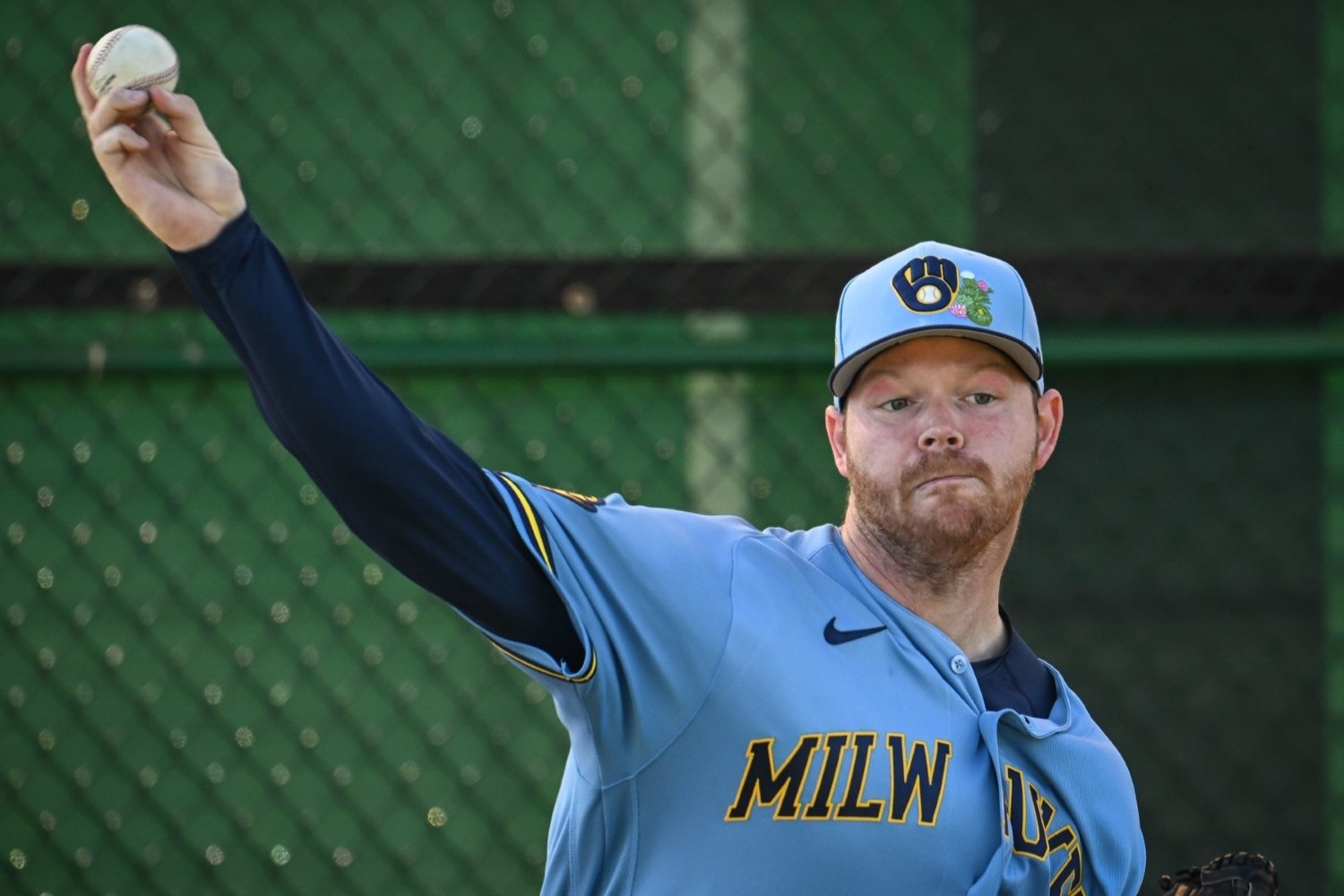 Given his recent injury history, Brandon Woodruff and the Brewers are taking things slow this spring. Woodruff, whose comeback from career-threatening shoulder surgery was truncated by a season-ending lat injury last September, is building up more gradually than most of Milwaukee's starters, to the point that he is not guaranteed to be ready for Opening Day. Both player and team are more interested in having a healthy Woodruff during the stretch run than in April. "We don't want to push him too fast, necessarily, because we want to have those bullets available at the end of the season, for sure, and he is coming off a real injury here," president of baseball operations Matt Arnold said last week. The Brewers expect Woodruff to be available this year, though, and they expect him to be a major rotation piece once he's ready to go. The club affirmed that confidence by extending him the $22.025-million qualifying offer in November, which Woodruff accepted to return to the only organization he's ever known. "In terms of the qualifying offer and accepting it, it was a pretty easy decision for me," he said. "If I had to spend one year pitching somewhere in my career—and fortunately, I've been here my whole big-league career so far—this was easy, I'd love to throw it here. I had a few other opportunities, but nothing that compared to here." For the first time in two years, Woodruff is coming off a normal offseason, a welcome change of pace from a grueling rehab process. The slower buildup is to ensure he stays healthy, and has nothing to do with how he's feeling. "This spring training, compared to last, not even comparable in terms of the way I feel," Woodruff said. As he worked his way back, the question was not only when Woodruff would return to the big leagues, but how he would perform when that time arrived. Unsurprisingly, a major shoulder surgery sapped some of his velocity. His four-seamer and two-seamer averaged north of 96 mph in his prime, but they sat at 93 in his return. Woodruff was no less effective, though, authoring a 3.20 ERA, 2.90 SIERA, and 32.3% strikeout rate, the latter two of which were career bests. He announced his return with authority, tossing six innings of one-run baseball with eight strikeouts on July 6, 2025, against the Marlins in Miami—the location of his previous big-league start, nearly 22 months prior. "His command was really good," Pat Murphy said. "His poise. He had that same gunfighter mentality. It's precious. That game in Miami, it still gives me chills thinking about it." In some ways, Woodruff still looked like his vintage self. When he threw his four-seamer, he still went right at hitters. It still induced whiffs on 32.1% of swings, essentially the same elite rate as when it sat in the upper 90s. While its horizontal movement bordered on glove-side cut more than it once did, at 17.6 inches of induced vertical break, it still had above-average carry at the top of the zone. It was clear from that first outing, though, that this was an evolved Woodruff. Yes, the four-seamer could still miss bats, but he used it a career-low 30.7% of the time and developed new ways to supplement it. "Last year was a very, very big teaching moment for me in my career and how I can pitch," he said, "how I can go about pitching and doing different things and expanding on my arsenal a little bit, and not having the velo." Throughout that afternoon in Miami, Woodruff repeatedly dotted the outside corner with comeback two-seamers to right-handed batters. He continued doing it for the rest of the season to a greater extent than before his injury, when he almost exclusively used the two-seamer to jam righties inside with running velocity. "I started doing that in '23, too, before having surgery," he said of the back-door two-seamer. "I've always wanted to do it, but I never really needed to do it. That was kind of a different layer for me. So then when I came back and started rehabbing and getting in games, I made sure to kind of keep that in my pocket a little bit." "For the two-seamer to come along the way it has, it's changed him a little bit," Murphy said. Woodruff also added a third fastball to his mix. Leveraging his newfound inclination to cut the ball slightly more, he developed a riding cutter using an offset four-seam grip. Sitting at 89 mph with 13 inches of induced vertical break, it mirrored his four-seamer and sinker out of the hand before cutting a few inches toward his glove side, helping him establish an effective tunnel with those two-seamers on the outside corner. "Just trying to play lanes," Woodruff said. "I think that's a big part of pitching, is understanding how your stuff plays. It's all planes, trying to get a pitch to come out of the same area, the same kind of box, essentially, and have those shapes play together." One of his intended changes didn't stick. Woodruff developed a sweeper during his rehab process to better complement his fastballs and separate from his curveball, but after throwing seven of them across his first two starts, he threw just five the rest of the season. Poor results were part of the reason—the sweeper surrendered a home run in each of those first two outings—but more than anything, Woodruff struggled to throw it consistently. "It's a pitch for me where I have to really get extended out in front and get in front of the baseball," he explained. "It's a pitch for me that's pretty tough to [throw]. I have to really think about throwing this thing way out in front. There might be a couple of good ones in there, but I'm the type of guy – I've always been like that – if I'm throwing something that isn't consistent or what I like, I kind of work around that and then use it when I really need to bring it out. It's kind of a back-pocket pitch for me." Instead, he leaned heavily on that trio of fastballs and a changeup that has improved over the years. How Woodruff deployed those four pitches, however, often varied from one game to the next. "I just kind of went with the flow," he said. "It's one of those things where I try to read the hitter as much as possible, and I throw what they are telling me to throw … I have a plan, and I know my strengths, but I kind of let the hitter tell me everything." Woodruff didn't know what results to expect in his return last year, focusing more on the goal of making it back to a mound. Murphy was also unsure how he would perform, but he was unsurprised that he made the necessary adjustments to retire hitters in new ways. "I don't know that I could have predicted that, but I know that when I watched him attack his rehab and just be so diligent day in and day out, I'm like, 'Man, this guy's hungry. He's hungry,'" Murphy said. "It didn't surprise me totally, because of the way he attacked his rehab, the process to come back." With the 2026 season approaching, Woodruff remains hungry, but just as he learned to expand his arsenal and methods for attacking hitters, he's also navigating changes to his body and how he must approach his workload. "I still have to be smart going forward for this year," he said. "I didn't throw a ton of innings. But as far as right now, physically, I feel really good."
 -
Image courtesy of © Dave Kallmann / Milwaukee Journal Sentinel / USA TODAY NETWORK via Imagn Images Editor's Note: This piece was originally an exclusive for Brewer Fanatic Caretakers. Jack is particularly happy with this piece and wishes for it to reach a wider audience, so it is now free to read. Please consider becoming a Brewer Fanatic Caretaker to help fund on-site coverage like this and help Jack receive compensation for his incredible work. Remember, 100% of your Caretaking funds go to our creators. After trading Caleb Durbin, Anthony Seigler, and Andruw Monasterio to the Red Sox as part of a six-player trade days before spring training began, the Brewers needed more third base depth. Offensively, Luis Rengifo was a viable solution. Having posted a 111 wRC+ across three seasons from 2022 through 2024, the versatile 28-year-old was a reasonable bounceback candidate available on a cheap one-year deal. He has the profile to match Durbin's offense in 2026. At first glance, though, the fit on defense looks less clear. The Brewers prize above-average fielding. Throughout the past few seasons, they have frequently favored players who defend over those who hit more. Rengifo, however, has graded as a below-average defender at every position he's played. He's been especially poor at third base, amassing -6 Defensive Runs Saved and a -14 Fielding Run Value in just over 1,400 innings. However, president of baseball operations Matt Arnold told reporters shortly after signing Rengifo that the Brewers do not project him as the poor defender he's been to date. That's due to the presence of third base and infield coach Matt Erickson, who has helped several Milwaukee infielders improve their glovework. "Just knowing that Matt Erickson's here, and what he's been able to do with a lot of our infielders, was somebody we talked to a lot about before we acquired Rengifo," Arnold said. "Having those tools and ingredients, and having Matt as part of that evaluation process, saying, 'Hey, I've seen this guy, I think he has a chance to be really good here.'" Durbin was one of Erickson's top success stories last season. After looking so poor defensively at third base that he failed to crack Milwaukee's Opening Day roster, he improved remarkably in-season, finishing the season with +5 DRS and +1 FRV. The Brewers believe Erickson will help Rengifo make similar strides. "We believe in Matt Erickson making these guys better," Arnold said. Rengifo's poor public marks don't mean much to Erickson. He values defensive metrics – the team has its own proprietary numbers to evaluate its infielders, which he incorporates into his coaching – but takes that information for what it is. The number of runs a player saves or gives away is a result, not a predictive measurement of his physical ability and, by extension, how many runs he could save. "You can use the metrics, and you can use spray charts as information, but it's all in the past," Erickson said. "It's all history, right? I'm more concerned with what they are now, what I see with my eyes, and what their beliefs are, and then what they think they're good at and what their deficiencies are." Erickson believes Rengifo's athleticism gives him many of the ingredients of a good infielder. His arm is stronger than Durbin's, and while he isn't quite as fast, he seemingly has enough swiftness to play a solid third base. His average sprint speed last year of 27 feet per second was slightly higher than the MLB average for third basemen. When he played in 21 games in the outfield in 2023, his average jump (distance covered within the first three seconds of a pitch being thrown) was 2.2 feet above average, which suggests he can move quickly and suddenly. "To be very honest with you, the physical ceiling that he has, I think, is impressive," Erickson said. "I think his footwork and his lower half are explosive. He's got arm strength. There seems to be some repeatable actions. I think that's the thing, though. Just because you're physically talented doesn't mean you're a good infielder." Just like baserunning, the quickest player is not always the most successful. Mental preparation and anticipation allow an infielder to move early enough in the right direction to successfully reach and field a batted ball. A slower infielder with that anticipation could reach a ball that a quicker one without it may not. That's where Erickson's work truly begins. Raw athleticism is generally not coachable – coaches can't cue players into being faster or more mobile – but he and the Brewers have excelled at developing anticipation and mental awareness in their infielders, including Joey Ortiz throughout last season. He has already started that process with Rengifo. "We challenge all of our infielders with engagement," Erickson said. "What that means is being mentally prepared and using the information pre-pitch that that you have, whether that's the PitchCom, whether that's the location of the pitch, learning our pitchers and their tendencies, paying attention to the to the hitter and what the hitter's giving you for information, and subtle movements to our prep step where we can gain advantages. I've had some of those conversations with him." The Brewers aren't necessarily looking for infielders with good defensive metrics, but for infielders with the athleticism to succeed there. From there, Erickson coaches the player's approach on the dirt to maximize his efficiency. He gives defenders pointers on how to position themselves to make more plays, based on their individual strengths and weaknesses. "We all have a physical ceiling," he said, "whether it's footwork, lateral quickness, can we go front to back, what are our reactions, how are our hands? As far as what our process is, I talk a lot from the ground up and using your feet to get yourself in the most optimal fielding position possible. And that's different on every play, based on the speed of the ball and the direction it takes you. "Once they get those details down and start to recognize what the optimal fielding position is for that particular play – which happens through a number of reps, off the work we do on the half field, into our infield routine, and then ultimately our experiences and our chances in the game – all of those experiences help give you information about not only the game, but about yourself and how you could be a little bit better the next time." After just a few days of work, Erickson has been impressed by Rengifo's openness to new information and has already seen him make some proposed adjustments. "He's been outstanding so far," he said. "He's been very professional. He's been eager. You can tell that he's excited to be a part of this organization." The Brewers have not officially named Rengifo their starting third baseman – David Hamilton and Jett Williams will also get significant reps there this spring – but he'll be a key part of the mix. He could become the next infielder to flip his defensive reputation in Milwaukee. "I have no reason to think that Luis can't be a quality defender," Erickson said. "That remains to be seen, but we're very optimistic about him right now." View full article
- 2 replies
-
- 2
-
-
- luis rengifo
- matt erickson
- (and 2 more)
-
 Editor's Note: This piece was originally an exclusive for Brewer Fanatic Caretakers. Jack is particularly happy with this piece and wishes for it to reach a wider audience, so it is now free to read. Please consider becoming a Brewer Fanatic Caretaker to help fund on-site coverage like this and help Jack receive compensation for his incredible work. Remember, 100% of your Caretaking funds go to our creators. After trading Caleb Durbin, Anthony Seigler, and Andruw Monasterio to the Red Sox as part of a six-player trade days before spring training began, the Brewers needed more third base depth. Offensively, Luis Rengifo was a viable solution. Having posted a 111 wRC+ across three seasons from 2022 through 2024, the versatile 28-year-old was a reasonable bounceback candidate available on a cheap one-year deal. He has the profile to match Durbin's offense in 2026. At first glance, though, the fit on defense looks less clear. The Brewers prize above-average fielding. Throughout the past few seasons, they have frequently favored players who defend over those who hit more. Rengifo, however, has graded as a below-average defender at every position he's played. He's been especially poor at third base, amassing -6 Defensive Runs Saved and a -14 Fielding Run Value in just over 1,400 innings. However, president of baseball operations Matt Arnold told reporters shortly after signing Rengifo that the Brewers do not project him as the poor defender he's been to date. That's due to the presence of third base and infield coach Matt Erickson, who has helped several Milwaukee infielders improve their glovework. "Just knowing that Matt Erickson's here, and what he's been able to do with a lot of our infielders, was somebody we talked to a lot about before we acquired Rengifo," Arnold said. "Having those tools and ingredients, and having Matt as part of that evaluation process, saying, 'Hey, I've seen this guy, I think he has a chance to be really good here.'" Durbin was one of Erickson's top success stories last season. After looking so poor defensively at third base that he failed to crack Milwaukee's Opening Day roster, he improved remarkably in-season, finishing the season with +5 DRS and +1 FRV. The Brewers believe Erickson will help Rengifo make similar strides. "We believe in Matt Erickson making these guys better," Arnold said. Rengifo's poor public marks don't mean much to Erickson. He values defensive metrics – the team has its own proprietary numbers to evaluate its infielders, which he incorporates into his coaching – but takes that information for what it is. The number of runs a player saves or gives away is a result, not a predictive measurement of his physical ability and, by extension, how many runs he could save. "You can use the metrics, and you can use spray charts as information, but it's all in the past," Erickson said. "It's all history, right? I'm more concerned with what they are now, what I see with my eyes, and what their beliefs are, and then what they think they're good at and what their deficiencies are." Erickson believes Rengifo's athleticism gives him many of the ingredients of a good infielder. His arm is stronger than Durbin's, and while he isn't quite as fast, he seemingly has enough swiftness to play a solid third base. His average sprint speed last year of 27 feet per second was slightly higher than the MLB average for third basemen. When he played in 21 games in the outfield in 2023, his average jump (distance covered within the first three seconds of a pitch being thrown) was 2.2 feet above average, which suggests he can move quickly and suddenly. "To be very honest with you, the physical ceiling that he has, I think, is impressive," Erickson said. "I think his footwork and his lower half are explosive. He's got arm strength. There seems to be some repeatable actions. I think that's the thing, though. Just because you're physically talented doesn't mean you're a good infielder." Just like baserunning, the quickest player is not always the most successful. Mental preparation and anticipation allow an infielder to move early enough in the right direction to successfully reach and field a batted ball. A slower infielder with that anticipation could reach a ball that a quicker one without it may not. That's where Erickson's work truly begins. Raw athleticism is generally not coachable – coaches can't cue players into being faster or more mobile – but he and the Brewers have excelled at developing anticipation and mental awareness in their infielders, including Joey Ortiz throughout last season. He has already started that process with Rengifo. "We challenge all of our infielders with engagement," Erickson said. "What that means is being mentally prepared and using the information pre-pitch that that you have, whether that's the PitchCom, whether that's the location of the pitch, learning our pitchers and their tendencies, paying attention to the to the hitter and what the hitter's giving you for information, and subtle movements to our prep step where we can gain advantages. I've had some of those conversations with him." The Brewers aren't necessarily looking for infielders with good defensive metrics, but for infielders with the athleticism to succeed there. From there, Erickson coaches the player's approach on the dirt to maximize his efficiency. He gives defenders pointers on how to position themselves to make more plays, based on their individual strengths and weaknesses. "We all have a physical ceiling," he said, "whether it's footwork, lateral quickness, can we go front to back, what are our reactions, how are our hands? As far as what our process is, I talk a lot from the ground up and using your feet to get yourself in the most optimal fielding position possible. And that's different on every play, based on the speed of the ball and the direction it takes you. "Once they get those details down and start to recognize what the optimal fielding position is for that particular play – which happens through a number of reps, off the work we do on the half field, into our infield routine, and then ultimately our experiences and our chances in the game – all of those experiences help give you information about not only the game, but about yourself and how you could be a little bit better the next time." After just a few days of work, Erickson has been impressed by Rengifo's openness to new information and has already seen him make some proposed adjustments. "He's been outstanding so far," he said. "He's been very professional. He's been eager. You can tell that he's excited to be a part of this organization." The Brewers have not officially named Rengifo their starting third baseman – David Hamilton and Jett Williams will also get significant reps there this spring – but he'll be a key part of the mix. He could become the next infielder to flip his defensive reputation in Milwaukee. "I have no reason to think that Luis can't be a quality defender," Erickson said. "That remains to be seen, but we're very optimistic about him right now."
- 2 comments
-
- 5
-
-
- luis rengifo
- matt erickson
- (and 2 more)

