



Tim Muma
-
Posts
436 -
Joined
-
Last visited
-
Days Won
1
Content Type
Profiles
Forums
Blogs
Events
News
2026 Milwaukee Brewers Top Prospects Ranking
Milwaukee Brewers Videos
2022 Milwaukee Brewers Draft Picks
Milwaukee Brewers Free Agent & Trade Rumors, Notes, & Tidbits
Guides & Resources
2023 Milwaukee Brewers Draft Picks
2024 Milwaukee Brewers Draft Picks
The Milwaukee Brewers Players Project
2025 Milwaukee Brewers Draft Pick Tracker
2026 Milwaukee Brewers Draft Tracker: Picks & Bonuses
Store
Downloads
Gallery
Everything posted by Tim Muma
-
 The Milwaukee Brewers finally pulled the trigger on a Corbin Burnes trade. While the two players coming back in the deal have intriguing upside, they fall short of the star prospect splash that should have been the focus. Reports say the two clubs had been discussing a trade for Burnes since December, with Ken Rosenthal of The Athletic claiming it was the Brewers holding things up. (This has yet to be confirmed anywhere else, though.) Could it be they were trying to hold out for Mayo? Might the Orioles have gotten to the point of desperation once spring training hit, and dealt the big third baseman? Maybe one day we'll have an answer. Again, Ortiz has some hit tools, particularly exit velocity results, that could translate to the big club. He lost one season to Covid and another one to injury. Hall matches Ortiz on the eye-popping potential from the mound, making him a possible weapon out of the pen or a starter with a no-hit ceiling on any given night. So, the trade isn't lopsided; I just believe they missed out getting the type of hitter that is rarely available without an enormous price tag. "You can shake a dozen glove men out of a tree, but it's the bat that separates the men from the boys," Dale Long once said. Long was a slugger himself, so we'll dock him a bit for speaking out of self-interest, but that sentiment wasn't original or unique. The Brewers shook a tree and scooped up the fallen fruit, rather than fighting harder for a hitter who might have been a greater separator for them. Of course, there is the possibility that Baltimore told Arnold and company that acquiring Mayo was a non-starter. Milwaukee still could have pushed and called their potential bluff, knowing at worst the Brewers would be a contender in the NL Central and get a compensation pick for Burnes. The other thought is that the Brewers were set on getting one pitcher and one position player back, with an eye on a shortstop to take over for Willy Adames and a pitcher to replace Burnes. Plus, with guys like Tyler Black, Brock Wilken and Mike Boeve waiting in the minors for a shot at third base, it might not have been a concern for Arnold. I'd still argue you get the best offensive talent you can if you're Milwaukee, because no one has a guaranteed spot, and runs have been at a premium recently. You can always find spots on the field (or on another team) if you have "too many" good hitters. That hasn't been the case in Milwaukee for quite a while. It will be a few years before anyone will know the score of this trade. It does, in theory, fill the needs of each organization. The Brewers must always keep an eye on the future when contracts are expiring, even if it means taking a short-term dip in performance. You hope Mayo doesn't become the perennial All-Star and possible MVP that some predict could reside in the thunder of his lumber, or that one of Ortiz and Hall blossom into the star they each have some chance to become. Did the Brewers give up too easily on a chance to acquire Mayo? Do you think they can get a similar level of offensive excellence from an in-house option? Drop into the comments to weigh in. View full article
 -
Why Haven't the Brewers Signed Rhys Hoskins Already?
Tim Muma replied to Tim Muma's topic in Brewer Fanatic Front Page News
As noted, I don't think it "only comes down to the money." There have been a few mentions of Hoskins and the Brewers being a fit. Sure money is a major factor, but it's disingenuous to only view it from that scope. And again, it hinges on what is Arnold's plan exactly. Sure, they can stick with the young, unproven guys to get all 600+ plate appearances at 1B, but that also seems unrealistic. Even look with highly-touted guys like Frelick and Wiemer. It's not a guarantee for success, nor is it a linear process. I don't believe the Brewers would have any reason to do a 3-year contract, but 2 or 1 could work, provided he doesn't get no-trade options. Until anything is settled, the Brewers shouldn't rule anything out, nor shut the door on different ways to think about roster construction. Plus...I take umbrage with the idea that because he "sat on the couch" for a year. Considering my experience with my son having just been cleared to participate with his college team 9 months after his ACL surgery....it's INCREDIBLY hard work to get back to playing. -
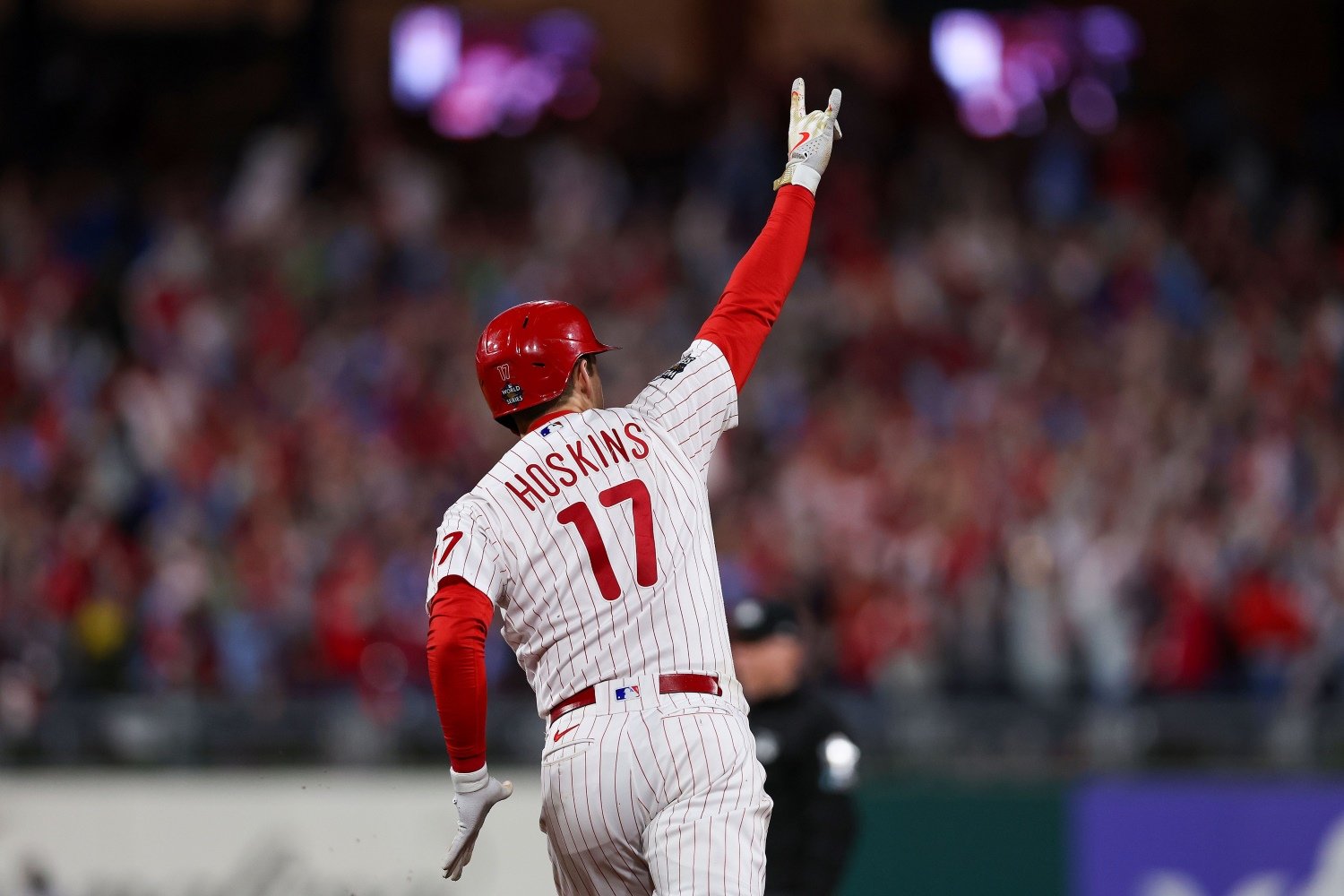 There's plenty to like about Rhys Hoskins, especially for a Milwaukee Brewers team needing a reliable bat. Plugging a career 125 OPS+ hitter into a lineup is a no-brainer for almost any team, and this one has averaged an .822 OPS with 28 home runs in his last two full seasons. That would have ranked him first on the 2023 Brewers in homers, and second in OPS among qualified hitters. One player doesn't solidify a lineup, but it can have quite the impact in the middle of an order. Hoskins's right-handed thunder has led him to a .921 career OPS against lefties, including slugging percentages of .558 and .570 in 2022 and 2021, respectively. He also draws walks at a terrific rate. His lifetime 13.5% walk rate would have led the Brewers last season and ranked 13th in all of MLB. He isn't all roses. Hoskins's defense at first base is below-average at best. However, his offensive profile and production are worth the dip in fielding value. After all, the Brewers survived Rowdy Tellez's defense over there for a couple of seasons. For the Brewers, especially, cost certainty has long been a staple of the organization's ability to compete despite lower payrolls than many of their competitors. Unless or until MLB takes care of the problem, it might force Milwaukee to hold tight on any move beyond a few million or one year. If the league can work out a deal with Amazon Prime that nets Milwaukee some additional coin and steadiness, that could open the floodgates - at least to a noticeable trickle - for the Brewers to spend a bit more. Hoskins Waiting on the Cubs Many experts think that Cody Bellinger remains Chicago's top priority, with Hoskins as a backup option offensively. Should that be true, or even considered, it would serve Hoskins well to wait and see if the big-market Cubs get desperate and pony up. Of course, they could afford to acquire both players. Conversely, if Chicago drops out of the bidding, it gives hope to other interested clubs. One might be willing to up the ante at that point, knowing they aren't competing with Chicago on the money side. Perhaps if Bellinger makes a decision in the next week or so, we can all get more clarity on Hoskins's market and potential landing spots. Maybe the Brewers or Hoskins Aren't Looking to Match Up It sounds silly, but the Brewers simply might not want Hoskins as part of their plans. Many of us are still determining what Milwaukee is actually doing this offseason. Perhaps, as noted above, they are looking to fast-track some young bats for first base, which could include Tyler Black this season. Or maybe they genuinely like Jake Bauers as the top choice in 2024. It's unclear if Arnold plans to push for another NL Central crown with Burnes in tow or if it's a soft reset, saving money and hoping for the best out of the young and inexperienced group. Meanwhile, it could be Hoskins who isn't keen on a partnership. Whether it's location, prestige, team direction or plain old money, sometimes players cross clubs off their list before any conversations begin. It's difficult to say what reputation the organization now has, after players have griped a bit over the past couple of seasons. Hopefully, something breaks soon on the Brewers' roster front. Spring training is quickly approaching, and the lineup appears less than daunting for opposing pitchers. What do you think is the biggest holdup preventing a deal between Milwaukee and Hoskins? What would you be willing to offer if it is money or years as the obstacle? No one can argue his potential impact, but there are questions surrounding a possible contract. Otherwise, all signs would have already pointed to Hoskins in a Brewers uniform on Opening Day.
 -
Without inside knowledge of the Milwaukee Brewers front office conversations, we can only logically speculate about the club's interest in free-agent first baseman Rhys Hoskins. But with what seems like a good match of player and team, what is holding up an agreement between the two? For the Brewers, especially, cost certainty has long been a staple of the organization's ability to compete despite lower payrolls than many of their competitors. Unless or until MLB takes care of the problem, it might force Milwaukee to hold tight on any move beyond a few million or one year. If the league can work out a deal with Amazon Prime that nets Milwaukee some additional coin and steadiness, that could open the floodgates - at least to a noticeable trickle - for the Brewers to spend a bit more. Hoskins Waiting on the Cubs Many experts think that Cody Bellinger remains Chicago's top priority, with Hoskins as a backup option offensively. Should that be true, or even considered, it would serve Hoskins well to wait and see if the big-market Cubs get desperate and pony up. Of course, they could afford to acquire both players. Conversely, if Chicago drops out of the bidding, it gives hope to other interested clubs. One might be willing to up the ante at that point, knowing they aren't competing with Chicago on the money side. Perhaps if Bellinger makes a decision in the next week or so, we can all get more clarity on Hoskins's market and potential landing spots. Maybe the Brewers or Hoskins Aren't Looking to Match Up It sounds silly, but the Brewers simply might not want Hoskins as part of their plans. Many of us are still determining what Milwaukee is actually doing this offseason. Perhaps, as noted above, they are looking to fast-track some young bats for first base, which could include Tyler Black this season. Or maybe they genuinely like Jake Bauers as the top choice in 2024. It's unclear if Arnold plans to push for another NL Central crown with Burnes in tow or if it's a soft reset, saving money and hoping for the best out of the young and inexperienced group. Meanwhile, it could be Hoskins who isn't keen on a partnership. Whether it's location, prestige, team direction or plain old money, sometimes players cross clubs off their list before any conversations begin. It's difficult to say what reputation the organization now has, after players have griped a bit over the past couple of seasons. Hopefully, something breaks soon on the Brewers' roster front. Spring training is quickly approaching, and the lineup appears less than daunting for opposing pitchers. What do you think is the biggest holdup preventing a deal between Milwaukee and Hoskins? What would you be willing to offer if it is money or years as the obstacle? No one can argue his potential impact, but there are questions surrounding a possible contract. Otherwise, all signs would have already pointed to Hoskins in a Brewers uniform on Opening Day. View full article
-
Brewers Trade Target: Brandon Drury
Tim Muma replied to Tim Muma's topic in Brewer Fanatic Front Page News
Thanks! I appreciate it. -
For the third season in a row, the Milwaukee Brewers have every opportunity to acquire Brandon Drury, who checks multiple boxes for the club. Sure, there are flaws, but he has some versatility, and he's proved his offensive value over the past few years. The biggest questions would be: Are the Angels willing to trade Drury, and what would it cost? No one ever really knows what the Angels are doing. Their owner spends money, but only sporadically and within his own carefully drawn boundaries, and it still hasn't worked out for him. Despite having Mike Trout and Shohei Ohtani since 2018, the Los Angeles Dodgers' little brother never reached the postseason in that time. Granted, injuries to Trout and others played a role, but when you carry one of the top five or six payrolls in MLB over that span, there's no excuse. Now, with Ohtani gone, do the Angels try for some sort of reset? Even if they still try to compete, how strongly do they feel about keeping Drury? He's a purely short-term guy, and they feel an awful lot like a long-term organization at the moment. One area where the Angels could use help is in the bullpen. Los Angeles ranked among the bottom five teams in relief pitching last season, ranking 29th in Fielding Independent Pitching (FIP), 28th in fWAR, and 25th in ERA. Meanwhile, the Brewers were among the best relief clubs, especially their late-inning corps. Milwaukee also has a ton of depth when it comes to bullpen options, so they could afford to move a player or two and still be covered. On the surface, right-handed Elvis Peguero would be the most intriguing piece Milwaukee would be willing to give up. He allowed zero earned runs in 48 of his 59 appearances last season, which included 49 games in the seventh inning or later. The problem could be that despite his success and multiple years of cheap control, the Angels might not want this particular player, because it could amojnt to admitting a mistake. After all, the Angels traded Peguero to the Brewers last offseason (along with pitchers Janson Junk and Adam Semanaris) for Hunter Renfroe. If the Angels can't get over the potential awkwardness (or simply aren't interested in Peguero), Milwaukee can offer any number of other arms. Los Angeles might not clutch Drury too tightly, with the other options around their infield, including last year's top prospect and 2023 first-round pick Nolan Schanuel. That could mean being happy with quantity over quality, where the Brewers can send over multiple low- or mid-level farmhands to acquire Drury, or a combo of a veteran bullpen arm with some youth. I will continue to bang the drum for Drury, even if the Brewers might have their reasons for passing on his talent. One would hope Arnold has a few solid moves up his sleeve, as we work through January with the NL Central crown again in play. Who would you be willing to trade for Drury, or would you not have interest in him at all? View full article
-
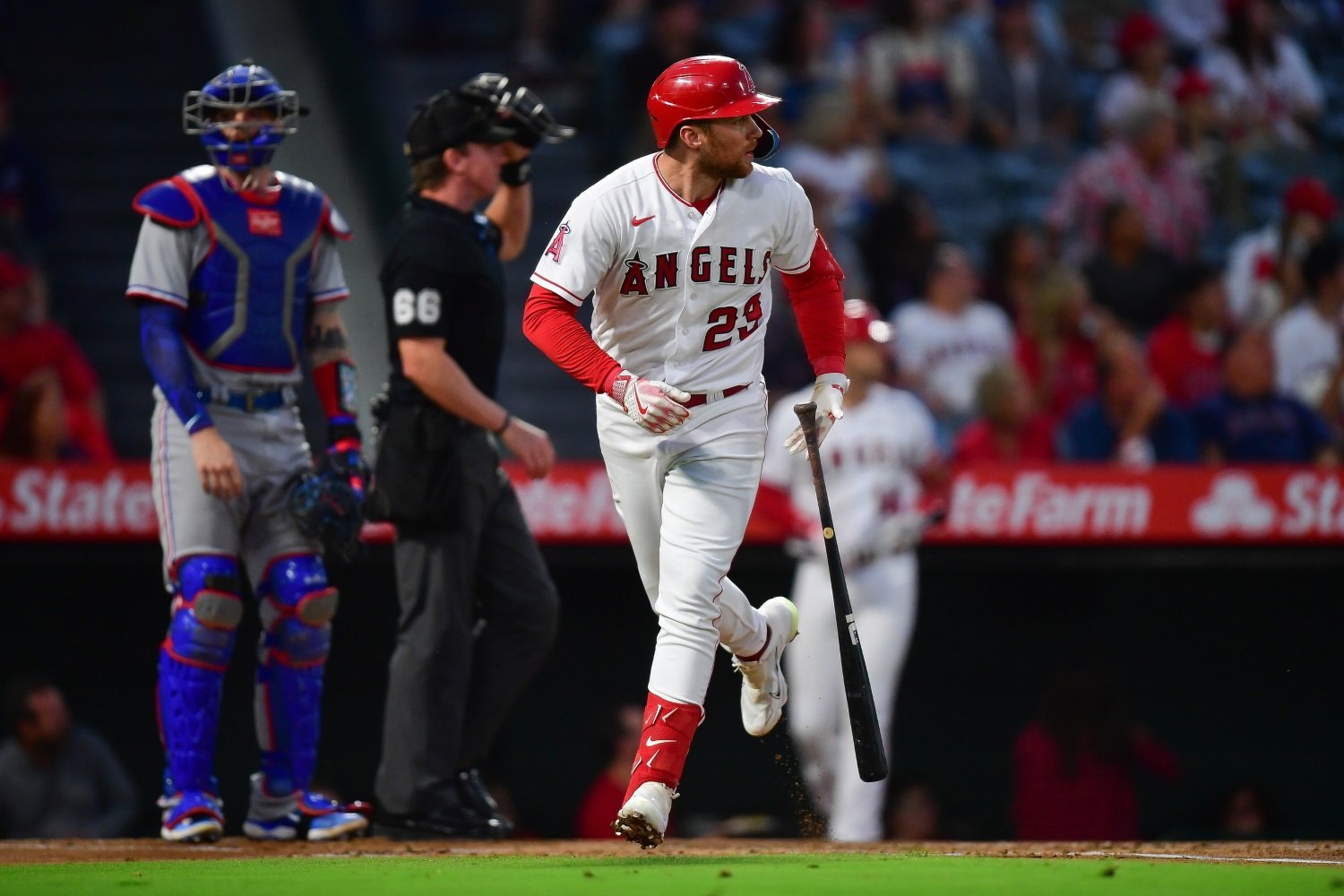 Since July of 2022, Brandon Drury has felt like a terrific option to improve the Milwaukee Brewers' offense, given their needs and his flexibility. The Brewers didn't acquire him at that year's trade deadline, nor did they sign him as a free agent last offseason (much to this writer's chagrin). Instead, he was traded to the San Diego Padres in 2022 and signed with the Los Angeles Angels heading into the 2023 campaign. It was two whiffs by Milwaukee, especially as everyone watched the various struggles the lineup would go through. While it's hypothetical and not truly projectable, if you take Drury's averages from 2022-2023, he would have been among the Brewers' best hitters last season. Rankings among 2023 Brewers (minimum 240 plate appearances): .495 SLG (1st) 27 home runs (1st) 85 RBI (1st) 30 doubles (3rd) 74 runs (3rd) 119 OPS+ (3rd) .808 OPS (3rd) .262 batting average (3rd) .314 OBP (4th) Drury has proven to be a consistent, highly productive bat when he gets regular playing time and has crushed lefties over the past three years, with a slash line of .283/.322/.563 against them. The 31-year-old is a bit flawed in the field, but his defensive skills have improved over the past few seasons, and he was in the 89th percentile in Outs Above Average (OAA) in 2023. He also has plenty of experience at both corner infield spots and played 700 innings at second base last season. Those are the three spots the Brewers don't have clear answers for at the moment. Plus, the DH role is always available. Considering GM Matt Arnold's plan this offseason remains murky (are they pushing for this season, or planning for the future?), trading for Drury is a low-risk, medium-cost option that works either way. Drury is entering the second season of his two-year, $17-million contract with the Angels. He is due to make $8.5 million in 2024 before becoming a free agent, which is a drop in the bucket for a guy who would have led the club in home runs, slugging percentage, and RBI last season. Even if you view him as a first basemen defensively, unlike other potential acquisitions, Drury has been healthier than Brandon Belt and Rhys Hoskins the past few seasons and more productive than Carlos Santana, who hasn't matched or bested Drury's 119 OPS+ since 2019. The biggest questions would be: Are the Angels willing to trade Drury, and what would it cost? No one ever really knows what the Angels are doing. Their owner spends money, but only sporadically and within his own carefully drawn boundaries, and it still hasn't worked out for him. Despite having Mike Trout and Shohei Ohtani since 2018, the Los Angeles Dodgers' little brother never reached the postseason in that time. Granted, injuries to Trout and others played a role, but when you carry one of the top five or six payrolls in MLB over that span, there's no excuse. Now, with Ohtani gone, do the Angels try for some sort of reset? Even if they still try to compete, how strongly do they feel about keeping Drury? He's a purely short-term guy, and they feel an awful lot like a long-term organization at the moment. One area where the Angels could use help is in the bullpen. Los Angeles ranked among the bottom five teams in relief pitching last season, ranking 29th in Fielding Independent Pitching (FIP), 28th in fWAR, and 25th in ERA. Meanwhile, the Brewers were among the best relief clubs, especially their late-inning corps. Milwaukee also has a ton of depth when it comes to bullpen options, so they could afford to move a player or two and still be covered. On the surface, right-handed Elvis Peguero would be the most intriguing piece Milwaukee would be willing to give up. He allowed zero earned runs in 48 of his 59 appearances last season, which included 49 games in the seventh inning or later. The problem could be that despite his success and multiple years of cheap control, the Angels might not want this particular player, because it could amojnt to admitting a mistake. After all, the Angels traded Peguero to the Brewers last offseason (along with pitchers Janson Junk and Adam Semanaris) for Hunter Renfroe. If the Angels can't get over the potential awkwardness (or simply aren't interested in Peguero), Milwaukee can offer any number of other arms. Los Angeles might not clutch Drury too tightly, with the other options around their infield, including last year's top prospect and 2023 first-round pick Nolan Schanuel. That could mean being happy with quantity over quality, where the Brewers can send over multiple low- or mid-level farmhands to acquire Drury, or a combo of a veteran bullpen arm with some youth. I will continue to bang the drum for Drury, even if the Brewers might have their reasons for passing on his talent. One would hope Arnold has a few solid moves up his sleeve, as we work through January with the NL Central crown again in play. Who would you be willing to trade for Drury, or would you not have interest in him at all?
 -
As the offseason rolls along, more people sense the Milwaukee Brewers will keep Corbin Burnes for the 2024 season. We know the positive value that would add to the upcoming campaign, but it's important to consider the legitimate concerns involved with bringing Burnes back. The third realistic option could be Jorge Soler, who hit 36 bombs with an .853 OPS last season after an injury-shortened 2022. He would cost more than Hoskins--probably three-plus years--and mostly fill the DH role, as his outfield defense is below-average at best. Milwaukee might not be willing to dedicate the DH spot to one player, preferring to use it for multiple guys in rotation. However, rosters can change quickly due to injury or opportunity, so adding thunder like Soler's could be a worthy gamble. Still, in these scenarios, the Brewers would add just one big bat, leaving some holes in other spots. Of course, they should be willing to listen for their young outfielders now that Jackson Chourio has shot up the depth chart with his new contract. Would Arnold swap potential and long-term control for a one- or two-year veteran that might help them offensively on the infield? There would, undoubtedly, be some takers for Garrett Mitchell, Sal Frelick and Joey Wiemer. Does Burnes's return make the club more or less open to trading one of them? Getting "Nothing" in Return for Burnes Especially in smaller markets, there is often the fear among fans that the team doesn't get "anything" for a player who leaves via free agency, which is why they are more apt to want a trade. Of course, suppose Burnes reaches free agency after the 2024 season, and he doesn't accept the qualifying offer the Brewers will extend to him. In that case, Milwaukee does get a compensatory pick in the upcoming draft. That could definitely become an impact player down the road. However, fans like to have a name and face to attach to the transaction of losing a star player--immediately. Moreover, in many cases, the prospects you might trade for have a greater probability of being a high-quality big-leaguer than a new draftee. That's where organizations must decide what they value and whether or not what they've been offered in a trade is likely to be better than what they might get in the form of that draft pick. There is another worst-case scenario with keeping Burnes throughout the 2024 season. There's always the risk of injury, particularly a major one that changes all the variables, much like what happened with Brandon Woodruff. Should Burnes suffer an injury that will knock him out for most or all of the 2025 season, the Brewers probably wouldn't be motivated to submit a qualifying offer, because Burnes would accept it. Hence, the Brewers would let him go for free, and the fans' greatest fear would be realized. There are always pros and cons to these significant decisions that teams must make. The most important thing is that the Brewers lay out all their options, choose what they feel is the best route and fully commit thereto. Keeping Burnes instead of trading him is a viable option, with varying degrees of concern. Are those potential issues impactful enough to alter their strategy, or just another normal part of running an MLB club? What would be your biggest concern if the Brewers held on to Corbin Burnes for the 2024 season? View full article
-
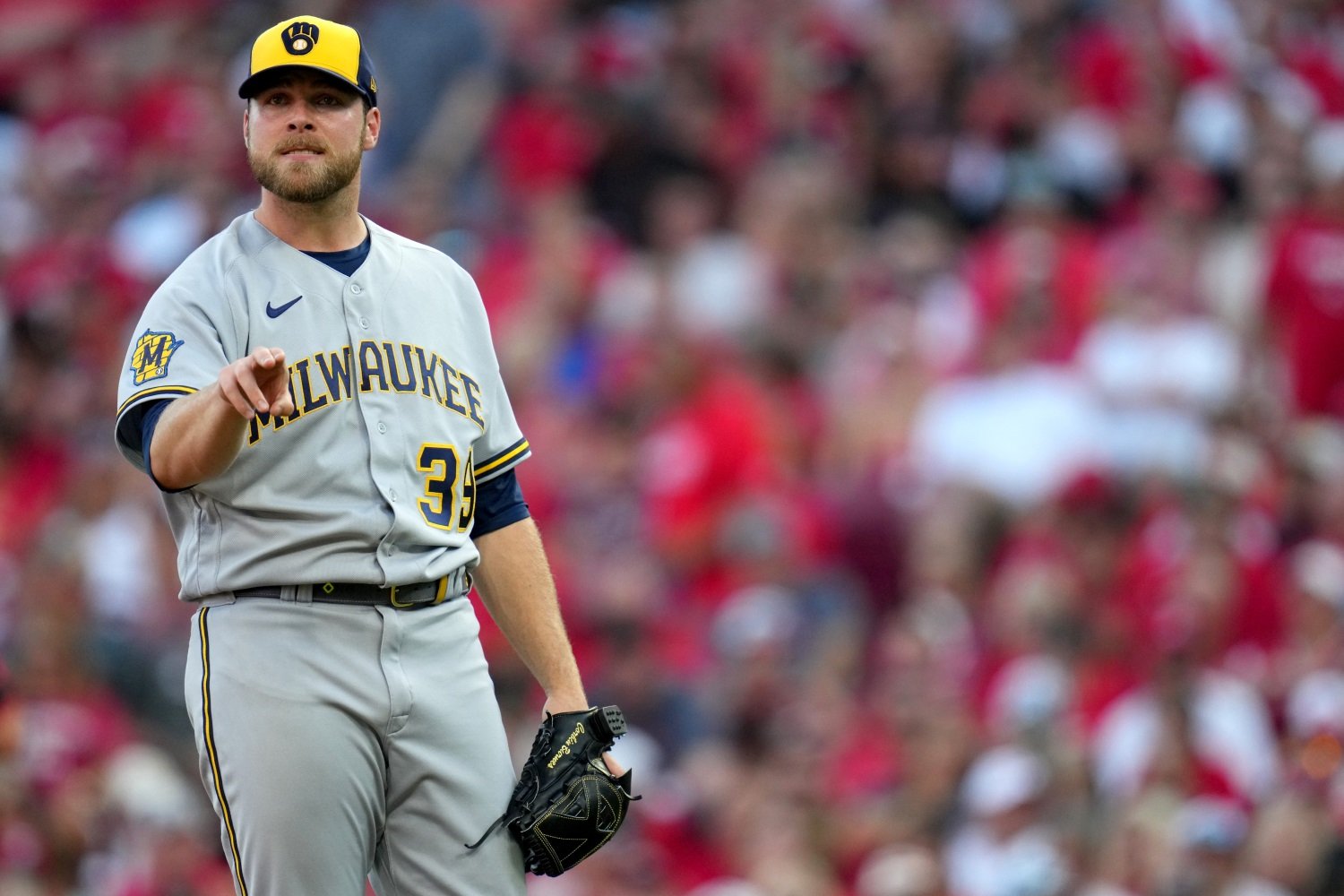 Never mind my preference that the Milwaukee Brewers trade Corbin Burnes for a topflight prospect. While I believe that's the best strategic option for the team in 2024 and beyond, the right deal might not exist. If GM Matt Arnold doesn't get what he's looking for in a swap, it's perfectly reasonable to put Burnes back at the top of the rotation, add some pieces and look to win another NL Central crown. Brewers fans should be happy to bring back the 2021 NL Cy Young winner, if that is the best route. But even if that turns out to be the most beneficial option, it has its own potential issues. Burnes' Mental State and Negative Impact Does Burnes really want to be pitching in Milwaukee? In no scenario would Burnes intentionally pitch below his talent level in 2024 as some protest against the Brewers. However, one's mental state can have a bearing on physical performance. At times, Burnes has seemed to be affected by externalities, such as his grievance with the Brewers after last offseason's arbitration hearing or Josh Hader getting traded during the 2022 campaign. He has acknowledged multiple times that a long-term commitment wouldn't happen in Milwaukee, and like his former manager, Burnes might already be eyeing a new opportunity. Speaking of getting traded, that could be another item weighing on the righthander's mind. The rumors will probably be rampant early in the season. Even if the Crew are playing well, memories of the Hader trade will resurface, reminding everyone that they might ship off a main contributor if the right offer comes along, regardless of where they are in the standings. Most players say they ignore that stuff and focus on the field, but that can be easier said than done, and again, Burnes seems more susceptible to outside forces diminishing production than the average guy. Can the Brewers Acquire Enough Offense for a Title Run? While the pitching staff had issues in the 2023 postseason (Burnes included, ironically), the offense needs the most help going forward. Milwaukee was below league average in runs scored and lacked power, ranking 24th in home runs, and owned a .385 slugging percentage (25th). Bringing on Carlos Santana and Mark Canha midway through the season was a big boost, but both are gone now, and the lineup still lacks juice. Can the Brewers find enough offense to truly compete in 2024 without dealing Burnes? If the Crew keeps their 29-year-old ace, it takes away a huge chip that could be cashed in for an MLB-ready power bat with a high ceiling and plenty of team control. Instead, it would leave the team to scrounge around the free-agent market, where quality options are limited, risky and potentially costly. Santana could still return, but he will be 38, and his power is not guaranteed. Free agent Rhys Hoskins could handle first base, if he committed to Milwaukee. Hoskins hit 27 and 30 home runs in 2021 and 2022, respectively, posting an OPS+ over 120 each season. However, he's coming off a torn ACL, which adds to the risk. Conversely, the uncertainty with his knee might make him more open to a one-year deal to increase his value, something the Brewers would be happy to entertain. Hoskins has had plenty of interest from other clubs, though. The third realistic option could be Jorge Soler, who hit 36 bombs with an .853 OPS last season after an injury-shortened 2022. He would cost more than Hoskins--probably three-plus years--and mostly fill the DH role, as his outfield defense is below-average at best. Milwaukee might not be willing to dedicate the DH spot to one player, preferring to use it for multiple guys in rotation. However, rosters can change quickly due to injury or opportunity, so adding thunder like Soler's could be a worthy gamble. Still, in these scenarios, the Brewers would add just one big bat, leaving some holes in other spots. Of course, they should be willing to listen for their young outfielders now that Jackson Chourio has shot up the depth chart with his new contract. Would Arnold swap potential and long-term control for a one- or two-year veteran that might help them offensively on the infield? There would, undoubtedly, be some takers for Garrett Mitchell, Sal Frelick and Joey Wiemer. Does Burnes's return make the club more or less open to trading one of them? Getting "Nothing" in Return for Burnes Especially in smaller markets, there is often the fear among fans that the team doesn't get "anything" for a player who leaves via free agency, which is why they are more apt to want a trade. Of course, suppose Burnes reaches free agency after the 2024 season, and he doesn't accept the qualifying offer the Brewers will extend to him. In that case, Milwaukee does get a compensatory pick in the upcoming draft. That could definitely become an impact player down the road. However, fans like to have a name and face to attach to the transaction of losing a star player--immediately. Moreover, in many cases, the prospects you might trade for have a greater probability of being a high-quality big-leaguer than a new draftee. That's where organizations must decide what they value and whether or not what they've been offered in a trade is likely to be better than what they might get in the form of that draft pick. There is another worst-case scenario with keeping Burnes throughout the 2024 season. There's always the risk of injury, particularly a major one that changes all the variables, much like what happened with Brandon Woodruff. Should Burnes suffer an injury that will knock him out for most or all of the 2025 season, the Brewers probably wouldn't be motivated to submit a qualifying offer, because Burnes would accept it. Hence, the Brewers would let him go for free, and the fans' greatest fear would be realized. There are always pros and cons to these significant decisions that teams must make. The most important thing is that the Brewers lay out all their options, choose what they feel is the best route and fully commit thereto. Keeping Burnes instead of trading him is a viable option, with varying degrees of concern. Are those potential issues impactful enough to alter their strategy, or just another normal part of running an MLB club? What would be your biggest concern if the Brewers held on to Corbin Burnes for the 2024 season?
 -
Signing a 19-year-old who has only played six games above Double A to an eight-year, $82-million contract is a bold move. This should start a new, aggressive strategy for the Milwaukee Brewers front office, wherein they trust their evaluations and proactively secure high-end talent when they identify it. They should take more risks and avoid the play-it-safe model. Image courtesy of © Kyle Schwab-USA TODAY Sports While locking down Jackson Chourio for 10 years (eight guaranteed, plus two club options) is about more than short-term success, it's a high-risk, high-reward strategy the Brewers often avoid. It's assertive and unapologetic, and it's precisely how they need to operate for the rest of the offseason--and beyond. After inking a record deal for a player without a day of MLB experience, the safe course would be to take a step back and hang out in the middle, as they've done for many seasons. It has allowed them to be consistently good, but never great. There are plenty of options for the Brewers to strike effectively this offseason, stay on an assertive path and set themselves up for continued success. Aggressiveness can lead the way with either decision the Brewers make with Corbin Burnes. Both roads create opportunities to creatively fortify the roster through trades and free agency. That isn't to suggest that Mark Attanasio break the bank (that will not happen), but this team can take a few more chances on expensive talent and daring trades. Playing the long game with Chourio is a prime example of valuing and trusting your stats, scouts, and ability to mold players in your system. This must be done elsewhere with Brewers' decisions: identify the talent you believe in, do what it takes to secure them, and make your call, without fear of failure. Applying this strategy to trading Burnes means a different perspective on who to target. Focus on quality, not quantity, generally speaking. The key acquisition: One MLB-ready bat with an elite ceiling. Considering the reported interest from other clubs, Milwaukee should be able to play teams against each other to garner the best return possible. They need to shoot for the moon, and a little more. It might mean the Brewers need to throw in another smaller piece, but again, fortune favors the bold. Dealing Burnes is not a death sentence for the 2024 season. Milwaukee will still have plenty of its 2023 NL Central Championship squad returning, on top of the additions they can make. Thus, this isn't the time to acquire three "high-floor" prospects who are unlikely to strike gold. Go for the star that might not work out, instead of hedging your bets. The Brewers' offense has been the issue, and the organization has struggled to consistently develop and produce their own hitters. Meanwhile, their pitching lab has created monsters. Thus, target a player whom most people already tab as a near-lock at the plate. An example last offseason was my hope that the Brewers would aggressively go after Texas Rangers' third baseman Josh Jung in exchange for Burnes. Jung is the perfect example of an offensive weapon Milwaukee needs and would have for a long time. At the beginning of last offseason, Texas was keyed in on high-end starting pitchers. But nothing happened between the two, as the Brewers stuck it out with Burnes, while Jung hit 23 home runs with a 109 OPS+ in his first full season. My preferred focus would be on the Baltimore Orioles' Coby Mayo. The 21-year-old third baseman might eventually move to first base or left field, but his bat plays anywhere, and he's improved at the hot corner. Regardless, Mayo's bat speed and elite power are the headliners. Between Double A and Triple A last season, Mayo posted a .290/.410/.563 slash line, with 29 homers, 45 doubles and 93 walks across 140 games. He ranked fourth in Baltimore's loaded farm system, according to MLB.com, perhaps just "low enough" for the Orioles to see a Burnes rental as worth the price. From the Brewers' perspective, some might wonder, is a one-for-one swap to acquire an unproven player the right move? It's certainly a risk, but as noted, the Brewers must keep the Chourio trend going: identify, target and acquire, sign long-term. Assuming they like Mayo as much as many experts do, this is the idea. But let's continue the think tank and seek to add another piece for now and in the future. In this hypothetical, the Brewers should be open to trading away another small piece to enhance the return even more, be it another infielder like Jordan Westburg with solid hit and power potential, who can also play shortstop (if Willy Adames is gone before or after 2024) or a young pitcher Milwaukee evaluators see as a "fit" for its lab. The most challenging part of developing legitimate trade proposals is that every organization has its own assessments and philosophies, but if you don't ask, the answer is always "no." So, in case Baltimore isn't interested, there are a few other young, top-level position players to target: Justin Foscue, Texas Rangers: Blocked at MLB level; owns .879 OPS across his last three minor-league seasons. Joey Loperfido, Houston Astros: Hit 25 home runs with a .278/.370/.510 line with three minor-league teams in 2023. Michael Busch, Los Angeles Dodgers: Oldest of the group (26); owned a 1.049 OPS in Triple A last season and has nothing left to prove there. On the flip side, the Brewers should also determine which of their young outfielders they believe in, and which one (or more) are perfect trade pieces. The front office needs to put aside any fears of trading away a potential stud if their scouts and stats say he'd be worse than the other two or three in the system or what they receive in the deal. Do they have to make a trade? Not necessarily. But with the number of guys available for outfield duty, it is the perfect time. Heading into the Winter Meetings, the outfielders are: Christian Yelich Tyrone Taylor Garrett Mitchell Sal Frelick Joey Wiemer Blake Perkins Chris Roller Chourio (if you believe he can make the Opening Day roster) Depth is fantastic, but the return from a trade might be more valuable. Perhaps a club loves Mitchell and is willing to part with a more proven player to acquire him. The Brewers need to trust their decision-makers, even if they end up trading away an All-Star while being "stuck" with the rest of the group being average. Again, fortune favors the bold. You might get the arm or bat that puts you over the top in the playoffs, while Mitchell plays excellent defense but can't hit or stay healthy. All these moves are with the clear idea that Milwaukee will compete for the NL Central crown in 2024 and be in an even better position in the future. With the savings from Burnes's expected arbitration award and the many other arbitration casualties, the Brewers would then have spending money for a bevy of options in free agency, focusing on mid-rotation starters without enormous commitment in years or dollars. And with the Brewers' track record of getting the most out of hurlers, it adds to the logic of getting a young, possibly elite hitter in a trade while using free agency to replace Burnes's production. Depending on exactly which direction the Brewers go with their lineup, a couple of free-agent bats could complement the club, likely on shorter-term contracts that could create tremendous value (e.g., Jorge Soler, Rhys Hoskins). Ultimately, it's about being intrepid, like the Brewers were in signing Chourio to his record contract. There's risk involved: people will second-guess the decision, and it could all blow up in their faces. But, it's what they believe is the best course of action, and anything but a typical Brewers "safe play." Now, they must double down this offseason and use the Chourio boldness as the prevailing mindset going forward. View full article
-
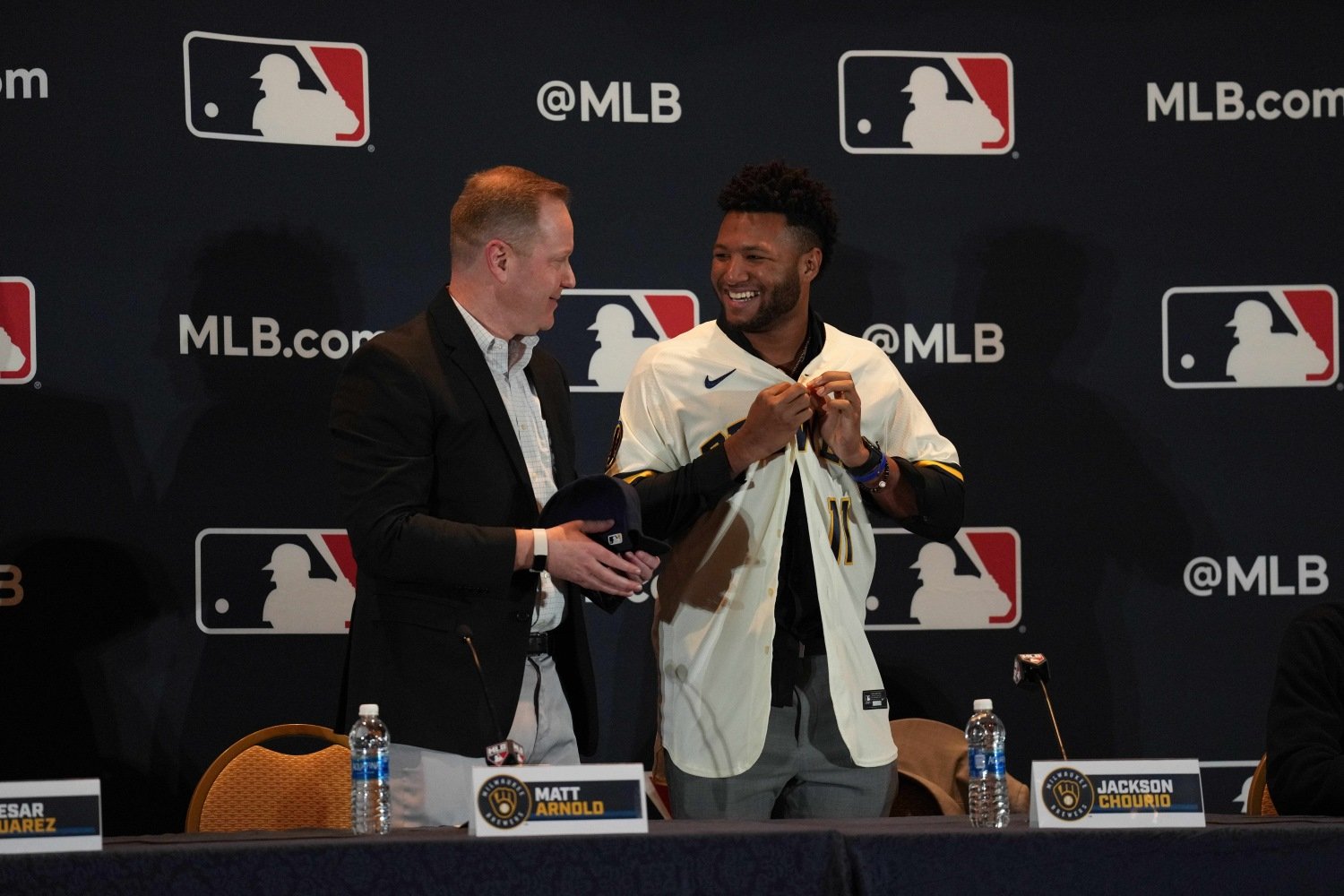 While locking down Jackson Chourio for 10 years (eight guaranteed, plus two club options) is about more than short-term success, it's a high-risk, high-reward strategy the Brewers often avoid. It's assertive and unapologetic, and it's precisely how they need to operate for the rest of the offseason--and beyond. After inking a record deal for a player without a day of MLB experience, the safe course would be to take a step back and hang out in the middle, as they've done for many seasons. It has allowed them to be consistently good, but never great. There are plenty of options for the Brewers to strike effectively this offseason, stay on an assertive path and set themselves up for continued success. Aggressiveness can lead the way with either decision the Brewers make with Corbin Burnes. Both roads create opportunities to creatively fortify the roster through trades and free agency. That isn't to suggest that Mark Attanasio break the bank (that will not happen), but this team can take a few more chances on expensive talent and daring trades. Playing the long game with Chourio is a prime example of valuing and trusting your stats, scouts, and ability to mold players in your system. This must be done elsewhere with Brewers' decisions: identify the talent you believe in, do what it takes to secure them, and make your call, without fear of failure. Applying this strategy to trading Burnes means a different perspective on who to target. Focus on quality, not quantity, generally speaking. The key acquisition: One MLB-ready bat with an elite ceiling. Considering the reported interest from other clubs, Milwaukee should be able to play teams against each other to garner the best return possible. They need to shoot for the moon, and a little more. It might mean the Brewers need to throw in another smaller piece, but again, fortune favors the bold. Dealing Burnes is not a death sentence for the 2024 season. Milwaukee will still have plenty of its 2023 NL Central Championship squad returning, on top of the additions they can make. Thus, this isn't the time to acquire three "high-floor" prospects who are unlikely to strike gold. Go for the star that might not work out, instead of hedging your bets. The Brewers' offense has been the issue, and the organization has struggled to consistently develop and produce their own hitters. Meanwhile, their pitching lab has created monsters. Thus, target a player whom most people already tab as a near-lock at the plate. An example last offseason was my hope that the Brewers would aggressively go after Texas Rangers' third baseman Josh Jung in exchange for Burnes. Jung is the perfect example of an offensive weapon Milwaukee needs and would have for a long time. At the beginning of last offseason, Texas was keyed in on high-end starting pitchers. But nothing happened between the two, as the Brewers stuck it out with Burnes, while Jung hit 23 home runs with a 109 OPS+ in his first full season. My preferred focus would be on the Baltimore Orioles' Coby Mayo. The 21-year-old third baseman might eventually move to first base or left field, but his bat plays anywhere, and he's improved at the hot corner. Regardless, Mayo's bat speed and elite power are the headliners. Between Double A and Triple A last season, Mayo posted a .290/.410/.563 slash line, with 29 homers, 45 doubles and 93 walks across 140 games. He ranked fourth in Baltimore's loaded farm system, according to MLB.com, perhaps just "low enough" for the Orioles to see a Burnes rental as worth the price. From the Brewers' perspective, some might wonder, is a one-for-one swap to acquire an unproven player the right move? It's certainly a risk, but as noted, the Brewers must keep the Chourio trend going: identify, target and acquire, sign long-term. Assuming they like Mayo as much as many experts do, this is the idea. But let's continue the think tank and seek to add another piece for now and in the future. In this hypothetical, the Brewers should be open to trading away another small piece to enhance the return even more, be it another infielder like Jordan Westburg with solid hit and power potential, who can also play shortstop (if Willy Adames is gone before or after 2024) or a young pitcher Milwaukee evaluators see as a "fit" for its lab. The most challenging part of developing legitimate trade proposals is that every organization has its own assessments and philosophies, but if you don't ask, the answer is always "no." So, in case Baltimore isn't interested, there are a few other young, top-level position players to target: Justin Foscue, Texas Rangers: Blocked at MLB level; owns .879 OPS across his last three minor-league seasons. Joey Loperfido, Houston Astros: Hit 25 home runs with a .278/.370/.510 line with three minor-league teams in 2023. Michael Busch, Los Angeles Dodgers: Oldest of the group (26); owned a 1.049 OPS in Triple A last season and has nothing left to prove there. On the flip side, the Brewers should also determine which of their young outfielders they believe in, and which one (or more) are perfect trade pieces. The front office needs to put aside any fears of trading away a potential stud if their scouts and stats say he'd be worse than the other two or three in the system or what they receive in the deal. Do they have to make a trade? Not necessarily. But with the number of guys available for outfield duty, it is the perfect time. Heading into the Winter Meetings, the outfielders are: Christian Yelich Tyrone Taylor Garrett Mitchell Sal Frelick Joey Wiemer Blake Perkins Chris Roller Chourio (if you believe he can make the Opening Day roster) Depth is fantastic, but the return from a trade might be more valuable. Perhaps a club loves Mitchell and is willing to part with a more proven player to acquire him. The Brewers need to trust their decision-makers, even if they end up trading away an All-Star while being "stuck" with the rest of the group being average. Again, fortune favors the bold. You might get the arm or bat that puts you over the top in the playoffs, while Mitchell plays excellent defense but can't hit or stay healthy. All these moves are with the clear idea that Milwaukee will compete for the NL Central crown in 2024 and be in an even better position in the future. With the savings from Burnes's expected arbitration award and the many other arbitration casualties, the Brewers would then have spending money for a bevy of options in free agency, focusing on mid-rotation starters without enormous commitment in years or dollars. And with the Brewers' track record of getting the most out of hurlers, it adds to the logic of getting a young, possibly elite hitter in a trade while using free agency to replace Burnes's production. Depending on exactly which direction the Brewers go with their lineup, a couple of free-agent bats could complement the club, likely on shorter-term contracts that could create tremendous value (e.g., Jorge Soler, Rhys Hoskins). Ultimately, it's about being intrepid, like the Brewers were in signing Chourio to his record contract. There's risk involved: people will second-guess the decision, and it could all blow up in their faces. But, it's what they believe is the best course of action, and anything but a typical Brewers "safe play." Now, they must double down this offseason and use the Chourio boldness as the prevailing mindset going forward.
- 5 comments
-
- 4
-

-
- jackson chourio
- corbin burnes
- (and 1 more)
-
I mean, he SEEMS to be doing a great job in Atlanta...or is it just the immense talent they have on offense? I think if he was 51 instead of 61, I'd be willing to take the shot.
- 4 replies
-
- 1
-
-
- george lombard
- benji gil
- (and 1 more)
-
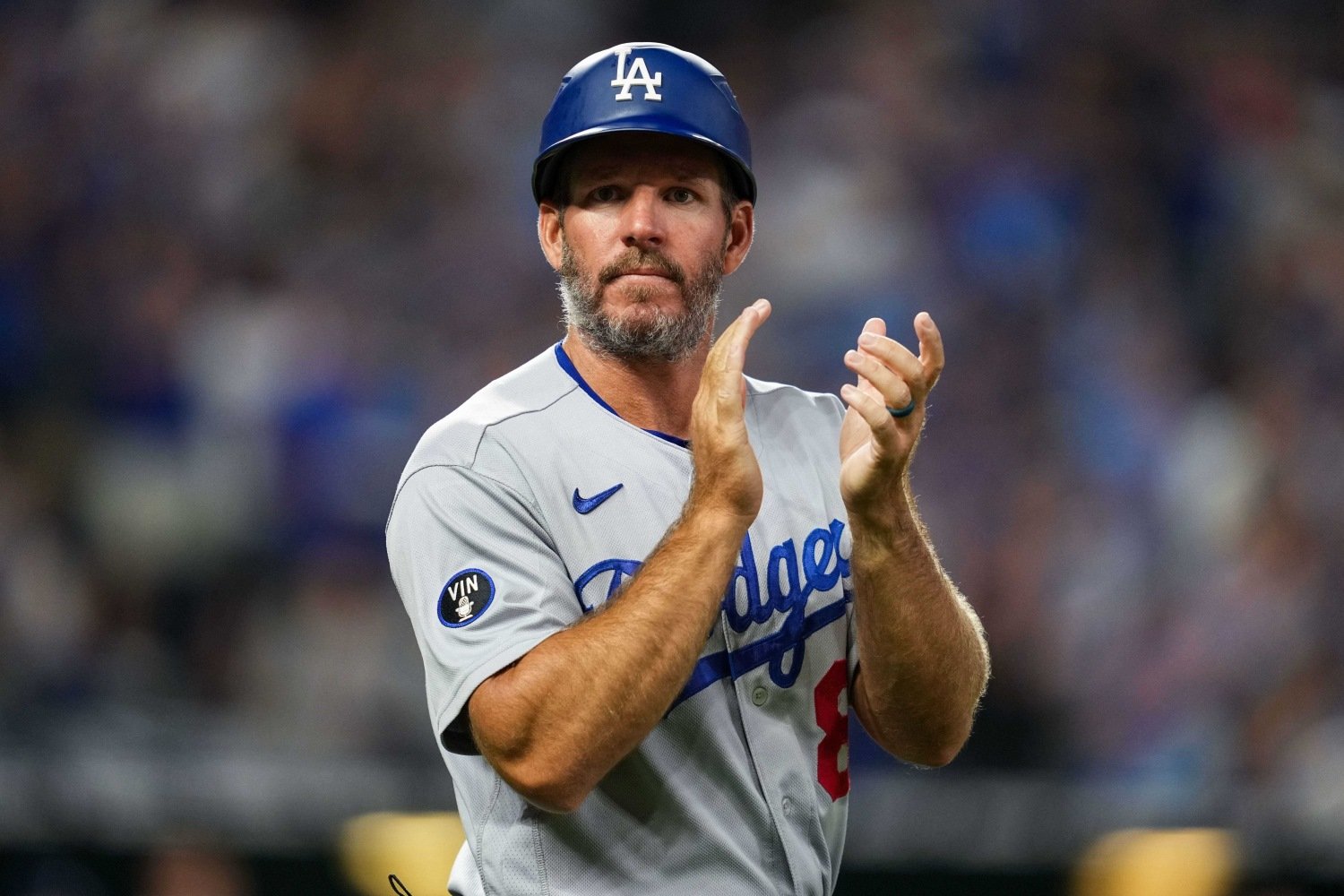 The 2024 Milwaukee Brewers have an uncertain direction as the offseason opens up. Is it time to step back for a soft rebuild? Do you keep everyone you can and make one more run? Regardless of their strategy, GM Matt Arnold must think of the best skipper for the next three to five seasons, not just 2024. And with recent word that they are "open to moving virtually any player," there seems to be a lean toward the years beyond this one (although, I'd say the Brewers are always open to moving anybody). Either way, there aren't any worthy veteran manager "splashes" to be made—at least not ones with real substance. Many of the skippers with previous MLB experience lack proven success with previous teams, are poor fits, or, realistically, are "too old" or have been out of the game too long. It also feels like the perfect time to get a fresh perspective on the team. So, while there are some intriguing options with the Brewers' organization (e.g., Matt Erickson, Carlos Villanueva), there's almost too much of a connection to the previous decade. That's another reason to stay away from Craig Counsell's bench coach, Pat Murphy, for the change in leadership, even though he could be a "bridge" to whoever is next for the extended future. Still, it's best for the Brewers to look outside. In searching for a young and hungry option with a clean set of eyes on the club, you still want some leadership experience. It would also be ideal to have a baseball mind that works in a similar way to the Milwaukee front office's and who comes from, at some point, a successful franchise. Without being able to do interviews or have personal knowledge of these potential candidates, there's still guesswork happening from a writer's perspective. However, this group is a good place to start, and it's up to Arnold and his staff to properly vet the best fit. Benji Gil - Infield Coach, Los Angeles Angels The 51-year-old Gil played eight seasons in MLB but has only spent two years at the big-league level as a coach. Before joining the Angels' staff, Gil managed in a pair of Mexican baseball leagues. He won three Mexican Pacific League (winter ball) championships as manager of Tomateros de Culiacan, including back-to-back titles in the 2019-20 and 2020-21 seasons. Gil was also the skipper for the Mexico National Team at the 2020 Summer Olympics and this year's World Baseball Classic. Gil has not been shy about wanting a shot to manage an MLB club and interviewed for the San Diego Padres' opening. The president of Mexico has even endorsed him for the job. Gil would differ from the other candidates listed regarding varying experience and working with veterans versus younger players. He is also the oldest in this group--the only one in his 50s. Rodney Linares - Bench Coach, Tampa Bay Rays The Rays are the more successful, American League version of the Brewers. Linares has been with Tampa since 2019, after coming over from one of the top teams of the last 10 years, the Houston Astros. Both of those organizations are ideal in grooming a future manager and allowing him to find early success. As a minor-league manager, Linares worked with guys like Jose Altuve, Alex Bregman and Carlos Correra as they came through the system. He also won a lot of games, going 334-226 (.596) in a four-year stretch and finishing 82-57 in his one season leading Houston's Triple-A squad in 2018. The 46-year-old Linares also managed the Dominican National Team in this year's World Baseball Classic. George Lombard - Bench Coach, Detroit Tigers After wrapping up his playing career in 2009, Lombard jumped into coaching in the minors with the Boston Red Sox and Atlanta Braves. Lombard managed a rookie-league team, was a roving outfield and baserunning instructor, and served as a minor-league field coordinator at various points during that time. He then joined the Los Angeles Dodgers from 2016-20 to be their first base coach in the middle of their NL West title streak, which included three NL pennants and one World Series crown. Before the 2021 season, Lombard interviewed for the Detroit Tigers' managerial vacancy. He lost out to former Astros skipper A.J. Hinch but took the bench coach position in Detroit at Hinch's request. The 45-year-old Lombard has a reputation as a strong developer of young players, a student of the game, and well-versed in using analytical tools. Tony Mansolino - Third Base Coach, Baltimore Orioles His name has yet to come up much, but 41-year-old Tony Mansolino could be a dark-horse option. He was a hitting coach and then manager of multiple minor-league clubs with the Cleveland Guardians and earned the Carolina League Manager of the Year Award in 2017. Following the 2020 season, the Orioles hired Mansolino as their third base coach, where he remains. Mansolino has a reputation for skillful teaching of fundamentals, and considering he's been working with a young and talented Orioles club, it would be a nice transition to Milwaukee. He might need more MLB seasoning before manning the helm, but for those who love having a Brewers connection, his dad, Doug, coached in Milwaukee in 1998-99. Clayton McCullough - First Base Coach, Los Angeles Dodgers McCullough has been with the Dodgers since 2015 as they have enjoyed their tremendous run of success. McCullough has been the organization's minor-league field coordinator, and he joined the Major League staff for the 2021 season. He has been known for working well with young talent. The 43-year-old is a former minor-league catcher who managed in the Toronto Blue Jays' farm system from 2007-13, going 629-559 (.529). McCullough interviewed for the Cleveland Guardians' managerial opening last month, for the New York Mets' before the 2022 season, and for last offseason's Kansas City Royals vacancy. Other candidates could fit the bill, such as Joe Espada (Astros bench coach), Troy Snitker (Astros hitting coach), and Craig Albernaz (San Francisco Giants bullpen and catching coach). It would make sense for the Astros to hire Espada for their manager's role, and Snitker could use more time in the big leagues to learn. The same could be said for Albernaz, who has not held another role with the Giants. For the record, five first-year managers have won the World Series in their inaugural season, so hiring one of these guys shouldn't rule out a championship run. Do any of them stand out to you? Are you willing to take a chance with a first-year manager? Give us your thoughts on who should be next.
 -
With the Milwaukee Brewers' run of success since 2018, the first thought of many would be to hire a manager with MLB experience to hit the ground running. A second thought might be hiring from within the organization, to lend a sense of continuity. The third option, though, is best for this group. Image courtesy of © Jay Biggerstaff-USA TODAY Sports The 2024 Milwaukee Brewers have an uncertain direction as the offseason opens up. Is it time to step back for a soft rebuild? Do you keep everyone you can and make one more run? Regardless of their strategy, GM Matt Arnold must think of the best skipper for the next three to five seasons, not just 2024. And with recent word that they are "open to moving virtually any player," there seems to be a lean toward the years beyond this one (although, I'd say the Brewers are always open to moving anybody). Either way, there aren't any worthy veteran manager "splashes" to be made—at least not ones with real substance. Many of the skippers with previous MLB experience lack proven success with previous teams, are poor fits, or, realistically, are "too old" or have been out of the game too long. It also feels like the perfect time to get a fresh perspective on the team. So, while there are some intriguing options with the Brewers' organization (e.g., Matt Erickson, Carlos Villanueva), there's almost too much of a connection to the previous decade. That's another reason to stay away from Craig Counsell's bench coach, Pat Murphy, for the change in leadership, even though he could be a "bridge" to whoever is next for the extended future. Still, it's best for the Brewers to look outside. In searching for a young and hungry option with a clean set of eyes on the club, you still want some leadership experience. It would also be ideal to have a baseball mind that works in a similar way to the Milwaukee front office's and who comes from, at some point, a successful franchise. Without being able to do interviews or have personal knowledge of these potential candidates, there's still guesswork happening from a writer's perspective. However, this group is a good place to start, and it's up to Arnold and his staff to properly vet the best fit. Benji Gil - Infield Coach, Los Angeles Angels The 51-year-old Gil played eight seasons in MLB but has only spent two years at the big-league level as a coach. Before joining the Angels' staff, Gil managed in a pair of Mexican baseball leagues. He won three Mexican Pacific League (winter ball) championships as manager of Tomateros de Culiacan, including back-to-back titles in the 2019-20 and 2020-21 seasons. Gil was also the skipper for the Mexico National Team at the 2020 Summer Olympics and this year's World Baseball Classic. Gil has not been shy about wanting a shot to manage an MLB club and interviewed for the San Diego Padres' opening. The president of Mexico has even endorsed him for the job. Gil would differ from the other candidates listed regarding varying experience and working with veterans versus younger players. He is also the oldest in this group--the only one in his 50s. Rodney Linares - Bench Coach, Tampa Bay Rays The Rays are the more successful, American League version of the Brewers. Linares has been with Tampa since 2019, after coming over from one of the top teams of the last 10 years, the Houston Astros. Both of those organizations are ideal in grooming a future manager and allowing him to find early success. As a minor-league manager, Linares worked with guys like Jose Altuve, Alex Bregman and Carlos Correra as they came through the system. He also won a lot of games, going 334-226 (.596) in a four-year stretch and finishing 82-57 in his one season leading Houston's Triple-A squad in 2018. The 46-year-old Linares also managed the Dominican National Team in this year's World Baseball Classic. George Lombard - Bench Coach, Detroit Tigers After wrapping up his playing career in 2009, Lombard jumped into coaching in the minors with the Boston Red Sox and Atlanta Braves. Lombard managed a rookie-league team, was a roving outfield and baserunning instructor, and served as a minor-league field coordinator at various points during that time. He then joined the Los Angeles Dodgers from 2016-20 to be their first base coach in the middle of their NL West title streak, which included three NL pennants and one World Series crown. Before the 2021 season, Lombard interviewed for the Detroit Tigers' managerial vacancy. He lost out to former Astros skipper A.J. Hinch but took the bench coach position in Detroit at Hinch's request. The 45-year-old Lombard has a reputation as a strong developer of young players, a student of the game, and well-versed in using analytical tools. Tony Mansolino - Third Base Coach, Baltimore Orioles His name has yet to come up much, but 41-year-old Tony Mansolino could be a dark-horse option. He was a hitting coach and then manager of multiple minor-league clubs with the Cleveland Guardians and earned the Carolina League Manager of the Year Award in 2017. Following the 2020 season, the Orioles hired Mansolino as their third base coach, where he remains. Mansolino has a reputation for skillful teaching of fundamentals, and considering he's been working with a young and talented Orioles club, it would be a nice transition to Milwaukee. He might need more MLB seasoning before manning the helm, but for those who love having a Brewers connection, his dad, Doug, coached in Milwaukee in 1998-99. Clayton McCullough - First Base Coach, Los Angeles Dodgers McCullough has been with the Dodgers since 2015 as they have enjoyed their tremendous run of success. McCullough has been the organization's minor-league field coordinator, and he joined the Major League staff for the 2021 season. He has been known for working well with young talent. The 43-year-old is a former minor-league catcher who managed in the Toronto Blue Jays' farm system from 2007-13, going 629-559 (.529). McCullough interviewed for the Cleveland Guardians' managerial opening last month, for the New York Mets' before the 2022 season, and for last offseason's Kansas City Royals vacancy. Other candidates could fit the bill, such as Joe Espada (Astros bench coach), Troy Snitker (Astros hitting coach), and Craig Albernaz (San Francisco Giants bullpen and catching coach). It would make sense for the Astros to hire Espada for their manager's role, and Snitker could use more time in the big leagues to learn. The same could be said for Albernaz, who has not held another role with the Giants. For the record, five first-year managers have won the World Series in their inaugural season, so hiring one of these guys shouldn't rule out a championship run. Do any of them stand out to you? Are you willing to take a chance with a first-year manager? Give us your thoughts on who should be next. View full article
-
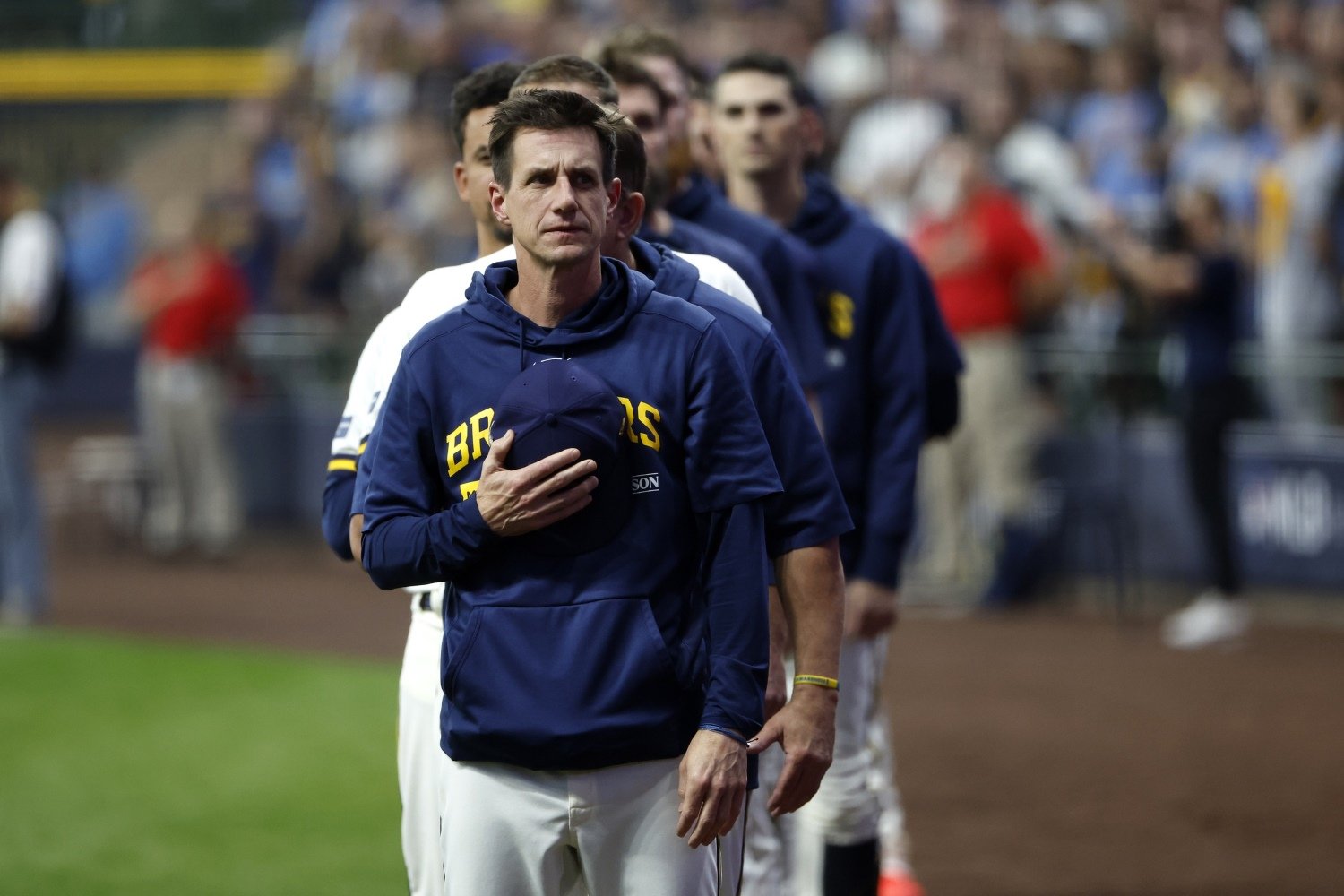 It's a travesty that Craig Counsell hasn't won a Manager of the Year Award to this point. However, his postseason record is equally tragic. Counsell has a 1-5 series record in the playoffs (counting the one-game Wild Card contest in 2019), with his clubs losing nine of their last 10 games overall. For all the regular-season success since 2018 (five postseason appearances and three NL Central titles), the playoff failures have become just as big a story. Many will say that playoff baseball is highly random, so blame shouldn't fall on the manager. Yet, it seems like it should at least be discussed whether Counsell is a bad (or at least below-average) postseason manager. Obviously, players must perform, and they still have the most significant impact on wins and losses. But when the microscope focuses on these individual tilts, where the value of matchups, decision-making and leadership are enhanced tenfold, the manager's performance suddenly plays a more prominent role than it had all year long. When the head man's teams are 1-9 in the last 10 chances, that represents at least some sort of trend. Just because you can't measure it or project a manager's performance doesn't mean the impact doesn't exist. Whether or not Counsell returns to the Brewers in 2024, the question should be asked: Is he a poor postseason manager? First, people must understand how managing a team in the regular season differs significantly from trying to win a series (especially a short one). Having coached youth travel ball and high school for many years (I never pass up a chance to compare myself to an MLB manager), it's the same when trying to win during league play versus winning a tournament. You can be patient in league play (the amateur answer to MLB's regular season), giving players time to improve; testing guys in other positions; spreading out pitcher use; and having a "big picture" mentality. In a tournament, like the playoffs, you need to think about today, and be ready to make immediate adjustments. The next game almost doesn't exist, particularly when a loss knocks you out. There must be less tolerance for struggles, more willingness to try something new and a major focus on winning individual at-bats and innings. There's no time for worrying about feelings or letting things play out. As long as the players and coaching staff are on the same page, the change to "win-now" mode is less jarring and more understandable. This might be an area where Counsell has struggled to be as aggressive as he needs to be. At times, it could also be the opposite, where he is overthinking so much that it has a countereffect. The best managers and coaches determine the best path in each situation. Either way, the record is the record. Counsell does tend to stick with his guys, and often seems slow to make adjustments. He fully believes in getting his "bench players" at-bats during the season, and will rearrange the lineup in various ways. However, sticking with Willy Adames in the heart of the lineup for most of the season (when he was lost at the plate) was a prime example of abundant patience. Most would have dropped him lower in the lineup (or given him time off) sooner than Counsell did. It worked out in the end, but again, you have the luxury of time in the marathon regular season. In the postseason, a quick change can be a spark if something isn't working (for whatever reason). Going back to the 2021 NLDS against the Atlanta Braves, the "loyalty" strategy hurt severely. Avisail Garcia was ice-cold heading into the playoffs, going 2-for-20 with seven strikeouts in his last seven games of the regular season. Leadoff hitter Kolten Wong had a .294 OBP in the two weeks leading up to the postseason. Still, Wong was leading off (with Garcia in the cleanup spot) for Game 1. The pair went 0-for-7 with four strikeouts, though Milwaukee won 2-1, thanks to a Rowdy Tellez two-run homer. Even after that, those two were in the same spots for Game 2 (a 3-0 Atlanta victory), wherein they went 2-for-8 with four punchouts. Game 3 remained the same, with the Brewers getting shut out again as Wong and Garcia went 0-for-8. In the four series games, those two hitters combined to go 3-for-30 with 13 strikeouts, yet they were never moved in the order. Some smirking rhetoricians asked, "What better hitters were available?" Maybe no one was "better," but other hitters could have produced more in two of the most critical spots in the lineup. Sometimes, a "hot" or "cold" hitter is real, even if you can't predict when those types of streaks will end. On a smaller scale, this season, after the Brewers scored only three runs in Game 1, the same lineup appeared for Game 2. What happened? The Brewers scored two runs. Certainly, a switch in the batting order or a fresh bat in Game 2 (e.g., Andruw Monasterio for Brice Turang) would have made sense. A great example of willingness to take chances came in the ALDS. Texas Rangers manager Bruce Bochy, who has three World Series titles and has won 12 of his last 13 postseason series, made a curious move. In Game 2 of that series, Bochy placed Mitch Garver into the three-hole, where he went 2-for-6 with a home run, five RBI and a pair of runs scored. Garver had not played in any of the team's previous three postseason contests, and started only two games in the three-hole all year. Is it trusting instincts or going against the "numbers" sometimes? Could you imagine Counsell having anyone other than Carlos Santana hitting third in the two playoff games Beyond the loyalty aspect, in-game decisions take on tremendous value. Of course, a manager can make the "right" call and have it fail. Still, it's ultimately a results-oriented time of the year. Game 2 of the Wild Card Series saw a pair of questionable choices by Counsell in a tight elimination game. These cemented the thought that maybe he loses something in high-pressure games, much like a hitter or pitcher might wilt or fall short of their norm when the lights are brighter. First, not having a relief pitcher already up in the bullpen to start the sixth inning. Some thought Freddy Peralta should never have even started the sixth frame after a dip in velocity and command led to harder contact (including a home run) in the fifth. With a 2-1 lead, Peralta walked the leadoff man in the sixth, and still, Counsell let him face two more batters. A double and single later, and the Brewers would trail 3-2. The move to a bullpen arm came too slow and too late. Two innings later, with the Brewers down by three, they loaded the bases with one out. The crowd was electric, the Arizona Diamondbacks were on the ropes, and manager Torey Lovullo called for a lefty from his pen to face left-handed hitting Sal Frelick. Instead of going to any of his right-handed options (Joey Wiemer, Owen Miller, Blake Perkins, Victor Caratini), Counsell stuck with Frelick. Four pitches later, Frelick tapped into a 1-2 fielder's choice, with the inning ending without a run one batter later. The decision made no sense for a team and manager who rely so much on matchups. In the postgame press conference, he alluded to the idea that the pitcher, Andrew Saalfrank, had trouble throwing strikes to lefties. So, they were hoping for a walk? That's not an inspiring or motivating mindset, nor is that any way to win a playoff game. Interestingly, the best option to pinch-hit against a southpaw wasn't available at the time because of another choice by Brewers' management: including Jesse Winker on the Wild Card roster. To the dismay of nearly everyone, Winker saw two plate appearances in the two contests, despite poor production; no MLB at-bats since July 24; and an obviously slow bat that had no business getting postseason swings. Because Winker pinch-hit for Turang, Monasterio had to go in to play defense the following inning. That meant that Monasterio's .780 OPS versus lefties couldn't be utilized in that spot. So, for Counsell, if he wasn't going to use Miller to bat against a left-hander in a critical moment, he should have put Miller in at second base defensively to keep Monasterio free to hit later. Were the Winker and Frelick decisions a couple of cases of Counsell trying to be the "smartest person in the room"? Sometimes, that is the downfall of man: a touch of arrogance. It's difficult to say those calls were based on relevant stats or trends. Regardless, they were additional black marks on the Brewers'--and Counsell's--postseason resumes. Many will continue to argue that randomness and variance are the real reasons the Brewers have struggled in the postseason. No one is saying those don't exist. Still, it should also be fair to acknowledge and question whether Counsell deserves the "top regular-season manager" label, while also being tabbed with the "below-average postseason skipper" title. All I ask is that you consider the possibility and let me know your thoughts on this particular subject.
 -
Milwaukee Brewers manager Craig Counsell has been one of the best skippers in MLB since he took over in May 2015. He enjoys a glowing reputation throughout the league and has won more regular-season games than any other manager in team history. In the playoffs, alas, the story changes. Image courtesy of © Kamil Krzaczynski-USA TODAY Sports It's a travesty that Craig Counsell hasn't won a Manager of the Year Award to this point. However, his postseason record is equally tragic. Counsell has a 1-5 series record in the playoffs (counting the one-game Wild Card contest in 2019), with his clubs losing nine of their last 10 games overall. For all the regular-season success since 2018 (five postseason appearances and three NL Central titles), the playoff failures have become just as big a story. Many will say that playoff baseball is highly random, so blame shouldn't fall on the manager. Yet, it seems like it should at least be discussed whether Counsell is a bad (or at least below-average) postseason manager. Obviously, players must perform, and they still have the most significant impact on wins and losses. But when the microscope focuses on these individual tilts, where the value of matchups, decision-making and leadership are enhanced tenfold, the manager's performance suddenly plays a more prominent role than it had all year long. When the head man's teams are 1-9 in the last 10 chances, that represents at least some sort of trend. Just because you can't measure it or project a manager's performance doesn't mean the impact doesn't exist. Whether or not Counsell returns to the Brewers in 2024, the question should be asked: Is he a poor postseason manager? First, people must understand how managing a team in the regular season differs significantly from trying to win a series (especially a short one). Having coached youth travel ball and high school for many years (I never pass up a chance to compare myself to an MLB manager), it's the same when trying to win during league play versus winning a tournament. You can be patient in league play (the amateur answer to MLB's regular season), giving players time to improve; testing guys in other positions; spreading out pitcher use; and having a "big picture" mentality. In a tournament, like the playoffs, you need to think about today, and be ready to make immediate adjustments. The next game almost doesn't exist, particularly when a loss knocks you out. There must be less tolerance for struggles, more willingness to try something new and a major focus on winning individual at-bats and innings. There's no time for worrying about feelings or letting things play out. As long as the players and coaching staff are on the same page, the change to "win-now" mode is less jarring and more understandable. This might be an area where Counsell has struggled to be as aggressive as he needs to be. At times, it could also be the opposite, where he is overthinking so much that it has a countereffect. The best managers and coaches determine the best path in each situation. Either way, the record is the record. Counsell does tend to stick with his guys, and often seems slow to make adjustments. He fully believes in getting his "bench players" at-bats during the season, and will rearrange the lineup in various ways. However, sticking with Willy Adames in the heart of the lineup for most of the season (when he was lost at the plate) was a prime example of abundant patience. Most would have dropped him lower in the lineup (or given him time off) sooner than Counsell did. It worked out in the end, but again, you have the luxury of time in the marathon regular season. In the postseason, a quick change can be a spark if something isn't working (for whatever reason). Going back to the 2021 NLDS against the Atlanta Braves, the "loyalty" strategy hurt severely. Avisail Garcia was ice-cold heading into the playoffs, going 2-for-20 with seven strikeouts in his last seven games of the regular season. Leadoff hitter Kolten Wong had a .294 OBP in the two weeks leading up to the postseason. Still, Wong was leading off (with Garcia in the cleanup spot) for Game 1. The pair went 0-for-7 with four strikeouts, though Milwaukee won 2-1, thanks to a Rowdy Tellez two-run homer. Even after that, those two were in the same spots for Game 2 (a 3-0 Atlanta victory), wherein they went 2-for-8 with four punchouts. Game 3 remained the same, with the Brewers getting shut out again as Wong and Garcia went 0-for-8. In the four series games, those two hitters combined to go 3-for-30 with 13 strikeouts, yet they were never moved in the order. Some smirking rhetoricians asked, "What better hitters were available?" Maybe no one was "better," but other hitters could have produced more in two of the most critical spots in the lineup. Sometimes, a "hot" or "cold" hitter is real, even if you can't predict when those types of streaks will end. On a smaller scale, this season, after the Brewers scored only three runs in Game 1, the same lineup appeared for Game 2. What happened? The Brewers scored two runs. Certainly, a switch in the batting order or a fresh bat in Game 2 (e.g., Andruw Monasterio for Brice Turang) would have made sense. A great example of willingness to take chances came in the ALDS. Texas Rangers manager Bruce Bochy, who has three World Series titles and has won 12 of his last 13 postseason series, made a curious move. In Game 2 of that series, Bochy placed Mitch Garver into the three-hole, where he went 2-for-6 with a home run, five RBI and a pair of runs scored. Garver had not played in any of the team's previous three postseason contests, and started only two games in the three-hole all year. Is it trusting instincts or going against the "numbers" sometimes? Could you imagine Counsell having anyone other than Carlos Santana hitting third in the two playoff games Beyond the loyalty aspect, in-game decisions take on tremendous value. Of course, a manager can make the "right" call and have it fail. Still, it's ultimately a results-oriented time of the year. Game 2 of the Wild Card Series saw a pair of questionable choices by Counsell in a tight elimination game. These cemented the thought that maybe he loses something in high-pressure games, much like a hitter or pitcher might wilt or fall short of their norm when the lights are brighter. First, not having a relief pitcher already up in the bullpen to start the sixth inning. Some thought Freddy Peralta should never have even started the sixth frame after a dip in velocity and command led to harder contact (including a home run) in the fifth. With a 2-1 lead, Peralta walked the leadoff man in the sixth, and still, Counsell let him face two more batters. A double and single later, and the Brewers would trail 3-2. The move to a bullpen arm came too slow and too late. Two innings later, with the Brewers down by three, they loaded the bases with one out. The crowd was electric, the Arizona Diamondbacks were on the ropes, and manager Torey Lovullo called for a lefty from his pen to face left-handed hitting Sal Frelick. Instead of going to any of his right-handed options (Joey Wiemer, Owen Miller, Blake Perkins, Victor Caratini), Counsell stuck with Frelick. Four pitches later, Frelick tapped into a 1-2 fielder's choice, with the inning ending without a run one batter later. The decision made no sense for a team and manager who rely so much on matchups. In the postgame press conference, he alluded to the idea that the pitcher, Andrew Saalfrank, had trouble throwing strikes to lefties. So, they were hoping for a walk? That's not an inspiring or motivating mindset, nor is that any way to win a playoff game. Interestingly, the best option to pinch-hit against a southpaw wasn't available at the time because of another choice by Brewers' management: including Jesse Winker on the Wild Card roster. To the dismay of nearly everyone, Winker saw two plate appearances in the two contests, despite poor production; no MLB at-bats since July 24; and an obviously slow bat that had no business getting postseason swings. Because Winker pinch-hit for Turang, Monasterio had to go in to play defense the following inning. That meant that Monasterio's .780 OPS versus lefties couldn't be utilized in that spot. So, for Counsell, if he wasn't going to use Miller to bat against a left-hander in a critical moment, he should have put Miller in at second base defensively to keep Monasterio free to hit later. Were the Winker and Frelick decisions a couple of cases of Counsell trying to be the "smartest person in the room"? Sometimes, that is the downfall of man: a touch of arrogance. It's difficult to say those calls were based on relevant stats or trends. Regardless, they were additional black marks on the Brewers'--and Counsell's--postseason resumes. Many will continue to argue that randomness and variance are the real reasons the Brewers have struggled in the postseason. No one is saying those don't exist. Still, it should also be fair to acknowledge and question whether Counsell deserves the "top regular-season manager" label, while also being tabbed with the "below-average postseason skipper" title. All I ask is that you consider the possibility and let me know your thoughts on this particular subject. View full article
-
Here's the thing...was the 2018 run, which accounts for 6 of those 7 wins you mentioned, a matter of a team on a hot streak? Counsell made poor decisions in those series, too (namely sticking with Jeremy Jeffress so much), but it mostly worked out because of how they were playing. I'm not saying that being "hot" or "cold" is everything, but sometimes it does make a greater impact. Of course, talent ultimately has the biggest impact and their 2018 offense was easily the best of all the playoff teams. The pitching the last couple of years in the playoffs still came up short situationally, too.
-
 We touched on "the good" that happened in the Wild Card series for the Brewers. That wasn't to sugarcoat anything or ignore the results. Positives existed, but unfortunately, they couldn't outweigh the negative side of the ledger. Some areas were simply bad, and others descended to "ugly." You might not have been aware of some of it, or you'd like to forget it. THE BAD Corbin Burnes and Devin Williams falter Ultimately, teams need their top players to perform well to advance in the postseason. The Brewers' offense staked "ace" Corbin Burnes to a 3-0 lead after two frames in the opening game. He promptly gave up four runs an inning and one batter later before failing to record an out in the fifth frame—a complete failure in that spot. Closer Devin Williams entered the ninth with the Brewers still down a run. Hold Arizona there and give your offense a chance. Williams walked the first two batters he faced (later walked a third) and eventually gave up two runs that sucked the air out of the ballpark and put the nail in Milwaukee's coffin. With Brandon Woodruff out, the two next-best pitchers came up small. Nobody ready in the bullpen in game two After Peralta started to lose command and get hit harder in the fifth inning, it should have signaled the possible need for a reliever in the sixth. In a win-or-go-home game, an arm should be ready at a moment's notice, particularly as you get to the middle innings. Peralta walked the leadoff man in the sixth and still faced two more hitters before Counsell felt Abner Uribe should enter the game. Arizona had the lead by then, and Uribe entered with chaos around him. It was a lack of foresight and preparation with the season on the brink. If you look at the chart below, you can see the enormous swing in win probability. It jumped from 61 percent Brewers after one batter in the sixth to 57 percent Diamondbacks after Corbin Carroll's double (the second hitter of the inning). Then Peralta faced a third hitter, Ketel Marte, who drove in the eventual winning runs. Jesse Winker placed on the Wild Card roster This had the markings of a "we're the smartest people in the room" type of decision. It backfired. With options like speedy, athletic Garret Mitchell and power bat Rowdy Tellez, the Brewers instead recalled Winker, who hadn't seen MLB pitching since July 24. Fighting injuries all season, including on his rehab assignment, Winker owned a .199 average and .320 OBP with the Brewers. Yet, management thought he was the best option to work a count and get on base in the series. His bat was extremely slow in his game one appearance as he struck out on three pitches. Instead of claiming injury and bringing someone else on for game two, Winker got another at-bat and weakly grounded out to first on three pitches. The boobirds were in full force. THE UGLY Counsell choosing not to pinch-hit for Sal Frelick With the Brewers down 5-2 in the eighth, Arizona went to Andrew Saalfrank, a left-handed hurler, to face the lefty, Frelick, with the bases loaded and one out. Lefties were 1-for-13 with one walk against Saalfrank in 2023, with right-handed batters owning an OPS 363 points better than lefties. Milwaukee, who values platoon matchups as much as any club, had four guys on the bench who could hit right-handed. Instead, Counsell decided to stick with Frelick. He meekly bounced into a fielder's choice, pitcher to home plate. So what if Joey Wiemer and Owen Miller haven't seen MLB action in a while? They were still better options. Blake Perkins, a switch-hitter, is better against righties, but his stats against left-handed pitching are better than Frelick's. Catcher Victor Caratini was also a better option, though the risk of a double play was much greater. To have all those options and choose none is managing malpractice, especially when Counsell explained that Saalfrank has trouble throwing strikes to lefties. So you were hoping for a walk? How inspiring. And by the way, he had one walk in his small 14-batter MLB sample size against lefties. The actual best option, because he hits lefties exceptionally well (.780 OPS this season), would have been Andruw Monasterio. Unfortunately, because Counsell used Winker (ugh) to hit for Brice Turang earlier, Monasterio had already entered the game defensively. If you aren't going to use Miller to pinch-hit against a lefty, then you should put him at second base and keep Monasterio on the bench to pinch-hit in a lefty-lefty situation. It was an ugly sequence created and exacerbated by the manager's decisions. Base runners galore The Brewers saw 30 men reach base in the two games, bringing only five to the plate. One in every six men made a round trip as the club failed to adjust and "do their jobs" in critical situations. Yes, Tyrone Taylor was robbed of a massive hit in game one, and Milwaukee had some bad luck, but many of the problems were self-inflicted. Double plays, base running mistakes, and the inability to bring in runners from third with less than two outs all added to the frustration. While the hitters did great to score early, they scored zero runs from the third through ninth innings in both games (that's 14 total frames). Did they need more homers and doubles? Of course. But they left runs on the bases that an average performance takes care of on a typical night. Blowing leads like no other team Eight Wild Card games were played across baseball, and in six of those contests, the team that took the lead first kept their opponent from tying the game up or going in front. The other two scenarios belonged to the Brewers, the only club to relinquish a lead - and they did it twice. For a group that relies on elite pitching (MLB-best 3.73 ERA), had two of its top three starters on the hill, and had everyone available in the bullpen, it's stunning to watch it happen to only them. Can you "expect" to hold teams to one or two runs? Not necessarily. But especially in the case of game one, it's defeating to watch your ace give the lead right back by the fourth frame. The Texas Rangers, with an average starting rotation and terrible bullpen, gave up one total run (on the road) to sweep their two games. The Minnesota Twins scored the same amount of runs in their series as Milwaukee (five) and swept two contests with the Toronto Blue Jays. Yes, the offense needs to be better, but that was an ugly overall performance by the pitching staff. Getting used to losing in the playoffs Milwaukee is now 1-9 in its last ten postseason games. It's terrific to reach the playoffs in five of six seasons and win the division three times, but early exits with only one victory to enjoy are almost more painful. Is there something with the mentality of the players? It's tough to say, as many have changed over the past six seasons. Is there an issue with in-game management, such as the "trying to be the smartest person in the room" idea? There might be something to it. Regardless, it's difficult to argue it's the "golden era" of Brewers baseball when the club has a single postseason win in the last ten attempts. Adding to the "ugly," the Brewers had the better regular season record three times and were eliminated in their home park on two of those occasions. Little hurts more than a gut-punch, season-ending loss live and in person. This was the reality the Brewers and their fans had to endure this week and for the past few seasons to some extent. The beauty of baseball is how difficult and unrelenting it is each day and every year. All you can do is accept what happened, learn from the mistakes, and come back new and improved, ready to take it to the next level.
- 2 comments
-
- 1
-
-
- corbin burnes
- devin williams
- (and 2 more)
-
Time heals all wounds, but it will take a little longer to get over the Milwaukee Brewers' latest early exit from the postseason, this time in the Wild Card series. Part of the frustration with the Brewers' 2023 playoff failure stems from how they played: too much bad and ugly sealed their fate. Image courtesy of © Jovanny Hernandez / Milwaukee Journal Sentinel / USA TODAY NETWORK We touched on "the good" that happened in the Wild Card series for the Brewers. That wasn't to sugarcoat anything or ignore the results. Positives existed, but unfortunately, they couldn't outweigh the negative side of the ledger. Some areas were simply bad, and others descended to "ugly." You might not have been aware of some of it, or you'd like to forget it. THE BAD Corbin Burnes and Devin Williams falter Ultimately, teams need their top players to perform well to advance in the postseason. The Brewers' offense staked "ace" Corbin Burnes to a 3-0 lead after two frames in the opening game. He promptly gave up four runs an inning and one batter later before failing to record an out in the fifth frame—a complete failure in that spot. Closer Devin Williams entered the ninth with the Brewers still down a run. Hold Arizona there and give your offense a chance. Williams walked the first two batters he faced (later walked a third) and eventually gave up two runs that sucked the air out of the ballpark and put the nail in Milwaukee's coffin. With Brandon Woodruff out, the two next-best pitchers came up small. Nobody ready in the bullpen in game two After Peralta started to lose command and get hit harder in the fifth inning, it should have signaled the possible need for a reliever in the sixth. In a win-or-go-home game, an arm should be ready at a moment's notice, particularly as you get to the middle innings. Peralta walked the leadoff man in the sixth and still faced two more hitters before Counsell felt Abner Uribe should enter the game. Arizona had the lead by then, and Uribe entered with chaos around him. It was a lack of foresight and preparation with the season on the brink. If you look at the chart below, you can see the enormous swing in win probability. It jumped from 61 percent Brewers after one batter in the sixth to 57 percent Diamondbacks after Corbin Carroll's double (the second hitter of the inning). Then Peralta faced a third hitter, Ketel Marte, who drove in the eventual winning runs. Jesse Winker placed on the Wild Card roster This had the markings of a "we're the smartest people in the room" type of decision. It backfired. With options like speedy, athletic Garret Mitchell and power bat Rowdy Tellez, the Brewers instead recalled Winker, who hadn't seen MLB pitching since July 24. Fighting injuries all season, including on his rehab assignment, Winker owned a .199 average and .320 OBP with the Brewers. Yet, management thought he was the best option to work a count and get on base in the series. His bat was extremely slow in his game one appearance as he struck out on three pitches. Instead of claiming injury and bringing someone else on for game two, Winker got another at-bat and weakly grounded out to first on three pitches. The boobirds were in full force. THE UGLY Counsell choosing not to pinch-hit for Sal Frelick With the Brewers down 5-2 in the eighth, Arizona went to Andrew Saalfrank, a left-handed hurler, to face the lefty, Frelick, with the bases loaded and one out. Lefties were 1-for-13 with one walk against Saalfrank in 2023, with right-handed batters owning an OPS 363 points better than lefties. Milwaukee, who values platoon matchups as much as any club, had four guys on the bench who could hit right-handed. Instead, Counsell decided to stick with Frelick. He meekly bounced into a fielder's choice, pitcher to home plate. So what if Joey Wiemer and Owen Miller haven't seen MLB action in a while? They were still better options. Blake Perkins, a switch-hitter, is better against righties, but his stats against left-handed pitching are better than Frelick's. Catcher Victor Caratini was also a better option, though the risk of a double play was much greater. To have all those options and choose none is managing malpractice, especially when Counsell explained that Saalfrank has trouble throwing strikes to lefties. So you were hoping for a walk? How inspiring. And by the way, he had one walk in his small 14-batter MLB sample size against lefties. The actual best option, because he hits lefties exceptionally well (.780 OPS this season), would have been Andruw Monasterio. Unfortunately, because Counsell used Winker (ugh) to hit for Brice Turang earlier, Monasterio had already entered the game defensively. If you aren't going to use Miller to pinch-hit against a lefty, then you should put him at second base and keep Monasterio on the bench to pinch-hit in a lefty-lefty situation. It was an ugly sequence created and exacerbated by the manager's decisions. Base runners galore The Brewers saw 30 men reach base in the two games, bringing only five to the plate. One in every six men made a round trip as the club failed to adjust and "do their jobs" in critical situations. Yes, Tyrone Taylor was robbed of a massive hit in game one, and Milwaukee had some bad luck, but many of the problems were self-inflicted. Double plays, base running mistakes, and the inability to bring in runners from third with less than two outs all added to the frustration. While the hitters did great to score early, they scored zero runs from the third through ninth innings in both games (that's 14 total frames). Did they need more homers and doubles? Of course. But they left runs on the bases that an average performance takes care of on a typical night. Blowing leads like no other team Eight Wild Card games were played across baseball, and in six of those contests, the team that took the lead first kept their opponent from tying the game up or going in front. The other two scenarios belonged to the Brewers, the only club to relinquish a lead - and they did it twice. For a group that relies on elite pitching (MLB-best 3.73 ERA), had two of its top three starters on the hill, and had everyone available in the bullpen, it's stunning to watch it happen to only them. Can you "expect" to hold teams to one or two runs? Not necessarily. But especially in the case of game one, it's defeating to watch your ace give the lead right back by the fourth frame. The Texas Rangers, with an average starting rotation and terrible bullpen, gave up one total run (on the road) to sweep their two games. The Minnesota Twins scored the same amount of runs in their series as Milwaukee (five) and swept two contests with the Toronto Blue Jays. Yes, the offense needs to be better, but that was an ugly overall performance by the pitching staff. Getting used to losing in the playoffs Milwaukee is now 1-9 in its last ten postseason games. It's terrific to reach the playoffs in five of six seasons and win the division three times, but early exits with only one victory to enjoy are almost more painful. Is there something with the mentality of the players? It's tough to say, as many have changed over the past six seasons. Is there an issue with in-game management, such as the "trying to be the smartest person in the room" idea? There might be something to it. Regardless, it's difficult to argue it's the "golden era" of Brewers baseball when the club has a single postseason win in the last ten attempts. Adding to the "ugly," the Brewers had the better regular season record three times and were eliminated in their home park on two of those occasions. Little hurts more than a gut-punch, season-ending loss live and in person. This was the reality the Brewers and their fans had to endure this week and for the past few seasons to some extent. The beauty of baseball is how difficult and unrelenting it is each day and every year. All you can do is accept what happened, learn from the mistakes, and come back new and improved, ready to take it to the next level. View full article
-
Just like that, the 2023 Milwaukee Brewers season ends in an instant. Baseball is simultaneously amazing and cruel--sometimes separately, and sometimes with one modifying the other. The Wild Card Series exemplified that sentiment, with good, bad and ugly coming from the Brewers' side of the equation. A fun ride cut too short. When your team gets "swept" (a sweep should be three or more games) in two contests at home to immediately nullify a 92-win division championship, it's hard to quickly think about the positives. They certainly existed, and it's essential to recognize all parts of the postseason competition, because losing in the playoffs is still better than never experiencing it at all. We'll get to the bad and ugly in upcoming pieces. Let's start with the good, while we all decompress a bit. Plus, one should always try to appreciate the positives that come in the midst of negativity. Milwaukee's early scoring The Brewers tallied at least one run in the first inning of each game, which usually leads to positive results. Scoring first and putting pressure on the opposing pitcher can quickly put teams in the driver's seat, particularly at home. The team that scores first typically wins about 70 percent of the time. It was a terrific sign and the best way to play a postseason game: from in front. You expect the top of your order to produce, and it's a big boost when your ninth hitter goes deep, too. In both games, you sensed the hitters had a game plan (and a commitment to executing it), which they utilized to take the lead and get the crowd buzzing. Christian Yelich leading the way You couldn't have asked for much more from the Brewers' leadoff man, especially knowing the microscope is always on him. He did his job exceptionally well, reaching base three times in each contest, including leading off Game One with a walk and Game Two with a single, then scoring a run in each opening frame. He was also the catalyst to Game Two's eighth-inning (doomed) rally, laying down a perfect bunt against the shift. Yelich finished the series with two walks, two runs, a double and a stolen base. He even kept the Brewers' season alive with a booming two-out double in the ninth inning to bring up William Contreras as the tying run. Yelich's slash line across the two games: .500/.600/.625. Freddy Peralta's first five frames The Brewers' Game Two starter was on fire from the mound early on--precisely what his teammates needed with their backs against the wall. Peralta fired four no-hit frames with five strikeouts and just one walk. With his offense stuck on two runs, Peralta battled command and velocity issues in the fifth to hold the lead. He finally gave up a two-out, solo home run to Alek Thomas on a fly ball with a .223 expected batting average (ugh). Still, Peralta retired the next hitter to preserve the 2-1 lead. Unfortunately, manager Craig Counsell stayed with Peralta to open the sixth despite the clear signs of trouble. The reality was that Peralta sure looked "done" after just five innings, whether it was fatigue or something else. Instead, Counsell asked him to face three batters in the sixth, where a combo of luck and quality at-bats burned the Brewers and led to the tough loss. Shutting down Arizona's running game There was a lot of conversation about the Diamondbacks being able to run all over the Brewers before the series started. Arizona had the second-most steals in MLB, and William Contreras had issues throwing guys out all season. It was a non-issue. Arizona had two steals; one was a first-and-third, two-out situation where Milwaukee chose not to throw. So, instead of the Snakes wreaking havoc on the bases, Contreras cut down Corbin Carroll (second in the NL with 54 stolen bases) on a strike-'em-out, throw-'em-out double play and nailed Geraldo Perdomo trying to swipe third base. The D-Backs didn't even attempt a steal in Game Two, which would have been more significant news had the Brewers won a game or two. Willy Adames locked in at the plate Adames scuffled offensively for much of the season and was among the most criticized hitters on the club. Yet, he carried a solid final two months of the regular season into this series, producing several valuable results. Adames had a .571/.625/.714 slash line in two games,with a walk and a double. He drove in the second run of Game Two, with a two-out single in the first inning off Zac Gallen--his first hit in 11 career at-bats off the righty. Overall, he had quality at-bats and looked more like his 2021 self. It was an encouraging showing for Adames, who came up one hit shy of making it a truly memorable series. His 101-MPH fielder's choice in the eighth inning skipped off the mound and into the glove of the perfectly positioned second baseman to end the bases loaded threat (ugh, again). The Game Two crowd was fantastic As my family waited for the contest to start, I wondered if there'd be more of a quiet tension in the air with elimination a possibility. Far from it. The fans were into it from the get-go, with most standing at many different points throughout the game, including the bottom of the first. I wasn't at Game One, but many others commented how much better Wednesday's crowd was, and the hope was that it would help the home nine fight to live another day. There were encouraging cheers, anticipatory standing and clapping and loud bursts of celebration with nearly every positive outcome. The eighth and ninth innings, especially, were incredible, as people truly believed something special could happen. Fans stood for almost the entirety of both frames, clinging to every inch of hope. It was an emotional, exhausting night that ultimately ended in disappointment, but the crowd did everything it could to will the club to victory. Despite another early ouster from the postseason and fans left with heads in hands, there were good things to take away from another playoff appearance. Brewers fans are in a weird place, enjoying more regular-season success than most but not getting an end-of-year payoff. Personally, it was still incredibly fun to go through the tense, dramatic moments of playoff baseball, particularly inside the ballpark. Unfortunately, for all the good, there was some obvious bad and ugly, too. Stay tuned for those breakdowns soon. In the meantime, what other positives did you take away from the series? View full article
-
 When your team gets "swept" (a sweep should be three or more games) in two contests at home to immediately nullify a 92-win division championship, it's hard to quickly think about the positives. They certainly existed, and it's essential to recognize all parts of the postseason competition, because losing in the playoffs is still better than never experiencing it at all. We'll get to the bad and ugly in upcoming pieces. Let's start with the good, while we all decompress a bit. Plus, one should always try to appreciate the positives that come in the midst of negativity. Milwaukee's early scoring The Brewers tallied at least one run in the first inning of each game, which usually leads to positive results. Scoring first and putting pressure on the opposing pitcher can quickly put teams in the driver's seat, particularly at home. The team that scores first typically wins about 70 percent of the time. It was a terrific sign and the best way to play a postseason game: from in front. You expect the top of your order to produce, and it's a big boost when your ninth hitter goes deep, too. In both games, you sensed the hitters had a game plan (and a commitment to executing it), which they utilized to take the lead and get the crowd buzzing. Christian Yelich leading the way You couldn't have asked for much more from the Brewers' leadoff man, especially knowing the microscope is always on him. He did his job exceptionally well, reaching base three times in each contest, including leading off Game One with a walk and Game Two with a single, then scoring a run in each opening frame. He was also the catalyst to Game Two's eighth-inning (doomed) rally, laying down a perfect bunt against the shift. Yelich finished the series with two walks, two runs, a double and a stolen base. He even kept the Brewers' season alive with a booming two-out double in the ninth inning to bring up William Contreras as the tying run. Yelich's slash line across the two games: .500/.600/.625. Freddy Peralta's first five frames The Brewers' Game Two starter was on fire from the mound early on--precisely what his teammates needed with their backs against the wall. Peralta fired four no-hit frames with five strikeouts and just one walk. With his offense stuck on two runs, Peralta battled command and velocity issues in the fifth to hold the lead. He finally gave up a two-out, solo home run to Alek Thomas on a fly ball with a .223 expected batting average (ugh). Still, Peralta retired the next hitter to preserve the 2-1 lead. Unfortunately, manager Craig Counsell stayed with Peralta to open the sixth despite the clear signs of trouble. The reality was that Peralta sure looked "done" after just five innings, whether it was fatigue or something else. Instead, Counsell asked him to face three batters in the sixth, where a combo of luck and quality at-bats burned the Brewers and led to the tough loss. Shutting down Arizona's running game There was a lot of conversation about the Diamondbacks being able to run all over the Brewers before the series started. Arizona had the second-most steals in MLB, and William Contreras had issues throwing guys out all season. It was a non-issue. Arizona had two steals; one was a first-and-third, two-out situation where Milwaukee chose not to throw. So, instead of the Snakes wreaking havoc on the bases, Contreras cut down Corbin Carroll (second in the NL with 54 stolen bases) on a strike-'em-out, throw-'em-out double play and nailed Geraldo Perdomo trying to swipe third base. The D-Backs didn't even attempt a steal in Game Two, which would have been more significant news had the Brewers won a game or two. Willy Adames locked in at the plate Adames scuffled offensively for much of the season and was among the most criticized hitters on the club. Yet, he carried a solid final two months of the regular season into this series, producing several valuable results. Adames had a .571/.625/.714 slash line in two games,with a walk and a double. He drove in the second run of Game Two, with a two-out single in the first inning off Zac Gallen--his first hit in 11 career at-bats off the righty. Overall, he had quality at-bats and looked more like his 2021 self. It was an encouraging showing for Adames, who came up one hit shy of making it a truly memorable series. His 101-MPH fielder's choice in the eighth inning skipped off the mound and into the glove of the perfectly positioned second baseman to end the bases loaded threat (ugh, again). The Game Two crowd was fantastic As my family waited for the contest to start, I wondered if there'd be more of a quiet tension in the air with elimination a possibility. Far from it. The fans were into it from the get-go, with most standing at many different points throughout the game, including the bottom of the first. I wasn't at Game One, but many others commented how much better Wednesday's crowd was, and the hope was that it would help the home nine fight to live another day. There were encouraging cheers, anticipatory standing and clapping and loud bursts of celebration with nearly every positive outcome. The eighth and ninth innings, especially, were incredible, as people truly believed something special could happen. Fans stood for almost the entirety of both frames, clinging to every inch of hope. It was an emotional, exhausting night that ultimately ended in disappointment, but the crowd did everything it could to will the club to victory. Despite another early ouster from the postseason and fans left with heads in hands, there were good things to take away from another playoff appearance. Brewers fans are in a weird place, enjoying more regular-season success than most but not getting an end-of-year payoff. Personally, it was still incredibly fun to go through the tense, dramatic moments of playoff baseball, particularly inside the ballpark. Unfortunately, for all the good, there was some obvious bad and ugly, too. Stay tuned for those breakdowns soon. In the meantime, what other positives did you take away from the series?
 -
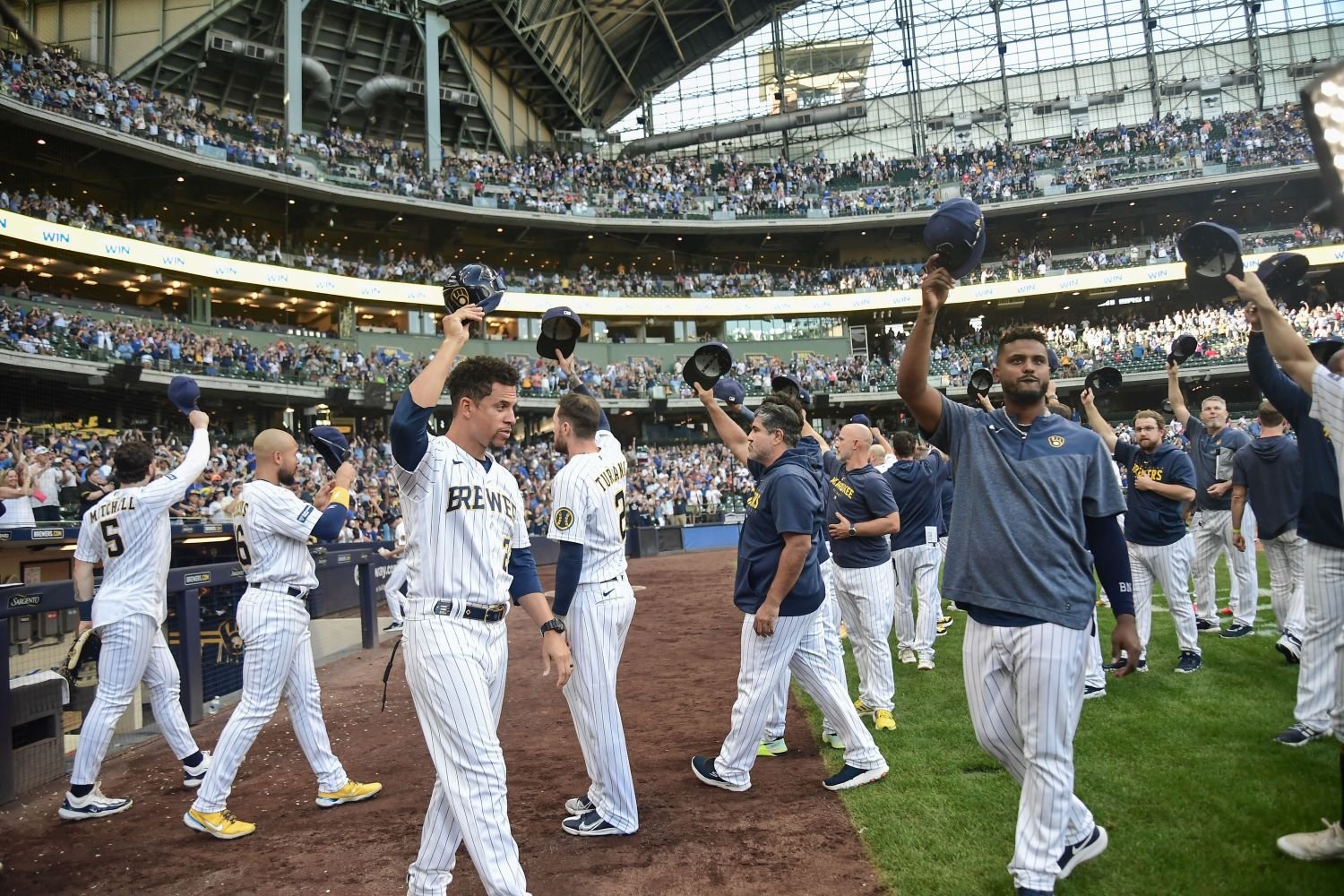 In the first half, Arizona was the superior team between these two clubs, but the script has flipped. That bodes well for the Brewers, who rode consistent, high-quality play and good vibes to an NL Central championship. It's not a fluke or a random 10-week run that came out of nowhere. The updated version of the 2023 Brewers is a well-rounded group, with elite pitching that has proven its value in the second half. The trade deadline brought in lineup enhancements with Carlos Santana and Mark Canha. Stud starter Brandon Woodruff returned to the rotation on Aug. 6, and relievers like Abner Uribe and Trevor Megill started locking down the middle innings as the dog days of summer settled in. Put together all that fresh talent for the Crew, improvements by the Brewers on the roster all season and the Diamondbacks' falloff since mid-July, and Brewers' fans should feel great about advancing to the NLDS. Bottom Line: Wins and Losses We'll get into some specific statistics in the second half, but in the end, getting victories is all that matters. These two teams were relatively even overall in the first half. Arizona held a three-game edge over the Brewers. But the second-half records (meaning, here, after the All-Star break) are a whole different story. Brewers First half: 49-42 (.538) Second half: 43-28 (.606) Diamondbacks First half: 52-39 (.571) Second half: 32-39 (.451) If you combine the Brewers' improvement in winning percentage with the Diamondbacks' decline, that's a .188 swing between the clubs. That's an enormous reversal of fortune, and a trend in the right direction for Milwaukee. If you look at their most recent play, the Brewers finished 13-7 in their final 20 games (4-1 in the last five), while the Diamondbacks went 10-10 over the last 20 contests and 1-4 in their final five. Things get even better when you break down the home/road splits in the second half. Arizona went 15-25 (.375) on the road after the break, while Milwaukee was 24-11 at home (.686). All three games (if necessary) will be at American Family Field. Diamondbacks' (Somewhat) Disappearing Offense Arizona's lineup looked ridiculously formidable at the start of the season, with on-base skill, speed and power from top to bottom. They still have dangerous hitters, dynamic athletes and a few guys to avoid in big spots, but the Diamondbacks have had no bite in the second half. Their second-half rankings in several offensive stats, out of 30 MLB teams: 61 home runs (30th) .384 SLG (27th) 90 wRC+ (25th) .241 average (23rd) .308 wOBA (23rd) Considering home runs and power hitting are the most significant run-scoring factors in the postseason, it should warm the hearts of Milwaukee's hurlers to see the fewest second-half dingers in baseball. If the Diamondbacks' bats continue to "hit" like this, they'll be nigh helpless against the Brewers' pitching staff (even without Woodruff). Of course, this doesn't mean the Diamondbacks' lineup is a cake walk, nor is it to say they are "slumping" as we speak. There is always nuance. Similarly to the Brewers, Arizona features a top-heavy lineup that has gotten plenty of recent production from a handful of hitters. Since September 1, four players own an OPS better than .800: Ketel Marte (.926), Lourdes Gurriel Jr. (.826), Corbin Carroll (.815) and Gabriel Moreno (.807). If you take the starting point back to August 1, Moreno boasts a .311/.382/.496 slash, while Christian Walker pops up on the leaderboard with a .781 OPS with 11 home runs. Also like the Brewers have gotten contributions from Canha and Santana, a trade deadline acquisition has made his impact felt in Arizona, too. Tommy Pham hasn't lit the world on fire (.720 OPS for the Diamondbacks), but he has come up with a several big hits and brought energy to the dugout. Pham has helped lengthen the lineup as the bottom third has often faltered as the year progressed. The individual successes of their hitters hasn't necessarily translated into better production. Arizona scored 4.2 runs per game in September, which would place them 22nd in MLB compared to the full season stats. One could argue the Diamondbacks hit rock bottom to close out the regular season. Over their final five games, with a postseason berth on the line, their game-by-game run totals were three, one, one, zero and one. One caveat (in fairness) is that Arizona played the final week-plus on a cramped, arduous travel schedule, exacerbated by a rainout and a couple of other contests that could have been rained out under different circumstances. Brewers' Pitching Unhittable at Home Everyone knows Milwaukee runs on elite pitching. The Brewers' 3.73 ERA in 2023 was tops in MLB, led by Corbin Burnes, Freddy Peralta, Wade Miley and Woodruff in the rotation, and several lockdown guys in the bullpen, anchored by Devin Williams. But dig a little deeper into the Crew's pitching at home in the second half, and it's eye-popping. Again, these numbers mean even more with the Wild Card series played exclusively in Milwaukee. 1.02 WHIP (1st) 28.2 strikeout percentage (1st) .196 opponents average (1st) .267 opponents OBP (1st) 20.2 strikeout-to-walk percentage (2nd) .362 opponents SLG (2nd) .274 opponents wOBA (2nd) You can also add into the equation a .235 BABIP (batting average of balls in play) that is less about luck and more about the Brewers' fantastic defense. Milwaukee ranked first in MLB by FanGraphs' defensive stat and second in defensive runs saved (DRS). Run prevention at its finest. Improved Crew Bats There's no need for a deep dive here, but just the simple recognition that the Brewers' offense in the second half has been leaps and bounds better than the first part of 2023. It took a little time for the newcomers to make an impact, so if you look at the lineup's output since August 7, the offense is a different beast. From August 7 to the end of the season, the Brewers averaged 5.2 runs per game. If you slide that into the season-long MLB leaderboard, that would rank fifth in baseball. If they can keep that up for another month or so, the party is on in Milwaukee. Do these second-half and home/road stats make you more confident in the Brewers' chances to win their opening playoff series? Yes, the Woodruff news is a gut punch, but Milwaukee needs just two wins to advance. They still have Burnes, Peralta and their door-slamming bullpen to put up zeroes each night, and that's more than Arizona can offer, especially with their Game One starter, Brandon Pfaadt. If we believe in the numbers and recent trends, the Diamondbacks need far more than Woodruff's injury to push them past the Brewers.
 -
While the Milwaukee Brewers lost four of six contests to their Wild Card Series opponent this year, those games are largely irrelevant. The Brewers and Arizona Diamondbacks have been going in different directions since they last met in June, and particularly since the start of the season's second half. The post-All-Star break stats are staggering, and some home/road splits favor Milwaukee, too. Image courtesy of © Benny Sieu-USA TODAY Sports In the first half, Arizona was the superior team between these two clubs, but the script has flipped. That bodes well for the Brewers, who rode consistent, high-quality play and good vibes to an NL Central championship. It's not a fluke or a random 10-week run that came out of nowhere. The updated version of the 2023 Brewers is a well-rounded group, with elite pitching that has proven its value in the second half. The trade deadline brought in lineup enhancements with Carlos Santana and Mark Canha. Stud starter Brandon Woodruff returned to the rotation on Aug. 6, and relievers like Abner Uribe and Trevor Megill started locking down the middle innings as the dog days of summer settled in. Put together all that fresh talent for the Crew, improvements by the Brewers on the roster all season and the Diamondbacks' falloff since mid-July, and Brewers' fans should feel great about advancing to the NLDS. Bottom Line: Wins and Losses We'll get into some specific statistics in the second half, but in the end, getting victories is all that matters. These two teams were relatively even overall in the first half. Arizona held a three-game edge over the Brewers. But the second-half records (meaning, here, after the All-Star break) are a whole different story. Brewers First half: 49-42 (.538) Second half: 43-28 (.606) Diamondbacks First half: 52-39 (.571) Second half: 32-39 (.451) If you combine the Brewers' improvement in winning percentage with the Diamondbacks' decline, that's a .188 swing between the clubs. That's an enormous reversal of fortune, and a trend in the right direction for Milwaukee. If you look at their most recent play, the Brewers finished 13-7 in their final 20 games (4-1 in the last five), while the Diamondbacks went 10-10 over the last 20 contests and 1-4 in their final five. Things get even better when you break down the home/road splits in the second half. Arizona went 15-25 (.375) on the road after the break, while Milwaukee was 24-11 at home (.686). All three games (if necessary) will be at American Family Field. Diamondbacks' (Somewhat) Disappearing Offense Arizona's lineup looked ridiculously formidable at the start of the season, with on-base skill, speed and power from top to bottom. They still have dangerous hitters, dynamic athletes and a few guys to avoid in big spots, but the Diamondbacks have had no bite in the second half. Their second-half rankings in several offensive stats, out of 30 MLB teams: 61 home runs (30th) .384 SLG (27th) 90 wRC+ (25th) .241 average (23rd) .308 wOBA (23rd) Considering home runs and power hitting are the most significant run-scoring factors in the postseason, it should warm the hearts of Milwaukee's hurlers to see the fewest second-half dingers in baseball. If the Diamondbacks' bats continue to "hit" like this, they'll be nigh helpless against the Brewers' pitching staff (even without Woodruff). Of course, this doesn't mean the Diamondbacks' lineup is a cake walk, nor is it to say they are "slumping" as we speak. There is always nuance. Similarly to the Brewers, Arizona features a top-heavy lineup that has gotten plenty of recent production from a handful of hitters. Since September 1, four players own an OPS better than .800: Ketel Marte (.926), Lourdes Gurriel Jr. (.826), Corbin Carroll (.815) and Gabriel Moreno (.807). If you take the starting point back to August 1, Moreno boasts a .311/.382/.496 slash, while Christian Walker pops up on the leaderboard with a .781 OPS with 11 home runs. Also like the Brewers have gotten contributions from Canha and Santana, a trade deadline acquisition has made his impact felt in Arizona, too. Tommy Pham hasn't lit the world on fire (.720 OPS for the Diamondbacks), but he has come up with a several big hits and brought energy to the dugout. Pham has helped lengthen the lineup as the bottom third has often faltered as the year progressed. The individual successes of their hitters hasn't necessarily translated into better production. Arizona scored 4.2 runs per game in September, which would place them 22nd in MLB compared to the full season stats. One could argue the Diamondbacks hit rock bottom to close out the regular season. Over their final five games, with a postseason berth on the line, their game-by-game run totals were three, one, one, zero and one. One caveat (in fairness) is that Arizona played the final week-plus on a cramped, arduous travel schedule, exacerbated by a rainout and a couple of other contests that could have been rained out under different circumstances. Brewers' Pitching Unhittable at Home Everyone knows Milwaukee runs on elite pitching. The Brewers' 3.73 ERA in 2023 was tops in MLB, led by Corbin Burnes, Freddy Peralta, Wade Miley and Woodruff in the rotation, and several lockdown guys in the bullpen, anchored by Devin Williams. But dig a little deeper into the Crew's pitching at home in the second half, and it's eye-popping. Again, these numbers mean even more with the Wild Card series played exclusively in Milwaukee. 1.02 WHIP (1st) 28.2 strikeout percentage (1st) .196 opponents average (1st) .267 opponents OBP (1st) 20.2 strikeout-to-walk percentage (2nd) .362 opponents SLG (2nd) .274 opponents wOBA (2nd) You can also add into the equation a .235 BABIP (batting average of balls in play) that is less about luck and more about the Brewers' fantastic defense. Milwaukee ranked first in MLB by FanGraphs' defensive stat and second in defensive runs saved (DRS). Run prevention at its finest. Improved Crew Bats There's no need for a deep dive here, but just the simple recognition that the Brewers' offense in the second half has been leaps and bounds better than the first part of 2023. It took a little time for the newcomers to make an impact, so if you look at the lineup's output since August 7, the offense is a different beast. From August 7 to the end of the season, the Brewers averaged 5.2 runs per game. If you slide that into the season-long MLB leaderboard, that would rank fifth in baseball. If they can keep that up for another month or so, the party is on in Milwaukee. Do these second-half and home/road stats make you more confident in the Brewers' chances to win their opening playoff series? Yes, the Woodruff news is a gut punch, but Milwaukee needs just two wins to advance. They still have Burnes, Peralta and their door-slamming bullpen to put up zeroes each night, and that's more than Arizona can offer, especially with their Game One starter, Brandon Pfaadt. If we believe in the numbers and recent trends, the Diamondbacks need far more than Woodruff's injury to push them past the Brewers. View full article
-
Not technically. They just have to be in the organization before Sept. 1. They can request a non-40 man player replace an injured player on the roster. Phantom IL to the rescue.
-
As the Milwaukee Brewers look ahead to the Wild Card series to open their postseason run, a surprise player could be on their initial playoff roster. Teams always look for lightning in a bottle during a short series, particularly one who is scorching hot holding a bat right now. Image courtesy of © Mark J. Rebilas-USA TODAY Sports With the opening round of the playoffs featuring a maximum of three games, teams like the Brewers can be creative with their roster construction. With plenty of pitching in tow, they can look to ride the hot hand for an extra stick-swinging weapon on the bench. That guy is Brewers Minor League Co-Player of the Year Tyler Black (you were probably thinking of the other Co-Player of the Year, Jackson Chourio). In 63 September at-bats with the Triple-A Nashville Sounds, Black owned a .413 average, .519 OBP and .683 SLG. That includes five doubles, three triples and two home runs to go with 14 RBI and 18 runs in 18 games.What he has done recently isn't a fluke; the man can flat-out rake. Black has 558 plate appearances this season between Nashville and the Double-A Biloxi Shuckers and does just about everything well offensively. How fun would it be to see the Brewers roll the dice on their fifth-ranked prospect (56th overall, according to MLB.com)? Even better than watching Black tear up Triple-A in September or dominate Double-A earlier this season, his production was consistent between both levels. His overall minor league stats in 2023: 18 home runs 25 doubles 12 triples 55 extra-base hits 105 runs 73 runs batted in 55 stolen bases 16 hit-by-pitches (I had to throw that beauty in there) Black is an offensive Swiss army knife to deploy anytime in the game. He provides another left-handed stick to counteract the opponents' bullpen moves, fights his way to get on base however he can, delivers some pop off the bench, and gives Counsell another strong base running option. The 23-year-old corner infielder (mostly) is a perfect fit as a "bonus" player to carry in the playoffs. The bonus refers to teams needing fewer pitchers on the roster in a short series. Out of the 26 active guys the Brewers will carry, they could run with only 11 hurlers instead of the usual 13. Which hurlers Milwaukee relies on will partly depend on the opponent, but the club only needs three starters and one or two long relievers. Plus, it isn't clear struggling lefty Andrew Chafin will get a spot. Regardless, it means more position players. Of course, there are other bench options for the Brewers to consider: Outfielder Garrett Mitchell provides speed and quality defense as a left-handed hitting option. DH Jesse Winker offers veteran experience and the ability to reach base at a higher clip than almost anyone on the club. Utility man Owen Miller gives the team positional versatility and a right-handed option off the bench who rarely strikes out. Outfielder Joey Wiemer plays elite defense and has a high upside as a runner and potential power bat against lefties. However, Milwaukee could use a few of these options and still include Black. There's no guarantee Brian Anderson will make the playoff cut since he has played just three times since Aug. 22. Also, Blake Perkins has delivered some value defensively, but he could be another currently active position player on the outside looking in. Once again, these uncertainties open the door a bit further for a Black appearance in the postseason. He would certainly fit into this year's theme of the Brewers relying quite a bit on "The Freshman." Among the number of rookies making contributions to the Crew's division title, a handful have made a significant impact, much like Black could do come October. A few other potential obstacles could prevent this gutsy move from happening. He has never played in an MLB game It's extremely rare for a player to make his MLB debut in a postseason contest. The lack of experience, the increased pressure and the general uncertainty of a fresh rookie in the playoffs are all reasons it has only occurred five times in MLB history. It most recently happened in 2020 when Ryan Weathers (San Diego Padres), Shane McClanahan (Tampa Bay Rays) and Alex Kirilloff (Minnesota Twins) all took the leap. Black would need to be added to the 40-man roster In order to put Black on the Brewers' 40-man roster, someone would need to come off, which could mean they move to another organization. Depending on Milwaukee's plans for 2024, there could be some options that are easier to swallow. Mitchell, Winker, Wiemer and Miller are already on the 40-man and wouldn't require that additional move. Adding Black to the 40-man could also impact the Brewers' plans with him going forward, but that's a conversation for another time. His hot hand cooling off The Sounds played their last game on Sept. 24, so Black hasn't seen live action since then. Unless the Brewers made the sudden decision to get him some playing time in the next few regular season games, that's a decent layoff to the start of Game One on Oct. 3. Black was at American Family Field Tuesday night to be honored for his Co-Player of the Year Award, so it wouldn't be a stretch to get him a uniform and some playing time. There haven't been any official rumors of an imminent move to bring Black to the club now or in the playoffs, but stranger things have happened. It would be a fun and fascinating storyline, even if it were just for a pair of Wild Card series games. Just imagine a tie game in the bottom of the 11th and Counsell calls on a kid to make his MLB debut with the winning run on second base and a chance to advance in the playoffs. That would be epic, no matter the outcome. The excitement alone is enough to want to see it happen. Will the Brewers be so bold when the playoff roster for the Wild Card series is released Tuesday morning? View full article


