Jake McKibbin
-
Posts
2,395 -
Joined
-
Last visited
-
Days Won
6
Content Type
Profiles
Forums
Blogs
Events
News
2026 Milwaukee Brewers Top Prospects Ranking
Milwaukee Brewers Videos
2022 Milwaukee Brewers Draft Picks
Milwaukee Brewers Free Agent & Trade Rumors, Notes, & Tidbits
Guides & Resources
2023 Milwaukee Brewers Draft Picks
2024 Milwaukee Brewers Draft Picks
The Milwaukee Brewers Players Project
2025 Milwaukee Brewers Draft Pick Tracker
2026 Milwaukee Brewers Draft Tracker: Picks & Bonuses
Store
Downloads
Gallery
Everything posted by Jake McKibbin
-
Absolutely, I do think that the Dodgers would be trading low which most intelligent front offices wouldn't do, but the opportunity of getting something back of equal value in a different position of need with similar traits of a high upside, injury prone and low floor may tweak their interest. I would consider the Brewers to be getting the better end of the dal, but there's potential for both sides to look stupid two-three years after this trade happened. I think getting Sasaki would really compound their depth and increase Miller's availability, but he won't come cheap.
-
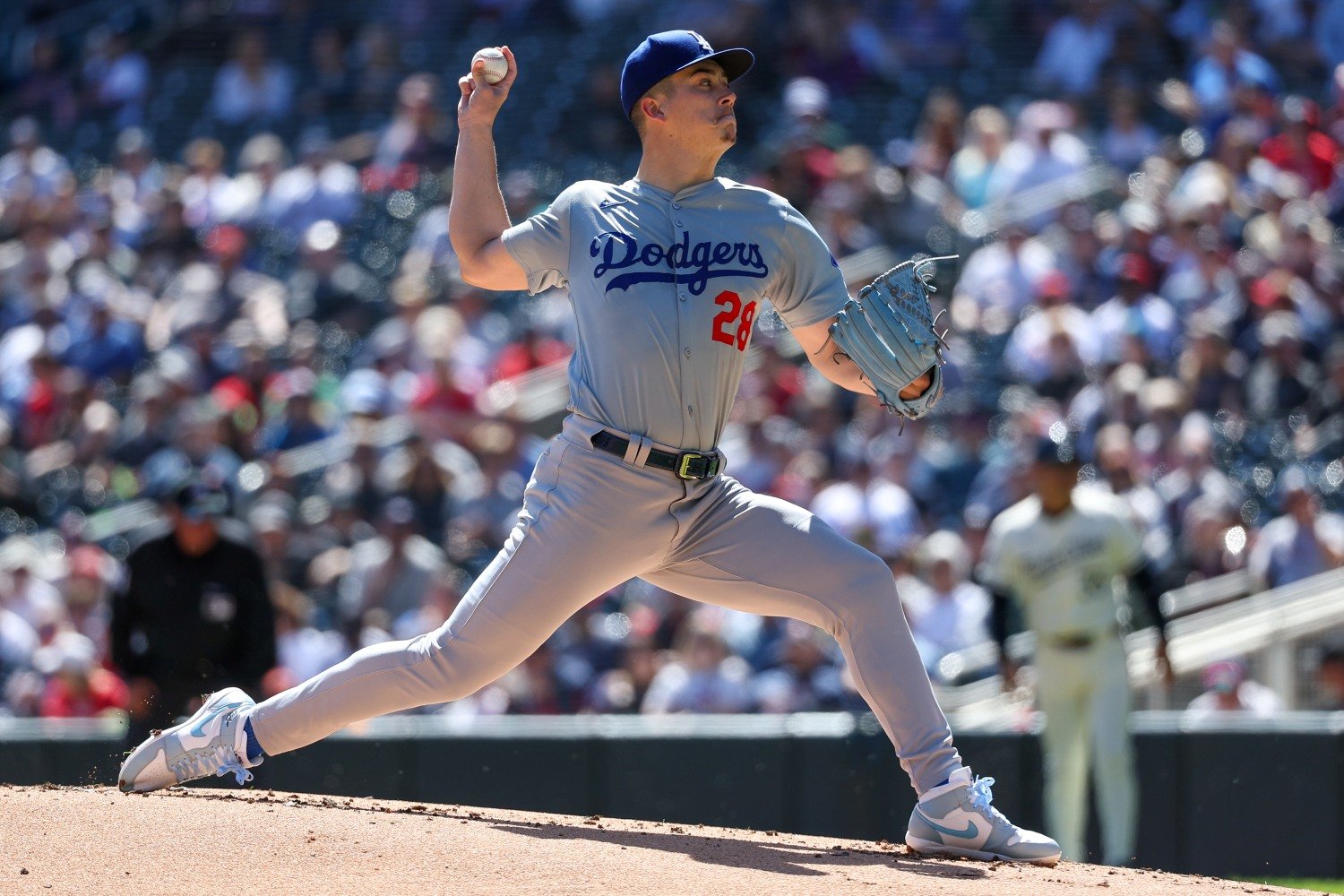 Despite monstrous injury woes in 2024, the Dodgers are expected to have Shohei Ohtani, Blake Snell, Tyler Glasnow, Yoshinobu Yamamoto, Tony Gonsolin, Dustin May, and Bobby Miller available to serve in their 2025 rotation. While Ohtani likely mandates a six-man rotation, they also will have Emmett Sheehan and River Ryan returning during the season, with more talent at Triple A in the form of Jack Dreyer, Justin Wrobleski and Nick Frasso. That makes 12 different arms already in their organization, seven of which have MLB experience and will be ready to start the season, with two ready to reinforce upon return from injury and three top-20 organizational prospects at Triple A. No matter how you skin cats, that’s an extreme level of depth. Heck, they're even expected to re-sign Clayton Kershaw for another season. The Dodgers are likely to want strong depth in their system off the back of a 2024 season that highlighted just how easily a pitching staff can be brought to its knees, but they also have other areas of their system that they will want to add some talent, specifically in the outfield. Andy Pages and Tommy Edman would be the most likely center field candidates to start for the Dodgers next season, none of whom shone defensively last season, while James Outman’s bat put him out of the picture for now. Their defensive runs saved in CF in 2024 were: Andy Pages: -8 DRS in 666 innings James Outman: -1 DRS in 337 innings Tommy Edman: 0 DRS in 188 innings None of them were famously ferocious with the bat. Although Pages's 100 wRC+ in his rookie season is commendable, it was also fueled by a quick start before a large dropoff. The Dodgers lack a capable center fielder, and that’s something the Brewers have in excess, with Sal Frelick and Garrett Mitchell available should the right deal present itself. You could argue that neither side is forced to trade from their stores of depth, but both could be useful in upgrading a hole in the roster. The Brewers rotation lacks that high-upside pitcher, while the Dodgers lack a capable center fielder. That brings us to Bobby Miller. Miller may be one of the most talented arms in baseball. Armed with a fastball whose perceived velocity was over 100 mph in 2023 and had above-average induced vertical break, it’s a unicorn pitch. For reference, his four-seamer in 2023 was thrown three miles per hour harder than Paul Skenes’s in 2024, with five inches of additional “rise”. Here's how Hunter Greene, Skenes and Miller compare on the fastball in the last two seasons: He also had a 90-mph slider, with above-average movement for the velocity bracket it sits in, and a changeup that produced a 41% whiff rate in 2024. The stuff he possesses is not in question. How it mixes can be, and he may have a problem with his two-seamer, in that it doesn't separate much from his four-seam. It's really more of a four-seamer that he obtains additional run on when trying to get in on the hands to righthanders. However, they slugged .900 against it in 2024. Fastball variations are very attractive for the Brewers, but Miller's feel for spin and current arsenal may be better served with a cutter in lieu of the sinker. You can easily see the space where a cutter might do a lot for Miller, in terms of limiting quality of contact against him. I'm not a fan of just advocating a cutter to every pitcher, but Miller's feel for spin in averaging 2,330 RPM on the fastball and occasionally hitting 3,000 RPM on the curveball should allow him to feel out an average or better offering. This season's injury also devastated him. He lost velocity on the fastball and some dip on his breaking pitches, but most of all, he saw his command evaporate. He went from an 80th-percentile 6.3% walk rate down to a 10th percentile 11.2% rate, putting men on base more often while getting punished more regularly on mistake pitches with the drop in “stuff”: Miller’s raw stuff makes him a fascinating buy-low target, although the Dodgers' own pitching development system is sturdy enough that you would expect them to be able to fix him themselves. In giving up on him, that could indicate that they feel he’ll never truly reach the heights he’s capable of, but in reality they have such an abundance of riches in the rotation that having a sidelined or optioned Miller is less valuable than a Garrett Mitchell patrolling center field. One other potential target, albeit somewhat less expensive, would be Dustin May. May had some horrific injuries last year with his esophagus, and is prone to injuries over the rest of his career. May is in his final year of arbitration in 2025, but he showed some electric swing-and-miss ability on his four-seam fastball, cutter, curveball and changeup in 2021-22, while his sinker is a ground ball machine with a gaudy movement profile. His injury history checkers his value, and there’s no guarantee the Brewers can get a full season of his best production in 2025, but he would be an interesting target. You can’t acquire top-of-the-rotation upside in trades without handing over a lot of prospect capital, unless that upside comes with some baggage. Top-tier rotation talent just does not get passed up easily. Bobby Miller has baggage from 2024, but as our supreme overlord Matthew Trueblood noted early in the season: Injury may have deprived us of the 20-strikeout game, but it shows that while there is risk, there's also a genuine ace potential here. If the Brewers can find some way to pry Miller away from the Dodgers, they may benefit for years to come. Further distancing himself from the injury should revitalize Miller's fastball velocity, shape and command, while there is definitely more in the tank for how he can use his five-pitch mix to create even more swing-and-miss than he already has. The learning that comes simply from competing in the big leagues is still to come for Miller, and that's the upside the Brewers would be gambling on in this trade. Baseball Trade Values (often better as a guideline than an exact resource) does place Garrett Mitchell and Bobby Miller as similar in terms of value. Delivering a one-for-one of Mitchell for Miller would be risky on both ends, with both having the ability to make their former teams look foolish. There could even be an add-on, if the Dodgers thought their rotation needed a bona fide closer (it probably doesn't), by adding in Devin Williams for Alex Freeland—an excellent defensive shortstop with strong bat-to-ball skills and solid pop for the left side of the infield. What do you think of Bobby Miller? Do you think the Brewers can revive him? What would you be willing to give up for him? Let us know your thoughts in the comments below!
 -
The addition of Blake Snell (while being odds-on favorites to sign Roki Sasaki, too) leaves the Dodgers with an abundance of talent and depth in their rotation. Can the Brewers leverage the Dodgers' surplus to acquire one of the game's highest-upside arms? Image courtesy of © Matt Krohn-Imagn Images Despite monstrous injury woes in 2024, the Dodgers are expected to have Shohei Ohtani, Blake Snell, Tyler Glasnow, Yoshinobu Yamamoto, Tony Gonsolin, Dustin May, and Bobby Miller available to serve in their 2025 rotation. While Ohtani likely mandates a six-man rotation, they also will have Emmett Sheehan and River Ryan returning during the season, with more talent at Triple A in the form of Jack Dreyer, Justin Wrobleski and Nick Frasso. That makes 12 different arms already in their organization, seven of which have MLB experience and will be ready to start the season, with two ready to reinforce upon return from injury and three top-20 organizational prospects at Triple A. No matter how you skin cats, that’s an extreme level of depth. Heck, they're even expected to re-sign Clayton Kershaw for another season. The Dodgers are likely to want strong depth in their system off the back of a 2024 season that highlighted just how easily a pitching staff can be brought to its knees, but they also have other areas of their system that they will want to add some talent, specifically in the outfield. Andy Pages and Tommy Edman would be the most likely center field candidates to start for the Dodgers next season, none of whom shone defensively last season, while James Outman’s bat put him out of the picture for now. Their defensive runs saved in CF in 2024 were: Andy Pages: -8 DRS in 666 innings James Outman: -1 DRS in 337 innings Tommy Edman: 0 DRS in 188 innings None of them were famously ferocious with the bat. Although Pages's 100 wRC+ in his rookie season is commendable, it was also fueled by a quick start before a large dropoff. The Dodgers lack a capable center fielder, and that’s something the Brewers have in excess, with Sal Frelick and Garrett Mitchell available should the right deal present itself. You could argue that neither side is forced to trade from their stores of depth, but both could be useful in upgrading a hole in the roster. The Brewers rotation lacks that high-upside pitcher, while the Dodgers lack a capable center fielder. That brings us to Bobby Miller. Miller may be one of the most talented arms in baseball. Armed with a fastball whose perceived velocity was over 100 mph in 2023 and had above-average induced vertical break, it’s a unicorn pitch. For reference, his four-seamer in 2023 was thrown three miles per hour harder than Paul Skenes’s in 2024, with five inches of additional “rise”. Here's how Hunter Greene, Skenes and Miller compare on the fastball in the last two seasons: He also had a 90-mph slider, with above-average movement for the velocity bracket it sits in, and a changeup that produced a 41% whiff rate in 2024. The stuff he possesses is not in question. How it mixes can be, and he may have a problem with his two-seamer, in that it doesn't separate much from his four-seam. It's really more of a four-seamer that he obtains additional run on when trying to get in on the hands to righthanders. However, they slugged .900 against it in 2024. Fastball variations are very attractive for the Brewers, but Miller's feel for spin and current arsenal may be better served with a cutter in lieu of the sinker. You can easily see the space where a cutter might do a lot for Miller, in terms of limiting quality of contact against him. I'm not a fan of just advocating a cutter to every pitcher, but Miller's feel for spin in averaging 2,330 RPM on the fastball and occasionally hitting 3,000 RPM on the curveball should allow him to feel out an average or better offering. This season's injury also devastated him. He lost velocity on the fastball and some dip on his breaking pitches, but most of all, he saw his command evaporate. He went from an 80th-percentile 6.3% walk rate down to a 10th percentile 11.2% rate, putting men on base more often while getting punished more regularly on mistake pitches with the drop in “stuff”: Miller’s raw stuff makes him a fascinating buy-low target, although the Dodgers' own pitching development system is sturdy enough that you would expect them to be able to fix him themselves. In giving up on him, that could indicate that they feel he’ll never truly reach the heights he’s capable of, but in reality they have such an abundance of riches in the rotation that having a sidelined or optioned Miller is less valuable than a Garrett Mitchell patrolling center field. One other potential target, albeit somewhat less expensive, would be Dustin May. May had some horrific injuries last year with his esophagus, and is prone to injuries over the rest of his career. May is in his final year of arbitration in 2025, but he showed some electric swing-and-miss ability on his four-seam fastball, cutter, curveball and changeup in 2021-22, while his sinker is a ground ball machine with a gaudy movement profile. His injury history checkers his value, and there’s no guarantee the Brewers can get a full season of his best production in 2025, but he would be an interesting target. You can’t acquire top-of-the-rotation upside in trades without handing over a lot of prospect capital, unless that upside comes with some baggage. Top-tier rotation talent just does not get passed up easily. Bobby Miller has baggage from 2024, but as our supreme overlord Matthew Trueblood noted early in the season: Injury may have deprived us of the 20-strikeout game, but it shows that while there is risk, there's also a genuine ace potential here. If the Brewers can find some way to pry Miller away from the Dodgers, they may benefit for years to come. Further distancing himself from the injury should revitalize Miller's fastball velocity, shape and command, while there is definitely more in the tank for how he can use his five-pitch mix to create even more swing-and-miss than he already has. The learning that comes simply from competing in the big leagues is still to come for Miller, and that's the upside the Brewers would be gambling on in this trade. Baseball Trade Values (often better as a guideline than an exact resource) does place Garrett Mitchell and Bobby Miller as similar in terms of value. Delivering a one-for-one of Mitchell for Miller would be risky on both ends, with both having the ability to make their former teams look foolish. There could even be an add-on, if the Dodgers thought their rotation needed a bona fide closer (it probably doesn't), by adding in Devin Williams for Alex Freeland—an excellent defensive shortstop with strong bat-to-ball skills and solid pop for the left side of the infield. What do you think of Bobby Miller? Do you think the Brewers can revive him? What would you be willing to give up for him? Let us know your thoughts in the comments below! View full article
-
You're the Brewers GM: High Risk vs. High Reward, Within My Constraints
Jake McKibbin posted an article in Brewers
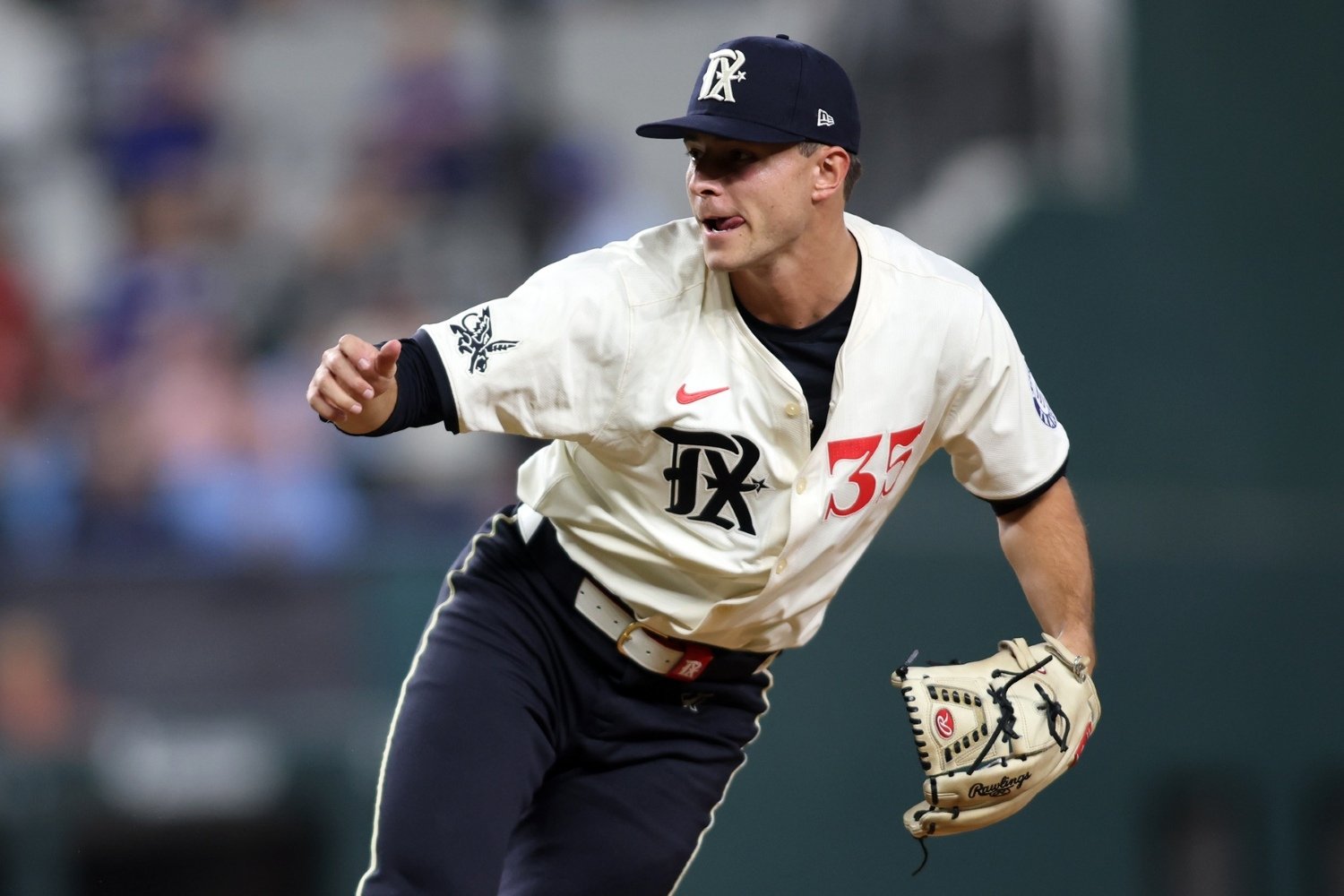 This series of articles is a primer for the release of our new "You're The Brewers GM!" tool, where you play the role of Matt Arnold and build your own Brewers offseason. Please visit the tool here and join in on the fun! The Brewers offseason ahead feels constrained already, with their high projected salaries—although they have begun to eat into that somewhat with deferred money (such as the $10 million for Brandon Woodruff in 2026) and the offloading of Colin Rea, Wade Miley, Frankie Montas and more. As a base to work from, I’ve inputted the following roster to get a gauge of where the Brewers stand (using Cot's Contracts values and some additional buyouts): Right now, the Brewers roster is sitting at around $110 million, a number that rises to $120 million if you consider Woodruff’s buyout for 2026 as this year's payroll obligation. You’ll also note that Devin Williams is not included, with his projected $8-million arbitration salary for 2025. Infrastructure investments far from the big-league roster and reduced TV revenue will constrain the Brewers' spending this winter. At most, on the current roster they may have $10 million to spend to fill out their roster, but most likely, it’s sitting around $5 million. With that constraint in mind, let’s get to work! The Devin Williams Trade Williams is one of the best closers to have graced the game of baseball this century. With his unicorn changeup and elite fastball, he possesses some of the best swing-and-miss stuff in baseball, on top of being one of the hardest closers to hit a long ball against. (I know, I know. But it's true, most of the time!) Since 2020, Williams has allowed just one home run per 18 innings of work (5th) alongside a strikeout rate of 40.8% (2nd, ahead of Josh Hader). Most impressively, his ERA- of 43 is the second-best out of all relief pitchers in history with over 200 innings, behind only Emmanuel Clase. In short, this is not just an elite closer but one of the best of all time. As such, his value is sizable and the Brewers should be able to get one solid prospect for a year’s rental of him, or perhaps a talented (if underdeveloped) arm with more team control. Trade with the Texas Rangers: Jack Leiter for Devin Williams Jack Leiter is one of the most intriguing arms in baseball. His fastball got hit hard last year, despite an average perceived velocity of 97.4 mph, induced vertical break of almost 17” and a vertical approach angle of -4.28°. The strange part is how hard he got hit at the top of the strike zone, but how he achieved exceptional metrics when he locates just above the zone: I believe there are some small-sample hiccups causing this, and actually the fastball over time will be a truly elite pitch. Combining that with an effective slider and a curveball that has over 50” of vertical drop (although he can struggle to command it at times), he gets nasty. The changeup does a solid job, and Leiter improved as the year went on, culminating in a 15.6% swinging strike rate in September. Why might he even be available with such electric raw stuff? Well this is his Baseball Savant page for 2024: Leiter has a lot of talent in his arm, and the combination of his high, rising fastball both in terms of approach angle and induced vertical break with the big dropping curveball could be electric. Yet, the numbers for 2024 tell a very real story that he hasn’t figured out how to use his arsenal effectively. There is big upside within him, but also a lot of inherent risk. High-upside arms aren't available if the risk attached is minimal, and it's one reason why pouncing on Leiter now would be a good (if risky) move. At his best, Leiter could be a number-two starter. At worst, he's someone whose fastball lacks deception and never quite nails it in the big leagues. If anyone can unlock that, it’s the Milwaukee Brewers, and I'd back “my” organization to do just that. Prying him away from the Rangers won't be easy, but with their investments in Jacob deGrom, Marcus Semien and Corey Seager, the Rangers need to chase a return to the playoffs and that may just make Leiter available—especially with the ascent of his college and pro teammate, Kumar Rocker. While third base is a problem, high-end starting pitching is also a need for the Brewers, and with the Rangers' packed starting rotation, it makes a lot of sense to sniff around the likes of Leiter. High-ceiling pitchers often struggle in their first taste of the majors, and I really like this fit for both teams especially with the AL West as gettable as it’s been since the Astros dynasty began. How To Address Third Base With limited payroll to spare, there are two ways this problem can be attacked: By going all in on a safe option for the left side of the infield, like Ha-Seong Kim Throwing spaghetti at the wall and seeing what sticks while the farm system develops Given the strength of the Brewers options on the left side (with Brock Wilken and Mike Boeve lurking at Double A with even more talent further down, combined with the capabilities and talent of Oliver Dunn), the spaghetti approach avoids locking in funds for future years while covering this season. The Brewers' depth in the lower minors, in particular, suggests they wouldn't want to be roped into anything longer than a couple of years. It's not just the high-end stars, but the volume of them in the lower minors in 2025 that will be of considerable note, in Cooper Pratt, Eric Bitonti, Jesús Made, Luis Pena and even Josh Adamczewski on the tier below that. A full season of Jackson Chourio and bounce-back ability from Christian Yelich, Rhys Hoskins and Garrett Mitchell gives enough “maybe” sources of power production to fill most of the void left by Willy Adames. In doing so, the Brewers would need competence, not excellence from their third base replacement (as Joey Ortiz will be sliding over to shortstop). Spring training will be approached similarly to how second base was in 2024, with a lot of non-roster invitees and minor-league contracts for journeymen to compete for the role. Dunn still intrigues me, with his strong eye at the plate; his ability to impact the ball; and his speed, on top of the excellent defense we saw at the start of 2024. His in-zone contact rate was atrocious, but remember: he basically skipped Triple A (like Chourio) and has missed a lot of time with injuries in his career. That suggests that, with experience of MLB pitching, his bat will come around somewhat.. How much experience he’ll need, only time will tell, but I’d be willing to give him a few months in Triple A to start 2025 and hopefully have him progress to be ready for the second half with a more polished swing. To stop the gap and lend some power upside, Paul DeJong catches the eye. He produced 2.2 WAR as a shortstop last season, and despite holes in his swing and a high strikeout rate, he slugged enough against mistakes over the heart of the plate (see below) and was an above-average fielder. That should allow him to fill in for the Brewers temporarily. Good defense, a little slugging, and he could morph nicely into a bench bat in the second half, something the Brewers also need. As a side note, his reverse platoon splits in 2024 just fit oh-so-nicely into the Brewers' recent trends. DeJong gives a power bat off the bench and a higher quality of defensive acumen than Andruw Monasterio, and he will probably cost around $4 million on a one-year deal, which wouldn’t do any damage should the performance crater in the first few months of the year. Deal Or No Deal In The Outfield? As a result of options available for all outfielders, and the high defensive floor they bring to the Brewers, I wouldn’t be tempted to trade any of the top five just yet. Sal Frelick may yet find more power, Mitchell is still developing and could do with a season without a freak injury, while Blake Perkins is more valuable to the Brewers internally than almost any other organization. Without an impending need to trade one of them, and given the injury history of both Yelich and Mitchell, having five full-fledged outfielders makes a lot of sense for the Brewers. As such, I wouldn't be looking to trade any of them this offseason, unless someone makes an outstanding offer for one of our young cohorts. The offense, with third base cover, should be in a position to maintain the performance of 2024 in terms of run production, and perhaps even surpass it with further growth from their youngsters. Adding in a high-ceiling, MLB-ready arm to the mix with the Brewers developmental abilities could take the rotation to a whole. Notha. Level. Shoot high with some risk, rather than requiring a safety net in the Williams trade, and the return just might be the key to further success in 2025 where, with myself at the helm, there will indubitably be a World Series at the finish line. What do you think of this offseason plan? Do you think you can do better? Then build your own Brewers roster and hit the button below! Start Your Payroll Blueprint Now
- 2 comments
-
- 1
-

-
- devin williams
- paul dejong
- (and 1 more)
-
An interesting approach to the offseason is to seriously consider some questions: How would I navigate it as a GM? What trades would I make? Is there a realistic path to upgrade the roster? Within the constraints and variables at hand, I delved into my plan for the 2024-25 offseason. Image courtesy of © Tim Heitman-Imagn Images This series of articles is a primer for the release of our new "You're The Brewers GM!" tool, where you play the role of Matt Arnold and build your own Brewers offseason. Please visit the tool here and join in on the fun! The Brewers offseason ahead feels constrained already, with their high projected salaries—although they have begun to eat into that somewhat with deferred money (such as the $10 million for Brandon Woodruff in 2026) and the offloading of Colin Rea, Wade Miley, Frankie Montas and more. As a base to work from, I’ve inputted the following roster to get a gauge of where the Brewers stand (using Cot's Contracts values and some additional buyouts): Right now, the Brewers roster is sitting at around $110 million, a number that rises to $120 million if you consider Woodruff’s buyout for 2026 as this year's payroll obligation. You’ll also note that Devin Williams is not included, with his projected $8-million arbitration salary for 2025. Infrastructure investments far from the big-league roster and reduced TV revenue will constrain the Brewers' spending this winter. At most, on the current roster they may have $10 million to spend to fill out their roster, but most likely, it’s sitting around $5 million. With that constraint in mind, let’s get to work! The Devin Williams Trade Williams is one of the best closers to have graced the game of baseball this century. With his unicorn changeup and elite fastball, he possesses some of the best swing-and-miss stuff in baseball, on top of being one of the hardest closers to hit a long ball against. (I know, I know. But it's true, most of the time!) Since 2020, Williams has allowed just one home run per 18 innings of work (5th) alongside a strikeout rate of 40.8% (2nd, ahead of Josh Hader). Most impressively, his ERA- of 43 is the second-best out of all relief pitchers in history with over 200 innings, behind only Emmanuel Clase. In short, this is not just an elite closer but one of the best of all time. As such, his value is sizable and the Brewers should be able to get one solid prospect for a year’s rental of him, or perhaps a talented (if underdeveloped) arm with more team control. Trade with the Texas Rangers: Jack Leiter for Devin Williams Jack Leiter is one of the most intriguing arms in baseball. His fastball got hit hard last year, despite an average perceived velocity of 97.4 mph, induced vertical break of almost 17” and a vertical approach angle of -4.28°. The strange part is how hard he got hit at the top of the strike zone, but how he achieved exceptional metrics when he locates just above the zone: I believe there are some small-sample hiccups causing this, and actually the fastball over time will be a truly elite pitch. Combining that with an effective slider and a curveball that has over 50” of vertical drop (although he can struggle to command it at times), he gets nasty. The changeup does a solid job, and Leiter improved as the year went on, culminating in a 15.6% swinging strike rate in September. Why might he even be available with such electric raw stuff? Well this is his Baseball Savant page for 2024: Leiter has a lot of talent in his arm, and the combination of his high, rising fastball both in terms of approach angle and induced vertical break with the big dropping curveball could be electric. Yet, the numbers for 2024 tell a very real story that he hasn’t figured out how to use his arsenal effectively. There is big upside within him, but also a lot of inherent risk. High-upside arms aren't available if the risk attached is minimal, and it's one reason why pouncing on Leiter now would be a good (if risky) move. At his best, Leiter could be a number-two starter. At worst, he's someone whose fastball lacks deception and never quite nails it in the big leagues. If anyone can unlock that, it’s the Milwaukee Brewers, and I'd back “my” organization to do just that. Prying him away from the Rangers won't be easy, but with their investments in Jacob deGrom, Marcus Semien and Corey Seager, the Rangers need to chase a return to the playoffs and that may just make Leiter available—especially with the ascent of his college and pro teammate, Kumar Rocker. While third base is a problem, high-end starting pitching is also a need for the Brewers, and with the Rangers' packed starting rotation, it makes a lot of sense to sniff around the likes of Leiter. High-ceiling pitchers often struggle in their first taste of the majors, and I really like this fit for both teams especially with the AL West as gettable as it’s been since the Astros dynasty began. How To Address Third Base With limited payroll to spare, there are two ways this problem can be attacked: By going all in on a safe option for the left side of the infield, like Ha-Seong Kim Throwing spaghetti at the wall and seeing what sticks while the farm system develops Given the strength of the Brewers options on the left side (with Brock Wilken and Mike Boeve lurking at Double A with even more talent further down, combined with the capabilities and talent of Oliver Dunn), the spaghetti approach avoids locking in funds for future years while covering this season. The Brewers' depth in the lower minors, in particular, suggests they wouldn't want to be roped into anything longer than a couple of years. It's not just the high-end stars, but the volume of them in the lower minors in 2025 that will be of considerable note, in Cooper Pratt, Eric Bitonti, Jesús Made, Luis Pena and even Josh Adamczewski on the tier below that. A full season of Jackson Chourio and bounce-back ability from Christian Yelich, Rhys Hoskins and Garrett Mitchell gives enough “maybe” sources of power production to fill most of the void left by Willy Adames. In doing so, the Brewers would need competence, not excellence from their third base replacement (as Joey Ortiz will be sliding over to shortstop). Spring training will be approached similarly to how second base was in 2024, with a lot of non-roster invitees and minor-league contracts for journeymen to compete for the role. Dunn still intrigues me, with his strong eye at the plate; his ability to impact the ball; and his speed, on top of the excellent defense we saw at the start of 2024. His in-zone contact rate was atrocious, but remember: he basically skipped Triple A (like Chourio) and has missed a lot of time with injuries in his career. That suggests that, with experience of MLB pitching, his bat will come around somewhat.. How much experience he’ll need, only time will tell, but I’d be willing to give him a few months in Triple A to start 2025 and hopefully have him progress to be ready for the second half with a more polished swing. To stop the gap and lend some power upside, Paul DeJong catches the eye. He produced 2.2 WAR as a shortstop last season, and despite holes in his swing and a high strikeout rate, he slugged enough against mistakes over the heart of the plate (see below) and was an above-average fielder. That should allow him to fill in for the Brewers temporarily. Good defense, a little slugging, and he could morph nicely into a bench bat in the second half, something the Brewers also need. As a side note, his reverse platoon splits in 2024 just fit oh-so-nicely into the Brewers' recent trends. DeJong gives a power bat off the bench and a higher quality of defensive acumen than Andruw Monasterio, and he will probably cost around $4 million on a one-year deal, which wouldn’t do any damage should the performance crater in the first few months of the year. Deal Or No Deal In The Outfield? As a result of options available for all outfielders, and the high defensive floor they bring to the Brewers, I wouldn’t be tempted to trade any of the top five just yet. Sal Frelick may yet find more power, Mitchell is still developing and could do with a season without a freak injury, while Blake Perkins is more valuable to the Brewers internally than almost any other organization. Without an impending need to trade one of them, and given the injury history of both Yelich and Mitchell, having five full-fledged outfielders makes a lot of sense for the Brewers. As such, I wouldn't be looking to trade any of them this offseason, unless someone makes an outstanding offer for one of our young cohorts. The offense, with third base cover, should be in a position to maintain the performance of 2024 in terms of run production, and perhaps even surpass it with further growth from their youngsters. Adding in a high-ceiling, MLB-ready arm to the mix with the Brewers developmental abilities could take the rotation to a whole. Notha. Level. Shoot high with some risk, rather than requiring a safety net in the Williams trade, and the return just might be the key to further success in 2025 where, with myself at the helm, there will indubitably be a World Series at the finish line. What do you think of this offseason plan? Do you think you can do better? Then build your own Brewers roster and hit the button below! Start Your Payroll Blueprint Now View full article
-
When a nimble, small-market would-be dynasty has a surfeit of talent in one department of their roster, they don't have the luxury of simply sitting on it. How can the Brewers leverage their wealth of outfielders this winter? Image courtesy of © Benny Sieu-Imagn Images Welcome to the 2025 Offseason Handbook! This year, we’re offering the format online only through our Caretakers program. The Offseason Handbook is a comprehensive look at what challenges the Brewers face in the coming winter to field a competitive team in 2025. To become a Caretaker, visit this page. On top of receiving exclusive access to the Offseason Handbook, Caretakers also receive in-depth analysis from national writers you cannot find anywhere else. You will also receive exclusive access to events and an ad-free browsing option. In celebration of the Offseason Handbook’s release, we’re offering 20% off all Caretaker programs for the next week. Use the code HANDBOOK at checkout to receive 20% off your purchase! How do the Brewers look at their outfield depth for 2025? They have their young phenom Jackson Chourio looking like a budding superstar, with even more to come production-wise. Christian Yelich may be either further hampered by, or finally relieved of, his incessant back problems. Can Garrett Mitchell find a full bill of health? Can Sal Frelick find some additional bat speed? Does Blake Perkins have a meaty role waiting, after his strong 2024? All the while, Tyler Black makes his own progression to the outfield, albeit one necessitated by his ineptitude on the infield. The Brewers have a lot of questions around the individuals in their outfield, but the mix as a whole seems crowded—even accounting for their collective vulnerability to injuries. How might the Brewers go about answering some of these questions this offseason? Is There A Tradeable Excess? While the Brewers outfield is crowded right now, the same cannot be said for the left side of their infield. Oliver Dunn, talented as he is, has too many gaping holes in his swing to suggest he should own the third base job, while many would and should be uncomfortable with Andruw Monasterio or Tyler Black taking over that role. In terms of major league-caliber players, you could argue the Brewers have none, and the outfield mix may be key to fixing that. Trading players away is a delicate balance. While it’s tempting to ship out whomever the organization considers their least valuable member of a logjammed position, the value other organizations place on these players can be just as important. Walking the tightrope of considering a player's capacity for development and recent production, weighed against their trade value, isn’t easy. In the Crew's case, it affects two specific players: Mitchell, who has so much potential but has been plagued by injuries and struggles with the high fastball; and Frelick, where the ceiling isn’t much higher than the floor without some additional bat speed. In any trade, the Brewers will have to assess whether these players have reached their peaks; whether other teams see more potential; and who brings the largest value to their team going forward. The logical place to start is Mitchell, who showed that he can punish breaking pitches over the heart of the plate, and even low fastballs, enough to compensate for the giant hole at the top of the zone against fastballs. The question is twofold: can he stay healthy throughout an entire season? And can he cover that high fastball enough to remain productive even when he’s not demolishing mistakes? Most avid followers would agree that Mitchell has had some good fortune; his results are a far cry from his expected production in nearly every measurement in 2024: That batted-ball luck will level out at some point, and covering the high fastball will become a far greater issue when it does. If he can fix the hole, the sky's the limit for a player of Mitchell’s raw power, speed and defensive prowess, which make him valuable to both the Brewers and potential suitors. Sal Frelick has the opposite problem, with exceptional plate discipline and contact skills but a complete dearth of power in the regular season. In the first percentile for nearly every power-related statistic, he didn’t hit a home run in his last 102 games over the regular season. One of the best right fielders in the game, being a good baserunner and elite contact skills do not make up entirely for the absence of raw power, but there are hints at more bat speed, as evidenced by his huge playoff home run. View full article
- 1 reply
-
- 1
-
-
- sal frelick
- garrett mitchell
- (and 4 more)
-
2025 Offseason Handbook: Sorting Out the Brewers Outfield
Jake McKibbin posted an article in Caretakers
.png.ede1c57c55d23c5a54e0d122e501c3bf.png) Welcome to the 2025 Offseason Handbook! This year, we’re offering the format online only through our Caretakers program. The Offseason Handbook is a comprehensive look at what challenges the Brewers face in the coming winter to field a competitive team in 2025. To become a Caretaker, visit this page. On top of receiving exclusive access to the Offseason Handbook, Caretakers also receive in-depth analysis from national writers you cannot find anywhere else. You will also receive exclusive access to events and an ad-free browsing option. In celebration of the Offseason Handbook’s release, we’re offering 20% off all Caretaker programs for the next week. Use the code HANDBOOK at checkout to receive 20% off your purchase! How do the Brewers look at their outfield depth for 2025? They have their young phenom Jackson Chourio looking like a budding superstar, with even more to come production-wise. Christian Yelich may be either further hampered by, or finally relieved of, his incessant back problems. Can Garrett Mitchell find a full bill of health? Can Sal Frelick find some additional bat speed? Does Blake Perkins have a meaty role waiting, after his strong 2024? All the while, Tyler Black makes his own progression to the outfield, albeit one necessitated by his ineptitude on the infield. The Brewers have a lot of questions around the individuals in their outfield, but the mix as a whole seems crowded—even accounting for their collective vulnerability to injuries. How might the Brewers go about answering some of these questions this offseason? Is There A Tradeable Excess? While the Brewers outfield is crowded right now, the same cannot be said for the left side of their infield. Oliver Dunn, talented as he is, has too many gaping holes in his swing to suggest he should own the third base job, while many would and should be uncomfortable with Andruw Monasterio or Tyler Black taking over that role. In terms of major league-caliber players, you could argue the Brewers have none, and the outfield mix may be key to fixing that. Trading players away is a delicate balance. While it’s tempting to ship out whomever the organization considers their least valuable member of a logjammed position, the value other organizations place on these players can be just as important. Walking the tightrope of considering a player's capacity for development and recent production, weighed against their trade value, isn’t easy. In the Crew's case, it affects two specific players: Mitchell, who has so much potential but has been plagued by injuries and struggles with the high fastball; and Frelick, where the ceiling isn’t much higher than the floor without some additional bat speed. In any trade, the Brewers will have to assess whether these players have reached their peaks; whether other teams see more potential; and who brings the largest value to their team going forward. The logical place to start is Mitchell, who showed that he can punish breaking pitches over the heart of the plate, and even low fastballs, enough to compensate for the giant hole at the top of the zone against fastballs. The question is twofold: can he stay healthy throughout an entire season? And can he cover that high fastball enough to remain productive even when he’s not demolishing mistakes? Most avid followers would agree that Mitchell has had some good fortune; his results are a far cry from his expected production in nearly every measurement in 2024: That batted-ball luck will level out at some point, and covering the high fastball will become a far greater issue when it does. If he can fix the hole, the sky's the limit for a player of Mitchell’s raw power, speed and defensive prowess, which make him valuable to both the Brewers and potential suitors. Sal Frelick has the opposite problem, with exceptional plate discipline and contact skills but a complete dearth of power in the regular season. In the first percentile for nearly every power-related statistic, he didn’t hit a home run in his last 102 games over the regular season. One of the best right fielders in the game, being a good baserunner and elite contact skills do not make up entirely for the absence of raw power, but there are hints at more bat speed, as evidenced by his huge playoff home run.
Welcome to the 2025 Offseason Handbook! This year, we’re offering the format online only through our Caretakers program. The Offseason Handbook is a comprehensive look at what challenges the Brewers face in the coming winter to field a competitive team in 2025. To become a Caretaker, visit this page. On top of receiving exclusive access to the Offseason Handbook, Caretakers also receive in-depth analysis from national writers you cannot find anywhere else. You will also receive exclusive access to events and an ad-free browsing option. In celebration of the Offseason Handbook’s release, we’re offering 20% off all Caretaker programs for the next week. Use the code HANDBOOK at checkout to receive 20% off your purchase! How do the Brewers look at their outfield depth for 2025? They have their young phenom Jackson Chourio looking like a budding superstar, with even more to come production-wise. Christian Yelich may be either further hampered by, or finally relieved of, his incessant back problems. Can Garrett Mitchell find a full bill of health? Can Sal Frelick find some additional bat speed? Does Blake Perkins have a meaty role waiting, after his strong 2024? All the while, Tyler Black makes his own progression to the outfield, albeit one necessitated by his ineptitude on the infield. The Brewers have a lot of questions around the individuals in their outfield, but the mix as a whole seems crowded—even accounting for their collective vulnerability to injuries. How might the Brewers go about answering some of these questions this offseason? Is There A Tradeable Excess? While the Brewers outfield is crowded right now, the same cannot be said for the left side of their infield. Oliver Dunn, talented as he is, has too many gaping holes in his swing to suggest he should own the third base job, while many would and should be uncomfortable with Andruw Monasterio or Tyler Black taking over that role. In terms of major league-caliber players, you could argue the Brewers have none, and the outfield mix may be key to fixing that. Trading players away is a delicate balance. While it’s tempting to ship out whomever the organization considers their least valuable member of a logjammed position, the value other organizations place on these players can be just as important. Walking the tightrope of considering a player's capacity for development and recent production, weighed against their trade value, isn’t easy. In the Crew's case, it affects two specific players: Mitchell, who has so much potential but has been plagued by injuries and struggles with the high fastball; and Frelick, where the ceiling isn’t much higher than the floor without some additional bat speed. In any trade, the Brewers will have to assess whether these players have reached their peaks; whether other teams see more potential; and who brings the largest value to their team going forward. The logical place to start is Mitchell, who showed that he can punish breaking pitches over the heart of the plate, and even low fastballs, enough to compensate for the giant hole at the top of the zone against fastballs. The question is twofold: can he stay healthy throughout an entire season? And can he cover that high fastball enough to remain productive even when he’s not demolishing mistakes? Most avid followers would agree that Mitchell has had some good fortune; his results are a far cry from his expected production in nearly every measurement in 2024: That batted-ball luck will level out at some point, and covering the high fastball will become a far greater issue when it does. If he can fix the hole, the sky's the limit for a player of Mitchell’s raw power, speed and defensive prowess, which make him valuable to both the Brewers and potential suitors. Sal Frelick has the opposite problem, with exceptional plate discipline and contact skills but a complete dearth of power in the regular season. In the first percentile for nearly every power-related statistic, he didn’t hit a home run in his last 102 games over the regular season. One of the best right fielders in the game, being a good baserunner and elite contact skills do not make up entirely for the absence of raw power, but there are hints at more bat speed, as evidenced by his huge playoff home run. -
I wouldn't be averse to a two year deal in that range, but after that I'm not sure. He's likely to provide good value across his contract with a really strong base, but it's more a reluctance from the Brewers need for a longer contract than that. I think I've maybe undersold it a little, and his market competition will do the Brewers no favours in the value department, but given his lack of "sexiness" as a player and the shoulder surgery they may be able to swoop in for a shorter term deal
-
I could see that, though I think either combination between Ortiz and Kim on the left side of the infield would be an incredibly strong defensive set up. Kim has more history at short stop but his versatility and historical usage allows the Brewers to go with whatever combination they see is stronger, something they definitely couldn't do with Adames
-
Is Ha-Seong Kim the Perfect Man to Fill the Void Willy Adames Leaves?
Jake McKibbin posted an article in Brewers
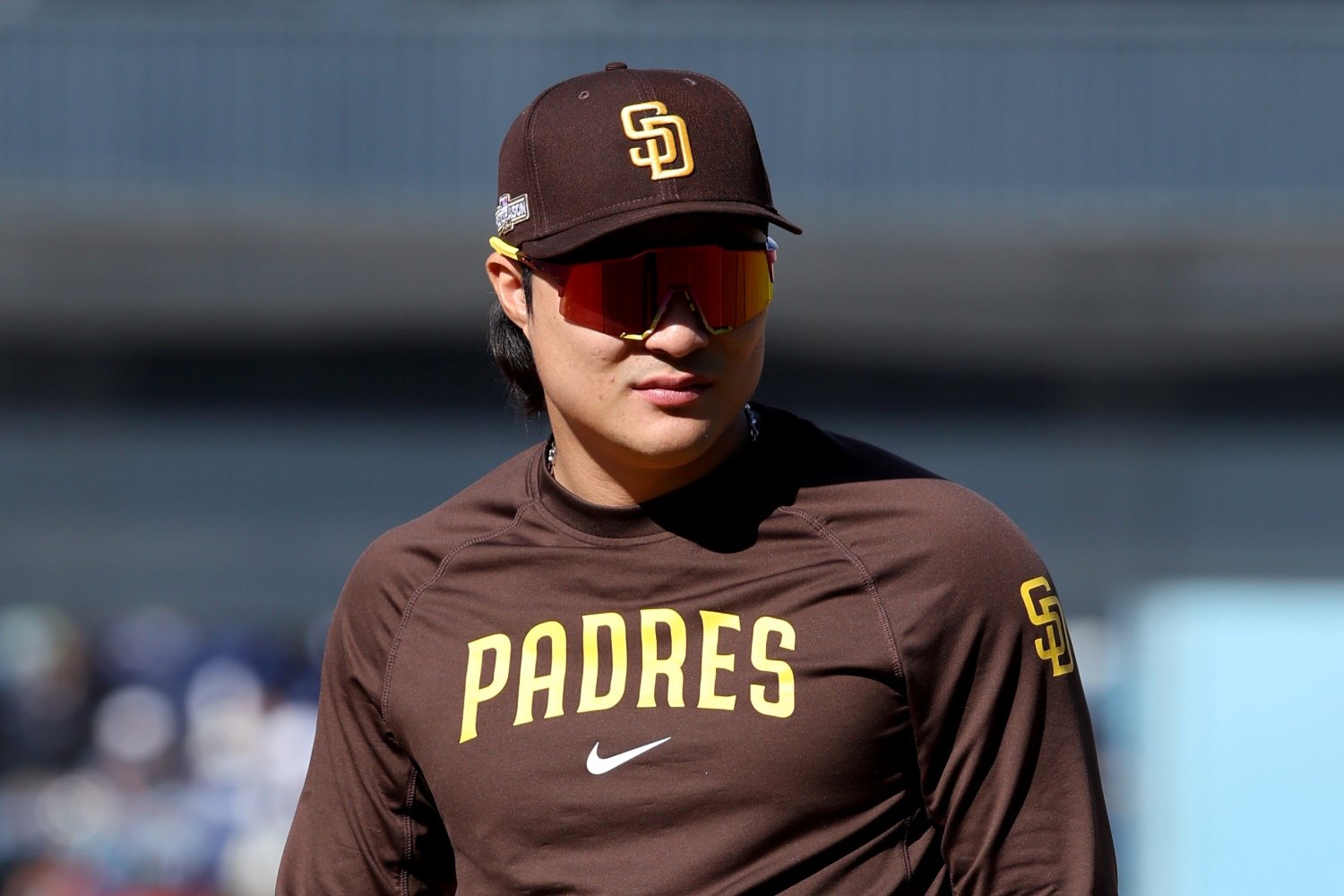 At this point, most Brewers fans have resigned themselves to the loss of Willy Adames for 2025 and beyond, leaving a gaping hole in their lineup and their infield. Oliver Dunn has an intriguing ceiling, but hasn’t quite established the requisite quality of contact at the majors to be successful, while Brock Wilken, Mike Boeve and Cooper Pratt are at least a year from being ready for the major-league team. There’s a hole to be filled, and in Ha-Seong Kim, the Brewers may have an ideal, budget-friendly target to fill that hole. At the moment, Kim has a mutual option for $8 million that he's expected to turn down. He also underwent season-ending shoulder surgery to fix a small tear in his labrum. He won’t be taking part in the Padres’ postseason run, but his value to the franchise over his four years has been well above the $7-million AAV his contract was worth. Kim has recently changed representation to the Boras Corporation, further signifying his intention to hit free agency this offseason. First of all, the Brewers' model demands strong defense on their infield, as a way of elevating the floor of the player even should the bat slump. Where Adames’s glove slumped last season, that’s far less likely to happen with Kim, who has both the speed and smooth actions to continue being a positive defender all around the infield. Over his four years, he’s recorded 24 Defensive Runs Saved at shortstop, 9 at third base and 15 at second base. That's an average of 12 DRS per season, with positive metrics for Ultimate Zone Rating, Outs Above Average and Fielding Run Value for each position as well. He’s a universally acclaimed defender with great range and a strong arm, who can make plays like this on a regular basis: Kim is also fast, with strong instincts on the basepaths. In a full season of plate appearances in 2023, he stole 38 bases, adding a further 22 swipes in 2024 despite some time on the injured list. The speed helps him both defensively and on the basepaths, but it’s his bat that’s really intriguing. Kim isn’t a slugger. He doesn’t hit the ball hard with regularity. However, he has the ability to turn on the ball to the pull side. Since 2023, he’s hit 28 home runs in 1,000 plate appearances, a more than acceptable number, but to focus on that would be a detriment to everything else Kim brings to the plate: The average exit velocity and hard-hit rates are going to stay, but the swathe of red at the bottom of the graphic above are fascinating. The plate discipline and knowledge of the strike zone, plus the ability to find ideal launch angles into the outfield, is a very strong combination. It provides a good floor for him at the plate. This bears out, with each of his last three seasons featuring a wRC+ north of 100. The home run production may tick up a little, as well, should Kim come to Milwaukee. Petco Park has a bigger left field than American Family Field, to the point that had all his games been played in Milwaukee this season, he’d have stroked 15 home runs in just 400 plate appearances. As you can see, this power is very much of the Isaac Paredes mold: pull, pull, and pull some more: He may not hit the ball hard with regularity, but Kim’s best ability is his baseball nous. He knows his swing, knows the strike zone, knows how to run the bases and knows his defensive roles, to the point where he can excel at all four elements of the game. He’s exactly the type of player the Brewers could use to fill their third base gap. Over a full season, Kim is a 3-3.5 WAR player, but the shoulder surgery and lower playing time this year may have dented his market value somewhat. Someone may far outbid the field and offer a three- or four-year deal for him, but the likelihood is that Kim will be offered around $12 million in AAV. The Brewers have a lot of very talented depth in their system, but they could do with a solid big-league regular over the next two years. Kim could very easily fill that hole, and within a shorter pull-side park, get a full year under his belt after the injury to set himself up for a longer contract in 2026. The Brewers may be the perfect place to do so, with a two-year, $25-28 million deal featuring a player option. Kim screams “Brewer,” when you see how he plays baseball. He avoids strikeouts, draws walks, has sneaky power, runs the bases incredibly well and plays genuinely elite defense. If he gains a clean bill of health after his shoulder repair, the Brewers should pounce. Can you see Kim on the 2025 iteration of this team? Would you pick him up on this deal? Let us know your thoughts in the comments below!
 -
Elite defense. Consistent bat. Sneaky power. Fast. And a possible short-term deal. Checking all of these boxes, this utility infielder may be the ideal target for the Brewers this offseason. Image courtesy of © Kiyoshi Mio-Imagn Images At this point, most Brewers fans have resigned themselves to the loss of Willy Adames for 2025 and beyond, leaving a gaping hole in their lineup and their infield. Oliver Dunn has an intriguing ceiling, but hasn’t quite established the requisite quality of contact at the majors to be successful, while Brock Wilken, Mike Boeve and Cooper Pratt are at least a year from being ready for the major-league team. There’s a hole to be filled, and in Ha-Seong Kim, the Brewers may have an ideal, budget-friendly target to fill that hole. At the moment, Kim has a mutual option for $8 million that he's expected to turn down. He also underwent season-ending shoulder surgery to fix a small tear in his labrum. He won’t be taking part in the Padres’ postseason run, but his value to the franchise over his four years has been well above the $7-million AAV his contract was worth. Kim has recently changed representation to the Boras Corporation, further signifying his intention to hit free agency this offseason. First of all, the Brewers' model demands strong defense on their infield, as a way of elevating the floor of the player even should the bat slump. Where Adames’s glove slumped last season, that’s far less likely to happen with Kim, who has both the speed and smooth actions to continue being a positive defender all around the infield. Over his four years, he’s recorded 24 Defensive Runs Saved at shortstop, 9 at third base and 15 at second base. That's an average of 12 DRS per season, with positive metrics for Ultimate Zone Rating, Outs Above Average and Fielding Run Value for each position as well. He’s a universally acclaimed defender with great range and a strong arm, who can make plays like this on a regular basis: Kim is also fast, with strong instincts on the basepaths. In a full season of plate appearances in 2023, he stole 38 bases, adding a further 22 swipes in 2024 despite some time on the injured list. The speed helps him both defensively and on the basepaths, but it’s his bat that’s really intriguing. Kim isn’t a slugger. He doesn’t hit the ball hard with regularity. However, he has the ability to turn on the ball to the pull side. Since 2023, he’s hit 28 home runs in 1,000 plate appearances, a more than acceptable number, but to focus on that would be a detriment to everything else Kim brings to the plate: The average exit velocity and hard-hit rates are going to stay, but the swathe of red at the bottom of the graphic above are fascinating. The plate discipline and knowledge of the strike zone, plus the ability to find ideal launch angles into the outfield, is a very strong combination. It provides a good floor for him at the plate. This bears out, with each of his last three seasons featuring a wRC+ north of 100. The home run production may tick up a little, as well, should Kim come to Milwaukee. Petco Park has a bigger left field than American Family Field, to the point that had all his games been played in Milwaukee this season, he’d have stroked 15 home runs in just 400 plate appearances. As you can see, this power is very much of the Isaac Paredes mold: pull, pull, and pull some more: He may not hit the ball hard with regularity, but Kim’s best ability is his baseball nous. He knows his swing, knows the strike zone, knows how to run the bases and knows his defensive roles, to the point where he can excel at all four elements of the game. He’s exactly the type of player the Brewers could use to fill their third base gap. Over a full season, Kim is a 3-3.5 WAR player, but the shoulder surgery and lower playing time this year may have dented his market value somewhat. Someone may far outbid the field and offer a three- or four-year deal for him, but the likelihood is that Kim will be offered around $12 million in AAV. The Brewers have a lot of very talented depth in their system, but they could do with a solid big-league regular over the next two years. Kim could very easily fill that hole, and within a shorter pull-side park, get a full year under his belt after the injury to set himself up for a longer contract in 2026. The Brewers may be the perfect place to do so, with a two-year, $25-28 million deal featuring a player option. Kim screams “Brewer,” when you see how he plays baseball. He avoids strikeouts, draws walks, has sneaky power, runs the bases incredibly well and plays genuinely elite defense. If he gains a clean bill of health after his shoulder repair, the Brewers should pounce. Can you see Kim on the 2025 iteration of this team? Would you pick him up on this deal? Let us know your thoughts in the comments below! View full article
-
As the Brewers are a recipient of revenue sharing money they'll get either: A pick between the first round and comp balance A (supplemental first round) if Adames signs for over $50m as is likely. If he signs for less than $50m (unlikely) they would get a pick after competitive balance B round
-
Jacob MisiorowskiJeferson QueroCooper PrattJesus MadeRobert GasserErnesto MartinezMike BoeveLuis PenaLogan HendersonK.C. HuntBrock WilkenYophery RodriguezLuke AdamsTyler BlackLuis LaraCarlos F RodriguezBishop LetsonJosh KnothEric BitontiCraig Yoho
-
His production over the last four years has been immense, but putting nostalgia aside, can he replicate that value over his next six years? The warning signs suggest not. Image courtesy of © Benny Sieu-Imagn Images Willy Adames's time in Milwaukee has been an unqualified success. Acquiring him from the Tampa Bay Rays in exchange for JP Feyereisen and Drew Rasmussen (both of whom have had significant injury woes since) was a master stroke on the part of David Stearns and company. In his career, Adames has 150 home runs, 51 stolen bases and a 109 OPS+, all as a premium defensive shortstop. His 21.5 career WAR is an impressive number, but Adames has been more than numbers can calculate for the Brewers. He’s been the heart and soul of this franchise since he joined them in 2021--a fan favorite on and off the field and a leader of men in the clubhouse. His relentless optimism was infectious among the Brewers, proving pivotal in extracting the most out of the plethora of talented youngsters on the Brewers roster. Mark Attanasio made a comment last offseason about the Brewers offering Adames a nine-figure extension that was rejected as he bet on himself. He won that bet over the course of 2024, producing a career year at bat to propel himself forward in terms of value. That extension offer was likely the extent of what the Brewers can afford, and his market is likely to be substantially greater this offseason. Market Value Adames is the best shortstop hitting free agency this season, which allows a lot of leverage in negotiations. Ha-Seong Kim looks to be Adames's closest competitor. After them, the highest-caliber player is Miguel Rojas. Kim has had a turbid, injury-plagued year, compared with Adames hitting career highs in home runs, walks and stolen bases, widening the gap between the two. Adames's defense did drop off during the season (something we’ll come to later), but his persona, his performance at the plate and his strong arm (combined with his market position) should enable him to get around 6 years and $150 million, based on deals for the likes of Dansby Swanson, Trevor Story, Marcus Semien, and Javier Báez in recent offseasons. The Warning Signs Unfortunately, of late, big shortstop deals haven’t quite gone to plan. From Carlos Correa, Xander Bogaerts and Swanson to the quite shocking drop-off from Báez, they haven’t tended to age well. Injuries have played some part with Bogaerts and Correa, while the bats haven’t really come to life for Swanson and Báez. The sad truth is that, as players age, their reaction times slow down--meaning they need to swing earlier, and therefore make swing decisions earlier. Some of this can be made up for with experience, but it will often bring about a decline in ball/strike recognition. Such recognition isn’t a strength of Adames, despite his improved walk rate this year. Adames’s swing length is already the fifth-longest in baseball, meaning his decision-making process is already happening a bit earlier than most other hitters'. He also doesn’t shorten his swing with two strikes, and despite better overall swing decisions this year, it’s a ticking time bomb for him. Eventually, and potentially within the next two seasons, Adames may become a strikeout machine who struggles to make enough contact to access his home-run power with extreme chase rates. He won’t be as aggressive as Báez, but it probably won’t be pretty. Then there are the defensive struggles that popped up this season, which may prevent him from playing shortstop next season even if he did stick with the Brewers. In nearly every conceivable defensive metric, Adames fell off a cliff in 2024. Outs Above Average still regards him as average, but other fielding metrics have questioned the errors that piled up in the second half, as well as his overall range. The defensive decline appears to be happening before our eyes. It removes the floor from which Adames accrues his value over a season, and puts a lot of pressure on a bat which is unlikely to age well alongside it. If he can't address the defensive issues quickly, that contract could turn bad fast. So Why Shouldn’t The Brewers Go Big For Their Star Shortstop? I would happily agree to a contract of six years and $150 million for the production Adames has given the Brewers since his arrival. Combining the incredible defensive performance for a strong floor, while adding thump in big moments with the bat is a rare combination from such a premium position. The problem is it’s very unlikely that either the bat or the defense will hold up even past two years into this contract. Adames will likely be a solid enough defender at third base toward the latter end of his new contract, with a big arm from the left side, but that range will continue to fall off. However, those errors could be here to stay, in which case he becomes a bit of a liability defensively, removing the floor for his value. The Brewers also have a lot of infield talent in their farm system, although most of it is a year or more away. From Brock Wilken, Mike Boeve, and Cooper Pratt to the 18-year-old Luis Pena and Jesus Made, locking in a veteran on a six-year deal impinges on their prospects of playing time when they are ready in 2026 or 2027. I love Adames. I Love what he’s brought to Milwaukee. But it would be folly to expect the same level of production over the next six seasons as the Brewers have gotten in their first four years from Adames. The defense is dropping off, the bat will likely follow soon. If he were forced to settle for a four-year, $100-million contract, it may become more feasible, but unfortunately, I can’t see the market trending that way. The Brewers got the best years out of Adames. Now it’s time to let him go, before those prized memories turn sour. What do you think of Willy Adames value on the open market? Can you see any way he returns to Milwaukee? Would you even want him on a six year deal? Let us know your thoughts in the comments below! View full article
-
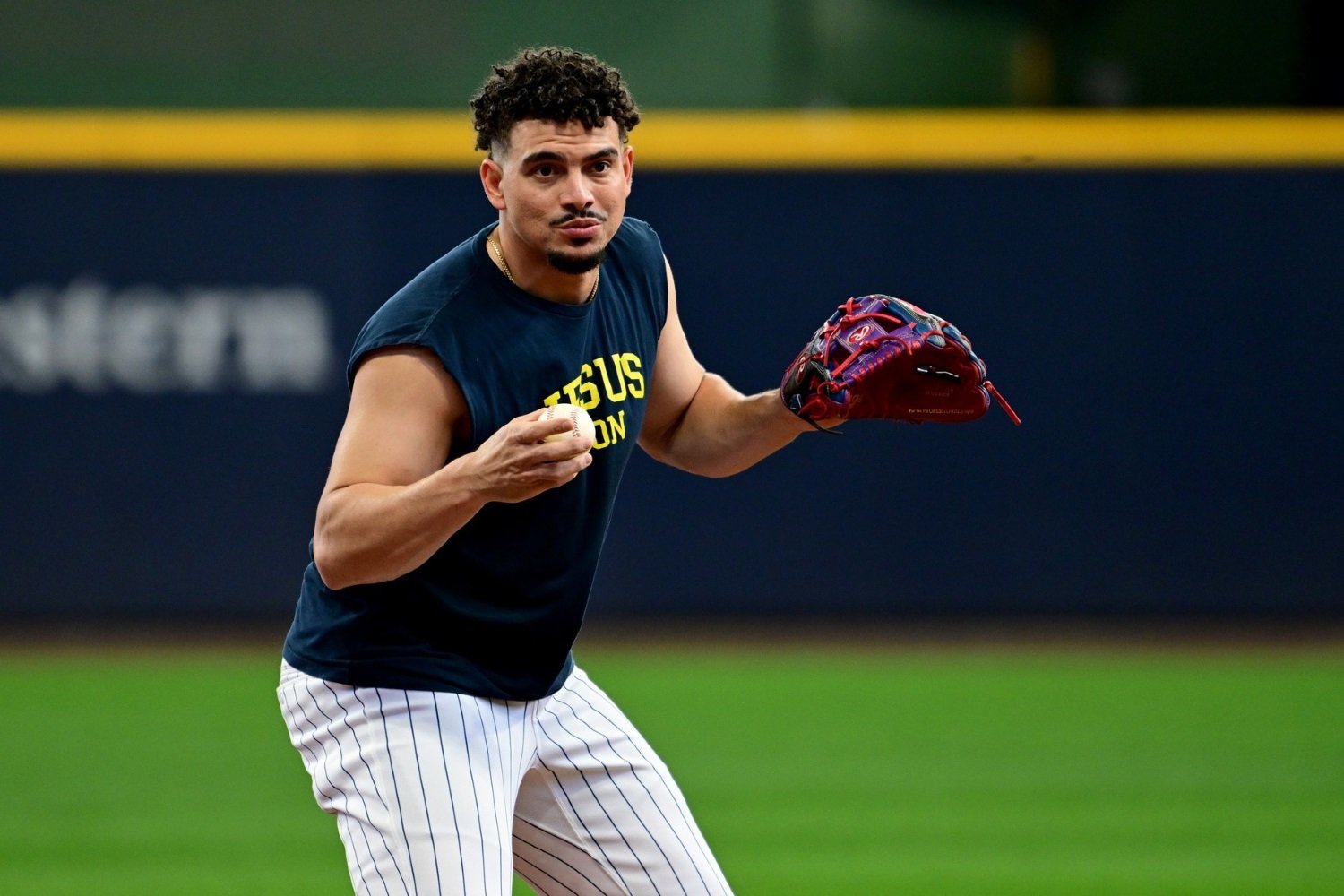 Willy Adames's time in Milwaukee has been an unqualified success. Acquiring him from the Tampa Bay Rays in exchange for JP Feyereisen and Drew Rasmussen (both of whom have had significant injury woes since) was a master stroke on the part of David Stearns and company. In his career, Adames has 150 home runs, 51 stolen bases and a 109 OPS+, all as a premium defensive shortstop. His 21.5 career WAR is an impressive number, but Adames has been more than numbers can calculate for the Brewers. He’s been the heart and soul of this franchise since he joined them in 2021--a fan favorite on and off the field and a leader of men in the clubhouse. His relentless optimism was infectious among the Brewers, proving pivotal in extracting the most out of the plethora of talented youngsters on the Brewers roster. Mark Attanasio made a comment last offseason about the Brewers offering Adames a nine-figure extension that was rejected as he bet on himself. He won that bet over the course of 2024, producing a career year at bat to propel himself forward in terms of value. That extension offer was likely the extent of what the Brewers can afford, and his market is likely to be substantially greater this offseason. Market Value Adames is the best shortstop hitting free agency this season, which allows a lot of leverage in negotiations. Ha-Seong Kim looks to be Adames's closest competitor. After them, the highest-caliber player is Miguel Rojas. Kim has had a turbid, injury-plagued year, compared with Adames hitting career highs in home runs, walks and stolen bases, widening the gap between the two. Adames's defense did drop off during the season (something we’ll come to later), but his persona, his performance at the plate and his strong arm (combined with his market position) should enable him to get around 6 years and $150 million, based on deals for the likes of Dansby Swanson, Trevor Story, Marcus Semien, and Javier Báez in recent offseasons. The Warning Signs Unfortunately, of late, big shortstop deals haven’t quite gone to plan. From Carlos Correa, Xander Bogaerts and Swanson to the quite shocking drop-off from Báez, they haven’t tended to age well. Injuries have played some part with Bogaerts and Correa, while the bats haven’t really come to life for Swanson and Báez. The sad truth is that, as players age, their reaction times slow down--meaning they need to swing earlier, and therefore make swing decisions earlier. Some of this can be made up for with experience, but it will often bring about a decline in ball/strike recognition. Such recognition isn’t a strength of Adames, despite his improved walk rate this year. Adames’s swing length is already the fifth-longest in baseball, meaning his decision-making process is already happening a bit earlier than most other hitters'. He also doesn’t shorten his swing with two strikes, and despite better overall swing decisions this year, it’s a ticking time bomb for him. Eventually, and potentially within the next two seasons, Adames may become a strikeout machine who struggles to make enough contact to access his home-run power with extreme chase rates. He won’t be as aggressive as Báez, but it probably won’t be pretty. Then there are the defensive struggles that popped up this season, which may prevent him from playing shortstop next season even if he did stick with the Brewers. In nearly every conceivable defensive metric, Adames fell off a cliff in 2024. Outs Above Average still regards him as average, but other fielding metrics have questioned the errors that piled up in the second half, as well as his overall range. The defensive decline appears to be happening before our eyes. It removes the floor from which Adames accrues his value over a season, and puts a lot of pressure on a bat which is unlikely to age well alongside it. If he can't address the defensive issues quickly, that contract could turn bad fast. So Why Shouldn’t The Brewers Go Big For Their Star Shortstop? I would happily agree to a contract of six years and $150 million for the production Adames has given the Brewers since his arrival. Combining the incredible defensive performance for a strong floor, while adding thump in big moments with the bat is a rare combination from such a premium position. The problem is it’s very unlikely that either the bat or the defense will hold up even past two years into this contract. Adames will likely be a solid enough defender at third base toward the latter end of his new contract, with a big arm from the left side, but that range will continue to fall off. However, those errors could be here to stay, in which case he becomes a bit of a liability defensively, removing the floor for his value. The Brewers also have a lot of infield talent in their farm system, although most of it is a year or more away. From Brock Wilken, Mike Boeve, and Cooper Pratt to the 18-year-old Luis Pena and Jesus Made, locking in a veteran on a six-year deal impinges on their prospects of playing time when they are ready in 2026 or 2027. I love Adames. I Love what he’s brought to Milwaukee. But it would be folly to expect the same level of production over the next six seasons as the Brewers have gotten in their first four years from Adames. The defense is dropping off, the bat will likely follow soon. If he were forced to settle for a four-year, $100-million contract, it may become more feasible, but unfortunately, I can’t see the market trending that way. The Brewers got the best years out of Adames. Now it’s time to let him go, before those prized memories turn sour. What do you think of Willy Adames value on the open market? Can you see any way he returns to Milwaukee? Would you even want him on a six year deal? Let us know your thoughts in the comments below!
 -
What's the Brewers Payroll Picture Heading Into the Offseason?
Jake McKibbin posted an article in Brewers
 The state of the payroll will be fascinating going into 2025, with the Brewers in need of some reinforcement on the left side of the infield and a big trade likely at the back end of their bullpen. It’s unlikely that either Willy Adames or Devin Williams will be in Maryvale next spring, and they leave some big shoes to be filled. The Brewers may have the chops internally to maintain their bullpen strength, but the same cannot be said for prospects on the infield who are major-league ready. Oliver Dunn’s injury, Brock Wilken’s regression and Tyler Black’s defensive struggles all play into that need. It would also be folly to expect that Rhys Hoskins doesn’t pick up his $18-million option for this season. A generally good gauge is whether or not you would want to pay a player that value based on their performance, if the answer is “not a chance in hell,” then the player is more likely to take it, given that other front offices will likely feel similarly. Hoskins provided -0.2 WAR on the season, struggled in the playoffs and had career worsts for strikeout rate, slugging and walk rate. He will be here in 2025, barring a miracle of Scott Boras hubris. Even with Adames and Williams likely to leave, there will be upward pressure on the payroll, with programmed increases in the salaries of Jackson Chourio ($2 million), Freddy Peralta ($4 million), Brandon Woodruff ($12.5 million), and Aaron Ashby ($2 million) to factor in. There are also some big arbitration raises coming, especially for William Contreras and Aaron Civale. Overall, I’d envisage something along the lines of the situation below, although there is definitely room for argument around the margins. They could cut from the roster above around the margins by removing Bryse Wilson and Jake Bauers for the likes of Craig Yoho and Ernesto Martinez Jr,, but outside of that, I can't see a whole lot of moves the Brewers would make to trim around the edges. Perhaps they'd cut Joel Payamps rather than pay him another arbitration award, but with his performances in the second half, that estimated $3.45 million is still relatively efficient--and MLB Trade Rumors predicts an even lower figure, at $2.8 million. The total for the above 26-man roster comes to $115.46 million. The additional values coming through from the rest of the 40-man roster payments (along with deferred monies for Lorenzo Cain and Ryan Braun) will probably add around $5 million to this total, so all in all, this is a hefty enough payroll for this organization as it is. Another issue to factor in is the Bally Sports contract, with the Diamond Sports Group looking to renegotiate their contract with the Brewers, per Alden Gonzalez of ESPN. The contract is currently worth $33 million to the Brewers organization for next year, and whether they move toward a league-centered, league-distributed model for broadcast revenue or take a reduced contract with Diamond, the end result will be some loss of revenue for the club, perhaps in the region of $10 million. According to Cot's Contracts, the highest contractual commitments for the Brewers in a single season was in 2022, at $135.1 million. In 2023, that dropped to $133.6 million, before sagging to roughly $120 million in 2024. Using $130 million as a benchmark and factoring in the likely loss of TV revenues, the Brewers estimated maximum payroll spend is $125 million for next year. Their current estimated costs by the budget above, is $120 million. So the question then turns to whether or not the organization is willing to take a gamble. Would they extend themselves to the $140-million mark for a longer-term commitment to land the likes of an Alex Bregman at third base, as Matt Trueblood wrote yesterday? Or are they banking on someone filling the gaps defensively while gambling on health and form for Woodruff, Christian Yelich and Jackson Chourio, to make up for the lost production from Adames? Do they see Garrett Mitchell, Joey Ortiz, Brice Turang, Jake Bauers and Sal Frelick all taking further strides this season and push the chips in on their pre-arb talent? Heck, do they further experiment with Frelick to third base, after his defensive excellence in right field for 2024? The other side of this is, even if the Brewers are breaking even in terms of their basic financials (and they likely are turning some profit, although it's nowhere near as much as people believe once you add in overhead, management, minor-league staff/payments and other incidentals of a baseball club), the overall valuation of the club has gone up consistently year-over-year. That doesn't translate to cash in the bank, but it does allow Mark Attanasio (as the lead shareholder) to gamble every once in a while without serious financial repercussions. They could afford, for two to three years, a payroll of $160 million or more, given their stock valuation has increased by $400 million and change in the 2020s. Again, this isn't cash in the bank to pay players, but it does give some leverage to increasing the payroll if they feel the window with Yelich, Contreras and Chourio together could be key to playoff success with support around them. Doing so by investing $60-90 million over a three year span seems viable. This offseason presents a host of questions for the Milwaukee Brewers, but based on recent history, it seems fair to expect there won’t be a big free agent signing--unless something drastic changes (e.g., a Hoskins opt out). With the revenue uncertainty and current contractual commitments, it just doesn’t seem as though they have the flexibility in their payroll to make a splash, unless they want to really go all-in. If they do spend, it likely won't be on a contract with a length greater than two years, given the strength of their farm system at the lower levels with Cooper Pratt, Jesus Made, Luis Pena and others as potential infield stars. What do you think of the Brewers' payroll for next season? Do you think my estimations are off? Have they got room to make a big move? Let us know your thoughts in the comments below!
 -
Historically a frugal organization, the Brewers face constraints on their budget this winter. Do they have the financial space to address their infield dilemma? Image courtesy of © Allan Henry-Imagn Images The state of the payroll will be fascinating going into 2025, with the Brewers in need of some reinforcement on the left side of the infield and a big trade likely at the back end of their bullpen. It’s unlikely that either Willy Adames or Devin Williams will be in Maryvale next spring, and they leave some big shoes to be filled. The Brewers may have the chops internally to maintain their bullpen strength, but the same cannot be said for prospects on the infield who are major-league ready. Oliver Dunn’s injury, Brock Wilken’s regression and Tyler Black’s defensive struggles all play into that need. It would also be folly to expect that Rhys Hoskins doesn’t pick up his $18-million option for this season. A generally good gauge is whether or not you would want to pay a player that value based on their performance, if the answer is “not a chance in hell,” then the player is more likely to take it, given that other front offices will likely feel similarly. Hoskins provided -0.2 WAR on the season, struggled in the playoffs and had career worsts for strikeout rate, slugging and walk rate. He will be here in 2025, barring a miracle of Scott Boras hubris. Even with Adames and Williams likely to leave, there will be upward pressure on the payroll, with programmed increases in the salaries of Jackson Chourio ($2 million), Freddy Peralta ($4 million), Brandon Woodruff ($12.5 million), and Aaron Ashby ($2 million) to factor in. There are also some big arbitration raises coming, especially for William Contreras and Aaron Civale. Overall, I’d envisage something along the lines of the situation below, although there is definitely room for argument around the margins. They could cut from the roster above around the margins by removing Bryse Wilson and Jake Bauers for the likes of Craig Yoho and Ernesto Martinez Jr,, but outside of that, I can't see a whole lot of moves the Brewers would make to trim around the edges. Perhaps they'd cut Joel Payamps rather than pay him another arbitration award, but with his performances in the second half, that estimated $3.45 million is still relatively efficient--and MLB Trade Rumors predicts an even lower figure, at $2.8 million. The total for the above 26-man roster comes to $115.46 million. The additional values coming through from the rest of the 40-man roster payments (along with deferred monies for Lorenzo Cain and Ryan Braun) will probably add around $5 million to this total, so all in all, this is a hefty enough payroll for this organization as it is. Another issue to factor in is the Bally Sports contract, with the Diamond Sports Group looking to renegotiate their contract with the Brewers, per Alden Gonzalez of ESPN. The contract is currently worth $33 million to the Brewers organization for next year, and whether they move toward a league-centered, league-distributed model for broadcast revenue or take a reduced contract with Diamond, the end result will be some loss of revenue for the club, perhaps in the region of $10 million. According to Cot's Contracts, the highest contractual commitments for the Brewers in a single season was in 2022, at $135.1 million. In 2023, that dropped to $133.6 million, before sagging to roughly $120 million in 2024. Using $130 million as a benchmark and factoring in the likely loss of TV revenues, the Brewers estimated maximum payroll spend is $125 million for next year. Their current estimated costs by the budget above, is $120 million. So the question then turns to whether or not the organization is willing to take a gamble. Would they extend themselves to the $140-million mark for a longer-term commitment to land the likes of an Alex Bregman at third base, as Matt Trueblood wrote yesterday? Or are they banking on someone filling the gaps defensively while gambling on health and form for Woodruff, Christian Yelich and Jackson Chourio, to make up for the lost production from Adames? Do they see Garrett Mitchell, Joey Ortiz, Brice Turang, Jake Bauers and Sal Frelick all taking further strides this season and push the chips in on their pre-arb talent? Heck, do they further experiment with Frelick to third base, after his defensive excellence in right field for 2024? The other side of this is, even if the Brewers are breaking even in terms of their basic financials (and they likely are turning some profit, although it's nowhere near as much as people believe once you add in overhead, management, minor-league staff/payments and other incidentals of a baseball club), the overall valuation of the club has gone up consistently year-over-year. That doesn't translate to cash in the bank, but it does allow Mark Attanasio (as the lead shareholder) to gamble every once in a while without serious financial repercussions. They could afford, for two to three years, a payroll of $160 million or more, given their stock valuation has increased by $400 million and change in the 2020s. Again, this isn't cash in the bank to pay players, but it does give some leverage to increasing the payroll if they feel the window with Yelich, Contreras and Chourio together could be key to playoff success with support around them. Doing so by investing $60-90 million over a three year span seems viable. This offseason presents a host of questions for the Milwaukee Brewers, but based on recent history, it seems fair to expect there won’t be a big free agent signing--unless something drastic changes (e.g., a Hoskins opt out). With the revenue uncertainty and current contractual commitments, it just doesn’t seem as though they have the flexibility in their payroll to make a splash, unless they want to really go all-in. If they do spend, it likely won't be on a contract with a length greater than two years, given the strength of their farm system at the lower levels with Cooper Pratt, Jesus Made, Luis Pena and others as potential infield stars. What do you think of the Brewers' payroll for next season? Do you think my estimations are off? Have they got room to make a big move? Let us know your thoughts in the comments below! View full article
-
Despite Thursday night's performance, the fact remains that Devin Williams is a truly elite closer in today’s game. Will he be playing in Milwaukee colors next season? Image courtesy of © Benny Sieu-Imagn Images That was not the ending anyone would have wanted. Under the highest pressure on the biggest stage, Devin Williams' mojo faltered, and the Milwaukee Brewers 2024 ambitions slammed to a halt with it. An ignominious ending for a player in the conversation for the best reliever in Brewers history, it doesn’t change the likelihood of what’s in store for Williams. The sad fact is that relievers are baseball's most volatile, unpredictable element. The usually limited arsenal of pitches in their repertoire means that if they lose the feel for one pitch, they’ll struggle to get through a section of hitters. As such, expensive relievers do not stick around for too long, especially for a Milwaukee Brewers franchise that works on the edge of margins. Devin Williams is entering his final year of arbitration with a $10.5 million club option for 2025, which makes him quite an expensive commodity. He has won NL Reliever of the Year on three separate occasions while armed with a devastating changeup (or, more accurately, screwball) and a deceptively elite four-seam fastball that makes him one of the most dominant closers in baseball. He went back-to-back nights closing out against Shohei Ohtani, Mookie Betts, and Freddie Freeman: This is an asset that someone will pay a lot for, and the Brewers almost certainly won’t turn it down for a reliever. The 2022 Josh Hader trade still lingers in many fans' memories, but the value collected from that trade has been immense. I believe Williams may bring back an even more significant return. Josh Hader struggled with performance for an entire month leading up to his trade, allowing 12 runs in six appearances over 4 ⅓ innings, struggles that continued with San Diego that season. Williams has been consistently dominant since his Rookie of the Year victory in 2020, with a career 1.83 ERA in the regular season, a 1.02 WHIP, and 14.32 strikeouts per nine. One lousy outing will not be detrimental to his value in a material way, and the Brewers will be facing gaps in their infield mix that they’ll need to address. Williams being traded would be the perfect way to do so, and he’ll have no shortage of suitors. Filling Devin Williams's shoes will be no easy task as the Brewers attempt to wreak yet more devil magic on their bullpen this offseason, but the value on the trade market, with big clubs like the Yankees and Cubs desperate for a dominant closer, makes a trade seem inevitable. With the way Milwaukee operates in a small market, they can't afford to hold valuable assets into their prime. Relievers are volatile, and screwballs/changeups like Williams tend to put a lot of stress on the shoulder and elbow of a pitcher. There's no guarantee of an injury-free season should he stay, and Craig Yoho and his wiffle changeup-sinker-slider are waiting in the wings to add punch to the back end of the bullpen. Milwaukee's greatest closer has likely thrown his last pitch in a way no one would have foreseen, but for all the quality Williams has brought as a reliever, he should be revered for more than just his most recent outing. He's earned that much and more for his time in Milwaukee. View full article
-
Devin Williams May Have Thrown His Last Pitch For The Milwaukee Brewers
Jake McKibbin posted an article in Brewers
 That was not the ending anyone would have wanted. Under the highest pressure on the biggest stage, Devin Williams' mojo faltered, and the Milwaukee Brewers 2024 ambitions slammed to a halt with it. An ignominious ending for a player in the conversation for the best reliever in Brewers history, it doesn’t change the likelihood of what’s in store for Williams. The sad fact is that relievers are baseball's most volatile, unpredictable element. The usually limited arsenal of pitches in their repertoire means that if they lose the feel for one pitch, they’ll struggle to get through a section of hitters. As such, expensive relievers do not stick around for too long, especially for a Milwaukee Brewers franchise that works on the edge of margins. Devin Williams is entering his final year of arbitration with a $10.5 million club option for 2025, which makes him quite an expensive commodity. He has won NL Reliever of the Year on three separate occasions while armed with a devastating changeup (or, more accurately, screwball) and a deceptively elite four-seam fastball that makes him one of the most dominant closers in baseball. He went back-to-back nights closing out against Shohei Ohtani, Mookie Betts, and Freddie Freeman: This is an asset that someone will pay a lot for, and the Brewers almost certainly won’t turn it down for a reliever. The 2022 Josh Hader trade still lingers in many fans' memories, but the value collected from that trade has been immense. I believe Williams may bring back an even more significant return. Josh Hader struggled with performance for an entire month leading up to his trade, allowing 12 runs in six appearances over 4 ⅓ innings, struggles that continued with San Diego that season. Williams has been consistently dominant since his Rookie of the Year victory in 2020, with a career 1.83 ERA in the regular season, a 1.02 WHIP, and 14.32 strikeouts per nine. One lousy outing will not be detrimental to his value in a material way, and the Brewers will be facing gaps in their infield mix that they’ll need to address. Williams being traded would be the perfect way to do so, and he’ll have no shortage of suitors. Filling Devin Williams's shoes will be no easy task as the Brewers attempt to wreak yet more devil magic on their bullpen this offseason, but the value on the trade market, with big clubs like the Yankees and Cubs desperate for a dominant closer, makes a trade seem inevitable. With the way Milwaukee operates in a small market, they can't afford to hold valuable assets into their prime. Relievers are volatile, and screwballs/changeups like Williams tend to put a lot of stress on the shoulder and elbow of a pitcher. There's no guarantee of an injury-free season should he stay, and Craig Yoho and his wiffle changeup-sinker-slider are waiting in the wings to add punch to the back end of the bullpen. Milwaukee's greatest closer has likely thrown his last pitch in a way no one would have foreseen, but for all the quality Williams has brought as a reliever, he should be revered for more than just his most recent outing. He's earned that much and more for his time in Milwaukee.
 -
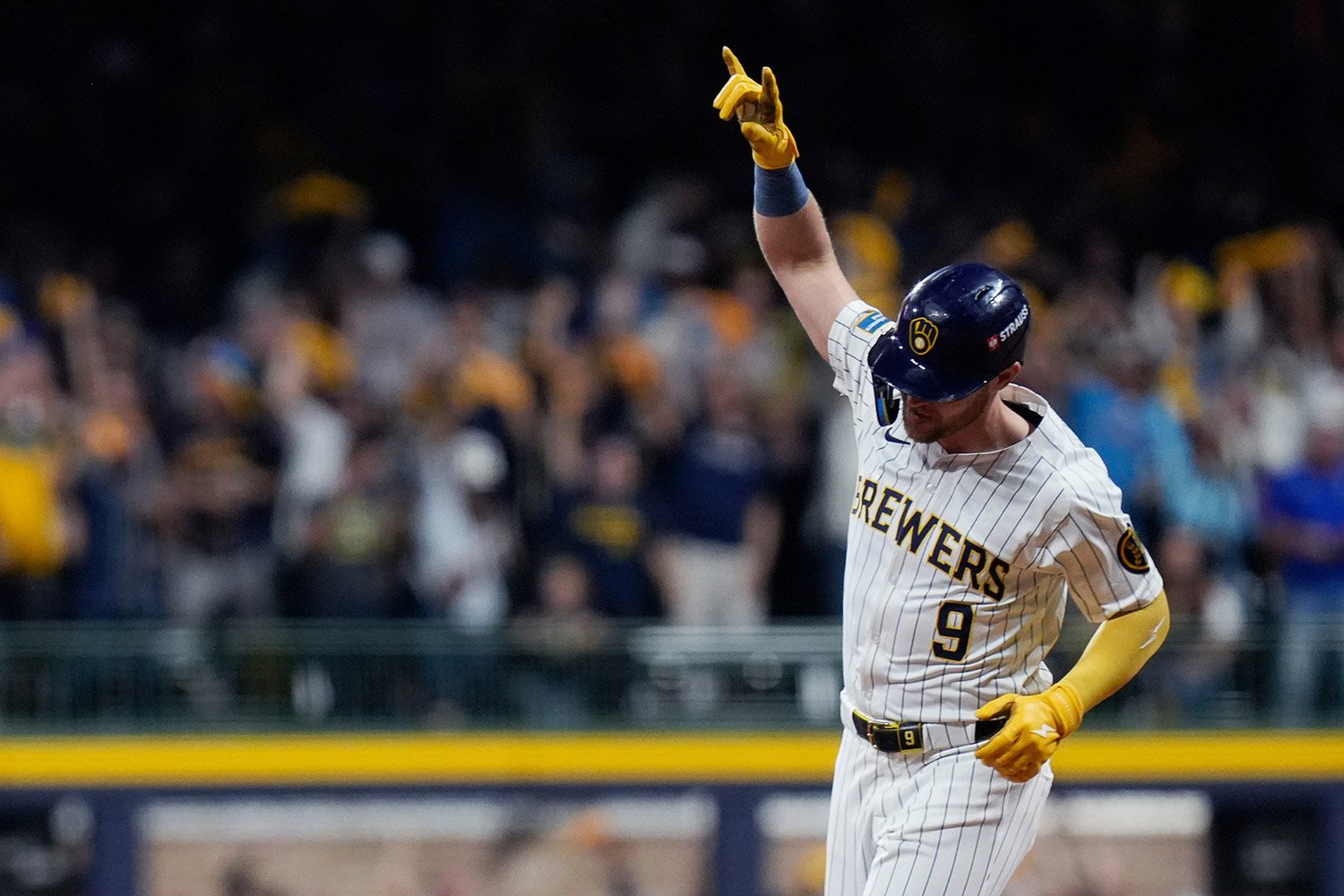 I don’t think I’m speaking for myself when I talk about the state of absolute shock at the events of October 3rd. A 2-0 lead entering the ninth with Devin Williams, three-time NL Reliever of the Year award winner, entering to create a procession through the top of the Mets order. We knew the script. We knew how this should go. Then, that one swing in the dark of night. There was devastation around the stadium as Pete Alonso did his thing despite raucous calls for his head from his fanbase. Delving into the minutiae of how last night unfolded would be too soon, especially as something felt different this time. Previous versions of the Milwaukee Brewers have gone from excitement to a sense of inevitability quite rapidly within the playoffs. Last season, it felt like they got hit with a tidal wave by the Diamondbacks, the Braves in 2021, Freddie Freeman, the Dodgers, and the Nationals. They couldn't rally back once the Brewers fell behind in these playoff games. This time, the rookies led from the front. Brice Turang, Jackson Chourio, and Garrett Mitchell contributed to a monstrous comeback in game two. Sal Frelick, who epitomizes undaunted, demolishes a baseball almost 400 feet into the second deck. Jake Bauers, this year's version of Jesse Winker, gives the Brewers a vital lead off the bench. We could talk about the struggles of Williams and the veteran hitters, but I'd rather focus on how this Brewers team felt different. There was a fight, a belief, a togetherness that felt special, something with the hair tingling on the back of your neck. The rise of Chourio. The electricity of a pumped-up Nick Mears and Trevor Megill. Tobias Myers dominating the Mets. Garrett Mitchell. Willy Adames, Brice Turang. Blake Perkins. They are not all household names but massive contributors to this season. This was supposed to be it. We were mentally preparing for the Phillies in the NLDS. Then it was gone. Yet even now, with the rawness of emotion, I’m not entirely sure this group should be pushed into the same bunch as their previous playoff failures. Those before them faltered without a punch in October. Albeit this was a series very much in the Brewers' grasp that they might feel they let themselves down from a fielding perspective, and with some bullpen arms that have carried them down the stretch, they had the fortitude to respond under the immense pressure makes all the difference. The Brewers have been saying “next year” for a little while now, but it’s tough not to notice that 2023 marked the end of an era with the departure/injury of Corbin Burnes and Brandon Woodruff. The rotation that led the Brewers' surge was dismantled, and in its place, a new phoenix has risen. The quintessential dilemma of baseball is this: any team can win one game. On average, the 2024 White Sox won 1 out of every four games this year. A one-game playoff is intrinsically exciting, but it isn’t the best way to measure the quality of a team. It’s a dilemma that baseball is unlikely to solve within its current playoff format. That’s not to say if the format is right or wrong, but they may have a slightly skewed value on short-term success over longer-term results against a now-even playing schedule. As such, judging this Brewers team by a series in which they showed more character and fight than any Brewers team in the playoffs since the start of 2019 would be a disservice. This team has brought phenomenal joy to the city of Milwaukee in 2024, not just from the rise of an icon this year. The grind they bring each and every day is special, and it encapsulates Milwaukee and its fandom. No one will ever criticize Sal Frelick for not risking life and limb for an out. No one would question Blake Perkins's preparation before a game. The coaching staff, the buy-in of the players, and everything to form one cohesive unit is special amongst a team of 80+ coaches and players when you factor everybody who contributes into the equation. If you’ve ever been in a room with 80 people, can you imagine any world where they all pull together so cohesively, as we’ve seen this year? Milwaukee embraced its underdog mentality and outworked everyone on the path to success this year against bigger names and higher payrolls. This is truly not normal, and while there will undoubtedly be changes next season with the unlikeliness of Devin Williams and Willy Adames being on the roster, the players and coaches that will be here will carry on that legacy. Pat Murphy certainly won’t stand for anything else. Although this may be the end of 2024, it may be the start of a new era for the Brewers. We can dream of a healthy Brandon Woodruff, new and improved versions of DL Hall and Tobias Myers after an offseason with the Brewers pitching lab and Chris Hook, Christian Yelich without disc problems, a potential MVP in Jackson Chourio, Jacob Misiorowski, Logan Henderson, Craig Yoho, and full years of Garrett Mitchell. Can Sal Frelick find more of that home run pop? I’d also like to take a moment to thank all those this year who have come to read at Brewer Fanatic and contribute to the site. Writing for this specific fan base is an absolute joy and privilege. I’ve been asked many times why I write for a Brewers-focused group (given I’m not even American), but if I could choose any fandom in baseball to write for, it would be you. There is a genuine love of everything good about sport in Milwaukee, and the atmosphere at American Family Field in both the final two Wild Card Series games will live long in my memory. It’s been a privilege, and I hope you enjoyed the content the other contributors have put out this season. I look forward to going through it again in 2025, and hopefully, at the end of October, I will have a sprinkling more success. To leave you all on a positive note, I've attached some videos of some moments that left us euphoric throughout the season. I hope you'll be back to enjoy it all over again. The Moment Jackson Chourio's Metamorphosis Began Blake Perkins Magnificent Outfield Robberies Brice Turang Being A Wizard Willy Adames Loves Ducks On he Pond Playoff Game Two Sal Has... Power? Christian Yelich May Be Back With A New Back Apparently There's This Guy Called Craig Yoho Meet Shortstop Of The Future, Joey Ortiz What were you favorite memories of the 2024 season? Do you think it's all negative given the ending? What were the biggest joys from the Brewers this season? Let us know your thoughts in the comments below!
 -
Last night was heartbreaking. This team had an aura that separated it from previous playoff iterations. This raises a big conundrum: How do we review them after the culmination of the 2024 season? Image courtesy of © Jovanny Hernandez / Milwaukee Journal Sentinel / USA TODAY NETWORK via Imagn Images I don’t think I’m speaking for myself when I talk about the state of absolute shock at the events of October 3rd. A 2-0 lead entering the ninth with Devin Williams, three-time NL Reliever of the Year award winner, entering to create a procession through the top of the Mets order. We knew the script. We knew how this should go. Then, that one swing in the dark of night. There was devastation around the stadium as Pete Alonso did his thing despite raucous calls for his head from his fanbase. Delving into the minutiae of how last night unfolded would be too soon, especially as something felt different this time. Previous versions of the Milwaukee Brewers have gone from excitement to a sense of inevitability quite rapidly within the playoffs. Last season, it felt like they got hit with a tidal wave by the Diamondbacks, the Braves in 2021, Freddie Freeman, the Dodgers, and the Nationals. They couldn't rally back once the Brewers fell behind in these playoff games. This time, the rookies led from the front. Brice Turang, Jackson Chourio, and Garrett Mitchell contributed to a monstrous comeback in game two. Sal Frelick, who epitomizes undaunted, demolishes a baseball almost 400 feet into the second deck. Jake Bauers, this year's version of Jesse Winker, gives the Brewers a vital lead off the bench. We could talk about the struggles of Williams and the veteran hitters, but I'd rather focus on how this Brewers team felt different. There was a fight, a belief, a togetherness that felt special, something with the hair tingling on the back of your neck. The rise of Chourio. The electricity of a pumped-up Nick Mears and Trevor Megill. Tobias Myers dominating the Mets. Garrett Mitchell. Willy Adames, Brice Turang. Blake Perkins. They are not all household names but massive contributors to this season. This was supposed to be it. We were mentally preparing for the Phillies in the NLDS. Then it was gone. Yet even now, with the rawness of emotion, I’m not entirely sure this group should be pushed into the same bunch as their previous playoff failures. Those before them faltered without a punch in October. Albeit this was a series very much in the Brewers' grasp that they might feel they let themselves down from a fielding perspective, and with some bullpen arms that have carried them down the stretch, they had the fortitude to respond under the immense pressure makes all the difference. The Brewers have been saying “next year” for a little while now, but it’s tough not to notice that 2023 marked the end of an era with the departure/injury of Corbin Burnes and Brandon Woodruff. The rotation that led the Brewers' surge was dismantled, and in its place, a new phoenix has risen. The quintessential dilemma of baseball is this: any team can win one game. On average, the 2024 White Sox won 1 out of every four games this year. A one-game playoff is intrinsically exciting, but it isn’t the best way to measure the quality of a team. It’s a dilemma that baseball is unlikely to solve within its current playoff format. That’s not to say if the format is right or wrong, but they may have a slightly skewed value on short-term success over longer-term results against a now-even playing schedule. As such, judging this Brewers team by a series in which they showed more character and fight than any Brewers team in the playoffs since the start of 2019 would be a disservice. This team has brought phenomenal joy to the city of Milwaukee in 2024, not just from the rise of an icon this year. The grind they bring each and every day is special, and it encapsulates Milwaukee and its fandom. No one will ever criticize Sal Frelick for not risking life and limb for an out. No one would question Blake Perkins's preparation before a game. The coaching staff, the buy-in of the players, and everything to form one cohesive unit is special amongst a team of 80+ coaches and players when you factor everybody who contributes into the equation. If you’ve ever been in a room with 80 people, can you imagine any world where they all pull together so cohesively, as we’ve seen this year? Milwaukee embraced its underdog mentality and outworked everyone on the path to success this year against bigger names and higher payrolls. This is truly not normal, and while there will undoubtedly be changes next season with the unlikeliness of Devin Williams and Willy Adames being on the roster, the players and coaches that will be here will carry on that legacy. Pat Murphy certainly won’t stand for anything else. Although this may be the end of 2024, it may be the start of a new era for the Brewers. We can dream of a healthy Brandon Woodruff, new and improved versions of DL Hall and Tobias Myers after an offseason with the Brewers pitching lab and Chris Hook, Christian Yelich without disc problems, a potential MVP in Jackson Chourio, Jacob Misiorowski, Logan Henderson, Craig Yoho, and full years of Garrett Mitchell. Can Sal Frelick find more of that home run pop? I’d also like to take a moment to thank all those this year who have come to read at Brewer Fanatic and contribute to the site. Writing for this specific fan base is an absolute joy and privilege. I’ve been asked many times why I write for a Brewers-focused group (given I’m not even American), but if I could choose any fandom in baseball to write for, it would be you. There is a genuine love of everything good about sport in Milwaukee, and the atmosphere at American Family Field in both the final two Wild Card Series games will live long in my memory. It’s been a privilege, and I hope you enjoyed the content the other contributors have put out this season. I look forward to going through it again in 2025, and hopefully, at the end of October, I will have a sprinkling more success. To leave you all on a positive note, I've attached some videos of some moments that left us euphoric throughout the season. I hope you'll be back to enjoy it all over again. The Moment Jackson Chourio's Metamorphosis Began Blake Perkins Magnificent Outfield Robberies Brice Turang Being A Wizard Willy Adames Loves Ducks On he Pond Playoff Game Two Sal Has... Power? Christian Yelich May Be Back With A New Back Apparently There's This Guy Called Craig Yoho Meet Shortstop Of The Future, Joey Ortiz What were you favorite memories of the 2024 season? Do you think it's all negative given the ending? What were the biggest joys from the Brewers this season? Let us know your thoughts in the comments below! View full article
-
Quintana has actually preferred RHH this season in part due to the command and chase he's getting with his changeup. He goes more of a sinker/slurve mix to lefties that have seen better contact against them. As such I can see Mitchell maybe getting the start tonight
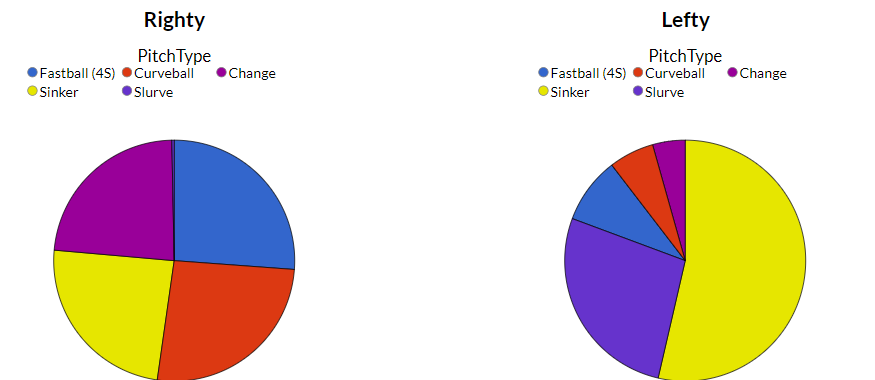
-
Mets (Manaea) vs Brewers (Montas): 10/2/24, 6:38pm
Jake McKibbin replied to Brock Beauchamp's topic in Archived Game Threads
Yeah really wouldn't mind seeing this. I also feel like Haase is the kind of bat that could also have a big moment, love his pitch calling. Then again I'm not so sure it matters as much with Montas (in his Brewers pitch arsenal) Vs a Civale -
I think he had something like 19" IVB on his fastball that game, I remember getting insanely excited about it! May not get that sort of movement today but we live in hope
-
I can't quite believe that after watching, writing about and delving into the minutiae of this team for 162 games that I'm this excited for tonight. I'm in work and on the edge of my seat with butterflies. LFGGGGGGG
.png.ede1c57c55d23c5a54e0d122e501c3bf.png)