



Jake McKibbin
-
Posts
2,395 -
Joined
-
Last visited
-
Days Won
6
Content Type
Profiles
Forums
Blogs
Events
News
2026 Milwaukee Brewers Top Prospects Ranking
Milwaukee Brewers Videos
2022 Milwaukee Brewers Draft Picks
Milwaukee Brewers Free Agent & Trade Rumors, Notes, & Tidbits
Guides & Resources
2023 Milwaukee Brewers Draft Picks
2024 Milwaukee Brewers Draft Picks
The Milwaukee Brewers Players Project
2025 Milwaukee Brewers Draft Pick Tracker
2026 Milwaukee Brewers Draft Tracker: Picks & Bonuses
Store
Downloads
Gallery
Everything posted by Jake McKibbin
-
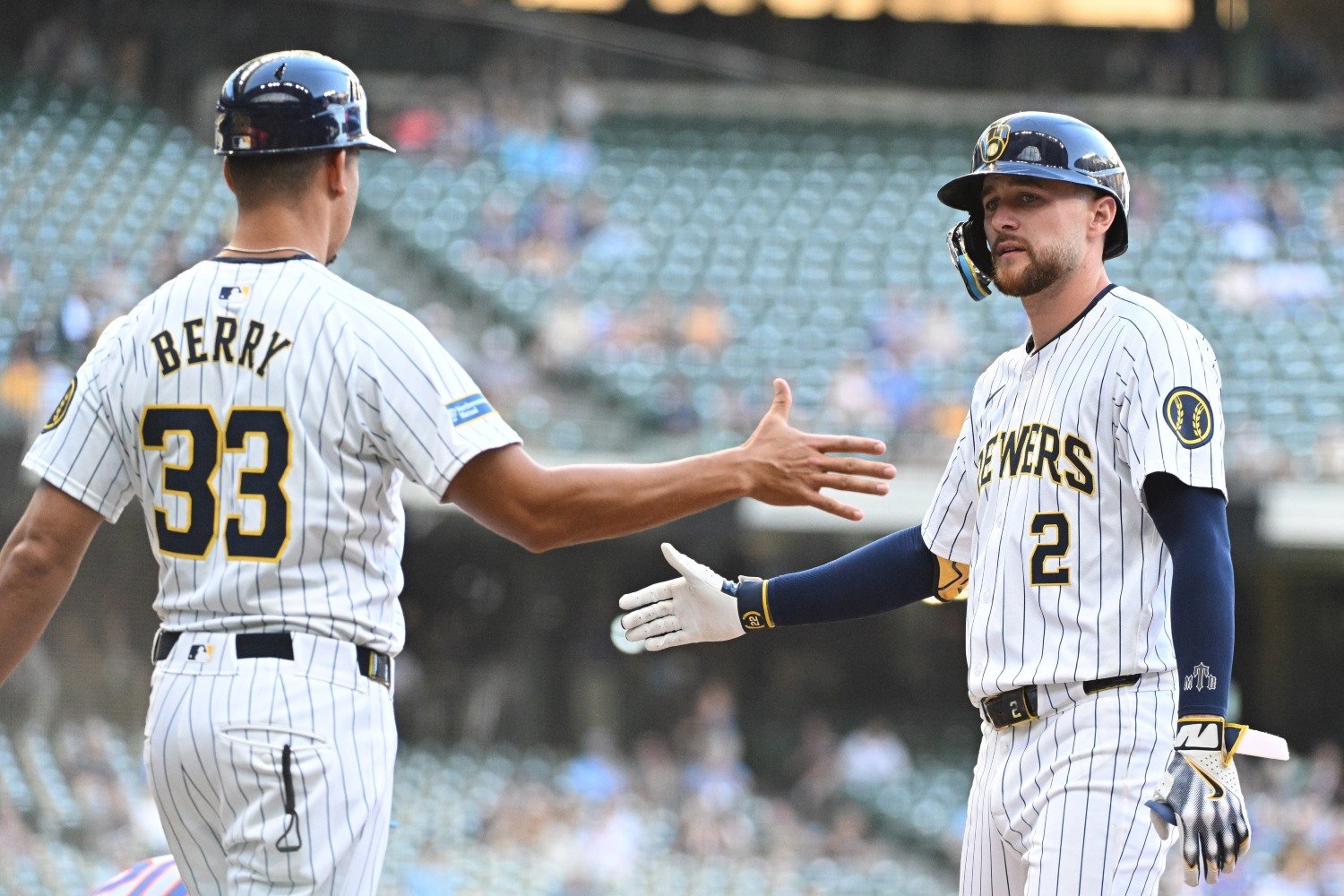 The Milwaukee Brewers have used their running game to eke out advantages throughout the season, and it’s been vital to their success. Christian Yelich may not be here, but Brice Turang, Garrett Mitchell, Blake Perkins, Sal Frelick and even (somehow) Willy Adames have been stealing at will. They haven’t just attempted a lot, they’ve also been incredibly efficient, with a season-high 91.5% stolen base efficiency in September. When the New York Mets come back to town for the Wild Card Series Tuesday afternoon, they'll provide an appealing target for this pack of marauders. The combination of Francisco Alvarez and Luis Torrens have struggled, catching just 25% of runners this season. Admittedly, that's still better than the league average this year, but it's bad enough to make attempting steals a winning proposition, as long as you stick to your capable runners. Alvarez has a cannon of an arm, but that hasn’t translated to brilliant control of the running game this year. His accuracy is scattershot and his pop times, while eye-popping at the high end, are inconsistent. Meanwhile, Torrens struggles mightily. A lot of New York's pitchers have slow movements to the plate, further exacerbating the issue. Plenty of bases are there for the taking by the Crew. For an offense that goes through power slumps like the Brewers' does, getting runners into scoring position will be essential. They can move runners up with bunts or the hit-and-run, but it's the steal attempt that best suits their style--thanks, especially, to what it does to opposing pitchers' heads. The Brewers offensive profile can be captured in one word: pressure. They want to constantly rush and overwhelm pitchers, giving them more to think about than just their current at-bat, and the numbers bear out an interesting trend. Pressure ramps up as ducks get on the pond. Nerves start to rise; the crowd gets loud. With a man on second base and first base open, the Brewers lead all playoff teams with a 15.1% walk rate. That open base seems to result in more lax command from pitchers with a “base open,” and Quintin Berry's boys have sought to create that situation all year, as a way to increase that pressure. You’ll notice the Brewers running regularly with the count in the hitter's favor, which few teams do. No other club has attempted as many steals in two- and three-ball counts as Milwaukee, at 67--and they've been successful over 85% of the time. If running in those spots isn't resulting in an undue number of outs and is distracting the pitcher or ratcheting up the likelihood of a walk, that pressure is rising sharply every time they take off. Having those runners on base is where the Brewers have thrived this season. The more they get on, the better they have produced at the plate: Finding ways to eke out an extra base runner has allowed the Brewers to manipulate the fine margins of their performance, and the ability to steal as they have has positively affected this in a variety of ways outside of merely having a runner in scoring position. They’re pressuring a pitcher into mistakes when they get on, especially if it's one of their many speedsters taking a station. On a more simplistic note, FanGraphs calculates the run value of a stolen base as around 0.3 runs. The effect of a caught stealing is -0.6 runs. The Brewers have averaged three stolen bases per game against the Mets this season and, without getting caught, that’s equated to almost a run per game in statistical estimations. Add in whatever concomitant benefits they accrue by starting runners, or threatening to, and they're deriving huge value from that aspect of the contest. In a playoff scenario that could be decided by the finest of margins, the value of the stolen base may be the difference needed to propel this Milwaukee franchise into the Division Series. They drew the perfect first opponent to deploy their favorite tool.
 -
The Brewers rank second in stolen bases this season. They’ve stolen 17 bases in six games against their Wild Card Series rivals, without being caught even once. Is this the edge they need to win the week? Image courtesy of © Michael McLoone-Imagn Images The Milwaukee Brewers have used their running game to eke out advantages throughout the season, and it’s been vital to their success. Christian Yelich may not be here, but Brice Turang, Garrett Mitchell, Blake Perkins, Sal Frelick and even (somehow) Willy Adames have been stealing at will. They haven’t just attempted a lot, they’ve also been incredibly efficient, with a season-high 91.5% stolen base efficiency in September. When the New York Mets come back to town for the Wild Card Series Tuesday afternoon, they'll provide an appealing target for this pack of marauders. The combination of Francisco Alvarez and Luis Torrens have struggled, catching just 25% of runners this season. Admittedly, that's still better than the league average this year, but it's bad enough to make attempting steals a winning proposition, as long as you stick to your capable runners. Alvarez has a cannon of an arm, but that hasn’t translated to brilliant control of the running game this year. His accuracy is scattershot and his pop times, while eye-popping at the high end, are inconsistent. Meanwhile, Torrens struggles mightily. A lot of New York's pitchers have slow movements to the plate, further exacerbating the issue. Plenty of bases are there for the taking by the Crew. For an offense that goes through power slumps like the Brewers' does, getting runners into scoring position will be essential. They can move runners up with bunts or the hit-and-run, but it's the steal attempt that best suits their style--thanks, especially, to what it does to opposing pitchers' heads. The Brewers offensive profile can be captured in one word: pressure. They want to constantly rush and overwhelm pitchers, giving them more to think about than just their current at-bat, and the numbers bear out an interesting trend. Pressure ramps up as ducks get on the pond. Nerves start to rise; the crowd gets loud. With a man on second base and first base open, the Brewers lead all playoff teams with a 15.1% walk rate. That open base seems to result in more lax command from pitchers with a “base open,” and Quintin Berry's boys have sought to create that situation all year, as a way to increase that pressure. You’ll notice the Brewers running regularly with the count in the hitter's favor, which few teams do. No other club has attempted as many steals in two- and three-ball counts as Milwaukee, at 67--and they've been successful over 85% of the time. If running in those spots isn't resulting in an undue number of outs and is distracting the pitcher or ratcheting up the likelihood of a walk, that pressure is rising sharply every time they take off. Having those runners on base is where the Brewers have thrived this season. The more they get on, the better they have produced at the plate: Finding ways to eke out an extra base runner has allowed the Brewers to manipulate the fine margins of their performance, and the ability to steal as they have has positively affected this in a variety of ways outside of merely having a runner in scoring position. They’re pressuring a pitcher into mistakes when they get on, especially if it's one of their many speedsters taking a station. On a more simplistic note, FanGraphs calculates the run value of a stolen base as around 0.3 runs. The effect of a caught stealing is -0.6 runs. The Brewers have averaged three stolen bases per game against the Mets this season and, without getting caught, that’s equated to almost a run per game in statistical estimations. Add in whatever concomitant benefits they accrue by starting runners, or threatening to, and they're deriving huge value from that aspect of the contest. In a playoff scenario that could be decided by the finest of margins, the value of the stolen base may be the difference needed to propel this Milwaukee franchise into the Division Series. They drew the perfect first opponent to deploy their favorite tool. View full article
-
Recent World Series contenders have often had a high-octane hitter leading the charge. From Randy Arozarena in 2020 to Jeremy Pena in 2022, Corbin Carroll in 2023, and maybe this young Brewers star in 2024? Image courtesy of © Michael McLoone-Imagn Images The young, energetic sparkplug isn’t a requirement of a world series team, but it is a common denominator among the underdog overachievers. Each of the Rays, Diamondbacks and Rangers were long shots to reach the World Series in their respective seasons, and those hot bats were a massive part of it, creating a wave of momentum that showed up time and again in the big moments. Some players live for the spotlight; others recoil from it. The Brewers may have just the player to do the former in October. Before I start, Willy Adames is also the kind of player who has tended to rise to the occasion in big moments, and may very well be at the center of any and all success the Brewers have this postseason. So could William Contreras, Rhys Hoskins and Jackson Chourio be. However, in terms of the energy and excitement he creates on the field in a multitude of different ways, perhaps no one is quite so likely to propel the Brewers forward as Garrett Mitchell. What Makes A Playoff Star? First of all, the variety of ways in which they can affect the game is important. Corbin Carroll, Randy Arozarena, Jeremy Pena and Evan Carter all produced strong results in the batter's box, but their contributions ranged into some miraculous defensive plays and/or some havoc on the basepaths, too. When crunch time comes around, the other essential is the ability to hit for power. Home runs and extra-base hits decide playoff games and while a streaky hitter can get fortunate enough in a single month to compensate for a poor hit tool, a lack of power is a bit less negotiable. Would anyone expect Sal Frelick to hit multiple home runs in a month, or even one long ball in the playoffs? Some combination of power, speed and defense is, therefore, essential to have a more lasting impact in the playoffs, and Garrett Mitchell possesses the ability to do all three of these. He’s an elite center fielder, with an Ultimate Zone Rating per 150 games (UZR/150) of 9.1 that places him 15th in the league, ahead of Blake Perkins and Sal Frelick. He covers a lot of ground and has an average throw of 89.8 mph from the outfield, to boot. Mitchell's Statcast sprint speed is 29.5 feet per second, one of the highest in the game, and he uses this well on the basepaths. The jumps can be a little iffy at times, and he doesn’t always get great leads, but that speed can more than cover him. His reads in the field have looked better as of late. Then there’s that bat. That electricity he generates whenever he's at the plate; Is It Fluke Or Flair? Mitchell’s profile as a hitter is baffling in a lot of ways, given the poor contact skills and high ground-ball rates, but what he’s showing is some real progression in how he elevates the ball and how he occasionally squares up those high heaters. He isn’t the complete player, by any means, when it comes to his hit tool, but improved selectivity has allowed him to access his raw power in games with relative regularity, on the way to slugging .574 in the month of September and posting a .906 OPS over the last three weeks. Part of this is attributable to how pitchers are attacking him, and it seems like their game plan is slightly awry for a hitter who struggles so mightily with high fastballs. Only 50% of the pitches Mitchell has seen in September have been fastballs or sinkers. You’d expect that to rise significantly in October, but Mitchell has been his own deterrent: He swings and misses a lot at the top of the strike zone, but Mitchell has done a decent job of laying off those pitches early in the count and not expanding above the strike zone. He sports an 18.8% chase rate on fastballs in September. When pitchers have missed slightly down in the zone, Mitchell has crushed the ball. Against right-handed fastballs, he hits the ball over 95 miles per hour off the bat and finds a premium launch angle 46.2% of the time this month, both of which are very strong marks. Narrowing the target and squeezing pitchers has been mightily effective, even against the cream of the crop like Zack Wheeler: YUs5TkFfWGw0TUFRPT1fVlZKVUFWQUNBRkFBWEFGV0FnQUFDVmRSQUFBQ1VWZ0FCMU5YQ0FJTUJsSlhWRk1G.mp4 You would expect the elite pitchers with both command and raw stuff to be able to exploit his weaknesses, but to square up Wheeler’s fastball for a triple gives a good indication that Mitchell can continue to produce results in the playoffs despite the holes in his swing. Continuing to sting the ball as we move into October may allow Mitchell to shine on the big stage and be that difference-maker the Brewers will need for a deep playoff run. They have several bigger names who can shine in a big moment, but Garrett Mitchell is certainly one to watch as October draws near. Do you think Mitchell can be the difference maker this October? Can he drive the Brewers towards a World Series? Let us know your thoughts in the comments below! View full article
-
Can This Outfielder Be The Brewers' Sparkplug In October?
Jake McKibbin posted an article in Brewers
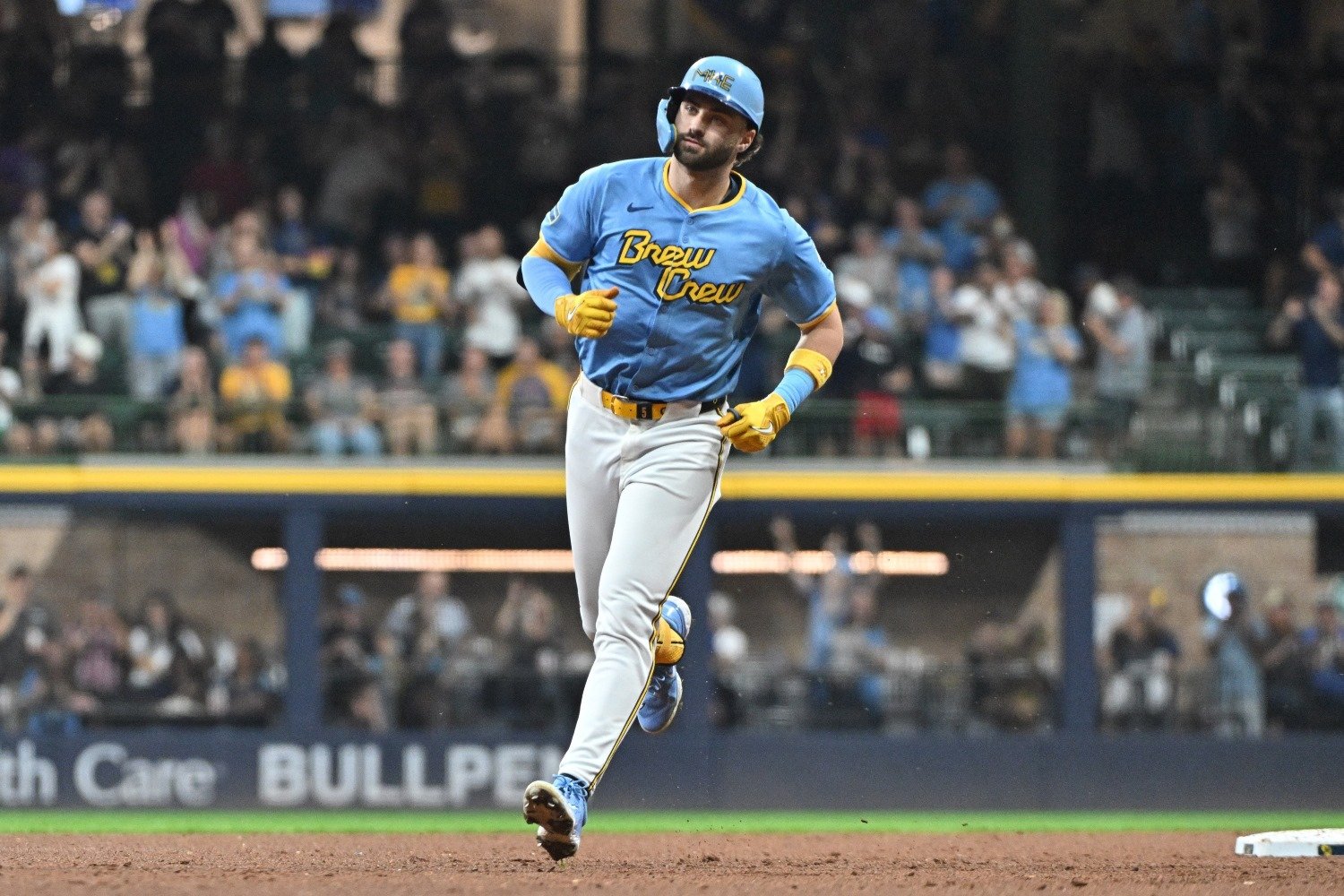 The young, energetic sparkplug isn’t a requirement of a world series team, but it is a common denominator among the underdog overachievers. Each of the Rays, Diamondbacks and Rangers were long shots to reach the World Series in their respective seasons, and those hot bats were a massive part of it, creating a wave of momentum that showed up time and again in the big moments. Some players live for the spotlight; others recoil from it. The Brewers may have just the player to do the former in October. Before I start, Willy Adames is also the kind of player who has tended to rise to the occasion in big moments, and may very well be at the center of any and all success the Brewers have this postseason. So could William Contreras, Rhys Hoskins and Jackson Chourio be. However, in terms of the energy and excitement he creates on the field in a multitude of different ways, perhaps no one is quite so likely to propel the Brewers forward as Garrett Mitchell. What Makes A Playoff Star? First of all, the variety of ways in which they can affect the game is important. Corbin Carroll, Randy Arozarena, Jeremy Pena and Evan Carter all produced strong results in the batter's box, but their contributions ranged into some miraculous defensive plays and/or some havoc on the basepaths, too. When crunch time comes around, the other essential is the ability to hit for power. Home runs and extra-base hits decide playoff games and while a streaky hitter can get fortunate enough in a single month to compensate for a poor hit tool, a lack of power is a bit less negotiable. Would anyone expect Sal Frelick to hit multiple home runs in a month, or even one long ball in the playoffs? Some combination of power, speed and defense is, therefore, essential to have a more lasting impact in the playoffs, and Garrett Mitchell possesses the ability to do all three of these. He’s an elite center fielder, with an Ultimate Zone Rating per 150 games (UZR/150) of 9.1 that places him 15th in the league, ahead of Blake Perkins and Sal Frelick. He covers a lot of ground and has an average throw of 89.8 mph from the outfield, to boot. Mitchell's Statcast sprint speed is 29.5 feet per second, one of the highest in the game, and he uses this well on the basepaths. The jumps can be a little iffy at times, and he doesn’t always get great leads, but that speed can more than cover him. His reads in the field have looked better as of late. Then there’s that bat. That electricity he generates whenever he's at the plate; Is It Fluke Or Flair? Mitchell’s profile as a hitter is baffling in a lot of ways, given the poor contact skills and high ground-ball rates, but what he’s showing is some real progression in how he elevates the ball and how he occasionally squares up those high heaters. He isn’t the complete player, by any means, when it comes to his hit tool, but improved selectivity has allowed him to access his raw power in games with relative regularity, on the way to slugging .574 in the month of September and posting a .906 OPS over the last three weeks. Part of this is attributable to how pitchers are attacking him, and it seems like their game plan is slightly awry for a hitter who struggles so mightily with high fastballs. Only 50% of the pitches Mitchell has seen in September have been fastballs or sinkers. You’d expect that to rise significantly in October, but Mitchell has been his own deterrent: He swings and misses a lot at the top of the strike zone, but Mitchell has done a decent job of laying off those pitches early in the count and not expanding above the strike zone. He sports an 18.8% chase rate on fastballs in September. When pitchers have missed slightly down in the zone, Mitchell has crushed the ball. Against right-handed fastballs, he hits the ball over 95 miles per hour off the bat and finds a premium launch angle 46.2% of the time this month, both of which are very strong marks. Narrowing the target and squeezing pitchers has been mightily effective, even against the cream of the crop like Zack Wheeler: YUs5TkFfWGw0TUFRPT1fVlZKVUFWQUNBRkFBWEFGV0FnQUFDVmRSQUFBQ1VWZ0FCMU5YQ0FJTUJsSlhWRk1G.mp4 You would expect the elite pitchers with both command and raw stuff to be able to exploit his weaknesses, but to square up Wheeler’s fastball for a triple gives a good indication that Mitchell can continue to produce results in the playoffs despite the holes in his swing. Continuing to sting the ball as we move into October may allow Mitchell to shine on the big stage and be that difference-maker the Brewers will need for a deep playoff run. They have several bigger names who can shine in a big moment, but Garrett Mitchell is certainly one to watch as October draws near. Do you think Mitchell can be the difference maker this October? Can he drive the Brewers towards a World Series? Let us know your thoughts in the comments below!
 -
AZ Fall League - Rosters, Schedule, Streaming, etc.
Jake McKibbin replied to nate82's topic in Brewers Minor League Talk
Coleman Crow was always expected, but can't wait to see him in action, Reports of a very talented arm if he can stay healthy with a big IVB fastball -
He is the second highest in MLB behind Dylan Cease of qualified starting pitchers. As shown above, I'm okay if those misses are above the zone, his command isn't a strong point to start with and I'd much prefer a ball than him leaving something over the heart of the plate judging by the results
-
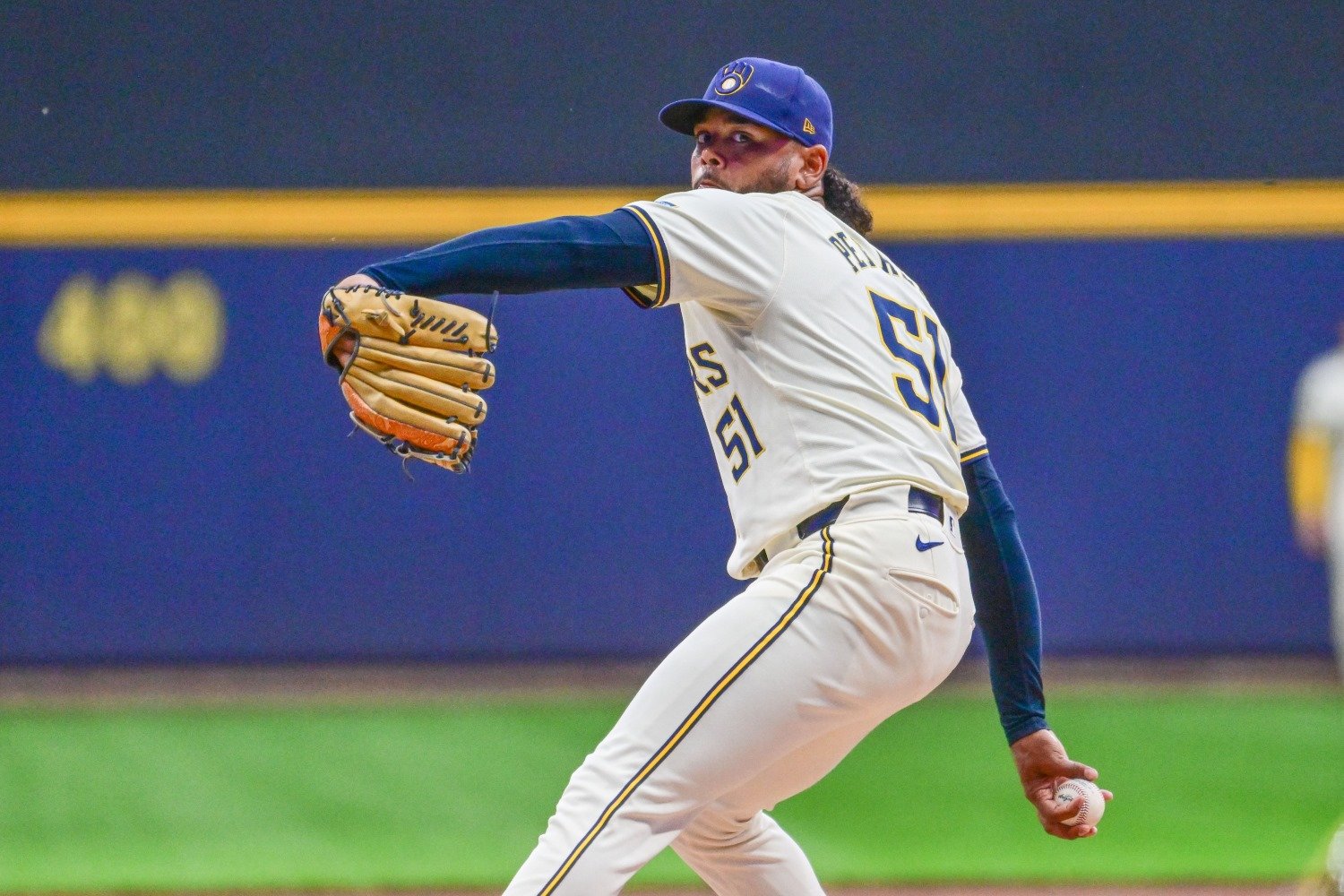 Freddy Peralta would confess that this season hasn’t gone to plan. He has tinkered a lot with his approach and his release point over the course of the campaign, and his most recent version of that seems to involve staying out of the heart of the zone altogether. So far in September, Peralta has his lowest called-strike rate (20%) and highest non-competitive pitch rate (23%) on the season, including just four called strikes in pitcher's counts this month out of 147 pitches thrown. He is getting more chases to help his overall line, and has been successful on the surface with a 3.60 ERA. Under the hood, though, his opponents have an .877 OPS this month, while his expected FIP has risen each month--from 2.93 in April up to 4.84 in September. Declining strikeouts and increased walks aren’t productive for any pitcher, so the question becomes: What epitomizes a good start for Freddy Peralta? Commanding The Fastball In Pitcher’s Counts One of the more frustrating elements of a Peralta start has been how regularly he gets ahead of a hitter, only to throw wasteful pitches and let them get back into the at-bat. It’s happened time and again, but there has been a method to the madness, especially with the fastball. Compare starts where Peralta has given up fewer than two earned runs with those in which he’s given up three runs or more, and a trend emerges: In pitcher’s counts, when Peralta has thrown more uncompetitive fastballs, it’s correlated with a swinging strike rate increase that offsets the reduction in called strikes. The "wilder" he's been out of the zone with the fastball in favorable counts, the more success he's had with limiting runs. When reviewing the pitch locations, it all starts to make a little more sense: On days that turn out to be good ones, that fastball is in the upper third or above the strike zone in pitcher’s counts. His misses are up, out of reach and unlikely to induce a swing, but out of danger, too. Contrast that to the more damaging starts, where his misses with the fastball are down--right in any hitter's wheelhouse. Peralta's low arm slot and good induced vertical break lead to a great vertical approach angle (VAA) on his fastball, meaning hitters have a hard time getting on plane with it at the top of the zone. The problem is that a pitcher's VAA will drop as he locates lower down in the zone, and the heater can be a lot easier to square up as a result. You can see the difference below, depending on location: The closer the VAA is to "0", the closer the pitch is to tracing a trajectory parallel to the ground as it nears the plate. A mark of above -4° is truly elite, so that -3.38° is absurd. The -4.47°, however, is more middling, and the less hoppy fastball in the heart of the zone gets squared up a lot more often--as you can see by the expected weighted on-base average (which measures the expected results, based on the quality and frequency of contact). Taking all this into account, even though it can get uncompetitive above the zone at times, Peralta has to keep that fastball up--especially in pitcher’s counts, when a waste pitch isn't any great sin. He can reset a hitter's eye level and get some ugly swings because of the deceptiveness of the pitch, or he can miss up and survive with nothing worse than a less friendly count. But he cannot afford to drop it down into the meat of the zone, where hitters find it a lot easier to slug against him: The stuff playing off the high fastball has been enormously effective as well. For pitches following a fastball in the upper third of the zone on a pitcher’s count, hitters are managing a batting average of .158 and slugging just .190 on the season. They have a 33% chase rate and 34% whiff rate. It seems safe to say that the fastball command will go a long way toward both his and the Brewers' results in October. That command doesn't necessarily mean staying in the strike zone, though. On the contrary, it means staying away from the middle and lower third of the zone when he gets ahead in the count, even if that means being well clear of the zone altogether. Mixing It Up In Hitter’s Counts When he falls behind (into 3-0, 3-1 and 2-0 counts), Peralta has seen a lot of loud contact. In part, that's due to a lack of variety in his arsenal during these counts. A 51% hard-hit rate, 40% sweet-spot launch angle rate and average exit velocity of almost 95 mph are not ideal. Neither is a home run rate of 9.1% in those counts. Limiting the long ball and the damage it can do with men on base will be pivotal for Peralta, and there might be a way he can mix his arsenal up to navigate away from some of that damage. Take a look at his pitch usage in 3-0 and 3-1 counts this season: Peralta leans predominantly on his fastball when he gets behind in the count, as a lot of pitchers do. The league has leaned away from that trend over the years, though, and with some good reason. Defying the league's trend in this regard hasn't served Peralta well. Interestingly, Peralta is more effective at garnering called strikes with his breaking pitches in those counts than he is with his fastball, and the results of those pitches have been markedly better. Hitters still sit fastball in what used to be called "fastball counts," especially against Peralta, who still hews to that notion. Thus, anything else fools them. While the changeup has gotten wild at times, the slider and curveball in Peralta’s arsenal have been taken for strikes more often than not, and when hitters have swung, they’ve whiffed at a 31% clip. Most importantly, fewer balls are put in play, and when they are, the damage is considerably lower. (I have extended this to include 2-1 and 1-0 counts, to increase the sample size from nine batted balls in play.): I’m not saying Peralta should leave the fastball in his locker, but mixing in more breaking pitches when he falls behind, especially against the more dangerous hitters he'll encounter next week, could allow him to mitigate the damage significantly. Even if he includes the changeup to keep hitters off-balance and accepts that he may lose the pitch, that walk is okay every now and then to avoid the long hit. An ace's consistency has eluded Peralta this year, in his first season as the nominal staff ace for the Crew. There is a pattern to his more successful outings, however, and although it may be a fine line to walk, he has shown the skills to execute in patches throughout the year. I firmly believe Peralta can mow down a lineup several times through the order, if he can miss in the right direction with his fastball and mix his arsenal up more in hitter’s counts. What do you think of the above? Do you think Freddy Peralta is capable of executing on the biggest stage? Or have you spotted any other keys to his success? Let us know your thoughts in the comments below!
 -
Every pitcher has different keys to success. These are the ones that will unlock or imprison the prodigious talent of the Brewers' live-armed ace. Image courtesy of © Benny Sieu-Imagn Images Freddy Peralta would confess that this season hasn’t gone to plan. He has tinkered a lot with his approach and his release point over the course of the campaign, and his most recent version of that seems to involve staying out of the heart of the zone altogether. So far in September, Peralta has his lowest called-strike rate (20%) and highest non-competitive pitch rate (23%) on the season, including just four called strikes in pitcher's counts this month out of 147 pitches thrown. He is getting more chases to help his overall line, and has been successful on the surface with a 3.60 ERA. Under the hood, though, his opponents have an .877 OPS this month, while his expected FIP has risen each month--from 2.93 in April up to 4.84 in September. Declining strikeouts and increased walks aren’t productive for any pitcher, so the question becomes: What epitomizes a good start for Freddy Peralta? Commanding The Fastball In Pitcher’s Counts One of the more frustrating elements of a Peralta start has been how regularly he gets ahead of a hitter, only to throw wasteful pitches and let them get back into the at-bat. It’s happened time and again, but there has been a method to the madness, especially with the fastball. Compare starts where Peralta has given up fewer than two earned runs with those in which he’s given up three runs or more, and a trend emerges: In pitcher’s counts, when Peralta has thrown more uncompetitive fastballs, it’s correlated with a swinging strike rate increase that offsets the reduction in called strikes. The "wilder" he's been out of the zone with the fastball in favorable counts, the more success he's had with limiting runs. When reviewing the pitch locations, it all starts to make a little more sense: On days that turn out to be good ones, that fastball is in the upper third or above the strike zone in pitcher’s counts. His misses are up, out of reach and unlikely to induce a swing, but out of danger, too. Contrast that to the more damaging starts, where his misses with the fastball are down--right in any hitter's wheelhouse. Peralta's low arm slot and good induced vertical break lead to a great vertical approach angle (VAA) on his fastball, meaning hitters have a hard time getting on plane with it at the top of the zone. The problem is that a pitcher's VAA will drop as he locates lower down in the zone, and the heater can be a lot easier to square up as a result. You can see the difference below, depending on location: The closer the VAA is to "0", the closer the pitch is to tracing a trajectory parallel to the ground as it nears the plate. A mark of above -4° is truly elite, so that -3.38° is absurd. The -4.47°, however, is more middling, and the less hoppy fastball in the heart of the zone gets squared up a lot more often--as you can see by the expected weighted on-base average (which measures the expected results, based on the quality and frequency of contact). Taking all this into account, even though it can get uncompetitive above the zone at times, Peralta has to keep that fastball up--especially in pitcher’s counts, when a waste pitch isn't any great sin. He can reset a hitter's eye level and get some ugly swings because of the deceptiveness of the pitch, or he can miss up and survive with nothing worse than a less friendly count. But he cannot afford to drop it down into the meat of the zone, where hitters find it a lot easier to slug against him: The stuff playing off the high fastball has been enormously effective as well. For pitches following a fastball in the upper third of the zone on a pitcher’s count, hitters are managing a batting average of .158 and slugging just .190 on the season. They have a 33% chase rate and 34% whiff rate. It seems safe to say that the fastball command will go a long way toward both his and the Brewers' results in October. That command doesn't necessarily mean staying in the strike zone, though. On the contrary, it means staying away from the middle and lower third of the zone when he gets ahead in the count, even if that means being well clear of the zone altogether. Mixing It Up In Hitter’s Counts When he falls behind (into 3-0, 3-1 and 2-0 counts), Peralta has seen a lot of loud contact. In part, that's due to a lack of variety in his arsenal during these counts. A 51% hard-hit rate, 40% sweet-spot launch angle rate and average exit velocity of almost 95 mph are not ideal. Neither is a home run rate of 9.1% in those counts. Limiting the long ball and the damage it can do with men on base will be pivotal for Peralta, and there might be a way he can mix his arsenal up to navigate away from some of that damage. Take a look at his pitch usage in 3-0 and 3-1 counts this season: Peralta leans predominantly on his fastball when he gets behind in the count, as a lot of pitchers do. The league has leaned away from that trend over the years, though, and with some good reason. Defying the league's trend in this regard hasn't served Peralta well. Interestingly, Peralta is more effective at garnering called strikes with his breaking pitches in those counts than he is with his fastball, and the results of those pitches have been markedly better. Hitters still sit fastball in what used to be called "fastball counts," especially against Peralta, who still hews to that notion. Thus, anything else fools them. While the changeup has gotten wild at times, the slider and curveball in Peralta’s arsenal have been taken for strikes more often than not, and when hitters have swung, they’ve whiffed at a 31% clip. Most importantly, fewer balls are put in play, and when they are, the damage is considerably lower. (I have extended this to include 2-1 and 1-0 counts, to increase the sample size from nine batted balls in play.): I’m not saying Peralta should leave the fastball in his locker, but mixing in more breaking pitches when he falls behind, especially against the more dangerous hitters he'll encounter next week, could allow him to mitigate the damage significantly. Even if he includes the changeup to keep hitters off-balance and accepts that he may lose the pitch, that walk is okay every now and then to avoid the long hit. An ace's consistency has eluded Peralta this year, in his first season as the nominal staff ace for the Crew. There is a pattern to his more successful outings, however, and although it may be a fine line to walk, he has shown the skills to execute in patches throughout the year. I firmly believe Peralta can mow down a lineup several times through the order, if he can miss in the right direction with his fastball and mix his arsenal up more in hitter’s counts. What do you think of the above? Do you think Freddy Peralta is capable of executing on the biggest stage? Or have you spotted any other keys to his success? Let us know your thoughts in the comments below! View full article
-
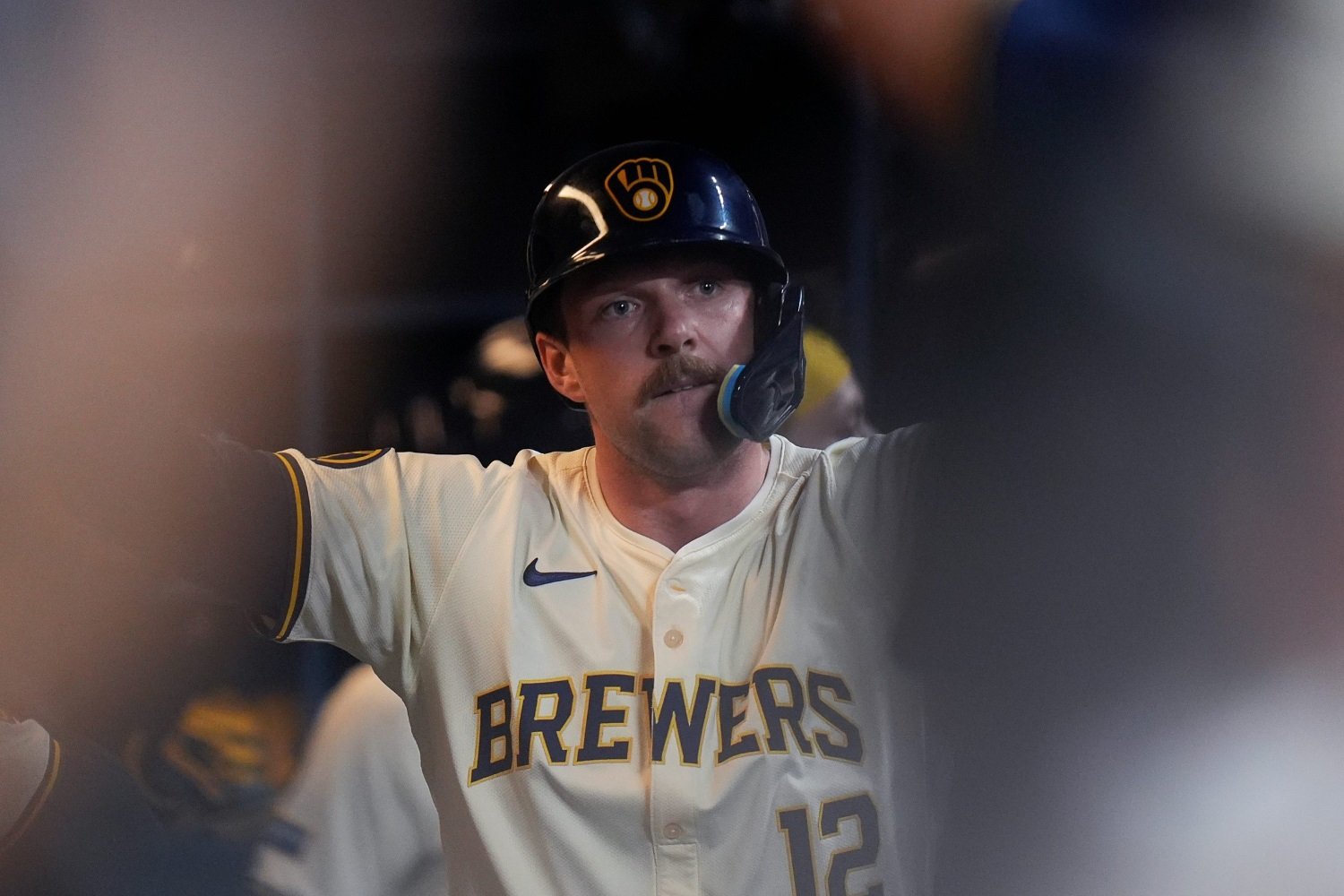 Rhys Hoskins has had a down year. He hasn’t been as productive as many hoped, despite lambasting 25 home runs on the year, but it seems important to break the year down into two segments for Hoskins, based on an early season hamstring injury: First 6 weeks - .233/.340/.474, 21% K rate, 11% BB rate, Sweet spot rate 30.7% June - August - .202/.272/.383, 31% K rate, 8% BB rate, Sweet spot rate 24.6% We shouldn't forget the damage Hoskins was doing early in the season as exactly the kind of slugger the Brewers dreamed on, but a combination of returning ahead of schedule for a trip to his old stomping ground in Philadelphia and a struggle with his approach at the plate brought some poor results over the ensuing three months. He was struggling to identify pitches and separate balls from strikes, while the contact he made dipped alarmingly. In September, however, there has been a large turnaround in the quality of plate appearances and contact Hoskins has produced, and a lot of this boost is coming from his approach on the outer third of the strike zone: Hoskins has four months in which his expected weighted on-base average (xwOBA) has been over .300 on the outer half of the plate. In each of those four months, he has gone to the opposite field over 20% of the time. Ignoring the small sample size in March, there is a clear correlation between Hoskins's quality of contact on outer-half pitches and how comfortable he has been going to right field--a factor that’s even more pronounced on fastballs. Then you have the pop-up issue. Until Aug. 31, Rhys Hoskins was popping up 14.1% of his batted balls in play, but that has dropped to just 3.1% in September, largely as a result of his change in approach. A lot of Hoskins's pop-ups came on balls above his hands on the inner third of the plate, but he's laid off those pitches and set his sights lower of late: Instead, the focus has shifted more into the middle-low section of the strike zone, where Hoskins had his lowest in-zone swing rate of any zone from May through August--despite it being one of his most prolific damage zones, with an expected slugging rate of .691: The improvement from Hoskins is twofold; he’s able to put better quality of contact on those outer-third pitches, put the ball in play to the opposite field with some hard contact, and lean into those pitches down in the zone that he’s historically destroyed. The strikeouts are still there. His .736 OPS in September doesn't seem all that impressive. But his underlying metrics are telling a different story, with an expected OPS of over .800 clearing the cloud of some batted-ball misfortune. There's a breakout coming from Hoskins. As he’s mentioned this year, performance and swing decisions are inextricably linked for him. It seems he may finally have hit on a formula for success, just in time for the playoff stretch.
 -
With a tweak in his approach, this Brewers slugger may be finding his form just in time for the playoffs. Image courtesy of © Jovanny Hernandez / Milwaukee Journal Sentinel / USA TODAY NETWORK via Imagn Images Rhys Hoskins has had a down year. He hasn’t been as productive as many hoped, despite lambasting 25 home runs on the year, but it seems important to break the year down into two segments for Hoskins, based on an early season hamstring injury: First 6 weeks - .233/.340/.474, 21% K rate, 11% BB rate, Sweet spot rate 30.7% June - August - .202/.272/.383, 31% K rate, 8% BB rate, Sweet spot rate 24.6% We shouldn't forget the damage Hoskins was doing early in the season as exactly the kind of slugger the Brewers dreamed on, but a combination of returning ahead of schedule for a trip to his old stomping ground in Philadelphia and a struggle with his approach at the plate brought some poor results over the ensuing three months. He was struggling to identify pitches and separate balls from strikes, while the contact he made dipped alarmingly. In September, however, there has been a large turnaround in the quality of plate appearances and contact Hoskins has produced, and a lot of this boost is coming from his approach on the outer third of the strike zone: Hoskins has four months in which his expected weighted on-base average (xwOBA) has been over .300 on the outer half of the plate. In each of those four months, he has gone to the opposite field over 20% of the time. Ignoring the small sample size in March, there is a clear correlation between Hoskins's quality of contact on outer-half pitches and how comfortable he has been going to right field--a factor that’s even more pronounced on fastballs. Then you have the pop-up issue. Until Aug. 31, Rhys Hoskins was popping up 14.1% of his batted balls in play, but that has dropped to just 3.1% in September, largely as a result of his change in approach. A lot of Hoskins's pop-ups came on balls above his hands on the inner third of the plate, but he's laid off those pitches and set his sights lower of late: Instead, the focus has shifted more into the middle-low section of the strike zone, where Hoskins had his lowest in-zone swing rate of any zone from May through August--despite it being one of his most prolific damage zones, with an expected slugging rate of .691: The improvement from Hoskins is twofold; he’s able to put better quality of contact on those outer-third pitches, put the ball in play to the opposite field with some hard contact, and lean into those pitches down in the zone that he’s historically destroyed. The strikeouts are still there. His .736 OPS in September doesn't seem all that impressive. But his underlying metrics are telling a different story, with an expected OPS of over .800 clearing the cloud of some batted-ball misfortune. There's a breakout coming from Hoskins. As he’s mentioned this year, performance and swing decisions are inextricably linked for him. It seems he may finally have hit on a formula for success, just in time for the playoff stretch. View full article
-
I looked at one point this season at the top 10 ranked players and how they fared, I think at the time I checked only two had an OPS of over .700. One was Leodalis de Vries who went straight to Low A, and is an absolute freak. Fernando Cruz got Cubs fans very excited but didn't really hit from the off. The Brewers had three above 1.000 at the same time one of whom was unranked, so I wouldn't look too much into it at all. A part of this is the amount of development that can be done in a short period of time on cleaning up swing paths with such raw players. It's aways going to be variable, but the work ethic and makeup of players is paramount to being able to develop and it's why the Brewers put so much stock in it. One very fascinating piece is the combination of power + athleticism rather than hit tools alone. All three of these guys seem to have that defensive capability, Acosta especially, with a power upside in there too. Can't wait to see what the Brewers do with them, and the other unnamed players.
-
October. World Series. The chalice by which every team is measured. The Brewers have a ticket to the dance once more, but what key factors will govern their success or failure on the big stage? Image courtesy of © Jovanny Hernandez / Milwaukee Journal Sentinel / USA TODAY NETWORK via Imagn Images For the sixth time in seven years, the Milwaukee Brewers have had a bite of the apple. However, since their 2018 run to the NLCS, the Brewers haven’t won a playoff series in October. Each variation of the team was unique in its way. Still, it seems safe to say that this Brewers unit is markedly different, if only because of the reduced reliance on the dominant starting pitching of recent years. The playoff rotation isn’t set in stone, and it’s likely that, outside of Devin Williams and Freddy Peralta, there will be a lot of mixing and matching based on feel and data from the season, which may put a strong emphasis on Pat Murphy. It also relies on what the Brewers have had all year, with everyone doing their bit, whether offensively in the big moments, getting key outs in pressure situations, or that slick defensive unit that saves runs time after time. That being said, there are some identifiable patterns for the Brewers in their performances this season that should translate to the playoffs. Defensive Sturdiness/Miscues Every team goes through its ups and downs in the regular season, but there has been a discernible link between the defense and the end result throughout the season. The Brewers have the 17th-best strikeout rate in baseball, meaning they need that defensive unit to perform like a top-10 outfit. Things tend to go sideways fairly rapidly when that doesn't happen, and there is no better example than Sunday vs. the Diamondbacks. The Brewers may have ended up winning, but things can escalate when you follow a catcher’s interference with a sloppy piece of play like this. And boy, did they escalate to the tune of a seven-run inning. What could have been a double play ball resulted in just one out while also keeping a hitter on second base, where, unbeknownst to them at the time, the Diamondbacks caught Frankie Montas tipping pitches. OGdZbFhfWGw0TUFRPT1fVXdOVkFWTlhCd1FBQ2dBS0FBQUFBVlZlQUFNSFZnVUFBMU5XQmxVQlZRcFJWVkVD (1).mp4 What could have been a double play ball resulted in just the one out while also keeping a hitter on second base where, unbeknownst at the time, the Diamondbacks caught Frankie Montas tipping pitches. Ortiz is not often prone to such mistakes, and the Brewers do have an elite defensive unit, ranking 3rd in Defensive Runs Saved (DRS) and 4th in Outs Above Average (OAA). However, they have had games where yips take hold, and each of their infield spots can become error-prone. This cannot happen if the Brewers are to go deep in October. Bunting and The Contact Play Managing in October is a fine line to walk across. It’s entirely okay to be quick on the hook if things go sideways, especially with the Brewers' bullpen. On the other hand, Murphy may need to resist the urge to meddle with his hitters at the plate. A big concern is how much Murphy leans into the bunt play in big situations, the success rate, and what the Brewers are looking to achieve. Bunting for a hit is absolutely okay if the infield is on their heels, but we have seen numerous times over the last few days how the Brewers have continued to bunt even with Eugenio Suarez in their face. The issue may extend past Murphy and onto the players who have tended to go to the bunt in the most significant moments, almost as a way of deflecting the spotlight off them. The other issue is that for a team with such a fondness for the contact play, having a corner infielder that close to the batter can be a recipe for disaster. The nuances of bunts' effects can be numerous and potentially detrimental. The Brewers, when they have a chance with the runner at third base, need to run this play almost by the book. OGdZbFhfWGw0TUFRPT1fVlZNQUFWTUJCUWNBV1ZFRVZRQUFDRlVFQUZsV1VBQUFVd1pRVlZFTUFGWlNDRlFE.mp4 Willy Adames had a brain-dead moment while on third with no outs to run into an out on the basepaths when he had a contact hitter in Brice Turang up next. It was a baffling decision, and the Brewers were lucky in such a tightly contested game that it didn’t cost them a win. In a big moment with momentum so crucial in a playoff series, the choice of bunting or not, running or not, could either hurt or propel the Brewers. Pat Murphy has to strike a balance between trusting his players' abilities and eking out a run of the manufactured variety. Can The Starting Pitching Get Through Unscathed? The Brewers' likely three-headed rotation for a wildcard series is some combination of Tobias Myers, Freddy Peralta, and Frankie Montas. In getting through an order on the first two occasions, all three of them have an OPS against of under .700 and have been highly effective: None of the above, however, have been good when facing a lineup for the third time when hitters seem better to foul off good offerings and square up mis-located pitches. None of them should expect to go through the top of the lineup a third time based on success this year with relatively quick hooks for all involved. Additional wrinkles may be thrown into the mix, such as left-handed openers or even right-handed ones, to negate facing the top of the lineup even twice. The Brewers, with the array of arms at their disposal, can go in a lot of different ways, but getting through this period relatively unscathed will be pivotal when facing some of the best arms in the sport. Playoffs can be a great equalizer, but the Brewers lack an arm that can shut down the best lineups for 6+ innings, and as such, they will have to compensate for this. How effectively they can get through the first half of the game, however, they set themselves up to do it, will be critical. Hot, Streaky Hitters Baby (With A Floor) One reason the Brewers' early exit from the playoffs in 2023 was a lack of thump in the lineup despite consistent traffic on the basepaths. The Brewers just couldn't get that big hit to open the scoring up compared to a Diamondbacks offense that just cut loose. The Brewers in 2024 have configured themselves to be pesky, fast, and powerful as a collective offense. As with all offenses, however, there is a penchant for going as Hot and Cold as Katy Perry, but the Brewers have managed to control such slumps far better than most teams in the league. They can score in various ways, but at the end of the day, they will need that thump to show up with men on base to stamp some authority on the 2024 playoffs. Rhys Hoskins may be heating up. Willy Adames is streaky but a game-changer in big moments. Jackson Chourio has been elite for most of the season now. William Contreras and Garrett Mitchell have been firing on all cylinders. Not to mention the potential of Gary Sanchez and Jake Bauers running into a ball. They can hit the long ball in a way the 2023 offense did not, but whether that shows up in a short series with potentially only two games is anyone's guess. That's where the grinding, tough at-bats to get on base will pay dividends for the Brewers, who can find a way to scratch across 3-4 runs even if their offense doesn't fire as planned. That high floor is incredibly valuable in the playoffs, but make no mistake, if the Brewers are to make a deep run, they'll need their big moment, big power hitters to turn the screw. Confidence, Belief, and a Fast Start The biggest spotlights test the mentality of players more than anything else. This Brewers squad is young, and many are in uncharted territory, or at least barely charted territory. It would be safe to assume that nerves flying can cause doubt, insecurity, and tension that disrupts every little movement on the field. How Pat Murphy and the veterans in the Brewers clubhouse can manage this will be integral to their success, creating a relaxed atmosphere that edges towards excitement over fear. However, there is only so much you can do from the clubhouse, meaning the Brewers leaders on that field need to set the tone. After scoring that first run, Adames spoke of a belief at 8-1 down against the Diamondbacks. Getting on the board early will relieve much of that tension; however, they do so. A young team can easily be swept up quickly in the momentum of a series, and it's going to be absolutely vital that players come out and perform to a level they're capable of. The Brewers have struggled offensively in previous playoff iterations, meaning how they score runs will be the subject of the most intense scrutiny in the build-up to the wildcard games. There will be pressure, and how they rise to that pressure will be fascinating to follow, especially with a boisterous crowd at their backs. What do you think are the Brewers' keys to success in October? Have you any specific players you think are vital to the cause? Let us know your thoughts in the comments below! View full article
-
The Five Keys To Playoff Success For The Milwaukee Brewers
Jake McKibbin posted an article in Brewers
 For the sixth time in seven years, the Milwaukee Brewers have had a bite of the apple. However, since their 2018 run to the NLCS, the Brewers haven’t won a playoff series in October. Each variation of the team was unique in its way. Still, it seems safe to say that this Brewers unit is markedly different, if only because of the reduced reliance on the dominant starting pitching of recent years. The playoff rotation isn’t set in stone, and it’s likely that, outside of Devin Williams and Freddy Peralta, there will be a lot of mixing and matching based on feel and data from the season, which may put a strong emphasis on Pat Murphy. It also relies on what the Brewers have had all year, with everyone doing their bit, whether offensively in the big moments, getting key outs in pressure situations, or that slick defensive unit that saves runs time after time. That being said, there are some identifiable patterns for the Brewers in their performances this season that should translate to the playoffs. Defensive Sturdiness/Miscues Every team goes through its ups and downs in the regular season, but there has been a discernible link between the defense and the end result throughout the season. The Brewers have the 17th-best strikeout rate in baseball, meaning they need that defensive unit to perform like a top-10 outfit. Things tend to go sideways fairly rapidly when that doesn't happen, and there is no better example than Sunday vs. the Diamondbacks. The Brewers may have ended up winning, but things can escalate when you follow a catcher’s interference with a sloppy piece of play like this. And boy, did they escalate to the tune of a seven-run inning. What could have been a double play ball resulted in just one out while also keeping a hitter on second base, where, unbeknownst to them at the time, the Diamondbacks caught Frankie Montas tipping pitches. OGdZbFhfWGw0TUFRPT1fVXdOVkFWTlhCd1FBQ2dBS0FBQUFBVlZlQUFNSFZnVUFBMU5XQmxVQlZRcFJWVkVD (1).mp4 What could have been a double play ball resulted in just the one out while also keeping a hitter on second base where, unbeknownst at the time, the Diamondbacks caught Frankie Montas tipping pitches. Ortiz is not often prone to such mistakes, and the Brewers do have an elite defensive unit, ranking 3rd in Defensive Runs Saved (DRS) and 4th in Outs Above Average (OAA). However, they have had games where yips take hold, and each of their infield spots can become error-prone. This cannot happen if the Brewers are to go deep in October. Bunting and The Contact Play Managing in October is a fine line to walk across. It’s entirely okay to be quick on the hook if things go sideways, especially with the Brewers' bullpen. On the other hand, Murphy may need to resist the urge to meddle with his hitters at the plate. A big concern is how much Murphy leans into the bunt play in big situations, the success rate, and what the Brewers are looking to achieve. Bunting for a hit is absolutely okay if the infield is on their heels, but we have seen numerous times over the last few days how the Brewers have continued to bunt even with Eugenio Suarez in their face. The issue may extend past Murphy and onto the players who have tended to go to the bunt in the most significant moments, almost as a way of deflecting the spotlight off them. The other issue is that for a team with such a fondness for the contact play, having a corner infielder that close to the batter can be a recipe for disaster. The nuances of bunts' effects can be numerous and potentially detrimental. The Brewers, when they have a chance with the runner at third base, need to run this play almost by the book. OGdZbFhfWGw0TUFRPT1fVlZNQUFWTUJCUWNBV1ZFRVZRQUFDRlVFQUZsV1VBQUFVd1pRVlZFTUFGWlNDRlFE.mp4 Willy Adames had a brain-dead moment while on third with no outs to run into an out on the basepaths when he had a contact hitter in Brice Turang up next. It was a baffling decision, and the Brewers were lucky in such a tightly contested game that it didn’t cost them a win. In a big moment with momentum so crucial in a playoff series, the choice of bunting or not, running or not, could either hurt or propel the Brewers. Pat Murphy has to strike a balance between trusting his players' abilities and eking out a run of the manufactured variety. Can The Starting Pitching Get Through Unscathed? The Brewers' likely three-headed rotation for a wildcard series is some combination of Tobias Myers, Freddy Peralta, and Frankie Montas. In getting through an order on the first two occasions, all three of them have an OPS against of under .700 and have been highly effective: None of the above, however, have been good when facing a lineup for the third time when hitters seem better to foul off good offerings and square up mis-located pitches. None of them should expect to go through the top of the lineup a third time based on success this year with relatively quick hooks for all involved. Additional wrinkles may be thrown into the mix, such as left-handed openers or even right-handed ones, to negate facing the top of the lineup even twice. The Brewers, with the array of arms at their disposal, can go in a lot of different ways, but getting through this period relatively unscathed will be pivotal when facing some of the best arms in the sport. Playoffs can be a great equalizer, but the Brewers lack an arm that can shut down the best lineups for 6+ innings, and as such, they will have to compensate for this. How effectively they can get through the first half of the game, however, they set themselves up to do it, will be critical. Hot, Streaky Hitters Baby (With A Floor) One reason the Brewers' early exit from the playoffs in 2023 was a lack of thump in the lineup despite consistent traffic on the basepaths. The Brewers just couldn't get that big hit to open the scoring up compared to a Diamondbacks offense that just cut loose. The Brewers in 2024 have configured themselves to be pesky, fast, and powerful as a collective offense. As with all offenses, however, there is a penchant for going as Hot and Cold as Katy Perry, but the Brewers have managed to control such slumps far better than most teams in the league. They can score in various ways, but at the end of the day, they will need that thump to show up with men on base to stamp some authority on the 2024 playoffs. Rhys Hoskins may be heating up. Willy Adames is streaky but a game-changer in big moments. Jackson Chourio has been elite for most of the season now. William Contreras and Garrett Mitchell have been firing on all cylinders. Not to mention the potential of Gary Sanchez and Jake Bauers running into a ball. They can hit the long ball in a way the 2023 offense did not, but whether that shows up in a short series with potentially only two games is anyone's guess. That's where the grinding, tough at-bats to get on base will pay dividends for the Brewers, who can find a way to scratch across 3-4 runs even if their offense doesn't fire as planned. That high floor is incredibly valuable in the playoffs, but make no mistake, if the Brewers are to make a deep run, they'll need their big moment, big power hitters to turn the screw. Confidence, Belief, and a Fast Start The biggest spotlights test the mentality of players more than anything else. This Brewers squad is young, and many are in uncharted territory, or at least barely charted territory. It would be safe to assume that nerves flying can cause doubt, insecurity, and tension that disrupts every little movement on the field. How Pat Murphy and the veterans in the Brewers clubhouse can manage this will be integral to their success, creating a relaxed atmosphere that edges towards excitement over fear. However, there is only so much you can do from the clubhouse, meaning the Brewers leaders on that field need to set the tone. After scoring that first run, Adames spoke of a belief at 8-1 down against the Diamondbacks. Getting on the board early will relieve much of that tension; however, they do so. A young team can easily be swept up quickly in the momentum of a series, and it's going to be absolutely vital that players come out and perform to a level they're capable of. The Brewers have struggled offensively in previous playoff iterations, meaning how they score runs will be the subject of the most intense scrutiny in the build-up to the wildcard games. There will be pressure, and how they rise to that pressure will be fascinating to follow, especially with a boisterous crowd at their backs. What do you think are the Brewers' keys to success in October? Have you any specific players you think are vital to the cause? Let us know your thoughts in the comments below!
- 1 comment
-
- 1
-

-
- willy adames
- frankie montas
- (and 4 more)
-
Of course it won't be luck, I completely agree. But on that note, what makes you think they're incapable of such series wins based on their ability? Especially having taken a series against the Phillies top three arms
- 9 replies
-
- 1
-
-
- jackson chourio
- pat murphy
- (and 5 more)
-
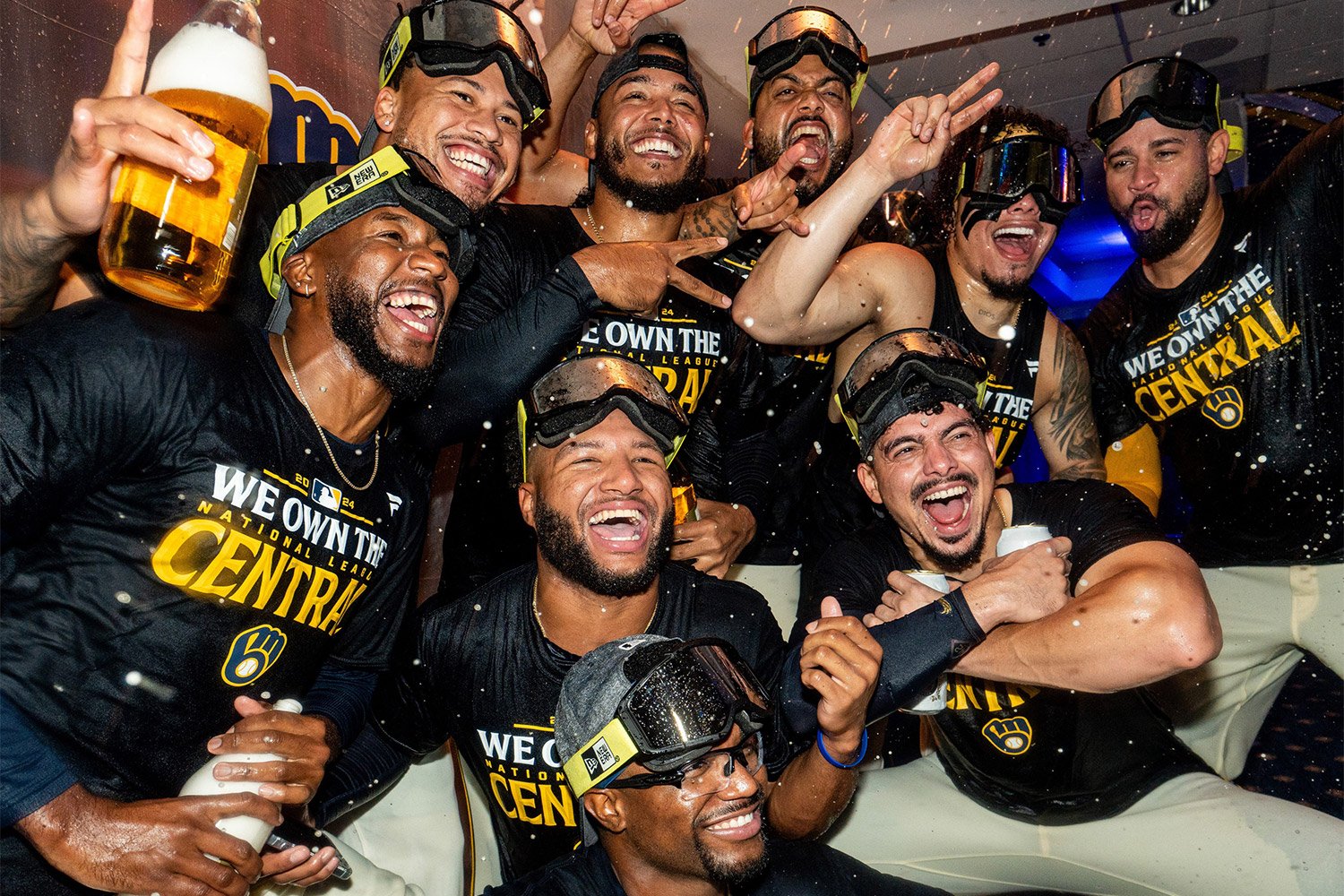
In an era of analytics and careful player evaluation, it’s easy to forget that the beauty of team sports is not in their individual strengths, but how the players function as a collective. The Brewers' emphasis on unity has allowed them to zig when others zag, and led them to yet another NL Central title. Image courtesy of © Benny Sieu-Imagn Images Baseball as a sport, although it is a team sport, is encapsulated by the individual battles: pitcher vs. hitter. Mano a mano, from 60 feet, 6 inches. As a result, it’s easy to overlook one of the most important functions of any team sport, which is the psychological support players and staff provide one another and the effects that can have on the team. This isn’t merely consolation when outings go wrong or collaboration on gameplans. It lies in leading by example, “passing the baton” (a phrase frequently voiced this season), and trusting one another to make plays. The Brewers had 13 players on their Opening Day roster for whom such an achievement was a novel experience. They traded away their biggest star, in Corbin Burnes. They cut their budget. They lost a manager regarded as one of the best in baseball. Brandon Woodruff didn’t play a single game this season. Wade Miley was ruled out of the season before April closed. Christian Yelich missed significant periods of time, and will miss the playoffs. Robert Gasser started five games. Devin Williams didn’t pitch until after the All-Star break. It’s been blow after blow in 2024, for a Brewers team that has used 58 different players throughout the season and lost their so-called star players for significant portions of it. On top of that, there is an explosion of youth, with the roster predominantly made up of players in their first or second years in the major leagues--guys who have a lot to learn about what makes a successful big-league team. How on Earth did this team become the first to seal a place in the postseason? It Starts From The Top The players in that clubhouse latched onto their manager's ideologies, and created a steadfast stubbornness that has allowed them to win game after game against supposedly more talented, higher-paid opposition. Pat Murphy has been at the center of the Brewers' success this year, with his interpersonal management of the players a driving force in the consistency of the performances they’ve put in this year. One of the most fascinating domains of Murphy’s management has been how he upends conventional wisdom, and even common sense at times, to focus on winning today and letting tomorrow take care of itself. There have been times at the start of the season (and even more recently, with Devin Williams) where Murphy has maybe overused his high-leverage bullpen. It hasn’t always worked, but in doing so, he has walked the walk of “winning today.” There is a debate around the viability of this approach, but that debate should include the permeation of Murphy’s stubbornness into his players' approach and how integral that may be in their success. Murphy has been the perfect manager for this crop of Brewers players, running the tightrope between an intense, demanding approach and a more laid-back nature that can bring the best out of his players even when things get tough. The leadership core in the Brewers clubhouse has been shaped to perfection. Although there aren’t a large number of “veterans," the leaders within the team bring a lot to the table. Willy Adames, William Contreras, Christian Yelich, and Rhys Hoskins all lead by example on the field and off it, with a strong work ethic and understanding of how to navigate the ups and downs of a baseball season. They all have playoff experience. They all have that hard, tough mentality to withstand the rigors of a full season. For players like Brice Turang, Sal Frelick, Garrett Mitchell, Jackson Chourio, Blake Perkins, Tobias Myers and more, who are still learning every day, that is an invaluable barometer to measure themselves against. Not necessarily in on-field performance, but in whether they are preparing themselves correctly for each game. Each of those leaders mentioned has the toughness, fortitude and sheer desire to play that can be infectious amongst younger players, and you cannot overlook the effect that has had on the Brewers' success this season. The Abrasive Mentality Of The Young Crop An interesting commonality among young hitters like Sal Frelick, Garrett Mitchell, Brice Turang; bullpen arms like Bryan Hudson, Trevor Megill, Joel Payamps; and rotation pieces like Tobias Myers and Colin Rea is the failures they’ve gone through. Each of those pitchers has been designated for assignment in the past, while there has been criticism of Frelick, Turang and Mitchell throughout the year--and even in prior years. Mitchell dropped in draft pecking orders due his Type 1 diabetes. Rea and Myers have been through multiple organizations and felt the full weight of the doubt Murphy is referencing. They're certainly not the only ones. Doing so creates a steeliness, an edge, a relentless desire to prove and improve. Fortitude like that is just different, and it creates an intensity that shows up in each and every opportunity on the field. There are no days off, no plate appearances off. A popular colloquialism says form is temporary, but class is permanent. In a season of 162 games, there are going to be highs and lows to navigate--stretches of good form, and then the absence of it. Fortune will evade you at times. Yet, day in and day out, the Brewers have mirrored their manager and his “win today” mantra by competing for every possible inch on that field, for every out and every plate appearance. In doing so, they have won baseball games. They are the only team (through 152 games) that has yet to lose four games in a row. The Brewers' refusal to break when the season bends them has brought them to the position they’re in now, with the best run differential in baseball. They're competing for a first-round playoff bye against the star-studded behemoths that are the Los Angeles Dodgers and Philadelphia Phillies. At what point does the world simply acknowledge that this is a team of the same quality as those? The Identity Of Struggling Hard Flows Through The Brewers Organization Yelich is right: Making a clubhouse that demands hard work while also providing the freedom to express oneself on the field and off it is no easy task. Every new member of that team can see the extra reps in the batting cage, the weight rooms, the pre-game preparation going on and know exactly what’s required at the major-league level to be successful, and I’m sure it’s a culture that many organizations are envious of. Jackson Chourio is the perfect example. Murphy talked earlier in the season about him learning how to prepare for games, how to put himself in the best spot in big situations to be successful. Confidence comes as much from how prepared you are in a given moment as it does from your abilities, and Chourio has gone from a player looking bereft of belief to calling his own grand slams. The transformation in performance is more than just his early season treatment and learning off the field, but they have allowed him to make those adjustments more expeditiously than the consensus expected. He's not the only one finding a comfort level and work ethic that have facilitated a breakout. Garrett Mitchell is starting to make contact (and some good contact) against high four-seam fastballs. Myers and trade acquisitions Aaron Civale and Frankie Montas have adjusted their pitch mixes to attain strong results down the stretch. Rea smoothed his delivery mechanics for extra velocity. When players join this organization, they improve, time and time again--regardless of age, experience or weakness. It's because of this that the Milwaukee Brewers are a far more frightening prospect in the playoffs now than they appeared at the start of the season. What Difference Does Character Make Against Sheer Skill? When you have every single player taking those extra steps, the 1% here and there accumulates into something tangible and cohesive, and you can see that the Brewers as a whole are producing more than the sum of their parts. In baseball, that becomes incredibly important, given the length of the season. You have, in theory, 4,374 outs to get defensively and play with offensively. People will be more focused on some occasions than others. That’s an unavoidable reality of the human mind. But the Brewers have defied this better than most, with a pinpoint focus on the here and now. This is not to say the Brewers are bereft of talent, but the talent the Brewers prize more than most teams is significantly underrated. The ability to work hard and grind is not something everyone possesses. The ability to knuckle down and fight when a game is going wrong in every conceivable way matters. As human beings, every day is different, and monotonizing each at-bat with a clear approach takes a lot of hard work--and more importantly, focus. This Brewers team simply does not take a plate appearance off, approaching each in-game situation with a relentless tenacity that can be overwhelming for opponents. Can This Continue To Show Up In The Playoffs? This Brewers outfit will scratch, claw and fight for every single moment in a game. The scales of that may even out somewhat as the focus intensifies for everyone in the bright lights of October. Still, the Brewers have demonstrated that as a unit, both in the variety of hitting profiles and variety of arms they can go through to get 27 outs, they have the quality and big-game temperament to make some real noise on the biggest stage. Every truly successful team has a point of difference. In the variety the Brewers have amassed on both sides of the ball, they may just have their point of difference. They're not going to be outworked or outhustled in the playoffs. There won't be any semblance of "could we have given more?" That's not how this team operates, and that relentless desire to win at all costs is highly intimidating for any opposition. When things get tough and tight on the field, they have the characters in their clubhouse to fight back. It's in their DNA. Going deep in the playoffs will require a little luck, a lot of fortitude, and timely execution. However, with the power of the collective, the Brewers have embraced they have every chance to do it. To quote Pat Murphy just once more: “Why can’t they just keep going?” View full article
-
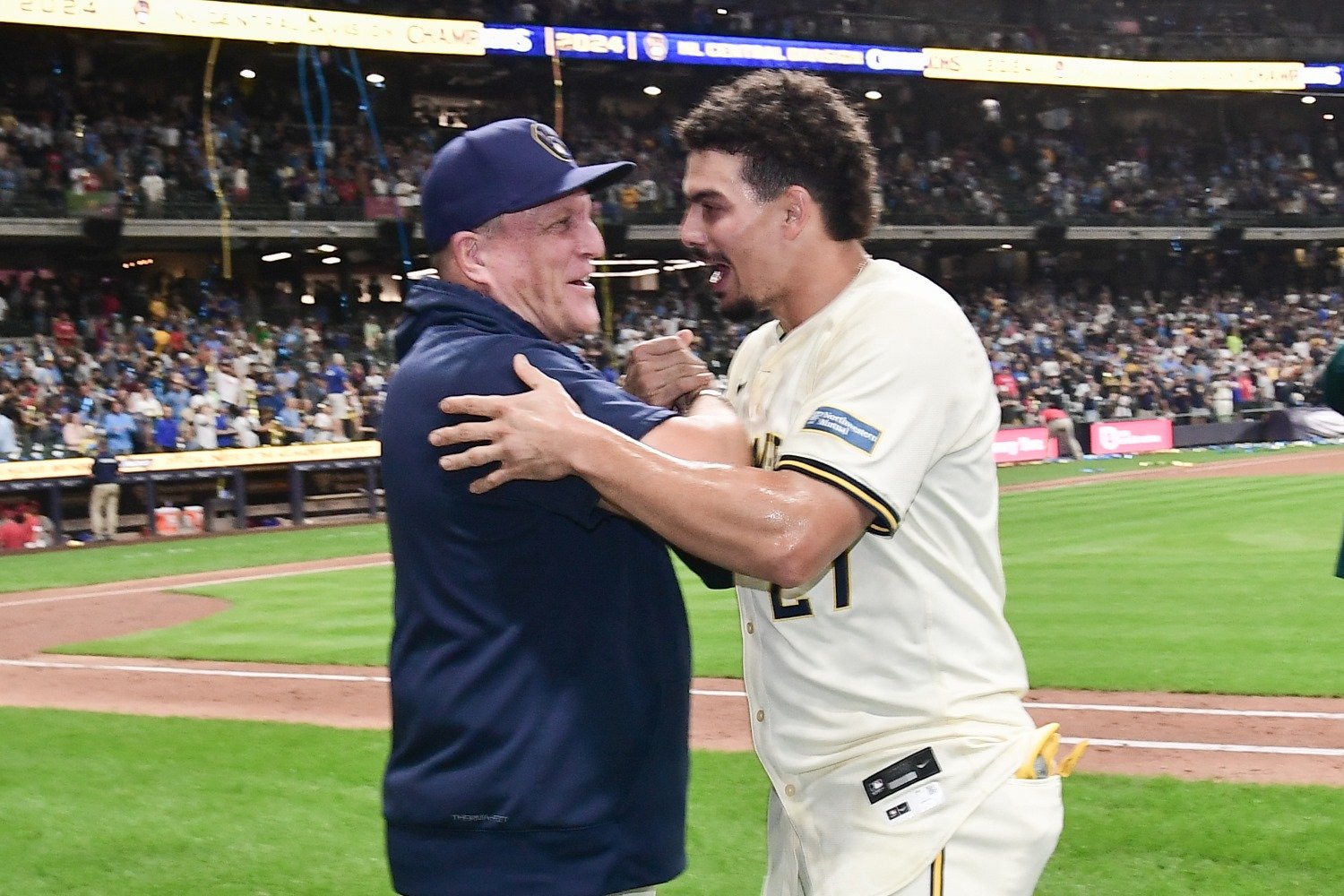 Baseball as a sport, although it is a team sport, is encapsulated by the individual battles: pitcher vs. hitter. Mano a mano, from 60 feet, 6 inches. As a result, it’s easy to overlook one of the most important functions of any team sport, which is the psychological support players and staff provide one another and the effects that can have on the team. This isn’t merely consolation when outings go wrong or collaboration on gameplans. It lies in leading by example, “passing the baton” (a phrase frequently voiced this season), and trusting one another to make plays. The Brewers had 13 players on their Opening Day roster for whom such an achievement was a novel experience. They traded away their biggest star, in Corbin Burnes. They cut their budget. They lost a manager regarded as one of the best in baseball. Brandon Woodruff didn’t play a single game this season. Wade Miley was ruled out of the season before April closed. Christian Yelich missed significant periods of time, and will miss the playoffs. Robert Gasser started five games. Devin Williams didn’t pitch until after the All-Star break. It’s been blow after blow in 2024, for a Brewers team that has used 58 different players throughout the season and lost their so-called star players for significant portions of it. On top of that, there is an explosion of youth, with the roster predominantly made up of players in their first or second years in the major leagues--guys who have a lot to learn about what makes a successful big-league team. How on Earth did this team become the first to seal a place in the postseason? It Starts From The Top The players in that clubhouse latched onto their manager's ideologies, and created a steadfast stubbornness that has allowed them to win game after game against supposedly more talented, higher-paid opposition. Pat Murphy has been at the center of the Brewers' success this year, with his interpersonal management of the players a driving force in the consistency of the performances they’ve put in this year. One of the most fascinating domains of Murphy’s management has been how he upends conventional wisdom, and even common sense at times, to focus on winning today and letting tomorrow take care of itself. There have been times at the start of the season (and even more recently, with Devin Williams) where Murphy has maybe overused his high-leverage bullpen. It hasn’t always worked, but in doing so, he has walked the walk of “winning today.” There is a debate around the viability of this approach, but that debate should include the permeation of Murphy’s stubbornness into his players' approach and how integral that may be in their success. Murphy has been the perfect manager for this crop of Brewers players, running the tightrope between an intense, demanding approach and a more laid-back nature that can bring the best out of his players even when things get tough. The leadership core in the Brewers clubhouse has been shaped to perfection. Although there aren’t a large number of “veterans," the leaders within the team bring a lot to the table. Willy Adames, William Contreras, Christian Yelich, and Rhys Hoskins all lead by example on the field and off it, with a strong work ethic and understanding of how to navigate the ups and downs of a baseball season. They all have playoff experience. They all have that hard, tough mentality to withstand the rigors of a full season. For players like Brice Turang, Sal Frelick, Garrett Mitchell, Jackson Chourio, Blake Perkins, Tobias Myers and more, who are still learning every day, that is an invaluable barometer to measure themselves against. Not necessarily in on-field performance, but in whether they are preparing themselves correctly for each game. Each of those leaders mentioned has the toughness, fortitude and sheer desire to play that can be infectious amongst younger players, and you cannot overlook the effect that has had on the Brewers' success this season. The Abrasive Mentality Of The Young Crop An interesting commonality among young hitters like Sal Frelick, Garrett Mitchell, Brice Turang; bullpen arms like Bryan Hudson, Trevor Megill, Joel Payamps; and rotation pieces like Tobias Myers and Colin Rea is the failures they’ve gone through. Each of those pitchers has been designated for assignment in the past, while there has been criticism of Frelick, Turang and Mitchell throughout the year--and even in prior years. Mitchell dropped in draft pecking orders due his Type 1 diabetes. Rea and Myers have been through multiple organizations and felt the full weight of the doubt Murphy is referencing. They're certainly not the only ones. Doing so creates a steeliness, an edge, a relentless desire to prove and improve. Fortitude like that is just different, and it creates an intensity that shows up in each and every opportunity on the field. There are no days off, no plate appearances off. A popular colloquialism says form is temporary, but class is permanent. In a season of 162 games, there are going to be highs and lows to navigate--stretches of good form, and then the absence of it. Fortune will evade you at times. Yet, day in and day out, the Brewers have mirrored their manager and his “win today” mantra by competing for every possible inch on that field, for every out and every plate appearance. In doing so, they have won baseball games. They are the only team (through 152 games) that has yet to lose four games in a row. The Brewers' refusal to break when the season bends them has brought them to the position they’re in now, with the best run differential in baseball. They're competing for a first-round playoff bye against the star-studded behemoths that are the Los Angeles Dodgers and Philadelphia Phillies. At what point does the world simply acknowledge that this is a team of the same quality as those? The Identity Of Struggling Hard Flows Through The Brewers Organization Yelich is right: Making a clubhouse that demands hard work while also providing the freedom to express oneself on the field and off it is no easy task. Every new member of that team can see the extra reps in the batting cage, the weight rooms, the pre-game preparation going on and know exactly what’s required at the major-league level to be successful, and I’m sure it’s a culture that many organizations are envious of. Jackson Chourio is the perfect example. Murphy talked earlier in the season about him learning how to prepare for games, how to put himself in the best spot in big situations to be successful. Confidence comes as much from how prepared you are in a given moment as it does from your abilities, and Chourio has gone from a player looking bereft of belief to calling his own grand slams. The transformation in performance is more than just his early season treatment and learning off the field, but they have allowed him to make those adjustments more expeditiously than the consensus expected. He's not the only one finding a comfort level and work ethic that have facilitated a breakout. Garrett Mitchell is starting to make contact (and some good contact) against high four-seam fastballs. Myers and trade acquisitions Aaron Civale and Frankie Montas have adjusted their pitch mixes to attain strong results down the stretch. Rea smoothed his delivery mechanics for extra velocity. When players join this organization, they improve, time and time again--regardless of age, experience or weakness. It's because of this that the Milwaukee Brewers are a far more frightening prospect in the playoffs now than they appeared at the start of the season. What Difference Does Character Make Against Sheer Skill? When you have every single player taking those extra steps, the 1% here and there accumulates into something tangible and cohesive, and you can see that the Brewers as a whole are producing more than the sum of their parts. In baseball, that becomes incredibly important, given the length of the season. You have, in theory, 4,374 outs to get defensively and play with offensively. People will be more focused on some occasions than others. That’s an unavoidable reality of the human mind. But the Brewers have defied this better than most, with a pinpoint focus on the here and now. This is not to say the Brewers are bereft of talent, but the talent the Brewers prize more than most teams is significantly underrated. The ability to work hard and grind is not something everyone possesses. The ability to knuckle down and fight when a game is going wrong in every conceivable way matters. As human beings, every day is different, and monotonizing each at-bat with a clear approach takes a lot of hard work--and more importantly, focus. This Brewers team simply does not take a plate appearance off, approaching each in-game situation with a relentless tenacity that can be overwhelming for opponents. Can This Continue To Show Up In The Playoffs? This Brewers outfit will scratch, claw and fight for every single moment in a game. The scales of that may even out somewhat as the focus intensifies for everyone in the bright lights of October. Still, the Brewers have demonstrated that as a unit, both in the variety of hitting profiles and variety of arms they can go through to get 27 outs, they have the quality and big-game temperament to make some real noise on the biggest stage. Every truly successful team has a point of difference. In the variety the Brewers have amassed on both sides of the ball, they may just have their point of difference. They're not going to be outworked or outhustled in the playoffs. There won't be any semblance of "could we have given more?" That's not how this team operates, and that relentless desire to win at all costs is highly intimidating for any opposition. When things get tough and tight on the field, they have the characters in their clubhouse to fight back. It's in their DNA. Going deep in the playoffs will require a little luck, a lot of fortitude, and timely execution. However, with the power of the collective, the Brewers have embraced they have every chance to do it. To quote Pat Murphy just once more: “Why can’t they just keep going?”
- 9 comments
-
- 1
-
-
- jackson chourio
- pat murphy
- (and 5 more)
-
 Coming into the 2024 season, most outlets projected Tyler Black as the incumbent to take over first base duties within the season. A player with capable range at third base, you would expect Black to provide plus defense if moved to first base, but that hasn’t been the case. Combine the defensive issues with a bat that has been solid but unspectacular (with mildly concerning exit velocities), and you can see why Black has struggled to force his way onto the Brewers' major-league roster. He now has a big threat looming behind him, in the form of 6-foot-6, 250-pound first baseman Ernesto Martinez Jr. Strong bat-to-ball skills but a disappointing dearth of power defined Martinez's profile coming into the season, and even for the first few months of 2024 at Double-A Biloxi. Since then, however, he has leveled up into one of the most devastating power hitters in what is very much a pitcher-friendly environment. What Makes His Bat Stand Out? Before stating some of the numbers produced by Martinez, absorb these baselines: Since Jul. 1, the average slash line in the Southern League is .235/.328/.356, with a 23.2% strikeout rate. Only six qualified players have an OPS over .770 in that span. Martinez is leading the league in batting average and slugging, with a .349/.443/.558 line; a 13.9% strikeout rate; and an 11.4% walk rate in that period. He has 22 extra-base hits in 201 plate appearances, and added another home run in the first game of the Shuckers' playoff series against the Montgomery Biscuits. He’s recorded exit velocities of over 115 mph multiple times this season. This is a bat that has finally begun to uncork its destructive potential, with a 195 WRC+ in the second half. Make no mistake, he was an above-average hitter even in the first few months of the season, but he’s cut down his pop-ups from 11.9% to 2.8% in the second half and the quality of contact overall has been incredibly consistent. His gigantic frame means the swing is naturally longer than most, and perhaps for comparison's sake, two members of the Yankees are appropriate. Giancarlo Stanton and Aaron Judge are large human beings with long levers, Stanton having an enormous swing path and bat speed to boot, while Judge has shortened his swing path so as to maintain a contact rate that Stanton struggles to match. Both are in the top four swing lengths in all of baseball, and that puts a premium on early pitch recognition and adjustability in the swing. While no one is saying Martinez is either of these characters, and while he doesn’t quite do the same level of damage to the baseball, he's posted a better-than-average swinging strike rate of 10.6% and a contact rate of 77.2% since the start of July. For context, league averages in the Southern league are a 13.4% swinging strike rate and 72.1% contact rate. Martinez’s intriguing blend of contact and occasional displays of massive power have come to a head over the last couple of weeks, with back-to-back Player of the Week honors in the Southern League. During that time, he’s belted two homers, four doubles and struck out on a measly three occasions. He’s shown improved pitch selection and recognition this season. That bodes well, for a player who’s Rule 5 Draft-eligible this offseason. The Bonus Bits There’s even more reason to be excited by Martinez. The Brewers have tried the giant Cuban out in center field, and although the experiment didn’t last, the speed and agility that prompted it shows up in other parts of his game. Martinez has 20 stolen bases this season, for the second time in his minor-league career--a large total for a player in that position--and has some of the best hands at first base I’ve seen in a while. He uses that frame and agility to cover a lot of ground around the bag. His ease stretching out is really quite obvious: An excellent defensive first baseman, he’s the type of player who could contend for a roster spot in spring training if he shows out well, especially if Jake Bauers continues to struggle. As a left-handed batter, Martinez would marry well with Rhys Hoskins and provide that strong defense the Brewers are looking for. There are still areas in which Martinez could access further power, to all fields. Tapping into that light-tower pull-side power could elevate his game further, and that (again) will come from pitch recognition and an awareness of how to access that 'A' swing. As things currently stand, he’s unlikely to hit 20-plus home runs in a season, unless he can consistently maintain those exit velocities on lofted balls. At 25 years old in Double A and coming toward Rule 5 eligibility, this was a big season for Martinez. It’s safe to say that, in one of the most difficult offensive environments in the minor leagues, he’s taken the forward step he needed. Whether the Brewers can unlock yet more from the large Cuban is another matter, but there are the raw tools of a star and the solid floor of a big-league player in his giant frame.
- 4 comments
-
- 2
-
-
- tyler black
- ernesto martinez jr
- (and 2 more)
-
The Brewers have a 6-foot-6 defensive stud who’s produced a 195 wRC+ in Double A since Jul. 1. Is Ernesto Martinez Jr. deserving of more acclaim? And what makes him special? Image courtesy of © Lauren Witte/Clarion Ledger / USA TODAY NETWORK Coming into the 2024 season, most outlets projected Tyler Black as the incumbent to take over first base duties within the season. A player with capable range at third base, you would expect Black to provide plus defense if moved to first base, but that hasn’t been the case. Combine the defensive issues with a bat that has been solid but unspectacular (with mildly concerning exit velocities), and you can see why Black has struggled to force his way onto the Brewers' major-league roster. He now has a big threat looming behind him, in the form of 6-foot-6, 250-pound first baseman Ernesto Martinez Jr. Strong bat-to-ball skills but a disappointing dearth of power defined Martinez's profile coming into the season, and even for the first few months of 2024 at Double-A Biloxi. Since then, however, he has leveled up into one of the most devastating power hitters in what is very much a pitcher-friendly environment. What Makes His Bat Stand Out? Before stating some of the numbers produced by Martinez, absorb these baselines: Since Jul. 1, the average slash line in the Southern League is .235/.328/.356, with a 23.2% strikeout rate. Only six qualified players have an OPS over .770 in that span. Martinez is leading the league in batting average and slugging, with a .349/.443/.558 line; a 13.9% strikeout rate; and an 11.4% walk rate in that period. He has 22 extra-base hits in 201 plate appearances, and added another home run in the first game of the Shuckers' playoff series against the Montgomery Biscuits. He’s recorded exit velocities of over 115 mph multiple times this season. This is a bat that has finally begun to uncork its destructive potential, with a 195 WRC+ in the second half. Make no mistake, he was an above-average hitter even in the first few months of the season, but he’s cut down his pop-ups from 11.9% to 2.8% in the second half and the quality of contact overall has been incredibly consistent. His gigantic frame means the swing is naturally longer than most, and perhaps for comparison's sake, two members of the Yankees are appropriate. Giancarlo Stanton and Aaron Judge are large human beings with long levers, Stanton having an enormous swing path and bat speed to boot, while Judge has shortened his swing path so as to maintain a contact rate that Stanton struggles to match. Both are in the top four swing lengths in all of baseball, and that puts a premium on early pitch recognition and adjustability in the swing. While no one is saying Martinez is either of these characters, and while he doesn’t quite do the same level of damage to the baseball, he's posted a better-than-average swinging strike rate of 10.6% and a contact rate of 77.2% since the start of July. For context, league averages in the Southern league are a 13.4% swinging strike rate and 72.1% contact rate. Martinez’s intriguing blend of contact and occasional displays of massive power have come to a head over the last couple of weeks, with back-to-back Player of the Week honors in the Southern League. During that time, he’s belted two homers, four doubles and struck out on a measly three occasions. He’s shown improved pitch selection and recognition this season. That bodes well, for a player who’s Rule 5 Draft-eligible this offseason. The Bonus Bits There’s even more reason to be excited by Martinez. The Brewers have tried the giant Cuban out in center field, and although the experiment didn’t last, the speed and agility that prompted it shows up in other parts of his game. Martinez has 20 stolen bases this season, for the second time in his minor-league career--a large total for a player in that position--and has some of the best hands at first base I’ve seen in a while. He uses that frame and agility to cover a lot of ground around the bag. His ease stretching out is really quite obvious: An excellent defensive first baseman, he’s the type of player who could contend for a roster spot in spring training if he shows out well, especially if Jake Bauers continues to struggle. As a left-handed batter, Martinez would marry well with Rhys Hoskins and provide that strong defense the Brewers are looking for. There are still areas in which Martinez could access further power, to all fields. Tapping into that light-tower pull-side power could elevate his game further, and that (again) will come from pitch recognition and an awareness of how to access that 'A' swing. As things currently stand, he’s unlikely to hit 20-plus home runs in a season, unless he can consistently maintain those exit velocities on lofted balls. At 25 years old in Double A and coming toward Rule 5 eligibility, this was a big season for Martinez. It’s safe to say that, in one of the most difficult offensive environments in the minor leagues, he’s taken the forward step he needed. Whether the Brewers can unlock yet more from the large Cuban is another matter, but there are the raw tools of a star and the solid floor of a big-league player in his giant frame. View full article
- 4 replies
-
- 1
-

-
- tyler black
- ernesto martinez jr
- (and 2 more)
-
This Brewers lineup is designed to go on hot stretches with a handful of streaky bats, but can the supporting acts bring consistency or do they add more streakiness to their 2024 playoff offense? Image courtesy of © Kelley L Cox-Imagn Images Shohei Ohtani, Freddie Freeman, Mookie Betts. Corbin Carroll, Ketel Marte, Christian Walker. Kyle Schwarber, Trea Turner, Bryce Harper. Playoff offenses are buffeted by batted-ball luck, but the best of them have players on whom you can rely to make quality contact over and over again. The Milwaukee Brewers have bats that have shown flashes of white-hot power throughout this year: Willy Adames, William Contreras, Gary Sánchez, Rhys Hoskins (certainly early in the season), Jackson Chourio and even Garrett Mitchell have shown some serious pop when they hit a hot stretch. We saw in August how damaging this Brewers lineup can be with even two of these bats going haywire, but of the group, you could argue that only Adames and Chourio have shown consistency in their day-to-day offensive production. You expect home runs to come in bunches, and for there to be dry spells. The problem the Brewers have is that their lower-octane, contact-oriented hitters are equally streaky in how they rely on batted-ball luck. Brice Turang is a prime example, with his early-season form masking a .530 OPS since Jul. 1. Joey Ortiz has had some struggles as well, after a neck injury around midseason, and looks the part of a rookie working out what his plan is at the plate; he owns one of the lowest in-zone swing rates in baseball. Turang, Ortiz, Sal Frelick and Jake Bauers all have OPSes under .620 since Aug. 1, meaning the offensive output in that month was more despite them than because of them. The lower third of the order hasn’t been contributing for a while, and it means when those streaky bats dip even slightly, runs can become relatively scarce. Of these hitters, only Turang can lay claim to some batted-ball misfortune, with an expected average 42 points better than his actual number. Earlier in the season, a big reason for the Brewers success was their ability to get speedy players on base and wreak havoc. Turang, Frelick, Blake Perkins and others all caused mayhem and magnified the quality at-bats from the sluggers behind them. Their underpowered bats best profile by avoiding fly balls and keeping the ball either on the ground or on a line. Turang has actually improved in this regard, with a fly ball rate down to 15%, better sweet spot launch angles and similar exit velocities to his first two months. Some better fortune could see Turang be a menace in any series, just as he was in the first month of the season. From their mix at second base, third base, and center field, there has been a marked decrease in production from the first three months to the latter half of the summer: They’re getting half as many home runs and a batting average of just .205, from players with such strong bat-to-ball skills. One culprit is regression to the mean, after overperformance in the first half of the season. Throughout the season, each has shown themselves capable of a hot couple of weeks and good OBPs, and for the Brewers to fully function, they will need some bounces to fall their way once more with the contact hitters. It’s difficult not to think of the difference a healthy Christian Yelich could have made as a consistent producer alongside Chourio, but the Brewers have to manage the cards they’ve been dealt. That means getting the most out of Turang, Ortiz and Frelick. A lineup with multiple consecutive holes can torpedo a playoff lineup, and it could spell another early exit for the Brewers in October. Streakiness is the Brewers' best hope, but thankfully, it's something they've seen from both their more powerful producers and their lesser lights. The question is: Can they find it at just the right time in October? What do you think of the production from Ortiz, Turang and Frelick? Has it disappointed you and given some concern for the playoff offense? Let us know your thoughts in the comments below! View full article
-
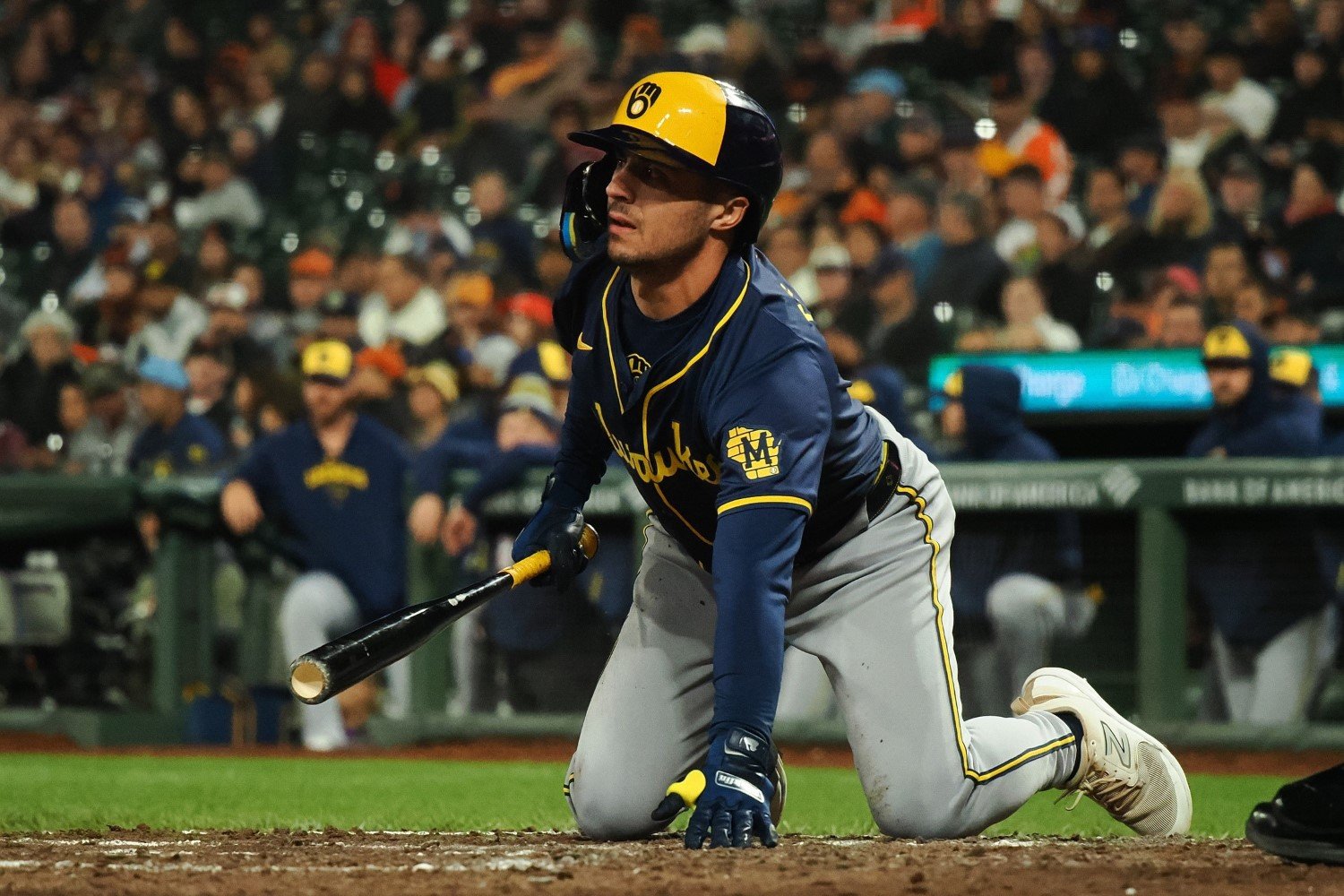 Shohei Ohtani, Freddie Freeman, Mookie Betts. Corbin Carroll, Ketel Marte, Christian Walker. Kyle Schwarber, Trea Turner, Bryce Harper. Playoff offenses are buffeted by batted-ball luck, but the best of them have players on whom you can rely to make quality contact over and over again. The Milwaukee Brewers have bats that have shown flashes of white-hot power throughout this year: Willy Adames, William Contreras, Gary Sánchez, Rhys Hoskins (certainly early in the season), Jackson Chourio and even Garrett Mitchell have shown some serious pop when they hit a hot stretch. We saw in August how damaging this Brewers lineup can be with even two of these bats going haywire, but of the group, you could argue that only Adames and Chourio have shown consistency in their day-to-day offensive production. You expect home runs to come in bunches, and for there to be dry spells. The problem the Brewers have is that their lower-octane, contact-oriented hitters are equally streaky in how they rely on batted-ball luck. Brice Turang is a prime example, with his early-season form masking a .530 OPS since Jul. 1. Joey Ortiz has had some struggles as well, after a neck injury around midseason, and looks the part of a rookie working out what his plan is at the plate; he owns one of the lowest in-zone swing rates in baseball. Turang, Ortiz, Sal Frelick and Jake Bauers all have OPSes under .620 since Aug. 1, meaning the offensive output in that month was more despite them than because of them. The lower third of the order hasn’t been contributing for a while, and it means when those streaky bats dip even slightly, runs can become relatively scarce. Of these hitters, only Turang can lay claim to some batted-ball misfortune, with an expected average 42 points better than his actual number. Earlier in the season, a big reason for the Brewers success was their ability to get speedy players on base and wreak havoc. Turang, Frelick, Blake Perkins and others all caused mayhem and magnified the quality at-bats from the sluggers behind them. Their underpowered bats best profile by avoiding fly balls and keeping the ball either on the ground or on a line. Turang has actually improved in this regard, with a fly ball rate down to 15%, better sweet spot launch angles and similar exit velocities to his first two months. Some better fortune could see Turang be a menace in any series, just as he was in the first month of the season. From their mix at second base, third base, and center field, there has been a marked decrease in production from the first three months to the latter half of the summer: They’re getting half as many home runs and a batting average of just .205, from players with such strong bat-to-ball skills. One culprit is regression to the mean, after overperformance in the first half of the season. Throughout the season, each has shown themselves capable of a hot couple of weeks and good OBPs, and for the Brewers to fully function, they will need some bounces to fall their way once more with the contact hitters. It’s difficult not to think of the difference a healthy Christian Yelich could have made as a consistent producer alongside Chourio, but the Brewers have to manage the cards they’ve been dealt. That means getting the most out of Turang, Ortiz and Frelick. A lineup with multiple consecutive holes can torpedo a playoff lineup, and it could spell another early exit for the Brewers in October. Streakiness is the Brewers' best hope, but thankfully, it's something they've seen from both their more powerful producers and their lesser lights. The question is: Can they find it at just the right time in October? What do you think of the production from Ortiz, Turang and Frelick? Has it disappointed you and given some concern for the playoff offense? Let us know your thoughts in the comments below!
 -
Just posted about this, it's fascinating stuff. Really intrigued how the Brewers move forward with him
-
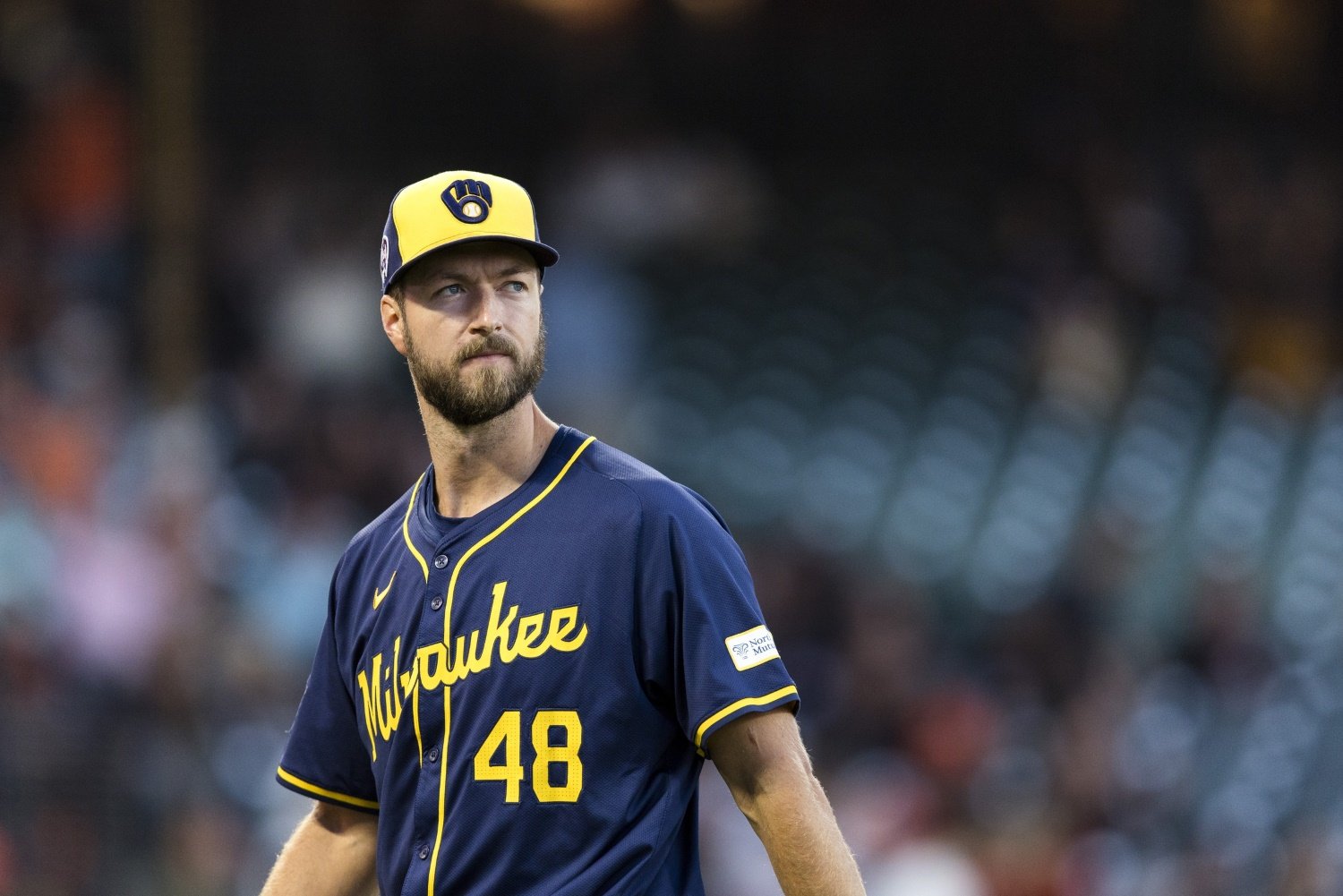 Over the last 30 days, the Brewers' starting pitching has see-sawed somewhat in terms of performance. Where both Colin Rea and Tobias Myers have seen some regression to the mean in their peripheral numbers (though Myers's numbers remain strong, and his stuff still looks lively), Aaron Civale and Frankie Montas have soared within the Brewers' pitching setup. They’ve altered their pitch mixes and usage significantly, and the results are hard to argue. Can a case be made for both to move up the pecking order when crunch time comes around? Both Montas and Civale are using their arsenals very differently with the Brewers, compared with their times at the Reds and Rays, respectively. Frankie Montas is accentuating his three fastball variations to extreme levels and limiting the usage of his most hyped pitch, the splitter. Eighty percent of his pitches thrown are fastball variants, and the Brewers have managed to unlock an extra tick of velocity in each of the four-seamer, sinker and cutter. Montas is also locating the fastballs differently. Whereas he was previously using them heavily in zone to set up a well-tunneled chase of his splitter, he’s now nibbling around the edges of the zone and giving hitters a lot of different looks--and earning more swings and misses as a result. Civale has seen a similar transformation, leaning more heavily on his sinker in particular and increasing his overall fastball usage (again the four-seamer, sinker and cutter) from 62% to 69% while adding in a seventh pitch to his arsenal in the form of a short slider that tunnels better with his fastballs due to the later break on the pitch (For more info, Jack Stern covered it brilliantly here). The biggest boost Civale has had is not so much in the swing-and-miss aspect, but in the types of contact he’s generating. Through a variety of pitches moving in different ways in an east-west profile of the strike zone, Civale’s seen a strong drop off in the number of line drives he was giving up with Tampa Bay, and a spike in ground balls and pop-ups: The reason for the damage against him in Tampa Bay was from that incredibly low GB/FB ratio, which has trended upward of late--although it is still quite low. Then you come to Colin Rea and Tobias Myers. Both have struggled recently. Rea's difficulties have been more apparent, but Myers has been grinding out starts with a lot of men on base. Some of the things he got away with against the Rockies during the last homestand won't work against better offenses. When you compare them over the last 30 days with Civale and Montas, the latter pair have done a better job in: Home runs allowed Average exit velocities WHIP (by a large margin) Sweet spot launch angles ERA In the playoffs, the best route to success is the ability to limit home runs and baserunners. Constant traffic on the basepaths means one home run can hurt hard, and vice-versa: you can live with home runs if you limit the overall men on base. Frankie Montas and Aaron Civale have done a great job in controlling their men on base. They’ve been better at controlling the long ball and letting the Brewers defense cover behind them. There’s also the question of workloads. Both Civale and Montas are MLB veterans who have pitched over 130 innings regularly; Montas actually pitched 187 innings in 2021. Myers is a rookie pitcher who is approaching his career high of innings, while being significantly more stressed due to the more advanced level. Rea is sitting at 154 innings having maxed out at 142 since 2020. Both of these arms have carried a lot of strain throughout the Brewers season as the glue that held the rotation together, but it would be entirely understandable if both were beginning to feel a little heavier in the arm as the regular season comes to a close. The experience of Montas and Civale in going through this may equip them to maintain their form through October more than Rea or Myers, and it’s yet another reason why they could push their way into the conversation. Can you honestly say that, given the results over the last month, you would trust Rea and Myers more than Civale and Montas? Do their early-season heroics give them more standing as the Brewers approach the playoffs? I like to lean toward form and experience, but I think it’s a much larger conversation than most would care to admit at this point. What do you think of the rotation composition in the playoffs? Are Civale and Montas edging out Rea and Myers? Let us know your thoughts in the comments below!
 -
A month ago, it felt fairly clear who should start the first few games of any Brewers playoff series. Performance trends have turned those waters turbid lately, though. Where do things stand? Image courtesy of © John Hefti-Imagn Images Over the last 30 days, the Brewers' starting pitching has see-sawed somewhat in terms of performance. Where both Colin Rea and Tobias Myers have seen some regression to the mean in their peripheral numbers (though Myers's numbers remain strong, and his stuff still looks lively), Aaron Civale and Frankie Montas have soared within the Brewers' pitching setup. They’ve altered their pitch mixes and usage significantly, and the results are hard to argue. Can a case be made for both to move up the pecking order when crunch time comes around? Both Montas and Civale are using their arsenals very differently with the Brewers, compared with their times at the Reds and Rays, respectively. Frankie Montas is accentuating his three fastball variations to extreme levels and limiting the usage of his most hyped pitch, the splitter. Eighty percent of his pitches thrown are fastball variants, and the Brewers have managed to unlock an extra tick of velocity in each of the four-seamer, sinker and cutter. Montas is also locating the fastballs differently. Whereas he was previously using them heavily in zone to set up a well-tunneled chase of his splitter, he’s now nibbling around the edges of the zone and giving hitters a lot of different looks--and earning more swings and misses as a result. Civale has seen a similar transformation, leaning more heavily on his sinker in particular and increasing his overall fastball usage (again the four-seamer, sinker and cutter) from 62% to 69% while adding in a seventh pitch to his arsenal in the form of a short slider that tunnels better with his fastballs due to the later break on the pitch (For more info, Jack Stern covered it brilliantly here). The biggest boost Civale has had is not so much in the swing-and-miss aspect, but in the types of contact he’s generating. Through a variety of pitches moving in different ways in an east-west profile of the strike zone, Civale’s seen a strong drop off in the number of line drives he was giving up with Tampa Bay, and a spike in ground balls and pop-ups: The reason for the damage against him in Tampa Bay was from that incredibly low GB/FB ratio, which has trended upward of late--although it is still quite low. Then you come to Colin Rea and Tobias Myers. Both have struggled recently. Rea's difficulties have been more apparent, but Myers has been grinding out starts with a lot of men on base. Some of the things he got away with against the Rockies during the last homestand won't work against better offenses. When you compare them over the last 30 days with Civale and Montas, the latter pair have done a better job in: Home runs allowed Average exit velocities WHIP (by a large margin) Sweet spot launch angles ERA In the playoffs, the best route to success is the ability to limit home runs and baserunners. Constant traffic on the basepaths means one home run can hurt hard, and vice-versa: you can live with home runs if you limit the overall men on base. Frankie Montas and Aaron Civale have done a great job in controlling their men on base. They’ve been better at controlling the long ball and letting the Brewers defense cover behind them. There’s also the question of workloads. Both Civale and Montas are MLB veterans who have pitched over 130 innings regularly; Montas actually pitched 187 innings in 2021. Myers is a rookie pitcher who is approaching his career high of innings, while being significantly more stressed due to the more advanced level. Rea is sitting at 154 innings having maxed out at 142 since 2020. Both of these arms have carried a lot of strain throughout the Brewers season as the glue that held the rotation together, but it would be entirely understandable if both were beginning to feel a little heavier in the arm as the regular season comes to a close. The experience of Montas and Civale in going through this may equip them to maintain their form through October more than Rea or Myers, and it’s yet another reason why they could push their way into the conversation. Can you honestly say that, given the results over the last month, you would trust Rea and Myers more than Civale and Montas? Do their early-season heroics give them more standing as the Brewers approach the playoffs? I like to lean toward form and experience, but I think it’s a much larger conversation than most would care to admit at this point. What do you think of the rotation composition in the playoffs? Are Civale and Montas edging out Rea and Myers? Let us know your thoughts in the comments below! View full article
-
Pat Murphy has preached “win today” all season, and it’s epitomized this Brewers team. Yet, in a month wherein managing workloads and auditioning playoff roles has begun, can they maintain that intensity with such a young core? Image courtesy of © Benny Sieu-Imagn Images The mental fortitude of the 2024 Brewers--to come in every day with the hustle, grind and mental acuity required for their brand of baseball--cannot be overstated. It requires a team-wide culture of trust that everyone is putting in the same hard yards, looking for one percent more in every situation. It’s fair to say Murphy has led by example in this regard, with aggressive bullpen moves and even occasional overuse of the bullpen. He's shown almost complete disregard for a game the following day. In September, that has started to change, with one eye turning toward the playoffs. Colin Rea was pulled on Wednesday after just four innings of work. Freddy Peralta was pulled on Sunday with just 86 pitches in the middle of the fifth inning. Then you factor in extra playing time in big spots for the likes of Jake Bauers, Hoby Milner, the testing and assessment of Isaac Collins and Brewer Hicklen, and it all begins to seem like the focus has shifted ever-so-slightly from the "win today" mantra that has encapsulated so much of the Brewers' best baseball in 2024. The offensive slump against the Rockies and Cardinals can happen to any baseball team, in a sport that can change on a knife edge based on batted-ball fortune and timing. That being said, there were a few signs that perhaps the Brewers were struggling to grind as they usually do. Only three times all year had the Brewers failed to register a walk in a game, but that has now happened twice in September--against a bullpen day for Cincinnati and the subpar Kyle Freeland of the Rockies. The overall numbers for the team are slightly skewed as well, with their highest swinging-strike rate on the season and their highest chase rate and overall swing rate, to boot. For a team who have prided themselves on being selective and comfortable in deeper counts, they’ve shown signs of drifting away from that. Thanks to the lack of selectivity, they're also not producing as much hard contact of late. They have had some bad luck with batted balls in play, and that .181 Batting average on balls in play is likely to tick up, but some of that drop is earned from squaring up the ball less often than they managed for the rest of the season. It’s obvious they’ve struggled a little offensively, and I would have one theory behind this. There is a psychiatric variation of the Pareto principle (known as the 80/20 rule) that observes how the brain will begin to lose focus in a task once you are around 80% complete, easing off as the task comes to the finishing line. You might notice this with simple tasks, such as cleaning the house, or at 4 pm on a work day when your mind begins to drift and lose focus. This Brewers team is incredibly young and inexperienced, with a number of their veteran leaders unable to take the field through injury. As a result, you could excuse the youth of Jackson Chourio, Garrett Mitchell, Sal Frelick, Joey Ortiz, Brice Turang, Tobias Myers and others in their first two seasons for losing a little bit of that focus, with the Brewers organization also beginning to plan for the playoffs. We saw a hint of it coming into the All-Star break after a grueling first half, with the Brewers slumping hard against struggling teams just as they did last week. Chourio is a prime example. He's shown large spikes in his whiff rate, while recording just a 23.5% hard-hit rate in September. That's after having averaged over 50% in the prior two months combined. The Brewers are yet again coming up to a break or change in the season, and you could understand that focus drifting toward the bright lights of October Keeping that clubhouse focus is going to require the veterans to step up and lead by example, both in their performance and their preparation. Seeing Willy Adames, William Contreras and Rhys Hoskins finding some form will go a long way to taking the stress off the younger players. It's also going to need that leadership from Murphy, whose role is to balance September and October while keeping the players fully focused on the here and now. He can't lead by example so intensely at this point, and it will be a challenge. How the Brewers handle a tough stretch with the Giants, Diamondbacks and a key showdown with the Phillies will go a long way toward building some momentum as they enter the playoffs, and perhaps even allow them to force their way back into the first-round bye conversation. One thing’s for sure: sustaining and burnishing that focus on today’s game will be at the center of it all. What do you think of the Brewers' recent stretch of offense? Can you see noticeable differences in their approach? And does it concern you as they come to the playoffs? Let us know your thoughts in the comments below! View full article
-
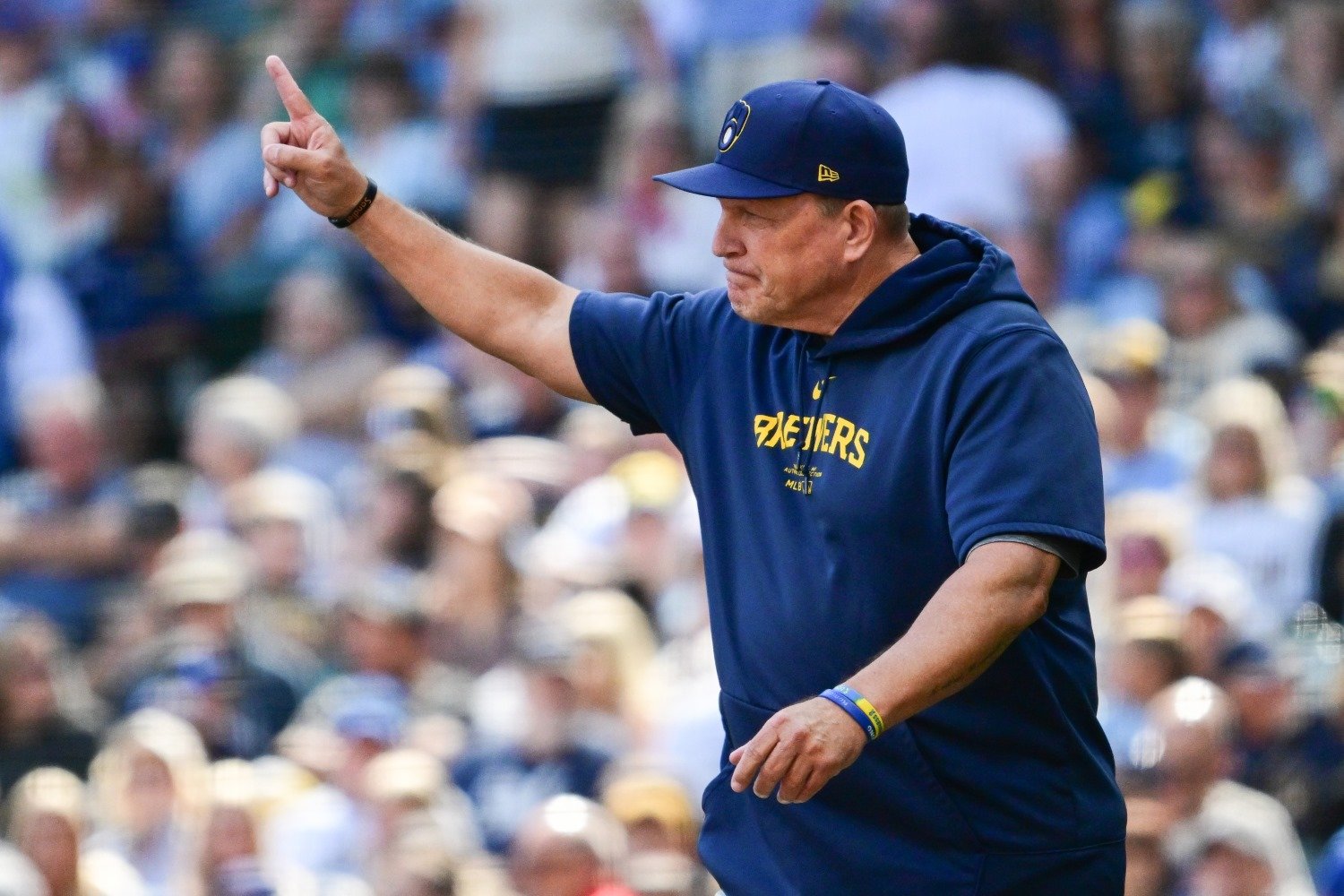 The mental fortitude of the 2024 Brewers--to come in every day with the hustle, grind and mental acuity required for their brand of baseball--cannot be overstated. It requires a team-wide culture of trust that everyone is putting in the same hard yards, looking for one percent more in every situation. It’s fair to say Murphy has led by example in this regard, with aggressive bullpen moves and even occasional overuse of the bullpen. He's shown almost complete disregard for a game the following day. In September, that has started to change, with one eye turning toward the playoffs. Colin Rea was pulled on Wednesday after just four innings of work. Freddy Peralta was pulled on Sunday with just 86 pitches in the middle of the fifth inning. Then you factor in extra playing time in big spots for the likes of Jake Bauers, Hoby Milner, the testing and assessment of Isaac Collins and Brewer Hicklen, and it all begins to seem like the focus has shifted ever-so-slightly from the "win today" mantra that has encapsulated so much of the Brewers' best baseball in 2024. The offensive slump against the Rockies and Cardinals can happen to any baseball team, in a sport that can change on a knife edge based on batted-ball fortune and timing. That being said, there were a few signs that perhaps the Brewers were struggling to grind as they usually do. Only three times all year had the Brewers failed to register a walk in a game, but that has now happened twice in September--against a bullpen day for Cincinnati and the subpar Kyle Freeland of the Rockies. The overall numbers for the team are slightly skewed as well, with their highest swinging-strike rate on the season and their highest chase rate and overall swing rate, to boot. For a team who have prided themselves on being selective and comfortable in deeper counts, they’ve shown signs of drifting away from that. Thanks to the lack of selectivity, they're also not producing as much hard contact of late. They have had some bad luck with batted balls in play, and that .181 Batting average on balls in play is likely to tick up, but some of that drop is earned from squaring up the ball less often than they managed for the rest of the season. It’s obvious they’ve struggled a little offensively, and I would have one theory behind this. There is a psychiatric variation of the Pareto principle (known as the 80/20 rule) that observes how the brain will begin to lose focus in a task once you are around 80% complete, easing off as the task comes to the finishing line. You might notice this with simple tasks, such as cleaning the house, or at 4 pm on a work day when your mind begins to drift and lose focus. This Brewers team is incredibly young and inexperienced, with a number of their veteran leaders unable to take the field through injury. As a result, you could excuse the youth of Jackson Chourio, Garrett Mitchell, Sal Frelick, Joey Ortiz, Brice Turang, Tobias Myers and others in their first two seasons for losing a little bit of that focus, with the Brewers organization also beginning to plan for the playoffs. We saw a hint of it coming into the All-Star break after a grueling first half, with the Brewers slumping hard against struggling teams just as they did last week. Chourio is a prime example. He's shown large spikes in his whiff rate, while recording just a 23.5% hard-hit rate in September. That's after having averaged over 50% in the prior two months combined. The Brewers are yet again coming up to a break or change in the season, and you could understand that focus drifting toward the bright lights of October Keeping that clubhouse focus is going to require the veterans to step up and lead by example, both in their performance and their preparation. Seeing Willy Adames, William Contreras and Rhys Hoskins finding some form will go a long way to taking the stress off the younger players. It's also going to need that leadership from Murphy, whose role is to balance September and October while keeping the players fully focused on the here and now. He can't lead by example so intensely at this point, and it will be a challenge. How the Brewers handle a tough stretch with the Giants, Diamondbacks and a key showdown with the Phillies will go a long way toward building some momentum as they enter the playoffs, and perhaps even allow them to force their way back into the first-round bye conversation. One thing’s for sure: sustaining and burnishing that focus on today’s game will be at the center of it all. What do you think of the Brewers' recent stretch of offense? Can you see noticeable differences in their approach? And does it concern you as they come to the playoffs? Let us know your thoughts in the comments below!

