



Jake McKibbin
-
Posts
2,395 -
Joined
-
Last visited
-
Days Won
6
Content Type
Profiles
Forums
Blogs
Events
News
2026 Milwaukee Brewers Top Prospects Ranking
Milwaukee Brewers Videos
2022 Milwaukee Brewers Draft Picks
Milwaukee Brewers Free Agent & Trade Rumors, Notes, & Tidbits
Guides & Resources
2023 Milwaukee Brewers Draft Picks
2024 Milwaukee Brewers Draft Picks
The Milwaukee Brewers Players Project
2025 Milwaukee Brewers Draft Pick Tracker
2026 Milwaukee Brewers Draft Tracker: Picks & Bonuses
Store
Downloads
Gallery
Everything posted by Jake McKibbin
-
Projecting the 2025 Milwaukee Brewers Opening Day Roster: Version 1.0
Jake McKibbin posted an article in Brewers
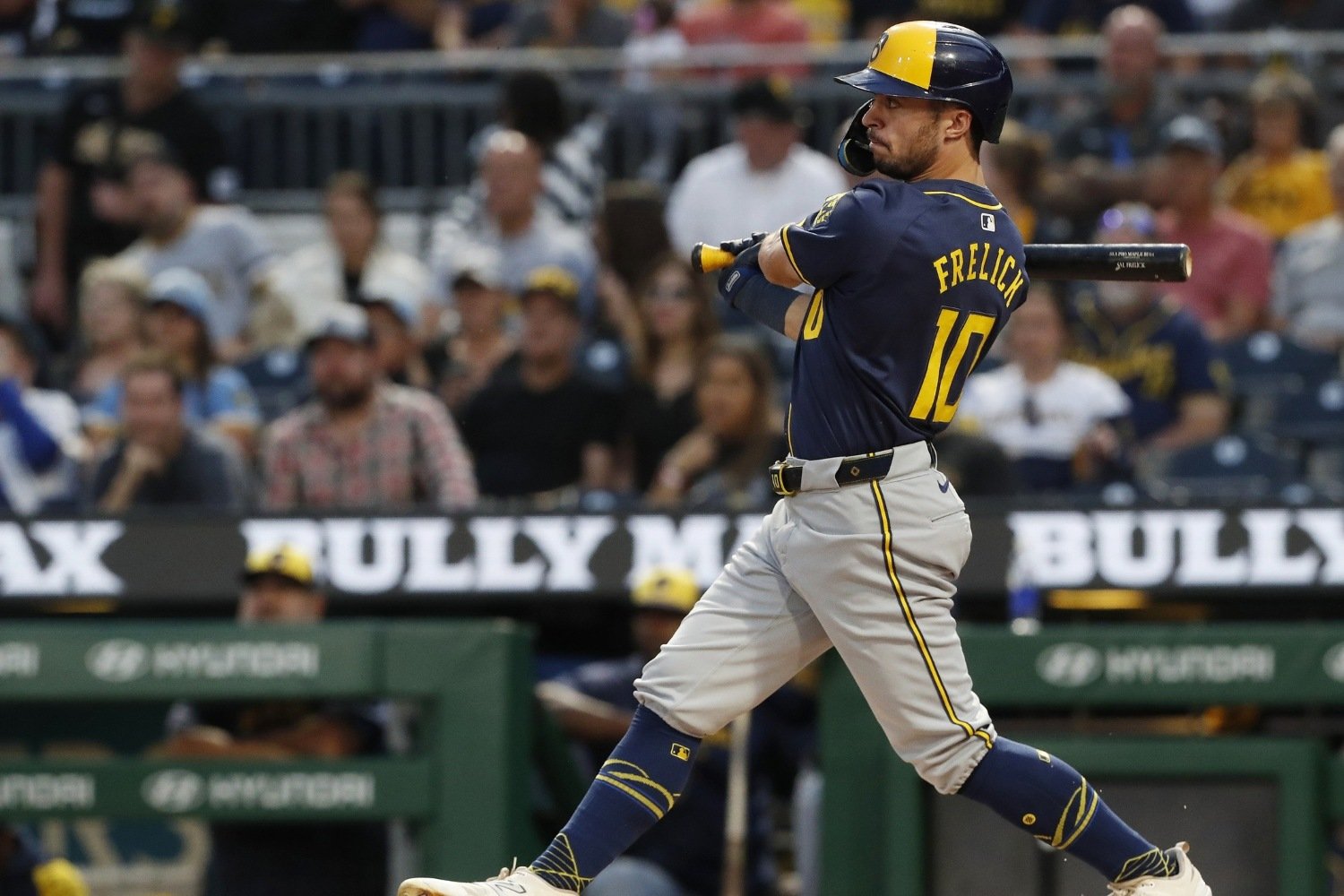 Before getting started, I'm assuming good health from those returning from major injuries and a healthy spring. Obviously, we know better, but there's no other way to do this exercise. With that in mind; Lineup & Batting Order 1. Sal Frelick - RF (L) - Frelick overtook Brice Turang as the team's leading contact specialist, and with a hint of more power under the hood, he should lead off on Opening Day. 2. Jackson Chourio - LF (R) - Chourio's ability to impact the game with power, speed and a terrific hit tool means he needs as many plate appearances as possible. His speed should prevent the double play ball that the other candidates for this gig are prone to, and many expect his home run total to soar in 2025. 3. Christian Yelich - DH (L) - Yelich's time in the outfield will no doubt be managed carefully this season. The back surgery he had has unlocked power in those MLB hitters undergoing the procedure previously, and his bat-to-ball skills and hard-hit rates should continue to be in the upper echelons of baseball. With these three, the Brewers have plenty of power, speed, and grit at the top of their order. 4. William Contreras - C (R) - The top catcher in Major League Baseball, Contreras offers a powerful bat that profiles wonderfully in the cleanup spot—hopefully with RBI opportunities aplenty. If the Brewers can manage his workload, they may get even more production at the plate. 5. Garrett Mitchell - CF (L) - Maintaining the left/right balance the Brewers enjoy, Mitchell's powerful bat has continued to defy the underlying expectations. If he can manage the high fastball to any degree in 2025, he could be a superstar for the Brewers, in a similar mold to Jarren Duran for the Red Sox. 6. Rhys Hoskins - 1B (R) - Rounding out the middle of the order is another high home-run candidate. Hoskins was disappointing in 2024, but when healthy at the start of the year, he was one of their most dangerous hitters, with a 127 WRC+ and nine home runs in the first six weeks. Can he rediscover the punch in 2025? 7. Brice Turang - 2B (L) - Turang took a step forward in 2024, if not quite a quantum leap, and his gritty at-bats can give way to danger for opponents when he reaches base. In part batting here due to the left/right combinations, he can provide a second-leadoff platform and a stolen base threat after Hoskins. 8. Joey Ortiz - SS (R) - Another hitter who struggled after a mid-season injury, Ortiz showed enough last season to believe his bat can take a step forward. Showing some plate discipline, strong bat-to-ball skills and sneaky pop alongside his defense at shortstop will give the Brewers a premium infield. 9. Caleb Durbin - 3B (R) - Durbin likely has the edge in the matchup against Oliver Dunn, with a skill set that suits the Brewers' predilections better. His solid contact skills and pull-side, line-drive power have drawn comps from writers to the bat of Steven Kwan, but it remains to be seen how much pop he can access in the majors. Another electric runner on the basepaths, Durbin provides a strong floor from the 9-hole. The Bench Andruw Monasterio - 1B/2B/3B/OF (R) - Monasterio is in the most precarious position on the roster as things stand, but I can see him making it on Opening Day as their utility infielder. With both Turang and Ortiz capable of playing a plus shortstop, the whole infield is covered, and Monasterio has been developing in the outfield in the Winter Leagues. He's batted .302/.402/.421 in a career-high 43 games and 190 plate appearances in the Venezuelan Winter League. More relevantly, Oliver Dunn needs consistent playing time, and he won't get that in the majors. Blake Perkins - OF (S) - Blake Perkins is a strong option as a fourth outfielder. He slightly outperformed his peripheral hitting metrics last season, but I'm not sure you'll find a smoother center fielder in all of baseball. When the inevitable injuries hit, Perkins will be a blessing. Eric Haase - C (R) - Although there are rumors that the Brewers are looking into further catching reinforcements, which is fascinating, as things stand, Haase will be their Opening Day backup catcher. Showing a lot of pop and a lot of swing-and-miss, he's capable enough defensively to spell William Contreras and calls a fantastic game behind the plate. Tyler Black - 1B/OF (L) - I was tempted to gamble on Ernesto Martinez Jr out of spring training, but Black adds a left-handed bat that should be valuable as a pinch-hitter. He can also be a solid pinch-runner, for someone like Haase or Hoskins. With an injury-prone outfield, Black profiles to get more game time out in the grass than on the infield dirt, and his bat profiles well enough to provide roughly average production if he can find his power to the pull side. Starting Rotation 1. Freddy Peralta (RHP) - While 2024 was underwhelming in many ways for Peralta, he's still the undeniable leader of this staff due to health issues elsewhere. He's been durable and has far and away the best raw stuff in this rotation. 2. Nestor Cortes (LHP) - The Brewers' biggest offseason move so far, Cortes offers a deceptive delivery, durability and consistency. He produced a 2.44 ERA in 158 1/3 innings in 2022 with a variety of fastballs and strong command that should play up in the Brewers system. His batted-ball profile also fits Milwaukee's roster like a hand in a glove. 3. Aaron Civale (RHP) - Since joining the Brewers from the Tampa Bay Rays via a July trade, Civale has rediscovered his Guardians form. His new, shorter slider grades out impressively in Stuff+ metrics, and his pitch usage has seen him provide some real quality for the Brewers, with a 3.45 ERA after the All Star break. 4. Brandon Woodruff (RHP) - Woodruff should be more or less ready by the start of the season, having gotten back on a mound in September. While his bulldog mentality remains, it will be fascinating to see if he can recover any of the swing-and-miss stuff that made him such a nightmare for opposing hitters at his best. 5. Tobias Myers (RHP) - Recording a sub-3.00 ERA wouldn't place you at the back end of many rotations, but Tobias Myers did flirt along the line of a lower level of performance. When his fastball was hot, so was he, but at times, it became quite hittable and as such it's unlikely he outdoes what his peripherals are saying throughout 2025 as well. That being said, he showed in the playoffs just how effective he can be, rounding out a rotation without an obvious weakness. 6. DL Hall (LHP) - Hall is hoping a fully healthy knee will allow him to rediscover some of the life on his fastball that made him such a tantalizing prospect for the Orioles. If he can, Hall may push his way into starting regularly in a six-man rotation (something the Brewers will want, given Woodruff's shoulder and the general prevalence of pitching injuries). The secondaries looked sharp to finish the year, so if he can find just a little more life on the four-seamer, he could be a real difference-maker. Bullpen Aaron Ashby (LHP) - An electric arm that can generate both ground balls and strikeouts at a high rate, Ashby delivered an eye-opening performance out of the bullpen in September 2024 that came out of nowhere and leaves him almost locked into the Opening Day roster. He may do so as a high-leverage arm, or a multi-inning man, but he could fill both roles with aplomb. Trevor Megill (RHP) - The high-octane four-seamer and his dastardly knuckle-curve made Megill deadly in 2024. He filled in admirably while Devin Williams was injured, racking up 21 saves in the process. He's likely to be the closer for the 2025 Brewers. Jared Koenig (LHP) - Unlocking significant velocity improvements since roughly the middle of 2023, Koenig pitched to a 2.73 ERA in 2024 in 56 innings. The deceptive lefty proved effective as a fireman, coming in during big situations in the middle to back end of games, and he should continue this role in 2025. Bryan Hudson (LHP) - After a full offseason to recover from the tribulations that hit him in the second half, Hudson is still likely to be on the Opening Day roster. He led the Brewers bullpen (min. 25 innings) with 62 strikeouts and a 1.73 ERA. His sweeper proved borderline unhittable, and his fastball and changeup played far above expectations due to his deceptive delivery. Nick Mears (RHP) - With an over-the-top, high-velocity fastball not unlike Megill's, Mears has some major upside. Hopefully, a full offseason with the Brewers staff will help him with the home-run problem that plagued him in 2024 after the trade. His raw stuff is certainly not in question, and with a good start, he could become a dark horse to close out games this year. Joel Payamps (RHP) - A necessary foil in a lefty-heavy bullpen, Payamps is nonetheless someone the Brewers could trade before Opening Day, to clear his roughly $3-million salary. He found his slider again in the second half of 2024, having lost it in the first half, and the results returned to those of a strong set-up man. Connor Thomas (LHP) - The Brewers' Rule 5 pickup from the Cardinals, Thomas is likely to be given every chance to stick with the big-league team. Possessing a six-pitch arsenal headlined by a strong slider and cutter, Thomas should be able to eat innings at the back end of the bullpen. He'll have a chance to force his way into higher leverage after that, but for now, he's likely to fill the role that belonged to Bryse Wilson in 2023 and 2024. Jacob Misiorowski may push his way into a multi-inning relief role off a strong spring training, while Grant Wolfram and Elvis Peguero will no doubt be eyeing a way into the mix. Then there's the forgotten man, Abner Uribe, who may need to recalibrate at Triple A but has shown he has more than enough raw stuff to dismantle big-league hitters when healthy. Can you see any of these fringy choices forcing their way into a crowded bullpen mix? Could Craig Yoho or Logan Henderson join the crowd? What changes would you make to this proposed lineup? Let us know your thoughts in the comments below!
 -
In a passive offseason from the Milwaukee Brewers, how much will their Opening Day lineup have changed from that of 2024? Let's see if we can unscramble it! Image courtesy of © Charles LeClaire-Imagn Images Before getting started, I'm assuming good health from those returning from major injuries and a healthy spring. Obviously, we know better, but there's no other way to do this exercise. With that in mind; Lineup & Batting Order 1. Sal Frelick - RF (L) - Frelick overtook Brice Turang as the team's leading contact specialist, and with a hint of more power under the hood, he should lead off on Opening Day. 2. Jackson Chourio - LF (R) - Chourio's ability to impact the game with power, speed and a terrific hit tool means he needs as many plate appearances as possible. His speed should prevent the double play ball that the other candidates for this gig are prone to, and many expect his home run total to soar in 2025. 3. Christian Yelich - DH (L) - Yelich's time in the outfield will no doubt be managed carefully this season. The back surgery he had has unlocked power in those MLB hitters undergoing the procedure previously, and his bat-to-ball skills and hard-hit rates should continue to be in the upper echelons of baseball. With these three, the Brewers have plenty of power, speed, and grit at the top of their order. 4. William Contreras - C (R) - The top catcher in Major League Baseball, Contreras offers a powerful bat that profiles wonderfully in the cleanup spot—hopefully with RBI opportunities aplenty. If the Brewers can manage his workload, they may get even more production at the plate. 5. Garrett Mitchell - CF (L) - Maintaining the left/right balance the Brewers enjoy, Mitchell's powerful bat has continued to defy the underlying expectations. If he can manage the high fastball to any degree in 2025, he could be a superstar for the Brewers, in a similar mold to Jarren Duran for the Red Sox. 6. Rhys Hoskins - 1B (R) - Rounding out the middle of the order is another high home-run candidate. Hoskins was disappointing in 2024, but when healthy at the start of the year, he was one of their most dangerous hitters, with a 127 WRC+ and nine home runs in the first six weeks. Can he rediscover the punch in 2025? 7. Brice Turang - 2B (L) - Turang took a step forward in 2024, if not quite a quantum leap, and his gritty at-bats can give way to danger for opponents when he reaches base. In part batting here due to the left/right combinations, he can provide a second-leadoff platform and a stolen base threat after Hoskins. 8. Joey Ortiz - SS (R) - Another hitter who struggled after a mid-season injury, Ortiz showed enough last season to believe his bat can take a step forward. Showing some plate discipline, strong bat-to-ball skills and sneaky pop alongside his defense at shortstop will give the Brewers a premium infield. 9. Caleb Durbin - 3B (R) - Durbin likely has the edge in the matchup against Oliver Dunn, with a skill set that suits the Brewers' predilections better. His solid contact skills and pull-side, line-drive power have drawn comps from writers to the bat of Steven Kwan, but it remains to be seen how much pop he can access in the majors. Another electric runner on the basepaths, Durbin provides a strong floor from the 9-hole. The Bench Andruw Monasterio - 1B/2B/3B/OF (R) - Monasterio is in the most precarious position on the roster as things stand, but I can see him making it on Opening Day as their utility infielder. With both Turang and Ortiz capable of playing a plus shortstop, the whole infield is covered, and Monasterio has been developing in the outfield in the Winter Leagues. He's batted .302/.402/.421 in a career-high 43 games and 190 plate appearances in the Venezuelan Winter League. More relevantly, Oliver Dunn needs consistent playing time, and he won't get that in the majors. Blake Perkins - OF (S) - Blake Perkins is a strong option as a fourth outfielder. He slightly outperformed his peripheral hitting metrics last season, but I'm not sure you'll find a smoother center fielder in all of baseball. When the inevitable injuries hit, Perkins will be a blessing. Eric Haase - C (R) - Although there are rumors that the Brewers are looking into further catching reinforcements, which is fascinating, as things stand, Haase will be their Opening Day backup catcher. Showing a lot of pop and a lot of swing-and-miss, he's capable enough defensively to spell William Contreras and calls a fantastic game behind the plate. Tyler Black - 1B/OF (L) - I was tempted to gamble on Ernesto Martinez Jr out of spring training, but Black adds a left-handed bat that should be valuable as a pinch-hitter. He can also be a solid pinch-runner, for someone like Haase or Hoskins. With an injury-prone outfield, Black profiles to get more game time out in the grass than on the infield dirt, and his bat profiles well enough to provide roughly average production if he can find his power to the pull side. Starting Rotation 1. Freddy Peralta (RHP) - While 2024 was underwhelming in many ways for Peralta, he's still the undeniable leader of this staff due to health issues elsewhere. He's been durable and has far and away the best raw stuff in this rotation. 2. Nestor Cortes (LHP) - The Brewers' biggest offseason move so far, Cortes offers a deceptive delivery, durability and consistency. He produced a 2.44 ERA in 158 1/3 innings in 2022 with a variety of fastballs and strong command that should play up in the Brewers system. His batted-ball profile also fits Milwaukee's roster like a hand in a glove. 3. Aaron Civale (RHP) - Since joining the Brewers from the Tampa Bay Rays via a July trade, Civale has rediscovered his Guardians form. His new, shorter slider grades out impressively in Stuff+ metrics, and his pitch usage has seen him provide some real quality for the Brewers, with a 3.45 ERA after the All Star break. 4. Brandon Woodruff (RHP) - Woodruff should be more or less ready by the start of the season, having gotten back on a mound in September. While his bulldog mentality remains, it will be fascinating to see if he can recover any of the swing-and-miss stuff that made him such a nightmare for opposing hitters at his best. 5. Tobias Myers (RHP) - Recording a sub-3.00 ERA wouldn't place you at the back end of many rotations, but Tobias Myers did flirt along the line of a lower level of performance. When his fastball was hot, so was he, but at times, it became quite hittable and as such it's unlikely he outdoes what his peripherals are saying throughout 2025 as well. That being said, he showed in the playoffs just how effective he can be, rounding out a rotation without an obvious weakness. 6. DL Hall (LHP) - Hall is hoping a fully healthy knee will allow him to rediscover some of the life on his fastball that made him such a tantalizing prospect for the Orioles. If he can, Hall may push his way into starting regularly in a six-man rotation (something the Brewers will want, given Woodruff's shoulder and the general prevalence of pitching injuries). The secondaries looked sharp to finish the year, so if he can find just a little more life on the four-seamer, he could be a real difference-maker. Bullpen Aaron Ashby (LHP) - An electric arm that can generate both ground balls and strikeouts at a high rate, Ashby delivered an eye-opening performance out of the bullpen in September 2024 that came out of nowhere and leaves him almost locked into the Opening Day roster. He may do so as a high-leverage arm, or a multi-inning man, but he could fill both roles with aplomb. Trevor Megill (RHP) - The high-octane four-seamer and his dastardly knuckle-curve made Megill deadly in 2024. He filled in admirably while Devin Williams was injured, racking up 21 saves in the process. He's likely to be the closer for the 2025 Brewers. Jared Koenig (LHP) - Unlocking significant velocity improvements since roughly the middle of 2023, Koenig pitched to a 2.73 ERA in 2024 in 56 innings. The deceptive lefty proved effective as a fireman, coming in during big situations in the middle to back end of games, and he should continue this role in 2025. Bryan Hudson (LHP) - After a full offseason to recover from the tribulations that hit him in the second half, Hudson is still likely to be on the Opening Day roster. He led the Brewers bullpen (min. 25 innings) with 62 strikeouts and a 1.73 ERA. His sweeper proved borderline unhittable, and his fastball and changeup played far above expectations due to his deceptive delivery. Nick Mears (RHP) - With an over-the-top, high-velocity fastball not unlike Megill's, Mears has some major upside. Hopefully, a full offseason with the Brewers staff will help him with the home-run problem that plagued him in 2024 after the trade. His raw stuff is certainly not in question, and with a good start, he could become a dark horse to close out games this year. Joel Payamps (RHP) - A necessary foil in a lefty-heavy bullpen, Payamps is nonetheless someone the Brewers could trade before Opening Day, to clear his roughly $3-million salary. He found his slider again in the second half of 2024, having lost it in the first half, and the results returned to those of a strong set-up man. Connor Thomas (LHP) - The Brewers' Rule 5 pickup from the Cardinals, Thomas is likely to be given every chance to stick with the big-league team. Possessing a six-pitch arsenal headlined by a strong slider and cutter, Thomas should be able to eat innings at the back end of the bullpen. He'll have a chance to force his way into higher leverage after that, but for now, he's likely to fill the role that belonged to Bryse Wilson in 2023 and 2024. Jacob Misiorowski may push his way into a multi-inning relief role off a strong spring training, while Grant Wolfram and Elvis Peguero will no doubt be eyeing a way into the mix. Then there's the forgotten man, Abner Uribe, who may need to recalibrate at Triple A but has shown he has more than enough raw stuff to dismantle big-league hitters when healthy. Can you see any of these fringy choices forcing their way into a crowded bullpen mix? Could Craig Yoho or Logan Henderson join the crowd? What changes would you make to this proposed lineup? Let us know your thoughts in the comments below! View full article
-
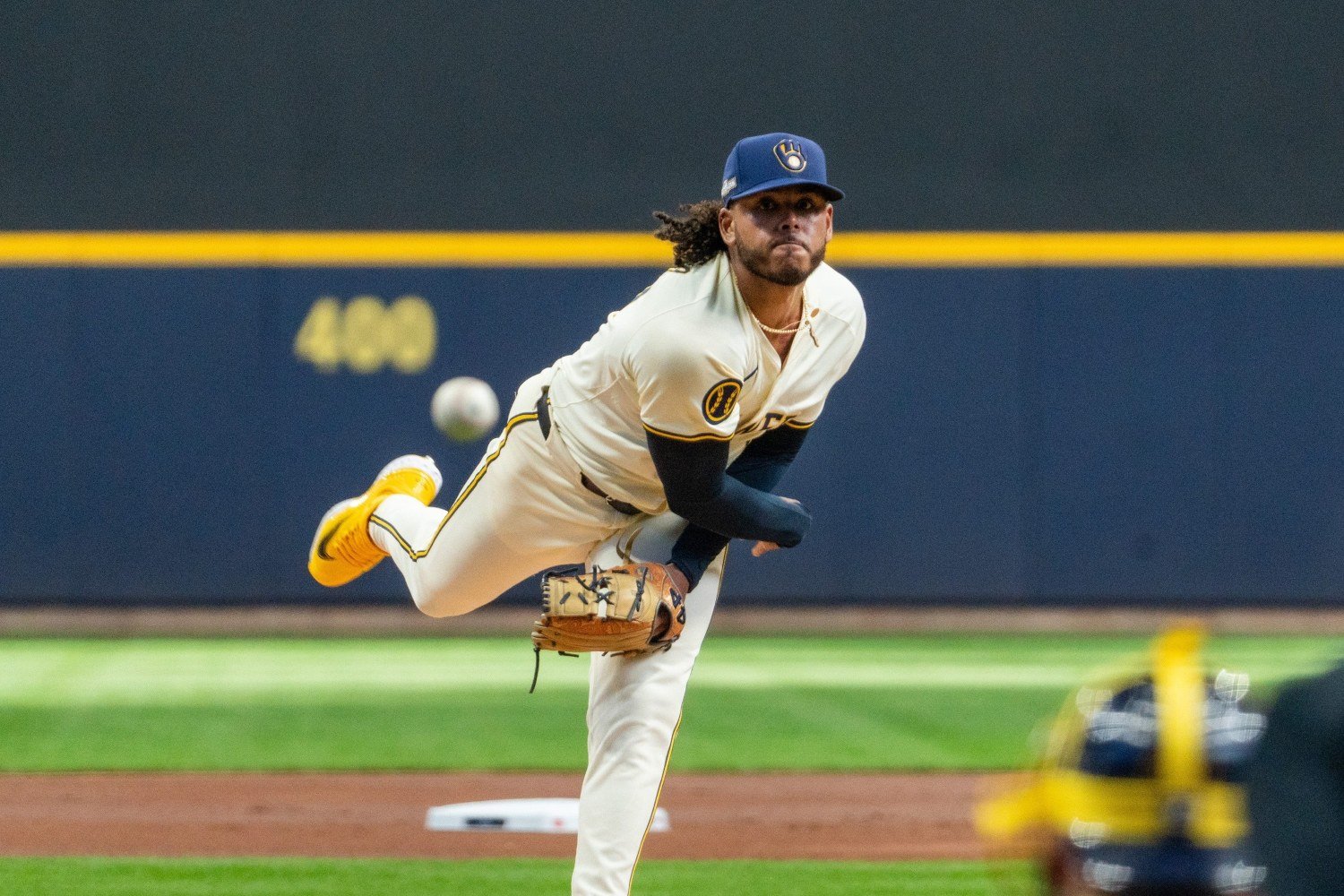 Some of you who follow me may know that I have an obsession with Freddy Peralta. His raw stuff is some of the best in the league, showing (in short bursts) how capable he is of blowing away the best hitters in the world. The problem is he can’t do it consistently, and after a roaring finish to the 2023 season, he tailed off slowly and inexorably throughout 2024. Game after game, it seemed like hitters could lay off his breaking pitches with more ease than you would expect, and I may now know why. A good indicator of how well a hitter can recognize a pitch is how often they swing at it, inside and outside the strike zone. A combination of pitches moving in different ways will keep them off-balance, as will having a similar release point on multiple offerings. The goal is to have hitters swinging more often at pitches outside the strike zone, especially fastballs, and taking more of them inside the zone to work ahead in the count. Doing so requires a variety of pitches moving in disparate ways. Here are Peralta's swing decision metrics from 2021 and 2024 on his fastball: As you can see, hitters swung significantly more often inside the strike zone, despite Peralta finding the zone less often in 2024. Combining that with a lower-than-ever swing-and-miss rate on his four-seamer suggests Peralta may have been struggling with a lack of deception. Before turning to the tipped pitches, let's first review his pitch mix alterations; The Pitch Mix Progression A slight side note, but an important one: In 2024, Peralta used his changeup more than ever before, to the detriment of his curveball. In 2021, the curve was distinct from his slider and gave him two distinct breaking pitches. As the changeup has developed and his slider changed shape (more to come on this later), the curveball has been pushed to the side, which will be relevant when we look at release points in a little bit. He became more comfortable with the pitch part way through his 2023 season and continued to increase its usage. Despite average stuff+ grades, the pitch performed fantastically. On its own, the cambio is not the cause of his struggles. You’ll see below in the map from Thomas Nestico (TJstats on Twitter) that all of Peralta’s pitches had above-average swing-and-miss but poor xWOBACON, which showcases that when he got hit, he got hit hard. This has always been the case for Peralta, partly due to a lack of command that can result in too many walks and too many meatballs. As a fly-ball pitcher, that’s a dangerous combination, which does tend to bite him. That being said, it was never as extreme as this, particularly against the fastball. Hitters had an expected slugging mark of .419 against it in 2024 (only 2019 was worse) and an xwOBA of .330 (worse than any prior season). In short, the fastball was being recognized, targeted, and pummeled. So why was his electric four-seamer, with a TJstuff+ grade of 106, on the receiving end of so much damage? Freddy Peralta Was Tipping His Hand, And His Pitches The answer to this is twofold. Peralta’s deceptive “rise” has historically come from his low arm slot. It creates a perception that the pitch is rising as it reaches the hitter, but that changed in 2024. As you can see, in 2023 Peralta's fastball (the red line) was released on a similar arm angle to his slider and changeup, but in 2024, it was released from a higher arm angle more closely resembling the release point of his curveball. This release point might have been okay, had he thrown the curve at a significant rate in 2024. Instead, he relegated it to more of a show-me role, and with the lowered usage, Peralta’s release point for the four-seam fastball had nothing to blend with. It looked just different enough than his main secondaries for hitters to pick up on the disparity. When I say that it's noticeable, here's how Peralta's release point used to look, compared to how it looks now: In the above version from 2021, you can only see the barest hint of a red speck directly behind the yellow and green release points. It's an almost identical release with his slider and changeup. In the 2024 points below, it's almost entirely separated, half-hiding behind the curveball release point in blue. This may not seem to be a large difference, but to a big-league hitter, it's all they need, especially if the curveball isn't a large factor in their swing decisions. It might not get picked up as readily the first time Peralta faces a lineup, but it became easier to pick up as hitters faced him a second and third time. Coincidentally or not, he saw a lot more damage against him the second time through an order this season. Arm angles can fluctuate naturally, but the fact that he lost some of his alignment with the changeup and curveball that had previously fluctuated together with the four-seam fastball suggests there may have been deliberate intent behind it. Matt Trueblood wrote about Peralta's changes in mound position and mechanics (including stride direction and posture, as well as arm angle) in August, and that seems to be a salient consideration, too. To delve deeper, I asked our pitching expert Spencer Michaelis, who suggested that if it was a deliberate change, it could be done in search of better command; a higher arm slot often gives the pitcher a better feeling of control of the pitch. That command improvement didn't materialize in 2024, and I could even argue that the loss of deception put increased scrutiny on dotting his fastball. To back this up, Pitch Profiler has a model that estimates a pitcher's ability to tunnel his offerings; the metric that evaluates that skill is called Match+. The measurement assesses how similar a pitcher's arsenal appears at a hitter's decision point (150 milliseconds before the ball reaches the plate). In 2021, Peralta was in the 92nd percentile for Match+. He dropped all the way down to the 20th percentile in 2024, and has been declining since increasing the changeup usage and throttling back the curveball. Peralta's pitch-tunneling is on the decline, and without taking steps to remedy it, 2024's results may augur a continued downward trend in overall performance. The good news is, if it was a deliberate change, it should be far easier to rectify. If it was injury-related, that's a different proposition altogether, but given the arm angles of his slider and changeup, I'm inclined to believe it's the former. The Return Of The Sweeper One other point of difference is the variation in Peralta’s slider from the 2021 version compared to its 2022-2024 iteration. In 2021, Peralta had a definitive sweeper (even after the sticky stuff ban came in, in case you’re wondering), and he had the best xwOBA against sliders of his career in that season, at just .306. The reason it was so effective lies in how the shape differentiated from his curveball to create a distinct movement profile: On the right, you can see the separation between the yellow (slider) and blue (curveball) splatters in 2021, the slider in particular being a relatively tight cluster. Now contrast that with 2024: The cluster of sliders is a lot more expansive, coming closer to the movement profiles of the fastball and overlapping more often with the curveball. Part of the reason for this is that Peralta tries to vary his slider shape for different situations, with our own Matt Trueblood estimating him to have as many as four different variations. When a hurler manipulates a pitch that much, however, it becomes more difficult to execute it consistently. The reduced contrast in the movement profile places added pressure on Peralta to hit his spots with precision. The results are tough to argue with: he had vastly more success with both his sweeper and his curveball than he’s seen since modifying the sweeper to a variety of slider shapes in 2022-24. In adding separation between the two breaking pitches, Peralta's results on his fastball surged. The added horizontal and vertical movement kept hitters off-balance, to the point that they were swinging underneath far more of his fastballs, with a higher whiff rate. Good stuff will do that to hitters; it's why having multiple strong pitches in your arsenal is so valuable at the major-league level. The sweeper-fastball tandem begot the most pitcher-friendly contact profile of Peralta's career, when he had it working. It also creates an entirely different look for a hitter. When they see a ball out of the hand that appears to be on the inner third of the plate and high, a sweeper can swing that pitch away off the outside edge of the strike zone. With more regular slider(s) and a changeup with minimal horizontal movement, Peralta has reduced the horizontal plane his pitches work on, and made it easier to swing at the fastball and changeup inside the strike zone. So Can It Be Fixed? Barring injury concerns, it’s entirely feasible that Peralta can readjust the arm angle on his four-seam fastball, and tunnel that pitch more effectively with his breaking pitches—especially now that he’s using the changeup with more regularity. The added deception for a starting pitcher who predominantly used just three pitches would be momentous, and could help the signature fastball become a real difference-maker once again. The sweeper is another matter, and maybe an even easier correction for him. The balance it provided the rest of his arsenal may allow him to reduce his four-seam fastball usage in favor of a more varied arsenal that incorporates the curveball more often (because of the more diverse breaking planes of the pitches), thus boosting the outcomes of his entire repertoire. Having four legitimate offerings with 12%-20% usage will keep hitters off-balance, creating the kind of results we saw in 2021 from Peralta regarding the quality of contact against him, and maybe even allow him to live in the strike zone with more regularity. Regardless of how good your pitches are, if an MLB hitter can identify it, then it won't succeed for long. Peralta's fastball has become easier for opposing hitters to target, and it's a trend that he has to address, one way or another. The sweeper shape return would be an added bonus, but the fastball is his bread and butter. Without that deceptive release point, he may never truly find the performance he's capable of once more. I would like to give a special mention to Pitch Profiler and TJstats for allowing me to use their models for analysis. If you haven’t already, both are worth a follow on your social media of choice, with an incredible level of detail and evaluation available there and on their Patreon sites. What do you think of Peralta’s fastball and secondaries before the 2025 season? Do you think he can rekindle his 2021 form, or is it expected to be a slow downward trajectory from here on out? Does this article change your opinion of him at all? Let us know your thoughts in the comments below!
 -
Freddy Peralta is the likely ace of the Brewers staff again in 2025, but it’s fair to say his 2024 results didn’t live up to expectations. By cleaning up some pitch-tipping and a wayward pitch mix, can he find his best self in 2025? Image courtesy of © Jovanny Hernandez / Milwaukee Journal Sentinel / USA TODAY NETWORK via Imagn Images Some of you who follow me may know that I have an obsession with Freddy Peralta. His raw stuff is some of the best in the league, showing (in short bursts) how capable he is of blowing away the best hitters in the world. The problem is he can’t do it consistently, and after a roaring finish to the 2023 season, he tailed off slowly and inexorably throughout 2024. Game after game, it seemed like hitters could lay off his breaking pitches with more ease than you would expect, and I may now know why. A good indicator of how well a hitter can recognize a pitch is how often they swing at it, inside and outside the strike zone. A combination of pitches moving in different ways will keep them off-balance, as will having a similar release point on multiple offerings. The goal is to have hitters swinging more often at pitches outside the strike zone, especially fastballs, and taking more of them inside the zone to work ahead in the count. Doing so requires a variety of pitches moving in disparate ways. Here are Peralta's swing decision metrics from 2021 and 2024 on his fastball: As you can see, hitters swung significantly more often inside the strike zone, despite Peralta finding the zone less often in 2024. Combining that with a lower-than-ever swing-and-miss rate on his four-seamer suggests Peralta may have been struggling with a lack of deception. Before turning to the tipped pitches, let's first review his pitch mix alterations; The Pitch Mix Progression A slight side note, but an important one: In 2024, Peralta used his changeup more than ever before, to the detriment of his curveball. In 2021, the curve was distinct from his slider and gave him two distinct breaking pitches. As the changeup has developed and his slider changed shape (more to come on this later), the curveball has been pushed to the side, which will be relevant when we look at release points in a little bit. He became more comfortable with the pitch part way through his 2023 season and continued to increase its usage. Despite average stuff+ grades, the pitch performed fantastically. On its own, the cambio is not the cause of his struggles. You’ll see below in the map from Thomas Nestico (TJstats on Twitter) that all of Peralta’s pitches had above-average swing-and-miss but poor xWOBACON, which showcases that when he got hit, he got hit hard. This has always been the case for Peralta, partly due to a lack of command that can result in too many walks and too many meatballs. As a fly-ball pitcher, that’s a dangerous combination, which does tend to bite him. That being said, it was never as extreme as this, particularly against the fastball. Hitters had an expected slugging mark of .419 against it in 2024 (only 2019 was worse) and an xwOBA of .330 (worse than any prior season). In short, the fastball was being recognized, targeted, and pummeled. So why was his electric four-seamer, with a TJstuff+ grade of 106, on the receiving end of so much damage? Freddy Peralta Was Tipping His Hand, And His Pitches The answer to this is twofold. Peralta’s deceptive “rise” has historically come from his low arm slot. It creates a perception that the pitch is rising as it reaches the hitter, but that changed in 2024. As you can see, in 2023 Peralta's fastball (the red line) was released on a similar arm angle to his slider and changeup, but in 2024, it was released from a higher arm angle more closely resembling the release point of his curveball. This release point might have been okay, had he thrown the curve at a significant rate in 2024. Instead, he relegated it to more of a show-me role, and with the lowered usage, Peralta’s release point for the four-seam fastball had nothing to blend with. It looked just different enough than his main secondaries for hitters to pick up on the disparity. When I say that it's noticeable, here's how Peralta's release point used to look, compared to how it looks now: In the above version from 2021, you can only see the barest hint of a red speck directly behind the yellow and green release points. It's an almost identical release with his slider and changeup. In the 2024 points below, it's almost entirely separated, half-hiding behind the curveball release point in blue. This may not seem to be a large difference, but to a big-league hitter, it's all they need, especially if the curveball isn't a large factor in their swing decisions. It might not get picked up as readily the first time Peralta faces a lineup, but it became easier to pick up as hitters faced him a second and third time. Coincidentally or not, he saw a lot more damage against him the second time through an order this season. Arm angles can fluctuate naturally, but the fact that he lost some of his alignment with the changeup and curveball that had previously fluctuated together with the four-seam fastball suggests there may have been deliberate intent behind it. Matt Trueblood wrote about Peralta's changes in mound position and mechanics (including stride direction and posture, as well as arm angle) in August, and that seems to be a salient consideration, too. To delve deeper, I asked our pitching expert Spencer Michaelis, who suggested that if it was a deliberate change, it could be done in search of better command; a higher arm slot often gives the pitcher a better feeling of control of the pitch. That command improvement didn't materialize in 2024, and I could even argue that the loss of deception put increased scrutiny on dotting his fastball. To back this up, Pitch Profiler has a model that estimates a pitcher's ability to tunnel his offerings; the metric that evaluates that skill is called Match+. The measurement assesses how similar a pitcher's arsenal appears at a hitter's decision point (150 milliseconds before the ball reaches the plate). In 2021, Peralta was in the 92nd percentile for Match+. He dropped all the way down to the 20th percentile in 2024, and has been declining since increasing the changeup usage and throttling back the curveball. Peralta's pitch-tunneling is on the decline, and without taking steps to remedy it, 2024's results may augur a continued downward trend in overall performance. The good news is, if it was a deliberate change, it should be far easier to rectify. If it was injury-related, that's a different proposition altogether, but given the arm angles of his slider and changeup, I'm inclined to believe it's the former. The Return Of The Sweeper One other point of difference is the variation in Peralta’s slider from the 2021 version compared to its 2022-2024 iteration. In 2021, Peralta had a definitive sweeper (even after the sticky stuff ban came in, in case you’re wondering), and he had the best xwOBA against sliders of his career in that season, at just .306. The reason it was so effective lies in how the shape differentiated from his curveball to create a distinct movement profile: On the right, you can see the separation between the yellow (slider) and blue (curveball) splatters in 2021, the slider in particular being a relatively tight cluster. Now contrast that with 2024: The cluster of sliders is a lot more expansive, coming closer to the movement profiles of the fastball and overlapping more often with the curveball. Part of the reason for this is that Peralta tries to vary his slider shape for different situations, with our own Matt Trueblood estimating him to have as many as four different variations. When a hurler manipulates a pitch that much, however, it becomes more difficult to execute it consistently. The reduced contrast in the movement profile places added pressure on Peralta to hit his spots with precision. The results are tough to argue with: he had vastly more success with both his sweeper and his curveball than he’s seen since modifying the sweeper to a variety of slider shapes in 2022-24. In adding separation between the two breaking pitches, Peralta's results on his fastball surged. The added horizontal and vertical movement kept hitters off-balance, to the point that they were swinging underneath far more of his fastballs, with a higher whiff rate. Good stuff will do that to hitters; it's why having multiple strong pitches in your arsenal is so valuable at the major-league level. The sweeper-fastball tandem begot the most pitcher-friendly contact profile of Peralta's career, when he had it working. It also creates an entirely different look for a hitter. When they see a ball out of the hand that appears to be on the inner third of the plate and high, a sweeper can swing that pitch away off the outside edge of the strike zone. With more regular slider(s) and a changeup with minimal horizontal movement, Peralta has reduced the horizontal plane his pitches work on, and made it easier to swing at the fastball and changeup inside the strike zone. So Can It Be Fixed? Barring injury concerns, it’s entirely feasible that Peralta can readjust the arm angle on his four-seam fastball, and tunnel that pitch more effectively with his breaking pitches—especially now that he’s using the changeup with more regularity. The added deception for a starting pitcher who predominantly used just three pitches would be momentous, and could help the signature fastball become a real difference-maker once again. The sweeper is another matter, and maybe an even easier correction for him. The balance it provided the rest of his arsenal may allow him to reduce his four-seam fastball usage in favor of a more varied arsenal that incorporates the curveball more often (because of the more diverse breaking planes of the pitches), thus boosting the outcomes of his entire repertoire. Having four legitimate offerings with 12%-20% usage will keep hitters off-balance, creating the kind of results we saw in 2021 from Peralta regarding the quality of contact against him, and maybe even allow him to live in the strike zone with more regularity. Regardless of how good your pitches are, if an MLB hitter can identify it, then it won't succeed for long. Peralta's fastball has become easier for opposing hitters to target, and it's a trend that he has to address, one way or another. The sweeper shape return would be an added bonus, but the fastball is his bread and butter. Without that deceptive release point, he may never truly find the performance he's capable of once more. I would like to give a special mention to Pitch Profiler and TJstats for allowing me to use their models for analysis. If you haven’t already, both are worth a follow on your social media of choice, with an incredible level of detail and evaluation available there and on their Patreon sites. What do you think of Peralta’s fastball and secondaries before the 2025 season? Do you think he can rekindle his 2021 form, or is it expected to be a slow downward trajectory from here on out? Does this article change your opinion of him at all? Let us know your thoughts in the comments below! View full article
-
It makes some sense, especially Verlander, as a TOR upside even if fit for October. Neck issues really derailed him in 2024 but that type of problem usually isn't long lasting, and a full offseason should have him ready to go. You can see the significant upticks in his fastball TJstuff+ when healthy being over 110, and three plus pitches overall with strong command. He's also shown he can pitch 162 innings as recently as 2023. I would like this from the Brewers, though I wonder if the Tigers reunion holds some sway for both to finish their careers
- 15 replies
-
- 1
-

-
- max scherzer
- justin verlander
- (and 1 more)
-
That would be separate altogether with regards to the IFA pool, which they'll have already allocated. They can't transfer funds into their IFA pool beyond what they've already been allocated save in a trade.
- 15 replies
-
- 2
-
-
- max scherzer
- justin verlander
- (and 1 more)
-
The Brewers Should Gamble On Max Scherzer or Justin Verlander In 2025
Jake McKibbin posted an article in Brewers
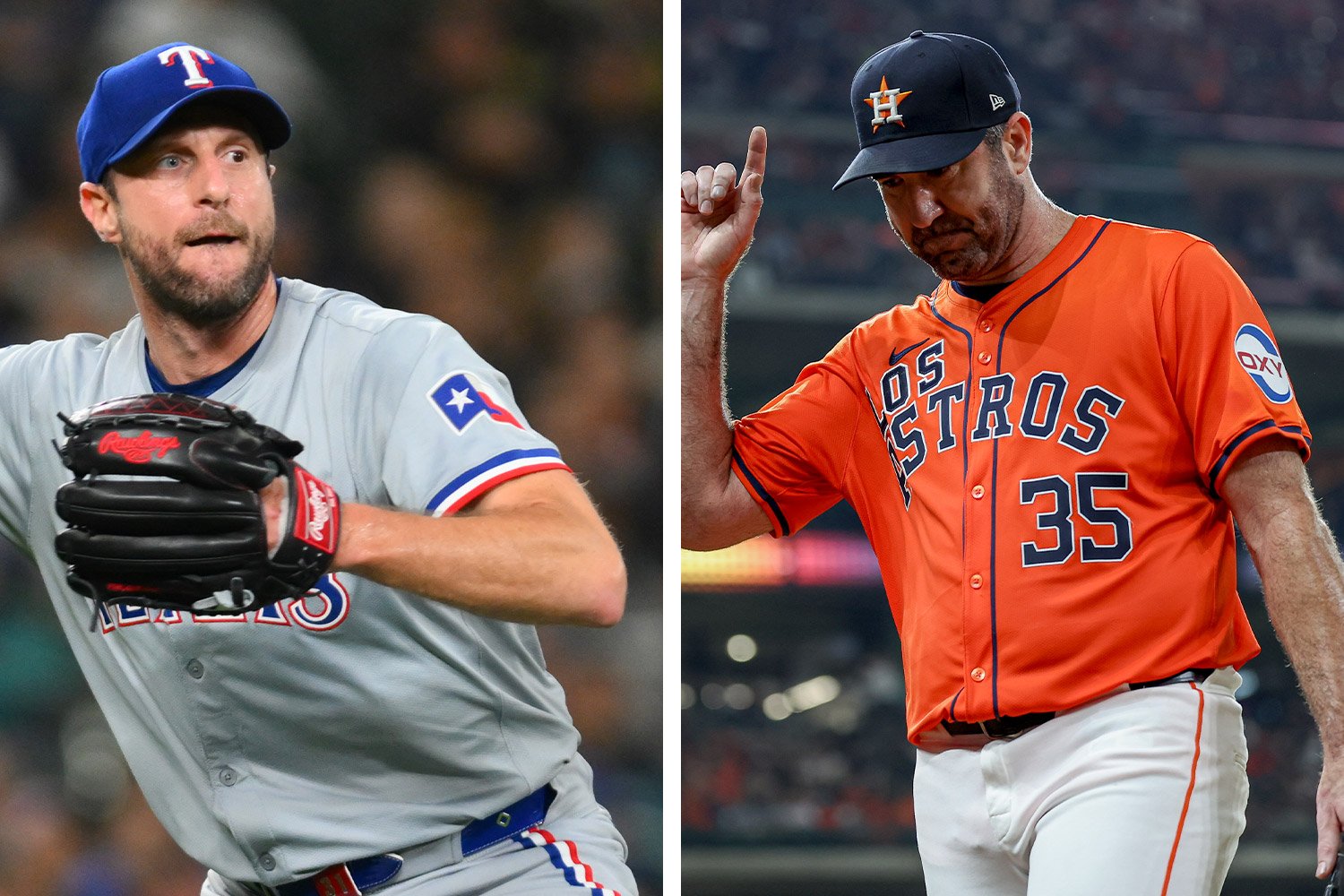 Freddy Peralta’s 2024 didn’t live up to the hype of his second half in 2023. Brandon Woodruff is returning from a career-defining shoulder surgery, and talented upside arms like DL Hall and Aaron Ashby are struggling to find their way. The top of the Brewers rotation lacks the combination of reliability and quality you look for in a team contending for the playoffs. Nestor Cortes has provided both at times in his career, most notably in 2022; however, unless the Brewers can find some way to get more ground balls or swing-and-miss from his arsenal, he has a limit to how high he can go. In short, there are enough questions over health and performance that adding one more player, despite question marks over health, could be well suited if they intend to chase hard in 2025. They have enough depth to cover should it go horribly wrong, but the options are two former Cy Young-winning, bullish competitors, Max Scherzer and Justin Verlander. Neither is likely to command the expensive payrolls of their heyday and should be available on one-year deals, but what they can add could be instrumental to the 2025 Brewers. On the other hand, both players are in the twilight years of their careers and will want to go to a contending team with a strong chance of making the playoffs. How Do The Brewers Make Room? The Milwaukee Brewers payroll limitations are at the upper end of their limit, so acquiring either Scherzer or Verlander would require offloading some salary. Per Sportrac, Scherzer is projected for a one-year deal at $15.2 million, while Verlander is expected to land in the $10-$15 million range. Creating some room and mitigating a little of the heartache would require making a space in the rotation as it stands currently, where the Brewers have Brandon Woodruff, Freddy Peralta, Nestor Cortes, Aaron Civale, Tobias Myers, DL Hall, and Aaron Ashby with proven MLB experience as starters while Chad Patrick, Connor Thomas and even Jacob Misiorowski push to get some games as swing men or more. Aaron Civale has attracted interest across the league because his final year of arbitration contract is approaching $8 million. He has shown signs of returning to his Cleveland Guardians form rather than the Tampa Bay Rays version. Offloading that contract and likely acquiring some prospect capital in the process would allow the Brewers to stay within the realms of their internal salary budgets while adding an arm and a personality that can elevate a team. The Brewers may attempt to trim further salaries around the edges to limit the damage to a net of around $5 million. Still, all MLB teams have some wiggle room around their salary budgets. With the Brewers finalizing their investment into their minor league structure this season, they may have a little more cash to throw at their MLB payroll, or perhaps they will restrict themselves at the deadline by having fewer funds available for acquisitions at that point. Either way, this isn't an astronomical ask, and they should be able to accommodate the extra salary within their current means. One of the biggest hangups about bringing in an aging pitcher is the rapid decline seen in the “stuff” in their arsenal. Thanks to Thomas Nestioc, or “TJstats,” we can access some tried and tested grades on the pitching arsenals of both Scherzer and Verlander. Let’s take a look at why either might fit the Brewers model. Why Max Scherzer? As you can see, in 2024, Max Scherzer retained an above-average fastball and slider (the cutter seems to be a misidentified hard slider). These two pitches, both of which he commands impeccably, have been the bread and butter of his long and illustrious career, and despite returning from herniated disc surgery in his back, he still showed similar stuff levels to his 2023 numbers where over a full season produced an expected ERA of 3.28 (85th percentile). When he got hit, he did get hit hard in 2024, but Scherzer's slider and curveball had strong swing-and-miss rates, while the rising fastball was more than effective. Even in a slightly down year for Scherzer, he provided a sub-four ERA with above-average strikeout rates and a fantastic walk rate. With Milwaukee's outfield defense, he no doubt has a chance to outperform those numbers even further with the Brewers in 2025. He presents a higher likelihood of avoiding injuries. As a result, he has a higher floor than Verlander, without quite the same high level of performance in recent years. Still, his avoidance of walks and competitive nature will work brilliantly within the Brewers' current clubhouse. With personalities like Scherzer and Woodruff in the Brewers clubhouse, the young talent coming through will learn much about succeeding in the major leagues. Why Justin Verlander? Verlander struggled with many injuries in 2024, first with a shoulder impingement, then later with a neck problem that he recently confessed to returning too quickly from. His performance wasn't that of 2023 Verlander by any stretch, but the underlying stuff was still there: In fact, his fastball graded out better in 2024, but the issue appeared to come from leaning more heavily on his curveball and changeup in-season, as well as a lack of command and some poor luck (partially his fault from a total lack of ground balls). His hard hit rate of just 32.6% was exceptional (92nd percentile), but when he did get squared up, it got hit hard and aerially, resulting in the high ERA. I could easily argue that Verlander, back to full health this off-season, provides a higher upside than Scherzer and has demonstrated as such as recently as 2023 with a 3.22 ERA in 162 innings. He doesn't have the same strikeout quality as the Verlander of old, but his metrics looked better in 2024 than his startling 2023 numbers; plus, he's likely to come in closer to the $12-$13 million mark for a one-year deal. Either of these two veterans would provide a presence, stability, and nous on which the Brewers rotation could benefit from gambling. Verlander especially has shown that, with health, he can be as dominant as ever on the mound, and both would likely receive boosts from the outfield defense compared to that of the Rangers and Astros. Both have expressed a desire to come back and pitch in 2025 and have the raw stuff to succeed. If the goal is to win a World Series, perhaps it's a gamble the Brewers ought to take. What do you think, Fanatics? Can you see the Brewers looking to trade Civale and open a spot for one of Scherzer or Verlander? Let us know your thoughts in the comments below! A special thanks to TJstats for allowing me to use his models to write this article. His variety of models is well worth a Patreon subscription and, at the very least, a social media following for any of you who enjoyed the graphics above!
 -
The Milwaukee Brewers have rotation depth coming out of their ears as we turn to 2025, but the top end looks more shaky than shut down. One of these veteran, Cy Young award-winning arms may push them over the edge in the regular season and the playoffs. Image courtesy of © Steven Bisig-Imagn Images / © Troy Taormina-Imagn Images Freddy Peralta’s 2024 didn’t live up to the hype of his second half in 2023. Brandon Woodruff is returning from a career-defining shoulder surgery, and talented upside arms like DL Hall and Aaron Ashby are struggling to find their way. The top of the Brewers rotation lacks the combination of reliability and quality you look for in a team contending for the playoffs. Nestor Cortes has provided both at times in his career, most notably in 2022; however, unless the Brewers can find some way to get more ground balls or swing-and-miss from his arsenal, he has a limit to how high he can go. In short, there are enough questions over health and performance that adding one more player, despite question marks over health, could be well suited if they intend to chase hard in 2025. They have enough depth to cover should it go horribly wrong, but the options are two former Cy Young-winning, bullish competitors, Max Scherzer and Justin Verlander. Neither is likely to command the expensive payrolls of their heyday and should be available on one-year deals, but what they can add could be instrumental to the 2025 Brewers. On the other hand, both players are in the twilight years of their careers and will want to go to a contending team with a strong chance of making the playoffs. How Do The Brewers Make Room? The Milwaukee Brewers payroll limitations are at the upper end of their limit, so acquiring either Scherzer or Verlander would require offloading some salary. Per Sportrac, Scherzer is projected for a one-year deal at $15.2 million, while Verlander is expected to land in the $10-$15 million range. Creating some room and mitigating a little of the heartache would require making a space in the rotation as it stands currently, where the Brewers have Brandon Woodruff, Freddy Peralta, Nestor Cortes, Aaron Civale, Tobias Myers, DL Hall, and Aaron Ashby with proven MLB experience as starters while Chad Patrick, Connor Thomas and even Jacob Misiorowski push to get some games as swing men or more. Aaron Civale has attracted interest across the league because his final year of arbitration contract is approaching $8 million. He has shown signs of returning to his Cleveland Guardians form rather than the Tampa Bay Rays version. Offloading that contract and likely acquiring some prospect capital in the process would allow the Brewers to stay within the realms of their internal salary budgets while adding an arm and a personality that can elevate a team. The Brewers may attempt to trim further salaries around the edges to limit the damage to a net of around $5 million. Still, all MLB teams have some wiggle room around their salary budgets. With the Brewers finalizing their investment into their minor league structure this season, they may have a little more cash to throw at their MLB payroll, or perhaps they will restrict themselves at the deadline by having fewer funds available for acquisitions at that point. Either way, this isn't an astronomical ask, and they should be able to accommodate the extra salary within their current means. One of the biggest hangups about bringing in an aging pitcher is the rapid decline seen in the “stuff” in their arsenal. Thanks to Thomas Nestioc, or “TJstats,” we can access some tried and tested grades on the pitching arsenals of both Scherzer and Verlander. Let’s take a look at why either might fit the Brewers model. Why Max Scherzer? As you can see, in 2024, Max Scherzer retained an above-average fastball and slider (the cutter seems to be a misidentified hard slider). These two pitches, both of which he commands impeccably, have been the bread and butter of his long and illustrious career, and despite returning from herniated disc surgery in his back, he still showed similar stuff levels to his 2023 numbers where over a full season produced an expected ERA of 3.28 (85th percentile). When he got hit, he did get hit hard in 2024, but Scherzer's slider and curveball had strong swing-and-miss rates, while the rising fastball was more than effective. Even in a slightly down year for Scherzer, he provided a sub-four ERA with above-average strikeout rates and a fantastic walk rate. With Milwaukee's outfield defense, he no doubt has a chance to outperform those numbers even further with the Brewers in 2025. He presents a higher likelihood of avoiding injuries. As a result, he has a higher floor than Verlander, without quite the same high level of performance in recent years. Still, his avoidance of walks and competitive nature will work brilliantly within the Brewers' current clubhouse. With personalities like Scherzer and Woodruff in the Brewers clubhouse, the young talent coming through will learn much about succeeding in the major leagues. Why Justin Verlander? Verlander struggled with many injuries in 2024, first with a shoulder impingement, then later with a neck problem that he recently confessed to returning too quickly from. His performance wasn't that of 2023 Verlander by any stretch, but the underlying stuff was still there: In fact, his fastball graded out better in 2024, but the issue appeared to come from leaning more heavily on his curveball and changeup in-season, as well as a lack of command and some poor luck (partially his fault from a total lack of ground balls). His hard hit rate of just 32.6% was exceptional (92nd percentile), but when he did get squared up, it got hit hard and aerially, resulting in the high ERA. I could easily argue that Verlander, back to full health this off-season, provides a higher upside than Scherzer and has demonstrated as such as recently as 2023 with a 3.22 ERA in 162 innings. He doesn't have the same strikeout quality as the Verlander of old, but his metrics looked better in 2024 than his startling 2023 numbers; plus, he's likely to come in closer to the $12-$13 million mark for a one-year deal. Either of these two veterans would provide a presence, stability, and nous on which the Brewers rotation could benefit from gambling. Verlander especially has shown that, with health, he can be as dominant as ever on the mound, and both would likely receive boosts from the outfield defense compared to that of the Rangers and Astros. Both have expressed a desire to come back and pitch in 2025 and have the raw stuff to succeed. If the goal is to win a World Series, perhaps it's a gamble the Brewers ought to take. What do you think, Fanatics? Can you see the Brewers looking to trade Civale and open a spot for one of Scherzer or Verlander? Let us know your thoughts in the comments below! A special thanks to TJstats for allowing me to use his models to write this article. His variety of models is well worth a Patreon subscription and, at the very least, a social media following for any of you who enjoyed the graphics above! View full article
- 15 replies
-
- 1
-
-
- max scherzer
- justin verlander
- (and 1 more)
-
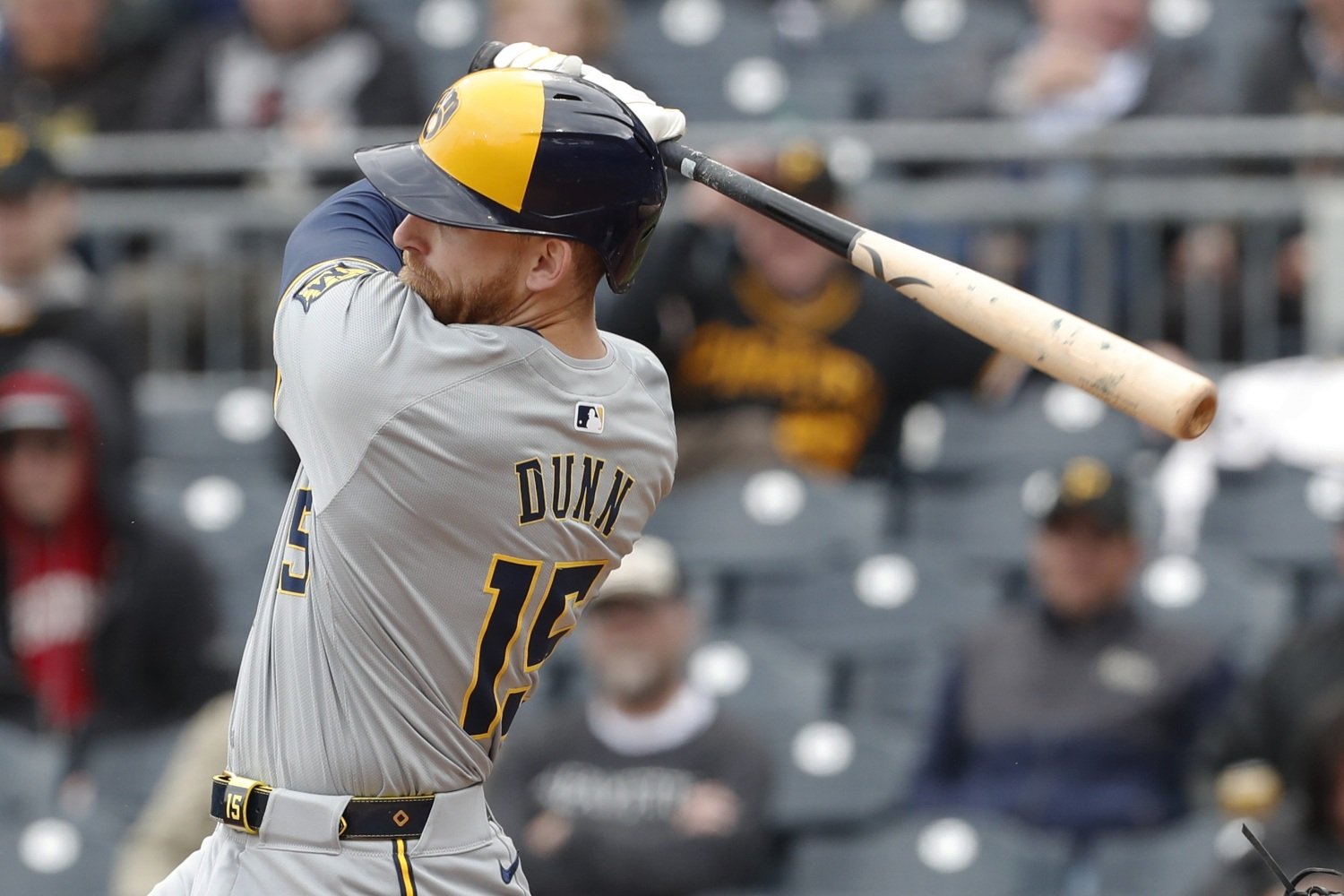 Caleb Durbin and Oliver Dunn share some fascinating similarities and some distinct divergences in their playing styles. Each of them recently won the Arizona Fall League Breakout Player of the Year Award: Dunn in 2023, and Durbin in 2024. Each possesses startling speed on the basepaths; both are surprisingly effective on the infield dirt; and they each have good-to-great plate discipline. Despite this, their approaches at the plate are chalk and cheese. While Durbin is a contact-oriented hitter who scraps his way on base, Dunn has some of the best bat speed in the majors and can hit for devastating power—if he could only make more in-zone contact. Splitting a right/left platoon matchup may be on the cards for the 2025 season, but could there be another wild card thrown into the mix? Dunn's back was an enigma in the 2024 season. After barely a whisper was heard about it after he went down in June, he resurfaced playing some winter ball in the Dominican Republic, where he seemed disinclined to get the bat off his shoulder. Dunn barely swung in his 26 plate appearances there, logging just two hits, four walks and nine strikeouts. To say this will be indicative of Dunn in 2025 is unfair, but it is concerning. The common thought after his early-season efforts was that he needed more time in the upper minors, and skipping Triple A was too much of a leap for him. He has the talent, surprising defense, and power to be a big-league contributor, but without some adjustments, it's hard to see that coming to fruition. As you can see below, if it isn't a meatball, Dunn Struggles to make any form of contact: Thus, it's possible that (although Durbin's high floor and Dunn's high ceiling seem well-matched) relying on Dunn could be problematic, at least in the short term. When you combine the results from his 2024 debut with a checkered injury history, it's hard to hold much faith in him. The Brewers do have Andruw Monasterio on their roster, although last season saw him relegated to a bench role with sparse appearances. Monasterio saw some catastrophic defensive frailties exposed and, although he was loosely passable at the plate, he didn't provide a whole lot there, leading to negative bWAR on the season. Durbin is exciting as a fresh face in the Brewers camp: hard, gritty and with a variety of ways in which he can impact the game. He found some pull-side power at Triple A last season, but his 10.6% home-run rate on fly balls is unsustainable for a player with such low exit velocities. Whether he's truly an everyday player over a long stretch remains to be seen. However, with his speed, contact and plate discipline, even 10 home runs would enable him to be a capable offensive threat—if his defense can remain up to scratch alongside that. Taking this into account, it seems as though the Brewers will want at least one more infielder in their mix to vie for the third-base role, either as a platoon for Durbin (who had reverse platoon splits in 2024) or on the bench. It seems as though the Brewers, who value that spring training competition, will want at least one other MLB-capable player in the mix. What do you think Brewers fans? SHould the Brew Crew chase another third baseman, either in the mold of an everyday starter such as Ryan McMahon, or a backup infielder with some intriguing characteristics like Lenyn Sosa or Maikel García? Let us know your thoughts in the comments below!
 -
While sounding like a comedic duo, Durbin and Dunn are in the driver's seat for the third base job next season. Will the Brewers feel secure with their depth, or will they chase another lottery ticket before spring training? Image courtesy of © Charles LeClaire-Imagn Images Caleb Durbin and Oliver Dunn share some fascinating similarities and some distinct divergences in their playing styles. Each of them recently won the Arizona Fall League Breakout Player of the Year Award: Dunn in 2023, and Durbin in 2024. Each possesses startling speed on the basepaths; both are surprisingly effective on the infield dirt; and they each have good-to-great plate discipline. Despite this, their approaches at the plate are chalk and cheese. While Durbin is a contact-oriented hitter who scraps his way on base, Dunn has some of the best bat speed in the majors and can hit for devastating power—if he could only make more in-zone contact. Splitting a right/left platoon matchup may be on the cards for the 2025 season, but could there be another wild card thrown into the mix? Dunn's back was an enigma in the 2024 season. After barely a whisper was heard about it after he went down in June, he resurfaced playing some winter ball in the Dominican Republic, where he seemed disinclined to get the bat off his shoulder. Dunn barely swung in his 26 plate appearances there, logging just two hits, four walks and nine strikeouts. To say this will be indicative of Dunn in 2025 is unfair, but it is concerning. The common thought after his early-season efforts was that he needed more time in the upper minors, and skipping Triple A was too much of a leap for him. He has the talent, surprising defense, and power to be a big-league contributor, but without some adjustments, it's hard to see that coming to fruition. As you can see below, if it isn't a meatball, Dunn Struggles to make any form of contact: Thus, it's possible that (although Durbin's high floor and Dunn's high ceiling seem well-matched) relying on Dunn could be problematic, at least in the short term. When you combine the results from his 2024 debut with a checkered injury history, it's hard to hold much faith in him. The Brewers do have Andruw Monasterio on their roster, although last season saw him relegated to a bench role with sparse appearances. Monasterio saw some catastrophic defensive frailties exposed and, although he was loosely passable at the plate, he didn't provide a whole lot there, leading to negative bWAR on the season. Durbin is exciting as a fresh face in the Brewers camp: hard, gritty and with a variety of ways in which he can impact the game. He found some pull-side power at Triple A last season, but his 10.6% home-run rate on fly balls is unsustainable for a player with such low exit velocities. Whether he's truly an everyday player over a long stretch remains to be seen. However, with his speed, contact and plate discipline, even 10 home runs would enable him to be a capable offensive threat—if his defense can remain up to scratch alongside that. Taking this into account, it seems as though the Brewers will want at least one more infielder in their mix to vie for the third-base role, either as a platoon for Durbin (who had reverse platoon splits in 2024) or on the bench. It seems as though the Brewers, who value that spring training competition, will want at least one other MLB-capable player in the mix. What do you think Brewers fans? SHould the Brew Crew chase another third baseman, either in the mold of an everyday starter such as Ryan McMahon, or a backup infielder with some intriguing characteristics like Lenyn Sosa or Maikel García? Let us know your thoughts in the comments below! View full article
-
Funny, I actually thought the same when editing it and tried to even out a little! So I appreciate the feedback if I maybe didn't go far enough in correcting that. The floor is high with his bunch of tools, but whether he can be an everyday contributor depends on the pull power remaining next season. 56 games is a small sample size, and the AFL is a homer heavy environment, but at least he's a capable bench bat with utility experience in the Infield and outfield. He could very much profile as Nick Madrigal esque if he can't keep that aerial pull rate, which isn't ideal. Some power is a requirement in the majors
-
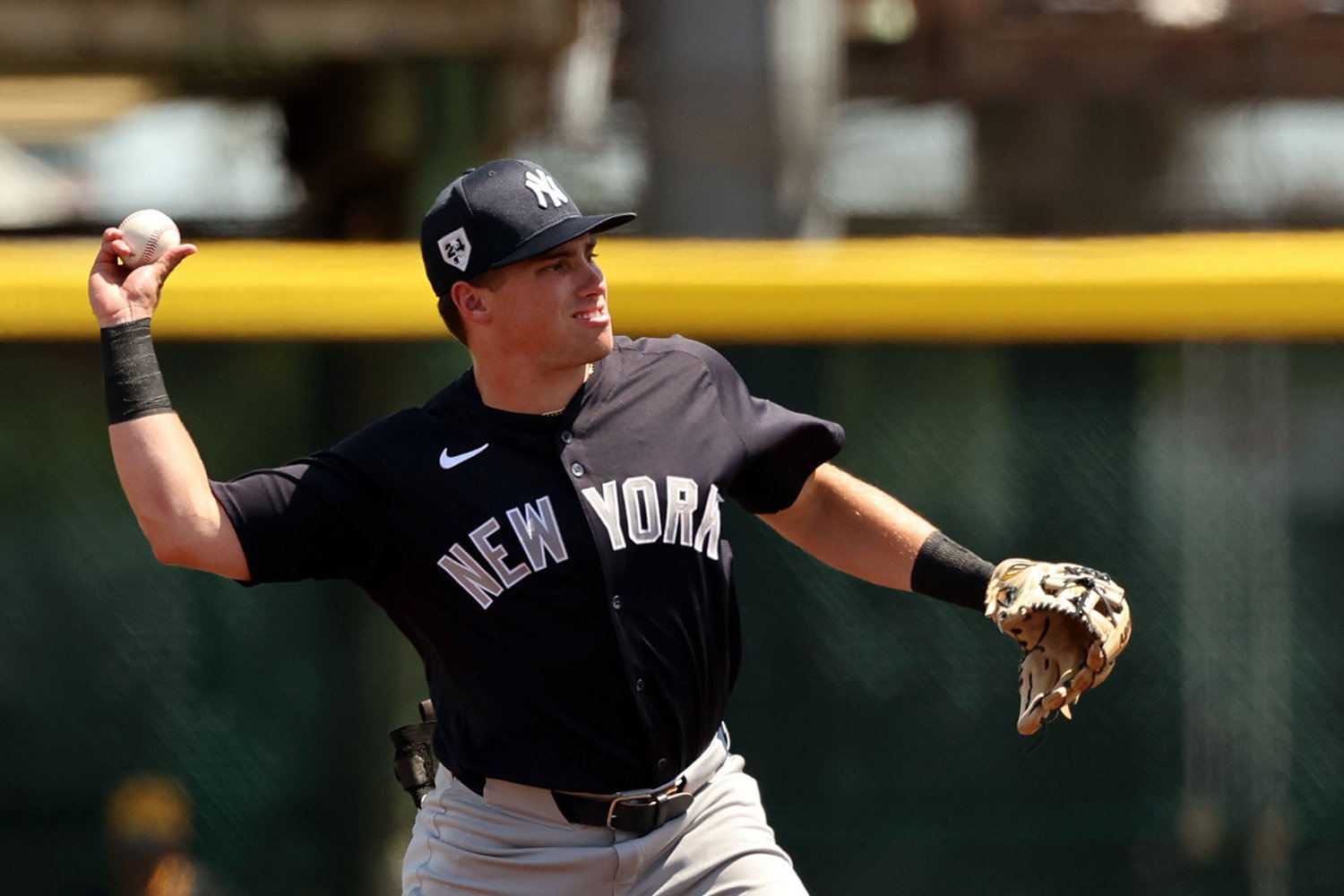 Caleb Durbin is a 5’6" 24-year-old infielder from Lake Forest, Illinois, with a fascinating array of tools at his disposal. Strong bat-to-ball skills, great plate discipline, and burgeoning power are complemented by solid defense and a fantastic base running instinct that gives him the makings of a player who can impact the game in a variety of ways. While on the surface, the return for Devin Williams looks underwhelming, it must also be true that the Brewers see a lot of value in Durbin's profile. Durbin is small. Very small. One might even have projected him to be, at most, a utility player until recently, but he’s managed to come into some power at the plate at just the right time. Since his promotion to Triple A last season, Durbin worked hard to put the ball in the air with more regularity and found some real success with 11 home runs in his last 56 games overall between Triple A and the AFL. He’s not likely to be a home run machine by any stretch in the majors, but he’s showing he could be a regular double-digit home run threat. That's big news for a player who, over the course of 2024, had an average exit velocity of just 83 mph in Triple A. He accessed the home run surge from a strong ability to pull and elevate the ball simultaneously, which, as we've seen from profiles like Isaac Paredes, can succeed in the big leagues. Synonymous with the Brewers these days is a strong approach and swing decisions, which Durbin has in spades. Using his small frame and reduced strike zone to good effect, Caleb Durbin had a walk rate of 12.5% in Triple A in 2024 with a strikeout rate of under 10%. He struck out just five times in 112 plate appearances in the AFL. Then there’s the base running. Durbin set records in the AFL this season with 29 stolen bases in 30 attempts, blowing past the previous record of 24. While fast, Durbin isn't of the lightning quick variety like Brice Turang or Garrett Mitchell, but his instincts, reads and timing are top of the table. Defensively, he seems to profile best at second base but has experience in 2024 at third base and the outfield. Erik Longenhagen said his defense looked fine at both infield positions, and it's expected the Brewers would like to see him at third base next season. Perhaps most fascinating to the Brewers is his approach to baseball. Pat Murphy waxes lyrical about the players on his roster, and their young, fearless hunger that drove them to success as a unit last season. At the winter meetings, when asked of any one he'd like on his squad, he said "give me someone who's hungry". That is Caleb Durbin. The Yankees had released a lot of chatter from Brian Cashman and Aaron Boone about Durbin being a strong contender to open 2025 as their starting second baseman. Some of this may have been smoke to increase his trade value, and the low exit velocities earlier in the year are a worry despite the recent uptick in his extra base results. He will need to be more than just a weak contact, low strikeout player at the plate to garner regular playing time, and it remains to be seen if he can impact the ball more effectively in 2025. Nestor Cortes and his flashy antics on the mound will no doubt garner much of the attention surrounding the trade, but given his own recent struggles, it may just be that the Brewers are extremely high on Caleb Durbin. He's a ball player, hungry and toolsy and may just be on the rise. If he can continue tapping into that power production at the plate, he may exactly the player the Brewers need to continue competing through 2025.
 -
The Brewers have traded Devin Williams to the Yankees in exchange for Nestor Cortes and a relative unknown called Caleb Durbin, who may just be the jewel of the trade. Image courtesy of © Kim Klement Neitzel-Imagn Images Caleb Durbin is a 5’6" 24-year-old infielder from Lake Forest, Illinois, with a fascinating array of tools at his disposal. Strong bat-to-ball skills, great plate discipline, and burgeoning power are complemented by solid defense and a fantastic base running instinct that gives him the makings of a player who can impact the game in a variety of ways. While on the surface, the return for Devin Williams looks underwhelming, it must also be true that the Brewers see a lot of value in Durbin's profile. Durbin is small. Very small. One might even have projected him to be, at most, a utility player until recently, but he’s managed to come into some power at the plate at just the right time. Since his promotion to Triple A last season, Durbin worked hard to put the ball in the air with more regularity and found some real success with 11 home runs in his last 56 games overall between Triple A and the AFL. He’s not likely to be a home run machine by any stretch in the majors, but he’s showing he could be a regular double-digit home run threat. That's big news for a player who, over the course of 2024, had an average exit velocity of just 83 mph in Triple A. He accessed the home run surge from a strong ability to pull and elevate the ball simultaneously, which, as we've seen from profiles like Isaac Paredes, can succeed in the big leagues. Synonymous with the Brewers these days is a strong approach and swing decisions, which Durbin has in spades. Using his small frame and reduced strike zone to good effect, Caleb Durbin had a walk rate of 12.5% in Triple A in 2024 with a strikeout rate of under 10%. He struck out just five times in 112 plate appearances in the AFL. Then there’s the base running. Durbin set records in the AFL this season with 29 stolen bases in 30 attempts, blowing past the previous record of 24. While fast, Durbin isn't of the lightning quick variety like Brice Turang or Garrett Mitchell, but his instincts, reads and timing are top of the table. Defensively, he seems to profile best at second base but has experience in 2024 at third base and the outfield. Erik Longenhagen said his defense looked fine at both infield positions, and it's expected the Brewers would like to see him at third base next season. Perhaps most fascinating to the Brewers is his approach to baseball. Pat Murphy waxes lyrical about the players on his roster, and their young, fearless hunger that drove them to success as a unit last season. At the winter meetings, when asked of any one he'd like on his squad, he said "give me someone who's hungry". That is Caleb Durbin. The Yankees had released a lot of chatter from Brian Cashman and Aaron Boone about Durbin being a strong contender to open 2025 as their starting second baseman. Some of this may have been smoke to increase his trade value, and the low exit velocities earlier in the year are a worry despite the recent uptick in his extra base results. He will need to be more than just a weak contact, low strikeout player at the plate to garner regular playing time, and it remains to be seen if he can impact the ball more effectively in 2025. Nestor Cortes and his flashy antics on the mound will no doubt garner much of the attention surrounding the trade, but given his own recent struggles, it may just be that the Brewers are extremely high on Caleb Durbin. He's a ball player, hungry and toolsy and may just be on the rise. If he can continue tapping into that power production at the plate, he may exactly the player the Brewers need to continue competing through 2025. View full article
-
I wasn't sure if I could reference him given his distance from the majors and how much is still to develop, but his arm certainly showed up well in the stats during the DSL this season. He'll be interesting to follow
- 12 replies
-
- 1
-
-
- garrett crochet
- tyler black
- (and 4 more)
-
None I would be overly confident about
-
 Garrett Crochet is expected to cost just $10 million over the next two years. He produced some of the gaudiest strikeout numbers from a starting pitcher in recent memory this season, his first in that role. The White Sox are determined to offload him, and there’s no shortage of suitors. The Chicago Cubs, the Cincinnati Reds, the New York Yankees and the Boston Red Sox are all heavily in the mix, although the Yankees' farm system might not be strong enough to pull it off and the Red Sox are not currently viewed as aggressive. On Monday morning, Jon Morosi has confirmed the Brewers are one of the teams still in the running: Why Go After Garrett Crochet? In short: Crochet is an ace. When healthy and on the mound last season, despite playing on one of the worst baseball teams in modern history, Crochet was box office. His arsenal plays off a four-seam fastball that averages 97 mph with over seven feet of extension and over 2500 RPM, allowing it to miss bats at over a 30% clip—an overpowering figure, for a fastball. In fact, all five pitches he threw last season had whiff rates of over 30%. Crochet finished 2022 as a four-seamer/changeup/sweeper pitcher, but in his long rehab process, he added a cutter that linked his arsenal in such a way as to make him truly devastating. As you can see above, the difference between the movement on his four-seamer and the sweeper is vast, but sometimes, that makes it too easy to distinguish them early. Having a pitch that bridges the gap was his original aim, but instead, the cutter became so effective (tunneling beautifully with his four-seamer) that he almost ditched the sweeper entirely. Throwing two pitches a combined 80%+ of the time in games usually isn’t a recipe for success in MLB, but Crochet’s four-seamer and cutter were utterly devastating, to the tune of an expected ERA of 2.85 and 209 strikeouts in just 146 innings. And yet, he may still be getting better: In August and September, Crochet unveiled a new pitch while increasing his sweeper usage to boot. His sinker alone had an: xWOBA of .136 Whiff Rate of 32% Average launch angle of -44° Average exit velocity of 78.5 mph All of this in a small sample size of 50 pitches, but in developing a sinker to work off his four-seam fastball and returning his sweeper into the cutter and four-seam mix of his early-season work, Crochet’s performance took off to new heights. Bear in mind, he was working in shorter spurts toward the end of the season, but he had thrown 161% more pitches in 2024 than any other season in his career. In September alone, where you can see his more balanced arsenal, his strikeout rate rocketed up to an incredible 42% and his xWOBA dropped to .261 after a fairly poor August by the standards of the rest of his season. Giving the Brewers a fastball mix of this caliber alongside a sweeper that misses bats consistently and a 90+ mph changeup would be like handing Santa Claus to the Grinch in handcuffs. They work so well with this arsenal, and given health, it’s easy to see how he could excel with them. Health is a big concern, and injuries have plagued him ever since the White Sox rushed him to the majors without a single game played in the minor leagues. Having had both Tommy John and shoulder surgeries, this will drop his value somewhat in a trade, especially with just one full season as a starter under his belt. Still, a Brewers rotation in the 2025 playoffs headlined by Crochet is a markedly different beast than one headlined by Freddy Peralta, and to give themselves a chance to win a World Series, there’s no doubt Crochet adds some real punch. What Would The White Sox Demand? Having Hagen Smith and Noah Schultz among their top prospects has the White Sox looking for reinforcements elsewhere in their farm system, particularly the infield, which makes the likes of Jacob Misiorowski less likely as a target. Using the more hitter-centric parts of the Brewers camp, a possible trade may look something like this: Tyler Black A likely centerpiece of the trade, Black’s path to Milwaukee is currently blocked with the corner outfields well manned. However, the White Sox have a multitude of openings and, more than that, Black’s style of play is the type a struggling club needs. Hard, gritty, with pull-side power, grinding at-bats and good plate discipline, Black can be the kind of player to produce consistently and set the tone for the rest of the White Sox lineup, being MLB-ready and still having six years of club control remaining. Luke Adams A hitter with supreme power and an on-base fiend, part of which is derived from the plunking he took off wild pitches, Adams is an athletic third baseman with speed, tons of raw power and a great eye at the plate. He shows a high upside, especially if he can continue to work on his actions at third base, and potentially be more aggressive in the strike zone. Or; Luis Lara One of the best defensive outfielders in the Brewers system, Lara showcased surprising exit velocities in Arizona during the fall league. Standing at 5-foot-7 with a swing comparable to that of Ronald Acuna Jr.(although I’m in no way comparing the two in production), Lara has impressed scouts wherever he’s gone and is expected to ascend next season in the Brewers rankings. His strong floor and improving exit velocities at just 20 years old showcase a good future. Here’s the kicker… the above isn’t enough when you look at Crochet’s market. It’s too hotly contested. For a pitcher expected to cost a mere $10 million over the next two seasons, the Brewers will have to go large, and it may involve one of their top two prospects: Jeferson Quero A two-time minor-league Gold Glove winner for some ostentatious displays behind the plate. A cannon of an arm and a real feel for working with his staff. There’s a strong belief that Quero can tap into at least league-average production behind the plate for the Brewers. There is some uncertainty about how his arm will recover from major shoulder surgery last offseason, but he’d be an attractive piece for the White Sox, and his ability to impact the ball suggests he may be a top-echelon catching prospect. The Brewers have William Contreras for another few years and have a knack for developing catchers in-house defensively, so Quero is more likely to be a long-term loss than a short-term one. However, catchers with his defensive chops at just 20 years old are as rare as diamonds. Or; Cooper Pratt Noted as the steal of the draft in 2023, the Brewers' 6th-round pick has now cracked the top 100 on MLB Pipeline, with a bat that showed burgeoning power toward the end of the year—compounded by a minor-league Gold Glove at shortstop, where he’s absolutely excelled. Pratt’s makeup, baseball IQ, approach and defense make him a highly attractive prospect who will stick at shortstop and has the ability to provide average or better offense on top of strong defense at the key defensive stronghold. The Brewers have more infield prospects than catchers in their system currently; maybe makes Pratt more expendable than Quero. In any case, both are top-tier talents. The Brewers have the farm depth to go after someone like Crochet. The question is whether or not they’re comfortable leveraging that strength to gamble on someone who has had injury problems. One more elbow operation and the value of the trade goes up in smoke for the Brewers. On the flip side, as evidenced by the Juan Soto contract, the market is ever more skewed in favor of the big-market teams, and the Brewers need to find high-upside talent for as low a price as possible. Doing so requires exceptional drafting, or high-leverage trades. This may fall into the latter. Remember, nobody worries much anymore about the prospects the Brewers traded away for Christian Yelich. Maybe it's time again to push those chips onto the table. Can you see the Brewers dangling either Cooper Pratt or Jeferson Quero for an arm like Crochet? Do you think he’s worth that much prospect capital? Let us know your thoughts in the comments below!
 -
Jon Morosi reported that the Brewers are one of the remaining parties vying for the South Siders' strikeout machine. Amid interest from big markets and NL Central rivals, how far would the Brewers go to get their man? Image courtesy of © Paul Rutherford-Imagn Images Garrett Crochet is expected to cost just $10 million over the next two years. He produced some of the gaudiest strikeout numbers from a starting pitcher in recent memory this season, his first in that role. The White Sox are determined to offload him, and there’s no shortage of suitors. The Chicago Cubs, the Cincinnati Reds, the New York Yankees and the Boston Red Sox are all heavily in the mix, although the Yankees' farm system might not be strong enough to pull it off and the Red Sox are not currently viewed as aggressive. On Monday morning, Jon Morosi has confirmed the Brewers are one of the teams still in the running: Why Go After Garrett Crochet? In short: Crochet is an ace. When healthy and on the mound last season, despite playing on one of the worst baseball teams in modern history, Crochet was box office. His arsenal plays off a four-seam fastball that averages 97 mph with over seven feet of extension and over 2500 RPM, allowing it to miss bats at over a 30% clip—an overpowering figure, for a fastball. In fact, all five pitches he threw last season had whiff rates of over 30%. Crochet finished 2022 as a four-seamer/changeup/sweeper pitcher, but in his long rehab process, he added a cutter that linked his arsenal in such a way as to make him truly devastating. As you can see above, the difference between the movement on his four-seamer and the sweeper is vast, but sometimes, that makes it too easy to distinguish them early. Having a pitch that bridges the gap was his original aim, but instead, the cutter became so effective (tunneling beautifully with his four-seamer) that he almost ditched the sweeper entirely. Throwing two pitches a combined 80%+ of the time in games usually isn’t a recipe for success in MLB, but Crochet’s four-seamer and cutter were utterly devastating, to the tune of an expected ERA of 2.85 and 209 strikeouts in just 146 innings. And yet, he may still be getting better: In August and September, Crochet unveiled a new pitch while increasing his sweeper usage to boot. His sinker alone had an: xWOBA of .136 Whiff Rate of 32% Average launch angle of -44° Average exit velocity of 78.5 mph All of this in a small sample size of 50 pitches, but in developing a sinker to work off his four-seam fastball and returning his sweeper into the cutter and four-seam mix of his early-season work, Crochet’s performance took off to new heights. Bear in mind, he was working in shorter spurts toward the end of the season, but he had thrown 161% more pitches in 2024 than any other season in his career. In September alone, where you can see his more balanced arsenal, his strikeout rate rocketed up to an incredible 42% and his xWOBA dropped to .261 after a fairly poor August by the standards of the rest of his season. Giving the Brewers a fastball mix of this caliber alongside a sweeper that misses bats consistently and a 90+ mph changeup would be like handing Santa Claus to the Grinch in handcuffs. They work so well with this arsenal, and given health, it’s easy to see how he could excel with them. Health is a big concern, and injuries have plagued him ever since the White Sox rushed him to the majors without a single game played in the minor leagues. Having had both Tommy John and shoulder surgeries, this will drop his value somewhat in a trade, especially with just one full season as a starter under his belt. Still, a Brewers rotation in the 2025 playoffs headlined by Crochet is a markedly different beast than one headlined by Freddy Peralta, and to give themselves a chance to win a World Series, there’s no doubt Crochet adds some real punch. What Would The White Sox Demand? Having Hagen Smith and Noah Schultz among their top prospects has the White Sox looking for reinforcements elsewhere in their farm system, particularly the infield, which makes the likes of Jacob Misiorowski less likely as a target. Using the more hitter-centric parts of the Brewers camp, a possible trade may look something like this: Tyler Black A likely centerpiece of the trade, Black’s path to Milwaukee is currently blocked with the corner outfields well manned. However, the White Sox have a multitude of openings and, more than that, Black’s style of play is the type a struggling club needs. Hard, gritty, with pull-side power, grinding at-bats and good plate discipline, Black can be the kind of player to produce consistently and set the tone for the rest of the White Sox lineup, being MLB-ready and still having six years of club control remaining. Luke Adams A hitter with supreme power and an on-base fiend, part of which is derived from the plunking he took off wild pitches, Adams is an athletic third baseman with speed, tons of raw power and a great eye at the plate. He shows a high upside, especially if he can continue to work on his actions at third base, and potentially be more aggressive in the strike zone. Or; Luis Lara One of the best defensive outfielders in the Brewers system, Lara showcased surprising exit velocities in Arizona during the fall league. Standing at 5-foot-7 with a swing comparable to that of Ronald Acuna Jr.(although I’m in no way comparing the two in production), Lara has impressed scouts wherever he’s gone and is expected to ascend next season in the Brewers rankings. His strong floor and improving exit velocities at just 20 years old showcase a good future. Here’s the kicker… the above isn’t enough when you look at Crochet’s market. It’s too hotly contested. For a pitcher expected to cost a mere $10 million over the next two seasons, the Brewers will have to go large, and it may involve one of their top two prospects: Jeferson Quero A two-time minor-league Gold Glove winner for some ostentatious displays behind the plate. A cannon of an arm and a real feel for working with his staff. There’s a strong belief that Quero can tap into at least league-average production behind the plate for the Brewers. There is some uncertainty about how his arm will recover from major shoulder surgery last offseason, but he’d be an attractive piece for the White Sox, and his ability to impact the ball suggests he may be a top-echelon catching prospect. The Brewers have William Contreras for another few years and have a knack for developing catchers in-house defensively, so Quero is more likely to be a long-term loss than a short-term one. However, catchers with his defensive chops at just 20 years old are as rare as diamonds. Or; Cooper Pratt Noted as the steal of the draft in 2023, the Brewers' 6th-round pick has now cracked the top 100 on MLB Pipeline, with a bat that showed burgeoning power toward the end of the year—compounded by a minor-league Gold Glove at shortstop, where he’s absolutely excelled. Pratt’s makeup, baseball IQ, approach and defense make him a highly attractive prospect who will stick at shortstop and has the ability to provide average or better offense on top of strong defense at the key defensive stronghold. The Brewers have more infield prospects than catchers in their system currently; maybe makes Pratt more expendable than Quero. In any case, both are top-tier talents. The Brewers have the farm depth to go after someone like Crochet. The question is whether or not they’re comfortable leveraging that strength to gamble on someone who has had injury problems. One more elbow operation and the value of the trade goes up in smoke for the Brewers. On the flip side, as evidenced by the Juan Soto contract, the market is ever more skewed in favor of the big-market teams, and the Brewers need to find high-upside talent for as low a price as possible. Doing so requires exceptional drafting, or high-leverage trades. This may fall into the latter. Remember, nobody worries much anymore about the prospects the Brewers traded away for Christian Yelich. Maybe it's time again to push those chips onto the table. Can you see the Brewers dangling either Cooper Pratt or Jeferson Quero for an arm like Crochet? Do you think he’s worth that much prospect capital? Let us know your thoughts in the comments below! View full article
-
I agree on the defensive side in that that's what I'd be most wary of, however the underlying numbers do suggest a significantly better season hitting wise that was foiled by some poor luck. As mentioned above, his WoBA - xWoBA was among the worst in the league and his late season production has really stepped upwards. The Brewers preach swing decisions better than almost any organisation, and I can see him learning something on that front with the Crew. The right handed bat is showing signs of power production in the off season, and at the very least for what shouldn't cost a lot, you're getting infield cover in emergencies with a bat that can spell Turang against lefties, something that was an issue last year with Monasterio providing both poor defense and limited capabilities in the batter's box
-
 Lenyn Sosa was one of the unluckiest hitters in baseball last year, ranking fourth in (wOBA-xWOBA) and showing considerable growth in his ability to handle offspeed and breaking pitches as the year went on. Despite being engulfed in the ruinous White Sox Environment (see Miguel Vargas for further info), Sosa had an expected slash line of .278/.307/.419, while playing the majority of his season at second base. He finished very strongly in September, and all signs point to a potential uptick in production in 2025. A Horrific Environment In 2024 It’s difficult to quantify just how demoralizing it can be to play in an environment like that of the 2024 White Sox, whose performance was often so bad that their worst-in-MLB-history 121 losses are almost insufficient to account for their woefulness. The mental acuity required simply to drag oneself out of bed and compete, hard, is no small task within a team that felt rudderless and uninspired the whole year. We saw players like Vargas struggle massively upon joining the White Sox, while supposed catalysts Eloy Jiménez and Luis Robert Jr.failed to show any sign of a spark. Lenyn Sosa’s performance, at least in terms of his expected numbers, certainly deserves some acclaim. Then you factor in the coaching and guidance that he would have received. Pitchers in the organization were quoted as saying the direction they were given was often as simple as “your curveball plays well down in the strike zone”. With such insightful input, you can imagine that the guidance for a young infielder wasn’t ideal, either, and as such, there’s a lot more in the tank than he showed last season. Adapting To The Majors Takes Time As we saw with Jackson Chourio, who was on the quick side of things, players take time to adjust to the major leagues. The jump from Triple A to the Show is massive, especially for younger players. It can take patience. Sosa looks to be almost fully adjusted now, and in particular, he’s begun to take on the fastball: Sosa has started punishing mistakes over the heart of the plate, and as someone who doesn’t take his walks, some slugging ability is essential for his career to progress. An above-average hard-hit rate and average exit velocity are pleasing to see, and the Brewers' environment may encourage much more development. He managed to log a .964 OPS in September to finish out his season, and has continued his progress in the offseason. Sosa leads all winter leaguers with over 20 games played in production, with a 1.216 OPS that includes eight home runs and 20 extra-base hits. The slugging is beginning to come around for the youngster, and if the Brewers can swipe him away now, they may find a bargain that can really impact their 2025 season. What would the Brewers need to work on? Sosa’s defense isn’t particularly strong at second base or over at the hot corner, but with his bat on an upward trajectory, he’s probably around the same sort of competency as an Andruw Monasterio—but with a bat that profiles a level above his. He’s not the most athletic player, but he isn't error-prone and will make plays within his wheelhouse despite below-average range. Sosa is also highly aggressive at the plate. Despite an above-average strikeout rate, he chases an awful lot, partially due to a longish swing, but it’s an approach that can definitely be tempered with the Brewers who put a high value on swing decisions within their organization. It may be enough to temper any enthusiasm for him, but he did have a walk rate higher in 2022 after spending some time at varying levels, and with the right organization, they may be able to help him construct his at-bats with a little more patience. In doing so, he may even find himself able to target those pitches against which he can really do damage. Sosa could profile at either second or third for the Crew, but as a platoon partner for Brice Turang, he could be especially strong. There's some thump to his game, and he might tap into more of it if he can just escape the White Sox. He’s only accumulated a year of service time, but his low surface-level numbers and inconsistent defense mean that he shouldn’t be too costly. Given the White Sox's needs, you’re probably talking about a prospect in the 10-15 range of the Brewers farm system and another from the top 30 to acquire Sosa, without any real need for the prospects to be close to the majors. He’d be an inexpensive pickup, but he showed in September and in the winter leagues that he might just be coming into the type of pop that can carry his profile. The Brewers need some infield depth that can actually contribute off the bench, ideally right-handed, and Sosa's profile is very tempting in that role. What do you think of Lenyn Sosa? Can you see the Brewers making a move for the White Sox infielder? let us know your thoughts in the comments below!
 -
The White Sox front office is in as much disarray as their on-field product, and with an under-the-radar infielder in their midst, can the Brewers pry him away? Image courtesy of © Kamil Krzaczynski-Imagn Images Lenyn Sosa was one of the unluckiest hitters in baseball last year, ranking fourth in (wOBA-xWOBA) and showing considerable growth in his ability to handle offspeed and breaking pitches as the year went on. Despite being engulfed in the ruinous White Sox Environment (see Miguel Vargas for further info), Sosa had an expected slash line of .278/.307/.419, while playing the majority of his season at second base. He finished very strongly in September, and all signs point to a potential uptick in production in 2025. A Horrific Environment In 2024 It’s difficult to quantify just how demoralizing it can be to play in an environment like that of the 2024 White Sox, whose performance was often so bad that their worst-in-MLB-history 121 losses are almost insufficient to account for their woefulness. The mental acuity required simply to drag oneself out of bed and compete, hard, is no small task within a team that felt rudderless and uninspired the whole year. We saw players like Vargas struggle massively upon joining the White Sox, while supposed catalysts Eloy Jiménez and Luis Robert Jr.failed to show any sign of a spark. Lenyn Sosa’s performance, at least in terms of his expected numbers, certainly deserves some acclaim. Then you factor in the coaching and guidance that he would have received. Pitchers in the organization were quoted as saying the direction they were given was often as simple as “your curveball plays well down in the strike zone”. With such insightful input, you can imagine that the guidance for a young infielder wasn’t ideal, either, and as such, there’s a lot more in the tank than he showed last season. Adapting To The Majors Takes Time As we saw with Jackson Chourio, who was on the quick side of things, players take time to adjust to the major leagues. The jump from Triple A to the Show is massive, especially for younger players. It can take patience. Sosa looks to be almost fully adjusted now, and in particular, he’s begun to take on the fastball: Sosa has started punishing mistakes over the heart of the plate, and as someone who doesn’t take his walks, some slugging ability is essential for his career to progress. An above-average hard-hit rate and average exit velocity are pleasing to see, and the Brewers' environment may encourage much more development. He managed to log a .964 OPS in September to finish out his season, and has continued his progress in the offseason. Sosa leads all winter leaguers with over 20 games played in production, with a 1.216 OPS that includes eight home runs and 20 extra-base hits. The slugging is beginning to come around for the youngster, and if the Brewers can swipe him away now, they may find a bargain that can really impact their 2025 season. What would the Brewers need to work on? Sosa’s defense isn’t particularly strong at second base or over at the hot corner, but with his bat on an upward trajectory, he’s probably around the same sort of competency as an Andruw Monasterio—but with a bat that profiles a level above his. He’s not the most athletic player, but he isn't error-prone and will make plays within his wheelhouse despite below-average range. Sosa is also highly aggressive at the plate. Despite an above-average strikeout rate, he chases an awful lot, partially due to a longish swing, but it’s an approach that can definitely be tempered with the Brewers who put a high value on swing decisions within their organization. It may be enough to temper any enthusiasm for him, but he did have a walk rate higher in 2022 after spending some time at varying levels, and with the right organization, they may be able to help him construct his at-bats with a little more patience. In doing so, he may even find himself able to target those pitches against which he can really do damage. Sosa could profile at either second or third for the Crew, but as a platoon partner for Brice Turang, he could be especially strong. There's some thump to his game, and he might tap into more of it if he can just escape the White Sox. He’s only accumulated a year of service time, but his low surface-level numbers and inconsistent defense mean that he shouldn’t be too costly. Given the White Sox's needs, you’re probably talking about a prospect in the 10-15 range of the Brewers farm system and another from the top 30 to acquire Sosa, without any real need for the prospects to be close to the majors. He’d be an inexpensive pickup, but he showed in September and in the winter leagues that he might just be coming into the type of pop that can carry his profile. The Brewers need some infield depth that can actually contribute off the bench, ideally right-handed, and Sosa's profile is very tempting in that role. What do you think of Lenyn Sosa? Can you see the Brewers making a move for the White Sox infielder? let us know your thoughts in the comments below! View full article
-
Oh absolutely, it's a general weakness across MLB. The issue with Mitchell is he struggles to even foul off these pitches, and is whiffing at a reasonable amount on meaty middle-middle fastballs too. All the needs is to be able to foul them off and wait on something more to his liking, he has a good eye at the plate to go deep in an at bat, and eventually he'll get a mistake fastball or something to get the pitcher over and change his timing. No one throws 12 straight fastballs, but until he can do that more consistently it will be a worry for him, and the strikeout rate will hamper his ultimate potential in the Show
-
It’s common knowledge now that Garrett Mitchell has a problem with high fastballs. What exactly about his swing makes it so challenging for him, and how can he take steps to mitigate its damaging influence on his at bats in 2025? Image courtesy of © Jeff Hanisch-Imagn Images Garrett Mitchell is one of the most exciting players to watch on a baseball field. His high octane approach with the sheer athleticism he possesses gives him the five tool potential, and to date his on field production has been impressive. In his first 365 plate appearances, Mitchell has accumulated almost 3 fWAR with a .264/.343/.463 slash line featuring 13 home runs for a WRC+ of 123. Combining that with some exceptional speed and reads in center field, and surely you have the makings of a franchise center fielder for the forthcoming years… right? Well there is one nagging issue with Michell. Despite the surface level production, his underlying metrics aren’t quite so pure. Although it has decreased year on year, his strikeout rate for his career sits at 34.2% with a hefty dose of batted ball luck as evidenced by his BABIP and Weighted On Base Average (WOBA) compared to his expected WOBA. The main reason for this is his struggles with the high four seam fastball. You’ll have heard many Brewers experts referencing it, including our own Jack Stern and Spencer Michaelis on the Brewer Fanatic Pod, and it’s something opposing teams haven’t attacked as harshly as you might expect just yet, but that’s likely to change next year. Mitchell has one hit against a fastball in the upper third of the strike zone this year (ironically a home run against Hayden Birdsong) while attempting to use his keen eye at the plate to avoid chasing above the zone, to take high fastballs early in counts and on either a fastball lower down in the strike zone or a breaking pitch left in zone. He even swings through middle-middle meatballs with more regularity than most MLB players, Both of these he can do damage against, but against those pitcher’s with the command to pound the top of the zone it will spell trouble. Mitchell, against right handed four seam fastballs last year, had a .906 OPS but based on the graphics below you can see some serious regression incoming: While he managed to punish some pitches on the outer third of the zone that snuck out for home runs to the opposite field, the extreme whiff rates at the top of the zone and his poor quality of contact on meatballs and the inner third don’t bode well for the coming season. Why, Technically, Does Mitchell Struggle Against The High Four Seam Fastball? For that, let’s compare his swing to one of the best high fastball hitters in the game, and you can see a distinct difference that may explain both why Garrett Mitchell swings under so many rising four seamers while simultaneously barreling up a plethora of dipping curveballs. Here’s Garrett Mitchell’s swing against a high Rhett Lowder four-seam fastball: eVozd3dfWGw0TUFRPT1fVkZCUkJ3QUZVQUFBVzFCVEF3QUFWQU5SQUFNRFZsQUFCMUlCVWdjTkJ3SmRBbFFE.mp4 Mitchell swings underneath the ball, missing by quite a margin for an in zone pitch and it was emblematic of his struggles all season. If we slow it down however to this freeze frame, you can maybe spot the cause: I've drawn some lines on here to emphasize, but Garrett Mitchell's wrists droop before the bat enters the hitting zone, as a method of creating more of an upward trajectory on his swing. If it were on plane with his arm angle, there's a high likelihood Mitchell at least makes contact with this ball, but because of the drop in his wrists, Mitchell is fighting a losing battle to reorient his bat to the upper third of the zone, creating a sizeable hole in his swing. He dips the wrists, then flicks them back in an effort to create more of an upward trajectory in his bat path, but by the time he makes this correction it's altogether too late to make contact with the ball. Let's contrast that to Juan Soto. Against fastballs in the upper third of the zone, Soto recorded a monstrous 1.082 OPS. Most hitters struggle with this pitch, but Soto is one of the best in the game for a reason, and you'll see why in this video below: TVpSdzFfWGw0TUFRPT1fVWdjQ1hGVlZWQVFBWGxJSEF3QUFCUTVVQUZrR1Uxa0FWbE5RVWdWUkNWRUhBQXNB.mp4 Ryan Helsley won reliever of the year in 2024 and his fastball was a major part in this. This particular video features a four seamer at 101.5 mph in the upper third of the zone, nearly untouchable for most hitters, and yet Soto crushed a 114 mph double. How did he do this? Well let's look at his position in contrast to Mitchell's before entering the strike zone: Soto's alignment from his shoulders, to his forearms, wrists and the bat are almost perfectly aligned. In doing so, timing up the high fastball becomes an infinitely more manageable task, and his bat will naturally flow through the path of the ball. It maximises the power output that Soto has and is a massive factor in his ability to barrel so many baseballs while maintaining such a low strikeout rate. How Does Garrett Mitchell Address this in 2025? Hitter's don't have time to decide how to swing at a pitch after recognising the pitch. They have to adjust mid swing after recognising a pitch, and the wrists a re a massive part in that adjustment. Altering your wrist angles is a big component of this in altering the angle of the bat to cover as much of the strike zone as possible once a pitch is recognised and the hitter tries to adjust for the movement profile of whatever variation is thrown. The problem with Mitchell compared to most hitters is his breaks his wrists as a default movement rather tan an adjustment to the pitch, and it gives him a head start covering those dipping curveballs but it becomes so much more difficult to fight and bring the bat plan back up again from that position. Mitchell could look to create a more aligned wrist position with the rest of his swing, but that could be iffy on the results front and leave him prone to those breaking pitches. As the Brewers have seen with Keston Hiura and Joey Wiemer, dramatically changing someone's swing is no quick fix and can create more problems than it solves. Hitter's have developed coping mechanisms to mitigate their weaknesses as they currently stand, and changing the swing invalidates all of those mechanisms while also creating new holes that the hitter has no cover against. I do think in an ideal world, I would still like to see a flatter swing path from Mitchell, and have him use his natural timing and athleticism to adjust to those breaking pitches off the back of it. He has so many tools, and such an athletic swing that he could definitely make the most out of it. With the raw power he possesses and his eye at the plate, being able to time up the fastball more regularly while spitting on breakers is a path to success amongst many major leaguers historically. There is also the general experience route and learning to work around his swing at the highest level. September was a poor month for Mitchell, but in August he managed to increase his foul ball rate, lower his whiff rate and make better production against high fastballs. Pitcher's were throwing them at a far higher rate, and Mitchell adjusted by selling out for them and gambling on the pitch rising from it's original position. Despite debuting in 2022, Mitchell has barely 2/3 of a full year's plate appearances under his belt. For a player with his raw athleticism, it's fair to say that he's still adjusting to the level with 365 plate appearances compared to the likes of Sal Frelick or Brice Turang 747 and 1067 plate appearances respectively. In doing so, although Mitchell arrived in the majors earlier than both, we should probably give him time to make his own adjustments within his swing to better cover that high four seam fastball naturally with experience. One other thing to note that befits the explanation of his development at the major league level. Bat speed is a very intriguing statistic as changes within it can relate to a host of different explanations from pitch locations, injuries, confidence levels and more. That being said, From July through to September Mitchell's bat speed increased each month by a notable amount to the point that his September bat speed would have put him in the top 5 league wide if extrapolated over a full year. In particular, note that his bat speed was increasing each month on fastballs. He did show improved performance in August in terms of whiffing less on high four seamers, and regressed back in September, but there could be a correlation between increased bat speed and his ability to adjust his wrist angles. It's tough to guess based on the small sample size of a month by month basis, but this is a promising indicator of his continuing development as a major leaguer. Would you look to change Mitchell's swing path and wrist angles? Or would you gamble on his learning at the big league level helping him cover the pitch more effectively through experience? Let us know your thoughts in the comments below! View full article
-
 Garrett Mitchell is one of the most exciting players to watch on a baseball field. His high octane approach with the sheer athleticism he possesses gives him the five tool potential, and to date his on field production has been impressive. In his first 365 plate appearances, Mitchell has accumulated almost 3 fWAR with a .264/.343/.463 slash line featuring 13 home runs for a WRC+ of 123. Combining that with some exceptional speed and reads in center field, and surely you have the makings of a franchise center fielder for the forthcoming years… right? Well there is one nagging issue with Michell. Despite the surface level production, his underlying metrics aren’t quite so pure. Although it has decreased year on year, his strikeout rate for his career sits at 34.2% with a hefty dose of batted ball luck as evidenced by his BABIP and Weighted On Base Average (WOBA) compared to his expected WOBA. The main reason for this is his struggles with the high four seam fastball. You’ll have heard many Brewers experts referencing it, including our own Jack Stern and Spencer Michaelis on the Brewer Fanatic Pod, and it’s something opposing teams haven’t attacked as harshly as you might expect just yet, but that’s likely to change next year. Mitchell has one hit against a fastball in the upper third of the strike zone this year (ironically a home run against Hayden Birdsong) while attempting to use his keen eye at the plate to avoid chasing above the zone, to take high fastballs early in counts and on either a fastball lower down in the strike zone or a breaking pitch left in zone. He even swings through middle-middle meatballs with more regularity than most MLB players, Both of these he can do damage against, but against those pitcher’s with the command to pound the top of the zone it will spell trouble. Mitchell, against right handed four seam fastballs last year, had a .906 OPS but based on the graphics below you can see some serious regression incoming: While he managed to punish some pitches on the outer third of the zone that snuck out for home runs to the opposite field, the extreme whiff rates at the top of the zone and his poor quality of contact on meatballs and the inner third don’t bode well for the coming season. Why, Technically, Does Mitchell Struggle Against The High Four Seam Fastball? For that, let’s compare his swing to one of the best high fastball hitters in the game, and you can see a distinct difference that may explain both why Garrett Mitchell swings under so many rising four seamers while simultaneously barreling up a plethora of dipping curveballs. Here’s Garrett Mitchell’s swing against a high Rhett Lowder four-seam fastball: eVozd3dfWGw0TUFRPT1fVkZCUkJ3QUZVQUFBVzFCVEF3QUFWQU5SQUFNRFZsQUFCMUlCVWdjTkJ3SmRBbFFE.mp4 Mitchell swings underneath the ball, missing by quite a margin for an in zone pitch and it was emblematic of his struggles all season. If we slow it down however to this freeze frame, you can maybe spot the cause: I've drawn some lines on here to emphasize, but Garrett Mitchell's wrists droop before the bat enters the hitting zone, as a method of creating more of an upward trajectory on his swing. If it were on plane with his arm angle, there's a high likelihood Mitchell at least makes contact with this ball, but because of the drop in his wrists, Mitchell is fighting a losing battle to reorient his bat to the upper third of the zone, creating a sizeable hole in his swing. He dips the wrists, then flicks them back in an effort to create more of an upward trajectory in his bat path, but by the time he makes this correction it's altogether too late to make contact with the ball. Let's contrast that to Juan Soto. Against fastballs in the upper third of the zone, Soto recorded a monstrous 1.082 OPS. Most hitters struggle with this pitch, but Soto is one of the best in the game for a reason, and you'll see why in this video below: TVpSdzFfWGw0TUFRPT1fVWdjQ1hGVlZWQVFBWGxJSEF3QUFCUTVVQUZrR1Uxa0FWbE5RVWdWUkNWRUhBQXNB.mp4 Ryan Helsley won reliever of the year in 2024 and his fastball was a major part in this. This particular video features a four seamer at 101.5 mph in the upper third of the zone, nearly untouchable for most hitters, and yet Soto crushed a 114 mph double. How did he do this? Well let's look at his position in contrast to Mitchell's before entering the strike zone: Soto's alignment from his shoulders, to his forearms, wrists and the bat are almost perfectly aligned. In doing so, timing up the high fastball becomes an infinitely more manageable task, and his bat will naturally flow through the path of the ball. It maximises the power output that Soto has and is a massive factor in his ability to barrel so many baseballs while maintaining such a low strikeout rate. How Does Garrett Mitchell Address this in 2025? Hitter's don't have time to decide how to swing at a pitch after recognising the pitch. They have to adjust mid swing after recognising a pitch, and the wrists a re a massive part in that adjustment. Altering your wrist angles is a big component of this in altering the angle of the bat to cover as much of the strike zone as possible once a pitch is recognised and the hitter tries to adjust for the movement profile of whatever variation is thrown. The problem with Mitchell compared to most hitters is his breaks his wrists as a default movement rather tan an adjustment to the pitch, and it gives him a head start covering those dipping curveballs but it becomes so much more difficult to fight and bring the bat plan back up again from that position. Mitchell could look to create a more aligned wrist position with the rest of his swing, but that could be iffy on the results front and leave him prone to those breaking pitches. As the Brewers have seen with Keston Hiura and Joey Wiemer, dramatically changing someone's swing is no quick fix and can create more problems than it solves. Hitter's have developed coping mechanisms to mitigate their weaknesses as they currently stand, and changing the swing invalidates all of those mechanisms while also creating new holes that the hitter has no cover against. I do think in an ideal world, I would still like to see a flatter swing path from Mitchell, and have him use his natural timing and athleticism to adjust to those breaking pitches off the back of it. He has so many tools, and such an athletic swing that he could definitely make the most out of it. With the raw power he possesses and his eye at the plate, being able to time up the fastball more regularly while spitting on breakers is a path to success amongst many major leaguers historically. There is also the general experience route and learning to work around his swing at the highest level. September was a poor month for Mitchell, but in August he managed to increase his foul ball rate, lower his whiff rate and make better production against high fastballs. Pitcher's were throwing them at a far higher rate, and Mitchell adjusted by selling out for them and gambling on the pitch rising from it's original position. Despite debuting in 2022, Mitchell has barely 2/3 of a full year's plate appearances under his belt. For a player with his raw athleticism, it's fair to say that he's still adjusting to the level with 365 plate appearances compared to the likes of Sal Frelick or Brice Turang 747 and 1067 plate appearances respectively. In doing so, although Mitchell arrived in the majors earlier than both, we should probably give him time to make his own adjustments within his swing to better cover that high four seam fastball naturally with experience. One other thing to note that befits the explanation of his development at the major league level. Bat speed is a very intriguing statistic as changes within it can relate to a host of different explanations from pitch locations, injuries, confidence levels and more. That being said, From July through to September Mitchell's bat speed increased each month by a notable amount to the point that his September bat speed would have put him in the top 5 league wide if extrapolated over a full year. In particular, note that his bat speed was increasing each month on fastballs. He did show improved performance in August in terms of whiffing less on high four seamers, and regressed back in September, but there could be a correlation between increased bat speed and his ability to adjust his wrist angles. It's tough to guess based on the small sample size of a month by month basis, but this is a promising indicator of his continuing development as a major leaguer. Would you look to change Mitchell's swing path and wrist angles? Or would you gamble on his learning at the big league level helping him cover the pitch more effectively through experience? Let us know your thoughts in the comments below!
 -
Absolutely, I'm not saying they don't have value, I think Perkins in particular has some given the slightly below league average bat and incredible defense. That being said, it's not enough for someone with the talent of a Bobby Miller, and as I said get something you'd have to give up something. The Dodgers aren't so much in need of depth pieces as starting caliber outfielders and for that, and the upside factor, they'd probably want a Garrett Mitchell. Even then, postulating trades is a wild goose chase but looking at the Dodgers need and the limitations currently shown by O'Rae and his 1 HR last year, and of Peguero, the Dodgers would need something either more major league ready and with higher upside, or a lower level talent with that same high upside as they got in Zyhir Hope/Jackson Ferris from the Cubs last season.
-
I'm sure the Brewers don't feel like they want or need to trade from their major league outfielders just yet, that doesn't mean they can't be useful in a trade the Brewers think would increase their overall performance on the field in future seasons. Also, as Perkins, Peguero and O'Rae are deemed expendable in your books, they're also likely not too high on the Dodgers priorities either. You're certainly not getting any bonus pool money out of that deal. To get something you'd need to give something, and throwing out a 2b/CF with no power, a reliever with massive command issues and a backup CF wouldn't cut it. Much as it would be great for the Brewers if it did! I think my offer is a win for both sides, but that would only be determined by how things panned out. the Brewers have slightly more upside potentially, but also Miller's lack of track record in the majors just yet impinges his value whereas Mitchell, despite underlying concerns, has produced in games both offensively and defensively.

