



Jake McKibbin
-
Posts
2,395 -
Joined
-
Last visited
-
Days Won
6
Content Type
Profiles
Forums
Blogs
Events
News
2026 Milwaukee Brewers Top Prospects Ranking
Milwaukee Brewers Videos
2022 Milwaukee Brewers Draft Picks
Milwaukee Brewers Free Agent & Trade Rumors, Notes, & Tidbits
Guides & Resources
2023 Milwaukee Brewers Draft Picks
2024 Milwaukee Brewers Draft Picks
The Milwaukee Brewers Players Project
2025 Milwaukee Brewers Draft Pick Tracker
2026 Milwaukee Brewers Draft Tracker: Picks & Bonuses
Store
Downloads
Gallery
Everything posted by Jake McKibbin
-
The Milwaukee Brewers blew the Chicago Cubs out of the water in 2024, but perhaps the final tally didn’t signify the true gap between the rival sides. With most of the off-season complete, who's in pole position for the 2025 crown? Image courtesy of © Jovanny Hernandez / Milwaukee Journal Sentinel / USA TODAY NETWORK via Imagn Images / © Rafael Suanes-Imagn Images After 162 games, to finish in the double digits ahead of your closest divisional competitor would signify a hefty gap to close. The Brewers have lost one of their stalwarts from 2024, Willy Adames, while the Cubs have added a top 10 offensive player in Kyle Tucker. Amidst various other moves and the upcoming talent from their respective farm systems, who should consider themselves in a better position for the coming season? Let's take a look! The Big Offseason Additions/Departures Kyle Tucker’s acquisition for his final season of arbitration was a real statement of intent from the Cubs that they’re ready to close the gap in 2025. Tucker has a Gold Glove Award as recently as 2022, alongside a World Series ring. His offensive performances last year in just 78 games, with an OPS just shy of 1.000, were monstrous and led to almost five WAR in just half a season of games. He’s a real needle mover. To make room for him, the Cubs traded Cody Bellinger and Isaac Paredes, two proven MLB performers who have prodigious home run outputs when healthy. While Tucker is projected for 5 WAR in 2025 (and could push this closer to 6 if he remains healthy), Bellinger and Paredes are projected for 2.7 WAR and 3.9 WAR, respectively, within their new environments. That's not to disparage the trade, which upgrades the Cubs in the outfield, but a lot of the increase in on-field production and wins may come from the clubhouse leader, Matt Shaw's performances at third base (more to come), and perhaps Kyle Tucker's presence in the clubhouse. The Brewers lost two of their signature players from their success in the 2020s. Willy Adames and his 30+ home run and 110+ RBI bat are gone from shortstop, while Devin Williams has been traded to the Yankees. In return, they have Nestor Cortes in their starting rotation and Caleb Durbin as an option on the infield as an MLB-ready prospect likely to cover second and third base. The bullpen will likely cope admirably without Williams as it did for much of 2024, with Trevor Megill, Bryan Hudson, and Jared Koenig providing unheralded high-quality out of the pen. Replacing Adames power, however, may be more reliant on internal developments than external signings. Projecting a genuinely healthy season for Christian Yelich and Garrett Mitchell on top of further steps forward from Jackson Chourio may be unrealistic. It remains to be seen if a dip in those home runs from Adames (in what already appeared to be an over-performing offense) could derail the 2025 season. However, there is a belief that defensively, the Brewers' infield could be even better in the coming season. Have The Cracks Been Filled? It seems fair that both sides have filled the gaps on their roster to a respectable, if unspectacular, level for 2025. The Brewers currently would expect to see a lot of Caleb Durbin on the infield to replace Adames, and you can expect solid defense with consistent, niggly at-bats and great bat-to-ball skills, although with questions over his in-game power. The Brewers' rotation took a beating last year, and the increased depth from the return of Brandon Woodruff and the trade for Cortes should give them a higher floor. Woodruff will be one of those upon whom the Brewers hope to return to his old form, but his surgery hasn’t got a pretty track record, and even league-average production may be the best outcome they can hope for. The Cubs have addressed the shoddy defensive catching that hampered them last year, with poor quality framing and an inability to hold runners from rampancy on the base paths. In league with Brice Turang, Elly De La Cruz, and more, this is a must, and Carson Kelly should help with that. The bullpen looks more formidable already this year, with Porter Hodge's breakout at the end of 2024. However, it may still be a quality arm shy of being considered “strong.” As in the OOPSY graphic above, the Cubs bullpen is predicted to be league average, but they have the salary space to add one of the remaining high-leverage arms and catapult them into the top 10. Neither side has turned a weakness into a strength this offseason, but they have sufficiently covered up the cracks to at least get by. Are Reinforcements On The Way? Matt Shaw is the big name here for the Cubs. With a currently open path to the third base role on Opening Day, Shaw is projected for a .250/.319/.410 line in 2025 and 2.2 WAR from Steamer. With a high degree of potential outcomes from the rookie, how he adjusts to the major league level will be crucial to the Cubs' standings at the end of the year. A good defensive player with a strong hit tool and powerful impact, he’s a dark horse for Rookie of the Year in 2025. Moises Ballesteros is a little further away based purely on his defensive skill set behind the plate as a catcher. The bat for a 19/20-year-old is incredible with a ton of thump, but until he can improve his bread and butter behind the plate (or move to first base), he’ll not be called up, barring an emergency. I can see him being a post-All-Star break promotion at this point, and he’ll be one to watch out for down the stretch if the Cubs season goes to plan. For the Brewers, Jacob Misiorowski is an enigmatic player. Showcasing a fastball with outrageous qualities, his lack of command will determine whether he can stick as a starter or if he's destined for the bullpen. If he can stick as a starter, he could be promoted part-way through 2025, and anything close to league-average control could make him a top-20 starting pitcher in the league. If it stays where it is, he'll likely be an elite high-leverage arm at the back end of the Brewers bullpen. As far as offensive upgrades go, there isn’t much to choose from for the Brewers. Jeferson Quero is a fantastic defensive catcher and a solid bat but isn’t necessarily a big addition given the dominance of William Contreras behind the plate. Tyler Black showed some regression in the power department in 2024, while Cooper Pratt, Mike Boeve and Brock Wilken all have work-ons in the upper minors that may keep them off the roster all season, though all three have the chance to push through Double A and fast-track their way into consideration. They have plenty of bullpen help (*cough* Craig Yoho *cough*) that could fit in high leverage situations, but that's not necessarily an area of need on the current roster. So Who Tops The Table? The Brewers finished 10 games ahead of the Cubs in 2024, but in reality the gap was probably closer to that of a seven game one (backed up by the Pythagorean standings). When you consider the Matt Shaw/Kyle Tucker upgrades and the loss of Adames and his 112 RBI, the gap is getting very very close. The deciding factor, in my personal opinion, will be one of two things: How many appearances, and of what quality, can the Brewers get from Christian Yelich and Garrett Mitchell. If they can stay healthy, and find the form they showed in 2024, the offensive worries will be of no concern; and What level of performance can Matt Shaw bring to the table? We’ve seen with rookies (as recently as with Pete Crow-Armstrong and Jackson Chourio) that there may be an adjustment period to the caliber of pitching in the majors. How long that takes for Shaw, who’s bat has translated at every level of the minors with relative ease, albeit there are some pitch recognition related red flags in the profile below. His performance will go a long way in deciding the Cubs' fate this season.. Given the recent history of success with whatever squad they’ve cobbled together, I would give the Brewers the slight edge in this comparison. The Cubs are perhaps the more likely team to reach a 95 win season if everything goes right, but the Brewers history of outperforming their odds and getting the most out of their players, for me, gives them a better shot of reaching the 90 win plateau. Who do you think has the advantage going into 2025? Let us know your thoughts in the comments below! NB: As always, a special thanks to TJstats for allowing me to use his graphics. View full article
-
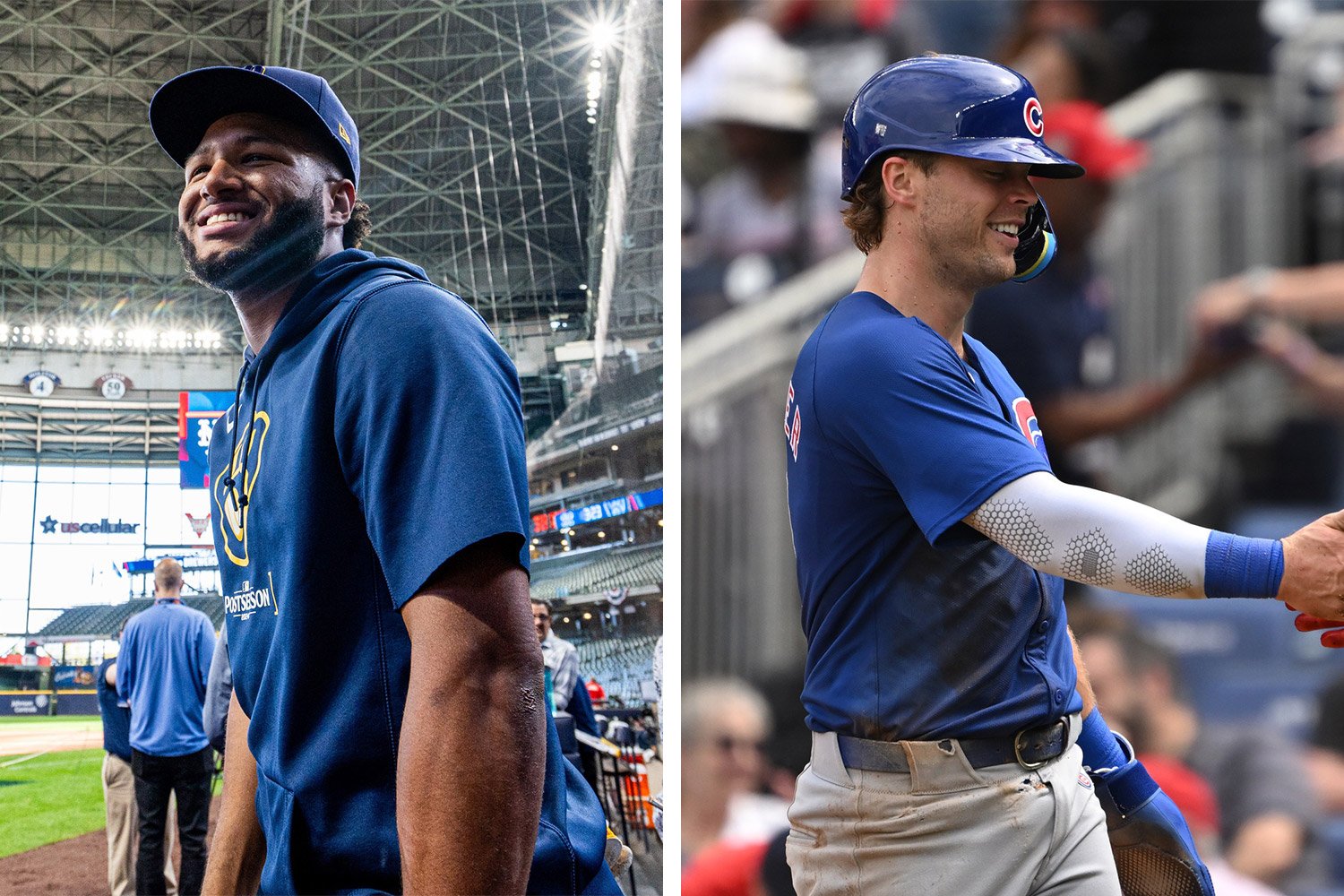 After 162 games, to finish in the double digits ahead of your closest divisional competitor would signify a hefty gap to close. The Brewers have lost one of their stalwarts from 2024, Willy Adames, while the Cubs have added a top 10 offensive player in Kyle Tucker. Amidst various other moves and the upcoming talent from their respective farm systems, who should consider themselves in a better position for the coming season? Let's take a look! The Big Offseason Additions/Departures Kyle Tucker’s acquisition for his final season of arbitration was a real statement of intent from the Cubs that they’re ready to close the gap in 2025. Tucker has a Gold Glove Award as recently as 2022, alongside a World Series ring. His offensive performances last year in just 78 games, with an OPS just shy of 1.000, were monstrous and led to almost five WAR in just half a season of games. He’s a real needle mover. To make room for him, the Cubs traded Cody Bellinger and Isaac Paredes, two proven MLB performers who have prodigious home run outputs when healthy. While Tucker is projected for 5 WAR in 2025 (and could push this closer to 6 if he remains healthy), Bellinger and Paredes are projected for 2.7 WAR and 3.9 WAR, respectively, within their new environments. That's not to disparage the trade, which upgrades the Cubs in the outfield, but a lot of the increase in on-field production and wins may come from the clubhouse leader, Matt Shaw's performances at third base (more to come), and perhaps Kyle Tucker's presence in the clubhouse. The Brewers lost two of their signature players from their success in the 2020s. Willy Adames and his 30+ home run and 110+ RBI bat are gone from shortstop, while Devin Williams has been traded to the Yankees. In return, they have Nestor Cortes in their starting rotation and Caleb Durbin as an option on the infield as an MLB-ready prospect likely to cover second and third base. The bullpen will likely cope admirably without Williams as it did for much of 2024, with Trevor Megill, Bryan Hudson, and Jared Koenig providing unheralded high-quality out of the pen. Replacing Adames power, however, may be more reliant on internal developments than external signings. Projecting a genuinely healthy season for Christian Yelich and Garrett Mitchell on top of further steps forward from Jackson Chourio may be unrealistic. It remains to be seen if a dip in those home runs from Adames (in what already appeared to be an over-performing offense) could derail the 2025 season. However, there is a belief that defensively, the Brewers' infield could be even better in the coming season. Have The Cracks Been Filled? It seems fair that both sides have filled the gaps on their roster to a respectable, if unspectacular, level for 2025. The Brewers currently would expect to see a lot of Caleb Durbin on the infield to replace Adames, and you can expect solid defense with consistent, niggly at-bats and great bat-to-ball skills, although with questions over his in-game power. The Brewers' rotation took a beating last year, and the increased depth from the return of Brandon Woodruff and the trade for Cortes should give them a higher floor. Woodruff will be one of those upon whom the Brewers hope to return to his old form, but his surgery hasn’t got a pretty track record, and even league-average production may be the best outcome they can hope for. The Cubs have addressed the shoddy defensive catching that hampered them last year, with poor quality framing and an inability to hold runners from rampancy on the base paths. In league with Brice Turang, Elly De La Cruz, and more, this is a must, and Carson Kelly should help with that. The bullpen looks more formidable already this year, with Porter Hodge's breakout at the end of 2024. However, it may still be a quality arm shy of being considered “strong.” As in the OOPSY graphic above, the Cubs bullpen is predicted to be league average, but they have the salary space to add one of the remaining high-leverage arms and catapult them into the top 10. Neither side has turned a weakness into a strength this offseason, but they have sufficiently covered up the cracks to at least get by. Are Reinforcements On The Way? Matt Shaw is the big name here for the Cubs. With a currently open path to the third base role on Opening Day, Shaw is projected for a .250/.319/.410 line in 2025 and 2.2 WAR from Steamer. With a high degree of potential outcomes from the rookie, how he adjusts to the major league level will be crucial to the Cubs' standings at the end of the year. A good defensive player with a strong hit tool and powerful impact, he’s a dark horse for Rookie of the Year in 2025. Moises Ballesteros is a little further away based purely on his defensive skill set behind the plate as a catcher. The bat for a 19/20-year-old is incredible with a ton of thump, but until he can improve his bread and butter behind the plate (or move to first base), he’ll not be called up, barring an emergency. I can see him being a post-All-Star break promotion at this point, and he’ll be one to watch out for down the stretch if the Cubs season goes to plan. For the Brewers, Jacob Misiorowski is an enigmatic player. Showcasing a fastball with outrageous qualities, his lack of command will determine whether he can stick as a starter or if he's destined for the bullpen. If he can stick as a starter, he could be promoted part-way through 2025, and anything close to league-average control could make him a top-20 starting pitcher in the league. If it stays where it is, he'll likely be an elite high-leverage arm at the back end of the Brewers bullpen. As far as offensive upgrades go, there isn’t much to choose from for the Brewers. Jeferson Quero is a fantastic defensive catcher and a solid bat but isn’t necessarily a big addition given the dominance of William Contreras behind the plate. Tyler Black showed some regression in the power department in 2024, while Cooper Pratt, Mike Boeve and Brock Wilken all have work-ons in the upper minors that may keep them off the roster all season, though all three have the chance to push through Double A and fast-track their way into consideration. They have plenty of bullpen help (*cough* Craig Yoho *cough*) that could fit in high leverage situations, but that's not necessarily an area of need on the current roster. So Who Tops The Table? The Brewers finished 10 games ahead of the Cubs in 2024, but in reality the gap was probably closer to that of a seven game one (backed up by the Pythagorean standings). When you consider the Matt Shaw/Kyle Tucker upgrades and the loss of Adames and his 112 RBI, the gap is getting very very close. The deciding factor, in my personal opinion, will be one of two things: How many appearances, and of what quality, can the Brewers get from Christian Yelich and Garrett Mitchell. If they can stay healthy, and find the form they showed in 2024, the offensive worries will be of no concern; and What level of performance can Matt Shaw bring to the table? We’ve seen with rookies (as recently as with Pete Crow-Armstrong and Jackson Chourio) that there may be an adjustment period to the caliber of pitching in the majors. How long that takes for Shaw, who’s bat has translated at every level of the minors with relative ease, albeit there are some pitch recognition related red flags in the profile below. His performance will go a long way in deciding the Cubs' fate this season.. Given the recent history of success with whatever squad they’ve cobbled together, I would give the Brewers the slight edge in this comparison. The Cubs are perhaps the more likely team to reach a 95 win season if everything goes right, but the Brewers history of outperforming their odds and getting the most out of their players, for me, gives them a better shot of reaching the 90 win plateau. Who do you think has the advantage going into 2025? Let us know your thoughts in the comments below! NB: As always, a special thanks to TJstats for allowing me to use his graphics.
 -
He was on a split contract apparently, so didn't quite qualify!
-
Elvin Rodriguez threw 88 innings in Japan's NPB in 2024 recording a 1.74 ERA in 88 innings but with just 73 strikeouts. Deployed out of the bullpen as a multi-inning reliever for Yakult, can the Brewers fashion yet another weapon in relief? Image courtesy of © Jonathan Dyer-Imagn Images Elvin Rodriguez is the type of arm who can light up a stuff+ model but has struggled to put it all together as a pitcher. His four-seam fastball is delivered from a 5'9" release height with a three-quarter slot and reached over 20 inches of an induced vertical break in a small sample size in 2023 with the Rays. That led all of baseball for IVB in 2023, and to do so without cheating to a high arm slot makes it a strong outlier pitch. He only had one appearance in the major leagues, going 3 1/3 innings, but you can see from his data in the minor leagues that his pitch mix looked considerably more balanced. Rodriguez's fastball gets a lot of plaudits for an outlier showing in his one major league appearance in 2023 (although it is still a strong primary offering). Still, it's the rest of his arsenal that should have you intrigued. He exchanged his gyro slider for more of a sweeper and was getting more horizontal breaks on his changeup, and as you can see, the TJstuff+ metrics really liked what they saw regarding his slider and changeup. Rodriguez also added in a cutter in 2023 that graded out well. Despite not using it a lot, the 50% whiff rate on the cutter and slider is quite absurd, and even when hitters did make contact, it wasn't anything that would create a lot of damage. Rodriguez took another step forward in 2024 in the NPB, reducing his fastball to a mere 50% while factoring in a knuckle curveball (15%), slider (13.1%), cutter (9.3%) and changeup (8.4%) to create a balanced array of pitches. TJstuff+ gives four of those five a positive rating, while he does throw a sinker in now and then to right-handers, which makes it a six-pitch mix overall. The Brewers love large arsenals to mold, and Rodriguez's raw movement profiles should give them plenty to work with. His cutter didn't perform well in Japan, getting hit hard and aerially with regularity, but this could be because of his location. Rodriguez was using it heavily in the upper third of the zone, which works for some cutters, but without much induced vertical break, it proved a recipe for disaster. His fastball generated sufficient swing and miss but wasn't quite the dominant offering you would hope for, given the review over its outlier shape. Instead, it was the curveball and slider that carried him. Rodriguez's knuckle curve had a 68% ground ball rate last season, not missing bats but creating a ton of weak contact, as did the changeup. When he wanted to swing and miss (mainly to right-handers), he uncorked a slider with a phenomenal 44% whiff rate in 2024. Rodriguez did struggle to miss bats consistently to left-handers, although the four-seamer and knuckle curveball did solidly in this regard. The sheer size of his arsenal, all of which he commands well if slightly predictably, will allow him to have success in a multi-inning role for the Brewers, but at this point, he's more likely to mop up innings in low-leverage spots unless the Brewers can really tap into a mix of his arsenal that enhances it's all round efficacy. High leverage will require more significant strikeout numbers, but there is certainly enough to work with here from the Brewers' vantage so that you can see a path to that sort of success. To create room on their 40-man roster, the Brewers DFA'd JB Bukauskus, who showed good promise in 2024 at times and seemed like a reliable arm with an option year remaining. Given their current set-up, such options are valuable for the Brewers, so it is a surprise to see Bukauskus as the name cut from their roster. Elvin Rodriguez is signed to a one-year deal with a club option for 2026. What do you think of the Brewers' first major league free agent signing? Did you anticipate yet another bullpen addition? Let us know your thoughts in the comments below! View full article
-
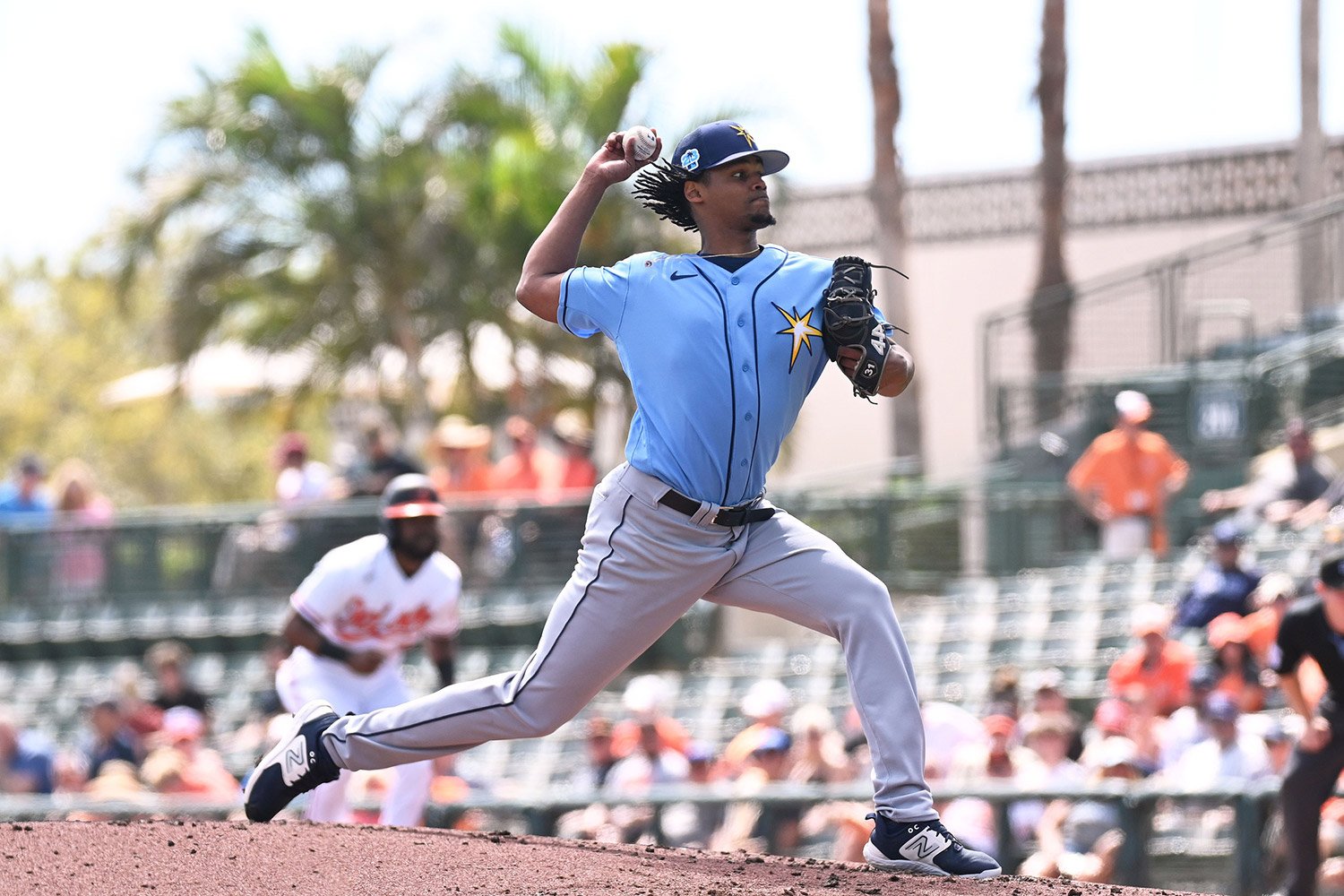 Elvin Rodriguez is the type of arm who can light up a stuff+ model but has struggled to put it all together as a pitcher. His four-seam fastball is delivered from a 5'9" release height with a three-quarter slot and reached over 20 inches of an induced vertical break in a small sample size in 2023 with the Rays. That led all of baseball for IVB in 2023, and to do so without cheating to a high arm slot makes it a strong outlier pitch. He only had one appearance in the major leagues, going 3 1/3 innings, but you can see from his data in the minor leagues that his pitch mix looked considerably more balanced. Rodriguez's fastball gets a lot of plaudits for an outlier showing in his one major league appearance in 2023 (although it is still a strong primary offering). Still, it's the rest of his arsenal that should have you intrigued. He exchanged his gyro slider for more of a sweeper and was getting more horizontal breaks on his changeup, and as you can see, the TJstuff+ metrics really liked what they saw regarding his slider and changeup. Rodriguez also added in a cutter in 2023 that graded out well. Despite not using it a lot, the 50% whiff rate on the cutter and slider is quite absurd, and even when hitters did make contact, it wasn't anything that would create a lot of damage. Rodriguez took another step forward in 2024 in the NPB, reducing his fastball to a mere 50% while factoring in a knuckle curveball (15%), slider (13.1%), cutter (9.3%) and changeup (8.4%) to create a balanced array of pitches. TJstuff+ gives four of those five a positive rating, while he does throw a sinker in now and then to right-handers, which makes it a six-pitch mix overall. The Brewers love large arsenals to mold, and Rodriguez's raw movement profiles should give them plenty to work with. His cutter didn't perform well in Japan, getting hit hard and aerially with regularity, but this could be because of his location. Rodriguez was using it heavily in the upper third of the zone, which works for some cutters, but without much induced vertical break, it proved a recipe for disaster. His fastball generated sufficient swing and miss but wasn't quite the dominant offering you would hope for, given the review over its outlier shape. Instead, it was the curveball and slider that carried him. Rodriguez's knuckle curve had a 68% ground ball rate last season, not missing bats but creating a ton of weak contact, as did the changeup. When he wanted to swing and miss (mainly to right-handers), he uncorked a slider with a phenomenal 44% whiff rate in 2024. Rodriguez did struggle to miss bats consistently to left-handers, although the four-seamer and knuckle curveball did solidly in this regard. The sheer size of his arsenal, all of which he commands well if slightly predictably, will allow him to have success in a multi-inning role for the Brewers, but at this point, he's more likely to mop up innings in low-leverage spots unless the Brewers can really tap into a mix of his arsenal that enhances it's all round efficacy. High leverage will require more significant strikeout numbers, but there is certainly enough to work with here from the Brewers' vantage so that you can see a path to that sort of success. To create room on their 40-man roster, the Brewers DFA'd JB Bukauskus, who showed good promise in 2024 at times and seemed like a reliable arm with an option year remaining. Given their current set-up, such options are valuable for the Brewers, so it is a surprise to see Bukauskus as the name cut from their roster. Elvin Rodriguez is signed to a one-year deal with a club option for 2026. What do you think of the Brewers' first major league free agent signing? Did you anticipate yet another bullpen addition? Let us know your thoughts in the comments below!
 -
How common is it for a 16 year old to get even nine innings of Winter league work?
-
I love this piece! Really interesting breakdown. Megills knuckle curve was so effective when healthy last season, as you mentioned, at slowing down bats and preventing true damage on his fastball. One interesting observation from the playoffs is how two pitch pitchers were less effective in multiple stints facing the same lineup in Clase, Williams and Diaz. There is a trend of growing arsenal's in the league now (I saw something recently, perhaps from Lance Brozdowski?) and I'm curious when that will start filtering into the bullpen rather than isolated to starters
-
Jorge Quintana had an up arrow last year, this year we've got it for Brailyn Antuñez it seems! They seem to like him for the bat speed, rangey speed and a plus arm with a good feel for spin and hitting in general Always exciting to see a player (however young) present a variety of tools
-
While weights do play a role, I think Blacks speed is still a strong part of his profile. Also there is a plateau where adding muscle weight stops bringing the same level of improved exit velocities. He does have a shorter swing than Dunn, and there's the trade off of that which brings less power but allows him to make a lot of contact when he does swing. I was trying to look more along the lines of can he access more power production without any major technical changes/build changes, but I'm sure some added bulk wouldn't be out of the question!
-
Certainly can't slate taking a direction that's worked so well in previous years, it'll be intriguing if that means being more cutthroat with second year players in the DSL to make room going forwards, and get regular playing time for the younger class
-
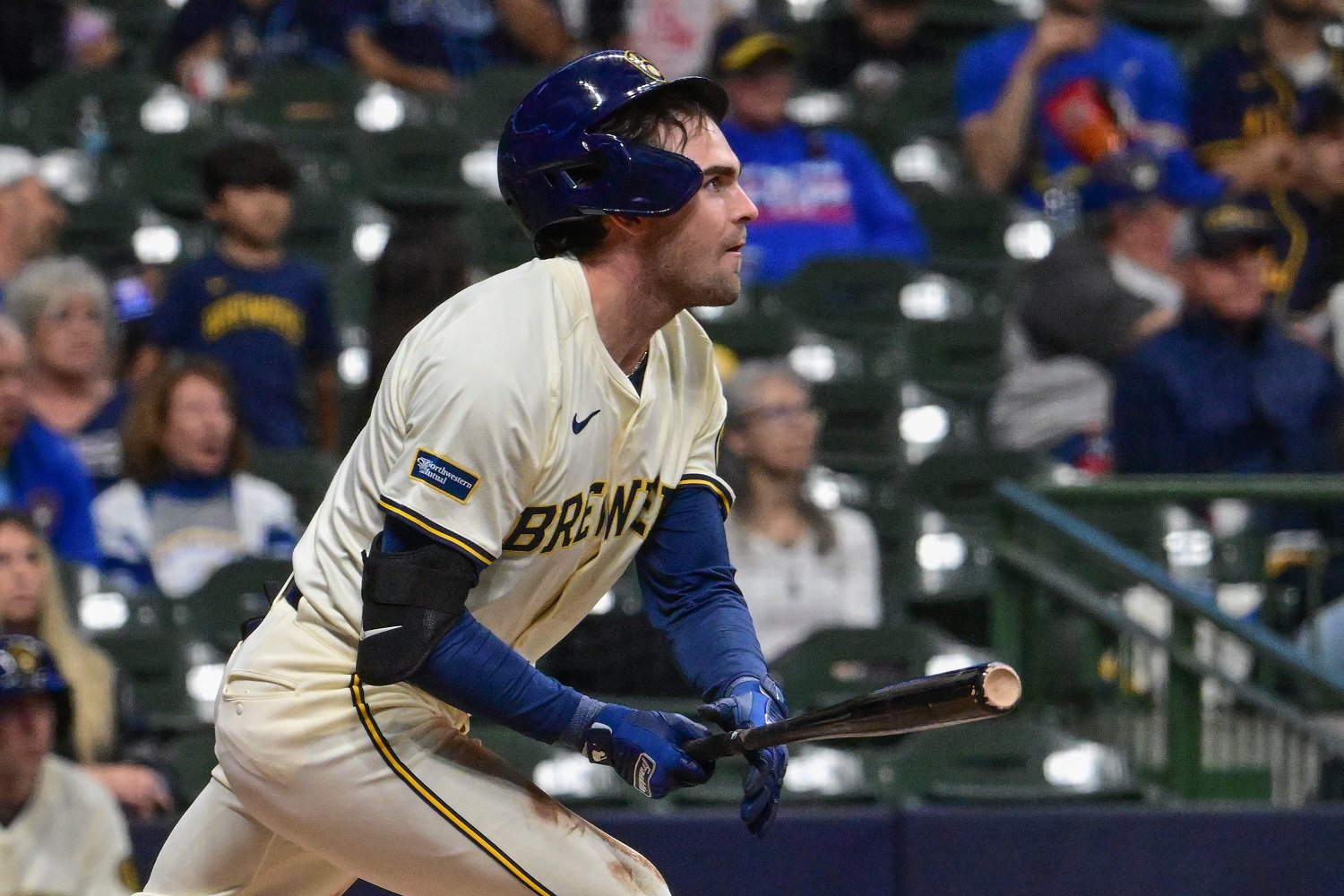 For hitters with a strong defensive skillset, like a Copper Pratt, recording a 114 WRC+ over a full season in Triple A would be a fast track to some major-league time. Unfortunately, when you struggle to play even first base, that doesn't quite cut the mustard. Tyler Black's long-term defensive home is likely in the outfield—more specifically, in left field—which requires a certain level of offensive production. Depending on how the Brewers use Sal Frelick this season (and of course the injury concerns that will perennially surround Garrett Mitchell and Christian Yelich), Black may find some playing time there, but in order to stay in the big leagues as a corner man, he'll have to unlock more power. In an offense-friendly environment, with a small strike zone due to the ABS system, Black's slugging mark of .428 last year in Nashville doesn't stand out from the crowd. He can be passive at the plate for someone with such strong pitch recognition, and his current profile is that of someone trying to grind their way on base rather than do damage. The Brewers have a lot of hitters in this style already, and it gives his offensive production a high floor, but limits the ceiling. There's a strong possibility that his slugging rate will dip below .400 against major-league pitching. Assuming his swing is what it is at this point, and the exit velocities aren't going to spike dramatically, there is still a route to more power for him—two routes, in fact. The first is his swing decisions: The graphics above, from Thomas Nestico, aren't entirely aligned, given one is measured over plate appearances while the other is per pitch faced. That being said, the timelines should be roughly similar, so if I superimpose the two graphics over one another, an interesting trend emerges. The more Black chased, the higher his xwOBA appears to be (xwOBA attempts to measure the expected offensive contributions a player makes per plate appearance, based on their contact rates and the quality of their batted balls). Arguably, then, a slightly more swing-happy Tyler Black can provide a stronger offensive contribution than the passive version. Now, this can be broken down a little into specific scenarios. Being more swing-happy in 0-2 counts is never a great position to be in, but Black's bat control allows him to make solid contact and foul off pitches even when he does chase. The art of pitching is to make a pitch look hittable out of the hand, only to move into a less desirable location, and perhaps Black can afford to be more aggressive when he sees a pitch that looks good, rather than consistently trying to work the count in his favor. The other avenue is his pull side power, and more specifically, pulling fly balls in the air. Again, see the graphic below from Nestico: It sums up Black's profile nicely, with great plate discipline and contact skills and low exit velocities. As we've seen of late, even low exit velocities can produce solid in-game power by pulling fly balls. The shorter fences, and the mechanics of a swing, make this a viable method for low-EV hitters to get the ball out of the park, and Black is no different in that regard. Twelve of Black's 14 home runs in 2024 came to the pull side. He is currently a player who hits to all fields, but if he can increase that pull rate to something more in the 80th percentile and meld it with his strong launch angles, he may be able to reach that 15-20 home run range that should make him an everyday big-league player. Black doesn't need to hit 30 home runs a season. He has the ability to get on base at a strong clip and be an absolute menace on the basepath; he stole 55 bases in 2023. His speed will allow him to leg out doubles and support that slugging number, so sitting in the 15-20 home run range as an average left fielder would make him a valuable regular for almost any team. Currently, though, he projects to hit only about 10 home runs based on the exit velocities above. That won't be enough from left field. Do you think Tyler Black has more power to unlock in 2025? Let us know your thoughts in the comments below!
 -
The positionless left-handed hitter saw his prospect stock dip in 2024, in part because his bat wasn't strong enough to distract anyone from his defensive struggles. Can he tap into more offensive production in 2025? Image courtesy of Benny Sieu-USA TODAY Sports For hitters with a strong defensive skillset, like a Copper Pratt, recording a 114 WRC+ over a full season in Triple A would be a fast track to some major-league time. Unfortunately, when you struggle to play even first base, that doesn't quite cut the mustard. Tyler Black's long-term defensive home is likely in the outfield—more specifically, in left field—which requires a certain level of offensive production. Depending on how the Brewers use Sal Frelick this season (and of course the injury concerns that will perennially surround Garrett Mitchell and Christian Yelich), Black may find some playing time there, but in order to stay in the big leagues as a corner man, he'll have to unlock more power. In an offense-friendly environment, with a small strike zone due to the ABS system, Black's slugging mark of .428 last year in Nashville doesn't stand out from the crowd. He can be passive at the plate for someone with such strong pitch recognition, and his current profile is that of someone trying to grind their way on base rather than do damage. The Brewers have a lot of hitters in this style already, and it gives his offensive production a high floor, but limits the ceiling. There's a strong possibility that his slugging rate will dip below .400 against major-league pitching. Assuming his swing is what it is at this point, and the exit velocities aren't going to spike dramatically, there is still a route to more power for him—two routes, in fact. The first is his swing decisions: The graphics above, from Thomas Nestico, aren't entirely aligned, given one is measured over plate appearances while the other is per pitch faced. That being said, the timelines should be roughly similar, so if I superimpose the two graphics over one another, an interesting trend emerges. The more Black chased, the higher his xwOBA appears to be (xwOBA attempts to measure the expected offensive contributions a player makes per plate appearance, based on their contact rates and the quality of their batted balls). Arguably, then, a slightly more swing-happy Tyler Black can provide a stronger offensive contribution than the passive version. Now, this can be broken down a little into specific scenarios. Being more swing-happy in 0-2 counts is never a great position to be in, but Black's bat control allows him to make solid contact and foul off pitches even when he does chase. The art of pitching is to make a pitch look hittable out of the hand, only to move into a less desirable location, and perhaps Black can afford to be more aggressive when he sees a pitch that looks good, rather than consistently trying to work the count in his favor. The other avenue is his pull side power, and more specifically, pulling fly balls in the air. Again, see the graphic below from Nestico: It sums up Black's profile nicely, with great plate discipline and contact skills and low exit velocities. As we've seen of late, even low exit velocities can produce solid in-game power by pulling fly balls. The shorter fences, and the mechanics of a swing, make this a viable method for low-EV hitters to get the ball out of the park, and Black is no different in that regard. Twelve of Black's 14 home runs in 2024 came to the pull side. He is currently a player who hits to all fields, but if he can increase that pull rate to something more in the 80th percentile and meld it with his strong launch angles, he may be able to reach that 15-20 home run range that should make him an everyday big-league player. Black doesn't need to hit 30 home runs a season. He has the ability to get on base at a strong clip and be an absolute menace on the basepath; he stole 55 bases in 2023. His speed will allow him to leg out doubles and support that slugging number, so sitting in the 15-20 home run range as an average left fielder would make him a valuable regular for almost any team. Currently, though, he projects to hit only about 10 home runs based on the exit velocities above. That won't be enough from left field. Do you think Tyler Black has more power to unlock in 2025? Let us know your thoughts in the comments below! View full article
-
I am a little surprised not to see more Brewers players in the 50-100 range given the size of their bonus pool and lack of top end (ie top 30) spend. I wonder if this might be a really large class overall with a really spread out bonus pool, even more than usual
-
BA mentioned good receiving skills and a plus arm 👀 yet another strong defensive pickup in the international draft perhaps?
-
Love reading these Michael! As a later fan of the sport, it's so fascinating to learn about
- 3 replies
-
- 1
-

-
- richie sexson
- jose hernandez
- (and 3 more)
-
Financial projections do require presumptive numbers without the actual public numbers, however I feel with A) teams reported going to MLB.tv that they lost ~ 20% of their revenue, which would equate to $7m for the Brewers; B) a 50% larger CBT, increased by a net $50m (in the portion shared between revenue sharing recipients) and the Brewers meeting the criteria and beyond in order to be at the upper part of that dispersement, Makes this all quite logical. I can't say for 100% certainty on the figures without a source, but the logic checks out from a fiscal view point and I hope I've made said logic easy to follow in the article. I maybe should have included a probability adverb, but given no one was considering the revenue boost in particular from the CBT dispersal, I considered it okay to go with a blunt statement, though I can at least see your viewpoint. Anyway I'll leave it there, I hope you guys enjoy the piece!
-
They absolutely are getting more cash, and most people wouldn't consider the CBT cash increasing, hence the title. The amount is speculation, but I'm confident in being at least in the ballpark
-
The Brewers Are Getting More Cash For 2025 Than You Might Think
Jake McKibbin posted an article in Brewers
 Excuse me while I get slightly nerdy to begin with (I do love me some numbers). The current competitive-balance tax limit penalized teams who spent over $237 million on player salaries and benefits in 2024, using various tax rates on any amounts spent beyond that and the higher thresholds. The greater the degree by which you surpassed the limit, the higher your tax due, up to a maximum of 90% taxation for the top bracket—with repeat offenders facing escalating penalties. It's a big reason why teams like the Dodgers are trying to defer as much money as they can, in order to reduce their CBT obligations. The tax thresholds for 2024 are: Amount Payor Exceeds Competitive Balance Tax First Year Second (Consecutive) Year Third (Consecutive) Year Less than $20m ($237.1m-$257m) 20% 30% 50% Between $20m - $40m (Between $257.1m-$277m) 32% 42% 62% Between $40m - $60m (Between $277m-$297m) 62.5% 75% 95% Over $60m (Over $297m) 80% 90% 110% The system punishes big spenders both for being consistently over the "luxury tax" threshold, and for exceeding the limit by significant amounts. In 2024, there was an MLB record of nine payers, who should pay roughly the balances below: The 2023 total was a record at $209.8 million, so the 2024 iteration has blown past that number. These funds must be paid by Jan. 21 each year, and are redistributed by the Commissioner's Office in a process defined by the most recent Collective Bargaining Agreement. The first $3.5 million goes to fund players' benefits, with half of the remaining money going to the MLB Players Association to fund individual players' retirement funds. Here's where it gets interesting: the other half gets dispersed amongst revenue sharing payee clubs (effectively markets with below-average revenue earnings). And yes, that includes the Milwaukee Brewers. The method through which funds are shared depends on a team's efforts to build up their own product. Increases in ticket sales, merchandise sales, and other factors are used to assess if a team is making positive steps to be competitive and self-sufficient, without unduly rewarding teams who "tank". So in total, $153 million and change will be put into a supplemental commissioner’s discretionary fund and distributed among revenue sharing recipient teams who have grown their (non-media) local revenue over a pre-determined number of years. The Brewers drew 2,537,000 fans in 2024, just 14,000 lower than their 2023 numbers, but Rick Schlesinger commented on lower "no-show" rates. Meanwhile, TV ratings are amongst the top three in baseball. It's hard not to believe that the buzz around Jackson Chourio impacted off-field sales somewhat, while a fuller ballpark (due to the lower no-show rates) will have aided the concessions and stadium surroundings sales. All in all, it's highly likely the Brewers are recipients of the supplemental commissioner's discretionary fund, and have been for some time. As a result, they probably have nearly $10 million more than we've been accounting for, and every incentive to roll it back into the team. It might not sound like much, but combined with the return of the FanDuel TV deal, the Brewers may have found around $12-$14 million more in their pockets this offseason. From what was a very tight payroll approaching the new year, it seems some additional funds have materialized. Can they use it to reinforce their infield mix? Add some thump to their lineup? Who knows, but the funds are now there to make a move. Might they see fit to spend it on the type of one-year, take-a-chance deal they've been known for over the last six years? If so, who would you see them spending it on? Let us know your thoughts in the comments below!
 -
On top of the new TV deal with FanDuel Sports Network, the Brewers' share of proceeds from the league's competitive-balance tax should provide a nice infusion of spending power—but how much of a difference will it make? Image courtesy of © Benny Sieu-Imagn Images Excuse me while I get slightly nerdy to begin with (I do love me some numbers). The current competitive-balance tax limit penalized teams who spent over $237 million on player salaries and benefits in 2024, using various tax rates on any amounts spent beyond that and the higher thresholds. The greater the degree by which you surpassed the limit, the higher your tax due, up to a maximum of 90% taxation for the top bracket—with repeat offenders facing escalating penalties. It's a big reason why teams like the Dodgers are trying to defer as much money as they can, in order to reduce their CBT obligations. The tax thresholds for 2024 are: Amount Payor Exceeds Competitive Balance Tax First Year Second (Consecutive) Year Third (Consecutive) Year Less than $20m ($237.1m-$257m) 20% 30% 50% Between $20m - $40m (Between $257.1m-$277m) 32% 42% 62% Between $40m - $60m (Between $277m-$297m) 62.5% 75% 95% Over $60m (Over $297m) 80% 90% 110% The system punishes big spenders both for being consistently over the "luxury tax" threshold, and for exceeding the limit by significant amounts. In 2024, there was an MLB record of nine payers, who should pay roughly the balances below: The 2023 total was a record at $209.8 million, so the 2024 iteration has blown past that number. These funds must be paid by Jan. 21 each year, and are redistributed by the Commissioner's Office in a process defined by the most recent Collective Bargaining Agreement. The first $3.5 million goes to fund players' benefits, with half of the remaining money going to the MLB Players Association to fund individual players' retirement funds. Here's where it gets interesting: the other half gets dispersed amongst revenue sharing payee clubs (effectively markets with below-average revenue earnings). And yes, that includes the Milwaukee Brewers. The method through which funds are shared depends on a team's efforts to build up their own product. Increases in ticket sales, merchandise sales, and other factors are used to assess if a team is making positive steps to be competitive and self-sufficient, without unduly rewarding teams who "tank". So in total, $153 million and change will be put into a supplemental commissioner’s discretionary fund and distributed among revenue sharing recipient teams who have grown their (non-media) local revenue over a pre-determined number of years. The Brewers drew 2,537,000 fans in 2024, just 14,000 lower than their 2023 numbers, but Rick Schlesinger commented on lower "no-show" rates. Meanwhile, TV ratings are amongst the top three in baseball. It's hard not to believe that the buzz around Jackson Chourio impacted off-field sales somewhat, while a fuller ballpark (due to the lower no-show rates) will have aided the concessions and stadium surroundings sales. All in all, it's highly likely the Brewers are recipients of the supplemental commissioner's discretionary fund, and have been for some time. As a result, they probably have nearly $10 million more than we've been accounting for, and every incentive to roll it back into the team. It might not sound like much, but combined with the return of the FanDuel TV deal, the Brewers may have found around $12-$14 million more in their pockets this offseason. From what was a very tight payroll approaching the new year, it seems some additional funds have materialized. Can they use it to reinforce their infield mix? Add some thump to their lineup? Who knows, but the funds are now there to make a move. Might they see fit to spend it on the type of one-year, take-a-chance deal they've been known for over the last six years? If so, who would you see them spending it on? Let us know your thoughts in the comments below! View full article
-
Funny, I have two articles scheduled and this one has been published first. I'll leave it til the next lens published but I believe they may have slightly more to play with than initially believed based on two factors, but I'll keep the rest of the details close to my chest on this one. If that is the case, what would your thoughts be?
-
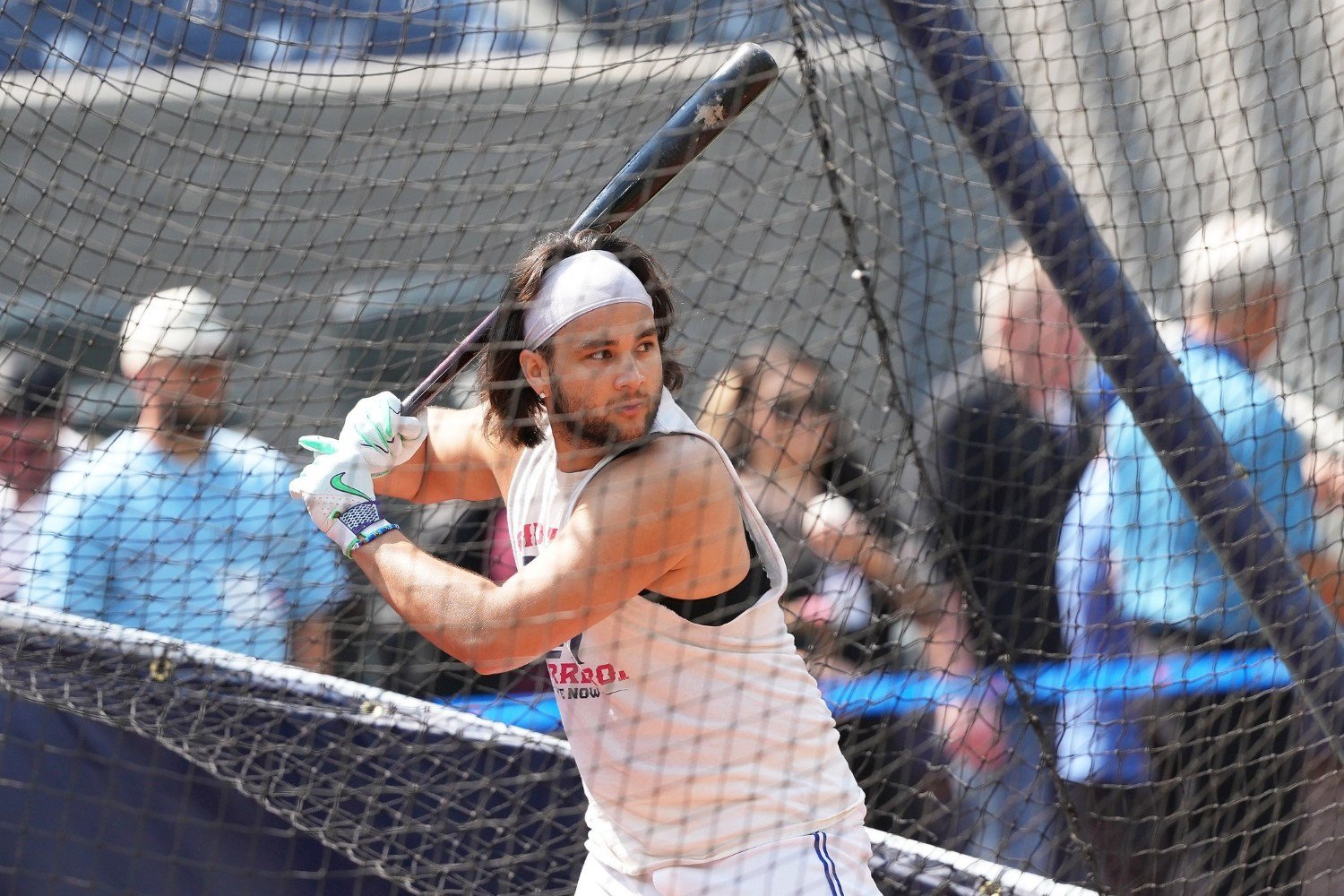 The Brewers need something on their infield: A little stardust, some razzle-dazzle to add some actual punch to a lineup that operates more on the line of pinpricks. Meanwhile, across the border, the Blue Jays are trying to keep their core and bolster it with star talent via free agency, but without any success over the last few years. While they're still attempting to sign Vladimir Guerrero Jr to a long-term deal, they're much more likely to listen to offers on their talented shortstop, Bo Bichette—who has just one year remaining until he, too, hits the free-agent market. Bichette's upside is well-known. A hitting machine, his bat-to-ball skills (even when chasing outside the strike zone) are superlative, and his power production is the kind the Brewers are in desperate need of from their infield. Bichette had 73 home runs from 2021-23; swatted 103 doubles over that span; and led the American League in hits in 2021. He showed that over a long period of time, he will consistently hit the ball hard, in the air, and avoid striking out at an above-average rate. Here's a breakdown of his skills progression from 2022 to 2023, via Thomas Nestico (@TJStats on Twitter). Yes, he chases a lot, and he gets swing-happy even at the best of times, but his bat control is such that even when chasing, he makes solid contact. It lowers his walk rate, but because of the consistently high batting averages, his on-base rate is still above-average. The other plus point for Bichette is his defense. He is a slightly below-average shortstop, but his range would be better than most third basemen, and he can more than competently play the left side of the infield—although second base may be a better fit for him in a roster picture that didn't include Brice Turang and Joey Ortiz. The 2024 results were not what we've been used to seeing from Bichette, but a calf strain in the middle of June kept him out for a while, and that was followed by a fractured finger that finished off his season, Bichette had several hurdles he was attempting to push through. After a sluggish start to the season, he regained his old form and production in May and June, before the calf injury derailed him. We should feel some security about what a healthy Bichette will provide in 2025. The price for Bichette in a trade will be higher than you might like, based on the idea that this is a buy-low situation. He's due $16.5 million on the final year of a deal he and the Blue Jays struck to avoid arbitration, which should mitigate his trade value somewhat, but it's also likely that his 2024 performance was an outlier, rather than a new standard—and to pry him away from the Jays, a team would have to be willing to bet on that very thing. We also have to consider that, because of his profile and past performance, Bichette will likely command a qualifying offer, reject it, and provide a compensatory pick for the 2026 MLB Draft. That's a fairly minor consideration, but it gives Toronto incrementally more leverage. As such, acquiring Bichette would likely require the following: Tyler Black (1B/LF) Brewers #5 - The Blue Jays have space in left field alongside Joey Loperfido, who has by no means proved himself at the big-league level just yet and offers an extreme strengths-and-weaknesses profile. Black could fill that, or—if things go a different way—he could blossom at first base beginning in 2026. The Blue Jays have the defensive versatility to find a home for Black amongst a variety of playing positions, and being Canadian, it seems like a nice fit for Black, after the Brewers re-signed Jake Bauers to a minor-league deal. Juan Baez (2B/3B) Brewers #28 - A bat that profiles similarly to Bichette, Baez is swing-happy, but folds in a low strikeout rate due to his strong out-of-zone contact. In addition to sneaky power and a good hit tool, Baez seems capable on the left side of the infield, with good actions—although he is prone to mental errors at this early stage in his development. Baez shone in the Arizona Fall League at the stunningly young age of 19 and is a rising prospect, who should fill out the infield competently sooner, rather than later. It is a costly trade, but if the Milwaukee Brewers want to maintain their competitive window, they need some infield reinforcements. They're trading away a strong offensive player who seems to be on the outside of what the Brewers need currently from a defensive standpoint, and a second/third baseman in a plethora of infield prospects the Brewers currently have in the minor leagues. Bichette is a difference-maker, and if the Brewers can catch him in an on-form year, he'll take them to a whole new level for 2025. The salary is more than the Brewers may like to pay, but even so, I think he's the type of player that it's worth taking a flyer on to go a few million bucks over your budget. The bigger question is whether or not the Blue Jays pull themselves out of their lethargy for long enough to take advantage of what they have and bolster their long-term projections. They're unlikely to compete with the Orioles, Red Sox and Yankees this season, and trading Bichette would help them restock a farm system that currently ranks among the game's worst. Would you make this trade for one year of Bo Bichette (plus a likely comp pick)? Would you make a deal, but offer less, or give up more to get it done? Or is he just not the type of player you can see on the Brewers? Let us know your thoughts in the comments below!
 -
The Blue Jays shortstop averaged 4.2 bWAR for three years from 2021-2023 from the left side of the infield, before last season was heavily affected by injuries. Should the Brewers seek to buy low, and broach a trade for the half-fallen star? Image courtesy of © Nick Turchiaro-Imagn Images The Brewers need something on their infield: A little stardust, some razzle-dazzle to add some actual punch to a lineup that operates more on the line of pinpricks. Meanwhile, across the border, the Blue Jays are trying to keep their core and bolster it with star talent via free agency, but without any success over the last few years. While they're still attempting to sign Vladimir Guerrero Jr to a long-term deal, they're much more likely to listen to offers on their talented shortstop, Bo Bichette—who has just one year remaining until he, too, hits the free-agent market. Bichette's upside is well-known. A hitting machine, his bat-to-ball skills (even when chasing outside the strike zone) are superlative, and his power production is the kind the Brewers are in desperate need of from their infield. Bichette had 73 home runs from 2021-23; swatted 103 doubles over that span; and led the American League in hits in 2021. He showed that over a long period of time, he will consistently hit the ball hard, in the air, and avoid striking out at an above-average rate. Here's a breakdown of his skills progression from 2022 to 2023, via Thomas Nestico (@TJStats on Twitter). Yes, he chases a lot, and he gets swing-happy even at the best of times, but his bat control is such that even when chasing, he makes solid contact. It lowers his walk rate, but because of the consistently high batting averages, his on-base rate is still above-average. The other plus point for Bichette is his defense. He is a slightly below-average shortstop, but his range would be better than most third basemen, and he can more than competently play the left side of the infield—although second base may be a better fit for him in a roster picture that didn't include Brice Turang and Joey Ortiz. The 2024 results were not what we've been used to seeing from Bichette, but a calf strain in the middle of June kept him out for a while, and that was followed by a fractured finger that finished off his season, Bichette had several hurdles he was attempting to push through. After a sluggish start to the season, he regained his old form and production in May and June, before the calf injury derailed him. We should feel some security about what a healthy Bichette will provide in 2025. The price for Bichette in a trade will be higher than you might like, based on the idea that this is a buy-low situation. He's due $16.5 million on the final year of a deal he and the Blue Jays struck to avoid arbitration, which should mitigate his trade value somewhat, but it's also likely that his 2024 performance was an outlier, rather than a new standard—and to pry him away from the Jays, a team would have to be willing to bet on that very thing. We also have to consider that, because of his profile and past performance, Bichette will likely command a qualifying offer, reject it, and provide a compensatory pick for the 2026 MLB Draft. That's a fairly minor consideration, but it gives Toronto incrementally more leverage. As such, acquiring Bichette would likely require the following: Tyler Black (1B/LF) Brewers #5 - The Blue Jays have space in left field alongside Joey Loperfido, who has by no means proved himself at the big-league level just yet and offers an extreme strengths-and-weaknesses profile. Black could fill that, or—if things go a different way—he could blossom at first base beginning in 2026. The Blue Jays have the defensive versatility to find a home for Black amongst a variety of playing positions, and being Canadian, it seems like a nice fit for Black, after the Brewers re-signed Jake Bauers to a minor-league deal. Juan Baez (2B/3B) Brewers #28 - A bat that profiles similarly to Bichette, Baez is swing-happy, but folds in a low strikeout rate due to his strong out-of-zone contact. In addition to sneaky power and a good hit tool, Baez seems capable on the left side of the infield, with good actions—although he is prone to mental errors at this early stage in his development. Baez shone in the Arizona Fall League at the stunningly young age of 19 and is a rising prospect, who should fill out the infield competently sooner, rather than later. It is a costly trade, but if the Milwaukee Brewers want to maintain their competitive window, they need some infield reinforcements. They're trading away a strong offensive player who seems to be on the outside of what the Brewers need currently from a defensive standpoint, and a second/third baseman in a plethora of infield prospects the Brewers currently have in the minor leagues. Bichette is a difference-maker, and if the Brewers can catch him in an on-form year, he'll take them to a whole new level for 2025. The salary is more than the Brewers may like to pay, but even so, I think he's the type of player that it's worth taking a flyer on to go a few million bucks over your budget. The bigger question is whether or not the Blue Jays pull themselves out of their lethargy for long enough to take advantage of what they have and bolster their long-term projections. They're unlikely to compete with the Orioles, Red Sox and Yankees this season, and trading Bichette would help them restock a farm system that currently ranks among the game's worst. Would you make this trade for one year of Bo Bichette (plus a likely comp pick)? Would you make a deal, but offer less, or give up more to get it done? Or is he just not the type of player you can see on the Brewers? Let us know your thoughts in the comments below! View full article
-
I might disagree with some of this, but I have to say I love the balls to the wall approach!
- 5 replies
-
- 1
-
-
- rhys hoskins
- brandon woodruff
- (and 5 more)
-
.png.c6141fcb8134c613d190e5a806b7e60b.png) January has typically been the time of the year when the Brewers make their biggest moves. Capitalizing on players feeling isolated and bereft of big offers, they've struck some strong one-year contracts during the David Stearns and Matt Arnold regimes. Even those that fell short have been no fault of the Brewers, and we're at that time of year again. Yasmani Grandal joined the Brewers on a one-year deal, albeit an expensive one, to forge and showcase defensive improvements and hit the market as an altogether more attractive proposition a year later. The Brewers took a flier then, and they could do so again now, with a third baseman who is just crying out for a healthy season and a quality playing environment. Yoán Moncada had yet another injury-plagued season in 2024. Amassing just 850 plate appearances over his last three years, he hasn't managed to remain fully healthy in any of them, and it took a particular toll in his limited sample size in 2024—where even his greatest strengths deserted him. That said, Moncada is going into the offseason with a clean bill of health and should be ready to go in a brand-new environment, away from the turgid 2024 White Sox and with a chip on his shoulder. It would be difficult for anyone to perform in the environment in which Moncada played last season. With immense pressure as a former top prospect and the ways in which his body has betrayed him of late, it would have been highly frustrating to be off the field yet again. That being said, there is considerable reason to believe the talent that made him that prospect still lurks under the hood. Throughout his time in the major leagues, Moncada has shown he can elevate the ball well, with an impressive 89.2% in-zone contact rate in 2024 (top 30 in baseball). Despite being clearly injured even before going out for the year, he produced a league-average quality of contact and showed enough signs that, with a gamble on health, you could get a strong season out of him. Moncada's signature strengths are an ability to elevate the ball consistently and get the barrel of the bat to it, with above-average exit velocities and good plate discipline that he uses to selectively target which pitches he can ambush. It's a skill set that will fit in well with the Brewers, who lack hitters with the type of 20-home-run upside Moncada still has. In a different lineup and a ballpark like Milwaukee's, amidst the culture they currently have, Moncada may be able to find a new lease on life, and even more relevantly, his defense isn't a sticking point. Baseball Prospectus considers him to be an above-average defender at third base, with a strong arm and solid range, although injuries may be eroding the latter. He still showed himself to be average at third base in 2024, per both Baseball Savant and Baseball Prospectus, something the Brewers will no doubt prize highly. Going back as far as 2021 is a risky endeavor for assessing a player, but to highlight what a full season of a healthy Moncada can produce, we must. He struck out more than you would like, but offset that with a strong walk rate while punishing mistake pitches. He's an above-average offensive contributor with solid to above-average defense when healthy, and he could be the final piece to the Brewers' puzzle for their 2025 roster. So to summarize, Moncada has: Positive defensive value in each of the last five full seasons, per FanGraphs A career 107 WRC+ WRC+ of 120 and 139 in each of his last two healthy seasons (2021 and 2019, respectively) An upper-echelon rate of line drives and fly balls for his career Combining this creates a profile that the Brewers could use, if they intend to stave off a rejuvenated Cubs roster and reduce the number of black holes in their lineup, a factor critical to their success last season. The Brewers' needs for 2025 likely extend to a one-year deal on the left side of the infield. Cooper Pratt should be no more than a year from the majors, barring injury, and when you consider Mike Boeve and Brock Wilken also bringing some upside in the case of healthy seasons, the Brewers don't need to chase a multi-year deal. Moncada is in no position for a multi-year deal of his own, but a strong season to remind the doubters what he's capable of may propel him to such a contract in 2026. As such, his decisions should be based on which environments he feels he could excel in, and where he'll be given the chance to take an everyday role. The Chicago Cubs won't have that, with Matt Shaw close to ready, whereas the Brewers have a hole that he can seize if he wants it. This is by no means a sure thing. It's a big risk if you want someone you can rely on over the course of a season, but the Brewers lack the budgetary freedom to make moves that contain more consistency. They need an impact bat, and they can't afford to pay a whole lot for one. Moncada's deal is projected to be around $5-8 million, and some of this can probably be deferred to 2026 via a mutual option. With the FanDuel Sports deal signed, the Brewers should have an about that much money in newfound flexibility this offseason. Maybe it doesn't end up being spent on Moncada, but this is the time to pay close mind to the Milwaukee Brewers. January is their favorite time to strike. The Brewers have a habit of targeting former top prospects after their shine has disappeared. Could Yoán Moncada be next? Would you sign him to a one-year deal of, say, $7 million? Let us know your thoughts in the comments below!
January has typically been the time of the year when the Brewers make their biggest moves. Capitalizing on players feeling isolated and bereft of big offers, they've struck some strong one-year contracts during the David Stearns and Matt Arnold regimes. Even those that fell short have been no fault of the Brewers, and we're at that time of year again. Yasmani Grandal joined the Brewers on a one-year deal, albeit an expensive one, to forge and showcase defensive improvements and hit the market as an altogether more attractive proposition a year later. The Brewers took a flier then, and they could do so again now, with a third baseman who is just crying out for a healthy season and a quality playing environment. Yoán Moncada had yet another injury-plagued season in 2024. Amassing just 850 plate appearances over his last three years, he hasn't managed to remain fully healthy in any of them, and it took a particular toll in his limited sample size in 2024—where even his greatest strengths deserted him. That said, Moncada is going into the offseason with a clean bill of health and should be ready to go in a brand-new environment, away from the turgid 2024 White Sox and with a chip on his shoulder. It would be difficult for anyone to perform in the environment in which Moncada played last season. With immense pressure as a former top prospect and the ways in which his body has betrayed him of late, it would have been highly frustrating to be off the field yet again. That being said, there is considerable reason to believe the talent that made him that prospect still lurks under the hood. Throughout his time in the major leagues, Moncada has shown he can elevate the ball well, with an impressive 89.2% in-zone contact rate in 2024 (top 30 in baseball). Despite being clearly injured even before going out for the year, he produced a league-average quality of contact and showed enough signs that, with a gamble on health, you could get a strong season out of him. Moncada's signature strengths are an ability to elevate the ball consistently and get the barrel of the bat to it, with above-average exit velocities and good plate discipline that he uses to selectively target which pitches he can ambush. It's a skill set that will fit in well with the Brewers, who lack hitters with the type of 20-home-run upside Moncada still has. In a different lineup and a ballpark like Milwaukee's, amidst the culture they currently have, Moncada may be able to find a new lease on life, and even more relevantly, his defense isn't a sticking point. Baseball Prospectus considers him to be an above-average defender at third base, with a strong arm and solid range, although injuries may be eroding the latter. He still showed himself to be average at third base in 2024, per both Baseball Savant and Baseball Prospectus, something the Brewers will no doubt prize highly. Going back as far as 2021 is a risky endeavor for assessing a player, but to highlight what a full season of a healthy Moncada can produce, we must. He struck out more than you would like, but offset that with a strong walk rate while punishing mistake pitches. He's an above-average offensive contributor with solid to above-average defense when healthy, and he could be the final piece to the Brewers' puzzle for their 2025 roster. So to summarize, Moncada has: Positive defensive value in each of the last five full seasons, per FanGraphs A career 107 WRC+ WRC+ of 120 and 139 in each of his last two healthy seasons (2021 and 2019, respectively) An upper-echelon rate of line drives and fly balls for his career Combining this creates a profile that the Brewers could use, if they intend to stave off a rejuvenated Cubs roster and reduce the number of black holes in their lineup, a factor critical to their success last season. The Brewers' needs for 2025 likely extend to a one-year deal on the left side of the infield. Cooper Pratt should be no more than a year from the majors, barring injury, and when you consider Mike Boeve and Brock Wilken also bringing some upside in the case of healthy seasons, the Brewers don't need to chase a multi-year deal. Moncada is in no position for a multi-year deal of his own, but a strong season to remind the doubters what he's capable of may propel him to such a contract in 2026. As such, his decisions should be based on which environments he feels he could excel in, and where he'll be given the chance to take an everyday role. The Chicago Cubs won't have that, with Matt Shaw close to ready, whereas the Brewers have a hole that he can seize if he wants it. This is by no means a sure thing. It's a big risk if you want someone you can rely on over the course of a season, but the Brewers lack the budgetary freedom to make moves that contain more consistency. They need an impact bat, and they can't afford to pay a whole lot for one. Moncada's deal is projected to be around $5-8 million, and some of this can probably be deferred to 2026 via a mutual option. With the FanDuel Sports deal signed, the Brewers should have an about that much money in newfound flexibility this offseason. Maybe it doesn't end up being spent on Moncada, but this is the time to pay close mind to the Milwaukee Brewers. January is their favorite time to strike. The Brewers have a habit of targeting former top prospects after their shine has disappeared. Could Yoán Moncada be next? Would you sign him to a one-year deal of, say, $7 million? Let us know your thoughts in the comments below! -
Rhys Hoskins, Lorenzo Cain, Christian Yelich, Yasmani Grandal. The Brewers do their best work in January, and with a critical need on the infield, they should be chasing after this high-upside (if injury-prone) third baseman. Image courtesy of © Reggie Hildred-Imagn Images January has typically been the time of the year when the Brewers make their biggest moves. Capitalizing on players feeling isolated and bereft of big offers, they've struck some strong one-year contracts during the David Stearns and Matt Arnold regimes. Even those that fell short have been no fault of the Brewers, and we're at that time of year again. Yasmani Grandal joined the Brewers on a one-year deal, albeit an expensive one, to forge and showcase defensive improvements and hit the market as an altogether more attractive proposition a year later. The Brewers took a flier then, and they could do so again now, with a third baseman who is just crying out for a healthy season and a quality playing environment. Yoán Moncada had yet another injury-plagued season in 2024. Amassing just 850 plate appearances over his last three years, he hasn't managed to remain fully healthy in any of them, and it took a particular toll in his limited sample size in 2024—where even his greatest strengths deserted him. That said, Moncada is going into the offseason with a clean bill of health and should be ready to go in a brand-new environment, away from the turgid 2024 White Sox and with a chip on his shoulder. It would be difficult for anyone to perform in the environment in which Moncada played last season. With immense pressure as a former top prospect and the ways in which his body has betrayed him of late, it would have been highly frustrating to be off the field yet again. That being said, there is considerable reason to believe the talent that made him that prospect still lurks under the hood. Throughout his time in the major leagues, Moncada has shown he can elevate the ball well, with an impressive 89.2% in-zone contact rate in 2024 (top 30 in baseball). Despite being clearly injured even before going out for the year, he produced a league-average quality of contact and showed enough signs that, with a gamble on health, you could get a strong season out of him. Moncada's signature strengths are an ability to elevate the ball consistently and get the barrel of the bat to it, with above-average exit velocities and good plate discipline that he uses to selectively target which pitches he can ambush. It's a skill set that will fit in well with the Brewers, who lack hitters with the type of 20-home-run upside Moncada still has. In a different lineup and a ballpark like Milwaukee's, amidst the culture they currently have, Moncada may be able to find a new lease on life, and even more relevantly, his defense isn't a sticking point. Baseball Prospectus considers him to be an above-average defender at third base, with a strong arm and solid range, although injuries may be eroding the latter. He still showed himself to be average at third base in 2024, per both Baseball Savant and Baseball Prospectus, something the Brewers will no doubt prize highly. Going back as far as 2021 is a risky endeavor for assessing a player, but to highlight what a full season of a healthy Moncada can produce, we must. He struck out more than you would like, but offset that with a strong walk rate while punishing mistake pitches. He's an above-average offensive contributor with solid to above-average defense when healthy, and he could be the final piece to the Brewers' puzzle for their 2025 roster. So to summarize, Moncada has: Positive defensive value in each of the last five full seasons, per FanGraphs A career 107 WRC+ WRC+ of 120 and 139 in each of his last two healthy seasons (2021 and 2019, respectively) An upper-echelon rate of line drives and fly balls for his career Combining this creates a profile that the Brewers could use, if they intend to stave off a rejuvenated Cubs roster and reduce the number of black holes in their lineup, a factor critical to their success last season. The Brewers' needs for 2025 likely extend to a one-year deal on the left side of the infield. Cooper Pratt should be no more than a year from the majors, barring injury, and when you consider Mike Boeve and Brock Wilken also bringing some upside in the case of healthy seasons, the Brewers don't need to chase a multi-year deal. Moncada is in no position for a multi-year deal of his own, but a strong season to remind the doubters what he's capable of may propel him to such a contract in 2026. As such, his decisions should be based on which environments he feels he could excel in, and where he'll be given the chance to take an everyday role. The Chicago Cubs won't have that, with Matt Shaw close to ready, whereas the Brewers have a hole that he can seize if he wants it. This is by no means a sure thing. It's a big risk if you want someone you can rely on over the course of a season, but the Brewers lack the budgetary freedom to make moves that contain more consistency. They need an impact bat, and they can't afford to pay a whole lot for one. Moncada's deal is projected to be around $5-8 million, and some of this can probably be deferred to 2026 via a mutual option. With the FanDuel Sports deal signed, the Brewers should have an about that much money in newfound flexibility this offseason. Maybe it doesn't end up being spent on Moncada, but this is the time to pay close mind to the Milwaukee Brewers. January is their favorite time to strike. The Brewers have a habit of targeting former top prospects after their shine has disappeared. Could Yoán Moncada be next? Would you sign him to a one-year deal of, say, $7 million? Let us know your thoughts in the comments below! View full article

.png.c6141fcb8134c613d190e5a806b7e60b.png)