



Jake McKibbin
-
Posts
2,395 -
Joined
-
Last visited
-
Days Won
6
Content Type
Profiles
Forums
Blogs
Events
News
2026 Milwaukee Brewers Top Prospects Ranking
Milwaukee Brewers Videos
2022 Milwaukee Brewers Draft Picks
Milwaukee Brewers Free Agent & Trade Rumors, Notes, & Tidbits
Guides & Resources
2023 Milwaukee Brewers Draft Picks
2024 Milwaukee Brewers Draft Picks
The Milwaukee Brewers Players Project
2025 Milwaukee Brewers Draft Pick Tracker
2026 Milwaukee Brewers Draft Tracker: Picks & Bonuses
Store
Downloads
Gallery
Everything posted by Jake McKibbin
-
The Brewers' belief in Oliver Dunn's talent hasn't wavered. Given his injury turmoil and lack of experience against top-quality opposition, how do the Brewers see his role developing this year? Pat Murphy speaks as highly of Oliver Dunn as many of his most fervent supporters, who have full faith in his toolset and natural abilities. With Matt Trueblood on site, we've been able to get some firsthand insight into how the Brewers see Dunn progressing this year. It seems they've seen positive signs in spring training and have a clear goal in mind for the athletic infielder this season. "We put him in a tough role. Young player, never played above Double A and we're pinch-hitting him. It's pretty tough for a kid to walk in and do that." The 2024 season was a baptism of fire for Oliver Dunn. As Murphy alluded to, his lack of top-flight experience combined with how the Brewers used him made it difficult to feel settled and at home in the big leagues. Murphy went on to talk about some tentativeness in his at-bats, which bears out with many called strikes and passiveness inside the strike zone. It's something Dunn himself has said he intends to put right this season; as a player with a great eye at the plate, you would expect it to be more of a state of mind than any sort of major decision-making overhaul. "The injury set him back. He hasn't had the at-bats. So we're trying to get him as many at-bats in spring as possible." The Brewers saw Dunn's talent. Still, his overall lack of seasoning meant that he struggled to put his best foot forward in the majors through a lack of experience with big league "stuff" and his internal confidence with how he might fare against such quality of opposition. Having spent all of 2023 in Double-A, it was a big ask, and the Brewers wanted to get him significant playing time in Nashville to help bridge that transition. Sadly, Dunn has a checkered injury past, and it reared its ugly head once more, sidelining him for the rest of the season. So this spring, the Brewers are trying to get him as many at-bats as possible early in games, facing off against the highest caliber of stuff they can get. More than anything, this is what Dunn needs to take the next step, but these at-bats might not indicate an Opening Day roster spot in the same way it might have for someone like Jake Bauers were he in the same situation. Dunn has played a lot in the early goings of spring, and it may be more for developmental reasons than competitive reasons at this point. "He's had a terrific spring so far, and I don't mean just the results." Pat Murphy waxed lyrical about the ability Dunn has talent-wise and tools-wise, and it seems the spring performances have stood out to the Brewers manager. Murphy referenced the quality of his ball strike recognition, the lowered swing and miss in the zone, and the absence of the tentativeness Murphy says plagued him in 2024. Note that some stats on this matter are slightly skewed as parks without Trackman/Statcast show up as three swinging strikes, but having followed Dunn's televised appearances, he does seem to be swinging and missing less. Part of this is due to the fact that many pitchers are pounding the strike zone, but even then, Dunn whiffed a heck of a lot in-zone during 2024, so it doesn't make the observation moot. It is tough to quantify any spring training results; however, so he may need more time in competitive gameplay to show that the changes he's worked on this offseason around his contact point and zone coverage are providing tangible benefits. Oliver Dunn remains one of the most enigmatic, tantalizing talents on the Brewers' 40-man roster. Pat Murphy seems to agree, but perhaps as more of an impact player later in the season after some more "seasoning" in Triple-A. What do you think? Have his early spring performances won you over? Let us know your thoughts in the comments below! View full article
-
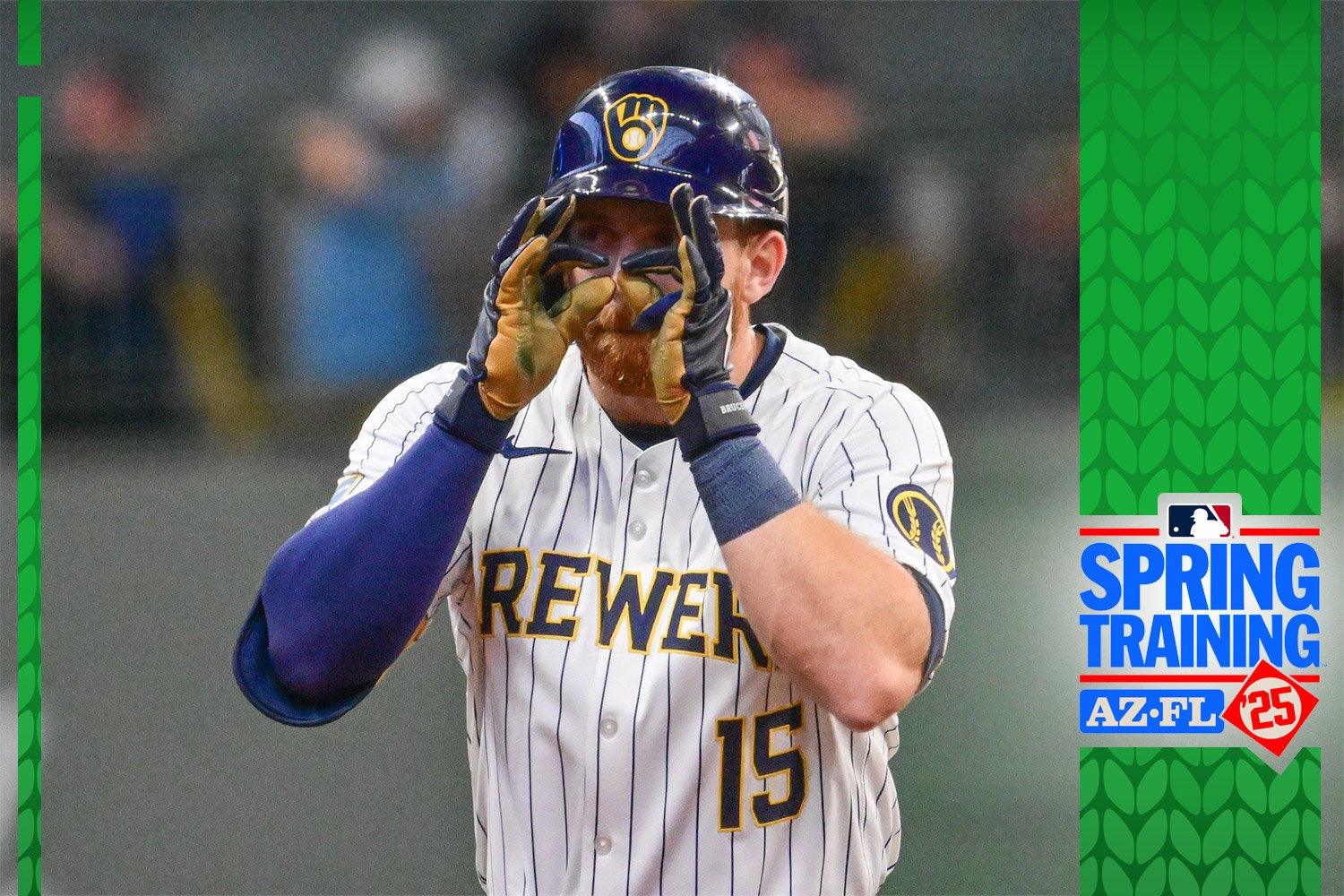 Pat Murphy speaks as highly of Oliver Dunn as many of his most fervent supporters, who have full faith in his toolset and natural abilities. With Matt Trueblood on site, we've been able to get some firsthand insight into how the Brewers see Dunn progressing this year. It seems they've seen positive signs in spring training and have a clear goal in mind for the athletic infielder this season. "We put him in a tough role. Young player, never played above Double A and we're pinch-hitting him. It's pretty tough for a kid to walk in and do that." The 2024 season was a baptism of fire for Oliver Dunn. As Murphy alluded to, his lack of top-flight experience combined with how the Brewers used him made it difficult to feel settled and at home in the big leagues. Murphy went on to talk about some tentativeness in his at-bats, which bears out with many called strikes and passiveness inside the strike zone. It's something Dunn himself has said he intends to put right this season; as a player with a great eye at the plate, you would expect it to be more of a state of mind than any sort of major decision-making overhaul. "The injury set him back. He hasn't had the at-bats. So we're trying to get him as many at-bats in spring as possible." The Brewers saw Dunn's talent. Still, his overall lack of seasoning meant that he struggled to put his best foot forward in the majors through a lack of experience with big league "stuff" and his internal confidence with how he might fare against such quality of opposition. Having spent all of 2023 in Double-A, it was a big ask, and the Brewers wanted to get him significant playing time in Nashville to help bridge that transition. Sadly, Dunn has a checkered injury past, and it reared its ugly head once more, sidelining him for the rest of the season. So this spring, the Brewers are trying to get him as many at-bats as possible early in games, facing off against the highest caliber of stuff they can get. More than anything, this is what Dunn needs to take the next step, but these at-bats might not indicate an Opening Day roster spot in the same way it might have for someone like Jake Bauers were he in the same situation. Dunn has played a lot in the early goings of spring, and it may be more for developmental reasons than competitive reasons at this point. "He's had a terrific spring so far, and I don't mean just the results." Pat Murphy waxed lyrical about the ability Dunn has talent-wise and tools-wise, and it seems the spring performances have stood out to the Brewers manager. Murphy referenced the quality of his ball strike recognition, the lowered swing and miss in the zone, and the absence of the tentativeness Murphy says plagued him in 2024. Note that some stats on this matter are slightly skewed as parks without Trackman/Statcast show up as three swinging strikes, but having followed Dunn's televised appearances, he does seem to be swinging and missing less. Part of this is due to the fact that many pitchers are pounding the strike zone, but even then, Dunn whiffed a heck of a lot in-zone during 2024, so it doesn't make the observation moot. It is tough to quantify any spring training results; however, so he may need more time in competitive gameplay to show that the changes he's worked on this offseason around his contact point and zone coverage are providing tangible benefits. Oliver Dunn remains one of the most enigmatic, tantalizing talents on the Brewers' 40-man roster. Pat Murphy seems to agree, but perhaps as more of an impact player later in the season after some more "seasoning" in Triple-A. What do you think? Have his early spring performances won you over? Let us know your thoughts in the comments below!
 -
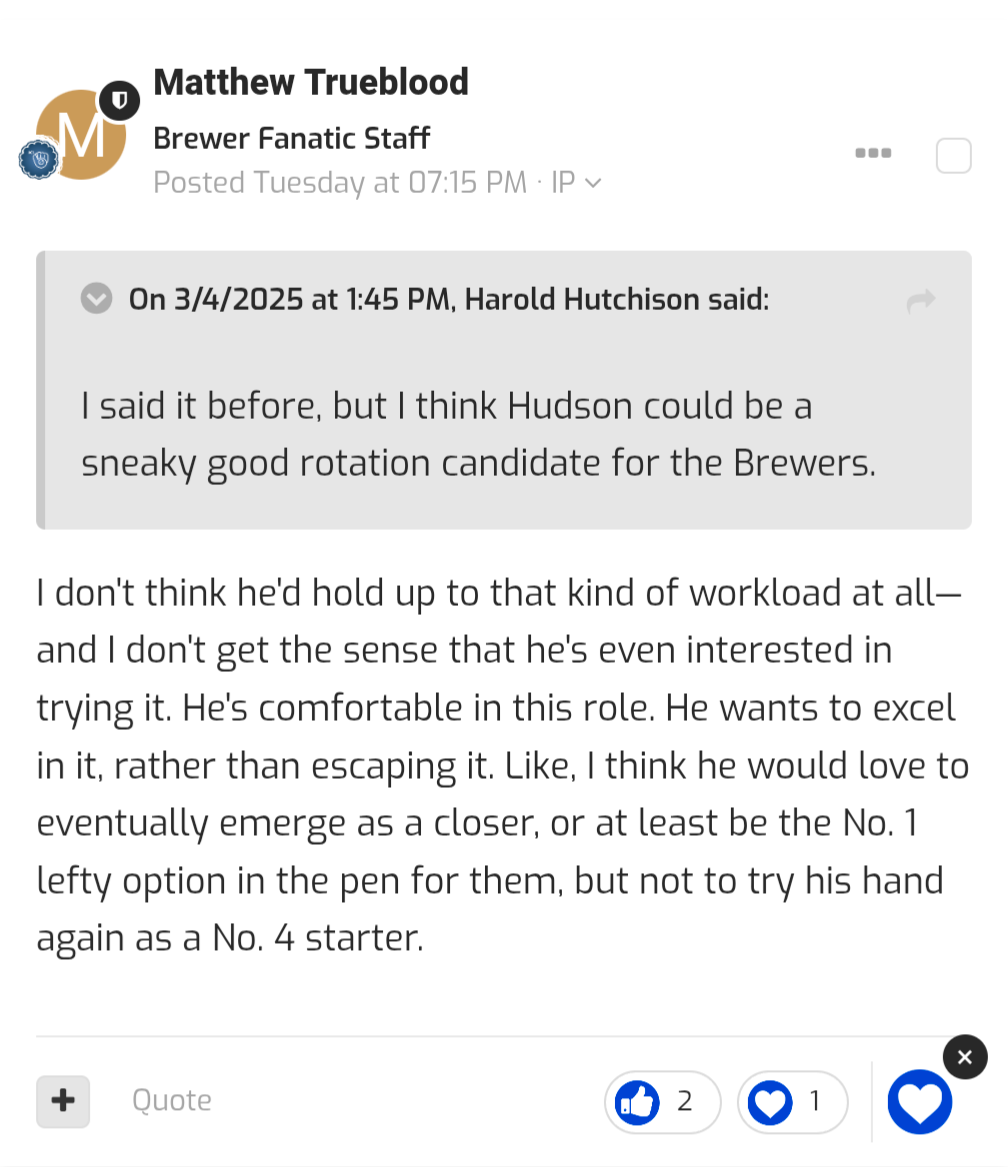
@Matthew Trueblood's response to this suggestion earlier this week
-
Spring Breakout in 2024 was an exciting showcase of some of the top talent in the minor leagues. With the Brewers in possession of one of the deeper farm systems in baseball, who made the cut for their Spring Breakout roster this year? Image courtesy of © Dave Kallmann / Milwaukee Journal Sentinel / USA TODAY NETWORK via Imagn Images Spring Breakout was an exciting addition to the 2024 spring training slate, featuring some of the top prospects in each organization facing off against each other in 15 showcase games. We saw players like Jacob Misiorwoski, Logan Henderson, Cooper Pratt, Brock Wilken, and (most importantly) Jackson Chourio taking center stage. This season, the roster projects to look a little different, but given some of the seismic leaps taken by Pratt, Chourio, Henderson and Misiorowski, it really is a must for the Brewers fanbase to tune into. When Is The Brewers Spring Breakout Game? The Milwaukee Brewers have been given the honor of closing out the Spring Breakout weekend, with a fixture against the Cincinnati Reds (who have their own top farm system) at 7.40 PM CT on Sun. Mar. 16. It's to be broadcast on MLB Network and the Gameday app via MLB.tv. Who Are The Standouts On The Brewers' Roster For Spring Breakout 2025? Jesus Made is the obvious choice here, as one of the highest helium prospects to leave the Dominican Summer League in recent memory. Still just 17, Made will be a fascinating watch given the loud set of tools at his disposal. We've yet to see him play against competition this stout and interesting. Cooper Pratt is another key figure at shortstop, with a minor-league Gold Glove award and a strong hit tool that give him a strong blend of raw tools to work with. Pratt may be contending for an Opening Day roster spot in 2026. Braylon Payne is more under-the-radar, but the Brewers' first-round pick in 2024 showcased electric speed, great plate discipline and a surprisingly loud bat in his brief sojourns last year. Brock Wilken is a thumping third baseman, hoping to start a bounce-back season. With light-tower power coming from Wake Forest, Wilken looked fantastic post-draft, but struggled after being beaned last season. How his offseason progressed (and any changes he's made) will be intriguing to see, but he's still one of the top bats in the system. On the pitching side, Jacob Misiorowski is expected to return, while Brewers second-round pick Bryce Meccage is expected to make an appearance. Meccage is a teenager from New Jersey with a fastball up to 95 mph at 18 and a real feel for spin on his slider and curveball (as well as a fascinating "kick change" changeup). There's also 11th-rounder (from 2023) Bishop Letson, who performed well given his age in Low-A Carolina, and Brett Wichrowski, who showcased some surprising raw stuff out of nowhere in 2024 spring training. What Is The Milwaukee Brewers 2025 Spring Breakout Roster? (BF rankings alongside) Infielders Jesus Made (#6) Cooper Pratt (#3) Eric Bitonti (#12) Luke Adams (#13) Blake Burke Luis Pena (#19) Brock Wilken (#7) Jadher Areinamo Juan Baez Outfielders Braylon Payne (#11) Yophery Rodriguez (#10) Luis Lara (#20) Jose Anderson Dylan O'Rae - Intriguingly listed as CF Catchers Marco Dinges Matthew Wood Darrien Miller Pitchers Jacob Misiorowski (#1) Brett Wichrowski Bishop Letson Bryce Meccage Craig Yoho (#14) Tyler Bryant Will Childers Blake Holub Jack Hostetler Ryan Middendorf Who Missed Out On The Roster? Sadly, there are several notable absentees, due to injury. Jeferson Quero isn't expected to be ready for game action by that point, while Robert Gasser and Josh Knoth have both gone under the knife too recently to make an appearance. Also notable by his absence is Tyler Black. The Brewers are up against a Reds outfit featuring four MLB top 100 ranked prospects led by Chase Burns. Burns was the no. 2 draft pick in 2024 and replicated the type of numbers put up by Paul Skenes in college. It should be a fun game between two high upside, talent brimming farm systems. Is there anyone else you would have liked to see on the roster? Who are you most excited about? Let us know your thoughts in the comments below! View full article
-
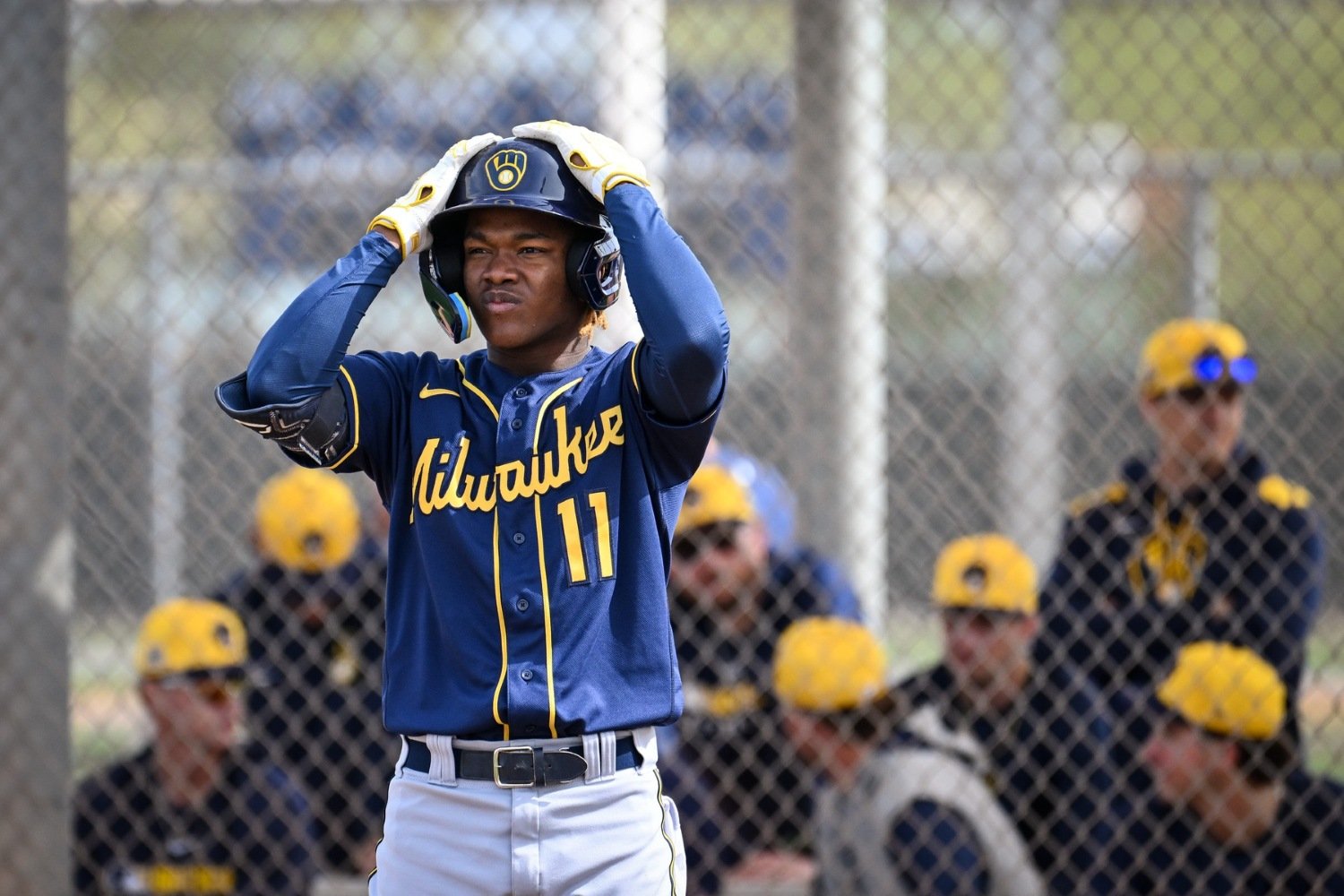 Spring Breakout was an exciting addition to the 2024 spring training slate, featuring some of the top prospects in each organization facing off against each other in 15 showcase games. We saw players like Jacob Misiorwoski, Logan Henderson, Cooper Pratt, Brock Wilken, and (most importantly) Jackson Chourio taking center stage. This season, the roster projects to look a little different, but given some of the seismic leaps taken by Pratt, Chourio, Henderson and Misiorowski, it really is a must for the Brewers fanbase to tune into. When Is The Brewers Spring Breakout Game? The Milwaukee Brewers have been given the honor of closing out the Spring Breakout weekend, with a fixture against the Cincinnati Reds (who have their own top farm system) at 7.40 PM CT on Sun. Mar. 16. It's to be broadcast on MLB Network and the Gameday app via MLB.tv. Who Are The Standouts On The Brewers' Roster For Spring Breakout 2025? Jesus Made is the obvious choice here, as one of the highest helium prospects to leave the Dominican Summer League in recent memory. Still just 17, Made will be a fascinating watch given the loud set of tools at his disposal. We've yet to see him play against competition this stout and interesting. Cooper Pratt is another key figure at shortstop, with a minor-league Gold Glove award and a strong hit tool that give him a strong blend of raw tools to work with. Pratt may be contending for an Opening Day roster spot in 2026. Braylon Payne is more under-the-radar, but the Brewers' first-round pick in 2024 showcased electric speed, great plate discipline and a surprisingly loud bat in his brief sojourns last year. Brock Wilken is a thumping third baseman, hoping to start a bounce-back season. With light-tower power coming from Wake Forest, Wilken looked fantastic post-draft, but struggled after being beaned last season. How his offseason progressed (and any changes he's made) will be intriguing to see, but he's still one of the top bats in the system. On the pitching side, Jacob Misiorowski is expected to return, while Brewers second-round pick Bryce Meccage is expected to make an appearance. Meccage is a teenager from New Jersey with a fastball up to 95 mph at 18 and a real feel for spin on his slider and curveball (as well as a fascinating "kick change" changeup). There's also 11th-rounder (from 2023) Bishop Letson, who performed well given his age in Low-A Carolina, and Brett Wichrowski, who showcased some surprising raw stuff out of nowhere in 2024 spring training. What Is The Milwaukee Brewers 2025 Spring Breakout Roster? (BF rankings alongside) Infielders Jesus Made (#6) Cooper Pratt (#3) Eric Bitonti (#12) Luke Adams (#13) Blake Burke Luis Pena (#19) Brock Wilken (#7) Jadher Areinamo Juan Baez Outfielders Braylon Payne (#11) Yophery Rodriguez (#10) Luis Lara (#20) Jose Anderson Dylan O'Rae - Intriguingly listed as CF Catchers Marco Dinges Matthew Wood Darrien Miller Pitchers Jacob Misiorowski (#1) Brett Wichrowski Bishop Letson Bryce Meccage Craig Yoho (#14) Tyler Bryant Will Childers Blake Holub Jack Hostetler Ryan Middendorf Who Missed Out On The Roster? Sadly, there are several notable absentees, due to injury. Jeferson Quero isn't expected to be ready for game action by that point, while Robert Gasser and Josh Knoth have both gone under the knife too recently to make an appearance. Also notable by his absence is Tyler Black. Is there anyone else you would have liked to see on the roster? Who are you most excited about? Let us know your thoughts in the comments below!
- 14 comments
-
- 1
-

-
- jacob misiorowski
- jesus made
- (and 4 more)
-
Last season, the Brewers' utility infielder only found 125 plate appearances over the full season. He didn't play well, and now, the competition for his roster spot is heating up. Image courtesy of © Dave Kallmann / Milwaukee Journal Sentinel / USA TODAY NETWORK via Imagn Images In 2023, Andruw Monasterio was a fun story, with the Venezuelan notching clutch hits and playing perfectly passable defense during the dog days of the season. Last year, on the other hand, revealed something different. Recording a .575 OPS while playing subpar defense at both second and third base, Monasterio hindered the Brewers during times when they may have liked a more robust complement to their left-handed batters. Monasterio has attempted to add strings to his bow, gaining experience manning the outfield grass in the Venezuelan Winter League and even stepping in to play first base on occasion in 2024. Monasterio is a fantastic clubhouse guy, happy to take on any role that puts the team first. Not many players would have taken the limited playing time as well as Monasterio did, turning up every day with a smile on his face and looking forward to an opportunity to play ball. Many would have turned the environment more toxic in such a situation, and it's entirely to Monasterio's credit that he encapsulated the profound joy of being a Major League Baseball player. That being said, a higher-upside replacement is likely to garner more playing time and avoid the clubhouse issue in doing so. Monasterio's struggles at third base were palpable, and by season's end, there wasn't a place that the Brewers were comfortable fielding him. This is critical for a utility player, particularly with the way in which the Brewers roster is set up. Unfortunately for Monasterio, there appear to be others with a higher defensive capability and versatility in spring camp at the moment. With Caleb Durbin looking good to make the Opening Day roster, the Brewers would have room for an additional utility man, from the group of Tyler Black, Vinny Capra, Monasterio and Oliver Dunn. The Brewers kept Capra on their 40-man roster throughout 2024, despite a mediocre .261/.348/.382 slash line with the Triple-A Nashville Sounds. Capra has started hot this spring, but this isn't the main reason for the pressure on Monasterio, especially as the home run power likely isn't sustainable. Rather, it's the fact that Capra plays an above-average third base, second base and even a passable shortstop, giving full infield cover off the bench while bringing to the plate the same strong swing decisions Monasterio brings—all while elevating the ball extremely well: Then you have Dunn, who has spent the offseason trying to develop more coverage within the strike zone and, like Capra, has started the exhibition season swimmingly. As a left-handed hitter, it's unlikely the Brewers would want Dunn to replace Turang (ahead of, say, Durbin or Capra), but he graded out very strongly at the hot corner in 2024 and possesses far and away the most upside of the spare infielders vying to make the roster. Dunn's raw athleticism may further complicate the matter, but the Brewers may want Dunn (who has options remaining) to develop further at Triple A and target a mid-season callup. Black regressed noticeably in 2024 with the bat, and has defensive limitations at every position on the infield, which would inherently disqualify him from being the Brewers' "utility infielder". He's likely to start the year back in Triple A, in search of more offensive thump and a steadier defensive home. For now, at least, he should be excluded from the infield conversation. So you have two options, both with better defensive capabilities and slightly (or significantly) higher upside with the bat. Yet, ultimately, it may come down to this: Monasterio and Dunn have minor-league options remaining; Capra does not. The Brewers prize such depth and how it allows them to ensure coverage throughout a season. The real worry for Monasterio is what happens if Capra performs admirably on the Brewers as a defensively versatile infielder, and Dunn gets to grips with his swing after seasoning in Triple A. In that scenario, where does he fit in the pecking order? Cooper Pratt, Brock Wilken and more are going to be vying to push their case in 2025, toward Nashville and beyond. There's a very real situation in which, if Monasterio doesn't crack the Opening Day roster, he may not don the Brewers blue again. View full article
-
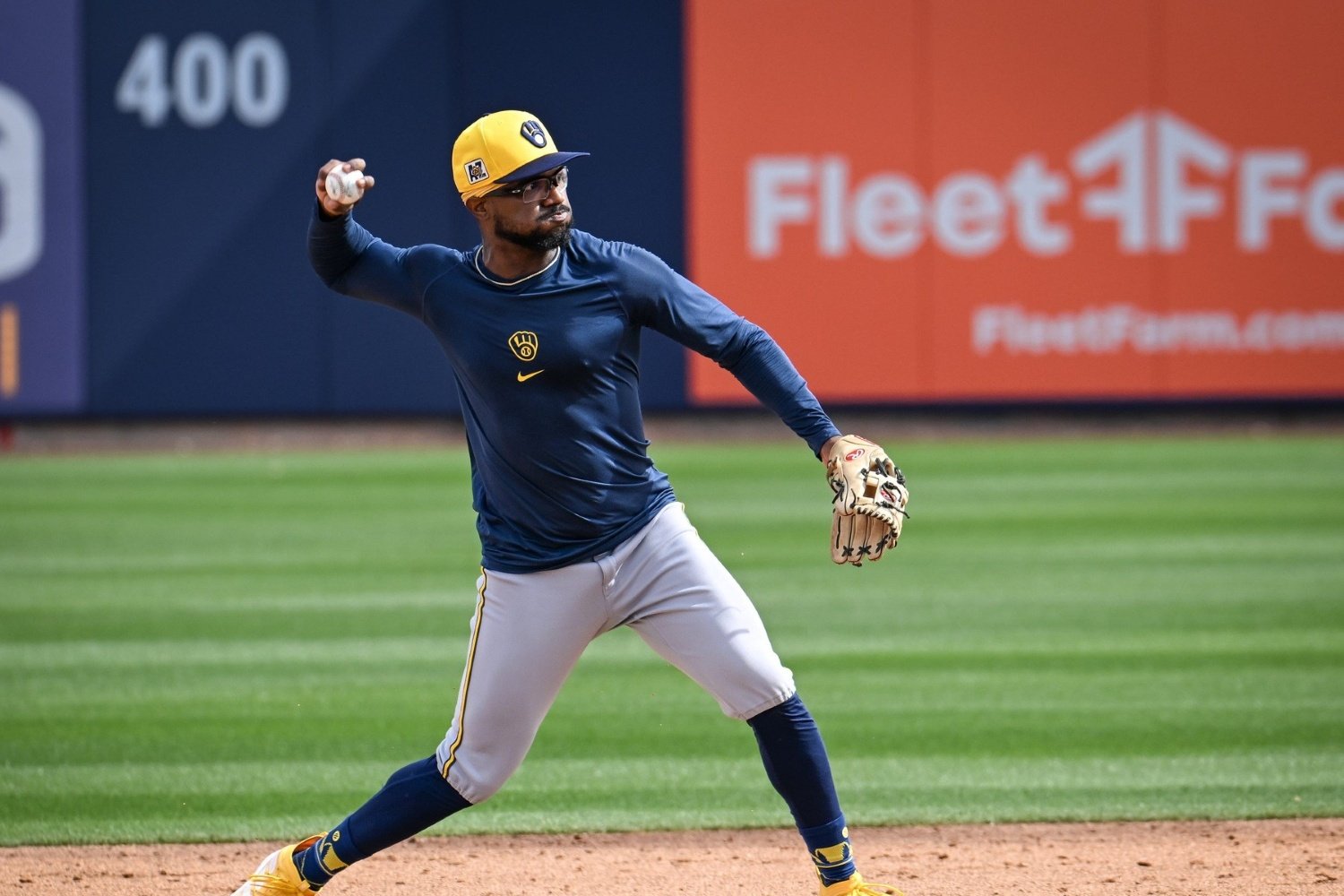 In 2023, Andruw Monasterio was a fun story, with the Venezuelan notching clutch hits and playing perfectly passable defense during the dog days of the season. Last year, on the other hand, revealed something different. Recording a .575 OPS while playing subpar defense at both second and third base, Monasterio hindered the Brewers during times when they may have liked a more robust complement to their left-handed batters. Monasterio has attempted to add strings to his bow, gaining experience manning the outfield grass in the Venezuelan Winter League and even stepping in to play first base on occasion in 2024. Monasterio is a fantastic clubhouse guy, happy to take on any role that puts the team first. Not many players would have taken the limited playing time as well as Monasterio did, turning up every day with a smile on his face and looking forward to an opportunity to play ball. Many would have turned the environment more toxic in such a situation, and it's entirely to Monasterio's credit that he encapsulated the profound joy of being a Major League Baseball player. That being said, a higher-upside replacement is likely to garner more playing time and avoid the clubhouse issue in doing so. Monasterio's struggles at third base were palpable, and by season's end, there wasn't a place that the Brewers were comfortable fielding him. This is critical for a utility player, particularly with the way in which the Brewers roster is set up. Unfortunately for Monasterio, there appear to be others with a higher defensive capability and versatility in spring camp at the moment. With Caleb Durbin looking good to make the Opening Day roster, the Brewers would have room for an additional utility man, from the group of Tyler Black, Vinny Capra, Monasterio and Oliver Dunn. The Brewers kept Capra on their 40-man roster throughout 2024, despite a mediocre .261/.348/.382 slash line with the Triple-A Nashville Sounds. Capra has started hot this spring, but this isn't the main reason for the pressure on Monasterio, especially as the home run power likely isn't sustainable. Rather, it's the fact that Capra plays an above-average third base, second base and even a passable shortstop, giving full infield cover off the bench while bringing to the plate the same strong swing decisions Monasterio brings—all while elevating the ball extremely well: Then you have Dunn, who has spent the offseason trying to develop more coverage within the strike zone and, like Capra, has started the exhibition season swimmingly. As a left-handed hitter, it's unlikely the Brewers would want Dunn to replace Turang (ahead of, say, Durbin or Capra), but he graded out very strongly at the hot corner in 2024 and possesses far and away the most upside of the spare infielders vying to make the roster. Dunn's raw athleticism may further complicate the matter, but the Brewers may want Dunn (who has options remaining) to develop further at Triple A and target a mid-season callup. Black regressed noticeably in 2024 with the bat, and has defensive limitations at every position on the infield, which would inherently disqualify him from being the Brewers' "utility infielder". He's likely to start the year back in Triple A, in search of more offensive thump and a steadier defensive home. For now, at least, he should be excluded from the infield conversation. So you have two options, both with better defensive capabilities and slightly (or significantly) higher upside with the bat. Yet, ultimately, it may come down to this: Monasterio and Dunn have minor-league options remaining; Capra does not. The Brewers prize such depth and how it allows them to ensure coverage throughout a season. The real worry for Monasterio is what happens if Capra performs admirably on the Brewers as a defensively versatile infielder, and Dunn gets to grips with his swing after seasoning in Triple A. In that scenario, where does he fit in the pecking order? Cooper Pratt, Brock Wilken and more are going to be vying to push their case in 2025, toward Nashville and beyond. There's a very real situation in which, if Monasterio doesn't crack the Opening Day roster, he may not don the Brewers blue again.
- 1 comment
-
- 1
-
-
- andruw monasterio
- oliver dunn
- (and 2 more)
-
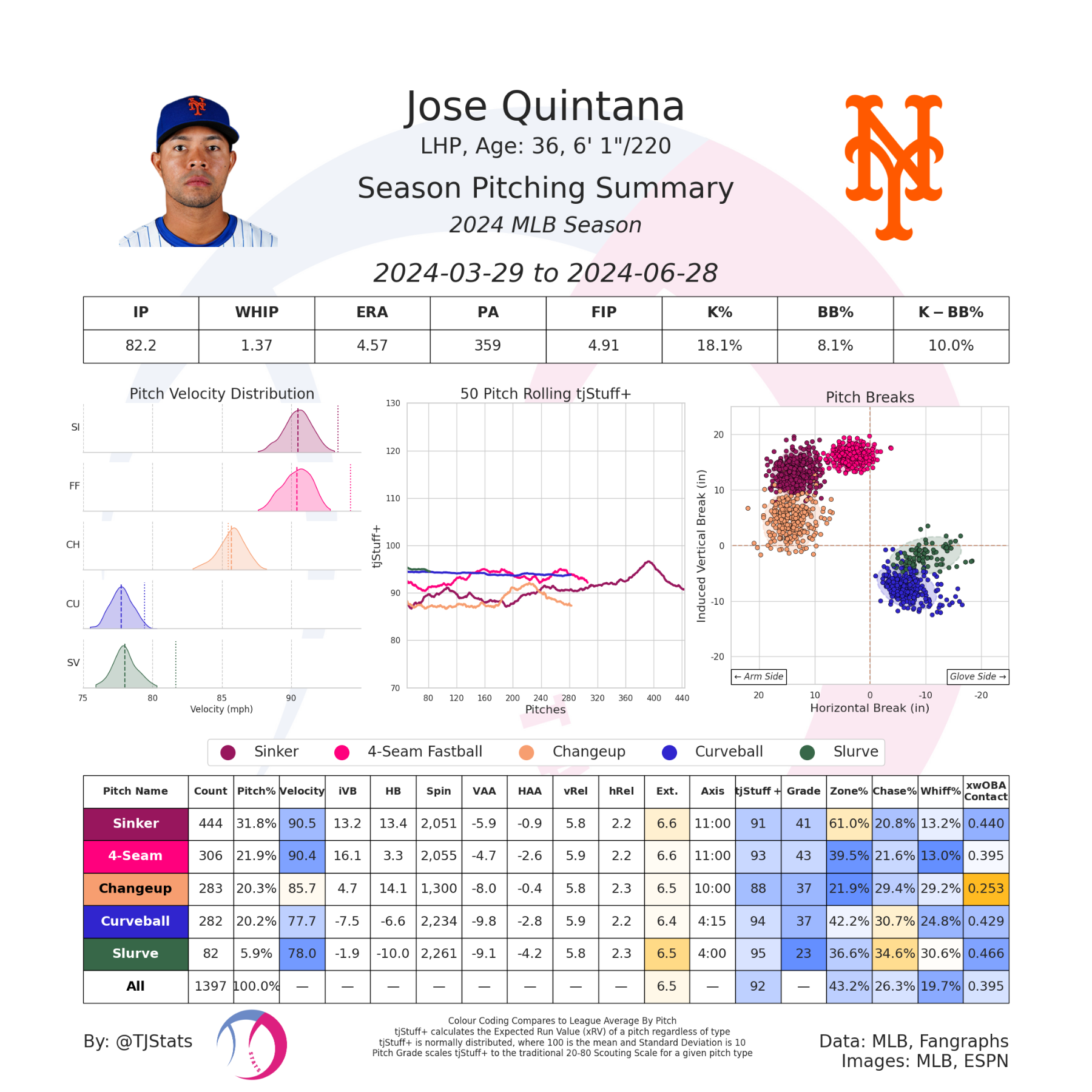
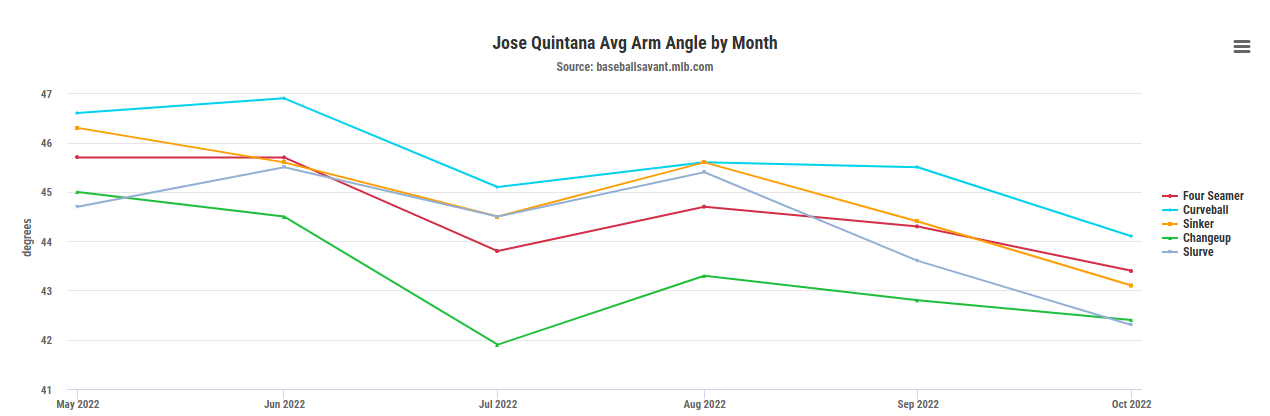
This is an interesting observation, and kudos for finding it. Certain pitchers arm angles do tend to change as a season wears on and Quintana appears to be one of them. If we look at his 2022 arm angles (given he didn't have the same inning load in 2023) you can see the same sort of pattern as his 2024, starting off higher and dropping as the season wears on. For that reason I'd say it's not so much a new tweak he made a la Sean Manaea (who wanted to emulate Chris Sale if I recall correctly) and more a natural progression throughout the season
-
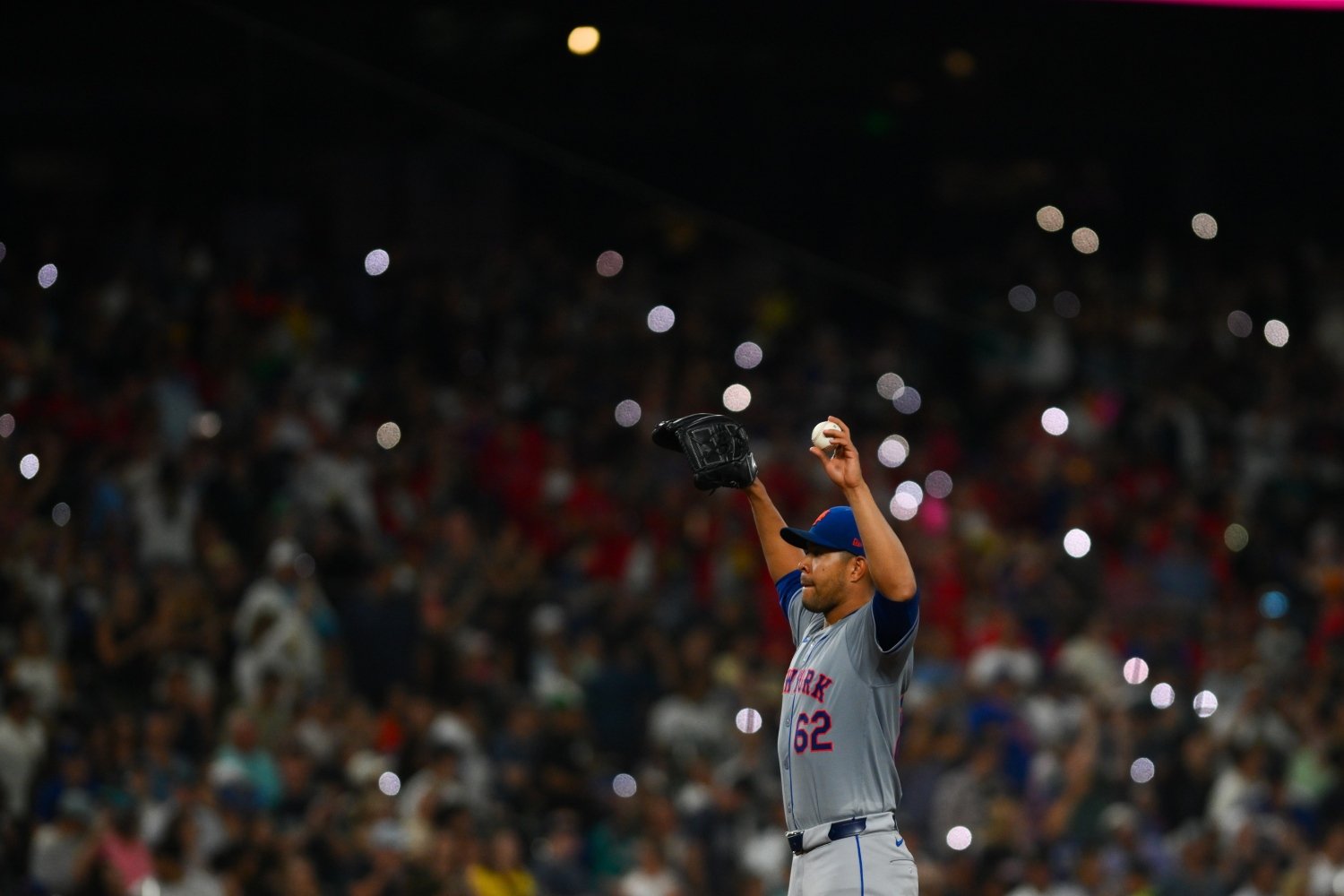
The former All-Star southpaw doesn't lead the league in nasty factor. He doesn't throw the ball hard. He doesn't rack up strikeouts. Who cares? The Brewers can continue his recent success by focusing on the traits he does possess: deception, and pinpoint command. Image courtesy of © Steven Bisig-Imagn Images When I mention command, it may seem odd. No qualifying starter was in the zone less than Jose Quintana last season, according to FanGraphs. Yet, that's exactly what Quintana has. He understands his stuff doesn't play all that well in the strike zone, and that he will get crunched if he leaves anything over the heart of the plate. Instead, Quintana does two things exceptionally well. He gets ahead in the count, early. Look at the number of first-pitch strikes Quintana throws, compared to stuff merchants like Freddy Peralta or Dylan Cease. From there, he lives in the shadow, ranking 7th in MLB for Run Value in the area just outside the strike zone. From here, Quintana can control the quality of contact his pitches face more effectively, but even here his approach is different from that of many other pitchers. While Peralta, for instance, stretches the strike zone to get swinging strikes, Quintana wants you to make contact. He wants that weak ball in play. He suffers less concern over runners who reach base than other pitchers, on the assumption that he can generate double-play ground balls. He's right, too. His ground-ball rate in 2024 was 46.9%, tied with 2015 for the highest of his career. Only nine pitchers induced more twin killings than Quintana did, and four of those were in position to do so because they put more runners on base than Quintana did, to begin with. This is one reason why Quintana and the Brewers may be such a fantastic fit. With the sheer athleticism of an infield that includes Joey Ortiz, Platinum Glove Award winner Brice Turang, and either of the range merchants that are Oliver Dunn and Caleb Durbin in the mix, they should be even better at converting grounders into outs than Quintana's Mets teammates were. Even then, it takes a high level of deception to pull off what Quintana does. A pitcher needs more than mere command, as Kyle Hendricks found out in 2024, and that's where the deception element comes in. Jeremy Maschino's Pitch Profiler app grades Quintana in the 80th percentile for Match+, a measurement he uses to correlate how well different pitches tunnel off each other. In other words, Quintana's arsenal looks incredibly similar at the point when a batter has to make their swing decisions. He has maintained a 108-110 Match+ since 2020, which is quite remarkable. That, as much as anything else, explains his 3.81 ERA over that period. Below is what each pitch looks like at the decision point for a hitter: Keeping five pitches in such close proximity (before finishing in the spots detailed below) presents a world of problems for a hitter to deal with, particularly as these pitches look eminently bashable at the decision point—only for nearly all of them to average a finish outside the strike zone in markedly different areas: Combining this with the breadth of his arsenal is key. Quintana's changeup plays wonderfully with his two fastball offerings, but the breaking pitches don't fit quite so well. In essence, Quintana has two types of mix, using his curveball as a primary breaking pitch and a slurve to keep hitters off-balance on it; and then his sinker as a primary fastball, with the changeup and four-seam fastball to keep hitters off of that offering. It's something you can notice in the above finishing position of his pitches, as well as the movement profiles below: In the movement plot above, you can see the similarity between these two groups of pitches. Yet, each are distinct enough to avoid the barrel of the bat better than most. Using slightly tweaked movement profiles (along with three different velocity bands), Quintana should be able to maintain his sub-4.00 ERA of prior seasons, provided age doesn't catch up to him and diminish his raw stuff further. He also isn't purely a contact merchant. He does get some swing-and-miss with his breaking and offspeed offerings. Hitters are itching to find a sinker in the zone to go after, and it's proved fruitful when they can target it. It's one reason why the beautifully tunneling changeup is so effective for Quintana while the curveball and slurve both have the propensity to get a swinging strike on occasion and all three avoid the barrel with metronomic efficiency. The Brewers have improved the back end of their rotation significantly with this move. Given their defensive setup and their habit of maximizing a large pitching arsenal, I wouldn't be surprised to see Quintana pitch to something in the realm of a 3.50 ERA in the coming season—which would be an unconditional success, if combined with a high volume of innings. View full article
-
 When I mention command, it may seem odd. No qualifying starter was in the zone less than Jose Quintana last season, according to FanGraphs. Yet, that's exactly what Quintana has. He understands his stuff doesn't play all that well in the strike zone, and that he will get crunched if he leaves anything over the heart of the plate. Instead, Quintana does two things exceptionally well. He gets ahead in the count, early. Look at the number of first-pitch strikes Quintana throws, compared to stuff merchants like Freddy Peralta or Dylan Cease. From there, he lives in the shadow, ranking 7th in MLB for Run Value in the area just outside the strike zone. From here, Quintana can control the quality of contact his pitches face more effectively, but even here his approach is different from that of many other pitchers. While Peralta, for instance, stretches the strike zone to get swinging strikes, Quintana wants you to make contact. He wants that weak ball in play. He suffers less concern over runners who reach base than other pitchers, on the assumption that he can generate double-play ground balls. He's right, too. His ground-ball rate in 2024 was 46.9%, tied with 2015 for the highest of his career. Only nine pitchers induced more twin killings than Quintana did, and four of those were in position to do so because they put more runners on base than Quintana did, to begin with. This is one reason why Quintana and the Brewers may be such a fantastic fit. With the sheer athleticism of an infield that includes Joey Ortiz, Platinum Glove Award winner Brice Turang, and either of the range merchants that are Oliver Dunn and Caleb Durbin in the mix, they should be even better at converting grounders into outs than Quintana's Mets teammates were. Even then, it takes a high level of deception to pull off what Quintana does. A pitcher needs more than mere command, as Kyle Hendricks found out in 2024, and that's where the deception element comes in. Jeremy Maschino's Pitch Profiler app grades Quintana in the 80th percentile for Match+, a measurement he uses to correlate how well different pitches tunnel off each other. In other words, Quintana's arsenal looks incredibly similar at the point when a batter has to make their swing decisions. He has maintained a 108-110 Match+ since 2020, which is quite remarkable. That, as much as anything else, explains his 3.81 ERA over that period. Below is what each pitch looks like at the decision point for a hitter: Keeping five pitches in such close proximity (before finishing in the spots detailed below) presents a world of problems for a hitter to deal with, particularly as these pitches look eminently bashable at the decision point—only for nearly all of them to average a finish outside the strike zone in markedly different areas: Combining this with the breadth of his arsenal is key. Quintana's changeup plays wonderfully with his two fastball offerings, but the breaking pitches don't fit quite so well. In essence, Quintana has two types of mix, using his curveball as a primary breaking pitch and a slurve to keep hitters off-balance on it; and then his sinker as a primary fastball, with the changeup and four-seam fastball to keep hitters off of that offering. It's something you can notice in the above finishing position of his pitches, as well as the movement profiles below: In the movement plot above, you can see the similarity between these two groups of pitches. Yet, each are distinct enough to avoid the barrel of the bat better than most. Using slightly tweaked movement profiles (along with three different velocity bands), Quintana should be able to maintain his sub-4.00 ERA of prior seasons, provided age doesn't catch up to him and diminish his raw stuff further. He also isn't purely a contact merchant. He does get some swing-and-miss with his breaking and offspeed offerings. Hitters are itching to find a sinker in the zone to go after, and it's proved fruitful when they can target it. It's one reason why the beautifully tunneling changeup is so effective for Quintana while the curveball and slurve both have the propensity to get a swinging strike on occasion and all three avoid the barrel with metronomic efficiency. The Brewers have improved the back end of their rotation significantly with this move. Given their defensive setup and their habit of maximizing a large pitching arsenal, I wouldn't be surprised to see Quintana pitch to something in the realm of a 3.50 ERA in the coming season—which would be an unconditional success, if combined with a high volume of innings.
 -
Big League Spring Games - Farmhands Invited
Jake McKibbin replied to Jim Goulart's topic in Brewers Minor League Talk
This is the way -
Big League Spring Games - Farmhands Invited
Jake McKibbin replied to Jim Goulart's topic in Brewers Minor League Talk
@Joseph Zarr Try not to get too excited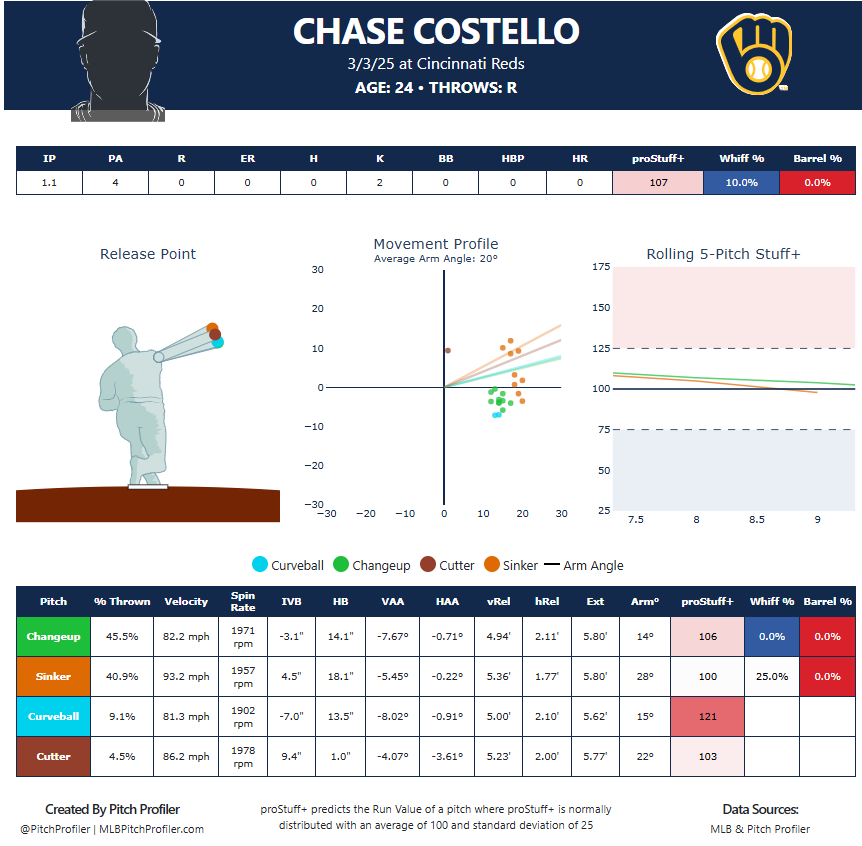
-
At least we know who to blame for this
-
Big League Spring Games - Farmhands Invited
Jake McKibbin replied to Jim Goulart's topic in Brewers Minor League Talk
Very late bloomer because of his sheer size. It takes a while to get control of those long levers, and his age would discount him from a few of the wider prospect lists however you'll most certainly have heard our minor league gurus gushing about him this past season. One of the reasons why our dedicated minor league watchers are so damn awesome. You're right though. I think he's still finding his timing to start the season (again natural) but his lowered K rate in Biloxi in 2024 combined with that explosive thud when he hits the ball is beautiful -
Was just looking at this actually. He seems to fit the Brewers mold in another way with apparently a real feel for spin. Both breaking pitches are mentioned as high spin by BA but he's still learning to refine the shape to round out a genuine starters arsenal on top of a FB touching 94 (a number you'd expect to jump in his senior year)
-
Big League Spring Games - Farmhands Invited
Jake McKibbin replied to Jim Goulart's topic in Brewers Minor League Talk
I tried to channel my inner Joseph Zarr for these. A pale imitation but one can do what they can! -
Rule 5 pick Connor Thomas has a golden opportunity with the Brewers Connor Thomas doesn't mince his words too much regarding Cardinals pitching development. About as forthright as you'll hear from a player who may end up back with said organization when all is said and done
-
Some of the Brewers' top prospects appeared in Wednesday's two split-squad Cactus League games for the team. Let's study what we learned, and ogle the very tip-toppest of those top prospects for the first time. Image courtesy of © Rick Scuteri-Imagn Images Jesus Made Made replaced Jorge Alfaro in the bottom of the eighth inning in Maryvale, facing José E. Hernández, who saw time in the majors last season for the Pittsburgh Pirates (a 3.38 ERA, in a small sample). Made took a fastball on the outer third, before laying off a changeup that tunneled beautifully with his first pitch but tailed out of the zone. A swing and a miss on the slider (Hernández's best offering, with a 41.5% whiff rate in the majors in 2024) should have slowed Made's bat down, but he was right on time—maybe even a little early—on the low heater that followed, resulting in some solid contact to third base. Made didn't look overmatched by big-league stuff, despite his mere 17 years of age. Hopefully, we can see more of the young man in settings like these during the early days of spring training. Blake Holub Holub is very much in the Kenley Jansen mold of relievers. A high-IVB fastball with lots of cut (negative horizontal break, in this case) usually comes with some difficulty in spinning the breaking ball, but Holub has a fantastic gyro slider that plays off his cutter nicely. Comparing him to Jansen's arsenal (below), there's an interesting similarity here. The cutter has slightly more movement than Jansen's, with a slightly better feel for spin, but this does create a fascinating profile for the Brewers bullpen. Braylon Payne & Eric Bitonti I'll group these two together, as they featured in back-to-back at-bats facing former closer Giovanny Gallegos. Payne was slightly early on a slider, pulling it about 10 feet foul and 40 feet over the right field fence. Payne came into the draft under the radar of most publications due to his slappy swing, low exit velocities and ground-ball tendencies. So far with the Brewers, though, he's shown exit velocities up to 110 mph, and if we can see signs of pulling the ball in the air with more regularity, it bodes incredibly well for the young speedster. Payne produced a fielder's choice on a ground ball to second in an 0-2 count, but to his credit, the speed did help him stay out of a double play. Bitonti has the opposite of Payne's problem—he'll hit for power, but most other things are in doubt—but he did showcase his capabilities nicely. One of the best swing decision-makers in the Brewers organization (per Baseball America), Bitonti can swing and miss more than you would like, while producing booming contact. He demonstrated as much against Gallegos, sitting on two changeups down and out of the zone before turning on one down and in for a rocket through the infield. The fact that players so young are performing like this against MLB-caliber stuff is impressive, for two of the most intriguing, high-upside hitters in the Brewers farm system. Garrett Mitchell Can Still Hit Curveballs One day (though spring training isn't a time when they'll care), pitchers will stop throwing curveballs to Garrett Mitchell. He crushed a hanging breaker to left-center against Yoshinobu Yamamoto, and in some ways, it was a massive relief. Mitchell has been working on his swing mechanics this offseason, looking to deliver the bat with his torso rather than have to cheat to catch it out in front. It's not a small change, and as such, it was a concern, given the degradation of Joey Wiemer in 2024 after he tried to make a similar adjustment. For those who don't remember, Wiemer underwent large-scale changes to smooth out his swing. He was trying to reduce his swing-and-miss rates, but he ended up losing all sense of timing at the plate. Mitchell's ability to continue barreling up in-zone breaking pitches is a good sign for him, and hopefully, the rest of the swing changes he's been working on can help him at the top of the zone—where he struggles most. Overall Loud Contact Yoshinobu Yamamoto and Corbin Burnes are two of the premier pitchers in baseball. Yamamoto is further on in his ramp-up than most pitchers, since he's due to start for the Dodgers in Japan, but no one could accuse Burnes of poor raw stuff. Joey Ortiz, Eric Haase and Ernesto Martinez Jr all recorded exit velocities north of 100 mph against Burnes in his first two innings of work, though, and Martinez touched 110 mph in the fourth inning, to boot. We saw the same against Yamamoto (although without actual numbers) from William Contreras, Garrett Mitchell, Vinny Capra (another home run!) and Jorge Alfaro. Honorable Mentions We also saw some additional tidbits. Rhys Hoskins looked to be in his early-season 2024 form, with battling plate appearances. He was seeing the ball well and looking a lot more comfortable at the plate. Luis Lara crushed a 105-mph line drive (impressive, given he's 20 years old and 5-foot-6). Nick Mears is continuing to keep the curveball away from his arsenal, with an even balance of four-seamers and sliders generating whiff rates of 40% and 50%, respectively. His arm angle was notably lower on his four-seamer, in contrast to last season—something to watch, as it should help the deception on his slider if it turns out to be a legitimate change. Overall, it was a fun day of pre-season baseball for the Brewers! Did I miss anything? Let me know in the comments below! NB credit as always to Thomas Nestico (@TJStats) whose graphics and models are oh so useful to me! View full article
- 1 reply
-
- 2
-
-
- jesus made
- eric bitonti
- (and 3 more)
-
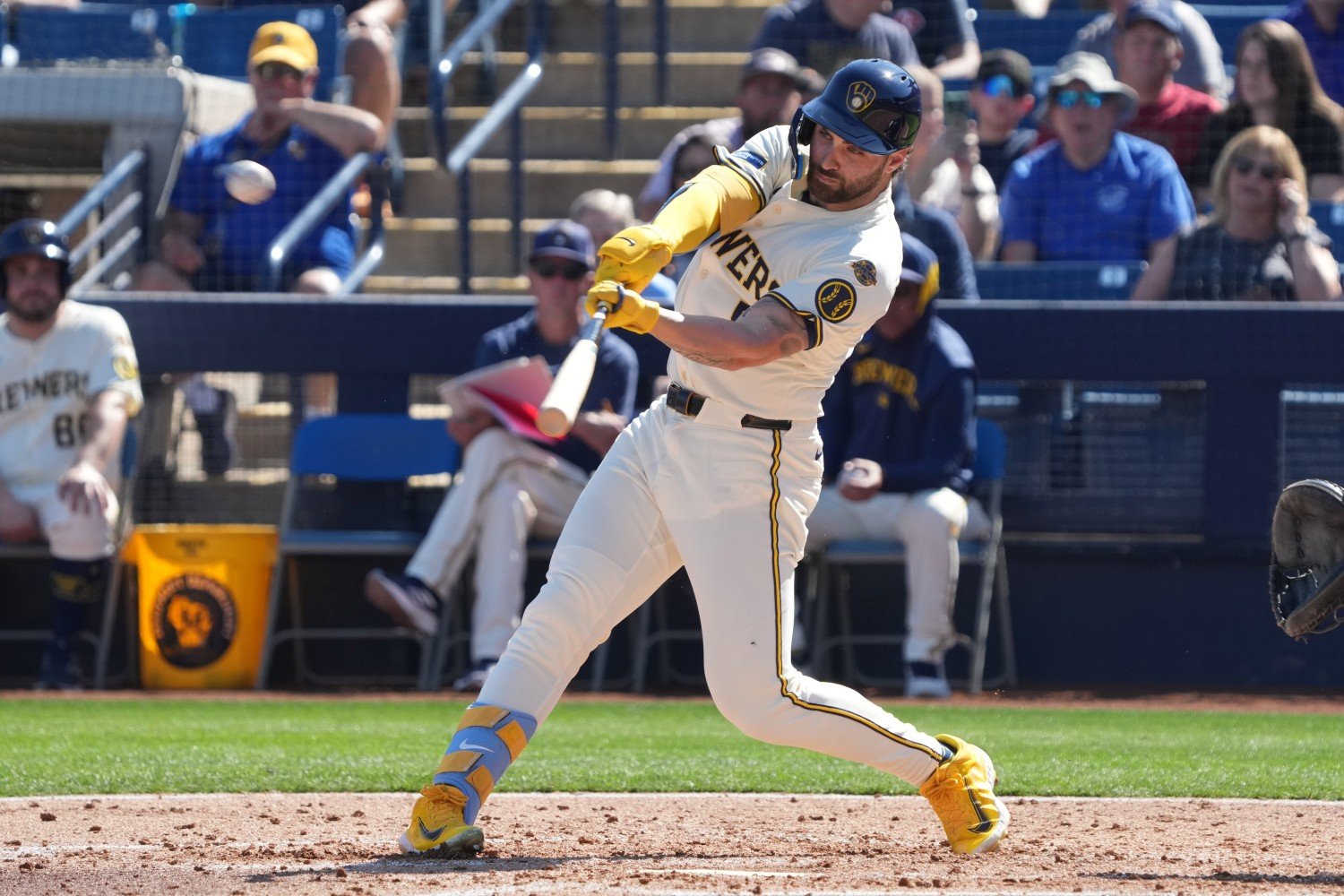 Jesus Made Made replaced Jorge Alfaro in the bottom of the eighth inning in Maryvale, facing José E. Hernández, who saw time in the majors last season for the Pittsburgh Pirates (a 3.38 ERA, in a small sample). Made took a fastball on the outer third, before laying off a changeup that tunneled beautifully with his first pitch but tailed out of the zone. A swing and a miss on the slider (Hernández's best offering, with a 41.5% whiff rate in the majors in 2024) should have slowed Made's bat down, but he was right on time—maybe even a little early—on the low heater that followed, resulting in some solid contact to third base. Made didn't look overmatched by big-league stuff, despite his mere 17 years of age. Hopefully, we can see more of the young man in settings like these during the early days of spring training. Blake Holub Holub is very much in the Kenley Jansen mold of relievers. A high-IVB fastball with lots of cut (negative horizontal break, in this case) usually comes with some difficulty in spinning the breaking ball, but Holub has a fantastic gyro slider that plays off his cutter nicely. Comparing him to Jansen's arsenal (below), there's an interesting similarity here. The cutter has slightly more movement than Jansen's, with a slightly better feel for spin, but this does create a fascinating profile for the Brewers bullpen. Braylon Payne & Eric Bitonti I'll group these two together, as they featured in back-to-back at-bats facing former closer Giovanny Gallegos. Payne was slightly early on a slider, pulling it about 10 feet foul and 40 feet over the right field fence. Payne came into the draft under the radar of most publications due to his slappy swing, low exit velocities and ground-ball tendencies. So far with the Brewers, though, he's shown exit velocities up to 110 mph, and if we can see signs of pulling the ball in the air with more regularity, it bodes incredibly well for the young speedster. Payne produced a fielder's choice on a ground ball to second in an 0-2 count, but to his credit, the speed did help him stay out of a double play. Bitonti has the opposite of Payne's problem—he'll hit for power, but most other things are in doubt—but he did showcase his capabilities nicely. One of the best swing decision-makers in the Brewers organization (per Baseball America), Bitonti can swing and miss more than you would like, while producing booming contact. He demonstrated as much against Gallegos, sitting on two changeups down and out of the zone before turning on one down and in for a rocket through the infield. The fact that players so young are performing like this against MLB-caliber stuff is impressive, for two of the most intriguing, high-upside hitters in the Brewers farm system. Garrett Mitchell Can Still Hit Curveballs One day (though spring training isn't a time when they'll care), pitchers will stop throwing curveballs to Garrett Mitchell. He crushed a hanging breaker to left-center against Yoshinobu Yamamoto, and in some ways, it was a massive relief. Mitchell has been working on his swing mechanics this offseason, looking to deliver the bat with his torso rather than have to cheat to catch it out in front. It's not a small change, and as such, it was a concern, given the degradation of Joey Wiemer in 2024 after he tried to make a similar adjustment. For those who don't remember, Wiemer underwent large-scale changes to smooth out his swing. He was trying to reduce his swing-and-miss rates, but he ended up losing all sense of timing at the plate. Mitchell's ability to continue barreling up in-zone breaking pitches is a good sign for him, and hopefully, the rest of the swing changes he's been working on can help him at the top of the zone—where he struggles most. Overall Loud Contact Yoshinobu Yamamoto and Corbin Burnes are two of the premier pitchers in baseball. Yamamoto is further on in his ramp-up than most pitchers, since he's due to start for the Dodgers in Japan, but no one could accuse Burnes of poor raw stuff. Joey Ortiz, Eric Haase and Ernesto Martinez Jr all recorded exit velocities north of 100 mph against Burnes in his first two innings of work, though, and Martinez touched 110 mph in the fourth inning, to boot. We saw the same against Yamamoto (although without actual numbers) from William Contreras, Garrett Mitchell, Vinny Capra (another home run!) and Jorge Alfaro. Honorable Mentions We also saw some additional tidbits. Rhys Hoskins looked to be in his early-season 2024 form, with battling plate appearances. He was seeing the ball well and looking a lot more comfortable at the plate. Luis Lara crushed a 105-mph line drive (impressive, given he's 20 years old and 5-foot-6). Nick Mears is continuing to keep the curveball away from his arsenal, with an even balance of four-seamers and sliders generating whiff rates of 40% and 50%, respectively. His arm angle was notably lower on his four-seamer, in contrast to last season—something to watch, as it should help the deception on his slider if it turns out to be a legitimate change. Overall, it was a fun day of pre-season baseball for the Brewers! Did I miss anything? Let me know in the comments below! NB credit as always to Thomas Nestico (@TJStats) whose graphics and models are oh so useful to me!
- 1 comment
-
- 1
-
-
- jesus made
- eric bitonti
- (and 3 more)
-
When will baseball learn the art of cover driving a googly?
- 7 replies
-
- 1
-

-
- jacob misiorowski
- oliver dunn
- (and 3 more)
-
To be fair, this is him saying he wants to start games but is happy to help the big league club however he can. Obviously every pitching prospect would think that way so its hardly newsworthy, but they've used it for a clicky title
-
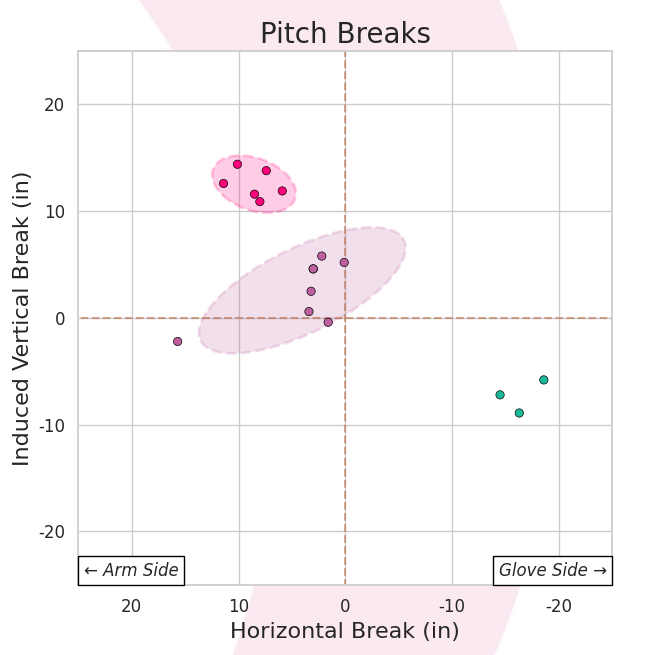
Great eye! It appears as though he did, and if so that's one heck of an offering for him. Sub 0 IVB and 15+" of run? Yes please
- 7 replies
-
- 1
-
-
- jacob misiorowski
- oliver dunn
- (and 3 more)
-
Too many numbers on the brain at once, you are correct! All the more impressive for it
- 7 replies
-
- 2
-
-
- jacob misiorowski
- oliver dunn
- (and 3 more)
-
The Brewers' fourth spring training game saw some more Statcast data on under-the-radar pitchers for the coming season, but the biggest story of the day was the metronomic hard contact from the team's fast-rising infield prospect. Image courtesy of © Dave Kallmann / Milwaukee Journal Sentinel / USA TODAY NETWORK via Imagn Images We should probably start with the obvious here. Several Brewers left notable marks in the data collected from the team's trip to Goodyear to play the Guardians Tuesday, but none were more eye-opening than the way a 20-year-old took to some big-league pitching. Cooper Pratt Cooper Pratt put four balls in play on Tuesday afternoon, acquiring two doubles and a single for his efforts. The balls came off the bat at 106.5 mph, 99.9 mph, 97.5 mph and 92.2 mph—all well-hit balls. Pratt's big question in 2025 is whether he can tap into more power, having showed strong skills to square up baseballs in his first minor-league season. We'll wait on the top-end velocities (if you're hoping to see a forward leap in the power department from a player, you want to see them hit a few balls 108 or 111 mph, that kind of thing, rather than merely hitting it in the upper 90s or low 100s consistently), but this was certainly a nice start for the Brewers' top-100 prospect. Jacob Misiorowski Control yet again eluded him, but perhaps that's too harsh a criticism for a pitcher merely beginning to ramp up. It's become a common theme for Misiorowski, however, and in his 30 pitches yesterday he showcased his incredible arsenal and his faults in equal measure: "The Miz" got a few impressive swings and misses. Hitters couldn't square him up. Yet, after getting two outs on his first seven pitches, he proceeded to walk the bases loaded and concede two earned runs with a ground ball, perhaps misplayed by Jake Bauers. The misses with the fastball weren't massive, but he struggled to land his curveball for strikes at the bottom of the zone. It almost had too much movement (something he mentioned in his postgame talk with reporters). For more on Jacob Misiorowski take a look at Matthew Trueblood's piece here, but for now, let's not beat a dead horse. Onward! Will Childers Childers's fastball doesn't quite get the rise you would normally associate with a pitcher of his arm slot, but he was touching 98 mph early in his outing, and the slider/cutter combo graded out extremely well. Childers is the type of unheralded bullpen arm we should definitely be watching toward the end of 2025, if all goes well—although, like Misiorowski, one would hope the control of his four-seamer is better as the season comes closer to starting. Nick Merkel Limited exposure for the 6-foot-7 Merkel didn't stop him from showcasing his devastating raw stuff. Merkel possesses a large mix, but only got the chance to showcase two of them in his four-pitch outing, Both offerings showed strong movement profiles, with great extension from the big man. On a side note, who did he strike out you may ask? Only Steven Kwan, no biggie: Oliver Dunn Dunn is a divisive figure among Brewers fans. The space between his ceiling and his floor is quite large. It took four games for Dunn to finally swing and miss at a pitch—and then he crushed a 105-mph lineout just afterward. Whether Dunn can mitigate his in-zone swing-and-miss (and whether he can stay on the field) will determine what he can do in 2025, but he's started spring training well in both regards. In other mentions, Bryan Hudson has rediscovered the velocity he held at the start of 2024, on both his sweeper and his fastball; Blake Burke appears to have some serious raw power on top of almost doing the splits; and Isaac Collins is continuing to hit the ball hard without (seemingly) being noticed for it. Tune in for more observations after Wednesday's split-squad game in Scottsdale, against Arizona; that contest will be under the watchful eyes of Statcast too. The Crew will also host the Dodgers at Maryvale Wednesday, so expect lots of young prospects to make the trip to Talking Stick. View full article
-
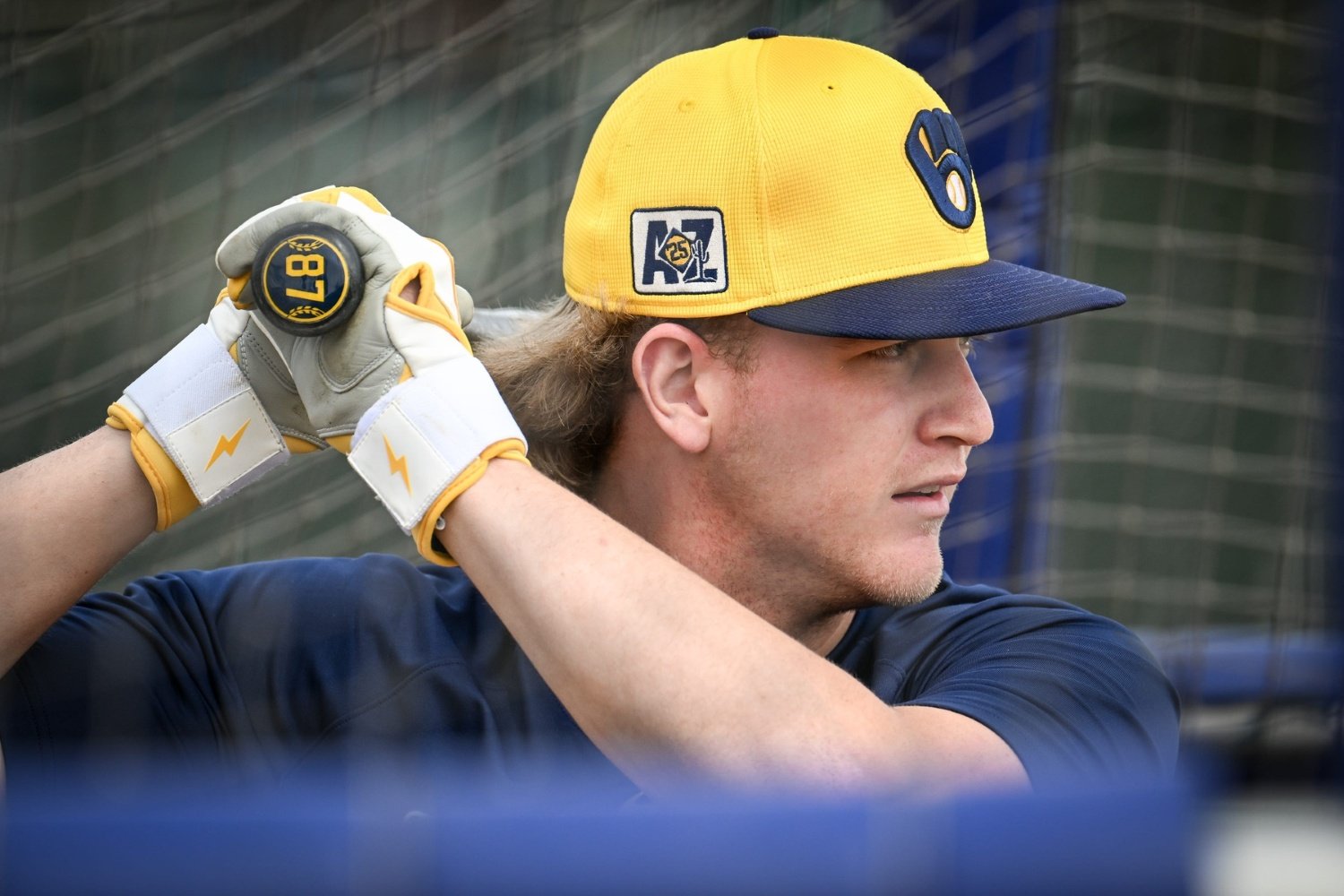 We should probably start with the obvious here. Several Brewers left notable marks in the data collected from the team's trip to Goodyear to play the Guardians Tuesday, but none were more eye-opening than the way a 20-year-old took to some big-league pitching. Cooper Pratt Cooper Pratt put four balls in play on Tuesday afternoon, acquiring two doubles and a single for his efforts. The balls came off the bat at 106.5 mph, 99.9 mph, 97.5 mph and 92.2 mph—all well-hit balls. Pratt's big question in 2025 is whether he can tap into more power, having showed strong skills to square up baseballs in his first minor-league season. We'll wait on the top-end velocities (if you're hoping to see a forward leap in the power department from a player, you want to see them hit a few balls 108 or 111 mph, that kind of thing, rather than merely hitting it in the upper 90s or low 100s consistently), but this was certainly a nice start for the Brewers' top-100 prospect. Jacob Misiorowski Control yet again eluded him, but perhaps that's too harsh a criticism for a pitcher merely beginning to ramp up. It's become a common theme for Misiorowski, however, and in his 30 pitches yesterday he showcased his incredible arsenal and his faults in equal measure: "The Miz" got a few impressive swings and misses. Hitters couldn't square him up. Yet, after getting two outs on his first seven pitches, he proceeded to walk the bases loaded and concede two earned runs with a ground ball, perhaps misplayed by Jake Bauers. The misses with the fastball weren't massive, but he struggled to land his curveball for strikes at the bottom of the zone. It almost had too much movement (something he mentioned in his postgame talk with reporters). For more on Jacob Misiorowski take a look at Matthew Trueblood's piece here, but for now, let's not beat a dead horse. Onward! Will Childers Childers's fastball doesn't quite get the rise you would normally associate with a pitcher of his arm slot, but he was touching 98 mph early in his outing, and the slider/cutter combo graded out extremely well. Childers is the type of unheralded bullpen arm we should definitely be watching toward the end of 2025, if all goes well—although, like Misiorowski, one would hope the control of his four-seamer is better as the season comes closer to starting. Nick Merkel Limited exposure for the 6-foot-7 Merkel didn't stop him from showcasing his devastating raw stuff. Merkel possesses a large mix, but only got the chance to showcase two of them in his four-pitch outing, Both offerings showed strong movement profiles, with great extension from the big man. On a side note, who did he strike out you may ask? Only Steven Kwan, no biggie: Oliver Dunn Dunn is a divisive figure among Brewers fans. The space between his ceiling and his floor is quite large. It took four games for Dunn to finally swing and miss at a pitch—and then he crushed a 105-mph lineout just afterward. Whether Dunn can mitigate his in-zone swing-and-miss (and whether he can stay on the field) will determine what he can do in 2025, but he's started spring training well in both regards. In other mentions, Bryan Hudson has rediscovered the velocity he held at the start of 2024, on both his sweeper and his fastball; Blake Burke appears to have some serious raw power on top of almost doing the splits; and Isaac Collins is continuing to hit the ball hard without (seemingly) being noticed for it. Tune in for more observations after Wednesday's split-squad game in Scottsdale, against Arizona; that contest will be under the watchful eyes of Statcast too. The Crew will also host the Dodgers at Maryvale Wednesday, so expect lots of young prospects to make the trip to Talking Stick.
