



Jake McKibbin
-
Posts
2,395 -
Joined
-
Last visited
-
Days Won
6
Content Type
Profiles
Forums
Blogs
Events
News
2026 Milwaukee Brewers Top Prospects Ranking
Milwaukee Brewers Videos
2022 Milwaukee Brewers Draft Picks
Milwaukee Brewers Free Agent & Trade Rumors, Notes, & Tidbits
Guides & Resources
2023 Milwaukee Brewers Draft Picks
2024 Milwaukee Brewers Draft Picks
The Milwaukee Brewers Players Project
2025 Milwaukee Brewers Draft Pick Tracker
2026 Milwaukee Brewers Draft Tracker: Picks & Bonuses
Store
Downloads
Gallery
Everything posted by Jake McKibbin
-
I think control issues are improved but command still struggles. Some HR issues of late but if he can keep this up by the end of July then that promotion is definitely on the cards
-
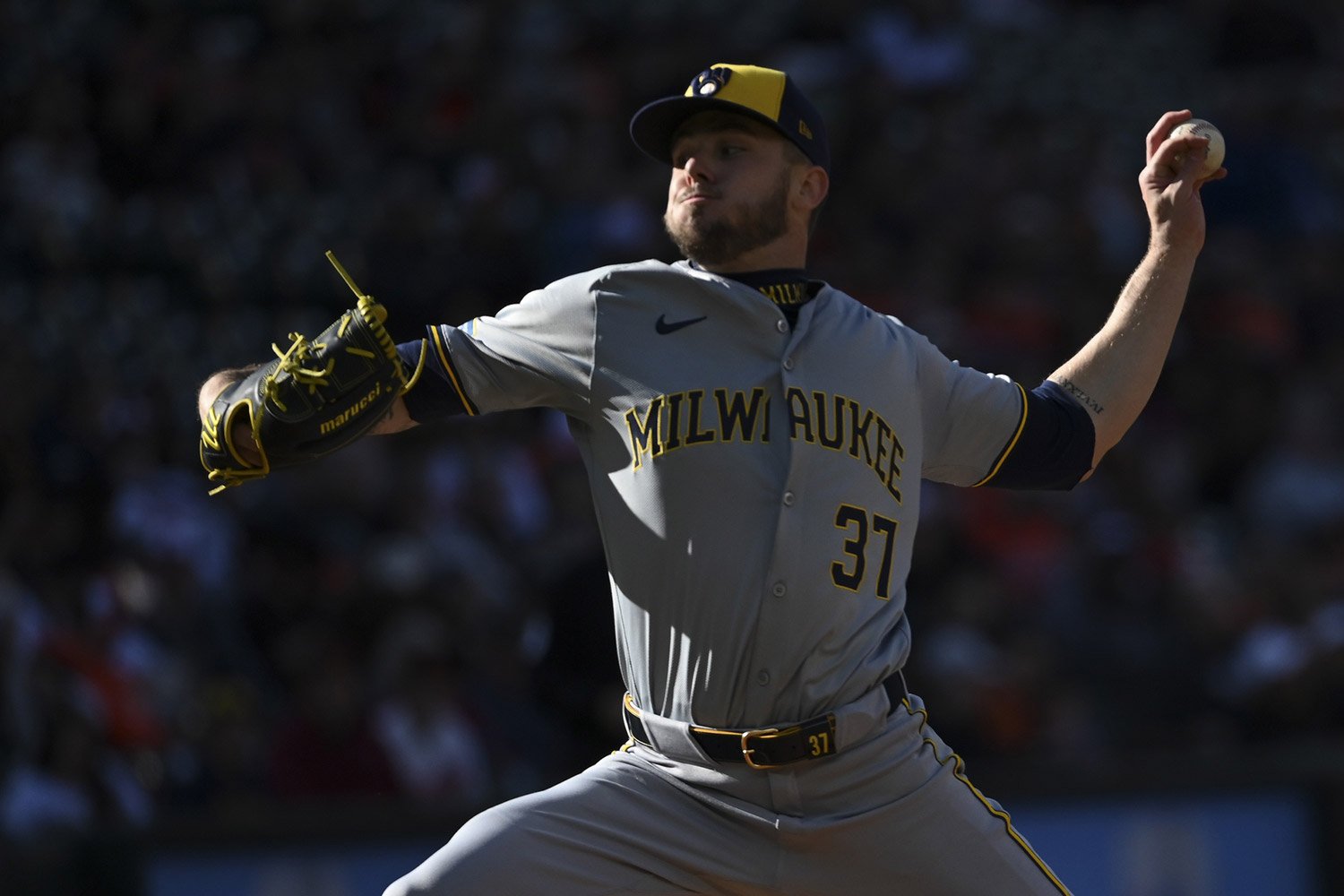 DL Hall's starts with Nashville have been intriguing as he's ramped up again from the second knee issue he had, and the Brewers' needs have changed over that span. They could have used some middle relief in May, but they've now brought back Jakob Junis and moved Bryse Wilson to the bullpen again, which gives real depth. So Hall's role is more likely to come back as a starter, and he's been stretched out in tandem with that, but has his stuff ticked up enough to get major league outs? Is The Four Seam Fastball Back? With the Brewers in April, Hall was averaging 92.3 mph on his fastball, a massive drop from his numbers out of the bullpen last year, where he was hitting the upper 90s with regularity. The move to a starting role likely meant some regression on the velocity front, but not one as large as this, and we can suspect now that the knee played a big part in this. Since rehabbing, it's ticked up to more of the range we saw in spring training, averaging 94.2 mph and passing 96 mph occasionally (he never reached above 94.6 mph in April). Because of his extension, this adds another tick to the velo, which affects hitters with a 95 mph average that can play in the majors. With the movement profile, it's been a little more helter-skelter. The induced vertical break (IVB), which causes that rising effect, has remained where it was with the Brewers in April, which we expected to see tick up. He's getting around 200 rpm more spin on the ball, so I would have expected this to result in more rise, but that hasn't been the case thus far, and it's not entirely clear why. These spin rates are much closer aligned to where they were in 2023 (I think some breaking pitches also may have been misclassified in 2023 as no fastball should have 2900 RPMs): The above are Hall's movement statistics on pitches in the strike zone. It is especially important to keep location constant when looking at VAA, and that's why I'm not entirely convinced by the heater just yet. That angle on the high fastballs is good, but with the added IVB he's capable of, it could be an elite pitch, and he could begin dismantling hitters with his four-seam. It should also be noted that Hall's success comes from a combination of factors rather than one elite point. The low arm slot, the big extension he gets off the mound, the IVB, the velocity, and some natural deception combine to explain his historical success behind the pitch, and that's difficult to quantify as a whole. On a side note, he also seems to have switched his position on the mound slightly, which has changed his horizontal angle of approach to be more in line with his 2023 numbers. More spin-based movement could increase the disparity going forward, but I'd say this is a fairly benign change for now. So, how have the results been? Well, his last start was his most promising despite featuring his lowest IVB on the fastball in a while. He generated a 23% whiff rate on his four seam (his previous three starts had rates of 10% and 7.1%) and a called strikes + whiffs rate of 42.9%. It gives a bit of hope that when he returns, that fastball will be a lot less hittable and that added velocity will be a big boost for him. The Breaking Balls Are Located Poorly The only other concern I have now is the curveball, which hasn't missed bats well this year. He has just a 7% swinging strike rate on what was a 60-grade pitch coming into the season, and it has nothing to do with how the pitch moves (we've had enough chat about that nerdy work today). Instead, he just hasn't been able to locate it at all. If I told anyone where they'd like to throw their curveball most, it certainly wouldn't be in the upper and middle areas of the strike zone. Hall isn't getting it to dip in and around that lower edge of the zone, and it's hurting him a little this year. It was a 60-grade pitch because no one even recorded a hit against it last season, and they're still struggling this year, but he's not getting the swing and miss, which can hurt him when working ahead against hitters. The slider is his other electric breaking ball, again rated 60/70 by Baseball America coming into the year, but the location has just been all wrong. From pinpoint precision in 2023 to leaving it up more often than not in 2024, especially during his rehab starts, I think the command is going to have to improve to get that whiff rate back from the 21% it's been in Triple-A to the 35% rate it had last season. There is an element of concern over the damage that big league hitters can do against breaking balls in these locations, and it's something to keep an eye on. He may have focused a lot on the fastball regaining its qualities and has shown more durability and velocity overall on that front. Still, it won't matter if he's keeping sliders and curveballs up in the zone regularly. DL Hall is an incredibly talented fireballer, and it may not entirely click for him this season, but he has taken steps forward and can hopefully continue to do so after the all-star break. What do you think of Hall's performances? Have they improved enough to restore some faith in him as a starter? Can he kick on like Garrett Crochet and Tanner Houck? Let us know your thoughts in the comments below!
 -
DL Hall's injury was playing havoc with his fastball before going on the IL in April, but he's evidently feeling healthier and stretched out. The question now, has his stuff has ticked up enough for a renaissance in the Majors? DL Hall's starts with Nashville have been intriguing as he's ramped up again from the second time knee issue he had and the Brewers needs have changed over that span. Whereas in May they could really have used some middle relief they've now brought back Jakob Junis and moved Bryse Wilson to the bullpen again which gives real depth. So Hall's role is more likely to come back as a starter and he's been stretched out in tandem with that but has his stuff ticked up enough to get major league outs? Is The Four Seam Fastball Back? With the Brewers in April Hall was averaging 92.3 mph on his fastball, a massive drop from his numbers out of the bullpen last year where he was hitting the upper 90's with regularity. The move to a starting role meant there was likely some regression on the velocity front but not one as large as this, and we can suspect now that the knee played a big part in this. Since rehabbing, it's ticked up to more of the range we saw in spring training, averaging 94.2mph and passing 96 mph on occasion (he never reached above 94.6 mph in April). Because of his extension this adds another tick to the velo which affects hitters like a 95 mph average and that can definitely play in the majors. With the movement profile it's been a little more helter-skelter. The induced vertical break (IVB) which causes that rising effect has remained where it was with the Brewers in April and that's something we expected to see tick up. He's getting around 200 rpm more spin on the ball so I would have expected this to result in more rise but that hasn't been the case thus far and it's not entirely clear why. These spin rates are much closer aligned to where they were in 2023 (I think some breaking pitches also may have been misclassified in 2023 as no fastball should have 2900 RPM's): The above are Hall's movement statistics on pitches up in the strike zone. This is especially important to keep location constant when looking at VAA and it's why I'm not entirely convinced by the heater just yet. I think that angle on the high fastballs is good, but with the added IVB he's capable of then it could be an elite pitch and really begin to dismantle hitters with his four seam from there. It should also be noted that a lot of Hall's success comes from a combination of factors rather than one elite point. the low arm slot, the big extension he gets off the mound, the IVB and the velocity as well as some natural deception combine together to explain his historical success behind the pitch and that's difficult to quantify as a whole. On a side note he also seems seem to have switched his position on the mound a little bit and it has changed that horizontal angle of approach to be more in line with his 2023 numbers. More spin based movement could increase the disparity going forwards but for now I'd say this is a fairly benign change. So how have the results been? Well actually his last start was his most promising despite featuring his lowest IVB on the fastball in a while. He generated a 23% whiff rate on his four seam (his previous three starts had rates of 10% and 7.1%) and a Called strikes + whiffs rate of 42.9%. It gives a bit of hope for when he returns that that fastball will be a lot less hittable and that added velocity will be a big boost for him. The Breaking Balls Are Located Poorly The only other concern I have at this point is the curveball which hasn't missed bats well at all this year. He has just a 7% swinging strike rate on what was a 60 grade pitch coming into the season and it's nothing to do with how the pitch moves (we've had enough chat about that nerdy work today). Instead he just hasn't been able to locate it at all. If I told anyone where they'd like to throw their curveball most, it certainly wouldn't be in the upper and middle areas of the strike zone. Hall just isn't getting it to dip in and around that lower edge of the zone and it's hurting him a little this year. The reason it was a 60 grade pitch is that no one even recorded a hit against it last season, and they're still struggling this year, but he's not getting the swing and miss and that can hurt him when working ahead against hitters. The slider is his other electric breaking ball, again rated 60/70 by Baseball America coming into the year but the location has just been all wrong. From pinpoint precision in 2023 to leaving it up more often than not in 2024, especially during his rehab starts, I think the command is going to have to improve to get that whiff rate back from the 21% it's been in Triple A to the 35% rate it had last season. There is an element of concern over the damage that big league hitters can do against breaking balls in these locations, and it's something to keep an eye on. He may have had a lot of focus on the fastball regaining it's qualities and has shown more durability and velocity overall on that front but it won't matter if he's leaving sliders and curveballs up in the zone with regularity. DL Hall is an incredibly talented fireballer, and it may not entirely click for him this season, but he has taken steps forward and can hopefully continue to do so after the all-star break. What do you think of Hall's performances? Have they improved enough to restore some faith in him as a starter? Can he kick on like Garrett Crochet and Tanner Houck? Let us know your thoughts in the comments below! View full article
-
Episode 14: Grand Slams Galore!
Jake McKibbin replied to Spencer Michaelis's topic in Brewer Fanatic Front Page News
@Jack Sterndid I detect a little jealousy of minor league questions today? Just a little sprinkle? 😏- 1 reply
-
- 1
-

-
- joel payamps
- aaron civale
- (and 3 more)
-
Brewers Archived Media Links - 2024 Regular Season
Jake McKibbin replied to Jim Goulart's topic in Milwaukee Brewers Talk
Thanks for the shout-out! Had a great time with sparky discussing the Civale trade -
How Can The Brewers Reinvigorate Aaron Civale’s Fastballs?
Jake McKibbin posted an article in Brewers
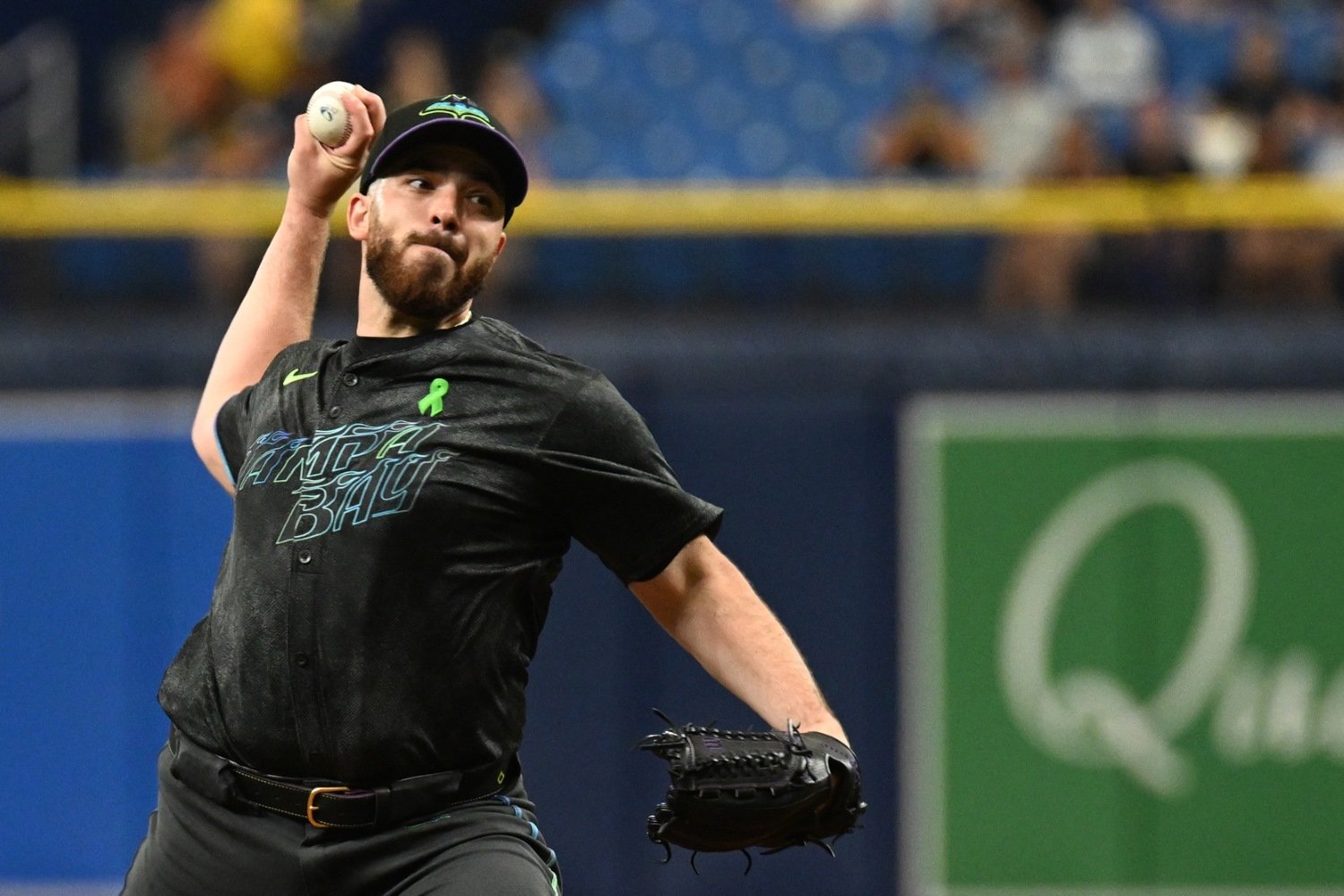 In 2021, the Rays needed to move Willy Adames to make room for Wander Franco. David Stearns and Matt Arnold acquired Adames in exchange for Drew Rasmussen and JP Feyereisen. It's a trade the Brewers won by a landslide, in hindsight, even without accounting for its ghastly off-field intrusions. Shane Baz is returning from an injury, and the Rays needed to make room. Hence the trade for Aaron Civale. The Brewers may have the tools to bring Civale back to the sub-4.00 ERA pitcher from his last two seasons with the Guardians, as opposed to the one on the wrong side of 5.00 in his split season's worth of time with Tampa. It’s All About The Fastballs Civale possesses a four-seam fastball, a sinker and a cutter, which he varies in usage depending on the platoon facing him. Against right-handed batters, he uses the sinker more often, and he saw improved results in 2023 behind this pitch having added a tick in velocity while maintaining similar vertical movement. However, since acquiring him, the Rays have moved Civale over toward the first-base side of the rubber, and it just hasn't worked. The clusters on the left are from 2024 and the time period in 2023 after the Rays acquired him; it's a noticeable shift from where he was while pitching for Cleveland. While the Rays always have a good reason for trying something unexpected, all this one has done is negate some of the deception he had on his fastball in 2023, by making his release point more visible to the righties on whom he predominantly unleashes it. The sinker has also been entering the strike zone at less sharp a horizontal angle, which makes it easier to square up for the hitter given where he likes to locate it. By reducing the horizontal angle at which it comes into the strike zone, Civale's sinker can't afford to come inside on hitters as often, and it's allowed them to lean out over the middle-away parts of the strike zone and pull significantly more often. If the Brewers move Civale back toward the middle of the mound, he should be able to come inside again more effectively and open up space for his breaking pitches to excel. The way things are now, he's seen the line drive rate jump from 21.7% with the Guardians to 29.3% with the Rays, and it seems like a remarkably simple fix to simply move Civale back over the center of the mound and unlock those 2023 results once more. Somehow, Civale has also struggled against left-handers even more with this move across the mound. With an .857 OPS against lefties this season (compared with a .728 OPS against righties), it could be argued the sinker isn't the problem here. Civale favors his cutter to left-handers, but has found the move across the mound changing how his pitches cross home plate. The locations he’s hitting with the cutter are almost identical from last year to this, but the results couldn't be further apart because of how often hitters are finding the sweet spot for launch angle. The cutter was never an elite pitch for him, but jumping those sweet-spot rates from 29.7% to 38% is like comparing the ability to elevate a ball well from below league average to Luis Arráez’s elite levels. Sweet-spot rate is heavily correlated with both slugging and batting average, so it’s no surprise to see how this has resulted in significantly more line drives, fewer ground balls and more damage. So why is this, if he’s locating the cutter in the same areas? It’s that move across the rubber again. It should be beneficial against left-handers and hide the ball slightly better, but it’s affecting the look of the pitch as it crosses home plate again. He’s added half a tick in velocity but the only really significant changes are the release point and the angle at which it crosses home plate, which is less steep. It’s an angle that may be successful when used to bore the pitch inside on them, but because Civale lives more on the outer half of the zone, it actually makes pulling the ball easier, because the hitter feels like the ball is coming into his wheelhouse. Left-handed hitters are pulling the cutter 50% of the time, which shouldn't be the case when he’s locating so regularly on the outer half. Perhaps he can come inside slightly more often to keep them off that pitch, but once again, if he can move back across the rubber and keep the horizontal approach angle where it was before the trade to Tampa, then that up-and-away location should allow his cutter to play up. It seems like a fairly simple switch and that, for once, the Tampa Bay development staff have failed to get the most out of a pitcher. Moving right-handed pitchers across to the third-base side of the rubber is something the Brewers love to do, anyway. It's part of the story of Bryse Wilson's breakthrough for them. If Civale can get back to that more effective profile by doing so, then the Brewers should have at least another reliable innings eater and out-getter in their rotation, and one who’s capable of some very hot streaks. They needed starting pitching depth for the second half, and it seems they’ve found some.
 -
The Brewers took advantage of a forced Willy Adames trade back in 2021 with the Rays, and reaped big profits. If they can fix Aaron Civale’s fastball they may do so again. Image courtesy of © Jonathan Dyer-USA TODAY Sports In 2021, the Rays needed to move Willy Adames to make room for Wander Franco. David Stearns and Matt Arnold acquired Adames in exchange for Drew Rasmussen and JP Feyereisen. It's a trade the Brewers won by a landslide, in hindsight, even without accounting for its ghastly off-field intrusions. Shane Baz is returning from an injury, and the Rays needed to make room. Hence the trade for Aaron Civale. The Brewers may have the tools to bring Civale back to the sub-4.00 ERA pitcher from his last two seasons with the Guardians, as opposed to the one on the wrong side of 5.00 in his split season's worth of time with Tampa. It’s All About The Fastballs Civale possesses a four-seam fastball, a sinker and a cutter, which he varies in usage depending on the platoon facing him. Against right-handed batters, he uses the sinker more often, and he saw improved results in 2023 behind this pitch having added a tick in velocity while maintaining similar vertical movement. However, since acquiring him, the Rays have moved Civale over toward the first-base side of the rubber, and it just hasn't worked. The clusters on the left are from 2024 and the time period in 2023 after the Rays acquired him; it's a noticeable shift from where he was while pitching for Cleveland. While the Rays always have a good reason for trying something unexpected, all this one has done is negate some of the deception he had on his fastball in 2023, by making his release point more visible to the righties on whom he predominantly unleashes it. The sinker has also been entering the strike zone at less sharp a horizontal angle, which makes it easier to square up for the hitter given where he likes to locate it. By reducing the horizontal angle at which it comes into the strike zone, Civale's sinker can't afford to come inside on hitters as often, and it's allowed them to lean out over the middle-away parts of the strike zone and pull significantly more often. If the Brewers move Civale back toward the middle of the mound, he should be able to come inside again more effectively and open up space for his breaking pitches to excel. The way things are now, he's seen the line drive rate jump from 21.7% with the Guardians to 29.3% with the Rays, and it seems like a remarkably simple fix to simply move Civale back over the center of the mound and unlock those 2023 results once more. Somehow, Civale has also struggled against left-handers even more with this move across the mound. With an .857 OPS against lefties this season (compared with a .728 OPS against righties), it could be argued the sinker isn't the problem here. Civale favors his cutter to left-handers, but has found the move across the mound changing how his pitches cross home plate. The locations he’s hitting with the cutter are almost identical from last year to this, but the results couldn't be further apart because of how often hitters are finding the sweet spot for launch angle. The cutter was never an elite pitch for him, but jumping those sweet-spot rates from 29.7% to 38% is like comparing the ability to elevate a ball well from below league average to Luis Arráez’s elite levels. Sweet-spot rate is heavily correlated with both slugging and batting average, so it’s no surprise to see how this has resulted in significantly more line drives, fewer ground balls and more damage. So why is this, if he’s locating the cutter in the same areas? It’s that move across the rubber again. It should be beneficial against left-handers and hide the ball slightly better, but it’s affecting the look of the pitch as it crosses home plate again. He’s added half a tick in velocity but the only really significant changes are the release point and the angle at which it crosses home plate, which is less steep. It’s an angle that may be successful when used to bore the pitch inside on them, but because Civale lives more on the outer half of the zone, it actually makes pulling the ball easier, because the hitter feels like the ball is coming into his wheelhouse. Left-handed hitters are pulling the cutter 50% of the time, which shouldn't be the case when he’s locating so regularly on the outer half. Perhaps he can come inside slightly more often to keep them off that pitch, but once again, if he can move back across the rubber and keep the horizontal approach angle where it was before the trade to Tampa, then that up-and-away location should allow his cutter to play up. It seems like a fairly simple switch and that, for once, the Tampa Bay development staff have failed to get the most out of a pitcher. Moving right-handed pitchers across to the third-base side of the rubber is something the Brewers love to do, anyway. It's part of the story of Bryse Wilson's breakthrough for them. If Civale can get back to that more effective profile by doing so, then the Brewers should have at least another reliable innings eater and out-getter in their rotation, and one who’s capable of some very hot streaks. They needed starting pitching depth for the second half, and it seems they’ve found some. View full article
-
If he can somehow get those ground balls... if his sinker's drop is affected at all by the Colorado air this could be rough. Please god no cutters tonight
-
Garrett Mitchell may have replaced Tyler Black on the active roster but that’s not a direct route to regular playing time. How can the Brewers find a way to integrate their talented young outfielder into the lineup, without disrupting a successful unit? Image courtesy of © Rick Scuteri-USA TODAY Sports I wrote recently about the improvements Garrett Mitchell had shown during his rehab assignment at Triple-A Nashville this year that may indulge a slightly higher level of optimism about the consistency in his bat. He’s a high-octane player with a higher ceiling than either Blake Perkins or Sal Frelick, but both of the current center fielders have been productive of late, so how could Mitchell gain playing time early on? Well, first of all (and fairly basically, as commentary goes), he’s going to have to earn his way. An above-average bat will go a long way toward that, and he’ll need to show himself as being more than just a defensive replacement or a pinch-runner. That could come in a number of different forms, but each comes with its own question marks. In reality, the most likely will be a combination of the below, and I’m not sure (with Mitchell's pedigree) that you can leave him in a bench role like Tyler Black was given, with minimal usage. The other factor to consider is that Mitchell will likely be eased in slowly, and we’ll see something of a playoff in the outfield over the next month as they jostle for playing time. Does Blake Perkins Lose Playing Time? Perkins has 1.7 bWAR at the halfway point in the season, on pace for around 3.5 WAR overall, and this is based mainly on roughly league-average offense combined with exceptional defense in center field. Perkins has been a star so far this year, although largely an unheralded one, but as a smaller-name guy who could be due for regression, he may be the player relegated to a fourth or fifth outfielder role. The other side of the coin here is that Perkins is the only outfielder (besides Jackson Chourio) who can hit right-handed. Given the Brewers' platooning so far this season, it seems fairly safe to assume he’ll see a majority of playing time against left-handers going forward, but his time against righties could be squeezed. That would sting a bit, because Perkins is a better hitter from the left side, facing righties. On a team with fewer options in the outfield, Perkins would be an undeniable starter in the outfield, and it seems almost cruel to reduce his playing time given how valuable he's been to the Brewers in the first half of the season. He'll have to fight for his place once again, after coming out victorious earlier in the season in a playing-time battle with Frelick. The Sal Frelick Conundrum Another topic covered on Friday, Frelick has been an on-base machine over the last few weeks and is hitting .268 on the season now. He’s getting on base at a solid clip, but is still only at a 0.9 WAR and 93 OPS+ because of an almost total lack of extra-base power. Some subpar outfield reads have impacted his defensive metrics, too. No one ever really expected more than 15 home runs per season from Frelick, but they would have expected more hard line drives into the gaps for doubles and triples; he just hasn’t hit the ball hard enough to bring that to fruition. In the last 30 days, he has an average exit velocity of just 81 mph and a 15.2% hard-hit rate, though he is (at least) beginning to elevate the ball a bit more frequently. Frelick did show some higher exit velocities in the minor leagues, but has struggled to show any of this since the start of 2023--perhaps as a lingering effect of the torn thumb ligament that got that season off to a lousy start for him. The lack of playable pop could put his spot in some danger, if his BABIP luck regresses somewhat and his batting average declines alongside it. The other occasional option (and you wouldn’t want to see this too often given his early success) is the possibility of Frelick appearing at third base every now and then, to get Joey Ortiz off his feet (off his neck?) and add another lefty to the lineup. That's more an occasional thought to keep Frelick in the lineup, or even give him opportunities off the bench, while not overworking Ortiz in his first full season in the majors. It could allow the Brewers (as a whole) to be slightly fresher come the clutch days in September and October. Jackson Chourio Can’t See A Playing Time Reduction… Right? Jackson Chourio showed immense improvements in June, cutting his swinging strike rate down to below 10% with an OPS of almost .900 and an ISO of .219. He’s showing power and contact skills in spades, while seemingly getting better with each passing game. It's no stretch to say that CHourio could be a vital point of difference for this Brewers offense come October, and the more games he gets, the more ready he’ll be for those big moments. Defensively, he’s been improving as well, with great routes and a more confident persona in right field of late, so it may be hard to dislodge the young phenom. That being said, he’s just 20 years old, in his first full season in the major leagues. As such, the occasional day off may not be too much to his detriment in the long run. The pace at which he’s learning is freakish, but it’s important to give little instances where he can breathe and take in those things he’s learned, which isn’t a luxury afforded to someone playing 162 games a year. As mentioned earlier, we're likely to see a combination of the above scenarios to get Mitchell some playing time early and see if he forces his way from there into more at-bats at the business end of the season. Most of that will come from Frelick and Perkins resting on occasion, while also using Christian Yelich's DH days to spread around some extra plate appearances, and then a smidgeon of time from Chourio sitting out every once in a while and Frelick occasionally getting at bats covering third base. The versatility gives Pat Murphy just enough room to maneuver, and get everyone the playing time to make a case, but it will be a melee that won’t likely continue into September. There is a high likelihood of an outfielder being involved in a trade should the Brewers be active at the deadline, but for now, it’s exciting to see just what Mitchell can do starting with covering the vast grass of Coors Field. View full article
-
How Can The Brewers Create Playing Time For Garrett Mitchell?
Jake McKibbin posted an article in Brewers
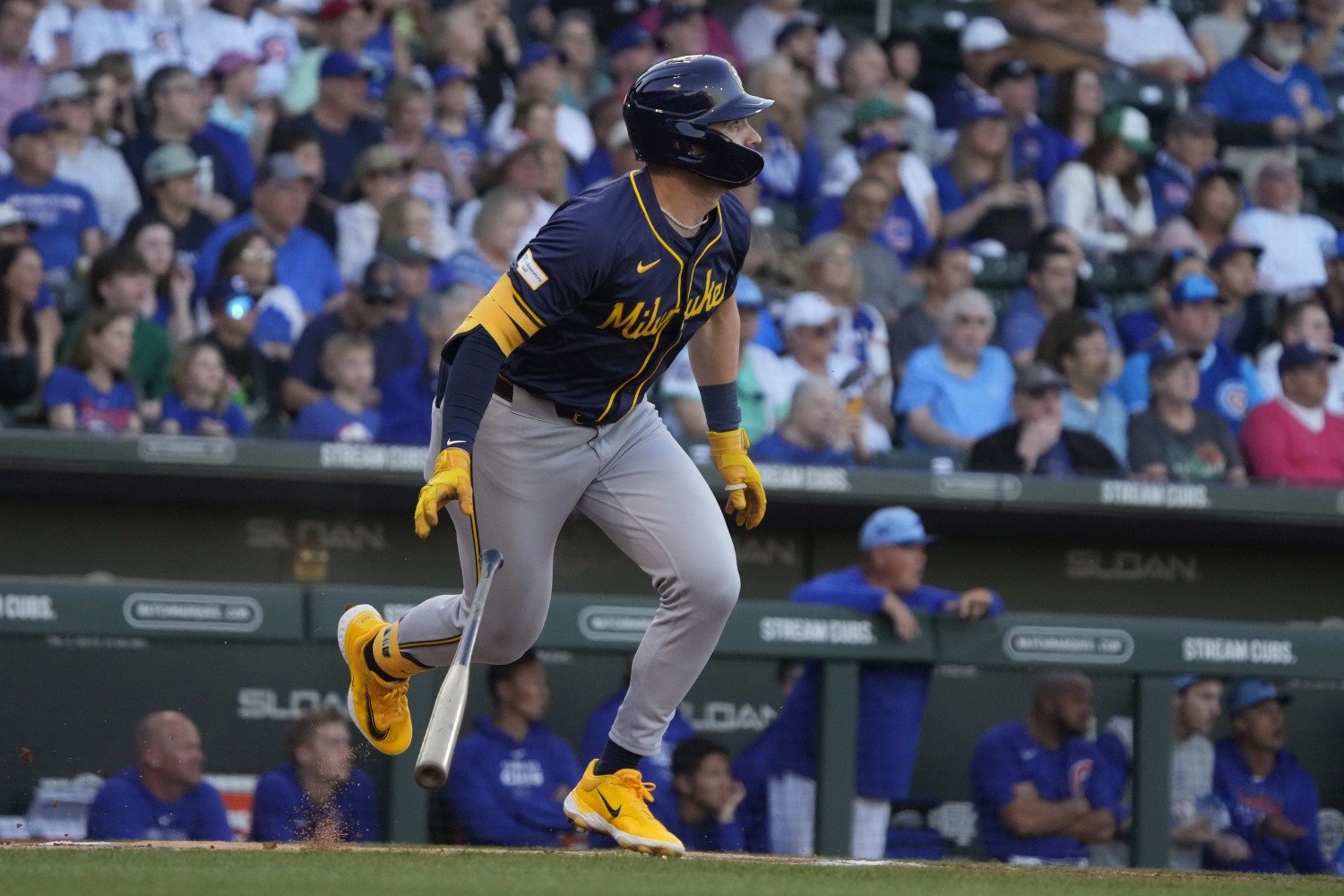 I wrote recently about the improvements Garrett Mitchell had shown during his rehab assignment at Triple-A Nashville this year that may indulge a slightly higher level of optimism about the consistency in his bat. He’s a high-octane player with a higher ceiling than either Blake Perkins or Sal Frelick, but both of the current center fielders have been productive of late, so how could Mitchell gain playing time early on? Well, first of all (and fairly basically, as commentary goes), he’s going to have to earn his way. An above-average bat will go a long way toward that, and he’ll need to show himself as being more than just a defensive replacement or a pinch-runner. That could come in a number of different forms, but each comes with its own question marks. In reality, the most likely will be a combination of the below, and I’m not sure (with Mitchell's pedigree) that you can leave him in a bench role like Tyler Black was given, with minimal usage. The other factor to consider is that Mitchell will likely be eased in slowly, and we’ll see something of a playoff in the outfield over the next month as they jostle for playing time. Does Blake Perkins Lose Playing Time? Perkins has 1.7 bWAR at the halfway point in the season, on pace for around 3.5 WAR overall, and this is based mainly on roughly league-average offense combined with exceptional defense in center field. Perkins has been a star so far this year, although largely an unheralded one, but as a smaller-name guy who could be due for regression, he may be the player relegated to a fourth or fifth outfielder role. The other side of the coin here is that Perkins is the only outfielder (besides Jackson Chourio) who can hit right-handed. Given the Brewers' platooning so far this season, it seems fairly safe to assume he’ll see a majority of playing time against left-handers going forward, but his time against righties could be squeezed. That would sting a bit, because Perkins is a better hitter from the left side, facing righties. On a team with fewer options in the outfield, Perkins would be an undeniable starter in the outfield, and it seems almost cruel to reduce his playing time given how valuable he's been to the Brewers in the first half of the season. He'll have to fight for his place once again, after coming out victorious earlier in the season in a playing-time battle with Frelick. The Sal Frelick Conundrum Another topic covered on Friday, Frelick has been an on-base machine over the last few weeks and is hitting .268 on the season now. He’s getting on base at a solid clip, but is still only at a 0.9 WAR and 93 OPS+ because of an almost total lack of extra-base power. Some subpar outfield reads have impacted his defensive metrics, too. No one ever really expected more than 15 home runs per season from Frelick, but they would have expected more hard line drives into the gaps for doubles and triples; he just hasn’t hit the ball hard enough to bring that to fruition. In the last 30 days, he has an average exit velocity of just 81 mph and a 15.2% hard-hit rate, though he is (at least) beginning to elevate the ball a bit more frequently. Frelick did show some higher exit velocities in the minor leagues, but has struggled to show any of this since the start of 2023--perhaps as a lingering effect of the torn thumb ligament that got that season off to a lousy start for him. The lack of playable pop could put his spot in some danger, if his BABIP luck regresses somewhat and his batting average declines alongside it. The other occasional option (and you wouldn’t want to see this too often given his early success) is the possibility of Frelick appearing at third base every now and then, to get Joey Ortiz off his feet (off his neck?) and add another lefty to the lineup. That's more an occasional thought to keep Frelick in the lineup, or even give him opportunities off the bench, while not overworking Ortiz in his first full season in the majors. It could allow the Brewers (as a whole) to be slightly fresher come the clutch days in September and October. Jackson Chourio Can’t See A Playing Time Reduction… Right? Jackson Chourio showed immense improvements in June, cutting his swinging strike rate down to below 10% with an OPS of almost .900 and an ISO of .219. He’s showing power and contact skills in spades, while seemingly getting better with each passing game. It's no stretch to say that CHourio could be a vital point of difference for this Brewers offense come October, and the more games he gets, the more ready he’ll be for those big moments. Defensively, he’s been improving as well, with great routes and a more confident persona in right field of late, so it may be hard to dislodge the young phenom. That being said, he’s just 20 years old, in his first full season in the major leagues. As such, the occasional day off may not be too much to his detriment in the long run. The pace at which he’s learning is freakish, but it’s important to give little instances where he can breathe and take in those things he’s learned, which isn’t a luxury afforded to someone playing 162 games a year. As mentioned earlier, we're likely to see a combination of the above scenarios to get Mitchell some playing time early and see if he forces his way from there into more at-bats at the business end of the season. Most of that will come from Frelick and Perkins resting on occasion, while also using Christian Yelich's DH days to spread around some extra plate appearances, and then a smidgeon of time from Chourio sitting out every once in a while and Frelick occasionally getting at bats covering third base. The versatility gives Pat Murphy just enough room to maneuver, and get everyone the playing time to make a case, but it will be a melee that won’t likely continue into September. There is a high likelihood of an outfielder being involved in a trade should the Brewers be active at the deadline, but for now, it’s exciting to see just what Mitchell can do starting with covering the vast grass of Coors Field.
 -
He's been really good taking extra bases for sure, but I think despite his speed there have been issues in the past with base stealing. Even his minor league numbers never quite popped in comparison with his similarly speedy peers. I'm not saying he isn't a good baserunner, merely that there's more in there
-
He's fast, but he doesn't consistently get good jumps on the base paths and as a result has never been quite as destructive as you'd think he should be when on base
-
This is really interesting.. wonder if we'll see a decision as soon as today
-
Garrett Mitchell has been showing power, an improved batted-ball profile and electricity in the field during his rehab assignment. Sal Frelick has shown grit, development and determination both in the outfield and at the plate. Which character is the best fit for this Brewers team? Image courtesy of © Rick Scuteri-USA TODAY Sports Thankfully, Garrett Mitchell's hamstring issue on Wednesday was of no longer-term concern, so this is an intriguing dilemma. Both Mitchell and Sal Frelick are hitting their stride. Frelick is fighting and scrapping his way on base, and has started to put better swings on balls with 34% of his swings being “squared up” (leading the Brewers) in June. While still having lowish exit velocities, he's getting the ball in the air and showing more power. Mitchell is slashing .300/.404/.650 in Nashville, and is showing better-than-expected contact skills alongside some incredible defense. With an infield featuring young phenom Jackson Chourio, Christian Yelich and the defensive maestro that is Blake Perkins in a breakout year, to whom should the Brewers tie their second-half fortunes? Garrett Mitchell in Triple A It did not take long for Mitchell to get going, hitting four home runs and two doubles in his first 40 at-bats--including a performance on Wednesday night that simply made him look too good for that level: a 429-foot blast to center field off MLB-ready Max Meyer, as well as a double, two walks and two outfield assists. That should have been a game that prompted the end of the rehab assignment and an MLB reinstatement. Then, he left the game in his final at-bat, clutching his hamstring. There's little doubt about the impact potential in Mitchell's tools, but there are performance-related reasons to wonder how well he can make that potential value into actual value, and there are obviously big injury risks here. It’s undeniable that Mitchell’s ceiling is as lofty as they come, with perhaps Jarren Duran as a favorable comparison. Both are lightning-fast, extremely rangy center fielders with power and an electricity that gets a crowd going. Mitchell is one of the most talented players in the Brewers system. What's unclear is whether he can put it all together and stay on the field. That being said, he has issues with ground balls on top of swing-and-miss concerns at the big-league level, so the big question is: How have they looked so far in Triple A? Mitchell has actually done quite well in this regard so far. He's still chasing too often on breaking pitches below the zone that are hurting his swing and miss figures slightly, but this is more a product of swing decisions than a hole in his swing. That’s good news for a player with a 37.6% career strikeout rate in the majors. He is showing improvements in his chase rate above the zone and better coverage inside the strike zone as a whole, compared to his previous stints in Triple A (for the sake of consistency in a comparison, it seems appropriate to keep the level the same). Where he’s really looked good, however, is in his ability to elevate the ball: Compare his data in 2022-23 to 2024 on ground-ball rates, and it’s clear there’s a massive jump--albeit in a very limited sample. Mitchell has a launch-angle sweet spot rate of 40% thus far, compared with just 7.7% between 2022-23, with an average launch angle of 11.6° vs. 0.8°. It’s a big change, and although he’s sacrificed some exit velocity to get there, it’s a far more playable batted-ball profile in the majors. As a result of the launch angle changes, Mitchell’s natural raw power and athleticism are coming to the fore, and in terms of power output, it’s chalk and cheese: If Mitchell can sustain any realm of this in the big leagues, he has the type of power that Frelick just can’t match, doing damage on pitches over the heart of the plate and crushing baseballs. He has a swinging strike rate of just 9% so far this season. With his blazing speed and nous on the basepaths combined with (perhaps) the only defensive ability that can match Blake Perkins, that’s one hell of a package. Sal Frelick Frelick is a completely different profile. He doesn’t quite have Mitchell’s ability on the bases, despite being fast in his own right, and he isn’t quite as good with his jumps in the outfield--although again, most would consider him an above-average defender in center field. He does two things better than Mitchell, however: he puts the ball in play, and he’s stayed on the field. Frelick has been a slap hitter so far this season, with minimal extra-base power and strong strike-zone awareness. A chase rate in the 65th percentile and a contact rate in the 91st percentile help him grind out at-bats, fouling off pitches and putting balls in play. He has 39 hits on batted balls bouncing on the infield, and has struggled to do any form of damage to opposing pitchers. Frelick’s produced some eye-catching defensive plays, but he does have some issues with his routes in center field, which are preventing him being a truly plus center fielder per Statcast metrics. He puts his body on the line out there, and after a shaky April that included a botched dive on an Elly de la Cruz liner, he has found himself looking much more like the outfielder he should be with his speed. Also, and perhaps understandably to those watching him of late, he has outperformed his expected metrics by quite a bit. He has an expected OPS of just .612, and some regression may be incoming toward that number when the batted balls begin to find more fielders. Frelick has fantastic bat-to-ball skills, but unfortunately the quality of contact just isn't there at this point, and despite being serviceable due to his on base percentage, he hasn’t been able to kick on and take his profile from “I don’t whiff” to “I make good, consistent contact." If Frelick can continue to migrate toward the Brice Turang 2024 model, then of course there's more value to be had, but pure contact hitters have to be really elite with consistent .300+ batting averages to make above-average offensive contributions with limited power production. That is a concern at this stage in his career. Over the last 30 days, Frelick is slashing .316/.366/.368 which is more than playable with his defensive capabilities. The eye test does suggest he's squaring the ball up more often, with some higher exit velocities. Sustaining this does make him a valuable cog in Pat Murphy's wheel, but can he sustain it? The Brewers Needs So this is where it gets fascinating. The Brewers lineup has been constructed to have very definitive roles for some players, with good hitters, sluggers and scrappers almost as three different categories. The likes of Christian Yelich and William Contreras are just good hitters; Willy Adames, Rhys Hoskins, Jake Bauers and Gary Sánchez are definitive sluggers; while Tyler Black, Brice Turang and Blake Perkins are scrappy players who find ways to get on base and do damage on the basepaths. Frelick fits into the latter group well, whereas Mitchell has the chance to be more the kind of player who joins the sluggers and the speedsters. He has prodigious raw power when he elevates the ball, but also the speed to run out grounders and cause havoc on the basepaths. He doesn’t quite fit into either category with aplomb, but the question for the Brewers is what they need most from their outfielders, and if that extra slugging ability is worth a little extra swing and miss. If Bauers, Hoskins and Adames are crushing balls, then arguably, Frelick’s profile could be more advantageous. If not, then that thump at the bottom of the lineup can really come in handy. Mitchell with a 25% strikeout rate is an extraordinarily valuable player to have, and if he can stay around that range, then he’s a clear improvement. If he sticks in the 30% range or higher, not so much, so it depends quite where the Brewers see him landing at the moment and whether the small sample size is indicative of a larger change. Mitchell, if his hamstring is all well and good, may be able to take this lineup to another level with even better baserunning and defense than Frelick, on top of that power production. It’s a big issue of contrasting styles the Brewers will have to weigh up for the second half of the season if both can stay fit, but I may be edging slightly toward Mitchell at this point. Can you see Mitchell being a big improvement for the Brewers offensively? Or do you see Frelick’s recent surge as an indication of a player to stick with? Let us know your thoughts in the comments below! View full article
-
Garrett Mitchell v Sal Frelick: Which Way Do The Brewers Go?
Jake McKibbin posted an article in Brewers
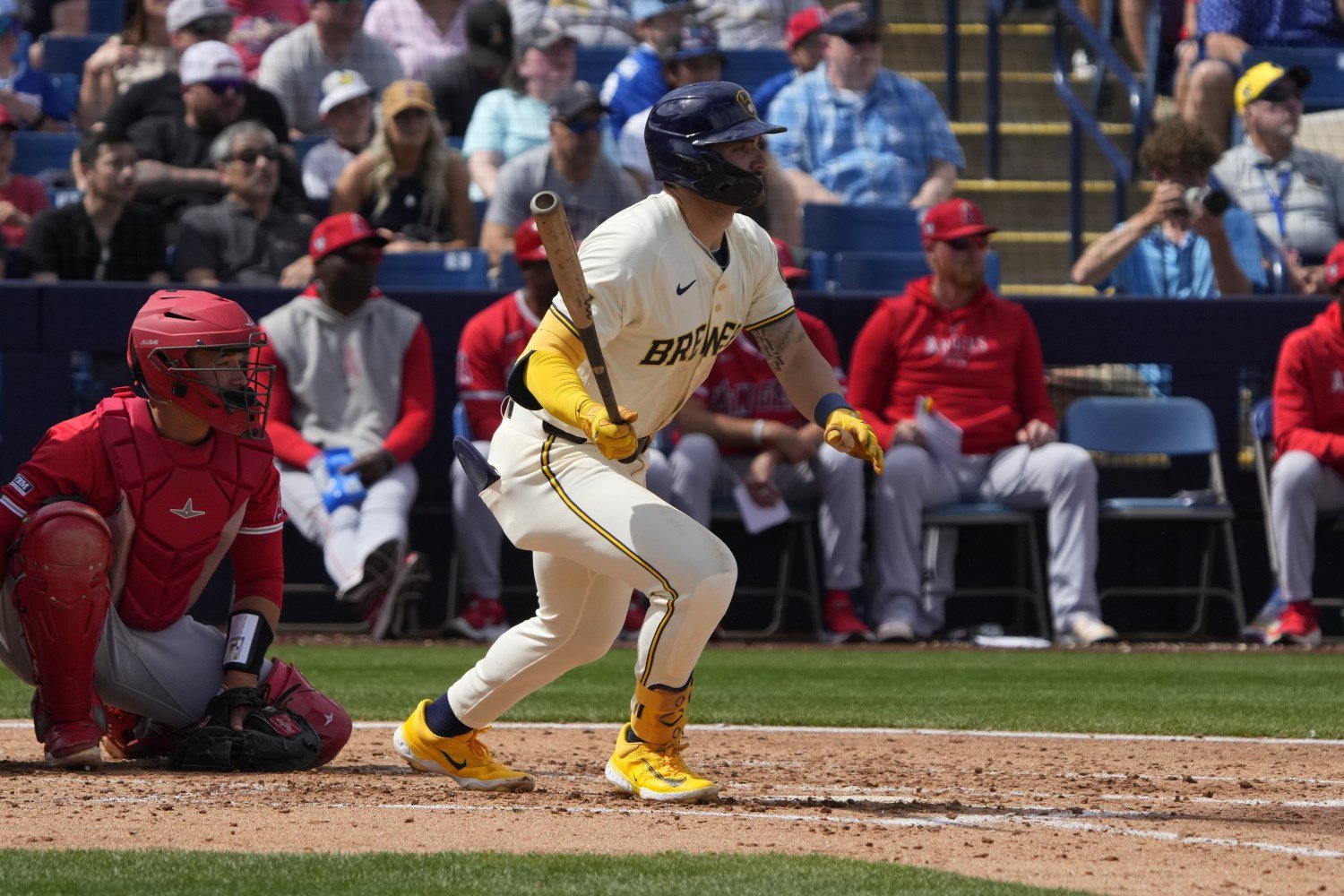 Thankfully, Garrett Mitchell's hamstring issue on Wednesday was of no longer-term concern, so this is an intriguing dilemma. Both Mitchell and Sal Frelick are hitting their stride. Frelick is fighting and scrapping his way on base, and has started to put better swings on balls with 34% of his swings being “squared up” (leading the Brewers) in June. While still having lowish exit velocities, he's getting the ball in the air and showing more power. Mitchell is slashing .300/.404/.650 in Nashville, and is showing better-than-expected contact skills alongside some incredible defense. With an infield featuring young phenom Jackson Chourio, Christian Yelich and the defensive maestro that is Blake Perkins in a breakout year, to whom should the Brewers tie their second-half fortunes? Garrett Mitchell in Triple A It did not take long for Mitchell to get going, hitting four home runs and two doubles in his first 40 at-bats--including a performance on Wednesday night that simply made him look too good for that level: a 429-foot blast to center field off MLB-ready Max Meyer, as well as a double, two walks and two outfield assists. That should have been a game that prompted the end of the rehab assignment and an MLB reinstatement. Then, he left the game in his final at-bat, clutching his hamstring. There's little doubt about the impact potential in Mitchell's tools, but there are performance-related reasons to wonder how well he can make that potential value into actual value, and there are obviously big injury risks here. It’s undeniable that Mitchell’s ceiling is as lofty as they come, with perhaps Jarren Duran as a favorable comparison. Both are lightning-fast, extremely rangy center fielders with power and an electricity that gets a crowd going. Mitchell is one of the most talented players in the Brewers system. What's unclear is whether he can put it all together and stay on the field. That being said, he has issues with ground balls on top of swing-and-miss concerns at the big-league level, so the big question is: How have they looked so far in Triple A? Mitchell has actually done quite well in this regard so far. He's still chasing too often on breaking pitches below the zone that are hurting his swing and miss figures slightly, but this is more a product of swing decisions than a hole in his swing. That’s good news for a player with a 37.6% career strikeout rate in the majors. He is showing improvements in his chase rate above the zone and better coverage inside the strike zone as a whole, compared to his previous stints in Triple A (for the sake of consistency in a comparison, it seems appropriate to keep the level the same). Where he’s really looked good, however, is in his ability to elevate the ball: Compare his data in 2022-23 to 2024 on ground-ball rates, and it’s clear there’s a massive jump--albeit in a very limited sample. Mitchell has a launch-angle sweet spot rate of 40% thus far, compared with just 7.7% between 2022-23, with an average launch angle of 11.6° vs. 0.8°. It’s a big change, and although he’s sacrificed some exit velocity to get there, it’s a far more playable batted-ball profile in the majors. As a result of the launch angle changes, Mitchell’s natural raw power and athleticism are coming to the fore, and in terms of power output, it’s chalk and cheese: If Mitchell can sustain any realm of this in the big leagues, he has the type of power that Frelick just can’t match, doing damage on pitches over the heart of the plate and crushing baseballs. He has a swinging strike rate of just 9% so far this season. With his blazing speed and nous on the basepaths combined with (perhaps) the only defensive ability that can match Blake Perkins, that’s one hell of a package. Sal Frelick Frelick is a completely different profile. He doesn’t quite have Mitchell’s ability on the bases, despite being fast in his own right, and he isn’t quite as good with his jumps in the outfield--although again, most would consider him an above-average defender in center field. He does two things better than Mitchell, however: he puts the ball in play, and he’s stayed on the field. Frelick has been a slap hitter so far this season, with minimal extra-base power and strong strike-zone awareness. A chase rate in the 65th percentile and a contact rate in the 91st percentile help him grind out at-bats, fouling off pitches and putting balls in play. He has 39 hits on batted balls bouncing on the infield, and has struggled to do any form of damage to opposing pitchers. Frelick’s produced some eye-catching defensive plays, but he does have some issues with his routes in center field, which are preventing him being a truly plus center fielder per Statcast metrics. He puts his body on the line out there, and after a shaky April that included a botched dive on an Elly de la Cruz liner, he has found himself looking much more like the outfielder he should be with his speed. Also, and perhaps understandably to those watching him of late, he has outperformed his expected metrics by quite a bit. He has an expected OPS of just .612, and some regression may be incoming toward that number when the batted balls begin to find more fielders. Frelick has fantastic bat-to-ball skills, but unfortunately the quality of contact just isn't there at this point, and despite being serviceable due to his on base percentage, he hasn’t been able to kick on and take his profile from “I don’t whiff” to “I make good, consistent contact." If Frelick can continue to migrate toward the Brice Turang 2024 model, then of course there's more value to be had, but pure contact hitters have to be really elite with consistent .300+ batting averages to make above-average offensive contributions with limited power production. That is a concern at this stage in his career. Over the last 30 days, Frelick is slashing .316/.366/.368 which is more than playable with his defensive capabilities. The eye test does suggest he's squaring the ball up more often, with some higher exit velocities. Sustaining this does make him a valuable cog in Pat Murphy's wheel, but can he sustain it? The Brewers Needs So this is where it gets fascinating. The Brewers lineup has been constructed to have very definitive roles for some players, with good hitters, sluggers and scrappers almost as three different categories. The likes of Christian Yelich and William Contreras are just good hitters; Willy Adames, Rhys Hoskins, Jake Bauers and Gary Sánchez are definitive sluggers; while Tyler Black, Brice Turang and Blake Perkins are scrappy players who find ways to get on base and do damage on the basepaths. Frelick fits into the latter group well, whereas Mitchell has the chance to be more the kind of player who joins the sluggers and the speedsters. He has prodigious raw power when he elevates the ball, but also the speed to run out grounders and cause havoc on the basepaths. He doesn’t quite fit into either category with aplomb, but the question for the Brewers is what they need most from their outfielders, and if that extra slugging ability is worth a little extra swing and miss. If Bauers, Hoskins and Adames are crushing balls, then arguably, Frelick’s profile could be more advantageous. If not, then that thump at the bottom of the lineup can really come in handy. Mitchell with a 25% strikeout rate is an extraordinarily valuable player to have, and if he can stay around that range, then he’s a clear improvement. If he sticks in the 30% range or higher, not so much, so it depends quite where the Brewers see him landing at the moment and whether the small sample size is indicative of a larger change. Mitchell, if his hamstring is all well and good, may be able to take this lineup to another level with even better baserunning and defense than Frelick, on top of that power production. It’s a big issue of contrasting styles the Brewers will have to weigh up for the second half of the season if both can stay fit, but I may be edging slightly toward Mitchell at this point. Can you see Mitchell being a big improvement for the Brewers offensively? Or do you see Frelick’s recent surge as an indication of a player to stick with? Let us know your thoughts in the comments below!
 -
Cubs (Taillon) vs Brewers (Rea): 6/28/24, 7:10pm
Jake McKibbin replied to Brock Beauchamp's topic in Archived Game Threads
Put a bow-taill-on that gift Sorry @treego14 -
Thurs. 6/27 - All Squads on Deck
Jake McKibbin replied to Joseph Zarr's topic in Brewers Minor League Talk
He's struck out just five times in his last 33 PA's as well, and just once in his last four games -
Oh I'm absolutely not expecting Keuchel to have a sub -3.00 ERA by any stretch, but I do wonder if he has the command and dip in his stuff to keep the ball on the ground more than we saw yesterday. Anything in the mid-4's while getting through 5-6 would be awesome in this case, and the perfect foil to him as a piggyback is Junis with the sweeping slider from the right hand side. I thin if anyone can it's the Brewers, and there's just enough life in there to make it possible at this point but we'll know in the next few starts
-
Dallas Keuchel hasn’t had a sub-5.00 ERA since 2020. His sinker averages 87 mph. Can the Brewers really turn this around into a productive pitcher? Image courtesy of © Michael McLoone-USA TODAY Sports Dallas Keuchel has been with the Seattle Mariners' Triple-A affiliate all year, playing in the Pacific Coast League, which is heavily slanted toward offense. Somehow, over the last 30 days there, he had an ERA of just 1.61, with improved swing and miss on his secondaries and strong ground-ball rates. If any other team made this move, it would be laughed at, but this is the Milwaukee Brewers, who have turned around Colin Rea, Julio Teherán, and (most recently) Joe Ross. Surely they can’t do it again… right? Kuechel’s Arsenal Possessing a sinker at 87 mph with a cutter, a slider and a changeup that would initially be a recipe for success, Keuchel knows how to use his arsenal. The sinker, in part because of its slow speed, gets 7” more vertical drop than the average MLB version. One inch can be the difference between a barrel and a ground ball, so that drop negates the slow velo somewhat and allows him to really sneak under the barrel. This is borne out by the incredible 72.5% ground-ball rate against his sinker over the last 30 days. Also, keep in mind: Keuchel has always had a slow fastball. Even in his prime, he barely averaged 90 mph on the sinker. It doesn’t miss many bats, but then sinkers usually don’t, and a ground ball rate like that will absolutely play with a defensive infield containing Joey Ortiz, Willy Adames and Brice Turang. In fact, it’s one of the reasons why Keuchel was targeting Milwaukee this spring; Then you get to his secondaries, which have proven much more effective than you would expect of a pitcher with the type of struggles Keuchel has had. His slider has become an increasingly interesting weapon. At 78 mph, it is a slower offering, but that allows good differential with his sinker, and this velo is again negated by the 10” of extra drop he gets on the pitch compared to MLB average, as well as 3” more horizontal break. As a result, in the last 30 days in Tacoma, Keuchel had a 62.5% whiff rate on the pitch and it became his main strikeout offering. Then there’s a changeup that he uses to right-handed batters more often, that (again) had a good whiff rate of 36% in the last month. The change sits in the 80-mph range, with good vertical drop. Add to those a cutter he occasionally uses to try and steal strikes on the inside corner of the zone to right handers, as well as more up in the zone to change the hitter's eye level a bit. While the changeup blends well with the sinker at a different velocity band for deception, the cutter gets a little more rise and reduced horizontal movement that can really separate it as an outlier pitch for him. You can see below how the different pitches compared to each other at Triple-A: Command Is Everything Despite the swing and miss he’s had of late, Keuchel knows where his strengths lie, and it’s not in being a high-strikeout pitcher. He’s shown fantastic command this year and is pounding the bottom of the strike zone, while also having a high walk total. He will nibble around the edges which may actually be more beneficial in the majors due to the absence of the ABS system that has narrowed the strike zone at Triple A. He isn’t afraid of a free pass on occasion, with the knowledge that a ground ball can eliminate them quickly. It is something to monitor, as a 10.9% walk rate during the most successful portion of your season isn’t a glaring omen for success when you aren’t named Blake Snell, but if Keuchel can keep the ball down as he has so far in Triple-A, there’s no reason why he can’t continue to get outs in the major leagues. Keuchel’s experience throwing the ball at the highest level lends him a certain level of understanding in how to get outs. The heavy ground ball rates mentioned above also lead to something else of which the Brewers may be in dire need: length. Pitching to contact allows pitchers to get outs significantly quicker than strikeout artists do, and Keuchel can certainly do that. He’s not likely to go eight innings of shutout ball, but he could play up as the likes of Ross, Bryse Wilson, Robert Gasser, and others have all done with the Crew and get past the sixth inning with more regularity. Our Caswell Dommisse wrote about that here. Keuchel has an arsenal that’s able to get outs for the Brewers, with a crafty repertoire and well located pitches; the two could be a match made in heaven while the Brewers stretch out DL Hall or wait on Joe Ross to return to the rotation. It's maybe not going to be long-term success, but there's every chance the Brewers can get a month or six weeks of 2023 Teherán production that could stem the tide while they look to solidify their divisional lead. Wednesday's game wasn't ideal for Keuchel, with four innings, eight hits and two home runs with five earned runs in total. He showed what he can bring to the table early on with some pinpoint command, but the potent Rangers offense did manage to elevate against him. Only getting five ground balls on 16 balls in play would be untenable, but the hope is that that won't be a permanent state of affairs for Keuchel. The Brewers haven't had any time to work with him yet, beyond a couple of hours before the game Wednesday, but there is a route where Keuchel is a valuable innings eater and out-getter in the majors, despite an iffy introduction to the Brewers faithful. He only threw one slider Wednesday, for instance. In his next start, we could see more balanced utilization of all his stuff, and maybe the results will look more like Keuchel's recent returns in the minors. In the meantime, he pitched well enough to keep the game within range for the Crew, who found a way to win yet again. What do you think, having seen Dallas Keuchel's first start? Did you see a road to success for the experienced veteran? Let us know your thoughts in the comments below! View full article
-
Can the Brewers Work Their Magic Again With Dallas Keuchel?
Jake McKibbin posted an article in Brewers
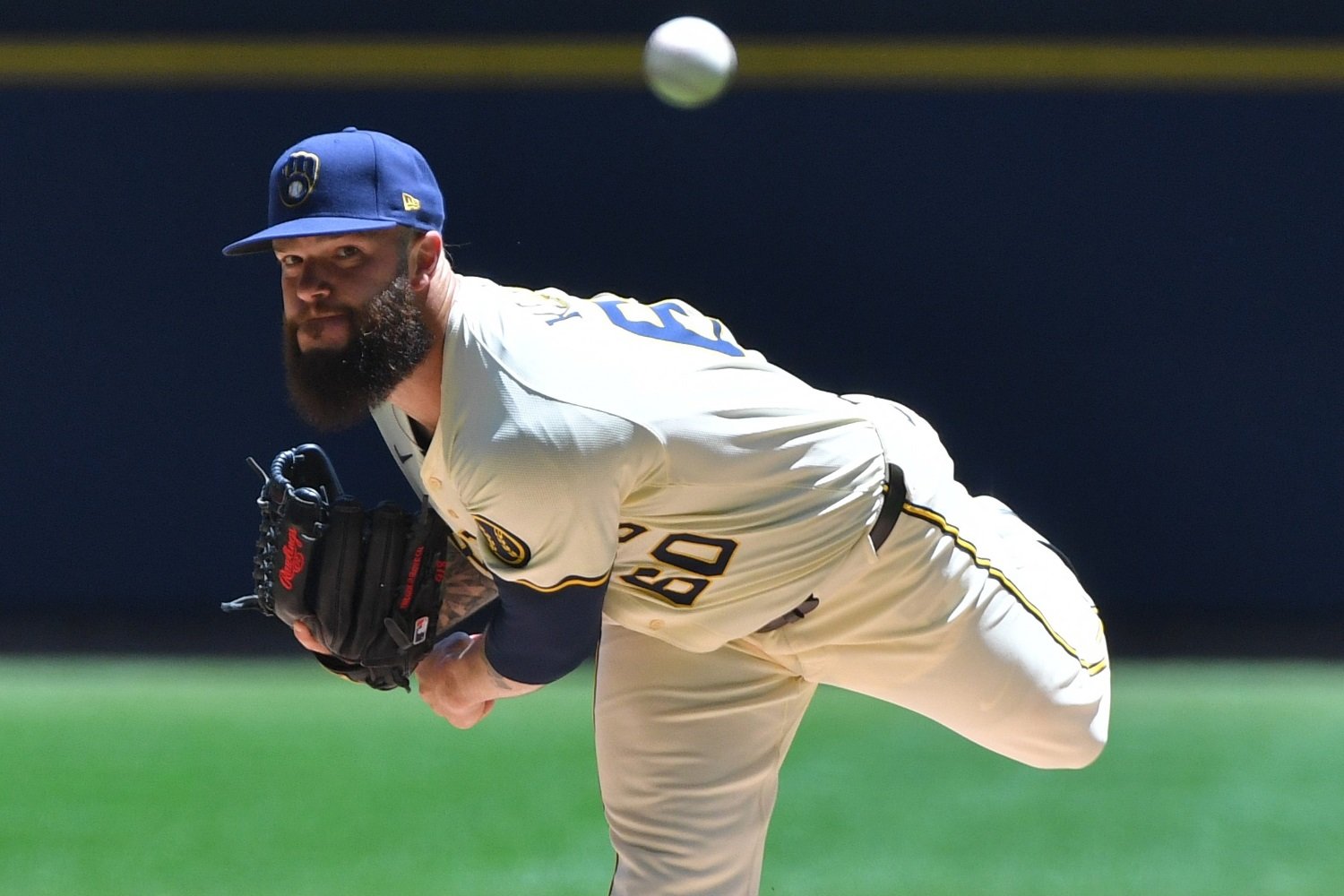 Dallas Keuchel has been with the Seattle Mariners' Triple-A affiliate all year, playing in the Pacific Coast League, which is heavily slanted toward offense. Somehow, over the last 30 days there, he had an ERA of just 1.61, with improved swing and miss on his secondaries and strong ground-ball rates. If any other team made this move, it would be laughed at, but this is the Milwaukee Brewers, who have turned around Colin Rea, Julio Teherán, and (most recently) Joe Ross. Surely they can’t do it again… right? Kuechel’s Arsenal Possessing a sinker at 87 mph with a cutter, a slider and a changeup that would initially be a recipe for success, Keuchel knows how to use his arsenal. The sinker, in part because of its slow speed, gets 7” more vertical drop than the average MLB version. One inch can be the difference between a barrel and a ground ball, so that drop negates the slow velo somewhat and allows him to really sneak under the barrel. This is borne out by the incredible 72.5% ground-ball rate against his sinker over the last 30 days. Also, keep in mind: Keuchel has always had a slow fastball. Even in his prime, he barely averaged 90 mph on the sinker. It doesn’t miss many bats, but then sinkers usually don’t, and a ground ball rate like that will absolutely play with a defensive infield containing Joey Ortiz, Willy Adames and Brice Turang. In fact, it’s one of the reasons why Keuchel was targeting Milwaukee this spring; Then you get to his secondaries, which have proven much more effective than you would expect of a pitcher with the type of struggles Keuchel has had. His slider has become an increasingly interesting weapon. At 78 mph, it is a slower offering, but that allows good differential with his sinker, and this velo is again negated by the 10” of extra drop he gets on the pitch compared to MLB average, as well as 3” more horizontal break. As a result, in the last 30 days in Tacoma, Keuchel had a 62.5% whiff rate on the pitch and it became his main strikeout offering. Then there’s a changeup that he uses to right-handed batters more often, that (again) had a good whiff rate of 36% in the last month. The change sits in the 80-mph range, with good vertical drop. Add to those a cutter he occasionally uses to try and steal strikes on the inside corner of the zone to right handers, as well as more up in the zone to change the hitter's eye level a bit. While the changeup blends well with the sinker at a different velocity band for deception, the cutter gets a little more rise and reduced horizontal movement that can really separate it as an outlier pitch for him. You can see below how the different pitches compared to each other at Triple-A: Command Is Everything Despite the swing and miss he’s had of late, Keuchel knows where his strengths lie, and it’s not in being a high-strikeout pitcher. He’s shown fantastic command this year and is pounding the bottom of the strike zone, while also having a high walk total. He will nibble around the edges which may actually be more beneficial in the majors due to the absence of the ABS system that has narrowed the strike zone at Triple A. He isn’t afraid of a free pass on occasion, with the knowledge that a ground ball can eliminate them quickly. It is something to monitor, as a 10.9% walk rate during the most successful portion of your season isn’t a glaring omen for success when you aren’t named Blake Snell, but if Keuchel can keep the ball down as he has so far in Triple-A, there’s no reason why he can’t continue to get outs in the major leagues. Keuchel’s experience throwing the ball at the highest level lends him a certain level of understanding in how to get outs. The heavy ground ball rates mentioned above also lead to something else of which the Brewers may be in dire need: length. Pitching to contact allows pitchers to get outs significantly quicker than strikeout artists do, and Keuchel can certainly do that. He’s not likely to go eight innings of shutout ball, but he could play up as the likes of Ross, Bryse Wilson, Robert Gasser, and others have all done with the Crew and get past the sixth inning with more regularity. Our Caswell Dommisse wrote about that here. Keuchel has an arsenal that’s able to get outs for the Brewers, with a crafty repertoire and well located pitches; the two could be a match made in heaven while the Brewers stretch out DL Hall or wait on Joe Ross to return to the rotation. It's maybe not going to be long-term success, but there's every chance the Brewers can get a month or six weeks of 2023 Teherán production that could stem the tide while they look to solidify their divisional lead. Wednesday's game wasn't ideal for Keuchel, with four innings, eight hits and two home runs with five earned runs in total. He showed what he can bring to the table early on with some pinpoint command, but the potent Rangers offense did manage to elevate against him. Only getting five ground balls on 16 balls in play would be untenable, but the hope is that that won't be a permanent state of affairs for Keuchel. The Brewers haven't had any time to work with him yet, beyond a couple of hours before the game Wednesday, but there is a route where Keuchel is a valuable innings eater and out-getter in the majors, despite an iffy introduction to the Brewers faithful. He only threw one slider Wednesday, for instance. In his next start, we could see more balanced utilization of all his stuff, and maybe the results will look more like Keuchel's recent returns in the minors. In the meantime, he pitched well enough to keep the game within range for the Crew, who found a way to win yet again. What do you think, having seen Dallas Keuchel's first start? Did you see a road to success for the experienced veteran? Let us know your thoughts in the comments below!
 -
2024 Minor League Transaction Thread
Jake McKibbin replied to Jim Goulart's topic in Brewers Minor League Talk
Bishop Letson isn't scheduled to start this week, and I'm maybe beginning to be concerned of an injury there. Something to watch -
The Brewers are hurting offensively, hitting just .212 in June with runners in scoring position. However, the issue may run a little deeper than that, with a serious lack of thump this month, especially from their two offensive stars. Image courtesy of © Benny Sieu-USA TODAY Sports A .212/.287/.310 line with runners in scoring position will hamper any team’s run-scoring abilities, but the Brewers have one of the better overall offenses in baseball, which presents a bit of a conundrum: Is it just luck, or is there something else going on here? The fact is that although a bases-loaded situation that results in no runs is agonizing, it’s equally true that to load the bases requires three players to reach without moving further than one base at a time on average. Whether that be walks, hit-by-pitches, errors, or infield singles, there is an element to the situation where a powerful piece of contact opens up the game during any of those at-bats. The Brewers lead the league comfortably in batting average on infield contact, and that isn’t going to be enough to drive in a run in most situations. With the bases loaded as an example and the infield in, it can just as easily mandate an easy out at home plate or a double play if the direction isn’t absolutely perfect. The Top Of The Order It’s no coincidence that when the Brewers came out of the blocks red hot, both Christian Yelich and William Contreras were en fuego. Not just in hitting for average and getting on base, but in fact, both were hitting for real power. Contreras had ten extra-base hits in July, while Yelich, pre-injury, was slugging .750. In the last 30 days, it’s been a markedly different story, with Yelich having an ISO of just .097 that bests (somehow) William Contreras' .049 mark. For players that hit the ball as consistently hard as these two, it just isn’t the production they need. Remember, the Brewers lineup is constructed with many talents in finding ways to get on base, steal bases, and more, but without that power, it will be difficult to run away with games. As always with Yelich and Contreras, their power is negated by the regularity with which they pound the ball into the ground. Contreras’ average launch angle has actually been negative over the last 30 days, while Yelich's has been a measly 1.2°. On top of that, Yelich, even in poor spells, has hit the ball on average over 90 mph, but he’s sunk to the same average exit velocity as Andruw Monasterio over the last 30 days at just 89.3 mph. Given the lack of power production of late, it’s fair to say the back may still be hampering him from finding his timing at the plate. It’s always going to come in spurts for him when he’s healthy, and maybe the second half can kick him into gear, but it’s not something you can rely on. For Contreras, perhaps the All-Star break can’t come soon enough. The Brewers may have overworked their star catcher earlier in the season and allowed him to dictate his playing time too much, with the effect of an inconsistent Gary Sanchez and a weary Contreras that’s helping nobody by this point. In the second half, the Brewers would be wise to be more selective in how they allocate playing time for both of these men, and it may even be a good thing if Contreras doesn’t participate in the All-Star game. Our own Jack Stern recently dived a little deeper into his struggles here. What about that vaunted middle order? The Brewers went out of their way this offseason to add some power to their lineup, especially in the middle of the order. Willy Adames has exceeded expectations in some ways and is unlucky not to have four or five more home runs by this point. Past that, though, and some early blazes have diminished in the last month. Rhys Hoskins and Gary Sanchez may not hit their way on base often, and Hoskins may even be a candidate to get thrown out at first on a hit to the outfield with his post-surgery speed. That’s not their job, however. Instead, they’re supposed to be the big booming bats that carry the Brewers. Willy Adames is the only player in the last 30 days with an ISO of over .200, with the Brewers' next best being Jackson Chourio, Blake Perkins, and Brice Turang. If you expected Turang and Perkins to be in the top four at the beginning of the season, I'd likely be calling you out because of the power production of players like Hoskins and Sanchez. Rhys Hoskins has had a real rough patch since returning from the IL with an expected slash line of .179/.246/.250. He’s looked better contact-wise in recent games, and I think that’s what we have to remember about the likes of Sanchez, Hoskins, and even Adames. They’re going to be streaky hitters with strong performances in bunches that can carry an offense, and if two or three get hot at once, then it spells serious trouble. Even Jake Bauers has flashed power potential with the sheer volume of elevated balls to the pull side but has found himself in peaks and troughs throughout the season. The middle of the lineup is just simply not hot at this point, but it may not be a concern just yet. All three aforementioned players have shown throughout their careers how they can perform in these hot stretches. Should There Be A Growing Concern? In short, no. In longer terms, slugging is a streaky game, and sneaking a ball over the wall or hitting it aerially and hard might vary in result depending on hit locations (i.e., pull side vs. straight away center field), and home runs aren’t common enough to be routine per game. The Brewers are in a cold stretch, that's for sure, but it’s the first time their expected slugging has dipped below league average over a rolling seven-day period for some time this year: The dip in June is bound to rebound when Hoskins finds some timing again or even from a bunch of other power sources that have the potential to get hot in the second half. Jackson Chourio is looking more and more at home at the plate, Sanchez has shown himself to be clutch in big moments, Yelich and Contreras could rebound at any time, and Jake Bauers and even Joey Ortiz when he elevates the ball. There are a lot of areas in which the Brewers can find that power, so it’s not a point to call time on their offense this season. With how effectively they scrap their way on base and around the basepaths and sort of return to the power production of April. If that can happen in October, then the Brewers are truly an offense to fear, but until then, they'll need more from the middle of their lineup. View full article
-
Do The Brewers Have A RISP Problem Or Is It Just A Power Outage?
Jake McKibbin posted an article in Brewers
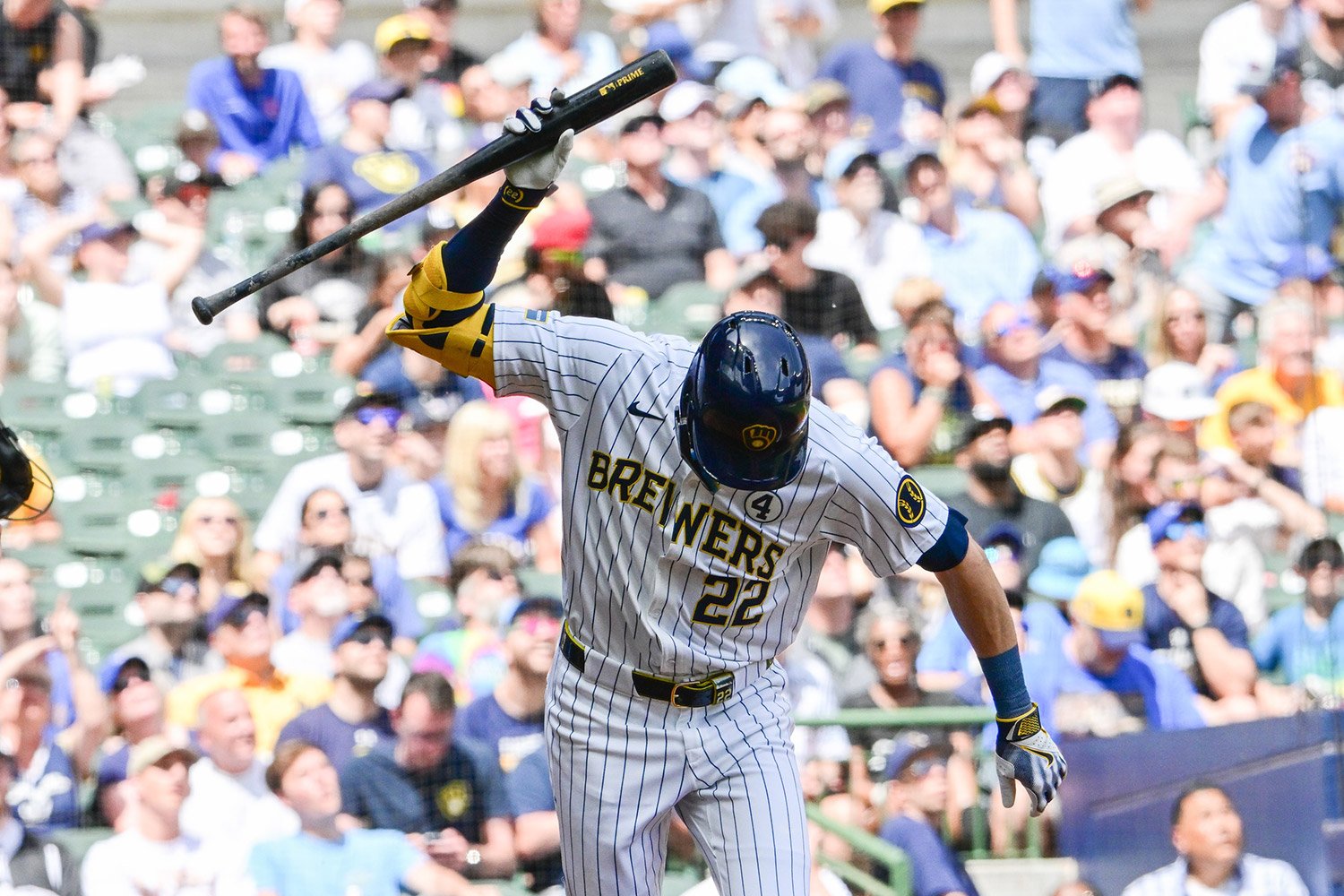 A .212/.287/.310 line with runners in scoring position will hamper any team’s run-scoring abilities, but the Brewers have one of the better overall offenses in baseball, which presents a bit of a conundrum: Is it just luck, or is there something else going on here? The fact is that although a bases-loaded situation that results in no runs is agonizing, it’s equally true that to load the bases requires three players to reach without moving further than one base at a time on average. Whether that be walks, hit-by-pitches, errors, or infield singles, there is an element to the situation where a powerful piece of contact opens up the game during any of those at-bats. The Brewers lead the league comfortably in batting average on infield contact, and that isn’t going to be enough to drive in a run in most situations. With the bases loaded as an example and the infield in, it can just as easily mandate an easy out at home plate or a double play if the direction isn’t absolutely perfect. The Top Of The Order It’s no coincidence that when the Brewers came out of the blocks red hot, both Christian Yelich and William Contreras were en fuego. Not just in hitting for average and getting on base, but in fact, both were hitting for real power. Contreras had ten extra-base hits in July, while Yelich, pre-injury, was slugging .750. In the last 30 days, it’s been a markedly different story, with Yelich having an ISO of just .097 that bests (somehow) William Contreras' .049 mark. For players that hit the ball as consistently hard as these two, it just isn’t the production they need. Remember, the Brewers lineup is constructed with many talents in finding ways to get on base, steal bases, and more, but without that power, it will be difficult to run away with games. As always with Yelich and Contreras, their power is negated by the regularity with which they pound the ball into the ground. Contreras’ average launch angle has actually been negative over the last 30 days, while Yelich's has been a measly 1.2°. On top of that, Yelich, even in poor spells, has hit the ball on average over 90 mph, but he’s sunk to the same average exit velocity as Andruw Monasterio over the last 30 days at just 89.3 mph. Given the lack of power production of late, it’s fair to say the back may still be hampering him from finding his timing at the plate. It’s always going to come in spurts for him when he’s healthy, and maybe the second half can kick him into gear, but it’s not something you can rely on. For Contreras, perhaps the All-Star break can’t come soon enough. The Brewers may have overworked their star catcher earlier in the season and allowed him to dictate his playing time too much, with the effect of an inconsistent Gary Sanchez and a weary Contreras that’s helping nobody by this point. In the second half, the Brewers would be wise to be more selective in how they allocate playing time for both of these men, and it may even be a good thing if Contreras doesn’t participate in the All-Star game. Our own Jack Stern recently dived a little deeper into his struggles here. What about that vaunted middle order? The Brewers went out of their way this offseason to add some power to their lineup, especially in the middle of the order. Willy Adames has exceeded expectations in some ways and is unlucky not to have four or five more home runs by this point. Past that, though, and some early blazes have diminished in the last month. Rhys Hoskins and Gary Sanchez may not hit their way on base often, and Hoskins may even be a candidate to get thrown out at first on a hit to the outfield with his post-surgery speed. That’s not their job, however. Instead, they’re supposed to be the big booming bats that carry the Brewers. Willy Adames is the only player in the last 30 days with an ISO of over .200, with the Brewers' next best being Jackson Chourio, Blake Perkins, and Brice Turang. If you expected Turang and Perkins to be in the top four at the beginning of the season, I'd likely be calling you out because of the power production of players like Hoskins and Sanchez. Rhys Hoskins has had a real rough patch since returning from the IL with an expected slash line of .179/.246/.250. He’s looked better contact-wise in recent games, and I think that’s what we have to remember about the likes of Sanchez, Hoskins, and even Adames. They’re going to be streaky hitters with strong performances in bunches that can carry an offense, and if two or three get hot at once, then it spells serious trouble. Even Jake Bauers has flashed power potential with the sheer volume of elevated balls to the pull side but has found himself in peaks and troughs throughout the season. The middle of the lineup is just simply not hot at this point, but it may not be a concern just yet. All three aforementioned players have shown throughout their careers how they can perform in these hot stretches. Should There Be A Growing Concern? In short, no. In longer terms, slugging is a streaky game, and sneaking a ball over the wall or hitting it aerially and hard might vary in result depending on hit locations (i.e., pull side vs. straight away center field), and home runs aren’t common enough to be routine per game. The Brewers are in a cold stretch, that's for sure, but it’s the first time their expected slugging has dipped below league average over a rolling seven-day period for some time this year: The dip in June is bound to rebound when Hoskins finds some timing again or even from a bunch of other power sources that have the potential to get hot in the second half. Jackson Chourio is looking more and more at home at the plate, Sanchez has shown himself to be clutch in big moments, Yelich and Contreras could rebound at any time, and Jake Bauers and even Joey Ortiz when he elevates the ball. There are a lot of areas in which the Brewers can find that power, so it’s not a point to call time on their offense this season. With how effectively they scrap their way on base and around the basepaths and sort of return to the power production of April. If that can happen in October, then the Brewers are truly an offense to fear, but until then, they'll need more from the middle of their lineup.
- 1 comment
-
- 1
-

-
- christian yelich
- william contreras
- (and 2 more)
-
Knoth struggled with his command more early on in April but since then his stuff has been incredible. I try not to judge ERA too much as the defense can be iffy in the lower leagues but really like the ride on that fastball and that curve so far. Hendersons command has been brilliant too, a Saturday full of big arms with big performances
-
Ask your favorite expert a question!
Jake McKibbin replied to Playing Catch's topic in Brewers Minor League Talk
Yoho's pitch mix is wide enough to potentially manage it, but I should clarify I was talking about Shane Smith's conversion from the bullpen to the rotation! Must've gotten lost in translation so apologies! I'll leave the rest to big Spence Also if you put in the "@" symbol and then the username that should do it (A drop down menu will pop up after you type the first letter of their name)
