



Jason Wang
-
Posts
955 -
Joined
-
Last visited
-
Days Won
1
Content Type
Profiles
Forums
Blogs
Events
News
2026 Milwaukee Brewers Top Prospects Ranking
Milwaukee Brewers Videos
2022 Milwaukee Brewers Draft Picks
Milwaukee Brewers Free Agent & Trade Rumors, Notes, & Tidbits
Guides & Resources
2023 Milwaukee Brewers Draft Picks
2024 Milwaukee Brewers Draft Picks
The Milwaukee Brewers Players Project
2025 Milwaukee Brewers Draft Pick Tracker
2026 Milwaukee Brewers Draft Tracker: Picks & Bonuses
Store
Downloads
Gallery
Everything posted by Jason Wang
-

Trevor Hoffman Reached His Most Impressive Milestone In a Brewers Uniform
Jason Wang posted an article in History
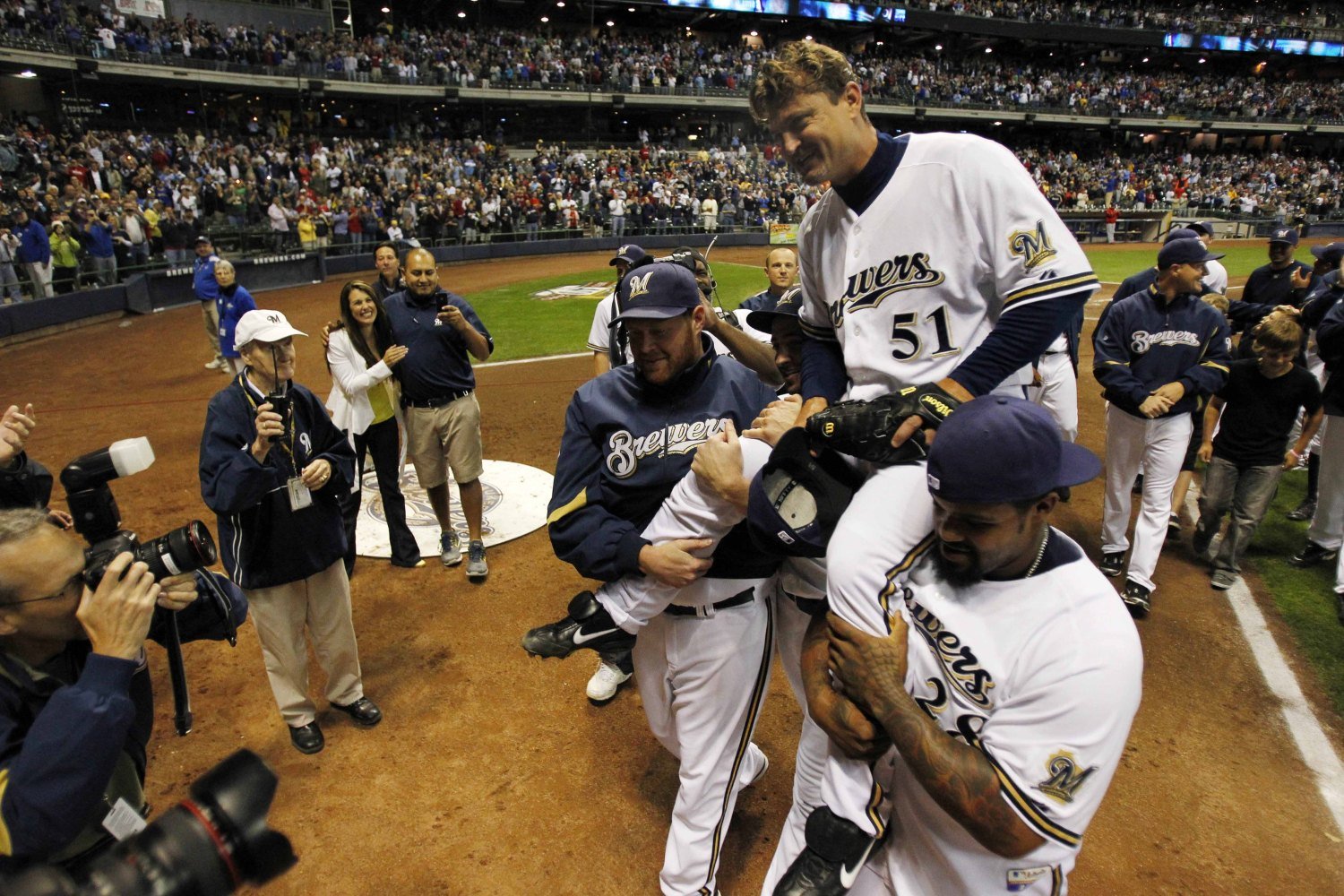 In 2025, the song Hells Bells by AC/DC might be best-known among your average person for being on the Deadpool & Wolverine soundtrack. To others, it’s one of two songs (the other being Enter Sandman by Metallica) that evoke memories of the greatest closers of all time. While Mariano Rivera undoubtedly holds the top spot, Trevor Hoffman is a pretty close second. At 601 career saves, he has 123 more than third-place Lee Smith. Kenley Jansen could take the third spot, but unless he pays several visits to the Fountain of Youth, Hoffman’s place on the statistical podium is safe and sound. After a brief debut with the Marlins, he spent the next 16 years coming out of the bullpen for the Padres where he established his stellar reputation and earned 552 of his saves. By 2009, he was a 41-year-old free agent watching the ownership of his beloved team cut the payroll in half to facilitate a sale. Despite wanting to retire a Friar, Hoffman had to move along. The club offered him just a $4-million contract before withdrawing their offer, forcing him to test the waters elsewhere. Instead, he signed a one-year, $6-million contract with the Brewers. The 2008 campaign had been a down year by his standards, resulting in a 3.77 ERA and just 30 saves. With little reason to believe that he could turn back the clock in his 40s, it was immensely surprising to watch him put up one of his best performances yet, recording a 1.83 ERA (second-lowest for a full season in his career) with 37 saves. He earned his seventh and final All-Star selection for his efforts and at the end of 2009, he signed another one-year, $8-million deal with a mutual option. At this point, Hoffman needed just nine more saves to reach the elusive 600 mark. His status as an all-time great reliever was already settled, and any further accomplishments were just gravy. In fact, since he had just thrown the ball as well as ever, the possibilities seemed endless for a man seemingly unaffected by the march of time. Unfortunately, reality is often disappointing. He struggled immensely in 2010, posting a 5.89 ERA and -0.9 rWAR, the worst single-season numbers he had ever put up. After the first two months, he had accumulated just five saves. Still four saves away from 600, Ken Macha, the manager at the time, decided to move Hoffman to lower-leverage relief innings to try and get his mechanics back on track. After he spent June and July avoiding save situations, he returned to his natural habitat in August. He still struggled but managed to acquire three more saves, bringing him to 599. With just a month of regular season left to play, it really seemed like a dice-toss as to whether he’d be able to drag himself across the finish line. He entered September with a 6.23 ERA and a FIP of 5.40, numbers that would’ve led anyone else to being removed from the roster entirely—let alone taking the ball in save situations. But Trevor Hoffman isn’t anyone else. Furthermore, the Brewers weren’t even close to a playoff spot, so why not aim for history instead? On Sept. 7, he finally got the chance he had been waiting for, entering the game against the Cardinals while up 4-2. Facing the bottom of the St. Louis lineup, he did what he had done best for the past 18 years: dice up major-league hitters. To put a cherry on top, he earned another save against the Mets in his last-ever major-league game, bringing him to a nice prime number in 601. Brewer Fanatic readers know better than most that baseball is a game of statistical obsession. Whether it’s swing adaptability metrics or some nuanced defensive figure made up by some computer program, fans love numbers. Players are no different, and many often chase round-number milestones even if it’s probably not conducive to team success. The most recent example of this was Adam Wainwright’s painstaking chase of his 200th win in his final big-league season, which saw him limp to the end with a 7.40 ERA over 21 starts. With Hoffman, his competitive nature and dogged determination to reach some arbitrary threshold may not have been the best for his overall career numbers, but it gave fans something to cheer for, and it demonstrated one of the subtle aspects of his greatness: that improbable consistency and longevity. He may forever be remembered as a Padre, but his crowning achievement came as a Brewer.
 -
Cool to see a few Mariners greats on here. He had insane aura as well. When Ichiro threw out Terrence Long at third base, he was asked how he did it and he said: ''The ball was hit right to me. Why did he run when I was going to throw him out?'' So many great quotes and moments from an inspiration pioneer and personal hero. My favorite A-Rod rumor is that he had a painting of himself as a centaur. The best part is, because he lies so often, his denial of the fact is meaningless and there's a possibility that it is in fact true. Something that also hampers the King is how bad his team was. The Mariners during his career were so laughably inept that he only just narrowly escaped his perfect game with a 1-0 victory. It's why we never got to see him in the postseason and personally, I think his sheer workload probably shortened his career which, in turn, also hurts his HoF case. He's a great guy who has never taken the game too seriously and I've actually had the chance to meet him. I asked him about throwing the first pitch in the WBC quarterfinal game between the US and his native Venezuela and the way I would describe him is just cool. I hope the voters focus more on his prime and less on his relative lack of longevity/counting stats and I just hope he gets what he deserves.
-
i think we really need to consider that the cubs lost myles masterbonie this offseason which is a big loss so i think cubs fans need to be worried since the brewers now have both nectar cortes and grant wolfram. also jared koenig changed his number which i think will make him best pitcher of all time next season
- 10 replies
-
- 1
-

-
- matt shaw
- jacob misiorowski
- (and 5 more)
-
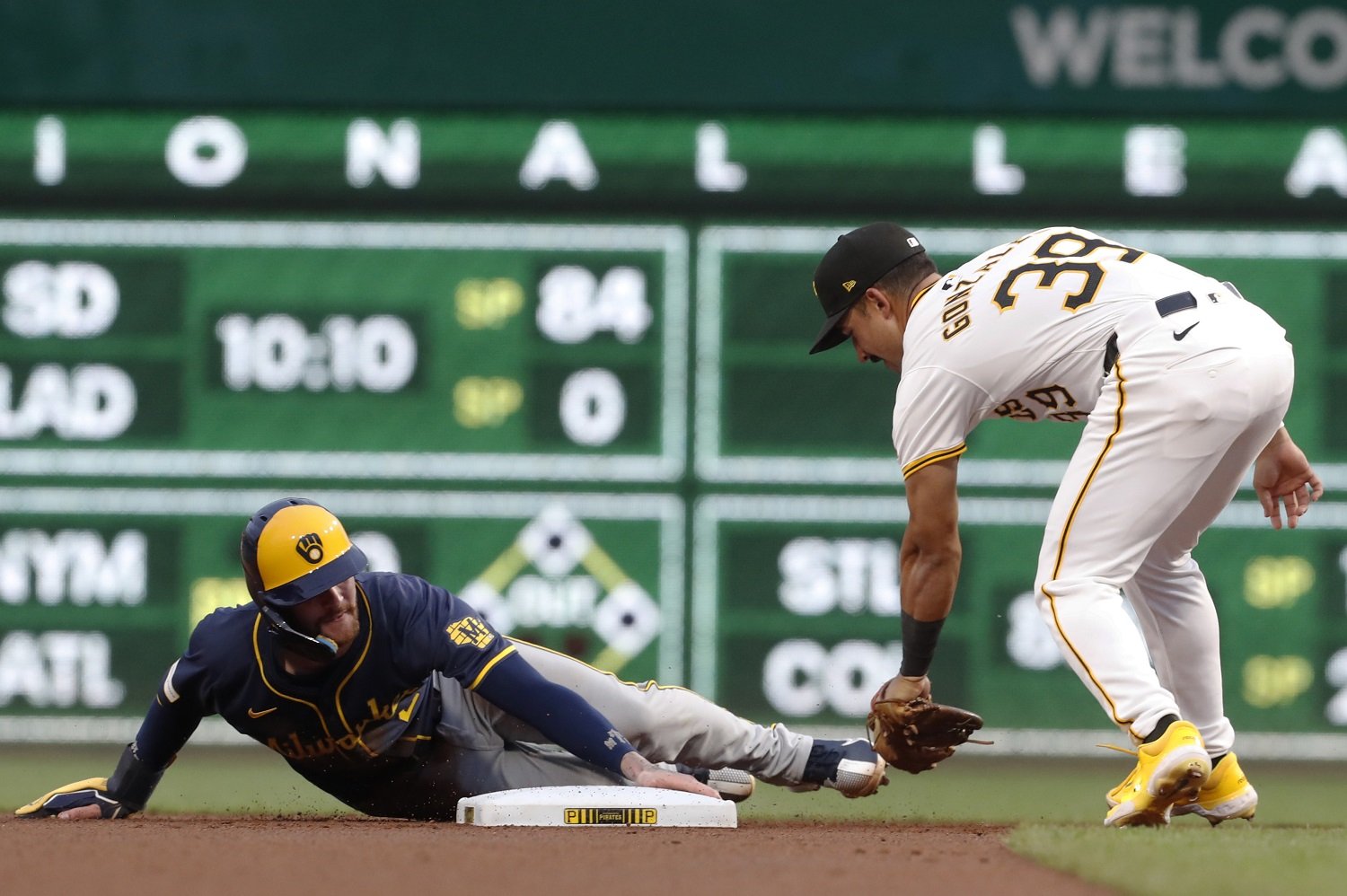 Prior to the 2023 season, MLB instituted several rules to make stealing bases easier, in an attempt to make the game more action-packed and appealing to Gen-Z viewers with a TikTok attention span (it's me, I'm the Gen-Z viewer). The league is still far from finding the next Rickey Henderson, but this has allowed players like Shohei Ohtani and Ronald Acuña Jr. to add immense value through their speed and aggressiveness. The Brewers themselves have Brice Turang, who has accumulated 88 stolen bases over the past two years. Given their financial limitations, Milwaukee probably won’t sign a free agent of high-profile batting or defensive value, but there are two options whose ability to capitalize on this re-emphasized aspect of the game may make them hidden gems. Tommy Pham is a journeyman who has been on seven different teams in the past three years. It’s not really his fault, as he was traded several times and even made it to the World Series with the Diamondbacks in 2023. He’s an 11-year big-league veteran, and despite his offensive and defensive numbers gradually regressing with age, he’s still making the most out of the tools he has left. He isn’t blazingly fast and only stole seven bases in 2024, but when looking at the Lead Distance Gained leaderboards, he’s still pretty good for a 36-year old. Over the past two seasons, Pham gained an average of 14.5 feet on his steal attempts between a pitcher’s start of delivery and his release, getting terrific jumps. But what does this really measure? A quick peek at Baseball Savant shows that the leaders in this category predominantly generate below-average stolen base value. This is because, like every statistic in baseball, it only tells one part of the story. For example, Jorge Soler has an even better average Lead Distance Gained over the past two years than Pham (at 18.4 feet), but his Net Bases Gained when it comes to stolen bases is -13 despite never being caught stealing. The likely story is that these players will only seize the opportunity in the rare event that they get great leads and clear paths to steal. This is often done when the cost of creating an out is low (someone is getting blown out), which gives them a much lower sample size of lead distance data. The best example of this anomalous statistical profile is Elías Díaz, who leads the pack with an outstanding Lead Distance Gained of 40.8 feet. However, a closer look shows that it's the result of one attempt that happened in a dominant win against the White Sox in 2023, so I'm not sure if it really supports the case that he’s the greatest base stealer of our time. Unlike Soler and Díaz, Pham is aggressive, attempting steals at a 1.6% clip when he gets a chance. This opens the door to creating outs more frequently but also results in more bases gained, making him a net-positive contributor on the basepaths despite his average speed. A more refined version of Pham is Whit Merrifield. He had his struggles at the plate and in the infield last year, but he found some success pilfering bags, accumulating 17 of them in total. (Fun fact: he had two more stolen bases than RBIs, a rare feat.) He shares Pham’s penchant for getting a great lead while the pitcher is trying to do his job, also posting a Lead Distance Gained of 14.5 feet, but he is even more aggressive and successful. He attempted stolen bases at a 2.8% rate and has a Net Bases Gained figure of 13, on par with the quick youth of today’s game like Johan Rojas and Zach Neto. Both Pham and Merrifield have their fair share of weaknesses, and it wouldn’t make sense to have both of them on a roster as talented as the Brewers’. However, picking one of these free agents to help share the subtle nuances of aggressive baserunning with the young, speedy core could be a meaningful way to upgrade the roster in a non-obvious (and, most importantly, affordable) way. Just think about what Jackson Chourio, Blake Perkins, Garrett Mitchell, and Turang could do if they were given the green light to live out their kleptomaniac desires. It’s not usually what one might be considering when thinking of free-agent acquisitions, but getting one of these two guys could just be the “steal” of the offseason.
 -
With baserunning coach Quintin Berry gone, a veteran voice who has shown an on-field nous for pilfering pillows. Image courtesy of © Charles LeClaire-Imagn Images With baserunning coach Quintin Berry gone, a veteran voice who has shown an on-field nous for pilfering pillows. Prior to the 2023 season, MLB instituted several rules to make stealing bases easier, in an attempt to make the game more action-packed and appealing to Gen-Z viewers with a TikTok attention span (it's me, I'm the Gen-Z viewer). The league is still far from finding the next Rickey Henderson, but this has allowed players like Shohei Ohtani and Ronald Acuña Jr. to add immense value through their speed and aggressiveness. The Brewers themselves have Brice Turang, who has accumulated 88 stolen bases over the past two years. Given their financial limitations, Milwaukee probably won’t sign a free agent of high-profile batting or defensive value, but there are two options whose ability to capitalize on this re-emphasized aspect of the game may make them hidden gems. Tommy Pham is a journeyman who has been on seven different teams in the past three years. It’s not really his fault, as he was traded several times and even made it to the World Series with the Diamondbacks in 2023. He’s an 11-year big-league veteran, and despite his offensive and defensive numbers gradually regressing with age, he’s still making the most out of the tools he has left. He isn’t blazingly fast and only stole seven bases in 2024, but when looking at the Lead Distance Gained leaderboards, he’s still pretty good for a 36-year old. Over the past two seasons, Pham gained an average of 14.5 feet on his steal attempts between a pitcher’s start of delivery and his release, getting terrific jumps. But what does this really measure? A quick peek at Baseball Savant shows that the leaders in this category predominantly generate below-average stolen base value. This is because, like every statistic in baseball, it only tells one part of the story. For example, Jorge Soler has an even better average Lead Distance Gained over the past two years than Pham (at 18.4 feet), but his Net Bases Gained when it comes to stolen bases is -13 despite never being caught stealing. The likely story is that these players will only seize the opportunity in the rare event that they get great leads and clear paths to steal. This is often done when the cost of creating an out is low (someone is getting blown out), which gives them a much lower sample size of lead distance data. The best example of this anomalous statistical profile is Elías Díaz, who leads the pack with an outstanding Lead Distance Gained of 40.8 feet. However, a closer look shows that it's the result of one attempt that happened in a dominant win against the White Sox in 2023, so I'm not sure if it really supports the case that he’s the greatest base stealer of our time. Unlike Soler and Díaz, Pham is aggressive, attempting steals at a 1.6% clip when he gets a chance. This opens the door to creating outs more frequently but also results in more bases gained, making him a net-positive contributor on the basepaths despite his average speed. A more refined version of Pham is Whit Merrifield. He had his struggles at the plate and in the infield last year, but he found some success pilfering bags, accumulating 17 of them in total. (Fun fact: he had two more stolen bases than RBIs, a rare feat.) He shares Pham’s penchant for getting a great lead while the pitcher is trying to do his job, also posting a Lead Distance Gained of 14.5 feet, but he is even more aggressive and successful. He attempted stolen bases at a 2.8% rate and has a Net Bases Gained figure of 13, on par with the quick youth of today’s game like Johan Rojas and Zach Neto. Both Pham and Merrifield have their fair share of weaknesses, and it wouldn’t make sense to have both of them on a roster as talented as the Brewers’. However, picking one of these free agents to help share the subtle nuances of aggressive baserunning with the young, speedy core could be a meaningful way to upgrade the roster in a non-obvious (and, most importantly, affordable) way. Just think about what Jackson Chourio, Blake Perkins, Garrett Mitchell, and Turang could do if they were given the green light to live out their kleptomaniac desires. It’s not usually what one might be considering when thinking of free-agent acquisitions, but getting one of these two guys could just be the “steal” of the offseason. View full article
-
How Can Free Agent Wade Miley Become A Brewer One More Time?
Jason Wang posted an article in Brewers
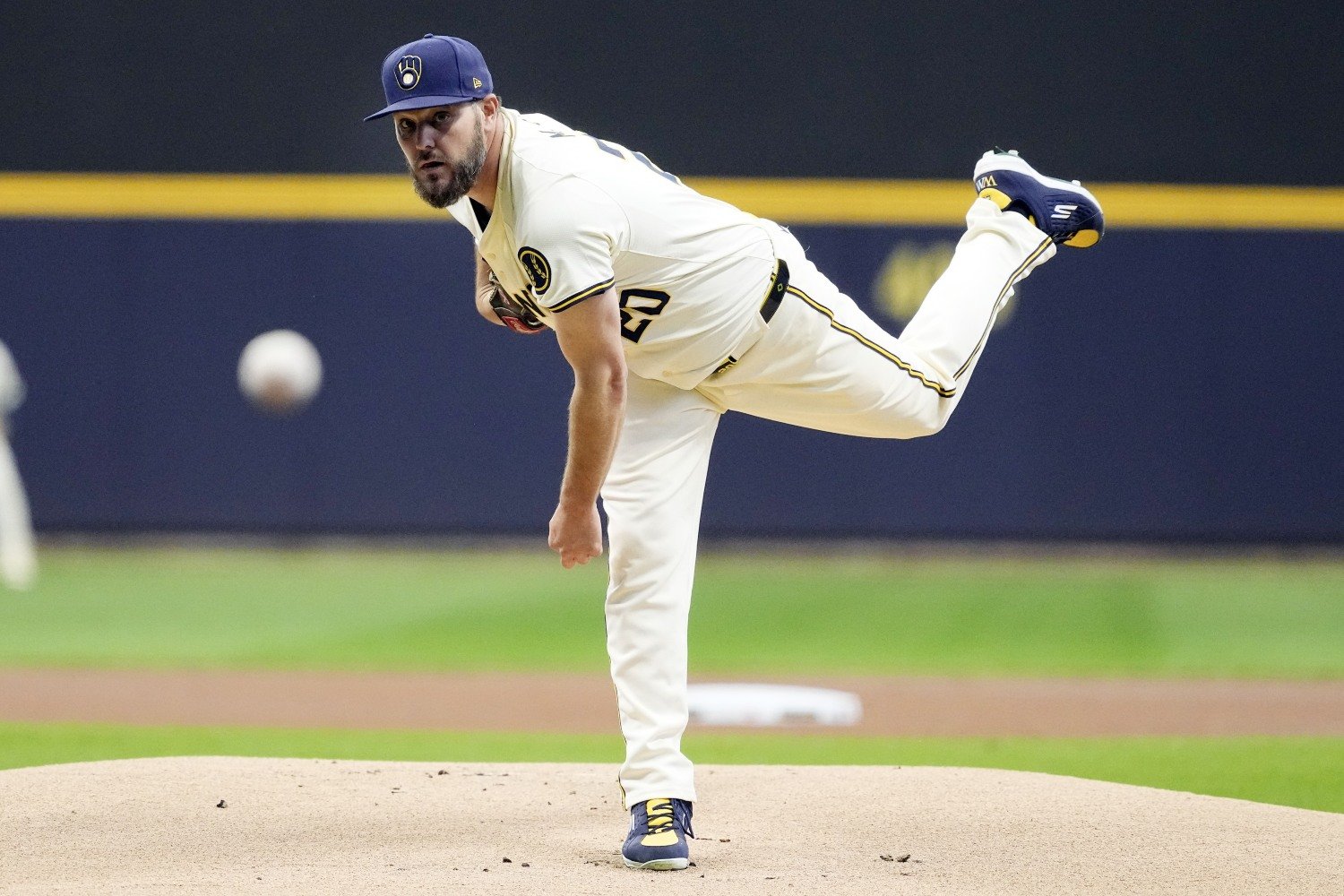 Wade Miley has been a big-league journeyman. Over the 14 years he has spent in the majors, he has been on eight different teams. His longest stint was with the Diamondbacks, who picked him in the first round of the 2008 MLB Draft, but since leaving Arizona in 2015, he’s never managed to set down roots. The organization with which he has spent the second-most time is actually the Milwaukee Brewers. Sadly, his two stints with the club were both marred by injuries. He signed a minor-league deal with the Crew in 2018, and as quickly as he was called up, he hit the 60-day injured list with an oblique strain. After returning to action in July, he went on to post a 2.57 ERA over 80 ⅔ innings. More importantly, he made four postseason starts, with outstanding results. After bouncing around the league for a few years, Miley returned to Milwaukee in 2023 on another one-year deal and put up excellent numbers again, pitching to a 3.14 ERA over 120 ⅓ innings. His K/9 rate of just 5.9 was the lowest for a single season with more than 90 innings pitched, but who cares about the details? He still missed time in 2023, due to a strain of his serratus posterior, an uncommon baseball injury that affects a group of back muscles. His poor injury luck only got worse in 2024, as he was limited to just seven innings before undergoing Tommy John surgery to address left elbow inflammation. Now it’s 2025. Miley's option was declined; he's been relegated to free agency for the offseason. Despite the recurring health issues, he expressed his burning desire to return to professional baseball in a phone interview with Curt Hogg of the Milwaukee Journal Sentinel. More importantly, he’s got his sights set on one team, specifically. But if he does come back to the Brewers, how would that realistically work? Is there any way that the team could spare a roster spot for him and have him suit up for the fourth year? Like a diamond purchased at your local mall kiosk, Miley has many flaws. He has never thrown particularly hard, relative to other big leaguers. His cutter sits in the high 80s, and his four-seam fastball just barely gets across the 90-mph mark on average. We’ve already talked about his recurring injury problems (one more trip to the 60-day IL and he’ll have enough stamps on his card for a free drink from Starbucks). Even when he’s healthy, he’s often limited to shorter outings and has thrown more than 125 innings just once in the past five seasons. But no one sticks around the bigs for 14 years without a few tricks up their sleeve. Without the firepower of the Gen-Z pitchers in today’s league, he makes his bones by minimizing hard contact. If we take a closer look at his 2023, we can see that his strikeout (16.1%) and whiff (19.1%) rates were in the bottom decile of qualified pitchers. However, his hard-hit rate (31.3%) and average exit velocity (87.3 mph) were excellent. In fact, Miley has never had an average EV greater than 90 mph in any season since 2015 (when Statcast was first introduced). When paired with the Crew's elite defense, he has the potential to outperform expectations every time he takes the mound. So what we have is a pitcher who can’t throw hard, can’t throw very many pitches, can’t miss bats, and can’t punch guys out. Maybe that ultimately disqualifies him from the rotation. But what about a bullpen role? The Brewers have had success in the past with deploying long relievers, something rarely seen in today’s game, and the last man to fill that spot was Bryse Wilson. Now that he’s gone, it wouldn’t be totally out of the question for Miley to fill that now-vacant spot. In fact, the club already picked up someone in the Rule 5 Draft who profiles similarly. It's a tough situation, though, because one of the challenges of being a reliever is the unpredictability of the schedule—which can disproportionately affect anyone already vulnerable to certain injuries. Miley probably needs the routine of being part of a rotation, but his days of taking the ball every five days and delivering five-plus innings at the major-league level are over. His days of pitching in the big leagues at all might also be done, but there’s a slim chance we’ll see him again. There aren’t many teams that would take the risk of signing him and seeing what he's still capable of, but Milwaukee could be the perfect place for this pitching nomad to settle down and finish with some stability. It would have to be a minor-league deal, to give the team more roster flexibility for the balance of the offseason and the first part of spring training, but an incentive-laden deal that still gives Miley a chance to earn a few million dollars if things pan out would make sense on both sides.
 -
For the 38-year old southpaw, it ain’t over until it’s over. Image courtesy of © Jeff Hanisch-Imagn Images For the 38-year old southpaw, it ain’t over until it’s over. Wade Miley has been a big-league journeyman. Over the 14 years he has spent in the majors, he has been on eight different teams. His longest stint was with the Diamondbacks, who picked him in the first round of the 2008 MLB Draft, but since leaving Arizona in 2015, he’s never managed to set down roots. The organization with which he has spent the second-most time is actually the Milwaukee Brewers. Sadly, his two stints with the club were both marred by injuries. He signed a minor-league deal with the Crew in 2018, and as quickly as he was called up, he hit the 60-day injured list with an oblique strain. After returning to action in July, he went on to post a 2.57 ERA over 80 ⅔ innings. More importantly, he made four postseason starts, with outstanding results. After bouncing around the league for a few years, Miley returned to Milwaukee in 2023 on another one-year deal and put up excellent numbers again, pitching to a 3.14 ERA over 120 ⅓ innings. His K/9 rate of just 5.9 was the lowest for a single season with more than 90 innings pitched, but who cares about the details? He still missed time in 2023, due to a strain of his serratus posterior, an uncommon baseball injury that affects a group of back muscles. His poor injury luck only got worse in 2024, as he was limited to just seven innings before undergoing Tommy John surgery to address left elbow inflammation. Now it’s 2025. Miley's option was declined; he's been relegated to free agency for the offseason. Despite the recurring health issues, he expressed his burning desire to return to professional baseball in a phone interview with Curt Hogg of the Milwaukee Journal Sentinel. More importantly, he’s got his sights set on one team, specifically. But if he does come back to the Brewers, how would that realistically work? Is there any way that the team could spare a roster spot for him and have him suit up for the fourth year? Like a diamond purchased at your local mall kiosk, Miley has many flaws. He has never thrown particularly hard, relative to other big leaguers. His cutter sits in the high 80s, and his four-seam fastball just barely gets across the 90-mph mark on average. We’ve already talked about his recurring injury problems (one more trip to the 60-day IL and he’ll have enough stamps on his card for a free drink from Starbucks). Even when he’s healthy, he’s often limited to shorter outings and has thrown more than 125 innings just once in the past five seasons. But no one sticks around the bigs for 14 years without a few tricks up their sleeve. Without the firepower of the Gen-Z pitchers in today’s league, he makes his bones by minimizing hard contact. If we take a closer look at his 2023, we can see that his strikeout (16.1%) and whiff (19.1%) rates were in the bottom decile of qualified pitchers. However, his hard-hit rate (31.3%) and average exit velocity (87.3 mph) were excellent. In fact, Miley has never had an average EV greater than 90 mph in any season since 2015 (when Statcast was first introduced). When paired with the Crew's elite defense, he has the potential to outperform expectations every time he takes the mound. So what we have is a pitcher who can’t throw hard, can’t throw very many pitches, can’t miss bats, and can’t punch guys out. Maybe that ultimately disqualifies him from the rotation. But what about a bullpen role? The Brewers have had success in the past with deploying long relievers, something rarely seen in today’s game, and the last man to fill that spot was Bryse Wilson. Now that he’s gone, it wouldn’t be totally out of the question for Miley to fill that now-vacant spot. In fact, the club already picked up someone in the Rule 5 Draft who profiles similarly. It's a tough situation, though, because one of the challenges of being a reliever is the unpredictability of the schedule—which can disproportionately affect anyone already vulnerable to certain injuries. Miley probably needs the routine of being part of a rotation, but his days of taking the ball every five days and delivering five-plus innings at the major-league level are over. His days of pitching in the big leagues at all might also be done, but there’s a slim chance we’ll see him again. There aren’t many teams that would take the risk of signing him and seeing what he's still capable of, but Milwaukee could be the perfect place for this pitching nomad to settle down and finish with some stability. It would have to be a minor-league deal, to give the team more roster flexibility for the balance of the offseason and the first part of spring training, but an incentive-laden deal that still gives Miley a chance to earn a few million dollars if things pan out would make sense on both sides. View full article
-
We’re sliding into the new year by wrapping up our review of the top articles from 2024. Image courtesy of © Vincent Carchietta-Imagn Images We’re sliding into the new year by wrapping up our review of the top articles from 2024. #5: Let's Take A Peek At The 2025 Milwaukee Brewers: What Will The Roster Look Like? Matt Breen August 18th With six more weeks left in the season, Matt Breen was already looking ahead to the future. He made several predictions about how the front office would steer the offseason and whether it would be reasonable to expect any major changes. For the most part, many of his predictions ended up coming true but when it comes to the Brewers, one can simply posit that they will "be kinda cheap" and be right most of the time. There are still a few more months before Opening Day comes around so there’s time for Breen to be proven wrong (and I'm sure most fans are still holding out hope), but so far he has read the organization like a book. #4: An Underperforming Rhys Hoskins All But Ensures He’ll Be A Milwaukee Brewer in 2025 Matt Breen September 11th After 517 plate appearances, Milwaukee fans knew that the Rhys Hoskins they had seen in 2024 was not the one they had hoped for when he was originally signed as the team's marquee free agent of the offseason. It was the worst year of his career in nearly every metric and led to him being slightly below a replacement-level player. To make matters worse, the structure of his contract included a player option heading into 2025 meaning that fans may be in for more of the same lackluster on-field performance. There’s a chance he turns it around but his expectations have fallen considerably from where they were when he joined the team. #3: Brewers' Opening Day Roster Starts Taking Shape After Latest Round of Cuts Jack Stern March 19th As spring training drew to a close, the Brewers slowly but surely started to finalize their big league roster. Several players were optioned to Triple-A Nashville while others were reassigned to minor league camp. Around this time, Pat Murphy also decided on the Opening Day starter and a big decision was made regarding where Jackson Chourio would begin his year. There was still some uncertainty about which infielders would get the lion’s share of starts for the Brewers at certain positions and many of the players that were sent down to the minors ultimately ended up as major contributors to the major league squad but it was a good preview of what was to come in 2024. #2: Brewers Clearing House: Colin Rea Put On Waivers, Owen Miller Traded, Wade Miley & Gary Sanchez Options Declined Jason Wang November 2 Goodbyes are never easy, especially when so many of them happen at once. After the conclusion of the World Series, Milwaukee quickly got to work cleaning out their closet, cutting ties with some of the lower performers to clear roster space for future talent. Given the importance of these moves, it made sense that Brewer Fanatic’s brightest, tallest, and most eloquent writer of all time was given the responsibility of covering this topic. On the bright side, there’s a chance that some goodbyes may actually end up being more akin to “see you laters.” Wade Miley has expressed interest in signing a minor league deal with the Brewers in lieu of retirement and I still hold out hope that Colin Rea will be back in some capacity. He has been an effective arm at the back of the rotation over the past two years and although he may not have been worth the $5.5 million club option he originally had, who’s to say he won’t be able to agree on a new deal with the organization? It may be a pipe dream but life without dreaming is a life without meaning. #1: Projecting the Brewers' 2024 Opening Day Roster, v 2.0 Matthew Trueblood February 9th In December 2023, Matt Trueblood decided to try and predict what the Opening Day roster would look like three months in advance. Conveniently, Milwaukee went on to make three major trades after this original set of forecasts, sending Corbin Burnes, Tyrone Taylor, and Adrian Houser to new homes. This threw enough of a wrench in things for Matt to write a whole new article rather than sneakily edit the original piece while no one was looking. Little did he know just how many freak injuries the team would have to deal with, completely altering the state of the starting rotation and even shaking up the bullpen following Devin Williams being placed on the IL before the start of the major league season. Still, if you want to learn a little more about setting a lineup so you can finally beat your friend Dave in next year’s Fantasy Baseball league, give the piece a read. View full article
-
Top 25 Most-Viewed Brewer Fanatic Articles of 2024 (Part 5: 1-5)
Jason Wang posted an article in Brewers
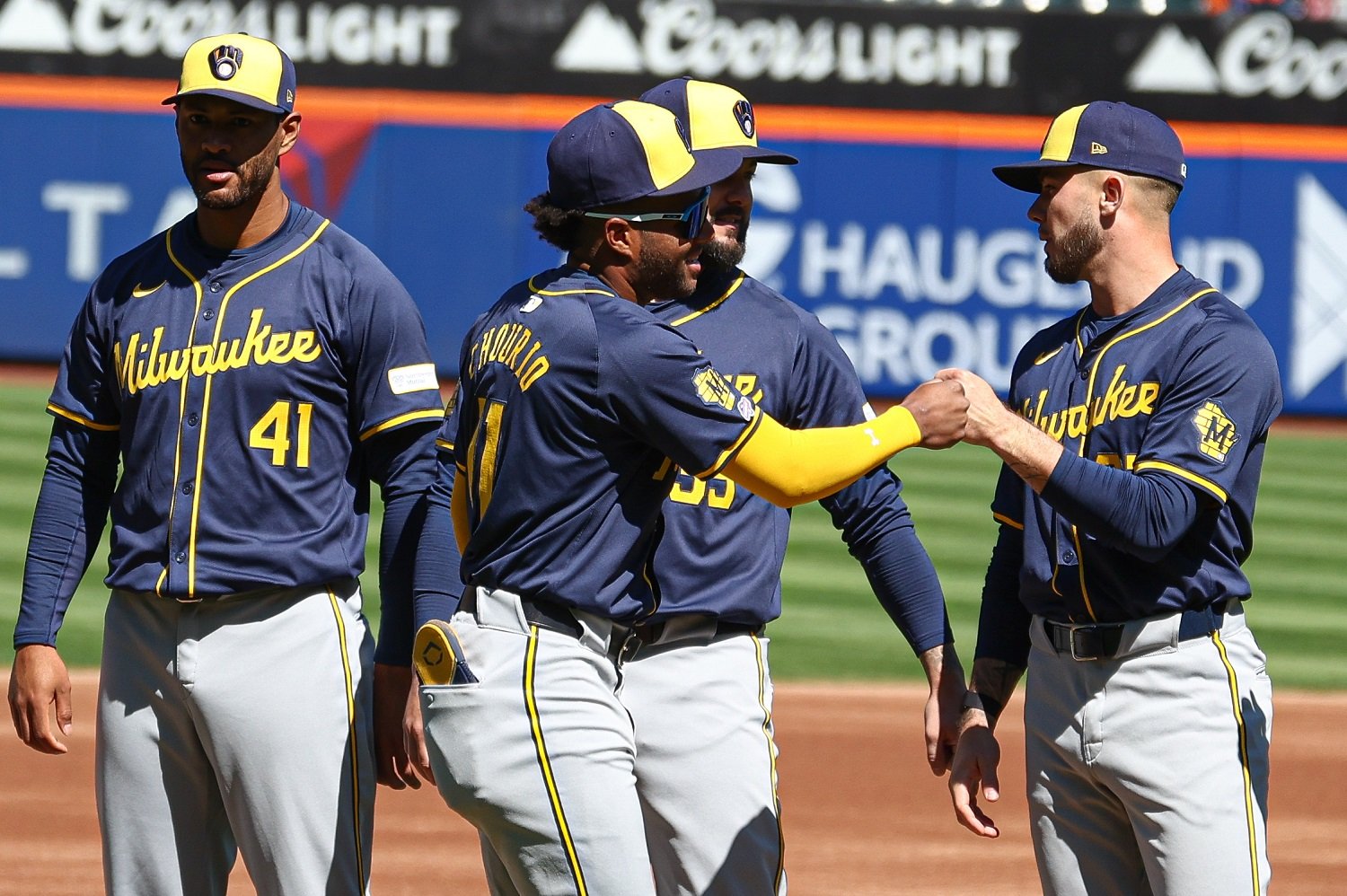 #5: Let's Take A Peek At The 2025 Milwaukee Brewers: What Will The Roster Look Like? Matt Breen August 18th With six more weeks left in the season, Matt Breen was already looking ahead to the future. He made several predictions about how the front office would steer the offseason and whether it would be reasonable to expect any major changes. For the most part, many of his predictions ended up coming true but when it comes to the Brewers, one can simply posit that they will "be kinda cheap" and be right most of the time. There are still a few more months before Opening Day comes around so there’s time for Breen to be proven wrong (and I'm sure most fans are still holding out hope), but so far he has read the organization like a book. #4: An Underperforming Rhys Hoskins All But Ensures He’ll Be A Milwaukee Brewer in 2025 Matt Breen September 11th After 517 plate appearances, Milwaukee fans knew that the Rhys Hoskins they had seen in 2024 was not the one they had hoped for when he was originally signed as the team's marquee free agent of the offseason. It was the worst year of his career in nearly every metric and led to him being slightly below a replacement-level player. To make matters worse, the structure of his contract included a player option heading into 2025 meaning that fans may be in for more of the same lackluster on-field performance. There’s a chance he turns it around but his expectations have fallen considerably from where they were when he joined the team. #3: Brewers' Opening Day Roster Starts Taking Shape After Latest Round of Cuts Jack Stern March 19th As spring training drew to a close, the Brewers slowly but surely started to finalize their big league roster. Several players were optioned to Triple-A Nashville while others were reassigned to minor league camp. Around this time, Pat Murphy also decided on the Opening Day starter and a big decision was made regarding where Jackson Chourio would begin his year. There was still some uncertainty about which infielders would get the lion’s share of starts for the Brewers at certain positions and many of the players that were sent down to the minors ultimately ended up as major contributors to the major league squad but it was a good preview of what was to come in 2024. #2: Brewers Clearing House: Colin Rea Put On Waivers, Owen Miller Traded, Wade Miley & Gary Sanchez Options Declined Jason Wang November 2 Goodbyes are never easy, especially when so many of them happen at once. After the conclusion of the World Series, Milwaukee quickly got to work cleaning out their closet, cutting ties with some of the lower performers to clear roster space for future talent. Given the importance of these moves, it made sense that Brewer Fanatic’s brightest, tallest, and most eloquent writer of all time was given the responsibility of covering this topic. On the bright side, there’s a chance that some goodbyes may actually end up being more akin to “see you laters.” Wade Miley has expressed interest in signing a minor league deal with the Brewers in lieu of retirement and I still hold out hope that Colin Rea will be back in some capacity. He has been an effective arm at the back of the rotation over the past two years and although he may not have been worth the $5.5 million club option he originally had, who’s to say he won’t be able to agree on a new deal with the organization? It may be a pipe dream but life without dreaming is a life without meaning. #1: Projecting the Brewers' 2024 Opening Day Roster, v 2.0 Matthew Trueblood February 9th In December 2023, Matt Trueblood decided to try and predict what the Opening Day roster would look like three months in advance. Conveniently, Milwaukee went on to make three major trades after this original set of forecasts, sending Corbin Burnes, Tyrone Taylor, and Adrian Houser to new homes. This threw enough of a wrench in things for Matt to write a whole new article rather than sneakily edit the original piece while no one was looking. Little did he know just how many freak injuries the team would have to deal with, completely altering the state of the starting rotation and even shaking up the bullpen following Devin Williams being placed on the IL before the start of the major league season. Still, if you want to learn a little more about setting a lineup so you can finally beat your friend Dave in next year’s Fantasy Baseball league, give the piece a read.
 -
Top 25 Most-Viewed Brewer Fanatic Articles of 2024 (Part 4: 6-10)
Jason Wang posted an article in Brewers
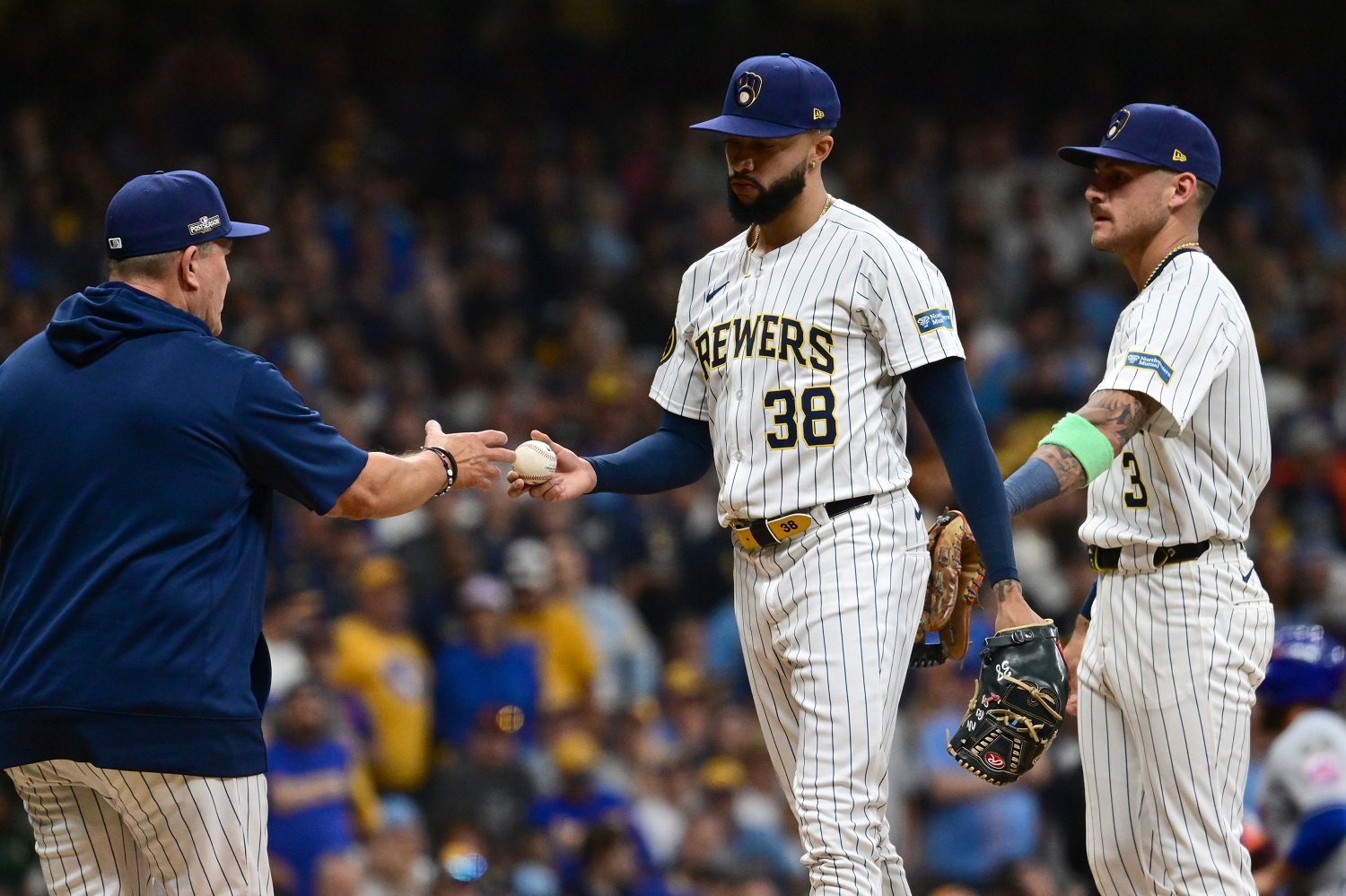 #10: Hear Me Out: The Brewers Should Sign Rowdy Tellez for the Last Game of the Season Davy Andrews September 27th In a caretaker-exclusive piece, Davy Andrews made a compelling argument to bring back Rowdy Tellez after he was unceremoniously designated for assignment by the Pirates. This wasn’t your usual sabermetric analysis driven by nerdy numbers like xwOBA and wRAA. If it had been, it would’ve made Davy’s job a little harder as Tellez had a tough 2024 and was below replacement level. Instead, it took a more human approach and talked about Tellez coming up just four plate appearances short of cashing in on a $200,000 bonus outlined in his contract. Despite Pittsburgh denying that his early release was to save them a few dollars, it all seemed a little too fishy for that to be true. Could Tellez have saved the Brewers from yet another first-round postseason exit? You’ll have to read to find out. #9: The Brewers' Starting Rotation, in the Thoughts and Words of Pat Murphy Matthew Trueblood March 4th Ah yes, early March. Before any of the freak injuries and 60-day IL stints, there was a lot of hope placed on a Brewers’ rotation that had neither Corbin Burnes nor Brandon Woodruff for the first time in years. Wade Miley was already teetering on injury by this point but other players like Joe Ross, DL Hall, Jakob Junis, and Robert Gasser were bursting with potential. Pretty much every name listed in the article eventually saw some meaningful action in the big leagues even if many of their seasons were cut short by health issues. If you want a glimpse into how the complex mind of a baseball veteran with 30 years of coaching under his belt thinks about setting up his pitching staff, this is the article for you. #8: Devin Williams May Have Thrown His Last Pitch For The Milwaukee Brewers Jake McKibbin October 7th Despite being on easy street for the whole season, winning the division, and securing their spot in the playoffs, the Brewers once again fell short when it mattered most. In one of the biggest moments of his career thus far, Devin Williams folded under the pressure, conceding four earned runs and blowing an elimination game against the Mets. It would end up being the last pitch he’d throw for the team before being traded to the Yankees this offseason. It was an unfortunate way to conclude his time in Milwaukee but like that one guy who wrote Cat in the Hat once said: don’t cry because it’s over, smile because it happened. #7: A New Opportunity Has Arisen for the Brewers to Get Better, and They Might Take It Matthew Trueblood March 12th Just as spring training was starting to kick off, there was a whirlwind of activity in San Francisco. The Giants had just signed Jorge Soler and Matt Chapman, leading to the release of J.D. Davis just before the team agreed to his new $6.9 million salary imposed in arbitration. Underhanded business tactics aside, Davis was a potential signing for the Brewers to address their third base position, which was still in flux at the time. Matt went on to suggest a potential move that would've sent Willy Adames to the Dodgers in exchange for a valuable pitching prospect, creating a sort of double move that would have been oh-so-characteristic of Milwaukee’s crafty front office. #6: What Do the Differences in Corbin Burnes With Orioles Tell Us About the Brewers? Matthew Trueblood June 7th After Mr. Burnes was sent packing to a city with slightly better seafood, his diet wasn’t the only thing that began to change. With a new team comes a new coaching staff and the difference in Corbin’s pitching since landing in Baltimore showed just how many different ways there are to utilize an arm as talented as his. He was ultimately effective but saw a decrease in his strikeout rate in exchange for more soft contact. To no one's surprise, Burnes had an outstanding year with the Orioles. He brought back a bounty of excellent prospects in return and in many ways, both teams involved got exactly what they were looking for, a rare win-win scenario in the world of baseball trades.
 -
We’re rounding third in our retrospective on the most popular Brewer Fanatic content of the year. Image courtesy of © Benny Sieu-Imagn Images We’re rounding third in our retrospective on the most popular Brewer Fanatic content of the year. #10: Hear Me Out: The Brewers Should Sign Rowdy Tellez for the Last Game of the Season Davy Andrews September 27th In a caretaker-exclusive piece, Davy Andrews made a compelling argument to bring back Rowdy Tellez after he was unceremoniously designated for assignment by the Pirates. This wasn’t your usual sabermetric analysis driven by nerdy numbers like xwOBA and wRAA. If it had been, it would’ve made Davy’s job a little harder as Tellez had a tough 2024 and was below replacement level. Instead, it took a more human approach and talked about Tellez coming up just four plate appearances short of cashing in on a $200,000 bonus outlined in his contract. Despite Pittsburgh denying that his early release was to save them a few dollars, it all seemed a little too fishy for that to be true. Could Tellez have saved the Brewers from yet another first-round postseason exit? You’ll have to read to find out. #9: The Brewers' Starting Rotation, in the Thoughts and Words of Pat Murphy Matthew Trueblood March 4th Ah yes, early March. Before any of the freak injuries and 60-day IL stints, there was a lot of hope placed on a Brewers’ rotation that had neither Corbin Burnes nor Brandon Woodruff for the first time in years. Wade Miley was already teetering on injury by this point but other players like Joe Ross, DL Hall, Jakob Junis, and Robert Gasser were bursting with potential. Pretty much every name listed in the article eventually saw some meaningful action in the big leagues even if many of their seasons were cut short by health issues. If you want a glimpse into how the complex mind of a baseball veteran with 30 years of coaching under his belt thinks about setting up his pitching staff, this is the article for you. #8: Devin Williams May Have Thrown His Last Pitch For The Milwaukee Brewers Jake McKibbin October 7th Despite being on easy street for the whole season, winning the division, and securing their spot in the playoffs, the Brewers once again fell short when it mattered most. In one of the biggest moments of his career thus far, Devin Williams folded under the pressure, conceding four earned runs and blowing an elimination game against the Mets. It would end up being the last pitch he’d throw for the team before being traded to the Yankees this offseason. It was an unfortunate way to conclude his time in Milwaukee but like that one guy who wrote Cat in the Hat once said: don’t cry because it’s over, smile because it happened. #7: A New Opportunity Has Arisen for the Brewers to Get Better, and They Might Take It Matthew Trueblood March 12th Just as spring training was starting to kick off, there was a whirlwind of activity in San Francisco. The Giants had just signed Jorge Soler and Matt Chapman, leading to the release of J.D. Davis just before the team agreed to his new $6.9 million salary imposed in arbitration. Underhanded business tactics aside, Davis was a potential signing for the Brewers to address their third base position, which was still in flux at the time. Matt went on to suggest a potential move that would've sent Willy Adames to the Dodgers in exchange for a valuable pitching prospect, creating a sort of double move that would have been oh-so-characteristic of Milwaukee’s crafty front office. #6: What Do the Differences in Corbin Burnes With Orioles Tell Us About the Brewers? Matthew Trueblood June 7th After Mr. Burnes was sent packing to a city with slightly better seafood, his diet wasn’t the only thing that began to change. With a new team comes a new coaching staff and the difference in Corbin’s pitching since landing in Baltimore showed just how many different ways there are to utilize an arm as talented as his. He was ultimately effective but saw a decrease in his strikeout rate in exchange for more soft contact. To no one's surprise, Burnes had an outstanding year with the Orioles. He brought back a bounty of excellent prospects in return and in many ways, both teams involved got exactly what they were looking for, a rare win-win scenario in the world of baseball trades. View full article
-
Top 25 Most-Viewed Brewer Fanatic Articles of 2024 (Part 3: 11-15)
Jason Wang posted an article in Brewers
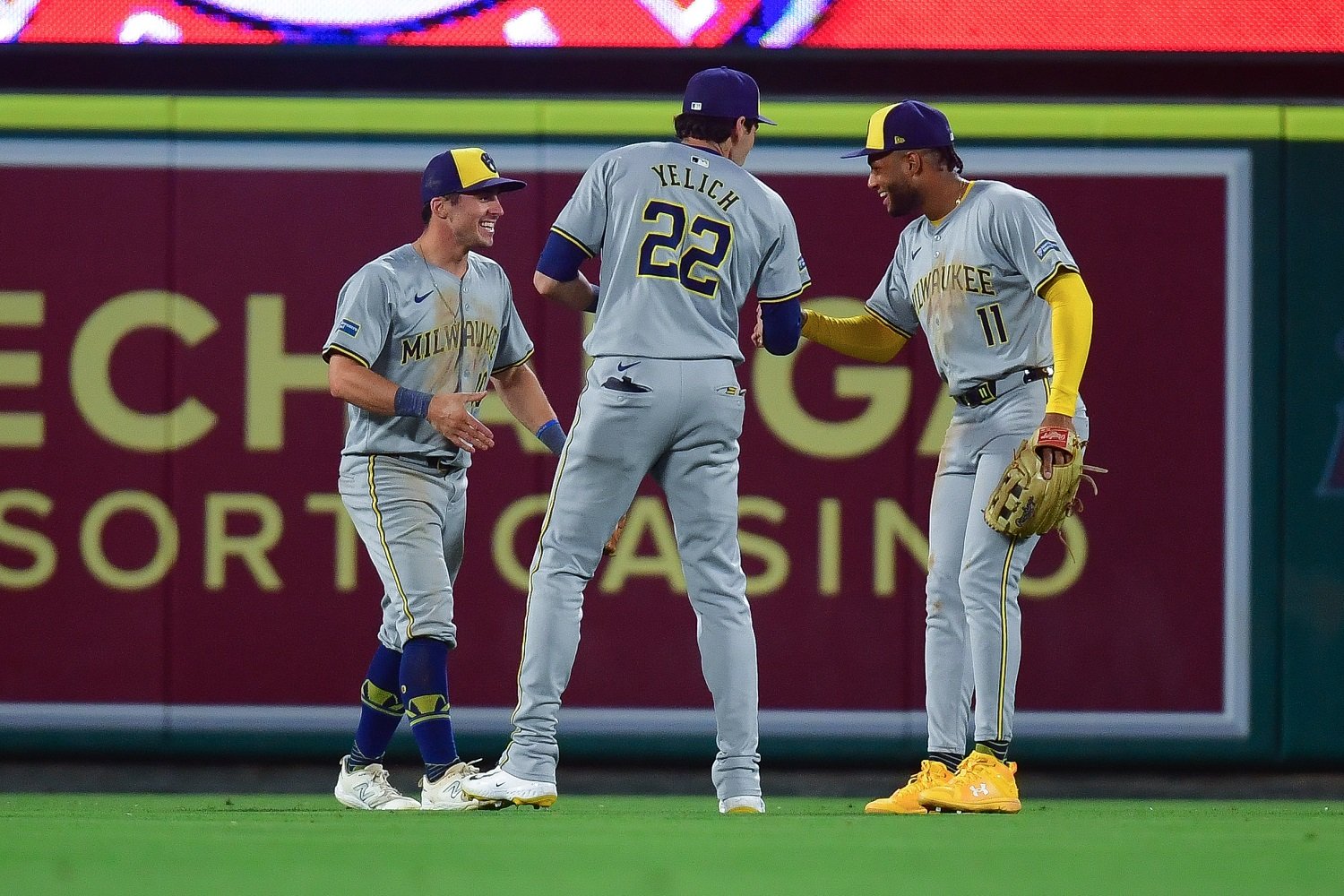 #15: Did You See the Ken Rosenthal Report About a Willy Adames Trade? Good. Now: Forget It. Matthew Trueblood June 13th Ken Rosenthal has been around baseball for a long time. In addition to being a field reporter, he’s also known for his fashionable bow ties and staggering stature. Despite years of involvement with the sport, even he is susceptible to the occasional suspect opinion. Around the 2024 trade deadline, he suggested that the Brewers trade Willy Adames with somewhat shaky logic, essentially suggesting that Milwaukee’s rotation wouldn’t be able to make it through the season without swapping him for a healthy starter. The Brewers actually made out okay, winning the NL Central once again by a margin of ten games and securing their sixth playoff berth in the past seven years. Rosenthal was absolutely correct in predicting that Adames would walk in free agency, but good ol’ Matt Trueblood had some good counterpoints to his idea that he would be moved any sooner than he had to. #14: 5 Last-Second Deals the Brewers Can Make Before Spring Training Ryan Pollak January 31st While the state of Wisconsin was still in the process of defrosting, Ryan Pollak just couldn’t wait for the stove to heat up and spent some time considering a handful of moves that could bolster the roster before the team even touched down in Arizona. There were quite a few questions surrounding third base at the beginning of the season as well as your usual pitching uncertainty and Pollak took it upon himself to do some personal scouting for the Brewers at their preferred price: free.99. While none of these deals ultimately came to fruition, it's interesting to look back on these players and think what could have happened if any of them actually had gone through. #13: Are Tyler Black and Joey Wiemer Pushing For Major-League Promotions? Jake McKibbin April 10th After just two weeks of major league baseball, Jake McKibbin was already looking at the minor leagues to assess who was on the cusp of making it to the next level. While Joey Wiemer had already used up all of his rookie eligibility, Tyler Black was yet to receive his first shot at the show and both players started the season in Triple-A Nashville. Black would end up making his debut at the end of April to unimpressive results but will likely get another chance in 2025 if he makes the necessary adjustments to handle big league pitching. Wiemer would return to Milwaukee around the same time as Black but would later be traded to the Reds in the deal that brought Frankie Montas to the Brewers. #12: The Curious Case of Brice Turang Kyle Ginsbach February 27th The only thing I love more than a Sunday Fun-Day Bundle at American Family Field is Brice Turang. The bundle is a close second (getting four tickets, hot dogs, sodas, and parking for $62 is a steal in this economy) but he has been on my radar since debuting in 2023, mostly because I loved saying “it’s Turang time.” Of course, before the season started, all fans knew about him was that his offense was on the same level as Tim Anderson (?) and he was by no means guaranteed to keep his spot on the big league roster. Kyle Ginsbach took a closer peek at exactly what he was struggling with and discussed what he needed to do to get back on track. Turang must have listened since he went to have a breakout year in 2024, collecting 4.7 rWAR and winning a Platinum Glove for his stellar defensive efforts. #11: Brewers Have a Positional Dilemma for Two Young Stars in the Outfield Matthew Trueblood January 30th The Brewers are blessed with two things: having the best logo in baseball and having incredible depth in the outfield. Before we got a full taste of exactly what phenom prospect Jackson Chourio would be able to accomplish at the highest level, Matthew Trueblood pondered the question of how best to utilize him and Sal Frelick alongside the team’s more veteran players. It’s a question that still remains slightly open as Milwaukee still has all of their top outfield talent from last year but we now have more information on what each player can do. Will that change how they’re set up in the future? We’ll just have to wait and see.
 -
We continue the countdown to the new year by counting down Brewer Fanatic’s own most popular content from 2024. Image courtesy of © Gary A. Vasquez-Imagn Images We continue the countdown to the new year by counting down Brewer Fanatic’s own most popular content from 2024. #15: Did You See the Ken Rosenthal Report About a Willy Adames Trade? Good. Now: Forget It. Matthew Trueblood June 13th Ken Rosenthal has been around baseball for a long time. In addition to being a field reporter, he’s also known for his fashionable bow ties and staggering stature. Despite years of involvement with the sport, even he is susceptible to the occasional suspect opinion. Around the 2024 trade deadline, he suggested that the Brewers trade Willy Adames with somewhat shaky logic, essentially suggesting that Milwaukee’s rotation wouldn’t be able to make it through the season without swapping him for a healthy starter. The Brewers actually made out okay, winning the NL Central once again by a margin of ten games and securing their sixth playoff berth in the past seven years. Rosenthal was absolutely correct in predicting that Adames would walk in free agency, but good ol’ Matt Trueblood had some good counterpoints to his idea that he would be moved any sooner than he had to. #14: 5 Last-Second Deals the Brewers Can Make Before Spring Training Ryan Pollak January 31st While the state of Wisconsin was still in the process of defrosting, Ryan Pollak just couldn’t wait for the stove to heat up and spent some time considering a handful of moves that could bolster the roster before the team even touched down in Arizona. There were quite a few questions surrounding third base at the beginning of the season as well as your usual pitching uncertainty and Pollak took it upon himself to do some personal scouting for the Brewers at their preferred price: free.99. While none of these deals ultimately came to fruition, it's interesting to look back on these players and think what could have happened if any of them actually had gone through. #13: Are Tyler Black and Joey Wiemer Pushing For Major-League Promotions? Jake McKibbin April 10th After just two weeks of major league baseball, Jake McKibbin was already looking at the minor leagues to assess who was on the cusp of making it to the next level. While Joey Wiemer had already used up all of his rookie eligibility, Tyler Black was yet to receive his first shot at the show and both players started the season in Triple-A Nashville. Black would end up making his debut at the end of April to unimpressive results but will likely get another chance in 2025 if he makes the necessary adjustments to handle big league pitching. Wiemer would return to Milwaukee around the same time as Black but would later be traded to the Reds in the deal that brought Frankie Montas to the Brewers. #12: The Curious Case of Brice Turang Kyle Ginsbach February 27th The only thing I love more than a Sunday Fun-Day Bundle at American Family Field is Brice Turang. The bundle is a close second (getting four tickets, hot dogs, sodas, and parking for $62 is a steal in this economy) but he has been on my radar since debuting in 2023, mostly because I loved saying “it’s Turang time.” Of course, before the season started, all fans knew about him was that his offense was on the same level as Tim Anderson (?) and he was by no means guaranteed to keep his spot on the big league roster. Kyle Ginsbach took a closer peek at exactly what he was struggling with and discussed what he needed to do to get back on track. Turang must have listened since he went to have a breakout year in 2024, collecting 4.7 rWAR and winning a Platinum Glove for his stellar defensive efforts. #11: Brewers Have a Positional Dilemma for Two Young Stars in the Outfield Matthew Trueblood January 30th The Brewers are blessed with two things: having the best logo in baseball and having incredible depth in the outfield. Before we got a full taste of exactly what phenom prospect Jackson Chourio would be able to accomplish at the highest level, Matthew Trueblood pondered the question of how best to utilize him and Sal Frelick alongside the team’s more veteran players. It’s a question that still remains slightly open as Milwaukee still has all of their top outfield talent from last year but we now have more information on what each player can do. Will that change how they’re set up in the future? We’ll just have to wait and see. View full article
-
i too remember being in second grade
-
What Does A Pitch’s Run Value Actually Mean?
Jason Wang replied to Jason Wang's topic in Brewer Fanatic Front Page News
2022 was the first year I started watching baseball and I remember seeing a clip of Nestor Cortes doing his little Johnny Cueto-esque delivery and I was like "wow this guy must be really good." Then I found out he only threw in the low-90s and I was like "wow this guy must be really bad." Then I found out he had a 2.44 ERA and had 22 RV on his 4S (no idea what that meant back then but figured it was good) and got super confused. I'm really excited to see what the Brewers do with Cortes to maximize the effectiveness of his four-seam/cutter. It won't be the same as Burnes as you mentioned above since he just doesn't have the juice but they'll definitely do something. -
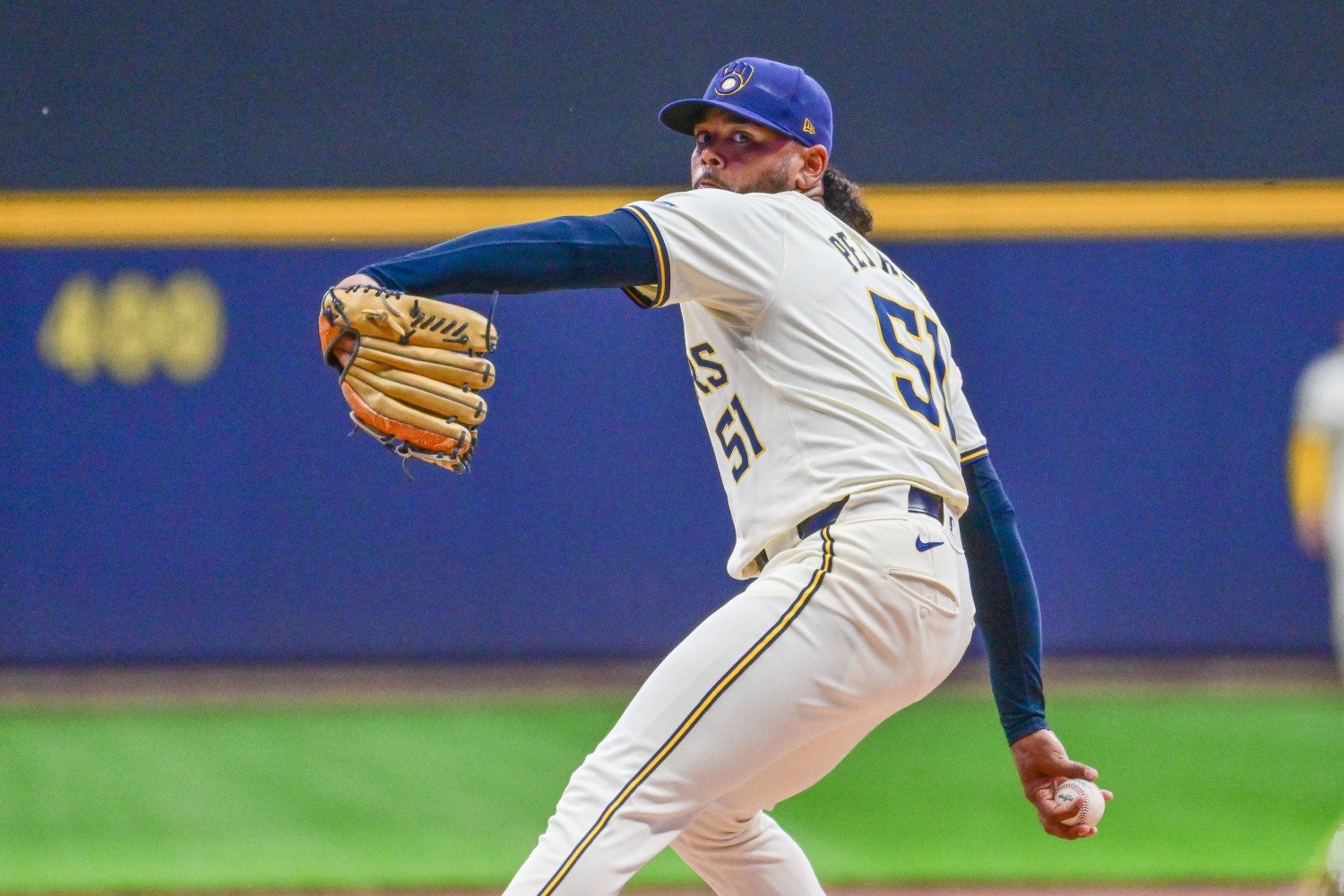 Baseball Savant is full of funny colors and statistics, and the website gets a little more crowded every year as more and more niche information becomes publicly accessible. Some information is self-explanatory, while other information is anything but. For example, when we look at Freddy Peralta’s page, we see this: On the left, you see his high-level numbers from the past few seasons, a good overview of his recent performance. These figures can easily be found on other sites like Baseball Reference and FanGraphs, so it’s not typically what Savant is used for, but it still provides a necessary baseline for analyzing the rest of his profile. On the right is a relatively new addition that illustrates the movement and usage for every weapon in his arsenal, along with his arm angle. Interpreting it can take a little getting used to, but once you’re familiar with general ranges for pitch movement, you can more easily spot which fastballs have more ride, which sliders are more like sweepers, and so on and so forth. In the middle are the sliders that all armchair GMs (myself included) know and love. They contain percentile numbers for key qualities like average exit velocity, strikeout rate, and ground-ball rate. This gives users a normalized view of how a particular metric fits in with the rest of the league. While the bottom section covers more granular details, the top section labeled Value contains four sliders, each measuring something called “run value.” It’s pretty easy to understand that more run value is “better,” but how is that even calculated—and is it really that simple? The website’s own definition of the metric does little to clear up the uncertainty, but it also links to an old blog post by Tom Tango, a pseudonym for a sabermetrician whose real name isn’t publicly known despite him having an outsized impact on the analytics community. In this post, he explains that run value is essentially the cumulative sum of every pitch’s value from the run expectancy matrix. These values from the run expectancy matrix can be interpreted as the average number of runs expected to score from a given base-out state. For hitters, it looks something like this (the matrix for pitchers is the same but inverted): Based on these broad-strokes descriptions, we have evidence to support our original conclusion that more run value is “better”—akin to other counting stats, like strikeouts. However, keen-eyed Savant users will notice some discrepancy between the run value of a specific pitch and its other numbers. Despite Peralta's slider having significantly less run value than his fastball, it has a lower batting average, slugging percentage, and wOBA while having better whiff and strikeout rates. How can both stories be true? It’s important to remember that while many numbers may seem related, they’re calculated very differently. A simple example of this is batting average and on-base percentage. One might assume both stats to have the same denominator, but they don’t, since there’s a slight difference between at-bats and plate appearances. In this case, batting average and slugging percentage, strikeout rate and wOBA only consider the plate appearances that end on that pitch. We want to know the value of each individual pitch, even if it isn’t the last one thrown in a given plate appearance, which is where run value comes in. What we do know is that when his sliders are good, they’re really good, often resulting in swings and misses, punchouts, or soft contact, but what about the other kind? The only way for Peralta’s slider to impact his run value negatively without also dragging down the other numbers listed above would be throwing a lot of balls. If you look at the run expectancy matrix again, you can see that getting into hitter-friendly counts like 2-0 and 3-0 increases the probability that a run will score that inning and thus adversely affects the metric for the pitcher. This makes sense, as getting behind in counts gives pitchers less wiggle room and results in more walks and hittable pitches. Consider this hypothetical possibility. Against the first batter of the season, Freddy Peralta throws three consecutive sliders, each resulting in a ball. Now down 3-0, he throws yet another slider that ends up as a groundout. Now let’s assume he repeats this several more times with a few walks mixed in, and you can see how he could have a perfect batting average of .000, while tanking the run value on his slider. Along with the other data, run value gives us a more complete understanding of a given pitch’s true effectiveness. This real-life example of Freddy Peralta’s slider is fairly accurate. It’s great when commanded well, but too often, it ends up as a waste pitch, reducing its overall contributions to his game. Part of this is the result of how much he toys with the shape of the pitch, and part of it is the simple difficulty of being a big-league pitcher. Either way, it’s a clear roadblock to him reaching the peak of his potential. With our new knowledge, we can attempt to ascertain what’s going on with the rest of his arsenal, as well. His fastball sometimes gets hit hard and isn’t missing as many bats as he may like, but it’s still getting him more strikes than anything else in the repertoire. His changeup gives him the most bang for his buck, as it combines the best qualities of both his fastball and his slider: infrequent waste pitches and strong results on balls in play. His usage ticked up a bit from 2023 to 2024, and we may see it even more frequently next year. Every statistic in baseball was created to answer some specific question. Unfortunately, the path to answer one question often opens up the door to two more, so never over-index on just one fact or figure. Instead, acknowledge that every number is incomplete and has its own strengths and weaknesses. Run value may seem like a way to quickly judge the effectiveness of a pitch, but it’s far more layered than that. It’s a useful tool on the ol’ sabermetric belt, but it shouldn’t be the only one you bring to work.
 -
You’ve probably seen the red and blue numbers on Baseball Savant before, but do you know what they entail? Image courtesy of © Benny Sieu-Imagn Images You’ve probably seen the red and blue numbers on Baseball Savant before, but do you know what they entail? Baseball Savant is full of funny colors and statistics, and the website gets a little more crowded every year as more and more niche information becomes publicly accessible. Some information is self-explanatory, while other information is anything but. For example, when we look at Freddy Peralta’s page, we see this: On the left, you see his high-level numbers from the past few seasons, a good overview of his recent performance. These figures can easily be found on other sites like Baseball Reference and FanGraphs, so it’s not typically what Savant is used for, but it still provides a necessary baseline for analyzing the rest of his profile. On the right is a relatively new addition that illustrates the movement and usage for every weapon in his arsenal, along with his arm angle. Interpreting it can take a little getting used to, but once you’re familiar with general ranges for pitch movement, you can more easily spot which fastballs have more ride, which sliders are more like sweepers, and so on and so forth. In the middle are the sliders that all armchair GMs (myself included) know and love. They contain percentile numbers for key qualities like average exit velocity, strikeout rate, and ground-ball rate. This gives users a normalized view of how a particular metric fits in with the rest of the league. While the bottom section covers more granular details, the top section labeled Value contains four sliders, each measuring something called “run value.” It’s pretty easy to understand that more run value is “better,” but how is that even calculated—and is it really that simple? The website’s own definition of the metric does little to clear up the uncertainty, but it also links to an old blog post by Tom Tango, a pseudonym for a sabermetrician whose real name isn’t publicly known despite him having an outsized impact on the analytics community. In this post, he explains that run value is essentially the cumulative sum of every pitch’s value from the run expectancy matrix. These values from the run expectancy matrix can be interpreted as the average number of runs expected to score from a given base-out state. For hitters, it looks something like this (the matrix for pitchers is the same but inverted): Based on these broad-strokes descriptions, we have evidence to support our original conclusion that more run value is “better”—akin to other counting stats, like strikeouts. However, keen-eyed Savant users will notice some discrepancy between the run value of a specific pitch and its other numbers. Despite Peralta's slider having significantly less run value than his fastball, it has a lower batting average, slugging percentage, and wOBA while having better whiff and strikeout rates. How can both stories be true? It’s important to remember that while many numbers may seem related, they’re calculated very differently. A simple example of this is batting average and on-base percentage. One might assume both stats to have the same denominator, but they don’t, since there’s a slight difference between at-bats and plate appearances. In this case, batting average and slugging percentage, strikeout rate and wOBA only consider the plate appearances that end on that pitch. We want to know the value of each individual pitch, even if it isn’t the last one thrown in a given plate appearance, which is where run value comes in. What we do know is that when his sliders are good, they’re really good, often resulting in swings and misses, punchouts, or soft contact, but what about the other kind? The only way for Peralta’s slider to impact his run value negatively without also dragging down the other numbers listed above would be throwing a lot of balls. If you look at the run expectancy matrix again, you can see that getting into hitter-friendly counts like 2-0 and 3-0 increases the probability that a run will score that inning and thus adversely affects the metric for the pitcher. This makes sense, as getting behind in counts gives pitchers less wiggle room and results in more walks and hittable pitches. Consider this hypothetical possibility. Against the first batter of the season, Freddy Peralta throws three consecutive sliders, each resulting in a ball. Now down 3-0, he throws yet another slider that ends up as a groundout. Now let’s assume he repeats this several more times with a few walks mixed in, and you can see how he could have a perfect batting average of .000, while tanking the run value on his slider. Along with the other data, run value gives us a more complete understanding of a given pitch’s true effectiveness. This real-life example of Freddy Peralta’s slider is fairly accurate. It’s great when commanded well, but too often, it ends up as a waste pitch, reducing its overall contributions to his game. Part of this is the result of how much he toys with the shape of the pitch, and part of it is the simple difficulty of being a big-league pitcher. Either way, it’s a clear roadblock to him reaching the peak of his potential. With our new knowledge, we can attempt to ascertain what’s going on with the rest of his arsenal, as well. His fastball sometimes gets hit hard and isn’t missing as many bats as he may like, but it’s still getting him more strikes than anything else in the repertoire. His changeup gives him the most bang for his buck, as it combines the best qualities of both his fastball and his slider: infrequent waste pitches and strong results on balls in play. His usage ticked up a bit from 2023 to 2024, and we may see it even more frequently next year. Every statistic in baseball was created to answer some specific question. Unfortunately, the path to answer one question often opens up the door to two more, so never over-index on just one fact or figure. Instead, acknowledge that every number is incomplete and has its own strengths and weaknesses. Run value may seem like a way to quickly judge the effectiveness of a pitch, but it’s far more layered than that. It’s a useful tool on the ol’ sabermetric belt, but it shouldn’t be the only one you bring to work. View full article
-
What Are Brewers' Remaining Offseason Needs?
Jason Wang replied to Jason Wang's topic in Brewer Fanatic Front Page News
I didn't name Peralta or Myers specifically because they kinda fell under the "keep doing what you're doing camp" in my eyes. Both solid arms that will do a lot of the heavy lifting/pitching next year! -
5'8 is colossal that's gotta be way above average height.
-
We Three Short Kings: A Retrospective on the Brewers' Best Tiny Talent
Jason Wang posted an article in History
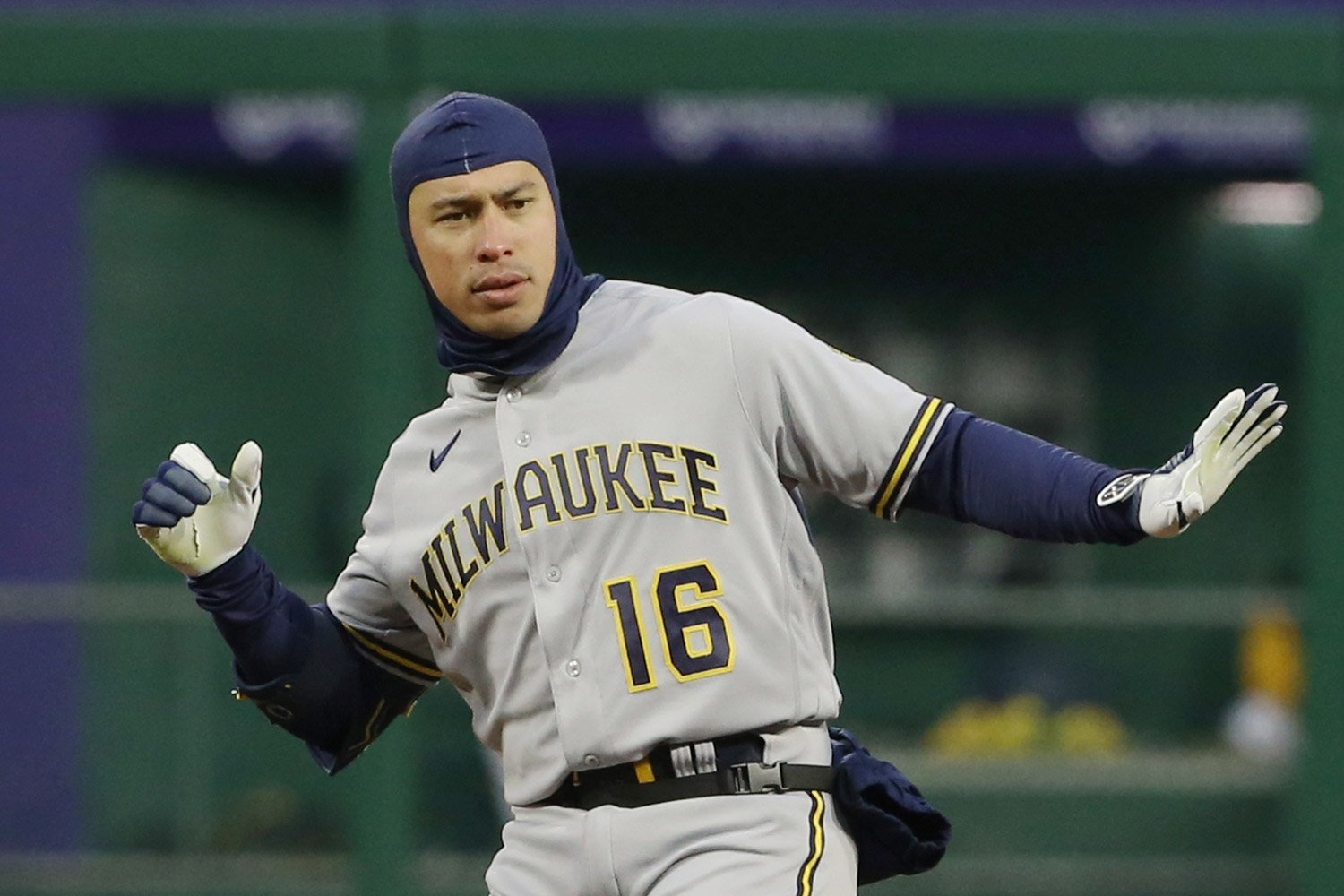 As someone who was once wrongfully accused of lying about being 5’6" when I should've said I was 5’5 ½", I know the pains of being on the shorter end of things. It’s hard to reach all of the really good candy on the top shelf at Piggly Wiggly, you can’t ride all of the rides at Tom Foolery's Adventure Park, and most importantly, it’s difficult to throw an effective 12-6 curveball given your low release point. However, unlike many sports like basketball and equestrian show jumping, where height is a key factor, baseball players can still be successful despite a more diminutive stature. This holiday season, I wanted to look back at three of the shortest players ever to don a Milwaukee Brewers uniform and talk about their big-league careers with small frames. LHP Danny Herrera (5’6", 165 pounds) Danny Herrera was a crafty lefty reliever whose entire baseball career screams an unlikely story. He was picked in the 45th round of the 2006 draft by the Texas Rangers and was the 1,345th selection overall. Being chosen that late is usually so irrelevant that MLB has cut the number of rounds to just 20 in recent years, so he started his professional career with a major uphill battle. If he had been born twenty years later, we would not have gotten the chance to see what Herrera brought to the table. After two years of great pitching in the Texas system, he made it to Double-A Frisco before being traded to the Reds as part of the deal that brought Josh Hamilton to Texas in 2008. He kept up the great work in Cincinnati’s farm system, posting a 2.78 ERA over 55 innings in Triple-A Louisville and was even called up, pitching in seven major league games to mixed results. Riding the momentum of his rapid ascension through the ranks, Herrera made the Reds Opening Day roster in 2009 and was a solid piece of their bullpen, posting a 3.06 ERA over 61 ⅔ innings. He was helped considerably by his defense, given his 3.99 FIP and WHIP of 1.41, but he made it work. In 2010 he had some issues, splitting time between the majors and Triple-A Louisville. However, he lowered his FIP to 3.77 despite his WHIP swelling to 1.61 and striking out just 5.5 hitters per nine innings. Before the 2011 season, Cincinnati placed him on waivers, and his storied Brewers career began. It lasted just two games and 1 ⅔ innings, but you know what they say, quality over quantity. Honestly, there wasn’t much quality either since he conceded four earned runs and was quickly optioned to Triple-A Nashville. However, he had an outstanding minor league season, pitching to a 1.48 ERA over 42 ⅔ innings. In September 2011, he was the player to be named later in the trade for Francisco Rodríguez and was packaged off to the Mets. Despite an admirable finish to the season, Herrera would never return to the big leagues after 2011, spending most of 2012 injured in Triple-A Buffalo and then released by the Mets in 2013. He would stick around for a few years to play in Mexico and independent baseball but ultimately hung up the cleats after 2016. Most relievers typically rely on a two-pitch arsenal that consists of a blazing fastball and a wicked secondary pitch. Because Herrera’s heater sat in the mid-80s, he needed a six-pitch arsenal just to get by. In addition to his four-seam fastball, he was also known to throw a sinker, cutter, curveball, changeup, and, most notably, a screwball with a velocity in the high 60s. Where Is He Now? After dicing up the league, he decided to turn to art and now spends his time producing incredible baseball-themed illustrations. MLB writer Michael Clair wrote a great piece on his current work in 2022. If you’re interested in taking a closer look at Herrera’s original work, check out his site. LHP Clayton Andrews (5’6", 160 pounds) After Babe Ruth and before Shohei Ohtani, there was Clayton Andrews. He became a two-way player after transferring from Cabrillo College to California State University, Long Beach. In 2018, he posted a 1.99 ERA over 99 ⅔ innings and a .759 OPS over 257 plate appearances. While he didn’t hit any home runs, he did accumulate six doubles and five triples, a clear sign of the hustle gene. He was initially drafted by the Dodgers in the 40th round of the 2017 draft but decided to wait another year, eventually being selected by the Brewers in the 17th round of the 2018 draft as the 515th overall pick. Like Herrera, he also found great success in the minor leagues, advancing to Triple-A Nashville in 2021, just his third year of professional baseball. He spent a few years recovering from Tommy John surgery, but by 2023, he was back at full strength, posting a 2.53 ERA over 57 innings in Triple-A Nashville. Unlike Herrera, Andrews throws absolute gas, at least for a pitcher of his size. Andrews sat in the mid-90s with his fastball and could occasionally touch 96 mph on a good day. Tread Athletics, a facility specializing in analytics-based pitching and hitting development, made a video in 2023 about exactly how Andrews reached this velocity. If you're interested, give it a watch. While Herrera struggled to strike out, Andrews averaged 12.2 K/9 over his six seasons in the minors. Unfortunately, his success never translated to the big leagues. In 2023, he appeared in four games with the Brewers and had disastrous results, conceding 11 hits and 10 earned runs in just 3 ⅓ innings. He still managed four strikeouts but gave up three home runs, which was not exactly a recipe for success. Before the 2024 season, he was traded to the Yankees, where he started to see some real regression. With the lower quality of pitching development in his new city, he had similar results in his lone major league appearance with the major league team but also had a 5.84 ERA over 24 ⅔ innings in Triple-A Scranton. After being designated for assignment, clearing waivers, and electing free agency, he signed a minor-league deal with the Giants. He was shelled in two appearances in rookie ball, spelling a likely end to his career in MLB. Where Is He Now? He spent the last few weeks of this past season pitching in Mexico and is now a free agent. Whether he’ll return to professional baseball or call it quits is unclear, but it will be an uphill battle for him. Given the increased importance placed on wicked velocity and movement, it’s grown increasingly difficult for pitchers who don’t have both qualities to make it in today’s game. Personally, I hope to see him again and dream of the day he records his first save, but that seems like more of a distant possibility with each passing day. 2B Kolten Wong (5'7", 185 pounds) Born and raised in Hawaii, he attended Kamehameha Schools, known for its strong athletics program and commitment to preserving the indigenous culture of Hawaii. He was a star in high school, batting .600 and getting chosen by the Twins in the 16th round of the 2008 draft, but he decided to attend the University of Hawaii instead. It ended up being the right choice since he was ultimately drafted in the first round by the Cardinals in 2011, being taken 22nd overall and becoming the organization’s #4-ranked prospect. After breezing through the minor leagues, he was a late call-up in 2013 and even made the postseason roster, appearing in the NLDS, NLCS, and even the World Series. His most famous moment in Cardinals history is probably coming in as a pinch runner in the ninth inning of Game 4 and being picked off by Koji Uehara to make the last out. Despite this early setback, he had a great career in St. Louis, placing third in NL Rookie of the Year voting in 2014, earning two Gold Gloves, and getting a few MVP votes in 2019, the best year of his career. Despite his success, his $12.5 million team option was declined in 2021, making him a free agent and allowing him to sign a two-year, $18 million deal with Milwaukee that included a club option in 2023. He kept up the strong momentum as a Brewer, averaging a 113 OPS+ and accumulating 6.4 rWAR from 2021-2022. He also hit 56 doubles, six triples, and 29 home runs. Three of those home runs came in a single game against the Reds in September 2022. Given his success with the team, his $10 million club option was exercised in 2023, but instead of retaining him, Milwaukee used their team control to trade him to Seattle in exchange for Abraham Toro and Jesse Winker. This was a terrible trade for all parties involved, as all three players performed way below expectations. Wong’s .468 OPS quickly led to him being benched, and he was designated for assignment in August before being released. He finished the year as a pinch-hitter for the Dodgers. At his best, Wong was a great hitter who compensated for a lack of pop with great bat-to-ball skills and a disciplined approach. His strikeout rate over his entire major-league career was just 16.0%, an excellent mark, especially in the modern game. He lacked the ability to hit home runs consistently but was good for 20+ doubles per season and would’ve likely benefited from the rule changes that made base stealing more accessible. Where Is He Now? In 2024, he signed minor-league deals with the Orioles and Diamondbacks, spending some time in Triple-A Reno before being released in late May. After the severity of his regression in 2023, it seems that he has struggled to return to the level of ball he played with the Brewers. At 34 years old and with just over 10 years of service time, Kolten Wong could retire today and still have a proud career. In addition to 22.0 rWAR, he ranks third all-time in hits, doubles, and runs scored among Hawaii natives behind Kurt Suzuki and Shane Victorino. We may have seen the last of Wong on the big league diamond, but his legacy as a short king and proud representative of his Hawaiian heritage will live on forever.
- 4 comments
-
- 2
-

-
- danny herrera
- clayton andrews
- (and 1 more)
-
It may be easy to look over some of the smaller players in team history, but that doesn’t diminish their unique qualities. Image courtesy of © Charles LeClaire-Imagn Images It may be easy to look over some of the smaller players in team history, but that doesn’t diminish their unique qualities. As someone who was once wrongfully accused of lying about being 5’6" when I should've said I was 5’5 ½", I know the pains of being on the shorter end of things. It’s hard to reach all of the really good candy on the top shelf at Piggly Wiggly, you can’t ride all of the rides at Tom Foolery's Adventure Park, and most importantly, it’s difficult to throw an effective 12-6 curveball given your low release point. However, unlike many sports like basketball and equestrian show jumping, where height is a key factor, baseball players can still be successful despite a more diminutive stature. This holiday season, I wanted to look back at three of the shortest players ever to don a Milwaukee Brewers uniform and talk about their big-league careers with small frames. LHP Danny Herrera (5’6", 165 pounds) Danny Herrera was a crafty lefty reliever whose entire baseball career screams an unlikely story. He was picked in the 45th round of the 2006 draft by the Texas Rangers and was the 1,345th selection overall. Being chosen that late is usually so irrelevant that MLB has cut the number of rounds to just 20 in recent years, so he started his professional career with a major uphill battle. If he had been born twenty years later, we would not have gotten the chance to see what Herrera brought to the table. After two years of great pitching in the Texas system, he made it to Double-A Frisco before being traded to the Reds as part of the deal that brought Josh Hamilton to Texas in 2008. He kept up the great work in Cincinnati’s farm system, posting a 2.78 ERA over 55 innings in Triple-A Louisville and was even called up, pitching in seven major league games to mixed results. Riding the momentum of his rapid ascension through the ranks, Herrera made the Reds Opening Day roster in 2009 and was a solid piece of their bullpen, posting a 3.06 ERA over 61 ⅔ innings. He was helped considerably by his defense, given his 3.99 FIP and WHIP of 1.41, but he made it work. In 2010 he had some issues, splitting time between the majors and Triple-A Louisville. However, he lowered his FIP to 3.77 despite his WHIP swelling to 1.61 and striking out just 5.5 hitters per nine innings. Before the 2011 season, Cincinnati placed him on waivers, and his storied Brewers career began. It lasted just two games and 1 ⅔ innings, but you know what they say, quality over quantity. Honestly, there wasn’t much quality either since he conceded four earned runs and was quickly optioned to Triple-A Nashville. However, he had an outstanding minor league season, pitching to a 1.48 ERA over 42 ⅔ innings. In September 2011, he was the player to be named later in the trade for Francisco Rodríguez and was packaged off to the Mets. Despite an admirable finish to the season, Herrera would never return to the big leagues after 2011, spending most of 2012 injured in Triple-A Buffalo and then released by the Mets in 2013. He would stick around for a few years to play in Mexico and independent baseball but ultimately hung up the cleats after 2016. Most relievers typically rely on a two-pitch arsenal that consists of a blazing fastball and a wicked secondary pitch. Because Herrera’s heater sat in the mid-80s, he needed a six-pitch arsenal just to get by. In addition to his four-seam fastball, he was also known to throw a sinker, cutter, curveball, changeup, and, most notably, a screwball with a velocity in the high 60s. Where Is He Now? After dicing up the league, he decided to turn to art and now spends his time producing incredible baseball-themed illustrations. MLB writer Michael Clair wrote a great piece on his current work in 2022. If you’re interested in taking a closer look at Herrera’s original work, check out his site. LHP Clayton Andrews (5’6", 160 pounds) After Babe Ruth and before Shohei Ohtani, there was Clayton Andrews. He became a two-way player after transferring from Cabrillo College to California State University, Long Beach. In 2018, he posted a 1.99 ERA over 99 ⅔ innings and a .759 OPS over 257 plate appearances. While he didn’t hit any home runs, he did accumulate six doubles and five triples, a clear sign of the hustle gene. He was initially drafted by the Dodgers in the 40th round of the 2017 draft but decided to wait another year, eventually being selected by the Brewers in the 17th round of the 2018 draft as the 515th overall pick. Like Herrera, he also found great success in the minor leagues, advancing to Triple-A Nashville in 2021, just his third year of professional baseball. He spent a few years recovering from Tommy John surgery, but by 2023, he was back at full strength, posting a 2.53 ERA over 57 innings in Triple-A Nashville. Unlike Herrera, Andrews throws absolute gas, at least for a pitcher of his size. Andrews sat in the mid-90s with his fastball and could occasionally touch 96 mph on a good day. Tread Athletics, a facility specializing in analytics-based pitching and hitting development, made a video in 2023 about exactly how Andrews reached this velocity. If you're interested, give it a watch. While Herrera struggled to strike out, Andrews averaged 12.2 K/9 over his six seasons in the minors. Unfortunately, his success never translated to the big leagues. In 2023, he appeared in four games with the Brewers and had disastrous results, conceding 11 hits and 10 earned runs in just 3 ⅓ innings. He still managed four strikeouts but gave up three home runs, which was not exactly a recipe for success. Before the 2024 season, he was traded to the Yankees, where he started to see some real regression. With the lower quality of pitching development in his new city, he had similar results in his lone major league appearance with the major league team but also had a 5.84 ERA over 24 ⅔ innings in Triple-A Scranton. After being designated for assignment, clearing waivers, and electing free agency, he signed a minor-league deal with the Giants. He was shelled in two appearances in rookie ball, spelling a likely end to his career in MLB. Where Is He Now? He spent the last few weeks of this past season pitching in Mexico and is now a free agent. Whether he’ll return to professional baseball or call it quits is unclear, but it will be an uphill battle for him. Given the increased importance placed on wicked velocity and movement, it’s grown increasingly difficult for pitchers who don’t have both qualities to make it in today’s game. Personally, I hope to see him again and dream of the day he records his first save, but that seems like more of a distant possibility with each passing day. 2B Kolten Wong (5'7", 185 pounds) Born and raised in Hawaii, he attended Kamehameha Schools, known for its strong athletics program and commitment to preserving the indigenous culture of Hawaii. He was a star in high school, batting .600 and getting chosen by the Twins in the 16th round of the 2008 draft, but he decided to attend the University of Hawaii instead. It ended up being the right choice since he was ultimately drafted in the first round by the Cardinals in 2011, being taken 22nd overall and becoming the organization’s #4-ranked prospect. After breezing through the minor leagues, he was a late call-up in 2013 and even made the postseason roster, appearing in the NLDS, NLCS, and even the World Series. His most famous moment in Cardinals history is probably coming in as a pinch runner in the ninth inning of Game 4 and being picked off by Koji Uehara to make the last out. Despite this early setback, he had a great career in St. Louis, placing third in NL Rookie of the Year voting in 2014, earning two Gold Gloves, and getting a few MVP votes in 2019, the best year of his career. Despite his success, his $12.5 million team option was declined in 2021, making him a free agent and allowing him to sign a two-year, $18 million deal with Milwaukee that included a club option in 2023. He kept up the strong momentum as a Brewer, averaging a 113 OPS+ and accumulating 6.4 rWAR from 2021-2022. He also hit 56 doubles, six triples, and 29 home runs. Three of those home runs came in a single game against the Reds in September 2022. Given his success with the team, his $10 million club option was exercised in 2023, but instead of retaining him, Milwaukee used their team control to trade him to Seattle in exchange for Abraham Toro and Jesse Winker. This was a terrible trade for all parties involved, as all three players performed way below expectations. Wong’s .468 OPS quickly led to him being benched, and he was designated for assignment in August before being released. He finished the year as a pinch-hitter for the Dodgers. At his best, Wong was a great hitter who compensated for a lack of pop with great bat-to-ball skills and a disciplined approach. His strikeout rate over his entire major-league career was just 16.0%, an excellent mark, especially in the modern game. He lacked the ability to hit home runs consistently but was good for 20+ doubles per season and would’ve likely benefited from the rule changes that made base stealing more accessible. Where Is He Now? In 2024, he signed minor-league deals with the Orioles and Diamondbacks, spending some time in Triple-A Reno before being released in late May. After the severity of his regression in 2023, it seems that he has struggled to return to the level of ball he played with the Brewers. At 34 years old and with just over 10 years of service time, Kolten Wong could retire today and still have a proud career. In addition to 22.0 rWAR, he ranks third all-time in hits, doubles, and runs scored among Hawaii natives behind Kurt Suzuki and Shane Victorino. We may have seen the last of Wong on the big league diamond, but his legacy as a short king and proud representative of his Hawaiian heritage will live on forever. View full article
-
What Are Brewers' Remaining Offseason Needs?
Jason Wang replied to Jason Wang's topic in Brewer Fanatic Front Page News
yeah but does garrett mitchell have a case to monitor the humidity levels of his bats
-
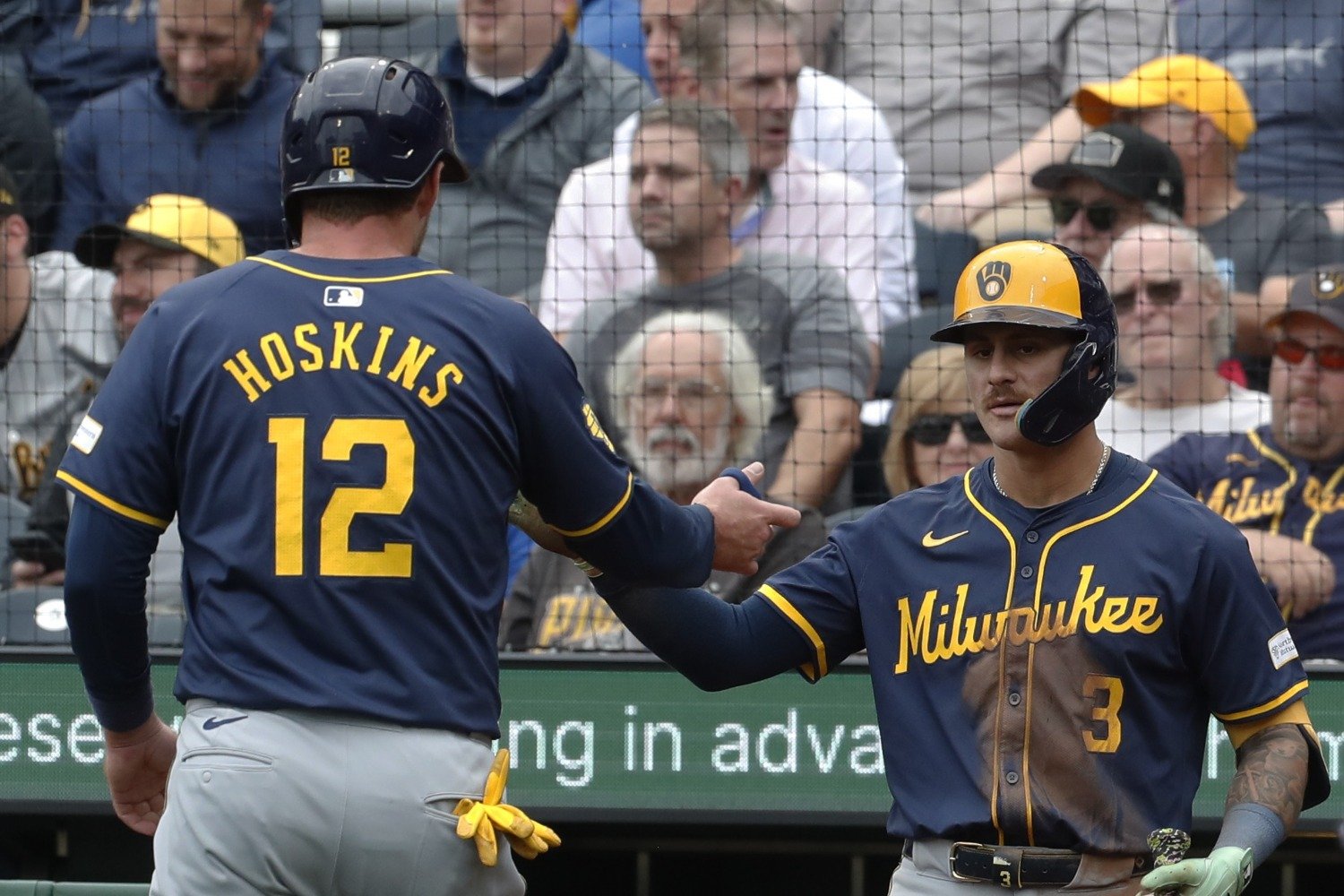 It has been a pretty busy offseason around the league. More than $2 billion in free-agent contracts have been signed, and the trade front has seen more than a few impact players change hands. The Brewers got involved themselves, shipping Devin Williams to the Yankees in exchange for Nestor Cortes and infield prospect Caleb Durbin. The Airbender was bound for a new home in his walk year, and Milwaukee’s anticipated offseason additions depended heavily on his return package. So, now that he’s gone, what does the team still need—and will it be enough to maintain their dominance over the division? Infield Caleb Durbin was a 14th-round draft pick by team who plays at the highway interchange just north of Atlanta in 2021, and he's been on the minor-league grind ever since. He started hitting his stride over the past two years, steadily climbing the ranks. Most recently, he posted an .867 OPS over 375 plate appearances in Triple-A Scranton/Wilkes-Barre and torched the Arizona Fall League, posting a .976 OPS and stealing 29 bases there. A certified short king, he has adapted his playing style to compensate for a lack of power and has excellent fielding flexibility, making him a great fit for an already versatile Brewers squad. Heading into the offseason, there were questions over who would play which position after the departure of Willy Adames. Now that Durbin is on board, it seems Pat Murphy will have plenty of options for almost every position in the infield. One area that could still use some improvement is first base. While the Rhys Hoskins signing was exciting at the time of its announcement, a full season of his performance left much to be desired, especially given his $12 million salary. He had -0.2 rWAR, slashing .214/.303/.419 for an OPS+ of 98. After officially exercising his $18-million player option for 2025, there were hopes that he could get traded, but with his stock at an all-time low, it was likely difficult to find a willing buyer at his price point. Even if a suitable replacement was found, the team would still be on the hook for most of his money, so they’ll have to wait for 2026 to decline their part of the mutual option and look for a more meaningful bat, should his numbers remain the same. Of course, they could move Hoskins to DH permanently and pick up a more well-rounded first baseman, but given the extra money or prospect equity they’d have to surrender in a free agent or trade situation, the team will probably just hang in there with Hoskins. Moves throughout the league have foreclosed even the options that did seem to loom for them, as the Guardians, Yankees, Diamondbacks, Astros, and Nationals all landed new first basemen over the last handful of days. Outfield Arguably the area in which they have the most depth, Milwaukee’s outfield is jam-packed with young talent. Injury concerns for Christian Yelich and Garrett Mitchell are well-founded, but based on what we saw from them last year, they’re outstanding when healthy. When you throw in Blake Perkins, Sal Frelick, and the phenomenal Jackson Chourio, you get more than enough pieces for this part of the roster to be successful. If anything, it seems that the surplus in the outfield could drive another trade later in the offseason. Catcher/DH Similar to the outfield, the Brewers are set when it comes to backstops and designated hitters. There’s plenty of crossover between who’s on the depth chart for both roles, with William Contreras and Eric Haase. The organization did also utilize Gary Sánchez on occasion in 2024, but getting a third-string catcher probably isn’t a priority for the front office right now. Keeping DH playing time available for Yelich and Contreras is more important than whatever production they could find on the market from a budget-friendly bat. Rotation There’s a lot to like about the Brewers' starters—at least in theory. Given the tragic injury luck of the past few years, one can never be too sure about betting the house on the team’s rotation to stay healthy. With arms like Brandon Woodruff and Robert Gasser still on unclear timelines to return, the team will have to hope the combination of Nestor Cortes and full seasons from DL Hall and Aaron Civale will be enough to hold down the fort. There’s actually a lot to like about Cortes and his potential fit on the team. He’s a crafty lefty who does some unorthodox things, something that could fit well within a development program that has made the most out of arms with neither spectacular velocity nor stuff. His fly ball rate has consistently been higher than average throughout his seven-year career, and while some of those fly balls will inevitably go for extra bases, he hasn’t played with an outfield as defensively proficient as the Brewers’, so his numbers could be even better than anticipated next year. When Woodruff does finally make it back to the team after his lengthy rehabilitation process, someone may cede their spot, or the team could utilize a six-man rotation. You could always go out and get another arm just to be safe, but with the current talent on the board and starting pitching talent coming at a high premium, it’s not a necessity. Bullpen Milwaukee is great at making the most of what they have. Last year, after Devin Williams was sidelined for months due to stress fractures, the team turned it into an opportunity to start grooming Trevor Megill for the full-time closer job. He excelled, accumulating 21 saves before handing off the reins. We’ve gotten to see what Megill can do over the two past seasons with the Crew, and it seems like the perfect time to promote him to the most important role in the bullpen. Behind him is the same cast of characters as we saw last season, including Joel Payamps, Jared Koenig, Bryan Hudson, and Nick Mears. While the loss of Williams is definitely a meaningful subtraction, the bullpen still looks to be in great shape heading into next year. They could get another arm if the price is right, but don’t expect the team to surrender too much of the farm trying to get a slight upgrade in the reliever department. Will It Be Enough? After remembering that they are, indeed, a big-market team, the Cubs have been fairly active this winter. In addition to signing free agents Matthew Boyd and Carson Kelly, they acquired Kyle Tucker from the Astros and traded Cody Bellinger to the Yankees. The Tucker deal in and of itself was great, but they haven’t shown signs of slowing down. There are reports that they’ve made a big push to sign Roki Sasaki, and they’ve gotten some additional breathing room in the budget after getting most of the Bellinger contract off the books. They were also in discussions to acquire Jesús Luzardo or Luis Castillo, but it seems those talks stalled. Luzardo is now a Phillie. But Chicago has quite a bit of catching up to do. They were 10 games back of Milwaukee in 2024, and without subsequent moves to improve other parts of their lineup, it would seem that the Brewers are safe for now. The other teams in the division have practically been asleep at the wheel, and haven’t given their fans much to look forward to, so it seems like 2025 could be yet another year of the Brewers taking the top spot in the NL Central. Getting past the other titans in the National League is a different story. As usual, the bigger spenders in the East and West divisions have more obvious talent on paper, but a closer look suggests there is a smaller gap than one might otherwise expect. It may not be enough for the team to win the World Series, but if the team shows up to Opening Day with the roster as-is, it’s looking like another successful regular season for the Brew Crew.
 -
With their most prized trade asset now spent, what other parts of Milwaukee’s roster still need help going into 2025? Image courtesy of © Charles LeClaire-Imagn Images With their most prized trade asset now spent, what other parts of Milwaukee’s roster still need help going into 2025? It has been a pretty busy offseason around the league. More than $2 billion in free-agent contracts have been signed, and the trade front has seen more than a few impact players change hands. The Brewers got involved themselves, shipping Devin Williams to the Yankees in exchange for Nestor Cortes and infield prospect Caleb Durbin. The Airbender was bound for a new home in his walk year, and Milwaukee’s anticipated offseason additions depended heavily on his return package. So, now that he’s gone, what does the team still need—and will it be enough to maintain their dominance over the division? Infield Caleb Durbin was a 14th-round draft pick by team who plays at the highway interchange just north of Atlanta in 2021, and he's been on the minor-league grind ever since. He started hitting his stride over the past two years, steadily climbing the ranks. Most recently, he posted an .867 OPS over 375 plate appearances in Triple-A Scranton/Wilkes-Barre and torched the Arizona Fall League, posting a .976 OPS and stealing 29 bases there. A certified short king, he has adapted his playing style to compensate for a lack of power and has excellent fielding flexibility, making him a great fit for an already versatile Brewers squad. Heading into the offseason, there were questions over who would play which position after the departure of Willy Adames. Now that Durbin is on board, it seems Pat Murphy will have plenty of options for almost every position in the infield. One area that could still use some improvement is first base. While the Rhys Hoskins signing was exciting at the time of its announcement, a full season of his performance left much to be desired, especially given his $12 million salary. He had -0.2 rWAR, slashing .214/.303/.419 for an OPS+ of 98. After officially exercising his $18-million player option for 2025, there were hopes that he could get traded, but with his stock at an all-time low, it was likely difficult to find a willing buyer at his price point. Even if a suitable replacement was found, the team would still be on the hook for most of his money, so they’ll have to wait for 2026 to decline their part of the mutual option and look for a more meaningful bat, should his numbers remain the same. Of course, they could move Hoskins to DH permanently and pick up a more well-rounded first baseman, but given the extra money or prospect equity they’d have to surrender in a free agent or trade situation, the team will probably just hang in there with Hoskins. Moves throughout the league have foreclosed even the options that did seem to loom for them, as the Guardians, Yankees, Diamondbacks, Astros, and Nationals all landed new first basemen over the last handful of days. Outfield Arguably the area in which they have the most depth, Milwaukee’s outfield is jam-packed with young talent. Injury concerns for Christian Yelich and Garrett Mitchell are well-founded, but based on what we saw from them last year, they’re outstanding when healthy. When you throw in Blake Perkins, Sal Frelick, and the phenomenal Jackson Chourio, you get more than enough pieces for this part of the roster to be successful. If anything, it seems that the surplus in the outfield could drive another trade later in the offseason. Catcher/DH Similar to the outfield, the Brewers are set when it comes to backstops and designated hitters. There’s plenty of crossover between who’s on the depth chart for both roles, with William Contreras and Eric Haase. The organization did also utilize Gary Sánchez on occasion in 2024, but getting a third-string catcher probably isn’t a priority for the front office right now. Keeping DH playing time available for Yelich and Contreras is more important than whatever production they could find on the market from a budget-friendly bat. Rotation There’s a lot to like about the Brewers' starters—at least in theory. Given the tragic injury luck of the past few years, one can never be too sure about betting the house on the team’s rotation to stay healthy. With arms like Brandon Woodruff and Robert Gasser still on unclear timelines to return, the team will have to hope the combination of Nestor Cortes and full seasons from DL Hall and Aaron Civale will be enough to hold down the fort. There’s actually a lot to like about Cortes and his potential fit on the team. He’s a crafty lefty who does some unorthodox things, something that could fit well within a development program that has made the most out of arms with neither spectacular velocity nor stuff. His fly ball rate has consistently been higher than average throughout his seven-year career, and while some of those fly balls will inevitably go for extra bases, he hasn’t played with an outfield as defensively proficient as the Brewers’, so his numbers could be even better than anticipated next year. When Woodruff does finally make it back to the team after his lengthy rehabilitation process, someone may cede their spot, or the team could utilize a six-man rotation. You could always go out and get another arm just to be safe, but with the current talent on the board and starting pitching talent coming at a high premium, it’s not a necessity. Bullpen Milwaukee is great at making the most of what they have. Last year, after Devin Williams was sidelined for months due to stress fractures, the team turned it into an opportunity to start grooming Trevor Megill for the full-time closer job. He excelled, accumulating 21 saves before handing off the reins. We’ve gotten to see what Megill can do over the two past seasons with the Crew, and it seems like the perfect time to promote him to the most important role in the bullpen. Behind him is the same cast of characters as we saw last season, including Joel Payamps, Jared Koenig, Bryan Hudson, and Nick Mears. While the loss of Williams is definitely a meaningful subtraction, the bullpen still looks to be in great shape heading into next year. They could get another arm if the price is right, but don’t expect the team to surrender too much of the farm trying to get a slight upgrade in the reliever department. Will It Be Enough? After remembering that they are, indeed, a big-market team, the Cubs have been fairly active this winter. In addition to signing free agents Matthew Boyd and Carson Kelly, they acquired Kyle Tucker from the Astros and traded Cody Bellinger to the Yankees. The Tucker deal in and of itself was great, but they haven’t shown signs of slowing down. There are reports that they’ve made a big push to sign Roki Sasaki, and they’ve gotten some additional breathing room in the budget after getting most of the Bellinger contract off the books. They were also in discussions to acquire Jesús Luzardo or Luis Castillo, but it seems those talks stalled. Luzardo is now a Phillie. But Chicago has quite a bit of catching up to do. They were 10 games back of Milwaukee in 2024, and without subsequent moves to improve other parts of their lineup, it would seem that the Brewers are safe for now. The other teams in the division have practically been asleep at the wheel, and haven’t given their fans much to look forward to, so it seems like 2025 could be yet another year of the Brewers taking the top spot in the NL Central. Getting past the other titans in the National League is a different story. As usual, the bigger spenders in the East and West divisions have more obvious talent on paper, but a closer look suggests there is a smaller gap than one might otherwise expect. It may not be enough for the team to win the World Series, but if the team shows up to Opening Day with the roster as-is, it’s looking like another successful regular season for the Brew Crew. View full article
-
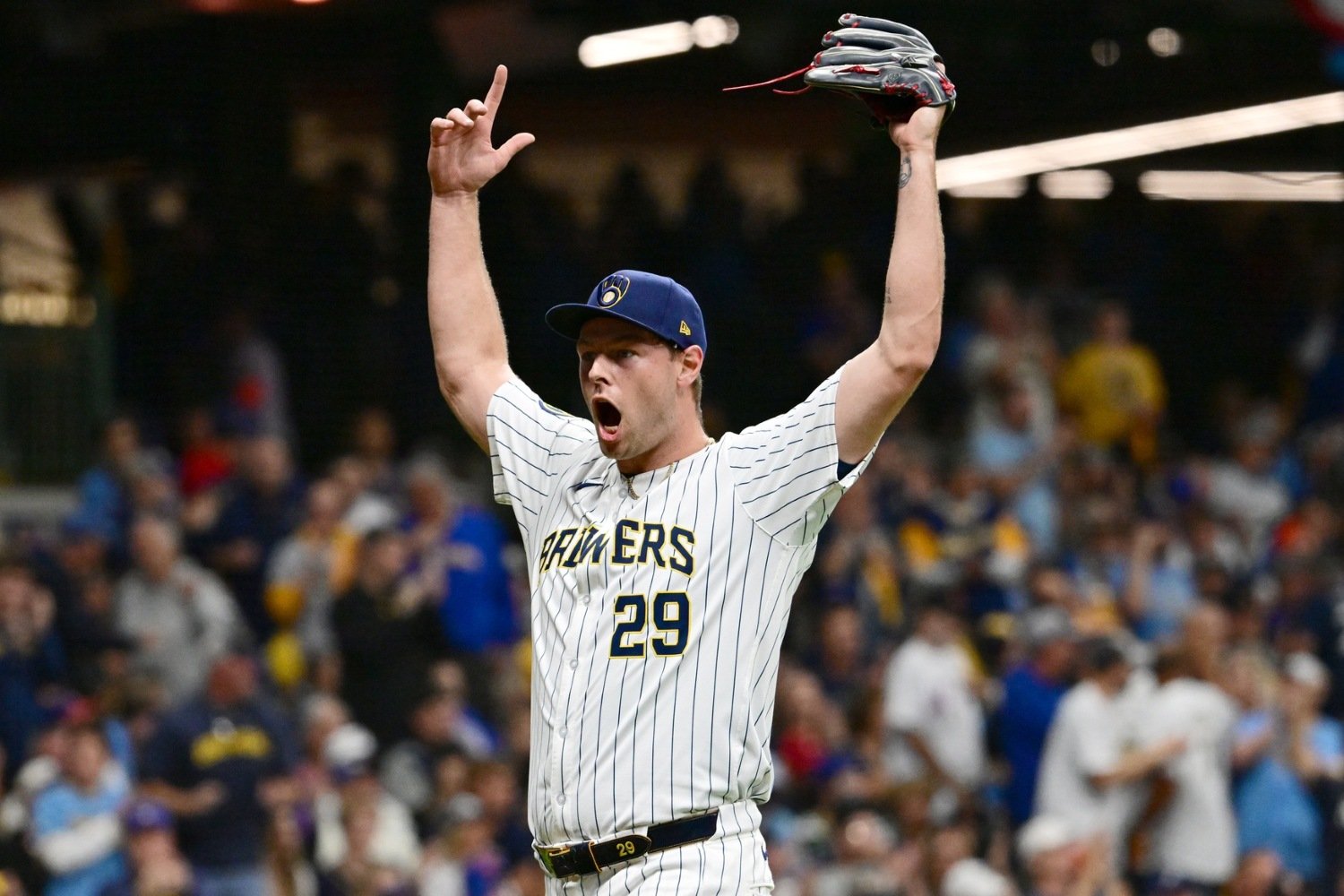 This isn’t the first time this has happened in recent history. Before Devin Williams, the team’s go-to high-leverage pitcher was a lefty by the name of Josh Hader. He was also traded before hitting free agency, albeit under slightly different circumstances. Williams was still outstanding in his final year with the team, whereas Hader had the worst season of his career before ultimately being swung to the Padres in mid-2022. Suffice it to say, Milwaukee is no stranger to trading away top-tier closers and retooling the setup of their bullpen. They actually got a glimpse of what the roster would look like without Williams while he was on the shelf for much of 2024, due to stress fractures in his back. In his stead, Trevor Megill stepped up and performed admirably, accumulating 21 saves and posting a dominant 1.80 ERA over those outings. In many ways, his profile was perfect for his new responsibilities. A triple-digit four-seam fastball and a knuckle curve with a 55.0% whiff rate confused hitters and will likely be the key to elevating him to full-time closer come 2025. But what about the other bullpen arms? What other tools will be in Pat Murphy's toolbox? Behind Megill on the depth chart is Joel Payamps. He was a reliable reliever in 2024, posting a 3.05 ERA and even accumulating six saves of his own, but there were clear holes in his game. With good-not-great strikeout and whiff rates and a penchant for giving up some hard contact, he’ll likely be limited to lower-leverage innings. His FIP of 3.73 and his xERA of 4.11 point to the possibility that he may have been more lucky than sustainably effective last year. Behind Payamps is Jared Koenig, whose first year in the majors since 2022 was great, culminating in a 2.47 ERA over 62 innings. Like Payamps, his strikeout rate was average and his per-swing whiff rate (22.4%) was in the bottom quartile of qualified pitchers, so it’s tough to see him handling anything too intense. However, he was better than Payamps at inducing soft contact and could move forward in the depth chart in 2025 if he keeps up the good work. An important adjustment for him would be developing a second plus pitch to complement his sinker. His cutter had satisfactory production but with a slugging percentage of .424, it might need some refinements before it’s ready for the big innings. Abner Uribe has a big question mark hanging over his head. After disappointing results in 2024 that included an unnecessary altercation with the Rays and season-ending knee surgery, he feels far removed from the buzz he created in 2023. He has shown the ability to be an outstanding arm with exceptional stuff, but his lack of command and experience are big obstacles. If he does manage to lock in for the upcoming year, he could be next in line and pick up a few saves, but there’s considerable room for improvement. Bryan Hudson was an underrated rookie who put up a sneaky 1.73 ERA and an incredible 0.72 WHIP over his 62 ⅓ innings of work. One of the best lefty relievers in the game, his massive 6'8” frame and wicked sweeper helped compensate for a fastball velocity in the low 90s, which sagged ever lower as his first full season in the big leagues progressed. Similar to Koenig, there’s intriguing potential here, but a small sample size leaves just enough uncertainty to keep things exciting. Other arms like Elvis Peguero and Nick Mears could soon be joined by some of the organization’s best prospects. At the top of the list to be called up would be Craig Yoho, who spent his 2024 dicing up three levels of the minor leagues. From High-A Wisconsin to Triple-A Nashville, Yoho’s combined a 0.94 ERA with a 0.94 WHIP. His 42.4% strikeout rate indicates just how successful he was. Fans have been clamoring for him to strut his stuff at the big-league level, and it might not be long before their wishes are granted. Megill is the clear frontrunner for the closer job. He was there last year; his arsenal and stuff are perfect for it; and he’s the most dependable arm in the bullpen right now. If he goes down or can’t come in on back-to-back days, Murphy has the luxury of several great options, but expect Hudson, Koenig and Uribe to be the subject of many of his phone calls come the later innings of next season's games.
- 5 comments
-
- 1
-
-
- trevor megill
- joel payamps
- (and 4 more)

