



Jason Wang
-
Posts
955 -
Joined
-
Last visited
-
Days Won
1
Content Type
Profiles
Forums
Blogs
Events
News
2026 Milwaukee Brewers Top Prospects Ranking
Milwaukee Brewers Videos
2022 Milwaukee Brewers Draft Picks
Milwaukee Brewers Free Agent & Trade Rumors, Notes, & Tidbits
Guides & Resources
2023 Milwaukee Brewers Draft Picks
2024 Milwaukee Brewers Draft Picks
The Milwaukee Brewers Players Project
2025 Milwaukee Brewers Draft Pick Tracker
2026 Milwaukee Brewers Draft Tracker: Picks & Bonuses
Store
Downloads
Gallery
Everything posted by Jason Wang
-
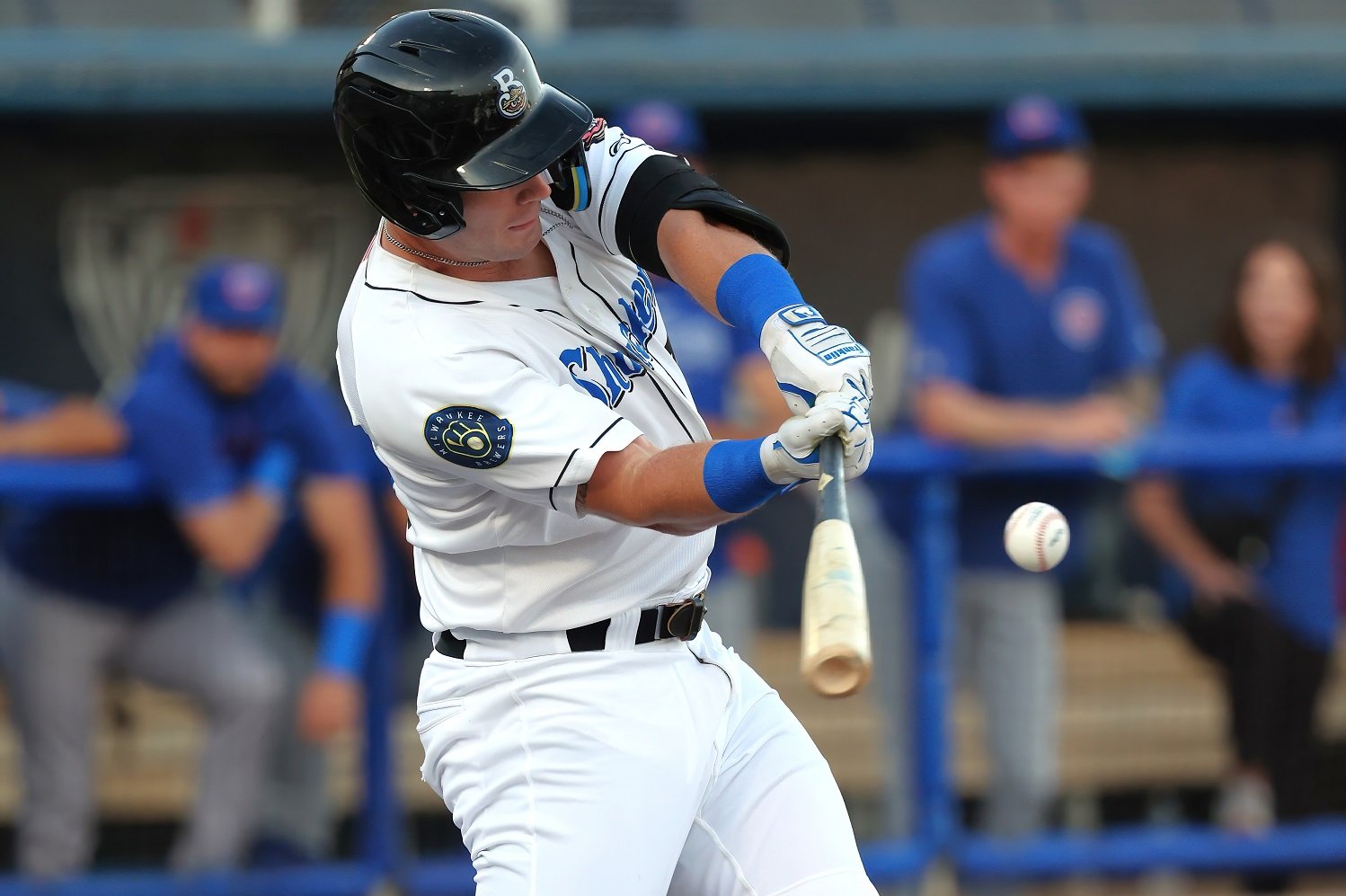 Game Results Monday, 10/23 | Peoria 7, Surprise 11 Tuesday, 10/24 | Salt River 10, Surprise 12 Wednesday, 10/25 | None Thursday, 10/26 | Surprise 6, Peoria 5 Friday, 10/27 | Peoria 9, Surprise 5 Saturday, 10/28 | Scottsdale 2, Surprise 4 The Surprise Saguaros jumped to first place with an outstanding record of 14-9, thanks in no small part to a handful of scrappy Milwaukee prospects. The team went 4-1 on the week, losing just one game to the Peoria Javelinas. In addition to being atop the leaderboard, they have the highest run differential at +38. 2B Eric Brown Jr. Week: 4-for-17, 2B, BB, RBI, 2 K (5 games) Eric Brown had a bit of a slower week, slashing just .235/.278/.235 for an OPS of .513, quite a bit lower than his season average of .805. His lone RBI came against the Peoria Javelinas in the week's first game on 10/23. In the bottom of the fifth inning, Brown hit a single to score Peyton Wilson and move Dasan Brown to third base. Despite his slower week, he saw use in every game and has been a reliable middle infield piece for the Saguaros. He’s appeared in 20 games this season, the most of any player on the team. He also has 74 at-bats thus far, second to only Jacob Hurtubise. 1B Wes Clarke Week: 4-for-11, 2B, 2 BB, 2 RBI, 3 K (3 games) Wes Clarke saw a big improvement over the prior week, cutting down on his strikeouts and improving his plate discipline and average. He posted a slash line of .364/.462/.455 for the week, slightly lower than his 1.038 OPS average for the season. This was diminished by a lack of power and extra-base hits, but his on-base abilities were much appreciated nonetheless. Clarke was pivotal in the Saguaros’ narrow win over the Peoria Javelinas on 10/26. He tied the game at 1-1 in the third inning with an RBI single that scored fellow Brewer prospect Hendry Mendez. He hit another clutch RBI single in the top of the seventh to bring the game within one run. Although he didn’t appear in the same number of games or receive as many at-bats as some of his teammates, he made his presence known and has been focused on quality over quantity. Of all qualified players on the Saguaros, Clarke’s season slugging percentage of .586 is the highest. OF Hendry Mendez Week: 2-for-3, 2B, BB, 0 K (1 game) After patiently waiting for his turn in the spotlight, Hendry Mendez had a great showing on 10/26 against the Javelinas. Batting ninth, he scored three of his team’s runs, all three needed to beat Peoria 6-5 eventually. With plenty of outfielders to choose from, Mendez has struggled to find consistent playing time, accumulating just 30 at-bats over the season, but he’s shown signs of improvement week after week. RHP Joseph Hernandez Week: 1.1 IP, 8 H, 4 R, BB, 2 K Like the previous week, Hernandez pitched in just the first game of the week. Also, like the previous week, he didn’t have the greatest time on the mound. While he didn’t give up any home runs, he gave up three doubles and five singles, conceding four earned runs to the Peoria Javelinas. On the bright side, he escaped a bases-loaded situation in the sixth inning by striking out Christian Cairo. He threw 49 pitches, 26 of which were strikes (53.1%). Joseph Hernandez has a 15.19 ERA and a 3.94 WHIP over 5 ⅓ innings this season. LHP Justin King Week: 1.0 IP, 0 H, 0 R, 0 K King had a quiet appearance against the Javelinas on 10/27. Entering the game in the seventh inning, he quickly got a lineout, a groundout, and a force out. The only trouble King faced was an instance of catcher’s interference and a stolen base, but he kept it cool and avoided any damage or real concern. He threw 14 pitches, eight of which were strikes (57.1%). Justin King brought his ERA down to 4.15 and his WHIP to 1.15 over the 4 ⅓ innings he’s pitched thus far. LHP Adam Seminaris Week: 4.0 IP, 6 H, 3 R, BB, K, W Seminaris notched his second win of the season, making a four-inning start against the Javelinas on 10/23. All three of his earned runs came in the second inning, after which he could recover and limit traffic. He had a slick pickoff of Ryan Bliss on second base to end the third inning and relied on soft contact to get his outs. He threw 68 pitches, 41 of which were strikes (60.3%). Adam Seminaris has a 4.50 ERA and a 1.40 WHIP over ten innings this season. RHP Justin Yeager Week: 1.2 IP, 0 H, 0 R, 0 BB, 2 HB, K, S Yeager had a few control issues, hitting a batter in each of the two games he appeared in this week. Nonetheless, he got the job done without conceding a single run and even managed to notch his first save of the season, a two-out showing against the Salt River Rafters on 10/24. He threw 11 pitches, seven of which were strikes (63.6%). Justin Yeager has a 5.40 ERA and 1.35 WHIP over 6 ⅔ innings.
 -
 Eric Brown Jr. had his best week of the AFL thus far, producing at the plate and on the basepaths. Meanwhile, Justin Yeager gave up just one hit in two games. Let's review all the Brewers prospects' showings this past week. Image courtesy of © Curt Hogg / Milwaukee Journal Sentinel / USA TODAY NETWORK Eric Brown Jr. had his best week of the AFL thus far, producing at the plate and on the basepaths. Meanwhile, Justin Yeager gave up just one hit in two games. Let's review all the Brewers prospects' showings this past week. Game Results Monday, 10/16 | Surprise 8, Mesa 10 Tuesday, 10/17 | Salt River 5, Surprise 1 Wednesday, 10/18 | Surprise 8, Scottsdale 9 Thursday, 10/19 | Scottsdale 0, Surprise 5 Friday, 10/20 | Surprise 7, Salt River 1 Saturday, 10/21 | Surprise 2, Peoria 5 The third week of the Arizona Fall League was a regression to the norm for the Saguaros. After losing a couple of lopsided games in the first week and putting on some beatings of their own in the second, the third week showed off a higher-level of parity. 2B Eric Brown Jr. Week: 7-for-19, 2B, 2 BB, 2 RBI, 3K, 4 SB (6 games) Eric Brown continued his upward trajectory, appearing in every game and averaging .368. His batting average for the season of .333 is second on the team, trailing only catcher Liam Hicks. In addition to his hitting ability, his speed has been invaluable. Brown has swiped four bases, and he was utilized as a pinch-runner in a close game on Oct. 18 against the Scottsdale Scorpions. He’s still looking to get his first home run of the season, but his consistent on-base abilities make up for a relative lack of power. 1B Wes Clarke Week: 5-for-15, HR, 3 BB, 2 RBI, 6 K (4 games) Clarke saw a slight reduction in usage but was effective when at the plate. He hit his fourth home run of the season against the Scorpions, and is now tied for second-most in the league. At 1.067, he boasts the second-highest OPS on the team (behind the aforementioned Hicks), and he has the second-highest slugging percentage, at .617. Clarke has been one of the most exciting prospects to watch on the Saguaros, and continues to impress. OF Hendry Mendez Week: 1-for-6, 2 BB, 2 K (2 games) Mendez started just two games, splitting time between left and right field. On the bright side, he’s been able to limit strikeouts and his on-base percentage of .313 is quite a bit higher than his batting average of .185. With a little more time allocated for training and development, Mendez might make his name as a player with elite plate discipline and above-average on-base skills. RHP Joseph Hernandez Week: 1.2 IP, 6 H, 5 R, 2 HR, HB, BB, K Hernandez pitched only in the first game of the week and had a bit of a rough outing. His first inning saw him give up a single, hit-by-pitch, and a walk, but he avoided any scoring. After quickly getting two outs in the sixth inning, things started to fall apart: He gave up five consecutive hits, including two home runs. Hernandez has an 11.25 ERA and a 3.00 WHIP over four innings this season. LHP Justin King Week: 1.0 IP, 2 H, 2 R, HR, BB, 2 K, L Justin King came in the bottom of the 10th inning of the Saguaros' first game of the week against the Mesa Solar Sox. With the game tied 8-8, King gave up the game-winning home run to Kevin Alcantara, the first batter he faced. He threw just three pitches, all of which were strikes. He had a much better outing against the Salt River Rafters on Oct. 20, striking out two batters and giving up no runs in the eighth inning. He threw 24 pitches, 14 of which were strikes (58.3%). King has a 5.40 ERA and a 1.50 WHIP over 3 ⅓ innings this season. LHP Adam Seminaris Week: 2.0 IP, 5 H, 2 R, HR, BB, 2 K Seminaris made a two-inning start at the beginning of the week, conceding two runs and five hits over two innings while netting two strikeouts. It was his first start (and just his second game) of the fall season. Seminaris has a 3.00 ERA and a 1.17 WHIP over six innings this season. RHP Justin Yeager Week: 2.0 IP, H, 0 R, 1 BB, 4 K Yeager was lights-out, making two scoreless relief appearances. He pitched the final inning against the Salt River Rafters on Oct. 17, striking out two and giving up one hit and one walk. He used 19 pitches, 12 of which were strikes (63.2%). He also pitched the seventh inning of the team’s final game of the week against the Peoria Javelinas, striking out two and conceding no baserunners. He used 16 pitches, 9 of which were strikes (56.3%). Yeager has a 7.20 ERA and 2.00 WHIP over five innings this season. Do any of these performances turn your head? Which Brewers assignees to the AFL have your mental gears turning, as you look ahead to the offseason and to 2024? View full article
 -
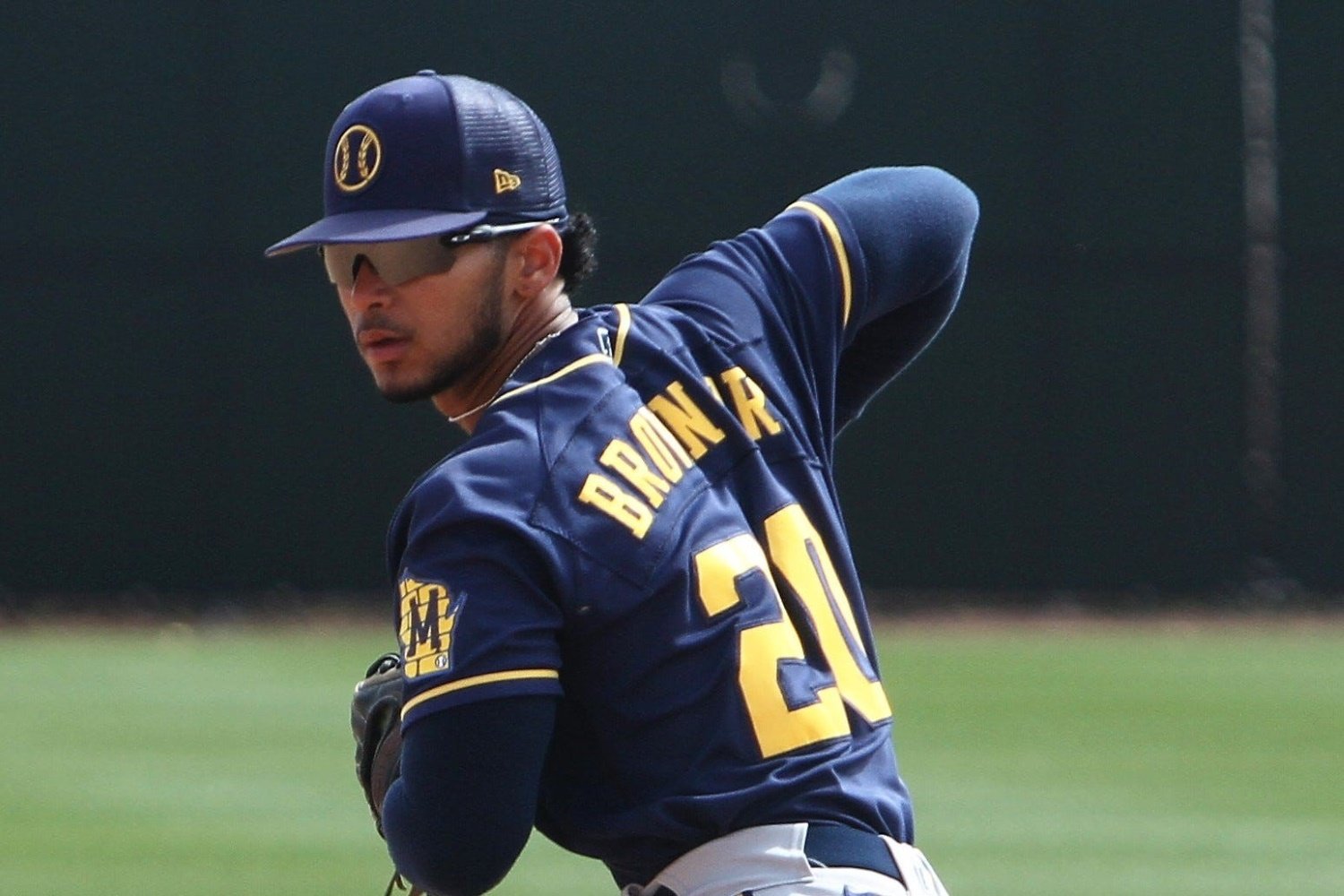 Game Results Monday, 10/16 | Surprise 8, Mesa 10 Tuesday, 10/17 | Salt River 5, Surprise 1 Wednesday, 10/18 | Surprise 8, Scottsdale 9 Thursday, 10/19 | Scottsdale 0, Surprise 5 Friday, 10/20 | Surprise 7, Salt River 1 Saturday, 10/21 | Surprise 2, Peoria 5 The third week of the Arizona Fall League was a regression to the norm for the Saguaros. After losing a couple of lopsided games in the first week and putting on some beatings of their own in the second, the third week showed off a higher-level of parity. 2B Eric Brown Jr. Week: 7-for-19, 2B, 2 BB, 2 RBI, 3K, 4 SB (6 games) Eric Brown continued his upward trajectory, appearing in every game and averaging .368. His batting average for the season of .333 is second on the team, trailing only catcher Liam Hicks. In addition to his hitting ability, his speed has been invaluable. Brown has swiped four bases, and he was utilized as a pinch-runner in a close game on Oct. 18 against the Scottsdale Scorpions. He’s still looking to get his first home run of the season, but his consistent on-base abilities make up for a relative lack of power. 1B Wes Clarke Week: 5-for-15, HR, 3 BB, 2 RBI, 6 K (4 games) Clarke saw a slight reduction in usage but was effective when at the plate. He hit his fourth home run of the season against the Scorpions, and is now tied for second-most in the league. At 1.067, he boasts the second-highest OPS on the team (behind the aforementioned Hicks), and he has the second-highest slugging percentage, at .617. Clarke has been one of the most exciting prospects to watch on the Saguaros, and continues to impress. OF Hendry Mendez Week: 1-for-6, 2 BB, 2 K (2 games) Mendez started just two games, splitting time between left and right field. On the bright side, he’s been able to limit strikeouts and his on-base percentage of .313 is quite a bit higher than his batting average of .185. With a little more time allocated for training and development, Mendez might make his name as a player with elite plate discipline and above-average on-base skills. RHP Joseph Hernandez Week: 1.2 IP, 6 H, 5 R, 2 HR, HB, BB, K Hernandez pitched only in the first game of the week and had a bit of a rough outing. His first inning saw him give up a single, hit-by-pitch, and a walk, but he avoided any scoring. After quickly getting two outs in the sixth inning, things started to fall apart: He gave up five consecutive hits, including two home runs. Hernandez has an 11.25 ERA and a 3.00 WHIP over four innings this season. LHP Justin King Week: 1.0 IP, 2 H, 2 R, HR, BB, 2 K, L Justin King came in the bottom of the 10th inning of the Saguaros' first game of the week against the Mesa Solar Sox. With the game tied 8-8, King gave up the game-winning home run to Kevin Alcantara, the first batter he faced. He threw just three pitches, all of which were strikes. He had a much better outing against the Salt River Rafters on Oct. 20, striking out two batters and giving up no runs in the eighth inning. He threw 24 pitches, 14 of which were strikes (58.3%). King has a 5.40 ERA and a 1.50 WHIP over 3 ⅓ innings this season. LHP Adam Seminaris Week: 2.0 IP, 5 H, 2 R, HR, BB, 2 K Seminaris made a two-inning start at the beginning of the week, conceding two runs and five hits over two innings while netting two strikeouts. It was his first start (and just his second game) of the fall season. Seminaris has a 3.00 ERA and a 1.17 WHIP over six innings this season. RHP Justin Yeager Week: 2.0 IP, H, 0 R, 1 BB, 4 K Yeager was lights-out, making two scoreless relief appearances. He pitched the final inning against the Salt River Rafters on Oct. 17, striking out two and giving up one hit and one walk. He used 19 pitches, 12 of which were strikes (63.2%). He also pitched the seventh inning of the team’s final game of the week against the Peoria Javelinas, striking out two and conceding no baserunners. He used 16 pitches, 9 of which were strikes (56.3%). Yeager has a 7.20 ERA and 2.00 WHIP over five innings this season. Do any of these performances turn your head? Which Brewers assignees to the AFL have your mental gears turning, as you look ahead to the offseason and to 2024?
 -
A Short-Term Extension for Brandon Woodruff Could Be A Win-Win
Jason Wang posted an article in Brewers
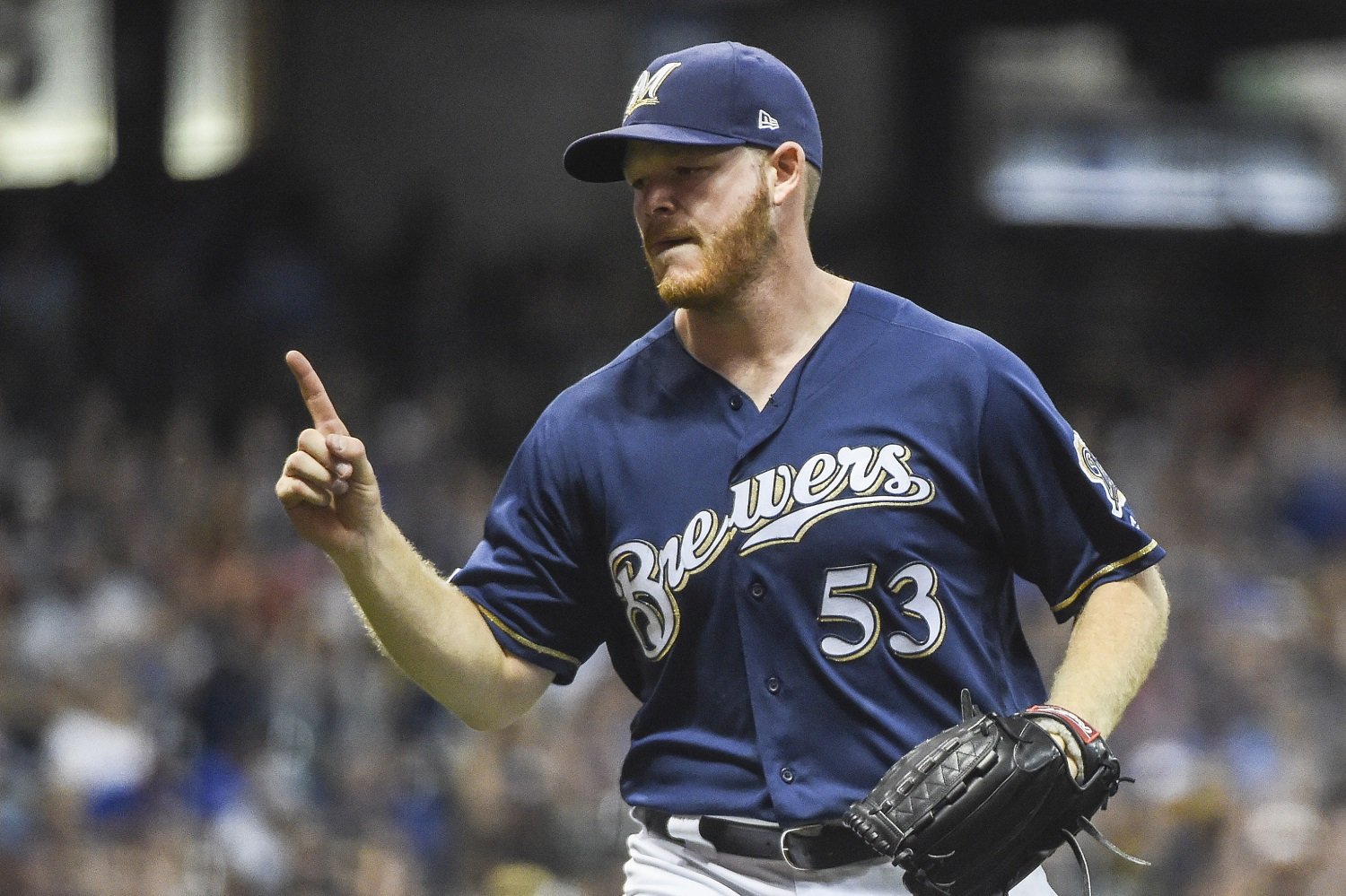 Brandon Woodruff will be arbitration-eligible in 2024 and a free agent at the end of that season. Assuming he’ll miss most of 2024, he won’t really have much firepower to use in fetching a higher salary in the arbitration process. Furthermore, he’ll hit the free-agent market with few (if any) innings pitched, which will likely lead teams to question whether his stuff is still there and whether he’ll be an injury risk in the future. This is where the Brewers front office can shine. Having served as his home for the entirety of his professional career, Milwaukee has the benefit of having the most information on Woodruff as a pitcher, player, and person. Because of this (and the fact that they’ll be the most in tune with his recovery process), a mutually beneficial course of action could be to sign Woodruff to a two-year contract that extends the Brewers' team control through 2025. This accomplishes two main goals. Gives Woodruff an Extra Year to Get Back in the Game Woodruff is a power pitcher. He’s not a crafty pitch-to-contact guy like Wade Miley or Jordan Montgomery, who can get away with lower velocity and strikeout numbers. Woodruff has a 95.8-MPH four-seam fastball and a 95.0-MPH sinker, each of which pair nicely with an 85.8-MPH changeup and some red wine. He's averaged 10.4 strikeouts per nine innings over the course of his career and has fanned as many as 211 batters in a season. Thus, it’s important that he is able to prove to other teams that post-surgery, he hasn’t lost his ability to produce the same velocity. Signing a short-term deal would give him a full season of healthy pitching, and then throw him back into the free-agent market prior to the 2026 season with plenty of recent data to prove that he is still the same guy he’s always been. Gives The Brewers an Extra Year of Brandon Woodruff This really speaks for itself. Having one of the best pitchers in baseball in your starting rotation is a blessing and a privilege. Not only would this decision give Milwaukee an extra year of Woodruff, there’s even a chance that it could help sway Woodruff into returning to the Brewers again, this time signing a longer-term contract as a reflection of the good faith shown to him. Maybe he ends up as a career Brewer--one of the franchise greats. Additionally, the Brewers deciding to pay Woodruff something well south of the projected $11 million he was going to get prior to the to injury would keep payroll relatively low for 2024. The team could then pay him a higher sum in 2025 to compensate, allowing them more flexibility in roster construction. Corbin Burnes is on the same contract timeline (arb-eligible in 2024, free agent thereafter) and there are already questions about whether he’ll be willing to stay or if the team will even be willing to extend him. Keeping Woodruff would undoubtedly soften the blow of losing Burnes and prevent Milwaukee from heading into complete rebuild mode. Both parties are in a unique situation, given Woodruff’s surgery, and who knows what’s really on the mind of team management? Much of this depends on how quickly he'll be able to return to action at the major-league level and how much faith he has in himself. Nonetheless, there is hope that we'll continue to see him in Brew Crew blue for at least a few more years.
 -
Brandon Woodruff was one of the Brewers’ best players in 2023 and has been an integral piece of the pitching staff since his first full season as a starter in 2019. Given his current injury status and contract situation, could we see Woodruff sign on for another year in 2025? Image courtesy of © Benny Sieu-USA TODAY Sports Brandon Woodruff was one of the Brewers’ best players in 2023 and has been an integral piece of the pitching staff since his first full season as a starter in 2019. Given his current injury status and contract situation, could we see Woodruff sign on for another year in 2025? Brandon Woodruff will be arbitration-eligible in 2024 and a free agent at the end of that season. Assuming he’ll miss most of 2024, he won’t really have much firepower to use in fetching a higher salary in the arbitration process. Furthermore, he’ll hit the free-agent market with few (if any) innings pitched, which will likely lead teams to question whether his stuff is still there and whether he’ll be an injury risk in the future. This is where the Brewers front office can shine. Having served as his home for the entirety of his professional career, Milwaukee has the benefit of having the most information on Woodruff as a pitcher, player, and person. Because of this (and the fact that they’ll be the most in tune with his recovery process), a mutually beneficial course of action could be to sign Woodruff to a two-year contract that extends the Brewers' team control through 2025. This accomplishes two main goals. Gives Woodruff an Extra Year to Get Back in the Game Woodruff is a power pitcher. He’s not a crafty pitch-to-contact guy like Wade Miley or Jordan Montgomery, who can get away with lower velocity and strikeout numbers. Woodruff has a 95.8-MPH four-seam fastball and a 95.0-MPH sinker, each of which pair nicely with an 85.8-MPH changeup and some red wine. He's averaged 10.4 strikeouts per nine innings over the course of his career and has fanned as many as 211 batters in a season. Thus, it’s important that he is able to prove to other teams that post-surgery, he hasn’t lost his ability to produce the same velocity. Signing a short-term deal would give him a full season of healthy pitching, and then throw him back into the free-agent market prior to the 2026 season with plenty of recent data to prove that he is still the same guy he’s always been. Gives The Brewers an Extra Year of Brandon Woodruff This really speaks for itself. Having one of the best pitchers in baseball in your starting rotation is a blessing and a privilege. Not only would this decision give Milwaukee an extra year of Woodruff, there’s even a chance that it could help sway Woodruff into returning to the Brewers again, this time signing a longer-term contract as a reflection of the good faith shown to him. Maybe he ends up as a career Brewer--one of the franchise greats. Additionally, the Brewers deciding to pay Woodruff something well south of the projected $11 million he was going to get prior to the to injury would keep payroll relatively low for 2024. The team could then pay him a higher sum in 2025 to compensate, allowing them more flexibility in roster construction. Corbin Burnes is on the same contract timeline (arb-eligible in 2024, free agent thereafter) and there are already questions about whether he’ll be willing to stay or if the team will even be willing to extend him. Keeping Woodruff would undoubtedly soften the blow of losing Burnes and prevent Milwaukee from heading into complete rebuild mode. Both parties are in a unique situation, given Woodruff’s surgery, and who knows what’s really on the mind of team management? Much of this depends on how quickly he'll be able to return to action at the major-league level and how much faith he has in himself. Nonetheless, there is hope that we'll continue to see him in Brew Crew blue for at least a few more years. View full article
-
After mixed results in the first week of the Arizona Fall League, the Surprise Saguaros seemed to put the pieces together, going 5-1--powered by a handful of Brewers prospects. Image courtesy of © Mark J. Rebilas-USA TODAY Sports After mixed results in the first week of the Arizona Fall League, the Surprise Saguaros seemed to put the pieces together, going 5-1--powered by a handful of Brewers prospects. Let's check in on the week's results of the Brewers prospects' AFL squad. Game Results Monday, 10/9 | Surprise 3, Peoria 5 Tuesday, 10/10 | Surprise 17, Scottsdale 5 Wednesday, 10/11 | Glendale 1, Surprise 16 Thursday, 10/12 | Surprise 7, Salt River 6 Friday, 10/13 | Mesa 2, Surprise 10 Saturday, 10/7 | Surprise 5, Mesa 2 The Saguaros had an offensive outburst, scoring 50 runs across four days. In their games against the Scottsdale Scorpions and the Glendale Desert Dogs, they combined to outscore their opponents 33-6, an impressive run differential. 2B Eric Brown Jr. Week: 7-for-20, 3 2B, 5 BB, 7 RBI, 5 K, 2 SB (5 games) Eric Brown Jr. made big improvements over the first week of the season, batting well with runners in scoring position and showing great plate discipline, walking as many times as he struck out. He also swiped a pair of bags in the final game against the Mesa Solar Sox. Again splitting time between the two middle infield positions, he continued to perform consistently throughout the week, always finding a way to add value and help his team be as successful as possible. 1B Wes Clarke Week: 3-for-16, 2B, HR, 6 BB, 5 RBI, 7 K (5 games) After a red-hot start in the first week, Clarke regressed slightly, but he continued to show excellent qualities. Despite fewer hits, he still found a way to accumulate five RBIs, one for each game in which he appeared. In the two games in which he didn’t record a hit, he was able to walk in runs. He walked almost as often as he struck out. Despite his down week, Clarke still possesses the fourth-highest OPS on the team, at 1.108. His on-base percentage of .452 for the season thus far is highly impressive. Coupled with clear power, his pop makes for a scary offensive threat for any team in this league to face. OF Hendry Mendez Week: 2-for-10, 2 BB, 2 RBI, 2 K (3 games) Seeing somewhat limited use, Mendez is still warming up to competing at the level of the AFL. At just 19 years old and spending most of his time at High A this past season, Mendez hasn’t broken out just yet, but he seems to have decent discipline at the plate. On the bright side, he recorded his first two RBIs in the 17-5 blowout against the Scottsdale Scorpions. LHP Justin King Week: 1.0 IP, 0 H, 0 R, 0 BB, 1HB, 1 K King pitched the final inning of the Saguaros' widest victory against the Glendale Desert Dogs. Charged with protecting a meager 15-run lead, King’s only base runner came by way of a hit-by-pitch. He allowed said runner to advance to second base on a wild pitch but King got the final groundout to end the game. He threw 21 pitches, 12 of which were strikes (57.1%). RHP Shane Smith Week: 1.0 IP, 1 H, 0 R, 0 BB, 1 K Smith pitched in the team’s only loss this week, giving up a single and striking out one. He used a relatively high number of pitches for a relatively light workload, throwing 26 of them, 18 for strikes (69.2%). Nonetheless, he didn’t walk or hit anyone and got the job done when needed. RHP Justin Yeager Week: 2.0 IP, 2 H, 0 R, 1 BB, 2 K Yeager was the first reliever out of the bullpen in the Saguaros' competitive game against the Mesa Solar Sox on 10/14. He gave up one hit and struck out two on an extremely efficient 12 pitches, 11 of which were strikes (91.7%). Yeager continues to be one of the most aggressive pitchers in the AFL, pounding the strike zone and testing his limits. This approach worked much better this week than last, avoiding any damage. View full article
-
 Let's check in on the week's results of the Brewers prospects' AFL squad. Game Results Monday, 10/9 | Surprise 3, Peoria 5 Tuesday, 10/10 | Surprise 17, Scottsdale 5 Wednesday, 10/11 | Glendale 1, Surprise 16 Thursday, 10/12 | Surprise 7, Salt River 6 Friday, 10/13 | Mesa 2, Surprise 10 Saturday, 10/7 | Surprise 5, Mesa 2 The Saguaros had an offensive outburst, scoring 50 runs across four days. In their games against the Scottsdale Scorpions and the Glendale Desert Dogs, they combined to outscore their opponents 33-6, an impressive run differential. 2B Eric Brown Jr. Week: 7-for-20, 3 2B, 5 BB, 7 RBI, 5 K, 2 SB (5 games) Eric Brown Jr. made big improvements over the first week of the season, batting well with runners in scoring position and showing great plate discipline, walking as many times as he struck out. He also swiped a pair of bags in the final game against the Mesa Solar Sox. Again splitting time between the two middle infield positions, he continued to perform consistently throughout the week, always finding a way to add value and help his team be as successful as possible. 1B Wes Clarke Week: 3-for-16, 2B, HR, 6 BB, 5 RBI, 7 K (5 games) After a red-hot start in the first week, Clarke regressed slightly, but he continued to show excellent qualities. Despite fewer hits, he still found a way to accumulate five RBIs, one for each game in which he appeared. In the two games in which he didn’t record a hit, he was able to walk in runs. He walked almost as often as he struck out. Despite his down week, Clarke still possesses the fourth-highest OPS on the team, at 1.108. His on-base percentage of .452 for the season thus far is highly impressive. Coupled with clear power, his pop makes for a scary offensive threat for any team in this league to face. OF Hendry Mendez Week: 2-for-10, 2 BB, 2 RBI, 2 K (3 games) Seeing somewhat limited use, Mendez is still warming up to competing at the level of the AFL. At just 19 years old and spending most of his time at High A this past season, Mendez hasn’t broken out just yet, but he seems to have decent discipline at the plate. On the bright side, he recorded his first two RBIs in the 17-5 blowout against the Scottsdale Scorpions. LHP Justin King Week: 1.0 IP, 0 H, 0 R, 0 BB, 1HB, 1 K King pitched the final inning of the Saguaros' widest victory against the Glendale Desert Dogs. Charged with protecting a meager 15-run lead, King’s only base runner came by way of a hit-by-pitch. He allowed said runner to advance to second base on a wild pitch but King got the final groundout to end the game. He threw 21 pitches, 12 of which were strikes (57.1%). RHP Shane Smith Week: 1.0 IP, 1 H, 0 R, 0 BB, 1 K Smith pitched in the team’s only loss this week, giving up a single and striking out one. He used a relatively high number of pitches for a relatively light workload, throwing 26 of them, 18 for strikes (69.2%). Nonetheless, he didn’t walk or hit anyone and got the job done when needed. RHP Justin Yeager Week: 2.0 IP, 2 H, 0 R, 1 BB, 2 K Yeager was the first reliever out of the bullpen in the Saguaros' competitive game against the Mesa Solar Sox on 10/14. He gave up one hit and struck out two on an extremely efficient 12 pitches, 11 of which were strikes (91.7%). Yeager continues to be one of the most aggressive pitchers in the AFL, pounding the strike zone and testing his limits. This approach worked much better this week than last, avoiding any damage.
 -
Brandon Woodruff Undergoes Surgery, Potentially Missing All of 2024
Jason Wang posted an article in Brewers
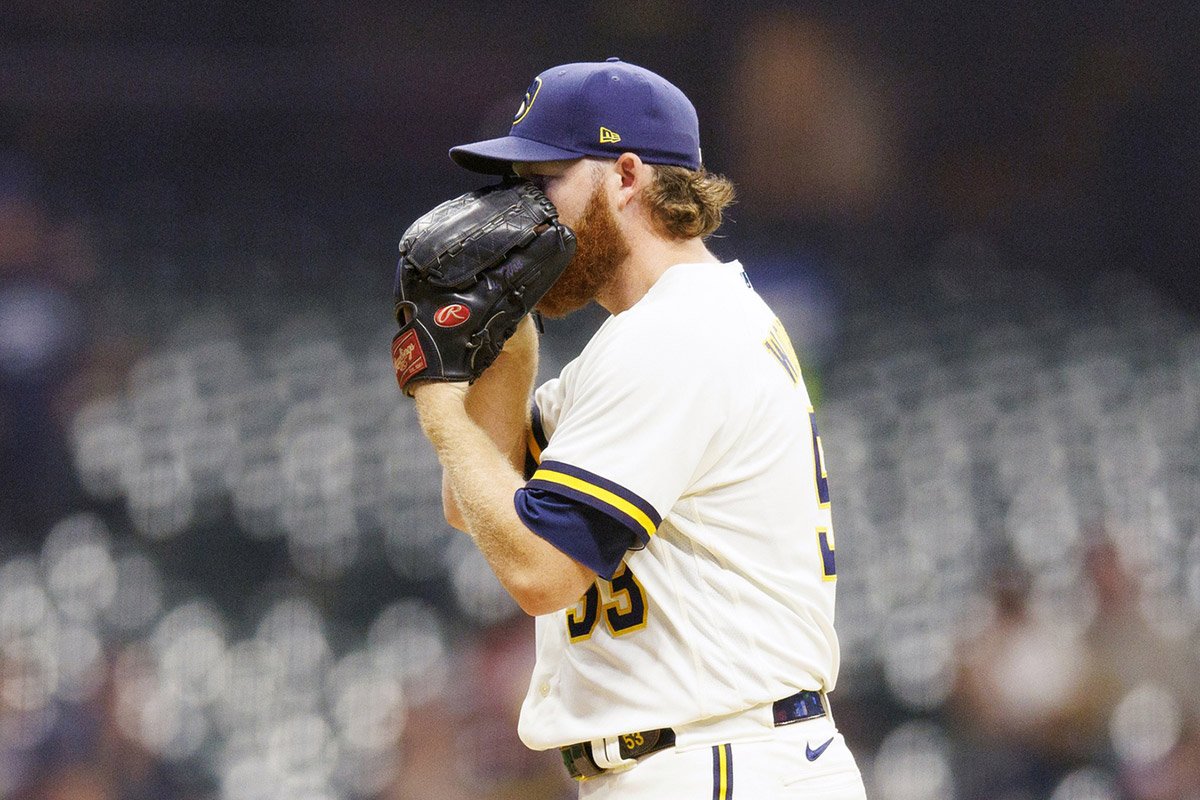 After a subscapular strain sent him to the 60-day IL in April, Brandon Woodruff returned to the major league roster in August, dominating and posting a 2.28 ERA and 0.82 WHIP over the 67 innings he could pitch. It seemed like he hadn’t lost a step, and he gave fans a glimpse of what could’ve been had he been healthy all year. In a Herculean effort, he pitched a complete game shutout against the Miami Marlins in September. Unfortunately, his comeback story took a dark turn on October 2nd when the subscapular injury that sidelined him earlier in the year returned and caused him to miss the entire Wild Card Series. If Woodruff had been present for the postseason, perhaps the Brewers could’ve avoided an early first-round exit at the hands of the Arizona Diamondbacks. The procedure aimed to repair the anterior capsule in his right shoulder, a potential long-term fix to what seems to be a chronic issue now. Woodruff is expected to return to action in the second half of the 2024 season if he can return during that year. His future is now in question, as the injury could not have come at a more tragic time. Brandon Woodruff will be eligible for arbitration in 2024 and was labeled a potential trade piece heading into this offseason. Still, questions have shifted from whether he’ll be playing baseball in Milwaukee to whether he’ll be playing baseball at all. Furthermore, he will be a free agent in 2025, but given the long layoff he’ll have before negotiations start, he’ll likely have a hard time signing the deal he was hoping for. Will he be seen as an injury risk? Is he still capable of giving a team the 150+ innings they’d want out of a frontline starter every year? The blue-sky scenario would be that he makes a miraculous recovery, returns shortly after the All-Star Break, and picks up where he left off, striking out opposing batters with extreme prejudice and going deep into games. The gray-sky scenario is that he becomes a shadow of his former self, unable to generate the same velocity or exercise the same command as before, similar to pitchers like Noah Syndergaard. With more and more pitchers going under the knife and mixed results thus far, it’s hard to say. Regardless of the true outcome, the Brewers front office undoubtedly has a difficult decision to make, and Woodruff’s fate, at least for the next few years, is in their hands.
 -
Adding onto the pile of unfortunate Brewers news following a disappointing playoff run, it was reported that Brandon Woodruff underwent surgery to fix his right shoulder, potentially causing him to miss the entirety of the 2024 season. Image courtesy of © Jeff Hanisch-USA TODAY Sports Adding onto the pile of unfortunate Brewers news following a disappointing playoff run, it was reported that Brandon Woodruff underwent surgery to fix his right shoulder, potentially causing him to miss the entirety of the 2024 season. After a subscapular strain sent him to the 60-day IL in April, Brandon Woodruff returned to the major league roster in August, dominating and posting a 2.28 ERA and 0.82 WHIP over the 67 innings he could pitch. It seemed like he hadn’t lost a step, and he gave fans a glimpse of what could’ve been had he been healthy all year. In a Herculean effort, he pitched a complete game shutout against the Miami Marlins in September. Unfortunately, his comeback story took a dark turn on October 2nd when the subscapular injury that sidelined him earlier in the year returned and caused him to miss the entire Wild Card Series. If Woodruff had been present for the postseason, perhaps the Brewers could’ve avoided an early first-round exit at the hands of the Arizona Diamondbacks. The procedure aimed to repair the anterior capsule in his right shoulder, a potential long-term fix to what seems to be a chronic issue now. Woodruff is expected to return to action in the second half of the 2024 season if he can return during that year. His future is now in question, as the injury could not have come at a more tragic time. Brandon Woodruff will be eligible for arbitration in 2024 and was labeled a potential trade piece heading into this offseason. Still, questions have shifted from whether he’ll be playing baseball in Milwaukee to whether he’ll be playing baseball at all. Furthermore, he will be a free agent in 2025, but given the long layoff he’ll have before negotiations start, he’ll likely have a hard time signing the deal he was hoping for. Will he be seen as an injury risk? Is he still capable of giving a team the 150+ innings they’d want out of a frontline starter every year? The blue-sky scenario would be that he makes a miraculous recovery, returns shortly after the All-Star Break, and picks up where he left off, striking out opposing batters with extreme prejudice and going deep into games. The gray-sky scenario is that he becomes a shadow of his former self, unable to generate the same velocity or exercise the same command as before, similar to pitchers like Noah Syndergaard. With more and more pitchers going under the knife and mixed results thus far, it’s hard to say. Regardless of the true outcome, the Brewers front office undoubtedly has a difficult decision to make, and Woodruff’s fate, at least for the next few years, is in their hands. View full article
-
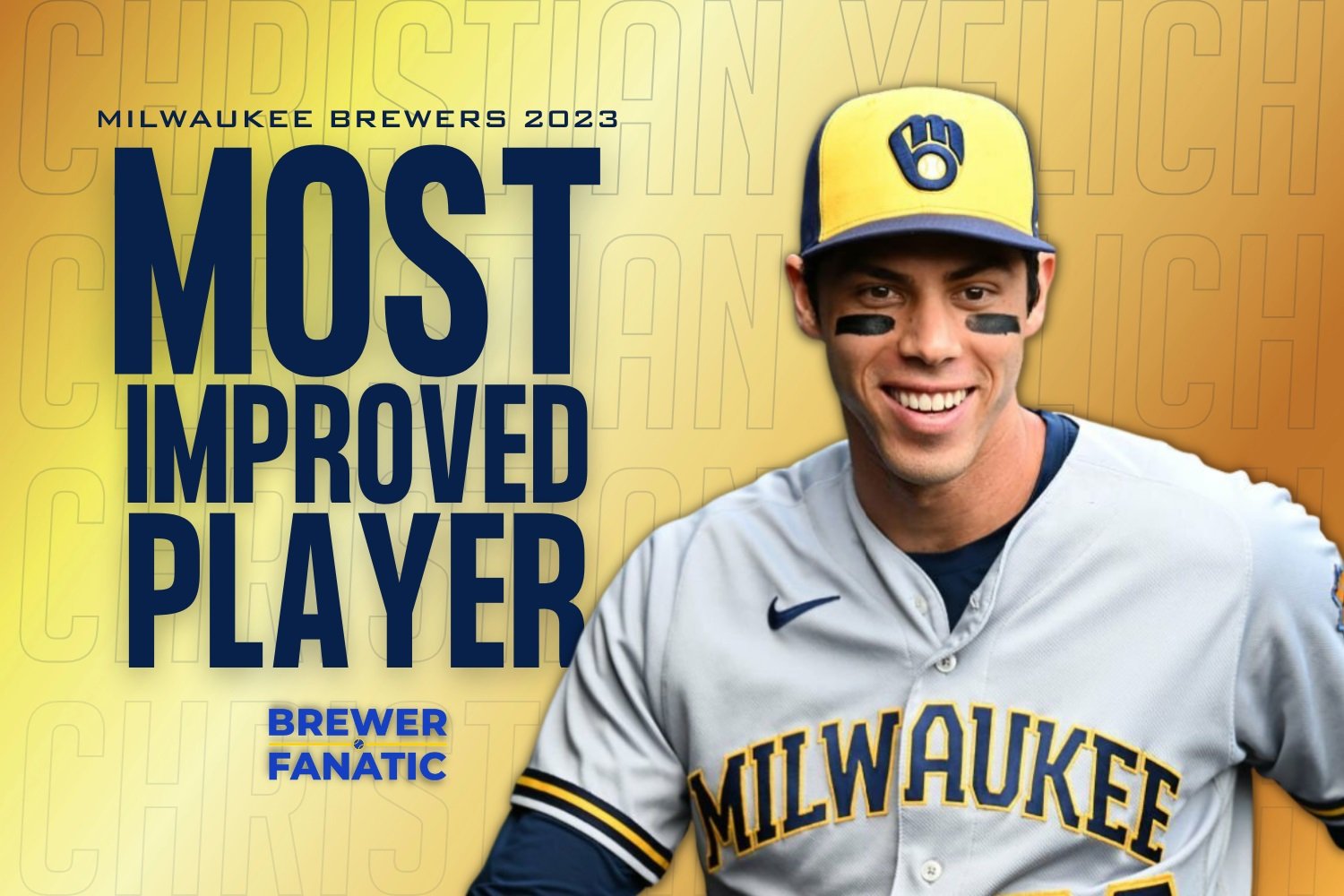 Christian Yelich Like the old metal slide at your local playground, Yelich was piping at the beginning of the summer. Despite his inability to sustain it through the remainder of the season, his overall slash line of .278/.370/.447 was a direct upgrade over his 2022 campaign, improving in every offensive category. His .818 OPS and 124 OPS+ were the best since his monstrous 2019 season. The new rules also allowed him to steal 28 bases, nearly matching his single-season best of 30. That, combined with a significant boost to his fielding range, lifted him to 3.6 rWAR in 2023, 0.9 more than the previous year and third most on the team. At this point, I think it’s safe to say we’re probably not going to see 1,000+ OPS Christian Yelich ever again. The best we can hope for is a consistent ~.800 OPS with decent defense and not much else. He’s not quite the $215 million superstar Milwaukee fans thought they were getting, but he saw a boost in performance nonetheless. Bryse Wilson Bryse Wilson came to Milwaukee from the Pittsburgh Pirates in exchange for cash considerations. Expectations were low after a 2022 season that saw him post a 5.52 ERA over 115 ⅔ innings. Still, the geniuses in the Brewers’ pitching development team turned him from a starter into a long reliever. What followed was the best season of his career by far. Wilson’s ERA improved drastically to 2.58 over 76 ⅔ innings, often coming in for several innings at a time. He was still the same pitcher with below-average fastball velocity and difficulty striking out opposing batters. However, adapting his style to pitch to contact was the secret sauce that turned him into an integral part of the second-best bullpen in MLB. By utilizing his cutter more often for weak contact, his average exit velocity decreased by 2.8mph, and his fly ball rate increased by 5.5%. The cutter went from his least-used pitch in 2022 to his second-most pitch in 2023. Hoby Milner One does not simply mention standouts within one of the best bullpens in baseball without mentioning Hoby Milner. Last year, Milner was a relatively average reliever with a 3.76 ERA and 1.18 WHIP. This year, he became one of the best arms in the sport. Finally, figuring out how to best utilize his low velocity and strange delivery, Milner’s 2023 ERA of 1.82 and WHIP of 0.96 are comparable to some of the best relievers in the sport. With an average fastball velocity of 88.5mph, which places him comfortably in the second percentile, his strikeout and whiff numbers are below average. However, his exceptional walk rate (5.2%, 92nd percentile) and strong ability to induce weak contact synergized perfectly with the best infield defense in the league. To illustrate this point, his FIP was 3.13, significantly higher than his actual ERA. Hoby the hero was a perfect fit with this Brewers team. Honorable Mentions Some other players saw bumps in performance, but not as much as the three mentioned above. Freddy Peralta’s cumulative season stats seem like more of a regression from the previous season, but his second half tells the real story. His 2.81 ERA, 0.88 WHIP, and 12.6 K/9 over 73 ⅔ innings after the All-Star break was the form Brewers fans had been searching for since his career-best 2021 season. Joel Payamps followed a similar path as Bryse Wilson, coming over from the Oakland Athletics in the three-team trade that included the Atlanta Braves and gave Milwaukee William Contreras and pitching prospect Justin Yeager. His ERA improved from 3.23 to 2.55, and his K% went from 17.0% to 26.8%, with improvements in nearly all of his pitching peripherals. Colin Rea spent his 2022 season in NPB, pitching to an unremarkable 4.14 ERA and 1.14 WHIP over 100 innings in the Japanese Pacific League. After signing a minor league contract with the Brewers to start a second stint with the organization, he was called up in early April and became a long-term part of the starting rotation. He was a valuable arm in the back of the rotation, posting a 4.55 ERA and a 1.19 WHIP over 124 ⅔ innings.
 -
While it wasn’t the season we were hoping for, there were definitely some individual improvements over last season that deserve to be mentioned. Here are some of the players who took the biggest steps forward. Image courtesy of Thieres Rabelo & Brewer Fanatic While it wasn’t the season we were hoping for, there were definitely some individual improvements over last season that deserve to be mentioned. Here are some of the players who took the biggest steps forward. Christian Yelich Like the old metal slide at your local playground, Yelich was piping at the beginning of the summer. Despite his inability to sustain it through the remainder of the season, his overall slash line of .278/.370/.447 was a direct upgrade over his 2022 campaign, improving in every offensive category. His .818 OPS and 124 OPS+ were the best since his monstrous 2019 season. The new rules also allowed him to steal 28 bases, nearly matching his single-season best of 30. That, combined with a significant boost to his fielding range, lifted him to 3.6 rWAR in 2023, 0.9 more than the previous year and third most on the team. At this point, I think it’s safe to say we’re probably not going to see 1,000+ OPS Christian Yelich ever again. The best we can hope for is a consistent ~.800 OPS with decent defense and not much else. He’s not quite the $215 million superstar Milwaukee fans thought they were getting, but he saw a boost in performance nonetheless. Bryse Wilson Bryse Wilson came to Milwaukee from the Pittsburgh Pirates in exchange for cash considerations. Expectations were low after a 2022 season that saw him post a 5.52 ERA over 115 ⅔ innings. Still, the geniuses in the Brewers’ pitching development team turned him from a starter into a long reliever. What followed was the best season of his career by far. Wilson’s ERA improved drastically to 2.58 over 76 ⅔ innings, often coming in for several innings at a time. He was still the same pitcher with below-average fastball velocity and difficulty striking out opposing batters. However, adapting his style to pitch to contact was the secret sauce that turned him into an integral part of the second-best bullpen in MLB. By utilizing his cutter more often for weak contact, his average exit velocity decreased by 2.8mph, and his fly ball rate increased by 5.5%. The cutter went from his least-used pitch in 2022 to his second-most pitch in 2023. Hoby Milner One does not simply mention standouts within one of the best bullpens in baseball without mentioning Hoby Milner. Last year, Milner was a relatively average reliever with a 3.76 ERA and 1.18 WHIP. This year, he became one of the best arms in the sport. Finally, figuring out how to best utilize his low velocity and strange delivery, Milner’s 2023 ERA of 1.82 and WHIP of 0.96 are comparable to some of the best relievers in the sport. With an average fastball velocity of 88.5mph, which places him comfortably in the second percentile, his strikeout and whiff numbers are below average. However, his exceptional walk rate (5.2%, 92nd percentile) and strong ability to induce weak contact synergized perfectly with the best infield defense in the league. To illustrate this point, his FIP was 3.13, significantly higher than his actual ERA. Hoby the hero was a perfect fit with this Brewers team. Honorable Mentions Some other players saw bumps in performance, but not as much as the three mentioned above. Freddy Peralta’s cumulative season stats seem like more of a regression from the previous season, but his second half tells the real story. His 2.81 ERA, 0.88 WHIP, and 12.6 K/9 over 73 ⅔ innings after the All-Star break was the form Brewers fans had been searching for since his career-best 2021 season. Joel Payamps followed a similar path as Bryse Wilson, coming over from the Oakland Athletics in the three-team trade that included the Atlanta Braves and gave Milwaukee William Contreras and pitching prospect Justin Yeager. His ERA improved from 3.23 to 2.55, and his K% went from 17.0% to 26.8%, with improvements in nearly all of his pitching peripherals. Colin Rea spent his 2022 season in NPB, pitching to an unremarkable 4.14 ERA and 1.14 WHIP over 100 innings in the Japanese Pacific League. After signing a minor league contract with the Brewers to start a second stint with the organization, he was called up in early April and became a long-term part of the starting rotation. He was a valuable arm in the back of the rotation, posting a 4.55 ERA and a 1.19 WHIP over 124 ⅔ innings. View full article
-
The 2023 Milwaukee Brewers Unsung Hero
Jason Wang replied to Jake McKibbin's topic in Brewer Fanatic Front Page News
I, for one, was singing about Hoby for all 162 games of the regular season!- 1 reply
-
- 1
-

-
- colin rea
- andruw monasterio
- (and 2 more)
-
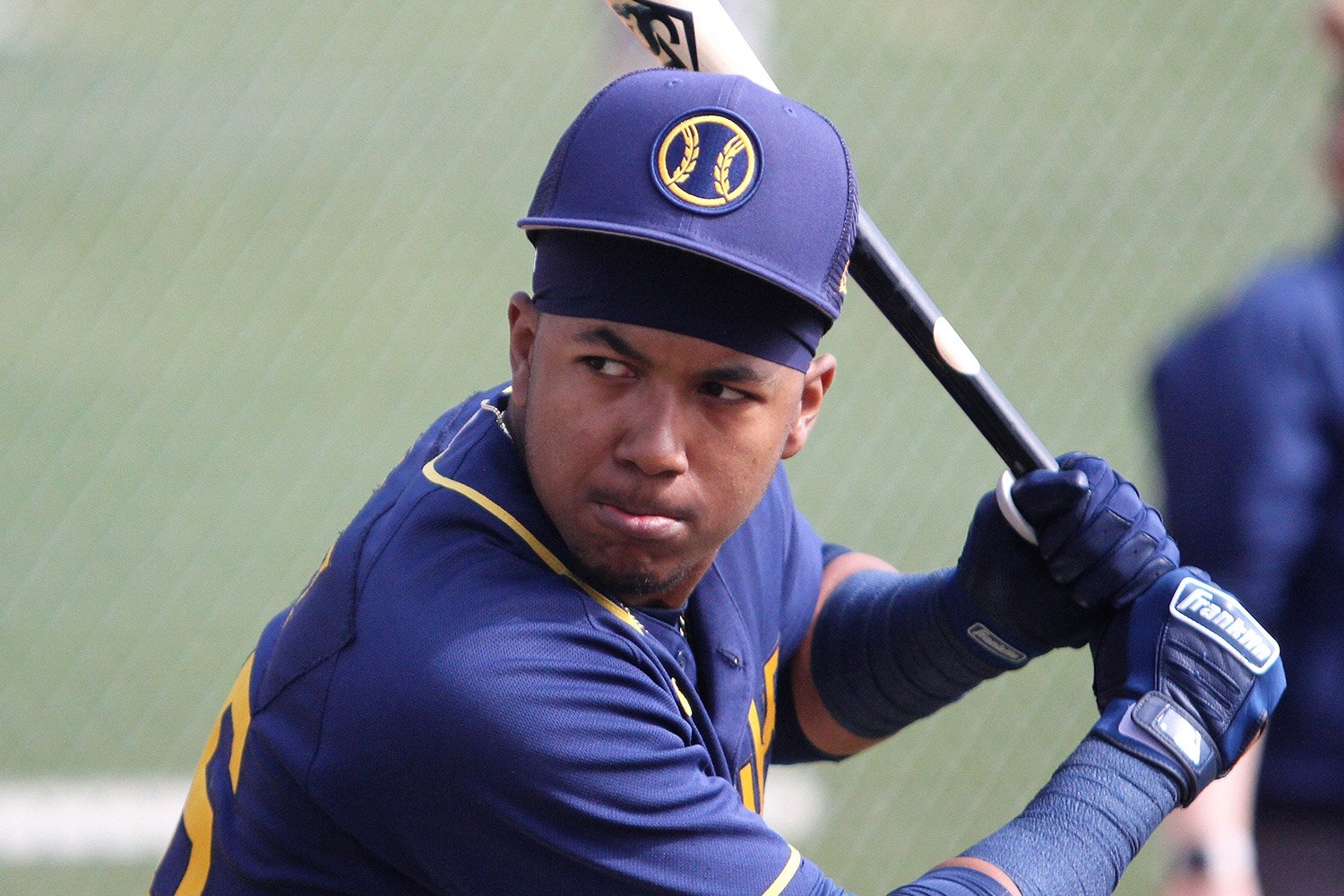 Game Results Monday, 10/2 | Mesa 8, Surprise 13 Tuesday, 10/3 | Peoria 9, Surprise 0 Wednesday, 10/4 | Surprise 1, Glendale 7 Thursday, 10/5 | Surprise 5, Salt River 8 Friday, 10/6 | Surprise 9, Scottsdale 6 Saturday, 10/7 | Surprise 7, Glendale 2 After a strong start against the Mesa Solar Sox, the Saguaros lost three games and were outscored 24-6 over that same span. Nonetheless, the Brewers' prospects performed well, with standout performances from position players and pitchers alike. 2B Eric Brown Jr. Week: 5-for-18, 2B, 3B, BB, 2 RBI, 5K (4 games) Eric Brown Jr. split his time evenly between shortstop and second base across four games this week, gradually moving up in the lineup to the leadoff spot. He played a role in the Saguaros’ first win of the week, netting two RBI and hitting a triple. Throughout the remainder of the week, he accumulated three more hits and a double across the last three games. He’s currently slashing .278/.316/.444. 1B Wes Clarke Week: 6-for-16, 3B, 2 HR, 3 BB, 9 RBI, 6 K (4 games) Wes Clarke had an exceptional week, posting an OPS of 1.349, the fourth-best across the entire AFL thus far. His momentum started in the team’s first win over the Mesa Solar Sox, accumulating eight total bases and four RBI. In the last game of the week, Clarke had a similar performance, accumulating five total bases and hitting a three-run homer on his way to another four RBI. OF Hendry Mendez Week: 2-for-11, 2B, BB, 3 K (3 games) Lefty outfielder Hendry Mendez patrolled both corners of the outfield while hitting two doubles in three games. He received a slightly smaller sample size of at-bats but is working on finding his swing and refining his approach at the plate. Mendez is currently slashing .182/.250.364. RHP Joseph Hernandez Week: 2.1 IP, 1 H, 1 R, 4 BB, 2 K Joseph Hernandez appeared in one game, pitching 2 ⅓ innings in relief in the Saguaros’ 7-2 victory over the Glendale Desert Dogs. He gave up just one hit and threw 59 pitches, 31 of which were strikes (52.5%). He struggled a bit with control, walking four batters, hitting two, and throwing a wild pitch, but despite the slightly increased traffic, he held Glendale to just one unearned run, allowing him to keep his spotless ERA at 0.00. LHP Justin King Week: 1.1 IP, 1 H, 1 R, 1 BB, 1 K Justin King earned the final four outs for the Saguaros in the team’s third game of the week, taking the mound in the eighth inning. His one earned run came from a double by Rowdey Jordan that scored Corey Rosier, who had stolen his way into scoring position. Despite falling behind early, King was able to retire the next three batters in order. King threw 22 pitches, 12 of which were strikes (54.5%). LHP Adam Seminaris Week: 4.0 IP, 1 H, 0 R, 0 BB, 7 K Adam Seminaris had one of the best pitching performances out of all the Saguaros this week. In the week's final game against the Desert Dogs, Seminaris entered the game in the second inning and allowed just one baserunner over four innings while striking out seven. He tossed 52 pitches and 36 strikes (69.2%). Seminaris had the second-greatest workload this week, trailing only the Blue Jays’ Ricky Tiedemann. He’s currently tied with Tiedemann for the most strikeouts on the team. RHP Shane Smith Week: 1.1 IP, 1 H, 0 R, 0 BB, 2 K Shane Smith kept it simple this week, appearing in the ninth inning of the Saguaro’s 9-0 loss to the Peoria Javelinas. Despite not being in a save situation, Smith pitched like a top-tier closer, conceding just one hit and striking out two in 1 ⅓ innings of relief. He threw 19 pitches, 15 of which were strikes (78.9%). Like teammates Hernandez and Seminaris, he’s kept his 0.00 ERA for the week. RHP Justin Yeager Week: 1.0 IP, 4 H, 4 R, 0 BB, 0 K, L Justin Yeager worked through a tough inning against the Glendale Desert Dogs. After four consecutive hits, including a double and a leadoff home run, Yeager got a flyout and two groundouts. Despite the amount of baserunners, he was surprisingly efficient and used just 18 pitches, 14 of which were strikes (77.8%).
- 2 comments
-
- 2
-

-
- eric brown jr
- wes clarke
- (and 3 more)
-
With the Brewers out of playoff contention, eyes have redirected to the Arizona Fall League, where eight prospects were sent to the Surprise Saguaros - five pitchers and three position players. Image courtesy of © Curt Hogg / Milwaukee Journal Sentinel / USA TODAY NETWORK With the Brewers out of playoff contention, eyes have redirected to the Arizona Fall League, where eight prospects were sent to the Surprise Saguaros - five pitchers and three position players. Game Results Monday, 10/2 | Mesa 8, Surprise 13 Tuesday, 10/3 | Peoria 9, Surprise 0 Wednesday, 10/4 | Surprise 1, Glendale 7 Thursday, 10/5 | Surprise 5, Salt River 8 Friday, 10/6 | Surprise 9, Scottsdale 6 Saturday, 10/7 | Surprise 7, Glendale 2 After a strong start against the Mesa Solar Sox, the Saguaros lost three games and were outscored 24-6 over that same span. Nonetheless, the Brewers' prospects performed well, with standout performances from position players and pitchers alike. 2B Eric Brown Jr. Week: 5-for-18, 2B, 3B, BB, 2 RBI, 5K (4 games) Eric Brown Jr. split his time evenly between shortstop and second base across four games this week, gradually moving up in the lineup to the leadoff spot. He played a role in the Saguaros’ first win of the week, netting two RBI and hitting a triple. Throughout the remainder of the week, he accumulated three more hits and a double across the last three games. He’s currently slashing .278/.316/.444. 1B Wes Clarke Week: 6-for-16, 3B, 2 HR, 3 BB, 9 RBI, 6 K (4 games) Wes Clarke had an exceptional week, posting an OPS of 1.349, the fourth-best across the entire AFL thus far. His momentum started in the team’s first win over the Mesa Solar Sox, accumulating eight total bases and four RBI. In the last game of the week, Clarke had a similar performance, accumulating five total bases and hitting a three-run homer on his way to another four RBI. OF Hendry Mendez Week: 2-for-11, 2B, BB, 3 K (3 games) Lefty outfielder Hendry Mendez patrolled both corners of the outfield while hitting two doubles in three games. He received a slightly smaller sample size of at-bats but is working on finding his swing and refining his approach at the plate. Mendez is currently slashing .182/.250.364. RHP Joseph Hernandez Week: 2.1 IP, 1 H, 1 R, 4 BB, 2 K Joseph Hernandez appeared in one game, pitching 2 ⅓ innings in relief in the Saguaros’ 7-2 victory over the Glendale Desert Dogs. He gave up just one hit and threw 59 pitches, 31 of which were strikes (52.5%). He struggled a bit with control, walking four batters, hitting two, and throwing a wild pitch, but despite the slightly increased traffic, he held Glendale to just one unearned run, allowing him to keep his spotless ERA at 0.00. LHP Justin King Week: 1.1 IP, 1 H, 1 R, 1 BB, 1 K Justin King earned the final four outs for the Saguaros in the team’s third game of the week, taking the mound in the eighth inning. His one earned run came from a double by Rowdey Jordan that scored Corey Rosier, who had stolen his way into scoring position. Despite falling behind early, King was able to retire the next three batters in order. King threw 22 pitches, 12 of which were strikes (54.5%). LHP Adam Seminaris Week: 4.0 IP, 1 H, 0 R, 0 BB, 7 K Adam Seminaris had one of the best pitching performances out of all the Saguaros this week. In the week's final game against the Desert Dogs, Seminaris entered the game in the second inning and allowed just one baserunner over four innings while striking out seven. He tossed 52 pitches and 36 strikes (69.2%). Seminaris had the second-greatest workload this week, trailing only the Blue Jays’ Ricky Tiedemann. He’s currently tied with Tiedemann for the most strikeouts on the team. RHP Shane Smith Week: 1.1 IP, 1 H, 0 R, 0 BB, 2 K Shane Smith kept it simple this week, appearing in the ninth inning of the Saguaro’s 9-0 loss to the Peoria Javelinas. Despite not being in a save situation, Smith pitched like a top-tier closer, conceding just one hit and striking out two in 1 ⅓ innings of relief. He threw 19 pitches, 15 of which were strikes (78.9%). Like teammates Hernandez and Seminaris, he’s kept his 0.00 ERA for the week. RHP Justin Yeager Week: 1.0 IP, 4 H, 4 R, 0 BB, 0 K, L Justin Yeager worked through a tough inning against the Glendale Desert Dogs. After four consecutive hits, including a double and a leadoff home run, Yeager got a flyout and two groundouts. Despite the amount of baserunners, he was surprisingly efficient and used just 18 pitches, 14 of which were strikes (77.8%). View full article
- 2 replies
-
- 1
-
-
- eric brown jr
- wes clarke
- (and 3 more)
-
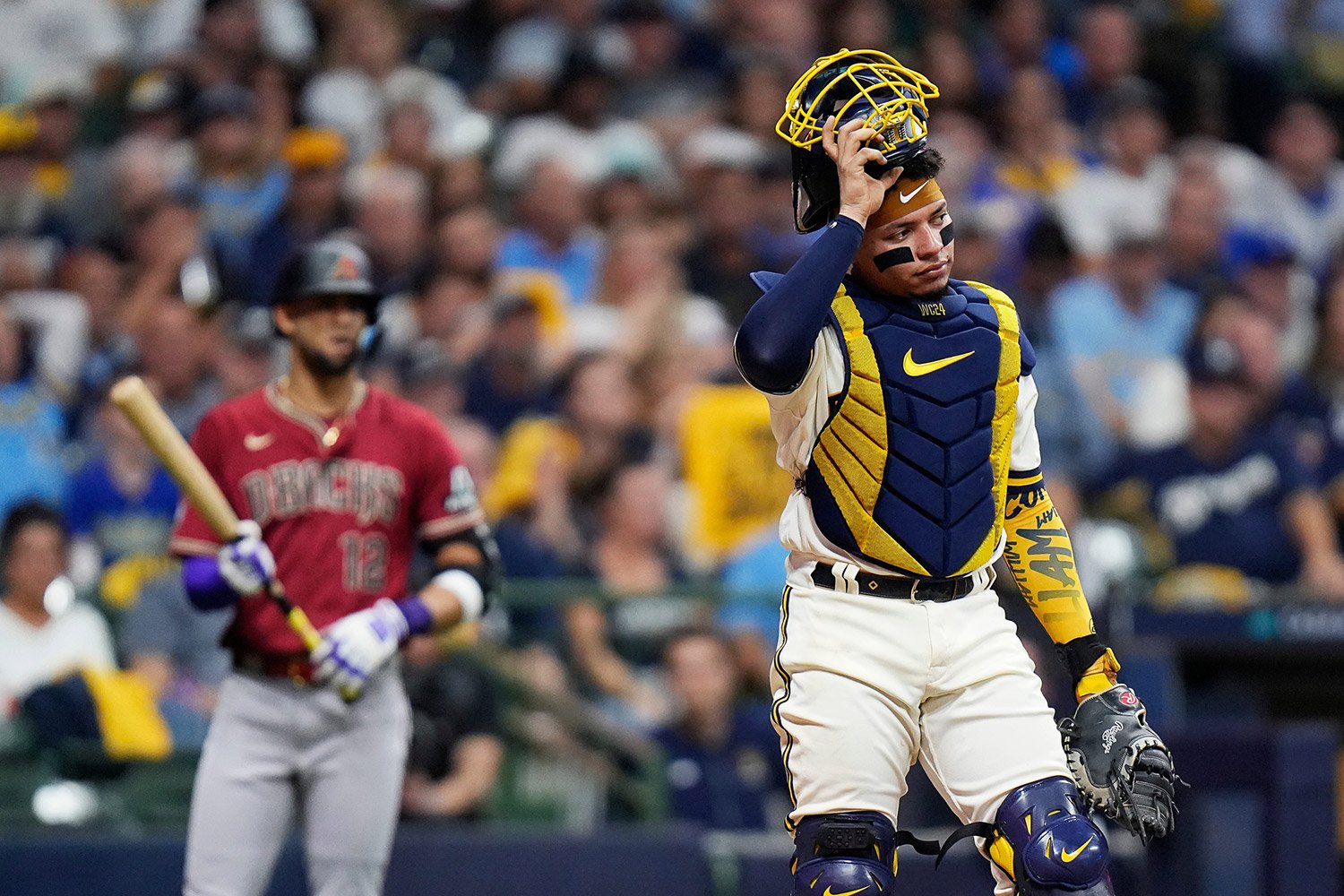 Box Score Starting Pitcher: Freddy Peralta - 5.0 IP, 3 H, 4 ER, 2 BB, 5 K, 85 pitches, 52 strikes (61.2%) Home Runs: None Top 3 WPA: Mark Canha (.133), Christian Yelich (.116), Hoby Milner (.082) Bottom 3 WPA: Freddy Peralta (-.214), Sal Frelick (-.202), Abner Uribe (-.168) Win Probability Chart (via FanGraphs) Freddy Falls Short In Five Like Corbin Burnes before him, Freddy Peralta had a great beginning to his start. In the first four innings, he allowed just one baserunner, Ketel Marte, on a walk. He also recorded five strikeouts. After two outs in the fifth inning, Alek Thomas broke up the no-hitter in a big way, knocking in a solo home run to put the Diamondbacks on the board. Peralta’s performance hit a brick wall in the sixth inning. Following a walk by Geraldo Perdomo, a double by Corbin Carroll, and a single by Ketel Marte, Arizona scored two more runs and took the lead. Subsequently, Peralta was replaced by Abner Uribe before recording a single out in the inning. It was absolutely not the performance Milwaukee needed out of their starting pitcher and was reminiscent of how the team lost the first game of the series. If the Brewers had been able to save more bullpen arms from the prior game, perhaps he would’ve been pulled earlier before the going got rough. News Flash: The Brewers Offense Is Not Good Like the first game of the series, Milwaukee got to work early. They loaded the bases off of two singles by Christian Yelich and Mark Canha as well as a walk by Carlos Santana. A sacrifice fly by Sal Frelick plated the Brewers’ first run and a single by Willy Adames plated the second. Unfortunately, that was all they could really muster. Diamondbacks pitchers faced the minimum in four innings. Milwaukee had an excellent opportunity in the eighth inning, loading the bases on singles from Christian Yelich, William Contreras, and Mark Canha. With just one out, Arizona called in reliever Andrew Saalfrank who got two forceouts from Sal Frelick and Willy Adames, closing the window on a Brewers’ comeback. Hoby the Hero After inheriting runners on first and second, Abner Uribe conceded a single to Tommy Pham and a walk to Jose Herrera. With runners on second and third, a wild pitch by Abner Uribe allowed Tommy Pham to score Arizona’s fourth run. Lourdes Gurriel Jr. kept up the Diamondback onslaught by hitting a one-run single, leading Uribe to be replaced by Hoby Milner. A double play by Alek Thomas ended the four-run rally. Milner extended his relief appearance into the seventh inning, getting a flyout and two strikeouts. He would’ve retired the Diamondbacks in order if Corbin Carroll had been a smidge slower, his speed barely allowing him to beat out an infield throw from Josh Donaldson. Milner has been incredible thus far, conceding just two hits, no walks, and no earned runs in his first postseason run. Megill Steps Up in the Ninth With a seemingly endless barrage of triple-digit fastballs, Trevor Megill stepped up in the final inning to give the team its best chance to comeback and walk things off. He struck out Lourdes Gurriel Jr., Alek Thomas, and Evan Longoria, leaving things purely in the hands of the lineup. The Last Stand Facing Paul Sewald for the second day in a row, Josh Donaldson was the first hitter at the plate. Putting his body on the line, he took an inside pitch to get a free base. Andruw Monasterio struck out looking and Tyrone Taylor hit a liner that just bounced off the glove of Geraldo Perdomo. Unfortunately for Donaldson, he hesitated a second too long attempting to tag up and was still caught out at second on a forceout. Christian Yelich kept things alive with a double to bring Contreras to the plate as the tying runner. Sadly, he would strike out on three pitches, ending the Brewers season in the most disappointing way. Bullpen Usage Spreadsheet SAT SUN MON TUE WED TOT Uribe 27 0 0 15 19 61 Milner 17 0 0 6 21 44 Williams 12 0 0 31 0 43 Megill 16 0 0 0 15 31 Payamps 11 0 0 18 0 29 Peguero 0 0 0 13 11 24 B. Wilson 0 0 0 6 0 6 Chafin 0 0 0 0 0 0
 -
Brewers 2, Diamondbacks 5: It's All Over
Jason Wang posted a topic in Brewer Fanatic Front Page News
The Milwaukee Brewers end their 2023 season with a whimper, getting swept by the Arizona Diamondbacks. Image courtesy of © Jovanny Hernandez / Milwaukee Journal Sentinel / USA TODAY NETWORK The Milwaukee Brewers end their 2023 season with a whimper, getting swept by the Arizona Diamondbacks. Box Score Starting Pitcher: Freddy Peralta - 5.0 IP, 3 H, 4 ER, 2 BB, 5 K, 85 pitches, 52 strikes (61.2%) Home Runs: None Top 3 WPA: Mark Canha (.133), Christian Yelich (.116), Hoby Milner (.082) Bottom 3 WPA: Freddy Peralta (-.214), Sal Frelick (-.202), Abner Uribe (-.168) Win Probability Chart (via FanGraphs) Freddy Falls Short In Five Like Corbin Burnes before him, Freddy Peralta had a great beginning to his start. In the first four innings, he allowed just one baserunner, Ketel Marte, on a walk. He also recorded five strikeouts. After two outs in the fifth inning, Alek Thomas broke up the no-hitter in a big way, knocking in a solo home run to put the Diamondbacks on the board. Peralta’s performance hit a brick wall in the sixth inning. Following a walk by Geraldo Perdomo, a double by Corbin Carroll, and a single by Ketel Marte, Arizona scored two more runs and took the lead. Subsequently, Peralta was replaced by Abner Uribe before recording a single out in the inning. It was absolutely not the performance Milwaukee needed out of their starting pitcher and was reminiscent of how the team lost the first game of the series. If the Brewers had been able to save more bullpen arms from the prior game, perhaps he would’ve been pulled earlier before the going got rough. News Flash: The Brewers Offense Is Not Good Like the first game of the series, Milwaukee got to work early. They loaded the bases off of two singles by Christian Yelich and Mark Canha as well as a walk by Carlos Santana. A sacrifice fly by Sal Frelick plated the Brewers’ first run and a single by Willy Adames plated the second. Unfortunately, that was all they could really muster. Diamondbacks pitchers faced the minimum in four innings. Milwaukee had an excellent opportunity in the eighth inning, loading the bases on singles from Christian Yelich, William Contreras, and Mark Canha. With just one out, Arizona called in reliever Andrew Saalfrank who got two forceouts from Sal Frelick and Willy Adames, closing the window on a Brewers’ comeback. Hoby the Hero After inheriting runners on first and second, Abner Uribe conceded a single to Tommy Pham and a walk to Jose Herrera. With runners on second and third, a wild pitch by Abner Uribe allowed Tommy Pham to score Arizona’s fourth run. Lourdes Gurriel Jr. kept up the Diamondback onslaught by hitting a one-run single, leading Uribe to be replaced by Hoby Milner. A double play by Alek Thomas ended the four-run rally. Milner extended his relief appearance into the seventh inning, getting a flyout and two strikeouts. He would’ve retired the Diamondbacks in order if Corbin Carroll had been a smidge slower, his speed barely allowing him to beat out an infield throw from Josh Donaldson. Milner has been incredible thus far, conceding just two hits, no walks, and no earned runs in his first postseason run. Megill Steps Up in the Ninth With a seemingly endless barrage of triple-digit fastballs, Trevor Megill stepped up in the final inning to give the team its best chance to comeback and walk things off. He struck out Lourdes Gurriel Jr., Alek Thomas, and Evan Longoria, leaving things purely in the hands of the lineup. The Last Stand Facing Paul Sewald for the second day in a row, Josh Donaldson was the first hitter at the plate. Putting his body on the line, he took an inside pitch to get a free base. Andruw Monasterio struck out looking and Tyrone Taylor hit a liner that just bounced off the glove of Geraldo Perdomo. Unfortunately for Donaldson, he hesitated a second too long attempting to tag up and was still caught out at second on a forceout. Christian Yelich kept things alive with a double to bring Contreras to the plate as the tying runner. Sadly, he would strike out on three pitches, ending the Brewers season in the most disappointing way. Bullpen Usage Spreadsheet SAT SUN MON TUE WED TOT Uribe 27 0 0 15 19 61 Milner 17 0 0 6 21 44 Williams 12 0 0 31 0 43 Megill 16 0 0 0 15 31 Payamps 11 0 0 18 0 29 Peguero 0 0 0 13 11 24 B. Wilson 0 0 0 6 0 6 Chafin 0 0 0 0 0 0 View full article -
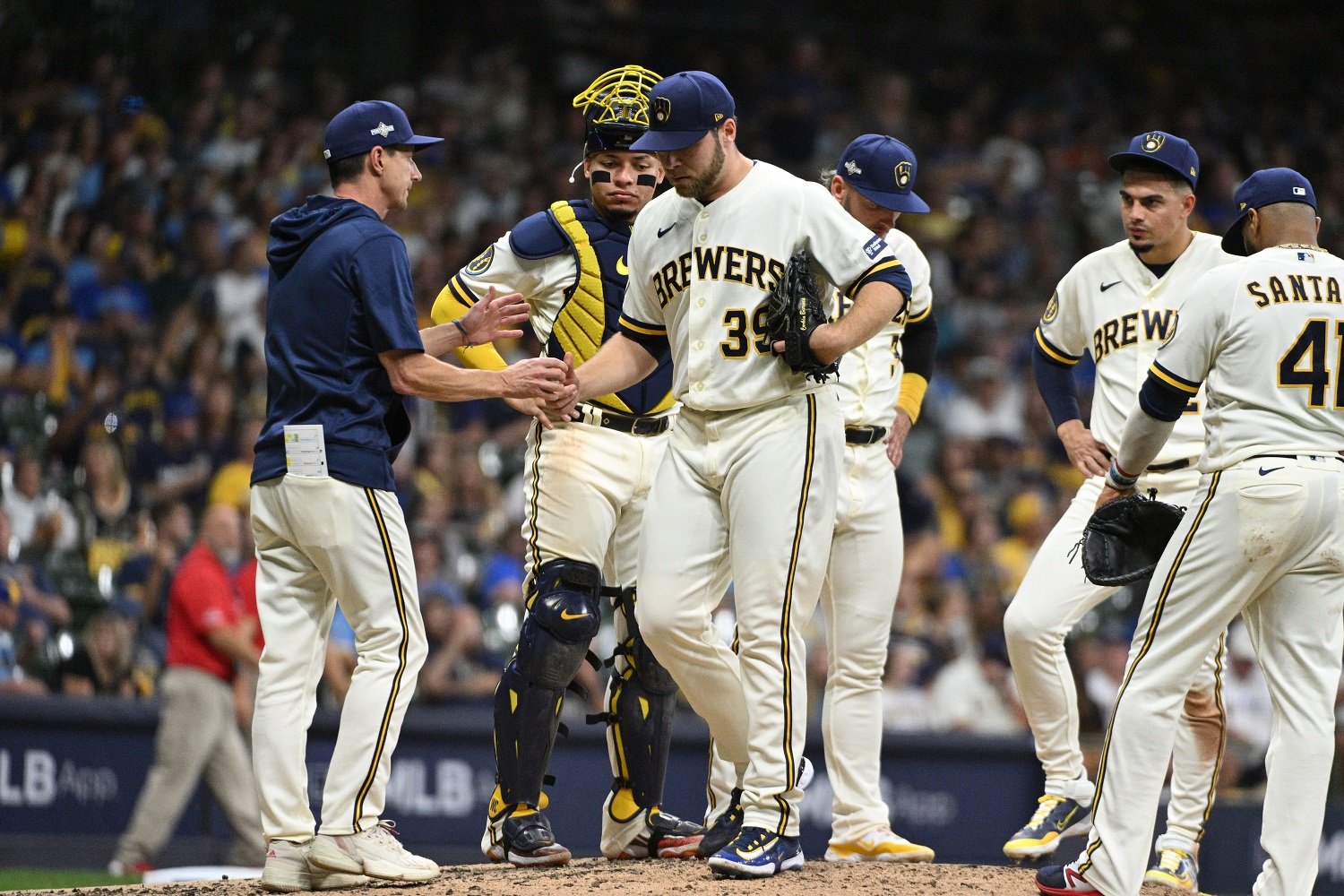 Box Score Starting Pitcher: Corbin Burnes - 4.0 IP, 5 H, 4 ER, 2 BB, 5 K, 92 pitches, 59 strikes (64.1%) Home Runs: Tyrone Taylor (1) Top 3 WPA: Willy Adames (.190), Abner Uribe (.147), Joel Payamps (.115) Bottom 3 WPA: Corbin Burnes (-.295), Tyrone Taylor (-.211), Devin Williams (-.130) Win Probability Chart (via FanGraphs) Burnes Loves The Long Ball Corbin Burnes had a strong start to his outing, utilizing his top-tier infield defense and earning three groundouts in the first inning. After a lead-off single to Christian Walker in the second, Burnes recorded a pop out and two strikeouts to keep things scoreless. Things took a dark turn in the third inning. After striking out Evan Longoria, Burnes gave up a single to Geraldo Perdomo and consecutive home runs to Corbin Carroll and Ketel Marte, giving the Diamondbacks a 3-0 lead. After escaping the third inning, Gabriel Moreno led off the fourth with yet another home run, signaling that it was time for Burnes to be pulled. After walking the first two batters in the fifth inning, Craig Counsell made the first call to the bullpen. Despite performing well early, it ended up being a relatively lukewarm performance by the team ace. Never Fear, The Bullpen Is Here Entering the game with men already on first and second with no outs, Abner Uribe quickly got to work. He got a weak grounder from Ketel Marte and struck out Tommy Pham but walked Walker to load the bases. In the highest-leverage situation thus far in his young career, Uribe induced weak contact and got Moreno to ground out, escaping the jam. Over the next four innings, Elvis Peguero, Hoby Milner, and Joel Payamps combined to keep the Diamondbacks from scoring any additional runs. Payamps and William Contreras also pulled off a flashy strike ‘em out/throw ‘em out double play in the seventh inning. Brewers Hitting Falters Late Milwaukee’s hitting has been a concern all season, but in the first two innings, it seemed like they had figured things out. In the first inning, a walk by Christian Yelich became the team’s first run after back-to-back singles by William Contreras and Carlos Santana. Josh Donaldson hit a leadoff single in the second inning and came around on Tyrone Taylor’s two-run home run, a monstrous 403-foot no-doubter to left field. He’s continuing his red-hot performance at the plate, posting an .881 OPS in August and .912 in September. The Brewers had other scoring opportunities but failed to capitalize. They loaded the bases in the third but weren’t able to plate any runners. They loaded the bases again after three consecutive singles by Sal Frelick, Willy Adames, and Josh Donaldson, but a strikeout by Brice Turang and Tyrone Taylor lineout double play put an end to that story. Milwaukee left a total of 11 runners on base and went 3-for-11 with runners in scoring position. Devin Dooms The Team Down by just one run, the appearance of Devin Williams in the top of the ninth inning was initially a welcomed sight. After all, his regular season ERA and WHIP of 1.53 and 0.92 made him one of the best closers in baseball. Unfortunately for Brewers’ fans, it wasn’t Devin’s day. He started off by walking Perdomo and Carroll. After striking out Marte on a foul tip and yet another great defensive play by Contreras to catch Perdomo stealing third, Williams needed just one more out. A wild pitch allowed Carroll to advance to third base before Williams gave up a walk to Tommy Pham, his third of the inning. After a stolen base, Christian Walker crushed a two-run double to the gap. It was the nail in the coffin, lifting the score to 6-3 in favor of the Diamondbacks. Bryse Wilson was called in for the final out, a groundout by Gabriel Moreno. What’s Next? The Crew will face off against the top of the Diamondbacks rotation, starting with Zac Gallen in Game 2. Freddy Peralta will take the mound for Milwaukee and hopefully have a better start than Burnes, especially given that six relievers were used in Game 1. The team will have to resolve its pitching issues especially given that aspect of the team is supposed to be its greatest strength. Being one game from elimination, it’s as stressful a time as any. Postgame Interviews Bullpen Usage Spreadsheet FRI SAT SUN MON TUE TOT Williams 0 12 0 0 31 43 Uribe 0 27 0 0 15 42 Payamps 0 11 0 0 18 29 B. Wilson 21 0 0 0 6 27 Milner 0 17 0 0 6 23 Megill 0 16 0 0 0 16 Peguero 0 0 0 0 13 13 Tweet Highlights
 -
In a competitive start to playoff baseball, two of the Brewers best pitchers fell short in a big way, allowing Arizona to escape with the victory and take an early lead in the Best of 3 series. Image courtesy of Michael McLoone-USA TODAY Sports In a competitive start to playoff baseball, two of the Brewers best pitchers fell short in a big way, allowing Arizona to escape with the victory and take an early lead in the Best of 3 series. Box Score Starting Pitcher: Corbin Burnes - 4.0 IP, 5 H, 4 ER, 2 BB, 5 K, 92 pitches, 59 strikes (64.1%) Home Runs: Tyrone Taylor (1) Top 3 WPA: Willy Adames (.190), Abner Uribe (.147), Joel Payamps (.115) Bottom 3 WPA: Corbin Burnes (-.295), Tyrone Taylor (-.211), Devin Williams (-.130) Win Probability Chart (via FanGraphs) Burnes Loves The Long Ball Corbin Burnes had a strong start to his outing, utilizing his top-tier infield defense and earning three groundouts in the first inning. After a lead-off single to Christian Walker in the second, Burnes recorded a pop out and two strikeouts to keep things scoreless. Things took a dark turn in the third inning. After striking out Evan Longoria, Burnes gave up a single to Geraldo Perdomo and consecutive home runs to Corbin Carroll and Ketel Marte, giving the Diamondbacks a 3-0 lead. After escaping the third inning, Gabriel Moreno led off the fourth with yet another home run, signaling that it was time for Burnes to be pulled. After walking the first two batters in the fifth inning, Craig Counsell made the first call to the bullpen. Despite performing well early, it ended up being a relatively lukewarm performance by the team ace. Never Fear, The Bullpen Is Here Entering the game with men already on first and second with no outs, Abner Uribe quickly got to work. He got a weak grounder from Ketel Marte and struck out Tommy Pham but walked Walker to load the bases. In the highest-leverage situation thus far in his young career, Uribe induced weak contact and got Moreno to ground out, escaping the jam. Over the next four innings, Elvis Peguero, Hoby Milner, and Joel Payamps combined to keep the Diamondbacks from scoring any additional runs. Payamps and William Contreras also pulled off a flashy strike ‘em out/throw ‘em out double play in the seventh inning. Brewers Hitting Falters Late Milwaukee’s hitting has been a concern all season, but in the first two innings, it seemed like they had figured things out. In the first inning, a walk by Christian Yelich became the team’s first run after back-to-back singles by William Contreras and Carlos Santana. Josh Donaldson hit a leadoff single in the second inning and came around on Tyrone Taylor’s two-run home run, a monstrous 403-foot no-doubter to left field. He’s continuing his red-hot performance at the plate, posting an .881 OPS in August and .912 in September. The Brewers had other scoring opportunities but failed to capitalize. They loaded the bases in the third but weren’t able to plate any runners. They loaded the bases again after three consecutive singles by Sal Frelick, Willy Adames, and Josh Donaldson, but a strikeout by Brice Turang and Tyrone Taylor lineout double play put an end to that story. Milwaukee left a total of 11 runners on base and went 3-for-11 with runners in scoring position. Devin Dooms The Team Down by just one run, the appearance of Devin Williams in the top of the ninth inning was initially a welcomed sight. After all, his regular season ERA and WHIP of 1.53 and 0.92 made him one of the best closers in baseball. Unfortunately for Brewers’ fans, it wasn’t Devin’s day. He started off by walking Perdomo and Carroll. After striking out Marte on a foul tip and yet another great defensive play by Contreras to catch Perdomo stealing third, Williams needed just one more out. A wild pitch allowed Carroll to advance to third base before Williams gave up a walk to Tommy Pham, his third of the inning. After a stolen base, Christian Walker crushed a two-run double to the gap. It was the nail in the coffin, lifting the score to 6-3 in favor of the Diamondbacks. Bryse Wilson was called in for the final out, a groundout by Gabriel Moreno. What’s Next? The Crew will face off against the top of the Diamondbacks rotation, starting with Zac Gallen in Game 2. Freddy Peralta will take the mound for Milwaukee and hopefully have a better start than Burnes, especially given that six relievers were used in Game 1. The team will have to resolve its pitching issues especially given that aspect of the team is supposed to be its greatest strength. Being one game from elimination, it’s as stressful a time as any. Postgame Interviews Bullpen Usage Spreadsheet FRI SAT SUN MON TUE TOT Williams 0 12 0 0 31 43 Uribe 0 27 0 0 15 42 Payamps 0 11 0 0 18 29 B. Wilson 21 0 0 0 6 27 Milner 0 17 0 0 6 23 Megill 0 16 0 0 0 16 Peguero 0 0 0 0 13 13 Tweet Highlights View full article
-
The starting rotation takes a unique form in the postseason, often shifting from five men to four. Starters get more rest and miss fewer games. So, who’s getting left behind or sent to the bullpen? Image courtesy of Brock Beauchamp & Brewer Fanatic The starting rotation takes a unique form in the postseason, often shifting from five men to four. Starters get more rest and miss fewer games. So, who’s getting left behind or sent to the bullpen? Thanks to a very strange schedule for the NLDS that has three off days in a best-of-five series, there's a way for the Brewers not to need a fourth starter unless and until the NLCS. It's still likely that they need a fourth, but it might be in a limited capacity. Let's dig into the options. The Essentials Corbin Burnes This should be a surprise to no one. Sure, his season isn’t quite what many had hoped (himself included), but he’s still the team’s top starter. Posting a 3.46 ERA and 1.06 WHIP over 189 ⅔ innings this year, he’s still very much a threat to any lineup in October. Moreover, he’s starting to warm up at just the right time. In his four starts thus far this month, he’s posted a 2.92 ERA and 0.85 WHIP over 24 ⅔ innings. His rate of strikeouts per nine innings has jumped up to 10.6, and his strikeout-to-walk ratio has reached 4.14, the highest it has been all year. Just three starts ago, he pitched a gem against the New York Yankees, going eight no-hit innings. He doesn’t have a significant amount of postseason experience, but it should be enough to promise some level of consistency when the time comes and the pressure starts to build. Brandon Woodruff Let’s face it: Woodruff’s 2023 run has been incredible, but without a more significant sample size, we’re still not sure if he’d be ready to take over the mantle of ace. Remember, Julio Teheran had Brewers fans thinking he was one of the most underrated pitchers in baseball before falling apart and regressing to his usual self at around the 50-inning mark. Obviously, Woodruff and Teheran aren't the same caliber of pitcher, but Woodruff's injury does still live in the backs of fans' minds. Nonetheless, he deserves credit for what he’s done so far, which is to post a 2.28 ERA and 0.82 WHIP over 67 innings pitched. He’s done nothing but deal since returning from the IL and despite a rough start against the Marlins that saw him concede four earned runs in five innings, he’s been nearly untouchable. Additionally, his 3.18 ERA over 28 ⅓ postseason innings is a solid indicator of his performance in the playoffs. Freddy Peralta Second-half Freddy Peralta is fighting for a spot up there with Hoodie Carmelo Anthony and Untucked Kyrie Irving in terms of mythical sports figures. His mediocre first-half ERA of 4.70 pales in comparison to what he’s done after the All-Star Break. A 2.81 ERA and 0.88 WHIP over 73 ⅔ innings seems like the stat line for a completely different player. In a certain way, he's become one. The one difference between him and his two aforementioned comrades is his comparative lack of playoff experience. He’s made just one start, pitching four scoreless innings against the Braves in the 2021 NLDS. Let’s hope he keeps up his momentum for another month. The Alternates Wade Miley Wade Miley still might be one of the most underrated starters in the National League. Maybe this is because his pitch-to-contact style synergizes perfectly with one of the best defensive infields in MLB. His strikeouts per nine frames and strikeout-to-walk figures of 6.0 and 2.08 leave much to be desired, but his 3.20 ERA speaks for itself. In fact, in terms of ERA+, his 136 is the third-best season of his lengthy 13-year career. Miley is not exactly as dominant as you might want. However, he is the only lefty starter the Brewers have, which could add massive value. In fact, he’s one of just three lefty pitchers on the active roster, the other two being Hoby Milner and Andrew Chafin. Unfortunately, four of the teams (Braves, Dodgers, Phillies, and Cubs) on the NL side of the postseason bracket are within the top 10 of teams with the highest OPS against lefty pitching. Thus, we may see less of Miley than some might hope. Adrian Houser Houser is a serviceable fifth option in the rotation. He’s not the most dominant arm to ever take the ball, but he can give your team four or five quality innings. More importantly, he’s a slight upgrade over teammate Colin Rea, who has been bouncing between the Sounds and the Brewers over the last month or so. Houser’s September has been his best month since June, posting a 3.94 ERA and 1.00 WHIP over 16 innings pitched--an improvement over the two months prior thereto, in which he gave up 26 earned runs over 44 innings. He may also fulfill a relief role, but his last playoff outing in 2021 saw him give up four earned runs in just two innings to the Atlanta Braves. He’s still very capable, I promise! Just don’t expect him to carry the team on his back to a World Series trophy. How They'll Fit Expect Burnes, Woodruff, and Peralta to get as many of the starts as Craig Counsell can give them, provided adequate rest. If the Crew sweeps the Wild Card Series, they could get all the way to NLCS Game 4 before needing a fourth starter, let alone a fifth. Presumably, though, this team is also thinking about going all the way and winning the World Series. October is longer and more of a grind than it used to be. Counsell could elect to get Miley into the rotation during the NLDS even before absolutely necessary, to continue getting the Big Three an extra day between appearances here and there. That could be the best way for them to remain fresh come Halloween. In any case, expect Miley and Houser to be available out of the bullpen in the Wild Card Series, and Houser to be stuck there as an emergency-only long man. Miley is the man whose role will be more fluid and (potentially) interesting. View full article
-
 Thanks to a very strange schedule for the NLDS that has three off days in a best-of-five series, there's a way for the Brewers not to need a fourth starter unless and until the NLCS. It's still likely that they need a fourth, but it might be in a limited capacity. Let's dig into the options. The Essentials Corbin Burnes This should be a surprise to no one. Sure, his season isn’t quite what many had hoped (himself included), but he’s still the team’s top starter. Posting a 3.46 ERA and 1.06 WHIP over 189 ⅔ innings this year, he’s still very much a threat to any lineup in October. Moreover, he’s starting to warm up at just the right time. In his four starts thus far this month, he’s posted a 2.92 ERA and 0.85 WHIP over 24 ⅔ innings. His rate of strikeouts per nine innings has jumped up to 10.6, and his strikeout-to-walk ratio has reached 4.14, the highest it has been all year. Just three starts ago, he pitched a gem against the New York Yankees, going eight no-hit innings. He doesn’t have a significant amount of postseason experience, but it should be enough to promise some level of consistency when the time comes and the pressure starts to build. Brandon Woodruff Let’s face it: Woodruff’s 2023 run has been incredible, but without a more significant sample size, we’re still not sure if he’d be ready to take over the mantle of ace. Remember, Julio Teheran had Brewers fans thinking he was one of the most underrated pitchers in baseball before falling apart and regressing to his usual self at around the 50-inning mark. Obviously, Woodruff and Teheran aren't the same caliber of pitcher, but Woodruff's injury does still live in the backs of fans' minds. Nonetheless, he deserves credit for what he’s done so far, which is to post a 2.28 ERA and 0.82 WHIP over 67 innings pitched. He’s done nothing but deal since returning from the IL and despite a rough start against the Marlins that saw him concede four earned runs in five innings, he’s been nearly untouchable. Additionally, his 3.18 ERA over 28 ⅓ postseason innings is a solid indicator of his performance in the playoffs. Freddy Peralta Second-half Freddy Peralta is fighting for a spot up there with Hoodie Carmelo Anthony and Untucked Kyrie Irving in terms of mythical sports figures. His mediocre first-half ERA of 4.70 pales in comparison to what he’s done after the All-Star Break. A 2.81 ERA and 0.88 WHIP over 73 ⅔ innings seems like the stat line for a completely different player. In a certain way, he's become one. The one difference between him and his two aforementioned comrades is his comparative lack of playoff experience. He’s made just one start, pitching four scoreless innings against the Braves in the 2021 NLDS. Let’s hope he keeps up his momentum for another month. The Alternates Wade Miley Wade Miley still might be one of the most underrated starters in the National League. Maybe this is because his pitch-to-contact style synergizes perfectly with one of the best defensive infields in MLB. His strikeouts per nine frames and strikeout-to-walk figures of 6.0 and 2.08 leave much to be desired, but his 3.20 ERA speaks for itself. In fact, in terms of ERA+, his 136 is the third-best season of his lengthy 13-year career. Miley is not exactly as dominant as you might want. However, he is the only lefty starter the Brewers have, which could add massive value. In fact, he’s one of just three lefty pitchers on the active roster, the other two being Hoby Milner and Andrew Chafin. Unfortunately, four of the teams (Braves, Dodgers, Phillies, and Cubs) on the NL side of the postseason bracket are within the top 10 of teams with the highest OPS against lefty pitching. Thus, we may see less of Miley than some might hope. Adrian Houser Houser is a serviceable fifth option in the rotation. He’s not the most dominant arm to ever take the ball, but he can give your team four or five quality innings. More importantly, he’s a slight upgrade over teammate Colin Rea, who has been bouncing between the Sounds and the Brewers over the last month or so. Houser’s September has been his best month since June, posting a 3.94 ERA and 1.00 WHIP over 16 innings pitched--an improvement over the two months prior thereto, in which he gave up 26 earned runs over 44 innings. He may also fulfill a relief role, but his last playoff outing in 2021 saw him give up four earned runs in just two innings to the Atlanta Braves. He’s still very capable, I promise! Just don’t expect him to carry the team on his back to a World Series trophy. How They'll Fit Expect Burnes, Woodruff, and Peralta to get as many of the starts as Craig Counsell can give them, provided adequate rest. If the Crew sweeps the Wild Card Series, they could get all the way to NLCS Game 4 before needing a fourth starter, let alone a fifth. Presumably, though, this team is also thinking about going all the way and winning the World Series. October is longer and more of a grind than it used to be. Counsell could elect to get Miley into the rotation during the NLDS even before absolutely necessary, to continue getting the Big Three an extra day between appearances here and there. That could be the best way for them to remain fresh come Halloween. In any case, expect Miley and Houser to be available out of the bullpen in the Wild Card Series, and Houser to be stuck there as an emergency-only long man. Miley is the man whose role will be more fluid and (potentially) interesting.
 -
 At three of the four around-the-horn infield positions, the Brewers will enter the playoffs with a substantially different situation than we would have projected coming into the season. That they've gotten this far despite some enforced changes of plans is a testament to their organizational depth, and to Craig Counsell's managerial nous. The Main Starters 1B - Carlos Santana Carlos Santana is a league-average hitter who has posted an OPS+ of 99, with 11 Defensive Runs Saved (DRS) and an Outs Above Average (OAA) mark of 4. He's no Freddie Freeman, but his improved hitting and stellar defense is a significant upgrade over Rowdy Tellez at this point. He's also a veteran clubhouse presence with considerable playoff experience. 2B - Andruw Monasterio Similarly, Andruw Monasterio isn't anyone's first choice at second base. He started off in the hot corner this season, but with the arrival of Josh Donaldson and Brice Turang's offensive numbers continuing to decline, his OPS+ of 89 and DRS of 3 as a second baseman will have to suffice. He's been valuable as a rookie thus far, managing a 1.6 rWAR and filling a valuable utility role. 3B - Josh Donaldson Speaking of Donaldson, he's made big improvements since being released by the New York Yankees. While still struggling to hit for average, his slash line of .205/.300/.477 tells you he's still got some power left. He's also an underrated fielder, posting 7 DRS and 7 OAA last year in New York. With roughly 1/3 of the innings workload this season, he's at about the same pace, posting 2 DRS, and he's looked unexpectedly agile there since joining the Crew. SS - Willy Adames Last but not least, we have Adames. He isn’t the same guy who posted a 137 OPS+ for the Brewers in 2021. He's been slowly declining in offense since then. However, he’s still one of the best infielders on the roster. He's got a slightly above-average expected weighted on-base average (xwOBA) of .339, but the Brewers get the most value out of his glove, which has posted a 98th-percentile 13 OAA and a handsome 7 DRS. His fielding run value is in the 93rd percentile, and he’s been a big part of the Brewers’ defensive dominance. Counsell gushes about the way Adams has held that unit together throughout the season, and especially down the stretch. That’s why, despite just a 91 wRC+, he’s posted a 3.0 fWAR for the year--the highest out of any Brewers infielder and the third-highest of any position player. The Platoon 2B - Brice Turang Offensively, Turang hasn’t figured out exactly what works for him at the major-league level. Posting a measly OPS of .595 and a wRC+ of 63, he’s the worst qualified hitter on the team. On one hand, he doesn’t strike out too often (21.2%, 56th percentile) and doesn’t chase (26.8%, 61st percentile) or whiff (21.9%, 69th percentile) much more than the average big leaguer. On the other, his total lack of power is what has been killing him. He performs significantly worse than Monasterio against southpaw pitching (.452 OPS vs. .767), but has some wheels and is (more importantly) a capable defender, posting 12 DRS at second base this year. In an event where the Brewers decide to focus on having lockdown defense at the cost of some offensive production, Turang might get some time in the spotlight. 3B - Brian Anderson Donaldson has performed well against lefties this season (.954 OPS) but looks completely lost against righties (.580). Luckily, Brian Anderson, although seeing little playing time recently, has a slightly better .694 OPS against righties. His role on the team has been in flux all year, but with some versatile pieces and the right matchup, he might be able to add some value to the squad after all--if Counsell will let him out of whatever doghouse he's landed in. Break In Case of Emergency Rowdy Tellez With Santana starting to eat up more time at first base and Donaldson arising as a new competitor at DH, Tellez will get fewer opportunities to salvage what has been quite a disappointing season. Failing to improve upon last year’s 110 wRC+, Rowdy has posted a meager .664 OPS and 77 wRC+ over 341 plate appearances this season. His percentile rankings are actually quite good, especially when it comes to avoiding whiffs and pitches outside of the zone. Unfortunately, his 18th-percentile xwOBA of .299 holds him back from excelling as an offense-oriented first baseman. A lack of other tools has punished him severely as a player this season. Without his ability to create hits, accumulate RBI, and be an effective bat, his fWAR has plummeted to -1.0 for 2023, a tragic deviation from the progress he made in 2022. He might still get some time at DH, but he doesn't offer much improvement over Santana at this point.
 -
Each playoff game matters immensely, and it's important that the Brewers field the best roster possible. However, depth is also important, and the Brewers will mix and match a bit even in October. Who is going to take the field in every game, and who's going to be filling a platoon role within the infield? Image courtesy of Brock Beauchamp & Brewer Fanatic Each playoff game matters immensely, and it's important that the Brewers field the best roster possible. However, depth is also important, and the Brewers will mix and match a bit even in October. Who is going to take the field in every game, and who's going to be filling a platoon role within the infield? At three of the four around-the-horn infield positions, the Brewers will enter the playoffs with a substantially different situation than we would have projected coming into the season. That they've gotten this far despite some enforced changes of plans is a testament to their organizational depth, and to Craig Counsell's managerial nous. The Main Starters 1B - Carlos Santana Carlos Santana is a league-average hitter who has posted an OPS+ of 99, with 11 Defensive Runs Saved (DRS) and an Outs Above Average (OAA) mark of 4. He's no Freddie Freeman, but his improved hitting and stellar defense is a significant upgrade over Rowdy Tellez at this point. He's also a veteran clubhouse presence with considerable playoff experience. 2B - Andruw Monasterio Similarly, Andruw Monasterio isn't anyone's first choice at second base. He started off in the hot corner this season, but with the arrival of Josh Donaldson and Brice Turang's offensive numbers continuing to decline, his OPS+ of 89 and DRS of 3 as a second baseman will have to suffice. He's been valuable as a rookie thus far, managing a 1.6 rWAR and filling a valuable utility role. 3B - Josh Donaldson Speaking of Donaldson, he's made big improvements since being released by the New York Yankees. While still struggling to hit for average, his slash line of .205/.300/.477 tells you he's still got some power left. He's also an underrated fielder, posting 7 DRS and 7 OAA last year in New York. With roughly 1/3 of the innings workload this season, he's at about the same pace, posting 2 DRS, and he's looked unexpectedly agile there since joining the Crew. SS - Willy Adames Last but not least, we have Adames. He isn’t the same guy who posted a 137 OPS+ for the Brewers in 2021. He's been slowly declining in offense since then. However, he’s still one of the best infielders on the roster. He's got a slightly above-average expected weighted on-base average (xwOBA) of .339, but the Brewers get the most value out of his glove, which has posted a 98th-percentile 13 OAA and a handsome 7 DRS. His fielding run value is in the 93rd percentile, and he’s been a big part of the Brewers’ defensive dominance. Counsell gushes about the way Adams has held that unit together throughout the season, and especially down the stretch. That’s why, despite just a 91 wRC+, he’s posted a 3.0 fWAR for the year--the highest out of any Brewers infielder and the third-highest of any position player. The Platoon 2B - Brice Turang Offensively, Turang hasn’t figured out exactly what works for him at the major-league level. Posting a measly OPS of .595 and a wRC+ of 63, he’s the worst qualified hitter on the team. On one hand, he doesn’t strike out too often (21.2%, 56th percentile) and doesn’t chase (26.8%, 61st percentile) or whiff (21.9%, 69th percentile) much more than the average big leaguer. On the other, his total lack of power is what has been killing him. He performs significantly worse than Monasterio against southpaw pitching (.452 OPS vs. .767), but has some wheels and is (more importantly) a capable defender, posting 12 DRS at second base this year. In an event where the Brewers decide to focus on having lockdown defense at the cost of some offensive production, Turang might get some time in the spotlight. 3B - Brian Anderson Donaldson has performed well against lefties this season (.954 OPS) but looks completely lost against righties (.580). Luckily, Brian Anderson, although seeing little playing time recently, has a slightly better .694 OPS against righties. His role on the team has been in flux all year, but with some versatile pieces and the right matchup, he might be able to add some value to the squad after all--if Counsell will let him out of whatever doghouse he's landed in. Break In Case of Emergency Rowdy Tellez With Santana starting to eat up more time at first base and Donaldson arising as a new competitor at DH, Tellez will get fewer opportunities to salvage what has been quite a disappointing season. Failing to improve upon last year’s 110 wRC+, Rowdy has posted a meager .664 OPS and 77 wRC+ over 341 plate appearances this season. His percentile rankings are actually quite good, especially when it comes to avoiding whiffs and pitches outside of the zone. Unfortunately, his 18th-percentile xwOBA of .299 holds him back from excelling as an offense-oriented first baseman. A lack of other tools has punished him severely as a player this season. Without his ability to create hits, accumulate RBI, and be an effective bat, his fWAR has plummeted to -1.0 for 2023, a tragic deviation from the progress he made in 2022. He might still get some time at DH, but he doesn't offer much improvement over Santana at this point. View full article
-
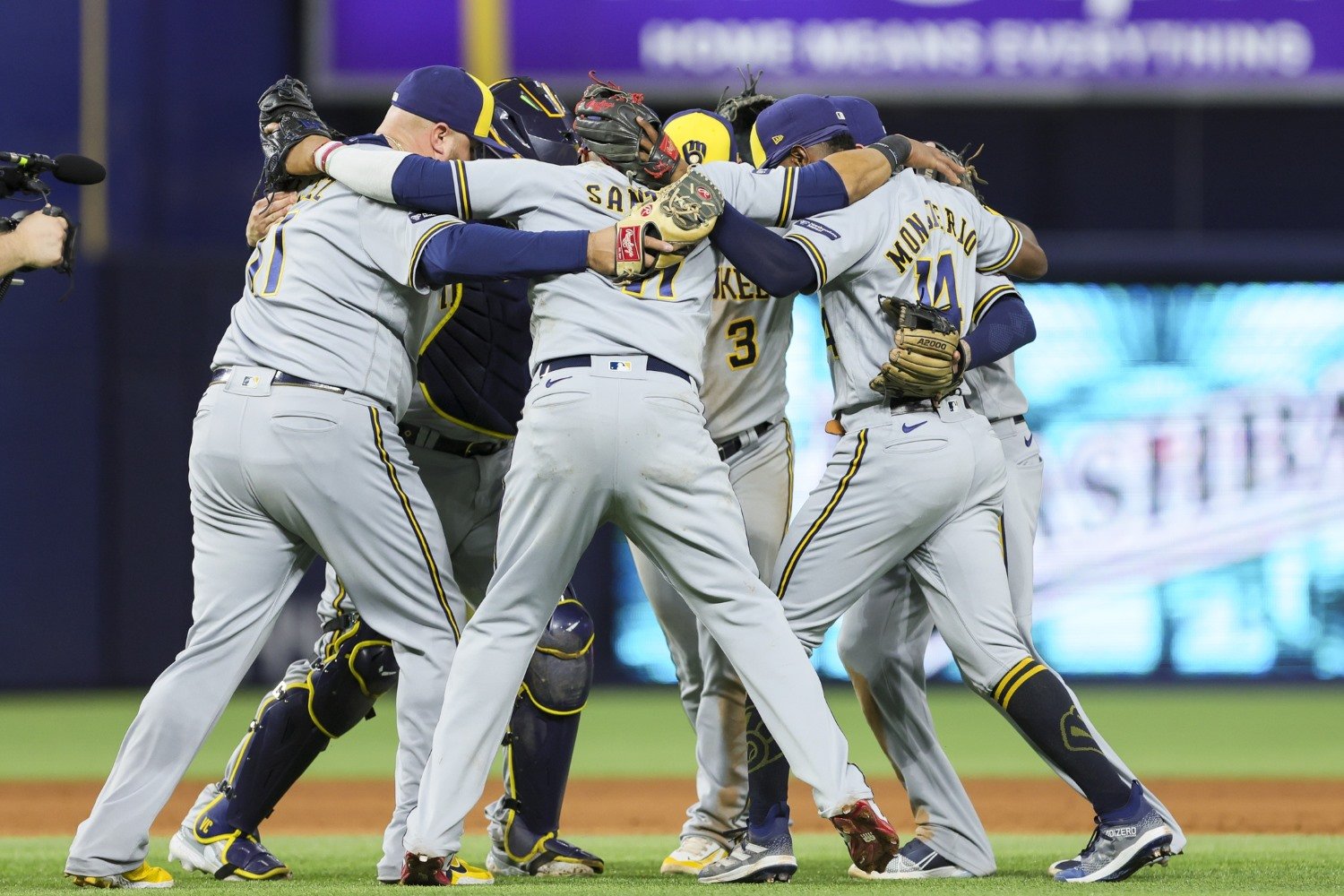 It's not the milestone the Brewers are aiming for. They'll wait until their next win (or the next Cubs loss) to line the clubhouse with plastic and don the ski goggles for champagne sprays and beer showers. They want the NL Central crown, and they'll have it. They want the NL pennant, and that will be hard but exhilarating work. On Friday night, though, they took one important step on that path, securing a place in the tournament. How It Went Down In what was supposed to be just another bullpen day for the Miami Marlins, the Brewers had one of the most violent second innings in the history of baseball, scoring 12 runs. After some much-needed rest, Christian Yelich went 3-4 with two home runs, five RBI, and an astounding 10 total bases. Maybe an extended break is exactly what he needed to return to form. On the pitching side of things, Corbin Burnes went five shutout innings and struck out six. Trevor Megill and Andrew Chafin kept the Marlins at zero runs and Bryse Wilson gave up a solo home run to Jon Berti to close the lead to 15 runs. In the ninth inning, closer Rowdy Tellez used his perfect command of the zone to paint corners and pitch a scoreless ninth inning, while recording his first career strikeout as a pitcher. It was the perfect way to sew up their place in the postseason. A dominant display of force over a competitive opponent that may end up being their first round matchup should have fans excited for what’s to come. Like Your Annoying Coworker's Pen, Things Are Clicking It hasn’t been the smoothest season. The Brewers have lost the division lead to both the Pirates and the Reds at least once this year but have managed to reclaim and hold it since August. Part of the struggle was the abysmal hitting in the first half. Before the All-Star break, the team combined for an OPS of just .689, 25th in MLB. Players like Jesse Winker, Luis Urias, and Luke Voit were freezing cold and swinging dead bats. After some roster adjustments, new faces like Mark Canha, Carlos Santana, Sal Frelick, and Josh Donaldson joined the lineup in the second half and began to revive the team at the plate. Furthermore, some players made big strides to improve on their pre-All Star figures. Here are the three biggest upgrades: Pre-ASB OPS Post-ASB OPS William Contreras .773 .875 Tyrone Taylor .419 .867 Blake Perkins .614 .793 To bolster an already formidable starting rotation, Brandon Woodruff returned to pitching full-time and at peak form. Burnes and Freddy Peralta went from 3.94 and 4.70 first-half ERAs to 2.84 and 2.42 ERA figures in the second. Inconsistent bullpen pieces like Matt Bush and Peter Strzelecki were removed to make room for the likes of Abner Uribe and a more refined version of Trevor Megill. What's Next This playoff run will not be an easy one. The Wild Card is full of scrappy teams (aside from the Marlins, I guess), and the Dodgers and the Braves are both monumental challenges in their own right. This team hasn’t always made the perfect move, but the roster has been managed well, making hard decisions when needed and the team is already seeing big returns. Let’s hope for continued dividends through October--and perhaps even into the start of November.
 -
With their most dominant win of the season, the Milwaukee Brewers officially punched their ticket to the playoffs for the fifth time in the past six years. Image courtesy of © Sam Navarro-USA TODAY Sports With their most dominant win of the season, the Milwaukee Brewers officially punched their ticket to the playoffs for the fifth time in the past six years. It's not the milestone the Brewers are aiming for. They'll wait until their next win (or the next Cubs loss) to line the clubhouse with plastic and don the ski goggles for champagne sprays and beer showers. They want the NL Central crown, and they'll have it. They want the NL pennant, and that will be hard but exhilarating work. On Friday night, though, they took one important step on that path, securing a place in the tournament. How It Went Down In what was supposed to be just another bullpen day for the Miami Marlins, the Brewers had one of the most violent second innings in the history of baseball, scoring 12 runs. After some much-needed rest, Christian Yelich went 3-4 with two home runs, five RBI, and an astounding 10 total bases. Maybe an extended break is exactly what he needed to return to form. On the pitching side of things, Corbin Burnes went five shutout innings and struck out six. Trevor Megill and Andrew Chafin kept the Marlins at zero runs and Bryse Wilson gave up a solo home run to Jon Berti to close the lead to 15 runs. In the ninth inning, closer Rowdy Tellez used his perfect command of the zone to paint corners and pitch a scoreless ninth inning, while recording his first career strikeout as a pitcher. It was the perfect way to sew up their place in the postseason. A dominant display of force over a competitive opponent that may end up being their first round matchup should have fans excited for what’s to come. Like Your Annoying Coworker's Pen, Things Are Clicking It hasn’t been the smoothest season. The Brewers have lost the division lead to both the Pirates and the Reds at least once this year but have managed to reclaim and hold it since August. Part of the struggle was the abysmal hitting in the first half. Before the All-Star break, the team combined for an OPS of just .689, 25th in MLB. Players like Jesse Winker, Luis Urias, and Luke Voit were freezing cold and swinging dead bats. After some roster adjustments, new faces like Mark Canha, Carlos Santana, Sal Frelick, and Josh Donaldson joined the lineup in the second half and began to revive the team at the plate. Furthermore, some players made big strides to improve on their pre-All Star figures. Here are the three biggest upgrades: Pre-ASB OPS Post-ASB OPS William Contreras .773 .875 Tyrone Taylor .419 .867 Blake Perkins .614 .793 To bolster an already formidable starting rotation, Brandon Woodruff returned to pitching full-time and at peak form. Burnes and Freddy Peralta went from 3.94 and 4.70 first-half ERAs to 2.84 and 2.42 ERA figures in the second. Inconsistent bullpen pieces like Matt Bush and Peter Strzelecki were removed to make room for the likes of Abner Uribe and a more refined version of Trevor Megill. What's Next This playoff run will not be an easy one. The Wild Card is full of scrappy teams (aside from the Marlins, I guess), and the Dodgers and the Braves are both monumental challenges in their own right. This team hasn’t always made the perfect move, but the roster has been managed well, making hard decisions when needed and the team is already seeing big returns. Let’s hope for continued dividends through October--and perhaps even into the start of November. View full article
-
How the Brewers Match Up Against the Marlins in the Playoffs
Jason Wang posted an article in Brewers
 Starting Pitching The Marlins may have one of the most underrated starting rotations in baseball. Sure, defending NL Cy Young winner Sandy Alcantara has regressed heavily and isn’t nearly as dominant as in 2022, but his compatriots have done an incredible job holding down the fort. Jesus Luzardo and Braxton Garrett have performed admirably, but rookie Eury Perez is the name to watch. He’s posted a 3.15 ERA and 1.13 WHIP over 91 ⅓ innings pitched. He’s got an ERA+ of 141, the best of any starter on the team, and has been a major piece of what’s made their rotation so successful and given them a combined ERA of 4.15, ninth in MLB. Furthermore, based on how Alcantara is recovering from his flexor strain, he might still be able to make a start in the postseason and continue his second-half momentum (3.20 ERA over 70 ⅓ innings pitched). What Miami needs to improve in peak performance, they make up for in consistency. The Brewers still have a better-combined starter ERA (3.93) over the season, but compared to the Cubs and especially the Reds, the Marlins have the most comparable frontline pitching staff. The first six innings of each game in the series may create fascinating pitching duels. Relief Pitching Unlike their starters, Miami’s bullpen has been somewhat inconsistent this season, posting a combined 4.23 and 1.34 WHIP. Tanner Scott and Andrew Nardi are the only two qualified pitchers on the team with ERAs below 3.00, and there’s quite the disparity between them and the next few guys. Unfortunately for them, the Brewers bullpen is the best of the best, a stark improvement over whatever the Marlins can offer. The likes of JT Chargois (3.46 ERA), George Soriano (3.54 ERA), and Bryan Hoeing (4.19 ERA) can’t compare to the Hoby Milners and Bryse Wilsons of the world. The Brewers will have a significant pitching advantage in the later innings and should look to do most of their scoring against the weaker part of the Marlins pitching staff. Lineup The Miami Marlins are one of the few playoff teams with a potentially worse offense than the Brewers, albeit by a small margin. Their team OPS of .712 puts them just below Milwaukee’s mark of .721. However, there are still some key bats that may spell trouble if not respected properly. Jake Burger has been one of MLB's best trade deadline moves, similar to the Brewers’ own acquisition of Mark Canha. He’s slashing .308/.364/.521 over 187 plate appearances and has quickly become the team’s most valuable offensive piece. Luis Arraez is no longer chasing the hallowed mark of a .400 batting average, but .354 would still be the highest full-season mark since Josh Hamilton in 2010. Jorge Soler has mashed 36 home runs, and Jesus Sanchez has been consistently above average all year, posting an OPS+ of 113. The Brewers have made big hitting strides after the All-Star break but still have a ways to go. While they lack the same power threat (Willy Adames leads the team in HR with 24), they’ve got slightly more depth and momentum at the plate than the Marlins. Overall Takeaways Of the three teams fighting for the #6 seed, FanGraphs has given the Marlins the best odds at taking the spot at 54.1%. If they face Milwaukee in the first round of the postseason, they’ll be a formidable foe. Still, their lack of a formidable bullpen will likely be their Achilles heel, a weakness the Brewers can exploit to cruise into the NLDS.
