Jason Wang
-
Posts
955 -
Joined
-
Last visited
-
Days Won
1
Content Type
Profiles
Forums
Blogs
Events
News
2026 Milwaukee Brewers Top Prospects Ranking
Milwaukee Brewers Videos
2022 Milwaukee Brewers Draft Picks
Milwaukee Brewers Free Agent & Trade Rumors, Notes, & Tidbits
Guides & Resources
2023 Milwaukee Brewers Draft Picks
2024 Milwaukee Brewers Draft Picks
The Milwaukee Brewers Players Project
2025 Milwaukee Brewers Draft Pick Tracker
2026 Milwaukee Brewers Draft Tracker: Picks & Bonuses
Store
Downloads
Gallery
Everything posted by Jason Wang
-
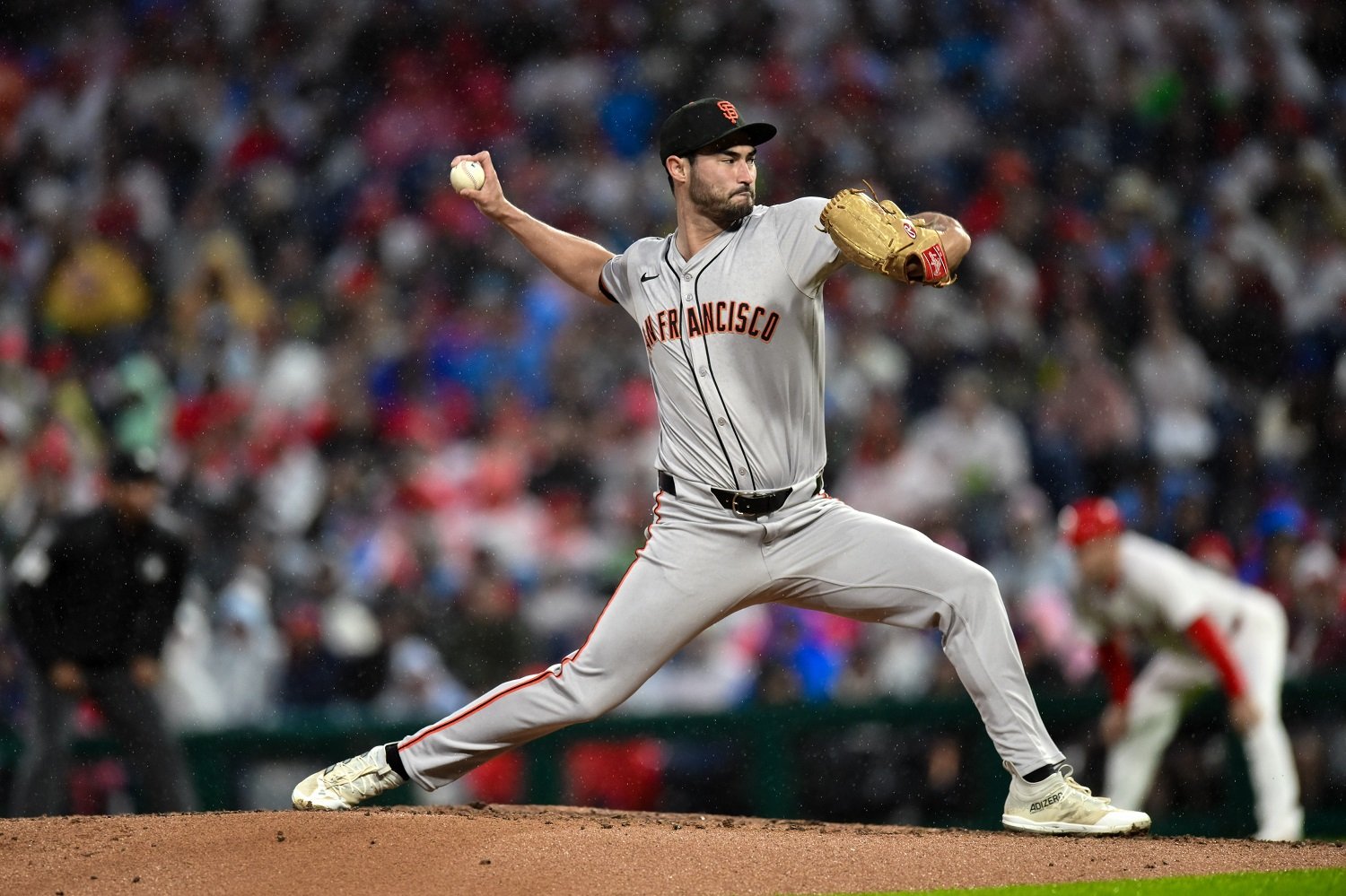 Since making his major-league debut in 2020, Mitch White has bounced around from the Dodgers, to the Blue Jays, to the Giants, and has now landed in the unmatched beauty of Wisconsin. Initially being groomed as a starter, he struggled immensely before Toronto moved him to the bullpen full-time in 2023. the 29-year-old still hasn’t found a ton more stability since and is probably being seen as a project more than anything. So what does he do well? Well, since he’s pitched just 28 major league innings in 2023 and 2024 combined, it’s hard to say. In fact, it might be best to look at the 55 2/3 innings he spent with the AAA Buffalo Bisons in 2023 to get the most complete picture. He posted a 5.50 ERA and 1.56 WHIP over 12 starts. His K/9 figure of 10.83 was pretty good and his sweeper/slider combination was arguably his most potent, posting a cumulative K/BB rate of 3.75. While he also managed to earn quite a few strikeouts with his different fastballs, his overall K/BB rate on his four-seam and sinker was significantly worse at 1.26. Consequently, he had a 6.43 ERA against his four-seam fastball compared to a 3.86 ERA against his sweeper. When looking at the pitch frequency of both pitches, it’s clear that the placement of his fastball is simply too hitter-friendly. A lack of elevation and concentration in the heart of the strike zone are likely to blame, especially with a subpar average velocity around 93-94 mph. On the other hand, his sweeper frequency chart was more encouraging with many of these pitches tailing away with strong downward and glove-side movement. His sweeper hovers around 42.4 inches of drop and 16.2 inches of horizontal break, impressive figures. However, in his 15 1/3 innings so far in 2024, his pitching seems to have turned upside down. Instead, he’s struggled with his sweeper/slider while his four-seam fastball seems to have improved significantly. It’s a little higher in the zone and closer to the edges. and while it still has room for improvement, it seems to be going in the right direction. This is over a small sample size so things might still be subject to change but with the Brewers’ uncanny ability to often get the best out of their pitching staff, they might have an uncovered gem here in Mitch White. It remains to be seen exactly what sort of role he’ll be filling but with Bryse Wilson thrust into the rotation because of team injuries (the team currently has three starters on the 60-day IL, which one you walked under a ladder?), he might be a perfect substitute long reliever. Because the rotation currently lacks a true veteran presence/workhorse, it wouldn’t be surprising for Pat Murphy to go to the bullpen earlier and more often. This would make White’s stamina a strong asset given the team’s current pitching needs. It should also be noted that Milwaukee simply paid cash, so in the worst case scenario this doesn’t go very well and the team’s future is still largely held intact. To make room for him on the roster, the Brewers have designated RHP Corbin Martin for assignment. White was originally drafted by the Dodgers in the 2nd round of the 2016 draft out of Santa Clara. He ranked among the organization's top prospects into the 2021 season. He made his big-league debut and pitched in two games in 2020. In 2021, he posted a 3.66 ERA over 21 games and 46 2/3 innings. In 2022, he made 15 appearances including 10 starts for the Dodger. In early July, he was traded to the Blue Jays and pitched in 10 more games for the Blue Jays (8 starts). In 2023, he pitched in 10 games out of the Jays bullpen. Out of options, 2024 has been a roller coaster for White. He opened the season with the Jays, but by April 20th, he was DFAd and claimed by the Giants. He pitched in just three games for San Francisco before being DFAd early this week. Do you see a role in which Mitch White remains in the Brewers big-league bullpen or do you think he could be DFAd in the very near future with the hope that he clears waivers and can be sent to Nashville for depth?
 -
 Milwaukee just acquired the right-hander from the Giants in exchange for cash. Here’s what he’s all about. Image courtesy of © John Jones-USA TODAY Sports Milwaukee just acquired the right-hander from the Giants in exchange for cash. Here’s what he’s all about. Since making his major-league debut in 2020, Mitch White has bounced around from the Dodgers, to the Blue Jays, to the Giants, and has now landed in the unmatched beauty of Wisconsin. Initially being groomed as a starter, he struggled immensely before Toronto moved him to the bullpen full-time in 2023. the 29-year-old still hasn’t found a ton more stability since and is probably being seen as a project more than anything. So what does he do well? Well, since he’s pitched just 28 major league innings in 2023 and 2024 combined, it’s hard to say. In fact, it might be best to look at the 55 2/3 innings he spent with the AAA Buffalo Bisons in 2023 to get the most complete picture. He posted a 5.50 ERA and 1.56 WHIP over 12 starts. His K/9 figure of 10.83 was pretty good and his sweeper/slider combination was arguably his most potent, posting a cumulative K/BB rate of 3.75. While he also managed to earn quite a few strikeouts with his different fastballs, his overall K/BB rate on his four-seam and sinker was significantly worse at 1.26. Consequently, he had a 6.43 ERA against his four-seam fastball compared to a 3.86 ERA against his sweeper. When looking at the pitch frequency of both pitches, it’s clear that the placement of his fastball is simply too hitter-friendly. A lack of elevation and concentration in the heart of the strike zone are likely to blame, especially with a subpar average velocity around 93-94 mph. On the other hand, his sweeper frequency chart was more encouraging with many of these pitches tailing away with strong downward and glove-side movement. His sweeper hovers around 42.4 inches of drop and 16.2 inches of horizontal break, impressive figures. However, in his 15 1/3 innings so far in 2024, his pitching seems to have turned upside down. Instead, he’s struggled with his sweeper/slider while his four-seam fastball seems to have improved significantly. It’s a little higher in the zone and closer to the edges. and while it still has room for improvement, it seems to be going in the right direction. This is over a small sample size so things might still be subject to change but with the Brewers’ uncanny ability to often get the best out of their pitching staff, they might have an uncovered gem here in Mitch White. It remains to be seen exactly what sort of role he’ll be filling but with Bryse Wilson thrust into the rotation because of team injuries (the team currently has three starters on the 60-day IL, which one you walked under a ladder?), he might be a perfect substitute long reliever. Because the rotation currently lacks a true veteran presence/workhorse, it wouldn’t be surprising for Pat Murphy to go to the bullpen earlier and more often. This would make White’s stamina a strong asset given the team’s current pitching needs. It should also be noted that Milwaukee simply paid cash, so in the worst case scenario this doesn’t go very well and the team’s future is still largely held intact. To make room for him on the roster, the Brewers have designated RHP Corbin Martin for assignment. White was originally drafted by the Dodgers in the 2nd round of the 2016 draft out of Santa Clara. He ranked among the organization's top prospects into the 2021 season. He made his big-league debut and pitched in two games in 2020. In 2021, he posted a 3.66 ERA over 21 games and 46 2/3 innings. In 2022, he made 15 appearances including 10 starts for the Dodger. In early July, he was traded to the Blue Jays and pitched in 10 more games for the Blue Jays (8 starts). In 2023, he pitched in 10 games out of the Jays bullpen. Out of options, 2024 has been a roller coaster for White. He opened the season with the Jays, but by April 20th, he was DFAd and claimed by the Giants. He pitched in just three games for San Francisco before being DFAd early this week. Do you see a role in which Mitch White remains in the Brewers big-league bullpen or do you think he could be DFAd in the very near future with the hope that he clears waivers and can be sent to Nashville for depth? View full article
 -
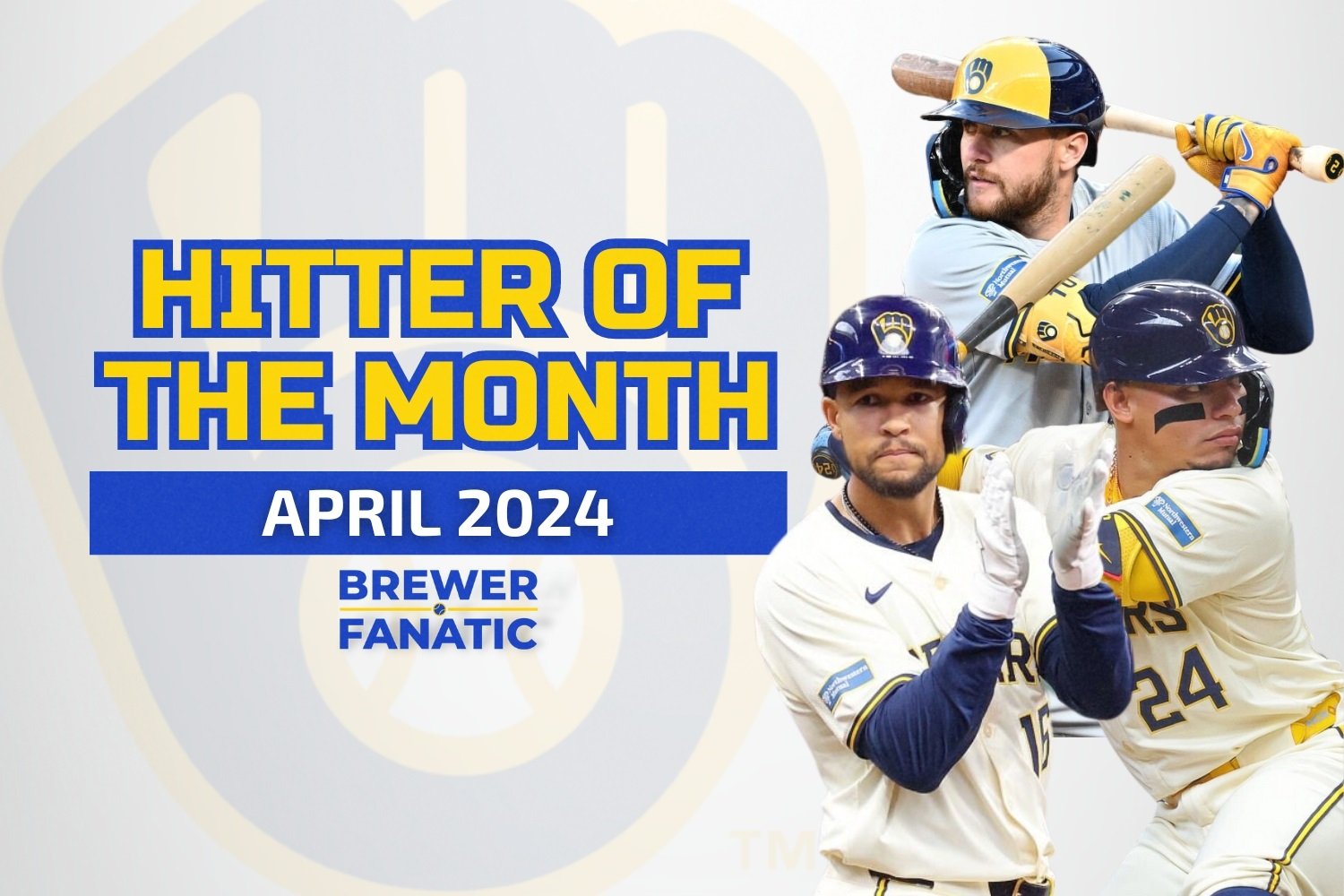 Baseball is a team sport, and it was definitely a group effort to get the team to where it is today. While there will always be one player who stands out above the rest, here are a few other names whose performances are worth noting. Honorable Mentions Rhys Hoskins .237/.342/.464, 114 PA, 23 H, 4 2B, 6 HR, 13 R, 18 RBI, 12 BB, 23 K, 4 HBP, 1 SB Despite missing all of the 2023 season, Hoskins seems just as sharp as he was in 2022. He started the season a little cold but quickly made up for lost time. He’s been barreling the ball pretty frequently (14.1%, 90th percentile) and chasing infrequently (19.5%, 90th percentile) but is striking out and whiffing around the league average. His average exit velocity of 88.2 mph and max exit velocity of 107.4 mph are the lowest they’ve ever been in his career. Still, his expected slugging percentage is the third-highest it’s ever been. Given his high barrel rate, his launch angle and improvement have improved in years past. Willy Adames .270/.369/.441, 130 PA, 30 H, 7 2B, 4 HR, 16 R, 17 RBI, 17 BB, 26 K, 1 HBP, 4 SB Adames is having a much better year than he did in 2023. With no funky foul ball injuries, he’s back to his old ways. His barrel and walk rates are in the top quartile despite, similar to Rhys Hoskins, having an unspectacular average exit velocity of 89.5 mph. He’s cut down the strikeouts and whiffs by a lot since last season, but he’s still whiffing more than ~80% of qualified players in the league. It’s imperative that he plays at his best, given that he’s heading into free agency next year. Whether he chooses to remain in Milwaukee or move to greener pastures elsewhere, his stock has the possibility of remaining high if he keeps it up. If the Brewers don’t anticipate being the highest bidder for his services, he could still be used as a powerful trade piece. Brice Turang .312/.375/.441, 104 PA, 29 H, 6 2B, 2 HR, 15 R, 12 RBI, 10 BB, 14 K, 14 SB Turang has taken the biggest step forward out of anyone on this team. His plate discipline has been exceptional so far, and he’s also been able to hit the ball harder than last year, adding ~4 mph to his average exit velocity. I wrote about how his higher on-base percentage has allowed him to finally utilize his wicked speed, but aside from the ruckus he’s caused on the basepaths, his hitting approach is simply better than it was in his rookie year. Jake McKibbin dove a little deeper into some detailed changes to his approach, and although it may have seemed like an early-season fluke, Turang doesn’t seem to be slowing down. He continues to put up excellent numbers and remains an on-base threat for any team’s pitching staff. Hitter of the Month - William Contreras .345/.418/.534, 134 PA, 40 H, 7 2B, 5 HR, 27 R, 23 RBI, 14 BB, 27 K, 2 HBP, 2 SB There shouldn’t have been any doubt as to who the most valuable bat in the Brewers lineup was. Second to just Salvador Perez in terms of OPS for March/April, Contreras has put up exceptional numbers while still maintaining his defensive demands behind the dish. He hasn’t been the best at avoiding whiffs and strikeouts, but he’s been hitting the ball so hard that it doesn’t seem to matter much. He’s already got an average exit velocity of 94.3 mph and a max exit velocity of 114.4 mph this season. His hard-hit rate of 57.7% is good enough for the 98th percentile of qualified hitters, and it shows in his slash line, which boasts a little bit of everything. He has a slightly more aggressive approach this year, which has lent itself to more power but potentially worse swing decisions, so it remains to be seen how opposing pitchers will adjust to get around his scorching bat.
 -
The Brewers offense has been even better than expected so far this season, combining for a .757 OPS, fourth in MLB. Who led the charge? The Brewers offense has been even better than expected so far this season, combining for a .757 OPS, fourth in MLB. Who led the charge? Baseball is a team sport, and it was definitely a group effort to get the team to where it is today. While there will always be one player who stands out above the rest, here are a few other names whose performances are worth noting. Honorable Mentions Rhys Hoskins .237/.342/.464, 114 PA, 23 H, 4 2B, 6 HR, 13 R, 18 RBI, 12 BB, 23 K, 4 HBP, 1 SB Despite missing all of the 2023 season, Hoskins seems just as sharp as he was in 2022. He started the season a little cold but quickly made up for lost time. He’s been barreling the ball pretty frequently (14.1%, 90th percentile) and chasing infrequently (19.5%, 90th percentile) but is striking out and whiffing around the league average. His average exit velocity of 88.2 mph and max exit velocity of 107.4 mph are the lowest they’ve ever been in his career. Still, his expected slugging percentage is the third-highest it’s ever been. Given his high barrel rate, his launch angle and improvement have improved in years past. Willy Adames .270/.369/.441, 130 PA, 30 H, 7 2B, 4 HR, 16 R, 17 RBI, 17 BB, 26 K, 1 HBP, 4 SB Adames is having a much better year than he did in 2023. With no funky foul ball injuries, he’s back to his old ways. His barrel and walk rates are in the top quartile despite, similar to Rhys Hoskins, having an unspectacular average exit velocity of 89.5 mph. He’s cut down the strikeouts and whiffs by a lot since last season, but he’s still whiffing more than ~80% of qualified players in the league. It’s imperative that he plays at his best, given that he’s heading into free agency next year. Whether he chooses to remain in Milwaukee or move to greener pastures elsewhere, his stock has the possibility of remaining high if he keeps it up. If the Brewers don’t anticipate being the highest bidder for his services, he could still be used as a powerful trade piece. Brice Turang .312/.375/.441, 104 PA, 29 H, 6 2B, 2 HR, 15 R, 12 RBI, 10 BB, 14 K, 14 SB Turang has taken the biggest step forward out of anyone on this team. His plate discipline has been exceptional so far, and he’s also been able to hit the ball harder than last year, adding ~4 mph to his average exit velocity. I wrote about how his higher on-base percentage has allowed him to finally utilize his wicked speed, but aside from the ruckus he’s caused on the basepaths, his hitting approach is simply better than it was in his rookie year. Jake McKibbin dove a little deeper into some detailed changes to his approach, and although it may have seemed like an early-season fluke, Turang doesn’t seem to be slowing down. He continues to put up excellent numbers and remains an on-base threat for any team’s pitching staff. Hitter of the Month - William Contreras .345/.418/.534, 134 PA, 40 H, 7 2B, 5 HR, 27 R, 23 RBI, 14 BB, 27 K, 2 HBP, 2 SB There shouldn’t have been any doubt as to who the most valuable bat in the Brewers lineup was. Second to just Salvador Perez in terms of OPS for March/April, Contreras has put up exceptional numbers while still maintaining his defensive demands behind the dish. He hasn’t been the best at avoiding whiffs and strikeouts, but he’s been hitting the ball so hard that it doesn’t seem to matter much. He’s already got an average exit velocity of 94.3 mph and a max exit velocity of 114.4 mph this season. His hard-hit rate of 57.7% is good enough for the 98th percentile of qualified hitters, and it shows in his slash line, which boasts a little bit of everything. He has a slightly more aggressive approach this year, which has lent itself to more power but potentially worse swing decisions, so it remains to be seen how opposing pitchers will adjust to get around his scorching bat. View full article
-
Get Up To Speed On Tyler Black, The Newest Brewer And Top Prospect
Jason Wang posted an article in Brewers
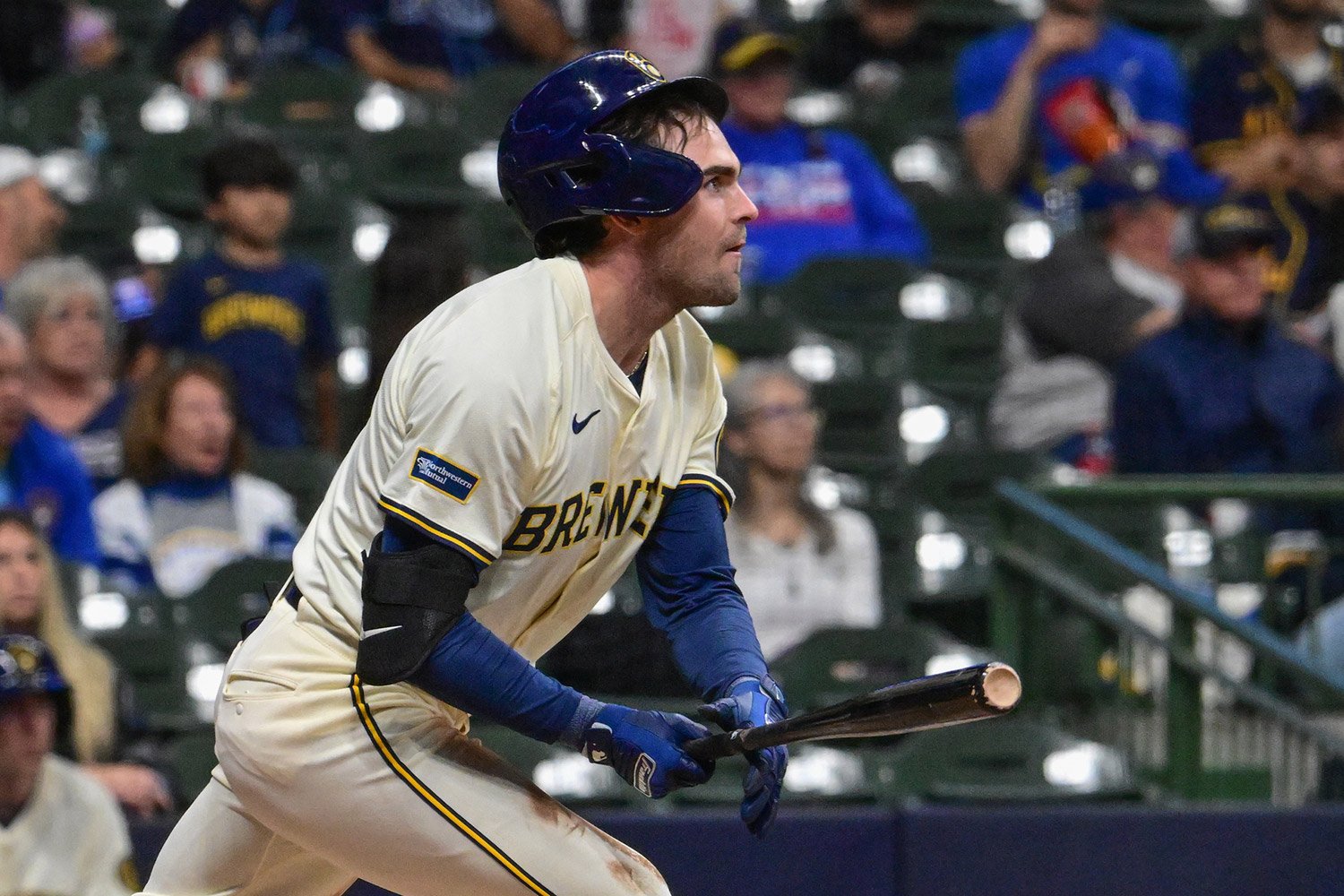 Picked 33rd overall in the 2021 draft, Black primarily spent time at second base at Wright State University. After continuing this trend for his first two minor league seasons, he moved to third base in 2023 with a handful of games spent at first base. With 60-grade hit-and-run tools, he’s a speedy fella who swings a mean bat. In 2023, he slashed .284/.417/.513 and stole 55 bases across a combined 557 plate appearances in Double-A and Triple-A. Regarding his approach, MLB.com had this to say: He got off to a similarly hot start in 2024, spending the entirety of the season in Triple-A and slashing .303/.393/.525 with a double, three triples, and five home runs over his 117 plate appearances. He’s only stolen three bags, but the three triples should quell fears that his speed has left him. So why was he called up now? While it’s hard to be sure, one can make a few assumptions. In his major-league debut, he was initially called in as a pinch-runner to replace an injured Gary Sánchez and remained in as the designated hitter, so we didn’t get a clue as to which corner of the infield he’d be tasked with. However, it seems like either position will work. The Brewers are 21st in MLB for both OPS from first base (.641) and OPS from third base (.657), so it could use Black’s hit tool in both places. Much of the third base performance has been dragged down by Oliver Dunn’s sluggish .538 OPS, but Joey Ortiz has been spectacular, posting a .791 OPS from the hot corner. First base, on the other hand, has been split between Rhys Hoskins and Jake Bauers. Both have been more or less as advertised, with Hoskins boasting a .787 OPS and Bauers limping along with a .633 OPS. Realistically, Black will be a useful backup option (at least for now) for both corners of the infield. Milwaukee has demonstrated a remarkable amount of infield flexibility this season, and his utility fits right into the already fluid puzzle. The Brewers are off to a great start at 18-11, but with continued roadblocks for their starting pitchers, they'll need all of the offense they can get if they want to remain atop their division. The Cubs are breathing down their necks at 18-12, and the Reds aren't too far behind at 16-14. He won't be able to carry the lineup singlehandedly, but maybe he'll be a much-needed spark plug for his teammates at the plate.
 -
The Brewers recently called up Tyler Black, who made his debut in an action-packed game against the Tampa Bay Rays. What should fans expect from the newest face on the major-league roster? Image courtesy of © Benny Sieu-USA TODAY Sports The Brewers recently called up Tyler Black, who made his debut in an action-packed game against the Tampa Bay Rays. What should fans expect from the newest face on the major-league roster? Picked 33rd overall in the 2021 draft, Black primarily spent time at second base at Wright State University. After continuing this trend for his first two minor league seasons, he moved to third base in 2023 with a handful of games spent at first base. With 60-grade hit-and-run tools, he’s a speedy fella who swings a mean bat. In 2023, he slashed .284/.417/.513 and stole 55 bases across a combined 557 plate appearances in Double-A and Triple-A. Regarding his approach, MLB.com had this to say: He got off to a similarly hot start in 2024, spending the entirety of the season in Triple-A and slashing .303/.393/.525 with a double, three triples, and five home runs over his 117 plate appearances. He’s only stolen three bags, but the three triples should quell fears that his speed has left him. So why was he called up now? While it’s hard to be sure, one can make a few assumptions. In his major-league debut, he was initially called in as a pinch-runner to replace an injured Gary Sánchez and remained in as the designated hitter, so we didn’t get a clue as to which corner of the infield he’d be tasked with. However, it seems like either position will work. The Brewers are 21st in MLB for both OPS from first base (.641) and OPS from third base (.657), so it could use Black’s hit tool in both places. Much of the third base performance has been dragged down by Oliver Dunn’s sluggish .538 OPS, but Joey Ortiz has been spectacular, posting a .791 OPS from the hot corner. First base, on the other hand, has been split between Rhys Hoskins and Jake Bauers. Both have been more or less as advertised, with Hoskins boasting a .787 OPS and Bauers limping along with a .633 OPS. Realistically, Black will be a useful backup option (at least for now) for both corners of the infield. Milwaukee has demonstrated a remarkable amount of infield flexibility this season, and his utility fits right into the already fluid puzzle. The Brewers are off to a great start at 18-11, but with continued roadblocks for their starting pitchers, they'll need all of the offense they can get if they want to remain atop their division. The Cubs are breathing down their necks at 18-12, and the Reds aren't too far behind at 16-14. He won't be able to carry the lineup singlehandedly, but maybe he'll be a much-needed spark plug for his teammates at the plate. View full article
-
Blake Perkins Has Been A Hidden Gem In A Crowded Brewers Outfield
Jason Wang posted an article in Brewers
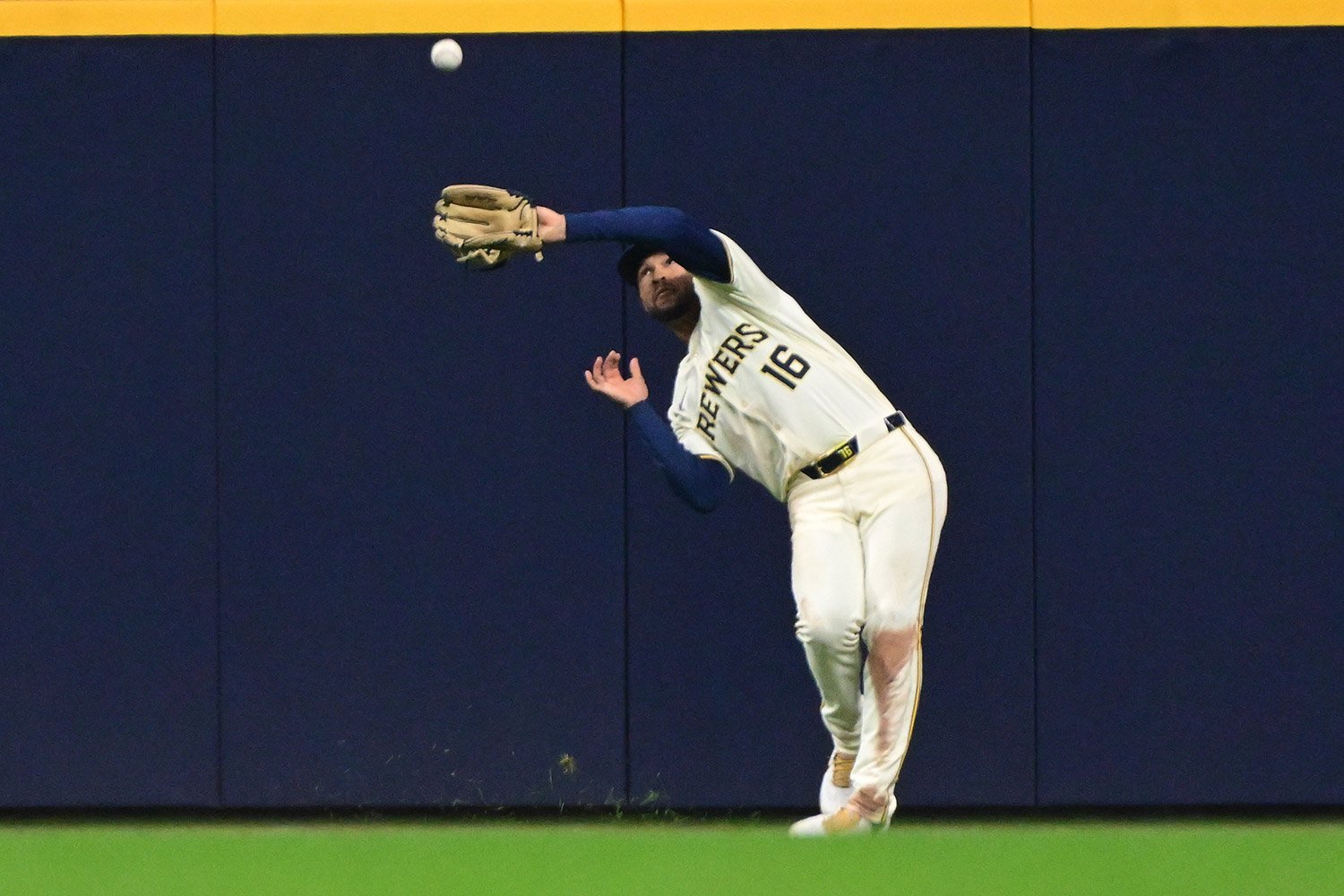 Let’s turn back the clock a few weeks to right before the start of the regular season. When the Opening Day roster was announced, the biggest story was definitely the inclusion of phenom prospect Jackson Chourio, but an equally as intriguing and related topic was the Milwaukee outfield picture. Joining proven veteran Christian Yelich and talented sophomore Sal Frelick was Blake Perkins, a seemingly clear backup option to the three men in front of him on the depth chart. In fact, with other names like Garrett Mitchell still in the mix, it didn’t seem like Perkins would receive much playing time, especially after a relatively lackluster rookie season in 2023. Fast forward to now. Christian Yelich is on the injured list due to back issues, Garrett Mitchell is on the 60-day IL with a broken hand he suffered in spring training, Jackson Chourio has been struggling at the plate, and Blake Perkins has the second-best offensive numbers out of any qualified player on the team. So what happened? Let’s start at the very top. In 2023, he slashed .217/.325/.350 over 168 plate appearances. In 2024, so far, he’s slashed .322/.437/.475 over 71 plate appearances. His walk rate has been roughly the same between the two seasons (it was higher in 2023 by 1.0%), and his ISO went from .133 to .153, a modest improvement. Thus, we can conclude that his big jump in batting average has driven up his numbers considerably. So what caused that? First, he’s striking out slightly less. He punched out at a 27.4% clip last year vs. the 22.5% rate he’s at this year. Second, his BABIP has skyrocketed from .290 to .415. This naturally led me to ask whether the BABIP increase is organic or a function of good luck. His xBA of .247 indicates that he may have been luckier than not, but I wanted to keep digging to see what more I could find. As a switch hitter, I was naturally curious to see if he had improved his performance on one side of the dish more than the other. Here are his handedness splits from both years. 2023 OPS 2024 OPS +/- vs. RHP as LHB .690 .941 + 0.251 vs. LHP as RHB .603 .762 + 0.159 Okay, so it seems he’s gotten significantly better at hitting right-handed pitching as a lefty. This shows in his heat map as well. When mapping batting average by portion of the strike zone for his lefty plate appearances, we see much better coverage in 2024 (right) than in 2023 (left). Part of this has also been due to making more aggressive swing decisions. He’s been whiffing more frequently, but by taking more “G hacks,” he’s been able to make harder contact more often, increasing his hard-hit rate from 29.3% to 44.2% and his average exit velocity from 85.8 mph to 89.0 mph. This is relevant for all of his plate appearances, not just his lefty ones. In a side-by-side comparison of his exit velocities for both years, we see higher values, especially in the middle of the zone. Some might expect some future regression from Perkins and are probably somewhat correct. If he’s somehow able to maintain an OPS around his current figure of .921 for the whole season, I’d be absolutely blown away. What will make things even more interesting is how the return of Christian Yelich will affect his total playing time. The Brewers haven’t set a date for Yelich to return, but he’s been participating in on-field activity over the last few days. So far, Perkins has mostly been playing center field while Frelick and Wiemer have been playing left field, and Chourio has been playing right. When Yelich returns to left field, how will Pat Murphy arrange the lineup? Will Perkins stay in until he cools off? Who goes out? How long will it take for him to return to his mortal form if he ever does? In the sport of baseball, no one knows. For now, let’s enjoy the Blake Perkins show while it lasts.
 -
In an outfield full of talent, one player has managed to stand out above the rest and exceed expectations, "perking" up the Milwaukee offense. Image courtesy of © Benny Sieu-USA TODAY Sports In an outfield full of talent, one player has managed to stand out above the rest and exceed expectations, "perking" up the Milwaukee offense. Let’s turn back the clock a few weeks to right before the start of the regular season. When the Opening Day roster was announced, the biggest story was definitely the inclusion of phenom prospect Jackson Chourio, but an equally as intriguing and related topic was the Milwaukee outfield picture. Joining proven veteran Christian Yelich and talented sophomore Sal Frelick was Blake Perkins, a seemingly clear backup option to the three men in front of him on the depth chart. In fact, with other names like Garrett Mitchell still in the mix, it didn’t seem like Perkins would receive much playing time, especially after a relatively lackluster rookie season in 2023. Fast forward to now. Christian Yelich is on the injured list due to back issues, Garrett Mitchell is on the 60-day IL with a broken hand he suffered in spring training, Jackson Chourio has been struggling at the plate, and Blake Perkins has the second-best offensive numbers out of any qualified player on the team. So what happened? Let’s start at the very top. In 2023, he slashed .217/.325/.350 over 168 plate appearances. In 2024, so far, he’s slashed .322/.437/.475 over 71 plate appearances. His walk rate has been roughly the same between the two seasons (it was higher in 2023 by 1.0%), and his ISO went from .133 to .153, a modest improvement. Thus, we can conclude that his big jump in batting average has driven up his numbers considerably. So what caused that? First, he’s striking out slightly less. He punched out at a 27.4% clip last year vs. the 22.5% rate he’s at this year. Second, his BABIP has skyrocketed from .290 to .415. This naturally led me to ask whether the BABIP increase is organic or a function of good luck. His xBA of .247 indicates that he may have been luckier than not, but I wanted to keep digging to see what more I could find. As a switch hitter, I was naturally curious to see if he had improved his performance on one side of the dish more than the other. Here are his handedness splits from both years. 2023 OPS 2024 OPS +/- vs. RHP as LHB .690 .941 + 0.251 vs. LHP as RHB .603 .762 + 0.159 Okay, so it seems he’s gotten significantly better at hitting right-handed pitching as a lefty. This shows in his heat map as well. When mapping batting average by portion of the strike zone for his lefty plate appearances, we see much better coverage in 2024 (right) than in 2023 (left). Part of this has also been due to making more aggressive swing decisions. He’s been whiffing more frequently, but by taking more “G hacks,” he’s been able to make harder contact more often, increasing his hard-hit rate from 29.3% to 44.2% and his average exit velocity from 85.8 mph to 89.0 mph. This is relevant for all of his plate appearances, not just his lefty ones. In a side-by-side comparison of his exit velocities for both years, we see higher values, especially in the middle of the zone. Some might expect some future regression from Perkins and are probably somewhat correct. If he’s somehow able to maintain an OPS around his current figure of .921 for the whole season, I’d be absolutely blown away. What will make things even more interesting is how the return of Christian Yelich will affect his total playing time. The Brewers haven’t set a date for Yelich to return, but he’s been participating in on-field activity over the last few days. So far, Perkins has mostly been playing center field while Frelick and Wiemer have been playing left field, and Chourio has been playing right. When Yelich returns to left field, how will Pat Murphy arrange the lineup? Will Perkins stay in until he cools off? Who goes out? How long will it take for him to return to his mortal form if he ever does? In the sport of baseball, no one knows. For now, let’s enjoy the Blake Perkins show while it lasts. View full article
-
 Brice Turang seems like a whole new player this year. After posting a .585 OPS in his rookie season, he’s managed to put together a slash line of .327/.367/.455 for an OPS+ of 130 in his sophomore campaign. So, what has changed intrinsically about his game? First and foremost, his performance against four-seam fastballs has gotten much better. He was one of the worst hitters against the fastball last year, averaging just .198 and striking out 25.7% of the time against the pitch. This year, he’s averaging .444 and whiffing just 5.9% of the time. He’s still striking out at around the same rate, but he’s clearly gotten better at catching up to the fastball and making contact. Here are more advanced swing/contact statistics against four-seam fastballs at >95 mph. 2023 2024 Swing % 61.9 59.2 Miss % 26.5 6.9 Contact % 73.5 93.1 In Play % 15.2 20.7 He’s swinging just a little less, but a 20% increase in contact and a 5% increase in in-play rate is a quantitative testament to how much work he likely did in the offseason to fix one of the biggest holes in his approach. He’s also gotten much better at hitting the high fastball. Here was his wOBA against four-seam fastballs in 2023 (left) vs. the wOBA against four-seam fastballs in 2024 (right). It seems like the only part of the strike zone he was comfortable with before was the lower inside corner, whereas this year, he's starting to get some thump in the upper half. A video example of this can be seen as well. Here’s a high fastball from last year against which Turang recorded an exit velocity of just 69.8 mph. In contrast, here’s one from the Orioles series that was off the bat at 103.3 mph. He has increased his batting average from .218 to .327 and his on-base percentage from .285 to .367. For most players, this would be the end of the story, but with Turang, another aspect to his playstyle makes this even more important. Brice Turang has some wheels. He has always had wheels. His sprint speed was in the 95th percentile last year and is in the 97th percentile this year. He stole 26 bases in 2023, which was pretty cool, but his OBP of just .285 completely hamstrung him. This year, given more opportunities to be on-base to begin with, he’s already leading MLB in stolen bases with nine. He's got more than notable speedsters Ronald Acuña Jr. and Corbin Carroll. To illustrate the quantitative advantage of such theft, Jake McKibbin recently had a great piece that covered the Brewers’ speed at a team level. On an individual level, Turang’s on-base/speed combination also makes him productive at any spot in the lineup. He could be a top-of-the-order guy who causes a ruckus on the base paths. Alternatively, he could act as a table-setter closer to the bottom of the order. He still lacks the pop of some other players on the team, but Turang’s niche and role on the team cannot be understated. In addition to his newfound hitting skills, he continues to play elite defense and has already accumulated two outs above average. He’s only 60 plate appearances into the season so far, but I think those alarms you hear tell you it’s Turang time.
 -
With his drastically improved performance at the plate this year, the Brewers have finally been able to unleash the full might of their middle infield speed demon. Image courtesy of © Benny Sieu-USA TODAY Sports With his drastically improved performance at the plate this year, the Brewers have finally been able to unleash the full might of their middle infield speed demon. Brice Turang seems like a whole new player this year. After posting a .585 OPS in his rookie season, he’s managed to put together a slash line of .327/.367/.455 for an OPS+ of 130 in his sophomore campaign. So, what has changed intrinsically about his game? First and foremost, his performance against four-seam fastballs has gotten much better. He was one of the worst hitters against the fastball last year, averaging just .198 and striking out 25.7% of the time against the pitch. This year, he’s averaging .444 and whiffing just 5.9% of the time. He’s still striking out at around the same rate, but he’s clearly gotten better at catching up to the fastball and making contact. Here are more advanced swing/contact statistics against four-seam fastballs at >95 mph. 2023 2024 Swing % 61.9 59.2 Miss % 26.5 6.9 Contact % 73.5 93.1 In Play % 15.2 20.7 He’s swinging just a little less, but a 20% increase in contact and a 5% increase in in-play rate is a quantitative testament to how much work he likely did in the offseason to fix one of the biggest holes in his approach. He’s also gotten much better at hitting the high fastball. Here was his wOBA against four-seam fastballs in 2023 (left) vs. the wOBA against four-seam fastballs in 2024 (right). It seems like the only part of the strike zone he was comfortable with before was the lower inside corner, whereas this year, he's starting to get some thump in the upper half. A video example of this can be seen as well. Here’s a high fastball from last year against which Turang recorded an exit velocity of just 69.8 mph. In contrast, here’s one from the Orioles series that was off the bat at 103.3 mph. He has increased his batting average from .218 to .327 and his on-base percentage from .285 to .367. For most players, this would be the end of the story, but with Turang, another aspect to his playstyle makes this even more important. Brice Turang has some wheels. He has always had wheels. His sprint speed was in the 95th percentile last year and is in the 97th percentile this year. He stole 26 bases in 2023, which was pretty cool, but his OBP of just .285 completely hamstrung him. This year, given more opportunities to be on-base to begin with, he’s already leading MLB in stolen bases with nine. He's got more than notable speedsters Ronald Acuña Jr. and Corbin Carroll. To illustrate the quantitative advantage of such theft, Jake McKibbin recently had a great piece that covered the Brewers’ speed at a team level. On an individual level, Turang’s on-base/speed combination also makes him productive at any spot in the lineup. He could be a top-of-the-order guy who causes a ruckus on the base paths. Alternatively, he could act as a table-setter closer to the bottom of the order. He still lacks the pop of some other players on the team, but Turang’s niche and role on the team cannot be understated. In addition to his newfound hitting skills, he continues to play elite defense and has already accumulated two outs above average. He’s only 60 plate appearances into the season so far, but I think those alarms you hear tell you it’s Turang time. View full article
-
Despite some concerns before the start of the season, Milwaukee’s lineup has been knocking it out of the park in the early going. The question is, is this a true vision of the team’s future, or a cruel mirage? Image courtesy of © Mitch Stringer-USA TODAY Sports Despite some concerns before the start of the season, Milwaukee’s lineup has been knocking it out of the park in the early going. The question is, is this a true vision of the team’s future, or a cruel mirage? So far, the Brewers have exceeded offensive expectations and have the second-highest OPS in baseball at .795, right behind the Braves at .841. They're hitting home runs in 3.6 percent of their plate appearances, second only to Baltimore. Teams like the Dodgers, Orioles, and Atlanta were expected to be major threats at the plate this year, but other than adding Rhys Hoskins, the Brewers didn’t do much upgrading this winter, and they were in the bottom bucket for offensive performance last year. Furthermore, Hoskins is just the seventh-best qualified hitter by OPS+ on the team. What’s going on? As of now, there are a few players with somewhat lopsided statistics steering the ship. A few of them have been around those numbers before, but for others, their figures are so anomalous that a return to Earth is bound to happen soon. Let’s break down the top three hitters so far, to see if they’re going to finish strong or struggle soon. Christian Yelich - .333/.422/.744 The last time he averaged similar numbers for an entire season, he seemed like a future franchise great and had fully healthy knees and a (mostly) functional back. However, the years since that 2019 run have been marred by relative mediocrity, with a slight resurgence in 2023. In his first 46 plate appearances of the season, Yelich seemed like he was back in MVP form. He was doing everything well - hitting the ball hard to all fields, avoiding strikeouts, and walking when he needed to. More importantly, his launch angle was up to 11.7 degrees, nearly identical to the 11.3-degree launch angle he had in 2019. From 2020-2023, his average launch angle ranged from 2.8 to 3.6 degrees, creating far more ground balls than ever before. His 2024 ground ball rate of 45.2% is more than 10% lower than the average ground ball rate of his past few seasons. Unfortunately, it seems that Yelich has truly been cursed by the gods. He was recently placed on the 10-day IL due to a back strain. He’s had persistent issues throughout his baseball career with his back, and it seems they aren’t going away anytime soon. How this strain will affect his swing, bat path, bat speed, and other key characteristics of his hitting is yet to be seen, but it probably won’t be good. The concerns should be more focused on his launch angle than anything else, as his exit velocities have stayed remarkably consistent since his debut in 2015. William Contreras - .358/.443/.597 You don’t have to be a Brewer fanatic (see what I did there?) to know that Contreras is one of the best catchers in baseball. In 2023, he was a plus defender and had the highest OPS out of all qualified catchers. With a mark of .825, he surpassed the likes of Adley Rutschman, Will Smith, and J.T. Realmuto. He’s off to another torrid start so far in 2024, leading the team in hits (24) and RBI (17). One of the biggest changes seems to be in his average exit velocity. He’s scorching balls at an average speed of 96.0 mph, a big jump from his 2023 average of 91.3 mph. If we take a look at his hard-hit balls from 2023 vs. what sort of pitches he’s seeing in 2024, we can start to make sense of this. Of the batted balls with an exit velocity of 95 mph or greater in 2023, many of them were down the middle or inside. This seems to be right where he likes it. If we look at his hard-hit balls from 2024 though, things seem to have reflected across the y-axis. Furthermore, if you look at all of the pitches he’s received so far in 2024, you can see that pitchers tend to pitch him away (which is pretty standard). The adjustments he’s made to hit outside pitches seem to be working wonders so far. I doubt that Contreras will be able to sustain his stay in the 1.000 OPS club for very long, and as opposing teams get better scouting information on him, expect his numbers to regress slightly, but I think there are signs that a lasting and valuable adjustment has been made. It's yet to be seen if he's maintained his ability to hit inside pitches as well as he did in 2023. If so, I bid good luck to all opposing pitchers tasked with facing this young man. Blake Perkins - .324/.390/.486 Technically, Willy Adames barely edges out Perkins as the third-most productive Brewer, but Perkins is a far more interesting case to analyze. While Adames has shown an ability to be a top-tier hitter, Perkins is barely more than a rookie, with just over 200 major-league plate appearances to his name. His 2023 OPS of .675 wasn’t much to write home about but that’s what makes this year’s performance that much more intriguing. Unfortunately for him, his numbers might be the least sustainable of the players mentioned so far. First and foremost, his xBA of .256 and xSLG of .356 are both significantly lower than his actual numbers. Of his 12 total hits thus far, two have been home runs and 10 have been singles, and several of the singles could probably have been ruled errors. For example, take this ball that was ruled a single after a rough fielding job by Pete Alonso. Or this close call on a bunt to Jeimer Candelario: His other hits are slightly more legitimate, but could also have been let through due to wacky fielder positioning or other external factors, things that bring down his expected hitting numbers to be a little more average. The Brewers outfield is a bit of a confusing mess right now, worsened by the Yelich injury, so I’m sure fans are happy to have any effective hitting they can get. Don’t expect these halcyon times to last, but Perkins is such a good defender that he can be valuable even if he can't keep up this production in the box. View full article
-
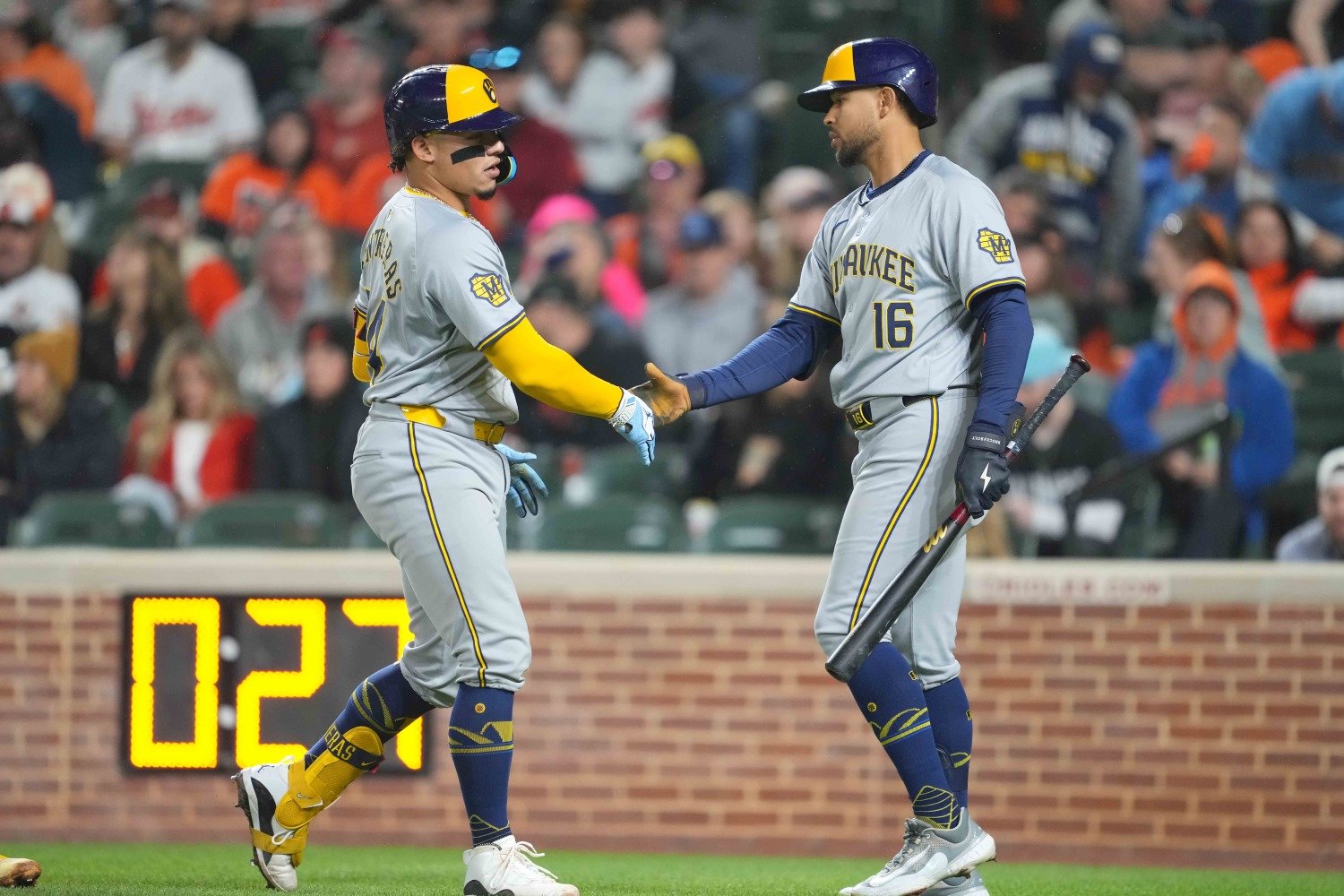 So far, the Brewers have exceeded offensive expectations and have the second-highest OPS in baseball at .795, right behind the Braves at .841. They're hitting home runs in 3.6 percent of their plate appearances, second only to Baltimore. Teams like the Dodgers, Orioles, and Atlanta were expected to be major threats at the plate this year, but other than adding Rhys Hoskins, the Brewers didn’t do much upgrading this winter, and they were in the bottom bucket for offensive performance last year. Furthermore, Hoskins is just the seventh-best qualified hitter by OPS+ on the team. What’s going on? As of now, there are a few players with somewhat lopsided statistics steering the ship. A few of them have been around those numbers before, but for others, their figures are so anomalous that a return to Earth is bound to happen soon. Let’s break down the top three hitters so far, to see if they’re going to finish strong or struggle soon. Christian Yelich - .333/.422/.744 The last time he averaged similar numbers for an entire season, he seemed like a future franchise great and had fully healthy knees and a (mostly) functional back. However, the years since that 2019 run have been marred by relative mediocrity, with a slight resurgence in 2023. In his first 46 plate appearances of the season, Yelich seemed like he was back in MVP form. He was doing everything well - hitting the ball hard to all fields, avoiding strikeouts, and walking when he needed to. More importantly, his launch angle was up to 11.7 degrees, nearly identical to the 11.3-degree launch angle he had in 2019. From 2020-2023, his average launch angle ranged from 2.8 to 3.6 degrees, creating far more ground balls than ever before. His 2024 ground ball rate of 45.2% is more than 10% lower than the average ground ball rate of his past few seasons. Unfortunately, it seems that Yelich has truly been cursed by the gods. He was recently placed on the 10-day IL due to a back strain. He’s had persistent issues throughout his baseball career with his back, and it seems they aren’t going away anytime soon. How this strain will affect his swing, bat path, bat speed, and other key characteristics of his hitting is yet to be seen, but it probably won’t be good. The concerns should be more focused on his launch angle than anything else, as his exit velocities have stayed remarkably consistent since his debut in 2015. William Contreras - .358/.443/.597 You don’t have to be a Brewer fanatic (see what I did there?) to know that Contreras is one of the best catchers in baseball. In 2023, he was a plus defender and had the highest OPS out of all qualified catchers. With a mark of .825, he surpassed the likes of Adley Rutschman, Will Smith, and J.T. Realmuto. He’s off to another torrid start so far in 2024, leading the team in hits (24) and RBI (17). One of the biggest changes seems to be in his average exit velocity. He’s scorching balls at an average speed of 96.0 mph, a big jump from his 2023 average of 91.3 mph. If we take a look at his hard-hit balls from 2023 vs. what sort of pitches he’s seeing in 2024, we can start to make sense of this. Of the batted balls with an exit velocity of 95 mph or greater in 2023, many of them were down the middle or inside. This seems to be right where he likes it. If we look at his hard-hit balls from 2024 though, things seem to have reflected across the y-axis. Furthermore, if you look at all of the pitches he’s received so far in 2024, you can see that pitchers tend to pitch him away (which is pretty standard). The adjustments he’s made to hit outside pitches seem to be working wonders so far. I doubt that Contreras will be able to sustain his stay in the 1.000 OPS club for very long, and as opposing teams get better scouting information on him, expect his numbers to regress slightly, but I think there are signs that a lasting and valuable adjustment has been made. It's yet to be seen if he's maintained his ability to hit inside pitches as well as he did in 2023. If so, I bid good luck to all opposing pitchers tasked with facing this young man. Blake Perkins - .324/.390/.486 Technically, Willy Adames barely edges out Perkins as the third-most productive Brewer, but Perkins is a far more interesting case to analyze. While Adames has shown an ability to be a top-tier hitter, Perkins is barely more than a rookie, with just over 200 major-league plate appearances to his name. His 2023 OPS of .675 wasn’t much to write home about but that’s what makes this year’s performance that much more intriguing. Unfortunately for him, his numbers might be the least sustainable of the players mentioned so far. First and foremost, his xBA of .256 and xSLG of .356 are both significantly lower than his actual numbers. Of his 12 total hits thus far, two have been home runs and 10 have been singles, and several of the singles could probably have been ruled errors. For example, take this ball that was ruled a single after a rough fielding job by Pete Alonso. Or this close call on a bunt to Jeimer Candelario: His other hits are slightly more legitimate, but could also have been let through due to wacky fielder positioning or other external factors, things that bring down his expected hitting numbers to be a little more average. The Brewers outfield is a bit of a confusing mess right now, worsened by the Yelich injury, so I’m sure fans are happy to have any effective hitting they can get. Don’t expect these halcyon times to last, but Perkins is such a good defender that he can be valuable even if he can't keep up this production in the box.
- 1 comment
-
- 2
-

-
- christian yelich
- william contreras
- (and 1 more)
-
After a disappointing 2023, there were questions about whether the Milwaukee Brewers' star shortstop would be able to return to his former self. So far in 2024, the answer seems to be yes, but what does that mean for his future with the team? Image courtesy of © Benny Sieu-USA TODAY Sports After a disappointing 2023, there were questions about whether the Milwaukee Brewers' star shortstop would be able to return to his former self. So far in 2024, the answer seems to be yes, but what does that mean for his future with the team? Last year brought mixed results for Willy Adames. He was one of the best defenders in all of baseball, accumulating 16 Outs Above Average (OAA), sixth-highest for any position. He also ranked sixth in Defensive Runs Saved (DRS) among shortstops, with 8. Unfortunately, his bat couldn’t keep up with his glove; his .717 OPS was the lowest figure for any full season in his career. It wasn’t obvious why he struggled so badly, since his exit velocity and strikeout rates were in line with his career averages, but let’s take a closer look at what happened. First, let’s dig into what sort of pitches he struggled with the most. While the pitch he had the lowest average against was the four-seam fastball (.195), he was able to make up some ground by slugging .436 and logging a hard-hit rate of 50% against them. The pitch against which he had lowest wOBA (.281) and xwOBA (.290) was the slider, the real bane of his existence in 2023. When you break down the sliders he put in play, it sort of makes sense. This graphic shows all of the sliders that Adames put in play last season colored by exit velocity. As you can see, sliders that were left in the heart of the zone were hit pretty hard, but many of these pitches he put in play were down and away. Those are tough pitches to hit hard. Contrast this with the same graph for the four-seam fastballs he put in play last year. Against four-seam fastballs, he kept a pretty tight strike zone, and even managed to knock a few high fastballs. It seems that he was simply fooled by the slider far more frequently, chasing pitches that should've just been taken. He had a whiff rate of 41.4% against the slider. It may have mostly been the slider, but it wasn't entirely the slider. As stated earlier, his strikeout rate was around his career average (it was actually lower, by 1.6%), but his chase rate was the highest it’s ever been, at 31.8%. Here are all of the pitches he put into play in 2023. So far this year, he’s stayed far more disciplined, and hasn’t expanded the zone quite as much. It’s a small sample size, but it shows promise that he’s started to make the necessary adjustments to his approach. The numbers back this up, with his plate discipline numbers showing a marked improvement over last year. Again, it's a small sample size of just 40 plate appearances thus far, but being a Willy Adames redemption arc believer is fun, so let’s try it anyway. 2023 2024 Chase% 31.8 22.2 Whiff% 31.0 23.2 K% 25.9 11.4 BB% 11.1 14.3 If we zoom back out to examine less geeky stats, we see an improved slash line of .257/.350/.457, a big bump in offense that the Brewers will need if they’d like to stay competitive. So what does this mean for his future with the Brewers? To me, a random dude who’s never played a game of organized baseball in his life, the answer is that it depends on how you feel about Milwaukee’s available depth at shortstop. In the farm system, the top-ranked shortstop prospect is Cooper Pratt, who has an ETA of 2027; that's still a ways away. At the major-league level, the team has Joey Ortiz and Brice Turang listed as backups. Both have some professional shortstop experience, but both are also filling other important infield roles, so if they move in to take Adames’s place, someone else will have to take theirs. Overall, it seems like the Brewers aren’t too wealthy in the middle infield department, which might mean that they’re more incentivized to try and get Adames to stay. All that said, he will be a free agent in 2025 and is probably hoping for a pretty sizable long-term contract. As you, dear reader, are likely well aware, Milwaukee and sizable long-term contracts are not often used in the same sentence (without some negating adjective). On the other hand, a lukewarm 2023 could affect his market value in 2025, barring some huge offensive resurgence this year, so maybe he’ll still end up being affordable. Maybe he takes a Carlos Correa-esque short-term deal to boost his stock price again? Who knows for sure? What we do know for sure is that great shortstops come at a premium. Francisco Lindor, Corey Seager, Trea Turner, and Bobby Witt Jr. are all on contracts worth more than $280 million. Heck, you might even throw Mookie Betts in there, since he’s apparently a shortstop now. Even if Adames isn’t in that S-tier of comparable players, my personal belief is that he’ll probably get at least $100 million in free agency, a price tag the Brewers probably won’t meet. Ultimately, I don't think Adames will be in Brewers colors come 2025. For now, though, there's evidence that he's on track for a great 2024, and that's great news for the team, whether they're looking to shop him in July or hoping to ride him to a 'ship in October. View full article
-
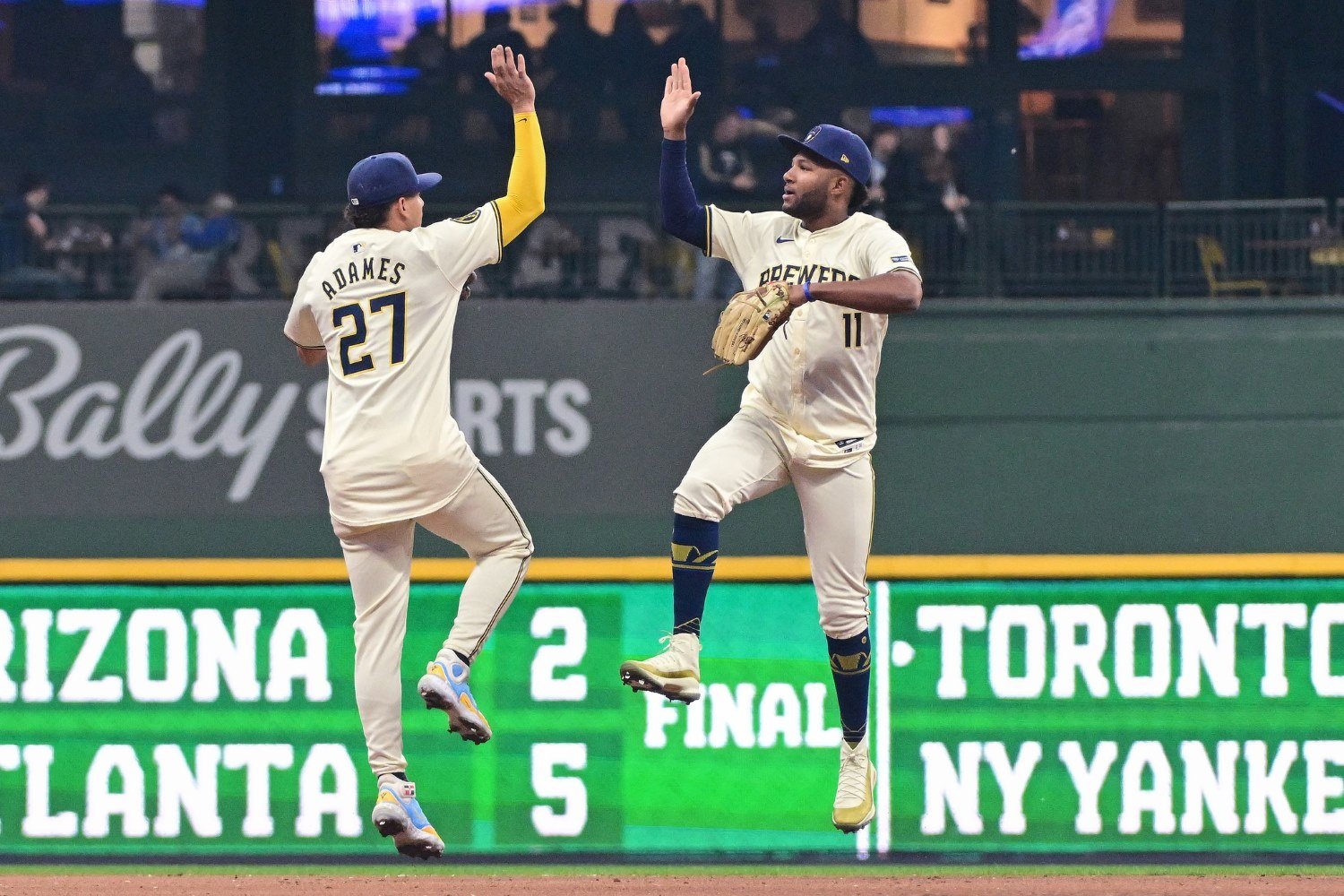 Last year brought mixed results for Willy Adames. He was one of the best defenders in all of baseball, accumulating 16 Outs Above Average (OAA), sixth-highest for any position. He also ranked sixth in Defensive Runs Saved (DRS) among shortstops, with 8. Unfortunately, his bat couldn’t keep up with his glove; his .717 OPS was the lowest figure for any full season in his career. It wasn’t obvious why he struggled so badly, since his exit velocity and strikeout rates were in line with his career averages, but let’s take a closer look at what happened. First, let’s dig into what sort of pitches he struggled with the most. While the pitch he had the lowest average against was the four-seam fastball (.195), he was able to make up some ground by slugging .436 and logging a hard-hit rate of 50% against them. The pitch against which he had lowest wOBA (.281) and xwOBA (.290) was the slider, the real bane of his existence in 2023. When you break down the sliders he put in play, it sort of makes sense. This graphic shows all of the sliders that Adames put in play last season colored by exit velocity. As you can see, sliders that were left in the heart of the zone were hit pretty hard, but many of these pitches he put in play were down and away. Those are tough pitches to hit hard. Contrast this with the same graph for the four-seam fastballs he put in play last year. Against four-seam fastballs, he kept a pretty tight strike zone, and even managed to knock a few high fastballs. It seems that he was simply fooled by the slider far more frequently, chasing pitches that should've just been taken. He had a whiff rate of 41.4% against the slider. It may have mostly been the slider, but it wasn't entirely the slider. As stated earlier, his strikeout rate was around his career average (it was actually lower, by 1.6%), but his chase rate was the highest it’s ever been, at 31.8%. Here are all of the pitches he put into play in 2023. So far this year, he’s stayed far more disciplined, and hasn’t expanded the zone quite as much. It’s a small sample size, but it shows promise that he’s started to make the necessary adjustments to his approach. The numbers back this up, with his plate discipline numbers showing a marked improvement over last year. Again, it's a small sample size of just 40 plate appearances thus far, but being a Willy Adames redemption arc believer is fun, so let’s try it anyway. 2023 2024 Chase% 31.8 22.2 Whiff% 31.0 23.2 K% 25.9 11.4 BB% 11.1 14.3 If we zoom back out to examine less geeky stats, we see an improved slash line of .257/.350/.457, a big bump in offense that the Brewers will need if they’d like to stay competitive. So what does this mean for his future with the Brewers? To me, a random dude who’s never played a game of organized baseball in his life, the answer is that it depends on how you feel about Milwaukee’s available depth at shortstop. In the farm system, the top-ranked shortstop prospect is Cooper Pratt, who has an ETA of 2027; that's still a ways away. At the major-league level, the team has Joey Ortiz and Brice Turang listed as backups. Both have some professional shortstop experience, but both are also filling other important infield roles, so if they move in to take Adames’s place, someone else will have to take theirs. Overall, it seems like the Brewers aren’t too wealthy in the middle infield department, which might mean that they’re more incentivized to try and get Adames to stay. All that said, he will be a free agent in 2025 and is probably hoping for a pretty sizable long-term contract. As you, dear reader, are likely well aware, Milwaukee and sizable long-term contracts are not often used in the same sentence (without some negating adjective). On the other hand, a lukewarm 2023 could affect his market value in 2025, barring some huge offensive resurgence this year, so maybe he’ll still end up being affordable. Maybe he takes a Carlos Correa-esque short-term deal to boost his stock price again? Who knows for sure? What we do know for sure is that great shortstops come at a premium. Francisco Lindor, Corey Seager, Trea Turner, and Bobby Witt Jr. are all on contracts worth more than $280 million. Heck, you might even throw Mookie Betts in there, since he’s apparently a shortstop now. Even if Adames isn’t in that S-tier of comparable players, my personal belief is that he’ll probably get at least $100 million in free agency, a price tag the Brewers probably won’t meet. Ultimately, I don't think Adames will be in Brewers colors come 2025. For now, though, there's evidence that he's on track for a great 2024, and that's great news for the team, whether they're looking to shop him in July or hoping to ride him to a 'ship in October.
 -
Stormin’ Gorman: The Man Who Set Brewers Facial Hair Standards
Jason Wang posted an article in History
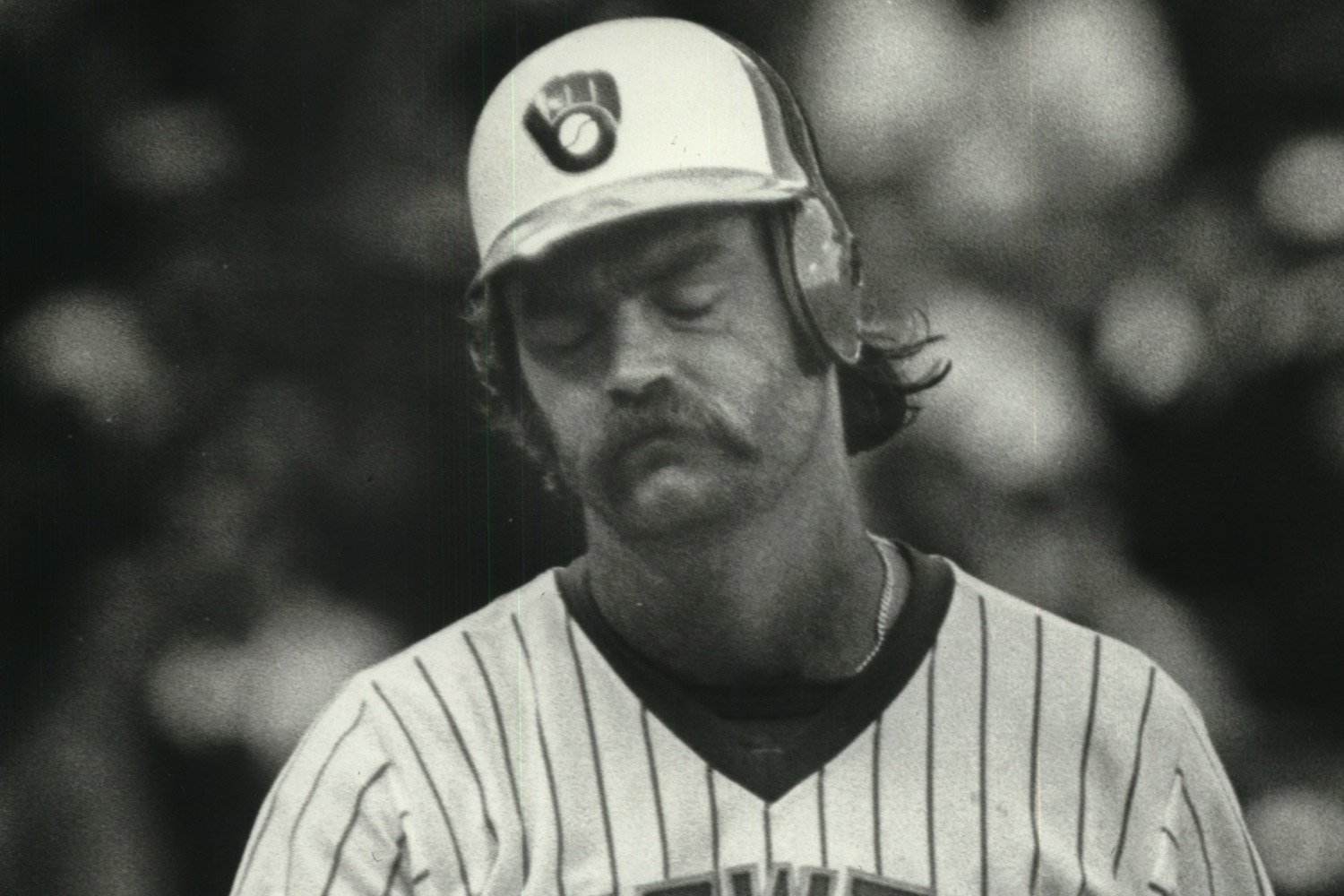 Born in South Carolina, Gorman Thomas had an upbringing similar to many current and future major leaguers. His father was a former minor league pitcher, and Gorman was a generally gifted athlete, earning varsity letters for football, basketball, track, and baseball. His professional career started in 1969 after being drafted in the first round by the Seattle Pilots, the newest faces in Major League Baseball. After just one year of logistical errors and plumbing mishaps, the Pilots moved to Milwaukee and became the Brewers we know and love today. Despite being their first-ever draft pick, the team would collapse before Thomas could make it out of rookie ball. With the Brewers, he quickly rose through the ranks of the minor leagues and debuted in 1973. In 1975, he officially graduated from minor league farmhand to major-league bench player and had only 547 plate appearances in 1975 and 1976 combined. On the bright side, he got to hang out with a pretty cool guy named Henry Aaron (not sure if you’ve heard of him; I think he hit a couple of home runs or something like that) during the last two years of his career. Every year in the 70s was funky, but 1977 was especially so for Gorman Thomas. He spent the entire year in Triple A and then was traded to the Texas Rangers as part of a “player-to-be-named-later” deal that brought outfielder Ed Kirkpatrick to the Brewers. Dan O’Brien Sr, the general manager of the Rangers at the time, saw the deal as a simple, friendly gesture and had no intentions of actually using Thomas. Instead, Brewers general manager Harry Dalton needed to open a roster spot over the winter and asked O’Brien to hold onto Thomas for a few months. He returned to the Brewers in February 1978, just in time to start the season in Milwaukee. For the next five years, Thomas was the starting center fielder for an upstart Brewers team that went from the laughing stock of the division at the beginning of the decade to Game 7 of the World Series in 1982. He was pretty productive, slashing .245/.339/.505 over his nearly 3,000 plate appearances. He was a great power threat for the team, leading the American League in home runs in 1979 with 45 and 1982 with 39. He also led major league baseball in strikeouts in 1979 with 175 and in 1980 with 170. Essentially, he walked so Kyle Schwarber could run. Despite his valiant efforts, he received just one All-Star nod in 1981 and some MVP votes in 1979 and 1982. In total, he would hit 208 home runs for Milwaukee. One black spot on his legacy is undoubtedly his lack of playoff success. Of his 65 playoff plate appearances in his career, he slashed a measly .102/.169/.203. Game 2 of the 1982 World Series against the Cardinals was a one-run game, so if Gorman had hit a little better instead of going 0-3 at the plate, the Brew Crew have had enough to claim their long-awaited World Series trophy. His career with the Crew ended in June 1983 after he was dealt to the Cleveland Indians in exchange for Rick Manning and Rick Waits. His hitting had quickly started to decline, and he’d have one more good year with the Seattle Mariners in 1985 before returning to the Brewers as a designated hitter in 1986 and hanging up the cleats at the conclusion of the season. Overall, Gorman Thomas ranks 17th all-time in Baseball-Reference WAR with the Brewers at 18.4 and is known as a franchise great. He was inducted into the Wisconsin Athletic Hall of Fame in 2003 and the Brewers Wall of Honor in 2014. For much of his life and personality, it seems he was created in a facility to embody all the ideal characteristics of a Brewers player. He opened a bar with teammate Pete Vuckovich called Stormin’ & Vuke’s. He spent much of his time in retirement doing manly things like hunting, carving duck decoys, and collecting artwork. Sure, he never won an MVP, a Silver Slugger, or dated Marilyn Monroe, but that’s not what baseball’s about, is it?
 -
In addition to having a mustache for the ages, Thomas spent 11 years as an outfielder with the Brewers, and his playing days were almost as glorious as his flavor saver. Image courtesy of © The Milwaukee Journal Sentinel-USA TODAY NETWORK In addition to having a mustache for the ages, Thomas spent 11 years as an outfielder with the Brewers, and his playing days were almost as glorious as his flavor saver. Born in South Carolina, Gorman Thomas had an upbringing similar to many current and future major leaguers. His father was a former minor league pitcher, and Gorman was a generally gifted athlete, earning varsity letters for football, basketball, track, and baseball. His professional career started in 1969 after being drafted in the first round by the Seattle Pilots, the newest faces in Major League Baseball. After just one year of logistical errors and plumbing mishaps, the Pilots moved to Milwaukee and became the Brewers we know and love today. Despite being their first-ever draft pick, the team would collapse before Thomas could make it out of rookie ball. With the Brewers, he quickly rose through the ranks of the minor leagues and debuted in 1973. In 1975, he officially graduated from minor league farmhand to major-league bench player and had only 547 plate appearances in 1975 and 1976 combined. On the bright side, he got to hang out with a pretty cool guy named Henry Aaron (not sure if you’ve heard of him; I think he hit a couple of home runs or something like that) during the last two years of his career. Every year in the 70s was funky, but 1977 was especially so for Gorman Thomas. He spent the entire year in Triple A and then was traded to the Texas Rangers as part of a “player-to-be-named-later” deal that brought outfielder Ed Kirkpatrick to the Brewers. Dan O’Brien Sr, the general manager of the Rangers at the time, saw the deal as a simple, friendly gesture and had no intentions of actually using Thomas. Instead, Brewers general manager Harry Dalton needed to open a roster spot over the winter and asked O’Brien to hold onto Thomas for a few months. He returned to the Brewers in February 1978, just in time to start the season in Milwaukee. For the next five years, Thomas was the starting center fielder for an upstart Brewers team that went from the laughing stock of the division at the beginning of the decade to Game 7 of the World Series in 1982. He was pretty productive, slashing .245/.339/.505 over his nearly 3,000 plate appearances. He was a great power threat for the team, leading the American League in home runs in 1979 with 45 and 1982 with 39. He also led major league baseball in strikeouts in 1979 with 175 and in 1980 with 170. Essentially, he walked so Kyle Schwarber could run. Despite his valiant efforts, he received just one All-Star nod in 1981 and some MVP votes in 1979 and 1982. In total, he would hit 208 home runs for Milwaukee. One black spot on his legacy is undoubtedly his lack of playoff success. Of his 65 playoff plate appearances in his career, he slashed a measly .102/.169/.203. Game 2 of the 1982 World Series against the Cardinals was a one-run game, so if Gorman had hit a little better instead of going 0-3 at the plate, the Brew Crew have had enough to claim their long-awaited World Series trophy. His career with the Crew ended in June 1983 after he was dealt to the Cleveland Indians in exchange for Rick Manning and Rick Waits. His hitting had quickly started to decline, and he’d have one more good year with the Seattle Mariners in 1985 before returning to the Brewers as a designated hitter in 1986 and hanging up the cleats at the conclusion of the season. Overall, Gorman Thomas ranks 17th all-time in Baseball-Reference WAR with the Brewers at 18.4 and is known as a franchise great. He was inducted into the Wisconsin Athletic Hall of Fame in 2003 and the Brewers Wall of Honor in 2014. For much of his life and personality, it seems he was created in a facility to embody all the ideal characteristics of a Brewers player. He opened a bar with teammate Pete Vuckovich called Stormin’ & Vuke’s. He spent much of his time in retirement doing manly things like hunting, carving duck decoys, and collecting artwork. Sure, he never won an MVP, a Silver Slugger, or dated Marilyn Monroe, but that’s not what baseball’s about, is it? View full article
-
BrewersRaptor Brewers Recap – 2024 Season Week 1
Jason Wang replied to John Egan's topic in Brewer Fanatic Front Page News
cubs fans on twitter when families of 4 are able to afford attending a game of Brewers baseball
-
Is Brice Turang Taking That "Quantum Leap"?
Jason Wang replied to Jake McKibbin's topic in Brewer Fanatic Front Page News
Really hope this is the result of actual adjustments to approach and not just a fluke to start the season off. The worst part about baseball is having to wait and see if things are for real or just random. If Brice Turang can be even a 100 OPS+ hitter, that would be such a huge boost to this team's offense over last year, especially with Hoskins and Yelich balling out. -
Jackson Chourio is a month over the age of 20 and has so much time to build strength to increase his power. The same goes for his fielding, especially since he hasn't really played much right field in his minor league career. Not everyone can have an age-20 season like Mike Trout or Alex Rodriguez but what matters is the long con anyway. In their ZiPS projections for the Brewers, Szymborski even stated that Chourio was projected to be about league-average offensively to start but have immense future value.
-
In the first major league game of his career, Chourio showed off a few of the reasons that he’s one of the best prospects in baseball. Image courtesy of © Vincent Carchietta-USA TODAY Sports In the first major league game of his career, Chourio showed off a few of the reasons that he’s one of the best prospects in baseball. Jackson Chourio was one of several new Brewers faces that helped kick off the 2024 season against the New York Mets, but he was the one that people were probably watching the closest. Because making his major league debut wasn’t enough pressure, he was also set to hit leadoff. He answered the call, drawing a walk against José Quintana in just four pitches. He followed this up with a stolen base, immediately placing himself into scoring position and putting his 70-grade speed tool on display. To Francisco Alvarez’s credit, he was quite close, and had the pitch not taken an extra bounce in the dirt, he might’ve made the out. His next highlight came while playing in right field. There has been a bit of a learning curve as he adapts to playing in the corners of the outfield rather than the middle, and he’s gone on record saying that mastering his new defensive position is an immediate goal. In the bottom of the third inning, Chourio made a great catch to steal a potential double from Brandon Nimmo. He also managed to record his first career hit, a single to right field in the top of the fifth inning. It had an exit velocity of 91.0 mph, which wasn't the hardest ball ever recorded, but it was a great example of his hitting abilities. Jose Quintana’s pitch was a good changeup down and away, but it was tough for most batters to work with. In his final plate appearance of the day, Chourio grounded into a force out but scored Jake Bauers, notching his first career RBI, becoming the youngest player in MLB history with at least one stolen base and RBI in his debut. He made another catch to put out Starling Marte in the same inning. All in all, it was a productive day for the young rookie. While the two catches he made in the outfield weren’t the greatest ones ever recorded, they show that he’s starting to get a little more comfortable in right field. One could make the argument that the only reason he had to jump for either catch was because he was out of position or got a bad jump/read, but that means that once he does begin to master his new role, his athleticism will augment his fielding range by that much more. One game isn’t very significant, but it’s encouraging to see positive signs so early. He’ll likely slow down soon and have to make some adjustments, which is when we’ll see if he’s everything that scouts have told us. For those who hadn't seen him play in the minor leagues, hopefully, this helped to prove that he's a special talent with a bright future ahead of him. For Brewers and baseball fans alike, watching him flourish will be a privilege. View full article
-
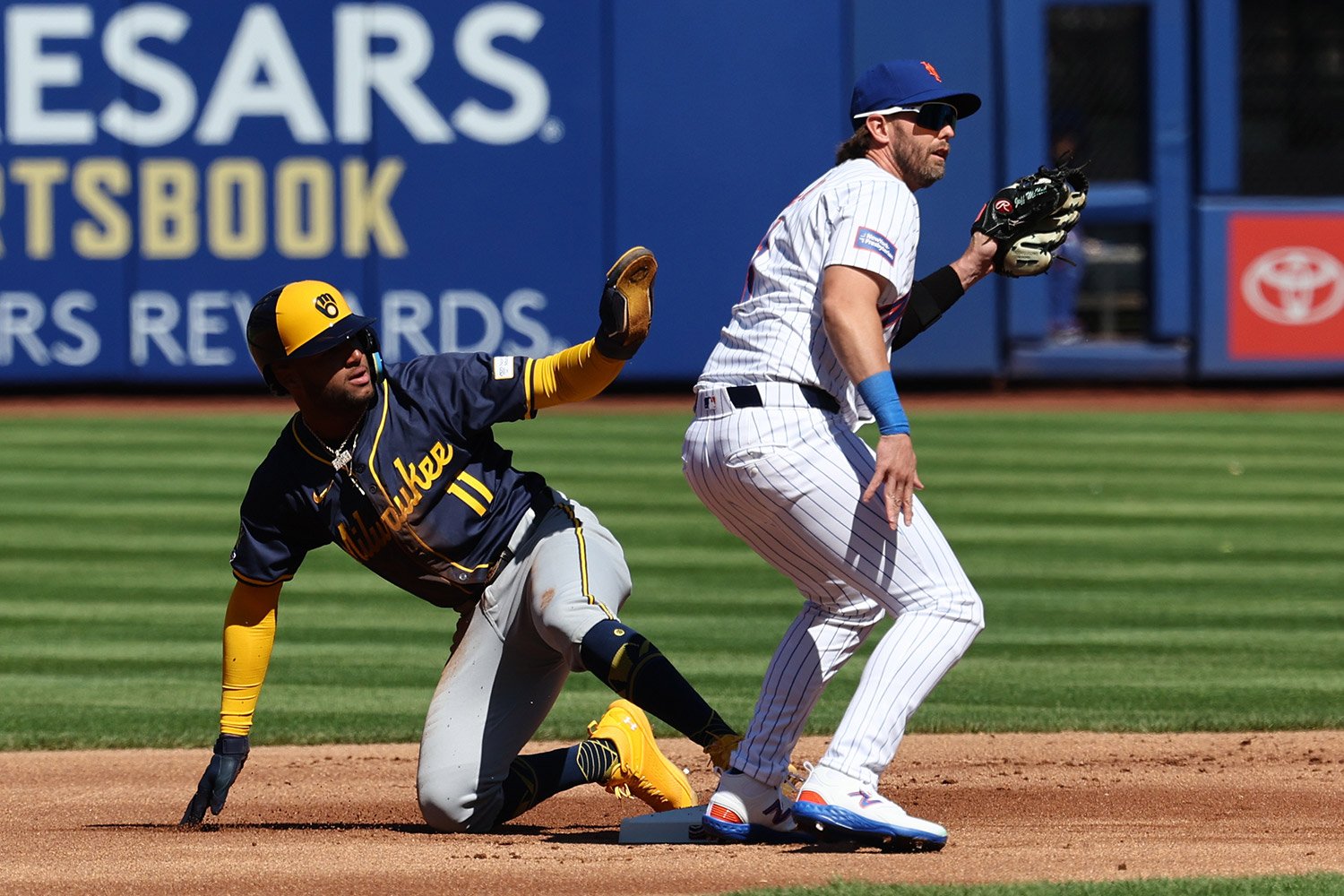 Jackson Chourio was one of several new Brewers faces that helped kick off the 2024 season against the New York Mets, but he was the one that people were probably watching the closest. Because making his major league debut wasn’t enough pressure, he was also set to hit leadoff. He answered the call, drawing a walk against José Quintana in just four pitches. He followed this up with a stolen base, immediately placing himself into scoring position and putting his 70-grade speed tool on display. To Francisco Alvarez’s credit, he was quite close, and had the pitch not taken an extra bounce in the dirt, he might’ve made the out. His next highlight came while playing in right field. There has been a bit of a learning curve as he adapts to playing in the corners of the outfield rather than the middle, and he’s gone on record saying that mastering his new defensive position is an immediate goal. In the bottom of the third inning, Chourio made a great catch to steal a potential double from Brandon Nimmo. He also managed to record his first career hit, a single to right field in the top of the fifth inning. It had an exit velocity of 91.0 mph, which wasn't the hardest ball ever recorded, but it was a great example of his hitting abilities. Jose Quintana’s pitch was a good changeup down and away, but it was tough for most batters to work with. In his final plate appearance of the day, Chourio grounded into a force out but scored Jake Bauers, notching his first career RBI, becoming the youngest player in MLB history with at least one stolen base and RBI in his debut. He made another catch to put out Starling Marte in the same inning. All in all, it was a productive day for the young rookie. While the two catches he made in the outfield weren’t the greatest ones ever recorded, they show that he’s starting to get a little more comfortable in right field. One could make the argument that the only reason he had to jump for either catch was because he was out of position or got a bad jump/read, but that means that once he does begin to master his new role, his athleticism will augment his fielding range by that much more. One game isn’t very significant, but it’s encouraging to see positive signs so early. He’ll likely slow down soon and have to make some adjustments, which is when we’ll see if he’s everything that scouts have told us. For those who hadn't seen him play in the minor leagues, hopefully, this helped to prove that he's a special talent with a bright future ahead of him. For Brewers and baseball fans alike, watching him flourish will be a privilege.
 -
With the roster for Opening Day set, who can we expect to be playing right field for the Milwaukee Brewers in 2024--and how well? Image courtesy of © Mark J. Rebilas-USA TODAY Sports With the roster for Opening Day set, who can we expect to be playing right field for the Milwaukee Brewers in 2024--and how well? Right field was a bit of a revolving door last year. With Christian Yelich getting the lion’s share of reps in left field and Joey Wiemer getting most of the starts in center, right field was split more evenly among Tyrone Taylor, Blake Perkins, and Sal Frelick. Now that the team's shiny prospect has been officially been called up, is the situation more stable? The Starter: Jackson Chourio 2023 MLB Stats: Did Not Play - Minor Leagues; 2023 Double-A Stats: 122 G, 559 PA, .280/.336/.467, 22 HR, 23 2B 2024 ZiPS Projections: 130 G, 560 PA, .258/.305/.411, 17 HR, 1.4 fWAR Scouting Report: The hottest story of the offseason has been all about Chourio, and waiting to see whether he would make the Opening Day roster. It's now been confirmed that he'll play in the first game of the season but will be slotted in right field instead of his usual spot in center, spending the last few weeks of spring training in his new position. There are a few pros to this, all of which are broken down in great detail by Matt Trueblood, but it boils down to giving him a chance to acclimate to the major leagues while reducing injury risk. At just a few weeks over the age of 20, he's got a long way to go before he becomes the player that scouts have him cracked up to be. For a player on whom so much rides (especially given his sizable contract), the Brewers will do as much as they can to protect their investment. He hit well in spring training, slashing .323/.373/.403 over 67 plate appearances with two doubles and a triple. Although he has made a few errors in right field, he is known to be an excellent defender and won an MiLB Gold Glove Award in 2022. It wouldn't be surprising to see him iron out any kinks after getting more reps in his new role. However, one of the main downsides of placing Chourio in right field is that his best tool, his 70-grade speed, won't be as beneficial. On the other hand, playing a less demanding defensive position will allow him to focus on his performance at the plate, a tradeoff the Brewers would be happy to make given their relatively low projected offensive numbers. Either way, expect him to make even more great catches in 2024. Other Options: While Chourio's ascent into the show has been the biggest story of the spring, the team's second-biggest story this offseason was Sal Frelick getting reps at third base and being groomed to be the starter at that position. He has now been moved back to the outfield, given the recent Garrett Mitchell injury, and it seems like he'll be placed in center. Nevertheless, right field was where Frelick spent most of his time in 2023, logging 246 ⅓ innings as opposed to 196 innings spent in center, so the team might still use him as a flex option if needed. Frelick is an excellent baseball talent. While not as flashy as some of the other young players in today’s game, he profiles much like your great-grandfather’s favorite baseball player. Although he struggled to barrel the ball consistently, his excellent plate discipline numbers helped to lift his offense to more acceptable levels. He may have added a little more pop to his swing in the offseason, slashing .273/.365/.491 with two home runs and four doubles in spring training, but only time will tell whether he can sustain this success against major-league pitching. His non-hitting-related tools are what make him such a valuable player. He played excellent defense in 2023, posting 7 Outs Above Average (OAA) and 6 Defensive Runs Saved (DRS), great numbers for a relatively short stint in the bigs. It’ll be hard to forget the two catches he made in his debut against the Braves. His excellent speed is also a huge boost to his range as a defender. As a prospect, he received a grade of 70 for his speed tool and boasted top-quartile sprint speed. This also helps compensate for his apparent lack of power, because it enables him to beat out certain ground balls and stretch singles into extra-base hits. After Frelick, the third name on the depth chart would be Blake Perkins. His primary role in 2023 was in right field as well, although he saw slightly less time than Frelick, logging just 190 total innings. His profile paints him to be a slightly watered-down version of Frelick, with similar weaknesses when it comes to power but a significantly higher strikeout rate, at 27.4%. Interestingly, his chase and walk rates of 16.8% and 13.7% were both better than Frelick’s. Perkins also had a stellar glove in right field, also posting 7 OAA and 8 DRS, helped by his best-in-class sprint speed and top-tier arm strength. Perkins was the ninth-fastest player in MLB--not bad given the class of competition, which included Elly De La Cruz, Bobby Witt Jr., Trea Turner, and Corbin Carroll. Ultimately, it wouldn’t be the end of the world to utilize Perkins, but it would mean sacrificing even more offensive production, a price that may be too hefty for this Brewers squad. Another dark-horse candidate for right field could be Joey Wiemer, who just missed out on the Opening Day roster. He spent pretty much all of his time in center field, but he’s a scrappy fella who could be slotted in very soon if the team finds itself in a worst-case scenario. He hits the ball a little harder than his two co-workers mentioned above, but his plate discipline pales in comparison. Overall, his great defense and mediocre offense continue the existing theme among Brewers right-fielders. The Big Question: The biggest uncertainty is exactly how long we should expect Chourio to remain in right field. What does the team need to see before bumping him to center? Is that something they foresee happening at any point in the year? Furthermore, if the Brewers are dissatisfied with Joey Ortiz and/or Andruw Monasterio at third base, how does moving Frelick to the infield shake things up? Would his place be taken by a healthy Mitchell, or someone else in a crowded Milwaukee outfield? When discussing any young, unproven talents, we often have more questions than answers. He might not show off his true potential until a few years from now, and it remains to be seen if starting him off in right field is actually the right decision from a roster construction standpoint, but hey, you never know. Baseball is a fickle sport, but isn't that exactly why we all love it so much? View full article
-
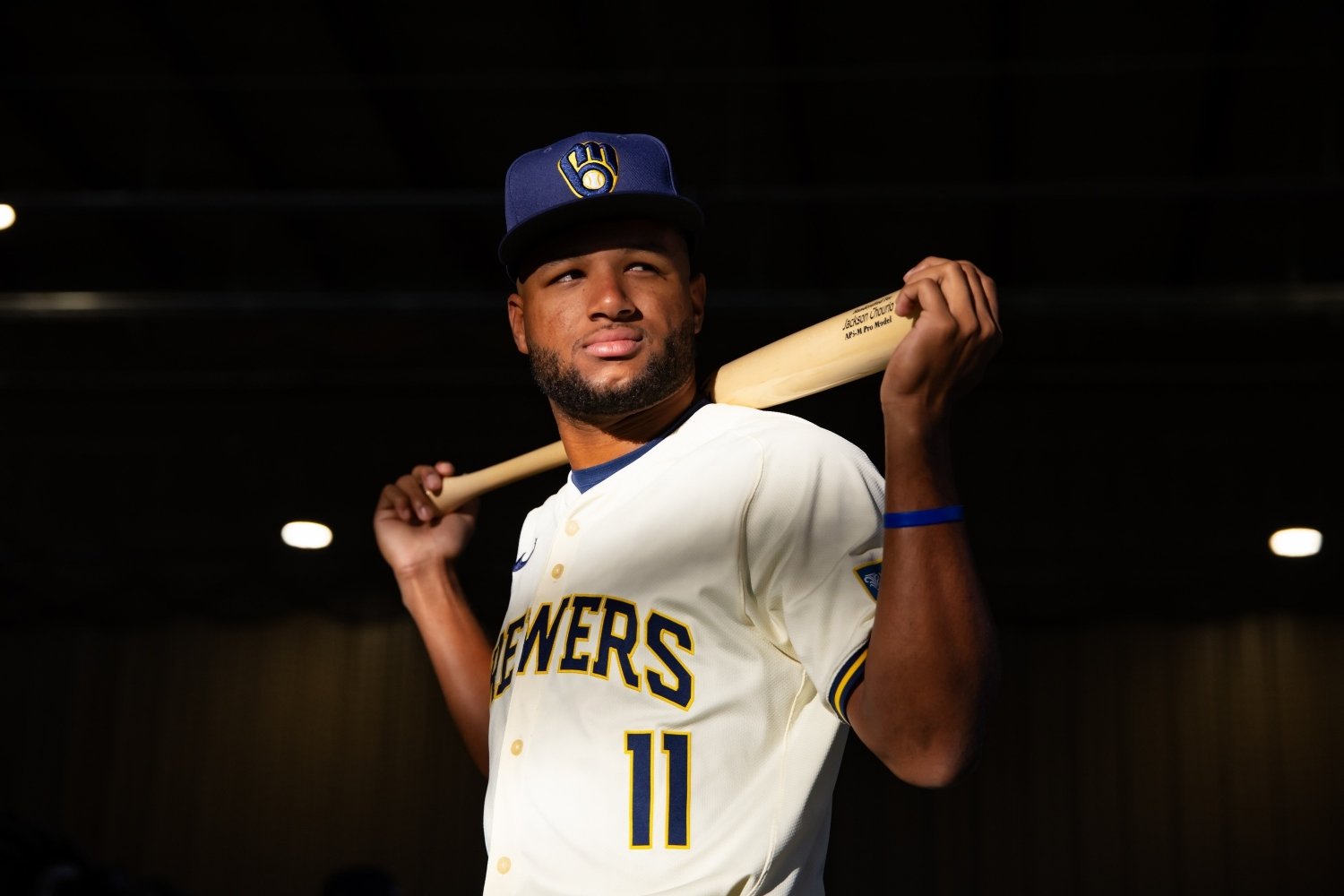 Right field was a bit of a revolving door last year. With Christian Yelich getting the lion’s share of reps in left field and Joey Wiemer getting most of the starts in center, right field was split more evenly among Tyrone Taylor, Blake Perkins, and Sal Frelick. Now that the team's shiny prospect has been officially been called up, is the situation more stable? The Starter: Jackson Chourio 2023 MLB Stats: Did Not Play - Minor Leagues; 2023 Double-A Stats: 122 G, 559 PA, .280/.336/.467, 22 HR, 23 2B 2024 ZiPS Projections: 130 G, 560 PA, .258/.305/.411, 17 HR, 1.4 fWAR Scouting Report: The hottest story of the offseason has been all about Chourio, and waiting to see whether he would make the Opening Day roster. It's now been confirmed that he'll play in the first game of the season but will be slotted in right field instead of his usual spot in center, spending the last few weeks of spring training in his new position. There are a few pros to this, all of which are broken down in great detail by Matt Trueblood, but it boils down to giving him a chance to acclimate to the major leagues while reducing injury risk. At just a few weeks over the age of 20, he's got a long way to go before he becomes the player that scouts have him cracked up to be. For a player on whom so much rides (especially given his sizable contract), the Brewers will do as much as they can to protect their investment. He hit well in spring training, slashing .323/.373/.403 over 67 plate appearances with two doubles and a triple. Although he has made a few errors in right field, he is known to be an excellent defender and won an MiLB Gold Glove Award in 2022. It wouldn't be surprising to see him iron out any kinks after getting more reps in his new role. However, one of the main downsides of placing Chourio in right field is that his best tool, his 70-grade speed, won't be as beneficial. On the other hand, playing a less demanding defensive position will allow him to focus on his performance at the plate, a tradeoff the Brewers would be happy to make given their relatively low projected offensive numbers. Either way, expect him to make even more great catches in 2024. Other Options: While Chourio's ascent into the show has been the biggest story of the spring, the team's second-biggest story this offseason was Sal Frelick getting reps at third base and being groomed to be the starter at that position. He has now been moved back to the outfield, given the recent Garrett Mitchell injury, and it seems like he'll be placed in center. Nevertheless, right field was where Frelick spent most of his time in 2023, logging 246 ⅓ innings as opposed to 196 innings spent in center, so the team might still use him as a flex option if needed. Frelick is an excellent baseball talent. While not as flashy as some of the other young players in today’s game, he profiles much like your great-grandfather’s favorite baseball player. Although he struggled to barrel the ball consistently, his excellent plate discipline numbers helped to lift his offense to more acceptable levels. He may have added a little more pop to his swing in the offseason, slashing .273/.365/.491 with two home runs and four doubles in spring training, but only time will tell whether he can sustain this success against major-league pitching. His non-hitting-related tools are what make him such a valuable player. He played excellent defense in 2023, posting 7 Outs Above Average (OAA) and 6 Defensive Runs Saved (DRS), great numbers for a relatively short stint in the bigs. It’ll be hard to forget the two catches he made in his debut against the Braves. His excellent speed is also a huge boost to his range as a defender. As a prospect, he received a grade of 70 for his speed tool and boasted top-quartile sprint speed. This also helps compensate for his apparent lack of power, because it enables him to beat out certain ground balls and stretch singles into extra-base hits. After Frelick, the third name on the depth chart would be Blake Perkins. His primary role in 2023 was in right field as well, although he saw slightly less time than Frelick, logging just 190 total innings. His profile paints him to be a slightly watered-down version of Frelick, with similar weaknesses when it comes to power but a significantly higher strikeout rate, at 27.4%. Interestingly, his chase and walk rates of 16.8% and 13.7% were both better than Frelick’s. Perkins also had a stellar glove in right field, also posting 7 OAA and 8 DRS, helped by his best-in-class sprint speed and top-tier arm strength. Perkins was the ninth-fastest player in MLB--not bad given the class of competition, which included Elly De La Cruz, Bobby Witt Jr., Trea Turner, and Corbin Carroll. Ultimately, it wouldn’t be the end of the world to utilize Perkins, but it would mean sacrificing even more offensive production, a price that may be too hefty for this Brewers squad. Another dark-horse candidate for right field could be Joey Wiemer, who just missed out on the Opening Day roster. He spent pretty much all of his time in center field, but he’s a scrappy fella who could be slotted in very soon if the team finds itself in a worst-case scenario. He hits the ball a little harder than his two co-workers mentioned above, but his plate discipline pales in comparison. Overall, his great defense and mediocre offense continue the existing theme among Brewers right-fielders. The Big Question: The biggest uncertainty is exactly how long we should expect Chourio to remain in right field. What does the team need to see before bumping him to center? Is that something they foresee happening at any point in the year? Furthermore, if the Brewers are dissatisfied with Joey Ortiz and/or Andruw Monasterio at third base, how does moving Frelick to the infield shake things up? Would his place be taken by a healthy Mitchell, or someone else in a crowded Milwaukee outfield? When discussing any young, unproven talents, we often have more questions than answers. He might not show off his true potential until a few years from now, and it remains to be seen if starting him off in right field is actually the right decision from a roster construction standpoint, but hey, you never know. Baseball is a fickle sport, but isn't that exactly why we all love it so much?
-
- 1
-
-
- jackson chourio
- sal frelick
- (and 2 more)
-
What players on the major league depth chart will have to make stuff work or potentially be subjected to waivers in 2024? Image courtesy of © Rick Scuteri-USA TODAY Sports What players on the major league depth chart will have to make stuff work or potentially be subjected to waivers in 2024? Jake Bauers Bauers was acquired from the Yankees in exchange for Jace Avina and Brian Sánchez and was initially slated to be the team’s starting first baseman, much to the dismay of quite a few Brewer Fanatic readers. Fortunately for these readers, the Brewers later signed Rhys Hoskins, and Bauers fell to the second spot in the depth chart. He isn’t expected to see much playing time at all, with FanGraphs projecting him to have just 175 plate appearances this season. This makes sense, given the generally superior option in Hoskins. Despite being at the top of the depth chart for the DH role, his competition with William Contreras, Christian Yelich, and newly signed Gary Sanchez makes it unlikely that he'll stay the first option for long. Furthermore, he struggled quite a bit as a hitter in 2023, slashing .202/.279/.413 in New York for an OPS+ of 87 over 272 plate appearances. He had great barrel and hard-hit rates, but with a 34.9% strikeout rate, it wasn’t enough to lift his offensive output to a league-average level. Combined with subpar defense and playing a position with heavy-hitting expectations, he accumulated -0.9 rWAR to bring his career rWAR to -1.5. He still has a few years of team control left and won’t be eligible for free agency until 2027, but with no options left, it seems like he’ll ultimately end up on waivers or in a trade package for something else. Eric Haase Similar to Bauers, Haase’s role on the team seems a little confusing from the outside. The Brewers already have William Contreras and now Gary Sanchez, who are far better options behind the dish. After being outrighted to Triple A by the Guardians, he elected free agency and signed a one-year deal with Milwaukee, likely a break-glass-in-case-of-emergency option after Victor Caratini’s departure to Houston. Similar to Bauers, Haase was below replacement level in 2023, slashing .201/.247/.281 for a measly OPS+ of 45 and an rWAR of -0.9. He didn’t do anything particularly well on offense or defense aside from playing in the outfield for 140 innings. In addition to having offensive production roughly 50% worse than league average, he posted -5 blocks above average and was below average in framing for every part of the strike zone except one. He’ll be a free agent in 2027 and was exceptionally cheap to acquire. In a worst-case scenario, he’s a fun spring training experiment for the infamous Brewers catching lab that eventually returns to the waivers or is traded to another team. Joel Payamps Payamps is among the many underrated relievers sitting around in the Brewers bullpen. Posting a 2.55 ERA and 1.05 WHIP over 70 ⅔ innings last season, he also accumulated the most strikeouts of his career by far at 77. He notched a strikeout per nine figure of 9.8, a significant improvement over his career average of 6.7 entering 2023. He made significant improvements to his entire arsenal, but his four-seam fastball saw the most drastic statistical increase. His fastball went from a .362 wOBA in 2022 to just a .179 wOBA in 2023, driving its total run value up to 12. While this could be due to many reasons, one possibility could be a greater focus on keeping the fastball elevated. Here are heat maps of pitch frequency and wOBA for all of his four-seamers in 2022. He gave up the most damage on the lower parts of the zone and the fastballs that ended up on the middle-left portion (from the pitcher's perspective). So, how did he fix this in 2023? He just threw the fastball higher and went to the other side, jamming right-handed batters and avoiding left-handed ones. These strides were big, and with Devin Williams’s recent injury, Payamps may even step into an even higher leverage role for the beginning of 2024. Despite being out of options, it seems he’ll reach free agency in 2027 safe and sound, hopefully choosing to spend his best years with the Brewers. Bryse Wilson Bryse Wilson had a great comeback story last year. After five brutal years in Atlanta and Pittsburgh as a starter, he had a cumulative ERA of 5.54 over 56 starts. After being traded to Milwaukee for cash considerations, things turned around massively. He posted a 2.58 ERA out of the bullpen. He was given the title of long reliever, often coming in for multi-inning relief appearances and accumulating six wins and three saves. His success was partially driven by a reduced workload and increased cutter usage. Throughout his career, he’s struggled late into starts, with opposing batters posting a .976 OPS on the third time through the order. He also started using a cutter sparingly in 2022 and saw some success with it, achieving a batting average against of just .077. In 2023, it became his second-most used pitch (although he threw just three fewer cutters than sinkers) and got more good results, this time getting a batting-average-against of .165 over 401 pitches. The sinker/cutter combination synergized well with his high fastball, and although his strikeout rate was still below average, his flyball rate was 31%, 6% higher than his career average before that point. Wilson’s role on the team is incredibly valuable. There are signs that he may have benefited more from luck than intrinsically good pitching, namely the difference in his FIP of 4.13 and his ERA of 2.58, but we’ll need more data in a Brewers uniform before we can make a firm conclusion. It seems like his place is as a reliever rather than starter, but he can stretch into two or three innings if needed. He’ll be a free agent in 2027, but until then, he’ll be an integral part of the Brewers bullpen. Colin Rea Before this season, Rea never had a stable job on an MLB team. His most active season was making 18 starts with the Padres in 2016 and pitching to a 4.98 ERA. After two stints in the Japanese NPB, he signed a minor league contract with the Brewers and was quickly called up, holding down his place at the back end of the rotation for most of the season. A no-frills kind of guy (typical of an Iowa native, if we’re being honest), his ERA and WHIP for the 2023 season were 4.55 and 1.19, pretty solid numbers for a fifth arm. With Corbin Burnes long gone and Woodruff on the injured list for most of the season, Rea will have to step up and take on an outsized role on a rotation that seemingly pales compared to the 2023 Brewers squad. On one hand, that might add pressure and impede his ability to perform at the highest level. On the other hand, the lack of available major-league quality starters to compete with gives him a slightly bigger margin for error. He signed a one-year contract to stay with the team and has a club option for 2025, so it seems like the front office has faith in his ability to be a consistent contributor. View full article