



Jason Wang
-
Posts
955 -
Joined
-
Last visited
-
Days Won
1
Content Type
Profiles
Forums
Blogs
Events
News
2026 Milwaukee Brewers Top Prospects Ranking
Milwaukee Brewers Videos
2022 Milwaukee Brewers Draft Picks
Milwaukee Brewers Free Agent & Trade Rumors, Notes, & Tidbits
Guides & Resources
2023 Milwaukee Brewers Draft Picks
2024 Milwaukee Brewers Draft Picks
The Milwaukee Brewers Players Project
2025 Milwaukee Brewers Draft Pick Tracker
2026 Milwaukee Brewers Draft Tracker: Picks & Bonuses
Store
Downloads
Gallery
Everything posted by Jason Wang
-
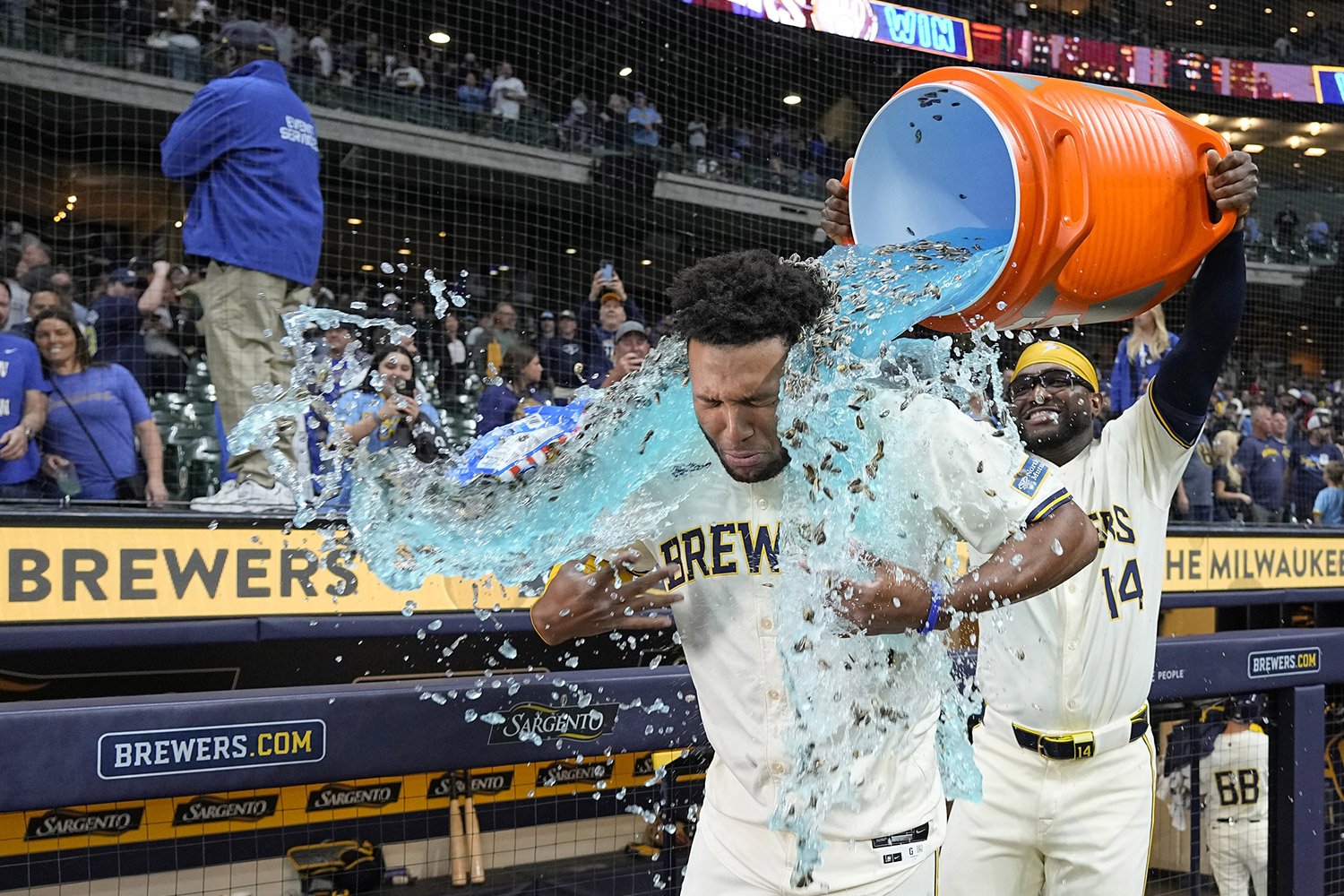 It shouldn’t surprise anyone that Jackson Chourio still has quite a few kinks to iron out in his approach. At just twenty years old, the general expectation was that his development was incomplete but would benefit from major league reps. So far, that belief has proven to be pretty spot on. His .231/.277/.358 slash line for this year isn’t anything to write home about, and he’s the worst-qualified hitter on the team by OPS+ (77, where 100 is average). But something has started to “brew,” one might say, as his offensive output in June took a big step forward. After a .608 OPS in April/March and a .542 OPS in May, he’s been able to put together a .840 OPS in June over 69 plate appearances. His slash line for the month of .302/.348/.492 is a massive improvement, but how did he get there? His biggest challenge since getting called up has been hitting big-league fastballs. He’s averaging just .196 against four-seamers with a 32.3% strikeout rate, poor numbers against the most popular pitch in baseball. In June, however, his average has shot up to a whopping .353 with a lower 20.0% strikeout rate and a 15.0% walk rate. What seems to be a major reason behind this change in performance is his higher swing rate at pitches in the zone. Here is his swing rate at four-seam fastballs from the start of the season to May 31. As you can see, he swings at most high strikes, but he loses a lot of opportunities in the middle and lower thirds of the strike zone. This matches up with his batting average heat map against those same pitches. If we adjust the date range for these same two graphics to contain data only for June, we see that Chourio has turned up the aggression, taking more advantage of those juicy chances in the middle of the zone. He’s still having some issues with low fastballs, but overall, swinging more to put the ball in play has benefited him against heaters. In addition to swinging and making more contact, he’s making better quality contact. In the first two months of the season, Chourio had a line drive rate of just 17.4%; in June, it shot up to 46.2%. This makes sense, given that he hasn’t been hitting for much power but has been placing it where he needs to to get on base and move runners along. In addition to his improved hitting against the four-seam fastball, Chourio’s greatest prospect tool, his speed, has come in handy more than a handful of times. Not only has it aided his defense, but it’s also paid dividends at the plate. Against the Angels on June 18th, he hit a ball down the right-field line for what should’ve been, at most, a standard double. However, as if somehow suffering from a controller disconnection, Jo Adell kicked the ball deeper into the right field corner, allowing Chourio to stretch a batted ball with an 82.4 mph exit velocity and -5 degree launch angle into an apparent home run (ruled a double/error by the official scorer). This created three runs for the Brewers. Against the Rangers on June 26, he turned a soft blooper into an inside-the-park home run after the ball got past the glove of center-fielder Derek Hill. Now, if I had a nickel for every time Jackson Chourio hit a little league home run this month, I'd have two nickels, which isn't a lot, but weirdly, it happened twice. Could these two events have inflated his OPS numbers for the month? Maybe, but 1) it doesn’t change the fact that he’s still hitting for a higher average in general, and 2) utilizing his speed to stretch singles into doubles and outfield errors into home runs is a totally fair way to play baseball. Speedsters like Elly De La Cruz and Bobby Witt Jr. are known to use their speed to their advantage when running the bases, even when they aren’t stealing, so why can’t Chourio? As a guy with 96th percentile sprint speed, it’s a great tool to supplement a potential lack of power, at least for now. If he can continue this trend of adapting to major-league pitching and making necessary adjustments to get ahead of the curve (see what I did there), the sky’s the limit for the young outfield phenom. His defense and baserunning are already way above average; now it’s time to see what he can do with that big ol’ bat of his.
 -
 What is Jackson Chourio doing differently in his best offensive month so far in the major leagues? Image courtesy of © Jeff Hanisch-USA TODAY Sports What is Jackson Chourio doing differently in his best offensive month so far in the major leagues? It shouldn’t surprise anyone that Jackson Chourio still has quite a few kinks to iron out in his approach. At just twenty years old, the general expectation was that his development was incomplete but would benefit from major league reps. So far, that belief has proven to be pretty spot on. His .231/.277/.358 slash line for this year isn’t anything to write home about, and he’s the worst-qualified hitter on the team by OPS+ (77, where 100 is average). But something has started to “brew,” one might say, as his offensive output in June took a big step forward. After a .608 OPS in April/March and a .542 OPS in May, he’s been able to put together a .840 OPS in June over 69 plate appearances. His slash line for the month of .302/.348/.492 is a massive improvement, but how did he get there? His biggest challenge since getting called up has been hitting big-league fastballs. He’s averaging just .196 against four-seamers with a 32.3% strikeout rate, poor numbers against the most popular pitch in baseball. In June, however, his average has shot up to a whopping .353 with a lower 20.0% strikeout rate and a 15.0% walk rate. What seems to be a major reason behind this change in performance is his higher swing rate at pitches in the zone. Here is his swing rate at four-seam fastballs from the start of the season to May 31. As you can see, he swings at most high strikes, but he loses a lot of opportunities in the middle and lower thirds of the strike zone. This matches up with his batting average heat map against those same pitches. If we adjust the date range for these same two graphics to contain data only for June, we see that Chourio has turned up the aggression, taking more advantage of those juicy chances in the middle of the zone. He’s still having some issues with low fastballs, but overall, swinging more to put the ball in play has benefited him against heaters. In addition to swinging and making more contact, he’s making better quality contact. In the first two months of the season, Chourio had a line drive rate of just 17.4%; in June, it shot up to 46.2%. This makes sense, given that he hasn’t been hitting for much power but has been placing it where he needs to to get on base and move runners along. In addition to his improved hitting against the four-seam fastball, Chourio’s greatest prospect tool, his speed, has come in handy more than a handful of times. Not only has it aided his defense, but it’s also paid dividends at the plate. Against the Angels on June 18th, he hit a ball down the right-field line for what should’ve been, at most, a standard double. However, as if somehow suffering from a controller disconnection, Jo Adell kicked the ball deeper into the right field corner, allowing Chourio to stretch a batted ball with an 82.4 mph exit velocity and -5 degree launch angle into an apparent home run (ruled a double/error by the official scorer). This created three runs for the Brewers. Against the Rangers on June 26, he turned a soft blooper into an inside-the-park home run after the ball got past the glove of center-fielder Derek Hill. Now, if I had a nickel for every time Jackson Chourio hit a little league home run this month, I'd have two nickels, which isn't a lot, but weirdly, it happened twice. Could these two events have inflated his OPS numbers for the month? Maybe, but 1) it doesn’t change the fact that he’s still hitting for a higher average in general, and 2) utilizing his speed to stretch singles into doubles and outfield errors into home runs is a totally fair way to play baseball. Speedsters like Elly De La Cruz and Bobby Witt Jr. are known to use their speed to their advantage when running the bases, even when they aren’t stealing, so why can’t Chourio? As a guy with 96th percentile sprint speed, it’s a great tool to supplement a potential lack of power, at least for now. If he can continue this trend of adapting to major-league pitching and making necessary adjustments to get ahead of the curve (see what I did there), the sky’s the limit for the young outfield phenom. His defense and baserunning are already way above average; now it’s time to see what he can do with that big ol’ bat of his. View full article
 -
Two Minor-League Pitchers Who Can Help The Brewers in the Second Half
Jason Wang posted an article in Brewers
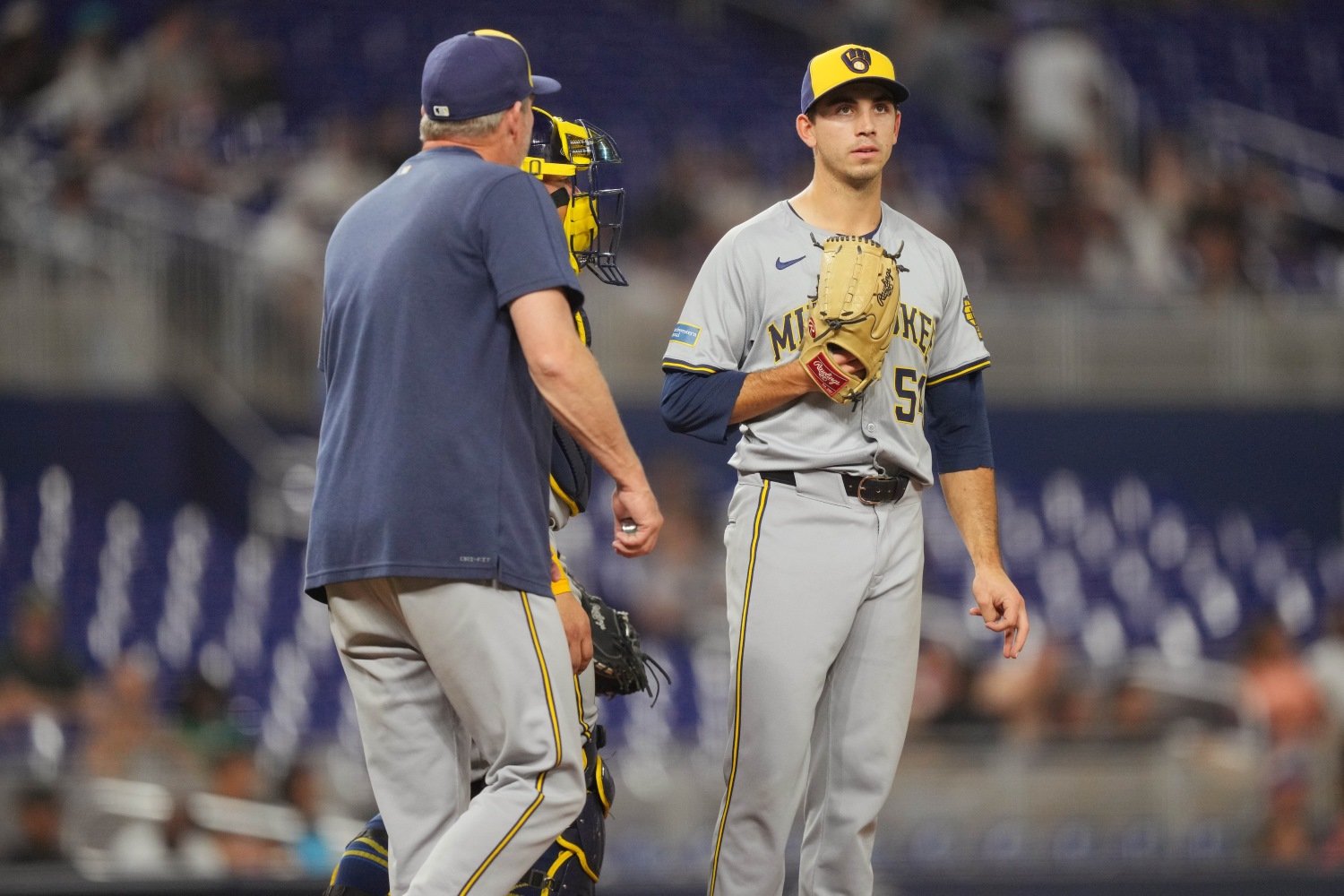 There are two main ways for a team to make roster improvements in the second half. One way is to be buyers at the trade deadline and give up a part of the future to try and win now. In a very minimalist way, the Crew did that on Tuesday, when they traded for veteran southpaw Dallas Keuchel. The other way is our focus today: they can call up a young name and hope for fireworks. The Brewers have an excellent collection of prospects, which bodes well for either option, but assuming they aren’t able to cook up a deal bigger than Keuchel's arrival in the short term, who could they promote from within? RHP Chad Patrick Chandler “Chad” Patrick was drafted in the fourth round of the 2021 MLB Draft, out of Purdue University. He’s been climbing the minor-league ranks at a consistent pace ever since, spending all of 2024 with the Triple-A Nashville Sounds as a starting pitcher. This year, he's thrown 71 ⅔ innings, with a nifty 2.76 ERA and 1.12 WHIP. He has a five-pitch arsenal, consisting of a four-seam fastball, cutter, sinker, slider, and changeup. His primary weapon has been the cutter, throwing it 46.6% of the time with a strikeout rate of 32.7% and a .172 batting average against it this year. The pitch sits in the upper 80s, so it’s not flying by batters with the steam of Corbin Burnes's cut piece, but he’s still got gas--in the form of a mid-90s four-seam fastball that has been known to touch 96 when he’s had his Wheaties in the morning. As his only true breaking pitch, his slider has yet to concede an earned run, striking out opposing hitters 30% of the time and generating a measly .311 OPS. One of his main weaknesses comes as a downside of his aggressive approach, especially on his four-seamer. Although batters are averaging just .158 against the pitch, they’re hitting home runs at a 4.6% clip. Furthermore, he’s walking batters at a 11.5% rate, overall. Patrick could be a good option to bolster the already ravaged major-league rotation. The team already called up Carlos Rodriguez, with pretty disappointing results, but there are reasons to believe Patrick is more prepared for major-league hitters. He’s been quite successful in Triple-A recently, and is averaging just under six innings per outing, so he’s got the longevity part of things down. He may not have the same pedigree as some other options, but the numbers and film don’t lie. RHP Jacob Misiorowski I have a feeling that if I didn’t list Misiorowski as a potential option, I would have received quite a few messages from fist-shaking Brewers fans. The 22-year-old phenom has been the talk of the town, and as the #1 prospect in Milwaukee’s system and the #21 prospect in baseball, he deserves it. Misiorowski has spent his 2024 season with the Biloxi Shuckers in Double-A, and has accumulated a 3.44 ERA and 1.34 WHIP over 52 ⅓ innings in 13 starts. There’s definitely some work to be done, especially when it comes to limiting traffic on the basepaths, but let’s not get it twisted: he’s a top prospect for a reason. He’s still a strikeout king, punching out opposing batters at a 29.0% clip. His 70-grade fastball only seems to be getting better, with his velocity starting to touch the triple digits. The raw stuff for which he’s known is still great and is a big reason for his success. The biggest problem continues to be command. His walk rate is a brutal 14.3%, a major driver behind his somewhat high WHIP. His strikeout-to-walk ratio is the lowest that it has been in any of his minor-league seasons. That being said, his walk rate for the month of June is just 6.3% compared to the 18.8% we saw in May. The price he's paid has been more hard contact against him. Despite the big improvement in walk rate, his ERA for the month swelled from 1.71 in May to 4.34 in June. So what does Misiorowski bring to the table? His raw talent and his ceiling make him a wild card. There once was a young man by the name of Corbin Burnes who began 2018 in Triple-A with the Colorado Springs Sky Sox. After 78 ⅔ innings, he had a 5.15 ERA and a 1.45 WHIP. What did the Brewers do after seeing these sus numbers? They promoted him to the major-league bullpen that same year, and he was great. The rest is history. Could Misiorowski follow a similar path? Assuming he gets brought up to the bullpen, rather than the rotation, he could very well end up in a long relief role, a position last held by Bryse Wilson. With the added reliever workload likely to start rearing its ugly head more and more as the season drags on, his stamina could be an invaluable asset to the team. Furthermore, additional major-league experience could jumpstart his increasingly bright future. Internal reinforcement has made possible all of the Brewers' recent success, including five playoff appearances in six seasons. The team will need more of that this year, to patch the many holes that keep appearing in one of the league's most effective run-prevention units. It'll be interesting to see who gets the next call, and for which role.
 -
The Brewers have a firm grip on the National League Central, but injuries keep thinning their pitching staff. What talent already in the Milwaukee farm system can the team use to maximize their chances of postseason success? Image courtesy of © Jim Rassol-USA TODAY Sports The Brewers have a firm grip on the National League Central, but injuries keep thinning their pitching staff. What talent already in the Milwaukee farm system can the team use to maximize their chances of postseason success? There are two main ways for a team to make roster improvements in the second half. One way is to be buyers at the trade deadline and give up a part of the future to try and win now. In a very minimalist way, the Crew did that on Tuesday, when they traded for veteran southpaw Dallas Keuchel. The other way is our focus today: they can call up a young name and hope for fireworks. The Brewers have an excellent collection of prospects, which bodes well for either option, but assuming they aren’t able to cook up a deal bigger than Keuchel's arrival in the short term, who could they promote from within? RHP Chad Patrick Chandler “Chad” Patrick was drafted in the fourth round of the 2021 MLB Draft, out of Purdue University. He’s been climbing the minor-league ranks at a consistent pace ever since, spending all of 2024 with the Triple-A Nashville Sounds as a starting pitcher. This year, he's thrown 71 ⅔ innings, with a nifty 2.76 ERA and 1.12 WHIP. He has a five-pitch arsenal, consisting of a four-seam fastball, cutter, sinker, slider, and changeup. His primary weapon has been the cutter, throwing it 46.6% of the time with a strikeout rate of 32.7% and a .172 batting average against it this year. The pitch sits in the upper 80s, so it’s not flying by batters with the steam of Corbin Burnes's cut piece, but he’s still got gas--in the form of a mid-90s four-seam fastball that has been known to touch 96 when he’s had his Wheaties in the morning. As his only true breaking pitch, his slider has yet to concede an earned run, striking out opposing hitters 30% of the time and generating a measly .311 OPS. One of his main weaknesses comes as a downside of his aggressive approach, especially on his four-seamer. Although batters are averaging just .158 against the pitch, they’re hitting home runs at a 4.6% clip. Furthermore, he’s walking batters at a 11.5% rate, overall. Patrick could be a good option to bolster the already ravaged major-league rotation. The team already called up Carlos Rodriguez, with pretty disappointing results, but there are reasons to believe Patrick is more prepared for major-league hitters. He’s been quite successful in Triple-A recently, and is averaging just under six innings per outing, so he’s got the longevity part of things down. He may not have the same pedigree as some other options, but the numbers and film don’t lie. RHP Jacob Misiorowski I have a feeling that if I didn’t list Misiorowski as a potential option, I would have received quite a few messages from fist-shaking Brewers fans. The 22-year-old phenom has been the talk of the town, and as the #1 prospect in Milwaukee’s system and the #21 prospect in baseball, he deserves it. Misiorowski has spent his 2024 season with the Biloxi Shuckers in Double-A, and has accumulated a 3.44 ERA and 1.34 WHIP over 52 ⅓ innings in 13 starts. There’s definitely some work to be done, especially when it comes to limiting traffic on the basepaths, but let’s not get it twisted: he’s a top prospect for a reason. He’s still a strikeout king, punching out opposing batters at a 29.0% clip. His 70-grade fastball only seems to be getting better, with his velocity starting to touch the triple digits. The raw stuff for which he’s known is still great and is a big reason for his success. The biggest problem continues to be command. His walk rate is a brutal 14.3%, a major driver behind his somewhat high WHIP. His strikeout-to-walk ratio is the lowest that it has been in any of his minor-league seasons. That being said, his walk rate for the month of June is just 6.3% compared to the 18.8% we saw in May. The price he's paid has been more hard contact against him. Despite the big improvement in walk rate, his ERA for the month swelled from 1.71 in May to 4.34 in June. So what does Misiorowski bring to the table? His raw talent and his ceiling make him a wild card. There once was a young man by the name of Corbin Burnes who began 2018 in Triple-A with the Colorado Springs Sky Sox. After 78 ⅔ innings, he had a 5.15 ERA and a 1.45 WHIP. What did the Brewers do after seeing these sus numbers? They promoted him to the major-league bullpen that same year, and he was great. The rest is history. Could Misiorowski follow a similar path? Assuming he gets brought up to the bullpen, rather than the rotation, he could very well end up in a long relief role, a position last held by Bryse Wilson. With the added reliever workload likely to start rearing its ugly head more and more as the season drags on, his stamina could be an invaluable asset to the team. Furthermore, additional major-league experience could jumpstart his increasingly bright future. Internal reinforcement has made possible all of the Brewers' recent success, including five playoff appearances in six seasons. The team will need more of that this year, to patch the many holes that keep appearing in one of the league's most effective run-prevention units. It'll be interesting to see who gets the next call, and for which role. View full article
-
It’s seeming pretty clear that Milwaukee will buy at the deadline. If they aren't able to snag more starting pitching, could they compensate with some shiny bullpen arms? It’s seeming pretty clear that Milwaukee will buy at the deadline. If they aren't able to snag more starting pitching, could they compensate with some shiny bullpen arms? Upon reading the title, a discerning fan or typically judicious Facebook reader might remark, “Hey, isn’t our bullpen already pretty darn good? In fact, aren’t they fourth in MLB by team ERA with a mark of 3.20? Shouldn’t we go out and get starters instead?” While the number is undeniably correct, at least at the time of this article, the Brewers bullpen situation is a little more nuanced than usual. The first thing to do is to acknowledge how grim the starting pitching injury situation is. With Robert Gasser placed on the 15-day IL, the team was forced to call up Carlos F Rodriguez despite not having things figured out in Triple-A yet. When starters like DL Hall and Joe Ross eventually return to the rotation, it will take time to ramp up their stamina and re-acclimate to major-league hitting, so they might not be effective right out of the gate. This feeds into the second point, which is the bullpen workload. Brewers relievers have pitched 298 ⅓ innings, the most in baseball. They’ve faced 1,230 batters (third in baseball) but have been reasonably efficient, throwing just 4,641 pitches (seventh in baseball). While the starters continue to ramp back up to 100%, the relievers will probably still carry a significant portion of responsibility. Third, having a good bullpen is fun, but isn’t having a great bullpen even more fun? Of course, it is. Milwaukee needs every advantage it can get, especially with the team’s past four postseason runs ending in the first round. Should starting pitching be the #1 concern for the team when it comes to trade talks this summer? 100%, but what happens if they can’t get the starting pitching help they need? What if the White Sox aren't willing to give up Garrett Crochet for anything less than part-ownership of Bernie Brewer's slide? Surely it’d be better to do something than nothing, especially if it won’t break the bank (er, farm?). So now that we’ve established that there's at least some merit to entertaining this side of trade talks, which relievers are both worth pursuing and on teams that are likely to sell them off? Declan Cronin, RHP, Miami Marlins Much of the trade talks with the Marlins have surrounded lefty closer Tanner Scott. He’s caused quite a bit of ruckus, and it seems like there are more than several suitors clamoring for his services. Because of the strong demand, it would make sense for it to be a seller’s market, and the Marlins will likely set a price that will be reasonable for teams desperate for bullpen help but a bit too steep for the Brewers. For this reason, I’ve turned my attention to his younger, less bald teammate, Declan Cronin. Declan Cronin had a terrible debut year with the White Sox but has maintained his rookie status for this year, and so far, his 2024 has been much better than his 2023. He’s pitching to a 2.65 ERA over 34 innings and has been the king of soft contact. He only does two things well: limit barrel rates and induce ground balls. His barrel rate of 3.2% and ground-ball rate of 60.6% are better than 95% of qualified pitchers this season. Interestingly enough, opposing batters are hitting the ball pretty dang hard, averaging an exit velocity of 90.8 mph, but their launch angle is less than optimal 0.7 degrees. So, how does he prevent hitters from getting under the ball? It's a deadly slider/sinker combination. His slider is his primary weapon, and he has been great at attacking batters' knees, but in the right spot. It’s not gross enough to generate incomprehensible whiff/strikeout rates, and I would hardly call it “wipeout,” but that’s sort of its beauty. It’s just tempting enough to get a swing, albeit one that spikes a ball straight into the dirt. The slider has a strikeout rate of 27.8%, but opposing batters are only managing to slug .253 against it. His sinker has a similar M.O., choosing to move arm-side instead of downward. Against lefties, he’ll aim for the tip of the barrel. Against righties, he’ll aim for the hands. With the defense the Brewers have played this year, he might make a perfect fit. One snag that might come up is how much team control he has left on his contract, not even hitting arbitration until 2027. On the other hand, the Marlins have plenty of pitching talent, with their top three prospects all pitchers. They’ll need to rebuild the whole team, and their hitting needs far exceed their need for a righty reliever, so it wouldn’t be out of the question that Cronin would be traded for a reasonable price despite his rookie status. Jason Foley, RHP, Detroit Tigers While Detroit's offense continues to be remarkably bad, their pitching staff has been excellent. Tarik Skubal and Jack Flaherty have been great for their rotation and aside from a few names, their bullpen isn't actually half bad. Leading the effort is their loyal closer, Jason Foley (great first name by the way), who is currently pitching to a 2.81 ERA over 25 ⅔ innings with 12 saves. This gives him an ERA+ of 149, the second-highest on the team behind the aforementioned Tarik Skubal. He profiles somewhat similarly to Declan Cronin, depending on low launch angles to achieve his 53.8% ground ball rate. He's even got a similar arsenal, relying on his sinker 60.3% of the time and his slider 29.6% of the time. Interestingly enough, his sinker is actually somewhat ineffective, with batters averaging .317 against it. His slider, on the other hand, has been nigh untouchable, boasting a opposing batting average of just .083 across 26 plate appearances. In addition to excelling at generating ground balls, it's been known to fan batters 26.9% of the time. Despite the strong ERA, there are two major concerns with his candidacy as a trade target. First, his sinker is truly uncompetitive in its current state. On the bright side, of the 20 hits that have been recorded against it, 17 of them were singles. Furthermore, it's responsible for the majority of his infield groundouts. With some help, it wouldn't be out of the question for him to turn things around in the second half of the season. Also, the pitch does still have its moments, although they're somewhat rare. Second, he's got a few years of team control left on his contract, reaching free agency in 2028. While he's a great asset to have around, the Tigers are likely more concerned about their offensive future. Their combined team ERA of 3.82 is tenth in MLB while their team OPS of .671 is 24th in MLB. Additionally, six of their top ten prospects are RHP, five of which are in Triple-A or above. Foley is great, but he might be even greater for the Tigers as a trade asset to build an actually competitive lineup. Bryan Abreu RHP, Houston Astros This might be a hot take, but like onions and ogres, there are layers to it. Despite all their merits, Milwaukee’s bullpen struggles with getting strikeouts. Their SO/9 rate of 8.27 is 24th in MLB, so it wouldn’t hurt to get some more punch-out power on the team. Bryan Abreu has been one of the best relievers in baseball over the past three years, averaging a 2.04 ERA over 167 ⅔ innings pitched. This year is his worst in a while, pitching to a below-career average 2.80 ERA over 35 ⅓ innings. Still, his ability to beat opposing batters is still on par with some of the best. His whiff rate of 32.1% and strikeout rate of 32.9% are both in the top decile. There’s honestly much to explain with his pitching style. He throws an 85.9 mph slider and a 96.5 mph four-seam fastball. To be fair, both pitches are quite squalid when they’re at their best, especially his slider, against which batters are averaging just .194 and slugging just .258 while whiffing 40.2% of the time. Sometimes, he gets a little jazzed up and gasses his fastball up to 99 mph. So, if his pitching isn’t complex, what’s the second layer? Well to start, it’s not super clear as to how the Astros will approach the deadline. They’re nine games behind the division-leading Mariners in the AL West and seven games back from a Wild Card spot. Furthermore, their farm system is one of the weakest in baseball after trading some of their best names to the Mets to get Kate Upton’s husband last year, so they need to rebuild. Will they try to go for an eighth consecutive ALCS appearance? Maybe, but if they decide to look past the present and towards the future, the Brewers could use someone with the talents of Bryan Abreu. He'll be a free agent in 2027, so the few years of team control might make it tricky, but with Tayler Scott and Seth Martinez pitching even better out of the Astros bullpen this year, it's not like the team would be without replacements. View full article
-
Three Right-Handed Relievers The Brewers Could Pursue At The Trade Deadline
Jason Wang posted an article in Brewers
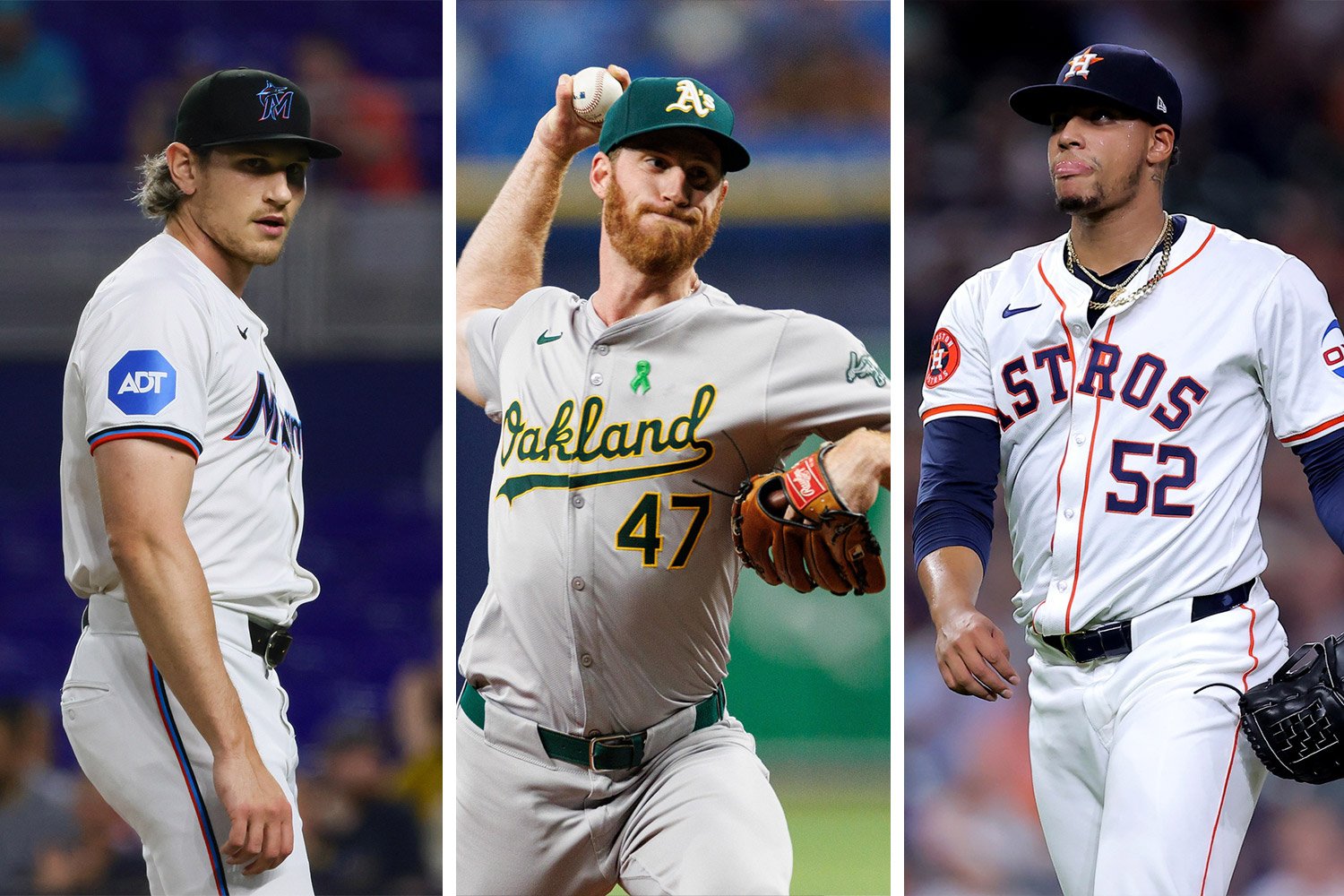 Upon reading the title, a discerning fan or typically judicious Facebook reader might remark, “Hey, isn’t our bullpen already pretty darn good? In fact, aren’t they fourth in MLB by team ERA with a mark of 3.20? Shouldn’t we go out and get starters instead?” While the number is undeniably correct, at least at the time of this article, the Brewers bullpen situation is a little more nuanced than usual. The first thing to do is to acknowledge how grim the starting pitching injury situation is. With Robert Gasser placed on the 15-day IL, the team was forced to call up Carlos F Rodriguez despite not having things figured out in Triple-A yet. When starters like DL Hall and Joe Ross eventually return to the rotation, it will take time to ramp up their stamina and re-acclimate to major-league hitting, so they might not be effective right out of the gate. This feeds into the second point, which is the bullpen workload. Brewers relievers have pitched 298 ⅓ innings, the most in baseball. They’ve faced 1,230 batters (third in baseball) but have been reasonably efficient, throwing just 4,641 pitches (seventh in baseball). While the starters continue to ramp back up to 100%, the relievers will probably still carry a significant portion of responsibility. Third, having a good bullpen is fun, but isn’t having a great bullpen even more fun? Of course, it is. Milwaukee needs every advantage it can get, especially with the team’s past four postseason runs ending in the first round. Should starting pitching be the #1 concern for the team when it comes to trade talks this summer? 100%, but what happens if they can’t get the starting pitching help they need? What if the White Sox aren't willing to give up Garrett Crochet for anything less than part-ownership of Bernie Brewer's slide? Surely it’d be better to do something than nothing, especially if it won’t break the bank (er, farm?). So now that we’ve established that there's at least some merit to entertaining this side of trade talks, which relievers are both worth pursuing and on teams that are likely to sell them off? Declan Cronin, RHP, Miami Marlins Much of the trade talks with the Marlins have surrounded lefty closer Tanner Scott. He’s caused quite a bit of ruckus, and it seems like there are more than several suitors clamoring for his services. Because of the strong demand, it would make sense for it to be a seller’s market, and the Marlins will likely set a price that will be reasonable for teams desperate for bullpen help but a bit too steep for the Brewers. For this reason, I’ve turned my attention to his younger, less bald teammate, Declan Cronin. Declan Cronin had a terrible debut year with the White Sox but has maintained his rookie status for this year, and so far, his 2024 has been much better than his 2023. He’s pitching to a 2.65 ERA over 34 innings and has been the king of soft contact. He only does two things well: limit barrel rates and induce ground balls. His barrel rate of 3.2% and ground-ball rate of 60.6% are better than 95% of qualified pitchers this season. Interestingly enough, opposing batters are hitting the ball pretty dang hard, averaging an exit velocity of 90.8 mph, but their launch angle is less than optimal 0.7 degrees. So, how does he prevent hitters from getting under the ball? It's a deadly slider/sinker combination. His slider is his primary weapon, and he has been great at attacking batters' knees, but in the right spot. It’s not gross enough to generate incomprehensible whiff/strikeout rates, and I would hardly call it “wipeout,” but that’s sort of its beauty. It’s just tempting enough to get a swing, albeit one that spikes a ball straight into the dirt. The slider has a strikeout rate of 27.8%, but opposing batters are only managing to slug .253 against it. His sinker has a similar M.O., choosing to move arm-side instead of downward. Against lefties, he’ll aim for the tip of the barrel. Against righties, he’ll aim for the hands. With the defense the Brewers have played this year, he might make a perfect fit. One snag that might come up is how much team control he has left on his contract, not even hitting arbitration until 2027. On the other hand, the Marlins have plenty of pitching talent, with their top three prospects all pitchers. They’ll need to rebuild the whole team, and their hitting needs far exceed their need for a righty reliever, so it wouldn’t be out of the question that Cronin would be traded for a reasonable price despite his rookie status. Jason Foley, RHP, Detroit Tigers While Detroit's offense continues to be remarkably bad, their pitching staff has been excellent. Tarik Skubal and Jack Flaherty have been great for their rotation and aside from a few names, their bullpen isn't actually half bad. Leading the effort is their loyal closer, Jason Foley (great first name by the way), who is currently pitching to a 2.81 ERA over 25 ⅔ innings with 12 saves. This gives him an ERA+ of 149, the second-highest on the team behind the aforementioned Tarik Skubal. He profiles somewhat similarly to Declan Cronin, depending on low launch angles to achieve his 53.8% ground ball rate. He's even got a similar arsenal, relying on his sinker 60.3% of the time and his slider 29.6% of the time. Interestingly enough, his sinker is actually somewhat ineffective, with batters averaging .317 against it. His slider, on the other hand, has been nigh untouchable, boasting a opposing batting average of just .083 across 26 plate appearances. In addition to excelling at generating ground balls, it's been known to fan batters 26.9% of the time. Despite the strong ERA, there are two major concerns with his candidacy as a trade target. First, his sinker is truly uncompetitive in its current state. On the bright side, of the 20 hits that have been recorded against it, 17 of them were singles. Furthermore, it's responsible for the majority of his infield groundouts. With some help, it wouldn't be out of the question for him to turn things around in the second half of the season. Also, the pitch does still have its moments, although they're somewhat rare. Second, he's got a few years of team control left on his contract, reaching free agency in 2028. While he's a great asset to have around, the Tigers are likely more concerned about their offensive future. Their combined team ERA of 3.82 is tenth in MLB while their team OPS of .671 is 24th in MLB. Additionally, six of their top ten prospects are RHP, five of which are in Triple-A or above. Foley is great, but he might be even greater for the Tigers as a trade asset to build an actually competitive lineup. Bryan Abreu RHP, Houston Astros This might be a hot take, but like onions and ogres, there are layers to it. Despite all their merits, Milwaukee’s bullpen struggles with getting strikeouts. Their SO/9 rate of 8.27 is 24th in MLB, so it wouldn’t hurt to get some more punch-out power on the team. Bryan Abreu has been one of the best relievers in baseball over the past three years, averaging a 2.04 ERA over 167 ⅔ innings pitched. This year is his worst in a while, pitching to a below-career average 2.80 ERA over 35 ⅓ innings. Still, his ability to beat opposing batters is still on par with some of the best. His whiff rate of 32.1% and strikeout rate of 32.9% are both in the top decile. There’s honestly much to explain with his pitching style. He throws an 85.9 mph slider and a 96.5 mph four-seam fastball. To be fair, both pitches are quite squalid when they’re at their best, especially his slider, against which batters are averaging just .194 and slugging just .258 while whiffing 40.2% of the time. Sometimes, he gets a little jazzed up and gasses his fastball up to 99 mph. So, if his pitching isn’t complex, what’s the second layer? Well to start, it’s not super clear as to how the Astros will approach the deadline. They’re nine games behind the division-leading Mariners in the AL West and seven games back from a Wild Card spot. Furthermore, their farm system is one of the weakest in baseball after trading some of their best names to the Mets to get Kate Upton’s husband last year, so they need to rebuild. Will they try to go for an eighth consecutive ALCS appearance? Maybe, but if they decide to look past the present and towards the future, the Brewers could use someone with the talents of Bryan Abreu. He'll be a free agent in 2027, so the few years of team control might make it tricky, but with Tayler Scott and Seth Martinez pitching even better out of the Astros bullpen this year, it's not like the team would be without replacements.
- 2 comments
-
- 1
-

-
- declan cronin
- bryan abreu
- (and 1 more)
-
brewers pitching coaches building a top-5 pitching staff every year

- 14 replies
-
- 3
-

-
-
- logan henderson
- josh knoth
- (and 5 more)
-
Let's Make a Deal: Which Angels Players Could Help the Brewers?
Jason Wang posted an article in Brewers
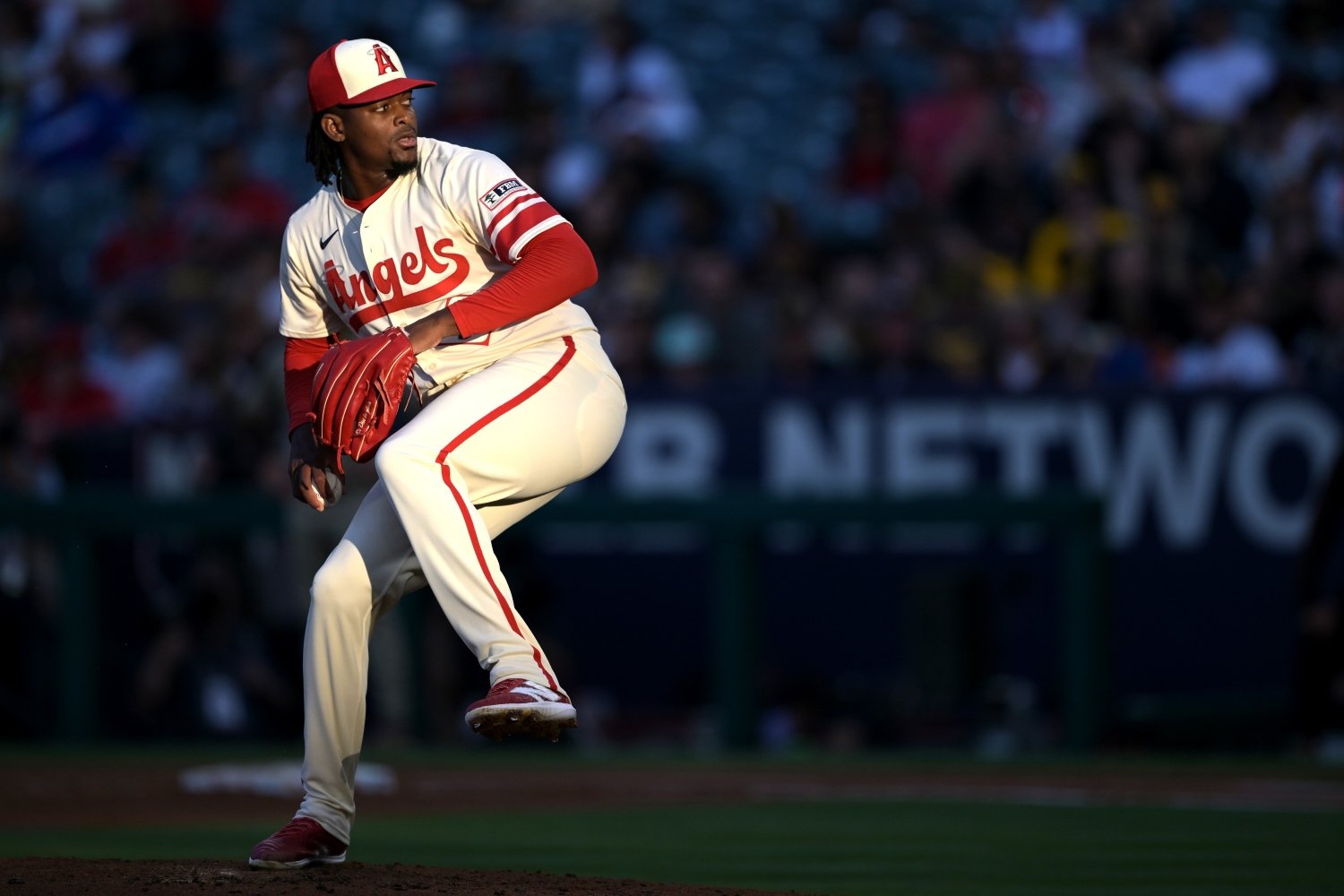 There are few teams in baseball looking as dismal as the Angels. In a final, desperate bid to increase their chances of extending Shohei Ohtani, they bet it all on their 2023 season, selling off their entire farm system to acquire bits and pieces of major-league talent at the trade deadline. This resulted in a tragic 28-43 second-half record and a wide miss on a playoff berth. In 2024, the situation is somehow worse. Shohei Ohtani has been raking for the team’s cross-town rival, Mike Trout is on the injured list after having surgery to repair a torn meniscus, and they are already 11.5 games back in the division and 9.5 games from a Wild Card spot. FanGraphs gives them just a 0.6% chance to make the playoffs, and that feels a little high. To make matters even worse, since they traded their top prospects last year, their farm system is arguably the worst in baseball. With Nolan Schanuel’s graduation, they have no prospects in the top 100. Long story short: they’re cooked, at the very least for the next few years. However, this means they’ll more than likely be sellers at the trade deadline, so what can the Brewers get from them--and what might they have to surrender in return? Tyler Anderson Currently leading the team in rWAR with an impressive 3.3, Anderson is having a great bounce-back season after an abysmal 2023. His current ERA of 2.63 and WHIP of 1.15 are significantly better than the 5.43 and 1.49 numbers he posted last year. An intriguing lefty, he’s a crafty contact pitcher who somehow manages to get by with a fastball averaging 89.2 mph. His changeup is arguably his best pitch, boasting a strikeout rate of 23.5% and a whiff rate of 36.8%. His cutter is a close second, though, and despite it averaging an unimpressive 83.8 mph, batters are averaging just .176 against it. Anderson could be a great Band-Aid solution for the team’s current starting pitcher injury pandemic. With Wade Miley out for the season, Robert Gasser trending the same way, and DL Hall still without a clear timetable to return, the Brewers could use a lefty starter, especially one with the experience of Anderson. Furthermore, his pitch-to-contact style synergizes well with Milwaukee’s specialty: defense. For Anderson, specifically, his 32.0% fly-ball rate is 8.1% higher than the MLB average, which should go well with the Brewers outfield. They lead MLB in OAA (24) by outfielders. One consideration to keep in mind is his contract. Anderson signed for $39 million over three years prior to 2023, so he'll be on an eight-figure salary for 2025. It’s a hefty salary to pay (for Milwaukee, at least), and that could make clearing the acquisition with ownership tricky. He’s having a great season this year, and could help with a deep postseason run, but what about next year? With Brandon Woodruff returning and prospects like Gasser and Jacob Misiorowski potentially becoming big-league mainstays, will Anderson be needed beyond 2024? It's hard to say. José Soriano Another starter option, he's got a 3.64 ERA and a WHIP of 1.21 over 64 ⅓ innings. He profiles similarly to Tyler Anderson in some ways, and immensely differently in others. Like Anderson, he has a below-average strikeout rate and relies on soft contact. However, instead of fly balls, his ground-ball rate of 60.3% is in the 96th percentile of qualified pitchers. Also unlike Anderson, Soriano has excellent fastball velocity, averaging 97.7 mph on his sinker and 98.9 mph on his four-seam fastball. His sinker has been especially good at limiting hard contact, with opposing batters slugging just .277 against the pitch. Soriano would be a longer-term option for the Brewers, as he’s got a total of just 106 ⅓ major league innings under his belt. He could become arbitration-eligible after this season or after next, depending on where the cutoff for Super Two status lands, and will be a free agent after 2028. Milwaukee would have multiple years of team control with him, but that may also make the Angels more hesitant to part with him. They may be expecting him to hold down the rotation for the remainder of the decade, and without a ton of other young options, he might be off-limits. Luis Rengifo Offensively, it’s hard to see how a team with the sixth-best OPS in MLB (.738) can get better, especially with how well-rounded Milwaukee is. While that may be the case now, this could be an opportunity to look at the medium-term future. Most fans doubt that Willy Adames will choose to stay once he hits free agency. As a result, the team will need to replace him. Luckily, rookie shortstop Joey Ortiz has made an excellent case to take over. He’s been primarily playing third base this year, but that’s a roster construction thing, not personal player preference. In the minors, Ortiz had nearly 2,100 innings at shortstop, 1,700 more than at any other position. Assuming Ortiz moves to shortstop and Brice Turang holds down second, then, Rengifo could be a great hot-corner option. His hitting has gradually improved over his past three seasons, and he’s currently slashing .316/.367/.448 with nine doubles and four home runs. He’s great at avoiding strikeouts (14.3%) and has been crushing four-seam fastballs this year, averaging .429 against them. Sure, he’s a fringy defender and doesn’t hit the ball particularly hard, but no one’s perfect, and the Brewers thrive on small ball, anyway. Rengifo is currently on a one-year, $4.4 million contract, with free agency approaching after next season, so he may be another short- or medium-term rental for the team, but it doesn’t seem like he’ll be too expensive. What can Milwaukee offer? The Crew has one of the best farm systems in baseball, boasting three top-100 prospects: No. 22 Jacob Misiorowski, No. 24 Jeferson Quero, and No. 34 Tyler Black. Because the Angels are so far from any serious contention, it may take them a few years to rebuild, so it wouldn’t be surprising if they had their eyes on younger prospects over those that are just a year or two out. Obviously, the return package would depend on whom the front office ends up pursuing, but a few of the team’s great outfield prospects in the lower levels of the minors would make sense. Luis Lara (No. 7-ranked Brewers prospect, 2026 ETA), Yophery Rodriguez (No. 9, 2027 ETA), or even Pedro Ibarguen (No. 27, 2028 ETA) could be enticing pieces that wouldn’t be too damaging to Milwaukee, since they have a plethora of outfield talent in the big leagues who will be around for several more years. If the Angels want help in the shorter term, there’s a bit of corner infield saturation, with names like Mike Boeve and Luke Adams covering the same bases, and they’re both estimated to debut in 2026, which could be a reasonable timeline to build a more competitive team around them. At this point, watching Angels baseball is like watching the last season of The Office. It’s pretty disappointing overall but there are still a few names that may catch your interest--and potentially Matt Arnold’s.
- 6 comments
-
- 2
-
-
- jose soriano
- luis rengifo
- (and 1 more)
-
Look, the Angels are bad. With no help on the horizon, they could turn to the Brewers to bolster their farm system, and the Brewers could try to round out an October-ready roster. Image courtesy of © Jayne Kamin-Oncea-USA TODAY Sports Look, the Angels are bad. With no help on the horizon, they could turn to the Brewers to bolster their farm system, and the Brewers could try to round out an October-ready roster. There are few teams in baseball looking as dismal as the Angels. In a final, desperate bid to increase their chances of extending Shohei Ohtani, they bet it all on their 2023 season, selling off their entire farm system to acquire bits and pieces of major-league talent at the trade deadline. This resulted in a tragic 28-43 second-half record and a wide miss on a playoff berth. In 2024, the situation is somehow worse. Shohei Ohtani has been raking for the team’s cross-town rival, Mike Trout is on the injured list after having surgery to repair a torn meniscus, and they are already 11.5 games back in the division and 9.5 games from a Wild Card spot. FanGraphs gives them just a 0.6% chance to make the playoffs, and that feels a little high. To make matters even worse, since they traded their top prospects last year, their farm system is arguably the worst in baseball. With Nolan Schanuel’s graduation, they have no prospects in the top 100. Long story short: they’re cooked, at the very least for the next few years. However, this means they’ll more than likely be sellers at the trade deadline, so what can the Brewers get from them--and what might they have to surrender in return? Tyler Anderson Currently leading the team in rWAR with an impressive 3.3, Anderson is having a great bounce-back season after an abysmal 2023. His current ERA of 2.63 and WHIP of 1.15 are significantly better than the 5.43 and 1.49 numbers he posted last year. An intriguing lefty, he’s a crafty contact pitcher who somehow manages to get by with a fastball averaging 89.2 mph. His changeup is arguably his best pitch, boasting a strikeout rate of 23.5% and a whiff rate of 36.8%. His cutter is a close second, though, and despite it averaging an unimpressive 83.8 mph, batters are averaging just .176 against it. Anderson could be a great Band-Aid solution for the team’s current starting pitcher injury pandemic. With Wade Miley out for the season, Robert Gasser trending the same way, and DL Hall still without a clear timetable to return, the Brewers could use a lefty starter, especially one with the experience of Anderson. Furthermore, his pitch-to-contact style synergizes well with Milwaukee’s specialty: defense. For Anderson, specifically, his 32.0% fly-ball rate is 8.1% higher than the MLB average, which should go well with the Brewers outfield. They lead MLB in OAA (24) by outfielders. One consideration to keep in mind is his contract. Anderson signed for $39 million over three years prior to 2023, so he'll be on an eight-figure salary for 2025. It’s a hefty salary to pay (for Milwaukee, at least), and that could make clearing the acquisition with ownership tricky. He’s having a great season this year, and could help with a deep postseason run, but what about next year? With Brandon Woodruff returning and prospects like Gasser and Jacob Misiorowski potentially becoming big-league mainstays, will Anderson be needed beyond 2024? It's hard to say. José Soriano Another starter option, he's got a 3.64 ERA and a WHIP of 1.21 over 64 ⅓ innings. He profiles similarly to Tyler Anderson in some ways, and immensely differently in others. Like Anderson, he has a below-average strikeout rate and relies on soft contact. However, instead of fly balls, his ground-ball rate of 60.3% is in the 96th percentile of qualified pitchers. Also unlike Anderson, Soriano has excellent fastball velocity, averaging 97.7 mph on his sinker and 98.9 mph on his four-seam fastball. His sinker has been especially good at limiting hard contact, with opposing batters slugging just .277 against the pitch. Soriano would be a longer-term option for the Brewers, as he’s got a total of just 106 ⅓ major league innings under his belt. He could become arbitration-eligible after this season or after next, depending on where the cutoff for Super Two status lands, and will be a free agent after 2028. Milwaukee would have multiple years of team control with him, but that may also make the Angels more hesitant to part with him. They may be expecting him to hold down the rotation for the remainder of the decade, and without a ton of other young options, he might be off-limits. Luis Rengifo Offensively, it’s hard to see how a team with the sixth-best OPS in MLB (.738) can get better, especially with how well-rounded Milwaukee is. While that may be the case now, this could be an opportunity to look at the medium-term future. Most fans doubt that Willy Adames will choose to stay once he hits free agency. As a result, the team will need to replace him. Luckily, rookie shortstop Joey Ortiz has made an excellent case to take over. He’s been primarily playing third base this year, but that’s a roster construction thing, not personal player preference. In the minors, Ortiz had nearly 2,100 innings at shortstop, 1,700 more than at any other position. Assuming Ortiz moves to shortstop and Brice Turang holds down second, then, Rengifo could be a great hot-corner option. His hitting has gradually improved over his past three seasons, and he’s currently slashing .316/.367/.448 with nine doubles and four home runs. He’s great at avoiding strikeouts (14.3%) and has been crushing four-seam fastballs this year, averaging .429 against them. Sure, he’s a fringy defender and doesn’t hit the ball particularly hard, but no one’s perfect, and the Brewers thrive on small ball, anyway. Rengifo is currently on a one-year, $4.4 million contract, with free agency approaching after next season, so he may be another short- or medium-term rental for the team, but it doesn’t seem like he’ll be too expensive. What can Milwaukee offer? The Crew has one of the best farm systems in baseball, boasting three top-100 prospects: No. 22 Jacob Misiorowski, No. 24 Jeferson Quero, and No. 34 Tyler Black. Because the Angels are so far from any serious contention, it may take them a few years to rebuild, so it wouldn’t be surprising if they had their eyes on younger prospects over those that are just a year or two out. Obviously, the return package would depend on whom the front office ends up pursuing, but a few of the team’s great outfield prospects in the lower levels of the minors would make sense. Luis Lara (No. 7-ranked Brewers prospect, 2026 ETA), Yophery Rodriguez (No. 9, 2027 ETA), or even Pedro Ibarguen (No. 27, 2028 ETA) could be enticing pieces that wouldn’t be too damaging to Milwaukee, since they have a plethora of outfield talent in the big leagues who will be around for several more years. If the Angels want help in the shorter term, there’s a bit of corner infield saturation, with names like Mike Boeve and Luke Adams covering the same bases, and they’re both estimated to debut in 2026, which could be a reasonable timeline to build a more competitive team around them. At this point, watching Angels baseball is like watching the last season of The Office. It’s pretty disappointing overall but there are still a few names that may catch your interest--and potentially Matt Arnold’s. View full article
-
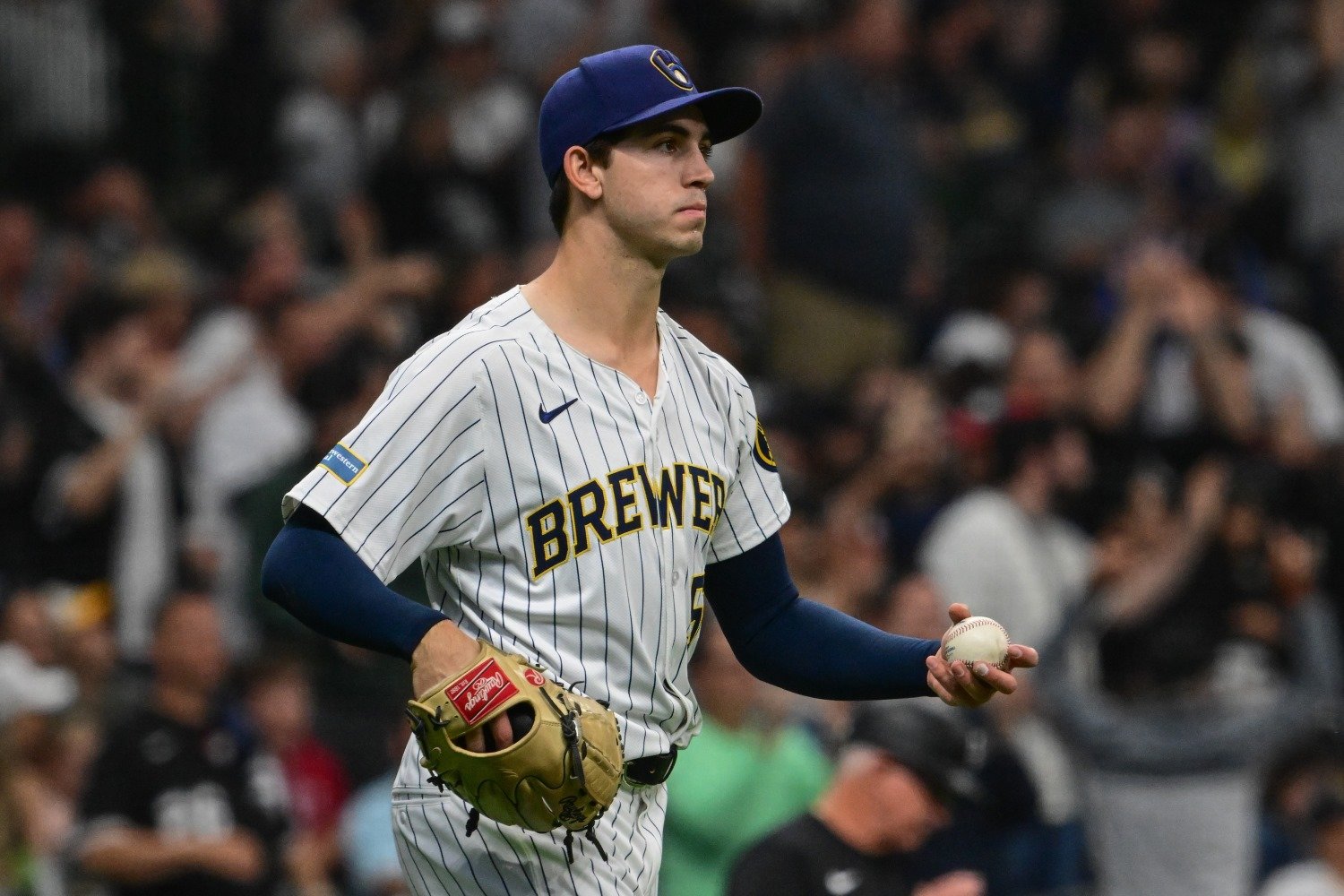 It has been a difficult season for Brewers starters, to say the very least. Their combined ERA of 4.11 is 17th in MLB, but more importantly, the team currently has five names from the rotation on the injured list: DL Hall (15-day, knee), Jakob Junis (60-day, shoulder), Joe Ross (15-day, back), Brandon Woodruff (60-day, shoulder), and Wade Miley (60-day, elbow). Now, they may soon have a sixth. Since making his major-league debut on May 10, Robert Gasser has a 2.57 ERA over 28 innings pitched. Great stuff from the lefty rookie so far, but it seems his campaign may suffer a substantial disruption. On Jun. 3, manager Pat Murphy stated that Gasser was dealing with some tightness and soreness in his elbow, and would be taking a closer look to make sure there wasn’t any serious damage. The next day, Murphy said that Gasser may miss time but that the first MRI looked encouraging. The team will continue examining his elbow, but given the nature of this issue and the risk of sending him back out there with any lingering doubt, it seems likely Gasser will spend at least some time on the injured list. What should we make of this? Does this mean the rotation is doomed, with three skull emojis? One major impact of these constant injuries is the disproportionate amount of responsibility being placed on the bullpen. The Brewers rank dead last in the number of innings pitched by starters, at 285, 14 fewer than the 29th-ranked Giants. They've gotten a good look at life on the other end of the street this week, as the Phillies currently lead MLB with 368 ⅓ innings pitched by starters. Consequently, Milwaukee relievers have pitched 256 ⅓ innings, nearly the same as the rotation. In 2023, starters pitched a whopping 877 ⅓ innings for the Crew, while the bullpen handled just 565 ⅔. With just over 100 games to go, relievers have already accumulated nearly half the total workload as last year. One could argue that this may be good, since facing a parade of high-powered, diverse relievers can be tricky for opposing batters, but a lack of healthy, rested late-inning arms can also be disastrous. Furthermore, while the team might be able to skirt by for the remainder of the regular season on the strength of their stellar offense and relatively weak division opponents, a rotation in poor health is a recipe for playoff disaster. Freddy Peralta and Colin Rea have pitched well thus far, but regression may be coming soon--especially for Rea, whose FIP is an entire run higher than his current ERA. Even if they don't regress, are those two enough to lead the team through a playoff series in a very competitive National League? Not all is lost, of course. Before you fall to your knees and begin to weep uncontrollably while donning the vintage Don Money jersey your strange uncle passed down to you before he switched to being a cricket fan, there are a few bright spots on the horizon. First, Joe Ross is set to return around mid-June. He’ll soon begin his rehab assignment with the Nashville Sounds in Triple-A, and is slated to throw a bullpen this weekend. He hasn’t been great, but he also only made nine starts before taking time off, so maybe he comes back healthier and more effective. It has also been three years since his last major-league season, so it should be expected that he’ll take time to reach his final form. Second, although DL Hall injured his knee recently during his own minor-league rehab assignment, there's some tentatively encouraging news there, too. He’s getting his knee examined more closely by Dr. Neal ElAttrache, an orthopedic surgeon well-known for his work with athletes, and ElAttrache has said that based on preliminary scans, his MCL is intact. Before tweaking his knee again, things seemed good while pitching in Triple-A. Third, Jakob Junis has also begun his own rehab assignment, pitching two innings with three strikeouts and allowing no baserunners. He’ll need some time and might be used in a multi-inning relief role, rather than as a starter, but his recovery is progressing pretty smoothly, all things considered. Even if Gasser does end up missing time, it might not be very long. It seems more like a precautionary measure, and taking early action can help prevent future issues. We’ve yet to find out exactly what the extent of his elbow problems are, but for now, remember that not all hope is yet lost. Milwaukee has hobbled their way to a 36-25 record, six games ahead of the Cubs, and are given a 65.9% chance to win the division by FanGraphs. Despite these challenging times, the team has found a way to win, and who’s to say it won’t stay that way?
 -
How will Milwaukee’s starting pitching picture manage the potential loss of yet another promising arm to the injury bug? Image courtesy of © Benny Sieu-USA TODAY Sports How will Milwaukee’s starting pitching picture manage the potential loss of yet another promising arm to the injury bug? It has been a difficult season for Brewers starters, to say the very least. Their combined ERA of 4.11 is 17th in MLB, but more importantly, the team currently has five names from the rotation on the injured list: DL Hall (15-day, knee), Jakob Junis (60-day, shoulder), Joe Ross (15-day, back), Brandon Woodruff (60-day, shoulder), and Wade Miley (60-day, elbow). Now, they may soon have a sixth. Since making his major-league debut on May 10, Robert Gasser has a 2.57 ERA over 28 innings pitched. Great stuff from the lefty rookie so far, but it seems his campaign may suffer a substantial disruption. On Jun. 3, manager Pat Murphy stated that Gasser was dealing with some tightness and soreness in his elbow, and would be taking a closer look to make sure there wasn’t any serious damage. The next day, Murphy said that Gasser may miss time but that the first MRI looked encouraging. The team will continue examining his elbow, but given the nature of this issue and the risk of sending him back out there with any lingering doubt, it seems likely Gasser will spend at least some time on the injured list. What should we make of this? Does this mean the rotation is doomed, with three skull emojis? One major impact of these constant injuries is the disproportionate amount of responsibility being placed on the bullpen. The Brewers rank dead last in the number of innings pitched by starters, at 285, 14 fewer than the 29th-ranked Giants. They've gotten a good look at life on the other end of the street this week, as the Phillies currently lead MLB with 368 ⅓ innings pitched by starters. Consequently, Milwaukee relievers have pitched 256 ⅓ innings, nearly the same as the rotation. In 2023, starters pitched a whopping 877 ⅓ innings for the Crew, while the bullpen handled just 565 ⅔. With just over 100 games to go, relievers have already accumulated nearly half the total workload as last year. One could argue that this may be good, since facing a parade of high-powered, diverse relievers can be tricky for opposing batters, but a lack of healthy, rested late-inning arms can also be disastrous. Furthermore, while the team might be able to skirt by for the remainder of the regular season on the strength of their stellar offense and relatively weak division opponents, a rotation in poor health is a recipe for playoff disaster. Freddy Peralta and Colin Rea have pitched well thus far, but regression may be coming soon--especially for Rea, whose FIP is an entire run higher than his current ERA. Even if they don't regress, are those two enough to lead the team through a playoff series in a very competitive National League? Not all is lost, of course. Before you fall to your knees and begin to weep uncontrollably while donning the vintage Don Money jersey your strange uncle passed down to you before he switched to being a cricket fan, there are a few bright spots on the horizon. First, Joe Ross is set to return around mid-June. He’ll soon begin his rehab assignment with the Nashville Sounds in Triple-A, and is slated to throw a bullpen this weekend. He hasn’t been great, but he also only made nine starts before taking time off, so maybe he comes back healthier and more effective. It has also been three years since his last major-league season, so it should be expected that he’ll take time to reach his final form. Second, although DL Hall injured his knee recently during his own minor-league rehab assignment, there's some tentatively encouraging news there, too. He’s getting his knee examined more closely by Dr. Neal ElAttrache, an orthopedic surgeon well-known for his work with athletes, and ElAttrache has said that based on preliminary scans, his MCL is intact. Before tweaking his knee again, things seemed good while pitching in Triple-A. Third, Jakob Junis has also begun his own rehab assignment, pitching two innings with three strikeouts and allowing no baserunners. He’ll need some time and might be used in a multi-inning relief role, rather than as a starter, but his recovery is progressing pretty smoothly, all things considered. Even if Gasser does end up missing time, it might not be very long. It seems more like a precautionary measure, and taking early action can help prevent future issues. We’ve yet to find out exactly what the extent of his elbow problems are, but for now, remember that not all hope is yet lost. Milwaukee has hobbled their way to a 36-25 record, six games ahead of the Cubs, and are given a 65.9% chance to win the division by FanGraphs. Despite these challenging times, the team has found a way to win, and who’s to say it won’t stay that way? View full article
-
It was an exciting month for the Milwaukee farmhands, with players at all levels of the minor leagues showing up and showing out. It was an exciting month for the Milwaukee farmhands, with players at all levels of the minor leagues showing up and showing out. Honorable Mentions Ramón Rodríguez (Wisconsin Timber Rattlers) 71 PA, .263/.366/.456, 15 H, 5 2B, 2 HR, 6 R, 11 RBI, 9 BB, 6 K, 2 HBP, 1 SB Rodríguez is a catching prospect that became a minor league free agent after six full seasons. His last season in the crowded Orioles system was lackluster, spending most of his time in Double-A with a .666 OPS. He signed a deal with the Brewers late last December and was initially assigned to the Biloxi Shuckers before being moved down. He’s a little old to be in High-A at 25 years old and even then, he struggled immensely in his first month with the Wisconsin Timber Rattlers. After posting a .495 OPS in April, he managed to turn things around in a big way and was one of the best hitters on the team. His future with the Brewers is uncertain given several factors including his current level of play and the fact that Milwaukee is already rich in catching talent. Whether he’ll even be able to continue the momentum he started in May still remains to be seen. Filippo Di Turi (ACL Brewers) 93 PA, .343/.505/.514, 24 H, 5 2B, 2 3B, 1 HR, 13 RBI, 5 SB, 21 BB, 15 K Filippo Di Turi is an 18-year old shortstop out of Venezuela that signed a minor league contract with the Brewers in January 2023 and started off his career in the DSL. Since starting the year in rookie ball, he’s put his dominant on-base skills on full display, boasting a .500 on-base percentage so far this season. He’ll need to keep it up if he wants to make the majors one day as his power received a mere 30-grade from scouts. Despite his shortcomings, he's still the #29 ranked prospect for the Brewers. Regarding his approach, MLB.com writes: Carlos Rodriguez (Biloxi Shuckers) 78 PA, .391/.462/.464, 27 H, 3 2B, 1 3B, 8 R, 12 RBI, 9 BB, 5 K, 1 SB Not to be confused with the #6 ranked pitching prospect (that’s Carlos F. Rodriguez), Carlos D. Rodriguez is an outfield prospect from Venezuela who signed his first contract with the Brewers back in 2017. In his first year in Double-A, he’s at a .744 OPS but saw a big jump in performance from April to May. After spending some time on the injured list, he came back healthier and better than ever, jumping from a .595 OPS in April to a .925 OPS in May. He’s been excellent at hitting for average but lacks threatening power, with just four of his 27 hits in May being for extra bases with no home runs. In fact, he’s still yet to hit his first home run of the season. He’s only 23 years old so he has time to continue growing and developing but with a total of just ten home runs in his 1,581 career plate appearances, he probably won’t ever be a long ball threat. Best Minor League Hitter of the Month: Brewer Hicklen (Nashville Sounds) 90 PA, .230/.344/.622,17 H, 3 2B, 1 3B, 8 HR, 16 R, 24 RBI, 11 BB, 23 K, 3 HBP, 6 SB What can we really expect from a guy named Brewer who plays in the Brewers system? Unlike the other names on this list, Hicklen was more dependent on his power than his on-base ability to get the job done. His 46 total bases was the most out of any Brewers minor league player in May, largely driven by his eight home runs. Hicklen is an interesting player. At 28 years old, he’s already on the older end of players in Triple-A. He already made his major league debut with the Royals in 2022, accumulating a whopping four plate appearances before spending all of 2023 in Triple-A and signing a free agent contract with Milwaukee. I’m not exactly sure what conditions are necessary for him to be called up to the Brewers but given the sheer amount of competition in the outfield, it may be an uphill battle to make it back to the show. Nonetheless, he’s been a remarkable bat for the Nashville Sounds so far this year, posting a cumulative .983 OPS with 11 doubles and 11 home runs over 201 plate appearances. View full article
-
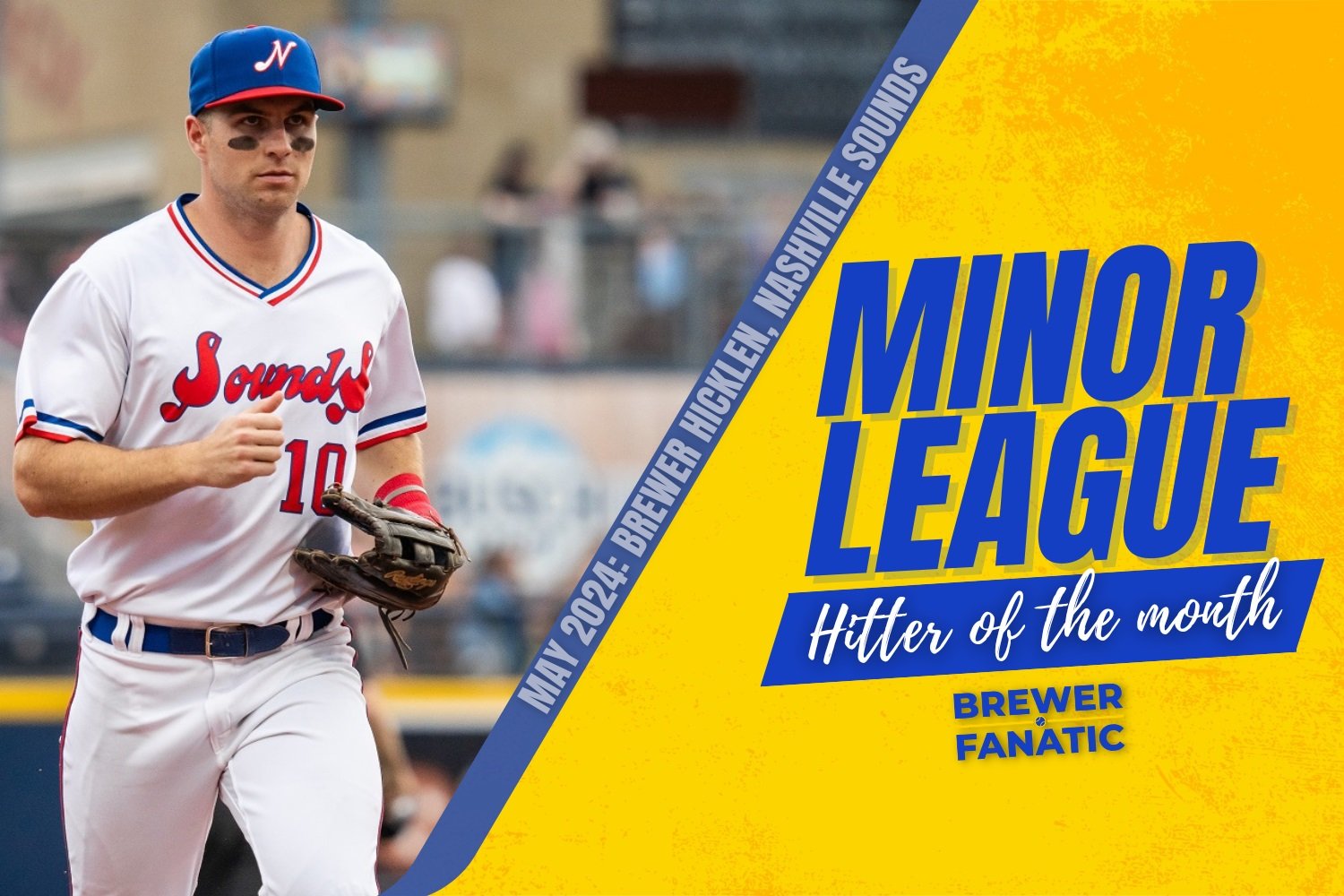 Honorable Mentions Ramón Rodríguez (Wisconsin Timber Rattlers) 71 PA, .263/.366/.456, 15 H, 5 2B, 2 HR, 6 R, 11 RBI, 9 BB, 6 K, 2 HBP, 1 SB Rodríguez is a catching prospect that became a minor league free agent after six full seasons. His last season in the crowded Orioles system was lackluster, spending most of his time in Double-A with a .666 OPS. He signed a deal with the Brewers late last December and was initially assigned to the Biloxi Shuckers before being moved down. He’s a little old to be in High-A at 25 years old and even then, he struggled immensely in his first month with the Wisconsin Timber Rattlers. After posting a .495 OPS in April, he managed to turn things around in a big way and was one of the best hitters on the team. His future with the Brewers is uncertain given several factors including his current level of play and the fact that Milwaukee is already rich in catching talent. Whether he’ll even be able to continue the momentum he started in May still remains to be seen. Filippo Di Turi (ACL Brewers) 93 PA, .343/.505/.514, 24 H, 5 2B, 2 3B, 1 HR, 13 RBI, 5 SB, 21 BB, 15 K Filippo Di Turi is an 18-year old shortstop out of Venezuela that signed a minor league contract with the Brewers in January 2023 and started off his career in the DSL. Since starting the year in rookie ball, he’s put his dominant on-base skills on full display, boasting a .500 on-base percentage so far this season. He’ll need to keep it up if he wants to make the majors one day as his power received a mere 30-grade from scouts. Despite his shortcomings, he's still the #29 ranked prospect for the Brewers. Regarding his approach, MLB.com writes: Carlos Rodriguez (Biloxi Shuckers) 78 PA, .391/.462/.464, 27 H, 3 2B, 1 3B, 8 R, 12 RBI, 9 BB, 5 K, 1 SB Not to be confused with the #6 ranked pitching prospect (that’s Carlos F. Rodriguez), Carlos D. Rodriguez is an outfield prospect from Venezuela who signed his first contract with the Brewers back in 2017. In his first year in Double-A, he’s at a .744 OPS but saw a big jump in performance from April to May. After spending some time on the injured list, he came back healthier and better than ever, jumping from a .595 OPS in April to a .925 OPS in May. He’s been excellent at hitting for average but lacks threatening power, with just four of his 27 hits in May being for extra bases with no home runs. In fact, he’s still yet to hit his first home run of the season. He’s only 23 years old so he has time to continue growing and developing but with a total of just ten home runs in his 1,581 career plate appearances, he probably won’t ever be a long ball threat. Best Minor League Hitter of the Month: Brewer Hicklen (Nashville Sounds) 90 PA, .230/.344/.622,17 H, 3 2B, 1 3B, 8 HR, 16 R, 24 RBI, 11 BB, 23 K, 3 HBP, 6 SB What can we really expect from a guy named Brewer who plays in the Brewers system? Unlike the other names on this list, Hicklen was more dependent on his power than his on-base ability to get the job done. His 46 total bases was the most out of any Brewers minor league player in May, largely driven by his eight home runs. Hicklen is an interesting player. At 28 years old, he’s already on the older end of players in Triple-A. He already made his major league debut with the Royals in 2022, accumulating a whopping four plate appearances before spending all of 2023 in Triple-A and signing a free agent contract with Milwaukee. I’m not exactly sure what conditions are necessary for him to be called up to the Brewers but given the sheer amount of competition in the outfield, it may be an uphill battle to make it back to the show. Nonetheless, he’s been a remarkable bat for the Nashville Sounds so far this year, posting a cumulative .983 OPS with 11 doubles and 11 home runs over 201 plate appearances.
 -
For the most part, Milwaukee’s relievers are just as effective this year as they were last year. But what sort of roster moves, if any, are needed for them to be even better? Image courtesy of © Michael McLoone-USA TODAY Sports For the most part, Milwaukee’s relievers are just as effective this year as they were last year. But what sort of roster moves, if any, are needed for them to be even better? Thus far, 2024 has been a good year for pitchers, with the league-average ERA decreasing from 4.33 in 2023 to 3.94. Thus, although Brewers relievers have combined for a 3.47 ERA (just .007 higher than last year), they’ve dropped from second to sixth in MLB. Part of this is due to the Guardians and Yankees having (likely) unsustainable ERAs under 3.00, but other factors exist. Devin Williams hasn’t had a chance to pitch all year, Bryse Wilson has been thrust into the starter role, and constant injuries have caused some players to miss time or have diminished performances. Let’s start by taking a high-level overview of each bullpen arm and how they’ve pitched thus far. IP ERA FIP WHIP K/9 Bryan Hudson* 32.0 1.13 2.89 0.75 10.4 Hoby Milner* 29.0 3.10 3.25 1.07 9.3 Elvis Peguero 25.2 2.81 2.87 1.52 8.1 Jared Koenig* 25.1 2.13 3.66 1.11 7.1 Joel Payamps 21.0 3.86 3.48 1.00 7.3 Trevor Megill 15.0 2.40 1.81 1.07 12.6 Kevin Herget 7.2 2.35 4.45 0.91 7.0 Enoli Paredes 7.0 0.00 1.57 0.14 9.0 Janson Junk 5.0 9.00 5.14 2.80 5.4 Based on this information, a few things become apparent. First of all, Milwaukee has some great lefty pitchers. Second, Trevor Megill has done an admirable job filling in the closer role in Williams’ absence. Third, there’s definitely room for improvement, especially when it comes to getting strikeouts and limiting traffic on the basepaths. Current Roster Bryan Hudson was a low-key offseason acquisition from the Dodgers that has panned out excellently. After being designated for assignment, he was shipped over from Los Angeles in exchange for LHP prospect Justin Chambers. Since the start of the season, he’s accumulated 1.6 rWAR, the most of any pitcher and the fifth-most on the team. His sweeper has been notably effective, with an opposing batting average of just .056, a whiff rate of 41.5%, and a strikeout rate of 46.3%. Jared Koenig is another unexpected star who signed with the Brewers after a frustrating Triple-A season in the Padres system. His 2.13 ERA might be unsustainable as his FIP and WHIP are disproportionately high, and he has a relatively low strikeout rate (19.0%). His cutter is especially concerning, as it has an opposing slugging percentage of .476 and is his second most-used pitch. Hoby Miler and Elvis Peguero have been holding down the fort and have remained pretty consistent compared to last year. Milner doesn’t have the same 1.82 ERA he did in 2023, but his strikeout rate is up slightly, and last year’s FIP of 3.13 may have indicated that a sub-2.00 ERA for Milner was the exception, not the rule. Kevin Herget, Enoli Paredes, and Janson Junk have sample sizes that are too small to draw any major conclusions. Paredes’ seven scoreless innings are undoubtedly impressive, and Herget has already had three multi-innings appearances but with a total of just 19 ⅔ innings pitched between these three (and Junk has barely pitched since the start of May and was just recalled at the start of June). Joel Payamps is a more complex case. Last year, he posted a 2.55 ERA in 70 ⅔ innings with ten games finished and three saves. This year, he’s added more than an entire run to his ERA but has the same H/9 (7.3), a lower HR/9 (0.9), and fewer BB/9 (1.7) than he did in 2023. So what gives? If I had to blame one thing, it would be his slider. He went from a .279 opposing slugging percentage to .406 while also seeing his strikeout rate on the pitch decrease by 12.7%. His sinker went from having the highest wOBA (.396) to the second-lowest wOBA (.258) behind his four-seam fastball. Trevor Megill is intriguing in the other direction. After a career start marred by inconsistency with the Cubs and Twins, he has finally found his groove in the great state of Wisconsin. After posting a career-best 3.63 ERA in 2023, he’s improved even more and has even picked up his first career saves, eight in total so far. His scorching fastball is striking batters out at its highest rate ever (29.8%). He’s also got a gross knuckle curve with a 60.6% whiff rate and a 53.8% strikeout rate. The Brewers Could Use More Strikeouts Despite having the sixth-best team reliever ERA, the reliever K/9 figure of 8.43 is 19th in MLB. The bullpen has relied on soft contact over the past few years and has just two players, Trevor Megill, and Bryan Hudson, with more than 10.0 K/9. It also makes sense that they are two of the best performers on the team. Sure, it can be argued that outs from balls in play are outs just the same. A good example is Wade Miley, who posted a 3.14 ERA in 2023 with just 5.9 K/9. However, success for low-strikeout pitchers takes a lot of work to sustain, especially for relievers. Locking down the opposing lineup in late innings would be a huge boost to any bullpen’s productivity. The question then becomes, would they be willing to sacrifice one of their current arms for an arm with a feast-or-famine playstyle? Take Cubs starter Ben Brown as an example. He has an excellent strikeout rate (29.6%) that sits in the 86th percentile of qualified pitchers but an average exit velocity (92.6 mph) in the first percentile. It has brought him a respectable 3.33 ERA so far through his first seven starts, so maybe it’s not the end of the world. Injury Returns The biggest name to return is obviously Devin Williams, who has been sidelined with stress fractures in his back since spring training. He was a popular subject of trade discussions along with Willy Adames and Corbin Burnes. He’ll be a free agent in 2026 and is a remarkable talent, although it remains to be seen how he’ll perform after returning from his injury. If he comes back, it’s assumed that Megill could still be kept around with one of the less important names, like Janson Junk, moved to clear roster space. The only other injured reliever of note is J.B. Bukauskas, who landed on the 60-day IL in April due to a right lat strain. He’s barely pitched in his two years with Milwaukee so far, compiling just 12 total innings of work. While he was productive in those innings with a 0.75 ERA, it’s doubtful that his return will lead to any major shifts in personnel. Young Guns From the Farm The Brewers have some great pitching talent in their minor league system. Robert Gasser has already made his debut with the rotation (although he might be the latest in a long list of injured Milwaukee pitchers). Jacob Misiorowski has been the talk of the town for a while and has been dealing in his first ten starts in Double-A. Carlos F. Rodriguez hasn’t had the same success at Triple-A as in Double-A, but he’ll hopefully figure things out soon. Outside of these three names, who are being groomed to be part of the rotation, it doesn’t seem like other players could potentially be called up to hold things down in relief. Brett Wichrowski is the next closest pitcher to the big leagues and has a 6.27 ERA over his first five starts with the Biloxi Shuckers. Logan Henderson’s highest level of competition has been high-A. Bradley Blalock and Coleman Crow are similarly far away from reaching the highest level of baseball. Will some of these prospects eventually be good enough to claim their roster spots on the major league squad? Of course, but for now, the team is better off working with what they have. Even if the bullpen remains the same, it’s still a strong unit and a big reason why the team is still leading the NL Central. However, as seen in last year’s playoff run, you need every advantage you can get in the sport of baseball. Otherwise, you might be out of the playoffs sooner rather than later. View full article
-
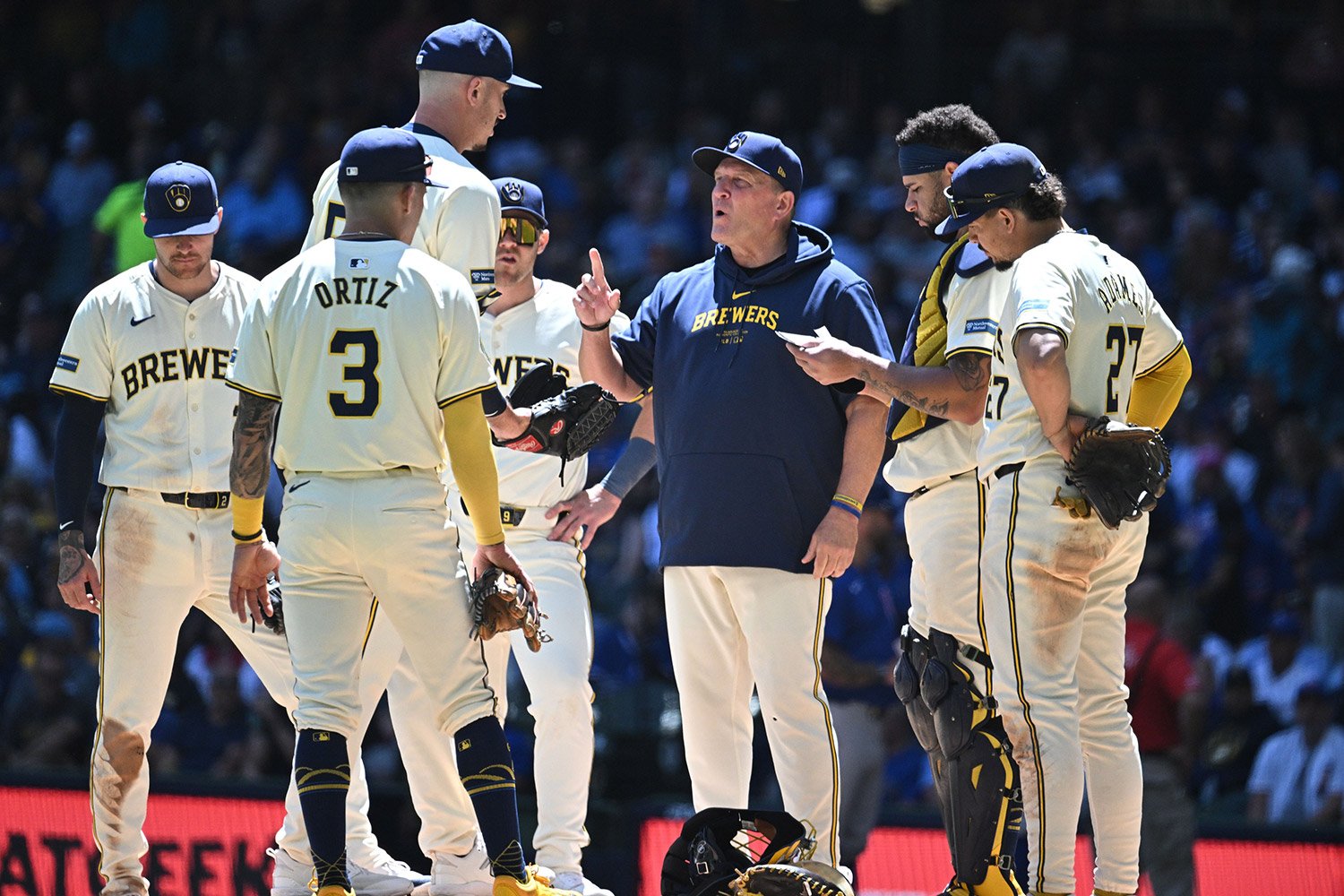 Thus far, 2024 has been a good year for pitchers, with the league-average ERA decreasing from 4.33 in 2023 to 3.94. Thus, although Brewers relievers have combined for a 3.47 ERA (just .007 higher than last year), they’ve dropped from second to sixth in MLB. Part of this is due to the Guardians and Yankees having (likely) unsustainable ERAs under 3.00, but other factors exist. Devin Williams hasn’t had a chance to pitch all year, Bryse Wilson has been thrust into the starter role, and constant injuries have caused some players to miss time or have diminished performances. Let’s start by taking a high-level overview of each bullpen arm and how they’ve pitched thus far. IP ERA FIP WHIP K/9 Bryan Hudson* 32.0 1.13 2.89 0.75 10.4 Hoby Milner* 29.0 3.10 3.25 1.07 9.3 Elvis Peguero 25.2 2.81 2.87 1.52 8.1 Jared Koenig* 25.1 2.13 3.66 1.11 7.1 Joel Payamps 21.0 3.86 3.48 1.00 7.3 Trevor Megill 15.0 2.40 1.81 1.07 12.6 Kevin Herget 7.2 2.35 4.45 0.91 7.0 Enoli Paredes 7.0 0.00 1.57 0.14 9.0 Janson Junk 5.0 9.00 5.14 2.80 5.4 Based on this information, a few things become apparent. First of all, Milwaukee has some great lefty pitchers. Second, Trevor Megill has done an admirable job filling in the closer role in Williams’ absence. Third, there’s definitely room for improvement, especially when it comes to getting strikeouts and limiting traffic on the basepaths. Current Roster Bryan Hudson was a low-key offseason acquisition from the Dodgers that has panned out excellently. After being designated for assignment, he was shipped over from Los Angeles in exchange for LHP prospect Justin Chambers. Since the start of the season, he’s accumulated 1.6 rWAR, the most of any pitcher and the fifth-most on the team. His sweeper has been notably effective, with an opposing batting average of just .056, a whiff rate of 41.5%, and a strikeout rate of 46.3%. Jared Koenig is another unexpected star who signed with the Brewers after a frustrating Triple-A season in the Padres system. His 2.13 ERA might be unsustainable as his FIP and WHIP are disproportionately high, and he has a relatively low strikeout rate (19.0%). His cutter is especially concerning, as it has an opposing slugging percentage of .476 and is his second most-used pitch. Hoby Miler and Elvis Peguero have been holding down the fort and have remained pretty consistent compared to last year. Milner doesn’t have the same 1.82 ERA he did in 2023, but his strikeout rate is up slightly, and last year’s FIP of 3.13 may have indicated that a sub-2.00 ERA for Milner was the exception, not the rule. Kevin Herget, Enoli Paredes, and Janson Junk have sample sizes that are too small to draw any major conclusions. Paredes’ seven scoreless innings are undoubtedly impressive, and Herget has already had three multi-innings appearances but with a total of just 19 ⅔ innings pitched between these three (and Junk has barely pitched since the start of May and was just recalled at the start of June). Joel Payamps is a more complex case. Last year, he posted a 2.55 ERA in 70 ⅔ innings with ten games finished and three saves. This year, he’s added more than an entire run to his ERA but has the same H/9 (7.3), a lower HR/9 (0.9), and fewer BB/9 (1.7) than he did in 2023. So what gives? If I had to blame one thing, it would be his slider. He went from a .279 opposing slugging percentage to .406 while also seeing his strikeout rate on the pitch decrease by 12.7%. His sinker went from having the highest wOBA (.396) to the second-lowest wOBA (.258) behind his four-seam fastball. Trevor Megill is intriguing in the other direction. After a career start marred by inconsistency with the Cubs and Twins, he has finally found his groove in the great state of Wisconsin. After posting a career-best 3.63 ERA in 2023, he’s improved even more and has even picked up his first career saves, eight in total so far. His scorching fastball is striking batters out at its highest rate ever (29.8%). He’s also got a gross knuckle curve with a 60.6% whiff rate and a 53.8% strikeout rate. The Brewers Could Use More Strikeouts Despite having the sixth-best team reliever ERA, the reliever K/9 figure of 8.43 is 19th in MLB. The bullpen has relied on soft contact over the past few years and has just two players, Trevor Megill, and Bryan Hudson, with more than 10.0 K/9. It also makes sense that they are two of the best performers on the team. Sure, it can be argued that outs from balls in play are outs just the same. A good example is Wade Miley, who posted a 3.14 ERA in 2023 with just 5.9 K/9. However, success for low-strikeout pitchers takes a lot of work to sustain, especially for relievers. Locking down the opposing lineup in late innings would be a huge boost to any bullpen’s productivity. The question then becomes, would they be willing to sacrifice one of their current arms for an arm with a feast-or-famine playstyle? Take Cubs starter Ben Brown as an example. He has an excellent strikeout rate (29.6%) that sits in the 86th percentile of qualified pitchers but an average exit velocity (92.6 mph) in the first percentile. It has brought him a respectable 3.33 ERA so far through his first seven starts, so maybe it’s not the end of the world. Injury Returns The biggest name to return is obviously Devin Williams, who has been sidelined with stress fractures in his back since spring training. He was a popular subject of trade discussions along with Willy Adames and Corbin Burnes. He’ll be a free agent in 2026 and is a remarkable talent, although it remains to be seen how he’ll perform after returning from his injury. If he comes back, it’s assumed that Megill could still be kept around with one of the less important names, like Janson Junk, moved to clear roster space. The only other injured reliever of note is J.B. Bukauskas, who landed on the 60-day IL in April due to a right lat strain. He’s barely pitched in his two years with Milwaukee so far, compiling just 12 total innings of work. While he was productive in those innings with a 0.75 ERA, it’s doubtful that his return will lead to any major shifts in personnel. Young Guns From the Farm The Brewers have some great pitching talent in their minor league system. Robert Gasser has already made his debut with the rotation (although he might be the latest in a long list of injured Milwaukee pitchers). Jacob Misiorowski has been the talk of the town for a while and has been dealing in his first ten starts in Double-A. Carlos F. Rodriguez hasn’t had the same success at Triple-A as in Double-A, but he’ll hopefully figure things out soon. Outside of these three names, who are being groomed to be part of the rotation, it doesn’t seem like other players could potentially be called up to hold things down in relief. Brett Wichrowski is the next closest pitcher to the big leagues and has a 6.27 ERA over his first five starts with the Biloxi Shuckers. Logan Henderson’s highest level of competition has been high-A. Bradley Blalock and Coleman Crow are similarly far away from reaching the highest level of baseball. Will some of these prospects eventually be good enough to claim their roster spots on the major league squad? Of course, but for now, the team is better off working with what they have. Even if the bullpen remains the same, it’s still a strong unit and a big reason why the team is still leading the NL Central. However, as seen in last year’s playoff run, you need every advantage you can get in the sport of baseball. Otherwise, you might be out of the playoffs sooner rather than later.
 -
The Brewers had a great month in May, going 16-12 while posting a +40 run differential. The team’s .754 OPS was the third best in MLB with a few hitters spearheading the offensive efforts. The Brewers had a great month in May, going 16-12 while posting a +40 run differential. The team’s .754 OPS was the third best in MLB with a few hitters spearheading the offensive efforts. To me, Milwaukee’s lineup has exceeded expectations, especially relative to the rest of the teams in the big leagues. It’s a big reason why they have such a comfortable lead over the Chicago Cubs and are looking like the favorites to win the NL Central for the fourth time in five years. Here are some of the unexpected names swinging hot bats for the team. Honorable Mentions Gary Sánchez 67 PA, .250/.313/.483, 15 H, 2 2B, 4 HR, 10 R, 13 RBI, 5 BB, 20 K, 1 HBP Sánchez hasn’t been able to find a stable home since leaving the Yankees but had a great year in 2023 with the Padres, serving as Blake Snell’s preferred catcher on his way to the NL Cy Young award. Now that we’ve seen Sánchez in action, it’s clear that he’s still a plus-bat with the ability to suit up every once in a while. He’s mostly played as a designated hitter this season and for the most part has been earning his keep. His approach hasn’t changed much in the past few years and he has always been a “swing first, ask questions later” type of hitter which explains his high strikeout rate and poor plate discipline numbers. However, his ability to come up clutch with home runs when needed can’t be understated. William Contreras 125 PA, .301/.368/.469, 34 H, 8 2B, 1 3B, 3 HR, 19 R, 21 RBI, 12 BB, 24 K, 2 SB Contreras has been an absolute workhorse, still leading the team in plate appearances, hits, RBI, walks, and rWAR. Furthermore, he’s leading the National League in total runs, no doubt a credit to him as well as the rest of his coworkers. He slowed down a bit after posting a blistering .952 OPS in April/March but still managed to have a big impact for the team. His season OPS+ of 153 is the best it has ever been in his young career although it may be at the cost of some of his defensive abilities. I think it’s safe to say that the Brewers catching tandem is one of the most lethal in the sport. As many are already aware, catchers aren’t typically known for their hitting. For the Brewers to have two of the best offensive catchers in the sport, it seems almost unfair to the other teams struggling to have league-average backstop bats. Did I mention that he’s also clutch? Christian Yelich 88 PA, .321/.398/.474, 25 H, 5 2B, 2 3B, 1 HR, 14 R, 16 RBI, 10 BB, 20 K, 6 SB, Yelich got off to a smoking start this season, posting a 1.166 OPS in April/March. Then, he went on the 10-day IL due to a low back strain. It might have been assumed that, like seasons past, he’d once again be held back by his recurring back woes, even after returning to the lineup. Although he didn’t stay quite as hot, Yelich still put up great numbers over a larger sample size in the month of May. Notably, he has been running quite well, stealing six bases and hitting two triples. His season OPS and OPS+ of .971 and 175 are both the highest on the team. He’s still got a ways to go before he has enough plate appearances to qualify but he would have the sixth highest OPS in MLB, right behind Kyle Tucker and ahead of Gunnar Henderson. It might sooner rather than later that we get the old Christian Yelich back. Hitter of the Month - Joey Ortiz 88 PA, .307/.391/.587, 23 H, 7 2B, 1 3B, 4 HR, 16 R, 12 RBI, 9 BB, 11 K, 2 HBP, 1 SB Oh boy, Joey Ortiz is so good. If it weren’t for the steep competition of pitchers including Shota Imanaga, Paul Skenes, Yoshinobu Yamamoto, and Jared Jones, he’d have a real good chance of winning NL Rookie of the Year. After a good start, he had a monstrous May, posting a .981 OPS and doing it all. There’s a good reason he was the Orioles’ #8 ranked prospect in 2023, a great placement for one of the talented farm systems in the sport. Matt Trueblood had an incredibly insightful piece about how his uptick in performance could make him an invaluable infield piece for the Brewers over the next several years. A re-engineering of his swing to improve his quality of contact and get more bat speed has done wonders for his power and slugging numbers. His slugging percentage increased by a whopping .181 from April/March to May. Did it hurt to lose Corbin Burnes? Sure, but Ortiz and his outstanding play has helped soften the blow and could even help Milwaukee win the trade in the long run. View full article
-
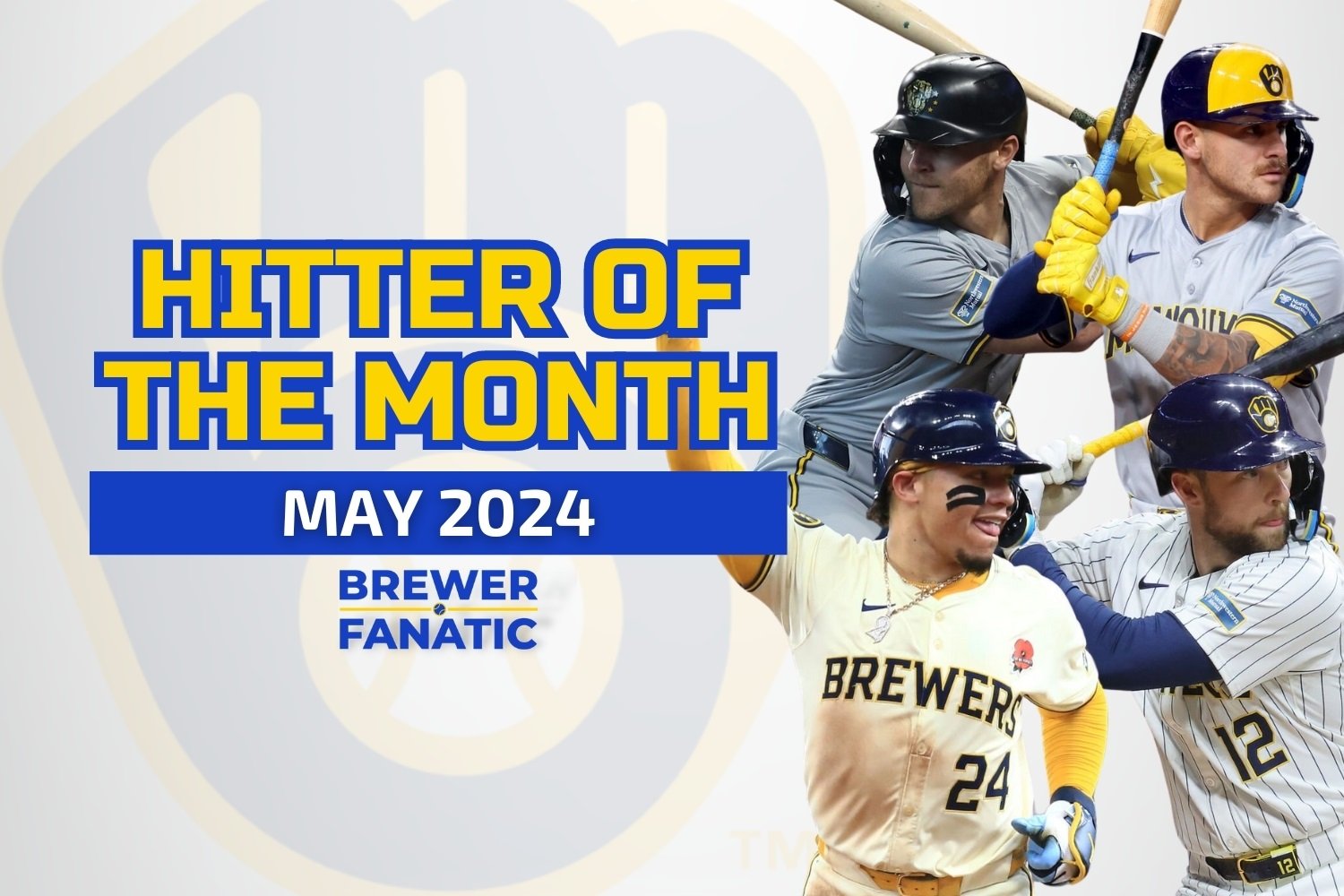 To me, Milwaukee’s lineup has exceeded expectations, especially relative to the rest of the teams in the big leagues. It’s a big reason why they have such a comfortable lead over the Chicago Cubs and are looking like the favorites to win the NL Central for the fourth time in five years. Here are some of the unexpected names swinging hot bats for the team. Honorable Mentions Gary Sánchez 67 PA, .250/.313/.483, 15 H, 2 2B, 4 HR, 10 R, 13 RBI, 5 BB, 20 K, 1 HBP Sánchez hasn’t been able to find a stable home since leaving the Yankees but had a great year in 2023 with the Padres, serving as Blake Snell’s preferred catcher on his way to the NL Cy Young award. Now that we’ve seen Sánchez in action, it’s clear that he’s still a plus-bat with the ability to suit up every once in a while. He’s mostly played as a designated hitter this season and for the most part has been earning his keep. His approach hasn’t changed much in the past few years and he has always been a “swing first, ask questions later” type of hitter which explains his high strikeout rate and poor plate discipline numbers. However, his ability to come up clutch with home runs when needed can’t be understated. William Contreras 125 PA, .301/.368/.469, 34 H, 8 2B, 1 3B, 3 HR, 19 R, 21 RBI, 12 BB, 24 K, 2 SB Contreras has been an absolute workhorse, still leading the team in plate appearances, hits, RBI, walks, and rWAR. Furthermore, he’s leading the National League in total runs, no doubt a credit to him as well as the rest of his coworkers. He slowed down a bit after posting a blistering .952 OPS in April/March but still managed to have a big impact for the team. His season OPS+ of 153 is the best it has ever been in his young career although it may be at the cost of some of his defensive abilities. I think it’s safe to say that the Brewers catching tandem is one of the most lethal in the sport. As many are already aware, catchers aren’t typically known for their hitting. For the Brewers to have two of the best offensive catchers in the sport, it seems almost unfair to the other teams struggling to have league-average backstop bats. Did I mention that he’s also clutch? Christian Yelich 88 PA, .321/.398/.474, 25 H, 5 2B, 2 3B, 1 HR, 14 R, 16 RBI, 10 BB, 20 K, 6 SB, Yelich got off to a smoking start this season, posting a 1.166 OPS in April/March. Then, he went on the 10-day IL due to a low back strain. It might have been assumed that, like seasons past, he’d once again be held back by his recurring back woes, even after returning to the lineup. Although he didn’t stay quite as hot, Yelich still put up great numbers over a larger sample size in the month of May. Notably, he has been running quite well, stealing six bases and hitting two triples. His season OPS and OPS+ of .971 and 175 are both the highest on the team. He’s still got a ways to go before he has enough plate appearances to qualify but he would have the sixth highest OPS in MLB, right behind Kyle Tucker and ahead of Gunnar Henderson. It might sooner rather than later that we get the old Christian Yelich back. Hitter of the Month - Joey Ortiz 88 PA, .307/.391/.587, 23 H, 7 2B, 1 3B, 4 HR, 16 R, 12 RBI, 9 BB, 11 K, 2 HBP, 1 SB Oh boy, Joey Ortiz is so good. If it weren’t for the steep competition of pitchers including Shota Imanaga, Paul Skenes, Yoshinobu Yamamoto, and Jared Jones, he’d have a real good chance of winning NL Rookie of the Year. After a good start, he had a monstrous May, posting a .981 OPS and doing it all. There’s a good reason he was the Orioles’ #8 ranked prospect in 2023, a great placement for one of the talented farm systems in the sport. Matt Trueblood had an incredibly insightful piece about how his uptick in performance could make him an invaluable infield piece for the Brewers over the next several years. A re-engineering of his swing to improve his quality of contact and get more bat speed has done wonders for his power and slugging numbers. His slugging percentage increased by a whopping .181 from April/March to May. Did it hurt to lose Corbin Burnes? Sure, but Ortiz and his outstanding play has helped soften the blow and could even help Milwaukee win the trade in the long run.
-
- 1
-
-
- joey ortiz
- christian yelich
- (and 2 more)
-
After a slew of rough outings, he was outstanding in seven innings against the Marlins. What did he do differently, and how can he keep it up? Image courtesy of © Thomas Shea-USA TODAY Sports After a slew of rough outings, he was outstanding in seven innings against the Marlins. What did he do differently, and how can he keep it up? Most fans know how good Freddy Peralta can be when he’s at his best. 2021 was the best year of his career and saw him post a 2.81 ERA, 0.97 WHIP, and 12.2 K/9 over 144 ⅓ innings pitched. Stellar numbers that haven’t been repeated since. In the 300 ⅓ innings he has pitched after the conclusion of the 2021 season, he’s averaged a 3.78 ERA with a 1.09 WHIP and 11.0 K/9—still good figures, but not as good as they were or could be. If you've watched him pitch for a while, you should know how wildly inconsistent he can be. In 2023, he had six starts with 10+ strikeouts, but he also had seven starts with four or more earned runs in fewer than six innings. Some of these rough outings were absolutely brutal, including an outing on May 26th against the Giants that saw San Francisco run the score up to 10-1 by the end of the third inning. This year, that inconsistency returned at a similar time. In his first three starts in May, he conceded 11 earned runs in 16 innings with opposing batters combining for an .849 OPS against him. As the team’s current ace, adjustments needed to be made to keep Milwaukee atop the NL Central. In his most recent start, he finally dialed it up and returned to the prime Peralta we all know and love, striking out seven and giving up just one earned run. So what changed? If we want to be lazy about it, we can chalk it up to the fact that he made his first three starts against the Cubs, Cardinals, and Astros, three teams more competitive than the Marlins (although that's not saying much). However, the Cubs and Cardinals are 21st and 23rd respectively in terms of team OPS, so it’s not like they’re offensive juggernauts like the Astros are. In his first three starts, he gave up 19 hits, nine of which were off his fastball and seven off his slider. At first glance, this seems about even, but he threw 150 fastballs and just 69 sliders, so that seems like the first place to start digging. Like most breaking balls, sliders are often most effective when no, and double-t in the middle of the strike zone. He struggled with commanding his slider to follow this rule in his first three starts and kept landing in batter-friendly territory. To illustrate Master McKibbin’s point even further, a peek at a frequency and placement heat map of his slider in the first three starts of May shows that the pitch was just far too hittable. Of the seven hits he gave up on the slider, two were home runs, and one was a double. In his start against Miami, the slider was where it needed to be, down and away from right-handed batters. Sure, a few were dangerously close to the middle, but they were the exception and not the norm, which may have been why he only gave up one hit on 22 pitches. When his slider is executed and located well, it's incredibly hard to hit and often makes a fool of opposing players at the plate. Another aspect that might boost his game could be increased changeup usage. He’s been using it roughly 15% of the time for the past two years, but it’s been quite effective this year, getting a whiff rate of 41.5% and a strikeout rate of 31.8%. The shape of the pitch is more down than away, with most ending up at the bottom of the zone, but opposing batters have had a tough time against it so far, averaging just .150 in 2024. The thing is, we already know his four-seam fastball is one of the best in the business. Stuff+ is a pretty nebulous concept, but it’s something worth noting, especially since Peralta has the second-highest Stuff+ rating (132) on his fastball in MLB, behind just Jared Jones (142) and ahead of elite arms like Hunter Greene (129), Tyler Glasnow (119), and Luis Castillo (117). However, it’s clear he needs a secondary weapon that’s just as potent. In his All-Star 2021 season, he combined his slider and curveball to achieve great results. Since then, he’s struggled to find the same chemistry within his arsenal, but green shoots are showing through the soil. A better-located slider and a more frequent changeup could see him finally reach his incredibly high ceiling as a starting pitcher for the Brewers. View full article
-
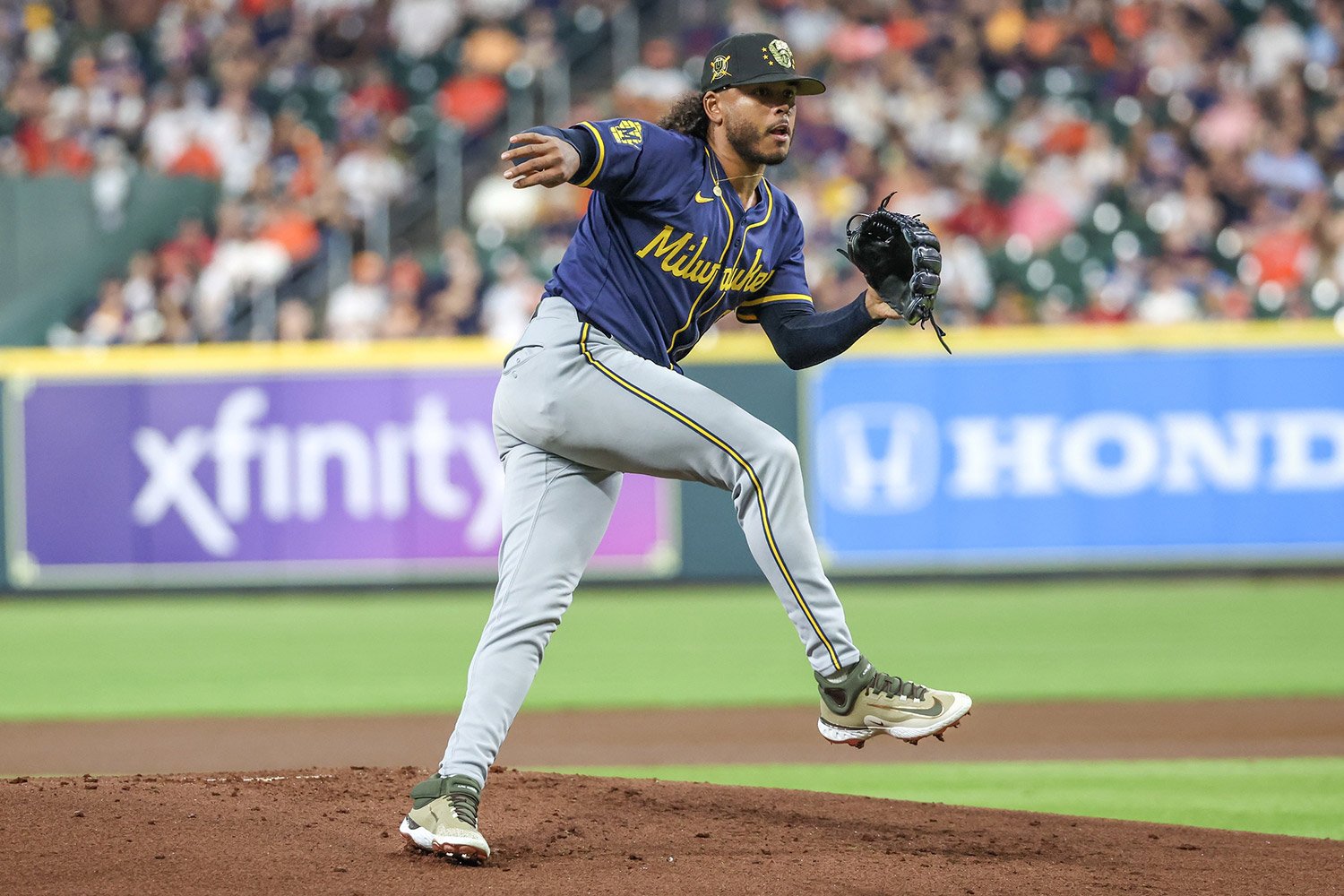 After a slew of rough outings, he was outstanding in seven innings against the Marlins. What did he do differently, and how can he keep it up? Most fans know how good Freddy Peralta can be when he’s at his best. 2021 was the best year of his career and saw him post a 2.81 ERA, 0.97 WHIP, and 12.2 K/9 over 144 ⅓ innings pitched. Stellar numbers that haven’t been repeated since. In the 300 ⅓ innings he has pitched after the conclusion of the 2021 season, he’s averaged a 3.78 ERA with a 1.09 WHIP and 11.0 K/9—still good figures, but not as good as they were or could be. If you've watched him pitch for a while, you should know how wildly inconsistent he can be. In 2023, he had six starts with 10+ strikeouts, but he also had seven starts with four or more earned runs in fewer than six innings. Some of these rough outings were absolutely brutal, including an outing on May 26th against the Giants that saw San Francisco run the score up to 10-1 by the end of the third inning. This year, that inconsistency returned at a similar time. In his first three starts in May, he conceded 11 earned runs in 16 innings with opposing batters combining for an .849 OPS against him. As the team’s current ace, adjustments needed to be made to keep Milwaukee atop the NL Central. In his most recent start, he finally dialed it up and returned to the prime Peralta we all know and love, striking out seven and giving up just one earned run. So what changed? If we want to be lazy about it, we can chalk it up to the fact that he made his first three starts against the Cubs, Cardinals, and Astros, three teams more competitive than the Marlins (although that's not saying much). However, the Cubs and Cardinals are 21st and 23rd respectively in terms of team OPS, so it’s not like they’re offensive juggernauts like the Astros are. In his first three starts, he gave up 19 hits, nine of which were off his fastball and seven off his slider. At first glance, this seems about even, but he threw 150 fastballs and just 69 sliders, so that seems like the first place to start digging. Like most breaking balls, sliders are often most effective when no, and double-t in the middle of the strike zone. He struggled with commanding his slider to follow this rule in his first three starts and kept landing in batter-friendly territory. To illustrate Master McKibbin’s point even further, a peek at a frequency and placement heat map of his slider in the first three starts of May shows that the pitch was just far too hittable. Of the seven hits he gave up on the slider, two were home runs, and one was a double. In his start against Miami, the slider was where it needed to be, down and away from right-handed batters. Sure, a few were dangerously close to the middle, but they were the exception and not the norm, which may have been why he only gave up one hit on 22 pitches. When his slider is executed and located well, it's incredibly hard to hit and often makes a fool of opposing players at the plate. Another aspect that might boost his game could be increased changeup usage. He’s been using it roughly 15% of the time for the past two years, but it’s been quite effective this year, getting a whiff rate of 41.5% and a strikeout rate of 31.8%. The shape of the pitch is more down than away, with most ending up at the bottom of the zone, but opposing batters have had a tough time against it so far, averaging just .150 in 2024. The thing is, we already know his four-seam fastball is one of the best in the business. Stuff+ is a pretty nebulous concept, but it’s something worth noting, especially since Peralta has the second-highest Stuff+ rating (132) on his fastball in MLB, behind just Jared Jones (142) and ahead of elite arms like Hunter Greene (129), Tyler Glasnow (119), and Luis Castillo (117). However, it’s clear he needs a secondary weapon that’s just as potent. In his All-Star 2021 season, he combined his slider and curveball to achieve great results. Since then, he’s struggled to find the same chemistry within his arsenal, but green shoots are showing through the soil. A better-located slider and a more frequent changeup could see him finally reach his incredibly high ceiling as a starting pitcher for the Brewers.
 -
I'm gonna be honest - I didn't even know you could have negative reputation on this site.
-
NL MVP race is going to be hard enough with Shohei Ohtani and Mookie Betts playing the way that they are 😬. Hope Contreras figures it out, Milwaukee pitchers need all the help they can get this season.
-
Problem-Solving in an Unexpectedly Demanding Role, with Colin Rea
Jason Wang posted an article in Brewers
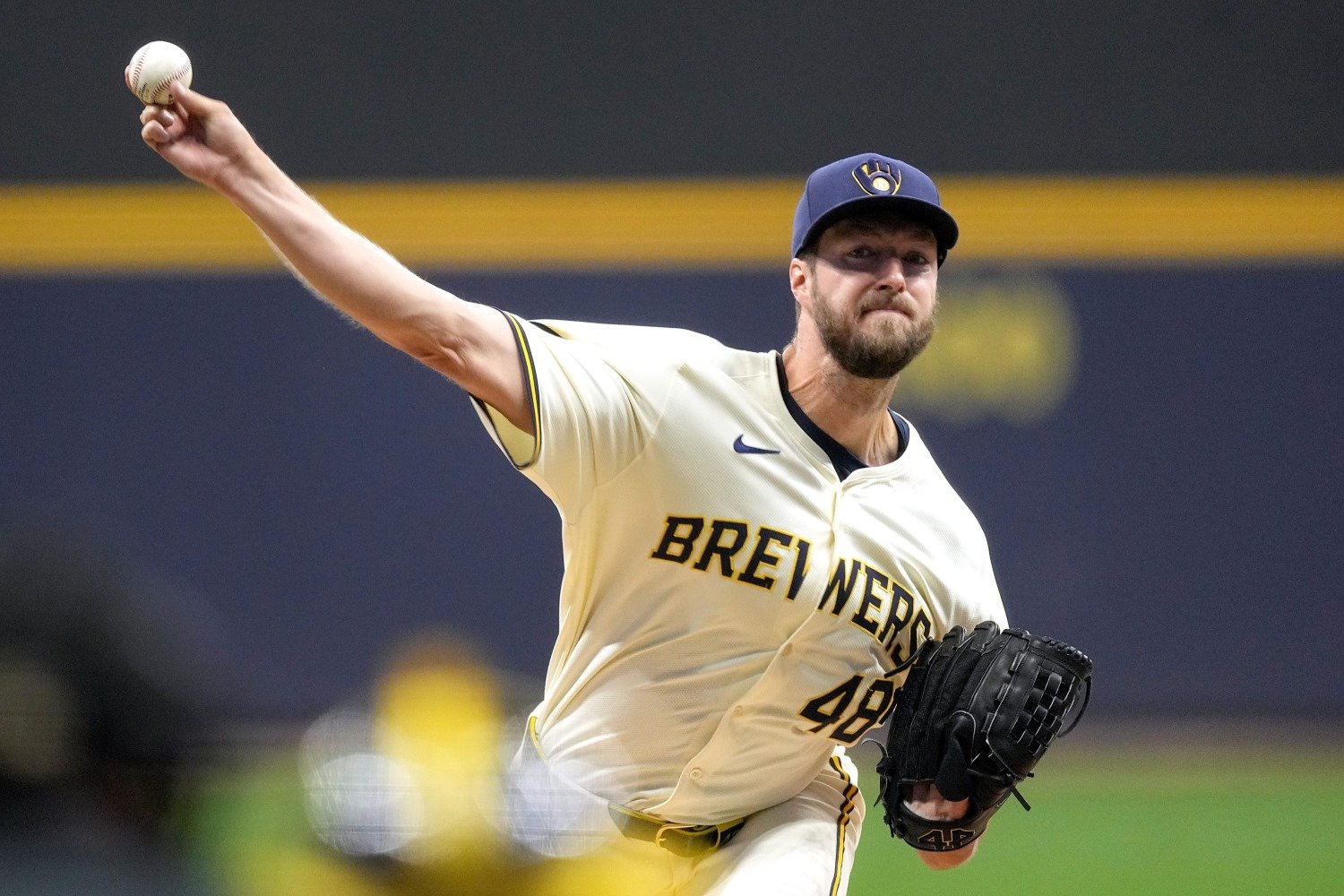 One look at the Brewers depth chart is all it takes to realize just how grim the starting pitching picture is. Jakob Junis and Wade Miley were both placed on the 60-day IL, joining Brandon Woodruff. DL Hall was placed on the 15-day IL with a left knee sprain and, according to Pat Murphy, he’s progressing slowly and is still without a clear timeline to return. Things are so bad that Bryse Wilson has been moved from long reliever to starter on a quasi-permanent basis. With the team also trading Corbin Burnes in the offseason, the rotation is a mere shadow of what it was just last year, when it had the sixth-best ERA in baseball at 3.94. Without their two best pitchers from the past few years, the remaining arms have to step up in a big way. As the new ace, Freddy Peralta has been fine, but not (yet) mind-blowing. His 3.63 ERA is in line with his career average of 3.81, so it’s not like he’s had a meteoric improvement. Arguably, the most impressive pitcher so far has been Iowa’s favorite son, Colin Rea. After struggling for years to find a stable roster spot in MLB, Rea signed for a second stint with the Brewers in 2023. Thanks to ample injuries that year, too, he made more than 20 starts for the first time in his career. He was all right, posting a 4.55 ERA and 1.19 WHIP over his 124 ⅔ innings of work, giving them what a modern contender needs from a back-of-the-rotation guy. With names like Burnes, Woodruff, and Peralta in front of him, he didn’t need to be anything more than that, but after re-signing with the team this year, his role has grown considerably in scope and expectations. Since his bump in responsibility, he’s posted a 3.45 ERA. A quick peek at his arsenal shows that it’s more or less the same as last year’s. He still primarily relies on his sinker/cutter tandem, and his four-seam fastball is still one of his best pitches. However, his sweeper has made some drastic improvements. Last year, batters averaged .226 against it--not bad. This year, he’s increased his usage of the pitch from 10.9% to 17.1%, but opposing batters have yet to get a hit against it. He’s added some extra movement since last year--three more inches of vertical drop and three more inches of horizontal break, to be specific. In exchange for more movement, he seems to have lost a few ticks of velocity, averaging 81.7 mph on the pitch vs. last year’s average of 83.1 mph, increasing the difference between that pitch and his fastball and making the sweeper more effective. Batters are also averaging just .118 against his fastball, even though that pitch hovers around 92 mph, hardly a fireball of any sort. Despite the good ERA, though, there are some concerning secondary indicators here. Rea's strikeout rate of 15.7% is the lowest it has ever been in his career. His WHIP of 1.26 is respectable, but dependent on his defense. His walk rate of 6.8% is satisfactory, but his opponents' batting average of .243 is slightly up from last year. He also has an expected opponent average of .304 and an expected ERA of 5.77, pointing to some good fortune. The culprit behind these numbers are clear: he’s getting pounded on his two most frequently used pitches. Here are the numbers for his sinker and cutter. Usage% BA SLG wOBA Whiff% K% Sinker 29.3 .318 .455 .397 10.7 6.0 Cutter 25.2 .371 .714 .478 16.4 5.3 His cutter is getting hit especially hard. With a slugging percentage of .714, it’s hard to expect that continued use of the pitch will be conducive to success in the long term. A lot of the time, it just kind of hangs in the middle of the zone, and with an average velocity of just 87.7 mph, it’s not a competitive pitch. The sinker is better, although still not good; it also suffers from lackluster placement. Here’s a heat map of all of the cutters and sinkers he’s thrown this season. See if you can find where they mostly end up in the strike zone! With a greater level of importance placed on his spot in the rotation, it’ll be interesting to see what adjustments (if any) Rea decides to make. Will he start to use his four-seam fastball and sweeper more often, and his cutter and sinker less? He worked on a splitter this winter, too. Will we start to see more of that pitch? How does he plan to stay competitive, given his less-than-overpowering “stuff?” Only time will tell. For now, Rea has already exceeded the expectations of many.
 -
It’s no secret that the Brewers rotation has been devastated by injury this year. Fortunately, one of the few remaining healthy starters has stepped up in a big way. Image courtesy of © Mark Hoffman / Milwaukee Journal Sentinel / USA TODAY NETWORK It’s no secret that the Brewers rotation has been devastated by injury this year. Fortunately, one of the few remaining healthy starters has stepped up in a big way. One look at the Brewers depth chart is all it takes to realize just how grim the starting pitching picture is. Jakob Junis and Wade Miley were both placed on the 60-day IL, joining Brandon Woodruff. DL Hall was placed on the 15-day IL with a left knee sprain and, according to Pat Murphy, he’s progressing slowly and is still without a clear timeline to return. Things are so bad that Bryse Wilson has been moved from long reliever to starter on a quasi-permanent basis. With the team also trading Corbin Burnes in the offseason, the rotation is a mere shadow of what it was just last year, when it had the sixth-best ERA in baseball at 3.94. Without their two best pitchers from the past few years, the remaining arms have to step up in a big way. As the new ace, Freddy Peralta has been fine, but not (yet) mind-blowing. His 3.63 ERA is in line with his career average of 3.81, so it’s not like he’s had a meteoric improvement. Arguably, the most impressive pitcher so far has been Iowa’s favorite son, Colin Rea. After struggling for years to find a stable roster spot in MLB, Rea signed for a second stint with the Brewers in 2023. Thanks to ample injuries that year, too, he made more than 20 starts for the first time in his career. He was all right, posting a 4.55 ERA and 1.19 WHIP over his 124 ⅔ innings of work, giving them what a modern contender needs from a back-of-the-rotation guy. With names like Burnes, Woodruff, and Peralta in front of him, he didn’t need to be anything more than that, but after re-signing with the team this year, his role has grown considerably in scope and expectations. Since his bump in responsibility, he’s posted a 3.45 ERA. A quick peek at his arsenal shows that it’s more or less the same as last year’s. He still primarily relies on his sinker/cutter tandem, and his four-seam fastball is still one of his best pitches. However, his sweeper has made some drastic improvements. Last year, batters averaged .226 against it--not bad. This year, he’s increased his usage of the pitch from 10.9% to 17.1%, but opposing batters have yet to get a hit against it. He’s added some extra movement since last year--three more inches of vertical drop and three more inches of horizontal break, to be specific. In exchange for more movement, he seems to have lost a few ticks of velocity, averaging 81.7 mph on the pitch vs. last year’s average of 83.1 mph, increasing the difference between that pitch and his fastball and making the sweeper more effective. Batters are also averaging just .118 against his fastball, even though that pitch hovers around 92 mph, hardly a fireball of any sort. Despite the good ERA, though, there are some concerning secondary indicators here. Rea's strikeout rate of 15.7% is the lowest it has ever been in his career. His WHIP of 1.26 is respectable, but dependent on his defense. His walk rate of 6.8% is satisfactory, but his opponents' batting average of .243 is slightly up from last year. He also has an expected opponent average of .304 and an expected ERA of 5.77, pointing to some good fortune. The culprit behind these numbers are clear: he’s getting pounded on his two most frequently used pitches. Here are the numbers for his sinker and cutter. Usage% BA SLG wOBA Whiff% K% Sinker 29.3 .318 .455 .397 10.7 6.0 Cutter 25.2 .371 .714 .478 16.4 5.3 His cutter is getting hit especially hard. With a slugging percentage of .714, it’s hard to expect that continued use of the pitch will be conducive to success in the long term. A lot of the time, it just kind of hangs in the middle of the zone, and with an average velocity of just 87.7 mph, it’s not a competitive pitch. The sinker is better, although still not good; it also suffers from lackluster placement. Here’s a heat map of all of the cutters and sinkers he’s thrown this season. See if you can find where they mostly end up in the strike zone! With a greater level of importance placed on his spot in the rotation, it’ll be interesting to see what adjustments (if any) Rea decides to make. Will he start to use his four-seam fastball and sweeper more often, and his cutter and sinker less? He worked on a splitter this winter, too. Will we start to see more of that pitch? How does he plan to stay competitive, given his less-than-overpowering “stuff?” Only time will tell. For now, Rea has already exceeded the expectations of many. View full article
-
This article and Turang's approach this year vs. last year reminds me of when someone asked Ichiro why he didn't try to hit home runs. Ichiro responded by saying that he could probably hit 40 bombs a year if he wanted to but then he'd average ~.240 and it wouldn't be as beneficial to the team. Turang is fast and his swing clearly isn't conducive to a damage-first approach. It seems obvious that removing a lot of the noise has allowed him to finally catch up to fastballs and even something as simple as replacing a leg kick with a toe-tap has clearly paid dividends.

