Jason Wang
-
Posts
955 -
Joined
-
Last visited
-
Days Won
1
Content Type
Profiles
Forums
Blogs
Events
News
2026 Milwaukee Brewers Top Prospects Ranking
Milwaukee Brewers Videos
2022 Milwaukee Brewers Draft Picks
Milwaukee Brewers Free Agent & Trade Rumors, Notes, & Tidbits
Guides & Resources
2023 Milwaukee Brewers Draft Picks
2024 Milwaukee Brewers Draft Picks
The Milwaukee Brewers Players Project
2025 Milwaukee Brewers Draft Pick Tracker
2026 Milwaukee Brewers Draft Tracker: Picks & Bonuses
Store
Downloads
Gallery
Everything posted by Jason Wang
-
 FanGraphs interestingly has Hoskins projected at 115 wRC+ over 630 plate appearances, so not a hugely impactful bat but still an improvement over Jake Bauers I guess. I think the Brewers need another impact signing if they want to be more serious contenders. While they're probably favored to be the top dog in the Central, the rest of the NL is just so stacked that making it through the gauntlet to reach the WS or even the Pennant is going to be tough with the roster as is.
 -
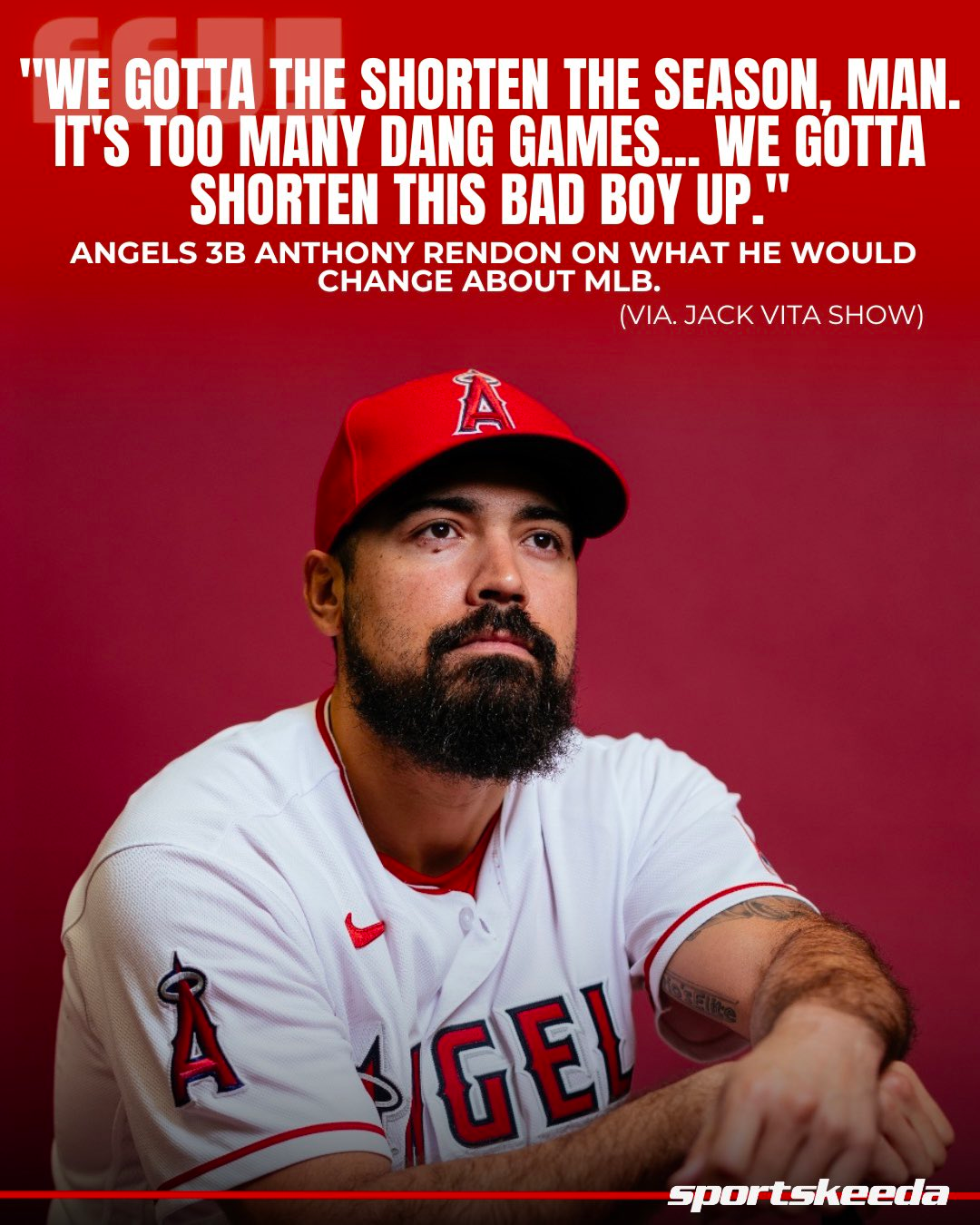
Well, it looks like the only thing that aged worse than my take of "Rhys Hoskins is too expensive" is the Anthony Rendon contract.
-
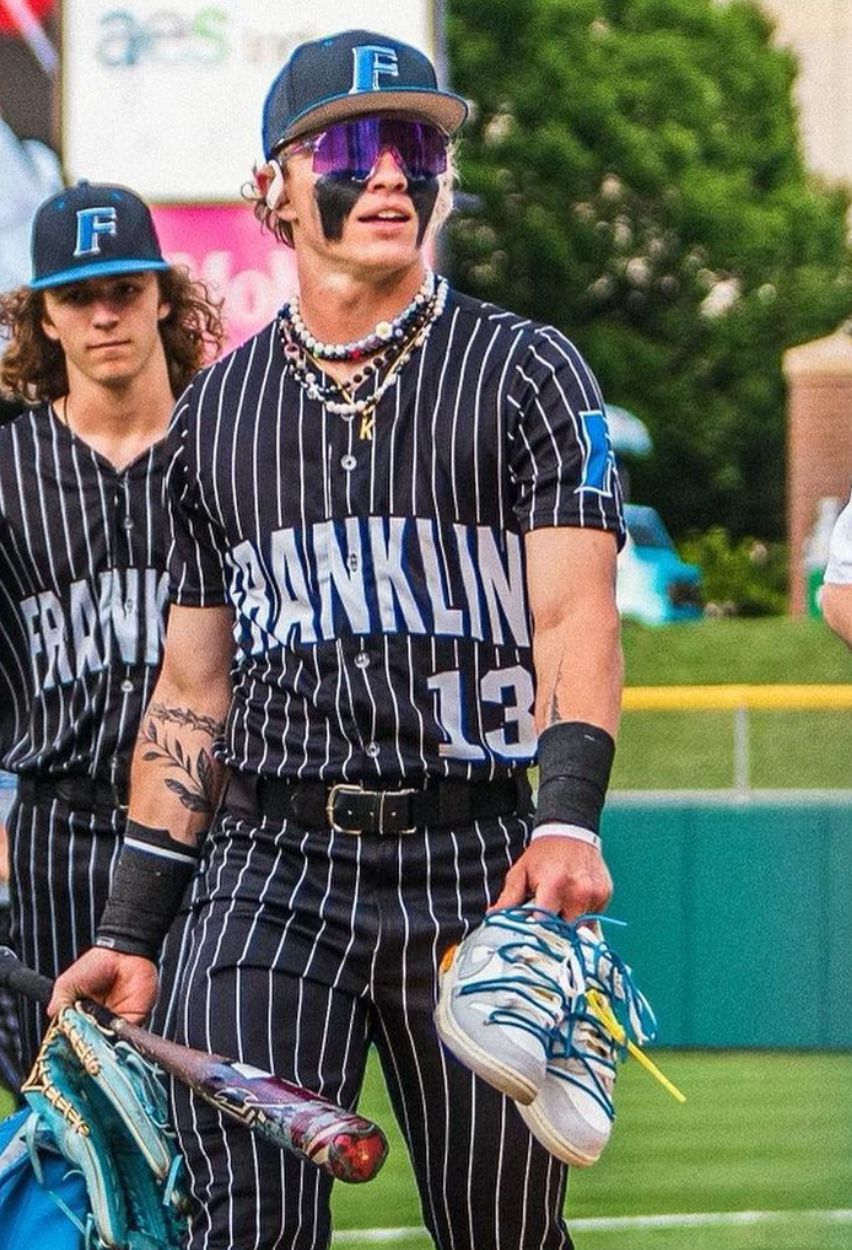
Agree. Individual rankings tend to seemingly underrate a lot of guys since not everyone can be #1. For example, Max Clark was clearly underrated at just #24 when he clearly has an 80-grade drip tool.
-
After listening to their explanation of the rankings, it did seem very subjective. Seidler himself said that he spent several months trying to put Langford at the top of the list but just couldn't find enough support for it. I think it's just good fun and if i I remember correctly, the authors acknowledged that they may be low on Chourio, especially given the size of his contract.
-
In their recent list of the top 101 prospects in baseball (published Tuesday), Baseball Prospectus placed Jackson Chourio at No. 6. Is this too low, too high, or just right? Image courtesy of © Stephanie Amador / The Tennessean / USA TODAY NETWORK In their recent list of the top 101 prospects in baseball (published Tuesday), Baseball Prospectus placed Jackson Chourio at No. 6. Is this too low, too high, or just right? Jackson Chourio has been the crown jewel of the Brewers system almost since he signed as an international free agent in 2021. After performing exceptionally up through Double A, he signed a landmark eight-year, $82 million contract that set a new record for the largest ever given to a player yet to make his major-league debut. If he was ranked the sixth-best prospect in the game despite all of the hype, who were the five players above him? It’s comes as no surprise that BP’s top-ranked prospect was Jackson Holliday, Baltimore’s first overall pick from the 2022 draft. He rocketed through the minor leagues last year, going from Single A to Triple A within the span of just one season and posting impressive numbers the entire way. He’s also ranked first by MLB.com, and comes from an impressive baseball family, so it’s not a controversial take to say that he deserved the top spot. No. 2 man Wyatt Langford has yet to receive his call-up, but that’s not to say that he won't soon be ready, as he posted a cumulative 1.157 OPS across four levels of the minor leagues in 2023--all in an incredibly short amount of time, after being drafted out of Florida in July. In the Heat Check Prospect Podcast, BP senior prospect writer Jarrett Seidler even mentioned possibly bumping Langford to the top spot over Holliday. He praised Langford for having some of the best high-end exit velocities, great contact ability, and decent swing decisions, and only voiced concern over his questionable defense. It was noted that Langford is considered by some to be a plus center fielder, while others are already relegating him to be a career designated hitter. Third-ranked Junior Caminero, from the Rays organization, was another potential dark-horse candidate to be ranked as the top prospect, as Seidler discussed his impressive TrackMan batted-ball data, having high-end exit velocities even slightly better than Langford. Seidler even went so far as to say that Jackson Chourio doesn’t do anything demonstrably better than Caminero. BP lead prospect writer Jeffrey Paternostro agreed that while Holliday is still currently the best prospect, Caminero has the highest ceiling of all 101 prospects on the list. When it comes to Chourio, Seidler noted that while he did make big improvements at the plate, namely hitting for contact and hitting for power, he still has plate discipline issues and has produced offensive numbers that are a level below the likes of the aforementioned Holliday, Langford and Caminero. Despite this, Seidler personally felt that Chourio was deserving of the fourth spot, putting him above Evan Carter of the Rangers and Dylan Crews of the Nationals. Chourio spent the vast majority of 2023 in Double A and slashed .280/.336/.467. Those are respectable numbers, but nothing to write home about. His speed remains one of his top tools, as he stole 43 bases and played excellent, rangy defense, but his bat still leaves a bit to be desired. Nonetheless, he’s still just 19 years old and a No. 6 ranking isn’t bad, especially given the stiff competition at the top. It might be lower than some fans were expecting, but it’s still higher than notable prospects Paul Skenes (9), Ethan Salas (12), and Pete Crow-Armstrong (20). Chourio has his best years ahead of him and it will be exciting to see him grow into his role as the new face of the Brewers franchise. For $82 million before he's even taken the field, you want a superstar, but ranking sixth in this particular collection of top prospects--with an unusual mix, among them, of upside and high-level track record--is less of a knock than it might seem to be, or than it would be in another year. How do you feel about BP’s ranking of Chourio? Should he have been higher or lower? View full article
-
What Should Brewers Fans Make of Jackson Chourio's Latest Prospect Ranking?
Jason Wang posted an article in Brewers
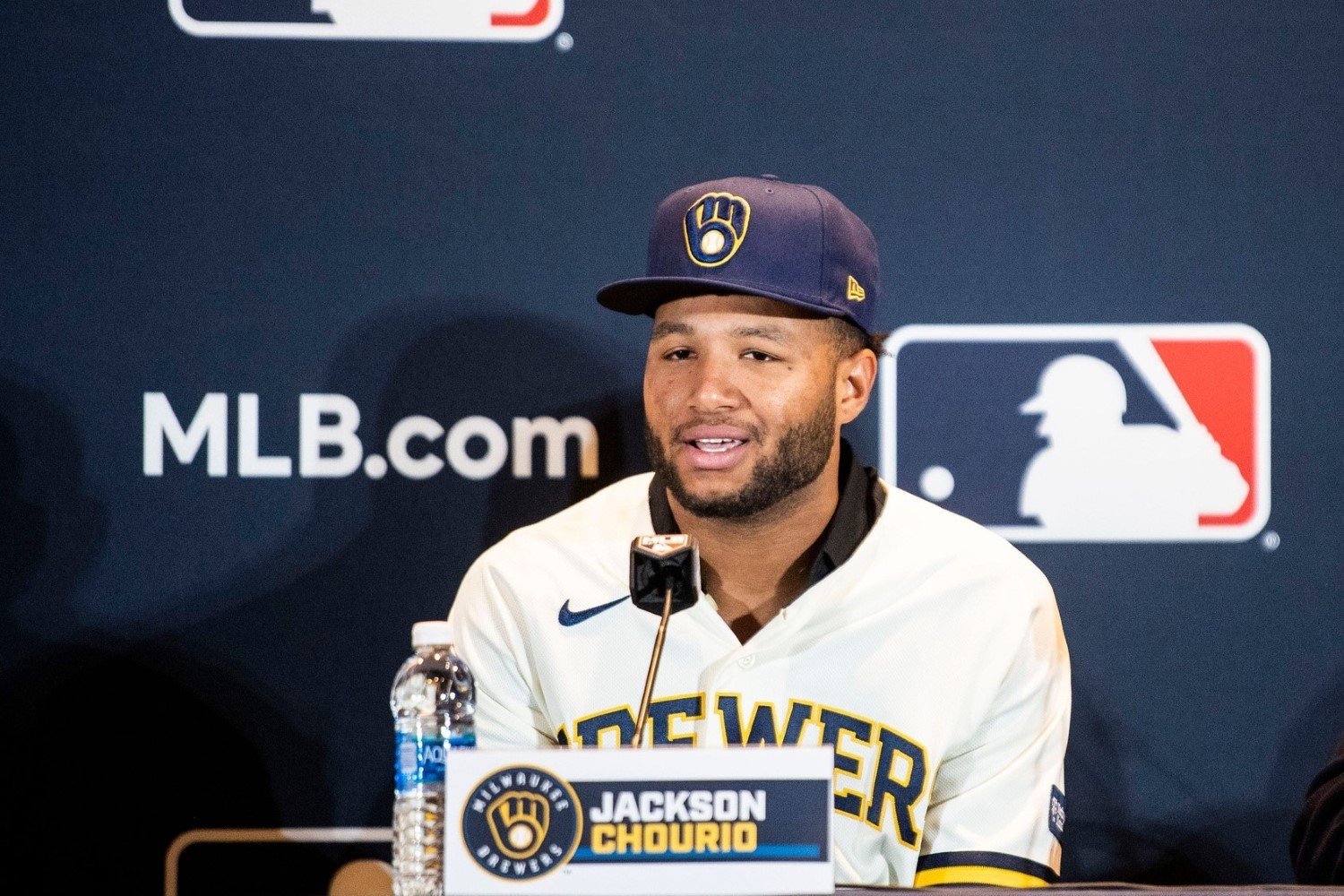 Jackson Chourio has been the crown jewel of the Brewers system almost since he signed as an international free agent in 2021. After performing exceptionally up through Double A, he signed a landmark eight-year, $82 million contract that set a new record for the largest ever given to a player yet to make his major-league debut. If he was ranked the sixth-best prospect in the game despite all of the hype, who were the five players above him? It’s comes as no surprise that BP’s top-ranked prospect was Jackson Holliday, Baltimore’s first overall pick from the 2022 draft. He rocketed through the minor leagues last year, going from Single A to Triple A within the span of just one season and posting impressive numbers the entire way. He’s also ranked first by MLB.com, and comes from an impressive baseball family, so it’s not a controversial take to say that he deserved the top spot. No. 2 man Wyatt Langford has yet to receive his call-up, but that’s not to say that he won't soon be ready, as he posted a cumulative 1.157 OPS across four levels of the minor leagues in 2023--all in an incredibly short amount of time, after being drafted out of Florida in July. In the Heat Check Prospect Podcast, BP senior prospect writer Jarrett Seidler even mentioned possibly bumping Langford to the top spot over Holliday. He praised Langford for having some of the best high-end exit velocities, great contact ability, and decent swing decisions, and only voiced concern over his questionable defense. It was noted that Langford is considered by some to be a plus center fielder, while others are already relegating him to be a career designated hitter. Third-ranked Junior Caminero, from the Rays organization, was another potential dark-horse candidate to be ranked as the top prospect, as Seidler discussed his impressive TrackMan batted-ball data, having high-end exit velocities even slightly better than Langford. Seidler even went so far as to say that Jackson Chourio doesn’t do anything demonstrably better than Caminero. BP lead prospect writer Jeffrey Paternostro agreed that while Holliday is still currently the best prospect, Caminero has the highest ceiling of all 101 prospects on the list. When it comes to Chourio, Seidler noted that while he did make big improvements at the plate, namely hitting for contact and hitting for power, he still has plate discipline issues and has produced offensive numbers that are a level below the likes of the aforementioned Holliday, Langford and Caminero. Despite this, Seidler personally felt that Chourio was deserving of the fourth spot, putting him above Evan Carter of the Rangers and Dylan Crews of the Nationals. Chourio spent the vast majority of 2023 in Double A and slashed .280/.336/.467. Those are respectable numbers, but nothing to write home about. His speed remains one of his top tools, as he stole 43 bases and played excellent, rangy defense, but his bat still leaves a bit to be desired. Nonetheless, he’s still just 19 years old and a No. 6 ranking isn’t bad, especially given the stiff competition at the top. It might be lower than some fans were expecting, but it’s still higher than notable prospects Paul Skenes (9), Ethan Salas (12), and Pete Crow-Armstrong (20). Chourio has his best years ahead of him and it will be exciting to see him grow into his role as the new face of the Brewers franchise. For $82 million before he's even taken the field, you want a superstar, but ranking sixth in this particular collection of top prospects--with an unusual mix, among them, of upside and high-level track record--is less of a knock than it might seem to be, or than it would be in another year. How do you feel about BP’s ranking of Chourio? Should he have been higher or lower?
 -
How do Dan Szymborski and his trusty computer program estimate the Brewers will perform in 2024? Image courtesy of © Charles LeClaire-USA TODAY Sports How do Dan Szymborski and his trusty computer program estimate the Brewers will perform in 2024? ZiPS is one of the most comprehensive projection systems in baseball, and has been around for 20 years for good reason. Unlike your uncle at Thanksgiving, ZiPS takes in an immense amount of quantitative information from a window of several years, weighing the data from more recent years more heavily than older data. Using this data, it seeks to estimate a given player’s baseline expectation and where they might be in the near future. Here’s how it thinks each part of the Milwaukee Brewers team (as it currently stands) will do in the upcoming season. Lineup ZiPS paints a rather dismal picture for the Crew's crop of position players, and perhaps that shouldn’t be surprising. In 2023, Milwaukee was 23rd in batting average, 25th in slugging percentage, and 23rd in OPS. They were also 24th in wRC+, at just 92, the lowest out of any team that made the postseason (the Marlins were 20th with a wRC+ of 94). Since then, the Brewers haven’t signed or traded for any players one might deem to be an impact bat (Eric Haase and his 45 OPS+ may prove me wrong) and have lost two of their best hitters. Mark Canha and Carlos Santana were third and fourth on the team in terms of OPS+, at 120 and 109, respectively, with Canha going to the Tigers and Santana still an unsigned free agent. The only position players ZiPS projects will be worth more than 2.0 fWAR are William Contreras and, interestingly enough, Willy Adames. It makes sense for Contreras to be where he’s at, and a projected fWAR of 3.1 seems conservative, given his excellent 2023 mark of 5.4 fWAR. Adames is pegged to slash .250/.328/.465, an improvement over last year’s slash line of .217/.310/.407. He did have the lowest wRC+ of his career, at 94, and was potentially hampered by the concussion he suffered in late May, so maybe ZiPS is correct to be optimistic about his future. Another interesting character is Jackson Chourio. Szymborski points out that he has immense long-term value but is projected to take some time to warm up before he reaches his final form. He and the other outfielders, Sal Frelick and Christian Yelich, are all around the 1.7 fWAR mark, with Yelich being the only one with a forecasted OPS+ north of 100. Unsurprisingly, first base and DH are the weakest positions on the field, due to Jake Bauers currently occupying the top spot on the depth chart and DH responsibilities being split among a few outfielders and a catcher. There are still a few bats available on the open market, but many of the needle-movers (like Rhys Hoskins, JD Martinez and Jorge Soler) may be too expensive for the Brewers’ tight purse strings. Rotation As much as ZiPS dislikes the lineup, it loves the rotation. Corbin Burnes is projected to be one of the best starting pitchers in baseball despite a slightly diminished performance in 2023, and is expected to post an ERA of 3.32 and an fWAR of 3.9. Freddy Peralta has similarly strong projections, at a 3.86 ERA and an fWAR of 2.6. Wade Miley and Colin Rea are expected to be consistent starters in the third and fourth spots in the rotation, with the fifth spot probably being split between Robert Gasser, Aaron Ashby, and Joe Ross. With the exception of Ross, each name on the starting rotation has the potential to reach an ERA below 4.00 in the 80th-percentile situation, which should speak to the raw upside of the current arms on the Brewers staff. ZiPS is also enthusiastic about what Coleman Crow can do. Assuming a smooth return from his recent Tommy John surgery, he's an intriguing piece of the puzzle. Since Milwaukee gave up Adrian Houser and Tyrone Taylor to get him, they hope he’ll pay off in the long run, but is already slated for a 4.26 ERA and 1.3 fWAR. Bullpen ZiPS is projecting four relievers to have an ERA under four: Devin Williams (3.00), Abner Uribe (3.74), Hoby Milner (3.88), and Trevor Megill (3.47). Joel Payamps is close, at 4.02, and Bryse Wilson’s slightly higher estimated 4.34 ERA is partially due to the system assuming a few starts/longer relief appearances out of him. It’s still one of the best and most versatile relief units in the sport of baseball and an essential component of the Brewers’ pitching- and defense-focused strategy. Overall, the team is projected to accumulate a win total somewhere in the mid-80s, which may not be enough to seize the top spot in the division given the other moves made by their rivals. However, there is still a bit of offseason left for the team to make some big moves, and who knows? Maybe there are still some positive surprises and breakout seasons to be had. What jumped out to you in the Brewers' ZiPS projections? Who do you think will outperform their forecasts, and who's due to underwhelm? Join the conversation! View full article
-
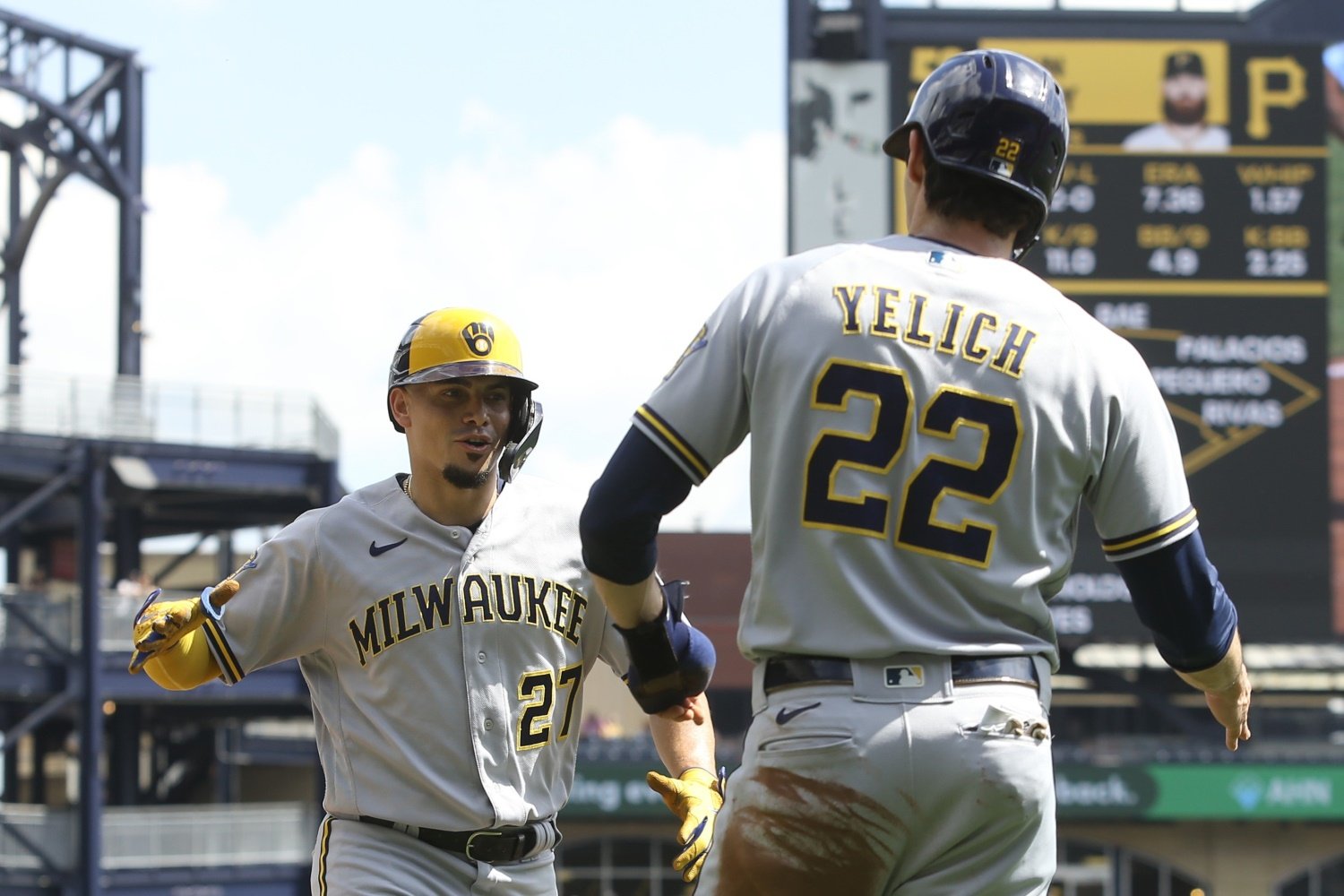 ZiPS is one of the most comprehensive projection systems in baseball, and has been around for 20 years for good reason. Unlike your uncle at Thanksgiving, ZiPS takes in an immense amount of quantitative information from a window of several years, weighing the data from more recent years more heavily than older data. Using this data, it seeks to estimate a given player’s baseline expectation and where they might be in the near future. Here’s how it thinks each part of the Milwaukee Brewers team (as it currently stands) will do in the upcoming season. Lineup ZiPS paints a rather dismal picture for the Crew's crop of position players, and perhaps that shouldn’t be surprising. In 2023, Milwaukee was 23rd in batting average, 25th in slugging percentage, and 23rd in OPS. They were also 24th in wRC+, at just 92, the lowest out of any team that made the postseason (the Marlins were 20th with a wRC+ of 94). Since then, the Brewers haven’t signed or traded for any players one might deem to be an impact bat (Eric Haase and his 45 OPS+ may prove me wrong) and have lost two of their best hitters. Mark Canha and Carlos Santana were third and fourth on the team in terms of OPS+, at 120 and 109, respectively, with Canha going to the Tigers and Santana still an unsigned free agent. The only position players ZiPS projects will be worth more than 2.0 fWAR are William Contreras and, interestingly enough, Willy Adames. It makes sense for Contreras to be where he’s at, and a projected fWAR of 3.1 seems conservative, given his excellent 2023 mark of 5.4 fWAR. Adames is pegged to slash .250/.328/.465, an improvement over last year’s slash line of .217/.310/.407. He did have the lowest wRC+ of his career, at 94, and was potentially hampered by the concussion he suffered in late May, so maybe ZiPS is correct to be optimistic about his future. Another interesting character is Jackson Chourio. Szymborski points out that he has immense long-term value but is projected to take some time to warm up before he reaches his final form. He and the other outfielders, Sal Frelick and Christian Yelich, are all around the 1.7 fWAR mark, with Yelich being the only one with a forecasted OPS+ north of 100. Unsurprisingly, first base and DH are the weakest positions on the field, due to Jake Bauers currently occupying the top spot on the depth chart and DH responsibilities being split among a few outfielders and a catcher. There are still a few bats available on the open market, but many of the needle-movers (like Rhys Hoskins, JD Martinez and Jorge Soler) may be too expensive for the Brewers’ tight purse strings. Rotation As much as ZiPS dislikes the lineup, it loves the rotation. Corbin Burnes is projected to be one of the best starting pitchers in baseball despite a slightly diminished performance in 2023, and is expected to post an ERA of 3.32 and an fWAR of 3.9. Freddy Peralta has similarly strong projections, at a 3.86 ERA and an fWAR of 2.6. Wade Miley and Colin Rea are expected to be consistent starters in the third and fourth spots in the rotation, with the fifth spot probably being split between Robert Gasser, Aaron Ashby, and Joe Ross. With the exception of Ross, each name on the starting rotation has the potential to reach an ERA below 4.00 in the 80th-percentile situation, which should speak to the raw upside of the current arms on the Brewers staff. ZiPS is also enthusiastic about what Coleman Crow can do. Assuming a smooth return from his recent Tommy John surgery, he's an intriguing piece of the puzzle. Since Milwaukee gave up Adrian Houser and Tyrone Taylor to get him, they hope he’ll pay off in the long run, but is already slated for a 4.26 ERA and 1.3 fWAR. Bullpen ZiPS is projecting four relievers to have an ERA under four: Devin Williams (3.00), Abner Uribe (3.74), Hoby Milner (3.88), and Trevor Megill (3.47). Joel Payamps is close, at 4.02, and Bryse Wilson’s slightly higher estimated 4.34 ERA is partially due to the system assuming a few starts/longer relief appearances out of him. It’s still one of the best and most versatile relief units in the sport of baseball and an essential component of the Brewers’ pitching- and defense-focused strategy. Overall, the team is projected to accumulate a win total somewhere in the mid-80s, which may not be enough to seize the top spot in the division given the other moves made by their rivals. However, there is still a bit of offseason left for the team to make some big moves, and who knows? Maybe there are still some positive surprises and breakout seasons to be had. What jumped out to you in the Brewers' ZiPS projections? Who do you think will outperform their forecasts, and who's due to underwhelm? Join the conversation!
 -
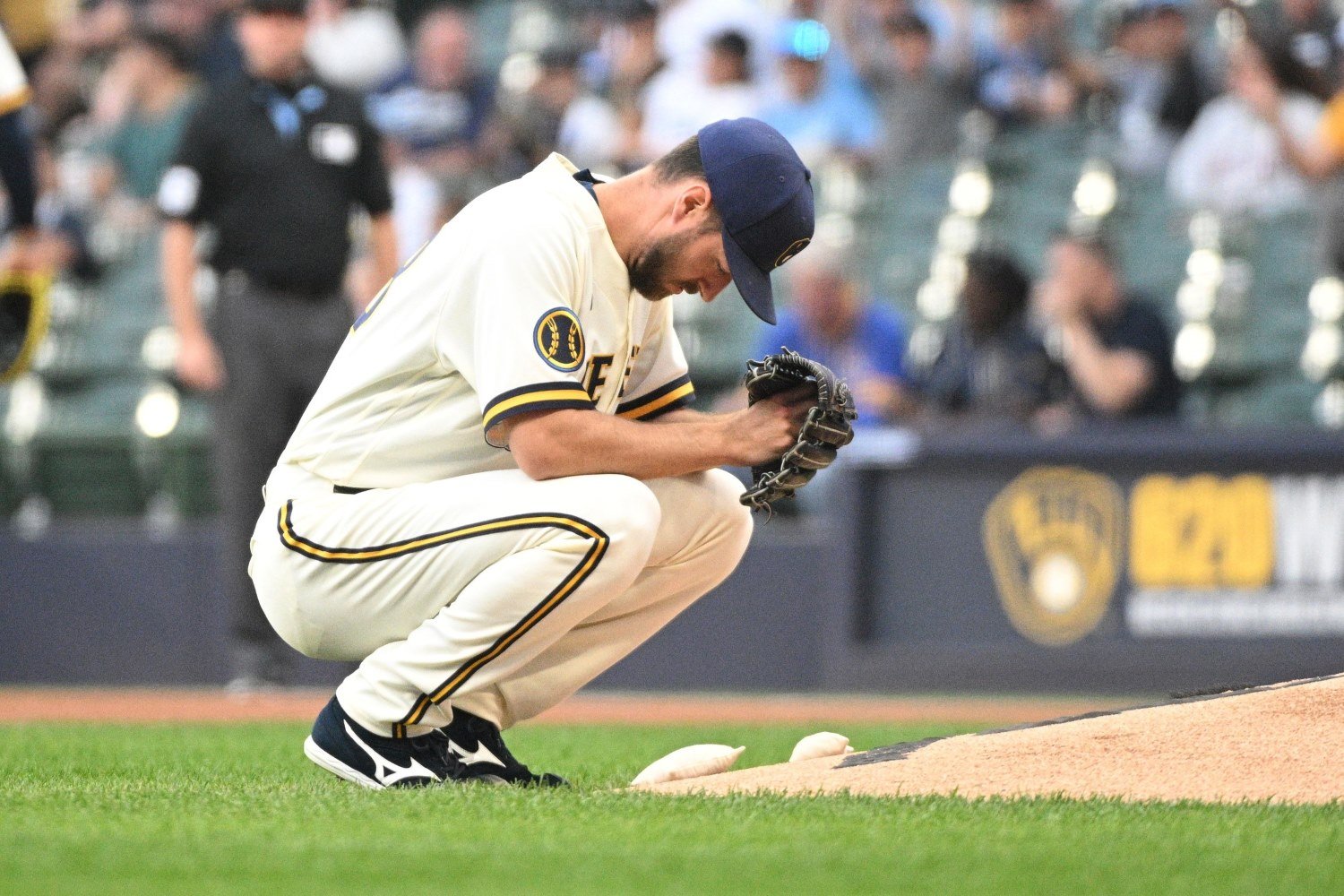 It's been a strange offseason, so far. On that much we can all agree. Our question here is, should we be worried about that? For a conciliatory and hopeful take, check out Ryan Pollak's piece earlier this morning. Me? I'm less sanguine. Milwaukee hasn’t been entirely silent, but the few major-league roster additions the organization has made have been: Signing Colin Rea to a one-year deal Bringing back Wade Miley on a one-year deal Signing free agent RHP Joe Ross, who hasn’t pitched in MLB since 2021 and is coming off of his second Tommy John surgery Acquiring LHP Bryan Hudson from the Dodgers in exchange for LHP Justin Chambers, an 18-year old prospect drafted in 2023, and a player to be named later or cash Sure, they also gave Jackson Chourio a monumental extension and added him and Bradley Blalock to the 40-man roster, but compared to what their division rivals in Cincinnati and St. Louis have done, the lack of subsequent moves is concerning. Furthermore, Hudson took the 39th spot on the 40-man roster, so the team doesn’t have much room for new faces without having to say goodbye to some old ones. The Brewers were never going to be mentioned as being “strongly interested” in the premium names like Shohei Ohtani, Yoshinobu Yamamoto, or Jung Hoo Lee, but there was hope that they’d be in the running for some of the cheaper (yet still effective) bats like Mitch Garver or Jeimer Candelario. In reality, they’ve yet to acquire a single position player at the major-league level, let alone an impactful one. For a team who’s won their division three times in the past six years and come in second twice in the same span, one could make the argument that they don’t need to get any better to remain ahead of their peers. Unfortunately, the other teams have seemingly had enough of being underdogs. The Reds signed Jeimer Candelario, Nick Martinez, Frankie Montas, and Emilio Pagan The Pirates signed Martin Perez and Rowdy Tellez, traded for Marco Gonzales, and re-signed Andrew McCutchen The Cardinals signed Sonny Gray, Kyle Gibson, and Lance Lynn After being one of the final few in the Shohei Sweepstakes, the Cubs ultimately struck out and are yet to sign any free agents, but are reportedly pursuing Shota Imanaga and Matt Chapman With a nine-game lead over their closest division competitor in 2023, Milwaukee is a step ahead of the rest, even with these moves. However, with the losses of Brandon Woodruff, Mark Canha, and Carlos Santana, their competition hasn't just gotten better. The Crew themselves have arguably gotten worse. The Brewers are allegedly in hot pursuit of bringing back Santana, but if a nearly-38-year-old first baseman is poised to be the biggest signing of the winter, it’s probably not going to be a great year. Additionally, it still wouldn’t be an improvement over last season’s roster. As many trick-or-treaters know, most of the good stuff is already taken if you get started too late. While there are still a handful of notable names available (Marcus Stroman, Joc Pederson, Blake Snell, and Cody Bellinger, to name a few), the Brewers’ front office doesn’t seem to be interested in any of them. They really don’t seem interested in anyone under the age of 37. Maybe they end up trading Corbin Burnes, Devin Williams, and/or Willy Adames, but there hasn’t been much active discussion about those moves, either. If the team starts the 2024 season with their roster as is, they may not be the kings of the NL Central much longer. The troubling thing, here, is that the team hasn't committed to a direction at all. Trading Houser and Taylor seemed to suggest one direction; acquiring Hudson at the cost of a 2023 draftee seems to suggest another. It's very hard to assign a coherent narrative to this team's winter. They haven't gotten cheaper. They haven't maximized future value. They also haven't gotten better or maximized present value. They seem adrift, and given the ticking clock on Burnes and Adames, that's terrifying. Do you think the Brewers have done enough to be competitive postseason competitors next year? What are some other names the team can realistically pursue?
- 18 comments
-
- 3
-

-
- adrian houser
- tyrone taylor
- (and 1 more)
-
In an offseason filled with intrigue, marquee transactions, and mistaken private flights, one team has yet to significantly move the needle in a positive direction. With things as they are, will the Brewers even be serious contenders in 2024? Image courtesy of © Michael McLoone-USA TODAY Sports In an offseason filled with intrigue, marquee transactions, and mistaken private flights, one team has yet to significantly move the needle in a positive direction. With things as they are, will the Brewers even be serious contenders in 2024? It's been a strange offseason, so far. On that much we can all agree. Our question here is, should we be worried about that? For a conciliatory and hopeful take, check out Ryan Pollak's piece earlier this morning. Me? I'm less sanguine. Milwaukee hasn’t been entirely silent, but the few major-league roster additions the organization has made have been: Signing Colin Rea to a one-year deal Bringing back Wade Miley on a one-year deal Signing free agent RHP Joe Ross, who hasn’t pitched in MLB since 2021 and is coming off of his second Tommy John surgery Acquiring LHP Bryan Hudson from the Dodgers in exchange for LHP Justin Chambers, an 18-year old prospect drafted in 2023, and a player to be named later or cash Sure, they also gave Jackson Chourio a monumental extension and added him and Bradley Blalock to the 40-man roster, but compared to what their division rivals in Cincinnati and St. Louis have done, the lack of subsequent moves is concerning. Furthermore, Hudson took the 39th spot on the 40-man roster, so the team doesn’t have much room for new faces without having to say goodbye to some old ones. The Brewers were never going to be mentioned as being “strongly interested” in the premium names like Shohei Ohtani, Yoshinobu Yamamoto, or Jung Hoo Lee, but there was hope that they’d be in the running for some of the cheaper (yet still effective) bats like Mitch Garver or Jeimer Candelario. In reality, they’ve yet to acquire a single position player at the major-league level, let alone an impactful one. For a team who’s won their division three times in the past six years and come in second twice in the same span, one could make the argument that they don’t need to get any better to remain ahead of their peers. Unfortunately, the other teams have seemingly had enough of being underdogs. The Reds signed Jeimer Candelario, Nick Martinez, Frankie Montas, and Emilio Pagan The Pirates signed Martin Perez and Rowdy Tellez, traded for Marco Gonzales, and re-signed Andrew McCutchen The Cardinals signed Sonny Gray, Kyle Gibson, and Lance Lynn After being one of the final few in the Shohei Sweepstakes, the Cubs ultimately struck out and are yet to sign any free agents, but are reportedly pursuing Shota Imanaga and Matt Chapman With a nine-game lead over their closest division competitor in 2023, Milwaukee is a step ahead of the rest, even with these moves. However, with the losses of Brandon Woodruff, Mark Canha, and Carlos Santana, their competition hasn't just gotten better. The Crew themselves have arguably gotten worse. The Brewers are allegedly in hot pursuit of bringing back Santana, but if a nearly-38-year-old first baseman is poised to be the biggest signing of the winter, it’s probably not going to be a great year. Additionally, it still wouldn’t be an improvement over last season’s roster. As many trick-or-treaters know, most of the good stuff is already taken if you get started too late. While there are still a handful of notable names available (Marcus Stroman, Joc Pederson, Blake Snell, and Cody Bellinger, to name a few), the Brewers’ front office doesn’t seem to be interested in any of them. They really don’t seem interested in anyone under the age of 37. Maybe they end up trading Corbin Burnes, Devin Williams, and/or Willy Adames, but there hasn’t been much active discussion about those moves, either. If the team starts the 2024 season with their roster as is, they may not be the kings of the NL Central much longer. The troubling thing, here, is that the team hasn't committed to a direction at all. Trading Houser and Taylor seemed to suggest one direction; acquiring Hudson at the cost of a 2023 draftee seems to suggest another. It's very hard to assign a coherent narrative to this team's winter. They haven't gotten cheaper. They haven't maximized future value. They also haven't gotten better or maximized present value. They seem adrift, and given the ticking clock on Burnes and Adames, that's terrifying. Do you think the Brewers have done enough to be competitive postseason competitors next year? What are some other names the team can realistically pursue? View full article
-
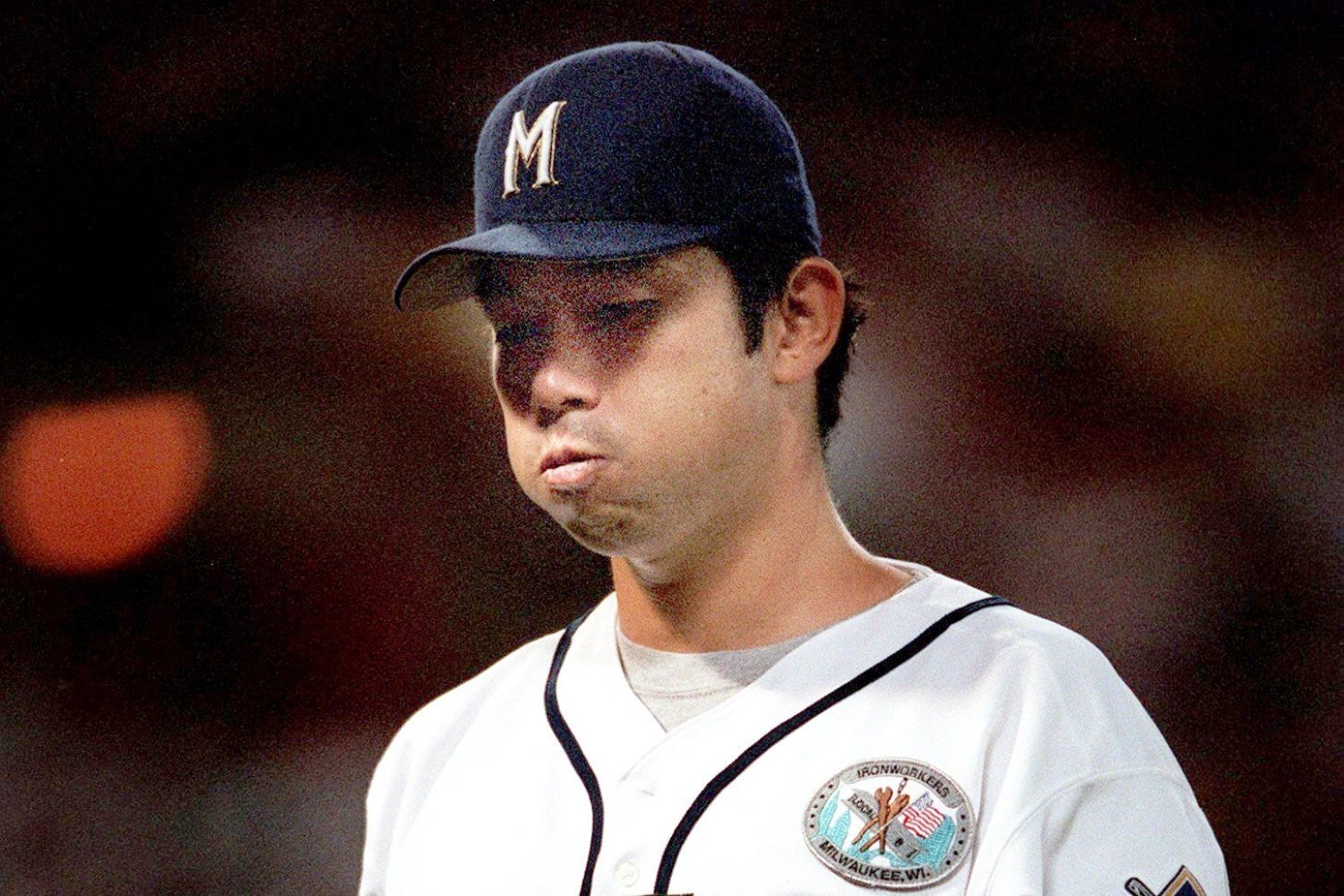 With Shohei Ohtani’s record-breaking free agency contract still the hottest piece of discussion within the baseball zeitgeist, it can be easy to forget the man who opened the door for future Japanese MLB players. Let's defy that temptation. Hideo Nomo signed with the Los Angeles Dodgers in 1995, becoming the first Japanese-born player to pursue a long-term career in American baseball. Known for his vexing “tornado-style” delivery, he pitched spectacularly in his rookie year, posting a 2.54 ERA over 191 ⅓ innings, winning the NL Rookie of the Year Award, and placing fourth in Cy Young voting. He also pitched four complete games and three shutouts, led the NL in strikeouts (236) and strikeouts per nine innings (11.1), and led MLB in hits per nine frames with 5.8. He continued his success in 1996, again placing fourth in Cy Young voting and somehow throwing a no-hitter in Coors Field. He's still the only player to do so. As batters gradually became familiar with his funky delivery, his performance gradually declined. In 1997 and 1998, his performance slipped to below-average, and seeing their window of opportunity closing, the Dodgers traded him to the Mets--who released him on the eve of Opening Day, 1999. Nomo signed with the Cubs just a few days later, but they didn't elect to bring him up. Instead, they cut him loose again, this time in late April. As a last-ditch effort to resurrect what was an immensely promising career just a few years earlier, Nomo signed with the Brewers. While many believed that he was absolutely done, Milwaukee didn’t really have much to lose. Long-time fans know that the Brewers of the late 1990s and early 2000s were far from World Series contenders. They were actually experiencing a years-long playoff drought. That ‘99 team was definitely one of the worst teams in MLB, posting a 74-87 record and placing dead last in their division. In fact, an LA Times article published on April 30, 1999 said, "The pitching-thin Brewers are believed to be the only team willing to guarantee Nomo big league starts." Despite his diminished abilities, he was actually the fifth-most valuable member of the team by rWAR, accumulating 2.4. He recorded a 4.54 ERA and 1.42 WHIP over 176 ⅓ innings, which wasn’t spectacular by any means, but he did manage to record his 1,000th career strikeout while a Brewer, becoming the third-fastest player to do so. This, alone, earns him his spot on the Brewers Mount Rushmore, alongside fellow legends Robin Yount, Paul Molitor, and Nyjer Morgan Tony Plush. While his lone season with the team was productive, he wasn’t able to re-sign due to contract disputes, a recurring theme throughout his career. Nonetheless, he continued to make history, throwing his second no-hitter while on the Boston Red Sox in 2001, becoming the fourth man to throw a no-hitter in both leagues. He also led the AL in strikeouts and strikeout rate that year, the first time he had done so since his rookie showing. Nomo’s decision to leave home and bring his novel flavor of Japanese baseball would inspire future superstars like Ichiro Suzuki, Daisuke Matsuzaka, and Hideki Matsui to follow a similar path, each leaving their own unique marks on the sport. While you’d be hard pressed to find people that own his jersey or even remember his time with the Brew Crew, it’s groovy to think that the Brewers had such an important figure on their team, one whose impact is still felt today. Oh yeah, he also hit an absolute moonshot against the Brewers one time, so maybe he doesn't belong on the Mount Rushmore.
 -
Hideo Nomo is an important, sometimes misunderstood figure in baseball history. While he’s most often remembered for his time with the Dodgers, he also had a productive year with an equally fun and even more popular team: the Milwaukee Brewers. Image courtesy of © Milwaukee Journal Sentinel files, Milwaukee Journal Sentinel via Imagn Content Services, LLC Hideo Nomo is an important, sometimes misunderstood figure in baseball history. While he’s most often remembered for his time with the Dodgers, he also had a productive year with an equally fun and even more popular team: the Milwaukee Brewers. With Shohei Ohtani’s record-breaking free agency contract still the hottest piece of discussion within the baseball zeitgeist, it can be easy to forget the man who opened the door for future Japanese MLB players. Let's defy that temptation. Hideo Nomo signed with the Los Angeles Dodgers in 1995, becoming the first Japanese-born player to pursue a long-term career in American baseball. Known for his vexing “tornado-style” delivery, he pitched spectacularly in his rookie year, posting a 2.54 ERA over 191 ⅓ innings, winning the NL Rookie of the Year Award, and placing fourth in Cy Young voting. He also pitched four complete games and three shutouts, led the NL in strikeouts (236) and strikeouts per nine innings (11.1), and led MLB in hits per nine frames with 5.8. He continued his success in 1996, again placing fourth in Cy Young voting and somehow throwing a no-hitter in Coors Field. He's still the only player to do so. As batters gradually became familiar with his funky delivery, his performance gradually declined. In 1997 and 1998, his performance slipped to below-average, and seeing their window of opportunity closing, the Dodgers traded him to the Mets--who released him on the eve of Opening Day, 1999. Nomo signed with the Cubs just a few days later, but they didn't elect to bring him up. Instead, they cut him loose again, this time in late April. As a last-ditch effort to resurrect what was an immensely promising career just a few years earlier, Nomo signed with the Brewers. While many believed that he was absolutely done, Milwaukee didn’t really have much to lose. Long-time fans know that the Brewers of the late 1990s and early 2000s were far from World Series contenders. They were actually experiencing a years-long playoff drought. That ‘99 team was definitely one of the worst teams in MLB, posting a 74-87 record and placing dead last in their division. In fact, an LA Times article published on April 30, 1999 said, "The pitching-thin Brewers are believed to be the only team willing to guarantee Nomo big league starts." Despite his diminished abilities, he was actually the fifth-most valuable member of the team by rWAR, accumulating 2.4. He recorded a 4.54 ERA and 1.42 WHIP over 176 ⅓ innings, which wasn’t spectacular by any means, but he did manage to record his 1,000th career strikeout while a Brewer, becoming the third-fastest player to do so. This, alone, earns him his spot on the Brewers Mount Rushmore, alongside fellow legends Robin Yount, Paul Molitor, and Nyjer Morgan Tony Plush. While his lone season with the team was productive, he wasn’t able to re-sign due to contract disputes, a recurring theme throughout his career. Nonetheless, he continued to make history, throwing his second no-hitter while on the Boston Red Sox in 2001, becoming the fourth man to throw a no-hitter in both leagues. He also led the AL in strikeouts and strikeout rate that year, the first time he had done so since his rookie showing. Nomo’s decision to leave home and bring his novel flavor of Japanese baseball would inspire future superstars like Ichiro Suzuki, Daisuke Matsuzaka, and Hideki Matsui to follow a similar path, each leaving their own unique marks on the sport. While you’d be hard pressed to find people that own his jersey or even remember his time with the Brew Crew, it’s groovy to think that the Brewers had such an important figure on their team, one whose impact is still felt today. Oh yeah, he also hit an absolute moonshot against the Brewers one time, so maybe he doesn't belong on the Mount Rushmore. View full article
-
The Brewers Rotation As It Stands Today, In Flux
Jason Wang replied to Jason Wang's topic in Brewer Fanatic Front Page News
Flexen is an interesting callout. He has struggled a lot over the past two years and even though he came up as a starter, I don't think he has the stamina to maintain it. Maybe the Brewers could fix him and get him back to his 2021 form? Who knows. -
we should just ask josh donaldson which of his former teammates are worth taking.
-
With Brandon Woodruff and Adrian Houser now on different paths, how do their replacements shake up the existing starter soup? Image courtesy of © MARK HOFFMAN/MILWAUKEE JOURNAL SENTINEL / USA TODAY NETWORK With Brandon Woodruff and Adrian Houser now on different paths, how do their replacements shake up the existing starter soup? Assuming he isn’t traded at any point, trusty steed Corbin Burnes will remain the team’s ace, but the second spot in the rotation is where we see our first major change. Following surgery to repair his right shoulder and an estimated recovery timeline of nearly a full year, Brandon Woodruff was non-tendered, and replacing him is no easy task. Over the past seven years and 115 starts with the team, he averaged a 3.10 ERA and 1.05 WHIP, along with 10.4 strikeouts per nine innings, to establish his reputation as one of baseball's most intimidating power pitchers. With Woodruff gone, Freddy Peralta has taken the second spot in the rotation. He profiles similarly to Woodruff, averaging 11.6 SO/9 over his six-year career with a particularly potent four-seam fastball. However, he has yet to achieve the same peak performance over an entire season other than his 2021 All-Star campaign. He has also been known to hit extended stretches of inconsistent performance, so depending on him to make up for what was lost in Woodruff’s departure is likely a fool’s errand. Another major change in the rotation is the appearance of a new name, Joe Ross. A right-handed pitcher who most recently spent time in the Giants minor league system, he also spent six years at the major league level with the Nationals, averaging a 4.26 ERA over 76 starts and 443 ⅓ innings. He’s one of the unfortunate few to have received Tommy John surgery twice, once in 2017 and once in 2022. Since his first procedure six years ago, he has pitched more than 100 major-league innings in a season just once and hasn’t been able to crack the 100 ERA+ mark. 2023 was particularly interesting as he only pitched 14 innings across three levels of the minor leagues. He primarily depends on a sinker/slider combination with occasional four-seam fastballs and changeups sprinkled in. With a career SO/9 rate of just 8.2, he has depended more on soft contact, recording a fly-ball rate of 30.7% in his most recent major-league season two years ago. Because there have only been 17 innings of data since then, it’s hard to say what sort of pitcher the team will ultimately end up with. He may even come out of the bullpen in extended relief appearances, filling a void left by Adrian Houser, but he’s currently listed as a starter on the depth chart. He signed a one-year deal after an allegedly comprehensive physical exam to ensure the durability of his right elbow. The contract is for just $1.75 million with no options, so Milwaukee is treating this as a fun experiment more than anything else. At 30, he doesn’t have much flexibility or room for error, but there might be an undervalued arm buried underneath all those grafted tendons. Another new face that hasn’t yet been slotted in is Robert Gasser, the #5 ranked prospect in the Brewers system. Originally estimated to make his big league debut in 2023, it seems a matter of time before he gets called upon to pitch in Milwaukee. Last season, he pitched to a 3.79 ERA and 1.28 WHIP over 123 ⅓ innings with the Nashville Sounds. A crafty lefty, his fastball velocity sits in the low-90s, and his sweeper hovers in the low-80s. Wade Miley and Hoby Milner were the only long-term lefties on the team last year and were two of the best performers, which could be a great sign for Gasser. In a predominantly right-handed pitching staff, he could add some much-needed variety. He’s no Randy Johnson and still has much to improve, but he’ll be a useful arm at the back end of the rotation, likely taking up the final spot. A rotation of Corbin Burnes, Freddy Peralta, Wade Miley, Joe Ross, Colin Rea, and Robert Gasser doesn’t seem like the stuff of legend. Still, it’s important to remember that it isn’t too different from what was used last year. With Woodruff and Houser missing significant time due to injury, their replacements of Julio Teheran and Eric Lauer didn’t have Cy Young seasons. However, it was still enough for the team to have the sixth-best ERA for starters at 3.94. It's also important to factor in the organization's ability to develop pitching talent. The return haul for Adrian Houser and Tyrone Taylor was a man by the name of Coleman Crow. An intriguing prospect with a plus breaking ball package and a shared knack for torn ulnar collateral ligaments, he's likely seen as the next in a long line of excellent Wisconsin pitch lab products. Spencer Michaelis recently did a deeper dive on why the team was willing to give up so much to get him. This could mean better-than-expected results for some newer faces, especially Robert Gasser. As with all things in baseball, we won’t know how things will shake out until they happen. Maybe the team signs or acquires a new starting pitcher through trade before Opening Day. Maybe the team sells off Burnes to bolster its lineup. Either way, Milwaukee has consistently surpassed expectations even after fielding seemingly underwhelming rosters year after year. When faced with budgetless big-market teams like the Dodgers and the Yankees, they persevere. Like New York Mets (sic) legend Yogi Berra once said, “It ain’t over till it’s over.” How would you feel about the team's starting pitcher selection if the season started today? Are there any names that would be realistic additions to this squad? View full article
-
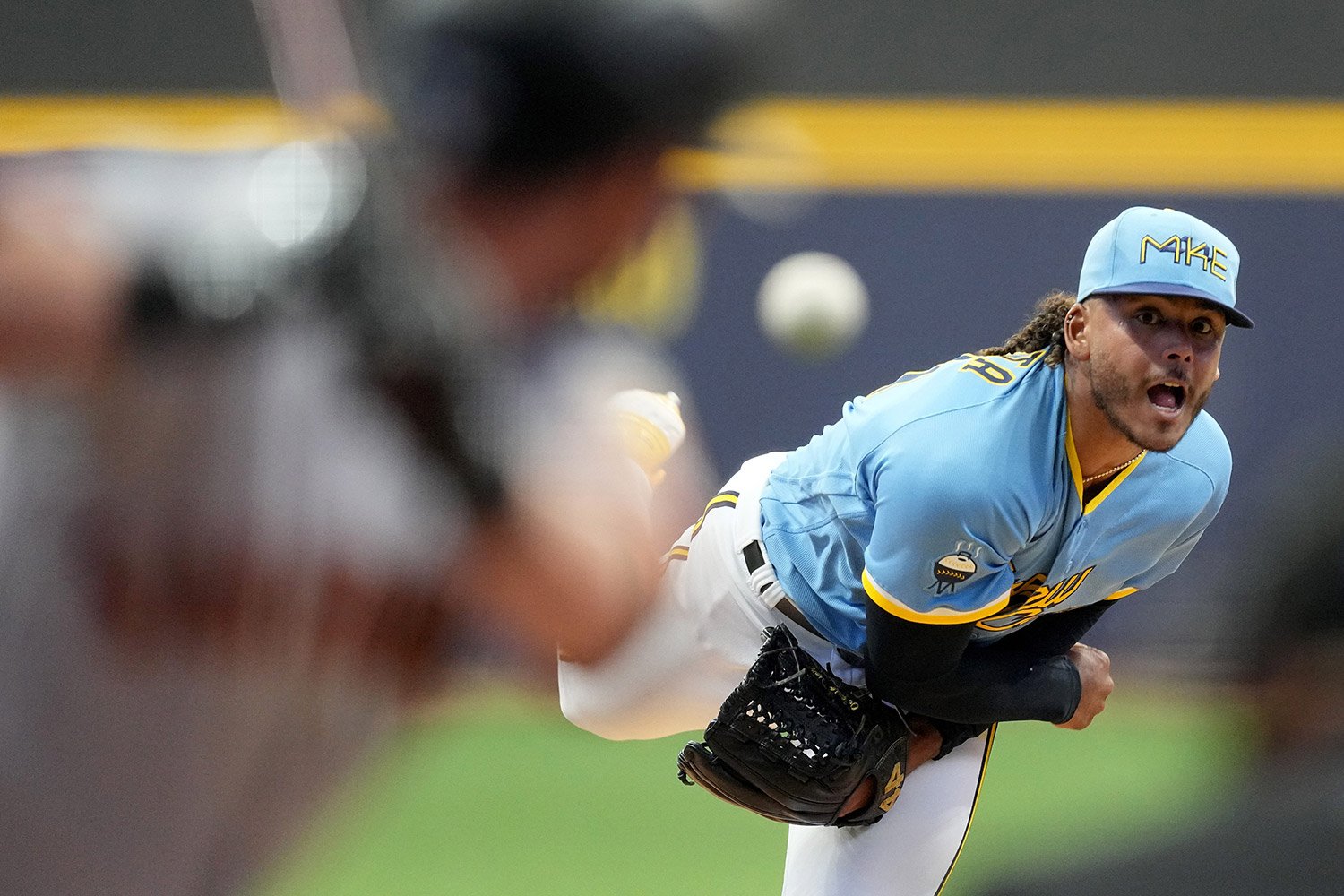 Assuming he isn’t traded at any point, trusty steed Corbin Burnes will remain the team’s ace, but the second spot in the rotation is where we see our first major change. Following surgery to repair his right shoulder and an estimated recovery timeline of nearly a full year, Brandon Woodruff was non-tendered, and replacing him is no easy task. Over the past seven years and 115 starts with the team, he averaged a 3.10 ERA and 1.05 WHIP, along with 10.4 strikeouts per nine innings, to establish his reputation as one of baseball's most intimidating power pitchers. With Woodruff gone, Freddy Peralta has taken the second spot in the rotation. He profiles similarly to Woodruff, averaging 11.6 SO/9 over his six-year career with a particularly potent four-seam fastball. However, he has yet to achieve the same peak performance over an entire season other than his 2021 All-Star campaign. He has also been known to hit extended stretches of inconsistent performance, so depending on him to make up for what was lost in Woodruff’s departure is likely a fool’s errand. Another major change in the rotation is the appearance of a new name, Joe Ross. A right-handed pitcher who most recently spent time in the Giants minor league system, he also spent six years at the major league level with the Nationals, averaging a 4.26 ERA over 76 starts and 443 ⅓ innings. He’s one of the unfortunate few to have received Tommy John surgery twice, once in 2017 and once in 2022. Since his first procedure six years ago, he has pitched more than 100 major-league innings in a season just once and hasn’t been able to crack the 100 ERA+ mark. 2023 was particularly interesting as he only pitched 14 innings across three levels of the minor leagues. He primarily depends on a sinker/slider combination with occasional four-seam fastballs and changeups sprinkled in. With a career SO/9 rate of just 8.2, he has depended more on soft contact, recording a fly-ball rate of 30.7% in his most recent major-league season two years ago. Because there have only been 17 innings of data since then, it’s hard to say what sort of pitcher the team will ultimately end up with. He may even come out of the bullpen in extended relief appearances, filling a void left by Adrian Houser, but he’s currently listed as a starter on the depth chart. He signed a one-year deal after an allegedly comprehensive physical exam to ensure the durability of his right elbow. The contract is for just $1.75 million with no options, so Milwaukee is treating this as a fun experiment more than anything else. At 30, he doesn’t have much flexibility or room for error, but there might be an undervalued arm buried underneath all those grafted tendons. Another new face that hasn’t yet been slotted in is Robert Gasser, the #5 ranked prospect in the Brewers system. Originally estimated to make his big league debut in 2023, it seems a matter of time before he gets called upon to pitch in Milwaukee. Last season, he pitched to a 3.79 ERA and 1.28 WHIP over 123 ⅓ innings with the Nashville Sounds. A crafty lefty, his fastball velocity sits in the low-90s, and his sweeper hovers in the low-80s. Wade Miley and Hoby Milner were the only long-term lefties on the team last year and were two of the best performers, which could be a great sign for Gasser. In a predominantly right-handed pitching staff, he could add some much-needed variety. He’s no Randy Johnson and still has much to improve, but he’ll be a useful arm at the back end of the rotation, likely taking up the final spot. A rotation of Corbin Burnes, Freddy Peralta, Wade Miley, Joe Ross, Colin Rea, and Robert Gasser doesn’t seem like the stuff of legend. Still, it’s important to remember that it isn’t too different from what was used last year. With Woodruff and Houser missing significant time due to injury, their replacements of Julio Teheran and Eric Lauer didn’t have Cy Young seasons. However, it was still enough for the team to have the sixth-best ERA for starters at 3.94. It's also important to factor in the organization's ability to develop pitching talent. The return haul for Adrian Houser and Tyrone Taylor was a man by the name of Coleman Crow. An intriguing prospect with a plus breaking ball package and a shared knack for torn ulnar collateral ligaments, he's likely seen as the next in a long line of excellent Wisconsin pitch lab products. Spencer Michaelis recently did a deeper dive on why the team was willing to give up so much to get him. This could mean better-than-expected results for some newer faces, especially Robert Gasser. As with all things in baseball, we won’t know how things will shake out until they happen. Maybe the team signs or acquires a new starting pitcher through trade before Opening Day. Maybe the team sells off Burnes to bolster its lineup. Either way, Milwaukee has consistently surpassed expectations even after fielding seemingly underwhelming rosters year after year. When faced with budgetless big-market teams like the Dodgers and the Yankees, they persevere. Like New York Mets (sic) legend Yogi Berra once said, “It ain’t over till it’s over.” How would you feel about the team's starting pitcher selection if the season started today? Are there any names that would be realistic additions to this squad?
 -
Yankees would be a super interesting spot and I could definitely see them wanting Burnes, even at a premium. We are talking about a team whose rotation is currently Gerrit Cole Carlos Rodon (about as stable as the Argentine Peso given his current injury situation) Nestor Cortes (not quite an Argentine Peso but still coming back from a major injury) Clarke Schmidt (really should be a reliever, only starts because lack of better options) Yoendrys Gomez (has only pitched at AA) With the Juan Soto acquisition, Verdugo and Grisham getting picked up to add depth to a formerly cringeworthy outfield, and a real effort (albeit a failed one) to seduce Yamamoto, I think the Evil Empire wants to be back so badly. The rotation is the last piece of the puzzle and Burnes would be a great fit, although I'm not really confident in a beardless Burnes.
-
short king hater smh. But also a very good point. He has been spending the vast majority of his time in the hot corner in the minor leagues anyways so it looks like he's going to end up there when he gets called up.
-
For sure. Given the moves made by other NL Central teams this year the Brewers are going to have to pursue a little more oomph if they wanna keep up.
-
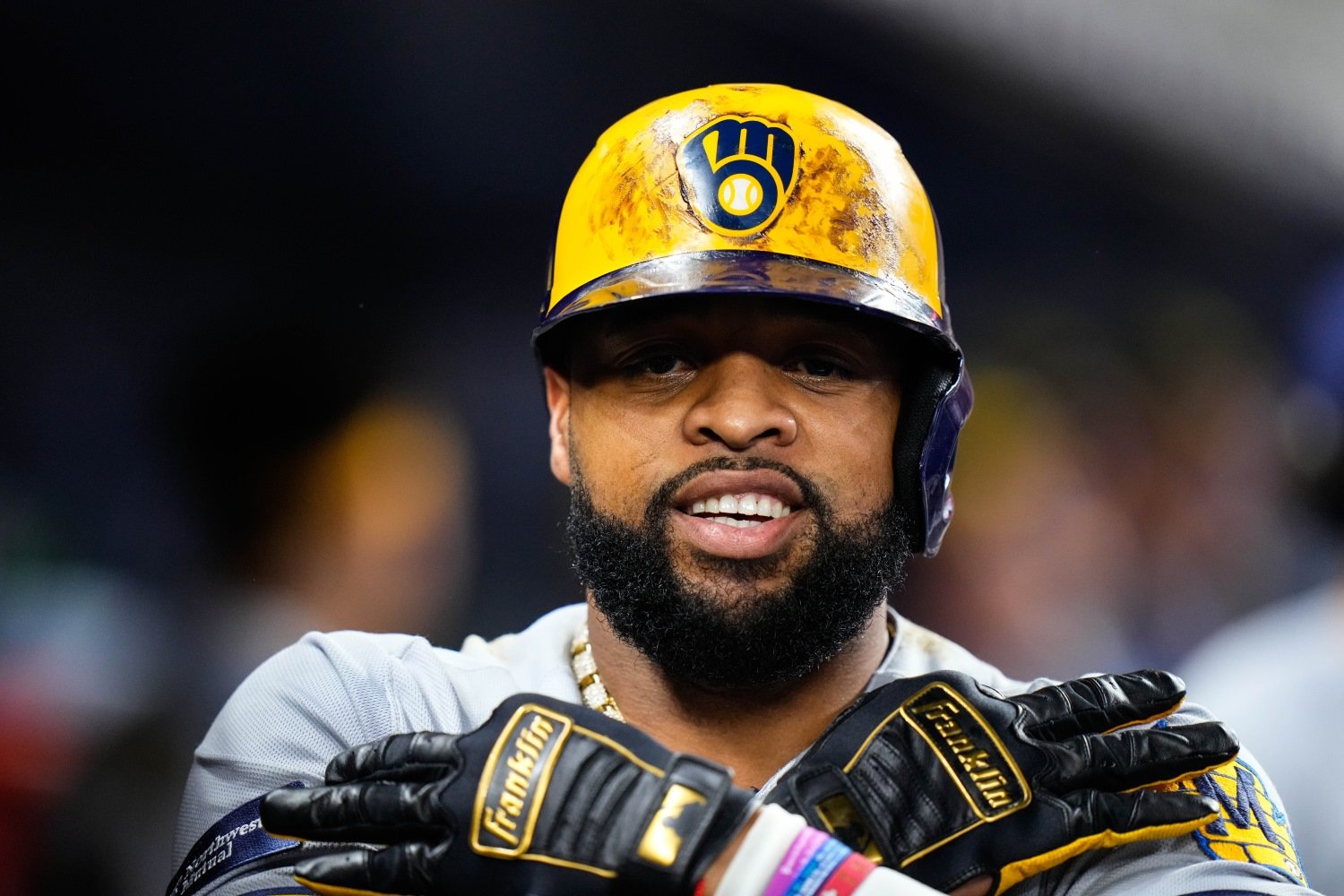 After hitting one of the coldest walk-off celebrations of the entire season, Carlos Santana was traded to the Brewers in exchange for shortstop prospect Jhonny Severino. Over his 226 plate appearances with the team, he slashed .249/.314/.459 for an OPS+ of 109. He was a huge offensive upgrade at first base. The team had tried trotting out all sorts of names, from Rowdy Tellez to Jon Singleton, but weren’t able to find stability until Santana’s arrival. Despite his nickname of “Slamtana,” his 2023 Baseball Savant profile frames him as more of a disciplined player who avoided strikeouts and drew walks, rather than aimed for the moon with every swing. His walk rate (10.5%), chase rate (24%), and strikeout rate (16.8%) were all in the top quartile among qualified hitters. He also managed to accumulate 2 Outs Above Average (OAA) and 11 Defensive Runs Saved (DRS)--impressive defensive figures, especially given his age. He lacked the power of his younger days in Cleveland, but he was a welcome addition to a team whose production at first base totaled just a .681 OPS, 28th in MLB and besting only the Royals and the Padres. More importantly, his evenly-matched splits against all pitchers helped compensate for another weakness the team had, which was hitting against righties, against whom they posted a .695 OPS, 26th in MLB. One of the main concerns with signing Santana is his age. He’ll be just a few days shy of 38 years old on Opening Day, and probably won’t be able to maintain above-average offensive production for very long, if at all. From 2010-2019, he averaged an impressive 121 OPS+ and received MVP votes in 2013 and 2019, while from 2020-2023, he averaged an OPS+ of just 94 across four different teams. His 2021 season with the Royals was particularly rough, as his .342 slugging percentage was the lowest for any season in his lengthy career. He managed to be on the wrong side of the Mendoza line with the Mariners in 2022. Nonetheless, the Brewers probably aren’t willing to take a risk on Rhys Hoskins returning to pre-injury form at an estimated cost of $36 million over two years, and there aren’t many younger, more capable free agents available. (Any Joey Gallo fans here?) Furthermore, unless the idea of Jake Bauers, Owen Miller, and Jahmai Jones tag-teaming first base outperforms all reasonable expectations, Santana could, at the very least, be a short-term holdover until more alluring names become available. Within the farm system, Wes Clarke is slated to make his debut sometime in 2024 and had a great showing in Double A last year (and, most recently, in the Arizona Fall League). He could be a longer-term option, but without any experience at Triple A yet, it's hard to tell how his skills will match up against higher-quality opposition. The team’s other top prospects are primarily pitchers and shortstops, with Luke Adams as the only other first-base prospect ranked in the top 30. He’s a ways away from the show, with an ETA of 2026, and has yet to even reach High A. Don’t expect him to fix all of the team’s problems and beat out the super-team Dodgers for the NL pennant in 2024, but a Santana signing could be a cheap and straightforward roster improvement heading into next year. Do you want to see a reunion between the Brewers and Santana? What price tag would make it unpalatable? Let's talk options.
 -
The Brewers have merely dipped their toes in the free-agent waters this offseason, and they still have plenty of gaps in their roster. Could one of their first moves be to reunite with an old friend? Image courtesy of © Rich Storry-USA TODAY Sports The Brewers have merely dipped their toes in the free-agent waters this offseason, and they still have plenty of gaps in their roster. Could one of their first moves be to reunite with an old friend? After hitting one of the coldest walk-off celebrations of the entire season, Carlos Santana was traded to the Brewers in exchange for shortstop prospect Jhonny Severino. Over his 226 plate appearances with the team, he slashed .249/.314/.459 for an OPS+ of 109. He was a huge offensive upgrade at first base. The team had tried trotting out all sorts of names, from Rowdy Tellez to Jon Singleton, but weren’t able to find stability until Santana’s arrival. Despite his nickname of “Slamtana,” his 2023 Baseball Savant profile frames him as more of a disciplined player who avoided strikeouts and drew walks, rather than aimed for the moon with every swing. His walk rate (10.5%), chase rate (24%), and strikeout rate (16.8%) were all in the top quartile among qualified hitters. He also managed to accumulate 2 Outs Above Average (OAA) and 11 Defensive Runs Saved (DRS)--impressive defensive figures, especially given his age. He lacked the power of his younger days in Cleveland, but he was a welcome addition to a team whose production at first base totaled just a .681 OPS, 28th in MLB and besting only the Royals and the Padres. More importantly, his evenly-matched splits against all pitchers helped compensate for another weakness the team had, which was hitting against righties, against whom they posted a .695 OPS, 26th in MLB. One of the main concerns with signing Santana is his age. He’ll be just a few days shy of 38 years old on Opening Day, and probably won’t be able to maintain above-average offensive production for very long, if at all. From 2010-2019, he averaged an impressive 121 OPS+ and received MVP votes in 2013 and 2019, while from 2020-2023, he averaged an OPS+ of just 94 across four different teams. His 2021 season with the Royals was particularly rough, as his .342 slugging percentage was the lowest for any season in his lengthy career. He managed to be on the wrong side of the Mendoza line with the Mariners in 2022. Nonetheless, the Brewers probably aren’t willing to take a risk on Rhys Hoskins returning to pre-injury form at an estimated cost of $36 million over two years, and there aren’t many younger, more capable free agents available. (Any Joey Gallo fans here?) Furthermore, unless the idea of Jake Bauers, Owen Miller, and Jahmai Jones tag-teaming first base outperforms all reasonable expectations, Santana could, at the very least, be a short-term holdover until more alluring names become available. Within the farm system, Wes Clarke is slated to make his debut sometime in 2024 and had a great showing in Double A last year (and, most recently, in the Arizona Fall League). He could be a longer-term option, but without any experience at Triple A yet, it's hard to tell how his skills will match up against higher-quality opposition. The team’s other top prospects are primarily pitchers and shortstops, with Luke Adams as the only other first-base prospect ranked in the top 30. He’s a ways away from the show, with an ETA of 2026, and has yet to even reach High A. Don’t expect him to fix all of the team’s problems and beat out the super-team Dodgers for the NL pennant in 2024, but a Santana signing could be a cheap and straightforward roster improvement heading into next year. Do you want to see a reunion between the Brewers and Santana? What price tag would make it unpalatable? Let's talk options. View full article
-
TRADE: Brewers Acquire Pitcher Taylor Clarke from the Royals
Jason Wang posted an article in Brewers
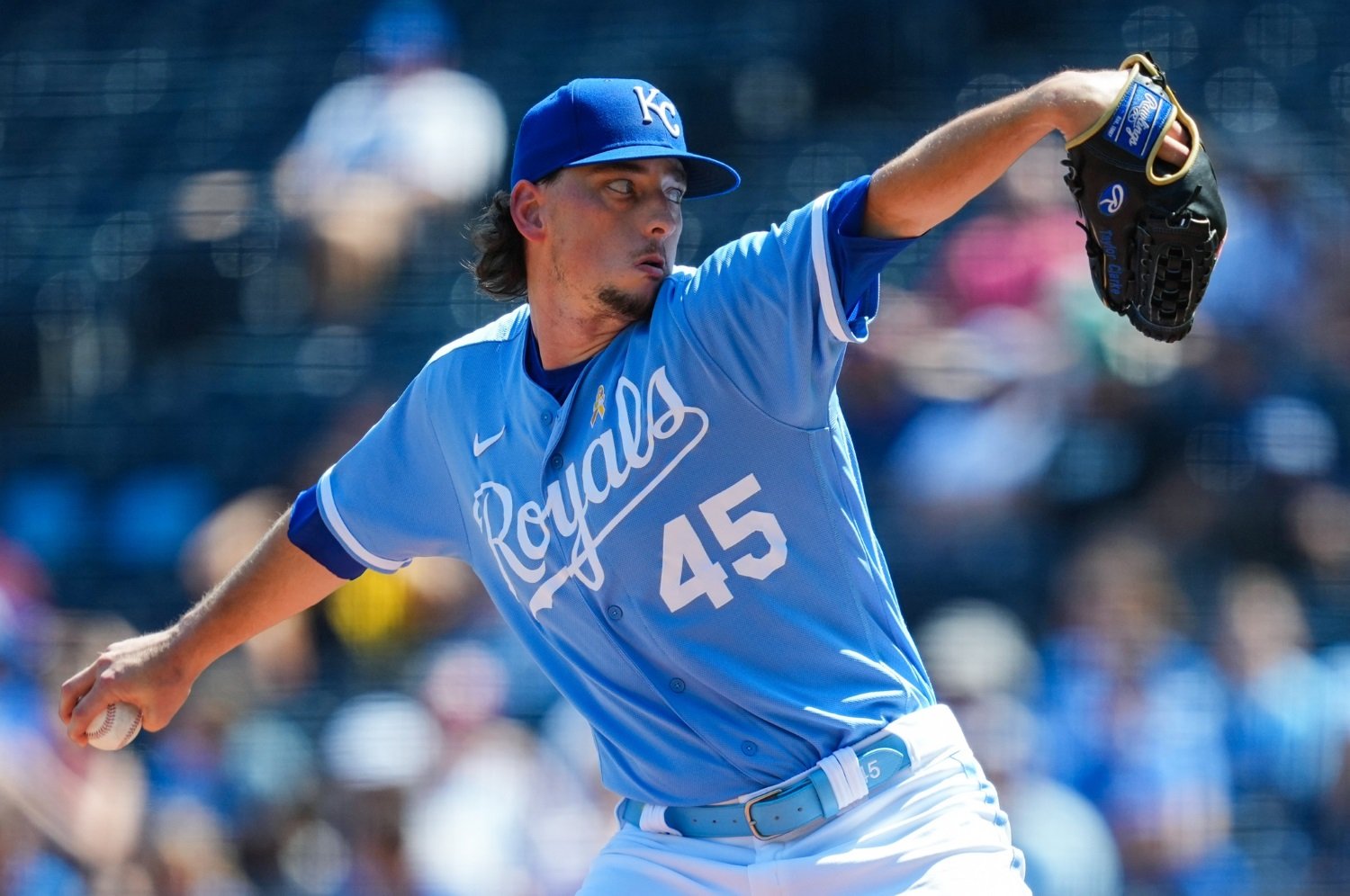 In a move not dissimilar to the small ones that brought Oliver Dunn and Jake Bauers to the organization earlier this offseason, Matt Arnold has swapped two more fringe prospects to Kansas City for right-handed hurler Taylor Clarke. After making his major-league debut with the Arizona Diamondbacks in 2019, Taylor Clarke saw his role gradually reduce from a potential starter to a full-time reliever. He was traded to the Kansas City Royals in 2022, where he posted a 4.04 ERA and 1.18 WHIP over 49 innings pitched. This season was a bit of a down year and he saw his stats regress to a 5.95 ERA and 1.61 WHIP over 59 innings pitched, so there's definitely room for improvement. The Royals were primarily driven by the need to clear roster space for their newly-acquired starting pitcher, Seth Lugo, which explains why they asked for minor leaguers not on the 40-man roster in return. For their part of the bargain, the Brewers will be shipping right-handed reliever Ryan Brady and utility infielder Cam Devanney over to Kansas City. Brady split time between High A and Double A in 2023, posting a 2.76 ERA over 49 innings with the Timber Rattlers and a 2.57 ERA over 28 innings pitched with the Biloxi Shuckers. Devanney spent all of 2023 in Triple A and slashed a respectable .271/.363/.461 over 390 plate appearances. Clarke, 30, is under contract for $1.25 million for 2024, and is under team control through 2025. He also has a minor-league option year remaining, which will increase his value to the Brewers. They always want to be able to shuttle relievers on the edges of the roster between Triple A and the big leagues, and Clarke will provide that flexibility to their depth chart. What do you make of this deal? Is this kind of consolidation the right way for the Brewers to make use of their organizational depth? Leave a comment and discuss.
 -
In their latest move, Milwaukee added another piece for the bullpen in exchange for two minor-league prospects. After making his major-league debut with the Arizona Diamondbacks in 2019, Taylor Clarke saw his role gradually reduce from a potential starter to a full-time reliever. He was traded to the Kansas City Royals in 2022, where he posted a 4.04 ERA and 1.18 WHIP over 49 innings pitched. This season was a bit of a down year and he saw his stats regress to a 5.95 ERA and 1.61 WHIP over 59 innings pitched, so there's definitely room for improvement. The Royals were primarily driven by the need to clear roster space for their newly-acquired starting pitcher, Seth Lugo, which explains why they asked for minor leaguers not on the 40-man roster in return. For their part of the bargain, the Brewers will be shipping right-handed reliever Ryan Brady and utility infielder Cam Devanney over to Kansas City. Brady split time between High A and Double A in 2023, posting a 2.76 ERA over 49 innings with the Timber Rattlers and a 2.57 ERA over 28 innings pitched with the Biloxi Shuckers. Devanney spent all of 2023 in Triple A and slashed a respectable .271/.363/.461 over 390 plate appearances. Clarke, 30, is under contract for $1.25 million for 2024, and is under team control through 2025. He also has a minor-league option year remaining, which will increase his value to the Brewers. They always want to be able to shuttle relievers on the edges of the roster between Triple A and the big leagues, and Clarke will provide that flexibility to their depth chart. What do you make of this deal? Is this kind of consolidation the right way for the Brewers to make use of their organizational depth? Leave a comment and discuss. View full article