Jason Wang
-
Posts
946 -
Joined
-
Last visited
-
Days Won
1
Content Type
Profiles
Forums
Blogs
Events
News
2026 Milwaukee Brewers Top Prospects Ranking
Milwaukee Brewers Videos
2022 Milwaukee Brewers Draft Picks
Milwaukee Brewers Free Agent & Trade Rumors, Notes, & Tidbits
Guides & Resources
2023 Milwaukee Brewers Draft Picks
2024 Milwaukee Brewers Draft Picks
The Milwaukee Brewers Players Project
2025 Milwaukee Brewers Draft Pick Tracker
2026 Milwaukee Brewers Draft Tracker: Picks & Bonuses
Store
Downloads
Gallery
Everything posted by Jason Wang
-

Blake Perkins Has Never Been More Important for Milwaukee Brewers
Jason Wang posted an article in Brewers
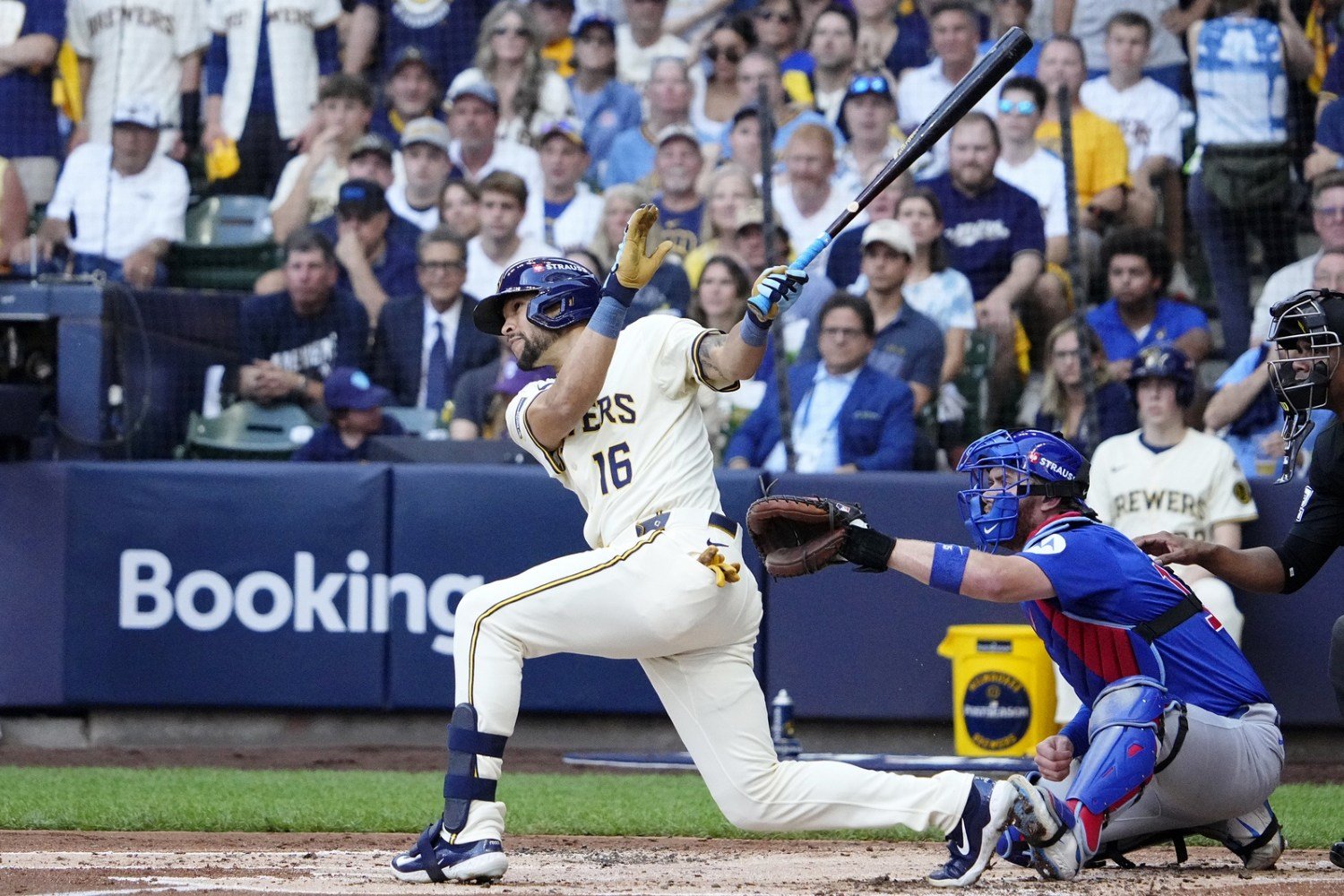 In case you missed it, one of the only unfortunate outcomes of the first game of the Division Series was Jackson Courio re-aggravating a nagging hamstring injury while beating out an infield hit, ending a three-hit performance on a sour note. Chourio's right hamstring is quickly becoming the biggest bugaboo for a young player who otherwise seems destined for stardom, and soon. After he departed, an in-game interview with Pat Murphy cast real doubt over the availability of Chourio for the balance of this series—and, therefore, for the next one. Since Chourio was playing left field, he was replaced by Isaac Collins and later Brandon Lockridge. That wasn’t a big deal in a game that ended in a 9-3 victory for Milwaukee, but the biggest concern is how available Chourio will be moving forward and at what percentage. He worked out Sunday in an effort to demonstrate readiness for Monday, but if he does have to sit out for a few games, it will be a big loss for the team. Luckily, the blow is softened by having a reliable second option in Blake Perkins. Perkins has been around long enough for people to know what he’s about. He’s an outstanding defensive center fielder with one of the fastest pairs of legs in baseball, and a plus arm to boot. He doesn’t hit the ball very hard, but he’ll draw a few walks and do his best to compensate for a lack of other offensive production. Because of his weaknesses as a hitter, he has spent much of his time serving as an understudy to the likes of Joey Wiemer, Garrett Mitchell, and (more recently) Chourio. However, his services have always been invaluable, and although he may not get much playing time, he typically has a positive impact on the team when he does get the chance to take the field. His great attitude and flexibility are exactly why this postseason could be a turning point for the 29-year-old, and why he could be vital for the team, too. Due to the smaller sample of games and the elevated importance of each plate appearance in the playoffs, the strengths and weaknesses of each player are thrown into sharper relief. For Perkins, that means that the few additional outs he gets with his excellent fielding range make him an integral piece of the Brewers’ run prevention unit. He made some excellent plays with his glove this season, and absolutely has the ability to make big catches in crucial moments. Even if he isn’t able to get to the ball to make the initial out, he’s often able to get to batted balls quickly and when coupled with his top-quartile arm strength, that can result in some exhilarating plays at the plate. One would assume that his lackluster career OPS+ of just 81 would carry over into his playoff results as well, but that’s where the nuance of his approach comes in. For one reason or another, Perkins has always been the most successful at the beginning of the season, before cooling off later. He has a career .716 OPS in the first month of the season and a .569 OPS in the final month. Yet, he’s actually been very successful in the 12 postseason plate appearances he has had so far, slashing a respectable .500/.500/.600 with two RBI, a walk, and a stolen base. And boy does he know how to work a grueling at-bat. That particular trait was on full display in Game 1 against the Cubs, when after 11 pitches from Matthew Boyd, Perkins finally got a changeup he liked and came up with a huge RBI single. He had to work back from a 1-2 count, and fouled off multiple pitches before getting the one he could handle. The fact that he doesn’t hit for power doesn’t seem like it will be a problem for this Milwaukee lineup, which didn’t hit a ball out of the park but still managed to plate nine runners against Chicago. History hasn’t been kind to teams with limited power in the playoffs, but if there were ever a team that could make it work, it’s this one. Perkins may not be a household name. He doesn’t sell as many jerseys as faces of the franchise like Christian Yelich, Robin Yount, and Chi Chi González. However, on a team of Average Joes, anyone can be a superhero on any given night. The loss of Chourio may seem like the beginning of the end for the Brewers, but with Perkins to fill the gap, Milwaukee is still as formidable as they come.
 -
Image courtesy of © Michael McLoone-Imagn Images In case you missed it, one of the only unfortunate outcomes of the first game of the Division Series was Jackson Courio re-aggravating a nagging hamstring injury while beating out an infield hit, ending a three-hit performance on a sour note. Chourio's right hamstring is quickly becoming the biggest bugaboo for a young player who otherwise seems destined for stardom, and soon. After he departed, an in-game interview with Pat Murphy cast real doubt over the availability of Chourio for the balance of this series—and, therefore, for the next one. Since Chourio was playing left field, he was replaced by Isaac Collins and later Brandon Lockridge. That wasn’t a big deal in a game that ended in a 9-3 victory for Milwaukee, but the biggest concern is how available Chourio will be moving forward and at what percentage. He worked out Sunday in an effort to demonstrate readiness for Monday, but if he does have to sit out for a few games, it will be a big loss for the team. Luckily, the blow is softened by having a reliable second option in Blake Perkins. Perkins has been around long enough for people to know what he’s about. He’s an outstanding defensive center fielder with one of the fastest pairs of legs in baseball, and a plus arm to boot. He doesn’t hit the ball very hard, but he’ll draw a few walks and do his best to compensate for a lack of other offensive production. Because of his weaknesses as a hitter, he has spent much of his time serving as an understudy to the likes of Joey Wiemer, Garrett Mitchell, and (more recently) Chourio. However, his services have always been invaluable, and although he may not get much playing time, he typically has a positive impact on the team when he does get the chance to take the field. His great attitude and flexibility are exactly why this postseason could be a turning point for the 29-year-old, and why he could be vital for the team, too. Due to the smaller sample of games and the elevated importance of each plate appearance in the playoffs, the strengths and weaknesses of each player are thrown into sharper relief. For Perkins, that means that the few additional outs he gets with his excellent fielding range make him an integral piece of the Brewers’ run prevention unit. He made some excellent plays with his glove this season, and absolutely has the ability to make big catches in crucial moments. Even if he isn’t able to get to the ball to make the initial out, he’s often able to get to batted balls quickly and when coupled with his top-quartile arm strength, that can result in some exhilarating plays at the plate. One would assume that his lackluster career OPS+ of just 81 would carry over into his playoff results as well, but that’s where the nuance of his approach comes in. For one reason or another, Perkins has always been the most successful at the beginning of the season, before cooling off later. He has a career .716 OPS in the first month of the season and a .569 OPS in the final month. Yet, he’s actually been very successful in the 12 postseason plate appearances he has had so far, slashing a respectable .500/.500/.600 with two RBI, a walk, and a stolen base. And boy does he know how to work a grueling at-bat. That particular trait was on full display in Game 1 against the Cubs, when after 11 pitches from Matthew Boyd, Perkins finally got a changeup he liked and came up with a huge RBI single. He had to work back from a 1-2 count, and fouled off multiple pitches before getting the one he could handle. The fact that he doesn’t hit for power doesn’t seem like it will be a problem for this Milwaukee lineup, which didn’t hit a ball out of the park but still managed to plate nine runners against Chicago. History hasn’t been kind to teams with limited power in the playoffs, but if there were ever a team that could make it work, it’s this one. Perkins may not be a household name. He doesn’t sell as many jerseys as faces of the franchise like Christian Yelich, Robin Yount, and Chi Chi González. However, on a team of Average Joes, anyone can be a superhero on any given night. The loss of Chourio may seem like the beginning of the end for the Brewers, but with Perkins to fill the gap, Milwaukee is still as formidable as they come. View full article
-
How Caleb Durbin Could Be Milwaukee Brewers’ Playoff X-Factor
Jason Wang posted an article in Brewers
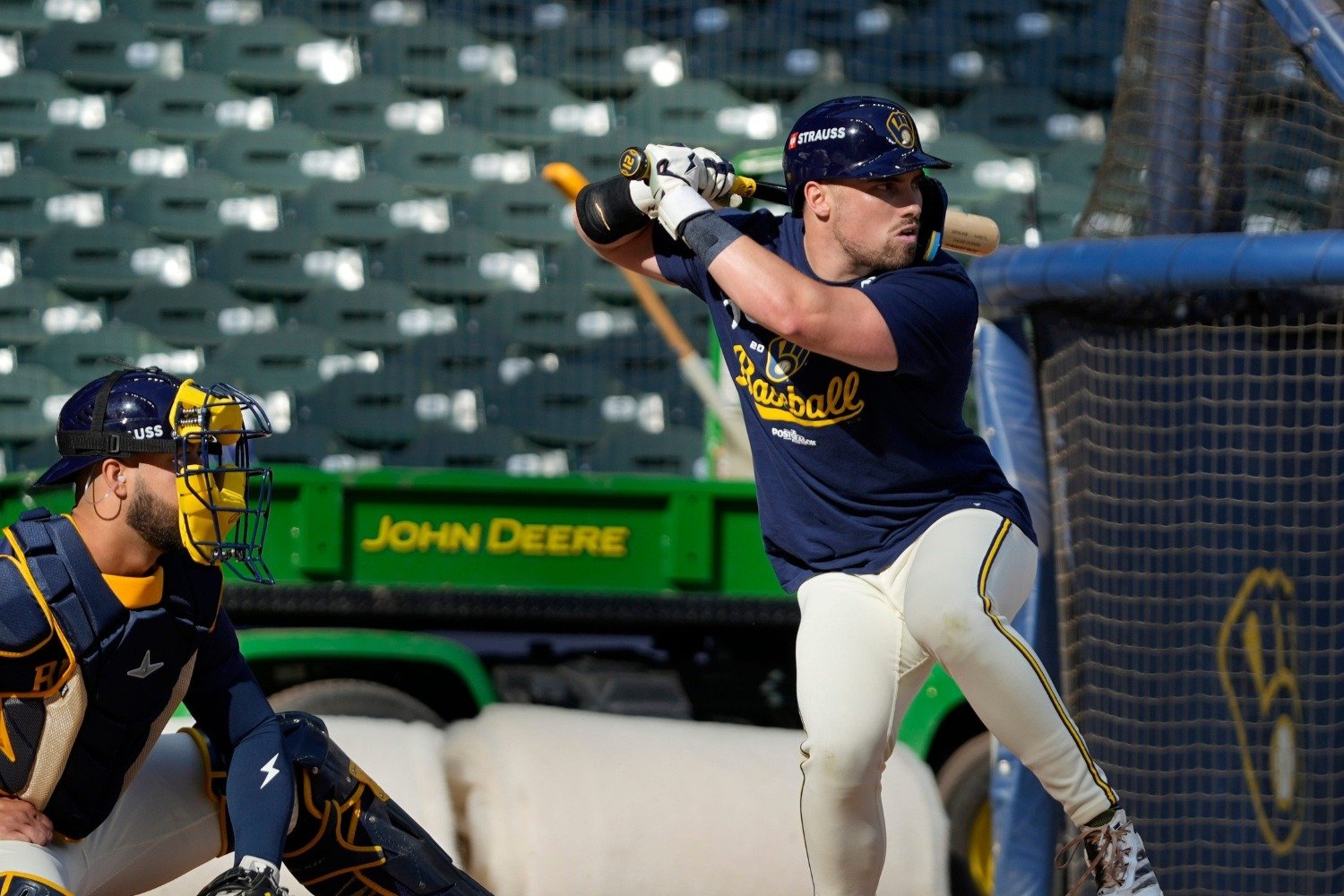 Even the most critical of fans would likely agree that Caleb Durbin had a solid rookie season. The 25-year-old doesn’t quite have the same compelling Rookie of the Year case as Cade Horton or Drake Baldwin, but that doesn’t mean it wasn’t a productive start to what should be a healthy big-league career. After a brutal offensive start that saw him finish May with a 78 wRC+, he turned things around and posted a 116 wRC+ from June 1 on. He played good defense at third base, accumulating 5 Defensive Runs Saved, and was Milwaukee’s fifth-most valuable position player by fWAR (2.6). Without him, the Brewers would not have set a new franchise win record this year. But that was the regular season. In comparison, the postseason is the same sport, but a completely different game, and this will be Durbin’s first time getting a taste of the high-octane action. It can be daunting being a rookie in the postseason, but there are a lot of reasons to believe that he has what it takes to show up on baseball’s biggest stage. Statistically, there are quite a few encouraging signs. First, Durbin had an .805 OPS across 109 high-leverage plate appearances (according to Baseball Reference’s definition), a slight improvement over his numbers in medium-leverage situations (.783 OPS) and a big improvement over his performance in low-leverage plate appearances (.635 OPS). If we want to take a more granular look at his splits, he also had an .883 OPS in late and close situations and an .810 OPS when the score was within one run. In other words, he knows when to lock in. Pat Murphy clocked this aspect of his personality all the way back in spring training when he talked about Durbin’s transition from being a middle infielder to manning the hot corner for the Brewers. Outside of his clutch splits, his holistic offensive profile is similarly encouraging. To compensate for a lack of natural power and bat speed, he has become one of the best contact hitters in the league, whiffing just 13.0% of the time and striking out at a measly 9.9% clip. He may be a slap hitter compared to other sluggers, but he’s squaring up a third of his pitches, meaning he’s getting as much exit velocity as he can with his current bat speed. This is a great recipe for the postseason, as just putting the ball in play can often be enough to get on base and put runs on the board, especially with his speed and hustle. But his most important character trait could be his resilience and adaptability. Durbin’s whole story screams unlikely. He was drafted by the Braves in the 14th round out of Washington University in St. Louis, a Division III program. After an okay first full season in the minor leagues, he was traded to New York in 2023 and started to find his groove, posting an .801 OPS over 194 Double-A plate appearances. Following another good minor-league season and two torrid campaigns in the Arizona Fall League, he was traded to the Brewers, where he was asked to start playing more third base while being 5-foot-7 and 183 pound—hardly the typical build for the position. Through all of the changes and obstacles, he persevered. Being promoted to a major-league starter came with its own set of challenges, and the competition had never been stiffer. Still, he continued to push on, leaned into his own strengths rather than trying to be someone else, and finished strong. It goes without saying that during the playoffs, the pressure from opposing fans (and your own) reaches new heights, and for many, it’s too much to bear. Even some of the game’s greatest receive criticisms for failing to show up when it matters most. Somehow, I get the feeling that it won’t be much of a problem for Durbin. Maybe it’s my personal bias toward him as a player, but the numbers back it up. He comes ready to play, doesn’t crumble under the spotlight, and will fight tooth-and-nail for every opportunity to help his team avoid another underwhelming first-round exit. With the Division Series kicking off this weekend, we won’t have to wait much longer.
 -
Image courtesy of © Jovanny Hernandez / Milwaukee Journal Sentinel / USA TODAY NETWORK via Imagn Images Even the most critical of fans would likely agree that Caleb Durbin had a solid rookie season. The 25-year-old doesn’t quite have the same compelling Rookie of the Year case as Cade Horton or Drake Baldwin, but that doesn’t mean it wasn’t a productive start to what should be a healthy big-league career. After a brutal offensive start that saw him finish May with a 78 wRC+, he turned things around and posted a 116 wRC+ from June 1 on. He played good defense at third base, accumulating 5 Defensive Runs Saved, and was Milwaukee’s fifth-most valuable position player by fWAR (2.6). Without him, the Brewers would not have set a new franchise win record this year. But that was the regular season. In comparison, the postseason is the same sport, but a completely different game, and this will be Durbin’s first time getting a taste of the high-octane action. It can be daunting being a rookie in the postseason, but there are a lot of reasons to believe that he has what it takes to show up on baseball’s biggest stage. Statistically, there are quite a few encouraging signs. First, Durbin had an .805 OPS across 109 high-leverage plate appearances (according to Baseball Reference’s definition), a slight improvement over his numbers in medium-leverage situations (.783 OPS) and a big improvement over his performance in low-leverage plate appearances (.635 OPS). If we want to take a more granular look at his splits, he also had an .883 OPS in late and close situations and an .810 OPS when the score was within one run. In other words, he knows when to lock in. Pat Murphy clocked this aspect of his personality all the way back in spring training when he talked about Durbin’s transition from being a middle infielder to manning the hot corner for the Brewers. Outside of his clutch splits, his holistic offensive profile is similarly encouraging. To compensate for a lack of natural power and bat speed, he has become one of the best contact hitters in the league, whiffing just 13.0% of the time and striking out at a measly 9.9% clip. He may be a slap hitter compared to other sluggers, but he’s squaring up a third of his pitches, meaning he’s getting as much exit velocity as he can with his current bat speed. This is a great recipe for the postseason, as just putting the ball in play can often be enough to get on base and put runs on the board, especially with his speed and hustle. But his most important character trait could be his resilience and adaptability. Durbin’s whole story screams unlikely. He was drafted by the Braves in the 14th round out of Washington University in St. Louis, a Division III program. After an okay first full season in the minor leagues, he was traded to New York in 2023 and started to find his groove, posting an .801 OPS over 194 Double-A plate appearances. Following another good minor-league season and two torrid campaigns in the Arizona Fall League, he was traded to the Brewers, where he was asked to start playing more third base while being 5-foot-7 and 183 pound—hardly the typical build for the position. Through all of the changes and obstacles, he persevered. Being promoted to a major-league starter came with its own set of challenges, and the competition had never been stiffer. Still, he continued to push on, leaned into his own strengths rather than trying to be someone else, and finished strong. It goes without saying that during the playoffs, the pressure from opposing fans (and your own) reaches new heights, and for many, it’s too much to bear. Even some of the game’s greatest receive criticisms for failing to show up when it matters most. Somehow, I get the feeling that it won’t be much of a problem for Durbin. Maybe it’s my personal bias toward him as a player, but the numbers back it up. He comes ready to play, doesn’t crumble under the spotlight, and will fight tooth-and-nail for every opportunity to help his team avoid another underwhelming first-round exit. With the Division Series kicking off this weekend, we won’t have to wait much longer. View full article
-
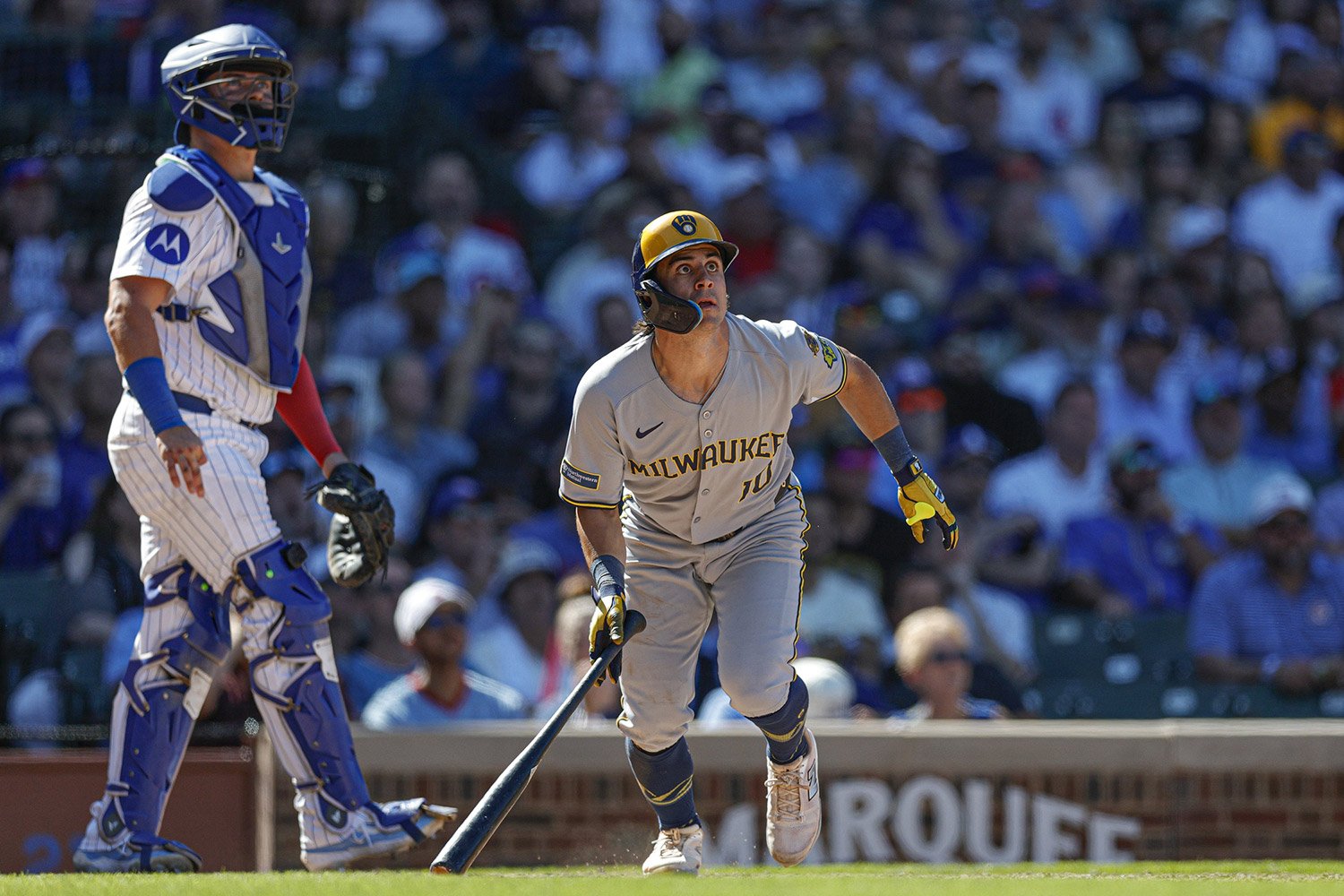 It has been an especially juicy year for these two titans of the National League Central. Despite the Cubs pulling out to an early lead, the Brewers went on two torrid win streaks and never looked back. Even though Milwaukee finished the season on top, Chicago will get another chance at revenge with the upcoming Division Series. Here are the things to keep an eye out for in the next episode of this historic rivalry. 1. Who will win the plate discipline battle? During the regular season, Cubs pitchers gave up a combined 405 walks, the fewest of any team in the big leagues by a comfortable margin. No pitcher on staff with more than 40 innings of work had a walk rate above 10% and no starter with more than 100 innings pitched had a walk rate above 7%. Shota Imanaga led the pack with a walk rate of just 4.6% over 144 ⅔ innings. On the other hand, the Brewers' lineup drew a combined 564 walks this year, fourth in MLB. In total, there were seven hitters with more than 200 plate appearances and a walk rate above 9%: PA BB% Jake Bauers 218 14.7% Isaac Collins 441 12.9% William Contreras 659 12.7% Rhys Hoskins 328 11.6% Brice Turang 659 10.0% Christian Yelich 644 9.9% Andrew Vaughn 254 9.4% So, in a classic example of unstoppable force meets immovable object, we’ll have to see which side gives first. Each additional baserunner has amplified impact in a postseason series, and a few extra walks could be the difference between victory and defeat for Milwaukee. 2. Is extra rest a blessing or a curse? In 2023, there was considerable discussion about whether it was an acceptable result that three of the four teams that had received a first-round bye (Orioles, Dodgers, Braves) had been eliminated after the Division Series. Of course, that postseason was full of surprises that ended up in a World Series involving a #5 seed and a #6 seed, but a similar thing had happened in 2022 when the Braves and Dodgers failed to make the most out of their first-round byes. Most blamed teams not being fully warmed up and ready to play by the time the Division Series rolled around due to the extended break. However, most involved in the team's direct operations would agree that extra rest is much needed, especially after the grind of the regular season. In addition to receiving full-body mud wraps and aromatherapy, teams with a first-round bye get to set their rotation exactly as they would like. While Brewers starters were drinking chocolate milk out of sippy cups, the Cubs just endured a challenging 27-inning series against the Padres that removed the possibility of Matthew Boyd, Shota Imanaga, or Jameson Taillon getting the start in the first game. If there’s ever an opportunity for the Brewers to strike hard and fast, it’s while they’re fresh and the Cubs are more spent. Yes, there may be a downside to excessive rest, and despite the Brewers holding scrimmages, nothing can truly replicate the atmosphere of the postseason. However, while the adverse effects of this are still unclear, everyone knows that more fatigue leads to more weaknesses, a major tailwind for Milwaukee. 3. Can Milwaukee’s infield defense compete with the Cubs in a small sample? Across the entire season, Chicago’s defense was leagues better than the Brewers, at least on paper. The Cubs accumulated a total of +84 Defensive Runs Saved, more than twice as many as the Brewers’ +31. Furthermore, the Cubs only had one position with negative Defensive Runs Saved: right field. Meanwhile, the Brewers were below average at shortstop, left field, center field, and catcher while being average at first base. It’s a deviation from the norm for the Brewers who have had elite defensive results over the past years and there are several reasons for it, aside from the inherent volatility of playing defense in baseball. However, while the numbers may paint the picture of a chasm between the two teams and their fielding abilities, Milwaukee has the pieces to make it work. Caleb Durbin has proven himself to be a solid fielder in his first full season primarily playing third base and Brice Turang is the defending Platinum Glove winner. While Joey Ortiz is a below-average fielder by DRS, he has elite range, posting +12 Outs Above Average (97th percentile). This trio may not have had the same regular season results as Chicago’s infield triumvirate of Matt Shaw, Dansby Swanson, and Nico Hoerner but they’ve shown that they’re more than capable of being elevated to the same level. 4. How aggressively will the Brewers attack the Cubs’ biggest hitters? The Brewers have a pretty well-rounded lineup. There aren’t any players that are significantly better or worse than the rest of the pack and there could be a new offensive hero on the team on any given night. The same can’t really be said about the Cubs. The highest wRC+ of any qualified Brewer this season belonged to Brice Turang (124). The Cubs have three players at or above that mark: Michael Busch (140), Kyle Tucker (136), and Seiya Suzuki (123). Okay, Seiya is technically lower but not considering him a serious threat in this lineup would be a big mistake, especially after what he did against the Padres. It would be difficult to pitch around all of them, there’s simply too much protection in the lineup and all three of them have good walk rates, especially Kyle Tucker (14.6%). Going right down the middle may not be a good idea either as these sluggers have been known to hit quite a few homers between them. Milwaukee’s pitchers are no pushovers and each at-bat will likely be highly competitive. However, since the rotation lacks an arm with the gas of a Tarik Skubal or the stuff Yoshinobu Yamamoto, the Brewers will likely have to get a little crafty if they want to a chance at survival against such a potent lineup.
 -
Image courtesy of © Kamil Krzaczynski-Imagn Images It has been an especially juicy year for these two titans of the National League Central. Despite the Cubs pulling out to an early lead, the Brewers went on two torrid win streaks and never looked back. Even though Milwaukee finished the season on top, Chicago will get another chance at revenge with the upcoming Division Series. Here are the things to keep an eye out for in the next episode of this historic rivalry. 1. Who will win the plate discipline battle? During the regular season, Cubs pitchers gave up a combined 405 walks, the fewest of any team in the big leagues by a comfortable margin. No pitcher on staff with more than 40 innings of work had a walk rate above 10% and no starter with more than 100 innings pitched had a walk rate above 7%. Shota Imanaga led the pack with a walk rate of just 4.6% over 144 ⅔ innings. On the other hand, the Brewers' lineup drew a combined 564 walks this year, fourth in MLB. In total, there were seven hitters with more than 200 plate appearances and a walk rate above 9%: PA BB% Jake Bauers 218 14.7% Isaac Collins 441 12.9% William Contreras 659 12.7% Rhys Hoskins 328 11.6% Brice Turang 659 10.0% Christian Yelich 644 9.9% Andrew Vaughn 254 9.4% So, in a classic example of unstoppable force meets immovable object, we’ll have to see which side gives first. Each additional baserunner has amplified impact in a postseason series, and a few extra walks could be the difference between victory and defeat for Milwaukee. 2. Is extra rest a blessing or a curse? In 2023, there was considerable discussion about whether it was an acceptable result that three of the four teams that had received a first-round bye (Orioles, Dodgers, Braves) had been eliminated after the Division Series. Of course, that postseason was full of surprises that ended up in a World Series involving a #5 seed and a #6 seed, but a similar thing had happened in 2022 when the Braves and Dodgers failed to make the most out of their first-round byes. Most blamed teams not being fully warmed up and ready to play by the time the Division Series rolled around due to the extended break. However, most involved in the team's direct operations would agree that extra rest is much needed, especially after the grind of the regular season. In addition to receiving full-body mud wraps and aromatherapy, teams with a first-round bye get to set their rotation exactly as they would like. While Brewers starters were drinking chocolate milk out of sippy cups, the Cubs just endured a challenging 27-inning series against the Padres that removed the possibility of Matthew Boyd, Shota Imanaga, or Jameson Taillon getting the start in the first game. If there’s ever an opportunity for the Brewers to strike hard and fast, it’s while they’re fresh and the Cubs are more spent. Yes, there may be a downside to excessive rest, and despite the Brewers holding scrimmages, nothing can truly replicate the atmosphere of the postseason. However, while the adverse effects of this are still unclear, everyone knows that more fatigue leads to more weaknesses, a major tailwind for Milwaukee. 3. Can Milwaukee’s infield defense compete with the Cubs in a small sample? Across the entire season, Chicago’s defense was leagues better than the Brewers, at least on paper. The Cubs accumulated a total of +84 Defensive Runs Saved, more than twice as many as the Brewers’ +31. Furthermore, the Cubs only had one position with negative Defensive Runs Saved: right field. Meanwhile, the Brewers were below average at shortstop, left field, center field, and catcher while being average at first base. It’s a deviation from the norm for the Brewers who have had elite defensive results over the past years and there are several reasons for it, aside from the inherent volatility of playing defense in baseball. However, while the numbers may paint the picture of a chasm between the two teams and their fielding abilities, Milwaukee has the pieces to make it work. Caleb Durbin has proven himself to be a solid fielder in his first full season primarily playing third base and Brice Turang is the defending Platinum Glove winner. While Joey Ortiz is a below-average fielder by DRS, he has elite range, posting +12 Outs Above Average (97th percentile). This trio may not have had the same regular season results as Chicago’s infield triumvirate of Matt Shaw, Dansby Swanson, and Nico Hoerner but they’ve shown that they’re more than capable of being elevated to the same level. 4. How aggressively will the Brewers attack the Cubs’ biggest hitters? The Brewers have a pretty well-rounded lineup. There aren’t any players that are significantly better or worse than the rest of the pack and there could be a new offensive hero on the team on any given night. The same can’t really be said about the Cubs. The highest wRC+ of any qualified Brewer this season belonged to Brice Turang (124). The Cubs have three players at or above that mark: Michael Busch (140), Kyle Tucker (136), and Seiya Suzuki (123). Okay, Seiya is technically lower but not considering him a serious threat in this lineup would be a big mistake, especially after what he did against the Padres. It would be difficult to pitch around all of them, there’s simply too much protection in the lineup and all three of them have good walk rates, especially Kyle Tucker (14.6%). Going right down the middle may not be a good idea either as these sluggers have been known to hit quite a few homers between them. Milwaukee’s pitchers are no pushovers and each at-bat will likely be highly competitive. However, since the rotation lacks an arm with the gas of a Tarik Skubal or the stuff Yoshinobu Yamamoto, the Brewers will likely have to get a little crafty if they want to a chance at survival against such a potent lineup. View full article
-
let's just be glad we won't have to face this divisional colossus!
-
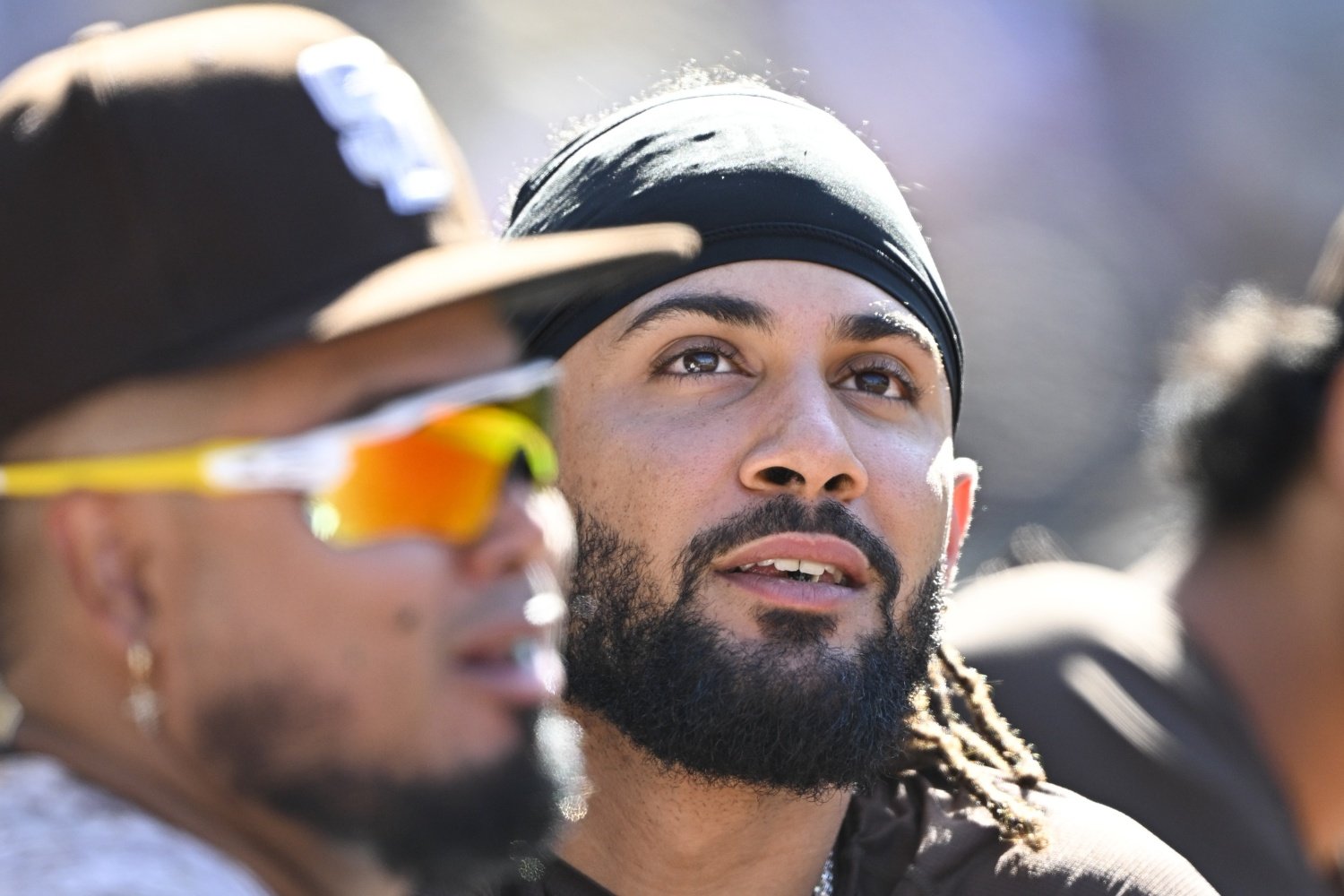 Now that the regular season has concluded, the postseason bracket is finalized. For the first time since 2021, Milwaukee will get to sit out the first round—a hard-earned reward for winning 97 games, more than any other team. Instead of being thrown right back into the fold, their first game won’t be until October 4, when they kick off the Division Series against either the Cubs or the Padres. Both teams are formidable potential opponents. Chicago won 92 games and San Diego won 90 this year, placing them comfortably above the 83-win Reds team that snuck into the postseason at the 11th hour. Both teams have exorbitant payrolls that dwarf Milwaukee’s own meager budget, and both have superstar players who could make or break a best-of-five series. The Padres were one of the most active teams at the trade deadline, even striking a deal with the Brewers to exchange Nestor Cortes for Brandon Lockridge. While that acquisition ultimately failed to have much of an impact on the team, other major acquisitions like Ramón Laureano, Ryan O’Hearn, Freddy Fermin, and (most of all) Mason Miller helped reshape their team in the second half. The addition of Miller, in particular, elevated San Diego’s bullpen to a league of its own. Already stacked with strong arms like Robert Suarez (2.97 ERA), Adrián Morejón (2.08 ERA), and Jeremiah Estrada (35.5% strikeout rate), the Padres had an MLB-leading 3.06 reliever ERA. Unfortunately, Jason Adam, one of their most effective bullpen arms, recently sustained a season-ending rupture of a quadriceps tendon, so they’ll have one fewer weapon to deploy—but it’s still quite a talented array of pitchers. The Padres may have the advantage in the bullpen, but the Brewers undoubtedly have a more intimidating rotation. Even without Brandon Woodruff in the mix, Freddy Peralta and Quinn Priester should be a strong 1-2 punch, followed by a melange of high-variance but very talented secondary bulk guys. Outside of Nick Pivetta (2.87 ERA), no other Padres starters have been great this year. Randy Vásquez has put up solid numbers, but Dylan Cease, Michael King, and the other arms in the rotation still have things to iron out—and Pivetta will only be available starting in Game 2, should they make it, since he's slated to start Game 1 of the Wild Card Series. When it comes to the lineup, the Padres seem like they have more threats than the Brewers at first glance, but a closer look reveals that there’s far more parity than meets the eye. Milwaukee has a better team OPS of .735, but that’s the result of everyone chipping in here and there. Other than Andrew Vaughn (who has just 251 total plate appearances for the team), the best hitter on the team by OPS+ is Christian Yelich (121). Despite the Padres having major household names like Fernando Tatis Jr., Manny Machado, and Latin pop sensation Jose Iglesias, the individual numbers are actually pretty even. Here is how the OPS+ figures match up for each team’s top five qualified hitters: Fernando Tatis Jr. 125 121 Christian Yelich Manny Machado 116 120 Brice Turang Jackson Merrill 109 117 Isaac Collins Jake Cronenworth 108 113 Sal Frelick Gavin Sheets 106 111 Jackson Chourio Of course, this leaves out important players who have only been with the team for part of the season, like the aforementioned Vaughn and Laureano, but one can easily see that (beyond name recognition) the Brewers may even have a slightly better lineup. Head-to-head, the Brewers went just 2-4 against the Padres this year, notably losing both series against the team. On the bright side, all but two of the losses were close affairs, which means that they’re likely pretty evenly matched. Besides, the Brewers had little to play for in their matchup during the final week. When it comes to the Cubs, one might be tempted to say that the Brewers have already proved themselves to be a superior team, after easily claiming their third straight division title. Sure, Milwaukee’s double-digit win streaks and second-half surge are accomplishments worth acknowledging, but that doesn’t mean the Cubs should be underestimated. Offensively, Chicago has a slightly better team OPS of .750, but it has more potent individual threat, as well—namely, Michael Busch (148 OPS+) and big offseason pickup Kyle Tucker (144 OPS+). The middle infield duo of Nico Hoerner and Dansby Swanson continues to be one of the best in the business, and despite hitting an offensive wall in August, Pete Crow-Armstrong has begun to turn it around at the plate, while still being one of the best defensive outfielders in the sport. Rotation-wise, it’ll be difficult to compete with the Brewers, especially since Cade Horton’s rib fracture will definitely keep him sidelined until at least the NLCS (should the Cubs get there). Matthew Boyd has been a great starter, while Shota Imanaga and Jameson Taillon have been satisfactory, but these three are looking like a clear step down from what the Brewers will be able to muster. The bullpens are quite close when looking at reliever ERA, but Abner Uribe’s top-notch ERA (1.70) and monstrous workload (74 ⅓ IP) skew the numbers. In reality, guys like Brad Keller (2.07 ERA), Caleb Thielbar (2.64 ERA), Drew Pomeranz (2.17 ERA), and Daniel Palencia (2.91 ERA) have a slight edge over the relievers that Milwaukee will likely deploy, given that Trevor Megill is a bit diminished by injury and Nick Mears appears to be petering out at the end of the year. Although the Brewers ended up with a sizable five-game lead in the division, they were actually 6-7 against their I-94 rivals. Just because Milwaukee got the last laugh in the NL Central doesn’t mean the Cubs couldn’t get retribution in a hypothetical Division Series matchup. Given how these squads match up against the Brewers, I think facing the Padres in the Division Series would give Milwaukee the biggest advantage. The Brewers have a better rotation and lineup, and the Padres have fewer wins and a much lower run differential (+81) than the Cubs (+144). As a fan of baseball, I’d personally love to see a Cubs-Brewers matchup in the playoffs, for the sake of the sport. However, as a fan of the Brewers, watching the Cubs successfully emerge from the Wild Card round could also mean another quick first-round exit for the Crew.
 -
Image courtesy of © Denis Poroy-Imagn Images Now that the regular season has concluded, the postseason bracket is finalized. For the first time since 2021, Milwaukee will get to sit out the first round—a hard-earned reward for winning 97 games, more than any other team. Instead of being thrown right back into the fold, their first game won’t be until October 4, when they kick off the Division Series against either the Cubs or the Padres. Both teams are formidable potential opponents. Chicago won 92 games and San Diego won 90 this year, placing them comfortably above the 83-win Reds team that snuck into the postseason at the 11th hour. Both teams have exorbitant payrolls that dwarf Milwaukee’s own meager budget, and both have superstar players who could make or break a best-of-five series. The Padres were one of the most active teams at the trade deadline, even striking a deal with the Brewers to exchange Nestor Cortes for Brandon Lockridge. While that acquisition ultimately failed to have much of an impact on the team, other major acquisitions like Ramón Laureano, Ryan O’Hearn, Freddy Fermin, and (most of all) Mason Miller helped reshape their team in the second half. The addition of Miller, in particular, elevated San Diego’s bullpen to a league of its own. Already stacked with strong arms like Robert Suarez (2.97 ERA), Adrián Morejón (2.08 ERA), and Jeremiah Estrada (35.5% strikeout rate), the Padres had an MLB-leading 3.06 reliever ERA. Unfortunately, Jason Adam, one of their most effective bullpen arms, recently sustained a season-ending rupture of a quadriceps tendon, so they’ll have one fewer weapon to deploy—but it’s still quite a talented array of pitchers. The Padres may have the advantage in the bullpen, but the Brewers undoubtedly have a more intimidating rotation. Even without Brandon Woodruff in the mix, Freddy Peralta and Quinn Priester should be a strong 1-2 punch, followed by a melange of high-variance but very talented secondary bulk guys. Outside of Nick Pivetta (2.87 ERA), no other Padres starters have been great this year. Randy Vásquez has put up solid numbers, but Dylan Cease, Michael King, and the other arms in the rotation still have things to iron out—and Pivetta will only be available starting in Game 2, should they make it, since he's slated to start Game 1 of the Wild Card Series. When it comes to the lineup, the Padres seem like they have more threats than the Brewers at first glance, but a closer look reveals that there’s far more parity than meets the eye. Milwaukee has a better team OPS of .735, but that’s the result of everyone chipping in here and there. Other than Andrew Vaughn (who has just 251 total plate appearances for the team), the best hitter on the team by OPS+ is Christian Yelich (121). Despite the Padres having major household names like Fernando Tatis Jr., Manny Machado, and Latin pop sensation Jose Iglesias, the individual numbers are actually pretty even. Here is how the OPS+ figures match up for each team’s top five qualified hitters: Fernando Tatis Jr. 125 121 Christian Yelich Manny Machado 116 120 Brice Turang Jackson Merrill 109 117 Isaac Collins Jake Cronenworth 108 113 Sal Frelick Gavin Sheets 106 111 Jackson Chourio Of course, this leaves out important players who have only been with the team for part of the season, like the aforementioned Vaughn and Laureano, but one can easily see that (beyond name recognition) the Brewers may even have a slightly better lineup. Head-to-head, the Brewers went just 2-4 against the Padres this year, notably losing both series against the team. On the bright side, all but two of the losses were close affairs, which means that they’re likely pretty evenly matched. Besides, the Brewers had little to play for in their matchup during the final week. When it comes to the Cubs, one might be tempted to say that the Brewers have already proved themselves to be a superior team, after easily claiming their third straight division title. Sure, Milwaukee’s double-digit win streaks and second-half surge are accomplishments worth acknowledging, but that doesn’t mean the Cubs should be underestimated. Offensively, Chicago has a slightly better team OPS of .750, but it has more potent individual threat, as well—namely, Michael Busch (148 OPS+) and big offseason pickup Kyle Tucker (144 OPS+). The middle infield duo of Nico Hoerner and Dansby Swanson continues to be one of the best in the business, and despite hitting an offensive wall in August, Pete Crow-Armstrong has begun to turn it around at the plate, while still being one of the best defensive outfielders in the sport. Rotation-wise, it’ll be difficult to compete with the Brewers, especially since Cade Horton’s rib fracture will definitely keep him sidelined until at least the NLCS (should the Cubs get there). Matthew Boyd has been a great starter, while Shota Imanaga and Jameson Taillon have been satisfactory, but these three are looking like a clear step down from what the Brewers will be able to muster. The bullpens are quite close when looking at reliever ERA, but Abner Uribe’s top-notch ERA (1.70) and monstrous workload (74 ⅓ IP) skew the numbers. In reality, guys like Brad Keller (2.07 ERA), Caleb Thielbar (2.64 ERA), Drew Pomeranz (2.17 ERA), and Daniel Palencia (2.91 ERA) have a slight edge over the relievers that Milwaukee will likely deploy, given that Trevor Megill is a bit diminished by injury and Nick Mears appears to be petering out at the end of the year. Although the Brewers ended up with a sizable five-game lead in the division, they were actually 6-7 against their I-94 rivals. Just because Milwaukee got the last laugh in the NL Central doesn’t mean the Cubs couldn’t get retribution in a hypothetical Division Series matchup. Given how these squads match up against the Brewers, I think facing the Padres in the Division Series would give Milwaukee the biggest advantage. The Brewers have a better rotation and lineup, and the Padres have fewer wins and a much lower run differential (+81) than the Cubs (+144). As a fan of baseball, I’d personally love to see a Cubs-Brewers matchup in the playoffs, for the sake of the sport. However, as a fan of the Brewers, watching the Cubs successfully emerge from the Wild Card round could also mean another quick first-round exit for the Crew. View full article
-
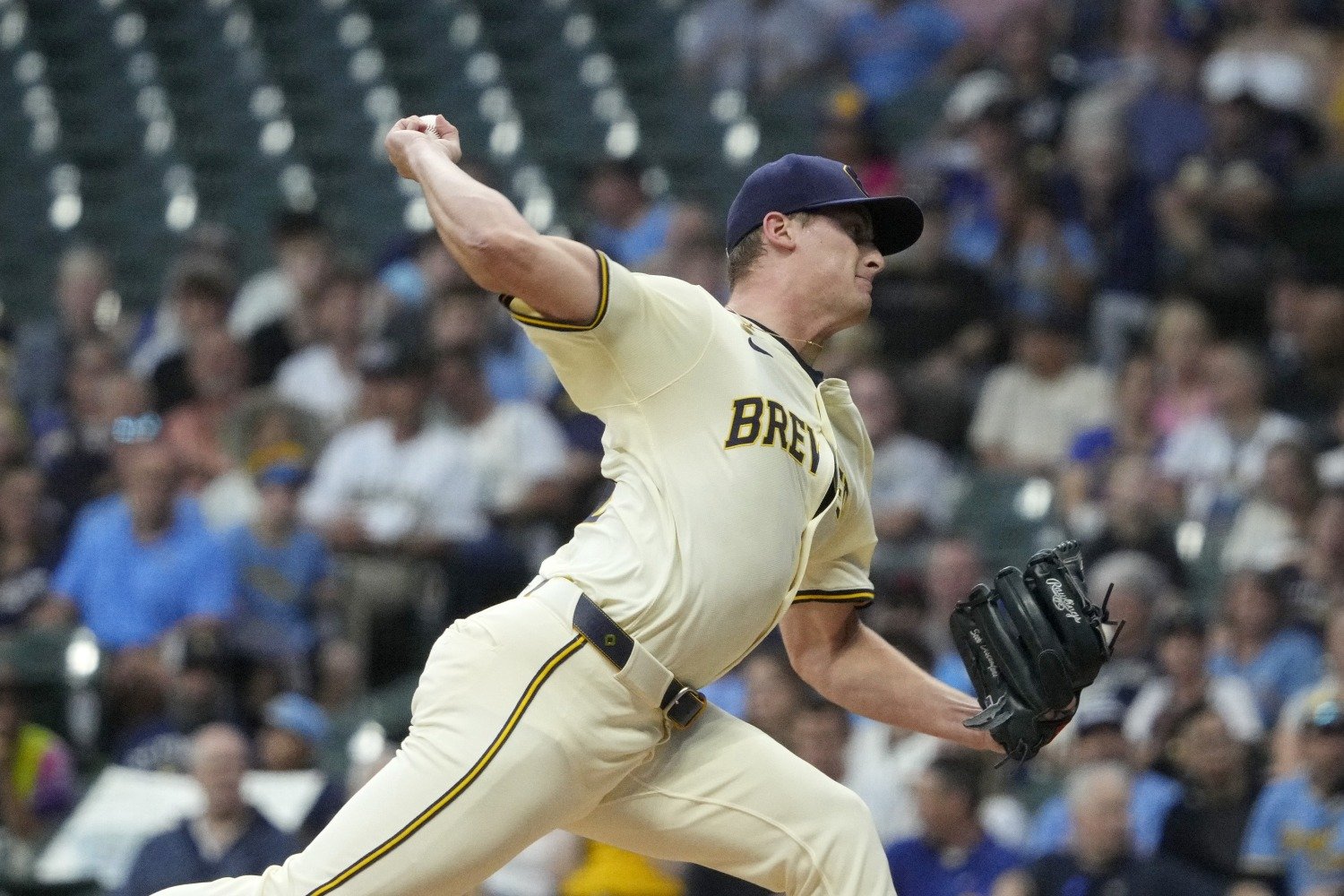 On April 7, amid a minor starting rotation crisis, the Milwaukee Brewers made another of their patented, seemingly mysterious moves. They acquired Quinn Priester from the Red Sox, in exchange for outfield prospect Yophery Rodriguez and a Competitive Balance Round A draft pick in this summer's MLB Draft. There were mixed reactions to the move. Many of our very own readers considered it an overpay, a sensible opinion at the time. Priester had struggled to find his footing in the big leagues after two seasons, posting a 6.23 ERA over 99 ⅔ innings mostly spent with the Pirates. Meanwhile, Rodriguez was the organization's 11th-ranked prospect in 2024 and had posted a respectable 112 wRC+ with Low-A Carolina at just 18 years old. With a draft pick thrown in to sweeten the pot for Boston, it seemed like Matt Arnold had finally gone one step too far. Fast-forward to today, and the deal has become another galaxy-brain win for Milwaukee’s front office. Rodriguez posted a lackluster 92 wRC+ in his first full season in High A, while Priester has pitched to a 3.25 ERA over 152 ⅓ innings and is the second-most valuable pitcher on the team, behind Cy Young contender Freddy Peralta. None of his Statcast metrics obviously stand out (besides his 95th-percentile ground ball rate), but somehow, the Brewers have molded him into one of the best starting pitchers around. The team’s ticket to the postseason was officially punched all the way back on September 13, but that doesn’t guarantee an easy road ahead of them. The way the playoff bracket is shaping up, they’ll face either the Padres or the Cubs in the Division Series. Those are two teams that have given Milwaukee trouble this year. To make matters worse, the injury bug has returned at the worst possible time. It was recently announced that Brandon Woodruff could be done for the season due to a lat strain, marking the third consecutive year they’d be without him in the playoffs. We're still waiting to hear what Woodruff's shoulder surgeon recommended after a consultation on Tuesday. Although not as impactful, the team also saw Jose Quintana go down with a calf strain, marking an end to his regular season and bringing his postseason eligibility into question. Jacob Misiorowski isn’t currently injured, but has looked like a much shakier version of his former self since returning from the injured list in August, regressing enough for the team to consider a bullpen role for him come October. The Brewers have yet to decide on a postseason rotation, but at this point, it’s probable that Priester will be the No. 2 arm. It’s a lot of pressure for the 25-year-old, but over 28 outings, he has consistently demonstrated the ability to be great. His recent start against the Angels on September 18 saw him strike out 10 players in 5 ⅔ innings, while giving up just three hits. He has also had two other starts with 10 or more strikeouts and zero earned runs. Not only has he been performing well, but he's brought the team up with him. His last outing marked the Brewers’ 19th consecutive victory with him on the mound, an outrageous feat that demonstrates just how much he can help the team win. Hindsight is always 20/20, but it’s almost humbling to reflect on how much he has exceeded expectations. It has become a recent trend for Milwaukee to bring the best out of unassuming talents, like Caleb Durbin, Brice Turang, Tobias Myers, Isaac Collins, Sal Frelick, and a litany of other players who have now been traded away to minimize the franchise’s financial responsibilities. Priester isn’t so much the exception as he is the new rule for the team. He has a tough assignment ahead of him, but with a full regular season under his belt, his résumé now speaks for itself—and it says that no one is ever allowed to doubt the Brewers’ front office ever again.
 -
Image courtesy of © Michael McLoone-Imagn Images On April 7, amid a minor starting rotation crisis, the Milwaukee Brewers made another of their patented, seemingly mysterious moves. They acquired Quinn Priester from the Red Sox, in exchange for outfield prospect Yophery Rodriguez and a Competitive Balance Round A draft pick in this summer's MLB Draft. There were mixed reactions to the move. Many of our very own readers considered it an overpay, a sensible opinion at the time. Priester had struggled to find his footing in the big leagues after two seasons, posting a 6.23 ERA over 99 ⅔ innings mostly spent with the Pirates. Meanwhile, Rodriguez was the organization's 11th-ranked prospect in 2024 and had posted a respectable 112 wRC+ with Low-A Carolina at just 18 years old. With a draft pick thrown in to sweeten the pot for Boston, it seemed like Matt Arnold had finally gone one step too far. Fast-forward to today, and the deal has become another galaxy-brain win for Milwaukee’s front office. Rodriguez posted a lackluster 92 wRC+ in his first full season in High A, while Priester has pitched to a 3.25 ERA over 152 ⅓ innings and is the second-most valuable pitcher on the team, behind Cy Young contender Freddy Peralta. None of his Statcast metrics obviously stand out (besides his 95th-percentile ground ball rate), but somehow, the Brewers have molded him into one of the best starting pitchers around. The team’s ticket to the postseason was officially punched all the way back on September 13, but that doesn’t guarantee an easy road ahead of them. The way the playoff bracket is shaping up, they’ll face either the Padres or the Cubs in the Division Series. Those are two teams that have given Milwaukee trouble this year. To make matters worse, the injury bug has returned at the worst possible time. It was recently announced that Brandon Woodruff could be done for the season due to a lat strain, marking the third consecutive year they’d be without him in the playoffs. We're still waiting to hear what Woodruff's shoulder surgeon recommended after a consultation on Tuesday. Although not as impactful, the team also saw Jose Quintana go down with a calf strain, marking an end to his regular season and bringing his postseason eligibility into question. Jacob Misiorowski isn’t currently injured, but has looked like a much shakier version of his former self since returning from the injured list in August, regressing enough for the team to consider a bullpen role for him come October. The Brewers have yet to decide on a postseason rotation, but at this point, it’s probable that Priester will be the No. 2 arm. It’s a lot of pressure for the 25-year-old, but over 28 outings, he has consistently demonstrated the ability to be great. His recent start against the Angels on September 18 saw him strike out 10 players in 5 ⅔ innings, while giving up just three hits. He has also had two other starts with 10 or more strikeouts and zero earned runs. Not only has he been performing well, but he's brought the team up with him. His last outing marked the Brewers’ 19th consecutive victory with him on the mound, an outrageous feat that demonstrates just how much he can help the team win. Hindsight is always 20/20, but it’s almost humbling to reflect on how much he has exceeded expectations. It has become a recent trend for Milwaukee to bring the best out of unassuming talents, like Caleb Durbin, Brice Turang, Tobias Myers, Isaac Collins, Sal Frelick, and a litany of other players who have now been traded away to minimize the franchise’s financial responsibilities. Priester isn’t so much the exception as he is the new rule for the team. He has a tough assignment ahead of him, but with a full regular season under his belt, his résumé now speaks for itself—and it says that no one is ever allowed to doubt the Brewers’ front office ever again. View full article
-
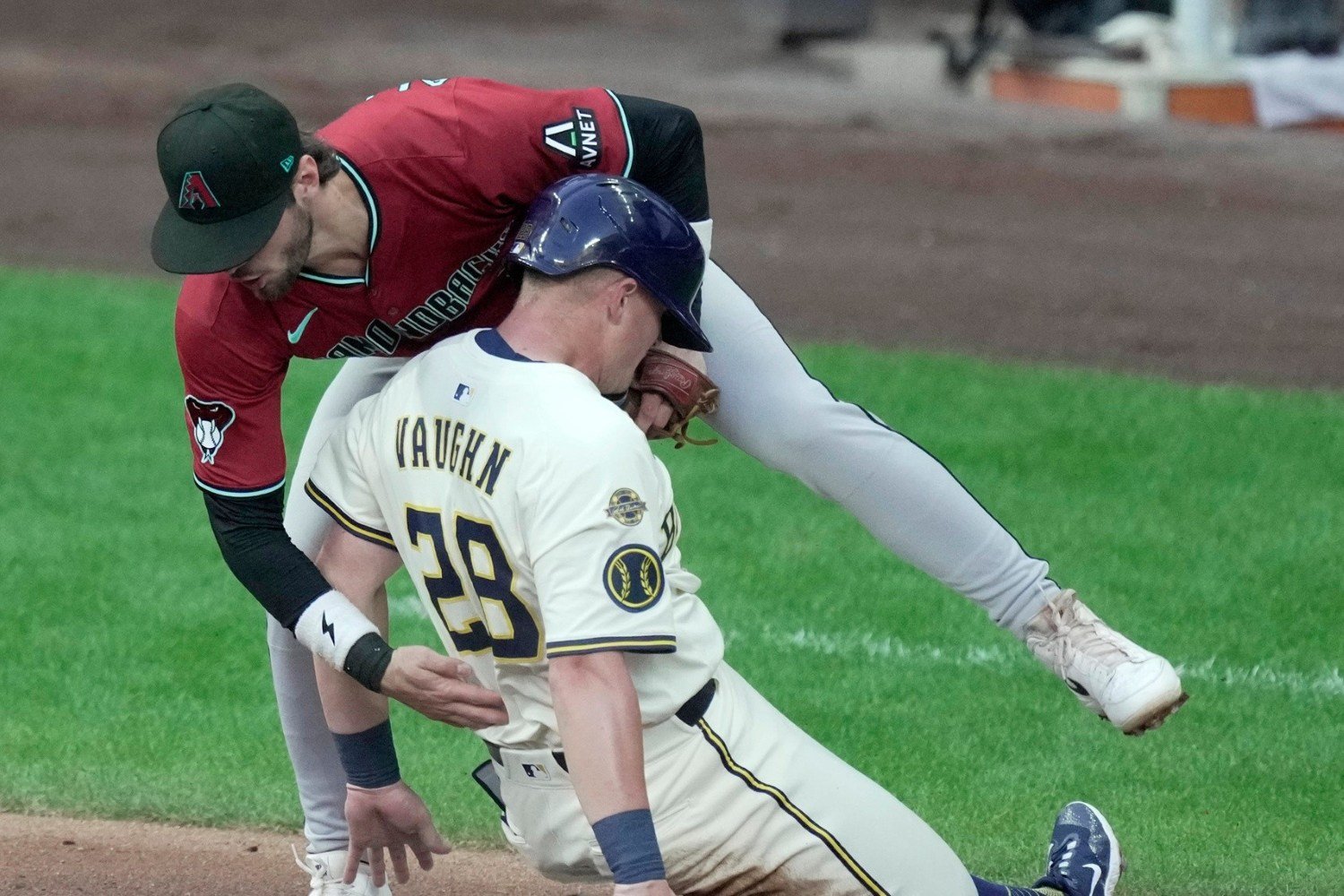
Image courtesy of © Tim Heitman-Imagn Images Andrew Vaughn has been a fascinating case study of what’s possible when one departs the White Sox organization. After four and a half years of failing to live up to his top prospect expectations, he was traded to Milwaukee and has already reached a career peak. In his first month as a Brewer, he posted a ridiculous 212 wRC+. Clearly, an unsustainable level of performance for him, fans were waiting for his numbers to return to reality. He did that in August, posting a meager 61 wRC+ from August 8th to August 31st. It was enough of a slip to wonder if he was hitting a wall just in time for Rhys Hoskins to come and save the day. After all, he wasn’t expected to be much more than a stopgap at the position, and he had already accomplished far more than expected. If he had never gotten another at-bat for the rest of the season, the move to acquire him would still be seen as a stroke of genius. However, it seems that Vaughn isn’t ready to give up on his big league dreams just yet. He has come surging back in September, comfortably leading all bats in the lineup with a 196 wRC+ for the month. He’s making a very strong case to be not just a part of the postseason roster but one of the core offensive pillars. Unpacking his offensive contributions over this span is even more interesting. His aforementioned slump saw him lose a lot of his pop at the plate, at least on paper. He slugged just .375 over that span, partly due to bad luck and partly due to opposing pitchers becoming wise to his antics. Now, he has become less reliant on the long ball and is more than willing to simply put the ball in play as long as it becomes a hit of some sort. He still hasn’t hit a home run since August 15th, but has instead slashed .444/.475/.583 with five doubles so far this month. Better baseball is rarely a bad thing, but one has to wonder whether this hot streak could do more harm than good. The Brewers still lead all MLB teams in wins, and although they haven’t gotten there quite yet, they have a 99.8% chance of winning the division for the third consecutive year, so it’s not like each sliver of added offense is impactful. Instead, Vaughn’s career renaissance could be getting in the way of Rhys Hoskins getting ramped back up. If you haven’t noticed, Hoskins was reinstated from the injured list on September 9th after being sidelined with a sprained left thumb. It’s completely understandable if you weren’t aware that he had returned, since he honestly hasn’t played much. He has accumulated a whopping four at-bats over four games since returning from the injured list. So while Vaughn has been powering the Brewers’ offense, their second-highest paid player has been riding the pine. When October arrives, does Pat Murphy plan to set the lineup this way? Will Jake Bauers see more playing time than Hoskins? To his credit, Bauers is also having a great month with a 177 wRC+, but will his and/or Vaughn’s recent success be carried over into the postseason? The only real sample we have of Hoskins' post-injury is his rehab assignment, where he posted a respectable .842 over 62 plate appearances with the Sounds, but we don’t have enough information to make an informed conclusion of how he’ll play against big league pitching, especially against teams of a playoff caliber. To me, it seems like he has already taken a backseat. Pat Murphy has a small but tight-knit circle of trust, and once someone falls out of it, it’s difficult for them to claw their way back in (see: Tobias Myers). There’s little more than a week of games left in the regular season, and in many ways, Milwaukee has left few questions unanswered this year. Deciding who will man first base and what the role of Rhys Hoskins is may be the team’s final order of business before the playoffs begin. View full article
-
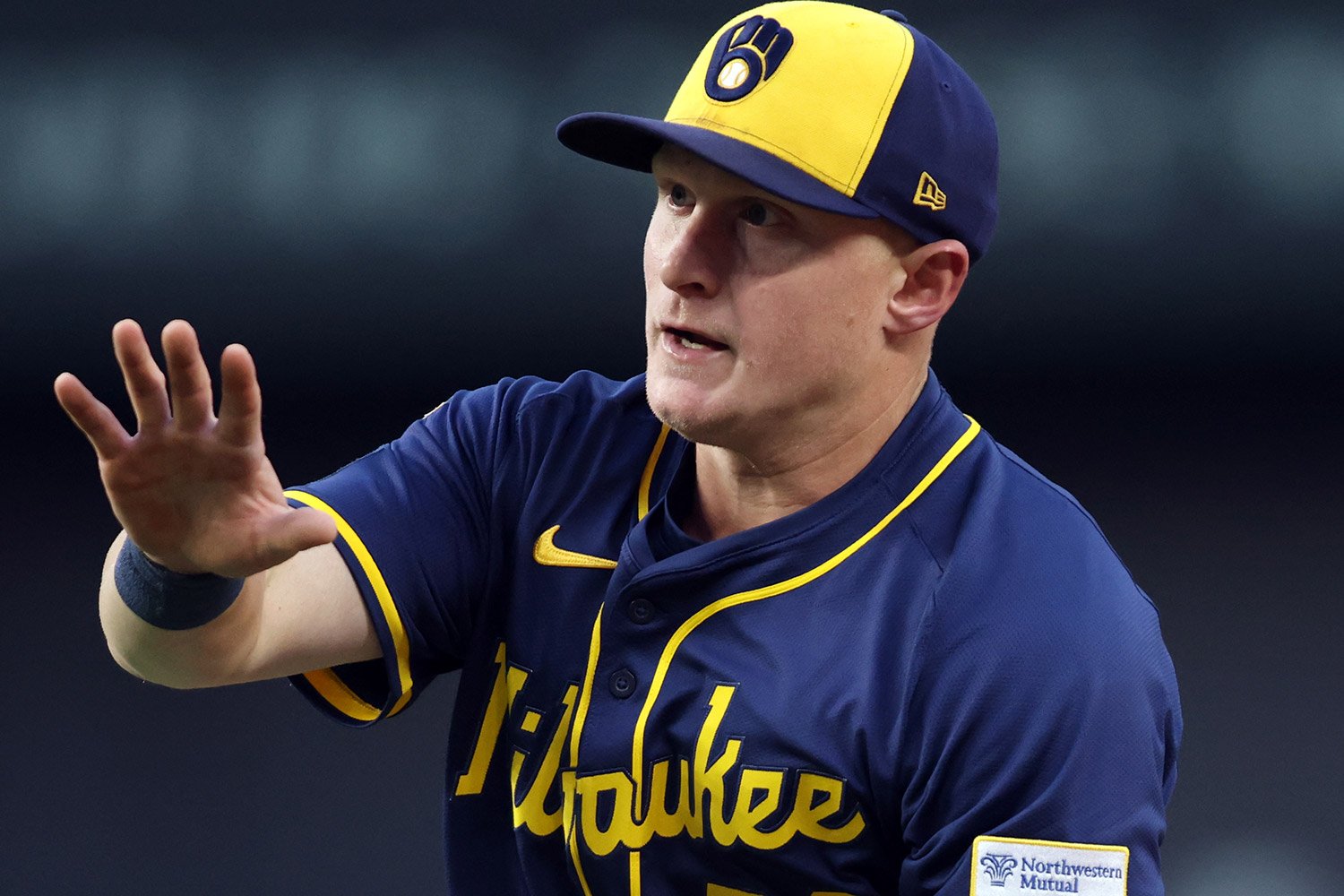 Andrew Vaughn has been a fascinating case study of what’s possible when one departs the White Sox organization. After four and a half years of failing to live up to his top prospect expectations, he was traded to Milwaukee and has already reached a career peak. In his first month as a Brewer, he posted a ridiculous 212 wRC+. Clearly, an unsustainable level of performance for him, fans were waiting for his numbers to return to reality. He did that in August, posting a meager 61 wRC+ from August 8th to August 31st. It was enough of a slip to wonder if he was hitting a wall just in time for Rhys Hoskins to come and save the day. After all, he wasn’t expected to be much more than a stopgap at the position, and he had already accomplished far more than expected. If he had never gotten another at-bat for the rest of the season, the move to acquire him would still be seen as a stroke of genius. However, it seems that Vaughn isn’t ready to give up on his big league dreams just yet. He has come surging back in September, comfortably leading all bats in the lineup with a 196 wRC+ for the month. He’s making a very strong case to be not just a part of the postseason roster but one of the core offensive pillars. Unpacking his offensive contributions over this span is even more interesting. His aforementioned slump saw him lose a lot of his pop at the plate, at least on paper. He slugged just .375 over that span, partly due to bad luck and partly due to opposing pitchers becoming wise to his antics. Now, he has become less reliant on the long ball and is more than willing to simply put the ball in play as long as it becomes a hit of some sort. He still hasn’t hit a home run since August 15th, but has instead slashed .444/.475/.583 with five doubles so far this month. Better baseball is rarely a bad thing, but one has to wonder whether this hot streak could do more harm than good. The Brewers still lead all MLB teams in wins, and although they haven’t gotten there quite yet, they have a 99.8% chance of winning the division for the third consecutive year, so it’s not like each sliver of added offense is impactful. Instead, Vaughn’s career renaissance could be getting in the way of Rhys Hoskins getting ramped back up. If you haven’t noticed, Hoskins was reinstated from the injured list on September 9th after being sidelined with a sprained left thumb. It’s completely understandable if you weren’t aware that he had returned, since he honestly hasn’t played much. He has accumulated a whopping four at-bats over four games since returning from the injured list. So while Vaughn has been powering the Brewers’ offense, their second-highest paid player has been riding the pine. When October arrives, does Pat Murphy plan to set the lineup this way? Will Jake Bauers see more playing time than Hoskins? To his credit, Bauers is also having a great month with a 177 wRC+, but will his and/or Vaughn’s recent success be carried over into the postseason? The only real sample we have of Hoskins' post-injury is his rehab assignment, where he posted a respectable .842 over 62 plate appearances with the Sounds, but we don’t have enough information to make an informed conclusion of how he’ll play against big league pitching, especially against teams of a playoff caliber. To me, it seems like he has already taken a backseat. Pat Murphy has a small but tight-knit circle of trust, and once someone falls out of it, it’s difficult for them to claw their way back in (see: Tobias Myers). There’s little more than a week of games left in the regular season, and in many ways, Milwaukee has left few questions unanswered this year. Deciding who will man first base and what the role of Rhys Hoskins is may be the team’s final order of business before the playoffs begin.
- 2 comments
-
- 1
-

-
- andrew vaughn
- rhys hoskins
- (and 1 more)
-
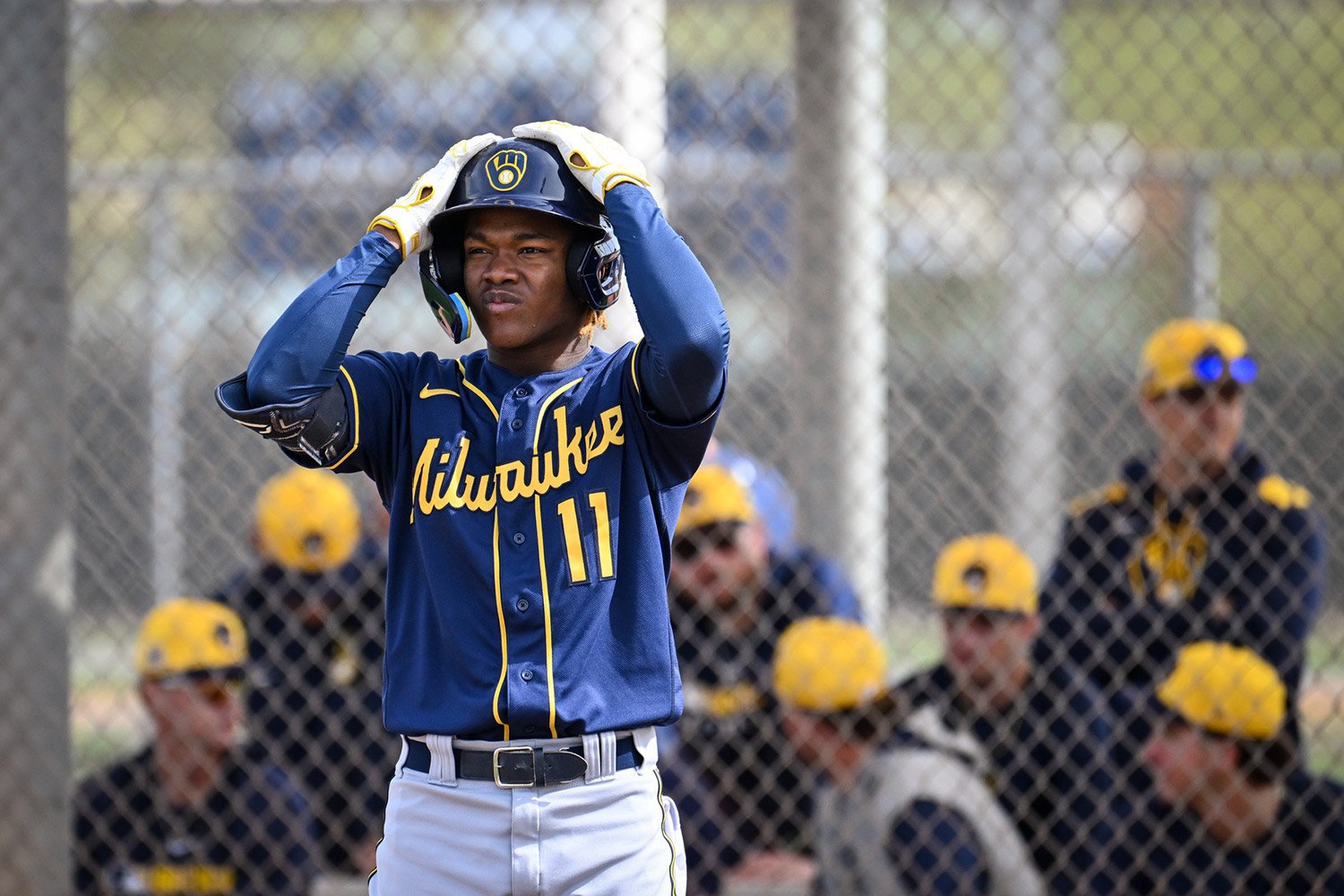 With the Timber Rattlers' season now over, Jesus Made will be making his way to Double-A Biloxi to help with their playoff run starting next week. Of course, this is more than a throwaway move and signals yet another major milestone for the 18-year-old. Made needed just 123 plate appearances with High-A Wisconsin to prove that he was ready for a step up in competition. Since being promoted in August, he has slashed .343/.415/.500 for a wRC+ of 157. Other than his walk rate, nearly every aspect of his offensive profile was an improvement from what he did with Single-A Carolina earlier in the year. While in High-A, his top-notch bat-to-ball were on full display as he had a swinging strike percentage of just 9.2% and a contact rate of 78.9%. His walk rate did dip slightly but was still at a respectable 10.6% while his strikeout rate of 17.9% was also a slight improvement over his performance in Single-A. We likely won't get a very meaningful sample of what he can do in Double-A given the small amount of remaining games but it could give fans a glimpse of what's to come starting next year. He's seemingly ahead of what's already a pretty accelerated schedule with an ETA of 2028 but could be on the doorstep of the big leagues as soon as next year.
 -
With the Timber Rattlers' season now over, Jesus Made will be making his way to Double-A Biloxi to help with their playoff run starting next week. Of course, this is more than a throwaway move and signals yet another major milestone for the 18-year-old. Made needed just 123 plate appearances with High-A Wisconsin to prove that he was ready for a step up in competition. Since being promoted in August, he has slashed .343/.415/.500 for a wRC+ of 157. Other than his walk rate, nearly every aspect of his offensive profile was an improvement from what he did with Single-A Carolina earlier in the year. While in High-A, his top-notch bat-to-ball were on full display as he had a swinging strike percentage of just 9.2% and a contact rate of 78.9%. His walk rate did dip slightly but was still at a respectable 10.6% while his strikeout rate of 17.9% was also a slight improvement over his performance in Single-A. We likely won't get a very meaningful sample of what he can do in Double-A given the small amount of remaining games but it could give fans a glimpse of what's to come starting next year. He's seemingly ahead of what's already a pretty accelerated schedule with an ETA of 2028 but could be on the doorstep of the big leagues as soon as next year. View full rumor
-
Image courtesy of © Mark Hoffman/Milwaukee Journal Sentinel / USA TODAY NETWORK via Imagn Images After his rookie season in 2023, the scouting report on Turang was simple: good defender, lackluster hitter. In 2024, he improved nearly every aspect of the game (even managing 50 stolen bases), but he remained a below-average hitter and an above-average defender. Thus far, his lack of production with the bat hasn’t been much of a problem. Even with an 86 OPS+ last year, he was still the Brewers’ second-most valuable player by rWAR (4.7), largely due to the lower offensive expectations for middle infielders. He had given fans a glimpse of a potential step forward at the plate by posting a respectable .731 OPS in the first half of last season, but regression after the All-Star break left us all wondering if it was all a dream. This year, we may finally have a definitive answer. With just a few weeks left in the regular season, Turang is having a career year offensively. After nearly 600 plate appearances, he’s at a 125 OPS+ and has hit more home runs this year (17) than in the past two seasons combined. This surge accelerated in August, when he slashed .343/.398/.694 over the month, and it hasn’t slowed down in September. In fact, 11 of his home runs have come in the past month; many of them have been towering shots. His average exit velocity has increased by 4 mph since last year, and his hard-hit rate has increased by almost 20%. For the first time, his quality of contact metrics are better than average. Some are almost in the top quartile of qualified hitters. But by far the most significant improvement has been how he has performed against fastballs. As a rookie, Turang struggled immensely against heaters, slugging just .271 against four-seamers and accumulating a run value of -15. Having issues against the most common pitch in baseball is a recipe for disaster, but he has shown clear signs of progress over the years. Run Value BA SLG wOBA Hard Hit % 2023 -15 .202 .271 .261 34.4% 2024 0 .323 .433 .379 33.1% 2025 5 .317 .525 .410 58.4% Now, given what happened with his rise and fall at the plate in 2024, one might assume that this jump in hard-hit balls is just another one of the sport’s many fleeting hot streaks. However, there’s evidence to suggest that the power has always been there. Ever since he got in the league, he has had rare instances of absolutely smoking pitches when he manages to get his A-swing off. This home run against Bryce Elder had an exit velocity of 104.3 mph and traveled 417 feet. The pop has always been in there somewhere, and he has now found a way to access it with more consistency. Whether that’s a result of additional time in the weight room, a more refined or confident approach, mechanical tweaks, a switch from 2% to whole milk, or a combination of several factors is unclear, but the results speak for themselves. The best part is, while he’s swinging a bigger stick, his glove has still been incredibly impactful, particularly when combined with the Brewers’ infield alignment. With a more complete skillset, Turang could finish the season with more than 6.0 rWAR and even be a down-ballot MVP candidate. Unfortunately, he'll have to perform a miracle (or several) to beat out Shohei Ohtani for the actual award, but all of this progress should have the Brewers rubbing their hands in glee, especially since he’ll be under team control until at least 2030. As the best player on the best team in the league, he could certainly finish in the top five, even if that's still not how most fans think about him nationally. To fans of the other 29 MLB teams, the success of the Brewers is a bit of a mystery. They operate in a smaller market with a meager budget and no superstars, yet they have managed to win more baseball games than any other team this year. The organization’s success has been attributed to the roster’s scrappy nature and ability for any player to step up on any given night, but there are absolutely players who have carried more than their fair share of the burden. While he isn’t known or paid like a superstar, Brice Turang is absolutely playing like one—and could be for the foreseeable future. View full article
-
Brice Turang's Offensive Breakout Has Him on the Fringes of MVP Discussion
Jason Wang posted an article in Brewers
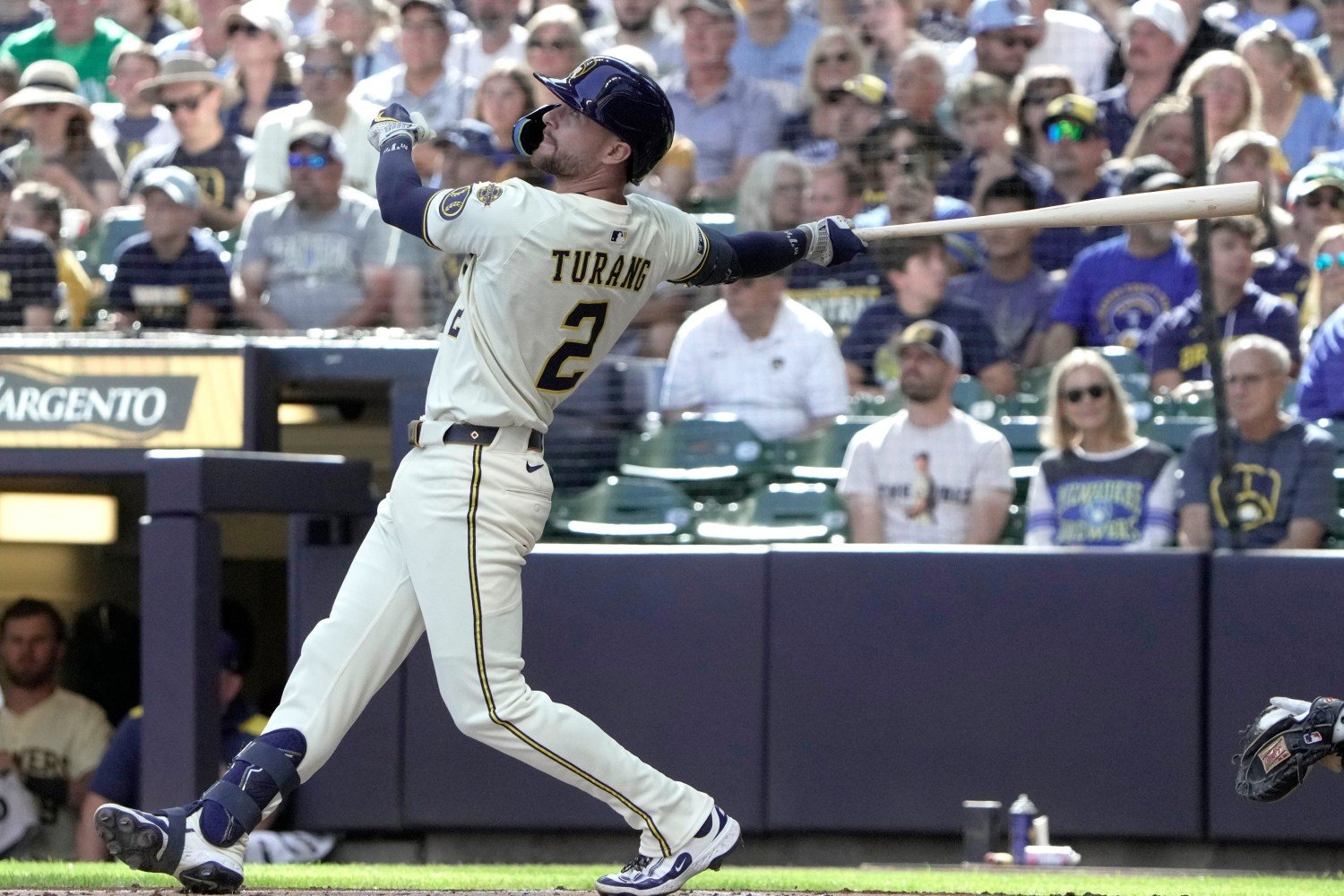 After his rookie season in 2023, the scouting report on Turang was simple: good defender, lackluster hitter. In 2024, he improved nearly every aspect of the game (even managing 50 stolen bases), but he remained a below-average hitter and an above-average defender. Thus far, his lack of production with the bat hasn’t been much of a problem. Even with an 86 OPS+ last year, he was still the Brewers’ second-most valuable player by rWAR (4.7), largely due to the lower offensive expectations for middle infielders. He had given fans a glimpse of a potential step forward at the plate by posting a respectable .731 OPS in the first half of last season, but regression after the All-Star break left us all wondering if it was all a dream. This year, we may finally have a definitive answer. With just a few weeks left in the regular season, Turang is having a career year offensively. After nearly 600 plate appearances, he’s at a 125 OPS+ and has hit more home runs this year (17) than in the past two seasons combined. This surge accelerated in August, when he slashed .343/.398/.694 over the month, and it hasn’t slowed down in September. In fact, 11 of his home runs have come in the past month; many of them have been towering shots. His average exit velocity has increased by 4 mph since last year, and his hard-hit rate has increased by almost 20%. For the first time, his quality of contact metrics are better than average. Some are almost in the top quartile of qualified hitters. But by far the most significant improvement has been how he has performed against fastballs. As a rookie, Turang struggled immensely against heaters, slugging just .271 against four-seamers and accumulating a run value of -15. Having issues against the most common pitch in baseball is a recipe for disaster, but he has shown clear signs of progress over the years. Run Value BA SLG wOBA Hard Hit % 2023 -15 .202 .271 .261 34.4% 2024 0 .323 .433 .379 33.1% 2025 5 .317 .525 .410 58.4% Now, given what happened with his rise and fall at the plate in 2024, one might assume that this jump in hard-hit balls is just another one of the sport’s many fleeting hot streaks. However, there’s evidence to suggest that the power has always been there. Ever since he got in the league, he has had rare instances of absolutely smoking pitches when he manages to get his A-swing off. This home run against Bryce Elder had an exit velocity of 104.3 mph and traveled 417 feet. The pop has always been in there somewhere, and he has now found a way to access it with more consistency. Whether that’s a result of additional time in the weight room, a more refined or confident approach, mechanical tweaks, a switch from 2% to whole milk, or a combination of several factors is unclear, but the results speak for themselves. The best part is, while he’s swinging a bigger stick, his glove has still been incredibly impactful, particularly when combined with the Brewers’ infield alignment. With a more complete skillset, Turang could finish the season with more than 6.0 rWAR and even be a down-ballot MVP candidate. Unfortunately, he'll have to perform a miracle (or several) to beat out Shohei Ohtani for the actual award, but all of this progress should have the Brewers rubbing their hands in glee, especially since he’ll be under team control until at least 2030. As the best player on the best team in the league, he could certainly finish in the top five, even if that's still not how most fans think about him nationally. To fans of the other 29 MLB teams, the success of the Brewers is a bit of a mystery. They operate in a smaller market with a meager budget and no superstars, yet they have managed to win more baseball games than any other team this year. The organization’s success has been attributed to the roster’s scrappy nature and ability for any player to step up on any given night, but there are absolutely players who have carried more than their fair share of the burden. While he isn’t known or paid like a superstar, Brice Turang is absolutely playing like one—and could be for the foreseeable future.
 -
no
-
 Milwaukee’s first base situation has had its fair share of ups and downs. After a rough year by Rowdy Tellez in 2023, the Brewers ponied up a heap of cash (by their standards) to pick up Rhys Hoskins on a two-year deal. His tenure as a Brewer has been lukewarm at best, averaging a .739 OPS since joining the team, but his numbers appear even worse when considering his high salary and lack of defensive value. Though still far from his career peak in 2022, Hoskins was playing better this year before being sidelined with a sprained left thumb in early July. That injury led the Crew to promote Andrew Vaughn, who had been acquired in June to hedge against this very situation. Expectations were as low as can be, given that Vaughn had been worth -1.8 rWAR across 48 games with the White Sox, but as usual, the Brewers captured lightning in a bottle. Vaughn posted a whopping 212 wRC+ in his first month with the club. Part of his success was due to some key mechanical adjustments, but deep down, many fans wondered how long the thrill ride would last. It seems we now have our answer. From August 8 onward, Vaughn has regressed to a 61 wRC+ over 97 plate appearances, as big-league pitchers are now privy to what his key weaknesses are. That hasn’t stopped the Brewers from maintaining their comfortable lead in the division, but as the postseason approaches, the team has to make a choice on whom they’ll start at first base. While Vaughn has been on a cold stretch, Hoskins has been tearing it up on his Triple-A rehab assignment, posting a 148 wRC+ in the 10 games he has played so far. More importantly, now that he’s almost back to full health, the pop in his bat seems to have returned as well, as he’s slugging .568 over this span with four doubles and two home runs. In addition to tapping back into his power, he has maintained his elite plate discipline, striking out just 11.4% of the time while walking at a 13.6% clip. In the big leagues this year, he struck out 26.7% of the time. His more recent numbers are obviously against minor-league pitching, but they’re a sign that his strengths have remained intact while his weaknesses are moving in the right direction. But what about Vaughn? Is he still somehow making a case to at least remain on the roster, perhaps even in a new position? The reality is, there was almost certainly going to be a correction in Vaughn’s numbers. After five big-league seasons, we more or less know what we’re getting out of him over a large sample size. In the aforementioned span stretching from August 8 to the present, his average exit velocity and hard-hit rate are down quite a bit, compared to his season average. He’s pulling the ball less frequently, hitting fewer line drives and more warning-track fly balls, and could even be considered unlucky with his .222 BABIP. In many ways, this version of Vaughn is more lore-accurate than the offensive behemoth we saw in July. He’ll continue to take reps at first base for now, especially since the Brewers recently announced that they’re taking it nice and easy with Hoskins and his rehab assignment, but it wouldn’t be surprising if Vaughn slowly cedes playing time over the final weeks of the regular season. Fortunately, there are pros to both outcomes. If Vaughn makes the necessary adjustments to revive his offensive production, then the Brewers will reap the rewards. If he continues his current skid, then the decision around who will get the lion’s share of playing time at his position will be clear as day.
 -
Image courtesy of © Mark Hoffman/Milwaukee Journal Sentinel / USA TODAY NETWORK via Imagn Images Milwaukee’s first base situation has had its fair share of ups and downs. After a rough year by Rowdy Tellez in 2023, the Brewers ponied up a heap of cash (by their standards) to pick up Rhys Hoskins on a two-year deal. His tenure as a Brewer has been lukewarm at best, averaging a .739 OPS since joining the team, but his numbers appear even worse when considering his high salary and lack of defensive value. Though still far from his career peak in 2022, Hoskins was playing better this year before being sidelined with a sprained left thumb in early July. That injury led the Crew to promote Andrew Vaughn, who had been acquired in June to hedge against this very situation. Expectations were as low as can be, given that Vaughn had been worth -1.8 rWAR across 48 games with the White Sox, but as usual, the Brewers captured lightning in a bottle. Vaughn posted a whopping 212 wRC+ in his first month with the club. Part of his success was due to some key mechanical adjustments, but deep down, many fans wondered how long the thrill ride would last. It seems we now have our answer. From August 8 onward, Vaughn has regressed to a 61 wRC+ over 97 plate appearances, as big-league pitchers are now privy to what his key weaknesses are. That hasn’t stopped the Brewers from maintaining their comfortable lead in the division, but as the postseason approaches, the team has to make a choice on whom they’ll start at first base. While Vaughn has been on a cold stretch, Hoskins has been tearing it up on his Triple-A rehab assignment, posting a 148 wRC+ in the 10 games he has played so far. More importantly, now that he’s almost back to full health, the pop in his bat seems to have returned as well, as he’s slugging .568 over this span with four doubles and two home runs. In addition to tapping back into his power, he has maintained his elite plate discipline, striking out just 11.4% of the time while walking at a 13.6% clip. In the big leagues this year, he struck out 26.7% of the time. His more recent numbers are obviously against minor-league pitching, but they’re a sign that his strengths have remained intact while his weaknesses are moving in the right direction. But what about Vaughn? Is he still somehow making a case to at least remain on the roster, perhaps even in a new position? The reality is, there was almost certainly going to be a correction in Vaughn’s numbers. After five big-league seasons, we more or less know what we’re getting out of him over a large sample size. In the aforementioned span stretching from August 8 to the present, his average exit velocity and hard-hit rate are down quite a bit, compared to his season average. He’s pulling the ball less frequently, hitting fewer line drives and more warning-track fly balls, and could even be considered unlucky with his .222 BABIP. In many ways, this version of Vaughn is more lore-accurate than the offensive behemoth we saw in July. He’ll continue to take reps at first base for now, especially since the Brewers recently announced that they’re taking it nice and easy with Hoskins and his rehab assignment, but it wouldn’t be surprising if Vaughn slowly cedes playing time over the final weeks of the regular season. Fortunately, there are pros to both outcomes. If Vaughn makes the necessary adjustments to revive his offensive production, then the Brewers will reap the rewards. If he continues his current skid, then the decision around who will get the lion’s share of playing time at his position will be clear as day. View full article
-
Image courtesy of © Jeff Hanisch-Imagn Images After two outstanding win streaks, Milwaukee has finally started to seem fallible. Holding a 4-6 record in their last ten games, it’s clear that despite having a strong roster, it’s far from perfect. Their spot in the playoffs is all but guaranteed this year thanks to their incredible 83-52 record but for the Brewers, success in the regular season is far easier to come by than in the playoffs. So, who are some of the players they can call up to help cover their bases? Honorable Mentions OF Daz Cameron Fans have already gotten a chance to see Cameron don a Brewers uniform this year and the results left quite a bit to be desired. Over a span of 42 plate appearances, Cameron slashed .195/.214/.293 with a 31.0% strikeout rate and a 2.4% walk rate. Given his poor outcomes and the already crowded outfield picture in Milwaukee, he was designated for assignment in early July to make room for Anthony Seigler before returning to Triple-A Nashville. Since rejoining the Sounds, he has been excellent at the plate, posting a 138 wRC+ since July 9th and keeping his strikeout rate to just 23.3% over that span. Unfortunately, while his season OPS of 1.008 for the Sounds is by far the highest of any player with more than 20 plate appearances, the stiff competition on the big league roster hasn’t changed. Proven big league talents like Blake Perkins are already having to settle for bench roles and with a long track record of struggling against major league pitching, the cards are stacked against Cameron, at least for this year. C Jeferson Quero The Brewers’ #4 prospect was originally set to make his debut this year but after a freak injury on Opening Day last season, his rise to the top has been delayed. Fortunately, he rebounded quickly and has returned to being a top talent. While his season wRC+ of 112 in Triple A is good, he’s quickly picking up momentum. In the month of August, he has posted a 163 wRC+ with a slugging percentage of .674, not too shabby for a prospect scouts have labeled as having “a close-to-average bat with decent power.” Although he’s on the right track and is making a great case to make the team’s Opening Day roster next year, calling him up now would come up with other complications. Sure, Danny Jansen has only managed a 68 wRC+ since arriving in Milwaukee but in a very short span, Quero would have to learn the ins and outs of an entirely new pitching staff while also dealing with the broader pains of getting settled in the majors. Despite his lack of offensive production, Jansen is a serviceable backup catcher and would still add more value to the team than Quero would at this point in the season. Potential Call-Ups 2B/3B Raynel Delgado Hardly a household name, Delgado signed a minor league contract with the Brewers in November and has spent the entire season in Triple A. At first glance, his 99 wRC+ at the level is hardly notable but he has been one of the hottest hitters on the team, slashing .336/.394/.507 since July 1st and even hitting for a cycle a few weeks ago. Delgado has spent the majority of his time at second base but has dabbled in playing third base which is a position the Brewers have kept notably fluid. As of late, Anthony Seigler has taken over some of the responsibility of the position off of Caleb Durbin’s shoulders against right-handed pitching. This could open a similar door of opportunity for Delgado who bats left-handed. He has actually performed better against southpaws this season but has also demonstrated a strong ability to hit right-handed pitching in the past. RHP Justin Yeager It has been a big year for Yeager. After putting up strong numbers with Double-A Biloxi, he was promoted to Triple A in mid-July and has continued his strong momentum, posting a 1.20 ERA over 15 innings while holding opposing hitters to a .137 average. His 22.6% strikeout rate and 17.7% walk rate are undoubtedly causes for concern over this span and have resulted in a FIP of 3.86 but the walk rate especially is skewed by one game in which he conceded four free passes. If the Brewers do want to give him a shot and need relievers to fill the bullpen, Yeager could give them just enough of an edge to be meaningful. RHP Craig Yoho If all you’ve ever seen of Craig Yoho is his 7 ⅔ innings of major league relief, you might be wondering why a pitcher with an 8.22 ERA and 7.43 WHIP should even get another look. It’s an understandable concern but his much larger Triple-A sample has instilled hope in his abilities once more. He has pitched to an 0.85 ERA over 42 ⅓ innings with the Sounds and in the 10 ⅓ innings he has pitched since being optioned at the end of July, he has posted a 0.87 ERA with a 34.1% strikeout rate. Milwaukee’s bullpen has already been shaken up in a big way now that Trevor Megill has hit the injured list and a lesser but still important loss to injury has been Grant Anderson being sidelined with right ankle tendonitis. Tobias Myers and Easton McGee have already been recalled to fill the gaps but with a need for more electric talent, Yoho could be the man for the job. The past results haven’t been the best but it’s clear that he’s still capable of being dominant at a high level. A potential wild card, it wouldn’t be the worst thing in the world to give him another shot. View full article
-
3 Players That Could Get Added To The Expanded September Roster
Jason Wang posted an article in Brewers
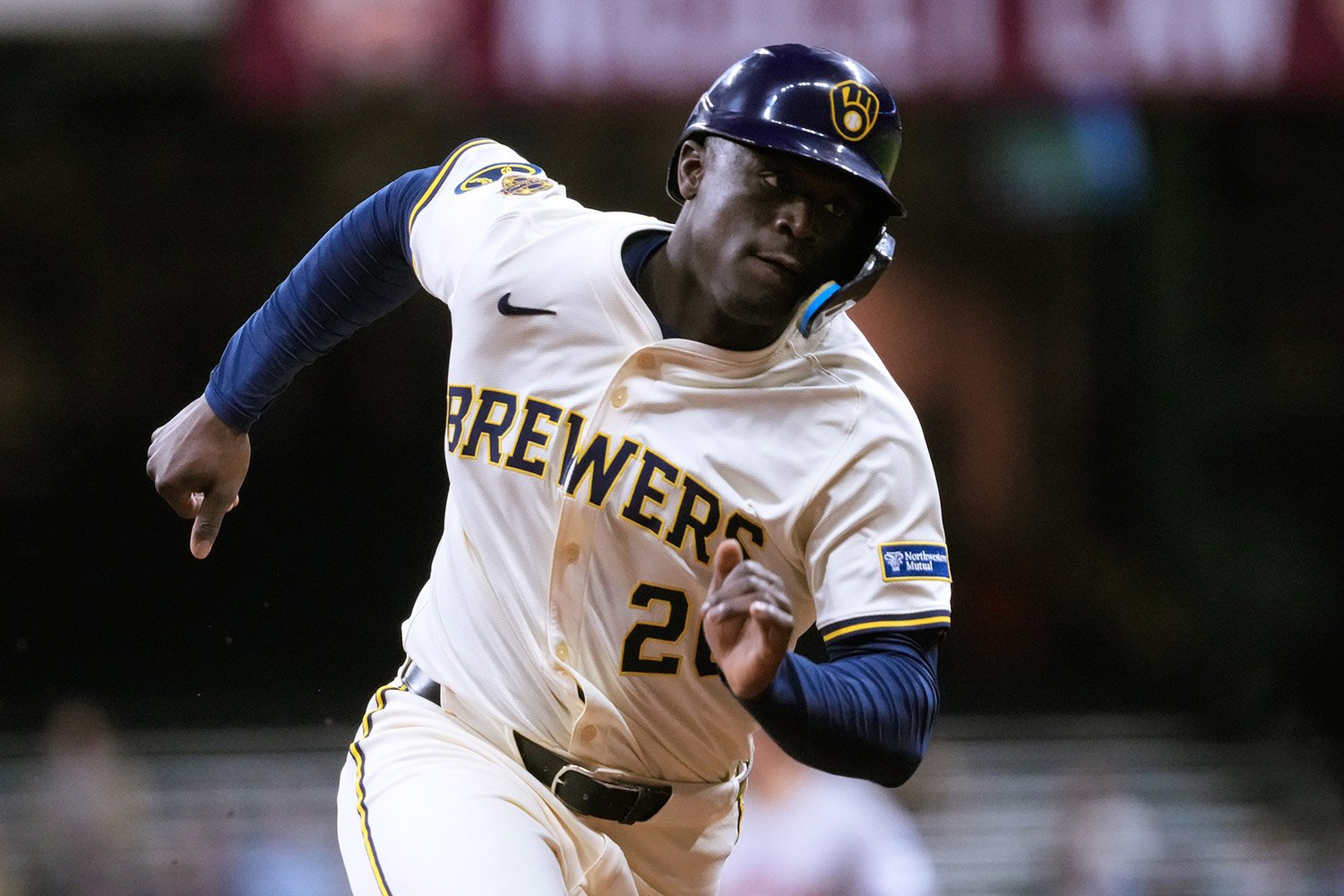 After two outstanding win streaks, Milwaukee has finally started to seem fallible. Holding a 4-6 record in their last ten games, it’s clear that despite having a strong roster, it’s far from perfect. Their spot in the playoffs is all but guaranteed this year thanks to their incredible 83-52 record but for the Brewers, success in the regular season is far easier to come by than in the playoffs. So, who are some of the players they can call up to help cover their bases? Honorable Mentions OF Daz Cameron Fans have already gotten a chance to see Cameron don a Brewers uniform this year and the results left quite a bit to be desired. Over a span of 42 plate appearances, Cameron slashed .195/.214/.293 with a 31.0% strikeout rate and a 2.4% walk rate. Given his poor outcomes and the already crowded outfield picture in Milwaukee, he was designated for assignment in early July to make room for Anthony Seigler before returning to Triple-A Nashville. Since rejoining the Sounds, he has been excellent at the plate, posting a 138 wRC+ since July 9th and keeping his strikeout rate to just 23.3% over that span. Unfortunately, while his season OPS of 1.008 for the Sounds is by far the highest of any player with more than 20 plate appearances, the stiff competition on the big league roster hasn’t changed. Proven big league talents like Blake Perkins are already having to settle for bench roles and with a long track record of struggling against major league pitching, the cards are stacked against Cameron, at least for this year. C Jeferson Quero The Brewers’ #4 prospect was originally set to make his debut this year but after a freak injury on Opening Day last season, his rise to the top has been delayed. Fortunately, he rebounded quickly and has returned to being a top talent. While his season wRC+ of 112 in Triple A is good, he’s quickly picking up momentum. In the month of August, he has posted a 163 wRC+ with a slugging percentage of .674, not too shabby for a prospect scouts have labeled as having “a close-to-average bat with decent power.” Although he’s on the right track and is making a great case to make the team’s Opening Day roster next year, calling him up now would come up with other complications. Sure, Danny Jansen has only managed a 68 wRC+ since arriving in Milwaukee but in a very short span, Quero would have to learn the ins and outs of an entirely new pitching staff while also dealing with the broader pains of getting settled in the majors. Despite his lack of offensive production, Jansen is a serviceable backup catcher and would still add more value to the team than Quero would at this point in the season. Potential Call-Ups 2B/3B Raynel Delgado Hardly a household name, Delgado signed a minor league contract with the Brewers in November and has spent the entire season in Triple A. At first glance, his 99 wRC+ at the level is hardly notable but he has been one of the hottest hitters on the team, slashing .336/.394/.507 since July 1st and even hitting for a cycle a few weeks ago. Delgado has spent the majority of his time at second base but has dabbled in playing third base which is a position the Brewers have kept notably fluid. As of late, Anthony Seigler has taken over some of the responsibility of the position off of Caleb Durbin’s shoulders against right-handed pitching. This could open a similar door of opportunity for Delgado who bats left-handed. He has actually performed better against southpaws this season but has also demonstrated a strong ability to hit right-handed pitching in the past. RHP Justin Yeager It has been a big year for Yeager. After putting up strong numbers with Double-A Biloxi, he was promoted to Triple A in mid-July and has continued his strong momentum, posting a 1.20 ERA over 15 innings while holding opposing hitters to a .137 average. His 22.6% strikeout rate and 17.7% walk rate are undoubtedly causes for concern over this span and have resulted in a FIP of 3.86 but the walk rate especially is skewed by one game in which he conceded four free passes. If the Brewers do want to give him a shot and need relievers to fill the bullpen, Yeager could give them just enough of an edge to be meaningful. RHP Craig Yoho If all you’ve ever seen of Craig Yoho is his 7 ⅔ innings of major league relief, you might be wondering why a pitcher with an 8.22 ERA and 7.43 WHIP should even get another look. It’s an understandable concern but his much larger Triple-A sample has instilled hope in his abilities once more. He has pitched to an 0.85 ERA over 42 ⅓ innings with the Sounds and in the 10 ⅓ innings he has pitched since being optioned at the end of July, he has posted a 0.87 ERA with a 34.1% strikeout rate. Milwaukee’s bullpen has already been shaken up in a big way now that Trevor Megill has hit the injured list and a lesser but still important loss to injury has been Grant Anderson being sidelined with right ankle tendonitis. Tobias Myers and Easton McGee have already been recalled to fill the gaps but with a need for more electric talent, Yoho could be the man for the job. The past results haven’t been the best but it’s clear that he’s still capable of being dominant at a high level. A potential wild card, it wouldn’t be the worst thing in the world to give him another shot.
- 3 comments
-
- 1
-
-
- daz cameron
- jeferson quero
- (and 3 more)
-
Image courtesy of © Katie Stratman-Imagn Images It has been an action-packed season for Jose Quintana. After signing a modest one-year contract with Milwaukee in March and getting a late start to his pre-season prep, he came out of the gate like gangbusters and posted a 1.14 ERA over his first four starts. Unfortunately, the good fortune didn’t last long. He spent a stint on the injured list, and his next 11 starts combined for a much less appealing 4.45 ERA. Around this year’s trade deadline, there was an impending logjam in Milwaukee’s rotation. Both Quintana and Nestor Cortes were candidates to be moved. There was a strong case to be made that Quintana should’ve been the one traded, but ultimately, Cortes went to the Padres in exchange for Brandon Lockridge. Once again, it seems like Milwaukee knew something that we didn’t. In the four starts he has made since the trade deadline, Quintana has thrown 23 ⅓ innings, with a 2.70 ERA and 3.89 FIP. So is this a real improvement, or just another stretch of lucky results? A particularly nitpicky Quintana critic might highlight that the competition he faced in his last four starts isn’t exactly the stiffest. He pitched against the Nationals (24th in OPS), Atlanta (14th in OPS), Pirates (30th in OPS), and Reds (17th in OPS). Of those teams, the only one with more than a 1% chance to make the postseason (per FanGraphs’s projections) is the Reds, who have a 19.7% chance to crack a Wild Card spot. Nonetheless, even the worst big-league teams are still good enough to be a threat on any given day. Although they were against apparently weaker opponents, these four starts tell us a lot about what is working for him and how he has adapted his game to accept his weaknesses. Earlier in the year, Matthew Trueblood wrote a great piece about how a guy like Quintana can have bottom-of-the-barrel peripherals and rapidly declining stuff while still chewing up the game’s best hitters. This past month, he returned to doing a lot of what was discussed in Matt’s article. Without the ability to miss bats, his strikeout rate was still comfortably below 20% over this stretch of four good starts, but rather than trying to avoid the inevitable, he has been laser-focused on generating weak contact. Here's how his batted-ball data compares from the middle of the season to his most recent outings. ERA Average Exit Velocity Line Drive % Ground Ball % Fly Ball % Home Run/Fly Ball % Pull % Hard-Hit % 5/1 - 7/31 4.45 88.5 mph 17.6% 45.2% 37.2% 14.3% 36.5% 29.6% 8/1 - Present 2.70 88.5 mph 20.8% 36.1% 43.1% 9.7% 33.3% 34.7% It’s a little kooky that his average exit velocity has stayed exactly where it is, but other than that, the major pattern that emerges is that Quintana is getting fewer ground balls and more fly balls. However, fewer of the fly balls are leaving the yard, and if you watch the tape, many of them are settling harmlessly in the gloves of Brewers outfielders. One key contributor to this shift in batted-ball data is yet another change in his pitch mix over these two spans. 4-Seam % Sinker % Curveball Changeup % 5/1 - 7/31 11.10% 44.90% 22.7% 21.4% 8/1 - Present 16.80% 37.20% 25.1% 20.9% Fewer sinkers means fewer ground balls, and more curveballs and fastballs mean more lift. However, he’s sitting in that Goldilocks zone where batters are getting under his pitches just enough to limit the exit velocity. With the way that his year has gone, this shift makes sense. His sinker and changeup have been worth negative run value this year, while his curveball and slurve have been remarkably efficient in comparison. Batters are averaging just .169 and .118 against those pitches, respectively. One characteristic that seems to limit the effectiveness of his sinker is its location. Traditionally, the best sinkers are located down in the zone. Quintana's tendency to leave his sinker a little too high creates hard-hit line drives up the middle, rather than harmless dribblers to middle infielders. So, a heavier reliance on his secondary offerings seems to have helped bridge the gap, at least for now. Furthermore, he has only walked 4.2% of opposing hitters over the past month, which is good no matter what else you're doing. The broader question is whether he’ll be able to keep this up, and the answer is: probably not. It’s difficult to get by as a starter in today’s league with just two pitches and no competitive fastball offering. Sooner or later, scouting reports will catch up; his curveball and changeup could soon follow a similar decline as his sinker. Luckily, it’s an issue that Milwaukee won’t have to think about for much longer, but it could have big implications on the postseason roster. They’ve trusted him to get this far, but how much they'll trust him come October is hard to guess. View full article
-
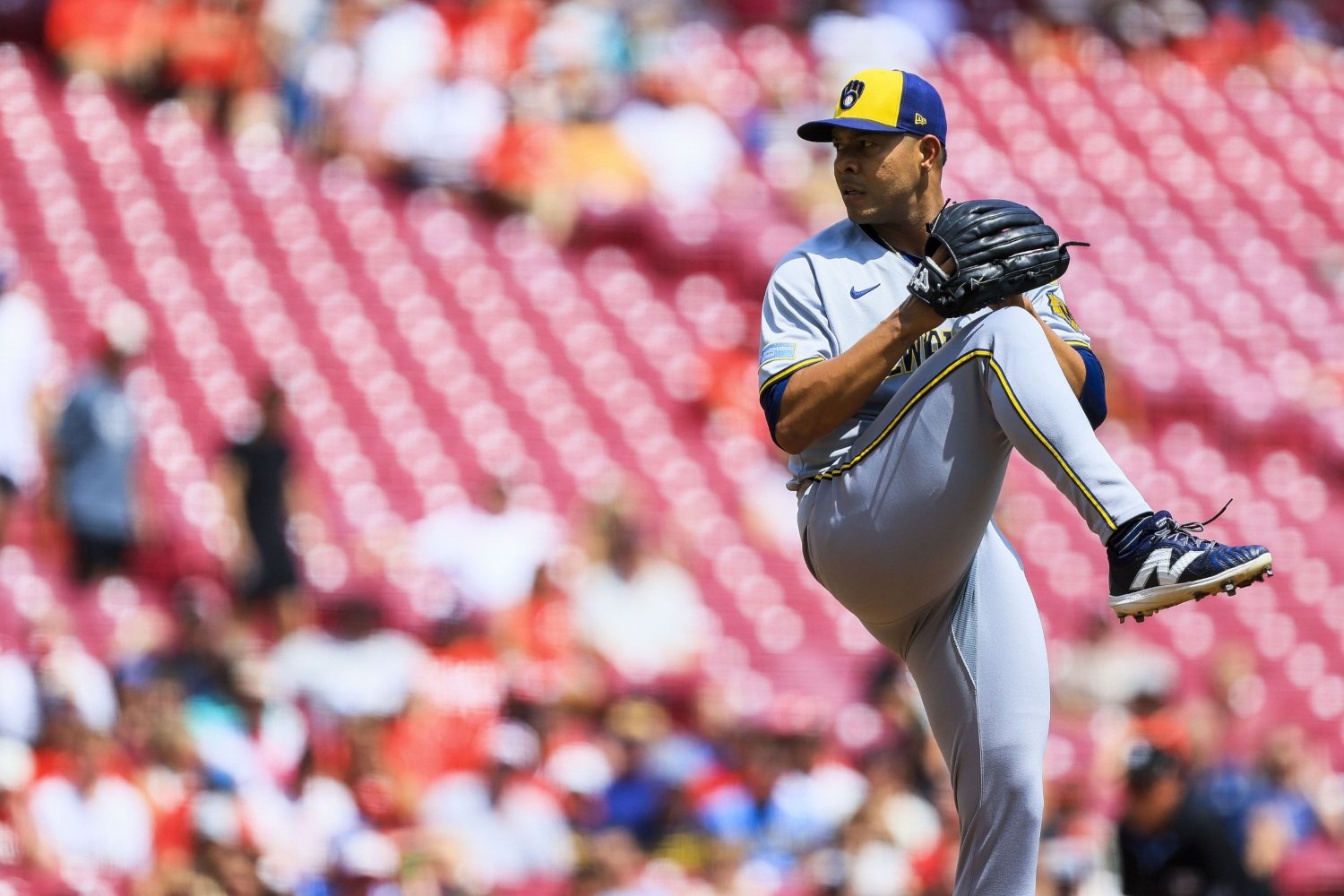 It has been an action-packed season for Jose Quintana. After signing a modest one-year contract with Milwaukee in March and getting a late start to his pre-season prep, he came out of the gate like gangbusters and posted a 1.14 ERA over his first four starts. Unfortunately, the good fortune didn’t last long. He spent a stint on the injured list, and his next 11 starts combined for a much less appealing 4.45 ERA. Around this year’s trade deadline, there was an impending logjam in Milwaukee’s rotation. Both Quintana and Nestor Cortes were candidates to be moved. There was a strong case to be made that Quintana should’ve been the one traded, but ultimately, Cortes went to the Padres in exchange for Brandon Lockridge. Once again, it seems like Milwaukee knew something that we didn’t. In the four starts he has made since the trade deadline, Quintana has thrown 23 ⅓ innings, with a 2.70 ERA and 3.89 FIP. So is this a real improvement, or just another stretch of lucky results? A particularly nitpicky Quintana critic might highlight that the competition he faced in his last four starts isn’t exactly the stiffest. He pitched against the Nationals (24th in OPS), Atlanta (14th in OPS), Pirates (30th in OPS), and Reds (17th in OPS). Of those teams, the only one with more than a 1% chance to make the postseason (per FanGraphs’s projections) is the Reds, who have a 19.7% chance to crack a Wild Card spot. Nonetheless, even the worst big-league teams are still good enough to be a threat on any given day. Although they were against apparently weaker opponents, these four starts tell us a lot about what is working for him and how he has adapted his game to accept his weaknesses. Earlier in the year, Matthew Trueblood wrote a great piece about how a guy like Quintana can have bottom-of-the-barrel peripherals and rapidly declining stuff while still chewing up the game’s best hitters. This past month, he returned to doing a lot of what was discussed in Matt’s article. Without the ability to miss bats, his strikeout rate was still comfortably below 20% over this stretch of four good starts, but rather than trying to avoid the inevitable, he has been laser-focused on generating weak contact. Here's how his batted-ball data compares from the middle of the season to his most recent outings. ERA Average Exit Velocity Line Drive % Ground Ball % Fly Ball % Home Run/Fly Ball % Pull % Hard-Hit % 5/1 - 7/31 4.45 88.5 mph 17.6% 45.2% 37.2% 14.3% 36.5% 29.6% 8/1 - Present 2.70 88.5 mph 20.8% 36.1% 43.1% 9.7% 33.3% 34.7% It’s a little kooky that his average exit velocity has stayed exactly where it is, but other than that, the major pattern that emerges is that Quintana is getting fewer ground balls and more fly balls. However, fewer of the fly balls are leaving the yard, and if you watch the tape, many of them are settling harmlessly in the gloves of Brewers outfielders. One key contributor to this shift in batted-ball data is yet another change in his pitch mix over these two spans. 4-Seam % Sinker % Curveball Changeup % 5/1 - 7/31 11.10% 44.90% 22.7% 21.4% 8/1 - Present 16.80% 37.20% 25.1% 20.9% Fewer sinkers means fewer ground balls, and more curveballs and fastballs mean more lift. However, he’s sitting in that Goldilocks zone where batters are getting under his pitches just enough to limit the exit velocity. With the way that his year has gone, this shift makes sense. His sinker and changeup have been worth negative run value this year, while his curveball and slurve have been remarkably efficient in comparison. Batters are averaging just .169 and .118 against those pitches, respectively. One characteristic that seems to limit the effectiveness of his sinker is its location. Traditionally, the best sinkers are located down in the zone. Quintana's tendency to leave his sinker a little too high creates hard-hit line drives up the middle, rather than harmless dribblers to middle infielders. So, a heavier reliance on his secondary offerings seems to have helped bridge the gap, at least for now. Furthermore, he has only walked 4.2% of opposing hitters over the past month, which is good no matter what else you're doing. The broader question is whether he’ll be able to keep this up, and the answer is: probably not. It’s difficult to get by as a starter in today’s league with just two pitches and no competitive fastball offering. Sooner or later, scouting reports will catch up; his curveball and changeup could soon follow a similar decline as his sinker. Luckily, it’s an issue that Milwaukee won’t have to think about for much longer, but it could have big implications on the postseason roster. They’ve trusted him to get this far, but how much they'll trust him come October is hard to guess.