


Matthew Trueblood
-
Posts
1,964 -
Joined
-
Last visited
-
Days Won
10
Content Type
Profiles
Forums
Blogs
Events
News
2026 Milwaukee Brewers Top Prospects Ranking
Milwaukee Brewers Videos
2022 Milwaukee Brewers Draft Picks
Milwaukee Brewers Free Agent & Trade Rumors, Notes, & Tidbits
Guides & Resources
2023 Milwaukee Brewers Draft Picks
2024 Milwaukee Brewers Draft Picks
The Milwaukee Brewers Players Project
2025 Milwaukee Brewers Draft Pick Tracker
2026 Milwaukee Brewers Draft Tracker: Picks & Bonuses
Store
Downloads
Gallery
Everything posted by Matthew Trueblood
-
Surely the first time anyone has been labeled "the next Mike Felder". But yeah, that's a fair projection! Maybe even conservative, if he clicks.
-
Absolutely. Even the rankers who don't have the Brewers as the best system in the league know they're the deepest.
- 21 replies
-
- 2
-

-
- luis lara
- brock wilken
- (and 3 more)
-
If they had ANY intention of giving the job to Quero, Sanchez would not be here. Also, I do think he has some things left to prove in the minors.
-
Image courtesy of © Kevin Jairaj-Imagn Images Whether the Brewers would pursue a backup catcher was a hot topic over the final few weeks of the offseason. As they opened camp to pitchers and catchers Wednesday, the team answered the question more forcefully than they had to that point, signing old friend Gary Sánchez to a one-year deal worth $1.75 million. Two years after spending a campaign with the Brewers as a slugging backstop and occasional DH, Sánchez will reprise the role, though for one-fourth of the money he made last time around. Jon Heyman of the New York Post had the news first. Sánchez, 33, batted .220/.307/.392 and swatted 11 home runs for the Brewers in 2024. Last year, with the Orioles, he played in just 29 big-league games and had only 101 plate appearances, but he hit .237/.297/.418. Though big and sluggardly, he plays acceptable defense at catcher, and his power remains a helpful threat. He's played for five teams in the last four years, but after having a comfortable and useful season as William Contreras's understudy in Pat Murphy's first campaign, Sánchez will get a second stint with the club. This makes the path to a spot on the Opening Day roster much tougher for both Reese McGuire (who signed a minor-league deal last month) and Jeferson Quero. Presumably, Quero will be the starting backstop for Triple-A Nashville to open the season, and the team will try to convince McGuire to stick around as a depth piece. Alternatively, Quero could be involved in a trade that brings Milwaukee a replacement for just-traded third baseman Caleb Durbin, but for now, that possibility feels remote. If nothing else, Sánchez brings power and a veteran presence to a young team with below-average raw pop. View full article
-
Brewers Sign Gary Sanchez to One-Year Major-League Deal
Matthew Trueblood posted an article in Brewers
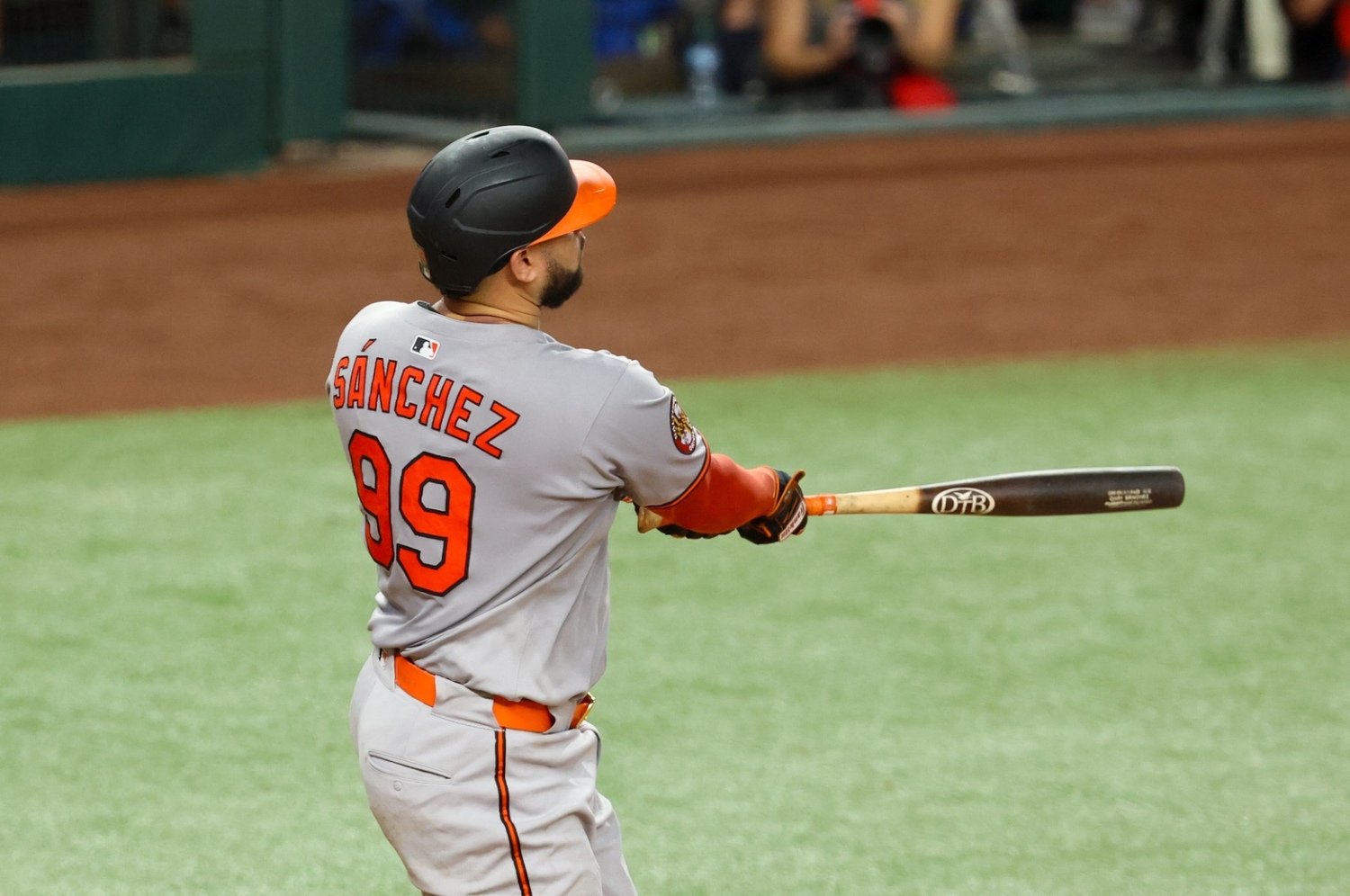 Whether the Brewers would pursue a backup catcher was a hot topic over the final few weeks of the offseason. As they opened camp to pitchers and catchers Wednesday, the team answered the question more forcefully than they had to that point, signing old friend Gary Sánchez to a one-year deal worth $1.75 million. Two years after spending a campaign with the Brewers as a slugging backstop and occasional DH, Sánchez will reprise the role, though for one-fourth of the money he made last time around. Jon Heyman of the New York Post had the news first. Sánchez, 33, batted .220/.307/.392 and swatted 11 home runs for the Brewers in 2024. Last year, with the Orioles, he played in just 29 big-league games and had only 101 plate appearances, but he hit .237/.297/.418. Though big and sluggardly, he plays acceptable defense at catcher, and his power remains a helpful threat. He's played for five teams in the last four years, but after having a comfortable and useful season as William Contreras's understudy in Pat Murphy's first campaign, Sánchez will get a second stint with the club. This makes the path to a spot on the Opening Day roster much tougher for both Reese McGuire (who signed a minor-league deal last month) and Jeferson Quero. Presumably, Quero will be the starting backstop for Triple-A Nashville to open the season, and the team will try to convince McGuire to stick around as a depth piece. Alternatively, Quero could be involved in a trade that brings Milwaukee a replacement for just-traded third baseman Caleb Durbin, but for now, that possibility feels remote. If nothing else, Sánchez brings power and a veteran presence to a young team with below-average raw pop.
 -
Image courtesy of © Mark Hoffman/Milwaukee Journal Sentinel / USA TODAY NETWORK via Imagn Images Baseball Prospectus posted their PECOTA projections for 2026 on Tuesday, including projected standings and playoff odds. For Brewers fans, the news is not good. The Cubs are not only favorites to win the division, but project for 90.5 wins—a full 10 games clear of the 80.5 victories for which the system pegs the Brewers. The system gives the Crew just a 10.5% chance to win their fourth straight NL Central crown, and only a 31.2% shot to make the playoffs at all. This feeling is familiar, but not fun, even though the story tends to end with Milwaukee far outstripping their projected win total. Last week, FanGraphs posted their own projections and playoff odds, which are (technically) more optimistic about the Brewers. It gives them an 82-win projection. However, in that version of the projected standings, the Cubs are still first (albeit at a more reachable win total) and the Pirates sneak in just ahead of Milwaukee, for second place. That's a jarring snapshot of where things stand as Brewers personnel gather in Maryvale. They're not only not the favorites, but very much the underdogs in the fight to sustain their regional dynasty. For PECOTA, at least, the problems the Brewers face lie in run production, rather than run prevention. The model expects Milwaukee pitchers to be better than average, and for them to be about 11 runs better than average when combining fielding and baserunning. However, the team's projected DRC+ is just 96, where 100 is average and higher is better. It's a dreary outlook, even for a team that prides itself more on good pitching and defense than on slugging. Two things about the projection stand out especially starkly. Firstly, PECOTA hates Brice Turang. I mean, it hates him. The model projects an 87 DRC+ and a .238/.311/.360 batting line for Turang. It sees him hitting 13 homers in 630 plate appearances, which would represent a small step backward after 2025, but the extent of the setback that overall line would be is much greater. Turang batted .288/.359/.435 in 2025. Admittedly, he hit just .254/.316/.349 in 2024, but even that line is essentially equal in value to the one he's forecasted to produce this season—and it ignores his breakout year altogether, despite that being the most recent and relevant data about what he'll do next. Systems can be designed for varying levels of sensitivity to sub-surface adjustments, like the way Turang increased his bat speed in 2025 and traded some contact for better power, but they can't be tweaked in specific cases; the risk of compromising the methodological integrity of the model is too great. Thus, PECOTA's wariness about Turang is understandable, and perhaps even a necessary evil. Nonetheless, to best predict what the Brewers will do in 2026, one should mentally adjust Turang's expected offensive output upward by about 10 runs. Secondly, the Brewers set themselves back Monday by trading Caleb Durbin, as far as PECOTA is concerned. Durbin, now with the Red Sox, is projected for a 104 DRC+, with a .254/.332/.377 line. If the system is to be believed, Milwaukee will sorely miss those on-base skills. Player AVG OBP SLG DRC+ Caleb Durbin .254 .332 .377 104 Andruw Monasterio .234 .306 .356 86 Joey Ortiz .248 .307 .392 96 Jett Williams .235 .314 .387 96 David Hamilton .223 .292 .357 77 Tyler Black .197 .296 .338 75 David Hamilton will bring more speed and better up-the-middle defense off the bench than did Andruw Monasterio, but Monasterio is projected to be the better hitter. Meanwhile, neither Joey Ortiz nor Jett Williams is expected to replace what Durbin (with his elite contact rate and knack for getting hit by pitches) brought to the Milwaukee lineup. Barring a move for an external solution at third base, the Brewers downgraded somewhat significantly by trading Durbin and Monasterio to Boston. It's nice to have better pitching depth than ever, but it might not be enough to justify having moved on so quickly from a player with long-term team control and such a high baseline for performance. Sharp-eyed readers will notice that both Ortiz and Williams are projected to outhit Turang, according to PECOTA. That just reinforces the jarring nature of Turang's projection. It feels indefensibly wrong, but it does highlight an important truth: using more than one year of data (where it's available) makes projections better. What happened last is not always what should be expected to happen next. Turang's projection probably is too low, but that doesn't mean that Ortiz's is unduly optimistic. The best-case scenario, then, is that the Brewers make some other addition to shore up the infield mix, but also get this version of Ortiz (one very much akin to the player he was in 2024) and the improved version of Turang. That still won't get them to 90 wins, but it'll start them on the journey there. The team will have to find other players who outdo their projections, too, but that's rarely a problem for the unassuming superpower of the NL Central. At least Pat Murphy won't be hurting for bulletin board material this spring, should he want some. View full article
-
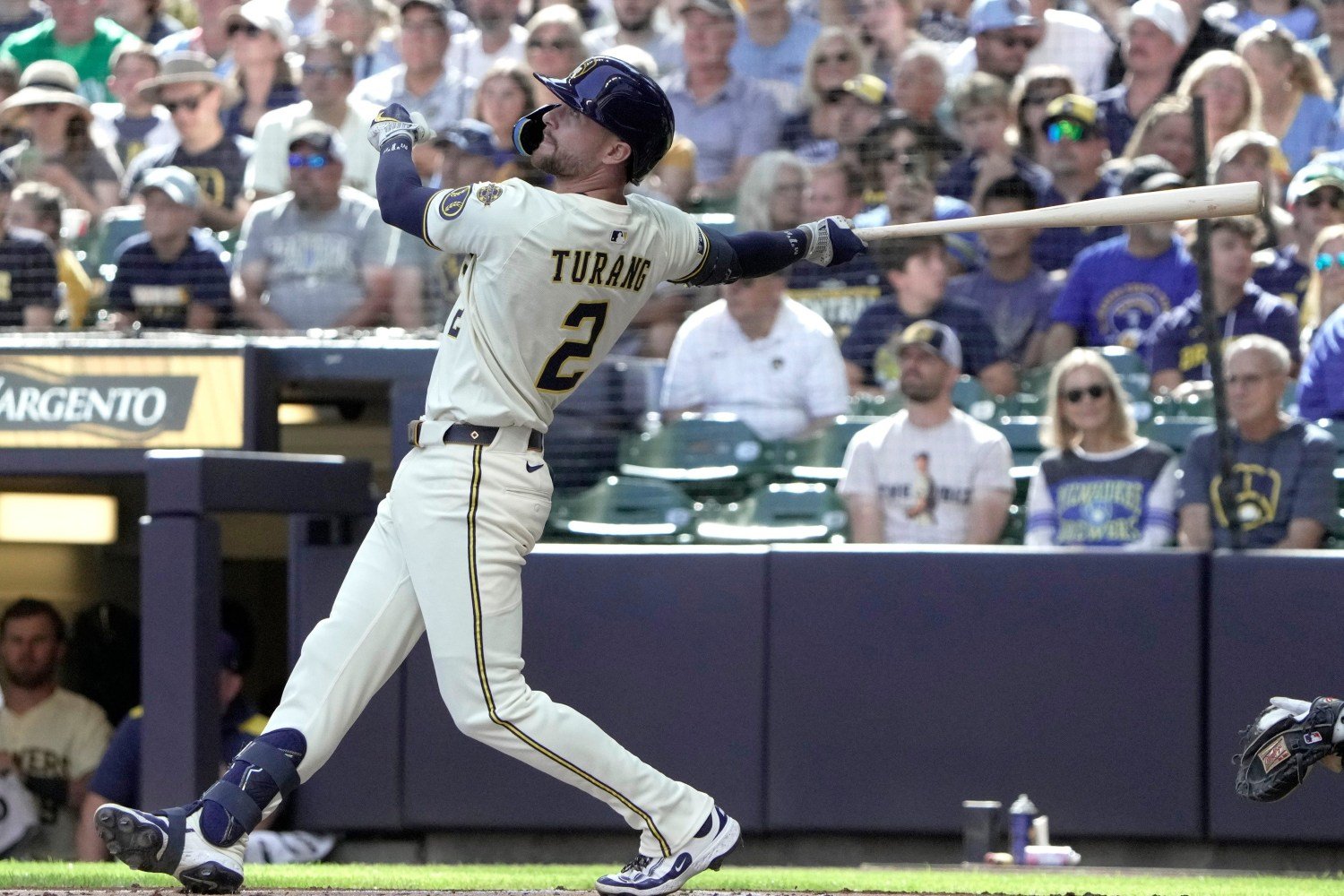 Baseball Prospectus posted their PECOTA projections for 2026 on Tuesday, including projected standings and playoff odds. For Brewers fans, the news is not good. The Cubs are not only favorites to win the division, but project for 90.5 wins—a full 10 games clear of the 80.5 victories for which the system pegs the Brewers. The system gives the Crew just a 10.5% chance to win their fourth straight NL Central crown, and only a 31.2% shot to make the playoffs at all. This feeling is familiar, but not fun, even though the story tends to end with Milwaukee far outstripping their projected win total. Last week, FanGraphs posted their own projections and playoff odds, which are (technically) more optimistic about the Brewers. It gives them an 82-win projection. However, in that version of the projected standings, the Cubs are still first (albeit at a more reachable win total) and the Pirates sneak in just ahead of Milwaukee, for second place. That's a jarring snapshot of where things stand as Brewers personnel gather in Maryvale. They're not only not the favorites, but very much the underdogs in the fight to sustain their regional dynasty. For PECOTA, at least, the problems the Brewers face lie in run production, rather than run prevention. The model expects Milwaukee pitchers to be better than average, and for them to be about 11 runs better than average when combining fielding and baserunning. However, the team's projected DRC+ is just 96, where 100 is average and higher is better. It's a dreary outlook, even for a team that prides itself more on good pitching and defense than on slugging. Two things about the projection stand out especially starkly. Firstly, PECOTA hates Brice Turang. I mean, it hates him. The model projects an 87 DRC+ and a .238/.311/.360 batting line for Turang. It sees him hitting 13 homers in 630 plate appearances, which would represent a small step backward after 2025, but the extent of the setback that overall line would be is much greater. Turang batted .288/.359/.435 in 2025. Admittedly, he hit just .254/.316/.349 in 2024, but even that line is essentially equal in value to the one he's forecasted to produce this season—and it ignores his breakout year altogether, despite that being the most recent and relevant data about what he'll do next. Systems can be designed for varying levels of sensitivity to sub-surface adjustments, like the way Turang increased his bat speed in 2025 and traded some contact for better power, but they can't be tweaked in specific cases; the risk of compromising the methodological integrity of the model is too great. Thus, PECOTA's wariness about Turang is understandable, and perhaps even a necessary evil. Nonetheless, to best predict what the Brewers will do in 2026, one should mentally adjust Turang's expected offensive output upward by about 10 runs. Secondly, the Brewers set themselves back Monday by trading Caleb Durbin, as far as PECOTA is concerned. Durbin, now with the Red Sox, is projected for a 104 DRC+, with a .254/.332/.377 line. If the system is to be believed, Milwaukee will sorely miss those on-base skills. Player AVG OBP SLG DRC+ Caleb Durbin .254 .332 .377 104 Andruw Monasterio .234 .306 .356 86 Joey Ortiz .248 .307 .392 96 Jett Williams .235 .314 .387 96 David Hamilton .223 .292 .357 77 Tyler Black .197 .296 .338 75 David Hamilton will bring more speed and better up-the-middle defense off the bench than did Andruw Monasterio, but Monasterio is projected to be the better hitter. Meanwhile, neither Joey Ortiz nor Jett Williams is expected to replace what Durbin (with his elite contact rate and knack for getting hit by pitches) brought to the Milwaukee lineup. Barring a move for an external solution at third base, the Brewers downgraded somewhat significantly by trading Durbin and Monasterio to Boston. It's nice to have better pitching depth than ever, but it might not be enough to justify having moved on so quickly from a player with long-term team control and such a high baseline for performance. Sharp-eyed readers will notice that both Ortiz and Williams are projected to outhit Turang, according to PECOTA. That just reinforces the jarring nature of Turang's projection. It feels indefensibly wrong, but it does highlight an important truth: using more than one year of data (where it's available) makes projections better. What happened last is not always what should be expected to happen next. Turang's projection probably is too low, but that doesn't mean that Ortiz's is unduly optimistic. The best-case scenario, then, is that the Brewers make some other addition to shore up the infield mix, but also get this version of Ortiz (one very much akin to the player he was in 2024) and the improved version of Turang. That still won't get them to 90 wins, but it'll start them on the journey there. The team will have to find other players who outdo their projections, too, but that's rarely a problem for the unassuming superpower of the NL Central. At least Pat Murphy won't be hurting for bulletin board material this spring, should he want some.
 -
Image courtesy of © Jayne Kamin-Oncea-Imagn Images Caleb Durbin had a tremendous rookie season with the Brewers, but it will be his only one. Milwaukee dealt the diminutive infielder to the Boston Red Sox in exchange for three players, a source confirmed to Brewer Fanatic on Monday. Ken Rosenthal of The Athletic first reported the news. In fact, the deal is big and involves multiple players on both sides. Milwaukee will also send the Red Sox infielders Andruw Monasterio and Anthony Seigler, plus their competitive balance Round B pick in this summer's draft, while getting back left-handed pitcher Kyle Harrison, infielder David Hamilton, and left-handed pitching prospect Shane Drohan. The immediate question, here, is what the move means for the Milwaukee infield. Durbin, who will soon turn 26, became the team's everyday third baseman early in 2025 and held the job through the NLCS. He batted .256/.334/.387, with 11 home runs and 18 stolen bases, and went from unplayable at third base in spring training to a plus defender there by season's end. His departure leaves a gap at the hot corner for Milwaukee. Harrison is the biggest name of the three players Milwaukee will acquire. He made multiple appearances on global top-100 lists and was the Giants' best pitching prospect for a couple of seasons, but he has yet to get over the hump and find consistent success in the majors. He was part of the Rafael Devers trade last June. In swapping out Monasterio and Seigler for Hamilton, the Brewers sacrifice a small amount of versatility and some depth, but add a speedster with 57 stolen bases in 204 career games. A left-handed batter, the 28-year-old Hamilton is almost exclusively a middle infielder, but he's a plus on either side of the keystone. Drohan, 27, is the unlikely linchpin of a deal involving at least three more famous names. A fifth-round pick in the 2020 MLB Draft, he's battled shoulder and forearm issues over the last two seasons, but still merited a spot on the 40-man roster for Boston last year. When he was healthy, he pitched at Triple-A Worcester in 2025, and he posted a 2.27 ERA with huge strikeout numbers there. Hamilton, Harrison and Drohan can all be optioned to the minors, and that will still be true of Harrison and Drohan in 2027. The deal adds considerable depth and flexibility to Milwaukee's pitching staff, and Hamilton is a fine bench piece—especially if he hits more like he did in 2024 (.248/.303/.395) than like he did in 2025 (.198/.257/.333). Still, no analysis of this deal can be complete until we see what (if anything) the team has planned to add to their infield. If the team intends for Jett Williams to join Brice Turang and Joey Ortiz as full-time players, this is one kind of trade. If they have another move coming, it's another. View full article
-
TRADE: Brewers Send Caleb Durbin to Red Sox in Multi-Player Deal
Matthew Trueblood posted an article in Brewers
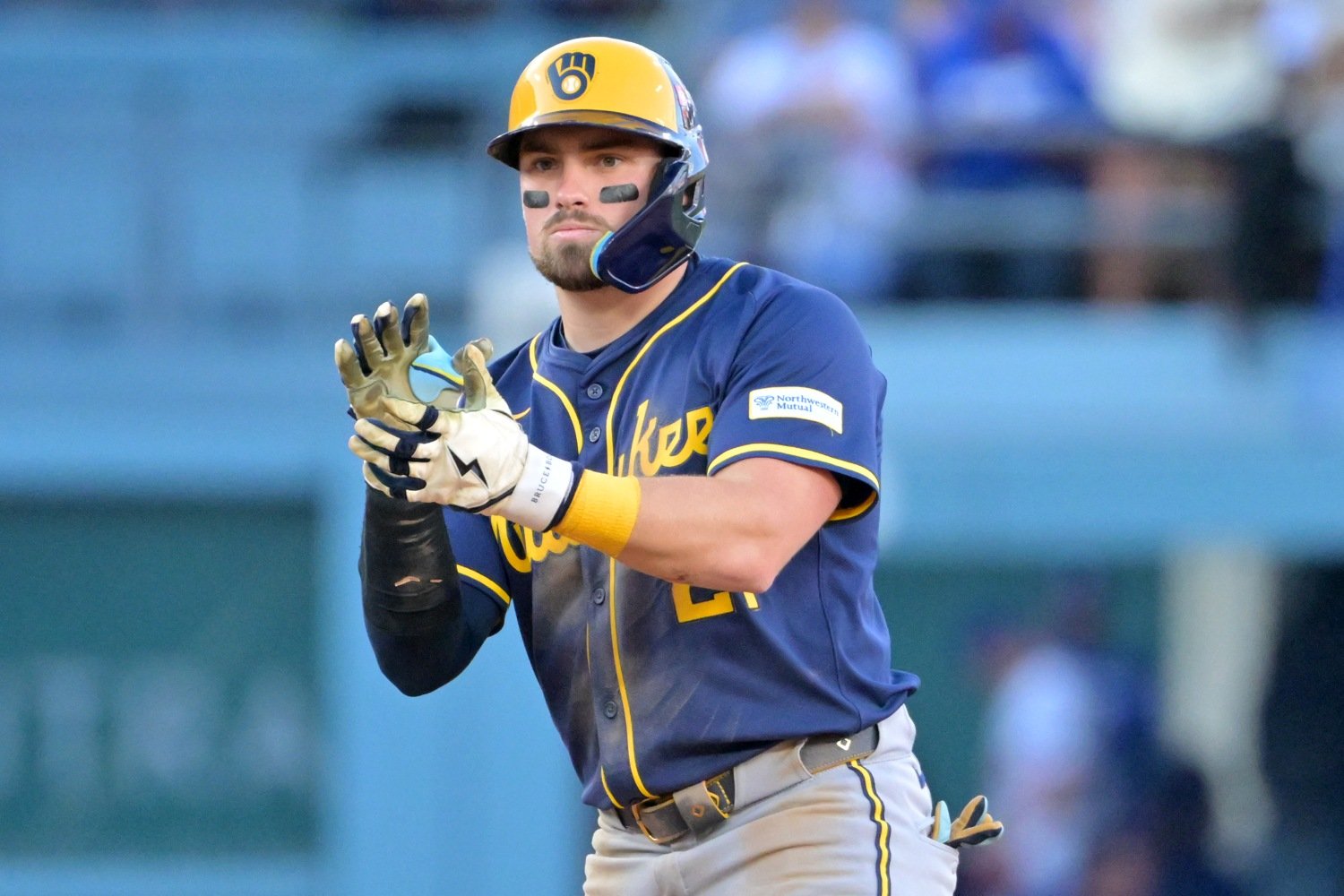 Caleb Durbin had a tremendous rookie season with the Brewers, but it will be his only one. Milwaukee dealt the diminutive infielder to the Boston Red Sox in exchange for three players, a source confirmed to Brewer Fanatic on Monday. Ken Rosenthal of The Athletic first reported the news. In fact, the deal is big and involves multiple players on both sides. Milwaukee will also send the Red Sox infielders Andruw Monasterio and Anthony Seigler, plus their competitive balance Round B pick in this summer's draft, while getting back left-handed pitcher Kyle Harrison, infielder David Hamilton, and left-handed pitching prospect Shane Drohan. The immediate question, here, is what the move means for the Milwaukee infield. Durbin, who will soon turn 26, became the team's everyday third baseman early in 2025 and held the job through the NLCS. He batted .256/.334/.387, with 11 home runs and 18 stolen bases, and went from unplayable at third base in spring training to a plus defender there by season's end. His departure leaves a gap at the hot corner for Milwaukee. Harrison is the biggest name of the three players Milwaukee will acquire. He made multiple appearances on global top-100 lists and was the Giants' best pitching prospect for a couple of seasons, but he has yet to get over the hump and find consistent success in the majors. He was part of the Rafael Devers trade last June. In swapping out Monasterio and Seigler for Hamilton, the Brewers sacrifice a small amount of versatility and some depth, but add a speedster with 57 stolen bases in 204 career games. A left-handed batter, the 28-year-old Hamilton is almost exclusively a middle infielder, but he's a plus on either side of the keystone. Drohan, 27, is the unlikely linchpin of a deal involving at least three more famous names. A fifth-round pick in the 2020 MLB Draft, he's battled shoulder and forearm issues over the last two seasons, but still merited a spot on the 40-man roster for Boston last year. When he was healthy, he pitched at Triple-A Worcester in 2025, and he posted a 2.27 ERA with huge strikeout numbers there. Hamilton, Harrison and Drohan can all be optioned to the minors, and that will still be true of Harrison and Drohan in 2027. The deal adds considerable depth and flexibility to Milwaukee's pitching staff, and Hamilton is a fine bench piece—especially if he hits more like he did in 2024 (.248/.303/.395) than like he did in 2025 (.198/.257/.333). Still, no analysis of this deal can be complete until we see what (if anything) the team has planned to add to their infield. If the team intends for Jett Williams to join Brice Turang and Joey Ortiz as full-time players, this is one kind of trade. If they have another move coming, it's another.
- 17 comments
-
- 2
-
-
- caleb durbin
- david hamilton
- (and 4 more)
-
Image courtesy of © Mike De Sisti / Milwaukee Journal Sentinel / USA TODAY NETWORK via Imagn Images This news was just this side of inevitable, but it still registers as a major development. With their game broadcasts orphaned by the need to terminate their contract with Main Street Sports earlier this offseason, the Brewers join a fistful of other teams in turning over the production and distribution of those broadcasts to the league. If the pattern established by the previous rounds of migration to league-operated broadcasts repeats itself, most of the names you know and love—Brian Anderson, Bill Schroeder, and Sophia Minnaert, for starters—will be invited back, and many of the same people will make the broadcast happen behind the scenes. How the games can be found and a plan purchased, however, will change. Expect the Brewers to find a home on the major local cable and satellite providers, but they'll no longer receive any significant amount of revenue from those deals. Instead, they'll make money almost exclusively by selling direct-to-consumer streaming packages, through MLB.TV. In the short term, this will reduce the team's income, and that's unlikely to change for at least a few years. It could, of course, have an effect on payroll, though there's no reason to assume it will make a meaningful difference in the team's budget for 2026 or (as some will say) that the knowledge that this was coming prompted the team to trade Freddy Peralta last month. The regional sports network (RSN) model has been slowly dying for a decade. The Brewers have made less money than in the halcyon days of that system even over the last few years, as they've flirted with cutting ties with what was first called Bally Sports Wisconsin, then FanDuel Sports Network but ultimately reunited on short-term deals. They delayed the leap off the financial cliff of the RSN model's demise for as long as possible, but now, they've gone over the edge. Generally, fans of other teams (including the Rockies, Padres, Twins, Guardians and Diamondbacks) have found the production values on the league-run broadcasts to be solid. However, this transition usually comes with a reduction in ancillary programming, like pre- and postgame shows. Team-run broadcasts have always been largely propagandist outlets, but it's even harder to convey any measure of criticism when the system is under team or league control, end-to-end. Again, there's no broad reason to expect the team to change its core broadcast team, but the Brewers are a special case. They have Anderson and Jeff Levering, both of whom do other work, too, and Anderson has increasingly ducked out for stretches of the season to perform national duty as a play-by-play broadcaster for basketball, golf, and more. The league and the team could opt to pivot to a primary TV voice with 162-game availability. More details will emerge over the course of spring training, but Monday's news gives us a bit more clarity about the Brewers' future on TV. It also gives us a bit of reason to wonder whether the team can still spend money this winter to round out the roster. After all, they're likely to make less money this year (if only incrementally) than if their deal had held together for one more season on the RSN model. View full article
-
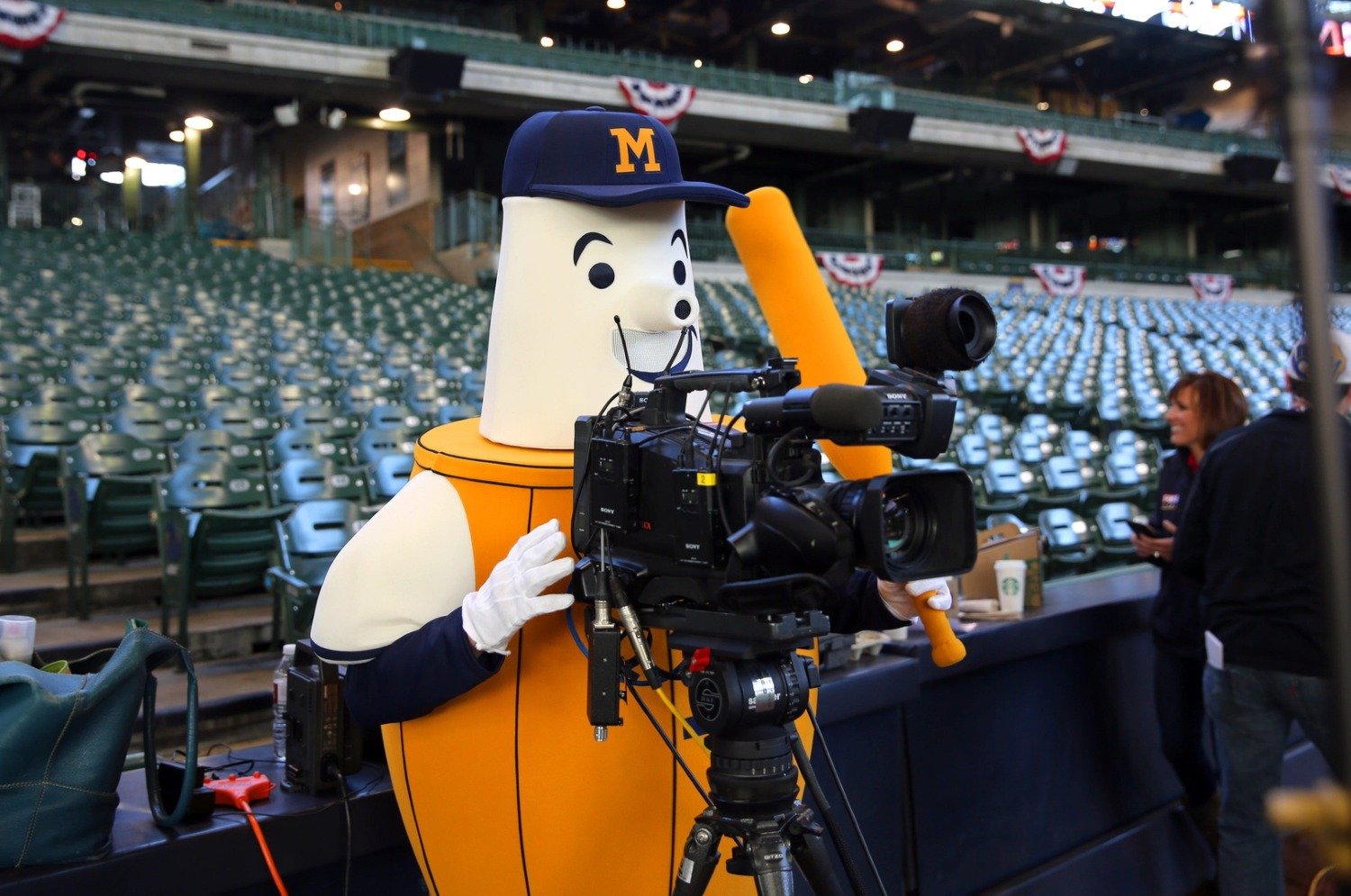 This news was just this side of inevitable, but it still registers as a major development. With their game broadcasts orphaned by the need to terminate their contract with Main Street Sports earlier this offseason, the Brewers join a fistful of other teams in turning over the production and distribution of those broadcasts to the league. If the pattern established by the previous rounds of migration to league-operated broadcasts repeats itself, most of the names you know and love—Brian Anderson, Bill Schroeder, and Sophia Minnaert, for starters—will be invited back, and many of the same people will make the broadcast happen behind the scenes. How the games can be found and a plan purchased, however, will change. Expect the Brewers to find a home on the major local cable and satellite providers, but they'll no longer receive any significant amount of revenue from those deals. Instead, they'll make money almost exclusively by selling direct-to-consumer streaming packages, through MLB.TV. In the short term, this will reduce the team's income, and that's unlikely to change for at least a few years. It could, of course, have an effect on payroll, though there's no reason to assume it will make a meaningful difference in the team's budget for 2026 or (as some will say) that the knowledge that this was coming prompted the team to trade Freddy Peralta last month. The regional sports network (RSN) model has been slowly dying for a decade. The Brewers have made less money than in the halcyon days of that system even over the last few years, as they've flirted with cutting ties with what was first called Bally Sports Wisconsin, then FanDuel Sports Network but ultimately reunited on short-term deals. They delayed the leap off the financial cliff of the RSN model's demise for as long as possible, but now, they've gone over the edge. Generally, fans of other teams (including the Rockies, Padres, Twins, Guardians and Diamondbacks) have found the production values on the league-run broadcasts to be solid. However, this transition usually comes with a reduction in ancillary programming, like pre- and postgame shows. Team-run broadcasts have always been largely propagandist outlets, but it's even harder to convey any measure of criticism when the system is under team or league control, end-to-end. Again, there's no broad reason to expect the team to change its core broadcast team, but the Brewers are a special case. They have Anderson and Jeff Levering, both of whom do other work, too, and Anderson has increasingly ducked out for stretches of the season to perform national duty as a play-by-play broadcaster for basketball, golf, and more. The league and the team could opt to pivot to a primary TV voice with 162-game availability. More details will emerge over the course of spring training, but Monday's news gives us a bit more clarity about the Brewers' future on TV. It also gives us a bit of reason to wonder whether the team can still spend money this winter to round out the roster. After all, they're likely to make less money this year (if only incrementally) than if their deal had held together for one more season on the RSN model.
 -
Image courtesy of © Katie Stratman-Imagn Images Watch Brandon Sproat on video, and it's immediately clear that he's not like most Milwaukee Brewers pitchers. In fact, he's not like many pitchers you're used to seeing, period. A product of the University of Florida, Sproat famously bet on himself by declining to sign with the Mets after his junior year, only to go one round earlier to the same team the next year. He's unafraid to go a bit against the grain, and that shows up in his mechanics and his approach to the game. By making him a co-headliner in the Freddy Peralta trade this week, the Brewers made a significant bet on their ability to bend Sproat's skills to their own purposes. Here's a fastball Sproat threw during one of his handful of big-league appearances at the end of last season. OHlCRFBfWGw0TUFRPT1fQWdoVUJsWURWMVFBQ0ZVQ1Z3QUhDUTRFQUZnTVVWWUFCQU1OQXdvQUJRQUdWVkJm.mp4 That's a high-effort delivery, with a bit of herk and jerk to it. The immediately unusual thing you probably noticed is that, after he breaks his hands and brings the ball down by swinging his elbow out toward full extension, he never again has his elbow bent more than 90° for the duration of his delivery. His arm action is exceptionally long, because he's not winding it up the way most modern pitchers do. Instead, he's really using his whole body to launch the ball toward the plate, and his hand merely carries it until it can't hold on any longer. Here's something you might have missed in a quick viewing, but which is equally peculiar. He finishes his delivery of the heater with all four fingers splayed and his hand wide open. He looks like a man stretching out his hand for a book or a glass of water, left at an awkward spot just to his left. Pause and examine the hand position of just about any pitcher after they throw their heater, and you'll see some curl to their fingers. Their third and fourth fingers probably stayed tucked into a relaxed semi-fist throughout, and the first and second usually show the signs of having pulled hard at the seams at release, trying to maximize backspin. Not Sproat. His hand gives the impression that he simply surrounded the ball and flung it on its way when the extreme torque of his sturdy body dictated that he do so. It might not surprise you, then, to learn that Sproat has a below-average spin rate on his four-seam fastball. Indeed, for each of his pitch types, the typical righty working from his low three-quarters slot gets more spin than he does. Let's circle back, though, to that long arm action. To underscore the extent to which this is a departure from the norm, I've captured the moment at which several pitchers' front foot touched the ground while throwing their fastballs—what pitchers call 'foot strike'. This is always a telling moment within the tornadic miniature ballet that is a pitch. Here, we see (clockwise, from the top left) Jacob Misiorowski, Sproat, Brandon Woodruff, Peralta, Chad Patrick and Quinn Priester at that moment. Instead of a significant elbow bend and the ball near his ear, Sproat gets to that point with his hand a good two feet behind his head and his arm much closer to straight. Note, too, that his posture and stride direction are most similar to Peralta's, but that he sets up on the first-base side of the rubber, as all the hurlers here except Peralta do. This delivery has worked for Sproat, in a sense. It's brought him this far, and it allows him to throw his fastball upwards of 96 miles per hour, on average. However, if this is all the athleticism and feel he has in him, his future is almost certainly in the bullpen. His four-seamer lives almost perfectly in the movement dead zone, based on his arm angle. His sinker is a better pitch, but it's only effective against right-handed batters, and it cannibalizes his changeup. He has three above-average breaking balls, but no way to get to them against lefties, and as a starter, he'll see a lot of left-handed batters every fifth day. The Brewers are likely to make some major changes to Sproat's game, if he's amenable to them. A move across the rubber makes a lot of sense, at least on an experimental basis; he needs to find out whether the change in angle would do anything for his arm action or movement. The team will also explore the extent to which they can alter how he moves, though. By and large, it's hard to change fastball shape, and it's hard to give pitchers with little feel for spin that skill. However, there are two things working for the Brewers with Sproat. First, he does show some feel for spin; it's just exclusive to his breaking balls. Relatedly, he throws one of those breaking balls—his curveball—from a higher slot than the rest of his offerings. On the left, below, is him throwing a curveball. On the right is him throwing his four-seamer, in the same game. A move on the rubber and/or a change in his arm angle could unlock something new for Sproat. Right now, he's better off leaning on his sinker and avoiding his four-seamer, but that need not necessarily be true if he changes his delivery somewhat. The Brewers like to get a cutter working opposite the sinker in cases like this, and although Sproat's lower slot (the one he uses for most of his offerings) isn't conducive to a cutter, the higher one could be. If no mechanical changes will take, the Brewers still have ways to optimize Sproat. He should scrap the curve unless he can find another pitch to execute from that same arm slot; he doesn't need it with his present mix and set of looks. He should also avoid using his sinker to lefties, leaning on the four-seamer to set up the changeup. This spring will give Chris Hook, Jim Henderson and their cohort an opportunity to shine. The Brewers brought in a hurler with exceptional arm strength and a few intriguing secondary elements, but one nowhere near ready to thrive in the majors on the team's usual plan. They'll need to formulate a plan that helps him turn the corner, or else be ready to convert him rapidly into a high-leverage reliever. Sproat's feel for spin and his command are important, but starting next month, his shot at taking his career to the next level will depend on his feel for communication and his willingness to relinquish some control of his development. View full article
-
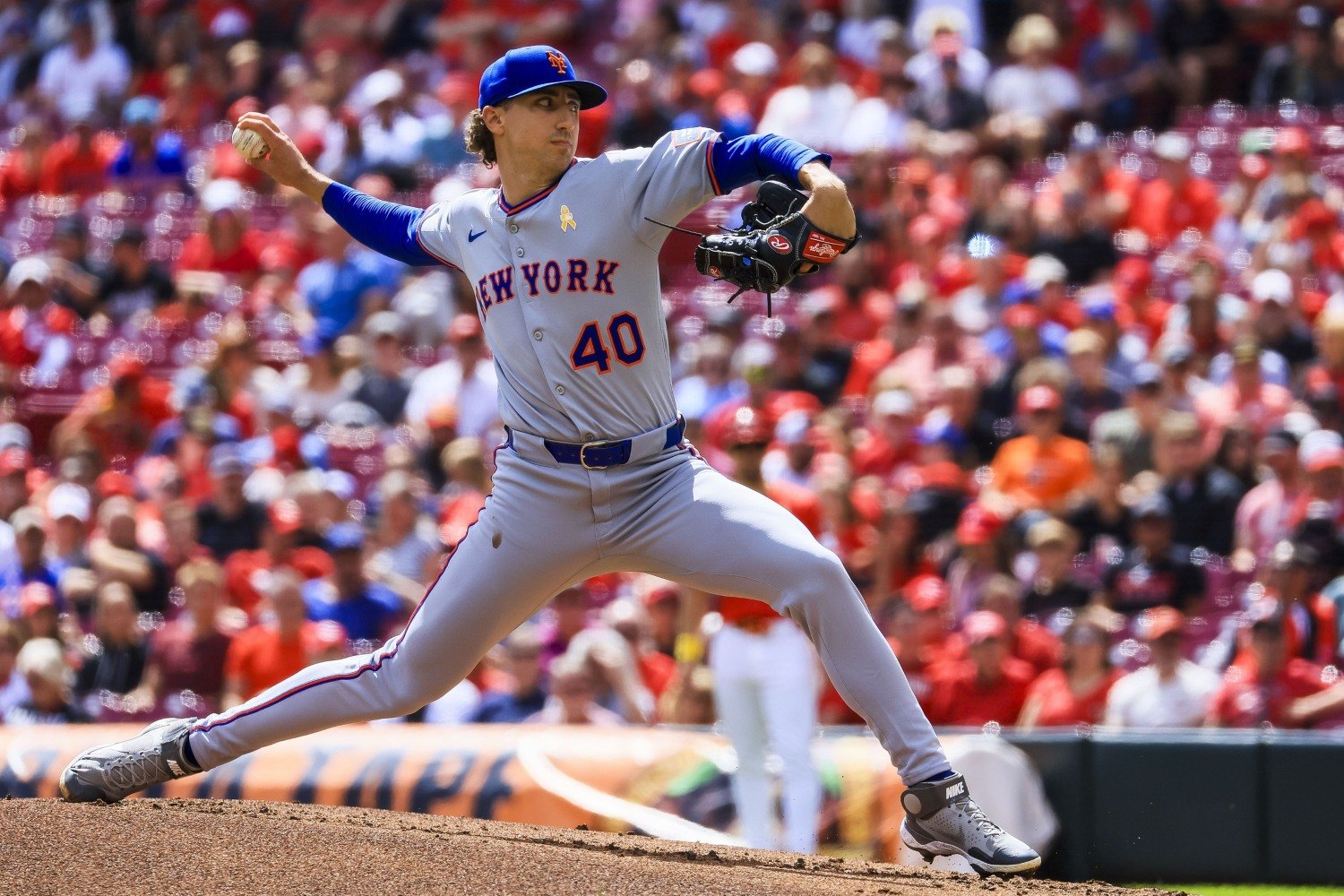 Watch Brandon Sproat on video, and it's immediately clear that he's not like most Milwaukee Brewers pitchers. In fact, he's not like many pitchers you're used to seeing, period. A product of the University of Florida, Sproat famously bet on himself by declining to sign with the Mets after his junior year, only to go one round earlier to the same team the next year. He's unafraid to go a bit against the grain, and that shows up in his mechanics and his approach to the game. By making him a co-headliner in the Freddy Peralta trade this week, the Brewers made a significant bet on their ability to bend Sproat's skills to their own purposes. Here's a fastball Sproat threw during one of his handful of big-league appearances at the end of last season. OHlCRFBfWGw0TUFRPT1fQWdoVUJsWURWMVFBQ0ZVQ1Z3QUhDUTRFQUZnTVVWWUFCQU1OQXdvQUJRQUdWVkJm.mp4 That's a high-effort delivery, with a bit of herk and jerk to it. The immediately unusual thing you probably noticed is that, after he breaks his hands and brings the ball down by swinging his elbow out toward full extension, he never again has his elbow bent more than 90° for the duration of his delivery. His arm action is exceptionally long, because he's not winding it up the way most modern pitchers do. Instead, he's really using his whole body to launch the ball toward the plate, and his hand merely carries it until it can't hold on any longer. Here's something you might have missed in a quick viewing, but which is equally peculiar. He finishes his delivery of the heater with all four fingers splayed and his hand wide open. He looks like a man stretching out his hand for a book or a glass of water, left at an awkward spot just to his left. Pause and examine the hand position of just about any pitcher after they throw their heater, and you'll see some curl to their fingers. Their third and fourth fingers probably stayed tucked into a relaxed semi-fist throughout, and the first and second usually show the signs of having pulled hard at the seams at release, trying to maximize backspin. Not Sproat. His hand gives the impression that he simply surrounded the ball and flung it on its way when the extreme torque of his sturdy body dictated that he do so. It might not surprise you, then, to learn that Sproat has a below-average spin rate on his four-seam fastball. Indeed, for each of his pitch types, the typical righty working from his low three-quarters slot gets more spin than he does. Let's circle back, though, to that long arm action. To underscore the extent to which this is a departure from the norm, I've captured the moment at which several pitchers' front foot touched the ground while throwing their fastballs—what pitchers call 'foot strike'. This is always a telling moment within the tornadic miniature ballet that is a pitch. Here, we see (clockwise, from the top left) Jacob Misiorowski, Sproat, Brandon Woodruff, Peralta, Chad Patrick and Quinn Priester at that moment. Instead of a significant elbow bend and the ball near his ear, Sproat gets to that point with his hand a good two feet behind his head and his arm much closer to straight. Note, too, that his posture and stride direction are most similar to Peralta's, but that he sets up on the first-base side of the rubber, as all the hurlers here except Peralta do. This delivery has worked for Sproat, in a sense. It's brought him this far, and it allows him to throw his fastball upwards of 96 miles per hour, on average. However, if this is all the athleticism and feel he has in him, his future is almost certainly in the bullpen. His four-seamer lives almost perfectly in the movement dead zone, based on his arm angle. His sinker is a better pitch, but it's only effective against right-handed batters, and it cannibalizes his changeup. He has three above-average breaking balls, but no way to get to them against lefties, and as a starter, he'll see a lot of left-handed batters every fifth day. The Brewers are likely to make some major changes to Sproat's game, if he's amenable to them. A move across the rubber makes a lot of sense, at least on an experimental basis; he needs to find out whether the change in angle would do anything for his arm action or movement. The team will also explore the extent to which they can alter how he moves, though. By and large, it's hard to change fastball shape, and it's hard to give pitchers with little feel for spin that skill. However, there are two things working for the Brewers with Sproat. First, he does show some feel for spin; it's just exclusive to his breaking balls. Relatedly, he throws one of those breaking balls—his curveball—from a higher slot than the rest of his offerings. On the left, below, is him throwing a curveball. On the right is him throwing his four-seamer, in the same game. A move on the rubber and/or a change in his arm angle could unlock something new for Sproat. Right now, he's better off leaning on his sinker and avoiding his four-seamer, but that need not necessarily be true if he changes his delivery somewhat. The Brewers like to get a cutter working opposite the sinker in cases like this, and although Sproat's lower slot (the one he uses for most of his offerings) isn't conducive to a cutter, the higher one could be. If no mechanical changes will take, the Brewers still have ways to optimize Sproat. He should scrap the curve unless he can find another pitch to execute from that same arm slot; he doesn't need it with his present mix and set of looks. He should also avoid using his sinker to lefties, leaning on the four-seamer to set up the changeup. This spring will give Chris Hook, Jim Henderson and their cohort an opportunity to shine. The Brewers brought in a hurler with exceptional arm strength and a few intriguing secondary elements, but one nowhere near ready to thrive in the majors on the team's usual plan. They'll need to formulate a plan that helps him turn the corner, or else be ready to convert him rapidly into a high-leverage reliever. Sproat's feel for spin and his command are important, but starting next month, his shot at taking his career to the next level will depend on his feel for communication and his willingness to relinquish some control of his development.
 -
Image courtesy of © Jeff Hanisch-Imagn Images The Milwaukee Brewers and New York Mets are on the verge of a deal to send right-handed pitcher Freddy Peralta to New York, according to a report from the New York Post's Jon Heyman. Peralta will reunite with David Stearns in Queens, while the Brewers will receive multiple pieces in return, a source with knowledge of the talks says. Picked up by Stearns in a minor trade with the Mariners during his first winter on the job, Peralta can be thought of as arguably the signature success story of Stearns's tenure with the Brewers. The team developed him into an electric-armed starter, then a Cy Young contender. Two weeks before the world shut down due to COVID in early 2020, the two sides agreed on a team-friendly contract extension that gave the Brewers a great deal on his arbitration-eligible seasons and extended his team control, while giving the team two cheap club options on the final years of the contract. It's been one of the most team-friendly deals signed by any pitcher in the last decade. Since Peralta is owed just $8 million in the final year of the deal, the Brewers have maintained a high asking price for him all winter. He won't turn 30 until June and had arguably the best season of his illustrious career in 2025, going 17-6 with a 2.70 ERA in a career-high 177 innings. Boasting four solid pitches and a greater feel for all of them as he's matured, he has struck out a dazzling 29.9% of the batters he's faced in the majors. A source briefed on the negotiations said the Brewers will get one player with big-league experience and a prospect in exchange for Peralta, who can be a free agent after 2026. The Crew were known to be looking for a controllable starting pitcher as part of a Peralta deal as recently as last week, and the Mets have plenty of those, with a cluster of tantalizing pitching prospects who have already cracked the big leagues. Nolan McLean was off-limits in these discussions, but both Jonah Tong and Brandon Sproat are candidates to be included. Milwaukee is also likely to receive one of the Mets' sudden surfeit of positional prospects, though which tier of player that will be is likely to depend on which of the young arms the Brewers have acquired. Indeed, Sproat and athletic young hitter Jett Williams will be the haul for the Brewers; Jeff Passan reported those names first on Twitter. That final piece heading to New York will be swingman Tobias Myers, another victory for the Brewers' pitching development group who helped Milwaukee secure Sproat in the swap. Both Sproat and Williams have the full compliment of team control remaining, and indeed, Williams has yet to debut in the majors. He batted .261/.363/.465 at Double A and Triple A in 2025, but most of his success came in the lower of those levels. He brings a modicum of power and plus speed, but will require a bit of refinement in the Milwaukee development pipeline. He should help the 2026 Brewers, but might not do so until midseason. Sproat is a different story. Our Jake McKibbin broke him down as an obvious candidate for this very deal earlier this week, and while there are some important tweaks left to make, he profiles as a ready-made big-league out-getter, on a pitching staff already loaded with them. The Brewers did what they always seek to do in deals like this one, landing two quality players under long-term team control in exchange for one who will be a free agent soon and another who didn't fit into their long-term plans. Williams adds intrigue and upside to the infield and outfield mix, while Sproat gives the starting rotation needed depth and a power arm to pair with Jacob Misiorowski. This is a bittersweet occasion, because Peralta has been a highly charismatic performer and a beloved member of the Milwaukee clubhouse, but the team finally cultivated the offer they couldn't refuse. Unsurprisingly, the Mets will absorb all of the salary owed to Peralta, a source said. That could give the Brewers more flexibility as they close out the offseason over the coming weeks. View full article
-
BREAKING: Brewers Agree to Trade Freddy Peralta to New York Mets
Matthew Trueblood posted an article in Brewers
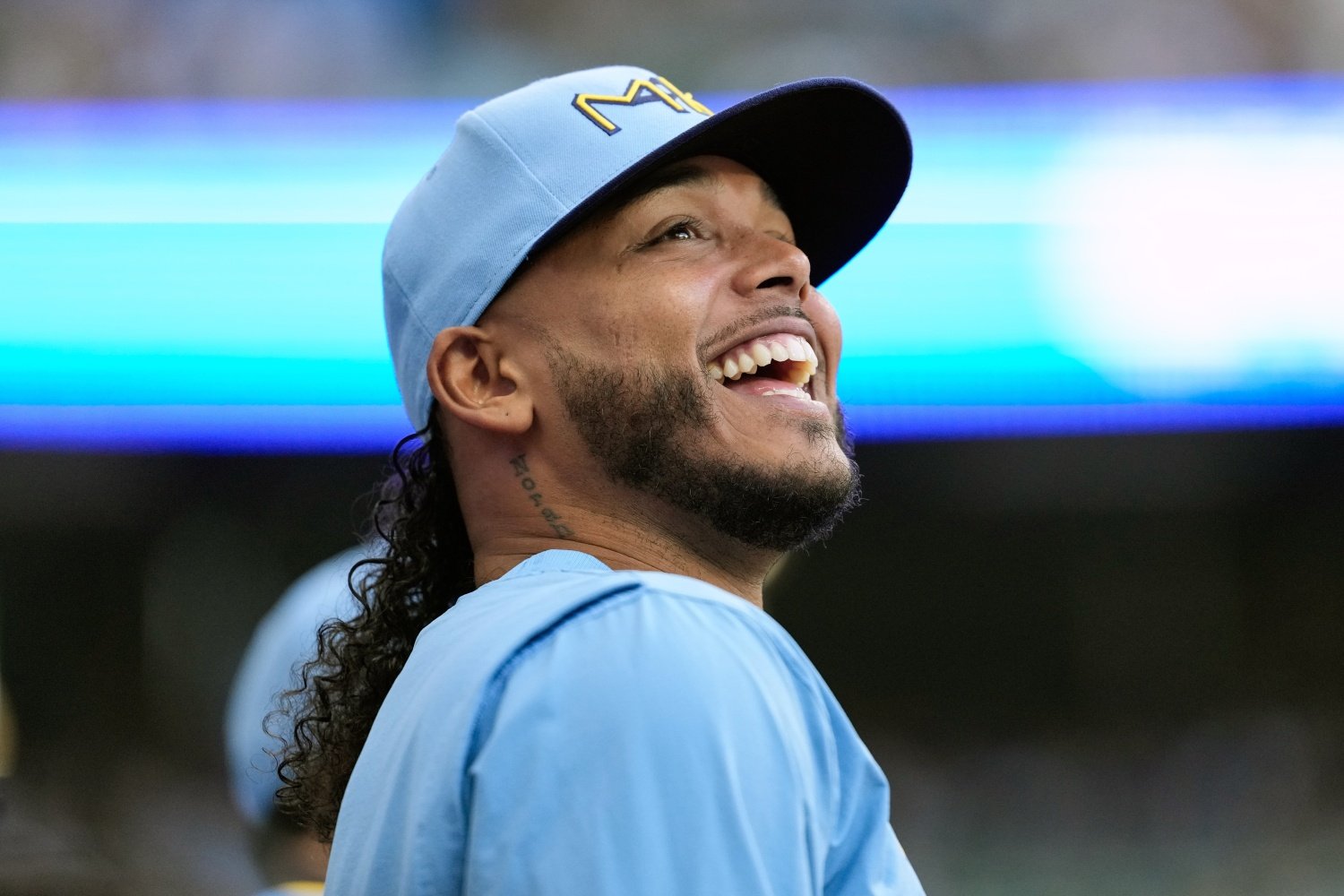 The Milwaukee Brewers and New York Mets are on the verge of a deal to send right-handed pitcher Freddy Peralta to New York, according to a report from the New York Post's Jon Heyman. Peralta will reunite with David Stearns in Queens, while the Brewers will receive multiple pieces in return, a source with knowledge of the talks says. Picked up by Stearns in a minor trade with the Mariners during his first winter on the job, Peralta can be thought of as arguably the signature success story of Stearns's tenure with the Brewers. The team developed him into an electric-armed starter, then a Cy Young contender. Two weeks before the world shut down due to COVID in early 2020, the two sides agreed on a team-friendly contract extension that gave the Brewers a great deal on his arbitration-eligible seasons and extended his team control, while giving the team two cheap club options on the final years of the contract. It's been one of the most team-friendly deals signed by any pitcher in the last decade. Since Peralta is owed just $8 million in the final year of the deal, the Brewers have maintained a high asking price for him all winter. He won't turn 30 until June and had arguably the best season of his illustrious career in 2025, going 17-6 with a 2.70 ERA in a career-high 177 innings. Boasting four solid pitches and a greater feel for all of them as he's matured, he has struck out a dazzling 29.9% of the batters he's faced in the majors. A source briefed on the negotiations said the Brewers will get one player with big-league experience and a prospect in exchange for Peralta, who can be a free agent after 2026. The Crew were known to be looking for a controllable starting pitcher as part of a Peralta deal as recently as last week, and the Mets have plenty of those, with a cluster of tantalizing pitching prospects who have already cracked the big leagues. Nolan McLean was off-limits in these discussions, but both Jonah Tong and Brandon Sproat are candidates to be included. Milwaukee is also likely to receive one of the Mets' sudden surfeit of positional prospects, though which tier of player that will be is likely to depend on which of the young arms the Brewers have acquired. Indeed, Sproat and athletic young hitter Jett Williams will be the haul for the Brewers; Jeff Passan reported those names first on Twitter. That final piece heading to New York will be swingman Tobias Myers, another victory for the Brewers' pitching development group who helped Milwaukee secure Sproat in the swap. Both Sproat and Williams have the full compliment of team control remaining, and indeed, Williams has yet to debut in the majors. He batted .261/.363/.465 at Double A and Triple A in 2025, but most of his success came in the lower of those levels. He brings a modicum of power and plus speed, but will require a bit of refinement in the Milwaukee development pipeline. He should help the 2026 Brewers, but might not do so until midseason. Sproat is a different story. Our Jake McKibbin broke him down as an obvious candidate for this very deal earlier this week, and while there are some important tweaks left to make, he profiles as a ready-made big-league out-getter, on a pitching staff already loaded with them. The Brewers did what they always seek to do in deals like this one, landing two quality players under long-term team control in exchange for one who will be a free agent soon and another who didn't fit into their long-term plans. Williams adds intrigue and upside to the infield and outfield mix, while Sproat gives the starting rotation needed depth and a power arm to pair with Jacob Misiorowski. This is a bittersweet occasion, because Peralta has been a highly charismatic performer and a beloved member of the Milwaukee clubhouse, but the team finally cultivated the offer they couldn't refuse. Unsurprisingly, the Mets will absorb all of the salary owed to Peralta, a source said. That could give the Brewers more flexibility as they close out the offseason over the coming weeks.
 -
Image courtesy of © Chadd Cady-Imagn Images The Milwaukee Brewers have found common ground with the San Diego Padres multiple times during the tenure of Padres executive A.J. Preller. The extremely aggressive Preller is budget-constrained, but not in the same ways the Brewers are, and the two teams share enough overlap in the way they evaluate players to match up on deals when their specific needs don't compete with each other too much to allow it. In late 2019, the Crew swapped Trent Grisham and Zach Davies to San Diego, landing Luis Urías and Eric Lauer. In early 2022, they filled their emergent need for catching depth by acquiring Victor Caratini from San Diego, and that summer, they dealt Josh Hader to the Padres for four players. Last July, Milwaukee shipped Nestor Cortes and Jorge Quintana for Brandon Lockridge. It's hardly surprising, therefore, that the Padres have become a dark horse in the race for Freddy Peralta, whom the Brewers continue to shop as spring training draws near. Ken Rosenthal of The Athletic reported their interest this week, which affirms reporting we brought to you here in mid-December. In this case, though, no perfect fit exists for the two teams. San Diego's farm system has been hollowed out by trades and aggressive promotions, and their roster is loaded with talented but expensive players. The Padres' only prospects with substantial appeal are at least a year away from helping in the majors, which the Brewers rightfully consider disqualifying in Peralta negotiations. The only solid big-leaguers San Diego is willing to move are those beyond the Brewers' means, in terms of short- and medium-term payroll. There's just no way for the clubs to align on a deal by themselves. That doesn't mean Peralta couldn't end up on the Padres. It just means that any trade sending him there would have to include three teams. Given the situation San Diego finds itself in, there are two ways that could happen. Scenario 1: One In, One Out Along with rumors of their hope to add a starter before spring training, the Padres have expressed at least a willingness to consider subtracting one, according to two league sources. Starter Nick Pivetta had a sparkling first season in San Diego, with a 2.87 ERA in 182 innings, but he's owed $19 million for 2026. He can opt out of his deal after either 2026 or 2027, but is guaranteed $14 million and $18 million, respectively, if he elects to stick around. Though Peralta would be a one-year rental, that's effectively the situation with Pivetta, as well, and Peralta comes at a much lower price tag, with a better long-term track record. Unlike Pivetta, Peralta would also be eligible to receive a qualifying offer in November, as long as a deal gets done before Opening Day. Thus, one version of this potential trade would send Peralta to the Padres and Pivetta to a contending team looking to finish building their rotation. Unlike some other deals structured the way it is, Pivetta's is eminently tradable. He made just $3 million in 2025, so the competitive-balance tax salary number for him is $13.75 million per year. That's very affordable for a pitcher of his skills, and whereas similar deals for other pitchers have left would-be suitors worried about holding the bag if the hurler got hurt, this one contains conditional options for either 2027 or 2029, should Pivetta suffer a major injury and spend a prolonged period on the injured list. Those options give the team the chance either to retain him on the cheap or (even if he won't be available for much of the season in question) to further deflate the tax hit of the deal. The team from suburban Atlanta would be interested in Pivetta. So would the Orioles, the Yankees or the Mets. It might require the Padres sending one of their prospects who remains far from the majors to Milwaukee to complement a lower-ceiling but MLB-ready piece from Pivetta's new club, but that's one way this framework could play out. If the Padres and Peralta agreed to an extension as a condition of a deal, it could further goose the return for Milwaukee. Scenario 2: Finding a Talent Sink The big obstacle in matching up the Padres and the Brewers is less the quality of the former's top prospects than their inability to help Milwaukee defend its run of three straight NL Central titles or push forward toward their next World Series appearance. In another variation on this deal, then, the two teams would seek out a team who isn't ready to compete in 2026, but who has one or more controllable players who can help a contender this year and beyond. That team would ship a young, valuable player to the Brewers, getting multiple good but far-off prospects from the Padres, while Peralta would join San Diego. After a leadership change last year, the Nationals are taking a step back to prepare for contention in the long term. MacKenzie Gore has just one more year of team control than Peralta, but he'd certainly let the Crew stay in the fight for the Central. Infielder CJ Abrams has three years of team control left and a dynamic offensive profile. That's one high-profile example of a team in the right competitive spot, but not the only one. The Rays have signaled a willingness to move backward this season and surge forward thereafter. The Athletics are trying to get the timing right on a return to contention, as they plot their move to a permanent home in Las Vegas. The Rockies, Angels, Marlins and Cardinals all clearly fall into this bucket of teams; the Twins might be drawn into it for the right deal. Because there are fewer complications surrounding their pursuits, the Mets, Dodgers, Diamondbacks, and Giants are more likely landing spots for Peralta than the Padres. Still, a deal between the Brewers and San Diego is possible, because when Preller wants a player badly enough, he often finds the dexterity to thread the needle and sew up the transaction. View full article
-
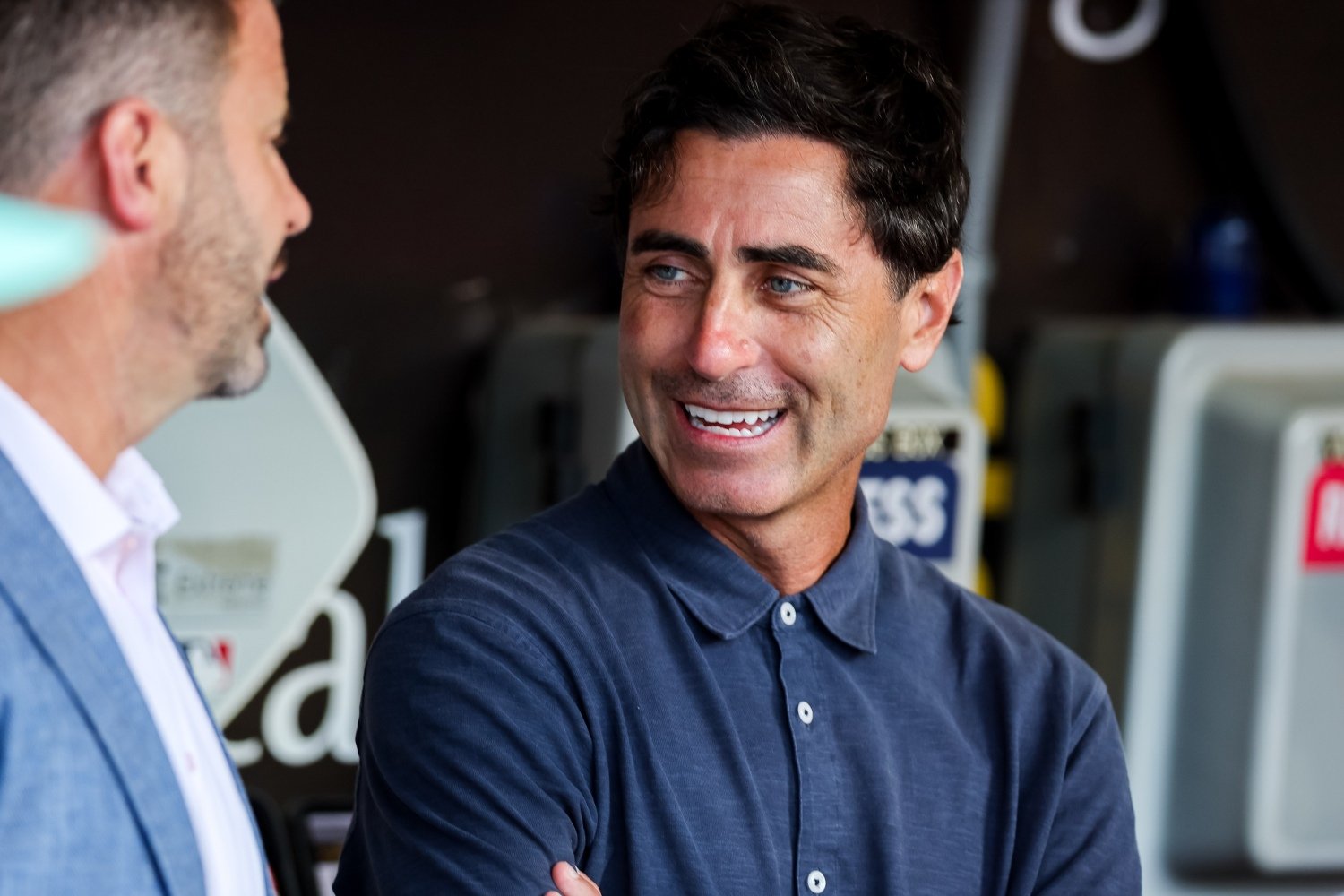 The Milwaukee Brewers have found common ground with the San Diego Padres multiple times during the tenure of Padres executive A.J. Preller. The extremely aggressive Preller is budget-constrained, but not in the same ways the Brewers are, and the two teams share enough overlap in the way they evaluate players to match up on deals when their specific needs don't compete with each other too much to allow it. In late 2019, the Crew swapped Trent Grisham and Zach Davies to San Diego, landing Luis Urías and Eric Lauer. In early 2022, they filled their emergent need for catching depth by acquiring Victor Caratini from San Diego, and that summer, they dealt Josh Hader to the Padres for four players. Last July, Milwaukee shipped Nestor Cortes and Jorge Quintana for Brandon Lockridge. It's hardly surprising, therefore, that the Padres have become a dark horse in the race for Freddy Peralta, whom the Brewers continue to shop as spring training draws near. Ken Rosenthal of The Athletic reported their interest this week, which affirms reporting we brought to you here in mid-December. In this case, though, no perfect fit exists for the two teams. San Diego's farm system has been hollowed out by trades and aggressive promotions, and their roster is loaded with talented but expensive players. The Padres' only prospects with substantial appeal are at least a year away from helping in the majors, which the Brewers rightfully consider disqualifying in Peralta negotiations. The only solid big-leaguers San Diego is willing to move are those beyond the Brewers' means, in terms of short- and medium-term payroll. There's just no way for the clubs to align on a deal by themselves. That doesn't mean Peralta couldn't end up on the Padres. It just means that any trade sending him there would have to include three teams. Given the situation San Diego finds itself in, there are two ways that could happen. Scenario 1: One In, One Out Along with rumors of their hope to add a starter before spring training, the Padres have expressed at least a willingness to consider subtracting one, according to two league sources. Starter Nick Pivetta had a sparkling first season in San Diego, with a 2.87 ERA in 182 innings, but he's owed $19 million for 2026. He can opt out of his deal after either 2026 or 2027, but is guaranteed $14 million and $18 million, respectively, if he elects to stick around. Though Peralta would be a one-year rental, that's effectively the situation with Pivetta, as well, and Peralta comes at a much lower price tag, with a better long-term track record. Unlike Pivetta, Peralta would also be eligible to receive a qualifying offer in November, as long as a deal gets done before Opening Day. Thus, one version of this potential trade would send Peralta to the Padres and Pivetta to a contending team looking to finish building their rotation. Unlike some other deals structured the way it is, Pivetta's is eminently tradable. He made just $3 million in 2025, so the competitive-balance tax salary number for him is $13.75 million per year. That's very affordable for a pitcher of his skills, and whereas similar deals for other pitchers have left would-be suitors worried about holding the bag if the hurler got hurt, this one contains conditional options for either 2027 or 2029, should Pivetta suffer a major injury and spend a prolonged period on the injured list. Those options give the team the chance either to retain him on the cheap or (even if he won't be available for much of the season in question) to further deflate the tax hit of the deal. The team from suburban Atlanta would be interested in Pivetta. So would the Orioles, the Yankees or the Mets. It might require the Padres sending one of their prospects who remains far from the majors to Milwaukee to complement a lower-ceiling but MLB-ready piece from Pivetta's new club, but that's one way this framework could play out. If the Padres and Peralta agreed to an extension as a condition of a deal, it could further goose the return for Milwaukee. Scenario 2: Finding a Talent Sink The big obstacle in matching up the Padres and the Brewers is less the quality of the former's top prospects than their inability to help Milwaukee defend its run of three straight NL Central titles or push forward toward their next World Series appearance. In another variation on this deal, then, the two teams would seek out a team who isn't ready to compete in 2026, but who has one or more controllable players who can help a contender this year and beyond. That team would ship a young, valuable player to the Brewers, getting multiple good but far-off prospects from the Padres, while Peralta would join San Diego. After a leadership change last year, the Nationals are taking a step back to prepare for contention in the long term. MacKenzie Gore has just one more year of team control than Peralta, but he'd certainly let the Crew stay in the fight for the Central. Infielder CJ Abrams has three years of team control left and a dynamic offensive profile. That's one high-profile example of a team in the right competitive spot, but not the only one. The Rays have signaled a willingness to move backward this season and surge forward thereafter. The Athletics are trying to get the timing right on a return to contention, as they plot their move to a permanent home in Las Vegas. The Rockies, Angels, Marlins and Cardinals all clearly fall into this bucket of teams; the Twins might be drawn into it for the right deal. Because there are fewer complications surrounding their pursuits, the Mets, Dodgers, Diamondbacks, and Giants are more likely landing spots for Peralta than the Padres. Still, a deal between the Brewers and San Diego is possible, because when Preller wants a player badly enough, he often finds the dexterity to thread the needle and sew up the transaction.
- 2 comments
-
- 1
-
-
- freddy peralta
- aj preller
- (and 1 more)
-
Image courtesy of © Troy Taormina-Imagn Images But for a devastating shoulder injury, Jeferson Quero would already have made his major-league debut. He would even be a natural fit as the Brewers' backup catcher for 2026, and perhaps he'd have done enough that the team would have more seriously considered trading William Contreras this winter. Instead, Quero missed virtually all of 2024, and he had less than a full campaign in 2025, too. He's still the only non-Contreras catcher on the 40-man roster, and none of those beyond the 40-man are serious candidates to play in the big leagues in more than an emergency role. Naturally, then, the assumption has been that Quero will start 2026 as the complement to Contreras behind the plate, as the Crew gradually eases their top catching prospect into the big leagues. Maybe that assumption needs to be more closely interrogated, though. Quero had a fine season, divided between rehab work in the Arizona Complex League and his first meaningful stint at Triple-A Nashville. However, he batted just .255/.336/.412 for the Sounds, a below-average output for that level and league. In 119 plate appearances for the Cardenales de Lara in his native Venezuela, he has batted .238/.328/.438. In Triple A and in winter ball, he combined for a 10.2% walk rate and a 15.4% strikeout rate, which are both impressive—but he only slugged .421. In Nashville, Quero showed a good knack for generating pulled batted balls in the air, but not as much sheer power as his profile promises. Worse, he chased over 40% of the pitches he saw outside the zone there. His feel for contact helped him foul off many of those pitches and extend at-bats, keeping his strikeout rate low and allowing him to walk much more than such an aggressive hitter typically does, but that doesn't work nearly as well in the majors as it does in even the highest level of the minors. Without a significant refinement of his approach, Quero isn't ready to help with the bat. That can all change in one spring training, of course. The Brewers teach swing decisions as well as any team in baseball, and Quero has plenty of teammates who can back up what the coaching staff preaches as he learns to lay off pitches he can't consistently drive. Still, it seems as though Quero would benefit from more time at Nashville this season, to complete his development. Keeping him down for at least a few weeks would also guarantee that the Brewers have control of him through the 2032 season—not a reason to avoid using him, but a bonus if the team does deem him unready for the majors to begin the year. Therefore, it would make sense for the Crew to pursue one of the solid remaining options to back up and complement Contreras. Having a veteran to fill what is often a role heavy on off-field responsibilities always has some appeal, but in this case, it feels especially urgent. A quartet of remaining free agents could be good fits for Milwaukee as the offseason approaches its endgame. Old friend Victor Caratini is back on the open market, after playing for the Astros the last two years. He batted a sturdy .263/.329/.406 during his stint in Houston, a marked improvement over the .224/.312/.359 he put up in two seasons with the Brewers. He made some changes to his left-handed swing that produced more fly balls, and so far, he's held onto his bat speed better than most catchers entering their 30s. His familiarity with the organization would make integrating him into the team again a bit easier, and he could also claim playing time at first base if needed. No available catcher makes a tidier fit, but he could land a two-year deal again; the Brewers probably won't go there. Fellow switch-hitter Jonah Heim hasn't yet found a new home, after the Rangers non-tendered him in November. Heim is huge for a catcher, and the combination of his size (which tends to catch up to professional squatters in myriad ways) and the difficulty of maintaining two swings while also playing the game's most demanding defensive position derailed him after a strong 2023. He'd be a reclamation project, but arguably, he's the perfect one for the Brewers. Fixing him could give them a head start on solving catcher for 2027, or a trade chip at midseason if Quero is ready by then. When the Cubs lost Miguel Amaya for a huge chunk of the 2025 season, emergency call-up Reese McGuire saved their bacon. He showed a terrific nous for slowing the running game, and although his approach is no more polished than Quero's, he ran into enough balls with his big swing to produce some key home runs. The quintessential backup catcher, he bats left-handed, which maximizes matchup value; is well-liked in the clubhouse; and prioritizes his defensive duties. He's also likely to cost much less than Caratini or Heim. If the Brewers are more focused on veteran influence and maximizing defense and leadership than they are on real production, they could turn to Christian Vázquez, who's likely to be gettable on a minor-league deal with an opt-out date late in spring training. Vázquez is now 35 years old, and his bat was disastrously bad for the Twins over the last two seasons. If he can produce even an occasional positive outcome at bat, though, he more than pays for himself with intangible contributions and stout receiving. Quero remains the medium-term plan behind the plate for the Brewers, but he doesn't need to be on the Opening Day roster. In fact, barring an exceptionally strong spring training, he shouldn't be. The Brewers don't need to spend big money to supplement their catching corps, but they should invest a little bit in it, to ensure depth and optimize the developmental arc of their would-be rookie backstop. View full article
-
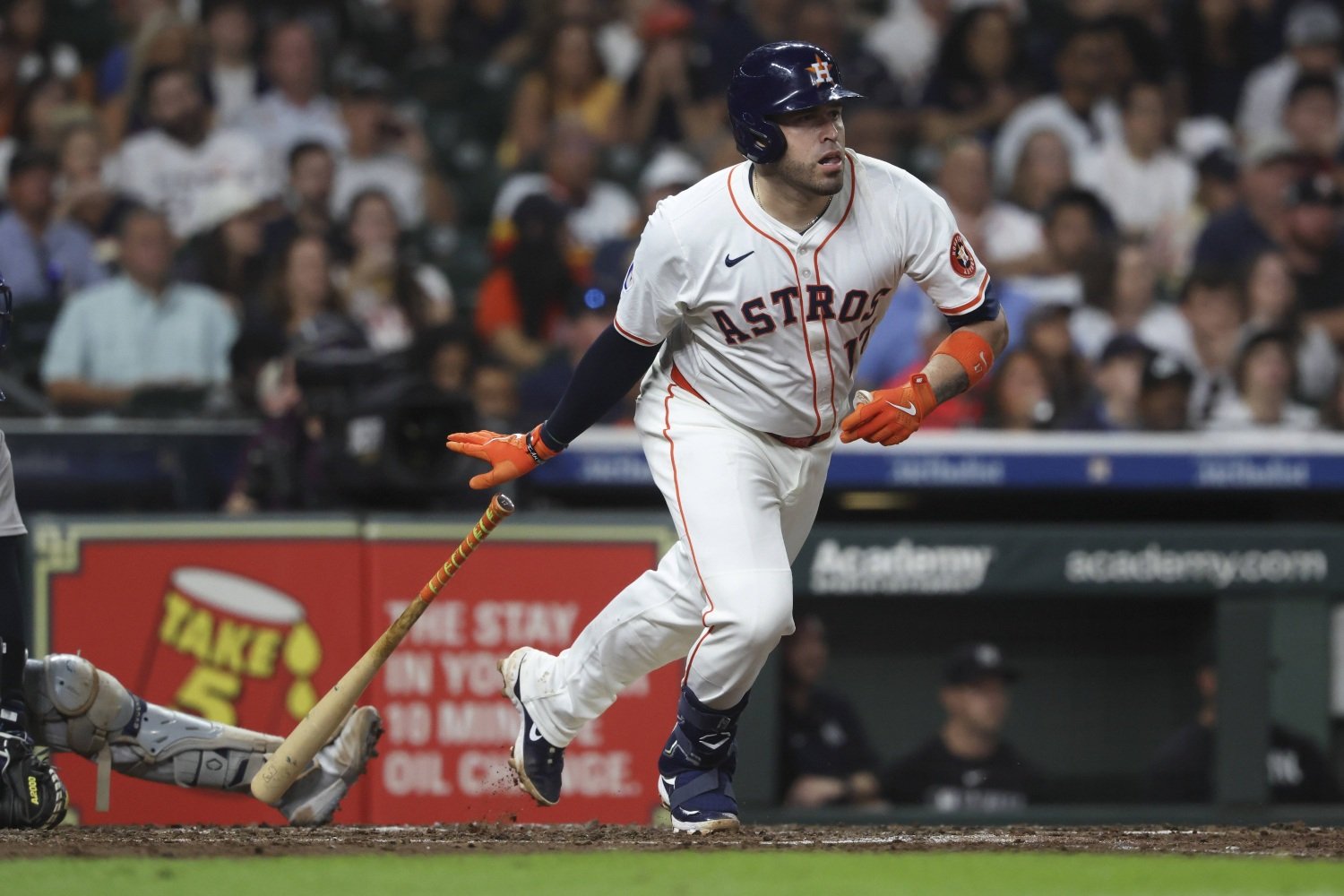 But for a devastating shoulder injury, Jeferson Quero would already have made his major-league debut. He would even be a natural fit as the Brewers' backup catcher for 2026, and perhaps he'd have done enough that the team would have more seriously considered trading William Contreras this winter. Instead, Quero missed virtually all of 2024, and he had less than a full campaign in 2025, too. He's still the only non-Contreras catcher on the 40-man roster, and none of those beyond the 40-man are serious candidates to play in the big leagues in more than an emergency role. Naturally, then, the assumption has been that Quero will start 2026 as the complement to Contreras behind the plate, as the Crew gradually eases their top catching prospect into the big leagues. Maybe that assumption needs to be more closely interrogated, though. Quero had a fine season, divided between rehab work in the Arizona Complex League and his first meaningful stint at Triple-A Nashville. However, he batted just .255/.336/.412 for the Sounds, a below-average output for that level and league. In 119 plate appearances for the Cardenales de Lara in his native Venezuela, he has batted .238/.328/.438. In Triple A and in winter ball, he combined for a 10.2% walk rate and a 15.4% strikeout rate, which are both impressive—but he only slugged .421. In Nashville, Quero showed a good knack for generating pulled batted balls in the air, but not as much sheer power as his profile promises. Worse, he chased over 40% of the pitches he saw outside the zone there. His feel for contact helped him foul off many of those pitches and extend at-bats, keeping his strikeout rate low and allowing him to walk much more than such an aggressive hitter typically does, but that doesn't work nearly as well in the majors as it does in even the highest level of the minors. Without a significant refinement of his approach, Quero isn't ready to help with the bat. That can all change in one spring training, of course. The Brewers teach swing decisions as well as any team in baseball, and Quero has plenty of teammates who can back up what the coaching staff preaches as he learns to lay off pitches he can't consistently drive. Still, it seems as though Quero would benefit from more time at Nashville this season, to complete his development. Keeping him down for at least a few weeks would also guarantee that the Brewers have control of him through the 2032 season—not a reason to avoid using him, but a bonus if the team does deem him unready for the majors to begin the year. Therefore, it would make sense for the Crew to pursue one of the solid remaining options to back up and complement Contreras. Having a veteran to fill what is often a role heavy on off-field responsibilities always has some appeal, but in this case, it feels especially urgent. A quartet of remaining free agents could be good fits for Milwaukee as the offseason approaches its endgame. Old friend Victor Caratini is back on the open market, after playing for the Astros the last two years. He batted a sturdy .263/.329/.406 during his stint in Houston, a marked improvement over the .224/.312/.359 he put up in two seasons with the Brewers. He made some changes to his left-handed swing that produced more fly balls, and so far, he's held onto his bat speed better than most catchers entering their 30s. His familiarity with the organization would make integrating him into the team again a bit easier, and he could also claim playing time at first base if needed. No available catcher makes a tidier fit, but he could land a two-year deal again; the Brewers probably won't go there. Fellow switch-hitter Jonah Heim hasn't yet found a new home, after the Rangers non-tendered him in November. Heim is huge for a catcher, and the combination of his size (which tends to catch up to professional squatters in myriad ways) and the difficulty of maintaining two swings while also playing the game's most demanding defensive position derailed him after a strong 2023. He'd be a reclamation project, but arguably, he's the perfect one for the Brewers. Fixing him could give them a head start on solving catcher for 2027, or a trade chip at midseason if Quero is ready by then. When the Cubs lost Miguel Amaya for a huge chunk of the 2025 season, emergency call-up Reese McGuire saved their bacon. He showed a terrific nous for slowing the running game, and although his approach is no more polished than Quero's, he ran into enough balls with his big swing to produce some key home runs. The quintessential backup catcher, he bats left-handed, which maximizes matchup value; is well-liked in the clubhouse; and prioritizes his defensive duties. He's also likely to cost much less than Caratini or Heim. If the Brewers are more focused on veteran influence and maximizing defense and leadership than they are on real production, they could turn to Christian Vázquez, who's likely to be gettable on a minor-league deal with an opt-out date late in spring training. Vázquez is now 35 years old, and his bat was disastrously bad for the Twins over the last two seasons. If he can produce even an occasional positive outcome at bat, though, he more than pays for himself with intangible contributions and stout receiving. Quero remains the medium-term plan behind the plate for the Brewers, but he doesn't need to be on the Opening Day roster. In fact, barring an exceptionally strong spring training, he shouldn't be. The Brewers don't need to spend big money to supplement their catching corps, but they should invest a little bit in it, to ensure depth and optimize the developmental arc of their would-be rookie backstop.
- 5 comments
-
- 1
-
-
- victor caratini
- reese mcguire
- (and 3 more)
-
Image courtesy of © Charles LeClaire-Imagn Images One way or another, Andrew Vaughn and Jake Bauers will divide time at first base for the 2026 Milwaukee Brewers. In 2025, each was a productive hitter. Vaughn batted .308/.375/.493 in 254 plate appearances after joining the team in early July. Bauers played a much smaller role and didn't enjoy the same kind of luck, but he still hit .235/.353/.399 in 218 trips to the plate. By now, Vaughn's emergence is extremely familiar to Brewers fans. Our Jake McKibbin also laid out the ways that Bauers blossomed last year, back in November. With Christian Yelich likely to spend nearly all his time at designated hitter and William Contreras needing a few appearances there to spare him from overuse at catcher, Vaughn and Bauers will vie for the same pool of playing time in 2026. Neither is an especially capable defender anywhere but first base, and Bauers's only fallbacks (the corner outfield spots) are places where he's fourth or fifth on the team's depth chart. Since Bauers bats left-handed and Vaughn bats right-handed, there will be at least some version of a platoon in effect. With any platoon, though, there comes a set of questions. Which of the two players involved is the better hitter, considering their performance against both left- and right-handed pitchers? If it's the right-handed one, a pure platoon—whereby the lefty sees every right-handed pitcher you can get them in against and the righty faces all the southpaws—doesn't necessarily make sense. Is one of them a better defender than the other, by a distance sufficient to make it more than a tiebreaking consideration? And finally, what idiosyncrasies of each player's swing and approach are worth considering when playing matchups, beyond simple platoon dynamics? The first question instigates a more serious consideration of the other two, in this case, because coming off 2025, Vaughn sure looks like the better of the two hitters in a vacuum. He made both approach and swing changes after joining the Brewers that unlocked the latent talent that made him a top draft pick by the White Sox in 2019. Bauers, by contrast, was exceptionally patient and showed some lethal swing characteristics when he was healthy, but he spent much of the campaign either shelved or hampered by injuries. Here's how Vaughn hit after coming to Milwaukee, broken down purely by handedness: vs. RHP: .262/.315/.456 in 168 plate appearances vs. LHP: .403/.494/.569 in 86 plate appearances Here's the same breakdown for Bauers: vs. RHP: .238/.358/.411 in 201 plate appearances vs. LHP: .200/.294/.267 in 17 plate appearances No one has any illusions about what will happen when a southpaw takes the mound in 2026: the Brewers will start Vaughn at first base. Based on the numbers above, though, you'd also give Vaughn the nod against righties. He didn't get on base as well as Bauers did against them, but he was both more powerful and more likely to come up with a hit, as opposed to requiring a walk to reach. We're clearly in one of those situations where a direct platoon (which, given the distribution of lefty and righty pitchers throughout the majors, would give Bauers about two-thirds of the playing time) is too blunt an instrument. We can briefly consider the defensive aspect, but at first base, that matters much less than it often does when a team is platooning (for instance) a pair of outfielders. By the eye test, Bauers is a better defender. He's taller and faster, and occasionally makes the kinds of plays ranging toward the hole that are almost impossible for right-handed fielders. Vaughn, who's shorter than a typical first baseman and doesn't move well to his right, has gotten better at both footwork and using soft hands on scoops and hard grounders. Both grade out as subpar fielders, though, and by about the same magnitude. In each of the last two years, Vaughn has been tagged with -4 Defensive Runs Saved, to Bauers's -1, but that's largely because Vaughn has played much more than Bauers. Broadly speaking, they're of similar defensive value, with Bauers holding a small but not significant edge. That leaves us to figure out what differentiates the two, beyond handedness, at the plate. Since the goal should be to find some right-handed pitchers against whom it makes more sense to use Vaughn than to use Bauers, the important question is: which ones? First, let's harken back to a table I produced for a piece about Jackson Chourio's brilliant performance against offspeed pitches, earlier this offseason. I found that Chourio's unusually flat swing was part of the reason why he crushed changeups—and, indeed, that while steep swings tend to be better overall, there is one area where it works better to swing flat: on changeups and splitters. Pitch Types RHH v RHP RHH v LHP Four-Seamers Whiff Rate RV/100 Whiff Rate RV/100 Steep 20.2 -1.813 17.2 -1.045 Flat 24.2 -2.415 23.3 -2.505 Sinkers/Cutters Steep 15.1 -2.173 16.2 -1.81 Flat 15.4 -2.448 16.6 -2.23 Breaking Steep 32.7 -1.788 30.6 -1.893 Flat 27.8 -1.878 22.7 -1.907 Offspeed Steep 35.9 -2.948 35.5 -3.165 Flat 26.9 -1.422 28.4 -3.132 Pitch Types LHH v RHP LHH v LHP Four-Seamers Whiff Rate RV/100 Whiff Rate RV/100 Steep 17.6 -1.396 20.8 -1.071 Flat 22.5 -2.874 22.6 -1.548 Sinkers/Cutters Steep 15.6 -1.202 17.7 -2.82 Flat 16.5 -1.845 15.8 -3.246 Breaking Steep 30.1 -1.553 33.8 -3.246 Flat 21 -0.957 30.2 -3.186 Offspeed Steep 32.1 -2.983 36.1 -2.693 Flat 25.4 -3.603 28.2 -4.851 That's important information, though it's also incomplete. There's a bias in studying whiff rates and run values per swing based on pitch type, because (for instance) the best changeups to hit are the ones pitchers leave up, which will invite any hitter to swing flatter than if the pitch was diving below the zone as the hurler intended. Part of the fact that it's better to swing flat against changeups is that it's best to have had the plate discipline not to swing at all on the changeups that would have required steep swings. So, we have to consider swing characteristics to find the right matchups for both Bauers and Vaughn, but we also have to understand their approaches. Bauers gets a lot of credit, for instance, for the better patience he displayed last year, which pushed that OBP against righties almost to .360. It's extremely hard to get on base 36 percent of the time in the modern game and not be a valuable hitter. Bauers showed great plate discipline, which led to more walks and fewer strikeouts. Vaughn made similar adjustments, but he's at a material disadvantage when it comes to swing decisions against righties. Most of the platoon advantage derives from an opposite-handed batter's superior ability to identify pitches and anticipate their locations, relative to a same-handed batter seeing the same offerings. Keeping that in mind, let's turn to a quick analysis of the two players' swings: Jake Bauers Split Swing Speed Swing Tilt Attack Angle Attack Direction Contact Point (in.) v. RHP 76.6 MPH 34° 12° 3° Pull 29.2 v. LHP 74.9 MPH 34° 13° 7° Pull 32.5 Andrew Vaughn Split Swing Speed Swing Tilt Attack Angle Attack Direction Contact Point (in.) v. RHP 70.9 MPH 30° 7° 1° Pull 28.5 v. LHP 71.6 MPH 32° 8° 4° Pull 30.7 Bauers swings faster; that's not news. Since we already feel very confident that Vaughn will play any time it's possible against lefties, the big question comes against righties. Bauers's swing speed advantage is huge, but there's also a marked difference in what kinds of swings they each take against righties. Compare these slow-motion breakdowns of their moves. Untitled design.mp4 First, note the different paths their hands take right at the start of their swings. Vaughn is very direct, which is where the tendency toward flatness comes from. He keeps his hands high and works around his back side, sinking into his back leg even as he pushes off of it. Bauers, by contrast, works down to get himself in better position to start working up. He does what hitters call working underneath the front side, creating more tilt and a longer stroke. Compare a still from videos of each player early in their swing, and you can see (even with less than perfect matching of camera angle) how Vaughn stays upright, opens his hips and shoulders sooner, and lets his hands get farther from his body sooner. Bauers has more bend, and tucks the back elbow in to his ribcage more, creating lift and torque but channeling it to work vertically, as well as horizontally. Watch the animations above again, and you can see how the two swings are geared to take each hitter to a different place, via a different route. Vaughn's swing is about getting his hands around his body and into the space just beyond the left side of his torso as smoothly as possible, with his trunk rotation supplying all the power. Bauers is much more expansive. His hand path is about getting underneath his own front side, which stays slightly more closed. That gives him something firm around which to rotate, but the rotation can't all come from his trunk, because the front side is firmer. Thus, Bauers's hands and arms create much of the bat speed, generating a longer but faster swing. As you might guess, it's much harder to exploit Vaughn's swing than it is to do so with Bauers's, even for a right-handed pitcher. Vaughn is better against offspeed and breaking stuff, even against righties, because his bat path allows for a lot of mishit singles. The bat moves in an arc that leaves more of it in the hitting zone longer, generating vicious line drives when he's right on time but plenty of flares and sharp grounders when he isn't. Bauers is capable of hitting mistakes farther, but much more likely to swing and miss on a well-executed pitch that messes with his timing or moves sharply. Given the steepness of his swing, you might expect Bauers to struggle more with rising fastballs, too, but it's not so. He was so good at laying off the ones he couldn't handle last year that he forced pitchers to either walk him or come into his wheelhouse. Assuming he can do that again, Bauers is the right guy to use against fastball-dominant righties, especially if they have a firm breaking ball. Vaughn, however, should start whenever the Brewers are scheduled to see a righty who's likely to throw the kitchen sink at them, loading up on breaking balls and offspeed stuff. Of course, a pitcher will typically approach right-handed batters and left-handed ones differently, so from day to day, the Crew will also have to study the tendencies of their opponents within each handedness matchup. If a pitcher is heavy on soft stuff to lefties but goes right after righties with high-rise heaters, the team might not have a great matchup for tham at first base that day. Most of the time, though, there will be a clear right answer. The best guess is that Vaughn will start about half of the games at first base, if both players are healthy all year, with Bauers starting another 50 or 60 and the rest going to one of the team's slugging prospects as they reach the majors late in the season. With the righty in the would-be platoon being slightly better than the lefty, a perfect platoon wouldn't be wise, but a modified one could be yet another way for the Crew to find an extra handful of runs over the course of the year. View full article
-
 One way or another, Andrew Vaughn and Jake Bauers will divide time at first base for the 2026 Milwaukee Brewers. In 2025, each was a productive hitter. Vaughn batted .308/.375/.493 in 254 plate appearances after joining the team in early July. Bauers played a much smaller role and didn't enjoy the same kind of luck, but he still hit .235/.353/.399 in 218 trips to the plate. By now, Vaughn's emergence is extremely familiar to Brewers fans. Our Jake McKibbin also laid out the ways that Bauers blossomed last year, back in November. With Christian Yelich likely to spend nearly all his time at designated hitter and William Contreras needing a few appearances there to spare him from overuse at catcher, Vaughn and Bauers will vie for the same pool of playing time in 2026. Neither is an especially capable defender anywhere but first base, and Bauers's only fallbacks (the corner outfield spots) are places where he's fourth or fifth on the team's depth chart. Since Bauers bats left-handed and Vaughn bats right-handed, there will be at least some version of a platoon in effect. With any platoon, though, there comes a set of questions. Which of the two players involved is the better hitter, considering their performance against both left- and right-handed pitchers? If it's the right-handed one, a pure platoon—whereby the lefty sees every right-handed pitcher you can get them in against and the righty faces all the southpaws—doesn't necessarily make sense. Is one of them a better defender than the other, by a distance sufficient to make it more than a tiebreaking consideration? And finally, what idiosyncrasies of each player's swing and approach are worth considering when playing matchups, beyond simple platoon dynamics? The first question instigates a more serious consideration of the other two, in this case, because coming off 2025, Vaughn sure looks like the better of the two hitters in a vacuum. He made both approach and swing changes after joining the Brewers that unlocked the latent talent that made him a top draft pick by the White Sox in 2019. Bauers, by contrast, was exceptionally patient and showed some lethal swing characteristics when he was healthy, but he spent much of the campaign either shelved or hampered by injuries. Here's how Vaughn hit after coming to Milwaukee, broken down purely by handedness: vs. RHP: .262/.315/.456 in 168 plate appearances vs. LHP: .403/.494/.569 in 86 plate appearances Here's the same breakdown for Bauers: vs. RHP: .238/.358/.411 in 201 plate appearances vs. LHP: .200/.294/.267 in 17 plate appearances No one has any illusions about what will happen when a southpaw takes the mound in 2026: the Brewers will start Vaughn at first base. Based on the numbers above, though, you'd also give Vaughn the nod against righties. He didn't get on base as well as Bauers did against them, but he was both more powerful and more likely to come up with a hit, as opposed to requiring a walk to reach. We're clearly in one of those situations where a direct platoon (which, given the distribution of lefty and righty pitchers throughout the majors, would give Bauers about two-thirds of the playing time) is too blunt an instrument. We can briefly consider the defensive aspect, but at first base, that matters much less than it often does when a team is platooning (for instance) a pair of outfielders. By the eye test, Bauers is a better defender. He's taller and faster, and occasionally makes the kinds of plays ranging toward the hole that are almost impossible for right-handed fielders. Vaughn, who's shorter than a typical first baseman and doesn't move well to his right, has gotten better at both footwork and using soft hands on scoops and hard grounders. Both grade out as subpar fielders, though, and by about the same magnitude. In each of the last two years, Vaughn has been tagged with -4 Defensive Runs Saved, to Bauers's -1, but that's largely because Vaughn has played much more than Bauers. Broadly speaking, they're of similar defensive value, with Bauers holding a small but not significant edge. That leaves us to figure out what differentiates the two, beyond handedness, at the plate. Since the goal should be to find some right-handed pitchers against whom it makes more sense to use Vaughn than to use Bauers, the important question is: which ones? First, let's harken back to a table I produced for a piece about Jackson Chourio's brilliant performance against offspeed pitches, earlier this offseason. I found that Chourio's unusually flat swing was part of the reason why he crushed changeups—and, indeed, that while steep swings tend to be better overall, there is one area where it works better to swing flat: on changeups and splitters. Pitch Types RHH v RHP RHH v LHP Four-Seamers Whiff Rate RV/100 Whiff Rate RV/100 Steep 20.2 -1.813 17.2 -1.045 Flat 24.2 -2.415 23.3 -2.505 Sinkers/Cutters Steep 15.1 -2.173 16.2 -1.81 Flat 15.4 -2.448 16.6 -2.23 Breaking Steep 32.7 -1.788 30.6 -1.893 Flat 27.8 -1.878 22.7 -1.907 Offspeed Steep 35.9 -2.948 35.5 -3.165 Flat 26.9 -1.422 28.4 -3.132 Pitch Types LHH v RHP LHH v LHP Four-Seamers Whiff Rate RV/100 Whiff Rate RV/100 Steep 17.6 -1.396 20.8 -1.071 Flat 22.5 -2.874 22.6 -1.548 Sinkers/Cutters Steep 15.6 -1.202 17.7 -2.82 Flat 16.5 -1.845 15.8 -3.246 Breaking Steep 30.1 -1.553 33.8 -3.246 Flat 21 -0.957 30.2 -3.186 Offspeed Steep 32.1 -2.983 36.1 -2.693 Flat 25.4 -3.603 28.2 -4.851 That's important information, though it's also incomplete. There's a bias in studying whiff rates and run values per swing based on pitch type, because (for instance) the best changeups to hit are the ones pitchers leave up, which will invite any hitter to swing flatter than if the pitch was diving below the zone as the hurler intended. Part of the fact that it's better to swing flat against changeups is that it's best to have had the plate discipline not to swing at all on the changeups that would have required steep swings. So, we have to consider swing characteristics to find the right matchups for both Bauers and Vaughn, but we also have to understand their approaches. Bauers gets a lot of credit, for instance, for the better patience he displayed last year, which pushed that OBP against righties almost to .360. It's extremely hard to get on base 36 percent of the time in the modern game and not be a valuable hitter. Bauers showed great plate discipline, which led to more walks and fewer strikeouts. Vaughn made similar adjustments, but he's at a material disadvantage when it comes to swing decisions against righties. Most of the platoon advantage derives from an opposite-handed batter's superior ability to identify pitches and anticipate their locations, relative to a same-handed batter seeing the same offerings. Keeping that in mind, let's turn to a quick analysis of the two players' swings: Jake Bauers Split Swing Speed Swing Tilt Attack Angle Attack Direction Contact Point (in.) v. RHP 76.6 MPH 34° 12° 3° Pull 29.2 v. LHP 74.9 MPH 34° 13° 7° Pull 32.5 Andrew Vaughn Split Swing Speed Swing Tilt Attack Angle Attack Direction Contact Point (in.) v. RHP 70.9 MPH 30° 7° 1° Pull 28.5 v. LHP 71.6 MPH 32° 8° 4° Pull 30.7 Bauers swings faster; that's not news. Since we already feel very confident that Vaughn will play any time it's possible against lefties, the big question comes against righties. Bauers's swing speed advantage is huge, but there's also a marked difference in what kinds of swings they each take against righties. Compare these slow-motion breakdowns of their moves. Untitled design.mp4 First, note the different paths their hands take right at the start of their swings. Vaughn is very direct, which is where the tendency toward flatness comes from. He keeps his hands high and works around his back side, sinking into his back leg even as he pushes off of it. Bauers, by contrast, works down to get himself in better position to start working up. He does what hitters call working underneath the front side, creating more tilt and a longer stroke. Compare a still from videos of each player early in their swing, and you can see (even with less than perfect matching of camera angle) how Vaughn stays upright, opens his hips and shoulders sooner, and lets his hands get farther from his body sooner. Bauers has more bend, and tucks the back elbow in to his ribcage more, creating lift and torque but channeling it to work vertically, as well as horizontally. Watch the animations above again, and you can see how the two swings are geared to take each hitter to a different place, via a different route. Vaughn's swing is about getting his hands around his body and into the space just beyond the left side of his torso as smoothly as possible, with his trunk rotation supplying all the power. Bauers is much more expansive. His hand path is about getting underneath his own front side, which stays slightly more closed. That gives him something firm around which to rotate, but the rotation can't all come from his trunk, because the front side is firmer. Thus, Bauers's hands and arms create much of the bat speed, generating a longer but faster swing. As you might guess, it's much harder to exploit Vaughn's swing than it is to do so with Bauers's, even for a right-handed pitcher. Vaughn is better against offspeed and breaking stuff, even against righties, because his bat path allows for a lot of mishit singles. The bat moves in an arc that leaves more of it in the hitting zone longer, generating vicious line drives when he's right on time but plenty of flares and sharp grounders when he isn't. Bauers is capable of hitting mistakes farther, but much more likely to swing and miss on a well-executed pitch that messes with his timing or moves sharply. Given the steepness of his swing, you might expect Bauers to struggle more with rising fastballs, too, but it's not so. He was so good at laying off the ones he couldn't handle last year that he forced pitchers to either walk him or come into his wheelhouse. Assuming he can do that again, Bauers is the right guy to use against fastball-dominant righties, especially if they have a firm breaking ball. Vaughn, however, should start whenever the Brewers are scheduled to see a righty who's likely to throw the kitchen sink at them, loading up on breaking balls and offspeed stuff. Of course, a pitcher will typically approach right-handed batters and left-handed ones differently, so from day to day, the Crew will also have to study the tendencies of their opponents within each handedness matchup. If a pitcher is heavy on soft stuff to lefties but goes right after righties with high-rise heaters, the team might not have a great matchup for tham at first base that day. Most of the time, though, there will be a clear right answer. The best guess is that Vaughn will start about half of the games at first base, if both players are healthy all year, with Bauers starting another 50 or 60 and the rest going to one of the team's slugging prospects as they reach the majors late in the season. With the righty in the would-be platoon being slightly better than the lefty, a perfect platoon wouldn't be wise, but a modified one could be yet another way for the Crew to find an extra handful of runs over the course of the year.
 -
I don't think they're set on trading him, at all. They'll only deal him if someone meets their asking price. They're comfortable keeping him, more so than they were with Corbin Burnes or Devin Williams.
- 9 replies
-
- 3
-
-
- freddy peralta
- dillon lewis
- (and 1 more)
-
 The New York Yankees wanted to use outfield prospect Dillon Lewis as the centerpiece of a trade to bolster their starting rotation, but the Brewers were never going to accede to a deal focused on Lewis in exchange for Freddy Peralta. Thus, New York circled back to the Miami Marlins Tuesday, after missing out on Edward Cabrera with a bid that had also included Lewis. This time, they got a deal done, packaging Lewis and three other prospects to acquire left-handed hurler Ryan Weathers from the Fish. Lewis held some appeal for the Brewers, but the Yankees' efforts to pump his value this winter worked better on some other teams than they did on the Milwaukee front office. The Crew also liked Brendan Jones, a speedy outfielder who served as a secondary piece in the deal and will join Miami's farm system, instead. Thus, for the Yankees to land Peralta now, the two sides would have to start almost from scratch. We can't dismiss the possibility that the Yankees will still make a play for Peralta, but it's now more remote. In theory, New York has more depth in their rotation now, but most of their penciled-in starters either will begin the season on the injured list or seem like safe bets to land there eventually. Weathers is under team control for three more seasons, which matches the term for which they control Luis Gil—the hurler the Brewers wanted as the big-league anchor in a deal for Peralta. Brian Cashman could try to build a new, higher-echelon prospect package to entice the Brewers, swapping Gil for Peralta at the cost of more farm system punch but backfilling Gil's spot with the equally talented and equally fragile Weathers. On balance, though, that's unlikely. The Yankees are at least the third team to take an active interest in Peralta this winter, only to end up solving their rotation problems with different deals. The Orioles could still be in the market for a free-agent starter, but they spent the capital they might have included in a Peralta deal in acquiring Shane Baz from the Rays, instead. The Astros not only signed Tatsuya Imai to replace the departing Framber Valdez, but traded for Mike Burrows of the Pirates. Weathers, Baz and Burrows all have multiple years of club control remaining, which made the teams acquiring them more comfortable sending significant prospect capital the other way in trades. The Cubs were certainly never going to trade for Peralta, given the competitive tension between those two teams right now, but they, too, demonstrated their preference for a longer-term solution by trading for Cabrera. Even the Red Sox, who surrendered a modest return for Sonny Gray from the Cardinals, also traded the tantalizing Jhostynxon García to the Pirates for more team control over Johan Oviedo. Suitors remain. The Diamondbacks, Giants and Padres all need rotation help if they want to contend for playoff berths in the increasingly competitive National League, and each has at least checked in with Milwaukee this offseason about Peralta. It's not clear what the team from the northwest suburbs of Atlanta could offer for Peralta—their farm system is weak—but they have some measure of interest. The Mets and Dodgers boast two of the game's deepest farm systems. The Queensmen desperately need a starter to anchor a shaky rotation, while Los Angeles is shopping for capstones for a roster hunting a threepeat. None of those six teams make as neat a fit for Peralta as others have seemed to, at various points this offseason. As has been true all along, the Brewers themselves feel little pressure to move him. The pending disruption of their local broadcast distribution (and, thus, revenue therefrom) could ratchet that pressure up slightly, but it's more likely the Brewers will simply eschew hoped-for secondary spending, if needed, than that they'll take a reduced return just to shed an $8-million obligation for 2026. With each of the trades mentioned above, the chances that the team gets the kind of offer they'll demand have dwindled. Eventually, a team will have to increase its bid, or the team will hold onto its All-Star righty. Perhaps the more intriguing notion is of the Brewers themselves putting a controllable starter in play. If the robust offers that might inspire them to trade Peralta are being reserved for pitchers who will be around through at least 2028, could Milwaukee get the juicy prospect recharge they're looking for by trading Aaron Ashby or Robert Gasser? The markets for those pitchers might not be as fevered, but they would include more teams. Every club tries to accumulate both talent and club control. Peralta only offers one of those two things. While he's more talented and more accomplished than Baz, Burrows, Cabrera, Oviedo and Weathers, he's also a rental. So far, the Brewers have insisted that if a team is to nab him, they need to pay controllable pitcher prices, to reflect both Peralta's raw on-field value and the utility of his below-market $8-million salary. Late in the winter, small-market teams get their chance to shine. The Brewers won't tiptoe silently all the way to spring training. They're unlikely to make a major financial outlay, but they will continue refining the roster. Trading Peralta could still be part of that, but the lineup of likely partners in a trade has changed as the offseason has unfolded. Each team (effectively) eliminated from consideration clarifies the market, but the Brewers hold the trump card: They can choose whether or not to transact even on the highest offer they get, so they control the market, even with fewer teams whom they can use to apply leverage to the others.
- 9 comments
-
- 1
-
-
- freddy peralta
- dillon lewis
- (and 1 more)
-
Image courtesy of © Denis Poroy-Imagn Images The New York Yankees wanted to use outfield prospect Dillon Lewis as the centerpiece of a trade to bolster their starting rotation, but the Brewers were never going to accede to a deal focused on Lewis in exchange for Freddy Peralta. Thus, New York circled back to the Miami Marlins Tuesday, after missing out on Edward Cabrera with a bid that had also included Lewis. This time, they got a deal done, packaging Lewis and three other prospects to acquire left-handed hurler Ryan Weathers from the Fish. Lewis held some appeal for the Brewers, but the Yankees' efforts to pump his value this winter worked better on some other teams than they did on the Milwaukee front office. The Crew also liked Brendan Jones, a speedy outfielder who served as a secondary piece in the deal and will join Miami's farm system, instead. Thus, for the Yankees to land Peralta now, the two sides would have to start almost from scratch. We can't dismiss the possibility that the Yankees will still make a play for Peralta, but it's now more remote. In theory, New York has more depth in their rotation now, but most of their penciled-in starters either will begin the season on the injured list or seem like safe bets to land there eventually. Weathers is under team control for three more seasons, which matches the term for which they control Luis Gil—the hurler the Brewers wanted as the big-league anchor in a deal for Peralta. Brian Cashman could try to build a new, higher-echelon prospect package to entice the Brewers, swapping Gil for Peralta at the cost of more farm system punch but backfilling Gil's spot with the equally talented and equally fragile Weathers. On balance, though, that's unlikely. The Yankees are at least the third team to take an active interest in Peralta this winter, only to end up solving their rotation problems with different deals. The Orioles could still be in the market for a free-agent starter, but they spent the capital they might have included in a Peralta deal in acquiring Shane Baz from the Rays, instead. The Astros not only signed Tatsuya Imai to replace the departing Framber Valdez, but traded for Mike Burrows of the Pirates. Weathers, Baz and Burrows all have multiple years of club control remaining, which made the teams acquiring them more comfortable sending significant prospect capital the other way in trades. The Cubs were certainly never going to trade for Peralta, given the competitive tension between those two teams right now, but they, too, demonstrated their preference for a longer-term solution by trading for Cabrera. Even the Red Sox, who surrendered a modest return for Sonny Gray from the Cardinals, also traded the tantalizing Jhostynxon García to the Pirates for more team control over Johan Oviedo. Suitors remain. The Diamondbacks, Giants and Padres all need rotation help if they want to contend for playoff berths in the increasingly competitive National League, and each has at least checked in with Milwaukee this offseason about Peralta. It's not clear what the team from the northwest suburbs of Atlanta could offer for Peralta—their farm system is weak—but they have some measure of interest. The Mets and Dodgers boast two of the game's deepest farm systems. The Queensmen desperately need a starter to anchor a shaky rotation, while Los Angeles is shopping for capstones for a roster hunting a threepeat. None of those six teams make as neat a fit for Peralta as others have seemed to, at various points this offseason. As has been true all along, the Brewers themselves feel little pressure to move him. The pending disruption of their local broadcast distribution (and, thus, revenue therefrom) could ratchet that pressure up slightly, but it's more likely the Brewers will simply eschew hoped-for secondary spending, if needed, than that they'll take a reduced return just to shed an $8-million obligation for 2026. With each of the trades mentioned above, the chances that the team gets the kind of offer they'll demand have dwindled. Eventually, a team will have to increase its bid, or the team will hold onto its All-Star righty. Perhaps the more intriguing notion is of the Brewers themselves putting a controllable starter in play. If the robust offers that might inspire them to trade Peralta are being reserved for pitchers who will be around through at least 2028, could Milwaukee get the juicy prospect recharge they're looking for by trading Aaron Ashby or Robert Gasser? The markets for those pitchers might not be as fevered, but they would include more teams. Every club tries to accumulate both talent and club control. Peralta only offers one of those two things. While he's more talented and more accomplished than Baz, Burrows, Cabrera, Oviedo and Weathers, he's also a rental. So far, the Brewers have insisted that if a team is to nab him, they need to pay controllable pitcher prices, to reflect both Peralta's raw on-field value and the utility of his below-market $8-million salary. Late in the winter, small-market teams get their chance to shine. The Brewers won't tiptoe silently all the way to spring training. They're unlikely to make a major financial outlay, but they will continue refining the roster. Trading Peralta could still be part of that, but the lineup of likely partners in a trade has changed as the offseason has unfolded. Each team (effectively) eliminated from consideration clarifies the market, but the Brewers hold the trump card: They can choose whether or not to transact even on the highest offer they get, so they control the market, even with fewer teams whom they can use to apply leverage to the others. View full article
-
Image courtesy of © Benny Sieu-Imagn Images The Milwaukee Brewers are "moving toward a deal" that would send starting pitcher Freddy Peralta out of town for the final year of his team-friendly contract, according to a source familiar with the team's talks. Multiple teams remain involved, but the Yankees have emerged as the most likely fit, with 2024 American League Rookie of the Year Luis Gil as the headliner in that potential package. Gil is just two years younger than Peralta and only comes with three years of team control, but he and the Yankees agreed on a one-year deal worth $2.1625 million for 2026 last week, so he would give the team both extra control years and some cost savings. That Gil is at the center of the discussions between Milwaukee and New York indicates what the Brewers are prioritizing as they entertain offers for their erstwhile ace. In talks with the Diamondbacks, they have discussed starter Ryne Nelson, who also comes with three years of control and modest cost savings, a source said. Emmet Sheehan, Gavin Stone and Justin Wrobleski were discussed when the Dodgers checked in on Peralta. In short, if Milwaukee is to move Peralta coming off his strongest overall season in the majors, they'll require that the package include a player (ideally another starter) whom they can keep around for at least three years and who makes up some of the short-term value they will lose by dealing him. Any trade would also include a high-caliber prospect and/or a valuable draft pick. Both the Diamondbacks and the Orioles have picks in Competitive Balance Round A this July, and the Brewers have discussed packages that would involve them receiving that pick from either team. Unsurprisingly, Milwaukee asked about infielder Jordan Lawlar, still struggling to establish himself in Arizona but with abundant talent and time on his side. Milwaukee's willingness to trade Peralta is not news, but they have gotten materially closer to doing so over the past two weeks, according to sources familiar with their plans. As uncertainty about any broadcasting revenue for 2026 increases, the chances that the team will trade Peralta have ticked up, too. By getting back a player like Gil or Nelson, they would save at least $5 million while backfilling the spot in their projected rotation vacated by Peralta. Therefore, they would be able to turn around and sign another player to round out their roster in the endgame of the offseason (perhaps as late as mid-February) without pushing their projected payroll beyond its current range of $115 million. Typically, teams do best in trades like this when they focus solely on maximizing overall value. The Brewers have experience, however, in striking the right balance between filling needs and accumulating talent. With a Peralta trade, they've made clear to the many suitors (Atlanta, Baltimore, Boston, both New York teams, the Giants, the Padres, the Dodgers, the Diamondbacks and the Astros have all shown interest at different points this winter) that a return must take the right shape. If their price isn't met, they'll retain Peralta, and make do with whatever else they can afford to supplement the three-time defending NL Central champions. It looks more likely, though, that one of the final few interested parties will give them what they're looking for. View full article

