


Matthew Trueblood
-
Posts
1,964 -
Joined
-
Last visited
-
Days Won
10
Content Type
Profiles
Forums
Blogs
Events
News
2026 Milwaukee Brewers Top Prospects Ranking
Milwaukee Brewers Videos
2022 Milwaukee Brewers Draft Picks
Milwaukee Brewers Free Agent & Trade Rumors, Notes, & Tidbits
Guides & Resources
2023 Milwaukee Brewers Draft Picks
2024 Milwaukee Brewers Draft Picks
The Milwaukee Brewers Players Project
2025 Milwaukee Brewers Draft Pick Tracker
2026 Milwaukee Brewers Draft Tracker: Picks & Bonuses
Store
Downloads
Gallery
Everything posted by Matthew Trueblood
-
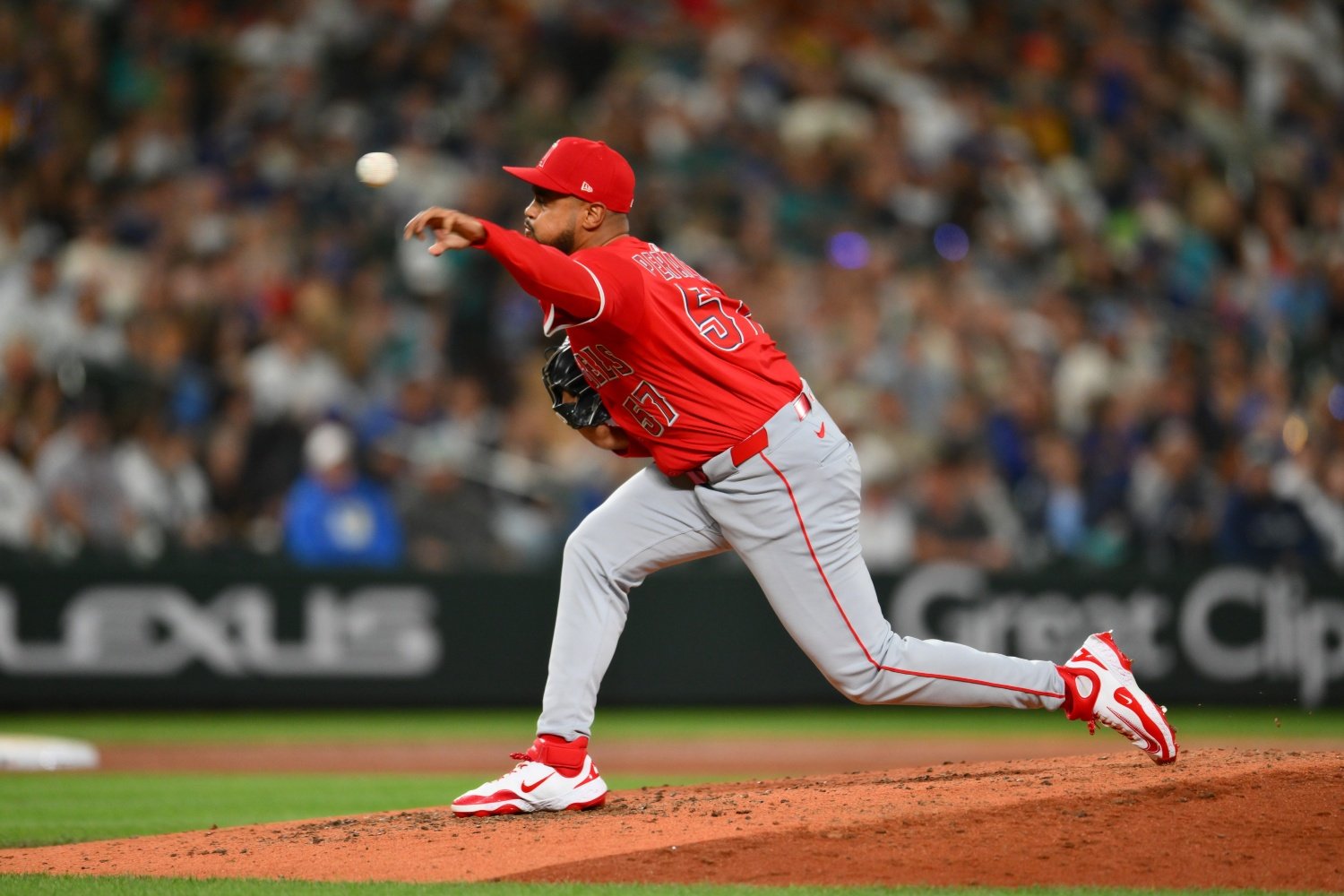 In parts of three big-league seasons, Sammy Peralta has an unsightly 5.12 ERA in under 50 total innings. He's pitched for the White Sox (2023-24) and the Angels (2025), two of the thinnest teams in the league when it comes to pitching depth, but he's still never been able to carve out a meaningful role. The 2026 season will be his ninth as a professional, and he'll turn 28 next May. October waiver claims are always below-the-radar moves, but this one is unremarkable even by that standard. Then again, if you've watched the Brewers work over the last 10 years (and especially the last five), a lot of familiar chimes will sound in your head as you run down the checklist of characteristics on Peralta. He: Throws from a low three-quarters slot, almost sidearm; Had plus extension last year, meaning he gets down the mound well and uses his 6-foot-2 frame to create deception and get more out of his fastball than its 89-miles-per-hour velocity would suggest; and Hasn't worked with especially good pitching development groups to this point in his career. Peralta switched from a four-seam fastball to a two-seamer in 2025, which was a smart choice. The four-seamer was straight and didn't have any of the surprising rise (from such a low slot) that has allowed previous Brewers sidearm projects Hoby Milner and Grant Anderson to find success with that offering. However, the Brewers are likely to try to reincorporate a four-seamer (with an improved shape) as a way to change eye levels for him. He also switched from a big-bending, high-70s sweeper to a harder, shorter slider. That was another needed tweak; the sweeper out of his slot was far too hittable for righties. The slider is a pitch with which the Brewers likely think he can do much more. It would be no surprise at all if Milwaukee looks to add a cutter to Peralta's arsenal. They're also likely to clean up his mechanics a bit and find an extra 1-2 miles per hour of velocity. There's never a guarantee that the second or third go-round will yield results as strong as the ones the team got from Milner and Anderson, but all the same ingredients for success appear to be present. At a glance, it might not seem like the Brewers need another lefty arm for next year's bullpen. In reality, though, they're likely to head into spring training treating at least two of Robert Gasser, Aaron Ashby and DL Hall as starters; Rob Zastryzny is likely to depart as a free agent; and the team will want to have insurance against an injury to the heavily used Jared Koenig. Peralta isn't a candidate to take over high-leverage relief work any time soon, but he's the kind of pitcher the Brewers get right consistently, and he fits nicely into their plans. That said, any free talent pickup in October is a player who might not even survive the offseason on the 40-man roster. The Brewers claimed the southpaw knowing what they'd like to do with him and that they're likely to need help in the segment of the roster where he would fit. Whether he ends up in camp with the team (either as a prospective big-leaguer or after being snuck through waivers sometime in the next three-plus months) is impossible to predict, but they'll certainly try to make it happen.
- 2 comments
-
- 1
-

-
- sammy peralta
- hoby milner
- (and 1 more)
-
Image courtesy of © Steven Bisig-Imagn Images In parts of three big-league seasons, Sammy Peralta has an unsightly 5.12 ERA in under 50 total innings. He's pitched for the White Sox (2023-24) and the Angels (2025), two of the thinnest teams in the league when it comes to pitching depth, but he's still never been able to carve out a meaningful role. The 2026 season will be his ninth as a professional, and he'll turn 28 next May. October waiver claims are always below-the-radar moves, but this one is unremarkable even by that standard. Then again, if you've watched the Brewers work over the last 10 years (and especially the last five), a lot of familiar chimes will sound in your head as you run down the checklist of characteristics on Peralta. He: Throws from a low three-quarters slot, almost sidearm; Had plus extension last year, meaning he gets down the mound well and uses his 6-foot-2 frame to create deception and get more out of his fastball than its 89-miles-per-hour velocity would suggest; and Hasn't worked with especially good pitching development groups to this point in his career. Peralta switched from a four-seam fastball to a two-seamer in 2025, which was a smart choice. The four-seamer was straight and didn't have any of the surprising rise (from such a low slot) that has allowed previous Brewers sidearm projects Hoby Milner and Grant Anderson to find success with that offering. However, the Brewers are likely to try to reincorporate a four-seamer (with an improved shape) as a way to change eye levels for him. He also switched from a big-bending, high-70s sweeper to a harder, shorter slider. That was another needed tweak; the sweeper out of his slot was far too hittable for righties. The slider is a pitch with which the Brewers likely think he can do much more. It would be no surprise at all if Milwaukee looks to add a cutter to Peralta's arsenal. They're also likely to clean up his mechanics a bit and find an extra 1-2 miles per hour of velocity. There's never a guarantee that the second or third go-round will yield results as strong as the ones the team got from Milner and Anderson, but all the same ingredients for success appear to be present. At a glance, it might not seem like the Brewers need another lefty arm for next year's bullpen. In reality, though, they're likely to head into spring training treating at least two of Robert Gasser, Aaron Ashby and DL Hall as starters; Rob Zastryzny is likely to depart as a free agent; and the team will want to have insurance against an injury to the heavily used Jared Koenig. Peralta isn't a candidate to take over high-leverage relief work any time soon, but he's the kind of pitcher the Brewers get right consistently, and he fits nicely into their plans. That said, any free talent pickup in October is a player who might not even survive the offseason on the 40-man roster. The Brewers claimed the southpaw knowing what they'd like to do with him and that they're likely to need help in the segment of the roster where he would fit. Whether he ends up in camp with the team (either as a prospective big-leaguer or after being snuck through waivers sometime in the next three-plus months) is impossible to predict, but they'll certainly try to make it happen. View full article
-
Image courtesy of © Benny Sieu-Imagn Images When a player with a long track record of average or worse production suddenly enjoys a half-season of excellence, it's natural to expect some regression. Baseball is a game of adjustments, and every time a player gets ahead of the curve for a bit, the league adjusts to them, forcing them to make changes in reply. That's what makes it so hard to sustain success, even for exceptionally talented players. For those who start from a lower baseline and have to make relatively major tweaks to get to a new level of performance, there's often a greater vulnerability to the adjustments the league makes; a big shift in process leaves one a bit off-balance (metaphorically) and prone to exploitation when opponents force the next shift. Of course, a really good process is still valuable, and if you want to evaluate the staying power of a sudden performance change, you have to understand the changes that brought it about. Did the player get lucky for a while, or did they make concrete adjustments that let them tap into their talent more fully? Just as importantly, since having made real changes doesn't guarantee that a change in performance has staying power, how sustainable is their new process, if they have one? In the case of Brewers first baseman Andrew Vaughn, there are lots of good indicators. By way of quick review (one most of us won't need, already being familiar with the team and the season of which Vaughn was such a big part), Vaughn batted .246/.297/.402 last season with the White Sox, and was hitting .189/.218/.314 for them when he was demoted to the minor leagues early this year. Milwaukee traded Aaron Civale for him, and called him up in early July after Rhys Hoskins got hurt. For the Crew, he batted .308/.375/.493 in 254 plate appearances during the regular season, and although he was just 4-for-26 in the playoffs, two of those hits were huge home runs. His strikeout (13.7%) and walk (9.9%) rates after joining the Brewers easily bested anything he managed during his White Sox tenure, and he tapped into more power after the trade, too. Immediately, Vaughn's adjustments in his new organization were clear. He began chasing less outside the strike zone (dwon from 36.1% of the time to 24.6%, according to Statcast); that grabbed the headlines. By not expanding his zone as much, he was able to draw more walks, but also get into better counts and attack pitches more effectively. There were also key changes, though, in what his stroke looked like when he did swing. I chronicled some of them back in late August. Vaughn's upper and lower halves worked in sync better after the trade, and he adopted a more aggressive leg kick. He also got his hands moving a bit sooner. Now, though, I'd like to delve a little more into the rest of his swing. Vaughn incrementally (though only incrementally) increased his swing speed after the trade, but interestingly, he also reduced the length of his swing pretty substantially. The tip of his bat traveled farther from the start of his swing to the contact point when he was with Chicago than after he joined the Brewers. That's not usually how things work. This is a chart showing swing length and bat speed for right-handed batters in 2024 and 2025, broken down by season. I've highlighted Vaughn, whose swing shows up as much shorter, but essentially the same speed this year. Usually, swinging harder means extending your arms more and swinging bigger. Naturally, that leads to more whiffs, but it also allows you to access more power. As you can see, the mass of data points rises from left to right, albeit imperfectly: the longer your swing, the faster, and vice-versa. The chart doesn't even tell the story, in full. Vaughn's 2025 data for that visual still has his time with the White Sox baked in; he swung a tick faster and his swing was a hair shorter after the change of scenery. This is an extreme change: more swing speed from, in a sense, less swing. How did that happen? In short (no pun intended), he got better at targeting the pitches on which his swing is compact, but still powerful. Here's his swing, at a glance, for both 2024 and 2025. This is the frame just before his bat meets the baseball; notice the way he's carrying his hands higher and closer to his body this season than last. If you're going to hit the outside pitch or the low pitch, your swing is going to get a little long. You have to go from up high to down low, or from where you're standing out to the other side of the plate. Often, those balls down in the zone are breaking or offspeed pitches, which the batter catches farther out in front of themselves, which shows up as greater swing length. That's fine; not all swing length is bad. But it does mean your swing is longer. Vaughn did two different things, after coming to the Brewers, that led to his swing length being so much shorter: adjust the way he swings, and adjust the pitches (even within the zone) at which he swings. To wit, here are his swing lengths (top) and swing rates (bottom) by pitch location, with the White Sox (left) and with the Brewers (right). It matters, to be sure, that Vaughn clearly started attacking pitches at and above the belt and on the inner half, while letting low and outside offerings go. However, as you can see, his swing is also shorter, regardless of pitch location. To visualize that (and understand how significant a change it is), let's look at how he addressed the ball on similar pitches, before and after being traded. On top, we have two images of Vaughn going after slow pitches from left-handed pitchers, each of which ended up basically in the middle of the strike zone. On the bottom, we have firm sinkers from righty hurlers, around waist-high but boring in on him. All of them are clipped at the same point in the rotation of his hands—the same moment within his swing. To accentuate the crucial difference, I've added arcs that show the relationship between his right hip, armpit and elbow in each swing. It's easy to see what's going on. After his sojourn in the minors and being recalled by his new team, Vaughn kept his hands in much closer to his body. This shared instant of the swing is a telling one, because of what's happening with his front shoulder. Instead of letting his hands take his bat on a wide arc through the hitting zone, Vaughn is rotating that front shoulder out and backward, pulling the bat through closer to his body and creating that extra bat speed he found with the Crew. It's a more compact, cleaner attack. It's a shorter and a faster swing, and (relatedly, but not only on that basis) it's a better swing. Vaughn's batted-ball data didn't look all that different after he joined the Brewers than it did before. By better organizing his strike zone, though, he was able to be more selectively aggressive. His swing was more repeatable and less manipulable, for pitchers trying to poke holes in his approach. These changes all have to survive an offseason, now, and then they'll have to survive the new ways that teams pick on him and his new profile in 2026. He had to do a lot to come this far, and that means he might slide backward next year. If he does, though, it's not likely to be a radical regression. Don't expect Vaughn to hit over .300 again, but the modicum of power and patience (and the improved contact rate) all look real. A collapse back to what he looked like early in 2025 is out of the question. Even production as sluggish as his 2024 numbers would be an unexpected disappointment. If Vaughn maintains the work ethic and discipline he showed when the organization first brought him aboard, he should be something like a .280/.350/.450 hitter next season. His adjustments are real, and while all adjustments beget counteradjustments, his are well-selected to survive that next challenging phase. View full article
-
How Altering His Approach Helped Andrew Vaughn Overhaul His Swing
Matthew Trueblood posted an article in Brewers
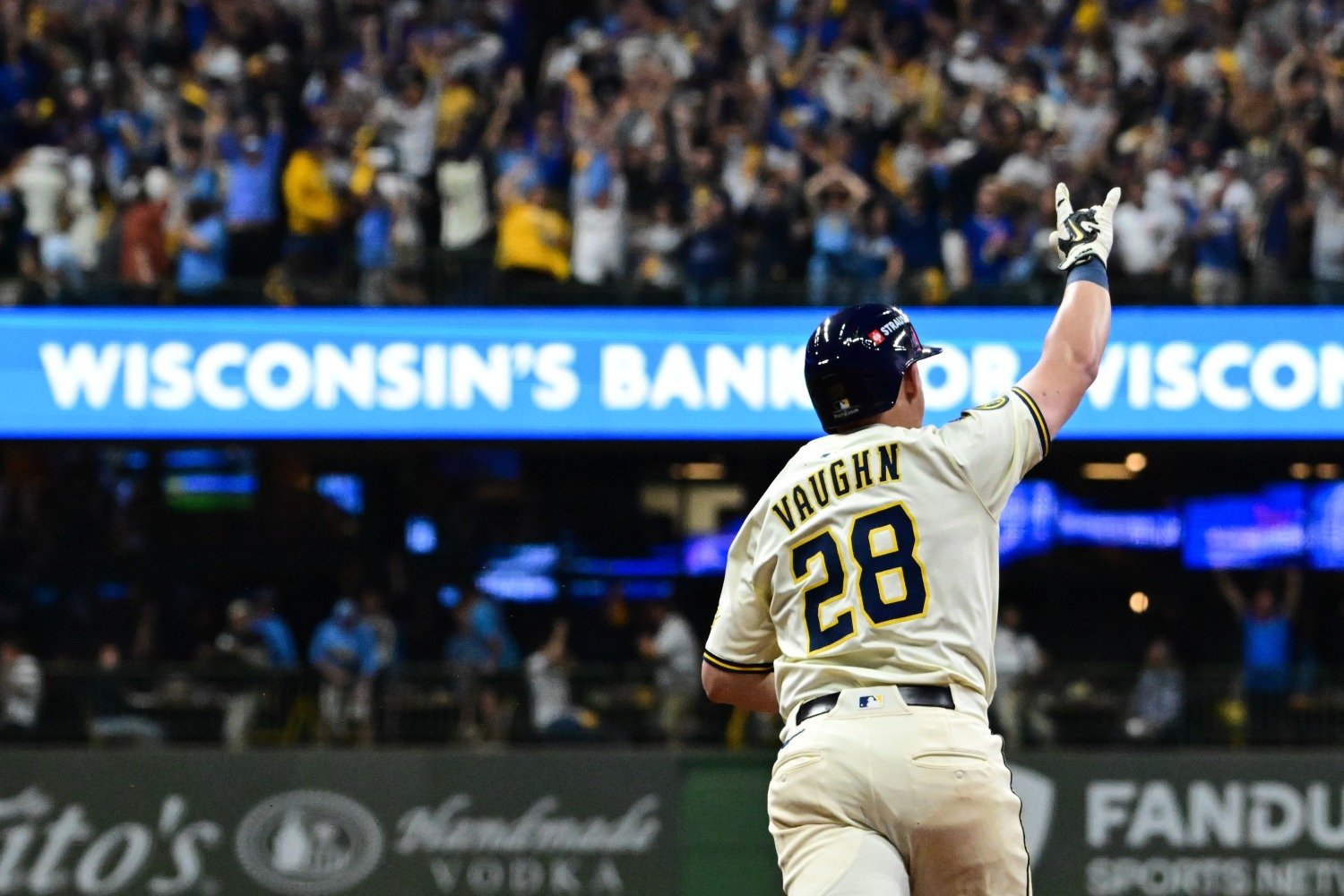 When a player with a long track record of average or worse production suddenly enjoys a half-season of excellence, it's natural to expect some regression. Baseball is a game of adjustments, and every time a player gets ahead of the curve for a bit, the league adjusts to them, forcing them to make changes in reply. That's what makes it so hard to sustain success, even for exceptionally talented players. For those who start from a lower baseline and have to make relatively major tweaks to get to a new level of performance, there's often a greater vulnerability to the adjustments the league makes; a big shift in process leaves one a bit off-balance (metaphorically) and prone to exploitation when opponents force the next shift. Of course, a really good process is still valuable, and if you want to evaluate the staying power of a sudden performance change, you have to understand the changes that brought it about. Did the player get lucky for a while, or did they make concrete adjustments that let them tap into their talent more fully? Just as importantly, since having made real changes doesn't guarantee that a change in performance has staying power, how sustainable is their new process, if they have one? In the case of Brewers first baseman Andrew Vaughn, there are lots of good indicators. By way of quick review (one most of us won't need, already being familiar with the team and the season of which Vaughn was such a big part), Vaughn batted .246/.297/.402 last season with the White Sox, and was hitting .189/.218/.314 for them when he was demoted to the minor leagues early this year. Milwaukee traded Aaron Civale for him, and called him up in early July after Rhys Hoskins got hurt. For the Crew, he batted .308/.375/.493 in 254 plate appearances during the regular season, and although he was just 4-for-26 in the playoffs, two of those hits were huge home runs. His strikeout (13.7%) and walk (9.9%) rates after joining the Brewers easily bested anything he managed during his White Sox tenure, and he tapped into more power after the trade, too. Immediately, Vaughn's adjustments in his new organization were clear. He began chasing less outside the strike zone (dwon from 36.1% of the time to 24.6%, according to Statcast); that grabbed the headlines. By not expanding his zone as much, he was able to draw more walks, but also get into better counts and attack pitches more effectively. There were also key changes, though, in what his stroke looked like when he did swing. I chronicled some of them back in late August. Vaughn's upper and lower halves worked in sync better after the trade, and he adopted a more aggressive leg kick. He also got his hands moving a bit sooner. Now, though, I'd like to delve a little more into the rest of his swing. Vaughn incrementally (though only incrementally) increased his swing speed after the trade, but interestingly, he also reduced the length of his swing pretty substantially. The tip of his bat traveled farther from the start of his swing to the contact point when he was with Chicago than after he joined the Brewers. That's not usually how things work. This is a chart showing swing length and bat speed for right-handed batters in 2024 and 2025, broken down by season. I've highlighted Vaughn, whose swing shows up as much shorter, but essentially the same speed this year. Usually, swinging harder means extending your arms more and swinging bigger. Naturally, that leads to more whiffs, but it also allows you to access more power. As you can see, the mass of data points rises from left to right, albeit imperfectly: the longer your swing, the faster, and vice-versa. The chart doesn't even tell the story, in full. Vaughn's 2025 data for that visual still has his time with the White Sox baked in; he swung a tick faster and his swing was a hair shorter after the change of scenery. This is an extreme change: more swing speed from, in a sense, less swing. How did that happen? In short (no pun intended), he got better at targeting the pitches on which his swing is compact, but still powerful. Here's his swing, at a glance, for both 2024 and 2025. This is the frame just before his bat meets the baseball; notice the way he's carrying his hands higher and closer to his body this season than last. If you're going to hit the outside pitch or the low pitch, your swing is going to get a little long. You have to go from up high to down low, or from where you're standing out to the other side of the plate. Often, those balls down in the zone are breaking or offspeed pitches, which the batter catches farther out in front of themselves, which shows up as greater swing length. That's fine; not all swing length is bad. But it does mean your swing is longer. Vaughn did two different things, after coming to the Brewers, that led to his swing length being so much shorter: adjust the way he swings, and adjust the pitches (even within the zone) at which he swings. To wit, here are his swing lengths (top) and swing rates (bottom) by pitch location, with the White Sox (left) and with the Brewers (right). It matters, to be sure, that Vaughn clearly started attacking pitches at and above the belt and on the inner half, while letting low and outside offerings go. However, as you can see, his swing is also shorter, regardless of pitch location. To visualize that (and understand how significant a change it is), let's look at how he addressed the ball on similar pitches, before and after being traded. On top, we have two images of Vaughn going after slow pitches from left-handed pitchers, each of which ended up basically in the middle of the strike zone. On the bottom, we have firm sinkers from righty hurlers, around waist-high but boring in on him. All of them are clipped at the same point in the rotation of his hands—the same moment within his swing. To accentuate the crucial difference, I've added arcs that show the relationship between his right hip, armpit and elbow in each swing. It's easy to see what's going on. After his sojourn in the minors and being recalled by his new team, Vaughn kept his hands in much closer to his body. This shared instant of the swing is a telling one, because of what's happening with his front shoulder. Instead of letting his hands take his bat on a wide arc through the hitting zone, Vaughn is rotating that front shoulder out and backward, pulling the bat through closer to his body and creating that extra bat speed he found with the Crew. It's a more compact, cleaner attack. It's a shorter and a faster swing, and (relatedly, but not only on that basis) it's a better swing. Vaughn's batted-ball data didn't look all that different after he joined the Brewers than it did before. By better organizing his strike zone, though, he was able to be more selectively aggressive. His swing was more repeatable and less manipulable, for pitchers trying to poke holes in his approach. These changes all have to survive an offseason, now, and then they'll have to survive the new ways that teams pick on him and his new profile in 2026. He had to do a lot to come this far, and that means he might slide backward next year. If he does, though, it's not likely to be a radical regression. Don't expect Vaughn to hit over .300 again, but the modicum of power and patience (and the improved contact rate) all look real. A collapse back to what he looked like early in 2025 is out of the question. Even production as sluggish as his 2024 numbers would be an unexpected disappointment. If Vaughn maintains the work ethic and discipline he showed when the organization first brought him aboard, he should be something like a .280/.350/.450 hitter next season. His adjustments are real, and while all adjustments beget counteradjustments, his are well-selected to survive that next challenging phase.
 -
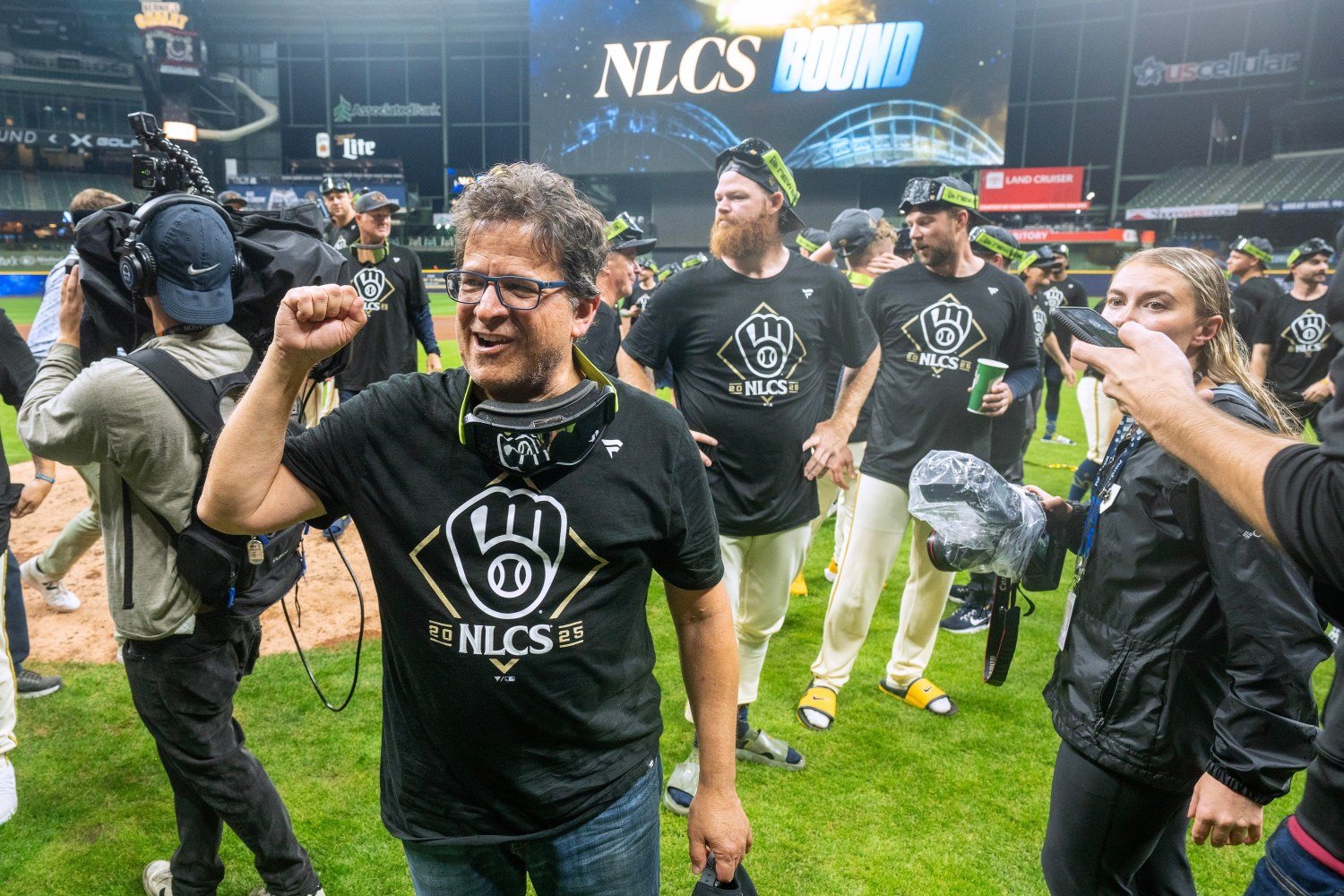 Since the start of the 2022 season, the Brewers have played 14 postseason games. The division-rival Chicago Cubs have played just eight, all of them coming this fall. However, the two clubs have played the same number of "cash cow" games, under the rules that govern the distribution of postseason revenue throughout MLB. The inability to put up a significant fight against the Dodgers not only meant the end of their magical season and the evaporation of any dreams of the franchise's first World Series championship, but also a missed opportunity to make tens of millions more dollars. Though there's lots of money to be made from any playoff appearance—and especially from any home games—the biggest chunks for individual teams come when a series goes beyond its minimum required length. For the first two games of the Wild Card Series; the first three games of the Division Series; and the first four games of both the League Championship Series and the World Series, the two teams playing divide only a small portion of the gate receipts. Most of the money for those games goes to the Commissioner's office and (the greater share) to the players; that's where the playoff shares you hear about each fall come from. If there's a Game 3 in a Wild Card Series; Games 4 and 5 in the Division Series; or Games 5 through 7 in the LCS or World Series, the two teams playing divide roughly 85% of the gate. In other words, for sold-out Games 3 and 4 at Dodger Stadium, the Brewers only got (as a rough estimate) $3 million. They probably made more like $2 million at the gate for Games 1 and 2 at the smaller, lower-priced Uecker Field. By contrast, Game 5 could have netted the Brewers a solid $5 million by itself, and Games 6 and 7 would have been worth nearly as much, in gates alone. Because the Brewers were also swept in the 2023 Wild Card Series, the only playoff games they've played that have netted them these larger shares in the last three trips they've made to October were Game 3 against the Mets last fall and Games 4 and 5 against the Cubs earlier this month. That's better than nothing—and Wrigley Field, though short on capacity, charges very high ticket prices, so that was a very lucrative game to get nearly half the revenue from. Still, the Crew likely only made about $15 million in attendance revenue during this playoff run. Attendance, of course, is not the whole story. The Brewers hosted five games, which means they got to fill their team-owned parking lots and hawk merchandise and concessions five times. They'll also realize some ancillary benefits, like a stronger season ticket base (new signups, plus a boost in renewal rates) and better marketing and advertising rates. Beating the Cubs, in particular; getting the monkey off their back by winning a playoff series for the first time in seven years; and advancing to an NLCS against the extremely high-visibility Dodgers all increase their earning power. The Brewers are probably $30 million richer for having done as well as they did this season, including in October. That's not all in cash, and they won't realize all of those benefits right away, but that's a decent estimate of the number. It's a great thing to keep in mind, as the team heads into an offseason in which they'll have some key holes to fill but plenty of money coming off the books. Significant raises are due for arbitration-eligible youngsters Brice Turang and William Contreras, and under the terms of Jackson Chourio's team-friendly contract extension. However, Rhys Hoskins headlines a list of veterans who will hit free agency. Right now, the Crew's projected payroll for next season is only around $75 million. They could easily add $50 million in talent via free agency this winter. Mark Attanasio and the ownership group authorized payrolls over $130 million in both 2022 and 2023, but they've pared that back to $98 million and $115 million in 2024 and 2025, respectively. That happened even as attendance increased, which it's almost sure to do again in 2026. Given the money they just made this fall and any reasonable revenue projection for next season, the Brewers should be back over $125 million next year, which means that they can go make aggressive moves in free agency or on the trade market. That kind of freedom, for a team that also has a cadre of young stars and one of the game's best farm systems, should scare even the mighty Dodgers.
 -
Image courtesy of © Mark Hoffman/Milwaukee Journal Sentinel / USA TODAY NETWORK via Imagn Images Since the start of the 2022 season, the Brewers have played 14 postseason games. The division-rival Chicago Cubs have played just eight, all of them coming this fall. However, the two clubs have played the same number of "cash cow" games, under the rules that govern the distribution of postseason revenue throughout MLB. The inability to put up a significant fight against the Dodgers not only meant the end of their magical season and the evaporation of any dreams of the franchise's first World Series championship, but also a missed opportunity to make tens of millions more dollars. Though there's lots of money to be made from any playoff appearance—and especially from any home games—the biggest chunks for individual teams come when a series goes beyond its minimum required length. For the first two games of the Wild Card Series; the first three games of the Division Series; and the first four games of both the League Championship Series and the World Series, the two teams playing divide only a small portion of the gate receipts. Most of the money for those games goes to the Commissioner's office and (the greater share) to the players; that's where the playoff shares you hear about each fall come from. If there's a Game 3 in a Wild Card Series; Games 4 and 5 in the Division Series; or Games 5 through 7 in the LCS or World Series, the two teams playing divide roughly 85% of the gate. In other words, for sold-out Games 3 and 4 at Dodger Stadium, the Brewers only got (as a rough estimate) $3 million. They probably made more like $2 million at the gate for Games 1 and 2 at the smaller, lower-priced Uecker Field. By contrast, Game 5 could have netted the Brewers a solid $5 million by itself, and Games 6 and 7 would have been worth nearly as much, in gates alone. Because the Brewers were also swept in the 2023 Wild Card Series, the only playoff games they've played that have netted them these larger shares in the last three trips they've made to October were Game 3 against the Mets last fall and Games 4 and 5 against the Cubs earlier this month. That's better than nothing—and Wrigley Field, though short on capacity, charges very high ticket prices, so that was a very lucrative game to get nearly half the revenue from. Still, the Crew likely only made about $15 million in attendance revenue during this playoff run. Attendance, of course, is not the whole story. The Brewers hosted five games, which means they got to fill their team-owned parking lots and hawk merchandise and concessions five times. They'll also realize some ancillary benefits, like a stronger season ticket base (new signups, plus a boost in renewal rates) and better marketing and advertising rates. Beating the Cubs, in particular; getting the monkey off their back by winning a playoff series for the first time in seven years; and advancing to an NLCS against the extremely high-visibility Dodgers all increase their earning power. The Brewers are probably $30 million richer for having done as well as they did this season, including in October. That's not all in cash, and they won't realize all of those benefits right away, but that's a decent estimate of the number. It's a great thing to keep in mind, as the team heads into an offseason in which they'll have some key holes to fill but plenty of money coming off the books. Significant raises are due for arbitration-eligible youngsters Brice Turang and William Contreras, and under the terms of Jackson Chourio's team-friendly contract extension. However, Rhys Hoskins headlines a list of veterans who will hit free agency. Right now, the Crew's projected payroll for next season is only around $75 million. They could easily add $50 million in talent via free agency this winter. Mark Attanasio and the ownership group authorized payrolls over $130 million in both 2022 and 2023, but they've pared that back to $98 million and $115 million in 2024 and 2025, respectively. That happened even as attendance increased, which it's almost sure to do again in 2026. Given the money they just made this fall and any reasonable revenue projection for next season, the Brewers should be back over $125 million next year, which means that they can go make aggressive moves in free agency or on the trade market. That kind of freedom, for a team that also has a cadre of young stars and one of the game's best farm systems, should scare even the mighty Dodgers. View full article
-
Image courtesy of © Benny Sieu-Imagn Images Eventually, if you win enough divisions and get enough bites of the apple, the scrape of your teeth against the skin of the fruit becomes maddening. You get greedy. Just once, you want a chance to take the thing in hand, sit beneath a tree, and eat it at your leisure, in full. You don't just want the summer of entertainment and passion; you want the unhurried pleasure of an autumn harvest and the untrammeled joy of a winter without 'what-if'. The ethos of 21st-century American sport is that success is measured in championships, and that regular-season wins are just steps on a long ladder to the rooftop arena where the real battle takes place. The Brewers didn't win their rooftop battle this year. They weren't quite able to eat the whole apple. They will have some hunger in their bellies this winter, as they've had in all 55 previous winters of the franchise's residence in Milwaukee. They peaked in the summer, although they were able to extend their campaign and its parade of wonders a bit deeper into the fall this time. All year—but specifically and especially after the debut of Jacob Misiorowski in mid-June and the arrivals of Andrew Vaughn and Brandon Woodruff in early July—the Brewers' specific form of excellence lay in the fact that they were more likely to play at a level near their best than any other team was, on any given day. In the NLCS, the Dodgers simply showed up with four of their very best games of the year, and the Dodgers' best is better even than the Brewers'. Los Angeles was built to win this series, and the next one. The Brewers were built to have a chance to win them, but more importantly, to get this far in the first place. Our prevailing sports culture values the Dodgers' construction and their timing much more highly than the Brewers'. If we're honest about it, though, one thing isn't inherently better than the other. In fact, you can make a strong case that the day-to-day brilliance of the Pat Murphy Brewers somehow suits the everyday game better than the Dodgers' showcase-circuit act—that what they achieved this year was more important and more compelling than what the Dodgers achieved this week. That won't convince many of you, though, because the Brewers have had enough of those great summers and frustrating falls. The team and its fans crave the external validation that comes with the pennant, and then with the World Series championship. That's not irrational or ignoble, even if there's a certain, undeniable virtue in the kind of greatness the Crew carved out this year. It's just nature at work. We want what eludes us. The closer we come to it, the more it hurts not to have taken hold. Therefore, let's linger a moment with this wonderful team, even as we mourn their inability to complete the mission for another year. Let's celebrate their near-perfection by savoring the last time they approximated it—the collision of the sublime and the ridiculous that gave this team its last glimpse of a chance to win it all, because in that instant, there turned out to be something better than perfect. The bases were loaded in the top of the fourth inning. They didn't have a lead yet, in the series or even in the game; it was 0-0. Quinn Priester was undeniably in trouble, though. The only out in the frame had been a great catch by Isaac Collins going back on a Freddie Freeman drive, and now the lethal lefty slugger Max Muncy stood in the box, threatening to put two or three runs on the board at once. Or four, even. Muncy drove the ball to dead center field, a high-arcing, thunderous strike. Sal Frelick raced back on the ball and got himself flat enough to the wall to move slightly along it as he measure the ball, but he had to go up quickly and he jarred his body against the barrier a bit as he jumped. He met the ball just above the wall, but the contact with it led the pill to ricochet out of his glove and off the top of the wall. Coming down as the ball drooped lazily toward the ground, though, Frelick seized it sure-handedly. He didn't bobble, or hesitate. He fired the ball, quickly and accurately, to Joey Ortiz, the cutoff man in shallow center. Ortiz knew just what to do with the throw, and even if he hadn't, Brice Turang was shouting it at him. He fired home—another strike, hard and right on the money. William Contreras was waiting there, and not waiting like a catcher who needed to leave a lane for the runner but get a tag down quickly. He, too, had immediately clocked what happened, and he took the peg as much like a first baseman as is possible, under those circumstances. Then, with only a moment's pause, he started jogging up the line toward third base, where he stepped on the pillow. Somehow, that was an inning-ending double play. Somehow, after the ball left Muncy's bat and the possible results of the play were plainly that one, three, or four runs would score, zero did. The Dodgers had been confused, just long enough. The Brewers' key personnel weren't, at all. They all knew what was going on. They all made the right play, the right way, and a little rip in the fabric of the game allowed them to cheat death. The game went on, still 0-0. That's the best place, as it turned out, that we could have left this Crew. Will they be remembered as champions? Sadly, no. On seemingly countless days throughout the summer, though, they were just that. For two solid months, they were the best baseball team I've ever seen; they just had that stretch too early for ESPN-pilled fans to fully appreciate it. They were, at times, even better than perfect. They were clutch; they were unusual; they were extremely deep and talented. They didn't win it all, but they won a bunch of things that mattered a lot. After the Cubs led by five games as late as mid-June, Milwaukee won their third straight division title by that same margin. After Chicago forced a Game 5 in the NLDS, the Brewers gave final proof of their superiority by winning it. This team was special, and perhaps their signature play was that one: wild, dangerous, a bit imperfect, but wonderful. A bit farcical. Not all about the final out. Better than that. "What's that word? 'Farcical'?" Murphy said one Sunday in June, after a writer observed that Jake Bauers's farcical frame to finish off a blowout win Friday night in Minneapolis had kept the bullpen fresh enough to complete the sweep over the following two days. "I like that. I'm gonna use that." Maybe we all should. Baseball is often farcical. It certainly was on that play in Game 1. Such a farcical endeavor can't be measured only by who's still standing come Halloween. It has to be about who endured adversity until Memorial Day, played like gods from Flag Day past the Fourth of July, and survived the comedown after Labor Day to keep winning at least partway through October. It has to be about teams like the 2025 Brewers, and even if they won't get a Commissioner's Trophy by which to remember it, no one should forget this team's halcyon days. View full article
-
- 1
-
-
- sal frelick
- 2025 postseason
- (and 2 more)
-
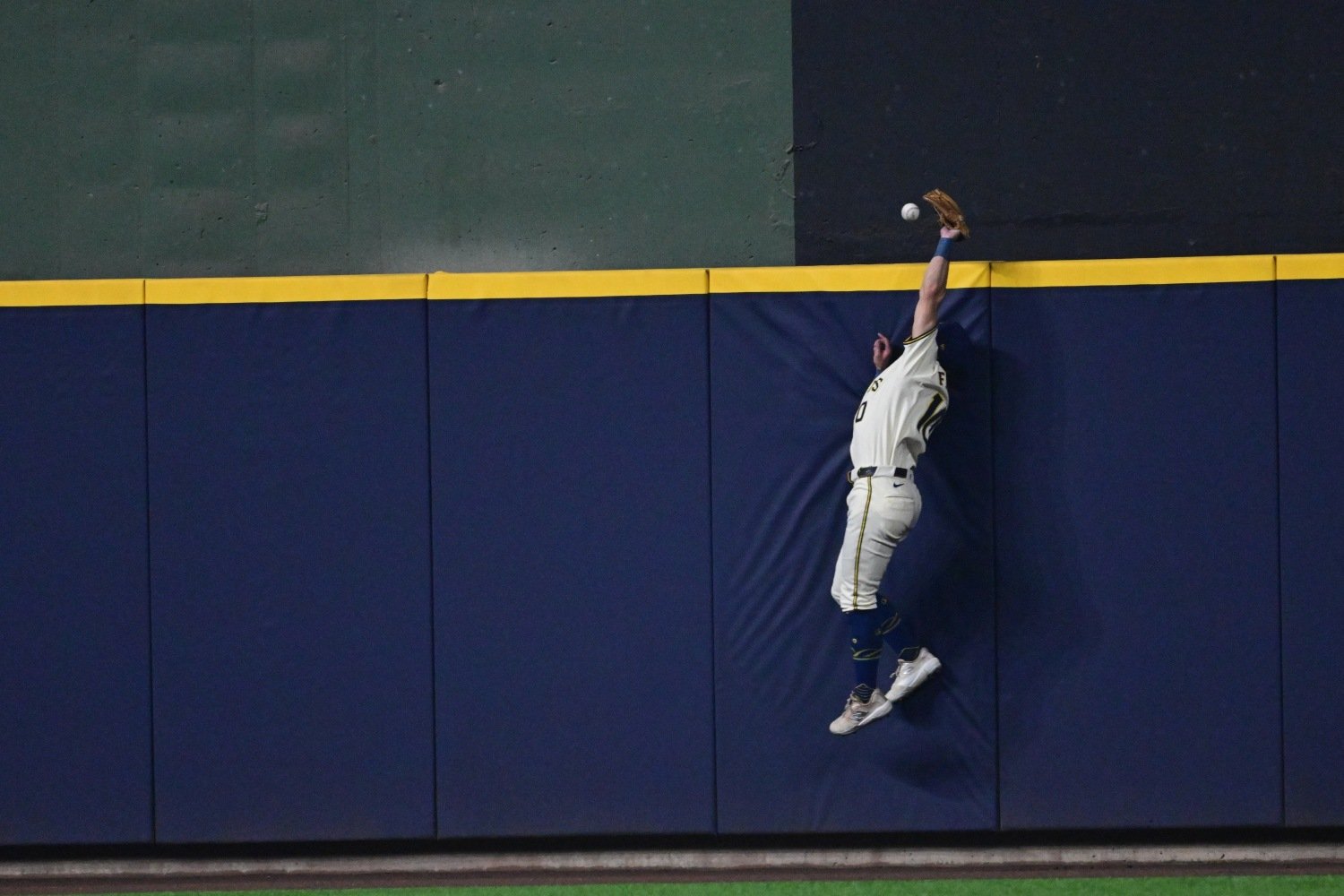 Eventually, if you win enough divisions and get enough bites of the apple, the scrape of your teeth against the skin of the fruit becomes maddening. You get greedy. Just once, you want a chance to take the thing in hand, sit beneath a tree, and eat it at your leisure, in full. You don't just want the summer of entertainment and passion; you want the unhurried pleasure of an autumn harvest and the untrammeled joy of a winter without 'what-if'. The ethos of 21st-century American sport is that success is measured in championships, and that regular-season wins are just steps on a long ladder to the rooftop arena where the real battle takes place. The Brewers didn't win their rooftop battle this year. They weren't quite able to eat the whole apple. They will have some hunger in their bellies this winter, as they've had in all 55 previous winters of the franchise's residence in Milwaukee. They peaked in the summer, although they were able to extend their campaign and its parade of wonders a bit deeper into the fall this time. All year—but specifically and especially after the debut of Jacob Misiorowski in mid-June and the arrivals of Andrew Vaughn and Brandon Woodruff in early July—the Brewers' specific form of excellence lay in the fact that they were more likely to play at a level near their best than any other team was, on any given day. In the NLCS, the Dodgers simply showed up with four of their very best games of the year, and the Dodgers' best is better even than the Brewers'. Los Angeles was built to win this series, and the next one. The Brewers were built to have a chance to win them, but more importantly, to get this far in the first place. Our prevailing sports culture values the Dodgers' construction and their timing much more highly than the Brewers'. If we're honest about it, though, one thing isn't inherently better than the other. In fact, you can make a strong case that the day-to-day brilliance of the Pat Murphy Brewers somehow suits the everyday game better than the Dodgers' showcase-circuit act—that what they achieved this year was more important and more compelling than what the Dodgers achieved this week. That won't convince many of you, though, because the Brewers have had enough of those great summers and frustrating falls. The team and its fans crave the external validation that comes with the pennant, and then with the World Series championship. That's not irrational or ignoble, even if there's a certain, undeniable virtue in the kind of greatness the Crew carved out this year. It's just nature at work. We want what eludes us. The closer we come to it, the more it hurts not to have taken hold. Therefore, let's linger a moment with this wonderful team, even as we mourn their inability to complete the mission for another year. Let's celebrate their near-perfection by savoring the last time they approximated it—the collision of the sublime and the ridiculous that gave this team its last glimpse of a chance to win it all, because in that instant, there turned out to be something better than perfect. The bases were loaded in the top of the fourth inning. They didn't have a lead yet, in the series or even in the game; it was 0-0. Quinn Priester was undeniably in trouble, though. The only out in the frame had been a great catch by Isaac Collins going back on a Freddie Freeman drive, and now the lethal lefty slugger Max Muncy stood in the box, threatening to put two or three runs on the board at once. Or four, even. Muncy drove the ball to dead center field, a high-arcing, thunderous strike. Sal Frelick raced back on the ball and got himself flat enough to the wall to move slightly along it as he measure the ball, but he had to go up quickly and he jarred his body against the barrier a bit as he jumped. He met the ball just above the wall, but the contact with it led the pill to ricochet out of his glove and off the top of the wall. Coming down as the ball drooped lazily toward the ground, though, Frelick seized it sure-handedly. He didn't bobble, or hesitate. He fired the ball, quickly and accurately, to Joey Ortiz, the cutoff man in shallow center. Ortiz knew just what to do with the throw, and even if he hadn't, Brice Turang was shouting it at him. He fired home—another strike, hard and right on the money. William Contreras was waiting there, and not waiting like a catcher who needed to leave a lane for the runner but get a tag down quickly. He, too, had immediately clocked what happened, and he took the peg as much like a first baseman as is possible, under those circumstances. Then, with only a moment's pause, he started jogging up the line toward third base, where he stepped on the pillow. Somehow, that was an inning-ending double play. Somehow, after the ball left Muncy's bat and the possible results of the play were plainly that one, three, or four runs would score, zero did. The Dodgers had been confused, just long enough. The Brewers' key personnel weren't, at all. They all knew what was going on. They all made the right play, the right way, and a little rip in the fabric of the game allowed them to cheat death. The game went on, still 0-0. That's the best place, as it turned out, that we could have left this Crew. Will they be remembered as champions? Sadly, no. On seemingly countless days throughout the summer, though, they were just that. For two solid months, they were the best baseball team I've ever seen; they just had that stretch too early for ESPN-pilled fans to fully appreciate it. They were, at times, even better than perfect. They were clutch; they were unusual; they were extremely deep and talented. They didn't win it all, but they won a bunch of things that mattered a lot. After the Cubs led by five games as late as mid-June, Milwaukee won their third straight division title by that same margin. After Chicago forced a Game 5 in the NLDS, the Brewers gave final proof of their superiority by winning it. This team was special, and perhaps their signature play was that one: wild, dangerous, a bit imperfect, but wonderful. A bit farcical. Not all about the final out. Better than that. "What's that word? 'Farcical'?" Murphy said one Sunday in June, after a writer observed that Jake Bauers's farcical frame to finish off a blowout win Friday night in Minneapolis had kept the bullpen fresh enough to complete the sweep over the following two days. "I like that. I'm gonna use that." Maybe we all should. Baseball is often farcical. It certainly was on that play in Game 1. Such a farcical endeavor can't be measured only by who's still standing come Halloween. It has to be about who endured adversity until Memorial Day, played like gods from Flag Day past the Fourth of July, and survived the comedown after Labor Day to keep winning at least partway through October. It has to be about teams like the 2025 Brewers, and even if they won't get a Commissioner's Trophy by which to remember it, no one should forget this team's halcyon days.
-
- 2
-
-
- sal frelick
- 2025 postseason
- (and 2 more)
-
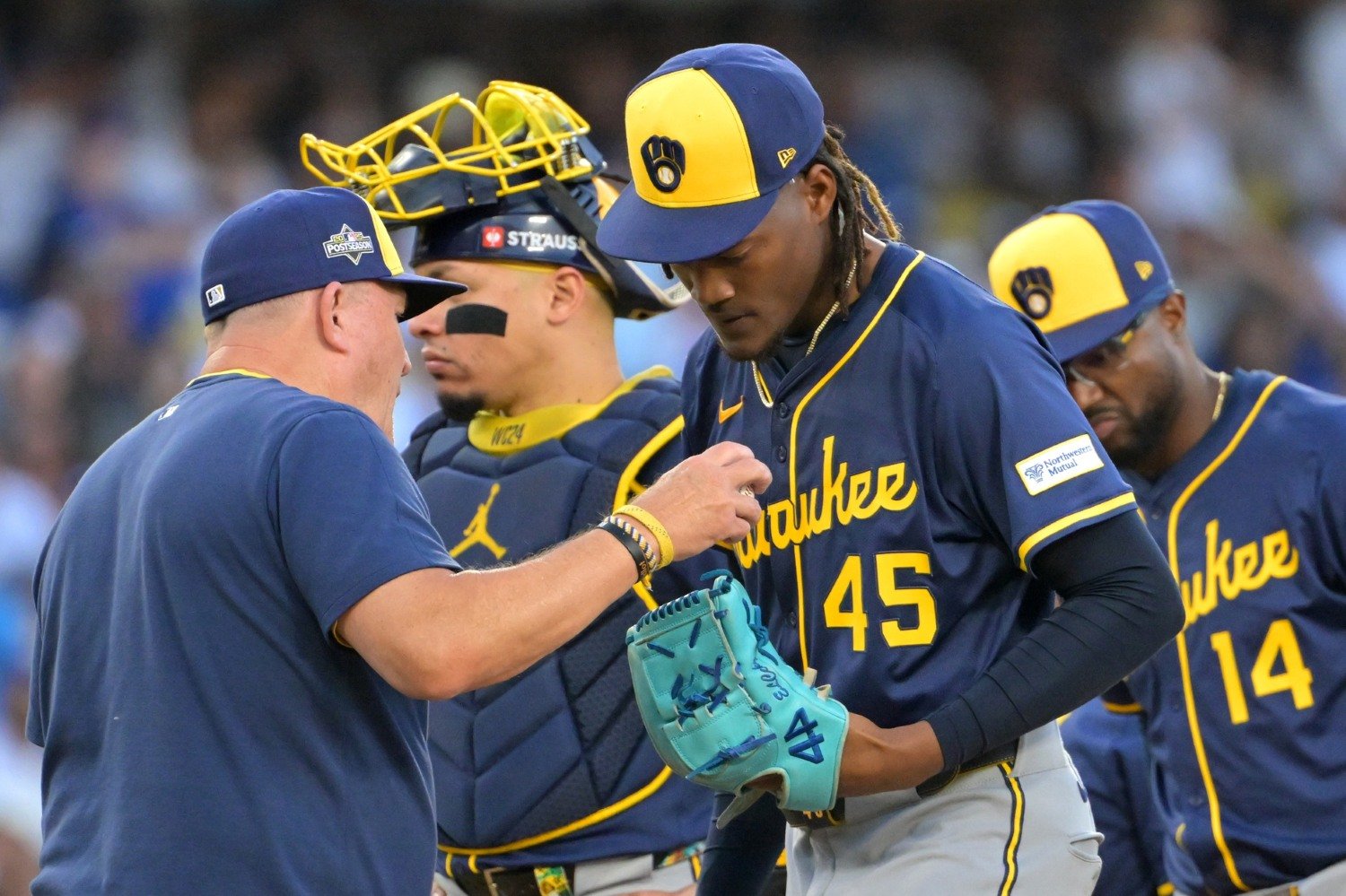 You can't entirely blame Pat Murphy for trying. He's gone, over and over, to the handful of arms he recognizes as being good enough to dominate even the two very good offenses his team has encountered in this year's postseason run. When Freddy Peralta is scheduled to start, Murphy doesn't mess around. When he has a chance to utilize Aaron Ashby, Abner Uribe, Jacob Misiorowski or Jared Koenig, he doesn't hesitate. He's even gotten a bit creative to deploy Trevor Megill (who is clearly working under certain workload constraints, though the nature of them hasn't been fully laid out by the Brewers in public) to the greatest possible effect. As the games have progressed, Murphy has also occasionally allowed himself to trust Chad Patrick, the rookie swingman who saved the team's season with a tremendous showing in Game 5 of the NLDS. Whenever it's been time to let anyone else have the ball and attempt to give the team some quality innings, though, Murphy has balked, Again, you can't quite blame him—but now, it's time to let them at least try. Quinn Priester struggled in his lone outing against the Cubs, and wove in and out of trouble during his stint against the Dodgers earlier in the NLCS. Murphy hasn't trusted Jose Quintana, Tobias Myers, Robert Gasser or Grant Anderson, meanwhile, with anything resembling an important stretch. Those guys only pitch when Murphy believes the game is essentially decided, one way or the other. He seems intimidated, by proxy. He's not giving his second-division arms any chance to be the reason why the team is eliminated. In this, he's far from alone. It seems like skippers throughout the league suddenly forget that their pitching depth got them this far, every fall. Staffs are effectively bifurcated, with one group serving only as shock troops in support of the real hurlers whom the manager actually uses to win games. The logic is (almost) impeccable—you have to throw your best at the imposing lineups you encounter in the postseason tournament, right?. But it has its limits, and the whole league has gotten bad at keeping those limits in view. October is becoming Sore Shoulder Awareness Month, giving way to Long Nap November for the too-weary trusted arms and Restless December for the hurlers who could have given more but were denied the chance. As compressed and high-stakes as everything feels, the fact is that using the same series and sequence of pitchers every day overexposes them to certain matchups within a series; erodes their stuff; and cannibalizes the team. Murphy is managing exactly the way his peers have managed all October, and the way they all did last October and the one before that—but it's time to zig against the zag. At this point, the Brewers have to win four games in a row to reach the World Series. Firstly, they'll need their bats to wake up and actually do something, to make that possible. That's a topic for another article. Secondly, though, they need some new roadmaps from Out No. 1 to Out No. 27. Uribe, Ashby and Koenig can't pitch every game. They (especially the first two) are already cracking and crumbling under their heavy usage. It would be great if the team had an obviously trustworthy third starter healthy, like Brandon Woodruff, but it just isn't so. In his absence, they have to stop trying to bullpen their way from one Peralta appearance to another, pausing only long enough to savor an electrifying Misiorowski showing now and then. Quintana should start Game 4, with Patrick as his piggyback partner. Murphy's hook should be slow; the plan should be to get seven innings from that pair of hurlers Friday night. If the season ends there, so be it. The path to a series victory, by now, is more like a tightrope. The team might as well walk it with confidence. Quintana has gotten too few chances to show whether his slopfest of an arsenal can fool and frustrate just enough hitters to keep the Crew in the game this fall. Patrick has been dominant, and having pitched just once (three days ago) in this series, he's the natural next-man-up when Quintana falters. Murphy hasn't been stupid, to this point. He's been doing what teams hope their managers will, each October: seek winnable matchups, be aggressive, and communicate to the team that he believe in them. On the last score, though, it's time to walk the walk. The Brewers can't win this series, now, without lots of help from Quintana, Patrick, Priester, Myers and Anderson. Murphy has to embrace that idea and let some of his less famous moundsmen into the fray.
- 3 comments
-
- 1
-
-
- chad patrick
- jose quintana
- (and 1 more)
-
Image courtesy of © Jayne Kamin-Oncea-Imagn Images You can't entirely blame Pat Murphy for trying. He's gone, over and over, to the handful of arms he recognizes as being good enough to dominate even the two very good offenses his team has encountered in this year's postseason run. When Freddy Peralta is scheduled to start, Murphy doesn't mess around. When he has a chance to utilize Aaron Ashby, Abner Uribe, Jacob Misiorowski or Jared Koenig, he doesn't hesitate. He's even gotten a bit creative to deploy Trevor Megill (who is clearly working under certain workload constraints, though the nature of them hasn't been fully laid out by the Brewers in public) to the greatest possible effect. As the games have progressed, Murphy has also occasionally allowed himself to trust Chad Patrick, the rookie swingman who saved the team's season with a tremendous showing in Game 5 of the NLDS. Whenever it's been time to let anyone else have the ball and attempt to give the team some quality innings, though, Murphy has balked, Again, you can't quite blame him—but now, it's time to let them at least try. Quinn Priester struggled in his lone outing against the Cubs, and wove in and out of trouble during his stint against the Dodgers earlier in the NLCS. Murphy hasn't trusted Jose Quintana, Tobias Myers, Robert Gasser or Grant Anderson, meanwhile, with anything resembling an important stretch. Those guys only pitch when Murphy believes the game is essentially decided, one way or the other. He seems intimidated, by proxy. He's not giving his second-division arms any chance to be the reason why the team is eliminated. In this, he's far from alone. It seems like skippers throughout the league suddenly forget that their pitching depth got them this far, every fall. Staffs are effectively bifurcated, with one group serving only as shock troops in support of the real hurlers whom the manager actually uses to win games. The logic is (almost) impeccable—you have to throw your best at the imposing lineups you encounter in the postseason tournament, right?. But it has its limits, and the whole league has gotten bad at keeping those limits in view. October is becoming Sore Shoulder Awareness Month, giving way to Long Nap November for the too-weary trusted arms and Restless December for the hurlers who could have given more but were denied the chance. As compressed and high-stakes as everything feels, the fact is that using the same series and sequence of pitchers every day overexposes them to certain matchups within a series; erodes their stuff; and cannibalizes the team. Murphy is managing exactly the way his peers have managed all October, and the way they all did last October and the one before that—but it's time to zig against the zag. At this point, the Brewers have to win four games in a row to reach the World Series. Firstly, they'll need their bats to wake up and actually do something, to make that possible. That's a topic for another article. Secondly, though, they need some new roadmaps from Out No. 1 to Out No. 27. Uribe, Ashby and Koenig can't pitch every game. They (especially the first two) are already cracking and crumbling under their heavy usage. It would be great if the team had an obviously trustworthy third starter healthy, like Brandon Woodruff, but it just isn't so. In his absence, they have to stop trying to bullpen their way from one Peralta appearance to another, pausing only long enough to savor an electrifying Misiorowski showing now and then. Quintana should start Game 4, with Patrick as his piggyback partner. Murphy's hook should be slow; the plan should be to get seven innings from that pair of hurlers Friday night. If the season ends there, so be it. The path to a series victory, by now, is more like a tightrope. The team might as well walk it with confidence. Quintana has gotten too few chances to show whether his slopfest of an arsenal can fool and frustrate just enough hitters to keep the Crew in the game this fall. Patrick has been dominant, and having pitched just once (three days ago) in this series, he's the natural next-man-up when Quintana falters. Murphy hasn't been stupid, to this point. He's been doing what teams hope their managers will, each October: seek winnable matchups, be aggressive, and communicate to the team that he believe in them. On the last score, though, it's time to walk the walk. The Brewers can't win this series, now, without lots of help from Quintana, Patrick, Priester, Myers and Anderson. Murphy has to embrace that idea and let some of his less famous moundsmen into the fray. View full article
-
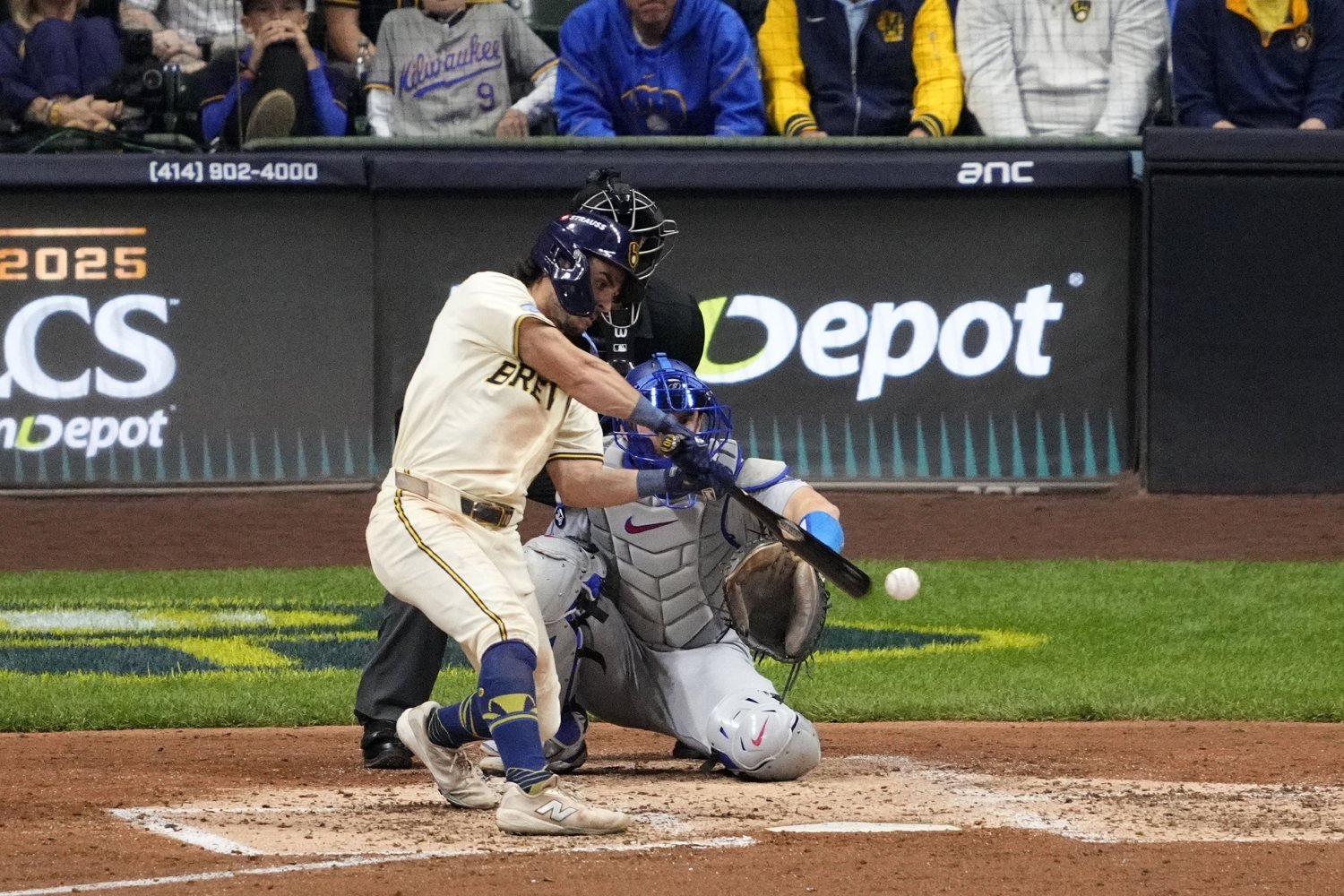 At the outset of spring training, I posed a question that felt pivotal for the Brewers' season: Could Sal Frelick become at least a halfway threatening power hitter, while also being more disciplined at the plate? The answer, happily, turned out to be clear: Yes, he could. Frelick batted .288/.351/.405, a subtle but humongous improvement from the .259/.320/.335 line he'd put up in 2024. Without becoming elite in any one facet of offense, he turned from a below-average hitter with virtually no pop into a well-rounded offensive threat. He hit 12 home runs, one year after hitting just two. His walk rate increased; his strikeout rate decreased. In the postseason, though, Frelick has largely been a non-factor. He's made some good plays in the outfield, but at the plate, he's been a forgettable 5-for-23, with one double and two walks. Even accounting for the error on which he reached base in Game 1 of the NLDS, he's only gotten on in about 30.8% of his chances; he's not helping the team build rallies by avoiding outs and keeping the line moving. One major problem is that, at the end of a season in which he batted 70 more times and played 60 more innings in the outfield despite missing time with a hamstring strain, Frelick is tired. He added significant bat speed in 2025, but that extra juice is fading as the Brewers push past 170 games played. Frelick was the face of a team-wide sag in swing speed in September, when they seemed to have lost the adrenaline that fueled their midseason performance surge. Some Brewers have rebounded since that lull; Frelick hasn't. Because of the flatter bat path he's utilized throughout this season, a small loss in bat speed means a much deeper contact point and a loss of the ability to pull the ball. He's moved deeper in the batter's box, trying to give himself time to beat the ball to its spot again, but it's not working. All year, the difference in Frelick's contact quality and use of the whole field was night-and-day. He'll never be a true slugger, but whereas in 2024, he was mostly hitting the ball hard when he hit it on the ground, he showed an ability to lift the ball with authority this season. His average launch angle on batted balls hit at least 90 miles per hour rose from 6° to 9°. Focusing on the occasions when he did hit a ball in the most productive band for launch angle, he hit it much harder this year—effectively shifting his whole distribution out by 5 miles per hour. Batted balls in that range averaged 83 MPH for Frelick in 2024, but 88 MPH in 2025. In his first year and a half in the majors, almost all of Frelick's hard-hit balls went up the middle, be they on the ground or in the air. In 2025, he learned to pull those balls for the first time, which is how he saw such a jump in home-run power. He also got better at using the whole field (as opposed to just left field) when hitting line drives and fly balls, regardless of exit velocity. He found a lot of singles in the space beyond second base, in front of the center fielder, by hitting liners right back up the middle. Frelick became, in short, one of the toughest outs in baseball in 2025. Unfortunately, that hasn't been true during the team's playoff run. That inability to get the bat head out and catch the ball early is robbing Frelick of the pop and pull skills that changed his profile this year. He's been a shell of himself for these seven games, and without his catalytic presence in the middle of the order, the Brewers offense has been similarly hollowed out. They need their young outfielder to find one last reserve of energy and get dangerous again, or their season will end undeservedly unceremoniously.
 -
Image courtesy of © Michael McLoone-Imagn Images At the outset of spring training, I posed a question that felt pivotal for the Brewers' season: Could Sal Frelick become at least a halfway threatening power hitter, while also being more disciplined at the plate? The answer, happily, turned out to be clear: Yes, he could. Frelick batted .288/.351/.405, a subtle but humongous improvement from the .259/.320/.335 line he'd put up in 2024. Without becoming elite in any one facet of offense, he turned from a below-average hitter with virtually no pop into a well-rounded offensive threat. He hit 12 home runs, one year after hitting just two. His walk rate increased; his strikeout rate decreased. In the postseason, though, Frelick has largely been a non-factor. He's made some good plays in the outfield, but at the plate, he's been a forgettable 5-for-23, with one double and two walks. Even accounting for the error on which he reached base in Game 1 of the NLDS, he's only gotten on in about 30.8% of his chances; he's not helping the team build rallies by avoiding outs and keeping the line moving. One major problem is that, at the end of a season in which he batted 70 more times and played 60 more innings in the outfield despite missing time with a hamstring strain, Frelick is tired. He added significant bat speed in 2025, but that extra juice is fading as the Brewers push past 170 games played. Frelick was the face of a team-wide sag in swing speed in September, when they seemed to have lost the adrenaline that fueled their midseason performance surge. Some Brewers have rebounded since that lull; Frelick hasn't. Because of the flatter bat path he's utilized throughout this season, a small loss in bat speed means a much deeper contact point and a loss of the ability to pull the ball. He's moved deeper in the batter's box, trying to give himself time to beat the ball to its spot again, but it's not working. All year, the difference in Frelick's contact quality and use of the whole field was night-and-day. He'll never be a true slugger, but whereas in 2024, he was mostly hitting the ball hard when he hit it on the ground, he showed an ability to lift the ball with authority this season. His average launch angle on batted balls hit at least 90 miles per hour rose from 6° to 9°. Focusing on the occasions when he did hit a ball in the most productive band for launch angle, he hit it much harder this year—effectively shifting his whole distribution out by 5 miles per hour. Batted balls in that range averaged 83 MPH for Frelick in 2024, but 88 MPH in 2025. In his first year and a half in the majors, almost all of Frelick's hard-hit balls went up the middle, be they on the ground or in the air. In 2025, he learned to pull those balls for the first time, which is how he saw such a jump in home-run power. He also got better at using the whole field (as opposed to just left field) when hitting line drives and fly balls, regardless of exit velocity. He found a lot of singles in the space beyond second base, in front of the center fielder, by hitting liners right back up the middle. Frelick became, in short, one of the toughest outs in baseball in 2025. Unfortunately, that hasn't been true during the team's playoff run. That inability to get the bat head out and catch the ball early is robbing Frelick of the pop and pull skills that changed his profile this year. He's been a shell of himself for these seven games, and without his catalytic presence in the middle of the order, the Brewers offense has been similarly hollowed out. They need their young outfielder to find one last reserve of energy and get dangerous again, or their season will end undeservedly unceremoniously. View full article
-
Image courtesy of © Michael McLoone-Imagn Images Surprisingly, the pressure really has gotten to these Milwaukee Brewers a bit during their foray into October. True, they're a young team, but that young team played a relatively poised and representative version of their game even while losing in last year's Wild Card Series—and they looked much like themselves in Games 1 and 2 against the Cubs this fall, too. Since then, though, they've gotten by (or not) with a much less tenacious, intelligent brand of baseball. That's uncharacteristic, and it's not going to be enough to get them past the Dodgers and into the World Series. The Crew failed to score on a rundown play the Cubs didn't execute properly during the Chicago phase of the NLDS. Freddy Peralta buckled slightly under the pressure applied by a raucous Wrigley Field crowd. In Game 5 of that series back at Uecker Field, even though the Crew won, there were noticeable missed chances or cracks in the armor. A bout of wildness from Aaron Ashby nearly steered the sixth inning off the rails. A sloppy bit of baserunning nearly gave the Cubs an out (and still did miss a chance to produce a run). Abner Uribe whistled through the graveyard a bit for his two-inning save, giving up loud contact because he's not fully himself right now. In the first two games of the NLCS, the shortfalls have been even more glaring. At the plate, the team has been utterly unable to string together positive outcomes, leaving their offense in neutral. Much credit has to go to Dodgers pitchers, who have been brilliant, but all year, the Brewers had answers for great pitching staffs: defense-stretching contact hitters, good plate discipline, power and speed. Milwaukee wasn't able to execute any real game plan against Blake Snell or Yoshinobu Yamamoto, as they hunted fastballs and each hurler refused to throw them one. It was uncharacteristically aggressive offense from the Crew—and it didn't work. When they did put a runner on early in Game 1, Caleb Durbin (who has looked, alas, very much like a rookie all postseason) ran into an out. Defensively, they handled the crazy near-grand slam in the middle of Game 1 perfectly, but the rest of the time, they've been shaky. Forced into an outfield alignment they only used a couple of times all year (and haven't returned to in a very long time), they've missed chances to make some plays and made others harder than they needed to be. Sal Frelick, whose lack of height and raw leaping ability force him to play a more bruising kind of wall ball when he tries to rob home runs, turned the wrong way and cut off his own jump when trying to rob Max Muncy's Game 2 homer. Blake Perkins (or even a healthy Jackson Chourio) probably catches that ball, but with Christian Yelich's back balking and Chourio's hamstring slowing him down, the team is locked into using Chourio in corner outfield spots and can only make room for Perkins in the lineup when facing lefties. Some teams are great because they have such an abundance of talent and such a variety of ways to beat you that the probabilistic nature of the game favors them all the time. That's what the mid-century Yankees and the Big Red Machine and the Team of the '90s Atlanta club were like. It's what these Dodgers are about. The Brewers are a subtly but importantly different kind of great team. When they play their best baseball, no matter how many future Hall of Famers are stacked on the other team, the Brewers win. When they do all the things the front office constructed them to be able to do, and that the coaching staff worked diligently to ensure that they consistently do, the Brewers win. They beat the Dodgers all six times the two teams played this season, not because the Dodgers weren't at full strength or because the Crew were simply hot, but because when they're in their groove, this team can outplay any other team in the world. They haven't done that difficult thing over the first two contests of the NLCS. They've played the same kind of game most teams play on most days, and though they had a very good chance to steal Game 1, the Dodgers' talent simply outmuscled them each night. The challenge, as the series changes venue and the sun gets low on the 2025 Brewers, is for the team to remember how good they really are and how badly they've wanted to win, all season. They have to play the kind of game that makes them a uniquely great team Thursday night, and again Friday and Saturday. If they don't, their season will end. If they do, though, they're still unbeatable. View full article
-
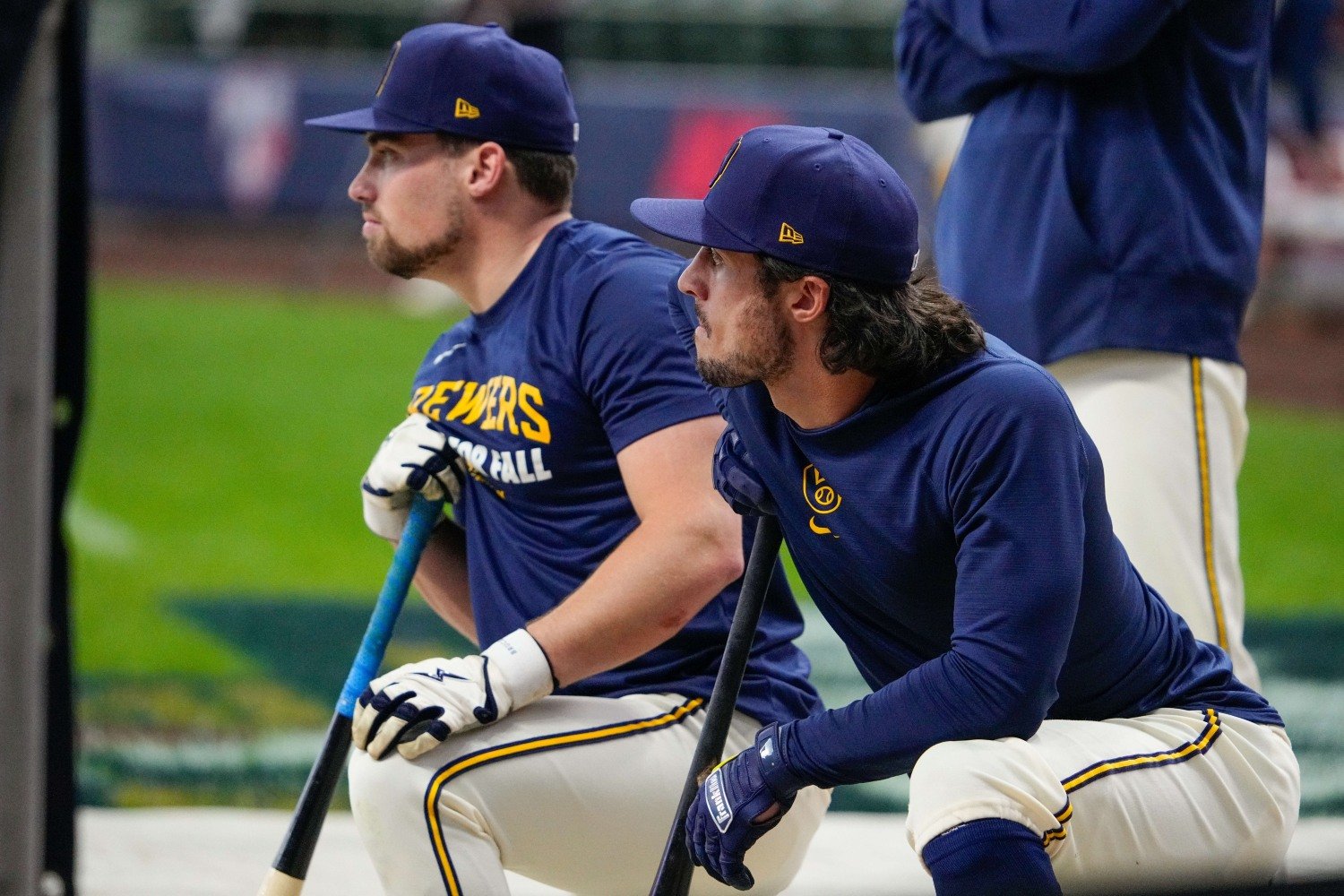 Surprisingly, the pressure really has gotten to these Milwaukee Brewers a bit during their foray into October. True, they're a young team, but that young team played a relatively poised and representative version of their game even while losing in last year's Wild Card Series—and they looked much like themselves in Games 1 and 2 against the Cubs this fall, too. Since then, though, they've gotten by (or not) with a much less tenacious, intelligent brand of baseball. That's uncharacteristic, and it's not going to be enough to get them past the Dodgers and into the World Series. The Crew failed to score on a rundown play the Cubs didn't execute properly during the Chicago phase of the NLDS. Freddy Peralta buckled slightly under the pressure applied by a raucous Wrigley Field crowd. In Game 5 of that series back at Uecker Field, even though the Crew won, there were noticeable missed chances or cracks in the armor. A bout of wildness from Aaron Ashby nearly steered the sixth inning off the rails. A sloppy bit of baserunning nearly gave the Cubs an out (and still did miss a chance to produce a run). Abner Uribe whistled through the graveyard a bit for his two-inning save, giving up loud contact because he's not fully himself right now. In the first two games of the NLCS, the shortfalls have been even more glaring. At the plate, the team has been utterly unable to string together positive outcomes, leaving their offense in neutral. Much credit has to go to Dodgers pitchers, who have been brilliant, but all year, the Brewers had answers for great pitching staffs: defense-stretching contact hitters, good plate discipline, power and speed. Milwaukee wasn't able to execute any real game plan against Blake Snell or Yoshinobu Yamamoto, as they hunted fastballs and each hurler refused to throw them one. It was uncharacteristically aggressive offense from the Crew—and it didn't work. When they did put a runner on early in Game 1, Caleb Durbin (who has looked, alas, very much like a rookie all postseason) ran into an out. Defensively, they handled the crazy near-grand slam in the middle of Game 1 perfectly, but the rest of the time, they've been shaky. Forced into an outfield alignment they only used a couple of times all year (and haven't returned to in a very long time), they've missed chances to make some plays and made others harder than they needed to be. Sal Frelick, whose lack of height and raw leaping ability force him to play a more bruising kind of wall ball when he tries to rob home runs, turned the wrong way and cut off his own jump when trying to rob Max Muncy's Game 2 homer. Blake Perkins (or even a healthy Jackson Chourio) probably catches that ball, but with Christian Yelich's back balking and Chourio's hamstring slowing him down, the team is locked into using Chourio in corner outfield spots and can only make room for Perkins in the lineup when facing lefties. Some teams are great because they have such an abundance of talent and such a variety of ways to beat you that the probabilistic nature of the game favors them all the time. That's what the mid-century Yankees and the Big Red Machine and the Team of the '90s Atlanta club were like. It's what these Dodgers are about. The Brewers are a subtly but importantly different kind of great team. When they play their best baseball, no matter how many future Hall of Famers are stacked on the other team, the Brewers win. When they do all the things the front office constructed them to be able to do, and that the coaching staff worked diligently to ensure that they consistently do, the Brewers win. They beat the Dodgers all six times the two teams played this season, not because the Dodgers weren't at full strength or because the Crew were simply hot, but because when they're in their groove, this team can outplay any other team in the world. They haven't done that difficult thing over the first two contests of the NLCS. They've played the same kind of game most teams play on most days, and though they had a very good chance to steal Game 1, the Dodgers' talent simply outmuscled them each night. The challenge, as the series changes venue and the sun gets low on the 2025 Brewers, is for the team to remember how good they really are and how badly they've wanted to win, all season. They have to play the kind of game that makes them a uniquely great team Thursday night, and again Friday and Saturday. If they don't, their season will end. If they do, though, they're still unbeatable.
 -
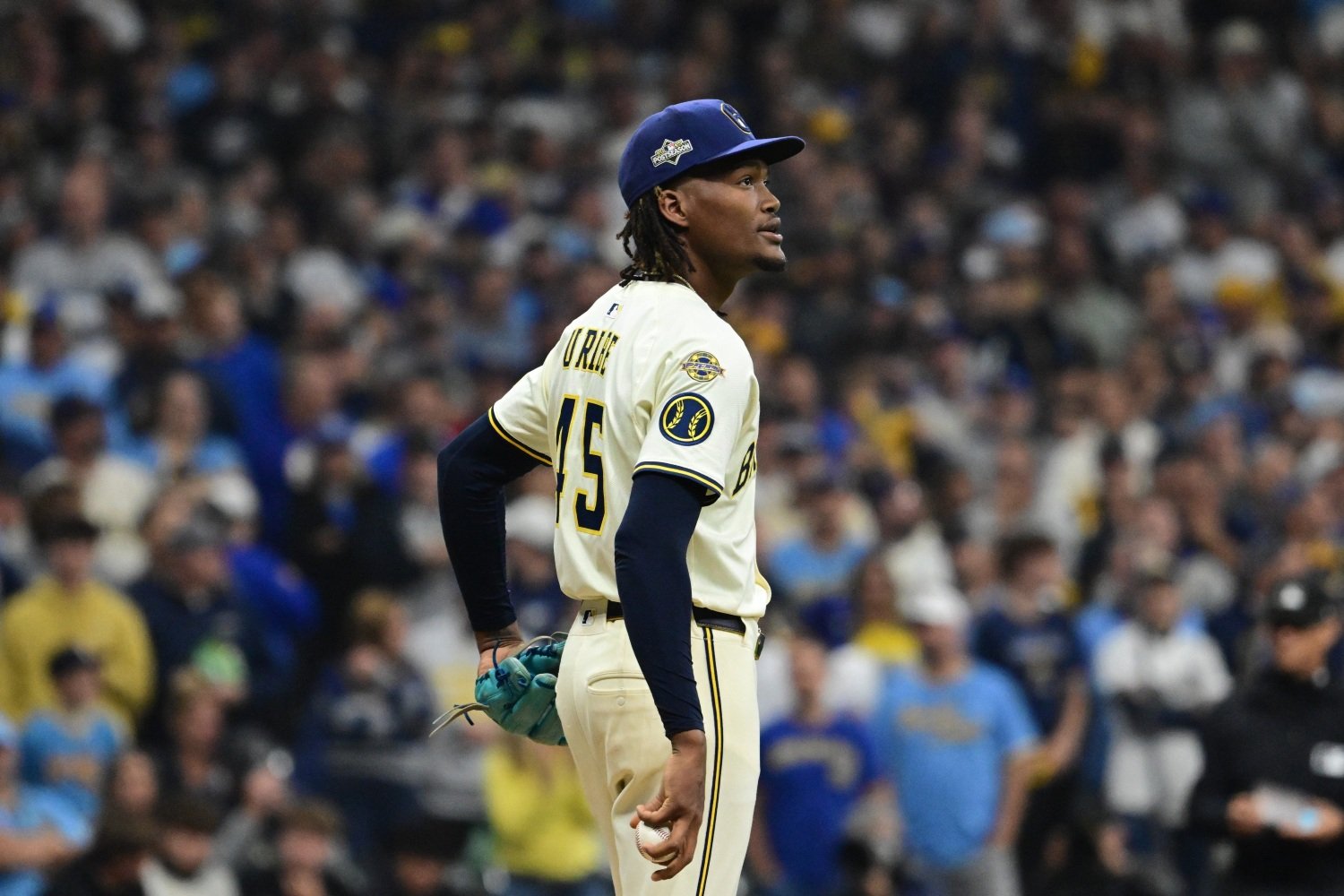 It wouldn't quite be fair to be surprised. Abner Uribe pitched a lot this season, and relievers who pitch a lot from April through September tend to tire in October—especially if they've never worked that much before. Uribe made 75 appearances over the initial 162 games, including 69 that lasted at least three outs. Now, he's paying the price for that, and so are the Brewers. Over four outings in the postseason, Uribe has faced 21 batters. He's only allowed three hits, but he's also walked four, and he has just four strikeouts. That's not a huge surprise, because his velocity is dramatically down—a trend that started not this month, but in September. If Uribe's not throwing at full speed, he's not going to miss bats at his usual rate, or even keep the ball on the ground as well as he usually does. He gutted his way gorgeously through the final two innings of Game 5 of the NLDS, but even then, the Cubs made some hard contact against him and even lifted the ball a bit. They just hit the ball right at Brewers fielders. Uribe hasn't been so lucky thus far in the NLCS. For many fans (already wary of the skipper's tendency to ride his hurlers hard), the temptation is to blame Pat Murphy for Uribe's fade, but the manager did his best to manage the exposure and workload of his relief ace during the second half. Before the All-Star break, as the Brewers recovered from a rough start and chased down the Cubs in the NL Central, Uribe pitched a ton. He made 40 appearances by the end of June. In the first half, overall, he made 13 appearances on zero days' rest and another 17 on one day of rest. After the break, though, Murphy turned to him on zero days of rest just seven times, and on one day just 13 times. Even amid the month-long hot streak coming out of the break, Murphy was fairly judicious with his best relief arm. Once the Crew essentially sewed up their third straight division title and gained the inside track on a bye in the first round of the playoffs, Murphy backed off as much as circumstances allowed. Uribe had a full week off in the first half of September and two appearances on three days' rest in the second half of the month, between which Murphy tried to keep Uribe in a rhythm that would feel more familiar in the postseason. Unfortunately, the swirl of other injuries and constraints involved prevented Murphy from doing any more to limit Uribe's workload. Trade deadline acquisition Shelby Miller blew out his elbow. Fellow righties Nick Mears and Trevor Megill each had stints on the injured list. There just weren't enough healthy pitchers to work around Uribe all the times that Murphy might have liked to, especially over the final two months. Murphy certainly bears some limited culpability in the fact that Megill got hurt, as he, too, was heavily used at times. There were games in which Uribe, Megill, Aaron Ashby and/or Jared Koenig appeared when they just didn't need to, and that's caught up to Milwaukee at the worst possible time. On the other hand, the team won so relentlessly over a two-month period that a major accumulation of work for the high-leverage relief arms was unavoidable—and, after all, winning games is the point of this endeavor. Winning all those games is how the Brewers earned their week of rest and the home-field advantage that helped them past the Cubs. In hindsight, the front office probably should have acquired a more reliable supplemental reliever at the trade deadline. By targeting Miller, they landed a useful arm for virtually no prospect cost, taking on dead money from the Diamondbacks instead. There's a reason why Miller was available on those terms, though. One more strong, fresh arm would have made quite a difference for the team last round, and could still be conferring benefits here in the NLCS. Matt Arnold and company have to strike a wise balance. It was a calculated risk not to add more to the pen in July, and it made sense to take a measured stance. They've been burned a bit. Brandon Woodruff's injury shifted more strain to the bullpen, by forcing pitchers who might otherwise have been shortened up to work in bulk roles down the stretch and into October. Megill's limited availability this month is flying below the radar, but it's been an important constraint. The fact that he and Miller missed the guts of September and that Mears petered out in the second half left Uribe overexposed, and all of that has made it impossible for the Brewers to keep pace with the extraordinary pitching of the Dodgers over the first two games of the NLCS. The series isn't over. The Brewers just need a somewhat unexpected hero to emerge on the pitching staff during the balance of this set—and, of course, for the offense to wake up from its slumber during the off day in Los Angeles. It's unlucky, though, that they find their pitching staff so thin at the most critical juncture of the season, after it was arguably the deepest corps in the league during the regular campaign.
 -
Image courtesy of © Benny Sieu-Imagn Images It wouldn't quite be fair to be surprised. Abner Uribe pitched a lot this season, and relievers who pitch a lot from April through September tend to tire in October—especially if they've never worked that much before. Uribe made 75 appearances over the initial 162 games, including 69 that lasted at least three outs. Now, he's paying the price for that, and so are the Brewers. Over four outings in the postseason, Uribe has faced 21 batters. He's only allowed three hits, but he's also walked four, and he has just four strikeouts. That's not a huge surprise, because his velocity is dramatically down—a trend that started not this month, but in September. If Uribe's not throwing at full speed, he's not going to miss bats at his usual rate, or even keep the ball on the ground as well as he usually does. He gutted his way gorgeously through the final two innings of Game 5 of the NLDS, but even then, the Cubs made some hard contact against him and even lifted the ball a bit. They just hit the ball right at Brewers fielders. Uribe hasn't been so lucky thus far in the NLCS. For many fans (already wary of the skipper's tendency to ride his hurlers hard), the temptation is to blame Pat Murphy for Uribe's fade, but the manager did his best to manage the exposure and workload of his relief ace during the second half. Before the All-Star break, as the Brewers recovered from a rough start and chased down the Cubs in the NL Central, Uribe pitched a ton. He made 40 appearances by the end of June. In the first half, overall, he made 13 appearances on zero days' rest and another 17 on one day of rest. After the break, though, Murphy turned to him on zero days of rest just seven times, and on one day just 13 times. Even amid the month-long hot streak coming out of the break, Murphy was fairly judicious with his best relief arm. Once the Crew essentially sewed up their third straight division title and gained the inside track on a bye in the first round of the playoffs, Murphy backed off as much as circumstances allowed. Uribe had a full week off in the first half of September and two appearances on three days' rest in the second half of the month, between which Murphy tried to keep Uribe in a rhythm that would feel more familiar in the postseason. Unfortunately, the swirl of other injuries and constraints involved prevented Murphy from doing any more to limit Uribe's workload. Trade deadline acquisition Shelby Miller blew out his elbow. Fellow righties Nick Mears and Trevor Megill each had stints on the injured list. There just weren't enough healthy pitchers to work around Uribe all the times that Murphy might have liked to, especially over the final two months. Murphy certainly bears some limited culpability in the fact that Megill got hurt, as he, too, was heavily used at times. There were games in which Uribe, Megill, Aaron Ashby and/or Jared Koenig appeared when they just didn't need to, and that's caught up to Milwaukee at the worst possible time. On the other hand, the team won so relentlessly over a two-month period that a major accumulation of work for the high-leverage relief arms was unavoidable—and, after all, winning games is the point of this endeavor. Winning all those games is how the Brewers earned their week of rest and the home-field advantage that helped them past the Cubs. In hindsight, the front office probably should have acquired a more reliable supplemental reliever at the trade deadline. By targeting Miller, they landed a useful arm for virtually no prospect cost, taking on dead money from the Diamondbacks instead. There's a reason why Miller was available on those terms, though. One more strong, fresh arm would have made quite a difference for the team last round, and could still be conferring benefits here in the NLCS. Matt Arnold and company have to strike a wise balance. It was a calculated risk not to add more to the pen in July, and it made sense to take a measured stance. They've been burned a bit. Brandon Woodruff's injury shifted more strain to the bullpen, by forcing pitchers who might otherwise have been shortened up to work in bulk roles down the stretch and into October. Megill's limited availability this month is flying below the radar, but it's been an important constraint. The fact that he and Miller missed the guts of September and that Mears petered out in the second half left Uribe overexposed, and all of that has made it impossible for the Brewers to keep pace with the extraordinary pitching of the Dodgers over the first two games of the NLCS. The series isn't over. The Brewers just need a somewhat unexpected hero to emerge on the pitching staff during the balance of this set—and, of course, for the offense to wake up from its slumber during the off day in Los Angeles. It's unlucky, though, that they find their pitching staff so thin at the most critical juncture of the season, after it was arguably the deepest corps in the league during the regular campaign. View full article
-
Image courtesy of © Benny Sieu-Imagn Images Let's start by placing the blame squarely where it belongs: the Dodgers scored in the ninth inning on Monday night not because of anything Pat Murphy did or didn't do, but because Abner Uribe had a bad night. He came on to pitch the top of the final frame, but didn't really have it. He walked the first batter he saw, in Max Muncy, and then allowed a single through the right side by Kiké Hernández. Two batters later, with the bases loaded, he issued another walk, forcing home the second Dodgers tally in what ended up a heartbreaking 2-1 loss. In between that single by Hernández and the walk to Mookie Betts, though, the whole game happened. Each team made an old-fashioned managerial decision, and the Dodgers ended up with the better side of the exchange. Let's talk about how. First, with two on and nobody out, Andy Pages laid down a sacrifice bunt. That was a very strange choice, in the modern game, but in that specific instance, it was a defensible one. You don't see teams bunt runners over with any regularity anymore, but with runners on first and second and zero outs, even the numbers say the bunt is reasonable. Technically speaking, the Dodgers' run expectancy for the rest of the inning dipped from 1.49 to 1.41 runs when Pages gave himself up to move over the runners. However, Pages is an average hitter against right-handed pitchers, whereas on-deck batter Shohei Ohtani is worth roughly 0.11 extra runs per plate appearance against them. Apply that math to the run expectancy framework, which assumes that everyone is average, and the Dodgers' run expectancy actually rose to 1.52 after the bunt. That left the Brewers with a dilemma, in a position even sharper than the one Dave Roberts had just faced. Ohtani was stepping to the plate, with runners on second and third and one out. The run expectancy, as we just discussed, was 1.52, if Uribe pitched to Ohtani—but that's not the number that mattered to the Brewers, really. In fact, arguably, it wasn't the number that mattered to the Dodgers, either. This was a situation in which, although the batting team already led, both teams were playing with one run (and one run only) in mind. Two or three insurance runs would have been great, from the Dodgers' perspective, but their focus was on maximizing the chances that they would score one. One run would double the advantage and give them a much, much greater margin for error. The bunt only helps from an overall run expectancy standpoint once you account for the difference between Pages and Ohtani and the platoon matchup in question, but even if you revert to treating everyone in the situation as average, bunting the runners over decreases the likelihood of being held scoreless from 36.3% to 32.0%. There are these two different numbers in play: overall run expectancy and chance of scoring at least once. To the Dodgers, both numbers mattered, but they cared more about the second one. To the Brewers, overall run expectancy almost didn't matter at all. Pat Murphy's responsibility was to manage toward that probability of zero runs being scored. It would have felt awful to have the game break open, at that point, after all the good breaks the Brewers had needed to get that far and keep everything that close, but a 2-0 Dodgers lead was going to be almost insurmountable. (That proved out at the end of the contest, of course, when the Brewers mounted a stirring rally but could only nudge across one run.) Murphy had to try to keep the game 1-0, even if it meant risking it becoming 4-0. In that light, it's easy to understand why he elected to issue Ohtani an intentional walk. Again, if we treat all hitters as average, the chances of holding a team scoreless with runners on second and third and one out is 32.0%. With the bases loaded and one out, that number rises almost imperceptibly, but it does rise: 32.8%. The question is: once we account for all the relevant actual people involved, were those the real numbers of the situation? Did Murphy's gambit make sense? First, we should establish Uribe's splits, since Ohtani bats left-handed and Betts bats right. Here's how Uribe did against each type of hitter this season: vs. RHH: .211/.268/.283, 29.5% K, 6.6% BB, 48.0% GB vs. LHH: .171/.303/.216, 31.1% K, 12.1% BB, 60.9% GB All year, Uribe has been phenomenal, and he's not especially vulnerable against anyone. However, there are important differences in his profile, depending on who's at bat. He doesn't walk righties very often; he's much more prone to doing so against lefties. On the other hand, he gives up even less power to lefties and strikes them out more, in addition to inducing lots of ground balls from them. Let's also look at Ohtani's and Betts's numbers against right-handed hurlers, because those, too, will be important: Ohtani vs. RHP: 25.9% K, 14.7% UIBB, 33.6% Whiffs/Swing, 22.1% Put-Away Rate with 2 strikes, 96 MPH Exit Velocity, 16° Launch Angle, 38.4% Ground Balls/BIP Betts vs. RHP: 10.3% H, 9.2% UIBB, 15.7% Whiffs/Swing, 11.2% Put-Away Rate, 88.9 MPH EV, 19° LA, 30.4% GB Note: For Ohtani, both the strikeout and the walk rate listed strip out intentional walks, meaning that those walks aren't counted toward the numerator but also aren't included in the denominator for either strikeouts or walks. The trick, in these types of situations, is that specific outcomes can have disproportionate impacts, but it's imperative not to let the probabilities of those particular outcomes swell in your head, overshadowing others. With Ohtani at bat, the Brewers could have gone for the strikeout, and there'd have been a strong chance of one—something approaching 33%. They also could have played the infield halfway in, with the slow-footed Muncy at third base, and tried to cut down the run on any grounder to an infielder. There'd have been a good chance of preventing a run and getting an out that way, too. However, the chance of a ground ball wasn't great, and even if he'd hit one, Ohtani probably would have hit a hard one—which would have a high likelihood of getting through an infield voluntarily shortening its own range by playing in enough to cut down Muncy on a fielded grounder. Of course, Ohtani is a good bet to hit a fly ball in that type of situation, and that probably would have scored the run—but, given that it was Uribe on the mound and that he allows so little power, it probably would have been a flyout, not a homer or double, so it would only have scored one run and would have left the Brewers with a good avenue to escape the inning. As much as they wanted to get out of it with zero runs, that was one high-probability outcome that would have struck a fine compromise. And, just as obviously, there would have been a very high chance (somewhere north of 13%) that Uribe would walk Ohtani, even if he tried to get him out. Mapping out all those possibilities, I have a rough estimate of the likelihood that the Brewers would have carried of escaping the inning without allowing a run, had they simply pitched to Ohtani: 45.8%. Because of the large likelihood of a strikeout (and the helpful lack of speed from Muncy at third), they could have significantly boosted their chances of not allowing a run by going after Ohtani. There's another wrinkle to consider, though. Remember, the baseline chances of escaping an inning without allowing a run once the bases are loaded and there's only one out are 32.8%. However, with Uribe on the mound against Betts, the chances turn out to be a fair bit higher. That might sound crazy, because Betts doesn't strike out (which is one very helpful thing when trying to defuse a situation with runners on base and fewer than two outs) and hits most of his batted balls in the air. However, Uribe's outlier skills as a strikeout artist shake up the math slightly. He makes a punchout more likely than Betts's baseline, but still less likely than in an average at-bat. The strikeout rate is higher than Betts's baseline, but his ground-ball rate on balls in play is also higher than his baseline, because Uribe (though not as good at inducing grounders against righties as against lefties) is a ground-ball guy. For a fly-ball hitter, Betts grounded into a surprising 11 double plays against right-handed pitchers this year. The reason is that he doesn't strike out as much as most fly-ball hitters, so while grounders are a lower share of his batted balls, they're not as small a share of all his plate appearances as you might think. A grounder by Betts there could have thwarted the rally completely, which is a hugely valuable proposition. A fly ball off his bat still would have been less likely (although only incrementally so) to score Muncy than would one from Ohtani. The chances of getting out with zero runs allowed, based on a bases-loaded situation with one out and Uribe and Betts fighting it out and gettable pinch-hitter Alex Call behind him, were around 37%. Both Betts and Ohtani made it more likely that the Dodgers would score multiple runs than it would ordinarily be, although Uribe's skill set also pushed against that likelihood. The Brewers were in trouble as soon as those first two batters reached, and if you believe Uribe simply didn't have his best stuff or command that night, perhaps their chances not to allow a run never rose to even 30% after the Hernández single. On balance, though, they didn't give themselves the best chance to make that escape, anyway. That best chance rested in pitching to Ohtani, to chase the strikeout and (even) the possibility of intentionally walking Betts to face Call. Murphy erred by defaulting to walking the superstar, a common mistake even in the modern game. We've all but cured the plague of the misguided sacrifice bunt, but the intentional walk is the bunt's cousin from Run Prevention Land, and it's as much of a knave as the bunt is. Murphy failed to put his team in the best position to win Game 1 because he didn't trust his relief ace to get out the other team's best hitter, when he should have. The Brewers never had a great chance to win, but they ended up with a worse one because of that decision. View full article
-
 Let's start by placing the blame squarely where it belongs: the Dodgers scored in the ninth inning on Monday night not because of anything Pat Murphy did or didn't do, but because Abner Uribe had a bad night. He came on to pitch the top of the final frame, but didn't really have it. He walked the first batter he saw, in Max Muncy, and then allowed a single through the right side by Kiké Hernández. Two batters later, with the bases loaded, he issued another walk, forcing home the second Dodgers tally in what ended up a heartbreaking 2-1 loss. In between that single by Hernández and the walk to Mookie Betts, though, the whole game happened. Each team made an old-fashioned managerial decision, and the Dodgers ended up with the better side of the exchange. Let's talk about how. First, with two on and nobody out, Andy Pages laid down a sacrifice bunt. That was a very strange choice, in the modern game, but in that specific instance, it was a defensible one. You don't see teams bunt runners over with any regularity anymore, but with runners on first and second and zero outs, even the numbers say the bunt is reasonable. Technically speaking, the Dodgers' run expectancy for the rest of the inning dipped from 1.49 to 1.41 runs when Pages gave himself up to move over the runners. However, Pages is an average hitter against right-handed pitchers, whereas on-deck batter Shohei Ohtani is worth roughly 0.11 extra runs per plate appearance against them. Apply that math to the run expectancy framework, which assumes that everyone is average, and the Dodgers' run expectancy actually rose to 1.52 after the bunt. That left the Brewers with a dilemma, in a position even sharper than the one Dave Roberts had just faced. Ohtani was stepping to the plate, with runners on second and third and one out. The run expectancy, as we just discussed, was 1.52, if Uribe pitched to Ohtani—but that's not the number that mattered to the Brewers, really. In fact, arguably, it wasn't the number that mattered to the Dodgers, either. This was a situation in which, although the batting team already led, both teams were playing with one run (and one run only) in mind. Two or three insurance runs would have been great, from the Dodgers' perspective, but their focus was on maximizing the chances that they would score one. One run would double the advantage and give them a much, much greater margin for error. The bunt only helps from an overall run expectancy standpoint once you account for the difference between Pages and Ohtani and the platoon matchup in question, but even if you revert to treating everyone in the situation as average, bunting the runners over decreases the likelihood of being held scoreless from 36.3% to 32.0%. There are these two different numbers in play: overall run expectancy and chance of scoring at least once. To the Dodgers, both numbers mattered, but they cared more about the second one. To the Brewers, overall run expectancy almost didn't matter at all. Pat Murphy's responsibility was to manage toward that probability of zero runs being scored. It would have felt awful to have the game break open, at that point, after all the good breaks the Brewers had needed to get that far and keep everything that close, but a 2-0 Dodgers lead was going to be almost insurmountable. (That proved out at the end of the contest, of course, when the Brewers mounted a stirring rally but could only nudge across one run.) Murphy had to try to keep the game 1-0, even if it meant risking it becoming 4-0. In that light, it's easy to understand why he elected to issue Ohtani an intentional walk. Again, if we treat all hitters as average, the chances of holding a team scoreless with runners on second and third and one out is 32.0%. With the bases loaded and one out, that number rises almost imperceptibly, but it does rise: 32.8%. The question is: once we account for all the relevant actual people involved, were those the real numbers of the situation? Did Murphy's gambit make sense? First, we should establish Uribe's splits, since Ohtani bats left-handed and Betts bats right. Here's how Uribe did against each type of hitter this season: vs. RHH: .211/.268/.283, 29.5% K, 6.6% BB, 48.0% GB vs. LHH: .171/.303/.216, 31.1% K, 12.1% BB, 60.9% GB All year, Uribe has been phenomenal, and he's not especially vulnerable against anyone. However, there are important differences in his profile, depending on who's at bat. He doesn't walk righties very often; he's much more prone to doing so against lefties. On the other hand, he gives up even less power to lefties and strikes them out more, in addition to inducing lots of ground balls from them. Let's also look at Ohtani's and Betts's numbers against right-handed hurlers, because those, too, will be important: Ohtani vs. RHP: 25.9% K, 14.7% UIBB, 33.6% Whiffs/Swing, 22.1% Put-Away Rate with 2 strikes, 96 MPH Exit Velocity, 16° Launch Angle, 38.4% Ground Balls/BIP Betts vs. RHP: 10.3% H, 9.2% UIBB, 15.7% Whiffs/Swing, 11.2% Put-Away Rate, 88.9 MPH EV, 19° LA, 30.4% GB Note: For Ohtani, both the strikeout and the walk rate listed strip out intentional walks, meaning that those walks aren't counted toward the numerator but also aren't included in the denominator for either strikeouts or walks. The trick, in these types of situations, is that specific outcomes can have disproportionate impacts, but it's imperative not to let the probabilities of those particular outcomes swell in your head, overshadowing others. With Ohtani at bat, the Brewers could have gone for the strikeout, and there'd have been a strong chance of one—something approaching 33%. They also could have played the infield halfway in, with the slow-footed Muncy at third base, and tried to cut down the run on any grounder to an infielder. There'd have been a good chance of preventing a run and getting an out that way, too. However, the chance of a ground ball wasn't great, and even if he'd hit one, Ohtani probably would have hit a hard one—which would have a high likelihood of getting through an infield voluntarily shortening its own range by playing in enough to cut down Muncy on a fielded grounder. Of course, Ohtani is a good bet to hit a fly ball in that type of situation, and that probably would have scored the run—but, given that it was Uribe on the mound and that he allows so little power, it probably would have been a flyout, not a homer or double, so it would only have scored one run and would have left the Brewers with a good avenue to escape the inning. As much as they wanted to get out of it with zero runs, that was one high-probability outcome that would have struck a fine compromise. And, just as obviously, there would have been a very high chance (somewhere north of 13%) that Uribe would walk Ohtani, even if he tried to get him out. Mapping out all those possibilities, I have a rough estimate of the likelihood that the Brewers would have carried of escaping the inning without allowing a run, had they simply pitched to Ohtani: 45.8%. Because of the large likelihood of a strikeout (and the helpful lack of speed from Muncy at third), they could have significantly boosted their chances of not allowing a run by going after Ohtani. There's another wrinkle to consider, though. Remember, the baseline chances of escaping an inning without allowing a run once the bases are loaded and there's only one out are 32.8%. However, with Uribe on the mound against Betts, the chances turn out to be a fair bit higher. That might sound crazy, because Betts doesn't strike out (which is one very helpful thing when trying to defuse a situation with runners on base and fewer than two outs) and hits most of his batted balls in the air. However, Uribe's outlier skills as a strikeout artist shake up the math slightly. He makes a punchout more likely than Betts's baseline, but still less likely than in an average at-bat. The strikeout rate is higher than Betts's baseline, but his ground-ball rate on balls in play is also higher than his baseline, because Uribe (though not as good at inducing grounders against righties as against lefties) is a ground-ball guy. For a fly-ball hitter, Betts grounded into a surprising 11 double plays against right-handed pitchers this year. The reason is that he doesn't strike out as much as most fly-ball hitters, so while grounders are a lower share of his batted balls, they're not as small a share of all his plate appearances as you might think. A grounder by Betts there could have thwarted the rally completely, which is a hugely valuable proposition. A fly ball off his bat still would have been less likely (although only incrementally so) to score Muncy than would one from Ohtani. The chances of getting out with zero runs allowed, based on a bases-loaded situation with one out and Uribe and Betts fighting it out and gettable pinch-hitter Alex Call behind him, were around 37%. Both Betts and Ohtani made it more likely that the Dodgers would score multiple runs than it would ordinarily be, although Uribe's skill set also pushed against that likelihood. The Brewers were in trouble as soon as those first two batters reached, and if you believe Uribe simply didn't have his best stuff or command that night, perhaps their chances not to allow a run never rose to even 30% after the Hernández single. On balance, though, they didn't give themselves the best chance to make that escape, anyway. That best chance rested in pitching to Ohtani, to chase the strikeout and (even) the possibility of intentionally walking Betts to face Call. Murphy erred by defaulting to walking the superstar, a common mistake even in the modern game. We've all but cured the plague of the misguided sacrifice bunt, but the intentional walk is the bunt's cousin from Run Prevention Land, and it's as much of a knave as the bunt is. Murphy failed to put his team in the best position to win Game 1 because he didn't trust his relief ace to get out the other team's best hitter, when he should have. The Brewers never had a great chance to win, but they ended up with a worse one because of that decision.
- 1 comment
-
- 2
-
-
- shohei ohtani
- pat murphy
- (and 2 more)
-
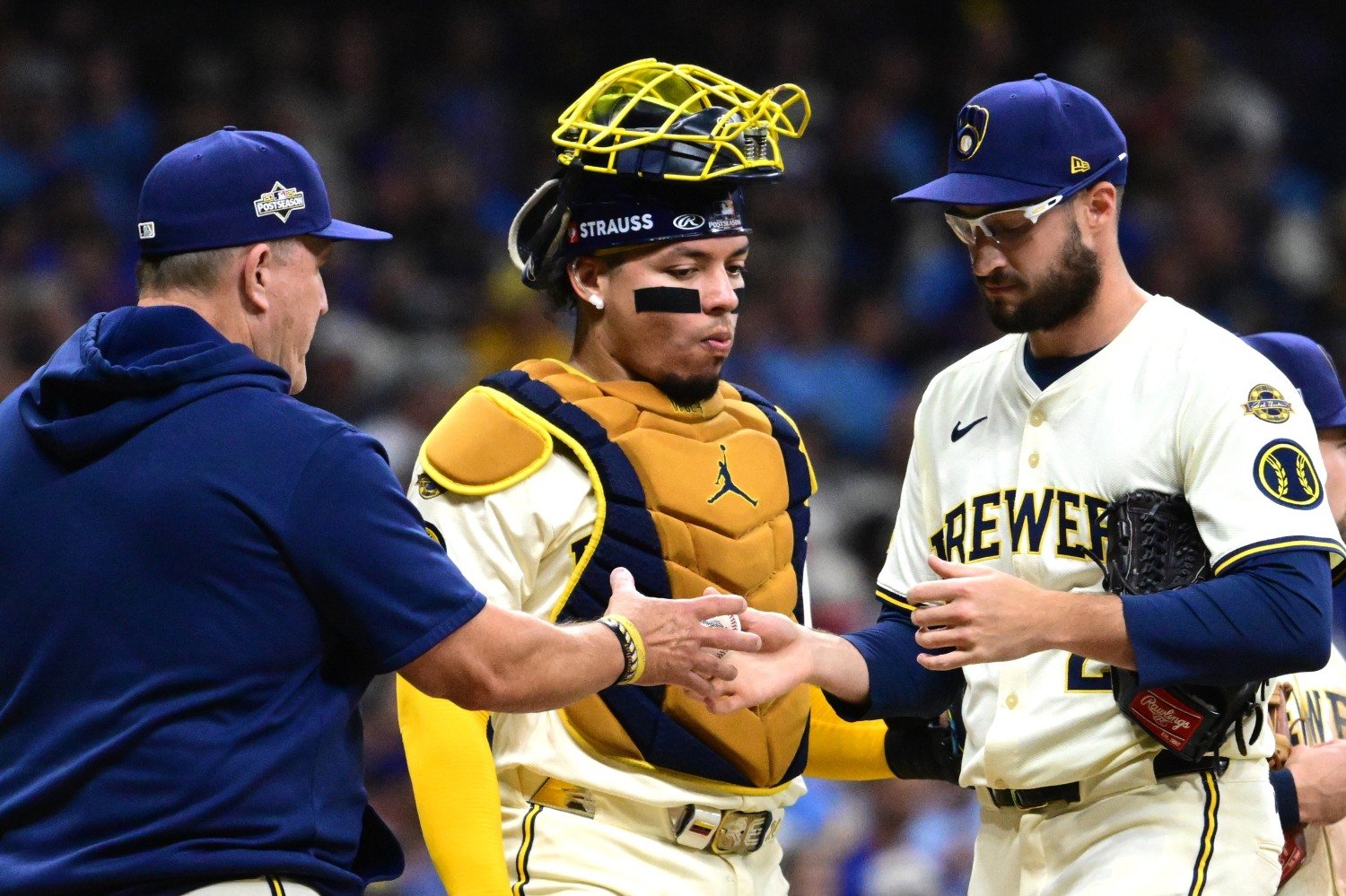 It's not a surprise that Aaron Ashby will take the ball to start Game 1 of the NLCS. It would have been surprising if the Brewers had done anything else. Freddy Peralta has more than earned the right to be deployed as a traditional starter, but in every game of this series not started by Peralta (as Games 2 and 6 will be), manager Pat Murphy is likely to lean on a left-handed opener ahead of any right-handed bulk arm he might intend to use. In fact, it was a bit of a shock not to see either DL Hall or Rob Zastryzny appear on the team's roster for this round, as announced earlier Monday. Instead, the Crew will proceed with four lefties active: Ashby, Jared Koenig, Robert Gasser and Jose Quintana. To counter the plot of Ashby starting Game 1, Dodgers skipper Dave Roberts is batting Teoscar Hernández third, behind Shohei Ohtani and Mookie Betts and in front of Freddie Freeman and Will Smith. Roberts also has Tommy Edman up in the sixth spot, to deter Murphy from sticking with Ashby long enough to get out Max Muncy, who will bat seventh. These are the cat-and-mouse maneuvers the managers will engage in throughout the series, because Murphy will want to throw lefties at Ohtani, Muncy and Freeman whenever he can, but still attack four key Dodgers hitters with right-handed hurlers as much as possible. Those four are Teoscar Hernández, Enrique Hernández, Edman and Andy Pages. Roberts can largely control that and thwart the attempt to claim matchup superiority at the front ends of games, but Murphy gets two types of compensation when Roberts juggles his order that way: It becomes incrementally more likely that, for instance, Muncy is left in the on-deck circle while a righty like Abner Uribe retires a right-handed batter (or weak-hitting switch-hitter, like Edman) to finish a game; and Whatever righty Murphy goes to behind a lefty lead-out man can be more easily shielded from a second or third encounter with the likes of Ohtani, Freeman and Muncy, as the situation dictates. On Monday night, that righty is most likely to be Quinn Priester, and the likelihood is that Murphy will do something like this: Ashby pitches to the first seven batters, through Muncy's spot Priester comes on to face eighth and ninth batters, Kiké Hernández and Pages, then faces the entire lineup once through. Depending on the game state, Murphy then goes to his pen again to start the third turn of the Dodgers order, or sticks with Priester for six more batters and removes him in favor of a lefty before Muncy comes to bat. If the Brewers have the lead in the middle of the game, Murphy can get aggressive and lift Priester earlier. If they're even or behind, he's more likely to stick with Priester for an extra handful of batters and avoid early overuse or overexposure for his key relief arms. The Dodgers lineup is, of course, a fantastic and dangerous one. They make it hard to work through the card without hitting big trouble. Here are the wRC+ marks (where 100 is average and higher is better) for each Dodgers batter against both righties and lefties since the start of 2024. Batter v. RHP v. LHP Shohei Ohtani 193 143 Mookie Betts 120 119 Teoscar Hernández 113 133 Freddie Freeman 145 122 Will Smith 126 135 Tommy Edman 68 126 Max Muncy 151 82 Kiké Hernández 71 87 Andy Pages 99 133 Alex Call 111 93 You want the lefty against the top of this order because of how lethal Ohtani is against righties, with Freeman also devastatingly productive against them. Neither Betts nor Smith has enough of a platoon split to punish that strategy, though as you can see, Hernández can do that. By contrast, in the bottom half of the order are three guys who can be exploited by a good righty. Slotting in Muncy seventh both discourages having the lefty opener stick around and protects the duo of Hernández and Pages. (Call is listed here as the 10th man, but obviously, he will play only if the Brewers figure to actually use a lefty for the lion's share of the game.) Murphy will have to either pounce on places where those two come up with one out already and go to a righty for a short appearance, or pay the tax for getting a right-on-right matchup with them by having a righty face either Muncy or Ohtani. Still, on balance, that's a good deal for the Brewers. In Game 1, it'll be Ashby giving way to (probably) Priester. In Game 3, it could be Quintana on a longer (but still quite short, really) leash, with Tobias Myers behind him. Gasser might be an option to open Game 4, ahead of (say) Jacob Misiorowski—or that gig could go to Ashby, again. There's no easy way to mow down the Dodgers. To beat this team, the Brewers will have to thread a needle or two. With the pregame back-and-forth ahead of Game 1, though, we're already seeing how that can be done.
-
- 1
-
-
- aaron ashby
- jared koenig
- (and 4 more)
-
Image courtesy of © Benny Sieu-Imagn Images It's not a surprise that Aaron Ashby will take the ball to start Game 1 of the NLCS. It would have been surprising if the Brewers had done anything else. Freddy Peralta has more than earned the right to be deployed as a traditional starter, but in every game of this series not started by Peralta (as Games 2 and 6 will be), manager Pat Murphy is likely to lean on a left-handed opener ahead of any right-handed bulk arm he might intend to use. In fact, it was a bit of a shock not to see either DL Hall or Rob Zastryzny appear on the team's roster for this round, as announced earlier Monday. Instead, the Crew will proceed with four lefties active: Ashby, Jared Koenig, Robert Gasser and Jose Quintana. To counter the plot of Ashby starting Game 1, Dodgers skipper Dave Roberts is batting Teoscar Hernández third, behind Shohei Ohtani and Mookie Betts and in front of Freddie Freeman and Will Smith. Roberts also has Tommy Edman up in the sixth spot, to deter Murphy from sticking with Ashby long enough to get out Max Muncy, who will bat seventh. These are the cat-and-mouse maneuvers the managers will engage in throughout the series, because Murphy will want to throw lefties at Ohtani, Muncy and Freeman whenever he can, but still attack four key Dodgers hitters with right-handed hurlers as much as possible. Those four are Teoscar Hernández, Enrique Hernández, Edman and Andy Pages. Roberts can largely control that and thwart the attempt to claim matchup superiority at the front ends of games, but Murphy gets two types of compensation when Roberts juggles his order that way: It becomes incrementally more likely that, for instance, Muncy is left in the on-deck circle while a righty like Abner Uribe retires a right-handed batter (or weak-hitting switch-hitter, like Edman) to finish a game; and Whatever righty Murphy goes to behind a lefty lead-out man can be more easily shielded from a second or third encounter with the likes of Ohtani, Freeman and Muncy, as the situation dictates. On Monday night, that righty is most likely to be Quinn Priester, and the likelihood is that Murphy will do something like this: Ashby pitches to the first seven batters, through Muncy's spot Priester comes on to face eighth and ninth batters, Kiké Hernández and Pages, then faces the entire lineup once through. Depending on the game state, Murphy then goes to his pen again to start the third turn of the Dodgers order, or sticks with Priester for six more batters and removes him in favor of a lefty before Muncy comes to bat. If the Brewers have the lead in the middle of the game, Murphy can get aggressive and lift Priester earlier. If they're even or behind, he's more likely to stick with Priester for an extra handful of batters and avoid early overuse or overexposure for his key relief arms. The Dodgers lineup is, of course, a fantastic and dangerous one. They make it hard to work through the card without hitting big trouble. Here are the wRC+ marks (where 100 is average and higher is better) for each Dodgers batter against both righties and lefties since the start of 2024. Batter v. RHP v. LHP Shohei Ohtani 193 143 Mookie Betts 120 119 Teoscar Hernández 113 133 Freddie Freeman 145 122 Will Smith 126 135 Tommy Edman 68 126 Max Muncy 151 82 Kiké Hernández 71 87 Andy Pages 99 133 Alex Call 111 93 You want the lefty against the top of this order because of how lethal Ohtani is against righties, with Freeman also devastatingly productive against them. Neither Betts nor Smith has enough of a platoon split to punish that strategy, though as you can see, Hernández can do that. By contrast, in the bottom half of the order are three guys who can be exploited by a good righty. Slotting in Muncy seventh both discourages having the lefty opener stick around and protects the duo of Hernández and Pages. (Call is listed here as the 10th man, but obviously, he will play only if the Brewers figure to actually use a lefty for the lion's share of the game.) Murphy will have to either pounce on places where those two come up with one out already and go to a righty for a short appearance, or pay the tax for getting a right-on-right matchup with them by having a righty face either Muncy or Ohtani. Still, on balance, that's a good deal for the Brewers. In Game 1, it'll be Ashby giving way to (probably) Priester. In Game 3, it could be Quintana on a longer (but still quite short, really) leash, with Tobias Myers behind him. Gasser might be an option to open Game 4, ahead of (say) Jacob Misiorowski—or that gig could go to Ashby, again. There's no easy way to mow down the Dodgers. To beat this team, the Brewers will have to thread a needle or two. With the pregame back-and-forth ahead of Game 1, though, we're already seeing how that can be done. View full article
-
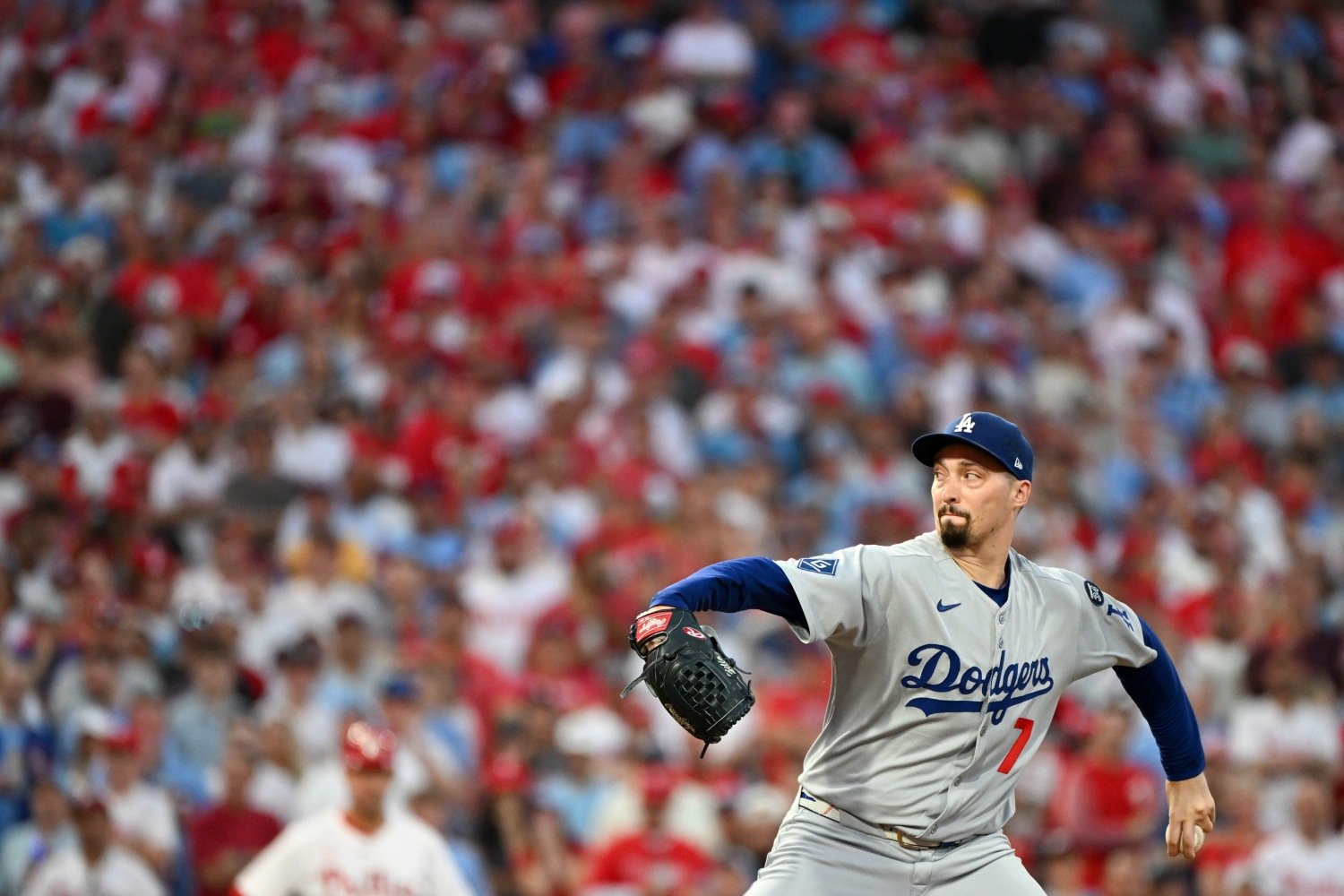 The National League Championship Series gets underway Monday night, and we can pretty well guess who will step into the batter's box first for each team: Super-duperstar Shohei Ohtani, in the top half of the first inning, and budding Brewers stud Jackson Chourio in the bottom half. Ohtani is the full-time leadoff hitter for the defending World Series champions, but Chourio's expected place is a response to the matchup the Brewers face in Game 1. Two-time Cy Young winner Blake Snell will toe the rubber for the Dodgers, which will invite Pat Murphy to set his lineup to attack a lefty; that means Chourio first. Obviously, though, any questions about how well the Brewers will perform against Snell run much deeper than who will bat where. When facing one of the best pitchers in the sport, it's a matter of finding the one pitch with which you can do something productive; working to get that pitch; and getting off a good swing when you do. That makes it sound easy, but of course, it's overwhelmingly difficult. If it weren't, Snell wouldn't own a 3.15 career ERA or a 2.92 mark in the postseason. So, how can the Brewers get their hits against Snell? To answer that, let's take a closer look at his stuff. Snell is a high-slot lefty with a high-riding four-seam fastball, which he locates best to the glove side of the plate—up and in on righties, up and away from lefties. That's the most important thing to know, because with his array of secondary stuff, the best way to hit him (if you can) is to hit his fastball. Get on top of it, and hit a hard line drive somewhere. That's easier said than done, though. He sits around 95 miles per hour with the pitch, and when it ticks up to 97, it can be almost invisible in that top half of the zone. Funnily enough, the Brewers batter who might be best equipped to handle Snell's heater is Sal Frelick, who (being left-handed and lacking high-end bat speed) was probably not the first player who sprang to mind for you. Frelick has flattened his bat path this year, which has helped him hit clean line drives on a lot of pitches in the upper third of the zone, even including ones with the shape and speed of Snell's fastball from fellow lefties. When he's going right, this is also a pitch shape against which Joey Ortiz thrives. To say the least, Ortiz is not going well right now, but nonetheless, he might surprise you in Game 1 by driving a ball to the gap off a high fastball from Snell. Here he is doing so against Dodgers reliever Alex Vesia, back in July, when his swing was as good as it got all year: TDZXeU5fWGw0TUFRPT1fVXdOU1YxUUdVbE1BQ1ZvR1Z3QUhDQTlTQUFBTkJWZ0FBMU1GQ1FNSEJ3TUJDQXRl.mp4 Finally, there's Christian Yelich, who has made a lot of money in his career by hitting an undefendable single the other way when pitchers throw him that fastball up and away. It might be wise for the Brewers to move Yelich and Frelick up into the top four of the batting order for Games 1 and 5, dropping Brice Turang down to sixth; Turang doesn't handle Snell's profile well at all. There, alas, the good news essentially ends for the Brewers against Snell's heat. William Contreras needs the heater to get out over the plate to do damage on it at the height where Snell works. Andrew Vaughn needs him to miss down, in that middle-in pocket of the zone, and Snell is an expert in not missing there. Chourio will get his hits on Snell on the changeup, if at all; he only manages to foul off that high, riding heater from lefties. When pitching to lefty batters, Snell relies heavily on the fastball and his slider, with which he wears out the area right near the knees on the outside corner. Look for him to lean hard on that pitch to Yelich and Frelick, in particular, since they handle his type of fastball well. Yelich just needs to lay off those sliders to have success. Frelick, who isn't great at laying off once he gears up to hit that heater up and away, might end up hitting one or two of his signature dribblers past the mound, toward shortstop. If he does have to hit the slider, it'll probably be a hideous swing and weak contact, but there's a decent chance for an infield single. Turang, with his ever-evolving swing, has actually become slightly more vulnerable to this pitch mix lately; this really isn't a good matchup for him on any front. To righties, Snell is more varied. The fastball can set up either his sharp-breaking curveball, down at the bottom of (and below) the zone, or the changeup fading hard toward the outside corner at the knees. The movement on all of these non-fastballs is fairly extreme, and one good approach for almost every Brewers batter will be patience. Snell relies on chases, especially because catcher Will Smith is a poor pitch-framer. The very patient Brewers need to work deep counts, draw a few walks and try to leverage their dangerous two-strike approach with Snell on the bump. That will also help them get him out of the game as soon as possible, so they can attack the weakness of the Dodgers roster: their middle relief corps. That curve will vex Vaughn, Contreras and Chourio, but it could be how two of the Crew's lesser righties find their way on base against Snell. This is a chance, despite Snell's good command, for Caleb Durbin to get in the way of a ball. He's good at getting hit by pitches, and Snell might just throw him a backfoot breaking ball that Durbin can make literally so. The shape of that breaker also seems to suite Blake Perkins well. In fact, Perkins even dropped the bat head on a low-and-in Snell curveball last September, while the lefty was with the Giants, scorching it into the corner for a double. T1FBbjNfVjBZQUhRPT1fQVFSV0JnRU1WUVlBQ0FNQVhnQUFBQU5VQUFNREJWTUFCMVFDQTFJRUFWZFdDUXRm.mp4 Perkins also does well on the kind of changeup Snell throws: more run than depth, well-aimed at the lower outside corner. He's patient when it fades off the plate, and good at touching it (usually just putting it on the infield, but in ways that invite chaos) when it stays in the zone. That change is the defining pitch for Snell to righties, and while Perkins might be able to scrap and battle against it, the guy who has a chance to do real damage on it is Chourio. Even when a lefty executes well with the change, if it stays on the plate, he can hammer it to right field. We've seen it plenty of times. UUEyMDZfWGw0TUFRPT1fVWdSWFZsSlNWUVFBQ1ZWUVhnQUhBZ1VDQUFBTkJsY0FBUVpYVlZJQVUxVlFCUUFD.mp4 As great as Snell is, the Brewers have a lineup that can give him (and the defense behind him) a long night. The Dodgers enter this series heavily favored, but that's partially because much of the baseball world still doesn't understand just how good this Milwaukee offense is. Beginning Monday night, that could change in a hurry.
- 1 comment
-
- 1
-
-
- blake snell
- 2025 postseason
- (and 5 more)
-
Image courtesy of © Eric Hartline-Imagn Images The National League Championship Series gets underway Monday night, and we can pretty well guess who will step into the batter's box first for each team: Super-duperstar Shohei Ohtani, in the top half of the first inning, and budding Brewers stud Jackson Chourio in the bottom half. Ohtani is the full-time leadoff hitter for the defending World Series champions, but Chourio's expected place is a response to the matchup the Brewers face in Game 1. Two-time Cy Young winner Blake Snell will toe the rubber for the Dodgers, which will invite Pat Murphy to set his lineup to attack a lefty; that means Chourio first. Obviously, though, any questions about how well the Brewers will perform against Snell run much deeper than who will bat where. When facing one of the best pitchers in the sport, it's a matter of finding the one pitch with which you can do something productive; working to get that pitch; and getting off a good swing when you do. That makes it sound easy, but of course, it's overwhelmingly difficult. If it weren't, Snell wouldn't own a 3.15 career ERA or a 2.92 mark in the postseason. So, how can the Brewers get their hits against Snell? To answer that, let's take a closer look at his stuff. Snell is a high-slot lefty with a high-riding four-seam fastball, which he locates best to the glove side of the plate—up and in on righties, up and away from lefties. That's the most important thing to know, because with his array of secondary stuff, the best way to hit him (if you can) is to hit his fastball. Get on top of it, and hit a hard line drive somewhere. That's easier said than done, though. He sits around 95 miles per hour with the pitch, and when it ticks up to 97, it can be almost invisible in that top half of the zone. Funnily enough, the Brewers batter who might be best equipped to handle Snell's heater is Sal Frelick, who (being left-handed and lacking high-end bat speed) was probably not the first player who sprang to mind for you. Frelick has flattened his bat path this year, which has helped him hit clean line drives on a lot of pitches in the upper third of the zone, even including ones with the shape and speed of Snell's fastball from fellow lefties. When he's going right, this is also a pitch shape against which Joey Ortiz thrives. To say the least, Ortiz is not going well right now, but nonetheless, he might surprise you in Game 1 by driving a ball to the gap off a high fastball from Snell. Here he is doing so against Dodgers reliever Alex Vesia, back in July, when his swing was as good as it got all year: TDZXeU5fWGw0TUFRPT1fVXdOU1YxUUdVbE1BQ1ZvR1Z3QUhDQTlTQUFBTkJWZ0FBMU1GQ1FNSEJ3TUJDQXRl.mp4 Finally, there's Christian Yelich, who has made a lot of money in his career by hitting an undefendable single the other way when pitchers throw him that fastball up and away. It might be wise for the Brewers to move Yelich and Frelick up into the top four of the batting order for Games 1 and 5, dropping Brice Turang down to sixth; Turang doesn't handle Snell's profile well at all. There, alas, the good news essentially ends for the Brewers against Snell's heat. William Contreras needs the heater to get out over the plate to do damage on it at the height where Snell works. Andrew Vaughn needs him to miss down, in that middle-in pocket of the zone, and Snell is an expert in not missing there. Chourio will get his hits on Snell on the changeup, if at all; he only manages to foul off that high, riding heater from lefties. When pitching to lefty batters, Snell relies heavily on the fastball and his slider, with which he wears out the area right near the knees on the outside corner. Look for him to lean hard on that pitch to Yelich and Frelick, in particular, since they handle his type of fastball well. Yelich just needs to lay off those sliders to have success. Frelick, who isn't great at laying off once he gears up to hit that heater up and away, might end up hitting one or two of his signature dribblers past the mound, toward shortstop. If he does have to hit the slider, it'll probably be a hideous swing and weak contact, but there's a decent chance for an infield single. Turang, with his ever-evolving swing, has actually become slightly more vulnerable to this pitch mix lately; this really isn't a good matchup for him on any front. To righties, Snell is more varied. The fastball can set up either his sharp-breaking curveball, down at the bottom of (and below) the zone, or the changeup fading hard toward the outside corner at the knees. The movement on all of these non-fastballs is fairly extreme, and one good approach for almost every Brewers batter will be patience. Snell relies on chases, especially because catcher Will Smith is a poor pitch-framer. The very patient Brewers need to work deep counts, draw a few walks and try to leverage their dangerous two-strike approach with Snell on the bump. That will also help them get him out of the game as soon as possible, so they can attack the weakness of the Dodgers roster: their middle relief corps. That curve will vex Vaughn, Contreras and Chourio, but it could be how two of the Crew's lesser righties find their way on base against Snell. This is a chance, despite Snell's good command, for Caleb Durbin to get in the way of a ball. He's good at getting hit by pitches, and Snell might just throw him a backfoot breaking ball that Durbin can make literally so. The shape of that breaker also seems to suite Blake Perkins well. In fact, Perkins even dropped the bat head on a low-and-in Snell curveball last September, while the lefty was with the Giants, scorching it into the corner for a double. T1FBbjNfVjBZQUhRPT1fQVFSV0JnRU1WUVlBQ0FNQVhnQUFBQU5VQUFNREJWTUFCMVFDQTFJRUFWZFdDUXRm.mp4 Perkins also does well on the kind of changeup Snell throws: more run than depth, well-aimed at the lower outside corner. He's patient when it fades off the plate, and good at touching it (usually just putting it on the infield, but in ways that invite chaos) when it stays in the zone. That change is the defining pitch for Snell to righties, and while Perkins might be able to scrap and battle against it, the guy who has a chance to do real damage on it is Chourio. Even when a lefty executes well with the change, if it stays on the plate, he can hammer it to right field. We've seen it plenty of times. UUEyMDZfWGw0TUFRPT1fVWdSWFZsSlNWUVFBQ1ZWUVhnQUhBZ1VDQUFBTkJsY0FBUVpYVlZJQVUxVlFCUUFD.mp4 As great as Snell is, the Brewers have a lineup that can give him (and the defense behind him) a long night. The Dodgers enter this series heavily favored, but that's partially because much of the baseball world still doesn't understand just how good this Milwaukee offense is. Beginning Monday night, that could change in a hurry. View full article
-
Image courtesy of © Benny Sieu-Imagn Images It's been a theme since the earliest days of spring training. Brewers batters came out of the gates hot in the Cactus League, driving the ball over the fence regularly, and something interesting jumped out: they did it even when pitchers appeared to have the advantage in the count against them. They had generated more power in two-strike counts in 2024 than almost any other offense in the league, and in talking to players and coaches in early March, it was clear that that was a product of intention, not chance. "Put it in football terms," Pat Murphy said at the time. "You still want to be able to score a touchdown on 3rd-and-1." Throughout 2025, they've shown that same explosiveness. They can still take the top off a defense, just when a pitcher thinks they have the edge and are about to (metaphorically) finish the at-bat with baseball's answer to a sack: the strikeout. This regular season, with two strikes, the Brewers batted .187/.266/.288. That sounds atrocious, but all players hit badly when we isolate at-bats that get to two strikes. In fact, by weighted on-base average, the Crew were third-best in baseball in two-strike counts, and their run value per 100 pitches seen in those counts was the second-best in the league. This is, in brief, how they beat the Chicago Cubs in the NLDS. It was with two strikes (and two outs) that Blake Perkins hit the single that really cracked Game 1 open, and with two strikes (and two outs) that Jackson Chourio smashed the two-run single that fully ignited the party that day. It was with two strikes (and two outs!) that Andrew Vaughn hit the huge, three-run answering homer in the bottom of the first inning in Game 2, and with two strikes (and two outs!) that Chourio hit the three-run gamebreaker later in that contest. There were two strikes (and two outs) when William Contreras homered to put the Brewers ahead in the first in Game 5, and two strikes (and two outs) when Vaughn launched a second go-ahead dinger in the fourth. If we lock all the way in on two-strike, two-out situations, the Brewers were first in both wOBA and run value per 100 pitches this regular season. They didn't do something wild and out of character in the Division Series. On the contrary, that was their suite of strengths shining through in predictable fashion. Now, of course, they have to try to do the same thing against the Los Angeles Dodgers, which is a much tougher task. The Cubs were 21st in strikeout rate and 27th in opponents' contact rate on swings this year, whereas the Dodgers were second in both categories. If the high-priced hurlers on the defending champions can miss bats, they'll be able to shut down the Brewers, because so much of Milwaukee's offense depends on putting the ball in play and creating pressure on the defense—and, more often than most teams, hitting two-strike pitches a long way. However, if the Brewers can keep spoiling pitches and working deep counts, then pouncing on mistakes, they can create headaches even for the mighty Dodgers. There's something electrifying about an offense constructed this way—about an offense that operates this way. They seem to have a stronger knack for maintaining confidence and having a plan even with two strikes and two outs than most teams. To, as Murphy said, 'put it in football terms', they play through the whistle. It's a rare trait, and a hard thing to quantify—even the numbers above don't do the value of it full justice. They break opponents' hearts and spirits by coming up with such big, frustrating hits when their backs seem to be against the wall. Doing that against the likes of Blake Snell and Shohei Ohtani will be harder than doing it against Matthew Boyd and Drew Pomeranze, but there's a very real chance that they'll do it—and if they do, the reward will be the franchise's first pennant in over four decades. View full article
-
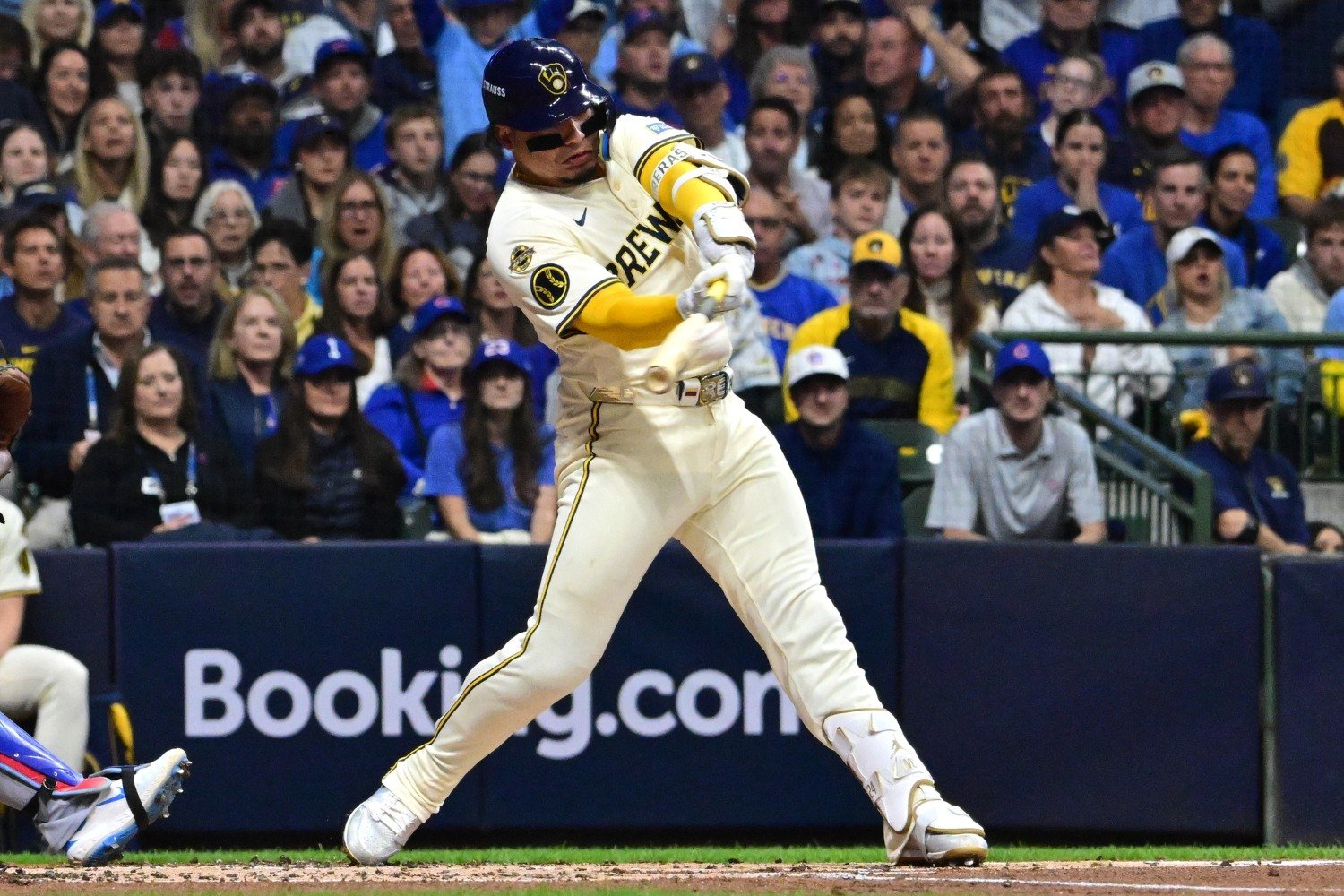 It's been a theme since the earliest days of spring training. Brewers batters came out of the gates hot in the Cactus League, driving the ball over the fence regularly, and something interesting jumped out: they did it even when pitchers appeared to have the advantage in the count against them. They had generated more power in two-strike counts in 2024 than almost any other offense in the league, and in talking to players and coaches in early March, it was clear that that was a product of intention, not chance. "Put it in football terms," Pat Murphy said at the time. "You still want to be able to score a touchdown on 3rd-and-1." Throughout 2025, they've shown that same explosiveness. They can still take the top off a defense, just when a pitcher thinks they have the edge and are about to (metaphorically) finish the at-bat with baseball's answer to a sack: the strikeout. This regular season, with two strikes, the Brewers batted .187/.266/.288. That sounds atrocious, but all players hit badly when we isolate at-bats that get to two strikes. In fact, by weighted on-base average, the Crew were third-best in baseball in two-strike counts, and their run value per 100 pitches seen in those counts was the second-best in the league. This is, in brief, how they beat the Chicago Cubs in the NLDS. It was with two strikes (and two outs) that Blake Perkins hit the single that really cracked Game 1 open, and with two strikes (and two outs) that Jackson Chourio smashed the two-run single that fully ignited the party that day. It was with two strikes (and two outs!) that Andrew Vaughn hit the huge, three-run answering homer in the bottom of the first inning in Game 2, and with two strikes (and two outs!) that Chourio hit the three-run gamebreaker later in that contest. There were two strikes (and two outs) when William Contreras homered to put the Brewers ahead in the first in Game 5, and two strikes (and two outs) when Vaughn launched a second go-ahead dinger in the fourth. If we lock all the way in on two-strike, two-out situations, the Brewers were first in both wOBA and run value per 100 pitches this regular season. They didn't do something wild and out of character in the Division Series. On the contrary, that was their suite of strengths shining through in predictable fashion. Now, of course, they have to try to do the same thing against the Los Angeles Dodgers, which is a much tougher task. The Cubs were 21st in strikeout rate and 27th in opponents' contact rate on swings this year, whereas the Dodgers were second in both categories. If the high-priced hurlers on the defending champions can miss bats, they'll be able to shut down the Brewers, because so much of Milwaukee's offense depends on putting the ball in play and creating pressure on the defense—and, more often than most teams, hitting two-strike pitches a long way. However, if the Brewers can keep spoiling pitches and working deep counts, then pouncing on mistakes, they can create headaches even for the mighty Dodgers. There's something electrifying about an offense constructed this way—about an offense that operates this way. They seem to have a stronger knack for maintaining confidence and having a plan even with two strikes and two outs than most teams. To, as Murphy said, 'put it in football terms', they play through the whistle. It's a rare trait, and a hard thing to quantify—even the numbers above don't do the value of it full justice. They break opponents' hearts and spirits by coming up with such big, frustrating hits when their backs seem to be against the wall. Doing that against the likes of Blake Snell and Shohei Ohtani will be harder than doing it against Matthew Boyd and Drew Pomeranze, but there's a very real chance that they'll do it—and if they do, the reward will be the franchise's first pennant in over four decades.
-
- 1
-
-
- william contreras
- andrew vaughn
- (and 1 more)
-
Image courtesy of © Mark Hoffman-USA TODAY Network via Imagn Images Pat Murphy made a plan, and executed it brilliantly. So did the Brewers' three most emblematic hitters of the 2025 season, And under the pressure and the bright lights of a win-or-go-home playoff game, Jacob Misiorowski spearheaded a brilliant pitching performance for the victorious Milwaukee Brewers. They beat the Chicago Cubs 3-1, to earn a place in the National League Championship Series. They'll square off with the Los Angeles Dodgers starting Monday in Milwaukee. This is, almost inarguably, the biggest win for the franchise since they came back to win the pennant against the Angels in 1982. It was a game full of catharsis and joy, as well as suspense and terror—a perfect distillation of the searing season just played by one of the best clubs ever to wear Brewers colors. Needing 27 outs but lacking a starting pitcher he could trust against a strong Cubs lineup that had already dismantled Quinn Priester once, Murphy turned to a bullpen game with his season on the line. That meant beginning with the closer, Trevor Megill, who had spent so much of the season sealing Milwaukee wins but went down at the end of August with a forearm strain that looked like it could end his campaign. Instead, there stood Megill at the center of the cauldron when the game began, pumping 98-mph fastballs and roiling curveballs. He's not quite his best, healthiest self, and the Brewers handled him carefully each time they turned to him during this series. Giving him the first inning was one way to eliminate uncertainty and put firm boundaries around his outing; he turned out not to need them. On just 11 pitches, he put the Cubs down in order. The way he came off the mound gave the first clue that this team was brimming with confidence, and that the environment would remain as unfriendly to the Cubs as Wrigley Field was during the middle phase of the series. In the bottom of the first, the Crew jumped on the visitors, availing themselves of a poor decision by Cubs manager Craig Counsell to start lefty Drew Pomeranz. The veteran southpaw retired the first two batters he faced, but on a 3-2 pitch, he threw William Contreras a two-out, two-strike fastball—the sixth in a row, in the at-bat—and paid a dear price. It wouldn't be that simple; it couldn't be. This was Game 5, do-or-die, and it was against the hated Cubs and the defector Counsell. Seiya Suzuki responded with a solo home run of his own in the top of the second against Misiorowski, and the game remained tied until the bottom of the fourth. That's when the same thing played out, with only the names changed. Colin Rea retired the first two batters he saw, but then he got stuck in a deep count with Andrew Vaughn. On a 3-2 pitch, Vaughn did something he'd only done one other time since mid-August—but that, too, having been during this same series. Misiorowski made it four innings, leaving the Brewers just 12 outs to get to secure the victory. That didn't come easy, either. Clinging to a one-run lead, Aaron Ashby allowed the first two Cubs batters of the sixth inning to reach base—but then, he struck out Kyle Tucker, and Murphy rescued the situation by lifting him in favor of Chad Patrick. After a lineout by Suzuki, Patrick froze Ian Happ on the best backdoor cutter in team history, killing the uprising. In the bottom of the seventh, it was time for the team's best all-around player (this year, anyway) to put the challengers out of their misery. Andrew Kittredge got two outs to open the bottom of the seventh, but once more, two outs proved to be one too few. The Brewers are never dead. Just when you think they are, you're dead, instead. Turang didn't wait for a full count. He blasted a first-pitch slider to center field, well over the wall (don't tell Pete Crow-Armstrong, if you see him, but it was), and the deed was virtually done. As fitting as it was to have Contreras (the team's gladiator), Vaughn (their latest impossible discovery) and Turang (as big a player-development win as a first-round pick can ever be) provide the scoring, though, perhaps the most fitting moment came last. Abner Uribe entered and mowed down the Cubs to close out the series win. He issued a walk and allowed some hard contact, but he sailed through six outs in just 22 pitches. Uribe, whose misplaced aggression led to a suspension and whose wildness led to a demotion (before a season-ending injury) last spring, represents the maturation of this team. It's still aggressive, and even, occasionally, aggro (see Uribe's celebration after the final out, which included an emphatic phone gesture toward the Cubs dugout that seems to be part of a team-wide, somewhat unearned grievance with Counsell). It's still young, and electric, and (like all electric things) a bit dangerous. But it's also a team with an unswerving sense of purpose and an intensity that doesn't crack under pressure. They are, in short, champions. They've been the NL Central champions for three years now, but they reasserted that dominance Saturday night. More importantly, they look like a worthy contender to become the champions of the entire league. This franchise has never summited that mountain. They might not do it this year, either. For at least one more night, though, they were the best team in baseball—with more wins and fewer losses than anyone else, and more swagger and more toughness, to boot. 'Bragging rights' is much too small a phrase for what they won by beating the Cubs in an October doubledown after another full-season win. They won, for themselves and fans, a real sense of superiority and freedom from a long-hanging shadow of playoff failure. Now, they just have to go do it all (in a slightly different form) again. View full article
-
- 1
-
-
- 2025 postseason
- brice turang
- (and 4 more)

