


Matthew Trueblood
-
Posts
1,964 -
Joined
-
Last visited
-
Days Won
10
Content Type
Profiles
Forums
Blogs
Events
News
2026 Milwaukee Brewers Top Prospects Ranking
Milwaukee Brewers Videos
2022 Milwaukee Brewers Draft Picks
Milwaukee Brewers Free Agent & Trade Rumors, Notes, & Tidbits
Guides & Resources
2023 Milwaukee Brewers Draft Picks
2024 Milwaukee Brewers Draft Picks
The Milwaukee Brewers Players Project
2025 Milwaukee Brewers Draft Pick Tracker
2026 Milwaukee Brewers Draft Tracker: Picks & Bonuses
Store
Downloads
Gallery
Everything posted by Matthew Trueblood
-
 Hitters are (finally) (sort of) getting to Aaron Ashby this month. Heavily used because of his phenomenal ability to deliver length and dominance ouf of the bullpen, Ashby is starting to show slight signs of wear in the closest thing he's had to a full big-league season since 2022. He takes great pride in sponging up innings and protecting his fellow relievers, and Pat Murphy takes great comfort in knowing that whether he needs one ground ball to escape a tight spot or seven outs to bridge the gap between a short start and the rest of his high-leverage relievers, Ashby can give it to him. That does come with a price, and thus, Ashby has run into a bit of trouble over the last week. On the whole, though, he remains brilliant, and the team will have time to back off and let him freshen up before the National League Division Series starts in early October. Last year, he proved he could be valuable as a relief weapon. This year, he's proved he can be the relief weapon, at least for short stretches when that need arises. Few pitchers in the league give opposing batters a tougher combination of looks than Ashby does. His sinker is averaging over 97 miles per hour this year, but it's far more than that velocity from a lefty that makes him nasty. He uses a very high arm slot, for a sinkerballer, and he releases the ball with (mostly) backspin. But the seam-shifted wake effects created by his grip and the interaction of the seams of the ball with the air creates a ton of arm-side run, relative to what any hitter will expect based on how Ashby throws. Here, you can see the difference between the initial spin direction on his pitches and the actual direction of their movement. The way his sinker and his changeup fade away from a right-handed batter is not at all normal. Among lefties who have thrown at least 350 sinkers this year, here are the ones whose movement direction varies most from the direction of the spin they impart on the ball at release—along with their average arm angle on sinkers. Max Fried (44.8°) Ranger Suárez (36°) David Peterson (41.5°) Framber Valdez (42.2°) Ashby (49.9°) Jared Koenig (35.2°) Brendon Little (26.3°) John King (28.7°) Adrián Morejon (43.7°) Angel Zerpa (26.1°) Although his lack of extension down the mound makes it play slightly slower than it is, Ashby throws his sinker much harder than most of these fellow southpaws. He also comes from a much higher slot, where hitters tend to expect more four-seam action. Opponents expect some extra run on a fastball from an arm slot like Little's, or even Koenig's. From Ashby, it's extra funky. Notice in that graphic, too, that the spin direction on Ashby's sinker and curveball are almost perfectly opposite one another. That creates a spin-mirroring effect, which makes it very hard for the hitter to identify the pitch early, based on spin. A spin axis rotated 90° between two given offerings will give one of them a different look as the ball rotates and the seams blur, but when it's more like 180°, the axis is functionally the same; the seams will spin in opposite directions but on the same orientation. That adds to Ashby's overall deceptiveness. Hitters do have a different way to spot Ashby's pitches and discern them. It's the release and trajectory of them. Here's a Statcast animation of a right-handed hitter's perspective on Ashby's delivery, with the average release and trajectory of each of his pitches color-coded. Pretty early, you can spot that the sinker is going straight and low, while the curve starts high and then snaps downward. They don't come out of the hand on the same plane and then diverge; he tends to let the curve pop a bit for a batter. Remember, though, that the hitter isn't seeing these nice, colorized trails. They're just seeing a ball. A righty hitter, in particular, is seeing a ball that seems to come right after them, out of Ashby's hand and from his new placement on the third-base side of the rubber. Last year, the way he aligned himself and located both his sinker and his curve, he didn't make it very hard for hitters to see which pitch was coming. The offerings ended up in similar locations last year, but to get there, they had to start on different planes out of Ashby's hand. This year, though, he's letting the sinker live a bit higher in the zone and stay out over the plate (counting on that movement-based deception to get ground balls with it, anyway), while steering the curveball ever more toward a righty's back foot. Whatever the previous animation indicated, then, hitters are probably having a very hard time telling the sinker and the curve apart out of Ashby's hand. The angles he offers and the way the two pitches have to move to reach these destinations, they do effectively look the same to a batter. A lefty throwing a sinker to righties can still be dangerous, and Ashby is notably better against lefty batters. However, he's dominated this year on the basis of a repertoire and a blend of characteristics that plays no matter who's in the batter's box, or on which side of the plate. That he complements these offerings with a big-breaking slider and a changeup he's long called his "favorite pitch" makes him more than equal to facing an entire lineup, if needed. In turn, that makes him an immensely valuable bullpen piece. The 2025 Brewers don't have any other reliever who can deliver in a wider variety of must-win situations. Milwaukee still needs to get to October healthy, and the hope is that that will mean getting Trevor Megill and/or Nick Mears back. Abner Uribe is locked into the quasi-closer role for now. Koenig is a different but important lefty option, alongside Ashby. By no means will he be the star of the poseason for the Crew—but he could steal a scene or two, as all great ensemble players eventually do.
 -
Image courtesy of © Jovanny Hernandez / Milwaukee Journal Sentinel / USA TODAY NETWORK via Imagn Images Hitters are (finally) (sort of) getting to Aaron Ashby this month. Heavily used because of his phenomenal ability to deliver length and dominance ouf of the bullpen, Ashby is starting to show slight signs of wear in the closest thing he's had to a full big-league season since 2022. He takes great pride in sponging up innings and protecting his fellow relievers, and Pat Murphy takes great comfort in knowing that whether he needs one ground ball to escape a tight spot or seven outs to bridge the gap between a short start and the rest of his high-leverage relievers, Ashby can give it to him. That does come with a price, and thus, Ashby has run into a bit of trouble over the last week. On the whole, though, he remains brilliant, and the team will have time to back off and let him freshen up before the National League Division Series starts in early October. Last year, he proved he could be valuable as a relief weapon. This year, he's proved he can be the relief weapon, at least for short stretches when that need arises. Few pitchers in the league give opposing batters a tougher combination of looks than Ashby does. His sinker is averaging over 97 miles per hour this year, but it's far more than that velocity from a lefty that makes him nasty. He uses a very high arm slot, for a sinkerballer, and he releases the ball with (mostly) backspin. But the seam-shifted wake effects created by his grip and the interaction of the seams of the ball with the air creates a ton of arm-side run, relative to what any hitter will expect based on how Ashby throws. Here, you can see the difference between the initial spin direction on his pitches and the actual direction of their movement. The way his sinker and his changeup fade away from a right-handed batter is not at all normal. Among lefties who have thrown at least 350 sinkers this year, here are the ones whose movement direction varies most from the direction of the spin they impart on the ball at release—along with their average arm angle on sinkers. Max Fried (44.8°) Ranger Suárez (36°) David Peterson (41.5°) Framber Valdez (42.2°) Ashby (49.9°) Jared Koenig (35.2°) Brendon Little (26.3°) John King (28.7°) Adrián Morejon (43.7°) Angel Zerpa (26.1°) Although his lack of extension down the mound makes it play slightly slower than it is, Ashby throws his sinker much harder than most of these fellow southpaws. He also comes from a much higher slot, where hitters tend to expect more four-seam action. Opponents expect some extra run on a fastball from an arm slot like Little's, or even Koenig's. From Ashby, it's extra funky. Notice in that graphic, too, that the spin direction on Ashby's sinker and curveball are almost perfectly opposite one another. That creates a spin-mirroring effect, which makes it very hard for the hitter to identify the pitch early, based on spin. A spin axis rotated 90° between two given offerings will give one of them a different look as the ball rotates and the seams blur, but when it's more like 180°, the axis is functionally the same; the seams will spin in opposite directions but on the same orientation. That adds to Ashby's overall deceptiveness. Hitters do have a different way to spot Ashby's pitches and discern them. It's the release and trajectory of them. Here's a Statcast animation of a right-handed hitter's perspective on Ashby's delivery, with the average release and trajectory of each of his pitches color-coded. Pretty early, you can spot that the sinker is going straight and low, while the curve starts high and then snaps downward. They don't come out of the hand on the same plane and then diverge; he tends to let the curve pop a bit for a batter. Remember, though, that the hitter isn't seeing these nice, colorized trails. They're just seeing a ball. A righty hitter, in particular, is seeing a ball that seems to come right after them, out of Ashby's hand and from his new placement on the third-base side of the rubber. Last year, the way he aligned himself and located both his sinker and his curve, he didn't make it very hard for hitters to see which pitch was coming. The offerings ended up in similar locations last year, but to get there, they had to start on different planes out of Ashby's hand. This year, though, he's letting the sinker live a bit higher in the zone and stay out over the plate (counting on that movement-based deception to get ground balls with it, anyway), while steering the curveball ever more toward a righty's back foot. Whatever the previous animation indicated, then, hitters are probably having a very hard time telling the sinker and the curve apart out of Ashby's hand. The angles he offers and the way the two pitches have to move to reach these destinations, they do effectively look the same to a batter. A lefty throwing a sinker to righties can still be dangerous, and Ashby is notably better against lefty batters. However, he's dominated this year on the basis of a repertoire and a blend of characteristics that plays no matter who's in the batter's box, or on which side of the plate. That he complements these offerings with a big-breaking slider and a changeup he's long called his "favorite pitch" makes him more than equal to facing an entire lineup, if needed. In turn, that makes him an immensely valuable bullpen piece. The 2025 Brewers don't have any other reliever who can deliver in a wider variety of must-win situations. Milwaukee still needs to get to October healthy, and the hope is that that will mean getting Trevor Megill and/or Nick Mears back. Abner Uribe is locked into the quasi-closer role for now. Koenig is a different but important lefty option, alongside Ashby. By no means will he be the star of the poseason for the Crew—but he could steal a scene or two, as all great ensemble players eventually do. View full article
-
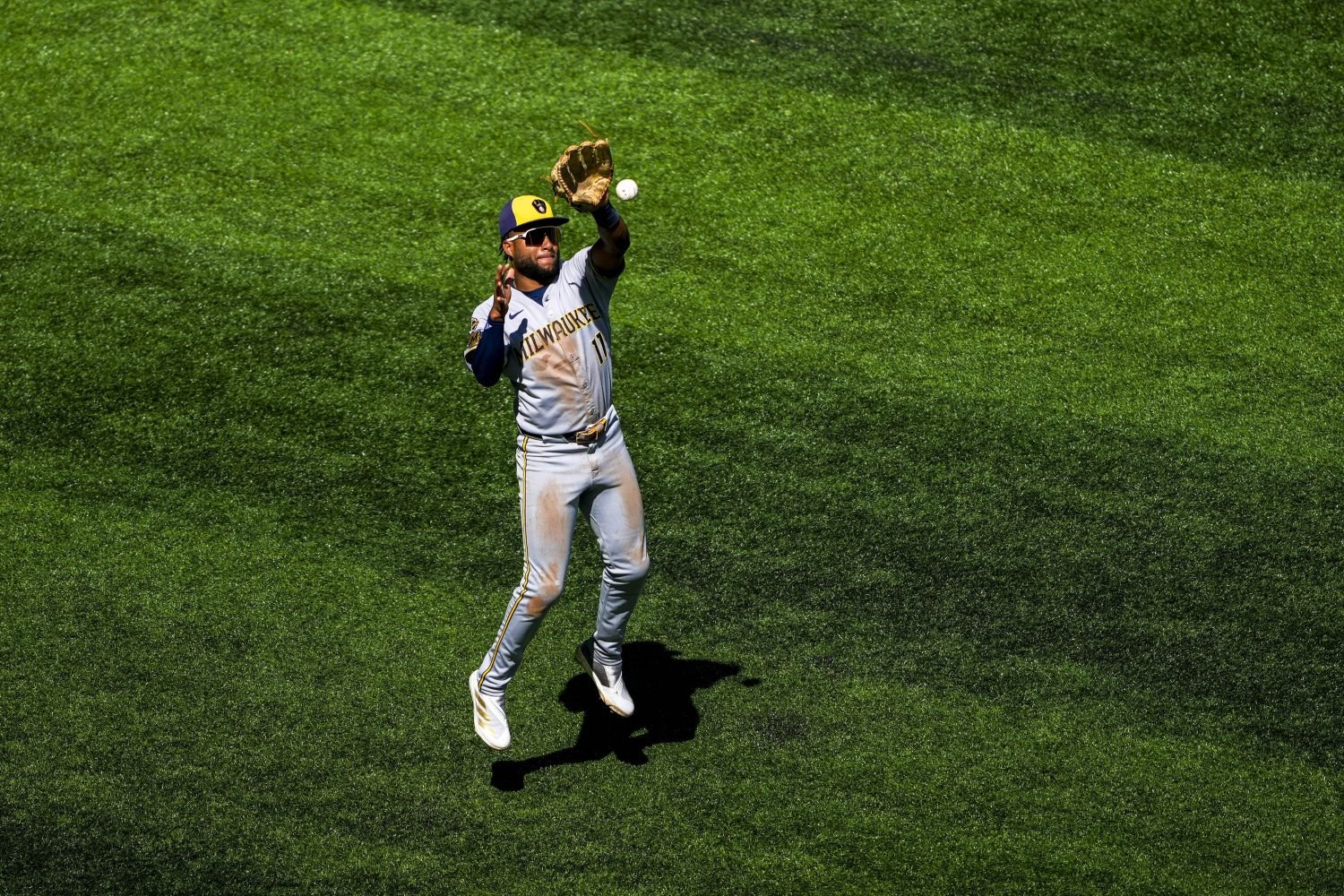 So much of outfield defense is just about tools—speed, throwing arm, and a certain ability to make the last-second shift or turn to catch a ball on the run or the dive—that the skill of it often gets lost. A great outfield technician is a thing of beauty, and thus, a joy forever. Blake Perkins's footwork when preparing for a catch-and-throw, and the way he creates flat angles to the wall when he goes to rob home runs. Sal Frelick's ferocious but click-perfect charge and load for a throw, as displayed Tuesday night when he threw out a Rangers runner trying to go first-to-third on a single to right. These are lots of fun for baseball nerds. On balance, though, a great athlete has time to make up for small deficiencies in route or footwork or technique, on most outfield plays. The game in the grass is more forgiving than the one played on the dirt. Jackson Chourio is an excellent example. In his two years as a big-league outfielder, he's virtually never shown the technical excellence characteristic of Perkins and Frelick's play in the outfield. Even Isaac Collins (seven years Chourio's senior and a utility man by trade) has gone out to left field this year and shown a better knack for reading the ball, reacting quickly and making a direct play on the ball than Chourio has. Yet, Chourio's numbers as a defensive outfielder are good. He makes up for most of his imperfections, using the time the ball spends navigating the atmosphere and negotiating a controlled descent with gravity to run underneath it—even if he first broke the wrong way, or took an extra beat to break at all. Occasionally, though, the game gives no quarter. Chourio has made some infamous misplays, from the one in left field in last year's Wild Card Series to the ball he played into a game-changing double in Cleveland back in May. In fact, let's start in that very series—but talk about a different ball he also misplayed. On a sinking line drive by Guardians first baseman Kyle Manzardo, Chourio did this. MTZxclJfWGw0TUFRPT1fQVZRRlhWd0dWRmNBQ2dBS1ZBQUhCVkJUQUZsVEJRY0FDbEFGQkF0UUNRdFZCUUlI.mp4 That was a bad mistake. Chourio was only about a month and a half into playing center in the majors at that point, but one of the first things you have to learn to play there (as opposed to left or right) is the extra layer of danger in letting a ball get by you. You do want to charge flares like this one aggressively, but you have to have a plan to keep it in front of you, because there's so much vacant real estate behind you if you miss. Worse, though, that ball appears to have been the origin story of Chourio's alter-ego, as a center fielder: Chicken-Man. Ok, that's way too mean. But ever since that painful gaffe, he's been gunshy about coming in hard on balls like Manzardo's hit. Here he is just a week after that, being very conservative on a ball hit to him on a similar trajectory. TDZXN01fWGw0TUFRPT1fVUFoVVhBSlJVVmNBWEFRSFVRQUhWRkJYQUZoUlV3SUFVMVlDQjFJQUFBcGNCZ1FF.mp4 You can hear the slight disappointment in Jeff Levering's voice. Chourio, starting from a deep initial position and shaded heavily toward right-center, still had time to come get this ball. Off the bat, he broke the correct way, but just as he seemed to be getting up to speed, he broke it right back down. Specifically, he seemed comfortable with the lateral movement he needed, but not with the inward charge required to reach the ball. He pulled up and played it on a hop, instead. It's been a pattern, ever since. Here's Chourio in early July, letting Isaac Collins call him off on a ball that should belong to the center fielder, resulting in a bloop double. M3k0ODZfWGw0TUFRPT1fQlFOVFYxQUFYMVFBQ1FOUlVnQUhCZ1JUQUFOVFZWZ0FWd05YQ1FKVVZBVmNBMVJX.mp4 Here he is in his second game after returning from his hamstring strain, August 31 in Toronto, calling a last-second audible on an effort to chase down a hooking liner from Ernie Clement. V0FkMnFfWGw0TUFRPT1fQUFkV1VWSldVd01BV1ZRQUJ3QUhWd1pTQUZoUUFsUUFWd0FBVXdRQUJnTlRWUVpX.mp4 Chourio's greatest strength as an outfielder has always been moving laterally. Installed in center this season, he's been tremendous at stopping the gaps, showing excellent range to either side. His defensive positioning is designed to maximize the value of this strength. Here's where he sets up against lefty batters, arrayed with the average positioning against lefties for the rest of the league's center fielders. As you can see, that very deep, very shaded toward right position he occupied in the clips featuring lefties above is very much the norm. The hardest-hit, most potentially dangerous batted balls (and toughest to deal with) for a center fielder will be the ones driven over their heads or into the gap on the hitter's pull side. By setting up where he does, Chourio gives himself a chance to go make huge catches in those areas. He does the same thing against right-handed batters. That makes it possible for him to come up with plays like this. eUxONjNfWGw0TUFRPT1fQVFSV0FRVU1VMVlBQ2xKWFVRQUhVMVZRQUZoUVdsTUFWMTFXVWxjTkFnVUhWQUlB (1).mp4 When batters hit long drives into the gap to the opposite field, it's nearly always at a launch angle over 30° and with backspin, so Chourio has time to run under the ball even though he's starting farther from the play than a typical center fielder might. It all works out nicely, when it comes to taking away extra-base hits. Playing where he does, however, makes plays like the others we've looked at here harder. Chourio has to come in on the ball hard to get to them, and he's not comfortable doing it. That reared its head yet again Tuesday night in Texas. After a game-tying home run by Michael Helman, Josh Smith was up for the Rangers, and he hit a liner to center that could have been the second out of the frame. NHlNMlFfWGw0TUFRPT1fQmxWU1ZRSUNWQUFBREZJREFBQUhDRlVDQUFBRUJWWUFVVlFHQ0FKVEFRcFNWUWRm.mp4 Chourio got a good initial break on this ball. Here's the first frame after the broadcast feed flipped from the center-field angle to showing us the whole field. He drew a bead on it quite well, too, lining himself up with the ball and moving quickly toward it at first. Here's another screenshot, after he's made about five steps toward the ball while it floats out toward him. The good times won't last, though. Here's the last moment when Chourio had a chance to catch this ball. In fact, though, he's already given up the ghost. Starting with the turn of his hips you can see in that final screenshot, he was already retreating, to catch the ball on a comfortable bounce. Two or three times in the pursuit of this ball, he corrected his route to take him even more toward left field, and away from the charge toward the shortstop position that would have been required to make the play. There are worse sins than being a conservative outfielder on balls hit like these. Chourio does enough things well to look past little things like this most of the time. However, the playoffs (where little things get big in a hurry) are right around the corner. Chourio has a particularly negative rating on shallow balls in center field this year, according to Sports Info Solutions: Shallow: -3 Plays Saved Medium: -1 Deep: -1 The Rangers, making a furious push toward the playoffs at the last minute in what has been a frustrating season for them, showed the Brewers how costly missed chances to make plays and nip rallies in the bud can be, scoring twice more in the inning after Chourio let this ball fall. While it's hard to imagine the team taking Chourio's (or even Collins's) bat out of the lineup to make room for Perkins come the NLDS, they do need this kind of play to be made in order to win multiple series in the postseason. It's something Chourio will have to work on, even if much of that work will be mental. He has to trust all that athleticism, and start coming in harder to make catches on these could-be hits.
 -
Image courtesy of © Kevin Sousa-Imagn Images So much of outfield defense is just about tools—speed, throwing arm, and a certain ability to make the last-second shift or turn to catch a ball on the run or the dive—that the skill of it often gets lost. A great outfield technician is a thing of beauty, and thus, a joy forever. Blake Perkins's footwork when preparing for a catch-and-throw, and the way he creates flat angles to the wall when he goes to rob home runs. Sal Frelick's ferocious but click-perfect charge and load for a throw, as displayed Tuesday night when he threw out a Rangers runner trying to go first-to-third on a single to right. These are lots of fun for baseball nerds. On balance, though, a great athlete has time to make up for small deficiencies in route or footwork or technique, on most outfield plays. The game in the grass is more forgiving than the one played on the dirt. Jackson Chourio is an excellent example. In his two years as a big-league outfielder, he's virtually never shown the technical excellence characteristic of Perkins and Frelick's play in the outfield. Even Isaac Collins (seven years Chourio's senior and a utility man by trade) has gone out to left field this year and shown a better knack for reading the ball, reacting quickly and making a direct play on the ball than Chourio has. Yet, Chourio's numbers as a defensive outfielder are good. He makes up for most of his imperfections, using the time the ball spends navigating the atmosphere and negotiating a controlled descent with gravity to run underneath it—even if he first broke the wrong way, or took an extra beat to break at all. Occasionally, though, the game gives no quarter. Chourio has made some infamous misplays, from the one in left field in last year's Wild Card Series to the ball he played into a game-changing double in Cleveland back in May. In fact, let's start in that very series—but talk about a different ball he also misplayed. On a sinking line drive by Guardians first baseman Kyle Manzardo, Chourio did this. MTZxclJfWGw0TUFRPT1fQVZRRlhWd0dWRmNBQ2dBS1ZBQUhCVkJUQUZsVEJRY0FDbEFGQkF0UUNRdFZCUUlI.mp4 That was a bad mistake. Chourio was only about a month and a half into playing center in the majors at that point, but one of the first things you have to learn to play there (as opposed to left or right) is the extra layer of danger in letting a ball get by you. You do want to charge flares like this one aggressively, but you have to have a plan to keep it in front of you, because there's so much vacant real estate behind you if you miss. Worse, though, that ball appears to have been the origin story of Chourio's alter-ego, as a center fielder: Chicken-Man. Ok, that's way too mean. But ever since that painful gaffe, he's been gunshy about coming in hard on balls like Manzardo's hit. Here he is just a week after that, being very conservative on a ball hit to him on a similar trajectory. TDZXN01fWGw0TUFRPT1fVUFoVVhBSlJVVmNBWEFRSFVRQUhWRkJYQUZoUlV3SUFVMVlDQjFJQUFBcGNCZ1FF.mp4 You can hear the slight disappointment in Jeff Levering's voice. Chourio, starting from a deep initial position and shaded heavily toward right-center, still had time to come get this ball. Off the bat, he broke the correct way, but just as he seemed to be getting up to speed, he broke it right back down. Specifically, he seemed comfortable with the lateral movement he needed, but not with the inward charge required to reach the ball. He pulled up and played it on a hop, instead. It's been a pattern, ever since. Here's Chourio in early July, letting Isaac Collins call him off on a ball that should belong to the center fielder, resulting in a bloop double. M3k0ODZfWGw0TUFRPT1fQlFOVFYxQUFYMVFBQ1FOUlVnQUhCZ1JUQUFOVFZWZ0FWd05YQ1FKVVZBVmNBMVJX.mp4 Here he is in his second game after returning from his hamstring strain, August 31 in Toronto, calling a last-second audible on an effort to chase down a hooking liner from Ernie Clement. V0FkMnFfWGw0TUFRPT1fQUFkV1VWSldVd01BV1ZRQUJ3QUhWd1pTQUZoUUFsUUFWd0FBVXdRQUJnTlRWUVpX.mp4 Chourio's greatest strength as an outfielder has always been moving laterally. Installed in center this season, he's been tremendous at stopping the gaps, showing excellent range to either side. His defensive positioning is designed to maximize the value of this strength. Here's where he sets up against lefty batters, arrayed with the average positioning against lefties for the rest of the league's center fielders. As you can see, that very deep, very shaded toward right position he occupied in the clips featuring lefties above is very much the norm. The hardest-hit, most potentially dangerous batted balls (and toughest to deal with) for a center fielder will be the ones driven over their heads or into the gap on the hitter's pull side. By setting up where he does, Chourio gives himself a chance to go make huge catches in those areas. He does the same thing against right-handed batters. That makes it possible for him to come up with plays like this. eUxONjNfWGw0TUFRPT1fQVFSV0FRVU1VMVlBQ2xKWFVRQUhVMVZRQUZoUVdsTUFWMTFXVWxjTkFnVUhWQUlB (1).mp4 When batters hit long drives into the gap to the opposite field, it's nearly always at a launch angle over 30° and with backspin, so Chourio has time to run under the ball even though he's starting farther from the play than a typical center fielder might. It all works out nicely, when it comes to taking away extra-base hits. Playing where he does, however, makes plays like the others we've looked at here harder. Chourio has to come in on the ball hard to get to them, and he's not comfortable doing it. That reared its head yet again Tuesday night in Texas. After a game-tying home run by Michael Helman, Josh Smith was up for the Rangers, and he hit a liner to center that could have been the second out of the frame. NHlNMlFfWGw0TUFRPT1fQmxWU1ZRSUNWQUFBREZJREFBQUhDRlVDQUFBRUJWWUFVVlFHQ0FKVEFRcFNWUWRm.mp4 Chourio got a good initial break on this ball. Here's the first frame after the broadcast feed flipped from the center-field angle to showing us the whole field. He drew a bead on it quite well, too, lining himself up with the ball and moving quickly toward it at first. Here's another screenshot, after he's made about five steps toward the ball while it floats out toward him. The good times won't last, though. Here's the last moment when Chourio had a chance to catch this ball. In fact, though, he's already given up the ghost. Starting with the turn of his hips you can see in that final screenshot, he was already retreating, to catch the ball on a comfortable bounce. Two or three times in the pursuit of this ball, he corrected his route to take him even more toward left field, and away from the charge toward the shortstop position that would have been required to make the play. There are worse sins than being a conservative outfielder on balls hit like these. Chourio does enough things well to look past little things like this most of the time. However, the playoffs (where little things get big in a hurry) are right around the corner. Chourio has a particularly negative rating on shallow balls in center field this year, according to Sports Info Solutions: Shallow: -3 Plays Saved Medium: -1 Deep: -1 The Rangers, making a furious push toward the playoffs at the last minute in what has been a frustrating season for them, showed the Brewers how costly missed chances to make plays and nip rallies in the bud can be, scoring twice more in the inning after Chourio let this ball fall. While it's hard to imagine the team taking Chourio's (or even Collins's) bat out of the lineup to make room for Perkins come the NLDS, they do need this kind of play to be made in order to win multiple series in the postseason. It's something Chourio will have to work on, even if much of that work will be mental. He has to trust all that athleticism, and start coming in harder to make catches on these could-be hits. View full article
-
Image courtesy of © Charles LeClaire-Imagn Images Even if you have a dazzling combination of speed and power and can often get the bat on the ball even when fooled, eventually, you have to learn not to let big-league pitchers choose what you're going to swing at. Jackson Chourio did a marvelous job of handling the difficult transition to the majors at age 20 in 2024, batting .275/.327/.464. This year, however, he came out of the gates swinging at everything he saw, which led to an early slump. He entered July with just a .286 on-base percentage, despite hitting for average and power at better rates than the league. Chourio is an aggressive hitter, and he should remain so for years. He hits the ball too hard and has too much potential to break games open with his all-fields power and running ability to sit and wait for the perfect pitch at all times. However, there were clearly times during the early portion of the season when he was too much in swing mode, and wasn't getting even a manageable pitch to hit in each at-bat. As you can see, though, that's changed since the start of July. He didn't go on a walks binge during that month, but by being slightly more patient, he found more offerings he could crush, and batted .367/.408/.600. That's why it was such a blow when he went down with a hamstring strain just before the trade deadline; his loss was arguably the biggest factor in the Brewers' gentle regression from a historicly torrid run to a solid-but-unspectacular second half of August. Since coming back, Chourio has seen some ups and downs. He exploded back onto the scene with two games in Toronto in which he collected six hits, but then had a few hitless games as he battled to get back into his rhythm at the plate. Nonetheless, in a total of 35 plate appearances since his return, he's batting .267/.343/.533. Interestingly, he's also walked three times in that short span. He's taken seven free passes in 83 trips to the plate since the All-Star break, after accepting just 18 in 424 times up before it. When a hitter like Chourio starts swinging this infrequently, you have to assume that part of it is a lack of real comfort with his swing, which is a bad thing. On the other hand, sometimes that very discomfort forces a hitter to be more disciplined or just to work deeper counts, which can be a good thing. Chourio's bat speed is down in September, but not to any dangerous lows; he's just not getting off his 'A' swing quite as frequently lately. That's as much about timing as anything else; he's not the only Brewers hitter who is still getting some rust brushed off. Unlike Joey Ortiz, though, Chourio's attack angle and direction this month aren't out of whack. Nor has his contact point migrated in any particularly telling way. He's getting to the ball where he needs to, which is why he's found plenty of success, even while getting back into the saddle. To understand why he's so adaptable, let's talk a little bit about adaptability in a swing; getting on plane; and how hitters go about ensuring that they're on time. Here are six hitters' swing animations, from Baseball Savant, at the moment when their swing ceases to be about bringing the bat down into the back half of the hitting zone and starts working up through the ball. Every viable swing starts with a negative attack angle, and by the time you're really in the hitting zone, your goal is to have a healthily positive one. These animations illustrate the different ways hitters do that, and open a discussion of the pros and cons of each. I've essentially highlighted this year's version of Chourio, for ease of viewing. The others are, clockwise from the top left: Andrew Vaughn, Brice Turang, last year's Chourio, last year's Sal Frelick, and last year's Willy Adames. Vaughn, Turang, and the past version of Chourio are all en route to roughly the same average attack angle (7-8°) as this year's Chourio, but look at the differences in their body positions at this moment when the swing reaches its turning point. Vaughn and Turang maintain a backward lean as they head toward contact. Their front shoulder is driving the rotation of their upper body and generating much of their bat speed, which means that it needs to be rotating backward already by the time the barrel gets to the ball. Vaughn's flatter swing will try to lash out and catch the ball with a late extension of the arms, with his lower half locking out so that he can make full use of the force of his front foot driving into the ground. Turang extends his arms much more, sooner; his swing is steeper and he needs to create more space to get through the ball on schedule. Chourio doesn't swing like either. Although the comparison sounds wildly irresponsible, his swing really is something more reminiscent of righty batters like Willie Mays, Roberto Clemente and Henry Aaron. He gets into his legs more, which lets him adjust more things throughout the swing based on the incredibly rapid processing his hands and eyes can do as they spot spin, speed and location cues. Speaking of those hands, much more of his bat speed comes from them, so his front shoulder stays in longer. Thence comes all the power he can sometimes generate to right and right-center field. The key difference, relative to last year, is that he's not extending his arms quite as early or turning that shoulder out quite as soon—but he's still swinging faster, because he's gotten more accustomed to getting his 'A' swing off against big-league pitchers. The 2024 versions of Adames and Frelick give us interesting examples of hitters trying to create a whole different attack angle than Chourio's. Adames depends on getting to the ball with the bat working steeply uphill, to maximize the likelihood of a hard-hit fly ball. As a result, you see a steeper barrel tilt, a more pronounced lean-back in his upper body, and his hands much deeper when he turns from swinging down to swinging up and through. A version of Chourio trying to swing like this would have to look very, very different. Frelick, though, is a low attack-angle hitter—or at least, he was last year. His swing is built to keep his weight back a little more than Chourio does, because a lefty has to be able to deal with pitches inside on them more than a righty does, but you can see the way his hands work being a bit more similar to Chourio. All of this means that Chourio contacts the ball fairly deep in the hitting zone, relative to his own body—because his body comes forward more than do those of most modern hitters. For such a player, a small loss of bat speed makes a big difference in how comfortable the swing feels and whether he can get the barrel there. That's probably why we're seeing Chourio swing less often lately; he's not feeling able to get up to speed yet. He's making good decisions under those constraints, though, and you can still see him doing some impressive things when he does get his timing right and fire the best version of his swing. For the Brewers to get to the World Series, Chourio will have to be at his best in October. The early returns this September suggest that that's very possible, even though he's only spent a small portion of the season to date playing at that level. With his combination of tools and feel for hitting, if he can lock in his approach as he gets back to full strength, this could be the moment when he goes from a great developmental story and a star among baseball fans to a true household name. View full article
-
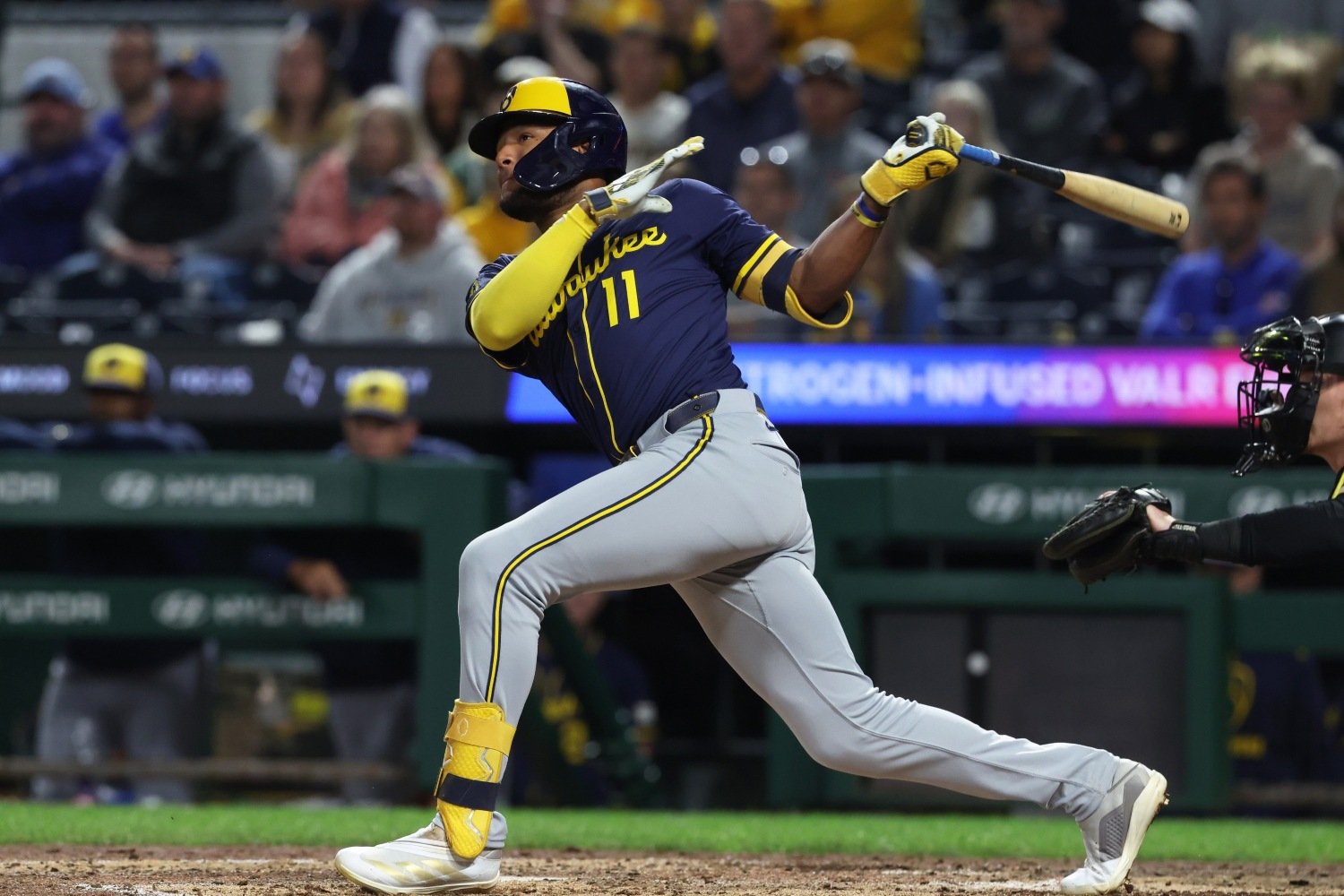 Even if you have a dazzling combination of speed and power and can often get the bat on the ball even when fooled, eventually, you have to learn not to let big-league pitchers choose what you're going to swing at. Jackson Chourio did a marvelous job of handling the difficult transition to the majors at age 20 in 2024, batting .275/.327/.464. This year, however, he came out of the gates swinging at everything he saw, which led to an early slump. He entered July with just a .286 on-base percentage, despite hitting for average and power at better rates than the league. Chourio is an aggressive hitter, and he should remain so for years. He hits the ball too hard and has too much potential to break games open with his all-fields power and running ability to sit and wait for the perfect pitch at all times. However, there were clearly times during the early portion of the season when he was too much in swing mode, and wasn't getting even a manageable pitch to hit in each at-bat. As you can see, though, that's changed since the start of July. He didn't go on a walks binge during that month, but by being slightly more patient, he found more offerings he could crush, and batted .367/.408/.600. That's why it was such a blow when he went down with a hamstring strain just before the trade deadline; his loss was arguably the biggest factor in the Brewers' gentle regression from a historicly torrid run to a solid-but-unspectacular second half of August. Since coming back, Chourio has seen some ups and downs. He exploded back onto the scene with two games in Toronto in which he collected six hits, but then had a few hitless games as he battled to get back into his rhythm at the plate. Nonetheless, in a total of 35 plate appearances since his return, he's batting .267/.343/.533. Interestingly, he's also walked three times in that short span. He's taken seven free passes in 83 trips to the plate since the All-Star break, after accepting just 18 in 424 times up before it. When a hitter like Chourio starts swinging this infrequently, you have to assume that part of it is a lack of real comfort with his swing, which is a bad thing. On the other hand, sometimes that very discomfort forces a hitter to be more disciplined or just to work deeper counts, which can be a good thing. Chourio's bat speed is down in September, but not to any dangerous lows; he's just not getting off his 'A' swing quite as frequently lately. That's as much about timing as anything else; he's not the only Brewers hitter who is still getting some rust brushed off. Unlike Joey Ortiz, though, Chourio's attack angle and direction this month aren't out of whack. Nor has his contact point migrated in any particularly telling way. He's getting to the ball where he needs to, which is why he's found plenty of success, even while getting back into the saddle. To understand why he's so adaptable, let's talk a little bit about adaptability in a swing; getting on plane; and how hitters go about ensuring that they're on time. Here are six hitters' swing animations, from Baseball Savant, at the moment when their swing ceases to be about bringing the bat down into the back half of the hitting zone and starts working up through the ball. Every viable swing starts with a negative attack angle, and by the time you're really in the hitting zone, your goal is to have a healthily positive one. These animations illustrate the different ways hitters do that, and open a discussion of the pros and cons of each. I've essentially highlighted this year's version of Chourio, for ease of viewing. The others are, clockwise from the top left: Andrew Vaughn, Brice Turang, last year's Chourio, last year's Sal Frelick, and last year's Willy Adames. Vaughn, Turang, and the past version of Chourio are all en route to roughly the same average attack angle (7-8°) as this year's Chourio, but look at the differences in their body positions at this moment when the swing reaches its turning point. Vaughn and Turang maintain a backward lean as they head toward contact. Their front shoulder is driving the rotation of their upper body and generating much of their bat speed, which means that it needs to be rotating backward already by the time the barrel gets to the ball. Vaughn's flatter swing will try to lash out and catch the ball with a late extension of the arms, with his lower half locking out so that he can make full use of the force of his front foot driving into the ground. Turang extends his arms much more, sooner; his swing is steeper and he needs to create more space to get through the ball on schedule. Chourio doesn't swing like either. Although the comparison sounds wildly irresponsible, his swing really is something more reminiscent of righty batters like Willie Mays, Roberto Clemente and Henry Aaron. He gets into his legs more, which lets him adjust more things throughout the swing based on the incredibly rapid processing his hands and eyes can do as they spot spin, speed and location cues. Speaking of those hands, much more of his bat speed comes from them, so his front shoulder stays in longer. Thence comes all the power he can sometimes generate to right and right-center field. The key difference, relative to last year, is that he's not extending his arms quite as early or turning that shoulder out quite as soon—but he's still swinging faster, because he's gotten more accustomed to getting his 'A' swing off against big-league pitchers. The 2024 versions of Adames and Frelick give us interesting examples of hitters trying to create a whole different attack angle than Chourio's. Adames depends on getting to the ball with the bat working steeply uphill, to maximize the likelihood of a hard-hit fly ball. As a result, you see a steeper barrel tilt, a more pronounced lean-back in his upper body, and his hands much deeper when he turns from swinging down to swinging up and through. A version of Chourio trying to swing like this would have to look very, very different. Frelick, though, is a low attack-angle hitter—or at least, he was last year. His swing is built to keep his weight back a little more than Chourio does, because a lefty has to be able to deal with pitches inside on them more than a righty does, but you can see the way his hands work being a bit more similar to Chourio. All of this means that Chourio contacts the ball fairly deep in the hitting zone, relative to his own body—because his body comes forward more than do those of most modern hitters. For such a player, a small loss of bat speed makes a big difference in how comfortable the swing feels and whether he can get the barrel there. That's probably why we're seeing Chourio swing less often lately; he's not feeling able to get up to speed yet. He's making good decisions under those constraints, though, and you can still see him doing some impressive things when he does get his timing right and fire the best version of his swing. For the Brewers to get to the World Series, Chourio will have to be at his best in October. The early returns this September suggest that that's very possible, even though he's only spent a small portion of the season to date playing at that level. With his combination of tools and feel for hitting, if he can lock in his approach as he gets back to full strength, this could be the moment when he goes from a great developmental story and a star among baseball fans to a true household name.
 -
Nice catch! Yeah, I saw that too. In general, a hitter needs a little bit of variability in the lower half; it's an important way to cover the zone and modulate your load based on the pitch you're anticipating. But it's also a big source of error, especially as a season wears on or when a guy is coming off the shelf like Ortiz is. When Vaughn went through a slump after his initial surge, I saw him getting into his legs less on some of the balls he just missed, which he'd previously crushed. The grind makes it hard to maintain that relationship between feet and hands, for sure. So do interruptions in playing time.
-
Image courtesy of © Mark Hoffman/Milwaukee Journal Sentinel / USA TODAY NETWORK via Imagn Images Joey Ortiz had a few things figured out. There were still times when his manager didn't like the swing decisions he was seeing, or when Ortiz appeared to get hits almost by accident, but from late May through the day he hurt his hamstring in mid-August, he was what the Brewers ask all of their players to be: a great defender, a fine baserunner, and a tough hitter to pitch to or defend. From May 22 through August 21, Ortiz batted .271/.321/.397 in 268 plate appearances. He was no world-beater, but he kept the line moving. At times, he even delivered the big hit to cash in a runners-on rally for the team. Before that, of course, he'd wobbled on the edge of being unplayable. Since returning from his injury on September 1, he's been similarly disastrous, flirting with unwatchable. Ortiz has one of the uglier swings in the league. His extremely patient—some, including Pat Murphy, might opine that it crosses over into passivity at times—approach leads to (arguably) the latest swing in the league. He's hardly ever on time, which is why above-average bat speed still results in one of the league's lowest average exit velocities and hard-hit rates. For a while, as he warmed up, that was ameliorated slightly, but this month, it's worse than ever. Is it fixable? First, let's establish what we mean by being 'late'. Every hitter has a different ideal contact point and swing path, so it's folly to take a single number and assess the efficacy of a player's timing. However, two numbers tend to tell us the most about timing: Attack Angle and Attack Direction. These give us the direction of movement of the barrel of the bat, relative to the ground (that's Attack Angle) and relative to the incoming pitch (Attack Direction). You want the bat to be working uphill when it meets the ball. If it's not, you're almost certainly not getting the bat up to speed or catching the ball in front of your body, where it's possible to do damage. The more the bat is moving upward, the greater the risk of a swing and miss—but the more likely you are to pull and lift the ball with authority, or to square it up, in general. Thus, broadly, a higher Attack Angle is better—although, again, there are important exceptions. Attack Direction is even more idiosyncratic, but most hitters do better when they've come slightly around the ball by the time they meet it. Being behind the ball increases the likelihood of contact, but it'll more often be contact to center or the opposite field, where defenses make plays more easily and hitters get less success, relative to their raw batted-ball quality. Importantly, the flatter your Attack Angle, the more Attack Direction matters; a flat Attack Angle and an opposite-field Attack Direction is hardly ever a well-struck ball. Among qualifying hitters, this year, only one hitter has a lower average Attack Angle than Ortiz's. Now, that hitter is Vladimir Guerrero Jr., which underscores the importance of not rushing to a conclusion based on that information. When we compare Guerrero to Ortiz, though, it's easy to see how that works great for one of them—but not well at all for the other. Here's a Statcast animation of Guerrero's typical swing, in two still photos. The first is his body position when his front foot first lands and his swing starts. The second is just after contact. Most guys with elite bat speed, like Guerrero's, work up through the ball more than he does. Instead, he creates a wide base but stays upright; exhibits extraordinary balance throughout his swing; and still finds time to extend his arms as he gets to the ball with his very direct swing. Now, compare the above to these two shots of Ortiz's swing, at the same stages. Whereas Guerrero's swing starts with his weight evenly distributed and everything under control, Ortiz is launching himself off his back side by the time his front foot lands. His hands are way up still held like he's in his pre-pitch stance; they start much later than the rest of his body. The early counterrotation of his front shoulder leads to the big move thereof to get him rotating quickly through the zone to reach the ball, but as you can see, that means he's not getting to the ball as far in front of his body or extending his arms as much as with Guerrero. These are composites of the swings of each player throughout the season. If we could show you the same animation for Ortiz just since he's returned from the injured list, it would be even more extreme. He simply doesn't have his timing back; he's not getting those hands moving nearly early enough. Ortiz does have a much flatter ideal attack angle than most hitters. Here's a home run from his strong middle section of the season, on a swing that had an Attack Angle of just 2°. eUxOMkdfWGw0TUFRPT1fQVZkUUJsTUJVUVVBQ2dZQlVnQUhBVkJTQUFNR1UxTUFCMVFDQUFRRUExVUhBUVVE.mp4 Sometimes, hitting for power isn't about steering the bat up into the ball, but about creating lots of bat speed and catching the lower half of it at a flat angle, creating backspin. Ortiz was perfectly able to do that for a while this year, even with an unorthodox setup and swing. The key to that, though, is having a timing mechanism and a plan, because you don't have much margin for error from this kind of swing. If this is your sweet spot and you're late on a given pitch, you quickly get to a range of Attack Angle where no one can find success. Here's Ortiz in the series against the Pirates this weekend, being so late on a 1-0 slider that he merely fouls the ball off the other way. SzRsT0JfV0ZRVkV3dEdEUT09X0JsQldWVjFTVlFRQUNWTlJVQUFIQ0FRRUFGbFdBbE1BQlFRQ0JsRUFCd29EVmdzQw==.mp4 That's too good a pitch to mishit that badly. Ortiz was very, very late to the hitting zone. Why? Compare the action and placement of his hands when he gets his front foot down in each case. Here's that frame for the pitch on which he homered in June. Here's the one for the pitch in Pittsburgh. When he was going right, this year, his trigger was quick. As soon as that front foot landed, he was driving off the back leg and his hands were moving. When he's been going badly—and especially since returning from injury, a short period during which his average Attack Angle is -2°—he's not getting the rest of the operation started quickly enough, There's a hitch, a half-moment's pause between the foot landing and the swing firing. Some hitters can survive that kind of hitch, from pitch to pitch, because their swings put them closer to being early and being a bit "late" really just leaves them on time for the ball. With Ortiz's swing and approach, he doesn't have that margin. When he's late at all (whether his reflexes just misfire slightly, or he doesn't pick up the ball well out of the hand, or he doesn't have conviction in what he's looking for and what will trigger a swing going into that pitch), he's hopeless. This is probably fixable, but it's a tricky thing. Ortiz certainly needed time to get back into the flow of games, coming off a week and a half of down time, and if the team had a better backup shortstop or they were at a different stage of the season, he might have undergone a meatier rehab assignment en route back to the roster. He's probably a guy who should always get a week of at-bats on rehab before returning after an injury, because his timing is such a delicate thing. However, he's had that week now, and the week ahead is likely to tell us a great deal about whether he can return to the form he found for most of the summer, by the time the playoffs roll around. View full article
-
 Joey Ortiz had a few things figured out. There were still times when his manager didn't like the swing decisions he was seeing, or when Ortiz appeared to get hits almost by accident, but from late May through the day he hurt his hamstring in mid-August, he was what the Brewers ask all of their players to be: a great defender, a fine baserunner, and a tough hitter to pitch to or defend. From May 22 through August 21, Ortiz batted .271/.321/.397 in 268 plate appearances. He was no world-beater, but he kept the line moving. At times, he even delivered the big hit to cash in a runners-on rally for the team. Before that, of course, he'd wobbled on the edge of being unplayable. Since returning from his injury on September 1, he's been similarly disastrous, flirting with unwatchable. Ortiz has one of the uglier swings in the league. His extremely patient—some, including Pat Murphy, might opine that it crosses over into passivity at times—approach leads to (arguably) the latest swing in the league. He's hardly ever on time, which is why above-average bat speed still results in one of the league's lowest average exit velocities and hard-hit rates. For a while, as he warmed up, that was ameliorated slightly, but this month, it's worse than ever. Is it fixable? First, let's establish what we mean by being 'late'. Every hitter has a different ideal contact point and swing path, so it's folly to take a single number and assess the efficacy of a player's timing. However, two numbers tend to tell us the most about timing: Attack Angle and Attack Direction. These give us the direction of movement of the barrel of the bat, relative to the ground (that's Attack Angle) and relative to the incoming pitch (Attack Direction). You want the bat to be working uphill when it meets the ball. If it's not, you're almost certainly not getting the bat up to speed or catching the ball in front of your body, where it's possible to do damage. The more the bat is moving upward, the greater the risk of a swing and miss—but the more likely you are to pull and lift the ball with authority, or to square it up, in general. Thus, broadly, a higher Attack Angle is better—although, again, there are important exceptions. Attack Direction is even more idiosyncratic, but most hitters do better when they've come slightly around the ball by the time they meet it. Being behind the ball increases the likelihood of contact, but it'll more often be contact to center or the opposite field, where defenses make plays more easily and hitters get less success, relative to their raw batted-ball quality. Importantly, the flatter your Attack Angle, the more Attack Direction matters; a flat Attack Angle and an opposite-field Attack Direction is hardly ever a well-struck ball. Among qualifying hitters, this year, only one hitter has a lower average Attack Angle than Ortiz's. Now, that hitter is Vladimir Guerrero Jr., which underscores the importance of not rushing to a conclusion based on that information. When we compare Guerrero to Ortiz, though, it's easy to see how that works great for one of them—but not well at all for the other. Here's a Statcast animation of Guerrero's typical swing, in two still photos. The first is his body position when his front foot first lands and his swing starts. The second is just after contact. Most guys with elite bat speed, like Guerrero's, work up through the ball more than he does. Instead, he creates a wide base but stays upright; exhibits extraordinary balance throughout his swing; and still finds time to extend his arms as he gets to the ball with his very direct swing. Now, compare the above to these two shots of Ortiz's swing, at the same stages. Whereas Guerrero's swing starts with his weight evenly distributed and everything under control, Ortiz is launching himself off his back side by the time his front foot lands. His hands are way up still held like he's in his pre-pitch stance; they start much later than the rest of his body. The early counterrotation of his front shoulder leads to the big move thereof to get him rotating quickly through the zone to reach the ball, but as you can see, that means he's not getting to the ball as far in front of his body or extending his arms as much as with Guerrero. These are composites of the swings of each player throughout the season. If we could show you the same animation for Ortiz just since he's returned from the injured list, it would be even more extreme. He simply doesn't have his timing back; he's not getting those hands moving nearly early enough. Ortiz does have a much flatter ideal attack angle than most hitters. Here's a home run from his strong middle section of the season, on a swing that had an Attack Angle of just 2°. eUxOMkdfWGw0TUFRPT1fQVZkUUJsTUJVUVVBQ2dZQlVnQUhBVkJTQUFNR1UxTUFCMVFDQUFRRUExVUhBUVVE.mp4 Sometimes, hitting for power isn't about steering the bat up into the ball, but about creating lots of bat speed and catching the lower half of it at a flat angle, creating backspin. Ortiz was perfectly able to do that for a while this year, even with an unorthodox setup and swing. The key to that, though, is having a timing mechanism and a plan, because you don't have much margin for error from this kind of swing. If this is your sweet spot and you're late on a given pitch, you quickly get to a range of Attack Angle where no one can find success. Here's Ortiz in the series against the Pirates this weekend, being so late on a 1-0 slider that he merely fouls the ball off the other way. SzRsT0JfV0ZRVkV3dEdEUT09X0JsQldWVjFTVlFRQUNWTlJVQUFIQ0FRRUFGbFdBbE1BQlFRQ0JsRUFCd29EVmdzQw==.mp4 That's too good a pitch to mishit that badly. Ortiz was very, very late to the hitting zone. Why? Compare the action and placement of his hands when he gets his front foot down in each case. Here's that frame for the pitch on which he homered in June. Here's the one for the pitch in Pittsburgh. When he was going right, this year, his trigger was quick. As soon as that front foot landed, he was driving off the back leg and his hands were moving. When he's been going badly—and especially since returning from injury, a short period during which his average Attack Angle is -2°—he's not getting the rest of the operation started quickly enough, There's a hitch, a half-moment's pause between the foot landing and the swing firing. Some hitters can survive that kind of hitch, from pitch to pitch, because their swings put them closer to being early and being a bit "late" really just leaves them on time for the ball. With Ortiz's swing and approach, he doesn't have that margin. When he's late at all (whether his reflexes just misfire slightly, or he doesn't pick up the ball well out of the hand, or he doesn't have conviction in what he's looking for and what will trigger a swing going into that pitch), he's hopeless. This is probably fixable, but it's a tricky thing. Ortiz certainly needed time to get back into the flow of games, coming off a week and a half of down time, and if the team had a better backup shortstop or they were at a different stage of the season, he might have undergone a meatier rehab assignment en route back to the roster. He's probably a guy who should always get a week of at-bats on rehab before returning after an injury, because his timing is such a delicate thing. However, he's had that week now, and the week ahead is likely to tell us a great deal about whether he can return to the form he found for most of the summer, by the time the playoffs roll around.
 -
Image courtesy of © Katie Stratman-Imagn Images There have been a few more hiccups this year. Brice Turang has occasionally tried to do a hair too much, and his hands haven't been quite as automatic as they were in 2024. On balance, though, he remains one of the best defensive second basemen in baseball. Fans can see glimpses of that almost every night, as he often makes a great running play going to his right or leaps to snare a line drive that appears to be ticketed for right field. Harder to see, however, is how dependent on him the whole team is. Teams don't explicitly design their infield alignments to put the ball in the hands of any one player. If they could, they would, but that's generally beyond the control of anyone involved in the process. Pitchers can try to induce weak contact, but forcing it to go in one particular direction is difficult—and making that a major part of pitch selection or targeting might make one more predictable. The field is too big (and modern hitters strike the ball too well) for any player to cover an especially large share of the available ground. Instead, then, clubs try to put their defense in the best position to make as many plays as possible, as a unit. Individuals are, by and large, just asked to make the most of the slice of space they're assigned. When it comes to the Brewers, though, you can see just how much they trust Turang—in their alignments, and in his individual numbers. Baseball Prospectus has a statistic called Attempt Range, which gives the number of balls above or below average an infielder reaches. Of the 128 infielders who have played a qualifying number of innings, Turang (14.9) not only leads the league, but is 3.5 ahead of the next player on the list, Nico Hoerner. He's the rangiest infielder in baseball, and it's not close at all. Part of that is sheer skill and athleticism, but another part is that the Brewers build their infield defense around the knowledge that Turang will get to balls other players wouldn't. They use shaded infield positioning less often than all but two other teams in the league, but specifically, the way they array their defenders both in and out of shades (the closest thing now allowed to traditional shifts) shows their faith in Turang. Here's what it looks like when the Brewers shade against right-handed batters. Not every team looks quite like this. Yes, Turang is pulled all the way over near the bag, but notice that the third baseman (usually Caleb Durbin) is right on the line, and the shortstop (usually Joey Ortiz) is deep in the hole. That makes for a lot of relatively easy plays for those two defenders, but leaves Turang covering miles of ground in the middle of the diamond. He's liable to need to go four or five steps to his right, crossing the bag and making a long throw after his momentum took him away from his target. The team is fine with that. Many clubs also pull their first baseman farther from the bag than this when shading against righties, but not Milwaukee; they also trust Turang to be ready to move a long way to his left if needed. They hardly ever use that alignment, of course, so let's look, now, at what their infield usually looks like against righties. Here's where they are when not shading against those batters. That still leaves the biggest slice of the infield for Turang. Obviously, most ground balls by right-handed batters go to the left side, anyway, but the way they set themselves says the Brewers want the ball to find Turang as often as needed. Here's what it looks like when they're shading against lefty batters. This is fairly familiar. The shortstop (Ortiz, for the sake of the discussion) is pinned close to the bag, and the third baseman is well over toward shortstop. Notice, though, that Turang is still playing pretty wide of the first-base bag. The huge majority of the space toward which a ball might be hit is still going to be his responsibility. Compare that to the way the Twins play when shading against lefties. This is an arrangement focused on sealing off the hole between the first baseman and the second baseman. Little is hoped for from the second baseman, in terms of range. The plan is to choke off anything near the line with the stacked defenders, and to have the shortstop range far to their left to make plays just on the right side of second. It's a big contrast from how the Brewers set up; they want Turang making a much larger share of the plays toward straightaway second base than the Twins ask of their second basemen. Now, consider the way the team from suburban Atlanta sets up when shading lefties. This arrangement makes more space for the second baseman (usually Ozzie Albies) to field balls hit to the traditional space assigned to that player, but by swinging the third baseman over much closer to the shortstop, they're still encouraging the shortstop (usually Nick Allen) to cross the bag and take up a good amount of the space just beyond it. Contrast that with the Brewers, who let Durbin play more in the hole and leave Ortiz to respect the ball up the middle. Again, more than the Georgia club, Milwaukee is leaving their second baseman to make more plays and asking less of the shortstop. Turang is as important to the Brewers infield as any infielder in baseball is to their team, which is saying a lot. Of the other 29 teams, there are only one or two who are similarly dependent on their second baseman as the centerpiece of the defense. Most clubs ask the most of their shortstop. It's a sign of what Turang has proved he can do, and of how much the coaching staff trusts him, that he's the player toward whom extra responsibility is pushed at virtually every turn within the context of this great team defense. View full article
-
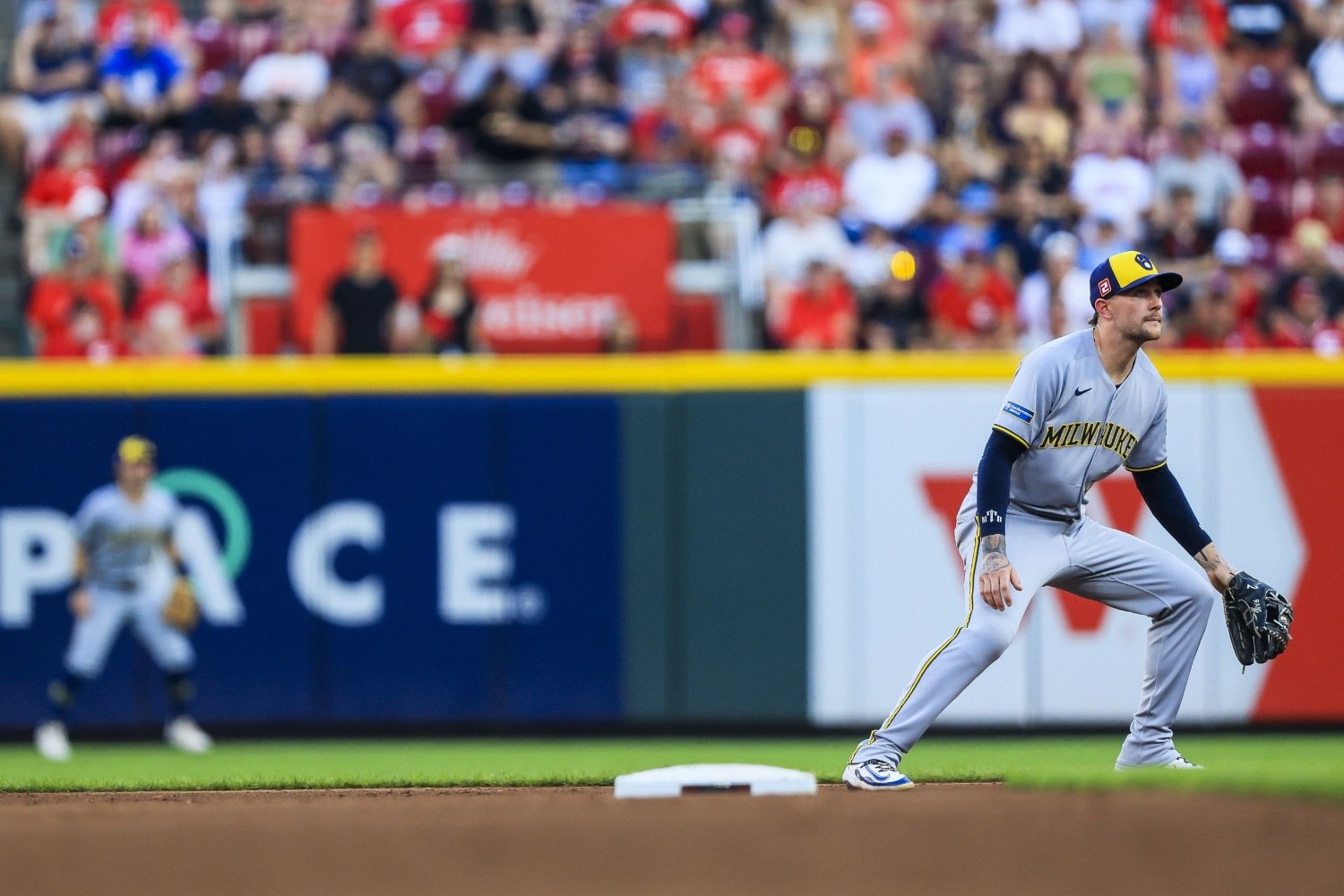 There have been a few more hiccups this year. Brice Turang has occasionally tried to do a hair too much, and his hands haven't been quite as automatic as they were in 2024. On balance, though, he remains one of the best defensive second basemen in baseball. Fans can see glimpses of that almost every night, as he often makes a great running play going to his right or leaps to snare a line drive that appears to be ticketed for right field. Harder to see, however, is how dependent on him the whole team is. Teams don't explicitly design their infield alignments to put the ball in the hands of any one player. If they could, they would, but that's generally beyond the control of anyone involved in the process. Pitchers can try to induce weak contact, but forcing it to go in one particular direction is difficult—and making that a major part of pitch selection or targeting might make one more predictable. The field is too big (and modern hitters strike the ball too well) for any player to cover an especially large share of the available ground. Instead, then, clubs try to put their defense in the best position to make as many plays as possible, as a unit. Individuals are, by and large, just asked to make the most of the slice of space they're assigned. When it comes to the Brewers, though, you can see just how much they trust Turang—in their alignments, and in his individual numbers. Baseball Prospectus has a statistic called Attempt Range, which gives the number of balls above or below average an infielder reaches. Of the 128 infielders who have played a qualifying number of innings, Turang (14.9) not only leads the league, but is 3.5 ahead of the next player on the list, Nico Hoerner. He's the rangiest infielder in baseball, and it's not close at all. Part of that is sheer skill and athleticism, but another part is that the Brewers build their infield defense around the knowledge that Turang will get to balls other players wouldn't. They use shaded infield positioning less often than all but two other teams in the league, but specifically, the way they array their defenders both in and out of shades (the closest thing now allowed to traditional shifts) shows their faith in Turang. Here's what it looks like when the Brewers shade against right-handed batters. Not every team looks quite like this. Yes, Turang is pulled all the way over near the bag, but notice that the third baseman (usually Caleb Durbin) is right on the line, and the shortstop (usually Joey Ortiz) is deep in the hole. That makes for a lot of relatively easy plays for those two defenders, but leaves Turang covering miles of ground in the middle of the diamond. He's liable to need to go four or five steps to his right, crossing the bag and making a long throw after his momentum took him away from his target. The team is fine with that. Many clubs also pull their first baseman farther from the bag than this when shading against righties, but not Milwaukee; they also trust Turang to be ready to move a long way to his left if needed. They hardly ever use that alignment, of course, so let's look, now, at what their infield usually looks like against righties. Here's where they are when not shading against those batters. That still leaves the biggest slice of the infield for Turang. Obviously, most ground balls by right-handed batters go to the left side, anyway, but the way they set themselves says the Brewers want the ball to find Turang as often as needed. Here's what it looks like when they're shading against lefty batters. This is fairly familiar. The shortstop (Ortiz, for the sake of the discussion) is pinned close to the bag, and the third baseman is well over toward shortstop. Notice, though, that Turang is still playing pretty wide of the first-base bag. The huge majority of the space toward which a ball might be hit is still going to be his responsibility. Compare that to the way the Twins play when shading against lefties. This is an arrangement focused on sealing off the hole between the first baseman and the second baseman. Little is hoped for from the second baseman, in terms of range. The plan is to choke off anything near the line with the stacked defenders, and to have the shortstop range far to their left to make plays just on the right side of second. It's a big contrast from how the Brewers set up; they want Turang making a much larger share of the plays toward straightaway second base than the Twins ask of their second basemen. Now, consider the way the team from suburban Atlanta sets up when shading lefties. This arrangement makes more space for the second baseman (usually Ozzie Albies) to field balls hit to the traditional space assigned to that player, but by swinging the third baseman over much closer to the shortstop, they're still encouraging the shortstop (usually Nick Allen) to cross the bag and take up a good amount of the space just beyond it. Contrast that with the Brewers, who let Durbin play more in the hole and leave Ortiz to respect the ball up the middle. Again, more than the Georgia club, Milwaukee is leaving their second baseman to make more plays and asking less of the shortstop. Turang is as important to the Brewers infield as any infielder in baseball is to their team, which is saying a lot. Of the other 29 teams, there are only one or two who are similarly dependent on their second baseman as the centerpiece of the defense. Most clubs ask the most of their shortstop. It's a sign of what Turang has proved he can do, and of how much the coaching staff trusts him, that he's the player toward whom extra responsibility is pushed at virtually every turn within the context of this great team defense.
 -
Image courtesy of © Mark Hoffman/Milwaukee Journal Sentinel / USA TODAY NETWORK via Imagn Images Not long after having to shelve Trevor Megill due to a flexor strain, the Brewers hold out hope that they'll get their closer back—but they'll have to survive without the services of one prized reinforcement, until they do. Shelby Miller landed on the 60-day injured list Wednesday afternoon with a sprain in his ulnar collateral ligament, and it sounds as though Miller could undergo a second Tommy John surgery soon. Either way, his season is over. Milwaukee spent (almost) only money to acquire Miller right at the July 31 trade deadline, taking on the contract of fellow injured hurler Jordan Montgomery to get Miller from the Diamondbacks. They didn't have an apparent need on the pitching staff at the time, which is why they also shipped out Nestor Cortes in a trade with the Padres that day. Not wanting to spend an undue share of their resources to bolster an already strong corps, the front office merely dealt for an extra middle-relief arm. Five weeks later, everything feels a bit more tenuous. Megill is down. Logan Henderson is down for the year, in his own right. Miller's absence leaves the team stretched near its limit, given the huge number of quality innings they need between here and their hoped-for endpoint, the World Series. That's not to say that this pitching staff isn't good, or relatively deep, for this time of year. They have Freddy Peralta, Brandon Woodruff, Quinn Priester, Jose Quintana and Jacob Misiorowski in their starting rotation, with Chad Patrick and Robert Gasser available in support for those roles. Even without Megill, Miller or DL Hall, they have a deep bullpen, led by Abner Uribe, Aaron Ashby, Nick Mears, Jared Koenig and Grant Anderson. Misiorowski and Patrick are candidates to slide into short relief roles, to stop the gaps left by Megill and Miller. It's just that, at their best, the team had what felt like superb depth. Now, they look much more human. Miller made 11 appearances with Milwaukee. Only four of them came in high-leverage situations, but even when the game situation gave much greater margin for error, it often felt like Miller was performing an essential duty: protecting the rest of the staff from overuse. Now, that protective layer is gone. Pat Murphy has the luxury of a comfortable division lead and a clear path to the top seed in the National League; he can ease off the gas pedal between now and the end of the regular season. Even so, it'll be hard to keep everyone on his staff fresh as the team gears up for October without one more key contributor. Remarkably, though, the exit of Miller facilitates the reentry of an exceptionally familiar face: Joel Payamps. The erstwhile setup man's Brewers career looked to be over in late May, when the team designated him for assignment. Instead, he cleared waivers and accepted an outright assignment to Triple-A Nashville. He made 27 appearances there, and the results could not be more hilariously characteristic of Payamps. In 21 of his 27 games, he held the opponents scoreless. He only issued six walks and allowed two homers the entire time, and struck out 30 of the 110 batters he faced. On the other hand, when he did allow runs, he often blew up, allowing multiple tallies four times—including six runs (and both of those homers) in one inning on August 23. Payamps has always been a guy equally capable of dominating or imploding, and that has remained true with Nashville. As he now returns to the majors, Payamps will be a fascinating player to watch down the stretch. It would be one of the most wildly improbable storylines of the team's improbable season, but it's not beyond the real of possibility that Payamps will end up as the setup man for yet another Brewers team come October. View full article
-
 Not long after having to shelve Trevor Megill due to a flexor strain, the Brewers hold out hope that they'll get their closer back—but they'll have to survive without the services of one prized reinforcement, until they do. Shelby Miller landed on the 60-day injured list Wednesday afternoon with a sprain in his ulnar collateral ligament, and it sounds as though Miller could undergo a second Tommy John surgery soon. Either way, his season is over. Milwaukee spent (almost) only money to acquire Miller right at the July 31 trade deadline, taking on the contract of fellow injured hurler Jordan Montgomery to get Miller from the Diamondbacks. They didn't have an apparent need on the pitching staff at the time, which is why they also shipped out Nestor Cortes in a trade with the Padres that day. Not wanting to spend an undue share of their resources to bolster an already strong corps, the front office merely dealt for an extra middle-relief arm. Five weeks later, everything feels a bit more tenuous. Megill is down. Logan Henderson is down for the year, in his own right. Miller's absence leaves the team stretched near its limit, given the huge number of quality innings they need between here and their hoped-for endpoint, the World Series. That's not to say that this pitching staff isn't good, or relatively deep, for this time of year. They have Freddy Peralta, Brandon Woodruff, Quinn Priester, Jose Quintana and Jacob Misiorowski in their starting rotation, with Chad Patrick and Robert Gasser available in support for those roles. Even without Megill, Miller or DL Hall, they have a deep bullpen, led by Abner Uribe, Aaron Ashby, Nick Mears, Jared Koenig and Grant Anderson. Misiorowski and Patrick are candidates to slide into short relief roles, to stop the gaps left by Megill and Miller. It's just that, at their best, the team had what felt like superb depth. Now, they look much more human. Miller made 11 appearances with Milwaukee. Only four of them came in high-leverage situations, but even when the game situation gave much greater margin for error, it often felt like Miller was performing an essential duty: protecting the rest of the staff from overuse. Now, that protective layer is gone. Pat Murphy has the luxury of a comfortable division lead and a clear path to the top seed in the National League; he can ease off the gas pedal between now and the end of the regular season. Even so, it'll be hard to keep everyone on his staff fresh as the team gears up for October without one more key contributor. Remarkably, though, the exit of Miller facilitates the reentry of an exceptionally familiar face: Joel Payamps. The erstwhile setup man's Brewers career looked to be over in late May, when the team designated him for assignment. Instead, he cleared waivers and accepted an outright assignment to Triple-A Nashville. He made 27 appearances there, and the results could not be more hilariously characteristic of Payamps. In 21 of his 27 games, he held the opponents scoreless. He only issued six walks and allowed two homers the entire time, and struck out 30 of the 110 batters he faced. On the other hand, when he did allow runs, he often blew up, allowing multiple tallies four times—including six runs (and both of those homers) in one inning on August 23. Payamps has always been a guy equally capable of dominating or imploding, and that has remained true with Nashville. As he now returns to the majors, Payamps will be a fascinating player to watch down the stretch. It would be one of the most wildly improbable storylines of the team's improbable season, but it's not beyond the real of possibility that Payamps will end up as the setup man for yet another Brewers team come October.
 -
 The transformation of Brice Turang has been a bit more obvious and glamorous, but Sal Frelick has come just as far this year. In 2024, he batted .259/.320/.335, His strikeout rate was quite low, but when he put the ball in play, good things hardly ever happened. Of 980 player-seasons since the pandemic featuring 400 or more plate appearances, Frelick's 2024 has the seventh-lowest hard-hit rate. He was as punchless a hitter as you can be. What a difference a year makes. Yes, Frelick still has a low hard-hit rate, but now that's mostly because he's so willing to cut down his swing and put the ball in play with two strikes. His strikeout rate is down to 12.9%, because he refuses to swing and miss when there's a chance to make a more productive out. He only had 78 hard-hit balls all year in 2024; he's already at 112 this year. Much of that stems from the big increase in Frelick's bat speed. He's one of just 12 players whose swing speed has spiked by more than 2 miles per hour this year, and while Turang's increase of more than double that number has stolen the headlines and vaulted him toward 20 home runs, Frelick is turning into a low-grade slugger in his own right—thanks not only to the bat speed itself, but to his change of intent and timing. For any hitter (but especially one without elite bat speed, to generate well-hit balls even when mis-hitting the ball), the ability to pull the ball is the key to hitting for power. Frelick pulled just 29.3% of his batted balls during his half-season debut in 2023, and 29.5% in 2024. This year, that figure is up to 42.8%. He's not a one-dimensional hitter, by any means, but he's made pulling the ball with authority his Plan A when he steps to the plate this year. That, alone, makes a huge difference. To execute that plan, though, a hitter has to not only create bat speed, but get started on time. Now that we can measure the former relatively easily, the temptation is to weigh it more heavily. but for most hitters, the latter is both more difficult and more important. Frelick has a bigger leg kick this year, which has helped generate the force required to swing faster and hit the ball harder. To hit it squarely and catch it farther out front with that bigger move, though, he has to start a bit earlier, too. Here's a glimpse at the change. First, let's look at a ball he hit hard with his 'A' swing last year. It came on a 2-1 pitch from the Cubs' Mark Leiter Jr. Frelick 24 full.mp4 He was in an aggressive mode there, but even a hard cut only produced a slightly looping line drive to center. Compare that swing and result to what happened on this 1-1 pitch from Kirby Yates of the Dodgers, in July. Frelick 25 full.mp4 You can see how much harder he's swinging now. That leg kick gets everything moving more, and he's willing to risk being off-balance so as to unleash the full force of his lower half at the contact point. But there's also a major timing element here. Let's isolate just the first part of each pitch, as the opposing reliever kicks and fires and Frelick gears up. First, the 2024 version: Frelick 24.mp4 Although it's a small stride with the front foot, it's also starting pretty late. He's still raising the foot when Leiter releases the ball, which means he'll barely get it down before the ball enters the hitting zone. He has to use a very short swing to get the barrel to the ball, at that point. Now, here's the same half-clip for the 2025 homer. Frelick 25.mp4 His leg kick reaches its peak well before release, and he even slightly coils his front hip in that early phase. By the time Yates lets go of the ball, Frelick is working forward in his lower half and his foot is on its way down. In the last frame of the clip, we see his hands still up and back, but the front foot firmly planted and a torrent of energy racing through his body. The result is easy to imagine, even if you hadn't already seen it happen. Every hitter's timing signature is different, and every adjustment a hitter makes to their swing requires a change within their own timing band. For Frelick, with this more kinetic and violent swing, the key is that he's getting the foot down on time but not losing the energy he generated by moving so aggressively toward the ball. That's how he's gotten to more power this year without sacrificing contact, and it's how he's gotten around the ball consistently enough to drive it for extra bases. His numbers don't make one's eyes bug out the way those of bigger sluggers with higher power ceilings can, but Frelick has become a thoroughly dangerous hitter. Any player who can both hit for power and avoid strikeouts as well as he does drives opponents crazy, and Frelick adds plus speed and the ability to hang in against left-handed pitching to that formula. All his power comes against righties, but he can control the zone even left-on-left. He's a tough out in all situations, and against all pitchers. Such players are vanishingly rare, and in Frelick and Turang, the Brewers have two of them, comfortable hitting all over the lineup. It's a huge advantage, and one reason why the Crew are the best team in baseball.
 -
Image courtesy of © Michael McLoone-Imagn Images The transformation of Brice Turang has been a bit more obvious and glamorous, but Sal Frelick has come just as far this year. In 2024, he batted .259/.320/.335, His strikeout rate was quite low, but when he put the ball in play, good things hardly ever happened. Of 980 player-seasons since the pandemic featuring 400 or more plate appearances, Frelick's 2024 has the seventh-lowest hard-hit rate. He was as punchless a hitter as you can be. What a difference a year makes. Yes, Frelick still has a low hard-hit rate, but now that's mostly because he's so willing to cut down his swing and put the ball in play with two strikes. His strikeout rate is down to 12.9%, because he refuses to swing and miss when there's a chance to make a more productive out. He only had 78 hard-hit balls all year in 2024; he's already at 112 this year. Much of that stems from the big increase in Frelick's bat speed. He's one of just 12 players whose swing speed has spiked by more than 2 miles per hour this year, and while Turang's increase of more than double that number has stolen the headlines and vaulted him toward 20 home runs, Frelick is turning into a low-grade slugger in his own right—thanks not only to the bat speed itself, but to his change of intent and timing. For any hitter (but especially one without elite bat speed, to generate well-hit balls even when mis-hitting the ball), the ability to pull the ball is the key to hitting for power. Frelick pulled just 29.3% of his batted balls during his half-season debut in 2023, and 29.5% in 2024. This year, that figure is up to 42.8%. He's not a one-dimensional hitter, by any means, but he's made pulling the ball with authority his Plan A when he steps to the plate this year. That, alone, makes a huge difference. To execute that plan, though, a hitter has to not only create bat speed, but get started on time. Now that we can measure the former relatively easily, the temptation is to weigh it more heavily. but for most hitters, the latter is both more difficult and more important. Frelick has a bigger leg kick this year, which has helped generate the force required to swing faster and hit the ball harder. To hit it squarely and catch it farther out front with that bigger move, though, he has to start a bit earlier, too. Here's a glimpse at the change. First, let's look at a ball he hit hard with his 'A' swing last year. It came on a 2-1 pitch from the Cubs' Mark Leiter Jr. Frelick 24 full.mp4 He was in an aggressive mode there, but even a hard cut only produced a slightly looping line drive to center. Compare that swing and result to what happened on this 1-1 pitch from Kirby Yates of the Dodgers, in July. Frelick 25 full.mp4 You can see how much harder he's swinging now. That leg kick gets everything moving more, and he's willing to risk being off-balance so as to unleash the full force of his lower half at the contact point. But there's also a major timing element here. Let's isolate just the first part of each pitch, as the opposing reliever kicks and fires and Frelick gears up. First, the 2024 version: Frelick 24.mp4 Although it's a small stride with the front foot, it's also starting pretty late. He's still raising the foot when Leiter releases the ball, which means he'll barely get it down before the ball enters the hitting zone. He has to use a very short swing to get the barrel to the ball, at that point. Now, here's the same half-clip for the 2025 homer. Frelick 25.mp4 His leg kick reaches its peak well before release, and he even slightly coils his front hip in that early phase. By the time Yates lets go of the ball, Frelick is working forward in his lower half and his foot is on its way down. In the last frame of the clip, we see his hands still up and back, but the front foot firmly planted and a torrent of energy racing through his body. The result is easy to imagine, even if you hadn't already seen it happen. Every hitter's timing signature is different, and every adjustment a hitter makes to their swing requires a change within their own timing band. For Frelick, with this more kinetic and violent swing, the key is that he's getting the foot down on time but not losing the energy he generated by moving so aggressively toward the ball. That's how he's gotten to more power this year without sacrificing contact, and it's how he's gotten around the ball consistently enough to drive it for extra bases. His numbers don't make one's eyes bug out the way those of bigger sluggers with higher power ceilings can, but Frelick has become a thoroughly dangerous hitter. Any player who can both hit for power and avoid strikeouts as well as he does drives opponents crazy, and Frelick adds plus speed and the ability to hang in against left-handed pitching to that formula. All his power comes against righties, but he can control the zone even left-on-left. He's a tough out in all situations, and against all pitchers. Such players are vanishingly rare, and in Frelick and Turang, the Brewers have two of them, comfortable hitting all over the lineup. It's a huge advantage, and one reason why the Crew are the best team in baseball. View full article
-
Image courtesy of © Jeff Hanisch-Imagn Images You almost can't beat this 2025 Brewers defense. Only three teams have a better Defensive Efficiency than Milwaukee's. Only four teams have more Defensive Runs Saved. The Brewers' formula for wins is total team baseball, which means getting outs as a team as well as scoring runs as a team. They strive not to have weaknesses anywhere on the diamond. It's a defense designed to give an opposing offense no quarter. If you can manage to catch hold of a pitch from the Brewers pitching staff and drive it well to left or left-center, though, you might just have a chance. On balls in play hit at least 340 feet in that direction, the Brewers are just 18th-best in baseball at getting outs. You don't have to clear the fence to beat them; you just have to get the ball close to it. The Brewers have three main options in left field, depending on the configuration of the rest of the lineup. Superb rookie Isaac Collins has played there most this year, with Jackson Chourio in center field. When the team's outfield is fully healthy, though, Blake Perkins earns some starts in center, which pushes Chourio over to left. Meanwhile, on days when Danny Jansen catches but the team still wants William Contreras in the lineup, Contreras serves as the designated hitter and Christian Yelich swings out to left field. Collins, Chourio and Yelich figure to be the solution for the balance of the year. Of them, Collins is easily the defensive ace—but he struggles more than either of the others when going back on the baseball. Sports Info Solutions breaks down players' Defensive Runs Saved (DRS) based on the relative depth of the plays they're attempting. Here's what that looks like for the Crew's three left fielders. Collins: Shallow +3, Medium +7, Deep -1 Chourio: Shallow 0, Medium +2, Deep 0 Yelich: Shallow 0, Medium -2, Deep +1 A former infielder, Collins readily admits that going to the wall is a point of emphasis for him, and still not a play with which he's comfortable. You can see that on plays like this one. M3k0M3lfVjBZQUhRPT1fRGxCU1Z3SUVBd1lBQ1FNRlhnQUhBdzlYQUZsUlVWWUFWMTBFVkZBRFVsSldWZ1lG.mp4 The extra glance to find the wall cost him time and certainty about the ball's position. This has been a frequent issue for Collins this year. Yelich, by contrast, simply doesn't get that far back on well-hit balls; he quickly takes up whatever angle allows him to play the carom best. Chourio is fearless, but his willingness to crash into the wall is impossinle to mistake for a skill at doing so well. When he gets to long drives over his head, it's not under control. Other times, he struggles even to read the ball, and meanders back too late to make a play. MTZxTzNfWGw0TUFRPT1fVWdjRUIxVUNBZ1FBV2xBRkJ3QUhWMVJUQUZnR1ZWUUFWd1JSQUZKVUJ3cFFWbGRW.mp4 Collins has also been guilty of taking too flat a route to balls in the gap, at times, which pays off when he's able to spear liners but shows up on the other side of the ledger when a ball needlessly goes to the wall untouched. eHk5eVZfWGw0TUFRPT1fQWxVREFsd0FVUUlBV1ZFRVhnQUhBZ1ZYQUFOVUFWY0FVVjBIVkZVR1ZGSlhCd01B.mp4 On balance, this is no huge deal. Collins makes so many good plays on line drives and flares in front of him or to either side that he more than makes up for letting up a few extra doubles or triples in the course of a year. Chourio playing left makes the defense better because it means Perkins is in center. Yelich playing left means it's a day when the team has Contreras in the lineup but are getting him some rest from the grind of catching. The tradeoffs are all acceptable. When the Brewers take the field for the National League Division Series, though, tradeoffs will come with higher stakes. Every play matters more when the season rides on a week's worth of action between the same two teams. The tendency to let a long hit get over your head, even if it's just once a week, could be the difference between a pennant and another maddening early exit. Happily, Collins is already making an important adjustment. When he played left field in April, his average starting depth was 301 feet. That's not unusual for a corner outfielder. Since then, though, he's steadily drifted deeper. May: 305 ft. June: 307 ft. July: 307 ft. August: 308 ft. Last month, Collins was not only seven feet deeper on the average pitch when he was stationed in left than he had been in the spring, but deeper than any other semi-regular left fielder has played in any month all year. He tends to play well off the foul line, so he needs to play fairly deep, trying to give himself time and an angle on balls hit deep into the long corner at Uecker Field, but he's playing deeper than any other consideration demands. This is a clear attempt to better allow him to get to balls hit over his head—by leaving less room between him and the outfield wall, reducing the amount of speed he needs to get to those balls and giving him more time to measure his progress toward that wall. Pat Murphy might well make moves within games, even come the playoffs. It's unlikely that Jansen will start any games at that stage, so Yelich shouldn't be needed in left, but we could see plenty of Perkins in center and Chourio in left. For most contests, though, getting the bats of both Chourio and Collins into the order will feel urgently necessary, so Collins's work to get more comfortable going back and preventing extra-base hits near the wall is very important. It's not an exaggeration to say that the most promising Brewers run toward the World Series in over a decade could depend on the rookie being ready to catch everything. View full article
-
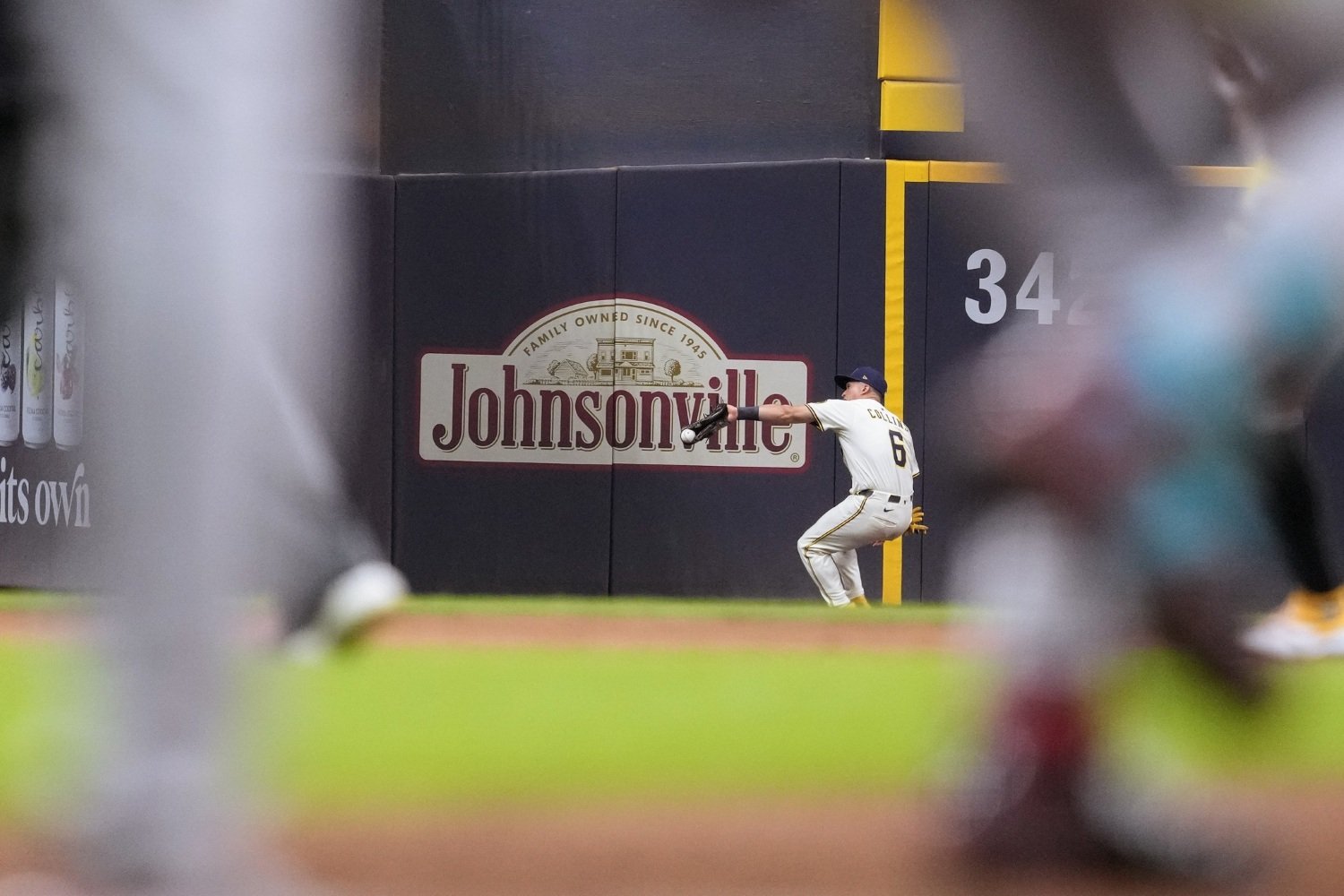 You almost can't beat this 2025 Brewers defense. Only three teams have a better Defensive Efficiency than Milwaukee's. Only four teams have more Defensive Runs Saved. The Brewers' formula for wins is total team baseball, which means getting outs as a team as well as scoring runs as a team. They strive not to have weaknesses anywhere on the diamond. It's a defense designed to give an opposing offense no quarter. If you can manage to catch hold of a pitch from the Brewers pitching staff and drive it well to left or left-center, though, you might just have a chance. On balls in play hit at least 340 feet in that direction, the Brewers are just 18th-best in baseball at getting outs. You don't have to clear the fence to beat them; you just have to get the ball close to it. The Brewers have three main options in left field, depending on the configuration of the rest of the lineup. Superb rookie Isaac Collins has played there most this year, with Jackson Chourio in center field. When the team's outfield is fully healthy, though, Blake Perkins earns some starts in center, which pushes Chourio over to left. Meanwhile, on days when Danny Jansen catches but the team still wants William Contreras in the lineup, Contreras serves as the designated hitter and Christian Yelich swings out to left field. Collins, Chourio and Yelich figure to be the solution for the balance of the year. Of them, Collins is easily the defensive ace—but he struggles more than either of the others when going back on the baseball. Sports Info Solutions breaks down players' Defensive Runs Saved (DRS) based on the relative depth of the plays they're attempting. Here's what that looks like for the Crew's three left fielders. Collins: Shallow +3, Medium +7, Deep -1 Chourio: Shallow 0, Medium +2, Deep 0 Yelich: Shallow 0, Medium -2, Deep +1 A former infielder, Collins readily admits that going to the wall is a point of emphasis for him, and still not a play with which he's comfortable. You can see that on plays like this one. M3k0M3lfVjBZQUhRPT1fRGxCU1Z3SUVBd1lBQ1FNRlhnQUhBdzlYQUZsUlVWWUFWMTBFVkZBRFVsSldWZ1lG.mp4 The extra glance to find the wall cost him time and certainty about the ball's position. This has been a frequent issue for Collins this year. Yelich, by contrast, simply doesn't get that far back on well-hit balls; he quickly takes up whatever angle allows him to play the carom best. Chourio is fearless, but his willingness to crash into the wall is impossinle to mistake for a skill at doing so well. When he gets to long drives over his head, it's not under control. Other times, he struggles even to read the ball, and meanders back too late to make a play. MTZxTzNfWGw0TUFRPT1fVWdjRUIxVUNBZ1FBV2xBRkJ3QUhWMVJUQUZnR1ZWUUFWd1JSQUZKVUJ3cFFWbGRW.mp4 Collins has also been guilty of taking too flat a route to balls in the gap, at times, which pays off when he's able to spear liners but shows up on the other side of the ledger when a ball needlessly goes to the wall untouched. eHk5eVZfWGw0TUFRPT1fQWxVREFsd0FVUUlBV1ZFRVhnQUhBZ1ZYQUFOVUFWY0FVVjBIVkZVR1ZGSlhCd01B.mp4 On balance, this is no huge deal. Collins makes so many good plays on line drives and flares in front of him or to either side that he more than makes up for letting up a few extra doubles or triples in the course of a year. Chourio playing left makes the defense better because it means Perkins is in center. Yelich playing left means it's a day when the team has Contreras in the lineup but are getting him some rest from the grind of catching. The tradeoffs are all acceptable. When the Brewers take the field for the National League Division Series, though, tradeoffs will come with higher stakes. Every play matters more when the season rides on a week's worth of action between the same two teams. The tendency to let a long hit get over your head, even if it's just once a week, could be the difference between a pennant and another maddening early exit. Happily, Collins is already making an important adjustment. When he played left field in April, his average starting depth was 301 feet. That's not unusual for a corner outfielder. Since then, though, he's steadily drifted deeper. May: 305 ft. June: 307 ft. July: 307 ft. August: 308 ft. Last month, Collins was not only seven feet deeper on the average pitch when he was stationed in left than he had been in the spring, but deeper than any other semi-regular left fielder has played in any month all year. He tends to play well off the foul line, so he needs to play fairly deep, trying to give himself time and an angle on balls hit deep into the long corner at Uecker Field, but he's playing deeper than any other consideration demands. This is a clear attempt to better allow him to get to balls hit over his head—by leaving less room between him and the outfield wall, reducing the amount of speed he needs to get to those balls and giving him more time to measure his progress toward that wall. Pat Murphy might well make moves within games, even come the playoffs. It's unlikely that Jansen will start any games at that stage, so Yelich shouldn't be needed in left, but we could see plenty of Perkins in center and Chourio in left. For most contests, though, getting the bats of both Chourio and Collins into the order will feel urgently necessary, so Collins's work to get more comfortable going back and preventing extra-base hits near the wall is very important. It's not an exaggeration to say that the most promising Brewers run toward the World Series in over a decade could depend on the rookie being ready to catch everything.
 -
Image courtesy of © Kamil Krzaczynski-Imagn Images The Brewers didn't finish August with the same ferocity or verve they showed for two months starting in mid-June. Much of that was a simple matter of the schedule catching up to them, compounded by small absences due to bereavement and paternity for key role players. They also ran into injury trouble, though, with Joey Ortiz shelved by a hamstring strain and Trevor Megill sidelined by a flexor strain in his forearm. On Monday, they made themselves a bit more whole again, although they're likely to play things differently down the stretch. Megill remains on the injured list, and Abner Uribe figures to remain the closer in his absence, but rookie Craig Yoho will get one more shot to make 2025 the year he breaks through in the majors. His first stints with the parent club have been abortive, partially because he never quite earned Pat Murphy's trust. He won't step right into high-leverage situations, but the Brewers enjoy a big cushion in the race for the top seed in the National League playoff bracket. Murphy is likely to keep his bullpen powder a bit drier for the balance of the regular campaign, which will open some middle-relief innings for the likes of Yoho. More significant is the return of Ortiz, whose play at shortstop has been essential to the team's defensive phalanx all year. In his absence, Andruw Monasterio did yeoman's work, but Monasterio's sheer athleticism—his range and his arm—can't match that of Ortiz. The way Ortiz hit for the two months prior to his injury, he also restores some offensive upside at the bottom of the batting order, although Monasterio produced much as Ortiz had been during the latter's time on the shelf. Moving Monasterio back to the bench will give the team back its sense of great depth and flexibility, which had evaporated with Ortiz out of the picture. Meanwhile, the team also signed old friend Luis Urías to a minor-league deal, just ahead of the cutoff for postseason eligibility. Urías won't initially factor into the big-league roster, but he's shown his old knack for hitting the ball squarely (if not especially hard) this season with the A's. He becomes the team's fallback plan, should Ortiz reaggravate the injury from which he's returning so quickly. He'd slide into the bench role Monasterio now occupies, in that case. With Jackson Chourio having returned a couple days ahead of the roster expansion, the Brewers are as close to whole again as they're likely to get any time soon. Robert Gasser is now technically done with his rehab assignment, but he remains at Triple-A Nashville, waiting to be needed. Megill might not make it back before the end of the season, but with or without him, the team has lots of depth in pitching. Now, they also have it on the positional side, as Chourio, Blake Perkins and Ortiz will spend substantial time on the roster together for the first time all year. It's a very comfortable time to be a Brewers fan, and the team should be able to cruise to a commanding position over the final few weeks of the regular season. View full article
-
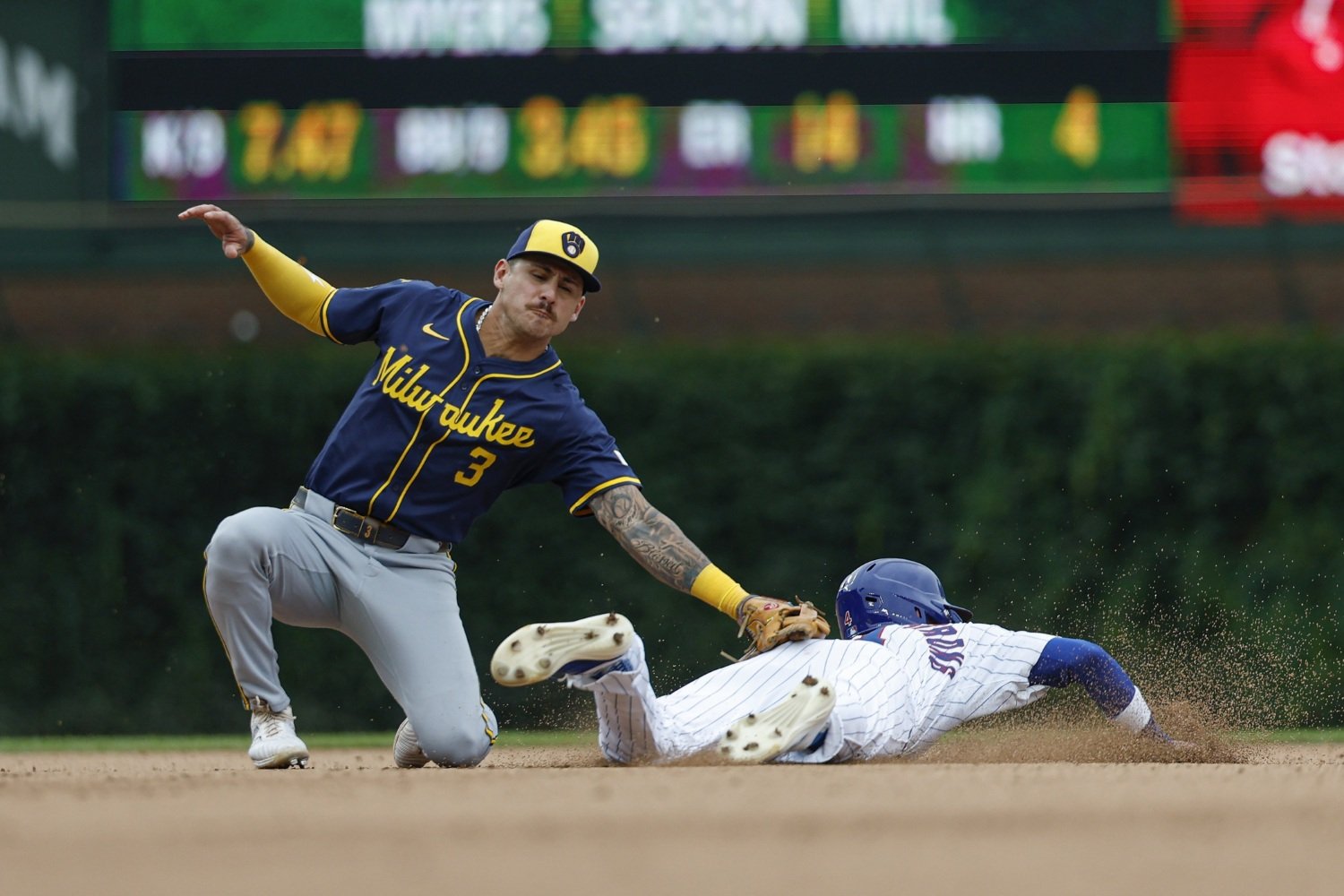 The Brewers didn't finish August with the same ferocity or verve they showed for two months starting in mid-June. Much of that was a simple matter of the schedule catching up to them, compounded by small absences due to bereavement and paternity for key role players. They also ran into injury trouble, though, with Joey Ortiz shelved by a hamstring strain and Trevor Megill sidelined by a flexor strain in his forearm. On Monday, they made themselves a bit more whole again, although they're likely to play things differently down the stretch. Megill remains on the injured list, and Abner Uribe figures to remain the closer in his absence, but rookie Craig Yoho will get one more shot to make 2025 the year he breaks through in the majors. His first stints with the parent club have been abortive, partially because he never quite earned Pat Murphy's trust. He won't step right into high-leverage situations, but the Brewers enjoy a big cushion in the race for the top seed in the National League playoff bracket. Murphy is likely to keep his bullpen powder a bit drier for the balance of the regular campaign, which will open some middle-relief innings for the likes of Yoho. More significant is the return of Ortiz, whose play at shortstop has been essential to the team's defensive phalanx all year. In his absence, Andruw Monasterio did yeoman's work, but Monasterio's sheer athleticism—his range and his arm—can't match that of Ortiz. The way Ortiz hit for the two months prior to his injury, he also restores some offensive upside at the bottom of the batting order, although Monasterio produced much as Ortiz had been during the latter's time on the shelf. Moving Monasterio back to the bench will give the team back its sense of great depth and flexibility, which had evaporated with Ortiz out of the picture. Meanwhile, the team also signed old friend Luis Urías to a minor-league deal, just ahead of the cutoff for postseason eligibility. Urías won't initially factor into the big-league roster, but he's shown his old knack for hitting the ball squarely (if not especially hard) this season with the A's. He becomes the team's fallback plan, should Ortiz reaggravate the injury from which he's returning so quickly. He'd slide into the bench role Monasterio now occupies, in that case. With Jackson Chourio having returned a couple days ahead of the roster expansion, the Brewers are as close to whole again as they're likely to get any time soon. Robert Gasser is now technically done with his rehab assignment, but he remains at Triple-A Nashville, waiting to be needed. Megill might not make it back before the end of the season, but with or without him, the team has lots of depth in pitching. Now, they also have it on the positional side, as Chourio, Blake Perkins and Ortiz will spend substantial time on the roster together for the first time all year. It's a very comfortable time to be a Brewers fan, and the team should be able to cruise to a commanding position over the final few weeks of the regular season.
- 1 comment
-
- 1
-

-
- joey ortiz
- craig yoho
- (and 2 more)
-
Image courtesy of © Mark Hoffman/Milwaukee Journal Sentinel / USA TODAY NETWORK via Imagn Images There will be chances to rest Sal Frelick, who is having a sensational season but has played through several bumps and bruises in order to help cover for the rest of the Brewers' injuries. There will be chances to spell Isaac Collins, one of the best stories of the season for the Crew but also a player whose flaws have become slightly more visible as he approaches a career high in games played within a season. With Jackson Chourio reclaiming one spot in the outfield mix on most days beginning Friday night in Toronto, Pat Murphy will have some options, but much of the time, Chourio will start in center field. That will mean a move to the bench, at least early in games, for the estimable Blake Perkins. With Christian Yelich, Frelick, Chourio, Collins and Perkins, the Brewers will now have perhaps the deepest outfield group in the majors. That means a reduction in playing time for each, but that's ok. Without Perkins, though, a new pressure will be applied to guys like Frelick and Andruw Monasterio: to work counts and get the team good looks at a pitcher. Since his return from a long stint on the injured list to start the season, Perkins has been an integral part of the club's effort to not only fill up the basepaths and the scoreboard, but wear down opposing staffs and create chances for their signature long rallies. Of the 426 batters with at least 100 plate appearances this season, Perkins ranks 15th-lowest in first-pitch swing rate. He's 23rd-highest in pitches per plate appearance. When he first returned to the active roster, he was red-hot with the bat, but his production has sagged since, leaving his value to the offense much harder to assign or see. However, that value hasn't evaporated as completely as the numbers imply. By being a tough out (or at least one that requires some significant work by the pitcher), Perkins makes life easier for his teammates. Perkins sees 4.25 pitches per plate appearance, entering Thursday's game against the Diamondbacks. That's a product of his vulnerability to swinging and missing, but more than that, it's a testament to his patience—and his dedication thereto, especially in the form of taking the first pitch or two almost every time he steps to bat. In fact, if you extend the above reference to first-pitch swings to the first two pitches of each at-bat (all 0-0, 1-0 and 0-1 counts), Perkins is 20th-least likely to swing of 446 qualifying hitters. He takes up the time and energy of opposing teams, even though he's not one of the primary threats in the Milwaukee offense. If Chourio comes back and hits the way he's capable of hitting, you happily sacrifice the occasional long at-bat (and the utter absence of quick, easy outs) Perkins delivered as a near-everyday player. He can slot back into a more limited role, and Chourio can help the team more consistently create runs via short, powerful sequences from the top of the batting order. Whenever possible, though, look for Pat Murphy to keep slipping Perkins into his batting order, to make it harder for opposing pitching staffs to navigate the bottom third thereof. These little things matter. Forcing a few extra pitches each time through the order can press an opposing starter out of a game sooner. Extending an at-bat against a hard-throwing reliever can force them to show their full arsenal, making it easier for subsequent hitters to come up with the key hit. The Brewers' grinding machine of an offense can operate on the long hits we've seen from Brice Turang and William Contreras this month, supplemented by the ones Chourio, Andrew Vaughn and Christian Yelich have taken turns providing at other stages of the season. If the team also has a collection of guys stretching at-bats and creating miniature rallies at the bottom of the lineup card, though, they're a more complete team. Given the role Perkins also plays in run prevention, he's a winning piece any time he's on the field. He just contributes to a different kind of win, on balance, than Chourio usually does. Milwaukee's depth is rounding back out just in time. They look a bit tired and had to settle for a frustrating split with the Diamondbacks at Uecker Field this week. No matter. The presence of Perkins, Frelick, Caleb Durbin, Andruw Monasterio, Anthony Seigler and more gives them ways to alleviate the hard grind of the season over the final month. They're working with a comfortable cushion in the race even for the top seed in the National League. Perkins will play less beginning this weekend, but he'll still play, and the team will benefit from its widening variety of options. View full article
-
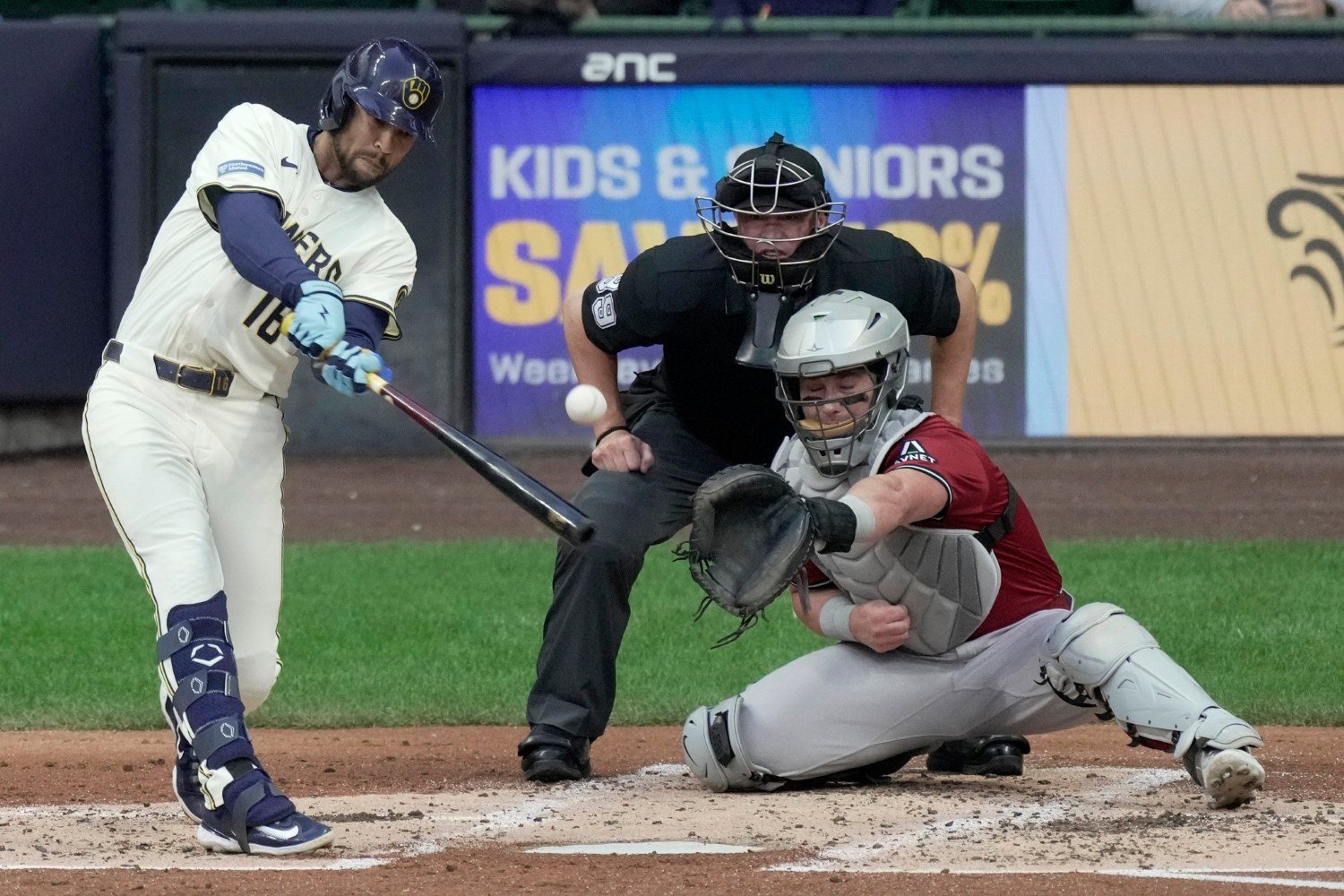 There will be chances to rest Sal Frelick, who is having a sensational season but has played through several bumps and bruises in order to help cover for the rest of the Brewers' injuries. There will be chances to spell Isaac Collins, one of the best stories of the season for the Crew but also a player whose flaws have become slightly more visible as he approaches a career high in games played within a season. With Jackson Chourio reclaiming one spot in the outfield mix on most days beginning Friday night in Toronto, Pat Murphy will have some options, but much of the time, Chourio will start in center field. That will mean a move to the bench, at least early in games, for the estimable Blake Perkins. With Christian Yelich, Frelick, Chourio, Collins and Perkins, the Brewers will now have perhaps the deepest outfield group in the majors. That means a reduction in playing time for each, but that's ok. Without Perkins, though, a new pressure will be applied to guys like Frelick and Andruw Monasterio: to work counts and get the team good looks at a pitcher. Since his return from a long stint on the injured list to start the season, Perkins has been an integral part of the club's effort to not only fill up the basepaths and the scoreboard, but wear down opposing staffs and create chances for their signature long rallies. Of the 426 batters with at least 100 plate appearances this season, Perkins ranks 15th-lowest in first-pitch swing rate. He's 23rd-highest in pitches per plate appearance. When he first returned to the active roster, he was red-hot with the bat, but his production has sagged since, leaving his value to the offense much harder to assign or see. However, that value hasn't evaporated as completely as the numbers imply. By being a tough out (or at least one that requires some significant work by the pitcher), Perkins makes life easier for his teammates. Perkins sees 4.25 pitches per plate appearance, entering Thursday's game against the Diamondbacks. That's a product of his vulnerability to swinging and missing, but more than that, it's a testament to his patience—and his dedication thereto, especially in the form of taking the first pitch or two almost every time he steps to bat. In fact, if you extend the above reference to first-pitch swings to the first two pitches of each at-bat (all 0-0, 1-0 and 0-1 counts), Perkins is 20th-least likely to swing of 446 qualifying hitters. He takes up the time and energy of opposing teams, even though he's not one of the primary threats in the Milwaukee offense. If Chourio comes back and hits the way he's capable of hitting, you happily sacrifice the occasional long at-bat (and the utter absence of quick, easy outs) Perkins delivered as a near-everyday player. He can slot back into a more limited role, and Chourio can help the team more consistently create runs via short, powerful sequences from the top of the batting order. Whenever possible, though, look for Pat Murphy to keep slipping Perkins into his batting order, to make it harder for opposing pitching staffs to navigate the bottom third thereof. These little things matter. Forcing a few extra pitches each time through the order can press an opposing starter out of a game sooner. Extending an at-bat against a hard-throwing reliever can force them to show their full arsenal, making it easier for subsequent hitters to come up with the key hit. The Brewers' grinding machine of an offense can operate on the long hits we've seen from Brice Turang and William Contreras this month, supplemented by the ones Chourio, Andrew Vaughn and Christian Yelich have taken turns providing at other stages of the season. If the team also has a collection of guys stretching at-bats and creating miniature rallies at the bottom of the lineup card, though, they're a more complete team. Given the role Perkins also plays in run prevention, he's a winning piece any time he's on the field. He just contributes to a different kind of win, on balance, than Chourio usually does. Milwaukee's depth is rounding back out just in time. They look a bit tired and had to settle for a frustrating split with the Diamondbacks at Uecker Field this week. No matter. The presence of Perkins, Frelick, Caleb Durbin, Andruw Monasterio, Anthony Seigler and more gives them ways to alleviate the hard grind of the season over the final month. They're working with a comfortable cushion in the race even for the top seed in the National League. Perkins will play less beginning this weekend, but he'll still play, and the team will benefit from its widening variety of options.
- 2 comments
-
- 1
-
-
- blake perkins
- jackson chourio
- (and 2 more)
-
Trevor Megill Placed on Injured List with Flexor Strain in Forearm
Matthew Trueblood posted an article in Brewers
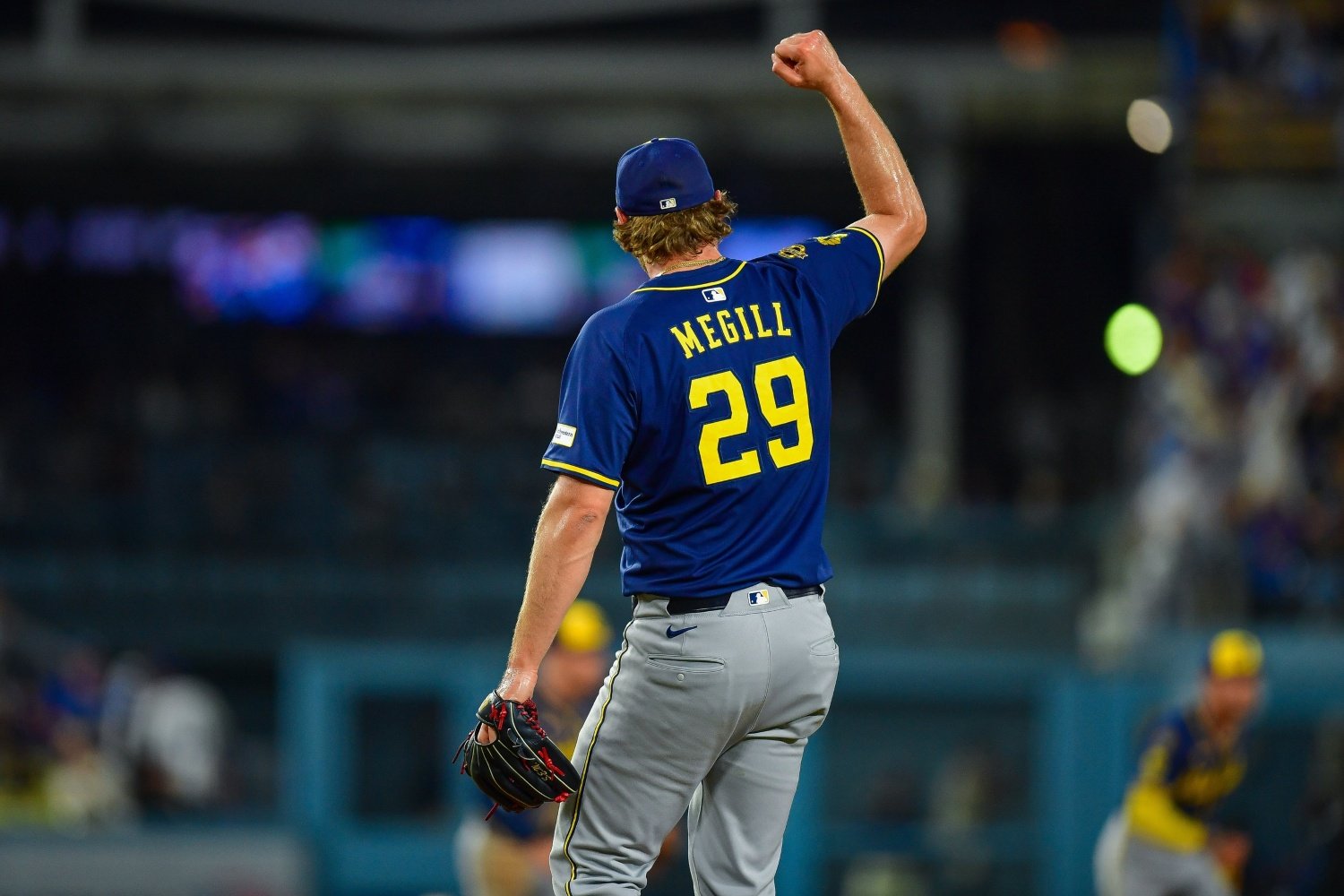 The Brewers have proved themselves to be better at scouting and development than any other team in baseball—to be the league's hardest pipeline to disrupt. With barely a month left before the end of the season, though, the team now faces one of its sternest tests in recent memory. They placed Trevor Megill on the injured list Wednesday, and signed drifting spare arm Erick Fedde to help soak up innings as they race toward the finish line of the regular campaign. I documented the erosion of Megill's dominance (and the connection between those struggles and his workload) earlier this week, so this doesn't come as a monumental surprise. It does, however, constitute a massive blow to a team that needed Megill and his firepower to help lock down the back ends of games. It's possible Megill will be down for the balance of the regular season. In fact, that's the safe bet. Across dozens of cases since the start of 2016, pitchers who suffered flexor strains in their throwing arms any time before September 1 have had an average time to return of 72 days, and a median time of 56 days. The Brewers are cautiously optimistic that Megill's is a mild strain, and the pressure and value of the postseason will probably call him back to action in under 35 days, but it would be an upset to see him make it back before the end of September. While he's gone, presumably, Abner Uribe will slot in as Milwaukee's new closer. We're likely to see Shelby Miller and Nick Mears step one rung up the ladder each, and perhaps Craig Yoho will get one more chance to make good on all the hype around him going back to the spring. Of course, the Brewers also have more starters than they'll need, come October. We could see Chad Patrick and/or Jacob Misiorowski slide into relief roles for the playoffs, if they're needed in those positions. For now, the main thing is to hope Megill can get right by then—but there are still some important games left to play to finish off the team's third straight division title, too. Fedde is an extra arm, and little else. He does, loosely, fit the characteristics we've seen the Brewers target and mold well in recent years, but there's almost no time left for them to make any meaningful changes to what he does or how he does it. The scarce resource of coaches' time and attention only grows more scarce come late August and early September, too. Consider the chances that he emerges as anything more than a sponge for the innings the team has been trying to soak up with whoever they can scrounge up during this overloaded stretch of the schedule to be remote. Then again, never fully count out the Brewers and their capacity to work fast magic.
 -
 It's not supposed to be Andruw Monasterio on whom this season rests. If you made a top-10 list in March of the guys the 2025 Brewers season might come down to, it wouldn't have included Monasterio. If you made a top-25 list of the same kind one month ago, it wouldn't have included Monasterio. Despite being on the 40-man roster the whole time, there were points this season when he wouldn't have made a top-40 list of this type. In the end, of course, it won't all come down to him. The Brewers' extension of their historic winning streak to 14 games, earlier this month in Cincinnati, did come down to him, and so did Tuesday night's game at Uecker Field, but this season will end in October or November, and surely—certainly—it won't be Monasterio on whom the deciding game hinges. Then again, though, this is baseball. Maybe it will be. The Brewers are in scramble mode, which is funny, because they're also on cruise control. With one month left in the season, they have a comfortable lead over the Cubs, not only for the NL Central crown but for the best record in the National League. They should easily win the division and earn a bye, waiting for the battered and bruised winner of a Wild Card Series to stumble into Milwaukee and take them on. That's all five weeks from now, though. Right now, they're a team in the midst of a stretch of 19 games in 18 days, a bit worn down from the grind of a second half in which days off have been rare and a bit wrung-out from the relentless pursuit of excellence over the last two-plus months. They stumbled this weekend against San Francisco. They stumbled again Tuesday night. Milwaukee leapt out to a 6-0 lead, and after an initial rally by the visiting Diamondbacks, they stretched their advantage back to 8-3. Jacob Misiorowski couldn't finish off a strong outing, though, and Pat Murphy's effort to shield his bullpen from some of their recent overwork fell apart. The skipper held fast to his plan to rest his highest-leverage relievers, but as a result, Jared Koenig (pretty overworked, in his own right) coughed up the lead in the eighth. The game went to the ninth tied at 8-8. It felt like a game the better team would lose, simply because the Diamondbacks haven't been working as feverishly over the last few weeks and they seemed to be in fuller color. Shelby Miller had prevented Arizona from taking the lead when he came on to relieve Koenig in the eighth. In the ninth, though, he allowed a line-drive single to right by Corbin Carroll. At just the wrong moment, the grind showed up again. Sal Frelick, uncharacteristically, misplayed the ball and let Carroll take second. It was a play only the most tired and overcooked version of Frelick could fail to make. He's survived multiple recent scares with his own injury issues, and with Jackson Chourio landing on the injured list last month, he's played more often than ever lately. It wasn't an excusable slip-up, but it was an understandable one. Unfortunately, it put the Diamondbacks right on the verge of taking the lead. Miller recovered to get a popout, which brought James McCann to the plate. McCann had entered as a pinch-hitter for left-handed first baseman Pavin Smith earlier, to face Koenig, but he stayed in against the right-handed Miller. He's 35 years old and a long-time catcher, but not one of the slowest in the league. His average sprint speed this year is 26.4 feet per second, according to Statcast, which is below the global average but above the baseline for backstops. That'll factor in in a moment. After missing away with the first pitch, Miller had to challenge McCann. He didn't want to fall further behind; the top mandate of the moment was to avoid a big inning. He threw a fastball in the middle of the strike zone, and McCann hit a sharp ground ball toward the hole between third base and shortstop. He'd topped it, punching the ball into the ground to his left. It bounced again at the edge of the grass, and once more deep on the apron, seemingly ticketed for left field. Anthony Seigler, at third base, had initially frozen and considered going after the ball, but he decided he couldn't get there and broke to cover the bag. Because of the way the ball bounced, he might have had time to get there after all, but he'd been unable to depend on that based on how well McCann struck it. Monasterio, the replacement shortstop filling in for Joey Ortiz, never had a reason to hesitate, and he didn't. His angle on the ball was better, for reading it. He broke right away, with one short stride, one longer one, another, and then he stretched into a dive to his right. Obligingly, the ball caught a bit of air with each of its hops and decelerated, and Monasterio's glove neatly speared it backhanded as he sprawled. That was a great play. If it had ended there, it would have been a creditable little thing. Monasterio's reaction; his flat, ambitious angle to the ball; and his sure-handed snare had saved a run, for the moment. He barely even hit the ground, though, before he was back up off of it. At first, you could see, his glance was toward third. Carroll was running. He'd had the play in front of him, but instead of making the ball go through the infield, he (correctly) judged that once Seigler gave up on making the play, he'd be able to beat the tag on any possible throw to third. If the ball had gotten through, Carroll's good secondary lead and his quick decision would have meant a run. As it was, he still assured himself of advancing into scoring position, and Monasterio would have to pocket the ball, putting runners on the corners and giving Arizona two chances to bring Carroll home. The magic of this play is what happened next. Monasterio's eyes started out pointed at third, but he immediately knew he had no play there. In his peripheral vision, however, he must have seen that McCann wasn't getting down the line all that well. He's faster than an average catcher, perhaps, at his very best, but that's at full gallop. On this play, he got out of the box just ok, and third gear eluded him. Monasterio either saw and understood or intuited without seeing that he had a play all the way across the diamond, at first. To make it, though, required a second great physical play, in addition to his fabulous presence of mind. Monasterio's shoulders and hips weren't squared to his target, and his feet weren't really beneath him. He had a chance to make this play, but no time to set his feet and make it the way a shortstop usually makes such a play, deep in the hole. He almost fell toward first, as he forced his body to change direction and launch itself that way. He also threw the ball much, much more overhand than is typical of an infielder. It was a good-not-great, one-hop throw, but it was on line, and all Andrew Vaughn had to do was smoothly stretch to receive the ball. McCann was out, and it wasn't especially close. I looked through dozens of batted balls that roughly matched this one in terms of direction, exit velocity and launch angle, trying to find a play that unfolded quite the same way. I didn't. When shortstops are able to make a play on a ball roughly like the one McCann hit, it's usually because those balls weren't as far toward third base as the one Monasterio had to flag down. Occasionally, when the left side of the infield has shaded the opposing batter more aggressively than the Brewers were in that situation, you'll see a shortstop who can get their feet planted and make a great play. MDRXNGdfWGw0TUFRPT1fRHdCUVhGVUdCd2NBQ2dNS1VRQUhBRkpTQUFBTVZGSUFBQUJRQTFZQlUxWldCMWNG.mp4 Less often, a true athletic freak like Bobby Witt Jr. can use that shaded positioning and his explosive speed and arm strength to make the whole play from his feet. ZU44VzNfWGw0TUFRPT1fRGdSWUFWY0RVQWNBV1ZJQlVBQUhWRk5RQUZrR0FGZ0FBUVlBQ1FRQ1ZWQUVBVlJl.mp4 Mostly, though, when the ball is hit about that hard and about that deep in the hole, teams don't get outs. Mookie Betts couldn't convert the same out Witt could. TUE3NU5fWGw0TUFRPT1fRGxCWVZWTUhCQVVBQ3dGVFVnQUhVRkJlQUZoUlZWUUFVd2NOQXdvRUIxSlRDRkZU.mp4 With the same runner-on-second situation, the Braves couldn't get an out on the Brewers earlier this month. ZFh6a3pfWGw0TUFRPT1fVlZBREFBVldCUXNBQ0FNS0FnQUhCMU5RQUFCV0FRY0FDbDBFQWxCUUJnWlRWRmRU.mp4 The Pirates made a great play just to keep a run from scoring on this one. This is the most similar play I found to the Monasterio one, and contrasting it with his underscores the specialness of getting the batter at first. MDRXTzFfWGw0TUFRPT1fVlZSUVhBWlhCd2NBV3dCVUJBQUhWd2NEQUFOUlZ3TUFVd0FHVkFGUUFRcFFBQXNG.mp4 I also found that batted balls like these are hard to read (or at least hard to play) even when not hit as deep in the hole. I watched Trea Turner stumble on a ball with these exit velocity and launch angle constraints, hit almost straight at him. I saw errors committed by Taylor Walls and Zack Short on balls just a step or two to their right, as they tried to adjust to the bounce and get their body oriented to make a throw to first base. Another, similar ball ate up Anthony Volpe. TDZXOW5fWGw0TUFRPT1fQTFCWkIxY01VVllBQzFNQ1VnQUhCZ2NGQUZnRUFGZ0FVRk1FVVFCWEFGVlJBVkJm.mp4 None of these examples even offered the people involved the chance to make such a heads-up play. None of them were opportunities as rich, and none were attempted by players with the same combination of physical limitations and mental skills. The Monasterio play had everything. So much of baseball is about simple reaction, explosion, and skill. Lots of thought and preparation goes into each game, but a lot of the mental heavy lifting happens before first pitch. The Brewers' bread and butter is organizational intelligence, which shows up in their superior scouting and player development and in their emphasis on good swing decisions—but what we call "swing decisions" are really almost reflexive choices. We can so rarely see the conscious thoughts of players unfolding as they're making plays. The game moves too fast for that to happen, 99.9 percent of the time. This was one of those one-in-a-thousand moments. Fans could see Seigler make the best decision he could based on what he could see of the ball off the bat of McCann; Carroll make his savvy break for third; and Monasterio dash for the ball, glance toward third, then improvise his peg to first instead. It was a play full of intelligent baseball, sparking with the things that make sports worth our time. That the players involved for Milwaukee—Seigler, the minor-league signee last November; Monasterio, who signed as a minor-league free agent in November 2021; and Vaughn, scooped up practically free in June—all so succinctly express the team's acumen in scouting and development doubles the pleasure. That none of them were supposed to be playing these roles as of even three months ago (Caleb Durbin, Ortiz and Rhys Hoskins are still the players in whom the organization has more invested, at least for the moment), and that the medium-term future of this great team depends so substantially on Monasterio almost unfolds a new dimension of appreciation for it all. Of course the Diamondbacks didn't score in that frame, and of course Isaac Collins walked them off for another dramatic home win thereafter. That play was yet another in a string of Murphy's Miracles, stretching back to last season. These aren't instances of divine intervention; they're just examples of the Brewers playing a different game than the rest of the league. Their execution is better than the rest of the league's. They make plays other teams can't make, because of the talent they scout and hone, but also because of the way they work on and coordinate those plays. These things happen for them offensively, too, but it always shows up more on defense. Monasterio's great play to thwart the Arizona rally in the ninth inning Tuesday night is just the latest addition to the team's canon—the latest reminder of why this team has won more games than anyone else in the league since they hired Murphy, and of why their brand of baseball is uniquely rewarding to lovers of the game.
 -
Image courtesy of © Jeff Hanisch-Imagn Images It's not supposed to be Andruw Monasterio on whom this season rests. If you made a top-10 list in March of the guys the 2025 Brewers season might come down to, it wouldn't have included Monasterio. If you made a top-25 list of the same kind one month ago, it wouldn't have included Monasterio. Despite being on the 40-man roster the whole time, there were points this season when he wouldn't have made a top-40 list of this type. In the end, of course, it won't all come down to him. The Brewers' extension of their historic winning streak to 14 games, earlier this month in Cincinnati, did come down to him, and so did Tuesday night's game at Uecker Field, but this season will end in October or November, and surely—certainly—it won't be Monasterio on whom the deciding game hinges. Then again, though, this is baseball. Maybe it will be. The Brewers are in scramble mode, which is funny, because they're also on cruise control. With one month left in the season, they have a comfortable lead over the Cubs, not only for the NL Central crown but for the best record in the National League. They should easily win the division and earn a bye, waiting for the battered and bruised winner of a Wild Card Series to stumble into Milwaukee and take them on. That's all five weeks from now, though. Right now, they're a team in the midst of a stretch of 19 games in 18 days, a bit worn down from the grind of a second half in which days off have been rare and a bit wrung-out from the relentless pursuit of excellence over the last two-plus months. They stumbled this weekend against San Francisco. They stumbled again Tuesday night. Milwaukee leapt out to a 6-0 lead, and after an initial rally by the visiting Diamondbacks, they stretched their advantage back to 8-3. Jacob Misiorowski couldn't finish off a strong outing, though, and Pat Murphy's effort to shield his bullpen from some of their recent overwork fell apart. The skipper held fast to his plan to rest his highest-leverage relievers, but as a result, Jared Koenig (pretty overworked, in his own right) coughed up the lead in the eighth. The game went to the ninth tied at 8-8. It felt like a game the better team would lose, simply because the Diamondbacks haven't been working as feverishly over the last few weeks and they seemed to be in fuller color. Shelby Miller had prevented Arizona from taking the lead when he came on to relieve Koenig in the eighth. In the ninth, though, he allowed a line-drive single to right by Corbin Carroll. At just the wrong moment, the grind showed up again. Sal Frelick, uncharacteristically, misplayed the ball and let Carroll take second. It was a play only the most tired and overcooked version of Frelick could fail to make. He's survived multiple recent scares with his own injury issues, and with Jackson Chourio landing on the injured list last month, he's played more often than ever lately. It wasn't an excusable slip-up, but it was an understandable one. Unfortunately, it put the Diamondbacks right on the verge of taking the lead. Miller recovered to get a popout, which brought James McCann to the plate. McCann had entered as a pinch-hitter for left-handed first baseman Pavin Smith earlier, to face Koenig, but he stayed in against the right-handed Miller. He's 35 years old and a long-time catcher, but not one of the slowest in the league. His average sprint speed this year is 26.4 feet per second, according to Statcast, which is below the global average but above the baseline for backstops. That'll factor in in a moment. After missing away with the first pitch, Miller had to challenge McCann. He didn't want to fall further behind; the top mandate of the moment was to avoid a big inning. He threw a fastball in the middle of the strike zone, and McCann hit a sharp ground ball toward the hole between third base and shortstop. He'd topped it, punching the ball into the ground to his left. It bounced again at the edge of the grass, and once more deep on the apron, seemingly ticketed for left field. Anthony Seigler, at third base, had initially frozen and considered going after the ball, but he decided he couldn't get there and broke to cover the bag. Because of the way the ball bounced, he might have had time to get there after all, but he'd been unable to depend on that based on how well McCann struck it. Monasterio, the replacement shortstop filling in for Joey Ortiz, never had a reason to hesitate, and he didn't. His angle on the ball was better, for reading it. He broke right away, with one short stride, one longer one, another, and then he stretched into a dive to his right. Obligingly, the ball caught a bit of air with each of its hops and decelerated, and Monasterio's glove neatly speared it backhanded as he sprawled. That was a great play. If it had ended there, it would have been a creditable little thing. Monasterio's reaction; his flat, ambitious angle to the ball; and his sure-handed snare had saved a run, for the moment. He barely even hit the ground, though, before he was back up off of it. At first, you could see, his glance was toward third. Carroll was running. He'd had the play in front of him, but instead of making the ball go through the infield, he (correctly) judged that once Seigler gave up on making the play, he'd be able to beat the tag on any possible throw to third. If the ball had gotten through, Carroll's good secondary lead and his quick decision would have meant a run. As it was, he still assured himself of advancing into scoring position, and Monasterio would have to pocket the ball, putting runners on the corners and giving Arizona two chances to bring Carroll home. The magic of this play is what happened next. Monasterio's eyes started out pointed at third, but he immediately knew he had no play there. In his peripheral vision, however, he must have seen that McCann wasn't getting down the line all that well. He's faster than an average catcher, perhaps, at his very best, but that's at full gallop. On this play, he got out of the box just ok, and third gear eluded him. Monasterio either saw and understood or intuited without seeing that he had a play all the way across the diamond, at first. To make it, though, required a second great physical play, in addition to his fabulous presence of mind. Monasterio's shoulders and hips weren't squared to his target, and his feet weren't really beneath him. He had a chance to make this play, but no time to set his feet and make it the way a shortstop usually makes such a play, deep in the hole. He almost fell toward first, as he forced his body to change direction and launch itself that way. He also threw the ball much, much more overhand than is typical of an infielder. It was a good-not-great, one-hop throw, but it was on line, and all Andrew Vaughn had to do was smoothly stretch to receive the ball. McCann was out, and it wasn't especially close. I looked through dozens of batted balls that roughly matched this one in terms of direction, exit velocity and launch angle, trying to find a play that unfolded quite the same way. I didn't. When shortstops are able to make a play on a ball roughly like the one McCann hit, it's usually because those balls weren't as far toward third base as the one Monasterio had to flag down. Occasionally, when the left side of the infield has shaded the opposing batter more aggressively than the Brewers were in that situation, you'll see a shortstop who can get their feet planted and make a great play. MDRXNGdfWGw0TUFRPT1fRHdCUVhGVUdCd2NBQ2dNS1VRQUhBRkpTQUFBTVZGSUFBQUJRQTFZQlUxWldCMWNG.mp4 Less often, a true athletic freak like Bobby Witt Jr. can use that shaded positioning and his explosive speed and arm strength to make the whole play from his feet. ZU44VzNfWGw0TUFRPT1fRGdSWUFWY0RVQWNBV1ZJQlVBQUhWRk5RQUZrR0FGZ0FBUVlBQ1FRQ1ZWQUVBVlJl.mp4 Mostly, though, when the ball is hit about that hard and about that deep in the hole, teams don't get outs. Mookie Betts couldn't convert the same out Witt could. TUE3NU5fWGw0TUFRPT1fRGxCWVZWTUhCQVVBQ3dGVFVnQUhVRkJlQUZoUlZWUUFVd2NOQXdvRUIxSlRDRkZU.mp4 With the same runner-on-second situation, the Braves couldn't get an out on the Brewers earlier this month. ZFh6a3pfWGw0TUFRPT1fVlZBREFBVldCUXNBQ0FNS0FnQUhCMU5RQUFCV0FRY0FDbDBFQWxCUUJnWlRWRmRU.mp4 The Pirates made a great play just to keep a run from scoring on this one. This is the most similar play I found to the Monasterio one, and contrasting it with his underscores the specialness of getting the batter at first. MDRXTzFfWGw0TUFRPT1fVlZSUVhBWlhCd2NBV3dCVUJBQUhWd2NEQUFOUlZ3TUFVd0FHVkFGUUFRcFFBQXNG.mp4 I also found that batted balls like these are hard to read (or at least hard to play) even when not hit as deep in the hole. I watched Trea Turner stumble on a ball with these exit velocity and launch angle constraints, hit almost straight at him. I saw errors committed by Taylor Walls and Zack Short on balls just a step or two to their right, as they tried to adjust to the bounce and get their body oriented to make a throw to first base. Another, similar ball ate up Anthony Volpe. TDZXOW5fWGw0TUFRPT1fQTFCWkIxY01VVllBQzFNQ1VnQUhCZ2NGQUZnRUFGZ0FVRk1FVVFCWEFGVlJBVkJm.mp4 None of these examples even offered the people involved the chance to make such a heads-up play. None of them were opportunities as rich, and none were attempted by players with the same combination of physical limitations and mental skills. The Monasterio play had everything. So much of baseball is about simple reaction, explosion, and skill. Lots of thought and preparation goes into each game, but a lot of the mental heavy lifting happens before first pitch. The Brewers' bread and butter is organizational intelligence, which shows up in their superior scouting and player development and in their emphasis on good swing decisions—but what we call "swing decisions" are really almost reflexive choices. We can so rarely see the conscious thoughts of players unfolding as they're making plays. The game moves too fast for that to happen, 99.9 percent of the time. This was one of those one-in-a-thousand moments. Fans could see Seigler make the best decision he could based on what he could see of the ball off the bat of McCann; Carroll make his savvy break for third; and Monasterio dash for the ball, glance toward third, then improvise his peg to first instead. It was a play full of intelligent baseball, sparking with the things that make sports worth our time. That the players involved for Milwaukee—Seigler, the minor-league signee last November; Monasterio, who signed as a minor-league free agent in November 2021; and Vaughn, scooped up practically free in June—all so succinctly express the team's acumen in scouting and development doubles the pleasure. That none of them were supposed to be playing these roles as of even three months ago (Caleb Durbin, Ortiz and Rhys Hoskins are still the players in whom the organization has more invested, at least for the moment), and that the medium-term future of this great team depends so substantially on Monasterio almost unfolds a new dimension of appreciation for it all. Of course the Diamondbacks didn't score in that frame, and of course Isaac Collins walked them off for another dramatic home win thereafter. That play was yet another in a string of Murphy's Miracles, stretching back to last season. These aren't instances of divine intervention; they're just examples of the Brewers playing a different game than the rest of the league. Their execution is better than the rest of the league's. They make plays other teams can't make, because of the talent they scout and hone, but also because of the way they work on and coordinate those plays. These things happen for them offensively, too, but it always shows up more on defense. Monasterio's great play to thwart the Arizona rally in the ninth inning Tuesday night is just the latest addition to the team's canon—the latest reminder of why this team has won more games than anyone else in the league since they hired Murphy, and of why their brand of baseball is uniquely rewarding to lovers of the game. View full article
-
Image courtesy of © Benny Sieu-Imagn Images Freddy Peralta can be polarizing. That's not true among baseball people, exactly—the industry pretty broadly agrees that he's a very good (though not quite elite) starter, and the Brewers organization uniformly loves him. He's a bright light in the clubhouse, beloved and respected for his leadership, his ebullience, and his warrior mentality. Peralta pitched most of last season at less than 100 percent; he adapted and battled to take the mound every turn through the rotation and make up for the losses of Corbin Burnes and Brandon Woodruff. He's a creative, intelligent and fiercely competitive pitcher. He's also a joy to watch. His flying delivery, restored to its peak uniqueness this season as he's been able to slide back to his home on the third-base side of the rubber, is the kind of physical poetry that made pitching such a captivating art a century ago. His hair, his accessories, and his feline muscularity make him a transfixing visual presence on the mound. He emotes, but not in the way of tantrums or pugnacity. He shows you the work that goes into each big out, but he does it all with the style and grace that makes high-level sport such a thrill. Of course, over the years, he's also been a source of constant frustration for some fans. His walk rate is always north of 9%, which is higher than the league average. He induces a shockingly high number of foul balls, which can run up his pitch count and cost him innings he'd otherwise be able to pitch within games. He's never even reached 175 innings pitched in a season. At times, he's run into trouble with the home run ball. His ERA has not always matched the quality of his stuff, and he's never been a true innings eater—except last year, when he did so at the expense of some of his sheer intensity of stuff and of some of his dominance. This year, though, Peralta is having the season that just eluded him in each of the last few. He's already made 27 starts, the most in baseball. He might only make five or six more, which means he probably won't win 20 games (his 15-5 record is the best in the majors, but we live in 2025, so let's not dwell on pitcher wins), but he probably will get to that 175-inning threshold. He's also en route to what could be the best ERA of his career. Right now, it's at 2.68. The only other time he's been under 3.00 came in 2021, when he was starting much less often in Craig Counsell's post-COVID six-man rotation. He finished that year at 2.81, but this year's Peralta has already surpassed that year's version in innings pitched. Peralta has morphed so many times over the years that it's almost impossible to keep up. He came up as Fastball Freddy, but his slider (and its many, many forms), curveball and changeup have all taken turns stepping up as crucial secondary pitches. This year, the cambio is the featured complement, even though StuffPro and similar models think it's by far his worst pitch. Yes, Peralta has benefited from a good defense, good run support and (perhaps) a dab of good luck. But he's also benefited, this year and in other recent ones, from his growing adaptability. Stuff models can't always account for the way that the extreme horizontal angle he creates affects opposing batters. Nor does one summary number fully capture what, say, his slider (labeled above as a sweeper) does, because that pitch takes several different shapes according to matchup, need and sequence. Peralta's pitchability has allowed his very good stuff to play up at an elite level this year, despite his sometimes erratic location thereof. Only four National League pitchers (Paul Skenes, Yoshinobu Yamamoto, Zack Wheeler and Nick Pivetta) have held opponents to a lower OPS than Peralta's .607 this year. Wheeler is out for the year with thoracic outlet syndrome. Pivetta and Yamamoto have been good this year, but aren't better than Peralta. Only Skenes, Matthew Boyd, Andrew Abbott and Cristopher Sánchez have lower ERAs than Peralta's, in a qualifying number of innings. As good as all of them are, Peralta has been more impressive and consistent than all but Skenes. It's Skenes who poses the obvious obstacle to Peralta actually winning the NL Cy Young Award. The Pirates righty has to be the odds-on favorite for that award. Nonetheless, Peralta is a legitimate candidate, and if Skenes stumbles even a bit down the stretch, the Brewers' ace could sneak in and earn serious consideration for the award. He's been the best player on the best team in baseball, and they wouldn't function the same way (on or off the field) without him. It's been a relentless pleasure to watch him work this year. View full article


