


Matthew Trueblood
-
Posts
1,964 -
Joined
-
Last visited
-
Days Won
10
Content Type
Profiles
Forums
Blogs
Events
News
2026 Milwaukee Brewers Top Prospects Ranking
Milwaukee Brewers Videos
2022 Milwaukee Brewers Draft Picks
Milwaukee Brewers Free Agent & Trade Rumors, Notes, & Tidbits
Guides & Resources
2023 Milwaukee Brewers Draft Picks
2024 Milwaukee Brewers Draft Picks
The Milwaukee Brewers Players Project
2025 Milwaukee Brewers Draft Pick Tracker
2026 Milwaukee Brewers Draft Tracker: Picks & Bonuses
Store
Downloads
Gallery
Everything posted by Matthew Trueblood
-
Trevor Megill's Velocity is Down—But Don't Weep for Him
Matthew Trueblood posted an article in Brewers
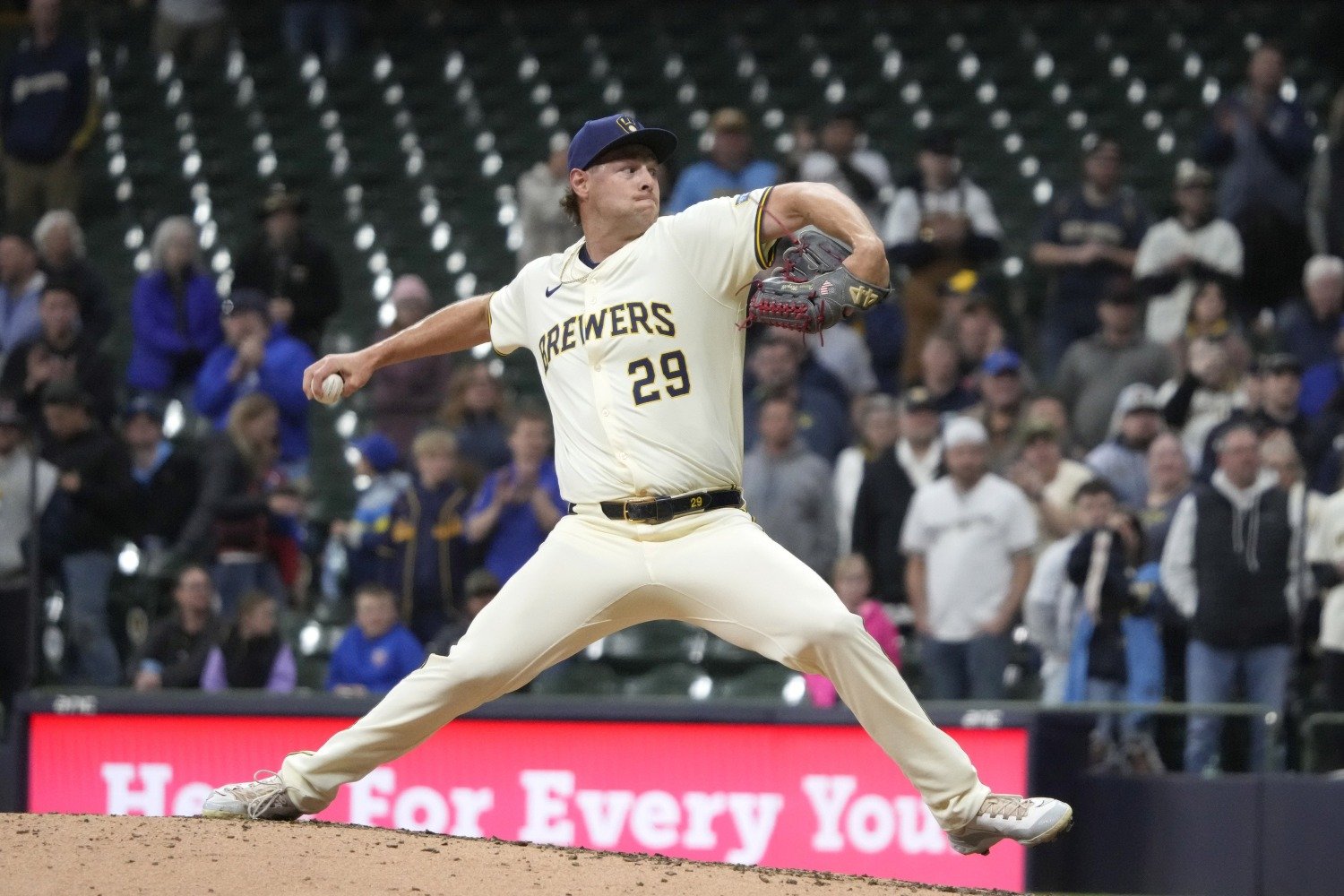 It's extremely early, yet. Trevor Megill has only made three appearances and thrown 20 fastballs on the young season. When it comes to fastball velocity, though, a sample of just 20 is enough to tell if something significant has changed. That's bad news for the Brewers' towering closer, because he's down over 1 mph since 2024 and 1.7 mph since 2023. When a two-pitch reliever loses nearly two full ticks on their fastball, it's usually a recipe for trouble. You've probably noticed, though, that Megill hasn't encountered any. In those three games, he's faced eight batters and retired seven of them, including racking up five strikeouts. He's yet to issue a walk. Megill, who's as superficially dependent upon his power as any pitcher in baseball, has lost a significant portion of that skill, but he's overwhelming batters, anyway. Nor is it just the results singing this confusing ode to the new, slower version of Megill's fastball. According to Stuff+, Megill's heater is up from 113 in 2023 and 111 in 2024 to a blazing 128 so far in 2025. (For Stuff+, 100 is average and higher is better.) It had a 0.1 StuffPro and a -0.3 PitchPro last year, per Baseball Prospectus, where 0 is average and lower is better. This season, those figures are -1.1 and -1.5, respectively. How is a slower fastball a better one? The answer lies in both Megill's release point and the movement of the pitch out of his hand. Firstly, the 6-foot-8 Megill comes from such a steep overhand angle and falls off with such controlled fury toward his glove side (the first-base side) of the mound that his horizontal release point is almost even with the center of the pitching rubber. Hitters aren't used to picking up the ball there, at all. It's a maximum-effort delivery that comes with effortless deception, for Megill. More important, though, is the change Megill has effected in the way the pitch moves. Here's a scatterplot showing the horizontal and induced vertical break of all Megill's pitches in 2024, colored by pitch type. He averaged 17.9 inches of induced vertical break and 5.7 inches of run to the arm side on his heater last year. This season, though, Megill's fastball has a new shape. Although it's less sticky after such a small sample than is the drop in velocity, this change in movement signature makes Megill's fastball nastier in multiple ways. It now has 19.4 in. of IVB and only runs 2.3 in. to the arm side. That straightline rising heat is vicious stuff. It's why he's left hitters utterly stumped with that pitch thus far this year. Holding onto this elite fastball shape might be difficult. It's a high-energy offering from a huge human being. On balance, you might prefer that Megill hadn't dropped from 99.1 mph in average velocity in 2023 to 97.4 this year, since the changes in other characteristics that have made up for that might not be sustainable. Still, it's fascinating to find that Megill—who lacks any type of third pitch and stubbornly sticks to a fastball-heavy mix of the heater and the hook—is more than surviving what could be a career-threatening crisis if it happened to many hurlers. Indeed, he's thriving. The Brewers' pitching staff has some big problems to fight through early this season, but their relief ace is not one of them—even if he's no longer lighting up the third column on the stadium radar gun display.
 -
There's a major difference between sitting 99, touching 102, and sitting 97, touching 99. It just might not be the difference you would expect. Image courtesy of © Michael McLoone-Imagn Images It's extremely early, yet. Trevor Megill has only made three appearances and thrown 20 fastballs on the young season. When it comes to fastball velocity, though, a sample of just 20 is enough to tell if something significant has changed. That's bad news for the Brewers' towering closer, because he's down over 1 mph since 2024 and 1.7 mph since 2023. When a two-pitch reliever loses nearly two full ticks on their fastball, it's usually a recipe for trouble. You've probably noticed, though, that Megill hasn't encountered any. In those three games, he's faced eight batters and retired seven of them, including racking up five strikeouts. He's yet to issue a walk. Megill, who's as superficially dependent upon his power as any pitcher in baseball, has lost a significant portion of that skill, but he's overwhelming batters, anyway. Nor is it just the results singing this confusing ode to the new, slower version of Megill's fastball. According to Stuff+, Megill's heater is up from 113 in 2023 and 111 in 2024 to a blazing 128 so far in 2025. (For Stuff+, 100 is average and higher is better.) It had a 0.1 StuffPro and a -0.3 PitchPro last year, per Baseball Prospectus, where 0 is average and lower is better. This season, those figures are -1.1 and -1.5, respectively. How is a slower fastball a better one? The answer lies in both Megill's release point and the movement of the pitch out of his hand. Firstly, the 6-foot-8 Megill comes from such a steep overhand angle and falls off with such controlled fury toward his glove side (the first-base side) of the mound that his horizontal release point is almost even with the center of the pitching rubber. Hitters aren't used to picking up the ball there, at all. It's a maximum-effort delivery that comes with effortless deception, for Megill. More important, though, is the change Megill has effected in the way the pitch moves. Here's a scatterplot showing the horizontal and induced vertical break of all Megill's pitches in 2024, colored by pitch type. He averaged 17.9 inches of induced vertical break and 5.7 inches of run to the arm side on his heater last year. This season, though, Megill's fastball has a new shape. Although it's less sticky after such a small sample than is the drop in velocity, this change in movement signature makes Megill's fastball nastier in multiple ways. It now has 19.4 in. of IVB and only runs 2.3 in. to the arm side. That straightline rising heat is vicious stuff. It's why he's left hitters utterly stumped with that pitch thus far this year. Holding onto this elite fastball shape might be difficult. It's a high-energy offering from a huge human being. On balance, you might prefer that Megill hadn't dropped from 99.1 mph in average velocity in 2023 to 97.4 this year, since the changes in other characteristics that have made up for that might not be sustainable. Still, it's fascinating to find that Megill—who lacks any type of third pitch and stubbornly sticks to a fastball-heavy mix of the heater and the hook—is more than surviving what could be a career-threatening crisis if it happened to many hurlers. Indeed, he's thriving. The Brewers' pitching staff has some big problems to fight through early this season, but their relief ace is not one of them—even if he's no longer lighting up the third column on the stadium radar gun display. View full article
-
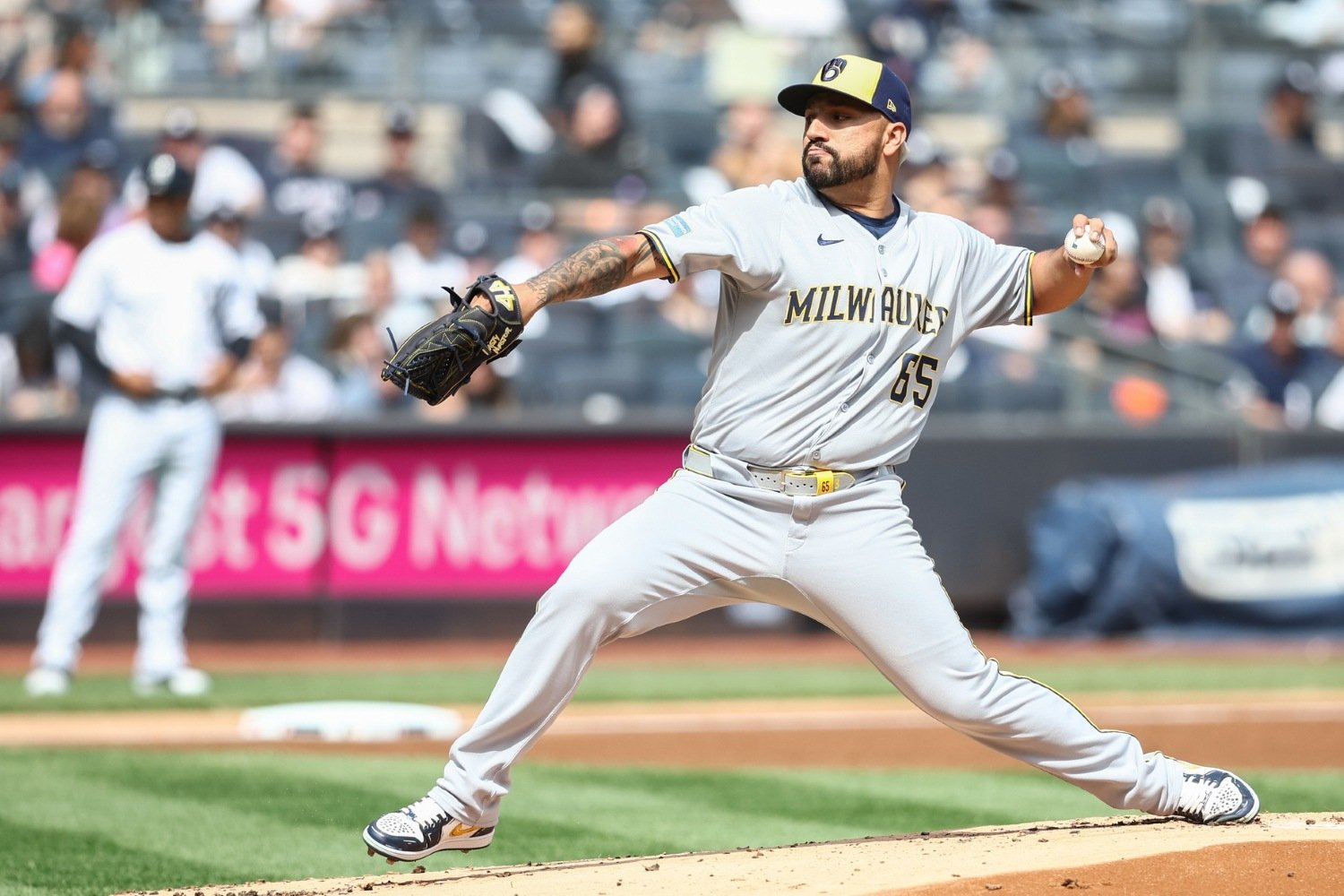 There's no avoiding or ignoring it: Nestor Cortes's first start as a member of the Milwaukee Brewers was lousy. He gave up four home runs in the first inning and a fifth in the second. He issued five walks and only got six outs. It wasn't just an unhappy reunion with his old team; it was a humiliation. If we know nothing else for certain, we can be sure he'll have a burning desire to redeem himself in his second start Thursday. To give himself the best chance to do so, Cortes had better be intentional about his arm angle. In his start in the Bronx, it was noticeably higher than when he was going well in 2024 for the Yankees. That gave his fastball more sheer carry—more induced vertical break—which is typically a good thing. When a pitcher raises their arm slot, though, the hitter naturally, visually expects more vertical break, so Cortes lost some deception. He also lost some run on the pitch. In general, it straightened out, and the mechanics were a driving force behind that. If we had any doubt about the tradeoff between less deception and more pure movement, the Yankees provided plenty of feedback. akRra0FfWGw0TUFRPT1fRHdSVkFRRlNCUUVBQUFFR0J3QUhDRkpUQUZoUlZnTUFVUWRSQkFSWEFGVlJVd0lG.mp4 Cortes's arm angle was higher on all his pitches in that first regular-season contest, relative to the rest of his career. He was very much over the top—too much, really, to achieve the east-west wriggle that makes a few of his pitches work best. That rules out the otherwise-plausible notion that Cortes's numbers were thrown off by a dearth of the wackier pitches on which he sometimes famously drops down or changes his delivery to deceive hitters. Even in Statcast-equipped parks, we don't have arm angle data for spring training. What we do have (x,y coordinates of release point, extension, and movement) suggests that Cortes was doing some of this during spring, and thus, that the mechanical change might be a conscious one, rather than a matter of nerves or adrenaline wrecking good habits. However, we can't yet rule out that what's happening is an accident he's yet to fully recognize, or is unable to correct. His arm angle spiked higher late last season, as he began to deal with the elbow trouble that shelved him for most of the postseason. If he's compensating for lingering pain or discomfort, that would be even worse news than if he was struggling to stay under control when he took the mound Saturday. We simply need more data. Cortes didn't pitch as much as most of the rest of the staff during spring training, taking two of his potential turns in the Cactus League rotation under simulated-game settings instead. He's a bit of a black box, because of that elbow issue and the fact that we know the Brewers like to take pitchers who do unusual things and push those things toward extremes. He could be making data-driven, coach-monitored adjustments designed to open up the whole zone, or he could be making a random error in his delivery. He could even be limping through an injury he doesn't want to admit, given how thin the pitching staff already is. Thursday's outing against the Reds will double our amount of information. For now, it's just worth keeping a close eye on his mechanics, and looking for a bit more free an arm action. A lower slot might be a good thing, even if it means a few fewer whiffs at the top of the strike zone.
 -
The Brewers' newly-acquired lefty workhorse couldn't keep the ball off the barrels of Yankees bats in the first start with his new team. There's a mechanical issue here, but it's too soon to tell whether it's intentional. Image courtesy of © Wendell Cruz-Imagn Images There's no avoiding or ignoring it: Nestor Cortes's first start as a member of the Milwaukee Brewers was lousy. He gave up four home runs in the first inning and a fifth in the second. He issued five walks and only got six outs. It wasn't just an unhappy reunion with his old team; it was a humiliation. If we know nothing else for certain, we can be sure he'll have a burning desire to redeem himself in his second start Thursday. To give himself the best chance to do so, Cortes had better be intentional about his arm angle. In his start in the Bronx, it was noticeably higher than when he was going well in 2024 for the Yankees. That gave his fastball more sheer carry—more induced vertical break—which is typically a good thing. When a pitcher raises their arm slot, though, the hitter naturally, visually expects more vertical break, so Cortes lost some deception. He also lost some run on the pitch. In general, it straightened out, and the mechanics were a driving force behind that. If we had any doubt about the tradeoff between less deception and more pure movement, the Yankees provided plenty of feedback. akRra0FfWGw0TUFRPT1fRHdSVkFRRlNCUUVBQUFFR0J3QUhDRkpUQUZoUlZnTUFVUWRSQkFSWEFGVlJVd0lG.mp4 Cortes's arm angle was higher on all his pitches in that first regular-season contest, relative to the rest of his career. He was very much over the top—too much, really, to achieve the east-west wriggle that makes a few of his pitches work best. That rules out the otherwise-plausible notion that Cortes's numbers were thrown off by a dearth of the wackier pitches on which he sometimes famously drops down or changes his delivery to deceive hitters. Even in Statcast-equipped parks, we don't have arm angle data for spring training. What we do have (x,y coordinates of release point, extension, and movement) suggests that Cortes was doing some of this during spring, and thus, that the mechanical change might be a conscious one, rather than a matter of nerves or adrenaline wrecking good habits. However, we can't yet rule out that what's happening is an accident he's yet to fully recognize, or is unable to correct. His arm angle spiked higher late last season, as he began to deal with the elbow trouble that shelved him for most of the postseason. If he's compensating for lingering pain or discomfort, that would be even worse news than if he was struggling to stay under control when he took the mound Saturday. We simply need more data. Cortes didn't pitch as much as most of the rest of the staff during spring training, taking two of his potential turns in the Cactus League rotation under simulated-game settings instead. He's a bit of a black box, because of that elbow issue and the fact that we know the Brewers like to take pitchers who do unusual things and push those things toward extremes. He could be making data-driven, coach-monitored adjustments designed to open up the whole zone, or he could be making a random error in his delivery. He could even be limping through an injury he doesn't want to admit, given how thin the pitching staff already is. Thursday's outing against the Reds will double our amount of information. For now, it's just worth keeping a close eye on his mechanics, and looking for a bit more free an arm action. A lower slot might be a good thing, even if it means a few fewer whiffs at the top of the strike zone. View full article
-
In Game 3 of 162, the Brewers Really Need Length from Their Starter
Matthew Trueblood posted an article in Brewers
 It's hard to remember a contending team this century who stumbled into the regular season in rougher pitching shape than these Milwaukee Brewers are in. A mere few weeks ago, it was hard not to feel good about all the depth they had accrued for their pitching staff, headlined by offseason acquisitions Nestor Cortes, Jose Quintana and Tyler Alexander. They snatched up Quintana so late in the spring that they knew they would need to get by without him for the first two turns of the rotation, but with Cortes, Freddy Peralta, Tobias Myers, Aaron Civale, and Alexander, they figured to be able to cover for him easily enough. By then, of course, they'd already lost Aaron Ashby and DL Hall, after coming to camp knowing full well that Brandon Woodruff would begin the season on the injured list. If bad things come in threes, the Crew had every right to think they'd taken their turns and lived through them. As it turns out, the injury gods didn't agree to count Woodruff, since he was hurt way back in 2023. Instead, they poked their Myers voodoo doll and shelved Pat Murphy's second-best starter with a late oblique strain. Nick Mears was sidelined with such a vicious stomach virus that he, too, was forced to begin the season on the shelf, and (running out of options) the team elected to carry Abner Uribe, even though the slender righthander would have to serve a four-game suspension stemming from last year's fracas with the Rays before becoming eligible to help them out. Suddenly, they began the season with only Peralta, Cortes and Civale as sure-footed starters, and then Cortes (and would-be innings sponges Connor Thomas and Elvis Peguero) got knocked out of the box by the Yankees in the second game of the season. Now, Murphy has to hand Civale the ball and hope his third starter can limit damage enough to give him five or more innings. If he can't, the Crew could be in danger—not only of being swept to start the season, but of having this problem spiral into something worse over the ensuing week. Alexander could yet start Monday's home opener in Milwaukee, having thrown only 16 pitches Thursday in relief of Peralta. In order to make that appearance, though, he'll have to be withheld Sunday. Thomas, Peguero and rookie Chad Patrick are all likely to be unavailable, in the wake of their fairly heavy workloads Saturday. (Only Patrick threw fewer than 25 pitches, but he's been preparing to be a starter and it would be a big risk to ask him to pitch on consecutive days, even in short relief.) That leaves the core of the bullpen available, thanks to the way Saturday got out of hand early and the inning Jake Bauers absorbed to close it out. Trevor Megill, Bryan Hudson, Joel Payamps, and Jared Koenig will be ready, and Elvin Rodriguez can give the skipper length if needed. Only those five pitchers will be called upon in relief of Civale, though, and it's a decent bet that Murphy will try to hold at least one of the main four back, knowing he's likely to need several arms to grind through Monday's contest. Ideally, even Rodriguez would be held in reserve, to act as a piggyback starter with Alexander. All of this points to the obvious need for Civale to be efficient, sharp, and selfless. Even if the Bronx Bombers continue to live up to their names (they've swatted 11 homers in 16 offensive innings so far), Civale will have to try to stay on the mound and keep his team in the game. A recent study by Lewie Pollis found that each inning the starting pitcher works improves his team's reliever ERA by 0.07 the following day. You can safely treble that number in this case. If Civale gives the Crew 5 2/3 instead of 4 innings Sunday, it could be worth a third of a run tomorrow, and almost the same amount the day after that—because even as Uribe's suspension ends, the team will need to figure out how to patch together another 27 outs. Peralta isn't expected to start again until Wednesday, leaving the second game of the series with the Royals very much in flux, too. This is a once-in-a-decade confluence of bad luck, tough circumstances, and a few costly mistakes. The Brewers are hemmed in by the rules around optioning players and the timelines on which they can be called up, at this early juncture. They're constrained not only by Uribe's suspension, but by Thomas being a Rule 5 Draft pick who can't be optioned to the minors, and by having waited too long to sign Quintana, leaving them without his services for the first fortnight of the season. In the top of the second of Saturday's ugly rout, before it got truly miserable, the Brewers showed the resiliency and dynamism that were their calling cards last year. They have all that, plus ample talent. They still have to survive the early going to make it matter, though, and at this moment, that proposition seems almost impossibly perilous, given how little baseball they've played so far.
 -
The Brewers have two games left with a nine-man bullpen, before it swells back to 10. Somehow, neither number feels like enough. Image courtesy of © Wendell Cruz-Imagn Images It's hard to remember a contending team this century who stumbled into the regular season in rougher pitching shape than these Milwaukee Brewers are in. A mere few weeks ago, it was hard not to feel good about all the depth they had accrued for their pitching staff, headlined by offseason acquisitions Nestor Cortes, Jose Quintana and Tyler Alexander. They snatched up Quintana so late in the spring that they knew they would need to get by without him for the first two turns of the rotation, but with Cortes, Freddy Peralta, Tobias Myers, Aaron Civale, and Alexander, they figured to be able to cover for him easily enough. By then, of course, they'd already lost Aaron Ashby and DL Hall, after coming to camp knowing full well that Brandon Woodruff would begin the season on the injured list. If bad things come in threes, the Crew had every right to think they'd taken their turns and lived through them. As it turns out, the injury gods didn't agree to count Woodruff, since he was hurt way back in 2023. Instead, they poked their Myers voodoo doll and shelved Pat Murphy's second-best starter with a late oblique strain. Nick Mears was sidelined with such a vicious stomach virus that he, too, was forced to begin the season on the shelf, and (running out of options) the team elected to carry Abner Uribe, even though the slender righthander would have to serve a four-game suspension stemming from last year's fracas with the Rays before becoming eligible to help them out. Suddenly, they began the season with only Peralta, Cortes and Civale as sure-footed starters, and then Cortes (and would-be innings sponges Connor Thomas and Elvis Peguero) got knocked out of the box by the Yankees in the second game of the season. Now, Murphy has to hand Civale the ball and hope his third starter can limit damage enough to give him five or more innings. If he can't, the Crew could be in danger—not only of being swept to start the season, but of having this problem spiral into something worse over the ensuing week. Alexander could yet start Monday's home opener in Milwaukee, having thrown only 16 pitches Thursday in relief of Peralta. In order to make that appearance, though, he'll have to be withheld Sunday. Thomas, Peguero and rookie Chad Patrick are all likely to be unavailable, in the wake of their fairly heavy workloads Saturday. (Only Patrick threw fewer than 25 pitches, but he's been preparing to be a starter and it would be a big risk to ask him to pitch on consecutive days, even in short relief.) That leaves the core of the bullpen available, thanks to the way Saturday got out of hand early and the inning Jake Bauers absorbed to close it out. Trevor Megill, Bryan Hudson, Joel Payamps, and Jared Koenig will be ready, and Elvin Rodriguez can give the skipper length if needed. Only those five pitchers will be called upon in relief of Civale, though, and it's a decent bet that Murphy will try to hold at least one of the main four back, knowing he's likely to need several arms to grind through Monday's contest. Ideally, even Rodriguez would be held in reserve, to act as a piggyback starter with Alexander. All of this points to the obvious need for Civale to be efficient, sharp, and selfless. Even if the Bronx Bombers continue to live up to their names (they've swatted 11 homers in 16 offensive innings so far), Civale will have to try to stay on the mound and keep his team in the game. A recent study by Lewie Pollis found that each inning the starting pitcher works improves his team's reliever ERA by 0.07 the following day. You can safely treble that number in this case. If Civale gives the Crew 5 2/3 instead of 4 innings Sunday, it could be worth a third of a run tomorrow, and almost the same amount the day after that—because even as Uribe's suspension ends, the team will need to figure out how to patch together another 27 outs. Peralta isn't expected to start again until Wednesday, leaving the second game of the series with the Royals very much in flux, too. This is a once-in-a-decade confluence of bad luck, tough circumstances, and a few costly mistakes. The Brewers are hemmed in by the rules around optioning players and the timelines on which they can be called up, at this early juncture. They're constrained not only by Uribe's suspension, but by Thomas being a Rule 5 Draft pick who can't be optioned to the minors, and by having waited too long to sign Quintana, leaving them without his services for the first fortnight of the season. In the top of the second of Saturday's ugly rout, before it got truly miserable, the Brewers showed the resiliency and dynamism that were their calling cards last year. They have all that, plus ample talent. They still have to survive the early going to make it matter, though, and at this moment, that proposition seems almost impossibly perilous, given how little baseball they've played so far. View full article
-
If the Brewers are absolutely sick to death of how lucky the best hitter in baseball always seems to get against them, you can't blame them. Image courtesy of © Brad Penner-Imagn Images Last April, a game got away from the Brewers when Aaron Judge stuck his sliding mitt approximately 16 feet into the air and deflected a would-be double-play relay throw by shortstop Willy Adames. Tons of slow-motion replays were consulted, in search of a conspiracy by the umpires to overlook intentional interference by Judge, and there's little question that he sticks his elongated, protected paw up when he slides for just that reason, but it seemed as though he just got lucky on that particular play. However, that was no consolation for the team (or for fans). It was a frustrating way to have a game get out of reach, whether the play involved intent or not. In the bottom of the sixth inning of Thursday's season-opening game in the Bronx, the breaks of the game all seemed to go the way of one of the most talented players on the planet again. With two runners on base and one out, Judge smashed a hard ground ball against Brewers reliever Jared Koenig. Third baseman Vinny Capra was in position, guarding the line and playing deep behind the bag. He seemed, momentarily, sure to snare the ball and collect at least one out. If he was especially quick, he might have had a chance to field the ball, beat the onrushing runner to third base, and throw out Judge to kill the home rally and keep the score 2-1 Yankees. None of that got a chance to happen, or even to not happen. Sure, Capra might have bobbled the sharply hit ball, or been unable to change direction fast enough to get to third, or thrown erratically to first base. Had the ball continued on the course it first set, the Brewers still might not have gotten an out on the play. They probably would have, though. Alas, instead of any of those possibilities, the game found the most fiendishly unpredictable option. The ball hit the top of third base on the second hop, bounced right over Capra's head, and trickled down the left-field line for an RBI double. Before the inning was over, it was 4-1 Yankees. The Brewers mounted a rally against ex-teammate Devin Williams in the ninth, but fell short. That hilariously unlucky (or lucky, depending on your perspective) went a long way toward determining the outcome of the game. That's not to say that the Brewers couldn't have avoided that fate, even after the brutal bounce—or before it. Their offense wasn't good enough to win, anyway. Visibly and maddeningly, right after the base hit by Judge, Jackson Chourio missed a chance to hold the runner at third on a high, medium-shallow fly ball by Cody Bellinger. After Isaac Collins pinch-hit for Garrett Mitchell in the previous frame, Pat Murphy realigned his outfield, moving Chourio to right. Chourio played a team-high 45 innings in right during Cactus League play, so no one can claim that Murphy didn't prepare him for this very situation, but the hard-hit, sky-high fly gave the young outfielder trouble. Chourio managed to be a good defensive outfielder in his rookie season, but he got there using his sheer speed and athleticism. When it comes to getting quick reads and taking efficient routes, Chourio still shows his inexperience and has considerable room to improve. On an especially high fly into a bright sky, the young player struggled to properly line himself up with the ball and get behind it. Partially because he wasn't set and lined up optimally, Chourio's throw home carried offline, toward third base. The run scored, extending New York's lead. That was a much more avoidable tally, from the Brewers' perspective. There was a shortfall of execution, rather than a mere stroke of bad luck. Unfortunately, it was the story of the day for Chourio, who also went 0-5 at the plate and struck out five times. For much of this season, he will be the best or second-best player on the field for the Brewers. Even the greats have lousy days, though, and this was one of them for the 21-year-old phenom. His ninth-inning strikeout against Williams (with the tying run in scoring position and one out) was the single biggest play of the game, according to Win Probability Added, and his five punchouts hurt the Brewers' chances of winning by a cumulative 21.6%. Add that foible on the fly ball, and it's fair to say that the team's star was the biggest individual reason they lost. Freddy Peralta also could have been sharper (and smarter) right out of the chute. He threw three straight fastballs to leadoff man Austin Wells in the first inning, and because he missed with the first two, the third was a get-me-over offering that Wells knocked over the shallow wall in right field. Peralta also gave up a too-easy home run to Yankees shortstop Anthony Volpe in the second inning with a fastball that lacked conviction. In general, though, he pitched quite well, and the Brewers clawed their way back to force a tense finish. It's just one game. It wasn't a fun one to lose, especially because crummy luck played such a major role, but it can be shoved well into the rearview if the team bounces back with a win on Saturday. Chourio, at least, is sure to be better. View full article
-
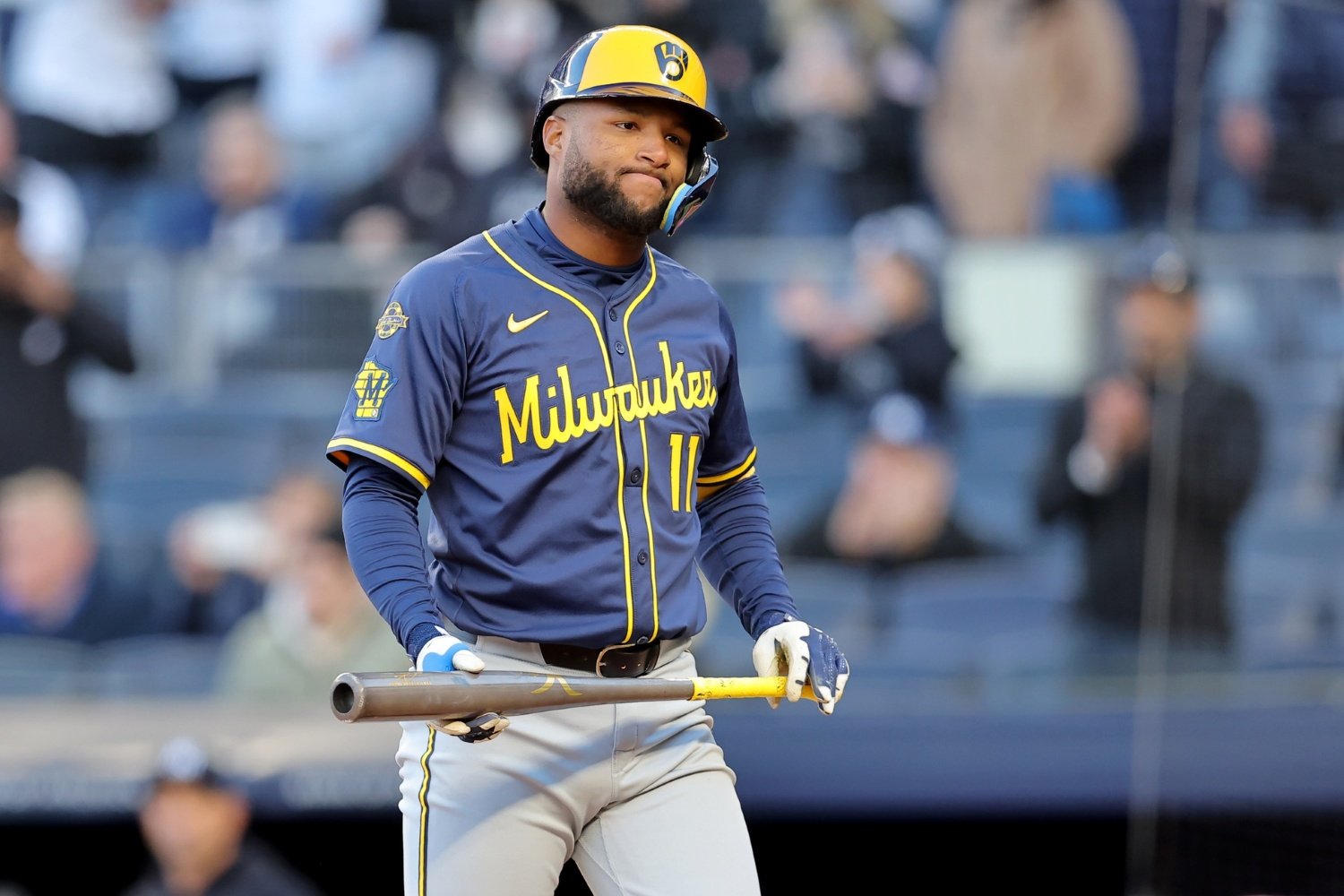 Last April, a game got away from the Brewers when Aaron Judge stuck his sliding mitt approximately 16 feet into the air and deflected a would-be double-play relay throw by shortstop Willy Adames. Tons of slow-motion replays were consulted, in search of a conspiracy by the umpires to overlook intentional interference by Judge, and there's little question that he sticks his elongated, protected paw up when he slides for just that reason, but it seemed as though he just got lucky on that particular play. However, that was no consolation for the team (or for fans). It was a frustrating way to have a game get out of reach, whether the play involved intent or not. In the bottom of the sixth inning of Thursday's season-opening game in the Bronx, the breaks of the game all seemed to go the way of one of the most talented players on the planet again. With two runners on base and one out, Judge smashed a hard ground ball against Brewers reliever Jared Koenig. Third baseman Vinny Capra was in position, guarding the line and playing deep behind the bag. He seemed, momentarily, sure to snare the ball and collect at least one out. If he was especially quick, he might have had a chance to field the ball, beat the onrushing runner to third base, and throw out Judge to kill the home rally and keep the score 2-1 Yankees. None of that got a chance to happen, or even to not happen. Sure, Capra might have bobbled the sharply hit ball, or been unable to change direction fast enough to get to third, or thrown erratically to first base. Had the ball continued on the course it first set, the Brewers still might not have gotten an out on the play. They probably would have, though. Alas, instead of any of those possibilities, the game found the most fiendishly unpredictable option. The ball hit the top of third base on the second hop, bounced right over Capra's head, and trickled down the left-field line for an RBI double. Before the inning was over, it was 4-1 Yankees. The Brewers mounted a rally against ex-teammate Devin Williams in the ninth, but fell short. That hilariously unlucky (or lucky, depending on your perspective) went a long way toward determining the outcome of the game. That's not to say that the Brewers couldn't have avoided that fate, even after the brutal bounce—or before it. Their offense wasn't good enough to win, anyway. Visibly and maddeningly, right after the base hit by Judge, Jackson Chourio missed a chance to hold the runner at third on a high, medium-shallow fly ball by Cody Bellinger. After Isaac Collins pinch-hit for Garrett Mitchell in the previous frame, Pat Murphy realigned his outfield, moving Chourio to right. Chourio played a team-high 45 innings in right during Cactus League play, so no one can claim that Murphy didn't prepare him for this very situation, but the hard-hit, sky-high fly gave the young outfielder trouble. Chourio managed to be a good defensive outfielder in his rookie season, but he got there using his sheer speed and athleticism. When it comes to getting quick reads and taking efficient routes, Chourio still shows his inexperience and has considerable room to improve. On an especially high fly into a bright sky, the young player struggled to properly line himself up with the ball and get behind it. Partially because he wasn't set and lined up optimally, Chourio's throw home carried offline, toward third base. The run scored, extending New York's lead. That was a much more avoidable tally, from the Brewers' perspective. There was a shortfall of execution, rather than a mere stroke of bad luck. Unfortunately, it was the story of the day for Chourio, who also went 0-5 at the plate and struck out five times. For much of this season, he will be the best or second-best player on the field for the Brewers. Even the greats have lousy days, though, and this was one of them for the 21-year-old phenom. His ninth-inning strikeout against Williams (with the tying run in scoring position and one out) was the single biggest play of the game, according to Win Probability Added, and his five punchouts hurt the Brewers' chances of winning by a cumulative 21.6%. Add that foible on the fly ball, and it's fair to say that the team's star was the biggest individual reason they lost. Freddy Peralta also could have been sharper (and smarter) right out of the chute. He threw three straight fastballs to leadoff man Austin Wells in the first inning, and because he missed with the first two, the third was a get-me-over offering that Wells knocked over the shallow wall in right field. Peralta also gave up a too-easy home run to Yankees shortstop Anthony Volpe in the second inning with a fastball that lacked conviction. In general, though, he pitched quite well, and the Brewers clawed their way back to force a tense finish. It's just one game. It wasn't a fun one to lose, especially because crummy luck played such a major role, but it can be shoved well into the rearview if the team bounces back with a win on Saturday. Chourio, at least, is sure to be better.
 -
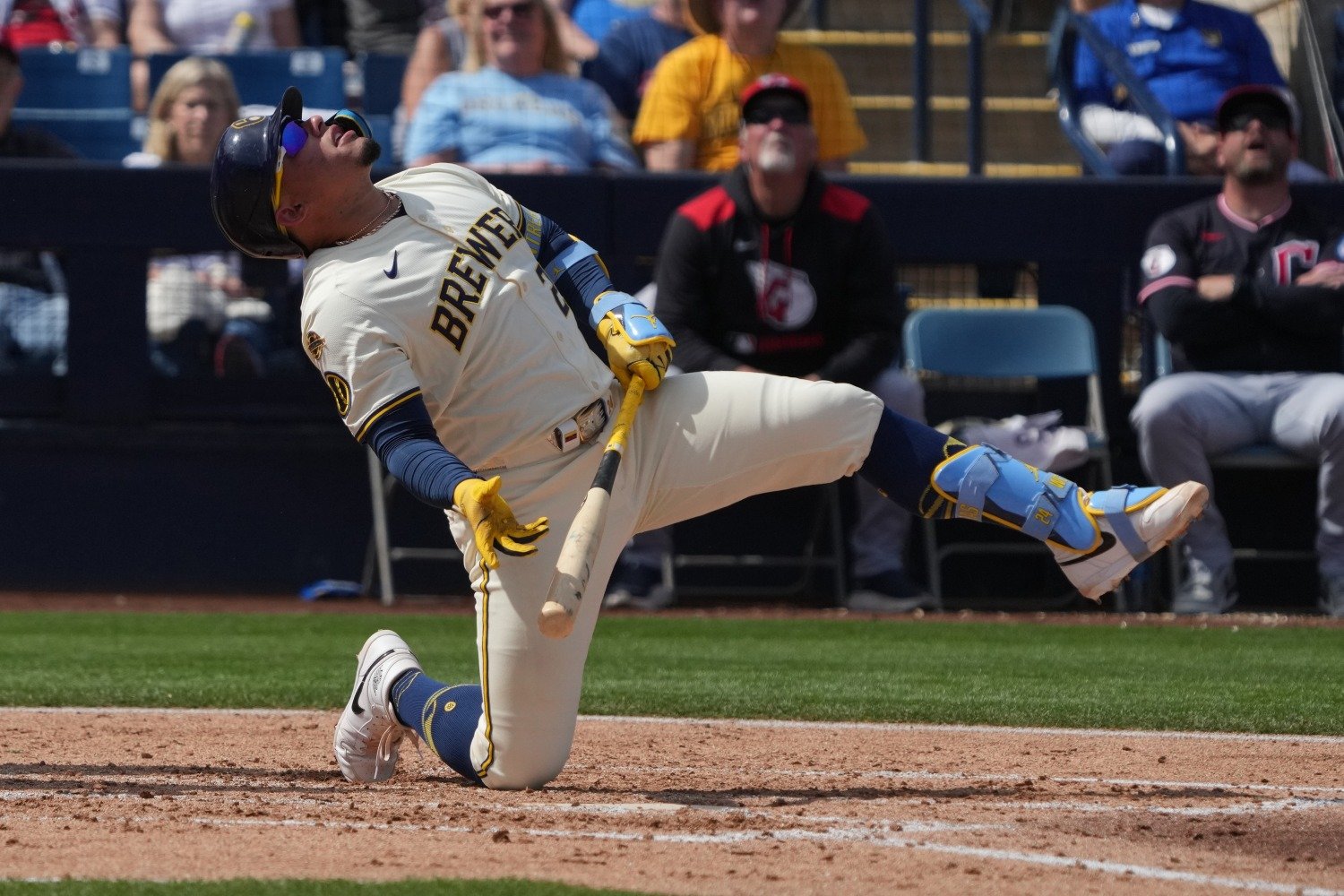 Ok, soothsayers we (probably) aren't, but 33 writers across the DiamondCentric family of sites tried their hands at predicting the season to come. Here's how it shook out. The Standings AL East There's no question that the Red Sox won the winter, among the teams vying for supremacy in the league's traditional powerhouse division. They traded for Garrett Crochet to raise the ceiling on their starting rotation, then signed Walker Buehler to fortify the back end of the same group. The coup, though, came when they won a multi-team bidding war for Alex Bregman. With Bregman and Rafael Devers as the anchors of the lineup, the team is more well-rounded than it's been in the past. They also have three of the best prospects in baseball. That said, this remains an intensely competitive group. The Sox won the plurality of votes from our writers, but every team except the Rays garnered at least one vote. Even after losing the Juan Soto sweepstakes, the Yankees had an active winter. Without Gerrit Cole, they're not the favorites, but New York remains dangerous. It's the Orioles, though, whom our group collectively views as the greatest threat to the Sox. Their young hitters will have to make up for an underwhelming pitching staff, but Baltimore gets Félix Bautista back as the anchor of their bullpen. AL Central We have a lot of Twins familiars in our sample, but in this case, there's no detectable bias in the predictions. Maybe that's the result of many Minnesotans being frustrated by the team's lack of high-visibility additions and uncertainty about the sale of the club, but it's also about the shifting power dynamic throughout the division. Everyone but the White Sox has a chance to win this division, and everyone but the White Sox got some support. The Tigers got nearly as much support as Minnesota, thanks (presumably) to defending AL Cy Young Award winner Tarik Skubal and reunited partner in crime Jack Flaherty. Their offense remains high-variance (to put it mildly, and perhaps too nicely), but Detroit proved they have lots of ways to beat you. The Royals, too, have a superstar at the center of their success, but a bit less depth and a bit more risk of regression than Detroit. Undersold here, perhaps, are the defending champion Guardians. AL West Somewhat stunningly, this is the one division where all five teams earned at least one vote in the survey. I wouldn't have guessed that even the Angels' mothers love them that much, by now, but someone who works here loves them enough to believe they'll shock the world and get back to October. If they do, DIsney should make Angels in the Outfield 2, and every deadbeat dad should be required to relinquish his parental rights to a golden-hearted stranger who really loves their kid. In fairness, though, if there's been any division in the history of baseball the 2025 Angels could actually win, it might be the 2025 AL West. The Astros aren't intentionally leaning into a rebuild, but they might end up in one by the All-Star break. The Rangers seek a rebound after a disappointing defense of their first-ever World Series title. Some major offseason investments have turned the West Sacramento Athletics into a more competent version of themselves, and they're a relocated version of themselves, but they're still very much themselves. The Mariners, meanwhile, did nothing this winter to supplement their roster, but it's a good roster; there's a reason they've won 353 games over the last four years. NL East Juan Soto defines the Mets' offseason, but it's Clay Holmes who might define them as a team and a project. He was fairly expensive, by any standard this side of New York, but he's also unproven in his new role. He's indispensable to the New York starting rotation, and they're a smart and well-equipped outfit. They might very well turn him into the frontline starter they envision, even though his success to date has come as a late-game reliever. The Mets are a very high-upside, very modern, slightly strange outfit. At least that last thing reassures us that some things never change. They're not the favorites in this group, though, at least by the reckoning of our pundits. Instead, the defending champion Phillies and the Atlanta club that backed into (and then fizzled out in) the playoffs last year are more or less the co-favorites. Both of those semi-dynastic teams are getting a little harder to hold together, but each currently has enough youth coming up to reinforce their veteran cores. NL Central Nationally, the Cubs are considered obvious favorites, but it's the Brewers who have had the run of the place in recent years. That could certainly change, but it's not guaranteed to be a change in favor of the Cubs. The Reds hired Terry Francona last fall to increase the viability of their own designs on the division, and will have the benefit of dynamic infielder Matt McLain back after he missed 2024 with various injuries. Even the Pirates have support in some corners, presumably because Paul Skenes is Paul Skenes. He won't be enough to get that anemic offense over the hump this year, but the division just gets more chaotic by the year. Our group still feels the Cubs are most likely to win, but the voting reflects the unpredictability of the whole network. NL West So many of the divisions yielded fascinating vote distributions. So many of the divisions offer at least some degree of fascination. This one is the exception. I can't even bring myself to show you this chart. It's just a circle. All 33 writers voted for the Dodgers, which is really the only rational prediction. The defending World Series champions added the defending NL Cy Young Award winner, re-signed their slugging corner outfielder and brought in another. They won the non-monetary bidding war for Roki Sasaki and the very monetary bidding war for both Tanner Scott and Kirby Yates. There's no other team in the league who can match them for pure talent. That doesn't mean they'll win it all, but expecting anyone else to win—at least in the division, over 162 games—would be foolish. AL Wild Card Berths With the Rangers, the Red Sox, and the Twins as our projected division winners on the junior circuit, the competition for the other three places in the American League playoff bracket still looks intense. The AL is such a muddle that only the barely-lovable Angels and the White Sox failed to secure at least one vote as a playoff hopeful. My biggest takeaways are: Collective confidence in the Rays is surprisingly low. After not getting any votes as division champions, they also only received five tallies as a Wild Card contender. They're always easy to underrate, but this also seems fair. It's hard to argue that they're better than any of the Orioles, Red Sox, and Yankees, and once you're fourth in your division, there's zero margin for error on the path to the postseason. Our writers see the Rangers either as a boom or as a bust. Unlike the Twins (7) and Red Sox (9), Texas only got four votes as a Wild Card team. If they don't win the division, our staff seems to think, they're out altogether. NL Wild Card Berths As a group, we're much more confident about who will take the remaining spots after the division winners in the NL. New York, Philadelphia and Arizona are the kinds of teams you're used to seeing win division crowns, and although none of them are technically likely to do so this year, we still view them as having a very strong chance to make the tournament. That's bad news for our writers and fans of the Cubs and Brewers, since the lane for either of them to make it seems narrow—but by the same token, that raises the stakes of the showdown between those two teams for the NL Central title. We largely view the league as follows: Locks for October: Dodgers, Atlanta, Mets, Phillies Very Likely, But Frozen Out from Certitude by Dodgers: Diamondbacks Others in the Mix: Cubs, Brewers, Padres, Reds If it's just one playoff spot to divide between those last four teams, it'll have to be the winner of the Central, which is bad news for the Padres. Pennant Winners We asked our writers to predict who will play in the World Series, and as you'd expect, it was a true free-for-all in the wide-open American League. In the NL, by contrast, chalk prevails—although several brave souls dared pick against the Dodgers. Since the legend doesn't quite show all the teams who got support, here's how voting broke down on the AL side: Red Sox/Orioles: 9 votes each Yankees/Rangers: 5 votes each Royals/Tigers: 2 votes each Twins: 1 vote This chart is absolutely screaming for the first Mariners pennant ever, or the Guardians to sneak through somehow. It's the most logical distribution, though, based on the makeup of this weird, wild circuit. Maybe it's best to just think of the AL Central collectively as a wedge the same size as those of the Yankees and Rangers. This captures the difference between the two league dynamics nicely, doesn't it? No chaos here. The Dodgers got 25 of the 33 votes; the Phillies took half of the remainder; and the Brewers, Mets, Diamondbacks and Atlanta claimed just one vote apiece. It's the Dodgers' world. We're all just living in it. Can the Dodgers Repeat? Next, naturally, we asked who will win the Series. Given that our voting shows a lack of profound faith in any particular American League team, it's probably not a surprise that writers also showed a strong belief that (should they get that far) the Dodgers will finish the job in the Fall Classic. Of the 25 voters who said they;ll win the pennant, 19 see Los Angeles taking home the piece of metal at the end of the season. If they don't, things get more interesting. Somehow, the Phillies got more support (five votes) as Series champs than as pennant winners (4). I'd say we'll have a stern talk with the writer who chose them to do the former without the latter, but who knows? Maybe they're projecting some kind of vacated championship situation. It's that, or Google Forms is a frightfully limited piece of software. You decide. Also receiving support as predicted champions: Red Sox - 3 Orioles - 2 Yankees, Blue Jays, Mets, Brewers - 1 As was true with the Twins, I'll remark that our heavy representation of Cubs knowers didn't seem to engender undue confidence in them. No one selected Chicago to win the pennant, let alone the Series. Awards We got a wide variety of answers on who will win each MVP award, including a whopping 12 different players in the American League. Only three players got three or more votes, though, and one lapped the field: Bobby Witt Jr.: 13 votes Aaron Judge: 4 Gunnar Henderson: 3 Julio Rodríguez, Mike Trout, Corey Seager: 2 Adley Rutschman, Alex Bregman, Brent Rooker, José Ramírez, Rafael Devers, Vladimir Guerrero Jr.: 1 In the NL, the field was more limited, because it was even more dominated by the favorite: Shohei Ohtani: 19 votes Juan Soto: 4 Bryce Harper, Kyle Tucker, William Contreras: 2 Elly De La Cruz, Francisco Lindor, Ketel Marte: 1 Since Ohtani is (ostensibly) going to pitch again this year, he really is hard to pick against. That Witt gained such a commanding upper hand (in our estimation) over Judge is a mild surprise, but then, Judge will turn 33 years old in April. It might be about time for age to lend Witt the edge. Another 12 different people received votes for each Cy Young Award, and again, there was a much more even mix of opinions in the AL than in the NL. American League Garrett Crochet: 7 votes Logan Gilbert, Tarik Skubal: 6 Cole Ragans: 4 Eight others: 1 each National League Paul Skenes: 14 votes Zack Wheeler: 5 Shota Imanaga, Corbin Burnes, Spencer Strider: 2 Seven others: 1 each Crochet's status as the favorite is in keeping with our group's general confidence about the Red Sox. That Skubal and Ragans got so much support is a good reminder of how tough (if only inconsistently so) the AL Central is. Catch either of those guys, Seth Lugo, Joe Ryan, Pablo López, Bailey Ober, or Tanner Bibee, and you're in for a long 0-4 day. Skenes's phenom status is untarnished, so far. If he can stay healthy, it's not at all unfair to expect that he'll contend for this award. However, he'd be the first player to actually win it in their first full season since TIm Lincecum in 2008. The Rookie of the Year votes were equally interesting and even more varied, but there are too many names to walk through all of them. Let it suffice to say that Jackson Jobe (5 votes), Roman Anthony and Jasson Dominguez (4 each) are the co-favorites in the AL. Roki Sasaki (13 votes) is a relatively prohibitive favorite in the NL, but Matt Shaw (6) and Dylan Crews (5) are both viable candidates, too. Sasaki seems to have some important hurdles to clear en route to becoming the frontline starter the Dodgers expect him to be, but his raw stuff is too good to ignore—not least because we've already seen how well it plays against high-level pros in Japan. Alex Cora (6 votes) has the narrowest possible lead over A.J. Hinch and the Mariners' Dan Wilson (5 apiece) in the voting for the AL Manager of the Year, while Craig Counsell (8 votes) beat out Terry Francona (5) and Torey Lovullo (4) more handily in the NL. No matter what the question, our group is more certain of the answers in the National League—not because we're any less familiar with the American, but because that league is so much more balanced and (therefore) unpredictable right now. When it comes to the Manager of the Year Award, specifically, though, the right answer might be the one one writer gave to both league's questions: "Who cares?" The season ahead will be full of extraordinary performances by talented young players. and with good races in tight divisions. These predictions won't all come true, but trying to guess what's coming is part of the fun of this game. The good news is, starting Thursday, the bigger, more constant fun of the game is on tap: Games. Glorious, everyday, non-hypothetical games. Happy Opening Day.
 -
Gather round, read it here first. The season will go like this, see. Image courtesy of © Rick Scuteri-Imagn Images Ok, soothsayers we (probably) aren't, but 33 writers across the DiamondCentric family of sites tried their hands at predicting the season to come. Here's how it shook out. The Standings AL East There's no question that the Red Sox won the winter, among the teams vying for supremacy in the league's traditional powerhouse division. They traded for Garrett Crochet to raise the ceiling on their starting rotation, then signed Walker Buehler to fortify the back end of the same group. The coup, though, came when they won a multi-team bidding war for Alex Bregman. With Bregman and Rafael Devers as the anchors of the lineup, the team is more well-rounded than it's been in the past. They also have three of the best prospects in baseball. That said, this remains an intensely competitive group. The Sox won the plurality of votes from our writers, but every team except the Rays garnered at least one vote. Even after losing the Juan Soto sweepstakes, the Yankees had an active winter. Without Gerrit Cole, they're not the favorites, but New York remains dangerous. It's the Orioles, though, whom our group collectively views as the greatest threat to the Sox. Their young hitters will have to make up for an underwhelming pitching staff, but Baltimore gets Félix Bautista back as the anchor of their bullpen. AL Central We have a lot of Twins familiars in our sample, but in this case, there's no detectable bias in the predictions. Maybe that's the result of many Minnesotans being frustrated by the team's lack of high-visibility additions and uncertainty about the sale of the club, but it's also about the shifting power dynamic throughout the division. Everyone but the White Sox has a chance to win this division, and everyone but the White Sox got some support. The Tigers got nearly as much support as Minnesota, thanks (presumably) to defending AL Cy Young Award winner Tarik Skubal and reunited partner in crime Jack Flaherty. Their offense remains high-variance (to put it mildly, and perhaps too nicely), but Detroit proved they have lots of ways to beat you. The Royals, too, have a superstar at the center of their success, but a bit less depth and a bit more risk of regression than Detroit. Undersold here, perhaps, are the defending champion Guardians. AL West Somewhat stunningly, this is the one division where all five teams earned at least one vote in the survey. I wouldn't have guessed that even the Angels' mothers love them that much, by now, but someone who works here loves them enough to believe they'll shock the world and get back to October. If they do, DIsney should make Angels in the Outfield 2, and every deadbeat dad should be required to relinquish his parental rights to a golden-hearted stranger who really loves their kid. In fairness, though, if there's been any division in the history of baseball the 2025 Angels could actually win, it might be the 2025 AL West. The Astros aren't intentionally leaning into a rebuild, but they might end up in one by the All-Star break. The Rangers seek a rebound after a disappointing defense of their first-ever World Series title. Some major offseason investments have turned the West Sacramento Athletics into a more competent version of themselves, and they're a relocated version of themselves, but they're still very much themselves. The Mariners, meanwhile, did nothing this winter to supplement their roster, but it's a good roster; there's a reason they've won 353 games over the last four years. NL East Juan Soto defines the Mets' offseason, but it's Clay Holmes who might define them as a team and a project. He was fairly expensive, by any standard this side of New York, but he's also unproven in his new role. He's indispensable to the New York starting rotation, and they're a smart and well-equipped outfit. They might very well turn him into the frontline starter they envision, even though his success to date has come as a late-game reliever. The Mets are a very high-upside, very modern, slightly strange outfit. At least that last thing reassures us that some things never change. They're not the favorites in this group, though, at least by the reckoning of our pundits. Instead, the defending champion Phillies and the Atlanta club that backed into (and then fizzled out in) the playoffs last year are more or less the co-favorites. Both of those semi-dynastic teams are getting a little harder to hold together, but each currently has enough youth coming up to reinforce their veteran cores. NL Central Nationally, the Cubs are considered obvious favorites, but it's the Brewers who have had the run of the place in recent years. That could certainly change, but it's not guaranteed to be a change in favor of the Cubs. The Reds hired Terry Francona last fall to increase the viability of their own designs on the division, and will have the benefit of dynamic infielder Matt McLain back after he missed 2024 with various injuries. Even the Pirates have support in some corners, presumably because Paul Skenes is Paul Skenes. He won't be enough to get that anemic offense over the hump this year, but the division just gets more chaotic by the year. Our group still feels the Cubs are most likely to win, but the voting reflects the unpredictability of the whole network. NL West So many of the divisions yielded fascinating vote distributions. So many of the divisions offer at least some degree of fascination. This one is the exception. I can't even bring myself to show you this chart. It's just a circle. All 33 writers voted for the Dodgers, which is really the only rational prediction. The defending World Series champions added the defending NL Cy Young Award winner, re-signed their slugging corner outfielder and brought in another. They won the non-monetary bidding war for Roki Sasaki and the very monetary bidding war for both Tanner Scott and Kirby Yates. There's no other team in the league who can match them for pure talent. That doesn't mean they'll win it all, but expecting anyone else to win—at least in the division, over 162 games—would be foolish. AL Wild Card Berths With the Rangers, the Red Sox, and the Twins as our projected division winners on the junior circuit, the competition for the other three places in the American League playoff bracket still looks intense. The AL is such a muddle that only the barely-lovable Angels and the White Sox failed to secure at least one vote as a playoff hopeful. My biggest takeaways are: Collective confidence in the Rays is surprisingly low. After not getting any votes as division champions, they also only received five tallies as a Wild Card contender. They're always easy to underrate, but this also seems fair. It's hard to argue that they're better than any of the Orioles, Red Sox, and Yankees, and once you're fourth in your division, there's zero margin for error on the path to the postseason. Our writers see the Rangers either as a boom or as a bust. Unlike the Twins (7) and Red Sox (9), Texas only got four votes as a Wild Card team. If they don't win the division, our staff seems to think, they're out altogether. NL Wild Card Berths As a group, we're much more confident about who will take the remaining spots after the division winners in the NL. New York, Philadelphia and Arizona are the kinds of teams you're used to seeing win division crowns, and although none of them are technically likely to do so this year, we still view them as having a very strong chance to make the tournament. That's bad news for our writers and fans of the Cubs and Brewers, since the lane for either of them to make it seems narrow—but by the same token, that raises the stakes of the showdown between those two teams for the NL Central title. We largely view the league as follows: Locks for October: Dodgers, Atlanta, Mets, Phillies Very Likely, But Frozen Out from Certitude by Dodgers: Diamondbacks Others in the Mix: Cubs, Brewers, Padres, Reds If it's just one playoff spot to divide between those last four teams, it'll have to be the winner of the Central, which is bad news for the Padres. Pennant Winners We asked our writers to predict who will play in the World Series, and as you'd expect, it was a true free-for-all in the wide-open American League. In the NL, by contrast, chalk prevails—although several brave souls dared pick against the Dodgers. Since the legend doesn't quite show all the teams who got support, here's how voting broke down on the AL side: Red Sox/Orioles: 9 votes each Yankees/Rangers: 5 votes each Royals/Tigers: 2 votes each Twins: 1 vote This chart is absolutely screaming for the first Mariners pennant ever, or the Guardians to sneak through somehow. It's the most logical distribution, though, based on the makeup of this weird, wild circuit. Maybe it's best to just think of the AL Central collectively as a wedge the same size as those of the Yankees and Rangers. This captures the difference between the two league dynamics nicely, doesn't it? No chaos here. The Dodgers got 25 of the 33 votes; the Phillies took half of the remainder; and the Brewers, Mets, Diamondbacks and Atlanta claimed just one vote apiece. It's the Dodgers' world. We're all just living in it. Can the Dodgers Repeat? Next, naturally, we asked who will win the Series. Given that our voting shows a lack of profound faith in any particular American League team, it's probably not a surprise that writers also showed a strong belief that (should they get that far) the Dodgers will finish the job in the Fall Classic. Of the 25 voters who said they;ll win the pennant, 19 see Los Angeles taking home the piece of metal at the end of the season. If they don't, things get more interesting. Somehow, the Phillies got more support (five votes) as Series champs than as pennant winners (4). I'd say we'll have a stern talk with the writer who chose them to do the former without the latter, but who knows? Maybe they're projecting some kind of vacated championship situation. It's that, or Google Forms is a frightfully limited piece of software. You decide. Also receiving support as predicted champions: Red Sox - 3 Orioles - 2 Yankees, Blue Jays, Mets, Brewers - 1 As was true with the Twins, I'll remark that our heavy representation of Cubs knowers didn't seem to engender undue confidence in them. No one selected Chicago to win the pennant, let alone the Series. Awards We got a wide variety of answers on who will win each MVP award, including a whopping 12 different players in the American League. Only three players got three or more votes, though, and one lapped the field: Bobby Witt Jr.: 13 votes Aaron Judge: 4 Gunnar Henderson: 3 Julio Rodríguez, Mike Trout, Corey Seager: 2 Adley Rutschman, Alex Bregman, Brent Rooker, José Ramírez, Rafael Devers, Vladimir Guerrero Jr.: 1 In the NL, the field was more limited, because it was even more dominated by the favorite: Shohei Ohtani: 19 votes Juan Soto: 4 Bryce Harper, Kyle Tucker, William Contreras: 2 Elly De La Cruz, Francisco Lindor, Ketel Marte: 1 Since Ohtani is (ostensibly) going to pitch again this year, he really is hard to pick against. That Witt gained such a commanding upper hand (in our estimation) over Judge is a mild surprise, but then, Judge will turn 33 years old in April. It might be about time for age to lend Witt the edge. Another 12 different people received votes for each Cy Young Award, and again, there was a much more even mix of opinions in the AL than in the NL. American League Garrett Crochet: 7 votes Logan Gilbert, Tarik Skubal: 6 Cole Ragans: 4 Eight others: 1 each National League Paul Skenes: 14 votes Zack Wheeler: 5 Shota Imanaga, Corbin Burnes, Spencer Strider: 2 Seven others: 1 each Crochet's status as the favorite is in keeping with our group's general confidence about the Red Sox. That Skubal and Ragans got so much support is a good reminder of how tough (if only inconsistently so) the AL Central is. Catch either of those guys, Seth Lugo, Joe Ryan, Pablo López, Bailey Ober, or Tanner Bibee, and you're in for a long 0-4 day. Skenes's phenom status is untarnished, so far. If he can stay healthy, it's not at all unfair to expect that he'll contend for this award. However, he'd be the first player to actually win it in their first full season since TIm Lincecum in 2008. The Rookie of the Year votes were equally interesting and even more varied, but there are too many names to walk through all of them. Let it suffice to say that Jackson Jobe (5 votes), Roman Anthony and Jasson Dominguez (4 each) are the co-favorites in the AL. Roki Sasaki (13 votes) is a relatively prohibitive favorite in the NL, but Matt Shaw (6) and Dylan Crews (5) are both viable candidates, too. Sasaki seems to have some important hurdles to clear en route to becoming the frontline starter the Dodgers expect him to be, but his raw stuff is too good to ignore—not least because we've already seen how well it plays against high-level pros in Japan. Alex Cora (6 votes) has the narrowest possible lead over A.J. Hinch and the Mariners' Dan Wilson (5 apiece) in the voting for the AL Manager of the Year, while Craig Counsell (8 votes) beat out Terry Francona (5) and Torey Lovullo (4) more handily in the NL. No matter what the question, our group is more certain of the answers in the National League—not because we're any less familiar with the American, but because that league is so much more balanced and (therefore) unpredictable right now. When it comes to the Manager of the Year Award, specifically, though, the right answer might be the one one writer gave to both league's questions: "Who cares?" The season ahead will be full of extraordinary performances by talented young players. and with good races in tight divisions. These predictions won't all come true, but trying to guess what's coming is part of the fun of this game. The good news is, starting Thursday, the bigger, more constant fun of the game is on tap: Games. Glorious, everyday, non-hypothetical games. Happy Opening Day. View full article
-
Elvis Peguero's Sinker is in the Best Shape of Its Life
Matthew Trueblood posted an article in Brewers
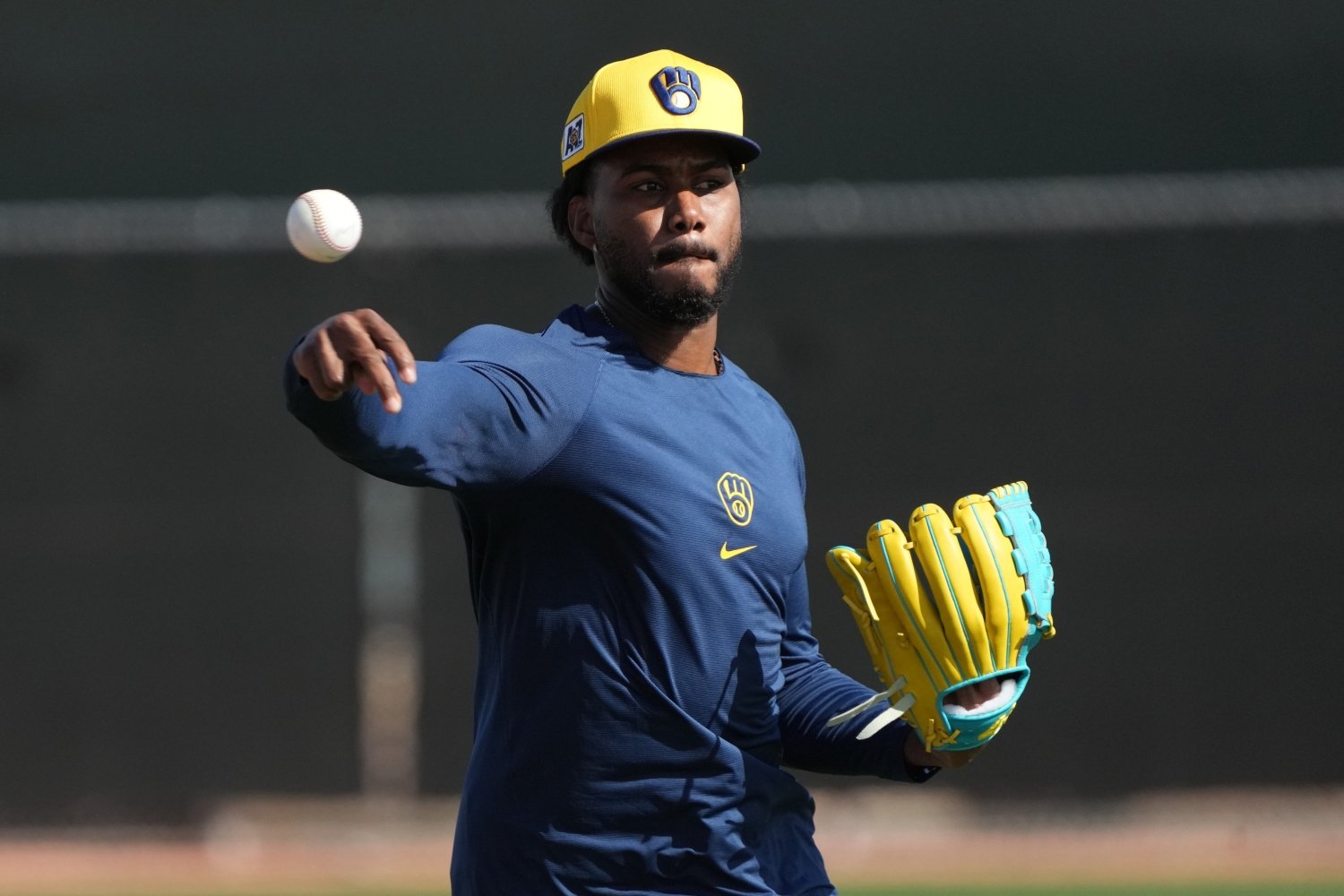 In 2023, Elvis Peguero emerged as a vital and trusted member of the Milwaukee Brewers' bullpen, thanks to an exceptionally heavy sinker and a slider that paired perfectly with it. He made 59 appearances, and while neither his ERA (3.38) nor his strikeout and walk rates would make your eyes pop, he was a highly valuable medium-leverage middle reliever. He put up a 91 DRA- (where 100 is average and lower is better) and a sparkling 1.4 Win Probability Added figure. Last year was a different story. Peguero actually had a better ERA, but that number was a liar. His opponents' OPS rose by .100, to .717. His WPA was -0.8. His strikeout and walk rates each crept in the wrong direction, leaving him with an unimpressive, untrustworthy 101 DRA-. Some of that can be put down to usage; Pat Murphy took a little time to figure out how best to deploy Peguero's unique skill set. Much of it, though, is about his sinker not sinking. The thing that unlocked Peguero and turned him into such a weapon when he joined the Brewers in 2023 was the weight of his sinker—and specifically, his ability to make it plunge, often inducing downward vertical break. That's almost unheard of for fastballs of any kind, save from submariners, but Peguero threw 140 sinkers at least 93 miles per hour, with an IVB under 1 inch and at least 13 inches of arm-side run in 2023, out of 524 total sinkers. In 2024, he just couldn't find that same sink. His lateral movement was ok, and his velocity was fine, but only 15 of his 480 sinkers met those same criteria, because the ball tended not to dip as sharply. As you can see, that's changed this spring. Already, in just a few Statcast-tracked outings in spring training, Peguero has thrown five such sinkers. He's back to throwing a bowling ball, at least at times. Pair that with considerably more depth on the slider, and it's pretty easy to make the case that he's better off than ever, in terms of pitch shapes and matchups with opposing hitters. He'll have to throw strikes, of course, and that's remained a challenge. His velocity is also a concern. Peguero has thrown 32 tracked sinkers this spring, and he's down from just under 97 mph in 2024 to 94.6. It's not as easy to overwhelm hitters and force weak contact with that much less sheer speed. On balance, though, the shape is more important. It's the shape that has made Peguero so valuable, when he's been on his game, and that aspect of his fastball is back in 2025. If he can land his two key offerings in the zone just a bit more consistently, he could regain his place of primacy within the Brewers' relief corps this year—and help the team continue to outperform projections.
 -
The righty reliever's velocity is down this spring, but a funny thing happened on the way to oblivion: his signature sinker got its heaviness back. Image courtesy of © Rick Scuteri-Imagn Images In 2023, Elvis Peguero emerged as a vital and trusted member of the Milwaukee Brewers' bullpen, thanks to an exceptionally heavy sinker and a slider that paired perfectly with it. He made 59 appearances, and while neither his ERA (3.38) nor his strikeout and walk rates would make your eyes pop, he was a highly valuable medium-leverage middle reliever. He put up a 91 DRA- (where 100 is average and lower is better) and a sparkling 1.4 Win Probability Added figure. Last year was a different story. Peguero actually had a better ERA, but that number was a liar. His opponents' OPS rose by .100, to .717. His WPA was -0.8. His strikeout and walk rates each crept in the wrong direction, leaving him with an unimpressive, untrustworthy 101 DRA-. Some of that can be put down to usage; Pat Murphy took a little time to figure out how best to deploy Peguero's unique skill set. Much of it, though, is about his sinker not sinking. The thing that unlocked Peguero and turned him into such a weapon when he joined the Brewers in 2023 was the weight of his sinker—and specifically, his ability to make it plunge, often inducing downward vertical break. That's almost unheard of for fastballs of any kind, save from submariners, but Peguero threw 140 sinkers at least 93 miles per hour, with an IVB under 1 inch and at least 13 inches of arm-side run in 2023, out of 524 total sinkers. In 2024, he just couldn't find that same sink. His lateral movement was ok, and his velocity was fine, but only 15 of his 480 sinkers met those same criteria, because the ball tended not to dip as sharply. As you can see, that's changed this spring. Already, in just a few Statcast-tracked outings in spring training, Peguero has thrown five such sinkers. He's back to throwing a bowling ball, at least at times. Pair that with considerably more depth on the slider, and it's pretty easy to make the case that he's better off than ever, in terms of pitch shapes and matchups with opposing hitters. He'll have to throw strikes, of course, and that's remained a challenge. His velocity is also a concern. Peguero has thrown 32 tracked sinkers this spring, and he's down from just under 97 mph in 2024 to 94.6. It's not as easy to overwhelm hitters and force weak contact with that much less sheer speed. On balance, though, the shape is more important. It's the shape that has made Peguero so valuable, when he's been on his game, and that aspect of his fastball is back in 2025. If he can land his two key offerings in the zone just a bit more consistently, he could regain his place of primacy within the Brewers' relief corps this year—and help the team continue to outperform projections. View full article
-
The Joy and Value of William Contreras Stepping in the Bucket
Matthew Trueblood posted an article in Brewers
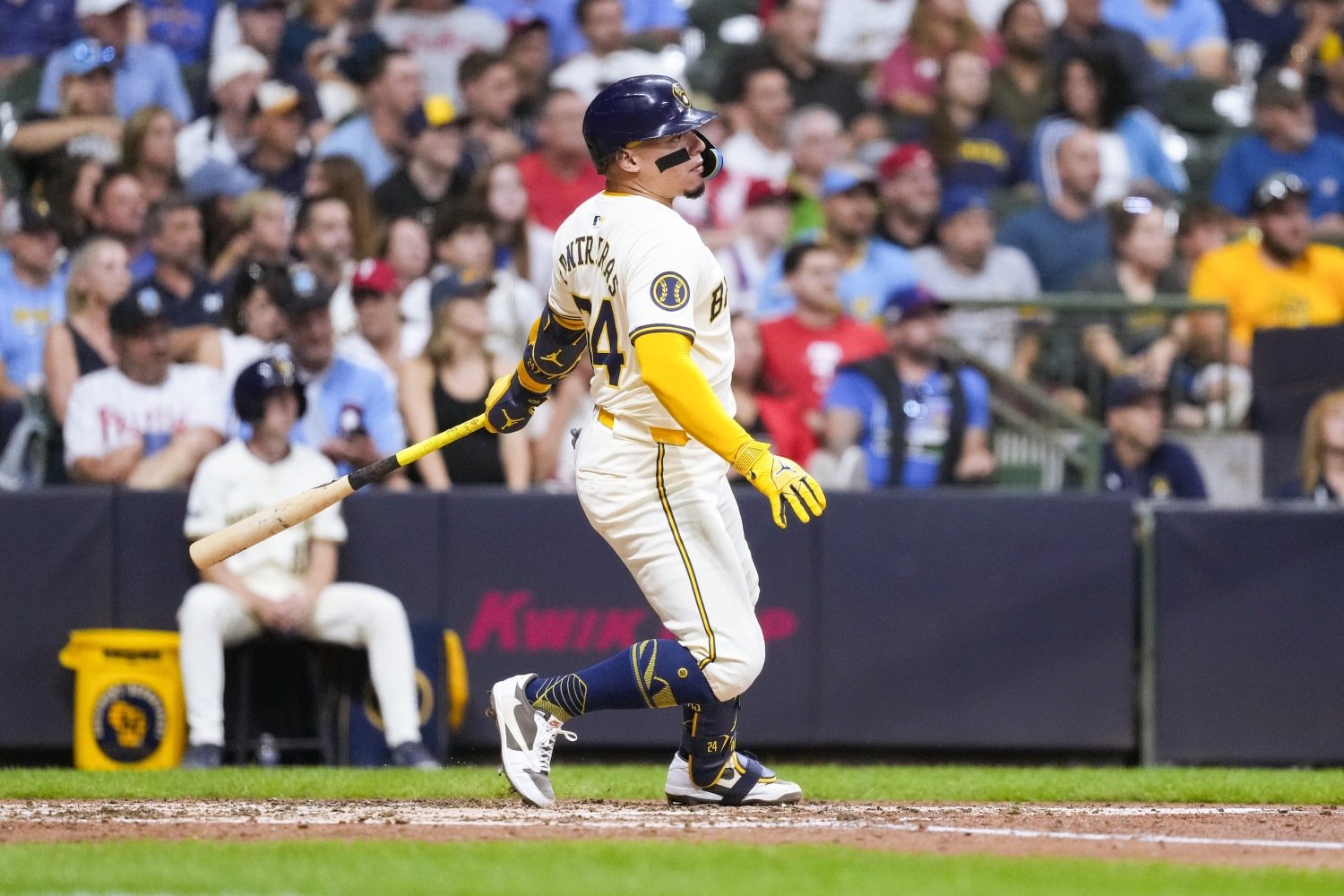 There are many fun things about watching William Contreras hit. He makes wonderful adjustments within games, and within at-bats. He selects strategic moments at which to exploit the positioning of the defense by shoving the ball effortlessly through an open hole on the right side of the infield. When he comes up big (especially if it's with a home run late in a close game), he emotes gloriously. The very best thing about his style in the box, though, is the way he steps all the way into the bucket. dk1BUjRfWGw0TUFRPT1fQlFrQ1hBZFZYMUVBQzFOV1VnQUFBUVFEQUFNTlVsVUFBUWRVQndNRlZBTlhCZ1lE.mp4 Ok, that's not "stepping in the bucket" the way coaches help 9-year-olds learn not to do. It will come as no surprise to you to learn that you can't hit at all in the major leagues doing things that they rush to coach out of you at age 9. Nonetheless, Contreras's swing signature is unique, because he opens his front hip earlier and more aggressively than just about any other hitter in baseball—even if it sometimes means taking his foot with him. You can see the way his stride pulls him open (with his hands stubbornly and strongly waiting back, creating the monumental torque required to hit a ball the way he does in the clip above), though, and now that Baseball Savant has posted leaderboards and graphics showing where players stand in the batter's box, how they stride, and where they generally make contact with the pitch, we can directly visualize it in a new way, too. At first glance, this doesn't look terribly extreme. Contreras takes a long, aggressive stride, and he opens up a bit, but we knew that. One thing the image might not quite capture, by design, is the true angle of his front foot at the point when he makes contact. Often, he seems to be even more open than that with his front toe, which makes it look like he's pulling off the ball more than (as we can see) he truly does. Still, relatively speaking, the above image is extreme. When you compare Contreras to other players who set up in the box much the way he does and make contact at a similar point relative to the front edge of home plate, you don't find others who stride that far open. Here are the same images for four of the most similar right-handed batters to Contreras in those regards: Jonathan India Alex Bregman Salvador Perez Yainer Díaz None of them (and none of the other 20 or so righties with similar data in this regard) opens up with their front foot the way Contreras does, and only Salvador Perez ends up with his front foot outside his back foot at the moment of contact. Almost all hitters want to be "closed", when it comes to the relationship between their feet, when they actually hit the ball. It's how they make sure they're not pulling off it, generating weak contact off the end of the bat or giving up the outside corner altogether. Contreras is unique. There are drawbacks to this style of swing. Most hitters favor striding into the pitch a bit, because it allows them to see the ball slightly longer and gives them more margin for error in the hitting zone. You have to be a bit of a freak to get away with being as wildly aggressive—in terms of moves, if not in terms of swing decisions—as Contreras is. That's why you hear Pat Murphy (among others) speak with such head-shaking admiration about the slugging backstop. He manages to make some of the hardest contact in baseball, and to consistently generate those high exit velocities, without swinging and missing very much, He does it with a swing that wouldn't work for most hitters, because it requires such a combination of explosive movement, body control, and intelligent preparation for what the opposing pitcher will try to do. You wouldn't teach this way of swinging to a kid, because the kid would probably whiff at everything on the outer half of the plate and not get enough power in the exchange to be remotely worth it. Contreras is such a gifted hitter, though, that he can use this unique movement pattern to maximize his own ability to consistently swing hard and hammer the ball. Now, we can see the extremes he achieves in a new way, and understand what sets him apart from other batters who can't quite imitate him.
 -
The Brewers' All-Star catcher has the very first habit your Little League coach tried to help you drop. Call that coach and tell them they cost you your shot at fame and riches. Image courtesy of © Jeff Hanisch-Imagn Images There are many fun things about watching William Contreras hit. He makes wonderful adjustments within games, and within at-bats. He selects strategic moments at which to exploit the positioning of the defense by shoving the ball effortlessly through an open hole on the right side of the infield. When he comes up big (especially if it's with a home run late in a close game), he emotes gloriously. The very best thing about his style in the box, though, is the way he steps all the way into the bucket. dk1BUjRfWGw0TUFRPT1fQlFrQ1hBZFZYMUVBQzFOV1VnQUFBUVFEQUFNTlVsVUFBUWRVQndNRlZBTlhCZ1lE.mp4 Ok, that's not "stepping in the bucket" the way coaches help 9-year-olds learn not to do. It will come as no surprise to you to learn that you can't hit at all in the major leagues doing things that they rush to coach out of you at age 9. Nonetheless, Contreras's swing signature is unique, because he opens his front hip earlier and more aggressively than just about any other hitter in baseball—even if it sometimes means taking his foot with him. You can see the way his stride pulls him open (with his hands stubbornly and strongly waiting back, creating the monumental torque required to hit a ball the way he does in the clip above), though, and now that Baseball Savant has posted leaderboards and graphics showing where players stand in the batter's box, how they stride, and where they generally make contact with the pitch, we can directly visualize it in a new way, too. At first glance, this doesn't look terribly extreme. Contreras takes a long, aggressive stride, and he opens up a bit, but we knew that. One thing the image might not quite capture, by design, is the true angle of his front foot at the point when he makes contact. Often, he seems to be even more open than that with his front toe, which makes it look like he's pulling off the ball more than (as we can see) he truly does. Still, relatively speaking, the above image is extreme. When you compare Contreras to other players who set up in the box much the way he does and make contact at a similar point relative to the front edge of home plate, you don't find others who stride that far open. Here are the same images for four of the most similar right-handed batters to Contreras in those regards: Jonathan India Alex Bregman Salvador Perez Yainer Díaz None of them (and none of the other 20 or so righties with similar data in this regard) opens up with their front foot the way Contreras does, and only Salvador Perez ends up with his front foot outside his back foot at the moment of contact. Almost all hitters want to be "closed", when it comes to the relationship between their feet, when they actually hit the ball. It's how they make sure they're not pulling off it, generating weak contact off the end of the bat or giving up the outside corner altogether. Contreras is unique. There are drawbacks to this style of swing. Most hitters favor striding into the pitch a bit, because it allows them to see the ball slightly longer and gives them more margin for error in the hitting zone. You have to be a bit of a freak to get away with being as wildly aggressive—in terms of moves, if not in terms of swing decisions—as Contreras is. That's why you hear Pat Murphy (among others) speak with such head-shaking admiration about the slugging backstop. He manages to make some of the hardest contact in baseball, and to consistently generate those high exit velocities, without swinging and missing very much, He does it with a swing that wouldn't work for most hitters, because it requires such a combination of explosive movement, body control, and intelligent preparation for what the opposing pitcher will try to do. You wouldn't teach this way of swinging to a kid, because the kid would probably whiff at everything on the outer half of the plate and not get enough power in the exchange to be remotely worth it. Contreras is such a gifted hitter, though, that he can use this unique movement pattern to maximize his own ability to consistently swing hard and hammer the ball. Now, we can see the extremes he achieves in a new way, and understand what sets him apart from other batters who can't quite imitate him. View full article
-
Statcast offers the public data on how batters set up and address the baseball now. It's a frontier for numbers nerds, but also a new world of opportunity to discover hidden aspects of the game. Image courtesy of © Rick Scuteri-Imagn Images Early in 2024, Jackson Chourio was in trouble. It wasn't all that bad, really. He'd already signed a contract worth over $80 million, and the Brewers had promoted him to the majors after just a handful of looks at Triple-A pitching. Everyone would understand if he needed more time in the minors—and even that wasn't necessarily imminent. As the rookie limped from a lousy April and was mired in a mediocre May, though, his playing time began to dwindle. He needed to start getting after big-league pitchers with the same confidence and explosiveness that sent him skyrocketing to the parent club in the first place. So, he spread out a little bit. As of Sunday night, Baseball Savant offers new data on where players set up in the batter's box; how they move throughout their swing; and where they tend to make contact with the ball. It's long-awaited information, some version of which teams have been using for years, and it's a kind of culmination of the third wave of sabermetrics. The first goal for statheads was to convince baseball people to care about the right things—to draw the proper chains from cause to effect and finally learn how baseball games are actually one. In the second wave of the movement, though, a wealth of new information became available, challenging those math geeks to do something impressive with them. Tabulated data on how defenders were deployed, pitch-by-pitch outcomes, and even the movement of the ball in space came relatively quickly, one after another, and smart people who wanted to keep sounding smart had to go from doing basic statistics work to (at times) fairly advanced physics calculations. Now, we're firmly into a third category. Cameras can map not just the flight characteristics of the ball, but tons of small but crucial details about how the players move, as well. That means that teams can spot mechanical failures, engineer better pitches, and select matchups based on combinations of swing path and pitch shape. It also means that we now get to try out some of our old statistics and arithmetic work on the infinitely nuanced data that are these measurements of player movements. Chourio didn't make some grand statement, or tweak his setup and swing in a major, noticeable way. He just spread out in the box. For the first two months of the season, his feet were a bit over 37 inches apart, most of the time. That's an above-average number, but a reasonable one. Chourio's stance was fairly standard. Starting in June, though, Chourio kept his feet more like 41 inches apart. The difference sounds tiny, and in a way, it is. Test it out sometime, though. Stand with your feet about shoulder-width apart, and then carefully slide each foot two inches farther. You can feel that difference, even if someone staring at you might miss it. Ballplayers know their bodies so well that almost everyone sets up with their feet a tiny fraction farther apart—mostly somewhere between 0.5 and 0.9 inches farther. That tells you how finely these people calibrate their sense of their bodies in space—but it doesn't make it easier for us to spot Chourio's. It's just a reminder that he can't have shifted to such a stance by accident. Well, we were all staring at Chourio from the center-field camera, so it was very easy to miss the subtle change in how he set up. That's no angle from which to spot such a thing. It was there, though, and it mattered. Here's a video of Chourio from late April, against now-teammate Tyler Alexander. S3d2S1JfWGw0TUFRPT1fRGdOUkFGSldCUWNBV2xzRkFnQUFBbFVBQUZsVVV3TUFDMVpUVlFBTVVGY0VBUU1D.mp4 Here's one from mid-July, after his change in setup and swing. MkJEWjVfWGw0TUFRPT1fQkFaUkFGUUNCd2NBWFFaUkFBQUFVbE5YQUZsVVdsVUFCbFVOVkFBQ0FRcFZBd3NI.mp4 Once you're looking for it, you can spot it, but you might have said it was almost accidental, or inconsequential. Chourio is a little bit more open in his stance, and he's just a little deeper in his legs. They're spread enough that he needs only a minimal stride to effect his transfer of weight and energy into the ball. Here's what it looks like on Savant's new, spiffy leaderboard and graphic display. Chourio's stride is so much shorter that he can just attack the ball under more control in August than he could in March and April. Because his swing was more balanced and his head was more still, Chourio tended not to top or slice underneath the ball, later in the year, but to square it up and get a lot of exit velocity from his bat speed. In turn, that removed some of the pressure to generate that much bat speed in the first place. I don't mean to sell this as a magic tweak to his stance and stride. It's something less than that. After all, we already knew that the incredible level of performance Chourio provided in the final four months of the season was within his range of possible outcomes. Still, it's noteworthy, because Chourio—just 6 feet tall—set up with his feet farther apart last year than all but nine other qualifying batters. Lop off those first two months, and only seven guys started more spread-out in the box. Some of those guys (Giancarlo Stanton and Oneil Cruz) almost have to set their feet wider than Chourio's, to avoid stepping on their own toes. Yordan Alvarez didn't have his feet as far apart last year as Chourio did. It takes an incredible athlete to spread out this much and still generate the torque and the energy transfer required to hit the ball hard—incredible, that is, even by big-league standards. Chourio is freakish even among major-league hitters. His ability to drive forward smoothly without a big timing mechanism or a complicated load is unique. His cocktail of youthful quickness and sheer strength is rare. Spreading out helped Chourio a great deal last season, even if it wasn't the primary reason why he suddenly found his way. It's great that we now have this information, so we can spot more of the small things that make baseball's big things possible. View full article
-
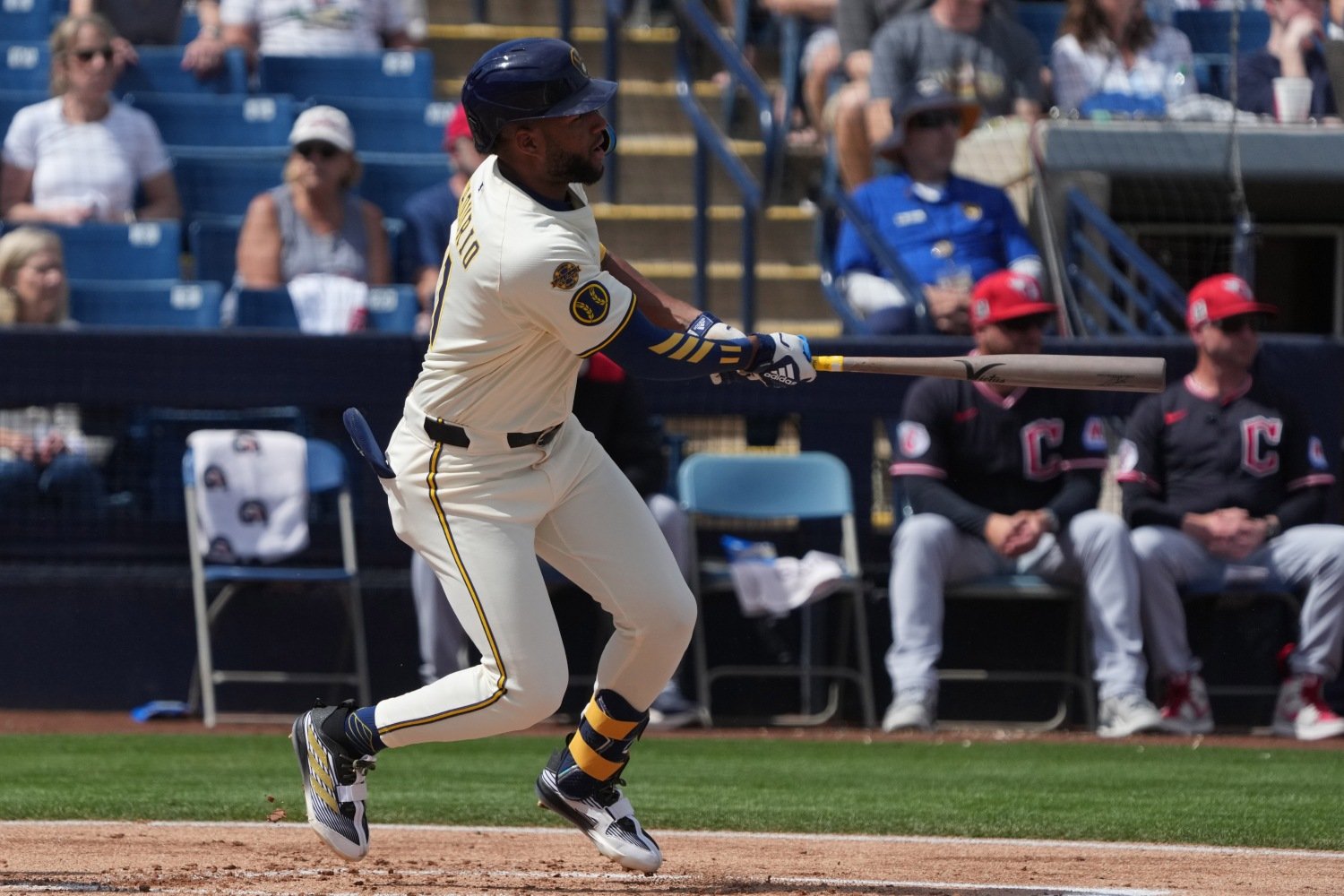 Early in 2024, Jackson Chourio was in trouble. It wasn't all that bad, really. He'd already signed a contract worth over $80 million, and the Brewers had promoted him to the majors after just a handful of looks at Triple-A pitching. Everyone would understand if he needed more time in the minors—and even that wasn't necessarily imminent. As the rookie limped from a lousy April and was mired in a mediocre May, though, his playing time began to dwindle. He needed to start getting after big-league pitchers with the same confidence and explosiveness that sent him skyrocketing to the parent club in the first place. So, he spread out a little bit. As of Sunday night, Baseball Savant offers new data on where players set up in the batter's box; how they move throughout their swing; and where they tend to make contact with the ball. It's long-awaited information, some version of which teams have been using for years, and it's a kind of culmination of the third wave of sabermetrics. The first goal for statheads was to convince baseball people to care about the right things—to draw the proper chains from cause to effect and finally learn how baseball games are actually one. In the second wave of the movement, though, a wealth of new information became available, challenging those math geeks to do something impressive with them. Tabulated data on how defenders were deployed, pitch-by-pitch outcomes, and even the movement of the ball in space came relatively quickly, one after another, and smart people who wanted to keep sounding smart had to go from doing basic statistics work to (at times) fairly advanced physics calculations. Now, we're firmly into a third category. Cameras can map not just the flight characteristics of the ball, but tons of small but crucial details about how the players move, as well. That means that teams can spot mechanical failures, engineer better pitches, and select matchups based on combinations of swing path and pitch shape. It also means that we now get to try out some of our old statistics and arithmetic work on the infinitely nuanced data that are these measurements of player movements. Chourio didn't make some grand statement, or tweak his setup and swing in a major, noticeable way. He just spread out in the box. For the first two months of the season, his feet were a bit over 37 inches apart, most of the time. That's an above-average number, but a reasonable one. Chourio's stance was fairly standard. Starting in June, though, Chourio kept his feet more like 41 inches apart. The difference sounds tiny, and in a way, it is. Test it out sometime, though. Stand with your feet about shoulder-width apart, and then carefully slide each foot two inches farther. You can feel that difference, even if someone staring at you might miss it. Ballplayers know their bodies so well that almost everyone sets up with their feet a tiny fraction farther apart—mostly somewhere between 0.5 and 0.9 inches farther. That tells you how finely these people calibrate their sense of their bodies in space—but it doesn't make it easier for us to spot Chourio's. It's just a reminder that he can't have shifted to such a stance by accident. Well, we were all staring at Chourio from the center-field camera, so it was very easy to miss the subtle change in how he set up. That's no angle from which to spot such a thing. It was there, though, and it mattered. Here's a video of Chourio from late April, against now-teammate Tyler Alexander. S3d2S1JfWGw0TUFRPT1fRGdOUkFGSldCUWNBV2xzRkFnQUFBbFVBQUZsVVV3TUFDMVpUVlFBTVVGY0VBUU1D.mp4 Here's one from mid-July, after his change in setup and swing. MkJEWjVfWGw0TUFRPT1fQkFaUkFGUUNCd2NBWFFaUkFBQUFVbE5YQUZsVVdsVUFCbFVOVkFBQ0FRcFZBd3NI.mp4 Once you're looking for it, you can spot it, but you might have said it was almost accidental, or inconsequential. Chourio is a little bit more open in his stance, and he's just a little deeper in his legs. They're spread enough that he needs only a minimal stride to effect his transfer of weight and energy into the ball. Here's what it looks like on Savant's new, spiffy leaderboard and graphic display. Chourio's stride is so much shorter that he can just attack the ball under more control in August than he could in March and April. Because his swing was more balanced and his head was more still, Chourio tended not to top or slice underneath the ball, later in the year, but to square it up and get a lot of exit velocity from his bat speed. In turn, that removed some of the pressure to generate that much bat speed in the first place. I don't mean to sell this as a magic tweak to his stance and stride. It's something less than that. After all, we already knew that the incredible level of performance Chourio provided in the final four months of the season was within his range of possible outcomes. Still, it's noteworthy, because Chourio—just 6 feet tall—set up with his feet farther apart last year than all but nine other qualifying batters. Lop off those first two months, and only seven guys started more spread-out in the box. Some of those guys (Giancarlo Stanton and Oneil Cruz) almost have to set their feet wider than Chourio's, to avoid stepping on their own toes. Yordan Alvarez didn't have his feet as far apart last year as Chourio did. It takes an incredible athlete to spread out this much and still generate the torque and the energy transfer required to hit the ball hard—incredible, that is, even by big-league standards. Chourio is freakish even among major-league hitters. His ability to drive forward smoothly without a big timing mechanism or a complicated load is unique. His cocktail of youthful quickness and sheer strength is rare. Spreading out helped Chourio a great deal last season, even if it wasn't the primary reason why he suddenly found his way. It's great that we now have this information, so we can spot more of the small things that make baseball's big things possible.
 -
There are many ways to play the hot corner. The Brewers' young platoon mates will have to find the most successful one for them. Image courtesy of © Katie Stratman-Imagn Images Now that the alignment of Joey Ortiz and Brice Turang around the Brewers infield (most days, at least) has been settled, the open question is how playing time will shake out at third base—and whether Oliver Dunn and Caleb Durbin are really up to the job. Last year, Dunn's audition for the job went poorly, though Pat Murphy acknowledged this spring that they put the young Dunn in a series of difficult situations. He had to be sent to the minors, then got hurt and missed the entire second half. On the other hand, Durbin (a right-handed batter) won't enjoy the platoon advantage as often as Dunn does. The biggest question might be not whether either can cut the mustard offensively (a platoon, however imperfect, could get them over that line easily enough), but how they can combine to form a defensive third baseman who maintains the fielding excellence that is such an indispensable part of the team's identity. Dunn is a strong fielder, but not yet a fully polished one. He's still only played 573 innings at third in his pro career. Durbin has almost exactly the same amount of professional experience there, but hasn't played well at the spot this spring. He's looked much better at second; that was part of why it took so long for the team to commit to sewing up the middle infield with Ortiz and Turang. When rigorous measurements were taken this spring to prepare for the use of the automated ball/strike challenge system, both Dunn (now 5-foot-11) and Durbin (now 5-foot-7) actually came in an inch taller than they had been listed previously, but neither is the big, long type of third baseman who can take up space just by virtue of shortening up in their positioning and using lunges and dives to cut the ball off. They're both built much more like Ortiz, whose height also increased (5-foot-9 to 5-foot-10) as of Monday but who is on the compact and quick side, and who thrived last year by playing deeper at third base than any other regular at the position—except fellow diminutive dynamo José Ramírez. The deeper one plays at third, the more similar it is to the middle infield positions. There are times when that's not an option, because it's important to be in position for a force play at third or to guard against the bunt, but most of the time, a fielder can choose whether to play more shallow and cut down the range of angles to which the ball has time to scatter before reaching them, or to play deeper and use their speed and agility to track the ball down, even if it takes an extra step or two. Playing deeper is the more intuitive way for a transplanted second baseman to make things work, but there are drawbacks to it, too. The ball is taking longer to get to you, and you're farther from first base when it finally does, so you have to utilize quick hands and have a strong enough arm for that approach to work. Nick Madrigal, who is even smaller (the same height, but not as sturdily built) than Durbin, moved to third base for the Cubs in 2023, and he turned out to be a brilliant defender there—but, surprisingly, he played shallower than almost any other third baseman. His arm was too weak to allow him to wait for the ball. Instead, he drilled hard on coming in to collect even medium-speed grounders, getting his momentum going toward his eventual target and not waiting back for the ball. Durbin might need to adopt that approach in the short term, because he's looked especially uneasy when he's needed to charge slowly hit grounders this spring. Eventually, though, to be a viable defender there, he should play deeper. His arm is strong enough to make things work, and hard-hit balls have handcuffed him when he's been positioned at a traditional third-base depth. It should be easier to develop that comfort coming in an extra step to collect the ball and making the same quick transfers to which he was accustomed at second base than to soften his hands on those hot shots at close quarters. Ortiz favored not only playing deep, but (against righties) guarding the line, even more than most third basemen. That meant that he rarely had to field a ball with his momentum carrying him across the foul line. If he had to field a grounder on the run, it was to his left, which made for an easier throw. Both Dunn and Durbin have mimicked that pattern this spring, which figures to continue. So far, neither is showing a marked tendency toward playing deeper or shallower than most of the league, though they lean toward the deeper side. Again, given that taller and slower third basemen tend to play shallower and smaller, quicker ones tend to play deeper, that makes sense. If the intensive instruction he'll continue to receive takes root, look for Durbin to play deeper as he gets more established at third. Dunn is already fine there; his adjustments will be less noticeable, but even more important, since he figures to get more of the playing time over the first month or two than Durbin. The Brewers didn't find a perfect solution this spring at third, but in Dunn and Durbin, they have a good enough one to round out a superb infield. It might just take more innings for each to settle into the gig. View full article
-
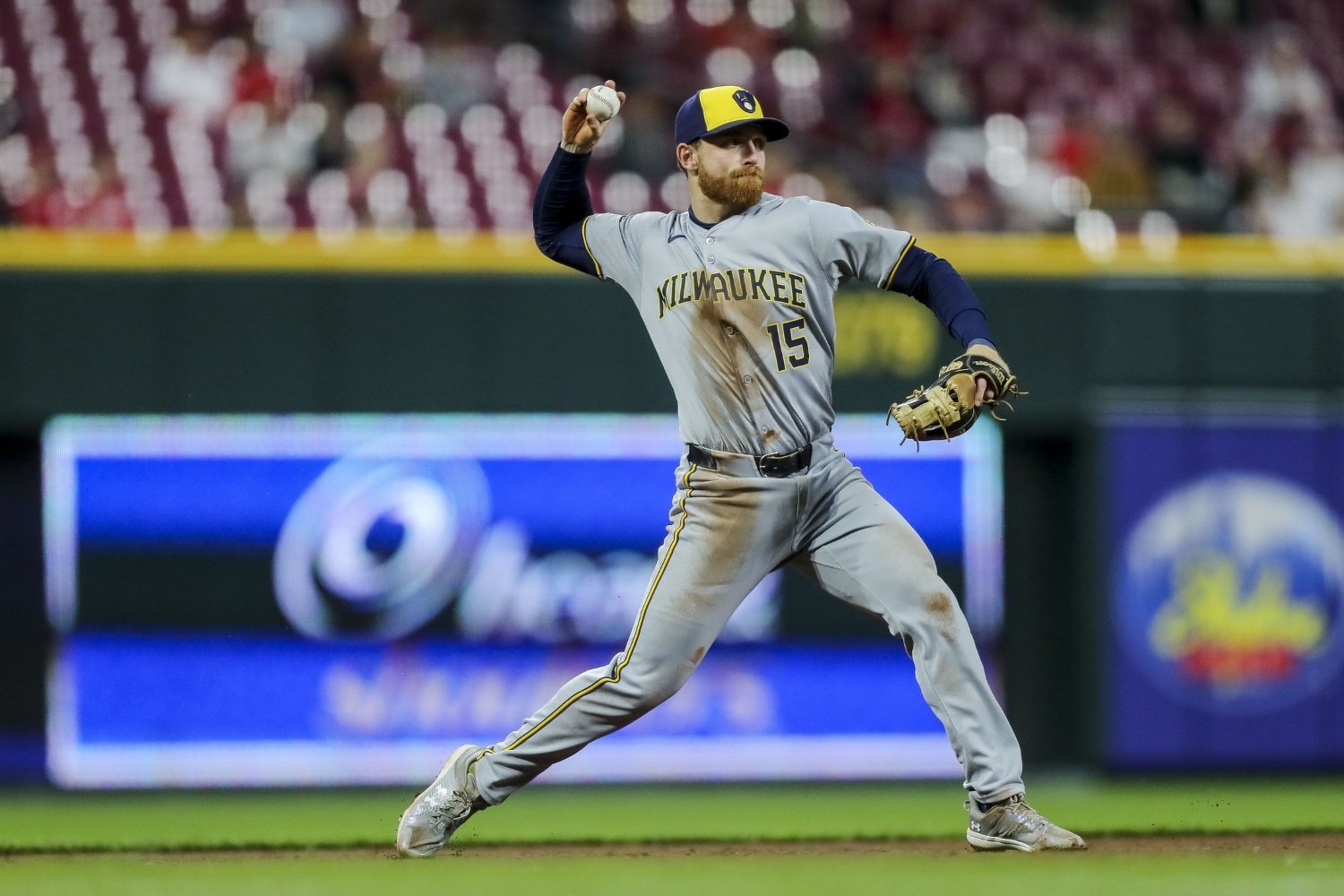 Now that the alignment of Joey Ortiz and Brice Turang around the Brewers infield (most days, at least) has been settled, the open question is how playing time will shake out at third base—and whether Oliver Dunn and Caleb Durbin are really up to the job. Last year, Dunn's audition for the job went poorly, though Pat Murphy acknowledged this spring that they put the young Dunn in a series of difficult situations. He had to be sent to the minors, then got hurt and missed the entire second half. On the other hand, Durbin (a right-handed batter) won't enjoy the platoon advantage as often as Dunn does. The biggest question might be not whether either can cut the mustard offensively (a platoon, however imperfect, could get them over that line easily enough), but how they can combine to form a defensive third baseman who maintains the fielding excellence that is such an indispensable part of the team's identity. Dunn is a strong fielder, but not yet a fully polished one. He's still only played 573 innings at third in his pro career. Durbin has almost exactly the same amount of professional experience there, but hasn't played well at the spot this spring. He's looked much better at second; that was part of why it took so long for the team to commit to sewing up the middle infield with Ortiz and Turang. When rigorous measurements were taken this spring to prepare for the use of the automated ball/strike challenge system, both Dunn (now 5-foot-11) and Durbin (now 5-foot-7) actually came in an inch taller than they had been listed previously, but neither is the big, long type of third baseman who can take up space just by virtue of shortening up in their positioning and using lunges and dives to cut the ball off. They're both built much more like Ortiz, whose height also increased (5-foot-9 to 5-foot-10) as of Monday but who is on the compact and quick side, and who thrived last year by playing deeper at third base than any other regular at the position—except fellow diminutive dynamo José Ramírez. The deeper one plays at third, the more similar it is to the middle infield positions. There are times when that's not an option, because it's important to be in position for a force play at third or to guard against the bunt, but most of the time, a fielder can choose whether to play more shallow and cut down the range of angles to which the ball has time to scatter before reaching them, or to play deeper and use their speed and agility to track the ball down, even if it takes an extra step or two. Playing deeper is the more intuitive way for a transplanted second baseman to make things work, but there are drawbacks to it, too. The ball is taking longer to get to you, and you're farther from first base when it finally does, so you have to utilize quick hands and have a strong enough arm for that approach to work. Nick Madrigal, who is even smaller (the same height, but not as sturdily built) than Durbin, moved to third base for the Cubs in 2023, and he turned out to be a brilliant defender there—but, surprisingly, he played shallower than almost any other third baseman. His arm was too weak to allow him to wait for the ball. Instead, he drilled hard on coming in to collect even medium-speed grounders, getting his momentum going toward his eventual target and not waiting back for the ball. Durbin might need to adopt that approach in the short term, because he's looked especially uneasy when he's needed to charge slowly hit grounders this spring. Eventually, though, to be a viable defender there, he should play deeper. His arm is strong enough to make things work, and hard-hit balls have handcuffed him when he's been positioned at a traditional third-base depth. It should be easier to develop that comfort coming in an extra step to collect the ball and making the same quick transfers to which he was accustomed at second base than to soften his hands on those hot shots at close quarters. Ortiz favored not only playing deep, but (against righties) guarding the line, even more than most third basemen. That meant that he rarely had to field a ball with his momentum carrying him across the foul line. If he had to field a grounder on the run, it was to his left, which made for an easier throw. Both Dunn and Durbin have mimicked that pattern this spring, which figures to continue. So far, neither is showing a marked tendency toward playing deeper or shallower than most of the league, though they lean toward the deeper side. Again, given that taller and slower third basemen tend to play shallower and smaller, quicker ones tend to play deeper, that makes sense. If the intensive instruction he'll continue to receive takes root, look for Durbin to play deeper as he gets more established at third. Dunn is already fine there; his adjustments will be less noticeable, but even more important, since he figures to get more of the playing time over the first month or two than Durbin. The Brewers didn't find a perfect solution this spring at third, but in Dunn and Durbin, they have a good enough one to round out a superb infield. It might just take more innings for each to settle into the gig.
 -
Possible. I think even then, Murphy would feel some reluctance. His goal was to make a decision and be able to stick to it, barring injuries. We'll see how reachable that goal turns out to be.
-
The sweeper's velo isn't especially well-correlated with its effectiveness. He said he really just looks at fastball velocity, in terms of figuring out if his arm is working properly. And he was quite happy with the movement metrics on it, as of early this month. FWIW, the sweeper's pretty much right where it was last year at this time, and in April. In May, June, and July, he did add velocity on it, but at the expense of movement and separation from the fastball. I wouldn't sweat this at all, for now.
-
The decision wasn't in question, really. Then it was, but not because of either of the main players involved. Now, the uncertainty has been resolved—largely because of one of the main players involved, after all. Image courtesy of © Dave Kallmann / Milwaukee Journal Sentinel / USA TODAY NETWORK via Imagn Images Having Joey Ortiz slide from third base to shortstop in the stead of departed ex-Brewer Willy Adames always made the most sense. Brice Turang won the Platinum Glove in 2024, as the best of the Gold Glove winners in the National League, all at second base. He's a solid athlete who could play shortstop without costing the team runs, but Ortiz is the more natural fit for that position, and a certain inertia usually keeps fielders who establish an elite level at one position from being moved to another. Yet, halfway through spring training, the Brewers did seriously consider moving Turang to shortstop, after all. Though the experiment included some time for Ortiz at second in Cactus League games, that was never part of the plan they entertained. Putting Ortiz there was just the best way to get at-bats for him, while also getting Turang reps at short—and Caleb Durbin more looks at third base. Durbin has been the pivot point for the team's plans on the infield all spring. While both Oliver Dunn and Durbin figure to have roles on this team in 2025, the club would like the distribution of their playing time to favor the right-handed batter in Durbin more than a traditional platoon would. Instead of Dunn getting 70 percent or more of the playing time, ideally, Durbin would win about half the job reserved for the two of them. For that to be viable, though, the team needed to see that Durbin could handle third base. Early in camp, Murphy dismissed the idea of shuffling his infield from one day to the next, based on the handedness composition of the opposing lineup or the handedness of the opposing team's starting pitcher. He wanted to have a locked-in position for both Ortiz and Turang, whom he views as everyday players. The question, which initially was almost a perfunctory one, was whether it made more sense to play Durbin and Dunn at third or at second. That, rather than any particular trait of Ortiz or Turang, could have been the determining factor in how the team lined up around the horn. The first twist came not long into Cactus League play, when it became pretty clear that Durbin is ill-suited to third base. He's hesitant when charging softly hit balls, doesn't always field hard-hit ones cleanly, and lacks the arm strength for the toughest throws the position forces a player to make. Durbin is a hard worker and a good overall athlete, but it's very clear that his best defensive position is at second—and not at all clear that he can even meet the team's standard for what a third baseman must be, defensively, on a part-time basis. As often happens, though, an external consideration intervened. Not long into the experiment of playing Turang at short, he came up with a sore shoulder. It doesn't look like that injury is serious, but it was enough. Rather than risk straining the capabilities and the health of their best infielder beyond their breaking points, the team is retreating from the idea. Turang will stay at second, where the throws are mostly shorter and easier. Ortiz gets the shortstop job. Unavoidably, this affects the outlook for Durbin in terms of making the Opening Day roster, let alone seizing a good chunk of playing time. Dunn will play more at third, by a wide margin. Vinny Capra, who is out of options and having too good a spring to be lost on waivers amid it, is going to make the team as a utility infielder. The locks for some of the 13 position-player roster spots are: William Contreras Eric Haase Rhys Hoskins Brice Turang Joey Ortiz Oliver Dunn Vinny Capra Christian Yelich Garrett Mitchell Sal Frelick Jackson Chourio That leaves just two jobs unclaimed, to be divided among Durbin, Andruw Monasterio, Jake Bauers and Mark Canha. If Turang's shoulder is worse than we think and he must start the season on the injured list, three of the four can make it, but that seems unlikely—and even in that case, it would be a brief stay on the roster for the third player in that mix. Bauers is likely to head to Nashville to open the season. Canha, however, is just barely shy of a lock to make the team. That would leave Durbin and Monasterio in a showdown for the final roster spot, and if the team thinks Durbin could benefit from more playing time in the short term, he could well lose that battle. Pat Murphy raves about Durbin's makeup, and good makeup can mean more capacity for improvement on defense; some of it comes down to taking good reps and remaining confident. If Durbin goes to Nashville and comes up in mid-May as a solid defender at the hot corner, the Brewers will have come out ahead through all this uncertainty. If not, though, they'll have to revisit how best to integrate their new infielder later in the campaign. For now, Ortiz and Turang have had their roles clarified, and Dunn is more secure than ever in his expectation of playing time over the first month or two. View full article
-
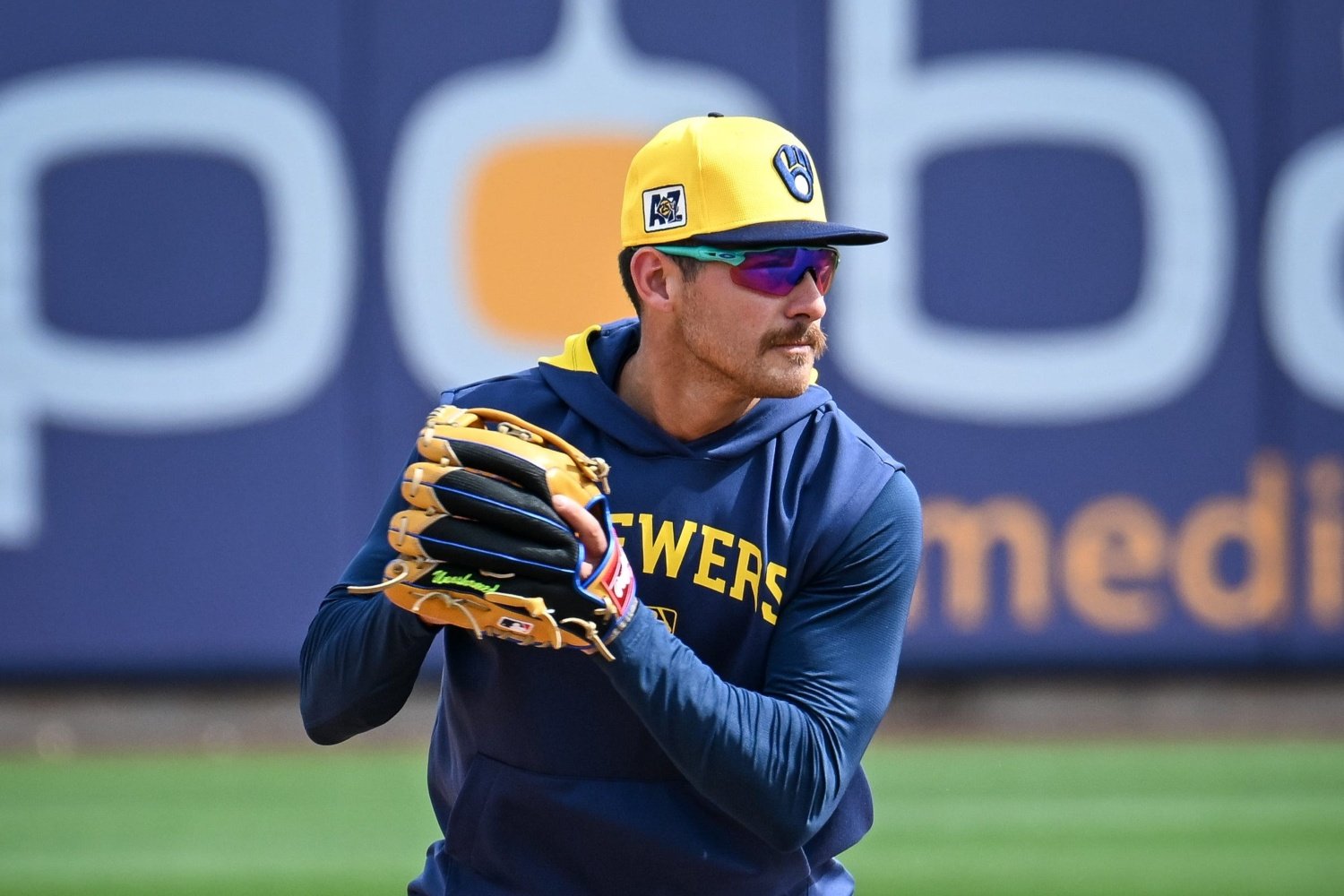 Having Joey Ortiz slide from third base to shortstop in the stead of departed ex-Brewer Willy Adames always made the most sense. Brice Turang won the Platinum Glove in 2024, as the best of the Gold Glove winners in the National League, all at second base. He's a solid athlete who could play shortstop without costing the team runs, but Ortiz is the more natural fit for that position, and a certain inertia usually keeps fielders who establish an elite level at one position from being moved to another. Yet, halfway through spring training, the Brewers did seriously consider moving Turang to shortstop, after all. Though the experiment included some time for Ortiz at second in Cactus League games, that was never part of the plan they entertained. Putting Ortiz there was just the best way to get at-bats for him, while also getting Turang reps at short—and Caleb Durbin more looks at third base. Durbin has been the pivot point for the team's plans on the infield all spring. While both Oliver Dunn and Durbin figure to have roles on this team in 2025, the club would like the distribution of their playing time to favor the right-handed batter in Durbin more than a traditional platoon would. Instead of Dunn getting 70 percent or more of the playing time, ideally, Durbin would win about half the job reserved for the two of them. For that to be viable, though, the team needed to see that Durbin could handle third base. Early in camp, Murphy dismissed the idea of shuffling his infield from one day to the next, based on the handedness composition of the opposing lineup or the handedness of the opposing team's starting pitcher. He wanted to have a locked-in position for both Ortiz and Turang, whom he views as everyday players. The question, which initially was almost a perfunctory one, was whether it made more sense to play Durbin and Dunn at third or at second. That, rather than any particular trait of Ortiz or Turang, could have been the determining factor in how the team lined up around the horn. The first twist came not long into Cactus League play, when it became pretty clear that Durbin is ill-suited to third base. He's hesitant when charging softly hit balls, doesn't always field hard-hit ones cleanly, and lacks the arm strength for the toughest throws the position forces a player to make. Durbin is a hard worker and a good overall athlete, but it's very clear that his best defensive position is at second—and not at all clear that he can even meet the team's standard for what a third baseman must be, defensively, on a part-time basis. As often happens, though, an external consideration intervened. Not long into the experiment of playing Turang at short, he came up with a sore shoulder. It doesn't look like that injury is serious, but it was enough. Rather than risk straining the capabilities and the health of their best infielder beyond their breaking points, the team is retreating from the idea. Turang will stay at second, where the throws are mostly shorter and easier. Ortiz gets the shortstop job. Unavoidably, this affects the outlook for Durbin in terms of making the Opening Day roster, let alone seizing a good chunk of playing time. Dunn will play more at third, by a wide margin. Vinny Capra, who is out of options and having too good a spring to be lost on waivers amid it, is going to make the team as a utility infielder. The locks for some of the 13 position-player roster spots are: William Contreras Eric Haase Rhys Hoskins Brice Turang Joey Ortiz Oliver Dunn Vinny Capra Christian Yelich Garrett Mitchell Sal Frelick Jackson Chourio That leaves just two jobs unclaimed, to be divided among Durbin, Andruw Monasterio, Jake Bauers and Mark Canha. If Turang's shoulder is worse than we think and he must start the season on the injured list, three of the four can make it, but that seems unlikely—and even in that case, it would be a brief stay on the roster for the third player in that mix. Bauers is likely to head to Nashville to open the season. Canha, however, is just barely shy of a lock to make the team. That would leave Durbin and Monasterio in a showdown for the final roster spot, and if the team thinks Durbin could benefit from more playing time in the short term, he could well lose that battle. Pat Murphy raves about Durbin's makeup, and good makeup can mean more capacity for improvement on defense; some of it comes down to taking good reps and remaining confident. If Durbin goes to Nashville and comes up in mid-May as a solid defender at the hot corner, the Brewers will have come out ahead through all this uncertainty. If not, though, they'll have to revisit how best to integrate their new infielder later in the campaign. For now, Ortiz and Turang have had their roles clarified, and Dunn is more secure than ever in his expectation of playing time over the first month or two.
 -
"I wouldn’t call them specific," said the Brewers' All-Star catcher's manager about the challenges he issued to his young charge heading into the offseason. "But I’ve talked to him about—you know, if he wants to be the MVP, there’s no time for emotional, when it becomes so draining that you’re so hard on yourself. And that’s what he is, he’s hard on himself." Image courtesy of © Rick Scuteri-Imagn Images Want to see the last time in 2024 that William Contreras pulled a ball with a launch angle over 1°? No? Too bad. Here it is, anyway. Contreras Yank.mp4 At the time, you'd never have guessed that he wouldn't pull a ball in the air again all season. First of all, it was still August—Aug. 28, to be exact, when the Giants were in Milwaukee. It's not normal to go an entire month (plus three games worth of postseason play) without hitting a ball in the air to your pull field, almost no matter who you are. Secondly, though, at that moment, Contreras was riding a wave. In July and August of last year, he tapped into his power in a way we've rarely seen from him before, as over 15% of his batted balls were pulled in the air. To say the very least, Contreras is dangerous when he can hit the ball that way, because almost no matter where he hits it, he tends to hit it hard. Just as plainly, though, that's never been his strength. He generates plenty of exit velocity, but has long had a tendency to put it on the ground too much. He has a persistent launch angle problem, and when he does elevate, it's more often to right and center than to left. Again, though, there was a moment last summer when that changed, and it could have made an even bigger difference for the Brewers than it ended up making. Contreras raised his sights, hit more balls in the air, and accessed way more power over a short span. Somewhere along the way, though, his heavy seasonal workload caught up to him. He still found ways to be valuable in September, and even (although playing with a knee brace and a limp) in the playoffs. His OBP for the final month of the season was .385. However, he only managed six extra-base hits in 91 plate appearances, and slugged .419. Over the previous two months, he'd swatted 27 extra-base hits, including 11 homers. Many have wondered whether more days off are in order this year—if, in effect, the Brewers have to protect Contreras from himself. His manager acknowledged that the team has to do that with some players, to some extent, but when it comes to Contreras, he has a habit of adopting that mixture of resignation and barely-suppressed adulation normally reserved for fathers whose sons endlessly surprise (and terrify) them. "Probably not," Pat Murphy said on a sigh earlier this month, when asked whether Contreras will accept more days off. "I think he’s mentally gonna be better, so why would you sit a guy who’s mentally ready to go? When this is a game of Freddie Freeman going 162, Yadier Molina catching 140." Contreras's ambition brings a twinkle to Murphy's eye; he likes that his catcher is unabashed about wanting to win MVP Awards and prove himself the best at his position in the game. He believes Contreras is capable of all that, too—but has been around the game too long to believe that anyone can bear the full physical and mental weight of the 162-game grind without showing signs of it. "He’s different than other people," Murphy said. "Incredible strength, incredibly conditioned, [but] everybody wears down mentally. And I think that’s what it did; it wore on him mentally." Contreras also showed physical signs of wear and tear, not only with whatever leg injury he nursed into October but by swinging slower and pulling the ball less often. In this chart, the marked point is his data for September; the one on the far right is for July. Impressively, Contreras still made fairly solid swing decisions down the stretch, despite whatever difficulties he began to have with mustering the health, energy, and concentration to play each day. Sometimes, though, he seemed to accept a chance at a single by pushing the ball the other way, even when he had leverage within a count and could have tried to access more pop. Defensively, too, his attention to detail waned slightly as the innings and games piled up. This spring, Contreras is doing things that suggest he could get right back to where he was in the heat of last summer. He's pulling the ball, including doing so in the air. He's hitting the snot out of it. A long season looms ahead, and while his manager tried to convey the importance of not burning too hot or too soon, Contreras is still the player who spends the most cumulative time in batting cages, the weight room, other practice areas, and even meetings. He believes in the work he's putting in, and in the return he'll get on that investment. Murphy is far from alone, among his coaches and peers, in sharing that faith. More consistent power could be on tap, and if it is, Contreras is a very real candidate to bring home fancier hardware next offseason. View full article
-
.png.d49bcc4f18a8aea6fba76bd7457d5503.png) Want to see the last time in 2024 that William Contreras pulled a ball with a launch angle over 1°? No? Too bad. Here it is, anyway. Contreras Yank.mp4 At the time, you'd never have guessed that he wouldn't pull a ball in the air again all season. First of all, it was still August—Aug. 28, to be exact, when the Giants were in Milwaukee. It's not normal to go an entire month (plus three games worth of postseason play) without hitting a ball in the air to your pull field, almost no matter who you are. Secondly, though, at that moment, Contreras was riding a wave. In July and August of last year, he tapped into his power in a way we've rarely seen from him before, as over 15% of his batted balls were pulled in the air. To say the very least, Contreras is dangerous when he can hit the ball that way, because almost no matter where he hits it, he tends to hit it hard. Just as plainly, though, that's never been his strength. He generates plenty of exit velocity, but has long had a tendency to put it on the ground too much. He has a persistent launch angle problem, and when he does elevate, it's more often to right and center than to left. Again, though, there was a moment last summer when that changed, and it could have made an even bigger difference for the Brewers than it ended up making. Contreras raised his sights, hit more balls in the air, and accessed way more power over a short span. Somewhere along the way, though, his heavy seasonal workload caught up to him. He still found ways to be valuable in September, and even (although playing with a knee brace and a limp) in the playoffs. His OBP for the final month of the season was .385. However, he only managed six extra-base hits in 91 plate appearances, and slugged .419. Over the previous two months, he'd swatted 27 extra-base hits, including 11 homers. Many have wondered whether more days off are in order this year—if, in effect, the Brewers have to protect Contreras from himself. His manager acknowledged that the team has to do that with some players, to some extent, but when it comes to Contreras, he has a habit of adopting that mixture of resignation and barely-suppressed adulation normally reserved for fathers whose sons endlessly surprise (and terrify) them. "Probably not," Pat Murphy said on a sigh earlier this month, when asked whether Contreras will accept more days off. "I think he’s mentally gonna be better, so why would you sit a guy who’s mentally ready to go? When this is a game of Freddie Freeman going 162, Yadier Molina catching 140." Contreras's ambition brings a twinkle to Murphy's eye; he likes that his catcher is unabashed about wanting to win MVP Awards and prove himself the best at his position in the game. He believes Contreras is capable of all that, too—but has been around the game too long to believe that anyone can bear the full physical and mental weight of the 162-game grind without showing signs of it. "He’s different than other people," Murphy said. "Incredible strength, incredibly conditioned, [but] everybody wears down mentally. And I think that’s what it did; it wore on him mentally." Contreras also showed physical signs of wear and tear, not only with whatever leg injury he nursed into October but by swinging slower and pulling the ball less often. In this chart, the marked point is his data for September; the one on the far right is for July. Impressively, Contreras still made fairly solid swing decisions down the stretch, despite whatever difficulties he began to have with mustering the health, energy, and concentration to play each day. Sometimes, though, he seemed to accept a chance at a single by pushing the ball the other way, even when he had leverage within a count and could have tried to access more pop. Defensively, too, his attention to detail waned slightly as the innings and games piled up. This spring, Contreras is doing things that suggest he could get right back to where he was in the heat of last summer. He's pulling the ball, including doing so in the air. He's hitting the snot out of it. A long season looms ahead, and while his manager tried to convey the importance of not burning too hot or too soon, Contreras is still the player who spends the most cumulative time in batting cages, the weight room, other practice areas, and even meetings. He believes in the work he's putting in, and in the return he'll get on that investment. Murphy is far from alone, among his coaches and peers, in sharing that faith. More consistent power could be on tap, and if it is, Contreras is a very real candidate to bring home fancier hardware next offseason.
Want to see the last time in 2024 that William Contreras pulled a ball with a launch angle over 1°? No? Too bad. Here it is, anyway. Contreras Yank.mp4 At the time, you'd never have guessed that he wouldn't pull a ball in the air again all season. First of all, it was still August—Aug. 28, to be exact, when the Giants were in Milwaukee. It's not normal to go an entire month (plus three games worth of postseason play) without hitting a ball in the air to your pull field, almost no matter who you are. Secondly, though, at that moment, Contreras was riding a wave. In July and August of last year, he tapped into his power in a way we've rarely seen from him before, as over 15% of his batted balls were pulled in the air. To say the very least, Contreras is dangerous when he can hit the ball that way, because almost no matter where he hits it, he tends to hit it hard. Just as plainly, though, that's never been his strength. He generates plenty of exit velocity, but has long had a tendency to put it on the ground too much. He has a persistent launch angle problem, and when he does elevate, it's more often to right and center than to left. Again, though, there was a moment last summer when that changed, and it could have made an even bigger difference for the Brewers than it ended up making. Contreras raised his sights, hit more balls in the air, and accessed way more power over a short span. Somewhere along the way, though, his heavy seasonal workload caught up to him. He still found ways to be valuable in September, and even (although playing with a knee brace and a limp) in the playoffs. His OBP for the final month of the season was .385. However, he only managed six extra-base hits in 91 plate appearances, and slugged .419. Over the previous two months, he'd swatted 27 extra-base hits, including 11 homers. Many have wondered whether more days off are in order this year—if, in effect, the Brewers have to protect Contreras from himself. His manager acknowledged that the team has to do that with some players, to some extent, but when it comes to Contreras, he has a habit of adopting that mixture of resignation and barely-suppressed adulation normally reserved for fathers whose sons endlessly surprise (and terrify) them. "Probably not," Pat Murphy said on a sigh earlier this month, when asked whether Contreras will accept more days off. "I think he’s mentally gonna be better, so why would you sit a guy who’s mentally ready to go? When this is a game of Freddie Freeman going 162, Yadier Molina catching 140." Contreras's ambition brings a twinkle to Murphy's eye; he likes that his catcher is unabashed about wanting to win MVP Awards and prove himself the best at his position in the game. He believes Contreras is capable of all that, too—but has been around the game too long to believe that anyone can bear the full physical and mental weight of the 162-game grind without showing signs of it. "He’s different than other people," Murphy said. "Incredible strength, incredibly conditioned, [but] everybody wears down mentally. And I think that’s what it did; it wore on him mentally." Contreras also showed physical signs of wear and tear, not only with whatever leg injury he nursed into October but by swinging slower and pulling the ball less often. In this chart, the marked point is his data for September; the one on the far right is for July. Impressively, Contreras still made fairly solid swing decisions down the stretch, despite whatever difficulties he began to have with mustering the health, energy, and concentration to play each day. Sometimes, though, he seemed to accept a chance at a single by pushing the ball the other way, even when he had leverage within a count and could have tried to access more pop. Defensively, too, his attention to detail waned slightly as the innings and games piled up. This spring, Contreras is doing things that suggest he could get right back to where he was in the heat of last summer. He's pulling the ball, including doing so in the air. He's hitting the snot out of it. A long season looms ahead, and while his manager tried to convey the importance of not burning too hot or too soon, Contreras is still the player who spends the most cumulative time in batting cages, the weight room, other practice areas, and even meetings. He believes in the work he's putting in, and in the return he'll get on that investment. Murphy is far from alone, among his coaches and peers, in sharing that faith. More consistent power could be on tap, and if it is, Contreras is a very real candidate to bring home fancier hardware next offseason. -
Heh. Yeah I dunno what happened there. Fixed now!

.png.d49bcc4f18a8aea6fba76bd7457d5503.png)