


Matthew Trueblood
-
Posts
1,964 -
Joined
-
Last visited
-
Days Won
10
Content Type
Profiles
Forums
Blogs
Events
News
2026 Milwaukee Brewers Top Prospects Ranking
Milwaukee Brewers Videos
2022 Milwaukee Brewers Draft Picks
Milwaukee Brewers Free Agent & Trade Rumors, Notes, & Tidbits
Guides & Resources
2023 Milwaukee Brewers Draft Picks
2024 Milwaukee Brewers Draft Picks
The Milwaukee Brewers Players Project
2025 Milwaukee Brewers Draft Pick Tracker
2026 Milwaukee Brewers Draft Tracker: Picks & Bonuses
Store
Downloads
Gallery
Everything posted by Matthew Trueblood
-
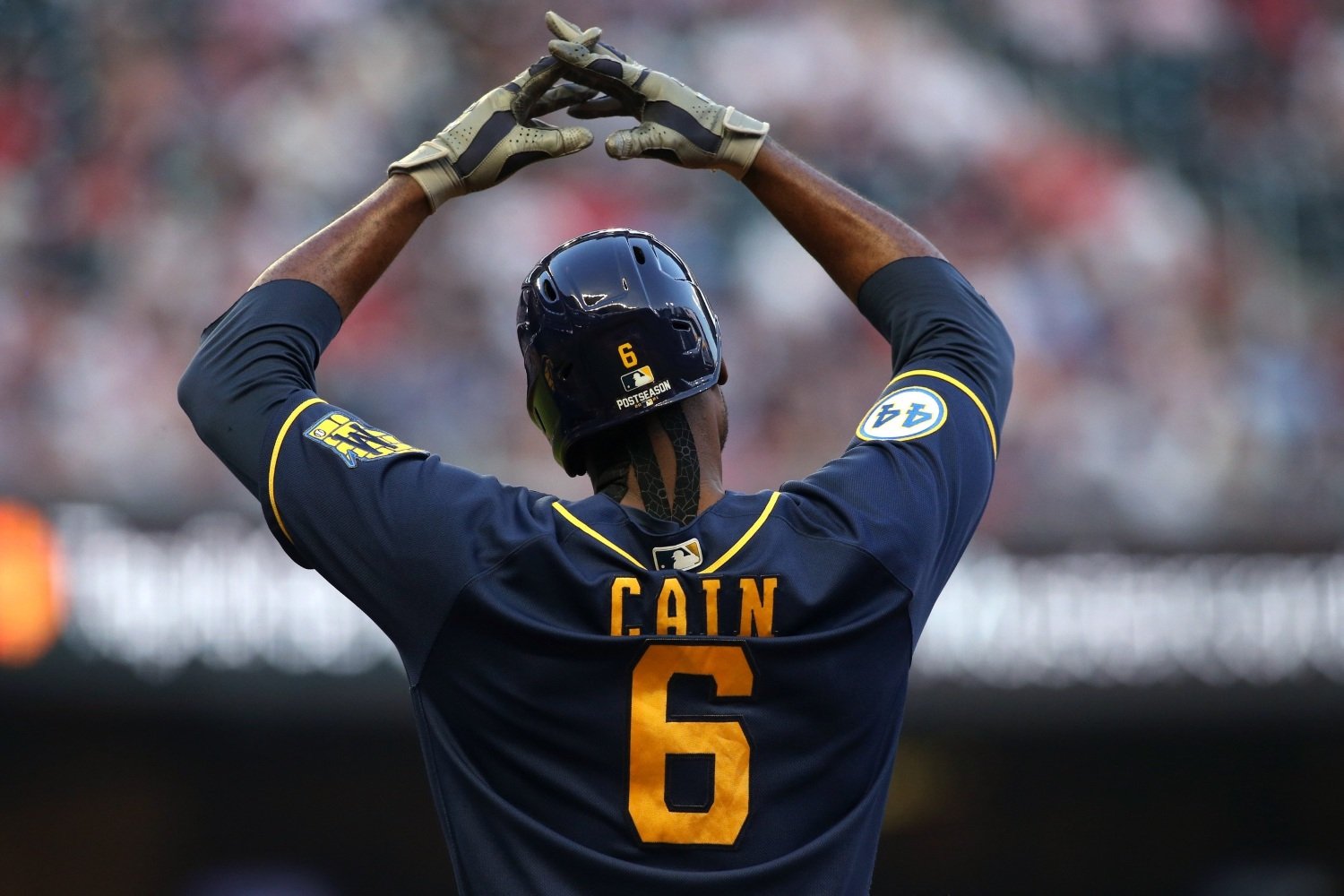 This winter has already carried off two of the Brewers' most important players of the last four seasons, in Willy Adames (a free-agent departure who pulled down $182 million in the process) and Devin Williams (traded to the hated, megarich Yankees, to save some money and give the Brewers a better long-term talent distribution). That's rapidly becoming par for the course; the Crew are winning despite needing to replace multiple key players with unproven, lower-paid alternatives virtually every season. It's why Matt Arnold just won two Executive of the Year awards. It's one of the most impressive records of consistent success in recent memory. It's also, arguably, unsustainable. Recall January 2018. That (and specifically, the final week thereof) is when the Brewers lashed out with the double-strike that kickstarted this era of NL Central dominance, trading for Christian Yelich and signing Lorenzo Cain almost simultaneously. Cain had wanted a nine-figure free-agent payday, but he ended up settling for $80 million over five years with the Crew. The market he dreamed of didn't quite materialize, but Milwaukee was able to step up and secure him on a handsome deal. It's probably the rough equivalent of the deal Nick Castellanos signed with the Phillies four years later, which was worth $100 million over the same five seasons, or of the one J.T. Realmuto signed to stay in Philadelphia a year before that—five years and $115 million. It remains the biggest payout the team has ever given to a free agent, and will probably remain so for a while. In today's market, though, the same kind of thing seems much more far-fetched. Even when players' markets do collapse, they just sign one-year deals or player-friendly ones with opt-outs that protect them from a bad season, and then they cycle back into free agency in a stronger position. Players of Cain's caliber either shack up with a team of convenience for a year, or they sign that huge, generational and multinational wealth-generating deal. The class of teams who can afford and actively pursue top free agents on an annual basis has grown, but in that very process, a fistful of teams at the other end of the spectrum are being priced out. We used to see the Yankees and Red Sox vie for the very best free agents, with occasional, unpredictable forays from the Dodgers, Mets, Angels, and Cubs. Now, though, it's a bigger field of top spenders, including all of those teams, plus the Phillies, Padres, Rangers, Giants, Braves, and Blue Jays. There are still occasional, stunning moves, like Kris Bryant signing with the Rockies or Carlos Correa pinballing his way to the Twins, but the class of top-spending teams has now grown large enough to furnish sufficient demand to meet the supply of stars almost every winter. That means that teams like the Brewers, Guardians, Tigers, Reds, and Mariners—clubs with the aspiration of winning every year but without owners as wealthy or revenue streams as fecund as those enjoyed by the big-market behemoths—are being slowly crowded into a corner of the market. We can fairly charge some of their billionaire owners with having the wherewithal to spend far more than they actually do, but that overlooks a key point. This is a sport, and the sportsmanlike approach to it is to ensure that when teams do make an expenditure aimed at improving their team, they all feel the pain of it about equally. That's the idea behind revenue sharing, and the idea (in other sports) behind salary caps. It's impossible to make them all feel each dollar the same way, because the Dodgers and Yankees make so much more money in so many more ways than do the Brewers, but it's worth evening out that distribution of effort and cost as much as possible. That way, we know that (to the greatest extent possible) the decisions each team makes are rooted in who they think are good players and who they think are bad, and that if one team is far outspending another, it really is a reflection of a greater commitment to winning, rather than about an accident of geography and media markets. Right now, though, the soft cap of competitive balance tax thresholds and the existing revenue-sharing system is not nearly sufficient to put the Yankees and the Brewers on planes where they can see each other's eyes—let alone on a truly even playing field. That's always been true, but now there are 10 or 12 of the Yankees, and that applies an exponential amount of downward force on the Brewers' buying power. They can spend $17 million per year on a player if they want, but it will be someone like Rhys Hoskins, who was available largely because none of the very wealthy teams felt he was worth their money at a rate like that. Players truly in high demand—the kind who land nine-figure deals on the open market—hardly ever fall through enough cracks to get to teams like the Crew, and when they do, they refuse to sign such a deal with such a team. Instead, they seek opt-outs and make their plans to circle back to the market and make $150 million one year later. A team from Milwaukee, Cincinnati, or Tampa Bay can still win under these conditions, but it gets harder all the time. Developing a Jackson Chourio is shockingly difficult. Developing two straight otherwise generational relief aces is excruciatingly so. Catching a whiff of a chance to snag one of the five best catchers in the game as part of a three-team deal and getting the job done is like keeping one's ears open enough to hear a stock tip passed across a table halfway across the restaurant, and being ready to trade on the info thus gleaned at a moment's notice. It's a true threading of the needle that the league asks of small-market teams who want to win a lot for a decade, anymore, and it's not fair, and it's only fun if your team is as exquisitely good at it as the Brewers are. Should the Brewers pursue Alex Bregman in free agency? Absolutely. The fit is so good, it hurts. It's also a laughable idea. He's likely to sign a deal with a total value well north of the Brewers' annual payroll for all the seasons it covers, and signing such a player is impractical. His market is narrowing, with the incumbent Astros having moved on, but he has a strong backstop at (say) $160 million. He's not unlikely to make $200 million, and while the Brewers found that once to retain Christian Yelich for the rest of his career, they don't get to swing that big a second time. If they're surrounded by teams who can swing that big three times every five years, like the Yankees, Dodgers, Mets and Phillies do, how long can they realistically be successful—and how are they ever supposed to feel empowered to beat those teams in October? Again, beating the odds and toppling the titans isn't impossible. It just demands that Mark Attanasio spend a much greater percentage of his fortune than Steve Cohen, Hal Steinbrenner, or even Tom Ricketts spend of theirs. That's not fun. The game should be about desire to win and cleverness and the actual ball, not about who can and can't afford to buy Juan Soto an entire island nation, without really hurting in the pocketbook. Major League Baseball needs comprehensive revenue-sharing, on a scale perhaps double the current one. That sounds radical, and perhaps it is, but from a fan perspective, that's what the game needs. Attanasio and his fellow smaller-market owners should take the fight to their wealthier rivals over the coming months, so that when it's time to negotiate a new CBA with the players' association, the owners can express to the union that they are ready for an overdue balancing-out. Imagine how good the Brewers would be, or would have been in any of the last several years, if their exceptional scouting and player development and analytics operations could be applied to courting some of the best players in baseball, instead of being confined to measures that ensure a huge return on a modest investment.
 -
Most of the time, the Brewers don't want to spend big in free agency, anyway. But what happens when that's simply not an option anymore? Image courtesy of © Brett Davis-Imagn Images This winter has already carried off two of the Brewers' most important players of the last four seasons, in Willy Adames (a free-agent departure who pulled down $182 million in the process) and Devin Williams (traded to the hated, megarich Yankees, to save some money and give the Brewers a better long-term talent distribution). That's rapidly becoming par for the course; the Crew are winning despite needing to replace multiple key players with unproven, lower-paid alternatives virtually every season. It's why Matt Arnold just won two Executive of the Year awards. It's one of the most impressive records of consistent success in recent memory. It's also, arguably, unsustainable. Recall January 2018. That (and specifically, the final week thereof) is when the Brewers lashed out with the double-strike that kickstarted this era of NL Central dominance, trading for Christian Yelich and signing Lorenzo Cain almost simultaneously. Cain had wanted a nine-figure free-agent payday, but he ended up settling for $80 million over five years with the Crew. The market he dreamed of didn't quite materialize, but Milwaukee was able to step up and secure him on a handsome deal. It's probably the rough equivalent of the deal Nick Castellanos signed with the Phillies four years later, which was worth $100 million over the same five seasons, or of the one J.T. Realmuto signed to stay in Philadelphia a year before that—five years and $115 million. It remains the biggest payout the team has ever given to a free agent, and will probably remain so for a while. In today's market, though, the same kind of thing seems much more far-fetched. Even when players' markets do collapse, they just sign one-year deals or player-friendly ones with opt-outs that protect them from a bad season, and then they cycle back into free agency in a stronger position. Players of Cain's caliber either shack up with a team of convenience for a year, or they sign that huge, generational and multinational wealth-generating deal. The class of teams who can afford and actively pursue top free agents on an annual basis has grown, but in that very process, a fistful of teams at the other end of the spectrum are being priced out. We used to see the Yankees and Red Sox vie for the very best free agents, with occasional, unpredictable forays from the Dodgers, Mets, Angels, and Cubs. Now, though, it's a bigger field of top spenders, including all of those teams, plus the Phillies, Padres, Rangers, Giants, Braves, and Blue Jays. There are still occasional, stunning moves, like Kris Bryant signing with the Rockies or Carlos Correa pinballing his way to the Twins, but the class of top-spending teams has now grown large enough to furnish sufficient demand to meet the supply of stars almost every winter. That means that teams like the Brewers, Guardians, Tigers, Reds, and Mariners—clubs with the aspiration of winning every year but without owners as wealthy or revenue streams as fecund as those enjoyed by the big-market behemoths—are being slowly crowded into a corner of the market. We can fairly charge some of their billionaire owners with having the wherewithal to spend far more than they actually do, but that overlooks a key point. This is a sport, and the sportsmanlike approach to it is to ensure that when teams do make an expenditure aimed at improving their team, they all feel the pain of it about equally. That's the idea behind revenue sharing, and the idea (in other sports) behind salary caps. It's impossible to make them all feel each dollar the same way, because the Dodgers and Yankees make so much more money in so many more ways than do the Brewers, but it's worth evening out that distribution of effort and cost as much as possible. That way, we know that (to the greatest extent possible) the decisions each team makes are rooted in who they think are good players and who they think are bad, and that if one team is far outspending another, it really is a reflection of a greater commitment to winning, rather than about an accident of geography and media markets. Right now, though, the soft cap of competitive balance tax thresholds and the existing revenue-sharing system is not nearly sufficient to put the Yankees and the Brewers on planes where they can see each other's eyes—let alone on a truly even playing field. That's always been true, but now there are 10 or 12 of the Yankees, and that applies an exponential amount of downward force on the Brewers' buying power. They can spend $17 million per year on a player if they want, but it will be someone like Rhys Hoskins, who was available largely because none of the very wealthy teams felt he was worth their money at a rate like that. Players truly in high demand—the kind who land nine-figure deals on the open market—hardly ever fall through enough cracks to get to teams like the Crew, and when they do, they refuse to sign such a deal with such a team. Instead, they seek opt-outs and make their plans to circle back to the market and make $150 million one year later. A team from Milwaukee, Cincinnati, or Tampa Bay can still win under these conditions, but it gets harder all the time. Developing a Jackson Chourio is shockingly difficult. Developing two straight otherwise generational relief aces is excruciatingly so. Catching a whiff of a chance to snag one of the five best catchers in the game as part of a three-team deal and getting the job done is like keeping one's ears open enough to hear a stock tip passed across a table halfway across the restaurant, and being ready to trade on the info thus gleaned at a moment's notice. It's a true threading of the needle that the league asks of small-market teams who want to win a lot for a decade, anymore, and it's not fair, and it's only fun if your team is as exquisitely good at it as the Brewers are. Should the Brewers pursue Alex Bregman in free agency? Absolutely. The fit is so good, it hurts. It's also a laughable idea. He's likely to sign a deal with a total value well north of the Brewers' annual payroll for all the seasons it covers, and signing such a player is impractical. His market is narrowing, with the incumbent Astros having moved on, but he has a strong backstop at (say) $160 million. He's not unlikely to make $200 million, and while the Brewers found that once to retain Christian Yelich for the rest of his career, they don't get to swing that big a second time. If they're surrounded by teams who can swing that big three times every five years, like the Yankees, Dodgers, Mets and Phillies do, how long can they realistically be successful—and how are they ever supposed to feel empowered to beat those teams in October? Again, beating the odds and toppling the titans isn't impossible. It just demands that Mark Attanasio spend a much greater percentage of his fortune than Steve Cohen, Hal Steinbrenner, or even Tom Ricketts spend of theirs. That's not fun. The game should be about desire to win and cleverness and the actual ball, not about who can and can't afford to buy Juan Soto an entire island nation, without really hurting in the pocketbook. Major League Baseball needs comprehensive revenue-sharing, on a scale perhaps double the current one. That sounds radical, and perhaps it is, but from a fan perspective, that's what the game needs. Attanasio and his fellow smaller-market owners should take the fight to their wealthier rivals over the coming months, so that when it's time to negotiate a new CBA with the players' association, the owners can express to the union that they are ready for an overdue balancing-out. Imagine how good the Brewers would be, or would have been in any of the last several years, if their exceptional scouting and player development and analytics operations could be applied to courting some of the best players in baseball, instead of being confined to measures that ensure a huge return on a modest investment. View full article
-
The Brewers have three versatile infield defenders slated to get substantial playing time in 2025. Might they leverage that versatility creatively, based on matchups? Image courtesy of © Stan Szeto-Imagn Images Caleb Durbin is a fine defender, but his size and (therefore) arm strength are limiting factors. You don't want the diminutive Durbin going deep into the hole at shortstop and trying to manage the long throw across to first base on time, so he's been widely viewed as best suited to second base. The only real alternative is to play him at third base, where (at least) the longest throws tend to be ones on which the ball got to you quickly and you can set your feet behind the throw, even getting some momentum going toward first. In fact, that's the key thing to consider, here. Pat Murphy likes to talk a lot about the fact that the difficulty of a given throw on the infield is determined as much by the direction of a player's momentum when they make the play and going into release as by their position on the field and the time they have to get the ball to its destination. Once one embraces that concept, a new insight dawns: the Brewers could leverage the varied skill sets of their three infielders by anticipating which kinds of plays will need to be made most often at each position, day by day. Say Freddy Peralta or Tobias Myers is starting for the Brewers, and the opponent has loaded their lineup with left-handed batters in an attempt to gain the upper hand, platoon-wise. In such a situation, most of the ground balls that day will take the fielder to his left. Under the new rules outlawing defensive shifts, all teams can do is shade batters toward the side to which they're more likely to hit the ball, so you won't see the second baseman in shallow right field or the shortstop collecting routine grounders to second. Instead, each fielder will set up so as to cover the likely batted balls for that particular hitter optimally, and against a lefty, that usually means that the shortstop will be just to the left of second base. They can range to their left to claim most balls hit even to the right of second, if it tends to be up the middle. The third baseman will be off the line, but their duties will also include cutting off balls hit toward the average position of a shortstop, so they'll most often be going to their left. The second baseman will shade toward the hole, but with the shortstop able to slide to his left to claim the balls up the middle, most of the tough plays for the keystone man will still be balls toward the hole between the first and second basemen. Now, picture a righty-loaded lineup, against the likes of Nestor Cortes, DL Hall, or Aaron Ashby. In that case, most of the tough-but-playable grounders will take the defenders to their right. The second baseman might have to make a play deep behind the bag. The third baseman will have to make some right down the line, and the shortstop will have to cover the deep hole between short and third. The question is: do the Brewers serve themselves best by sending out the same infield arrangement for each scenario? That question is rhetorical, because I feel that I have the answer, and it's "no". Consider the Plus/Minus ratings for both Brice Turang and Joey Ortiz at their primary positions in 2024: Player Pos. To His Right Straight On To His Left Brice Turang 2B 22 1 4 Joey Ortiz 3B -1 2 6 You don't want Turang, with his less powerful arm, trying to make plays going to his right at shortstop. You do want him making those plays going to his right at second, though; he's superb at it. You also want Ortiz at third when the ball will be to his left; he's going to cover that ground gorgeously. Against righty-leaning lineups, the Crew should put Turang at second base, Ortiz at shortstop, and Durbin at third. Against lefty-heavy ones, it should be Durbin at second, Turang at short, and Ortiz at third base. That's the best way to manage around Durbin and Turang's slight shortcomings in arm strength, and to accentuate the strengths each player has demonstrated in directional playmaking. It would be the best way for the team to sustain one of the best infield defenses in baseball. The downside of this approach would be that it risks overworking Durbin, who would be on the busier side of the infield no matter whom the team is facing. It would be a clever way to leverage the skills of each individual and maximize the efficiency of the team defense, but it would also apply lots of pressure to the young Durbin and risk getting a little too cute. An even more ruthless version of this gambit would be to rearrange the infielders each inning, based on the pocket of the opposing batting order due that frame. The rules that outlawed shifting starting in 2023 also banned the practice of swapping positions within a frame, but the team could still move them from one inning to the next. It makes more sense, though, to keep such moves to a minimum, and only to change positions from one day to the next, based on the handedness picture posed by the opposing batters. To fine-tune the strategy, the team could assess which hitters in each lineup are most likely to hit ground balls, rather than just counting hitters from each side. This is a bit of a geeky idea, and it's unlikely the team will employ it. Still, it underscores the fact that the front office has built a uniquely versatile, athletic, interesting roster, and that they might find unique advantages in unexpected places. View full article
-
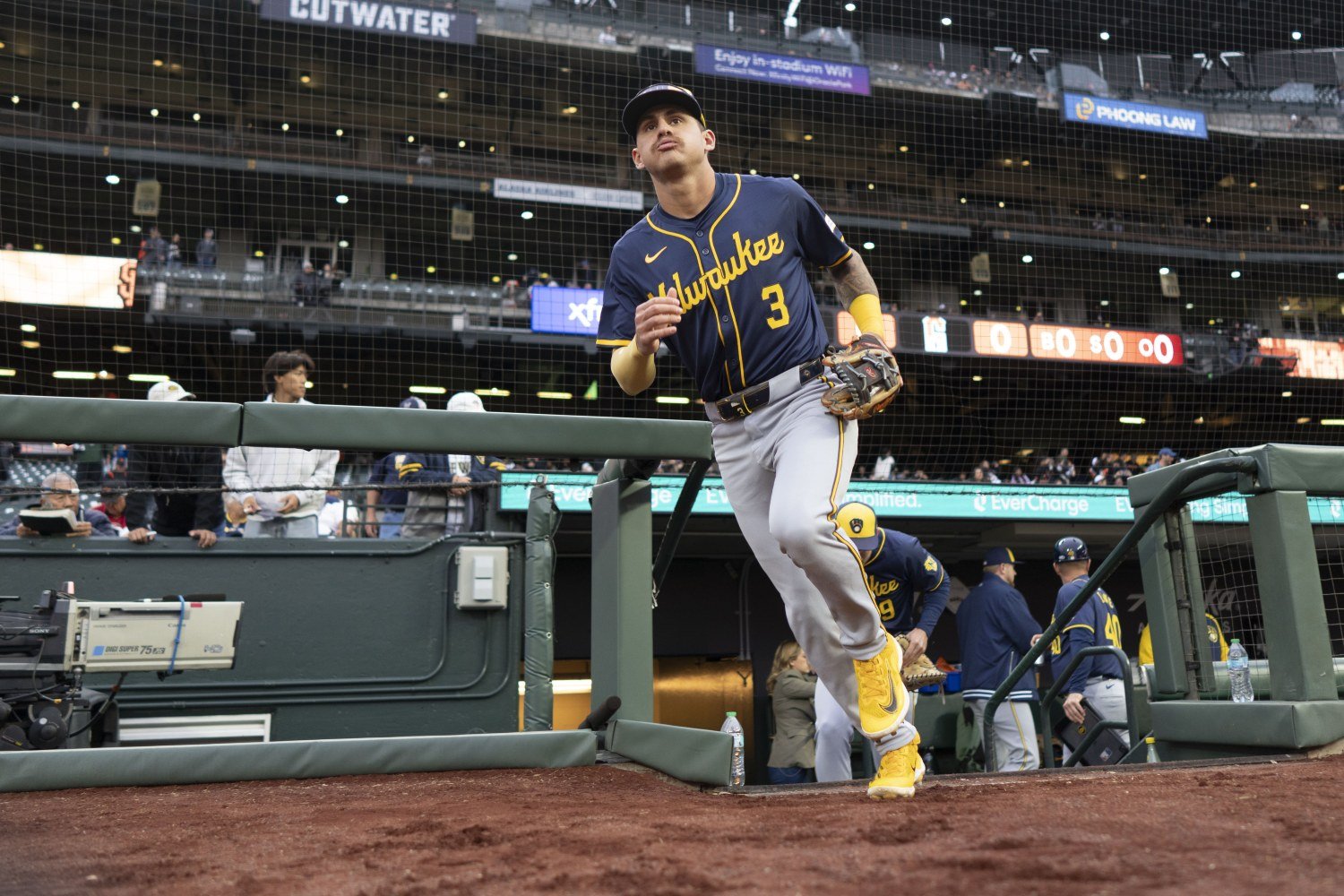 Caleb Durbin is a fine defender, but his size and (therefore) arm strength are limiting factors. You don't want the diminutive Durbin going deep into the hole at shortstop and trying to manage the long throw across to first base on time, so he's been widely viewed as best suited to second base. The only real alternative is to play him at third base, where (at least) the longest throws tend to be ones on which the ball got to you quickly and you can set your feet behind the throw, even getting some momentum going toward first. In fact, that's the key thing to consider, here. Pat Murphy likes to talk a lot about the fact that the difficulty of a given throw on the infield is determined as much by the direction of a player's momentum when they make the play and going into release as by their position on the field and the time they have to get the ball to its destination. Once one embraces that concept, a new insight dawns: the Brewers could leverage the varied skill sets of their three infielders by anticipating which kinds of plays will need to be made most often at each position, day by day. Say Freddy Peralta or Tobias Myers is starting for the Brewers, and the opponent has loaded their lineup with left-handed batters in an attempt to gain the upper hand, platoon-wise. In such a situation, most of the ground balls that day will take the fielder to his left. Under the new rules outlawing defensive shifts, all teams can do is shade batters toward the side to which they're more likely to hit the ball, so you won't see the second baseman in shallow right field or the shortstop collecting routine grounders to second. Instead, each fielder will set up so as to cover the likely batted balls for that particular hitter optimally, and against a lefty, that usually means that the shortstop will be just to the left of second base. They can range to their left to claim most balls hit even to the right of second, if it tends to be up the middle. The third baseman will be off the line, but their duties will also include cutting off balls hit toward the average position of a shortstop, so they'll most often be going to their left. The second baseman will shade toward the hole, but with the shortstop able to slide to his left to claim the balls up the middle, most of the tough plays for the keystone man will still be balls toward the hole between the first and second basemen. Now, picture a righty-loaded lineup, against the likes of Nestor Cortes, DL Hall, or Aaron Ashby. In that case, most of the tough-but-playable grounders will take the defenders to their right. The second baseman might have to make a play deep behind the bag. The third baseman will have to make some right down the line, and the shortstop will have to cover the deep hole between short and third. The question is: do the Brewers serve themselves best by sending out the same infield arrangement for each scenario? That question is rhetorical, because I feel that I have the answer, and it's "no". Consider the Plus/Minus ratings for both Brice Turang and Joey Ortiz at their primary positions in 2024: Player Pos. To His Right Straight On To His Left Brice Turang 2B 22 1 4 Joey Ortiz 3B -1 2 6 You don't want Turang, with his less powerful arm, trying to make plays going to his right at shortstop. You do want him making those plays going to his right at second, though; he's superb at it. You also want Ortiz at third when the ball will be to his left; he's going to cover that ground gorgeously. Against righty-leaning lineups, the Crew should put Turang at second base, Ortiz at shortstop, and Durbin at third. Against lefty-heavy ones, it should be Durbin at second, Turang at short, and Ortiz at third base. That's the best way to manage around Durbin and Turang's slight shortcomings in arm strength, and to accentuate the strengths each player has demonstrated in directional playmaking. It would be the best way for the team to sustain one of the best infield defenses in baseball. The downside of this approach would be that it risks overworking Durbin, who would be on the busier side of the infield no matter whom the team is facing. It would be a clever way to leverage the skills of each individual and maximize the efficiency of the team defense, but it would also apply lots of pressure to the young Durbin and risk getting a little too cute. An even more ruthless version of this gambit would be to rearrange the infielders each inning, based on the pocket of the opposing batting order due that frame. The rules that outlawed shifting starting in 2023 also banned the practice of swapping positions within a frame, but the team could still move them from one inning to the next. It makes more sense, though, to keep such moves to a minimum, and only to change positions from one day to the next, based on the handedness picture posed by the opposing batters. To fine-tune the strategy, the team could assess which hitters in each lineup are most likely to hit ground balls, rather than just counting hitters from each side. This is a bit of a geeky idea, and it's unlikely the team will employ it. Still, it underscores the fact that the front office has built a uniquely versatile, athletic, interesting roster, and that they might find unique advantages in unexpected places.
- 2 comments
-
- 1
-

-
- joey ortiz
- brice turang
- (and 1 more)
-
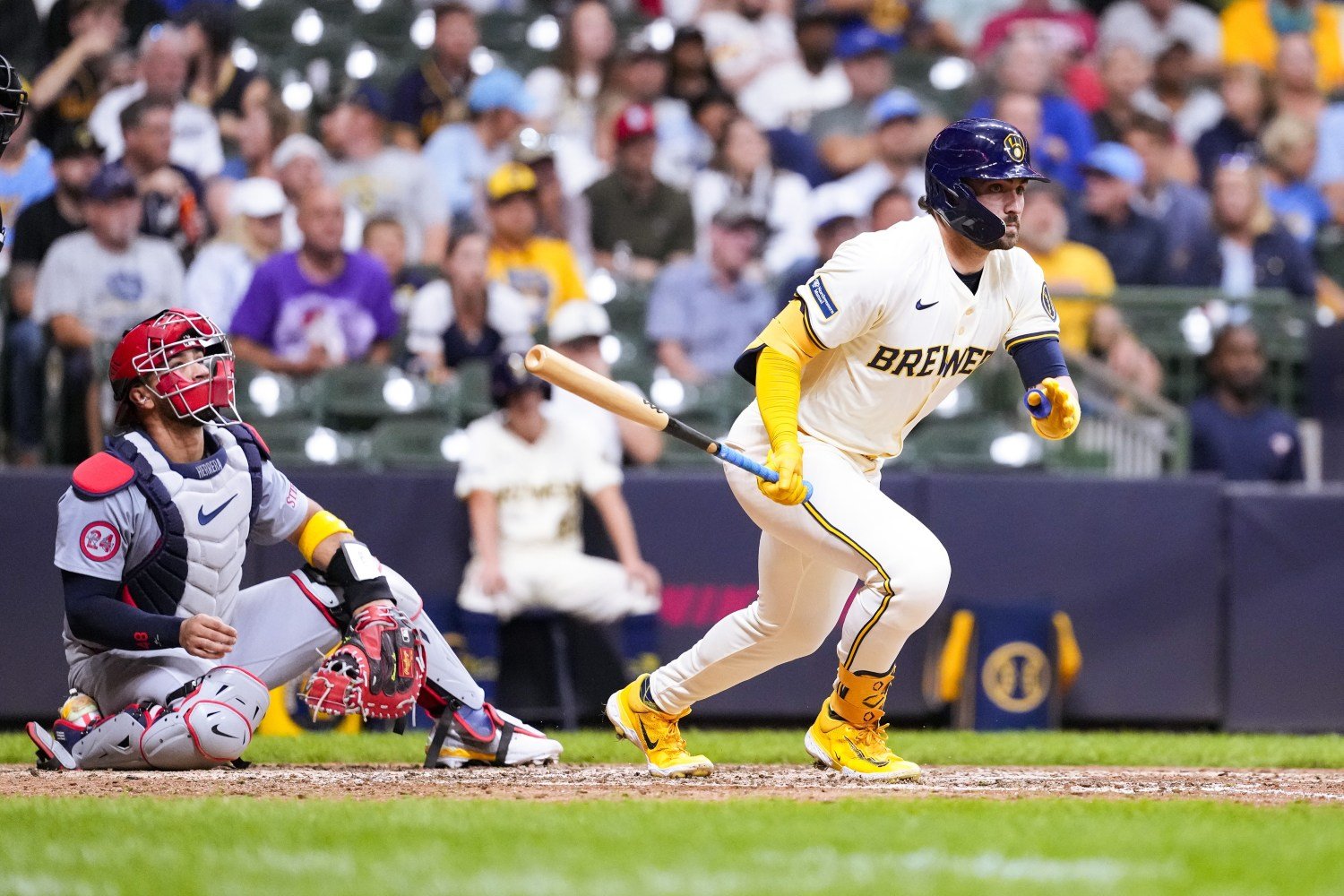 It's pretty stark, when you stop and examine it. It's not just that Garrett Mitchell has better swing speed than any other Brewer; it's by what a wide and frightening margin that's true. William Contreras and Christian Yelich come fairly close, but compare Mitchell to his cohort of young hitters on the team and it looks like he's doing something altogether different than they are. In fact, he is. Players' swing speeds don't all fall on a normal distribution, the standard bell-style curve with symmetrical wings in size and shape. Brice Turang and Sal Frelick belong to the fraternity of hitters whose curves lean slightly to the left, indicating that they slow down their swings more often than they max out and aim for the fences. Blake Perkins does have a fairly smooth, normal distribution. But Mitchell is one of the hitters whose curve leans right, indicating more of a focus on power—and given the baseline created by his typical speed, the difference is especially huge. As you can see from the dotted line indicating the league average, Mitchell doesn't just stand out by his teammates. Their slow swings make his bat speed especially shocking, but he boasts some of the better bat speed in the league. This is something you can sense, in a general way, when you watch Mitchell, but looking at it this way drives the point home especially hard. The guys with at least 250 swings and a similar average swing speed to Mitchell's (Jorge Soler, Willson Contreras, Vladimir Guerrero Jr.) indicate just how valuable the skill is. You really should be able to hit for big-time power if you can swing this fast. Honestly, the wildest thing is, that chart and the names listed there slightly undersell Mitchell. Remember, he injured his hand on the eve of Opening Day and missed the first half. Watch the way his swing speed changed over time, once he returned on Jul. 1. As he got further from that injury, Mitchell's bat speed only further ramped up. By the final fortnight, he swung with an average speed of 76.8 miles per hour. That puts him right next to Matt Chapman, Jo Adell, and Ronald Acuña Jr., and a hair better than Yordan Alvarez or Shohei Ohtani. Admittedly, it's easy to make an argument that Mitchell is more like Adell than any of the other names listed here, but even Adell hit 20 home runs in 451 plate appearances in 2024. Why, then, is Mitchell projected for just 15 homers in a similar amount of playing time in 2025? Why doesn't he consistently access power like the rest of these players? The temptation is to blame it all on his vulnerability to the strikeout, and of course, there's truth in that. Jake McKibbin wrote earlier this offseason about the way Mitchell's swing gets him into trouble: he gets too far beneath the high fastball and is catastrophically likely to swing and miss at certain pitches in certain spots. He can't touch the ball upstairs. Yet, plenty of hitters have that kind of hole, and some of them even end up with massive strikeout rates. They still hit for power, though. Mitchell fails where those hitters succeed, because he hits the ball on the ground way too much. He doesn't pick on the ball down; he looks to hit the high pitch. Because he doesn't make much contact up there, he still has one of the lower average pitch heights on balls in play, but there's no automatic relationship between that stat and hitters' average launch angles. Mitchell has plenty of brethren who hit the ball down too often, but some of them prefer the high pitch. It makes no difference. The only location in which Mitchell consistently makes contact at a productive launch angle is middle-away, where he generally doesn't swing much in the first place. In short, he's mishitting everything: into the ground in most places, straight up if it happens to be up and in. With Willy Adames now a member of the Giants, the Brewers need an infusion of power in 2025. They'll get a lot—more than people think, I believe, and that will be a topic for another time—from Jackson Chourio, and some from William Contreras. They badly need a healthy and productive Mitchell, though, because if he can figure out how to get behind and beneath the ball, rather than always being on top of it, he can be a lethal slugger. He showed that ability even in the postseason in 2024. It's nice for the Crew to have such capable options in Perkins and Frelick, but they have to hope that Mitchell can start taking that sensationally quick swing cleanly enough through the ball to generate the power his raw movement data suggests is there. If he can, they become a more dynamic team, and one with a real chance to make a deeper run in the 2025 playoffs.
 -
Even if the team will take further steps to replace their departing slugger, it's clear that they'll need a power surge from their young outfielder. He has all the tools to do it; he just needs a new plan. Image courtesy of © Jeff Hanisch-Imagn Images It's pretty stark, when you stop and examine it. It's not just that Garrett Mitchell has better swing speed than any other Brewer; it's by what a wide and frightening margin that's true. William Contreras and Christian Yelich come fairly close, but compare Mitchell to his cohort of young hitters on the team and it looks like he's doing something altogether different than they are. In fact, he is. Players' swing speeds don't all fall on a normal distribution, the standard bell-style curve with symmetrical wings in size and shape. Brice Turang and Sal Frelick belong to the fraternity of hitters whose curves lean slightly to the left, indicating that they slow down their swings more often than they max out and aim for the fences. Blake Perkins does have a fairly smooth, normal distribution. But Mitchell is one of the hitters whose curve leans right, indicating more of a focus on power—and given the baseline created by his typical speed, the difference is especially huge. As you can see from the dotted line indicating the league average, Mitchell doesn't just stand out by his teammates. Their slow swings make his bat speed especially shocking, but he boasts some of the better bat speed in the league. This is something you can sense, in a general way, when you watch Mitchell, but looking at it this way drives the point home especially hard. The guys with at least 250 swings and a similar average swing speed to Mitchell's (Jorge Soler, Willson Contreras, Vladimir Guerrero Jr.) indicate just how valuable the skill is. You really should be able to hit for big-time power if you can swing this fast. Honestly, the wildest thing is, that chart and the names listed there slightly undersell Mitchell. Remember, he injured his hand on the eve of Opening Day and missed the first half. Watch the way his swing speed changed over time, once he returned on Jul. 1. As he got further from that injury, Mitchell's bat speed only further ramped up. By the final fortnight, he swung with an average speed of 76.8 miles per hour. That puts him right next to Matt Chapman, Jo Adell, and Ronald Acuña Jr., and a hair better than Yordan Alvarez or Shohei Ohtani. Admittedly, it's easy to make an argument that Mitchell is more like Adell than any of the other names listed here, but even Adell hit 20 home runs in 451 plate appearances in 2024. Why, then, is Mitchell projected for just 15 homers in a similar amount of playing time in 2025? Why doesn't he consistently access power like the rest of these players? The temptation is to blame it all on his vulnerability to the strikeout, and of course, there's truth in that. Jake McKibbin wrote earlier this offseason about the way Mitchell's swing gets him into trouble: he gets too far beneath the high fastball and is catastrophically likely to swing and miss at certain pitches in certain spots. He can't touch the ball upstairs. Yet, plenty of hitters have that kind of hole, and some of them even end up with massive strikeout rates. They still hit for power, though. Mitchell fails where those hitters succeed, because he hits the ball on the ground way too much. He doesn't pick on the ball down; he looks to hit the high pitch. Because he doesn't make much contact up there, he still has one of the lower average pitch heights on balls in play, but there's no automatic relationship between that stat and hitters' average launch angles. Mitchell has plenty of brethren who hit the ball down too often, but some of them prefer the high pitch. It makes no difference. The only location in which Mitchell consistently makes contact at a productive launch angle is middle-away, where he generally doesn't swing much in the first place. In short, he's mishitting everything: into the ground in most places, straight up if it happens to be up and in. With Willy Adames now a member of the Giants, the Brewers need an infusion of power in 2025. They'll get a lot—more than people think, I believe, and that will be a topic for another time—from Jackson Chourio, and some from William Contreras. They badly need a healthy and productive Mitchell, though, because if he can figure out how to get behind and beneath the ball, rather than always being on top of it, he can be a lethal slugger. He showed that ability even in the postseason in 2024. It's nice for the Crew to have such capable options in Perkins and Frelick, but they have to hope that Mitchell can start taking that sensationally quick swing cleanly enough through the ball to generate the power his raw movement data suggests is there. If he can, they become a more dynamic team, and one with a real chance to make a deeper run in the 2025 playoffs. View full article
-
Which Teams Could Match with Brewers on an Aaron Civale Trade?
Matthew Trueblood posted an article in Brewers
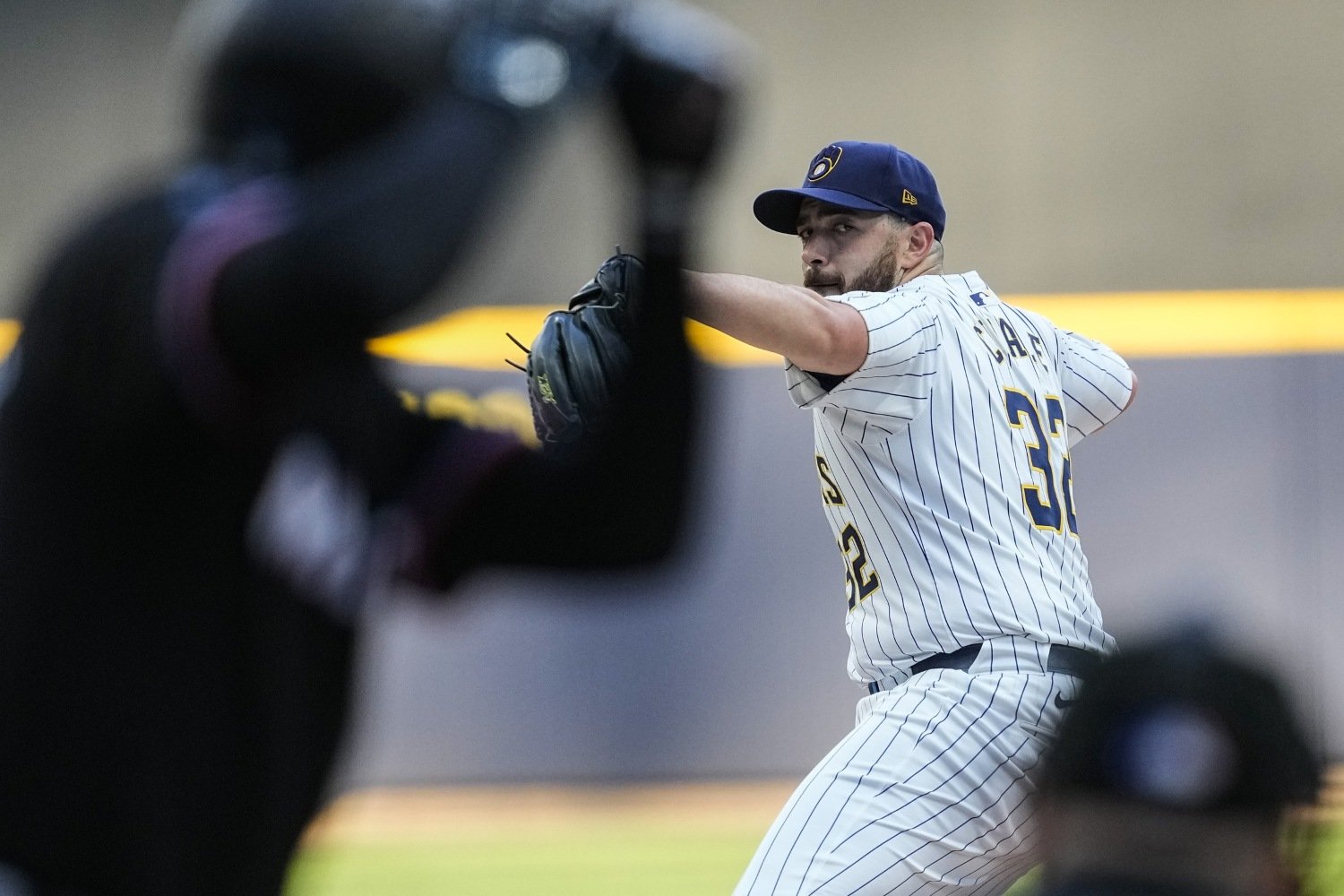 For the Brewers, it's never as simple as it looks. When they're selling, they're not just selling. When they're buying, they're not just buying. They don't want to win a division title; they want to win six in eight years. Thus, when the team traded Devin Williams, they took back Nestor Cortes, who gives them valuable help in the middle of the starting rotation. They weren't just moving Williams; they wanted to get better both this year and in the future. Nor, however, can we assume that their acquisition of Cortes is as simple as adding him to the starting staff and keeping the rest of it static. The Crew did tender a contract to Aaron Civasle last month, but they're not fully or irreversibly committed to him yet, because they could always trade him to a pitching-needy team without enough in their budget to make the additions they feel are necessary. Civale figures to make roughly the same amount Cortes and Williams will in 2025—$8 million or so—and becomes a free agent next winter. That doesn't make him a premium trade chip, but for the right prospective buyer, it makes him an attractive option. Pitchers like Civale (recent teammate Frankie Montas is the best comp among pitchers who have signed so far this winter) cost a lot more than $8 million and often command multi-year deals on the modern pitching market. There's real value to be found by dealing Civale, not only because the team has the starter-capable depth to survive the loss of him, but because a trade of him might bring back a player with a chance to contribute in the longer term. But whom? That all depends on which teams take an interest in Civale, so let's try to identify a few prospective partners. Cincinnati Reds Would this one be unconventional? Of course. The two sides landed on a deal in July, because the Reds were sliding out of contention, but they want to be good in 2025. For that very reason, they'd like to have Civale. They've already acquired Brady Singer via trade, and they were in on Garrett Crochet. They're reportedly interested in Nick Pivetta, as a pivot-a, but that would be an expensive way to fill a third or fourth rotation spot. Civale would be a much cheaper one. The difficulty lies in the fact that both teams are in the same division, and both want to win it, while also building themselves up for the future. Finding the right match could be tough. Spencer Steer is reportedly available in trades, but we can safely assume that it would be for something bigger than a one-year fourth starter. The Reds always have interesting outfielders lying around (so much so that they've already shuttled Joey Wiemer off to Kansas City as part of the Singer deal), but the Brewers don't need young outfielders. It's not hard to imagine, though, that the Brewers might want to get their hands on a hurler like Graham Ashcraft. The Reds aren't bad at pitcher development, but they do it differently than Milwaukee does. Ashcraft has been maddening for all observers, because his stuff looks filthy, but he has run very hot and very cold during his time in the majors. Worse, he missed the last few months of 2024 with an elbow strain. He seems to have avoided the need for surgery and was expected to have a fairly normal offseason, but he's a high-variance arm. That's why the Brewers could theoretically land him, despite his ability to be optioned to the minors and his four remaining seasons of team control, Ashcraft is a huge person and a hard thrower, and his upside in short relief could be equally immense. So far, he and the Reds have tried to make things work as a starter, but the Brewers could either make a quick conversion or undertake the long project of widening his pitch mix to get him doing the things at which they have lots of success. There's time for all of it, based on Ashcraft's service-time status, and he could still return significant value even in 2025. Detroit Tigers They successfully added one new starter to a rotation that was basically—well, no, literally, according to their manager—Tarik Skubal and then pitching chaos by the end of the year. But that starter is Alex Cobb, whose injury risk is so great he was pondering retirement before realizing how badly the Tigers wanted him. They still have room in their rotation for an innings-eater like Civale, and they have some money to spend—but clearly lack the appetite for risk to make a real splash in free agency. The Tigers are a perfect fit, really, because they have a bunch of pitchers who are good, but clearly not great, and who are under team control for years but could be squeezed out of the picture before they can reach free agency, due to Detroit's diffuse talent base. Civale could get a conversation started about Keider Montero, but an easier target might be slider-slinging Alex Faedo, an erstwhile starter who found his true calling in medium-length relief in 2024. He's still optionable, and he still has five years of team control left. Swapping Civale out for him would give the Brewers lots of added flexibility and a contributor to the big-league pitching staff. Washington Nationals They're flying far below the radar, but the Nationals established the core of a new contender in the second half of 2024, with James Wood, Dylan Crews, and C.J. Abrams in the thick of it. They have a young rotation full of arms with upside, but there are also a lot of pitchers with worrisome injury histories there, and their overall pitching depth is lousy. They need more, but don't want to spend at an especially high level yet. Civale could push one of those young starters to the bullpen, where the help would be much-needed, or they could simply let a younger arm develop a bit longer in Triple A until an injury clears their way. Washington's system is full of interesting but flawed talent. There's almost no one in their upper levels who doesn't have something to recommend them, but nor are there any apparent Juan Sotos. Perhaps the Brewers could target José Tena, a third baseman who bats left-handed and showed impressive flashes late in 2024. It would probably require a throw-in along with Civale to land Tena, but he would then mesh perfectly with Caleb Durbin in a productive hot-corner platoon. The Brewers can always hold onto Civale, if no good offer materializes. Shopping at the lower-priced end of the aisle could permit them to fill their remaining needs even within their limited budget. Should they elect to aim higher, though, they will be able to trade Civale and find some value. Either way, look for them to continue balancing present and future as nimbly as any team in baseball.
 -
If Matt Arnold wants to free up some money for more moves this winter and reorient his roster toward a long-term outlook, which potential contenders could emerge as takers for an impending free-agent starter? Image courtesy of © Jeff Hanisch-Imagn Images For the Brewers, it's never as simple as it looks. When they're selling, they're not just selling. When they're buying, they're not just buying. They don't want to win a division title; they want to win six in eight years. Thus, when the team traded Devin Williams, they took back Nestor Cortes, who gives them valuable help in the middle of the starting rotation. They weren't just moving Williams; they wanted to get better both this year and in the future. Nor, however, can we assume that their acquisition of Cortes is as simple as adding him to the starting staff and keeping the rest of it static. The Crew did tender a contract to Aaron Civasle last month, but they're not fully or irreversibly committed to him yet, because they could always trade him to a pitching-needy team without enough in their budget to make the additions they feel are necessary. Civale figures to make roughly the same amount Cortes and Williams will in 2025—$8 million or so—and becomes a free agent next winter. That doesn't make him a premium trade chip, but for the right prospective buyer, it makes him an attractive option. Pitchers like Civale (recent teammate Frankie Montas is the best comp among pitchers who have signed so far this winter) cost a lot more than $8 million and often command multi-year deals on the modern pitching market. There's real value to be found by dealing Civale, not only because the team has the starter-capable depth to survive the loss of him, but because a trade of him might bring back a player with a chance to contribute in the longer term. But whom? That all depends on which teams take an interest in Civale, so let's try to identify a few prospective partners. Cincinnati Reds Would this one be unconventional? Of course. The two sides landed on a deal in July, because the Reds were sliding out of contention, but they want to be good in 2025. For that very reason, they'd like to have Civale. They've already acquired Brady Singer via trade, and they were in on Garrett Crochet. They're reportedly interested in Nick Pivetta, as a pivot-a, but that would be an expensive way to fill a third or fourth rotation spot. Civale would be a much cheaper one. The difficulty lies in the fact that both teams are in the same division, and both want to win it, while also building themselves up for the future. Finding the right match could be tough. Spencer Steer is reportedly available in trades, but we can safely assume that it would be for something bigger than a one-year fourth starter. The Reds always have interesting outfielders lying around (so much so that they've already shuttled Joey Wiemer off to Kansas City as part of the Singer deal), but the Brewers don't need young outfielders. It's not hard to imagine, though, that the Brewers might want to get their hands on a hurler like Graham Ashcraft. The Reds aren't bad at pitcher development, but they do it differently than Milwaukee does. Ashcraft has been maddening for all observers, because his stuff looks filthy, but he has run very hot and very cold during his time in the majors. Worse, he missed the last few months of 2024 with an elbow strain. He seems to have avoided the need for surgery and was expected to have a fairly normal offseason, but he's a high-variance arm. That's why the Brewers could theoretically land him, despite his ability to be optioned to the minors and his four remaining seasons of team control, Ashcraft is a huge person and a hard thrower, and his upside in short relief could be equally immense. So far, he and the Reds have tried to make things work as a starter, but the Brewers could either make a quick conversion or undertake the long project of widening his pitch mix to get him doing the things at which they have lots of success. There's time for all of it, based on Ashcraft's service-time status, and he could still return significant value even in 2025. Detroit Tigers They successfully added one new starter to a rotation that was basically—well, no, literally, according to their manager—Tarik Skubal and then pitching chaos by the end of the year. But that starter is Alex Cobb, whose injury risk is so great he was pondering retirement before realizing how badly the Tigers wanted him. They still have room in their rotation for an innings-eater like Civale, and they have some money to spend—but clearly lack the appetite for risk to make a real splash in free agency. The Tigers are a perfect fit, really, because they have a bunch of pitchers who are good, but clearly not great, and who are under team control for years but could be squeezed out of the picture before they can reach free agency, due to Detroit's diffuse talent base. Civale could get a conversation started about Keider Montero, but an easier target might be slider-slinging Alex Faedo, an erstwhile starter who found his true calling in medium-length relief in 2024. He's still optionable, and he still has five years of team control left. Swapping Civale out for him would give the Brewers lots of added flexibility and a contributor to the big-league pitching staff. Washington Nationals They're flying far below the radar, but the Nationals established the core of a new contender in the second half of 2024, with James Wood, Dylan Crews, and C.J. Abrams in the thick of it. They have a young rotation full of arms with upside, but there are also a lot of pitchers with worrisome injury histories there, and their overall pitching depth is lousy. They need more, but don't want to spend at an especially high level yet. Civale could push one of those young starters to the bullpen, where the help would be much-needed, or they could simply let a younger arm develop a bit longer in Triple A until an injury clears their way. Washington's system is full of interesting but flawed talent. There's almost no one in their upper levels who doesn't have something to recommend them, but nor are there any apparent Juan Sotos. Perhaps the Brewers could target José Tena, a third baseman who bats left-handed and showed impressive flashes late in 2024. It would probably require a throw-in along with Civale to land Tena, but he would then mesh perfectly with Caleb Durbin in a productive hot-corner platoon. The Brewers can always hold onto Civale, if no good offer materializes. Shopping at the lower-priced end of the aisle could permit them to fill their remaining needs even within their limited budget. Should they elect to aim higher, though, they will be able to trade Civale and find some value. Either way, look for them to continue balancing present and future as nimbly as any team in baseball. View full article
-
Wild Bill, indeed. Image courtesy of © Rafael Suanes-Imagn Images It was, all in all, a great year for William Contreras. He bashed the ball. He sustained enough of his 2023 gains as a pitch framer to be a fine defensive catcher, overall. He was the heart and soul of a division-winning team, and he stepped up in an especially crucial way when Christian Yelich went down for the year in July, batting .278/.388/.556 from the All-Star break through the end of August. He was a down-ballot MVP candidate, finishing fifth in the voting. All year, though, he struggled with the running game. I tackled this topic in some depth in late April, looking especially at the impact of Contreras's preference to throw overhand, in a situation in which most players use a lower arm slot to get the ball off quicker. As the year went on, he did make a slight adjustment on that score, and it showed up in his exchange time: he was above average (18th of 66 qualifying catchers) in the time it took to release the ball after it reached his mitt. Contreras's raw arm strength remains below-average, though: he was 41st of 66 in average velocity when trying to catch baserunners. The news gets worse, though. Statcast offers fine-grained data on the contributing factors to outs or steals, including apportioning the credit and blame for a play's outcome to the catcher's throw strength, their exchange time... and their accuracy. Contreras was one of just three catchers whose inaccuracy cost their teams three runs on steal attempts in 2024, along with Pedro Páges of the Cardinals and Austin Wells of the Yankees. Contreras catches with one knee down even in potential steal situations, which is ok. Most catchers do some version of it, these days. However, the way he launches himself creates some systematic inaccuracies. Here's one ball on which he tried to come up out of the kneeling position and throw from his feet, but couldn't get the throw down enough. Bill Wild Comin up.mp4 That throw is simply rushed. He was too slow getting out of the crouch; he was indecisive. Often, he would avoid that trap by throwing from his knees. When he did so, though, that tendency to throw over the top got him into trouble. He often pulled the ball toward the third-base side, and sometimes bounced it, leaving his teammates with no chance to both corral the ball and make a tag on time. Billy Skips From a Knee.mp4 The three-quarter catcher gets more air under that ball, and it carries right to the bag. Contreras got on top of it too much, though, and the ball didn't even have time to tail. Even when he got fully upright and into a throw, though, his mechanics were often a bit messy. Wide Arm SIde.mp4 An emotional player, Contreras seems to overheat a bit when caught off-guard by a steal attempt. He tried to throw the ball above about 110 miles per hour. It actually was one of his hardest throws of the year, but the ball got away from him. It was all effort and no precision. Contreras will bear a heavy workload again in 2025. He'll be no less essential a part of the lineup, and the team certainly isn't any deeper at catcher than they have been—unless and until Jeferson Quero is ready to join the parent club. He was so good in 2024 that this remark sounds cruel, but they need him to be slightly better still. It will help if he avoids overthrowing, and it will help if he slightly alters the slot from which he fires. It's unlikely Contreras will ever be a plus run-stopper, but he can at least give his middle infielders better chances to help him. There was minor progress on that later in the year, and indeed, the dazzling Brewers defenders made plays on the other end when Contreras put the ball just a bit closer. NFhEdzhfWGw0TUFRPT1fQWdVRUFGUUhWd1FBREZJQ1h3QUFDUThFQUZrTldsSUFCVklIVkFRREFRWlNVbGRR.mp4 The stolen-base renaissance has not been a passing fad; it will continue. Contreras has to tighten this up as best he can, and the Brewers will take care of the rest by doing the most important job when it comes to stopping opponents from stealing bases: keeping them off of them in the first place. View full article
-
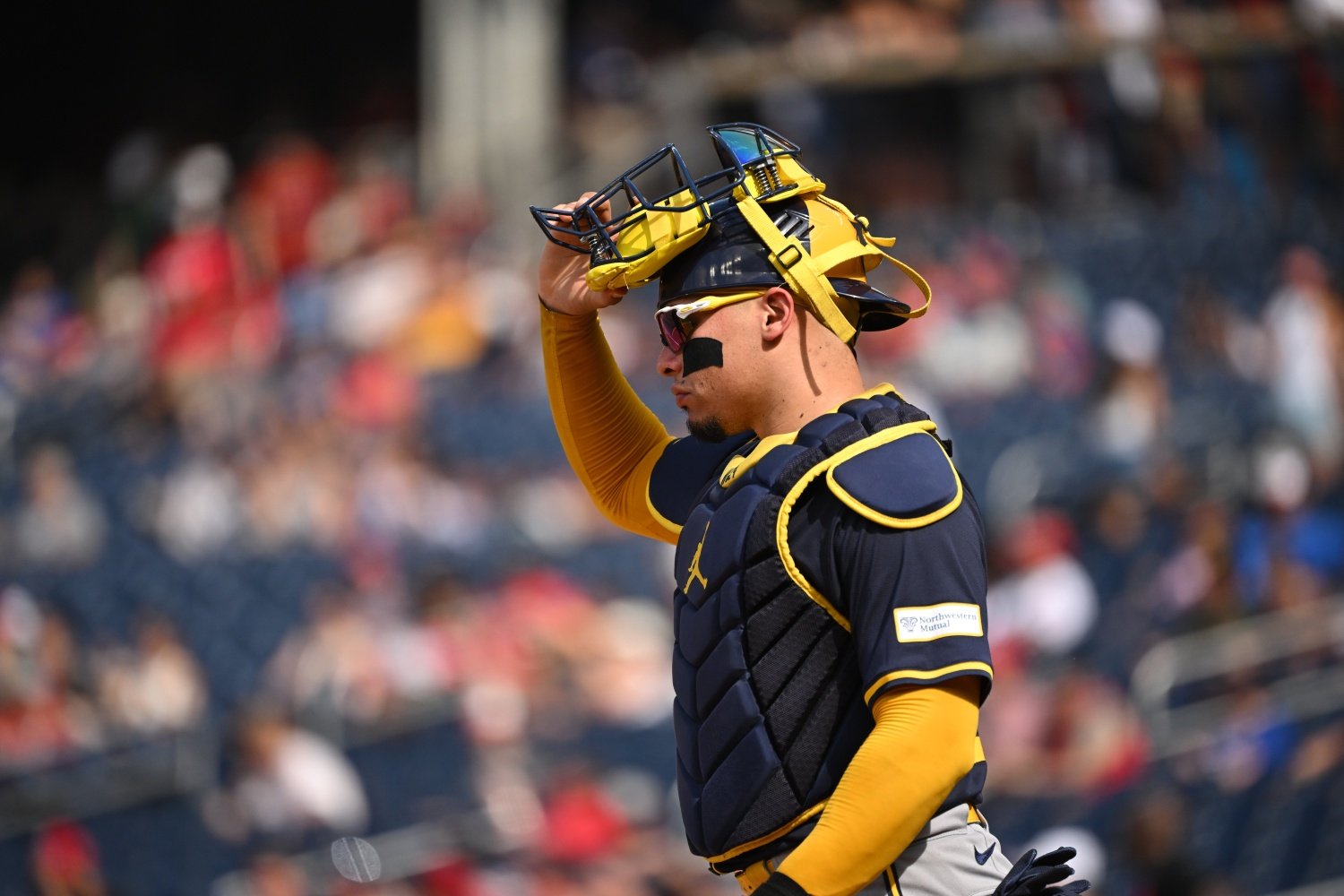 It was, all in all, a great year for William Contreras. He bashed the ball. He sustained enough of his 2023 gains as a pitch framer to be a fine defensive catcher, overall. He was the heart and soul of a division-winning team, and he stepped up in an especially crucial way when Christian Yelich went down for the year in July, batting .278/.388/.556 from the All-Star break through the end of August. He was a down-ballot MVP candidate, finishing fifth in the voting. All year, though, he struggled with the running game. I tackled this topic in some depth in late April, looking especially at the impact of Contreras's preference to throw overhand, in a situation in which most players use a lower arm slot to get the ball off quicker. As the year went on, he did make a slight adjustment on that score, and it showed up in his exchange time: he was above average (18th of 66 qualifying catchers) in the time it took to release the ball after it reached his mitt. Contreras's raw arm strength remains below-average, though: he was 41st of 66 in average velocity when trying to catch baserunners. The news gets worse, though. Statcast offers fine-grained data on the contributing factors to outs or steals, including apportioning the credit and blame for a play's outcome to the catcher's throw strength, their exchange time... and their accuracy. Contreras was one of just three catchers whose inaccuracy cost their teams three runs on steal attempts in 2024, along with Pedro Páges of the Cardinals and Austin Wells of the Yankees. Contreras catches with one knee down even in potential steal situations, which is ok. Most catchers do some version of it, these days. However, the way he launches himself creates some systematic inaccuracies. Here's one ball on which he tried to come up out of the kneeling position and throw from his feet, but couldn't get the throw down enough. Bill Wild Comin up.mp4 That throw is simply rushed. He was too slow getting out of the crouch; he was indecisive. Often, he would avoid that trap by throwing from his knees. When he did so, though, that tendency to throw over the top got him into trouble. He often pulled the ball toward the third-base side, and sometimes bounced it, leaving his teammates with no chance to both corral the ball and make a tag on time. Billy Skips From a Knee.mp4 The three-quarter catcher gets more air under that ball, and it carries right to the bag. Contreras got on top of it too much, though, and the ball didn't even have time to tail. Even when he got fully upright and into a throw, though, his mechanics were often a bit messy. Wide Arm SIde.mp4 An emotional player, Contreras seems to overheat a bit when caught off-guard by a steal attempt. He tried to throw the ball above about 110 miles per hour. It actually was one of his hardest throws of the year, but the ball got away from him. It was all effort and no precision. Contreras will bear a heavy workload again in 2025. He'll be no less essential a part of the lineup, and the team certainly isn't any deeper at catcher than they have been—unless and until Jeferson Quero is ready to join the parent club. He was so good in 2024 that this remark sounds cruel, but they need him to be slightly better still. It will help if he avoids overthrowing, and it will help if he slightly alters the slot from which he fires. It's unlikely Contreras will ever be a plus run-stopper, but he can at least give his middle infielders better chances to help him. There was minor progress on that later in the year, and indeed, the dazzling Brewers defenders made plays on the other end when Contreras put the ball just a bit closer. NFhEdzhfWGw0TUFRPT1fQWdVRUFGUUhWd1FBREZJQ1h3QUFDUThFQUZrTldsSUFCVklIVkFRREFRWlNVbGRR.mp4 The stolen-base renaissance has not been a passing fad; it will continue. Contreras has to tighten this up as best he can, and the Brewers will take care of the rest by doing the most important job when it comes to stopping opponents from stealing bases: keeping them off of them in the first place.
 -
For much of the season, the power forward-sized reliever was the Brewers' secret weapon. He sputtered at midseason and stumbled through the second half, though. How can he stay strong in 2025? Image courtesy of © Michael McLoone-Imagn Images This is a story about a difficult question: How do you consistently throw the high fastball, from a low arm slot? It's a bit of a juggling act; it's a bit of a wrestling match with oneself. All the best high-carry fastballs come from pitchers who throw overhand, because such pitchers have an easy, natural time staying behind the ball and creating backspin. That's all well and good, if that's how you pitch and your arsenal naturally flows therefrom, but Bryan Hudson realized a couple years ago that his best self is the high-extension, low-arm slot version, with his heater getting on top of hitters because of how far down the mound he gets before releasing the ball. His body works best when he fires from just above sidearm, and for a pitcher with a long injury history and natural obstacles to locating with precision, it's important to use the delivery that lets his body work best. Here's the problem: Hudson's fastball has a nice, flat vertical approach angle when it's at the top of the strike zone, and the pitch induces lots of weak contact in that area. When it's lower, though, the pitch's lack of elite raw movement or above-average velocity gets him into trouble. Thus, Hudson is always fighting to answer that question: How does he consistently execute the high heater from a release point as low as he can manage? The easiest way to see this might be to take the pitch grades and the outcomes on the pitch across each month of the past season. Month Fastball Stuff+ Fastball Location+ Fastball Pitching+ Opponent wOBA Apr. 87 104 102 .239 May 88 109 107 Jun. 76 108 102 Jul. 81 94 89 .319 Aug. 79 110 108 .105 Sept. 80 105 104 On the outcomes portion, I've merged the segments of the season where he had locations approved by pitch-modeling algorithms, to give us decent-sized samples with which to work and to simplify the presentation of the data. Now, here's his location heat map on the heater from the start of the season through the end of June: He's neatly filling up the zone, here, bullying hitters and getting ahead of them. In July, though, he started losing that fight with himself. Hudson got it back together, though, and finished the season with the fastball doing basically as well as ever. Here's where he located the pitch during those last two months, when he was with the team. It's not hard to see what worked for Hudson in the good times, or what happened in July. With the high fastball working, he can stay in or around the zone confidently, and the pitch will be effective. It doesn't miss tons of bats, but it induces weak contact. Pop-ups are frequent. When he loses the ability to elevate it, though, he starts having to try to nibble at the edges—and his delivery, with that wide, low angle, is not conducive to that. His misses tend to be east-west, which means he throws a fair number of non-competitive fastballs if he has to aim for the corner, rather than the heart of the plate. Throwing high fastballs is indispensable for Hudson. He has a good sweeper, but that pitch has to play off of something, and his cutter is already the weak cousin of his mix. The sad fact is that throwing the high heater means working against his body a bit, even as he otherwise embraces the long, low throwing motion. He has to find ways to consistently locate the heater up, without letting his arm angle rise too much and losing the deception and extension that are such vital elements of his success. The Brewers had to veer away from Hudson in the second half of 2024, as he faltered and wore down. After the Devin Williams trade, the team is in position to rely heavily on the big lefty again in 2025, if he can handle that assignment. To do so, he has to resolve the tension between how he throws and where he throws best. He'd hardly be the first person to overcome that tension, but that doesn't mean it can be done easily. View full article
-
For Bryan Hudson, Coming in High From Low Slot is Key
Matthew Trueblood posted an article in Brewers
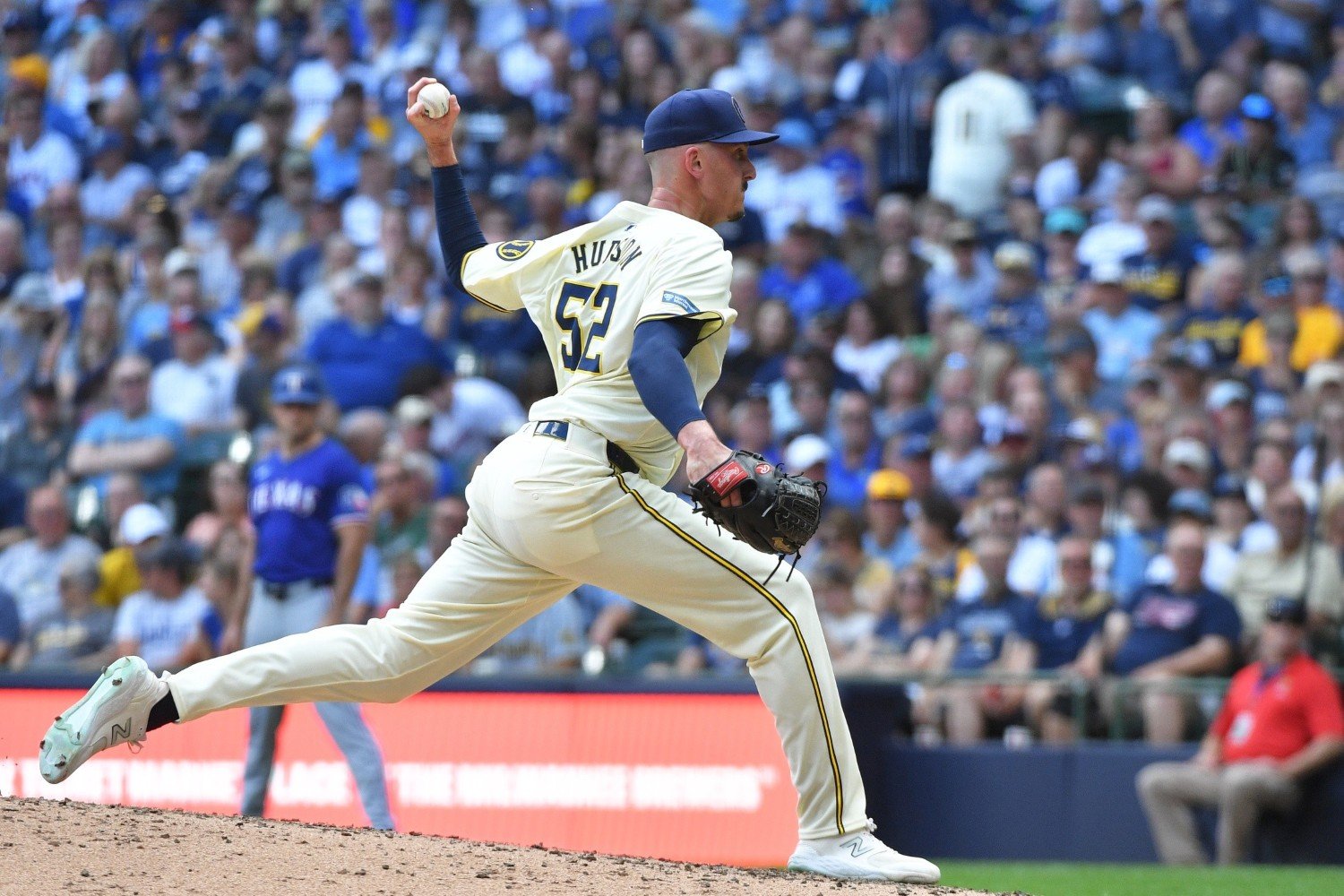 This is a story about a difficult question: How do you consistently throw the high fastball, from a low arm slot? It's a bit of a juggling act; it's a bit of a wrestling match with oneself. All the best high-carry fastballs come from pitchers who throw overhand, because such pitchers have an easy, natural time staying behind the ball and creating backspin. That's all well and good, if that's how you pitch and your arsenal naturally flows therefrom, but Bryan Hudson realized a couple years ago that his best self is the high-extension, low-arm slot version, with his heater getting on top of hitters because of how far down the mound he gets before releasing the ball. His body works best when he fires from just above sidearm, and for a pitcher with a long injury history and natural obstacles to locating with precision, it's important to use the delivery that lets his body work best. Here's the problem: Hudson's fastball has a nice, flat vertical approach angle when it's at the top of the strike zone, and the pitch induces lots of weak contact in that area. When it's lower, though, the pitch's lack of elite raw movement or above-average velocity gets him into trouble. Thus, Hudson is always fighting to answer that question: How does he consistently execute the high heater from a release point as low as he can manage? The easiest way to see this might be to take the pitch grades and the outcomes on the pitch across each month of the past season. Month Fastball Stuff+ Fastball Location+ Fastball Pitching+ Opponent wOBA Apr. 87 104 102 .239 May 88 109 107 Jun. 76 108 102 Jul. 81 94 89 .319 Aug. 79 110 108 .105 Sept. 80 105 104 On the outcomes portion, I've merged the segments of the season where he had locations approved by pitch-modeling algorithms, to give us decent-sized samples with which to work and to simplify the presentation of the data. Now, here's his location heat map on the heater from the start of the season through the end of June: He's neatly filling up the zone, here, bullying hitters and getting ahead of them. In July, though, he started losing that fight with himself. Hudson got it back together, though, and finished the season with the fastball doing basically as well as ever. Here's where he located the pitch during those last two months, when he was with the team. It's not hard to see what worked for Hudson in the good times, or what happened in July. With the high fastball working, he can stay in or around the zone confidently, and the pitch will be effective. It doesn't miss tons of bats, but it induces weak contact. Pop-ups are frequent. When he loses the ability to elevate it, though, he starts having to try to nibble at the edges—and his delivery, with that wide, low angle, is not conducive to that. His misses tend to be east-west, which means he throws a fair number of non-competitive fastballs if he has to aim for the corner, rather than the heart of the plate. Throwing high fastballs is indispensable for Hudson. He has a good sweeper, but that pitch has to play off of something, and his cutter is already the weak cousin of his mix. The sad fact is that throwing the high heater means working against his body a bit, even as he otherwise embraces the long, low throwing motion. He has to find ways to consistently locate the heater up, without letting his arm angle rise too much and losing the deception and extension that are such vital elements of his success. The Brewers had to veer away from Hudson in the second half of 2024, as he faltered and wore down. After the Devin Williams trade, the team is in position to rely heavily on the big lefty again in 2025, if he can handle that assignment. To do so, he has to resolve the tension between how he throws and where he throws best. He'd hardly be the first person to overcome that tension, but that doesn't mean it can be done easily.
 -
I know it's been a miniature beat for @Tim Muma this winter and that Ken Rosenthal wrote a note about it, and I did muse about the A's... but I don't think the Brewers actually have (or should have, really!) much interest in trading Hoskins. If it turns out he has some positive trade value, to Sacramento for instance, that might be a different story, but I don't think he's going anywhere, and I think that's probably fine. He wasn't as bad as some believed last year and I think he'll be better in '25.
-
Though the Brewers took back a player with the same projected salary as Devin Williams in their first big move of the winter, they did get some cash (and thus, some new flexibility) in the deal. Where does it leave their payroll? Image courtesy of © Benny Sieu-Imagn Images According to MLB Trade Rumors, Nestor Cortes and Devin Williams project for exactly the same salary in their final respective seasons of arbitration eligibility: $7.7 million. In practice, there's a fair chance that Williams will make a bit more than that, and that Cortes will make a bit less, but the difference would be negligible. The Brewers were willing to lose most of the financial benefit of trading Williams in exchange for filling one of the key areas of need toward which they would have reallocated those resources—a starting pitcher. The Yankees did send them $2 million in the trade, though, ensuring that the Crew will have at least a little bit more to spend in the wake of the trade. They also partially filled their other big need in the deal, by acquiring Caleb Durbin. He's a bit more likely to end up a platoon partner for Brice Turang and rotating fill-in guy than a full-time third baseman, but he reduces the team's need on the infield by about half. After the transaction, the Brewers have (depending on how you prefer to count things, and on how their few open arbitration cases go) about $104 million on their books for 2025. They've made no public pronouncements about their spending plans, but sources tell Brewer Fanatic that it's very unlikely the team will spend more than about $120 million. They could easily stop even lower than that, so no big additions of salary are forthcoming for the balance of this offseason. That said, they do have some capacity. A further signing or trade to bolster the rotation still isn't out of the question, but at this stage, it feels like the best bet is that the team will hunt for a cost-efficient way to add a key bat somewhere. That could take the shape of waiting out free agency, by which process the team got Gary Sánchez on a team-friendly one-year, $7-million deal last February. To sign (for instance) Josh Bell or J.D. Martinez today would probably cost more than the Brewers care to pay, but a month from now, that could change. Being persistently opportunistic is the name of the game for small-market teams, and the Brewers are good at that game. Alternatively, though, they could try to position themselves for a trade that absorbs money another team doesn't want to spend, on a talented hitter. We've already discussed the possibility of Milwaukee targeting Nathaniel Lowe at length this winter, but don't forget about the possible availability of Brandon Lowe, of the Rays. Those two are both left-handed bats, which makes them especially appealing, because they could generally platoon with Rhys Hoskins and find ways into the lineup via the DH spot or (in Brandon Lowe's case) second base. Josh Naylor of the Guardians is another name in the same vein, but the fact that he would come with just one year of team control makes him a very unlikely target for Matt Arnold. Taylor Ward, although a right-handed bat and mostly an outfielder, is one more name on which to keep an eye. He still has two years of team control and he can really hit. One way or another, there's probably just one noteworthy addition left in this offseason for the Brewers. That's fine. They're two-time defending NL Central champions, after all, and the Williams trade helped them round things out. They were a very young team in 2023 and 2024, and they can easily remain so in 2025. They'll backfill Williams's place from within, rather than spending any significant resources on relief help, with the likes of Craig Yoho and (perhaps) Jacob Misiorowski. They have enough of a surplus in other places (Tyler Black, most clearly) to make a trade that realigns their talent if that chance presents itself, but otherwise, they'll try to spend another $8-10 million, keep some powder dry, and trust their winning formula to keep doing its thing. View full article
-
 According to MLB Trade Rumors, Nestor Cortes and Devin Williams project for exactly the same salary in their final respective seasons of arbitration eligibility: $7.7 million. In practice, there's a fair chance that Williams will make a bit more than that, and that Cortes will make a bit less, but the difference would be negligible. The Brewers were willing to lose most of the financial benefit of trading Williams in exchange for filling one of the key areas of need toward which they would have reallocated those resources—a starting pitcher. The Yankees did send them $2 million in the trade, though, ensuring that the Crew will have at least a little bit more to spend in the wake of the trade. They also partially filled their other big need in the deal, by acquiring Caleb Durbin. He's a bit more likely to end up a platoon partner for Brice Turang and rotating fill-in guy than a full-time third baseman, but he reduces the team's need on the infield by about half. After the transaction, the Brewers have (depending on how you prefer to count things, and on how their few open arbitration cases go) about $104 million on their books for 2025. They've made no public pronouncements about their spending plans, but sources tell Brewer Fanatic that it's very unlikely the team will spend more than about $120 million. They could easily stop even lower than that, so no big additions of salary are forthcoming for the balance of this offseason. That said, they do have some capacity. A further signing or trade to bolster the rotation still isn't out of the question, but at this stage, it feels like the best bet is that the team will hunt for a cost-efficient way to add a key bat somewhere. That could take the shape of waiting out free agency, by which process the team got Gary Sánchez on a team-friendly one-year, $7-million deal last February. To sign (for instance) Josh Bell or J.D. Martinez today would probably cost more than the Brewers care to pay, but a month from now, that could change. Being persistently opportunistic is the name of the game for small-market teams, and the Brewers are good at that game. Alternatively, though, they could try to position themselves for a trade that absorbs money another team doesn't want to spend, on a talented hitter. We've already discussed the possibility of Milwaukee targeting Nathaniel Lowe at length this winter, but don't forget about the possible availability of Brandon Lowe, of the Rays. Those two are both left-handed bats, which makes them especially appealing, because they could generally platoon with Rhys Hoskins and find ways into the lineup via the DH spot or (in Brandon Lowe's case) second base. Josh Naylor of the Guardians is another name in the same vein, but the fact that he would come with just one year of team control makes him a very unlikely target for Matt Arnold. Taylor Ward, although a right-handed bat and mostly an outfielder, is one more name on which to keep an eye. He still has two years of team control and he can really hit. One way or another, there's probably just one noteworthy addition left in this offseason for the Brewers. That's fine. They're two-time defending NL Central champions, after all, and the Williams trade helped them round things out. They were a very young team in 2023 and 2024, and they can easily remain so in 2025. They'll backfill Williams's place from within, rather than spending any significant resources on relief help, with the likes of Craig Yoho and (perhaps) Jacob Misiorowski. They have enough of a surplus in other places (Tyler Black, most clearly) to make a trade that realigns their talent if that chance presents itself, but otherwise, they'll try to spend another $8-10 million, keep some powder dry, and trust their winning formula to keep doing its thing.
 -
Nestor Cortes Will Get a HUGE Boost from His New Outfield Defense
Matthew Trueblood posted an article in Brewers
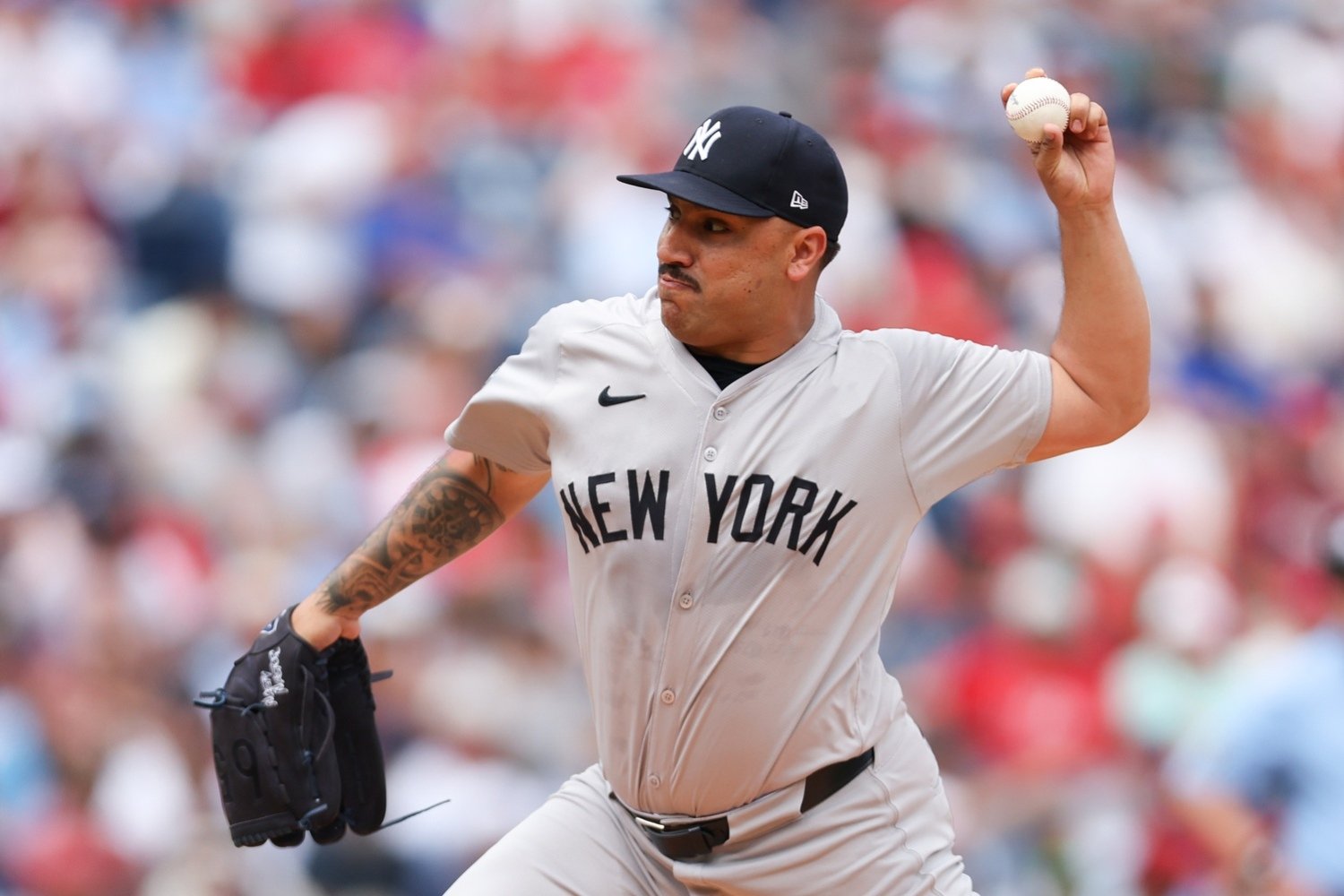 Sources differ widely when it comes to defensive value, but there's no question or debate about the fact that the Milwaukee Brewers were a better defensive team than the New York Yankees in 2024. In fact, you're pretty safe in characterizing the Brewers as one of the best fielding units in the league (they did win a second straight Team Gold Glove, after all), and the Yankees as one of the worst (defense did cost them the World Series, or at least a couple of games therein). That's valuable on a broad scale, but it also has interesting effects on some individuals. For instance, if you're a pitcher with an extreme tendency to give up a particular kind of contact, the portion of the defense responsible for catching balls hit in that fashion is extremely important to your pursuit of success. Hey, now we're not just talking in vague generalities. We're talking about Nestor Cortes. Of the 351 pitchers who reached 50 innings in the majors in 2024, Cortes had the 22nd-highest fly-ball rate. Because he pitched a lot, we can put it another way, too. Only three pitchers induced more total batted balls with a launch angle higher than 40 degrees, and only two induced more with a launch angle between 20 and 40. There's no overlap between the two groups. With 272, Cortes allowed the most batted balls launched at more than 20 degrees of any pitcher in baseball. The main worry when a pitcher is that reliant on fly balls is, of course, home runs, and Cortes will give up a bunch of them. Although Yankee Stadium is slightly more homer-friendly than Miller Park, Cortes will give up homers at about the same rate in Milwaukee; it's just part of his game. He mitigates the damage by striking out plenty of hitters and walking very few; it's not a disqualifying vulnerability. The secondary concern, though, is how badly things can go for a pitcher if balls hit in the air land too often, in corners or on warning tracks or in front of onrushing outfielders. That's where we need to take a close look at the differences between Cortes's old team and his new one. According to Baseball Prospectus, the Brewers outfield was 46.8 runs better than the Yankees' last year, in terms of defense. The Crew's outfielders were an aggregate 29.7 runs better than average, per Deserved Runs Prevented (DRP), the best in baseball. The Yankees were the worst, at -17.1 DRP. The Brewers allowed a .213 BABIP on batted balls with a launch angle greater than 20 degrees; the Yankees allowed a .265 mark. Cortes, the pitcher who put the ball up in the air more than anyone else did last season, is going from the 30th-best support staff for that type of batted ball to the best. If he stays healthy and pitches a full season, that could be worth six or seven runs saved behind him. The magnitude of that effect is huge. Hardly any pitcher could benefit more significantly by a change in team, and this is before you account for any difference in how he actually pitches under the guidance of Chris Hook. With the Brewers' defense behind him, even if he had pitched exactly the same way and gotten exactly the same amount of good and bad luck, Cortes's 2024 ERA would have been 3.40, instead of 3.77. When taking the unusual step of prioritizing a player under only short-term control, a small-market team like the Brewers has to know precisely what they're doing. They have to choose that target carefully, ideally to harmonize with something they know they teach well or augment well. Although the situation is somewhat different, the Brewers knew they could afford to acquire William Contreras and install him as their long-term catcher, because they excel at instructing and developing catchers—especially pitch-framing, the skill Contreras struggled most with before arriving. They've turned a version of the same trick, again. Cortes is a very good pitcher, but last season, he looked a bit less solid than he really was, because he had 285 pounds of 32-year-old slugger playing center field and a guy whose best defensive credential is his marvelous on-base percentage in right. He's about to take up residence in front of the best defensive outfield in the game, and it will make the Brewers look smart—because they are.
 -
In evaluating the apparently peculiar decision to target a player with just one year of team control remaining in last week's big trade, be sure to keep in mind: the Brewers will make their new lefty starter better just by taking the field behind him. Image courtesy of © Bill Streicher-Imagn Images Sources differ widely when it comes to defensive value, but there's no question or debate about the fact that the Milwaukee Brewers were a better defensive team than the New York Yankees in 2024. In fact, you're pretty safe in characterizing the Brewers as one of the best fielding units in the league (they did win a second straight Team Gold Glove, after all), and the Yankees as one of the worst (defense did cost them the World Series, or at least a couple of games therein). That's valuable on a broad scale, but it also has interesting effects on some individuals. For instance, if you're a pitcher with an extreme tendency to give up a particular kind of contact, the portion of the defense responsible for catching balls hit in that fashion is extremely important to your pursuit of success. Hey, now we're not just talking in vague generalities. We're talking about Nestor Cortes. Of the 351 pitchers who reached 50 innings in the majors in 2024, Cortes had the 22nd-highest fly-ball rate. Because he pitched a lot, we can put it another way, too. Only three pitchers induced more total batted balls with a launch angle higher than 40 degrees, and only two induced more with a launch angle between 20 and 40. There's no overlap between the two groups. With 272, Cortes allowed the most batted balls launched at more than 20 degrees of any pitcher in baseball. The main worry when a pitcher is that reliant on fly balls is, of course, home runs, and Cortes will give up a bunch of them. Although Yankee Stadium is slightly more homer-friendly than Miller Park, Cortes will give up homers at about the same rate in Milwaukee; it's just part of his game. He mitigates the damage by striking out plenty of hitters and walking very few; it's not a disqualifying vulnerability. The secondary concern, though, is how badly things can go for a pitcher if balls hit in the air land too often, in corners or on warning tracks or in front of onrushing outfielders. That's where we need to take a close look at the differences between Cortes's old team and his new one. According to Baseball Prospectus, the Brewers outfield was 46.8 runs better than the Yankees' last year, in terms of defense. The Crew's outfielders were an aggregate 29.7 runs better than average, per Deserved Runs Prevented (DRP), the best in baseball. The Yankees were the worst, at -17.1 DRP. The Brewers allowed a .213 BABIP on batted balls with a launch angle greater than 20 degrees; the Yankees allowed a .265 mark. Cortes, the pitcher who put the ball up in the air more than anyone else did last season, is going from the 30th-best support staff for that type of batted ball to the best. If he stays healthy and pitches a full season, that could be worth six or seven runs saved behind him. The magnitude of that effect is huge. Hardly any pitcher could benefit more significantly by a change in team, and this is before you account for any difference in how he actually pitches under the guidance of Chris Hook. With the Brewers' defense behind him, even if he had pitched exactly the same way and gotten exactly the same amount of good and bad luck, Cortes's 2024 ERA would have been 3.40, instead of 3.77. When taking the unusual step of prioritizing a player under only short-term control, a small-market team like the Brewers has to know precisely what they're doing. They have to choose that target carefully, ideally to harmonize with something they know they teach well or augment well. Although the situation is somewhat different, the Brewers knew they could afford to acquire William Contreras and install him as their long-term catcher, because they excel at instructing and developing catchers—especially pitch-framing, the skill Contreras struggled most with before arriving. They've turned a version of the same trick, again. Cortes is a very good pitcher, but last season, he looked a bit less solid than he really was, because he had 285 pounds of 32-year-old slugger playing center field and a guy whose best defensive credential is his marvelous on-base percentage in right. He's about to take up residence in front of the best defensive outfield in the game, and it will make the Brewers look smart—because they are. View full article
-
I love that thought. It's not the kind of consideration that teams allow to shape their targets, but now that he's here anyway, I'm *sure* they'll be eager to see him, Frelick, and Turang (among others) share ideas and try to make each other better.
-
The 2025 Milwaukee Brewers might hit fewer homers than the 2024 team did. The 2025 Milwaukee Brewers will also steal 300 bases, if this kid has anything to say about it. Image courtesy of © Doug Raflik/USA TODAY NETWORK-Wisconsin via Imagn Content Services, LLC It's easy to look down on Caleb Durbin. I mean, it's literally easy to look down on him, for most people, because he stands 5-foot-6. The limits on his power potential are very real, even though he leverages what exit velocity he is able to generate much better than players like Sal Frelick and Brice Turang do, by hitting the ball in the air and pulling it more often. His offensive profile is the kind at which many modern fans and some modern teams sneer, because there's a perceived risk that he'll have the bat knocked out of his hands, the way forgettable recent infielders like Nick Madrigal, David Fletcher, and Nicky Lopez did. That risk, too, is real. Durbin makes good swing decisions and had a superb contact rate in the minors, and the former skill is important. Light-hitting guys like him have to be patient, so they can force their way on base with the occasional walk even though pitchers are unafraid of them. If Durbin severely lacks thump, can he realistically do any more than hit .280 and get on base at a .340 clip, with a slugging average under .400? Maybe not. That's the path Frelick has hewn for himself in the majors, but his offense is not what kept Frelick in the lineup every day in 2024—and Frelick has the advantage of being a lefty batter. If his OBP were .015 worse, as Durbin's might be if he's not shielded from righty pitchers to some extent, Frelick would be an uninspiring player. The real separator for Durbin, though, is something Frelick doesn't possess, and Turang has shown only in a lesser, normal-person kind of way. Caleb Durbin steals bases with a ferocious, fearless abandon. If he can stay healthy and get on base enough to matter, he might very well eclipse the 50 steals Turang amassed in 2024. Throughout his short pro career, he's been as aggressive as any baserunner in the game. This season, in 90 regular-season games in the Yankees system, Durbin stole 31 bases in 35 attempts. That's an impressive rate, even given that he was practically always on base, with a .388 OBP. It utterly pales in comparison, though, to what he did in his second tour of the Arizona Fall League. He played 24 games and took 117 plate appearances in that autumn prospect showcase, and in addition to swatting five home runs and getting on base at a .427 clip, he stole a staggering 29 bases in 30 attempts. In 2023, Durbin made his first appearance in the Fall League, and stole 21 bases in 23 tries over 23 games. That was on the heels of a regular season in which he swiped 36 bases and was caught eight times in 69 games played. He gets on base often, and when he spots the merest inattention by the pitcher or knows he has an edge because of a weak-armed catcher, he goes. He borders on the cliché of a Pat Murphy-style Brewer, with the diminutive height and the dearth of power and the defensive versatility, but this combination of speed and eagerness to weaponize it is on another level. Big-league catchers are better than their minor-league brethren. So are big-league defenses and big-league pitchers. Durbin won't be able to get on base as often or steal as easily in the majors as he has throughout his time in the minors, and the team might occasionally try to reel him in, since he's in the habit of injuring himself and missing time. On the other hand, though, Murphy was bound to love him, not just for his size or the nature of his strengths, but for his on-field tenacity. He's a crash-into-the-net guy, chasing fly balls. He's a take-the-extra-base guy, when defenses are napping and the ball is in play. Durbin might hit .300 and walk his way to a near-.400 OBP, and if he does, he'll be a star. He's much more likely to hit .270 and run an OBP below .350, but even at that lesser tier, he can be a fun and highly disruptive offensive player. He's going to be a huge part of the Brewers' running game, which they regarded as both indispensable and essentially unstoppable last year. It's not just his speed, but the utility of it that should make a major difference for the Crew in 2025. View full article
-
Caleb Durbin Runs the Bases Like He's Being Chased, and It Rocks
Matthew Trueblood posted an article in Brewers
 It's easy to look down on Caleb Durbin. I mean, it's literally easy to look down on him, for most people, because he stands 5-foot-6. The limits on his power potential are very real, even though he leverages what exit velocity he is able to generate much better than players like Sal Frelick and Brice Turang do, by hitting the ball in the air and pulling it more often. His offensive profile is the kind at which many modern fans and some modern teams sneer, because there's a perceived risk that he'll have the bat knocked out of his hands, the way forgettable recent infielders like Nick Madrigal, David Fletcher, and Nicky Lopez did. That risk, too, is real. Durbin makes good swing decisions and had a superb contact rate in the minors, and the former skill is important. Light-hitting guys like him have to be patient, so they can force their way on base with the occasional walk even though pitchers are unafraid of them. If Durbin severely lacks thump, can he realistically do any more than hit .280 and get on base at a .340 clip, with a slugging average under .400? Maybe not. That's the path Frelick has hewn for himself in the majors, but his offense is not what kept Frelick in the lineup every day in 2024—and Frelick has the advantage of being a lefty batter. If his OBP were .015 worse, as Durbin's might be if he's not shielded from righty pitchers to some extent, Frelick would be an uninspiring player. The real separator for Durbin, though, is something Frelick doesn't possess, and Turang has shown only in a lesser, normal-person kind of way. Caleb Durbin steals bases with a ferocious, fearless abandon. If he can stay healthy and get on base enough to matter, he might very well eclipse the 50 steals Turang amassed in 2024. Throughout his short pro career, he's been as aggressive as any baserunner in the game. This season, in 90 regular-season games in the Yankees system, Durbin stole 31 bases in 35 attempts. That's an impressive rate, even given that he was practically always on base, with a .388 OBP. It utterly pales in comparison, though, to what he did in his second tour of the Arizona Fall League. He played 24 games and took 117 plate appearances in that autumn prospect showcase, and in addition to swatting five home runs and getting on base at a .427 clip, he stole a staggering 29 bases in 30 attempts. In 2023, Durbin made his first appearance in the Fall League, and stole 21 bases in 23 tries over 23 games. That was on the heels of a regular season in which he swiped 36 bases and was caught eight times in 69 games played. He gets on base often, and when he spots the merest inattention by the pitcher or knows he has an edge because of a weak-armed catcher, he goes. He borders on the cliché of a Pat Murphy-style Brewer, with the diminutive height and the dearth of power and the defensive versatility, but this combination of speed and eagerness to weaponize it is on another level. Big-league catchers are better than their minor-league brethren. So are big-league defenses and big-league pitchers. Durbin won't be able to get on base as often or steal as easily in the majors as he has throughout his time in the minors, and the team might occasionally try to reel him in, since he's in the habit of injuring himself and missing time. On the other hand, though, Murphy was bound to love him, not just for his size or the nature of his strengths, but for his on-field tenacity. He's a crash-into-the-net guy, chasing fly balls. He's a take-the-extra-base guy, when defenses are napping and the ball is in play. Durbin might hit .300 and walk his way to a near-.400 OBP, and if he does, he'll be a star. He's much more likely to hit .270 and run an OBP below .350, but even at that lesser tier, he can be a fun and highly disruptive offensive player. He's going to be a huge part of the Brewers' running game, which they regarded as both indispensable and essentially unstoppable last year. It's not just his speed, but the utility of it that should make a major difference for the Crew in 2025.
 -
No, the Yankees didn't have a competitive-balance pick to send to the Brewers in Friday's big trade. The effect, however, could be close to the same thing. Image courtesy of © Benny Sieu-Imagn Images The Brewers traded longtime reliever Devin Williams to the Yankees Friday, receiving infielder Caleb Durbin and starting pitcher Nestor Cortes in return. It was a difficult deal for some fans to evaluate, because it involved acquiring a player (in Cortes) who will become a free agent at the same time Williams will, next fall. Durbin is the main piece, because he's under team control for at least six years (should he pan out), but the fact that much of the remaining value was tied up in Cortes was a wrinkle. Usually, the Brewers take a long-term focus when trading away players who are approaching free agency. It was their willingness to accept far-off value that allowed them to scoop up Freddy Peralta for Adam Lind, and when they dealt Josh Hader to the Padres in 2022, they did take back Taylor Rogers—but that was as a tertiary piece, with Esteury Ruiz and Robert Gasser as the main components of the package. Cortes is much more important to this deal than Rogers was to that one, and it feels odd that the team targeted a player with just one year of team control, even though the Yankees sent some money to the Crew in the deal. The key to understanding Matt Arnold's approach lies in the roles of the players exchanged here, and in the way the free-agent market has unfolded this winter. To grasp the idea, consider this list of pitchers and their FanGraphs WAR (fWAR) for the last three seasons: Nestor Cortes: 396 innings, 7.8 WAR Michael Wacha: 428 IP, 7.5 WAR Nathan Eovaldi: 424 IP, 6.1 WAR Nick Pivetta: 468 IP, 5.4 WAR Nick Martinez: 359 IP, 5.3 WAR Yusei Kikuchi: 444 IP, 5.1 WAR Sean Manaea: 457 IP, 5.0 WAR Luis Severino: 373 IP, 3.1 WAR Other than Cortes, all of the above are starters who became free agents this winter, and who were offered the qualifying offer (or would have been, if they were eligible). Wacha has already signed a three-year deal, without hitting the market. Severino got $67 million from the Athletics, to spend his next three seasons in West Sacramento. Eovaldi got $75 million over three years from the Rangers, and Kikuchi got $63 million over the same term from the Angels. Martinez accepted the qualifying offer to stay with the Reds. Pivetta and Manaea are unsigned so far, but each is in for a big payday. In other words: if Cortes has a healthy and characteristic season (and especially if he benefits significantly from the change in his home park and the defense played behind him, as I fully expect), he's a shoo-in to get the qualifying offer next winter. The Brewers would have had the same right with Williams, of course, but for a small-market team, it's hard to extend that to a reliever. If Williams has a fully healthy and characteristic season, you'd probably still have to do it, but the team was never going to spend $21 million or more per year on a reliever. That's part of why they were so proactive about trading Hader, and why they were never going to consider keeping Williams. The risk, of course, lies in the fact that relievers just don't enjoy anything remotely similar to the market starters find in the modern game. The Brewers aren't the only team who views those hurlers as replaceable. On the contrary, the whole league feels that way. By contrast, almost every team in the league will pay through the nose for a reliable starter. Most of the names rattled off above already signed for (or will sign for) salaries similar to that offered by the QO, on multi-year deals. And Cortes is the best of the bunch. One key talking point this winter is that teams don't pay purely for track record or durability, the way they once did. Cortes will need to have another strong season in 2025 to be worthy of the QO, and not just in terms of superficial statistics. However, his pitch mix and peripheral numbers are good enough to attract plenty of bidders, when he's healthy. He survived a scare with his elbow this fall. If he remains intact for the Brewers, he'll have a very robust market afterward. When trading away a player like Williams (or Corbin Burnes, a year ago), teams set the expected value of an extra draft pick as the absolute floor for the return. By moving those players a year before they reach free agency, they know they're giving up the right to extend the QO and recoup a pick when the player signs elsewhere. With Cortes, though, the Brewers got back not only a player who fits their needs even better than Williams did for 2025 (albeit in less stellar fashion), but a player they can comfortably make that very offer to 11 months from now. In effect, assuming he stays healthy this year, they acquired a draft pick, in addition to Cortes and Durbin. In almost every trade made by the Brewers front office in recent years, there's an extra layer to unpack, which makes it more favorable to the Crew than it appears at first glance. This one is no exception. Cortes is not a superstar, but he's a huge upgrade for the team's rotation, and despite being destined for free agency after 2025, he'll return value for the team beyond that year, if things go even moderately well. View full article
-
 The Brewers traded longtime reliever Devin Williams to the Yankees Friday, receiving infielder Caleb Durbin and starting pitcher Nestor Cortes in return. It was a difficult deal for some fans to evaluate, because it involved acquiring a player (in Cortes) who will become a free agent at the same time Williams will, next fall. Durbin is the main piece, because he's under team control for at least six years (should he pan out), but the fact that much of the remaining value was tied up in Cortes was a wrinkle. Usually, the Brewers take a long-term focus when trading away players who are approaching free agency. It was their willingness to accept far-off value that allowed them to scoop up Freddy Peralta for Adam Lind, and when they dealt Josh Hader to the Padres in 2022, they did take back Taylor Rogers—but that was as a tertiary piece, with Esteury Ruiz and Robert Gasser as the main components of the package. Cortes is much more important to this deal than Rogers was to that one, and it feels odd that the team targeted a player with just one year of team control, even though the Yankees sent some money to the Crew in the deal. The key to understanding Matt Arnold's approach lies in the roles of the players exchanged here, and in the way the free-agent market has unfolded this winter. To grasp the idea, consider this list of pitchers and their FanGraphs WAR (fWAR) for the last three seasons: Nestor Cortes: 396 innings, 7.8 WAR Michael Wacha: 428 IP, 7.5 WAR Nathan Eovaldi: 424 IP, 6.1 WAR Nick Pivetta: 468 IP, 5.4 WAR Nick Martinez: 359 IP, 5.3 WAR Yusei Kikuchi: 444 IP, 5.1 WAR Sean Manaea: 457 IP, 5.0 WAR Luis Severino: 373 IP, 3.1 WAR Other than Cortes, all of the above are starters who became free agents this winter, and who were offered the qualifying offer (or would have been, if they were eligible). Wacha has already signed a three-year deal, without hitting the market. Severino got $67 million from the Athletics, to spend his next three seasons in West Sacramento. Eovaldi got $75 million over three years from the Rangers, and Kikuchi got $63 million over the same term from the Angels. Martinez accepted the qualifying offer to stay with the Reds. Pivetta and Manaea are unsigned so far, but each is in for a big payday. In other words: if Cortes has a healthy and characteristic season (and especially if he benefits significantly from the change in his home park and the defense played behind him, as I fully expect), he's a shoo-in to get the qualifying offer next winter. The Brewers would have had the same right with Williams, of course, but for a small-market team, it's hard to extend that to a reliever. If Williams has a fully healthy and characteristic season, you'd probably still have to do it, but the team was never going to spend $21 million or more per year on a reliever. That's part of why they were so proactive about trading Hader, and why they were never going to consider keeping Williams. The risk, of course, lies in the fact that relievers just don't enjoy anything remotely similar to the market starters find in the modern game. The Brewers aren't the only team who views those hurlers as replaceable. On the contrary, the whole league feels that way. By contrast, almost every team in the league will pay through the nose for a reliable starter. Most of the names rattled off above already signed for (or will sign for) salaries similar to that offered by the QO, on multi-year deals. And Cortes is the best of the bunch. One key talking point this winter is that teams don't pay purely for track record or durability, the way they once did. Cortes will need to have another strong season in 2025 to be worthy of the QO, and not just in terms of superficial statistics. However, his pitch mix and peripheral numbers are good enough to attract plenty of bidders, when he's healthy. He survived a scare with his elbow this fall. If he remains intact for the Brewers, he'll have a very robust market afterward. When trading away a player like Williams (or Corbin Burnes, a year ago), teams set the expected value of an extra draft pick as the absolute floor for the return. By moving those players a year before they reach free agency, they know they're giving up the right to extend the QO and recoup a pick when the player signs elsewhere. With Cortes, though, the Brewers got back not only a player who fits their needs even better than Williams did for 2025 (albeit in less stellar fashion), but a player they can comfortably make that very offer to 11 months from now. In effect, assuming he stays healthy this year, they acquired a draft pick, in addition to Cortes and Durbin. In almost every trade made by the Brewers front office in recent years, there's an extra layer to unpack, which makes it more favorable to the Crew than it appears at first glance. This one is no exception. Cortes is not a superstar, but he's a huge upgrade for the team's rotation, and despite being destined for free agency after 2025, he'll return value for the team beyond that year, if things go even moderately well.
 -
The Milwaukee Brewers' first truly big move of the winter is the one we knew would come eventually. They're sending one of the best closers in baseball to the defending American League champions, in hopes of keeping their winning window in the National League open forever. Image courtesy of © Kelley L Cox-Imagn Images After being spurned by Juan Soto in free agency, the New York Yankees blitzed out a fast reply, signing Max Fried to an eight-year deal at this week's Winter Meetings. Far from satisfied, though, they've now turned to their bullpen, and the Brewers are giving them arguably the best closer in the game. Devin Williams will wear the navy blue pinstripes in 2025, and the Brewers will get (among others) left-handed starter Nestor Cortes to bolster their starting rotation. Stunningly, the Crew will also receive second baseman Caleb Durbin in the deal. One of the Yankees' top prospects, Durbin was widely expected to start for the Bombers in 2025, but will instead take over an infield role with the Brewers. Though he's generally been projected as a second baseman in the majors due to his diminutive stature, Durbin played a good amount of third base in the upper minors in 2024, including in the Arizona Fall League. He's a right-handed batter, and he could slot in nicely at the top of the order almost right away. He batted .275/.388/.451 at (mostly) Triple A in 2024, with elite contact rates and speed. He only hit 10 home runs in 406 regular-season plate appearances, but then hit five in a remarkable stint in the AFL, during which he maintained a .976 OPS. Durbin feels very much like a Brewers type, positionally. He's versatile, and the team doesn't automatically need either to move Brice Turang or Joey Ortiz to short. The latter remains more likely, perhaps, but Durbin's body type screams keystone, and the chances of Turang sliding to short do rise incrementally here. It's a huge addition, and this deal very neatly echoes the haul the Brewers got for Corbin Burnes last winter: a top infield prospect who'd been waiting for their chance, and a key left-handed pitcher for a rotation the team had quietly marked as a unit in need of urgent help. Speaking of which, let's turn our attention to Cortes, who would have been the much bigger name a year or two ago. Intriguingly, he, too, is only one year from free agency, so the Crew gain no team control in this part of the exchange. They do shift resources from an unfathomably deep bullpen to a needy rotation, though, and Cortes had another strong year in 2024. It was cut short by elbow trouble in September, and like Williams, his only indelible image from the 2024 postseason is as the victim of a massive home run—in his case, Freddie Freeman's Game 1 walk-off grand slam in the World Series. When he's right, though, Cortes is a solid mid-rotation starter. He walked just 5.5% of opposing batters in 2024 and can miss bats reasonably well. He's most famous for his craftiness, with a delivery that he sometimes manipulates dramatically to confound hitters' timing. Though an extreme fly-ball guy, he doesn't give up undue numbers of home runs, thanks to a fastball-cutter-slider mix that induces lot of lazy fly balls and pop-ups. Few pitchers figure to profit more handsomely from pitching in front of the Brewers' all-world outfield defense than Cortes can. Much of the question with Cortes is the health of his elbow. He pitched in October only against doctors' orders. He suffered a flexor strain in his throwing arm, and while the full offseason to recover should allow him to ramp up normally next spring, there's a real risk associated with that injury; it is often a precursor of a torn UCL. Cortes was projected for $7.7 million via arbitration in his final year of team control, according to MLB Trade Rumors, so if he were at immediate such risk, the Yankees would have considered non-tendering him. They didn't, and the expectation is that he'll be ok. But that issue certainly made him more available in this deal. It also necessitated some money changing hands, which is the final piece in this deal. The Yankees will send some money to the Brewers (no specific amount reported yet), so that the deal will trim the payroll for the small-market, budget-conscious Crew. All in all, this trade checks every box you might have hoped the team could check in the Williams maneuver. They've filled their infield void. Durbin is a great hedge against regression at the plate by Turang, too. Cortes slots into a rotation that already featured Freddy Peralta, Brandon Woodruff, Aaron Civale, and Tobias Myers, and their depth begins to seem formidable. There might be another trade in the offing, at some point, as Cortes and Civale would both be pitching as impending free agents and there's a whiff of redundancy here, but both Cortes and Durbin are great fits for what the Brewers like to do. This trade was an inevitability this winter, and in some ways, it's a sad one. Williams has been superb for the Brewers for his entire career, and Trevor Megill won't quite replace him the way he replaced Josh Hader years ago. However, on balance, the Brewers got better and more sustainable by making the move, and they once again found the best move to keep themselves ensconced in their comfortable place atop the NL Central. They have more to do, but this was the heaviest lift of the winter, and they've finished it well before Christmas. View full article
-
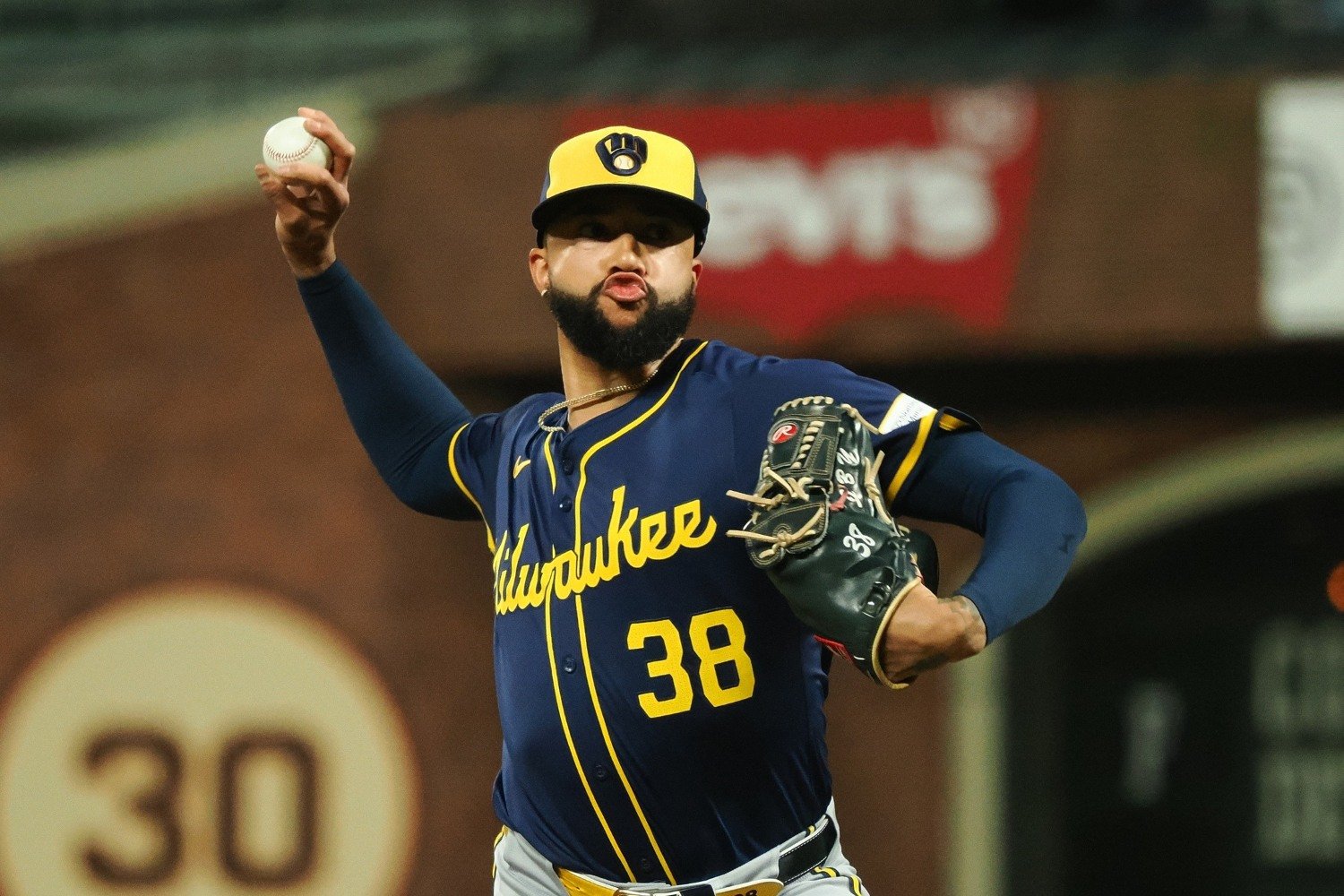 After being spurned by Juan Soto in free agency, the New York Yankees blitzed out a fast reply, signing Max Fried to an eight-year deal at this week's Winter Meetings. Far from satisfied, though, they've now turned to their bullpen, and the Brewers are giving them arguably the best closer in the game. Devin Williams will wear the navy blue pinstripes in 2025, and the Brewers will get (among others) left-handed starter Nestor Cortes to bolster their starting rotation. Stunningly, the Crew will also receive second baseman Caleb Durbin in the deal. One of the Yankees' top prospects, Durbin was widely expected to start for the Bombers in 2025, but will instead take over an infield role with the Brewers. Though he's generally been projected as a second baseman in the majors due to his diminutive stature, Durbin played a good amount of third base in the upper minors in 2024, including in the Arizona Fall League. He's a right-handed batter, and he could slot in nicely at the top of the order almost right away. He batted .275/.388/.451 at (mostly) Triple A in 2024, with elite contact rates and speed. He only hit 10 home runs in 406 regular-season plate appearances, but then hit five in a remarkable stint in the AFL, during which he maintained a .976 OPS. Durbin feels very much like a Brewers type, positionally. He's versatile, and the team doesn't automatically need either to move Brice Turang or Joey Ortiz to short. The latter remains more likely, perhaps, but Durbin's body type screams keystone, and the chances of Turang sliding to short do rise incrementally here. It's a huge addition, and this deal very neatly echoes the haul the Brewers got for Corbin Burnes last winter: a top infield prospect who'd been waiting for their chance, and a key left-handed pitcher for a rotation the team had quietly marked as a unit in need of urgent help. Speaking of which, let's turn our attention to Cortes, who would have been the much bigger name a year or two ago. Intriguingly, he, too, is only one year from free agency, so the Crew gain no team control in this part of the exchange. They do shift resources from an unfathomably deep bullpen to a needy rotation, though, and Cortes had another strong year in 2024. It was cut short by elbow trouble in September, and like Williams, his only indelible image from the 2024 postseason is as the victim of a massive home run—in his case, Freddie Freeman's Game 1 walk-off grand slam in the World Series. When he's right, though, Cortes is a solid mid-rotation starter. He walked just 5.5% of opposing batters in 2024 and can miss bats reasonably well. He's most famous for his craftiness, with a delivery that he sometimes manipulates dramatically to confound hitters' timing. Though an extreme fly-ball guy, he doesn't give up undue numbers of home runs, thanks to a fastball-cutter-slider mix that induces lot of lazy fly balls and pop-ups. Few pitchers figure to profit more handsomely from pitching in front of the Brewers' all-world outfield defense than Cortes can. Much of the question with Cortes is the health of his elbow. He pitched in October only against doctors' orders. He suffered a flexor strain in his throwing arm, and while the full offseason to recover should allow him to ramp up normally next spring, there's a real risk associated with that injury; it is often a precursor of a torn UCL. Cortes was projected for $7.7 million via arbitration in his final year of team control, according to MLB Trade Rumors, so if he were at immediate such risk, the Yankees would have considered non-tendering him. They didn't, and the expectation is that he'll be ok. But that issue certainly made him more available in this deal. It also necessitated some money changing hands, which is the final piece in this deal. The Yankees will send some money to the Brewers (no specific amount reported yet), so that the deal will trim the payroll for the small-market, budget-conscious Crew. All in all, this trade checks every box you might have hoped the team could check in the Williams maneuver. They've filled their infield void. Durbin is a great hedge against regression at the plate by Turang, too. Cortes slots into a rotation that already featured Freddy Peralta, Brandon Woodruff, Aaron Civale, and Tobias Myers, and their depth begins to seem formidable. There might be another trade in the offing, at some point, as Cortes and Civale would both be pitching as impending free agents and there's a whiff of redundancy here, but both Cortes and Durbin are great fits for what the Brewers like to do. This trade was an inevitability this winter, and in some ways, it's a sad one. Williams has been superb for the Brewers for his entire career, and Trevor Megill won't quite replace him the way he replaced Josh Hader years ago. However, on balance, the Brewers got better and more sustainable by making the move, and they once again found the best move to keep themselves ensconced in their comfortable place atop the NL Central. They have more to do, but this was the heaviest lift of the winter, and they've finished it well before Christmas.
 -
One year ago, there was little controversy about who was second in line for saves in the Brewers bullpen. After a lost season, though, does the fireballer still have a path to that role? Image courtesy of © Benny Sieu-Imagn Images After a meteoric rise in 2023, Abner Uribe stalled out in ugly fashion in 2024. He has both a four-seam fastball and a sinker, and each can eclipse 100 miles per hour. He also has one of the filthiest sweepers in baseball, especially when you account for the way that breaking ball plays off all that velocity. All of that talent shined through in his rookie campaign in 2023, as Uribe overwhelmed big-league hitters and made them look like minor-leaguers at times. That made it all the more frustrating when, this spring, something was simply off. Uribe's command was a mess from the jump, and he would not find it again all year. In 14 appearances with the Brewers, he walked 12 and uncorked three wild pitches. The inability to fill up the zone also cost him strikeouts, and although it was still hard to square him up, his ERA soared to 6.91. Then, after an immature dust-up with José Siri of the Rays in early May, Uribe was suspended by the league, demoted to Triple-A Nashville by the team, and injured while playing there, forcing him to undergo knee surgery. Seasons can't go much wronger. The good news, of course, is that the injury was not to Uribe's arm, and that the team says he should be 100 percent ready to go upon arrival for spring training. This setback season also saved some bullets for him, in a way, and the Brewers' bullpen did fine without him. On the other hand, the Brewers' bullpen did fine without him. They might now feel that Uribe is expendable, in the right circumstances. To be sure, it's Trevor Megill, not Uribe, who stands first in line to take over the closer's gig after the team trades Williams. Several other players have a chance to zoom past Uribe on the organizational depth chart, too. Does that mean the team will trade Uribe before the hot stove burns itself out? If they do, it won't be just to get rid of him. While everyone was disappointed in the way he handled his own failures early in 2024 and the decisions he made amid building tensions between the Crew and the visiting Rays on the day when he earned his suspension, the organization has not soured on his makeup entirely, and his talent is still very much evident. He's most likely to hang around, absent any additions or subtractions beyond dealing Williams. After the Brewers took Connor Thomas in the Rule 5 Draft Wednesday, the squeeze in the bullpen got a bit tighter, because Thomas can only stay in the organization if he remains on the MLB roster all season. In general, though, the team's relief corps is remarkably flexible. Of their top 12 or 13 candidates for a place in the pen, only Joel Payamps and Nick Mears can't be optioned to the minors. Uribe, too, can be thus stashed away. Logistically, some of that flexibility evaporates as the season goes on, when injuries and the urgent progress of young players who aren't yet on the 40-man roster force the team to make unexpected changes. Right now, though, it's easy to see how Uribe could be kept without getting in the way of the team's efforts to build another superb pitching staff. When Uribe is right, he's as good as any reliever in the Milwaukee organization. Because they've amassed so much depth, however, the Brewers don't have to roll the dice on him being his best self. They don't even need to keep him around at all; doing so would purely be a means of ensuring that their depth remains bountiful into the middle of the 2025 campaign. His stuff profile is tantalizing, but after he showed such volatility in 2024, it's a welcome luxury for the team that they can afford not to overlook either that extraordinary talent or his equally salient faults. What they decide to do with him can boil down to what options present themselves throughout the winter and spring, and that's a good position in which to be. View full article
- 9 replies
-
- 1
-
-
- abner uribe
- devin williams
- (and 1 more)


