


Matthew Trueblood
-
Posts
1,964 -
Joined
-
Last visited
-
Days Won
10
Content Type
Profiles
Forums
Blogs
Events
News
2026 Milwaukee Brewers Top Prospects Ranking
Milwaukee Brewers Videos
2022 Milwaukee Brewers Draft Picks
Milwaukee Brewers Free Agent & Trade Rumors, Notes, & Tidbits
Guides & Resources
2023 Milwaukee Brewers Draft Picks
2024 Milwaukee Brewers Draft Picks
The Milwaukee Brewers Players Project
2025 Milwaukee Brewers Draft Pick Tracker
2026 Milwaukee Brewers Draft Tracker: Picks & Bonuses
Store
Downloads
Gallery
Everything posted by Matthew Trueblood
-
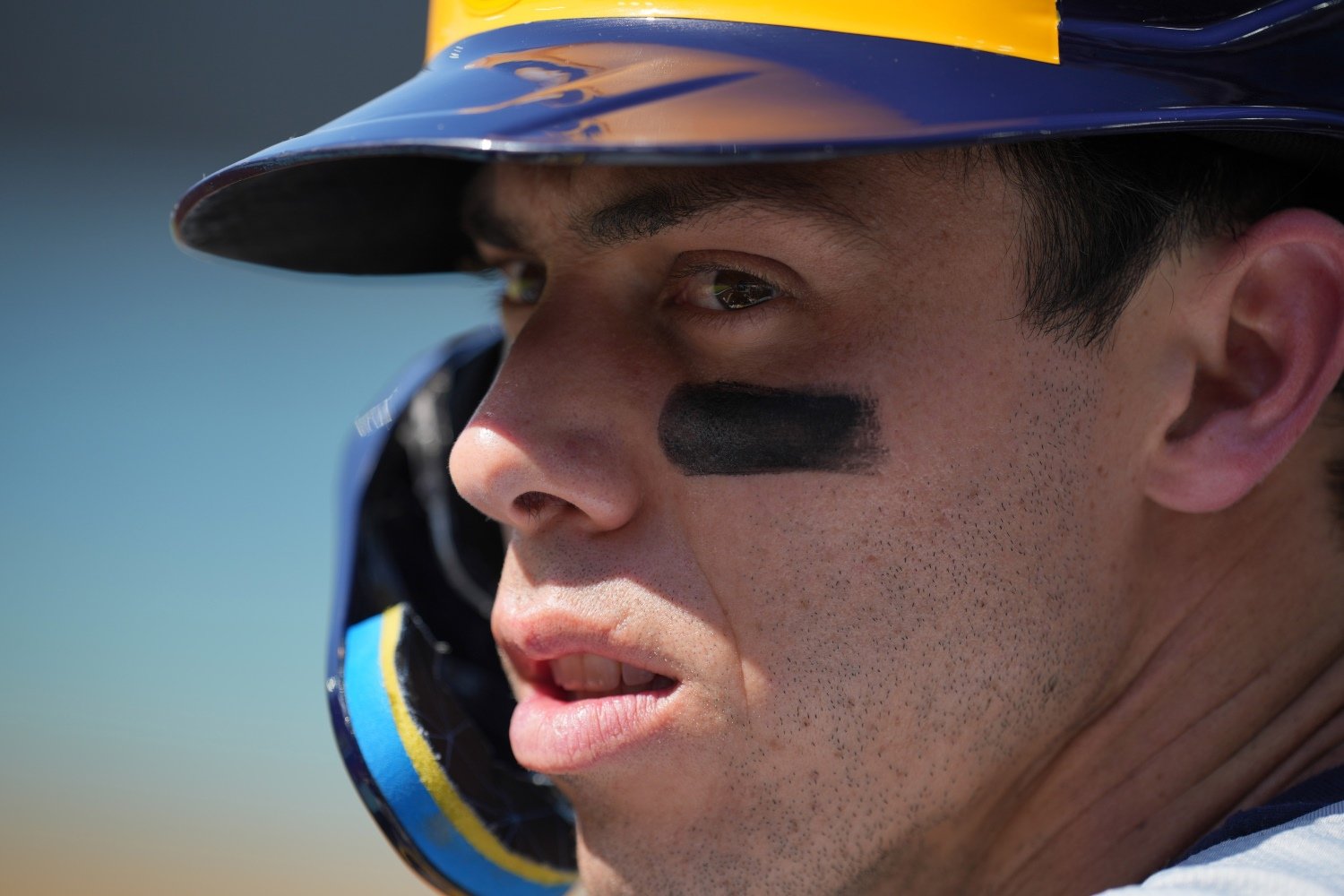
By adding him to their 40-man roster last month to keep him in the organization, Milwaukee showed some degree of faith in their journeyman outfield pickup. Yet, he hasn't gotten a shot yet in the big leagues. Image courtesy of © Orlando Ramirez-USA TODAY Sports No, Brewer Hicklen probably isn't the next Blake Perkins, or Tobias Myers. He came into the Brewers organization at an older age than either of their recent, notable scrapheap scoop-ups, and there isn't a tool in his profile quite as impressive as Perkins's glove. He's striking out 28 percent of the time for Triple-A Nashville this year, and his numbers at that level are fine, but not extraordinary--especially adjusting for his age. Yet, Hicklen provides a potential dynamic for the Milwaukee offense that has often gone missing this season. His 90th-percentile exit velocity is 105.5 miles per hour. He's consistently lifted the ball, hit it hard, and accepted his walks. A right-handed hitter, he's a natural platoon partner for Sal Frelick or Garrett Mitchell--or at least, a nice option off the bench if one of those two is scheduled to see a tough left-handed pitcher late in a game. By contrast, Tyler Black is a lot like Frelick, Mitchell, or Brice Turang--too much so, many would argue. Though a much younger player and more heralded prospect than Hicklen, Black has spent the season wrestling with a persistent inability to generate lift and jolt, at least in a way that will translate to MLB. He's also a left-handed batter, as they all are. There's not much that Black can deliver that isn't already accounted for by the existing players on the big-league roster. Black has been the one the team tries to carve a place for, though. They clearly want to make it work with him. There's good news, should they go that way: Both Black and Hicklen have great speed and know how to put it to use on the bases. Though Hicklen's age and build don't make him feel like a high-end speedster, he's 41-for-46 on steal attempts for Triple-A Nashville this year. Black, too, can get on base and then create value with his legs. They'll find ways to chip in, as soon as the team finds a way to include one of them. That will happen Saturday, when rosters expand to 28 players for the month of September. The Brewers can (and certainly will) add one pitcher when they make that expansion, but the other extra job has to go to a position player. Black and Hicklen are the most interesting candidates. The team could also, theoretically, reach for infielder Vinny Capra, but that feels almost unthinkable at the moment, barring an infield injury. While continuing to offer Black chances to adjust to big-league pitching and establish himself makes some sense, he hasn't taken advantage of those opportunities. Nor is he a good fit for the roster, in any successful form currently within reach for him. It's Hicklen who would enliven the lineup and deepen the bench. He has no big-league experience except a handful of at-bats with the Royals two years ago. This weekend, the Brewers should change that, with an eye toward evaluating and bringing along Hicklen for a potential playoff role. View full article
-
 No, Brewer Hicklen probably isn't the next Blake Perkins, or Tobias Myers. He came into the Brewers organization at an older age than either of their recent, notable scrapheap scoop-ups, and there isn't a tool in his profile quite as impressive as Perkins's glove. He's striking out 28 percent of the time for Triple-A Nashville this year, and his numbers at that level are fine, but not extraordinary--especially adjusting for his age. Yet, Hicklen provides a potential dynamic for the Milwaukee offense that has often gone missing this season. His 90th-percentile exit velocity is 105.5 miles per hour. He's consistently lifted the ball, hit it hard, and accepted his walks. A right-handed hitter, he's a natural platoon partner for Sal Frelick or Garrett Mitchell--or at least, a nice option off the bench if one of those two is scheduled to see a tough left-handed pitcher late in a game. By contrast, Tyler Black is a lot like Frelick, Mitchell, or Brice Turang--too much so, many would argue. Though a much younger player and more heralded prospect than Hicklen, Black has spent the season wrestling with a persistent inability to generate lift and jolt, at least in a way that will translate to MLB. He's also a left-handed batter, as they all are. There's not much that Black can deliver that isn't already accounted for by the existing players on the big-league roster. Black has been the one the team tries to carve a place for, though. They clearly want to make it work with him. There's good news, should they go that way: Both Black and Hicklen have great speed and know how to put it to use on the bases. Though Hicklen's age and build don't make him feel like a high-end speedster, he's 41-for-46 on steal attempts for Triple-A Nashville this year. Black, too, can get on base and then create value with his legs. They'll find ways to chip in, as soon as the team finds a way to include one of them. That will happen Saturday, when rosters expand to 28 players for the month of September. The Brewers can (and certainly will) add one pitcher when they make that expansion, but the other extra job has to go to a position player. Black and Hicklen are the most interesting candidates. The team could also, theoretically, reach for infielder Vinny Capra, but that feels almost unthinkable at the moment, barring an infield injury. While continuing to offer Black chances to adjust to big-league pitching and establish himself makes some sense, he hasn't taken advantage of those opportunities. Nor is he a good fit for the roster, in any successful form currently within reach for him. It's Hicklen who would enliven the lineup and deepen the bench. He has no big-league experience except a handful of at-bats with the Royals two years ago. This weekend, the Brewers should change that, with an eye toward evaluating and bringing along Hicklen for a potential playoff role.
 -
The team's star rookie will join very exclusive company when the team reaches the playoffs this fall. If he can distinguish himself even within it, the Crew will be dangerous to every team they encounter. Image courtesy of © Darren Yamashita-USA TODAY Sports Since 1974, there are just 10 players who have taken at least five postseason plate appearances at age 20 or younger. This October, Jackson Chourio will join that group--though he might not even be the only player to do so, with Jackson Holliday establishing himself as a part of the Orioles mix. Impressively, three of the 10 have been fairly important parts of teams who won the World Series. Could Chourio become fourth on that list? For posterity's sake, let's run through the playoff stories of these players. Claudell Washington After coming up at age 19 in July 1974, Washington settled first into a platoon with Joe Rudi in left field, then as the designated hitter for the two-time defending champion Oakland A's. He didn't hit a home run in 237 plate appearances in the second half of that season, but he still maintained an above-average batting line, and in the ALCS and World Series, he batted .389/.450/.444 in 20 plate appearances. Contributing as a platoon and bench bat while barely past his teens, Washington still added positive championship win probability, and the A's finished their threepeat. Andruw Jones Called up early in 1996 but unable to immediately establish himself, Jones was an afterthought heading into the playoffs. By the middle of the NLCS, he was a staple of the lineup, and he had one of the loudest World Series debuts in history, hitting two home runs as a teenager in Game 1 at Yankee Stadium. Atlanta couldn't finish off its bid for a second straight Series win, but Jones was on the map for good. He would appear in his second postseason at age 20, in 1997. Miguel Cabrera Like Washington and Jones, Cabrera came up mid-season in his age-20 campaign. Unlike them (but very much like Chourio, his fellow Venezuelan), he was a vital organ of the lineup by the time his team began its playoff run. In three series that stretched pretty deep, Cabrera piled up 74 plate appearances that magical October. He hit four home runs, including a three-run shot in the first inning of Game 7 in the NLCS that set the tone for the Marlins finishing off the Cubs to win the pennant. They went on to win the World Series. Justin Upton A latecomer to the Arizona roster in 2007, Upton celebrated his 20th birthday a few weeks after making his debut. By season's end, he'd earned regular playing time in a dynamic Diamondbacks outfield, and there were times during that October when he looked like the best player on the field. The Rockies ultimately knocked out their division rivals in the NLCS, but Upton got on base 10 times in 19 trips to the plate. There's probably no more directly comparable player to Chourio on this list than that year's version of Upton. Manny Machado Yet another player who came up in August the year he got a chance to take on the league in the playoffs, Machado chipped in nicely for the relentlessly surprising, improbable 2012 Orioles. Yankees pitching stumped him in the ALDS that season, though. He didn't fully come into his own at the plate until the ensuing season. Bryce Harper He didn't even turn 20 until after the Nationals had been eliminated. Harper came up fairly early in his age-19 season, played like his hair was on fire, and gave several glimpses of his future as one of the game's lethal power hitters. He didn't get his feet under him in the NLDS until Game 5, though, and Cardinals Devil Magic was too much for him. He tripled and homered that night, but the Nationals lost and were sent home. Rafael Devers The last in a wave of young talent the Red Sox promoted over about half a decade that netted them two World Series titles, Devers came up in August and was a semi-regular by the time the playoffs rolled around. He, too, got going in the latter half of a Division Series matchup, cranking a pair of homers and giving the Astros multiple scares in the two games played at Fenway Park during that series, but Houston banged away at Red Sox pitching and marched on to the Series, sending the Sox home a fortnight before Devers turned 21. Ronald Acuna, Jr. Already the face of Atlanta's return to prominence after a half-decade of voluntary suckitude, Acuna announced himself as the symbol of a new dynasty with a grand slam in Game 3 of the team's NLDS matchup with the Dodgers, their first home playoff game in half a decade. It wasn't nearly enough to get his team past their superior opponents, but it was a shot across the bow for the rest of the National League East. This season looks like it will be the first since then in which anyone else will win the division. Chourio is very much an Acuna-caliber player; the Brewers can take heart from the fact that there's no 2018 Dodgers-caliber team awaiting them in October. Juan Soto It's not a fun memory for Brewers fans, but Soto made himself a massive, permanent national celebrity with his 2019 playoff run, which began with that game-winning bounce against the Brewers in the Wild Card Game. That play touched off a 17-game, 75-plate appearance postseason coming-out party in which Soto posted a .927 OPS, won a win-or-go-home game on the road (Game 5 of the NLDS in Los Angeles) almost by himself, and clubbed three World Series homers, en route to a title. Wander Franco The less said and remembered of him, the better. Franco was an extraordinary baseball talent, and is an important example of the ways in which baseball is a relatively small thing, when one zooms out to consider the enormity of evil in our world. Let's not even review his actual showing. Acuna and Upton jump out as having comparable skill sets to Chourio, but the only player on this list who accrued the kind of experience Chourio will have in the majors before making their first trip to the playoffs is Soto. He's important to this team in a way only Soto, Harper, and Acuna were to theirs, when they got to October. It will be fascinating--and, hopefully, thrilling--to see how Chourio handles this rare opportunity and monumental challenge. He could become one of the game's biggest stars, and end one of the league's longest title droughts, if he can meet the moment the way a few of these players have. View full article
-
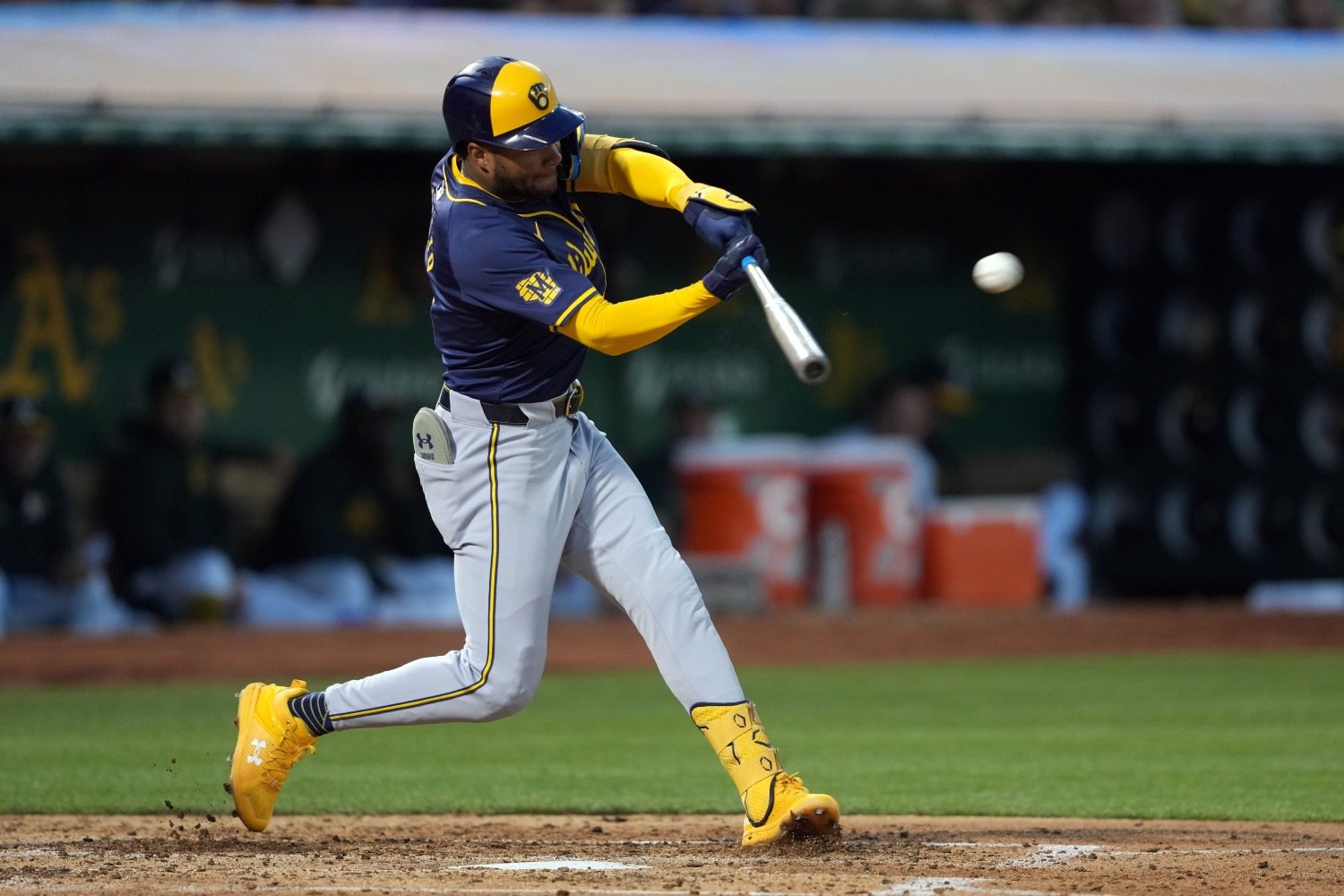 Since 1974, there are just 10 players who have taken at least five postseason plate appearances at age 20 or younger. This October, Jackson Chourio will join that group--though he might not even be the only player to do so, with Jackson Holliday establishing himself as a part of the Orioles mix. Impressively, three of the 10 have been fairly important parts of teams who won the World Series. Could Chourio become fourth on that list? For posterity's sake, let's run through the playoff stories of these players. Claudell Washington After coming up at age 19 in July 1974, Washington settled first into a platoon with Joe Rudi in left field, then as the designated hitter for the two-time defending champion Oakland A's. He didn't hit a home run in 237 plate appearances in the second half of that season, but he still maintained an above-average batting line, and in the ALCS and World Series, he batted .389/.450/.444 in 20 plate appearances. Contributing as a platoon and bench bat while barely past his teens, Washington still added positive championship win probability, and the A's finished their threepeat. Andruw Jones Called up early in 1996 but unable to immediately establish himself, Jones was an afterthought heading into the playoffs. By the middle of the NLCS, he was a staple of the lineup, and he had one of the loudest World Series debuts in history, hitting two home runs as a teenager in Game 1 at Yankee Stadium. Atlanta couldn't finish off its bid for a second straight Series win, but Jones was on the map for good. He would appear in his second postseason at age 20, in 1997. Miguel Cabrera Like Washington and Jones, Cabrera came up mid-season in his age-20 campaign. Unlike them (but very much like Chourio, his fellow Venezuelan), he was a vital organ of the lineup by the time his team began its playoff run. In three series that stretched pretty deep, Cabrera piled up 74 plate appearances that magical October. He hit four home runs, including a three-run shot in the first inning of Game 7 in the NLCS that set the tone for the Marlins finishing off the Cubs to win the pennant. They went on to win the World Series. Justin Upton A latecomer to the Arizona roster in 2007, Upton celebrated his 20th birthday a few weeks after making his debut. By season's end, he'd earned regular playing time in a dynamic Diamondbacks outfield, and there were times during that October when he looked like the best player on the field. The Rockies ultimately knocked out their division rivals in the NLCS, but Upton got on base 10 times in 19 trips to the plate. There's probably no more directly comparable player to Chourio on this list than that year's version of Upton. Manny Machado Yet another player who came up in August the year he got a chance to take on the league in the playoffs, Machado chipped in nicely for the relentlessly surprising, improbable 2012 Orioles. Yankees pitching stumped him in the ALDS that season, though. He didn't fully come into his own at the plate until the ensuing season. Bryce Harper He didn't even turn 20 until after the Nationals had been eliminated. Harper came up fairly early in his age-19 season, played like his hair was on fire, and gave several glimpses of his future as one of the game's lethal power hitters. He didn't get his feet under him in the NLDS until Game 5, though, and Cardinals Devil Magic was too much for him. He tripled and homered that night, but the Nationals lost and were sent home. Rafael Devers The last in a wave of young talent the Red Sox promoted over about half a decade that netted them two World Series titles, Devers came up in August and was a semi-regular by the time the playoffs rolled around. He, too, got going in the latter half of a Division Series matchup, cranking a pair of homers and giving the Astros multiple scares in the two games played at Fenway Park during that series, but Houston banged away at Red Sox pitching and marched on to the Series, sending the Sox home a fortnight before Devers turned 21. Ronald Acuna, Jr. Already the face of Atlanta's return to prominence after a half-decade of voluntary suckitude, Acuna announced himself as the symbol of a new dynasty with a grand slam in Game 3 of the team's NLDS matchup with the Dodgers, their first home playoff game in half a decade. It wasn't nearly enough to get his team past their superior opponents, but it was a shot across the bow for the rest of the National League East. This season looks like it will be the first since then in which anyone else will win the division. Chourio is very much an Acuna-caliber player; the Brewers can take heart from the fact that there's no 2018 Dodgers-caliber team awaiting them in October. Juan Soto It's not a fun memory for Brewers fans, but Soto made himself a massive, permanent national celebrity with his 2019 playoff run, which began with that game-winning bounce against the Brewers in the Wild Card Game. That play touched off a 17-game, 75-plate appearance postseason coming-out party in which Soto posted a .927 OPS, won a win-or-go-home game on the road (Game 5 of the NLDS in Los Angeles) almost by himself, and clubbed three World Series homers, en route to a title. Wander Franco The less said and remembered of him, the better. Franco was an extraordinary baseball talent, and is an important example of the ways in which baseball is a relatively small thing, when one zooms out to consider the enormity of evil in our world. Let's not even review his actual showing. Acuna and Upton jump out as having comparable skill sets to Chourio, but the only player on this list who accrued the kind of experience Chourio will have in the majors before making their first trip to the playoffs is Soto. He's important to this team in a way only Soto, Harper, and Acuna were to theirs, when they got to October. It will be fascinating--and, hopefully, thrilling--to see how Chourio handles this rare opportunity and monumental challenge. He could become one of the game's biggest stars, and end one of the league's longest title droughts, if he can meet the moment the way a few of these players have.
 -
Two straight games slipped away from the Brewers in St. Louis this week. One major culprit was a pitcher they hoped would make a big difference in the opposite direction when they traded for him last month. Image courtesy of © Michael McLoone-USA TODAY Sports Nick Mears is out of options. It's a huge part of why he was available at a relatively low price last month, when the Brewers swooped in and snared him from the Colorado Rockies in a trade before the deadline. Mears has warts, and although he also has good stuff that could eventually make him a strong middle reliever for high-leverage situations, the growing pains and uneven progress that were somewhat inevitable for him all have to be the Brewers' problems now--unless they want to risk losing him on waivers, while he still has three years of team control remaining. Mears was poor again Thursday, as the Brewers dropped a series against the Cardinals by losing 3-0. Obviously, the offense was the greater problem in that contest, but Mears showed (not for the first time, even in just four weeks with the team) an inability to handle a tight game situation. In 46 batters faced with Milwaukee, he has put up excellent strikeout and walk numbers, but hitters are teeing off on him. He's in the middle of the plate way too often, with stuff not nearly good enough to sneak past big-league hitters in those spots. The sunk-cost fallacy will keep Mears on the roster, unless he happens to suffer an injury that allows the team to place him on the injured list. They won't risk losing him any time in the balance of this season. However, Mears's place on the playoff roster is not safe by any means. Unless he rapidly turns things around, he'll be superseded in the team's plans by either Jacob Misiorowski or Craig Yoho. By now, both of those names are highly familiar to Brewers fans. Less familiar, perhaps, are the hurdles to adding each to the team at this stage of the season. Neither hurler is on the 40-man roster, and neither even needs to be added thereto this winter, to shield them from the Rule 5 Draft. To call up either, the Crew would have to designate someone for assignment. That's one challenge. The other is finding room on the active roster, despite the lack of optionability for many of their key relievers--and even Mears, who can't be reasonably described that way right now. The team waited as long as they could before optioning Elvis Peguero back to Nashville, but they had to send even him down to make room for the returning Trevor Megill. At full strength, the team has more relievers than their roster can hold, and while that's often a good problem, it's still a problem. On Sept. 1, of course, it gets a hair easier. The slight expansion of MLB rosters will give the team an extra spot in the bullpen. If the team wants to get a look at both pitchers, though, they'll need to make a very difficult decision in the next handful of days. Furthermore, if they envision either or both as a playoff contributor, calling them up before rosters expand is the easiest way to make that possible. If they're not on the 40-man by the end of August, special exceptions have to be pursued for them to be eligible to pitch in the postseason. Misiorowski is a more complicated case, and it might make sense to just leave him where he is. Yoho, however, would mark a clear upgrade over Mears, and the team should call him up as soon as possible. Yoho has become famous for his screwball, which (like Devin Williams) he calls a changeup. Unlike Williams, he pairs that pitch with a sinker that also has extreme arm-side run, rather than a four-seam fastball, which makes him unique even from Williams. As the video from Josh Norris of Baseball America above shows, he also throws from a very low arm angle, which adds to the deception of that uniquely heavy scroogie. What few realize, though, is that Yoho also has a pretty interesting curveball. It's a slowish roundhouse thing, but given the extreme horizontal angle he presents to hitters and the way both the sinker and the screwball run to the arm side, the curve's opposite direction of bite takes on tons of added utility. You can see him drop that pitch through the back door for a called strike on the outside corner against a lefty late in the video above. Already, in limited action, he's done that three times since joining Nashville. That third offering has helped Yoho overwhelm minor-league hitters, and it probably wouldn't have quite the same effect on big-leaguers. Still, the sinker and screwball alone are good enough to get a lot of outs in key settings, and Yoho has shown nothing but poise during his brief pro career. He's ready for the challenge, and the Brewers have no reason not to give him a try--other than the opportunity costs, which could be vast and even prohibitive. Two losses in St. Louis won't change the course of the Brewers' season. They'll still win the division relatively easily. Soon, though, they need to figure out a way to make room on the active roster for the best version of their bullpen, including at least one unique rookie. As has been the case all season, this Brewers pitching staff feels like the Ship of Theseus: it continues apace toward its destination, undaunted and undeterred, but planks in the deck of the ship keep needing to be replaced. This time around, doing that will mean losing some treasured parts of the original group. View full article
-
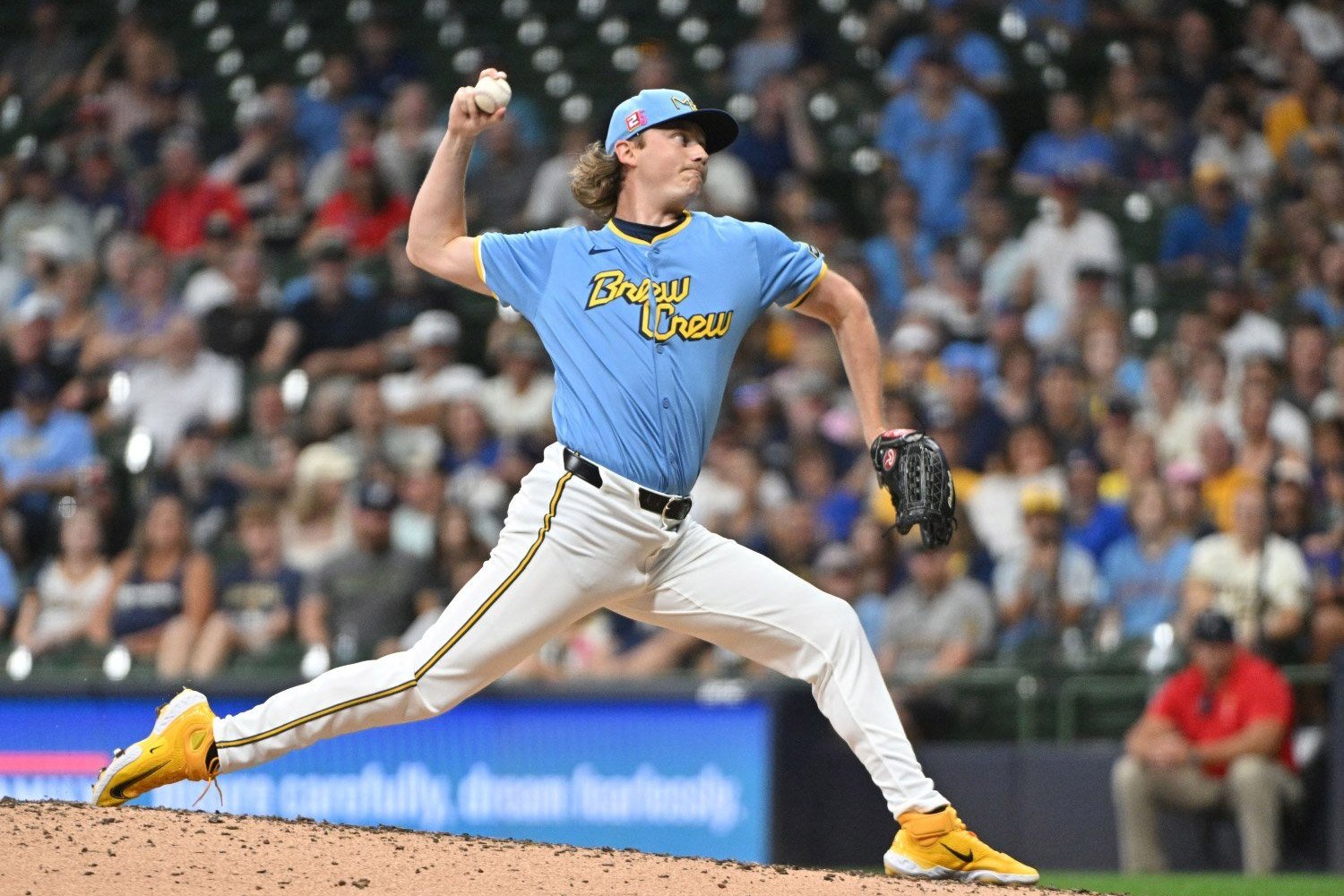 Nick Mears is out of options. It's a huge part of why he was available at a relatively low price last month, when the Brewers swooped in and snared him from the Colorado Rockies in a trade before the deadline. Mears has warts, and although he also has good stuff that could eventually make him a strong middle reliever for high-leverage situations, the growing pains and uneven progress that were somewhat inevitable for him all have to be the Brewers' problems now--unless they want to risk losing him on waivers, while he still has three years of team control remaining. Mears was poor again Thursday, as the Brewers dropped a series against the Cardinals by losing 3-0. Obviously, the offense was the greater problem in that contest, but Mears showed (not for the first time, even in just four weeks with the team) an inability to handle a tight game situation. In 46 batters faced with Milwaukee, he has put up excellent strikeout and walk numbers, but hitters are teeing off on him. He's in the middle of the plate way too often, with stuff not nearly good enough to sneak past big-league hitters in those spots. The sunk-cost fallacy will keep Mears on the roster, unless he happens to suffer an injury that allows the team to place him on the injured list. They won't risk losing him any time in the balance of this season. However, Mears's place on the playoff roster is not safe by any means. Unless he rapidly turns things around, he'll be superseded in the team's plans by either Jacob Misiorowski or Craig Yoho. By now, both of those names are highly familiar to Brewers fans. Less familiar, perhaps, are the hurdles to adding each to the team at this stage of the season. Neither hurler is on the 40-man roster, and neither even needs to be added thereto this winter, to shield them from the Rule 5 Draft. To call up either, the Crew would have to designate someone for assignment. That's one challenge. The other is finding room on the active roster, despite the lack of optionability for many of their key relievers--and even Mears, who can't be reasonably described that way right now. The team waited as long as they could before optioning Elvis Peguero back to Nashville, but they had to send even him down to make room for the returning Trevor Megill. At full strength, the team has more relievers than their roster can hold, and while that's often a good problem, it's still a problem. On Sept. 1, of course, it gets a hair easier. The slight expansion of MLB rosters will give the team an extra spot in the bullpen. If the team wants to get a look at both pitchers, though, they'll need to make a very difficult decision in the next handful of days. Furthermore, if they envision either or both as a playoff contributor, calling them up before rosters expand is the easiest way to make that possible. If they're not on the 40-man by the end of August, special exceptions have to be pursued for them to be eligible to pitch in the postseason. Misiorowski is a more complicated case, and it might make sense to just leave him where he is. Yoho, however, would mark a clear upgrade over Mears, and the team should call him up as soon as possible. Yoho has become famous for his screwball, which (like Devin Williams) he calls a changeup. Unlike Williams, he pairs that pitch with a sinker that also has extreme arm-side run, rather than a four-seam fastball, which makes him unique even from Williams. As the video from Josh Norris of Baseball America above shows, he also throws from a very low arm angle, which adds to the deception of that uniquely heavy scroogie. What few realize, though, is that Yoho also has a pretty interesting curveball. It's a slowish roundhouse thing, but given the extreme horizontal angle he presents to hitters and the way both the sinker and the screwball run to the arm side, the curve's opposite direction of bite takes on tons of added utility. You can see him drop that pitch through the back door for a called strike on the outside corner against a lefty late in the video above. Already, in limited action, he's done that three times since joining Nashville. That third offering has helped Yoho overwhelm minor-league hitters, and it probably wouldn't have quite the same effect on big-leaguers. Still, the sinker and screwball alone are good enough to get a lot of outs in key settings, and Yoho has shown nothing but poise during his brief pro career. He's ready for the challenge, and the Brewers have no reason not to give him a try--other than the opportunity costs, which could be vast and even prohibitive. Two losses in St. Louis won't change the course of the Brewers' season. They'll still win the division relatively easily. Soon, though, they need to figure out a way to make room on the active roster for the best version of their bullpen, including at least one unique rookie. As has been the case all season, this Brewers pitching staff feels like the Ship of Theseus: it continues apace toward its destination, undaunted and undeterred, but planks in the deck of the ship keep needing to be replaced. This time around, doing that will mean losing some treasured parts of the original group.
-
- 2
-

-
- nick mears
- craig yoho
- (and 2 more)
-
The most underrated Brewers position player and one of the linchpins of their team identity, the outfielder is back to sufficient health to join the active roster. Will he take some playing time from the younger Milwaukee outfielders? Image courtesy of © Max Correa / The Milwaukee Journal Sentinel / USA TODAY NETWORK The Brewers continue to convalesce as they approach September. On Thursday, they reinstated Blake Perkins from the injured list and optioned Tyler Black back to Triple-A Nashville. It's a minor disappointment that Black hasn't put together the pieces of his potentially valuable skill set in his big-league stints this season, but a major relief for the team to have one of the best defensive outfielders in the game back in their mix. Before hitting the shelf, though, Perkins had lost out on some playing time, in the wake of the return of Garrett Mitchell from the hand injury that sidelined him for the first half. Mitchell is younger, and the team has considerably more invested in him than in Perkins. Ditto for Sal Frelick. Those are two teams on whom the team spent first-round picks and multi-million-dollar signing bonuses, and the theory of the case is that each has more upside than Perkins, 27. Theory of the case be damned, Perkins has 2.1 WARP this season, according to Baseball Prospectus. He's ahead of Frelick, at 1.8, despite the younger player having played 25 more games and taken 107 more plate appearances. Prospectus's DRC+ is the most holistic and far-seeing offensive value market available to the public, and it does peg Frelick as slightly superior to Perkins--but only slightly, by a margin of 94 to 90. The confidence of the model on the two is within 12 and 16 points, respectively, so while we can say that Frelick is probably a slightly better hitter than Perkins this year, we can't state it with anything near certainty. Meanwhile, Perkins's actual OPS is .033 higher than Frelick's, and his defense is far more valuable than Frelick's. Mitchell has only been worth 0.2 WARP in his limited playing time, with a 77 DRC+. You can hand-wave the model's low estimation of Mitchell's offense, because he has a unique skill set and has shown some resistance to the regression expected from him by many analysts, but again, it's Perkins who has actually produced a higher OPS, and who plays much better defense. The case for playing both Mitchell and Frelick more than Perkins is very simple, and not in a good way. It's a matter of being wedded to either outdated or overly optimistic player evaluations, and of trying to build toward an uncertain future instead of embracing more of the present. Perkins was a minor-league free agent after the 2022 season. He was supposed to be nothing more than a role player. Much of his success this season has come on singles up the middle, bunts, and other small things that don't wow most observers of the loud, fast modern game. Nonetheless, with Christian Yelich, Perkins is incontrovertibly one of the team's three best outfield options every day. It would be malpractice to let Mitchell and Frelick continue claiming everyday roles at his expense, and with the playoffs in mind, the team should focus on preparing Perkins to be their regular center fielder for the final month of the season. View full article
-
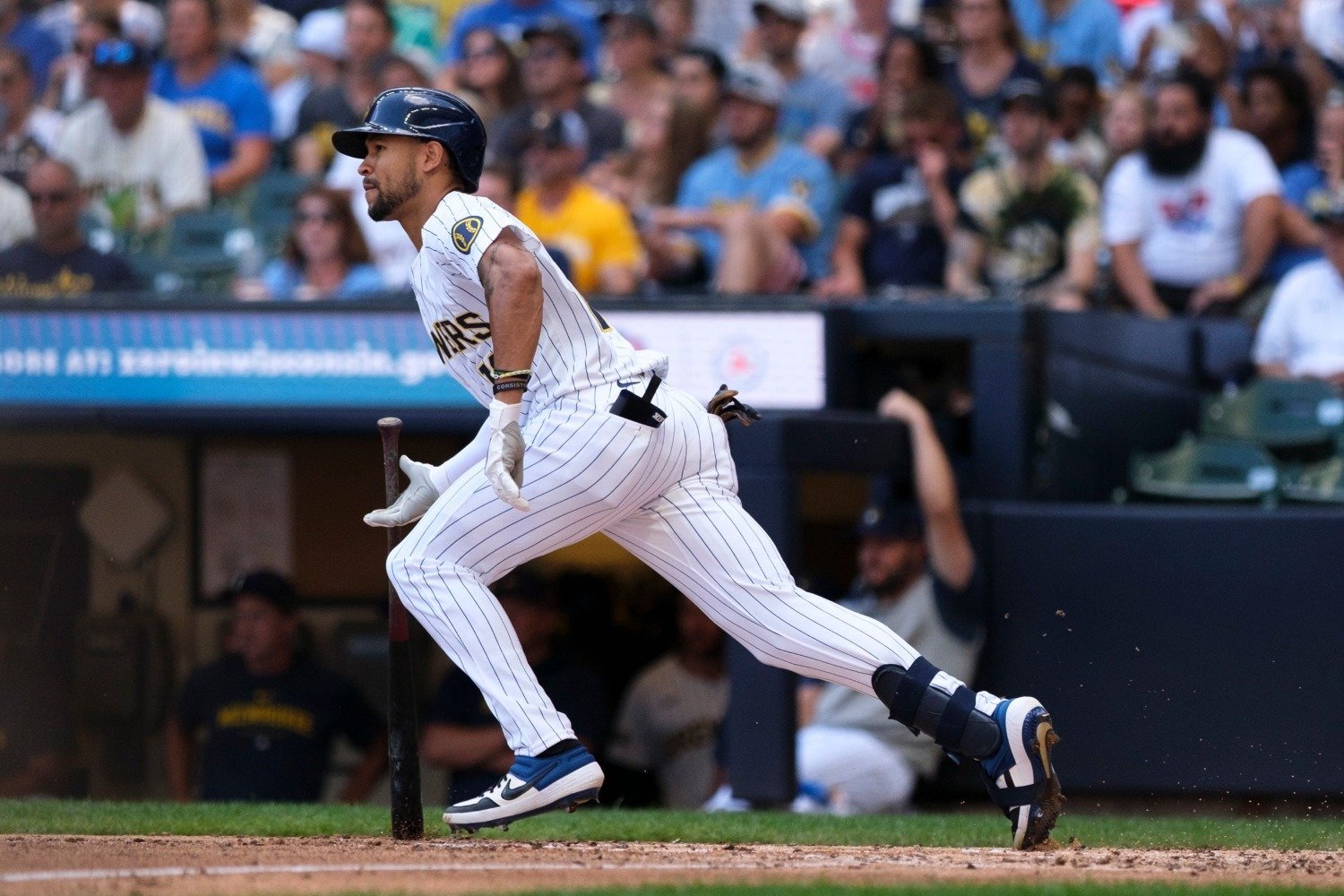 The Brewers continue to convalesce as they approach September. On Thursday, they reinstated Blake Perkins from the injured list and optioned Tyler Black back to Triple-A Nashville. It's a minor disappointment that Black hasn't put together the pieces of his potentially valuable skill set in his big-league stints this season, but a major relief for the team to have one of the best defensive outfielders in the game back in their mix. Before hitting the shelf, though, Perkins had lost out on some playing time, in the wake of the return of Garrett Mitchell from the hand injury that sidelined him for the first half. Mitchell is younger, and the team has considerably more invested in him than in Perkins. Ditto for Sal Frelick. Those are two teams on whom the team spent first-round picks and multi-million-dollar signing bonuses, and the theory of the case is that each has more upside than Perkins, 27. Theory of the case be damned, Perkins has 2.1 WARP this season, according to Baseball Prospectus. He's ahead of Frelick, at 1.8, despite the younger player having played 25 more games and taken 107 more plate appearances. Prospectus's DRC+ is the most holistic and far-seeing offensive value market available to the public, and it does peg Frelick as slightly superior to Perkins--but only slightly, by a margin of 94 to 90. The confidence of the model on the two is within 12 and 16 points, respectively, so while we can say that Frelick is probably a slightly better hitter than Perkins this year, we can't state it with anything near certainty. Meanwhile, Perkins's actual OPS is .033 higher than Frelick's, and his defense is far more valuable than Frelick's. Mitchell has only been worth 0.2 WARP in his limited playing time, with a 77 DRC+. You can hand-wave the model's low estimation of Mitchell's offense, because he has a unique skill set and has shown some resistance to the regression expected from him by many analysts, but again, it's Perkins who has actually produced a higher OPS, and who plays much better defense. The case for playing both Mitchell and Frelick more than Perkins is very simple, and not in a good way. It's a matter of being wedded to either outdated or overly optimistic player evaluations, and of trying to build toward an uncertain future instead of embracing more of the present. Perkins was a minor-league free agent after the 2022 season. He was supposed to be nothing more than a role player. Much of his success this season has come on singles up the middle, bunts, and other small things that don't wow most observers of the loud, fast modern game. Nonetheless, with Christian Yelich, Perkins is incontrovertibly one of the team's three best outfield options every day. It would be malpractice to let Mitchell and Frelick continue claiming everyday roles at his expense, and with the playoffs in mind, the team should focus on preparing Perkins to be their regular center fielder for the final month of the season.
 -
Like an amateur on a highwire, the Milwaukee relief corps had wobbled and leaned its way forward over the last few weeks. Wednesday's loss was a resounding splat of a fall from the wire, but now the team can shake it off and go on. Image courtesy of © Jeff Curry-USA TODAY Sports Sometimes, bullpen implosions really are like implosions--or explosions, even. They feel like the result of a rapid transition from potential energy to kinetic energy. Often, be it because of the makeup of a given relief corps or the pattern of usage a team falls into because of the flow of their games, you can feel that potential energy building. You can sense just how high the wire is off the ground, and you know a fall is coming--and that it will hurt, when it does. The last fortnight has been a long wobble atop the wire by the Brewers bullpen, which is getting healthier but also includes a bunch of players who have never gone through a full MLB season without encountering injury or failure before. They had a collective Win Probability Added of 1.81 over the first 20 days of August, third-best in baseball, but you could feel what finally happened Wednesday night coming. It still hurt. The three pitchers the team tentatively expected to trust most heading down the stretch and into the postseason are Devin Williams, Trevor Megill, and Bryan Hudson. All three contributed to the ugly collapse in St. Louis, and the fact that all three are a few weeks or less removed from time on the injured list is more like another layer of concern than it is like an excuse or a source of solace. It's fair to wonder how whole (and, therefore, how effective) each can remain over the next two months. On the other hand, that feeling of oncoming doom--that sense of rising potential energy--is gone now. The explosion happened. Now, the bullpen can reset. It's much better to have concentrated these poor appearances so tightly that they cost the team just one game, than to have let it lead to four or five losses over a 10-game stretch. In addition to Williams, Megill, and Hudson being likely to get right over the final six weeks of the regular season (and in addition to the team still having the most comfortable division lead in baseball, and a chance to win their series against the Cardinals by bouncing back on Thursday afternoon), the team has good depth beyond them--and it might soon get a whole lot better. One thing Wednesday night did was raise the sense of stakes around the looming possibility of the team promoting Jacob Misiorowski and/or Craig Yoho from Triple-A Nashville. It might also have increased the probability of the team doing so, which is a good thing. Those two hurlers have the stuff to alter the character of this pen and make them the scariest playoff matchup in the league. There are no guarantees that either will enjoy immediate success, just as there are none that Megill, Hudson, Jared Koenig, or Nick Mears will be solid in September and October. It's more clearly worth the gamble and the use of an evaluation period now, though, and that could lead to the optimization of this pen for the pursuit of the team's first National League pennant. View full article
-
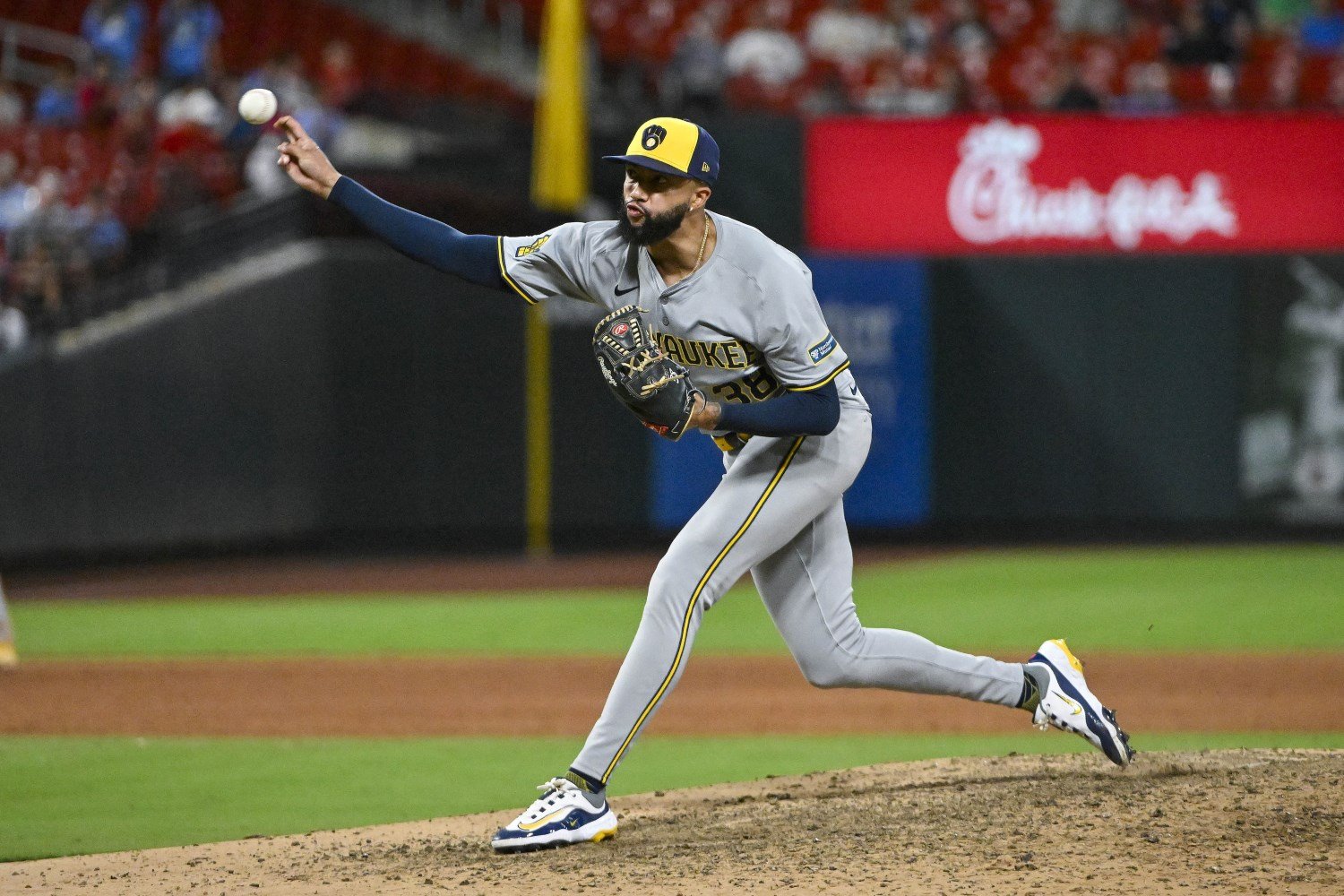 Sometimes, bullpen implosions really are like implosions--or explosions, even. They feel like the result of a rapid transition from potential energy to kinetic energy. Often, be it because of the makeup of a given relief corps or the pattern of usage a team falls into because of the flow of their games, you can feel that potential energy building. You can sense just how high the wire is off the ground, and you know a fall is coming--and that it will hurt, when it does. The last fortnight has been a long wobble atop the wire by the Brewers bullpen, which is getting healthier but also includes a bunch of players who have never gone through a full MLB season without encountering injury or failure before. They had a collective Win Probability Added of 1.81 over the first 20 days of August, third-best in baseball, but you could feel what finally happened Wednesday night coming. It still hurt. The three pitchers the team tentatively expected to trust most heading down the stretch and into the postseason are Devin Williams, Trevor Megill, and Bryan Hudson. All three contributed to the ugly collapse in St. Louis, and the fact that all three are a few weeks or less removed from time on the injured list is more like another layer of concern than it is like an excuse or a source of solace. It's fair to wonder how whole (and, therefore, how effective) each can remain over the next two months. On the other hand, that feeling of oncoming doom--that sense of rising potential energy--is gone now. The explosion happened. Now, the bullpen can reset. It's much better to have concentrated these poor appearances so tightly that they cost the team just one game, than to have let it lead to four or five losses over a 10-game stretch. In addition to Williams, Megill, and Hudson being likely to get right over the final six weeks of the regular season (and in addition to the team still having the most comfortable division lead in baseball, and a chance to win their series against the Cardinals by bouncing back on Thursday afternoon), the team has good depth beyond them--and it might soon get a whole lot better. One thing Wednesday night did was raise the sense of stakes around the looming possibility of the team promoting Jacob Misiorowski and/or Craig Yoho from Triple-A Nashville. It might also have increased the probability of the team doing so, which is a good thing. Those two hurlers have the stuff to alter the character of this pen and make them the scariest playoff matchup in the league. There are no guarantees that either will enjoy immediate success, just as there are none that Megill, Hudson, Jared Koenig, or Nick Mears will be solid in September and October. It's more clearly worth the gamble and the use of an evaluation period now, though, and that could lead to the optimization of this pen for the pursuit of the team's first National League pennant.
 -
Last week, the 2024 Milwaukee Brewers lost the player who had been their best hitter when he was healthy, all year. In his stead, though, their highest-ceiling offensive player has taken off--literally. Image courtesy of © Benny Sieu-USA TODAY Sports This kind of power explosion was always within the range of possibilities for William Contreras. Early this year, he was one of the darlings of the new Statcast bat-tracking data released at Baseball Savant, because few players in baseball swing harder, and fewer still match that ability with the skill of meeting the ball squarely. Contreras can, when he's going well, generate high exit velocities to all fields, about as well as anyone in baseball. Alas, Contreras wasn't ready to fully weaponize that ability at the beginning of this season. He was a terror, for opposing pitchers, because he could hit for average, accept his walks, and split plenty of gaps, but he didn't have the same lethality that elite power hitters bring to the table. As has been the case for most of his career, he was looking to hit the ball hard wherever it was pitched, rather than to do a particular thing with it. The results were impressive, but not quite game-breaking. Through the end of May, he batted .323/.394/.502. He was maintaining a lower-than-average strikeout rate and walking often, but his overall line leaned on great outcomes on balls in play. His whiff rate, on a per-swing basis, was quite high, and he hit the ball on the ground a little bit too much. As spring gave way to summer, Contreras stayed in the lineup more often than any other catcher in the league, and his heavy workload began to catch up to him. Instead of hitting grounders a little bit too often, he hit grounders far too much--especially the kind that went more or less right into the ground. His batting average on balls in play sagged, his slugging evaporated, and despite continuing to hit the ball reasonably hard and making slightly more contact, he wasn't a productive hitter. In June and July, he batted .230/.301/.337, with just three home runs in 206 plate appearances. There was a slight uptick after the All-Star break, but he wasn't yet fully tapping into his skill set. He is now. Since Aug. 1, Contreras is batting .313/.389/.734. He's already hit six home runs this month. He's actually striking out more, despite swinging and missing less, for a simple reason: he's gotten more selective within the zone. In turn, he's gotten more selective within the zone for a slightly more complicated (but simple-sounding) reason: he's no longer trying to go with the pitch and hit equally to all fields. He's trying to crush the ball, and he's trying to crush it to left field, and he's trying to crush it to left field in the air. And it's working. Contreras's hard-hit rate and average exit velocity are each higher than in April and May, but only by a little bit. His average launch angle is up by a bit more, but it's not night and day. He didn't turn into Rhys Hoskins or Willy Adames. He merely morphed into the most dangerous form of himself, which has a chance to be a more dangerous hitter than Hoskins, Adames, or even Christian Yelich. This version of Contreras is the outright, unmitigated superstar the team has needed all along. In April and May, 3.9% of Contreras's plate appearances (that weren't walks or hit-by-pitches) ended in pulled balls with an exit velocity of 95 miles per hour or more and a launch angle of 10 degrees or higher. I call this mini-metric Pulled Hard in the Air Rate (PHiA%). In June and July, Contreras's PHiA% only dipped slightly, because it didn't have much room to fall; it was 3.7% for those two months. In August, in the admittedly modest sample of 72 trips to the plate, Contreras's PHiA% is 12.5%. Another metric of my own creation, weighted sweet-spot exit velocity (wSSEV), predicts overall production better than any other single metric available. Contreras's was a very solid, though sub-elite, 90.3 MPH through the end of May. In June and July, as he rolled over so many balls and the steam came out of his swing, it sagged to a pedestrian 86.0. In August, it's 94.9. Of the 144 batters with at least 60 plate appearances this month, Contreras ranks 12th in wSSEV and 14th in PHiA%. The only players ahead of him in both metrics for the month are Elly De La Cruz, Brandon Lowe, Juan Soto, Jackson Merrill, and Austin Riley. Contreras has a higher actual weighted on-base average (wOBA) than all of them. Is this a hot streak? Absolutely. Will Contreras sustain an OPS pushing 1.200 for the balance of the season? No. However, this is not just a hot streak. It's a material improvement, rooted in a neeced process change. It's an emergence--a glow-up. It's Contreras replacing Yelich, and then some, and its staying power could determine how far the Brewers go this October. View full article
-
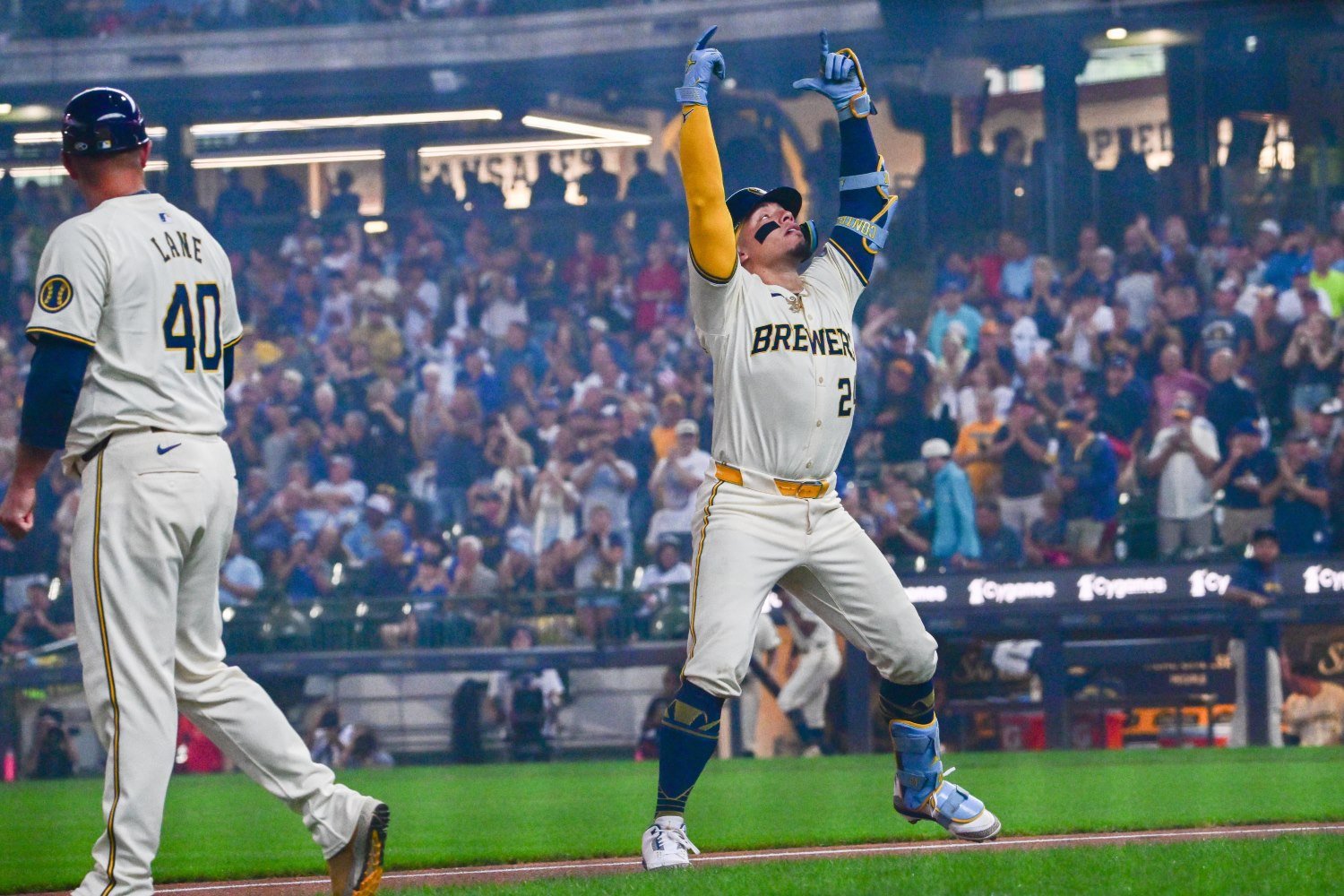 This kind of power explosion was always within the range of possibilities for William Contreras. Early this year, he was one of the darlings of the new Statcast bat-tracking data released at Baseball Savant, because few players in baseball swing harder, and fewer still match that ability with the skill of meeting the ball squarely. Contreras can, when he's going well, generate high exit velocities to all fields, about as well as anyone in baseball. Alas, Contreras wasn't ready to fully weaponize that ability at the beginning of this season. He was a terror, for opposing pitchers, because he could hit for average, accept his walks, and split plenty of gaps, but he didn't have the same lethality that elite power hitters bring to the table. As has been the case for most of his career, he was looking to hit the ball hard wherever it was pitched, rather than to do a particular thing with it. The results were impressive, but not quite game-breaking. Through the end of May, he batted .323/.394/.502. He was maintaining a lower-than-average strikeout rate and walking often, but his overall line leaned on great outcomes on balls in play. His whiff rate, on a per-swing basis, was quite high, and he hit the ball on the ground a little bit too much. As spring gave way to summer, Contreras stayed in the lineup more often than any other catcher in the league, and his heavy workload began to catch up to him. Instead of hitting grounders a little bit too often, he hit grounders far too much--especially the kind that went more or less right into the ground. His batting average on balls in play sagged, his slugging evaporated, and despite continuing to hit the ball reasonably hard and making slightly more contact, he wasn't a productive hitter. In June and July, he batted .230/.301/.337, with just three home runs in 206 plate appearances. There was a slight uptick after the All-Star break, but he wasn't yet fully tapping into his skill set. He is now. Since Aug. 1, Contreras is batting .313/.389/.734. He's already hit six home runs this month. He's actually striking out more, despite swinging and missing less, for a simple reason: he's gotten more selective within the zone. In turn, he's gotten more selective within the zone for a slightly more complicated (but simple-sounding) reason: he's no longer trying to go with the pitch and hit equally to all fields. He's trying to crush the ball, and he's trying to crush it to left field, and he's trying to crush it to left field in the air. And it's working. Contreras's hard-hit rate and average exit velocity are each higher than in April and May, but only by a little bit. His average launch angle is up by a bit more, but it's not night and day. He didn't turn into Rhys Hoskins or Willy Adames. He merely morphed into the most dangerous form of himself, which has a chance to be a more dangerous hitter than Hoskins, Adames, or even Christian Yelich. This version of Contreras is the outright, unmitigated superstar the team has needed all along. In April and May, 3.9% of Contreras's plate appearances (that weren't walks or hit-by-pitches) ended in pulled balls with an exit velocity of 95 miles per hour or more and a launch angle of 10 degrees or higher. I call this mini-metric Pulled Hard in the Air Rate (PHiA%). In June and July, Contreras's PHiA% only dipped slightly, because it didn't have much room to fall; it was 3.7% for those two months. In August, in the admittedly modest sample of 72 trips to the plate, Contreras's PHiA% is 12.5%. Another metric of my own creation, weighted sweet-spot exit velocity (wSSEV), predicts overall production better than any other single metric available. Contreras's was a very solid, though sub-elite, 90.3 MPH through the end of May. In June and July, as he rolled over so many balls and the steam came out of his swing, it sagged to a pedestrian 86.0. In August, it's 94.9. Of the 144 batters with at least 60 plate appearances this month, Contreras ranks 12th in wSSEV and 14th in PHiA%. The only players ahead of him in both metrics for the month are Elly De La Cruz, Brandon Lowe, Juan Soto, Jackson Merrill, and Austin Riley. Contreras has a higher actual weighted on-base average (wOBA) than all of them. Is this a hot streak? Absolutely. Will Contreras sustain an OPS pushing 1.200 for the balance of the season? No. However, this is not just a hot streak. It's a material improvement, rooted in a neeced process change. It's an emergence--a glow-up. It's Contreras replacing Yelich, and then some, and its staying power could determine how far the Brewers go this October.
 -
There is no race for the 2024 NL Central title. That will go to the Brewers. But this series at Busch Stadium could permanently end whatever sense of primacy the Cardinals have had over the decades. Image courtesy of © Joe Puetz-USA TODAY Sports Exceptionalism is a funny thing. It can be very real, and very formidable. It's also, almost of necessity, fragile. For 100 years, stretching all the way back to when then-Cardinals executive Branch Rickey essentially invented the farm system as we know it, the St. Louis team has centered its own identity on exceptionalism. Rickey had a knack for that. He first created the Cardinal Way, and then the Dodger Way, and those two organizations rode the crucial innovations Rickey introduced (manipulative and lucrative relationships with minor-league teams; the integration of MLB; and systematized training and player development, in the modern mold) to decades upon decades of genuine, earned exceptionalism. The Cardinals have persistently outperformed their market size, their payroll, and their projections, almost without interruption, for longer than most baseball fans have been alive. Their dominance of the National League Central has been so complete that even the Brewers winning the division three times in the last six seasons and going to the NLCS more recently than the Cardinals last did has only chipped away at it. The Cards' self-image has been tarnished, slightly, but not erased. That could change this week. It almost certainly will change, in the months ahead, because the Brewers are cruising toward an easy NL Central title, which will make them the second team (along with the 2016-17 Cubs) to win back-to-back division championships since the last time the Cardinals did it, from 2013-15. After this season, in which the Cardinals will miss the playoffs for the second year in a row and probably finish fourth or fifth in the division, they're likely to fire at least one of manager Oli Marmol and president of baseball operations John Mozeliak. For the first time since they brought in Walt Jocketty in 1994, the team will probably have to admit that they don't have the answers to the riddle of the modern game within their walls and hire someone from outside the franchise. Still, a decisive series win would be a thunderous way to finish off the dismantling of the franchise's sense of exceptionalism. The Brewers, after all, have been the little brother to the Cardinals, ever since they came to the National League in 1998. The Cardinals have thought of them that way for even longer, going all the way back to the teams' meeting in the 1982 World Series. They do things the same way the Cardinals do, with even more extreme constraints than the Cardinals face, but only recently has the baseball world had to reckon with the emerging reality that the Brewers do those things better. They just do things better than the Cardinals do, and they've done more than close the gap. They've outright surpassed the Cardinals, from the field up to the ownership suite. This is a low-stakes series. The Brewers don't need to win it, and it will take place in the Cardinals' home. If the Crew do roll in and win in convincing fashion, though, it will become impossible to avoid the truth--and instead of looking dingy, that mirror into which the Cardinals recite their assurances of supremacy will crack outright. Most of the ways that the team has carved out systematic advantages over the years are no longer really available to them. Teams have caught up, and it's hard to run out ahead again--much harder than it was even 30 years ago. The Cardinals being as good as they were, as consistently as they were, in the ways they managed to do it, was good for baseball. That can be hard to admit, for fans of their fiercest rivals, but it's true. However, that period of the game's history is drawing to a close. The Brewers could shut the storybook with a loud thud, and ensure that the Cardinals' looming winter of reckoning (and the attendant, painful transformation into one of the game's normal, unremarkable, inconsistent teams) comes a couple months sooner than it otherwise might. It's a worthwhile goal, for a team looking to vault past its downtrodden neighbors and tangle with more hale, hearty imperial powers come October. View full article
- 1 reply
-
- 1
-
-
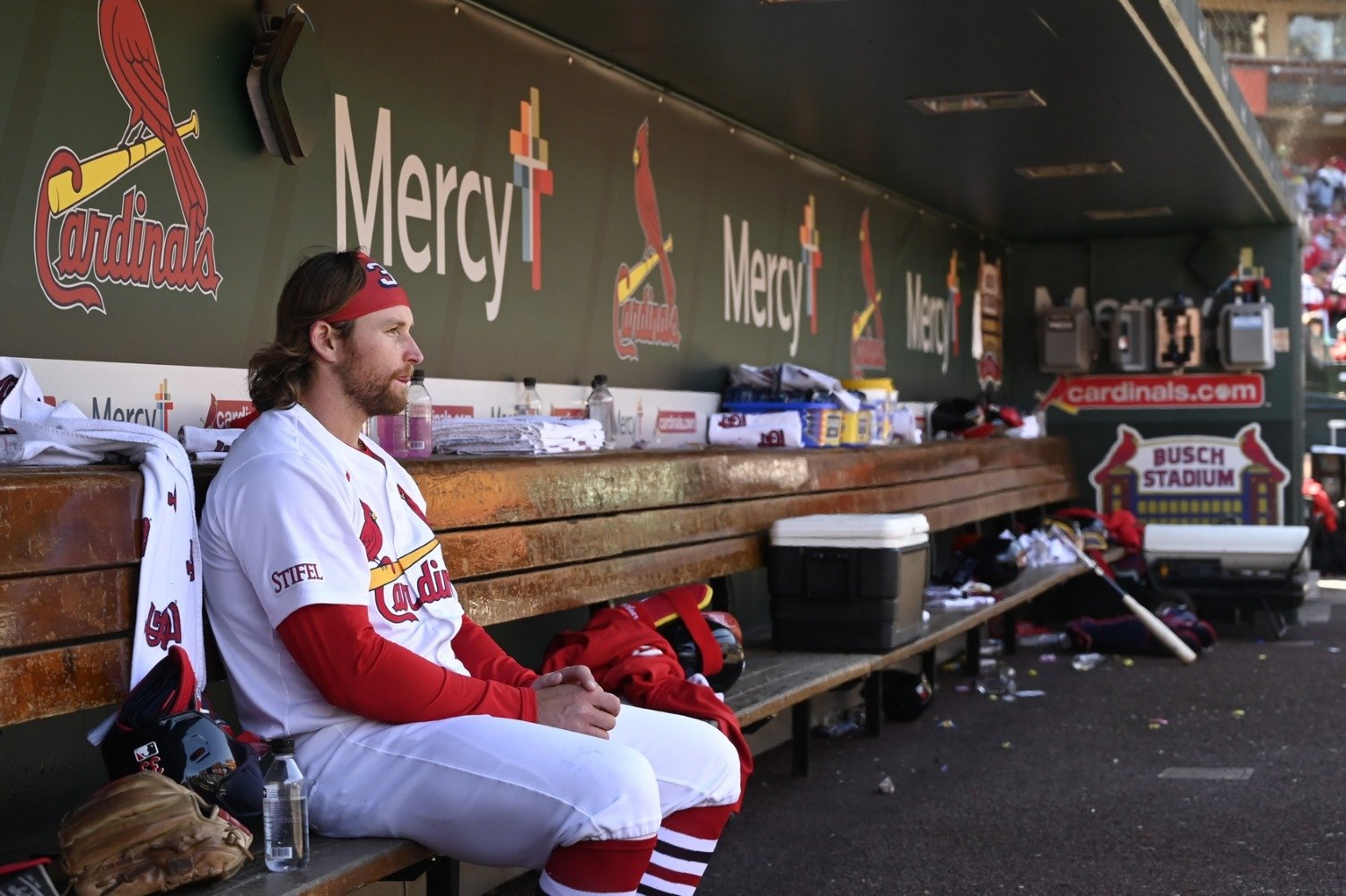 Exceptionalism is a funny thing. It can be very real, and very formidable. It's also, almost of necessity, fragile. For 100 years, stretching all the way back to when then-Cardinals executive Branch Rickey essentially invented the farm system as we know it, the St. Louis team has centered its own identity on exceptionalism. Rickey had a knack for that. He first created the Cardinal Way, and then the Dodger Way, and those two organizations rode the crucial innovations Rickey introduced (manipulative and lucrative relationships with minor-league teams; the integration of MLB; and systematized training and player development, in the modern mold) to decades upon decades of genuine, earned exceptionalism. The Cardinals have persistently outperformed their market size, their payroll, and their projections, almost without interruption, for longer than most baseball fans have been alive. Their dominance of the National League Central has been so complete that even the Brewers winning the division three times in the last six seasons and going to the NLCS more recently than the Cardinals last did has only chipped away at it. The Cards' self-image has been tarnished, slightly, but not erased. That could change this week. It almost certainly will change, in the months ahead, because the Brewers are cruising toward an easy NL Central title, which will make them the second team (along with the 2016-17 Cubs) to win back-to-back division championships since the last time the Cardinals did it, from 2013-15. After this season, in which the Cardinals will miss the playoffs for the second year in a row and probably finish fourth or fifth in the division, they're likely to fire at least one of manager Oli Marmol and president of baseball operations John Mozeliak. For the first time since they brought in Walt Jocketty in 1994, the team will probably have to admit that they don't have the answers to the riddle of the modern game within their walls and hire someone from outside the franchise. Still, a decisive series win would be a thunderous way to finish off the dismantling of the franchise's sense of exceptionalism. The Brewers, after all, have been the little brother to the Cardinals, ever since they came to the National League in 1998. The Cardinals have thought of them that way for even longer, going all the way back to the teams' meeting in the 1982 World Series. They do things the same way the Cardinals do, with even more extreme constraints than the Cardinals face, but only recently has the baseball world had to reckon with the emerging reality that the Brewers do those things better. They just do things better than the Cardinals do, and they've done more than close the gap. They've outright surpassed the Cardinals, from the field up to the ownership suite. This is a low-stakes series. The Brewers don't need to win it, and it will take place in the Cardinals' home. If the Crew do roll in and win in convincing fashion, though, it will become impossible to avoid the truth--and instead of looking dingy, that mirror into which the Cardinals recite their assurances of supremacy will crack outright. Most of the ways that the team has carved out systematic advantages over the years are no longer really available to them. Teams have caught up, and it's hard to run out ahead again--much harder than it was even 30 years ago. The Cardinals being as good as they were, as consistently as they were, in the ways they managed to do it, was good for baseball. That can be hard to admit, for fans of their fiercest rivals, but it's true. However, that period of the game's history is drawing to a close. The Brewers could shut the storybook with a loud thud, and ensure that the Cardinals' looming winter of reckoning (and the attendant, painful transformation into one of the game's normal, unremarkable, inconsistent teams) comes a couple months sooner than it otherwise might. It's a worthwhile goal, for a team looking to vault past its downtrodden neighbors and tangle with more hale, hearty imperial powers come October.
 -
The air isn't bending as often as it did before an injury sidelined the Brewers' relief ace. It's shimmering with more heat than ever, though, and opposing hitters' lives aren't any easier. Image courtesy of © Brett Davis-USA TODAY Sports With an injury like the one that hampered Devin Williams over the offseason and stole the first half of the regular season from him, it's worth taking a close look at the stuff upon his return. There was no surgical intervention on the stress fractures in Williams's upper back; he just had to wait and build up slowly after giving the injuries time to heal. Though they might be becoming more common as pitchers try to maximize torque and extension through their release, injuries like that one are still quite rare, and it was hard to guess exactly how Williams would look on the other side of it. There have been material, noticeable changes. Some of them appear to be for the better. Some could be for the worse, in that they might indicate that he's compensating for or sheltering himself against the extreme toll his former style was exacting--or they could reflect a newfound freedom of movement, after he was limited by the nagging back issue even late last season. For one thing, some of the trademark extension that made everything in his arsenal play up in dazzling fashion over previous years is gone. Here's an overhead view of where he was releasing the ball in 2023, where the (0, 0) mark is the center of the rubber, progress to the right is toward home plate, and a lower number on the apparent vertical axis means a release farther toward third base. Now, here's the same chart for this season. Williams has lost about half a foot of release extension this season, and a bit more than that on the fastball. As you can also see, his release point on the fastball is farther toward third, and more in line with that of his famous screwball. Often, a shift of six inches or so in lateral release point (with or without a change in release extension) signals a shift in where a pitcher is setting up on the rubber, so I wanted to check whether Williams has slide over toward third in his initial position this year. Here's a fastball on which he got a swinging strike last September: NjREUjJfWGw0TUFRPT1fRGdGWlZGMVFVUW9BRGdFS1ZBQUFCQU5RQUZnRUFsZ0FBRlZRQndkVUNGRUVCd0JX.mp4 And here's the one on which he struck out Shohei Ohtani last week. TndlMTdfWGw0TUFRPT1fQWdkWlZGVlZWZ0FBWGxFS0JBQUFVZ2RSQUZrQkJsSUFWd1JSQVFRQ0FBVUFCUU5V.mp4 There's no shift in starting position here. Rather, Williams has gotten more crossfire action going in his delivery. If you're struggling to see this, look at where his left foot lands on each pitch. Last season, it was more or less in line with the middle of the plate. This year, it's all the way to the outside corner. From here comes at least a portion of the increase in velocity Williams has demonstrated this year. He's throwing harder, and part of that is creating a more closed front side against which to drive. He's not exploding down the mound with the same flying athleticism, but he's making up for that with a change in his release angle and arm action. His fastball movement hasn't changed, but it's gained speed and even a little bit of carry, in the form of a flatter vertical approach angle. That comes from the change in the way he moves down the mound. Is it something Williams is doing on purpose, and that he was unable to do for much of last season, as he dealt with undiagnosed back pain? There's no evidence to tell us that he was materially hampered in the second half of 2023. He wasn't doing any version of this crossfiring in 2022. Here's a video from earlier last year, just before the Fourth of July, in which he is equally direct to the plate, but perhaps a bit more fluid through release. UVduNDFfWGw0TUFRPT1fQXdaUkFsWU5WZ1lBRGdGV1VBQUFCZ05WQUFBTVZnVUFVUUFNQndRQUNWWUFVZ2RR.mp4 However, the data might be telling us that Williams hasn't actually lost extension at all; he's just changed his angle, to increase his deception. In other words, he's covering the same ground with his stride and launch through release, but at a slight angle toward the right-handed batter's box, to further flummox opposing batters. This, too, could be a matter of injury prevention, but in a different way. It's only been seven appearances, but Williams is throwing his fastball 61% of the time, and breaking out the airbender less often than is his wont. That might be to protect his body from the various ravages that pitch inflicts on it; the fastball is less dangerous to his arm. He hasn't used the cutter he worked on assiduously as recently as spring training, but maybe that's just because he hasn't needed it yet. We might be seeing a new version of Williams, with a delivery wired for slightly greater deception and the goal being to rely more on the fastball, rather than the airbender. Free agency looms after 2025, which figures to inform both Williams's approach to the balance of this season and the Brewers' usage of him. At the same time, both parties badly want for Williams to be in position to secure wins for his team every time they're there to be had. A slight alignment change and an attendant tweak in pitch mix look like the first pair of ideas they've come up with to make that a reality. How long they can last, and whether they'll be the only ones, is anyone's guess. View full article
-
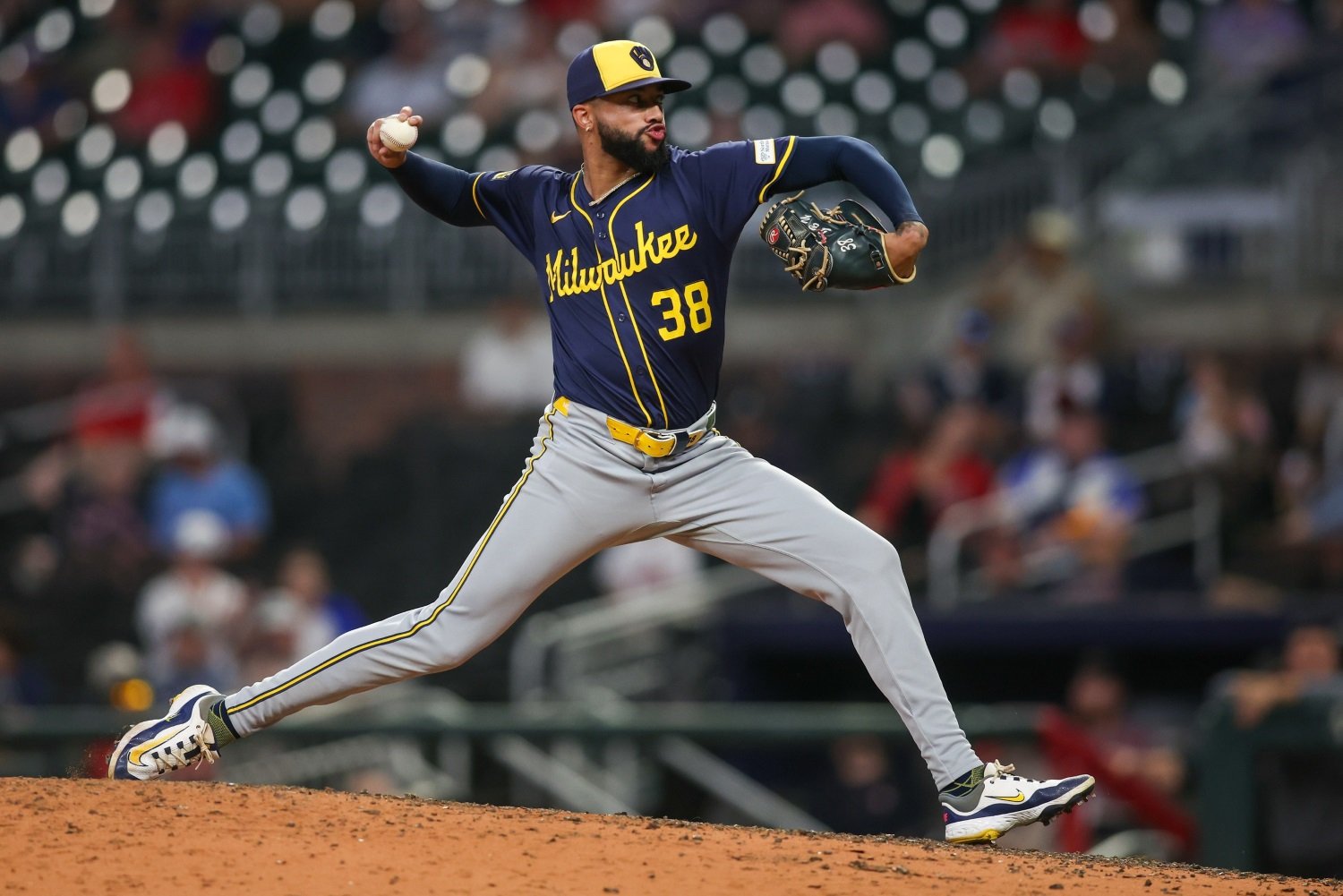 With an injury like the one that hampered Devin Williams over the offseason and stole the first half of the regular season from him, it's worth taking a close look at the stuff upon his return. There was no surgical intervention on the stress fractures in Williams's upper back; he just had to wait and build up slowly after giving the injuries time to heal. Though they might be becoming more common as pitchers try to maximize torque and extension through their release, injuries like that one are still quite rare, and it was hard to guess exactly how Williams would look on the other side of it. There have been material, noticeable changes. Some of them appear to be for the better. Some could be for the worse, in that they might indicate that he's compensating for or sheltering himself against the extreme toll his former style was exacting--or they could reflect a newfound freedom of movement, after he was limited by the nagging back issue even late last season. For one thing, some of the trademark extension that made everything in his arsenal play up in dazzling fashion over previous years is gone. Here's an overhead view of where he was releasing the ball in 2023, where the (0, 0) mark is the center of the rubber, progress to the right is toward home plate, and a lower number on the apparent vertical axis means a release farther toward third base. Now, here's the same chart for this season. Williams has lost about half a foot of release extension this season, and a bit more than that on the fastball. As you can also see, his release point on the fastball is farther toward third, and more in line with that of his famous screwball. Often, a shift of six inches or so in lateral release point (with or without a change in release extension) signals a shift in where a pitcher is setting up on the rubber, so I wanted to check whether Williams has slide over toward third in his initial position this year. Here's a fastball on which he got a swinging strike last September: NjREUjJfWGw0TUFRPT1fRGdGWlZGMVFVUW9BRGdFS1ZBQUFCQU5RQUZnRUFsZ0FBRlZRQndkVUNGRUVCd0JX.mp4 And here's the one on which he struck out Shohei Ohtani last week. TndlMTdfWGw0TUFRPT1fQWdkWlZGVlZWZ0FBWGxFS0JBQUFVZ2RSQUZrQkJsSUFWd1JSQVFRQ0FBVUFCUU5V.mp4 There's no shift in starting position here. Rather, Williams has gotten more crossfire action going in his delivery. If you're struggling to see this, look at where his left foot lands on each pitch. Last season, it was more or less in line with the middle of the plate. This year, it's all the way to the outside corner. From here comes at least a portion of the increase in velocity Williams has demonstrated this year. He's throwing harder, and part of that is creating a more closed front side against which to drive. He's not exploding down the mound with the same flying athleticism, but he's making up for that with a change in his release angle and arm action. His fastball movement hasn't changed, but it's gained speed and even a little bit of carry, in the form of a flatter vertical approach angle. That comes from the change in the way he moves down the mound. Is it something Williams is doing on purpose, and that he was unable to do for much of last season, as he dealt with undiagnosed back pain? There's no evidence to tell us that he was materially hampered in the second half of 2023. He wasn't doing any version of this crossfiring in 2022. Here's a video from earlier last year, just before the Fourth of July, in which he is equally direct to the plate, but perhaps a bit more fluid through release. UVduNDFfWGw0TUFRPT1fQXdaUkFsWU5WZ1lBRGdGV1VBQUFCZ05WQUFBTVZnVUFVUUFNQndRQUNWWUFVZ2RR.mp4 However, the data might be telling us that Williams hasn't actually lost extension at all; he's just changed his angle, to increase his deception. In other words, he's covering the same ground with his stride and launch through release, but at a slight angle toward the right-handed batter's box, to further flummox opposing batters. This, too, could be a matter of injury prevention, but in a different way. It's only been seven appearances, but Williams is throwing his fastball 61% of the time, and breaking out the airbender less often than is his wont. That might be to protect his body from the various ravages that pitch inflicts on it; the fastball is less dangerous to his arm. He hasn't used the cutter he worked on assiduously as recently as spring training, but maybe that's just because he hasn't needed it yet. We might be seeing a new version of Williams, with a delivery wired for slightly greater deception and the goal being to rely more on the fastball, rather than the airbender. Free agency looms after 2025, which figures to inform both Williams's approach to the balance of this season and the Brewers' usage of him. At the same time, both parties badly want for Williams to be in position to secure wins for his team every time they're there to be had. A slight alignment change and an attendant tweak in pitch mix look like the first pair of ideas they've come up with to make that a reality. How long they can last, and whether they'll be the only ones, is anyone's guess.
 -
 The Milwaukee Brewers offense is completely transformed by the presence or absence of Christian Yelich. He went through a fallow period a couple of years ago, as myriad injuries left him a shell of his MVP self, and he never has quite recovered the power he showed in 2018 and 2019. However, since May 1, 2023, Yelich has batted .300/.391/.484, in 830 plate appearances. He's been one of the game's most well-rounded hitters for most of the last two seasons--when he's been in the lineup. Alas, yet again, he isn't, and he won't be at least for the rest of this season. On Thursday night, Yelich and the Brewers announced that the star outfielder and DH will undergo back surgery that will shelve him for the rest of the year. The team will make the postseason, but any progress they make there will have to be achieved without their most balanced offensive threat. It's a painful loss, emotionally and in terms of sheer production. It also casts the four years and $106 million left on his contract feel a bit less likely to be money well spent, but that's a topic for the fall and winter ahead. In the short term, this dramatically raises the stakes for hitters like Garrett Mitchell, Tyler Black, and Blake Perkins. Each of them needs to get and/or stay healthy, but assuming they do, each now has a path to broader contributions to the team as they hurtle toward an NL Central title. There's October heroism available. There are plate appearances that will need to be filled at the top of the lineup come playoff time. Over the last week or two, I've written about Mitchell's approach and skill set, and how he would need to adjust the former to maximize the value and minimize the weaknesses of the latter; and about how Black can be a good hitter despite a dearth of power, relative to other players at the positions where he fits. Earlier this year, Davy Andrews wrote about Perkins as the perfect embodiment of the team's approach at the plate, in addition to the immense value he provides on defense. All of these players can do something valuable within the context of the Brewers offense. They just don't have the ability to take pressure off of other hitters, the way Yelich did so often this season. Earlier this year, I built a statistic to try to capture the value of hitters who blend power and on-base skills on a game-to-game basis. It's called Big Game Rate, and it's simply the percentage of a player's games played in which their total bases and walks added up to at least four. The underlying theory is that, if you do that, you've made up for at least one teammate having a lousy day that day. Even if all you did was hit a solo home run, you accounted for a run. If you had a double and two walks, on average, you put your team in position to score quite a few runs. The leaders in this category are, generally, speaking, exactly who you'd expect, which verifies the value of it. Here's a chart showing all 212 batters with at least 300 plate appearances this year, with both their weighted on-base average (wOBA) and their Big Game%. I've highlighted some of the players around Yelich, to show that he was truly one of the guys making an outsize impact on games this year. As you can see, Yelich was the guy with the capacity to carry the offense. Without him, the lineup needs to be longer, because it's a bit less dynamic. The only hope to replace Yelich's dynamism, really, is the man who figures to replace him as the everyday left fielder for the next decade: Jackson Chourio. Here's the same chart as above, but just since Jun. 1, for the players with at least 200 plate appearances in that span. He's not quite as lethal as Yelich was, but Chourio can change any given game. There have been a half-dozen contests over the last two months in which that capacity has been brightly displayed. With Yelich down, there are opportunities out there for several others to become heroes, but it's easy to see who's best positioned to take advantage of those opportunities. The Brewers just have to hope someone steps up, regardless of who it turns out to be.
 -
If you were still scribbling lineups with the Crew's best hitter restored to them on the backs of bank envelopes and cocktail napkins, first of all, what're you using bank envelopes for? And secondly, stop. Image courtesy of © Kirby Lee-USA TODAY Sports The Milwaukee Brewers offense is completely transformed by the presence or absence of Christian Yelich. He went through a fallow period a couple of years ago, as myriad injuries left him a shell of his MVP self, and he never has quite recovered the power he showed in 2018 and 2019. However, since May 1, 2023, Yelich has batted .300/.391/.484, in 830 plate appearances. He's been one of the game's most well-rounded hitters for most of the last two seasons--when he's been in the lineup. Alas, yet again, he isn't, and he won't be at least for the rest of this season. On Thursday night, Yelich and the Brewers announced that the star outfielder and DH will undergo back surgery that will shelve him for the rest of the year. The team will make the postseason, but any progress they make there will have to be achieved without their most balanced offensive threat. It's a painful loss, emotionally and in terms of sheer production. It also casts the four years and $106 million left on his contract feel a bit less likely to be money well spent, but that's a topic for the fall and winter ahead. In the short term, this dramatically raises the stakes for hitters like Garrett Mitchell, Tyler Black, and Blake Perkins. Each of them needs to get and/or stay healthy, but assuming they do, each now has a path to broader contributions to the team as they hurtle toward an NL Central title. There's October heroism available. There are plate appearances that will need to be filled at the top of the lineup come playoff time. Over the last week or two, I've written about Mitchell's approach and skill set, and how he would need to adjust the former to maximize the value and minimize the weaknesses of the latter; and about how Black can be a good hitter despite a dearth of power, relative to other players at the positions where he fits. Earlier this year, Davy Andrews wrote about Perkins as the perfect embodiment of the team's approach at the plate, in addition to the immense value he provides on defense. All of these players can do something valuable within the context of the Brewers offense. They just don't have the ability to take pressure off of other hitters, the way Yelich did so often this season. Earlier this year, I built a statistic to try to capture the value of hitters who blend power and on-base skills on a game-to-game basis. It's called Big Game Rate, and it's simply the percentage of a player's games played in which their total bases and walks added up to at least four. The underlying theory is that, if you do that, you've made up for at least one teammate having a lousy day that day. Even if all you did was hit a solo home run, you accounted for a run. If you had a double and two walks, on average, you put your team in position to score quite a few runs. The leaders in this category are, generally, speaking, exactly who you'd expect, which verifies the value of it. Here's a chart showing all 212 batters with at least 300 plate appearances this year, with both their weighted on-base average (wOBA) and their Big Game%. I've highlighted some of the players around Yelich, to show that he was truly one of the guys making an outsize impact on games this year. As you can see, Yelich was the guy with the capacity to carry the offense. Without him, the lineup needs to be longer, because it's a bit less dynamic. The only hope to replace Yelich's dynamism, really, is the man who figures to replace him as the everyday left fielder for the next decade: Jackson Chourio. Here's the same chart as above, but just since Jun. 1, for the players with at least 200 plate appearances in that span. He's not quite as lethal as Yelich was, but Chourio can change any given game. There have been a half-dozen contests over the last two months in which that capacity has been brightly displayed. With Yelich down, there are opportunities out there for several others to become heroes, but it's easy to see who's best positioned to take advantage of those opportunities. The Brewers just have to hope someone steps up, regardless of who it turns out to be. View full article
-
We're in a new era of leadership in MLB. Rob Manfred has shown an openness to big changes to the game that his predecessor never evinced. That's a good thing, when changes can be made for the betterment of the game's aesthetics and competitive balance, but sometimes those things are in tension with one another. Image courtesy of © Benny Sieu-USA TODAY Sports Under a new rule reportedly being considered by the MLB central office, starting pitchers in future seasons could be required to pitch at least six innings in every game. There would, of course, be caveats to the rule, but the gist of it would be an enforced return to the version of the game fans over the age of 30 grew up with. Starters would, once again, have to eat innings in order to win games. This is a fledgling idea, not an imminent change, but we've already heard some of the ways in which the rule would accommodate situations that figure to strain and stretch it. Naturally, a pitcher would be allowed to come out any time if they were hurt, but to subvert potential manipulation of the rule through feigned injuries, any starter who left a game that way would have to go on the injured list afterward. There might also be carveouts allowing a pitcher to leave once they exceed 100 pitches, or if they allow four or more runs before finishing six frames. Well, the Brewers have the third-fewest starts of at least six innings this season, with 35. Only the Marlins and Guardians have fewer. Just as importantly, though, the Crew have had 48 starts that would clearly be illegal, even after accounting for the carveouts speculated on publicly: those that came up short of six innings, included 95 pitches or fewer, and saw the starter give up three or fewer runs. Only Miami and Cleveland have more of those, although the Dodgers and Rays have just as many. A fistful of those starts were never meant to be of real length; they were openers. That stratagem, too, would be wiped away by this rule, though. With Brandon Woodruff hurt and Corbin Burnes traded, the Crew have soldiered onward, and they're going to win the division again--but they're doing it with an all-hands pitching approach that would not be allowed were this rule to take effect. Tobias Myers's brilliant rookie season has included seven starts in which he was lifted before getting through six, despite a manageable pitch count and few runs on the board. Colin Rea has made six such starts. Joe Ross has made five. Bryse Wilson has made four, plus a couple that don't count because he was pitching behind an opener. The team's collectivist approach to making up for its lost aces would be outlawed by this rule. This kind of change would have very uneven levels of impact on the teams that make up MLB. The Brewers not only lean on the depth of their bullpen and the leveraging of matchups, but can't afford to pivot into spending huge money on starting pitchers if that ceases to be viable. Most modern starters aren't ready for any kind of change that would require them to pitch at least six frames every five or six days, and the ones who are have become phenomenally expensive. The Dodgers would be fairly unaffected by this change; they could remake their staff with some pricey workhorses. Milwaukee doesn't have that privilege. The rule works better as a topic of conversation than as an actual suggestion. Were it to move forward, it would get snarling objections from the players' union and from many teams, including the Brewers. It's unlikely to be actually instituted. If it were, though, it would be disastrous for the Brewers and other small-market teams who thrive on the creativity of their pitching usage. The Rays are on that list. So are the Guardians and the Twins. Fans do seem to broadly support the rule, though, and understandably so. Watching a starter work all the way through an opposing lineup a third time is fun and exciting, and having the starter around longer makes them a better narrative peg around which to weave the story of the contest. It would be great to get back to a point where starters routinely work deeper into games. This rule just isn't likely to accomplish it well. Instead, it would strongly favor big-market teams; expose more pitchers to greater injury risk; and make the game more complicated and byzantine. Incentivizing hurlers to pace themselves better and rewarding those who do could make baseball more fun to watch. It's just about picking those incentives well. This kind of rule change would offer a stick, instead of a carrot, and its heavy-handedness and rigidity would make it a bad move. That said, the conversation is a valuable one, and maybe the right tweak to make some version of this workable is right around the corner. View full article
-
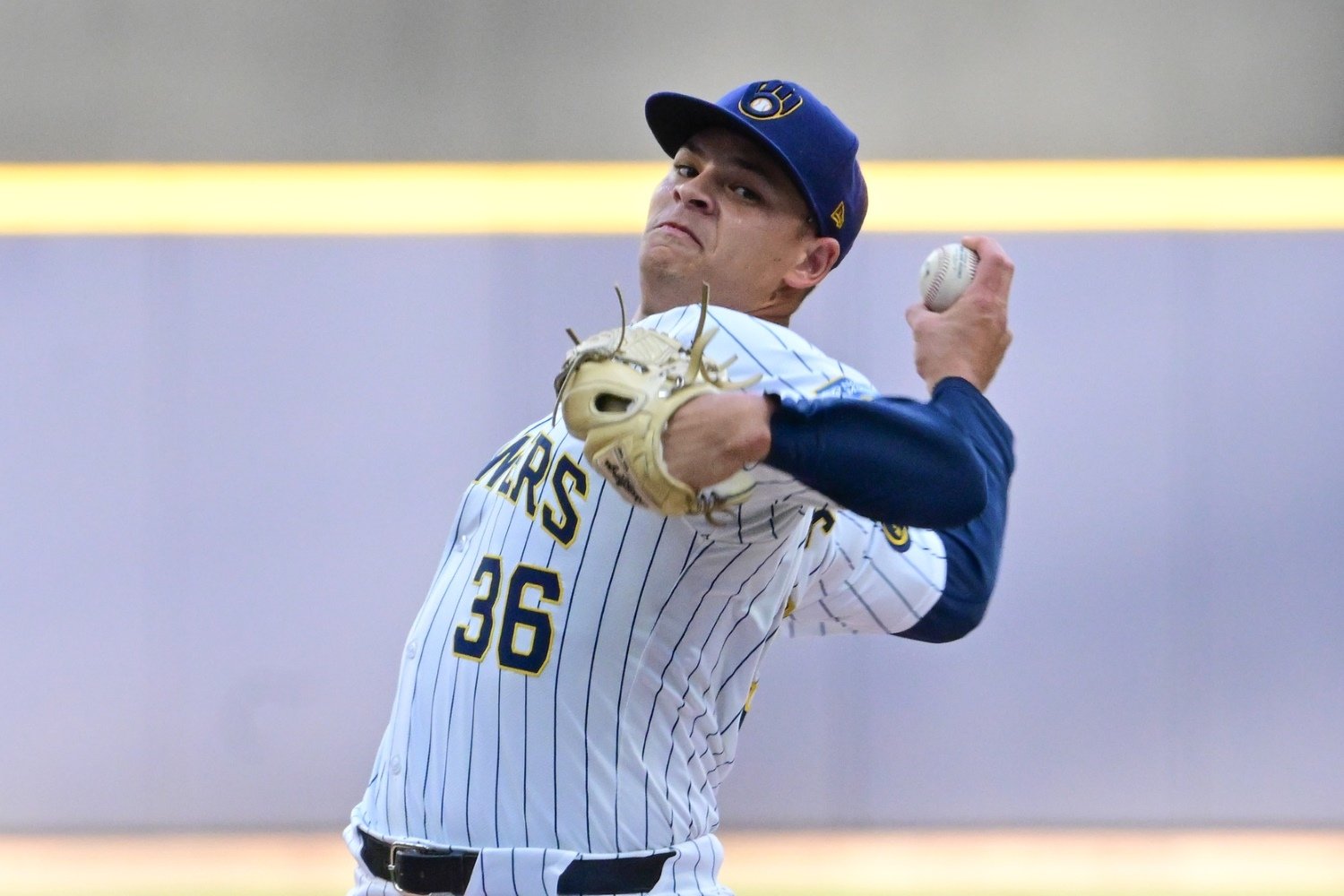 Under a new rule reportedly being considered by the MLB central office, starting pitchers in future seasons could be required to pitch at least six innings in every game. There would, of course, be caveats to the rule, but the gist of it would be an enforced return to the version of the game fans over the age of 30 grew up with. Starters would, once again, have to eat innings in order to win games. This is a fledgling idea, not an imminent change, but we've already heard some of the ways in which the rule would accommodate situations that figure to strain and stretch it. Naturally, a pitcher would be allowed to come out any time if they were hurt, but to subvert potential manipulation of the rule through feigned injuries, any starter who left a game that way would have to go on the injured list afterward. There might also be carveouts allowing a pitcher to leave once they exceed 100 pitches, or if they allow four or more runs before finishing six frames. Well, the Brewers have the third-fewest starts of at least six innings this season, with 35. Only the Marlins and Guardians have fewer. Just as importantly, though, the Crew have had 48 starts that would clearly be illegal, even after accounting for the carveouts speculated on publicly: those that came up short of six innings, included 95 pitches or fewer, and saw the starter give up three or fewer runs. Only Miami and Cleveland have more of those, although the Dodgers and Rays have just as many. A fistful of those starts were never meant to be of real length; they were openers. That stratagem, too, would be wiped away by this rule, though. With Brandon Woodruff hurt and Corbin Burnes traded, the Crew have soldiered onward, and they're going to win the division again--but they're doing it with an all-hands pitching approach that would not be allowed were this rule to take effect. Tobias Myers's brilliant rookie season has included seven starts in which he was lifted before getting through six, despite a manageable pitch count and few runs on the board. Colin Rea has made six such starts. Joe Ross has made five. Bryse Wilson has made four, plus a couple that don't count because he was pitching behind an opener. The team's collectivist approach to making up for its lost aces would be outlawed by this rule. This kind of change would have very uneven levels of impact on the teams that make up MLB. The Brewers not only lean on the depth of their bullpen and the leveraging of matchups, but can't afford to pivot into spending huge money on starting pitchers if that ceases to be viable. Most modern starters aren't ready for any kind of change that would require them to pitch at least six frames every five or six days, and the ones who are have become phenomenally expensive. The Dodgers would be fairly unaffected by this change; they could remake their staff with some pricey workhorses. Milwaukee doesn't have that privilege. The rule works better as a topic of conversation than as an actual suggestion. Were it to move forward, it would get snarling objections from the players' union and from many teams, including the Brewers. It's unlikely to be actually instituted. If it were, though, it would be disastrous for the Brewers and other small-market teams who thrive on the creativity of their pitching usage. The Rays are on that list. So are the Guardians and the Twins. Fans do seem to broadly support the rule, though, and understandably so. Watching a starter work all the way through an opposing lineup a third time is fun and exciting, and having the starter around longer makes them a better narrative peg around which to weave the story of the contest. It would be great to get back to a point where starters routinely work deeper into games. This rule just isn't likely to accomplish it well. Instead, it would strongly favor big-market teams; expose more pitchers to greater injury risk; and make the game more complicated and byzantine. Incentivizing hurlers to pace themselves better and rewarding those who do could make baseball more fun to watch. It's just about picking those incentives well. This kind of rule change would offer a stick, instead of a carrot, and its heavy-handedness and rigidity would make it a bad move. That said, the conversation is a valuable one, and maybe the right tweak to make some version of this workable is right around the corner.
- 10 comments
-
- 2
-
-
- tobias myers
- bryse wilson
- (and 2 more)
-
It's becoming a very familiar refrain: This young Brewers hitter is proving not to have plus power. However, he can still be a solid offensive contributor--and the team needs him to be. Image courtesy of © Orlando Ramirez-USA TODAY Sports Given that he appears to be confined to first base, DH, and perhaps some time in the corner outfield, it would be great if Tyler Black could hit for power. He's a strong young player, and as recently as a few months ago, there was real, well-founded faith that he might find his way to just that kind of pop. However, all along, there were signs that Black would struggle in this particular area. His exit velocities, especially on balls hit with line-drive or fly-ball launch angles, are well below the MLB average--and that's looking at his data against Triple-A pitching, primarily. The hope was that, as he got a second look at the league and could make some adjustments to more advanced pitching, he could change that and start generating real pop. Instead, since Jun. 1, Black has only four home runs. He commands the strike zone brilliantly, with good plate discipline and contact skills. He's fast, and he figures to hit for a decent average as he concretizes his approach. However, the power hasn't been in evidence. He remains below-average both in the top-end exit velocities he reaches and the average power he creates when lifting the ball. As you can see, by this reckoning, Black is most akin to Sal Frelick and Brice Turang, who have each been persistently punchless in MLB. Joey Ortiz shares their low average exit velocity when getting it in the air, but has shown greater raw power than the other three. Let's look at it another way. Here's the percentage of plate appearances ending in batted balls with an exit velocity over 100 miles per hour, charted against the percentage of them that end with a ball hit in the air to the pull field. The latter is the surest way for a hitter without big raw power to overachieve in terms of real power production. Maybe Black has shown some of that. Oof. Not at all. This way of mapping power skills isolates Black with Turang and Frelick even more. If the Brewers were only going for more power, they would do better to call up Brewer Hicklen than to keep trying it with Black. It's pretty clear that they prefer Black's left-handed matchup value and more balanced skill set. They see these data, too; they know Black isn't a power bat about to break through. Importantly, then, the question really isn't about Black's power. It's about whether he can translate what he's done in the upper minors to the big leagues. This year, with Nashville, Black has batted .276/.389/.448, with 47 walks, 11 hit-by-pitches, and just 61 strikeouts in 368 plate appearances. We know that the slugging average will come down significantly in MLB, but if he can come close to matching the average and the OBP, he's a very valuable hitter, and he would lengthen the Brewers lineup significantly. So far, alas, he hasn't even come close to achieving that. It's only 46 plate appearances, but he's batting .200/.304/,250, with 15 strikeouts. If the bigger strike zone in MLB will compromise Black's ability to avoid punchouts and draw walks, or even if it will merely make it harder for him to hit for average, then his utility rapidly dwindles. Right now, the Brewers can't afford to play Black every day and wait to find out how well he can adjust. That's one of the burdens of being a very good team, jockeying for high playoff seeding. While injuries do leave room for him on the roster, though, they should strive to get a longer look at him. In the long term, they need him to shore up his approach and convert it into the kind of numbers he was putting up in the minors, even if it be without power. With Frelick, Turang, Ortiz, Jackson Chourio, William Contreras, and whichever of Christian Yelich and Garrett Mitchell is healthy on a given day, the Crew already have a lot of good hitters--good OBP guys, that is, albeit with varying degrees of power. Key role players Andruw Monasterio and Blake Perkins have the same profile, broadly speaking. It's something on which the organization prides itself, and a lineup full of guys with above-average OBPs can thrive even without a Murderer's Row of sluggers. Black can be part of that success, but only if he's able to be another strong link in that chain, rather than the weak one that lets it break. View full article
-
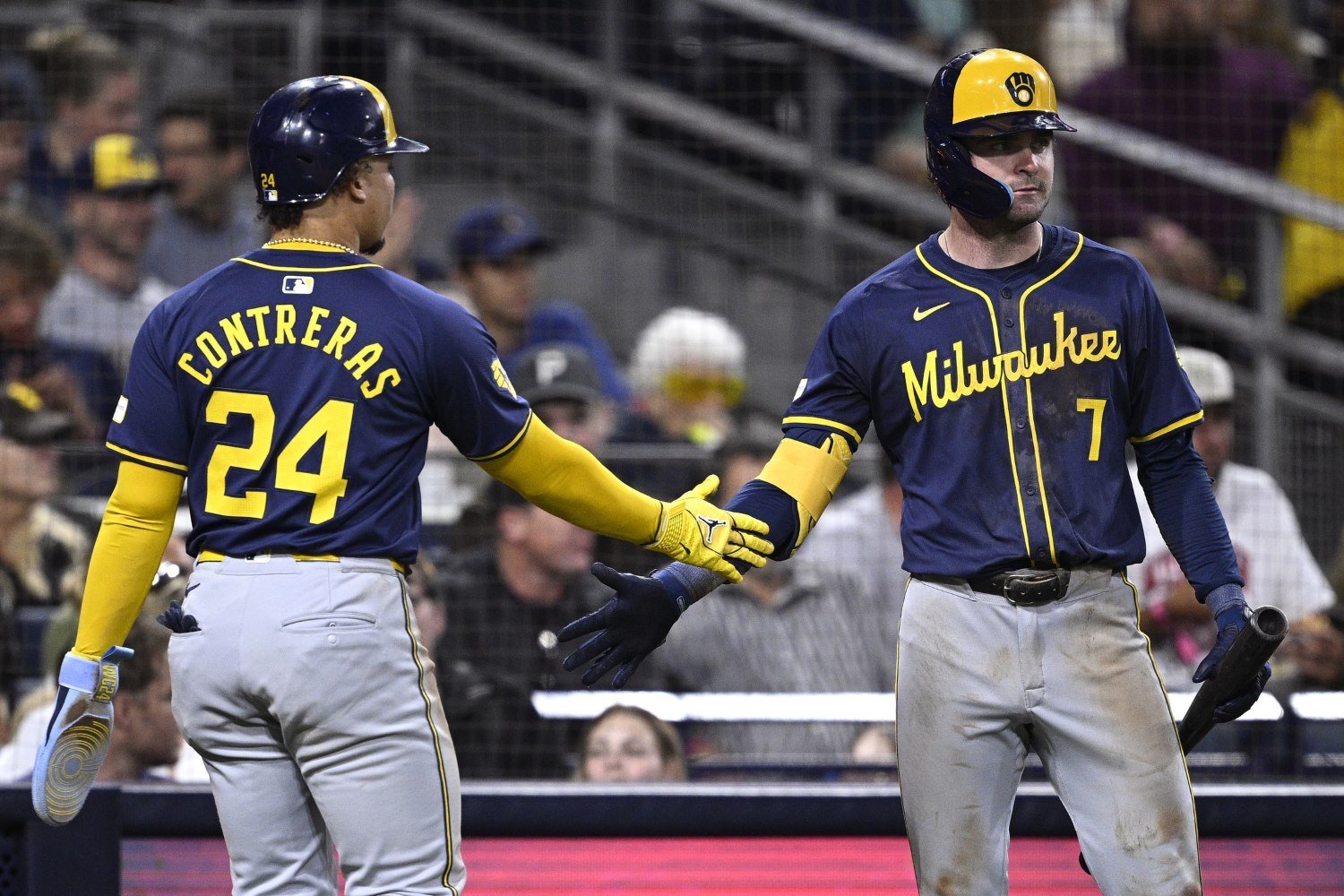 Given that he appears to be confined to first base, DH, and perhaps some time in the corner outfield, it would be great if Tyler Black could hit for power. He's a strong young player, and as recently as a few months ago, there was real, well-founded faith that he might find his way to just that kind of pop. However, all along, there were signs that Black would struggle in this particular area. His exit velocities, especially on balls hit with line-drive or fly-ball launch angles, are well below the MLB average--and that's looking at his data against Triple-A pitching, primarily. The hope was that, as he got a second look at the league and could make some adjustments to more advanced pitching, he could change that and start generating real pop. Instead, since Jun. 1, Black has only four home runs. He commands the strike zone brilliantly, with good plate discipline and contact skills. He's fast, and he figures to hit for a decent average as he concretizes his approach. However, the power hasn't been in evidence. He remains below-average both in the top-end exit velocities he reaches and the average power he creates when lifting the ball. As you can see, by this reckoning, Black is most akin to Sal Frelick and Brice Turang, who have each been persistently punchless in MLB. Joey Ortiz shares their low average exit velocity when getting it in the air, but has shown greater raw power than the other three. Let's look at it another way. Here's the percentage of plate appearances ending in batted balls with an exit velocity over 100 miles per hour, charted against the percentage of them that end with a ball hit in the air to the pull field. The latter is the surest way for a hitter without big raw power to overachieve in terms of real power production. Maybe Black has shown some of that. Oof. Not at all. This way of mapping power skills isolates Black with Turang and Frelick even more. If the Brewers were only going for more power, they would do better to call up Brewer Hicklen than to keep trying it with Black. It's pretty clear that they prefer Black's left-handed matchup value and more balanced skill set. They see these data, too; they know Black isn't a power bat about to break through. Importantly, then, the question really isn't about Black's power. It's about whether he can translate what he's done in the upper minors to the big leagues. This year, with Nashville, Black has batted .276/.389/.448, with 47 walks, 11 hit-by-pitches, and just 61 strikeouts in 368 plate appearances. We know that the slugging average will come down significantly in MLB, but if he can come close to matching the average and the OBP, he's a very valuable hitter, and he would lengthen the Brewers lineup significantly. So far, alas, he hasn't even come close to achieving that. It's only 46 plate appearances, but he's batting .200/.304/,250, with 15 strikeouts. If the bigger strike zone in MLB will compromise Black's ability to avoid punchouts and draw walks, or even if it will merely make it harder for him to hit for average, then his utility rapidly dwindles. Right now, the Brewers can't afford to play Black every day and wait to find out how well he can adjust. That's one of the burdens of being a very good team, jockeying for high playoff seeding. While injuries do leave room for him on the roster, though, they should strive to get a longer look at him. In the long term, they need him to shore up his approach and convert it into the kind of numbers he was putting up in the minors, even if it be without power. With Frelick, Turang, Ortiz, Jackson Chourio, William Contreras, and whichever of Christian Yelich and Garrett Mitchell is healthy on a given day, the Crew already have a lot of good hitters--good OBP guys, that is, albeit with varying degrees of power. Key role players Andruw Monasterio and Blake Perkins have the same profile, broadly speaking. It's something on which the organization prides itself, and a lineup full of guys with above-average OBPs can thrive even without a Murderer's Row of sluggers. Black can be part of that success, but only if he's able to be another strong link in that chain, rather than the weak one that lets it break.
 -
By season's end, he could be as low as third on his own team, just among rookies. That says a whole lot about the team, but we should take some time to say nicer things about him. Image courtesy of © Jeff Hanisch-USA TODAY Sports This season has not been an uninterrupted, unmitigated success for Joey Ortiz. It's been an exciting and impressive rookie campaign, but there has been injury trouble and there have been some prolonged slumps. He's hitting .251/.346/.404 on the year, which is very good, but the power potential he flashed in May (four home runs) has proved not to be the harbinger many hoped it was. Ortiz only has one homer since Jun. 25, though it did come Sunday. To focus on what Ortiz hasn't done in his first full season in the majors would be a vicious disservice, though. He's done some incredible things, both as a third baseman who looks sufficiently qualified to slide over to shortstop next season if needed and at the plate. As a rookie, playing somewhere near every day, Ortiz has maintained a 19.0% strikeout rate and a 12.0% walk rate. He's controlling the zone as well as anyone in the Milwaukee lineup, and to do that with even moderate power makes him both impressively versatile and immensely valuable. Let's hone in on one particular strength, though, because it's this that could make Ortiz a superstar in the lineup: He handles breaking balls from same-handed pitchers as well as any hitter in baseball. That's an extraordinary claim, so let's provide the extraordinary evidence. There are 138 batters who have seen at least 250 breaking balls from same-handed pitchers in 2024. Among them, Ortiz's .342 weighted on-base average (wOBA) on such pitches ranks 20th. He's hit .302/.343/.460 against righties' breaking stuff. None of the 19 guys with a higher OPS than he has on same-handed breakers are rookies. The closest thing is Ezequiel Tovar, of the Rockies, who's coming up on 1,200 career plate appearances already. Still, there are about 20 guys (give or take a few, based on whether you rank the list by wOBA or OPS) who have greater overall production on same-handed breaking balls than Ortiz. Teammate Willy Adames is, technically, the best hitter in baseball on them, at .309/.377/.681. That line is bonkers. Why, then, argue that Ortiz is the best? The answer starts with the understanding that what Adames and plenty of others are doing is not sustainable. You can't consistently generate a 1.000 OPS against same-handed pitchers' breaking stuff, at least without hamstringing yourself against fastballs. From there, we can add the logical next step: swinging at same-handed pitchers' breakers isn't always a good idea at all. At the very least, we can specifically say that it's good not to chase them outside the zone. We should also control for contact rate when a batter does swing. If they strike out on a slider in the dirt, everyone notices that, but what about when they swing through a 2-1 hanger? That doesn't show up in one's OPS against a given pitch type, but it's very important. Well, of those same 138 batters, only eight chase those breakers outside the zone less often than does Ortiz. Among those, the only rookie is Oakland's Max Schuemann. Schuemann, however, whiffs on nearly 40% of his swings against such pitches--not just the ones outside the zone, but all same-handed breakers. That's not abnormal. Kyle Schwarber, another very disciplined hitter on those offerings, whiffs even more than that when he does swing. It's not true of Ortiz, though. He's 15th-lowest of the 138 in whiff rate on swings against same-handed breaking balls, and only a very small handful of hitters are both more disciplined and better at making contact than he is. As you can see, Ortiz keeps superb company in that lower left quadrant of the chart, but it's even more dazzling when you dig in on, say, Juan Soto. The fearsome Yankees slugger and paragon of plate approach hardly ever expands his zone for lefty breakers, and he makes contact at a very impressive rate when he does offer at that pitch type from those hurlers. Yet, Soto has just a 3.8-degree average launch angle when he puts a lefthander's breaking ball in play. For that reason, while he's very good at avoiding having at-bats resolved on those pitches, when he does, his OPS is a mere .714. One great way to avoid being tempted to chase same-handed hurlers' breaking stuff out of the zone is to have a swing that's not well-suited to doing anything with that pitch type, anyway. That's not the case with Ortiz. He squares the ball up plenty when he puts righty breaking stuff in play. Again, he's not generating thunderous power, but he hits the ball with sufficient authority, keeps it off the ground, and adds value on so many other offerings--either by letting a pitch go by for a ball, or by fouling off a breaking ball in a two-strike count. He's a uniquely tough out for a righty who leans on their slider, and that brief description captures an ever-increasing share of the league. It's too early to tell what Ortiz's ceiling may be. He figures to have more tough times ahead; the work of anticipating pitchers' adjustments and outfoxing them is never done. What he's already shown, though, is that his genius in handling a variety of looks and foiling the aims of many pitchers' favored offerings lends him a significant advantage and sets a very high floor for him. As the rest of the season unfolds, he could continue to emerge. This is a slider league. When Ortiz steps into the box, that's bad news for the guys with the sliders. View full article
-
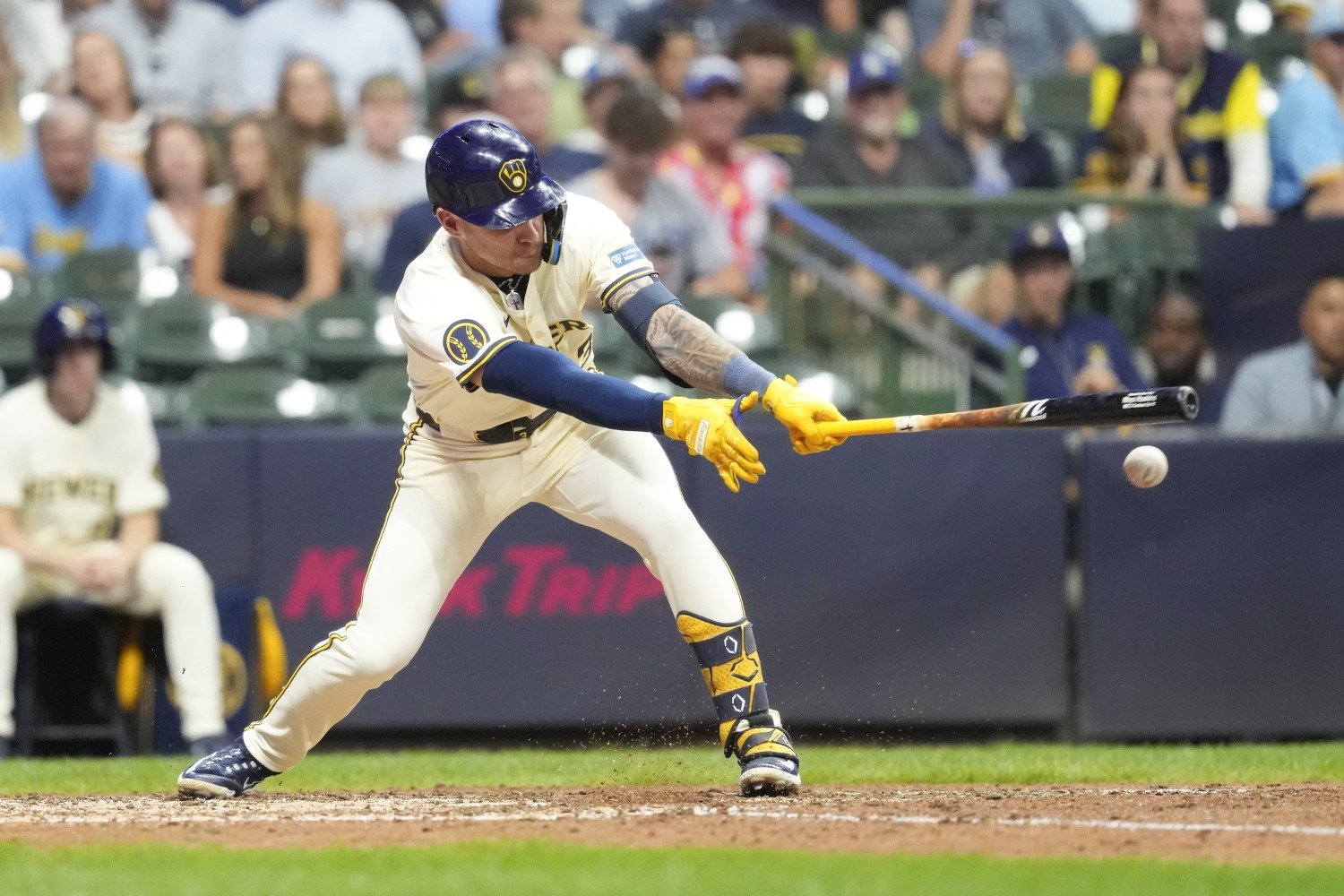 This season has not been an uninterrupted, unmitigated success for Joey Ortiz. It's been an exciting and impressive rookie campaign, but there has been injury trouble and there have been some prolonged slumps. He's hitting .251/.346/.404 on the year, which is very good, but the power potential he flashed in May (four home runs) has proved not to be the harbinger many hoped it was. Ortiz only has one homer since Jun. 25, though it did come Sunday. To focus on what Ortiz hasn't done in his first full season in the majors would be a vicious disservice, though. He's done some incredible things, both as a third baseman who looks sufficiently qualified to slide over to shortstop next season if needed and at the plate. As a rookie, playing somewhere near every day, Ortiz has maintained a 19.0% strikeout rate and a 12.0% walk rate. He's controlling the zone as well as anyone in the Milwaukee lineup, and to do that with even moderate power makes him both impressively versatile and immensely valuable. Let's hone in on one particular strength, though, because it's this that could make Ortiz a superstar in the lineup: He handles breaking balls from same-handed pitchers as well as any hitter in baseball. That's an extraordinary claim, so let's provide the extraordinary evidence. There are 138 batters who have seen at least 250 breaking balls from same-handed pitchers in 2024. Among them, Ortiz's .342 weighted on-base average (wOBA) on such pitches ranks 20th. He's hit .302/.343/.460 against righties' breaking stuff. None of the 19 guys with a higher OPS than he has on same-handed breakers are rookies. The closest thing is Ezequiel Tovar, of the Rockies, who's coming up on 1,200 career plate appearances already. Still, there are about 20 guys (give or take a few, based on whether you rank the list by wOBA or OPS) who have greater overall production on same-handed breaking balls than Ortiz. Teammate Willy Adames is, technically, the best hitter in baseball on them, at .309/.377/.681. That line is bonkers. Why, then, argue that Ortiz is the best? The answer starts with the understanding that what Adames and plenty of others are doing is not sustainable. You can't consistently generate a 1.000 OPS against same-handed pitchers' breaking stuff, at least without hamstringing yourself against fastballs. From there, we can add the logical next step: swinging at same-handed pitchers' breakers isn't always a good idea at all. At the very least, we can specifically say that it's good not to chase them outside the zone. We should also control for contact rate when a batter does swing. If they strike out on a slider in the dirt, everyone notices that, but what about when they swing through a 2-1 hanger? That doesn't show up in one's OPS against a given pitch type, but it's very important. Well, of those same 138 batters, only eight chase those breakers outside the zone less often than does Ortiz. Among those, the only rookie is Oakland's Max Schuemann. Schuemann, however, whiffs on nearly 40% of his swings against such pitches--not just the ones outside the zone, but all same-handed breakers. That's not abnormal. Kyle Schwarber, another very disciplined hitter on those offerings, whiffs even more than that when he does swing. It's not true of Ortiz, though. He's 15th-lowest of the 138 in whiff rate on swings against same-handed breaking balls, and only a very small handful of hitters are both more disciplined and better at making contact than he is. As you can see, Ortiz keeps superb company in that lower left quadrant of the chart, but it's even more dazzling when you dig in on, say, Juan Soto. The fearsome Yankees slugger and paragon of plate approach hardly ever expands his zone for lefty breakers, and he makes contact at a very impressive rate when he does offer at that pitch type from those hurlers. Yet, Soto has just a 3.8-degree average launch angle when he puts a lefthander's breaking ball in play. For that reason, while he's very good at avoiding having at-bats resolved on those pitches, when he does, his OPS is a mere .714. One great way to avoid being tempted to chase same-handed hurlers' breaking stuff out of the zone is to have a swing that's not well-suited to doing anything with that pitch type, anyway. That's not the case with Ortiz. He squares the ball up plenty when he puts righty breaking stuff in play. Again, he's not generating thunderous power, but he hits the ball with sufficient authority, keeps it off the ground, and adds value on so many other offerings--either by letting a pitch go by for a ball, or by fouling off a breaking ball in a two-strike count. He's a uniquely tough out for a righty who leans on their slider, and that brief description captures an ever-increasing share of the league. It's too early to tell what Ortiz's ceiling may be. He figures to have more tough times ahead; the work of anticipating pitchers' adjustments and outfoxing them is never done. What he's already shown, though, is that his genius in handling a variety of looks and foiling the aims of many pitchers' favored offerings lends him a significant advantage and sets a very high floor for him. As the rest of the season unfolds, he could continue to emerge. This is a slider league. When Ortiz steps into the box, that's bad news for the guys with the sliders.
 -
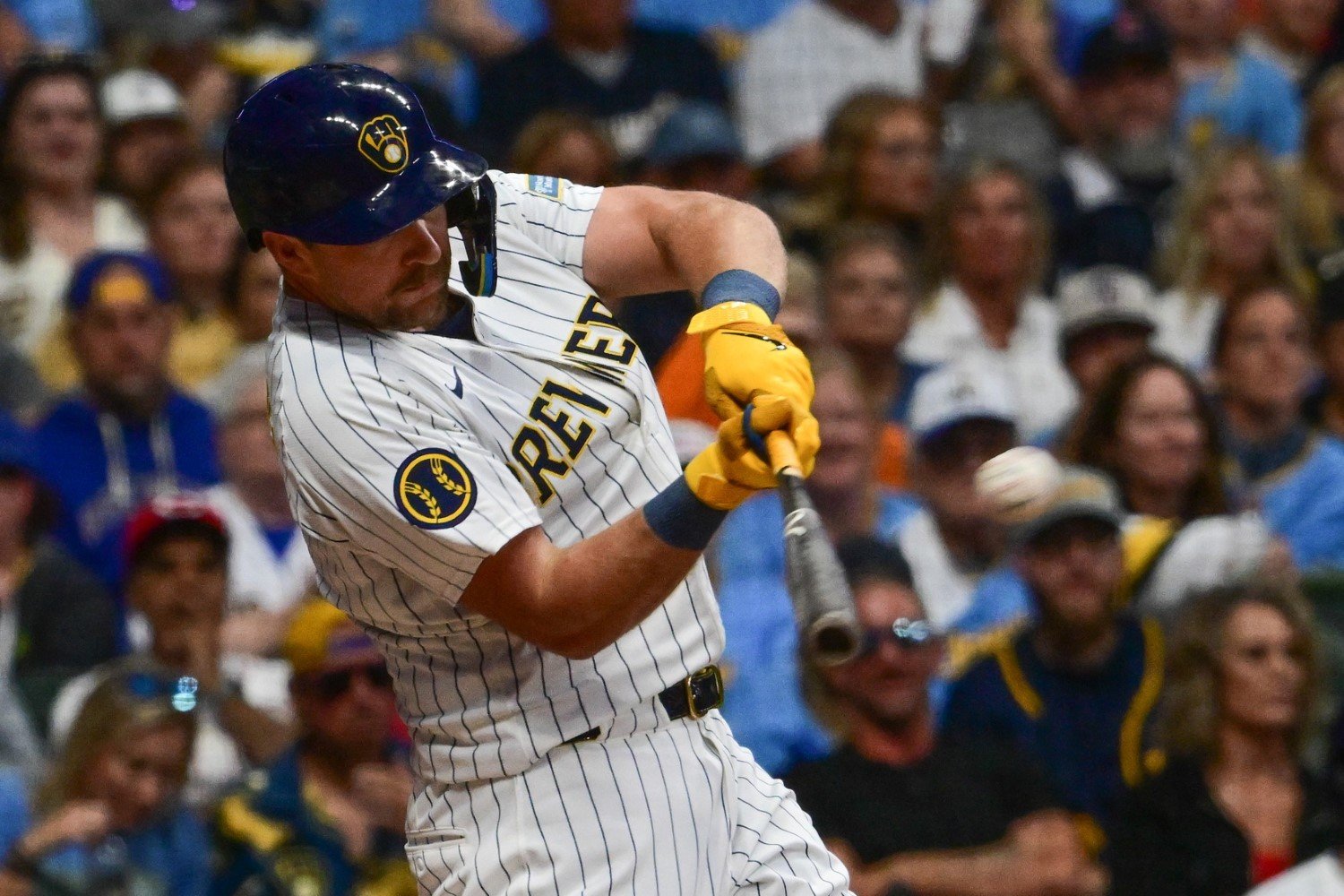 Somewhat predictably, Rhys Hoskins's first season back from a torn ACL that cost him 2023 has really been three different campaigns. There was the first month and a half, before he strained his hamstring; then there was the period between his rapid return from that injury and the All-Star break; and now there's the time since the break. He's been three very different hitters during those spans, in ways that make plenty of sense. Early on, Hoskins was more or less the guy the Brewers paid for--the one whom the Phillies enjoyed from 2017 through 2022, before a knee injury wiped out his walk year ahead of free agency. He batted .233/.340/.474, with 9 home runs in 156 plate appearances, with a terrific walk rate and a very reasonable strikeout rate, for a prodigious slugger. It wasn't a roaring start, but that's basically what you'd expect from Hoskins in any of his previous seasons: a take-and-rake star tracking toward 35 home runs over a full season of playing time. The hamstring injury Hoskins suffered while rounding first base on a single May 13 threw all of that into chaos. Surely frustrated by the disruption, impatient to get back into the mix after losing a year, and thinking ahead to his possible free agency again this fall, Hoskins came back from the injury after just 17 days and 15 games. That was quick. Over the previous six full seasons, when a hitter suffered an early-season hamstring strain, their median number of days missed was 19, and the average was 25. When you account for the fact that Hoskins is 31 years old and was coming off a major leg injury, too, you'd have guessed he would miss more like four weeks than two. It quickly became clear, too, that Hoskins wasn't quite himself. He returned to the lineup, but his power didn't. From May 31, when he came back, to the All-Star break, he batted .195/.273/.350. In 140 plate appearances, he had just 5 home runs, drew 12 walks, and struck out a whopping 47 times. Whether he still had lingering damage in the hamstring or whether he was just out of rhythm and not yet confident in his moves from head to toe in the box, he lost touch with his talent. Thankfully, the team's unusual five-day All-Star break acted like a second IL stint for Hoskins. He got a full week off, since Pat Murphy sat him in the first-half finale. Since the beginning of the second half on Jul. 20, Hoskins is back. He's only come to the plate 83 times in that span, but he's batting .280/.325/.547 in that time, with 6 home runs. His strikeout rate is back under control, too. When you break out Hoskins's spray chart into those three season-fragments, it's fairly easy to see a change. Always a hitter focused on driving the ball in the air to the pull field, Hoskins has done that more effectively over the last four weeks than at any other time this season. He's not getting quite as far out in front of the ball, which means more balls to the gap and fewer down the line, but it also means fewer ground balls, and that he's on time more often, so more of his flies and liners go to the middle chunk of the diamond. His strength and the leverage in his swing are conducive to that subtle change in approach, and we've seen the results follow that improved process. Interestingly, though, that change in hit distribution reflects a less expected shift in his approach at the plate. Hoskins has always been the kind of hitter who patiently waits for the ball in his happy zone, from the upper thigh up and on the inner half. In the first half, you could see that approach in his swing rate heat map; it just didn't work equally well in the two subsets on either side of his injury. Since the break, though, part of the transformation in Hoskins has been a much more aggressive tack, especially on pitches away from him. He's expanding the zone more often than he ever does, and in a place where he's historically been notable for his patience. This isn't just a problem with pitch recognition, though. It's a conscious choice. Hoskins is creating damage on those outside pitches, in a way he didn't do in the first half this year and has rarely done in his career. Here's a homer from late last month, on a changeup in a location where Hoskins hardly ever has such good luck. Hos on CH Away.mp4 Here's a chart showing the average exit velocity of batted balls by Hoskins in the first half, based on the location of the pitch he hit. The numbers and color indicate how hard he hits balls in that spot. The size of each square shows, relative to other locations, how often he hits balls in that spot. Now, here's the same chart for the second half. Whether in reaction to the way pitchers have been attacking him, or as part of a change to cheat a bit on the ball and get his arms extended more, Hoskins has shifted his sights at the plate. He now wants that outer-third pitch, even though he's still a dead pull hitter. He's just pulling it to the gap, instead of down the line, unless the ball runs back over the plate and into his swing path. Not all of this is good. It's only been a small number of plate appearances, and his solid overall numbers are inflated by a considerably higher BABIP than he ran in the previous segments of his season. They're also achieved despite his increased aggressiveness and sagging walk rate. Most notably, though, he's not hitting the ball as hard as he did before the injury, or even hitting it hard as often. Maybe he's going to start drawing more walks as he settles into this altered approach, and maybe he doesn't need to hit it much harder than he already does, if he can keep hitting the ball with loft to the pull field. Maybe, on the other hand, opposing pitchers will figure out this new pattern from him, and he'll have to migrate to another one. So far, Murphy hasn't responded to this hot streak by moving Hoskins up in the batting order, except when the Brewers face left-handed starters. That might be the most reasonable course, given the uncertainty that remains about the staying power of this improvement. At the same time, the team needs more power to keep up with the rest of the powerhouses in the National League, and Hoskins can provide it, even without eye-popping exit velocities. As the balance of this month unfolds, if he stays hot, Hoskins should get more plate appearances, by creeping higher in the lineup.


