


Matthew Trueblood
-
Posts
1,964 -
Joined
-
Last visited
-
Days Won
10
Content Type
Profiles
Forums
Blogs
Events
News
2026 Milwaukee Brewers Top Prospects Ranking
Milwaukee Brewers Videos
2022 Milwaukee Brewers Draft Picks
Milwaukee Brewers Free Agent & Trade Rumors, Notes, & Tidbits
Guides & Resources
2023 Milwaukee Brewers Draft Picks
2024 Milwaukee Brewers Draft Picks
The Milwaukee Brewers Players Project
2025 Milwaukee Brewers Draft Pick Tracker
2026 Milwaukee Brewers Draft Tracker: Picks & Bonuses
Store
Downloads
Gallery
Everything posted by Matthew Trueblood
-
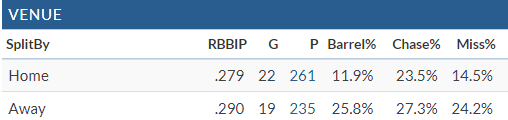
Guess is you're looking at a per-pitch or per-swing barrel rate; the one we used here is reported per batted ball. I'm not a huge user of barrel rate, personally, for just this kind of reason, but Jake wouldn't lie to you or let you down. :D
-
This is What Young People--And Young Teams--Go Through
Matthew Trueblood posted an article in Brewers
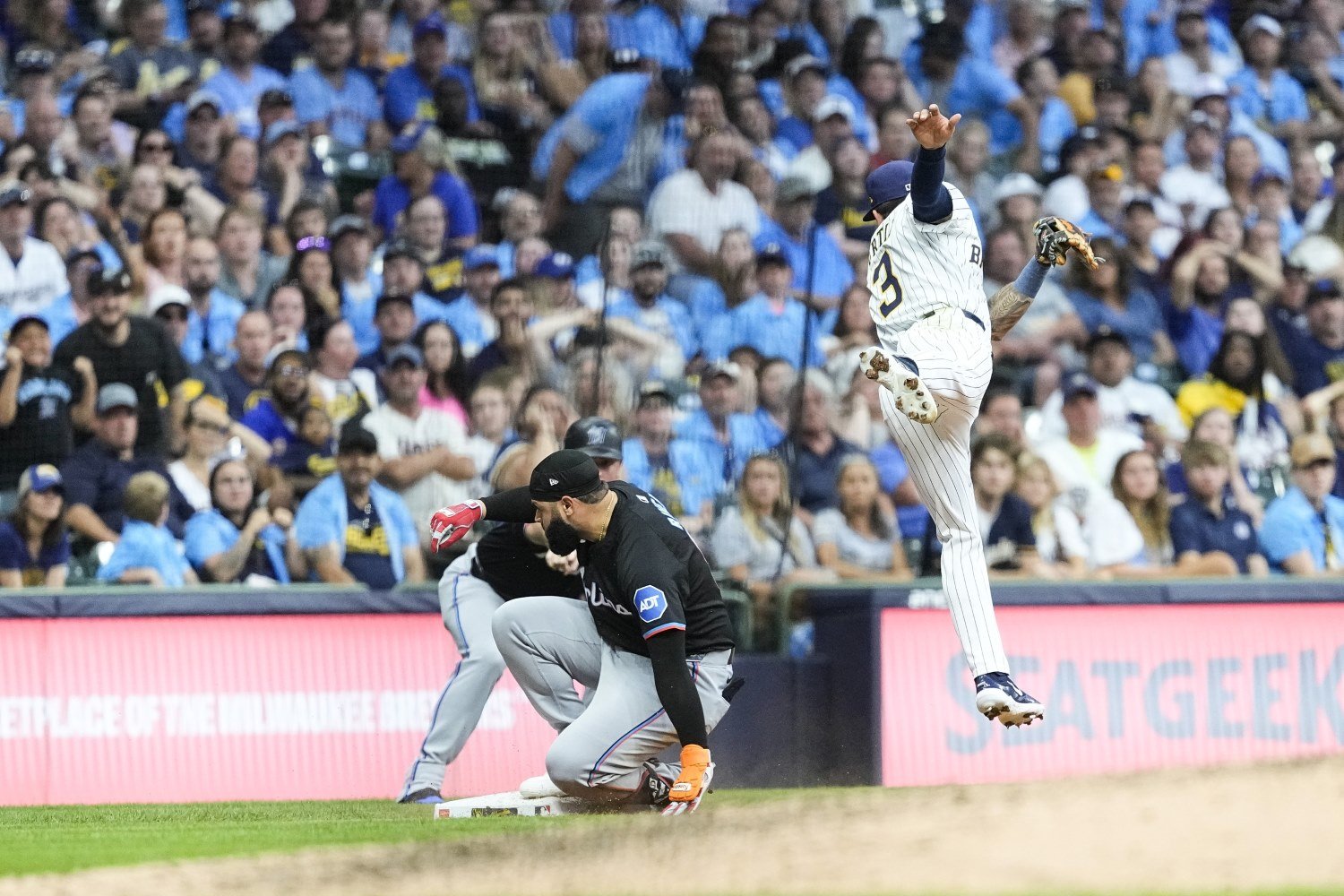 There's a soupçon of panic in the air around Brewers fans right now. The team has gone 4-3 in their first seven games out of the All-Star break, but it would be hard to design a much less encouraging 4-3 stretch, and that was after a 5-8 stumble into the intermission. Besides, it's not really about the record right now. It's a vibes thing. Christian Yelich is out for an indeterminate length of time, with an injury that appears to have far-reaching implications. Bryan Hudson just landed on the injured list, the latest symbol of a bullpen running on fumes starting to sputter and cough. The offense is scuffling badly, and that state of affairs seems sure to be exacerbated by the loss of their best player for what could be the balance of the regular season. Some guys had been over their skis a bit, and now they're eating some snow. Here's the thing, though: the Brewers didn't fail to prevent this because they didn't foresee it. On the contrary, they knew this kind of stretch was coming, and just as importantly, they knew it couldn't be prevented. This team is not a Dodgers-like juggernaut, quite yet. They're an injury-ravaged pitching staff, and the second-youngest collection of hitters in baseball. (Only the Guardians, going through their own sag right now but also still leading their division, are younger.) They could have done some things differently in the first half to get to this stage with more steam hissing from their stacks, but they couldn't have avoided a rough patch. Instead of trying to make the inevitable a bit more palatable, then, they tried to ensure that when this moment came, they would have more margin for error. One month ago, I wrote about the fact that the team had effectively shortened the season by a week with their stellar first half. In the difficult stretch since, they've given back four of the seven games by which they were ahead of schedule, but that means they're still ahead. Obviously, that ceases to matter if a club entirely burns and busts out--for instance, if Yelich, Bryan Hudson, and some other as-yet-unknown injury turn out to be season-ending, and the team is rendered a husk of its former self. Most of the time, though, such crises tend to pan out better than you fear. Murphy might not be in the mood to say so--it would strike the wrong chord, in fact, because it's important for the manager to convey the stakes of a moment like this one to a team as young as this one--but the reality is that the Brewers have no need to freak out right now. They just need their superannuated skipper and his coaching staff to keep their young group on course. He's right: this is what young people go through. They struggle, and they have to adjust, and they learn through failure. By racking up an early lead in the division, and then padding it, the team assured itself of some cushion for this inevitable development. It might be viewed as a blessing in disguise, too, that these struggles have come now, rather than after the trade deadline--when it would have been much more difficult to address the resulting danger. The Brewers have already added Aaron Civale and Nick Mears to the pitching staff, and they could make another major addition to that group before Tuesday evening, Meanwhile, they've become more active in the search for a bit of offensive reinforcement, after the Yelich news, and the fact that Brice Turang has hit a long rough patch in the wake of his hot start gives them license to consider many different means of achieving an improvement at that spot. Then, there are the reinforcements we already knew were coming, and which now seem imminent. Devin Williams could be back with the team as soon as Mears joins them, on Monday. Joe Ross has stretched out to 80 pitches and will be back with the club after no more than one more rehab appearance. DL Hall has thrown between 46 and 62 pitches in six different outings for Nashville over the last five weeks, despite the interruptions in his rehab process. As we've discussed, there will be a crunch to navigate as those guys claim spots on the roster, but it figures to make the team deeper and fresher. The last three weeks represent a real and meaningful wobble for a team that had been cruising. But because of the big wins they piled up early in the season, this was a luxury they could afford. Between external additions and some returning hurlers, they should have plenty in the tank to stay ahead of the Cardinals and steam their way to the postseason. Their moves over the next two days should focus on ensuring that they're able to keep chugging through October.
- 2 comments
-
- 3
-

-
- bryan hudson
- devin williams
- (and 2 more)
-
Pat Murphy wants his team to be relentless. He wants them to be undaunted. Those words sound like triumphalism when things are going well, but the real reason why he has said them so many times this year is simple: He knew a time would come when things weren't. Image courtesy of © Jeff Hanisch-USA TODAY Sports There's a soupçon of panic in the air around Brewers fans right now. The team has gone 4-3 in their first seven games out of the All-Star break, but it would be hard to design a much less encouraging 4-3 stretch, and that was after a 5-8 stumble into the intermission. Besides, it's not really about the record right now. It's a vibes thing. Christian Yelich is out for an indeterminate length of time, with an injury that appears to have far-reaching implications. Bryan Hudson just landed on the injured list, the latest symbol of a bullpen running on fumes starting to sputter and cough. The offense is scuffling badly, and that state of affairs seems sure to be exacerbated by the loss of their best player for what could be the balance of the regular season. Some guys had been over their skis a bit, and now they're eating some snow. Here's the thing, though: the Brewers didn't fail to prevent this because they didn't foresee it. On the contrary, they knew this kind of stretch was coming, and just as importantly, they knew it couldn't be prevented. This team is not a Dodgers-like juggernaut, quite yet. They're an injury-ravaged pitching staff, and the second-youngest collection of hitters in baseball. (Only the Guardians, going through their own sag right now but also still leading their division, are younger.) They could have done some things differently in the first half to get to this stage with more steam hissing from their stacks, but they couldn't have avoided a rough patch. Instead of trying to make the inevitable a bit more palatable, then, they tried to ensure that when this moment came, they would have more margin for error. One month ago, I wrote about the fact that the team had effectively shortened the season by a week with their stellar first half. In the difficult stretch since, they've given back four of the seven games by which they were ahead of schedule, but that means they're still ahead. Obviously, that ceases to matter if a club entirely burns and busts out--for instance, if Yelich, Bryan Hudson, and some other as-yet-unknown injury turn out to be season-ending, and the team is rendered a husk of its former self. Most of the time, though, such crises tend to pan out better than you fear. Murphy might not be in the mood to say so--it would strike the wrong chord, in fact, because it's important for the manager to convey the stakes of a moment like this one to a team as young as this one--but the reality is that the Brewers have no need to freak out right now. They just need their superannuated skipper and his coaching staff to keep their young group on course. He's right: this is what young people go through. They struggle, and they have to adjust, and they learn through failure. By racking up an early lead in the division, and then padding it, the team assured itself of some cushion for this inevitable development. It might be viewed as a blessing in disguise, too, that these struggles have come now, rather than after the trade deadline--when it would have been much more difficult to address the resulting danger. The Brewers have already added Aaron Civale and Nick Mears to the pitching staff, and they could make another major addition to that group before Tuesday evening, Meanwhile, they've become more active in the search for a bit of offensive reinforcement, after the Yelich news, and the fact that Brice Turang has hit a long rough patch in the wake of his hot start gives them license to consider many different means of achieving an improvement at that spot. Then, there are the reinforcements we already knew were coming, and which now seem imminent. Devin Williams could be back with the team as soon as Mears joins them, on Monday. Joe Ross has stretched out to 80 pitches and will be back with the club after no more than one more rehab appearance. DL Hall has thrown between 46 and 62 pitches in six different outings for Nashville over the last five weeks, despite the interruptions in his rehab process. As we've discussed, there will be a crunch to navigate as those guys claim spots on the roster, but it figures to make the team deeper and fresher. The last three weeks represent a real and meaningful wobble for a team that had been cruising. But because of the big wins they piled up early in the season, this was a luxury they could afford. Between external additions and some returning hurlers, they should have plenty in the tank to stay ahead of the Cardinals and steam their way to the postseason. Their moves over the next two days should focus on ensuring that they're able to keep chugging through October. View full article
- 2 replies
-
- 1
-
-
- bryan hudson
- devin williams
- (and 2 more)
-
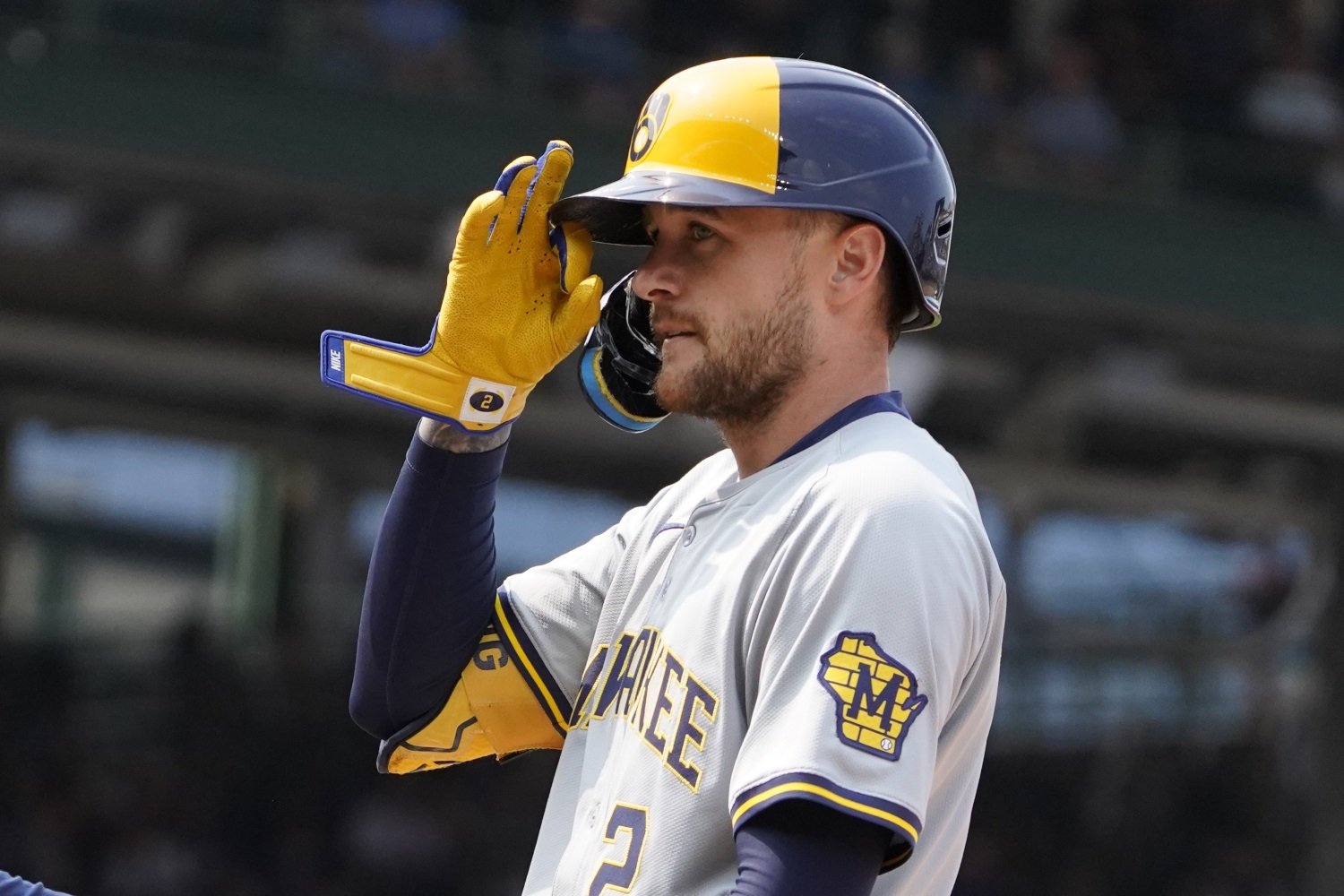 At the end of play on May 15, Brice Turang looked like an All-Star in the making. He was playing his usual stellar defense and racking up stolen bases by the handful, but most importantly, he was batting ..300/.361/.414 in 139 plate appearances. Turang, 24, seemed to have figured out how to use his short swing and simple approach to put the ball in play at an elite rate, and the rest was taking care of itself. Since the middle of May, though, he's collapsed back into an only slightly improved version of the hitter he was in the second half of 2023. Span PA Chase% Miss% Hit95+% K% BB% BABIP BA OBP SLG WOBA 2023, Late June On 271 26.5% 18.4% 25.9% 17.0% 10.0% .267 .227 .306 .294 .271 2024 Thru May 15 156 22.3% 11.4% 33.1% 13.5% 8.3% .339 .300 .361 .414 .340 2024 Since May 16 241 29.0% 14.7% 31.6% 20.3% 8.7% .305 .250 .315 .352 .295 With power unavoidably minimal in his profile, Turang's success depends unusually heavily on consistently putting the ball in play and on taking his walks. When he does the former at an elite level, good things tend to follow. When he's closer to average in that respect, it's a safe bet that he'll be below-average overall. The good version of Turang is not merely good, but nearly elite in waiting for his approach, and that lets him cover the zone and make contact at an exceptional rate. When he's expanding even at a modest level, as he has for the last two months and change, everything snowballs on him. Obviously, the ideal resolution to this creeping problem is Turang turning things around. The Brewers can't head down the stretch of this season with an empty .315 OBP coming from their leadoff spot, but maybe showing him numbers like these and helping him rededicate himself to the project of plate discipline will facilitate a return to the exciting level of production he gave them in the early going. Specifically, he needs to lay off the ball low and away, and maybe having him think about cutting the plate in half would permit that to happen again. Just in case that exhortation doesn't work, though, what else could the team do? Is there a solution out there on the trade market? One fascinating would-be trade candidate is the Rockies' Ryan McMahon, who has played both second and third base in his career and would bring power and plate discipline (though also a high strikeout rate) to the lineup and who is under team control for three more seasons on an extension he signed in 2022. Reportedly, though, the Rockies have flatly told would-be suitors that McMahon isn't going anywhere, so let's set that possibility aside. With Christian Yelich hurt, the team needs an infusion of offensive talent, ideally toward the top of the order. Maybe understanding how Turang has struggled over a prolonged period is just a chance to think about a new set of options for landing such a player. The Reds' Jonathan India is hitting .274/.371/.415 on the season, and could slot in at second base or as the DH on any given day. That's a tricky one, though, because he has two remaining years of team control after this one, so intradivision trade stigmas might come into play. Angels infielder Luis Rengifo is a better fit. Comfortable at either second or third, he's batting .308/.350/.433, and while that batting average probably isn't sustainable, this is his third straight season as an above-average overall hitter. He's under team control for 2025, too, so he would fit gorgeously into an infield picture that becomes more fluid for the Crew after WIlly Adames hits free agency this fall. It's just as likely, though, that the team will try to solve this problem internally. Turang might gradually see a bit less playing time, with Andruw Monasterio starting more often (especially against lefties, of course). Tyler Black has only played four games at third base in Nashville this year, so he's not going to play there in the big leagues down the stretch, but perhaps it's not too late to revive the experiment of bringing Sal Frelick in from the outfield to man the hot corner. In either of those scenarios, Joey Ortiz could slide over and take over at second base. Oliver Dunn can't return from the 60-day injured list until at least the middle of next month. Even once he does, though, it's hard to envision the team leaning especially hard on him. Rengifo is an excellent trade target, but should such a move fail to materialize, the most likely path forward is to keep working with Turang and hope he rediscovers the sound sense of the zone that made him so good over the season's first seven weeks. He's part of the heartbeat of the team, and while that heartbeat has been a bit uneven lately, it would be hard on everyone to replace Turang in any meaningful way. The team just needs him to find his way back to his best self.
 -
Early on this year, it looked like the Brewers' manager had been prophetic in forecasting a huge step forward from his young second baseman. Now, that start looks more like a hot streak, receding in the rearview. What should the team do about it? Image courtesy of © David Banks-USA TODAY Sports At the end of play on May 15, Brice Turang looked like an All-Star in the making. He was playing his usual stellar defense and racking up stolen bases by the handful, but most importantly, he was batting ..300/.361/.414 in 139 plate appearances. Turang, 24, seemed to have figured out how to use his short swing and simple approach to put the ball in play at an elite rate, and the rest was taking care of itself. Since the middle of May, though, he's collapsed back into an only slightly improved version of the hitter he was in the second half of 2023. Span PA Chase% Miss% Hit95+% K% BB% BABIP BA OBP SLG WOBA 2023, Late June On 271 26.5% 18.4% 25.9% 17.0% 10.0% .267 .227 .306 .294 .271 2024 Thru May 15 156 22.3% 11.4% 33.1% 13.5% 8.3% .339 .300 .361 .414 .340 2024 Since May 16 241 29.0% 14.7% 31.6% 20.3% 8.7% .305 .250 .315 .352 .295 With power unavoidably minimal in his profile, Turang's success depends unusually heavily on consistently putting the ball in play and on taking his walks. When he does the former at an elite level, good things tend to follow. When he's closer to average in that respect, it's a safe bet that he'll be below-average overall. The good version of Turang is not merely good, but nearly elite in waiting for his approach, and that lets him cover the zone and make contact at an exceptional rate. When he's expanding even at a modest level, as he has for the last two months and change, everything snowballs on him. Obviously, the ideal resolution to this creeping problem is Turang turning things around. The Brewers can't head down the stretch of this season with an empty .315 OBP coming from their leadoff spot, but maybe showing him numbers like these and helping him rededicate himself to the project of plate discipline will facilitate a return to the exciting level of production he gave them in the early going. Specifically, he needs to lay off the ball low and away, and maybe having him think about cutting the plate in half would permit that to happen again. Just in case that exhortation doesn't work, though, what else could the team do? Is there a solution out there on the trade market? One fascinating would-be trade candidate is the Rockies' Ryan McMahon, who has played both second and third base in his career and would bring power and plate discipline (though also a high strikeout rate) to the lineup and who is under team control for three more seasons on an extension he signed in 2022. Reportedly, though, the Rockies have flatly told would-be suitors that McMahon isn't going anywhere, so let's set that possibility aside. With Christian Yelich hurt, the team needs an infusion of offensive talent, ideally toward the top of the order. Maybe understanding how Turang has struggled over a prolonged period is just a chance to think about a new set of options for landing such a player. The Reds' Jonathan India is hitting .274/.371/.415 on the season, and could slot in at second base or as the DH on any given day. That's a tricky one, though, because he has two remaining years of team control after this one, so intradivision trade stigmas might come into play. Angels infielder Luis Rengifo is a better fit. Comfortable at either second or third, he's batting .308/.350/.433, and while that batting average probably isn't sustainable, this is his third straight season as an above-average overall hitter. He's under team control for 2025, too, so he would fit gorgeously into an infield picture that becomes more fluid for the Crew after WIlly Adames hits free agency this fall. It's just as likely, though, that the team will try to solve this problem internally. Turang might gradually see a bit less playing time, with Andruw Monasterio starting more often (especially against lefties, of course). Tyler Black has only played four games at third base in Nashville this year, so he's not going to play there in the big leagues down the stretch, but perhaps it's not too late to revive the experiment of bringing Sal Frelick in from the outfield to man the hot corner. In either of those scenarios, Joey Ortiz could slide over and take over at second base. Oliver Dunn can't return from the 60-day injured list until at least the middle of next month. Even once he does, though, it's hard to envision the team leaning especially hard on him. Rengifo is an excellent trade target, but should such a move fail to materialize, the most likely path forward is to keep working with Turang and hope he rediscovers the sound sense of the zone that made him so good over the season's first seven weeks. He's part of the heartbeat of the team, and while that heartbeat has been a bit uneven lately, it would be hard on everyone to replace Turang in any meaningful way. The team just needs him to find his way back to his best self. View full article
-
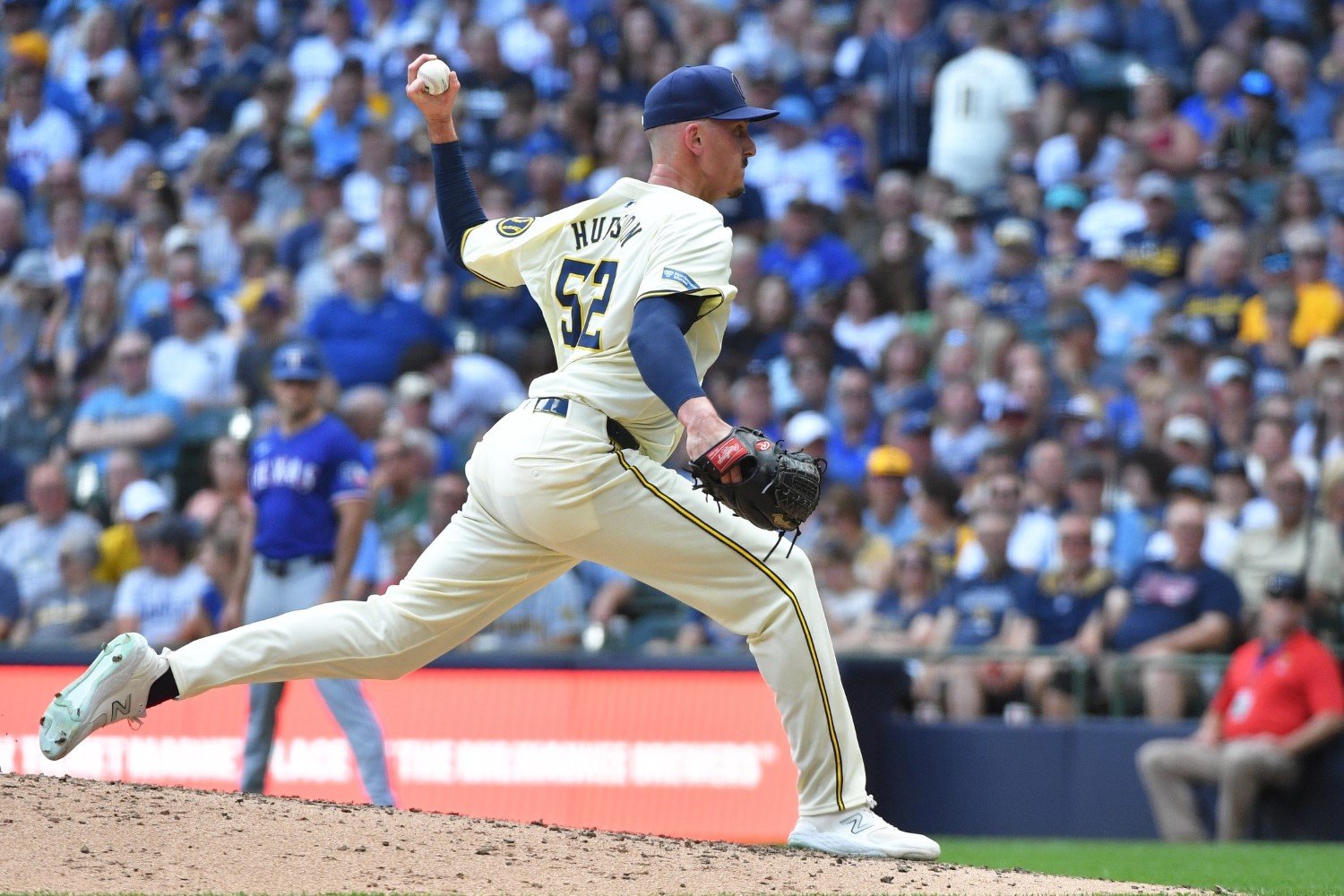 Everyone who's watched baseball for years knew this stretch was coming for Bryan Hudson. He pitched so impressively during spring training that he won a roster spot relatively easily, and over the first two months of the season, he was one of the best relievers in baseball. He did it all without elite velocity or an unusually dominant secondary offering, though, so eventually, hitters were going to force him to make some changes. They were going to figure him out. That's not to say that Hudson's early success wasn't legitimate. He doesn't throw overwhelmingly hard, but his elite extension and unique release point gave him so much extra deception that hitters experience an at-bat against him much the way they would someone who throws 95-97 miles per hour. His sweeper quickly became a separator, too. As I wrote near the end of May, though, Hudson's cutter is also a key ingredient in his mixture. It's not a good pitch in and of itself, but it makes the two pitches that do lead his repertoire work much better. Now, that's becoming more important than ever. From Opening Day through May 31, Hudson was one kind of dominant pitcher. Since the start of June, he's had to become a very different one. Hitters learned to work through the deceptive elements of his delivery and arsenal, and if he'd made no material adjustments of his own, he would have experienced regression, the way a bug experiences a windshield. Even as things stand, a lot of peripheral and process-oriented numbers have broken in the wrong direction in the second half of the season to date. Bryan Hudson, Performance Metrics, 2024 Span BF Chase% Miss% K% BB% BABIP FIP ERA WHIP Through May 119 27.8% 25.4% 31.1% 5.9% 0.211 3.00 1.13 0.75 June and July 71 23.0% 17.6% 23.9% 8.5% 0.116 4.65 2.41 0.75 Hitters are expanding the zone less often against Hudson. They're making contact more often when they do swing. They're striking out less, and walking more. They're hitting for more power, too, although marginally so. The indicators we use to predict how a pitcher will do all imply that Hudson is less effective since the calendar flipped to June. In terms of actual runs and baserunners allowed, though, there's been relatively little change. He's still a dominant relief weapon, albeit a less confidence-inspiring one who's had his workload conspicuously lightened. He's less able to strike out and dominate opponents, because his two essential weapons have each gotten a bit worse as the season has progressed. Hudson's fastball has a little bit less carry over the last two months, and his command of the sweeper is a bit looser. There are red flags here. There's the cutter, though, in the center of the plot--the calm amid the storm. Hudson has increased the usage of that cutter fairly dramatically, especially this month. Through the end of June, it made up barely 20 percent of his pitches. Since Jul. 1, it's 35.3 percent. "I think we’re just trying to switch up some looks," Hudson said Sunday, in the visitors' clubhouse at Target Field. "First half, threw a lot of fastballs and sliders, kind of combo’ing that. I mixed in some good cutters here and there, but I think mixing things up and keeping them on their toes also helps." By no means has the pitch transmogrified, becoming an out-getter he can count on to front his arsenal. It's still a complementary piece, but while hitters are trying to sit on his fastball and sweeper and while he's struggling to throw the best versions of each of those pitches, he's become dependent on that contingency plan. This is a challenging moment for many pitchers, because right as they've found success in the majors, they're forced to change some big, important things, and to leave their comfort zone behind. For Hudson, it helps that he really started throwing the cutter last summer, so he's not as far out on a limb as he would have felt if he had to undertake this tweak several months ago. "It used to be that way," he said. "Now that I’ve been throwing it for around a year, I’m pretty comfortable with it. I’m pretty confident I can throw it where I want it. It’s just about what that hitter’s looking for, what their approach is against lefties—especially big, long, sidearm lefties—and we’re obviously trying to not feed into that. So a lot of it depends on the hitter." That's a very common theme when you talk to Brewers pitchers. Their gameplans are tailored to insights drawn from data, on the approaches hitters take against pitchers of a given handedness, with similar arsenals and arm slots. The samples under study in such cases are small, but the organization believes in the signal inside whatever noise that creates, because it's extremely difficult for hitters to change the way they approach similar-looking pitchers with similar stuff from day to day or week to week. Hudson, like Bryse Wilson, Trevor Megill, and Colin Rea (to name just a few), is availing himself of information the team is confident will be broadly actionable. Neither the pitcher nor the team are trying to change the cutter, itself. They're also not pivoting toward an approach in which it's the defining pitch of his repertoire. It's much more about keeping opponents off-balance, and about continuing to execute that pitch, even as he tries to rediscover his feel for the others. "It’s 100 percent the same. I think I’m just getting into a better position with my mechanics to be more consistent with it." He might be getting lucky along the way, but this constant and proactive evolution has preserved his effectiveness, so that improved consistency seems to be nearly as valuable as an extra inch or two of carry on a four-seam fastball.
 -
The Brewers' humongous lefty reliever has stopped striking out batters at an elite rate. The league has seen him now, and they've adjusted to him. Here's how he's stayed ahead of their adjustments. Image courtesy of © Michael McLoone-USA TODAY Sports Everyone who's watched baseball for years knew this stretch was coming for Bryan Hudson. He pitched so impressively during spring training that he won a roster spot relatively easily, and over the first two months of the season, he was one of the best relievers in baseball. He did it all without elite velocity or an unusually dominant secondary offering, though, so eventually, hitters were going to force him to make some changes. They were going to figure him out. That's not to say that Hudson's early success wasn't legitimate. He doesn't throw overwhelmingly hard, but his elite extension and unique release point gave him so much extra deception that hitters experience an at-bat against him much the way they would someone who throws 95-97 miles per hour. His sweeper quickly became a separator, too. As I wrote near the end of May, though, Hudson's cutter is also a key ingredient in his mixture. It's not a good pitch in and of itself, but it makes the two pitches that do lead his repertoire work much better. Now, that's becoming more important than ever. From Opening Day through May 31, Hudson was one kind of dominant pitcher. Since the start of June, he's had to become a very different one. Hitters learned to work through the deceptive elements of his delivery and arsenal, and if he'd made no material adjustments of his own, he would have experienced regression, the way a bug experiences a windshield. Even as things stand, a lot of peripheral and process-oriented numbers have broken in the wrong direction in the second half of the season to date. Bryan Hudson, Performance Metrics, 2024 Span BF Chase% Miss% K% BB% BABIP FIP ERA WHIP Through May 119 27.8% 25.4% 31.1% 5.9% 0.211 3.00 1.13 0.75 June and July 71 23.0% 17.6% 23.9% 8.5% 0.116 4.65 2.41 0.75 Hitters are expanding the zone less often against Hudson. They're making contact more often when they do swing. They're striking out less, and walking more. They're hitting for more power, too, although marginally so. The indicators we use to predict how a pitcher will do all imply that Hudson is less effective since the calendar flipped to June. In terms of actual runs and baserunners allowed, though, there's been relatively little change. He's still a dominant relief weapon, albeit a less confidence-inspiring one who's had his workload conspicuously lightened. He's less able to strike out and dominate opponents, because his two essential weapons have each gotten a bit worse as the season has progressed. Hudson's fastball has a little bit less carry over the last two months, and his command of the sweeper is a bit looser. There are red flags here. There's the cutter, though, in the center of the plot--the calm amid the storm. Hudson has increased the usage of that cutter fairly dramatically, especially this month. Through the end of June, it made up barely 20 percent of his pitches. Since Jul. 1, it's 35.3 percent. "I think we’re just trying to switch up some looks," Hudson said Sunday, in the visitors' clubhouse at Target Field. "First half, threw a lot of fastballs and sliders, kind of combo’ing that. I mixed in some good cutters here and there, but I think mixing things up and keeping them on their toes also helps." By no means has the pitch transmogrified, becoming an out-getter he can count on to front his arsenal. It's still a complementary piece, but while hitters are trying to sit on his fastball and sweeper and while he's struggling to throw the best versions of each of those pitches, he's become dependent on that contingency plan. This is a challenging moment for many pitchers, because right as they've found success in the majors, they're forced to change some big, important things, and to leave their comfort zone behind. For Hudson, it helps that he really started throwing the cutter last summer, so he's not as far out on a limb as he would have felt if he had to undertake this tweak several months ago. "It used to be that way," he said. "Now that I’ve been throwing it for around a year, I’m pretty comfortable with it. I’m pretty confident I can throw it where I want it. It’s just about what that hitter’s looking for, what their approach is against lefties—especially big, long, sidearm lefties—and we’re obviously trying to not feed into that. So a lot of it depends on the hitter." That's a very common theme when you talk to Brewers pitchers. Their gameplans are tailored to insights drawn from data, on the approaches hitters take against pitchers of a given handedness, with similar arsenals and arm slots. The samples under study in such cases are small, but the organization believes in the signal inside whatever noise that creates, because it's extremely difficult for hitters to change the way they approach similar-looking pitchers with similar stuff from day to day or week to week. Hudson, like Bryse Wilson, Trevor Megill, and Colin Rea (to name just a few), is availing himself of information the team is confident will be broadly actionable. Neither the pitcher nor the team are trying to change the cutter, itself. They're also not pivoting toward an approach in which it's the defining pitch of his repertoire. It's much more about keeping opponents off-balance, and about continuing to execute that pitch, even as he tries to rediscover his feel for the others. "It’s 100 percent the same. I think I’m just getting into a better position with my mechanics to be more consistent with it." He might be getting lucky along the way, but this constant and proactive evolution has preserved his effectiveness, so that improved consistency seems to be nearly as valuable as an extra inch or two of carry on a four-seam fastball. View full article
-
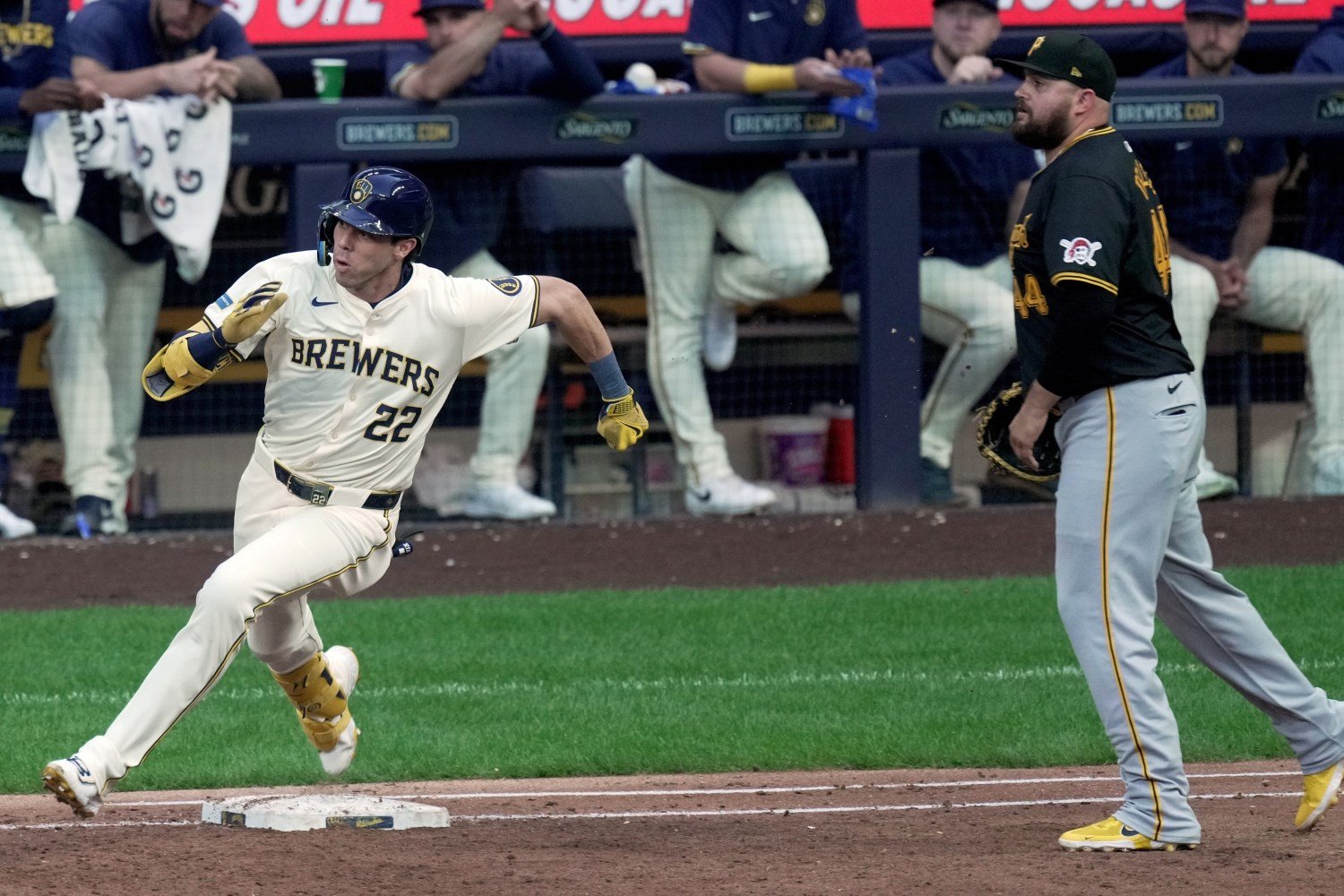 As the Brewers tried to work with Christian Yelich to manage his nagging back issue, they took him off the field completely during their defensive innings. Yelich started the All-Star Game in the outfield for the National League, but hasn't started there for the Brewers since Jul. 9. In fact, in 24 games going back to Jun. 23, he's only started eight times out there. Part of that is the ongoing emergence of Jackson Chourio, who is becoming a dynamic two-way player and forced his way into the lineup every day right around the time Garrett Mitchell returned from the injured list. Part, too, though, is that Yelich is aging and battling this injury, which might sideline him for quite a while. Without Yelich, the Milwaukee lineup is much less impressive than it was when he was at his best, leading the NL in batting average at the break. They're still dangerous, though, and it's notable that the player now yanked out of the picture is one whom they were only asking to be the DH, anyway. In the move sending Yelich to the shelf, Gary Sánchez was activated, giving the Brewers (nominally) three catchers on the active roster. In reality, on any given day over the next several weeks, they might have two catchers and a DH who is otherwise a catcher. Haase has hit tremendously well since being called up to fill in for Sánchez last month, and while Sánchez himself has been disappointing at the plate, he's a legitimate power threat. Carrying all three backstops should permit the Brewers to use William Contreras as the DH a bit more often, too, helping keep him fresh for the stretch drive. Haase is a more trustworthy defender behind the plate than Sánchez, making it easier to take Contreras out of that part of the game. With Chourio playing so well and Sal Frelick, Blake Perkins, and Mitchell giving them such a formidable defense-first corps for the other two outfield spots, the Brewers won't miss Yelich from a positional perspective. They have players they want to give playing time at DH. They have players they want to play in the outfield. What can't be replaced, though, is Yelich's sheer production, and his creativity and versatility in the offensive game. One of the best base stealers in the modern era and one of the best hard-line-drive-to-the-opposite-field hitters of this century, Yelich has been showing off his power and his speed all season, from dropping gorgeous bunts to blasting 450-foot home runs. The Brewers couldn't be in better shape to backfill for this loss, but the volume of his offensive value makes this a huge blow. To replace what's now missing, the team needs better production from Sánchez, a return to early-season form from William Contreras, and for Willy Adames and Rhys Hoskins to find their gear. The pressure falls especially on Hoskins, the only player on the club whose salary approaches that of Yelich and whose value is all tied up in his bat, too. Against some right-handed pitchers, the Brewers might even elect to make Hoskins the direct replacement for Yelich, taking his stiff defensive actions out of the equation and using him as the DH, with Jake Bauers manning first. Hoskins has had a tough season, dealing with his own physical limitations at times and just struggling to get to pitches he usually crushes at others. Even so, he's been a league-average bat, but now, the team needs him to be more. He's shown the same bedrock of skills (driving the ball in the air to the pull field, accepting his walks, and not striking out as often as many hitters who specialize in those things) this season as in his last few, when he was much better than this. For the Crew to smoothly survive without Yelich, they need him to put those pieces together and become the punisher in the middle of their lineup the rest of the way.
 -
Quietly, the Brewers' All-Star outfielder and best hitter had become their full-time DH over the last two weeks. Now, he's on the injured list, and it sounds like he'll be there for a while. The team has to make some big adjustments, but it's a bit less devastating because of the positional void he leaves. Image courtesy of © Mark Hoffman-USA TODAY Sports As the Brewers tried to work with Christian Yelich to manage his nagging back issue, they took him off the field completely during their defensive innings. Yelich started the All-Star Game in the outfield for the National League, but hasn't started there for the Brewers since Jul. 9. In fact, in 24 games going back to Jun. 23, he's only started eight times out there. Part of that is the ongoing emergence of Jackson Chourio, who is becoming a dynamic two-way player and forced his way into the lineup every day right around the time Garrett Mitchell returned from the injured list. Part, too, though, is that Yelich is aging and battling this injury, which might sideline him for quite a while. Without Yelich, the Milwaukee lineup is much less impressive than it was when he was at his best, leading the NL in batting average at the break. They're still dangerous, though, and it's notable that the player now yanked out of the picture is one whom they were only asking to be the DH, anyway. In the move sending Yelich to the shelf, Gary Sánchez was activated, giving the Brewers (nominally) three catchers on the active roster. In reality, on any given day over the next several weeks, they might have two catchers and a DH who is otherwise a catcher. Haase has hit tremendously well since being called up to fill in for Sánchez last month, and while Sánchez himself has been disappointing at the plate, he's a legitimate power threat. Carrying all three backstops should permit the Brewers to use William Contreras as the DH a bit more often, too, helping keep him fresh for the stretch drive. Haase is a more trustworthy defender behind the plate than Sánchez, making it easier to take Contreras out of that part of the game. With Chourio playing so well and Sal Frelick, Blake Perkins, and Mitchell giving them such a formidable defense-first corps for the other two outfield spots, the Brewers won't miss Yelich from a positional perspective. They have players they want to give playing time at DH. They have players they want to play in the outfield. What can't be replaced, though, is Yelich's sheer production, and his creativity and versatility in the offensive game. One of the best base stealers in the modern era and one of the best hard-line-drive-to-the-opposite-field hitters of this century, Yelich has been showing off his power and his speed all season, from dropping gorgeous bunts to blasting 450-foot home runs. The Brewers couldn't be in better shape to backfill for this loss, but the volume of his offensive value makes this a huge blow. To replace what's now missing, the team needs better production from Sánchez, a return to early-season form from William Contreras, and for Willy Adames and Rhys Hoskins to find their gear. The pressure falls especially on Hoskins, the only player on the club whose salary approaches that of Yelich and whose value is all tied up in his bat, too. Against some right-handed pitchers, the Brewers might even elect to make Hoskins the direct replacement for Yelich, taking his stiff defensive actions out of the equation and using him as the DH, with Jake Bauers manning first. Hoskins has had a tough season, dealing with his own physical limitations at times and just struggling to get to pitches he usually crushes at others. Even so, he's been a league-average bat, but now, the team needs him to be more. He's shown the same bedrock of skills (driving the ball in the air to the pull field, accepting his walks, and not striking out as often as many hitters who specialize in those things) this season as in his last few, when he was much better than this. For the Crew to smoothly survive without Yelich, they need him to put those pieces together and become the punisher in the middle of their lineup the rest of the way. View full article
-
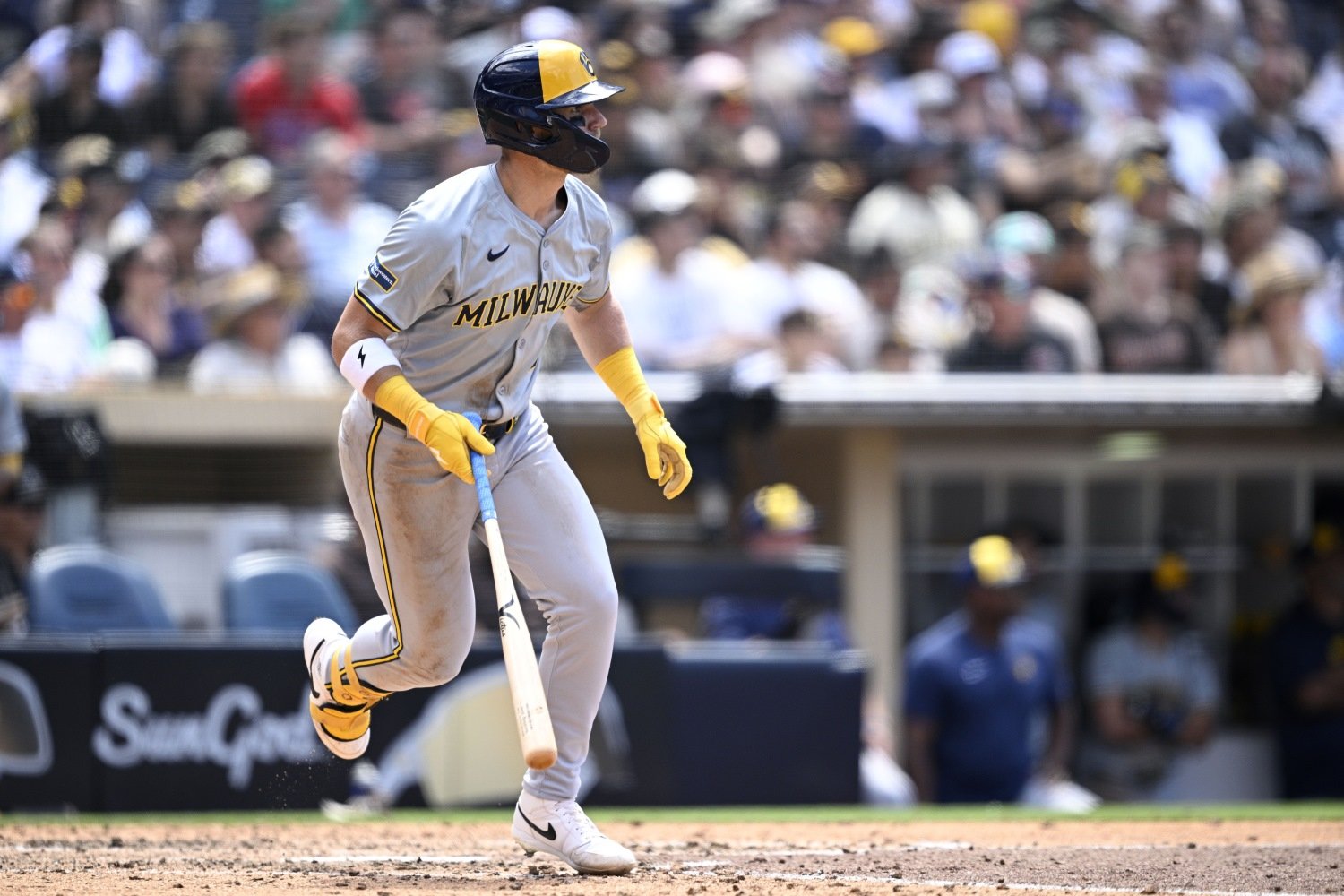 Garrett Mitchell has had to sit and watch a lot this season--just as he did last year. Injuries continue to slow his development and prevent the Brewers from properly evaluating him as a potential long-term piece of what is a deep and talented outfield mix. He has just 113 plate appearances in the big leagues since the start of 2023, and nearly as many (87) in Triple-A, on rehab assignments. In the first game of the second half, after another five days of sitting and waiting, Mitchell got the start in center field, and he looked good. In the third inning, he doubled into the right-field corner, and in the fifth, he hit a soft but promising liner the other way, only to see it intercepted at shortstop. In the seventh, he was called out on strikes, but it came in a full count. In those three trips to the plate, he saw 19 pitches, after having seen fewer than 140 in the big leagues all season before that night. Because the game was a taut pitchers' duel, though, Mitchell's spot didn't come up again until there was one out in the 10th inning. Sal Frelick was at second base, having started the inning as the automatic runner. A single would give the Brewers the lead, but because they hadn't moved Frelick over (Rhys Hoskins grounded out to third), they did need a hit--or at least another baserunner. Mitchell didn't get his chance to change the game, though. Pat Murphy and the Milwaukee coaching staff elected to use Jake Bauers as a pinch-hitter, in Mitchell's stead. That could have been a surprising, or even a hurtful choice. Mitchell is starved for chances to come up big for this team; he's been awaiting opportunities like that one for months. Mitchell, though, said he was unfazed. "Fine. At the end of the day, it’s whatever it takes to win," Mitchell said Sunday, and his tone said that was an earnest feeling. "That’s what they felt like was the best course of action in that situation, and it’s always just about being ready for your opportunity. I don’t think too much about it." Still, it was a peculiar move, to some extent. Durán is right-handed. Mitchell, a lefty, already held the platoon advantage. If the team had pinch-hit Eric Haase or Andruw Monasterio for Mitchell against a southpaw, it would have been a clearly comprehensible maneuver, but that wasn't the case. Did the team tell Mitchell any more about their thinking? "There was no conversation that I had, but I was just told that I was being pinch-hit for, and I was like, 'Ok. Sure.'," Mitchell said. "It’s a collective effort, for sure. It’s a team game. Pass the baton to the next guy, and try to get things done. At the end of the day, whatever it takes to win, is what matters." That's the right mentality. Though rarely thought of in these terms, a ball game can be similar to a soccer match. There's not necessarily any dishonor or harm in playing just 80 percent of a game; a substitution can reenergize the lineup, just as a relief pitcher can spare a team the risks that come with overwork by the starter. Still, the existence of a pinch-hit penalty--a systematic decrease in performance for hitters pulled cold off the bench--was established nearly two decades ago. To use a pinch-hitter, you have to not only believe they might be more ready than a tiring starting player, but see some tactical advantage to be gained in the process. That bump in expected value counteracts the value given up by going to the bench at all. So, what were the Brewers thinking when they made the move? "Bauers has been our best hitter off the bench," Murphy said. "In that situation, Bauers has been a great at-bat for us. Although he hasn’t had great success, he’s faced Durán a bunch. Mitchell’s just coming back from missing an entire year." Though Murphy didn't identify anything about the interaction between Durán's stuff and Mitchell's or Bauers's skill sets that made the latter the better matchup, we can infer a little bit from the end of that quote. All that downtime Mitchell has had to withstand over the last two seasons means he's short on reps. Combining his big-league time and the Statcast-tracked portions of his rehab assignments, Mitchell has still only seen six pitches at 98 miles per hour or harder this season. One of the hardest things about returning from injuries is that it robs a player of rhythm and familiarity. Bauers has seen 28 pitches at least 98 MPH this season. He doesn't do overwhelmingly well against them, but he was (in some sense) warmer to the task of facing Durán than Mitchell would have been, even coming off the bench. Then, there was what was going to happen next, whether Mitchell or Bauers got a hit or not. "I knew I was gonna run for Hoskins if Hoskins got on, with Perkins, and then it’s an easy transition: Bauers goes to first, Perkins goes to center," Murphy said. "I thought he’d be our better chance there." The skipper was admitting to a little bit of lock-in and irrationality, there, because as he acknowledged, Hoskins hadn't gotten on base. He still stuck to his plan to upgrade the defense, though, and part of that plan was inserting Bauers. Once Hoskins was retired, Murphy could have held fire on the pinch-hit maneuver, keeping his powder dry and making both the Perkins and the Bauers subs in the bottom half of the inning. Partly, he committed to a plan too soon. Partly, too, though, it's pretty clear that he wanted to get Bauers in there. He believed, in that moment, that Bauers gave them the better odds of taking a lead they could hold, even if the numbers suggested it was likely to be a wash. Baseball is full of decisions like these. They can be fascinating to discuss, and the outcomes of them feel momentous, but ultimately, they were probably 52/48 or 54/46 calls--something close to coin flips. The most important part of the process isn't even making the decision: Bauers made an out and the Crew failed to score in the inning, but Mitchell was likely to make one, too, and the team went on to win the game. No, the most important part is ensuring (whether by preaching teamwork and the relay-race mentality from Day One, as Murphy has done; or by collecting players who naturally think the way Mitchell does, as the front office has done; or by actively talking to players who might feel frustrated by a decision about what went into it, as might be required in other cases) that everyone stays bought-in and committed to the unifying purpose of the club. If a clubhouse has cohesiveness and a relentless collective attention to their work, the coaches are more free to make moves informed by tiny inputs like the number of pitches a player has seen that might prepare them for the matchup at hand, or like the defensive alignment they're seeking for the following inning. You can steal and stash away wins that way, and every such win is precious and valuable. So is that cohesiveness.
- 2 comments
-
- 2
-
-
- garrett mitchell
- jake bauers
- (and 1 more)
-
In the 10th inning of Saturday night's epic second-half opener in Minnesota, the Brewers elected to have one left-handed hitter pinch-hit for another. Most of the time, those moves are made for platoon matchup reasons, so what can we learn by digging deeper on this unusual one? Image courtesy of © Orlando Ramirez-USA TODAY Sports Garrett Mitchell has had to sit and watch a lot this season--just as he did last year. Injuries continue to slow his development and prevent the Brewers from properly evaluating him as a potential long-term piece of what is a deep and talented outfield mix. He has just 113 plate appearances in the big leagues since the start of 2023, and nearly as many (87) in Triple-A, on rehab assignments. In the first game of the second half, after another five days of sitting and waiting, Mitchell got the start in center field, and he looked good. In the third inning, he doubled into the right-field corner, and in the fifth, he hit a soft but promising liner the other way, only to see it intercepted at shortstop. In the seventh, he was called out on strikes, but it came in a full count. In those three trips to the plate, he saw 19 pitches, after having seen fewer than 140 in the big leagues all season before that night. Because the game was a taut pitchers' duel, though, Mitchell's spot didn't come up again until there was one out in the 10th inning. Sal Frelick was at second base, having started the inning as the automatic runner. A single would give the Brewers the lead, but because they hadn't moved Frelick over (Rhys Hoskins grounded out to third), they did need a hit--or at least another baserunner. Mitchell didn't get his chance to change the game, though. Pat Murphy and the Milwaukee coaching staff elected to use Jake Bauers as a pinch-hitter, in Mitchell's stead. That could have been a surprising, or even a hurtful choice. Mitchell is starved for chances to come up big for this team; he's been awaiting opportunities like that one for months. Mitchell, though, said he was unfazed. "Fine. At the end of the day, it’s whatever it takes to win," Mitchell said Sunday, and his tone said that was an earnest feeling. "That’s what they felt like was the best course of action in that situation, and it’s always just about being ready for your opportunity. I don’t think too much about it." Still, it was a peculiar move, to some extent. Durán is right-handed. Mitchell, a lefty, already held the platoon advantage. If the team had pinch-hit Eric Haase or Andruw Monasterio for Mitchell against a southpaw, it would have been a clearly comprehensible maneuver, but that wasn't the case. Did the team tell Mitchell any more about their thinking? "There was no conversation that I had, but I was just told that I was being pinch-hit for, and I was like, 'Ok. Sure.'," Mitchell said. "It’s a collective effort, for sure. It’s a team game. Pass the baton to the next guy, and try to get things done. At the end of the day, whatever it takes to win, is what matters." That's the right mentality. Though rarely thought of in these terms, a ball game can be similar to a soccer match. There's not necessarily any dishonor or harm in playing just 80 percent of a game; a substitution can reenergize the lineup, just as a relief pitcher can spare a team the risks that come with overwork by the starter. Still, the existence of a pinch-hit penalty--a systematic decrease in performance for hitters pulled cold off the bench--was established nearly two decades ago. To use a pinch-hitter, you have to not only believe they might be more ready than a tiring starting player, but see some tactical advantage to be gained in the process. That bump in expected value counteracts the value given up by going to the bench at all. So, what were the Brewers thinking when they made the move? "Bauers has been our best hitter off the bench," Murphy said. "In that situation, Bauers has been a great at-bat for us. Although he hasn’t had great success, he’s faced Durán a bunch. Mitchell’s just coming back from missing an entire year." Though Murphy didn't identify anything about the interaction between Durán's stuff and Mitchell's or Bauers's skill sets that made the latter the better matchup, we can infer a little bit from the end of that quote. All that downtime Mitchell has had to withstand over the last two seasons means he's short on reps. Combining his big-league time and the Statcast-tracked portions of his rehab assignments, Mitchell has still only seen six pitches at 98 miles per hour or harder this season. One of the hardest things about returning from injuries is that it robs a player of rhythm and familiarity. Bauers has seen 28 pitches at least 98 MPH this season. He doesn't do overwhelmingly well against them, but he was (in some sense) warmer to the task of facing Durán than Mitchell would have been, even coming off the bench. Then, there was what was going to happen next, whether Mitchell or Bauers got a hit or not. "I knew I was gonna run for Hoskins if Hoskins got on, with Perkins, and then it’s an easy transition: Bauers goes to first, Perkins goes to center," Murphy said. "I thought he’d be our better chance there." The skipper was admitting to a little bit of lock-in and irrationality, there, because as he acknowledged, Hoskins hadn't gotten on base. He still stuck to his plan to upgrade the defense, though, and part of that plan was inserting Bauers. Once Hoskins was retired, Murphy could have held fire on the pinch-hit maneuver, keeping his powder dry and making both the Perkins and the Bauers subs in the bottom half of the inning. Partly, he committed to a plan too soon. Partly, too, though, it's pretty clear that he wanted to get Bauers in there. He believed, in that moment, that Bauers gave them the better odds of taking a lead they could hold, even if the numbers suggested it was likely to be a wash. Baseball is full of decisions like these. They can be fascinating to discuss, and the outcomes of them feel momentous, but ultimately, they were probably 52/48 or 54/46 calls--something close to coin flips. The most important part of the process isn't even making the decision: Bauers made an out and the Crew failed to score in the inning, but Mitchell was likely to make one, too, and the team went on to win the game. No, the most important part is ensuring (whether by preaching teamwork and the relay-race mentality from Day One, as Murphy has done; or by collecting players who naturally think the way Mitchell does, as the front office has done; or by actively talking to players who might feel frustrated by a decision about what went into it, as might be required in other cases) that everyone stays bought-in and committed to the unifying purpose of the club. If a clubhouse has cohesiveness and a relentless collective attention to their work, the coaches are more free to make moves informed by tiny inputs like the number of pitches a player has seen that might prepare them for the matchup at hand, or like the defensive alignment they're seeking for the following inning. You can steal and stash away wins that way, and every such win is precious and valuable. So is that cohesiveness. View full article
-
Two of the late runs in Saturday's thrilling Brewers win in Minnesota came on similar plays, where time was short and margins were tiny. Pat Murphy envisions a future in which those might be outs, through one change of tack. Image courtesy of © Benny Sieu-USA TODAY Sports Let's set the stage. In the bottom of the eighth inning Saturday evening, the Brewers clung to a 1-0 lead over the Twins, but the speedy Willi Castro stood at third base, and there was just one out. Castro had doubled, then moved up on a wild pitch by Elvis Peguero. That forced the Brewers infield to come up and play on the edge of the grass. Pinch-hitter Diego A. Castillo hit a grounder that took Brice Turang slightly to his right, and though Turang threw quick and hard, it wasn't quite on the money. Didnt Get Him.mp4 "The key—we practice it every day, as infielders—infield in, the key is an accurate throw on [the third-base, forehand] side," Murphy explained, miming the easy receiving action on a ball that would have led William Contreras right into a tag of Castro. "Turang’s throw put him on [the backhand] side." That wasn't what caught Murphy's attention most, though. He understands that Turang had very little time to cleanly field and release the ball, and perfect throws under such circumstances are too much to ask. When asked about the way Contreras caught the ball and attempted to tag Castro, Murphy went into the finer details of the play from the catcher's perspective. "You shift your body, and let the ball travel and tag down," Murphy said, describing how he believes the play is best and most properly made. "Hard to do." Instead of that, Contreras did what virtually every catcher does on similar plays, be it on long relays from the gaps or on those quick 100-foot throws with absolutely no time to spare: set up in front of home, go snatch the ball, then try to turn, lunge, and sweep the tag onto the runner before they find the back corner. Over the last decade and a half, especially, there have been new emphases placed on letting throws carry deeper and catching them late, in order to apply quick tags. It's now the conventional wisdom, and the state of the art of the tag on steal attempts at second or third base. Not so at home, though. Does Murphy believe it's even possible for catchers to shoot up out of their crouch, get themselves in an adjustable position, and receive throws that way, with a catcher's mitt instead of a shortstop's glove? "That’s what you have to do. You have to get out there and you become an infielder," he said. "Same with receiving that short hop [on throws in from the outfield]. There’s nothing wrong with waiting, waiting, waiting. You’re down low, you’re at eye level with it, you see it’s gonna be a bad hop, you can open up and take it back here. just like an infielder would, come back to tag—instead of trying to go out and get it, now the catch, and now the time it takes to bring your hand back. Just open up, BOP!, boom; straight down. "Yeah, you become an infielder. Big pet peeve of mine. Little-known." In other words, Murphy not only believes catchers can start orienting their bodies and making more efficient tag plays, but that they must--and he has conviction about the right way to do it. He wasn't singling out his own player, though. As he well knows, you can count the number of backstops who make that play that way on one hand--and you might not need to take off your own mitt to do it. "But it is where the game’s going. It has to go there," Murphy said. "Super, super huge pet peeve of mine. Not catching the ball at home plate. Whatever it takes to catch the ball, that’s the only way there’s going to be an out recorded. So it is the first priority. [If] I can't short-hop it, try to pick it, whatever. That’s all fine, but if it takes your hand out away from your body, then you’ve gotta come back with the tag. It doesn’t make any sense. You’ve gotta take it deep, and go straight and direct with the tag." There are, of course, two more major hurdles we must mention to a catcher playing the plate the same way a middle infielder plays the bag on a tag play. The first is the most obvious: the rules governing blocking the plate. That most catchers set up a yard in front of the dish on these types of plays is not a coincidence, but the product of the so-called Buster Posey rule. The unfortunate unintended consequence of that well-intentioned rule has been for some runners who were plainly destined to be out to be ruled safe because the catcher never gave them a lane to reach the plate without obstruction. It's possible to provide that lane even while having the front edge of the plate covered by a cleat, but in practice, players don't want to risk it. The frustration of a key run scoring on a technicality is so great that catchers try to avoid it even to the point of letting a runner beat a play on which they could have had an out. The second reason is also rule-related, but not as visibly--and again, partially because of the mental blocks that creep in and shape our decision-making, even when they shouldn't. A runner sliding into second or third base has to hold that base, so while first contact is to be denied to him whenever possible, a fielder setting up to receive a throw will always try to position themselves so they can apply a strong tag and keep it there. The runner might very well pop off the base, especially if the fielder's position already forced them to aim for an edge of it. At home, the moment the runner touches the rubber of the dish, the play is over. There are no second chances, and again, the stakes are higher than on the opposite corner of the diamond. Catchers know they have to have the tag down before the runner touches the base--and they probably overestimate the extent to which being in front of the plate and getting the ball earlier permits them to do that. In fact, as Murphy wants to make his charges understand, doing so hurts their chances. How far off is Murphy's vision of a glorious defensive future? Well, again, no one in the league consistently does what he wants to see, but there are a few plays this year on which you can see the seeds of the revolution being planted. While it's nice to see catchers open their body toward the oncoming runner when the throw is to the correct side, in those cases, it's also much easier, and the value of that turn is lower. The runner should be out, even if you stay square to it, as long as your tag is quick and accurate. Here, the Phillies' Rafael Marchan still innovates in the receiving of such a throw, with what seems to be a carefully timed dive-tag: wait for the throw, then lunge backward into the lane of the sliding runner, letting your body get moving toward the same destination of the ball and not intercepting it until slightly later than would be typical. Marchan with Timed Dive.mp4 Javier Báez used to do something similar on certain throws down to second. There's a stretching of the metaphorical rubber bands of the musculature here, quickening your movements but not substituting them for the speed of the ball in flight until absolutely necessary. Here's a play more akin to the one Turang and Contreras tried to make Saturday night, but with a different catcher mechanic, courtesy of St. Louis's Iván Herrera. Instead of letting the throw turn him toward his backhand side, he has his hips more open, and lets them drift one way, then the other. The glide is more efficient than the twist, because the ball isn't caught on the backhand, requiring further rotation of the arm. It's a true sweep. It's not perfect, but it might be a good compromise between what Murphy wants and what catchers can convince their brains to do. Ivan Herrera a Little.mp4 When the throw is coming from a first baseman, the angle of it does some of the work of getting the catcher into the position Murphy thinks everyone will soon adopt. Here, Justin Turner throws it slightly too far toward the left-handed batter's box, but Danny Jansen is squared up to the oncoming runner and right on the front edge of the plate, because of where the throw is coming from. Jansen doesn't turn and take the ball on a deeper hop, as Murphy imagines, but he does shorten the rotation and tag distance, and it works. Turner to Jansen.mp4 It's not easy to overhaul this kind of playmaking, because so much of it is instinctive and the stakes of almost every version of this play are so high. Players' brains--full of emotions, including fear of a sense of loss, as much as fear of a real loss--can struggle with changes and new concepts, so at the very least, teams would need to assiduously practice this type of play in a new way during spring training, to re-train their catchers on how to receive the close throw home. Catchers also spend a lot of their time extending through the ball, beating it to its spot and meeting it with their hand going outward. That's how they frame pitches. It's more hardwiring to undo, if a team wants a catcher to start letting the ball travel and dropping the glove lightly on a sliding runner. Still, Murphy believes it possible and prudent. Unlike first base where you time it up and you meet it—you should never reach at first base, because the reach happens as the ball arrives—when the ball’s coming toward you and it’s gonna be a tag, you’ve gotta let it come as close to you as you can, so you can tag. The game’s changing." It's never too early to learn, or too late to unlearn. The Brewers have more close and crucial games ahead. Contreras might yet win one of them by opening himself up to a new way of making the tag at home plate. Ivan Herrera a Little.mp4 View full article
-
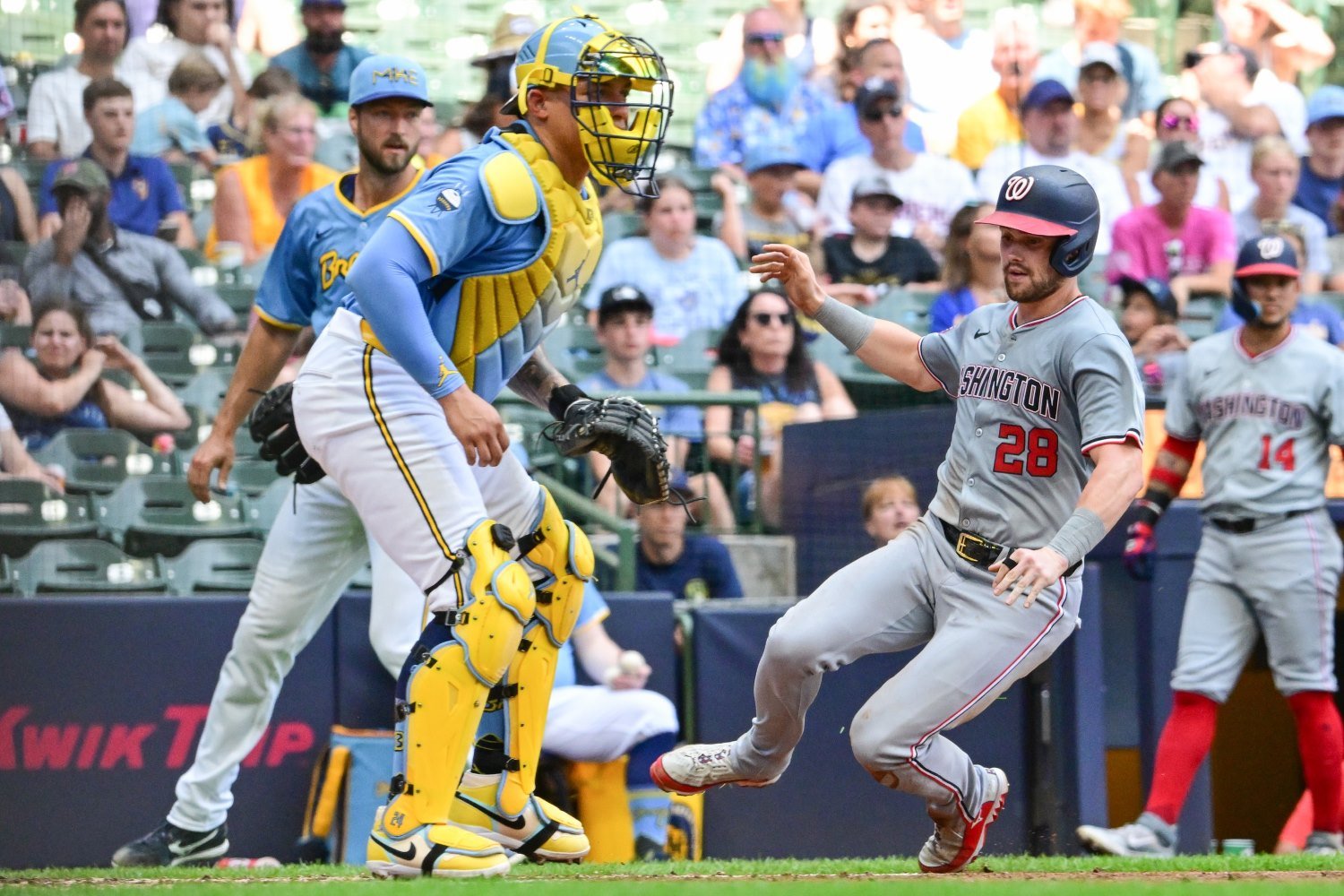 Let's set the stage. In the bottom of the eighth inning Saturday evening, the Brewers clung to a 1-0 lead over the Twins, but the speedy Willi Castro stood at third base, and there was just one out. Castro had doubled, then moved up on a wild pitch by Elvis Peguero. That forced the Brewers infield to come up and play on the edge of the grass. Pinch-hitter Diego A. Castillo hit a grounder that took Brice Turang slightly to his right, and though Turang threw quick and hard, it wasn't quite on the money. Didnt Get Him.mp4 "The key—we practice it every day, as infielders—infield in, the key is an accurate throw on [the third-base, forehand] side," Murphy explained, miming the easy receiving action on a ball that would have led William Contreras right into a tag of Castro. "Turang’s throw put him on [the backhand] side." That wasn't what caught Murphy's attention most, though. He understands that Turang had very little time to cleanly field and release the ball, and perfect throws under such circumstances are too much to ask. When asked about the way Contreras caught the ball and attempted to tag Castro, Murphy went into the finer details of the play from the catcher's perspective. "You shift your body, and let the ball travel and tag down," Murphy said, describing how he believes the play is best and most properly made. "Hard to do." Instead of that, Contreras did what virtually every catcher does on similar plays, be it on long relays from the gaps or on those quick 100-foot throws with absolutely no time to spare: set up in front of home, go snatch the ball, then try to turn, lunge, and sweep the tag onto the runner before they find the back corner. Over the last decade and a half, especially, there have been new emphases placed on letting throws carry deeper and catching them late, in order to apply quick tags. It's now the conventional wisdom, and the state of the art of the tag on steal attempts at second or third base. Not so at home, though. Does Murphy believe it's even possible for catchers to shoot up out of their crouch, get themselves in an adjustable position, and receive throws that way, with a catcher's mitt instead of a shortstop's glove? "That’s what you have to do. You have to get out there and you become an infielder," he said. "Same with receiving that short hop [on throws in from the outfield]. There’s nothing wrong with waiting, waiting, waiting. You’re down low, you’re at eye level with it, you see it’s gonna be a bad hop, you can open up and take it back here. just like an infielder would, come back to tag—instead of trying to go out and get it, now the catch, and now the time it takes to bring your hand back. Just open up, BOP!, boom; straight down. "Yeah, you become an infielder. Big pet peeve of mine. Little-known." In other words, Murphy not only believes catchers can start orienting their bodies and making more efficient tag plays, but that they must--and he has conviction about the right way to do it. He wasn't singling out his own player, though. As he well knows, you can count the number of backstops who make that play that way on one hand--and you might not need to take off your own mitt to do it. "But it is where the game’s going. It has to go there," Murphy said. "Super, super huge pet peeve of mine. Not catching the ball at home plate. Whatever it takes to catch the ball, that’s the only way there’s going to be an out recorded. So it is the first priority. [If] I can't short-hop it, try to pick it, whatever. That’s all fine, but if it takes your hand out away from your body, then you’ve gotta come back with the tag. It doesn’t make any sense. You’ve gotta take it deep, and go straight and direct with the tag." There are, of course, two more major hurdles we must mention to a catcher playing the plate the same way a middle infielder plays the bag on a tag play. The first is the most obvious: the rules governing blocking the plate. That most catchers set up a yard in front of the dish on these types of plays is not a coincidence, but the product of the so-called Buster Posey rule. The unfortunate unintended consequence of that well-intentioned rule has been for some runners who were plainly destined to be out to be ruled safe because the catcher never gave them a lane to reach the plate without obstruction. It's possible to provide that lane even while having the front edge of the plate covered by a cleat, but in practice, players don't want to risk it. The frustration of a key run scoring on a technicality is so great that catchers try to avoid it even to the point of letting a runner beat a play on which they could have had an out. The second reason is also rule-related, but not as visibly--and again, partially because of the mental blocks that creep in and shape our decision-making, even when they shouldn't. A runner sliding into second or third base has to hold that base, so while first contact is to be denied to him whenever possible, a fielder setting up to receive a throw will always try to position themselves so they can apply a strong tag and keep it there. The runner might very well pop off the base, especially if the fielder's position already forced them to aim for an edge of it. At home, the moment the runner touches the rubber of the dish, the play is over. There are no second chances, and again, the stakes are higher than on the opposite corner of the diamond. Catchers know they have to have the tag down before the runner touches the base--and they probably overestimate the extent to which being in front of the plate and getting the ball earlier permits them to do that. In fact, as Murphy wants to make his charges understand, doing so hurts their chances. How far off is Murphy's vision of a glorious defensive future? Well, again, no one in the league consistently does what he wants to see, but there are a few plays this year on which you can see the seeds of the revolution being planted. While it's nice to see catchers open their body toward the oncoming runner when the throw is to the correct side, in those cases, it's also much easier, and the value of that turn is lower. The runner should be out, even if you stay square to it, as long as your tag is quick and accurate. Here, the Phillies' Rafael Marchan still innovates in the receiving of such a throw, with what seems to be a carefully timed dive-tag: wait for the throw, then lunge backward into the lane of the sliding runner, letting your body get moving toward the same destination of the ball and not intercepting it until slightly later than would be typical. Marchan with Timed Dive.mp4 Javier Báez used to do something similar on certain throws down to second. There's a stretching of the metaphorical rubber bands of the musculature here, quickening your movements but not substituting them for the speed of the ball in flight until absolutely necessary. Here's a play more akin to the one Turang and Contreras tried to make Saturday night, but with a different catcher mechanic, courtesy of St. Louis's Iván Herrera. Instead of letting the throw turn him toward his backhand side, he has his hips more open, and lets them drift one way, then the other. The glide is more efficient than the twist, because the ball isn't caught on the backhand, requiring further rotation of the arm. It's a true sweep. It's not perfect, but it might be a good compromise between what Murphy wants and what catchers can convince their brains to do. Ivan Herrera a Little.mp4 When the throw is coming from a first baseman, the angle of it does some of the work of getting the catcher into the position Murphy thinks everyone will soon adopt. Here, Justin Turner throws it slightly too far toward the left-handed batter's box, but Danny Jansen is squared up to the oncoming runner and right on the front edge of the plate, because of where the throw is coming from. Jansen doesn't turn and take the ball on a deeper hop, as Murphy imagines, but he does shorten the rotation and tag distance, and it works. Turner to Jansen.mp4 It's not easy to overhaul this kind of playmaking, because so much of it is instinctive and the stakes of almost every version of this play are so high. Players' brains--full of emotions, including fear of a sense of loss, as much as fear of a real loss--can struggle with changes and new concepts, so at the very least, teams would need to assiduously practice this type of play in a new way during spring training, to re-train their catchers on how to receive the close throw home. Catchers also spend a lot of their time extending through the ball, beating it to its spot and meeting it with their hand going outward. That's how they frame pitches. It's more hardwiring to undo, if a team wants a catcher to start letting the ball travel and dropping the glove lightly on a sliding runner. Still, Murphy believes it possible and prudent. Unlike first base where you time it up and you meet it—you should never reach at first base, because the reach happens as the ball arrives—when the ball’s coming toward you and it’s gonna be a tag, you’ve gotta let it come as close to you as you can, so you can tag. The game’s changing." It's never too early to learn, or too late to unlearn. The Brewers have more close and crucial games ahead. Contreras might yet win one of them by opening himself up to a new way of making the tag at home plate. Ivan Herrera a Little.mp4
 -
Though they won 55 of their first 97 games and own a semi-comfortable lead in the NL Central, the Brewers had to contend with an unwieldy number of injuries and depletions before the All-Star break. Within a week or two, they could be much closer to full strength--but that will mean sorting through a crowded roster picture as the trade deadline arrives. Image courtesy of © Charles LeClaire-USA TODAY Sports In addition to Joe Ross (who was already there) and Devin Williams (transferred there from High-A Wisconsin), the Brewers sent Jared Koenig and Gary Sánchez on rehab assignments to Triple-A Nashville this weekend. It's possible that all four of those players will return to the team at or before the end of the month. Williams is the biggest name, of course, and could be the biggest difference-maker in the mix, but Pat Murphy confirmed Saturday that the team still wants Ross as a fixture in the starting rotation. No matter who pitches where or for how long, the team has some huge and fascinating roster decisions to make in the coming days. Presumably, they will further add to a team that is well-positioned to reach the postseason and has earned a chance to get there with some momentum and a real opportunity to reach the World Series. If they do, though, they'll be stuffing more talent into a vessel already packed pretty tightly, and there will be some good players lost if more are to be gained. The bullpen has pitchers (Joel Kuhnel and Rob Zastryzny) who were never meant to be long-term fixtures, and right now, there are only four players (Freddy Peralta, Aaron Civale, Colin Rea, and Tobias Myers) written into the team's starting rotation in front of Ross. The tricky part is figuring out who the third pitcher off the current roster would be. Kuhnel can be optioned to Nashville, and Zastryzny would be an unsurprising designee for assignment. Right now, though, both Ross and Williams are on the 60-day injured list, so whenever they're reinstated, the team will need to create two 40-man roster spots, not just one. They also face the problem of needing to create a third 26-man roster spot, but having most of their lower-leverage bullpen arms (Jakob Junis, Joel Payamps, Bryse Wilson) be out of options. We might see Elvis Peguero optioned to Nashville, and with Williams, Trevor Megill, and Bryan Hudson as the main trio of high-leverage workers, that could be fine, but again, any further external upgrades would mean expelling someone else. These are all good problems to have, and given the nature of injuries and this team's luck this season, they might not even have the pleasure of needing to solve them. Right now, Murphy and company are happy to be staring down a potential surplus of valuable players, rather than scrambling to cover a deficit. At the trade deadline, though, they could be looking to move some players currently on the 40-man roster (or even the active one) to create space for new and returning faces. To imagine such a move, we don't have to look farther than the opposing dugout in their first game out of the break. The Twins need pitching help, having had less depth than the Brewers when the year began and not much better luck than the Brewers have had at keeping key contributors healthy. Peguero is not at all the Twins' type of reliever, but Ross is very much their flavor of back-end starter, and with Chris Paddack hitting the injured list as the team reconvened after the layoff, they need just such a player. Ideally, from Minnesota's perspective, they would land someone with more upside than Ross--perhaps the kind of hurler who would push third starter Bailey Ober down to fourth on the depth chart. But the Twins' ownership has myopically slashed payroll this season, and looks unlikely to veer back in the other direction either at the deadline or this winter. That means that the team needs cheap help, with equal emphasis on the two words of that phrase. The Brewers could be in position to provide it. Ross was a bargain-basement addition for them this winter, and Koenig is a late-blooming journeyman on a league-minimum salary. Either would be a fit for the Twins' greatest needs (starting depth and a southpaw for the bullpen), and neither would tax their tight budget. The Brewers probably wouldn't get immediate help in return for either player, but if the front office adjudges that they can improve the roster most by prioritizing external options or retaining a given player, then whoever doesn't fit onto the crunched roster (be it Ross, Koenig, Sánchez, Eric Haase, Payamps, or someone else) has to be moved. The good news is, they each have enough value to bring back something, even if it be only depth for a farm system that always has to be strong for the Brewers to maintain their impressively consistent competitive streak. We saw a version of this move last summer, when Milwaukee got Bradley Blalock for Luis Urías and Evan McKendry for Alex Jackson in a pair of swaps with AL East teams. It's a thrilling testament to the depth of the organization that they might be in position to make another couple of depth-conserving, talent-consolidating moves at this deadline. View full article
-
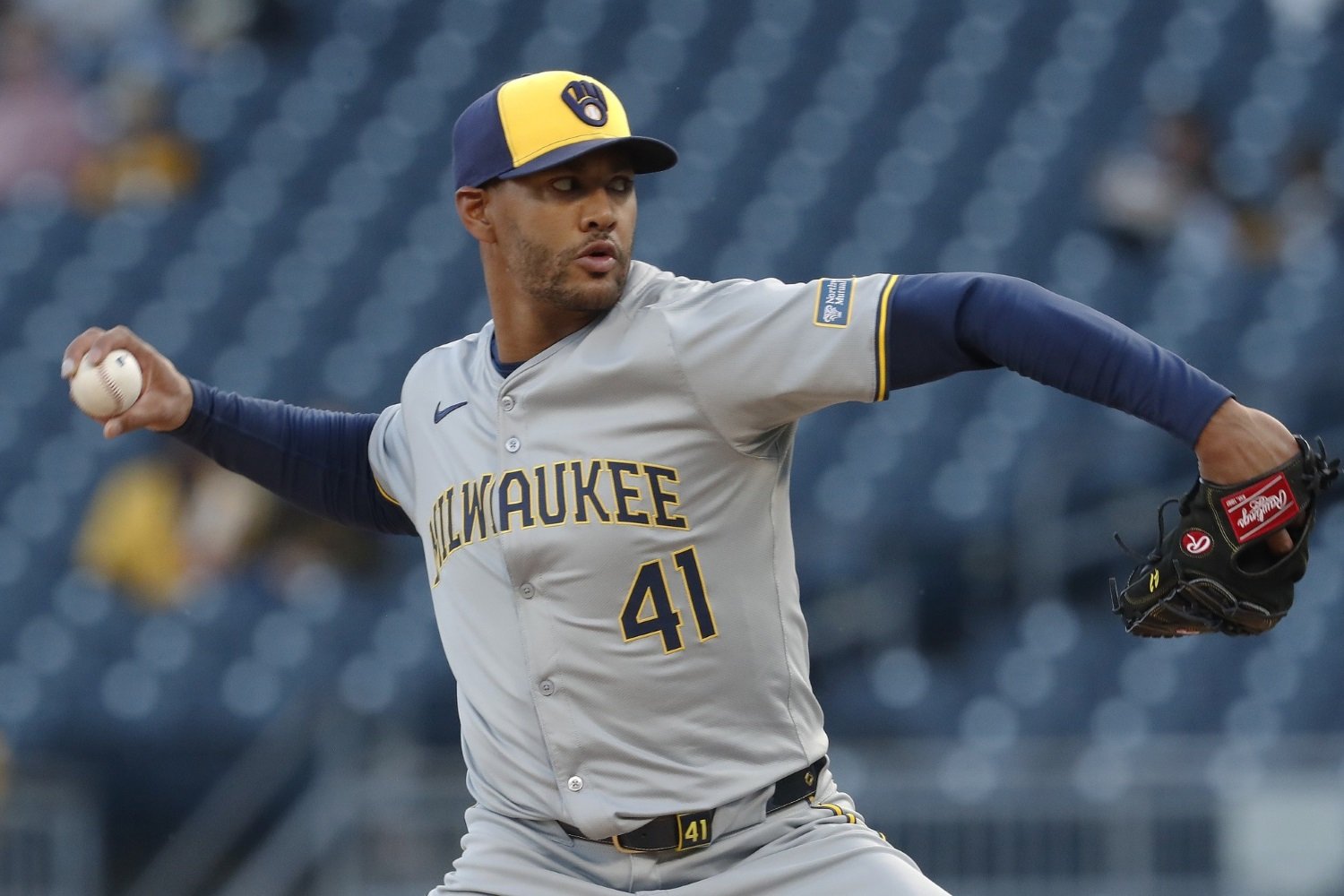 In addition to Joe Ross (who was already there) and Devin Williams (transferred there from High-A Wisconsin), the Brewers sent Jared Koenig and Gary Sánchez on rehab assignments to Triple-A Nashville this weekend. It's possible that all four of those players will return to the team at or before the end of the month. Williams is the biggest name, of course, and could be the biggest difference-maker in the mix, but Pat Murphy confirmed Saturday that the team still wants Ross as a fixture in the starting rotation. No matter who pitches where or for how long, the team has some huge and fascinating roster decisions to make in the coming days. Presumably, they will further add to a team that is well-positioned to reach the postseason and has earned a chance to get there with some momentum and a real opportunity to reach the World Series. If they do, though, they'll be stuffing more talent into a vessel already packed pretty tightly, and there will be some good players lost if more are to be gained. The bullpen has pitchers (Joel Kuhnel and Rob Zastryzny) who were never meant to be long-term fixtures, and right now, there are only four players (Freddy Peralta, Aaron Civale, Colin Rea, and Tobias Myers) written into the team's starting rotation in front of Ross. The tricky part is figuring out who the third pitcher off the current roster would be. Kuhnel can be optioned to Nashville, and Zastryzny would be an unsurprising designee for assignment. Right now, though, both Ross and Williams are on the 60-day injured list, so whenever they're reinstated, the team will need to create two 40-man roster spots, not just one. They also face the problem of needing to create a third 26-man roster spot, but having most of their lower-leverage bullpen arms (Jakob Junis, Joel Payamps, Bryse Wilson) be out of options. We might see Elvis Peguero optioned to Nashville, and with Williams, Trevor Megill, and Bryan Hudson as the main trio of high-leverage workers, that could be fine, but again, any further external upgrades would mean expelling someone else. These are all good problems to have, and given the nature of injuries and this team's luck this season, they might not even have the pleasure of needing to solve them. Right now, Murphy and company are happy to be staring down a potential surplus of valuable players, rather than scrambling to cover a deficit. At the trade deadline, though, they could be looking to move some players currently on the 40-man roster (or even the active one) to create space for new and returning faces. To imagine such a move, we don't have to look farther than the opposing dugout in their first game out of the break. The Twins need pitching help, having had less depth than the Brewers when the year began and not much better luck than the Brewers have had at keeping key contributors healthy. Peguero is not at all the Twins' type of reliever, but Ross is very much their flavor of back-end starter, and with Chris Paddack hitting the injured list as the team reconvened after the layoff, they need just such a player. Ideally, from Minnesota's perspective, they would land someone with more upside than Ross--perhaps the kind of hurler who would push third starter Bailey Ober down to fourth on the depth chart. But the Twins' ownership has myopically slashed payroll this season, and looks unlikely to veer back in the other direction either at the deadline or this winter. That means that the team needs cheap help, with equal emphasis on the two words of that phrase. The Brewers could be in position to provide it. Ross was a bargain-basement addition for them this winter, and Koenig is a late-blooming journeyman on a league-minimum salary. Either would be a fit for the Twins' greatest needs (starting depth and a southpaw for the bullpen), and neither would tax their tight budget. The Brewers probably wouldn't get immediate help in return for either player, but if the front office adjudges that they can improve the roster most by prioritizing external options or retaining a given player, then whoever doesn't fit onto the crunched roster (be it Ross, Koenig, Sánchez, Eric Haase, Payamps, or someone else) has to be moved. The good news is, they each have enough value to bring back something, even if it be only depth for a farm system that always has to be strong for the Brewers to maintain their impressively consistent competitive streak. We saw a version of this move last summer, when Milwaukee got Bradley Blalock for Luis Urías and Evan McKendry for Alex Jackson in a pair of swaps with AL East teams. It's a thrilling testament to the depth of the organization that they might be in position to make another couple of depth-conserving, talent-consolidating moves at this deadline.
-
- 3
-
-
- devin williams
- joe ross
- (and 2 more)
-
Six-tenths of the way through the season, the Brewers stand out as one of the teams who has dominated in an aspect of baseball that is hardly ever talked about: possession rate. Image courtesy of © Mark Hoffman/Milwaukee Journal Sentinel / USA TODAY NETWORK In basketball and American football, time of possession is a carefully tracked team statistic. It's a stand-in for overall quality of play and control of the action, meant to help one discern when the scoreboard isn't telling the whole story. In world football, a graphic pops up fairly often to tell the viewer which team has had possession for a greater percentage of the time. This is valuable information, forming a natural avatar for the physical game. Because those games are played end-to-end, with each team defending a goal and trying to advance the ball toward the other one, we naturally (and usually accurately) envision greater time of possession for one side as more time spent in the other team's end, where they have a relatively strong chance to score and the other team has virtually none. Our brains don't naturally map time of possession onto baseball in the same way, because baseball is not a linear game. It's played in circles, with each side defending the same territory in their turns, and there's no clock on the game (save the countdown clock that is the number of outs left for a team, after they begin with 27). Yet, it matters. After all, whereas all those other sports contain at least some means by which to immediately convert defense to offense within a single play, baseball is rigid. Only one side is allowed to score at a time, so "possession" is more valuable there than in any of the other three sports considered here. Moreover, part of what time of possession communicates is which team is more tired. It's harder, by conventional wisdom at least, to play defense than to play offense, in all three of the end-to-end sports. American football uses two different shifts of personnel, but in basketball and soccer, whichever side has had greater time of possession can be expected, on average, to be fresher at the end of the game. Well, this, too, is truer in baseball than anywhere else. Pitches are precious; each one is a tick on the odometer of a hurler who could break down under their accumulating workload. Plus, when you're on offense, several teammates have the chance to sit down, get some water, and relax. While you're on defense, every player in the game (save the DH) has to be on the balls of their feet, running, diving, hustling, thinking hard. Of course, because it's a game of turns instead of territory, baseball enforces a relatively even distribution of possession. That's why we tend not to think about it much. Teams can't usually make the election to play a more possession-focused version of the game. You can be a pitch-to-contact staff, but that only works if you're good enough to get outs at a high rate that way. You can be a take-and-rake offense, but that will only lengthen your term of possession if you get on base that way. It's as much a measure of skill, on both sides of the ledger, as it is of style. Today, let's take a look at it, anyway. Here's how all 30 teams are doing, so far in 2024, in terms of possession rate and win percentage. I created Possession Rate, and it's very simple: The percentage of all pitches thrown in all games for a team that were thrown by opponents, while they were on offense. By making it pitches, rather than plate appearances, we at least allow for the stylistic variations between teams, even though we'll still end up measuring their quality, as much as their preferences. As the headline there implies, Possession% is a very good predictor of Win%, and again, that makes sense. It's not necessarily saying that possession is extremely valuable, in and of itself, but rather that when we measure Possession%, we catch a lot of team quality in the net. As fans of the end-to-end sports well know by now, those games' versions of time of possession are also noisy, with the caliber of a team dictating their ability to maintain possession, rather than their affinity for possession contributing to their overall quality. The relationship is not a blip, though, and neither is the Brewers' very high rating. They've consistently been an above-average team in Possession% since their breakthrough season under Craig Counsell, in 2018. (The only data point here in which they ran on the wrong side of 50% in Possession was 2020, which doesn't count.) This season's Crew has been especially dominant in terms of possession, though, for reasons that should be familiar by now. The team's hitters hardly ever expand the zone and are relatively patient even within it, and their pitchers go right after opponents, but don't miss an exceptional number of bats. They have a great defense and a good, OBP-focused offense. Of course they're doing well in terms of Possession%. But wait, there's more here! According to Statcast, only three teams--the Giants, Guardians, and Royals--work faster, on average, than do the Brewers. The Pace metric listed is just an average number of seconds between pitches, and it's rough-hewn. It doesn't perfectly account for timeouts, pitching changes, and other such wrinkles, but as far as it goes, we can say this: the Brewers make the other team stay on the mound and stand in the field more than all but two other teams in the league, and when they're on the mound and in the field, they not only economize in terms of pitches thrown, but minimize the actual, real-world time they spend there. Pitching injuries and heavy bullpen use remain legitimate concerns for the Brewers, as they prepare for the stretch run toward another NL Central title. The need for William Contreras and Willy Adames to get a little bit more rest is also very real, and can't be totally erased by the team's excellence in maintaining Possession%. Maybe there's some extra value, though, in forcing the other team to play more defense than you play early in the season. Maybe that leaves more in your tank for August and September. By measuring two totally distinct sets of games, here, we weaken the relationship between Possession% and Win%. You'd need to do much more rigorous, fancier math to say for sure whether maintaining a high Possession% over the first few months means a fresher, better team for the final two, but there's a logic (and a small amount, at least of evidence) to support that. The season resumes Saturday. The Brewers have to be ready, because the Cardinals aren't going away, and even if they hold them off, the job isn't done. The goal for this team should be to keep playing well into October, and to make a deeper run than they have in years once they reach the postseason. The good news is, so far, they're showing the ability to preserve some bullets, some energy, and the opportunity to score for themselves, at the expense of their opponents. Perhaps no team in the league is doing it better. View full article
-
The Brewers Dominate Opponents in... Time of Possession?
Matthew Trueblood posted an article in Brewers
 In basketball and American football, time of possession is a carefully tracked team statistic. It's a stand-in for overall quality of play and control of the action, meant to help one discern when the scoreboard isn't telling the whole story. In world football, a graphic pops up fairly often to tell the viewer which team has had possession for a greater percentage of the time. This is valuable information, forming a natural avatar for the physical game. Because those games are played end-to-end, with each team defending a goal and trying to advance the ball toward the other one, we naturally (and usually accurately) envision greater time of possession for one side as more time spent in the other team's end, where they have a relatively strong chance to score and the other team has virtually none. Our brains don't naturally map time of possession onto baseball in the same way, because baseball is not a linear game. It's played in circles, with each side defending the same territory in their turns, and there's no clock on the game (save the countdown clock that is the number of outs left for a team, after they begin with 27). Yet, it matters. After all, whereas all those other sports contain at least some means by which to immediately convert defense to offense within a single play, baseball is rigid. Only one side is allowed to score at a time, so "possession" is more valuable there than in any of the other three sports considered here. Moreover, part of what time of possession communicates is which team is more tired. It's harder, by conventional wisdom at least, to play defense than to play offense, in all three of the end-to-end sports. American football uses two different shifts of personnel, but in basketball and soccer, whichever side has had greater time of possession can be expected, on average, to be fresher at the end of the game. Well, this, too, is truer in baseball than anywhere else. Pitches are precious; each one is a tick on the odometer of a hurler who could break down under their accumulating workload. Plus, when you're on offense, several teammates have the chance to sit down, get some water, and relax. While you're on defense, every player in the game (save the DH) has to be on the balls of their feet, running, diving, hustling, thinking hard. Of course, because it's a game of turns instead of territory, baseball enforces a relatively even distribution of possession. That's why we tend not to think about it much. Teams can't usually make the election to play a more possession-focused version of the game. You can be a pitch-to-contact staff, but that only works if you're good enough to get outs at a high rate that way. You can be a take-and-rake offense, but that will only lengthen your term of possession if you get on base that way. It's as much a measure of skill, on both sides of the ledger, as it is of style. Today, let's take a look at it, anyway. Here's how all 30 teams are doing, so far in 2024, in terms of possession rate and win percentage. I created Possession Rate, and it's very simple: The percentage of all pitches thrown in all games for a team that were thrown by opponents, while they were on offense. By making it pitches, rather than plate appearances, we at least allow for the stylistic variations between teams, even though we'll still end up measuring their quality, as much as their preferences. As the headline there implies, Possession% is a very good predictor of Win%, and again, that makes sense. It's not necessarily saying that possession is extremely valuable, in and of itself, but rather that when we measure Possession%, we catch a lot of team quality in the net. As fans of the end-to-end sports well know by now, those games' versions of time of possession are also noisy, with the caliber of a team dictating their ability to maintain possession, rather than their affinity for possession contributing to their overall quality. The relationship is not a blip, though, and neither is the Brewers' very high rating. They've consistently been an above-average team in Possession% since their breakthrough season under Craig Counsell, in 2018. (The only data point here in which they ran on the wrong side of 50% in Possession was 2020, which doesn't count.) This season's Crew has been especially dominant in terms of possession, though, for reasons that should be familiar by now. The team's hitters hardly ever expand the zone and are relatively patient even within it, and their pitchers go right after opponents, but don't miss an exceptional number of bats. They have a great defense and a good, OBP-focused offense. Of course they're doing well in terms of Possession%. But wait, there's more here! According to Statcast, only three teams--the Giants, Guardians, and Royals--work faster, on average, than do the Brewers. The Pace metric listed is just an average number of seconds between pitches, and it's rough-hewn. It doesn't perfectly account for timeouts, pitching changes, and other such wrinkles, but as far as it goes, we can say this: the Brewers make the other team stay on the mound and stand in the field more than all but two other teams in the league, and when they're on the mound and in the field, they not only economize in terms of pitches thrown, but minimize the actual, real-world time they spend there. Pitching injuries and heavy bullpen use remain legitimate concerns for the Brewers, as they prepare for the stretch run toward another NL Central title. The need for William Contreras and Willy Adames to get a little bit more rest is also very real, and can't be totally erased by the team's excellence in maintaining Possession%. Maybe there's some extra value, though, in forcing the other team to play more defense than you play early in the season. Maybe that leaves more in your tank for August and September. By measuring two totally distinct sets of games, here, we weaken the relationship between Possession% and Win%. You'd need to do much more rigorous, fancier math to say for sure whether maintaining a high Possession% over the first few months means a fresher, better team for the final two, but there's a logic (and a small amount, at least of evidence) to support that. The season resumes Saturday. The Brewers have to be ready, because the Cardinals aren't going away, and even if they hold them off, the job isn't done. The goal for this team should be to keep playing well into October, and to make a deeper run than they have in years once they reach the postseason. The good news is, so far, they're showing the ability to preserve some bullets, some energy, and the opportunity to score for themselves, at the expense of their opponents. Perhaps no team in the league is doing it better.
 -
The Brewers' star catcher got off to a scorching start this season, then bowed slightly under the heavy workload he insisted upon getting. Now might be a moment when both sides can see clearly and seriously consider guaranteeing the star a spot in the team's firmament. Image courtesy of © Benny Sieu-USA TODAY Sports Just before Opening Day, the Dodgers signed the man most people believed to be the best catcher in the National League--and perhaps the best in baseball--to a 10-year, $140-million deal. It was shocking for its length, given that Will Smith was gearing up for his age-29 season, but the length is just a way of lowering the tax bills the Dodgers will pay over the life of the contract. In effect, it was a bit more like a seven-year deal for the All-Star backstop, where we could think of the salary distribution as: $14 million in 2024 $21 million in 2025 $21 million per year for 2026-31 Smith was under team control for 2024 and 2025 anyway, and was actually scheduled to make considerably less than $14 million this year, so the deal gave him more money immediately, then spread much of the remaining obligations across a long span of seasons, some of which everyone involved knows will be played elsewhere or as a role player. The Dodgers also got salary deferrals in the deal, and will be paying him varying amounts for the next 20 years, all told. William Contreras is in a very different situation from that of Smith. He's much younger (he won't turn 27 until late September), and is two years further from free agency. He'll become arbitration-eligible this winter, though, and after a first half in which he was more heavily used than any other catcher in baseball and as explosive and reliable as any of them, he's claimed the starting spot in the National League's All-Star lineup, at the expense of Smith. If the team and the player don't discuss a contract extension now, they might never agree to one. That would be ok, of course. The Brewers have (though for how much longer, it's hard to forecast) one of the strongest catching development infrastructures in baseball. Jeferson Quero probably won't be the same caliber of player as Contreras, especially after the injury that ended his season back in the spring, but he's a fine prospect in his own right. The team can and will develop more catchers, over the next three-plus years. By no means is it Contreras or bust, for the next 10 years. Yet, it's hard not to want to hold onto a player this special. Of the 331 batters with at least 150 plate appearances this season, Contreras is seventh in the percentage of his plate appearances resulting in a batted ball at 100 miles per hour or more. Contreras is an athlete. He's a versatile hitter. He's a ferocious competitor, with all the skills to remain valuable at the most important defensive position on the diamond even as the demands of that position shift drastically. If the Brewers can secure his services for seven or eight more years, as they have with Christian Yelich (who will bat back-to-back with Contreras in Tuesday night's All-Star Game), they have to at least consider it. At this point, an extension with Contreras would certainly be expensive. He's in full bloom, with this third straight All-Star appearance and all the makings of another half-decade or more as one of the game's elite players at a position in high demand. Still, the limits on catcher usage and their aging curves tend to constrain their asking prices in free agency, which gives the Crew a bit of leverage. A reasonable deal might go: $4.5 million for 2025 $8 million for 2026 $11.5 million for 2027 $21 million per year for 2028-33 That would be a $150-million outlay for nine seasons, which is hefty, but far from unmanageable. On Contreras's side, it guarantees him more money than Smith got over one fewer season, and it eliminates the risk of injury or overuse that could sidetrack his career before he gets the payday he's been dreaming of. Paired with the team's existing commitment to Yelich, this kind of contract could foreclose an avenue or two down the road, but it would be worth it. Those two players can anchor even a playoff-caliber lineup, right now and for the next few years. Committing to players like Contreras, who still could have unrealized upside at the plate, also establishes the team as a place where young players can become superstars--and not necessarily leave right after they do. Tuesday night will be a delightful showcase for the Brewers' two biggest stars. Once the show is over, though, the team should think about its future with each, and about gaining greater long-term control over the one who currently stands to become a free agent sooner. View full article
-
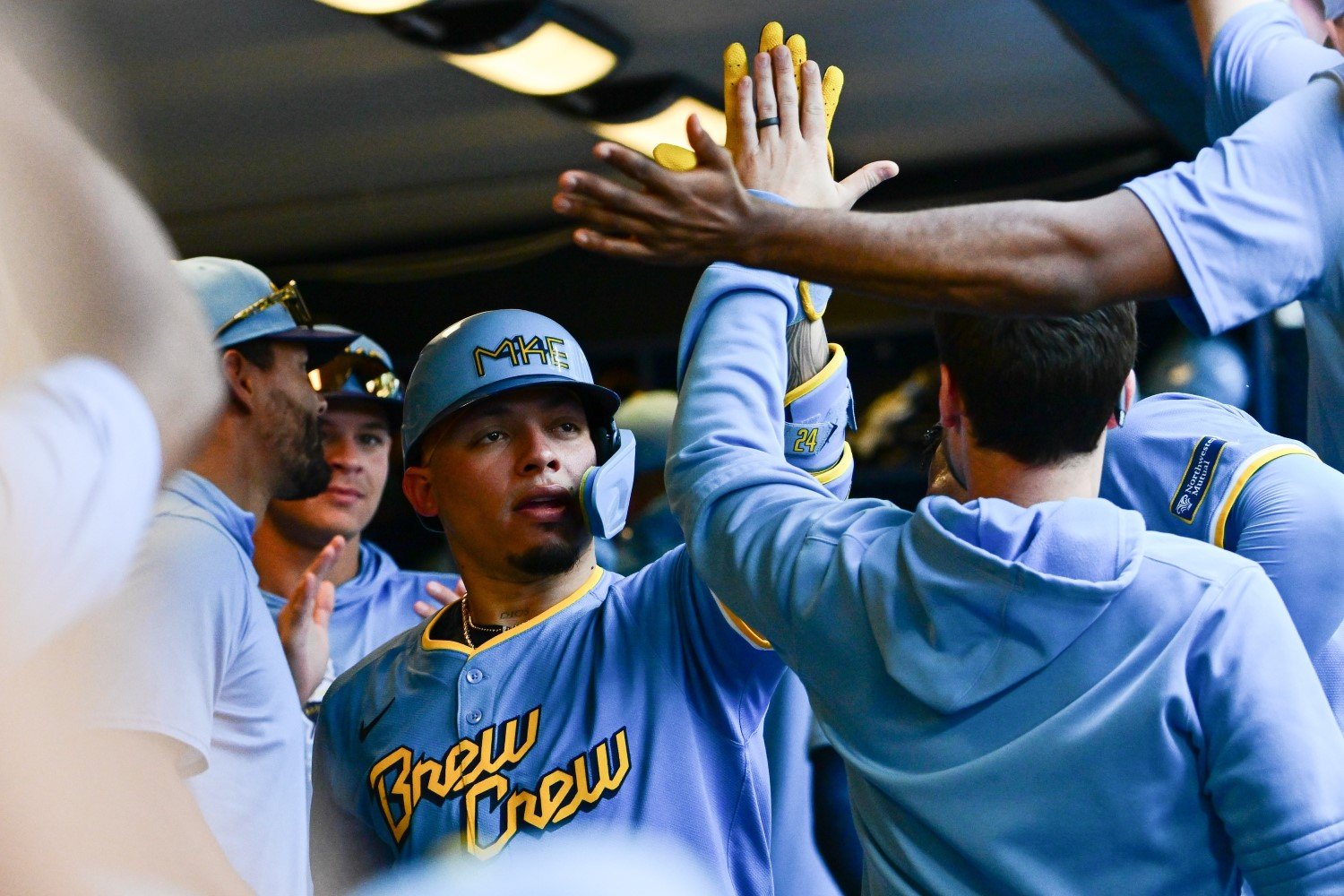 Just before Opening Day, the Dodgers signed the man most people believed to be the best catcher in the National League--and perhaps the best in baseball--to a 10-year, $140-million deal. It was shocking for its length, given that Will Smith was gearing up for his age-29 season, but the length is just a way of lowering the tax bills the Dodgers will pay over the life of the contract. In effect, it was a bit more like a seven-year deal for the All-Star backstop, where we could think of the salary distribution as: $14 million in 2024 $21 million in 2025 $21 million per year for 2026-31 Smith was under team control for 2024 and 2025 anyway, and was actually scheduled to make considerably less than $14 million this year, so the deal gave him more money immediately, then spread much of the remaining obligations across a long span of seasons, some of which everyone involved knows will be played elsewhere or as a role player. The Dodgers also got salary deferrals in the deal, and will be paying him varying amounts for the next 20 years, all told. William Contreras is in a very different situation from that of Smith. He's much younger (he won't turn 27 until late September), and is two years further from free agency. He'll become arbitration-eligible this winter, though, and after a first half in which he was more heavily used than any other catcher in baseball and as explosive and reliable as any of them, he's claimed the starting spot in the National League's All-Star lineup, at the expense of Smith. If the team and the player don't discuss a contract extension now, they might never agree to one. That would be ok, of course. The Brewers have (though for how much longer, it's hard to forecast) one of the strongest catching development infrastructures in baseball. Jeferson Quero probably won't be the same caliber of player as Contreras, especially after the injury that ended his season back in the spring, but he's a fine prospect in his own right. The team can and will develop more catchers, over the next three-plus years. By no means is it Contreras or bust, for the next 10 years. Yet, it's hard not to want to hold onto a player this special. Of the 331 batters with at least 150 plate appearances this season, Contreras is seventh in the percentage of his plate appearances resulting in a batted ball at 100 miles per hour or more. Contreras is an athlete. He's a versatile hitter. He's a ferocious competitor, with all the skills to remain valuable at the most important defensive position on the diamond even as the demands of that position shift drastically. If the Brewers can secure his services for seven or eight more years, as they have with Christian Yelich (who will bat back-to-back with Contreras in Tuesday night's All-Star Game), they have to at least consider it. At this point, an extension with Contreras would certainly be expensive. He's in full bloom, with this third straight All-Star appearance and all the makings of another half-decade or more as one of the game's elite players at a position in high demand. Still, the limits on catcher usage and their aging curves tend to constrain their asking prices in free agency, which gives the Crew a bit of leverage. A reasonable deal might go: $4.5 million for 2025 $8 million for 2026 $11.5 million for 2027 $21 million per year for 2028-33 That would be a $150-million outlay for nine seasons, which is hefty, but far from unmanageable. On Contreras's side, it guarantees him more money than Smith got over one fewer season, and it eliminates the risk of injury or overuse that could sidetrack his career before he gets the payday he's been dreaming of. Paired with the team's existing commitment to Yelich, this kind of contract could foreclose an avenue or two down the road, but it would be worth it. Those two players can anchor even a playoff-caliber lineup, right now and for the next few years. Committing to players like Contreras, who still could have unrealized upside at the plate, also establishes the team as a place where young players can become superstars--and not necessarily leave right after they do. Tuesday night will be a delightful showcase for the Brewers' two biggest stars. Once the show is over, though, the team should think about its future with each, and about gaining greater long-term control over the one who currently stands to become a free agent sooner.
 -
The Brewers' star catcher had a rough start to the season in terms of pitch framing, which was a key aspect of his breakout 2023 season. Over the last month and a half, though, he's come back with a vengeance. Image courtesy of © Mark Hoffman/Milwaukee Journal Sentinel / USA TODAY NETWORK Pitch framing was the first huge, game-changing insight we gained when PITCHf/x started capturing data on every pitch thrown in MLB, over 15 years ago. It's something many people around and within the game had talked about as a skill over the previous decades, but technology allowed the industry to measure it quantitatively and in granular fashion, for the first time. As such, it's one of the most science-forward aspects of the sport, in terms of the way it's discussed, dissected, and taught. At its heart, though, all sport is art. It's expression through physical movement, and it's about emotion and purpose, even if most people who consume it tend to think about outcomes and efficiency. Science can inform many parts of the endeavor of playing baseball, including framing, but it can't satisfactorily convey what's happening, because science is about those outcomes and the causal relationship between movements, whereas sports are really about the process, and the aesthetic, emotive, visceral relationship between movements. That paradox--being an artist in a highly competitive environment, where the prevailing language is centered on science, not art--is easier to resolve for some players than for others. What knits all ballplayers together is their competitiveness, but for some, that competitive drive is easily couched in functional terms: I do X because it achieves outcome Y. For others, competing means staying so much in the moment and so much in your muscles that the kind of abstract, objective thought around which framing models are built feels completely alien, and completely unacceptable. Willson Contreras, of the Cardinals, has never been a good pitch framer, largely because he's so much the latter kind of person that his competitive drive interferes with his framing, rather than augmenting it. His brother, William Contreras, is a slightly different breed--but only slightly. Both players show raw emotion, swagger, and some defensiveness, on and off the field. William is a little bit less explosive, temperamentally, but not necessarily more cerebral. When the Brewers got ahold of him in December 2022, they quickly went about re-training him as a receiver, because whatever efforts his employers in Atlanta had made in that vein, they'd failed to connect. There were some basic, ineluctable, important mechanical changes Contreras needed to make, and Charlie Greene, Nestor Corredor, and Walker McKinven helped him make them. However, you could sometimes see the way Contreras's brain and body rebelled against the rigidity of state-of-the-art pitch framing, even in his first sterling season with the Crew. This spring, that discomfort was even more evident. He got off to a poor start, and although things leveled out a bit in May, he was still far from being the version of himself we saw in 2023, when I checked back in on him late in that month. In the aforelinked articles, we talked about him being a bit more herky-jerky down in the zone than he was last year, and about struggling with some specific pitch types and matchups. Some of the essential mechanics--the smooth uplift through the ball on low pitches, setting up on the proper knee and in the right depth of crouch on those at the edges--were just not as good as he'd shown last year. There's good news, though. In fact, it's probably great news. Since June began, Contreras has flipped the script: And better yet, he's done it his own way. Contreras is in his groove, rocking and rolling behind the plate. He hasn't come back into the fold and regained his textbook excellence as a framer; he's found his own way to achieve similarly strong results. This is a more sustainable version of Contreras, the Framer, because it's a more authentic reflection of who he is. There's always some danger in statistically evaluating a catcher's framing over a short sample, the way I'm doing by offering his season split into chunks this way. That's not because we lack for a robust total sample; every regular catcher receives plenty of pitches in any given period to loosely estimate his success as a framer. In a given week or month, though, you might run into some especially pitcher-friendly or -unfriendly umpires, and it can distort the data. So, to break out of our prison of outcome-centric thinking, let's look at a pitch on which Contreras didn't get a borderline call. Good Process Bad Result.mp4 You can argue that Contreras is a hair late--a little bit too snatchy--on this one, but it's a fringe call, and the umpire seemed never to have been disposed to give it. Still, there's some improvement to see here. Early in the season, Contreras was waiting until the ball was in his mitt on this type of pitch, then yanking conspicuously. It wasn't smooth, and it wasn't convincing. This catch was sound; it just wasn't rewarded with what would have been a slightly generous call. Overall, though, he is getting more strikes, and it's not just because the Crew have had a few recent games in which umpires left the corners wide open. William Improving.mp4 You have to give some credit for the above to Tobias Myers, who had great command Wednesday. The strike zone was also big all night, in both halves of each inning. Still, this is a pitch witch which Contreras especially struggled early in the campaign. He got into the habit of locking out his elbow reaching for breaking balls like that one, and it made it impossible for him to carry the ball smoothly up through the zone, the way he did here. Let's take a look at a very different pitch, with the same result. High In Strike to Shohei.mp4 See how different those two setups are? In one, Contreras is hunched, his glove arm tucked inside a high left knee and his upper body leaning forward, bringing his eyes low and giving him stability. In the other, he's very upright, with the right knee up instead of the left but the mitt above his legs, anyway. Plainly, much of the reason for those differences lies in the pitch and location he's calling for. You want to be up higher for a high fastball than for a low breaking ball. Framing orthodoxy says you should be on different knees based on which side of the plate you want the ball to come to. Here's the thing: Contreras isn't actually hewing to framing orthodoxy. He's not quite defying it, either. He's just absorbed a wide variation of different ways to set up, and he's using the full array. Sometimes, he sets up with his right knee up for a glove-side fastball from a righty pitcher. Other times, he sets up with his left knee up for the same pitch. Back in 2022, he simply set up his body wrong on a consistent basis. (Atlanta really doesn't know what they're doing when it comes to framing instruction.) In 2023 and very early this year, he was more often set up the way a sharp catching coordinator would have him, but for teams with sufficiently attentive advance scouting staffs, it was possible to figure out what the pitch call and location were, based on how Contreras set up. He went into those setups late enough to scupper any systematic effort to steal signs, as it were, but according to two sources, at least one team used a shout code from watchful teammates to give locations earlier this season against the Brewers. Now, that would be impossible, because Contreras is moving (seemingly) according to nothing but his own gut. His setups still mostly fit what you'd expect, based on how framing is coached and what he's done in the past, but there are alternatingly subtle and obvious variations from the mold. Contreras is modulating his setups based not only on situation, pitch call, or location, but how he feels and what he's thinking. He hasn't shut down his brain, but he's in his muscles, not in his head. This has all kinds of positive knock-on effects, too. We've seen him become more creative as a pitch-caller, doing things no hitter would anticipate, like calling for a high breaking ball going away from a same-handed batter. A High Breaker.mp4 Notice that that's not a missed location, but exactly the one Contreras called for. He wanted to start off a fairly dangerous hitter with a pitch that could have been obliterated, were it not perfectly located. Although he literally pushes buttons to call pitches on PitchCom, Contreras is breaking away from the push-button way of thinking about baseball. He doesn't have one of a series of four or five setups, based on pitch call and location. He doesn't have a selection of eight or 10 pitch and location combinations. Instead, he has as many different setups and options as there are pitches in a game. All athletes are artists. Many don't want to admit it. Contreras, whether he would put it this way or not, has gradually evolved into a master of the art of pitch framing, even if it comes somewhat at the expense of the science of pitch framing. It's made him better, even within the last six weeks, and it could be a key to the Brewers sustaining their first-half success in run prevention over the balance of the season. View full article
-
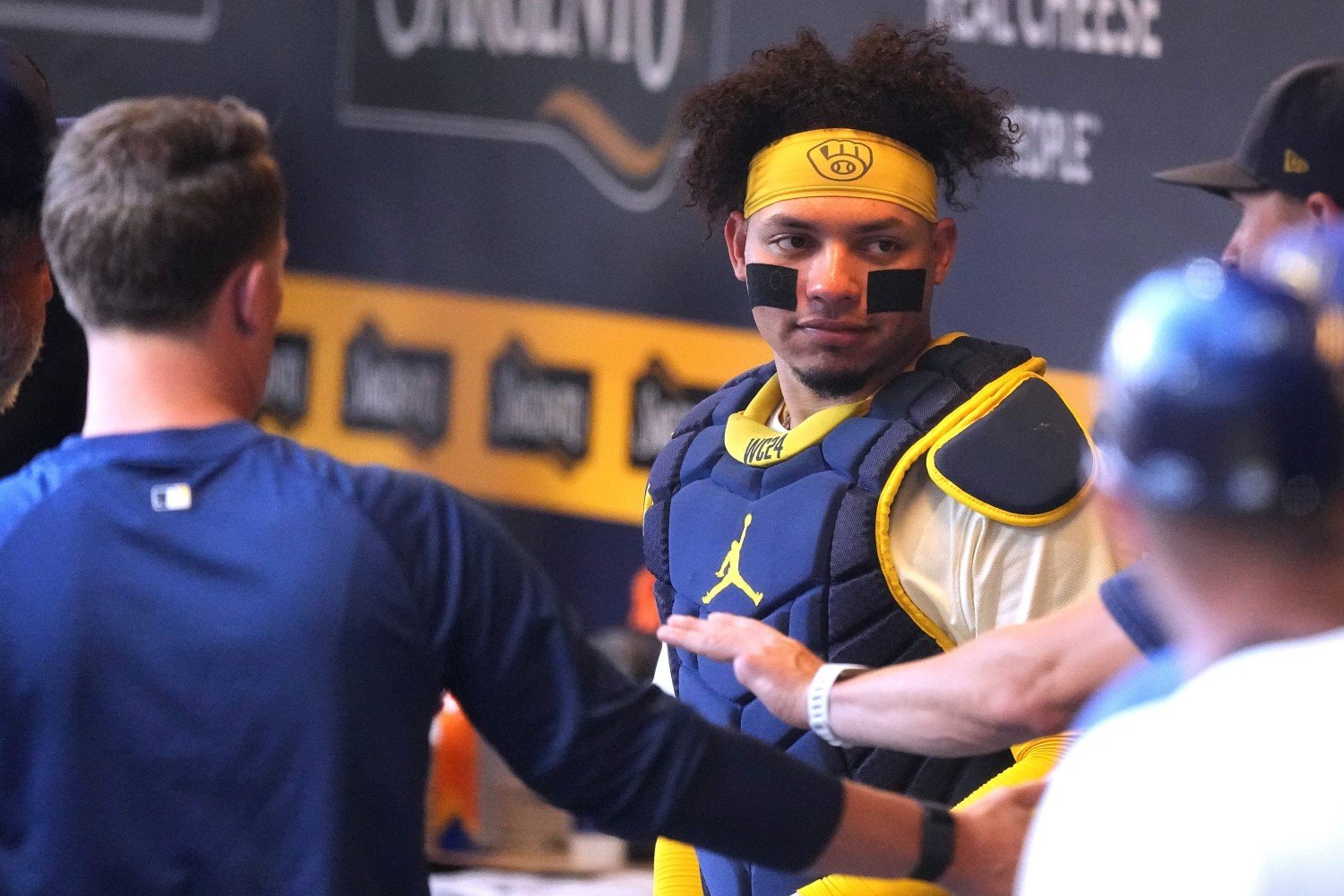 Pitch framing was the first huge, game-changing insight we gained when PITCHf/x started capturing data on every pitch thrown in MLB, over 15 years ago. It's something many people around and within the game had talked about as a skill over the previous decades, but technology allowed the industry to measure it quantitatively and in granular fashion, for the first time. As such, it's one of the most science-forward aspects of the sport, in terms of the way it's discussed, dissected, and taught. At its heart, though, all sport is art. It's expression through physical movement, and it's about emotion and purpose, even if most people who consume it tend to think about outcomes and efficiency. Science can inform many parts of the endeavor of playing baseball, including framing, but it can't satisfactorily convey what's happening, because science is about those outcomes and the causal relationship between movements, whereas sports are really about the process, and the aesthetic, emotive, visceral relationship between movements. That paradox--being an artist in a highly competitive environment, where the prevailing language is centered on science, not art--is easier to resolve for some players than for others. What knits all ballplayers together is their competitiveness, but for some, that competitive drive is easily couched in functional terms: I do X because it achieves outcome Y. For others, competing means staying so much in the moment and so much in your muscles that the kind of abstract, objective thought around which framing models are built feels completely alien, and completely unacceptable. Willson Contreras, of the Cardinals, has never been a good pitch framer, largely because he's so much the latter kind of person that his competitive drive interferes with his framing, rather than augmenting it. His brother, William Contreras, is a slightly different breed--but only slightly. Both players show raw emotion, swagger, and some defensiveness, on and off the field. William is a little bit less explosive, temperamentally, but not necessarily more cerebral. When the Brewers got ahold of him in December 2022, they quickly went about re-training him as a receiver, because whatever efforts his employers in Atlanta had made in that vein, they'd failed to connect. There were some basic, ineluctable, important mechanical changes Contreras needed to make, and Charlie Greene, Nestor Corredor, and Walker McKinven helped him make them. However, you could sometimes see the way Contreras's brain and body rebelled against the rigidity of state-of-the-art pitch framing, even in his first sterling season with the Crew. This spring, that discomfort was even more evident. He got off to a poor start, and although things leveled out a bit in May, he was still far from being the version of himself we saw in 2023, when I checked back in on him late in that month. In the aforelinked articles, we talked about him being a bit more herky-jerky down in the zone than he was last year, and about struggling with some specific pitch types and matchups. Some of the essential mechanics--the smooth uplift through the ball on low pitches, setting up on the proper knee and in the right depth of crouch on those at the edges--were just not as good as he'd shown last year. There's good news, though. In fact, it's probably great news. Since June began, Contreras has flipped the script: And better yet, he's done it his own way. Contreras is in his groove, rocking and rolling behind the plate. He hasn't come back into the fold and regained his textbook excellence as a framer; he's found his own way to achieve similarly strong results. This is a more sustainable version of Contreras, the Framer, because it's a more authentic reflection of who he is. There's always some danger in statistically evaluating a catcher's framing over a short sample, the way I'm doing by offering his season split into chunks this way. That's not because we lack for a robust total sample; every regular catcher receives plenty of pitches in any given period to loosely estimate his success as a framer. In a given week or month, though, you might run into some especially pitcher-friendly or -unfriendly umpires, and it can distort the data. So, to break out of our prison of outcome-centric thinking, let's look at a pitch on which Contreras didn't get a borderline call. Good Process Bad Result.mp4 You can argue that Contreras is a hair late--a little bit too snatchy--on this one, but it's a fringe call, and the umpire seemed never to have been disposed to give it. Still, there's some improvement to see here. Early in the season, Contreras was waiting until the ball was in his mitt on this type of pitch, then yanking conspicuously. It wasn't smooth, and it wasn't convincing. This catch was sound; it just wasn't rewarded with what would have been a slightly generous call. Overall, though, he is getting more strikes, and it's not just because the Crew have had a few recent games in which umpires left the corners wide open. William Improving.mp4 You have to give some credit for the above to Tobias Myers, who had great command Wednesday. The strike zone was also big all night, in both halves of each inning. Still, this is a pitch witch which Contreras especially struggled early in the campaign. He got into the habit of locking out his elbow reaching for breaking balls like that one, and it made it impossible for him to carry the ball smoothly up through the zone, the way he did here. Let's take a look at a very different pitch, with the same result. High In Strike to Shohei.mp4 See how different those two setups are? In one, Contreras is hunched, his glove arm tucked inside a high left knee and his upper body leaning forward, bringing his eyes low and giving him stability. In the other, he's very upright, with the right knee up instead of the left but the mitt above his legs, anyway. Plainly, much of the reason for those differences lies in the pitch and location he's calling for. You want to be up higher for a high fastball than for a low breaking ball. Framing orthodoxy says you should be on different knees based on which side of the plate you want the ball to come to. Here's the thing: Contreras isn't actually hewing to framing orthodoxy. He's not quite defying it, either. He's just absorbed a wide variation of different ways to set up, and he's using the full array. Sometimes, he sets up with his right knee up for a glove-side fastball from a righty pitcher. Other times, he sets up with his left knee up for the same pitch. Back in 2022, he simply set up his body wrong on a consistent basis. (Atlanta really doesn't know what they're doing when it comes to framing instruction.) In 2023 and very early this year, he was more often set up the way a sharp catching coordinator would have him, but for teams with sufficiently attentive advance scouting staffs, it was possible to figure out what the pitch call and location were, based on how Contreras set up. He went into those setups late enough to scupper any systematic effort to steal signs, as it were, but according to two sources, at least one team used a shout code from watchful teammates to give locations earlier this season against the Brewers. Now, that would be impossible, because Contreras is moving (seemingly) according to nothing but his own gut. His setups still mostly fit what you'd expect, based on how framing is coached and what he's done in the past, but there are alternatingly subtle and obvious variations from the mold. Contreras is modulating his setups based not only on situation, pitch call, or location, but how he feels and what he's thinking. He hasn't shut down his brain, but he's in his muscles, not in his head. This has all kinds of positive knock-on effects, too. We've seen him become more creative as a pitch-caller, doing things no hitter would anticipate, like calling for a high breaking ball going away from a same-handed batter. A High Breaker.mp4 Notice that that's not a missed location, but exactly the one Contreras called for. He wanted to start off a fairly dangerous hitter with a pitch that could have been obliterated, were it not perfectly located. Although he literally pushes buttons to call pitches on PitchCom, Contreras is breaking away from the push-button way of thinking about baseball. He doesn't have one of a series of four or five setups, based on pitch call and location. He doesn't have a selection of eight or 10 pitch and location combinations. Instead, he has as many different setups and options as there are pitches in a game. All athletes are artists. Many don't want to admit it. Contreras, whether he would put it this way or not, has gradually evolved into a master of the art of pitch framing, even if it comes somewhat at the expense of the science of pitch framing. It's made him better, even within the last six weeks, and it could be a key to the Brewers sustaining their first-half success in run prevention over the balance of the season.
 -
According to an advanced offensive metric that correlates with overall production as well as any other, the Brewers hit the least dangerous batted balls in MLB. Yet, they're actually a top-10 group. How? Image courtesy of © Kiyoshi Mio-USA TODAY Sports Back in the early going of this season, I introduced a new offensive metric to help capture the excellence of new Brewers slugger Rhys Hoskins: weighted sweet-spot exit velocity. It takes the average exit velocity of batted balls within the launch angle band from 10 to 35 degrees (line drives and non-lazy fly balls), and weights it for the frequency of those batted balls, as a percentage of all plate appearances. At a team level, it correlates more strongly with overall offensive output (as measured by weighted on-base average) than do things like average exit velocity, hard-hit rate, or Barrel rate, the latter of which is sort of a cruder version of wSSEV. The stat is meant to loosely account for the ability to avoid striking out, but especially, to measure the ability to make consistently dangerous, high-value contact. Here's the thing: the Brewers rank dead last in MLB in it. Of the top 10 teams in MLB in weighted on-base average, eight are in the top 10 in wSSEV. Then there are the 20th-place Astros, and the 30th-place Brewers, who are eighth in the league in wOBA. For no other team in baseball does overall performance correlate so weakly with the ability to hit it hard on a line and in the air, and it's not even close. How is this possible? Well, consider the wisdom imparted by Davy Andrews last week for our Caretakers: the Brewers are very good at hitting singles up the middle, which hardly ever rate as hard-hit line drives or fly balls. That's part of the story. Another part is their speed, because even though their sterling stolen base totals and success rate aren't part of wOBA, the same speed that facilitates them makes it harder to defend the Brewers when they're in the batter's box. The team gets its share of infield hits, and it sneaks some balls through the infield because the opponent is playing a bit out of shape, a step too shallow, trying to account for the speed of the hitter. Another part of the story, of course, is their patience. Only the Yankees can match them for laying off pitches outside the zone and accepting their walks, and the Yankees can't match the Crew's .312 team BABIP. Only the Dodgers edge out the Crew in team OBP, and as any early-21st-century baseball nerd could have told you, not making outs is even more important to the goal of scoring runs than is hitting the ball over the fence. Pat Murphy told us all what to expect, back in spring training. While his team has more dynamism and more power (not just Hoskins, but a resurgent Christian Yelich, more in touch with his power stroke, and the young thump of Joey Ortiz and Jackson Chourio) than Craig Counsell's 2023 team did, that's still not the personality of this offense. Murphy believes in passing the baton, and the team has shown the same patience, the same eagerness to use the big parts of the field, and the same relentlessness that characterized the best of Counsell's offenses. Conventional wisdom says you can't string together good outcomes often enough to score at a competitive rate, in the modern game, without lots of long hits. As evidenced by their wSSEV, the Brewers don't get lots of long hits. They're exactly average (and 16th of the 30 clubs) in the percentage of their plate appearances that end with a batted ball leaving the bat at 100 miles per hour or more. When it comes to pulling the ball with authority in the air, only the atrocious Marlins are below them. They're 14th in MLB in slugging average and 21st in isolated power. Yet, they keep scoring runs. They're not afraid to embrace that harder way to score, even in a game mad about strikeouts and quick with the hook on starting pitchers, and it's working. While that ability to mash the ball on a high-value trajectory is a bit of a missing ingredient (and while it would sure be nice to see Hoskins and Willy Adames provide more of that, as it looked like they would early in the season), the team keeps cobbling together enough rallies to break through and win at a high rate. In the second half, it seems much more likely that their wSSEV rises than that their wOBA plunges. View full article
-
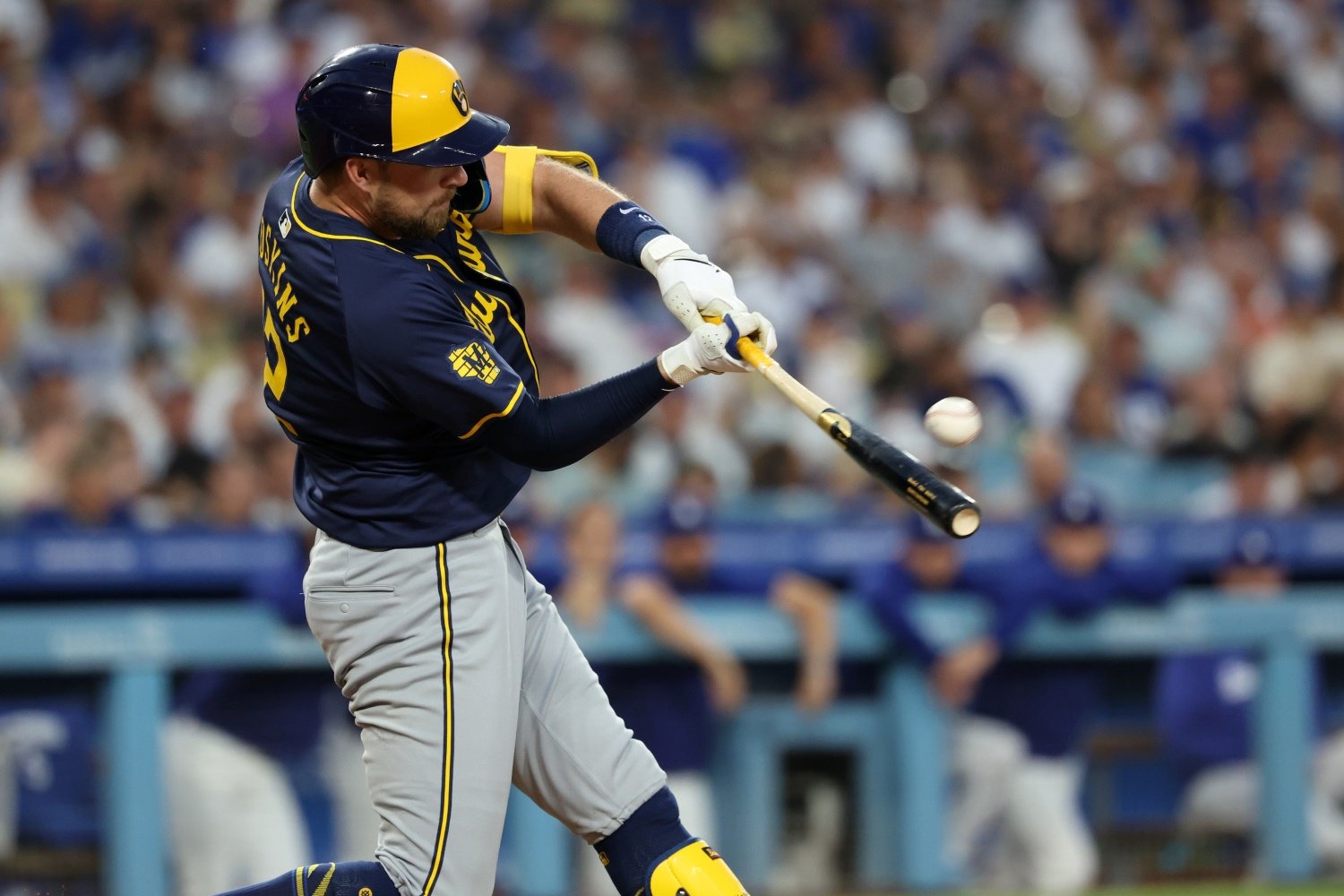 Back in the early going of this season, I introduced a new offensive metric to help capture the excellence of new Brewers slugger Rhys Hoskins: weighted sweet-spot exit velocity. It takes the average exit velocity of batted balls within the launch angle band from 10 to 35 degrees (line drives and non-lazy fly balls), and weights it for the frequency of those batted balls, as a percentage of all plate appearances. At a team level, it correlates more strongly with overall offensive output (as measured by weighted on-base average) than do things like average exit velocity, hard-hit rate, or Barrel rate, the latter of which is sort of a cruder version of wSSEV. The stat is meant to loosely account for the ability to avoid striking out, but especially, to measure the ability to make consistently dangerous, high-value contact. Here's the thing: the Brewers rank dead last in MLB in it. Of the top 10 teams in MLB in weighted on-base average, eight are in the top 10 in wSSEV. Then there are the 20th-place Astros, and the 30th-place Brewers, who are eighth in the league in wOBA. For no other team in baseball does overall performance correlate so weakly with the ability to hit it hard on a line and in the air, and it's not even close. How is this possible? Well, consider the wisdom imparted by Davy Andrews last week for our Caretakers: the Brewers are very good at hitting singles up the middle, which hardly ever rate as hard-hit line drives or fly balls. That's part of the story. Another part is their speed, because even though their sterling stolen base totals and success rate aren't part of wOBA, the same speed that facilitates them makes it harder to defend the Brewers when they're in the batter's box. The team gets its share of infield hits, and it sneaks some balls through the infield because the opponent is playing a bit out of shape, a step too shallow, trying to account for the speed of the hitter. Another part of the story, of course, is their patience. Only the Yankees can match them for laying off pitches outside the zone and accepting their walks, and the Yankees can't match the Crew's .312 team BABIP. Only the Dodgers edge out the Crew in team OBP, and as any early-21st-century baseball nerd could have told you, not making outs is even more important to the goal of scoring runs than is hitting the ball over the fence. Pat Murphy told us all what to expect, back in spring training. While his team has more dynamism and more power (not just Hoskins, but a resurgent Christian Yelich, more in touch with his power stroke, and the young thump of Joey Ortiz and Jackson Chourio) than Craig Counsell's 2023 team did, that's still not the personality of this offense. Murphy believes in passing the baton, and the team has shown the same patience, the same eagerness to use the big parts of the field, and the same relentlessness that characterized the best of Counsell's offenses. Conventional wisdom says you can't string together good outcomes often enough to score at a competitive rate, in the modern game, without lots of long hits. As evidenced by their wSSEV, the Brewers don't get lots of long hits. They're exactly average (and 16th of the 30 clubs) in the percentage of their plate appearances that end with a batted ball leaving the bat at 100 miles per hour or more. When it comes to pulling the ball with authority in the air, only the atrocious Marlins are below them. They're 14th in MLB in slugging average and 21st in isolated power. Yet, they keep scoring runs. They're not afraid to embrace that harder way to score, even in a game mad about strikeouts and quick with the hook on starting pitchers, and it's working. While that ability to mash the ball on a high-value trajectory is a bit of a missing ingredient (and while it would sure be nice to see Hoskins and Willy Adames provide more of that, as it looked like they would early in the season), the team keeps cobbling together enough rallies to break through and win at a high rate. In the second half, it seems much more likely that their wSSEV rises than that their wOBA plunges.
 -
In his walk year, the Brewers' star shortstop and clubhouse linchpin has struggled through as tough a grind as he's had in a long time. His power has dried up, and with it, his confidence. How can he turn it around? Image courtesy of © Ron Chenoy-USA TODAY Sports In an ugly loss Tuesday night, the silver lining was a 1-for-3 night from Willy Adames, including a double and a walk. It was a sign of life, amid what has been a desert of production for the slugger. He's lived a tale of two seasons this year. Through May 31, he was hitting .256/.335/.453, with solid strikeout and walk rates and a hard-hit rate over 40%. Since then, he's cratered. In 35 games since Jun. 1, Adames is at .198/.304/.317, striking out close to 24% of the time and with his hard-hit rate down to 35.5%. Nothing's working. As much as he tries to be a well-rounded hitter, when Adames is at his best, he's a home run guy. He lifts the ball, and puts it close to the fences, if not over them. Early this year, when he was going well, he not only hit for actual power, but was robbed of would-be extra-base hits at the wall multiple times. Since Jun. 23, though, Adames hasn't hit the ball even 330 feet in the air. Not hitting home runs is one thing. Not hitting even warning-track fly balls is another. Adames is not right at all, and as he's become more aware of the issue, the problem is only getting worse. He had a hard-hit rate of nearly 49% and an OPS of .826 on pitches in the lower third of the zone through June 23. Since then, the hard-hit rate is under 31%, the OPS is .367, and worst of all, he's virtually given up on that part of the zone. Focusing on the upper half of the zone has been Adames's way of compensating for a swing he knows is out of whack. Unfortunately, it's made more of his hard-hit balls come off the bat at a lower trajectory, eating into his power. You can see the problem in the way he swings at low pitches, when he does so. Early in the season, when he was doing damage on those offerings, it was by driving cleanly through the ball. He was looking for the ball down in the zone, and when he got it, he was able to put his 'A' swing on it, attacking center and right-center field. Adames Homer May.mp4 When he's right--when he's covering the whole zone, with an adaptable but quick swing--Adames can turn on and pull that ball on the upper or inner half, but strides right through the ball and stays closed on those pitches down. Recently, though, he's pulling off those balls, leading to weak contact on the ground to the left side. Adames Groundout July.mp4 The margins that separate success and failure in baseball are shockingly small--sometimes cruelly so. Adames isn't a totally different hitter, but he's a far, far less effective one right now. He's a little bit off, and the efforts he's made to counteract his struggles have, instead, only magnified them. With more called strikes because of his diminished aggressiveness, more whiffs because he's unable to cover the whole of the zone, and less production because the long fly ball is missing from his game, Adames continues to scuffle. Hopefully, Tuesday night was the beginning of a turn in the right direction, but it's been a brutal six weeks for the Crew's beloved leader and frequent cleanup man. View full article
-
Willy Adames Has a Broken Swing, and Worse, He Knows It
Matthew Trueblood posted an article in Brewers
 In an ugly loss Tuesday night, the silver lining was a 1-for-3 night from Willy Adames, including a double and a walk. It was a sign of life, amid what has been a desert of production for the slugger. He's lived a tale of two seasons this year. Through May 31, he was hitting .256/.335/.453, with solid strikeout and walk rates and a hard-hit rate over 40%. Since then, he's cratered. In 35 games since Jun. 1, Adames is at .198/.304/.317, striking out close to 24% of the time and with his hard-hit rate down to 35.5%. Nothing's working. As much as he tries to be a well-rounded hitter, when Adames is at his best, he's a home run guy. He lifts the ball, and puts it close to the fences, if not over them. Early this year, when he was going well, he not only hit for actual power, but was robbed of would-be extra-base hits at the wall multiple times. Since Jun. 23, though, Adames hasn't hit the ball even 330 feet in the air. Not hitting home runs is one thing. Not hitting even warning-track fly balls is another. Adames is not right at all, and as he's become more aware of the issue, the problem is only getting worse. He had a hard-hit rate of nearly 49% and an OPS of .826 on pitches in the lower third of the zone through June 23. Since then, the hard-hit rate is under 31%, the OPS is .367, and worst of all, he's virtually given up on that part of the zone. Focusing on the upper half of the zone has been Adames's way of compensating for a swing he knows is out of whack. Unfortunately, it's made more of his hard-hit balls come off the bat at a lower trajectory, eating into his power. You can see the problem in the way he swings at low pitches, when he does so. Early in the season, when he was doing damage on those offerings, it was by driving cleanly through the ball. He was looking for the ball down in the zone, and when he got it, he was able to put his 'A' swing on it, attacking center and right-center field. Adames Homer May.mp4 When he's right--when he's covering the whole zone, with an adaptable but quick swing--Adames can turn on and pull that ball on the upper or inner half, but strides right through the ball and stays closed on those pitches down. Recently, though, he's pulling off those balls, leading to weak contact on the ground to the left side. Adames Groundout July.mp4 The margins that separate success and failure in baseball are shockingly small--sometimes cruelly so. Adames isn't a totally different hitter, but he's a far, far less effective one right now. He's a little bit off, and the efforts he's made to counteract his struggles have, instead, only magnified them. With more called strikes because of his diminished aggressiveness, more whiffs because he's unable to cover the whole of the zone, and less production because the long fly ball is missing from his game, Adames continues to scuffle. Hopefully, Tuesday night was the beginning of a turn in the right direction, but it's been a brutal six weeks for the Crew's beloved leader and frequent cleanup man.
