


Matthew Trueblood
-
Posts
1,964 -
Joined
-
Last visited
-
Days Won
10
Content Type
Profiles
Forums
Blogs
Events
News
2026 Milwaukee Brewers Top Prospects Ranking
Milwaukee Brewers Videos
2022 Milwaukee Brewers Draft Picks
Milwaukee Brewers Free Agent & Trade Rumors, Notes, & Tidbits
Guides & Resources
2023 Milwaukee Brewers Draft Picks
2024 Milwaukee Brewers Draft Picks
The Milwaukee Brewers Players Project
2025 Milwaukee Brewers Draft Pick Tracker
2026 Milwaukee Brewers Draft Tracker: Picks & Bonuses
Store
Downloads
Gallery
Everything posted by Matthew Trueblood
-
No player is more important to the Milwaukee Brewers' lineup at the moment than the man to whom they committed $34 million this winter. His numbers aren't pretty so far, but that's about to change. Image courtesy of © Tommy Gilligan-USA TODAY Sports It hasn't been a thunderous start for Rhys Hoskins. His Opening Day entanglement with Jeff McNeil immediately endeared him to Brewers fans, especially because he went on to have a strong first series both in New York and at home against the Twins. Since those first five games, though, Hoskins is hitting .192/,259/.365. He's cracked two home runs and three doubles over that span, but not much is falling in for him, and even this early, that hot start is no longer propping up his overall numbers. Even the simplest batted-ball data tells us that will correct itself. Hoskins's expected batting and slugging averages on Baseball Savant exceed his actual ones, and his 113 DRC+ at Baseball Prospectus plants him safely north of average. Drill even further down, though, and you find evidence that Hoskins is doing just about everything right. He's not just going to shrug this off. He's going to blast it away, if he keeps doing what he's already doing. Hoskins's average exit velocity and hard-hit rates are below-average so far. That's discouraging, because he's a power hitter. That's his game. If he's not hitting the ball harder than most people or hitting it fairly hard more often than most people, it's hard for him to sustain above-average value, despite his good patience. He's minimized his strikeouts well so far, but he'll never be elite at that, and anyway, he doesn't have the speed to make much use of singles, let alone ground balls that only become singles if a runner puts pressure on the defense. Unadjusted averages of batted-ball data can be misleading, though--especially early in seasons, when the samples are small. I created three new ways to break down and understand that data, and each tells us a bit about where Hoskins is right now. Let's take a look at them. Hard-Hit Launch Angle This turned out to be a less powerful predictor of overall production than I anticipated, but it's a helpful qualitative reminder to us. For every player, I found the average launch angle not of all his batted balls, but only of those he hit at least 95 miles per hour. This answers the question of whether a hitter is doing real damage when they hit it hard, because someone like Sal Frelick (3.3 degrees), Blake Perkins (3.4) or Brice Turang (0.7) is not actually posing a threat to opposing pitchers even on most of their best exit velocities. As you'd probably guess, Hoskins is about as unlike that trio of his teammates as you can be, in this regard. His hard-hit launch angle so far this year is 26.5 degrees. Of the 257 batters who have come to bat at least 50 times so far this year, only five (Joey Gallo, Eddie Rosario, Tyler O'Neill, Mike Trout, and Max Muncy) have a higher HHLA than Hoskins's. That's not all good news. While Trout, Muncy, and the home run machine that has been O'Neill hint at which end is better to occupy, the best place to fall on this spectrum is nearer the middle. Hoskins has already made a handful of loud outs because he hit it a tad too high, or not quite hard enough for that trajectory. Still, this is encouraging. Some of those gray dots will turn blue or red in the warmer air of summer, or in some park more accommodating than Camden Yards or Citi Field. The news only gets better from here. Sweet Spot Exit Velocity Flipping the previous concept on its head a bit, I also stripped out all batted balls except those hit within the launch angle band (I chose 10 to 35 degrees) within which well-struck balls tend to be most valuable, then found the average exit velocity on them--rather than taking sheer exit velocity or the percentage of all batted balls hit hard, regardless of launch angle. In short: when you get on plane with the ball and hit it on a line or on the dangerous kind of fly-ball trajectory, how much juice do you put behind it? This metric better correlates with overall production than does clustering launch angles on well-hit balls, for a couple of reasons. Hoskins does a bit less well by it, because he's a bit more of a launch angle guy (meaning he consciously works to find that good fly-ball launch angle, even if it means hitting the ball 103 miles per hour instead of 108) than an exit velocity guy. Still, he scores well so far. His 95.8 SSEV would be tied for the second-best mark of his career to date, alongside his electrifying rookie campaign in 2017, and 1.3 miles per hour behind 2021, the best full year of his career in terms of actual value. Hoskins ranks 55th of the aforementioned 257 hitters in SSEV. It's not our focus right now, but for the record, William Contreras leads MLB, at 102.5. Not only that, but the gap between Contreras and second-place Juan Soto is larger than that between Soto and 11th-place Seiya Suzuki. Contreras (unsurprisingly, to Brewers fans) has a single-digit HHLA, but when it comes to hitting balls hard within that launch angle span, no one is better so far in 2024. Contreras is a legitimate MVP contender. Weighted SSEV Finally, I sought a way to at least acknowledge the necessity of an interaction between these two pursuits. A good SSEV is valuable, but it becomes more so if the hitter also tends to hit more of those sweet-spot batted balls in the first place. Thus, I created a version of SSEV that weights that number for the frequency with which a hitter makes contact in the 10-35-degree launch angle window. This ends up being similar to Barrel Rate, but it bears some important differences, and based on data from 2015-23 for hitters with at least 250 plate appearances in a given season, it's more predictive of overall production (wOBA) than Barrel Rate is. Here's where Hoskins really shines. He ranks 23rd in wSSEV in 2024, at 92.8. It's too early to say that that number will hold, but if it does, it'll be the highest of his career. The only other seasons in which he's been north of 88.0 in wSSEV are those halcyon campaigns of 2017 and 2021. The league leaders in wSSEV for 2023 were Corey Seager, Luis Arráez, Mookie Betts, Ronald Acuña Jr., and Aaron Judge. For 2024, the early leaders are Shohei Ohtani and Marcell Ozuna. This metric nicely captures overall dangerousness at the plate, by blending the ability to hit the ball hard when elevating it with the ability to square it up and avoid either slamming the ball into the dirt or popping up helplessly. Hoskins, though not yet being fully rewarded for it, is doing just that. He's also putting the ball in play more often (a fact reflected by wSSEV, since it takes total plate appearances as the denominator in the calculation of sweet-spot contact frequency), and his discerning eye and bat speed have both survived the year he lost to his knee injury. Very soon, he'll break out, and the Brewers will have the more consistent power source their lineup still needs. View full article
-
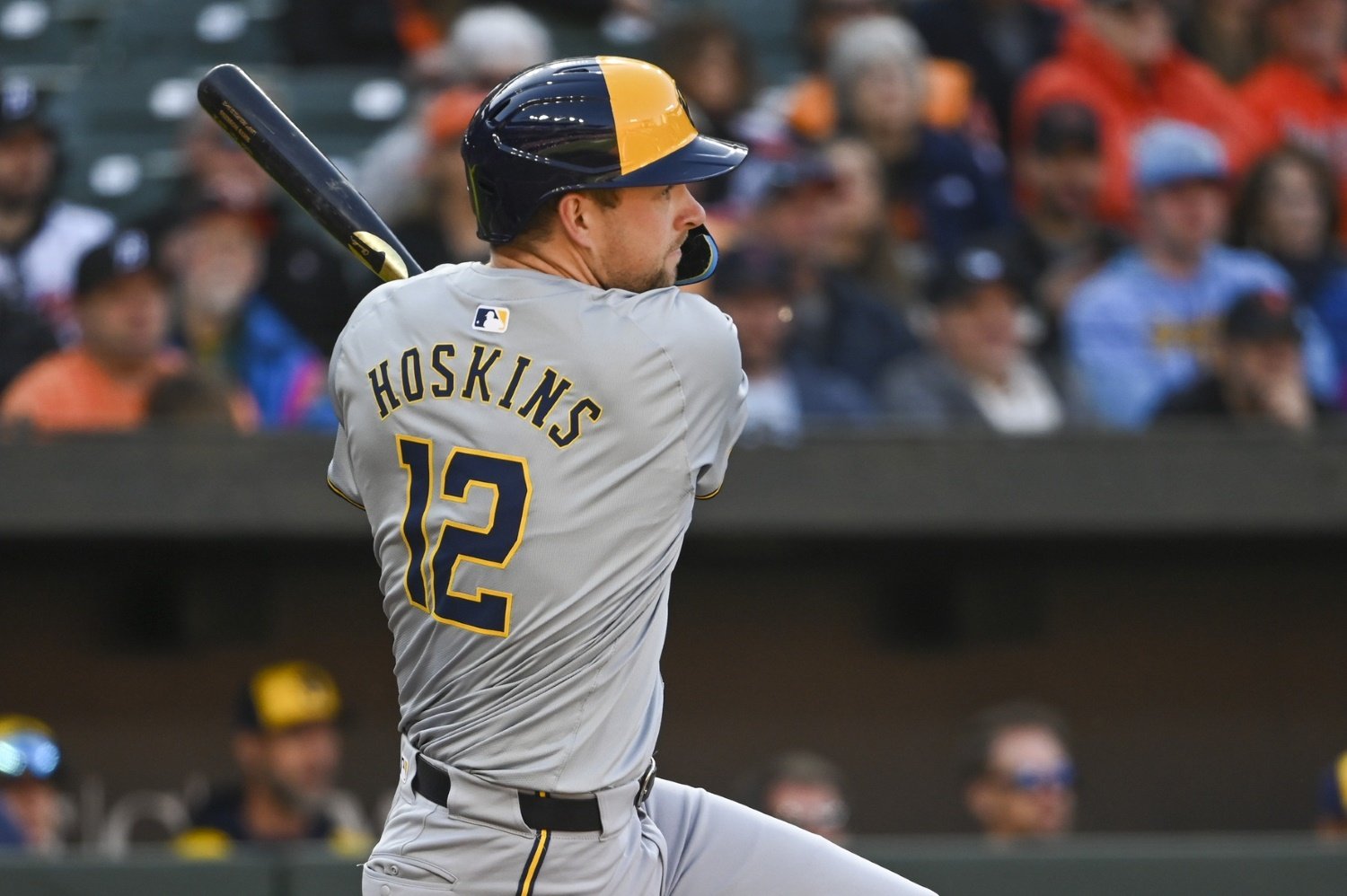 It hasn't been a thunderous start for Rhys Hoskins. His Opening Day entanglement with Jeff McNeil immediately endeared him to Brewers fans, especially because he went on to have a strong first series both in New York and at home against the Twins. Since those first five games, though, Hoskins is hitting .192/,259/.365. He's cracked two home runs and three doubles over that span, but not much is falling in for him, and even this early, that hot start is no longer propping up his overall numbers. Even the simplest batted-ball data tells us that will correct itself. Hoskins's expected batting and slugging averages on Baseball Savant exceed his actual ones, and his 113 DRC+ at Baseball Prospectus plants him safely north of average. Drill even further down, though, and you find evidence that Hoskins is doing just about everything right. He's not just going to shrug this off. He's going to blast it away, if he keeps doing what he's already doing. Hoskins's average exit velocity and hard-hit rates are below-average so far. That's discouraging, because he's a power hitter. That's his game. If he's not hitting the ball harder than most people or hitting it fairly hard more often than most people, it's hard for him to sustain above-average value, despite his good patience. He's minimized his strikeouts well so far, but he'll never be elite at that, and anyway, he doesn't have the speed to make much use of singles, let alone ground balls that only become singles if a runner puts pressure on the defense. Unadjusted averages of batted-ball data can be misleading, though--especially early in seasons, when the samples are small. I created three new ways to break down and understand that data, and each tells us a bit about where Hoskins is right now. Let's take a look at them. Hard-Hit Launch Angle This turned out to be a less powerful predictor of overall production than I anticipated, but it's a helpful qualitative reminder to us. For every player, I found the average launch angle not of all his batted balls, but only of those he hit at least 95 miles per hour. This answers the question of whether a hitter is doing real damage when they hit it hard, because someone like Sal Frelick (3.3 degrees), Blake Perkins (3.4) or Brice Turang (0.7) is not actually posing a threat to opposing pitchers even on most of their best exit velocities. As you'd probably guess, Hoskins is about as unlike that trio of his teammates as you can be, in this regard. His hard-hit launch angle so far this year is 26.5 degrees. Of the 257 batters who have come to bat at least 50 times so far this year, only five (Joey Gallo, Eddie Rosario, Tyler O'Neill, Mike Trout, and Max Muncy) have a higher HHLA than Hoskins's. That's not all good news. While Trout, Muncy, and the home run machine that has been O'Neill hint at which end is better to occupy, the best place to fall on this spectrum is nearer the middle. Hoskins has already made a handful of loud outs because he hit it a tad too high, or not quite hard enough for that trajectory. Still, this is encouraging. Some of those gray dots will turn blue or red in the warmer air of summer, or in some park more accommodating than Camden Yards or Citi Field. The news only gets better from here. Sweet Spot Exit Velocity Flipping the previous concept on its head a bit, I also stripped out all batted balls except those hit within the launch angle band (I chose 10 to 35 degrees) within which well-struck balls tend to be most valuable, then found the average exit velocity on them--rather than taking sheer exit velocity or the percentage of all batted balls hit hard, regardless of launch angle. In short: when you get on plane with the ball and hit it on a line or on the dangerous kind of fly-ball trajectory, how much juice do you put behind it? This metric better correlates with overall production than does clustering launch angles on well-hit balls, for a couple of reasons. Hoskins does a bit less well by it, because he's a bit more of a launch angle guy (meaning he consciously works to find that good fly-ball launch angle, even if it means hitting the ball 103 miles per hour instead of 108) than an exit velocity guy. Still, he scores well so far. His 95.8 SSEV would be tied for the second-best mark of his career to date, alongside his electrifying rookie campaign in 2017, and 1.3 miles per hour behind 2021, the best full year of his career in terms of actual value. Hoskins ranks 55th of the aforementioned 257 hitters in SSEV. It's not our focus right now, but for the record, William Contreras leads MLB, at 102.5. Not only that, but the gap between Contreras and second-place Juan Soto is larger than that between Soto and 11th-place Seiya Suzuki. Contreras (unsurprisingly, to Brewers fans) has a single-digit HHLA, but when it comes to hitting balls hard within that launch angle span, no one is better so far in 2024. Contreras is a legitimate MVP contender. Weighted SSEV Finally, I sought a way to at least acknowledge the necessity of an interaction between these two pursuits. A good SSEV is valuable, but it becomes more so if the hitter also tends to hit more of those sweet-spot batted balls in the first place. Thus, I created a version of SSEV that weights that number for the frequency with which a hitter makes contact in the 10-35-degree launch angle window. This ends up being similar to Barrel Rate, but it bears some important differences, and based on data from 2015-23 for hitters with at least 250 plate appearances in a given season, it's more predictive of overall production (wOBA) than Barrel Rate is. Here's where Hoskins really shines. He ranks 23rd in wSSEV in 2024, at 92.8. It's too early to say that that number will hold, but if it does, it'll be the highest of his career. The only other seasons in which he's been north of 88.0 in wSSEV are those halcyon campaigns of 2017 and 2021. The league leaders in wSSEV for 2023 were Corey Seager, Luis Arráez, Mookie Betts, Ronald Acuña Jr., and Aaron Judge. For 2024, the early leaders are Shohei Ohtani and Marcell Ozuna. This metric nicely captures overall dangerousness at the plate, by blending the ability to hit the ball hard when elevating it with the ability to square it up and avoid either slamming the ball into the dirt or popping up helplessly. Hoskins, though not yet being fully rewarded for it, is doing just that. He's also putting the ball in play more often (a fact reflected by wSSEV, since it takes total plate appearances as the denominator in the calculation of sweet-spot contact frequency), and his discerning eye and bat speed have both survived the year he lost to his knee injury. Very soon, he'll break out, and the Brewers will have the more consistent power source their lineup still needs.
 -
The vagaries of the early schedule have led to a weird phenomenon: the Milwaukee Brewers have barely seen left-handed pitchers at all. It's bizarre and unsustainable, but it's probably also good news for the Crew. Image courtesy of © Benny Sieu-USA TODAY Sports For MLB as a whole, it hasn't been an unusual season in terms of the percentage of pitching done by left-handed hurlers. For the last 30 years or so, the percentage of all plate appearances in which the pitcher was a southpaw has hovered in the mid- to high 20s, and this year, it's at 27.5%. In small segments of a full-season schedule, though, individual teams can experience extremes in this regard, and the Brewers have been at the far end of that spectrum. In 16 games, the Crew have only taken 73 total plate appearances against lefties. Admittedly, they've played two fewer games than most of the league, but the median number of PAs against them for the rest of baseball is 201, and five teams have already seen them at least 250 times. The Brewers could see nothing but lefties for three whole games and barely get into the top half of the league in trips to the plate against portsiders. This has implications for the development and involvement of many of the team's key pieces. It's probably helped Brice Turang and Sal Frelick get off to strong starts, and it's ensured plenty of playing time for Oliver Dunn and Jake Bauers. However, it's also made it harder for Pat Murphy to work Joey Ortiz into the mix as much as he would have liked to by now, and (since William Contreras views days off as affronts to his professional pride) it's rendered Gary Sánchez almost irrelevant. Jackson Chourio's ugly stat line doesn't quite allow us to evaluate him on equal footing with other rookies, because only seven of his 66 plate appearances have come against lefties. The Brewers signed Rhys Hoskins this winter partially because he crushes left-handed pitching, but he's only faced a lefty five times all season. With their versatile and modular roster, the team has still been able to gain the platoon advantage at about an average rate during this stretch, but for guys like Chourio, Hoskins, Willy Adames, and William Contreras, the lack of chances to see lefties is distorting their numbers. (This parenthetical is my obligatory acknowledgment of the Brewers Hitters Reverse Split Phenomenon, which I think there's basically nothing to, but which I dare not totally dismiss or pretend not to have noticed. Yes, Adames is a better hitter against righties for his career, so he probably doesn't mind this long stretch of seeing them almost all the time. It might even be distorting his numbers in a positive way.) This trend won't abate over the weekend. All three scheduled starters for the Cardinals are right-handed. They do have three lefties in their bullpen, though, so the Crew could finally get a handful of looks at lefties during a single series. Eventually, this will even out, and while that will be bad news for Turang and Frelick, it might be very good news for guys like Blake Perkins (a switch-hitter who's stronger from the right side) and Joey Wiemer, in addition to those players already discussed. The Brewers are built to withstand fluctuations like these, and Murphy has proved adroit in managing the roster. When things balance themselves and the team sees more lefties, they could well do even better than they've done over the first three weeks of the campaign. View full article
-
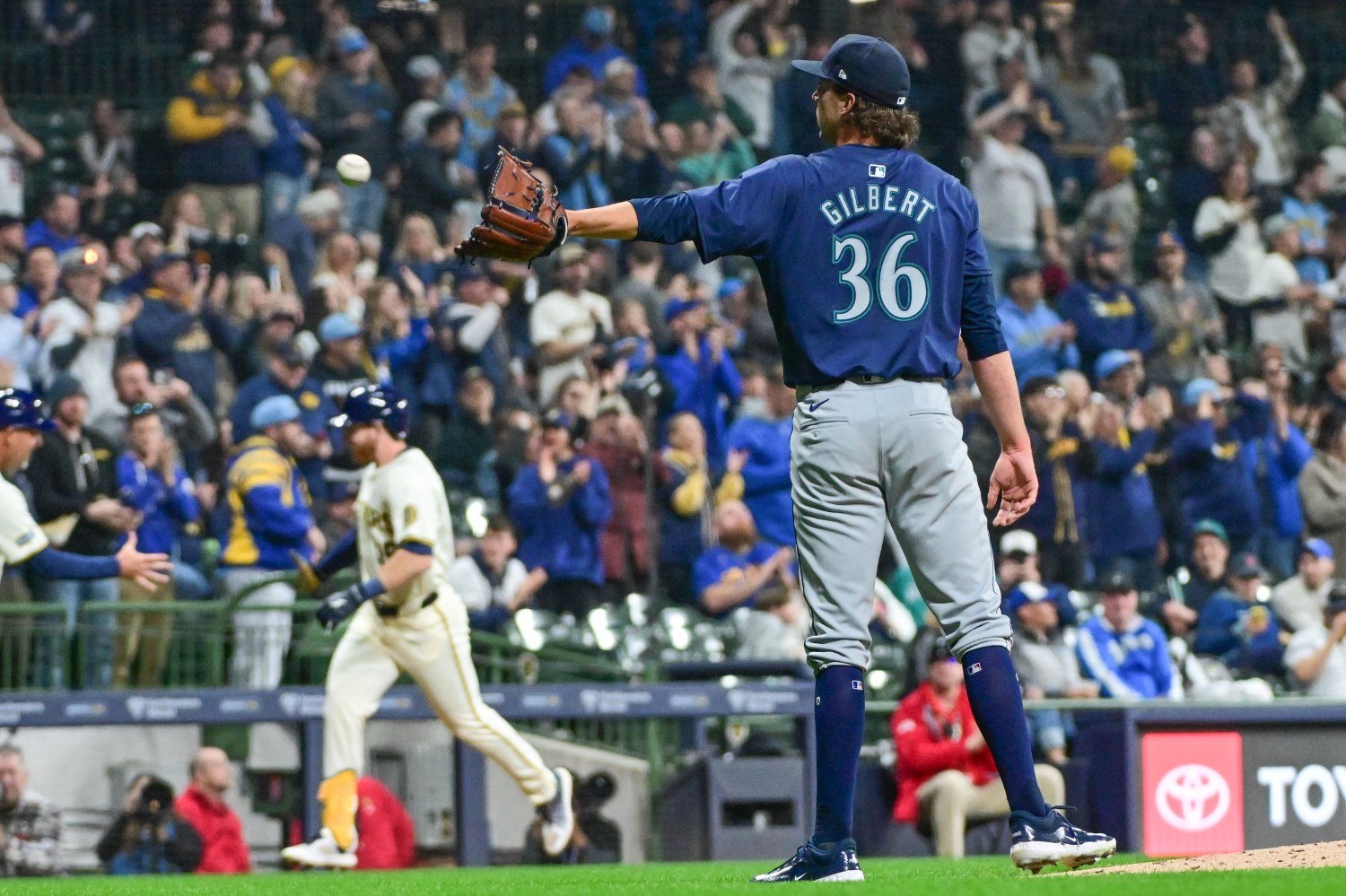 For MLB as a whole, it hasn't been an unusual season in terms of the percentage of pitching done by left-handed hurlers. For the last 30 years or so, the percentage of all plate appearances in which the pitcher was a southpaw has hovered in the mid- to high 20s, and this year, it's at 27.5%. In small segments of a full-season schedule, though, individual teams can experience extremes in this regard, and the Brewers have been at the far end of that spectrum. In 16 games, the Crew have only taken 73 total plate appearances against lefties. Admittedly, they've played two fewer games than most of the league, but the median number of PAs against them for the rest of baseball is 201, and five teams have already seen them at least 250 times. The Brewers could see nothing but lefties for three whole games and barely get into the top half of the league in trips to the plate against portsiders. This has implications for the development and involvement of many of the team's key pieces. It's probably helped Brice Turang and Sal Frelick get off to strong starts, and it's ensured plenty of playing time for Oliver Dunn and Jake Bauers. However, it's also made it harder for Pat Murphy to work Joey Ortiz into the mix as much as he would have liked to by now, and (since William Contreras views days off as affronts to his professional pride) it's rendered Gary Sánchez almost irrelevant. Jackson Chourio's ugly stat line doesn't quite allow us to evaluate him on equal footing with other rookies, because only seven of his 66 plate appearances have come against lefties. The Brewers signed Rhys Hoskins this winter partially because he crushes left-handed pitching, but he's only faced a lefty five times all season. With their versatile and modular roster, the team has still been able to gain the platoon advantage at about an average rate during this stretch, but for guys like Chourio, Hoskins, Willy Adames, and William Contreras, the lack of chances to see lefties is distorting their numbers. (This parenthetical is my obligatory acknowledgment of the Brewers Hitters Reverse Split Phenomenon, which I think there's basically nothing to, but which I dare not totally dismiss or pretend not to have noticed. Yes, Adames is a better hitter against righties for his career, so he probably doesn't mind this long stretch of seeing them almost all the time. It might even be distorting his numbers in a positive way.) This trend won't abate over the weekend. All three scheduled starters for the Cardinals are right-handed. They do have three lefties in their bullpen, though, so the Crew could finally get a handful of looks at lefties during a single series. Eventually, this will even out, and while that will be bad news for Turang and Frelick, it might be very good news for guys like Blake Perkins (a switch-hitter who's stronger from the right side) and Joey Wiemer, in addition to those players already discussed. The Brewers are built to withstand fluctuations like these, and Murphy has proved adroit in managing the roster. When things balance themselves and the team sees more lefties, they could well do even better than they've done over the first three weeks of the campaign.
 -
Shewww my brain is not in good shape today. I knew that! I swear! Haha. For some reason, today, 2022 was last fall in my head. Thanks for catching it.
-
The Milwaukee Brewers are going to spend the whole season mixing and matching pitching options. Thanks to some injuries and a densely packed schedule, they need some bridge innings, so they've called up a righty who has seized the attention of pitching nerds everywhere. Image courtesy of © Mark J. Rebilas-USA TODAY Sports His name will live in infamy for years in Cleveland. The Guardians gave up infield prospect Junior Caminero to acquire Tobias Myers from the Rays a couple of years ago, and now, Caminero is one of baseball's top prospects. Myers never turned into anything for Cleveland, and received his release at the end of 2022. The Brewers scooped him up, though, and the early returns on their much smaller investment in Myers look awfully good. The righthander has some interesting characteristics on his fastball, and his pitch mix is intriguing. In two starts with Triple-A Nashville, Myers sat 91-95 MPH with his heater and touched 97. That capacity for adding and subtracting is valuable, and so is (or can be) the cut-ride shape of the pitch. Now, the carry on that fastball deserves a little more scrutiny. Because Myers's raw induced vertical break is very high (meaning that, relative to an average four-seamer, it has more apparent rising action), there's been a lot of excitement about the upside on that pitch. That's fair, but we should moderate that enthusiasm slightly. A pitch coming out of a lower release point or arm slot with similar movement would be truly elite. Myers, however, comes straight over the top, so some of his carry is created by his arm path, and it's not as deceptive as the numbers might imply. For just that reason, though, the other pitches here are exciting. Myers's changeup is nothing special, and probably won't even get ground balls at the rate necessary to make it usable at the big-league level, but his cutter, slider, and curveball are great compliments to that four-seamer. Leftíes will be able to spot the sidespin on his slider, but for that very reason, he sticks to the cutter and curveball against them, The cutter is an all-purpose weapon, a power breaking ball that can tie up lefties and dip off the plate for chases and whiffs to righties. A few recent passers-through have had very short stays with the Brewers. Kevin Herget joined the active roster, but was then designated for assignment without even making an appearance. Vladimir Gutierrez was claimed, then waived, the latter as part of the transaction to put Myers on the 40-man roster for Wednesday's game. Jared Koenig pitched very well in two outings as a call-up this week, but would be down for a day or two, so he's now headed back to Nashville. If he pans out, Myers is likely to stick around a bit longer. It wouldn't be a shock to see Wade Miley go back to the injured list, after he was hit in the knee by a comebacker Tuesday night. Myers could stick around as a bulk guy or member of the rotation for the medium-term future. It's also possible that this is the first of two or three stints for Myers this year, even if he's successful. The team will work through a lot of options; it's only mid-April. Still, compared to new arrivals like Herget, Gutierrez, or even Koenig, Myers is an interesting upside guy. If he shows the stuff that has gotten the team sufficiently interested to do this, he'll become an important part of the story of this Brewers season. View full article
-
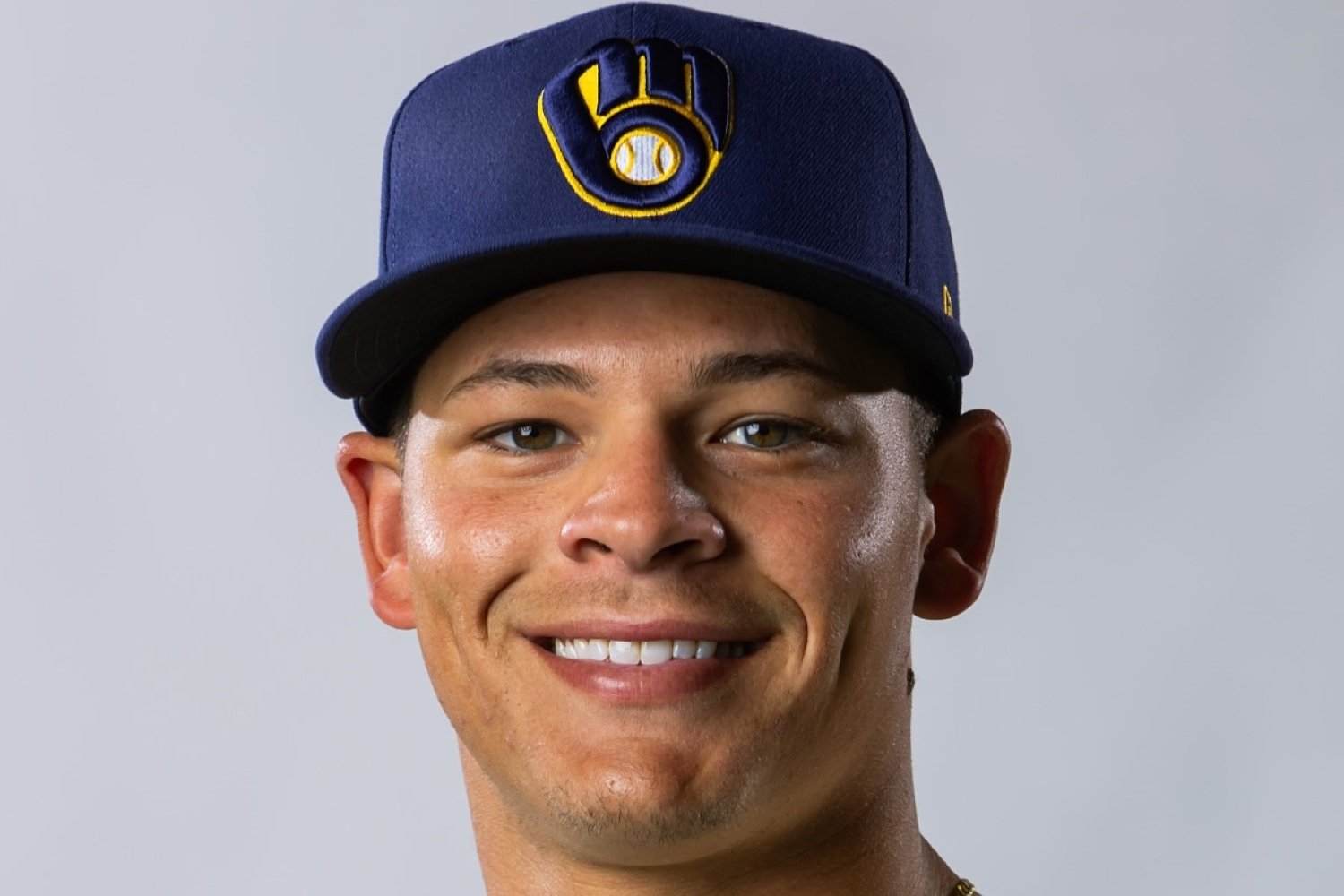 His name will live in infamy for years in Cleveland. The Guardians gave up infield prospect Junior Caminero to acquire Tobias Myers from the Rays a couple of years ago, and now, Caminero is one of baseball's top prospects. Myers never turned into anything for Cleveland, and received his release at the end of 2022. The Brewers scooped him up, though, and the early returns on their much smaller investment in Myers look awfully good. The righthander has some interesting characteristics on his fastball, and his pitch mix is intriguing. In two starts with Triple-A Nashville, Myers sat 91-95 MPH with his heater and touched 97. That capacity for adding and subtracting is valuable, and so is (or can be) the cut-ride shape of the pitch. Now, the carry on that fastball deserves a little more scrutiny. Because Myers's raw induced vertical break is very high (meaning that, relative to an average four-seamer, it has more apparent rising action), there's been a lot of excitement about the upside on that pitch. That's fair, but we should moderate that enthusiasm slightly. A pitch coming out of a lower release point or arm slot with similar movement would be truly elite. Myers, however, comes straight over the top, so some of his carry is created by his arm path, and it's not as deceptive as the numbers might imply. For just that reason, though, the other pitches here are exciting. Myers's changeup is nothing special, and probably won't even get ground balls at the rate necessary to make it usable at the big-league level, but his cutter, slider, and curveball are great compliments to that four-seamer. Leftíes will be able to spot the sidespin on his slider, but for that very reason, he sticks to the cutter and curveball against them, The cutter is an all-purpose weapon, a power breaking ball that can tie up lefties and dip off the plate for chases and whiffs to righties. A few recent passers-through have had very short stays with the Brewers. Kevin Herget joined the active roster, but was then designated for assignment without even making an appearance. Vladimir Gutierrez was claimed, then waived, the latter as part of the transaction to put Myers on the 40-man roster for Wednesday's game. Jared Koenig pitched very well in two outings as a call-up this week, but would be down for a day or two, so he's now headed back to Nashville. If he pans out, Myers is likely to stick around a bit longer. It wouldn't be a shock to see Wade Miley go back to the injured list, after he was hit in the knee by a comebacker Tuesday night. Myers could stick around as a bulk guy or member of the rotation for the medium-term future. It's also possible that this is the first of two or three stints for Myers this year, even if he's successful. The team will work through a lot of options; it's only mid-April. Still, compared to new arrivals like Herget, Gutierrez, or even Koenig, Myers is an interesting upside guy. If he shows the stuff that has gotten the team sufficiently interested to do this, he'll become an important part of the story of this Brewers season.
 -
After a scorching start to his 2024 season, the Milwaukee Brewers' star left fielder suffered a low back strain that forced the team to put him on the injured list. How long until they'll be whole again? Image courtesy of © Albert Cesare/The Enquirer / USA TODAY NETWORK By all accounts, Christian Yelich is as frustrated as anyone. The Brewers' linchpin left-handed hitter and highest-paid player authored some gaudy numbers over the first fortnight of the season, promising a return to the robust, MVP-caliber production he gave them in 2018 and 2019--or at least a reprise of the All-Star-caliber stuff he did for the bulk of 2023. Yelich has battled nagging back trouble for years, though, and that happened again at a terrible time. Yelich being sidelined has noticeably shortened the Brewers' lineup, which was the class of the league during their torrid 10-3 start. His absence coincides with a three-game losing streak that has brought Pat Murphy's team back down to Earth rather rudely, but it's not where they are now that has anyone worried. Instead, it's whether they'll rebound, or continue to sag and struggle without their slugging left fielder. Not yet ready to burn Eric Haase or to entrust Tyler Black with regular-season at-bats at the highest level, the Crew turned to Owen Miller to fill Yelich's spot on the roster Tuesday. Miller might not be the long-term solution, but by selecting him now (when they could have opted to bring back Andruw Monasterio sooner than they're otherwise allowed to, because the need for a player was created by an IL placement), they're showing a modicum of faith in the versatile but light-hitting Wisconsin native. In Yelich's absence, it feels like the main playing time beneficiaries will be Blake Perkins and Joey Wiemer. Expect those guys to be penciled into the lineup regularly for around a month. Similar injuries to other hitters (and to Yelich himself) at around this stage of the season in recent years have led to an average of four weeks on the shelf, with the median slightly (but perhaps misleadingly) lower. Without Yelich in the field, the team will improve defensively--not because he's bad, per se, but because Wiemer and Perkins are very good defenders, who will now mix in with the equally estimable Sal Frelick and Jackson Chourio. It's Yelich's offensive output that will be tough to replace. Jake Bauers might be the first player given a chance to do so, but he's not the best. He had a double and an exceptionally hard-hit lineout Tuesday, but his strikeout rate remains deleteriously high, and he hasn't consistently generated the requisite power to overcome that. He's only hitting .199/.274/.404 since the start of 2023. Putting Wiemer and Perkins in the lineup will continue to push guys like Gary Sánchez, Willy Adames, and Bauers higher in it. Yelich will be replaced offensively in pieces--a few extra plate appearances for each of several good hitters, and a significant but smaller chunk than he was due to get diverted to defensive specialists. The Brewers offense was already over its skis. Losing Yelich will accelerate their regression toward average, but it will also incrementally improve their run prevention. The Crew can survive the next month. They just need to mix and match wisely in their superstar's stead. View full article
-
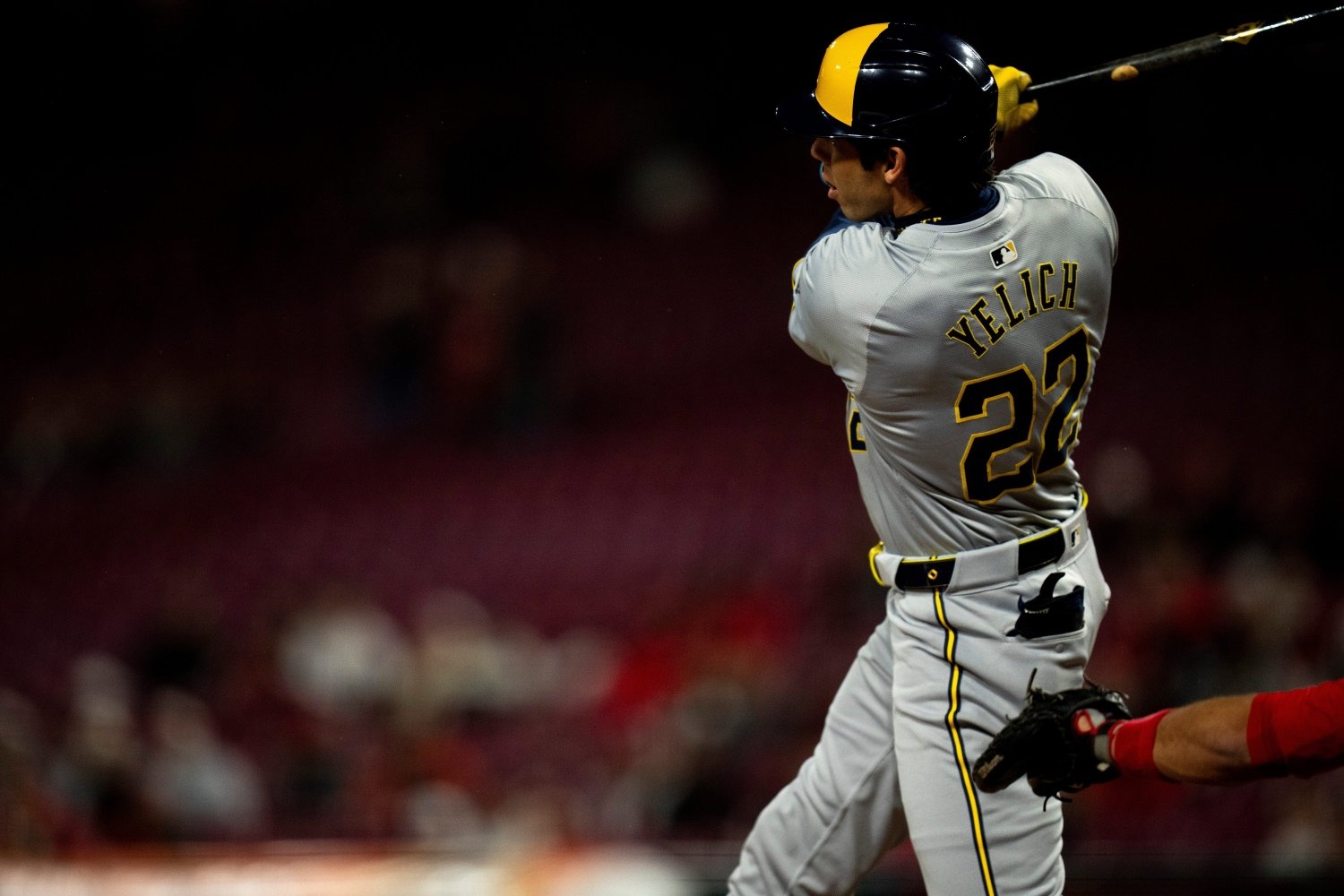 By all accounts, Christian Yelich is as frustrated as anyone. The Brewers' linchpin left-handed hitter and highest-paid player authored some gaudy numbers over the first fortnight of the season, promising a return to the robust, MVP-caliber production he gave them in 2018 and 2019--or at least a reprise of the All-Star-caliber stuff he did for the bulk of 2023. Yelich has battled nagging back trouble for years, though, and that happened again at a terrible time. Yelich being sidelined has noticeably shortened the Brewers' lineup, which was the class of the league during their torrid 10-3 start. His absence coincides with a three-game losing streak that has brought Pat Murphy's team back down to Earth rather rudely, but it's not where they are now that has anyone worried. Instead, it's whether they'll rebound, or continue to sag and struggle without their slugging left fielder. Not yet ready to burn Eric Haase or to entrust Tyler Black with regular-season at-bats at the highest level, the Crew turned to Owen Miller to fill Yelich's spot on the roster Tuesday. Miller might not be the long-term solution, but by selecting him now (when they could have opted to bring back Andruw Monasterio sooner than they're otherwise allowed to, because the need for a player was created by an IL placement), they're showing a modicum of faith in the versatile but light-hitting Wisconsin native. In Yelich's absence, it feels like the main playing time beneficiaries will be Blake Perkins and Joey Wiemer. Expect those guys to be penciled into the lineup regularly for around a month. Similar injuries to other hitters (and to Yelich himself) at around this stage of the season in recent years have led to an average of four weeks on the shelf, with the median slightly (but perhaps misleadingly) lower. Without Yelich in the field, the team will improve defensively--not because he's bad, per se, but because Wiemer and Perkins are very good defenders, who will now mix in with the equally estimable Sal Frelick and Jackson Chourio. It's Yelich's offensive output that will be tough to replace. Jake Bauers might be the first player given a chance to do so, but he's not the best. He had a double and an exceptionally hard-hit lineout Tuesday, but his strikeout rate remains deleteriously high, and he hasn't consistently generated the requisite power to overcome that. He's only hitting .199/.274/.404 since the start of 2023. Putting Wiemer and Perkins in the lineup will continue to push guys like Gary Sánchez, Willy Adames, and Bauers higher in it. Yelich will be replaced offensively in pieces--a few extra plate appearances for each of several good hitters, and a significant but smaller chunk than he was due to get diverted to defensive specialists. The Brewers offense was already over its skis. Losing Yelich will accelerate their regression toward average, but it will also incrementally improve their run prevention. The Crew can survive the next month. They just need to mix and match wisely in their superstar's stead.
- 3 comments
-
- 1
-

-
- christian yelich
- joey wiemer
- (and 1 more)
-
I would NOT assume this was the Brewers' idea. They've thrived by helping Hoby Milner, Bryse Wilson, and Joel Payamps go exactly the opposite direction, fleshing out two distinct looks on the fastball for each. They're pretty flexible and might have liked the notion of more consistency, but I would bet this was a comfort-driven decision by Uribe, informed or accepted by the Crew, rather than one they initiated.
-
Though the Milwaukee Brewers lost Monday night, the silver linings were bright enough to make the day feel positively sunny. The biggest one was their rookie phenom, whose night at the plate was scintillating. Image courtesy of © Michael McLoone-USA TODAY Sports On a night when Jackson Chourio drew a ninth-inning walk to stretch out a (doomed, but valiant) rally, that impressive plate appearance might have been his least dazzling one. Chourio collected two hits on the evening, as well, including his third career home run. He also hit a fly ball to right-center field that died just shy of the wall, but which he hit even harder than his dinger. His power is extremely real, and not a far-off promise. Proof of that fact: Chourio had four batted balls on the night, all four of which left his lumber at 97 miles per hour or more. That makes him just the seventh 20-year-old to crack four balls 95 MPH or harder in a single game during the Statcast Era, going back to 2015. The other six are: Wander Franco Vladimir Guerrero Jr. Fernando Tatis Jr. Juan Soto Carlos Correa Ozzie Albies Other than Franco (for reasons far, far from the actual game), all of these are stars, and all but Albies are full-fledged superstars. Correa and Albies have seen their power diminish a bit, and Guerrero has been inconsistent, but all of these players have shown the potential to hit for near-elite power, and in none of these cases did it take until they were 23 or 25 years old. Expect Chourio to keep hitting for power, even if (and even as) he goes through a tough adjustment period as this season progresses. The league will target his weaknesses and pitch away from his strengths, but he's already shown the ability to hit non-meatballs hard. His homer Monday came on a changeup that had too much of the zone, but the ball hit just as well to the opposite field was on a slider that reached the outside corner. Here's Chourio's first-inning single off Joe Musgrove, on a sinker low and in. He was sitting on a fastball, and dropped the barrel on it. This was his hardest-hit ball of the night, and only needed another few degrees of lift to go for extra bases. He was all over the ball. Chourio Yanked Sinker 24.mp4 Now, here's his third time up, after that single and the home run. Musgrove fell behind 1-0, and Chourio set himself to hammer another fastball. As we said, though, Musgrove went slider instead. That Chourio adjusted to it, stayed back, and still lashed the ball hard toward the gap underscores how special he's already become. Chourio Oppo Fly Ball 24.mp4 Chourio isn't a sensational athlete who will have to piece together value by playing great defense and stealing bases while we wait for his power to come along; his power is already in evidence and abundance. If that wasn't clear before Monday night, it should be now. View full article
-
Monday Night Put MLB on Notice: Jackson Chourio is Already a Slugger
Matthew Trueblood posted an article in Brewers
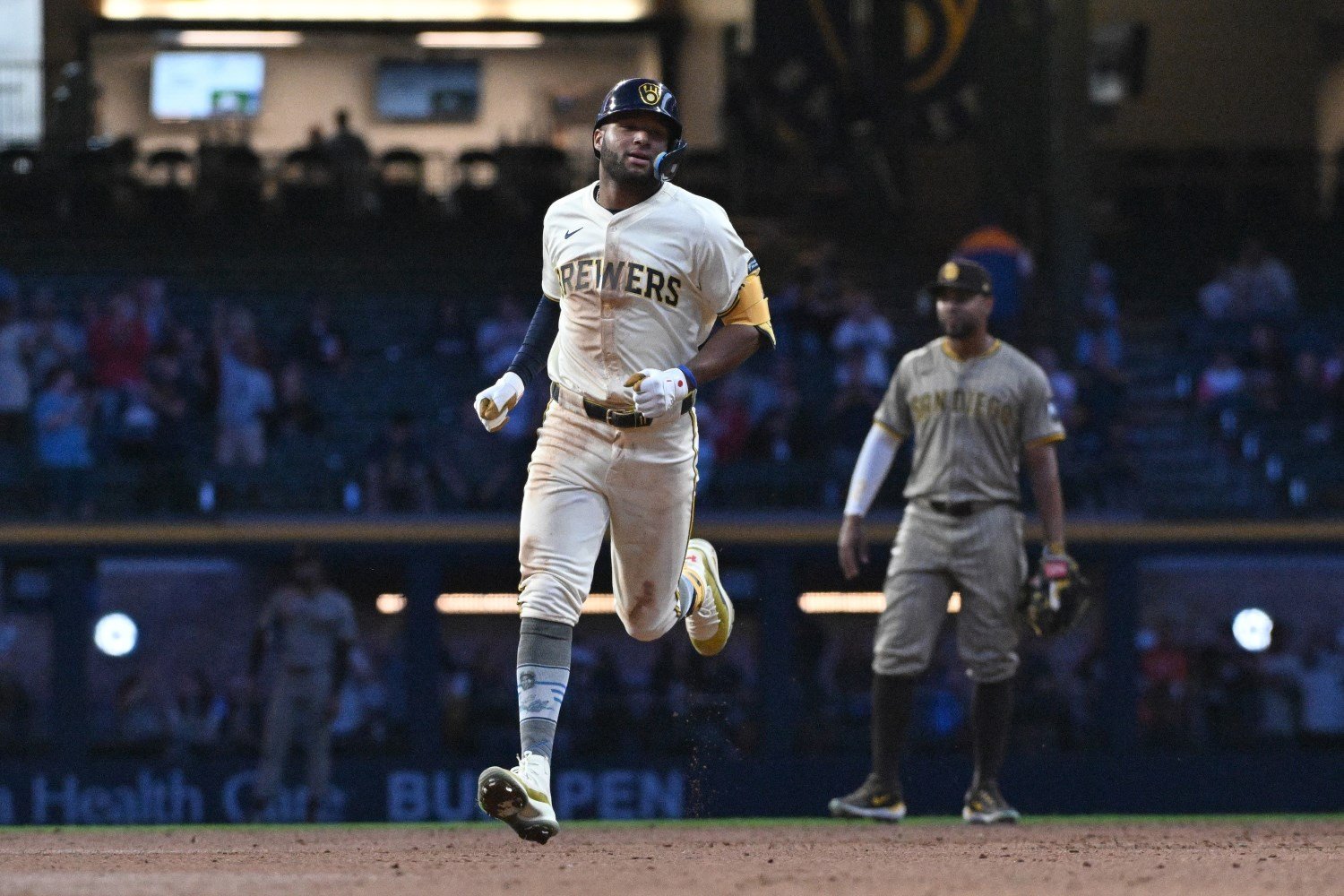 On a night when Jackson Chourio drew a ninth-inning walk to stretch out a (doomed, but valiant) rally, that impressive plate appearance might have been his least dazzling one. Chourio collected two hits on the evening, as well, including his third career home run. He also hit a fly ball to right-center field that died just shy of the wall, but which he hit even harder than his dinger. His power is extremely real, and not a far-off promise. Proof of that fact: Chourio had four batted balls on the night, all four of which left his lumber at 97 miles per hour or more. That makes him just the seventh 20-year-old to crack four balls 95 MPH or harder in a single game during the Statcast Era, going back to 2015. The other six are: Wander Franco Vladimir Guerrero Jr. Fernando Tatis Jr. Juan Soto Carlos Correa Ozzie Albies Other than Franco (for reasons far, far from the actual game), all of these are stars, and all but Albies are full-fledged superstars. Correa and Albies have seen their power diminish a bit, and Guerrero has been inconsistent, but all of these players have shown the potential to hit for near-elite power, and in none of these cases did it take until they were 23 or 25 years old. Expect Chourio to keep hitting for power, even if (and even as) he goes through a tough adjustment period as this season progresses. The league will target his weaknesses and pitch away from his strengths, but he's already shown the ability to hit non-meatballs hard. His homer Monday came on a changeup that had too much of the zone, but the ball hit just as well to the opposite field was on a slider that reached the outside corner. Here's Chourio's first-inning single off Joe Musgrove, on a sinker low and in. He was sitting on a fastball, and dropped the barrel on it. This was his hardest-hit ball of the night, and only needed another few degrees of lift to go for extra bases. He was all over the ball. Chourio Yanked Sinker 24.mp4 Now, here's his third time up, after that single and the home run. Musgrove fell behind 1-0, and Chourio set himself to hammer another fastball. As we said, though, Musgrove went slider instead. That Chourio adjusted to it, stayed back, and still lashed the ball hard toward the gap underscores how special he's already become. Chourio Oppo Fly Ball 24.mp4 Chourio isn't a sensational athlete who will have to piece together value by playing great defense and stealing bases while we wait for his power to come along; his power is already in evidence and abundance. If that wasn't clear before Monday night, it should be now.
 -
Talk to pitchers and pitching coaches about pitch mixes, and you'll eventually hear about how trying to add a pitch can cannibalize another one. As it turns out, subtracting a pitch can have a similar effect. Image courtesy of © Katie Stratman-USA TODAY Sports It has not been a good start to the season for Abner Uribe. In less than three weeks, he's gone from the guy the organization clearly wanted to fit for a closer's mantle to a less effective version of teammate Elvis Peguero. Last year, his arm was truly special. This year, it still looks strong, but in an ominously ordinary way. The good news here is that nothing seems to have materially changed when it comes to Uribe's real superweapon, the sweeper or slider that lays waste to opposing hitters. There are 1,188 specific pitch types thrown by pitchers (i.e., Uribe's sinker, his sweeper, Freddy Peralta's four pitches, etc.) at least 20 times so far this season. Uribe's sweeper ranks 13th in Baseball Prospectus's cutting-edge StuffPro. It's a devastating breaking ball, especially because of how hard he throws when he's not throwing it. The bad news, as one would guess about a reliever with a 7.50 ERA and uninspiring peripheral indicators around that figure, is most everything else. Uribe isn't missing bats. He's issuing too many walks. Hitters are making much harder contact. Here's why all of that is happening. Uribe appears to have tried to pare down from two distinct fastballs (a four-seamer and a sinker) to one this year. If you're a regular here, that's not news. It's been the subject of a good piece by Jake McKibbin already this month, and Jack Stern and Spencer Michaelis had a good conversation about it on the nascent Brewer Fanatic Podcast. I come to you now only because I think I can add a little bit more to the conversation. Firstly, we need to acknowledge something: Uribe's fastballs are not created equal, in any sense. His four-seamer lacked the kind of explosive rising action that typically makes such offerings dominant; that's why Jack took the position that its absence is mostly irrelevant, on the podcast. His sinker has more of the traditional action one associates with a pitch of its type, and more overall movement, so it does make sense for it to be his primary heater. It seems clear that, in pursuit of better command of his fastball, Uribe has tried to reduce the difficulty of that endeavor by halving the number of fastballs he's trying to throw. It's a common approach. It's easier to execute a pitch if that pitch doesn't have a cousin that interferes with your muscle memory. Remember all those electrifying top-end velocities last year, though? Well, they didn't come on the sinker. A recent article at BF sister site Twins Daily demonstrated that each added mile per hour on a fastball is worth about 0.2 runs per 100 pitches thrown. That sounds infinitesimal, but it's not, and not only because even a relief pitcher usually throws several hundred fastballs within a season. Velocity lends margin for error. Uribe's four-seamer worked anywhere from 1.0 to 1.5 miles per hour higher than his sinker last year, which means that the sinker needed to make up meaningful ground with its superior movement to really be more valuable. As Spencer said on the podcast, too, the four-seamer can be thrown at the top of the zone (even with lackluster rising action, at that speed, a high fastball wins), whereas Uribe's heavy sinker doesn't work there. Aha! There's something. As Uribe has gone to shelve his four-seamer, he seems to have muddied the movement direction on his sinker. This is the reverse cannibalism alluded to at the top of this piece. Check out the direction of the spin Uribe imparted on his sinkers in 2023, compared to 2024. Trying to get rid of the four-seamer but still attack the top of the zone at times (with a sinker that, unlike some others, just isn't well-suited to that) has been, predictably, a disaster. Uribe is leaving his heat right in the middle of the plate much too often, in no small part because he's not getting as much armside run on the offering. In case you're not convinced that his arm is still missing his four-seamer while his brain tells it to huck sinkers, though, consider this, too. Uribe is achieving more consistent extension, but at the expense of those pitches with the greatest extension and the highest velocity last year. He's getting around the ball a bit--not cutting it, exactly, but staying too true behind it, rather than pronating the way the best version of his sinker requires. Uribe's horizontal release and approach angles show this. The ball isn't entering the zone moving sharply toward a right-handed batter; it's taking that backspin he's putting on it and holding its lane. That's why it's straying over the middle of the plate too often, and why it's so much more hittable. Uribe doesn't necessarily need to bring back his four-seamer, although without it, he's a much lower-ceiling pitcher. Even with his great slider, a sinker-only profile makes him a better version of Peguero even at his best. The version who dominates on the same level as a Josh Hader or Devin Williams, and who allows the team to continue its dynasty of elite relievers in the National League, throws the four-seamer to enforce a change of eye levels and to enjoy the ancillary benefits of that extra tick of velocity. If Uribe doesn't restore that pitch to its place in his arsenal, though, he can still be great. It will just require further training and mechanical work. He can't let the ghost of his four-seamer keep discoloring his sinkers. He needs the sinker and the slider to work in harmony, which means having better command of each and keeping the sinker looking like a sinker. He has to stop pulling it, and just let it go. View full article
-
Abner Uribe Went Looking for Consistency and Found Only Trouble
Matthew Trueblood posted an article in Brewers
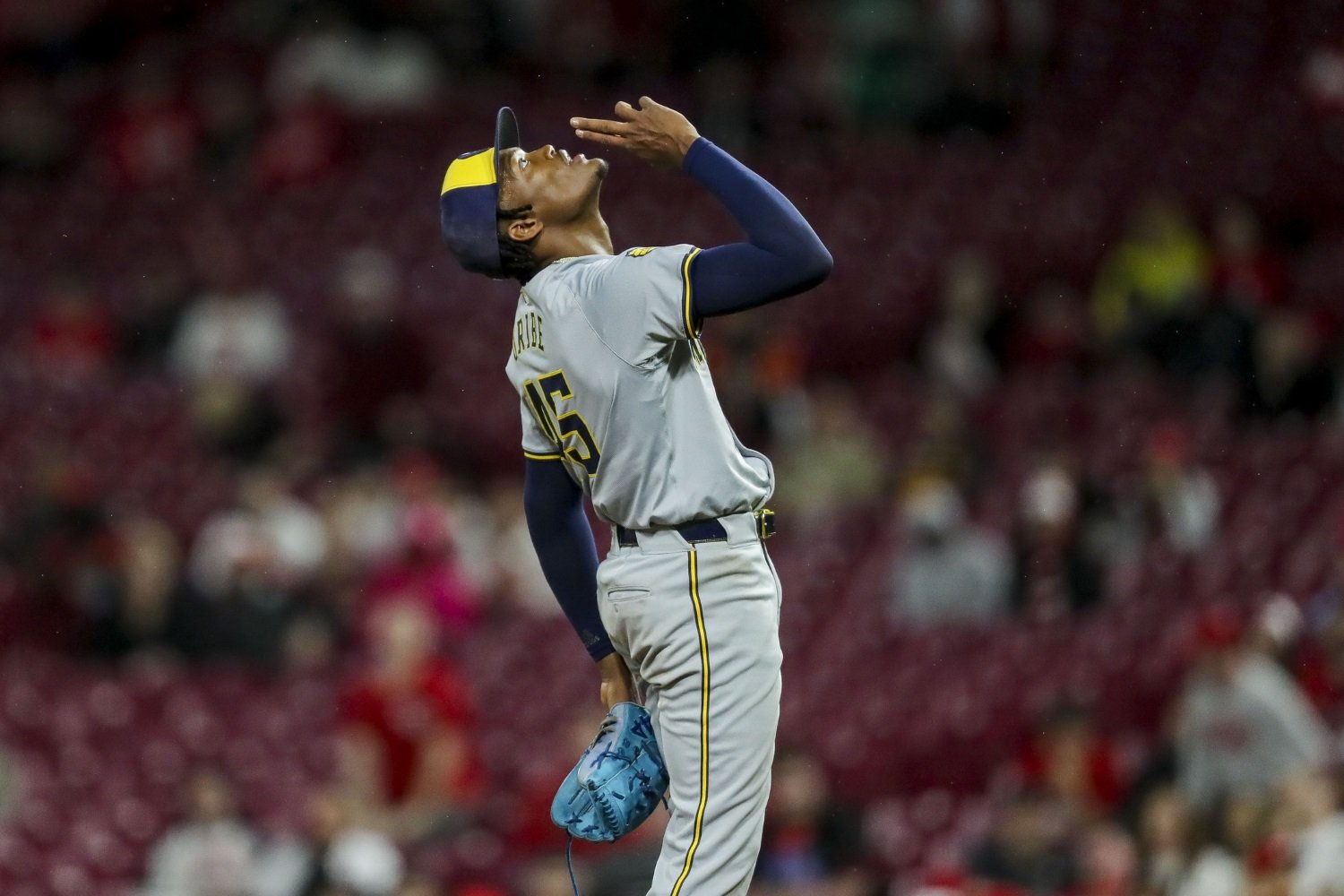 It has not been a good start to the season for Abner Uribe. In less than three weeks, he's gone from the guy the organization clearly wanted to fit for a closer's mantle to a less effective version of teammate Elvis Peguero. Last year, his arm was truly special. This year, it still looks strong, but in an ominously ordinary way. The good news here is that nothing seems to have materially changed when it comes to Uribe's real superweapon, the sweeper or slider that lays waste to opposing hitters. There are 1,188 specific pitch types thrown by pitchers (i.e., Uribe's sinker, his sweeper, Freddy Peralta's four pitches, etc.) at least 20 times so far this season. Uribe's sweeper ranks 13th in Baseball Prospectus's cutting-edge StuffPro. It's a devastating breaking ball, especially because of how hard he throws when he's not throwing it. The bad news, as one would guess about a reliever with a 7.50 ERA and uninspiring peripheral indicators around that figure, is most everything else. Uribe isn't missing bats. He's issuing too many walks. Hitters are making much harder contact. Here's why all of that is happening. Uribe appears to have tried to pare down from two distinct fastballs (a four-seamer and a sinker) to one this year. If you're a regular here, that's not news. It's been the subject of a good piece by Jake McKibbin already this month, and Jack Stern and Spencer Michaelis had a good conversation about it on the nascent Brewer Fanatic Podcast. I come to you now only because I think I can add a little bit more to the conversation. Firstly, we need to acknowledge something: Uribe's fastballs are not created equal, in any sense. His four-seamer lacked the kind of explosive rising action that typically makes such offerings dominant; that's why Jack took the position that its absence is mostly irrelevant, on the podcast. His sinker has more of the traditional action one associates with a pitch of its type, and more overall movement, so it does make sense for it to be his primary heater. It seems clear that, in pursuit of better command of his fastball, Uribe has tried to reduce the difficulty of that endeavor by halving the number of fastballs he's trying to throw. It's a common approach. It's easier to execute a pitch if that pitch doesn't have a cousin that interferes with your muscle memory. Remember all those electrifying top-end velocities last year, though? Well, they didn't come on the sinker. A recent article at BF sister site Twins Daily demonstrated that each added mile per hour on a fastball is worth about 0.2 runs per 100 pitches thrown. That sounds infinitesimal, but it's not, and not only because even a relief pitcher usually throws several hundred fastballs within a season. Velocity lends margin for error. Uribe's four-seamer worked anywhere from 1.0 to 1.5 miles per hour higher than his sinker last year, which means that the sinker needed to make up meaningful ground with its superior movement to really be more valuable. As Spencer said on the podcast, too, the four-seamer can be thrown at the top of the zone (even with lackluster rising action, at that speed, a high fastball wins), whereas Uribe's heavy sinker doesn't work there. Aha! There's something. As Uribe has gone to shelve his four-seamer, he seems to have muddied the movement direction on his sinker. This is the reverse cannibalism alluded to at the top of this piece. Check out the direction of the spin Uribe imparted on his sinkers in 2023, compared to 2024. Trying to get rid of the four-seamer but still attack the top of the zone at times (with a sinker that, unlike some others, just isn't well-suited to that) has been, predictably, a disaster. Uribe is leaving his heat right in the middle of the plate much too often, in no small part because he's not getting as much armside run on the offering. In case you're not convinced that his arm is still missing his four-seamer while his brain tells it to huck sinkers, though, consider this, too. Uribe is achieving more consistent extension, but at the expense of those pitches with the greatest extension and the highest velocity last year. He's getting around the ball a bit--not cutting it, exactly, but staying too true behind it, rather than pronating the way the best version of his sinker requires. Uribe's horizontal release and approach angles show this. The ball isn't entering the zone moving sharply toward a right-handed batter; it's taking that backspin he's putting on it and holding its lane. That's why it's straying over the middle of the plate too often, and why it's so much more hittable. Uribe doesn't necessarily need to bring back his four-seamer, although without it, he's a much lower-ceiling pitcher. Even with his great slider, a sinker-only profile makes him a better version of Peguero even at his best. The version who dominates on the same level as a Josh Hader or Devin Williams, and who allows the team to continue its dynasty of elite relievers in the National League, throws the four-seamer to enforce a change of eye levels and to enjoy the ancillary benefits of that extra tick of velocity. If Uribe doesn't restore that pitch to its place in his arsenal, though, he can still be great. It will just require further training and mechanical work. He can't let the ghost of his four-seamer keep discoloring his sinkers. He needs the sinker and the slider to work in harmony, which means having better command of each and keeping the sinker looking like a sinker. He has to stop pulling it, and just let it go.
 -
Peering into baseball's future, many fans and pundits either predict or demand that the long regular season eventually be shortened, to offset the ever-expanding postseason. Whether in order to do that or not, though, MLB should commit itself to making Opening Day wait until Jackie Robinson Day each spring. Image courtesy of © Jeff Hanisch-USA TODAY Sports There is no figure in baseball history more important than Jackie Robinson. The racist color line that compromised the integrity and the competitive credibility of MLB until after World War II and forced the creation of Negro Leagues wherein players just as good were paid much less and treated as inherently inferior was a doomed idea from its inception; Robinson is not the reason it fell. He is, however, the man who broke through that barrier of bigotry with both dignity and unapologetic intensity. It was he who was showered with violent epithets and threats of physical harm. It was he who weathered the abuse of a league not ready to face its own miserable villainy or accept that a seismic change had made its overdue arrival. Major League Baseball was a weak euphemism until Jackie Robinson took the field for the Dodgers. It was fraudulent and morally bankrupt. Baseball, in every important way, didn't start until Robinson asserted his right to play baseball with a bunch of White men, and immediately proved that he was better than nearly all of them. In recognition of that reality, the league that now owes Robinson virtually all of its legitimacy with the American public should be humble enough to wait a little longer each year to launch its long season. We will, eventually, revert to the 154-game schedule Robinson's Dodgers played throughout his career, or scale all the way back to 144 contests, clearing more of the excess inventory from their lower-priced section and facilitating the full flowering of the massive playoff system the league long ago elected. That eliminates the need for regular-season baseball in March. Fans complain bitterly, every year, about the cold weather in which many early-season games have to be played. Injuries are a major storyline for the game, and pitchers who carry their teams through the 162-game marathon and finish with a long October sprint are at greatly increased risk. All of these things can be alleviated, somewhat, by moving the start of the season back to mid-April. There are more good reasons to do it than there are not to do it. Still, I don't want us to lose sight of the main thing here. It's this: MLB needed Jackie Robinson more than Robinson (or any of his fellow Black ballplayers) needed MLB. That fact has gotten lost a bit, in the fog of time. Stories scrubbed of some of the hideous details for easier digestion and telling to children have left the impression that Robinson was allowed to play through some institutional benevolence, and that he needed the Dodgers to leave a glorious legacy in baseball. To the narrow extents to which those things are true, they're true only because of the pervasive, pernicious nature of structural racism in the United States at that time. The league should, therefore, acknowledge its debt to Robinson, rather than congratulating itself for the legacy he had to take from it by force. Spring training can wait until near the end of February. We can all have a slightly longer offseason. The regular season can open with an annual festival in celebration of Robinson, and of the other trailblazers who joined him. If the wait is uncomfortable, or if celebrating Robinson, Satchel Paige, Larry Doby, Josh Gibson, Oscar Charleston, Monte Irvin, Roy Campanella, Don Newcombe, Henry Aaron, and others at the expense of some fresh-faced rookie feels unfair, maybe we can use the occasion to meditate on the discomfort and unfairness of the way the game America called its own refused to call half its players its own, for the first half-century of its ascent to the pinnacle of the culture. I'm glad, at least, that Bud Selig ensured the visibility and vitality of Robinson's legacy during his time as the acting Commissioner of MLB. It's the noblest piece of Selig's own legacy, after he turned his eyes from Milwaukee toward New York and that seat of power. I love seeing every player in baseball put on No. 42 each year. I think it would be tremendous, though, if that was the first number everyone donned every season. We should always celebrated Jackie Robinson Day, but we should also remember that it's not purely a joyous holiday. View full article
-
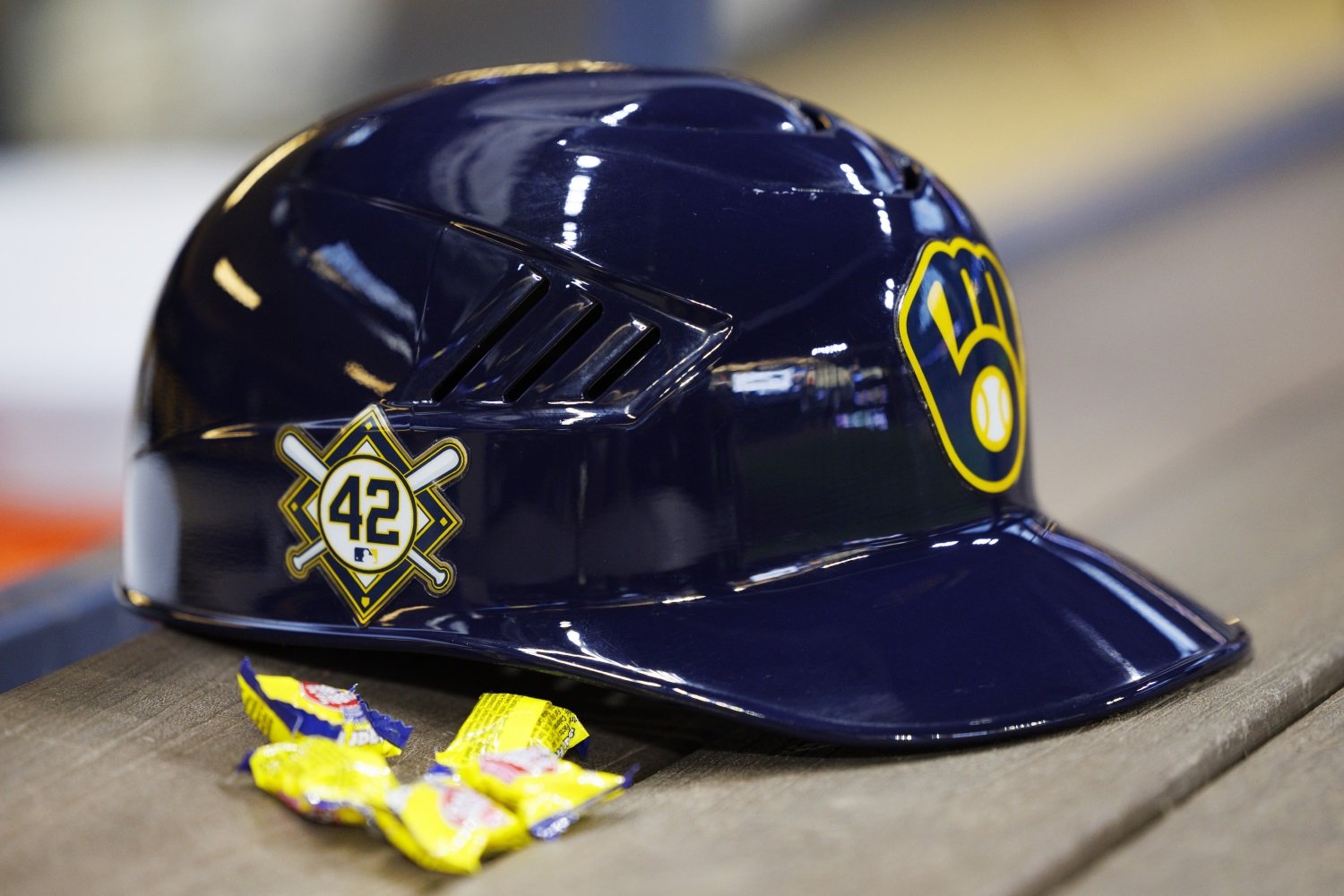 There is no figure in baseball history more important than Jackie Robinson. The racist color line that compromised the integrity and the competitive credibility of MLB until after World War II and forced the creation of Negro Leagues wherein players just as good were paid much less and treated as inherently inferior was a doomed idea from its inception; Robinson is not the reason it fell. He is, however, the man who broke through that barrier of bigotry with both dignity and unapologetic intensity. It was he who was showered with violent epithets and threats of physical harm. It was he who weathered the abuse of a league not ready to face its own miserable villainy or accept that a seismic change had made its overdue arrival. Major League Baseball was a weak euphemism until Jackie Robinson took the field for the Dodgers. It was fraudulent and morally bankrupt. Baseball, in every important way, didn't start until Robinson asserted his right to play baseball with a bunch of White men, and immediately proved that he was better than nearly all of them. In recognition of that reality, the league that now owes Robinson virtually all of its legitimacy with the American public should be humble enough to wait a little longer each year to launch its long season. We will, eventually, revert to the 154-game schedule Robinson's Dodgers played throughout his career, or scale all the way back to 144 contests, clearing more of the excess inventory from their lower-priced section and facilitating the full flowering of the massive playoff system the league long ago elected. That eliminates the need for regular-season baseball in March. Fans complain bitterly, every year, about the cold weather in which many early-season games have to be played. Injuries are a major storyline for the game, and pitchers who carry their teams through the 162-game marathon and finish with a long October sprint are at greatly increased risk. All of these things can be alleviated, somewhat, by moving the start of the season back to mid-April. There are more good reasons to do it than there are not to do it. Still, I don't want us to lose sight of the main thing here. It's this: MLB needed Jackie Robinson more than Robinson (or any of his fellow Black ballplayers) needed MLB. That fact has gotten lost a bit, in the fog of time. Stories scrubbed of some of the hideous details for easier digestion and telling to children have left the impression that Robinson was allowed to play through some institutional benevolence, and that he needed the Dodgers to leave a glorious legacy in baseball. To the narrow extents to which those things are true, they're true only because of the pervasive, pernicious nature of structural racism in the United States at that time. The league should, therefore, acknowledge its debt to Robinson, rather than congratulating itself for the legacy he had to take from it by force. Spring training can wait until near the end of February. We can all have a slightly longer offseason. The regular season can open with an annual festival in celebration of Robinson, and of the other trailblazers who joined him. If the wait is uncomfortable, or if celebrating Robinson, Satchel Paige, Larry Doby, Josh Gibson, Oscar Charleston, Monte Irvin, Roy Campanella, Don Newcombe, Henry Aaron, and others at the expense of some fresh-faced rookie feels unfair, maybe we can use the occasion to meditate on the discomfort and unfairness of the way the game America called its own refused to call half its players its own, for the first half-century of its ascent to the pinnacle of the culture. I'm glad, at least, that Bud Selig ensured the visibility and vitality of Robinson's legacy during his time as the acting Commissioner of MLB. It's the noblest piece of Selig's own legacy, after he turned his eyes from Milwaukee toward New York and that seat of power. I love seeing every player in baseball put on No. 42 each year. I think it would be tremendous, though, if that was the first number everyone donned every season. We should always celebrated Jackie Robinson Day, but we should also remember that it's not purely a joyous holiday.
 -
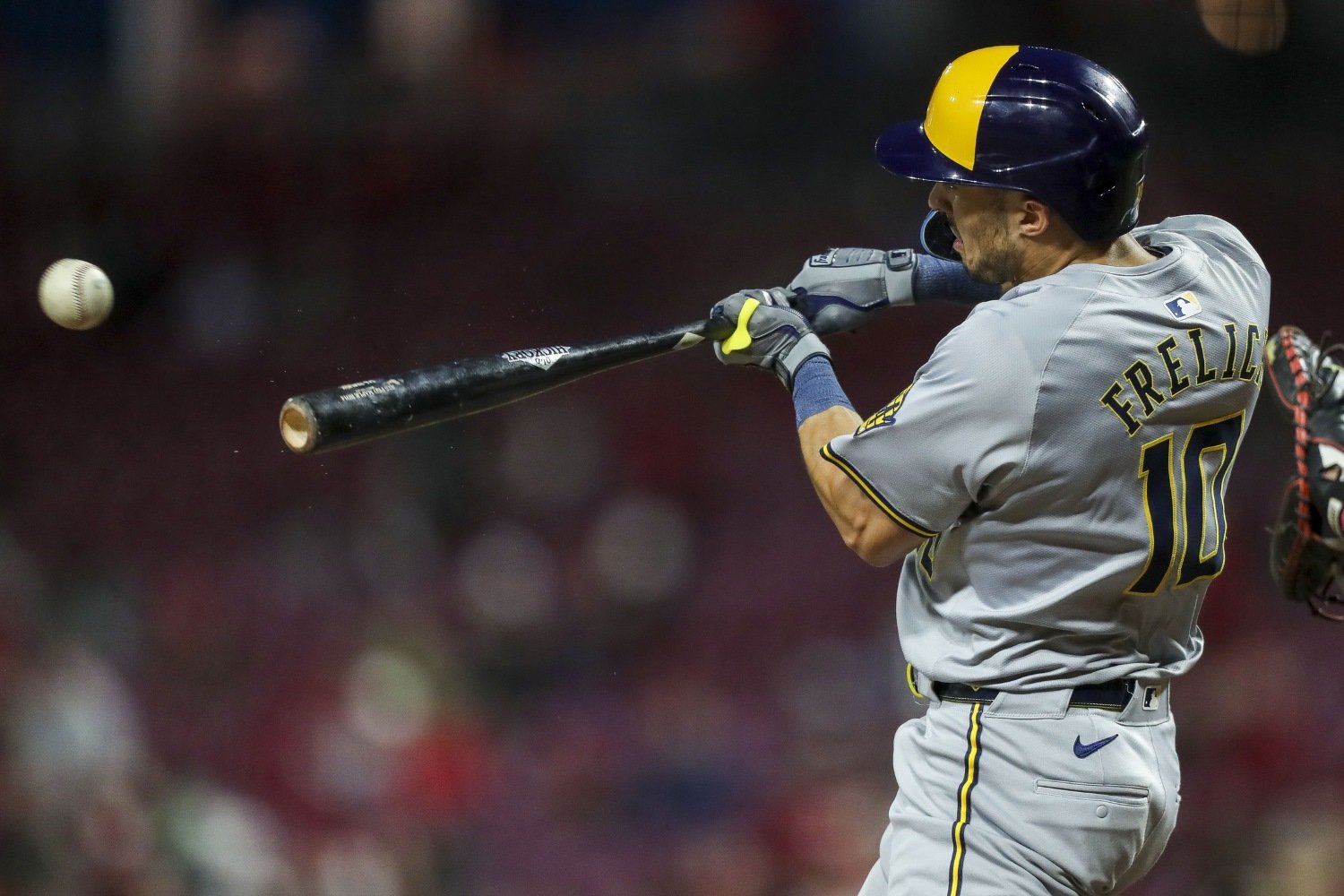 The glaring deficiency in the games of both Sal Frelick and Brice Turang, during encouraging rookie campaigns, was a shortfall in the power department. Neither player hit the ball hard enough (or even moderately hard often enough) to sustain the kind of offensive output for which the team is still hoping. They showed good plate discipline and the ability to put the bat on the ball at near-elite rates, they ran the bases aggressively and well, and they played great defense, but Frelick slugged .351, and Turang slugged just .300. Entering the offseason, the hope was that each would figure out how to leave a darker mark on the ball in 2024. It's very early, but so far, there's little evidence that any of that needed improvement is forthcoming. Each player has dragged their average exit velocity upward, in a tiny sample. Turang is up from an average of 84.6 miles per hour to 86.2. Frelick is up from 83.9 MPH to 85.2. The Brewers really needed to see a bigger boost, though, and specifically, they needed to see each increase their top 10 percent or so of exit velocities. Instead, each has set a lower ceiling, so far. They're not lifting the ball enough. They're not driving it in a fashion consistent with meaningful power production over time. Neither player changed his swing this winter. Neither has made a major change in approach. Both are doing an exceptional job of making contact and putting the ball in play, but they seem to be emphasizing that too much. It's coming at the expense of any real juice behind the ball when they strike it. Frelick named this as a problem he was trying to solve during spring training, but couched it solely in terms of tightening his strike zone. If that's still his focus, he needs to further tighten it, because his chase rate isn't down any meaningful amount, and he's yet to lock in on a section of the zone where he can do damage when he makes contact on swings. Turang's situation seems even more dire, despite his superb early results. He's still swinging mostly at pitches up in the zone, which he's still hitting mostly downward, albeit fairly sharply. There's nothing driving his success, except that the ball has crept through the infield exceptionally frequently in a fistful of instances. Both Turang and Frelick are actually striking out more this year, just north of 20 percent of the time. Neither is drawing walks at much more than an average rate. If not for Garrett Mitchell's injury at the tail end of spring training, Frelick's playing time might be squeezed right now. Oliver Dunn only got his chance to show what he can do because of Mitchell's injury, but now that that opportunity has come, he's shown that one thing he can do is hit the ball hard. He's also been a capable defensive third baseman. Mitchell, though a source of huge strikeout-centered risk, has big-time power. Joey Ortiz has his own exit velocity/launch angle problem, but it's one that offers more hope: his hard-hit balls just tend too strongly to be in a low launch-angle band. Since Matt Arnold said this week not to expect Mitchell back before June, we can assume Frelick will keep getting playing time for at least that long. Turang is even safer, because his defense has so much value and because his legs have both fueled a prettier batting line and allowed him to rack up value on the bases in the early stages of the campaign. Eventually, however, these two need to find their power stroke. Neither needs to be a 20-home run hitter, but they're not exceptional enough in other facets to make up for a total lack of pop. To stay helpful, they have to at least be able to jolt the ball over the wall 10 or 12 times, in everyday playing time. Right now, that's a pipe dream, based on their batted-ball profiles. Since both players had long power outages down the stretch last season (and since Andruw Monasterio had an even uglier one), it's worth watching this closely. It might be that all three are fatally afflicted with balsa bat syndrome, but it might also be true that the team needs to coach up power better. In the modern game, the bottom half of the lineup can't be full of guys who slap the ball and hope to scratch out an empty .320 on-base percentage. There has to be some danger there. The Brewers will, eventually, have to fix the problem of these young hitters' dearth of power. It's troubling enough, though, that they don't seem to have made any progress at all on that this winter.
- 11 comments
-
- 2
-
-
- brice turang
- sal frelick
- (and 1 more)
-
The Milwaukee Brewers got adequate production from a bevy of young hitters last season, but for nearly all of them, the first thing on the to-do list in preparing for 2024 was to generate more hard contact. That box, sadly, remains unchecked. Image courtesy of © Katie Stratman-USA TODAY Sports The glaring deficiency in the games of both Sal Frelick and Brice Turang, during encouraging rookie campaigns, was a shortfall in the power department. Neither player hit the ball hard enough (or even moderately hard often enough) to sustain the kind of offensive output for which the team is still hoping. They showed good plate discipline and the ability to put the bat on the ball at near-elite rates, they ran the bases aggressively and well, and they played great defense, but Frelick slugged .351, and Turang slugged just .300. Entering the offseason, the hope was that each would figure out how to leave a darker mark on the ball in 2024. It's very early, but so far, there's little evidence that any of that needed improvement is forthcoming. Each player has dragged their average exit velocity upward, in a tiny sample. Turang is up from an average of 84.6 miles per hour to 86.2. Frelick is up from 83.9 MPH to 85.2. The Brewers really needed to see a bigger boost, though, and specifically, they needed to see each increase their top 10 percent or so of exit velocities. Instead, each has set a lower ceiling, so far. They're not lifting the ball enough. They're not driving it in a fashion consistent with meaningful power production over time. Neither player changed his swing this winter. Neither has made a major change in approach. Both are doing an exceptional job of making contact and putting the ball in play, but they seem to be emphasizing that too much. It's coming at the expense of any real juice behind the ball when they strike it. Frelick named this as a problem he was trying to solve during spring training, but couched it solely in terms of tightening his strike zone. If that's still his focus, he needs to further tighten it, because his chase rate isn't down any meaningful amount, and he's yet to lock in on a section of the zone where he can do damage when he makes contact on swings. Turang's situation seems even more dire, despite his superb early results. He's still swinging mostly at pitches up in the zone, which he's still hitting mostly downward, albeit fairly sharply. There's nothing driving his success, except that the ball has crept through the infield exceptionally frequently in a fistful of instances. Both Turang and Frelick are actually striking out more this year, just north of 20 percent of the time. Neither is drawing walks at much more than an average rate. If not for Garrett Mitchell's injury at the tail end of spring training, Frelick's playing time might be squeezed right now. Oliver Dunn only got his chance to show what he can do because of Mitchell's injury, but now that that opportunity has come, he's shown that one thing he can do is hit the ball hard. He's also been a capable defensive third baseman. Mitchell, though a source of huge strikeout-centered risk, has big-time power. Joey Ortiz has his own exit velocity/launch angle problem, but it's one that offers more hope: his hard-hit balls just tend too strongly to be in a low launch-angle band. Since Matt Arnold said this week not to expect Mitchell back before June, we can assume Frelick will keep getting playing time for at least that long. Turang is even safer, because his defense has so much value and because his legs have both fueled a prettier batting line and allowed him to rack up value on the bases in the early stages of the campaign. Eventually, however, these two need to find their power stroke. Neither needs to be a 20-home run hitter, but they're not exceptional enough in other facets to make up for a total lack of pop. To stay helpful, they have to at least be able to jolt the ball over the wall 10 or 12 times, in everyday playing time. Right now, that's a pipe dream, based on their batted-ball profiles. Since both players had long power outages down the stretch last season (and since Andruw Monasterio had an even uglier one), it's worth watching this closely. It might be that all three are fatally afflicted with balsa bat syndrome, but it might also be true that the team needs to coach up power better. In the modern game, the bottom half of the lineup can't be full of guys who slap the ball and hope to scratch out an empty .320 on-base percentage. There has to be some danger there. The Brewers will, eventually, have to fix the problem of these young hitters' dearth of power. It's troubling enough, though, that they don't seem to have made any progress at all on that this winter. View full article
- 11 replies
-
- 1
-

-
- brice turang
- sal frelick
- (and 1 more)
-
Off to a searing start in the young season, the Milwaukee Brewers' All-Star catcher is looking like one of the best hitters that position has seen in years. His quirkiness in the box is one reason why. Image courtesy of © Benny Sieu-USA TODAY Sports If your life depended on describing a typical William Contreras swing, you'd do well to say some earnest prayers and set your affairs in order. The Brewers' slugging backstop doesn't work that way. In the age of the optimized, uniform, highly grooved swing, Contreras is an agent of chaos. He's a rock-jazz fusion in a world of neatly produced pop. Take his two-strike mechanics, for example. Even in 2023, Contreras showed a new and fascinating desire to change up his movement patterns based on count and game situation. He would deploy a full leg kick at some times, a toe tap at others, and at still others, a virtually static, flat-footed twist and flick of a swing. He frequently modified his stance or his position in the batter's box to accommodate a whim, whether it be one informed by scouting reports or circumstances or something subverbal that traveled from his eyes to his hands and feet without the intercession of the brain. All that is back, already, this year. Check out these two screenshots, taken just before consecutive pitches delivered by José Quintana in the fifth inning on Opening Day, using the same broadcast feed. Picture 1: Picture 2: I would say, having watched many, many pitches and swings by Contreras for this piece, that he tends to set up in a slightly more closed stance against left-handed pitchers, but lest anyone get the idea that that was a reliable pattern, here's stark evidence that he's not even sticking to one angle of setup against a given pitcher, in a deep count within a single at-bat. Contreras was, clearly, looking for a different pitch on the second pitch above than on the first, having seen something or arrived at some new guess about how Quintana and the Mets would attack him after the first of these offerings. That's logical, and sensible. It used to be in the toolbox of many hitters, though it was pulled out less often than some of those hitters like to pretend nowadays, when they're regaling us with tales of their ingenious adjustments from the safety of a broadcast booth. In 2024, though, making that kind of pitch-to-pitch adjustment in setup and hinting at a change in expectation is almost singular. We're only scratching the surface of Contreras's quiddities, though. Thank goodness for the fact that he does set up slightly more closed against lefties. It lets me point out one important thing you need to know about his actual swing, as we go forward from here: Contreras is a back-tapper. That, at least, is one name for this type of hitter; it's all jargon at some point. In this clip, watch Contreras's back foot, before he really begins what we'd tend to think of as his swing. WC Rock Step Whiff on CH 24.mp4 It's subtle, but that little rock, stomp, or tap (all three terms are used by some hitting gurus, and all three can take turns being most appropriate, depending on how aggressive a hitter is about it and how they utilize it) is important. It's a fairly rare but well-known move, designed to help a hitter build up momentum and fire more violently with their swing. It's usually a bit about avoiding getting caught on your back leg, and a bit about increasing bat speed by getting everything moving without overcommitting. It's interesting that Contreras uses it now, because I first noticed and wrote about it when countryman Miguel Montero (then a teammate of Contreras's older brother) turned to it with the Cubs several years ago. Nolan Arenado is another hitter who famously uses some form of the back tap. It stirs up an absolute torrent of energy that the hitter can deliver to the ball, if they're good enough at everything else to avoid lunging and flailing at the ball. Contreras, obviously, is. We're not nearly finished, though. Let's talk about his front leg, now. In the video above, he deployed pretty much his full, unedited leg kick, despite the two-strike count. He whiffed. Here's another at-bat from the Mets series (in fact, the same one from which we drew the stills showing his changing stance). The leg kick is lower. He's trying to be quieter. But the result is the same. WC 24 Short Stride Whiff.mp4 One thing we know about Contreras, based not only on his numbers and his own comments but on discussions with Brewers personnel this spring in Arizona, is that he's loath to strike out. It drives him nuts, and although he went along with the program and ate some extra whiffs to maximize power while he was in Atlanta, one of his greatest sources of pride last season was dramatically reducing his strikeout rate. This is why I predicted, at the outset of the season, that he'll pile up a huge number of hits this year, but not necessarily see a big increase in power output. He would rather keep hitting the ball hard and putting it in play at a strong rate than make sacrifices in terms of contact just to elevate more. Check out one radical thing Contreras is willing to do sometimes, even if it will probably remain a relatively rare move for him. A few times this year, he has not-so-subtly stepped closer to the plate just as an opposing pitcher was preparing to throw, to position himself to attack if the hurler makes a mistake over the plate--or just to fluster them into missing with the pitch. WC Step Up Frz on CV 24.mp4 This time (and at least one other time this year), he only froze himself up with that maneuver, but it's a fascinating insight into the plasticity of his setup, mentality, and swing actions that he's comfortable attempting that. Keep an eye on it. In the meantime, though, keep an eye on this, too. Contreras made only sparing use of the toe tap last year, but this season, it's an important part of his two-strike approach. He doesn't use it every time, even since he started to incorporate it more often in the Mariners series last week. When he's sitting on a fastball, even in a two-strike count, he uses the full leg kick. He doesn't seem to feel as though the toe tap is conducive to timing up and catching heat. He prefers it as an antidote to his own tendency to get out too far on breaking and offspeed stuff. Here he is in Saturday's game, taking his full cut at a two-strike speedball (in vain). WC 24 Full Stride Whiff High FB.mp4 But here he is the very next day, getting a mistake slider on a pitch on which he used the toe tap, and swinging viciously at it (not at all in vain). WC HR Top Tap Off EH SL 24.mp4 It's not something he's suddenly discovered. He used the toe tap against certain pitchers whom he felt confident were going to pepper him with spin or soft stuff in deep counts, last year and in the Twins' brief visit. But it seemed as though the Mariners series brought him some clarity about his own paradigm for using that mechanical signature. All this variability and eagerness to confound pitchers with changes to his swing path, stance, and approach is reminiscent of another Venezuelan hitter, but one much more famous and similar to Contreras than Montero: Miguel Cabrera. He took tremendous pride in shooting hard singles through vacated sides of the infield, and he believed he could trap pitchers by appearing to be tied up on a particular pitch, as long as he knew what he needed to adjust in order to put the same offering deep in the seats the next time they came at him with it. That comp might sound too lofty; it isn't. Contreras has the highest hard-hit rate in baseball this season, at 71.9%. No one can keep that up, but there's plenty of reason to believe he'll keep hitting it as hard as anyone in MLB. Only Bobby Witt Jr. has a higher average exit velocity. Only four players have a higher 10th-percentile one, and none of them hit it as hard at the high end as Contreras does, indicating that Contreras avoids mishitting the ball as well as anyone. Is his ground-ball rate still some degree of problem? Yes. To have the massive season of which he's truly capable, he will need to get more air under the ball, more often. With a good contact rate, a great walk rate, and this much hard contact, though, he's already an electrifying, intimidating, and hugely valuable piece of the Brewers' batting order. We often talk about pitchers who are an uncomfortable at-bat, even if they're not quite the best hurler in the game. Contreras isn't yet the best hitter in baseball, but he might give pitchers the least comfortable at-bat. View full article
-
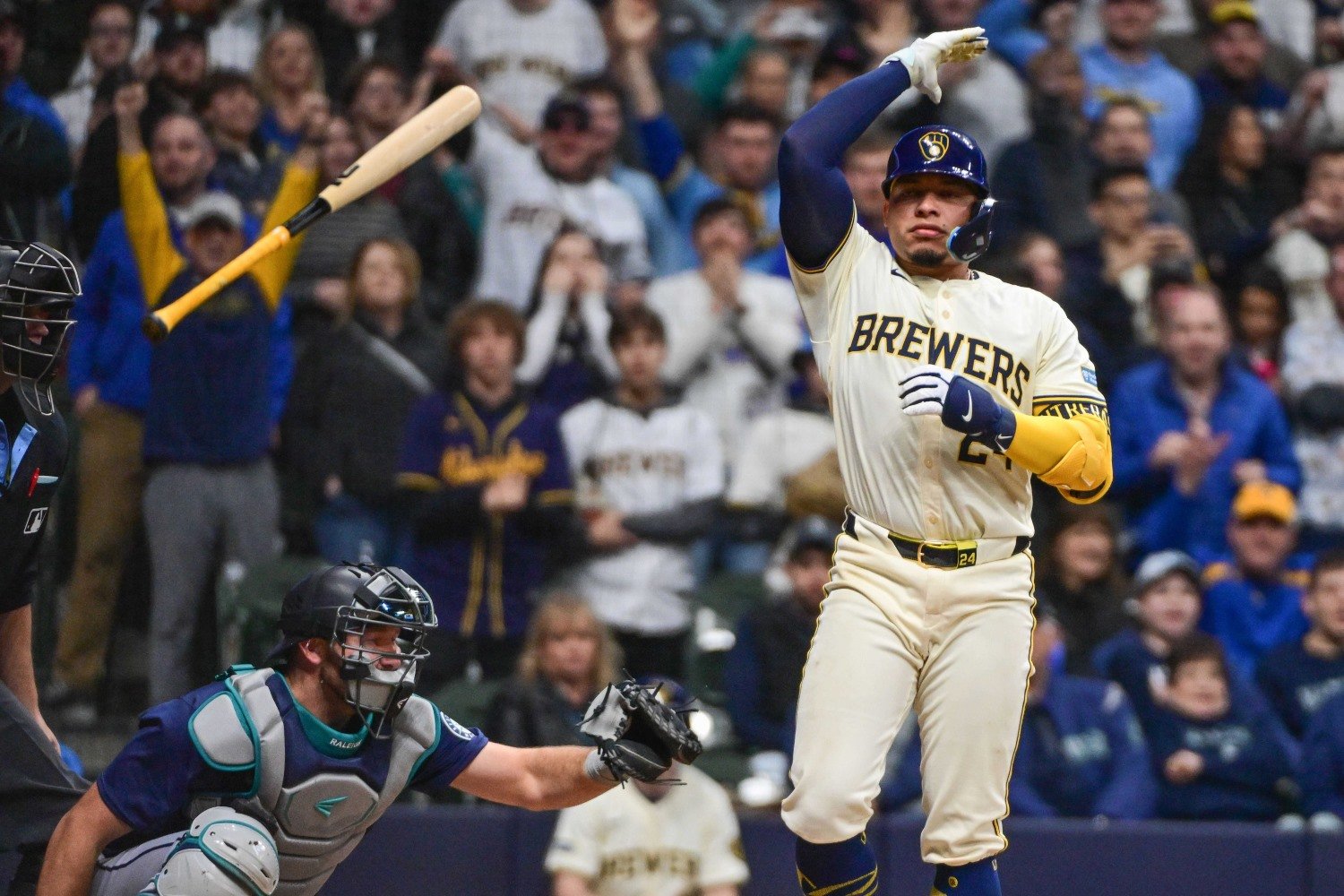 If your life depended on describing a typical William Contreras swing, you'd do well to say some earnest prayers and set your affairs in order. The Brewers' slugging backstop doesn't work that way. In the age of the optimized, uniform, highly grooved swing, Contreras is an agent of chaos. He's a rock-jazz fusion in a world of neatly produced pop. Take his two-strike mechanics, for example. Even in 2023, Contreras showed a new and fascinating desire to change up his movement patterns based on count and game situation. He would deploy a full leg kick at some times, a toe tap at others, and at still others, a virtually static, flat-footed twist and flick of a swing. He frequently modified his stance or his position in the batter's box to accommodate a whim, whether it be one informed by scouting reports or circumstances or something subverbal that traveled from his eyes to his hands and feet without the intercession of the brain. All that is back, already, this year. Check out these two screenshots, taken just before consecutive pitches delivered by José Quintana in the fifth inning on Opening Day, using the same broadcast feed. Picture 1: Picture 2: I would say, having watched many, many pitches and swings by Contreras for this piece, that he tends to set up in a slightly more closed stance against left-handed pitchers, but lest anyone get the idea that that was a reliable pattern, here's stark evidence that he's not even sticking to one angle of setup against a given pitcher, in a deep count within a single at-bat. Contreras was, clearly, looking for a different pitch on the second pitch above than on the first, having seen something or arrived at some new guess about how Quintana and the Mets would attack him after the first of these offerings. That's logical, and sensible. It used to be in the toolbox of many hitters, though it was pulled out less often than some of those hitters like to pretend nowadays, when they're regaling us with tales of their ingenious adjustments from the safety of a broadcast booth. In 2024, though, making that kind of pitch-to-pitch adjustment in setup and hinting at a change in expectation is almost singular. We're only scratching the surface of Contreras's quiddities, though. Thank goodness for the fact that he does set up slightly more closed against lefties. It lets me point out one important thing you need to know about his actual swing, as we go forward from here: Contreras is a back-tapper. That, at least, is one name for this type of hitter; it's all jargon at some point. In this clip, watch Contreras's back foot, before he really begins what we'd tend to think of as his swing. WC Rock Step Whiff on CH 24.mp4 It's subtle, but that little rock, stomp, or tap (all three terms are used by some hitting gurus, and all three can take turns being most appropriate, depending on how aggressive a hitter is about it and how they utilize it) is important. It's a fairly rare but well-known move, designed to help a hitter build up momentum and fire more violently with their swing. It's usually a bit about avoiding getting caught on your back leg, and a bit about increasing bat speed by getting everything moving without overcommitting. It's interesting that Contreras uses it now, because I first noticed and wrote about it when countryman Miguel Montero (then a teammate of Contreras's older brother) turned to it with the Cubs several years ago. Nolan Arenado is another hitter who famously uses some form of the back tap. It stirs up an absolute torrent of energy that the hitter can deliver to the ball, if they're good enough at everything else to avoid lunging and flailing at the ball. Contreras, obviously, is. We're not nearly finished, though. Let's talk about his front leg, now. In the video above, he deployed pretty much his full, unedited leg kick, despite the two-strike count. He whiffed. Here's another at-bat from the Mets series (in fact, the same one from which we drew the stills showing his changing stance). The leg kick is lower. He's trying to be quieter. But the result is the same. WC 24 Short Stride Whiff.mp4 One thing we know about Contreras, based not only on his numbers and his own comments but on discussions with Brewers personnel this spring in Arizona, is that he's loath to strike out. It drives him nuts, and although he went along with the program and ate some extra whiffs to maximize power while he was in Atlanta, one of his greatest sources of pride last season was dramatically reducing his strikeout rate. This is why I predicted, at the outset of the season, that he'll pile up a huge number of hits this year, but not necessarily see a big increase in power output. He would rather keep hitting the ball hard and putting it in play at a strong rate than make sacrifices in terms of contact just to elevate more. Check out one radical thing Contreras is willing to do sometimes, even if it will probably remain a relatively rare move for him. A few times this year, he has not-so-subtly stepped closer to the plate just as an opposing pitcher was preparing to throw, to position himself to attack if the hurler makes a mistake over the plate--or just to fluster them into missing with the pitch. WC Step Up Frz on CV 24.mp4 This time (and at least one other time this year), he only froze himself up with that maneuver, but it's a fascinating insight into the plasticity of his setup, mentality, and swing actions that he's comfortable attempting that. Keep an eye on it. In the meantime, though, keep an eye on this, too. Contreras made only sparing use of the toe tap last year, but this season, it's an important part of his two-strike approach. He doesn't use it every time, even since he started to incorporate it more often in the Mariners series last week. When he's sitting on a fastball, even in a two-strike count, he uses the full leg kick. He doesn't seem to feel as though the toe tap is conducive to timing up and catching heat. He prefers it as an antidote to his own tendency to get out too far on breaking and offspeed stuff. Here he is in Saturday's game, taking his full cut at a two-strike speedball (in vain). WC 24 Full Stride Whiff High FB.mp4 But here he is the very next day, getting a mistake slider on a pitch on which he used the toe tap, and swinging viciously at it (not at all in vain). WC HR Top Tap Off EH SL 24.mp4 It's not something he's suddenly discovered. He used the toe tap against certain pitchers whom he felt confident were going to pepper him with spin or soft stuff in deep counts, last year and in the Twins' brief visit. But it seemed as though the Mariners series brought him some clarity about his own paradigm for using that mechanical signature. All this variability and eagerness to confound pitchers with changes to his swing path, stance, and approach is reminiscent of another Venezuelan hitter, but one much more famous and similar to Contreras than Montero: Miguel Cabrera. He took tremendous pride in shooting hard singles through vacated sides of the infield, and he believed he could trap pitchers by appearing to be tied up on a particular pitch, as long as he knew what he needed to adjust in order to put the same offering deep in the seats the next time they came at him with it. That comp might sound too lofty; it isn't. Contreras has the highest hard-hit rate in baseball this season, at 71.9%. No one can keep that up, but there's plenty of reason to believe he'll keep hitting it as hard as anyone in MLB. Only Bobby Witt Jr. has a higher average exit velocity. Only four players have a higher 10th-percentile one, and none of them hit it as hard at the high end as Contreras does, indicating that Contreras avoids mishitting the ball as well as anyone. Is his ground-ball rate still some degree of problem? Yes. To have the massive season of which he's truly capable, he will need to get more air under the ball, more often. With a good contact rate, a great walk rate, and this much hard contact, though, he's already an electrifying, intimidating, and hugely valuable piece of the Brewers' batting order. We often talk about pitchers who are an uncomfortable at-bat, even if they're not quite the best hurler in the game. Contreras isn't yet the best hitter in baseball, but he might give pitchers the least comfortable at-bat.
 -
No one in MLB teaches pitch framing better than the Milwaukee Brewers, and their success with the young star catcher for whom they traded prior to 2023 was one of the keys to their season. Is the magic still there? Image courtesy of © Rick Scuteri-USA TODAY Sports It's hard to articulate any reason why the Brewers would be struggling with developing great receivers. They're more formidable than ever, in a sense, because Charlie Greene got the call-up to the big-league coaching staff this winter, joining Walker McKinven and Nestor Corredor there. They're the three-headed monster who work together to instruct and hone the team's catchers, and they only have easier access to William Contreras this spring. No catcher in baseball is more dedicated to the position than Contreras. He's a tenacious worker, and he wants to be in the lineup and behind the plate virtually every day, despite the enormous physical demands and risks of his chosen position. Last year, his work ethic and open-mindedness met the genius of the Crew's catching coaches, and the result was a huge forward stride in his framing numbers. He'd been a subpar framer with Atlanta, but became one of the league's best in his first campaign with the Brewers. It's too early to put full faith in the catcher framing numbers for 2024, but not too early to at least peek at them. Because the sample sizes (essentially, every pitch at which a batter doesn't swing, and in practice, at least a majority of them--those near any of the edges or corners of the zone) rapidly get very large, framing stats become telling much earlier than most other statistics in a baseball season. Maybe the best way to put it is, we're still in the space where any alert we issue is like a storm watch, rather than a storm warning. But there does seem to be a storm a-brewin'. Of the 35 backstops who have caught for at least 100 plate appearances on the young year, only two (the Cubs' Yan Gomes and the White Sox's Martín Maldonado) have been worse than Contreras by Adjusted Strikes Looking (SL+), the proprietary metric by which TruMedia evaluates pitch framing. It's an indexed stat, where 100 is average and higher is better. Contreras comes in at 93.1. Because he's caught as much as anyone in baseball, he's cost the Brewers more actual value (1.1 runs, against average) than any other backstop has cost their team in this area so far in 2024. Now, again, there are a number of reasons to modulate any concern about this. Baseball Prospectus, whose suite of catcher stats is the state of the art in the industry and who first brought the concept into focus on a national stage, only has Contreras as 0.2 runs worse than average. That's just because their models are more conservative--he's still second-worst of 29 qualifying catchers on their leaderboard--but it's a reminder that we should hedge heavily on any conclusions we're tempted to draw this early in the going. In just two series, opposing lineups, umpires, and the mix of pitchers with whom each catcher has worked are big sources of noise. Those quiet down quickly, but not this quickly, so we can allow for the possibility that Contreras caught in front of an unfriendly umpire or two, and/or that the patient Mets and Twins made his job harder. Only three teams have seen opponents chase outside the zone less often than the Brewers, and while inducing chase (via good game calling) is part of a catcher's job, too, it's not one neatly reflected in these numbers, at least in a small sample. No team has thrown a higher percentage of its pitches within the zone, as Contreras has been characteristically aggressive with his hurlers in attacking hitters, so he's had more chances to lose strikes than to delicately frame should-be balls. This is still bad news. Directionally, a lot of the names we'd expect lead and trail these leaderboards already. Austin Hedges (who is only in the league because he excels at this skill) leads all catchers in both systems' estimation. Maldonado was the worst in baseball at framing last year, so it's no surprise that he's bringing up the rear again. That's just two examples, but the gist is that most catchers are already falling into about the range where you'd expect to find them, based on their statistical track records and their reputations as framers. Not so with Contreras. He's noticeably noisier behind the plate this year than he was in 2023. It might just be that he has a few mechanical things to iron out, or that adrenaline has gotten the better of him at times during the early going. He's still framing well on the lateral edges, but he's stopped shaping the top and bottom of the zone effectively. That's probably fixable. Here's Contreras stealing Colin Rea a strike on a sweeper last summer. Contreras Secured 7 8 23.mp4 The essential trait there--the difference-maker--is how smoothly he catches and extends through the ball. Yes, it's a big-looking movement from where the ball reaches him to where he stops his mitt, but it looks natural and fluid. Now, here's a 1-1 sweeper he lost for Rea on Sunday. Contreras Lost 3 31 24.mp4 The upward swoop of the mitt is more pronounced here, principally because it's not done in rhythm. Contreras struggled with this specific issues (waiting long enough and anticipating the big break of some sliders, sweepers, and curves) even last year, and few catchers do it well. The more movement a pitch has, the harder it is to anticipate its location, beat the ball to its spot, and cleanly show it to the umpire well inside the zone. When there's also a big velocity differential between the pitch and that hurler's fastball, it doubles the difficulty for the catcher, because those hitches of the mitt are always red flags for umpires. I feel confident that Contreras will clean up the mess of the first handful of games, from a framing perspective. While the sweeper problem is hard to solve and might require tweaks to how pitchers set their targets or in what sequences Contreras calls them, he can fix the issues he's had with holding fastballs along the top and bottom of the zone in place just by better anticipating and sticking to the mechanical cues he learned last year. If that doesn't happen, though, it will spell big trouble for the Crew. They need good pitch framing. It's a key part of their run-prevention plan. View full article
-
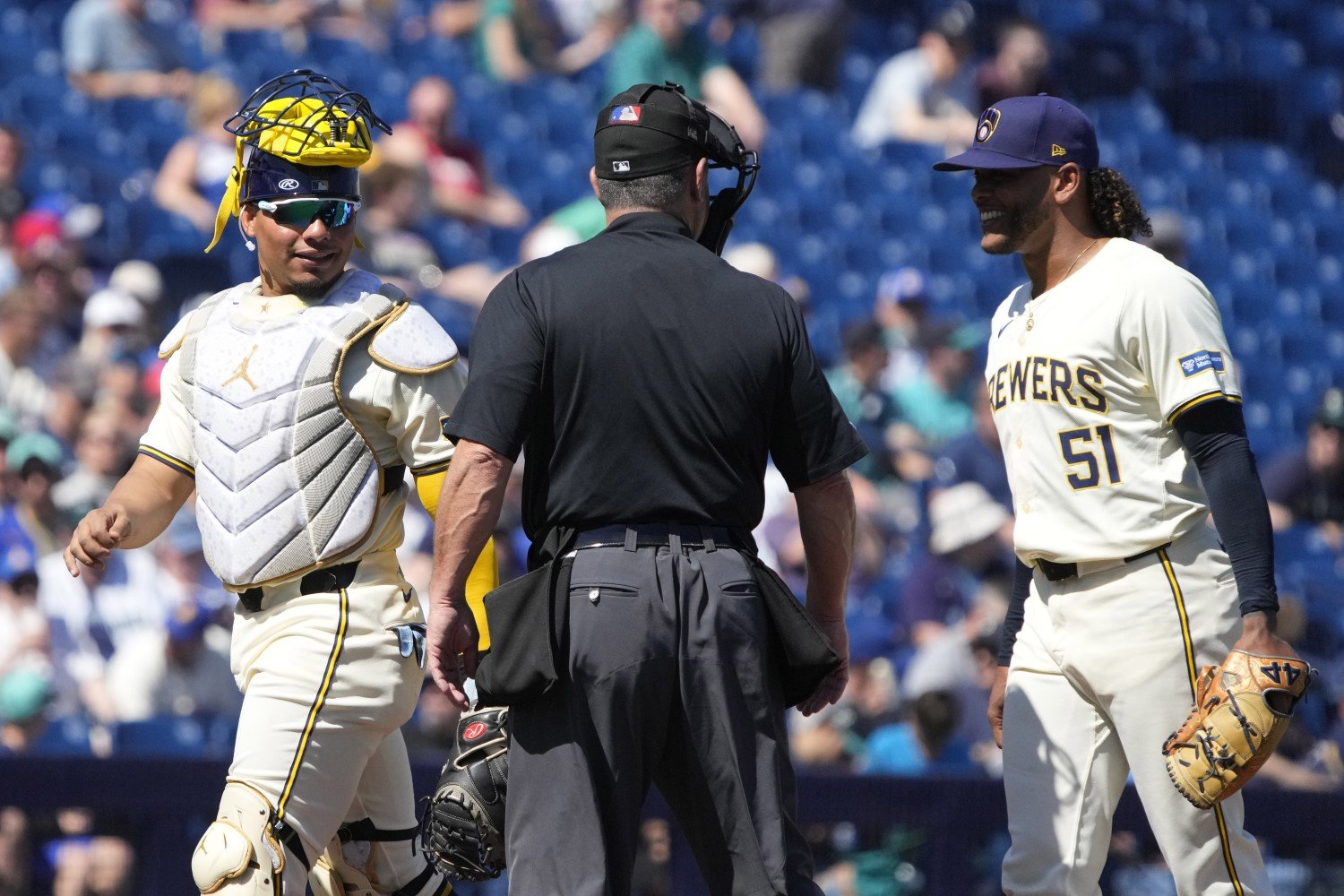 It's hard to articulate any reason why the Brewers would be struggling with developing great receivers. They're more formidable than ever, in a sense, because Charlie Greene got the call-up to the big-league coaching staff this winter, joining Walker McKinven and Nestor Corredor there. They're the three-headed monster who work together to instruct and hone the team's catchers, and they only have easier access to William Contreras this spring. No catcher in baseball is more dedicated to the position than Contreras. He's a tenacious worker, and he wants to be in the lineup and behind the plate virtually every day, despite the enormous physical demands and risks of his chosen position. Last year, his work ethic and open-mindedness met the genius of the Crew's catching coaches, and the result was a huge forward stride in his framing numbers. He'd been a subpar framer with Atlanta, but became one of the league's best in his first campaign with the Brewers. It's too early to put full faith in the catcher framing numbers for 2024, but not too early to at least peek at them. Because the sample sizes (essentially, every pitch at which a batter doesn't swing, and in practice, at least a majority of them--those near any of the edges or corners of the zone) rapidly get very large, framing stats become telling much earlier than most other statistics in a baseball season. Maybe the best way to put it is, we're still in the space where any alert we issue is like a storm watch, rather than a storm warning. But there does seem to be a storm a-brewin'. Of the 35 backstops who have caught for at least 100 plate appearances on the young year, only two (the Cubs' Yan Gomes and the White Sox's Martín Maldonado) have been worse than Contreras by Adjusted Strikes Looking (SL+), the proprietary metric by which TruMedia evaluates pitch framing. It's an indexed stat, where 100 is average and higher is better. Contreras comes in at 93.1. Because he's caught as much as anyone in baseball, he's cost the Brewers more actual value (1.1 runs, against average) than any other backstop has cost their team in this area so far in 2024. Now, again, there are a number of reasons to modulate any concern about this. Baseball Prospectus, whose suite of catcher stats is the state of the art in the industry and who first brought the concept into focus on a national stage, only has Contreras as 0.2 runs worse than average. That's just because their models are more conservative--he's still second-worst of 29 qualifying catchers on their leaderboard--but it's a reminder that we should hedge heavily on any conclusions we're tempted to draw this early in the going. In just two series, opposing lineups, umpires, and the mix of pitchers with whom each catcher has worked are big sources of noise. Those quiet down quickly, but not this quickly, so we can allow for the possibility that Contreras caught in front of an unfriendly umpire or two, and/or that the patient Mets and Twins made his job harder. Only three teams have seen opponents chase outside the zone less often than the Brewers, and while inducing chase (via good game calling) is part of a catcher's job, too, it's not one neatly reflected in these numbers, at least in a small sample. No team has thrown a higher percentage of its pitches within the zone, as Contreras has been characteristically aggressive with his hurlers in attacking hitters, so he's had more chances to lose strikes than to delicately frame should-be balls. This is still bad news. Directionally, a lot of the names we'd expect lead and trail these leaderboards already. Austin Hedges (who is only in the league because he excels at this skill) leads all catchers in both systems' estimation. Maldonado was the worst in baseball at framing last year, so it's no surprise that he's bringing up the rear again. That's just two examples, but the gist is that most catchers are already falling into about the range where you'd expect to find them, based on their statistical track records and their reputations as framers. Not so with Contreras. He's noticeably noisier behind the plate this year than he was in 2023. It might just be that he has a few mechanical things to iron out, or that adrenaline has gotten the better of him at times during the early going. He's still framing well on the lateral edges, but he's stopped shaping the top and bottom of the zone effectively. That's probably fixable. Here's Contreras stealing Colin Rea a strike on a sweeper last summer. Contreras Secured 7 8 23.mp4 The essential trait there--the difference-maker--is how smoothly he catches and extends through the ball. Yes, it's a big-looking movement from where the ball reaches him to where he stops his mitt, but it looks natural and fluid. Now, here's a 1-1 sweeper he lost for Rea on Sunday. Contreras Lost 3 31 24.mp4 The upward swoop of the mitt is more pronounced here, principally because it's not done in rhythm. Contreras struggled with this specific issues (waiting long enough and anticipating the big break of some sliders, sweepers, and curves) even last year, and few catchers do it well. The more movement a pitch has, the harder it is to anticipate its location, beat the ball to its spot, and cleanly show it to the umpire well inside the zone. When there's also a big velocity differential between the pitch and that hurler's fastball, it doubles the difficulty for the catcher, because those hitches of the mitt are always red flags for umpires. I feel confident that Contreras will clean up the mess of the first handful of games, from a framing perspective. While the sweeper problem is hard to solve and might require tweaks to how pitchers set their targets or in what sequences Contreras calls them, he can fix the issues he's had with holding fastballs along the top and bottom of the zone in place just by better anticipating and sticking to the mechanical cues he learned last year. If that doesn't happen, though, it will spell big trouble for the Crew. They need good pitch framing. It's a key part of their run-prevention plan.
 -
Sometimes, a loss is just the price you pay for a couple of other wins. Still, the Milwaukee Brewers might rue letting Wednesday's winnable game against the Minnesota Twins slip into the 'L' column. Image courtesy of © Michael McLoone-USA TODAY Sports So far, new manager Pat Murphy runs his pitching staff virtually exactly the same way his predecessor did. While there are bound to be some differences that play themselves out over time, Murphy mostly did what Craig Counsell would have Wednesday. Alas, this is one area in which both skippers are less than perfect, although it's fair to wonder how close to perfect any manager can be in such a delicate calibration. What we're talking about is understanding when (and when not) to give up a little bit of win probability today to keep pitchers healthy and fresh for tomorrow, or next week. Over the last few years, Counsell has become one of baseball's very best at it, in a specific way: he pretty much tries to hold onto any lead his team gets for dear life, but doesn't chase wins by using his better relievers when the team is trailing. He's a ruthless machine, converting leads into wins. That comes at a cost, though. Counsell knew that, and became increasingly willing to pay that cost, over time. It involves pushing relievers hard in terms of how many times they might be asked to pitch multiple innings, or go on back-to-back days, or appear in four games in a span of five or six. Many relievers will either struggle or break under that kind of demand, but the Brewers' pitching infrastructure has allowed both managers to discount that consideration in their mind, somewhat. More than most teams, the Brewers aggressively deploy their best relievers to protect late leads, even when their workload has been heavy recently. In addition to longer-term concerns like injury, there are short-term problems with this approach. A winning streak becomes a modest burden. Though he didn't ultimately do it, Murphy did state his willingness to use the still-young Abner Uribe for a third day in a row when the Crew were in position to sweep the Mets Sunday. Wednesday would, ultimately, find Joel Payamps on the mound for the fourth time in five games across six days. But we're getting ahead of ourselves. Every decision a manager has to make about pitching changes is loaded and multi-faceted. It's pregnant with secondary considerations, like what choosing to lift a starter (or to leave him in) will do to the player's confidence, or whether making a given switch might beget a pinch-hitter for the opponents--and then whether the resulting matchup would be a desirable one or not. Most of all, though, the skipper has to keep not only that day's game in view, but the next several--even though he has no way of knowing what shape those contests will take, and can only make the loosest and least definite guesses about what needs will need to be met to pull victories out of the fog of the future. Let's dispense with abstraction. In the top of the fourth inning Wednesday, the Brewers enjoyed a 1-0 lead, but Joe Ross was running out of runway in a hurry and couldn't seem to lift off--literally. His sinker-slider combo did keep the Twins from squaring the ball up and doing any actual damage, but he wasn't getting as many whiffs or filling up the strike zone as well as the team might have hoped. With Edouard Julien due up (signaling the arrival of the dreaded third time through the batting order for Ross) and the bases loaded, Murphy felt he had to make a move. Interestingly, though, he went to Hoby Milner. It was the second day in a row for Milner, and matched the earliest that he was called upon in any game last season. Milner also came into the fifth inning six times in 2023, but four of those six (like his one appearance in the fourth) came by mid-May. For virtually all of 2023, he was a trusted, later-inning reliever. Murphy elected to use him as a fireman, though, believing the situation demanded that kind of matchup manipulation. Milner's entrance did force Julien out of the game, as Rocco Baldelli pinch-hit for him with Manuel Margot. That had value, on its own. When Margot bizarrely dropped down a bunt and was thrown out to end the inning, Milner looked like the right choice. In truth, though, he hasn't been quite as sharp as his stuff requires him to be so far this year, and it caught up to him in the fifth, when Murphy brought him back out for another few batters. Going to Milner early was an admission by Murphy that he didn't have an ideal set of options. He was trying to build a bridge to Payamps and Uribe, but he had a short list of ways to do that Wednesday. The loss of Devin Williams (before the season) and Trevor Megill (just this week, to a scary non-baseball-related accident that left him with a concussion) loomed large. Murphy felt he had to get Ross out of there, but he still had 16 outs to account for when he did. It was always going to be difficult to get through them with a lead intact, unless the Brewers offense had a major breakthrough in the meantime. The most interesting thing about choosing Milner, though, is that Murphy could have chosen Bryan Hudson instead and held his more trusted lefty in reserve. Hudson did pitch three innings in his last appearance, but that was Sunday in New York. After two days off, he should have been ready to at least face Julien (or whichever pinch-hitter the Twins might have run at him) and Alex Kirilloff, and would have had an excellent chance of getting out of the inning by retiring one of the two. Then, if rest and workload were concerns for the manager, he could lift Hudson and go right to another pitcher to open the fifth. During spring training, Murphy talked about the value and impact of pitchers who offer a rubber arm--who can come in often or with relatively little notice. He also talked a lot about the value of versatility, in terms of being able to get out both lefty and righty batters and in terms of being situationally flexible. A manager has to have the same flexibility and resiliency, though. Murphy did escape the fourth Wednesday, but the catenary had begun. One decision linked up with another, until the Brewers ended up needing huge outs from (first) Payamps and (when he, understandably, cracked under his heavy early yoke) Bryse Wilson in the seventh inning, and they couldn't get them. Ultimately, the optimal moves were (respectively) to use Hudson instead of Milner in the fourth, then to turn to Thyago Vieira and/or J.B. Bukauskas in the fifth and sixth. That might have gotten them to the seventh with a bit more breathing room, and then, perhaps, Murphy could have gone to Wilson or to Milner in the seventh, under very different circumstances. If Hudson, Vieira or Bukauskas had blown the lead themselves in longer looks (which is certainly possible), that still would have held some value: it would have discouraged Murphy from bringing in Payamps and putting more early mileage on a tired arm. Given the off day looming Thursday, it's understandable that Murphy tried to get aggressive and sew up an undefeated start to the season. He'd have better served the team, though, by giving a couple of his less-trusted middle relievers chances to earn a greater share of that trust, knowing that if they didn't pass the test, he would at least be unburdened of any feeling of obligation to turn to his beleaguered best arms. It's just one loss, and sometimes, losses are just the price you pay for previous wins. As the team looks ahead to a couple of long stretches without off days and without some key arms in their relief mix, though, Murphy will need to quickly figure out how to better balance one game against its successors and bring down those prices. View full article
- 5 replies
-
- 1
-
-
- bryse wilson
- hoby milner
- (and 3 more)
-
Did Pat Murphy Mismanage His Bullpen in Wednesday's Loss?
Matthew Trueblood posted an article in Brewers
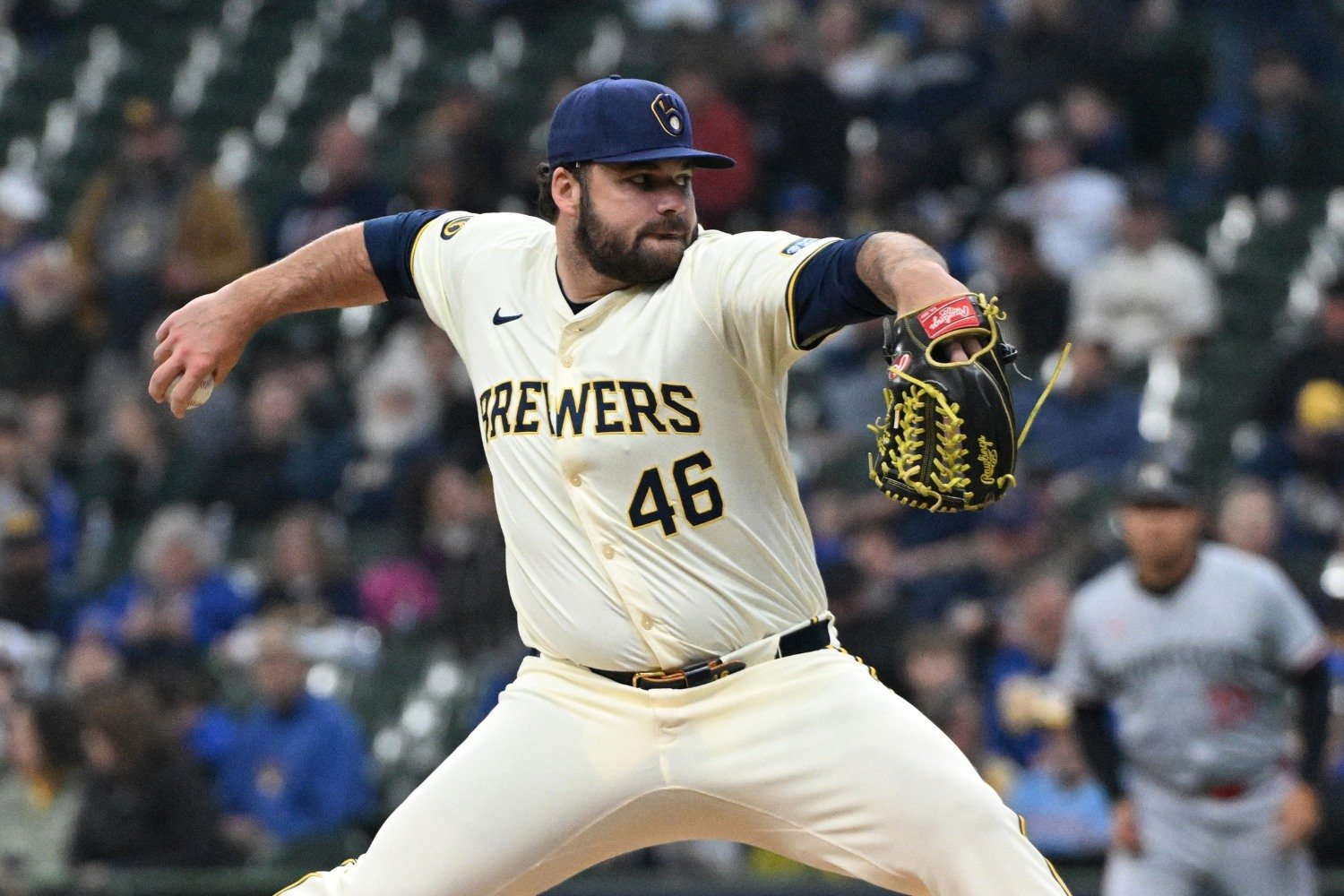 So far, new manager Pat Murphy runs his pitching staff virtually exactly the same way his predecessor did. While there are bound to be some differences that play themselves out over time, Murphy mostly did what Craig Counsell would have Wednesday. Alas, this is one area in which both skippers are less than perfect, although it's fair to wonder how close to perfect any manager can be in such a delicate calibration. What we're talking about is understanding when (and when not) to give up a little bit of win probability today to keep pitchers healthy and fresh for tomorrow, or next week. Over the last few years, Counsell has become one of baseball's very best at it, in a specific way: he pretty much tries to hold onto any lead his team gets for dear life, but doesn't chase wins by using his better relievers when the team is trailing. He's a ruthless machine, converting leads into wins. That comes at a cost, though. Counsell knew that, and became increasingly willing to pay that cost, over time. It involves pushing relievers hard in terms of how many times they might be asked to pitch multiple innings, or go on back-to-back days, or appear in four games in a span of five or six. Many relievers will either struggle or break under that kind of demand, but the Brewers' pitching infrastructure has allowed both managers to discount that consideration in their mind, somewhat. More than most teams, the Brewers aggressively deploy their best relievers to protect late leads, even when their workload has been heavy recently. In addition to longer-term concerns like injury, there are short-term problems with this approach. A winning streak becomes a modest burden. Though he didn't ultimately do it, Murphy did state his willingness to use the still-young Abner Uribe for a third day in a row when the Crew were in position to sweep the Mets Sunday. Wednesday would, ultimately, find Joel Payamps on the mound for the fourth time in five games across six days. But we're getting ahead of ourselves. Every decision a manager has to make about pitching changes is loaded and multi-faceted. It's pregnant with secondary considerations, like what choosing to lift a starter (or to leave him in) will do to the player's confidence, or whether making a given switch might beget a pinch-hitter for the opponents--and then whether the resulting matchup would be a desirable one or not. Most of all, though, the skipper has to keep not only that day's game in view, but the next several--even though he has no way of knowing what shape those contests will take, and can only make the loosest and least definite guesses about what needs will need to be met to pull victories out of the fog of the future. Let's dispense with abstraction. In the top of the fourth inning Wednesday, the Brewers enjoyed a 1-0 lead, but Joe Ross was running out of runway in a hurry and couldn't seem to lift off--literally. His sinker-slider combo did keep the Twins from squaring the ball up and doing any actual damage, but he wasn't getting as many whiffs or filling up the strike zone as well as the team might have hoped. With Edouard Julien due up (signaling the arrival of the dreaded third time through the batting order for Ross) and the bases loaded, Murphy felt he had to make a move. Interestingly, though, he went to Hoby Milner. It was the second day in a row for Milner, and matched the earliest that he was called upon in any game last season. Milner also came into the fifth inning six times in 2023, but four of those six (like his one appearance in the fourth) came by mid-May. For virtually all of 2023, he was a trusted, later-inning reliever. Murphy elected to use him as a fireman, though, believing the situation demanded that kind of matchup manipulation. Milner's entrance did force Julien out of the game, as Rocco Baldelli pinch-hit for him with Manuel Margot. That had value, on its own. When Margot bizarrely dropped down a bunt and was thrown out to end the inning, Milner looked like the right choice. In truth, though, he hasn't been quite as sharp as his stuff requires him to be so far this year, and it caught up to him in the fifth, when Murphy brought him back out for another few batters. Going to Milner early was an admission by Murphy that he didn't have an ideal set of options. He was trying to build a bridge to Payamps and Uribe, but he had a short list of ways to do that Wednesday. The loss of Devin Williams (before the season) and Trevor Megill (just this week, to a scary non-baseball-related accident that left him with a concussion) loomed large. Murphy felt he had to get Ross out of there, but he still had 16 outs to account for when he did. It was always going to be difficult to get through them with a lead intact, unless the Brewers offense had a major breakthrough in the meantime. The most interesting thing about choosing Milner, though, is that Murphy could have chosen Bryan Hudson instead and held his more trusted lefty in reserve. Hudson did pitch three innings in his last appearance, but that was Sunday in New York. After two days off, he should have been ready to at least face Julien (or whichever pinch-hitter the Twins might have run at him) and Alex Kirilloff, and would have had an excellent chance of getting out of the inning by retiring one of the two. Then, if rest and workload were concerns for the manager, he could lift Hudson and go right to another pitcher to open the fifth. During spring training, Murphy talked about the value and impact of pitchers who offer a rubber arm--who can come in often or with relatively little notice. He also talked a lot about the value of versatility, in terms of being able to get out both lefty and righty batters and in terms of being situationally flexible. A manager has to have the same flexibility and resiliency, though. Murphy did escape the fourth Wednesday, but the catenary had begun. One decision linked up with another, until the Brewers ended up needing huge outs from (first) Payamps and (when he, understandably, cracked under his heavy early yoke) Bryse Wilson in the seventh inning, and they couldn't get them. Ultimately, the optimal moves were (respectively) to use Hudson instead of Milner in the fourth, then to turn to Thyago Vieira and/or J.B. Bukauskas in the fifth and sixth. That might have gotten them to the seventh with a bit more breathing room, and then, perhaps, Murphy could have gone to Wilson or to Milner in the seventh, under very different circumstances. If Hudson, Vieira or Bukauskas had blown the lead themselves in longer looks (which is certainly possible), that still would have held some value: it would have discouraged Murphy from bringing in Payamps and putting more early mileage on a tired arm. Given the off day looming Thursday, it's understandable that Murphy tried to get aggressive and sew up an undefeated start to the season. He'd have better served the team, though, by giving a couple of his less-trusted middle relievers chances to earn a greater share of that trust, knowing that if they didn't pass the test, he would at least be unburdened of any feeling of obligation to turn to his beleaguered best arms. It's just one loss, and sometimes, losses are just the price you pay for previous wins. As the team looks ahead to a couple of long stretches without off days and without some key arms in their relief mix, though, Murphy will need to quickly figure out how to better balance one game against its successors and bring down those prices.
- 5 comments
-
- 1
-
-
- bryse wilson
- hoby milner
- (and 3 more)
-
The Milwaukee Brewers' newest left-handed reliever will always be the answer to a trivia question. With their help, though, he might soon be the answer to a handful of them. Image courtesy of © Wendell Cruz-USA TODAY Sports The Los Angeles Dodgers had to make room for Yoshinobu Yamamoto on their 40-man roster in January. Yamamoto signed a $325-million deal, a record for team investment in any pitcher, so it's not exactly an insult to Bryan Hudson that he was designated for assignment. He just didn't fit onto the most star-studded roster in recent memory. The Brewers got him for late-round 2023 Draft flier Justin Chambers.. Entering spring training, Hudson was a longshot to make the Opening Day roster. He's on the 40-man roster, but has minor-league options left, and if the team had had a perfectly healthy spring, he might well be with the Nashville Sounds right now. Hudson pitched brilliantly during camp, though, and we discussed how he and his new employers had worked to clean up some mechanical things, leading to greater extension at release. He earned a place in the club's injury-thinned bullpen, and after one outing, he looks like a potential fixture there. More extension from Hudson is--no pun intended--big news, because at 6-foot-8, he's never exactly been short on that. Indeed, though, his first outing of the year at Citi Field in New York proved that he's getting farther down the mound (and closer to home plate) before releasing the ball. He's become a remarkable outlier, and that could pave the way for him to carve out a permanent, fairly important role in the team's bullpen. Here, from above, is Hudson's release-point scatter plot for 2023. The center of the pitching rubber, in this chart, would be on the far left side, centered at zero. As you can see, he was averaging somewhere around (perhaps just north of) seven feet of extension in 2023. That was already near-elite, and it's an especially wild thing to see from: A lefty; or Anyone working from that wide of the center of the mound. Most guys with elite extension (Tyler Glasnow is a famous exemplar) use their length to get far down the mound, but pitch from a fairly centered position, and/or use a high release point and vertical arm path. The only easy comparator for Hudson's great extension and steep horizontal angle for hitters is Steve Cishek, who made a career out of high-sidearm work from the right side and excelled at getting down the mound. Now, let's take a look at the same chart for Hudson in his outing against the Mets Sunday, when he pitched three clean innings, allowing just two hits and fanning four, without issuing a walk. Normally, these visuals are a little easier to interpret for viewers, because there's a silhouette of the mound running from 12 down to -12 on that left edge. On these two images, though, there hasn't been, because I had to break the chart out of its default dimensions to show you how much extension Hudson got on several of his fastballs. He's beyond the frontier. On eight of his four-seamers Sunday, Hudson was more than eight feet forward from the rubber when he released the ball. His 92-MPH fastball, on average, looked like 95 to the batters, just because of its release point. In the nine-season Statcast Era, 17 different pitchers have thrown at least three fastballs with at least eight feet of extension at release in a season. One of them, Carter Capps, used a since-banned hopping, sliding delivery to break the system. Lefties combined to throw 25 such pitches across the nine seasons, with Miami's A.J. Puk throwing over half of those last year. The most in any season by any individual hurler is 58, by the Crew's Devin Williams in 2023. If Hudson keeps up at anything like the pace he set Sunday, he'll shatter that record. That's to say nothing of a lower release point and a flatter vertical approach angle (VAA). It's not a stretch to say that, given the way he's throwing, Hudson's heater has elite upside, despite fairly pedestrian velocity and raw movement. And hey, speaking of movement, there's one more thing we should take time to observe, from his dazzling Crew debut. Here's his 2023 pitch movement plot. That's what Hudson had when he came to the Brewers. It's not an unworkable arsenal, but nor is it exciting, except against left-handed batters. As he told me early in the spring, he developed much more confidence in his cutter against righties last year, but it wasn't going to make him an especially reliable out-getter against them without more separation from his four-seamer. The heater was a little too straight; it had cut-ride action, minus the ride. Here's how he looked Sunday. This is a whole different story. From that slightly lower release point, Hudson is throwing a fastball that increasingly plays more like a sinker than a four-seamer, but which he can locate high in the zone with that flat VAA for whiffs like a four-seamer. The cutter has less true cut, but more depth, and the slider has morphed into a legitimate sweeper, with greater lift and lots of extra glove-side horizontal movement. Many of these adjustments feel like modified versions of the tweaks the Brewers made with Hoby Milner over the last few years, to great effect. Hudson is an even more extreme pitcher than Milner, though, so the returns could be even greater. It's too early to dub him a second southpaw relief ace, but not too early to say that he's a success story both in himself (for the hard work and studious approach that have allowed him to overcome considerable adversity in his career) and for the team's pitching development group. Making better use of his enormous size, he's maturing into a potentially exciting bullpen weapon, like fellow gigantic Milwaukee scrapheap scoop-up Trevor Megill. Together with Megill and Milner, Hudson can help the team weather the absence of Williams for as long as necessary. View full article

