


Matthew Trueblood
-
Posts
1,964 -
Joined
-
Last visited
-
Days Won
10
Content Type
Profiles
Forums
Blogs
Events
News
2026 Milwaukee Brewers Top Prospects Ranking
Milwaukee Brewers Videos
2022 Milwaukee Brewers Draft Picks
Milwaukee Brewers Free Agent & Trade Rumors, Notes, & Tidbits
Guides & Resources
2023 Milwaukee Brewers Draft Picks
2024 Milwaukee Brewers Draft Picks
The Milwaukee Brewers Players Project
2025 Milwaukee Brewers Draft Pick Tracker
2026 Milwaukee Brewers Draft Tracker: Picks & Bonuses
Store
Downloads
Gallery
Everything posted by Matthew Trueblood
-
The Brewers Have Turned Bryan Hudson Into a Southpaw Super-Freak
Matthew Trueblood posted an article in Brewers
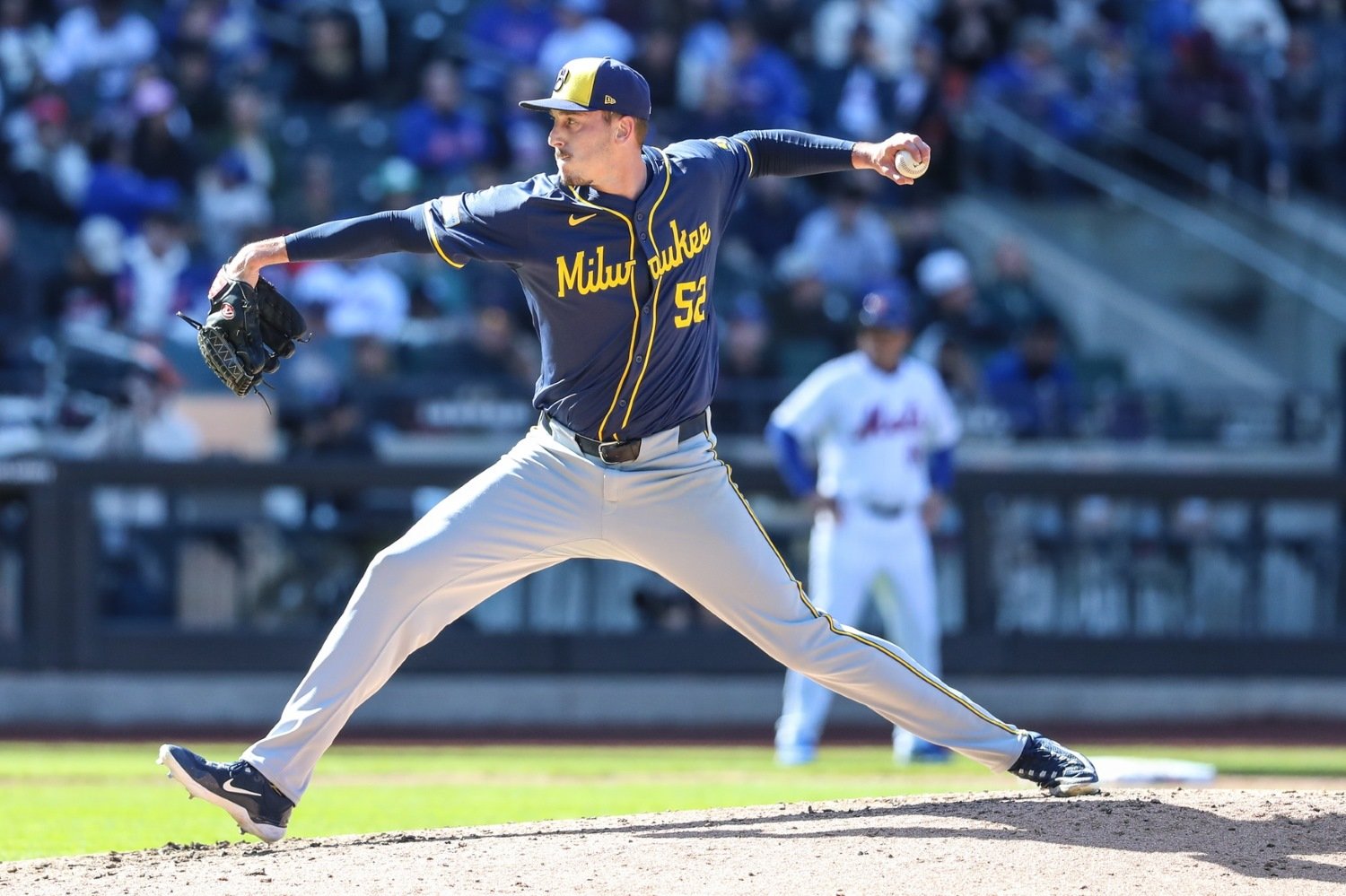 The Los Angeles Dodgers had to make room for Yoshinobu Yamamoto on their 40-man roster in January. Yamamoto signed a $325-million deal, a record for team investment in any pitcher, so it's not exactly an insult to Bryan Hudson that he was designated for assignment. He just didn't fit onto the most star-studded roster in recent memory. The Brewers got him for late-round 2023 Draft flier Justin Chambers.. Entering spring training, Hudson was a longshot to make the Opening Day roster. He's on the 40-man roster, but has minor-league options left, and if the team had had a perfectly healthy spring, he might well be with the Nashville Sounds right now. Hudson pitched brilliantly during camp, though, and we discussed how he and his new employers had worked to clean up some mechanical things, leading to greater extension at release. He earned a place in the club's injury-thinned bullpen, and after one outing, he looks like a potential fixture there. More extension from Hudson is--no pun intended--big news, because at 6-foot-8, he's never exactly been short on that. Indeed, though, his first outing of the year at Citi Field in New York proved that he's getting farther down the mound (and closer to home plate) before releasing the ball. He's become a remarkable outlier, and that could pave the way for him to carve out a permanent, fairly important role in the team's bullpen. Here, from above, is Hudson's release-point scatter plot for 2023. The center of the pitching rubber, in this chart, would be on the far left side, centered at zero. As you can see, he was averaging somewhere around (perhaps just north of) seven feet of extension in 2023. That was already near-elite, and it's an especially wild thing to see from: A lefty; or Anyone working from that wide of the center of the mound. Most guys with elite extension (Tyler Glasnow is a famous exemplar) use their length to get far down the mound, but pitch from a fairly centered position, and/or use a high release point and vertical arm path. The only easy comparator for Hudson's great extension and steep horizontal angle for hitters is Steve Cishek, who made a career out of high-sidearm work from the right side and excelled at getting down the mound. Now, let's take a look at the same chart for Hudson in his outing against the Mets Sunday, when he pitched three clean innings, allowing just two hits and fanning four, without issuing a walk. Normally, these visuals are a little easier to interpret for viewers, because there's a silhouette of the mound running from 12 down to -12 on that left edge. On these two images, though, there hasn't been, because I had to break the chart out of its default dimensions to show you how much extension Hudson got on several of his fastballs. He's beyond the frontier. On eight of his four-seamers Sunday, Hudson was more than eight feet forward from the rubber when he released the ball. His 92-MPH fastball, on average, looked like 95 to the batters, just because of its release point. In the nine-season Statcast Era, 17 different pitchers have thrown at least three fastballs with at least eight feet of extension at release in a season. One of them, Carter Capps, used a since-banned hopping, sliding delivery to break the system. Lefties combined to throw 25 such pitches across the nine seasons, with Miami's A.J. Puk throwing over half of those last year. The most in any season by any individual hurler is 58, by the Crew's Devin Williams in 2023. If Hudson keeps up at anything like the pace he set Sunday, he'll shatter that record. That's to say nothing of a lower release point and a flatter vertical approach angle (VAA). It's not a stretch to say that, given the way he's throwing, Hudson's heater has elite upside, despite fairly pedestrian velocity and raw movement. And hey, speaking of movement, there's one more thing we should take time to observe, from his dazzling Crew debut. Here's his 2023 pitch movement plot. That's what Hudson had when he came to the Brewers. It's not an unworkable arsenal, but nor is it exciting, except against left-handed batters. As he told me early in the spring, he developed much more confidence in his cutter against righties last year, but it wasn't going to make him an especially reliable out-getter against them without more separation from his four-seamer. The heater was a little too straight; it had cut-ride action, minus the ride. Here's how he looked Sunday. This is a whole different story. From that slightly lower release point, Hudson is throwing a fastball that increasingly plays more like a sinker than a four-seamer, but which he can locate high in the zone with that flat VAA for whiffs like a four-seamer. The cutter has less true cut, but more depth, and the slider has morphed into a legitimate sweeper, with greater lift and lots of extra glove-side horizontal movement. Many of these adjustments feel like modified versions of the tweaks the Brewers made with Hoby Milner over the last few years, to great effect. Hudson is an even more extreme pitcher than Milner, though, so the returns could be even greater. It's too early to dub him a second southpaw relief ace, but not too early to say that he's a success story both in himself (for the hard work and studious approach that have allowed him to overcome considerable adversity in his career) and for the team's pitching development group. Making better use of his enormous size, he's maturing into a potentially exciting bullpen weapon, like fellow gigantic Milwaukee scrapheap scoop-up Trevor Megill. Together with Megill and Milner, Hudson can help the team weather the absence of Williams for as long as necessary.
 -
In case anyone wondered whether a young Milwaukee Brewers team would be intimidated by pricier, more experienced opponents, Pat Murphy's charges set a very different tone on Opening Day. The slide was questionable but not dirty, and the Brewers showed their collective intensity and cohesion by rushing to back up one of their new leaders. This sure will make the rest of the weekend series interesting, though. There are worse things than upsetting the Mets, especially when you back it up by finishing off an impressive all-around win, as the Brewers did shortly after the near-brouhaha. View full article
-
FIREWORKS: Brewers', Mets' Benches and Bullpens Empty on Opening Day
Matthew Trueblood posted an article in Brewers
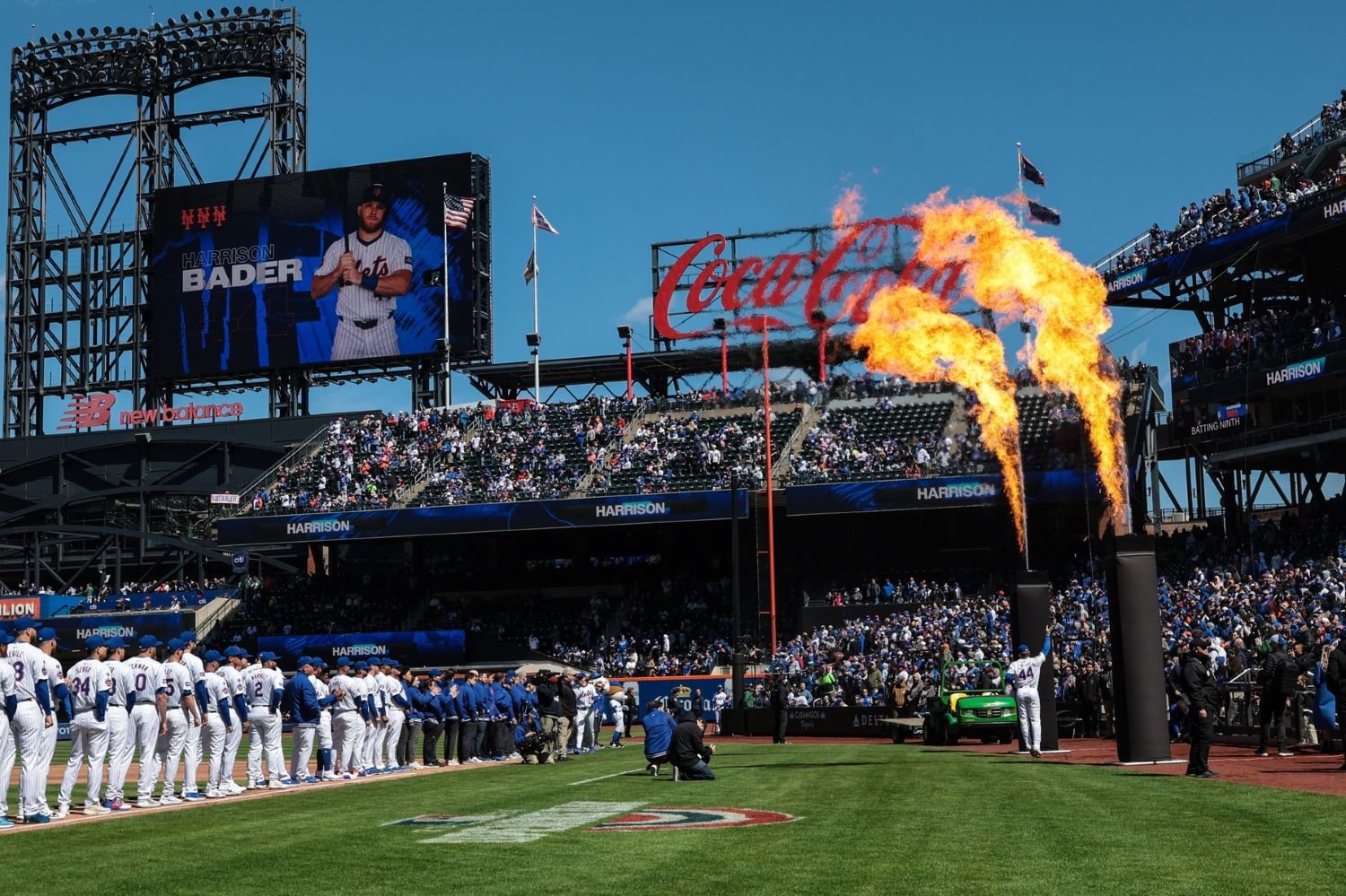 It's been a taut, exciting first game of the Brewers' 2024 season. They fell behind 1-0, but scored the next three tallies, taking a thin lead into the late innings and setting up Freddy Peralta for an Opening Day win. In the top of the eighth inning, though, the tension and adrenaline of the first contest of the year nearly boiled over, in ugly fashion. On a potential double-play ground ball by Willy Adames, Rhys Hoskins slid hard, late, and through the bag into Mets second baseman Jeff McNeil. The slide was questionable but not dirty, and the Brewers showed their collective intensity and cohesion by rushing to back up one of their new leaders. This sure will make the rest of the weekend series interesting, though. There are worse things than upsetting the Mets, especially when you back it up by finishing off an impressive all-around win, as the Brewers did shortly after the near-brouhaha.
 -
It took one extra sleep, but we made it. It's Opening Day, and since that's true, it's a great time to take a close look at the 2024 Milwaukee Brewers. Here are some bold predictions for the season that finally gets underway in a few hours. Image courtesy of © Allan Henry-USA TODAY Sports Boldness is part of the privilege of spring. You get to be bold when the season is not yet underway--when the snow is still smooth and unpunctured by footprints, and everyone's ankles and elbows feel (almost) 100 percent. Let's embrace that privilege, before it's gone. 1. Freddy Peralta will be the runner-up in the NL Cy Young voting. I don't quite believe that Peralta will be the best pitcher in the National League this season, but I think he's got a legitimate shot at it. Without some folks noticing, Peralta has gotten steadily more consistent and more durable over the last few years. As our Jake McKibbin expertly showed yesterday, his slider shape change last summer really helped him find a new gear. He's a savvy, competitive, brilliant four-pitch pitcher at this point, and I think he's going to overwhelm opposing hitters in 2024. 2. William Contreras will have 180 or more hits. This is a triple prediction, collapsed into a single sentence. The component predictions I'm conveying are: Contreras is going to play a lot. Like, a LOT. Contreras is going to continue to be very good at the plate, but He won't increase his average launch angle and start hitting for the maximal power possible within his profile. He prefers to keep maximizing strikeout avoidance, instead. Because it's so rare to hit for average in the modern game--let alone to do so as a catcher--and even more rare to carry a heavy catching workload, no catcher since new Hall of Famer Joe Mauer's magical 2009 campaign has exceeded 180 hits in a season. The highest was 178, by future Hall of Famer Buster Posey in 2012. Contreras will get there, thanks to a desperate desire to catch as much as anyone in baseball and to the availability of DH at-bats for him. (And, of course, thanks to his tremendous hit tool.) 3. At least 14 pitchers will start a game for the Brewers. As we've already discussed at length this spring, Pat Murphy takes a pretty open-minded, flexible approach to starting pitching. Mix that mindset with a roster that lacks anything like a traditional, five-starter cabal, and we're going to see a team record threatened. Seven times in franchise history, the Brewers have used 13 different starting pitchers. Only once, in the Gas Leak Season of 1969 in which they weren't even the Brewers yet, did the team use more, at 17. They last used 13 of them in 2017. That'll change this year. For fun, I'll even try to predict 14 of the guys who will get the ball to begin a contest. Here we go: Peralta DL Hall Colin Rea Wade Miley Jakob Junis Joe Ross Aaron Ashby Robert Gasser Bryse Wilson Taylor Clarke Janson Junk Carlos Rodriguez Jacob Misiorowski Chase Anderson If I get that last one right, I get double the points. I don't make the rules. [Ed. note: Ok, yes I do. But come on.] 4. Sal Frelick will start at least 54 games at third base. This one would have sounded very bold a month ago, but I believed it firmly then. It would have sounded like a lock 10 days ago. After Garrett Mitchell's injury, though, it feels just right for a bold predictions piece again. I think Frelick has taken well enough to third, and demonstrates sufficient comfort with the versatility required to play both the outfield and the infield, that Murphy will still have him play much of the season at the hot corner, once they get Mitchell back. This was never, despite the speculation and skepticism of many, a gimmick. 5. A Brewers hurler will win the Trevor Hoffman NL Reliever of the Year Award again. Alas, this one is awfully bold, given Devin Williams's prolonged absence to open the season. Someone else will have to not only step in, but do so extremely effectively. Still, by now, you should have enough faith in Chris Hook and the Brewers' operation to make it feel plausible. Josh Hader and Williams have combined to win five of the last six of these awards, and while Williams will miss most of the first half with stress fractures in his back, the Brewers have multiple guys who could take up his mantle. The most obvious candidate is Abner Uribe, in whom the franchise has invested so much--emotionally, not monetarily. His stuff is the nastiest and most dominant, and he might have added a bit of a cutter this spring. If Trevor Megill stays healthy, though, he's a dark-horse candidate to be the one, instead. 6. Rhys Hoskins will opt INTO the 2025 portion of his contract. Effectively, everyone is treating Hoskins's deal as a one-year affair. Murphy said as much more than once this spring. Hoskins can opt out of his deal after 2024, and most of the time, Scott Boras clients end up exercising their opt-out clauses. The market climate remains frigid as the season begins, though, and that casts a pall over the quintet of high-profile Boras clients who signed deals that allow them to become free agents in the fall. In Hoskins's case, the extra variables are that he lacks defensive value and is creeping into his mid-30s, and that the Phillies didn't attach a qualifying offer to him on the way out the door last fall. As such, he has less hope of benefiting even if there's a market rebound next offseason, and would need to have a better season than most players in his position to be convinced to opt out. I don't think Hoskins will be bad, but I foresee a bit of missed time and some inconsistency for him this year, and I think it'll be enough to keep him from wanting to get back into the free-agent waters. 7. Miley, Rea, and Ross will combine for fewer than 270 total innings pitched. This would hurt. The Brewers need more than this from their trio of veteran starters. I just don't think they're going to get it. It wouldn't shock me if Rea pitches 140 innings, but I don't think Miley will get past 120, and I don't know that Ross will survive April on the Milwaukee roster. As good as he occasionally looked this spring, neither his health record nor his arsenal suggests that he's going to get outs at the requisite rate over any kind of serious workload in MLB this year. 8. Jackson Chourio will become the second-best power-speed rookie ever. Last season, Corbin Carroll of the Diamondbacks became the first player ever to hit 25 or more home runs and steal 50 or more bases as a rookie. Carroll also added 30 doubles and 10 triples, for good measure. Chourio can top him. He might not quite hit 25 homers, but 20 is a fair projection, and eclipsing 50 steals will only be a problem if Chourio struggles to get on base. For the sake of our format, I'm dispensing with my own concerns about how consistently he'll be able to do that for the time being. The explosiveness of Chourio on the field is Carrollesque, and dazzling. I don't believe at all in Joey Wiemer, so I don't think the Brewers will have much choice but to ride Chourio hard throughout the season. 9. Tyler Black will finish the season in the outfield, one way or another. There are plenty of scouts and evaluators--from notable prospect pundits in public, to decision-makers in other organizations in private--who believe Black is better suited to the outfield than to the spots (second base, third base, first base) where he's spent the most time and projects to play to begin this year. Black is fast, lacks natural infield actions, and has a bat you want to get into the lineup. He's the prototype of a player you move to the grass to get their career in gear. Obviously, so far, the Brewers have resisted that temptation, thanks especially to their existing logjam in the outfield. They're in no hurry to make that squeeze tighter. With Mitchell's injury issues piling up, Wiemer struggling to adjust to the big leagues, and Frelick now a viable infield option, though, I think that will change this summer. If the team really doesn't see him as an outfielder, though, I think they end up trading him, because some other team who does think that's his best future will end up putting a higher grade on him than they do, and they'll have holes to fill at the deadline. Black will be an outfielder by mid-August, even if it has to be because he's a newly minted Cleveland Guardian. Some of the above are bolder than others. Some are relatively tame. The Brewers are a fascinating team for 2024, though, and even if these don't come true, some wild things will happen for them this season. I have them winning the NL Central, but in an absolute mud fight, with an 82-80 record. That sounds sloppy, and at times, it will feel that way, but such a tight division race is also a lot of fun. Call it my 10th bold prediction, in honor of the designated hitter: This is going to be a very entertaining season. Which of these seem plausible to you? Which are nuts? What are your own bold predictions for 2024? Join the conversation below. Happy Opening Day! View full article
-
 Boldness is part of the privilege of spring. You get to be bold when the season is not yet underway--when the snow is still smooth and unpunctured by footprints, and everyone's ankles and elbows feel (almost) 100 percent. Let's embrace that privilege, before it's gone. 1. Freddy Peralta will be the runner-up in the NL Cy Young voting. I don't quite believe that Peralta will be the best pitcher in the National League this season, but I think he's got a legitimate shot at it. Without some folks noticing, Peralta has gotten steadily more consistent and more durable over the last few years. As our Jake McKibbin expertly showed yesterday, his slider shape change last summer really helped him find a new gear. He's a savvy, competitive, brilliant four-pitch pitcher at this point, and I think he's going to overwhelm opposing hitters in 2024. 2. William Contreras will have 180 or more hits. This is a triple prediction, collapsed into a single sentence. The component predictions I'm conveying are: Contreras is going to play a lot. Like, a LOT. Contreras is going to continue to be very good at the plate, but He won't increase his average launch angle and start hitting for the maximal power possible within his profile. He prefers to keep maximizing strikeout avoidance, instead. Because it's so rare to hit for average in the modern game--let alone to do so as a catcher--and even more rare to carry a heavy catching workload, no catcher since new Hall of Famer Joe Mauer's magical 2009 campaign has exceeded 180 hits in a season. The highest was 178, by future Hall of Famer Buster Posey in 2012. Contreras will get there, thanks to a desperate desire to catch as much as anyone in baseball and to the availability of DH at-bats for him. (And, of course, thanks to his tremendous hit tool.) 3. At least 14 pitchers will start a game for the Brewers. As we've already discussed at length this spring, Pat Murphy takes a pretty open-minded, flexible approach to starting pitching. Mix that mindset with a roster that lacks anything like a traditional, five-starter cabal, and we're going to see a team record threatened. Seven times in franchise history, the Brewers have used 13 different starting pitchers. Only once, in the Gas Leak Season of 1969 in which they weren't even the Brewers yet, did the team use more, at 17. They last used 13 of them in 2017. That'll change this year. For fun, I'll even try to predict 14 of the guys who will get the ball to begin a contest. Here we go: Peralta DL Hall Colin Rea Wade Miley Jakob Junis Joe Ross Aaron Ashby Robert Gasser Bryse Wilson Taylor Clarke Janson Junk Carlos Rodriguez Jacob Misiorowski Chase Anderson If I get that last one right, I get double the points. I don't make the rules. [Ed. note: Ok, yes I do. But come on.] 4. Sal Frelick will start at least 54 games at third base. This one would have sounded very bold a month ago, but I believed it firmly then. It would have sounded like a lock 10 days ago. After Garrett Mitchell's injury, though, it feels just right for a bold predictions piece again. I think Frelick has taken well enough to third, and demonstrates sufficient comfort with the versatility required to play both the outfield and the infield, that Murphy will still have him play much of the season at the hot corner, once they get Mitchell back. This was never, despite the speculation and skepticism of many, a gimmick. 5. A Brewers hurler will win the Trevor Hoffman NL Reliever of the Year Award again. Alas, this one is awfully bold, given Devin Williams's prolonged absence to open the season. Someone else will have to not only step in, but do so extremely effectively. Still, by now, you should have enough faith in Chris Hook and the Brewers' operation to make it feel plausible. Josh Hader and Williams have combined to win five of the last six of these awards, and while Williams will miss most of the first half with stress fractures in his back, the Brewers have multiple guys who could take up his mantle. The most obvious candidate is Abner Uribe, in whom the franchise has invested so much--emotionally, not monetarily. His stuff is the nastiest and most dominant, and he might have added a bit of a cutter this spring. If Trevor Megill stays healthy, though, he's a dark-horse candidate to be the one, instead. 6. Rhys Hoskins will opt INTO the 2025 portion of his contract. Effectively, everyone is treating Hoskins's deal as a one-year affair. Murphy said as much more than once this spring. Hoskins can opt out of his deal after 2024, and most of the time, Scott Boras clients end up exercising their opt-out clauses. The market climate remains frigid as the season begins, though, and that casts a pall over the quintet of high-profile Boras clients who signed deals that allow them to become free agents in the fall. In Hoskins's case, the extra variables are that he lacks defensive value and is creeping into his mid-30s, and that the Phillies didn't attach a qualifying offer to him on the way out the door last fall. As such, he has less hope of benefiting even if there's a market rebound next offseason, and would need to have a better season than most players in his position to be convinced to opt out. I don't think Hoskins will be bad, but I foresee a bit of missed time and some inconsistency for him this year, and I think it'll be enough to keep him from wanting to get back into the free-agent waters. 7. Miley, Rea, and Ross will combine for fewer than 270 total innings pitched. This would hurt. The Brewers need more than this from their trio of veteran starters. I just don't think they're going to get it. It wouldn't shock me if Rea pitches 140 innings, but I don't think Miley will get past 120, and I don't know that Ross will survive April on the Milwaukee roster. As good as he occasionally looked this spring, neither his health record nor his arsenal suggests that he's going to get outs at the requisite rate over any kind of serious workload in MLB this year. 8. Jackson Chourio will become the second-best power-speed rookie ever. Last season, Corbin Carroll of the Diamondbacks became the first player ever to hit 25 or more home runs and steal 50 or more bases as a rookie. Carroll also added 30 doubles and 10 triples, for good measure. Chourio can top him. He might not quite hit 25 homers, but 20 is a fair projection, and eclipsing 50 steals will only be a problem if Chourio struggles to get on base. For the sake of our format, I'm dispensing with my own concerns about how consistently he'll be able to do that for the time being. The explosiveness of Chourio on the field is Carrollesque, and dazzling. I don't believe at all in Joey Wiemer, so I don't think the Brewers will have much choice but to ride Chourio hard throughout the season. 9. Tyler Black will finish the season in the outfield, one way or another. There are plenty of scouts and evaluators--from notable prospect pundits in public, to decision-makers in other organizations in private--who believe Black is better suited to the outfield than to the spots (second base, third base, first base) where he's spent the most time and projects to play to begin this year. Black is fast, lacks natural infield actions, and has a bat you want to get into the lineup. He's the prototype of a player you move to the grass to get their career in gear. Obviously, so far, the Brewers have resisted that temptation, thanks especially to their existing logjam in the outfield. They're in no hurry to make that squeeze tighter. With Mitchell's injury issues piling up, Wiemer struggling to adjust to the big leagues, and Frelick now a viable infield option, though, I think that will change this summer. If the team really doesn't see him as an outfielder, though, I think they end up trading him, because some other team who does think that's his best future will end up putting a higher grade on him than they do, and they'll have holes to fill at the deadline. Black will be an outfielder by mid-August, even if it has to be because he's a newly minted Cleveland Guardian. Some of the above are bolder than others. Some are relatively tame. The Brewers are a fascinating team for 2024, though, and even if these don't come true, some wild things will happen for them this season. I have them winning the NL Central, but in an absolute mud fight, with an 82-80 record. That sounds sloppy, and at times, it will feel that way, but such a tight division race is also a lot of fun. Call it my 10th bold prediction, in honor of the designated hitter: This is going to be a very entertaining season. Which of these seem plausible to you? Which are nuts? What are your own bold predictions for 2024? Join the conversation below. Happy Opening Day!
- 4 comments
-
- 1
-

-
- freddy peralta
- rhys hoskins
- (and 4 more)
-
But for one last nasty bite from the injury bug, the Milwaukee Brewers would already have set their Opening Day roster. Since uncertainty remains, though, let's weigh some of the options. Image courtesy of © Rick Scuteri-USA TODAY Sports After a strong showing in the Cactus League and lots of reps from the leadoff spot, Garrett Mitchell seemed all but locked in as the Brewers' Opening Day center fielder. Then, over the weekend, he suffered a fractured hand during a batting practice session, sidelining him for what could be more than a month of action to begin the season. Mitchell's absence creates an unfortunate scramble, within what had gelled into an encouraging and nicely constructed positional roster for Pat Murphy and his staff. For all the volatility of his offensive profile, Mitchell is a tremendous defender and good baserunner, and replacing him means trying to juggle some things. There are good solutions available to the problems this loss poses, but latching onto the right one will be both crucial and difficult. Keeping Powder Dry The move that would preserve all the current talent within the organization and allow them to kick the really tough decisions down the road would be to put Eric Haase in Mitchell's place on the roster. There's no way in which Haase (a 32-year-old, righty-hitting backup catcher) neatly replaces Mitchell (a lefty swinger with graceful defense at any outfield spot), but Haase had a sizzling spring showing. By now, the whole baseball world knows better than to set store by spring statistics, and that includes fans. Still, Haase made a strong case to be retained. The team would almost surely lose him on waivers if they were forced to place him there. Leveraging Versatility and Handedness To directly replace Mitchell's left-handed bat, the logical choice would be to call Oliver Dunn back up, after he was optioned earlier in camp. Dunn, too, looked good this spring, and especially earned Murphy's trust as a defender at third base. That's the key, because to accommodate this maneuver, the Crew would need to move Sal Frelick back to the outfield on virtually a full-time basis, until Mitchell returns. With Frelick patrolling the grassy expanses, it would be up to Dunn and Joey Ortiz to lock down the close confines and flying dust of the hot corner. This way, though, the defensive utility of the roster would be preserved (thanks mostly to Frelick's newfound versatility) and the team would still have a bevy of left-handed bats available at all times: Christian Yelich, Jake Bauers, Brice Turang, Frelick, and Dunn, with Blake Perkins as a switch-hitter, to boot. That platoon balance would be valuable. If You Absolutely Must Have an Outfielder Losing Mitchell stings mostly because he was coming into focus as a linchpin of the team's defensive alignment. To sustain a sense of good depth and defensive competence in the outfield, the team could bring back Joey Wiemer (one of the last players optioned to Triple-A as camp wound down), Chris Roller, or Brewer Hicklen. There are drawbacks to each of these alternatives. Wiemer is an important part of the Brewers' long-term future, and not much of a step down from Mitchell. On the other hand, he needs the everyday playing time he would surely get in Nashville. His offensive game still has such rough edges that asking him to work through them in what could be a part-time role (and to smooth out the wrinkles in a new swing, to boot) seems like an iffy choice. Neither Hicklen nor Roller profile as great center fielders, though. Hicklen also isn't on the 40-man roster, so another move would be required to bring him up right away. At the same time, it's Hicklen who had the best Cactus League of the three, and he could play some right field against lefties, with Frelick, Jackson Chourio, and Perkins rotating through both right and center. If I were making the call, it would be to keep Haase. It's possible to use Frelick primarily in the outfield under that configuration, while pulling him in to third base in certain matchups and having Perkins plug the defensive gap in the outfield. Haase is a welcome presence in the clubhouse, and keeping him around as a contributor both at the plate and in game planning for pitchers makes the most sense. He'll probably still be the first cut when exigencies force one on the Crew, but Mitchell's injury means they can afford to hang onto him, use Gary Sánchez more liberally as a DH, and play a wait-and-see game. I liked Haase's fit with the team's catching instruction group and their hitting philosophies when they signed him this winter, and he was impressive on and off the field in camp. None of the other options available to the team are intriguing enough for me to be comfortable losing Haase altogether. Soon, though, we'll find out whether the Brewers agree. How would you fill out the Brewers' roster in the wake of the Mitchell news? What traits are you most focused on? Let us know below. View full article
-
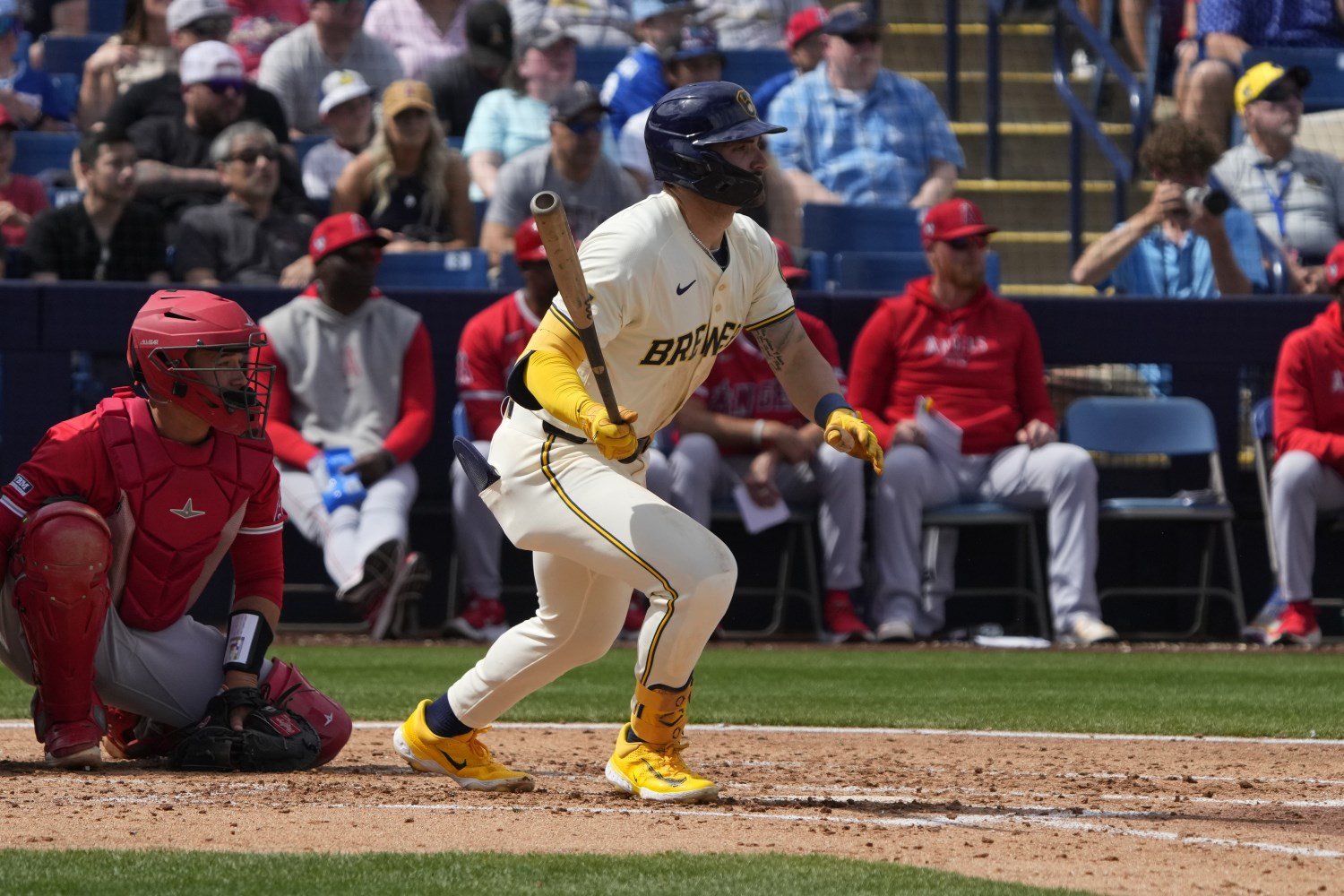 After a strong showing in the Cactus League and lots of reps from the leadoff spot, Garrett Mitchell seemed all but locked in as the Brewers' Opening Day center fielder. Then, over the weekend, he suffered a fractured hand during a batting practice session, sidelining him for what could be more than a month of action to begin the season. Mitchell's absence creates an unfortunate scramble, within what had gelled into an encouraging and nicely constructed positional roster for Pat Murphy and his staff. For all the volatility of his offensive profile, Mitchell is a tremendous defender and good baserunner, and replacing him means trying to juggle some things. There are good solutions available to the problems this loss poses, but latching onto the right one will be both crucial and difficult. Keeping Powder Dry The move that would preserve all the current talent within the organization and allow them to kick the really tough decisions down the road would be to put Eric Haase in Mitchell's place on the roster. There's no way in which Haase (a 32-year-old, righty-hitting backup catcher) neatly replaces Mitchell (a lefty swinger with graceful defense at any outfield spot), but Haase had a sizzling spring showing. By now, the whole baseball world knows better than to set store by spring statistics, and that includes fans. Still, Haase made a strong case to be retained. The team would almost surely lose him on waivers if they were forced to place him there. Leveraging Versatility and Handedness To directly replace Mitchell's left-handed bat, the logical choice would be to call Oliver Dunn back up, after he was optioned earlier in camp. Dunn, too, looked good this spring, and especially earned Murphy's trust as a defender at third base. That's the key, because to accommodate this maneuver, the Crew would need to move Sal Frelick back to the outfield on virtually a full-time basis, until Mitchell returns. With Frelick patrolling the grassy expanses, it would be up to Dunn and Joey Ortiz to lock down the close confines and flying dust of the hot corner. This way, though, the defensive utility of the roster would be preserved (thanks mostly to Frelick's newfound versatility) and the team would still have a bevy of left-handed bats available at all times: Christian Yelich, Jake Bauers, Brice Turang, Frelick, and Dunn, with Blake Perkins as a switch-hitter, to boot. That platoon balance would be valuable. If You Absolutely Must Have an Outfielder Losing Mitchell stings mostly because he was coming into focus as a linchpin of the team's defensive alignment. To sustain a sense of good depth and defensive competence in the outfield, the team could bring back Joey Wiemer (one of the last players optioned to Triple-A as camp wound down), Chris Roller, or Brewer Hicklen. There are drawbacks to each of these alternatives. Wiemer is an important part of the Brewers' long-term future, and not much of a step down from Mitchell. On the other hand, he needs the everyday playing time he would surely get in Nashville. His offensive game still has such rough edges that asking him to work through them in what could be a part-time role (and to smooth out the wrinkles in a new swing, to boot) seems like an iffy choice. Neither Hicklen nor Roller profile as great center fielders, though. Hicklen also isn't on the 40-man roster, so another move would be required to bring him up right away. At the same time, it's Hicklen who had the best Cactus League of the three, and he could play some right field against lefties, with Frelick, Jackson Chourio, and Perkins rotating through both right and center. If I were making the call, it would be to keep Haase. It's possible to use Frelick primarily in the outfield under that configuration, while pulling him in to third base in certain matchups and having Perkins plug the defensive gap in the outfield. Haase is a welcome presence in the clubhouse, and keeping him around as a contributor both at the plate and in game planning for pitchers makes the most sense. He'll probably still be the first cut when exigencies force one on the Crew, but Mitchell's injury means they can afford to hang onto him, use Gary Sánchez more liberally as a DH, and play a wait-and-see game. I liked Haase's fit with the team's catching instruction group and their hitting philosophies when they signed him this winter, and he was impressive on and off the field in camp. None of the other options available to the team are intriguing enough for me to be comfortable losing Haase altogether. Soon, though, we'll find out whether the Brewers agree. How would you fill out the Brewers' roster in the wake of the Mitchell news? What traits are you most focused on? Let us know below.
 -
He barely has a full MLB season's worth of professional playing time, across many levels and three different seasons. He's either hit grounders or struck out at what would typically be catastrophic rates at every stop, and he has maybe 60-grade power, not top-of-the-scale stuff. He's slugged .372 this spring, in Arizona's warmth and thin air and against pitching much less robust than what he'll face in the regular season. He's a great athlete and we all love his upside, but if you don't see a huge downside risk still lurking here... well, then yes, this article would sound like Chicken Little. Haha. Suffice to say, I think there's AMPLE reason for the level of skepticism with which he's been treated so far, even though there's just as much cause for hope and interest. That's what I was trying to get across in this piece.
-
Lacking either the personnel or the organizational philosophy to hit for power at an elite level, the 2024 Milwaukee Brewers will need to be aggressive and creative to create runs this year. They've spent the spring practicing hard. Image courtesy of © Rick Scuteri-USA TODAY Sports The Los Angeles Angels lead the Cactus League (and the Grapefruit League, too, for that matter) with 43 stolen bases this spring. Right on their heels, though, are the Brewers, at 42. They've also been caught 16 times, and swiping bags at a rate south of 73% probably won't engender that kind of aggressiveness once the season begins. Spring training is for ironing out the kinks that lead to some of those outs, though, and for learning how to pick spots better. It's also not a big deal that, for instance, Luis Lara, Yonny Hernandez and Chavez Young (three far-off prospects) were caught six times in nine tries. Manager Pat Murphy has been unflinching and candid about this: the Brewers will run this year. Stolen bases will be a huge part of their game, for the first time since the early days of the Craig Counsell era. In 2016, of course, the Crew led MLB in steals. In 2017, they were second, and in 2018, they were fourth. Thereafter, though, they got much more power-oriented, slower, and less aggressive on the bases. The rising tide of steals across MLB lifted their boat last year, but they were still just 11th in steals and 12th in steal attempts. One aspect of Murphy's eagerness to play Sal Frelick, Brice Turang, and Garrett Mitchell regularly is his belief in disrupting the game rhythm of left-handed starting pitchers, and another is the defensive value each of them offers. A third, though, is the fact that all three figure to be able to create runs with their speed, once they reach base. Turang has stolen six bases in eight tries this spring. Mitchell is 2-for-2. Frelick has been caught in half of his six attempts, but again, success isn't necessarily the goal during the spring. It's about getting reads and learning from bad reps, on the bases just as much as at third base. Christian Yelich is another key player in this regard. His efficiency as a basestealer was a huge part of his resurgent campaign in 2023, with 28 thefts in 31 tries. He's unlikely to run as much this year, as he projects to hit in the middle of the lineup rather than batting leadoff, but Yelich will keep the offense dynamic even in the more power-focused stretch of the lineup. Jackson Chourio is the biggest wild card, though. The 20-year-old rookie stole 44 bases in 53 tries in the minors last year, and another three in Venezuelan Winter League action. He's also 2-for-3 this spring. Chourio's speed is part of why he's the most exciting player on the team as the season begins, and why he could be one of the most exciting in the league. In addition to those five main threats, every role player will be expected to run at times, just as they did last year. Oliver Dunn stole five bases without being caught in the Cactus League. Tyler Black, Vinny Capra, and Blake Perkins were all 3-for-3. While Murphy is no more likely to drop down a sacrifice bunt than was his predecessor, he's firm in his commitment to applying pressure to the defense and creating extra runs by taking the extra base. I wouldn't be surprised if this team steals 180 bases this year, the way they did back in 2016. That team was lousy, and over half those bases were stolen by two players (Jonathan Villar and Hernán Pérez) who only played as much as they did because they were on a lousy team. This year's mix of speedsters is very different, though, with their batting and fielding value far exceeding that of Villar, Pérez, and Keon Broxton. The team will hope that their steals translate to many more wins. View full article
- 4 replies
-
- 2
-
-
- sal frelick
- garrett mitchell
- (and 3 more)
-
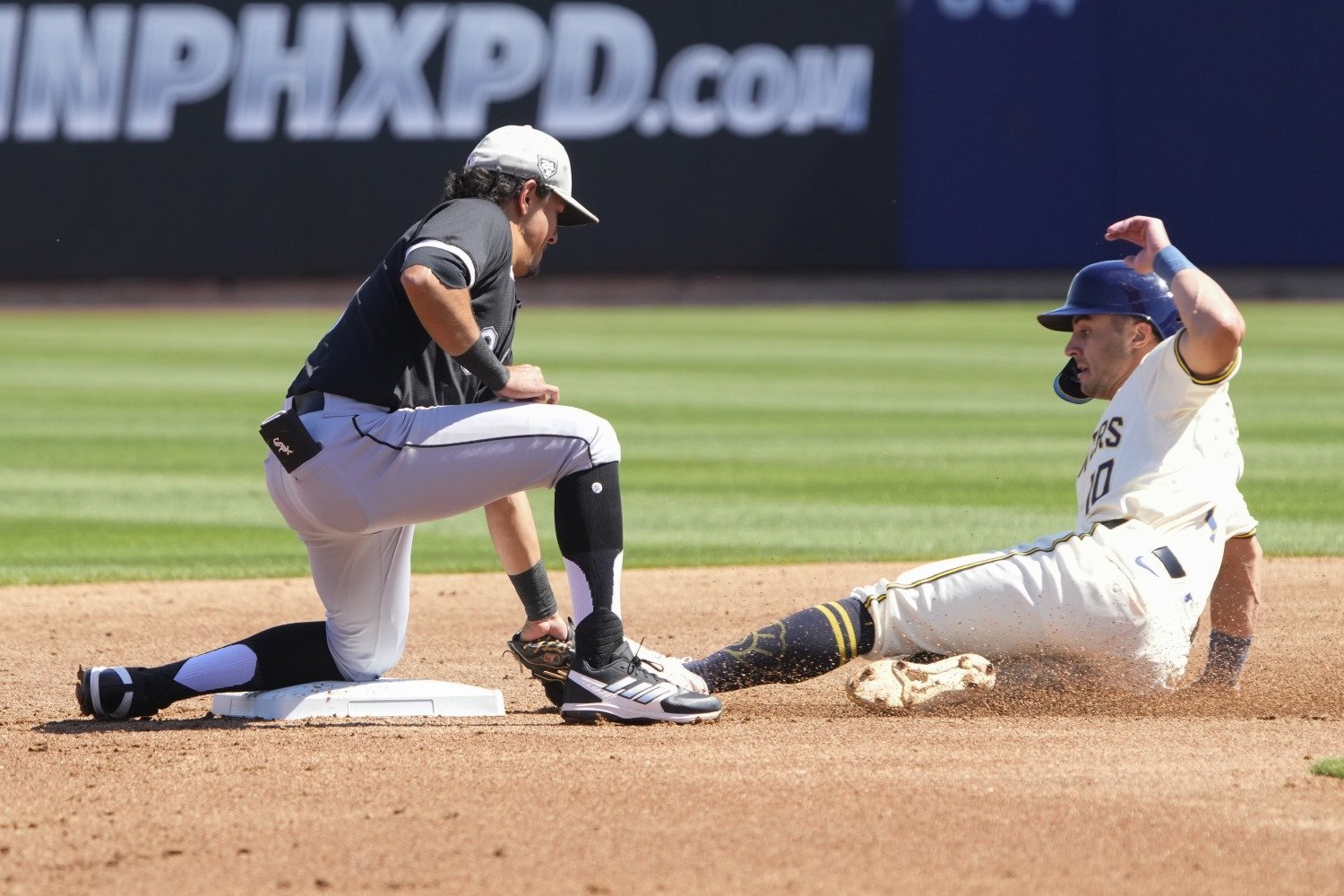 The Los Angeles Angels lead the Cactus League (and the Grapefruit League, too, for that matter) with 43 stolen bases this spring. Right on their heels, though, are the Brewers, at 42. They've also been caught 16 times, and swiping bags at a rate south of 73% probably won't engender that kind of aggressiveness once the season begins. Spring training is for ironing out the kinks that lead to some of those outs, though, and for learning how to pick spots better. It's also not a big deal that, for instance, Luis Lara, Yonny Hernandez and Chavez Young (three far-off prospects) were caught six times in nine tries. Manager Pat Murphy has been unflinching and candid about this: the Brewers will run this year. Stolen bases will be a huge part of their game, for the first time since the early days of the Craig Counsell era. In 2016, of course, the Crew led MLB in steals. In 2017, they were second, and in 2018, they were fourth. Thereafter, though, they got much more power-oriented, slower, and less aggressive on the bases. The rising tide of steals across MLB lifted their boat last year, but they were still just 11th in steals and 12th in steal attempts. One aspect of Murphy's eagerness to play Sal Frelick, Brice Turang, and Garrett Mitchell regularly is his belief in disrupting the game rhythm of left-handed starting pitchers, and another is the defensive value each of them offers. A third, though, is the fact that all three figure to be able to create runs with their speed, once they reach base. Turang has stolen six bases in eight tries this spring. Mitchell is 2-for-2. Frelick has been caught in half of his six attempts, but again, success isn't necessarily the goal during the spring. It's about getting reads and learning from bad reps, on the bases just as much as at third base. Christian Yelich is another key player in this regard. His efficiency as a basestealer was a huge part of his resurgent campaign in 2023, with 28 thefts in 31 tries. He's unlikely to run as much this year, as he projects to hit in the middle of the lineup rather than batting leadoff, but Yelich will keep the offense dynamic even in the more power-focused stretch of the lineup. Jackson Chourio is the biggest wild card, though. The 20-year-old rookie stole 44 bases in 53 tries in the minors last year, and another three in Venezuelan Winter League action. He's also 2-for-3 this spring. Chourio's speed is part of why he's the most exciting player on the team as the season begins, and why he could be one of the most exciting in the league. In addition to those five main threats, every role player will be expected to run at times, just as they did last year. Oliver Dunn stole five bases without being caught in the Cactus League. Tyler Black, Vinny Capra, and Blake Perkins were all 3-for-3. While Murphy is no more likely to drop down a sacrifice bunt than was his predecessor, he's firm in his commitment to applying pressure to the defense and creating extra runs by taking the extra base. I wouldn't be surprised if this team steals 180 bases this year, the way they did back in 2016. That team was lousy, and over half those bases were stolen by two players (Jonathan Villar and Hernán Pérez) who only played as much as they did because they were on a lousy team. This year's mix of speedsters is very different, though, with their batting and fielding value far exceeding that of Villar, Pérez, and Keon Broxton. The team will hope that their steals translate to many more wins.
 -
Hmm. How do you mean?
-
In a fistful of recent Cactus League games featuring much of the presumed regular lineup, the Brewers' leadoff hitter has been their 2020 first-round pick. He remains very much an enigma, but since the team looks ready to lean heavily on him this season, we had better figure him out quickly. Image courtesy of © Rick Scuteri-USA TODAY Sports It's no one's fault, exactly, that Garrett Mitchell remains such a wild card. Entering pro baseball during the pandemic season and having significant injury issues since, he's been tough to fully evaluate all the way through his journey to the big leagues. The team has seemed pretty certain of his quality since he was called up for the first time in late 2022, and it sure looked like he was going to establish himself as a regular in the lineup last spring, but then he wrecked his shoulder on that fateful slide in Seattle. Therefore, we still can't say with any real certainty whether the unique skill set Mitchell is trying to unleash will work in MLB. By now, you probably do know the following, because they seem fairly clear: Mitchell is an elite defender in the outfield, and a fast runner on the bases (though, perhaps, not a truly elite baserunner in terms of instincts and aggressiveness). Mitchell also strikes out at a near-calamitous rate. He's fanned in 28 percent of his professional plate appearances, In the modern game, strikeouts have been destigmatized, and there are guys who can succeed with that many punchouts in their profile, but that number includes games played in the lower levels of the minors, too. In his 141 trips to the dish in MLB, he's on the wrong side of 40%, which is limiting. Especially because: While he's shown the ability to launch the ball a long way and certainly has both the build and the bat speed to produce power, Mitchell has been limited by an overweening tendency to put the ball on the ground. His exceptional athleticism and non-batting value have gotten Mitchell to the big leagues in a hurry, and he's not likely to go back to the minors any time soon. He's quickly proved himself too good for non-MLB competition, which is encouraging for any player, but especially for one who has had their development interrupted by injury multiple times. It's still hard to pin down the possibilities for him as an offensive contributor, though. If he's going to strike out at a rate north of 30% (and he's fanned 15 times in 48 plate appearances this spring, so it's hardly as if that problem has gone away), he needs to both draw plenty of walks and hit for some significant power. Alas, there's no slug on the ground, and all the way up the chain, he's put the ball on the ground far too often. Interestingly, though, the big leagues are the exception to that. It's only been a very small sample of batted balls, but when Mitchell has connected during his brief MLB tenure, he's had just a 40.5% ground-ball rate, down from a fatal 61.8% combined in all his minor-league stops. Has he made a sufficient swing adjustment to start lifting the ball and tapping into his raw power? There's some evidence of one, but it's more like Mitchell has been healthier during his big-league time than during some of that minor-league run. He was sidelined by a muscle strain behind his knee in May 2021, and by an oblique strain in May 2022. He came back from each, but it took a while, and even once he was back in the lineup, it often looked as though he wasn't getting off his 'A' swing. It might well be that his terrifying grounder rate is just a statistical artifact of playing while still working through the accumulating effects of injuries. On the other hand, good hitters have to be able to swing effectively at much less than 100 percent, because that's where most players spend most of the long, grinding big-league season. Here's Mitchell's spray chart for his time in Triple A and MLB, over the last two seasons, with the field broken down into segments. One problem is that Mitchell, a left-handed hitter, rakes so many of his ground balls right to the first baseman. Sure, one or two of them might get past him and into the corner for a triple, but that's a lot of virtually automatic outs. Not even Mitchell's elite speed can consistently yield safeties when the ball is nearly delivering itself to the fielder and the base. Overall, though, he has shown the ability to drive the ball to left and left-center, where a lot of singles and doubles can live. Importantly (and not really shown in this way of displaying the spray chart), when he gets into one to his pull side, it's not a lazy fly ball. It's gone. Mitchell makes great swing decisions, on balance. He swings more often within the zone than the average batter, and considerably less often outside the zone. That's good. His one vulnerability is the ball down, which is bad for two reasons: it tells us that he's not recognizing breaking balls or changeups as well as we might like, and even when he makes contact down there, he's likely to hit one of those rollover, 3-unassisted ground balls. Again, though, overall, that's an encouraging heat map. That's a guy who doesn't expand the zone away virtually at all, but doesn't cut the plate in half and give up on the outside corner, either. He's cut down the ground balls in these higher-level stops, too, by having a fairly grooved swing. In other words, he knows his bat path and tries to find the ball on it, rather than manipulating the shape of his swing from pitch to pitch. Obviously, that feeds into the very high strikeout rate, but it also means he's more likely to lift and drive the ball when he connects. Here's his whiff rate by pitch location; you can effectively imagine the blue slash here as his bat coming through the zone. If Mitchell continues to show excellent plate discipline and draw walks at a rate north of 10 percent, he has a chance to be a really productive hitter, and a credible leadoff man, even with seemingly disqualifying strikeout and ground-ball rates. The question, as Baseball Prospectus stat maven and noted Brewers fan Jonathan Judge has remarked, is what BABIP he'll need to sustain in order to make it work. That depends greatly on the power he produces, of course, but Judge threw out a figure of .350 as a benchmark. I find that to be about right, but it makes for a tall order. He's done it up to this point in his short career, of course, but that BABIP would be north of the 90th percentile for big-league batters with at least 400 plate appearances. Mitchell hits the right kind of grounders in terms of launch angle (higher ones, not choppers right into the dirt in front of home plate), and the speed helps, but all those balls right to first base worry me. Last year, Christian Yelich and Austin Hays were the 90th-percentile BABIP guys in MLB, at .346. Yelich is an encouraging comp, of course, but Yelich's profile wouldn't work if he struck out 30 percent of the time. That's what 2021 was. Hays, like many BABIP specialists, is a right-handed batter who puts the ball on the left side of the infield, so he doesn't offer much new hope. I think Mitchell's better chance of becoming an above-average hitter on a sustainable basis has to lie in generating consistent lift and hitting 15 or 20 home runs, while toning the strikeout rate down to around 25 percent. If you hold the punchout rate at 30%, give him an 11% walk rate and a few times hit by pitch, and peg him for 18 homers, a .320 BABIP would lead to roughly a .235/.327/.405 line. That would be plenty to keep his tremendous glove in the lineup, but it would be a major disappointment from the leadoff spot. Give him that .350 BABIP, and he's at .254/.343/.432. Now you'd be downright excited, and he'd even be tenable in the leadoff spot. That seems like a bit of a pipe dream, though. The BABIP-reliant version of Mitchell just isn't going to be a great one. He'll have to adjust and improve. Mitchell has such crazy tools that letting him get a lot of plate appearances and prove himself either capable or incapable seems like a solid move. He hits the ball hard, runs well, and swings at the right pitches, for the most part. It seems unfair that he's expected to do even more in order to become a truly valuable top-of-the-order bat, but he is. If he doesn't thrive in a hurry, there will be calls for Sal Frelick (whose superb contact skills give him a much higher OBP floor, although perhaps a lower ceiling, and who doesn't hit the ball hard but does lift it enough to generate a consistently solid BABIP) or Jackson Chourio (should he get off to a hot start and show himself to be one of those rare rookies who can take over the game) to replace him atop the order. For now, all we can do is try to diagnose the hurdles Mitchell is attempting to clear, and guess at whether or not he'll clear them. It would have been great if he'd hit three or four home runs this spring, to alleviate any doubts, but he's done enough to earn his manager's trust. In just five more days, we'll get to see whether that trust was well-placed. How high are your hopes for Mitchell in 2024? Are you comfortable with him as a frequent leadoff hitter for the team? Join the discussion in the comments. Research assistance provided by TruMedia. View full article
- 13 replies
-
- 1
-
-
- garrett mitchell
- sal frelick
- (and 2 more)
-
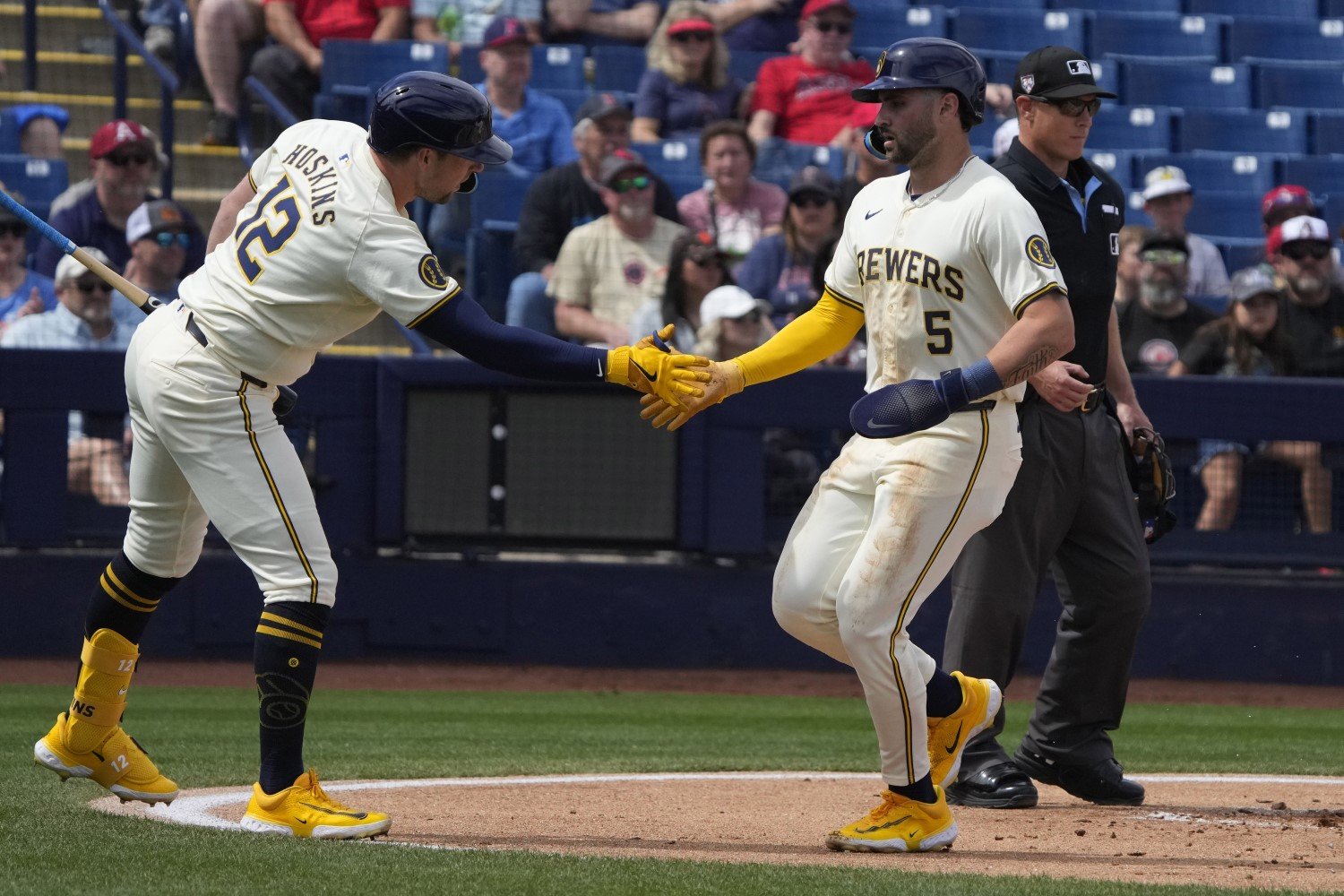 It's no one's fault, exactly, that Garrett Mitchell remains such a wild card. Entering pro baseball during the pandemic season and having significant injury issues since, he's been tough to fully evaluate all the way through his journey to the big leagues. The team has seemed pretty certain of his quality since he was called up for the first time in late 2022, and it sure looked like he was going to establish himself as a regular in the lineup last spring, but then he wrecked his shoulder on that fateful slide in Seattle. Therefore, we still can't say with any real certainty whether the unique skill set Mitchell is trying to unleash will work in MLB. By now, you probably do know the following, because they seem fairly clear: Mitchell is an elite defender in the outfield, and a fast runner on the bases (though, perhaps, not a truly elite baserunner in terms of instincts and aggressiveness). Mitchell also strikes out at a near-calamitous rate. He's fanned in 28 percent of his professional plate appearances, In the modern game, strikeouts have been destigmatized, and there are guys who can succeed with that many punchouts in their profile, but that number includes games played in the lower levels of the minors, too. In his 141 trips to the dish in MLB, he's on the wrong side of 40%, which is limiting. Especially because: While he's shown the ability to launch the ball a long way and certainly has both the build and the bat speed to produce power, Mitchell has been limited by an overweening tendency to put the ball on the ground. His exceptional athleticism and non-batting value have gotten Mitchell to the big leagues in a hurry, and he's not likely to go back to the minors any time soon. He's quickly proved himself too good for non-MLB competition, which is encouraging for any player, but especially for one who has had their development interrupted by injury multiple times. It's still hard to pin down the possibilities for him as an offensive contributor, though. If he's going to strike out at a rate north of 30% (and he's fanned 15 times in 48 plate appearances this spring, so it's hardly as if that problem has gone away), he needs to both draw plenty of walks and hit for some significant power. Alas, there's no slug on the ground, and all the way up the chain, he's put the ball on the ground far too often. Interestingly, though, the big leagues are the exception to that. It's only been a very small sample of batted balls, but when Mitchell has connected during his brief MLB tenure, he's had just a 40.5% ground-ball rate, down from a fatal 61.8% combined in all his minor-league stops. Has he made a sufficient swing adjustment to start lifting the ball and tapping into his raw power? There's some evidence of one, but it's more like Mitchell has been healthier during his big-league time than during some of that minor-league run. He was sidelined by a muscle strain behind his knee in May 2021, and by an oblique strain in May 2022. He came back from each, but it took a while, and even once he was back in the lineup, it often looked as though he wasn't getting off his 'A' swing. It might well be that his terrifying grounder rate is just a statistical artifact of playing while still working through the accumulating effects of injuries. On the other hand, good hitters have to be able to swing effectively at much less than 100 percent, because that's where most players spend most of the long, grinding big-league season. Here's Mitchell's spray chart for his time in Triple A and MLB, over the last two seasons, with the field broken down into segments. One problem is that Mitchell, a left-handed hitter, rakes so many of his ground balls right to the first baseman. Sure, one or two of them might get past him and into the corner for a triple, but that's a lot of virtually automatic outs. Not even Mitchell's elite speed can consistently yield safeties when the ball is nearly delivering itself to the fielder and the base. Overall, though, he has shown the ability to drive the ball to left and left-center, where a lot of singles and doubles can live. Importantly (and not really shown in this way of displaying the spray chart), when he gets into one to his pull side, it's not a lazy fly ball. It's gone. Mitchell makes great swing decisions, on balance. He swings more often within the zone than the average batter, and considerably less often outside the zone. That's good. His one vulnerability is the ball down, which is bad for two reasons: it tells us that he's not recognizing breaking balls or changeups as well as we might like, and even when he makes contact down there, he's likely to hit one of those rollover, 3-unassisted ground balls. Again, though, overall, that's an encouraging heat map. That's a guy who doesn't expand the zone away virtually at all, but doesn't cut the plate in half and give up on the outside corner, either. He's cut down the ground balls in these higher-level stops, too, by having a fairly grooved swing. In other words, he knows his bat path and tries to find the ball on it, rather than manipulating the shape of his swing from pitch to pitch. Obviously, that feeds into the very high strikeout rate, but it also means he's more likely to lift and drive the ball when he connects. Here's his whiff rate by pitch location; you can effectively imagine the blue slash here as his bat coming through the zone. If Mitchell continues to show excellent plate discipline and draw walks at a rate north of 10 percent, he has a chance to be a really productive hitter, and a credible leadoff man, even with seemingly disqualifying strikeout and ground-ball rates. The question, as Baseball Prospectus stat maven and noted Brewers fan Jonathan Judge has remarked, is what BABIP he'll need to sustain in order to make it work. That depends greatly on the power he produces, of course, but Judge threw out a figure of .350 as a benchmark. I find that to be about right, but it makes for a tall order. He's done it up to this point in his short career, of course, but that BABIP would be north of the 90th percentile for big-league batters with at least 400 plate appearances. Mitchell hits the right kind of grounders in terms of launch angle (higher ones, not choppers right into the dirt in front of home plate), and the speed helps, but all those balls right to first base worry me. Last year, Christian Yelich and Austin Hays were the 90th-percentile BABIP guys in MLB, at .346. Yelich is an encouraging comp, of course, but Yelich's profile wouldn't work if he struck out 30 percent of the time. That's what 2021 was. Hays, like many BABIP specialists, is a right-handed batter who puts the ball on the left side of the infield, so he doesn't offer much new hope. I think Mitchell's better chance of becoming an above-average hitter on a sustainable basis has to lie in generating consistent lift and hitting 15 or 20 home runs, while toning the strikeout rate down to around 25 percent. If you hold the punchout rate at 30%, give him an 11% walk rate and a few times hit by pitch, and peg him for 18 homers, a .320 BABIP would lead to roughly a .235/.327/.405 line. That would be plenty to keep his tremendous glove in the lineup, but it would be a major disappointment from the leadoff spot. Give him that .350 BABIP, and he's at .254/.343/.432. Now you'd be downright excited, and he'd even be tenable in the leadoff spot. That seems like a bit of a pipe dream, though. The BABIP-reliant version of Mitchell just isn't going to be a great one. He'll have to adjust and improve. Mitchell has such crazy tools that letting him get a lot of plate appearances and prove himself either capable or incapable seems like a solid move. He hits the ball hard, runs well, and swings at the right pitches, for the most part. It seems unfair that he's expected to do even more in order to become a truly valuable top-of-the-order bat, but he is. If he doesn't thrive in a hurry, there will be calls for Sal Frelick (whose superb contact skills give him a much higher OBP floor, although perhaps a lower ceiling, and who doesn't hit the ball hard but does lift it enough to generate a consistently solid BABIP) or Jackson Chourio (should he get off to a hot start and show himself to be one of those rare rookies who can take over the game) to replace him atop the order. For now, all we can do is try to diagnose the hurdles Mitchell is attempting to clear, and guess at whether or not he'll clear them. It would have been great if he'd hit three or four home runs this spring, to alleviate any doubts, but he's done enough to earn his manager's trust. In just five more days, we'll get to see whether that trust was well-placed. How high are your hopes for Mitchell in 2024? Are you comfortable with him as a frequent leadoff hitter for the team? Join the discussion in the comments. Research assistance provided by TruMedia.
- 13 comments
-
- 1
-
-
- garrett mitchell
- sal frelick
- (and 2 more)
-
Though they did add some fly-ball sluggers this winter, the Milwaukee Brewers remain an offense built around on-base skills and using the big part of the field. With a new metric by which to evaluate hitting approach, we can see how viable that team build is for 2024. At the beginning of this month, Baseball Prospectus's Patrick Dubuque broke out a new way to measure the ability of hitters to manage the count. Dubuque took the value of reaching each count (based on the league's performance once they do), tabulated how often each hitter reached each count, and then leveraged the two against each other to create a simple and valuable assessment of count management by hitters, which he dubbed Count+. In this metric, 100 is average, and higher is better--meaning that hitters with higher scores spend more time in more advantageous counts. The 2023 Brewers were one of the most patient, OBP-focused teams in baseball, so it should be no surprise to learn that several of them rated well by Dubuque's new measuring stick. No Milwaukee hitter was elite, but they were almost all above-average. Let's look just at the hitters who got substantial big-league time over the two-year sample Dubuque used to create the metric, who are now in the Milwaukee organization. Christian Yelich: 107.9 Count+ William Contreras: 104.3 Willy Adames: 102.4 Owen Miller: 95.9 Rhys Hoskins: 110.5 Gary Sánchez: 106.2 Eric Haase: 98.0 Christian Arroyo: 88.5 It's far from the only reason why they were Brewers targets, but Hoskins and Sánchez stand out in this group. As much as his homers garner headlines, Hoskins's plate discipline is just about exactly as important to his game. He works diligently to get into counts where he can cut loose his steep, powerful swing with relatively little worry about whiffing, since he has a strike to play with. By focusing on areas of the zone within which he does damage, he also increases the likelihood that he'll connect on those swings. Does that mean a lot of called strikes, at times? Sure. That's not a deal-breaker for the Brewers, though. Only three other teams took more called strikes in hitters' counts last year--including Sánchez's Padres. They like to get hitters thinking about covering a portion of the zone where maximum production is possible, rather than about covering the whole zone, when they're ahead in the count. The new guys fit in brilliantly. Obviously, this is not a perfect or universally applicable metric. How hard a hitter should work to get into advantageous counts depends a bit on their overall profile. Taking the league-wide numbers through various counts smooths over some important differences between players and their unique expected production through those counts, based on their whiff rates, pitch identification skills, and contact quality. It also captures some things that are really contact skills (putting the ball in play more often, as opposed to fouling it off or whiffing) and sells them to us as matters of approach or intent. Still, it's a great thumbnail sketch of how well a hitter mentally approaches winning an at-bat, with the base rates of the game in mind. The Brewers do it very well, because it's a point of emphasis for them. Under Murphy, and with their current personnel, they don't intend to lead the league in home runs. Instead, they'll create runs by putting hits and walks together in clusters, and that means taking a grinding, steady approach to winning each pitch and gaining the advantage within individual at-bats. Hoskins, whose charisma and track record make him something of an instant icon for this lineup and the carrier of the overall team identity, was a carefully chosen addition, balancing filling the team's needs positionally and in terms of skill set with a continued dedication to what they already think works. View full article
-
At Bat, the Milwaukee Brewers Are Master Managers of the Count
Matthew Trueblood posted an article in Brewers
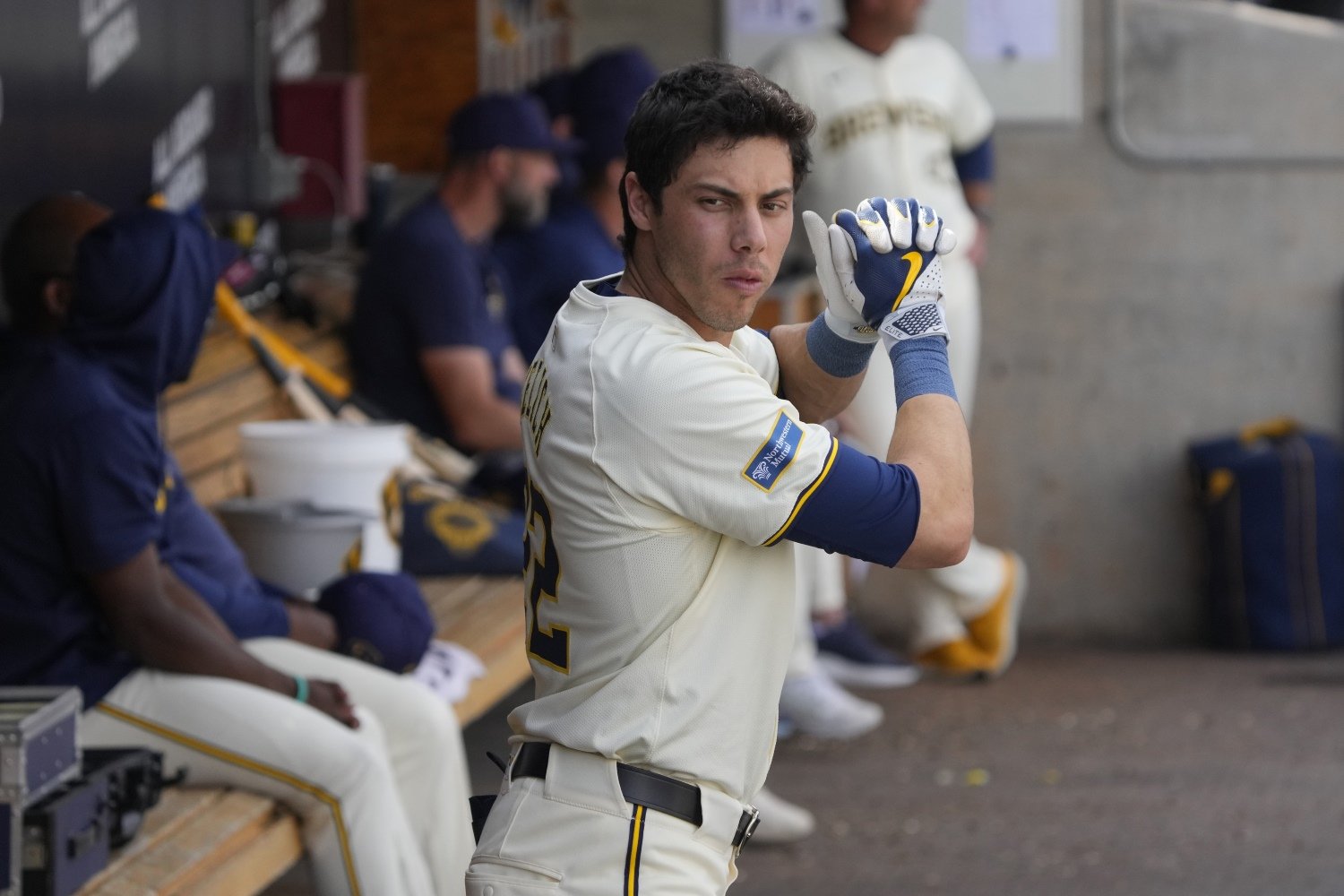 At the beginning of this month, Baseball Prospectus's Patrick Dubuque broke out a new way to measure the ability of hitters to manage the count. Dubuque took the value of reaching each count (based on the league's performance once they do), tabulated how often each hitter reached each count, and then leveraged the two against each other to create a simple and valuable assessment of count management by hitters, which he dubbed Count+. In this metric, 100 is average, and higher is better--meaning that hitters with higher scores spend more time in more advantageous counts. The 2023 Brewers were one of the most patient, OBP-focused teams in baseball, so it should be no surprise to learn that several of them rated well by Dubuque's new measuring stick. No Milwaukee hitter was elite, but they were almost all above-average. Let's look just at the hitters who got substantial big-league time over the two-year sample Dubuque used to create the metric, who are now in the Milwaukee organization. Christian Yelich: 107.9 Count+ William Contreras: 104.3 Willy Adames: 102.4 Owen Miller: 95.9 Rhys Hoskins: 110.5 Gary Sánchez: 106.2 Eric Haase: 98.0 Christian Arroyo: 88.5 It's far from the only reason why they were Brewers targets, but Hoskins and Sánchez stand out in this group. As much as his homers garner headlines, Hoskins's plate discipline is just about exactly as important to his game. He works diligently to get into counts where he can cut loose his steep, powerful swing with relatively little worry about whiffing, since he has a strike to play with. By focusing on areas of the zone within which he does damage, he also increases the likelihood that he'll connect on those swings. Does that mean a lot of called strikes, at times? Sure. That's not a deal-breaker for the Brewers, though. Only three other teams took more called strikes in hitters' counts last year--including Sánchez's Padres. They like to get hitters thinking about covering a portion of the zone where maximum production is possible, rather than about covering the whole zone, when they're ahead in the count. The new guys fit in brilliantly. Obviously, this is not a perfect or universally applicable metric. How hard a hitter should work to get into advantageous counts depends a bit on their overall profile. Taking the league-wide numbers through various counts smooths over some important differences between players and their unique expected production through those counts, based on their whiff rates, pitch identification skills, and contact quality. It also captures some things that are really contact skills (putting the ball in play more often, as opposed to fouling it off or whiffing) and sells them to us as matters of approach or intent. Still, it's a great thumbnail sketch of how well a hitter mentally approaches winning an at-bat, with the base rates of the game in mind. The Brewers do it very well, because it's a point of emphasis for them. Under Murphy, and with their current personnel, they don't intend to lead the league in home runs. Instead, they'll create runs by putting hits and walks together in clusters, and that means taking a grinding, steady approach to winning each pitch and gaining the advantage within individual at-bats. Hoskins, whose charisma and track record make him something of an instant icon for this lineup and the carrier of the overall team identity, was a carefully chosen addition, balancing filling the team's needs positionally and in terms of skill set with a continued dedication to what they already think works.
- 2 comments
-
- 1
-
-
- rhys hoskins
- christian yelich
- (and 3 more)
-
Trying to Make the Innings Math Work for the 2024 Milwaukee Brewers
Matthew Trueblood posted an article in Brewers
 Early in camp, Pat Murphy's favorite theme around starting pitchers was the fluidity of the group he would utilize that way. He's talked a great deal (without using these labels) about piggyback starts and openers, among other ways of balancing the needs and limitations of his starting pitcher pool with the imperative to cover the 1,450 innings that make up a 162-game season. The more he muses, though, the less truly tenable the plan sounds. Let's take stock, yet again. We know that Freddy Peralta will be the Opening Day starter and staff ace for the rotation. We know that, when healthy and barring total performance collapse, Wade Miley and Colin Rea will be mostly traditional starters. It's much harder to say, though, how often each of them will be able to go, or how deep into each start Murphy will take them. Already, the skipper has tipped his hand about an intention to use a six-man rotation when the team undertakes two 13-game stretches between off days within the first month. That's sensible, on its face. We live in the era of the six-man rotation, even if many fans haven't yet awakened to that fact. The Brewers very publicly utilized a six-man staff throughout 2021, as a way of mitigating and managing the difficulty of the full season coming right after the pandemic-ruined one of 2020. This time, though, it's tough to say who would make six starts in a row without a repeat, based on the articulated plans Murphy has offered on the usage of each of his non-veteran options. Let's say Peralta, Rea, and Miley each take essentially normal turns throughout April, pitching every sixth day and averaging somewhere between five and six innings per start. They'd account for over half the starts for the month, under that arrangement, but they'd still be shy of starting 60 percent of them. The Brewers actually have three 13-game stretches separated by off days over the first month and a half, and at the end of that stretch, they'll have played 44 total contests. Peralta, Miley, and Rea can take the ball 23 or 24 times. That still leaves 20 or 21 starts and something like 270 innings to cover through May 15. DL Hall will be a starter, but his control and health track record are bound to hold him below five innings per start in the early going. You can loosely count him for 35 innings over this span. I explored the constraints on Joe Ross's use and value last week, but suffice it to say, he's not going to throw more than 40 innings in this window, either. Account for those two, and you've filled another 12-14 of the needed starts, but you have to find 200 to 210 more innings over the month-and-a-half span, and you've already accounted for five of your best bulk arms. Jakob Junis, Robert Gasser, Aaron Ashby, Janson Junk, and Bryse Wilson are going to have to bear the majority of that load. With Devin Williams sidelined, the Crew still have plenty of short relievers who will get outs at an excellent rate on a per-batter basis. Elvis Peguero, Abner Uribe, Trevor Megill, Joel Payamps, Hoby Milner, Bryan Hudson, J.B. Bukauskas, Thyago Vieira and Taylor Clarke will probably all appear even in what is only a small slice of the season, but that also means the team is likely to lose one or two of them (either to injury or to inevitable roster crunch). Together, they'll only throw perhaps 65 or 70 innings during this stretch into mid-May. That means that Junis, Junk, Gasser, Ashby, and Wilson have to throw about 140 innings in a month and a half, and make anywhere from nine to 12 starts. That doesn't sound imposing, but when you stop to consider the way Murphy has expressed his plan to use them--in tandem, with Gasser and Junis as a bait-and-switch for the opposing lineup or Ashby and Junk splitting up a start's worth of innings--it gets tough to picture. "You have only 13 pitchers, so the guys with options become crucial—and being able to bounce back, and be in the type of shape that you want to be in," Murphy said back in March. "There’s all sorts of stuff at stake here." That flies if what we're talking about is being able to use a pitcher like Peguero three times in four days, or getting multiple innings from Wilson as a middle reliever twice in one week. If it's part of a plan that amounts to a seven- or eight-man rotation, though--with six guys taking turns and one or two of them having a designated partner to get the team through the sixth inning that day--it gets tenuous. Wilson pitched a robust (by modern standards) 76 2/3 innings of relief last year, but never got more than 21 2/3 innings of work in a timeframe similar to this one. Junis worked 27 innings in flexible roles from mid-July through the end of August last year, but no more than that across any similar span. Gasser and Junk have primarily been starters throughout their pro careers. Ashby's health and availability will be in doubt until he earns his way out of that status. It's possible for any of these guys to pitch as much as five innings in a single game, and plausible for any of them to work 30 or 35 innings over this span, just as it is for Hall and Ross. As with each of those two, though, extending any of these five out to that much work in such a tight window will be a leap of faith. The risk of one or more of them breaking or simply failing in a role expanded under duress feels very high. Later in the season, the schedule opens up a bit. The Brewers get three days off in May, three in June, seven in July (although that includes a rare five-day All-Star break), four in August, and three in September. To enjoy the benefits of that, though, they have to get to the middle of May in good health, without having lost key depth pieces like Vieira or Wilson to roster math. The innings math is worrisome.
 -
We've heard a lot of proclamations and ruminations about the Milwaukee Brewers' starting rotation from manager Pat Murphy this spring. It's starting to get difficult to tell whether or how they fit together. Image courtesy of © Rick Scuteri-USA TODAY Sports Early in camp, Pat Murphy's favorite theme around starting pitchers was the fluidity of the group he would utilize that way. He's talked a great deal (without using these labels) about piggyback starts and openers, among other ways of balancing the needs and limitations of his starting pitcher pool with the imperative to cover the 1,450 innings that make up a 162-game season. The more he muses, though, the less truly tenable the plan sounds. Let's take stock, yet again. We know that Freddy Peralta will be the Opening Day starter and staff ace for the rotation. We know that, when healthy and barring total performance collapse, Wade Miley and Colin Rea will be mostly traditional starters. It's much harder to say, though, how often each of them will be able to go, or how deep into each start Murphy will take them. Already, the skipper has tipped his hand about an intention to use a six-man rotation when the team undertakes two 13-game stretches between off days within the first month. That's sensible, on its face. We live in the era of the six-man rotation, even if many fans haven't yet awakened to that fact. The Brewers very publicly utilized a six-man staff throughout 2021, as a way of mitigating and managing the difficulty of the full season coming right after the pandemic-ruined one of 2020. This time, though, it's tough to say who would make six starts in a row without a repeat, based on the articulated plans Murphy has offered on the usage of each of his non-veteran options. Let's say Peralta, Rea, and Miley each take essentially normal turns throughout April, pitching every sixth day and averaging somewhere between five and six innings per start. They'd account for over half the starts for the month, under that arrangement, but they'd still be shy of starting 60 percent of them. The Brewers actually have three 13-game stretches separated by off days over the first month and a half, and at the end of that stretch, they'll have played 44 total contests. Peralta, Miley, and Rea can take the ball 23 or 24 times. That still leaves 20 or 21 starts and something like 270 innings to cover through May 15. DL Hall will be a starter, but his control and health track record are bound to hold him below five innings per start in the early going. You can loosely count him for 35 innings over this span. I explored the constraints on Joe Ross's use and value last week, but suffice it to say, he's not going to throw more than 40 innings in this window, either. Account for those two, and you've filled another 12-14 of the needed starts, but you have to find 200 to 210 more innings over the month-and-a-half span, and you've already accounted for five of your best bulk arms. Jakob Junis, Robert Gasser, Aaron Ashby, Janson Junk, and Bryse Wilson are going to have to bear the majority of that load. With Devin Williams sidelined, the Crew still have plenty of short relievers who will get outs at an excellent rate on a per-batter basis. Elvis Peguero, Abner Uribe, Trevor Megill, Joel Payamps, Hoby Milner, Bryan Hudson, J.B. Bukauskas, Thyago Vieira and Taylor Clarke will probably all appear even in what is only a small slice of the season, but that also means the team is likely to lose one or two of them (either to injury or to inevitable roster crunch). Together, they'll only throw perhaps 65 or 70 innings during this stretch into mid-May. That means that Junis, Junk, Gasser, Ashby, and Wilson have to throw about 140 innings in a month and a half, and make anywhere from nine to 12 starts. That doesn't sound imposing, but when you stop to consider the way Murphy has expressed his plan to use them--in tandem, with Gasser and Junis as a bait-and-switch for the opposing lineup or Ashby and Junk splitting up a start's worth of innings--it gets tough to picture. "You have only 13 pitchers, so the guys with options become crucial—and being able to bounce back, and be in the type of shape that you want to be in," Murphy said back in March. "There’s all sorts of stuff at stake here." That flies if what we're talking about is being able to use a pitcher like Peguero three times in four days, or getting multiple innings from Wilson as a middle reliever twice in one week. If it's part of a plan that amounts to a seven- or eight-man rotation, though--with six guys taking turns and one or two of them having a designated partner to get the team through the sixth inning that day--it gets tenuous. Wilson pitched a robust (by modern standards) 76 2/3 innings of relief last year, but never got more than 21 2/3 innings of work in a timeframe similar to this one. Junis worked 27 innings in flexible roles from mid-July through the end of August last year, but no more than that across any similar span. Gasser and Junk have primarily been starters throughout their pro careers. Ashby's health and availability will be in doubt until he earns his way out of that status. It's possible for any of these guys to pitch as much as five innings in a single game, and plausible for any of them to work 30 or 35 innings over this span, just as it is for Hall and Ross. As with each of those two, though, extending any of these five out to that much work in such a tight window will be a leap of faith. The risk of one or more of them breaking or simply failing in a role expanded under duress feels very high. Later in the season, the schedule opens up a bit. The Brewers get three days off in May, three in June, seven in July (although that includes a rare five-day All-Star break), four in August, and three in September. To enjoy the benefits of that, though, they have to get to the middle of May in good health, without having lost key depth pieces like Vieira or Wilson to roster math. The innings math is worrisome. View full article
-
Now the Fun Starts: Jackson Chourio Will Play Opening Day
Matthew Trueblood posted an article in Brewers
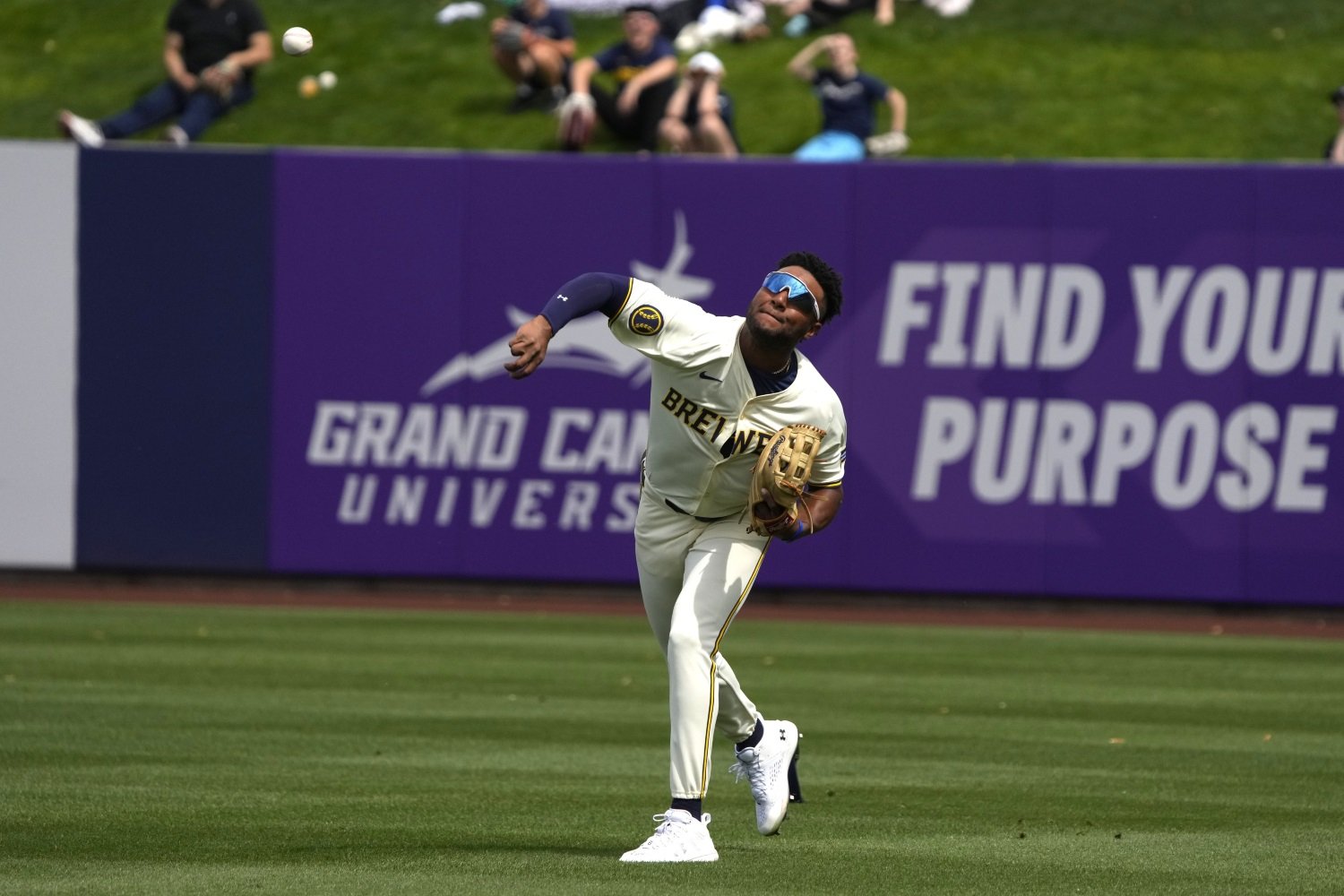 A nagging and uneasy sense of unreality has hovered around Jackson Chourio's spring training showing. Despite the megabucks the Brewers agreed to pay him before he even spent any meaningful time in Triple A, Chourio wasn't guaranteed a roster spot at the commencement of camp. Manager Pat Murphy went out of his way to make clear that he had high expectations and high standards for Chourio, not only to ensure that his wunderkind would work hard, but to deflect some attention from him. It worked, but it worked in an odd way. We've spent much of camp trying to suss out what role Chourio would fill for the team early in 2024, and we still don't have all those answers. He could be the center fielder or the right fielder. He could bat as high as first in the lineup, but he seems more likely to bat seventh or eighth. The unusual number of qualified candidates for the other outfield gigs on the team has made it hard to bring Chourio's rookie outlook into clearer focus, and it's made for some frustrating interference in Brewers' fans efforts to get excited about a player the team hopes will be one of the best in baseball, relatively soon. Now, that penumbra has been pulverized. Chourio is real, and his impact on the team--for better and for worse--will be immediate. Mistakes loom ahead. Chourio made a couple of visible mistakes in right field Monday, but they were far from the first of camp. Whether on his own recognizance or on coaches' orders, he played outrageously deep when placed in center field for the first couple weeks of Cactus League play, and it led to some bloop singles that have to be caught. Early on, he played some left field in untelevised contests, and the lack of cameras was a kindness, as he let plays speed up on him and didn't read the ball especially well. In all three outfield positions and even since the start of camp, though, he's flashed dazzling ability. That was part of what caught Murphy's attention, and earned some less-than-approving grunts: Chourio isn't yet consistent afield. Nor will he be so at the plate, right away, but the flashes on offense have been just as scintillating. He's made plays on the bases with his speed and nose for the extra base, and demonstrated an ability to barrel the ball up in that gorgeous way reserved for special talents. Over the winter, Brewers minor-league hitting coordinator Brenton Del Chiaro half-sheepishly compared Chourio to Mike Trout at the same age. At 20 years old, Trout had one of the best rookie seasons in baseball history. After watching Chourio's every move for a week earlier this month, reading his scouting reports and stats, and scrutinizing his adjustments as the Cactus League season has trudged toward its completion, I'll offer a different comp: a 20-year-old Willie Mays. Though he, too, won the Rookie of the Year Award at age 20, Mays wasn't quite the dynamo Trout was in 2012. In 1951, Mays came up in late May and survived a long period of struggle, before finding traction and tearing up the league down the stretch. He never looked back, and is probably the best baseball player ever. Obviously, comparing Chourio to either of these guys is massively unfair. Just as Del Chiaro sees an echo of Trout's unique feel for the barrel in Chourio's swing, though, I see some of Mays's unique traits in him. As Mays was, Chourio is unusually short and compact for a power hitter, but that power remains fairly obvious. He strides through the ball in his swing and can plug the gap in right-center as readily as he can lose a double in the left-field corner, just as the young Mays could. The way he runs the bases--head up, full-speed, eager and more than able to take an unexpected 90 feet--and the way he plays defense (headlong, athletic, and coordinated, though without Mays's grace and natural feel for the ball in flight) enhance the sense of parallelism. Already, Chourio will have to hear the name Robin Yount unfairly often, because Yount was such an important part of this franchise and came up so young, setting an almost impossible standard. Comparing the youngster to two more all-time greats only increases the stakes and raises my anxiety slightly, but as Del Chiaro did, I feel a bit compelled to confess this impulse. Watching Chourio is more fun and more exhilarating than watching other players--even very talented, reasonably interesting ones. He's as attention-grabbing as he is good, which is really saying something. Even if Murphy tries to bat him low in the order and shelter him from overblown expectations, Chourio is the most important variable in the equation when trying to forecast the Brewers' 2024 win total. He could put them over the top in the NL Central almost by himself. If he scuffles and stalls out, though, they'll be hard-pressed to overcome that. As scary as that is, it's also thrilling. Now, at least, we know that this incandescent talent won't be diverted to Nashville to begin the season. For all 162 games, Chourio will be right in the thick of it for the Crew.
 -
The Milwaukee Brewers have all but made it official. Their $82-million man and (hopefully) next superstar will be in the lineup when they take the field Opening Day in New York. This is the story of the season, and today is a good day to remember that. Image courtesy of © Rick Scuteri-USA TODAY Sports A nagging and uneasy sense of unreality has hovered around Jackson Chourio's spring training showing. Despite the megabucks the Brewers agreed to pay him before he even spent any meaningful time in Triple A, Chourio wasn't guaranteed a roster spot at the commencement of camp. Manager Pat Murphy went out of his way to make clear that he had high expectations and high standards for Chourio, not only to ensure that his wunderkind would work hard, but to deflect some attention from him. It worked, but it worked in an odd way. We've spent much of camp trying to suss out what role Chourio would fill for the team early in 2024, and we still don't have all those answers. He could be the center fielder or the right fielder. He could bat as high as first in the lineup, but he seems more likely to bat seventh or eighth. The unusual number of qualified candidates for the other outfield gigs on the team has made it hard to bring Chourio's rookie outlook into clearer focus, and it's made for some frustrating interference in Brewers' fans efforts to get excited about a player the team hopes will be one of the best in baseball, relatively soon. Now, that penumbra has been pulverized. Chourio is real, and his impact on the team--for better and for worse--will be immediate. Mistakes loom ahead. Chourio made a couple of visible mistakes in right field Monday, but they were far from the first of camp. Whether on his own recognizance or on coaches' orders, he played outrageously deep when placed in center field for the first couple weeks of Cactus League play, and it led to some bloop singles that have to be caught. Early on, he played some left field in untelevised contests, and the lack of cameras was a kindness, as he let plays speed up on him and didn't read the ball especially well. In all three outfield positions and even since the start of camp, though, he's flashed dazzling ability. That was part of what caught Murphy's attention, and earned some less-than-approving grunts: Chourio isn't yet consistent afield. Nor will he be so at the plate, right away, but the flashes on offense have been just as scintillating. He's made plays on the bases with his speed and nose for the extra base, and demonstrated an ability to barrel the ball up in that gorgeous way reserved for special talents. Over the winter, Brewers minor-league hitting coordinator Brenton Del Chiaro half-sheepishly compared Chourio to Mike Trout at the same age. At 20 years old, Trout had one of the best rookie seasons in baseball history. After watching Chourio's every move for a week earlier this month, reading his scouting reports and stats, and scrutinizing his adjustments as the Cactus League season has trudged toward its completion, I'll offer a different comp: a 20-year-old Willie Mays. Though he, too, won the Rookie of the Year Award at age 20, Mays wasn't quite the dynamo Trout was in 2012. In 1951, Mays came up in late May and survived a long period of struggle, before finding traction and tearing up the league down the stretch. He never looked back, and is probably the best baseball player ever. Obviously, comparing Chourio to either of these guys is massively unfair. Just as Del Chiaro sees an echo of Trout's unique feel for the barrel in Chourio's swing, though, I see some of Mays's unique traits in him. As Mays was, Chourio is unusually short and compact for a power hitter, but that power remains fairly obvious. He strides through the ball in his swing and can plug the gap in right-center as readily as he can lose a double in the left-field corner, just as the young Mays could. The way he runs the bases--head up, full-speed, eager and more than able to take an unexpected 90 feet--and the way he plays defense (headlong, athletic, and coordinated, though without Mays's grace and natural feel for the ball in flight) enhance the sense of parallelism. Already, Chourio will have to hear the name Robin Yount unfairly often, because Yount was such an important part of this franchise and came up so young, setting an almost impossible standard. Comparing the youngster to two more all-time greats only increases the stakes and raises my anxiety slightly, but as Del Chiaro did, I feel a bit compelled to confess this impulse. Watching Chourio is more fun and more exhilarating than watching other players--even very talented, reasonably interesting ones. He's as attention-grabbing as he is good, which is really saying something. Even if Murphy tries to bat him low in the order and shelter him from overblown expectations, Chourio is the most important variable in the equation when trying to forecast the Brewers' 2024 win total. He could put them over the top in the NL Central almost by himself. If he scuffles and stalls out, though, they'll be hard-pressed to overcome that. As scary as that is, it's also thrilling. Now, at least, we know that this incandescent talent won't be diverted to Nashville to begin the season. For all 162 games, Chourio will be right in the thick of it for the Crew. View full article
-
 There's a sparse deadpan to the way Devin Williams talks to most people, most of the time. He's ebullient and engaging with friends and teammates, but few players take less pleasure from talking to the media, and few are less worried about keeping up appearances when they feel frustrated or disdainful. After the team announced that Williams will rest for at least six weeks and spend at least another six ramping back up to ready himself for the season (thus missing at least the first two months thereof), he met with the media in the hallway outside the Brewers clubhouse in Maryvale, Ariz. He wasn't in a good mood, and were any of us in his shoes, we probably wouldn't have been, either. The pull quote there has been the part near the end, where Williams said he felt fortunate to "get in front of someone who knows what they're looking at." Out of context, that sounds accusatory. Even placed halfway into context, it sounds that way, since that comes after his explanation that he seems to have suffered the injury back in September, but wasn't diagnosed until it started forcing him to change his throwing motion this month in Cactus League action. That's not really what Williams is expressing there, though. Hopefully, you can hear and see that even from the video above, but lest it remains muddy: he's speaking colloquially about being grateful for the expertise of the back specialist he went to see in California. While there's no doubt that Williams wishes they'd been able to pinpoint the problem sooner, and while the Brewers surely feel the same way, he's not conveying any sort of blame or resentment in this interview. He's just talking about the process of first feeling the injury, then managing it over the winter, and then finally getting to the bottom of it this spring. Some fans have run with the idea (hardly a novel one, given the way the team's relationships with Corbin Burnes and Josh Hader changed during their final year or so in the organization) that the Brewers and Williams have a newly strained relationship. Fueled by the quotes lifted from the gaggle above, the idea that Williams is upset with the Brewers has gained some traction. I don't think there's much doubt that Williams is upset, but it's more about the circumstances than any perceived culprit. I don't think this spells the effective end of his tenure as the team's relief ace, or that it much increases the chances he'll be traded this summer. As he notes in the clip above, even he didn't think that much of the problem when it cropped up in September, or when it intermittently bothered him this winter. The tendency with back trouble is to think about muscles and to treat soreness as worrisome but manageable. Williams didn't jump right to thinking there were stress fractures in his spine, and he didn't expect the Brewers to do so, either. Earlier this spring, when I talked to him, he was looking forward to the season and to a repeat of the way the team managed his workload in 2023. Back injuries are tricky, and the time it took to properly identify this one isn't anyone's fault, even in the eyes of the victim of that delay. It's easy to get tripped up by players who communicate in something other than the cheery platitudes to which we've all become accustomed, especially when adversity strikes, but Williams just wasn't showing the kind of antipathy to his employer or their handling of his injury that has been ascribed to him in some quarters this weekend. It's an understandable error, but we'll do well to address it, defuse the resulting confusion, and move forward, rather than dwell in unnecessary consternation about an overblown controversy.
 -
Frustration abounds in Devin Williams's surrounds. The Milwaukee Brewers' air-bending closer made some airwaves with his remarks in the wake of an unhappy injury prognosis report, but unhappiness doesn't always mean enmity. The pull quote there has been the part near the end, where Williams said he felt fortunate to "get in front of someone who knows what they're looking at." Out of context, that sounds accusatory. Even placed halfway into context, it sounds that way, since that comes after his explanation that he seems to have suffered the injury back in September, but wasn't diagnosed until it started forcing him to change his throwing motion this month in Cactus League action. That's not really what Williams is expressing there, though. Hopefully, you can hear and see that even from the video above, but lest it remains muddy: he's speaking colloquially about being grateful for the expertise of the back specialist he went to see in California. While there's no doubt that Williams wishes they'd been able to pinpoint the problem sooner, and while the Brewers surely feel the same way, he's not conveying any sort of blame or resentment in this interview. He's just talking about the process of first feeling the injury, then managing it over the winter, and then finally getting to the bottom of it this spring. Some fans have run with the idea (hardly a novel one, given the way the team's relationships with Corbin Burnes and Josh Hader changed during their final year or so in the organization) that the Brewers and Williams have a newly strained relationship. Fueled by the quotes lifted from the gaggle above, the idea that Williams is upset with the Brewers has gained some traction. I don't think there's much doubt that Williams is upset, but it's more about the circumstances than any perceived culprit. I don't think this spells the effective end of his tenure as the team's relief ace, or that it much increases the chances he'll be traded this summer. As he notes in the clip above, even he didn't think that much of the problem when it cropped up in September, or when it intermittently bothered him this winter. The tendency with back trouble is to think about muscles and to treat soreness as worrisome but manageable. Williams didn't jump right to thinking there were stress fractures in his spine, and he didn't expect the Brewers to do so, either. Earlier this spring, when I talked to him, he was looking forward to the season and to a repeat of the way the team managed his workload in 2023. Back injuries are tricky, and the time it took to properly identify this one isn't anyone's fault, even in the eyes of the victim of that delay. It's easy to get tripped up by players who communicate in something other than the cheery platitudes to which we've all become accustomed, especially when adversity strikes, but Williams just wasn't showing the kind of antipathy to his employer or their handling of his injury that has been ascribed to him in some quarters this weekend. It's an understandable error, but we'll do well to address it, defuse the resulting confusion, and move forward, rather than dwell in unnecessary consternation about an overblown controversy. View full article
-
Yes, Monasterio can still be optioned to the minors. Most of their infield group can, in fact: Monasterio, Owen Miller, Dunn, etc. The exception is Jake Bauers.
-
 What the San Francisco Giants did to J.D. Davis is unfair, and they might not be done hearing about it or paying for it. After the Giants signed (first) Jorge Soler and (recently) Matt Chapman this offseason, they were left without room for Davis, a third baseman and DH slated to make $6.9 million after winning an arbitration case this winter. They tried to trade him, but found no takers that would save them enough money to justify the move. Instead, they tried to avail themselves of a loophole for arbitration-adjudicated salaries under the collective bargaining agreement (CBA) between the league and the MLB Players Association (MLBPA), and released Davis. In theory, that saves them the lion's share of the award Davis earned, because they released him more than 15 days before Opening Day. As was deftly covered at MLB Trade Rumors, it's not quite that simple. The CBA sets a clear standard for when that clause can be used, and Davis's circumstance doesn't appear to meet it. A grievance that might get Davis significant restitution should be in our future. That's unlikely to be resolved in short order, though, and it wouldn't change the new, essential fact of the matter: Davis is now a free agent. The Brewers have thrived for the last several years (and showed themselves to be especially savvy this winter) by being willing to change directions quickly and aggressively. They don't overcommit themselves to a single plan; they adapt and react. Thus, while they seem to have spent right up to the budget mark set by owner Mark Attanasio for this season, they might just be able to create some room for Davis, who would be an awfully strong addition to their lineup at the position (third base) where they have, perhaps, the least clarity right now. That's because of another (mostly) unexpected development that has tilted the picture in the NL West this spring. Coming into camp, the Los Angeles Dodgers expected to play Gavin Lux at shortstop this year, with Mookie Betts as his partner on the double-play pivot. A fortnight into the Cactus League season, that plan is kaput. Lux showed insufficient arm strength for short, and then some signs of the yips even after switching sides with Betts and becoming a second baseman. He's fast working his way out of the picture for the Dodgers altogether. You can see where this is going, by now. The Dodgers, the unexpectedly semi-desperate team of destiny, need a shortstop. The Brewers have one, and if they want to pursue Davis in free agency, they need to clear some money from their books. What if the Brewers traded Willy Adames for Dodgers pitching prospect Kyle Hurt, then slated Joey Ortiz and Brice Turang for shortstop and signed Davis to play third? If Hurt's name doesn't ring a bell, it's because the Dodgers are overflowing with such pitching talent that he just hasn't managed to escape the enforced anonymity of being merely good on a team full of all-timers. It's not a perfect comp, but you can sort of think of Hurt as a right-handed DL Hall. He was a fifth-round pick in the COVID-truncated 2020 MLB Draft, by the Marlins, but was traded to the Dodgers before he threw his first professional pitch. He put up some ugly overall numbers in the LA system in 2021 and 2022, but maintained high strikeout rates, and in 2023, he was just plain good. At the highest levels of the minors, he piled up 152 strikeouts over 92 innings of work, and he had an impressive MLB debut late in the season. Hurt is big, and he throws hard. He lacks the fastball command you want to see from a starter most of the time, but (like Hall) he has both of the traditional flavors of breaking ball and a downright nasty changeup. The latter, like Hall's, is one of the best cambios among all pitching prospects right now. Long-term, it's hard to say whether Hurt will be a starter or reliever, but he's definitely a multi-inning weapon, and he's MLB-ready. Already coming up on his 26th birthday, he'd better be. Like Hall, he's an electric arm available only because he's taken such a long time (chronologically) to find a foothold in the majors and because it's not fully clear what role he'll fill in the long run. The Dodgers don't need Hurt as badly as most teams would need a pitcher with such upside. Trading him for an impact player at a position of need is a luxury, but one the Dodgers can afford. To be sure, for his part, Hurt would be an exciting addition to an already imposing Brewers pitching staff. The question is whether the benefits would justify the costs. That's a trickier thing to assess. In one sense, Adames is a player with just one season of team control left, playing on an eight-figure salary for 2024. At Baseball Prospectus, the PECOTA projection system forecasts a 103 DRC+ for Adames (three percent better than league-average production), but it projects Davis for a 99 mark that is within the margin of error. At FanGraphs, ZiPS projects Adames for a 112 wRC+, and Davis for a 107. They're very comparable hitters, and the Brewers would get a high-end pitcher with six years of team control in the process of a likely cash-neutral, short-term value-neutral swap. On the field, it makes a world of sense. Off the field, it gets harder to justify. Adames is very important to this team's fabric. He's a leader and a beloved figure. Though Davis has a solid reputation as a clubhouse citizen in his own right, bringing him in on the eve of the season wouldn't lend itself to any kind of leadership role for him. This maneuver would have uneasy echoes of the 2022 trade deadline. It needn't automatically play out the same way, but that's the pitfall the team would need a rock-solid plan to avoid if they went forward with such a radical solution. I think it's a worthwhile risk, on balance. The Dodgers are the team most likely to pay a handsome price for Adames, be it now or in July. By doing it now, the Brewers could rip that Band-Aid off sooner, letting the scab form and life return to normal by mid-April, with the new era of Ortiz at shortstop underway and a very dangerous lineup in place. It's unlikely that Matt Arnold would trade Adames for Hurt alone, but a far-off secondary piece should balance the scales well. Adames has, inevitably, less trade value than Corbin Burnes, but getting a good analog of Hall (and the ability to sign Davis and play Ortiz right away at his best position) in exchange for him would come close to matching the value the team got for Burnes. A lot of things have to happen for this to go from idea to reality. The Brewers have to slightly prefer sustainability and long-term competitiveness to 2024 World Series odds, but they also have to believe Hurt is a difference-making hurler for their versatile mix, and therefore a booster to those odds. They have to persuade Davis to sign with them, though that should be doable, because the team is fast developing a reputation for treating players in tough situations with respect. Witness their release of Austin Nola to pursue a big-league opportunity after they signed Gary Sánchez last month. The final thing is selling the Dodgers on giving up Hurt, who ranks 86th on FanGraphs's Top 100 prospect list and is one of the half-dozen best prospects in their excellent farm system, to acquire a one-year solution at shortstop. That should be feasible, too. The big challenge here is doing all of these things in a very short time window, while keeping Pat Murphy in the loop so that he can effectively manage the clubhouse and keep unwanted intangible effects from canceling the tangible benefits of this twinned move. Is it likely that the team does this? Of course not. The odds are always stacked against this kind of complicated series of transactions. If they can pull it off, though, the Brewers might be in a better position to both make a deep run this October and keep getting bites at the apple thereafter. What do you think of this proposal? Would you try it? Do you worry about the on-field ramifications of it, or only about the potential havoc within the clubhouse? Let's discuss, while we wait to see what becomes of Davis and of the Dodgers' unfortunate middle-infield dilemma.
- 13 comments
-
- 3
-

-
-
- willy adames
- jd davis
- (and 3 more)
-
Thanks to a confluence of strange circumstances, the Milwaukee Brewers might just have a chance to make a high-impact double move before Opening Day 2024. It would come with some risk, but don't count out the possibility. Image courtesy of © Joe Camporeale-USA TODAY Sports What the San Francisco Giants did to J.D. Davis is unfair, and they might not be done hearing about it or paying for it. After the Giants signed (first) Jorge Soler and (recently) Matt Chapman this offseason, they were left without room for Davis, a third baseman and DH slated to make $6.9 million after winning an arbitration case this winter. They tried to trade him, but found no takers that would save them enough money to justify the move. Instead, they tried to avail themselves of a loophole for arbitration-adjudicated salaries under the collective bargaining agreement (CBA) between the league and the MLB Players Association (MLBPA), and released Davis. In theory, that saves them the lion's share of the award Davis earned, because they released him more than 15 days before Opening Day. As was deftly covered at MLB Trade Rumors, it's not quite that simple. The CBA sets a clear standard for when that clause can be used, and Davis's circumstance doesn't appear to meet it. A grievance that might get Davis significant restitution should be in our future. That's unlikely to be resolved in short order, though, and it wouldn't change the new, essential fact of the matter: Davis is now a free agent. The Brewers have thrived for the last several years (and showed themselves to be especially savvy this winter) by being willing to change directions quickly and aggressively. They don't overcommit themselves to a single plan; they adapt and react. Thus, while they seem to have spent right up to the budget mark set by owner Mark Attanasio for this season, they might just be able to create some room for Davis, who would be an awfully strong addition to their lineup at the position (third base) where they have, perhaps, the least clarity right now. That's because of another (mostly) unexpected development that has tilted the picture in the NL West this spring. Coming into camp, the Los Angeles Dodgers expected to play Gavin Lux at shortstop this year, with Mookie Betts as his partner on the double-play pivot. A fortnight into the Cactus League season, that plan is kaput. Lux showed insufficient arm strength for short, and then some signs of the yips even after switching sides with Betts and becoming a second baseman. He's fast working his way out of the picture for the Dodgers altogether. You can see where this is going, by now. The Dodgers, the unexpectedly semi-desperate team of destiny, need a shortstop. The Brewers have one, and if they want to pursue Davis in free agency, they need to clear some money from their books. What if the Brewers traded Willy Adames for Dodgers pitching prospect Kyle Hurt, then slated Joey Ortiz and Brice Turang for shortstop and signed Davis to play third? If Hurt's name doesn't ring a bell, it's because the Dodgers are overflowing with such pitching talent that he just hasn't managed to escape the enforced anonymity of being merely good on a team full of all-timers. It's not a perfect comp, but you can sort of think of Hurt as a right-handed DL Hall. He was a fifth-round pick in the COVID-truncated 2020 MLB Draft, by the Marlins, but was traded to the Dodgers before he threw his first professional pitch. He put up some ugly overall numbers in the LA system in 2021 and 2022, but maintained high strikeout rates, and in 2023, he was just plain good. At the highest levels of the minors, he piled up 152 strikeouts over 92 innings of work, and he had an impressive MLB debut late in the season. Hurt is big, and he throws hard. He lacks the fastball command you want to see from a starter most of the time, but (like Hall) he has both of the traditional flavors of breaking ball and a downright nasty changeup. The latter, like Hall's, is one of the best cambios among all pitching prospects right now. Long-term, it's hard to say whether Hurt will be a starter or reliever, but he's definitely a multi-inning weapon, and he's MLB-ready. Already coming up on his 26th birthday, he'd better be. Like Hall, he's an electric arm available only because he's taken such a long time (chronologically) to find a foothold in the majors and because it's not fully clear what role he'll fill in the long run. The Dodgers don't need Hurt as badly as most teams would need a pitcher with such upside. Trading him for an impact player at a position of need is a luxury, but one the Dodgers can afford. To be sure, for his part, Hurt would be an exciting addition to an already imposing Brewers pitching staff. The question is whether the benefits would justify the costs. That's a trickier thing to assess. In one sense, Adames is a player with just one season of team control left, playing on an eight-figure salary for 2024. At Baseball Prospectus, the PECOTA projection system forecasts a 103 DRC+ for Adames (three percent better than league-average production), but it projects Davis for a 99 mark that is within the margin of error. At FanGraphs, ZiPS projects Adames for a 112 wRC+, and Davis for a 107. They're very comparable hitters, and the Brewers would get a high-end pitcher with six years of team control in the process of a likely cash-neutral, short-term value-neutral swap. On the field, it makes a world of sense. Off the field, it gets harder to justify. Adames is very important to this team's fabric. He's a leader and a beloved figure. Though Davis has a solid reputation as a clubhouse citizen in his own right, bringing him in on the eve of the season wouldn't lend itself to any kind of leadership role for him. This maneuver would have uneasy echoes of the 2022 trade deadline. It needn't automatically play out the same way, but that's the pitfall the team would need a rock-solid plan to avoid if they went forward with such a radical solution. I think it's a worthwhile risk, on balance. The Dodgers are the team most likely to pay a handsome price for Adames, be it now or in July. By doing it now, the Brewers could rip that Band-Aid off sooner, letting the scab form and life return to normal by mid-April, with the new era of Ortiz at shortstop underway and a very dangerous lineup in place. It's unlikely that Matt Arnold would trade Adames for Hurt alone, but a far-off secondary piece should balance the scales well. Adames has, inevitably, less trade value than Corbin Burnes, but getting a good analog of Hall (and the ability to sign Davis and play Ortiz right away at his best position) in exchange for him would come close to matching the value the team got for Burnes. A lot of things have to happen for this to go from idea to reality. The Brewers have to slightly prefer sustainability and long-term competitiveness to 2024 World Series odds, but they also have to believe Hurt is a difference-making hurler for their versatile mix, and therefore a booster to those odds. They have to persuade Davis to sign with them, though that should be doable, because the team is fast developing a reputation for treating players in tough situations with respect. Witness their release of Austin Nola to pursue a big-league opportunity after they signed Gary Sánchez last month. The final thing is selling the Dodgers on giving up Hurt, who ranks 86th on FanGraphs's Top 100 prospect list and is one of the half-dozen best prospects in their excellent farm system, to acquire a one-year solution at shortstop. That should be feasible, too. The big challenge here is doing all of these things in a very short time window, while keeping Pat Murphy in the loop so that he can effectively manage the clubhouse and keep unwanted intangible effects from canceling the tangible benefits of this twinned move. Is it likely that the team does this? Of course not. The odds are always stacked against this kind of complicated series of transactions. If they can pull it off, though, the Brewers might be in a better position to both make a deep run this October and keep getting bites at the apple thereafter. What do you think of this proposal? Would you try it? Do you worry about the on-field ramifications of it, or only about the potential havoc within the clubhouse? Let's discuss, while we wait to see what becomes of Davis and of the Dodgers' unfortunate middle-infield dilemma. View full article
-
Yeah, stuff-wise, it's a no-brainer. The question is whether they can: 1. Trust him to go on back-to-back days or to work multiple innings in unpredictable relief situations, as opposed to needing the routine of being a starter; or 2. Afford to carry a non-optionable reliever with strict usage restrictions. Most of the time over the last half-decade, they haven't had that luxury. But we'll see. It really is a hell of a slider.


